
1. Search Result
Search Result
Results for "

Adp Inhibitors

" in MedChemExpress (MCE) Product Catalog:

258

Inhibitors & Agonists

1

Fluorescent Dyes

3

Biochemical Assay Reagents

3

Peptides

1

Inhibitory Antibodies

44

Natural
Products

18

Isotope-Labeled Compounds

1

Click Chemistry

11

Oligonucleotides

1

GMP Molecules

Cat. No. Product Name Target Research Areas Chemical Structure
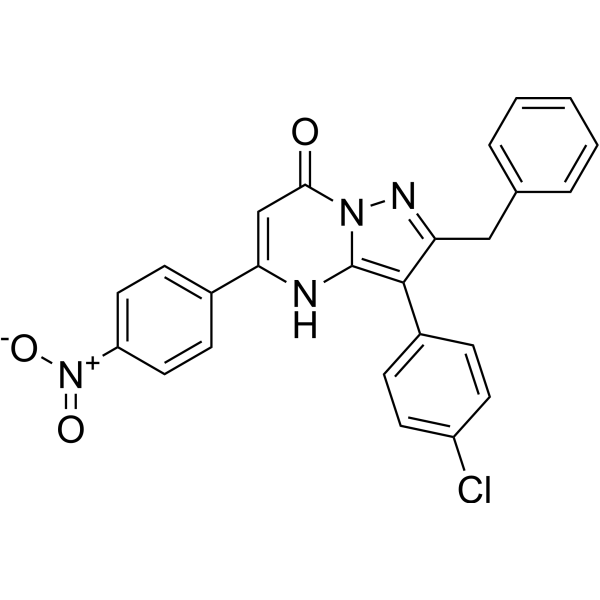
  • HY-108360
    PDD 00017273
    20+ Cited Publications

    Poly(ADP-ribose) Glycohydrolase (PARG) Cancer
    PDD 00017273 is a potent inhibitor of Poly(ADP-ribose) Glycohydrolase (PARG), with an IC50 of 26 nM, and a KD of 1.45 nM .
    PDD 00017273
  • HY-16929
    Latrunculin A
    10+ Cited Publications

    LAT-A

    Arp2/3 Complex Cancer
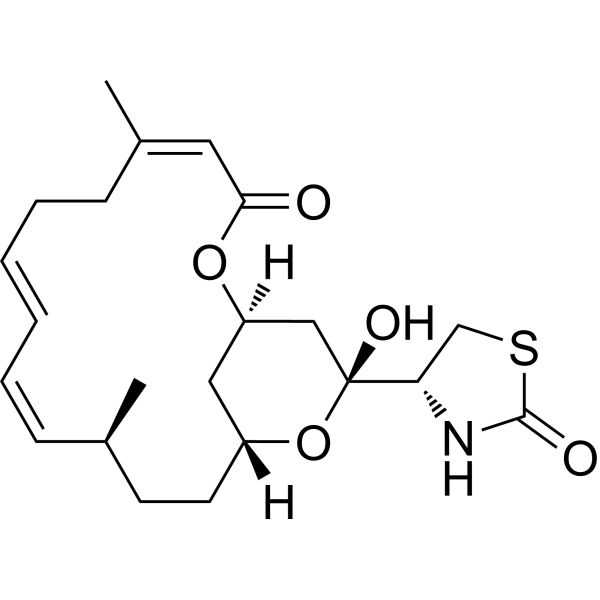
    Latrunculin A (LAT-A), found in the red sea sponge Latrunculia magnifica, is a G-actin polymerization inhibitor. Latrunculin A binds to actin monomers and inhibits polymerization of actin with Kds of 0.1, 0.4, 4.7 μM and 0.19 μM for ATP-actin, ADP-Pi-actin, ADP-actin and G-actin, respectively. Latrunculin A has effective anti-metastatic properties for cancer research. Latrunculin A blocks cell migration .
    Latrunculin A
  • HY-112473
    Grassofermata
    10+ Cited Publications

    NAV-2729

    Ras Cancer
    Grassofermata is a dual Arf1/Arf6 activation inhibitor. ADP ribosylation factors (Arfs) are members of the Arf family of GTP-binding proteins of the Ras superfamily.
    Grassofermata
  • HY-113432

    2PY

    Endogenous Metabolite PARP Metabolic Disease
    Nudifloramide (2PY) is one of the end products of nicotinamide-adenine dinucleotide (NAD) degradation. Nudifloramide significantly inhibits poly(ADP-ribose) polymerase (PARP-1) activity in vitro .
    Nudifloramide
  • HY-N2522
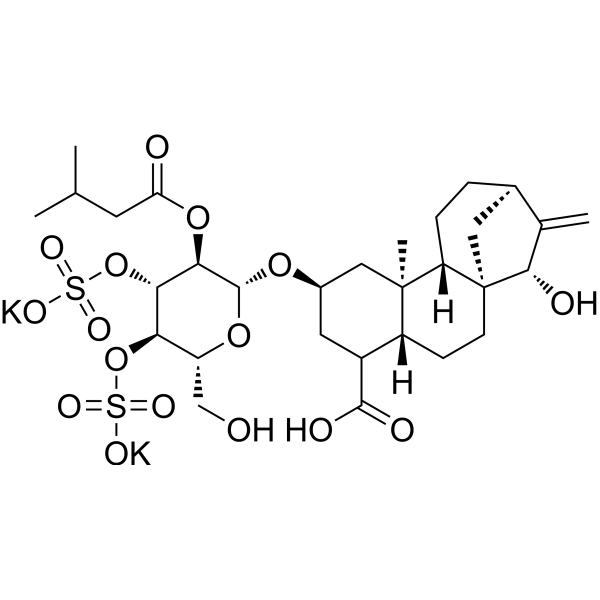
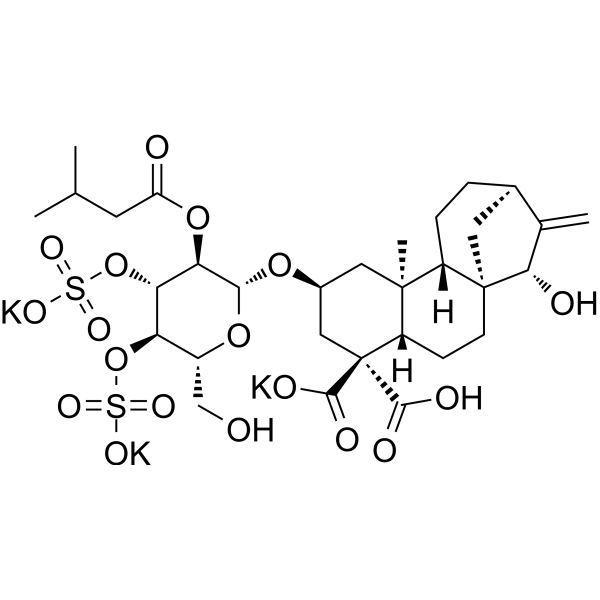
    Carboxyatractyloside dipotassium
    2 Publications Verification

    Gummiferin dipotassium

    Mitochondrial Metabolism Calcium Channel Reactive Oxygen Species (ROS) Neurological Disease
    Carboxyatractyloside dipotassium is a diterpenoid. Carboxyatractyloside dipotassium can be isolated from plants of the genus Xanthium. Carboxyatractyloside dipotassium is an ADP/ATP carrier inhibitor, inhibiting mitochondrial ADP/ATP transport. Carboxyatractyloside dipotassium promotes ROS production, induces Ca 2+ release, and leads to mitochondrial dysfunction. Carboxyatractyloside dipotassium induces lethargy, weakness, and epileptic seizures in rats .
    Carboxyatractyloside dipotassium
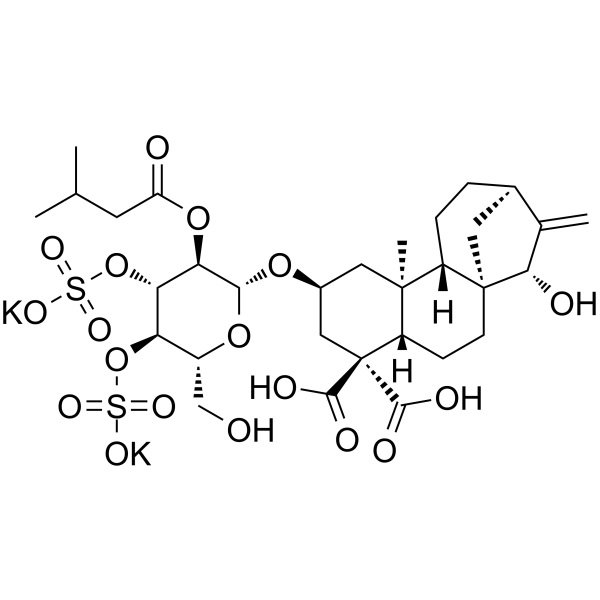
  • HY-N1502
    Carboxyatractyloside tripotassium
    2 Publications Verification

    Gummiferin tripotassium

    Mitochondrial Metabolism Reactive Oxygen Species (ROS) Calcium Channel Neurological Disease
    Carboxyatractyloside tripotassium is a diterpenoid. Carboxyatractyloside tripotassium can be isolated from plants of the genus Xanthium. Carboxyatractyloside tripotassium is an ADP/ATP carrier inhibitor, inhibiting mitochondrial ADP/ATP transport. Carboxyatractyloside tripotassium promotes ROS production, induces Ca 2+ release, and leads to mitochondrial dysfunction. Carboxyatractyloside tripotassium induces lethargy, weakness, and epileptic seizures in rats .
    Carboxyatractyloside tripotassium
  • HY-N7765

    HCV Bacterial Apoptosis Fungal Infection Inflammation/Immunology Cancer
    Oenothein B is a dimeric macrocyclic ellagitannin and has widely pharmacological activities, including antioxidant, anti-inflammatory, antifungal, anti-HCV, and antitumor properties. Oenothein B is a potent and specific inhibitor of poly(ADP-ribose) glycohydrolase .
    Oenothein B
  • HY-15284
    Prasugrel
    1 Publications Verification

    PCR 4099

    P2Y Receptor Cardiovascular Disease
    Prasugrel (PCR 4099), a thienopyridine and proagent, inhibits platelet function. Prasugrel is an orally active and potent P2Y12 receptor antagonist, and inhibits ADP-induced platelet aggregation .
    Prasugrel
  • HY-153920

    ABSK021

    c-Fms c-Kit PDGFR Cancer
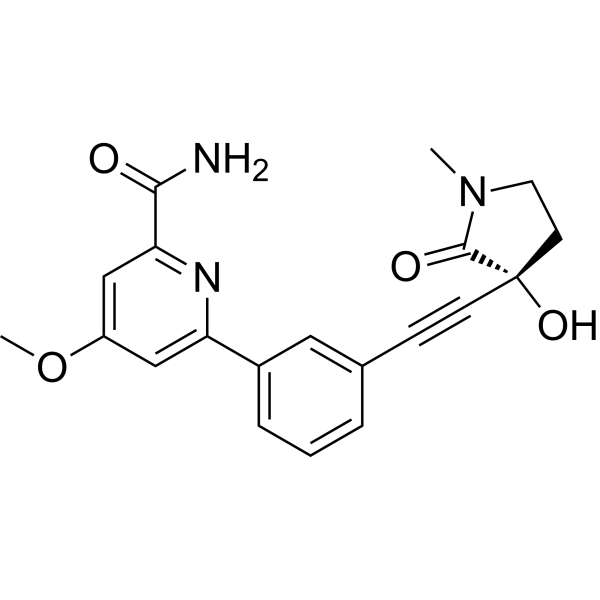
    Pimicotinib (ABSK021) is a selective and orally active CSF1R inhibitor with an IC50 value of 19.48 nM (determined by inhibiting ADP production). Pimicotinib exhibits anti-tumor activity .
    Pimicotinib
  • HY-B2174
    Ethacridine lactate
    2 Publications Verification

    Acrinol

    Bacterial Infection
    Ethacridine lactate (Acrinol) is a widely used antiseptic and abortifacient. Ethacridine lactate is effective against Staphylococcus aureus and other gram-positive cocci. Ethacridine lactate is also a poly(ADP-ribose) glycohydrolase (PARG) inhibitor .
    Ethacridine lactate
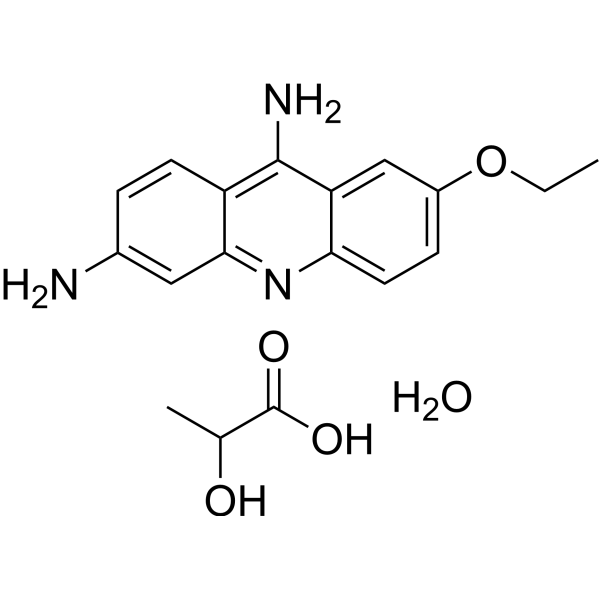
  • HY-B0889
    Ethacridine lactate monohydrate
    2 Publications Verification

    Acrinol monohydrate

    Bacterial Infection
    Ethacridine lactate (Acrinol) monohydrate is a widely used antiseptic and abortifacient. Ethacridine lactate monohydrate is effective against Staphylococcus aureus and other gram-positive cocci. Ethacridine lactate monohydrate is also a poly(ADP-ribose) glycohydrolase (PARG) inhibitor .
    Ethacridine lactate monohydrate
  • HY-101020

    2-Picolinamide

    PARP Metabolic Disease
    Picolinamide (2-Picolinamide) is an inhibitor of Poly(ADP-ribose) synthetase of nuclei from rat pancreatic islet cells .
    Picolinamide
  • HY-15284A
    Prasugrel hydrochloride
    1 Publications Verification

    PCR 4099 hydrochloride

    P2Y Receptor Cardiovascular Disease
    Prasugrel hydrochloride (PCR 4099 hydrochloride), a thienopyridine and proagent, inhibits platelet function. Prasugrel hydrochloride is an orally active and potent P2Y12 receptor antagonist, and inhibits ADP-induced platelet aggregation .
    Prasugrel hydrochloride
  • HY-146248B

    Poly(ADP-ribose) Glycohydrolase (PARG) SARS-CoV Protease Activated Receptor (PAR) Metabolic Disease
    TFMU-ADPr diammonium is a selective reporter substrate of SARS-CoV-2 Macro1 (IC50=0.59 μM), with an excitation wavelength (λEx) of 385 nm, and an emission wavelength (λEm) of 502 nm (or 495 nm). TFMU-ADPr diammonium can also undergo enzymatic hydrolysis with Poly(ADP-ribose) Glycohydrolase (PARG) sourced from human, Tetrahymena thermophila and ADP-ribosylhydrolase 3 from human to release fluorophores, thereby directly reporting total poly (ADP-ribose) hydrolase activity. TFMU-ADPr diammonium binds to the ADPr-binding site of SARS-CoV-2 Macro1, and its TFMU moiety inserts into the narrow hydrophobic groove of this protein. TFMU-ADPr diammonium can thus be used to evaluate small-molecule inhibitors targeting PAR hydrolases under in vitro conditions, to investigate the regulatory mechanisms of ADP-ribosyl catabolic enzymes, or to detect PAR hydrolase activity in whole-cell lysate assays. TFMU-ADPr diammonium is also applicable to COVID-19-related research .
    TFMU-ADPr diammonium
  • HY-107867

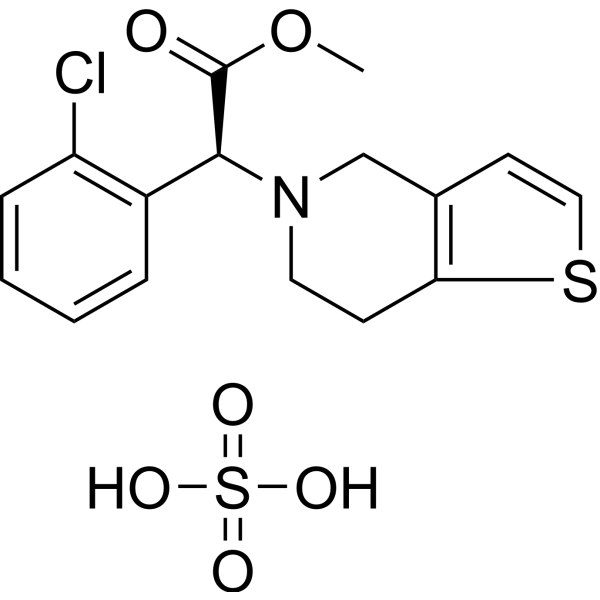
    P2Y Receptor Cardiovascular Disease Inflammation/Immunology
    (±)-Clopidogrel bisulfate is a platelet P2Y12 receptor inhibitor and an adenosine diphosphate (ADP) receptor antagonist. (±)-Clopidogrel bisulfate inhibits the binding of ADP to its receptors on the membranes of platelet cells, and blocks ADP-mediated activation of the glycoprotein GPIIb/IIIa complex. (±)-Clopidogrel bisulfate reduces vascular inflammation and angiotensin II induced-abdominal aortic aneurysm progression. (±)-Clopidogrel bisulfate has anti-inflammatory effects .
    (±)-Clopidogrel bisulfate
  • HY-134216
    MAHMA NONOate
    1 Publications Verification

    Endogenous Metabolite NO Synthase Cardiovascular Disease
    MAHMA NONOate is a NO donor. MAHMA NONOate effectively inhibits platelet aggregation induced by either collagen or ADP .
    MAHMA NONOate
  • HY-U00422
    K-756
    2 Publications Verification

    PARP Cancer
    K-756 is a direct and selective tankyrase (TNKS) inhibitor, which inhibits the ADP-ribosylation activity of TNKS1 and TNKS2 with IC50s of 31 and 36 nM, respectively.
    K-756
  • HY-125989
    2-Methylthio-AMP
    1 Publications Verification

    2-MeSAMP; 2-Methylthioadenosine 5′-monophosphate; 2-Methylthioadenosine 5′-phosphate

    P2Y Receptor Cardiovascular Disease
    2-Methylthio-AMP (2-MeSAMP) is a selective and direct P2Y12 antagonist. 2-Methylthio-AMP is an inhibitor of ADP-dependent platelet aggregation .
    2-Methylthio-AMP
  • HY-W250153

    P2Y Receptor Cardiovascular Disease
    Adenosine 3'-phosphate 5'-phosphosulfate lithium, an adenine nucleotide derivative, is a selective P2Y1 antagonist with no effect on P2Y2, P2Y4, or P2Y6 receptors. Adenosine 3'-phosphate 5'-phosphosulfate lithium can competitive inhibit ADP-induced platelet aggregation, as well as the ability of ADP to cause shape change and increases in Ca 2+ in platelets, but had no effect on the inhibition of stimulated adenylate cyclase by ADP. Adenosine 3'-phosphate 5'-phosphosulfate lithium is a co-substrate used for the sulfonation of glycans. Adenosine 3'-phosphate 5'-phosphosulfate lithium can be used for Golgi-resident PAP-specific 3'-phosphatase-coupled sulfotransferase assays, which as donor substrate to transfer a sulfonate group .
    Adenosine 3'-phosphate 5'-phosphosulfate lithium
  • HY-133531

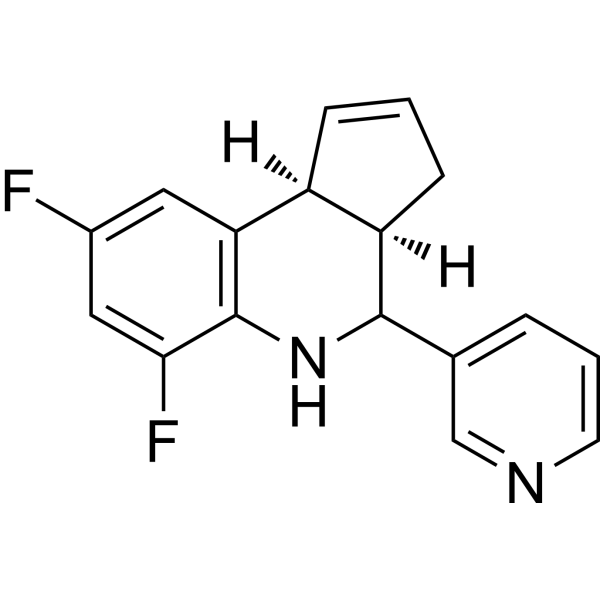
    Poly(ADP-ribose) Glycohydrolase (PARG) Cancer
    PDD00017272 is an inhibitor of poly(ADP-ribose) glycohydrolase (PARG) (EC50=4.8 nM) and an activator of PARP1/2. PDD00017272 inhibits its activity of hydrolyzing poly(ADP-ribose) (pADPr), resulting in the accumulation of pADPr on chromatin, interfering with DNA damage repair and replication processes, and inducing PARP1/2-dependent cytotoxicity. PDD00017272 can be used in cancer models with DNA repair defects (such as BRCA mutations) or resistance to PARP inhibitors. PDD00017272 has a PARG expression level-correlated inhibitory potency with EC50 of 9.2 nM (PARG cells), the tumor cells with lower PARG expression are more sensitive .
    PDD00017272
  • HY-178208

    Poly(ADP-ribose) Glycohydrolase (PARG) Cancer
    MDOLL-0286 is a selective Poly(ADP-ribose) Glycohydrolase (PARG) (ARH3) inhibitor with an IC50 of 2.3μM. MDOLL-0286 can inhibit ARH3’s poly-ADP-ribose hydrolytic activity on cellular substrates. MDOLL-0286 can inhibit DNA damage response. MDOLL-0286 can be used for the research of cancer .
    MDOLL-0286
  • HY-G0023

    Niraparib carboxylic acid metabolite M1; M1 metabolite of niraparib

    Drug Metabolite Others
    Niraparib metabolite M1 is a metabolite of niraparib, and the latter one acts as a novel poly(ADP-Ribose) polymerase (PARP) inhibitor.
    Niraparib metabolite M1
  • HY-133530

    Poly(ADP-ribose) Glycohydrolase (PARG) Others
    PDD00017238 is a potent inhibitor of Poly(ADP-ribose) Glycohydrolase (PARG), with EC50 values of 40 nM and 55 nM in biochemical assay and cell POM, respectively .
    PDD00017238
  • HY-146248

    SARS-CoV Poly(ADP-ribose) Glycohydrolase (PARG) Protease Activated Receptor (PAR) Infection
    TFMU-ADPr is a selective reporter substrate of SARS-CoV-2 Macro1 (IC50=0.59 μM), with an excitation wavelength (λEx) of 385 nm, and an emission wavelength (λEm) of 502 nm (or 495 nm). TFMU-ADPr can also undergo enzymatic hydrolysis with Poly(ADP-ribose) Glycohydrolase (PARG) sourced from human, Tetrahymena thermophila and ADP-ribosylhydrolase 3 from human to release fluorophores, thereby directly reporting total poly (ADP-ribose) hydrolase activity. TFMU-ADPr binds to the ADPr-binding site of SARS-CoV-2 Macro1, and its TFMU moiety inserts into the narrow hydrophobic groove of this protein. TFMU-ADPr can thus be used to evaluate small-molecule inhibitors targeting PAR hydrolases under in vitro conditions, to investigate the regulatory mechanisms of ADP-ribosyl catabolic enzymes, or to detect PAR hydrolase activity in whole-cell lysate assays. TFMU-ADPr is also applicable to COVID-19-related research .
    TFMU-ADPr
  • HY-W051513
    2-Methylquinazolin-4-ol
    1 Publications Verification

    PARP Others
    2-Methylquinazolin-4-ol is a potent competitive poly(ADP-ribose) synthetase inhibitor, with a Ki of 1.1 μM. 2-Methylquinazolin-4-ol mammalian aspartate transcarbamylase (ATCase) inhibitor, with 0.20 mM .
    2-Methylquinazolin-4-ol
  • HY-164090

    P2Y Receptor Cardiovascular Disease
    Adenosine 3'-phosphate 5'-phosphosulfate, an adenine nucleotide derivative, is a selective P2Y1 antagonist with no effect on P2Y2, P2Y4, or P2Y6 receptors. Adenosine 3'-phosphate 5'-phosphosulfate can competitive inhibit ADP-induced platelet aggregation, as well as the ability of ADP to cause shape change and increases in Ca 2+ in platelets, but had no effect on the inhibition of stimulated adenylate cyclase by ADP. Adenosine 3'-phosphate 5'-phosphosulfate is a co-substrate used for the sulfonation of glycans. Adenosine 3'-phosphate 5'-phosphosulfate can be used for Golgi-resident PAP-specific 3'-phosphatase-coupled sulfotransferase assays, which as donor substrate to transfer a sulfonate group .
    Adenosine 3'-phosphate 5'-phosphosulfate
  • HY-135846
    PDD00031705
    1 Publications Verification

    Poly(ADP-ribose) Glycohydrolase (PARG) Cancer
    PDD00031705 is a benzimidazolone core cell-inactive inhibitor of Poly (ADP-ribose) glycohydrolase (PARG) .
    PDD00031705
  • HY-115666

    Poly(ADP-ribose) Glycohydrolase (PARG) Cancer
    COH34 analog 1, a metabolite, is an oxidized analog of COH34. COH34 is a potent poly(ADP-ribose) glycohydrolase (PARG) inhibitor .
    COH34 analog 1
  • HY-P2325

    Biochemical Assay Reagents ROCK Neurological Disease Metabolic Disease
    Exoenzyme C3, clostridium botulinum, is a mono-ADP-ribosylating enzyme. Exoenzyme C3, clostridium botulinum specifically modifies RhoA, B, and C by transferring ADP-ribose to them, thereby inactivating these GTPases. Exoenzyme C3, clostridium botulinum can induce neuronal axonal and dendritic growth, inhibit macrophage migration, and regulate cytoskeletal dynamics. Exoenzyme C3, clostridium botulinum can be used in the research of spinal cord injury and diabetic painful neuropathy .
    Exoenzyme C3, clostridium botulinum
  • HY-122184

    HSP Apoptosis Cancer
    PET-16 is a selective HSP70 inhibitor that binds to an allosteric pocket of the substrate-binding domain. PET-16 inhibits the ability of HSP70 to cycle between ATP-bound and ADP-bound states. PET-16 induces apoptosis in multiple myeloma .
    PET-16
  • HY-Z0283S

    Benzenecarboxamide-15N; Phenylamide-15N

    Endogenous Metabolite PARP Others
    Benzamide- 15N is a 15N-labeled Benzamide. Benzamide inhibits poly(ADP-ribose) polymerase (PARP) .
    Benzamide-15N
  • HY-D1107

    PARP Others
    NCT-TFP is PARP probe used to identifying Poly(ADP-ribose) polymerases (PARP) inhibitors (extracted from patent US20190331688A1) .
    NCT-TFP
  • HY-122041
    Ethacridine
    2 Publications Verification

    Apoptosis Poly(ADP-ribose) Glycohydrolase (PARG) Cancer
    Ethacridine is a poly(ADP-ribose) glycohydrolase (PARG) inhibitor and an activator of the transcriptional coactivator. Ethacridine induces thyroid cancer cells apoptosis and promotes differentiation in thyroid follicular cells .
    Ethacridine
  • HY-15284S2

    PCR 4099-d4

    P2Y Receptor Cardiovascular Disease
    Prasugrel-d4 is the deuterium labeled Prasugrel . Prasugrel (PCR 4099), a thienopyridine and proagent, inhibits platelet function. Prasugrel is an orally active and potent P2Y12 receptor antagonist, and inhibits ADP-induced platelet aggregation .
    Prasugrel-d4
  • HY-136501

    P2Y Receptor Cardiovascular Disease
    MRS2395, an dipivaloyl derivative, is a potent P2Y12 receptor antagonist. MRS2395 inhibits ADP-induced platelet activation with a Ki of 3.6 μM. MRS2395 inhibits cAMP induced by ADP in rat platelets in the presence of PGE1 with an IC50 of 7 µM. MRS2395 enhances platelet dense granule release in response to TRAP-6 .
    MRS2395
  • HY-N7614
    Anemarrhenasaponin A2
    1 Publications Verification

    Schidigerasaponin F2; Timosaponin AII

    Others Cardiovascular Disease
    Anemarrhenasaponin A2 (Schidigerasaponin F2) is a steroidal saponin isolated from the rhizomes of Anemarrhena asphodeloides. Anemarrhenasaponin A2 inhibits ADP-induced platelet aggregation .
    Anemarrhenasaponin A2
  • HY-146248A

    Poly(ADP-ribose) Glycohydrolase (PARG) SARS-CoV Protease Activated Receptor (PAR) Others
    TFMU-ADPr triethylamine is a selective reporter substrate of SARS-CoV-2 Macro1 (IC50=0.59 μM), with an excitation wavelength (λEx) of 385 nm, and an emission wavelength (λEm) of 502 nm (or 495 nm). TFMU-ADPr triethylamine can also undergo enzymatic hydrolysis with Poly(ADP-ribose) Glycohydrolase (PARG) sourced from human, Tetrahymena thermophila and ADP-ribosylhydrolase 3 from human to release fluorophores, thereby directly reporting total poly (ADP-ribose) hydrolase activity. TFMU-ADPr triethylamine binds to the ADPr-binding site of SARS-CoV-2 Macro1, and its TFMU moiety inserts into the narrow hydrophobic groove of this protein. TFMU-ADPr triethylamine can thus be used to evaluate small-molecule inhibitors targeting PAR hydrolases under in vitro conditions, to investigate the regulatory mechanisms of ADP-ribosyl catabolic enzymes, or to detect PAR hydrolase activity in whole-cell lysate assays. TFMU-ADPr triethylamine is also applicable to COVID-19-related research .
    TFMU-ADPr triethylamine
  • HY-N9422

    P2Y Receptor Cardiovascular Disease
    Adenosine 3'-phosphate 5'-phosphosulfate triethylamine, an adenine nucleotide derivative, is a selective P2Y1 antagonist with no effect on P2Y2, P2Y4, or P2Y6 receptors. Adenosine 3'-phosphate 5'-phosphosulfate triethylamine can competitive inhibit ADP-induced platelet aggregation, as well as the ability of ADP to cause shape change and increases in Ca 2+ in platelets, but had no effect on the inhibition of stimulated adenylate cyclase by ADP. Adenosine 3'-phosphate 5'-phosphosulfate triethylamine is a co-substrate used for the sulfonation of glycans. Adenosine 3'-phosphate 5'-phosphosulfate triethylamine can be used for Golgi-resident PAP-specific 3'-phosphatase-coupled sulfotransferase assays, which as donor substrate to transfer a sulfonate group .
    Adenosine 3'-phosphate 5'-phosphosulfate triethylamine
  • HY-131831A

    N6-benzyl Adp sodium

    ATP Synthase Cancer
    6-Bn-ADP (N6-benzyl ADP) sodium is a derivative of Adenosine 5'-diphosphate (ADP) (HY-W010918) that inhibits ATP hydrolysis. 6-Bn-ADP sodium inhibits the ATPase activities of Mortalin, Hsc70, and Hsp70 protein with Kis of 86.51 μM, 294.5 μM, and 1612 μM, respectively .
    6-Bn-ADP sodium
  • HY-167927

    CVL218

    PARP Cancer
    Mefuparib (CVL218) is a poly ADP-ribose polymerase (PARP) inhibitor used in cancer research that exhibits potent brain penetration due to its high protein binding.
    Mefuparib
  • HY-148710

    PARP Inflammation/Immunology
    ARTD10/PARP10-IN-2 (compound 19) is a potent and non-selective PARP inhibitor, targeting to mono-ADP-ribosyltransferases ARTD10/PARP10 and poly(ADP-ribose) polymerase-1 ARTD1/PARP1 with IC50s of 2.0 μM, and 9.7 μM, respectively .
    ARTD10/PARP10-IN-2
  • HY-153920A

    ABSK021 hydrochloride

    c-Fms c-Kit PDGFR Cancer
    Pimicotinib (ABSK021) hydrochloride is a selective and orally active CSF1R inhibitor with an IC50 value of 19.48 nM (determined by inhibiting ADP production). Pimicotinib hydrochloride exhibits anti-tumor activity .
    Pimicotinib hydrochloride
  • HY-137673

    NADH Dehydrogenase Others
    2'-Deoxy-NAD+ is a noncompetitive NAD+ inhibitor with a Ki of 32 μM. 2'-Deoxy-NAD+ can be utilized as a substrate to study the ADP-ribosyl transfer reaction .
    2'-Deoxy-NAD+
  • HY-153581

    PARP Others
    ARTD3/PARP3-IN-1 is an unselective inhibitor of diphtheria toxin-like ADP-ribosyltransferase 3 (ARTD3)/PARP3 .
    ARTD3/PARP3-IN-1
  • HY-N1717

    Platelet-activating Factor Receptor (PAFR) Cardiovascular Disease
    2-Acetylbenzoic acid, a Benzoic acid (HY-N0216) derivative, is a weak platelet aggregation inhibitor. 2-Acetylbenzoic acid inhibits Adenosine 5'-diphosphate (ADP, HY-W010918)-induced platelet aggregation .
    2-Acetylbenzoic acid
  • HY-15048

    PARP Inflammation/Immunology
    GPI 15427 is a potent inhibitor of the enzyme poly (ADP-ribose) polymerase-1 (PARP-1), which plays a harmful role during inflammation. In a rat model of gut injury and inflammation, including splanchnic artery occlusion (SAO) shock and dinitrobenzene sulfonic acid (DNBS)-induced colitis, GPI 15427 demonstrates strong anti-inflammatory effects that reduces inflammatory cell infiltration, histological injury. GPI 15427 also diminishes the accumulation of poly (ADP-ribose) in the ileum and colon of treated rats .
    GPI 15427
  • HY-177631A

    DT01 sodium; coDbait sodium

    Poly(ADP-ribose) Glycohydrolase (PARG) Cancer
    Etidaligide sodium, an AsiDNA, a first-in-class DNA repair inhibitor designed to prevent the repair of DNA damage in tumour cells. It also activates DNA-dependent protein kinase (DNA-PK) and poly (ADP-ribose) polymerase enzymes that induce phosphorylation
    Etidaligide sodium
  • HY-W250153A

    P2Y Receptor Cardiovascular Disease
    Adenosine 3'-phosphate 5'-phosphosulfate lithium hydrate, an adenine nucleotide derivative, is a selective P2Y1 antagonist with no effect on P2Y2, P2Y4, or P2Y6 receptors. Adenosine 3'-phosphate 5'-phosphosulfate lithium hydrate can competitive inhibit ADP-induced platelet aggregation, as well as the ability of ADP to cause shape change and increases in Ca 2+ in platelets, but had no effect on the inhibition of stimulated adenylate cyclase by ADP. Adenosine 3'-phosphate 5'-phosphosulfate lithium hydrate is a co-substrate used for the sulfonation of glycans. Adenosine 3'-phosphate 5'-phosphosulfate lithium hydrate can be used for Golgi-resident PAP-specific 3'-phosphatase-coupled sulfotransferase assays, which as donor substrate to transfer a sulfonate group .
    Adenosine 3'-phosphate 5'-phosphosulfate lithium, hydrate
  • HY-N13135

    Others Cardiovascular Disease
    Kadsutherin G (compound 3) is a lignin isolated from Kadsura. Kadsutherin G inhibits adenosine diphosphate (ADP)-induced platelet aggregation by 33.1 % .
    Kadsutherin G
  • HY-110043

    P2Y Receptor Cardiovascular Disease
    (±)-Clopidogrel hydrochloride is an antithrombotic agent that is ADP-selective and orally available. (±)-Clopidogrel hydrochloride inhibits platelet aggregation by inhibiting the binding of ADP to its platelet receptors .
    (±)-Clopidogrel hydrochloride

Inquiry Online

Your information is safe with us. * Required Fields.

Salutation


Country or Region *

Applicant Name *


Organization Name *

Department *


Email Address *


Product Name *

Cat. No.


Requested quantity *

Phone Number *


Remarks

Inquiry Online

Inquiry Information

Product Name:
Cat. No.:
Quantity:
MCE Japan Authorized Agent:

