



Bucladesine hemicalcium
Based on 52 publication(s) in Google Scholar
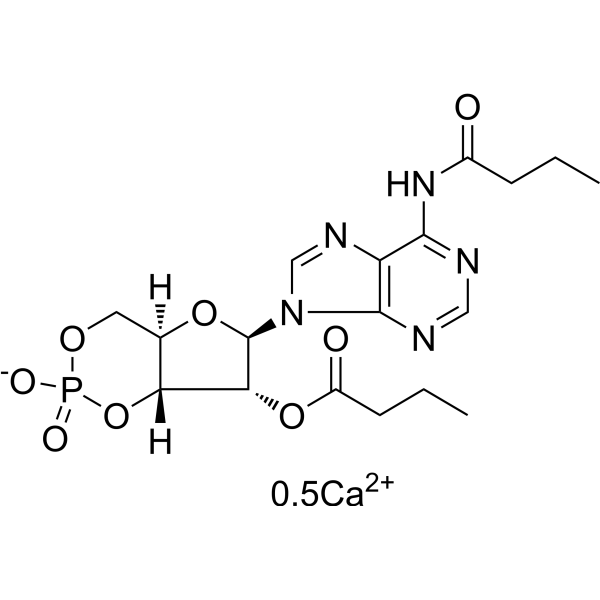
Bucladesine (Dibutyryl cAMP; DBcAMP) hemicalcium is a membrane-permeable 3′, 5′-cyclic adenosine monophosphate (cAMP) analog. Bucladesine selectively activates cAMP dependent protein kinase (PKA) by increasing the intracellular level of cAMP. Bucladesine significantly attenuates MDMA-induced increases in hippocampal mitochondrial ROS formation, mitochondrial outer membrane damage, cytochrome c release, and hippocampal ADP/ATP ratio, thereby improving spatial learning and memory impairments. Bucladesine exhibit anti-nociceptive and anti-inflammation effect. Bucladesine can inhibit cancer cells proliferation, induce apoptosis. Bucladesine can be used for the researches of neurological disease, cancer, inflammation.
For research use only. We do not sell to patients.
- Purity : 98.58%
- CAS No.: 938448-87-4
- Formula: C18H24N5O8P·1/2Na
- Molecular Weight:489.43
-
Storage:
4°C, sealed storage, away from moisture
* In solvent : -80°C, 6 months; -20°C, 1 month (sealed storage, away from moisture)

To place orders, for customer services and technical support, please contact: MedChemExpress USA
Tel: 609-228-6898 E-mail: [email protected] [email protected]


-
 Biological Activity
-
Chemical Information
-
Solvent & Solubility
- Purity & Documentation
- References
-
 Help & FAQs


-
HY-15979A
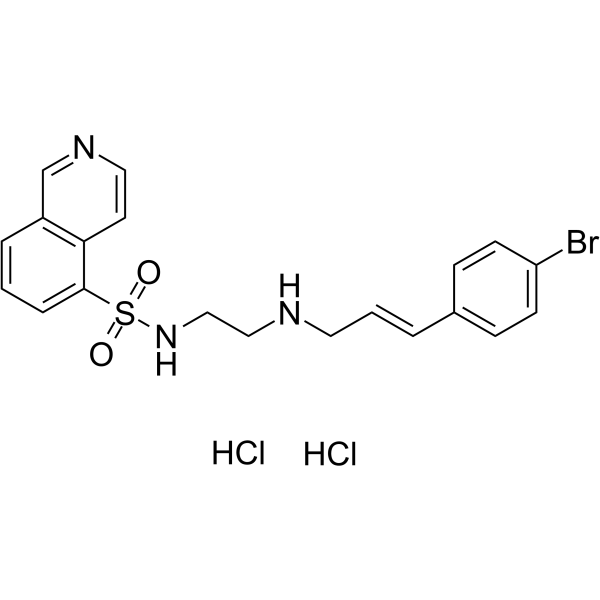
H-89 dihydrochloride -
HY-15979
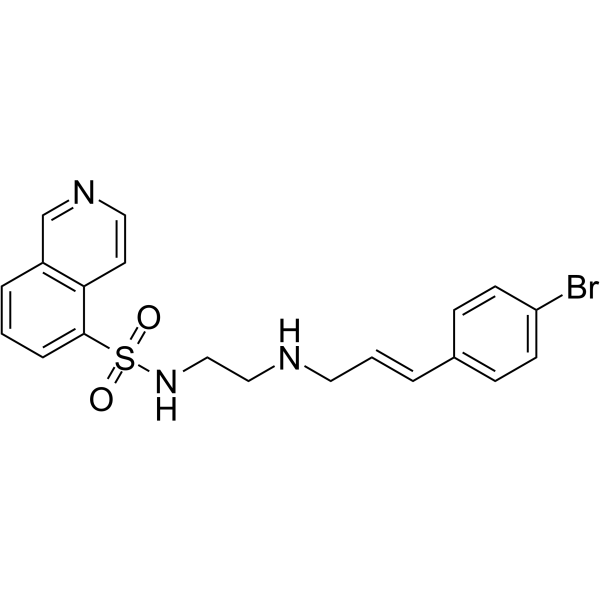
H-89 -
HY-B0764
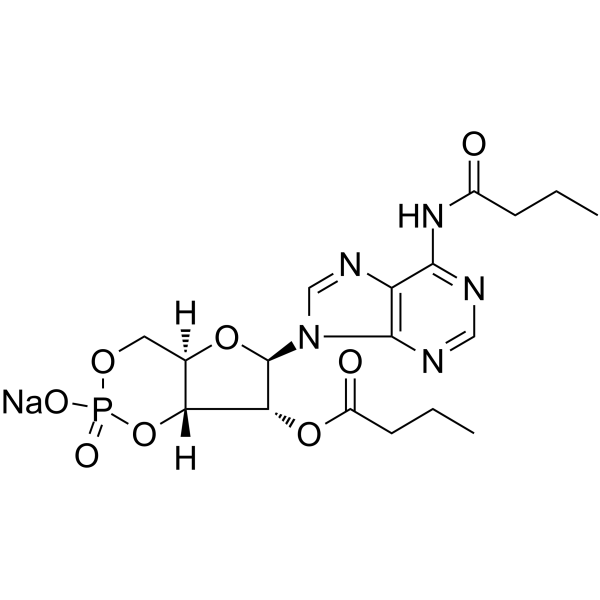
Bucladesine sodium -
HY-15371
Forskolin -
HY-12306
8-Bromo-cAMP sodium salt -
HY-14649
Retinoic acid -
HY-16658B
Z-VAD-FMK -
HY-15142
Doxorubicin hydrochloride -
HY-Y0873C
PEG3350 -
HY-18991
CCG215022 -

HY-B0764R
Bucladesine sodium (Standard) -

HY-D1056
Lipopolysaccharides, from E. coli O55:B5
Publications Citing Use of MedChemExpress (MCE) Bucladesine hemicalcium
More- Cell. 2026 Jul 23;189(15):4685-4705.e10. [Abstract]
- Cell Stem Cell. 2021 Aug 5;28(8):1362-1379.e7. [Abstract]
- Autophagy. 2026 Jun 3:1-31. [Abstract]
- Mol Cell. 2026 Jun 12:S1097-2765(26)00344-8. [Abstract]
- Adv Sci (Weinh). 2025 May;12(20):e2409837. [Abstract]
- Adv Sci (Weinh). 2021 Dec;8(24):e2100808. [Abstract]
- Int J Biol Sci. 2024 Aug 19;20(11):4476-4495. [Abstract]
- Cell Commun Signal. 2022 Apr 12;20(1):52. [Abstract]
- Dev Cell. 2025 Sep 3:S1534-5807(25)00530-1. [Abstract]
- Cell Rep. 2026 May 28;45(6):117450. [Abstract]
- Hum Reprod. 2026 Jul 9:deag103. [Abstract]
- J Ethnopharmacol. 2026 May 23:363:121413. [Abstract]
- Ecotoxicol Environ Saf. 2022 Sep 15:243:113982. [Abstract]
- Biochem Pharmacol. 2026 May 16:118078. [Abstract]
- Life Sci. 2025 Oct 14:382:124022. [Abstract]
- Neurobiol Dis. 2026 Apr 27:107426. [Abstract]
- Cells. 2024 Jul 26;13(15):1260. [Abstract]
- Front Microbiol. 2021 Aug 17;12:692693. [Abstract]
- Front Endocrinol. 2025 Feb 19:16:1570284. [Abstract]
- Eur J Pharmacol. 2022 Oct 15:932:175231. [Abstract]
- J Endocrinol. 2019 Dec;243(3):229-242. [Abstract]
- Int J Mol Sci. 2023 Mar 7;24(6):5111. [Abstract]
- Int J Mol Sci. 2023 Feb 8;24(4):3398. [Abstract]
- Int J Mol Sci. 2022 Oct 20;23(20):12595. [Abstract]
- Chem Biol Interact. 2025 Sep 20:111749. [Abstract]
- Toxicology. 2025 Feb:511:154069. [Abstract]
- Sci Rep. 2026 May 6;16(1):20905. [Abstract]
- Plants. 2023 Oct 24;12(21):3666. [Abstract]
- J Neurochem. 2026 Feb;170(2):e70363. [Abstract]
- ASN Neuro. 2026;18(1):2696821. [Abstract]
- FASEB J. 2024 May 15;38(9):e23622. [Abstract]
- FASEB J. 2020 Oct;34(10):13376-13395. [Abstract]
- J Cell Physiol. 2025 Dec;240(12):e70118. [Abstract]
- Toxins. 2021 Aug 22;13(8):585. [Abstract]
- Genomics. 2025 Jan 21;117(2):111002. [Abstract]
- Pigment Cell Melanoma Res. 2024 Jan;37(1):21-35. [Abstract]
- Mol Cell Endocrinol. 2025 Sep 1:606:112581. [Abstract]
- Reproduction. 2021 May 27;162(1):33-45. [Abstract]
- J Steroid Biochem Mol Biol. 2023 Jan:225:106192. [Abstract]
- Cell Tissue Res. 2022 May;388(2):453-469. [Abstract]
- FEBS Lett. 2021 Nov;595(22):2829-2843. [Abstract]
- J Bone Miner Metab. 2021 Sep;39(5):748-756. [Abstract]
- J Assist Reprod Genet. 2024 Jun;41(6):1669-1685. [Abstract]
- Biochem Biophys Res Commun. 2025 Sep 19:785:152676. [Abstract]
- Exp Ther Med. 2022 Apr;23(4):248. [Abstract]
- bioRxiv. 2026 Jul 21.
- bioRxiv. 2026 Jun 16.
- SSRN. 2025 Jan 27.
- Res Sq. 2024 Jun 11.
- bioRxiv. 2024 Mar 31.
- protocols.io. 2024 Jan 12.
- Proteome Sci. 2023 Oct 11;21(1):16. [Abstract]
 Customer Validation & Images

-
WB
-
WB
-
WB
-
Cell Proliferation/Viability Assay
-
Cell Proliferation/Viability Assay


Biological Activity
Description
|
PKA |
PDE |
In Vitro
Bucladesine causes significant growth delay in multicellular tumor spheroids derived directly from human malignant brain tumors[1].
Bucladesine augments differentiation therapy (in combination with Sodium butyrate (HY-B0350A) and hyperthermia) in human and canine brain tumor cells in vitro[1].
Bucladesine suppresses the mitogenic effects of platelet-derived growth factor (PDGF), basic fibroblast growth factor (bFGF), and epidermal growth factor (EGF) on human astrocytoma cells; bucladesine alone neither potentiates nor inhibits human astrocytoma cell growth[1].
Bucladesine suppresses proliferation, enhances cytoplasmic process formation, increases cytoplasmic glial fibrillary acidic protein (GFAP) levels, and suppresses malignant glioma invasion by decreasing CD44 isoform expression in cultured malignant glioma cells, inducing biochemical and morphological changes[1].
Bucladesine decreases Bcl-2 levels and enhances SNAP-induced p53-sensitive cell death and MPP+-induced cell death, sensitizing human neuroblastoma cells to apoptosis[1].
Bucladesine inhibits proliferation and induces morphological differentiation of astrocytes in vitro via a cyclic adenosine monophosphate-dependent protein kinase pathway[1].
MedChemExpress (MCE) has not independently confirmed the accuracy of these methods. They are for reference only.
In Vivo
Bucladesine (50-300 nM/mouse; i.p.; single dose) exerts a biphasic anti-nociceptive effect on thermal-induced acute pain in male albino mice, with significant activity at 50 and 100 nM/mouse doses, no significant effect at 300 nM/mouse[3].
Bucladesine (0.5-1.5% cream, 5% solution; topical; single or two doses) produces a statistically significant reduction in Arachidonic acid (HY-109590)-induced acute skin inflammation in Mus musculus, with single administration of 1.5% cream yielding a 28% reduction in ear swelling and two administrations yielding a 24% reduction[4].
MedChemExpress (MCE) has not independently confirmed the accuracy of these methods. They are for reference only.


Chemical Information
-
CAS No. 938448-87-4
-
Appearance Solid
-
Molecular Weight 489.43
-
Formula C18H24N5O8P·1/2Na
-
Color White to off-white
-
SMILES
O=C(CCC)O[C@H]1[C@H](N2C(N=CN=C3NC(CCC)=O)=C3N=C2)O[C@@](CO4)([H])[C@@]1([H])OP4([O-])=O.[Ca2+]
-
Synonyms
Dibutyryl cAMP hemicalcium; DBcAMP hemicalcium
-
Shipping
Room temperature in continental US; may vary elsewhere.
-
Storage
4°C, sealed storage, away from moisture
* In solvent : -80°C, 6 months; -20°C, 1 month (sealed storage, away from moisture)


Publications (52)
-
Journal Impact Factor
-
Most Recent
-
Cell
Two distinct causes contribute to the low efficiency of human pre-implantation development. [Abstract]2026 Jul 23;189(15):4685-4705.e10. PMID: 42276044 -
Cell Stem Cell
Organoid modeling of Zika and herpes simplex virus 1 infections reveals virus-specific responses leading to microcephaly. [Abstract]2021 Aug 5;28(8):1362-1379.e7. PMID: 33838105 -
Autophagy
WNT2B impairs endosomal trafficking via WASHC5 to inhibit autophagy: a novel non-secretory WNT pathway. [Abstract]2026 Jun 3:1-31. PMID: 42233622 -
Mol Cell
Distinct associations of pioneer factor Ascl1-E12a with nucleosomes drive changes in cell fate. [Abstract]2026 Jun 12:S1097-2765(26)00344-8. PMID: 42285106 -
Adv Sci (Weinh)
Microbiota-Derived Inosine Suppresses Systemic Autoimmunity via Restriction of B Cell Differentiation and Migration. [Abstract]2025 May;12(20):e2409837. PMID: 40289872 -
Adv Sci (Weinh)
2021 Dec;8(24):e2100808. PMID: 34719888 -
Int J Biol Sci
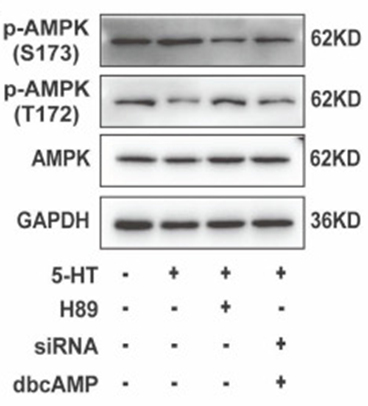
Chronic Stress-induced Serotonin Impairs Intestinal Epithelial Cell Mitochondrial Biogenesis via the AMPK-PGC-1α Axis. [Abstract]2024 Aug 19;20(11):4476-4495. PMID: 39247815
Bucladesine hemicalcium purchased from MedChemExpress. Usage Cited in: Int J Biol Sci. 2024 Aug 19;20(11):4476-4495. [Abstract]
The protein expression of p-AMPK (S173), p-AMPK (T172) and AMPK of HT-29 cells treated with 5-HT, either alone or in combination with H-89 (1 μM) and dbcAMP (1 μM).
-
Cell Commun Signal
Receptor activity-modifying protein 1 regulates mouse skin fibroblast proliferation via the Gαi3-PKA-CREB-YAP axis. [Abstract]2022 Apr 12;20(1):52. PMID: 35413847 -
Dev Cell
A pathological role of O-GlcNAcylation-driven TR11B production and function in lung adenocarcinoma. [Abstract]2025 Sep 3:S1534-5807(25)00530-1. PMID: 40930100 -
Cell Rep
Targeting EP2/EP4-driven expansion of suppressive VSIG4high macrophages overcomes immunotherapy resistance in colorectal cancer. [Abstract]2026 May 28;45(6):117450. PMID: 42213779 -
Hum Reprod
PAPSS2-mediated BMPR1A sulfation in stromal cells regulating endometrial decidualization via autophagy. [Abstract]2026 Jul 9:deag103. PMID: 42421304 -
J Ethnopharmacol
Targeting hypoxia: the role of ethanolic extract of Coptis chinensis Franch. in modulating HIF-1α/IL-17 axis in oropharyngeal candidiasis. [Abstract]2026 May 23:363:121413. PMID: 41747790 -
Ecotoxicol Environ Saf
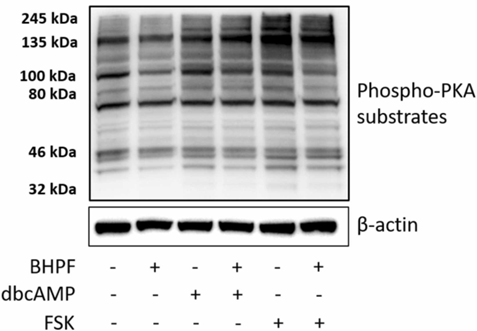
Fluorene-9-bisphenol regulates steroidogenic hormone synthesis in H295R cells through the AC/cAMP/PKA signaling pathway. [Abstract]2022 Sep 15:243:113982. PMID: 35987080
Bucladesine hemicalcium purchased from MedChemExpress. Usage Cited in: Ecotoxicol Environ Saf. 2022 Sep 15:243:113982. [Abstract]
H295R cells were treated with 30 μM BHPF in the absence or presence of 10 μM forskolin (FSK) or 100 μM dbcAMP for 48 h and evaluated by Western blotting.
-
Biochem Pharmacol
Sotorasib induces intestinal epithelial injury through suppression of the cAMP/PKA/CREB signaling axis. [Abstract]2026 May 16:118078. PMID: 42144204 -
Life Sci
Targeting Epac1 to protect the blood brain barrier from inflammation-induced dysfunction: Evidence from an in vitro model. [Abstract]2025 Oct 14:382:124022. PMID: 41101634 -
Neurobiol Dis
Modulation of dendritic development by the neuronal hemoglobin: Role of beta-hemoglobin deficit in mediating prenatal stress-related affective disorders. [Abstract]2026 Apr 27:107426. PMID: 42055258 -
Cells
From Young to Old: Mimicking Neuronal Aging in Directly Converted Neurons from Young Donors. [Abstract]2024 Jul 26;13(15):1260. PMID: 39120291 -
Front Microbiol
Antifungal Activity and Potential Mechanism of 6,7, 4'-O-Triacetylscutellarein Combined With Fluconazole Against Drug-Resistant C. albicans. [Abstract]2021 Aug 17;12:692693. PMID: 34484140 -
Front Endocrinol
2025 Feb 19:16:1570284. PMID: 40046876 -
Eur J Pharmacol
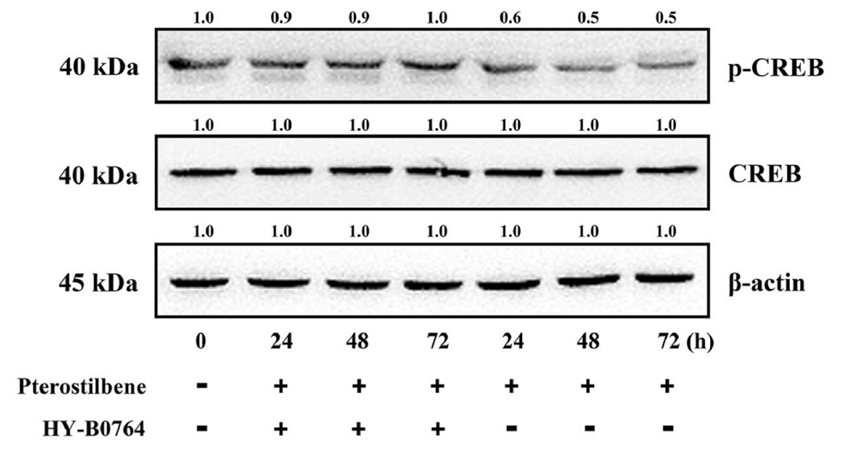
Pterostilbene inhibits melanogenesis, melanocyte dendricity and melanosome transport through cAMP/PKA/CREB pathway. [Abstract]2022 Oct 15:932:175231. PMID: 36038012
Bucladesine hemicalcium purchased from MedChemExpress. Usage Cited in: Eur J Pharmacol. 2022 Oct 15:932:175231. [Abstract]
B16F10 cells was pretreated or not with 3 μM Bucladesine sodium for 1 h before pterostilbene was applied for 24 h, 48h or 72 h at 3 μM. The CREB and p-CREB protein expression levels were detected by WB.
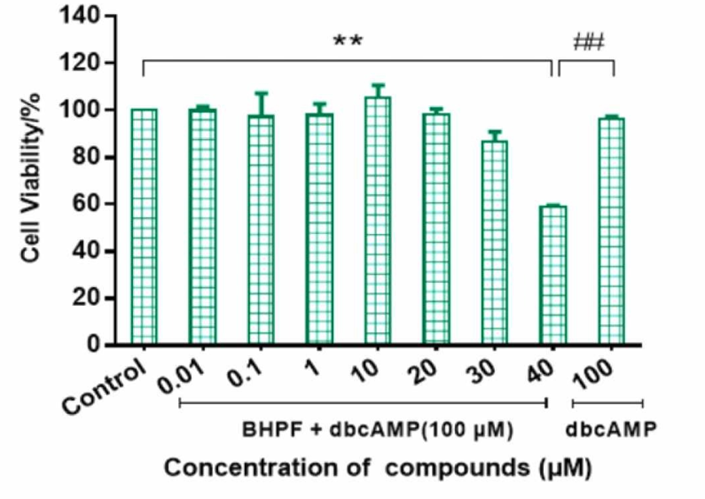
Bucladesine hemicalcium purchased from MedChemExpress. Usage Cited in: Eur J Pharmacol. 2022 Oct 15:932:175231. [Abstract]
Cell viability of H295R cells exposed to 0–40 μM BHPF in the presence of 100 μM dbcAMP for 48 h.
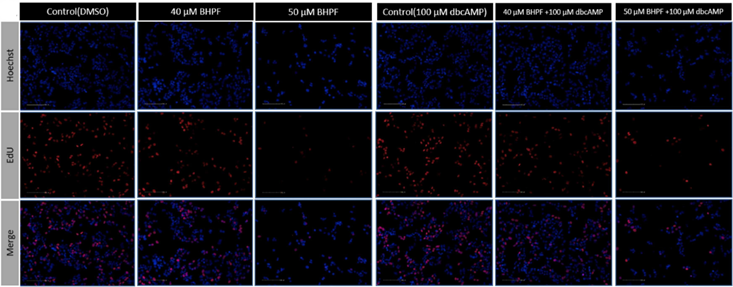
Bucladesine hemicalcium purchased from MedChemExpress. Usage Cited in: Eur J Pharmacol. 2022 Oct 15:932:175231. [Abstract]
Micrographs presenting the incorporation of EdU in H295R cells exposed to BHPF or combined with 100 μM dbcAMP for 48 h. Red: the EdU positive cells; blue: the cell nuclei (Hoechst).
-
J Endocrinol
2019 Dec;243(3):229-242. PMID: 31518992 -
Int J Mol Sci
The Enzyme 15-Hydroxyprostaglandin Dehydrogenase Inhibits a Shift to the Mesenchymal Pattern of Trophoblasts and Decidual Stromal Cells Accompanied by Prostaglandin Transporter in Preeclampsia. [Abstract]2023 Mar 7;24(6):5111. PMID: 36982197 -
Int J Mol Sci
Galangin Rescues Alzheimer's Amyloid-β Induced Mitophagy and Brain Organoid Growth Impairment. [Abstract]2023 Feb 8;24(4):3398. PMID: 36834819 -
Int J Mol Sci
Asprosin in the Paraventricular Nucleus Induces Sympathetic Activation and Pressor Responses via cAMP-Dependent ROS Production. [Abstract]2022 Oct 20;23(20):12595. PMID: 36293450 -
Chem Biol Interact
Phytosphingosine suppresses gastric cancer through SFRP4/β-catenin axis-mediated Wnt signaling pathway inhibition. [Abstract]2025 Sep 20:111749. PMID: 40983245 -
Toxicology
Cadmium induces spontaneous abortion by impairing endometrial stromal cell decidualization. [Abstract]2025 Feb:511:154069. PMID: 39892737 -
Sci Rep
2026 May 6;16(1):20905. PMID: 42092124 -
Plants
Anti-Melanogenic Effects of Lilium lancifolium Root Extract via Downregulation of PKA/CREB and MAPK/CREB Signaling Pathways in B16F10 Cells. [Abstract]2023 Oct 24;12(21):3666. PMID: 37960022 -
J Neurochem
Zinc-Mediated Lysosomal Destabilization Links Mitochondrial Damage to Neuronal Death in a Cellular MPP+ Model of Parkinson's Disease. [Abstract]2026 Feb;170(2):e70363. PMID: 41622607 -
ASN Neuro
Hijacking Sodium-Glucose Cotransporters: Fructose Drives Neuronal and Microglial Dysfunction. [Abstract]2026;18(1):2696821. PMID: 42429375 -
FASEB J
Long noncoding RNA BMPR1B-AS1 stability regulated by IGF2BP2 affects the decidualization in endometriosis patients through the SMAD1/5/9 pathway. [Abstract]2024 May 15;38(9):e23622. PMID: 38703029 -
FASEB J
Morinda officinalis oligosaccharides ameliorate depressive-like behaviors in poststroke rats through upregulating GLUT3 to improve synaptic activity. [Abstract]2020 Oct;34(10):13376-13395. PMID: 32812265 -
J Cell Physiol
Telomere Attrition-Induced Senescence in Human Pluripotent Stem Cell-Derived Astrocytes: Distinct Cellular and Functional Characteristics. [Abstract]2025 Dec;240(12):e70118. PMID: 41340457 -
Toxins
2021 Aug 22;13(8):585. PMID: 34437455 -
Genomics
2025 Jan 21;117(2):111002. PMID: 39848478 -
Pigment Cell Melanoma Res
Modeling of pigmentation disorders associated with MITF mutation in Waardenburg syndrome revealed an impaired melanogenesis pathway in iPS-derived melanocytes. [Abstract]2024 Jan;37(1):21-35. PMID: 37559350 -
Mol Cell Endocrinol
Embryo-derived human chorionic gonadotropin promotes human decidualization through activating epithelial prostaglandin F2α secretion. [Abstract]2025 Sep 1:606:112581. PMID: 40398806 -
Reproduction
2021 May 27;162(1):33-45. PMID: 34044364 -
J Steroid Biochem Mol Biol
Nonclassic Adrenal Hyperplasia (NCAH) due to 21-hydroxylase deficiency: A cohort of 78 patients. [Abstract]2023 Jan:225:106192. PMID: 36167262 -
Cell Tissue Res
MAX deficiency impairs human endometrial decidualization through down-regulating OSR2 in women with recurrent spontaneous abortion. [Abstract]2022 May;388(2):453-469. PMID: 35146559 -
FEBS Lett
miR-221/222 suppression induced by activation of the cAMP/PKA/CREB1 pathway is required for cAMP-induced bidirectional differentiation of glioma cells. [Abstract]2021 Nov;595(22):2829-2843. PMID: 34687039 -
J Bone Miner Metab
2021 Sep;39(5):748-756. PMID: 33829324 -
J Assist Reprod Genet
2024 Jun;41(6):1669-1685. PMID: 38526774 -
Biochem Biophys Res Commun
Glucose transports in the ileum: mechanism, regulation and physiological role of ileal glucose absorption. [Abstract]2025 Sep 19:785:152676. PMID: 41005286 -
Exp Ther Med
Melatonin alleviates traumatic brain injury-induced anxiety-like behaviors in rats: Roles of the protein kinase A/cAMP-response element binding signaling pathway. [Abstract]2022 Apr;23(4):248. PMID: 35261620
Bucladesine hemicalcium purchased from MedChemExpress. Usage Cited in: Exp Ther Med. 2022 Apr;23(4):248. [Abstract]
Bucladesine hemicalcium (dbcAMP). Representative results of immunoblotting of PKA, p-PKA, CREB, p-CREB, NF-κB and p-NF-κB in the amygdala tissue.
-
-
-
-
-
-
-
Proteome Sci
Proteomic analysis of neonatal mouse hearts shows PKA functions as a cardiomyocyte replication regulator. [Abstract]2023 Oct 11;21(1):16. PMID: 37821903


Solvent & Solubility
In Vitro:
H2O : 100 mg/mL (204.32 mM; Need ultrasonic)
DMSO : 100 mg/mL (204.32 mM; Need ultrasonic; Hygroscopic DMSO has a significant impact on the solubility of product, please use newly opened DMSO)
Please refer to the solubility information to select the appropriate solvent. Once prepared, please aliquot and store the solution to prevent product inactivation from repeated freeze-thaw cycles.
Storage method and period of stock solution: -80°C, 6 months; -20°C, 1 month (sealed storage, away from moisture). When stored at -80°C, please use it within 6 months. When stored at -20°C, please use it within 1 month.
* Note: If you choose water as the stock solution, please dilute it to the working solution, then filter and sterilize it with a 0.22 μm filter before use.
Please refer to the solubility information to select the appropriate solvent. Once prepared, please aliquot and store the solution to prevent product inactivation from repeated freeze-thaw cycles.
Storage method and period of stock solution: -80°C, 6 months; -20°C, 1 month (sealed storage, away from moisture). When stored at -80°C, please use it within 6 months. When stored at -20°C, please use it within 1 month.
* Note: If you choose water as the stock solution, please dilute it to the working solution, then filter and sterilize it with a 0.22 μm filter before use.
Concentration (start) × Volume (start) = Concentration (final) × Volume (final)
In Vivo:
Select the appropriate dissolution method based on your experimental animal and administration route.
- For the following dissolution methods, please ensure to first prepare a clear stock solution using an In Vitro approach and then sequentially add co-solvents:
- To ensure reliable experimental results, the clarified stock solution can be appropriately stored based on storage conditions. As for the working solution for In Vivo experiments, it is recommended to prepare freshly and use it on the same day.
- The percentages shown for the solvents indicate their volumetric ratio in the final prepared solution. If precipitation or phase separation occurs during preparation, heat and/or sonication can be used to aid dissolution.
Add each solvent one by one: 10% DMSO 40% PEG300 5% Tween-80 45% Saline
Solubility: ≥ 2.5 mg/mL (5.11 mM); Clear solution
This protocol yields a clear solution of ≥ 2.5 mg/mL (saturation unknown).
Taking 1 mL working solution as an example, add 100 μL DMSO stock solution (25.0 mg/mL) to 400 μL PEG300, and mix evenly; then add 50 μL Tween-80 and mix evenly; then add 450 μL Saline to adjust the volume to 1 mL.
Preparation of Saline: Dissolve 0.9 g sodium chloride in ddH₂O and dilute to 100 mL to obtain a clear Saline solution.
Add each solvent one by one: 10% DMSO 90% (20% SBE-β-CD in Saline)
Solubility: ≥ 2.5 mg/mL (5.11 mM); Clear solution
This protocol yields a clear solution of ≥ 2.5 mg/mL (saturation unknown).
Taking 1 mL working solution as an example, add 100 μL DMSO stock solution (25.0 mg/mL) to 900 μL 20% SBE-β-CD in Saline, and mix evenly.
Preparation of 20% SBE-β-CD in Saline (4°C, storage for one week): 2 g SBE-β-CD powder is dissolved in 10 mL Saline, completely dissolve until clear.
For the following dissolution methods, please prepare the working solution directly:
It is recommended to prepare fresh solutions and use them promptly within a short period of time.
The percentages shown for the solvents indicate their volumetric ratio in the final prepared solution. If precipitation or phase separation occurs during preparation, heat and/or sonication can be used to aid dissolution.
Add each solvent one by one: PBS
Solubility: 110 mg/mL (224.75 mM); Clear solution; Need ultrasonic
In Vivo Dissolution Calculator
Please enter the basic information of animal experiments:
-
-
-
-
Recommended: Prepare an additional quantity of animals to account for potential losses during experiments.
Working solution concentration: 0.22 mg/mL
This product has good water solubility, please refer to the measured solubility data in water/PBS/Saline for details.


Purity & Documentation
-
Data Sheet (293 KB)
-
SDS (252 KB)
- English - EN (252 KB)
- Français - FR (252 KB)
- Deutsch - DE (252 KB)
- Norwegian - NO (252 KB)
- Español - ES (252 KB)
- Swedish - SV (252 KB)
- Italian - IT (252 KB)
- Korean - KR (252 KB)
- Portuguese - PT (252 KB)
-
Handling Instructions (2659 KB)
References
[1]. Dalbasti T, et al. Local interstitial chemotherapy with sustained release bucladesine in de novo glioblastoma multiforme: a preliminary study. J Neurooncol. 2002;56(2):167-174. [Content Brief]
[2]. Taghizadeh G, et al. Bucladesine Attenuates Spatial Learning and Hippocampal Mitochondrial Impairments Induced by 3, 4-Methylenedioxymethamphetamine (MDMA). Neurotox Res. 2020;38(1):38-49. [Content Brief]
[3]. Salehi F, et al. Effect of bucladesine, pentoxifylline, and H-89 as cyclic adenosine monophosphate analog, phosphodiesterase, and protein kinase A inhibitor on acute pain. Fundam Clin Pharmacol. 2017;31(4):411-419. [Content Brief]
[4]. Rundfeldt C, et al. The stable cyclic adenosine monophosphate analogue, dibutyryl cyclo-adenosine monophosphate (bucladesine), is active in a model of acute skin inflammation. Arch Dermatol Res. 2012;304(4):313-317. [Content Brief]


Complete Stock Solution Preparation Table
Please refer to the solubility information to select the appropriate solvent. Once prepared, please aliquot and store the solution to prevent product inactivation from repeated freeze-thaw cycles.
Storage method and period of stock solution: -80°C, 6 months; -20°C, 1 month (sealed storage, away from moisture). When stored at -80°C, please use it within 6 months. When stored at -20°C, please use it within 1 month.
| Optional Solvent | Concentration Solvent Mass | 1 mg | 5 mg | 10 mg | 25 mg |
|---|---|---|---|---|---|
| H2O / DMSO | 1 mM | 2.0432 mL | 10.2160 mL | 20.4319 mL | 51.0798 mL |
| 5 mM | 0.4086 mL | 2.0432 mL | 4.0864 mL | 10.2160 mL | |
| 10 mM | 0.2043 mL | 1.0216 mL | 2.0432 mL | 5.1080 mL | |
| 15 mM | 0.1362 mL | 0.6811 mL | 1.3621 mL | 3.4053 mL | |
| 20 mM | 0.1022 mL | 0.5108 mL | 1.0216 mL | 2.5540 mL | |
| 25 mM | 0.0817 mL | 0.4086 mL | 0.8173 mL | 2.0432 mL | |
| 30 mM | 0.0681 mL | 0.3405 mL | 0.6811 mL | 1.7027 mL | |
| 40 mM | 0.0511 mL | 0.2554 mL | 0.5108 mL | 1.2770 mL | |
| 50 mM | 0.0409 mL | 0.2043 mL | 0.4086 mL | 1.0216 mL | |
| 60 mM | 0.0341 mL | 0.1703 mL | 0.3405 mL | 0.8513 mL | |
| 80 mM | 0.0255 mL | 0.1277 mL | 0.2554 mL | 0.6385 mL | |
| 100 mM | 0.0204 mL | 0.1022 mL | 0.2043 mL | 0.5108 mL |
* Note: If you choose water as the stock solution, please dilute it to the working solution, then filter and sterilize it with a 0.22 μm filter before use.


Bucladesine hemicalcium Related Classifications
HY-B0764A Related Classifications
 Powered by Bioz