



Atractyloside potassium salt
Based on 4 publication(s) in Google Scholar
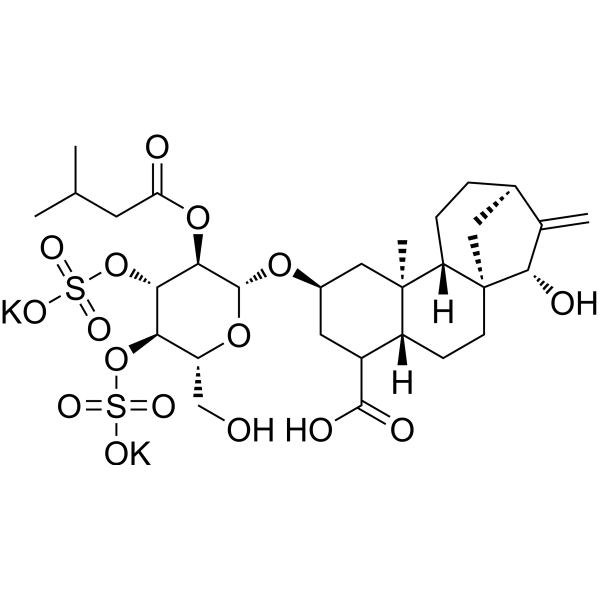
Atractyloside potassium salt is a powerful and specific inhibitor of mitochondrial ADP/ATP transport. Atractyloside potassium salt inhibits chloride channels from mitochondrial membranes of rat heart. Atractyloside potassium salt activates autophagy, inhibits ANT2, mTOR and promotes the activation of p-AMPK. Atractyloside potassium salt has anti-cancer effects on non-small cell lung cancer and can inhibit liver steatosis. Atractylodesin potassium salt has nephrotoxicity.
For research use only. We do not sell to patients.
- Purity : 99.93%
- CAS No.: 102130-43-8
- Formula: C30H44K2O16S2
- Molecular Weight:802.99
-
Storage:
4°C, sealed storage, away from moisture and light
* In solvent : -80°C, 6 months; -20°C, 1 month (sealed storage, away from moisture and light)

To place orders, for customer services and technical support, please contact: MedChemExpress USA
Tel: 609-228-6898 E-mail: [email protected] [email protected]


-
 Biological Activity
-
Chemical Information
-
Solvent & Solubility
- Protocols
- Purity & Documentation
- References
-
 Help & FAQs


-
HY-N1502
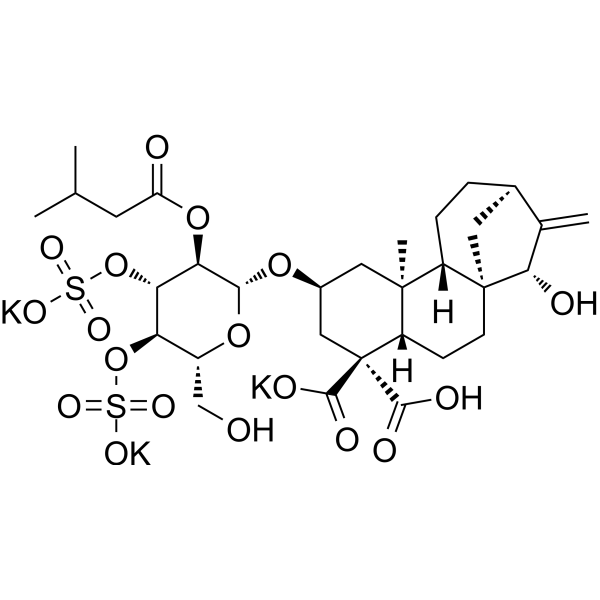
Carboxyatractyloside tripotassiumADP/ATP Carrier Inhibitor -
HY-90006
5-FluorouracilThymidylate Synthase Inhibitor -
HY-B0627
MetforminAntihyperglycemic Agent -
HY-B0421
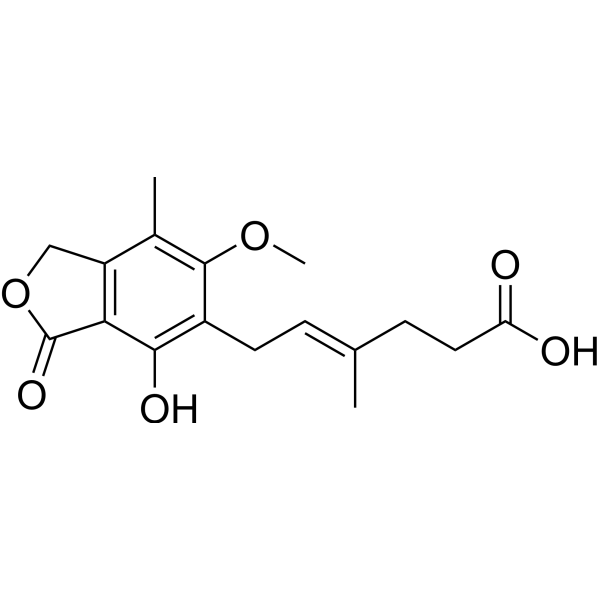
Mycophenolic acidIMPDH Inhibitor -
HY-17386
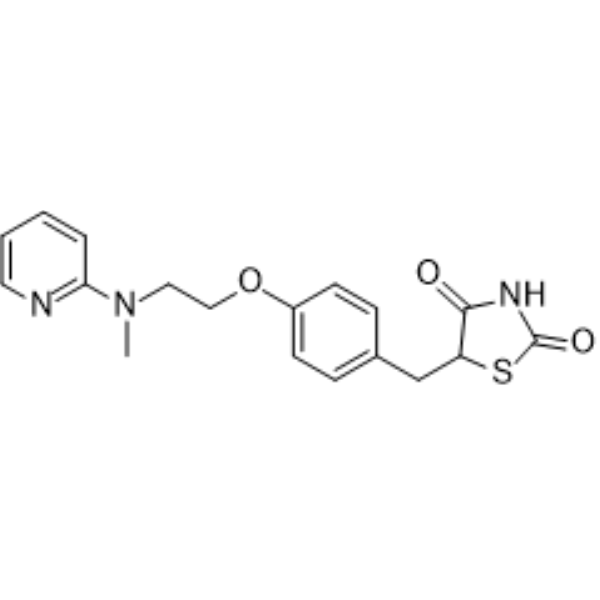
RosiglitazonePPARγ Agonist -
HY-N2522
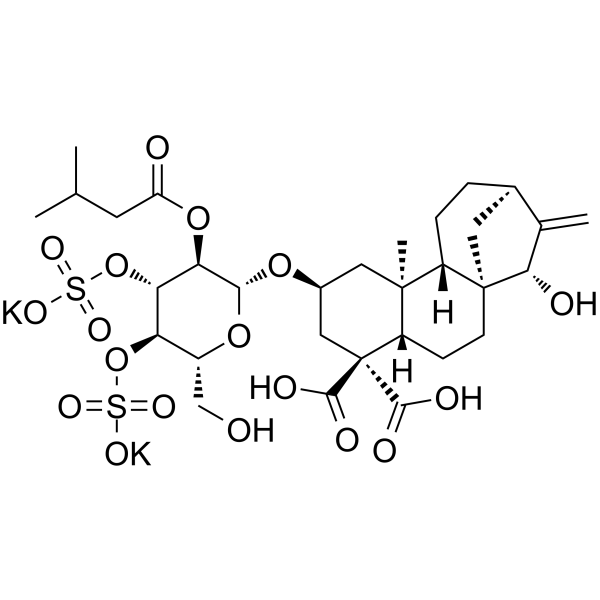
Carboxyatractyloside dipotassiumADP/ATP Carrier Inhibitor -
HY-125006
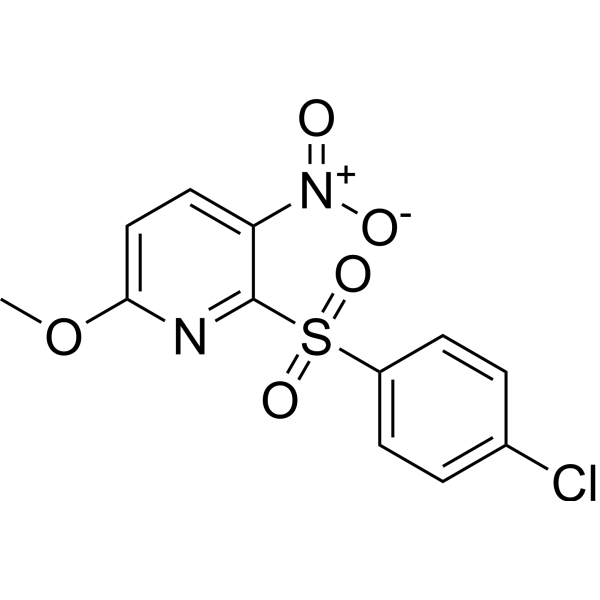
TRi-1TXNRD1 Inhibitor -
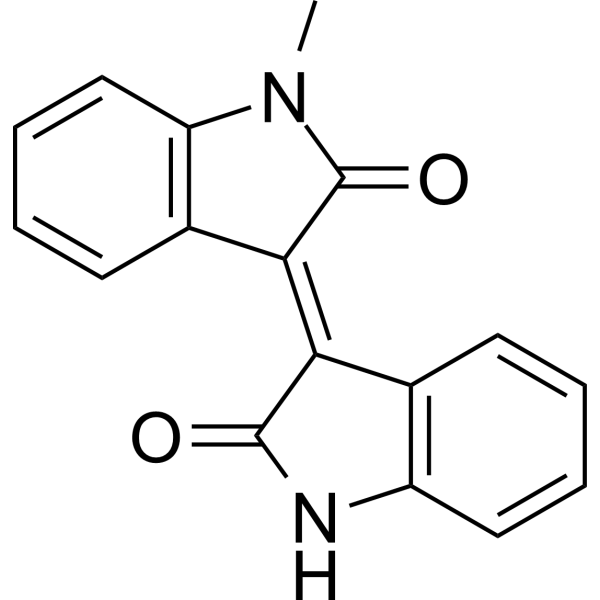
HY-13680
MeisoindigoApoptosis Inducer -

HY-N1462R
Atractyloside potassium salt (Standard)ADP/ATP Transport Inhibitor -
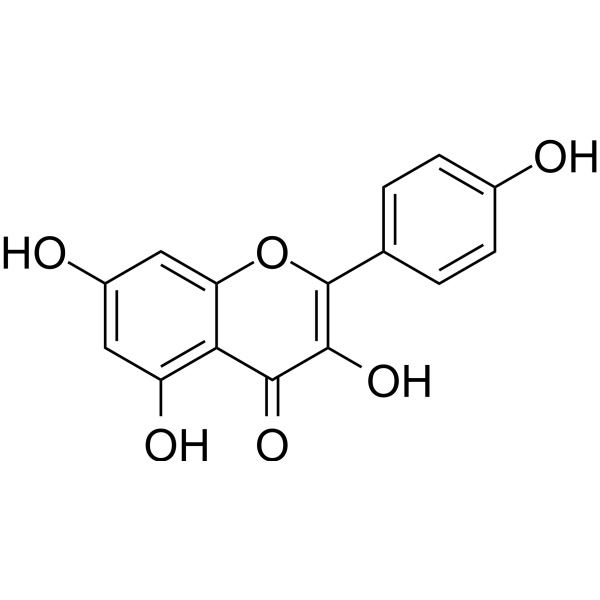
HY-14590
KaempferolEstrogen Receptor α Inhibitor
Publications Citing Use of MedChemExpress (MCE) Atractyloside potassium salt
More Customer Validation & Images

-
RT-PCR

-
Cell Proliferation/Viability Assay

-
WB

All AMPK Isoforms
More

Biological Activity
Description
In Vitro
Atractyloside (7.5-15 µM, 10 min) potassium salt induces low contractile reaction of arteriolar smooth muscle through mitochondrial damage in arteriolar smooth muscle cells[5].
Atractyloside (2.5-7.5 µM, 24 h) potassium salt activates autophagy to accelerate the degradation of TGs in FFA-treated steatosis HepG2 cells[6].
Atractylodesin (5-100 µM, 10 min) potassium salt inhibits the translocation of 3'-phospho-5'-phosphosulfate (PAPS) to rat liver Golgi vesicles[7].
Atractylodesin (as little as 20 μM) potassium salt causes significant enzyme leakage from proximal tubules in vitro[8].
Atractyloside (≥200 μ M, 3 h) potassium salt causes a significant increase of lipid peroxidation in liver slices[9].
Atractyloside (1-5 µM, 48 h) potassium salt inhibits Gefitinib (HY-50895)‑resistant non‑small‑cell lung cancer cell proliferation[10].
Atractyloside (5 mM, 48 h) potassium salt induces release of cathepsin B from purified lysosomes[11].
Atractyloside (20 µM) potassium salt blocks the protective effect of Puerarin (HY-N0145) in isolated rat heart[12].
MedChemExpress (MCE) has not independently confirmed the accuracy of these methods. They are for reference only. Further protocols information, click here.
-
Cell Line:HepG2 cells and L-02 cells
-
Concentration:2.5, 5, 7.5, 10, and 20 μM
-
Incubation Time:48 h
-
Result:Inhibited the viability of HepG2 cells at concentrations of 10 and 20 μM.
Had no effect on the viability of HepG2 cells (2.5, 5, and 7.5 μM).
Inhibited viability of L-02 cells (20 μM).
In Vivo
Atractyloside (50 mg/kg, i.p.) potassium salt produces a tubular nephrosis 180 min after its administration in male albino rats[14].
MedChemExpress (MCE) has not independently confirmed the accuracy of these methods. They are for reference only.
-
Animal Model:Male ICR wide-type (WT) mice (feed with a high-fat diet (HFD))[13]
-
Dosage:2, 4 mg/kg
-
Administration:Intraperitoneal injection (i.p.), 2 weeks before the feeding duration ends
-
Result:Reversed the changes of body weight, RW of liver and epididymal fat, and the serum AST level.
Improved the NAFLD steatosis and decrease HFD-induced lipid accumulation in the liver.
Decreased the protein expression of p-mTOR and the value of p-mTOR/mTOR.
Increased the protein expression of LC3A/B-Ⅱ and ATG7.
Increased amount of colocalization of LC3B and PLIN2.


Chemical Information
-
CAS No. 102130-43-8
-
Appearance Solid
-
Molecular Weight 802.99
-
Formula C30H44K2O16S2
-
Color White to light yellow
-
SMILES
[H][C@@]12C(C(O)=O)C[C@@H](O[C@H]3[C@@H]([C@H]([C@@H]([C@@H](CO)O3)OS(=O)(O[K])=O)OS(=O)(O[K])=O)OC(CC(C)C)=O)C[C@@]1(C)[C@@]4([H])[C@@]5([C@@H](O)C([C@H](CC4)C5)=C)CC2
-
Structure Classification
-
Shipping
Room temperature in continental US; may vary elsewhere.
-
Storage
4°C, sealed storage, away from moisture and light
* In solvent : -80°C, 6 months; -20°C, 1 month (sealed storage, away from moisture and light)


Publications (4)
-
Journal Impact Factor
-
Most Recent
-
Membranes
The Infarct-Reducing Effect of the δ2 Opioid Receptor Agonist Deltorphin II: The Molecular Mechanism. [Abstract]2023 Jan 4;13(1):63. PMID: 36676870 -
Oncol Lett
Atractyloside inhibits gefitinib‑resistant non‑small‑cell lung cancer cell proliferation. [Abstract]2024 Jul 30;28(4):466. PMID: 39119229
Atractyloside potassium salt purchased from MedChemExpress. Usage Cited in: Oncol Lett. 2024 Jul 30;28(4):466. [Abstract]
After treatment with Atractyloside (5 μM), the expression of a homologous recombination‑related gene was decreased in H1975, and that of a non‑homologous end‑joining‑related gene was compensatively upregulated.
Atractyloside potassium salt purchased from MedChemExpress. Usage Cited in: Oncol Lett. 2024 Jul 30;28(4):466. [Abstract]
Increasing the concentration of Atractyloside (2.5, 5, 10 μM) effectively suppressed H1975 cell proliferation.
Atractyloside potassium salt purchased from MedChemExpress. Usage Cited in: Oncol Lett. 2024 Jul 30;28(4):466. [Abstract]
Atractyloside (5 μM) suppressed the AKT pathway.
-
Biomed Pharmacother
Bongkrekic acid alleviates airway inflammation via breaking the mPTP/mtDAMPs/RAGE feedback loop in a steroid-insensitive asthma model. [Abstract]2024 Aug:177:117111. PMID: 39013220 -
Bioengineered
Knockdown of forkhead box protein P1 alleviates hypoxia reoxygenation injury in H9c2 cells through regulating Pik3ip1/Akt/eNOS and ROS/mPTP pathway. [Abstract]2022 Jan;13(1):1320-1334. PMID: 35000528


Solvent & Solubility
In Vitro:
DMSO : 250 mg/mL (311.34 mM; Need ultrasonic; Hygroscopic DMSO has a significant impact on the solubility of product, please use newly opened DMSO)
H2O : 66.67 mg/mL (83.03 mM; Need ultrasonic)
Please refer to the solubility information to select the appropriate solvent. Once prepared, please aliquot and store the solution to prevent product inactivation from repeated freeze-thaw cycles.
Storage method and period of stock solution: -80°C, 6 months; -20°C, 1 month (sealed storage, away from moisture and light). When stored at -80°C, please use it within 6 months. When stored at -20°C, please use it within 1 month.
* Note: If you choose water as the stock solution, please dilute it to the working solution, then filter and sterilize it with a 0.22 μm filter before use.
Please refer to the solubility information to select the appropriate solvent. Once prepared, please aliquot and store the solution to prevent product inactivation from repeated freeze-thaw cycles.
Storage method and period of stock solution: -80°C, 6 months; -20°C, 1 month (sealed storage, away from moisture and light). When stored at -80°C, please use it within 6 months. When stored at -20°C, please use it within 1 month.
* Note: If you choose water as the stock solution, please dilute it to the working solution, then filter and sterilize it with a 0.22 μm filter before use.
Concentration (start) × Volume (start) = Concentration (final) × Volume (final)
In Vivo:
Select the appropriate dissolution method based on your experimental animal and administration route.
- For the following dissolution methods, please ensure to first prepare a clear stock solution using an In Vitro approach and then sequentially add co-solvents:
- To ensure reliable experimental results, the clarified stock solution can be appropriately stored based on storage conditions. As for the working solution for In Vivo experiments, it is recommended to prepare freshly and use it on the same day.
- The percentages shown for the solvents indicate their volumetric ratio in the final prepared solution. If precipitation or phase separation occurs during preparation, heat and/or sonication can be used to aid dissolution.
Add each solvent one by one: 10% DMSO 40% PEG300 5% Tween-80 45% Saline
Solubility: ≥ 2.08 mg/mL (2.59 mM); Clear solution
This protocol yields a clear solution of ≥ 2.08 mg/mL (saturation unknown).
Taking 1 mL working solution as an example, add 100 μL DMSO stock solution (20.8 mg/mL) to 400 μL PEG300, and mix evenly; then add 50 μL Tween-80 and mix evenly; then add 450 μL Saline to adjust the volume to 1 mL.
Preparation of Saline: Dissolve 0.9 g sodium chloride in ddH₂O and dilute to 100 mL to obtain a clear Saline solution.
Add each solvent one by one: 10% DMSO 90% (20% SBE-β-CD in Saline)
Solubility: ≥ 2.08 mg/mL (2.59 mM); Clear solution
This protocol yields a clear solution of ≥ 2.08 mg/mL (saturation unknown).
Taking 1 mL working solution as an example, add 100 μL DMSO stock solution (20.8 mg/mL) to 900 μL 20% SBE-β-CD in Saline, and mix evenly.
Preparation of 20% SBE-β-CD in Saline (4°C, storage for one week): 2 g SBE-β-CD powder is dissolved in 10 mL Saline, completely dissolve until clear.
For the following dissolution methods, please prepare the working solution directly:
It is recommended to prepare fresh solutions and use them promptly within a short period of time.
The percentages shown for the solvents indicate their volumetric ratio in the final prepared solution. If precipitation or phase separation occurs during preparation, heat and/or sonication can be used to aid dissolution.
Add each solvent one by one: PBS
Solubility: 50 mg/mL (62.27 mM); Clear solution; Need ultrasonic
In Vivo Dissolution Calculator
Please enter the basic information of animal experiments:
-
-
-
-
Recommended: Prepare an additional quantity of animals to account for potential losses during experiments.
Working solution concentration: 0.22 mg/mL
This product has good water solubility, please refer to the measured solubility data in water/PBS/Saline for details.

Protocols
-
Nephrotoxicity Study
This protocol assesses nephrotoxicity by combining functional kidney injury readouts, urinary/tissue injury biomarkers, and renal histopathology. Serum creatinine and BUN reflect impaired kidney function, while KIM-1, NGAL, clusterin, osteopontin, IL-18, cystatin C, nephrin, Oat5, urinary protein, glucose, and alkaline phosphatase have been used to detect tubular injury in cisplatin-, gentamicin-, and acetaminophen-induced nephrotoxicity models.
-
Autophagy
Autophagy is a process in which eukaryotic cells use lysosomes to degrade their own cytoplasmic proteins and damaged organelles under the regulation of autophagy related gene (Atg). Microtubule-associated proteins light chain 3 (LC3) is recognized as autophagy marker, which transfers from cytoplasmic LC3 (LC3-I) to membrane type (LC3-II). LC3-II/I ratio could be detected by Western Blot and fluorescence microscopy.
-
Lysosome and acidic-vesicle live-cell staining
Lysosome and acidic-vesicle live-cell staining detects acidic intracellular compartments by using membrane-permeant acidotropic probes that accumulate in low-pH vesicles, including lysosomes, late endosomes, autolysosomes, and acidic phagosomes. LysoTracker staining is commonly used as an intensity-based readout of acidic lysosomal compartment abundance or enlargement, while acridine orange produces green fluorescence in less concentrated compartments and red fluorescence after concentration-dependent accumulation in acidic vesicular organelles. Loss or reduction of acridine-orange red signal can be used as a readout of lysosomal membrane permeabilization or reduced acidic-vesicle integrity. This protocol is designed for live cultured cells and can be adapted for fluorescence microscopy, high-content imaging, plate-reader readout, or flow cytometry when the selected literature supports the readout. Because these dyes report acidotropic accumulation rather than lysosome identity alone,
-
Macroautophagy Solutions
Macroautophagy is a conserved lysosome-dependent degradation pathway in which cytoplasmic material is sequestered into double-membrane autophagosomes and delivered to lysosomes for degradation and recycling. The pathway supports cellular homeostasis during nutrient limitation, organelle stress, protein-aggregate accumulation, infection, differentiation, and tissue remodeling by coupling cargo sequestration, autophagosome maturation, lysosomal fusion, and degradation of cargo-derived macromolecules. The core molecular sequence includes initiation by nutrient- and stress-regulated autophagy machinery, autophagosome nucleation, LC3/ATG8-family conjugation to autophagosomal membranes, cargo selection through receptors such as SQSTM1/p62, autophagosome-lysosome fusion, and lysosomal degradation. LC3 was identified as a mammalian homolog of yeast Atg8 that localizes to autophagosomal membranes after processing, and p62/SQSTM1 was shown to connect ubiquitinated cargo with autophagic degradati
-
Liver Histomorphometry
Liver histomorphometry is a quantitative histological approach used to measure structural alterations in hepatic tissue, including parenchymal loss, steatosis, fibrosis, and vascular remodeling, by combining stained tissue section analysis with stereological or computerized image-based measurements. Classical morphometric frameworks quantify volume fractions of liver compartments and fibrotic regions using systematic sampling and image analysis, enabling objective comparison of pathological changes across experimental groups. These approaches are widely applied in liver cirrhosis and fibrosis studies to reduce subjectivity in histological scoring and improve reproducibility of tissue evaluation. Recent methodological advances integrate automated image analysis and radiomics-based extraction of histological features from standard liver stains (e. g. , H&E and fibrotic stains), enabling quantitative correlation between morphometric features and fibrosis stages in non-alcoholic fatty live


Purity & Documentation
-
Data Sheet (288 KB)
-
SDS (420 KB)
- English - EN (420 KB)
- Français - FR (420 KB)
- Deutsch - DE (420 KB)
- Norwegian - NO (420 KB)
- Español - ES (420 KB)
- Swedish - SV (420 KB)
- Italian - IT (420 KB)
- Korean - KR (420 KB)
- Portuguese - PT (420 KB)
-
Handling Instructions (2659 KB)
References
[1]. Malekova L, et al. Bongkrekic acid and atractyloside inhibits chloride channels from mitochondrial membranes of rat heart. Biochim Biophys Acta. 2007 Jan;1767(1):31-44. [Content Brief]
[2]. Nikles S, et al. Influence of Processing on the Content of Toxic Carboxyatractyloside and Atractyloside and the Microbiological Status of Xanthium sibiricum Fruits (Cang'erzi). Planta Med. 2015 Aug;81(12-13):1213-20. [Content Brief]
[3]. Lemasters JJ, et al. Phosphate dependence and atractyloside inhibition of mitochondrial oxidative phosphorylation. The ADP-ATP carrier is rate-limiting. J Biol Chem. 1979 Feb 25;254(4):1248-51. [Content Brief]
[5]. Song R, et al. Atractyloside induces low contractile reaction of arteriolar smooth muscle through mitochondrial damage. J Appl Toxicol. 2012 Jun;32(6):402-8. [Content Brief]
[6]. Zhang P, et al. Mitochondrial Energy-Regulating Effect of Atractyloside Inhibits Hepatocellular Steatosis Through the Activation of Autophagy. Front Pharmacol. 2020 Sep 30;11:575695. [Content Brief]
[7]. Capasso JM, et al. Effect of atractylosides, palmitoyl coenzyme A, and anion transport inhibitors on translocation of nucleotide sugars and nucleotide sulfate into Golgi vesicles. J Biol Chem. 1984 Apr 10;259(7):4263-6. [Content Brief]
[8]. Obatomi DK, et al. Selective cytotoxicity associated with in vitro exposure of fresh rat renal fragments and continuous cell lines to atractyloside. Arch Toxicol. 1996;71(1-2):93-8. [Content Brief]
[9]. Obatomi DK, et al. The toxic mechanism and metabolic effects of atractyloside in precision-cut pig kidney and liver slices. Arch Toxicol. 1998 Jul-Aug;72(8):524-30. [Content Brief]
[10]. Yao W, et al. Atractyloside inhibits gefitinib‑resistant non‑small‑cell lung cancer cell proliferation. Oncol Lett. 2024 Jul 30;28(4):466. [Content Brief]
[11]. Vancompernolle K, et al. Atractyloside-induced release of cathepsin B, a protease with caspase-processing activity. FEBS Lett. 1998 Nov 6;438(3):150-8. [Content Brief]
[12]. Gao Q, et al. Atractyloside and 5-hydroxydecanoate block the protective effect of puerarin in isolated rat heart. Life Sci. 2006 Jun 13;79(3):217-24. [Content Brief]
[13]. Zhang P, et al. Atractyloside Protect Mice Against Liver Steatosis by Activation of Autophagy via ANT-AMPK-mTORC1 Signaling Pathway. Front Pharmacol. 2021 Sep 21;12:736655. [Content Brief]
[14]. Carpenedo F, et al. Nephrotoxic effect of atractyloside in rats. Arch Toxicol. 1974;32(3):169-80. [Content Brief]


Complete Stock Solution Preparation Table
Please refer to the solubility information to select the appropriate solvent. Once prepared, please aliquot and store the solution to prevent product inactivation from repeated freeze-thaw cycles.
Storage method and period of stock solution: -80°C, 6 months; -20°C, 1 month (sealed storage, away from moisture and light). When stored at -80°C, please use it within 6 months. When stored at -20°C, please use it within 1 month.
| Optional Solvent | Concentration Solvent Mass | 1 mg | 5 mg | 10 mg | 25 mg |
|---|---|---|---|---|---|
| H2O / DMSO | 1 mM | 1.2453 mL | 6.2267 mL | 12.4535 mL | 31.1336 mL |
| 5 mM | 0.2491 mL | 1.2453 mL | 2.4907 mL | 6.2267 mL | |
| 10 mM | 0.1245 mL | 0.6227 mL | 1.2453 mL | 3.1134 mL | |
| 15 mM | 0.0830 mL | 0.4151 mL | 0.8302 mL | 2.0756 mL | |
| 20 mM | 0.0623 mL | 0.3113 mL | 0.6227 mL | 1.5567 mL | |
| 25 mM | 0.0498 mL | 0.2491 mL | 0.4981 mL | 1.2453 mL | |
| 30 mM | 0.0415 mL | 0.2076 mL | 0.4151 mL | 1.0378 mL | |
| 40 mM | 0.0311 mL | 0.1557 mL | 0.3113 mL | 0.7783 mL | |
| 50 mM | 0.0249 mL | 0.1245 mL | 0.2491 mL | 0.6227 mL | |
| 60 mM | 0.0208 mL | 0.1038 mL | 0.2076 mL | 0.5189 mL | |
| 80 mM | 0.0156 mL | 0.0778 mL | 0.1557 mL | 0.3892 mL | |
| DMSO | 100 mM | 0.0125 mL | 0.0623 mL | 0.1245 mL | 0.3113 mL |
* Note: If you choose water as the stock solution, please dilute it to the working solution, then filter and sterilize it with a 0.22 μm filter before use.


Atractyloside potassium salt Related Classifications
HY-N1462 Related Classifications
 Powered by Bioz