



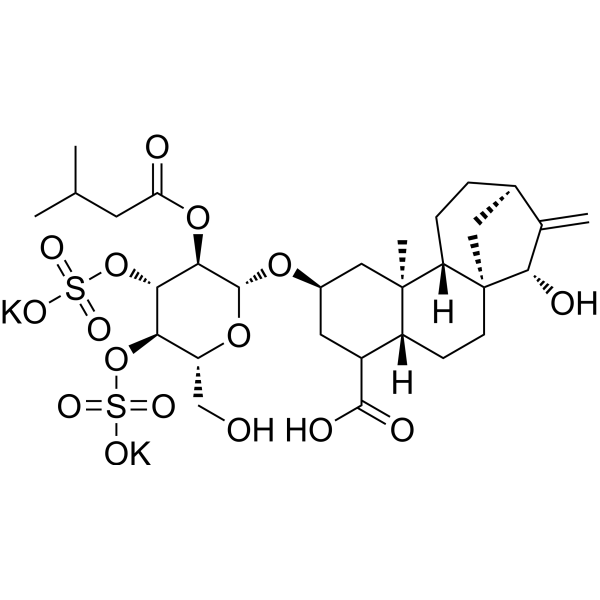
Atractyloside potassium salt (Standard)
Atractyloside (potassium salt) (Standard) is the analytical standard of Atractyloside (potassium salt). This product is intended for use in research and analytical applications. Atractyloside potassium salt is a powerful and specific inhibitor of mitochondrial ADP/ATP transport. Atractyloside potassium salt inhibits chloride channels from mitochondrial membranes of rat heart. Atractyloside potassium salt activates autophagy, inhibits ANT2, mTOR and promotes the activation of p-AMPK. Atractyloside potassium salt has anti-cancer effects on non-small cell lung cancer and can inhibit liver steatosis. Atractylodesin potassium salt has nephrotoxicity.
For research use only. We do not sell to patients.
- CAS No.: 102130-43-8
- Formula: C30H44K2O16S2
- Molecular Weight:802.99
-
Storage:
Please store the product under the recommended conditions in the Certificate of Analysis.


To place orders, for customer services and technical support, please contact: MedChemExpress USA
Tel: 609-228-6898 E-mail: [email protected] [email protected]


-
 Product Information
-
Chemical Information
- Purity & Documentation
-
 Help & FAQs


-
HY-N1462
Atractyloside potassium saltADP/ATP Transport Inhibitor -
HY-14590
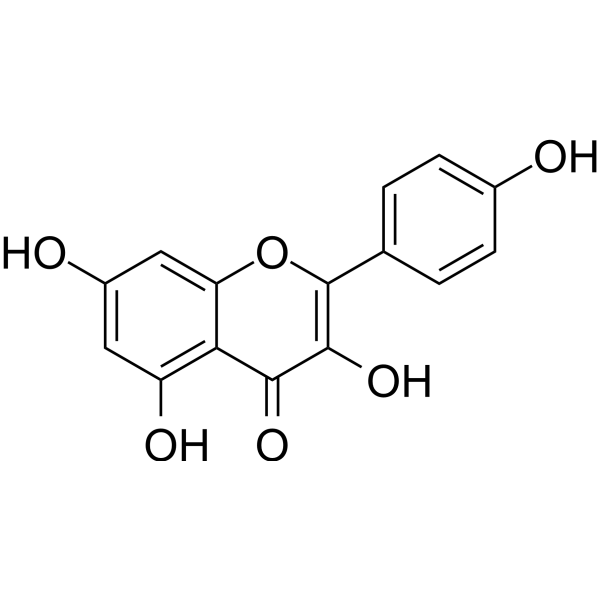
KaempferolEstrogen Receptor α Inhibitor -
HY-N0164
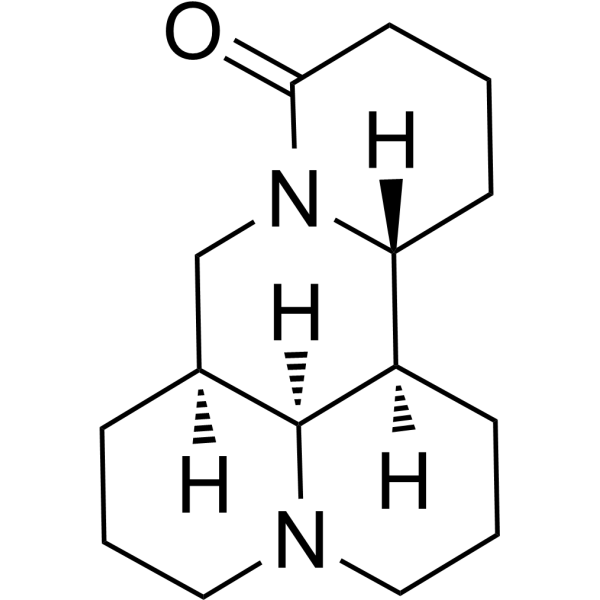
MatrineAnticancer Agent -
HY-18996
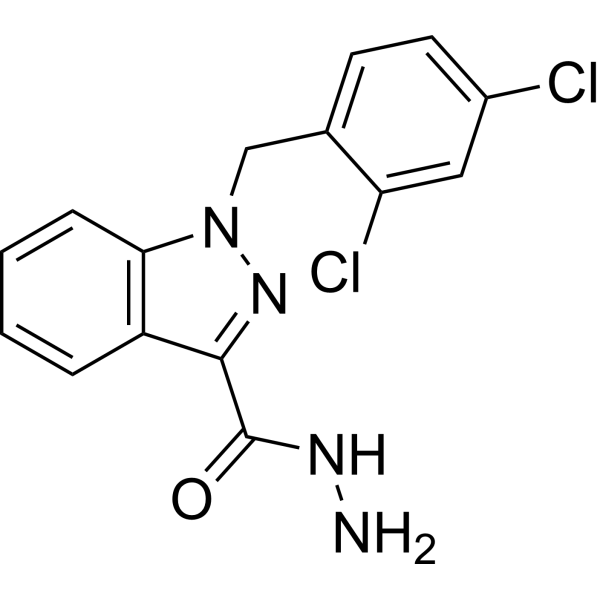
AdjudinChloride Channel Inhibitor -
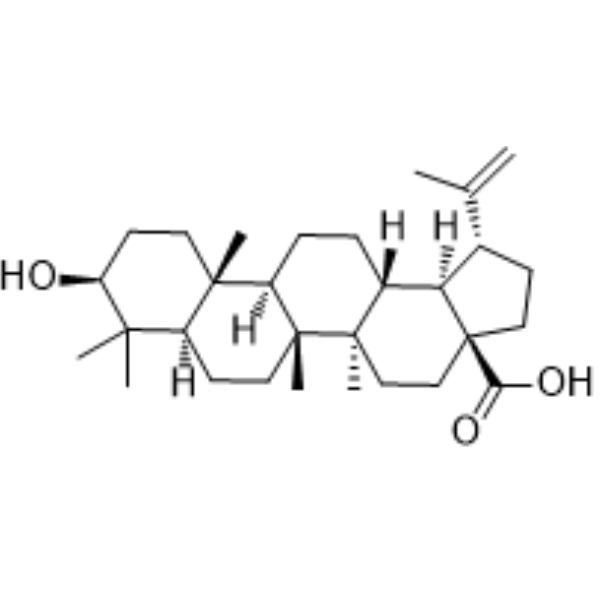
HY-10529
Betulinic acidApoptosis Inducer -
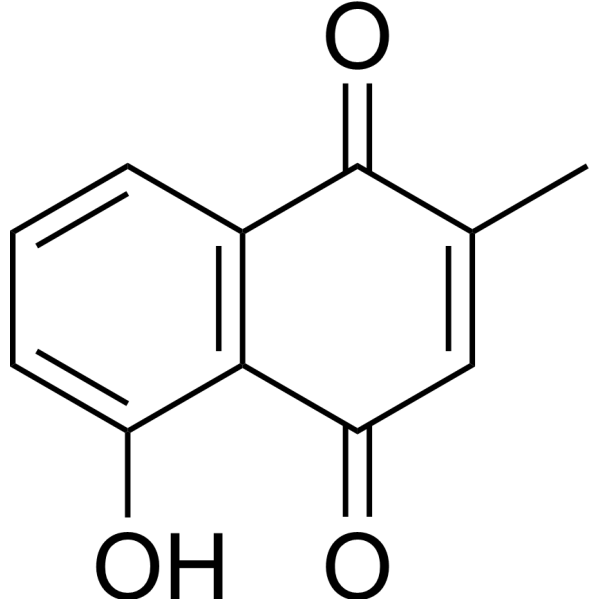
HY-N1497
PlumbaginAnticancer Agent -
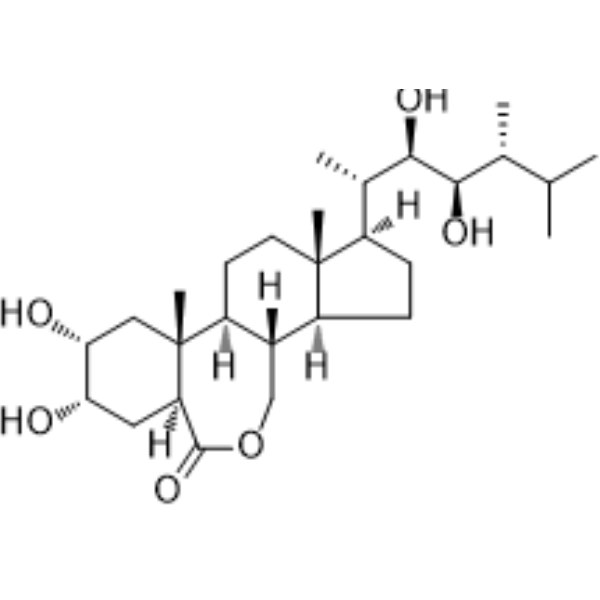
HY-N0848
EpibrassinolideApoptosis Inducer -
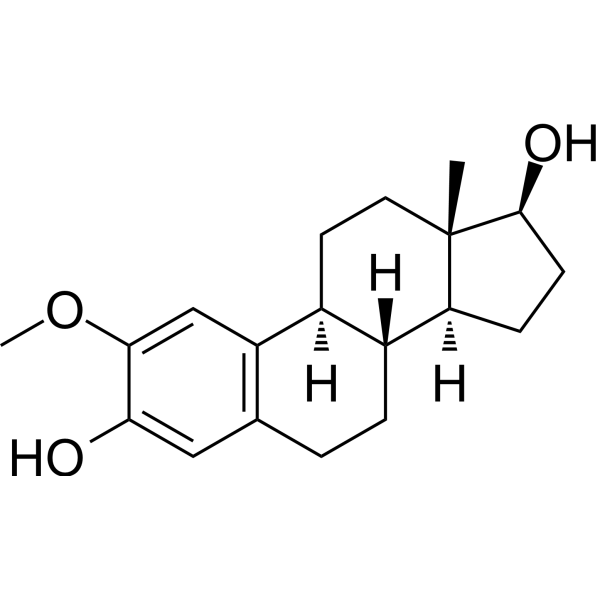
HY-12033
2-MethoxyestradiolApoptotic & Antiangiogenic Agent -
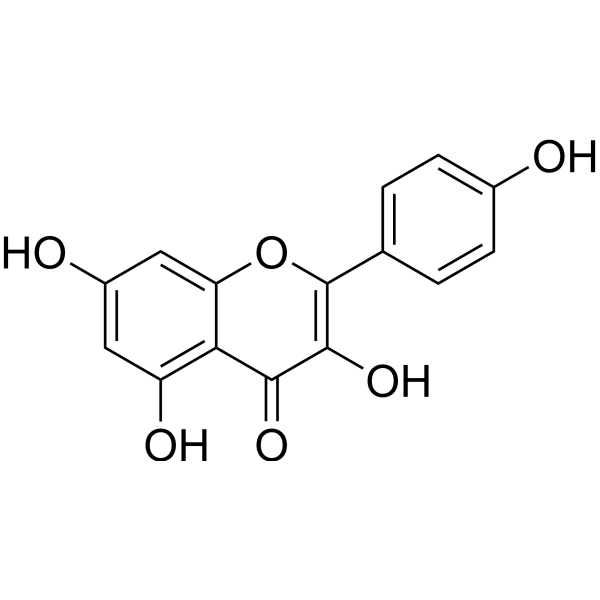
HY-14590R
Kaempferol (Standard) -
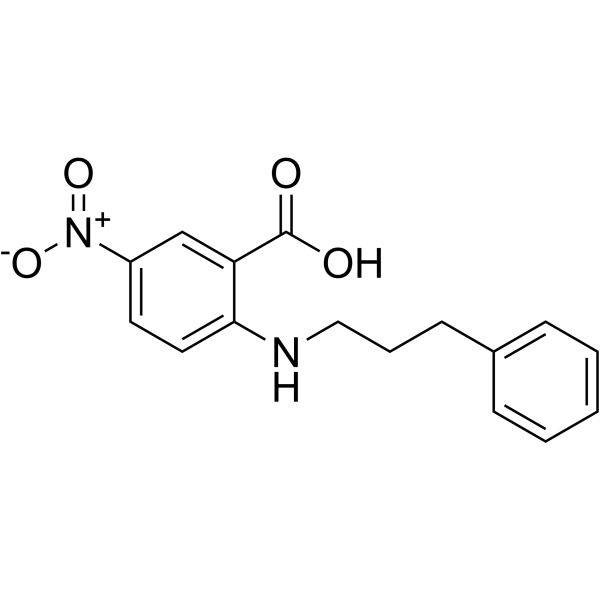
HY-101012
NPPBORCC Blocker


Product Information
Information
Application
The compound is the grade of analytical standard, which is the reference standard supplied assay. It is commonly used in qualitative, quantitative and methodological research experiments in HPLC, GC and MS.


Chemical Information
-
CAS No. 102130-43-8
-
Molecular Weight 802.99
-
Formula C30H44K2O16S2
-
SMILES
[H][C@@]12C(C(O)=O)C[C@@H](O[C@H]3[C@@H]([C@H]([C@@H]([C@@H](CO)O3)OS(=O)(O[K])=O)OS(=O)(O[K])=O)OC(CC(C)C)=O)C[C@@]1(C)[C@@]4([H])[C@@]5([C@@H](O)C([C@H](CC4)C5)=C)CC2
-
Structure Classification
-
Shipping
Room temperature in continental US; may vary elsewhere.
-
Storage
Please store the product under the recommended conditions in the Certificate of Analysis.


Purity & Documentation
References
[1]. Malekova L, et al. Bongkrekic acid and atractyloside inhibits chloride channels from mitochondrial membranes of rat heart. Biochim Biophys Acta. 2007 Jan;1767(1):31-44. [Content Brief]
[2]. Nikles S, et al. Influence of Processing on the Content of Toxic Carboxyatractyloside and Atractyloside and the Microbiological Status of Xanthium sibiricum Fruits (Cang'erzi). Planta Med. 2015 Aug;81(12-13):1213-20. [Content Brief]
[3]. Lemasters JJ, et al. Phosphate dependence and atractyloside inhibition of mitochondrial oxidative phosphorylation. The ADP-ATP carrier is rate-limiting. J Biol Chem. 1979 Feb 25;254(4):1248-51. [Content Brief]
[5]. Song R, et al. Atractyloside induces low contractile reaction of arteriolar smooth muscle through mitochondrial damage. J Appl Toxicol. 2012 Jun;32(6):402-8. [Content Brief]
[6]. Zhang P, et al. Mitochondrial Energy-Regulating Effect of Atractyloside Inhibits Hepatocellular Steatosis Through the Activation of Autophagy. Front Pharmacol. 2020 Sep 30;11:575695. [Content Brief]
[7]. Capasso JM, et al. Effect of atractylosides, palmitoyl coenzyme A, and anion transport inhibitors on translocation of nucleotide sugars and nucleotide sulfate into Golgi vesicles. J Biol Chem. 1984 Apr 10;259(7):4263-6. [Content Brief]
[8]. Obatomi DK, et al. Selective cytotoxicity associated with in vitro exposure of fresh rat renal fragments and continuous cell lines to atractyloside. Arch Toxicol. 1996;71(1-2):93-8. [Content Brief]
[9]. Obatomi DK, et al. The toxic mechanism and metabolic effects of atractyloside in precision-cut pig kidney and liver slices. Arch Toxicol. 1998 Jul-Aug;72(8):524-30. [Content Brief]
[10]. Yao W, et al. Atractyloside inhibits gefitinib‑resistant non‑small‑cell lung cancer cell proliferation. Oncol Lett. 2024 Jul 30;28(4):466. [Content Brief]
[11]. Vancompernolle K, et al. Atractyloside-induced release of cathepsin B, a protease with caspase-processing activity. FEBS Lett. 1998 Nov 6;438(3):150-8. [Content Brief]
[12]. Gao Q, et al. Atractyloside and 5-hydroxydecanoate block the protective effect of puerarin in isolated rat heart. Life Sci. 2006 Jun 13;79(3):217-24. [Content Brief]
[13]. Zhang P, et al. Atractyloside Protect Mice Against Liver Steatosis by Activation of Autophagy via ANT-AMPK-mTORC1 Signaling Pathway. Front Pharmacol. 2021 Sep 21;12:736655. [Content Brief]
[14]. Carpenedo F, et al. Nephrotoxic effect of atractyloside in rats. Arch Toxicol. 1974;32(3):169-80. [Content Brief]

Calculators
Concentration (start) × Volume (start) = Concentration (final) × Volume (final)


Atractyloside potassium salt (Standard) Related Classifications
HY-N1462R Related Classifications
 Powered by Bioz