



Nivalenol

Based on 1 Customer Validation
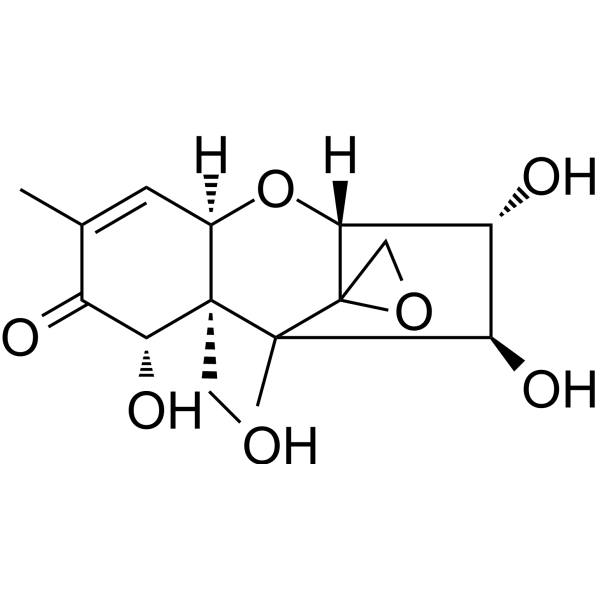
Nivalenol, a trichothecene mycotoxin that can be produced by Fusarium graminearum, is a fungal metabolite present in agricultural product. Nivalenol modulates apoptotic pathway, cell cycle regulation, Bax, ERK, caspase-3, and poly-ADP-ribose synthase activity in macrophages. Nivalenol inhibits ribosomal peptidyltransferase site, protein synthesis, DNA synthesis, and cell proliferation. Nivalenol induces late-stage apoptotic morphological changes, reduces cellular metabolism, and decreases cell proliferation in erythroleukemia cells. Nivalenol induces lymphocyte apoptosis in murine thymus, spleen, and Peyer's patches. Nivalenol can be used for the research of erythroleukemia.
For research use only. We do not sell to patients.
- Purity : 99.9%
- CAS No.: 23282-20-4
- Formula: C15H20O7
- Molecular Weight:312.32
-
Storage:Powder -20°C, 3 years , 4°C, 2 years ; In solvent -80°C, 6 months , -20°C, 1 month

To place orders, for customer services and technical support, please contact: MedChemExpress USA
Tel: 609-228-6898 E-mail: [email protected] [email protected]


-
 Biological Activity
-
Chemical Information
-
Solvent & Solubility
- Protocols
- Purity & Documentation
- References
-
 Help & FAQs


-
HY-130476
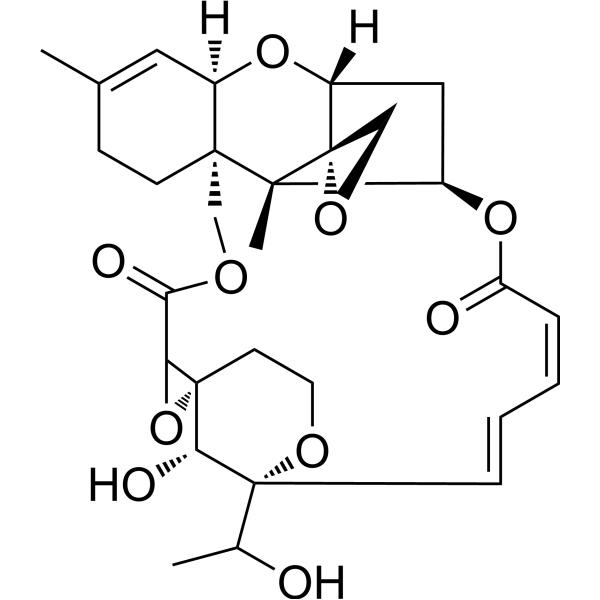
Satratoxin GLarge Cyclic Mucor Toxin. -

HY-N6801R
Nivalenol (Standard)Analytical Standard -
HY-P0109A
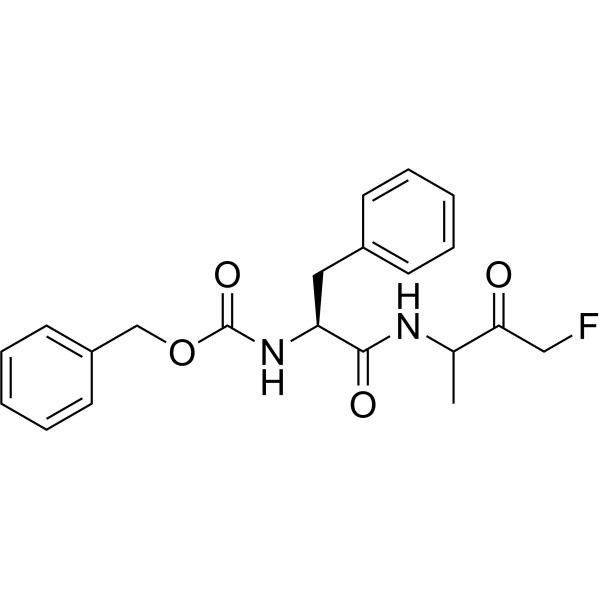
Z-FA-FMKCathepsin B/L Inhibitor -
HY-13721
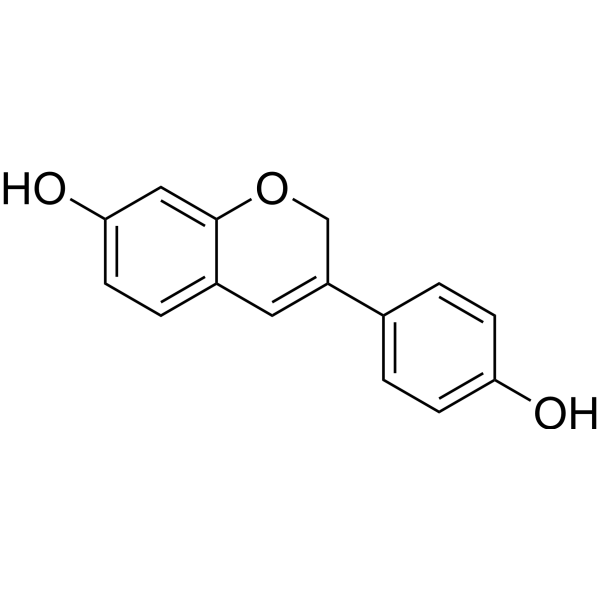
PhenoxodiolAnticancer Agent -
HY-10397A
MX1013Caspase Inhibitor -
HY-141622
SDZ 224-015IL-1β Converting Enzyme Inhibitor -

HY-13721R
Phenoxodiol (Standard)Anticancer Agent -

HY-10397AR
MX1013 (Standard)Reference Standard
All Caspase Isoforms
More

Biological Activity
Description
IC50 & Target
|
Caspase 3 |
Bax |
Cellular Effect
|
Cell Line

|
Type | Value | Description | References |
|---|---|---|---|---|
| K562 | EC50 |
960 nM
Compound: NIV
|
Cytotoxicity against human K562 cells by MTT assay
Cytotoxicity against human K562 cells by MTT assay
|
[PMID: 18327910] |
In Vitro
Nivalenol (10-100 μM; 24-72 h) potently reduces J774A.1 murine macrophage viability in a concentration- and time-dependent manner, with IC50 values of 5.8 μM (24 h), 10.5 μM (48 h), and 11.2 μM (72 h)[1].
Nivalenol (10-100 μM; 24 h) induces concentration-dependent apoptosis in J774A.1 murine macrophages[1].
Nivalenol (25 μM; 24 h) induces apoptosis in J774A.1 murine macrophages that is significantly dependent on caspase activation[1].
Nivalenol (25 μM; 24 h) induces cell cycle arrest in the G0/G1 phase in J774A.1 murine macrophages, with a corresponding reduction in S phase cells[1].
Nivalenol (25 μM; 15-60 min) induces rapid, time-dependent activation of ERK in J774A.1 murine macrophages[1].
Nivalenol (25 μM; 8, 24 h) significantly upregulates pro-apoptotic Bax protein expression in J774A.1 murine macrophages[1].
Nivalenol (25 μM; 8, 24 h) induces time-dependent activation of caspase-3 in J774A.1 murine macrophages, with increasing procaspase-3 degradation over 8 to 24 h[1].
Nivalenol (25 μM; 24 h) significantly activates PARP via cleavage in J774A.1 murine macrophages[1].
Nivalenol (0.5 μM; 48 h) potently inhibits cell metabolism in human K562 erythroleukemia cells with an ID50 of 0.5 μM after 48 h incubation[2].
Nivalenol (0.6 μM; 48 h) inhibits cell proliferation in human K562 erythroleukemia cells with an ID50 of 0.6 μM after 48 h incubation[2].
Nivalenol (0.6-84 μM; 48 h) induces dose-dependent increases in cellular debris (indicative of apoptosis) in human K562 erythroleukemia cells, reaching 100% debris at 84 μM after 48 h incubation, without altering cell cycle phase distribution[2].
MedChemExpress (MCE) has not independently confirmed the accuracy of these methods. They are for reference only.
-
Cell Line:J774A.1 murine macrophages
-
Concentration:10-100 μM
-
Incubation Time:24, 48, 72 h
-
Result:Induced a significant concentration-dependent reduction in cell viability, with IC50 values of 5.8 μM (24 h), 10.5 μM (48 h), and 11.2 μM (72 h).
Exerted a stronger cytotoxic effect than the reference compound at all tested time points.
-
Cell Line:J774A.1 murine macrophages
-
Concentration:10 μM, 25 μM, 50 μM, 100 μM
-
Incubation Time:24 h
-
Result:Significantly stimulated apoptosis in a concentration-dependent manner.
Exhibited a significantly stronger pro-apoptotic effect than the reference compound at 25 μM and 50 μM.
-
Cell Line:J774A.1 murine macrophages
-
Concentration:25 μM
-
Incubation Time:24 h
-
Result:Caused a significant increase in the G0/G1 cell population and a significant decrease in the S phase cell population compared to control cells.
-
Cell Line:J774A.1 murine macrophages
-
Concentration:25 μM
-
Incubation Time:15, 30, 60 min
-
Result:Induced time-dependent activation of ERK, with significantly increased pERK expression evident at 15, 30, and 60 min.
-
Cell Line:J774A.1 murine macrophages
-
Concentration:25 μM
-
Incubation Time:8, 24 h
-
Result:Induced significant increases in Bax protein expression at both 8 h and 24 h compared to control cells.
Exerted a significantly stronger effect on Bax expression.\nInduced time-dependent degradation of procaspase-3 and activation of cleaved caspase-3, with effects evident at 8 h and maximized at 24 h.
-
Cell Line:human K562 erythroleukemia cells
-
Concentration:0.6 μM, 3.4 μM, 17 μM, 84 μM
-
Incubation Time:48 h
-
Result:Induced 22.5% cellular debris at 0.6 μM.
Induced 25.5% cellular debris at 3.4 μM.
Induced 44.8% cellular debris at 17 μM.
Induced 100% cellular debris at 84 μM.
Did not cause treatment-related changes in cell cycle phase distribution (G0/G1, S, G2/M).
In Vivo
Nivalenol (10-15 mg/kg; single dose) induces dose-dependent lymphocyte apoptosis in the thymus and Peyer's patches of Mus musculus[3].
MedChemExpress (MCE) has not independently confirmed the accuracy of these methods. They are for reference only.
-
Animal Model:ICR mice (3-week-old male, acclimatized from 2 weeks of age)[3]
-
Dosage:5 mg/kg
-
Administration:p.o.; single dose
-
Result:Observed marked nuclear condensation and fragmentation of lymphocytes in the cortical thymus, germinal centers of Peyer's patches, and germinal centers of splenic white pulp.
Detected significantly increased percentages of TUNEL-positive cells in the thymus and spleen, with levels greater than those in vehicle control, deoxynivalenol-treated, and combined toxin groups; elevated TUNEL index in Peyer's patches relative to vehicle control.
Detected significantly increased percentages of Caspase-3-positive cells in the thymus and spleen relative to vehicle control.
Observed no significant upregulation of Bax, Caspase-3, Caspase-9, or Trp53 mRNA in the thymus or Peyer's patches relative to vehicle control.
- Annexin V plus membrane-impermeant dye apoptosis staining
- BrdU Incorporation Assay
- Somatic Cell Culture
- CFSE Dye Dilution Proliferation Assay
- Dye-dilution cell tracking and proliferation staining
- Protocol for Cell Cycle
- CCK-8/WST-8 Cell Proliferation Assay
- Cell Counting-Based Growth Curve Assay
- Colony Formation (Clonogenic) Assay
- Cell Viability Determination by MTT Colorimetric Assay
- EdU Incorporation Assay (Click Chemistry-Based DNA Synthesis Measurement)
- Detection of Apoptosis
- Ki-67 Immunostaining Proliferation Assay
- TUNEL staining for apoptotic DNA fragmentation
- Flow cytometric DNA-content cell-cycle staining
- PCNA Immunodetection Proliferation Assay
- Protocol for Cell Counting and Cell Density Analysis
- Apoptosis Solutions
- MTT Cell Proliferation Assay


Chemical Information
-
CAS No. 23282-20-4
-
Appearance Solid
-
Molecular Weight 312.32
-
Formula C15H20O7
-
Color White to off-white
-
SMILES
CC12C3(CO3)[C@@](O[C@@]4([H])[C@]2(CO)[C@@H](C(C(C)=C4)=O)O)([H])[C@H](O)[C@H]1O
-
Structure Classification
-
Initial Source
Fusarium graminearum
-
Shipping
Room temperature in continental US; may vary elsewhere.
-
Storage
Powder -20°C 3 years 4°C 2 years In solvent -80°C 6 months -20°C 1 month


Solvent & Solubility
In Vitro:
DMSO : 50 mg/mL (160.09 mM; Need ultrasonic; Hygroscopic DMSO has a significant impact on the solubility of product, please use newly opened DMSO)
Please refer to the solubility information to select the appropriate solvent. Once prepared, please aliquot and store the solution to prevent product inactivation from repeated freeze-thaw cycles.
Storage method and period of stock solution: -80°C, 6 months; -20°C, 1 month. When stored at -80°C, please use it within 6 months. When stored at -20°C, please use it within 1 month.
Please refer to the solubility information to select the appropriate solvent. Once prepared, please aliquot and store the solution to prevent product inactivation from repeated freeze-thaw cycles.
Storage method and period of stock solution: -80°C, 6 months; -20°C, 1 month. When stored at -80°C, please use it within 6 months. When stored at -20°C, please use it within 1 month.
Concentration (start) × Volume (start) = Concentration (final) × Volume (final)
In Vivo:
Select the appropriate dissolution method based on your experimental animal and administration route.
- For the following dissolution methods, please ensure to first prepare a clear stock solution using an In Vitro approach and then sequentially add co-solvents:
- To ensure reliable experimental results, the clarified stock solution can be appropriately stored based on storage conditions. As for the working solution for In Vivo experiments, it is recommended to prepare freshly and use it on the same day.
- The percentages shown for the solvents indicate their volumetric ratio in the final prepared solution. If precipitation or phase separation occurs during preparation, heat and/or sonication can be used to aid dissolution.
Add each solvent one by one: 10% DMSO 40% PEG300 5% Tween-80 45% Saline
Solubility: ≥ 5 mg/mL (16.01 mM); Clear solution
This protocol yields a clear solution of ≥ 5 mg/mL (saturation unknown).
Taking 1 mL working solution as an example, add 100 μL DMSO stock solution (50.0 mg/mL) to 400 μL PEG300, and mix evenly; then add 50 μL Tween-80 and mix evenly; then add 450 μL Saline to adjust the volume to 1 mL.
Preparation of Saline: Dissolve 0.9 g sodium chloride in ddH₂O and dilute to 100 mL to obtain a clear Saline solution.
Add each solvent one by one: 10% DMSO 90% (20% SBE-β-CD in Saline)
Solubility: ≥ 5 mg/mL (16.01 mM); Clear solution
This protocol yields a clear solution of ≥ 5 mg/mL (saturation unknown).
Taking 1 mL working solution as an example, add 100 μL DMSO stock solution (50.0 mg/mL) to 900 μL 20% SBE-β-CD in Saline, and mix evenly.
Preparation of 20% SBE-β-CD in Saline (4°C, storage for one week): 2 g SBE-β-CD powder is dissolved in 10 mL Saline, completely dissolve until clear.
In Vivo Dissolution Calculator
Please enter the basic information of animal experiments:
-
-
-
-
Recommended: Prepare an additional quantity of animals to account for potential losses during experiments.
Please enter your animal formula composition:
-
%DMSO +
Recommended: Keep the proportion of DMSO in working solution below 2% if your animal is weak.
-
%+
-
+%Tween-80 + +
-
%Saline +
The co-solvents required include: DMSO, . All of co-solvents are available by MedChemExpress (MCE). , Tween 80. All of co-solvents are available by MedChemExpress (MCE).
Working solution concentration: 0.22 mg/mL
Method for preparing stock solution: mg drug dissolved in μL DMSO. Stock solution concentration: mg/mL.
1. Take μL DMSO stock solution;
2. Add μL .
μL , mix evenly;
3. Then add μL Tween 80, mix evenly;
4. Then add μL
Please ensure that the stock solution in the first step is dissolved to a clear state, and add co-solvents in sequence. You can use ultrasonic heating (ultrasonic cleaner, recommended frequency 20-40 kHz), vortexing, etc. to assist dissolution.


Purity & Documentation
-
Data Sheet (287 KB)
-
SDS (605 KB)
- English - EN (605 KB)
- Français - FR (605 KB)
- Deutsch - DE (605 KB)
- Norwegian - NO (605 KB)
- Español - ES (605 KB)
- Swedish - SV (605 KB)
- Italian - IT (605 KB)
- Korean - KR (605 KB)
- Portuguese - PT (605 KB)
-
Handling Instructions (2659 KB)
References
[1]. Marzocco S, et al. Pro-apoptotic effects of nivalenol and deoxynivalenol trichothecenes in J774A.1 murine macrophages. Toxicol Lett. 2009;189(1):21-26. [Content Brief]
[2]. Minervini F, et al. Toxicity and apoptosis induced by the mycotoxins nivalenol, deoxynivalenol and fumonisin B1 in a human erythroleukemia cell line. Toxicol In Vitro. 2004;18(1):21-28. [Content Brief]
[3]. Aupanun S, et al. Individual and combined mycotoxins deoxynivalenol, nivalenol, and fusarenon-X induced apoptosis in lymphoid tissues of mice after oral exposure. Toxicon. 2019;165:83-94. [Content Brief]


Complete Stock Solution Preparation Table
Please refer to the solubility information to select the appropriate solvent. Once prepared, please aliquot and store the solution to prevent product inactivation from repeated freeze-thaw cycles.
Storage method and period of stock solution: -80°C, 6 months; -20°C, 1 month. When stored at -80°C, please use it within 6 months. When stored at -20°C, please use it within 1 month.
| Optional Solvent | Concentration Solvent Mass | 1 mg | 5 mg | 10 mg | 25 mg |
|---|---|---|---|---|---|
| DMSO | 1 mM | 3.2018 mL | 16.0092 mL | 32.0184 mL | 80.0461 mL |
| 5 mM | 0.6404 mL | 3.2018 mL | 6.4037 mL | 16.0092 mL | |
| 10 mM | 0.3202 mL | 1.6009 mL | 3.2018 mL | 8.0046 mL | |
| 15 mM | 0.2135 mL | 1.0673 mL | 2.1346 mL | 5.3364 mL | |
| 20 mM | 0.1601 mL | 0.8005 mL | 1.6009 mL | 4.0023 mL | |
| 25 mM | 0.1281 mL | 0.6404 mL | 1.2807 mL | 3.2018 mL | |
| 30 mM | 0.1067 mL | 0.5336 mL | 1.0673 mL | 2.6682 mL | |
| 40 mM | 0.0800 mL | 0.4002 mL | 0.8005 mL | 2.0012 mL | |
| 50 mM | 0.0640 mL | 0.3202 mL | 0.6404 mL | 1.6009 mL | |
| 60 mM | 0.0534 mL | 0.2668 mL | 0.5336 mL | 1.3341 mL | |
| 80 mM | 0.0400 mL | 0.2001 mL | 0.4002 mL | 1.0006 mL | |
| 100 mM | 0.0320 mL | 0.1601 mL | 0.3202 mL | 0.8005 mL |


Nivalenol Related Classifications
HY-N6801 Related Classifications
 Powered by Bioz