



Nivalenol (Standard)
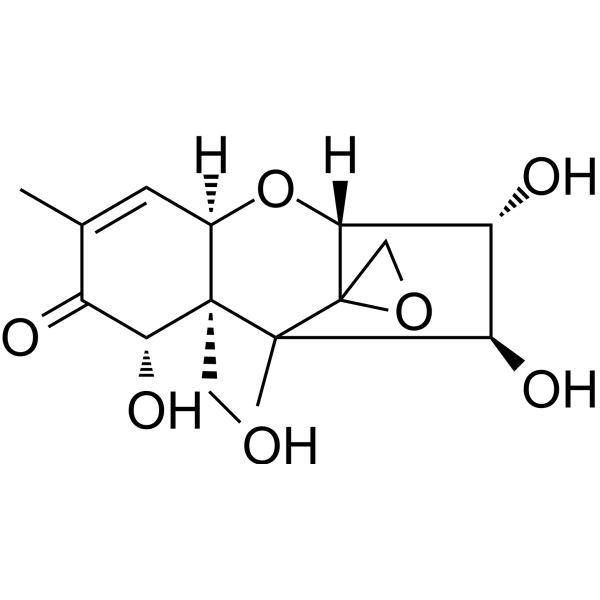
Nivalenol (Standard) is the analytical standard of Nivalenol (HY-N6801). This product is intended for research and analytical applications. Nivalenol, a trichothecene mycotoxin that can be produced by Fusarium graminearum, is a fungal metabolite present in agricultural product. Nivalenol modulates apoptotic pathway, cell cycle regulation, Bax, ERK, caspase-3, and poly-ADP-ribose synthase activity in macrophages. Nivalenol inhibits ribosomal peptidyltransferase site, protein synthesis, DNA synthesis, and cell proliferation. Nivalenol induces late-stage apoptotic morphological changes, reduces cellular metabolism, and decreases cell proliferation in erythroleukemia cells. Nivalenol induces lymphocyte apoptosis in murine thymus, spleen, and Peyer's patches. Nivalenol can be used for the research of erythroleukemia.
For research use only. We do not sell to patients.
- CAS No.: 23282-20-4
- Formula: C15H20O7
- Molecular Weight:312.32
-
Storage:
Please store the product under the recommended conditions in the Certificate of Analysis.


To place orders, for customer services and technical support, please contact: MedChemExpress USA
Tel: 609-228-6898 E-mail: [email protected] [email protected]


-
 Product Information
-
Chemical Information
- Purity & Documentation
-
 Help & FAQs


-
HY-N6801
NivalenolTrichothecene Mycotoxin -
HY-P0109A
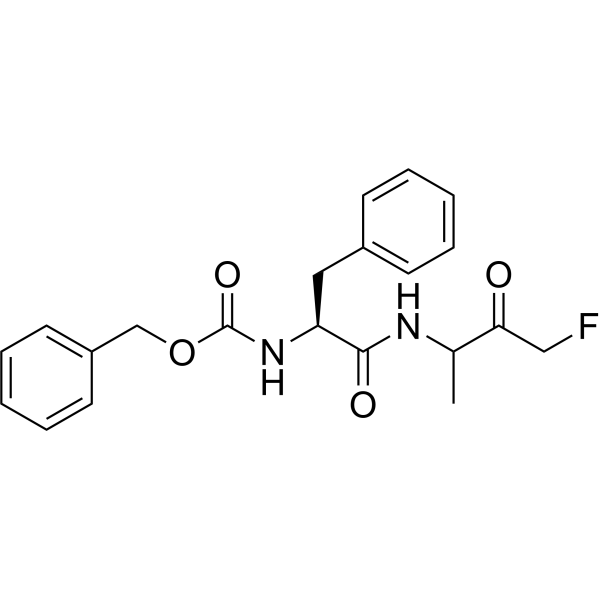
Z-FA-FMKCathepsin B/L Inhibitor -
HY-13721
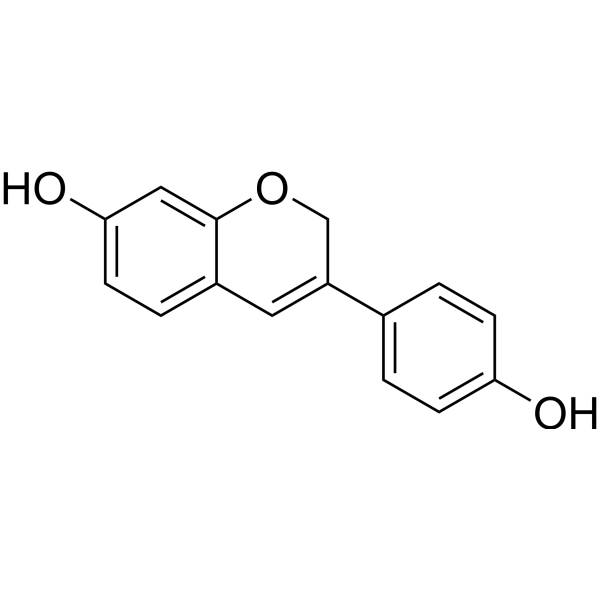
PhenoxodiolAnticancer Agent -
HY-10397A
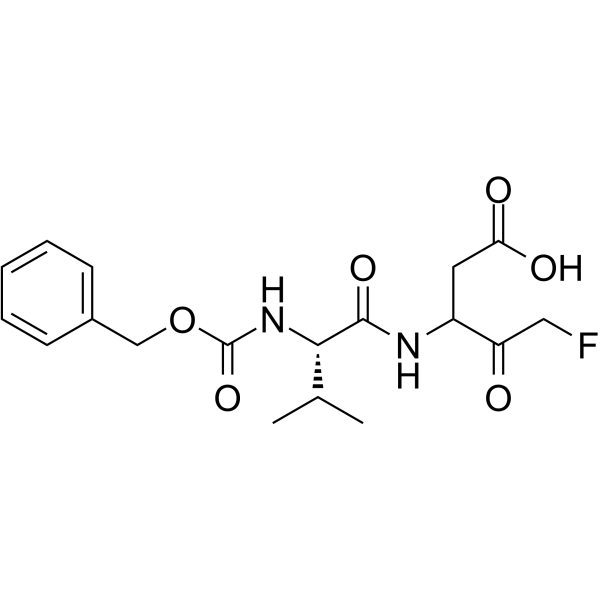
MX1013Caspase Inhibitor -
HY-141622
SDZ 224-015IL-1β Converting Enzyme Inhibitor -

HY-13721R
Phenoxodiol (Standard)Anticancer Agent -

HY-10397AR
MX1013 (Standard)Reference Standard


Product Information
Information
Application
The compound is the grade of analytical standard, which is the reference standard supplied assay. It is commonly used in qualitative, quantitative and methodological research experiments in HPLC, GC and MS.


Chemical Information
-
CAS No. 23282-20-4
-
Molecular Weight 312.32
-
Formula C15H20O7
-
SMILES
CC12C3(CO3)[C@@](O[C@@]4([H])[C@]2(CO)[C@@H](C(C(C)=C4)=O)O)([H])[C@H](O)[C@H]1O
-
Structure Classification
-
Initial Source
-
Shipping
Room temperature in continental US; may vary elsewhere.
-
Storage
Please store the product under the recommended conditions in the Certificate of Analysis.


Purity & Documentation
References
[1]. Bryła M, et al. Natural Occurrence of Nivalenol, Deoxynivalenol, and Deoxynivalenol-3-Glucoside in Polish Winter Wheat. Toxins (Basel). 2018 Feb 13;10(2). [Content Brief]
[2]. Aupanun S, et al. Individual and combined mycotoxins deoxynivalenol, nivalenol, and fusarenon-X induced apoptosis in lymphoid tissues of mice after oral exposure. Toxicon. 2019 Jul;165:83-94. [Content Brief]

Calculators
Concentration (start) × Volume (start) = Concentration (final) × Volume (final)


Nivalenol (Standard) Related Classifications
HY-N6801R Related Classifications
 Powered by Bioz