



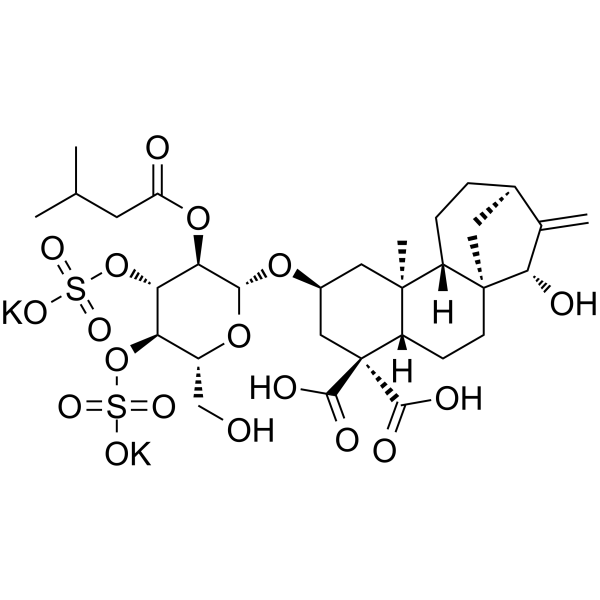
Carboxyatractyloside dipotassium
Based on 2 publication(s) in Google Scholar
Carboxyatractyloside dipotassium is a diterpenoid. Carboxyatractyloside dipotassium can be isolated from plants of the genus Xanthium. Carboxyatractyloside dipotassium is an ADP/ATP carrier inhibitor, inhibiting mitochondrial ADP/ATP transport. Carboxyatractyloside dipotassium promotes ROS production, induces Ca2+ release, and leads to mitochondrial dysfunction. Carboxyatractyloside dipotassium induces lethargy, weakness, and epileptic seizures in rats.
For research use only. We do not sell to patients.
- Purity : 99.57%
- CAS No.: 33286-30-5
- Formula: C31H44K2O18S2
- Molecular Weight:847.00
-
Storage:
-20°C, sealed storage, away from moisture and light
* In solvent : -80°C, 6 months; -20°C, 1 month (sealed storage, away from moisture and light)

To place orders, for customer services and technical support, please contact: MedChemExpress USA
Tel: 609-228-6898 E-mail: [email protected] [email protected]


-
 Biological Activity
-
Chemical Information
-
Solvent & Solubility
- Purity & Documentation
- References
-
 Help & FAQs


-
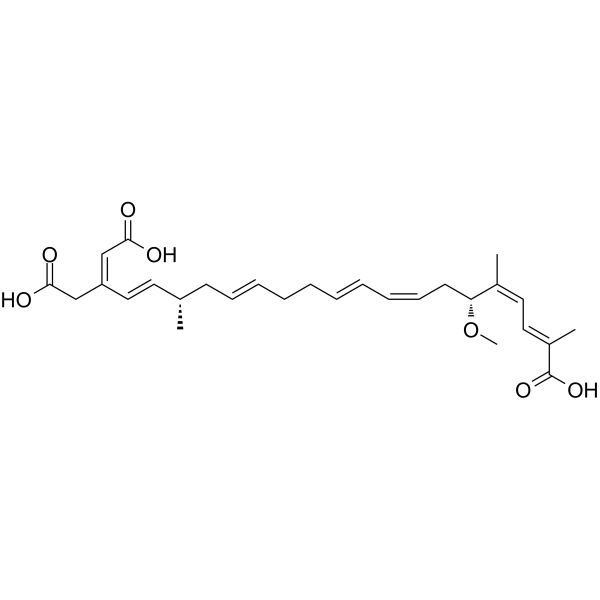
HY-136406
Bongkrekic acid -
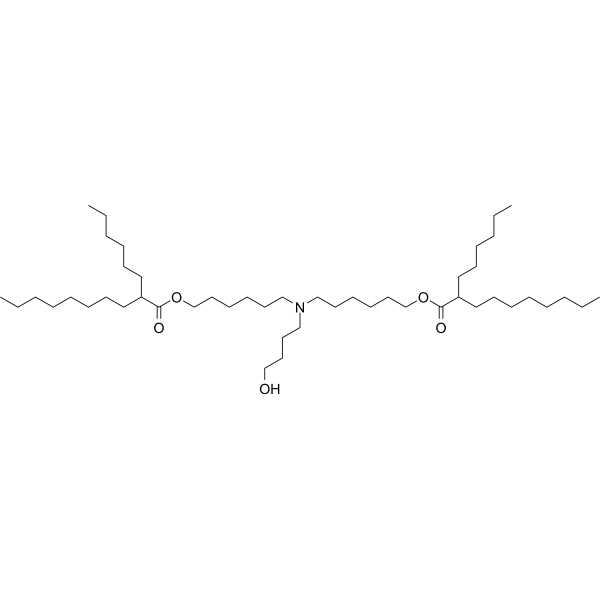
HY-138170
ALC-0315 -
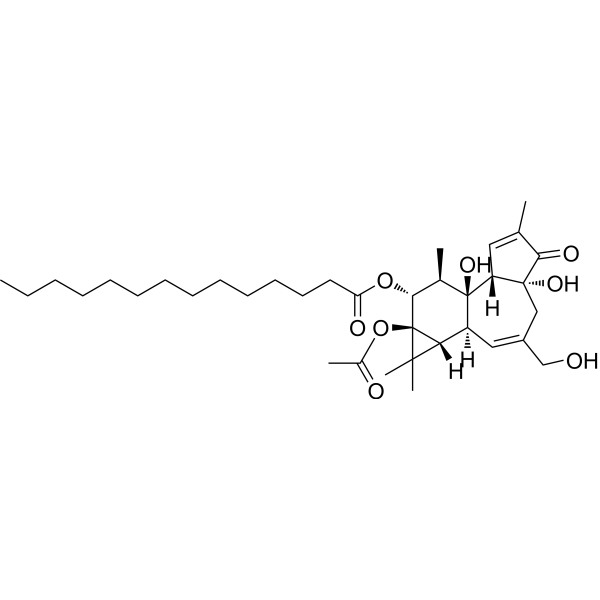
HY-18739
Phorbol 12-myristate 13-acetate -
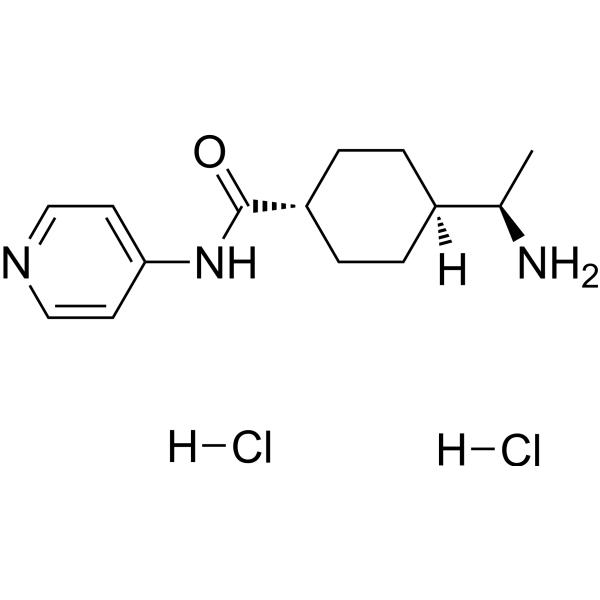
HY-10583
Y-27632 dihydrochloride -
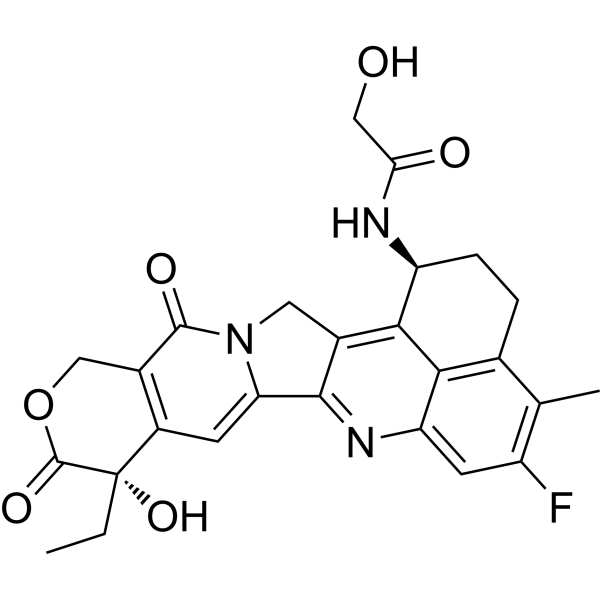
HY-13631D
DXd -
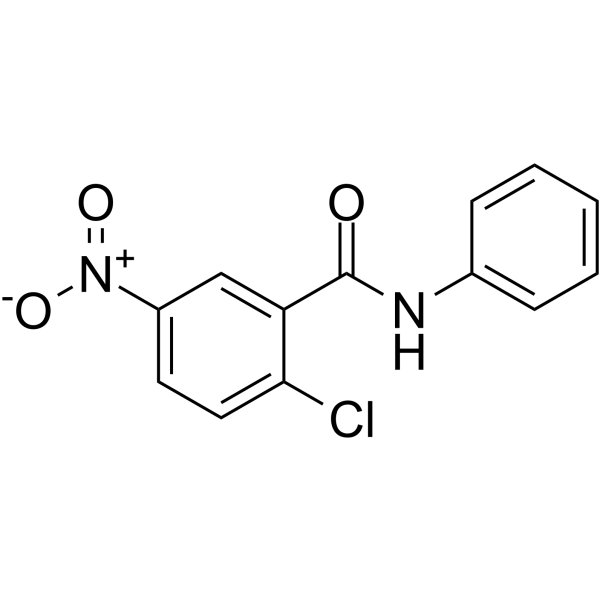
HY-16578
GW9662 -
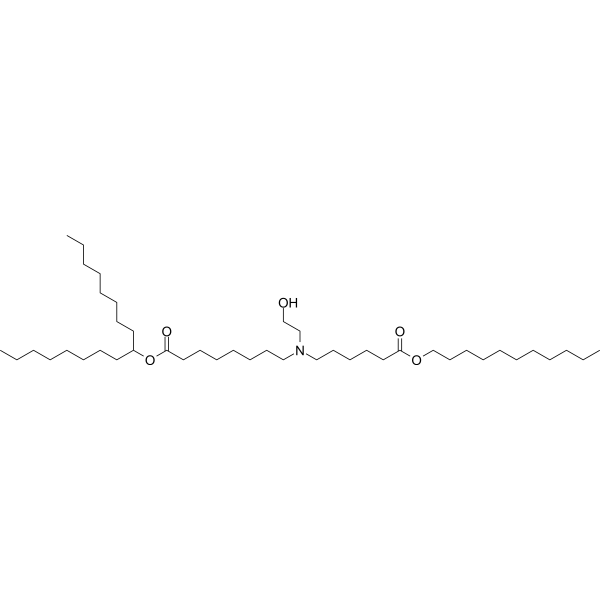
HY-134541
SM-102 -
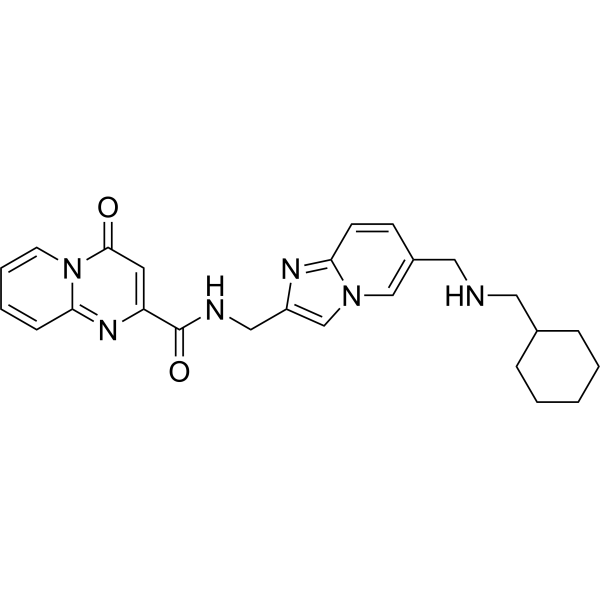
HY-134836
STM2457 -
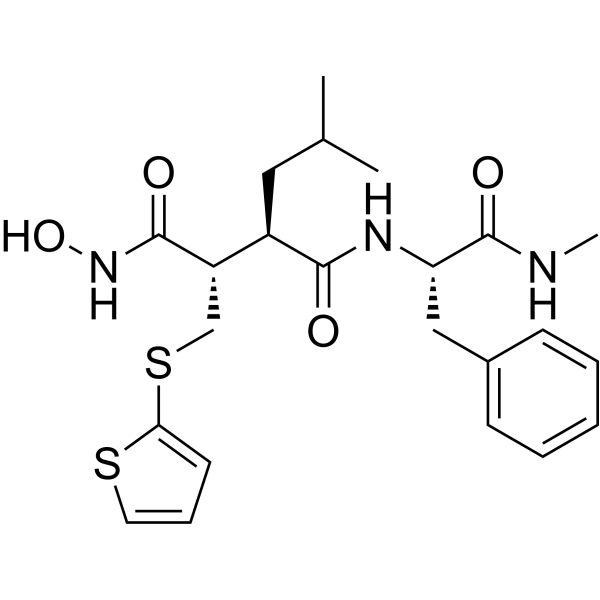
HY-13564
Batimastat -
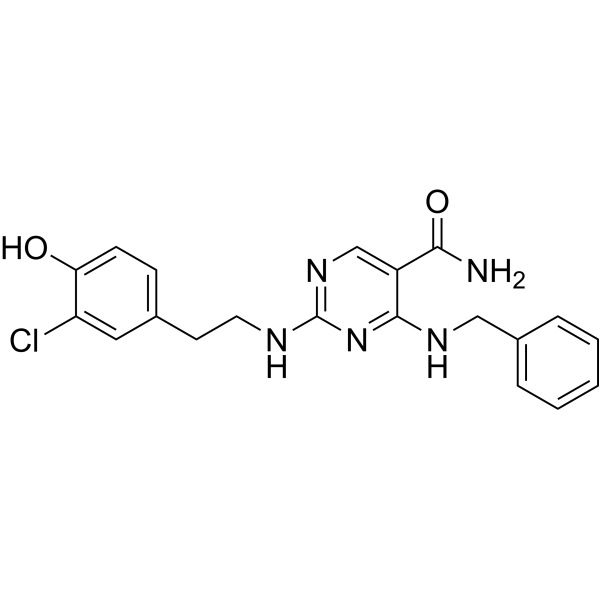
HY-100614
AS1517499 -
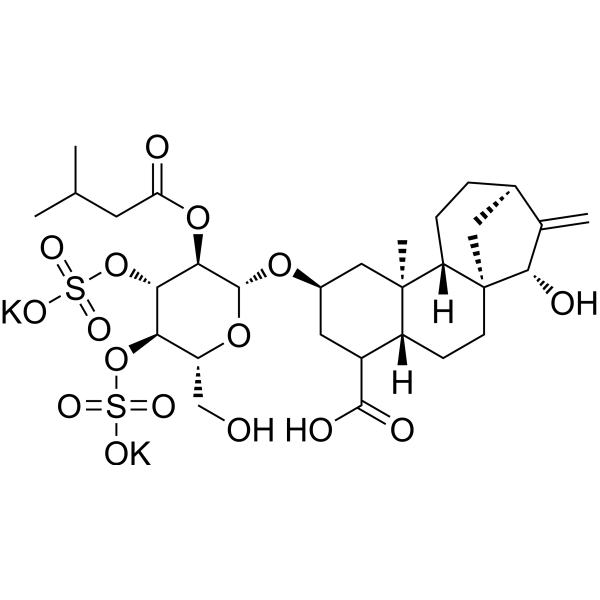
HY-N1462
Atractyloside potassium salt -

HY-N2522R
Carboxyatractyloside dipotassium (Standard)
Publications Citing Use of MedChemExpress (MCE) Carboxyatractyloside dipotassium
More Customer Validation & Images

-
IP

-
Cell Proliferation/Viability Assay

-
Flow Cytometry

-
IHC

-
IF

All Calcium Channel Isoforms
More

Biological Activity
Description
In Vitro
Carboxyatractyloside (10-25 μM; 48 h) dipotassium promotes cell death in primary mouse lung endothelial cells and exacerbates mitochondrial dysfunction, including mitochondrial depolarization, increased ROS generation, and MPT pore opening[2].
Carboxyatractyloside (2 μM) dipotassium induces Ca2+ release, mitochondrial swelling, and membrane potential collapse in aged rat liver mitochondria[3].
MedChemExpress (MCE) has not independently confirmed the accuracy of these methods. They are for reference only.
In Vivo
MedChemExpress (MCE) has not independently confirmed the accuracy of these methods. They are for reference only.


Chemical Information
-
CAS No. 33286-30-5
-
Appearance Solid
-
Molecular Weight 847.00
-
Formula C31H44K2O18S2
-
Color White to off-white
-
SMILES
C=C([C@H](CC1)C2)[C@H](O)[C@@]32CC[C@]4([H])C(C(O)=O)(C(O)=O)C[C@@H](O[C@H]5[C@@H]([C@H]([C@@H]([C@@H](CO)O5)OS(=O)(O[K])=O)OS(=O)(O[K])=O)OC(CC(C)C)=O)C[C@@]4(C)[C@@]31[H]
-
Synonyms
Gummiferin dipotassium
-
Structure Classification
-
Initial Source
-
Shipping
Room temperature in continental US; may vary elsewhere.
-
Storage
-20°C, sealed storage, away from moisture and light
* In solvent : -80°C, 6 months; -20°C, 1 month (sealed storage, away from moisture and light)


Publications (2)
-
Journal Impact Factor
-
Most Recent
-
Redox Biol
Redistribution of defective mitochondria-mediated dihydroorotate dehydrogenase imparts 5-fluorouracil resistance in colorectal cancer. [Abstract]2024 Jul:73:103207. PMID: 38805974 -
EMBO Mol Med
Conformational change of adenine nucleotide translocase-1 mediates cisplatin resistance induced by EBV-LMP1. [Abstract]2021 Dec 7;13(12):e14072. PMID: 34755470
Carboxyatractyloside dipotassium purchased from MedChemExpress. Usage Cited in: EMBO Mol Med. 2021 Dec 7;13(12):e14072. [Abstract]
Effect of inhibitors BKA and Carboxyatractyloside tripotassium (CATR) (5, 10, 20 nM) on ANT1‐VDAC1 binding in 293T cells.
Carboxyatractyloside dipotassium purchased from MedChemExpress. Usage Cited in: EMBO Mol Med. 2021 Dec 7;13(12):e14072. [Abstract]
CCK‐8 analysis of viability in HK1‐LMP1 cells treated for 24 h with Carboxyatractyloside tripotassium (CATR) (1 μM) alone, cisplatin (20 μM) alone, or cisplatin (20 μM) combined with CATR (1 μM).
Carboxyatractyloside dipotassium purchased from MedChemExpress. Usage Cited in: EMBO Mol Med. 2021 Dec 7;13(12):e14072. [Abstract]
Flow cytometry analysis of death of NPC cells treated for 24 h with CATR (1 μM) alone, Cisplatin (20 μM) alone, or Cisplatin (20 μM) combined with Carboxyatractyloside tripotassium (CATR) (1 μM).
Carboxyatractyloside dipotassium purchased from MedChemExpress. Usage Cited in: EMBO Mol Med. 2021 Dec 7;13(12):e14072. [Abstract]
Immunohistochemistry examination of the protein levels of Ki67 treated with Carboxyatractyloside tripotassium (CATR) (1 mg/kg, i.p.).
Carboxyatractyloside dipotassium purchased from MedChemExpress. Usage Cited in: EMBO Mol Med. 2021 Dec 7;13(12):e14072. [Abstract]
Apoptosis was analyzed by TUNEL assay treated with Carboxyatractyloside tripotassium (CATR) (1 μM).


Solvent & Solubility
In Vitro:
H2O : 100 mg/mL (118.06 mM; Need ultrasonic)
DMSO : 25 mg/mL (29.52 mM; ultrasonic and warming and heat to 60°C; Hygroscopic DMSO has a significant impact on the solubility of product, please use newly opened DMSO)
Please refer to the solubility information to select the appropriate solvent. Once prepared, please aliquot and store the solution to prevent product inactivation from repeated freeze-thaw cycles.
Storage method and period of stock solution: -80°C, 6 months; -20°C, 1 month (sealed storage, away from moisture and light). When stored at -80°C, please use it within 6 months. When stored at -20°C, please use it within 1 month.
* Note: If you choose water as the stock solution, please dilute it to the working solution, then filter and sterilize it with a 0.22 μm filter before use.
Please refer to the solubility information to select the appropriate solvent. Once prepared, please aliquot and store the solution to prevent product inactivation from repeated freeze-thaw cycles.
Storage method and period of stock solution: -80°C, 6 months; -20°C, 1 month (sealed storage, away from moisture and light). When stored at -80°C, please use it within 6 months. When stored at -20°C, please use it within 1 month.
* Note: If you choose water as the stock solution, please dilute it to the working solution, then filter and sterilize it with a 0.22 μm filter before use.
Concentration (start) × Volume (start) = Concentration (final) × Volume (final)
In Vivo:
Select the appropriate dissolution method based on your experimental animal and administration route.
- For the following dissolution methods, please ensure to first prepare a clear stock solution using an In Vitro approach and then sequentially add co-solvents:
- To ensure reliable experimental results, the clarified stock solution can be appropriately stored based on storage conditions. As for the working solution for In Vivo experiments, it is recommended to prepare freshly and use it on the same day.
- The percentages shown for the solvents indicate their volumetric ratio in the final prepared solution. If precipitation or phase separation occurs during preparation, heat and/or sonication can be used to aid dissolution.
Add each solvent one by one: 10% DMSO 40% PEG300 5% Tween-80 45% Saline
Solubility: ≥ 1.25 mg/mL (1.48 mM); Clear solution
This protocol yields a clear solution of ≥ 1.25 mg/mL (saturation unknown).
Taking 1 mL working solution as an example, add 100 μL DMSO stock solution (12.5 mg/mL) to 400 μL PEG300, and mix evenly; then add 50 μL Tween-80 and mix evenly; then add 450 μL Saline to adjust the volume to 1 mL.
Preparation of Saline: Dissolve 0.9 g sodium chloride in ddH₂O and dilute to 100 mL to obtain a clear Saline solution.
Add each solvent one by one: 10% DMSO 90% (20% SBE-β-CD in Saline)
Solubility: ≥ 1.25 mg/mL (1.48 mM); Clear solution
This protocol yields a clear solution of ≥ 1.25 mg/mL (saturation unknown).
Taking 1 mL working solution as an example, add 100 μL DMSO stock solution (12.5 mg/mL) to 900 μL 20% SBE-β-CD in Saline, and mix evenly.
Preparation of 20% SBE-β-CD in Saline (4°C, storage for one week): 2 g SBE-β-CD powder is dissolved in 10 mL Saline, completely dissolve until clear.
For the following dissolution methods, please prepare the working solution directly:
It is recommended to prepare fresh solutions and use them promptly within a short period of time.
The percentages shown for the solvents indicate their volumetric ratio in the final prepared solution. If precipitation or phase separation occurs during preparation, heat and/or sonication can be used to aid dissolution.
Add each solvent one by one: PBS
Solubility: 100 mg/mL (118.06 mM); Clear solution; Need ultrasonic
In Vivo Dissolution Calculator
Please enter the basic information of animal experiments:
-
-
-
-
Recommended: Prepare an additional quantity of animals to account for potential losses during experiments.
Working solution concentration: 0.22 mg/mL
This product has good water solubility, please refer to the measured solubility data in water/PBS/Saline for details.


Purity & Documentation
-
Data Sheet (284 KB)
-
SDS (480 KB)
- English - EN (480 KB)
- Français - FR (480 KB)
- Deutsch - DE (480 KB)
- Norwegian - NO (480 KB)
- Español - ES (480 KB)
- Swedish - SV (480 KB)
- Italian - IT (480 KB)
- Korean - KR (480 KB)
- Portuguese - PT (480 KB)
-
Handling Instructions (2659 KB)
References
[1]. Ri M, et al. Identification of Toyocamycin, an agent cytotoxic for multiple myeloma cells, as a potent inhibitor of ER stress-induced XBP1 mRNA splicing. Blood Cancer J. 2012 Jul;2(7):e79. [Content Brief]
[2]. Belosludtseva NV, et al. ANT-Mediated Inhibition of the Permeability Transition Pore Alleviates Palmitate-Induced Mitochondrial Dysfunction and Lipotoxicity. Biomolecules. 2024 Sep 15;14(9):1159. [Content Brief]
[3]. García N, et al. Cyclosporin A is unable to inhibit carboxyatractyloside-induced permeability transition in aged mitochondria. Comp Biochem Physiol C Toxicol Pharmacol. 2009 Apr;149(3):374-81. [Content Brief]
[4]. Luciani S, et al. Effects of carboxyatractyloside a structural analogue of atractyloside on mitochondrial oxidative phosphorylation. Life Sci II. 1971 Sep 8;10(17):961-8. [Content Brief]
[5]. Hatch RC, et al. Toxicologic study of carboxyatractyloside (active principle in cocklebur--Xanthium strumarium) in rats treated with enzyme inducers and inhibitors and glutathione precursor and depletor. Am J Vet Res. 1982 Jan;43(1):111-6. [Content Brief]


Complete Stock Solution Preparation Table
Please refer to the solubility information to select the appropriate solvent. Once prepared, please aliquot and store the solution to prevent product inactivation from repeated freeze-thaw cycles.
Storage method and period of stock solution: -80°C, 6 months; -20°C, 1 month (sealed storage, away from moisture and light). When stored at -80°C, please use it within 6 months. When stored at -20°C, please use it within 1 month.
| Optional Solvent | Concentration Solvent Mass | 1 mg | 5 mg | 10 mg | 25 mg |
|---|---|---|---|---|---|
| DMSO / H2O | 1 mM | 1.1806 mL | 5.9032 mL | 11.8064 mL | 29.5159 mL |
| 5 mM | 0.2361 mL | 1.1806 mL | 2.3613 mL | 5.9032 mL | |
| 10 mM | 0.1181 mL | 0.5903 mL | 1.1806 mL | 2.9516 mL | |
| 15 mM | 0.0787 mL | 0.3935 mL | 0.7871 mL | 1.9677 mL | |
| 20 mM | 0.0590 mL | 0.2952 mL | 0.5903 mL | 1.4758 mL | |
| 25 mM | 0.0472 mL | 0.2361 mL | 0.4723 mL | 1.1806 mL | |
| H2O | 30 mM | 0.0394 mL | 0.1968 mL | 0.3935 mL | 0.9839 mL |
| 40 mM | 0.0295 mL | 0.1476 mL | 0.2952 mL | 0.7379 mL | |
| 50 mM | 0.0236 mL | 0.1181 mL | 0.2361 mL | 0.5903 mL | |
| 60 mM | 0.0197 mL | 0.0984 mL | 0.1968 mL | 0.4919 mL | |
| 80 mM | 0.0148 mL | 0.0738 mL | 0.1476 mL | 0.3689 mL | |
| 100 mM | 0.0118 mL | 0.0590 mL | 0.1181 mL | 0.2952 mL |
* Note: If you choose water as the stock solution, please dilute it to the working solution, then filter and sterilize it with a 0.22 μm filter before use.


Carboxyatractyloside dipotassium Related Classifications
HY-N2522 Related Classifications
 Powered by Bioz