



NSC745887
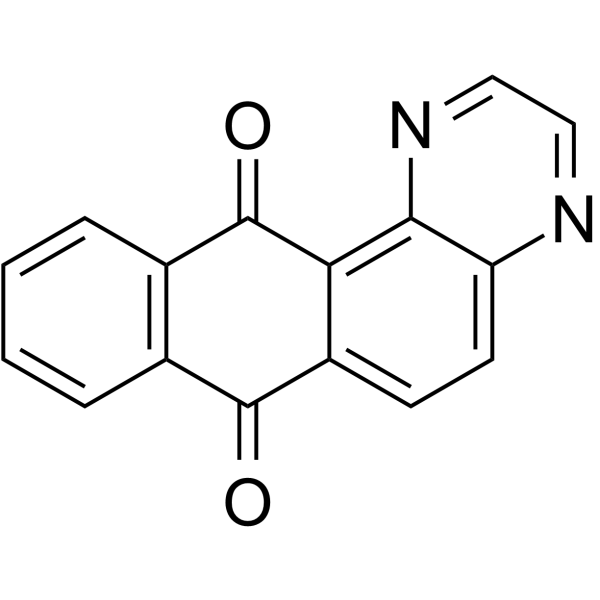
NSC745887 (compound 25) is an inhibitor that targets DNA topoisomerase cleavage, activates the caspase-8/9-caspase-3-poly (ADP-ribose) polymerase cascade, and induces apoptosis in cancer cells. NSC745887 enhances γH2AX expression and causes DNA fragmentation leading to DNA damage.
For research use only. We do not sell to patients.
- CAS No.: 54490-26-5
- Formula: C16H8N2O2
- Molecular Weight:260.25
-
Storage:
Please store the product under the recommended conditions in the Certificate of Analysis.

To place orders, for customer services and technical support, please contact: MedChemExpress USA
Tel: 609-228-6898 E-mail: [email protected] [email protected]


-
 Biological Activity
-
Chemical Information
- Protocols
- Purity & Documentation
- References
-
 Help & FAQs


All Caspase Isoforms
More

Biological Activity
Description
Cellular Effect
|
Cell Line

|
Type | Value | Description | References |
|---|---|---|---|---|
| 786-0 | GI50 |
8.87 μM
Compound: 25, NSC-745887
|
Growth inhibition of human 786-0 cells
Growth inhibition of human 786-0 cells
|
[PMID: 19804981] |
| A498 | GI50 |
9.31 μM
Compound: 25, NSC-745887
|
Growth inhibition of human A498 cells
Growth inhibition of human A498 cells
|
[PMID: 19804981] |
| A549 | GI50 |
4.53 μM
Compound: 25, NSC-745887
|
Growth inhibition of human A549 cells
Growth inhibition of human A549 cells
|
[PMID: 19804981] |
| ACHN | GI50 |
3.85 μM
Compound: 25, NSC-745887
|
Growth inhibition of human ACHN cells
Growth inhibition of human ACHN cells
|
[PMID: 19804981] |
| BT-549 | GI50 |
12.2 μM
Compound: 25, NSC-745887
|
Growth inhibition of human BT549 cells
Growth inhibition of human BT549 cells
|
[PMID: 19804981] |
| CAKI-1 | GI50 |
5.83 μM
Compound: 25, NSC-745887
|
Growth inhibition of human Caki1 cells
Growth inhibition of human Caki1 cells
|
[PMID: 19804981] |
| CCRF-CEM | GI50 |
2.46 μM
Compound: 25, NSC-745887
|
Growth inhibition of human CCRF-CEM cells
Growth inhibition of human CCRF-CEM cells
|
[PMID: 19804981] |
| COLO 205 | GI50 |
3.4 μM
Compound: 25, NSC-745887
|
Growth inhibition of human COLO205 cells
Growth inhibition of human COLO205 cells
|
[PMID: 19804981] |
| DU-145 | GI50 |
11.4 μM
Compound: 25, NSC-745887
|
Growth inhibition of human DU145 cells
Growth inhibition of human DU145 cells
|
[PMID: 19804981] |
| EKVX | GI50 |
3.45 μM
Compound: 25, NSC-745887
|
Growth inhibition of human EKVX cells
Growth inhibition of human EKVX cells
|
[PMID: 19804981] |
| HCC 2998 | GI50 |
1.4 μM
Compound: 25, NSC-745887
|
Growth inhibition of human HCC2998 cells
Growth inhibition of human HCC2998 cells
|
[PMID: 19804981] |
| HCT-116 | GI50 |
12.3 μM
Compound: 25, NSC-745887
|
Growth inhibition of human HCT116 cells
Growth inhibition of human HCT116 cells
|
[PMID: 19804981] |
| HCT-15 | GI50 |
4.63 μM
Compound: 25, NSC-745887
|
Growth inhibition of human HCT15 cells
Growth inhibition of human HCT15 cells
|
[PMID: 19804981] |
| HL-60(TB) | GI50 |
0.68 μM
Compound: 25, NSC-745887
|
Growth inhibition of human HL-60(TB) cells
Growth inhibition of human HL-60(TB) cells
|
[PMID: 19804981] |
| HOP-62 | GI50 |
5.64 μM
Compound: 25, NSC-745887
|
Growth inhibition of human HOP62 cells
Growth inhibition of human HOP62 cells
|
[PMID: 19804981] |
| HOP-92 | GI50 |
22.5 μM
Compound: 25, NSC-745887
|
Growth inhibition of human HOP92 cells
Growth inhibition of human HOP92 cells
|
[PMID: 19804981] |
| Hs-578T | GI50 |
14.1 μM
Compound: 25, NSC-745887
|
Growth inhibition of human Hs 578T cells
Growth inhibition of human Hs 578T cells
|
[PMID: 19804981] |
| HT-29 | GI50 |
7.01 μM
Compound: 25, NSC-745887
|
Growth inhibition of human HT-29 cells
Growth inhibition of human HT-29 cells
|
[PMID: 19804981] |
| IGROV-1 | GI50 |
2.55 μM
Compound: 25, NSC-745887
|
Growth inhibition of human IGROV1 cells
Growth inhibition of human IGROV1 cells
|
[PMID: 19804981] |
| K562 | GI50 |
0.07 μM
Compound: 25, NSC-745887
|
Growth inhibition of human K562 cells
Growth inhibition of human K562 cells
|
[PMID: 19804981] |
| KM12 | GI50 |
5.26 μM
Compound: 25, NSC-745887
|
Growth inhibition of human KM12 cells
Growth inhibition of human KM12 cells
|
[PMID: 19804981] |
| LOX IMVI | GI50 |
4.2 μM
Compound: 25, NSC-745887
|
Growth inhibition of human LOXIMVI cells
Growth inhibition of human LOXIMVI cells
|
[PMID: 19804981] |
| M14 | GI50 |
5.14 μM
Compound: 25, NSC-745887
|
Growth inhibition of human M14 cells
Growth inhibition of human M14 cells
|
[PMID: 19804981] |
| Malme-3M | GI50 |
4.48 μM
Compound: 25, NSC-745887
|
Growth inhibition of human MALME-3M cells
Growth inhibition of human MALME-3M cells
|
[PMID: 19804981] |
| MCF7 | GI50 |
0.72 μM
Compound: 25, NSC-745887
|
Growth inhibition of human MCF7 cells
Growth inhibition of human MCF7 cells
|
[PMID: 19804981] |
| MDA-MB-231 | GI50 |
19.1 μM
Compound: 25, NSC-745887
|
Growth inhibition of human MDA-MB-231 cells
Growth inhibition of human MDA-MB-231 cells
|
[PMID: 19804981] |
| MDA-MB-435 | GI50 |
11.1 μM
Compound: 25, NSC-745887
|
Growth inhibition of human MDA-MB-435 cells
Growth inhibition of human MDA-MB-435 cells
|
[PMID: 19804981] |
| MOLT-4 | GI50 |
3.65 μM
Compound: 25, NSC-745887
|
Growth inhibition of human MOLT4 cells
Growth inhibition of human MOLT4 cells
|
[PMID: 19804981] |
| NCI/ADR-RES | GI50 |
5.68 μM
Compound: 25, NSC-745887
|
Growth inhibition of human NCI/ADR-RES cells
Growth inhibition of human NCI/ADR-RES cells
|
[PMID: 19804981] |
| NCI-H226 | GI50 |
16.6 μM
Compound: 25, NSC-745887
|
Growth inhibition of human NCI-H226 cells
Growth inhibition of human NCI-H226 cells
|
[PMID: 19804981] |
| NCI-H23 | GI50 |
12 μM
Compound: 25, NSC-745887
|
Growth inhibition of human NCI-H23 cells
Growth inhibition of human NCI-H23 cells
|
[PMID: 19804981] |
| NCI-H322M | GI50 |
16.3 μM
Compound: 25, NSC-745887
|
Growth inhibition of human NCI-H322M cells
Growth inhibition of human NCI-H322M cells
|
[PMID: 19804981] |
| NCI-H460 | GI50 |
2.01 μM
Compound: 25, NSC-745887
|
Growth inhibition of human NCI-H460 cells
Growth inhibition of human NCI-H460 cells
|
[PMID: 19804981] |
| NCI-H522 | GI50 |
4.64 μM
Compound: 25, NSC-745887
|
Growth inhibition of human NCI-H522 cells
Growth inhibition of human NCI-H522 cells
|
[PMID: 19804981] |
| OVCAR-3 | GI50 |
2.34 μM
Compound: 25, NSC-745887
|
Growth inhibition of human OVCAR-3 cells
Growth inhibition of human OVCAR-3 cells
|
[PMID: 19804981] |
| OVCAR-4 | GI50 |
10.5 μM
Compound: 25, NSC-745887
|
Growth inhibition of human OVCAR4 cells
Growth inhibition of human OVCAR4 cells
|
[PMID: 19804981] |
| OVCAR-5 | GI50 |
29.3 μM
Compound: 25, NSC-745887
|
Growth inhibition of human OVCAR5 cells
Growth inhibition of human OVCAR5 cells
|
[PMID: 19804981] |
| OVCAR-8 | GI50 |
5.07 μM
Compound: 25, NSC-745887
|
Growth inhibition of human OVCAR8 cells
Growth inhibition of human OVCAR8 cells
|
[PMID: 19804981] |
| RXF 393 | GI50 |
6.43 μM
Compound: 25, NSC-745887
|
Growth inhibition of human RXF393 cells
Growth inhibition of human RXF393 cells
|
[PMID: 19804981] |
| SF-268 | GI50 |
4.98 μM
Compound: 25, NSC-745887
|
Growth inhibition of human SF268 cells
Growth inhibition of human SF268 cells
|
[PMID: 19804981] |
| SF-295 | GI50 |
4.35 μM
Compound: 25, NSC-745887
|
Growth inhibition of human SF295 cells
Growth inhibition of human SF295 cells
|
[PMID: 19804981] |
| SF-539 | GI50 |
2.18 μM
Compound: 25, NSC-745887
|
Growth inhibition of human SF539 cells
Growth inhibition of human SF539 cells
|
[PMID: 19804981] |
| SK-MEL-2 | GI50 |
12.7 μM
Compound: 25, NSC-745887
|
Growth inhibition of human SK-MEL-2 cells
Growth inhibition of human SK-MEL-2 cells
|
[PMID: 19804981] |
| SK-MEL-28 | GI50 |
21 μM
Compound: 25, NSC-745887
|
Growth inhibition of human SK-MEL-28 cells
Growth inhibition of human SK-MEL-28 cells
|
[PMID: 19804981] |
| SK-MEL-5 | GI50 |
3.93 μM
Compound: 25, NSC-745887
|
Growth inhibition of human SK-MEL-5 cells
Growth inhibition of human SK-MEL-5 cells
|
[PMID: 19804981] |
| SK-OV-3 | GI50 |
6.95 μM
Compound: 25, NSC-745887
|
Growth inhibition of human SKOV3 cells
Growth inhibition of human SKOV3 cells
|
[PMID: 19804981] |
| SN12C | GI50 |
13.2 μM
Compound: 25, NSC-745887
|
Growth inhibition of human SN12C cells
Growth inhibition of human SN12C cells
|
[PMID: 19804981] |
| SNB-19 | GI50 |
13.4 μM
Compound: 25, NSC-745887
|
Growth inhibition of human SNB19 cells
Growth inhibition of human SNB19 cells
|
[PMID: 19804981] |
| SNB-75 | GI50 |
11.9 μM
Compound: 25, NSC-745887
|
Growth inhibition of human SNB75 cells
Growth inhibition of human SNB75 cells
|
[PMID: 19804981] |
| SW-620 | GI50 |
1.71 μM
Compound: 25, NSC-745887
|
Growth inhibition of human SW620 cells
Growth inhibition of human SW620 cells
|
[PMID: 19804981] |
| T47D | GI50 |
12.6 μM
Compound: 25, NSC-745887
|
Growth inhibition of human T47D cells
Growth inhibition of human T47D cells
|
[PMID: 19804981] |
| TK-10 | GI50 |
5 μM
Compound: 25, NSC-745887
|
Growth inhibition of human TK10 cells
Growth inhibition of human TK10 cells
|
[PMID: 19804981] |
| U-251 | GI50 |
5.38 μM
Compound: 25, NSC-745887
|
Growth inhibition of human U251 cells
Growth inhibition of human U251 cells
|
[PMID: 19804981] |
| UACC-257 | GI50 |
13 μM
Compound: 25, NSC-745887
|
Growth inhibition of human UACC257 cells
Growth inhibition of human UACC257 cells
|
[PMID: 19804981] |
| UACC-62 | GI50 |
13.3 μM
Compound: 25, NSC-745887
|
Growth inhibition of human UACC62 cells
Growth inhibition of human UACC62 cells
|
[PMID: 19804981] |
| UO-31 | GI50 |
3.02 μM
Compound: 25, NSC-745887
|
Growth inhibition of human UO31 cells
Growth inhibition of human UO31 cells
|
[PMID: 19804981] |


Chemical Information
-
CAS No. 54490-26-5
-
Molecular Weight 260.25
-
Formula C16H8N2O2
-
SMILES
O=C(C1=CC=C2N=CC=NC2=C1C3=O)C4=C3C=CC=C4
-
Shipping
Room temperature in continental US; may vary elsewhere.
-
Storage
Please store the product under the recommended conditions in the Certificate of Analysis.

Protocols
-
RNA extraction experimental
By lysing cells, releasing RNA, and removing impurities such as proteins and DNA, high-purity RNA products are finally obtained. The commonly used traditional method is the guanidine isothiocyanate/phenol/chloroform method (Trizol), which is suitable for a variety of animal materials including animal tissues, microorganisms, cultured cells, etc., and most plant materials.
-
Detection of Apoptosis
Apoptosis, also called programmed cell death, is generally characterized by distinct morphological characteristics.
-
TUNEL staining for apoptotic DNA fragmentation
TUNEL staining detects DNA strand breaks by using terminal deoxynucleotidyl transferase to add labeled nucleotides to exposed 3′-OH DNA termini, generating either microscopic staining in fixed cells or tissue sections, or fluorescence/cytometric signal in cell suspensions. TUNEL positivity reflects DNA fragmentation but should not be interpreted alone as definitive apoptosis, because TUNEL can also label necrotic, autolytic, mechanically damaged, or DNA-repair-associated DNA breaks.
-
Annexin V plus membrane-impermeant dye apoptosis staining
Annexin V-based apoptosis assays rely on the detection of phosphatidylserine (PS) externalization from the inner leaflet of the plasma membrane to the outer leaflet, an early biochemical hallmark of apoptosis. Fluorescently labeled Annexin V binds PS in a calcium-dependent manner, enabling identification of early apoptotic cells by flow cytometry or fluorescence microscopy. When combined with a membrane-impermeant DNA-binding dye (e. g. , propidium iodide), this approach allows discrimination between viable (Annexin V−/dye−), early apoptotic (Annexin V+/dye−), and late apoptotic or necrotic (Annexin V+/dye+) cell populations by assessing membrane integrity and PS exposure.
-
Apoptosis Solutions
Apoptosis is a regulated, generally non-lytic cell-death pathway that removes unwanted, damaged, infected, or abnormal cells through coordinated morphological changes, caspase activation, DNA fragmentation, and membrane remodeling. The intrinsic apoptosis pathway is controlled mainly by mitochondrial outer membrane permeabilization, BCL-2 family proteins, cytochrome c release, apoptosome formation, caspase-9 activation, and downstream executioner caspase-3/7 activation. The extrinsic apoptosis pathway is initiated by death receptors such as Fas, TNFR, and TRAIL receptors, which recruit adaptor proteins and activate caspase-8 before engaging executioner caspases or mitochondrial amplification through BID cleavage. Apoptosis is linked to many phenotypes, including cancer cell killing, tissue homeostasis, immune regulation, neurodegeneration, infection response, and treatment-induced cytotoxicity; unresolved questions include how apoptosis interacts with necroptosis, pyroptosis, ferroptos
-
Genotoxicity/Mutagenicity Study
The bacterial reverse mutation assay detects point mutations that restore amino-acid prototrophy in auxotrophic Salmonella typhimurium or Escherichia coli tester strains; after exposure to a test article, mutagenic activity is read out as an increased number of revertant colonies on minimal agar compared with the vehicle control. The assay uses tester strains with different mutation targets so that base-substitution and frameshift mutagens can be detected, and testing is performed with and without exogenous mammalian metabolic activation because some chemicals require biotransformation to become mutagenic.


Purity & Documentation
References
[1]. Fann LY, et al. Identification and preclinical evaluation of the small molecule, NSC745887, for treating glioblastomas via suppressing DcR3-associated signaling pathways. Oncotarget. 2017 Dec 27;9(15):11922-11937. [Content Brief]
[2]. Huang HS, et al. Synthesis, cytotoxicity and human telomerase inhibition activities of a series of 1,2-heteroannelated anthraquinones and anthra[1,2-d]imidazole-6,11-dione homologues. Bioorg Med Chem. 2009;17(21):7418-7428. [Content Brief]

Calculators
Concentration (start) × Volume (start) = Concentration (final) × Volume (final)


NSC745887 Related Classifications
HY-123786 Related Classifications
 Powered by Bioz