



MRS2279 diammonium
Based on 1 publication(s) in Google Scholar
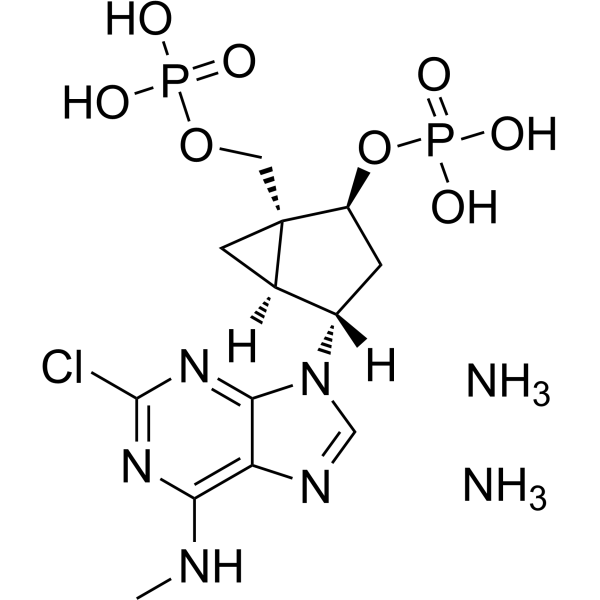
MRS2279 diammonium is a selective and high affinity P2Y1 receptor antagonist, with a Ki value of 2.5 nM and an IC50 value of 51.6 nM. MRS2279 diammonium competitively inhibits ADP-promoted platelet aggregation with an pKb value of 8.05.
Nur für Forschungszwecke. Wir verkaufen nicht an Patienten.
- Reinheit : 99.5%
- CAS. Nr.: 2387505-47-5
- Formel: C13H24ClN7O8P2
- Molecular Weight:503.77
-
Speicherung:
-20°C, sealed storage, away from moisture
* In solvent : -80°C, 6 months; -20°C, 1 month (sealed storage, away from moisture)

To place orders, for customer services and technical support, please contact: MedChemExpress USA
Tel: 609-228-6898 E-mail: [email protected] [email protected]


-
 Biologische Aktivität
-
Chemical Information
-
Lösungsmittel & Löslichkeit
- Reinheit & Dokumentation
- Verweise
-
 Help & FAQs


-
HY-111557
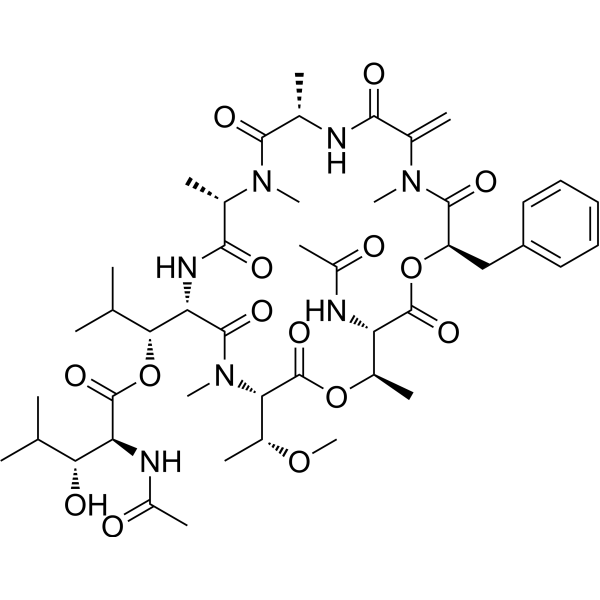
YM-254890Gαq/11 Selective Inhibitor -
HY-108648
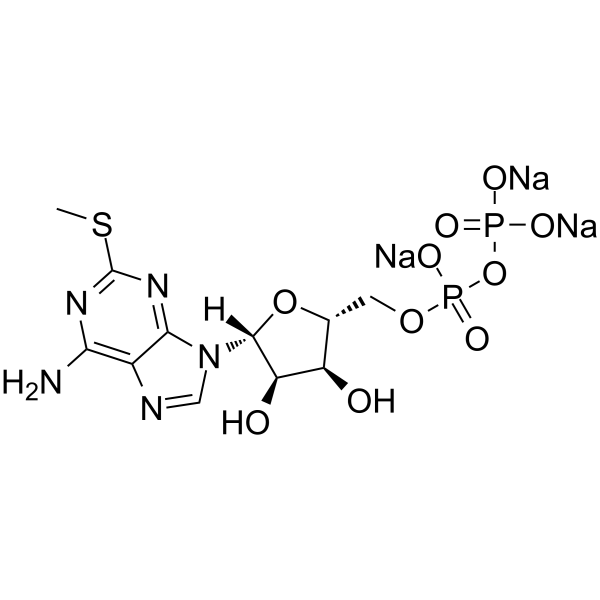
2-MeS-ADP trisodiumP2Y Receptor Agonist -
HY-108672
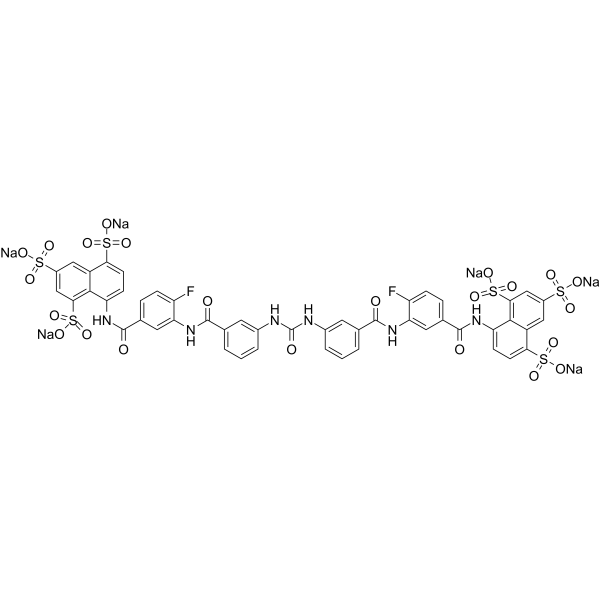
NF157P2Y11 Antagonist -
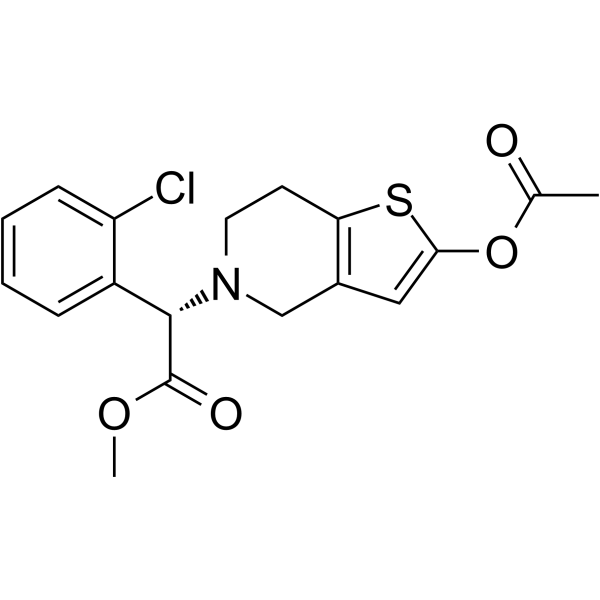
HY-118284
VicagrelP2Y12 Inhibitor -
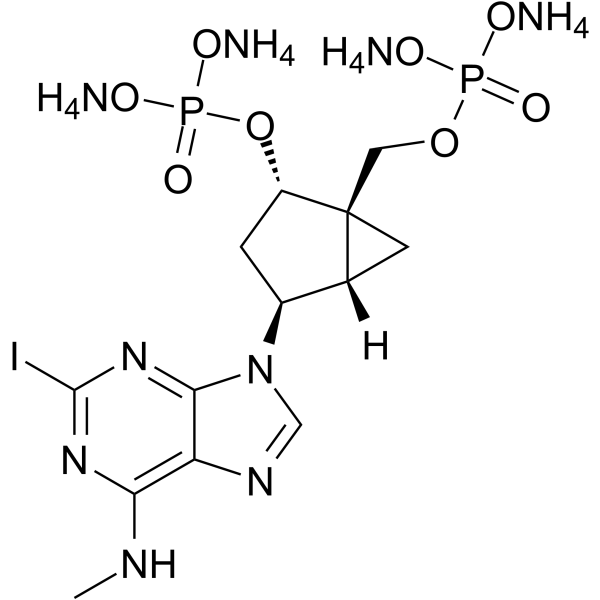
HY-108658
MRS2500 tetraammoniumP2Y1 Receptor Antagonist -
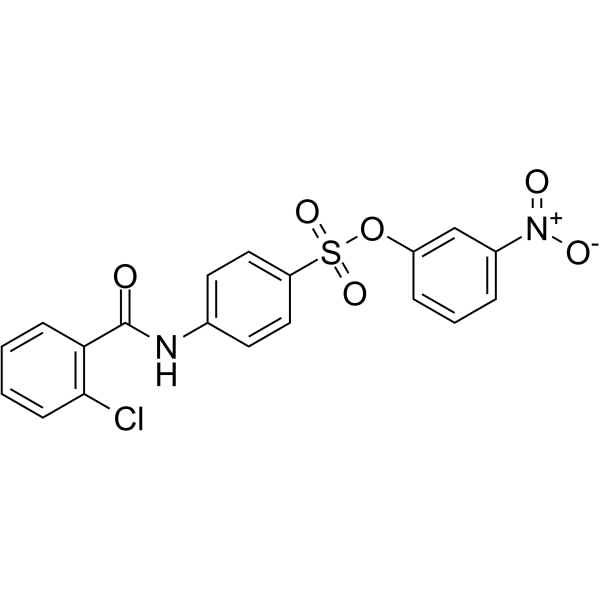
HY-146486
P2Y2R/GPR17 antagonist 1P2Y2R/GPR17 Antagonist -
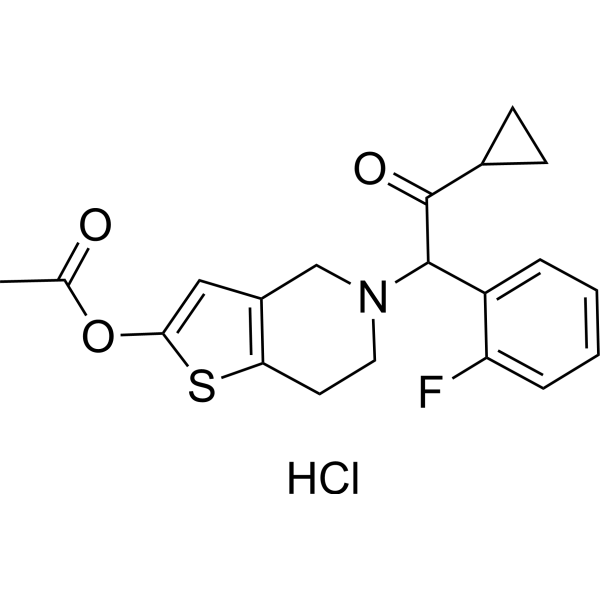
HY-15284A
Prasugrel hydrochlorideP2Y12 Receptor Antagonist -
HY-18775
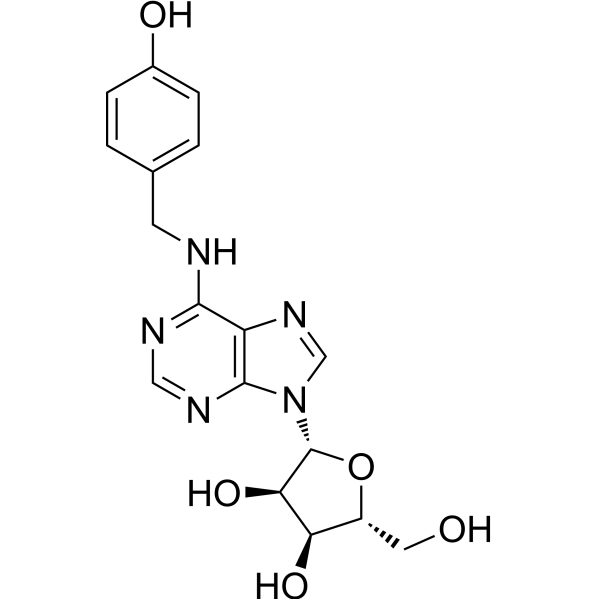
N6-(4-Hydroxybenzyl)adenosineENT1 Inhibitor/A2aR Agonist -
HY-108662
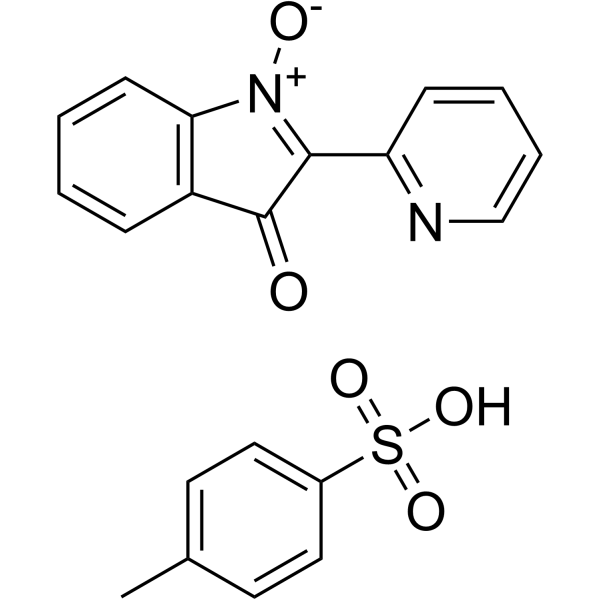
PITP2Y1 Receptor Antagonist -
HY-110043
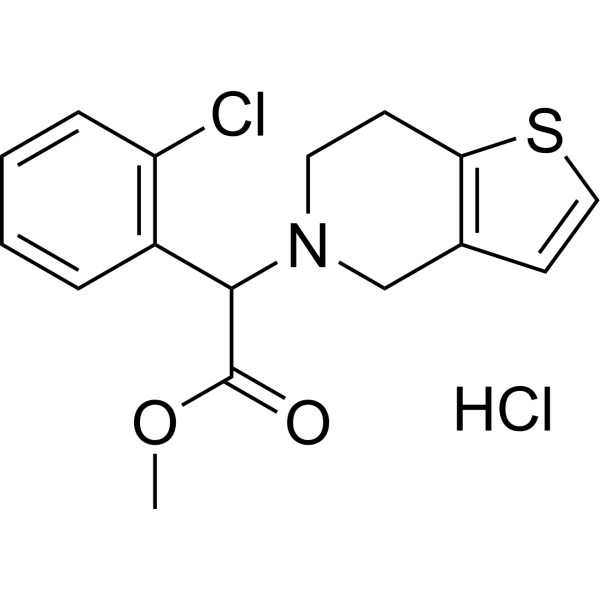
(±)-Clopidogrel hydrochlorideantithrombotic agent -
HY-15283
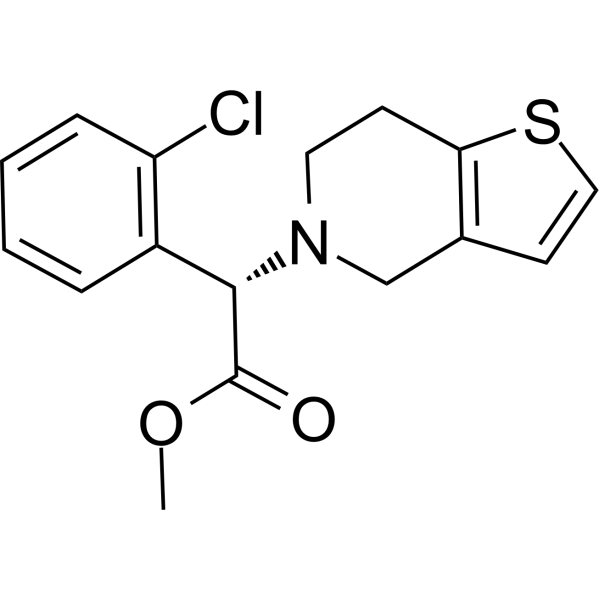
ClopidogrelAntiplatelet Agent -
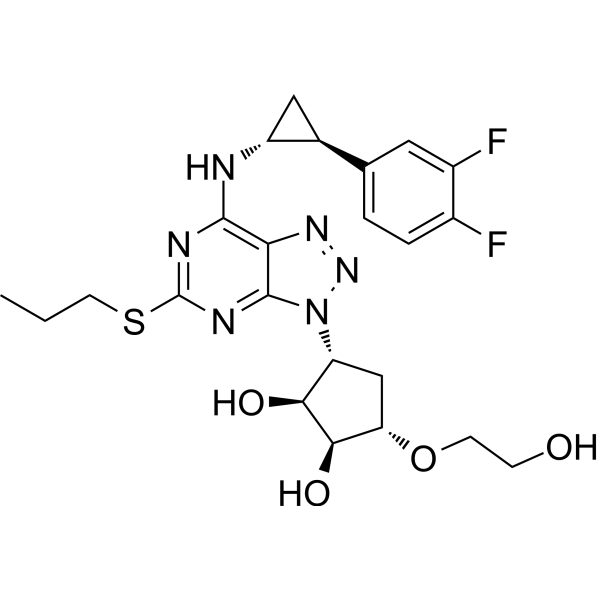
HY-10064
TicagrelorP2Y12 Antagonist
Publications Citing Use of MedChemExpress (MCE) MRS2279 diammonium
MoreAlle P2Y Receptor Isoform-spezifische Produkte anzeigen
More

Biologische Aktivität
Beschreibung
IC50 & Target
|
P2Y1 Receptor 51.6 nM (IC50) |
In Vitro
MRS2279 diammonium antagonizes 2-MeSADP-stimulated inositol phosphate formation in turkey erythrocyte membranes with a pKb value of 7.75[2]. MRS2279 diammonium shows high affinity competitive antagonism to human P2Y1 receptor with a pKb value of 8.10 in 1321N1 human astrocytoma cells[2]. MRS2279 diammonium shows specific effect for the P2Y1 receptor, but shows no effect on activation of the human P2Y2, P2Y4, P2Y6, or P2Y11 receptors by their cognate agonists[2]. MRS2279 diammonium shows no ability to block the capacity of ADP to act through the Gi/adenylyl cyclase linked P2Y receptor of platelets to inhibit cyclic AMP accumulation[2].
MedChemExpress (MCE) has not independently confirmed the accuracy of these methods. They are for reference only. .
In Vivo
MedChemExpress (MCE) has not independently confirmed the accuracy of these methods. They are for reference only.


Chemical Information
-
CAS. Nr. 2387505-47-5
-
Appearance Solid
-
Molecular Weight 503.77
-
Formel C13H24ClN7O8P2
-
Color White to off-white
-
SMILES
O=[P](O)(O)OC[C@]1([C@H]2O[P](O)(O)=O)[C@]([C@](N3C4=NC(Cl)=NC(NC)=C4N=C3)([H])C2)([H])C1.N.N
-
Versand
Room temperature in continental US; may vary elsewhere.
-
Speicherung
-20°C, sealed storage, away from moisture
* In solvent : -80°C, 6 months; -20°C, 1 month (sealed storage, away from moisture)


Publications (1)
-
Journal Impact Factor
-
Most Recent
-
Bioengineered
Mechanical ventilation induces lung and brain injury through ATP production, P2Y1 receptor activation and dopamine release. [Abstract]2022 Feb;13(2):2346-2359. PMID: 35034579


Lösungsmittel & Löslichkeit
In Vitro:
H2O : 100 mg/mL (198.50 mM; Need ultrasonic)
DMSO : 50 mg/mL (99.25 mM; Need ultrasonic; Hygroscopic DMSO has a significant impact on the solubility of product, please use newly opened DMSO)
Please refer to the solubility information to select the appropriate solvent. Once prepared, please aliquot and store the solution to prevent product inactivation from repeated freeze-thaw cycles.
Storage method and period of stock solution: -80°C, 6 months; -20°C, 1 month (sealed storage, away from moisture). When stored at -80°C, please use it within 6 months. When stored at -20°C, please use it within 1 month.
* Note: If you choose water as the stock solution, please dilute it to the working solution, then filter and sterilize it with a 0.22 μm filter before use.
Please refer to the solubility information to select the appropriate solvent. Once prepared, please aliquot and store the solution to prevent product inactivation from repeated freeze-thaw cycles.
Storage method and period of stock solution: -80°C, 6 months; -20°C, 1 month (sealed storage, away from moisture). When stored at -80°C, please use it within 6 months. When stored at -20°C, please use it within 1 month.
* Note: If you choose water as the stock solution, please dilute it to the working solution, then filter and sterilize it with a 0.22 μm filter before use.
Konzentration (Stammlösung) × Volumen (Stammlösung) = Konzentration (Ziellösung) × Volumen (Ziellösung)
In Vivo:
Select the appropriate dissolution method based on your experimental animal and administration route.
- For the following dissolution methods, please ensure to first prepare a clear stock solution using an In Vitro approach and then sequentially add co-solvents:
- To ensure reliable experimental results, the clarified stock solution can be appropriately stored based on storage conditions. As for the working solution for In Vivo experiments, it is recommended to prepare freshly and use it on the same day.
- The percentages shown for the solvents indicate their volumetric ratio in the final prepared solution. If precipitation or phase separation occurs during preparation, heat and/or sonication can be used to aid dissolution.
Add each solvent one by one: 10% DMSO 40% PEG300 5% Tween-80 45% Saline
Solubility: ≥ 2.5 mg/mL (4.96 mM); Clear solution
This protocol yields a clear solution of ≥ 2.5 mg/mL (saturation unknown).
Taking 1 mL working solution as an example, add 100 μL DMSO stock solution (25.0 mg/mL) to 400 μL PEG300, and mix evenly; then add 50 μL Tween-80 and mix evenly; then add 450 μL Saline to adjust the volume to 1 mL.
Preparation of Saline: Dissolve 0.9 g sodium chloride in ddH₂O and dilute to 100 mL to obtain a clear Saline solution.
Add each solvent one by one: 10% DMSO 90% (20% SBE-β-CD in Saline)
Solubility: ≥ 2.5 mg/mL (4.96 mM); Clear solution
This protocol yields a clear solution of ≥ 2.5 mg/mL (saturation unknown).
Taking 1 mL working solution as an example, add 100 μL DMSO stock solution (25.0 mg/mL) to 900 μL 20% SBE-β-CD in Saline, and mix evenly.
Preparation of 20% SBE-β-CD in Saline (4°C, storage for one week): 2 g SBE-β-CD powder is dissolved in 10 mL Saline, completely dissolve until clear.
In Vivo Dissolution Calculator
Please enter the basic information of animal experiments:
-
-
-
-
Recommended: Prepare an additional quantity of animals to account for potential losses during experiments.
Working solution concentration: 0.22 mg/mL
This product has good water solubility, please refer to the measured solubility data in water/PBS/Saline for details.


Reinheit & Dokumentation
-
Data Sheet (284 KB)
-
SDS (252 KB)
- English - EN (252 KB)
- Français - FR (252 KB)
- Deutsch - DE (252 KB)
- Norwegian - NO (252 KB)
- Español - ES (252 KB)
- Swedish - SV (252 KB)
- Italian - IT (252 KB)
- Korean - KR (252 KB)
- Portuguese - PT (252 KB)
-
Handling Instructions (2659 KB)
Verweise
[1]. Nandanan E, et al. Synthesis, biological activity, and molecular modeling of ribose-modified deoxyadenosine bisphosphate analogues as P2Y(1) receptor ligands. J Med Chem. 2000;43(5):829-842. [Content Brief]
[2]. Boyer JL, et al, Ravi RG, Jacobson KA, Harden TK. 2-Chloro N(6)-methyl-(N)-methanocarba-2'-deoxyadenosine-3',5'-bisphosphate is a selective high affinity P2Y(1) receptor antagonist. Br J Pharmacol. 2002;135(8):2004-2010. [Content Brief]
[3]. Wei W, et al. Mechanical ventilation induces lung and brain injury through ATP production, P2Y1 receptor activation and dopamine release. Bioengineered. 2022 Feb;13(2):2346-2359. [Content Brief]


Complete Stock Solution Preparation Table
Please refer to the solubility information to select the appropriate solvent. Once prepared, please aliquot and store the solution to prevent product inactivation from repeated freeze-thaw cycles.
Storage method and period of stock solution: -80°C, 6 months; -20°C, 1 month (sealed storage, away from moisture). When stored at -80°C, please use it within 6 months. When stored at -20°C, please use it within 1 month.
| Optional Solvent | Concentration Solvent Mass | 1 mg | 5 mg | 10 mg | 25 mg |
|---|---|---|---|---|---|
| DMSO / H2O | 1 mM | 1.9850 mL | 9.9252 mL | 19.8503 mL | 49.6258 mL |
| 5 mM | 0.3970 mL | 1.9850 mL | 3.9701 mL | 9.9252 mL | |
| 10 mM | 0.1985 mL | 0.9925 mL | 1.9850 mL | 4.9626 mL | |
| 15 mM | 0.1323 mL | 0.6617 mL | 1.3234 mL | 3.3084 mL | |
| 20 mM | 0.0993 mL | 0.4963 mL | 0.9925 mL | 2.4813 mL | |
| 25 mM | 0.0794 mL | 0.3970 mL | 0.7940 mL | 1.9850 mL | |
| 30 mM | 0.0662 mL | 0.3308 mL | 0.6617 mL | 1.6542 mL | |
| 40 mM | 0.0496 mL | 0.2481 mL | 0.4963 mL | 1.2406 mL | |
| 50 mM | 0.0397 mL | 0.1985 mL | 0.3970 mL | 0.9925 mL | |
| 60 mM | 0.0331 mL | 0.1654 mL | 0.3308 mL | 0.8271 mL | |
| 80 mM | 0.0248 mL | 0.1241 mL | 0.2481 mL | 0.6203 mL | |
| H2O | 100 mM | 0.0199 mL | 0.0993 mL | 0.1985 mL | 0.4963 mL |
* Note: If you choose water as the stock solution, please dilute it to the working solution, then filter and sterilize it with a 0.22 μm filter before use.


MRS2279 diammonium Related Classifications
HY-108657A Related Classifications
 Powered by Bioz