

Search Result
Results for "
Bacterial membrane
" in MedChemExpress (MCE) Product Catalog:
10
Biochemical Assay Reagents
9
Isotope-Labeled Compounds
| Cat. No. |
Product Name |
Target |
Research Areas |
Chemical Structure |
-
- HY-17362
-
|
|
Bacterial
Autophagy
Antibiotic
|
Infection
Cancer
|
|
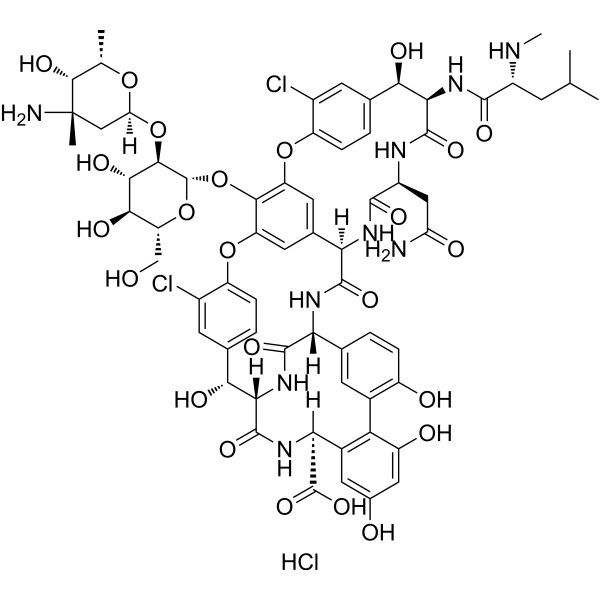
Vancomycin hydrochloride is an antibiotic for the treatment of bacterial infections. It acts by inhibiting the second stage of cell wall synthesis of susceptible bacteria. Vancomycin also alters the permeability of the cell membrane and selectively inhibits ribonucleic acid synthesis.
|
-
-
- HY-W012669
-
|
Phthaldialdehyde
|
Environmental Pollutants
Biochemical Assay Reagents
|
Infection
|
|
Phthalaldehyde (Phthaldialdehyde) reacts with proteins containing primary amines and blocked amino-terminal peptides of amino acids. Phthalaldehyde stabilizes bacterial outer membranes and cell walls, increases the optical density of bacterial cell suspensions, and inhibits bacterial lysis induced by ethylenediaminetetraacetic acid and sodium dodecyl sulfate. Phthalaldehyde exhibits bactericidal activity against Gram-negative vegetative bacteria .
|
-
-
- HY-B1228
-
|
Vistamycin sulfate
|
Antibiotic
PDI
|
Infection
|
|
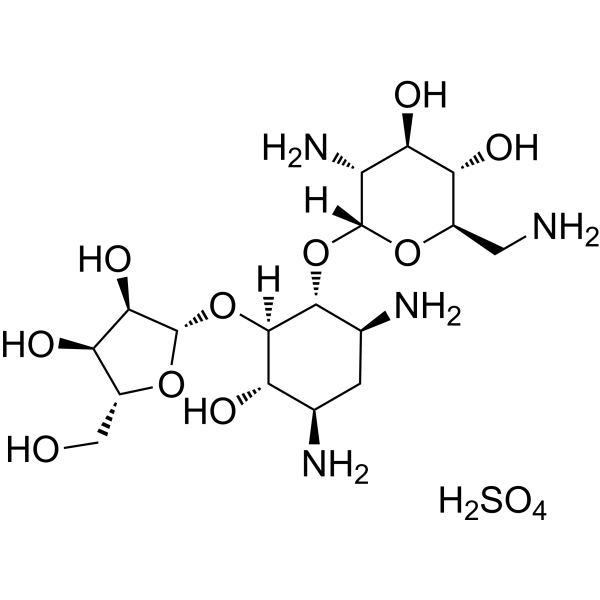
Ribostamycin sulfate (Vistamycin sulfate) is a broad-spectrum aminoglycoside Antibiotic with bactericidal activity against Gram-positive cocci, Gram-negative cocci, bacilli, and drug-resistant strains. Ribostamycin sulfate also acts as an inhibitor of protein disulfide isomerase (PDI), with a binding constant KD of 319 μM for bovine PDI. Ribostamycin sulfate targets bacterial 16S ribosomal RNA and the 30S ribosomal subunit, causing translational misreading and thereby inhibiting bacterial protein synthesis. Ribostamycin sulfate disrupts the integrity of bacterial cell membranes, induces membrane pore formation, and leads to bacterial death. Ribostamycin sulfate can be used in studies related to bacterial infections .
|
-
-
- HY-A0248A
-
|
|
Bacterial
|
Infection
|
|
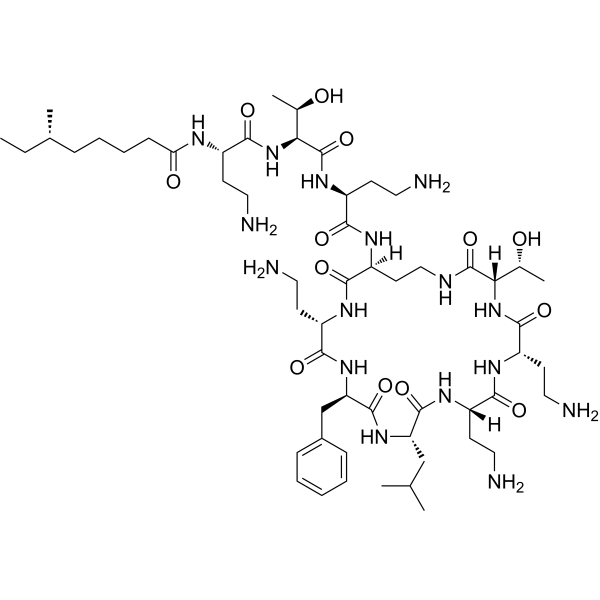
Polymyxin B1 is a potent antimicrobial lipopeptide first derived from Bacilus polymyxa. Polymyxin B1 is the major component in Polymyxin B (HY-A0248). Polymyxin B1 can induce lysis of bacterial cells through interaction with their membranes. Polymyxin B1 has the potential for multidrug-resistant Gram-negative bacterial infections treatment .
|
-
-
- HY-N8332
-
|
Ox bile extract
|
Bacterial
DNA/RNA Synthesis
|
Infection
|
|
Bile extract (Ox bile extract) is a complex mixture of substances, containing bile acids, cholesterol, and bilirubin. Bile extract has antimicrobial activity and can induce DNA damage and degrade viral and bacterial membranes. Bile extract can be used in bacterial culture media as a selective inhibitor for the isolation and identification of pathogens .
|
-
-
- HY-B1597
-
|
Benzyldimethylhexadecylammonium chloride
|
Bacterial
|
Infection
Inflammation/Immunology
|
|
Cetalkonium chloride is an ammonium antiseptic agent used in many topical agents for infections of mouth, throat and eye. Cetalkonium chloride acts as anti-inflammatory amphiphilic agent. Cetalkonium chloride is a cationic surfactant, that improves the precorneal residence time and bioavailability of drugs. Cetalkonium chloride interacts with the negative charges on the bacterial cell membrane, disrupts the integrity of the cell membrane, causes leakage of cell contents and ultimately leading to bacterial death .
|
-
-
- HY-P5712
-
|
Gramicidin soviet
|
Antibiotic
Bacterial
Na+/K+ ATPase
|
Infection
|
|
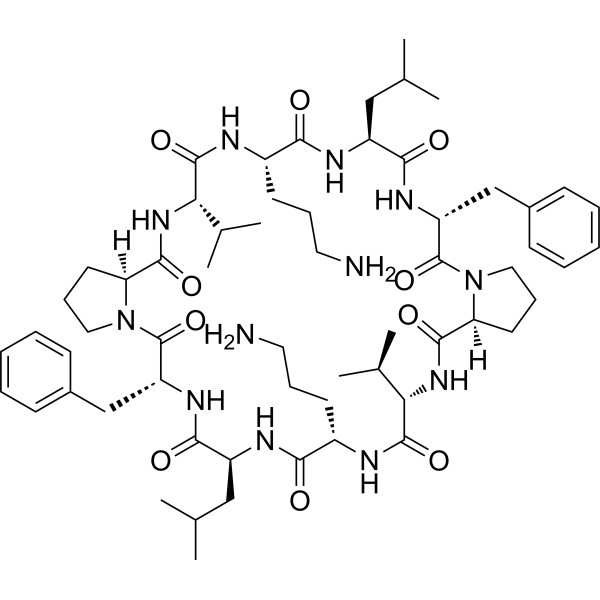
Gramicidin S (Gramicidin soviet) is a cationic cyclic peptide antibiotic that selectively targets bacterial cell membranes and has anticancer activity. Gramicidin S also exerts antibacterial activity by destroying membrane integrity and interfering with membrane protein function. Gramicidin S inserts into the phospholipid bilayer through hydrophobic amino acid residues, specifically binds to negatively charged membrane lipids and disrupts membrane structure, thereby inhibiting cell division and cell wall synthesis, and ultimately causing bacterial death. Gramicidin S also inhibits ion channels, with IC50s of 41 μM, 24 μM, and 3 μM for Na +/K +-ATPase, tobacco leaf plasma membrane Mg 2+/K +-ATPase, and rat heart plasma membrane Ca 2+-ATPase, respectively .
|
-
-
- HY-105088
-
|
MSI 78 free base
|
Bacterial
|
Infection
Cancer
|
|
Pexiganan (MSI 78) is an orally active antimicrobial peptide with broad-spectrum bactericidal. Pexiganan disrupts bacterial cell membranes, induces peptidoglycan damage and cell lysis. Pexiganan TFA can be used for the research of bacterial infection .
|
-
-
- HY-P0311
-
|
|
Bacterial
|
Infection
|
|
LAH4, an alpha-helix of the designed amphipathic peptide antibiotic, exhibits potent antimicrobial, nucleic acid transfection and cell penetration activities. LAH4 possesses high plasmid DNA delivery capacities. LAH4 has a strong affinity for anionic lipids found in the outer membrane of bacterial membranes .
|
-
-
- HY-N1136
-
|
|
Bacterial
|
Infection
|
|
(+)-Totarol is a diterpenoid membrane-disrupting agent and membrane structure regulator found in plants of the genus Podocarpus spp. (+)-Totarol inserts into phospholipid model membranes, disrupts phospholipid packing, and impairs the functional integrity of membranes. (+)-Totarol exhibits antibacterial activity against a variety of bacterial species and β-lactam-resistant strains, and its action is associated with changes in membrane physical properties. (+)-Totarol can be used in studies related to bacterial infections .
|
-
-
- HY-P5255
-
|
|
Bacterial
|
Infection
Inflammation/Immunology
|
|
Oligopeptide-10 is a bioactive peptide with antimicrobial activity. Oligopeptide-10 exhibits broad-spectrum bactericidal effects against Gram-positive bacteria including Propionibacterium acnes and Staphylococcus aureus. Oligopeptide-10 targets lipoteichoic acid (LTA) on the surface of bacterial cell membranes, induces bacterial osmotic imbalance by disrupting the integrity of bacterial membranes, and reduces the release of pro-inflammatory cytokines induced by bacteria. Oligopeptide-10 possesses skin-protective activity. Oligopeptide-10 can be applied in research related to acne vulgaris, dandruff, seborrheic dermatitis, and tinea pedis .
|
-
-
- HY-127032
-
|
Polidronium chloride
|
Biochemical Assay Reagents
|
Infection
|
|
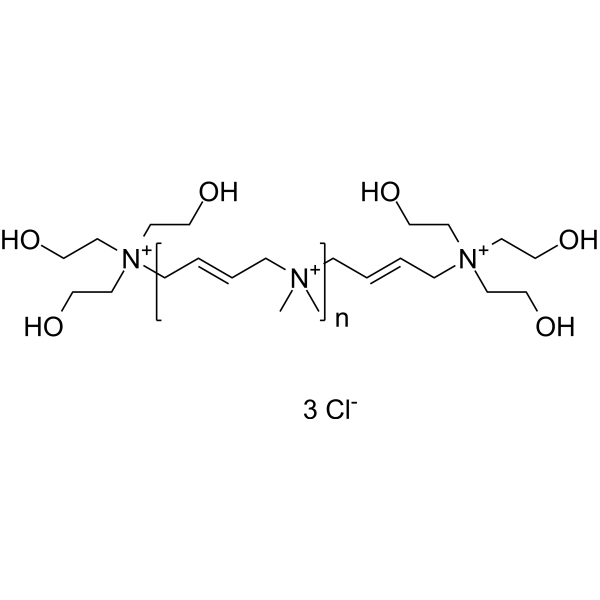
Polyquaternium-1 (Polidronium chloride; PQ-1) is an antimicrobial preservative and an activator of NF-κB. Polyquaternium-1 targets bacterial cell membranes, commonly used in ophthalmic surgery. Polyquaternium-1 adsorbs to the surface of microbial membranes through its polycationic properties, destroying membrane integrity and inducing potassium ion leakage, leading to bacterial death. Polyquaternium-1 exerts antimicrobial effects at a concentration of 0.001% and has low toxicity to mammalian cells. Polyquaternium-1 can be used to prepare products such as glaucoma eye drops (Travoprost preparations containing PQ-1), artificial tears, and contact lens solutions to reduce the ocular surface toxicity of traditional preservatives such as benzalkonium chloride (HY-B2232) .
|
-
-
- HY-156004
-
|
|
Bacterial
|
Others
|
|
Ziapin 2 is a membrane potential modulator and an intracellular membrane photoactuator. Ziapin 2 binds to the bacterial plasma membrane, and upon embedding into the lipid bilayer, undergoes trans-cis isomerization under 470 nm light irradiation, which triggers membrane potential hyperpolarization and induces the opening of ion channels on bacterial cell membranes. Through interactions with lipids, Ziapin 2 increases the overall flexibility of the lipid bilayer. Ziapin 2 can form photosensitive transmembrane dimers to trigger cellular signal transduction. Ziapin 2 is applicable to the research and regulation of bacterial electrical signal transduction and the regulation of membrane physical properties .
|
-
-
- HY-P10233A
-
|
|
Bacterial
|
Infection
|
|
SAAP 148 TFA is a synthetic antimicrobial peptide (bacteria) that interacts with and disrupts the lipid bilayer of bacterial cytoplasmic membranes, thereby inducing changes in membrane permeability and bacterial death. SAAP 148 TFA kills drug-resistant, multidrug-resistant and persister bacterial strains, inhibits biofilm formation, eliminates established biofilms, and blocks bacterial colonization on implant surfaces. SAAP 148 TFA retains its activity after modification or immobilization, exhibits variable cytotoxicity in different human cell models, and shows reduced efficacy in protein-rich environments. SAAP 148 TFA can be used in infection-related research .
|
-
-
- HY-A0248B
-
|
|
Antibiotic
Bacterial
|
Infection
|
|
Polymyxin B2 is a polypeptide antibiotic that has antibacterial activity, particularly against gram-negative bacteria. Polymyxin B2 kills the bacteria by binding to lipopolysaccharide molecules on the bacterial cell membrane, disrupting the integrity of the cell membrane and causing the cell contents to leak. Polymyxin B2 can be used in antibiotic development and treatment of drug-resistant strains .
|
-
-
- HY-121219
-
|
|
Bacterial
|
Infection
|
|
(-)-Lupinine is an alkaloid and membrane fusion inhibitor. (-)-Lupinine does not affect the synthesis of proinflammatory cytokines during the host response to Serratia proteamaculans infection. (-)-Lupinine can enhance the expression of the bacterial surface protein OmpX. (-)-Lupinine can be used for research on bacterial infections .
|
-
-
- HY-W008884
-
|
|
Bacterial
|
Others
|
|
25-NBD Cholesterol is a fluorescently labeled form of cholesterol that facilitates the distinction between exogenous and endogenous cholesterol within bacterial cell membranes, emitting green fluorescence signals.
|
-
-
- HY-P0311A
-
|
|
Bacterial
|
Infection
|
|
LAH4 TFA, an alpha-helix of the designed amphipathic peptide antibiotic, exhibits potent antimicrobial, nucleic acid transfection and cell penetration activities. LAH4 TFA possesses high plasmid DNA delivery capacities. LAH4 TFA has a strong affinity for anionic lipids found in the outer membrane of bacterial membranes .
|
-
-
- HY-P3328A
-
|
|
Bacterial
|
Infection
|
|
MDP1 acetate, a Melittin-derived peptide, alters the integrity of both Gram-positive and Gram-negative bacterial membranes and kills the bacteria via membrane damages. MDP1 acetate has a high-antibacterial activity against multidrug resistant (MDR) and reference strains of S. aureus, E. coli, and P. aeruginosa .
|
-
-
- HY-P11430
-
|
|
Biochemical Assay Reagents
|
Infection
|
|
UBI (31-38) is a Ubiquicidin-derived octapeptide and anti-bacterial agent. UBI (31-38) selectively interacts with anionic phospholipid membranes and restricts lipid lateral motion. UBI (31-38) induces anionic vesicle aggregation via electrostatic repulsion screening, and undergoes conformational changes in membrane-mimicking environments. UBI (31-38) can be used for the research of infection imaging probes .
|
-
-
- HY-103658
-
|
Miramistin
|
Bacterial
|
Infection
|
|
Myramistin (Miramistin) is an antibacterial agent targeting bacterial cell membrane. Myramistin can bind to the negatively charged surface of bacteria through its cationic properties, disrupt the integrity of the bacterial cell membrane, inhibit bacterial metabolism and growth, and induce cell death, thus exerting antibacterial activity .
|
-
-
- HY-149734
-
|
|
Bacterial
|
Infection
|
|
MA220607 is a FtsZ protein inhibitor with activity against both Gram-positive and Gram-negative bacteria. MA220607 inhibits bacterial growth and shows low bacterial resistance frequency. MA220607 increases bacterial membrane permeability and alters proton gradients. MA220607 blocks the formation of bacterial biofilms. MA220607 can be used in studies of bacterial infections .
|
-
-
- HY-P10233
-
|
|
Bacterial
|
Infection
|
|
SAAP 148 is a synthetic antimicrobial peptide (bacteria) that interacts with and disrupts the lipid bilayer of bacterial cytoplasmic membranes, thereby inducing changes in membrane permeability and bacterial death. SAAP 148 kills drug-resistant, multidrug-resistant and persister bacterial strains, inhibits biofilm formation, eliminates established biofilms, and blocks bacterial colonization on implant surfaces. SAAP 148 retains its activity after modification or immobilization, exhibits variable cytotoxicity in different human cell models, and shows reduced efficacy in protein-rich environments. SAAP 148 can be used in infection-related research .
|
-
-
- HY-P10696
-
|
|
Bacterial
|
Infection
|
|
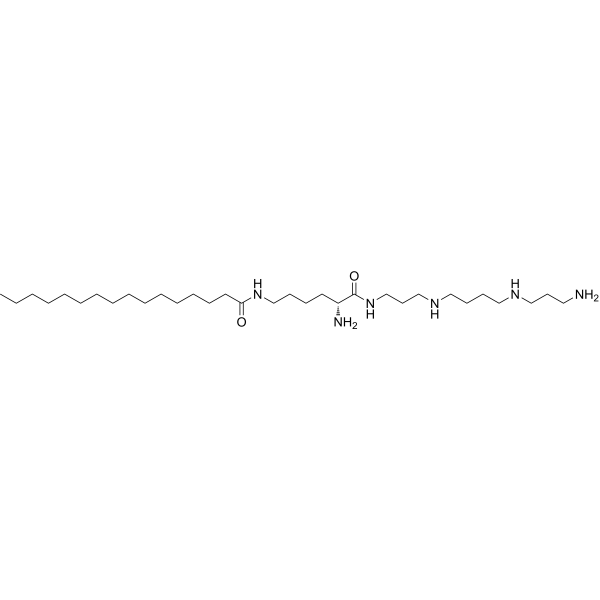
C16G2 is a specific targeted antimicrobial peptide (STAMP) that targets the cariogenic oral pathogen Streptococcus mutans. C16G2 specifically recognizes and disrupts the bacterial cell membrane, causing small molecule leakage and loss of membrane potential, leading to bacterial killing. C16G2 exhibits higher selectivity and efficacy against Streptococcus mutans, unlike broad-spectrum antimicrobial peptides .
|
-
-
- HY-143643
-
|
|
Bacterial
|
Infection
|
|
Antibacterial agent 72 displays the antibacterial activities by targeting the bacterial membrane.
|
-
-
- HY-P10519
-
|
|
Bacterial
Reactive Oxygen Species (ROS)
|
Infection
|
|
Brevicidine is an antimicrobial peptide with selective bactericidal activity against Gram-negative pathogens. Brevicidine disrupts bacterial morphology by binding to lipopolysaccharide (LPS) on the bacterial cell membrane to form pores. Brevicidine causes dissipation of intracellular proton motive force, outer membrane damage, inhibition of ATP biosynthesis and reactive oxygen species accumulation in bacterial cells. As a sensitizer, Brevicidine exerts synergistic activity when combined with a variety of conventional antibiotics .
|
-
-
- HY-P10980
-
|
|
DNA/RNA Synthesis
Bacterial
|
Infection
|
|
Citrocin is a potent bacterial RNA polymerase (RNAP) inhibitor. Citrocin shows significant inhibitory activity against Escherichia coli RNAP with an MIC range of 16-125 μM. Citrocin specifically binds to and inhibits RNA polymerase to block bacterial transcription and enters cells mainly through inner membrane protein SbmA. Citrocin is promising for research of Gram-negative bacterial infections, such as enterohemorrhagic E. coli .
|
-
-
- HY-P11442
-
|
Lycotoxin-Pa2a; TBIU041425
|
Bacterial
Toll-like Receptor (TLR)
|
Inflammation/Immunology
|
|
Lytx-Pa2a (Lycotoxin-Pa2a) is a peptide inhibitor against bacterial membranes and TLR4 receptor. Lytx-Pa2a exerts antimicrobial effects via non-competitive disruption of outer/cytoplasmic membranes and suppression of LPS-induced TLR4/NF-κB signaling. Lytx-Pa2a is promising for research of bacterial infection and inflammation-related disease (e.g., sepsis) .
|
-
-
- HY-178952
-
|
|
Bacterial
|
Infection
|
|
Anti-infective agent 12 (Compound A09) is a competitive inhibitor of type I signal peptidease (SPase I), with an IC50 of 4.475 μM and a Kd of 16.3 μM. Anti-infective agent 12 has the ability to disrupt bacterial membranes and remove biofilms. Anti-infective agent 12 exhibits potent bactericidal activity against Gram-positive bacteria, with MIC values of 4, 4, 8, and 8 μg/mL for Staphylococcus aureus, Enterococcus faecalis, Enterococcus faecium, and Streptococcus suis, respectively. Anti-infective agent 12 remains effective against multi-drug resistant strains, but has weaker activity against Gram-negative bacteria (such as Escherichia coli and Salmonella), with MIC values > 64 μg/mL. Anti-infective agent 12 has low hemolytic activity and shows significant efficacy in mouse skin infection models .
|
-
-
- HY-W154333
-
|
|
Bacterial
|
Infection
|
|
H-Arg-OtBu (dihydrochloride) is a membrane-targeting antimicrobial. H-Arg-OtBu (dihydrochloride) targets the negatively charged bacterial membrane via a combination of electrostatic and hydrophobic interactions. H-Arg-OtBu (dihydrochloride) can be used for bacterial infections diseases research .
|
-
-
- HY-179396
-
|
|
Bacterial
|
Infection
|
|
T-1228 is a highly selective LpxC inhibitor. T-1228 can effectively block the synthesis of LPS (HY-D1056), causing defects in the bacterial outer membrane structure, increasing membrane permeability, and ultimately leading to bacterial cell death. T-1228 can be used for the study of Gram-negative bacterial infections .
|
-
-
- HY-P10907
-
|
|
Bacterial
|
Infection
|
|
Zaloganan exhibits board-spectrum antibacterial activity through disruption of bacterial membranes .
|
-
-
- HY-175301
-
|
|
Bacterial
Reactive Oxygen Species (ROS)
|
Infection
|
|
TH16 is an antibacterial agent (MIC=2 μg/mL against methicillin-resistant Staphylococcus aureus, MRSA). TH16 disrupts bacterial cytoplasmic membrane integrity, elevating intracellular reactive oxygen species (ROS) levels to induce bacterial death. TH16 is promising for research of bacterial infection .
|
-
-
- HY-105088A
-
|
MSI 78
|
Bacterial
|
Infection
|
|
Pexiganan (MSI 78) acetate is an orally active antimicrobial peptide with broad-spectrum bactericidal. Pexiganan TFA disrupts bacterial cell membranes, induces peptidoglycan damage and cell lysis. Pexiganan acetate can be used for the research of bacterial infection .
|
-
-
- HY-P10696A
-
|
|
Bacterial
|
Infection
|
|
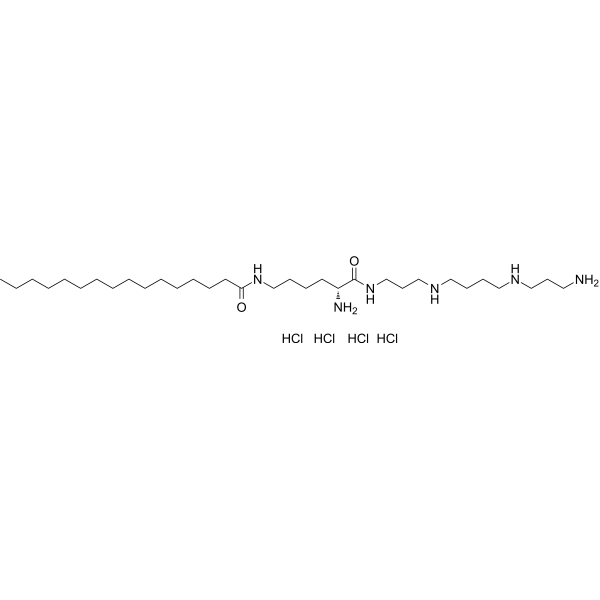
C16G2 TFA is a specific targeted antimicrobial peptide (STAMP) that targets the cariogenic oral pathogen Streptococcus mutans. C16G2 TFA specifically recognizes and disrupts the bacterial cell membrane, causing small molecule leakage and loss of membrane potential, leading to bacterial killing. C16G2 TFA exhibits higher selectivity and efficacy against Streptococcus mutans, unlike broad-spectrum antimicrobial peptides .
|
-
-
- HY-170991
-
|
|
Bacterial
Reactive Oxygen Species (ROS)
|
Infection
|
|
C12-rrw-NH2 (Compound Lip7) is an antibacterial agent against gram-positive bacteria, especially against Methicillin (HY-121544)-resistant Staphylococcus aureus (MRSA). C12-rrw-NH2 induces bacterial death via depolarizing the bacterial cytoplasmic membrane, disrupting the integrity of the bacterial membrane, leading to leakage of nucleic acid and protein and promoting the generation of Reactive Oxygen Species. C12-rrw-NH2 is potential to be used for research of developing high-stability antimicrobial peptides .
|
-
-
- HY-158881
-
-
-
- HY-144823
-
|
|
Bacterial
|
Infection
|
|
Anti-MRSA agent 3 (compound 18) has highly inhibitory activity against Methicillin-resistant Staphylococcus aureus (MRSA) with MIC of 0.098 μg/ml, and low cytotoxicity in normal cells. Anti-MRSA agent 3 has relatively strong ability to destroy bacterial cell wall and membrane, high binding affinity to bacterial genomic DNA .
|
-
-
- HY-161689
-
|
|
Bacterial
|
Infection
|
|
Antibacterial agent 220 is a potent antibacterial agent that can directly destroy bacterial cell membranes. Antibacterial agent 220 effectively combats Gram-positive and and Gram-negative pathogens, including drug-resistant strains .
|
-
-
- HY-144822
-
|
|
Bacterial
|
Infection
|
|
Anti-MRSA agent 2 (compound 14) has highly inhibitory activity against Methicillin-resistant Staphylococcus aureus (MRSA) with MIC of 0.098 μg/ml, and relatively low cytotoxicity in normal cells. Anti-MRSA agent 2 has strong ability to destroy bacterial membrane and bind to genomic DNA .
|
-
-
- HY-P5680
-
|
|
Bacterial
|
Inflammation/Immunology
|
|
SpHistin is an antimicrobial peptide (AMP). SpHistin can bind to LPS (HY-D1056) and permeabilize the bacterial membrane. SpHistin combined with Rifampicin (HY-B0272) and Azithromycin (HY-17506) promotes the intracellular uptake of the antibiotics and subsequently enhances the bactericidal activity of both agents against P. aeruginosa .
|
-
-
- HY-162672
-
|
|
Bacterial
|
Infection
|
|
Antibacterial agent 231 (derivative 8) is an antimicrobial agent against multidrug-resistant Helicobacter pylori (H. pylori) with a minimum inhibitory concentration of 0.25–0.5 μg/mL. Antibacterial agent 231 directly targets the protein transposase subunit SecA and the outer membrane protein assembly factor BamD to inhibit the trafficking and assembly of bacterial outer membrane proteins (OMPs). Antibacterial agent 231 can be used to study the effects of antibiotic treatment on intestinal microbial balance .
|
-
-
- HY-168881
-
|
|
Bacterial
|
Infection
|
|
Antibacterial agent 262 (compound A23) is a potent antibacterial agent. Antibacterial agent 262 inhibits Xanthomonas oryzae pv oryzae activity. Antibacterial agent 262 inhibits the formation of Xanthomonas oryzae pv oryzae biofilms, disrupting the integrity of bacterial cell membranes .
|
-
-
- HY-161364
-
|
|
Bacterial
|
Inflammation/Immunology
|
|
Antibacterial agent 200 (pyridyl HH 7), a unique hydrazyl hydroxycoumarin (HH), has strong antibacterial efficacy and broad antibacterial spectrum with MIC values ranging from 0.5 to 32 μg/mL for Gram-positive and Gram-negative bacteria. Antibacterial agent 200 exhibits a good inhibition against Pseudomonas aeruginosa 27853 with a low MIC value of 0.5 μg/mL. Antibacterial agent 200 can eradicate the integrity of bacterial membrane, result in the leakage of intracellular proteins, and interact with bacterial DNA gyrase via non-covalent binding .
|
-
-
- HY-147546
-
|
|
Bacterial
|
Infection
|
|
Antibacterial agent 107 (compound 14) is a potent antibacterial agent. Antibacterial agent 107 shows potent antibacterial activity against Gram-positive bacteria, with a MIC of 1.56 μg/mL (MRSA). Antibacterial agent 107 exhibits low hemolytic activity, high membrane selectivity, and rapid bactericidal activity. Antibacterial agent 107 shows effective in vivo efficacy in the murine model of bacterial keratitis caused by Staphylococcus aureus ATCC29213 .
|
-
-
- HY-P11220
-
|
|
Bacterial
Interleukin Related
|
Infection
|
|
Hs02 is a cationic amphiphilic antibacterial peptide derived from human proteins, and it is the membrane-active module of the core chimeric peptide Chim2. Hs02 exhibits broad-spectrum and potent antibacterial activity against various human pathogenic bacteria with the MIC for Staphylococcus aureus and Escherichia coli of as low as 2 μM, and the MBC is 2-4 μM. Hs02 primarily kills bacteria by disrupting the integrity of the bacterial cell membrane, and it has a relatively low selectivity for eukaryotic cell membranes. Hs02 induces the release of IL-12 but does not induce the release of IL-6, indicating its potential for pro-inflammatory or immune activation. Hs02 can be used in antibacterial and immunomodulatory research .
|
-
-
- HY-168204
-
|
|
Bacterial
Fungal
|
Infection
|
|
3-Acetyl-28-N–(3–guanidinobutoxy)-oleanolic acid (compound J1) is a potent antimicrobial agent. 3-Acetyl-28-N–(3–guanidinobutoxy)-oleanolic acid shows anti-gram-positive bacteria and fungi activity. 3-Acetyl-28-N–(3–guanidinobutoxy)-oleanolic acid can be used as antibiotic adjuvants. 3-Acetyl-28-N–(3–guanidinobutoxy)-oleanolic disrupts the bacterial cell membrane, inserts into the DNA, and binds to DNA gyrase. 3-Acetyl-28-N–(3–guanidinobutoxy)-oleanolic reduces microbial count in a mouse MRSA skin infection model and accelerates wound healing .
|
-
-
- HY-P10970
-
|
|
Bacterial
|
Infection
|
|
RT2 is a tryptophan-rich cationic amphipathic antibacterial peptide, with main targets including lipopolysaccharide (LPS) on the bacterial surface and intracellular DNA. RT2 binds to bacterial surface LPS, and interacts with cytoplasmic membrane phospholipids, enabling it to rapidly penetrate the bacterial cell membrane and enter the cell, and then bind to components such as DNA in the cytoplasmic membrane, thereby exerting antibacterial effects. RT2 is promising for research of acute and chronic infections caused by planktonic bacteria .
|
-
-
- HY-P991273
-
|
|
Antibiotic
Bacterial
|
Infection
|
|
MP196 is a cationic hexapeptide antibiotic targeting the bacterial cytoplasmic membrane, which exerts rapid bactericidal activity by disrupting membrane integrity, inhibiting cell respiration and cell wall synthesis. MP196 is promising for research of drug-resistant bacterial infections .
|
-
-
- HY-174158
-
|
|
Bacterial
|
Infection
|
|
Antibacterial agent 270 (Compound 3e) is an antibacterial agent that acts on bacterial membrane components phosphatidylglycerol (PG), cardiolipin (CL), and bacterial DNA. Antibacterial agent 270 disrupts bacterial membrane structure and binds to DNA to interfere with genetic information transmission. Antibacterial agent 270 is promising for research of infections caused by methicillin-resistant Staphylococcus aureus (MRSA) .
|
-
- HY-173238
-
|
|
Bacterial
Reactive Oxygen Species (ROS)
|
Infection
|
|
Antibacterial Agent 273 (Compound 15e) is a membrane-targeting antimicrobial agent that disrupts bacterial cell membranes, exhibiting a MIC of 4 μg/mL against Staphylococcus aureus. By compromising membrane integrity, it induces leakage of intracellular nucleic acids and proteins, suppresses bacterial metabolic activity, and triggers the accumulation of reactive oxygen species (ROS). Antibacterial Agent 273 is suitable for research on infections caused by Staphylococcus aureus .
|
-
- HY-P10682
-
|
|
Bacterial
|
Infection
|
|
PuroA is a tryptophan-rich domain of Puroindoline a that exerts antibacterial activity through interaction with bacterial membranes .
|
-
- HY-156005
-
|
|
Bacterial
|
Others
|
|
Antibacterial agent 153 is a broad-spectrum antibacterial agent. Antibacterial agent 153 kills bacteria by acting on the bacterial cell membrane. Antibacterial agent 153 can be used for bacterial infections research .
|
-
- HY-P5932
-
|
|
Bacterial
|
Infection
|
|
Maculatin 1.1 TFA is an antimicrobial peptide with an MIC against Staphylococcus aureus of 7 μM. Maculatin 1.1 TFA can perforate the bacterial membrane of Staphylococcus aureus, causing bacterial death .
|
-
- HY-169160
-
|
|
Bacterial
|
Infection
|
|
Anti-MRSA agent 18 (E17) is an inhibitor of MRSA with MIC values of 2 μg/mL for S. aureus and 4 μg/mL for MRSA, respectively. Anti-MRSA agent 18 interacts with bacterial cell membrane phosphatidylglycerol and cardiolipin, causing changes in cell membrane permeability and polarization, increased intracellular ROS, and DNA and protein leakage, thereby accelerating bacterial death .
|
-
- HY-P5949
-
|
|
Bacterial
|
Infection
|
|
AMPR-22 is an antimicrobial peptide. AMPR-22 can bind to the bacterial membrane and induces membrane permeabilization. AMPR-22 is effective against murine model of sepsis induced by MDR strains
|
-
- HY-173239
-
|
|
Bacterial
|
Infection
|
|
Antibacterial agent 274 (Compound 18b) is a membrane-targeting antibacterial agent that demonstrates a MIC of 8 μg/mL against Acinetobacter baumannii ATCC 17978. By disrupting bacterial membrane integrity, it induces intracellular ROS accumulation and causes leakage of DNA and proteins, thereby exhibiting potent antibacterial activity. This compound is suitable for research applications targeting Gram-negative bacterial infections .
|
-
- HY-P10362
-
|
|
Bacterial
|
Infection
|
|
Temporin-GHd exhibits antibacterial activity against Streptococcus mutans (MIC=13.1 μM; MBC=26 μM). Temporin-GHd increases the permeability of the bacterial cell membrane, causing membrane damage and leakage of cellular contents. Temporin-GHd disrupts preformed biofilms at high concentrations. Temporin-GHd can bind to bacterial DNA, inhibiting DNA migration .
|
-
- HY-P11251
-
|
|
Bacterial
|
Infection
|
|
RI-18 is an antimicrobial peptide. RI-18 exhibits high affinity for bacterial plasma membranes, inducing rapid membrane permeabilization and rupture. RI-18 exhibits potent antimicrobial activity against bacteria in planktonic and biofilmforms .
|
-
- HY-163957
-
|
|
Bacterial
|
Others
|
|
Tambjamine LY2 is an algicidal compound with significant algaecidal effects. Bacterial membrane vesicles (BMVs) may be involved in bacteria-algae communication, so BMV encapsulation can be effectively delivered to the microalgae Heterosigma akashiwo and Thalassiosira pseudonana through membrane fusion .
|
-
- HY-175295A
-
|
|
Bacterial
Reactive Oxygen Species (ROS)
|
Infection
|
|
Anti-MRSA agent 33 iodide is an anti-Methicillin (HY-121544)-resistant Staphylococcus aureus (MRSA) agent, with MIC values of 2-4 μg/mL. Anti-MRSA agent 33 iodide demonstrates effective biofilm eradication and minimal cytotoxicity toward mammalian cells. Anti-MRSA agent 33 iodide specifically binds to phosphatidylglycerol (PG) on bacterial membranes, leading to membrane disruption, excessive production of ROS, and metabolic collapse, ultimately resulting in bacterial cell death. Anti-MRSA agent 33 iodide reduces bacterial load in a murine skin infection model .
|
-
- HY-B1597R
-
|
Benzyldimethylhexadecylammonium chloride (Standard)
|
Reference Standards
Bacterial
|
Infection
Inflammation/Immunology
|
|
Cetalkonium (chloride) (Standard) is the analytical standard of Cetalkonium (chloride). This product is intended for research and analytical applications. Cetalkonium chloride is an ammonium antiseptic agent used in many topical agents for infections of mouth, throat and eye. Cetalkonium chloride acts as anti-inflammatory amphiphilic agent. Cetalkonium chloride is a cationic surfactant, that improves the precorneal residence time and bioavailability of drugs. Cetalkonium chloride interacts with the negative charges on the bacterial cell membrane, disrupts the integrity of the cell membrane, causes leakage of cell contents and ultimately leading to bacterial death .
|
-
- HY-168852
-
|
|
Bacterial
|
Infection
|
|
Antimicrobial agent-37 (compound 6a) is a potent broad-spectrum antimicrobial agent that has a biofilm-destroying effect, acting on bacterial membranes and cracking them .
|
-
- HY-163528
-
|
|
Bacterial
|
Infection
|
|
Antibacterial agent 213 (compound Thy3d) shows potent antimicrobial activity by disrupting the integrity of
the membrane of bacterial, with the MIC of 0.5 μg/ml for Staphylococcus aureus (MRSA) .
|
-
- HY-P3328
-
|
|
Bacterial
|
Infection
|
|
MDP1, a Melittin-derived peptide, alters the integrity of both Gram-positive and Gram-negative bacterial membranes and kills the bacteria via membrane damages. MDP1 has a high-antibacterial activity against multidrug resistant (MDR) and reference strains of S. aureus, E. coli, and P. aeruginosa .
|
-
- HY-173190
-
|
|
Bacterial
DNA/RNA Synthesis
Reactive Oxygen Species (ROS)
|
Infection
|
|
Antibacterial agent 271 is an antibacterial agent with significant inhibition against Escherichia coli (MIC: 2.2 μM). Antibacterial agent 271 reduces metabolic activity by disrupting the integrity of bacterial membranes. Antibacterial agent 271 binds to DNA grooves to inhibit replication and induces accumulation of reactive oxygen species (ROS) , ultimately leading to bacterial death. Antibacterial agent 271 shows significant potential in combating bacterial infections .
|
-
- HY-168258
-
|
|
Bacterial
|
Infection
|
|
Antibiofilm agent-13 (compound 14b) is a potent antibacterial agent that displays a broad-spectrum antimicrobial activity. Antibiofilm agent-13 could disintegrate the integrity of bacterial cell membranes by destroying transmembrane potential and enhancing membrane permeability, and causing the generation of intracellular ROS and the leakage of DNA and proteins, ultimately leading to bacterial death. Antibiofilm agent-13 inhibits both Gram-positive bacteria (MIC of 0.5-1 μg/mL) and Gram-negative bacteria (MIC of 1-32 μg/mL) .
|
-
- HY-162923
-
|
|
Bacterial
Antibiotic
|
Infection
|
|
Antibacterial agent 244 is an orally active compound with broad-spectrum antibacterial activity, primarily targeting Gram-positive bacteria, with a MIC value of 1–4 μg/mL and low hemolytic toxicity (HC50 of 111.6 μg/mL). Antibacterial agent 244 disrupts bacterial transmembrane potential, increases membrane permeability, leading to leakage of cellular contents such as DNA and proteins, ultimately causing bacterial death. Antibacterial agent 244 can be used in research related to Gram-positive bacterial infections .
|
-
- HY-169416
-
|
|
Bacterial
Reactive Oxygen Species (ROS)
|
Infection
|
|
Anti-MRSA agent 21 (Compound 27) has antibacterial activity against MRSA, with an MIC of 1 μM. Anti-MRSA agent 21 can damage bacterial cell membranes and increase reactive oxygen species .
|
-
- HY-P10548
-
|
|
Bacterial
|
Infection
|
|
Cyclic L27-11 is a cyclic peptide-like antibiotic with strong antibacterial activity against specific bacteria such as Pseudomonas sp. Cyclic L27-11 shows nanomolar antibacterial activity against Pseudomonas sp., especially Pseudomonas aeruginosa. Cyclic L27-11 interferes with the function of bacterial outer membrane protein LptD, preventing the normal transport of lipopolysaccharide (LPS), leading to the accumulation of membrane-like substances in bacterial cells, which in turn affects the survival of bacteria. Cyclic L27-11 can be used in the development of antibacterial agents .
|
-
- HY-P11582
-
|
|
Bacterial
|
Infection
|
|
CyLip-20 is a cyclic lipopeptide antimicrobial peptide that targets Gram-positive and Gram-negative bacteria. CyLip-20 exhibits low hemolytic activity and mild in vivo toxicity. CyLip-20 disrupts the integrity of bacterial outer membrane, inner membrane and cytoplasmic membrane by binding to bacterial lipopolysaccharide (LPS), triggering membrane permeabilization, depolarization and leakage of intracellular contents, and inhibits bacterial biofilm formation. In animal models, CyLip-20 reduces the bacterial load in skin wounds of mice infected with MRSA, promotes wound healing, decreases the levels of inflammatory cytokines and reduces inflammatory cell infiltration. CyLip-20 can be used in research related to MRSA skin wound infections .
|
-
- HY-183340
-
|
|
Bacterial
|
Infection
|
|
Antibacterial agent 341 is an anti-bacterial agent. Antibacterial agent 341 shows broad-spectrum Gram-positive antibacterial activity. Antibacterial agent 341 targets phosphatidylglycerol (PG) and cardiolipin (CL) in bacterial cell membranes, induces sustained depolarization of membranes, and disrupts the cell membrane integrity. Antibacterial agent 341 exhibits anti-infection activity against S. aureus-induced subcutaneous abscesses in mice .
|
-
- HY-P11615
-
|
|
Bacterial
|
Infection
|
|
FuK is a WK2-analog antimicrobial peptide modified with fluorinated unnatural amino acids. FuK has an LD50 of 72.34 mg/kg in mice, shows no hemolytic activity, with high stability against trypsin, chymotrypsin, and saline environments. FuK exerts bactericidal effects by enhancing the permeability of bacterial outer membranes, inducing depolarization of cytoplasmic membranes, and disrupting membrane potential balance against bacterias such as Staphylococcus aureus, Escherichia coli, Klebsiella pneumoniae, and MRSA. FuK exhibits synergistic antimicrobial activity with polymyxin B (HY-149179), vancomycin (HY-B0671), and ciprofloxacin (HY-B0356), and also inhibits Ciprofloxacin-induced bacterial drug resistance. FuK has in vivo safety, effectively reduces bacterial load and inflammatory cell infiltration in a mouse MRSA model, and promotes collagen fiber formation in skin wounds .
|
-
- HY-182798
-
|
|
Bacterial
Reactive Oxygen Species (ROS)
|
Infection
|
|
Antibacterial agent 337 is an antibacterial agent. Antibacterial agent 337 specifically interacts with PG in bacterial cell membranes, triggering membrane disruption, membrane depolarization, increased permeability, cytoplasmic leakage, ROS accumulation and rapid bacterial death. Antibacterial agent 337 inhibits biofilm formation and disrupts mature biofilms. Antibacterial agent 337 exhibits potent in vivo antibacterial efficacy in a mouse model of Staphylococcus aureus skin abscess. Antibacterial agent 337 can be used in studies of Gram-positive bacterial infections, including methicillin-resistant Staphylococcus aureus infections, vancomycin-resistant Enterococcus faecalis infections and bacterial biofilm infections .
|
-
- HY-183275
-
|
|
DNA/RNA Synthesis
Bacterial
Reactive Oxygen Species (ROS)
|
Infection
|
|
Antibacterial agent 340 is a DNA gyrase inhibitor. Antibacterial agent 340 exhibits broad-spectrum bactericidal activity against Gram-positive and Gram-negative bacteria. Antibacterial agent 340 disrupts bacterial cell membrane integrity, induces reactive oxygen species (ROS) accumulation, and inhibits and eradicates bacterial biofilms. Antibacterial agent 340 can be used for the research of bacterial infections .
|
-
- HY-P11622
-
|
|
Drug Derivative
|
Infection
|
|
Gramicidin S analogue 9 is a bactericidal agent that can be found as a cyclic peptide analogue. Gramicidin S analogue 9 disrupts bacterial cell membranes. Gramicidin S analogue 9 can be used for the research of methicillin-resistant staphylococcus aureus infection .
|
-
- HY-183751
-
|
|
Bacterial
Reactive Oxygen Species (ROS)
|
Infection
|
|
Antibacterial agent 346 (Compound H14d) is a broad-spectrum Antibacterial agent and BsFtsZ inhibitor, with an IC50 of 69.67 μg/mL against BsFtsZ. Antibacterial agent 346 selectively binds to phosphatidylglycerol, disrupts membrane integrity, increases permeability, triggers depolarization and causes intracellular protein leakage. Antibacterial agent 346 induces intracellular ROS accumulation, which in turn triggers oxidative stress and cell death. Antibacterial agent 346 eradicates mature biofilms formed by Gram-positive and Gram-negative bacteria. Antibacterial agent 346 exhibits antibacterial activity against methicillin-resistant Staphylococcus aureus and Acinetobacter baumannii. Antibacterial agent 346 can be used in the research of bacterial infections .
|
-
- HY-182784
-
|
|
Bacterial
|
Infection
|
|
Antibacterial agent 336 is an antibacterical agent with broad-spectrum inhibitory activity against Gram-negative and Gram-positive bacteria. Antibacterial agent 336 binds tightly via its pyridine group to the carboxyl group, Lys-465 residue, and Leu-480 residue of the MsbA protein, interfering with bacterial outer membrane synthesis, and exerts concentration-dependent bactericidal activity against bacterial. Antibacterial agent 336 has low cytotoxicity to normal human liver cells. Antibacterial agent 336 can be used for the research of bacterial infections .
|
-
- HY-183291
-
|
|
Bacterial
DNA/RNA Synthesis
DNA Alkylator/Crosslinker
Reactive Oxygen Species (ROS)
Penicillin-binding protein (PBP)
|
Infection
|
|
Antibacterial agent 343 (Compound 47) is an Antibacterial agent. Antibacterial agent 343 binds to the allosteric site of PBP2a to open its active site. Antibacterial agent 343 disrupts bacterial cell membranes, leading to protein leakage. Antibacterial agent 343 interacts with DNA and inhibits replication and transcription. Antibacterial agent 343 induces ROS accumulation. Antibacterial agent 343 exhibits antibacterial activity against MRSA, Staphylococcus aureus, and Enterococcus faecalis. Antibacterial agent 343 can be used for the research of methicillin-resistant Staphylococcus aureus infections .
|
-
- HY-W077245
-
|
BCDMH
|
Environmental Pollutants
Bacterial
|
Others
|
|
Bromochloro-5,5-dimethylhydantoin is a bactericidal agent and membrane-disrupting agent. Bromochloro-5,5-dimethylhydantoin disrupts bacterial cell membranes, alters membrane structure and permeability, and induces leakage of soluble proteins and ions from bacterial cells. Bromochloro-5,5-dimethylhydoin exhibits bactericidal activity against bacteria .
|
-
- HY-103658R
-
|
Miramistin (Standard)
|
Reference Standards
Bacterial
|
Infection
|
|
Myramistin (Standard) is the analytical standard of Myramistin (HY-103658). This product is intended for research and analytical applications. Myramistin (Miramistin) is an antibacterial agent targeting bacterial cell membrane. Myramistin can bind to the negatively charged surface of bacteria through its cationic properties, disrupt the integrity of the bacterial cell membrane, inhibit bacterial metabolism and growth, and induce cell death, thus exerting antibacterial activity .
|
-
- HY-182315
-
|
|
Bacterial
|
Infection
|
|
Antibacterial agent 334 is an antimicrobial peptide with in vitro activity against both Gram-negative and Gram-positive bacteria. Antibacterial agent 334 disrupts bacterial membrane integrity, induces membrane depolarization, impairs bacterial physiological processes without causing immediate bacterial lysis, and reduces the formation of Staphylococcus aureus biofilms. Antibacterial agent 334 can be used in studies related to Staphylococcus aureus infections .
|
-
- HY-W012880
-
|
Hexane-1,2-diol
|
Environmental Pollutants
Bacterial
Fungal
|
Infection
|
|
1,2-Hexanediol (Hexane-1,2-diol) is a broad-spectrum antibacterial agent. 1,2-Hexanediol exhibits bactericidal activity against Gram-positive and Gram-negative bacteria, as well as antifungal activity against fungal organisms. 1,2-Hexanediol disrupts the cytoplasmic membrane potential of bacteria. 1,2-Hexanediol can be used in research on bacterial and fungal infections, as well as cosmetic preservation .
|
-
- HY-P10519A
-
|
|
Bacterial
Reactive Oxygen Species (ROS)
|
Infection
|
|
Brevicidine TFA is an antimicrobial peptide with selective bactericidal activity against Gram-negative pathogens. Brevicidine TFA disrupts bacterial morphology by binding to lipopolysaccharide (LPS) on the bacterial cell membrane to form pores. Brevicidine TFA causes dissipation of intracellular proton motive force, outer membrane damage, inhibition of ATP biosynthesis and reactive oxygen species accumulation in bacterial cells. As a sensitizer, Brevicidine TFA exerts synergistic activity when combined with a variety of conventional antibiotics .
|
-
- HY-P11659
-
|
|
Antibiotic
Bacterial
|
Infection
|
|
B26 peptoid is a ptoid antibiotic. B26 peptoid exhibits excellent broad-spectrum activity and high selectivity toward a panel of Gram-positive and Gram-negative bacterial strains. B26 peptoid disrupts bacterial membranes and has bactericidal activity. B26 peptoid shows low propensity for bacterial drug resistance. B26 peptoid can be used for the research of bacterial infection .
|
-
- HY-105088C
-
|
MSI 78 TFA
|
Bacterial
|
Infection
|
|
Pexiganan (MSI 78) TFA is an orally active antimicrobial peptide with broad-spectrum bactericidal. Pexiganan TFA disrupts bacterial cell membranes, induces peptidoglycan damage and cell lysis. Pexiganan TFA can be used for the research of bacterial infection .
|
-
- HY-P11607
-
|
|
Bacterial
|
Infection
|
|
CyLip-10 is a microbial-derived cyclic-lipid antimicrobial peptide. CyLip-10 has broad-spectrum antimicrobial efficacy, low hemolytic activity, and excellent stability. CyLip-10 can disrupt membrane integrity, inhibit biofilm formation and induce membrane permeabilization and bacterial cell death. CyLip-10 reduces bacterial load, promotes wound healing, and alleviates inflammatory responses in a mouse Methicillin (HY-121544)-resistant Staphylococcus aureus skin wound infection model. CyLip-10 can be used for the bacterial infection .
|
-
- HY-P11468
-
|
|
Bacterial
Antibiotic
|
Cardiovascular Disease
Infection
|
|
wkwkwNGwkwkw-NH2 is a self-assembling β-hairpin antimicrobial peptide. wkwkwNGwkwkw-NH2 self-assembles into nanofibers. wkwkwNGwkwkw-NH2 interacts with LPS on the surface of the bacterial membrane and then disrupts the bacterial outer membrane, inner membrane, and cytoplasmic membrane to exert its antibacterial effects. wkwkwNGwkwkw-NH2 has high antibacterial activity and low hemolytic activity. wkwkwNGwkwkw-NH2 significantly reduces the S. aureus ATCC 25923 load at the skin wound. wkwkwNGwkwkw-NH2 displays synergistic effects when combined with antibiotics. wkwkwNGwkwkw-NH2 facilitates wound healing .
|
-
- HY-D2986
-
|
|
Photosensitizer
Bacterial
|
Infection
|
|
TBD–anchor is a water-soluble, positively charged AIE photosensitizer. TBD–anchor can specifically bind to bacterial membranes and efficiently produce 1O2. TBD–anchor has bactericidal activity against various bacteria and good biocompatibility. TBD–anchor can be used for research on bacterial infections .
|
-
- HY-N18435
-
|
|
Bacterial
Reactive Oxygen Species (ROS)
|
Infection
|
|
Komaroidine is a bactericidal agent. Komaroidine induces reactive oxygen species (ROS) bursts in bacterial cells, disrupts antioxidant enzyme function and redox homeostasis, increases membrane permeability, and triggers bacterial apoptosis. Komaroidine suppresses bacterial burden within infected plant tissues.Komaroidine exhibits broad-spectrum antibacterial activity against phytopathogenic bacteria including Xanthomonas oryzae pv. oryzae, Xanthomonas axonopodis pv. citri, and Pseudomonas syringae pv. actinidiae. Komaroidine can be used for the research of rice bacterial leaf blight .
|
-
- HY-W724344
-
|
Benzyldimethylhexadecylammonium-d5 chloride
|
Isotope-Labeled Compounds
Bacterial
|
Infection
Inflammation/Immunology
|
|
Cetalkonium-d5 chloride (Benzyldimethylhexadecylammonium-d5 chloride) is the deuterium labeled Cetalkonium chloride (HY-B1597). Cetalkonium chloride is an ammonium antiseptic agent used in many topical agents for infections of mouth, throat and eye. Cetalkonium chloride acts as anti-inflammatory amphiphilic agent. Cetalkonium chloride is a cationic surfactant, that improves the precorneal residence time and bioavailability of drugs. Cetalkonium chloride interacts with the negative charges on the bacterial cell membrane, disrupts the integrity of the cell membrane, causes leakage of cell contents and ultimately leading to bacterial death .
|
-
- HY-181075
-
|
|
Bacterial
Reactive Oxygen Species (ROS)
|
Infection
|
|
Antibacterial agent 318 is an antibacterial agent that binds to bacterial DNA, blocks its replication, and forms supramolecular complexes. Antibacterial agent 318 acts as an oxidative stress inducer, elevating intracellular reactive oxygen species (ROS) levels, oxidizing glutathione (GSH) to glutathione disulfide (GSSG), depleting cellular GSH reserves, and inducing bacterial cell death through oxidative damage. Antibacterial agent 318 disrupts the bacterial cell membrane and reduces bacterial metabolic activity. Antibacterial agent 318 exhibits rapid bactericidal activity, inhibits bacterial biofilm formation, and displays minimal cytotoxicity toward non-cancerous mammalian cells. Antibacterial agent 318 is applicable in research on drug-resistant bacterial infections .
|
-
- HY-W012669S
-
|
Phthaldialdehyde-d4
|
Isotope-Labeled Compounds
Bacterial
|
Infection
|
|
Phthalaldehyde-d4 (Phthaldialdehyde-d4) is the deuterium labeled Phthalaldehyde (HY-W012669). Phthalaldehyde reacts with proteins containing primary amines and blocked amino-terminal peptides of amino acids. Phthalaldehyde stabilizes bacterial outer membranes and cell walls, increases the optical density of bacterial cell suspensions, and inhibits bacterial lysis induced by ethylenediaminetetraacetic acid and sodium dodecyl sulfate. Phthalaldehyde exhibits bactericidal activity against Gram-negative vegetative bacteria.
|
-
- HY-P11399
-
|
|
Bacterial
Fungal
|
Infection
|
|
Tachyplesin-3 is a broad-spectrum cationic antimicrobial peptide. Tachyplesin-3 has inhibitory activity against Gram-positive bacteria, Gram-negative bacteria, fungi and enveloped viruses. Tachyplesin-3 binds to bacterial membrane lipopolysaccharides through positive charges, disrupting membrane integrity and causing leakage of cellular contents. Tachyplesin-3 interferes with bacterial adhesion and aggregation, prevents biofilm formation, and has a synergistic effect when used in combination with Piperacillin (HY-B1923) - Tazobactam (HY-B1418) (TZP) .
|
-
- HY-168626A
-
|
|
Bacterial
|
Infection
|
|
Antibacterial agent 252 hydrochloride is an amino acid derivative with antibacterial activity. Antibacterial agent 252 hydrochloride enhances the killing of colistin sulfate (HY-A0089) against a variety of gram-negative bacteria by targeting the bacterial membrane .
|
-
- HY-180240
-
|
|
Bacterial
Reactive Oxygen Species (ROS)
|
Infection
|
|
Antibacterial agent 308 (Compound A25) is an antibacterial agent. Antibacterial agent 308 selectively targets bacterial membranes by binding phosphatidylethanolamine, thereby disrupting membrane polarization, elevating intracellular ROS levels. Antibacterial agent 308 shows significant anti-biofilm activity against S. aureus. Antibacterial agent 308 demonstrates potent anti-MRSA activity .
|
-
- HY-179438
-
|
|
Bacterial
|
Cancer
|
|
Antibacterial agent 302 is an antibacterial agent. Antibacterial agent 302 shows a potent and broad-spectrum antibacterial activity. Antibacterial agent 302 has no significant hemolytic toxicity and cytotoxicity, and a low tendency to induce resistance. Antibacterial agent 302 exerts its antibacterial mechanism by disrupting the integrity of the bacterial cell membranes. Antibacterial agent 302 can be used for the study of bacterial keratitis .
|
-
- HY-180125A
-
|
|
Bacterial
Reactive Oxygen Species (ROS)
|
Infection
|
|
Antibacterial agent 307 hydrochloride is an antibacterial agent. Antibacterial agent 307 hydrochloride shows MICs of 1-4 μg/mL against Gram-positive bacteria, moderate activity against Gram-negative bacteria, low hemolytic toxicity, and excellent plasma stability. Antibacterial agent 307 hydrochloride compromises bacterial membrane integrity via increased permeability and depolarization, induces endogenous ROS accumulation, causes cytoplasmic protein and nucleic acid leakage, and drives rapid bacterial cell death. Antibacterial agent 307 hydrochloride can be used for the research of bacterial infection .
|
-
- HY-180125
-
|
|
Bacterial
Reactive Oxygen Species (ROS)
|
Infection
|
|
Antibacterial agent 307 is an antibacterial agent. Antibacterial agent 307 shows MICs of 1-4 μg/mL against Gram-positive bacteria, moderate activity against Gram-negative bacteria, low hemolytic toxicity, and excellent plasma stability. Antibacterial agent 307 compromises bacterial membrane integrity via increased permeability and depolarization, induces endogenous ROS accumulation, causes cytoplasmic protein and nucleic acid leakage, and drives rapid bacterial cell death. Antibacterial agent 307 can be used for the research of bacterial infection .
|
-
- HY-181686
-
|
|
Bacterial
Reactive Oxygen Species (ROS)
|
Infection
|
|
Antibacterial agent 326 is a bactericide that inhibits the growth of various bacterial strains. Antibacterial agent 326 inhibits biofilm formation in Escherichia coli, disrupts bacterial cell membranes, induces oxidative stress and lipid peroxidation in Escherichia coli, increases ROS levels, and reduces GSH activity. Antibacterial agent 326 can be used in studies of bacterial infections, including those caused by Escherichia coli, Staphylococcus aureus, Enterococcus faecalis, Listeria spp., Bacillus subtilis, Serratia marcescens, Salmonella enteritidis and Acinetobacter calcoaceticus .
|
-
- HY-149095
-
|
|
Bacterial
|
Infection
|
|
Antibacterial agent 139 has antibacterial activity against Gram-positive bacteria. Antibacterial agent 139 has anti-MRSA, anti-VISA, and anti-LRSE activities. Antibacterial agent 139 depolarizes the bacterial cell membrane .
|
-
- HY-108191
-
|
Antibiotic 273a1α
|
Bacterial
Antibiotic
|
Infection
|
|
Paldimycin A (Antibiotic 273a1α) is an antibiotic derived from Streptomyces paulus, primarily targeting Gram-positive bacteria. Paldimycin A exerts its antibacterial effects by interfering with bacterial protein synthesis and cell membrane function .
|
-
- HY-A0248C
-
|
|
Antibiotic
Bacterial
|
Infection
|
|
Polymyxin B2 Sulfate is a polypeptide antibiotic that has antibacterial activity, particularly against gram-negative bacteria. Polymyxin B2 Sulfate kills the bacteria by binding to lipopolysaccharide molecules on the bacterial cell membrane, disrupting the integrity of the cell membrane and causing the cell contents to leak. Polymyxin B2 Sulfate can be used in antibiotic development and treatment of drug-resistant strains .
|
-
- HY-P5553
-
|
|
Bacterial
|
Infection
|
|
cPcAMP1/26 is an antimicrobial peptide. cPcAMP1/26 effectively kills A.hydrophila and S. aureus. cPcAMP1/26 induces depolarization of the bacterial plasma membrane, and increases intracellular ROS levels .
|
-
- HY-162451
-
|
|
Bacterial
Reactive Oxygen Species (ROS)
Glycosidase
|
Infection
|
|
Antibacterial agent 207 (Compound Ru1) has antibacterial activity against S. aureus (MIC: 1 μg/mL), and low resistance frequencies. Antibacterial agent 207 destroys the bacterial cell membrane, promote production of ROS in bacteria .
|
-
- HY-149353
-
|
|
Bacterial
|
Infection
|
|
Antibacterial agent 145 (compound 1b) is an antibacterial agent depending on bacterial iron uptake pathway. Antibacterial agent 145 disrupts cytoplasmic membrane integrity and inhibits cell metabolism but exhibits low cytotoxic effects to normal cells .
|
-
- HY-P11074
-
|
|
Bacterial
|
Infection
|
|
Sakacin P is an antimicrobial peptide that targets Gram-positive bacteria (such as Listeria monocytogenes) and belongs to Class IIa bacteriocin. Sakacin P has almost no antimicrobial activity against Gram-negative bacteria. Sakacin P exerts its antimicrobial activity by interacting with bacterial cell membranes and destroying membrane integrity. Sakacin P can be used for the study of Listeria contamination and antimicrobial drugs in the food industry.
|
-
- HY-161404
-
|
|
Bacterial
|
Infection
|
|
Antibacterial agent 202 (compound 45c) is a low cytotoxicity bacterial inhibitor with good activity against Gram-negative bacteria, including Escherichia coli, Klebsiella pneumonia, especially Pseudomonas aeruginosa, (MIC (minimum inhibitory concentration)=7.8-31.25 μM). Antibacterial agent 202 can exert antibacterial activity by destroying the integrity of cell membranes and can be used in the research of bacterial infections .
|
-
- HY-P11165
-
|
|
Bacterial
|
Infection
|
|
DRGN-1 is an antimicrobial peptide. DRGN-1 exhibits potent antimicrobial and anti-biofilm activities, inhibiting both Gram-negative and Gram-positive bacteria, with an EC50 range of 0.50-4.62 μM. DRGN-1 exerts its antimicrobial effect by disrupting bacterial membrane permeability and slightly depolarizing the membrane potential. DRGN-1 inhibits the formation of biofilms of single bacterial species and mixed species of Pseudomonas aeruginosa and Staphylococcus aureus. DRGN-1 can significantly promote the healing of uninfected and mixed biofilm-infected mouse wounds. DRGN-1 can be used for the study of infections .
|
-
- HY-170993
-
|
|
Antibiotic
Bacterial
|
Infection
Inflammation/Immunology
|
|
Antimicrobial agent-39 (Compound 8i) is an antibiotic that targets 50S ribosomal subunit and inhibits bacterial protein synthesis. Antimicrobial agent-39 disrupts bacterial cell membranes, leads to leakage of cell contents, thereby exhibiting board-spectrum actibacterial activity. Antimicrobial agent-39 targets organic cation transporters (OCTs), accumulates in infected kidneys, thereby ameliorating pyelonephritis in mouse models .
|
-
- HY-115693
-
|
|
Bacterial
|
Infection
|
|
CAP 3 is a cholic acid-peptide conjugate (CAP) antimicrobial agent. CAP 3 effectively inhibits Gram-negative bacteria, with MIC99 (minimum inhibitory concentration for 99% bacterial killing) values of 8 μM, 16 μM, and 16 μM against E. coli, Klebsiella pneumoniae and Acinetobacter baumannii, respectively. CAP 3 exerts its antibacterial effects by disrupting the structural integrity of the bacterial lipopolysaccharide (LPS) outer membrane. CAP 3 rapidly kills bacteria, inhibits biofilm formation, and effectively combats drug-resistant strains and persistent bacterial infections .
|
-
- HY-161988
-
|
|
Bacterial
|
Infection
Inflammation/Immunology
|
|
Antimicrobial agent-34 (compound 4h) is an antibacterial agent (MIC = 1–4 μg/mL), with a clogP value of 9.14. Antimicrobial agent-34 has good plasma stability (HC50 of 131.1 μg/mL) and good membrane selectivity (HC50/MIC is 65.6), with rapid sterilization capability. Antimicrobial agent-34 destroys the integrity of bacterial cell membranes, induces an increase in intracellular reactive oxygen species, and leaks protein and DNA, ultimately leading to bacterial death. Antimicrobial agent-34 demonstrates significant in vivo antibacterial potency in a mouse sepsis model infected with Staphylococcus aureus ATCC43300 .
|
-
- HY-17362R
-
|
|
Reference Standards
Bacterial
Autophagy
Antibiotic
|
Infection
Cancer
|
|
Vancomycin (hydrochloride) (Standard) is the analytical standard of Vancomycin (hydrochloride). This product is intended for research and analytical applications. Vancomycin hydrochloride is an antibiotic for the treatment of bacterial infections. It acts by inhibiting the second stage of cell wall synthesis of susceptible bacteria. Vancomycin also alters the permeability of the cell membrane and selectively inhibits ribonucleic acid synthesis.
|
-
- HY-D2908
-
|
|
Fluorescent Dye
|
Others
|
SYTO9 is a green fluorescent nucleic acid dye (Ex = 485 nm, Em = 498 nm (DNA)/501 nm (RNA)). SYTO9 can penetrate the intact cell membrane of viable bacteria. When the cell membrane is damaged (cell death), its rate of entry into cells increases, and it competes with propidium iodide (PI) (HY-D0815), another membrane-impermeable dye, for nucleic acid binding sites. SYTO9 is widely used in fluorescence microscopy, flow cytometry, and fluorometric assays in microbiology for bacterial counting, viability assessment, and cell imaging .
|
-
- HY-178988
-
|
|
Bacterial
|
Infection
|
|
Antibacterial agent 299 (Compound P5) is a highly effective antibacterial agent against Xanthomonas oryzae pv. oryzae (Xoo), with an EC₅₀ value of 6.9 μg/mL. Antibacterial agent 299 integrates into bacterial membranes, disrupts membrane structure, inhibits biofilm formation, and thus exerts antibacterial effects. Antibacterial agent 299 also shows inhibitory activity against Xanthomonas oryzae pv. oryzicola (Xoc) (EC₅₀ = 32.5 ± 3.0 μg/mL), but its activity against Xanthomonas axonopodis pv. citri (Xac) is weaker. Antibacterial agent 299 demonstrated excellent control efficacy in a rice bacterial blight (BLB) model. Antibacterial agent 299 can be used for BLB research .
|
-
- HY-149810
-
|
|
Bacterial
Parasite
|
Infection
|
|
AcrB-IN-2 is an AcrB efflux pump inhibitor, with ability to potentiate the effect of antibiotics. AcrB-IN-22 inhibits Nile Red (a known substrate of AcrB) efflux.AcrB-IN-2 does not disrupts the bacterial outer membrane nor display toxicity in a nematode model .
|
-
- HY-W012572A
-
|
|
Mitochondrial Metabolism
Bacterial
|
Infection
Metabolic Disease
|
|
D-Histidine hydrochloride hydrate is an anti-biofilm agent that targets bacterial quorum sensing systems (such as RhlI/RhlR pathway) and has antibacterial activity. D-Histidine hydrochloride hydrate works by non-covalently binding to bacterial regulatory factors or copper ion complexes, selectively inhibiting bacterial biofilm formation and motility. D-Histidine hydrochloride hydrate downregulates quorum sensing-related gene expression, reduces the synthesis of virulence factors (such as alginate and proteases), and interferes with bacterial membrane stability, inhibiting biofilm formation, promoting the disintegration of mature biofilms, and enhancing antibiotic sensitivity. D-Histidine hydrochloride hydrate is also an efficient catalyst for the salt-induced peptide formation (SIPF) reaction, which promotes the condensation of amino acids to form dipeptides (such as dialanine and dilysine) by forming a complex with copper ions (Cu 2+) .
|
-
- HY-W012572
-
|
|
Mitochondrial Metabolism
Bacterial
|
Infection
Metabolic Disease
|
|
D-Histidine is an anti-biofilm agent that targets bacterial quorum sensing systems (such as RhlI/RhlR pathway) and has antibacterial activity. D-Histidine works by non-covalently binding to bacterial regulatory factors or copper ion complexes, selectively inhibiting bacterial biofilm formation and motility. D-Histidine downregulates quorum sensing-related gene expression, reduces the synthesis of virulence factors (such as alginate and proteases), and interferes with bacterial membrane stability, inhibiting biofilm formation, promoting the disintegration of mature biofilms, and enhancing antibiotic sensitivity. D-Histidine is also an efficient catalyst for the salt-induced peptide formation (SIPF) reaction, which promotes the condensation of amino acids to form dipeptides (such as dialanine and dilysine) by forming a complex with copper ions (Cu 2+) .
|
-
- HY-146047
-
|
|
Bacterial
|
Infection
|
|
Antibacterial agent 94 (compound 5b) is a potent antibacterial agent. Antibacterial agent 94 show antibacterial activities and show the capability of eradicating MRSA persisters. Antibacterial agent 94 has an effect on bacterial membrane. Antibacterial agent 94 interferes in phosphatidylglycerol (PG) synthesis pathway .
|
-
- HY-161813
-
|
|
Bacterial
Fungal
Topoisomerase
|
Infection
|
|
Antibacterial agent 229 (compound 8a) is a potent antibacterial agent. Antibacterial agent 229 shows antibacterial and antifungal abilities. Antibacterial agent 229 disrupts the integrity of the bacterial membrane, intercalates into DNA. Antibacterial agent 229 inhibits topoisomerase IV with an IC50 value of 10.88 µM .
|
-
- HY-157618
-
|
|
Bacterial
|
Others
|
|
18:0-18:1 PG sodium is a hydrogenated phospholipid that contributes to the stability of photosystem I and II protein complexes and plays a role in bacterial defense mechanisms, featuring two extra methylene groups in its saturated sn-1 chain, and is present in the thylakoid membranes of higher plants and cyanobacteria.
|
-
- HY-156289
-
|
|
Bacterial
|
Infection
|
|
Anti-MRSA agent 8 (Compound 7g) is a DAPG derivative with strong antibacterial activity. Anti-MRSA agent 8 assertes its activity by targeting bacterial cell membranes. Anti-MRSA agent 8 can be used for the research of methicillin-resistant Staphylococcus aureus (MRSA) .
|
-
- HY-105048A
-
|
|
Bacterial
|
Infection
|
|
Omiganan pentahydrochloride is a cationic peptide compound with a broad antibacterial profile. Omiganan pentahydrochloride is capable of inhibiting a variety of bacteria, including yeast, and is active against both gram-positive and gram-negative bacteria. Omiganan pentahydrochloride is able to interact with the bacterial cell membrane, causing the destruction of the cell membrane and the death of the bacteria. Omiganan pentahydrochloride can be used for the study of antimicrobial activity against pathogens commonly associated with catheter-associated infections, including strains with drug-resistant phenotypes .
|
-
- HY-170688
-
|
|
Bacterial
Reactive Oxygen Species (ROS)
|
Infection
|
|
Antibacterial agent 119 (Compound 21 g) is an antibacterial candidate against Methicillin (HY-121544)-resistant Staphylococcus aureus (MICs less than 1 μg/mL against tested strains). Antibacterial agent 119 induces ROS production. Antibacterial agent 119 also acts on the bacterial cell membrane to cause membrane breakage. Antibacterial agent 119 exhibits potent antibacterial activity with low cytotoxicity, rapid bactericidal ability, and good in vivo antibacterial activity .
|
-
- HY-P11398
-
|
|
Bacterial
HIV
Fungal
DNA Alkylator/Crosslinker
|
Infection
Cancer
|
|
Tachyplesin II is a broad-spectrum cationic antimicrobial peptide. Tachyplesin II has significant inhibitory effects on Gram-positive bacteria, Gram-negative bacteria, and some fungi. Tachyplesin II binds to bacterial membrane lipopolysaccharides through its positive charge, disrupting membrane integrity and causing leakage of cellular contents. Tachyplesin II can bind to DNA grooves, inhibiting microbial replication, and also suppressing HIV-1 replication and the proliferation of liver cancer cells .
|
-
- HY-P5641
-
|
|
Bacterial
p38 MAPK
NF-κB
NADH Dehydrogenase
Antibiotic
|
Infection
Inflammation/Immunology
|
|
Pleurocidin is an Antimicrobial peptide. Pleurocidin is derived from the skin mucosa or intestinal secretions of Pseudopleuronectes americanus. Pleurocidin inhibits the expression of key proteins in the MAPK and NF-κB inflammatory signaling pathways. Pleurocidin alters serum inflammatory and immune cytokine levels, regulates the down-regulation of tight junction proteins, and modulates the intestinal flora. Pleurocidin exerts antibacterial activity by inducing bacterial membrane damage, hydroxyl radical formation, and NADH depletion, and also produces a synergistic effect with Antibiotics. Pleurocidin alleviates DSS-induced ulcerative colitis. Pleurocidin can be used for research on ulcerative colitis, bacterial infections, and bacterial biofilm-related infections .
|
-
- HY-N10342
-
|
|
Apoptosis
Bcl-2 Family
Caspase
PARP
Reactive Oxygen Species (ROS)
Bacterial
PI3K
Akt
NF-κB
P-glycoprotein
|
Infection
Cancer
|
|
Cajanol is an isoflavanone that can be isolated from the roots of Cajanus cajan (L.) Millsp. . Cajanol inhibits cancer cell proliferation and induces cancer cell apoptosis. Cajanol promotes the expression of Bax, inhibits the expression of Bcl-2, activates caspase-9 and caspase-3, induces PARP cleavage, arrests the cell cycle at the G2/M phase, generates ROS, disrupts mitochondrial membrane potential and triggers cytochrome c release. Cajanol induces bacterial DNA damage, disrupts bacterial cell membranes, and exerts antibacterial activity in vitro. Cajanol reduces the expression of PI3K, inhibits the phosphorylation of Akt and NF-κB, downregulates the expression and transport function of P-gp, restores the sensitivity of drug-resistant cancer cells to Paclitaxel, and inhibits the growth of Paclitaxel-resistant metastatic ovarian tumors. Cajanol is applicable to research related to breast cancer, ovarian cancer and bacterial infections .
|
-
- HY-N7188
-
|
|
Bacterial
|
Infection
|
|
CJ-21,058 is a potent SecA inhibitor with an IC50 value of 15 µg/mL. CJ-21,058 inhibits ATP-dependent translocation of precursor proteins across a bacterial cell membrane. CJ-21,058 shows antibacterial activity against Gram-positive bacteria .
|
-
- HY-P10968
-
|
|
Bacterial
Antibiotic
|
Infection
|
|
KT2 is a cationic amphipathic antibacterial peptide. KT2 can completely kill cells of E. coli O157:H7. KT2 has potent anti-biofilm activity and prevents biofilm formation of E. coli O157:H7. KT2 significantly binds to bacterial surface LPS and interacts with the lipids of liposomes with great penetration capability into bacterial cells, followed by bond to DNA and other cytoplasmic membrane .
|
-
- HY-149812
-
|
|
Bacterial
Parasite
|
Infection
|
|
Efflux pump-IN-4 is an AcrB efflux pump inhibitor, with ability to potentiate the effect of antibiotics. Efflux pump-IN-4 inhibits Nile Red (a known substrate of AcrB) efflux. Efflux pump-IN-4 does not disrupts the bacterial outer membrane nor display toxicity in a nematode model .
|
-
- HY-149811
-
|
|
Bacterial
Parasite
|
Infection
|
|
Efflux pump-IN-3 is an AcrB efflux pump inhibitor, with ability to potentiate the effect of antibiotics. Efflux pump-IN-3 inhibits Nile Red (a known substrate of AcrB) efflux. Efflux pump-IN-3 does not disrupts the bacterial outer membrane nor display toxicity in a nematode model .
|
-
- HY-181100
-
|
|
Dihydrofolate reductase (DHFR)
Bacterial
|
Infection
|
|
DHFR-IN-26 is an Escherichia coli dihydrofolate reductase (ecDHFR) inhibitor with an IC50 of 0.75 nM. DHFR-IN-26 exerts broad-spectrum antibacterial activity. DHFR-IN-26 disrupts folate metabolism, nucleotide synthesis, and bacterial amino acid metabolic pathways. DHFR-IN-26 disrupts bacterial inner membranes, inhibited biofilm formation, and attenuated phage-related processes. DHFR-IN-26 shows lower toxicity to non-cancerous cells. DHFR-IN-26 can be used for the research of bacterial infections (including infections caused by methicillin-resistant Staphylococcus aureus, multidrug-resistant Escherichia coli, multidrug-resistant Pseudomonas aeruginosa, and lysogenic bacteria) .
|
-
- HY-181677
-
|
|
Bacterial
Reactive Oxygen Species (ROS)
Lactate Dehydrogenase
|
Infection
|
|
Antibacterial agent 325 is an antibacterial agent. Antibacterial agent 325 exerts potent broad-spectrum antibacterial activity and shows bactericidal activity. Antibacterial agent induces membrane depolarization, disrupts the membrane integrity, increasess ROS production and lipid peroxidation levels. Antibacterial agent 325 inhibits the metabolic activity and Lactate Dehydrogenase (LDH) activity. Antibacterial agent 325 exhibits low drug resistance development in bacteria, low hemolysis and cytotoxicity. Antibacterial agent 325 can be used for the research of bacterial infection .
|
-
- HY-P5057A
-
|
|
Fluorescent Dye
Bacterial
|
Infection
|
|
5-FAM-LL-37 TFA is the TFA salt form of 5-FAM-LL-37 (HY-P5057). 5-FAM-LL-37 TFA is a LL-37 peptide labeled with fluorescein, which retains the antibacterial and immunomodulatory activities of LL-37. 5-FAM-LL-37 TFA binds to the bacterial cell membrane, destroys the integrity of the membrane, and exhibits board-spectrum antibacterial efficacy .
|
-
- HY-178476
-
|
|
Bacterial
Reactive Oxygen Species (ROS)
|
Infection
|
|
Anti-MRSA agent 36 (Compound III13) is an antibacterial agent with strong anti MRSA activity (MIC = 1 μg/mL). Anti-MRSA agent 36 targets phosphatidylglycerol (PG) on bacterial membranes, disrupting membrane integrity, leading to DNA leakage and increased ROS. Anti-MRSA agent 36 has advantages such as low cytotoxicity, low hemolysis, difficulty in inducing drug resistance, and good plasma stability. Anti-MRSA agent 36 can be used for the study of skin abscess and systemic infection models .
|
-
- HY-B0671S
-
|
|
Isotope-Labeled Compounds
Antibiotic
Autophagy
Bacterial
|
Infection
Cancer
|
|
Vancomycin-d12 TFA is a deuterium labeled Vancomycin (HY-B0671). Vancomycin is an antibiotic for the treatment of bacterial infections. It acts by inhibiting the second stage of cell wall synthesis of susceptible bacteria. Vancomycin also alters the permeability of the cell membrane and selectively inhibits ribonucleic acid synthesis .
|
-
- HY-130323
-
|
|
Bacterial
|
Infection
|
|
13-HPOT is a linolenic acid hydroperoxide and an antibacterial agent. 13-HPOT interacts with lipid representatives of bacterial inner membranes. 13-HPOT exerts dose-dependent in vitro antibacterial activity against Pectobacterium carotovorum, Pseudomonas syringae pv. syringae DC3000, and Xanthomonas translucens pv. translucens .
|
-
- HY-W099540
-
|
|
Bacterial
|
Infection
|
|
OES2-0017 shows potent synergy with polyamines and growth-inhibitory effects at the low micromolar range. OES2-0017 inhibits spermine/spermidine acetyltransferase (SpeG) (IC50: 34.82 μM ) and other polyamine detoxification enzymes in low concentrations, perturbed the bacterial membrane in higher concentrations .
|
-
- HY-E70616
-
|
|
Bacterial
|
Infection
|
|
Secreted Phospholipase A2-IIA, Human (EC 3.1.1.4), belongs to the family of antimicrobial peptides, hydrolyzes phospholipids to liberate lysophospholipids and fatty acids. Secreted Phospholipase A2-IIA, Human (EC 3.1.1.4) efficiently hydrolyzes bacterial membranes .
|
-
- HY-P10546
-
|
pALA
|
Bacterial
|
Infection
|
|
Polyalanine peptide (pALA) is an antimicrobial peptide that targets biofilms and Gram-negative bacteria and is non-toxic to mammalian cells. Polyalanine peptide forms an α-helical conformation that effectively permeabilizes Gram-negative bacterial membranes, thereby inducing lethal cell leakage. Polyalanine peptide can be used in anti-infection research .
|
-
- HY-12638
-
|
DDM
|
Environmental Pollutants
Fungal
Parasite
Bacterial
|
Infection
|
|
Dichlorophen is a chlorophenol antimicrobial agent that can destroy the integrity of microbial cell membranes and interfere with the activity of metabolic enzymes. Dichlorophen can covalently bind to the thiol groups of microbial proteins and has broad-spectrum antibacterial, antifungal and anthelmintic activity. Dichlorophen can be used as an antimicrobial agent in the study of drug-resistant bacterial infections .
|
-
- HY-A0248AS1
-
|
|
Isotope-Labeled Compounds
Bacterial
|
Infection
|
|
Polymyxin B1-D-Leu-d7 TFA is the deuterium labeled Polymyxin B1 (HY-A0248A). Polymyxin B1 is a potent antimicrobial lipopeptide first derived from Bacilus polymyxa. Polymyxin B1 is the major component in Polymyxin B (HY-A0248). Polymyxin B1 can induce lysis of bacterial cells through interaction with their membranes. Polymyxin B1 has the potential for multidrug-resistant Gram-negative bacterial infections treatment .
|
-
- HY-P2460
-
|
|
Bacterial
Fungal
Interleukin Related
TNF Receptor
|
Infection
Inflammation/Immunology
|
|
SMAP‑29 is a cathelicidin antimicrobial peptide with LPS‑binding and anti‑inflammatory properties. SMAP‑29 exerts broad‑spectrum antimicrobial activity against bacteria, fungi and multidrug‑resistant isolates. SMAP‑29 kills pathogens by permeabilizing bacterial membranes, inducing depolarization and cell lysis, and also inhibits inflammatory cytokines while reducing lethality in septic shock and pneumonia models. SMAP-29 can be used for research on bacterial infections, drug-resistant infections, septic shock .
|
-
- HY-A0248AS
-
|
|
Isotope-Labeled Compounds
Bacterial
|
Infection
|
|
Polymyxin B1-d7 TFA is the deuterium labeled Polymyxin B1 TFA (HY-A0248A). Polymyxin B1 is a potent antimicrobial lipopeptide first derived from Bacilus polymyxa. Polymyxin B1 is the major component in Polymyxin B (HY-A0248). Polymyxin B1 can induce lysis of bacterial cells through interaction with their membranes. Polymyxin B1 has the potential for multidrug-resistant Gram-negative bacterial infections treatment .
|
-
- HY-P5640
-
|
|
Bacterial
Parasite
|
Infection
|
|
Tritrpticin is a porcine-derived antimicrobial peptide with properties such as membrane disruption and hemolysis. Tritrpticin disrupts the cell membranes of bacteria, fungi and Jurkat T cell leukemia cells and induces their death. Tritrpticin also enhances the efficacy of Metronidazole (HY-B0318) against *Trichomonas vaginalis*, reduces plasma endotoxin and inflammatory cytokine levels, restricts bacterial growth in blood and visceral tissues, decreases the mortality rate of septic shock in rats and enhances the therapeutic effect of ertapenem. Tritrpticin exhibits selective cytotoxicity against Jurkat T cell leukemia cells, while showing low toxicity to normal peripheral blood mononuclear cells and red blood cells, and can serve as a template for antimicrobial peptide design. Tritrpticin can be applied to research related to bacterial infections, fungal infections, trichomoniasis, septic shock and leukemia .
|
-
- HY-180812
-
|
|
Bacterial
|
Infection
|
|
Antibacterial agent 312 (Compound 8c) is a highly effective antibacterial agent that can effectively damage the integrity of bacterial membranes and enhance membrane permeability. Antibacterial agent 312 exhibits MIC values against Vibrio parahaemolyticus and Vibrio alginolyticus of 6 and 16 μg/mL respectively. Antibacterial agent 312 has bactericidal activity against Vibrio parahaemolyticus and can effectively inhibit the formation of biofilms. Antibacterial agent 312 demonstrates excellent biological safety and can be used for research on the infection of the aquatic pathogen Vibrio parahaemolyticus .
|
-
- HY-164036
-
|
|
Antibiotic
Bacterial
|
Infection
|
|
Lolamicin is an orally effective inhibitor that specifically targets the Gram-negative bacteria lipoprotein transport system LolCDE complex. It selectively inhibits the transmembrane transport of outer membrane lipoproteins by competitively binding to lipoprotein binding sites. Lolamicin destroys the integrity of the bacterial outer membrane, leading to cell death, and has both bactericidal and antibacterial activity. It has significant effects on multidrug-resistant Enterobacteriaceae pathogens (such as Escherichia coli and Klebsiella pneumoniae). Lolamicin can be used to inhibit the study of acute pneumonia, sepsis and other infections caused by Gram-negative bacteria .
|
-
- HY-W012572R
-
|
|
Reference Standards
Mitochondrial Metabolism
Bacterial
|
Infection
Metabolic Disease
|
|
D-Histidine (Standard) is the analytical standard of D-Histidine (HY-W012572). This product is intended for research and analytical applications. D-Histidine is an anti-biofilm agent that targets bacterial quorum sensing systems (such as RhlI/RhlR pathway) and has antibacterial activity. D-Histidine works by non-covalently binding to bacterial regulatory factors or copper ion complexes, selectively inhibiting bacterial biofilm formation and motility. D-Histidine downregulates quorum sensing-related gene expression, reduces the synthesis of virulence factors (such as alginate and proteases), and interferes with bacterial membrane stability, inhibiting biofilm formation, promoting the disintegration of mature biofilms, and enhancing antibiotic sensitivity. D-Histidine is also an efficient catalyst for the salt-induced peptide formation (SIPF) reaction, which promotes the condensation of amino acids to form dipeptides (such as dialanine and dilysine) by forming a complex with copper ions (Cu 2+) .
|
-
- HY-P5203
-
|
EntK1
|
Bacterial
|
Infection
|
|
Enterocin K1 (EntK1) is a bacteriocin. Enterocin K1 is a ribosomal synthetic peptide. Enterocin K1 specifically targets Enterococcus faecalis via the Eep protein on the bacterial membrane. Enterocin K1 displays a potent antibacterial activity against VRE. Enterocin K1 can be used for related studies of VRE infections .
|
-
- HY-129197
-
|
|
Environmental Pollutants
Bacterial
|
Infection
|
|
Stearyldiethanolamine is a typical amine-based surfactant used in development for antibacterial freshness-keeping film or antibacterial nonwoven fabric. Stearyldiethanolamine can be used as a collector towards the surfaces of quartz and malachite, to recover efficiently malachite from quartz. Stearyldiethanolamine can disrupt bacterial cell membrane with the alkyl chain, leading to irreversible damage and cell death .
|
-
- HY-180427
-
|
|
Bacterial
Endogenous Metabolite
|
Infection
|
|
Viscosin is a cyclic lipopeptide compound produced by the Pseudomonas genus. Viscosin exerts its antibacterial effect through two mechanisms: membrane permeabilization and interference with cell wall synthesis. Viscosin shows significant antibacterial activity against various Gram-positive bacteria, but has no inhibitory effect on fungi. Viscosin can be used for the study of bacterial infections .
|
-
- HY-153271
-
|
|
Bacterial
|
Infection
|
|
Antifungal agent 147 (compound 2) is a lipophilic antibacterial agent with dark toxicity. Antifungal agent 147 shows a phototoxic effect on S. aureus and E. coli. Antifungal agent 147 can penetrate the bacterial cell membrane and disturb its structure, leading to dark toxicity. Antifungal agent 147 can be used for bacteria infection research .
|
-
- HY-P11183
-
|
|
Bacterial
Toll-like Receptor (TLR)
TNF Receptor
Interleukin Related
JNK
NF-κB
|
Infection
Inflammation/Immunology
|
|
Cathelicidin-PY is an antimicrobial peptide exhibiting strong antimicrobial property. Cathelicidin-PY inhibits the activation of TLR4 inflammatory response pathways induced by lipopolysaccharide (LPS) (HY-D1056). Cathelicidin-PY possesses strong antimicrobial and anti-inflammatory activities and low cytotoxic ability against RAW 264.7 cells. Cathelicidin-PY can be used for antimicrobial and anti-inflammatory research .
|
-
- HY-P10556
-
|
|
Bacterial
|
Infection
|
|
(KFF)3K is a cell penetrating peptide that can promote the absorption of other antibiotics by disrupting the outer membrane of bacteria. (KFF)3K can be introduced into a hydrocarbon scaffold to induce its antibacterial properties, making it an effective antimicrobial peptide. (KFF)3K can be used in the development of new antimicrobial agents .
|
-
- HY-146460
-
|
|
Reactive Oxygen Species (ROS)
|
Infection
|
|
Antimicrobial agent-2 (compound V-a) is a broad-spectrum antimicrobial agent, possessing inhibitory activity against various Gram-positive and -negative bacteria. Antimicrobial agent-2 has excellent inhibitory effect on Methicillin-resistant Staphylococcus aureus (MRSA) with a MIC of 1 μg/mL. Antimicrobial agent-2 can effectively damage the membrane and lead to the leakage of protein, also can induce the generation of ROS. Antimicrobial agent-2 exhibits low toxicity, no obvious resistance and good bioavailability .
|
-
- HY-P2818F
-
|
Apase, Human (HEK293)
|
Endogenous Metabolite
Phosphatase
Glutathione Peroxidase
Bacterial
|
Infection
Inflammation/Immunology
|
|
Alkaline phosphatase (Apase), Human (HEK293) is an orally active membrane-bound glycoprotein that catalyzes the hydrolysis of phosphate monoesters at alkaline pH. Alkaline phosphatase reduces myeloperoxidase activity and bacterial translocation. Alkaline phosphatase improves survival rate of mice infected with E. coli. Alkaline phosphatase improves TNBS-induced colon inflammation .
|
-
- HY-112959
-
|
TD-6424
|
Antibiotic
Bacterial
|
Infection
|
|
Telavancin (TD-6424) is a semisynthetic lipoglycopeptide vancomycin-derivative, is a novel antimicrobial agent developed by Theravance for overcoming resistant Gram-positive bacterial infections, specifically methicillin-resistant Staphylococcus aureus (MRSA). Telavancin disrupts cell membrane integrity, can be used for research of complicated skin and skin structure infections (cSSSIs) caused by Gram-positive bacteria .
|
-
- HY-135416
-
|
|
Endogenous Metabolite
|
Infection
|
|
Streptolysin O, a group A streptococcal toxin, is a well-characterized oxygen-labile prototype of a cholesterol-binding bacterial exotoxin. Streptolysin O causes both lysis of cells and cardiotoxicity. Streptolysin O is widely used for the controlled permeabilization of cell membranes. Streptolysin O exists in two forms, a reduced active state and an oxidized reversibly inactive state .
|
-
- HY-158082B
-
|
Tetramethyl rhodamine isothiocyanate glucan, MW 40000
|
Fluorescent Dye
|
Others
|
|
TRITC-dextran (Tetramethyl rhodamine isothiocyanate glucan), MW 40000 is a TRITC (HY-D0791)-labeled neutral 40 kDa fluorescent polysaccharide probe. TRITC-dextran, MW 40000 forms a membrane layer on the surface of protocells composed of protamine/folate condensates, and is used to assess membrane fluidity via fluorescence recovery after photobleaching. TRITC-dextran, MW 40000 can also be used to evaluate the anti-bacterial invasion ability and colloidal stability of coated condensates, as well as analyze the permeability of vascular and lymphatic endothelial cell layers .
|
-
- HY-162818
-
|
|
Bacterial
Reactive Oxygen Species (ROS)
|
Infection
|
|
Antibacterial agent 237 (compound Ru-8) is a bacteriostatic agent for Staphylococcus aureus, with MIC of 0.78-1.56 μg/mL. Antibacterial agent 237 destroys bacterial cell membranes, changes their permeability, and induces bacteria to produce Reactive Oxygen Species, leading to bacterial death without causing drug resistance. Antibacterial agent 237 has low hemolytic toxicity to rabbit red blood cells and Raw 264.7 cells, and has significant antibacterial effects against Staphylococcus aureus in mouse skin wound infection models and Bacillus major larvae infection models .
|
-
- HY-183865
-
|
|
Drug Derivative
Bacterial
|
Infection
|
|
F1414-1444 is a DBPI skeleton derivative and a potent inhibitor of IspQ (Rv0338c)-targeting Mycobacterium tuberculosis. F1414-1444 binds to the membrane-bound iron-sulfur oxidoreductase IspQ, induces oxidative stress and thiol stress in bacterial cells, upregulates the expression of stress-related genes such as the SigK regulon, thereby inhibiting bacterial proliferation and exerting bactericidal activity. F1414-1444 only inhibits the Mycobacterium tuberculosis complex and Mycobacterium marinum. F1414-1444 can be used in studies related to Mycobacterium tuberculosis .
|
-
- HY-128780B
-
|
|
Bacterial
Antibiotic
|
Infection
|
|
SPR206 acetate is a polymyxin analog with antibiotic activity against Gram-negative pathogens, including multidrug-resistant (MDR) variants. SPR206 acetate has an anti-bacterial infection effect by interacting with the bacterium’s outer membrane. The MIC values of SPR206 acetate against Pseudomonas aeruginosa Pa14 and Acinetobacter baumannii NCTC13301 are both 0.125 mg/L .
|
-
- HY-173240
-
|
|
Bacterial
|
Infection
|
|
IPMCL-28b is an antibacterial agent targeting the bacterial cell membrane. Its minimum inhibitory concentration (MIC) against Staphylococcus aureus ATCC 25923 is 1.56 μg/mL, and the MIC against methicillin-resistant Staphylococcus aureus (MRSA) is 6.25 μg/mL. IPMCL-28b is expected to be used in the research of the anti-infection field .
|
-
- HY-129555
-
|
|
Bacterial
HSV
Antibiotic
|
Infection
|
|
Surfactin is a potent cyclic lipopeptide biosurfactants consists of four isomers (Surfactin A, B, C and D), which mediates flux of mono-and divalent cations, such as calcium, across lipid bilayer membranes. Surfactin can act as an antimicrobial adjuvant with anti-bacterial, anti-fungal, antimycoplasma and hemolytic effects . Surfactin also has antiviral activity against a variety of enveloped viruses .
|
-
- HY-130282
-
|
|
Bacterial
|
Infection
|
|
Ianthelliformisamine C ditrifluoroacetate is an antibiotic enhancer with activity against resistant Gram-negative bacteria. Ianthelliformisamine C ditrifluoroacetate has been shown to improve the efficacy of doxycycline against Pseudomonas aeruginosa. Ianthelliformisamine C ditrifluoroacetate was prepared using peptide coupling, resulting in high chemical yields of 27 to 91%. Ianthelliformisamine C ditrifluoroacetate exhibits its mechanism of action by inducing ATP efflux and causing membrane depolarization in bacterial cells.
|
-
- HY-147181
-
|
|
Fluorescent Dye
|
Others
|
|
1,3-Di-(2-pyrenyl)propane is a fluorescent indicator. 1,3-Di-(2-pyrenyl)propane can be used in fluidity of bacterial membrane lipids monitored by intramolecular excimerization. 1,3-Di-(2-pyrenyl)propane shows temperature dependence of fluorescence lifetime distributions .
|
-
- HY-P10281
-
|
|
Bacterial
|
Infection
Cardiovascular Disease
|
|
RW3 (MP196) is a small cationic antimicrobial hexapeptide. RW3 targets the bacterial cytoplasmic membrane and inhibits cellular respiration and cell wall synthesis. RW3 exhibits high bioactivity against Gram-positive bacteria such as Bacillus subtilis 168 (MIC of 2 µg/mL). RW3 causes shrinking of murine erythrocytes. RW3 can be used in antimicrobial and antifungal research .
|
-
- HY-P11600
-
|
|
Bacterial
Reactive Oxygen Species (ROS)
Interleukin Related
DNA/RNA Synthesis
|
Infection
|
|
SGNLTKYWKKIWKPGIKKWIK is a thymidylate kinase (TMK)-targeting antimicrobial peptide with a KD value of 4.721 μM. SGNLTKYWKKIWKPGIKKWIK exerts antimicrobial effects through multiple mechanisms, including membrane disruption, induction of ROS, and DNA binding. SGNLTKYWKKIWKPGIKKWIK shows remarkable activity against Gram-negative bacteria, possesses good biocompatibility, and rarely induces drug resistance. SGNLTKYWKKIWKPGIKKWIK can be used for research on Gram-negative bacterial infections .
|
-
- HY-W020246
-
|
TMTM
|
Squalene Monooxygenase
Bacterial
|
Infection
Inflammation/Immunology
|
|
Tetramethylthiuram monosulfide (TMTM) is an orally active microsomal monooxygenases inhibitor. Tetramethylthiuram monosulfide is used as an accelerator and activator in the processing of natural rubber and butyl rubber. Tetramethylthiuram monosulfide reduces palmitic acid incorporation into microsomal phospholipids, disrupts microsomal membrane integrity, and impairs electron transport during oxygenation. Tetramethylthiuram monosulfide can be used for the research of fungal infection, bacterial infection and allergic contact dermatitis .
|
-
- HY-B0887
-
|
NRDC-143
|
Environmental Pollutants
Parasite
Mitochondrial Metabolism
Sodium Channel
|
Infection
Neurological Disease
|
|
Permethrin (NRDC-143) is an insecticide, acaricide and a high selectively inhibitor of the Mitochondrial complex I, found in sediment and water samples. Permethrin shows estrogenic in vivo and anti-estrogenic activity in vitro. Permethrin also acts as a neurotoxin affecting neuron membranes by prolonging Sodium channel activation. Permethrin decreases resistance to bacterial infections in medaka (Oryzias latipes) .
|
-
- HY-P0270
-
|
Magainin II
|
Bacterial
Antibiotic
Fungal
|
Infection
|
|
Magainin 2 (Magainin II) is an antimicrobial peptide (AMP) isolated from the skin of the African clawed frog Xenopus laevis. Magainin 2 displays antibiotic activity against numerous gram-negative and gram-positive bacteria. Magainin 2 also is active against protozoa . Magainin 2 exerts its cytotoxicity effects by preferential interactions with anionic phospholipids abundant in bacterial membranes .
|
-
- HY-178513
-
|
|
Bacterial
Reactive Oxygen Species (ROS)
|
Infection
|
|
Anti-MRSA agent 38 is a broad-spectrum antibacterial agent (MIC = 0.0625-2 µg/mL). Anti-MRSA agent 38 can inhibit ribosomal protein synthesis. Anti-MRSA agent 38 exerts multiple bactericidal effects by disrupting bacterial membrane structure and inducing ROS accumulation. Anti-MRSA agent 38 can selectively kill tumor cells, such as HGC-27 (IC50 = 0.86 µM), MRC-5 (IC50 = 5.52 µM), and RPC (IC50 = 6.09 µM) cells. Anti-MRSA agent 38 can be used to study infectious diseases such as bacterial infection .
|
-
- HY-124617
-
|
|
Apoptosis
Bacterial
|
Infection
Cancer
|
|
AMXT-1501 is a Bacterial agent and polyamine transport system inhibitor. AMXT-1501 targets membrane phospholipids and exhibits antibacterial activity against a variety of Gram-positive and Gram-negative multidrug-resistant bacteria . AMXT-1501 inhibits capsular biosynthesis in Streptococcus pneumoniae . AMXT-1501 targets ornithine decarboxylase and polyamines to inhibit the proliferation of neuroblastoma cells . AMXT-1501 in combination with DFMO (HY-B0744) induces Apoptosis in neuroblastoma cells. AMXT-1501 is applicable to research related to multidrug-resistant bacterial infections, pneumococcal infections, Streptococcus pneumoniae infections, and neuroblastoma .
|
-
- HY-P2302
-
|
|
Antibiotic
Bacterial
Fungal
|
Infection
Inflammation/Immunology
Cancer
|
|
Defensin HNP-3 human is an α-defensin stored in the azurophilic granules of human neutrophils. Defensin HNP-3 human exerts broad-spectrum bactericidal, antifungal and antiviral activities mainly by forming bacterial membrane pores, and acts as a chemoattractant for monocytes and T cells. Defensin HNP-3 human maintains epithelial integrity to support periodontal tissue homeostasis, and exerts concentration-dependent effects on epithelial cell proliferation, adhesion and bacterial adhesion. Defensin HNP-3 human targets solid tumors and leukemia by inducing single-strand DNA breaks and membrane permeabilization in tumor cells via electrostatic binding and pore formation. Defensin HNP-3 human is abundant in human tongue squamous cell carcinoma and neutrophils infiltrating oral squamous cell carcinoma. Defensin HNP-3 human can be applied to research related to periodontitis and human tongue squamous cell carcinoma .
|
-
- HY-W342467
-
|
D821
|
Bacterial
|
Infection
|
|
Dioctyldimethylammonium chloride (D821), a quaternary ammonium salt, is a bactericide. Dioctyldimethylammonium chloride exerts bactericidal activity via disruption of membrane integrity, and intracellular lysate leakage. Dioctyldimethylammonium chloride also can be used as a petroleum additive, antistatic agent, softening agent, rare metal flotation agent, and corrosion inhibitor .
|
-
- HY-D2919
-
|
|
Fluorescent Dye
|
Infection
|
|
DMN-Tre is a conjugate of a solvatochromic fluorescent dye and trehalose. DMN-Tre takes advantage of the substrate promiscuity of the endogenous antigen 85 protein complex in mycobacteria to be metabolically integrated into the hydrophobic mycobacterial membrane. Once entering this hydrophobic environment, the linked DMN dye fluorescence is "turned on", enabling specific labeling . DMN-Tre can be used to reflect bacterial metabolic activity and support physiological studies of Mycobacterium tuberculosis .
|
-
- HY-P2818
-
|
Apase
|
Endogenous Metabolite
Phosphatase
Glutathione Peroxidase
Bacterial
|
Infection
Inflammation/Immunology
|
|
Alkaline phosphatase, Bovine intestine (Apase) is an orally active membrane-bound glycoprotein that catalyzes the hydrolysis of phosphate monoesters at alkaline pH. Alkaline phosphatase, Bovine intestine reduces myeloperoxidase activity and bacterial translocation. Alkaline phosphatase, Bovine intestine improves survival rate of mice infected with E. coli. Alkaline phosphatase, Bovine intestine improves TNBS-induced colon inflammation .
|
-
- HY-175731
-
|
|
Bacterial
|
Infection
|
|
FabX-IN-1 (Compound 47) is a selective FabX inhibitor with an IC50 of 0.128 μM. FabX-IN-1 has a narrow-spectrum antibacterial activity against Helicobacter pylori with a MIC of 64 μg/mL, but significantly enhances synergistic inhibitory efficacy combined with membrane permeabilizers, efflux pump inhibitors, and Clarithromycin (HY-17508). FabX-IN-1 can be used for bacterial infections research .
|
-
- HY-N19782
-
|
|
Bacterial
Apoptosis
Reactive Oxygen Species (ROS)
|
Infection
Neurological Disease
|
|
Striatisporolide A is an antibacterial agent. Striatisporolide A exhibits antibacterial activity against Escherichia coli in vitro. Striatisporolide A damages the cell wall and cell membrane of Escherichia coli, and induces changes in protein levels and morphology. Striatisporolide A reduces the level of apoptosis (apoptosis) in HUVECs, inhibits excessive production of ROS, and possesses pro-proliferative and mild cytoprotective effects. Striatisporolide A can be used in studies related to bacterial infections and degenerative diseases .
|
-
- HY-111391
-
|
Diazoresorcinol sodium
|
Bacterial
Fluorescent Dye
|
Infection
|
|
Resazurin sodium (Diazoresorcinol sodium) is a non-toxic, stable, membrane-permeable blue non-fluorescent dye (faintly fluorescent). Resazurin sodium is used as a redox indicator, can be reduced to pink, highly fluorescent Resorufin (Ex=530-560 nm, Em=590 nm) in living cells. Resazurin sodium can be used for the detection of cell viability, toxicity, proliferation, migration and invasion in cells (human, plant and animal, bacterial and fungal) .
|
-
- HY-141633
-
|
|
Bacterial
|
Infection
|
|
Sucrose monolaurate is a glycolipid surfactant . Sucrose monolaurate interacts with bacterial DNA, disrupts cell membrane permeability, and exerts excellent inhibitory and bactericidal effects against a variety of foodborne pathogens (especially Gram-positive bacteria). Sucrose monolaurate significantly reduces liquid surface tension, and acts as a synergist for chlorine-based disinfectants in food cleaning and disinfection to improve the removal efficiency of pathogens on the surface of agricultural products .
|
-
- HY-P11040
-
|
|
Bacterial
Antibiotic
|
Infection
|
|
Peptide P2.2, a non-ribosomal peptide, is an antimicrobial peptide. Peptide P2.2 has potent antibacterial activity with MIC50s of 4 and 32 μM for V. parahaemolyticus and V. alginolyticus, respectively. Peptide P2.2 increases synergistic antibacterial effects with antibiotics (such as Ofloxacin (HY-B0125) and Linezolid (HY-10394)) with negligible hemolytic activity. Peptide P2.2 disrupts bacterial membranes and increases permeability by modulating proteins involved in the type VI and III secretion systems. Peptide P2.2 can be used for bacterial infections research .
|
-
- HY-W009123
-
|
cis-13-Docosenamide
|
Endogenous Metabolite
Bacterial
|
Infection
Neurological Disease
|
|
Erucamide is an orally active, blood-brain barrier-permeable TMEM19 ligand and T3SS inhibitor. Erucamide exerts retinal neuroprotective effects in mouse models of retinal degeneration. Erucamide attenuates depression- and anxiety-like behaviors in mice.\n\nErucamide binds to the conserved hydrophobic pocket in HrcC, disrupts its outer membrane localization, and blocks T3SS-mediated effector protein secretion in Gram-negative pathogenic bacteria. Erucamide enhances the antimicrobial immunity of plants against pathogenic bacteria. Erucamide can be used in research related to retinitis pigmentosa, anxiety and depression, bacterial wilt, and bacterial blight .
|
-
- HY-D1737
-
|
|
Bacterial
|
Infection
|
|
RADA is a fluorescent D-amino acid (FDAA) with high photostability and thermostability, which emits yellow-to-orange fluorescence. RADA shows low outer membrane permeability in wild-type Gram-negative Escherichia coli, but it targets penicillin-binding proteins and L,D-transpeptidases, mimics the interaction between acyl acceptors and enzyme intermediates, and integrates into peptidoglycan during biosynthesis. As a peptidoglycan labeling reagent, RADA metabolically integrates into the nascent peptidoglycan of live bacterial cells, labels the peptidoglycan at the poles and lateral walls of mycobacteria, and enables visualization of peptidoglycan synthesis and remodeling processes. RADA serves as a non-specific stain for fixed cells, is non-toxic to bacterial cells, and its red-shifted excitation/emission spectra reduce phototoxicity. RADA also supports virtual pulse-chase labeling experiments and stochastic optical reconstruction microscopy for sub-diffraction-limited imaging of bacterial cell walls .
|
-
- HY-118540
-
|
Diazoresorcinol
|
Fluorescent Dye
Bacterial
|
Infection
|
|
Resazurin (Diazoresorcinol) is a water-soluble, non-toxic, stable, membrane-permeable blue non-fluorescent dye (faintly fluorescent). Resazurin is used as a redox indicator, can be reduced to pink, highly fluorescent Resorufin (Ex=530-560 nm, Em=590 nm) in living cells. Resazurin can be used for the detection of cell viability, toxicity, proliferation, migration and invasion in cells (human, plant and animal, bacterial and fungal) .
|
-
- HY-P11630
-
|
|
Bacterial
|
Cardiovascular Disease
Infection
|
|
ZM-804 is a cationic α-helix antimicrobial peptide. ZM-804 targets bacterial cell membranes. ZM-804 demonstrates antimicrobial activity and prevents the infection of tomato plants by Pst DC3000. ZM-804 inhibits the growth of B. subtilis and E. coli (the same MICs of 41.10 μg/mL). ZM-804 exhibits low hemolytic activity .
|
-
- HY-202273
-
|
|
Bacterial
|
Infection
|
|
Capreomycin IA is a bactericidal agent targeting bacterial ribosomes, with activity limited primarily to mycobacteria. Capreomycin IA blocks translocation of peptidyl-transfer RNA from the A to the P site to inhibit protein synthesis. Capreomycin IA exerts activity against Mycobacterium tuberculosis. Capreomycin IA can be used for the research of tuberculosis .
|
-
- HY-124617A
-
|
|
Apoptosis
Bacterial
|
Infection
Inflammation/Immunology
Cancer
|
|
AMXT-1501 tetrahydrochloride is a Bacterial agent and polyamine transport system inhibitor. AMXT-1501 tetrahydrochloride targets membrane phospholipids and exhibits antibacterial activity against a variety of Gram-positive and Gram-negative multidrug-resistant bacteria . AMXT-1501 tetrahydrochloride inhibits capsular biosynthesis in Streptococcus pneumoniae . AMXT-1501 tetrahydrochloride targets ornithine decarboxylase and polyamines to inhibit the proliferation of neuroblastoma cells . AMXT-1501 tetrahydrochloride in combination with DFMO (HY-B0744) induces Apoptosis in neuroblastoma cells. AMXT-1501 tetrahydrochloride is applicable to research related to multidrug-resistant bacterial infections, pneumococcal infections, Streptococcus pneumoniae infections, and neuroblastoma .
|
-
- HY-12638R
-
|
DDM (Standard)
|
Reference Standards
Bacterial
Fungal
Parasite
|
Infection
|
|
Dichlorophen (Standard) is the analytical standard of Dichlorophen (HY-12638). This product is intended for research and analytical applications. Dichlorophen is a chlorophenol antimicrobial agent that can destroy the integrity of microbial cell membranes and interfere with the activity of metabolic enzymes. Dichlorophen can covalently bind to the thiol groups of microbial proteins and has broad-spectrum antibacterial, antifungal and anthelmintic activity. Dichlorophen can be used as an antimicrobial agent in the study of drug-resistant bacterial infections .
|
-
- HY-P1116
-
PBP10
1 Publications Verification
|
Bacterial
Reactive Oxygen Species (ROS)
Interleukin Related
|
Infection
Inflammation/Immunology
|
|
PBP10 is a decapeptide. PBP10 selectively binds to lipoteichoic acid (LTA), lipopolysaccharide (LPS) and phosphatidylinositol-4,5-bisphosphate (PIP2). PBP10 penetrates cell membranes and possesses bactericidal, anti-inflammatory, cell motility-inhibiting and actin assembly-regulating activities. PBP10 is applicable to relevant research on bacterial infections, microbe-induced inflammation, skin and soft tissue infections, as well as sepsis .
|
-
- HY-B1824
-
|
HR-810 sulfate
|
Bacterial
Antibiotic
|
Infection
|
|
Cefpirome (HR-810) sulfate is a cephalosporin antibiotic that can cross cell membranes and the blood-brain barrier. Cefpirome sulfate binds to penicillin-binding proteins with high affinity, thereby inhibiting bacterial cell wall synthesis. Cefpirome sulfate exhibits bactericidal and growth-inhibitory activities against Gram-negative bacteria, Gram-positive bacteria, and susceptible anaerobic bacteria (including some β-lactamase-producing strains) .
|
-
- HY-111391A
-
|
Diazoresorcinol sodium, indicator
|
Bacterial
Fluorescent Dye
|
Others
|
|
Resazurin (Diazoresorcinol) sodium, indicator is a non-toxic, stable, membrane-permeable blue non-fluorescent dye (faintly fluorescent). Resazurin sodium, indicator is used as a redox indicator, can be reduced to pink, highly fluorescent Resorufin (Ex=530-560 nm, Em=590 nm) in living cells. Resazurin sodium, indicator can be used for the detection of cell viability, toxicity, proliferation, migration and invasion in cells (human, plant and animal, bacterial and fungal) .
|
-
- HY-DY1051
-
|
|
Bacterial
Fluorescent Dye
|
Infection
|
Resazurin sodium (Diazoresorcinol sodium) (solution) is a non-toxic, stable, membrane-permeable blue non-fluorescent dye (faintly fluorescent). Resazurin sodium is used as a redox indicator, can be reduced to pink, highly fluorescent Resorufin (Ex=530-560 nm, Em=590 nm) in living cells. Resazurin sodium can be used for the detection of cell viability, toxicity, proliferation, migration and invasion in cells (human, plant and animal, bacterial and fungal) . Solvent and Concentration: Sterile water: 10 mM
|
-
- HY-179405
-
|
|
Bacterial
|
Infection
|
|
Antibacterial agent 301 (compound 14c) is a pyridine-amide pleuromutilin derivative with broad-spectrum antibacterial and pronounced antimycoplasmal activity. Antibacterial agent 301 inhibits peptidyl transferase center (PTC), breaks down biofilms, and disrupts cell membranes in multidrug-resistant (MDR) bacteria. Antibacterial agent 301 exhibits activity in a systemic methicillin-resistant Staphylococcus aureus (MRSA) infection mouse model. Antibacterial agent 301 can be used for MDR bacterial infection research .
|
-
- HY-135416A
-
|
|
Endogenous Metabolite
|
Infection
|
|
Streptolysin O (≥1000000 units/mg) is a ≥1000000 units/mg Streptolysin O (HY-135416). Streptolysin O, a group A streptococcal toxin, is a well-characterized oxygen-labile prototype of a cholesterol-binding bacterial exotoxin. Streptolysin O causes both lysis of cells and cardiotoxicity. Streptolysin O is widely used for the controlled permeabilization of cell membranes. Streptolysin O exists in two forms, a reduced active state and an oxidized reversibly inactive state .
|
-
- HY-P2818C
-
|
Apase, microorganism
|
Endogenous Metabolite
Phosphatase
Glutathione Peroxidase
Bacterial
|
Infection
Inflammation/Immunology
|
|
Alkaline Phosphatase (Apase), microorganism is an alkaline phosphatase from microorganism, and is one of the most active alkaline phosphatases. Alkaline phosphatase, microorganism is an orally active membrane-bound glycoprotein that catalyzes the hydrolysis of phosphate monoesters at alkaline pH. Alkaline phosphatase, microorganism reduces myeloperoxidase activity and bacterial translocation. Alkaline phosphatase, microorganism improves survival rate of mice infected with E. coli. Alkaline phosphatase, microorganism improves TNBS-induced colon inflammation .
|
-
- HY-P1116A
-
|
|
Bacterial
|
Infection
Inflammation/Immunology
|
|
PBP10 TFA is a decapeptide. PBP10 TFA selectively binds to lipoteichoic acid (LTA), lipopolysaccharide (LPS) and phosphatidylinositol-4,5-bisphosphate (PIP2). PBP10 TFA penetrates cell membranes and possesses bactericidal, anti-inflammatory, cell motility-inhibiting and actin assembly-regulating activities. PBP10 TFA is applicable to relevant research on bacterial infections, microbe-induced inflammation, skin and soft tissue infections, as well as sepsis .
|
-
- HY-P4809
-
|
|
Bacterial
Fungal
|
Infection
Cancer
|
|
Polybia-MP1 is an antimicrobial peptide with antibacterial, antifungal and anticancer activities. Polybia-MP1 selectively targets cancer cells by interacting with PS and PE in the outer leaflet of cell membranes, and induces necrosis via pore formation. Polybia-MP1 exhibits antibacterial activity against Pseudomonas aeruginosa. Polybia-MP1 can be used in research related to bacterial infections, fungal infections and cancers .
|
-
- HY-P5557
-
|
|
Bacterial
Necroptosis
|
Infection
Inflammation/Immunology
|
|
TP4 (Nile tilapia piscidin) is an orally active amphipathic α-helical cationic antimicrobial peptide. TP4 (Nile tilapia piscidin) exerts broad-spectrum bactericidal activity against Gram-positive and Gram-negative bacteria by disrupting cell membrane structures, and also exhibits certain hemolytic activity. TP4 (Nile tilapia piscidin) regulates the innate immune system and enhances the expression of lysozymes, cytokines and antioxidant enzymes to resist bacterial infection. TP4 (Nile tilapia piscidin) also stimulates the proliferation of keratinocytes and fibroblasts, and significantly promotes the healing of wounds infected with MRSA. TP4 (Nile tilapia piscidin) can be used in research related to bacterial infection, peritonitis, wound healing and other fields .
|
-
- HY-W016473
-
|
|
Bacterial
|
Infection
|
|
Adamantane-carboxylic acid is a compound with inhibitory activity against microorganisms. Although its specific target has not been clearly defined, it can inhibit Gram-positive bacteria and some Gram-negative bacteria. It forms a 1-monoacylglycerol derivative through a direct reaction with glycidol, and exerts its antibacterial effect by mechanisms such as altering the permeability of the bacterial cell membrane. This compound can be used in the research of antibacterial agents in the food and cosmetic industries to reduce harmful microbial flora and extend the shelf life of products .
|
-
- HY-N16699
-
|
|
Bacterial
|
Infection
|
|
4'-O-Methyl-8-prenylnaringenin is a prenylated flavonoid compound with antibacterial activity, which can be isolated from propolis of the Solomon Islands. 4'-O-Methyl-8-prenylnaringenin exerts its antibacterial activity by enhancing cell penetration and damaging bacterial cell membranes or cell walls. The minimum inhibitory concentrations (MICs) against Staphylococcus aureus, Bacillus subtilis, and Pseudomonas aeruginosa are 32 μg/mL, 32 μg/mL, and 128 μg/mL, respectively .
|
-
- HY-W774926
-
|
NRDC-143-d6
|
Isotope-Labeled Compounds
Na+/K+ ATPase
Parasite
Sodium Channel
Mitochondrial Metabolism
|
Infection
Neurological Disease
|
|
Permethrin-d6 (NRDC-143-d6) is deuterium labeled Permethrin. Permethrin (NRDC-143) is an insecticide, acaricide and a high selectively inhibitor of the Mitochondrial complex I, found in sediment and water samples. Permethrin shows estrogenic in vivo and anti-estrogenic activity in vitro. Permethrin also acts as a neurotoxin affecting neuron membranes by prolonging Sodium channel activation. Permethrin decreases resistance to bacterial infections in medaka (Oryzias latipes) .
|
-
- HY-N16448
-
|
|
Bacterial
|
Infection
|
|
Xanthoascin (Compound 1) is a natural phenolic metabolite with strong anti plant pathogen activity. Xanthoascin can be extracted from the solid fermentation product of endophytic fungus Aspergillus sp. IFB-YXS isolated from Ginkgo biloba leaves. Xanthoascin has a MIC of 0.3125 µg/mL against Clavibacter michiganense subsp. Sepedonicus and moderate inhibitory activity against other pathogens (MIC = 5-20 µg/mL). Xanthoascin can disrupt the permeability of bacterial cell membranes, leading to nucleic acid leakage .
|
-
- HY-179038
-
|
|
Bacterial
|
Infection
|
|
PYO12 is a 3-phenyl-4-phenoxypyrazole type antibacterial compound. PYO12 exhibits selective activity against Gram-positive bacteria with MIC for S. aureus, B. subtilis, S. pneumoniae, and MRSA of 1, 1, 1, and 4 μg/mL respectively. PYO12 has no activity against Gram-negative bacteria. PYO12 can significantly increase bacterial membrane permeability and significantly upregulate cell wall stress-related genes, possibly by binding to the C55-PP part of lipid II. PYO12 shows a concentration-dependent bactericidal effect, has low toxicity to mammalian cells, and does not cause hemolysis. PYO12 can be used to develop new antibiotics targeting bacterial cell wall synthesis .
|
-
- HY-P5601
-
|
|
Bacterial
Fungal
|
Infection
|
|
Thanatin is an inducible cationic antimicrobial peptide. Thanatin is a pathogen-inducible single-disulfide-bond-containing β-hairpin AMP. Thanatin displays broad-spectrum activity against both Gram-negative and Gram-positive bacteria as well as against various species of fungi with MICs of 0.3-40 µM, 0.6-40 µM and 0.6-20 µM, respectively. Thanatin has the property of competitive replacement of divalent cations from bacterial outer membrane (OM), leading to OM disruption .
|
-
- HY-P2818B
-
|
Apase, Chicken Intestine
|
Endogenous Metabolite
Phosphatase
Glutathione Peroxidase
Bacterial
|
Infection
Inflammation/Immunology
|
|
Alkaline Phosphatase (Apase), Chicken Intestine is an alkaline phosphatase from Chicken Intestine, and is one of the most active alkaline phosphatases. Alkaline phosphatase, Chicken Intestine is an orally active membrane-bound glycoprotein that catalyzes the hydrolysis of phosphate monoesters at alkaline pH. Alkaline phosphatase, Chicken Intestine reduces myeloperoxidase activity and bacterial translocation. Alkaline phosphatase, Chicken Intestine improves survival rate of mice infected with E. coli. Alkaline phosphatase, Chicken Intestine improves TNBS-induced colon inflammation .
|
-
- HY-P11475
-
|
|
Bacterial
Reactive Oxygen Species (ROS)
|
Infection
|
|
DD-S067 is an antibacterial peptide. DD-S067 exhibits multiple antibacterial mechanisms, including disrupting both the outer and inner bacterial membranes, and inducing ROS that trigger lipid peroxidation. DD-S067 inhibits the electron transport chain. DD-S067 demonstrates potent antibacterial activity, achieving a GM value of 4.1 μM against 27 MDR bacteria. DD-S067 exhibits significant protective effects in a CRAB-induced septic shock mouse model .
|
-
- HY-P2818A
-
|
Apase, Escherichia coli
|
Endogenous Metabolite
Phosphatase
Glutathione Peroxidase
Bacterial
|
Infection
Inflammation/Immunology
|
|
Alkaline Phosphatase (Apase), Escherichia coli is an alkaline phosphatase from Escherichia coli, and is one of the most active alkaline phosphatases. Alkaline phosphatase, Escherichia coli is an orally active membrane-bound glycoprotein that catalyzes the hydrolysis of phosphate monoesters at alkaline pH. Alkaline phosphatase, Escherichia coli reduces myeloperoxidase activity and bacterial translocation. Alkaline phosphatase, Escherichia coli improves survival rate of mice infected with E. coli. Alkaline phosphatase, Escherichia coli improves TNBS-induced colon inflammation .
|
-
- HY-P11004
-
|
|
Bacterial
Antibiotic
|
Infection
|
|
A3-APO is an antimicrobial peptide. A3-APO has a significant antimicrobial activity by a dual mode of action with both membrane disintegration and intracellular target inhibition. A3-APO can deactivate bacterial toxins and increase the expression of anti-inflammatory cytokines (such as IL-4 and IL-10), without antimicrobial resistance. A3-APO accelerates burn wounds healing in mice infection model of Acinetobacter baumannii and Staphylococcus aureus .
|
-
- HY-B1824R
-
|
HR-810 sulfate (Standard)
|
Reference Standards
Antibiotic
Bacterial
|
Infection
|
|
Cefpirome (HR-810) sulfate (Standard) is the analytical standard of Cefpirome sulfate. This product is intended for research and analytical applications. Cefpirome sulfate is a cephalosporin antibiotic that can cross cell membranes and the blood-brain barrier. Cefpirome sulfate binds to penicillin-binding proteins with high affinity, thereby inhibiting bacterial cell wall synthesis. Cefpirome sulfate exhibits bactericidal and growth-inhibitory activities against Gram-negative bacteria, Gram-positive bacteria, and susceptible anaerobic bacteria (including some β-lactamase-producing strains).
|
-
- HY-P2818E
-
|
Apase, Calf intestinal
|
Endogenous Metabolite
Phosphatase
Glutathione Peroxidase
Bacterial
|
Infection
Inflammation/Immunology
|
|
Alkaline Phosphatase (Apase), Calf intestinal is an alkaline phosphatase from Calf intestinal, and is one of the most active alkaline phosphatases. Alkaline Phosphatase, Calf intestinal is an orally active membrane-bound glycoprotein that catalyzes the hydrolysis of phosphate monoesters at alkaline pH. Alkaline Phosphatase, Calf intestinal reduces myeloperoxidase activity and bacterial translocation. Alkaline Phosphatase, Calf intestinal improves survival rate of mice infected with E. coli. Alkaline Phosphatase, Calf intestinal improves TNBS-induced colon inflammation .
|
-
- HY-W127487
-
|
|
Biochemical Assay Reagents
|
Others
|
|
Quorum sensing is a regulatory system used by bacteria to control gene expression in response to increased cell density. This regulatory process manifests itself in a variety of phenotypes, including biofilm formation and virulence factor production. Coordinated gene expression is achieved through the production, release and detection of small diffusible signaling molecules called autoinducers. N-acylated homoserine lactones (AHLs) comprise a class of such autoinducers, each of which generally consists of a fatty acid coupled to a homoserine lactone (HSL). Modulation of bacterial quorum-sensing signaling systems to suppress pathogenesis represents a new approach to antimicrobial research for infectious diseases. AHLs differ in acyl length (C4-C18), C3 substitution (hydrogen, hydroxyl, or oxo group), and the presence or absence of one or more carbon-carbon double bonds in the fatty acid chain. These differences confer signaling specificity through the affinity of the LuxR family of transcriptional regulators. C18-HSL, one of four lipophilic long acyl side chain AHLs produced by the LuxI AHL synthase homolog SinI, is involved in quorum-sensing signaling in strains of Rhizobium meliloti (a nitrogen-fixing bacterial symbiont of the legume M. sativa) . C18-HSL and other hydrophobic AHLs tend to localize in the relatively lipophilic environment of bacterial cells and cannot diffuse freely across the cell membrane. Long-chain N-acyl homoserine lactones can be exported from cells by efflux pumps, or can be transported between communicating cells by extracellular outer membrane vesicles.
|
-
- HY-P11580
-
|
|
Toll-like Receptor (TLR)
Bacterial
|
Infection
|
|
Pap12-6-10 is an MD-2 ligand that binds to the hydrophobic pocket of MD-2 to inhibit the dimerization of the TLR4/MD-2 complex and downstream inflammatory signal transduction. Pap12-6-10 also binds to LPS to permeabilize bacterial cell membranes and induce oxidative stress, leading to bacterial death. Pap12-6-10 regulates LPS-induced inflammatory responses through the TLR4 signaling pathway and exhibits antibacterial activity against multidrug-resistant Gram-negative bacteria. Pap12-6-10 shows low tendency to induce drug resistance and low preclinical cytotoxicity, and it prevents organ damage in a mouse model of sepsis. Pap12-6-10 can be used for research related to Gram-negative sepsis and carbapenem-resistant Acinetobacter baumannii infections .
|
-
- HY-I1070
-
|
(R)-Isoleucine
|
ASCT
|
Neurological Disease
|
|
D-Isoleucine is a selective competitive activator of the Asc-1 antiporter (Ki=0.98 mM). D-Isoleucine promotes the release of D-serine and glycine by binding to the Asc-1 protein on the neuronal cell membrane, and enhances NMDA receptor-dependent synaptic plasticity. D-Isoleucine can be used in the study of neurodegenerative diseases (such as Alzheimer's disease and schizophrenia). D-Isoleucine also acts as a non-classical D-amino acid, interferes with bacterial peptidoglycan synthesis, and inhibits the formation of Staphylococcus aureus biofilm, and has potential antibacterial application value[1][2].
|
-
- HY-178504
-
|
|
Bacterial
|
Infection
|
|
Lug-15 is a rapid bactericidal agent. Lug-15 exhibits strong antibacterial activity against both Gram-positive and Gram-negative bacteria, including drug-resistant strains. Lug-15 rapidly kills bacteria primarily through membrane disruption and had a very low propensity to induce bacterial resistance. Lug-15 demonstrates low hemolytic toxicity and significant therapeutic potential in various infection models. Lug-15 can be used for research on combating infections caused by multi-drug resistant bacteria .
|
-
- HY-180115
-
|
|
Bacterial
MMP
|
Infection
|
|
LP07 is an antibacterial agent targeting Pseudomonas aeruginosa with MIC values for both wild-type and efflux pump-deficient P. aeruginosa PA14 of both 8 μg/mL. LP07 exerts its antibacterial effect by directly disrupting the structural integrity of the bacterial cell membrane. LP07 moderately inhibits MMP-17 and MMP-19, but has no significant inhibitory effect on other MMP subtypes. LP07 does not inhibit the activity of LpxC enzyme. LP07 can be used for research on Pseudomonas aeruginosa infections .
|
-
- HY-127020
-
|
|
Bacterial
|
Infection
|
|
Deoxyenterocin is a bacterial metabolite originally isolated from Streptomyces that has diverse biological activities, including antibiotic, antiviral, and antioxidant properties. It inhibits the growth of S. lutea, S. aureus, K. pneumoniae, and V. percolans in vitro when used at a concentration of 500 μg/mL. Deoxyenterocin (50 μg/mL) inhibits the cytopathic effect of influenza A H1N1 virus by 60.6% in vitro. It also prevents hydrogen peroxide-induced decreases in glutathione (GSH) levels and in the mitochondrial membrane potential in mouse primary cortical neuronal cultures when used at a concentration of 1 μM.
|
-
- HY-P5601A
-
|
|
Bacterial
Fungal
|
Infection
|
|
Thanatin TFA is an inducible cationic antimicrobial peptide. Thanatin TFA s a pathogen-inducible single-disulfide-bond-containing β-hairpin AMP. Thanatin TFA displays broad-spectrum activity against both Gram-negative and Gram-positive bacteria as well as against various species of fungi with MICs of 0.3-40 µM, 0.6-40 µM and 0.6-20 µM, respectively. Thanatin TFA has the property of competitive replacement of divalent cations from bacterial outer membrane (OM), leading to OM disruption .
|
-
- HY-161935
-
|
|
Bacterial
|
Infection
Inflammation/Immunology
|
|
6-(12-Tridecene-1-yl)-2,4-Dihydroxy benzoic acid (Compound 2) exhibits antibacterial activity against methicillin-resistant Staphylococcus aureus (MRSA) and Vancomycin enterococci (VRE). 6-(12-Tridecene-1-yl)-2,4-Dihydroxy benzoic acid interfers with the integrity and function of the bacterial cell membrane, and affects metabolism in MRSA. 6-(12-Tridecene-1-yl)-2,4-Dihydroxy benzoic acid exhibits anti-inflammatory and anti-infective efficacy, and promotes angiogenesis in mice .
|
-
- HY-W016758
-
|
1-Butyl-3-methylimidazolium chloride
|
Bacterial
|
Infection
|
|
[BMIM]Cl (1-butyl-3-methylimidazolium chloride) is an alkyl-imidazolium chloride compound and a persistent aquatic pollutant. [BMIM]Cl exhibits antimicrobial activity against S. aureus (MIC = 25 mM), E. coli (MIC = 50 mM), and P. aeruginosa (MIC = 100 mM). It possesses moderate membrane permeability and cytotoxicity, directly affecting microorganisms and mammalian cells at high concentrations, but can inhibit the function of complex ecosystems (e.g., anaerobic digestion) even at environmentally relevant low concentrations by disrupting microbial community structures. [BMIM]Cl can be used in research related to bacterial infections .
|
-
- HY-W015551
-
|
(E)-Dec-2-enal
|
Bacterial
Reactive Oxygen Species (ROS)
|
Infection
|
|
trans-2-Decenal ((E)-Dec-2-enal) acts as a urease inhibitor and antibacterial agent against Helicobacter pylori, with an IC50 of 9.484 μg/mL against Helicobacter pylori urease. trans-2-Decenal reduces the urease activity of Helicobacter pylori, and possesses antibacterial, bactericidal, anti-biofilm and anti-migratory activities. It alters the morphology of Helicobacter pylori, induces bacterial rupture, inhibits biofilm formation, reduces the number of mature biofilms and impairs the migratory capacity of Helicobacter pylori. trans-2-Decenal disrupts the cell wall integrity of Phytophthora capsici, damages membrane integrity and permeability, triggers intracellular reactive oxygen species (ROS) accumulation, decreases glutathione levels and disrupts the mitochondrial membrane potential of Phytophthora capsici. trans-2-Decenal is applicable to studies related to Helicobacter pylori and plant diseases induced by and Phytophthora capsici .
|
-
- HY-P11733
-
|
|
Bacterial
|
Infection
|
(KFF)3K-acpP is an antibacterial agent conjugating of cell penetrating peptide (KFF)3K (HY-P10556) and acpP peptide nucleic acid. (KFF)3K-acpP binds to the translation start site region of acpP mRNA, sterically blocking ribosome binding and inhibiting translation of the acyl carrier protein. (KFF)3K-acpP induces bacterial envelope stress response pathways, and triggers depletion of outer membrane protein F (ompF) transcript. (KFF)3K-acpP can be used for the research of infections .
|
-
- HY-P11583
-
|
|
Bacterial
|
Infection
|
|
N2W2 is a tryptophan- and lysine-rich β-hairpin antimicrobial peptide. N2W2 exhibits potent antimicrobial activity but also high toxicity. N2W2 is highly susceptible to trypsin or chymotrypsin. N2W2 can be used for the research of bacterial infection .
|
-
- HY-N11546
-
|
|
Cytochrome P450
Bacterial
Fungal
|
Infection
Cancer
|
|
Sapindoside B is a substance with hepatoprotective activity, and also acts as a cytochrome P-450 (cytochrome P-450) inhibitor, antibacterial agent and membrane-disrupting agent. Sapindoside B reversibly inhibits the content of cytochrome P-450 in liver microsomes, suppresses the phenobarbital-induced increase in enzyme content, reduces the production of active metabolites mediated by cytochrome P-450, and alleviates hepatotoxic injury. Sapindoside B binds to Cutibacterium acnes lipase, reduces lipase activity, inhibits biofilm formation, and decreases bacterial adhesion. Sapindoside B exhibits cytotoxicity against human cancer, liver cancer, leukemia and glioblastoma cells. Sapindoside B inhibits mycelial growth of phytopathogenic fungal strains, possesses antibacterial activity against dermatophytes, and also has hemolytic/membrane-lytic activity. Sapindoside B can be used in research related to liver injury, Cutibacterium acnes biofilm-associated infections, gastric cancer, carcinoma, promyelocytic leukemia, glioblastoma, apple scab and grape gray mold .
|
-
- HY-N6043
-
|
|
Apoptosis
Reactive Oxygen Species (ROS)
Bacterial
SARS-CoV
Estrogen Receptor/ERR
|
Infection
Neurological Disease
Inflammation/Immunology
|
|
Hydroxytyrosol acetate is an orally active, blood-brain barrier-permeable multi-active compound with multiple effects including antibacterial, antioxidant, anti-platelet aggregation, and neuroprotective activities. Hydroxytyrosol acetate not only inhibits the growth of Vibrio by increasing bacterial membrane permeability, but also interacts with DNA and mediates supercoiled DNA relaxation. Meanwhile, Hydroxytyrosol acetate effectively reduces thrombosis and inhibits lipid oxidation by inhibiting COX activity and promoting vascular nitric oxide production. In terms of neuroprotection, Hydroxytyrosol acetate significantly alleviates neuronal apoptosis and inflammatory responses by up-regulating the expression level of ERβ, thereby improving cognitive function in Alzheimer's disease models. Hydroxytyrosol acetate has been widely used in scientific research related to Vibrio infection, arterial thrombosis, Alzheimer's disease and other related fields .
|
-
- HY-15872
-
|
|
Farnesyl Transferase
Ras
ERK
mTOR
Caspase
Apoptosis
Akt
PI3K
Bacterial
|
Cardiovascular Disease
Neurological Disease
Cancer
|
|
FTI-277 is a farnesyltransferase (FTase) inhibitor. FTI-277 inhibits Ras farnesylation, blocks the phosphorylation of downstream ERK1/2 and mTOR, and reduces membrane-bound active N-ras protein. FTI-277 activates caspase 3, upregulates Bim expression, induces cell apoptosis, suppresses regulatory T cell expansion, enhances macrophage phagocytosis, and improves bacterial clearance. FTI-277 activates the PI3K/Akt signaling pathway, inhibits osteoblast differentiation, and reduces the proliferation ability of neuroblastoma cells. FTI-277 can be used in research related to head and neck squamous cell carcinoma, neuroblastoma, sepsis, and vascular calcification .
|
-
- HY-W015551R
-
|
(E)-Dec-2-enal (Standard)
|
Biochemical Assay Reagents
Reference Standards
|
Infection
|
|
trans-2-Decenal ((E)-Dec-2-enal)) Standard is the analytical standard of trans-2-Decenal (HY-W015551). This product is intended for research and analytical applications. trans-2-Decenal ((E)-Dec-2-enal) acts as a urease inhibitor and antibacterial agent against Helicobacter pylori, with an IC50 of 9.484 μg/mL against Helicobacter pylori urease. trans-2-Decenal reduces the urease activity of Helicobacter pylori, and possesses antibacterial, bactericidal, anti-biofilm and anti-migratory activities. It alters the morphology of Helicobacter pylori, induces bacterial rupture, inhibits biofilm formation, reduces the number of mature biofilms and impairs the migratory capacity of Helicobacter pylori. trans-2-Decenal disrupts the cell wall integrity of Phytophthora capsici, damages membrane integrity and permeability, triggers intracellular reactive oxygen species (ROS) accumulation, decreases glutathione levels and disrupts the mitochondrial membrane potential of Phytophthora capsici. trans-2-Decenal is applicable to studies related to Helicobacter pylori and plant diseases induced by and Phytophthora capsici.
|
-
- HY-W015551S
-
|
(E)-Dec-2-enal-d2
|
Biochemical Assay Reagents
Isotope-Labeled Compounds
|
Infection
|
|
trans-2-Decenal-d2 ((E)-Dec-2-enal-d2) is deuterated labeled trans-2-Decenal (HY-W015551). trans-2-Decenal ((E)-Dec-2-enal) acts as a urease inhibitor and antibacterial agent against Helicobacter pylori, with an IC50 of 9.484 μg/mL against Helicobacter pylori urease. trans-2-Decenal reduces the urease activity of Helicobacter pylori, and possesses antibacterial, bactericidal, anti-biofilm and anti-migratory activities. It alters the morphology of Helicobacter pylori, induces bacterial rupture, inhibits biofilm formation, reduces the number of mature biofilms and impairs the migratory capacity of Helicobacter pylori. trans-2-Decenal disrupts the cell wall integrity of Phytophthora capsici, damages membrane integrity and permeability, triggers intracellular reactive oxygen species (ROS) accumulation, decreases glutathione levels and disrupts the mitochondrial membrane potential of Phytophthora capsici. trans-2-Decenal is applicable to studies related to Helicobacter pylori and plant diseases induced by and Phytophthora capsici .
|
-
- HY-P4744
-
|
|
Formyl Peptide Receptor (FPR)
Bacterial
|
Infection
Cancer
|
|
LL-37 amide is a selective agonist of formyl peptide receptor-like FPRL1, effectively inhibiting periodontal pathogens (ED99=8.5-8.7 μg/mL). LL-37 amide exerts its bactericidal effect by activating FPRL1-mediated immune cell chemotaxis and disrupting bacterial cell membrane integrity. It can also regulate inflammatory responses (inhibiting the release of factors such as TNF-α) and promote angiogenesis. Amidation modification reduces its sensitivity to serum inhibition and improves its stability. LL-37 amide possesses key activities in bactericidal action, immunomodulation, and wound healing, and is mainly used in research on infection-related diseases such as periodontal disease and deep tissue injuries (pressure ulcers), and wound healing .
|
-
- HY-N9459
-
|
D-Glucosamine Hydrochloride
|
GLUT
|
Infection
Neurological Disease
Cancer
|
2-Amino-2-deoxyglucose hydrochloride (D-Glucosamine Hydrochloride) is a glucose analog that is specifically recognized and transported by the cell membrane GLUT1. 2-Amino-2-deoxyglucose hydrochloride acts as a tumor-targeting ligand and a guiding molecule for the synthesis of prodrug conjugates, thus delivering drugs precisely to tumor cells. 2-Amino-2-deoxyglucose hydrochloride is applicable to diagnostic imaging and therapeutic efficacy monitoring of solid tumors and various cancers (e.g., breast cancer, glioblastoma). 2-Amino-2-deoxyglucose hydrochloride also helps bacteria resist lysozyme digestion by integrating into the non-N-acetylated residues of Streptococcus pneumoniae peptidoglycan. 2-Amino-2-deoxyglucose hydrochloride is used in studies on tumor metabolism and the exploration of bacterial drug resistance mechanisms .
|
-
- HY-N0570
-
|
DOPET; 3,4-Dihydroxyphenethyl alcohol; 3-Hydroxytyrosol
|
Apoptosis
Bacterial
Reactive Oxygen Species (ROS)
SARS-CoV
Estrogen Receptor/ERR
|
Infection
Cardiovascular Disease
Neurological Disease
Metabolic Disease
Inflammation/Immunology
Cancer
|
|
Hydroxytyrosol (DOPET; 3,4-Dihydroxyphenethyl alcohol) is an orally active, blood-brain barrier-permeable multi-active compound with multiple effects including antibacterial, antioxidant, anti-platelet aggregation, and neuroprotective activities. Hydroxytyrosol not only inhibits the growth of Vibrio by increasing bacterial membrane permeability, but also interacts with DNA and mediates supercoiled DNA relaxation. Meanwhile, Hydroxytyrosol effectively reduces thrombosis and inhibits lipid oxidation by inhibiting COX activity and promoting vascular nitric oxide production. In terms of neuroprotection, Hydroxytyrosol significantly alleviates neuronal apoptosis and inflammatory responses by up-regulating the expression level of ERβ, thereby improving cognitive function in Alzheimer's disease models. Hydroxytyrosol has been widely used in scientific research related to Vibrio infection, arterial thrombosis, Alzheimer's disease and other related fields .
|
-
- HY-110038
-
|
|
Farnesyl Transferase
Ras
ERK
mTOR
Apoptosis
Caspase
Akt
PI3K
Bacterial
|
Cardiovascular Disease
Neurological Disease
Cancer
|
|
FTI-277 TFA is a farnesyltransferase (FTase) inhibitor. FTI-277 TFA inhibits Ras farnesylation, blocks the phosphorylation of downstream ERK1/2 and mTOR, and reduces membrane-bound active N-ras protein. FTI-277 TFA activates caspase 3, upregulates Bim expression, induces cell apoptosis, suppresses regulatory T cell expansion, enhances macrophage phagocytosis, and improves bacterial clearance. FTI-277 TFA activates the PI3K/Akt signaling pathway, inhibits osteoblast differentiation, and reduces the proliferation ability of neuroblastoma cells. FTI-277 TFA can be used in research related to head and neck squamous cell carcinoma, neuroblastoma, sepsis, and vascular calcification .
|
-
- HY-P4744A
-
|
|
Formyl Peptide Receptor (FPR)
Bacterial
|
Infection
Cancer
|
|
LL-37 amide TFA is a selective agonist of formyl peptide receptor-like FPRL1, effectively inhibiting periodontal pathogens (ED99=8.5-8.7 μg/mL). LL-37 amide TFA exerts its bactericidal effect by activating FPRL1-mediated immune cell chemotaxis and disrupting bacterial cell membrane integrity. It can also regulate inflammatory responses (inhibiting the release of factors such as TNF-α) and promote angiogenesis. Amidation modification reduces its sensitivity to serum inhibition and improves its stability. LL-37 amide TFA possesses key activities in bactericidal action, immunomodulation, and wound healing, and is mainly used in research on infection-related diseases such as periodontal disease and deep tissue injuries (pressure ulcers), and wound healing .
|
-
- HY-172577
-
|
Ion potassium green-4 (TMA)
|
Fluorescent Dye
Potassium Channel
|
Others
|
|
IPG-4 (Ion potassium green-4) TMA is an extracellular potassium ion fluorescence indicator with an Ex/Em ratio of 525/545 nm. IPG-4 TMA can be used for real-time monitoring and quantitative analysis of the transport of the biological electrochemical ion pump K⁺ .
|
-
- HY-N0853A
-
|
Alisol A 24-monoacetate; Alisol A monoacetate
|
AMPK
Carnitine Palmitoyltransferase (CPT)
Acyltransferase
Fatty Acid Synthase (FASN)
Acetyl-CoA Carboxylase
Bcl-2 Family
PPAR
Nuclear Factor of activated T Cells (NFAT)
PI3K
Akt
PKA
ERK
Apoptosis
Autophagy
|
Cardiovascular Disease
Infection
Neurological Disease
Metabolic Disease
Endocrinology
|
|
Alisol A 24-acetate (Alisol A monoacetate) is an orally active derivative of protostane-type tetracyclic triterpenoid. Alisol A 24-acetate upregulates the expression of adiponectin, AMPKα, CPT1, and ACOX1; downregulates the expression of SREBP-1c, ACC, FAS, Bcl-2, Bcl-xl, PPAR-γ, perilipin A, and NFATc1; inhibits the activity of PI3K/Akt/mTOR and HMGR; and activates the PKA and ERK signaling pathways. Alisol A 24-acetate regulates cell apoptosis (apoptosis), autophagy (Autophagy, hepatic lipid accumulation, inflammatory response, neuroprotection, MRSA membrane integrity, and osteoclast differentiation. Alisol A 24-acetate can be used in research related to non-alcoholic fatty liver disease, nephrotoxicity, obesity, global cerebral ischemia-reperfusion injury, bacterial infection, and osteoporosis .
|
-
- HY-N6043R
-
|
|
Reference Standards
Apoptosis
Bacterial
Reactive Oxygen Species (ROS)
SARS-CoV
Estrogen Receptor/ERR
|
Infection
Cardiovascular Disease
Neurological Disease
Metabolic Disease
Inflammation/Immunology
Cancer
|
|
Hydroxytyrosol acetate (Standard) is the analytical standard of Hydroxytyrosol (HY-N0570). This product is intended for research and analytical applications. Hydroxytyrosol acetate is an orally active, blood-brain barrier-permeable multi-active compound with multiple effects including antibacterial, antioxidant, anti-platelet aggregation, and neuroprotective activities. Hydroxytyrosol acetate not only inhibits the growth of Vibrio by increasing bacterial membrane permeability, but also interacts with DNA and mediates supercoiled DNA relaxation. Meanwhile, Hydroxytyrosol acetate effectively reduces thrombosis and inhibits lipid oxidation by inhibiting COX activity and promoting vascular nitric oxide production. In terms of neuroprotection, Hydroxytyrosol acetate significantly alleviates neuronal apoptosis and inflammatory responses by up-regulating the expression level of ERβ, thereby improving cognitive function in Alzheimer's disease models. Hydroxytyrosol acetate has been widely used in scientific research related to Vibrio infection, arterial thrombosis, Alzheimer's disease and other related fields .
|
-
- HY-N0570S1
-
|
DOPET-d5; 3,4-Dihydroxyphenethyl alcohol-d5; 3-Hydroxytyrosol-d5
|
Isotope-Labeled Compounds
Apoptosis
Bacterial
Reactive Oxygen Species (ROS)
SARS-CoV
Estrogen Receptor/ERR
|
Cardiovascular Disease
Infection
Neurological Disease
Metabolic Disease
Inflammation/Immunology
Cancer
|
|
Hydroxytyrosol-d5 (DOPET-d5) is the deuterium labeled Hydroxytyrosol (HY-N0570). Hydroxytyrosol is an orally active, blood-brain barrier-permeable multi-active compound with multiple effects including antibacterial, antioxidant, anti-platelet aggregation, and neuroprotective activities. Hydroxytyrosol not only inhibits the growth of Vibrio by increasing bacterial membrane permeability, but also interacts with DNA and mediates supercoiled DNA relaxation. Meanwhile, Hydroxytyrosol effectively reduces thrombosis and inhibits lipid oxidation by inhibiting COX activity and promoting vascular nitric oxide production. In terms of neuroprotection, Hydroxytyrosol significantly alleviates neuronal apoptosis and inflammatory responses by up-regulating the expression level of ERβ, thereby improving cognitive function in Alzheimer's disease models. Hydroxytyrosol has been widely used in scientific research related to Vibrio infection, arterial thrombosis, Alzheimer's disease and other related fields .
|
-
- HY-N0570S
-
|
DOPET-d4; 3,4-Dihydroxyphenethyl alcohol-d4; 3-Hydroxytyrosol-d4
|
Isotope-Labeled Compounds
Apoptosis
Bacterial
Reactive Oxygen Species (ROS)
SARS-CoV
Estrogen Receptor/ERR
|
Cardiovascular Disease
Infection
Neurological Disease
Metabolic Disease
Inflammation/Immunology
Cancer
|
|
Hydroxytyrosol-d4 (DOPET-d4) is the deuterium labeled Hydroxytyrosol (HY-N0570). Hydroxytyrosol is an orally active, blood-brain barrier-permeable multi-active compound with multiple effects including antibacterial, antioxidant, anti-platelet aggregation, and neuroprotective activities. Hydroxytyrosol not only inhibits the growth of Vibrio by increasing bacterial membrane permeability, but also interacts with DNA and mediates supercoiled DNA relaxation. Meanwhile, Hydroxytyrosol effectively reduces thrombosis and inhibits lipid oxidation by inhibiting COX activity and promoting vascular nitric oxide production. In terms of neuroprotection, Hydroxytyrosol significantly alleviates neuronal apoptosis and inflammatory responses by up-regulating the expression level of ERβ, thereby improving cognitive function in Alzheimer's disease models. Hydroxytyrosol has been widely used in scientific research related to Vibrio infection, arterial thrombosis, Alzheimer's disease and other related fields .
|
-
- HY-N0570R
-
|
DOPET (Standard); 3,4-Dihydroxyphenethyl alcohol (Standard); 3-Hydroxytyrosol (Standard)
|
Reference Standards
Apoptosis
Bacterial
Reactive Oxygen Species (ROS)
SARS-CoV
Estrogen Receptor/ERR
|
Infection
Cardiovascular Disease
Neurological Disease
Metabolic Disease
Inflammation/Immunology
Cancer
|
|
Hydroxytyrosol (Standard) (DOPET (Standard)) is the analytical standard of Hydroxytyrosol (HY-N0570). This product is intended for research and analytical applications. Hydroxytyrosol is an orally active, blood-brain barrier-permeable multi-active compound with multiple effects including antibacterial, antioxidant, anti-platelet aggregation, and neuroprotective activities. Hydroxytyrosol not only inhibits the growth of Vibrio by increasing bacterial membrane permeability, but also interacts with DNA and mediates supercoiled DNA relaxation. Meanwhile, Hydroxytyrosol effectively reduces thrombosis and inhibits lipid oxidation by inhibiting COX activity and promoting vascular nitric oxide production. In terms of neuroprotection, Hydroxytyrosol significantly alleviates neuronal apoptosis and inflammatory responses by up-regulating the expression level of ERβ, thereby improving cognitive function in Alzheimer's disease models. Hydroxytyrosol has been widely used in scientific research related to Vibrio infection, arterial thrombosis, Alzheimer's disease and other related fields .
|
-
- HY-W250308A
-
|
Epsilon-polylysine hydrochloride (MV 2000-5000); ε-Polylysine hydrochloride (MV 2000-5000); ε-PL hydrochloride (MV 2000-5000)
|
Bacterial
Fungal
Reactive Oxygen Species (ROS)
|
Infection
|
|
ε-Poly-L-lysine (Epsilon-polylysine; ε-Polylysine) hydrochloride (MV 2000-5000) is a polycationic antibacterial agent with broad-spectrum activity against Gram-positive bacteria, Gram-negative bacteria, fungi, yeasts and specific bacteriophages. ε-Poly-L-lysine hydrochloride (MV 2000-5000) exerts bactericidal effects through mechanisms such as disrupting microbial membranes, inducing ROS production, inhibiting metabolism and spore germination. ε-Poly-L-lysine hydrochloride (MV 2000-5000) also regulates the expression of multiple key genes including sodA, oxyR and recA. ε-Poly-L-lysine hydrochloride (MV 2000-5000) exhibits properties such as low eukaryotic cytotoxicity, thermal stability and pH stability, and supports tissue regeneration and anti-tumor applications. ε-Poly-L-lysine hydrochloride (MV 2000-5000) can be applied in research fields including bacterial and fungal infections, diabetic ulcers, and methicillin-resistant Staphylococcus aureus infections .
|
-
- HY-Y1805
-
-
- HY-N5112A
-
|
Arnebin 1
|
FGFR
Necroptosis
Apoptosis
CDK
JNK
|
Inflammation/Immunology
|
|
β,β-Dimethylacrylalkannin (Arnebin 1) is an orally active FGFR1 inhibitor (IC50=2.5 μM) and the main active component of Lithospermum erythrorhizon. β,β-Dimethylacrylalkannin blocks downstream signaling by binding to the ATP pocket of FGFR1, and regulates the CDK1/Cdc25C pathway and ROS-JNK axis, thereby inducing G2/M phase arrest, necrosis and apoptosis in cancer cells, and inhibiting tumor proliferation. β,β-Dimethylacrylalkannin also acts as a colistin adjuvant to disrupt the cell membrane of Gram-negative bacteria. β,β-Dimethylacrylalkannin exhibits significant tumor-inhibitory effects with no obvious toxicity in PDX models, but chronic exposure to high doses may alter the relative lung/liver weights of rats, while acute exposure to high doses causes responses such as reduced motor activity. β,β-Dimethylacrylalkannin finds wide application in studies related to hepatocellular carcinoma, colorectal cancer, colistin-resistant bacterial infections, hepatitis and psoriasis .
|
-
- HY-W110755
-
|
|
Bacterial
|
Infection
|
|
Poly diallyldimethylammonium chloride is a cationic antimicrobial polymer with quaternary ammonium side chains, and it exhibits microbicidal activity. Poly diallyldimethylammonium (chloride) can be used in studies of bacterial and fungal infections (E. coli, S. aureus, C. albicans infections) .
|
-
- HY-P11242
-
|
|
Bacterial
NF-κB
p38 MAPK
JNK
ERK
TNF Receptor
Interleukin Related
|
Infection
|
Cm-CATH2 is an antimicrobial peptide discovered from Chelonia mydas. Cm-CATH2 has a potent, broad-spectrum and rapid bactericidal ability by rapidly destroying the integrity of bacterial cell membranes. It shows strong activity against Gram-positive bacteria (such as VREF, Staphylococcus aureus), Gram-negative bacteria (such as Escherichia coli, Klebsiella pneumoniae), and fungi (such as Candida albicans) with MICs ranges from 1.17 to 18.75 μg/mL. Cm-CATH2 is also effective against various aquatic pathogenic bacteria. Cm-CATH2 not only inhibits biofilm formation but can also remove the formed biofilms. Cm-CATH2 has immunomodulatory functions and chemotactic effects on immune cells, and can inhibit the production of pro-inflammatory cytokines by macrophages stimulated by LPS (HY-D1056). Cm-CATH2 prevents the activation of NF-κB by inhibiting the degradation of IκBα, and also inhibits the phosphorylation of MAPK signaling pathways (p38, JNK, ERK). Cm-CATH2 demonstrates strong anti-infective ability in mouse peritonitis models and pneumonia models .
|
-
-
-
HY-L067
-
|
|
752 compounds
|
|
Antibiotics are types of antimicrobial products used for the treatment and prevention of bacterial infections. Antibiotics can kill or inhibit bacterial growth. Although the target of an antibiotic is bacteria, some antibiotics also attack fungi and protozoans. However, antibiotics rarely have an effect on viruses. The major mechanism underlying antibiotics is the inhibition or regulation of enzymes involved in cell wall biosynthesis, nucleic acid metabolism and repair, protein synthesis, or disruption of membrane structure. Many of these cellular functions targeted by antibiotics are most active in multiplying cells. Since there is often overlap in these functions between prokaryotic bacterial cells and eukaryotic mammalian cells, it is not surprising that some antibiotics have also been found to be useful as anticancer agents.
MCE supplies a unique collection of 752 antibiotics, including penicillins, cephalosporins, tetracyclines, macrolides, etc. MCE Antibiotics Library is a useful tool for anti-bacterial or anti-cancer drugs discovery.
|
| Cat. No. |
Product Name |
Type |
-
- HY-111391
-
|
Diazoresorcinol sodium
|
Fluorescent Dyes
|
|
Resazurin sodium (Diazoresorcinol sodium) is a non-toxic, stable, membrane-permeable blue non-fluorescent dye (faintly fluorescent). Resazurin sodium is used as a redox indicator, can be reduced to pink, highly fluorescent Resorufin (Ex=530-560 nm, Em=590 nm) in living cells. Resazurin sodium can be used for the detection of cell viability, toxicity, proliferation, migration and invasion in cells (human, plant and animal, bacterial and fungal) .
|
-
- HY-D2908
-
|
|
Fluorescent Dyes
|
SYTO9 is a green fluorescent nucleic acid dye (Ex = 485 nm, Em = 498 nm (DNA)/501 nm (RNA)). SYTO9 can penetrate the intact cell membrane of viable bacteria. When the cell membrane is damaged (cell death), its rate of entry into cells increases, and it competes with propidium iodide (PI) (HY-D0815), another membrane-impermeable dye, for nucleic acid binding sites. SYTO9 is widely used in fluorescence microscopy, flow cytometry, and fluorometric assays in microbiology for bacterial counting, viability assessment, and cell imaging .
|
-
- HY-D2919
-
|
|
Fluorescent Dyes
|
|
DMN-Tre is a conjugate of a solvatochromic fluorescent dye and trehalose. DMN-Tre takes advantage of the substrate promiscuity of the endogenous antigen 85 protein complex in mycobacteria to be metabolically integrated into the hydrophobic mycobacterial membrane. Once entering this hydrophobic environment, the linked DMN dye fluorescence is "turned on", enabling specific labeling . DMN-Tre can be used to reflect bacterial metabolic activity and support physiological studies of Mycobacterium tuberculosis .
|
-
- HY-118540
-
|
Diazoresorcinol
|
Fluorescent Dyes
|
|
Resazurin (Diazoresorcinol) is a water-soluble, non-toxic, stable, membrane-permeable blue non-fluorescent dye (faintly fluorescent). Resazurin is used as a redox indicator, can be reduced to pink, highly fluorescent Resorufin (Ex=530-560 nm, Em=590 nm) in living cells. Resazurin can be used for the detection of cell viability, toxicity, proliferation, migration and invasion in cells (human, plant and animal, bacterial and fungal) .
|
-
- HY-DY1051
-
|
|
Fluorescent Dyes
|
Resazurin sodium (Diazoresorcinol sodium) (solution) is a non-toxic, stable, membrane-permeable blue non-fluorescent dye (faintly fluorescent). Resazurin sodium is used as a redox indicator, can be reduced to pink, highly fluorescent Resorufin (Ex=530-560 nm, Em=590 nm) in living cells. Resazurin sodium can be used for the detection of cell viability, toxicity, proliferation, migration and invasion in cells (human, plant and animal, bacterial and fungal) . Solvent and Concentration: Sterile water: 10 mM
|
-
- HY-D2986
-
|
|
Fluorescent Dyes
|
|
TBD–anchor is a water-soluble, positively charged AIE photosensitizer. TBD–anchor can specifically bind to bacterial membranes and efficiently produce 1O2. TBD–anchor has bactericidal activity against various bacteria and good biocompatibility. TBD–anchor can be used for research on bacterial infections .
|
-
- HY-D1737
-
|
|
Fluorescent Dyes
|
|
RADA is a fluorescent D-amino acid (FDAA) with high photostability and thermostability, which emits yellow-to-orange fluorescence. RADA shows low outer membrane permeability in wild-type Gram-negative Escherichia coli, but it targets penicillin-binding proteins and L,D-transpeptidases, mimics the interaction between acyl acceptors and enzyme intermediates, and integrates into peptidoglycan during biosynthesis. As a peptidoglycan labeling reagent, RADA metabolically integrates into the nascent peptidoglycan of live bacterial cells, labels the peptidoglycan at the poles and lateral walls of mycobacteria, and enables visualization of peptidoglycan synthesis and remodeling processes. RADA serves as a non-specific stain for fixed cells, is non-toxic to bacterial cells, and its red-shifted excitation/emission spectra reduce phototoxicity. RADA also supports virtual pulse-chase labeling experiments and stochastic optical reconstruction microscopy for sub-diffraction-limited imaging of bacterial cell walls .
|
| Cat. No. |
Product Name |
Type |
-
- HY-111391A
-
|
Diazoresorcinol sodium, indicator
|
Biochemical Assay Reagents
|
|
Resazurin (Diazoresorcinol) sodium, indicator is a non-toxic, stable, membrane-permeable blue non-fluorescent dye (faintly fluorescent). Resazurin sodium, indicator is used as a redox indicator, can be reduced to pink, highly fluorescent Resorufin (Ex=530-560 nm, Em=590 nm) in living cells. Resazurin sodium, indicator can be used for the detection of cell viability, toxicity, proliferation, migration and invasion in cells (human, plant and animal, bacterial and fungal) .
|
-
- HY-W012669
-
|
Phthaldialdehyde
|
Biochemical Assay Reagents
|
|
Phthalaldehyde (Phthaldialdehyde) reacts with proteins containing primary amines and blocked amino-terminal peptides of amino acids. Phthalaldehyde stabilizes bacterial outer membranes and cell walls, increases the optical density of bacterial cell suspensions, and inhibits bacterial lysis induced by ethylenediaminetetraacetic acid and sodium dodecyl sulfate. Phthalaldehyde exhibits bactericidal activity against Gram-negative vegetative bacteria .
|
-
- HY-N8332
-
|
Ox bile extract
|
Biochemical Assay Reagents
|
|
Bile extract (Ox bile extract) is a complex mixture of substances, containing bile acids, cholesterol, and bilirubin. Bile extract has antimicrobial activity and can induce DNA damage and degrade viral and bacterial membranes. Bile extract can be used in bacterial culture media as a selective inhibitor for the isolation and identification of pathogens .
|
-
- HY-W015551
-
|
(E)-Dec-2-enal
|
Biochemical Assay Reagents
|
|
trans-2-Decenal ((E)-Dec-2-enal) acts as a urease inhibitor and antibacterial agent against Helicobacter pylori, with an IC50 of 9.484 μg/mL against Helicobacter pylori urease. trans-2-Decenal reduces the urease activity of Helicobacter pylori, and possesses antibacterial, bactericidal, anti-biofilm and anti-migratory activities. It alters the morphology of Helicobacter pylori, induces bacterial rupture, inhibits biofilm formation, reduces the number of mature biofilms and impairs the migratory capacity of Helicobacter pylori. trans-2-Decenal disrupts the cell wall integrity of Phytophthora capsici, damages membrane integrity and permeability, triggers intracellular reactive oxygen species (ROS) accumulation, decreases glutathione levels and disrupts the mitochondrial membrane potential of Phytophthora capsici. trans-2-Decenal is applicable to studies related to Helicobacter pylori and plant diseases induced by and Phytophthora capsici .
|
-
- HY-141633
-
|
|
Biochemical Assay Reagents
|
|
Sucrose monolaurate is a glycolipid surfactant . Sucrose monolaurate interacts with bacterial DNA, disrupts cell membrane permeability, and exerts excellent inhibitory and bactericidal effects against a variety of foodborne pathogens (especially Gram-positive bacteria). Sucrose monolaurate significantly reduces liquid surface tension, and acts as a synergist for chlorine-based disinfectants in food cleaning and disinfection to improve the removal efficiency of pathogens on the surface of agricultural products .
|
-
- HY-W250308A
-
|
Epsilon-polylysine hydrochloride (MV 2000-5000); ε-Polylysine hydrochloride (MV 2000-5000); ε-PL hydrochloride (MV 2000-5000)
|
Biochemical Assay Reagents
|
|
ε-Poly-L-lysine (Epsilon-polylysine; ε-Polylysine) hydrochloride (MV 2000-5000) is a polycationic antibacterial agent with broad-spectrum activity against Gram-positive bacteria, Gram-negative bacteria, fungi, yeasts and specific bacteriophages. ε-Poly-L-lysine hydrochloride (MV 2000-5000) exerts bactericidal effects through mechanisms such as disrupting microbial membranes, inducing ROS production, inhibiting metabolism and spore germination. ε-Poly-L-lysine hydrochloride (MV 2000-5000) also regulates the expression of multiple key genes including sodA, oxyR and recA. ε-Poly-L-lysine hydrochloride (MV 2000-5000) exhibits properties such as low eukaryotic cytotoxicity, thermal stability and pH stability, and supports tissue regeneration and anti-tumor applications. ε-Poly-L-lysine hydrochloride (MV 2000-5000) can be applied in research fields including bacterial and fungal infections, diabetic ulcers, and methicillin-resistant Staphylococcus aureus infections .
|
-
- HY-158082B
-
|
Tetramethyl rhodamine isothiocyanate glucan, MW 40000
|
Biochemical Assay Reagents
|
|
TRITC-dextran (Tetramethyl rhodamine isothiocyanate glucan), MW 40000 is a TRITC (HY-D0791)-labeled neutral 40 kDa fluorescent polysaccharide probe. TRITC-dextran, MW 40000 forms a membrane layer on the surface of protocells composed of protamine/folate condensates, and is used to assess membrane fluidity via fluorescence recovery after photobleaching. TRITC-dextran, MW 40000 can also be used to evaluate the anti-bacterial invasion ability and colloidal stability of coated condensates, as well as analyze the permeability of vascular and lymphatic endothelial cell layers .
|
-
- HY-W016473
-
|
|
Biochemical Assay Reagents
|
|
Adamantane-carboxylic acid is a compound with inhibitory activity against microorganisms. Although its specific target has not been clearly defined, it can inhibit Gram-positive bacteria and some Gram-negative bacteria. It forms a 1-monoacylglycerol derivative through a direct reaction with glycidol, and exerts its antibacterial effect by mechanisms such as altering the permeability of the bacterial cell membrane. This compound can be used in the research of antibacterial agents in the food and cosmetic industries to reduce harmful microbial flora and extend the shelf life of products .
|
-
- HY-W127487
-
|
|
Biochemical Assay Reagents
|
|
Quorum sensing is a regulatory system used by bacteria to control gene expression in response to increased cell density. This regulatory process manifests itself in a variety of phenotypes, including biofilm formation and virulence factor production. Coordinated gene expression is achieved through the production, release and detection of small diffusible signaling molecules called autoinducers. N-acylated homoserine lactones (AHLs) comprise a class of such autoinducers, each of which generally consists of a fatty acid coupled to a homoserine lactone (HSL). Modulation of bacterial quorum-sensing signaling systems to suppress pathogenesis represents a new approach to antimicrobial research for infectious diseases. AHLs differ in acyl length (C4-C18), C3 substitution (hydrogen, hydroxyl, or oxo group), and the presence or absence of one or more carbon-carbon double bonds in the fatty acid chain. These differences confer signaling specificity through the affinity of the LuxR family of transcriptional regulators. C18-HSL, one of four lipophilic long acyl side chain AHLs produced by the LuxI AHL synthase homolog SinI, is involved in quorum-sensing signaling in strains of Rhizobium meliloti (a nitrogen-fixing bacterial symbiont of the legume M. sativa) . C18-HSL and other hydrophobic AHLs tend to localize in the relatively lipophilic environment of bacterial cells and cannot diffuse freely across the cell membrane. Long-chain N-acyl homoserine lactones can be exported from cells by efflux pumps, or can be transported between communicating cells by extracellular outer membrane vesicles.
|
-
- HY-W015551R
-
|
(E)-Dec-2-enal (Standard)
|
Biochemical Assay Reagents
|
|
trans-2-Decenal ((E)-Dec-2-enal)) Standard is the analytical standard of trans-2-Decenal (HY-W015551). This product is intended for research and analytical applications. trans-2-Decenal ((E)-Dec-2-enal) acts as a urease inhibitor and antibacterial agent against Helicobacter pylori, with an IC50 of 9.484 μg/mL against Helicobacter pylori urease. trans-2-Decenal reduces the urease activity of Helicobacter pylori, and possesses antibacterial, bactericidal, anti-biofilm and anti-migratory activities. It alters the morphology of Helicobacter pylori, induces bacterial rupture, inhibits biofilm formation, reduces the number of mature biofilms and impairs the migratory capacity of Helicobacter pylori. trans-2-Decenal disrupts the cell wall integrity of Phytophthora capsici, damages membrane integrity and permeability, triggers intracellular reactive oxygen species (ROS) accumulation, decreases glutathione levels and disrupts the mitochondrial membrane potential of Phytophthora capsici. trans-2-Decenal is applicable to studies related to Helicobacter pylori and plant diseases induced by and Phytophthora capsici.
|
| Cat. No. |
Product Name |
Target |
Research Area |
-
- HY-17362
-
|
|
Bacterial
Autophagy
Antibiotic
|
Infection
Cancer
|
|
Vancomycin hydrochloride is an antibiotic for the treatment of bacterial infections. It acts by inhibiting the second stage of cell wall synthesis of susceptible bacteria. Vancomycin also alters the permeability of the cell membrane and selectively inhibits ribonucleic acid synthesis.
|
-
- HY-P4744
-
|
|
Formyl Peptide Receptor (FPR)
Bacterial
|
Infection
Cancer
|
|
LL-37 amide is a selective agonist of formyl peptide receptor-like FPRL1, effectively inhibiting periodontal pathogens (ED99=8.5-8.7 μg/mL). LL-37 amide exerts its bactericidal effect by activating FPRL1-mediated immune cell chemotaxis and disrupting bacterial cell membrane integrity. It can also regulate inflammatory responses (inhibiting the release of factors such as TNF-α) and promote angiogenesis. Amidation modification reduces its sensitivity to serum inhibition and improves its stability. LL-37 amide possesses key activities in bactericidal action, immunomodulation, and wound healing, and is mainly used in research on infection-related diseases such as periodontal disease and deep tissue injuries (pressure ulcers), and wound healing .
|
-
- HY-A0248A
-
|
|
Bacterial
|
Infection
|
|
Polymyxin B1 is a potent antimicrobial lipopeptide first derived from Bacilus polymyxa. Polymyxin B1 is the major component in Polymyxin B (HY-A0248). Polymyxin B1 can induce lysis of bacterial cells through interaction with their membranes. Polymyxin B1 has the potential for multidrug-resistant Gram-negative bacterial infections treatment .
|
-
- HY-P5712
-
|
Gramicidin soviet
|
Antibiotic
Bacterial
Na+/K+ ATPase
|
Infection
|
|
Gramicidin S (Gramicidin soviet) is a cationic cyclic peptide antibiotic that selectively targets bacterial cell membranes and has anticancer activity. Gramicidin S also exerts antibacterial activity by destroying membrane integrity and interfering with membrane protein function. Gramicidin S inserts into the phospholipid bilayer through hydrophobic amino acid residues, specifically binds to negatively charged membrane lipids and disrupts membrane structure, thereby inhibiting cell division and cell wall synthesis, and ultimately causing bacterial death. Gramicidin S also inhibits ion channels, with IC50s of 41 μM, 24 μM, and 3 μM for Na +/K +-ATPase, tobacco leaf plasma membrane Mg 2+/K +-ATPase, and rat heart plasma membrane Ca 2+-ATPase, respectively .
|
-
- HY-105088
-
|
MSI 78 free base
|
Bacterial
|
Infection
Cancer
|
|
Pexiganan (MSI 78) is an orally active antimicrobial peptide with broad-spectrum bactericidal. Pexiganan disrupts bacterial cell membranes, induces peptidoglycan damage and cell lysis. Pexiganan TFA can be used for the research of bacterial infection .
|
-
- HY-P0311
-
|
|
Bacterial
|
Infection
|
|
LAH4, an alpha-helix of the designed amphipathic peptide antibiotic, exhibits potent antimicrobial, nucleic acid transfection and cell penetration activities. LAH4 possesses high plasmid DNA delivery capacities. LAH4 has a strong affinity for anionic lipids found in the outer membrane of bacterial membranes .
|
-
- HY-P0270
-
|
Magainin II
|
Bacterial
Antibiotic
Fungal
|
Infection
|
|
Magainin 2 (Magainin II) is an antimicrobial peptide (AMP) isolated from the skin of the African clawed frog Xenopus laevis. Magainin 2 displays antibiotic activity against numerous gram-negative and gram-positive bacteria. Magainin 2 also is active against protozoa . Magainin 2 exerts its cytotoxicity effects by preferential interactions with anionic phospholipids abundant in bacterial membranes .
|
-
- HY-P5255
-
|
|
Bacterial
|
Infection
Inflammation/Immunology
|
|
Oligopeptide-10 is a bioactive peptide with antimicrobial activity. Oligopeptide-10 exhibits broad-spectrum bactericidal effects against Gram-positive bacteria including Propionibacterium acnes and Staphylococcus aureus. Oligopeptide-10 targets lipoteichoic acid (LTA) on the surface of bacterial cell membranes, induces bacterial osmotic imbalance by disrupting the integrity of bacterial membranes, and reduces the release of pro-inflammatory cytokines induced by bacteria. Oligopeptide-10 possesses skin-protective activity. Oligopeptide-10 can be applied in research related to acne vulgaris, dandruff, seborrheic dermatitis, and tinea pedis .
|
-
- HY-P2460
-
|
|
Bacterial
Fungal
Interleukin Related
TNF Receptor
|
Infection
Inflammation/Immunology
|
|
SMAP‑29 is a cathelicidin antimicrobial peptide with LPS‑binding and anti‑inflammatory properties. SMAP‑29 exerts broad‑spectrum antimicrobial activity against bacteria, fungi and multidrug‑resistant isolates. SMAP‑29 kills pathogens by permeabilizing bacterial membranes, inducing depolarization and cell lysis, and also inhibits inflammatory cytokines while reducing lethality in septic shock and pneumonia models. SMAP-29 can be used for research on bacterial infections, drug-resistant infections, septic shock .
|
-
- HY-P1116
-
PBP10
1 Publications Verification
|
Bacterial
Reactive Oxygen Species (ROS)
Interleukin Related
|
Infection
Inflammation/Immunology
|
|
PBP10 is a decapeptide. PBP10 selectively binds to lipoteichoic acid (LTA), lipopolysaccharide (LPS) and phosphatidylinositol-4,5-bisphosphate (PIP2). PBP10 penetrates cell membranes and possesses bactericidal, anti-inflammatory, cell motility-inhibiting and actin assembly-regulating activities. PBP10 is applicable to relevant research on bacterial infections, microbe-induced inflammation, skin and soft tissue infections, as well as sepsis .
|
-
- HY-P5601
-
|
|
Bacterial
Fungal
|
Infection
|
|
Thanatin is an inducible cationic antimicrobial peptide. Thanatin is a pathogen-inducible single-disulfide-bond-containing β-hairpin AMP. Thanatin displays broad-spectrum activity against both Gram-negative and Gram-positive bacteria as well as against various species of fungi with MICs of 0.3-40 µM, 0.6-40 µM and 0.6-20 µM, respectively. Thanatin has the property of competitive replacement of divalent cations from bacterial outer membrane (OM), leading to OM disruption .
|
-
- HY-P5601A
-
|
|
Bacterial
Fungal
|
Infection
|
|
Thanatin TFA is an inducible cationic antimicrobial peptide. Thanatin TFA s a pathogen-inducible single-disulfide-bond-containing β-hairpin AMP. Thanatin TFA displays broad-spectrum activity against both Gram-negative and Gram-positive bacteria as well as against various species of fungi with MICs of 0.3-40 µM, 0.6-40 µM and 0.6-20 µM, respectively. Thanatin TFA has the property of competitive replacement of divalent cations from bacterial outer membrane (OM), leading to OM disruption .
|
-
- HY-P10233A
-
|
|
Bacterial
|
Infection
|
|
SAAP 148 TFA is a synthetic antimicrobial peptide (bacteria) that interacts with and disrupts the lipid bilayer of bacterial cytoplasmic membranes, thereby inducing changes in membrane permeability and bacterial death. SAAP 148 TFA kills drug-resistant, multidrug-resistant and persister bacterial strains, inhibits biofilm formation, eliminates established biofilms, and blocks bacterial colonization on implant surfaces. SAAP 148 TFA retains its activity after modification or immobilization, exhibits variable cytotoxicity in different human cell models, and shows reduced efficacy in protein-rich environments. SAAP 148 TFA can be used in infection-related research .
|
-
- HY-A0248B
-
|
|
Antibiotic
Bacterial
|
Infection
|
|
Polymyxin B2 is a polypeptide antibiotic that has antibacterial activity, particularly against gram-negative bacteria. Polymyxin B2 kills the bacteria by binding to lipopolysaccharide molecules on the bacterial cell membrane, disrupting the integrity of the cell membrane and causing the cell contents to leak. Polymyxin B2 can be used in antibiotic development and treatment of drug-resistant strains .
|
-
- HY-P4809
-
|
|
Bacterial
Fungal
|
Infection
Cancer
|
|
Polybia-MP1 is an antimicrobial peptide with antibacterial, antifungal and anticancer activities. Polybia-MP1 selectively targets cancer cells by interacting with PS and PE in the outer leaflet of cell membranes, and induces necrosis via pore formation. Polybia-MP1 exhibits antibacterial activity against Pseudomonas aeruginosa. Polybia-MP1 can be used in research related to bacterial infections, fungal infections and cancers .
|
-
- HY-P5557
-
|
|
Bacterial
Necroptosis
|
Infection
Inflammation/Immunology
|
|
TP4 (Nile tilapia piscidin) is an orally active amphipathic α-helical cationic antimicrobial peptide. TP4 (Nile tilapia piscidin) exerts broad-spectrum bactericidal activity against Gram-positive and Gram-negative bacteria by disrupting cell membrane structures, and also exhibits certain hemolytic activity. TP4 (Nile tilapia piscidin) regulates the innate immune system and enhances the expression of lysozymes, cytokines and antioxidant enzymes to resist bacterial infection. TP4 (Nile tilapia piscidin) also stimulates the proliferation of keratinocytes and fibroblasts, and significantly promotes the healing of wounds infected with MRSA. TP4 (Nile tilapia piscidin) can be used in research related to bacterial infection, peritonitis, wound healing and other fields .
|
-
- HY-P0311A
-
|
|
Bacterial
|
Infection
|
|
LAH4 TFA, an alpha-helix of the designed amphipathic peptide antibiotic, exhibits potent antimicrobial, nucleic acid transfection and cell penetration activities. LAH4 TFA possesses high plasmid DNA delivery capacities. LAH4 TFA has a strong affinity for anionic lipids found in the outer membrane of bacterial membranes .
|
-
- HY-P4744A
-
|
|
Formyl Peptide Receptor (FPR)
Bacterial
|
Infection
Cancer
|
|
LL-37 amide TFA is a selective agonist of formyl peptide receptor-like FPRL1, effectively inhibiting periodontal pathogens (ED99=8.5-8.7 μg/mL). LL-37 amide TFA exerts its bactericidal effect by activating FPRL1-mediated immune cell chemotaxis and disrupting bacterial cell membrane integrity. It can also regulate inflammatory responses (inhibiting the release of factors such as TNF-α) and promote angiogenesis. Amidation modification reduces its sensitivity to serum inhibition and improves its stability. LL-37 amide TFA possesses key activities in bactericidal action, immunomodulation, and wound healing, and is mainly used in research on infection-related diseases such as periodontal disease and deep tissue injuries (pressure ulcers), and wound healing .
|
-
- HY-P3328A
-
|
|
Bacterial
|
Infection
|
|
MDP1 acetate, a Melittin-derived peptide, alters the integrity of both Gram-positive and Gram-negative bacterial membranes and kills the bacteria via membrane damages. MDP1 acetate has a high-antibacterial activity against multidrug resistant (MDR) and reference strains of S. aureus, E. coli, and P. aeruginosa .
|
-
- HY-A0248AS
-
|
|
Isotope-Labeled Compounds
Bacterial
|
Infection
|
|
Polymyxin B1-d7 TFA is the deuterium labeled Polymyxin B1 TFA (HY-A0248A). Polymyxin B1 is a potent antimicrobial lipopeptide first derived from Bacilus polymyxa. Polymyxin B1 is the major component in Polymyxin B (HY-A0248). Polymyxin B1 can induce lysis of bacterial cells through interaction with their membranes. Polymyxin B1 has the potential for multidrug-resistant Gram-negative bacterial infections treatment .
|
-
- HY-P5203
-
|
EntK1
|
Bacterial
|
Infection
|
|
Enterocin K1 (EntK1) is a bacteriocin. Enterocin K1 is a ribosomal synthetic peptide. Enterocin K1 specifically targets Enterococcus faecalis via the Eep protein on the bacterial membrane. Enterocin K1 displays a potent antibacterial activity against VRE. Enterocin K1 can be used for related studies of VRE infections .
|
-
- HY-P10281
-
|
|
Bacterial
|
Infection
Cardiovascular Disease
|
|
RW3 (MP196) is a small cationic antimicrobial hexapeptide. RW3 targets the bacterial cytoplasmic membrane and inhibits cellular respiration and cell wall synthesis. RW3 exhibits high bioactivity against Gram-positive bacteria such as Bacillus subtilis 168 (MIC of 2 µg/mL). RW3 causes shrinking of murine erythrocytes. RW3 can be used in antimicrobial and antifungal research .
|
-
- HY-P2302
-
|
|
Antibiotic
Bacterial
Fungal
|
Infection
Inflammation/Immunology
Cancer
|
|
Defensin HNP-3 human is an α-defensin stored in the azurophilic granules of human neutrophils. Defensin HNP-3 human exerts broad-spectrum bactericidal, antifungal and antiviral activities mainly by forming bacterial membrane pores, and acts as a chemoattractant for monocytes and T cells. Defensin HNP-3 human maintains epithelial integrity to support periodontal tissue homeostasis, and exerts concentration-dependent effects on epithelial cell proliferation, adhesion and bacterial adhesion. Defensin HNP-3 human targets solid tumors and leukemia by inducing single-strand DNA breaks and membrane permeabilization in tumor cells via electrostatic binding and pore formation. Defensin HNP-3 human is abundant in human tongue squamous cell carcinoma and neutrophils infiltrating oral squamous cell carcinoma. Defensin HNP-3 human can be applied to research related to periodontitis and human tongue squamous cell carcinoma .
|
-
- HY-P1116A
-
|
|
Bacterial
|
Infection
Inflammation/Immunology
|
|
PBP10 TFA is a decapeptide. PBP10 TFA selectively binds to lipoteichoic acid (LTA), lipopolysaccharide (LPS) and phosphatidylinositol-4,5-bisphosphate (PIP2). PBP10 TFA penetrates cell membranes and possesses bactericidal, anti-inflammatory, cell motility-inhibiting and actin assembly-regulating activities. PBP10 TFA is applicable to relevant research on bacterial infections, microbe-induced inflammation, skin and soft tissue infections, as well as sepsis .
|
-
- HY-P11430
-
|
|
Biochemical Assay Reagents
|
Infection
|
|
UBI (31-38) is a Ubiquicidin-derived octapeptide and anti-bacterial agent. UBI (31-38) selectively interacts with anionic phospholipid membranes and restricts lipid lateral motion. UBI (31-38) induces anionic vesicle aggregation via electrostatic repulsion screening, and undergoes conformational changes in membrane-mimicking environments. UBI (31-38) can be used for the research of infection imaging probes .
|
-
- HY-P10233
-
|
|
Bacterial
|
Infection
|
|
SAAP 148 is a synthetic antimicrobial peptide (bacteria) that interacts with and disrupts the lipid bilayer of bacterial cytoplasmic membranes, thereby inducing changes in membrane permeability and bacterial death. SAAP 148 kills drug-resistant, multidrug-resistant and persister bacterial strains, inhibits biofilm formation, eliminates established biofilms, and blocks bacterial colonization on implant surfaces. SAAP 148 retains its activity after modification or immobilization, exhibits variable cytotoxicity in different human cell models, and shows reduced efficacy in protein-rich environments. SAAP 148 can be used in infection-related research .
|
-
- HY-P10696
-
|
|
Bacterial
|
Infection
|
|
C16G2 is a specific targeted antimicrobial peptide (STAMP) that targets the cariogenic oral pathogen Streptococcus mutans. C16G2 specifically recognizes and disrupts the bacterial cell membrane, causing small molecule leakage and loss of membrane potential, leading to bacterial killing. C16G2 exhibits higher selectivity and efficacy against Streptococcus mutans, unlike broad-spectrum antimicrobial peptides .
|
-
- HY-P5641
-
|
|
Bacterial
p38 MAPK
NF-κB
NADH Dehydrogenase
Antibiotic
|
Infection
Inflammation/Immunology
|
|
Pleurocidin is an Antimicrobial peptide. Pleurocidin is derived from the skin mucosa or intestinal secretions of Pseudopleuronectes americanus. Pleurocidin inhibits the expression of key proteins in the MAPK and NF-κB inflammatory signaling pathways. Pleurocidin alters serum inflammatory and immune cytokine levels, regulates the down-regulation of tight junction proteins, and modulates the intestinal flora. Pleurocidin exerts antibacterial activity by inducing bacterial membrane damage, hydroxyl radical formation, and NADH depletion, and also produces a synergistic effect with Antibiotics. Pleurocidin alleviates DSS-induced ulcerative colitis. Pleurocidin can be used for research on ulcerative colitis, bacterial infections, and bacterial biofilm-related infections .
|
-
- HY-P5057A
-
|
|
Fluorescent Dye
Bacterial
|
Infection
|
|
5-FAM-LL-37 TFA is the TFA salt form of 5-FAM-LL-37 (HY-P5057). 5-FAM-LL-37 TFA is a LL-37 peptide labeled with fluorescein, which retains the antibacterial and immunomodulatory activities of LL-37. 5-FAM-LL-37 TFA binds to the bacterial cell membrane, destroys the integrity of the membrane, and exhibits board-spectrum antibacterial efficacy .
|
-
- HY-P5640
-
|
|
Bacterial
Parasite
|
Infection
|
|
Tritrpticin is a porcine-derived antimicrobial peptide with properties such as membrane disruption and hemolysis. Tritrpticin disrupts the cell membranes of bacteria, fungi and Jurkat T cell leukemia cells and induces their death. Tritrpticin also enhances the efficacy of Metronidazole (HY-B0318) against *Trichomonas vaginalis*, reduces plasma endotoxin and inflammatory cytokine levels, restricts bacterial growth in blood and visceral tissues, decreases the mortality rate of septic shock in rats and enhances the therapeutic effect of ertapenem. Tritrpticin exhibits selective cytotoxicity against Jurkat T cell leukemia cells, while showing low toxicity to normal peripheral blood mononuclear cells and red blood cells, and can serve as a template for antimicrobial peptide design. Tritrpticin can be applied to research related to bacterial infections, fungal infections, trichomoniasis, septic shock and leukemia .
|
-
- HY-P10519
-
|
|
Bacterial
Reactive Oxygen Species (ROS)
|
Infection
|
|
Brevicidine is an antimicrobial peptide with selective bactericidal activity against Gram-negative pathogens. Brevicidine disrupts bacterial morphology by binding to lipopolysaccharide (LPS) on the bacterial cell membrane to form pores. Brevicidine causes dissipation of intracellular proton motive force, outer membrane damage, inhibition of ATP biosynthesis and reactive oxygen species accumulation in bacterial cells. As a sensitizer, Brevicidine exerts synergistic activity when combined with a variety of conventional antibiotics .
|
-
- HY-P10980
-
|
|
DNA/RNA Synthesis
Bacterial
|
Infection
|
|
Citrocin is a potent bacterial RNA polymerase (RNAP) inhibitor. Citrocin shows significant inhibitory activity against Escherichia coli RNAP with an MIC range of 16-125 μM. Citrocin specifically binds to and inhibits RNA polymerase to block bacterial transcription and enters cells mainly through inner membrane protein SbmA. Citrocin is promising for research of Gram-negative bacterial infections, such as enterohemorrhagic E. coli .
|
-
- HY-P11074
-
|
|
Bacterial
|
Infection
|
|
Sakacin P is an antimicrobial peptide that targets Gram-positive bacteria (such as Listeria monocytogenes) and belongs to Class IIa bacteriocin. Sakacin P has almost no antimicrobial activity against Gram-negative bacteria. Sakacin P exerts its antimicrobial activity by interacting with bacterial cell membranes and destroying membrane integrity. Sakacin P can be used for the study of Listeria contamination and antimicrobial drugs in the food industry.
|
-
- HY-P11165
-
|
|
Bacterial
|
Infection
|
|
DRGN-1 is an antimicrobial peptide. DRGN-1 exhibits potent antimicrobial and anti-biofilm activities, inhibiting both Gram-negative and Gram-positive bacteria, with an EC50 range of 0.50-4.62 μM. DRGN-1 exerts its antimicrobial effect by disrupting bacterial membrane permeability and slightly depolarizing the membrane potential. DRGN-1 inhibits the formation of biofilms of single bacterial species and mixed species of Pseudomonas aeruginosa and Staphylococcus aureus. DRGN-1 can significantly promote the healing of uninfected and mixed biofilm-infected mouse wounds. DRGN-1 can be used for the study of infections .
|
-
- HY-W012572A
-
|
|
Mitochondrial Metabolism
Bacterial
|
Infection
Metabolic Disease
|
|
D-Histidine hydrochloride hydrate is an anti-biofilm agent that targets bacterial quorum sensing systems (such as RhlI/RhlR pathway) and has antibacterial activity. D-Histidine hydrochloride hydrate works by non-covalently binding to bacterial regulatory factors or copper ion complexes, selectively inhibiting bacterial biofilm formation and motility. D-Histidine hydrochloride hydrate downregulates quorum sensing-related gene expression, reduces the synthesis of virulence factors (such as alginate and proteases), and interferes with bacterial membrane stability, inhibiting biofilm formation, promoting the disintegration of mature biofilms, and enhancing antibiotic sensitivity. D-Histidine hydrochloride hydrate is also an efficient catalyst for the salt-induced peptide formation (SIPF) reaction, which promotes the condensation of amino acids to form dipeptides (such as dialanine and dilysine) by forming a complex with copper ions (Cu 2+) .
|
-
- HY-P11442
-
|
Lycotoxin-Pa2a; TBIU041425
|
Bacterial
Toll-like Receptor (TLR)
|
Inflammation/Immunology
|
|
Lytx-Pa2a (Lycotoxin-Pa2a) is a peptide inhibitor against bacterial membranes and TLR4 receptor. Lytx-Pa2a exerts antimicrobial effects via non-competitive disruption of outer/cytoplasmic membranes and suppression of LPS-induced TLR4/NF-κB signaling. Lytx-Pa2a is promising for research of bacterial infection and inflammation-related disease (e.g., sepsis) .
|
-
- HY-P10907
-
|
|
Bacterial
|
Infection
|
|
Zaloganan exhibits board-spectrum antibacterial activity through disruption of bacterial membranes .
|
-
- HY-105088A
-
|
MSI 78
|
Bacterial
|
Infection
|
|
Pexiganan (MSI 78) acetate is an orally active antimicrobial peptide with broad-spectrum bactericidal. Pexiganan TFA disrupts bacterial cell membranes, induces peptidoglycan damage and cell lysis. Pexiganan acetate can be used for the research of bacterial infection .
|
-
- HY-P10696A
-
|
|
Bacterial
|
Infection
|
|
C16G2 TFA is a specific targeted antimicrobial peptide (STAMP) that targets the cariogenic oral pathogen Streptococcus mutans. C16G2 TFA specifically recognizes and disrupts the bacterial cell membrane, causing small molecule leakage and loss of membrane potential, leading to bacterial killing. C16G2 TFA exhibits higher selectivity and efficacy against Streptococcus mutans, unlike broad-spectrum antimicrobial peptides .
|
-
- HY-105048A
-
|
|
Bacterial
|
Infection
|
|
Omiganan pentahydrochloride is a cationic peptide compound with a broad antibacterial profile. Omiganan pentahydrochloride is capable of inhibiting a variety of bacteria, including yeast, and is active against both gram-positive and gram-negative bacteria. Omiganan pentahydrochloride is able to interact with the bacterial cell membrane, causing the destruction of the cell membrane and the death of the bacteria. Omiganan pentahydrochloride can be used for the study of antimicrobial activity against pathogens commonly associated with catheter-associated infections, including strains with drug-resistant phenotypes .
|
-
- HY-P10556
-
|
|
Bacterial
|
Infection
|
|
(KFF)3K is a cell penetrating peptide that can promote the absorption of other antibiotics by disrupting the outer membrane of bacteria. (KFF)3K can be introduced into a hydrocarbon scaffold to induce its antibacterial properties, making it an effective antimicrobial peptide. (KFF)3K can be used in the development of new antimicrobial agents .
|
-
- HY-P11004
-
|
|
Bacterial
Antibiotic
|
Infection
|
|
A3-APO is an antimicrobial peptide. A3-APO has a significant antimicrobial activity by a dual mode of action with both membrane disintegration and intracellular target inhibition. A3-APO can deactivate bacterial toxins and increase the expression of anti-inflammatory cytokines (such as IL-4 and IL-10), without antimicrobial resistance. A3-APO accelerates burn wounds healing in mice infection model of Acinetobacter baumannii and Staphylococcus aureus .
|
-
- HY-P5680
-
|
|
Bacterial
|
Inflammation/Immunology
|
|
SpHistin is an antimicrobial peptide (AMP). SpHistin can bind to LPS (HY-D1056) and permeabilize the bacterial membrane. SpHistin combined with Rifampicin (HY-B0272) and Azithromycin (HY-17506) promotes the intracellular uptake of the antibiotics and subsequently enhances the bactericidal activity of both agents against P. aeruginosa .
|
-
- HY-P11220
-
|
|
Bacterial
Interleukin Related
|
Infection
|
|
Hs02 is a cationic amphiphilic antibacterial peptide derived from human proteins, and it is the membrane-active module of the core chimeric peptide Chim2. Hs02 exhibits broad-spectrum and potent antibacterial activity against various human pathogenic bacteria with the MIC for Staphylococcus aureus and Escherichia coli of as low as 2 μM, and the MBC is 2-4 μM. Hs02 primarily kills bacteria by disrupting the integrity of the bacterial cell membrane, and it has a relatively low selectivity for eukaryotic cell membranes. Hs02 induces the release of IL-12 but does not induce the release of IL-6, indicating its potential for pro-inflammatory or immune activation. Hs02 can be used in antibacterial and immunomodulatory research .
|
-
- HY-P10970
-
|
|
Bacterial
|
Infection
|
|
RT2 is a tryptophan-rich cationic amphipathic antibacterial peptide, with main targets including lipopolysaccharide (LPS) on the bacterial surface and intracellular DNA. RT2 binds to bacterial surface LPS, and interacts with cytoplasmic membrane phospholipids, enabling it to rapidly penetrate the bacterial cell membrane and enter the cell, and then bind to components such as DNA in the cytoplasmic membrane, thereby exerting antibacterial effects. RT2 is promising for research of acute and chronic infections caused by planktonic bacteria .
|
-
- HY-P10682
-
|
|
Bacterial
|
Infection
|
|
PuroA is a tryptophan-rich domain of Puroindoline a that exerts antibacterial activity through interaction with bacterial membranes .
|
-
- HY-P5932
-
|
|
Bacterial
|
Infection
|
|
Maculatin 1.1 TFA is an antimicrobial peptide with an MIC against Staphylococcus aureus of 7 μM. Maculatin 1.1 TFA can perforate the bacterial membrane of Staphylococcus aureus, causing bacterial death .
|
-
- HY-P5949
-
|
|
Bacterial
|
Infection
|
|
AMPR-22 is an antimicrobial peptide. AMPR-22 can bind to the bacterial membrane and induces membrane permeabilization. AMPR-22 is effective against murine model of sepsis induced by MDR strains
|
-
- HY-P10362
-
|
|
Bacterial
|
Infection
|
|
Temporin-GHd exhibits antibacterial activity against Streptococcus mutans (MIC=13.1 μM; MBC=26 μM). Temporin-GHd increases the permeability of the bacterial cell membrane, causing membrane damage and leakage of cellular contents. Temporin-GHd disrupts preformed biofilms at high concentrations. Temporin-GHd can bind to bacterial DNA, inhibiting DNA migration .
|
-
- HY-P11251
-
|
|
Bacterial
|
Infection
|
|
RI-18 is an antimicrobial peptide. RI-18 exhibits high affinity for bacterial plasma membranes, inducing rapid membrane permeabilization and rupture. RI-18 exhibits potent antimicrobial activity against bacteria in planktonic and biofilmforms .
|
- HY-P3328
-
|
|
Bacterial
|
Infection
|
|
MDP1, a Melittin-derived peptide, alters the integrity of both Gram-positive and Gram-negative bacterial membranes and kills the bacteria via membrane damages. MDP1 has a high-antibacterial activity against multidrug resistant (MDR) and reference strains of S. aureus, E. coli, and P. aeruginosa .
|
- HY-P10548
-
|
|
Bacterial
|
Infection
|
|
Cyclic L27-11 is a cyclic peptide-like antibiotic with strong antibacterial activity against specific bacteria such as Pseudomonas sp. Cyclic L27-11 shows nanomolar antibacterial activity against Pseudomonas sp., especially Pseudomonas aeruginosa. Cyclic L27-11 interferes with the function of bacterial outer membrane protein LptD, preventing the normal transport of lipopolysaccharide (LPS), leading to the accumulation of membrane-like substances in bacterial cells, which in turn affects the survival of bacteria. Cyclic L27-11 can be used in the development of antibacterial agents .
|
- HY-P5553
-
|
|
Bacterial
|
Infection
|
|
cPcAMP1/26 is an antimicrobial peptide. cPcAMP1/26 effectively kills A.hydrophila and S. aureus. cPcAMP1/26 induces depolarization of the bacterial plasma membrane, and increases intracellular ROS levels .
|
- HY-P10968
-
|
|
Bacterial
Antibiotic
|
Infection
|
|
KT2 is a cationic amphipathic antibacterial peptide. KT2 can completely kill cells of E. coli O157:H7. KT2 has potent anti-biofilm activity and prevents biofilm formation of E. coli O157:H7. KT2 significantly binds to bacterial surface LPS and interacts with the lipids of liposomes with great penetration capability into bacterial cells, followed by bond to DNA and other cytoplasmic membrane .
|
- HY-P10546
-
|
pALA
|
Bacterial
|
Infection
|
|
Polyalanine peptide (pALA) is an antimicrobial peptide that targets biofilms and Gram-negative bacteria and is non-toxic to mammalian cells. Polyalanine peptide forms an α-helical conformation that effectively permeabilizes Gram-negative bacterial membranes, thereby inducing lethal cell leakage. Polyalanine peptide can be used in anti-infection research .
|
- HY-P11183
-
|
|
Bacterial
Toll-like Receptor (TLR)
TNF Receptor
Interleukin Related
JNK
NF-κB
|
Infection
Inflammation/Immunology
|
|
Cathelicidin-PY is an antimicrobial peptide exhibiting strong antimicrobial property. Cathelicidin-PY inhibits the activation of TLR4 inflammatory response pathways induced by lipopolysaccharide (LPS) (HY-D1056). Cathelicidin-PY possesses strong antimicrobial and anti-inflammatory activities and low cytotoxic ability against RAW 264.7 cells. Cathelicidin-PY can be used for antimicrobial and anti-inflammatory research .
|
- HY-P11040
-
|
|
Bacterial
Antibiotic
|
Infection
|
|
Peptide P2.2, a non-ribosomal peptide, is an antimicrobial peptide. Peptide P2.2 has potent antibacterial activity with MIC50s of 4 and 32 μM for V. parahaemolyticus and V. alginolyticus, respectively. Peptide P2.2 increases synergistic antibacterial effects with antibiotics (such as Ofloxacin (HY-B0125) and Linezolid (HY-10394)) with negligible hemolytic activity. Peptide P2.2 disrupts bacterial membranes and increases permeability by modulating proteins involved in the type VI and III secretion systems. Peptide P2.2 can be used for bacterial infections research .
|
- HY-P11242
-
|
|
Bacterial
NF-κB
p38 MAPK
JNK
ERK
TNF Receptor
Interleukin Related
|
Infection
|
Cm-CATH2 is an antimicrobial peptide discovered from Chelonia mydas. Cm-CATH2 has a potent, broad-spectrum and rapid bactericidal ability by rapidly destroying the integrity of bacterial cell membranes. It shows strong activity against Gram-positive bacteria (such as VREF, Staphylococcus aureus), Gram-negative bacteria (such as Escherichia coli, Klebsiella pneumoniae), and fungi (such as Candida albicans) with MICs ranges from 1.17 to 18.75 μg/mL. Cm-CATH2 is also effective against various aquatic pathogenic bacteria. Cm-CATH2 not only inhibits biofilm formation but can also remove the formed biofilms. Cm-CATH2 has immunomodulatory functions and chemotactic effects on immune cells, and can inhibit the production of pro-inflammatory cytokines by macrophages stimulated by LPS (HY-D1056). Cm-CATH2 prevents the activation of NF-κB by inhibiting the degradation of IκBα, and also inhibits the phosphorylation of MAPK signaling pathways (p38, JNK, ERK). Cm-CATH2 demonstrates strong anti-infective ability in mouse peritonitis models and pneumonia models .
|
- HY-P11582
-
|
|
Bacterial
|
Infection
|
|
CyLip-20 is a cyclic lipopeptide antimicrobial peptide that targets Gram-positive and Gram-negative bacteria. CyLip-20 exhibits low hemolytic activity and mild in vivo toxicity. CyLip-20 disrupts the integrity of bacterial outer membrane, inner membrane and cytoplasmic membrane by binding to bacterial lipopolysaccharide (LPS), triggering membrane permeabilization, depolarization and leakage of intracellular contents, and inhibits bacterial biofilm formation. In animal models, CyLip-20 reduces the bacterial load in skin wounds of mice infected with MRSA, promotes wound healing, decreases the levels of inflammatory cytokines and reduces inflammatory cell infiltration. CyLip-20 can be used in research related to MRSA skin wound infections .
|
- HY-P11615
-
|
|
Bacterial
|
Infection
|
|
FuK is a WK2-analog antimicrobial peptide modified with fluorinated unnatural amino acids. FuK has an LD50 of 72.34 mg/kg in mice, shows no hemolytic activity, with high stability against trypsin, chymotrypsin, and saline environments. FuK exerts bactericidal effects by enhancing the permeability of bacterial outer membranes, inducing depolarization of cytoplasmic membranes, and disrupting membrane potential balance against bacterias such as Staphylococcus aureus, Escherichia coli, Klebsiella pneumoniae, and MRSA. FuK exhibits synergistic antimicrobial activity with polymyxin B (HY-149179), vancomycin (HY-B0671), and ciprofloxacin (HY-B0356), and also inhibits Ciprofloxacin-induced bacterial drug resistance. FuK has in vivo safety, effectively reduces bacterial load and inflammatory cell infiltration in a mouse MRSA model, and promotes collagen fiber formation in skin wounds .
|
- HY-P11622
-
|
|
Drug Derivative
|
Infection
|
|
Gramicidin S analogue 9 is a bactericidal agent that can be found as a cyclic peptide analogue. Gramicidin S analogue 9 disrupts bacterial cell membranes. Gramicidin S analogue 9 can be used for the research of methicillin-resistant staphylococcus aureus infection .
|
- HY-P10519A
-
|
|
Bacterial
Reactive Oxygen Species (ROS)
|
Infection
|
|
Brevicidine TFA is an antimicrobial peptide with selective bactericidal activity against Gram-negative pathogens. Brevicidine TFA disrupts bacterial morphology by binding to lipopolysaccharide (LPS) on the bacterial cell membrane to form pores. Brevicidine TFA causes dissipation of intracellular proton motive force, outer membrane damage, inhibition of ATP biosynthesis and reactive oxygen species accumulation in bacterial cells. As a sensitizer, Brevicidine TFA exerts synergistic activity when combined with a variety of conventional antibiotics .
|
- HY-P11659
-
|
|
Antibiotic
Bacterial
|
Infection
|
|
B26 peptoid is a ptoid antibiotic. B26 peptoid exhibits excellent broad-spectrum activity and high selectivity toward a panel of Gram-positive and Gram-negative bacterial strains. B26 peptoid disrupts bacterial membranes and has bactericidal activity. B26 peptoid shows low propensity for bacterial drug resistance. B26 peptoid can be used for the research of bacterial infection .
|
- HY-105088C
-
|
MSI 78 TFA
|
Bacterial
|
Infection
|
|
Pexiganan (MSI 78) TFA is an orally active antimicrobial peptide with broad-spectrum bactericidal. Pexiganan TFA disrupts bacterial cell membranes, induces peptidoglycan damage and cell lysis. Pexiganan TFA can be used for the research of bacterial infection .
|
- HY-P11607
-
|
|
Bacterial
|
Infection
|
|
CyLip-10 is a microbial-derived cyclic-lipid antimicrobial peptide. CyLip-10 has broad-spectrum antimicrobial efficacy, low hemolytic activity, and excellent stability. CyLip-10 can disrupt membrane integrity, inhibit biofilm formation and induce membrane permeabilization and bacterial cell death. CyLip-10 reduces bacterial load, promotes wound healing, and alleviates inflammatory responses in a mouse Methicillin (HY-121544)-resistant Staphylococcus aureus skin wound infection model. CyLip-10 can be used for the bacterial infection .
|
- HY-P11468
-
|
|
Bacterial
Antibiotic
|
Cardiovascular Disease
Infection
|
|
wkwkwNGwkwkw-NH2 is a self-assembling β-hairpin antimicrobial peptide. wkwkwNGwkwkw-NH2 self-assembles into nanofibers. wkwkwNGwkwkw-NH2 interacts with LPS on the surface of the bacterial membrane and then disrupts the bacterial outer membrane, inner membrane, and cytoplasmic membrane to exert its antibacterial effects. wkwkwNGwkwkw-NH2 has high antibacterial activity and low hemolytic activity. wkwkwNGwkwkw-NH2 significantly reduces the S. aureus ATCC 25923 load at the skin wound. wkwkwNGwkwkw-NH2 displays synergistic effects when combined with antibiotics. wkwkwNGwkwkw-NH2 facilitates wound healing .
|
- HY-P11399
-
|
|
Bacterial
Fungal
|
Infection
|
|
Tachyplesin-3 is a broad-spectrum cationic antimicrobial peptide. Tachyplesin-3 has inhibitory activity against Gram-positive bacteria, Gram-negative bacteria, fungi and enveloped viruses. Tachyplesin-3 binds to bacterial membrane lipopolysaccharides through positive charges, disrupting membrane integrity and causing leakage of cellular contents. Tachyplesin-3 interferes with bacterial adhesion and aggregation, prevents biofilm formation, and has a synergistic effect when used in combination with Piperacillin (HY-B1923) - Tazobactam (HY-B1418) (TZP) .
|
- HY-P11398
-
|
|
Bacterial
HIV
Fungal
DNA Alkylator/Crosslinker
|
Infection
Cancer
|
|
Tachyplesin II is a broad-spectrum cationic antimicrobial peptide. Tachyplesin II has significant inhibitory effects on Gram-positive bacteria, Gram-negative bacteria, and some fungi. Tachyplesin II binds to bacterial membrane lipopolysaccharides through its positive charge, disrupting membrane integrity and causing leakage of cellular contents. Tachyplesin II can bind to DNA grooves, inhibiting microbial replication, and also suppressing HIV-1 replication and the proliferation of liver cancer cells .
|
- HY-A0248AS1
-
|
|
Isotope-Labeled Compounds
Bacterial
|
Infection
|
|
Polymyxin B1-D-Leu-d7 TFA is the deuterium labeled Polymyxin B1 (HY-A0248A). Polymyxin B1 is a potent antimicrobial lipopeptide first derived from Bacilus polymyxa. Polymyxin B1 is the major component in Polymyxin B (HY-A0248). Polymyxin B1 can induce lysis of bacterial cells through interaction with their membranes. Polymyxin B1 has the potential for multidrug-resistant Gram-negative bacterial infections treatment .
|
- HY-P11600
-
|
|
Bacterial
Reactive Oxygen Species (ROS)
Interleukin Related
DNA/RNA Synthesis
|
Infection
|
|
SGNLTKYWKKIWKPGIKKWIK is a thymidylate kinase (TMK)-targeting antimicrobial peptide with a KD value of 4.721 μM. SGNLTKYWKKIWKPGIKKWIK exerts antimicrobial effects through multiple mechanisms, including membrane disruption, induction of ROS, and DNA binding. SGNLTKYWKKIWKPGIKKWIK shows remarkable activity against Gram-negative bacteria, possesses good biocompatibility, and rarely induces drug resistance. SGNLTKYWKKIWKPGIKKWIK can be used for research on Gram-negative bacterial infections .
|
- HY-P11630
-
|
|
Bacterial
|
Cardiovascular Disease
Infection
|
|
ZM-804 is a cationic α-helix antimicrobial peptide. ZM-804 targets bacterial cell membranes. ZM-804 demonstrates antimicrobial activity and prevents the infection of tomato plants by Pst DC3000. ZM-804 inhibits the growth of B. subtilis and E. coli (the same MICs of 41.10 μg/mL). ZM-804 exhibits low hemolytic activity .
|
- HY-P11475
-
|
|
Bacterial
Reactive Oxygen Species (ROS)
|
Infection
|
|
DD-S067 is an antibacterial peptide. DD-S067 exhibits multiple antibacterial mechanisms, including disrupting both the outer and inner bacterial membranes, and inducing ROS that trigger lipid peroxidation. DD-S067 inhibits the electron transport chain. DD-S067 demonstrates potent antibacterial activity, achieving a GM value of 4.1 μM against 27 MDR bacteria. DD-S067 exhibits significant protective effects in a CRAB-induced septic shock mouse model .
|
- HY-P11580
-
|
|
Toll-like Receptor (TLR)
Bacterial
|
Infection
|
|
Pap12-6-10 is an MD-2 ligand that binds to the hydrophobic pocket of MD-2 to inhibit the dimerization of the TLR4/MD-2 complex and downstream inflammatory signal transduction. Pap12-6-10 also binds to LPS to permeabilize bacterial cell membranes and induce oxidative stress, leading to bacterial death. Pap12-6-10 regulates LPS-induced inflammatory responses through the TLR4 signaling pathway and exhibits antibacterial activity against multidrug-resistant Gram-negative bacteria. Pap12-6-10 shows low tendency to induce drug resistance and low preclinical cytotoxicity, and it prevents organ damage in a mouse model of sepsis. Pap12-6-10 can be used for research related to Gram-negative sepsis and carbapenem-resistant Acinetobacter baumannii infections .
|
- HY-P11733
-
|
|
Bacterial
|
Infection
|
(KFF)3K-acpP is an antibacterial agent conjugating of cell penetrating peptide (KFF)3K (HY-P10556) and acpP peptide nucleic acid. (KFF)3K-acpP binds to the translation start site region of acpP mRNA, sterically blocking ribosome binding and inhibiting translation of the acyl carrier protein. (KFF)3K-acpP induces bacterial envelope stress response pathways, and triggers depletion of outer membrane protein F (ompF) transcript. (KFF)3K-acpP can be used for the research of infections .
|
- HY-P11583
-
|
|
Bacterial
|
Infection
|
|
N2W2 is a tryptophan- and lysine-rich β-hairpin antimicrobial peptide. N2W2 exhibits potent antimicrobial activity but also high toxicity. N2W2 is highly susceptible to trypsin or chymotrypsin. N2W2 can be used for the research of bacterial infection .
|
-
- HY-K1044
-
|
|
|
Polymixin B is a mixture of B1 and B2 polypeptides obtained from different strains of Bacillus polymyxa, with antibacterial activity against gram-negative bacteria. It can bind lipopolysaccharide (LPS) of the outer membrane of gram-negative bacteria and disrupts the cytoplasmic membrane by inducing large pores to allow nucleotide leakage in bacterial walls. This disrupts the permeability of the cytoplasmic membrane.
|
| Cat. No. |
Product Name |
Target |
Research Area |
Image |
-
- HY-P991273
-
|
|
Antibiotic
Bacterial
|
Infection
|
|
MP196 is a cationic hexapeptide antibiotic targeting the bacterial cytoplasmic membrane, which exerts rapid bactericidal activity by disrupting membrane integrity, inhibiting cell respiration and cell wall synthesis. MP196 is promising for research of drug-resistant bacterial infections .
|
-
(5)
| Cat. No. |
Product Name |
Category |
Target |
Chemical Structure |
-
- HY-17362
-
-
-
- HY-N0570
-
|
DOPET; 3,4-Dihydroxyphenethyl alcohol; 3-Hydroxytyrosol
|
Infection
Structural Classification
Canarium album (Lour.) Rauesch.
Classification of Application Fields
Phenols
Polyphenols
Plants
Endogenous metabolite
Burseraceae
Inflammation/Immunology
Disease Research Fields
Source Classification
|
Apoptosis
Bacterial
Reactive Oxygen Species (ROS)
SARS-CoV
Estrogen Receptor/ERR
|
|
Hydroxytyrosol (DOPET; 3,4-Dihydroxyphenethyl alcohol) is an orally active, blood-brain barrier-permeable multi-active compound with multiple effects including antibacterial, antioxidant, anti-platelet aggregation, and neuroprotective activities. Hydroxytyrosol not only inhibits the growth of Vibrio by increasing bacterial membrane permeability, but also interacts with DNA and mediates supercoiled DNA relaxation. Meanwhile, Hydroxytyrosol effectively reduces thrombosis and inhibits lipid oxidation by inhibiting COX activity and promoting vascular nitric oxide production. In terms of neuroprotection, Hydroxytyrosol significantly alleviates neuronal apoptosis and inflammatory responses by up-regulating the expression level of ERβ, thereby improving cognitive function in Alzheimer's disease models. Hydroxytyrosol has been widely used in scientific research related to Vibrio infection, arterial thrombosis, Alzheimer's disease and other related fields .
|
-
-
- HY-P2818
-
-
-
- HY-129555
-
-
-
- HY-B1228
-
-
-
- HY-A0248A
-
-
-
- HY-135416
-
-
-
- HY-I1070
-
|
(R)-Isoleucine
|
Microorganisms
Source Classification
|
ASCT
|
|
D-Isoleucine is a selective competitive activator of the Asc-1 antiporter (Ki=0.98 mM). D-Isoleucine promotes the release of D-serine and glycine by binding to the Asc-1 protein on the neuronal cell membrane, and enhances NMDA receptor-dependent synaptic plasticity. D-Isoleucine can be used in the study of neurodegenerative diseases (such as Alzheimer's disease and schizophrenia). D-Isoleucine also acts as a non-classical D-amino acid, interferes with bacterial peptidoglycan synthesis, and inhibits the formation of Staphylococcus aureus biofilm, and has potential antibacterial application value[1][2].
|
-
-
- HY-W015551
-
|
(E)-Dec-2-enal
|
Structural Classification
Natural Products
Vaccinium vitis-idaea L.
Ericaceae
Plants
Source Classification
|
Bacterial
Reactive Oxygen Species (ROS)
|
|
trans-2-Decenal ((E)-Dec-2-enal) acts as a urease inhibitor and antibacterial agent against Helicobacter pylori, with an IC50 of 9.484 μg/mL against Helicobacter pylori urease. trans-2-Decenal reduces the urease activity of Helicobacter pylori, and possesses antibacterial, bactericidal, anti-biofilm and anti-migratory activities. It alters the morphology of Helicobacter pylori, induces bacterial rupture, inhibits biofilm formation, reduces the number of mature biofilms and impairs the migratory capacity of Helicobacter pylori. trans-2-Decenal disrupts the cell wall integrity of Phytophthora capsici, damages membrane integrity and permeability, triggers intracellular reactive oxygen species (ROS) accumulation, decreases glutathione levels and disrupts the mitochondrial membrane potential of Phytophthora capsici. trans-2-Decenal is applicable to studies related to Helicobacter pylori and plant diseases induced by and Phytophthora capsici .
|
-
-
- HY-105088
-
-
-
- HY-P0270
-
-
-
- HY-N9459
-
|
D-Glucosamine Hydrochloride
|
Structural Classification
Microorganisms
Classification of Application Fields
Other Diseases
Disease Research Fields
Saccharides
Source Classification
|
GLUT
|
2-Amino-2-deoxyglucose hydrochloride (D-Glucosamine Hydrochloride) is a glucose analog that is specifically recognized and transported by the cell membrane GLUT1. 2-Amino-2-deoxyglucose hydrochloride acts as a tumor-targeting ligand and a guiding molecule for the synthesis of prodrug conjugates, thus delivering drugs precisely to tumor cells. 2-Amino-2-deoxyglucose hydrochloride is applicable to diagnostic imaging and therapeutic efficacy monitoring of solid tumors and various cancers (e.g., breast cancer, glioblastoma). 2-Amino-2-deoxyglucose hydrochloride also helps bacteria resist lysozyme digestion by integrating into the non-N-acetylated residues of Streptococcus pneumoniae peptidoglycan. 2-Amino-2-deoxyglucose hydrochloride is used in studies on tumor metabolism and the exploration of bacterial drug resistance mechanisms .
|
-
-
- HY-N1136
-
|
|
Infection
Animals
Classification of Application Fields
Terpenoids
Diterpenoids
Disease Research Fields
Source Classification
|
Bacterial
|
|
(+)-Totarol is a diterpenoid membrane-disrupting agent and membrane structure regulator found in plants of the genus Podocarpus spp. (+)-Totarol inserts into phospholipid model membranes, disrupts phospholipid packing, and impairs the functional integrity of membranes. (+)-Totarol exhibits antibacterial activity against a variety of bacterial species and β-lactam-resistant strains, and its action is associated with changes in membrane physical properties. (+)-Totarol can be used in studies related to bacterial infections .
|
-
-
- HY-N6043
-
|
|
Structural Classification
Canarium album (Lour.) Rauesch.
Classification of Application Fields
Phenols
Polyphenols
Plants
Burseraceae
Inflammation/Immunology
Disease Research Fields
Source Classification
|
Apoptosis
Reactive Oxygen Species (ROS)
Bacterial
SARS-CoV
Estrogen Receptor/ERR
|
|
Hydroxytyrosol acetate is an orally active, blood-brain barrier-permeable multi-active compound with multiple effects including antibacterial, antioxidant, anti-platelet aggregation, and neuroprotective activities. Hydroxytyrosol acetate not only inhibits the growth of Vibrio by increasing bacterial membrane permeability, but also interacts with DNA and mediates supercoiled DNA relaxation. Meanwhile, Hydroxytyrosol acetate effectively reduces thrombosis and inhibits lipid oxidation by inhibiting COX activity and promoting vascular nitric oxide production. In terms of neuroprotection, Hydroxytyrosol acetate significantly alleviates neuronal apoptosis and inflammatory responses by up-regulating the expression level of ERβ, thereby improving cognitive function in Alzheimer's disease models. Hydroxytyrosol acetate has been widely used in scientific research related to Vibrio infection, arterial thrombosis, Alzheimer's disease and other related fields .
|
-
-
- HY-N5112A
-
|
Arnebin 1
|
Quinones
Structural Classification
other families
Classification of Application Fields
Other Diseases
Plants
Naphthalene Quinones
Pteris livida Mett.
Disease Research Fields
|
FGFR
Necroptosis
Apoptosis
CDK
JNK
|
|
β,β-Dimethylacrylalkannin (Arnebin 1) is an orally active FGFR1 inhibitor (IC50=2.5 μM) and the main active component of Lithospermum erythrorhizon. β,β-Dimethylacrylalkannin blocks downstream signaling by binding to the ATP pocket of FGFR1, and regulates the CDK1/Cdc25C pathway and ROS-JNK axis, thereby inducing G2/M phase arrest, necrosis and apoptosis in cancer cells, and inhibiting tumor proliferation. β,β-Dimethylacrylalkannin also acts as a colistin adjuvant to disrupt the cell membrane of Gram-negative bacteria. β,β-Dimethylacrylalkannin exhibits significant tumor-inhibitory effects with no obvious toxicity in PDX models, but chronic exposure to high doses may alter the relative lung/liver weights of rats, while acute exposure to high doses causes responses such as reduced motor activity. β,β-Dimethylacrylalkannin finds wide application in studies related to hepatocellular carcinoma, colorectal cancer, colistin-resistant bacterial infections, hepatitis and psoriasis .
|
-
-
- HY-17362R
-
-
-
- HY-W012572
-
|
|
Microorganisms
Source Classification
|
Mitochondrial Metabolism
Bacterial
|
|
D-Histidine is an anti-biofilm agent that targets bacterial quorum sensing systems (such as RhlI/RhlR pathway) and has antibacterial activity. D-Histidine works by non-covalently binding to bacterial regulatory factors or copper ion complexes, selectively inhibiting bacterial biofilm formation and motility. D-Histidine downregulates quorum sensing-related gene expression, reduces the synthesis of virulence factors (such as alginate and proteases), and interferes with bacterial membrane stability, inhibiting biofilm formation, promoting the disintegration of mature biofilms, and enhancing antibiotic sensitivity. D-Histidine is also an efficient catalyst for the salt-induced peptide formation (SIPF) reaction, which promotes the condensation of amino acids to form dipeptides (such as dialanine and dilysine) by forming a complex with copper ions (Cu 2+) .
|
-
-
- HY-135416A
-
-
-
- HY-N0853A
-
|
Alisol A 24-monoacetate; Alisol A monoacetate
|
Triterpenes
Structural Classification
Alisma plantago-aquatica Linn.
Classification of Application Fields
Terpenoids
Other Diseases
Alismataceae
Plants
Disease Research Fields
Source Classification
|
AMPK
Carnitine Palmitoyltransferase (CPT)
Acyltransferase
Fatty Acid Synthase (FASN)
Acetyl-CoA Carboxylase
Bcl-2 Family
PPAR
Nuclear Factor of activated T Cells (NFAT)
PI3K
Akt
PKA
ERK
Apoptosis
Autophagy
|
|
Alisol A 24-acetate (Alisol A monoacetate) is an orally active derivative of protostane-type tetracyclic triterpenoid. Alisol A 24-acetate upregulates the expression of adiponectin, AMPKα, CPT1, and ACOX1; downregulates the expression of SREBP-1c, ACC, FAS, Bcl-2, Bcl-xl, PPAR-γ, perilipin A, and NFATc1; inhibits the activity of PI3K/Akt/mTOR and HMGR; and activates the PKA and ERK signaling pathways. Alisol A 24-acetate regulates cell apoptosis (apoptosis), autophagy (Autophagy, hepatic lipid accumulation, inflammatory response, neuroprotection, MRSA membrane integrity, and osteoclast differentiation. Alisol A 24-acetate can be used in research related to non-alcoholic fatty liver disease, nephrotoxicity, obesity, global cerebral ischemia-reperfusion injury, bacterial infection, and osteoporosis .
|
-
-
- HY-N0570R
-
|
DOPET (Standard); 3,4-Dihydroxyphenethyl alcohol (Standard); 3-Hydroxytyrosol (Standard)
|
Structural Classification
Canarium album (Lour.) Rauesch.
Phenols
Polyphenols
Plants
Endogenous metabolite
Burseraceae
Source Classification
|
Reference Standards
Apoptosis
Bacterial
Reactive Oxygen Species (ROS)
SARS-CoV
Estrogen Receptor/ERR
|
|
Hydroxytyrosol (Standard) (DOPET (Standard)) is the analytical standard of Hydroxytyrosol (HY-N0570). This product is intended for research and analytical applications. Hydroxytyrosol is an orally active, blood-brain barrier-permeable multi-active compound with multiple effects including antibacterial, antioxidant, anti-platelet aggregation, and neuroprotective activities. Hydroxytyrosol not only inhibits the growth of Vibrio by increasing bacterial membrane permeability, but also interacts with DNA and mediates supercoiled DNA relaxation. Meanwhile, Hydroxytyrosol effectively reduces thrombosis and inhibits lipid oxidation by inhibiting COX activity and promoting vascular nitric oxide production. In terms of neuroprotection, Hydroxytyrosol significantly alleviates neuronal apoptosis and inflammatory responses by up-regulating the expression level of ERβ, thereby improving cognitive function in Alzheimer's disease models. Hydroxytyrosol has been widely used in scientific research related to Vibrio infection, arterial thrombosis, Alzheimer's disease and other related fields .
|
-
-
- HY-A0248AS
-
-
-
- HY-N11546
-
|
|
Structural Classification
Eleutherococcus sieboldianus Makino
Terpenoids
Diterpenoids
Plants
Araliaceae
Source Classification
|
Cytochrome P450
Bacterial
Fungal
|
|
Sapindoside B is a substance with hepatoprotective activity, and also acts as a cytochrome P-450 (cytochrome P-450) inhibitor, antibacterial agent and membrane-disrupting agent. Sapindoside B reversibly inhibits the content of cytochrome P-450 in liver microsomes, suppresses the phenobarbital-induced increase in enzyme content, reduces the production of active metabolites mediated by cytochrome P-450, and alleviates hepatotoxic injury. Sapindoside B binds to Cutibacterium acnes lipase, reduces lipase activity, inhibits biofilm formation, and decreases bacterial adhesion. Sapindoside B exhibits cytotoxicity against human cancer, liver cancer, leukemia and glioblastoma cells. Sapindoside B inhibits mycelial growth of phytopathogenic fungal strains, possesses antibacterial activity against dermatophytes, and also has hemolytic/membrane-lytic activity. Sapindoside B can be used in research related to liver injury, Cutibacterium acnes biofilm-associated infections, gastric cancer, carcinoma, promyelocytic leukemia, glioblastoma, apple scab and grape gray mold .
|
-
-
- HY-105088A
-
-
-
- HY-108191
-
-
-
- HY-N7188
-
|
|
Natural Products
Microorganisms
Source Classification
|
Bacterial
|
|
CJ-21,058 is a potent SecA inhibitor with an IC50 value of 15 µg/mL. CJ-21,058 inhibits ATP-dependent translocation of precursor proteins across a bacterial cell membrane. CJ-21,058 shows antibacterial activity against Gram-positive bacteria .
|
-
-
- HY-W012572R
-
|
|
Microorganisms
Source Classification
|
Reference Standards
Mitochondrial Metabolism
Bacterial
|
|
D-Histidine (Standard) is the analytical standard of D-Histidine (HY-W012572). This product is intended for research and analytical applications. D-Histidine is an anti-biofilm agent that targets bacterial quorum sensing systems (such as RhlI/RhlR pathway) and has antibacterial activity. D-Histidine works by non-covalently binding to bacterial regulatory factors or copper ion complexes, selectively inhibiting bacterial biofilm formation and motility. D-Histidine downregulates quorum sensing-related gene expression, reduces the synthesis of virulence factors (such as alginate and proteases), and interferes with bacterial membrane stability, inhibiting biofilm formation, promoting the disintegration of mature biofilms, and enhancing antibiotic sensitivity. D-Histidine is also an efficient catalyst for the salt-induced peptide formation (SIPF) reaction, which promotes the condensation of amino acids to form dipeptides (such as dialanine and dilysine) by forming a complex with copper ions (Cu 2+) .
|
-
-
- HY-161935
-
|
|
Lysimachia tengyuehensis Hand.-Mazz.
Antibiotics
Plants
Primulaceae
Other Antibiotics
Source Classification
|
Bacterial
|
|
6-(12-Tridecene-1-yl)-2,4-Dihydroxy benzoic acid (Compound 2) exhibits antibacterial activity against methicillin-resistant Staphylococcus aureus (MRSA) and Vancomycin enterococci (VRE). 6-(12-Tridecene-1-yl)-2,4-Dihydroxy benzoic acid interfers with the integrity and function of the bacterial cell membrane, and affects metabolism in MRSA. 6-(12-Tridecene-1-yl)-2,4-Dihydroxy benzoic acid exhibits anti-inflammatory and anti-infective efficacy, and promotes angiogenesis in mice .
|
-
-
- HY-W015551R
-
|
(E)-Dec-2-enal (Standard)
|
Structural Classification
Natural Products
Vaccinium vitis-idaea L.
Ericaceae
Plants
Source Classification
|
Biochemical Assay Reagents
Reference Standards
|
|
trans-2-Decenal ((E)-Dec-2-enal)) Standard is the analytical standard of trans-2-Decenal (HY-W015551). This product is intended for research and analytical applications. trans-2-Decenal ((E)-Dec-2-enal) acts as a urease inhibitor and antibacterial agent against Helicobacter pylori, with an IC50 of 9.484 μg/mL against Helicobacter pylori urease. trans-2-Decenal reduces the urease activity of Helicobacter pylori, and possesses antibacterial, bactericidal, anti-biofilm and anti-migratory activities. It alters the morphology of Helicobacter pylori, induces bacterial rupture, inhibits biofilm formation, reduces the number of mature biofilms and impairs the migratory capacity of Helicobacter pylori. trans-2-Decenal disrupts the cell wall integrity of Phytophthora capsici, damages membrane integrity and permeability, triggers intracellular reactive oxygen species (ROS) accumulation, decreases glutathione levels and disrupts the mitochondrial membrane potential of Phytophthora capsici. trans-2-Decenal is applicable to studies related to Helicobacter pylori and plant diseases induced by and Phytophthora capsici.
|
-
-
- HY-N6043R
-
|
|
Structural Classification
Canarium album (Lour.) Rauesch.
Phenols
Polyphenols
Plants
Burseraceae
Source Classification
|
Reference Standards
Apoptosis
Bacterial
Reactive Oxygen Species (ROS)
SARS-CoV
Estrogen Receptor/ERR
|
|
Hydroxytyrosol acetate (Standard) is the analytical standard of Hydroxytyrosol (HY-N0570). This product is intended for research and analytical applications. Hydroxytyrosol acetate is an orally active, blood-brain barrier-permeable multi-active compound with multiple effects including antibacterial, antioxidant, anti-platelet aggregation, and neuroprotective activities. Hydroxytyrosol acetate not only inhibits the growth of Vibrio by increasing bacterial membrane permeability, but also interacts with DNA and mediates supercoiled DNA relaxation. Meanwhile, Hydroxytyrosol acetate effectively reduces thrombosis and inhibits lipid oxidation by inhibiting COX activity and promoting vascular nitric oxide production. In terms of neuroprotection, Hydroxytyrosol acetate significantly alleviates neuronal apoptosis and inflammatory responses by up-regulating the expression level of ERβ, thereby improving cognitive function in Alzheimer's disease models. Hydroxytyrosol acetate has been widely used in scientific research related to Vibrio infection, arterial thrombosis, Alzheimer's disease and other related fields .
|
-
-
- HY-N18435
-
|
|
Structural Classification
Alkaloids
Nitraria schoberi L.
Nitrariaceae
Plants
Indole Alkaloids
Source Classification
|
Bacterial
Reactive Oxygen Species (ROS)
|
|
Komaroidine is a bactericidal agent. Komaroidine induces reactive oxygen species (ROS) bursts in bacterial cells, disrupts antioxidant enzyme function and redox homeostasis, increases membrane permeability, and triggers bacterial apoptosis. Komaroidine suppresses bacterial burden within infected plant tissues.Komaroidine exhibits broad-spectrum antibacterial activity against phytopathogenic bacteria including Xanthomonas oryzae pv. oryzae, Xanthomonas axonopodis pv. citri, and Pseudomonas syringae pv. actinidiae. Komaroidine can be used for the research of rice bacterial leaf blight .
|
-
-
- HY-N10342
-
|
|
Structural Classification
Flavonoids
Leguminosae
Phenols
Polyphenols
Plants
Isoflavones
Cajanus cajan (L.) Millsp.
Source Classification
|
Apoptosis
Bcl-2 Family
Caspase
PARP
Reactive Oxygen Species (ROS)
Bacterial
PI3K
Akt
NF-κB
P-glycoprotein
|
|
Cajanol is an isoflavanone that can be isolated from the roots of Cajanus cajan (L.) Millsp. . Cajanol inhibits cancer cell proliferation and induces cancer cell apoptosis. Cajanol promotes the expression of Bax, inhibits the expression of Bcl-2, activates caspase-9 and caspase-3, induces PARP cleavage, arrests the cell cycle at the G2/M phase, generates ROS, disrupts mitochondrial membrane potential and triggers cytochrome c release. Cajanol induces bacterial DNA damage, disrupts bacterial cell membranes, and exerts antibacterial activity in vitro. Cajanol reduces the expression of PI3K, inhibits the phosphorylation of Akt and NF-κB, downregulates the expression and transport function of P-gp, restores the sensitivity of drug-resistant cancer cells to Paclitaxel, and inhibits the growth of Paclitaxel-resistant metastatic ovarian tumors. Cajanol is applicable to research related to breast cancer, ovarian cancer and bacterial infections .
|
-
-
- HY-A0248AS1
-
-
-
- HY-180427
-
-
-
- HY-N19782
-
-
-
- HY-N16699
-
|
|
Structural Classification
Flavonoids
Animals
Flavonones
Source Classification
|
Bacterial
|
|
4'-O-Methyl-8-prenylnaringenin is a prenylated flavonoid compound with antibacterial activity, which can be isolated from propolis of the Solomon Islands. 4'-O-Methyl-8-prenylnaringenin exerts its antibacterial activity by enhancing cell penetration and damaging bacterial cell membranes or cell walls. The minimum inhibitory concentrations (MICs) against Staphylococcus aureus, Bacillus subtilis, and Pseudomonas aeruginosa are 32 μg/mL, 32 μg/mL, and 128 μg/mL, respectively .
|
-
-
- HY-N16448
-
|
|
Monophenols
Microorganisms
Phenols
Source Classification
|
Bacterial
|
|
Xanthoascin (Compound 1) is a natural phenolic metabolite with strong anti plant pathogen activity. Xanthoascin can be extracted from the solid fermentation product of endophytic fungus Aspergillus sp. IFB-YXS isolated from Ginkgo biloba leaves. Xanthoascin has a MIC of 0.3125 µg/mL against Clavibacter michiganense subsp. Sepedonicus and moderate inhibitory activity against other pathogens (MIC = 5-20 µg/mL). Xanthoascin can disrupt the permeability of bacterial cell membranes, leading to nucleic acid leakage .
|
-
| Cat. No. |
Product Name |
Chemical Structure |
-
- HY-B0671S
-
|
|
|
Vancomycin-d12 TFA is a deuterium labeled Vancomycin (HY-B0671). Vancomycin is an antibiotic for the treatment of bacterial infections. It acts by inhibiting the second stage of cell wall synthesis of susceptible bacteria. Vancomycin also alters the permeability of the cell membrane and selectively inhibits ribonucleic acid synthesis .
|
-
-
- HY-A0248AS
-
|
|
|
Polymyxin B1-d7 TFA is the deuterium labeled Polymyxin B1 TFA (HY-A0248A). Polymyxin B1 is a potent antimicrobial lipopeptide first derived from Bacilus polymyxa. Polymyxin B1 is the major component in Polymyxin B (HY-A0248). Polymyxin B1 can induce lysis of bacterial cells through interaction with their membranes. Polymyxin B1 has the potential for multidrug-resistant Gram-negative bacterial infections treatment .
|
-
-
- HY-N0570S
-
|
|
|
Hydroxytyrosol-d4 (DOPET-d4) is the deuterium labeled Hydroxytyrosol (HY-N0570). Hydroxytyrosol is an orally active, blood-brain barrier-permeable multi-active compound with multiple effects including antibacterial, antioxidant, anti-platelet aggregation, and neuroprotective activities. Hydroxytyrosol not only inhibits the growth of Vibrio by increasing bacterial membrane permeability, but also interacts with DNA and mediates supercoiled DNA relaxation. Meanwhile, Hydroxytyrosol effectively reduces thrombosis and inhibits lipid oxidation by inhibiting COX activity and promoting vascular nitric oxide production. In terms of neuroprotection, Hydroxytyrosol significantly alleviates neuronal apoptosis and inflammatory responses by up-regulating the expression level of ERβ, thereby improving cognitive function in Alzheimer's disease models. Hydroxytyrosol has been widely used in scientific research related to Vibrio infection, arterial thrombosis, Alzheimer's disease and other related fields .
|
-
-
- HY-N0570S1
-
|
|
|
Hydroxytyrosol-d5 (DOPET-d5) is the deuterium labeled Hydroxytyrosol (HY-N0570). Hydroxytyrosol is an orally active, blood-brain barrier-permeable multi-active compound with multiple effects including antibacterial, antioxidant, anti-platelet aggregation, and neuroprotective activities. Hydroxytyrosol not only inhibits the growth of Vibrio by increasing bacterial membrane permeability, but also interacts with DNA and mediates supercoiled DNA relaxation. Meanwhile, Hydroxytyrosol effectively reduces thrombosis and inhibits lipid oxidation by inhibiting COX activity and promoting vascular nitric oxide production. In terms of neuroprotection, Hydroxytyrosol significantly alleviates neuronal apoptosis and inflammatory responses by up-regulating the expression level of ERβ, thereby improving cognitive function in Alzheimer's disease models. Hydroxytyrosol has been widely used in scientific research related to Vibrio infection, arterial thrombosis, Alzheimer's disease and other related fields .
|
-
-
- HY-W774926
-
|
|
|
Permethrin-d6 (NRDC-143-d6) is deuterium labeled Permethrin. Permethrin (NRDC-143) is an insecticide, acaricide and a high selectively inhibitor of the Mitochondrial complex I, found in sediment and water samples. Permethrin shows estrogenic in vivo and anti-estrogenic activity in vitro. Permethrin also acts as a neurotoxin affecting neuron membranes by prolonging Sodium channel activation. Permethrin decreases resistance to bacterial infections in medaka (Oryzias latipes) .
|
-
-
- HY-W015551S
-
|
|
|
trans-2-Decenal-d2 ((E)-Dec-2-enal-d2) is deuterated labeled trans-2-Decenal (HY-W015551). trans-2-Decenal ((E)-Dec-2-enal) acts as a urease inhibitor and antibacterial agent against Helicobacter pylori, with an IC50 of 9.484 μg/mL against Helicobacter pylori urease. trans-2-Decenal reduces the urease activity of Helicobacter pylori, and possesses antibacterial, bactericidal, anti-biofilm and anti-migratory activities. It alters the morphology of Helicobacter pylori, induces bacterial rupture, inhibits biofilm formation, reduces the number of mature biofilms and impairs the migratory capacity of Helicobacter pylori. trans-2-Decenal disrupts the cell wall integrity of Phytophthora capsici, damages membrane integrity and permeability, triggers intracellular reactive oxygen species (ROS) accumulation, decreases glutathione levels and disrupts the mitochondrial membrane potential of Phytophthora capsici. trans-2-Decenal is applicable to studies related to Helicobacter pylori and plant diseases induced by and Phytophthora capsici .
|
-
-
- HY-W724344
-
|
|
|
Cetalkonium-d5 chloride (Benzyldimethylhexadecylammonium-d5 chloride) is the deuterium labeled Cetalkonium chloride (HY-B1597). Cetalkonium chloride is an ammonium antiseptic agent used in many topical agents for infections of mouth, throat and eye. Cetalkonium chloride acts as anti-inflammatory amphiphilic agent. Cetalkonium chloride is a cationic surfactant, that improves the precorneal residence time and bioavailability of drugs. Cetalkonium chloride interacts with the negative charges on the bacterial cell membrane, disrupts the integrity of the cell membrane, causes leakage of cell contents and ultimately leading to bacterial death .
|
-
-
- HY-W012669S
-
|
|
|
Phthalaldehyde-d4 (Phthaldialdehyde-d4) is the deuterium labeled Phthalaldehyde (HY-W012669). Phthalaldehyde reacts with proteins containing primary amines and blocked amino-terminal peptides of amino acids. Phthalaldehyde stabilizes bacterial outer membranes and cell walls, increases the optical density of bacterial cell suspensions, and inhibits bacterial lysis induced by ethylenediaminetetraacetic acid and sodium dodecyl sulfate. Phthalaldehyde exhibits bactericidal activity against Gram-negative vegetative bacteria.
|
-
-
- HY-A0248AS1
-
|
|
|
Polymyxin B1-D-Leu-d7 TFA is the deuterium labeled Polymyxin B1 (HY-A0248A). Polymyxin B1 is a potent antimicrobial lipopeptide first derived from Bacilus polymyxa. Polymyxin B1 is the major component in Polymyxin B (HY-A0248). Polymyxin B1 can induce lysis of bacterial cells through interaction with their membranes. Polymyxin B1 has the potential for multidrug-resistant Gram-negative bacterial infections treatment .
|
-
| Cat. No. |
Product Name |
|
Classification |
-
- HY-157618
-
|
|
|
Phospholipids
|
|
18:0-18:1 PG sodium is a hydrogenated phospholipid that contributes to the stability of photosystem I and II protein complexes and plays a role in bacterial defense mechanisms, featuring two extra methylene groups in its saturated sn-1 chain, and is present in the thylakoid membranes of higher plants and cyanobacteria.
|
Your information is safe with us. * Required Fields.
Inquiry Information
- Product Name:
- Cat. No.:
- Quantity:
- MCE Japan Authorized Agent:

