



Sucrose monolaurate

Based on 1 Customer Validation
Sucrose monolaurate is a glycolipid surfactant. Sucrose monolaurate interacts with bacterial DNA, disrupts cell membrane permeability, and exerts excellent inhibitory and bactericidal effects against a variety of foodborne pathogens (especially Gram-positive bacteria). Sucrose monolaurate significantly reduces liquid surface tension, and acts as a synergist for chlorine-based disinfectants in food cleaning and disinfection to improve the removal efficiency of pathogens on the surface of agricultural products.
Nos produits utilisent uniquement pour la recherche. Nous ne vendons pas aux patients.
- Pureté : 97.0%
- CAS No.: 25339-99-5
- Formule: C24H44O13
- Masse moléculaire:524.60
-
Stockage:Powder -20°C, 3 years , 4°C, 2 years ; In solvent -80°C, 6 months , -20°C, 1 month


To place orders, for customer services and technical support, please contact: MedChemExpress USA
Tel: 609-228-6898 E-mail: [email protected] [email protected]


-
 Activité biologique
-
Chemical Information
-
Solvant et solubilité
- Protocole
- Pureté et documentation
- Références
-
 Help & FAQs


-

HY-135498
Ferrioxamine ESiderophore -

HY-B1397C
Cyclizine hydrochlorideH1 Receptor Antagonist -
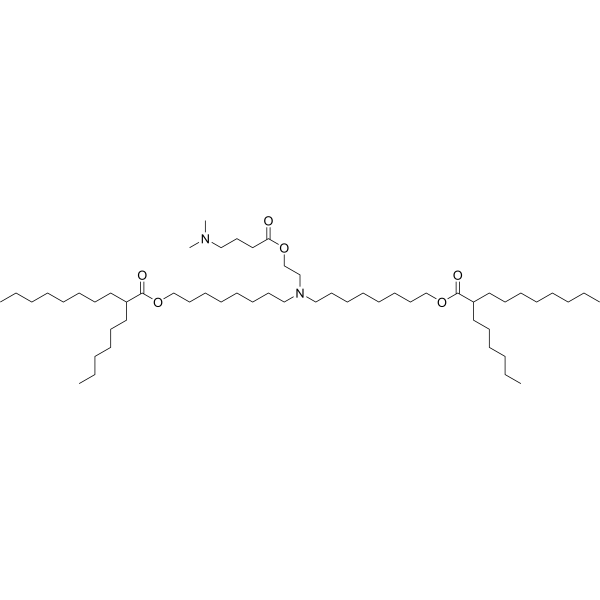
HY-153377
Lipid 14Amino Lipid -
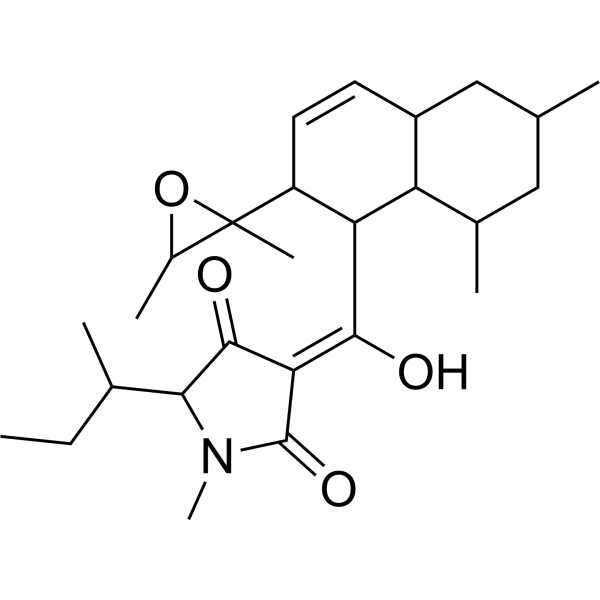
HY-120333
Antibiotic PF 1052Antibiotic -

HY-N12228
Phenelfamycin EAntibiotic -
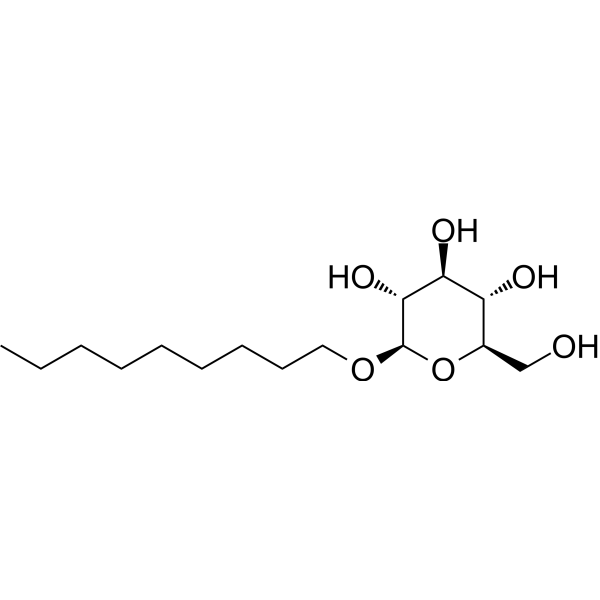
HY-W015993
Nonyl β-D-glucopyranosideSurfactant -
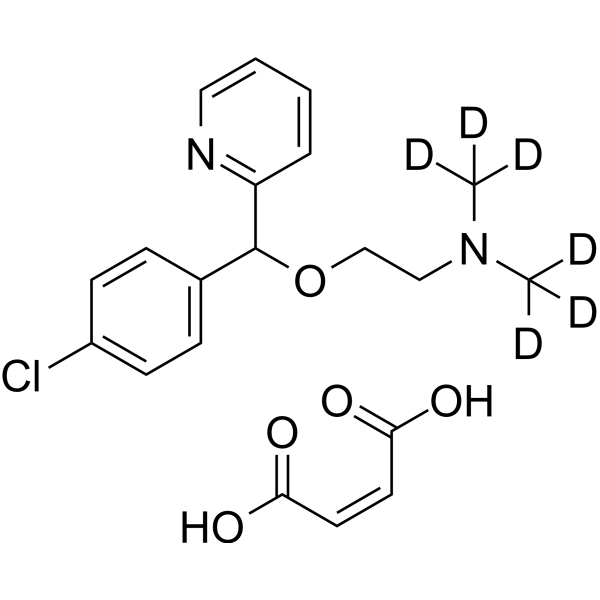
HY-B1589AS
Carbinoxamine-d6 maleateStable?Isotope -
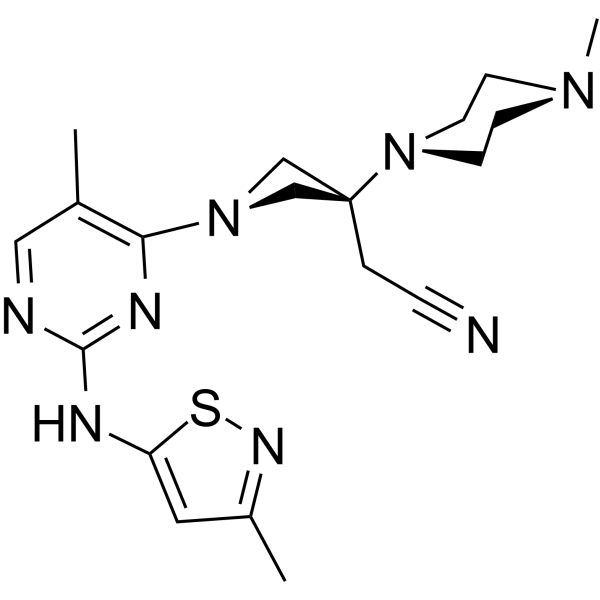
HY-154994
JAK-IN-30JAK Inhibitor -
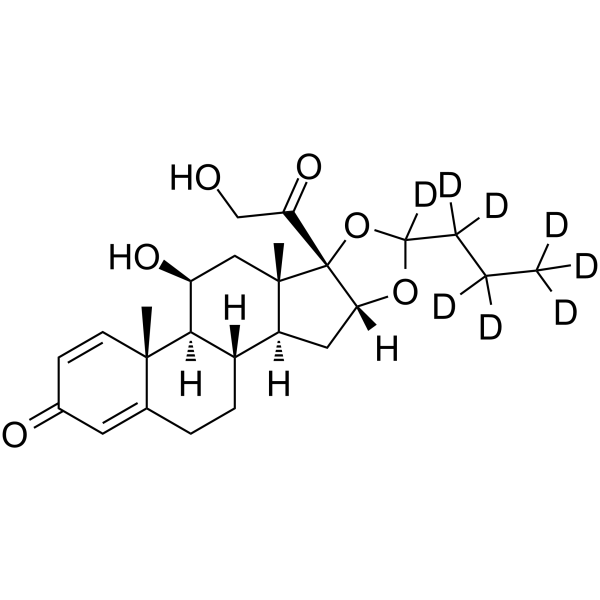
HY-13580S
Budesonide-d8Stable Isotope -

HY-W274569
Hexyl-β-D-glucopyranoside, 98%Ionic Detergent -

HY-W060470
1-Methyl-4-imidazoleacetic acid hydrochlorideHistamine Metabolite -
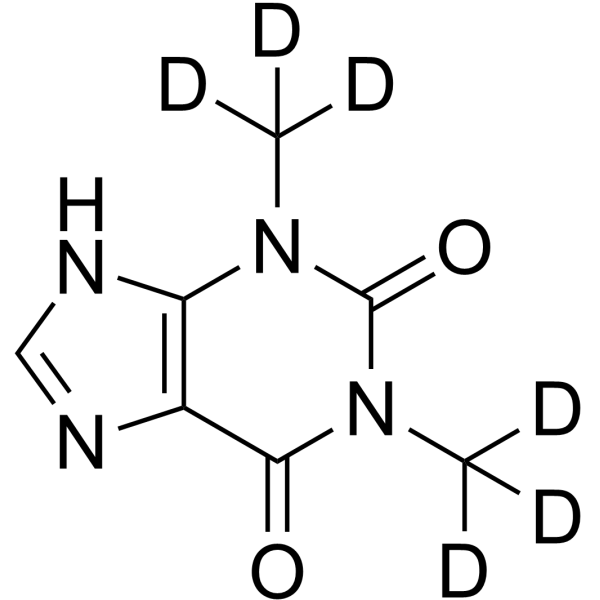
HY-B0809S
Theophylline-d6Stable Isotope


Activité biologique
Description
In Vitro
Sucrose monolaurate (1.25-80 mM; 24 h) exhibits potent antibacterial activity against Gram-positive L. monocytogenes (MIC = 2.5 mM, MBC = 20 mM), B. subtilis (MIC = 2.5 mM, MBC = 20 mM), and S. aureus (MIC = 10 mM, MBC = 40 mM), with weak activity against Gram-negative E. coli (MIC = 40 mM)[1].
Sucrose monolaurate (1-4× MIC; 0-48 h) exerts rapid concentration-dependent bactericidal activity against Gram-positive L. monocytogenes, B. subtilis, and S. aureus, with complete viability loss within 2-4 h at 1× MIC, while E. coli shows only partial, transient inhibition at 1× MIC[1].
Sucrose monolaurate (1× MIC; 20 h) causes severe morphological damage, including pore formation and cell collapse, in Gram-positive L. monocytogenes, B. subtilis, and S. aureus, but only minor surface changes in Gram-negative E. coli[1].
Sucrose monolaurate (10 mM; 1 h) induces membrane depolarization (less negative zeta potential) in L. monocytogenes and E. coli, with a more pronounced and distinct effect on Gram-positive L. monocytogenes[1].
Sucrose monolaurate (5-10 mM; 10 min) interacts with L. monocytogenes genomic DNA to alter its structure and conformation, but does not cause significant DNA damage[1].
Sucrose monolaurate (1/8-1/2 MIC; 48 h) potently inhibits biofilm formation by L. monocytogenes, B. subtilis, and E. coli, but stimulates biofilm formation by S. aureus[1].
Sucrose monolaurate (100-10,000 ppm; 3 min) alone removes Escherichia coli O157:H7 from inoculated baby spinach leaves in a concentration-dependent manner, achieving a maximum reduction of ~1.9 log CFU/leaf at 10,000 ppm and 4 °C, and ~1.6 log CFU/leaf at 10,000 ppm and 20 °C[2].
MedChemExpress (MCE) has not independently confirmed the accuracy of these methods. They are for reference only.


Chemical Information
-
CAS No. 25339-99-5
-
Appearance Solid
-
Masse moléculaire 524.60
-
Formule C24H44O13
-
Color White to yellow
-
SMILES
OC(CCCCCCCCCCC)=O.O[C@H]1[C@@H]([C@H](O[C@@H]([C@@H]1O)O[C@@]2(O[C@@H]([C@H]([C@@H]2O)O)CO)CO)CO)O
-
Livraison
Room temperature in continental US; may vary elsewhere.
-
Stockage
Powder -20°C 3 years 4°C 2 years In solvent -80°C 6 months -20°C 1 month


Solvant et solubilité
In Vitro:
H2O : 100 mg/mL (190.62 mM; Need ultrasonic)
DMSO : 100 mg/mL (190.62 mM; Need ultrasonic; Hygroscopic DMSO has a significant impact on the solubility of product, please use newly opened DMSO)
Please refer to the solubility information to select the appropriate solvent. Once prepared, please aliquot and store the solution to prevent product inactivation from repeated freeze-thaw cycles.
Storage method and period of stock solution: -80°C, 6 months; -20°C, 1 month. When stored at -80°C, please use it within 6 months. When stored at -20°C, please use it within 1 month.
* Note: If you choose water as the stock solution, please dilute it to the working solution, then filter and sterilize it with a 0.22 μm filter before use.
Please refer to the solubility information to select the appropriate solvent. Once prepared, please aliquot and store the solution to prevent product inactivation from repeated freeze-thaw cycles.
Storage method and period of stock solution: -80°C, 6 months; -20°C, 1 month. When stored at -80°C, please use it within 6 months. When stored at -20°C, please use it within 1 month.
* Note: If you choose water as the stock solution, please dilute it to the working solution, then filter and sterilize it with a 0.22 μm filter before use.
Concentration (start) × Volume (start) = Concentration (final) × Volume (final)


Pureté et documentation
-
Fiche technique (279 KB)
-
SDS (394 KB)
- English - EN (394 KB)
- Français - FR (394 KB)
- Deutsch - DE (394 KB)
- Norwegian - NO (394 KB)
- Español - ES (394 KB)
- Swedish - SV (394 KB)
- Italian - IT (394 KB)
- Korean - KR (394 KB)
- Portuguese - PT (394 KB)
-
Instruction de manipulation (2659 KB)
Références
[1]. Shao SY, et al. Lipase-Catalyzed Synthesis of Sucrose Monolaurate and Its Antibacterial Property and Mode of Action against Four Pathogenic Bacteria. Molecules. 2018;23(5):1118. Published 2018 May 8. [Content Brief]
[2]. Xiao D, et al. Sucrose monolaurate improves the efficacy of sodium hypochlorite against Escherichia coli O157:H7 on spinach. Int J Food Microbiol. 2011;145(1):64-68. [Content Brief]
[3].
Shitanda I, et al. Sucrose Monolaurate as a Stabilizer for Lactate Oxidase Electrodes at Low pH: A Structural Analysis Based on Grazing Incidence Small-Angle X-ray Scattering. Langmuir. 2025 Aug 5;41(30):20382-20390.
[Content Brief]


Complete Stock Solution Preparation Table
Please refer to the solubility information to select the appropriate solvent. Once prepared, please aliquot and store the solution to prevent product inactivation from repeated freeze-thaw cycles.
Storage method and period of stock solution: -80°C, 6 months; -20°C, 1 month. When stored at -80°C, please use it within 6 months. When stored at -20°C, please use it within 1 month.
| Optional Solvent | Concentration Solvent Mass | 1 mg | 5 mg | 10 mg | 25 mg |
|---|---|---|---|---|---|
| H2O / DMSO | 1 mM | 1.9062 mL | 9.5311 mL | 19.0621 mL | 47.6554 mL |
| 5 mM | 0.3812 mL | 1.9062 mL | 3.8124 mL | 9.5311 mL | |
| 10 mM | 0.1906 mL | 0.9531 mL | 1.9062 mL | 4.7655 mL | |
| 15 mM | 0.1271 mL | 0.6354 mL | 1.2708 mL | 3.1770 mL | |
| 20 mM | 0.0953 mL | 0.4766 mL | 0.9531 mL | 2.3828 mL | |
| 25 mM | 0.0762 mL | 0.3812 mL | 0.7625 mL | 1.9062 mL | |
| 30 mM | 0.0635 mL | 0.3177 mL | 0.6354 mL | 1.5885 mL | |
| 40 mM | 0.0477 mL | 0.2383 mL | 0.4766 mL | 1.1914 mL | |
| 50 mM | 0.0381 mL | 0.1906 mL | 0.3812 mL | 0.9531 mL | |
| 60 mM | 0.0318 mL | 0.1589 mL | 0.3177 mL | 0.7943 mL | |
| 80 mM | 0.0238 mL | 0.1191 mL | 0.2383 mL | 0.5957 mL | |
| 100 mM | 0.0191 mL | 0.0953 mL | 0.1906 mL | 0.4766 mL |
* Note: If you choose water as the stock solution, please dilute it to the working solution, then filter and sterilize it with a 0.22 μm filter before use.


Sucrose monolaurate Related Classifications
HY-141633 Related Classifications
 Powered by Bioz