
1. Search Result
Search Result
Results for "

non-covalent

" in MedChemExpress (MCE) Product Catalog:

248

Inhibitors & Agonists

5

Screening Libraries

6

Fluorescent Dyes

23

Biochemical Assay Reagents

34

Peptides

1

Inhibitory Antibodies

14

Natural
Products

2

Isotope-Labeled Compounds

1

Click Chemistry

5

Oligonucleotides

Cat. No. Product Name Target Research Areas Chemical Structure
  • HY-P3152
    Streptavidin
    5 Publications Verification

    Biochemical Assay Reagents Others
    Streptavidin is a ~60 kDa homotetramer. Streptavidin binds four molecules of biotin with the highest affinity. The binding affinity of biotin to streptavidin is one of the highest reported for a non-covalent interaction to date, with a KD ~0.01 pM . Streptavidin has an immunosuppressive role .
    This product is a Streptavidin protein recombinantly expressed in an E. coli expression system.
    Streptavidin
  • HY-114299
    Salcaprozate sodium
    4 Publications Verification

    SNAC

    Biochemical Assay Reagents Others
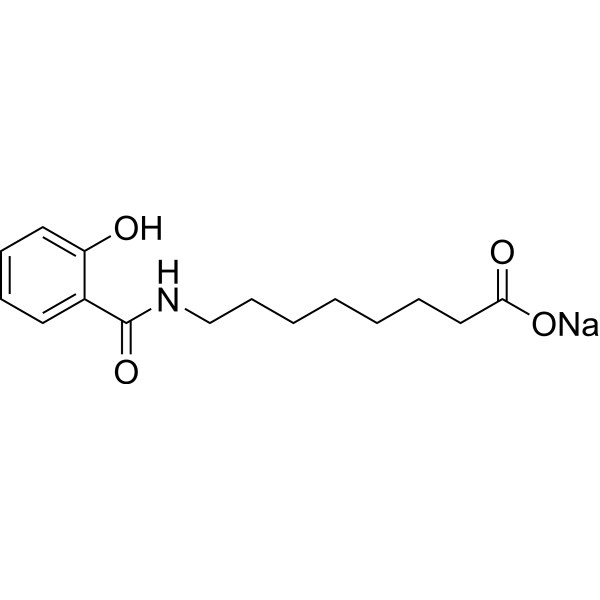
    Salcaprozate sodium (SNAC), an oral absorption promoter, and has the potential as a delivery agent for oral forms of heparin and insulin. Salcaprozate sodium could increase passive transcellular permeation across small intestinal epithelia based on increased lipophilicity arising from non-covalent macromolecule complexation .
    Salcaprozate sodium
  • HY-135146
    GSK-3484862
    20+ Cited Publications

    DNA Methyltransferase Cancer
    GSK-3484862 is a non-covalent inhibitor for DNA methyltransferase (Dnmt1). GSK-3484862 induces DNA hypomethylation to against cancer. GSK-3484862 mediates dramatic demethylation in murine embryonic stem cells with minimal non-specific toxicity .
    GSK-3484862
  • HY-152857

    LY3473329

    LDLR Cardiovascular Disease
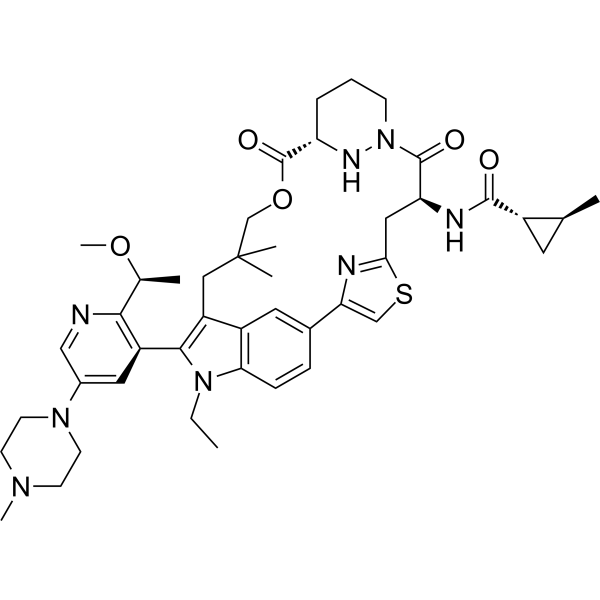
    Muvalaplin (LY3473329) is an orally active, selective small molecule inhibitor of lipoprotein (a) (Lp (a)) that disrupts the initial non-covalent interaction between apo(a) and apoB100, preventing the disulphide bond and Lp(a) formation. Muvalaplin reduces the levels of Lp (a) in transgenic mice and in cynomolgus monkeys .
    Muvalaplin
  • HY-129589
    Thailanstatin A
    2 Publications Verification

    ADC Payload Cancer
    Thailanstatin A is an ultra-potent inhibitor of eukaryotic RNA splicing (IC50=650 nM). Thailanstatin A exerts effects via non-covalent binding to the SF3b subunit of the U2 snRNA subcomplex of the spliceosome and shows low-nM to sub-nM IC50s against multiple cancer cell lines. Thailanstatin A, a payload for ADCs, is conjugated to the lysines on trastuzumab yielding “linker-less” ADC .
    Thailanstatin A
  • HY-143216
    Ensitrelvir
    10+ Cited Publications

    S-217622

    SARS-CoV Virus Protease Infection
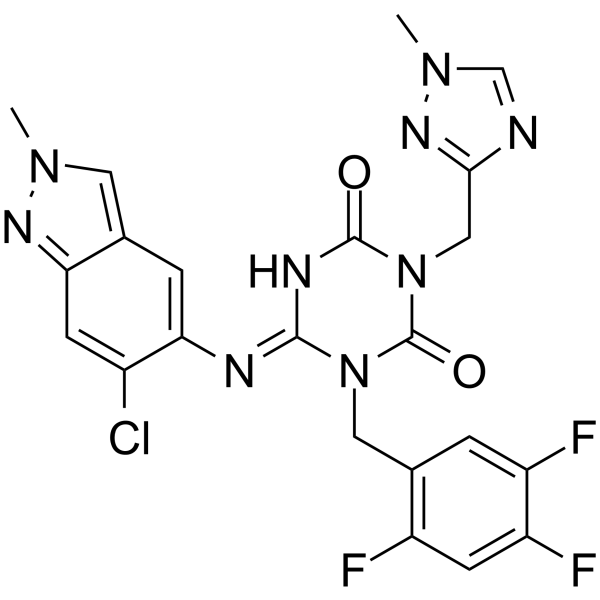
    Ensitrelvir (S-217622) is the first orally active non-covalent, non-peptidic, SARS-CoV-2 3CL protease inhibitor (IC50=13 nM) .
    Ensitrelvir
  • HY-112215
    Nemtabrutinib
    4 Publications Verification

    ARQ-531; MK-1026

    Btk Inflammation/Immunology Cancer
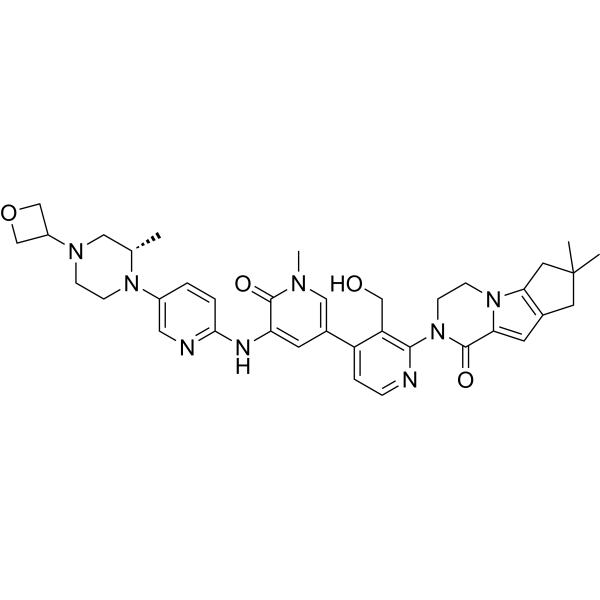
    Nemtabrutinib (ARQ 531) is a reversible non-covalent and orally active inhibitor of Bruton’s Tyrosine Kinase (BTK), with IC50s of 0.85 nM and 0.39 nM for WT-BTK and C481S-BTK, respectively.
    Nemtabrutinib
  • HY-110275

    Keap1-Nrf2 NO Synthase Infection Inflammation/Immunology
    RA839 is a selective Nrf2/ARE pathway agonist and non-covalent small molecule binder of Keap1 (Kd is approximately 6 μM). RA839 prevents inducible nitric oxide synthase expression and nitric oxide release. RA839 exerts anti-rotaviral and anti-inflammatory effects .
    RA839
  • HY-112937
    GNE-6640
    5+ Cited Publications

    Deubiquitinase Cancer
    GNE-6640 is a selective and non-covalent inhibitor of ubiquitin epecific peptidase 7 (USP7), with IC50 values of 0.75 μM, 0.43 μM, 20.3 μM and 0.23 μM for full length USP7, USP7 catalytic domain, full length USP47 and Ub-MDM2, respectively .
    GNE-6640
  • HY-W095670

    Drug Intermediate Others
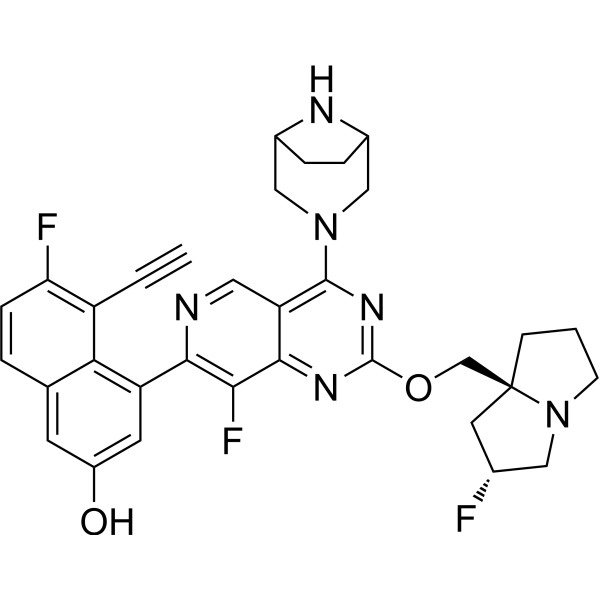
    2,4,7-Trichloro-8-fluoropyridopyrimidine is a pyridopyrimidine synthetic intermediate of MRTX1133 (HY-134813), which can be used for the synthesis of non-covalent KRAS G12D inhibitors .
    2,4,7-Trichloro-8-fluoropyrido[4,3-d]pyrimidine
  • HY-109198

    ME-401; PWT-143

    PI3K Akt Cancer
    Zandelisib (ME-401) is a selective, orally active, non-covalent inhibitor of PI3Kδ. Zandelisib can sustainably inhibit AKT phosphorylation and downstream signaling pathways. Zandelisib can be used in the study of malignancies such as relapsed/refractory B-cell lymphoma .
    Zandelisib
  • HY-139535
    Luxeptinib
    1 Publications Verification

    CG-806

    FLT3 Btk Apoptosis Cancer
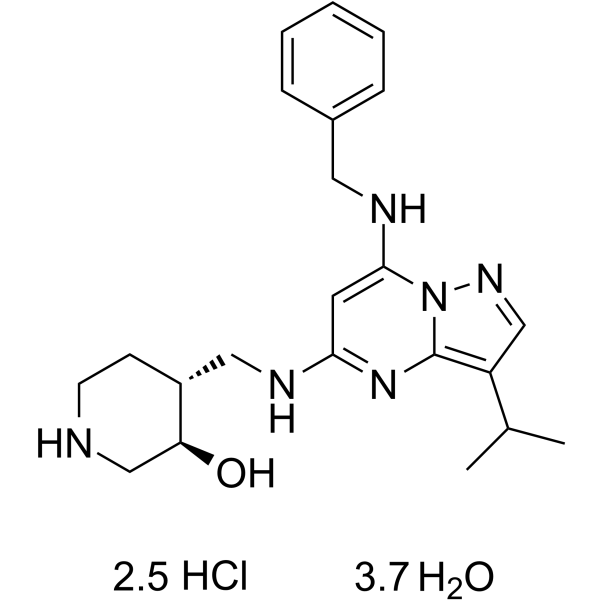
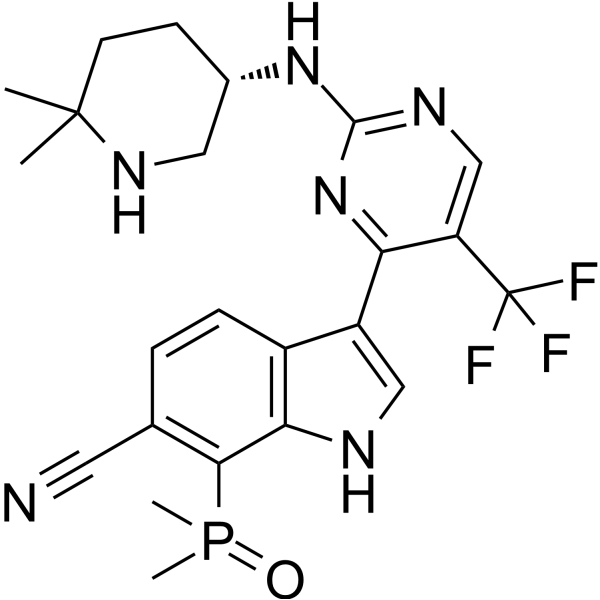
    Luxeptinib (CG-806) is an orally active, reversible, first-in-class, non-covalent and potent pan-FLT3/pan-BTK inhibitor. Luxeptinib induces cell cycle arrest, apoptosis or autophagy in acute myeloid leukemia cells .
    Luxeptinib
  • HY-143216A
    Ensitrelvir fumarate
    10+ Cited Publications

    S-217622 fumarate

    SARS-CoV Virus Protease Infection
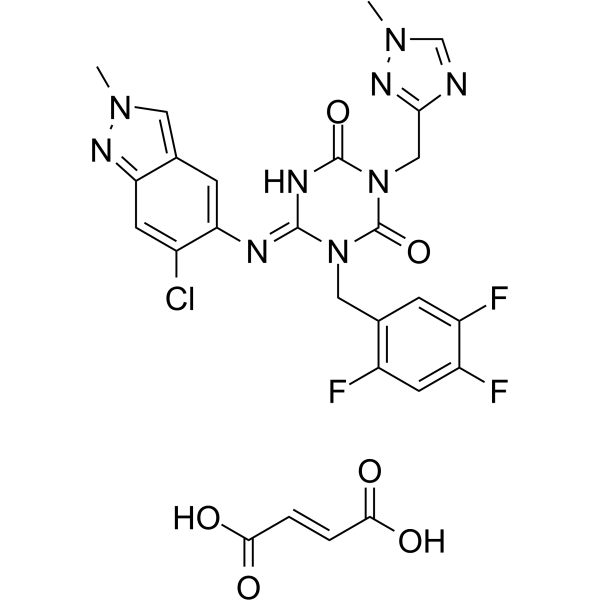
    Ensitrelvir (S-217622) fumarate is the first orally active non-covalent, non-peptidic, SARS-CoV-2 3CL protease inhibitor (IC50=13 nM) .
    Ensitrelvir fumarate
  • HY-136430

    JGK037

    EGFR Cancer
    JCN037 (JGK037) is non-covalent and BBB-penetrant EGFR tyrosine kinase inhibitor, with IC50 values of 2.49 nM, 3.95 nM, 4.48 nM for EGFR, p-wtEGFR and pEGFRvⅢ, respectively .
    JCN037
  • HY-153450

    Protein Arginine Deiminase Cancer
    JBI-589 is a non-covalent PAD4 isoform-selective inhibitor with oral bioavailability. JBI-589 reduces CXCR2 expression and blocks neutrophil chemotaxis. JBI-589 reduces primary tumor and metastases, and enhances the anti-tumor effect of checkpoint inhibitors. JBI-589 can be used in cancer research .
    JBI-589
  • HY-133130
    JNJ-42226314
    1 Publications Verification

    MAGL Neurological Disease
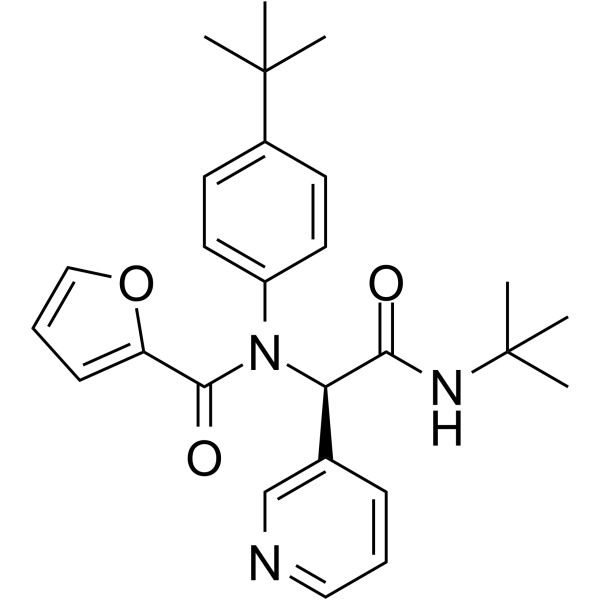
    JNJ-42226314, a chemical probe, is a competitive, highly selective and reversible non-covalent monoacylglycerol lipase (MAGL) inhibitor. JNJ-42226314 demonstrates dose-dependent enhancement of the major endocannabinoid 2-arachidonoylglycerol (2-AG) as well as efficacy in models of neuropathic and inflammatory pain .
    JNJ-42226314
  • HY-136298A

    SARS-CoV Infection
    X77 is a potent non-covalent inhibitor of the main protease of SARS-CoV-2 (SARS-CoV-2 M pro) . X77 binds to SARS-CoV-2 M pro with a Kd value of 0.057 μM .
    X77
  • HY-141514
    MSA-2 dimer
    1 Publications Verification

    STING Inflammation/Immunology Cancer
    MSA-2 dimer is a selective, orally active non-nucleotide STING agonist (Kd=145 μM) with long-term antitumor and immunogenic activity. MSA-2 dimer is bound to STING as a non-covalent dimer exhibiting higher permeability than cyclic dinucleotide .
    MSA-2 dimer
  • HY-156820

    Epigenetic Reader Domain Cancer
    HLDA-221 is a non-covalent regulated induced proximity targeting chimeras (RIPTAC). The binding of HLDA-221 to BRD4-BD1 is significantly increased after pre-incubation with FKBP. HLDA-221 can be used in cancer research .
    HLDA-221
  • HY-160167

    DZD8586

    Src Btk Inflammation/Immunology Cancer
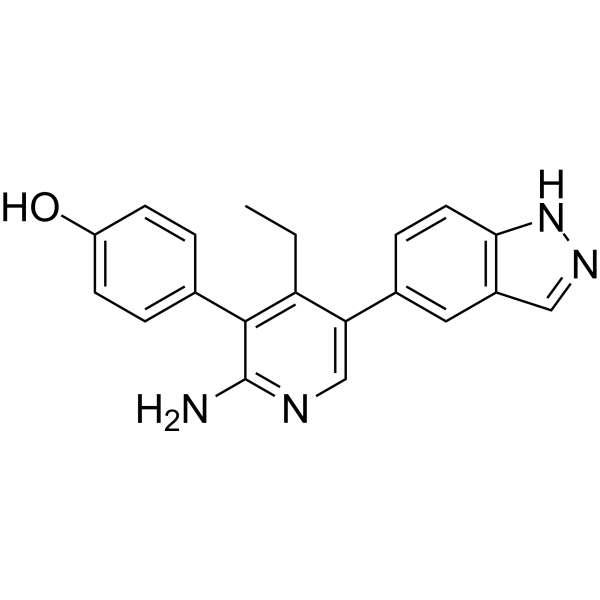
    Birelentinib (DZD8586) is an orally effective, selective, non-covalent inhibitor targeting LYN tyrosine kinase and BTK tyrosine kinase, capable of penetrating the blood-brain barrier. Birelentinib exhibits concentration-dependent antiproliferative effects in RI-1 cells and diffuse large B-cell lymphoma (DLBCL) cell lines carrying BTK resistance mutations (such as C481X, V416L, etc.). Birelentinib blocks both BTK-dependent and independent signaling of the B-cell receptor (BCR), thereby inhibiting tumor cell proliferation and inducing cell death. Birelentinib can be used in research to overcome resistance to existing covalent and non-covalent BTK inhibitors in B-cell non-Hodgkin lymphoma (B-NHL) .
    Birelentinib
  • HY-117203A
    CDK12-IN-E9
    1 Publications Verification

    CDK Cancer
    CDK12-IN-E9 is a potent and selective covalent CDK12 inhibitor and a non-covalent CDK9 inhibitor, while avoiding ABC transporter-mediated efflux. CDK12-IN-E9 has weak binding ability to CDK7/CyclinH complex with an IC50> 1 μM .
    CDK12-IN-E9
  • HY-114299S

    SNAC-d4 sodium

    Isotope-Labeled Compounds Others
    Salcaprozate-d4 (sodium) is a deuterated labeled Salcaprozate (sodium) . Salcaprozate sodium (SNAC), an oral absorption promoter, and has the potential as a delivery agent for oral forms of heparin and insulin. Salcaprozate sodium could increase passive transcellular permeation across small intestinal epithelia based on increased lipophilicity arising from non-covalent macromolecule complexation .
    Salcaprozate-d4 sodium
  • HY-135146A

    DNA Methyltransferase Cancer
    (Rac)-GSK-3484862 is the isomer of GSK-3484862 (HY-135146), and can be used as an experimental control. GSK-3484862 is a non-covalent inhibitor for DNA methyltransferase (Dnmt1). GSK-3484862 induces DNA hypomethylation to against cancer. GSK-3484862 mediates dramatic demethylation in murine embryonic stem cells with minimal non-specific toxicity .
    (Rac)-GSK-3484862
  • HY-169422A

    IDE275 (enantiomer)

    DNA/RNA Synthesis Cancer
    GSK4418959 enantiomer is an enantiomer of GSK4418959 (HY-169422). GSK4418959 (IDE275) is a non-covalent, reversible, selective and orally active WRN helicase inhibitor. GSK4418959 inhibits ATPase and DNA unwinding functions in an ATP-competitive manner. GSK4418959 can be used for the study of microsatellite instability-high (MSI-H) cancer .
    GSK4418959 (enantiomer)
  • HY-114299R

    SNAC (Standard)

    Biochemical Assay Reagents Reference Standards Others
    Salcaprozate (sodium) (Standard) is the analytical standard of Salcaprozate (sodium). This product is intended for research and analytical applications. Salcaprozate sodium (SNAC), an oral absorption promoter, and has the potential as a delivery agent for oral forms of heparin and insulin. Salcaprozate sodium could increase passive transcellular permeation across small intestinal epithelia based on increased lipophilicity arising from non-covalent macromolecule complexation .
    Salcaprozate sodium (Standard)
  • HY-10243

    MK-7009

    HCV HCV Protease Infection
    Vaniprevir (MK-7009) is a non-covalent competitive inhibitor of the hepatitis C virus (HCV) NS3/4A protease.
    Vaniprevir
  • HY-19415

    Phospholipase Metabolic Disease
    SB-435495 is a potent, selective, reversible, non-covalent and orally active Lp-PLA2 inhibitor with an IC50 of 0.06 nM .
    SB-435495
  • HY-103462

    FAAH Cardiovascular Disease Metabolic Disease Inflammation/Immunology Cancer
    TC-F2 is a reversible non-covalent binding inhibitor of fatty acid amide hydrolase (FAAH) with an IC50 of 28 nM. FAAH is involved in many human diseases, particularly cancer, pain and inflammation as well as neurological, metabolic and cardiovascular disorders .
    TC-F2
  • HY-W000854

    3-Methoxyphenylboronic acid

    Biochemical Assay Reagents Others
    3-Methoxybenzeneboronic acid (3-Methoxyphenylboronic acid) is a boronic acid derivative. 3-Methoxybenzeneboronic acid shows best suitable binding pattern at the active site by interacting non-covalently with amino acid residues of proteins. 3-Methoxybenzeneboronic acid is a biochemical reagent that can be used as a biological material or organic compound for life science related research .
    3-Methoxybenzeneboronic acid
  • HY-149535

    WU-04

    SARS-CoV Infection
    Iscartrelvir (WU-04) is a non-covalent inhibitor of SARS-CoV-2, targeting the 3CLpro protein. Iscartrelvir has high inhibitory effect on the 3CLpro protein of 6 SARS-CoV-2 variants (Alpha, Beta, Gamma, Delta, Lambda and Omicron) and 2 coronaviruses (SARS-CoV and MERS-CoV) .
    Iscartrelvir
  • HY-175806

    TrxR Reactive Oxygen Species (ROS) Ferroptosis Cancer
    CS47 is a Thioredoxin Reductase 1 (TRXR1) inhibitor and ferroptosis inducer. CS47 binds non-covalently to sites between the FAD and NADPH pockets of TRXR1. CS47 drives glutathione depletion, lipid reactive oxygen species accumulation, HMOX1-dependent iron overload, and selective cytotoxicity in lung cancer cells. CS47 can be used for the research of lung cancer .
    CS47
  • HY-136259
    ML188
    5 Publications Verification

    SARS-CoV Virus Protease Infection
    ML188, a first in class probe, is a selective non-covalent SARS-CoV 3CLpro inhibitor with an IC50 of 1.5 μM. Antiviral activity .
    ML188
  • HY-101790A

    NEDD8-activating Enzyme Cancer
    ZM223 hydrochloride is an orally active, potent non-covalent NEDD8 activating enzyme (NAE) inhibitor with excellent anticancer activity .
    ZM223 hydrochloride
  • HY-131328A

    (R)-LOXO-305

    Btk Others
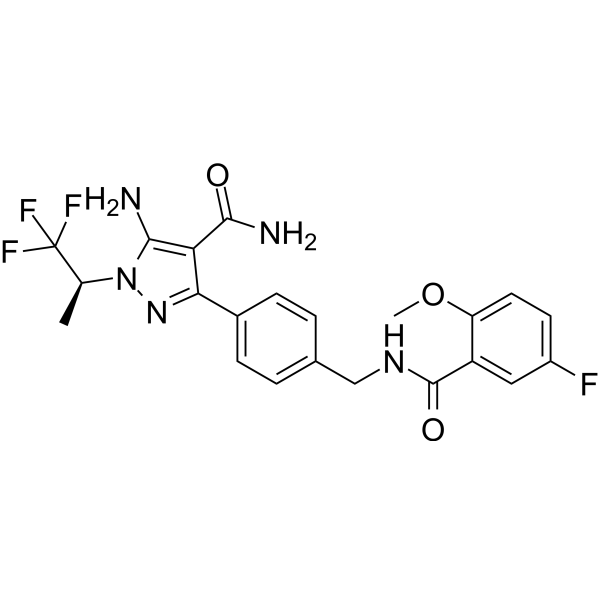
    (R)-Pirtobrutinib ((R)-LOXO-305) is a less active enantiomer of Pirtobrutinib. Pirtobrutinib (LOXO-305), a highly selective and non-covalent next generation BTK inhibitor, inhibits diverse BTK C481 substitution mutations .
    (R)-Pirtobrutinib
  • HY-126278

    Phosphoglycerate Dehydrogenase (PHGDH) Cancer
    Z1609609733 (Compound 18) is a non-covalent 3-Phosphoglycerate dehydrogenase (PHGDH) inhibitor with an IC50 of 1.46 μM. Z1609609733 significantly inhibits serine synthesis and cancer metabolism with complete abrogation of cell proliferation .
    Z1609609733
  • HY-136531

    Btk Apoptosis Cancer
    XMU-MP-3 is a potent non-covalent BTK inhibitor with IC50s of 10.7 nM and 17.0 nM for BTK WT and BTK C481S mutation in the presence of 10 μM ATP, respectively. XMU-MP-3 also induces apoptosis .
    XMU-MP-3
  • HY-136298

    SARS-CoV Infection
    (Rac)-X77?is a racemate of X77. X77 is a potent non-covalent inhibitor of the main protease of SARS-CoV-2 (SARS-CoV-2 M pro) . X77 binds to SARS-CoV-2 M pro with a Kd value of 0.057 μM .
    (Rac)-X77
  • HY-175763

    RGS Protein Neurological Disease Metabolic Disease
    Z55660043 is a Regulator of G protein signaling-14 (RGS14) inhibitor with an IC50 of 2.3  μM. Z55660043 selectively and non-covalently inhibits RGS14 GTPase-accelerating protein (GAP) activity without measurable cytotoxicity. Z55660043 can be used for central nervous system and metabolic disorders research .
    Z55660043
  • HY-W582504

    CuCl(TPP)3

    DNA Stain Bacterial Fungal Infection Cancer
    Chlorotris(triphenylphosphine)copper (CuCl(TPP)₃) is a DNA-targeted metal complex. Chlorotris(triphenylphosphine)copper involves non-covalent interactions (such as groove binding mode) through the copper(I) center to affect DNA function, showing inhibitory activity against bacteria, fungi, and tumor cells. Chlorotris(triphenylphosphine)copper is promising for research of antibacterial, antitumor, and antioxidant agents .
    Chlorotris(triphenylphosphine)copper
  • HY-19415B

    Phospholipase Metabolic Disease
    SB-435495 ditartrate is a potent, selective, reversible, non-covalent and orally active Lp-PLA2 inhibitor with an IC50 of 0.06 nM .
    SB-435495 ditartrate
  • HY-174914

    Biochemical Assay Reagents Others
    Biotin-PEG4-mal is a PEG derivative composed of Biotin, 4 PEG units and Maleimide. Biotin can form a stable non-covalent bond with streptavidin.
    Biotin-PEG4-mal
  • HY-174938

    Biochemical Assay Reagents Others
    Biotin-PEG3-Iodoacetamide is a PEG derivative composed of Biotin, 3 PEG units, and Iodoacetamide. Biotin can form a stable non-covalent bond with streptavidin.
    Biotin-PEG3-Iodoacetamide
  • HY-134184

    AUTACs Autophagy Inflammation/Immunology Cancer
    AUTAC2 is a FKBP12-targeting autophagy-mediated degrader (AUTAC). AUTAC2 contains an FBnG (p-Fluorobenzyl Guanine) and an SLF (c ligand of FKBP) moiety. SLF binds non-covalently to FKBP12 .
    AUTAC2
  • HY-168432

    Phytohormone Others
    KK181N1 is a potent inhibitor of karrikin (KAR) receptor KAI2. KK181N1 binds to the catalytic pockets of KAI2 in a non-covalent binding manner. KK181N1 selectively depress the KAR-induced phenotypes in Arabidopsis .
    KK181N1
  • HY-150702

    MAGL Neurological Disease Inflammation/Immunology
    MAGLi 432 is a non-covalent, potent, highly selective, and reversible MAGL inhibitor. MAGLi 432 binds with high affinity to the MAGL active site, with IC50 values of 4.2 nM (human enzyme) and 3.1 nM (mouse enzyme). MAGLi 432 can be used in the research of chronic inflammation, blood–brain barrier dysfunction, neurological disorders such as multiple sclerosis, Alzheimer’s disease and Parkinson’s disease .
    MAGLi 432
  • HY-177936

    NEDD8-activating Enzyme Cancer
    NAE-IN-3 (compound 1) is a potent, selective and non-covalent competitive NEDD8-activating enzyme (NAE) inhibitor (IC50 = 0.8 μM). NAE-IN-3 inhibits NAE by blocking the ATP-binding domain. NAE-IN-3 exhibits selectivity over analogous E1 enzymes UAE and SAE. NAE-IN-3 can be used for cancer research .
    NAE-IN-3
  • HY-P11000

    Biochemical Assay Reagents Others
    INF7TAT is an amphipathic peptide containing the influenza HA2 sequence and the TAT peptide (HY-P0281). INF7TAT can associate with other macromolecules through non-covalent associations. INF7TAT can be used for non-toxic delivery of siRNAs .
    INF7TAT
  • HY-169228

    Btk Cancer
    WS-11 is a non-covalent reversible BTK inhibitor with IC50s of 3.9 nM and 2.2 nM for wild type, C481S mutation BTK, respectively. WS-11 can form strong π-π interaction with PHE540 and form p-π interaction with LYS430 within the active pocket, besides the strong hydrogen bonds .
    WS-11
  • HY-101790

    NEDD8-activating Enzyme Cancer
    ZM223 is a potent non-covalent NEDD8 activating enzyme (NAE) inhibitor, orally active .
    ZM223
  • HY-147036

    Orthopoxvirus Infection
    TTP-6171 is a non-covalent inhibitor of Monkeypox virus I7L protease, and it can be used for research on poxvirus infections .
    TTP-6171

Inquiry Online

Your information is safe with us. * Required Fields.

Salutation


Country or Region *

Applicant Name *


Organization Name *

Department *


Email Address *


Product Name *

Cat. No.


Requested quantity *

Phone Number *


Remarks

Inquiry Online

Inquiry Information

Product Name:
Cat. No.:
Quantity:
MCE Japan Authorized Agent:

