Search Result
Results for "
barks
" in MedChemExpress (MCE) Product Catalog:
1
Biochemical Assay Reagents
3
Isotope-Labeled Compounds
| Cat. No. |
Product Name |
Target |
Research Areas |
Chemical Structure |
-
- HY-W013571
-
|
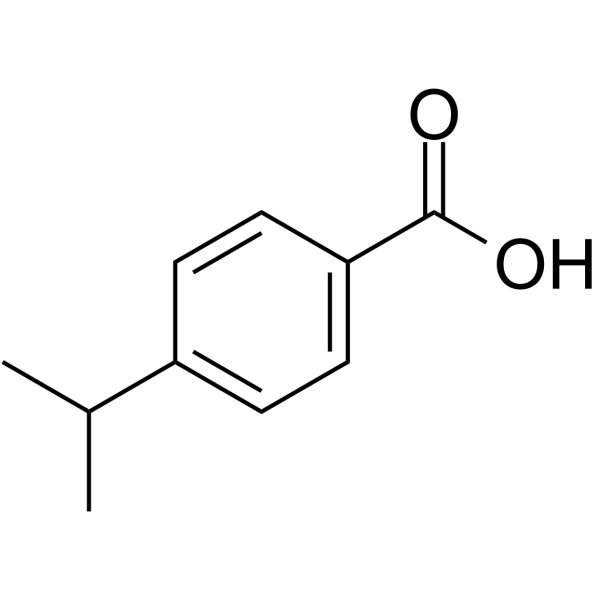
Cuminic acid; p-Isopropyl benzoic acid
|
Fungal
|
Infection
|
|
4-Isopropylbenzoic acid (Cuminic acid; p-Isopropyl benzoic acid) an aromatic monoterpenoid, is isolated from the stem bark of Bridelia retusa. 4-Isopropylbenzoic acid exhibits antifungal activities. 4-Isopropylbenzoic acid is also a reversible and uncompetitive inhibitor of mushroom tyrosinase .
|
-
-
- HY-N6661
-
|
(-)-Verbenone
|
Environmental Pollutants
Sex Pheromone
|
Infection
Others
|
|
Verbenone is a naturally derived monoterpene ketone and an anti-aggregation pheromone/attractant inhibitor. Verbenone interferes with the responses of Dendroctonus brevicomis and Dendroctonus ponderosae to baited traps. Verbenone can be used in studies related to bark beetle infestations of trees .
|
-
-
- HY-N14039
-
-
-
- HY-N3223
-
-
-
- HY-N0821
-
|
Griffonin
|
Others
|
Cancer
|
|
Lithospermoside (Griffonin) is a nature product isolated from the stem bark of Semiaquilegia adoxoides .
|
-
-
- HY-N6963
-
-
-
- HY-N6251
-
|
|
Parasite
|
Infection
|
|
Cratoxylone, isolated from the bark of Cratoxylum Cochinchinense, possesses antiplasmodial activity .
|
-
-
- HY-N13242
-
|
|
Others
|
Others
|
|
Cinnamon Bark Extract is the extract of Cinnamon Bark, with content of 10% -30% Polyphenols.
|
-
-
- HY-N7625
-
-
-
- HY-107238
-
|
|
Others
|
Others
|
|
(3β,24R)-3-(Acetyloxy)eupha-7,25-dien-24-ol is an euphane triterpene compound isolated from the barks of Broussonetia papyrifera .
|
-
-
- HY-N10803
-
|
|
Others
|
Others
|
|
(+)-6-(3-Chloro-2-hydroxy-3-methylbutyl)-5,7-dimethoxycoumarin is a nature product that could be isolated form the root bark of Toddalia asiatica (L.) LAM .
|
-
-
- HY-N1086
-
|
21-Deoxyvomilenine
|
Others
|
Others
|
|
Vinorine is a compound isolated from the bark of Rauvolfia reflexa .
|
-
-
- HY-N1234
-
-
-
- HY-N2865
-
|
|
Others
|
Others
|
|
Amaronol B is an auronol that can be isolated from the bark of Pseudolarix amabilis .
|
-
-
- HY-N3944
-
|
6β-Acetoxy-5-epilimonin
|
Others
|
Others
|
|
Glaucin B is a bitter limonoid isolated from the root bark of Evodia glauca .
|
-
-
- HY-N1690
-
|
|
Others
|
Others
|
|
21-epi-Serratenediol is a neutral triterpene isolated from Sitka spruce bark .
|
-
-
- HY-N3554
-
|
(+)-Catechol 7-β-D-xylopyranoside
|
Others
|
Others
|
|
Catechin-7-O-β-D-xylopyranoside is an antioxidant compound with strong DPPH free radical scavenging ability. Catechin-7-O-β-D-xylopyranoside can be extracted from birch inner bark and nepeta stem bark .
|
-
-
- HY-W011241
-
|
(8R,9S)-Cinchonine hydrochloride; LA40221 hydrochloride
|
Apoptosis
Parasite
|
Cancer
|
|
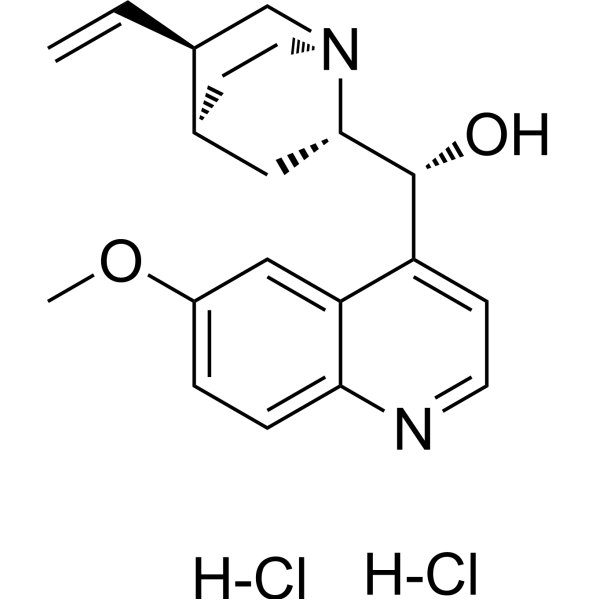
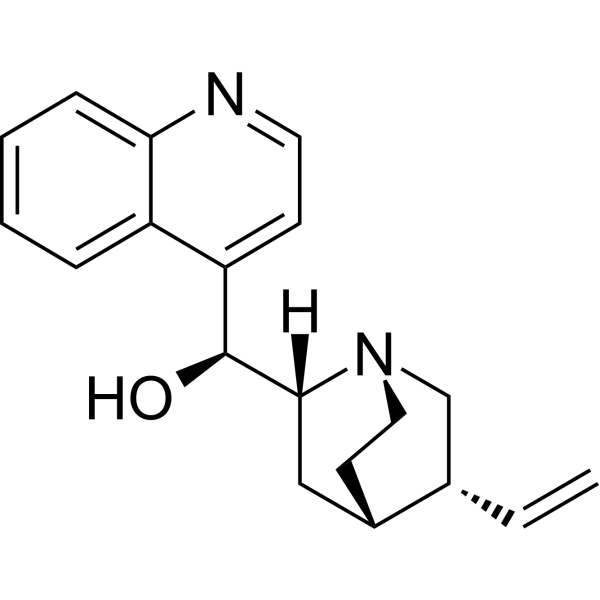
Cinchonine hydrochloride ((8R,9S)-Cinchonine hydrochloride) is a natural alkaloid present in Cinchona bark, with antimalarial activity. Cinchonine hydrochloride activates endoplasmic reticulum (ER) stress-induced apoptosis in human liver cancer cells .
|
-
-
- HY-N4044
-
|
(5S)-Hirsutanonol
|
COX
Parasite
|
Infection
Cancer
|
|
Hirsutanonol ((5S)-Hirsutanonol) is a diarylheptanoid that can be isolated from the bark of Alnus hirsute var. sibirica. Hirsutanonol inhibits cyclooxygenase-2 (COX-2) expression. Hirsutanonol has anti-filarial with an IC50 value of 44.11 μg/mL for microfilariae .
|
-
-
- HY-N3637
-
-
-
- HY-N1039
-
|
|
Fungal
|
Others
|
|
13-Epimanool is the compound isolated from the bark of the Taiwan hemlock .
|
-
-
- HY-W979008
-
-
-
- HY-W068783
-
|
(E)-Piperonylprop-2-enoic acid
|
Endogenous Metabolite
|
Others
|
|
(E)-3,4-(Methylenedioxy)cinnamic acid is a cinnamic acid derivative obtained from the stem bark of Brombya platynema .
|
-
-
- HY-N8140
-
|
|
Others
|
Others
|
|
Methoxyeugenol 4-O-rutinoside (compound 9) is a phenyl glucoside that can be found in the bark of Daphniphyllum angustifolium .
|
-
-
- HY-N1948
-
|
|
Others
|
Others
|
|
Mitoridine is an indole alkaloid compound isolated from the stem bark of Rauwolfia cumminsii Stapf .
|
-
-
- HY-N3448
-
|
|
Others
|
Cancer
|
|
Isowigtheone is a cytotoxic isoflavone compound isolated from the root barks of Brosimum utile. Isowigtheone has the potential for the research of cancer diseases .
|
-
-
- HY-N12833
-
|
|
Cholinesterase (ChE)
|
Others
|
|
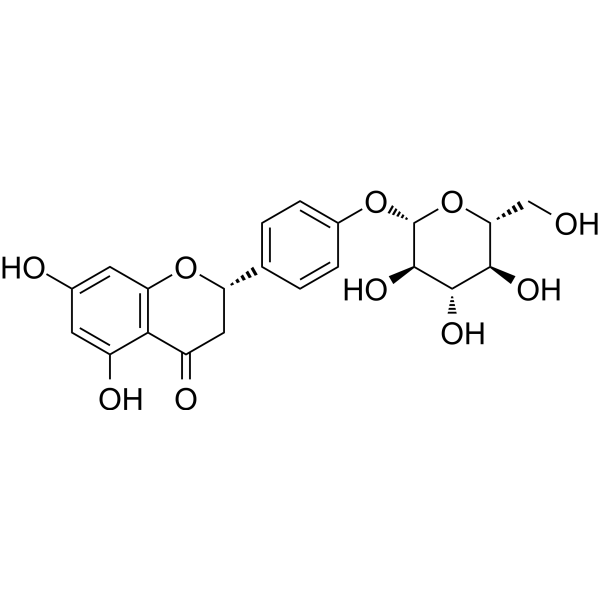
Dihydrokaempferol-3-O-β-D-glucoside (Compound 3) is a compound that can be isolated from the bark of Cudrania tricuspidata (Carr.) Bur. . Dihydrokaempferol-3-O-β-D-glucoside is an inhibitor of acetylcholinesterase (AChE) .
|
-
-
- HY-N10977
-
|
|
Others
|
Others
|
|
Piscerygenin (compound 4), an isoflavonoid, is a nature product that could be isolated from the root bark of Piscidia erythrina .
|
-
-
- HY-N10375
-
|
|
COX
|
Others
|
|
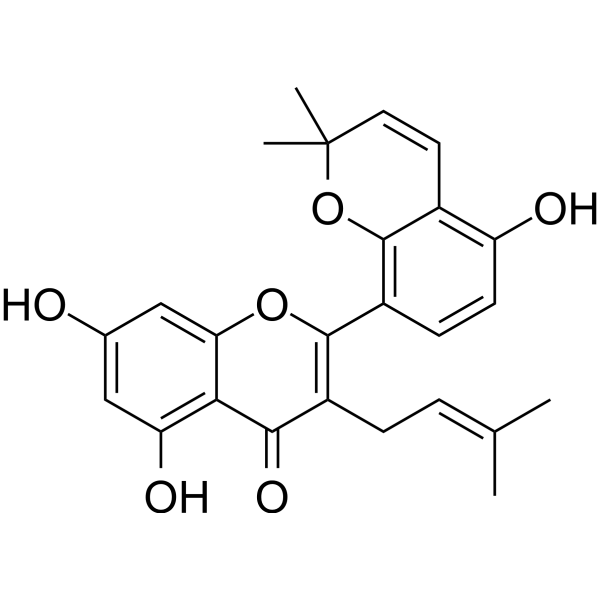
Kuwanon T is an isoprenylated flavonoid compound isolated from the root bark of Morus alba. Kuwanon T shows protective effects on t-BHP-induced oxidative stress with a EC50 of 30.32 μM .
|
-
-
- HY-N10786
-
|
|
Fungal
|
Infection
|
|
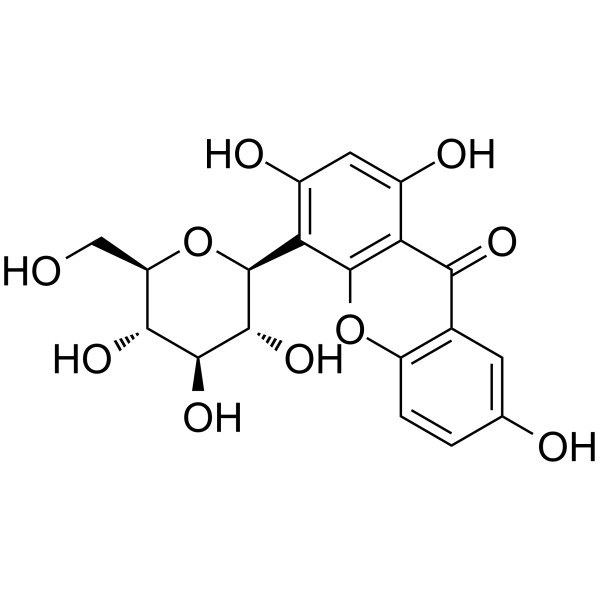
1,3,6-Trihydroxy-5-methoxyxanthone is a nature product that could be isolated form the root bark of Tovomita krukovii. 1,3,6-Trihydroxy-5-methoxyxanthone has anti-fungal effect .
|
-
-
- HY-W013571R
-
|
Cuminic acid (Standard); p-Isopropyl benzoic acid (Standard)
|
Reference Standards
Fungal
|
Infection
|
|
4-Isopropylbenzoic acid (Cuminic acid; p-Isopropyl benzoic acid) an aromatic monoterpenoid, is isolated from the stem bark of Bridelia retusa. 4-Isopropylbenzoic acid exhibits antifungal activities. 4-Isopropylbenzoic acid is also a reversible and uncompetitive inhibitor of mushroom tyrosinase .
|
-
-
- HY-N13233
-
|
|
Others
|
Others
|
|
Pine Bark Extract is the extract of Pine Bark, with content of OPC 95%.
|
-
-
- HY-N13238
-
|
|
COX
|
Others
|
|
White Willow Bark Extract is the extract of White Willow Bark, with content of 15% , 25% , 50% Salicin.
|
-
-
- HY-N3696
-
|
|
Others
|
Others
|
|
Deacetylpseudolaric acid A is found in the bark of Pseudolarix amabilis .
|
-
-
- HY-N8526
-
|
(+)-Himbosine
|
Others
|
Others
|
|
Himbosine is an alkaloid that has been found in H. baccata bark.
|
-
-
- HY-N4249
-
|
|
Others
|
Others
|
|
Perisesaccharide B is an oligosaccharide isolated from the root barks of Periploca sepium.
|
-
-
- HY-N4248
-
|
|
Others
|
Others
|
|
Perisesaccharide C is an oligosaccharide isolated from the root barks of Periploca sepium.
|
-
-
- HY-N2864
-
|
|
Others
|
Others
|
|
Amaronol A is an auronol, that can be isolated from the bark of Pseudolarix amabilis .
|
-
-
- HY-N12234
-
|
|
Others
|
Others
|
|
Condurango glycoside C is isolated from the bark of Marsdenia eunduranog .
|
-
-
- HY-N6247
-
|
|
Others
|
Others
|
|
Fuscaxanthone C is an xanthone isolated from the stem bark of Garcinia fusca .
|
-
-
- HY-N12541
-
-
-
- HY-N2822
-
|
|
Others
|
Others
|
|
Agathadiol diacetate is a Diterpenoids product that can be isolated from the barks of Pinus yunnanensis .
|
-
-
- HY-N2813
-
|
|
Others
|
Others
|
|
Acetylisocupressic acid is a Diterpenoids product that can be isolated from the barks of Araucaria cunninghami .
|
-
-
- HY-N10744
-
|
|
Others
|
Others
|
|
Arabidopyl alcohol is a natural product obtained from Betula pendula bark .
|
-
-
- HY-N9299
-
|
|
Others
|
Others
|
|
Alnusone is a Phenols product that can be isolated from the barks of Alnus japonica .
|
-
-
- HY-N3084
-
|
|
Others
|
Others
|
|
Phellochin is a Triterpenoids product that can be isolated from the barks of Phellodendron chinense .
|
-
-
- HY-N12372
-
|
|
Others
|
Others
|
|
(±)-Dihydrocorynantheine is a natural corynantheidine-type alkaloid found in the bark of Corynanthe yohimbe .
|
-
-
- HY-N3332
-
|
|
Others
|
Others
|
|
Magnolianin is a Lignans product that can be isolated from the barks of Magnolia obovata .
|
-
-
- HY-123083
-
|
|
Others
|
Others
|
|
Javanicin C is a quassinoid that can be isolated from the bark of Picrasma javanica .
|
-
-
- HY-N12157
-
|
|
Others
|
Others
|
|
Noratherosperminine is an alkaloid that can be isolated from the stem bark of Cryptocarya nigra .
|
-
- HY-N2823
-
|
|
Others
|
Others
|
|
Agatharesinol is a Lignans product that can be isolated from the barks of Cryptomeria japonica .
|
-
- HY-N3743
-
|
Dihydroalpinumisoflavone
|
Others
|
Others
|
|
Erythrivarone A is an isoflavone that can be isolated from the stem bark of Erythrina variegate .
|
-
- HY-N1036
-
|
(-)-δ-Amyrin; δ-Amyrenol
|
Others
|
Others
|
|
δ-Amyrin is a compound isolated from the bark of Scaevola floribunda .
|
-
- HY-N5154
-
|
|
Others
|
Others
|
|
Sanggenon W is an isoprenyl flavonoid extracted from mulberry root bark .
|
-
- HY-N8364
-
|
|
Others
|
Others
|
|
Evoxanthine is a compound that can be isolated from the stem bark of Pleiocarpa pycnantha .
|
-
- HY-N4082
-
|
|
Others
|
Cancer
|
|
Neotriptophenolide is a sesquiterpene pyridine alkaloid isolated from the root barks of Tripterygium hypoglaucum .
|
-
- HY-123252
-
|
Sarcodinine
|
Others
|
Others
|
|
Kurchessine (Sarcodinine) is an alkaloid that can be isolated from the stem bark of Holarrhena antidysenterica .
|
-
- HY-N8586
-
|
|
Others
|
Others
|
|
Rehmaglutin D is a Iridoids product that can be isolated from the barks of Ailanthus integrifolia .
|
-
- HY-N3183
-
|
|
Others
|
Others
|
|
N-Methyllindcarpine is a Alkaloids product that can be isolated from the barks of Lindera pipericarpa .
|
-
- HY-N4013
-
|
|
Others
|
Others
|
|
Imbricatoloic acid is a Diterpenoids product that can be isolated from the barks of Pinus massoniana Lamb. .
|
-
- HY-N2956
-
|
|
Others
|
Others
|
|
Bourjotinolone A is a Triterpenoids product that can be isolated from the barks of Phellodendron chinense Schneid. .
|
-
- HY-124915
-
|
|
Others
|
Others
|
|
Netzahualcoyondiol is a triterpene that can be isolated from m root bark of Cheiloclinium cognatum .
|
-
- HY-N2878
-
|
|
Others
|
Others
|
|
Antiarol rutinoside is a Phenols product that can be isolated from the barks of Pinus yunnanensis .
|
-
- HY-N7871
-
|
|
Others
|
Others
|
|
Angulatin K is a natural sesquiterpene polyol ester found in the root bark of Celastrus angulatus .
|
-
- HY-N13153
-
|
|
Others
|
Inflammation/Immunology
|
|
Antioxidant agent-19 (compound 12) is an arylbutyl glycoside with antioxidant activity that can be isolated from the bark of B. platyphylla vat. Japonica .
|
-
- HY-N17986
-
|
|
Others
|
Others
|
|
Pseudolaric acid G is a diterpenoid found in the root bark of Pseudolarix kaempferi .
|
-
- HY-N10858
-
|
|
Others
|
Others
|
|
Chisocheton compound F is a nature product that could be isolated from the stem bark of Melia toosendan .
|
-
- HY-N17501
-
|
|
Others
|
Others
|
|
4',6'-O-(S)-Hexahydroxydiphenylsalicin is a phenolic glucoside that can be isolated from the stem bark of Alangium plantanifolium .
|
-
- HY-N17506
-
|
|
Drug Derivative
|
Others
|
|
Moracin K is a prenylated arylbenzofuran derivative. Moracin K is present in the trunk bark of Morus mesozygia .
|
-
- HY-N17577
-
|
|
Drug Derivative
|
Others
|
|
Salicyloylsalicin is a salicylic acid glycoside natural product present in the bark of Populus balsamifera .
|
-
- HY-N9637
-
|
|
Others
|
Others
|
|
Swietenocoumarin I (Compound 5) is a coumarin compound that can be found in the combined stem bark and roots of Clausena anisata .
|
-
- HY-N18166
-
|
|
Others
|
Others
|
|
Nimbolinin B is a limonoid found in the root bark of Turraea robusta .
|
-
- HY-N17502
-
|
|
Others
|
Others
|
|
2,3,6-Dibenzofurantriol is a phenolic compound that can be found in the leaves and bark of Flacourtia rukam Zoll. Mortizi .
|
-
- HY-N18065
-
-
- HY-N18259
-
|
|
Drug Derivative
|
Others
|
|
8-Formyllimettin (Compound 25) is a coumarin compound that can be isolated from the root bark of Toddalia asiatica .
|
-
- HY-N9303
-
-
- HY-N18002
-
|
|
Drug Derivative
|
Others
|
|
3-O-Methylellagic acid 4-O-β-D-glucopyranoside is an ellagic acid derivative found in the root bark of Anisophyllea dichostyla R. Br .
|
-
- HY-N18113
-
|
|
Others
|
Others
|
|
Leptodactylone is a compound isolated from the stem bark of Citrus medica L. var. sarcodactylis SWINGLE .
|
-
- HY-N17355
-
-
- HY-N17337
-
|
|
Drug Derivative
|
Others
|
|
Etrogol is a prenylphenol derivative. Etrogol exists in the roots and root barks of citron (C. medica L. var. ethrog ENGL.) .
|
-
- HY-N7877
-
|
|
Others
|
Others
|
|
Angulatin D is a β-dihydroagarofuran compound found in the root bark of Celastrus angulatus Maxim .
|
-
- HY-N18151
-
|
|
Others
|
Others
|
|
Ohchinolide C is a ring C-seco limonoid and insect antifeedant. Ohchinolide C can be found in the root bark of Melia toosendan. Ohchinolide C exerts antifeedant activity against Spodoptera eridania larvae .
|
-
- HY-N18761
-
-
- HY-N17959
-
|
|
Others
|
Others
|
|
Vitalboside A is a triterpene found in the stem bark of Albizia gummifera .
|
-
- HY-N17463
-
-
- HY-N1311
-
|
|
Others
|
Others
|
|
Simonsinol is a Lignans product that can be isolated from the barks of Illicium simonsii .
|
-
- HY-N2825
-
|
|
Others
|
Others
|
|
Agatholal is a Diterpenoids product that can be isolated from the barks of Pinus yunnanensis .
|
-
- HY-N8710
-
|
|
Others
|
Others
|
|
Shinjulactone L is a Diterpenoids product that can be isolated from the barks of Ailanthus altissima .
|
-
- HY-N2810
-
|
|
Others
|
Others
|
|
Acetylcephalotaxine is a Alkaloids product that can be isolated from the barks of Cephalotaxus fortunei .
|
-
- HY-N1796
-
|
|
Others
|
Others
|
|
Populigenin is a Flavonoids product that can be isolated from the barks of Pinus koraiensis .
|
-
- HY-N2845
-
|
|
Others
|
Others
|
|
Tsugalactone is a Lignans product that can be isolated from the barks of Tsuga dumosa .
|
-
- HY-N1114
-
|
|
Others
|
Others
|
|
Tupichilignan A is a Lignans product that can be isolated from the barks of Pseudolarix kaemp .
|
-
- HY-179401
-
|
|
Drug Derivative
|
Others
|
|
Morunigrol B is a prenylated flavonoid that can be found in the barks of Morus nigra .
|
-
- HY-N3567
-
|
|
Others
|
Others
|
|
Cerberic acid B is a Phenylpropanoids product that can be isolated from the barks of Cerbera manghas .
|
-
- HY-133228
-
|
|
Others
|
Others
|
|
Erythrinin G is a Flavonoids product that can be isolated from the barks of Erythrina variegata. .
|
-
- HY-N17335
-
|
|
Drug Derivative
|
Others
|
|
7-Hydroxysitosterol is a sterol found in the bark of Scots pine (Pinus sylvestris) .
|
-
- HY-N15753
-
-
- HY-133227
-
|
|
Others
|
Others
|
|
Erythrinin D is a Flavonoids product that can be isolated from the barks of Erythrina variegata. .
|
-
- HY-133221
-
|
|
Others
|
Others
|
|
Abiesadine N is a Diterpenoids product that can be isolated from the barks of Pinus yunnanensis .
|
-
- HY-N8686
-
|
|
Others
|
Others
|
|
Pandamarilactonine B is a Alkaloids product that can be isolated from the barks of Pandanus amaryllifolius .
|
-
- HY-N7618
-
|
Chrysophanol 8-methyl ether
|
Others
|
Others
|
|
8-Methyl Chrysophanol is an anthraquinone isolated from the bark of Senna macranth .
|
-
- HY-N1574
-
|
|
Others
|
Others
|
|
Puerol A is a Phenols product that can be isolated from the stem barks of Sophora japonica. .
|
-
- HY-N9041
-
|
|
Others
|
Others
|
|
Pyranojacareubin is a Xanthones product that can be isolated from the stem barks of Calophyllum inophyllum. .
|
-
- HY-N1242
-
|
|
Others
|
Others
|
|
Sinapaldehyde glucoside is a phenolic compound that can be isolated from the bark of Phellodendron amurense .
|
-
- HY-N1519
-
|
|
Others
|
Others
|
|
Ravenine is a Alkaloids product that can be isolated from the root barks of Dictamnus dasycarpus. .
|
-
- HY-N3333
-
|
|
Others
|
Others
|
|
Magnaldehyde D is a Lignans product that can be isolated from the barks of Magnolia officinalis .
|
-
- HY-122918
-
|
|
Bacterial
|
Infection
|
|
Moracin T can be isolated from the bark of mulberry trees and has antibacterial activity.
|
-
- HY-N1182
-
|
|
Others
|
Others
|
|
Taiwanhomoflavone B is a Flavonoids product that can be isolated from the barks of Cephalotaxus fortunei .
|
-
- HY-N1146
-
|
|
Others
|
Others
|
|
Toddalosin is a Coumarins product that can be isolated from the root barks of Toddalia asiatica .
|
-
- HY-N8266
-
|
10-Deacetyltaxol B
|
Others
|
Others
|
|
10-Deacetylcephalomannine is a taxane that can be isolated from the bark of Taxus baccata L. .
|
-
- HY-N3275
-
|
|
Others
|
Others
|
|
Methyl eichlerianate is a Triterpenoids product that can be isolated from the barks of Aglaia lanuginose. .
|
-
- HY-133226
-
|
|
Others
|
Others
|
|
Erythrinin F is a Flavonoids product that can be isolated from the barks of Erythrina variegata. .
|
-
- HY-N2935
-
|
|
Others
|
Others
|
|
Betulin palmitate is a Triterpenoids product that can be isolated from the barks of Betula alba L. .
|
-
- HY-N3175
-
|
Fusarindin
|
Others
|
Others
|
|
Norlichexanthone is a compound isolated from the stem bark of Kandelia candel (L.) Druce, Rhizophoraceae .
|
-
- HY-W783822
-
|
|
Drug Intermediate
|
Others
|
|
Cabazitaxel intermediate is a Diterpenoids product that can be isolated from the barks of Taxus yunnanensis .
|
-
- HY-N8348
-
|
|
Others
|
Others
|
|
Multiflorenol is a triterpene alcohol that can be obtained from the bark of Gelonium multiflorum A. Juss. .
|
-
- HY-N3299
-
|
|
Others
|
Others
|
|
Meloscandonine is a Alkaloids product that can be isolated from the root barks of Melodinus yunnanensis .
|
-
- HY-N10745
-
|
|
Others
|
Others
|
|
Angulatin B is a natural product that can be found in the root bark of Celastrus angulatus .
|
-
- HY-N2979
-
|
Dipterocarpon
|
Others
|
Others
|
|
Cabralealactone (Dipterocarpon) is a Alkaloids product that can be isolated from the root barks of Dictamnus dasycarpus. .
|
-
- HY-N11531
-
|
|
Others
|
Others
|
|
Kuwanon W is a natural product that can be isolated from the root bark of Morus lhou .
|
-
- HY-N13106
-
|
|
Others
|
Others
|
|
Camelliagenin A 22-angelate (compound 5) is a triterpenoid isolated from the bark of birch .
|
-
- HY-N9070
-
|
|
Others
|
Others
|
|
Taxumairol R is a Diterpenoids product that can be isolated from the root barks of Taxus mairei. .
|
-
- HY-N9143
-
|
|
Others
|
Others
|
|
Decinnamoyltaxagifine is a Diterpenoids product that can be isolated from the barks of Taxus chinensis var. mairei. .
|
-
- HY-N9138
-
|
|
Others
|
Others
|
|
Tovopyrifolin C is a Xanthones product that can be isolated from the stem barks of Calophyllum venulosum. .
|
-
- HY-N16981
-
|
|
Others
|
Others
|
|
Lehmbachol C is a stilbene derivative that can be naturally extracted from the bark of Salacia lehmbachii .
|
-
- HY-117164
-
|
|
Others
|
Others
|
|
Longicautadine is a bisindole alkaloid that can be isolated from the root and stem bark of Strychnos nux vomica.
|
-
- HY-N12160
-
|
|
Others
|
Others
|
|
Erythrodiol diacetate (Compound 4) is a triterpenoid compound derived from Erythrina eriotriocha stem bark .
|
-
- HY-N8283
-
|
|
Others
|
Others
|
|
Euchrestaflavanone B is a Flavonoids product that can be isolated from the root barks of Cudrania tricuspidata. .
|
-
- HY-N3374
-
|
10-O-Methylsarpagine
|
Others
|
Others
|
|
Lochnerine is an indole alkaloid can be isolated from the stem bark extract of Alstonia macrophylla .
|
-
- HY-N8836
-
|
|
Others
|
Others
|
|
Sanggenon K is a Flavonoids product that can be isolated from the root barks of Morus alba L. .
|
-
- HY-N3863
-
|
|
Others
|
Others
|
|
erythro-Guaiacylglycerol is a Phenylpropanoids product that can be isolated from the barks of Eucommia ulmoides Oliver .
|
-
- HY-N1153
-
|
|
Others
|
Others
|
|
Threo-guaiacylglycerol is a Phenylpropanoids product that can be isolated from the barks of Eucommia ulmoides Oliver .
|
-
- HY-N1585
-
|
|
Others
|
Others
|
|
15-Demethylplumieride is a Iridoids product that can be isolated from the barks of Plumeria rubra .
|
-
- HY-107226
-
|
|
Others
|
Cancer
|
|
Crovatin, isolated from the stem bark of C. oblongifolius, shows anti-tumor effect .
|
-
- HY-N3886
-
|
|
Others
|
Others
|
|
Evofolin C is a Phenylpropanoids product that can be isolated from the barks of Cinnamomum cassia Presl .
|
-
- HY-N1900
-
|
|
Others
|
Others
|
|
4-Hydroxycephalotaxine is a Alkaloids product that can be isolated from the barks of Cephalotaxus fortunei .
|
-
- HY-N3224
-
|
|
Others
|
Others
|
|
Myricanol triacetate is a Phenols product that can be isolated from the root barks of Myrica cerifera L. .
|
-
- HY-N1325
-
|
|
Others
|
Others
|
|
Sanshodiol is a Lignans product that can be isolated from the stem barks of Xanthoxylum piperitum DC. .
|
-
- HY-N2159
-
|
|
Others
|
Metabolic Disease
|
|
Lancerin, isolated from the root bark of Cudraniu cochinchinensis, possesses anti-lipid peroxidation .
|
-
- HY-N1697
-
|
|
Others
|
Others
|
|
23-Hydroxybetulin is a Triterpenoids product that can be isolated from the barks of Betula alba L. .
|
-
- HY-N1281
-
|
|
Others
|
Others
|
|
Sendanolactone is a new tetracyclic triterpenoid from the bark of M. azedarach L. var. japonica Makino .
|
-
- HY-N9305
-
|
|
Others
|
Others
|
|
Obolactone is a Phenols product that can be isolated from the fruits and the trunk bark of Cryptocarya obovata. .
|
-
- HY-N17575
-
|
|
Drug Derivative
|
Others
|
|
Alangitanifoliside A (Compound 1) is a phenolic glucoside isolated from the stem bark of Alangium plantanifolium .
|
-
- HY-N16799
-
-
- HY-W037875
-
|
|
Drug Derivative
|
Others
|
|
α-Acetamidocinnamic acid is a Alkaloids product that can be isolated from the barks of Cinnamomum cassia Presl .
|
-
- HY-N12996
-
|
|
Others
|
Others
|
|
Sitosterone is a steroid that can be isolated from stem bark of syzygium aqueum. Sitosterone shows cytotoxicity .
|
-
- HY-N10842
-
|
|
Others
|
Others
|
|
6-Formyllimetin is a natural product isolated from the root bark of T. asiatica LAM .
|
-
- HY-N0956
-
|
|
Others
|
Others
|
|
(+)-S-Myricanol glucoside is a Phenols product that can be isolated from the root barks of Myrica cerifera L. .
|
-
- HY-N1197
-
|
1,4,5-Trihydroxyxanthone
|
Others
|
Others
|
|
Subelliptenone G is a simple oxygenated xanthone that can be isolated from the root bark of Garcinia subelliptica .
|
-
- HY-N2062A
-
|
|
Others
|
Others
|
|
(±)-10-Nitrocamptothecin is a Alkaloids product that can be isolated from the barks of Camptotheca acuminata Decne .
|
-
- HY-N3238
-
|
|
Others
|
Others
|
|
Mulberrofuran G pentaacetate is a Phenols product that can be isolated from the root barks of Morus alba .
|
-
- HY-N0672
-
|
|
Fungal
|
Infection
|
|
Pseudolaric C is a diterpenoid isolated from the root bark of Pseudolarix amabilis, has antifungal activity .
|
-
- HY-N7927
-
|
|
Others
|
Others
|
|
(-)-Terpinen-4-ol can be extracted from Bark Beetle Polygraphus poligraphus .
|
-
- HY-N8026
-
|
|
Fungal
|
Infection
|
|
Colutehydroquinone is an isoflavonoid that can be found in the root bark of Colutea arborescens. Colutehydroquinone exhibits antifungal activity .
|
-
- HY-N12239
-
|
|
Others
|
Others
|
|
Condurango glycoside E is a glycoside compound that can be isolated from the bark extract of Marsdenia cundurango .
|
-
- HY-N1657
-
|
|
Others
|
Others
|
|
2,3-Dihydrohinokiflavone is a flavonoid compound isolated from the stem bark of Rhus tripartite .
|
-
- HY-N10873
-
|
|
Others
|
Others
|
|
Pseudolarifuroic acid (compound 4) is a nature product that could be isolated from the root bark of P. kaempferi .
|
-
- HY-N8704
-
|
|
Others
|
Others
|
|
Methyl 4-prenyloxycinnamate is a Phenylpropanoids product that can be isolated from the barks of Cinnamomum cassia .
|
-
- HY-N2975
-
|
3-Epiocotillol II
|
Others
|
Others
|
|
Cabraleadiol (3-Epiocotillol II) is isolated from the MeOH extract of the bark of Aglaia crassinervia .
|
-
- HY-116189
-
|
|
Others
|
Others
|
|
Julibrine I is a pyridoxine derivative found in the fresh stem bark of Albizzia julibrissin DURAzz, IV .
|
-
- HY-N2857
-
|
|
Others
|
Others
|
|
Alpinumisoflavone (compound 2) is a flavonoid derivative isolated from the stem bark of Erythrina lysistemon Hutch .
|
-
- HY-N1297
-
|
NSC380470
|
Others
|
Others
|
|
Sesartemin (NSC380470) is a Xanthones product that can be isolated from the stem barks of Calophyllum inophyllum. .
|
-
- HY-N18718
-
|
|
Others
|
Others
|
|
Prunus pygeum africana extract is extracted from the bark of the African cherry tree. It can be used in health products.
|
-
- HY-N2648
-
|
|
Others
|
Others
|
|
5,5'-Dimethoxylariciresinol is a Lignans product that can be isolated from the barks of Phellodendron chinense Schneid. .
|
-
- HY-N8611
-
|
|
Others
|
Others
|
|
Specioside B is a Phenols product that can be isolated from the stem barks of Stereospermum acuminatissimum K. Schum. .
|
-
- HY-N8891
-
|
|
Others
|
Others
|
|
1,2,5-Trihydroxyxanthone is a Xanthones product that can be isolated from the barks of Garcinia tetralata. .
|
-
- HY-137153
-
|
|
Others
|
Others
|
|
Afzelechin 3-O-xyloside is a Flavonoids product that can be isolated from the barks of Cassipourea gerrardii .
|
-
- HY-N3766
-
|
NSC 310635
|
Others
|
Others
|
|
Diosbulbin G (NSC 310635) is a Diterpenoids product that can be isolated from the barks of Pinus massoniana Lamb. .
|
-
- HY-N8962
-
|
|
Others
|
Others
|
|
Physcion 8-O-rutinoside is a Anthraquinones product that can be isolated from the barks of Rhamnus libanoticus. .
|
-
- HY-N7354
-
|
|
Others
|
Cardiovascular Disease
|
|
Quininic acid, purified from Eucalyptus globulus, cinchona bark, and other plant products, is the most abundant organic acid .
|
-
- HY-113757
-
|
|
Others
|
Others
|
|
Picrasidine M (compound II) is an alkaloid that can be isolated from the root bark of Picrasma quassinoids BENNET .
|
-
- HY-N6249
-
-
- HY-121408
-
|
Xeroboside
|
Others
|
Others
|
|
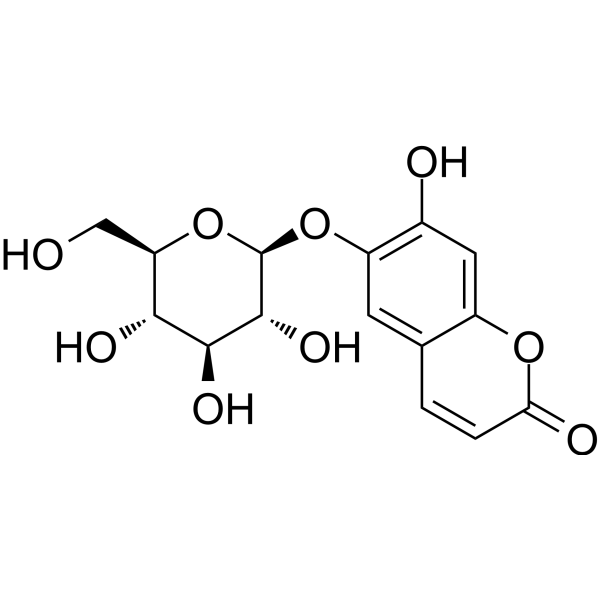
Hymexelsin (Xeroboside) is an apiose-containing scopoletin glycoside, that can be isolated from the stem bark of Hymenodictyon excelsum .
|
-
- HY-N3137
-
|
Fissistigine C; O-Methyl-(+)-flavinantine
|
Others
|
Others
|
|
O-Methylpallidine (Fissistigine C) is a Alkaloids product that can be isolated from the root barks of Melodinus yunnanensis .
|
-
- HY-N2665
-
|
|
Others
|
Others
|
|
5-Acetoxymatairesinol dimethyl ether is a Lignans product that can be isolated from the barks of Pseudolarix kaemp .
|
-
- HY-N12244
-
|
|
Others
|
Others
|
|
Echitaminic acid (compound 3) is an alkaloid isolated from the trunk bark of Alstonia sellers collected in Timor, Indonesia .
|
-
- HY-N9219
-
|
|
Others
|
Others
|
|
2,5-Dihydroxyxanthone is a Xanthones product that can be isolated from the stem barks of Garcinia tetrandra .
|
-
- HY-N8634
-
|
|
Others
|
Others
|
|
Methyl 5-O-feruloylquinate is a Phenylpropanoids product that can be isolated from the barks of Phellodendron amurense .
|
-
- HY-N3475
-
|
|
Others
|
Others
|
|
9,9'-O-Isopropyllidene-isolariciresinol is a Lignans product that can be isolated from the barks of Pseudolarix kaempferi .
|
-
- HY-N18013
-
|
|
Others
|
Others
|
|
Septemloside II (Compound 6) is a triterpene saponin found in the dried stem bark of Kalopanax pictus (Kalopanacis Cortex) .
|
-
- HY-N1538
-
|
|
Others
|
Others
|
|
(+)-Piperitol-3,3-dimethylallyl ether can be isolated from the roots and the bark of Zanthoxylum usambarense .
|
-
- HY-N1284
-
|
(-)-Seneganolide
|
Others
|
Others
|
|
Seneganolide (compound 1) is isolated from the stem bark of Khaya senegalensis. Seneganolide can be used as insect antifeedant .
|
-
- HY-N1528
-
|
|
Others
|
Others
|
|
Quinovic acid 3-O-β-D-quinovopyranoside is a tritenpenoid glycoside, that can be isolated from the bark of L. hexandra .
|
-
- HY-N1764
-
|
|
Others
|
Others
|
|
3,4,4',7-Tetrahydroxyflavan is a Flavonoids product that can be isolated from the barks of Toxicodendron verniciflua .
|
-
- HY-N7376
-
|
|
Others
|
Others
|
|
Dehydroacerogenin C is a diterpenoid compound that can be isolated from the bark of Japanese maple (Acer nikoense MAXIM., Sapindaceae) .
|
-
- HY-N1069
-
-
- HY-N12236
-
|
|
Others
|
Others
|
|
Condurango glycoside E3 (Compound 5) is a pregnanate glycoside derived from the dry bark of Marsdenia cundurango .
|
-
- HY-N8783
-
|
|
Others
|
Others
|
|
Kuwanon B is a flavone derivative that can be found in the root bark of the cultivated mulberry tree (a variety of Morus alba L.) .
|
-
- HY-N17448
-
|
|
Drug Derivative
|
Others
|
|
Fraxinuacidoside functions as a norditerpene glucopyranoside with a unique carbon skeleton. Fraxinuacidoside can be found in the stem bark of Fraxinus sieboldiana .
|
-
- HY-N1216
-
|
|
Others
|
Others
|
|
Ssioriside (compound 9) is a lignan xyloside, which can be isolated from the barks of Prunus ssiori and Prunus padus .
|
-
- HY-N13130
-
|
|
Others
|
Cancer
|
|
(+)-Mollisacacidin is a flavan compound found in the root bark of Albizia glaberrima. (+)-Mollisacacidin exhibits no significant antiproliferative effect on cancer cells .
|
-
- HY-N13743
-
|
|
Others
|
Others
|
|
2,7-Dihydroxyxanthone is a xanthone compound that can be isolated from the aerial parts (stems and bark) of Mammea acuminata .
|
-
- HY-159104
-
|
Cinnamomum Cassia oil
|
Fungal
|
Infection
|
|
Cinnamon bark oil, from Cinnamonum zeylanicum Blume is a antifungal agent against fungi causing respiratory tract mycoses .
|
-
- HY-N1767
-
|
|
Others
|
Others
|
|
3,4,5-Trimethoxycinnamyl alcohol is a natural phenolic compound that can be obtained from the bark of the cinnamon tree .
|
-
- HY-N8994
-
|
|
Others
|
Cancer
|
|
3-Hydroxy-4',5-dimethoxystilbene is a natural compound found in stem bark of Morus nigra L .
|
-
- HY-W015131
-
|
|
Drug Derivative
|
Others
|
|
3-(4-(Dimethylamino)phenyl)acrylic acid is a Alkaloids product that can be isolated from the barks of Cinnamomum cassia Presl .
|
-
- HY-116631
-
|
Asaricin
|
Fungal
Insecticide
|
Infection
|
|
Sarisan (Asaricin) is a phenolic derivative with antifungal and insecticidal activity. Sarisan can be found in the stem bark of Ocotea opifera Mart. .
|
-
- HY-W019715
-
|
|
Drug Derivative
|
Others
|
|
trans-4-(Trifluoromethyl)cinnamic acid is a Phenylpropanoids product that can be isolated from the barks of Cinnamomum cassia Presl .
|
-
- HY-N9926
-
|
(-)-Pluviatolide
|
Others
|
Others
|
|
Pluviatolide ((-)-Pluviatolide) is a lignan that can be found in the bark of Zanthoxylum pluviatile Hartley. Pluviatolide can be used as (-)-Podophyllotoxin precursor .
|
-
- HY-N10318
-
|
Dictamnoside A
|
Fungal
|
Infection
Others
|
|
Erigeside II is a sesquiterpene glycoside found in the root bark of Dictamnus dasycarpus. Erigeside II stimulates the proliferation of T-cells .
|
-
- HY-W008770
-
|
|
Drug Derivative
|
Others
|
|
trans-2,3,4-Trimethoxycinnamic acid is a Phenylpropanoids product that can be isolated from the barks of Chinese cinnamon .
|
-
- HY-N9936
-
|
2''-O-acetylsaikosaponin A
|
Others
|
Others
|
|
Saikosaponin S5 (2''-O-acetylsaikosaponin A) is a Iridoids product that can be isolated from the barks of Ailanthus integrifolia .
|
-
- HY-N8612
-
|
|
Others
|
Others
|
|
4,9-Dimethoxycanthin-6-one is a Alkaloids product that can be isolated from the barks of Ailanthus altissima .
|
-
- HY-N1641
-
|
Deacetylkhayanolide E
|
Others
|
Others
|
|
1-O-Deacetylkhayanolide E is a khayanolide, which can be isolated from the stem bark of African mahogany Khaya senegalensis .
|
-
- HY-W751044
-
|
|
Others
|
Others
|
|
4'-O-Methylepicatechin is a flavan-3-ol methyl ether that can be found in the bark of Cinnamomum cassia .
|
-
- HY-119637
-
|
|
Others
|
Others
|
|
Frangufoline is a 4(14)-type cyclopeptide alkaloid, that can be isolated from the root bark extract of Ziziphus cambodiana Pierre .
|
-
- HY-N1850
-
|
|
Others
|
Others
|
|
3'-Methyl-4-O-methylhelichrysetin is a Chalcones product that can be isolated from the barks of Cephalotaxus sinensis .
|
-
- HY-N1602
-
|
|
Others
|
Others
|
|
16-Nor-15-oxodehydroabietic acid (compound 32) is a compound isolated from the root bark of Pinus massoniana .
|
-
- HY-N1824
-
|
1β-Hydroxy-lupeol
|
Others
|
Others
|
|
3-Epiglochidiol (1β-Hydroxy-lupeol) is a Alkaloids product that can be isolated from the barks of Pandanus amaryllifolius .
|
-
- HY-N7380
-
-
- HY-N3066
-
-
- HY-N12803
-
|
|
Others
|
Others
|
|
2,5-Dihydroxy-7-methoxyflavanone is a flavonoid compound that can be isolated from the stem bark of F. enghiana .
|
-
- HY-N2299
-
|
|
Others
|
Cardiovascular Disease
|
|
Morusinol is a flavonoid isolated from Morus alba root bark. Morusinol has an antiplatelet activity and significantly inhibits arterial thrombosis in vivo .
|
-
- HY-N4287
-
|
|
Others
|
Cancer
|
|
Nordalbergin, a coumarin isolated from the wood bark of Dalbergia sissoo. Nordalbergin shows strong activity in the induction of differentiation of HL-60 .
|
-
- HY-N11464
-
|
|
Others
|
Others
|
|
Kuwanon O is a flavonoid derivative with a fused dihydrochalcone partial moiety, that can be isolated from the root bark of Morus lhou (set.) Koidz .
|
-
- HY-N18287
-
|
|
Drug Derivative
|
Others
|
|
Tenuifoliose Q is an oligosaccharide ester esterified with acetic acid, benzoic acid and p-hydroxycinnamic acid, which can be isolated from the root bark of Polygala tenuifolia Willd .
|
-
- HY-N8620
-
|
|
Others
|
Others
|
|
9-Methoxycanthin-6-one-N-oxide is a Alkaloids product that can be isolated from the barks of Ailanthus altissima .
|
-
- HY-N9328
-
|
|
Others
|
Cancer
|
|
Tarasaponin IV, as an oleanane-type triterpene saponin, is isolated from the bark of Aralia elata. Tarasaponin IV can be used for the research of cancer .
|
-
- HY-N9899
-
|
|
Drug Derivative
|
Inflammation/Immunology
|
|
Giraldoid A (compound 1) is a dicoumarinoid glycoside found in the bark and rhizome of Daphne giraldii Nitsche.Giraldoid A can be used for the research of rheumatoid arthritis .
|
-
- HY-N15409
-
|
|
Others
|
Others
|
|
Epoxymurin A is a compound that can be isolated from the stem bark of Annona Muricata. Epoxymurin A can be used in the study of the biosynthetic pathway of annonaceous acetogenins .
|
-
- HY-N0263
-
|
|
Others
|
Inflammation/Immunology
|
|
Toosendanin, a triterpenoid extracted from the bark of fruit of Melia toosendan Sieb. et Zucc., possesses analgesic, insecticidal and anti-inflammatory activities .
|
-
- HY-N13105
-
|
|
Others
|
Others
|
|
Camelliagenin A 16-tiglate (compound 6) is a camellia saponin isolated from the acid hydrolysis product of Harpullia cupanioides Roxb root bark saponin .
|
-
- HY-N10682
-
|
|
Insecticide
|
Others
|
Hypoglaunine A is a sesquiterpene pyridine alkaloid isolated from the bark of the roots of Tripterygium hypoglaucum, a traditional Chinese medicine often used as a cancer and insecticide research .
|
-
- HY-N2300
-
-
- HY-N12968
-
|
|
Others
|
Others
|
|
R-(-)-Columbianetin is a known coumarin isolated from the root and stem bark of Skimmia reevesiana collected in Taiwan, with specific chemical structure and biological activity .
|
-
- HY-N19054
-
-
- HY-117489
-
|
|
Drug Derivative
|
Cardiovascular Disease
|
|
Julibrine II is a pyridoxine derivative that can be isolated from the bark of the Albizzia julibrissin DURAZZ. Julibrine II has the ability to induce cardiac arrhythmias .
|
-
- HY-N18647
-
|
|
Others
|
Others
|
|
Hamamelis Virginiana Extract is made from the dried bark of witch hazel as a raw material. It is a raw material for plant cosmetics with a variety of skin care effects.
|
-
- HY-N15661
-
|
NSC 94658
|
Biochemical Assay Reagents
|
Infection
|
|
Maculine is a furoquinoline alkaloid that can be isolated from the bark of Helietta apiculate. Maculine has potent inhibitory effect on the growth of C. fragariae and L. gongliophoorus .
|
-
- HY-N19836
-
|
|
Drug Intermediate
|
Metabolic Disease
|
|
iso-Pedilanthocoumarin B is a coumarin compound found in the bark of Mammea neurophylla. iso-Pedilanthocoumarin B can be used for the research of diabetes-related endothelial dysfunction .
|
-
- HY-N1531
-
|
Magnotriol A
|
NO Synthase
|
Inflammation/Immunology
|
|
Randaiol is an antioxidant that can be isolated from the stem bark of Magnolia officinalis. Randaiol inhibits LPS-induced NO production and has anti-inflammatory and antioxidant activities .
|
-
- HY-N0952
-
|
(+)-Lyoniresinol 9'-O-glucoside
|
Others
|
Others
|
|
(+)-Lyoniresinol 3α-O-β-D-glucopyranoside (Compound 1) is a natural product that can be isolated from the bark of Aegle marmelos CORREA .
|
-
- HY-N3068
-
|
Nigakilactone I; Simalikalactone B
|
Others
|
Others
|
|
Picrasin B (Nigakilactone I) can be isolated from the bark of Picrasma quassioides. Picrasin B shows antifeedant and insecticidal activity against Diamondback Moth .
|
-
- HY-N18061
-
|
|
Insecticide
|
Infection
|
|
Neoazedarachin B is an insect antifeedant present in the root bark of Melia toosendan. Neoazedarachin B reduces the feeding behavior of third-instar larvae of Spodoptera littoralis .
|
-
- HY-N18148
-
|
|
Others
|
Infection
|
|
Trichilin K is a insect antifeeding iimonoid found in the stem bark of Melia toosendan. Trichilin K displays antifeedant activity against Spodoptera eridania larvae .
|
-
- HY-N16130
-
|
|
Drug Derivative
|
Others
|
|
Kuwanon S is a flavonoid compound that can be isolated from the root bark of Morus alba L. Kuwanon S is commonly used in organic synthesis and biochemistry experiments .
|
-
- HY-N5053
-
|
|
Others
|
Others
|
|
Periplogenin 3-[O-β-glucopyranosyl-(1→4)-β-sarmentopyranoside] is a cardenolide isolated from the root barks of Periploca sepium .
|
-
- HY-N5125
-
-
- HY-N1040
-
|
|
Others
|
Others
|
|
13-Hydroxy-8,11,13-podocarpatriene-18-oic acid is a compound isolated from the bark of Pinus yunnanensis Franch .
|
-
- HY-N18314
-
|
|
Drug Derivative
|
Others
|
|
2,4,6-Trihydroxy-5-methoxyacetophenone (Compound 56) is an acetophenone derivative that can be isolated from the trunk bark of Antiaris toxicaria .
|
-
- HY-N12609
-
|
|
Endogenous Metabolite
|
Inflammation/Immunology
|
|
3β-Isodihydrocadambine, a derivative of cadambine, is obtained from the bark and leaves of Neolamarckia cadamba and possesses notable antimalarial, antiproliferative, antioxidant, anticancer, and anti-inflammatory properties.
|
-
- HY-N17951
-
|
|
Others
|
Others
|
|
Amarolide 11-acetate is a quassinoid, can be found in the barks of Ailanthus altissima.Amarolide 11-acetate exhibits nearly inactive cytotoxicity against human hepatoma cells .
|
-
- HY-N2105
-
|
L-Dicentrine
|
Fungal
Bacterial
|
Infection
|
|
(-)-Dicentrine is an aporphine alkaloid that can be isolated from the stem bark of Talauma arcabucoana. (-)-Dicentrine shows moderate growth inhibition against Staphylococcus aureus and
Candida albicans .
|
-
- HY-W152146
-
|
|
Fungal
|
Others
|
|
Methylxanthoxylin is a ketone that can be isolated from the leaves and bark of Acradenia Jianklinii . Methylxanthoxylin exhibited moderate antifungal activity against Candida albicans and Penicillium expansum .
|
-
- HY-N0821R
-
|
Griffonin (Standard)
|
Reference Standards
Others
|
Cancer
|
|
Lithospermoside (Standard) is the analytical standard of Lithospermoside. This product is intended for research and analytical applications. Lithospermoside (Griffonin) is a nature product isolated from the stem bark of Semiaquilegia adoxoides .
|
-
- HY-N9306
-
|
|
Others
|
Others
|
|
11-Hydroxydrim-7-en-6-one is a Sesquiterpenoids product that can be isolated from the leaves and the bark of Drimys winteri. .
|
-
- HY-125123
-
|
|
Integrin
|
Cardiovascular Disease
|
|
Euchrestaflavanone A is a flavonoid found in the root bark of Cudrania tricuspidate. Euchrestaflavanone A inhibits platelet aggregation and has some antiplatelet and antithrombotic properties, making it a potential compound for thromboprophylaxis .
|
-
- HY-N2803
-
|
|
Others
|
Others
|
|
9-Oxo-2,7-bisaboladien-15-oic acid is a Sesquiterpenoids product that can be isolated from the barks of Pseudolarix kaempferi .
|
-
- HY-N17552
-
|
|
Others
|
Cancer
|
|
Notabilisin L is an isoprenylated flavonoid. Notabilisin L can be isolated from root bark of M. alba. Notabilisin L has no significant inhibitory effects on the viability of gastric cancer cells .
|
-
- HY-N0050
-
|
(+)-Allomatrine
|
Others
|
Neurological Disease
|
|
Allomatrine ((+)-Allomatrine) is an alkaloid from the bark of Sophora japonica. Allomatrine has antinociceptive properties mediated mainly through the activation ofκ-opioid receptors .
|
-
- HY-N9332
-
|
|
Others
|
Others
|
|
Kalopanax saponin G is an ester glycoside of oleanolic acid possessing no sugar moiety at the C-3 hydroxyl group. Kalopanax saponin G is isolated from the bark of Kalopanax pictus .
|
-
- HY-N12431
-
|
|
Others
|
Cancer
|
|
Machilin A is a lignan isolated from the methanolic extract of Phoebe bark. Machilin A inhibits melanin biosynthesis in B-16 mouse melanoma cells with an IC50 of 39.9 μM.
|
-
- HY-N8556
-
|
|
Others
|
Others
|
|
3,4,5-Trimethoxyphenyl-(6' -o-galloyl) -o-β-d-Glucopyranoside is a phenylpropanoside derived from natural the bark of Streblus ilicifolius (Vidal) .
|
-
- HY-N2159R
-
|
|
Reference Standards
Others
|
Metabolic Disease
|
|
Lancerin (Standard) is the analytical standard of Lancerin. This product is intended for research and analytical applications. Lancerin, isolated from the root bark of Cudraniu cochinchinensis, possesses anti-lipid peroxidation .
|
-
- HY-N3563
-
|
|
Others
|
Neurological Disease
|
|
Celaphanol A is a diterpene that can be isolated from the root bark of Celastrus orbiculatus. Celaphanol A shows neuroprotective effect against a hydrogen peroxide-induced cytotoxicity in PC12 cells .
|
-
- HY-N2247
-
|
|
Phosphatase
|
Metabolic Disease
|
|
Guaiacin is a arylnaphthalene type lignin isolated from the barks of Machilus thunbergii SIEB. et ZUCC (Lauraceae). Guaiacin significantly increases alkaline phosphatase activity and osteoblast differentiation .
|
-
- HY-N17359
-
|
|
Drug Derivative
|
Cancer
|
|
Mulberrofuran W is a 2-arylbenzofuran with a farnesyl group that exists in the root bark of Morus mongolica. It also acts as a cytotoxic agent with low cytotoxicity and weak tumor specificity .
|
-
- HY-N18379
-
|
|
Others
|
Cancer
|
|
Altissimacoumarin L is a terpenylated coumarin. Altissimacoumarin L can be isolated from the root bark of Ailanthus altissima (Mill.) Swingle. Altissimacoumarin L shows no significant cytotoxic activity against hepatoma cells .
|
-
- HY-N17791
-
|
|
Others
|
Others
|
|
Cassiaphenone A 2-glucoside is a carboxylated benzophenone glucoside that can be isolated from the pods of Cassia angustifolia and the bark of Cassia abbreviata, both belonging to the legume family .
|
-
- HY-N1865
-
|
|
Others
|
Others
|
|
3-Oxotirucalla-7,24-dien-21-oic acid is a natural product, that can be isolated from Stereospermum acuminatissimum stem bark .
|
-
- HY-N9222
-
|
|
Others
|
Others
|
|
9-Deacetyl-9-benzoyl-10-debenzoyltaxchinin A is a Diterpenoids product that can be isolated from the stem-barks of Taxus baccata L. cv. stricta. .
|
-
- HY-N18090
-
|
|
Drug Derivative
|
Others
|
|
Voacamidine is an iboga-vobasinyl dimeric monoterpenoid indole alkaloid found in the root bark of Voacanga africana. Voacamidine undergoes cleavage in acid media to produce Voacangine (HY-N7536) .
|
-
- HY-N3660
-
|
|
Others
|
Others
|
|
(24S)-Cycloartane-3,24,25-triol 24,25-acetonide is a Triterpenoids product that can be isolated from the barks of Aphanamixis polystachya .
|
-
- HY-N8768
-
|
|
Others
|
Others
|
|
3alpha-Acetoxy-20(29)-lupene-23,28-dioic acid is a Triterpenoids product that can be isolated from the barks of Glochidion macrophyllum .
|
-
- HY-N2960
-
|
|
Cholinesterase (ChE)
|
Cardiovascular Disease
Cancer
|
|
Broussonin A is a potent BChE inhibitor, with an IC50 of 4.16 µM. Broussonin A is a diarylpropane natural product that can be isolated from the bark of Broussonetia papyrifera after solid fermentation .
|
-
- HY-N8761
-
|
|
NO Synthase
|
Metabolic Disease
|
|
Kihadanin A (compound 3) is a limonoid NOS3 inhibitor that can be isolated from the methanol extract of Dictamnus dasycarpus root bark. Kihadanin A is useful in the study of hyperuricemia (HUA) [3].
|
-
- HY-N17415
-
|
|
Drug Derivative
|
Others
|
|
Lyciumin C is a monocyclic octapeptide containing a novel C-N linkage between tryptophan N1 and glycine Cα, and can be found in the root bark of Lycium chinense MILL .
|
-
- HY-N1813
-
|
|
Others
|
Others
|
|
Isoanwuweizic acid (3beta-Hydroxylanosta-9(11),24-dien-26-oic acid) is a Phenylpropanoids product that can be isolated from the barks of Cerbera manghas .
|
-
- HY-E70788
-
|
|
Ser/Thr Kinase
|
Others
|
|
BARK1 Recombinant Human Active Protein Kinase is a membrane LRR-RLK (leucine-rich repeat receptor-like kinase) protein that specifically binds to BAK1 and its homologs .
|
-
- HY-N3320
-
|
|
Others
|
Neurological Disease
|
|
Marmin is a coumarin, that can be isolated from the immature bark of Aegle marmelos Correa. Marmin antagonizes the Histamine (HY-B1204)-induced contraction in competitive manner .
|
-
- HY-N18378
-
|
|
Others
|
Cancer
|
|
Altissimacoumarin K is a terpenylated coumarin. Altissimacoumarin K can be isolated from the root bark of Ailanthus altissima (Mill.) Swingle. Altissimacoumarin K exhibits no significant cytotoxic effect against hepatoma cells .
|
-
- HY-130294
-
|
|
Elastase
|
Inflammation/Immunology
|
|
Pyracrenic acid is an elastase inhibitor (IC50 = 2.42 µM), can be obtained from the bark of Pyracantha crenulata. Pyracrenic acid has DPPH free radical scavenging activity and anti-inflammatory activity .
|
-
- HY-N4117
-
|
|
Bacterial
|
Infection
|
|
Hamamelitannin, a polyphenol extracted from the bark of Hamamelis virginiana, is a quorum-sensing (QS) inhibitor. Hamamelitannin increases antibiotic susceptibility of staphylococcus aureus biofilms by affecting peptidoglycan biosynthesis and eDNA release .
|
-
- HY-N15597
-
|
NSC 34757
|
Topoisomerase
|
Cancer
|
|
Melicopidine (NSC 34757) is a DNA topoisomerase inhibitor, which is an acridone alkaloid found in the bark of Medicosma subsessilis. Melicopidine exerts potential antitumor activity by binding to DNA or inhibiting related enzyme activity .
|
-
- HY-N10695
-
|
|
Parasite
|
Infection
|
|
Celangulatin C is an insecticidal sesquiterpene polyol ester, that can be isolated from the root bark of Pseudolarix kaempferi. Celangulatin C shows LD50 against Mythimna separata of 280.4 μg/mL .
|
-
- HY-N0672R
-
|
|
Reference Standards
Fungal
|
Infection
|
|
Pseudolaric Acid C (Standard) is the analytical standard of Pseudolaric Acid C. This product is intended for research and analytical applications. Pseudolaric C is a diterpenoid isolated from the root bark of Pseudolarix amabilis, has antifungal activity .
|
-
- HY-N0163
-
-
- HY-N9091
-
|
|
Others
|
Others
|
|
9α,11-Dihydroxydrim-7-en-6-one is a Sesquiterpenoids product that can be isolated from the leaves and the bark of Drimys winteri .
|
-
- HY-N18702
-
|
|
Others
|
Metabolic Disease
Inflammation/Immunology
|
|
Pterocarpus marsupium extract is derived from the bark of the Indian rosewood tree. Its active ingredients include pterostilbene, santalin, flavonoids, and tannins, which give it antioxidant, anti-inflammatory, anti-diabetic, and cardioprotective properties.
|
-
- HY-N3642
-
|
Erythrabyssin I; Erythrabissin I
|
Others
|
Cancer
|
|
Cristacarpin can be extracted from the stem bark of Erythrina suberosa, promotes endoplasmic reticulum (ER) stress, leading to sublethal reactive oxygen species (ROS) production and ultimately cell death through senescence .
|
-
- HY-N2961
-
|
|
Others
|
Others
|
|
Broussonin B is a phenolic compound isolated from the stem barks of Broussonetia kanzinoki (Moraceae). Broussonin B inhibits adipocyte differentiation in 3T3-L1 cells .
|
-
- HY-N12344
-
|
|
JNK
|
Inflammation/Immunology
|
|
n-Butyl α-D-fructofuranoside, isolated from the root barks of Ulmus davidiana var. japonica, enhances Nrf2 activity through activation of JNK and has antiinflammation activity .
|
-
- HY-N1251
-
|
|
Others
|
Others
|
|
Scholaricine (compound 13 ) is an alkaloid isolated from the leaf and stem-bark extracts of Alstonia spatulata. Scholaricine reverse multidrug resistance in vincristine-resistant KB cells with an IC50 value of 13.35 μM .
|
-
- HY-N10683
-
|
|
Others
|
Others
|
|
1b-Benzoyl-8a-cinnamoyl-4a,5a-dihydroxydihydroagarofuran is a sesquiterpenoid isolated from the root bark of Tripterygium hypoglaucum containing a benzoyl and a cinnamoyl group .
|
-
- HY-N0338
-
|
|
Others
|
Others
|
|
(-)-Syringaresnol-4-O-β-D-apiofuranosyl-(1→2)-β-D-glucopyranoside is a lignan glycoside that can be isolated from the stem bark of Albizia julibrissin Durazz .
|
-
- HY-N9078
-
|
|
Others
|
Others
|
|
9alpha,11,12-Trihydroxydrim-7-en-6-one is a Sesquiterpenoids product that can be isolated from the leaves and the bark of Drimys winteri .
|
-
- HY-N1853
-
-
- HY-N19721
-
|
|
EBV
|
Infection
Cancer
|
|
Brasimarin B is a 4-phenylcoumarin compound found in the stem bark of Calophyllum brasiliense. Brasimarin B inhibits TPA (HY-18739)-induced EBV-EA activation in Raji cells .
|
-
- HY-N1871
-
|
|
Others
|
Inflammation/Immunology
|
|
4-(2-Hydroxy-1-methoxyethyl)-1,2-benzenediol is a phenylethanoid isolated from the stem bark of Syringa reticulate (Bl.) Hara (Oleaceae) with expectorant and antiasthmatic activity .
|
-
- HY-180408
-
|
|
Influenza Virus
|
Infection
|
|
Platyphylloside is an anti-virus agent that can be isolated from the bark of Alnus japonica. Platyphylloside exhibits activity against H9N2 avian influenza virus. Platyphylloside can be used for the research of influenza .
|
-
- HY-N12694
-
|
|
Others
|
Inflammation/Immunology
|
|
3-O-Methylellagic acid-4′-O-α-L-rhamnopyranoside is an ellagic acid glycoside compound that can be isolated from the stem bark of Aphananthe aspera and can be used for the research of inflammation and pain .
|
-
- HY-N13831
-
|
|
Others
|
Others
|
|
Swietenidine B is a quinoline alkaloid that can be isolated from the root bark of Dictamnus dasycarpus. Swietenidine B does not show significant activity in inhibiting NO production in LPS-induced BV-2 microglial cells .
|
-
- HY-N17356
-
|
|
DYRK
|
Neurological Disease
|
|
Atalaphyllidine is a natural product. Atalaphyllidine can be isolated from the stem bark of Glycosmis chlorosperma. Atalaphyllidine inhibits DYRK1A kinase activity with an IC50 of 2.2 μM. Atalaphyllidine can be used in the research of neurodegenerative diseases .
|
-
- HY-N13031
-
|
|
Bacterial
|
Infection
|
|
Bellericagenin A is a pentacyclic triterpenic acid isolated from the bark of Terminalia bellerica. Bellericagenin A exhibits antimicrobial activity. Bellericagenin A exhibits a high affinity to alcohol dehydrogenase (ADH), which has the potential for ameliorating the alcoholic liver injury .
|
-
- HY-N0263R
-
|
|
Reference Standards
Others
|
Inflammation/Immunology
|
|
Toosendanin (Standard) is the analytical standard of Toosendanin. This product is intended for research and analytical applications. Toosendanin, a triterpenoid extracted from the bark of fruit of Melia toosendan Sieb. et Zucc., possesses analgesic, insecticidal and anti-inflammatory activities .
|
-
- HY-N1527
-
|
Quinovic acid 3-O-α-L-rhamnoside
|
Others
|
Others
|
|
Quinovic acid 3-O-α-L-rhamnopyranoside (Quinovic acid 3-O-α-L-rhamnoside) is glycoside derivative. Quinovic acid 3-O-α-L-rhamnopyranoside can be isolated from the root bark of Guettarda angelica .
|
-
- HY-N2921
-
|
(3β)-3-(Acetyloxy)olean-12-en-11-one; 11-Oxo-β-amyrin acetate
|
Others
|
Others
|
|
β-Amyrenonol acetate ((3β)-3-(Acetyloxy)olean-12-en-11-one) is a Triterpenoids product that can be isolated from the barks of Clausena excavata .
|
-
- HY-123286
-
|
Sachaliside 1
|
Bacterial
|
Cancer
|
|
(E)-Triandrin (Sachaliside 1) is a phenylpropanol glycoside, can be isolated from the bark of Populus Sakhalinensis. (E)-Triandrin exhibits cytotoxic activity against Artemia and human lung cancer cell line (H1299) .
|
-
- HY-N7354R
-
|
|
Others
Reference Standards
|
Cardiovascular Disease
|
|
Quininic acid (Standard) is the analytical standard of Quininic acid (HY-N7354). This product is intended for research and analytical applications. Quininic acid, purified from Eucalyptus globulus, cinchona bark, and other plant products, is the most abundant organic acid .
|
-
- HY-N2247A
-
|
|
Platelet-activating Factor Receptor (PAFR)
|
Metabolic Disease
|
|
(+)-Guaiacin is a compound extracted of the bark of Machilus wangchiana Chun. (Lauraceae). (+)-Guaiacin shows potent in vitro activities against the release of β-glucuronidase in rat polymorphonuclear leukocytes (PMNs) induced by platelet-activating factor (PAF) .
|
-
- HY-N1195
-
|
(+)-Sugiol; 10-Deoxoxanthoperol
|
p38 MAPK
ERK
JNK
Interleukin Related
TNF Receptor
|
Inflammation/Immunology
|
|
Sugiol is an abietane diterpenoid, can be isolated from Calocedrus formosana bark. Sugiol has anti-inflammatory activity, could effectively reduce intracellular reactive oxygen species (ROS) production in lipopolysaccharide (LPS)-stimulated macrophages .
|
-
- HY-N7890
-
|
|
Proteasome
|
Cancer
|
|
Isomoreollic acid is a cage xanthonoid. Isomoreollic acid exhibits cytotoxicity against colon cancer cells, with an IC50 > 10 μM for proteasome inhibition. Isomoreollic acid is present in the stem bark of Garcinia lateriflora. Isomoreollic acid can be used in colon cancer research .
|
-
- HY-N1931
-
|
|
Caspase
PARP
Apoptosis
MDM-2/p53
|
Cancer
|
|
Epifriedelanol is a triterpenoid found in the root bark of Ulmus davidiana. Epifriedelanol induces apoptosis in DU145 cells. Epifriedelanol has antitumor and anti-inflammatory activities. Epifriedelanol inhibits cellular senescence in human primary cells .
|
-
- HY-N13184
-
|
|
TNF Receptor
|
Inflammation/Immunology
|
Giraldoid B is an active ingredient that can be isolated from Girald Daphne Bark. Giraldoid B can inhibit LPS induced NO and b>TNF-α production in RAW264.7 and has anti-inflammatory activity .
|
-
- HY-N1324
-
|
|
Others
|
Others
|
|
Sanggenon N is an isoprenylated flavonoid that can be isolated from the root bark of Morus alba.Sanggenon N has hepatoprotective activities on t-BHP-induced cell cytotoxicity in HepG2 cells with an EC50 of 23.45 μM .
|
-
- HY-N9517
-
|
QS 7 Api
|
Others
|
Inflammation/Immunology
Cancer
|
|
QS 7 (QS 7 Api) is a triterpene saponin found in the bark of Quillaja saponaria and immune adjuvant with immune response potentiator activity. QS 7 can be used as vaccine adjuvant for the research of antitumor and antiviral vaccine development .
|
-
- HY-121211
-
|
|
Parasite
|
Infection
|
|
Digitolutein is a natural product that can be isolated from the stem bark and the roots of Morinda lucida Benth. Digitolutein effectively inhibits the growth of Plasmodium falciparum with an IC50 value of 12.92 μg/mL. Digitolutein can be used for the research of infection .
|
-
- HY-N3395
-
|
|
HSV
|
Infection
|
|
Leachianone G is an antiviral flavonoid from the root bark of Morus alba L. Leachianone G shows potent antiviral activity against herpes simplex type 1 virus (HSV-1) with an IC50 value of 1.6 μg/mL .
|
-
- HY-N1581
-
|
Nigakilactone D
|
Parasite
|
Infection
Endocrinology
|
|
Quassin (Nigakilactone D) is a bioactive triterpenoid from stem bark extract of Quassia amara. Quassin inhibits P. falciparum with an IC50 of 0.15 μM. Quassin possesses reversible antifertility, anti-estrogenic and anti-plasmodial activity .
|
-
- HY-N12130
-
|
|
Insecticide
|
Others
|
|
Celangulatin D (Compound 2) is an insecticidal sesquiterpene polyol ester isolated from the root bark of the natural Celastrus angulatus. Celangulatin D has insecticidal activity against armyworms. Celangulatin D can be used for insecticidal and anti-tumor research .
|
-
- HY-N12040
-
|
Iso-γ-fagarine
|
Others
|
Inflammation/Immunology
|
|
γ-Isofagarine (Iso-γ-fagarine) is an alkaloid that can be isolated from the root bark of Dictamnus angustifolius. Dictamnus angustifolius has been used in the research of rheumatism, bleeding, itching, jaundice, chronic hepatitis, skin diseases, etc .
|
-
- HY-N17567
-
|
|
Lipase
|
Metabolic Disease
|
|
Morusalnol A is a arylbenzofuran derivative found in the root bark of Morus alba. Morusalnol A is a pancreatic lipase inhibitor with a porcine pancreatic lipase IC50 of 0.71 μM. Morusalnol A inhibits pancreatic lipase activity. Morusalnol A can be used for the research of obesity .
|
-
- HY-N15755
-
|
|
Bacterial
Fungal
|
Infection
|
|
Sepiumol A is a polyphenolic compound that can be isolated from the bark of Periploca sepium Bunge. Sepiumol A has antibacterial and antifungal activities. Sepiumol A can be added to e-cigarette liquid to exert antibacterial effects and reduce the sweetness and greasiness during smoking .
|
-
- HY-N10600
-
|
|
Antibiotic
Bacterial
Fungal
|
Infection
|
|
3β-Acetoxyurs-12-en-11-one is a ursane triterpenoid with antimicrobial activity, can be isolated from the stem bark of Morus mesozygia and the leaves of Ficus hirta Vahl (Moraceae) .
|
-
- HY-N18705
-
|
|
Bacterial
|
Infection
Inflammation/Immunology
|
|
Cinnamomum zeylanicum extract is derived from the bark, leaves, and other parts of the Cinnamomum zeylanicum tree. It is rich in bioactive compounds such as cinnamaldehyde, eugenol, and linalool. Cinnamomum zeylanicum extract is widely used due to its anti-inflammatory, antibacterial, and antioxidant properties.
|
-
- HY-W142293
-
|
Methallylcarbinol
|
Drug Derivative
|
Others
|
|
3-Methyl-3-buten-1-ol (Methallylcarbinol), a semiterpenoid alcohol, is an aggregation pheromone that can be found in the venom glands of the European hornet (Vespa crabro) and our-eyed spruce bark beetle .
|
-
- HY-N6661R
-
|
(-)-Verbenone (Standard)
|
Reference Standards
Others
|
Infection
|
|
Verbenone (Standard) is the analytical standard of Verbenone. This product is intended for research and analytical applications. Verbenone ((-)-Verbenone) is a natural terpene in leaves of the tree, Verbena officinalis . Verbenone has anti-aggregation pheromone and interrupts the attraction of bark beetles to their aggregation pheromones .
|
-
- HY-N7927R
-
|
|
Others
Reference Standards
|
Others
|
|
(-)-Terpinen-4-ol (Standard) is the analytical standard of (-)-Terpinen-4-ol. This product is intended for research and analytical applications. (-)-Terpinen-4-ol can be extracted from Bark Beetle Polygraphus poligraphus .
|
-
- HY-N9033
-
|
|
Others
|
Others
|
|
9-Deacetyl-9-benzoyl-10-debenzoyl-4β,20-epoxytaxchinin A is a Diterpenoids product that can be isolated from the stem-barks of Taxus baccata L. cv. stricta. .
|
-
- HY-N17941
-
|
|
Others
|
Cardiovascular Disease
|
|
19-Anhydro-4-epirotungenic acid is a triterpenoid compound that can be isolated from the bark of Ilex rotunda Thunb. 19-Anhydro-4-epirotungenic acid shows no activity against ADP-induced platelet aggregation .
|
-
- HY-W166297
-
|
|
p38 MAPK
|
Cancer
|
|
Esculin sesquihydrate, a fluorescent coumarin glucoside, is an active ingredient of ash bark. Esculin sesquihydrate ameliorates cognitive impairment in experimental diabetic nephropathy (DN), and exerts anti?oxidative stress and anti?inflammatory effects, via the MAPK signaling pathway .
|
-
- HY-W037875R
-
|
|
Others
Reference Standards
|
Others
|
|
α-Acetamidocinnamic acid (Standard) is the analytical standard of α-Acetamidocinnamic acid (HY-W037875). This product is intended for research and analytical applications. α-Acetamidocinnamic acid is a Alkaloids product that can be isolated from the barks of Cinnamomum cassia Presl .
|
-
- HY-148937
-
|
|
PI3K
Akt
|
Others
|
|
Oroselol is a coumarin commonly found in a variety of plants, especially in the roots of angelica plants and the bark of cinnamon trees. Oroselol has potential medicinal properties, including anti-inflammatory, antioxidant and anti-tumor effects. Oroselol can be used in the production of fragrances, flavors and medicines
|
-
- HY-N18156
-
|
|
Others
|
Cancer
|
|
29β-Toosendanin is a toosendanin-type limonoid that is found in the root bark of Melia azedarach. 29β-Toosendanin exerts cytotoxic effects on lymphocytic leukemia cells in vitro. 29β-Toosendanin can be used for the research of leukemia .
|
-
- HY-N1652
-
|
3,3′,4-Tri-O-methylellagic acid
|
Others
|
Others
|
|
2,3,8-Tri-O-methylellagic acid is a terpenoids that can be isolated from the stem bark of Neoboutonia macrocalyx. 2,3,8-Tri-O-methylellagic acid is found to be 50 times more active than the parent ellagic acid .
|
-
- HY-N9067
-
|
|
Others
|
Cancer
|
|
Sanggenofuran B is 2-arylbenzofuran with anti-cancer activity. Sanggenofuran B inhibits A2780 cell line with an IC50 value of 57.1 μM. Sanggenofuran B can be isolated from the root bark of Chinese Morus cathayana .
|
-
- HY-N10697
-
|
Celangulatin E
|
Parasite
|
Infection
|
|
Angulatin G (Celangulatin E) is an insecticidal sesquiterpene polyol ester with a β-dihydroagarofuran sesquiterpene skeleton, which can be isolated from the root bark of Celastrus angulatus. Angulatin G shows LD50 against Mythimna separata of 1656.4 μg/mL .
|
-
- HY-N16630
-
|
Dehydrodiconiferyl alcohol 4,9’-di-O-B-D-glucopyranoside
|
Others
|
Others
|
|
Dehydrodiconiferyl alcohol 4,γ′-di-O-β-D-glucopyranoside (Compound 4) is a lignan glycoside. Dehydrodiconiferyl alcohol 4,γ′-di-O-β-D-glucopyranoside can be isolated from the root bark of Morus alba L .
|
-
- HY-N2906
-
|
Atalantoflavone
|
Parasite
|
Cancer
|
|
Limonianin (Atalantoflavone) is a flavone, that can be isolated from Erythrina sigmoidea and the root bark of Citrus limonia. Limonianin presents inhibitory effect against P. gingivalis. Limonianin shows cytotoxic activity against multidrug-resistant (MDR) cancer cell lines .
|
-
- HY-N17510
-
|
|
Others
|
Inflammation/Immunology
|
|
Regiafuran A is a prenylated 2-arylbenzofuran derivative and free radical scavenger (IC50=1.9 μg/mL). Regiafuran A is isolated from the stem bark of Chlorophora regia. In a competitive enzyme immunoassay for PGE2, Regiafuran A shows no anti-inflammatory potential .
|
-
- HY-129671
-
|
5β-Hydroxyecdysterone
|
Parasite
Fungal
|
Infection
|
|
Polypodine B is a natural ecdysone ester isolated from the bark of Dacrydium intermedium. Polypodine B significantly inhibits the activity of Acanthamoeba castellani. Polypodine B has moderate antifungal activity. Polypodine B can be used for research on parasitic diseases and fungal infections .
|
-
- HY-N18714
-
|
|
Bacterial
|
Infection
Inflammation/Immunology
|
|
Cinnamomum cassia extract, derived from cinnamon bark, is rich in bioactive components such as cinnamaldehyde, eugenol, and various phenolic compounds. Cinnamomum cassia extract also possesses benefits including regulating blood sugar, reducing inflammation, providing antioxidant protection, and exhibiting antibacterial activity.
|
-
- HY-N4251
-
|
(-)-Periplocoside M
|
Others
|
Cancer
|
|
Periplocoside M (compound 8) is a natural product isolated from the root bark of Periploca sepium. Periplocoside M shows antitumor activity against human A-549 and HepG2 cell lines, with the IC50 of 4.84 and 7.06 μM .
|
-
- HY-N17699
-
|
|
Xanthine Oxidase
COX
|
Inflammation/Immunology
|
|
Neosakuranin is a flavonoid. Neosakuranin can be isolated from Sorbus commixta and the bark of P. cerasus. Neosakuranin exhibits suppressive effects on xanthine oxidase with an IC50 of 157.8 μM. Neosakuranin inhibits COX-l. Neosakuranin can be used in the research of inflammatory diseases .
|
-
- HY-N4048
-
|
|
Others
|
Cancer
|
|
Heudelotinone is a dinorditerpenoid that can be isolated from the stem bark and roots of Ricinodendron heudelotii. Heudelotinone shows cytotoxicity against SMMC-7721, A549 and Hela cells with IC50s of 21.68, 16.04 and 10.67 μM, respectively .
|
-
- HY-N7869
-
|
|
Insecticide
|
Infection
|
|
Celangulin VII is a β-dihydroagarofuran sesquiterpene polyol ester present in the root bark of Celastrus angulatus. Celangulin VII exhibits insecticidal and narcotic activities against the 4th-instar larvae of Mythimna separata. Celangulin VII can be used in insecticide-related research .
|
-
- HY-N18179
-
|
|
Parasite
|
Infection
|
|
8-Acetonylidihydrochelerythrine is a benzophenanthridine alkaloid found in the stem bark of Zanthoxylum gilletii. 8-Acetonylidihydrochelerythrine inhibits growth of Chloroquine (HY-17589A)-resistant and Chloroquine-sensitive Plasmodium falciparum strains. 8-Acetonylidihydrochelerythrine can be used for the research of malaria .
|
-
- HY-N12081
-
-
- HY-W159754
-
|
p-Hydroxyallylbenzene
|
Cholinesterase (ChE)
|
Inflammation/Immunology
|
|
Chavicol (p-Hydroxyallylbenzene) is a phenylpropane compound. Chavicol can be isolated from the bark of Sassafras tzumu. Chavicol exhibits Acetylcholinesterase inhibitory activity (IC50 = 7.42 μM). Chavicol produces a 3% inhibitory effect on antigen-IgE-mediated degranulation in mast cells .
|
-
- HY-N17803
-
|
3,3',4',7-Tetramethoxyflavone
|
Others
|
Others
|
|
Fisetin tetramethyl ether (3,3',4',7-Tetramethoxyflavone) is a flavonoid compound. Fisetin tetramethyl ether can be isolated from the stem bark of Derris indica. Fisetin tetramethyl ether shows no inhibitory activity against the formation of advanced glycation end products .
|
-
- HY-N0163R
-
-
- HY-N18386
-
|
|
Sirtuin
MDM-2/p53
|
Neurological Disease
|
|
Altissimacoumarin F (Compound 4) is a terpenylated coumarin. Altissimacoumarin F can be isolated from the stem bark of Ailanthus altissima. Altissimacoumarin F enhances SIRT1 activity, decreases p53 transcriptional activity. Altissimacoumarin F can be used for the research of age-related disorders .
|
-
- HY-N16598
-
|
|
Others
|
Inflammation/Immunology
|
|
4''-O-Methylcatalposide (compound 7) is a glycoside from the stem bark of Catalpa ovata. 4''-O-Methylcatalposide exhibits peroxynitrite (ONOO −)-scavenging activity with an IC50 of 36.4 μM. 4''-O-Methylcatalposide can be used for anti-inflammatory research .
|
-
- HY-D0143
-
Quinine
Maximum Cited Publications
7 Publications Verification
|
Flavivirus
Dengue Virus
Parasite
Potassium Channel
|
Infection
|
|
Quinine is an alkaloid derived from the bark of the cinchona tree, acts as an anti-malaria agent. Quinine is a potassium channel inhibitor that inhibits WT mouse Slo3 (KCa5.1) channel currents evoked by voltage pulses to +100 mV with an IC50 of 169 μM .
|
-
- HY-N3659
-
-
- HY-N3993
-
-
- HY-169751
-
|
|
Fungal
AP-1
|
Infection
Inflammation/Immunology
Cancer
|
|
Dihydro-N-caffeoyltyramine is a new phenolic amide that can be isolated from the root bark of wolfberry and has strong antioxidant activity and antifungal effects. Dihydro-N-caffeoyltyramine downregulates the expression of cyclooxygenase-2 by inhibiting the activity of C/EBP and AP-1 transcription factors .
|
-
- HY-N4162
-
|
|
Others
|
Cancer
|
|
3-Oxo-21α-methoxy-24,25,26,27-tetranortirucall-7-ene-23(21)-lactone is a cytotoxic tirucallane C26 triterpenoid isolated from the stem barks of Aphanamixis grandifolia .
|
-
- HY-N19846
-
|
|
Bacterial
Fungal
Reactive Oxygen Species (ROS)
|
Infection
|
|
Pithecolobine is a saponin-like alkaloid found in the bark, seeds, and leaves of Samanea saman. Pithecolobine can inhibit the growth of Gram-positive bacteria, Gram-negative bacteria, and pathogenic yeasts. Pithecolobine scavenges DPPH radicals. Pithecolobine can be used for the research of infections caused by pathogenic bacteria and yeasts .
|
-
- HY-N3149A
-
|
|
Wnt
β-catenin
STAT
Apoptosis
|
Inflammation/Immunology
|
|
2-Hydroxycinnamaldehyde is a phenylpropanoid that can be isolated from the bark of Cinnamomum cassia. 2-Hydroxycinnamaldehyde inhibits Wnt/β-catenin, STAT3 signaling. 2-Hydroxycinnamaldehyde induces cell apoptosis 2-Hydroxycinnamaldehyde has antitumor and anti-inflammation activities .
|
-
- HY-D0143A
-
|
|
Flavivirus
Dengue Virus
Parasite
Potassium Channel
|
Infection
|
|
Quinine dihydrochloride is an orally active alkaloid extracted from cinchona bark and can be used in anti-malarial studies. Quinine dihydrochloride is a potassium channel inhibitor that inhibits WT mouse Slo3 (KCa5.1) channel currents evoked by voltage pulses to +100 mV with an IC50 of 169 μM .
|
-
- HY-D0143B
-
|
|
Parasite
Potassium Channel
|
Infection
|
|
Quinine hemisulfate hydrate, an alkaloid derived from the bark of the cinchona tree, acts as an anti-malaria agent. Quinine hemisulfate hydrate is a potassium channel inhibitor that inhibits WT mouse Slo3 (KCa5.1) channel currents evoked by voltage pulses to +100 mV, with an IC50 of 169 μM .
|
-
- HY-77574
-
|
7-Xylosylpaclitaxel; Taxol-7-xyloside
|
Microtubule/Tubulin
|
Cancer
|
|
7-Xylosyltaxol (Taxol-7-xyloside) is a derivative of Paclitaxel (HY-B0015) found in the bark of Taxus wallichiana var. mairei. 7-Xylosyltaxol inhibits the growth of various cancer cells. 7-Xylosyltaxol can be used in cancer-related research .
|
-
- HY-N18732
-
|
|
Others
|
Cardiovascular Disease
|
|
Terminalia arjuna extract is a precious natural compound derived from the bark of the Terminalia arjuna tree, rich in bioactive components such as triterpenoids, flavonoids, tannins, and polyphenols. Terminalia arjuna extract has cardioprotective effects, helping to strengthen the heart muscle, lower cholesterol levels, stabilize blood pressure, and prevent thrombosis.
|
-
- HY-N16481
-
|
|
COX
Phospholipase
|
Inflammation/Immunology
|
|
Parameritannin A-1 is a tetrameric proanthocyanidin (PAC) that can be isolated from the bark of Parameria laevigata Moldenke (Apocynaceae). Parameritannin A-1 is a COX-2 inhibitor. Parameritannin A-1 also inhibits the activity of phospholipase A2 (PLA2) .
|
-
- HY-N18222
-
|
|
Bacterial
Fungal
|
Infection
|
|
Dihydroavicine is a benzophenanthridine alkaloid antibacterial agent isolated from the stem bark of Zanthoxylum rhoifolium. Dihydroavicine inhibits the growth of Gram-positive bacteria, Gram-negative bacteria, and Candida albicans. Dihydroavicine shows no activity against Saccharomyces cerevisiae and Cryptococcus neoformans. Dihydroavicine can be used for the research of bacterial infections and candidal infections .
|
-
- HY-B0433B
-
|
|
Flavivirus
Dengue Virus
Parasite
Potassium Channel
|
Infection
|
|
Quinine hemisulfate is an orally active alkaloid extracted from cinchona bark and can be used in anti-malarial studies. Quinine hemisulfate is a potassium channel inhibitor that inhibits WT mouse Slo3 (KCa5.1) channel currents evoked by voltage pulses to +100 mV with an IC50 of 169 μM .
|
-
- HY-W019715R
-
|
|
Others
Reference Standards
|
Others
|
|
trans-4-(Trifluoromethyl)cinnamic acid (Standard) is the analytical standard of trans-4-(Trifluoromethyl)cinnamic acid (HY-W019715). This product is intended for research and analytical applications. trans-4-(Trifluoromethyl)cinnamic acid is a Phenylpropanoids product that can be isolated from the barks of Cinnamomum cassia Presl .
|
-
- HY-N8265
-
|
|
HSV
DNA/RNA Synthesis
ATP Synthase
|
Infection
|
|
Abyssinone V is a prenylated flavonoid with predicted anti-viral activity. Abyssinone V can be isolated from the stem bark of Erythrina melanacantha. Abyssinone V possesses good pharmacodynamics properties. Abyssinone V is predicted to be antivirals including anti-herpes (HSV) agent, with mechanisms comprising inhibition of polymerase, ATPase and membrane integrity .
|
-
- HY-N3149
-
|
|
STAT
Apoptosis
Reactive Oxygen Species (ROS)
|
Cancer
|
|
(E)-2-Hydroxycinnamaldehyde is an aldehyde that can be separated from the stem bark of cinnamon. (E)-2-Hydroxycinnamaldehyde inhibits cell proliferation and induces apoptosis by inhibiting signal transduction of STAT3 and reactive oxygen species production. (E)-2-Hydroxycinnamaldehyde has antitumor activity .
|
-
- HY-126535
-
|
|
Glycosidase
|
Metabolic Disease
Cancer
|
|
Magnoloside B is an α-glucosidase inhibitor (IC50=0.69 mM), which can be obtained from Magnolia officinalis stem bark. Magnoloside B shows moderate inhibitory activity against MGC-803 and HepG2 cells. Magnoloside B has the potential to study cancer and diabetes .
|
-
- HY-N16748
-
|
|
Others
|
Cardiovascular Disease
|
|
Heptazoline is a carbazole alkaloid that can be isolated from the stem bark of Clausena excavata. Heptazoline exhibits significant antiplatelet aggregation activity (inhibiting platelet aggregation induced by arachidonic acid, collagen, etc.) and certain vasodilatory activity (inhibiting norepinephrine-induced contraction of rat aorta). Heptazoline can be used in antithrombotic research in the cardiovascular field .
|
-
- HY-Y0152
-
|
(8R,9S)-Cinchonine; LA40221
|
Apoptosis
Parasite
Autophagy
Caspase
Calcium Channel
|
Others
Inflammation/Immunology
Cancer
|
|
Cinchonine is a natural compound present in Cinchona bark with antimalarial, antitumor, anti-inflammatory, anti platelet-aggregation and anti-obesity properties. Cinchonine inhibits cells proliferation and autophagy and induces apoptosis through activation of Caspase-3. Cinchonine activates endoplasmic reticulum stress-induced apoptosis in human liver cancer cells .
|
-
- HY-N1581R
-
|
Nigakilactone D (Standard)
|
Reference Standards
Parasite
|
Infection
Endocrinology
|
|
Quassin (Standard) is the analytical standard of Quassin. This product is intended for research and analytical applications. Quassin (Nigakilactone D) is a bioactive triterpenoid from stem bark extract of Quassia amara. Quassin inhibits P. falciparum with an IC50 of 0.15 μM. Quassin possesses reversible antifertility, anti-estrogenic and anti-plasmodial activity .
|
-
- HY-W017158
-
|
|
Endogenous Metabolite
|
Endocrinology
|
|
Melilotic acid (3-(2-hydroxyphenyl)-propanoic acid) is an orally active compound. Melilotic acid can be isolated from the bark of Chinese cinnamon. Melilotic acid has a significant inhibitory effect on gastric ulcers induced by serotonin (HY-B1473A), phenylbutazone (HY-B0230), ethanoyl, and water immersion stress .
|
-
- HY-N9836
-
|
|
Drug Derivative
|
Others
|
|
8,9-Dehydrothymol isobutyrate is a thymol (HY-N6810) derivative that can be naturally extracted from the essential oil of the trunk bark of Tetraclinis articulata (Vahl) Mast. This plant essential oil exhibits certain cytotoxicity and can be used as a research subject in the fields of natural product chemistry and the active components of plant essential oils .
|
-
- HY-N0284
-
|
|
PI3K
Akt
|
Inflammation/Immunology
Cancer
|
|
Esculetin is an active ingredient extracted mainly from the bark of Fraxinus rhynchophylla. Esculetin inhibits platelet-derived growth factor (PDGF)-induced airway smooth muscle cells (ASMCs) phenotype switching through inhibition of PI3K/Akt pathway. Esculetin has antioxidant, antiinflammatory, and antitumor activities .
|
-
- HY-N1381
-
|
|
Apoptosis
|
Inflammation/Immunology
Cancer
|
|
Periplocin is a cardiotonic steroid isolated from root-bark Periploca sepium Bunge. Periplocin promotes tumor cell apoptosis and inhibits tumor growth. Periplocin has the potential to facilitate wound healing through the activation of Src/ERK and PI3K/Akt pathways mediated by Na/K-ATPase .
|
-
- HY-W010668
-
|
|
Flavivirus
Dengue Virus
Parasite
Potassium Channel
|
Others
|
|
Quinine sulfate hydrate (2:1:4) is an orally active alkaloid extracted from cinchona bark and can be used in anti-malarial studies. Quinine sulfate hydrate (2:1:4) is a potassium channel inhibitor that inhibits WT mouse Slo3 (KCa5.1) channel currents evoked by voltage pulses to +100 mV with an IC50 of 169 μM .
|
-
- HY-N0242
-
|
|
PD-1/PD-L1
HIF/HIF Prolyl-Hydroxylase
STAT
|
Inflammation/Immunology
Cancer
|
|
Fraxinellone is isolated from the root bark of the Rutaceae plant, Dictamnus dasycarpus. Fraxinellone is a PD-L1 inhibitor and inhibits HIF-1α protein synthesis without affecting HIF-1α protein degradation. Fraxinellone has the potential to be a valuable candidate for cancer treatment by targeting PD-L1 .
|
-
- HY-D0143R
-
|
|
Dengue Virus
Flavivirus
Reference Standards
Parasite
Potassium Channel
|
Infection
|
|
Quinine (Standard) is the analytical standard of Quinine. This product is intended for research and analytical applications. Quinine is an alkaloid derived from the bark of the cinchona tree, acts as an anti-malaria agent. Quinine is a potassium channel inhibitor that inhibits WT mouse Slo3 (KCa5.1) channel currents evoked by voltage pulses to +100 mV with an IC50 of 169 μM .
|
-
- HY-N17601
-
|
|
Phosphatase
Glycosidase
|
Metabolic Disease
|
|
Parvisoflavone B is a prenylated flavonoid. Parvisoflavone B can be isolated from root bark of Erythrina mildbraedii. Parvisoflavone B inhibits PTP1B activity with an IC50 of 42.6 μM. Parvisoflavone B inhibits α-glucosidase with an IC50 of 12.19 μM. Parvisoflavone B can be used in the research of type 2 diabetes and obesity .
|
-
- HY-N10750
-
|
|
Others
|
Others
|
|
1α, 2α-Diacetoxy-8β-isobutanoyloxy-9α-benzoyloxy-15-β-(β-furancarbonyloxy)-4β, 6β-dihydroxy-β-dihydroagarofuran (compound 7) is an eudesmane-type sesquiterpenoid that can be founfd in the the root bark of Pseudolarix kaempferi .
|
-
- HY-N16779
-
|
|
Others
|
Cardiovascular Disease
Neurological Disease
|
|
Angustine is a monoterpene indole alkaloid vasodilator. Angustine exhibits potent vasodilatory activity on isolated rat aorta at a concentration of 10 μM (vasodilation rate exceeding 90%). Angustine can be used in the study of diseases such as hypertension, cerebral vasospasm, and peripheral circulatory disorders. Angustine can be naturally extracted from the bark of Nauclea officinalis and is also present in plants of the genera Mitragyna, Uncaria, and Strychnos .
|
-
- HY-B2134
-
|
|
Others
|
Metabolic Disease
|
|
Casanthranol is a concentrated mixture of anthranol glycosides from cascara sagrada (dried bark of Rhamnus p.). Casanthranol can be used as a laxative in constipation and various medical conditions, stimulant laxative. Casanthranol encourages bowel movements by acting on the intestinal wall to increase muscle contractions. Casanthranol is protective in a PFF-induced toxicity model (EC50 = 34.2 μM) of N2a cells .
|
-
- HY-N19792
-
|
|
Drug Derivative
|
Cancer
|
|
6-(3'-Methyl-1',3'-butadienyl)-5,7-dimethoxycoumarin is a cytotoxic coumarin compound that can be isolated from the stem bark of Toddalia asiatica. 6-(3'-Methyl-1',3'-butadienyl)-5,7-dimethoxycoumarin can be used for the research of small cell lung cancer .
|
-
- HY-125122
-
|
|
Others
|
Inflammation/Immunology
|
|
Mulberrofuran A is a natural product, that can be isolated from the root bark of mulberry tree. Mulberrofuran A inhibits the formations of 12-hydroxy-,8,10-heptadecatrienoic acid (HHT) and thromboxane B2 (cyclooxygenase products), but it increases the formation of 12-hydroxy-5,8,10,14-eicosatetraenoic acid (12-HETE) (12-lipoxygenase product) .
|
-
- HY-N0349S
-
|
Methyl 4-hydroxybenzoate-d4
|
Bacterial
Endogenous Metabolite
|
Infection
|
|
Methyl paraben-d4 is the deuterium labeled Methyl Paraben . Methyl Paraben, isolated from the barks of Tsuga dumosa the methyl ester of p-hydroxybenzoic acid, is a standardized chemical allergen. Methyl Paraben is a stable, non-volatile compound used as an antimicrobial preservative in foods, agents and cosmetics. The physiologic effect of Methyl Paraben is by means of increased histamine release, and cell-mediated immunity .
|
-
- HY-N17985
-
|
|
Others
|
Metabolic Disease
Inflammation/Immunology
|
|
Kalopanaxsaponin H is an hederagenin glycoside (saponin) with no hypoglycemic activity upon intraperitoneal injection. Kalopanaxsaponin H can be metabolized by human intestinal bacteria into Kalopanaxsaponin I, Kalopanaxsaponin A, hederagenin 3-O-α-L-arabinopyranoside and hederagenin, among which Kalopanaxsaponin I and hederagenin are the main metabolites. Kalopanaxsaponin H is isolated from the stem bark of Kalopanax pictus and is used in diabetes-related research .
|
-
- HY-W740048
-
-
- HY-N9228
-
|
|
Others
|
Cancer
|
|
5,7,3',4'-Tetrahydroxy-3-methoxy-8-geranylflavone is a prenylflavone with anti-proliferation effect on breast cancer cells. 5,7,3',4'-Tetrahydroxy-3-methoxy-8-geranylflavone can be isolated from an ethyl acetate-soluble extract of the barks of Broussonetia papyrifera .
|
-
- HY-N17763
-
|
|
Others
|
Inflammation/Immunology
|
|
Styraxlignolide G is a furanofuran-type lignan compound that can be isolated from the stem bark of Styrax japonica. Styraxlignolide G exhibits very weak DPPH free radical scavenging activity, while its hydrolyzed aglycone molecule possesses antioxidant activity (IC50=186.7 μM) and is involved in antioxidant-related regulation in the body. Styraxlignolide G can be used in the study of inflammatory diseases.
|
-
- HY-D0143AR
-
|
|
Flavivirus
Dengue Virus
Reference Standards
Parasite
Potassium Channel
|
Infection
|
|
Quinine (dihydrochloride) (Standard) is the analytical standard of Quinine (dihydrochloride). This product is intended for research and analytical applications. Quinine dihydrochloride is an orally active alkaloid extracted from cinchona bark and can be used in anti-malarial studies. Quinine dihydrochloride is a potassium channel inhibitor that inhibits WT mouse Slo3 (KCa5.1) channel currents evoked by voltage pulses to +100?mV with an IC50 of 169 μM .
|
-
- HY-N0188
-
Esculin
5 Publications Verification
|
p38 MAPK
|
Inflammation/Immunology
Cancer
|
|
Esculin is a fluorescent coumarin glucoside, the active ingredient in ash bark. Esculin has antidiabetic effects, improves cognitive impairment in experimental diabetic nephropathy (DN) via the MAPK signaling pathway, and exerts antioxidant stress and anti-inflammatory effects. Esculin also has anticancer, antibacterial, antiviral, neuroprotective, antithrombotic, and therapeutic properties for eye diseases .
|
-
- HY-110028
-
|
|
Cannabinoid Receptor
Fatty Acid Synthase (FASN)
Androgen Receptor
|
Endocrinology
Cancer
|
|
Leelamine hydrochloride is a tricyclic diterpene molecule that is extracted from the bark of pine trees . Leelamine hydrochloride is a cannabinoid receptor type 1 (CB1) agonist and a inhibitor of SREBP1-regulated fatty acid/lipid synthesis in prostate cancer cells that is not affected by androgen receptor status. Leelamine hydrochloride suppresses transcriptional activity of androgen receptor, which is known to regulate fatty acid synthesis [2,3].
|
-
- HY-Y0152R
-
|
(8R,9S)-Cinchonine (Standard); LA40221 (Standard)
|
Reference Standards
Apoptosis
Parasite
Autophagy
Caspase
Calcium Channel
|
Others
Inflammation/Immunology
Cancer
|
|
Cinchonine (Standard) is the analytical standard of Cinchonine. This product is intended for research and analytical applications. Cinchonine is a natural compound present in Cinchona bark with antimalarial, antitumor, anti-inflammatory, anti platelet-aggregation and anti-obesity properties. Cinchonine inhibits cells proliferation and autophagy and induces apoptosis through activation of Caspase-3. Cinchonine activates endoplasmic reticulum stress-induced apoptosis in human liver cancer cells .
|
-
- HY-N16690
-
|
|
Bacterial
Fungal
|
Infection
|
|
3-Hydroxy-4-methoxycinnamaldehyde (compound 2) is a cinnamaldehyde from the stem bark of Flemingia paniculata Wall. 3-Hydroxy-4-methoxycinnamaldehyde exhibits antibacterial (both Gram-positive and Gram-negative) and antifungal activities (MIC = 12.5-50 μg/mL). 3-Hydroxy-4-methoxycinnamaldehyde can be used for microbial infections research .
|
-
- HY-N4192
-
|
|
Others
|
Cardiovascular Disease
Cancer
|
|
Toringin, a bioflavonoid, is isolated from the bark of Docyniopsis tschonoski. Toringin progressively decreases not only the cis-effect of the expanded CTG repeats but cytotoxicity as well. Exposure to isosakuranetin, Toringin rescues PC12 neuronal cells. Flavonoids are efficacious for ameliorating the RNA gain of function caused by expanded CTG repeats, and have various biological activities and beneficial actions against cancers, coronary heart disease, among other pathologies .
|
-
- HY-N0284R
-
|
|
Reference Standards
PI3K
Akt
|
Inflammation/Immunology
Cancer
|
|
Esculetin (Standard) is the analytical standard of Esculetin. This product is intended for research and analytical applications. Esculetin is an active ingredient extracted mainly from the bark of Fraxinus rhynchophylla. Esculetin inhibits platelet-derived growth factor (PDGF)-induced airway smooth muscle cells (ASMCs) phenotype switching through inhibition of PI3K/Akt pathway. Esculetin has antioxidant, antiinflammatory, and antitumor activities .
|
-
- HY-N1381R
-
|
|
Reference Standards
Apoptosis
|
Inflammation/Immunology
Cancer
|
|
Periplocin (Standard) is the analytical standard of Periplocin. This product is intended for research and analytical applications. Periplocin is a cardiotonic steroid isolated from root-bark Periploca sepium Bunge. Periplocin promotes tumor cell apoptosis and inhibits tumor growth. Periplocin has the potential to facilitate wound healing through the activation of Src/ERK and PI3K/Akt pathways mediated by Na/K-ATPase .
|
-
- HY-N19724
-
|
|
Fungal
Lipoxygenase
COX
|
Infection
|
|
Buddledin A is a 5-LOX inhibitor (IC50 = 50.4 μM) and a COX inhibitor (IC50 = 13.7 μM). Buddedin A inhibits arachidonic acid metabolism via the 5-LOX and COX pathways, suppresses fungal growth, and exerts toxic effects on fish. Buddedin A may play an ecological role in protecting plant roots and stem barks from fungal infection. Buddedin A can be used in studies related to fungal infections .
|
-
- HY-N16480
-
|
Lindetannin trimer
|
Drug Derivative
Bacterial
Fungal
|
Infection
Cardiovascular Disease
Inflammation/Immunology
Cancer
|
|
Lindetannin (Lindetannin trimer) is an A-type trimer of proanthocyanidin (HY-N0794) found in the bark of Cinnamomum trees. Proanthocyanidin are a class of polyphenolic that are widely distributed in higher plants, consisted of an electrophilic flavanyl unit. Proanthocyanidin can be used as antioxidant and anti-cancer agent. Proanthocyanidin also exhibit anti-inflammatory, cardioprotective, antibacterial and antifungal properties, which can be used in the treatment of chronic venous insufficiency, capillary fragility, sunburn and retinopathy .
|
-
- HY-N0242R
-
|
|
Reference Standards
PD-1/PD-L1
HIF/HIF Prolyl-Hydroxylase
STAT
|
Inflammation/Immunology
Cancer
|
|
Fraxinellone (Standard) is the analytical standard of Fraxinellone. This product is intended for research and analytical applications. Fraxinellone is isolated from the root bark of the Rutaceae plant, Dictamnus dasycarpus. Fraxinellone is a PD-L1 inhibitor and inhibits HIF-1α protein synthesis without affecting HIF-1α protein degradation. Fraxinellone has the potential to be a valuable candidate for cancer treatment by targeting PD-L1 .
|
-
- HY-N15614
-
|
|
Others
|
Cancer
|
|
Cassamine is a diterpenoid compound that can be isolated from the bark of Erythrophleum fordii. Cassamine exhibits certain cytotoxicity against non-small cell lung cancer cell lines, with IC50 values of 3.4, 2.1, and 1.9 μM against A549, NCI-H1975, and NCI-H1299, respectively. Cassamine has antitumor activity and can be used in the research of lung cancer and other tumors .
|
-
- HY-W017158R
-
|
|
Reference Standards
Endogenous Metabolite
|
Endocrinology
|
|
Melilotic acid (Standard) is an analytical standard for Melilotic acid (HY-W017158). This product is intended for research and analytical applications. Melilotic acid (3-(2-hydroxyphenyl)-propanoic acid) is an orally active compound. Melilotic acid can be isolated from the bark of Chinese cinnamon. Melilotic acid has a significant inhibitory effect on gastric ulcers induced by serotonin (HY-B1473A), phenylbutazone (HY-B0230), ethanoyl, and water immersion stress .
|
-
- HY-N10854
-
|
|
Others
|
Others
|
|
Lanosta-7,9(11),23,25(27)-tetraen-26-oic acid, 23,27-epoxy-3-oxo- is a lanosterane type compound. Lanosta-7,9(11),23,25(27)-tetraen-26-oic acid, 23,27-epoxy-3-oxo- can be isolated from Tu-Jin-Pi (the root bark of Pseudolarix kaempferi) .
|
-
- HY-N0188R
-
|
|
Reference Standards
p38 MAPK
|
Inflammation/Immunology
Cancer
|
|
Esculin (Standard) is the analytical standard of Esculin. This product is intended for research and analytical applications. Esculin is a fluorescent coumarin glucoside, the active ingredient in ash bark. Esculin has antidiabetic effects, improves cognitive impairment in experimental diabetic nephropathy (DN) via the MAPK signaling pathway, and exerts antioxidant stress and anti-inflammatory effects. Esculin also has anticancer, antibacterial, antiviral, neuroprotective, antithrombotic, and therapeutic properties for eye diseases .
|
-
- HY-W010668R
-
|
|
Flavivirus
Dengue Virus
Reference Standards
Parasite
Potassium Channel
|
Others
|
|
Quinine (sulfate hydrate) (Standard) is the analytical standard of Quinine (sulfate hydrate). This product is intended for research and analytical applications. Quinine sulfate hydrate (2:1:4) is an orally active alkaloid extracted from cinchona bark and can be used in anti-malarial studies. Quinine sulfate hydrate (2:1:4) is a potassium channel inhibitor that inhibits WT mouse Slo3 (KCa5.1) channel currents evoked by voltage pulses to +100?mV with an IC50 of 169 μM .
|
-
- HY-N16683
-
|
|
Others
|
Inflammation/Immunology
|
|
Galangin 5-methyl ether is a potentially active compound that can be naturally extracted from propolis. Propolis is a resinous substance collected by bees from the leaf buds and bark cracks of various trees, enriched with saliva and enzyme secretions. The propolis extract containing Galangin 5-methyl ether has pharmacological activities such as antibacterial, antiviral, and anti-inflammatory effects, and can be used in research related to cold syndromes, skin diseases, and oral inflammation .
|
-
- HY-N2056
-
|
11-Keto-β-boswellic acid
|
Lipoxygenase
Leukotriene Receptor
NF-κB
|
Metabolic Disease
Cancer
|
|
11-Keto-beta-boswellic acid (11-Keto-β-boswellic acid) is a pentacyclic triterpenic acid of the oleogum resin from the bark of the Boswellia serrate tree, popularly known as Indian Frankincense. 11-Keto-beta-boswellic acid has the anti-inflammatory activity is primarily due to inhibit 5-lipoxygenase (5-LOX) and subsequent leukotriene and nuclear factor-kappa B (NF-κB) activation and tumor necrosis factor alpha generation production .
|
-
- HY-N0349S1
-
|
Methyl 4-hydroxybenzoate-13C6
|
Isotope-Labeled Compounds
Bacterial
Endogenous Metabolite
|
Infection
|
|
Methyl Paraben- 13C6 (Methyl 4-hydroxybenzoate- 13C6) is a 13C labeled Methyl Paraben (HY-N0349) . Methyl Paraben, isolated from the barks of Tsuga dumosa the methyl ester of p-hydroxybenzoic acid, is a standardized chemical allergen. Methyl Paraben is a stable, non-volatile compound used as an antimicrobial preservative in foods, agents and cosmetics. The physiologic effect of Methyl Paraben is by means of increased histamine release, and cell-mediated immunity .
|
-
- HY-117651R
-
|
|
Reference Standards
Acyltransferase
|
Cancer
|
|
Quinine (sulfate hydrate) (Standard) is the analytical standard of Quinine (sulfate hydrate). This product is intended for research and analytical applications. Quinine sulfate hydrate (2:1:4) is an orally active alkaloid extracted from cinchona bark and can be used in anti-malarial studies. Quinine sulfate hydrate (2:1:4) is a potassium channel inhibitor that inhibits WT mouse Slo3 (KCa5.1) channel currents evoked by voltage pulses to +100?mV with an IC50 of 169 μM .
|
-
- HY-N0627
-
|
|
LDLR
|
Others
|
|
Kaempferol-7-O-β-D-glucopyranoside is a flavonoid glycoside. Kaempferol-7-O-β-D-glucopyranoside exists in the root bark of Cudrania tricuspidata. Kaempferol-7-O-β-D-glucopyranoside inhibits Cu 2+-induced lipid peroxidation of low-density lipoprotein. Kaempferol-7-O-β-D-glucopyranoside possesses antioxidant activity and scavenges DPPH free radicals .
|
-
- HY-N12422
-
|
|
Adenosine Receptor
|
Inflammation/Immunology
Cancer
|
|
3′-Methoxyfurano[4″,5″:3,4]chalcone (compound 2) is a selective A2AAR antagonist (IC50=33.5 nM) with high affinity. 3′-Methoxyfurano[4″,5″:3,4]chalcone is also a natural product obtained from the bark of Allium cepa L. 3′-Methoxyfurano[4″,5″:3,4]chalcone can promote T cell activation and can be used in cancer immunity research .
|
-
- HY-B1419
-
|
2-Hydroxybenzyl alcohol; Saligenin
|
Drug Intermediate
Bacterial
|
Others
|
|
Salicyl alcohol (2-Hydroxybenzyl alcohol; Saligenin) is a phenolic alcohol-type topical anesthetic and strong sensitizer with antiseptic, antibacterial and antipyretic activities. Salicyl alcohol serves as a precursor for salicin synthesis. Salicyl alcohol induces contact dermatitis and eczematous skin reactions, and is a well-known allergen identified in phenolic resins. Salicyl alcohol is isolated from the barks of European aspen (Populus tremula), rowan (Sorbus aucuparia) and willow (Salix spp.). Salicyl alcohol is used in studies related to allergic contact dermatitis .
|
-
- HY-N17604
-
|
|
Drug Derivative
|
Cancer
|
|
(6aR,11aR)-Edunol (compound 10) is a pterocarpan and antiproliferative agent. (6aR,11aR)-Edunol can be found in the roots of Lonchocarpus bussei and the stem bark of Lonchocarpus eriocalyx. (6aR,11aR)-Edunol exerts antiproliferative effects against drug-sensitive leukemia cells and multidrug-resistant leukemia cells. (6aR,11aR)-Edunol can be used for the research of leukemia .
|
-
- HY-N16844
-
-
- HY-N16691
-
|
|
Others
|
Inflammation/Immunology
Cancer
|
|
Acrovestone (compound 4) is an Acronychia-type acetophenone dimer and a selective anticancer agent. Acrovestone has IC50 values ??of 0.38 μM and 0.93 μM against A2058 melanoma cells and DU145 prostate cancer cells, respectively. Acrovestone shows low inhibitory activity against normal human dermal fibroblasts (NHDF), with an IC50 >5 μM. Acrovestone can be used in anticancer research related to prostate cancer and melanoma. Acrovestone can be naturally extracted from the trunk bark of Acronychia pedunculata .
|
-
- HY-N0986
-
|
|
Others
|
Cancer
|
|
1,4,5,6-Tetrahydroxy-7-(3-methylbut-2-enyl)xanthone is a nature product that could be isolated from the stem barks of Garcinia xanthochymus. 1,4,5,6-Tetrahydroxy-7-(3-methylbut-2-enyl)xanthone has antiproliferative active. 1,4,5,6-Tetrahydroxy-7-(3-methylbut-2-enyl)xanthone can be used in research of cancer .
|
-
- HY-N0338R
-
|
|
Reference Standards
Others
|
Others
|
|
(-)-Syringaresnol-4-O-β-D-apiofuranosyl-(1→2)-β-D-glucopyranoside (Standard) is the analytical standard of (-)-Syringaresnol-4-O-β-D-apiofuranosyl-(1→2)-β-D-glucopyranoside. This product is intended for research and analytical applications. (-)-Syringaresnol-4-O-β-D-apiofuranosyl-(1→2)-β-D-glucopyranoside is a lignan glycoside that can be isolated from the stem bark of Albizia julibrissin Durazz .
|
-
- HY-N12964
-
|
|
Others
|
Others
|
|
4-Hydroxycanthin-6-one is a novel quinoline alkaloid isolated from the stem bark of the tree Ailanthus altissima. Five other known compounds were also found in the study. The structures of the new compounds were determined by interpretation of physical and spectroscopic data, and their absolute configurations were determined by electronic circular dichroism spectroscopy and quantum chemical calculations. These compounds showed significant inhibitory activity against lipopolysaccharide (LPS)-induced nitric oxide (NO) production in RAW 264.7 cells, showing potential anti-inflammatory properties .
|
-
- HY-N7536
-
|
|
TRP Channel
|
Others
|
|
Voacangine is an antagonist for TRPV1 and TRPM8 but as an agonist for TRPA1 (EC50=8 μM). Voacangine competitively blockes capsaicin binding to TRPV1 (IC50=50 μM). Voacangine competitively inhibits the binding of menthol to TRPM8 (IC50=9 μM) and it shows noncompetitive inhibition against icilin (IC50=7 μM). Voacangine selectively abrogates chemical agonist-induced TRPM8 activation and did not affect cold-induced activation. Voacangine is an alkaloid isolated from the root bark of Voacanga africana .
|
-
- HY-N20619
-
|
|
Parasite
|
Cardiovascular Disease
Infection
|
|
Sterekunthal B is a naphthoquinone compound and antimalarial agent. Sterekunthal B can be isolated from plants of the Bignoniaceae family, including the root bark of Stereospermum colais. Sterekunthal B inhibits the growth of Chloroquine (HY-17589A)-sensitive Plasmodium falciparum strain PoW with an IC50 of 23.3 μg/mL. Sterekunthal B also inhibits the growth of Chloroquine-resistant Plasmodium falciparum strain Dd2 with an IC50 of 15.2 μg/mL. Sterekunthal B exhibits non-selective cytotoxicity toward endothelial cells. Sterekunthal B can be used in malaria-related research .
|
-
- HY-N2056R
-
|
11-Keto-β-boswellic acid (Standard)
|
Reference Standards
Lipoxygenase
Leukotriene Receptor
NF-κB
|
Metabolic Disease
Cancer
|
|
11-Keto-beta-boswellic acid (Standard) is the analytical standard of 11-?Keto-?beta-?boswellic acid. This product is intended for research and analytical applications. 11-Keto-beta-boswellic acid (11-Keto-β-boswellic acid) is a pentacyclic triterpenic acid of the oleogum resin from the bark of the Boswellia serrate tree, popularly known as Indian Frankincense. 11-Keto-beta-boswellic acid has the anti-inflammatory activity is primarily due to inhibit 5-lipoxygenase (5-LOX) and subsequent leukotriene and nuclear factor-kappa B (NF-κB) activation and tumor necrosis factor alpha generation production .
|
-
- HY-N8134
-
|
|
Dipeptidyl Peptidase
|
Metabolic Disease
|
|
2-Methoxy-5-acetoxy-fruranogermacr-1(10)-en-6-one is a natural product found in the leaves and stem bark of M. glabra. 2-Methoxy-5-acetoxy-fruranogermacr-1(10)-en-6-one displays binding affinities with dipeptidyl peptidase-4 (DPP-4) and α-Amylase. 2-Methoxy-5-acetoxy-fruranogermacr-1(10)-en-6-one has potential antidiabetic activities .
|
-
- HY-N19640
-
|
|
TNF Receptor
|
Cancer
|
|
(20S)-18,20-Epoxydigitoxigenin α-L-thvetoside is a cardenolide glycoside found in the bark of Thevetia peruviana. (20S)-18,20-Epoxydigitoxigenin α-L-thvetoside is a tumor necrosis factor (TNF)-related apoptosis-inducing ligand (TRAIL) resistance-overcoming agent. (20S)-18,20-Epoxydigitoxigenin α-L-thvetoside synergistically sensitizes TRAIL-resistant gastric adenocarcinoma cells to TRAIL, reducing cell viability when combined with TRAIL. (20S)-18,20-Epoxydigitoxigenin α-L-thvetoside can be used for the research of human gastric adenocarcinoma .
|
-
- HY-N10091
-
|
|
Apoptosis
|
Others
|
|
2,3-Dihydro-3α-methoxynimbolide is a limonoid compound isolated from the extracts of bark, leaves, roots, and seeds of Azadirachta indica A. Juss. var. siamensis Valeton. 2,3-Dihydro-3α-methoxynimbolide exhibits potent cyto-toxicities against one or more cell lines. 2,3-Dihydro-3α-methoxynimbolide activates caspases-3, -8, and -9, while increases the ratio of Bax/Bcl-2. 2,3-Dihydro-3α-methoxynimbolide induces apoptosis via both mitochondrial and death receptor pathways in AZ521 .
|
-
- HY-N19809
-
|
|
Drug Derivative
|
Cancer
|
|
10-Deacetyl-10-oxo-7-epi-taxol is a cytotoxic agent with a 9,10-diketone structure. 10-Deacetyl-10-oxo-7-epi-taxol induces cytotoxic activity in cancer cells .
|
-
- HY-110082
-
|
|
Flavivirus
Dengue Virus
Parasite
Potassium Channel
|
Cardiovascular Disease
Infection
Cancer
|
|
Quinine hydrochloride is an alkaloid extracted from cinchona bark and exhibits oral activity, acting as a potassium channel inhibitor. Quinine hydrochloride modulates the tolerance of red blood cells and presents dose-dependent toxicity and embryonic effects. Quinine hydrochloride is a typical hemolysin that directly lyses red blood cells, with cellular components of red blood cell membranes as its action targets. Quinine hydrochloride disrupts red blood cell membranes and induces hemolysis at high concentrations, while merely weakening the anti-hemolytic capacity of red blood cells at low concentrations. Quinine hydrochloride continuously reduces red blood cell tolerance after in vivo administration, and high doses can also alter blood cell counts. Quinine hydrochloride can be applied to researches related to red blood cell hemolysis, cancer and malaria .
|
-
- HY-N6850
-
|
|
Apoptosis
Pyroptosis
AMPK
Bcl-2 Family
JAK
STAT
Calcium Channel
Interleukin Related
TNF Receptor
SOD
Reactive Oxygen Species (ROS)
PPAR
|
Cardiovascular Disease
Inflammation/Immunology
|
|
Calenduloside E is a pentacyclic triterpenoid saponin that can be extracted from the bark and roots of Aralia ovata, and has anti-inflammatory and anti-apoptotic activities. Calenduloside E alleviates atherosclerosis by regulating macrophage polarization, improves mitochondrial function by regulating the AMPK-SIRT3 pathway, and alleviates acute liver injury. In addition, Calenduloside E promotes the interaction between L-type calcium channels and Bcl-2 related apoptosis genes, inhibits calcium overload, and alleviates myocardial ischemia/reperfusion injury. Calenduloside E also improves non-alcoholic fatty liver disease by regulating heat shock-dependent pathways, and inhibits ROS mediated JAK1-STAT3 pathways to reduce cellular inflammatory responses .
|
-
- HY-N17896
-
|
|
Tyrosinase
|
Cancer
|
|
Pinoresinol-4-O-β-D-apiosyl-(1→2)β-D-glucoside is a lignan compound and a melanogenesis inhibitor with low cytotoxicity. Pinoresinol-4-O-β-D-apiosyl-(1→2)β-D-glucoside is isolable from the stem bark of Acer buergerianum (Acer buergerianum). Pinoresinol-4-O-β-D-apiosyl-(1→2)β-D-glucoside effectively inhibits the melanogenesis process in α-MSH (HY-P0252)-stimulated B16 melanoma cells. Pinoresinol-4-O-β-D-apiosyl-(1→2)β-D-glucoside exhibits extremely high safety towards normal cells, and serves as an ideal tool molecule for studying melanoma mechanisms and developing related whitening products .
|
-
- HY-N2392
-
|
|
Parasite
Lipoxygenase
Opioid Receptor
Apoptosis
Autophagy
Reactive Oxygen Species (ROS)
Interleukin Related
TNF Receptor
PGE synthase
COX
|
Infection
Neurological Disease
Metabolic Disease
Inflammation/Immunology
Cancer
|
|
Kukoamine A, a spermine alkaloid, is an orally active and brain-penetrant component found in the root barks of Lycium chinense (L. chinense) Miller. Kukoamine A inhibits purified Crithidia fasciculata trypanothione reductase and soybean lipoxygenase, activates μ-opioid receptor. Kukoamine A can inhibt cancer cell proliferation, migration and invasion, cause G0/G1 phase cell cycle arrest and induce apoptosis. Kukoamine A exerts neuroprotective effect and can induce autophagy . Kukoamine A inhibits LPS (HY-D1056)-induced NO, ROS, PGE2, TNF-α, IL-1β, IL-6 production and COX-2 activity. Kukoamine A reverses palmitic acid-induced insulin resistance, lipid accumulation, and oxidative stress via downregulation of Srebp-1c. Kukoamine A can be used for the research of cancer, infection, inflammation, metabolic and neurological disease, such as glioblastoma and Parkinson's disease .
|
-
- HY-N19083
-
|
|
Bacterial
|
Inflammation/Immunology
|
|
Tecomella undulata Extract, also known as Rohida extract, is a valuable botanical extract derived from the bark and leaves of the Tecomella undulata plant native to the Indian Thar Desert and is rich in bioactive compounds such as flavonoids, quinones, triterpenoids, and other phytochemicals that contribute to its diverse therapeutic properties. This extract is widely recognized for its hepatoprotective effects demonstrated through its ability to protect against liver damage induced by toxins such as paracetamol and carbon tetrachloride by normalizing elevated liver enzyme levels reducing oxidative stress and improving liver function. Additionally, it exhibits significant anti-inflammatory activity comparable to standard drugs like indomethacin and has been used to treat conditions like ascites and hepatosplenomegaly while also showing immunomodulatory effects by enhancing both humoral and cell-mediated immune responses and possessing antimicrobial properties that make it effective against various pathogens. Recent research suggests that Tecomella undulata may have potential in managing nonalcoholic steatohepatitis (NASH) by reducing body weight insulin resistance and improving liver function markers making it a versatile natural remedy with significant applications in hepatoprotection anti-inflammation and immune support.
|
-
| Cat. No. |
Product Name |
Type |
-
- HY-159104
-
|
Cinnamomum Cassia oil
|
Biochemical Assay Reagents
|
|
Cinnamon bark oil, from Cinnamonum zeylanicum Blume is a antifungal agent against fungi causing respiratory tract mycoses .
|
| Cat. No. |
Product Name |
Category |
Target |
Chemical Structure |
- HY-123252
-
-
- HY-N8586
-
-
- HY-N3183
-
-
- HY-N4013
-
-
- HY-N2956
-
-
- HY-124915
-
-
- HY-N2878
-
-
- HY-N7871
-
-
- HY-N7618
-
-
- HY-N1574
-
-
- HY-N9041
-
-
- HY-N1242
-
-
- HY-N13153
-
-
- HY-N17986
-
-
- HY-N10858
-
-
- HY-N17501
-
-
- HY-N17506
-
-
- HY-N17577
-
-
- HY-N9637
-
-
- HY-N18166
-
-
- HY-N17502
-
-
- HY-N18065
-
-
- HY-N18259
-
-
- HY-N9303
-
-
- HY-N18002
-
-
- HY-N18113
-
-
- HY-N17355
-
-
- HY-N17337
-
-
- HY-N7877
-
-
- HY-N18151
-
-
- HY-N18761
-
|
|
Structural Classification
Extract
|
Others
|
|
Willow Bark Extract is derived from the branch or bark extract of weeping willow of the Salix family. It has antipyretic, analgesic, anti-inflammatory, and anti-rheumatic effects.
|
-
- HY-N17959
-
-
- HY-N17463
-
-
- HY-N1311
-
-
- HY-N2825
-
-
- HY-N8710
-
-
- HY-N2810
-
-
- HY-N1796
-
-
- HY-N2845
-
-
- HY-N1114
-
-
- HY-179401
-
-
- HY-N3567
-
-
- HY-133228
-
-
- HY-N17335
-
-
- HY-N15753
-
-
- HY-133227
-
-
- HY-133221
-
-
- HY-N8686
-
-
- HY-N1519
-
-
- HY-N3333
-
-
- HY-122918
-
-
- HY-N1182
-
-
- HY-N1146
-
-
- HY-N8266
-
-
- HY-N3275
-
-
- HY-133226
-
-
- HY-N2935
-
-
- HY-N3175
-
-
- HY-W783822
-
-
- HY-N8348
-
-
- HY-N3299
-
-
- HY-N10745
-
-
- HY-N2979
-
-
- HY-N11531
-
-
- HY-N13106
-
-
- HY-N9070
-
-
- HY-N9143
-
-
- HY-N9138
-
-
- HY-N16981
-
-
- HY-117164
-
-
- HY-N12160
-
-
- HY-N8283
-
-
- HY-N3374
-
-
- HY-N8836
-
-
- HY-N3863
-
-
- HY-N1153
-
-
- HY-N1585
-
-
- HY-107226
-
-
- HY-N3886
-
-
- HY-N1900
-
-
- HY-N3224
-
-
- HY-N1325
-
-
- HY-N2159
-
-
- HY-N1697
-
-
- HY-N1281
-
-
- HY-N9305
-
-
- HY-N17575
-
-
- HY-N16799
-
-
- HY-W037875
-
-
- HY-N12996
-
-
- HY-N10842
-
-
- HY-N0956
-
-
- HY-N1197
-
-
- HY-N2062A
-
-
- HY-N3238
-
-
- HY-N0672
-
-
- HY-N7927
-
-
- HY-N8026
-
-
- HY-N12239
-
-
- HY-N1657
-
-
- HY-N10873
-
-
- HY-N8704
-
-
- HY-N2975
-
-
- HY-116189
-
-
- HY-N2857
-
-
- HY-N1297
-
-
- HY-N18718
-
-
- HY-N2648
-
-
- HY-N8611
-
-
- HY-N8891
-
-
- HY-137153
-
-
- HY-N3766
-
-
- HY-N8962
-
-
- HY-N7354
-
-
- HY-113757
-
-
- HY-N6249
-
-
- HY-121408
-
-
- HY-N3137
-
-
- HY-N2665
-
-
- HY-N12244
-
-
- HY-N9219
-
-
- HY-N8634
-
-
- HY-N3475
-
-
- HY-N18013
-
-
- HY-N1538
-
-
- HY-N1284
-
-
- HY-N1528
-
-
- HY-N1764
-
-
- HY-N7376
-
-
- HY-N1069
-
-
- HY-N12236
-
-
- HY-N8783
-
-
- HY-N17448
-
-
- HY-N1216
-
-
- HY-N13130
-
-
- HY-N13743
-
-
- HY-N1767
-
-
- HY-N8994
-
-
- HY-W015131
-
-
- HY-116631
-
-
- HY-W019715
-
-
- HY-N9926
-
-
- HY-N10318
-
-
- HY-W008770
-
-
- HY-N9936
-
-
- HY-N8612
-
-
- HY-N1641
-
-
- HY-W751044
-
-
- HY-119637
-
-
- HY-N1850
-
-
- HY-N1824
-
-
- HY-N7380
-
-
- HY-N3066
-
-
- HY-N12803
-
-
- HY-N2299
-
-
- HY-N4287
-
-
- HY-N11464
-
-
- HY-N18287
-
-
- HY-N8620
-
-
- HY-N9328
-
-
- HY-N9899
-
-
- HY-N15409
-
-
- HY-N0263
-
-
- HY-N13105
-
-
- HY-N10682
-
-
- HY-N2300
-
-
- HY-N12968
-
-
- HY-N19054
-
|
|
Structural Classification
Extract
|
Others
|
|
Cinchona ledgeriana extract, derived from the bark of the cinchona tree, is rich in alkaloids such as quinine and quinidine, and has antimalarial, anti-inflammatory, analgesic, and antioxidant effects.
|
-
- HY-N18647
-
|
|
Structural Classification
Extract
|
Others
|
|
Hamamelis Virginiana Extract is made from the dried bark of witch hazel as a raw material. It is a raw material for plant cosmetics with a variety of skin care effects.
|
-
- HY-N15661
-
-
- HY-N19836
-
-
- HY-N1531
-
-
- HY-N0952
-
-
- HY-N3068
-
-
- HY-N18061
-
-
- HY-N18148
-
-
- HY-N16130
-
-
- HY-N5053
-
-
- HY-N5125
-
-
- HY-N18314
-
-
- HY-N12609
-
-
- HY-N17951
-
-
- HY-N2105
-
-
- HY-W152146
-
-
- HY-N0821R
-
-
- HY-N9306
-
-
- HY-125123
-
-
- HY-N2803
-
-
- HY-N17552
-
-
- HY-N0050
-
-
- HY-N9332
-
-
- HY-N12431
-
-
- HY-N8556
-
-
- HY-N2159R
-
-
- HY-N3563
-
-
- HY-N2247
-
-
- HY-N17359
-
-
- HY-N18379
-
-
- HY-N17791
-
-
- HY-N1865
-
-
- HY-N9222
-
-
- HY-N18090
-
-
- HY-N3660
-
-
- HY-N8768
-
-
- HY-N2960
-
-
- HY-N8761
-
-
- HY-N17415
-
-
- HY-N1813
-
-
- HY-N3320
-
-
- HY-N18378
-
-
- HY-130294
-
-
- HY-N4117
-
-
- HY-N15597
-
-
- HY-N10695
-
-
- HY-N0672R
-
-
- HY-N0163
-
-
- HY-N9091
-
-
- HY-N18702
-
|
|
Structural Classification
Extract
|
Others
|
|
Pterocarpus marsupium extract is derived from the bark of the Indian rosewood tree. Its active ingredients include pterostilbene, santalin, flavonoids, and tannins, which give it antioxidant, anti-inflammatory, anti-diabetic, and cardioprotective properties.
|
-
- HY-N3642
-
-
- HY-N2961
-
-
- HY-N12344
-
-
- HY-N1251
-
-
- HY-N10683
-
-
- HY-N0338
-
-
- HY-N9078
-
-
- HY-N1853
-
-
- HY-N19721
-
-
- HY-N1871
-
-
- HY-N12694
-
-
- HY-N13831
-
-
- HY-N17356
-
-
- HY-N13031
-
-
- HY-N0263R
-
-
- HY-N1527
-
-
- HY-N2921
-
-
- HY-123286
-
-
- HY-N7354R
-
-
- HY-N2247A
-
-
- HY-N1195
-
-
- HY-N7890
-
-
- HY-N1931
-
-
- HY-N13184
-
-
- HY-N1324
-
-
- HY-N9517
-
-
- HY-121211
-
|
|
Morinda lucida Benth.
Rubiaceae
Plants
|
Parasite
|
|
Digitolutein is a natural product that can be isolated from the stem bark and the roots of Morinda lucida Benth. Digitolutein effectively inhibits the growth of Plasmodium falciparum with an IC50 value of 12.92 μg/mL. Digitolutein can be used for the research of infection .
|
-
- HY-N3395
-
-
- HY-N1581
-
-
- HY-N12130
-
-
- HY-N12040
-
-
- HY-N17567
-
-
- HY-N15755
-
-
- HY-N10600
-
-
- HY-N18705
-
|
|
Structural Classification
Extract
|
Bacterial
|
|
Cinnamomum zeylanicum extract is derived from the bark, leaves, and other parts of the Cinnamomum zeylanicum tree. It is rich in bioactive compounds such as cinnamaldehyde, eugenol, and linalool. Cinnamomum zeylanicum extract is widely used due to its anti-inflammatory, antibacterial, and antioxidant properties.
|
-
- HY-W142293
-
-
- HY-N6661R
-
-
- HY-N7927R
-
-
- HY-N9033
-
-
- HY-N17941
-
-
- HY-W037875R
-
-
- HY-148937
-
-
- HY-N18156
-
-
- HY-N1652
-
-
- HY-N9067
-
-
- HY-N10697
-
-
- HY-N16630
-
-
- HY-N2906
-
-
- HY-N17510
-
-
- HY-N18714
-
|
|
Structural Classification
Extract
|
Bacterial
|
|
Cinnamomum cassia extract, derived from cinnamon bark, is rich in bioactive components such as cinnamaldehyde, eugenol, and various phenolic compounds. Cinnamomum cassia extract also possesses benefits including regulating blood sugar, reducing inflammation, providing antioxidant protection, and exhibiting antibacterial activity.
|
-
- HY-N4251
-
-
- HY-N17699
-
-
- HY-N4048
-
-
- HY-N7869
-
-
- HY-N18179
-
-
- HY-N12081
-
-
- HY-N17803
-
-
- HY-N0163R
-
-
- HY-N18386
-
-
- HY-N16598
-
-
- HY-D0143
-
-
- HY-N3659
-
-
- HY-N3993
-
-
- HY-N4162
-
-
- HY-N19846
-
-
- HY-N3149A
-
-
- HY-D0143A
-
-
- HY-D0143B
-
-
- HY-77574
-
-
- HY-N18732
-
|
|
Structural Classification
Extract
|
Others
|
|
Terminalia arjuna extract is a precious natural compound derived from the bark of the Terminalia arjuna tree, rich in bioactive components such as triterpenoids, flavonoids, tannins, and polyphenols. Terminalia arjuna extract has cardioprotective effects, helping to strengthen the heart muscle, lower cholesterol levels, stabilize blood pressure, and prevent thrombosis.
|
-
- HY-N16481
-
-
- HY-N18222
-
-
- HY-B0433B
-
-
- HY-W019715R
-
-
- HY-N8265
-
-
- HY-N3149
-
-
- HY-126535
-
-
- HY-N16748
-
-
- HY-Y0152
-
-
- HY-N1581R
-
-
- HY-W017158
-
-
- HY-N9836
-
-
- HY-N0284
-
-
- HY-N1381
-
-
- HY-W010668
-
|
|
Plants
Source Classification
|
Flavivirus
Dengue Virus
Parasite
Potassium Channel
|
|
Quinine sulfate hydrate (2:1:4) is an orally active alkaloid extracted from cinchona bark and can be used in anti-malarial studies. Quinine sulfate hydrate (2:1:4) is a potassium channel inhibitor that inhibits WT mouse Slo3 (KCa5.1) channel currents evoked by voltage pulses to +100 mV with an IC50 of 169 μM .
|
-
- HY-N0242
-
-
- HY-D0143R
-
-
- HY-N17601
-
-
- HY-N10750
-
-
- HY-N16779
-
-
- HY-B2134
-
-
- HY-N19792
-
-
- HY-125122
-
|
|
Monophenols
Phenols
Morus alba L.
Plants
Moraceae
Source Classification
|
Others
|
|
Mulberrofuran A is a natural product, that can be isolated from the root bark of mulberry tree. Mulberrofuran A inhibits the formations of 12-hydroxy-,8,10-heptadecatrienoic acid (HHT) and thromboxane B2 (cyclooxygenase products), but it increases the formation of 12-hydroxy-5,8,10,14-eicosatetraenoic acid (12-HETE) (12-lipoxygenase product) .
|
-
- HY-N17985
-
-
- HY-N9228
-
-
- HY-N17763
-
-
- HY-D0143AR
-
-
- HY-N0188
-
-
- HY-110028
-
-
- HY-Y0152R
-
-
- HY-N16690
-
-
- HY-N4192
-
-
- HY-N0284R
-
-
- HY-N1381R
-
-
- HY-N19724
-
-
- HY-N16480
-
|
Lindetannin trimer
|
Structural Classification
Phenols
Polyphenols
Plants
Lauraceae
Lindera aggregata (Sims) Kosterm.
Source Classification
|
Drug Derivative
Bacterial
Fungal
|
|
Lindetannin (Lindetannin trimer) is an A-type trimer of proanthocyanidin (HY-N0794) found in the bark of Cinnamomum trees. Proanthocyanidin are a class of polyphenolic that are widely distributed in higher plants, consisted of an electrophilic flavanyl unit. Proanthocyanidin can be used as antioxidant and anti-cancer agent. Proanthocyanidin also exhibit anti-inflammatory, cardioprotective, antibacterial and antifungal properties, which can be used in the treatment of chronic venous insufficiency, capillary fragility, sunburn and retinopathy .
|
-
- HY-N0242R
-
-
- HY-N15614
-
|
|
Alkaloids
Erythrophleum fordii Oliv.
Leguminosae
Other Alkaloids
Plants
Source Classification
|
Others
|
|
Cassamine is a diterpenoid compound that can be isolated from the bark of Erythrophleum fordii. Cassamine exhibits certain cytotoxicity against non-small cell lung cancer cell lines, with IC50 values of 3.4, 2.1, and 1.9 μM against A549, NCI-H1975, and NCI-H1299, respectively. Cassamine has antitumor activity and can be used in the research of lung cancer and other tumors .
|
-
- HY-W017158R
-
-
- HY-N10854
-
|
|
Triterpenes
Pinaceae
Terpenoids
Pseudolarix amabilis (J. Nelson) Rehder
Plants
Source Classification
|
Others
|
|
Lanosta-7,9(11),23,25(27)-tetraen-26-oic acid, 23,27-epoxy-3-oxo- is a lanosterane type compound. Lanosta-7,9(11),23,25(27)-tetraen-26-oic acid, 23,27-epoxy-3-oxo- can be isolated from Tu-Jin-Pi (the root bark of Pseudolarix kaempferi) .
|
-
- HY-N0188R
-
|
|
Structural Classification
Monophenols
other families
Coumarins
Phenols
Phenylpropanoids
Plants
Source Classification
|
Reference Standards
p38 MAPK
|
|
Esculin (Standard) is the analytical standard of Esculin. This product is intended for research and analytical applications. Esculin is a fluorescent coumarin glucoside, the active ingredient in ash bark. Esculin has antidiabetic effects, improves cognitive impairment in experimental diabetic nephropathy (DN) via the MAPK signaling pathway, and exerts antioxidant stress and anti-inflammatory effects. Esculin also has anticancer, antibacterial, antiviral, neuroprotective, antithrombotic, and therapeutic properties for eye diseases .
|
-
- HY-W010668R
-
|
|
Plants
Source Classification
|
Flavivirus
Dengue Virus
Reference Standards
Parasite
Potassium Channel
|
|
Quinine (sulfate hydrate) (Standard) is the analytical standard of Quinine (sulfate hydrate). This product is intended for research and analytical applications. Quinine sulfate hydrate (2:1:4) is an orally active alkaloid extracted from cinchona bark and can be used in anti-malarial studies. Quinine sulfate hydrate (2:1:4) is a potassium channel inhibitor that inhibits WT mouse Slo3 (KCa5.1) channel currents evoked by voltage pulses to +100?mV with an IC50 of 169 μM .
|
-
- HY-N16683
-
|
|
Structural Classification
Flavonols
Flavonoids
Animals
Source Classification
|
Others
|
|
Galangin 5-methyl ether is a potentially active compound that can be naturally extracted from propolis. Propolis is a resinous substance collected by bees from the leaf buds and bark cracks of various trees, enriched with saliva and enzyme secretions. The propolis extract containing Galangin 5-methyl ether has pharmacological activities such as antibacterial, antiviral, and anti-inflammatory effects, and can be used in research related to cold syndromes, skin diseases, and oral inflammation .
|
-
- HY-N2056
-
-
- HY-N0627
-
-
- HY-N12422
-
|
|
Natural Products
Liliaceae
Allium cepa L.
Plants
Source Classification
|
Adenosine Receptor
|
|
3′-Methoxyfurano[4″,5″:3,4]chalcone (compound 2) is a selective A2AAR antagonist (IC50=33.5 nM) with high affinity. 3′-Methoxyfurano[4″,5″:3,4]chalcone is also a natural product obtained from the bark of Allium cepa L. 3′-Methoxyfurano[4″,5″:3,4]chalcone can promote T cell activation and can be used in cancer immunity research .
|
-
- HY-B1419
-
-
- HY-N17604
-
-
- HY-N16844
-
-
- HY-N16691
-
|
|
Structural Classification
Ketones, Aldehydes, Acids
Rutaceae
Phenols
Plants
Acronychia pedunculata (L.) Miq.
Source Classification
|
Others
|
|
Acrovestone (compound 4) is an Acronychia-type acetophenone dimer and a selective anticancer agent. Acrovestone has IC50 values ??of 0.38 μM and 0.93 μM against A2058 melanoma cells and DU145 prostate cancer cells, respectively. Acrovestone shows low inhibitory activity against normal human dermal fibroblasts (NHDF), with an IC50 >5 μM. Acrovestone can be used in anticancer research related to prostate cancer and melanoma. Acrovestone can be naturally extracted from the trunk bark of Acronychia pedunculata .
|
-
- HY-N0986
-
-
- HY-N0338R
-
-
- HY-N12964
-
|
|
Alkaloids
Simaroubaceae
Ailanthus altissima (Mill.) Swingle
Quinoline Alkaloids
Plants
Source Classification
|
Others
|
|
4-Hydroxycanthin-6-one is a novel quinoline alkaloid isolated from the stem bark of the tree Ailanthus altissima. Five other known compounds were also found in the study. The structures of the new compounds were determined by interpretation of physical and spectroscopic data, and their absolute configurations were determined by electronic circular dichroism spectroscopy and quantum chemical calculations. These compounds showed significant inhibitory activity against lipopolysaccharide (LPS)-induced nitric oxide (NO) production in RAW 264.7 cells, showing potential anti-inflammatory properties .
|
-
- HY-N7536
-
-
- HY-N20619
-
|
|
Quinones
Structural Classification
Stereospermum chelonoides DC.
Benzene Quinones
Bignoniaceae
Plants
Source Classification
|
Parasite
|
|
Sterekunthal B is a naphthoquinone compound and antimalarial agent. Sterekunthal B can be isolated from plants of the Bignoniaceae family, including the root bark of Stereospermum colais. Sterekunthal B inhibits the growth of Chloroquine (HY-17589A)-sensitive Plasmodium falciparum strain PoW with an IC50 of 23.3 μg/mL. Sterekunthal B also inhibits the growth of Chloroquine-resistant Plasmodium falciparum strain Dd2 with an IC50 of 15.2 μg/mL. Sterekunthal B exhibits non-selective cytotoxicity toward endothelial cells. Sterekunthal B can be used in malaria-related research .
|
-
- HY-N2056R
-
|
11-Keto-β-boswellic acid (Standard)
|
Triterpenes
Structural Classification
Terpenoids
Boswellia serrata
Plants
Burseraceae
Source Classification
|
Reference Standards
Lipoxygenase
Leukotriene Receptor
NF-κB
|
|
11-Keto-beta-boswellic acid (Standard) is the analytical standard of 11-?Keto-?beta-?boswellic acid. This product is intended for research and analytical applications. 11-Keto-beta-boswellic acid (11-Keto-β-boswellic acid) is a pentacyclic triterpenic acid of the oleogum resin from the bark of the Boswellia serrate tree, popularly known as Indian Frankincense. 11-Keto-beta-boswellic acid has the anti-inflammatory activity is primarily due to inhibit 5-lipoxygenase (5-LOX) and subsequent leukotriene and nuclear factor-kappa B (NF-κB) activation and tumor necrosis factor alpha generation production .
|
-
- HY-N8134
-
-
- HY-N19640
-
|
|
Apocynaceae
Triterpenes
Structural Classification
Terpenoids
Thevetia peruviana (Pers.) K. Schum.
Plants
Source Classification
|
TNF Receptor
|
|
(20S)-18,20-Epoxydigitoxigenin α-L-thvetoside is a cardenolide glycoside found in the bark of Thevetia peruviana. (20S)-18,20-Epoxydigitoxigenin α-L-thvetoside is a tumor necrosis factor (TNF)-related apoptosis-inducing ligand (TRAIL) resistance-overcoming agent. (20S)-18,20-Epoxydigitoxigenin α-L-thvetoside synergistically sensitizes TRAIL-resistant gastric adenocarcinoma cells to TRAIL, reducing cell viability when combined with TRAIL. (20S)-18,20-Epoxydigitoxigenin α-L-thvetoside can be used for the research of human gastric adenocarcinoma .
|
-
- HY-N19809
-
-
- HY-N6850
-
-
- HY-N17896
-
|
|
Structural Classification
Lignans
Sapindaceae
Phenylpropanoids
Acer buergerianum Miq.
Plants
Source Classification
|
Tyrosinase
|
|
Pinoresinol-4-O-β-D-apiosyl-(1→2)β-D-glucoside is a lignan compound and a melanogenesis inhibitor with low cytotoxicity. Pinoresinol-4-O-β-D-apiosyl-(1→2)β-D-glucoside is isolable from the stem bark of Acer buergerianum (Acer buergerianum). Pinoresinol-4-O-β-D-apiosyl-(1→2)β-D-glucoside effectively inhibits the melanogenesis process in α-MSH (HY-P0252)-stimulated B16 melanoma cells. Pinoresinol-4-O-β-D-apiosyl-(1→2)β-D-glucoside exhibits extremely high safety towards normal cells, and serves as an ideal tool molecule for studying melanoma mechanisms and developing related whitening products .
|
-
- HY-N2392
-
|
|
Cardiovascular Disease
Alkaloids
Structural Classification
other families
Classification of Application Fields
Other Alkaloids
Phenols
Polyphenols
Plants
Disease Research Fields
Source Classification
|
Parasite
Lipoxygenase
Opioid Receptor
Apoptosis
Autophagy
Reactive Oxygen Species (ROS)
Interleukin Related
TNF Receptor
PGE synthase
COX
|
|
Kukoamine A, a spermine alkaloid, is an orally active and brain-penetrant component found in the root barks of Lycium chinense (L. chinense) Miller. Kukoamine A inhibits purified Crithidia fasciculata trypanothione reductase and soybean lipoxygenase, activates μ-opioid receptor. Kukoamine A can inhibt cancer cell proliferation, migration and invasion, cause G0/G1 phase cell cycle arrest and induce apoptosis. Kukoamine A exerts neuroprotective effect and can induce autophagy . Kukoamine A inhibits LPS (HY-D1056)-induced NO, ROS, PGE2, TNF-α, IL-1β, IL-6 production and COX-2 activity. Kukoamine A reverses palmitic acid-induced insulin resistance, lipid accumulation, and oxidative stress via downregulation of Srebp-1c. Kukoamine A can be used for the research of cancer, infection, inflammation, metabolic and neurological disease, such as glioblastoma and Parkinson's disease .
|
-
- HY-N19083
-
|
|
Structural Classification
Extract
|
Bacterial
|
|
Tecomella undulata Extract, also known as Rohida extract, is a valuable botanical extract derived from the bark and leaves of the Tecomella undulata plant native to the Indian Thar Desert and is rich in bioactive compounds such as flavonoids, quinones, triterpenoids, and other phytochemicals that contribute to its diverse therapeutic properties. This extract is widely recognized for its hepatoprotective effects demonstrated through its ability to protect against liver damage induced by toxins such as paracetamol and carbon tetrachloride by normalizing elevated liver enzyme levels reducing oxidative stress and improving liver function. Additionally, it exhibits significant anti-inflammatory activity comparable to standard drugs like indomethacin and has been used to treat conditions like ascites and hepatosplenomegaly while also showing immunomodulatory effects by enhancing both humoral and cell-mediated immune responses and possessing antimicrobial properties that make it effective against various pathogens. Recent research suggests that Tecomella undulata may have potential in managing nonalcoholic steatohepatitis (NASH) by reducing body weight insulin resistance and improving liver function markers making it a versatile natural remedy with significant applications in hepatoprotection anti-inflammation and immune support.
|
-
| Cat. No. |
Product Name |
Chemical Structure |
-
- HY-N0349S1
-
|
|
|
Methyl Paraben- 13C6 (Methyl 4-hydroxybenzoate- 13C6) is a 13C labeled Methyl Paraben (HY-N0349) . Methyl Paraben, isolated from the barks of Tsuga dumosa the methyl ester of p-hydroxybenzoic acid, is a standardized chemical allergen. Methyl Paraben is a stable, non-volatile compound used as an antimicrobial preservative in foods, agents and cosmetics. The physiologic effect of Methyl Paraben is by means of increased histamine release, and cell-mediated immunity .
|
-
-
- HY-N0349S
-
|
|
|
Methyl paraben-d4 is the deuterium labeled Methyl Paraben . Methyl Paraben, isolated from the barks of Tsuga dumosa the methyl ester of p-hydroxybenzoic acid, is a standardized chemical allergen. Methyl Paraben is a stable, non-volatile compound used as an antimicrobial preservative in foods, agents and cosmetics. The physiologic effect of Methyl Paraben is by means of increased histamine release, and cell-mediated immunity .
|
-
-
- HY-W740048
-
|
|
|
Quinine-d3 is the deuterium labeled Quinine (HY-D0143). Quinine is an alkaloid derived from the bark of the cinchona tree, acts as an anti-malaria agent. Quinine is a potassium channel inhibitor that inhibits WT mouse Slo3 (KCa5.1) channel currents evoked by voltage pulses to +100?mV with an IC50 of 169 μM .
|
-
Your information is safe with us. * Required Fields.
Inquiry Information
- Product Name:
- Cat. No.:
- Quantity:
- MCE Japan Authorized Agent:

