



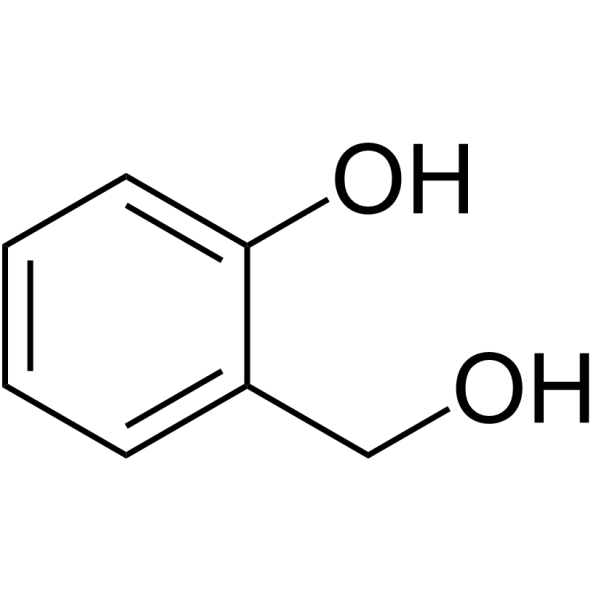
Salicyl alcohol

Based on 1 Customer Validation
Salicyl alcohol (2-Hydroxybenzyl alcohol; Saligenin) is a phenolic alcohol-type topical anesthetic and strong sensitizer with antiseptic, antibacterial and antipyretic activities. Salicyl alcohol serves as a precursor for salicin synthesis. Salicyl alcohol induces contact dermatitis and eczematous skin reactions, and is a well-known allergen identified in phenolic resins. Salicyl alcohol is isolated from the barks of European aspen (Populus tremula), rowan (Sorbus aucuparia) and willow (Salix spp.). Salicyl alcohol is used in studies related to allergic contact dermatitis.
For research use only. We do not sell to patients.
- Purity : 99.26%
- CAS No.: 90-01-7
- Formula: C7H8O2
- Molecular Weight:124.14
-
Storage:Powder -20°C, 3 years , 4°C, 2 years ; In solvent -80°C, 2 years , -20°C, 1 year

To place orders, for customer services and technical support, please contact: MedChemExpress USA
Tel: 609-228-6898 E-mail: [email protected] [email protected]


-
 Biological Activity
-
Chemical Information
-
Solvent & Solubility
- Protocols
- Purity & Documentation
- References
-
 Help & FAQs




Biological Activity
Description
Cellular Effect
|
Cell Line

|
Type | Value | Description | References |
|---|---|---|---|---|
| CCRF-CEM | CC50 |
>250 μM
Compound: 6c
|
The cytotoxicity was measured on wild type CEM/O cells.
The cytotoxicity was measured on wild type CEM/O cells.
|
[PMID: 9554875] |
| CCRF-CEM | EC50 |
>250 μM
Compound: 6c
|
Antiviral activity was measured on HIV-1 in wild-type CEM/O cells
Antiviral activity was measured on HIV-1 in wild-type CEM/O cells
|
[PMID: 9554875] |
| CCRF-CEM | EC50 |
>250 μM
Compound: 6c
|
Antiviral activity was measured on HIV-2 in wild-type CEM/O cells
Antiviral activity was measured on HIV-2 in wild-type CEM/O cells
|
[PMID: 9554875] |
| HEK293 | IC50 |
>15 mM
Compound: Salicyl alcohol
|
Cytotoxicity against HEK293 cells harboring pendrin P123S mutant after 72 hrs by MTT assay
Cytotoxicity against HEK293 cells harboring pendrin P123S mutant after 72 hrs by MTT assay
|
[PMID: 28341401] |
In Vitro
Salicyl alcohol (72 h) is produced at 264.2 mg/L as a byproduct by engineered E. coli BW25113 (F') strain XJ12 after 72 h of de novo fermentation for gentisyl alcohol[1].
MedChemExpress (MCE) has not independently confirmed the accuracy of these methods. They are for reference only. Further protocols information, click here.


Chemical Information
-
CAS No. 90-01-7
-
Appearance Solid
-
Molecular Weight 124.14
-
Formula C7H8O2
-
Color White to off-white
-
SMILES
OCC1=CC=CC=C1O
-
Synonyms
2-Hydroxybenzyl alcohol; Saligenin
-
Structure Classification
-
Initial Source
Escherichia coli
-
Shipping
Room temperature in continental US; may vary elsewhere.
-
Storage
Powder -20°C 3 years 4°C 2 years In solvent -80°C 2 years -20°C 1 year


Solvent & Solubility
In Vitro:
DMSO : ≥ 100 mg/mL (805.54 mM; Hygroscopic DMSO has a significant impact on the solubility of product, please use newly opened DMSO)
H2O : 33.33 mg/mL (268.49 mM; Need ultrasonic)
* "≥" means soluble, but saturation unknown.
Please refer to the solubility information to select the appropriate solvent. Once prepared, please aliquot and store the solution to prevent product inactivation from repeated freeze-thaw cycles.
Storage method and period of stock solution: -80°C, 2 years; -20°C, 1 year. When stored at -80°C, please use it within 2 years. When stored at -20°C, please use it within 1 year.
* Note: If you choose water as the stock solution, please dilute it to the working solution, then filter and sterilize it with a 0.22 μm filter before use.
Please refer to the solubility information to select the appropriate solvent. Once prepared, please aliquot and store the solution to prevent product inactivation from repeated freeze-thaw cycles.
Storage method and period of stock solution: -80°C, 2 years; -20°C, 1 year. When stored at -80°C, please use it within 2 years. When stored at -20°C, please use it within 1 year.
* Note: If you choose water as the stock solution, please dilute it to the working solution, then filter and sterilize it with a 0.22 μm filter before use.
Concentration (start) × Volume (start) = Concentration (final) × Volume (final)
In Vivo:
For the following dissolution methods, please prepare the working solution directly:
It is recommended to prepare fresh solutions and use them promptly within a short period of time.
The percentages shown for the solvents indicate their volumetric ratio in the final prepared solution. If precipitation or phase separation occurs during preparation, heat and/or sonication can be used to aid dissolution.
Add each solvent one by one: PBS
Solubility: 66.67 mg/mL (537.05 mM); Clear solution; Need ultrasonic and warming and heat to 60°C

Protocols
-
Research Protocol for Infectious Diseases
Infectious-disease experiments test how pathogens interact with host barriers, innate immune receptors, inflammatory signaling, pathogen replication, and tissue injury; pattern-recognition receptors such as TLRs, RIG-I-like receptors, NOD-like receptors, and inflammasomes detect microbial molecules and activate NF-κB, interferon, and cytokine responses. The central hypothesis is that infection severity reflects the balance between pathogen burden and host response: protective inflammation restricts pathogen growth, whereas excessive or mislocalized inflammation contributes to tissue damage and disease phenotype. Unresolved questions include which host pathways are protective versus pathogenic, why some infection models fail to translate to human disease, and which combined readouts best predict clinically relevant infection outcomes.
-
TPA/Croton Oil Ear Edema and Dermatitis
The TPA (12-O-tetradecanoylphorbol-13-acetate) and croton oil-induced mouse ear edema model is a well-established acute cutaneous inflammation system used to evaluate topical anti-inflammatory activity by measuring edema formation, neutrophil infiltration, vascular permeability, and cytokine-mediated skin responses in vivo. The inflammatory response is triggered by topical application of phorbol esters (TPA) or croton oil constituents, leading to rapid activation of protein kinase C signaling, leukocyte recruitment, and increased vascular permeability, which can be quantified by ear thickness, weight, dye extravasation, and biochemical markers such as myeloperoxidase (MPO) activity and pro-inflammatory mediators in ear tissue homogenates. This model is widely used for screening anti-inflammatory agents, where reductions in edema and inflammatory biomarkers reflect suppression of acute dermal inflammation and immune cell infiltration. Histological evaluation typically confirms epidermal
-
Contact Hypersensitivity Dermatitis
Contact hypersensitivity (CHS) dermatitis is a T cell-mediated delayed-type (Type IV) immune reaction in which low-molecular-weight haptens applied to the skin bind host proteins to form complete antigens, triggering sensitization followed by a secondary inflammatory response upon re-exposure (elicitation phase), which is commonly quantified by ear swelling as a readout of skin inflammation in murine models. This model is widely used to study allergic contact dermatitis because it is antigen-specific, reproducible, and reflects key immunological events including dendritic cell activation, T cell priming in draining lymph nodes, and effector T cell-driven tissue inflammation. DNFB- and oxazolone-induced CHS models are standard systems for evaluating both acute and chronic T cell-dependent skin inflammation and for testing immunomodulatory interventions.


Purity & Documentation
-
Data Sheet (273 KB)
-
SDS (394 KB)
- English - EN (394 KB)
- Français - FR (394 KB)
- Deutsch - DE (394 KB)
- Norwegian - NO (394 KB)
- Español - ES (394 KB)
- Swedish - SV (394 KB)
- Italian - IT (394 KB)
- Korean - KR (394 KB)
- Portuguese - PT (394 KB)
-
Handling Instructions (2659 KB)
References
[1]. Shen X, et al. Establishment of Novel Biosynthetic Pathways for the Production of Salicyl Alcohol and Gentisyl Alcohol in Engineered Escherichia coli. ACS Synth Biol. 2018;7(4):1012-1017. [Content Brief]
[2]. Aalto-Korte K, et al. Allergic contact dermatitis from salicyl alcohol and salicylaldehyde in aspen bark (Populus tremula). Contact Dermatitis. 2005;52(2):93-95. [Content Brief]


Complete Stock Solution Preparation Table
Please refer to the solubility information to select the appropriate solvent. Once prepared, please aliquot and store the solution to prevent product inactivation from repeated freeze-thaw cycles.
Storage method and period of stock solution: -80°C, 2 years; -20°C, 1 year. When stored at -80°C, please use it within 2 years. When stored at -20°C, please use it within 1 year.
| Optional Solvent | Concentration Solvent Mass | 1 mg | 5 mg | 10 mg | 25 mg |
|---|---|---|---|---|---|
| H2O / DMSO | 1 mM | 8.0554 mL | 40.2771 mL | 80.5542 mL | 201.3855 mL |
| 5 mM | 1.6111 mL | 8.0554 mL | 16.1108 mL | 40.2771 mL | |
| 10 mM | 0.8055 mL | 4.0277 mL | 8.0554 mL | 20.1386 mL | |
| 15 mM | 0.5370 mL | 2.6851 mL | 5.3703 mL | 13.4257 mL | |
| 20 mM | 0.4028 mL | 2.0139 mL | 4.0277 mL | 10.0693 mL | |
| 25 mM | 0.3222 mL | 1.6111 mL | 3.2222 mL | 8.0554 mL | |
| 30 mM | 0.2685 mL | 1.3426 mL | 2.6851 mL | 6.7129 mL | |
| 40 mM | 0.2014 mL | 1.0069 mL | 2.0139 mL | 5.0346 mL | |
| 50 mM | 0.1611 mL | 0.8055 mL | 1.6111 mL | 4.0277 mL | |
| 60 mM | 0.1343 mL | 0.6713 mL | 1.3426 mL | 3.3564 mL | |
| 80 mM | 0.1007 mL | 0.5035 mL | 1.0069 mL | 2.5173 mL | |
| 100 mM | 0.0806 mL | 0.4028 mL | 0.8055 mL | 2.0139 mL |
* Note: If you choose water as the stock solution, please dilute it to the working solution, then filter and sterilize it with a 0.22 μm filter before use.


Salicyl alcohol Related Classifications
HY-B1419 Related Classifications
 Powered by Bioz
Keywords
- Salicyl alcohol
- 90-01-7
- 2-Hydroxybenzyl alcohol
- Saligenin
- Drug Intermediate
- Bacterial
- E. coli BW25113 (F') strain XJ07
- Populus tremula
- Salix spp.
- allergic contact dermatitis
- contact allergy
- phenol-formaldehyde resins
- eczematous skin reactions
- E. coli BW25113 (F') strain XJ02
- Sorbus aucuparia
- E. coli BW25113 (F') strain XJ01
- Inhibitor
- inhibitor
- inhibit