Search Result
Results for "
EGFR+inhibitors
" in MedChemExpress (MCE) Product Catalog:
8
Isotope-Labeled Compounds
| Cat. No. |
Product Name |
Target |
Research Areas |
Chemical Structure |
-
- HY-15772
-
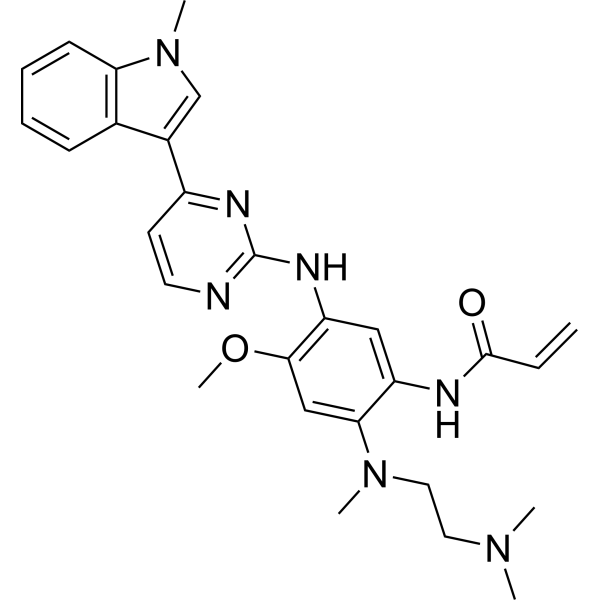
Osimertinib
Maximum Cited Publications
185 Publications Verification
AZD-9291; Mereletinib
|
EGFR
|
Cancer
|
|
Osimertinib (AZD9291) is a covalent, orally active, irreversible, and mutant-selective EGFR inhibitor with an apparent IC50 of 12 nM against L858R and 1 nM against L858R/T790M, respectively. Osimertinib overcomes T790M-mediated resistance to EGFR inhibitors in lung cancer .
|
-
-
- HY-14596
-
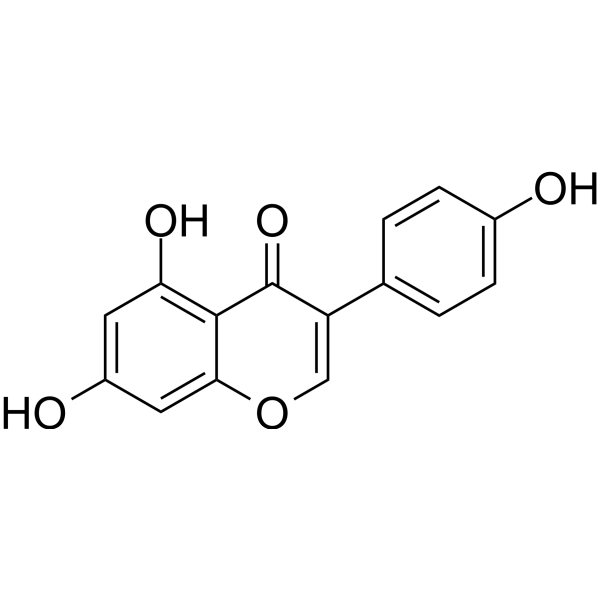
Genistein
Maximum Cited Publications
88 Publications Verification
NPI 031L
|
EGFR
Autophagy
Apoptosis
Endogenous Metabolite
|
Cancer
|
|
Genistein, a soy isoflavone, is a multiple tyrosine kinases (e.g., EGFR) inhibitor which acts as a chemotherapeutic agent against different types of cancer, mainly by altering apoptosis, the cell cycle, and angiogenesis and inhibiting metastasis.
|
-
-
- HY-32721
-
|
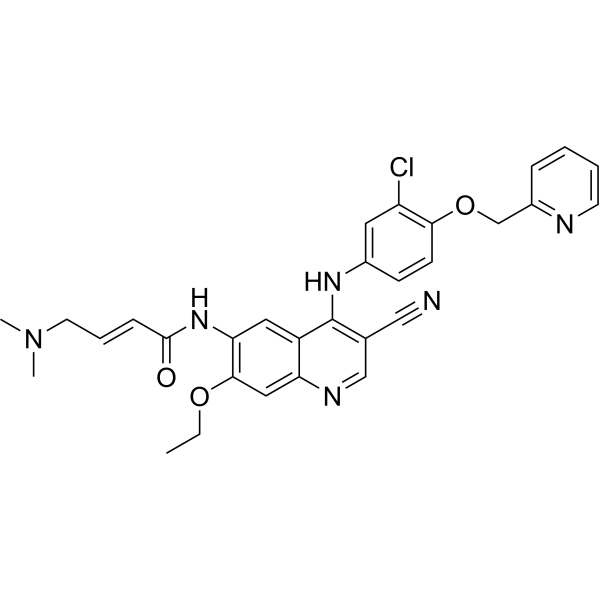
HKI-272
|
EGFR
|
Cancer
|
|
Neratinib (HKI-272) is an orally available, irreversible, highly selective HER2 and EGFR inhibitor with IC50s of 59 nM and 92 nM, respectively .
|
-
-
- HY-15772A
-
|
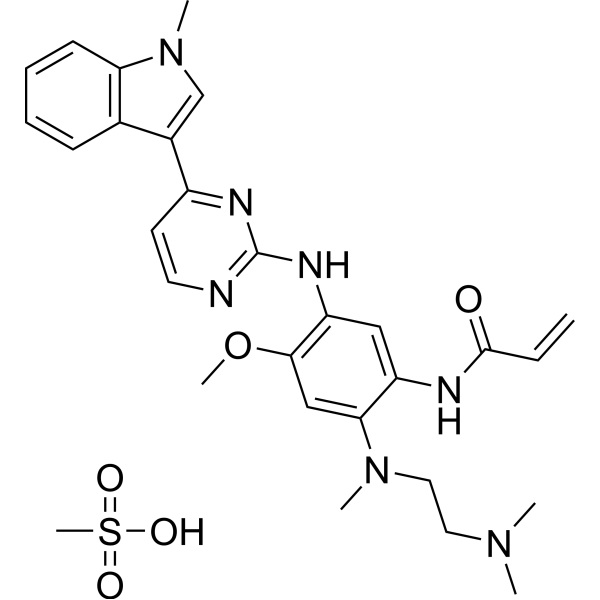
AZD-9291 mesylate; Mereletinib mesylate
|
EGFR
|
Cancer
|
|
Osimertinib mesylate (AZD9291 mesylate) is a covalent, orally active, irreversible, and mutant-selective EGFR inhibitor with an apparent IC50 of 12 nM against L858R and 1 nM against L858R/T790M. Osimertinib overcomes T790M-mediated resistance to EGFR inhibitors in lung cancer .
|
-
-
- HY-32721B
-
|
HKI-272 maleate
|
EGFR
|
Cancer
|
|
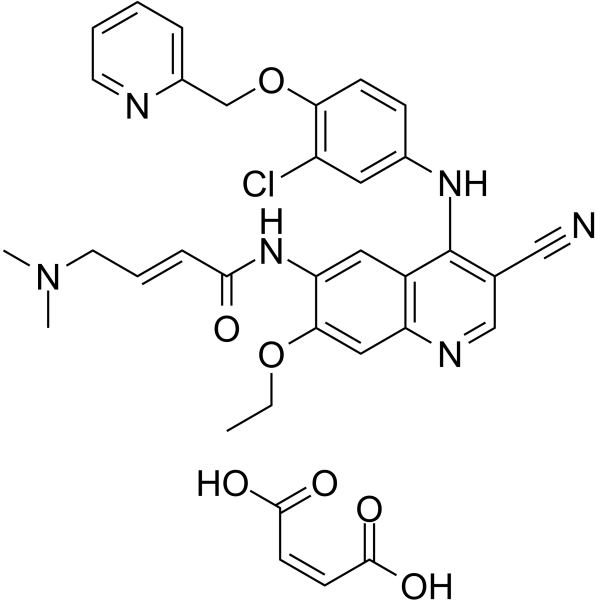
Neratinib (HKI-272) maleate is an orally available, irreversible, highly selective HER2 and EGFR inhibitor with IC50s of 59 nM and 92 nM, respectively .
|
-
-
- HY-15772R
-
|
AZD-9291 (Standard); Mereletinib (Standard)
|
Reference Standards
EGFR
|
Cancer
|
|
Osimertinib (Standard) is the analytical standard of Osimertinib. This product is intended for research and analytical applications. Osimertinib (AZD9291) is a covalent, orally active, irreversible, and mutant-selective EGFR inhibitor with an apparent IC50 of 12 nM against L858R and 1 nM against L858R/T790M, respectively. Osimertinib overcomes T790M-mediated resistance to EGFR inhibitors in lung cancer .
|
-

-
- HY-13050
-
|
AZD-8931
|
EGFR
|
Cancer
|
|
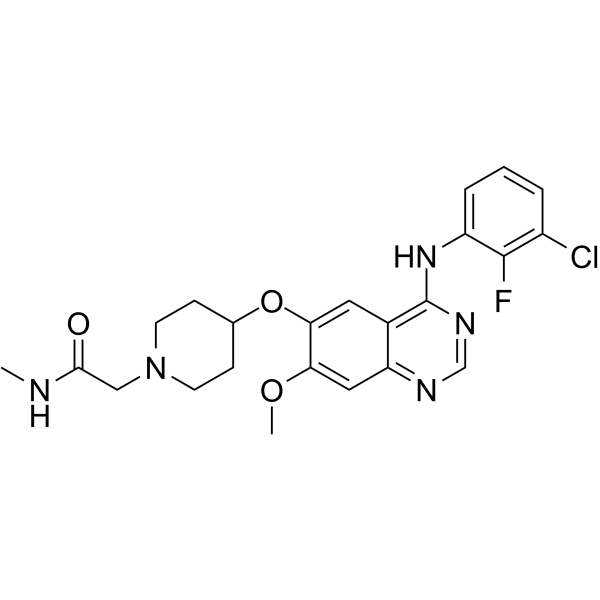
Sapitinib (AZD-8931) is a reversible, ATP competitive EGFR inhibitor of with IC50s of 4, 3 and 4 nM for EGFR, ErbB2 and ErbB3 in cells, respectively.
|
-
-
- HY-15644
-
|
Tyrphostin A23; RG-50810; AG 18
|
EGFR
|
Cancer
|
|
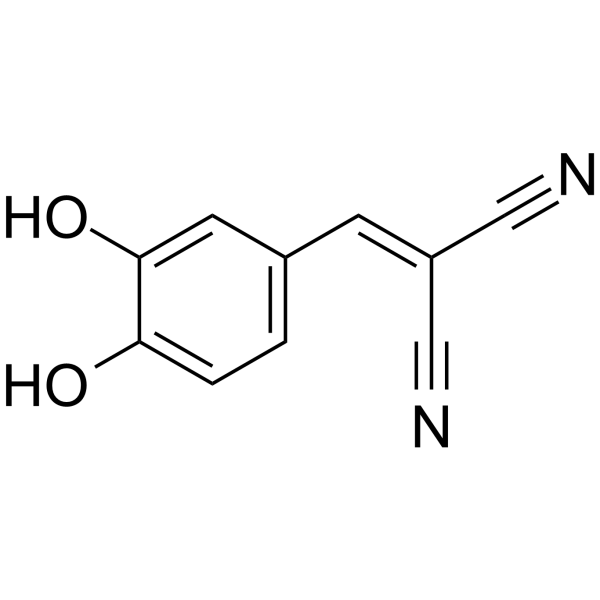
Tyrphostin 23 (Tyrphostin A23) is an EGFR inhibitor with an IC50 and Kiof 35 and 11 μM, respectively.
|
-
-
- HY-18957
-
|
BGB-283
|
EGFR
Raf
|
Cancer
|
|
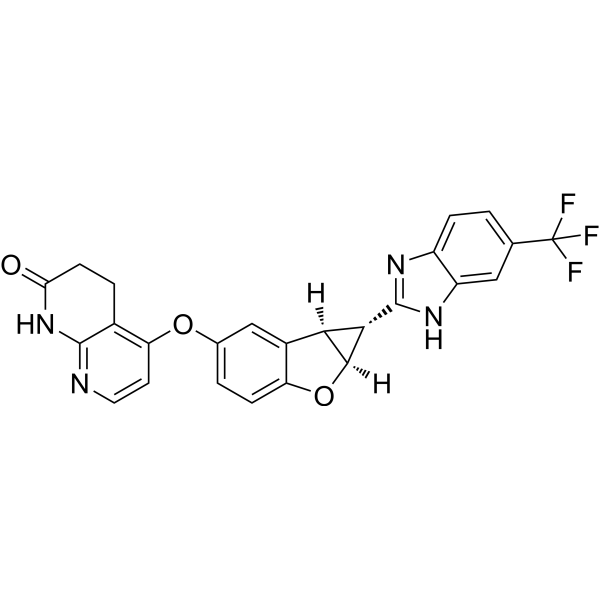
Lifirafenib (BGB-283) is a novel and potent Raf Kinase and EGFR inhibitor with IC50 values of 23 and 29 nM for recombinant BRaf V600E and EGFR, respectively.
|
-
-
- HY-14346
-
|
SU-5271; AG1517; ZM 252868
|
EGFR
|
Cancer
|
|
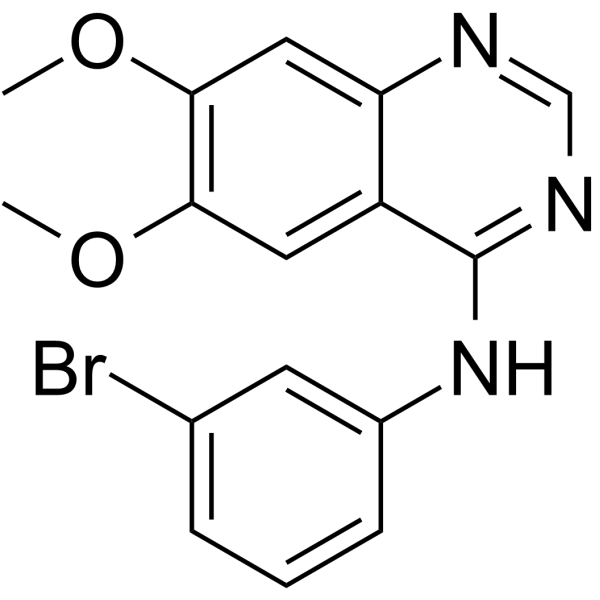
PD153035 (SU-5271; AG1517; ZM 252868) is a potent EGFR inhibitor with Ki and IC50 of 6 and 25 pM, respectively.
|
-
-
- HY-19729
-
|
ASP8273
|
EGFR
|
Cancer
|
|
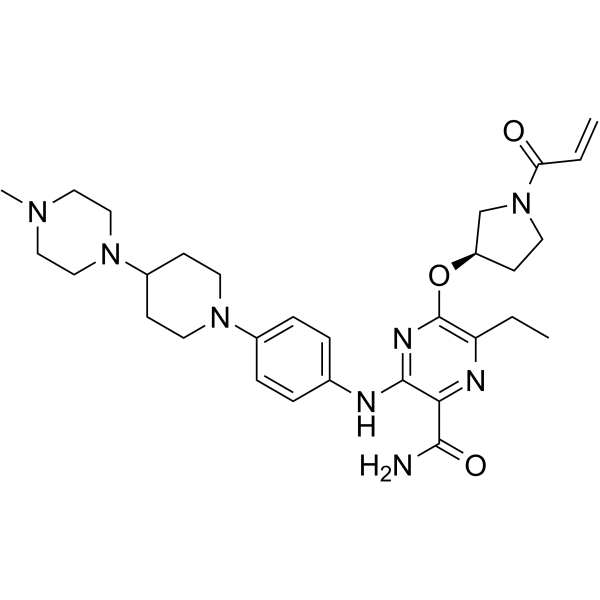
Naquotinib (ASP8273) is an orally available, mutant-selective and irreversible EGFR inhibitor; with IC50s of 8-33 nM toward EGFR mutants and 230 nM for EGFR.
|
-
-
- HY-78869
-
|
Osimertinib analog
|
Drug Derivative
|
Infection
Metabolic Disease
Cancer
|
|
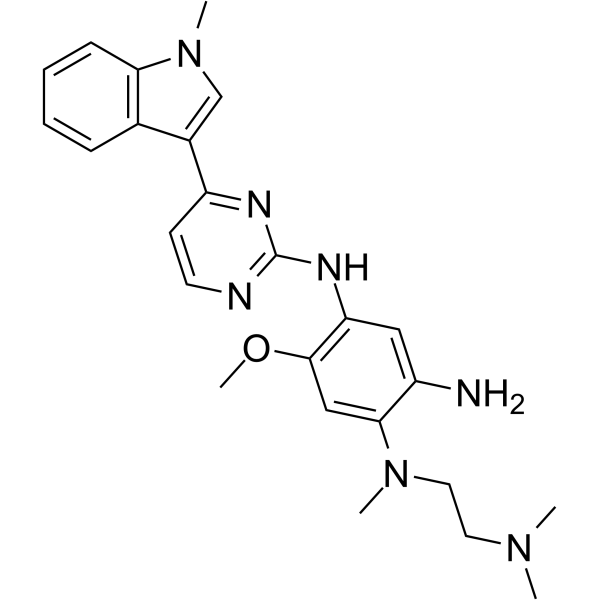
Mutated EGFR-IN-1 (Osimertinib analog) (Intermediate 168) is a structural analog of Osimertinib (HY-15772) and can be used as a pharmaceutical intermediate for EGFR inhibitors .
|
-
-
- HY-12872
-
|
EGF816
|
EGFR
|
Cancer
|
|
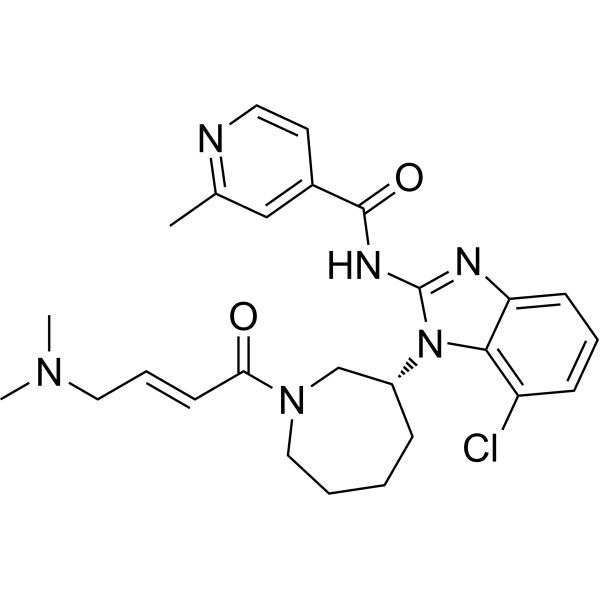
Nazartinib (EGF816) is a covalent mutant-selective EGFR inhibitor, with Ki and Kinact of 31 nM and 0.222 min −1 on EGFR(L858R/790M) mutant, respectively.
|
-
-
- HY-10367A
-
|
CI-1033 dihydrochloride; PD-183805 dihydrochloride
|
EGFR
Orthopoxvirus
|
Infection
Cancer
|
|
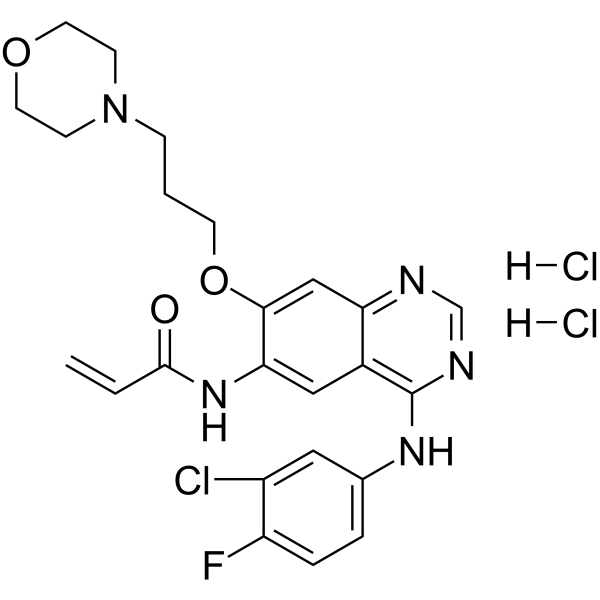
Canertinib dihydrochloride (CI-1033 dihydrochloride) is a potent and irreversible EGFR inhibitor; inhibits cellular EGFR and ErbB2 autophosphorylation with IC50s of 7.4 and 9 nM. Canertinib dihydrochloride is active against vaccinia virus respiratory infection in mice .
|
-
-
- HY-13895
-
|
|
EGFR
JAK
Apoptosis
|
Cancer
|
|
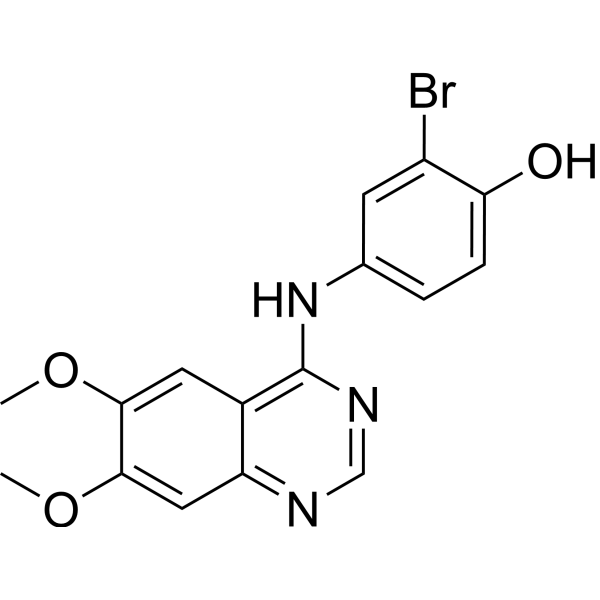
WHI-P154 is a potent EGFR inhibitor, and also modestly blocks JAK3, with IC50s of 4 nM and 1.8 μM, respectively.
|
-
-
- HY-10530
-
|
ASLAN001; ARRY-334543
|
EGFR
|
Cancer
|
|
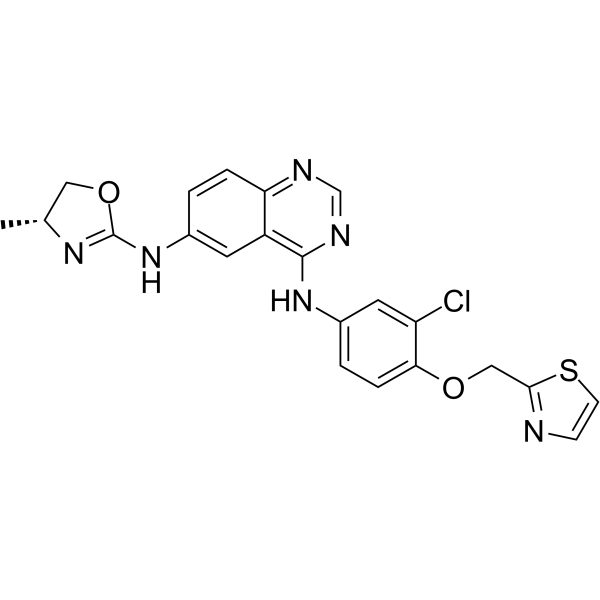
Varlitinib (ASLAN001) is a potent, reversible, small molecule pan-EGFR inhibitor with IC50s of 7, 2, 4 nM for HER1, HER2 and HER4, respectively .
|
-
-
- HY-13897
-
|
|
EGFR
|
Cancer
|
|
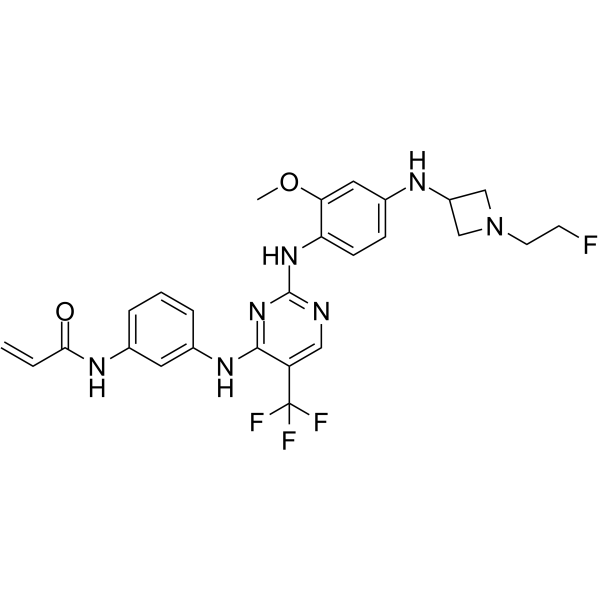
CNX-2006 is a mutant-selective and irreversible EGFR inhibitor with an IC50 below 20 nM for EGFR T790M.
|
-
-
- HY-15772S
-
|
AZD-9291-d6; Mereletinib-d6
|
EGFR
|
Cancer
|
|
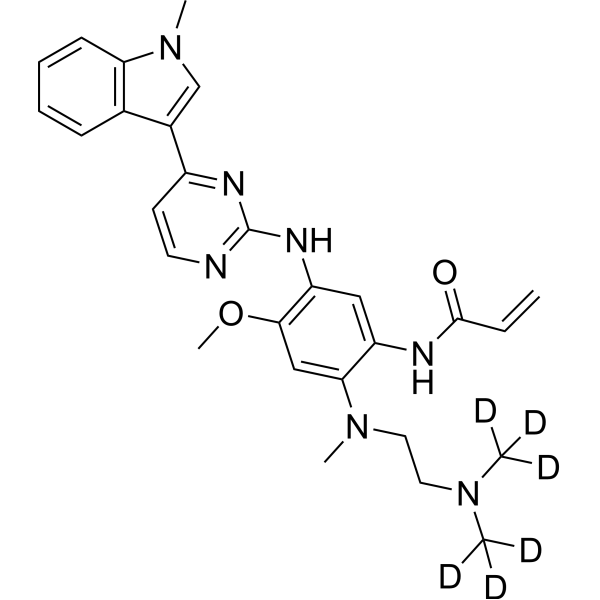
Osimertinib-d6 is a deuterium labeled osimertinib. Osimertinib is a covalent, orally active, irreversible, and mutant-selective EGFR inhibitor with an apparent IC50 of 12 nM against L858R and 1 nM against L858R/T790M. Osimertinib overcomes T790M-mediated resistance to EGFR inhibitors in lung cancer .
|
-
-
- HY-19803
-
|
ASP8273 mesylate
|
EGFR
|
Cancer
|
|
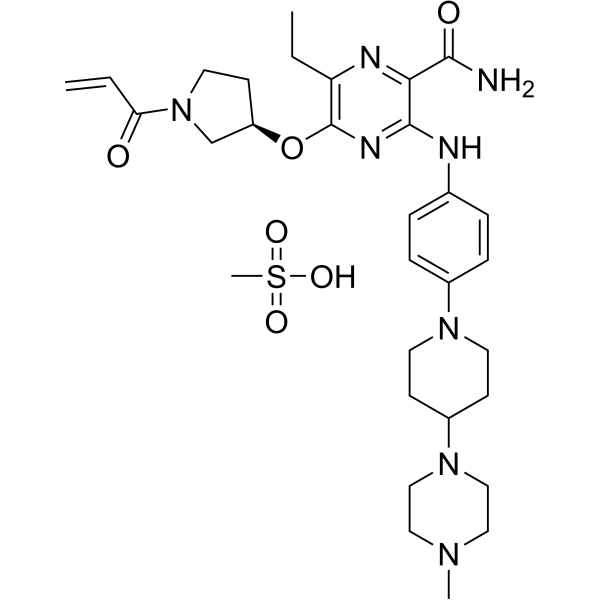
Naquotinib mesylate (ASP8273 mesylate) is an orally available, mutant-selective and irreversible EGFR inhibitor; with IC50s of 8-33 nM toward EGFR mutants and 230 nM for EGFR.
|
-
-
- HY-13984
-
NT-1
1 Publications Verification
EGFR mutant-IN-3
|
EGFR
ERK
Apoptosis
Drug Derivative
|
Cancer
|
|
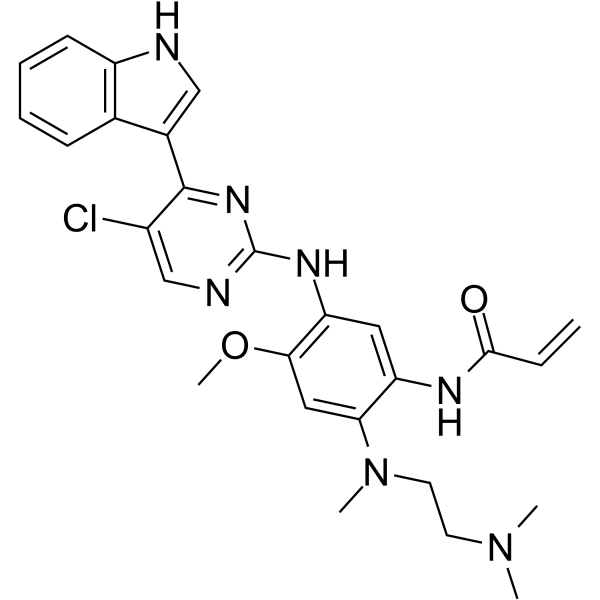
NT-1 (EGFR mutant-IN-3) is a potent mutant EGFR inhibitor and an analog of Osimertinib (HY-15772). This mutant EGFR inhibitor suppresses FGFR WT with an IC50 of 0.4 nM. NT-1 also inhibits EGFR L858R, EGFR Exon 19 deletion and EGFR T790M. NT-1 exerts deeper inhibition on p-EGFR and p-ERK, and induces tumor cell apoptosis. NT-1 can be used in colorectal cancer research .
|
-
-
- HY-B1394
-
Khellin
2 Publications Verification
|
EGFR
|
Cardiovascular Disease
Cancer
|
|
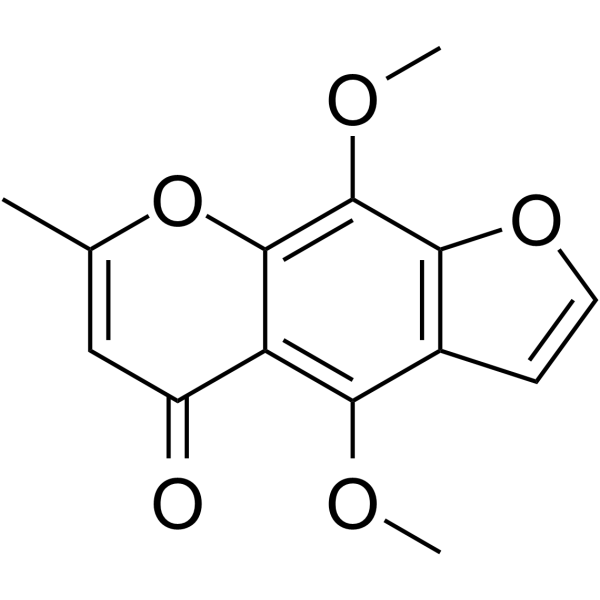
Khellin is a furochromone that can be isolated from Ammi visnuga L.. Khellin is an EGFR inhibitor with an IC50 of 0.15 µM. Khelline has anti-proliferative activity in vitro. Khellin has antispasmodic and coronary vasodilator effects .
|
-
-
- HY-13785
-
|
CB 676475
|
VEGFR
|
Cancer
|
|
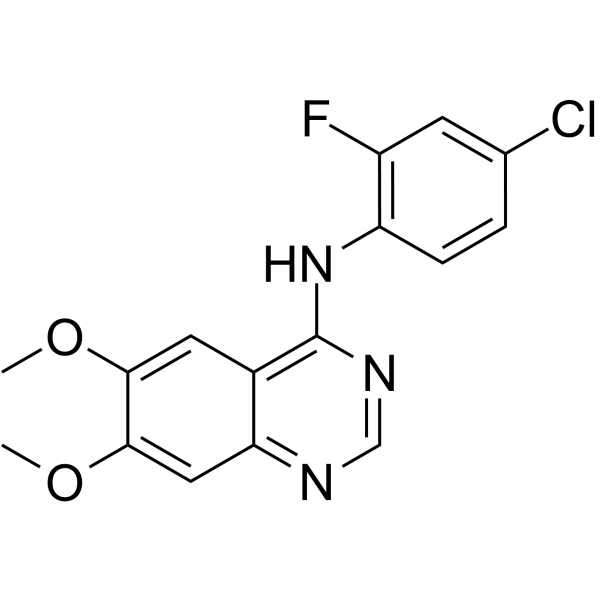
ZM-306416 (CB 676475) is a potent inhibitor of VEGFR with IC50s of 0.1 and 2 μM for KDR and Flt, respectively. ZM-306416 is also a EGFR inhibitor with an IC50 of <10 nM.
|
-
-
- HY-101426
-
RG14620
1 Publications Verification
Tyrphostin RG14620
|
EGFR
|
Cancer
|
|
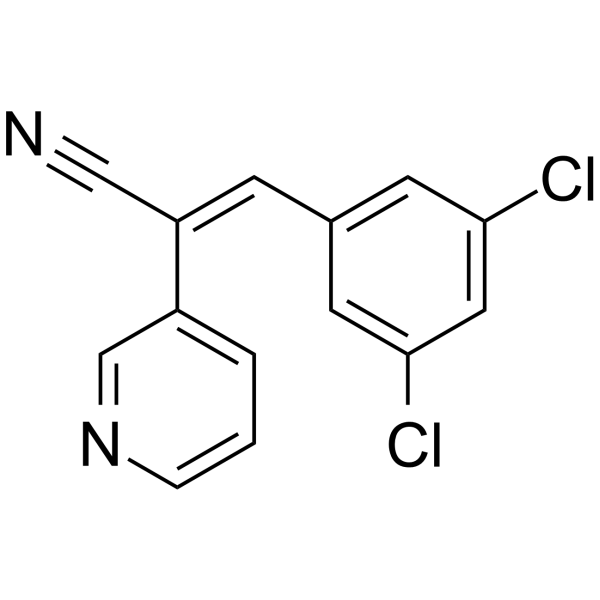
RG14620 is an EGFR inhibitor with an IC50 of 3 μM.
|
-
-
- HY-100962
-
|
(E)-Tyrphostin 46; (E)-Tyrphostin AG 99
|
EGFR
|
Cancer
|
|
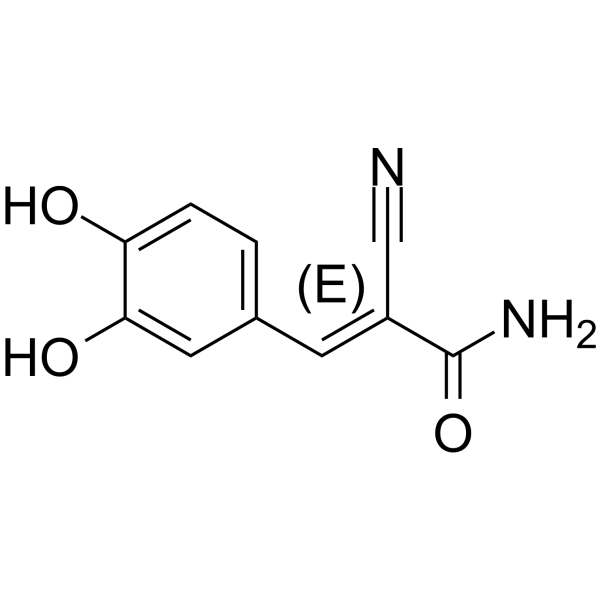
(E)-AG 99 ((E)-Tyrphostin 46) is a potent EGFR inhibitor .
|
-
-
- HY-12013
-
|
SU-5271 Hydrochloride; AG1517 Hydrochloride; ZM 252868 Hydrochloride
|
EGFR
|
Cancer
|
|
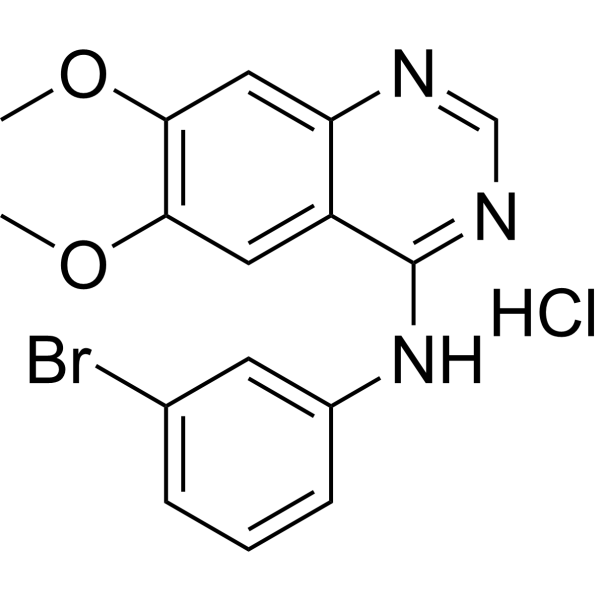
PD153035 Hydrochloride (SU-5271 Hydrochloride) is a potent EGFR inhibitor with Ki and IC50 of 6 and 25 pM, respectively.
|
-
-
- HY-138627A
-
|
|
EGFR
Drug Metabolite
|
Cancer
|
|
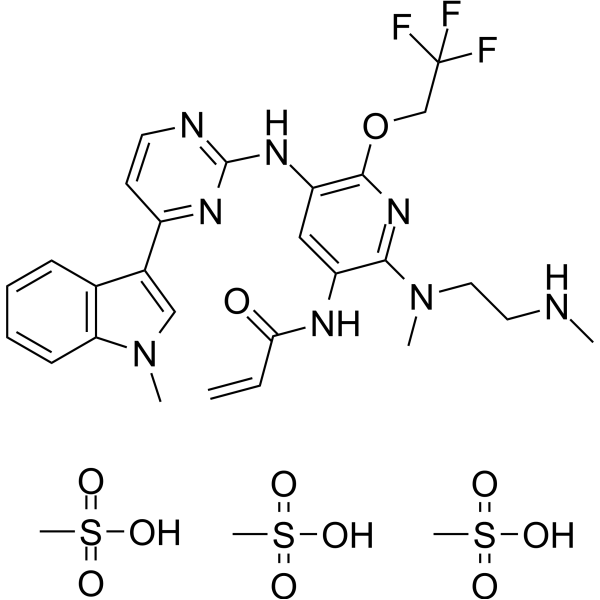
AST5902 trimesylate is the principal metabolite of Alflutinib (AST2818) both in vitro and in vivo. AST5902 trimesylate exerts antineoplastic activity. Alflutinib is an EGFR inhibitor .
|
-
-
- HY-135805B
-
|
|
EGFR
|
Cancer
|
|
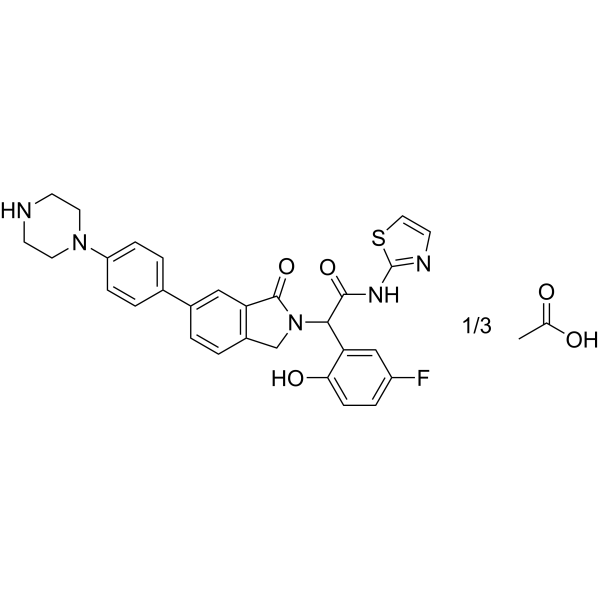
(Rac)-JBJ-04-125-02 acetate is the racemate of JBJ-04-125-02. JBJ-04-125-02 is a potent, selective mutagenesis, allosteric and orally active EGFR inhibitor .
|
-
-
- HY-153974
-
|
|
EGFR
|
Cancer
|
|
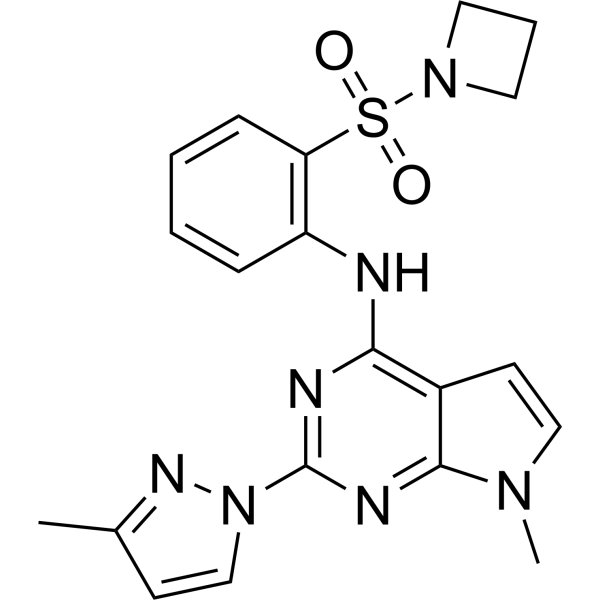
BBT-176 is an orally effective EGFR inhibitor. BBT-176 has inhibitory activity against multiple EGFR C797S mutant cell lines. BBT-176 is commonly used in cancer research .
|
-

-
- HY-149530
-
|
|
EGFR
Apoptosis
|
Cancer
|
|
EGFR-IN-86 (compound 4i) is an EGFR inhibitor (IC50: 1.5 nM) with high activity against glioblastoma. EGFR-IN-86 induces apoptosis and arrests the U87 cell cycle in the G2/M phase .
|
-
-
- HY-15772AR
-
|
AZD-9291 mesylate (Standard); Mereletinib mesylate (Standard)
|
Reference Standards
EGFR
|
Cancer
|
|
Osimertinib (mesylate) (Standard) is the analytical standard of Osimertinib (mesylate). This product is intended for research and analytical applications. Osimertinib mesylate (AZD9291 mesylate) is a covalent, orally active, irreversible, and mutant-selective EGFR inhibitor with an apparent IC50 of 12 nM against L858R and 1 nM against L858R/T790M. Osimertinib overcomes T790M-mediated resistance to EGFR inhibitors in lung cancer .
|
-

-
- HY-135805A
-
|
|
EGFR
|
Cancer
|
|
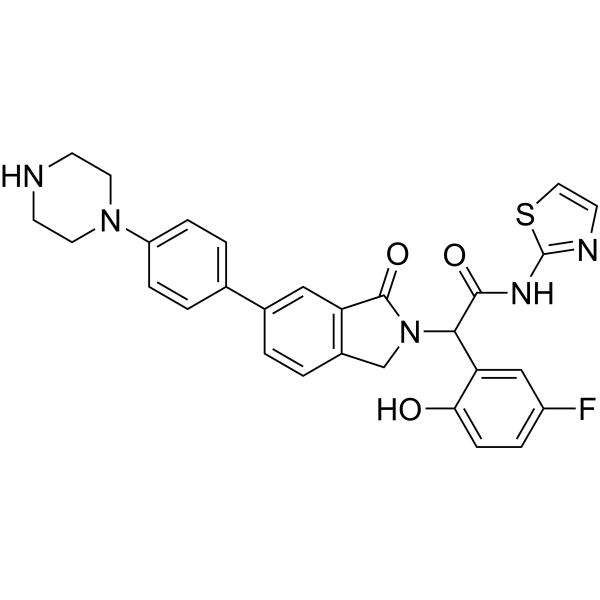
(Rac)-JBJ-04-125-02 is the racemate of JBJ-04-125-02. JBJ-04-125-02 is a potent, mutant-selective, allosteric and orally active EGFR inhibitor .
|
-
-
- HY-158149
-
|
|
EGFR
Apoptosis
|
Cancer
|
|
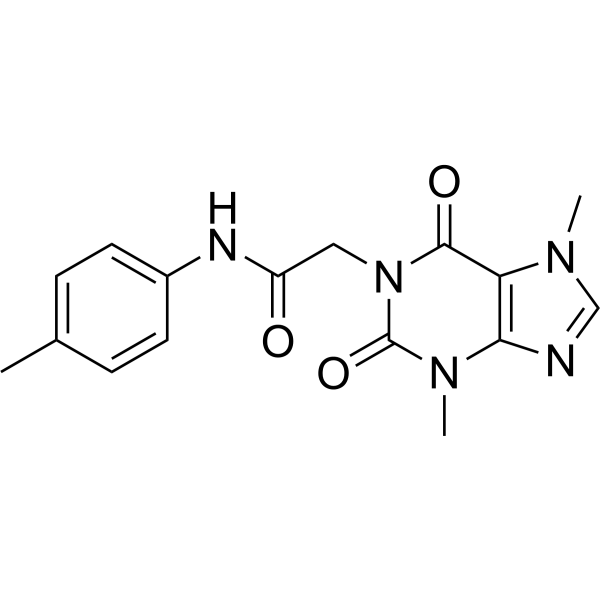
T-1-PMPA is a potent EGFR inhibitor with apoptotic properties. T-1-PMPA effectively inhibits EGFR WT and EGFR 790m, with IC50 values of 86 nM and 561.73 nM, respectively .
|
-
-
- HY-32721R
-
|
HKI-272 (Standard)
|
Reference Standards
EGFR
|
Cancer
|
|
Neratinib (Standard) is the analytical standard of Neratinib. This product is intended for research and analytical applications. Neratinib (HKI-272) is an orally available, irreversible, highly selective HER2 and EGFR inhibitor with IC50s of 59 nM and 92 nM, respectively .
|
-

-
- HY-P99921
-
|
HuMax-AXL-ADC
|
Antibody-Drug Conjugates (ADCs)
TAM Receptor
|
Cancer
|
|
Enapotamab vedotin is an AXL-targeted antibody-drug conjugate (ADC) with inhibitory potential against high AXL expressing non-small cell lung cancer (NSCLC). Enapotamab vedotin also exhibits resistant to EGFR inhibitor such as Osimertinib (HY-15772) .
|
-

-
- HY-101041
-
|
(E)-Tyrphostin AG 556
|
EGFR
|
Inflammation/Immunology
|
|
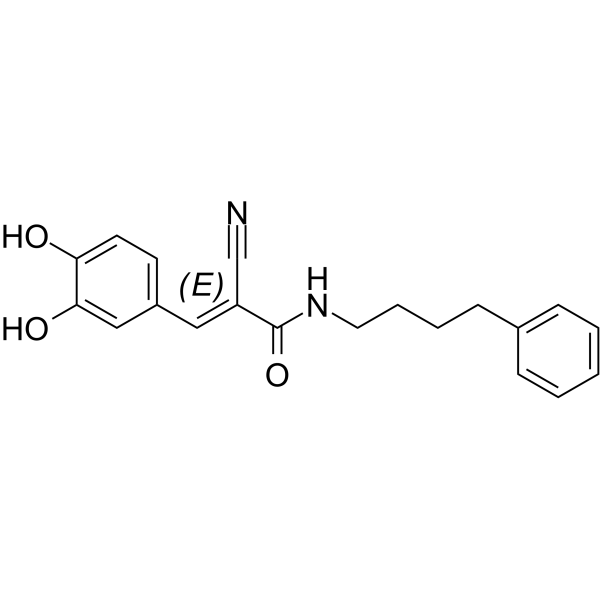
(E)-AG 556 is a highly selective EGFR inhibitor and also blocks LPS-induced TNF-α production .
|
-
-
- HY-162890
-
|
|
EGFR
|
Cancer
|
|
EGFR-IN-122 (compound Yfq07) is a potent EGFR inhibitor. EGFR-IN-122 suppresses the proliferation of PC-9GR and HCC827GR cells .
|
-

-
- HY-135914
-
|
|
EGFR
|
Cancer
|
|
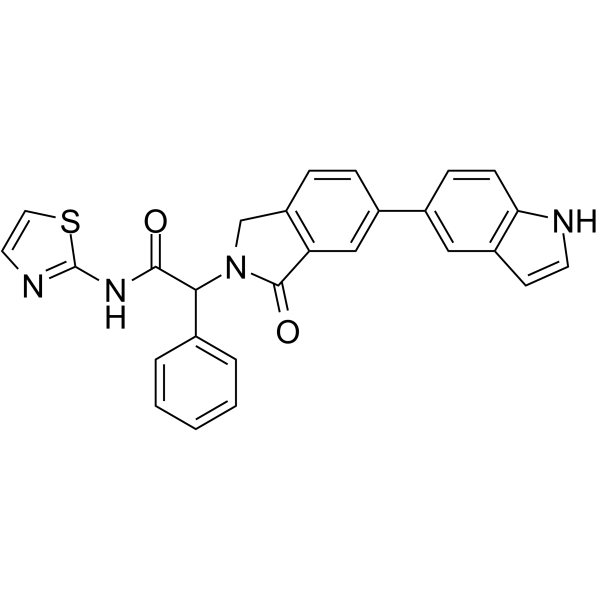
JBJ-02-112-05 is a potent, mutant-selective, allosteric and orally active EGFR inhibitor with an IC50 of 15 nM for EGFR L858R/T790M .
|
-
-
- HY-100520
-
|
|
EGFR
|
Cancer
|
|
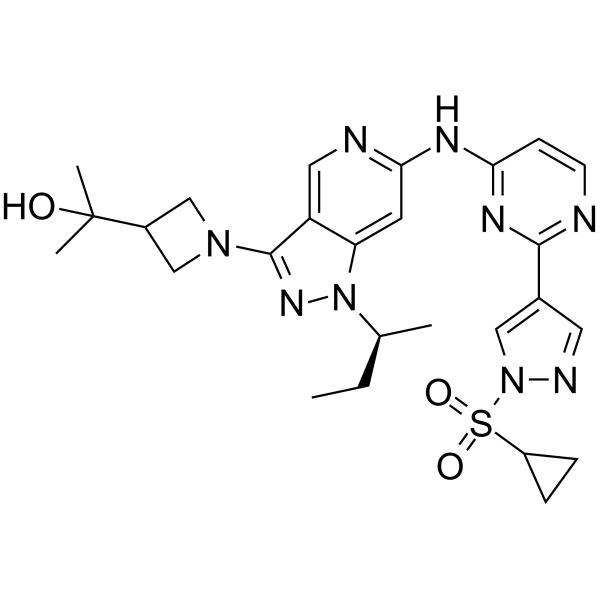
EGFR-IN-2 is a a noncovalent, irreversible, mutant-selective second generation EGFR inhibitor.
|
-
-
- HY-12872B
-
|
EGF816 (S-enantiomer)
|
EGFR
|
Others
|
|
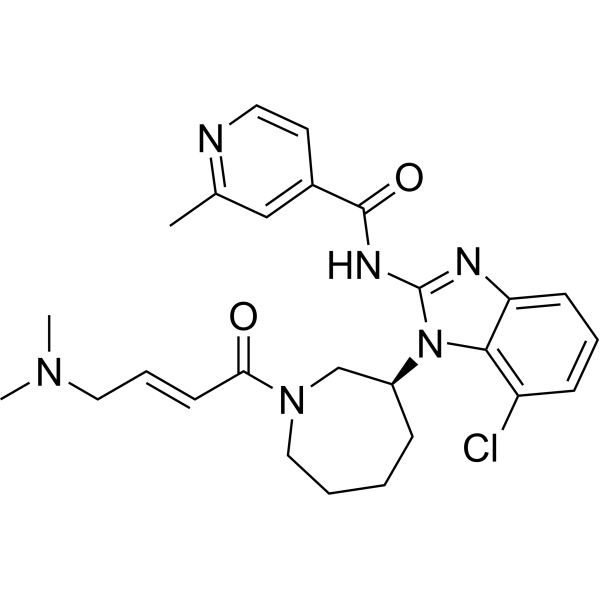
Nazartinib S-enantiomer (EGF816 S-enantiomer) is the less active S-enantiomer of Nazartinib. Nazartinib (EGF816) is an EGFR inhibitor.
|
-
-
- HY-174293
-
|
|
Drug Derivative
|
Cancer
|
|
Osimertinib dimer is a dimer of Osimertinib (HY-15772). Osimertinib (AZD9291) is a covalent, orally active, irreversible, and mutant-selective EGFR inhibitor with an apparent IC50 of 12 nM against L858R and 1 nM against L858R/T790M, respectively. Osimertinib overcomes T790M-mediated resistance to EGFR inhibitors in lung cancer .
|
-

-
- HY-138746
-
|
|
EGFR
|
Cancer
|
|
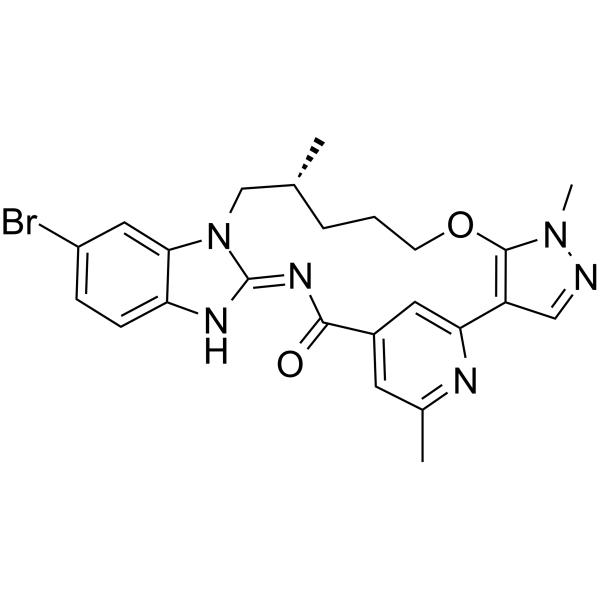
EGFR-IN-15 (compound I-005) is a EGFR inhibitor with an IC50 of 4 nM. EGFR-IN-15 can be used for oncological diseases research .
|
-
-
- HY-146262
-
|
|
EGFR
|
Cancer
|
|
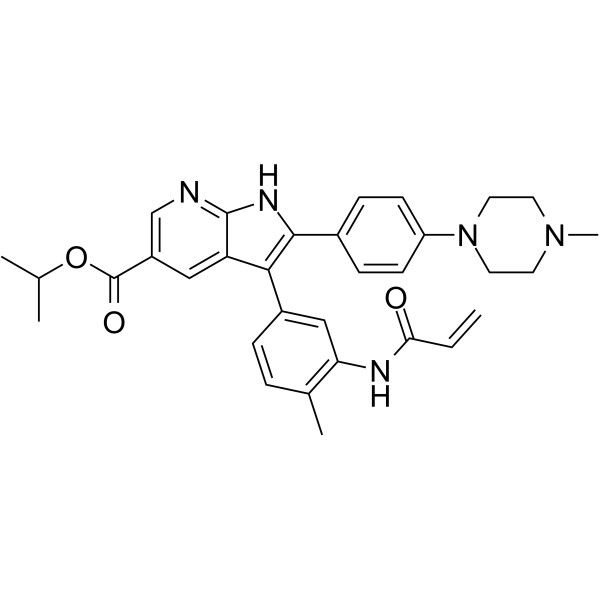
LDC0496 is a potent and selective EGFR inhibitor. LDC0496 possesses intense inhibitory potency toward EGFR and Her2 exon20 insertion mutations, as well as selectivity over wild type EGFR and within the kinome .
|
-
-
- HY-145823
-
|
|
EGFR
|
Cancer
|
|
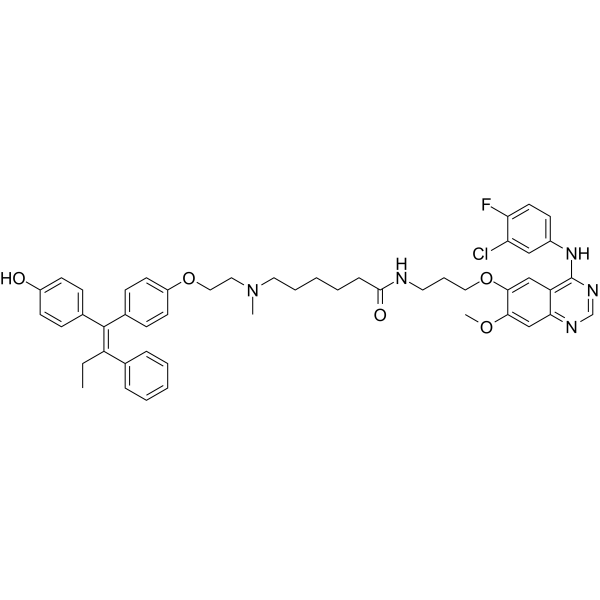
EGFR-IN-42 (Compound 17b) is a potent inhibitor of EGFR with single-digit nanomolar activity. EGFR-IN-42 connects tamoxifen or endoxifen with the EGFR-inhibitor gefitinib via a covalent linkage. EGFR-IN-42 retains both ER antagonist activity and EGFR inhibition. EGFR-IN-42 has superior anti-cancer activity .
|
-
-
- HY-145824
-
|
|
EGFR
|
Cancer
|
|
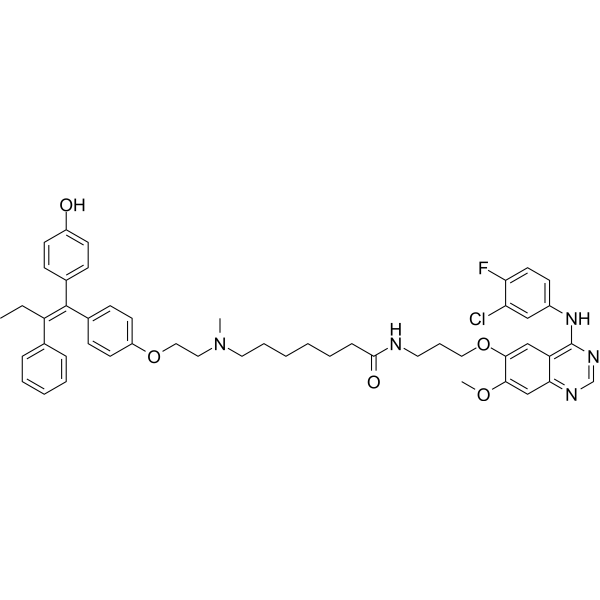
EGFR-IN-43 (Compound 17c) is a potent inhibitor of EGFR with single-digit nanomolar activity. EGFR-IN-43 connects tamoxifen or endoxifen with the EGFR-inhibitor gefitinib via a covalent linkage. EGFR-IN-43 retains both ER antagonist activity and EGFR inhibition. EGFR-IN-43 has superior anti-cancer activity .
|
-
-
- HY-153744
-
|
|
EGFR
|
Cancer
|
|
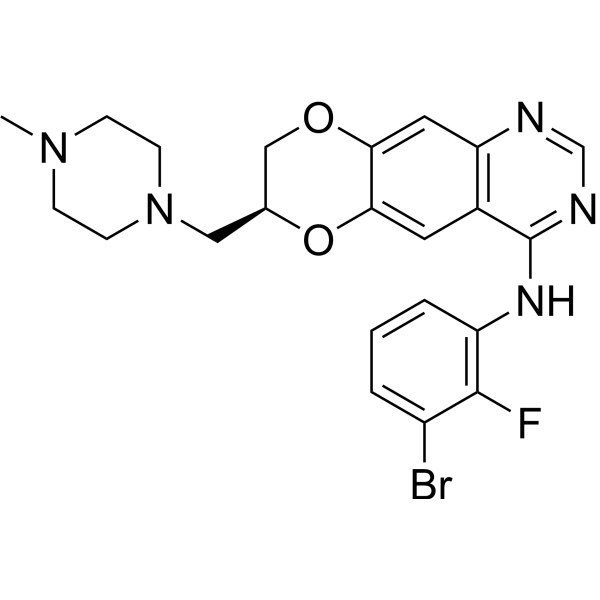
JGK-068S (compound I) is a potent EGFR inhibitor .
|
-
-
- HY-103437
-
|
|
EGFR
|
Cancer
|
|
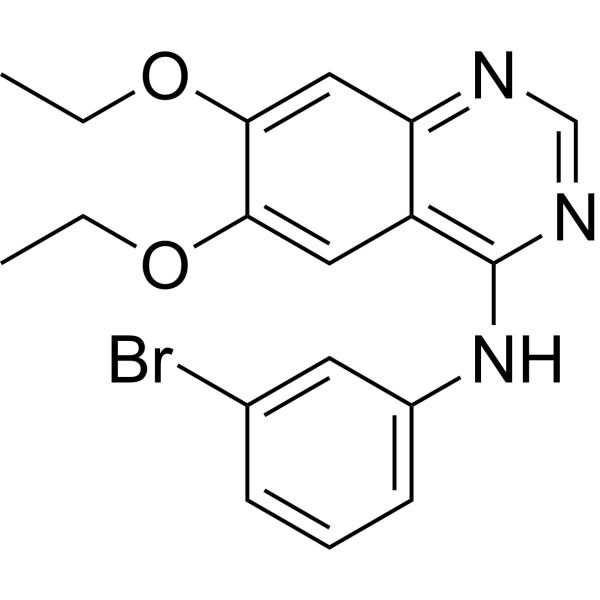
EGFR-IN-80 (compound 30) is an EGFR inhibitor with a pIC50 of 10.6 .
|
-
-
- HY-163354
-
|
|
EGFR
|
Cancer
|
|
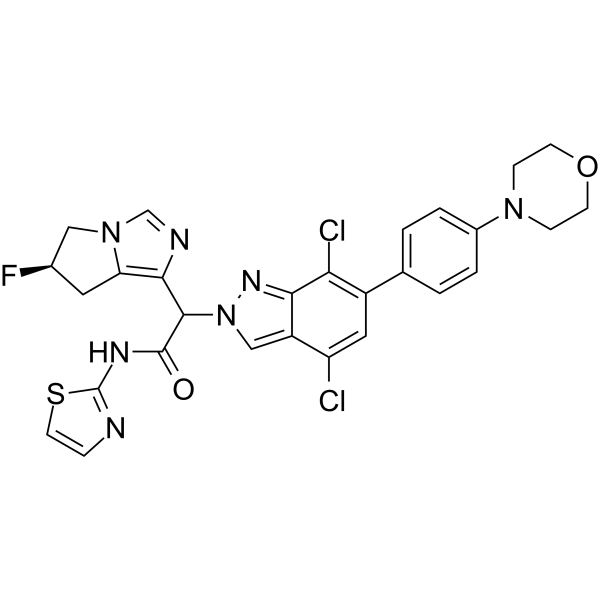
EGFR-IN-103 (compound 1) is a potent EGFR inhibitor with an IC50 of 6 nM for pEGFR .
|
-
-
- HY-169570
-
|
|
EGFR
|
Cancer
|
|
EGFR-IN-149 (Compound 3-OH) is an EGFR inhibitor (IC50: 0.42 nM) .
|
-

-
- HY-142681
-
|
|
EGFR
|
Cancer
|
|
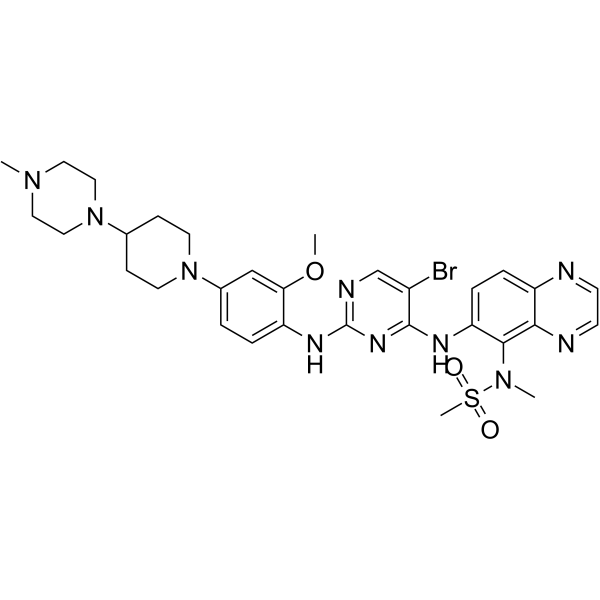
EGFR-IN-28 is a potent EGFR inhibitor. EGFR-IN-28 has antitumor activity .
|
-
-
- HY-169346
-
|
|
EGFR
|
Cancer
|
|
Pred17 is a potent EGFR inhibitor. Pred17 has the potential for the research of lung cancer .
|
-

- HY-158153
-
|
|
EGFR
|
Cancer
|
|
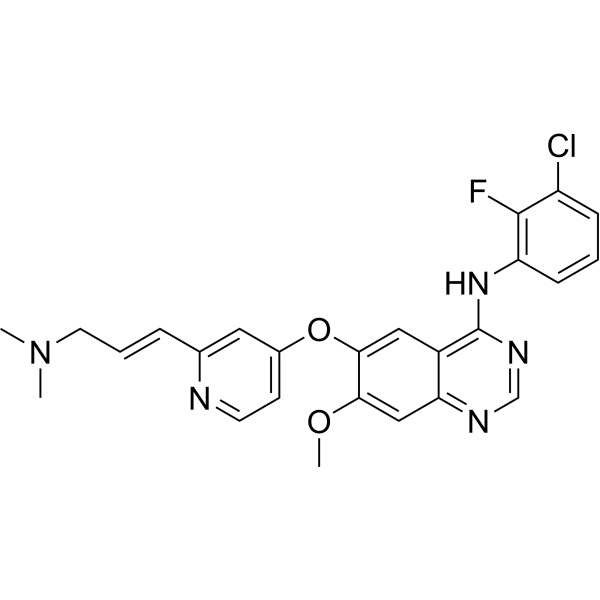
EGFR-IN-108 (Compound 12) is a selective and covalent EGFR inhibitor (pIC50: 9.4) .
|
-
- HY-143729
-
-
- HY-169755
-
|
|
EGFR
|
Cancer
|
|
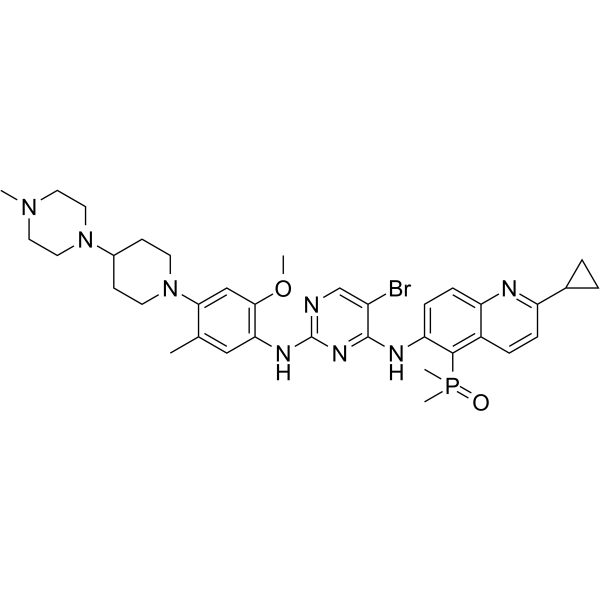
Tyrphostin 63 (compound 13) is an epidermal growth factor receptor (EGFR) inhibitor with IC50 and Ki values are 375 and 123 μM, respectively .
|
-

- HY-138627
-
|
|
Drug Metabolite
EGFR
|
Cancer
|
|
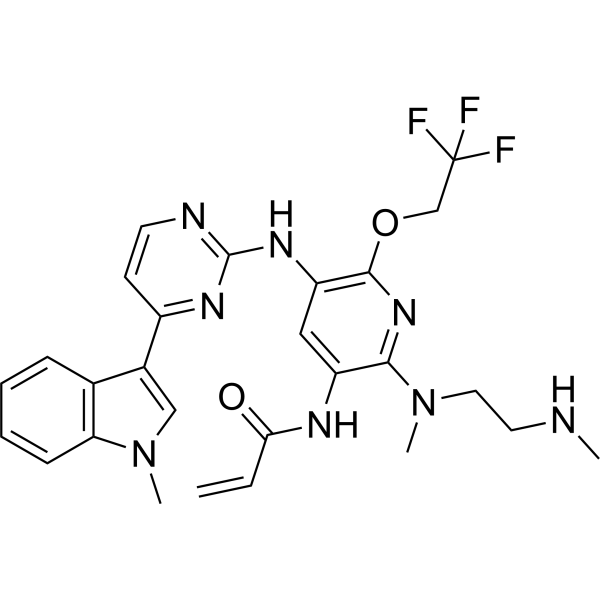
AST5902 is the active metabolite of Firmonertinib (HY-112870) (EGFR inhibitor). AST5902 has antineoplastic activity .
|
-
- HY-13050A
-
|
AZD-8931 fumarate
|
EGFR
|
Cancer
|
|
Sapitinib fumarate is a reversible, ATP competitive EGFR inhibitor of with IC50s of 4, 3 and 4 nM for EGFR, ErbB2 and ErbB3 in cells, respectively.
|
-

- HY-18957A
-
|
rel-BGB-283
|
Raf
EGFR
|
Cancer
|
|
rel-Lifirafenib (rel-BGB-283) is the relative configuration of Lifirafenib (HY-18957). Lifirafenib is a potent Raf Kinase and EGFR inhibitor .
|
-
- HY-175316
-
|
|
EGFR
|
Cancer
|
|
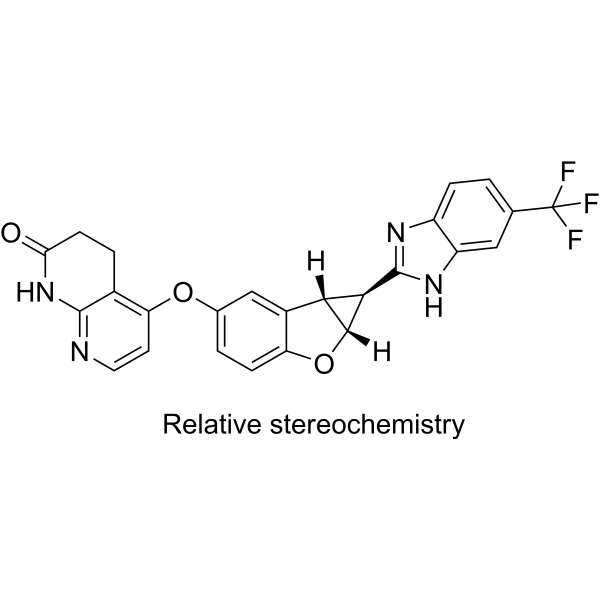
EGFR-IN-168 (Compound 9a) is a potent EGFR inhibitor with an IC50 of 0.069 μM. EGFR-IN-168 has antitumor activity .
|
-

- HY-168064
-
|
|
EGFR
|
Cancer
|
|
EGFR-IN-124 (compound 10A) is an EGFR inhibitor, with IC50 of 0.54 μM. EGFR-IN-124 can be used in anti-cancer research .
|
-

- HY-147997
-
|
|
EGFR
|
Cancer
|
|
EGFR-IN-68 (Compound 8d) is a potent EGFR inhibitor with an IC50 of 0.33 μM. EGFR-IN-68 shows anticancer activity .
|
-
- HY-162602
-
|
|
EGFR
|
Cancer
|
|
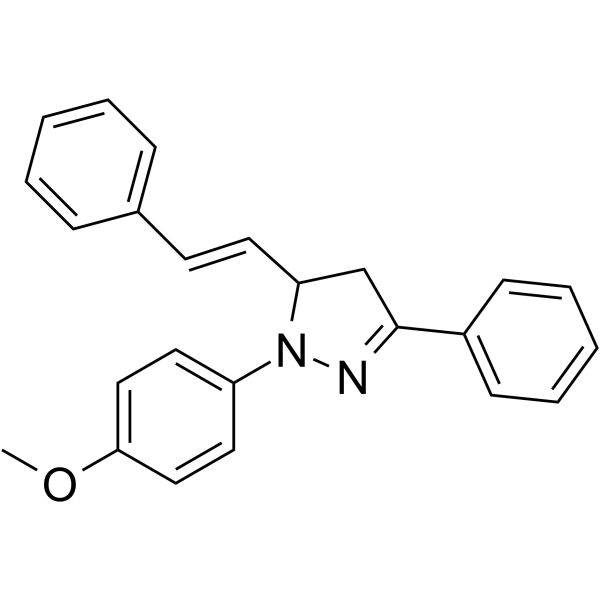
EGFR-IN-115 (H-13) is an EGFR inhibitor, with IC50 of 395.2 nM. EGFR-IN-115 can be used in anti-cancer research .
|
-

- HY-157912
-
|
|
EGFR
|
Cancer
|
|
EGFR-IN-102 (compound 6) is an oral active EGFR inhibitor with the IC50 of 2 nM, and can be used for study of non-small-cell lung cancer .
|
-
- HY-137786
-
|
|
EGFR
|
Cancer
|
|
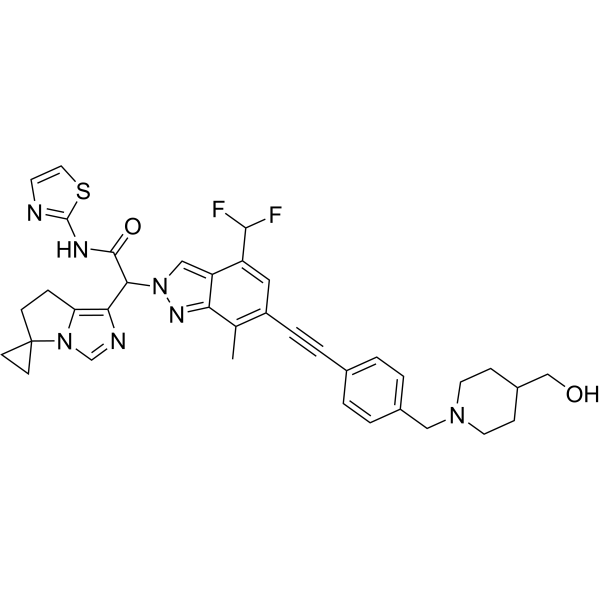
EGFR-IN-16 (compound 3) is a potent EGFR inhibitor with pIC50 of 4.85 and 4.74 for EGFR and HER-2, respectively .
|
-
- HY-147996
-
|
|
EGFR
|
Cancer
|
|
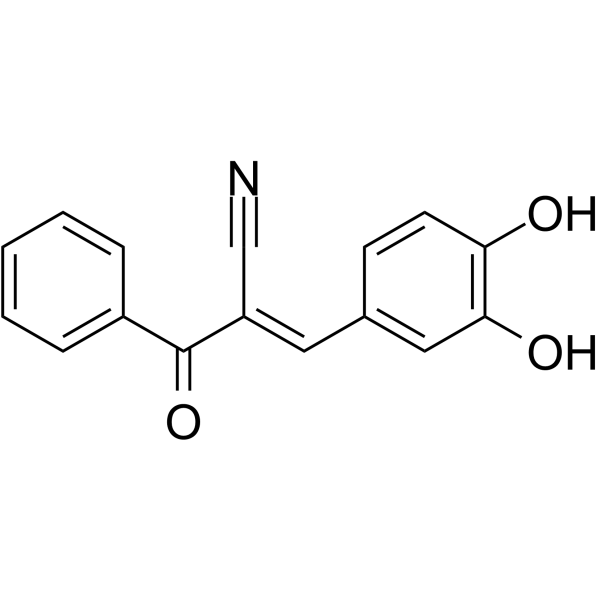
EGFR-IN-67 (Compound 7d) is a potent EGFR inhibitor with an IC50 of 0.34 μM. EGFR-IN-67 shows anticancer activity .
|
-
- HY-147995
-
|
|
EGFR
|
Cancer
|
|
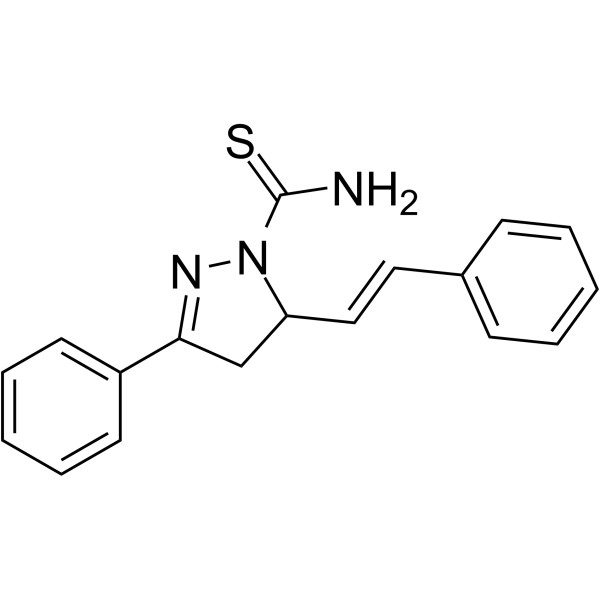
EGFR-IN-64 (Compound 3c) is a potent EGFR inhibitor with an IC50 of 0.33 μM. EGFR-IN-64 shows anticancer activity .
|
-
- HY-18957B
-
|
BGB-283 maleate
|
EGFR
Raf
|
Others
Cancer
|
|
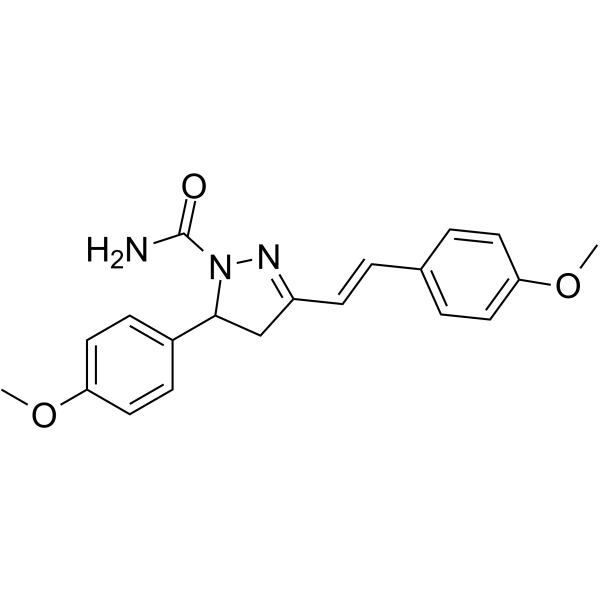
Lifirafenib (BGB-283) maleate is a novel and potent Raf Kinase and EGFR inhibitor with IC50 values of 23 and 29 nM for recombinant BRaf V600E and EGFR, respectively .
|
-
- HY-168173
-
|
|
EGFR
|
Cancer
|
|
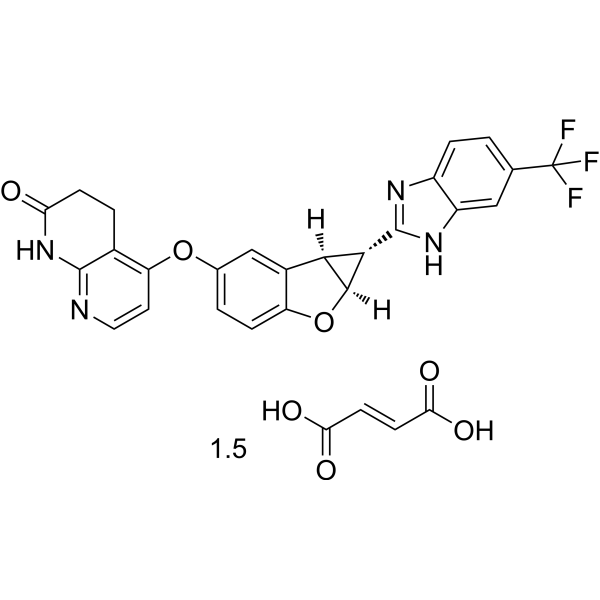
EGFR-IN-130 (compound 14b) is an EGFR inhibitor and apoptosis inducer. EGFR-IN-130 triggers death of HeLa cancer cells via apoptosis induction. .
|
-

- HY-162323
-
|
|
EGFR
|
Cancer
|
|
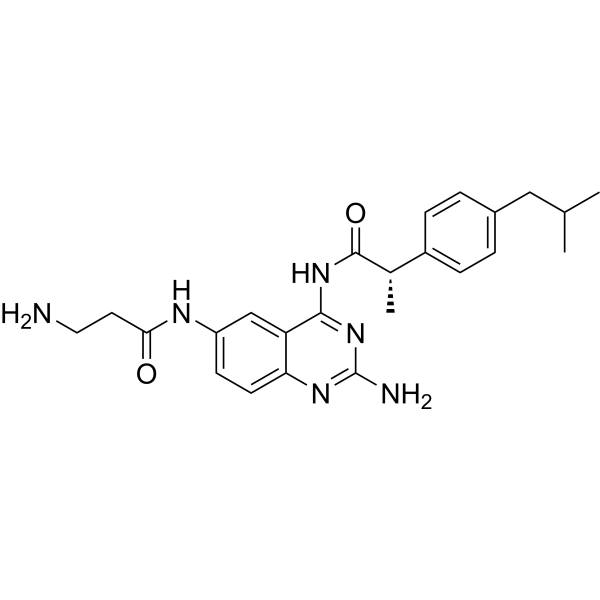
EGFR-IN-106 (compound 6) is a potent EGFR inhibitor with an IC50 value of 0.2396 μM. EGFR-IN-106 shows cytotoxic and anti-inflammatory activity .
|
-
- HY-146154
-
|
|
EGFR
|
Cancer
|
|
EGFR-IN-58 (Compound 4a) is a potent, ATP-competitive, and selective EGFR inhibitor. EGFR-IN-58 shows potent cytotoxicity against melanoma, colon, and blood cancers .
|
-
- HY-142518
-
|
|
VEGFR
|
Cancer
|
|
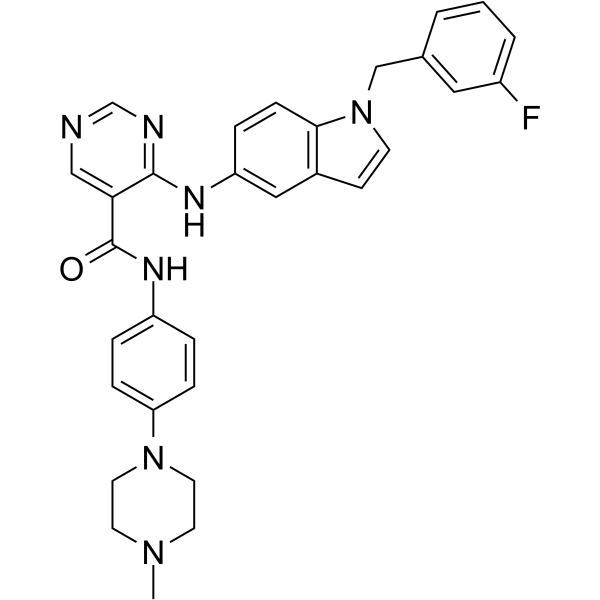
EGFR-IN-26 is a EGFR inhibitor extracted from patent WO2019162323A1 compound I-028. EGFR-IN-26 can be used for the research of cancer .
|
-
- HY-146473
-
|
|
EGFR
|
Cancer
|
|
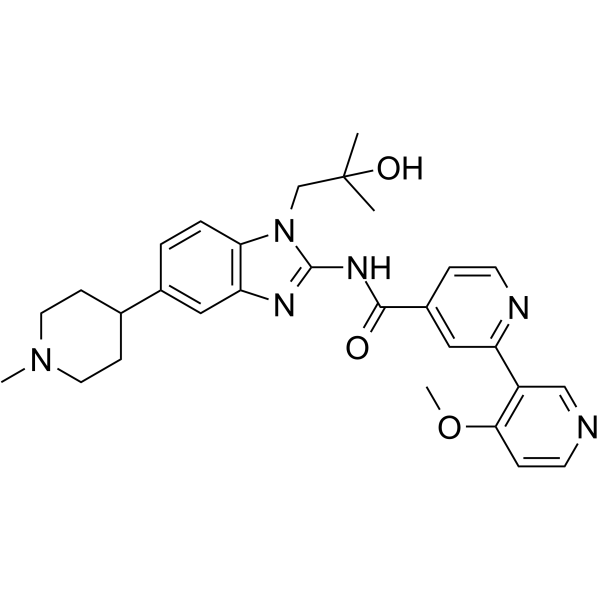
EGFR-IN-53 (Compound 7) is a potent EGFR inhibitor with an IC50 of 8.264 µM. EGFR-IN-53 shows cytotoxic activity against cancer cell lines .
|
-
- HY-10530A
-
|
ASLAN001 tosylate; ARRY-334543 tosylate
|
EGFR
|
Cancer
|
|
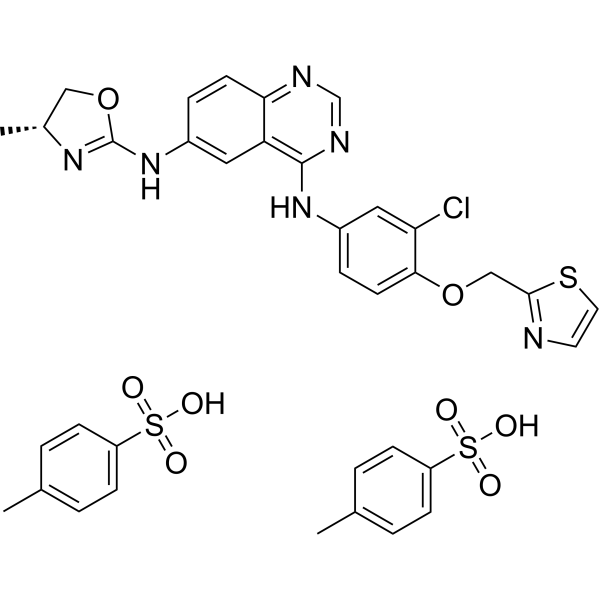
Varlitinib (ASLAN001) tosylate is a potent, reversible, small molecule pan-EGFR inhibitor with IC50s of 7, 2, 4 nM for HER1, HER2 and HER4, respectively .
|
-
- HY-146474
-
|
|
EGFR
|
Cancer
|
|
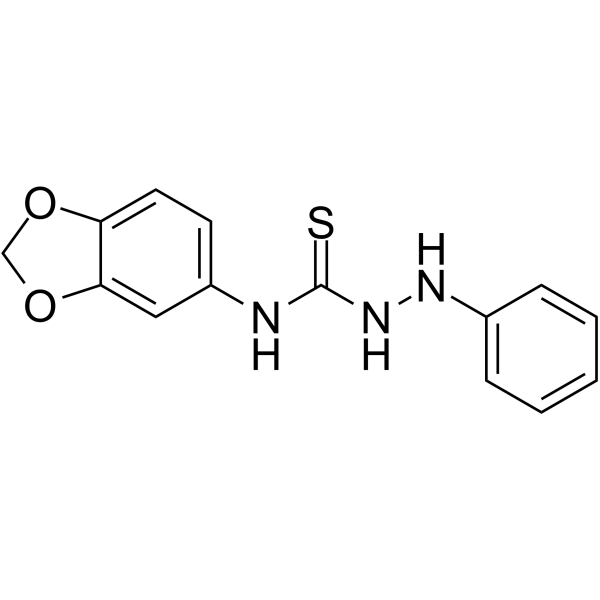
EGFR-IN-54 (Compound 3c) is a potent EGFR inhibitor with an IC50 of 1.623 µM. EGFR-IN-54 shows cytotoxic activity against cancer cell lines .
|
-
- HY-172961
-
|
|
EGFR
|
Cancer
|
|
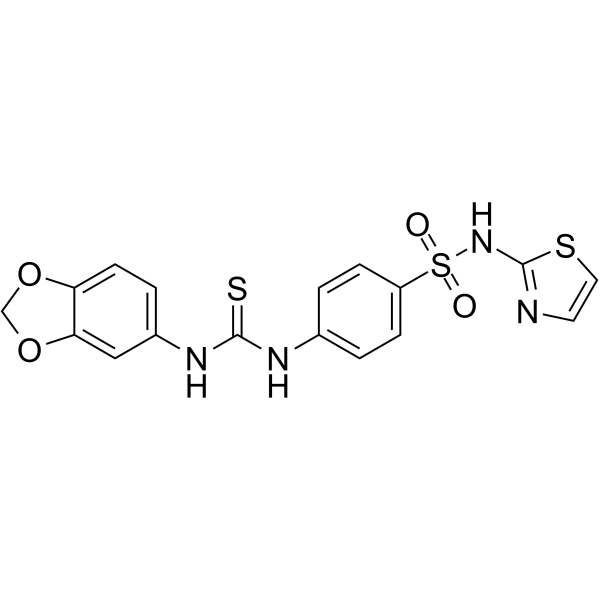
EGFR-IN-162 (compound 20) is a potent EGFR inhibitor. EGFR-IN-162 increases early and late apoptosis and necrosis. EGFR-IN-162 is promising for research of breast cancer .
|
-

- HY-15644R
-
|
Tyrphostin A23 (Standard); RG-50810 (Standard); AG 18 (Standard)
|
EGFR
Reference Standards
|
Cancer
|
|
Tyrphostin 23 (Standard) is the analytical standard of Tyrphostin 23. This product is intended for research and analytical applications. Tyrphostin 23 (Tyrphostin A23) is an EGFR inhibitor with an IC50 and Kiof 35 and 11 μM, respectively.
|
-

- HY-163000
-
|
|
EGFR
|
Cancer
|
|
EGFR-IN-129 (Compound 10b) is a potent and selective EGFR inhibitor, with an IC50 of 51.2 nM. EGFR-IN-129 exhibits broadest-spectrum antiproliferative activity against the NCI-tumor panel .
|
-

- HY-162300
-
|
|
EGFR
|
Cancer
|
EGFR kinase inhibitor 4 (Compound 4) is a bivalent ATP-allosteric EGFR inhibitor (IC50: 1.8 nM for mutant EGFR (LRTMCS)). EGFR kinase inhibitor 4 can be used for research of NSCLC .
|
-
- HY-173501
-
|
|
EGFR
|
Cancer
|
|
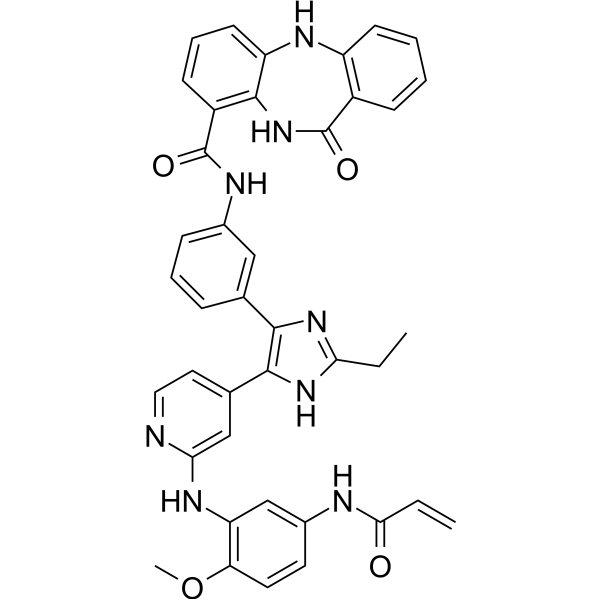
EGFR-IN-157 (compound IIB-5) is a potent EGFR inhibitor with an IC50 of 18.81 nM. EGFR-IN-157 can be used in the study of non-small cell lung cancer (NSCLC) .
|
-

- HY-12872A
-
|
EGF816 mesylate
|
EGFR
|
Cancer
|
|
Nazartinib mesylate (EGF816 mesylate) is a novel, covalent mutant-selective EGFR inhibitor, with Ki and Kinact of 31 nM and 0.222 min −1 on EGFR(L858R/790M) mutant, respectively.
|
-
- HY-168627
-
|
|
EGFR
|
Cancer
|
|
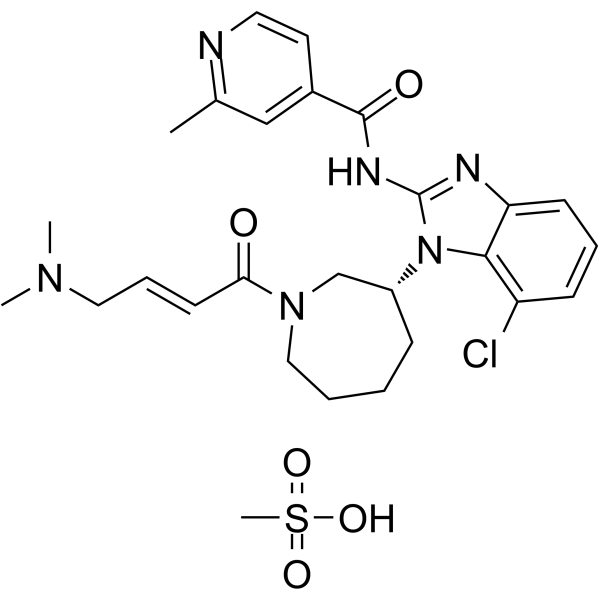
EGFR-IN-135 (compound 3d) is a EGFR inhibitor with the IC50 of 0.086 μM. EGFR-IN-135 inhibitor cell growth and arrests the cell cycle at the S phase of reast cancer cell lines .
|
-

- HY-169427
-
|
|
EGFR
|
Cancer
|
|
FRF-06-057 is an ATP-allosteric EGFR inhibitor against wild-type and mutant EGFR, with IC50s of 17 nM (LR/TM), 29 nM (LR/TM/CS), 220 nM (LR), > 1000 nM (WT) respectively .
|
-

- HY-169428
-
|
|
EGFR
|
Cancer
|
|
EGFR-IN-138 (compound 19) is a potent EGFR inhibitor,with IC50s of 37,2.6 and 1.9 nM for Wild-type,L858R and T790M EGFR,respectively .
|
-

- HY-144760
-
|
|
EGFR
Apoptosis
|
Cancer
|
|
EGFR-IN-3 (Compound 4c) is a potent EGFR inhibitor with an IC50 of 0.32 µM against EGFRwt-TK. EGFR-IN-3 shows cytotoxic activity against cancer cell lines and induces apoptosis .
|
-
- HY-162099
-
|
|
EGFR
|
Cancer
|
|
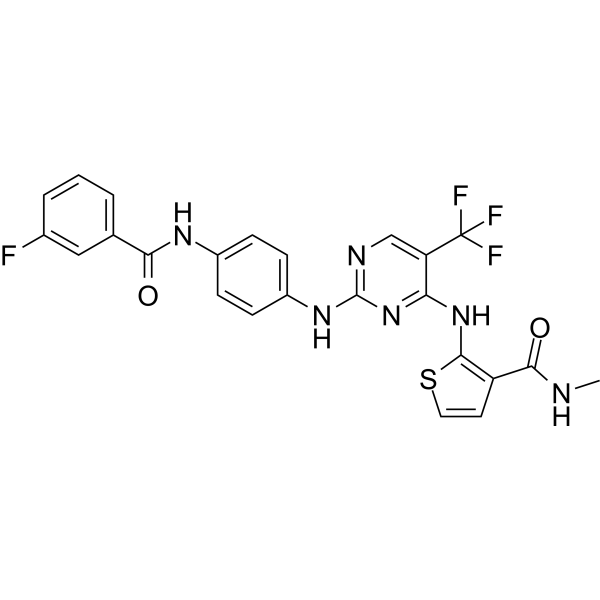
VEGFR-IN-4 (Compound 6e) is an epidermal growth factor receptor (EGFR) inhibitor. VEGFR-IN-4 has potent antiproliferative activity with an IC50 value of 24.6nM against HCC827 cells .
|
-
- HY-110045
-
|
|
VEGFR
EGFR
|
Cancer
|
|
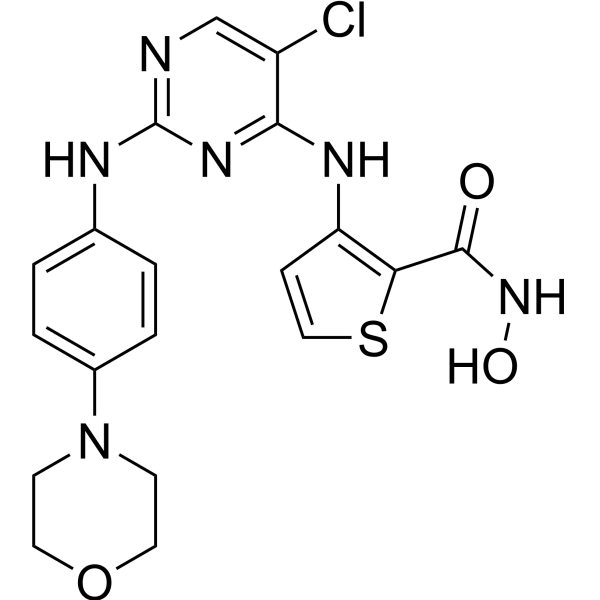
ZM-306416 (CB-676475) hydrochloride is a potent VEGFR inhibitor with IC50s of 0.1 μM and 2 μM for KDR and Flt, respectively . ZM-306416 hydrochloride is also a EGFR inhibitor with an IC50 of <10 nM .
|
-

- HY-151981
-
|
|
EGFR
|
Cancer
|
|
EGFR-IN-74 (Compound 21) is a potent EGFR inhibitor with an IC50 of 138 nM against EGFR L858R/T790M. EGFR-IN-74 induces cancer cell apoptosis .
|
-
- HY-155200
-
|
|
EGFR
|
Cancer
|
|
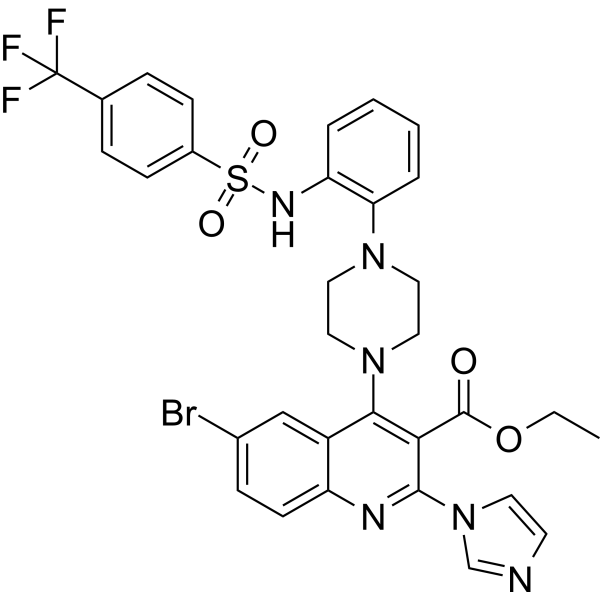
EGFR-IN-84 (Compound 6g) is an EGFR inhibitor (IC50: 24 nM). EGFR-IN-84 inhibits A549 cell growth (IC50: 1.537 μM). EGFR-IN-84 can be used for research of lung cancer .
|
-
- HY-158154
-
|
|
EGFR
|
Cancer
|
|
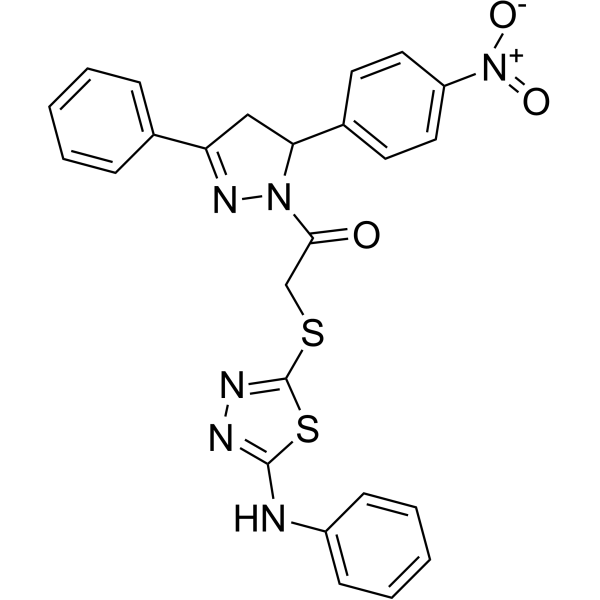
EGFR-IN-110 (Compound 6) is a covalent EGFR inhibitor, with pIC50 values of 9.2 and 8.7 for EGFR enzyme and EGFR cell, respectively. EGFR-IN-110 shows high EGFR potency and good kinase selectivity .
|
-
- HY-156033
-
|
|
EGFR
Apoptosis
|
Cancer
|
|
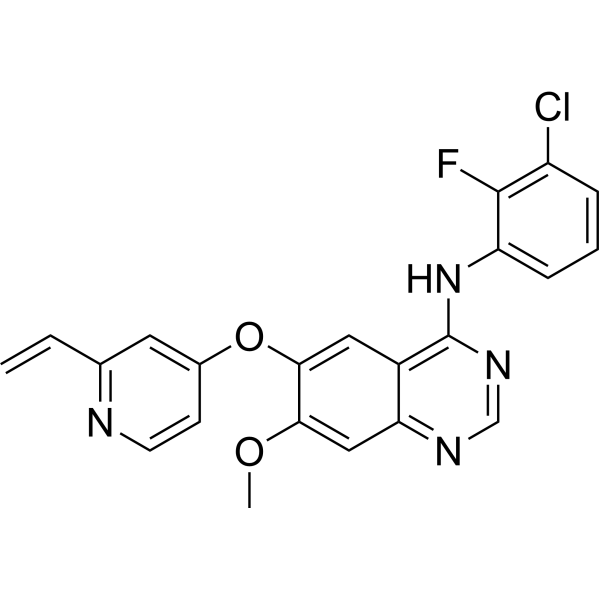
EGFR-IN-88 (Compound 4i) is an EGFR inhibitor (IC50: 87 nM). EGFR-IN-88 shows cytotoxicity against A549 cell with an IC50? of 3.902? μM. EGFR-IN-88 can induce cell apoptosis .
|
-
- HY-170661
-
|
|
EGFR
|
Cancer
|
|
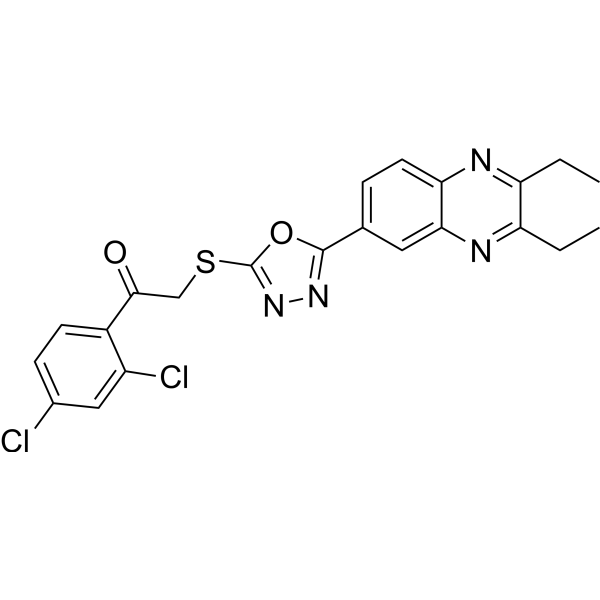
EGFR-IN-142 (compound 9a) is an EGFR inhibitor with an IC50 value of 0.08 μM. EGFR-IN-142 shows antiproliferative to MCF-7 (IC50 3.31 µM) and WI-38 (IC50 = 43.99 µM) .
|
-

- HY-W291369
-
|
|
Drug Intermediate
|
Cancer
|
|
Crotonamide is a drug intermediate that can be used for the synthesis of EGFR inhibitors .
|
-

- HY-181115
-
-

- HY-158988
-
|
|
EGFR
|
Cancer
|
|
EGFR-IN-114 (Compound 241) is a non-covalent, selective mutant EGFR inhibitor. EGFR-IN-114 is applicable to the research of non-small cell lung cancer .
|
-

- HY-104080
-
|
|
EGFR
|
Cancer
|
|
HG-5-88-01 is an EGFR inhibitor. HG-5-88-01 exhibits no significant correlation in its anti-cancer sensitivity with the expression level of EGFR .
|
-

- HY-112334
-
|
|
EGFR
|
Cancer
|
|
EGFR-IN-198 is a selective EGFR inhibitor with subnanomolar irreversible inhibitory activity against EGFR. EGFR-IN-198 covalently binds to the kinase domain of EGFR and inhibits its autophosphorylation .
|
-

- HY-181251
-
|
|
EGFR
|
Cancer
|
|
EGFR-IN-195 is a EGFR inhibitor with an IC50 of 0.89 nM. EGFR-IN-195 inhibits the viability of breast cancer cells. EGFR-IN-195 can be used in breast cancer-related research .
|
-

- HY-100962R
-
|
(E)-Tyrphostin 46 (Standard); (E)-Tyrphostin AG 99 (Standard)
|
EGFR
Reference Standards
|
Cancer
|
|
(E)-AG 99 (Standard) is the analytical standard of (E)-AG 99 (HY-100962). This product is intended for research and analytical applications. (E)-AG 99 ((E)-Tyrphostin 46) is a potent EGFR inhibitor .
|
-

- HY-180325
-
|
|
EGFR
|
Others
|
|
DDC4002 is a selective EGFR inhibitor. DDC4002 has inhibitory activity against the L858R/T790M mutant EGFR subtype (IC50 = 39 nM) .
|
-

- HY-181701
-
|
|
EGFR
|
Cancer
|
|
EGFR-IN-202 is an epidermal growth factor receptor (EGFR) inhibitor that selectively targets EGFR exon 20 insertion mutations. EGFR-IN-202 can be used in research related to non-small cell lung cancer .
|
-

- HY-183788
-
|
|
EGFR
Apoptosis
|
Cancer
|
|
EGFR-IN-212 is an EGFR inhibitor with human IC50 values of 1.83 μM. EGFR-IN-212 reduces EGFR mRNA expression and induces apoptosis. EGFR-IN-212 can be used for the research of non-small cell lung carcinoma .
|
-

- HY-111072
-
|
|
Drug Derivative
EGFR
MCHR1 (GPR24)
|
Cancer
|
|
ADS103317 is an analog of Afatinib (HY-10261). ADS103317 weakly inhibits MCH-1R. Afatinib is an EGFR inhibitor. ADS103317 can be used in research related to non-small cell lung cancer .
|
-

- HY-N0211
-
|
|
EGFR
Apoptosis
|
Cancer
|
|
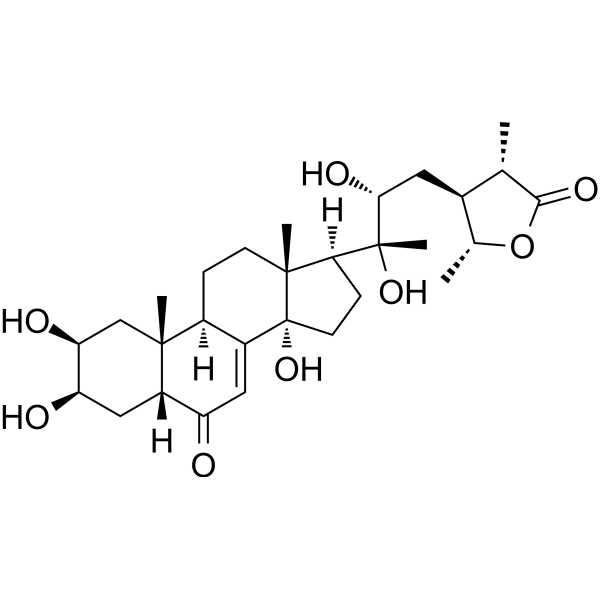
Cyasterone, a natural EGFR inhibitor, mainly isolated from Ajuga decumbens Thunb (Labiatae). Cyasterone manifests anti-proliferation effect by induced apoptosis and cell cycle arrests. Cyasterone may serves as a therapeutic anti-tumor agent against human tumors .
|
-
- HY-W423595
-
|
|
EGFR
|
Cancer
|
|
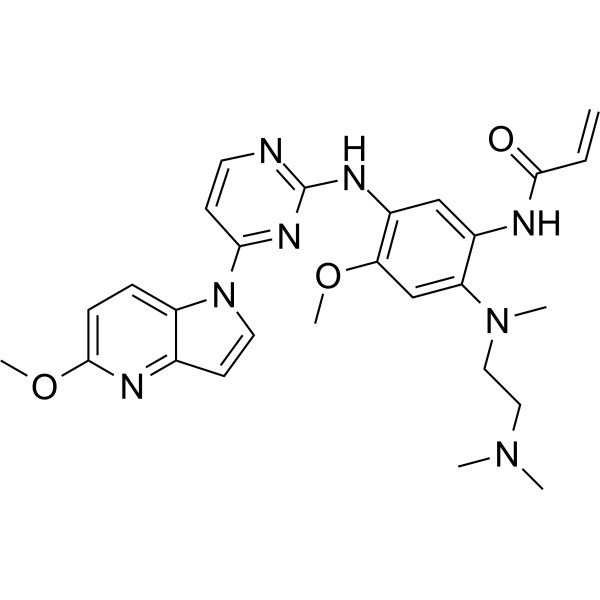
BEBT-109 is a potent pan-mutant-selective EGFR inhibitor. BEBT-109 has improved pharmacokinetic properties. BEBT-109 can be used for multiple mutant-EGFR-driven non-small cell lung cancer (NSCLC) research .
|
-
- HY-173146
-
|
|
Apoptosis
EGFR
|
Cancer
|
|
EGFR-IN-153 (Compound 5l) is an EGFR inhibitor. EGFR-IN-153 can inhibit the proliferation (IC50: 0.73 μM) and induce apoptosis of MDA-MB-231 cell. EGFR-IN-153 can be used for the research of breast cancer .
|
-

- HY-79077
-
|
AZD-9291 dimesylate; Mereletinib dimesylate
|
EGFR
|
Cancer
|
|
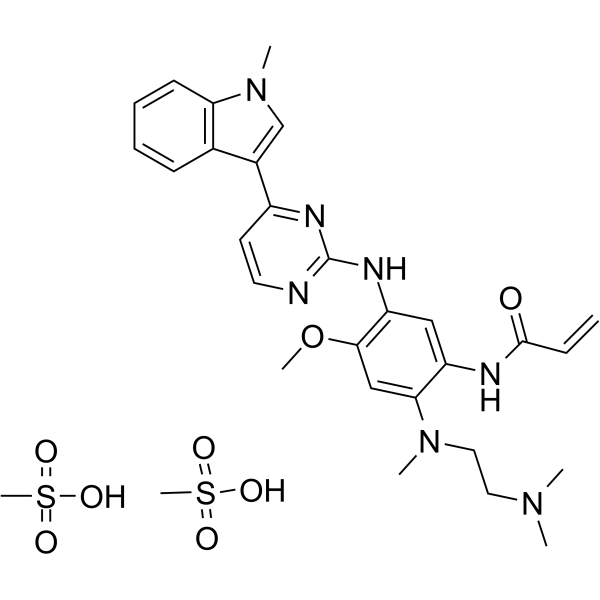
Osimertinib dimesylate (AZD-9291 dimesylate) is an irreversible and mutant selective EGFR inhibitor with IC50s of 12 and 1 nM against EGFR L858R and EGFR L858R/T790M, respectively.
|
-
- HY-183311
-
|
|
EGFR
Apoptosis
DNA/RNA Synthesis
|
Cancer
|
|
EGFR-IN-211 is a EGFR inhibitor with an IC50 of 0.131 μM. EGFR-IN-211 induces cell cycle arrest and apoptosis, and inhibits DNA synthesis and cell division. EGFR-IN-211 can be used in research related to cancers such as colorectal cancer and melanoma .
|
-

- HY-142517
-
|
|
EGFR
|
Cancer
|
|
EGFR-IN-25 is a potent EGFR inhibitor with IC50s of 9 nM and 60 nM for BaF3 cells (EGFR DEL19/T790M/C797S) and A431 cells (WT), respectively .
|
-
- HY-169566
-
|
|
EGFR
AMPK
|
Metabolic Disease
|
|
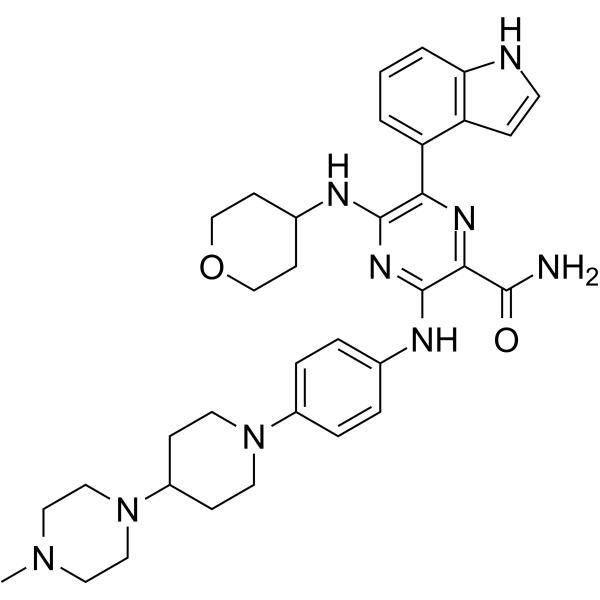
EGFR-IN-146 is an EGFR inhibitor that can inhibit the EGFR signaling pathway and improve insulin sensitivity by activating the AMPK pathway, which can effectively reduce blood sugar levels and body weight. EGFR-IN-146 has great potential in the study of diabetes and obesity .
|
-

- HY-116059
-
|
|
EGFR
|
Cancer
|
|
EGFR-IN-199 is a selective and potent EGFR inhibitor with IC50 values of 1.1 nM and 1.4 nM for purified EGFR WT and EGFR T790M/L858R kinases. EGFR-IN-199 can be used for the research of cancer .
|
-

- HY-172104
-
|
|
EGFR
Apoptosis
|
Cancer
|
|
EGFR-IN-143 (Compound 5f) is a potent EGFR inhibitor with an IC50 value of 0.15 μM. EGFR-IN-143 induces apoptosis by arresting the cell cycle in the G2/M phase. EGFR-IN-143 has antitumor activity .
|
-

- HY-163402
-
|
|
EGFR
Apoptosis
|
Cancer
|
|
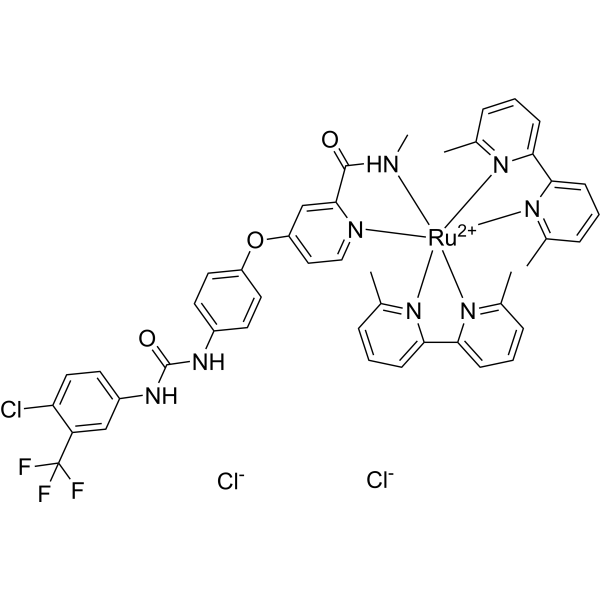
EGFR-IN-108 chloride (Compound Ru3S) is an EGFR inhibitor with an IC50 value of 5.8 nM for hEGFR. EGFR-IN-108 chloride induces apoptosis and has anti-proliferative activity against cancer cells. EGFR-IN-108 chloride also has anti-angiogenic effects .
|
-
- HY-P99041A
-
|
|
EGFR
|
Cancer
|
|
Panitumumab (anti-EGFR) is a fully human IgG2 anti-EGFR monoclonal antibody with anti-tumor activity. Panitumumab (anti-EGFR) inhibits tumor cell proliferation, survival and angiogenesis. Panitumumab (anti-EGFR) can be used in the research of cancers, such as colon cancer .
|
-
- HY-161045
-
|
|
EGFR
Apoptosis
|
Cancer
|
|
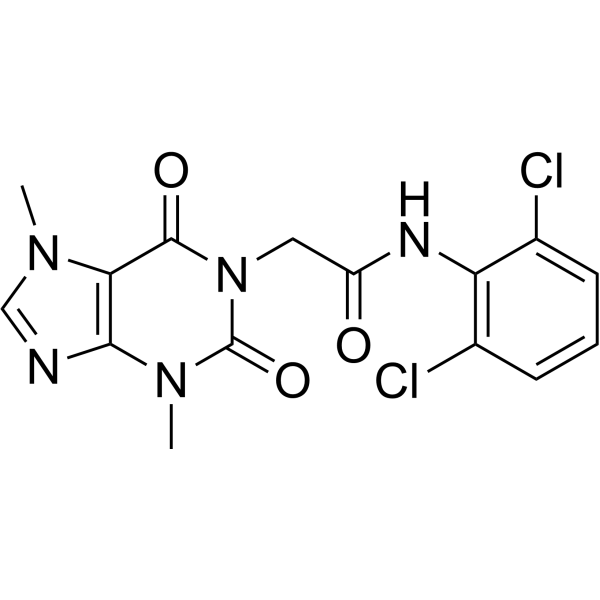
T-1-DOCA ia a EGFR inhibitor, with the IC50 of 56.94 and 269.01?nM for EGFR WT and EGFR T790M, respectively. T-1-DOCA can induces cell apoptosis of HCT-116 cells .
|
-
- HY-14596S
-
|
NPI 031L-d4
|
EGFR
Autophagy
Apoptosis
Endogenous Metabolite
|
Cancer
|
|
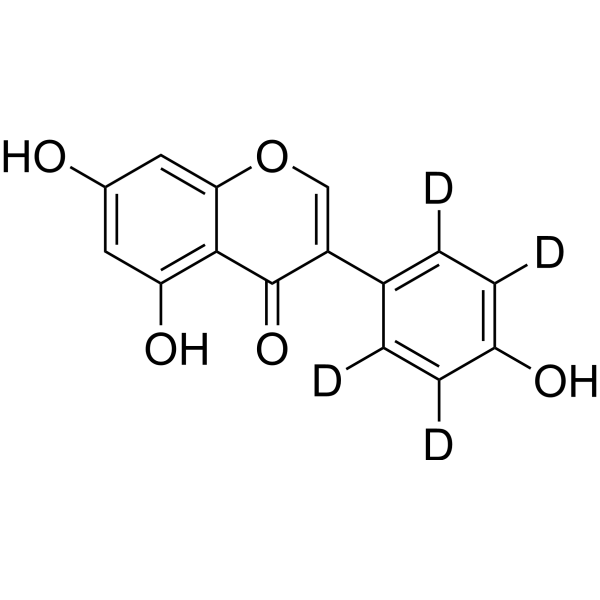
Genistein-d4 is the deuterium labeled Genistein. Genistein, a soy isoflavone, is a multiple tyrosine kinases (e.g., EGFR) inhibitor which acts as a chemotherapeutic agent against different types of cancer, mainly by altering apoptosis, the cell cycle, and angiogenesis and inhibiting metastasis .
|
-
- HY-N7424
-
|
4,7-DHC
|
EGFR
Estrogen Receptor/ERR
Progesterone Receptor
|
Cancer
|
|
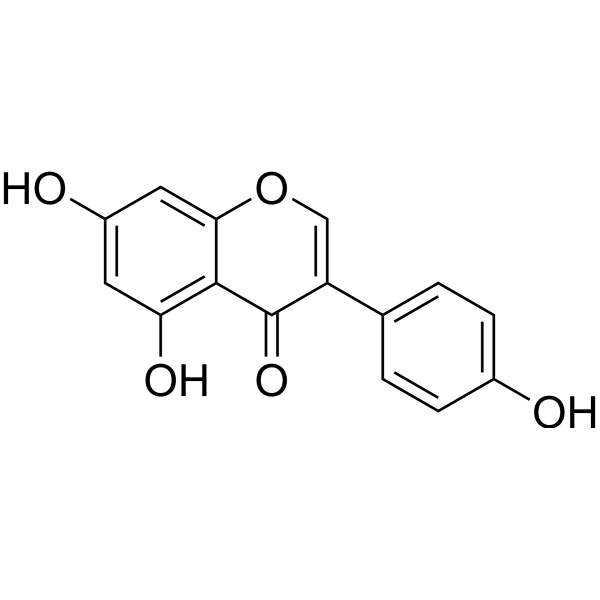
4,7-Dihydroxycoumarin is an EGFR inhibitor, estrogen receptor inhibitor, and progesterone receptor inhibitor. 4,7-Dihydroxycoumarin against breast cancer cells with an IC50 velue of 18.36 μg/mL. 4,7-Dihydroxycoumarin can be used for the research of breast cancer .
|
-

- HY-14596R
-
|
NPI 031L (Standard)
|
Reference Standards
EGFR
Autophagy
Apoptosis
Endogenous Metabolite
|
Cancer
|
|
Genistein (Standard) is the analytical standard of Genistein. This product is intended for research and analytical applications. Genistein, a soy isoflavone, is a multiple tyrosine kinases (e.g., EGFR) inhibitor which acts as a chemotherapeutic agent against different types of cancer, mainly by altering apoptosis, the cell cycle, and angiogenesis and inhibiting metastasis.
|
-
- HY-10367
-
|
CI-1033; PD-183805
|
EGFR
Orthopoxvirus
|
Infection
Cancer
|
|
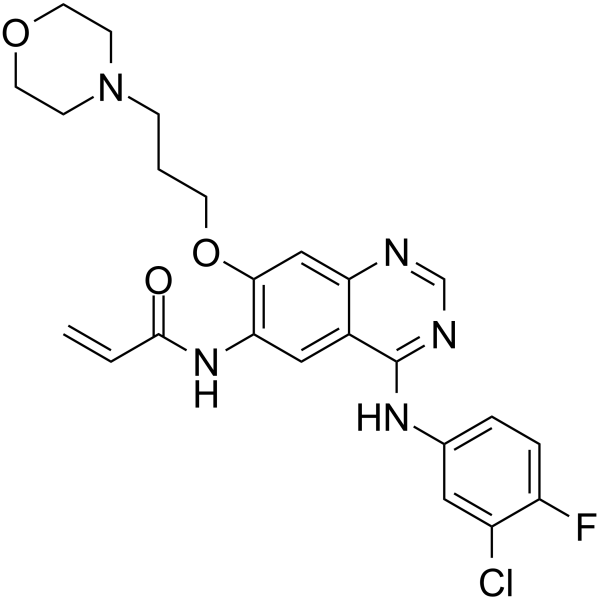
Canertinib (CI-1033;PD-183805) is a potent and irreversible EGFR inhibitor; inhibits cellular EGFR and ErbB2 autophosphorylation with IC50s of 7.4 and 9 nM. Canertinib is active against vaccinia virus respiratory infection in mice .
|
-
- HY-138627AR
-
|
|
Reference Standards
EGFR
Drug Metabolite
|
Cancer
|
|
AST5902 (trimesylate) (Standard) is the analytical standard of AST5902 (trimesylate). This product is intended for research and analytical applications. AST5902 trimesylate is the principal metabolite of Alflutinib (AST2818) both in vitro and in vivo. AST5902 trimesylate exerts antineoplastic activity. Alflutinib is an EGFR inhibitor[1].
|
-

- HY-161146
-
|
|
EGFR
Apoptosis
|
Cancer
|
|
EGFR-IN-100 (compound 3f) is a EGFR inhibitor with IC50 range of 0.137-0.507 μM. EGFR-IN-100 has antiproliferative activity and induces the apoptosis pathway. EGFR-IN-100 arrests the MCF-7 cell cycle at the S phase .
|
-
- HY-173314
-
|
|
EGFR
Apoptosis
|
Cancer
|
|
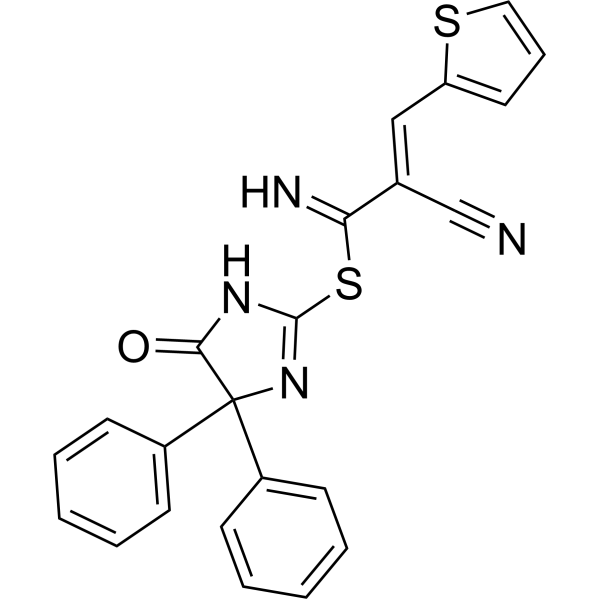
EGFR-IN-155 (compound 13a) is an EGFR inhibitor with IC50 values of 0.14 nM and 0.18 nM against EGFR TK and EGFR L858R, respectively. EGFR-IN-155 inhibits tumor growth, causes a cell cycle arrest at S phase, and and induces cell apoptosis .
|
-

- HY-10530R
-
|
ASLAN001 (Standard); ARRY-334543 (Standard)
|
Reference Standards
EGFR
|
Cancer
|
|
Varlitinib (Standard) is the analytical standard of Varlitinib (HY-10530). This product is intended for research and analytical applications. Varlitinib (ASLAN001) is a potent, reversible, small molecule pan-EGFR inhibitor with IC50s of 7, 2, 4 nM for HER1, HER2 and HER4, respectively .
|
-

- HY-111452
-
|
|
EGFR
|
Cancer
|
|
EGFR-IN-85 (Compound 1) is an EGFR inhibitor. EGFR-IN-85 has IC50 value of 0.19 μM for EGFRvⅢ phosphorylation. EGFR-IN-85 can suppress EGFR signaling within tumors. EGFR-IN-85 can be used for Glioblastoma (GBM) research .
|
-
- HY-B1394R
-
|
|
Reference Standards
EGFR
|
Cardiovascular Disease
Cancer
|
|
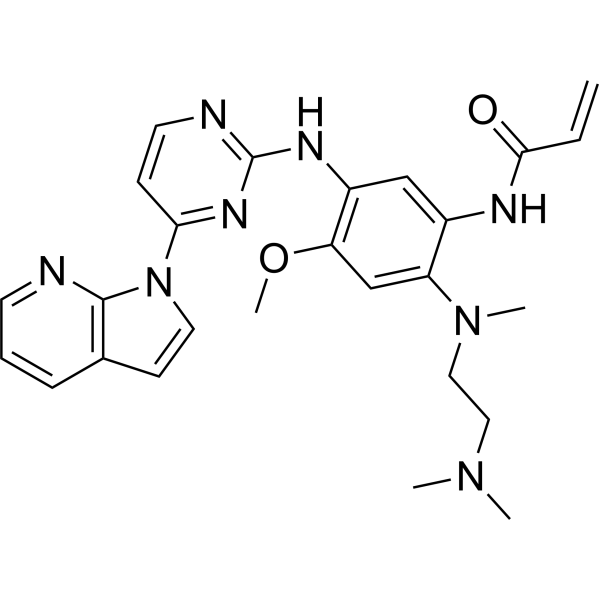
Khellin (Standard) is the analytical standard of Khellin. This product is intended for research and analytical applications. Khellin is a furochromone that can be isolated from Ammi visnuga L.. Khellin is an EGFR inhibitor with an IC50 of 0.15 μM. Khelline has anti-proliferative activity in vitro. Khellin has antispasmodic and coronary vasodilator effects .
|
-

- HY-13785R
-
|
CB 676475 (Standard)
|
Reference Standards
VEGFR
|
Cancer
|
|
ZM 306416 (Standard) is the analytical standard of ZM 306416. This product is intended for research and analytical applications. ZM-306416 (CB 676475) is a potent inhibitor of VEGFR with IC50s of 0.1 and 2 μM for KDR and Flt, respectively. ZM-306416 is also a EGFR inhibitor with an IC50 of <10 nM.
|
-

- HY-142679
-
|
|
EGFR
|
Cancer
|
|
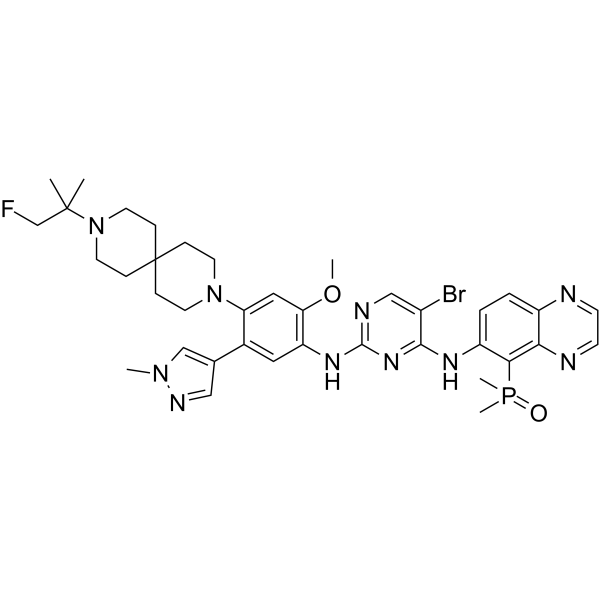
EGFR-IN-22 is a potent EGFR inhibitor with IC50s of 4.91 nM and 0.54 nM for wild type EGFR and EGFR L858R/T790M/C797S, respectively (CN112538072A, compound 243) .
|
-
- HY-128778
-
|
DBPR112
|
EGFR
|
Cancer
|
|
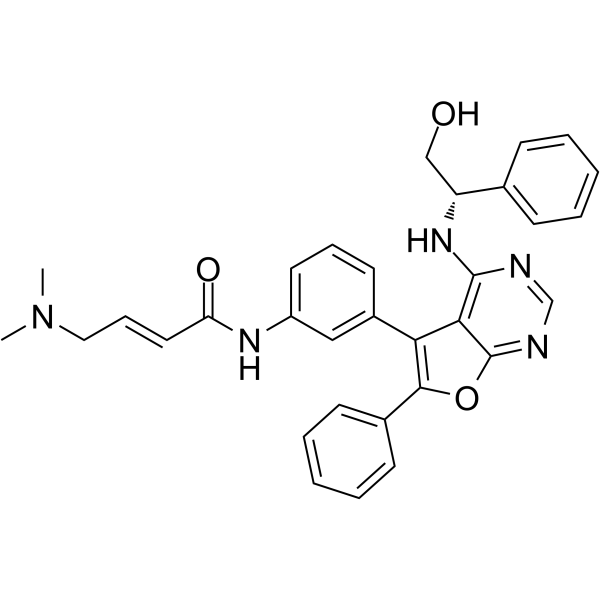
Gozanertinib is an orally active furanopyrimidine-based EGFR inhibitor with IC50s of 15 nM and 48 nM for EGFR WT and EGFR L858R/T790M, respectively. Gozanertinib can occupy the ATP-binding site. Gozanertinib has significant antitumor efficacy .
|
-
- HY-146782
-
|
|
EGFR
|
Cancer
|
|
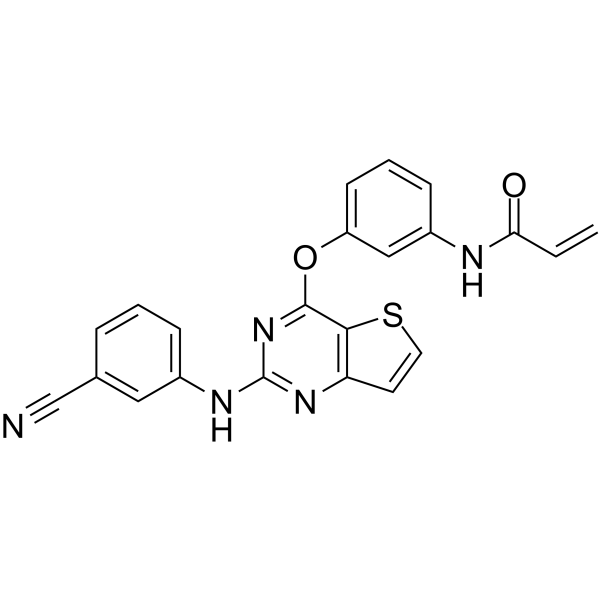
EGFR-IN-49 is a potent and selective EGFR inhibitor with IC50s of 65.0 nM and 13.6 nM for EGFR T790M and EGFR T790M/L858R, respectively. EGFR-IN-49 induces late apoptosis in a dose-dependent manner .
|
-
- HY-149846
-
|
|
EGFR
|
Cancer
|
|
SIQ17 is an EGFR inhibitor that inhibits its activity by occupying the ATP-binding site, with IC50 of 0.62 nM. SIQ17 shows more effective EGFR-TK inhibitory activity compared to the known inhibitor Erlotinib (HY-50896) (IC50 of ∼20 nM). SIQ17 can be used for cancer research
|
-
- HY-162891
-
|
|
EGFR
|
Cancer
|
|
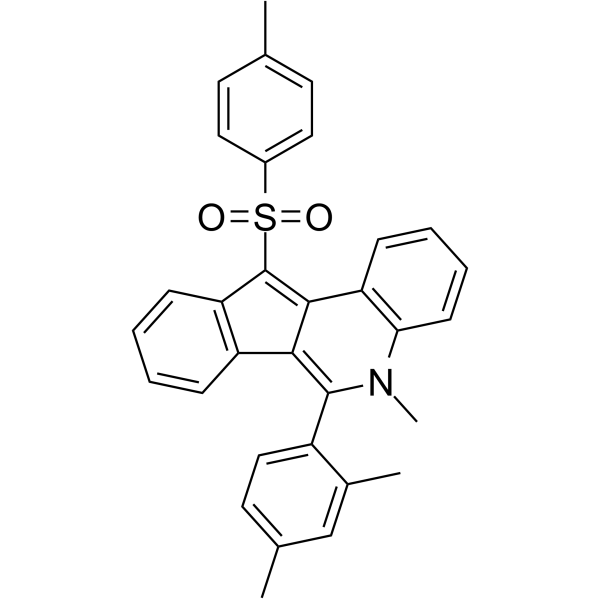
EGFR-IN-123 (compound D06) is a potent EGFR inhibitor. EGFR-IN-123 inhibits PC-9G, A549, A431 and HCT116 cells with IC50s of 0.74, 1.36, 1.20 and 2.53 μM, respectively .
|
-

- HY-172795
-
|
|
EGFR
Apoptosis
|
Cancer
|
|
EGFR-IN-158 (compound 12e) is an orally active EGFR inhibitor with an IC50 of 0.22 nM for EGFR(Del19/T790M). EGFR-IN-158 inhibits phosphorylation and downstream signaling by binding to EGFR, thereby inhibiting the proliferation of tumor cell lines and promoting apoptosis .
|
-

- HY-161030
-
|
|
EGFR
|
Cancer
|
|
EGFR-IN-92 (compound 15) is an allosteric T790M/L858R double mutant EGFR inhibitor. EGFR-IN-92 shows antiproliferative activity against H1975 non-small lung cancer (NSCLC) cancer cells expressing double mutant EGFR .
|
-
- HY-155969
-
|
|
EGFR
Apoptosis
|
Cancer
|
|
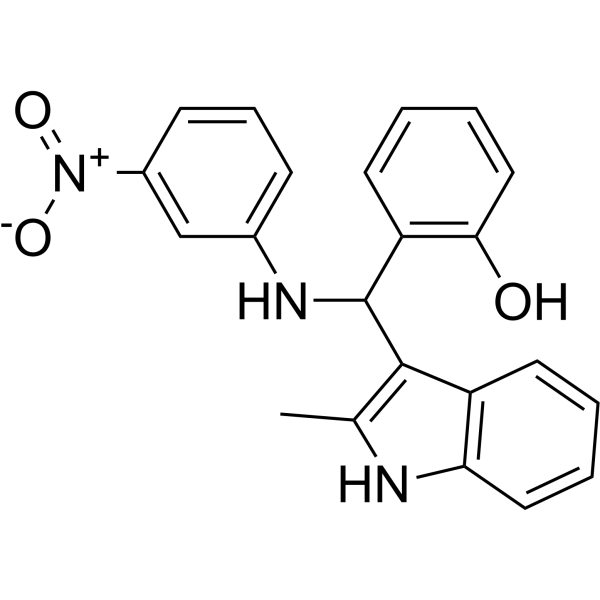
EGFR-IN-83 (Compound 9) is an EGFR inhibitor (IC50: 2.53 nM). EGFR-IN-83 has antiproliferative activity against MCF-7 and MDA-MB-231 cells, with IC50 of 2.50 μM and 1.96 μM. EGFR-IN-83 can induce cell apoptosis .
|
-
- HY-150611
-
|
|
EGFR
|
Cancer
|
|
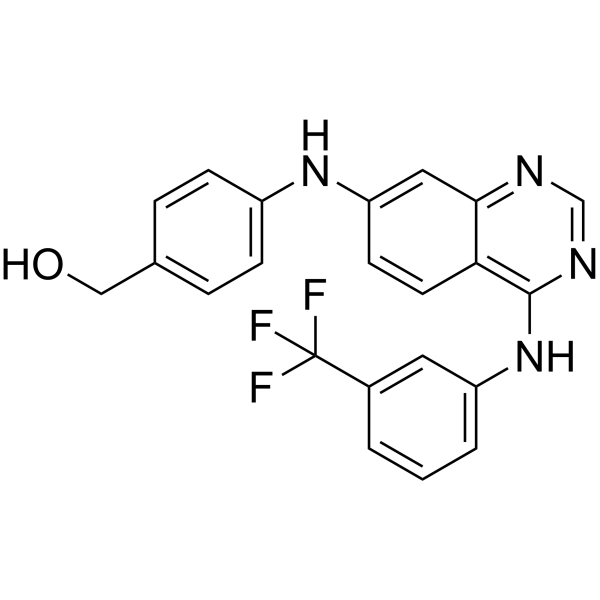
EGFR-IN-70 (compound 18j) is a potent EGFR inhibitor with IC50 values of 23.6 and 307.5 nM for EGFR LR/TM/CS and EGFR WT, respectively. EGFR-IN-70 has anti-proliferative activity and suppresses phosphorylation of the EGFR. EGFR-IN-70 can be used for cancer research .
|
-
- HY-79077R
-
|
AZD-9291 dimesylate (Standard); Mereletinib dimesylate (Standard)
|
EGFR
Reference Standards
|
Cancer
|
|
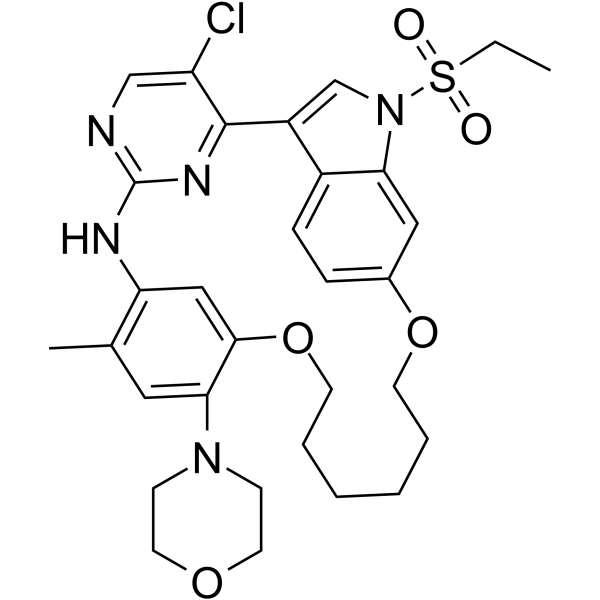
Osimertinib (dimesylate) (Standard) is the analytical standard of Osimertinib (dimesylate). This product is intended for research and analytical applications. Osimertinib dimesylate (AZD-9291 dimesylate) is an irreversible and mutant selective EGFR inhibitor with IC50s of 12 and 1 nM against EGFRL858R and EGFRL858R/T790M, respectively.
|
-

- HY-10367AR
-
|
CI-1033 dihydrochloride (Standard); PD-183805 dihydrochloride (Standard)
|
Reference Standards
EGFR
Orthopoxvirus
|
Infection
Cancer
|
|
Canertinib (dihydrochloride) (Standard) is the analytical standard of Canertinib (dihydrochloride). This product is intended for research and analytical applications. Canertinib dihydrochloride (CI-1033 dihydrochloride) is a potent and irreversible EGFR inhibitor; inhibits cellular EGFR and ErbB2 autophosphorylation with IC50s of 7.4 and 9 nM. Canertinib dihydrochloride is active against vaccinia virus respiratory infection in mice .
|
-

- HY-144044
-
|
|
EGFR
|
Cancer
|
|
EGFR-IN-30 is a potent EGFR inhibitor with IC50s of 1-10 nM, <1 nM for EGFR (WT), EGFR (L858R/T790M/C797S), respectively. EGFR-IN-30 has potential for cell proliferative diseases, such as cancer research .
|
-
- HY-155285
-
|
|
EGFR
Apoptosis
|
Cancer
|
|
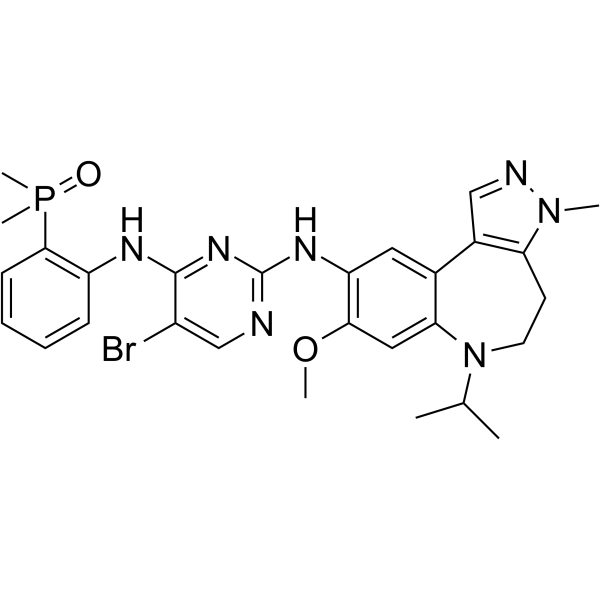
YS-363 is a potent, selective, and orally active EGFR inhibitor, with IC50s of 0.96 nM and 0.67 nM for wild-type and L858R mutant forms of EGFR, respectively. YS-363 can induce G0/G1 cell cycle arrest and apoptosis .
|
-
- HY-10346
-
AV-412
5 Publications Verification
MP412
|
EGFR
|
Cancer
|
|
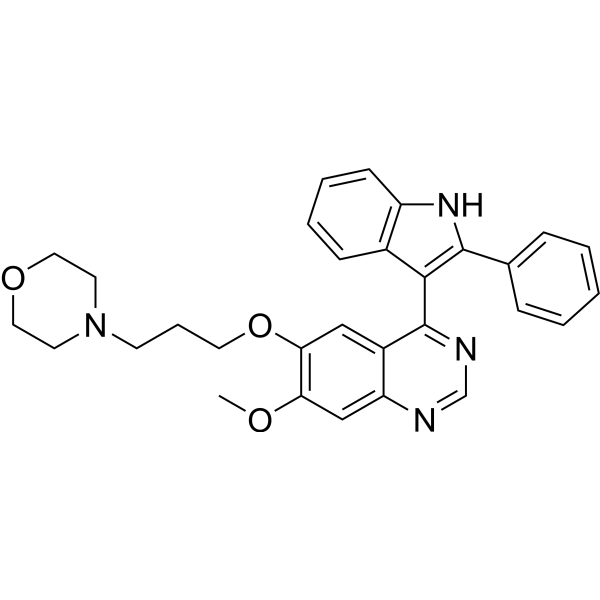
AV-412 (MP412) is an EGFR inhibitor with IC50s of 0.75, 0.5, 0.79, 2.3, 19 nM for EGFR, EGFR L858R, EGFR T790M, EGFR L858R/T790M and ErbB2, respectively.
|
-
- HY-103442
-
|
DAPH
|
EGFR
Amyloid-β
|
Neurological Disease
Cancer
|
|
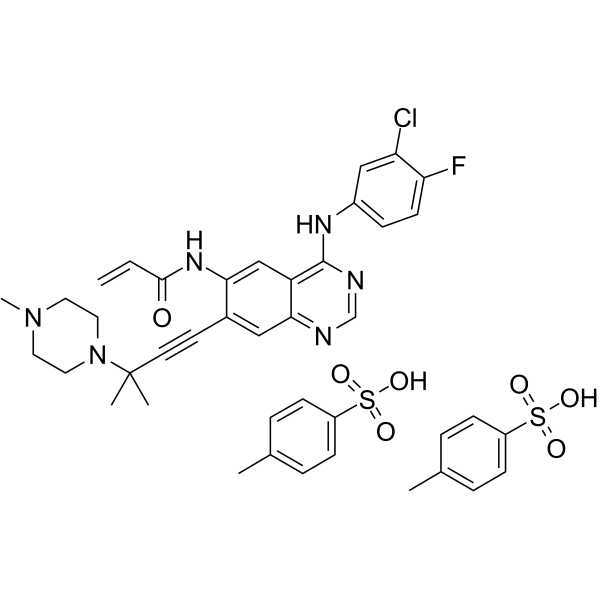
CGP52411 (DAPH) is a high selective, potent, orally active and ATP-competitive EGFR inhibitor with an IC50 of 0.3 μM. CGP52411 blocks the toxic influx of Ca 2+ ions into neuronal cells, and dramatic inhibits and reverses the formation of β-amyloid (Aβ42) fibril aggregates associated with Alzheimer's disease .
|
-
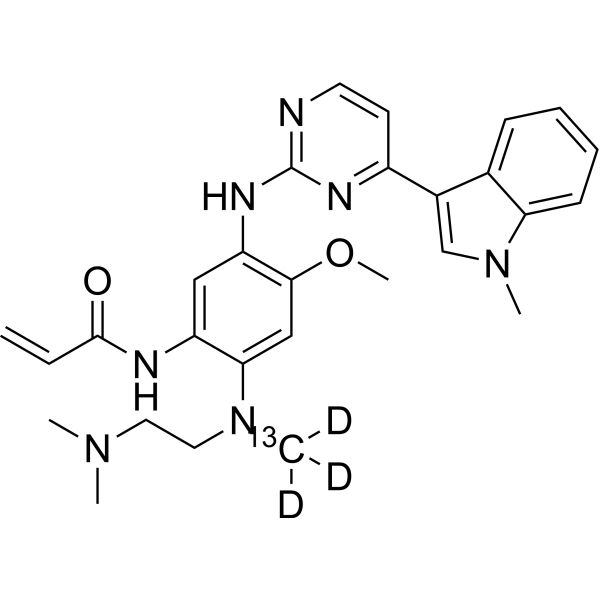
- HY-15772S1
-
|
AZD-9291-13C,d3; Mereletinib-13C,d3
|
EGFR
|
Cancer
|
|
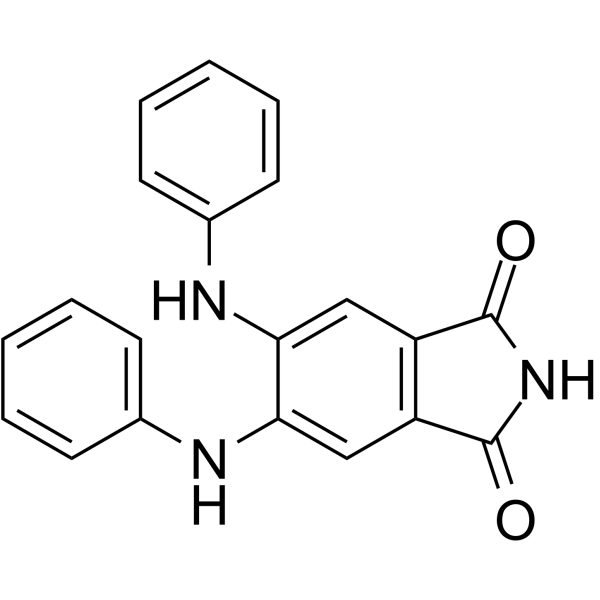
Osimertinib- 13C,d3 is the deuterium and 13C labeled Osimertinib. Osimertinib (AZD9291) is a covalent, orally active, irreversible, and mutant-selective EGFR inhibitor with an apparent IC50 of 12 nM against L858R and 1 nM against L858R/T790M, respectively.
|
-
- HY-N0211R
-
|
|
Reference Standards
EGFR
Apoptosis
|
Cancer
|
|
Cyasterone (Standard) is the analytical standard of Cyasterone. This product is intended for research and analytical applications. Cyasterone, a natural EGFR inhibitor, mainly isolated from Ajuga decumbens Thunb (Labiatae). Cyasterone manifests anti-proliferation effect by induced apoptosis and cell cycle arrests. Cyasterone may serves as a therapeutic anti-tumor agent against human tumors .
|
-

- HY-120412
-
|
|
EGFR
Apoptosis
|
Cancer
|
|
SKLB188 is an orally active and potent epidermal growth factor receptor (EGFR) inhibitor (IC50=5 nM). SKLB188 suppresses MEK/Erk and Akt/mTOR signaling pathways to inhibit head and neck squamous cell carcinoma (HNSCC) proliferation and induce caspase-dependent apoptosis. SKLB188 is promising for research of EGFR-overexpressing solid tumors .
|
-

- HY-157324
-
|
|
EGFR
Apoptosis
VEGFR
|
Cancer
|
|
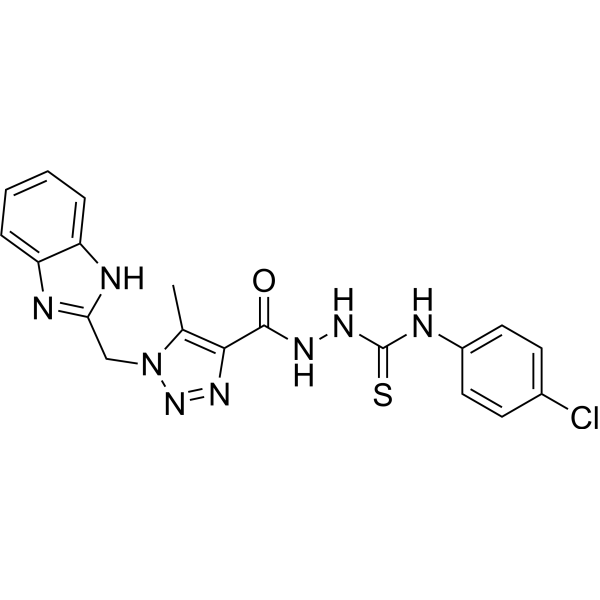
EGFR-IN-94 (compound 5a) is a EGFR inhibitor with IC50 of 0.086?μM, and also has IC50 of 0.107μM and 2.52 μM for VEGFR-2 and Topo II, respectively. EGFR-IN-94 induces cell apoptosis and arrests cell cycle at the S phase in HepG-2 cells .
|
-
- HY-B0793
-
|
|
EGFR
|
Cancer
|
|
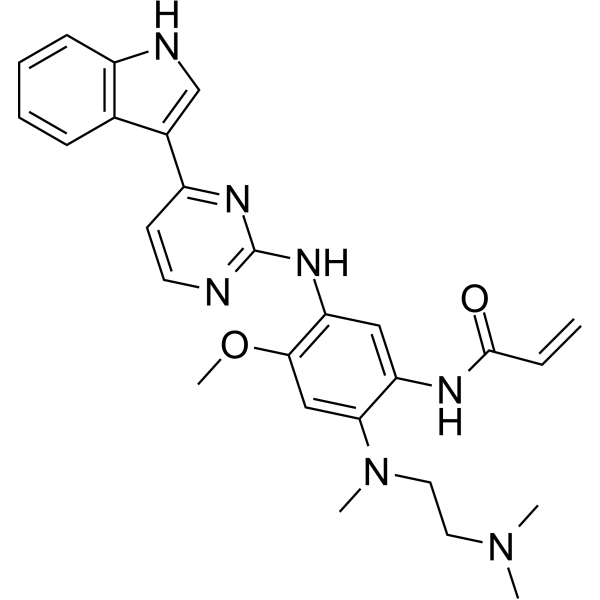
AZ-5104 is an active, demethylated metabolite of AZD 9291. AZ-5104 is an EGFR inhibitor with IC50s of 1, 6, 1, 25 and 7 nM for EGFR L858R/T790M, EGFR L858R, EGFR L861Q, EGFR and ErbB4, respectively.
|
-
- HY-112870
-
|
Alflutinib; Furmonertinib; AST2818
|
EGFR
|
Cancer
|
|
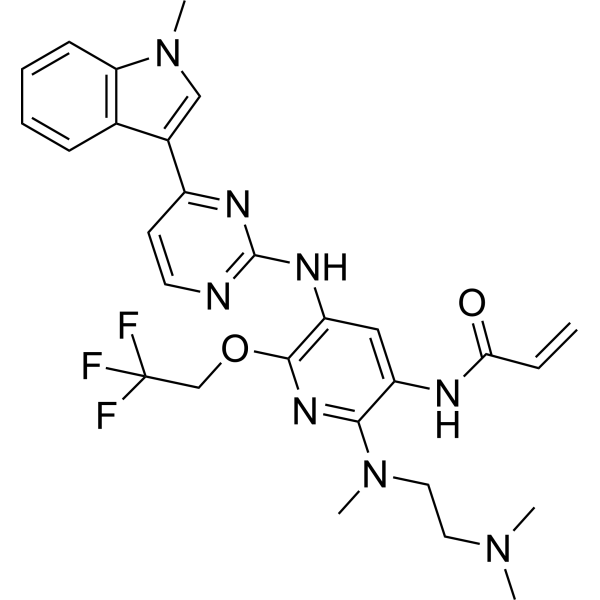
Firmonertinib (Alflutinib; Furmonertinib) is an orally active, mutant-selective, and highly brain penetrant EGFR inhibitor. Firmonertinib inhibits EGFR active mutations as well as the T790M acquired resistant mutation. Firmonertinib has the potential for the research of cancer diseases, especially advanced non-small cell lung cancer (NSCLC) with EGFR ex20ins mutation .
|
-
- HY-142283AS
-
|
AZD-9291-d5 mesylate; Mereletinib-d5 mesylate
|
EGFR
|
Cancer
|
|
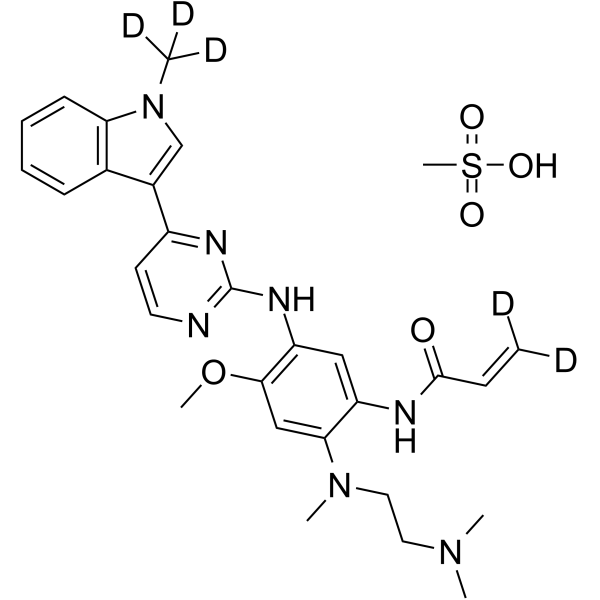
Dosimertinib-d5 (mesylate) is a potent and orally active EGFR inhibitor. Dosimertinib-d5 (mesylate) decreases the expression of p-EGFR and p-ERK protein levels. Dosimertinib-d5 (mesylate) shows antiproliferative and anti-tumor activity. Dosimertinib-d5 (mesylate) has the potential for the research of non-small-cell lung cancer (NSCLC) .
|
-
- HY-112870A
-
|
Alflutinib mesylate; Furmonertinib mesylate; AST2818 mesylate
|
EGFR
|
Inflammation/Immunology
Cancer
|
|
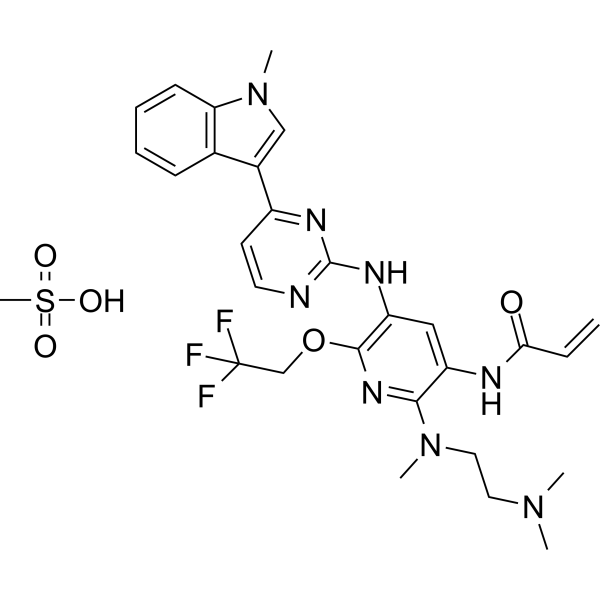
Firmonertinib (Alflutinib; Furmonertinib) mesylate is is an orally active, mutant-selective, and blood-brain barrier penetrant EGFR inhibitor. Firmonertinib mesylate inhibits EGFR active mutations as well as the T790M acquired resistant mutation. Firmonertinib mesylate has the potential for the research of cancer diseases, especially advanced non-small cell lung cancer (NSCLC) with EGFR ex20ins mutation .
|
-
- HY-150781
-
|
|
EGFR
|
Cancer
|
|
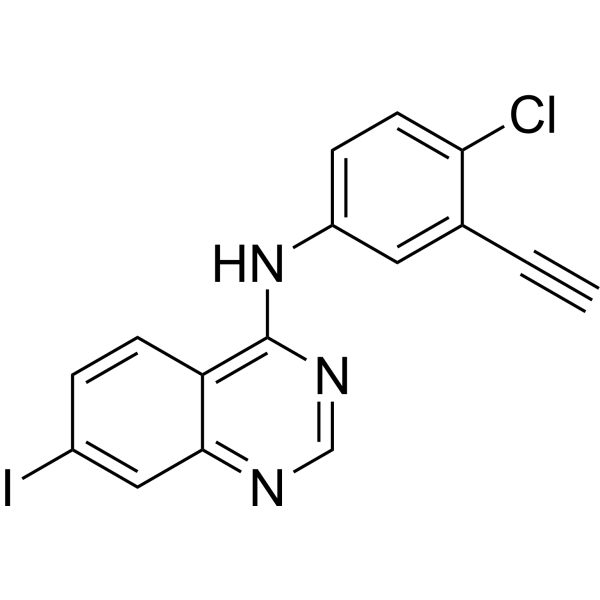
EGFR-IN-71 is a potent narrow spectrum epidermal growth factor receptor (EGFR) inhibitor with IC50 values of 3.7 μM. EGFR-IN-71 can be used for researching chordoma . EGFR-IN-71 is a click chemistry reagent, it contains an Alkyne group and can undergo copper-catalyzed azide-alkyne cycloaddition (CuAAc) with molecules containing Azide groups.
|
-
- HY-146472
-
|
|
EGFR
Apoptosis
|
Cancer
|
|
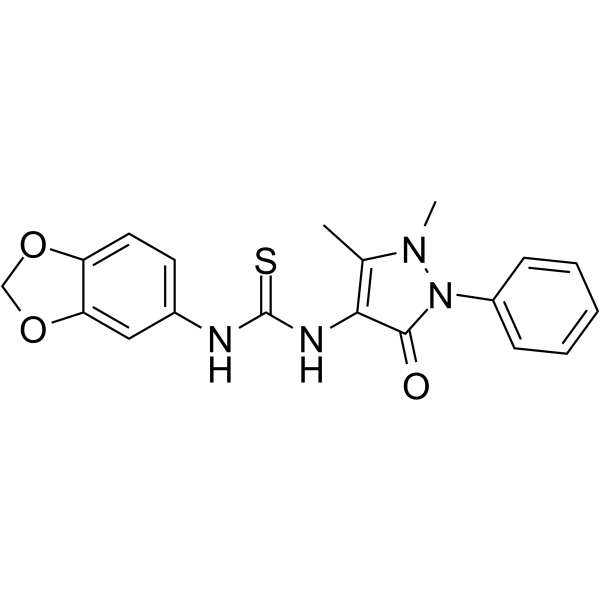
EGFR-IN-52 (Compound 4) is a potent EGFR inhibitor with IC50 values of 0.358, 86.02 and 432.67 µM against EGFR, EGFR L858R-TK and EGFR T790M-TK, respectively. EGFR-IN-52 shows cytotoxic activity against cancer cell lines and induces apoptosis .
|
-
- HY-B0793S1
-
|
|
EGFR
|
Cancer
|
|
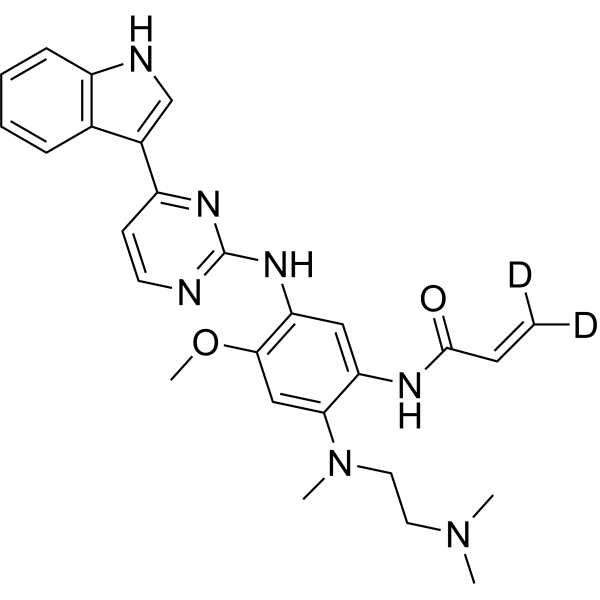
AZ-5104-d2 is the deuterium labeled AZ-5104. AZ-5104 is an EGFR inhibitor with IC50s of 1 nM, 6 nM, 1 nM, 25 nM and 7 nM for EGFRL858R/T790M, EGFRL858R, EGFRL861Q, EGFR and ErbB4, respectively .
|
-
- HY-161067
-
|
|
EGFR
Apoptosis
|
Cancer
|
|
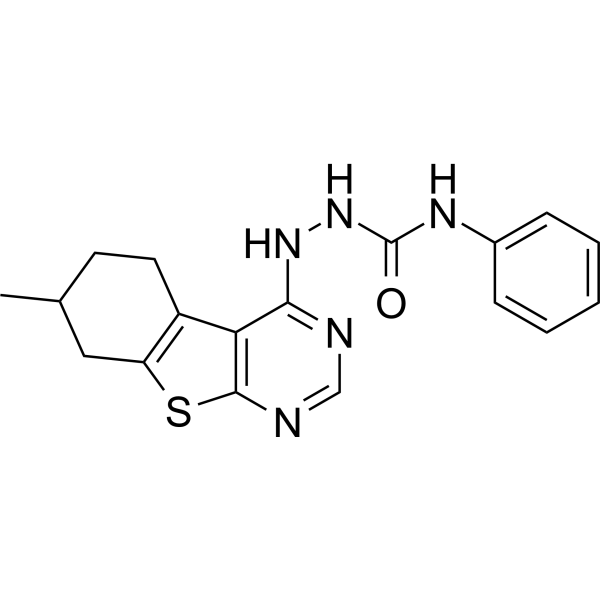
EGFR-IN-96 (compound 7a) is a thieno[2,3-d]pyrimidine EGFR inhibitor that can induce apoptosis. EGFR-IN-96 arrests the growth of HepG2 cells in the S phase and G2/M phase, and inhibits the growth of cancer cells bearing EGFR wild-type and EGFR T790M .
|
-
- HY-15801
-
|
|
Anaplastic lymphoma kinase (ALK)
EGFR
|
Cancer
|
|
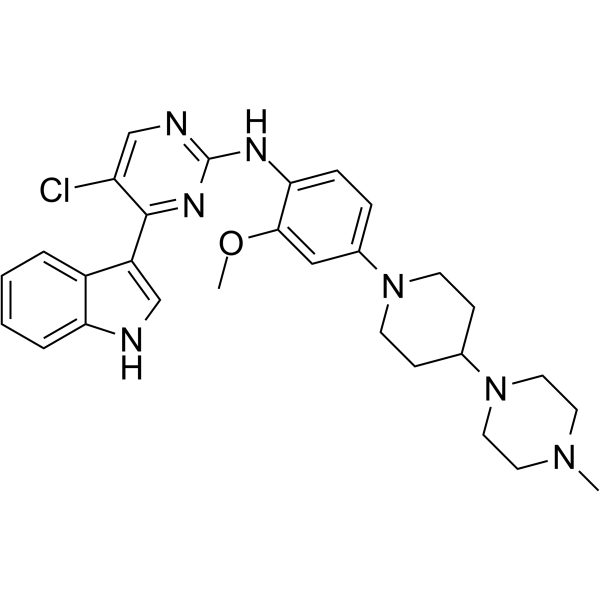
HG-14-10-04 is a potent ALK and mutant EGFR inhibitor with IC50s of 20 nM, 15.6 nM, 22.6 nM and 124.5 nM for ALK, EGFR LR/TM, EGFR 19del/TM/CS and EGFR LR/TM/CS, respectively. HG-14-10-04 can be used to research anticancer .
|
-
- HY-18750A
-
|
AZD3759 hydrochloride
|
EGFR
Apoptosis
|
Cancer
|
|
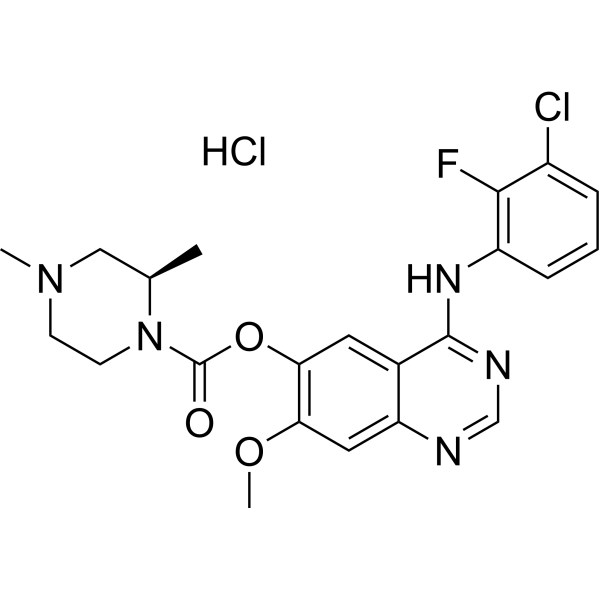
Zorifertinib (AZD3759) hydrochloride is a potent, orally active, BBB-penetrant, EGFR inhibitor (IC50s: 0.3, 0.2, and 0.2 nM for EGFR wt, EGFR L858R, and EGFR exon 19Del, respectively). Zorifertinib hydrochloride induces cancer cell apoptosis. Zorifertinib hydrochloride has antitumor activity, and can be used for NSCLC, HCC etc. research .
|
-
- HY-178442
-
|
|
EGFR
|
Cancer
|
|
EGFR-IN-179 (Compound 8d) is an EGFR inhibitor (IC50: 0.068 μM for EGFR L858R/T790M/C797S; 2.56 μM for EGFR-WT-TK). EGFR-IN-179 has anticancer activity against non-small cell lung cancer .
|
-

- HY-146136
-
|
|
EGFR
Apoptosis
|
Cancer
|
|
EGFR-IN-56 (Compound 13a) is a potent EGFR inhibitor with IC50 values of 541.7 nM and 132.1 nM against EGFR T790M and EGFR T790M/L858R, respectively. EGFR-IN-56 blocks cancer cells in G2/M phase and induce into late apoptosis .
|
-
- HY-168112
-
|
|
EGFR
|
Cancer
|
|
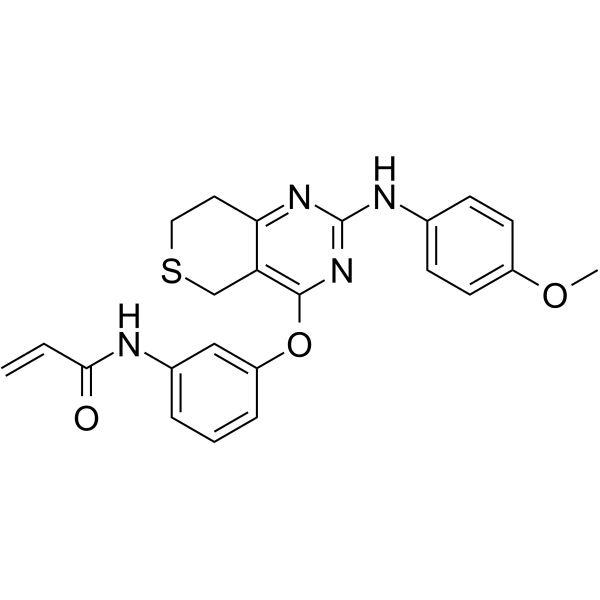
EGFR-IN-127 is an ATP-competitive EGFR inhibitor with IC50s of 136.3 nM and 161. 2 nM for EGFR del19 and EGFR del19/T790M/C797S, respectively. EGFR-IN-127 has the potential for the study of non-small-cell lung cancer (NSCLC) .
|
-

- HY-162360
-
|
|
Apoptosis
EGFR
Caspase
Bcl-2 Family
|
Cancer
|
|
EGFR-IN-109 (compound 4) is an EGFR inhibitor, with the IC50 values of 25.8 and 182.3 nM for EGFR WT and EGFR T790M, respectively. EGFR-IN-109 arrests the cancer cells’ growth at the G2/M phase and induces both early and late apoptosis. EGFR-IN-109 can be used in cancer research .
|
-
- HY-10367R
-
|
CI-1033 (Standard); PD-183805 (Standard)
|
Reference Standards
EGFR
Orthopoxvirus
|
Infection
Cancer
|
|
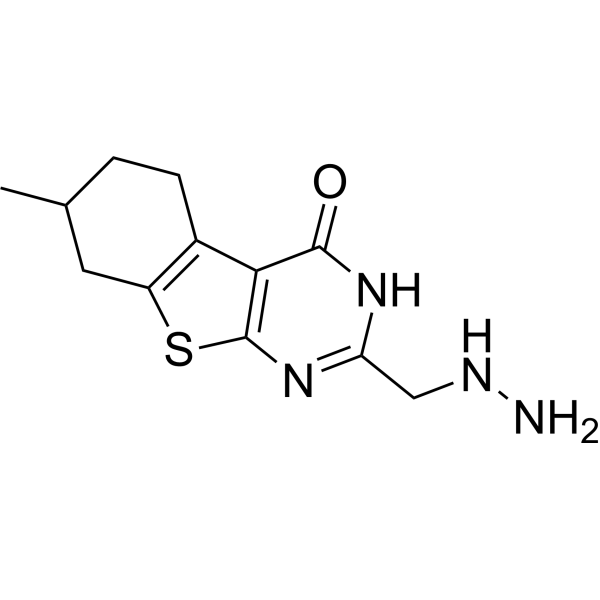
Canertinib (Standard) is the analytical standard of Canertinib. This product is intended for research and analytical applications. Canertinib (CI-1033;PD-183805) is a potent and irreversible EGFR inhibitor; inhibits cellular EGFR and ErbB2 autophosphorylation with IC50s of 7.4 and 9 nM. Canertinib is active against vaccinia virus respiratory infection in mice .
|
-

- HY-175588
-
|
|
EGFR
Apoptosis
Bcl-2 Family
|
Cancer
|
|
EGFR-IN-170 (Compound 5c) is an EGFR inhibitor with an IC50 of 5.17 μM. EGFR-IN-170 induces apoptosis by inhibiting Bcl2 expression and activating Bax expression with a significantly increased ratio of Bax/Bcl2. EGFR-IN-170 has potent anticancer activity and inhibits the cell growth of resistant lung cancer cells .
|
-

- HY-146471
-
|
|
EGFR
Apoptosis
|
Cancer
|
|
EGFR-IN-51 (Compound 6) is a potent EGFR inhibitor with IC50 values of 0.493, 102.60 and 461.63 µM against EGFR, EGFR L858R-TK and EGFR T790M-TK, respectively. EGFR-IN-51 shows cytotoxic activity against cancer cell lines and induces apoptosis .
|
-
- HY-168559
-
|
|
EGFR
Apoptosis
|
Cancer
|
|
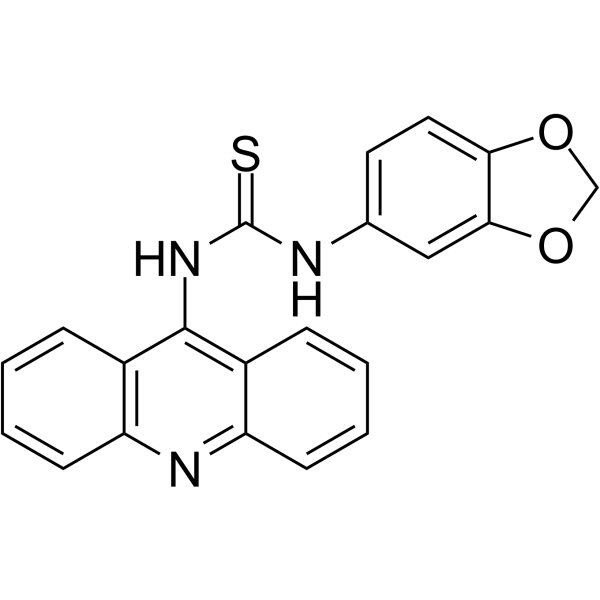
EGFR-IN-131 (compound 3a) is a potent and cross the blood-brain barrier EGFR inhibitor with an IC50 value of 272.9 nM. EGFR-IN-131 shows antiproliferative activity. EGFR-IN-131 induces apoptosis and cell cycle arrest at G0/G1 phase. EGFR-IN-131 decreases the protein expression of p-EGFR .
|
-

- HY-10346A
-
|
MP-412 free base
|
EGFR
|
Cancer
|
|
AV-412 free base (MP-412 free base) is an EGFR inhibitor with IC50s of 0.75, 0.5, 0.79, 2.3, 19 nM for EGFR, EGFR L858R, EGFR T790M, EGFR L858R/T790M and ErbB2, respectively.
|
-
- HY-144053
-
|
|
EGFR
|
Cancer
|
|
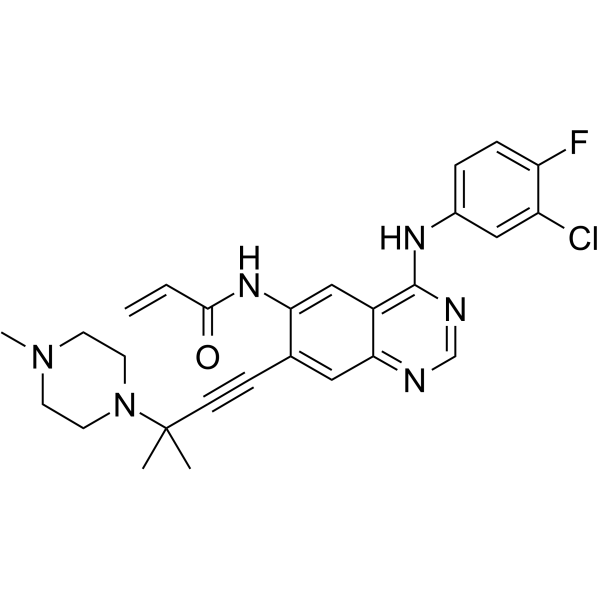
EGFR-IN-36 is a potent EGFR inhibitor with IC50s of 19.09 nM, 120.01 nM, 2.35 nM for EGFR (WT), HER2 (WT), HER2 (A775_G776insYVMA), respectively. EGFR-IN-36 has potential for wild and/or mutant EGFR and/or HER2 kinase mediated tumors research .
|
-
- HY-18750
-
|
AZD3759
|
EGFR
Apoptosis
|
Infection
Neurological Disease
Metabolic Disease
Inflammation/Immunology
Cancer
|
|
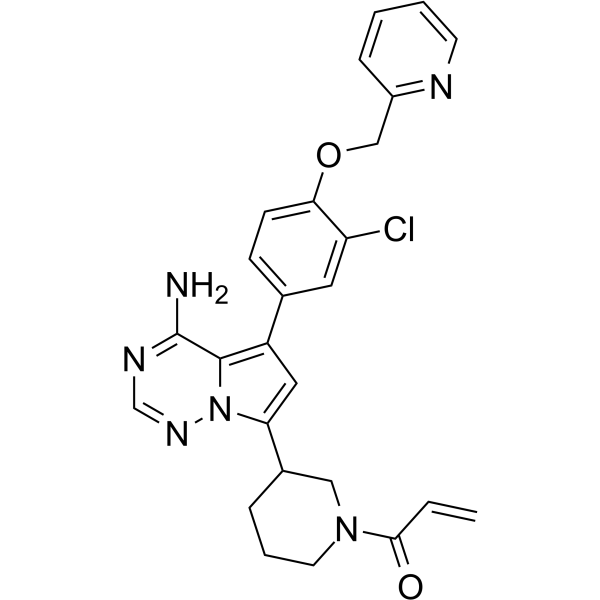
Zorifertinib (AZD3759) is a potent, orally active, BBB-penetrant, EGFR inhibitor. At Km ATP concentrations, the IC50s are 0.3, 0.2, and 0.2 nM for EGFR wt, EGFR L858R, and EGFR exon 19Del, respectively. Zorifertinib induces cancer cell apoptosis. Zorifertinib has antitumor activity, and can be used for NSCLC, HCC etc. research .
|
-
- HY-19816A
-
|
Abivertinib maleate; AC0010 maleate
|
EGFR
Btk
Apoptosis
|
Cancer
|
|
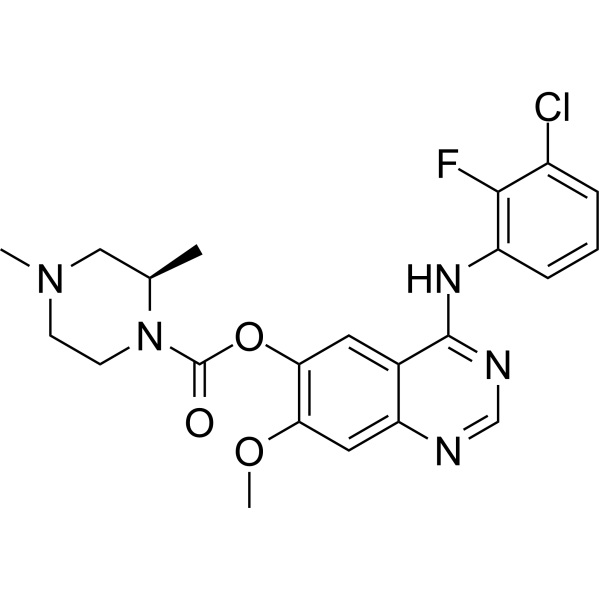
Avitinib (Abivertinib) maleate is a third-generation, irreversible and orally active selective EGFR inhibitor, with IC50 values of 0.18 nM, 0.18 nM, 7.68 nM and against EGFR L858R, EGFR T790M and wild-type EGFR. Avitinib maleate is also a BTK inhibitor that induces apoptosis and inhibits phosphorylation of BTK in mantle cell lymphoma. Avitinib maleate shows anticancer effects .
|
-
- HY-146132
-
|
|
EGFR
|
Cancer
|
|
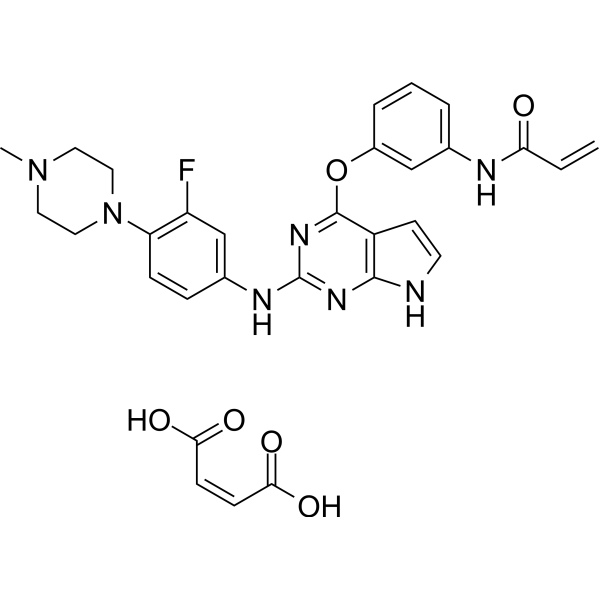
EGFR-IN-55 (Compound 8a) is a potent EGFR inhibitor with IC50 values of 70 nM and 3.9 nM against EGFR WT and EGFR L858R/T790M, respectively. EGFR-IN-55 arrests NCI-H1975 cells in G0/G1 phase and shows anticancer activity .
|
-
- HY-12026
-
|
|
EGFR
|
Cancer
|
|
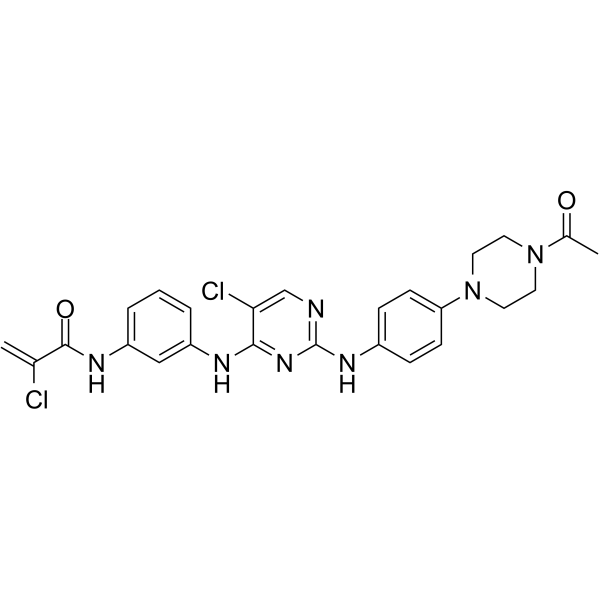
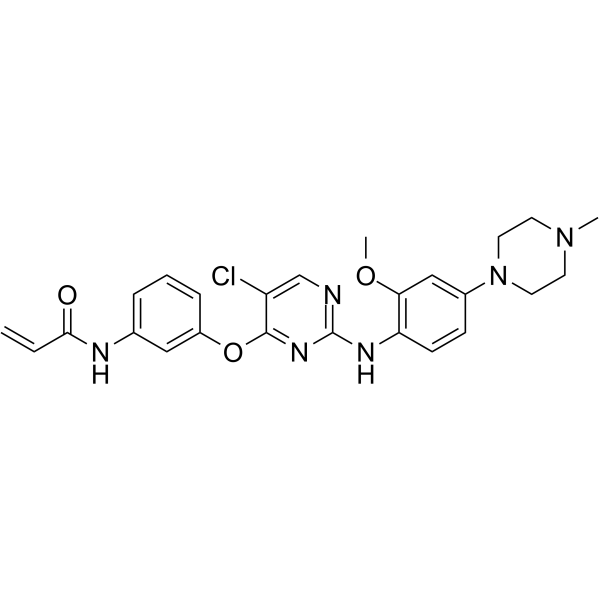
WZ4002 is a mutant selective EGFR inhibitor with IC50s of 2, 8, 3 and 2 nM for EGFR L858R, EGFR L858R/T790M, EGFR E746_A750 and EGFR E746_A750/T790M, respectively.
|
-
- HY-19816
-
|
Abivertinib; AC0010
|
EGFR
Btk
Apoptosis
|
Cancer
|
|
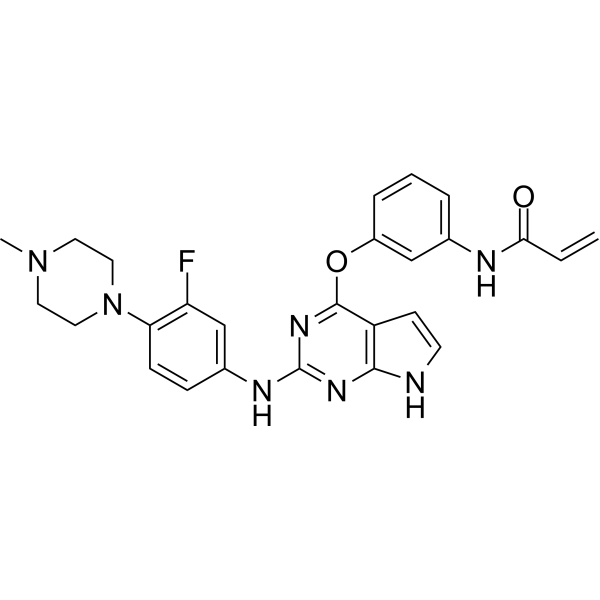
Avitinib (Abivertinib) is a third-generation, irreversible and orally active selective EGFR inhibitor, with IC50 values of 0.18 nM, 0.18 nM, 7.68 nM and against EGFR L858R, EGFR T790M and wild-type EGFR. Avitinib is also a BTK inhibitor that induces apoptosis and inhibits phosphorylation of BTK in mantle cell lymphoma. Avitinib shows anticancer effects .
|
-
- HY-111415
-
|
|
EGFR
|
Cancer
|
|
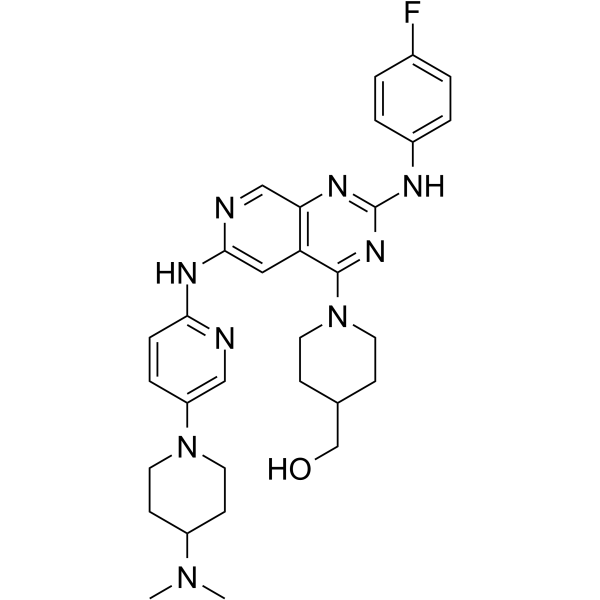
EGFR-IN-5 is a EGFR inhibitor with IC50s of 10.4, 1.1, 34, 7.2 nM for EGFR, EGFR L858R, EGFR L858R/T790M, and EGFR L858R/T790M/C797S, respectively.
|
-
- HY-174826
-
|
|
EGFR
c-Kit
|
Cancer
|
|
EGFR-IN-164 (Compound 4) is a selective and covalent allosteric EGFR inhibitor. EGFR-IN-164 significantly inhibits the activity of EGFR L858R/T790M/C797S kinase (IC50: 48.1 nM) and proliferation of of EGFR-mutant cells. EGFR-IN-164 can be used for drug resistance of cancer research .
|
-

- HY-181479
-
|
|
EGFR
PI3K
Akt
Apoptosis
Reactive Oxygen Species (ROS)
Mitochondrial Metabolism
|
Cancer
|
|
EGFR-IN-196 is an EGFR inhibitor with an IC50 of 105.96 nM. EGFR-IN-196 inhibits EGFR enzymatic activity, reduces phosphorylated PI3K levels, and suppresses downstream EGFR-AKT signaling. EGFR-IN-196 increases intracellular ROS generation, induces mitochondrial depolarisation, and induces apoptosis in cancer cells. EGFR-IN-196 can be used for the research of lung cancer .
|
-

- HY-12001
-
|
|
EGFR
|
Cancer
|
|
WZ3146 is a mutant selective EGFR inhibitor with IC50s of
2, 2, 5, 14 and 66 nM for EGFR L858R, EGFR L858R/T790M, EGFR E746_A750, EGFR E746_A750/T790M and EGFR, respectively.
|
-
- HY-174231
-
|
|
EGFR
Apoptosis
|
Cancer
|
|
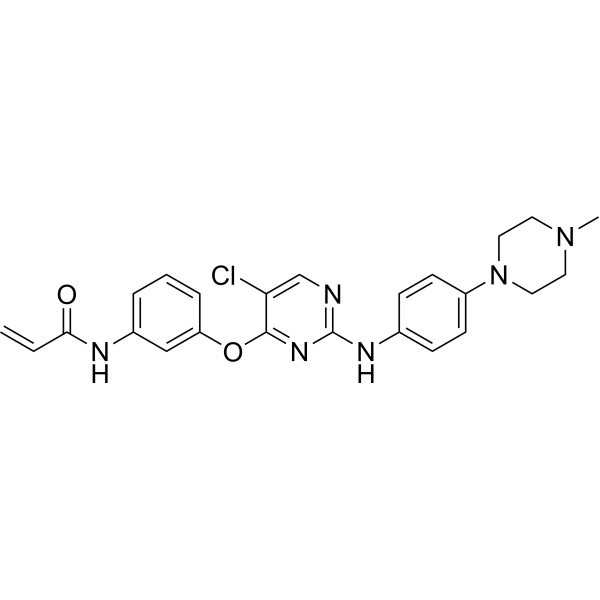
EGFR-IN-163 (Compound 13) is a competitive epidermal growth factor receptor (EGFR) inhibitor (IC50=0.079 μM, selective for HER-2 inhibition). EGFR-IN-163 induces tumor cell apoptosis and cell cycle arrest at G₂/M phase. EGFR-IN-163 is promising for research of estrogen receptor-positive (ER+) breast cancer .
|
-

- HY-168427
-
|
Abivertinib maleate dihydrate; AC0010 maleate dihydrate
|
EGFR
Btk
Apoptosis
|
Cancer
|
|
Avitinib (Abivertinib) maleate dihydrate is a third-generation, irreversible and orally active selective EGFR inhibitor, with IC50 values of 0.18 nM, 0.18 nM, 7.68 nM and against EGFR L858R, EGFR T790M and wild-type EGFR. Avitinib maleate dihydrate is also a BTK inhibitor that induces apoptosis and inhibits phosphorylation of BTK in mantle cell lymphoma. Avitinib maleate dihydrate shows anticancer effects .
|
-

- HY-175837
-
|
|
EGFR
Apoptosis
|
Cancer
|
|
EGFR-IN-172 is a EGFR inhibitor. EGFR-IN-172 effectively inhibits the proliferation of non-small cell lung cancer (NSCLC) cells carrying the L858R, T790M and C797S drug-resistant mutations. EGFR-IN-172 inhibits EGFR phosphorylation, induces cell cycle arrest and apoptosis. EGFR-IN-172 can be used for the study of NSCLC .
|
-

- HY-150782
-
|
|
EGFR
|
Cancer
|
|
UNC-CA359 is a potent epidermal growth factor receptor (EGFR) inhibitor, with an IC50 value of 18 nM. UNC-CA359 exhibits strong anti-tumor activity, can be used to Chordoma research . UNC-CA359 is a click chemistry reagent, it contains an Alkyne group and can undergo copper-catalyzed azide-alkyne cycloaddition (CuAAc) with molecules containing Azide groups.
|
-
- HY-183292
-
|
|
EGFR
|
Cancer
|
|
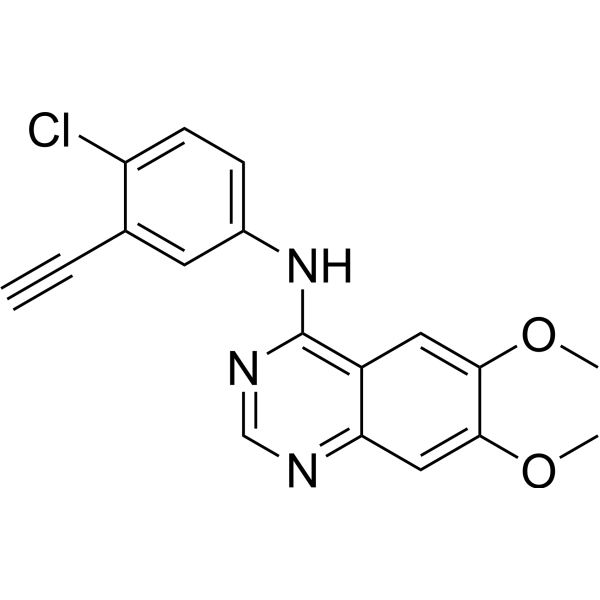
SH-1092 is an orally active EGFR inhibitor with an IC50 of 0.96 nM against EGFR T790M/L858R and an IC50 of 6.1 nM against wild-type EGFR. SH-1092 exhibits anticancer activity against non-small cell lung cancer. SH-1092 can be used in studies related to non-small cell lung cancer .
|
-

- HY-161126
-
|
|
EGFR
|
Cancer
|
|
EGFR-IN-98 (Compound 4c) is a EGFR inhibitor. The IC50 values of L858R/T790M/C797S and Del19/T790M/C797S are 0.277 μM and 0.089 μM, respectively. EGFR-IN 98 can be used in the study of tumors .
|
-
- HY-155118
-
|
|
EGFR
|
Cancer
|
|
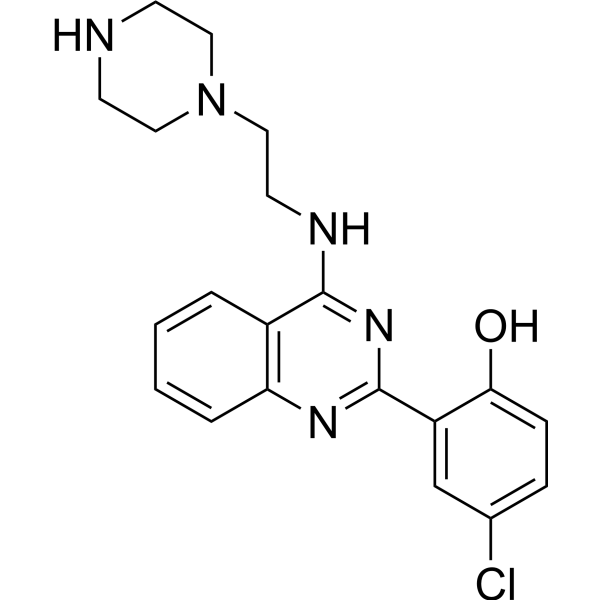
EGFR-IN-81 (Compound 10i) is an EGFR inhibitor. EGFR-IN-81 inhibits EGFR WT and L858R/T790M with IC50s 4.38 nM and 5.69 nM. EGFR-IN-81 has cytotoxic activity against MCF-7 and HCT116 cells with of 2.07 μM and 6.72 μM respectively .
|
-
- HY-175173
-
|
|
EGFR
|
Cancer
|
|
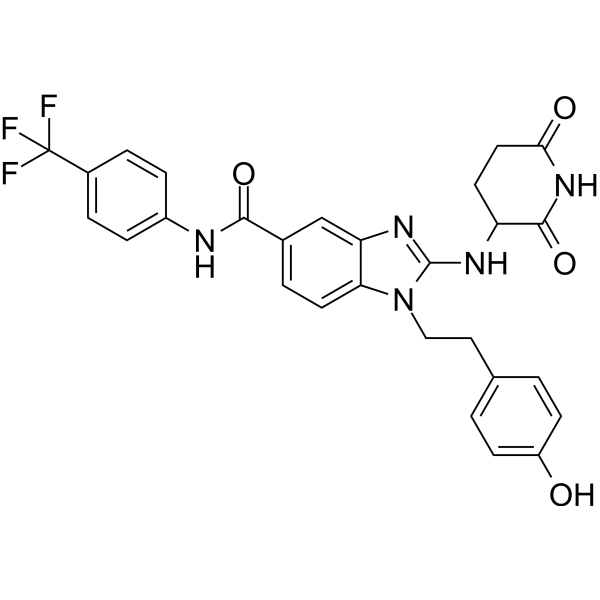
EGFR-IN-166 (Compound 2) is a EGFR inhibitor. EGFR-IN-166 has potent anticancer activity against breast cancer cells with IC50s of 69.63 and 22.84 μM for MCF-7 and MDA-MB-231 cells, respectively. EGFR-IN-166 significantly inhibits cell migration and EGFR expression. EGFR-IN-166 can be used for breast cancer research .
|
-

- HY-179039
-
|
|
EGFR
|
Cancer
|
EGFR-IN-183 (Compound 5q) is an EGFR inhibitor. EGFR-IN-183 strongly binds to EGFR (T790M/L858R) mutants. EGFR-IN-183 exhibits anti-proliferative activity against MDA-MB-231, with an IC50 value of 16.4 μM. EGFR-IN-183 can be used for research on triple-negative breast cancer .
|
-

- HY-169982
-
|
|
EGFR
|
Cancer
|
|
EGFR-IN-136 (compound 21v) is a potent EGFR inhibitor with IC50 values of 20.2, 1.2, 2.3, 12.5 nM for EGFR WT, EGFR LR/TM, EGFR 19D/TM/CS, EGFR LR/TM/CS, respectively. EGFR-IN-136 shows antiproliferative activity. EGFR-IN-136 shows antitumor activity and has the potential for the research of NSCLC .
|
-

- HY-179143
-
|
|
EGFR
Akt
Apoptosis
|
Cancer
|
|
EGFR-IN-185 is a EGFR inhibitor. EGFR-IN-185 exhibits potent activity against non-small cell lung cancer (NSCLC) cells harboring EGFR mutations. EGFR-IN-185 inhibits colony formation and migration, induces G0/G1 arrest, and promots apoptosis, which are associated with the suppression of EGFR and AKT phosphorylation. EGFR-IN-185 can be used for the research of NSCLC .
|
-

- HY-163396
-
|
|
EGFR
Apoptosis
|
Cancer
|
|
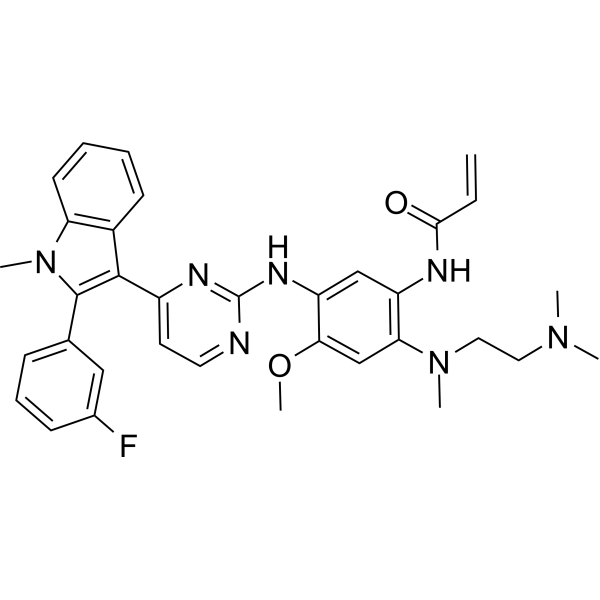
EGFR-IN-107 (compound 3r) is an orally active EGFR inhibitor with IC50 values of 0.4333 μM for EGFR WT and 0.0438 μM for EGFR L858R/T790M. EGFR-IN-107 has anti-proliferative activity and can inhibit the proliferation of H1975 cells and induce their apoptosis. EGFR-IN-107 can be used in cancer research .
|
-
- HY-175608
-
|
|
EGFR
Apoptosis
Bcl-2 Family
MDM-2/p53
|
Cancer
|
|
EGFR-IN-171 is an EGFR inhibitor with an IC50 value of 0.19 μM. EGFR-IN-171 also inhibits vascular endothelial growth factor 2 (VEGFR-2) with an IC50 value of 31.65 μM. EGFR-IN-171 can induce apoptosis and G2/M phase cell cycle arrest. EGFR-IN-171 can be used for cancer research, such as liver and breast cancer .
|
-

- HY-180949
-
|
|
EGFR
ERK
|
Cancer
|
|
EGFR-IN-189 (Compound 7) is a selective covalent epidermal growth factor receptor (EGFR) inhibitor with an IC50 of 200 nM. EGFR-IN-189 can effectively inhibit the C797S mutant type of EGFR. EGFR-IN-189 can inhibit cancer cells proliferation and inhibit EGFR phosphorylation and downstream ERK1/2 phosphorylation. EGFR-IN-189 can be used for research of nonsmall cell lung cancer .
|
-

- HY-181775
-
|
|
VEGFR
c-Met/HGFR
EGFR
|
Cardiovascular Disease
|
|
VEGFR-2/c-Met/EGFR-IN-1 is a VEGFR-2/c-Met/EGFR inhibitor with IC50 values of 0.014 μM, 0.072 μM, and 0.94 μM, respectively. c-Met-IN-27 inhibits neovascularization in the chick chorioallantoic membrane (CAM) assay and exhibits in vivo anti-angiogenic activity. c-Met-IN-27 can be used in angiogenesis-related research .
|
-

- HY-168073
-
|
|
EGFR
VEGFR
Apoptosis
Microtubule/Tubulin
|
Cancer
|
|
EGFR/VEGFR2-IN-1 (Compound 10e) is a VEGFR-2 and EGFR inhibitor (IC50: 0.26 and 0.14 μM respectively). EGFR/VEGFR2-IN-1 inhibits tubulin polymerization with an IC50 of 40.9 μM. EGFR/VEGFR2-IN-1 induces apoptosis. EGFR/VEGFR2-IN-1 can be used for research of antileukemia and antilymphoma .
|
-

- HY-15164A
-
|
BPI-2009
|
EGFR
|
Infection
Neurological Disease
Metabolic Disease
Cancer
|
|
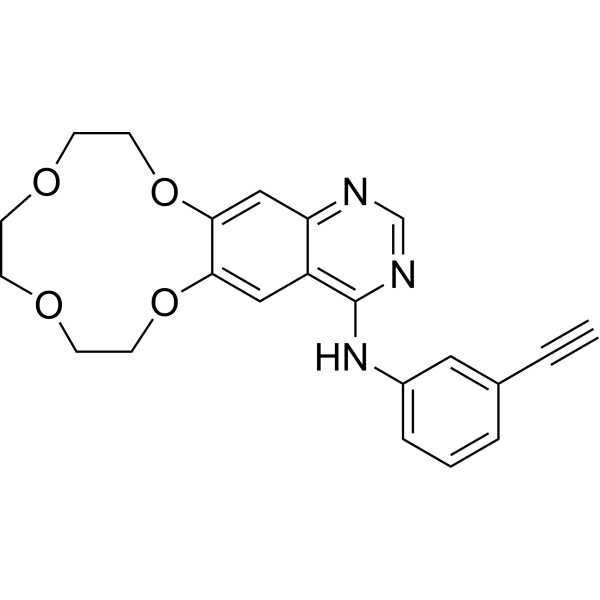
Icotinib (BPI-2009) is a potent, CNS-penetrant and specific EGFR inhibitor with an IC50 of 5 nM; also inhibits mutant EGFR L858R, EGFR L858R/T790M, EGFR T790M and EGFR L861Q. Icotinib is a click chemistry reagent, it contains an Alkyne group and can undergo copper-catalyzed azide-alkyne cycloaddition (CuAAc) with molecules containing Azide groups.
|
-
- HY-173188
-
|
|
EGFR
Akt
PERK
JNK
p38 MAPK
|
Cancer
|
|
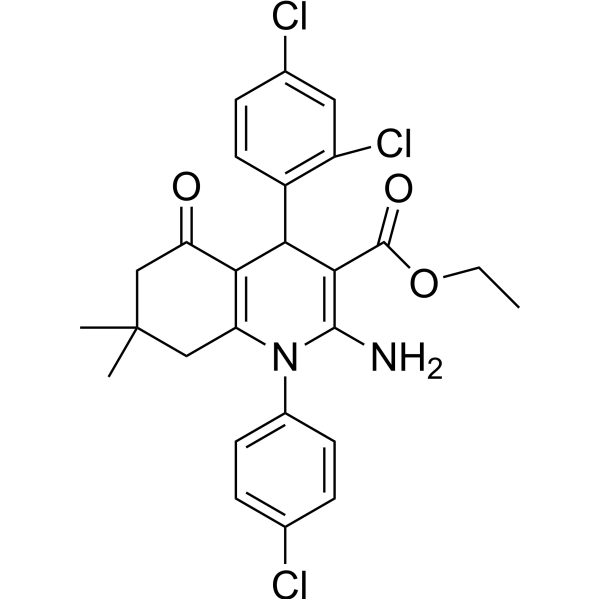
EGFR-IN-154 (compound 4c) is an EGFR inhibitor with EC50 values of 0.16 μM, 21.73 μM and 41.56 μM against EGFR Del19, EGFR WT and EGFR L858R, respectively. EGFR-IN-154 shows anticancer activity on various cance cell lines. EGFR-IN-154 induces mitochondrial apoptosis, and decreases pERK1/2 and pAkt levels, but increases pJNK and pp38 levels .
|
-

- HY-103442R
-
|
DAPH (Standard)
|
Reference Standards
EGFR
Amyloid-β
|
Neurological Disease
Cancer
|
|
CGP52411 (Standard) is the analytical standard of CGP52411 (HY-103442). This product is intended for research and analytical applications. CGP52411 (DAPH) is a high selective, potent, orally active and ATP-competitive EGFR inhibitor with an IC50 of 0.3 μM. CGP52411 blocks the toxic influx of Ca2+ ions into neuronal cells, and dramatic inhibits and reverses the formation of β-amyloid (Aβ42) fibril aggregates associated with Alzheimer's disease .
|
-

- HY-162062
-
|
|
EGFR
|
Cancer
|
|
EGFR WT/T790M/L858R-IN-1 (compound 10d) is a potent EGFR inhibitor, with IC50s of 0.097, 0.280, and 0.051?μM for EGFR WT, EGFR T790M, and EGFR L858R, respectively. EGFR WT/T790M/L858R-IN-1 can be used for the research of cancer .
|
-
- HY-15164
-
|
BPI-2009H
|
EGFR
|
Infection
Neurological Disease
Metabolic Disease
Cancer
|
|
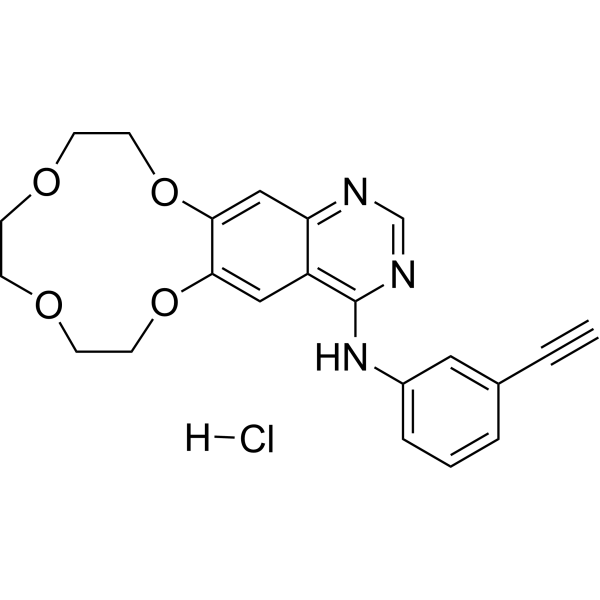
Icotinib Hydrochloride (BPI-2009) is a potent, CNS-penetrant and specific EGFR inhibitor with an IC50 of 5 nM; also inhibits mutant EGFR L858R, EGFR L858R/T790M, EGFR T790M and EGFR L861Q. Icotinib (Hydrochloride) is a click chemistry reagent, it contains an Alkyne group and can undergo copper-catalyzed azide-alkyne cycloaddition (CuAAc) with molecules containing Azide groups.
|
-
- HY-112870AS
-
|
Alflutinib-d3 mesylate; Furmonertinib-d3 mesylate; AST2818-d3 mesylate
|
Isotope-Labeled Compounds
EGFR
|
Inflammation/Immunology
Cancer
|
|
Firmonertinib-d3 (Alflutinib-d3) mesylate is the deuterium labeled Firmonertinib mesylate (HY-112870A). Firmonertinib (Alflutinib; Furmonertinib) mesylate is is an orally active, mutant-selective, and blood-brain barrier penetrant EGFR inhibitor. Firmonertinib mesylate inhibits EGFR active mutations as well as the T790M acquired resistant mutation. Firmonertinib mesylate has the potential for the research of cancer diseases, especially advanced non-small cell lung cancer (NSCLC) with EGFR ex20ins mutation.
|
-

- HY-146210
-
|
|
EGFR
|
Cancer
|
|
EGFR-IN-50 (Compound 9h) is a potent EGFR inhibitor against L858R resistance mutation (TEL-EGFR-L858R-BaF3: GI50=8 nM, TEL-EGFR-T790M-L858R-BaF3: GI50=6.03 μM). EGFR-IN-50 shows anti-proliferative activity to cancer cells .
|
-
- HY-157166
-
|
|
EGFR
|
Cancer
|
|
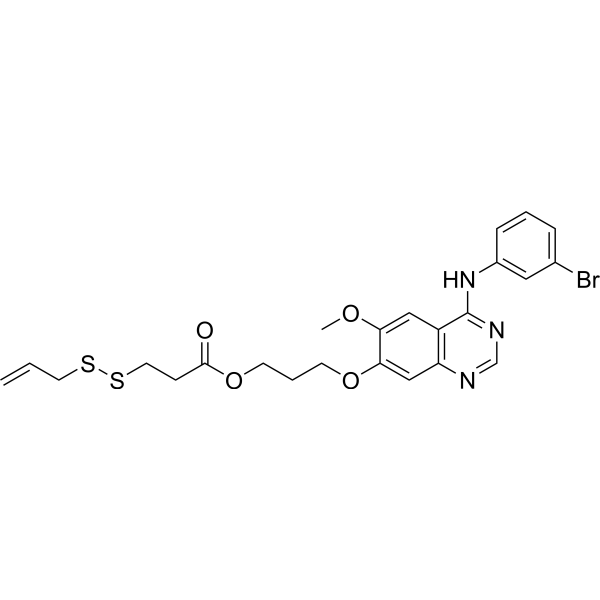
EGFR kinase inhibitor 2 (compound A-7) is a potent EGFR inhibitor targeting EGFRL858R/T790M/C797S and EGFRDel19/T790M/C797S mutants. EGFR kinase inhibitor 2 has the potential to address acquired resistance in the treatment of non-small cell lung cancer .
|
-
- HY-157526
-
|
|
EGFR
Apoptosis
|
Cancer
|
|
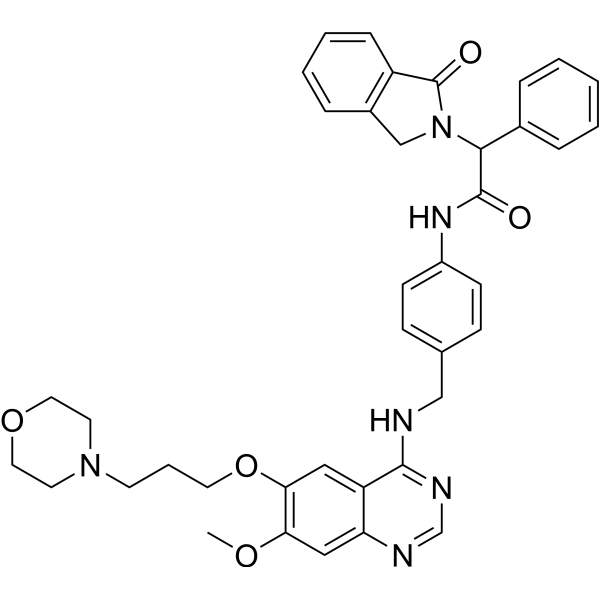
EGFR-TK-IN-1 (compound 7o) is a potent mutant EGFR inhibitor with IC50 of 8.5 nM an 9.3 nM against EGFR L858R/T790M and EGFR Del19.EGFR-TK-IN-1 showes strong antiproliferative effects against EGFR mutant-driven non-small cell lung cancer (NSCLC) cells and induces cell apoptosis .
|
-
- HY-178824
-
|
|
EGFR
|
Cancer
|
|
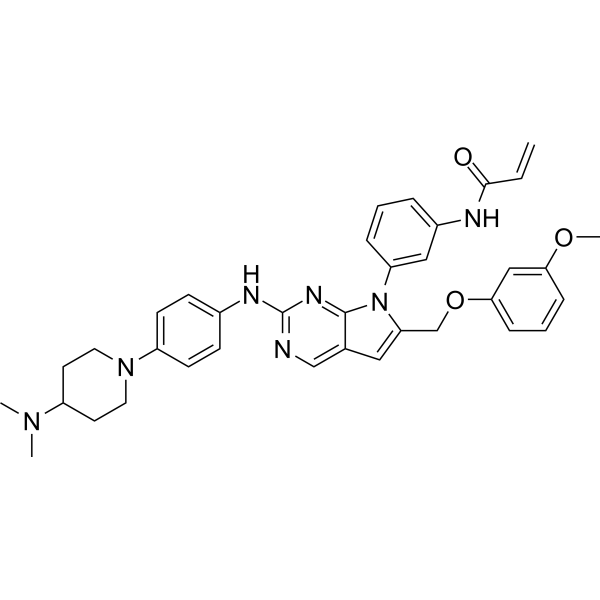
EGFR-IN-180 (Compound L15) is an EGFR inhibitor. EGFR-IN-180 shows inhibitory activity against EFGR and EGFR harboring the L858R/T790M/C797S triple drug-resistant mutation, with IC50 values of 80.96 nM and 16.43 nM, reapectively. EGFR-IN-180 can be used for the study of non-small cell lung cancer (NSCLC) .
|
-

- HY-104066A
-
|
Xiliertinib tartrate; HMPL-309 tartrate
|
EGFR
|
Cancer
|
|
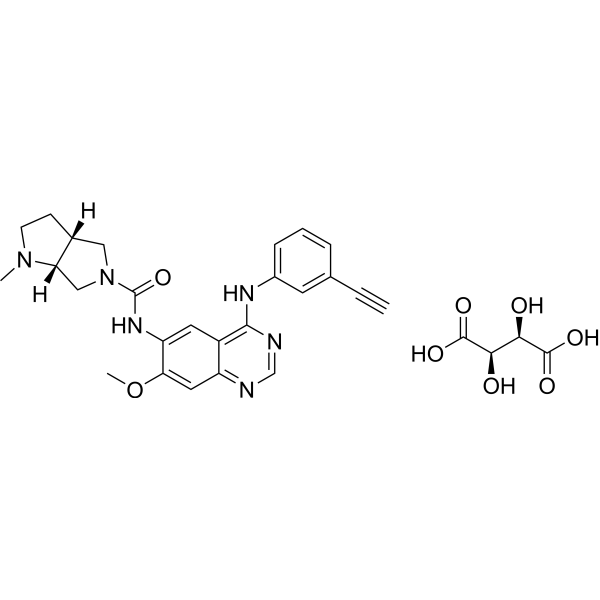
Theliatinib (Xiliertinib) tartrate is a potent, ATP-competitive, orally active and highly selective EGFR inhibitor with a Ki of 0.05 nM and an IC50 of 3 nM. Theliatinib has an IC50 of 22 nM for EGFR T790M/L858R mutant. Theliatinib shows >50-fold selectivity for EGFR than other kinases . Theliatinib (tartrate) is a click chemistry reagent, it contains an Alkyne group and can undergo copper-catalyzed azide-alkyne cycloaddition (CuAAc) with molecules containing Azide groups.
|
-
- HY-178005
-
|
|
EGFR
VEGFR
Apoptosis
|
Cancer
|
|
EGFR-IN-174 is a potent EGFR inhibitor (IC50 = 0.17 μM) and also displays VEGFR-2 inhibition (IC50 = 0.2007 μM). EGFR-IN-174 exhibits potent anticancer effects with low cytotoxicity to normal cells. EGFR-IN-174 induces G2/M and Pre-G1 phase arrest and significantly triggers apoptosis. EGFR-IN-174 can be used in cancer research, such as colorectal carcinoma, hepatocellular carcinoma, and breast cancer .
|
-

- HY-15164R
-
|
BPI-2009H (Standard)
|
EGFR
Reference Standards
|
Cancer
|
|
Icotinib (Hydrochloride) (Standard) is the analytical standard of Icotinib (Hydrochloride). This product is intended for research and analytical applications. Icotinib Hydrochloride (BPI-2009) is a potent and specific EGFR inhibitor with an IC50 of 5 nM; also inhibits mutant EGFRL858R, EGFRL858R/T790M, EGFRT790M and EGFRL861Q. Icotinib (Hydrochloride) is a click chemistry reagent, it contains an Alkyne group and can undergo copper-catalyzed azide-alkyne cycloaddition (CuAAc) with molecules containing Azide groups.
|
-

- HY-142283
-
|
|
Isotope-Labeled Compounds
EGFR
|
Cancer
|
|
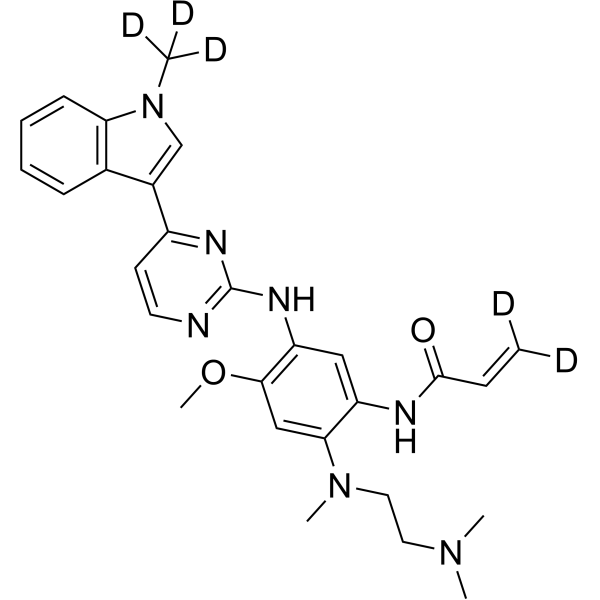
Dosimertinib-d3-d3 is a potent and orally active EGFR inhibitor. Dosimertinib-d3-d3 decreases the expression of p-EGFR and p-ERK protein levels. Dosimertinib-d3-d3 shows antiproliferative and anti-tumor activity. Dosimertinib-d3-d3 has the potential for the research of non-small-cell lung cancer (NSCLC) .
|
-
- HY-116091
-
|
|
EGFR
Akt
ERK
|
Cancer
|
|
EGFR-IN-451 is an EGFR inhibitor with an IC50 value of 0.02 nM. EGFR-IN-451 also inhibits mutant EGFR L858R, EGFR T790M, and EGFR L858R/T790M with IC50 values of 0.26-34 nM. EGFR-IN-451 inhibits AKT and ERK activation and inhibits proliferation of EGFR-mutant cancer cells. EGFR-IN-451 can be used for the research of EGFR-driven cancer .
|
-

- HY-19617A
-
|
|
EGFR
|
Cancer
|
|
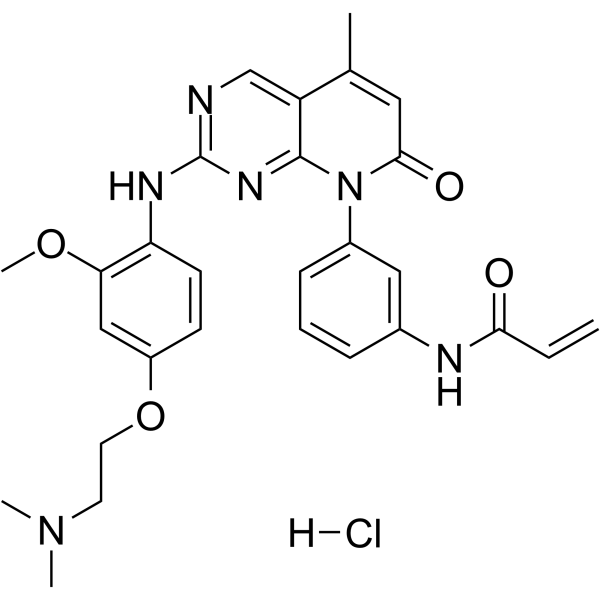
EGFR-IN-1 hydrochloride is an orally active and irreversible L858R/T790M mutant selective EGFR inhibitor. EGFR-IN-1 hydrochloride potently inhibits Gefitinib-resistant EGFR L858R, T790M with 100-fold selectivity over wild-type EGFR. EGFR-IN-1 hydrochloride displays strong antiproliferative activity against the H1975 cells and the first line mutant HCC827 cells. Antitumor activity .
|
-
- HY-149695
-
|
|
EGFR
|
Cancer
|
|
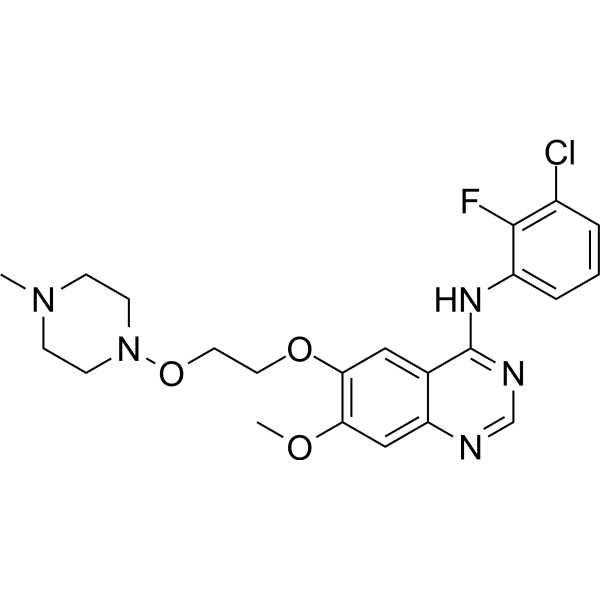
EGFR-IN-91 (compound 9) is an orally available EGFR inhibitor with blood-brain barrier penetrability. EGFR-IN-91 inhibits EGFR L858R/C797S and EGFR exon 19del/C797S, inducing tumor regression in xenograft (PDX) mouse models. EGFR-IN-91 has the potential to inhibit localized and metastatic non-small cell lung cancer (NSCLC) driven by EGFR mutants .
|
-
- HY-182378
-
|
|
|
Cancer
|
|
Vps34-IN-5 is an orally active VPS34 inhibitor, 98% target inhibition, and an IC50 categorized as B. Vps34-IN-5 induces additive or synergistic anti-proliferative activity with EGFR inhibitors in cancer cells. Vps34-IN-5 is administered orally alone or with Erlotinib (HY-50896) in mouse xenograft models. Vps34-IN-5 can be used for the research of non-small cell lung cancer .
|
-

- HY-13464
-
|
Brigatinib analog
|
Anaplastic lymphoma kinase (ALK)
EGFR
|
Cancer
|
|
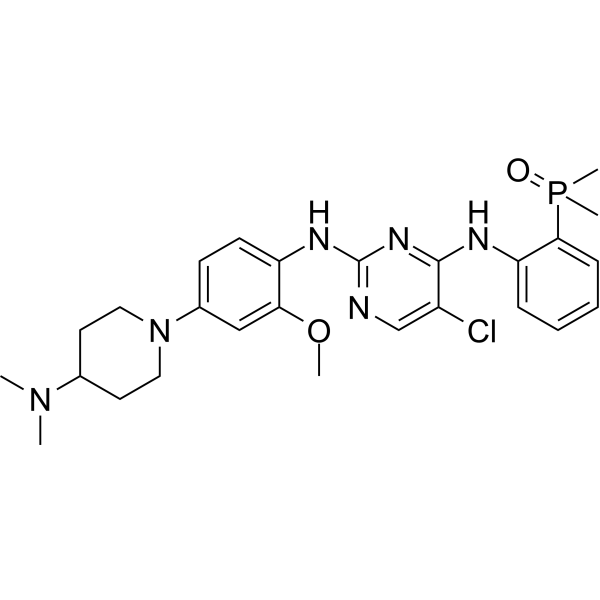
ALK-IN-1 is an orally active, blood-brain barrier-permeable ALK and EGFR inhibitor. ALK-IN-1 binds to and inhibits ALK kinase, ALK fusion proteins, and wild-type and mutant EGFR variants, thereby disrupting their corresponding signaling pathways. ALK-IN-1 can suppress the growth and proliferation of tumor cells and exhibits potential inhibitory activity against mutant EGFR. ALK-IN-1 can be used in the research of non-small-cell lung cancer .
|
-
- HY-104066
-
|
Xiliertinib; HMPL-309
|
EGFR
|
Cancer
|
|
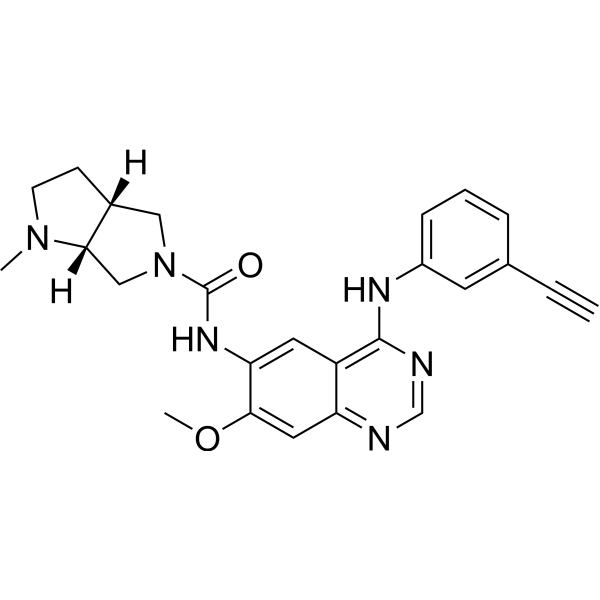
Theliatinib (Xiliertinib) is a potent, ATP-competitive, orally active and highly selective EGFR inhibitor with a Ki of 0.05 nM and an IC50 of 3 nM. Theliatinib has an IC50 of 22 nM for EGFR T790M/L858R mutant. Theliatinib shows >50-fold selectivity for EGFR than other kinases . Theliatinib is a click chemistry reagent, it contains an Alkyne group and can undergo copper-catalyzed azide-alkyne cycloaddition (CuAAc) with molecules containing Azide groups.
|
-
- HY-179148
-
|
|
EGFR
Apoptosis
|
Cancer
|
|
EGFR-IN-184 (compound 5p) is an EGFR inhibitor (IC50 = 65.6 nM). EGFR-IN-184 has anti proliferative activity against various tumor cells, such as T47D (IC50 = 15 μM), PC3 (IC50 = 55 μM), HCT116 (IC50 = 36 μM) cells. EGFR-IN-184 can significantly induce cell apoptosis and block the cell cycle. EGFR-IN-184 can be used for research on various types of cancer .
|
-

- HY-181777
-
|
|
EGFR
|
Cancer
|
|
Mal-Pip-ValCit-PAB-AZ7550 is a prodrug of EGFR inhibitor. Mal-Pip-ValCit-PAB-AZ7550 selectively binds covalently to albumin via its maleimide moiety. Mal-Pip-ValCit-PAB-AZ7550 exhibits potent in vivo anticancer activity in non-small cell lung cancer xenograft models. Mal-Pip-ValCit-PAB-AZ7550 can be used in research related to non-small cell lung cancer .
|
-

- HY-159512
-
|
|
EGFR
Apoptosis
|
Cancer
|
|
EGFR kinase inhibitor 7 (compound 18i) is an EGFR inhibitor (IC50=42.3 nM) with anticancer activity. EGFR kinase inhibitor 7 has significant in vitro cytotoxicity and apoptosis induction ability. EGFR kinase inhibitor 7 has antiproliferative activity against human colon cancer cell line HCT116 and human non-small cell lung cancer cell line A549, with IC50 values of 4.82 µM and 1.43 µM, respectively .
|
-

- HY-165394
-
|
|
COX
EGFR
PD-1/PD-L1
PI3K
Akt
|
Inflammation/Immunology
Cancer
|
|
Melafolone is a potent dual COX-2/EGFR inhibitor with IC50s of 13.2 μM (COX-2) and 17.4 μM (EGFR). Melafolone enhances the effect of anti-PD-1 through vascular normalization and PD-L1 downregulation via the PI3K/Akt pathway in Lewis lung carcinoma (LLC) and CMT167 models. Melafolone can be used for lung cancer research .
|
-

- HY-172621
-
|
|
EGFR
|
Cancer
|
|
EGFR-IN-159 (compound 12), a dihydropyrimidine, is a potent EGFR inhibitor with an IC50 value of 29.00 nM. EGFR-IN-159 exhibits dose-dependent inhibition against EGFR and HER2. EGFR-IN-159 shows cytotoxicity against MCF-7 breast cancer cells and Vero cells with IC50 values of 16.07 μg/mL and 35.98 μg/mL, respectively. EGFR-IN-159 has no BBB permeation. EGFR-IN-159 shows appreciable anti-cancer activity .
|
-

- HY-101450
-
|
|
EGFR
|
Cancer
|
|
PF-6274484 is a potent EGFR inhibitor with Kis of 0.14 nM and 0.18 nM for EGFR-L858R/T790M and WT EGFR, respectively. PF-6274484 inhibits EGFR-L858R/T790M autophosphorylation in H1975 tumor cells and EGFR WT in A549 tumor cells with IC50s of 6.6 and 5.8 nM, respectively .
|
-
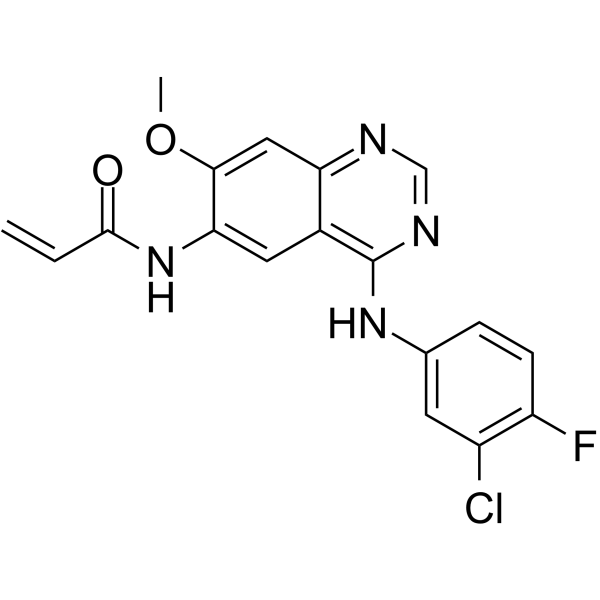
- HY-17499
-
|
|
EGFR
Apoptosis
|
Cancer
|
|
EGFR-IN-12 is a 4,6-disubstituted pyrimidine and is a potent, ATP-competitive, irreversible and highly selective EGFR inhibitor with an IC50of 21 nM. EGFR-IN-12 also inhibits mutant EGFR L858R and EGFR L861Q with IC50s of 63 nM and 4 nM, respectively. EGFR-IN-12 displays strong selectivity for EGFR over HER4 (IC50 = 7640 nM) and a panel of 55 other kinases. EGFR-IN-12 induces cells apoptosis and has antitumor activity .
|
-
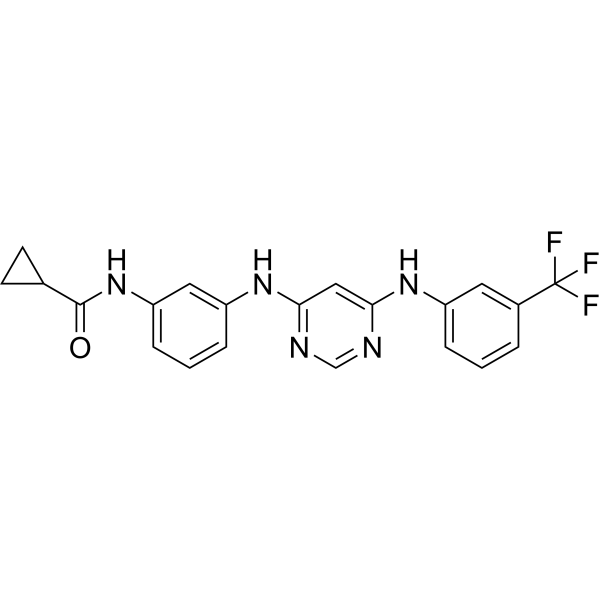
- HY-147802
-
|
|
EGFR
Apoptosis
|
Cancer
|
|
EGFR-IN-59 (Compound 8c) is a EGFR inhibitor (IC50=190 nM) and apoptosis inducer. EGFR-IN-59 exhibits cytotoxicity against non-small lung cancer cell lines (A549) and normal lung fibroblasts (WI38) with IC50s of 8.62 and 52.6 µM, respectively. EGFR-IN-59 can be used for the research of various cancers such as non-small cell lung cancer (NSCLC), head and neck cancer, breast cancer and colorectal cancer .
|
-
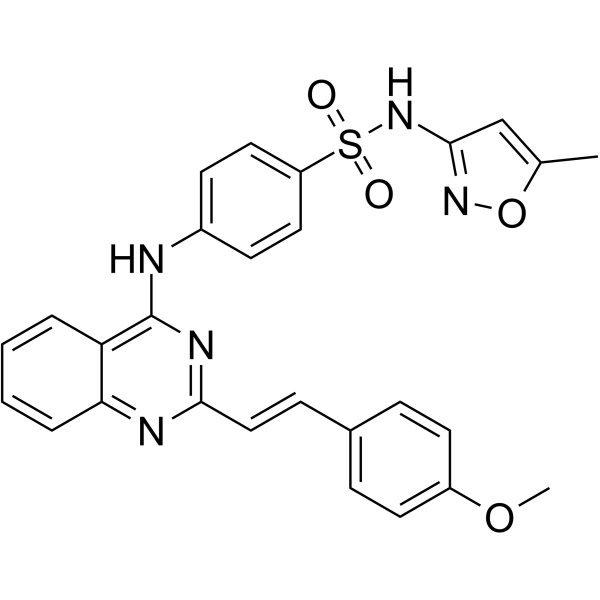
- HY-10346AR
-
|
MP-412 free base (Standard)
|
Reference Standards
EGFR
|
Cancer
|
|
AV-412 free base (Standard) is the analytical standard of AV-412 free base (HY-10346A). This product is intended for research and analytical applications. AV-412 free base (MP-412 free base) is an EGFR inhibitor with IC50s of 0.75, 0.5, 0.79, 2.3, 19 nM for EGFR, EGFRL858R, EGFRT790M, EGFRL858R/T790M and ErbB2, respectively.
|
-

- HY-180196
-
|
|
EGFR
Bcl-2 Family
CDK
Atg8/LC3
Apoptosis
Autophagy
|
Cancer
|
|
EGFR-IN-187 (Compound 4d) is a selective EGFR inhibitor with an IC50 of 25.41 μM. EGFR-IN-187 can cause cancer cells S amd G2/M phase arrest and induce apoptosis and autophagy. EGFR-IN-187 upregulates CCNE1, Bax, LC3B-II and P27 expression and downregulates CCNA1 and Bcl-2 levels. EGFR-IN-187 can be used for the research of cancer, such as lung cancer .
|
-

- HY-135805
-
|
|
EGFR
|
Cancer
|
|
JBJ-04-125-02 is a potent, mutant-selective, allosteric and orally active EGFR inhibitor with an IC50 of 0.26 nM for EGFR L858R/T790M. JBJ-04-125-02 can inhibit cancer cell proliferation and EGFR L858R/T790M/C797S signaling. JBJ-04-125-02 has anti-tumor activities .
|
-
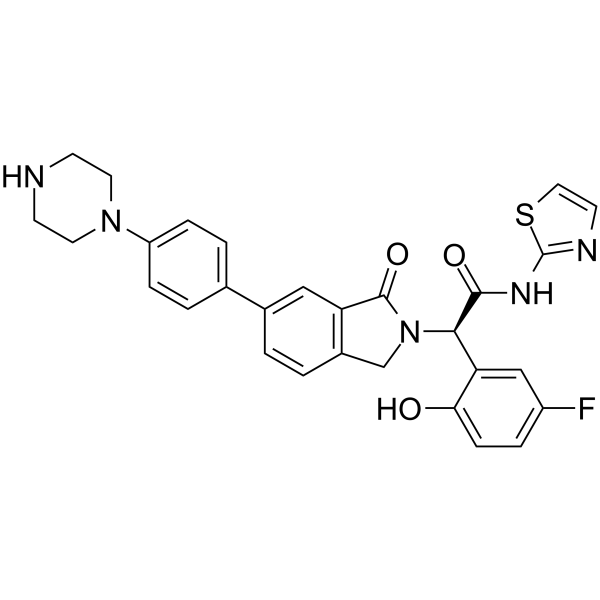
- HY-142519
-
|
|
EGFR
|
Cancer
|
|
EGFR-IN-27 is a potent EGFR inhibitor with IC50s of <50 nM for EGFR Del, L858R, Del/T790M, L858R/T790M, Del/T790M/C797S, and L858R/T790M/C797S, respectively (WO2021249324A1, compound 511) .
|
-
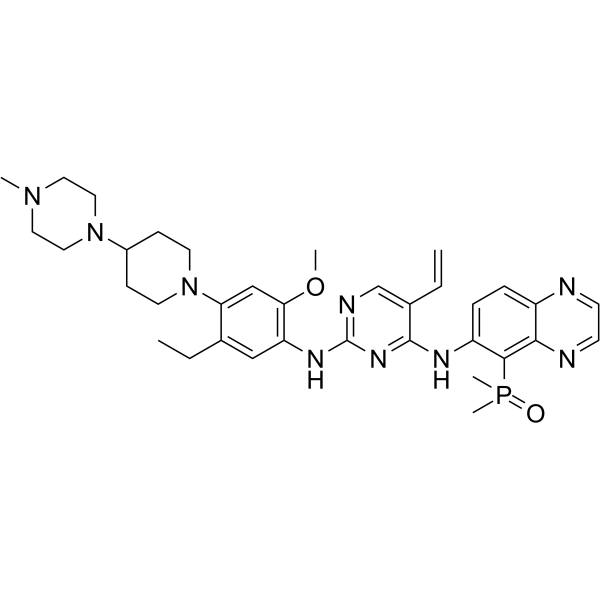
- HY-153268
-
|
BDTX-1535; EGFR-IN-76
|
EGFR
|
Infection
Neurological Disease
Metabolic Disease
Cancer
|
|
Silevertinib (BDTX-1535) is an irreversible, brain-penetrant, selective and orally active EGFR inhibitor with wild-type EGFR-sparing. Silevertinib targets key EGFR resistance mutations, including the kinase domain (C797S, L718Q, G724S, S768I), extracellular domain (EGFRvIII, A289X), and EGFR amplification. Silevertinib exerts anti-tumor activity with well tolerated in vivo. Silevertinib can be used for non-small cell lung cancer (NSCLC) and glioblastoma (GBM) research .
|
-
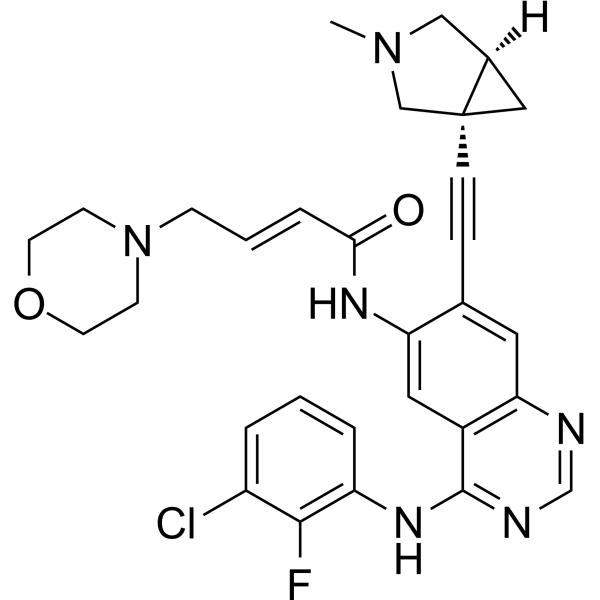
- HY-172966
-
|
|
EGFR
|
Cancer
|
|
EG31 is an EGFR inhibitor. EG31 effectively inhibits the proliferation of triple-negative breast cancer (TNBC) cells (GI50 values of MDA-MB-231 and Hs578T cells are 498.90 nM and 740.73 nM, respectively) and induces apoptosis by inhibiting the EGFR signaling pathway. EG31 still maintains antiproliferative activity against 5-fluorouracil (5-FU)-resistant TNBC cells (GI50: 519.5 nM). EG31 can be used to study TNBC resistance .
|
-

- HY-W007977
-
|
|
Drug Intermediate
|
Cancer
|
|
4-Chloro-6,7-bis(2-methoxyethoxy)quinazoline (Compound 11 and 15) is a building block and synthetic intermediate, which can be used as a precursor in the synthesis of receptor tyrosine kinase (RTK) inhibitors, dual RTK and histone deacetylase (HDAC) inhibitors, and anticancer agents. 4-Chloro-6,7-bis(2-methoxyethoxy)quinazoline can also be used to synthesize EGFR inhibitors, including Erlotinib (HY-50896), with antiproliferative activity .
|
-

- HY-15164AR
-
|
BPI-2009 (Standard)
|
Reference Standards
EGFR
|
Cancer
|
|
Icotinib (Standard) is the analytical standard of Icotinib. This product is intended for research and analytical applications. Icotinib (BPI-2009) is a potent and specific EGFR inhibitor with an IC50 of 5 nM; also inhibits mutant EGFR L858R, EGFR L858R/T790M, EGFR T790M and EGFR L861Q. Icotinib is a click chemistry reagent, it contains an Alkyne group and can undergo copper-catalyzed azide-alkyne cycloaddition (CuAAc) with molecules containing Azide groups.
|
-

- HY-19617B
-
|
|
EGFR
|
Cancer
|
|
EGFR-IN-1 TFA is an orally active and irreversible L858R/T790M mutant selective EGFR inhibitor. EGFR-IN-1 TFA potently inhibits Gefitinib-resistant EGFR L858R, T790M with 100-fold selectivity over wild-type EGFR. EGFR-IN-1 TFA displays strong antiproliferative activity against the H1975 cells and the first line mutant HCC827 cells. Antitumor activity .
|
-
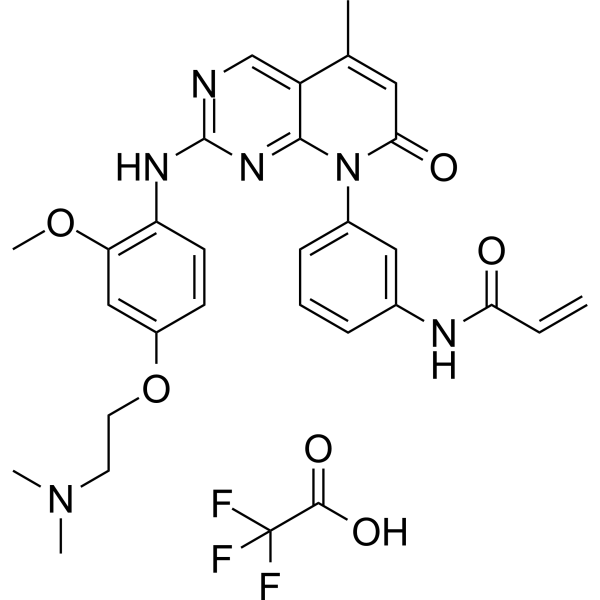
- HY-19617
-
|
|
EGFR
|
Cancer
|
|
EGFR-IN-1 (compound 24) is an orally active and irreversible L858R/T790M mutant selective EGFR inhibitor. EGFR-IN-1 potently inhibits Gefitinib-resistant EGFR L858R, T790M with 100-fold selectivity over wild-type EGFR. EGFR-IN-1 displays strong antiproliferative activity against the H1975 cells and the first line mutant HCC827 cells. Antitumor activity .
|
-
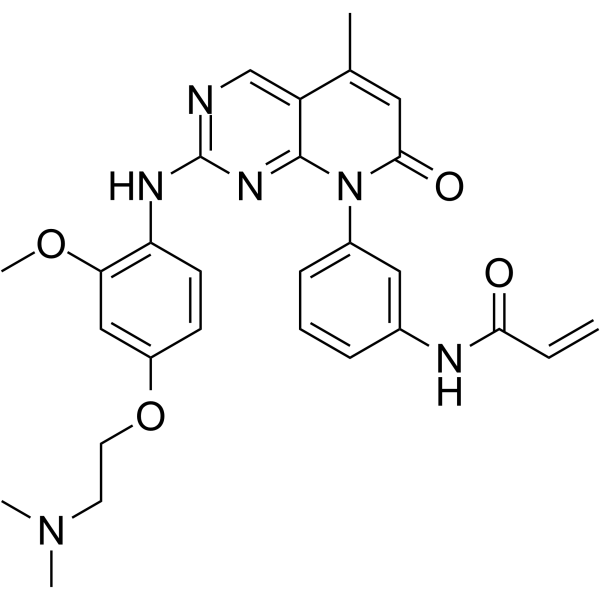
- HY-15164AS
-
|
BPI-2009-d4
|
Isotope-Labeled Compounds
|
Others
|
|
Icotinib-d4 is the deuterium-labeled Icotinib (HY-15164A). Icotinib-d4 (BPI-2009) is a potent and specific EGFR inhibitor with an IC50 of 5 nM; also inhibits mutant EGFR L858R, EGFR L858R/T790M, EGFR T790M and EGFR L861Q. Icotinib-d4 is a click chemistry reagent, itcontains an Alkyne group and can undergo copper-catalyzed azide-alkyne cycloaddition (CuAAc) with molecules containing Azide groups.
|
-
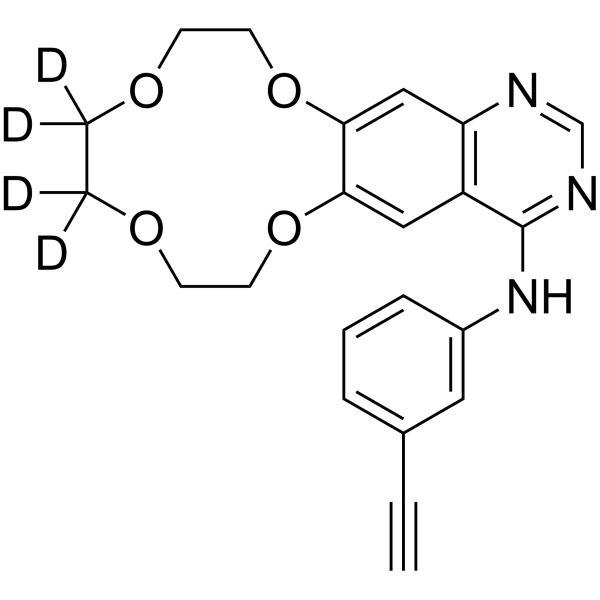
- HY-168623
-
|
|
EGFR
Apoptosis
Necroptosis
Bcl-2 Family
Caspase
MDM-2/p53
|
Cancer
|
|
EGFR-IN-134 (compound 3f), a triazolo[3,4-a]isoquinoline derivative, is a potent EGFR inhibitor with an IC50 of 0.023 µM. EGFR-IN-134 induces apoptosis and necrosis. EGFR-IN-134 initiates cell cycle arrest at the G2/M and pre-G1 phases, downregulates anti-apoptotic protein Bcl2 and upregulates pro-apoptotic proteins: p53, Bax, and caspases 3, 8, and 9. EGFR-IN-134 shows antiproliferative and anticancer activity .
|
-

- HY-104066R
-
|
Xiliertinib (Standard); HMPL-309 (Standard)
|
Reference Standards
EGFR
|
Cancer
|
|
Theliatinib (Standard) is the analytical standard of Theliatinib (HY-104066). This product is intended for research and analytical applications. Theliatinib (Xiliertinib) is a potent, ATP-competitive, orally active and highly selective EGFR inhibitor with a Ki of 0.05 nM and an IC50 of 3 nM. Theliatinib has an IC50 of 22 nM for EGFR T790M/L858R mutant. Theliatinib shows >50-fold selectivity for EGFR than other kinases . Theliatinib is a click chemistry reagent, it contains an Alkyne group and can undergo copper-catalyzed azide-alkyne cycloaddition (CuAAc) with molecules containing Azide groups.
|
-

- HY-161269
-
|
|
EGFR
|
Cancer
|
|
EGFR-IN-101 (I-10) is a 2-phenylamino pyrimidine derivative. EGFR-IN-101 is a EGFR inhibitor. The IC50 values for EGFR L858R/T790M/C797S and Ba/F3-EGFR L858R/T790M/C797S are 33.26 and 106.4 nM, respectively. EGFR-IN-101 can be used IN the study of non-small cell lung cancer (NSCLC) .
|
-
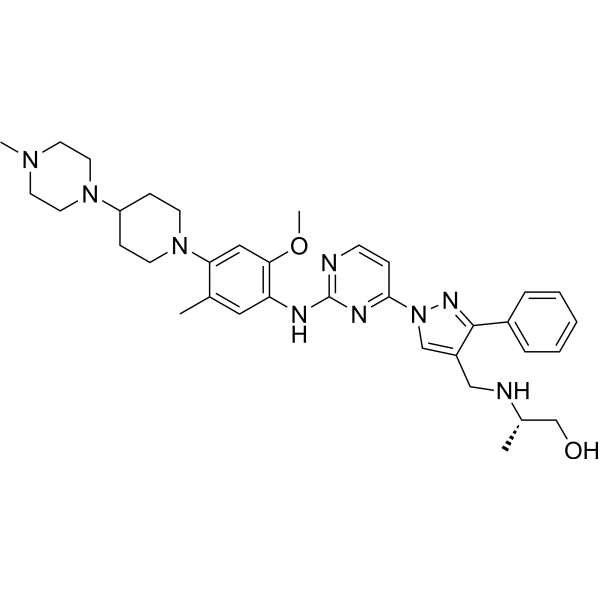
- HY-N1988
-
|
Hemslecin A
|
Survivin
Apoptosis
EGFR
Caspase
p38 MAPK
Autophagy
MEK
Raf
ERK
STAT
CaMK
|
Inflammation/Immunology
Cancer
|
|
Cucurbitacin IIa (Hemslecin A) is an orally active, blood-brain barrier-permeable EGFR inhibitor with an IC50 of 1.455 nM against human EGFR. Cucurbitacin IIa induces caspase-3-dependent apoptosis, downregulates survivin expression, enhances autophagy levels, disrupts the actin cytoskeleton via actin aggregation, arrests the cell cycle at the G2/M phase, and exerts anti-inflammatory activity by inhibiting the EGFR-MAPK signaling pathway. Cucurbitacin IIa can be used in the research of inflammation-related diseases, depression, and cancers such as non-small cell lung cancer .
|
-
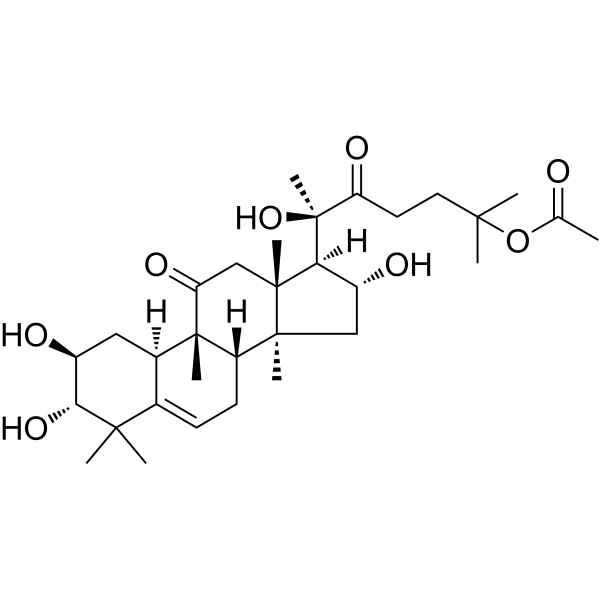
- HY-150610
-
|
|
EGFR
|
Cancer
|
|
EGFR-IN-69 (compound 17g) is a potent EGFR inhibitor, with IC50 values of 4.3, 6.6 and 25.6 nM against EGFR L858R/T790M/C797S, EGFR L858R/T790M, and EGFR 19del/T790M/C797S, respectively. EGFR-IN-69 can be used for non-small-cell-lung-cancer (NSCLC) research .
|
-
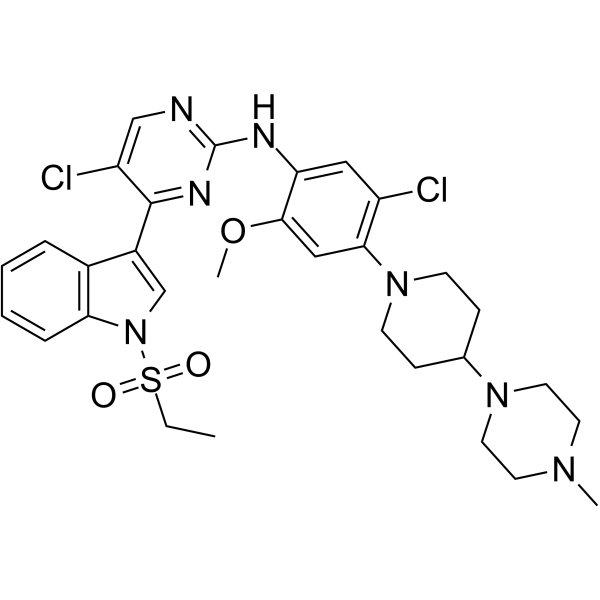
- HY-13464R
-
|
Brigatinib analog (Standard)
|
Reference Standards
Anaplastic lymphoma kinase (ALK)
EGFR
|
Cancer
|
|
ALK-IN-1 (Standard) is the analytical standard of ALK-IN-1 (Brigatinib analog) (HY-13464). This product is intended for research and analytical applications. ALK-IN-1 is an ALK and EGFR inhibitor. ALK-IN-1 binds to and inhibits ALK kinase, ALK fusion proteins, and wild-type and mutant EGFR variants, thereby disrupting their corresponding signaling pathways. ALK-IN-1 can suppress the growth and proliferation of tumor cells and exhibits potential inhibitory activity against mutant EGFR. ALK-IN-1 can be used in the research of non-small-cell lung cancer .
|
-

- HY-171884
-
|
|
EGFR
|
Cancer
|
|
BI-8128 is a potent EGFR inhibitor, with IC50 values of 12, 6.7, 22, 10, and 3 nM against wild-type, T790M, C797S, T790M/C797S, and L858R/T790M/C797S mutant EGFR, respectively. BI-8128 significantly inhibits the proliferation of Ba/F3 and PC-9 drug-resistant mutant cells. BI-8128 is applicable for the research of non-small cell lung cancer .
|
-

- HY-161536
-
|
|
PROTACs
EGFR
Apoptosis
|
Cancer
|
|
PROTAC EGFR degrader 9 (Compound C6) is an orally active CRBN-based PROTAC EGFR degrader. PROTAC EGFR degrader 9 exhibits a DC50 of 10.2 nM and a Kd of 240.2 nM against EGFR L858R/T790M/C797S. PROTAC EGFR degrader 9 exhibits potent degradation activity against various EGFR mutants, while sparing the EGFRWT. (Blue: CRBN ligand (HY-A0003), Black: linker (HY-161613); Pink: EGFR inhibitor (HY-161537)) .
|
-

- HY-176556
-
|
|
EGFR
|
Cancer
|
|
EGFR-IN-1671 is a selective EGFR inhibitor with an IC50 of 0.19 nM. EGFR-IN-167 exhibits good potency against various EGFR mutants (IC50 = 0.109 nM, 0.75 nM and <0.05 nM against EGFR (L858R), EGFR (C797S) and EGFR (del19), respectively). EGFR-IN-1671 covalently engages the catalytically conserved lysine of EGFR in live mammalian cells. EGFR-IN-1671 demonstrates excellent anti-proliferative activity by inhibiting EGFR autophosphorylation. EGFR-IN-1671 can be used for the study of non-small-cell lung carcinomas (NSCLC), glioblastoma and many solid tumors .
|
-

- HY-128860
-
|
|
EGFR
|
Cancer
|
|
Mutated EGFR-IN-2 (compound 91) is a mutant-selective EGFR inhibitor extracted from patent WO2017036263A1, which potently inhibits single-mutant EGFR (T790M) and double-mutant EGFR (including L858R/T790M (IC50=<1nM) and ex19del/T790M), and can suppress activity of single gain-of-function mutant EGFR (including L858R and ex19del) as well. Mutated EGFR-IN-2 shows anti-tumor antivity .
|
-
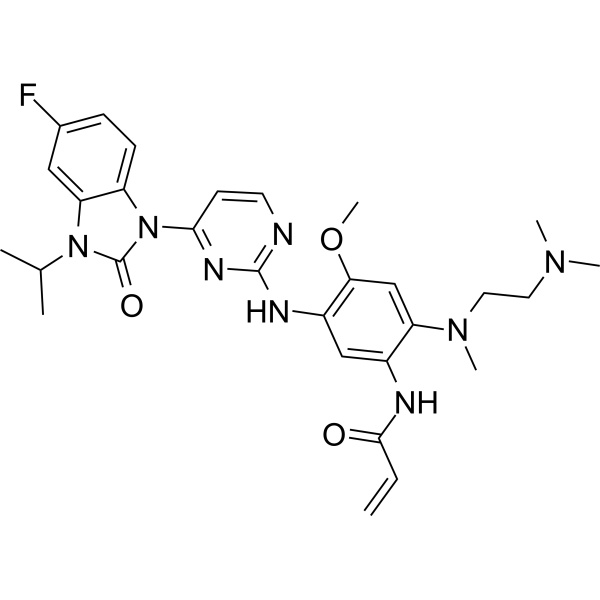
- HY-164694
-
|
TAS3351
|
EGFR
|
Cancer
|
|
Emupertinib (example 37) is a potent EGFR inhibitor with IC50 values of <0.3 nM, 0.52 nM, 0.5 nM, 0.69 nM and 0.92 nM for EGFR (d746-750/T790M/C779S), EGFR (L858R/T790M/C797S), EGFR (d746-750/C797S), EGFR (L858R/C797S), and EGFR (wild-type), respectively .
|
-

- HY-143246
-
|
|
EGFR
Apoptosis
|
Cancer
|
|
EGFR kinase inhibitor 1 is a potent EGFR inhibitor with IC50s of 37, 1.7, >300 nM for WT, l885R/T790M, L858R/T790M/C797S, respectively. EGFR kinase inhibitor 1 induces apoptosis and cell cycle arrest at G0/G1-phase. EGFR kinase inhibitor 1 inhibits the cell motility. EGFR kinase inhibitor 1 shows antiproliferative and anti-tumor activity .
|
-
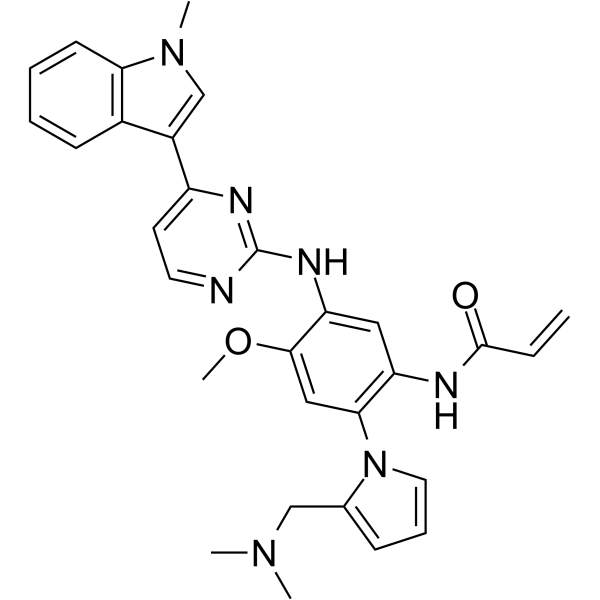
- HY-156457
-
|
|
EGFR
|
Cancer
|
|
EGFR-IN-90 (compound 34) is an orally active EGFR inhibitor. EGFR-IN-90 shows inhibitory activity against EGFRL858R/T790M/C797S with an IC50 of 5.1 nM and inhibits the proliferation of the H1975-TM cell line harboring EGFRL858R/T790M/C797S with an IC50 of 0.05 μM. EGFR-IN-90 and inhibits tumor growth in the H1975-TM xenograft tumor model .
|
-
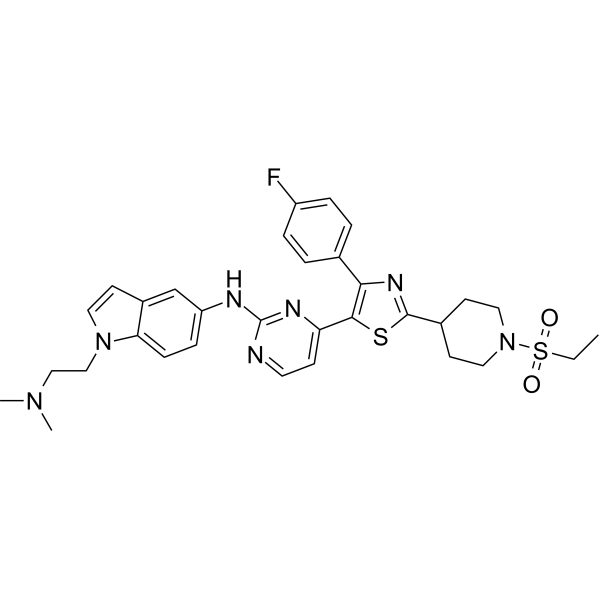
- HY-168492
-
|
|
Ferroptosis
EGFR
TrxR
Apoptosis
|
Cancer
|
|
TrxR/EGFR-IN-1 (Compound L1Au2) is a TrxR/EGFR inhibitor. TrxR/EGFR-IN-1 is active against both Gefitinib (HY-50895)-sensitive and resistant lung cancers, effectively inhibiting tumor proliferation and promoting apoptosis. TrxR/EGFR-IN-1 promotes the degradation of GPX4 protein through autophagolysosomal and proteasomal pathways, leading to ferroptosis. In addition, TrxR/EGFR-IN-1 can induce endoplasmic reticulum stress and trigger immunogenic cell death. TrxR/EGFR-IN-1 can be used for the research of Gefitinib (HY-50895)-resistant lung cancer .
|
-

- HY-17499R
-
|
|
EGFR
Apoptosis
|
Cancer
|
|
EGFR-IN-12 (Standard) is the analytical standard of EGFR-IN-12. This product is intended for research and analytical applications. EGFR-IN-12 is a 4,6-disubstituted pyrimidine and is a potent, ATP-competitive, irreversible and highly selective EGFR inhibitor with an IC50of 21 nM. EGFR-IN-12 also inhibits mutant EGFRL858R and EGFRL861Q with IC50s of 63 nM and 4 nM, respectively. EGFR-IN-12 displays strong selectivity for EGFR over HER4 (IC50 = 7640 nM) and a panel of 55 other kinases. EGFR-IN-12 induces cells apoptosis and has antitumor activity .
|
-

- HY-137433A
-
|
D-0316 mesylate
|
EGFR
P-glycoprotein
Apoptosis
|
Inflammation/Immunology
Cancer
|
|
Befotertinib (D-0316) mesylate is an orally active EGFR inhibitor and ABCB1 inhibitor. Befotertinib mesylate selectively targets EGFR mutations including EGFR T790M, EGFR L858R and delE746-A750, forms covalent bonds with EGFR C797, inhibits oncogenic signaling pathways, and exerts antiproliferative effects. Befotertinib mesylate inhibits ABCB1-mediated drug efflux, activates the ATPase activity of ABCB1, acts as a chemosensitizer and apoptosis enhancer, and restores the sensitivity of multidrug-resistant cancer cells. Befotertinib mesylate can be used in research related to multidrug-resistant cancers and non-small cell lung cancer .
|
-
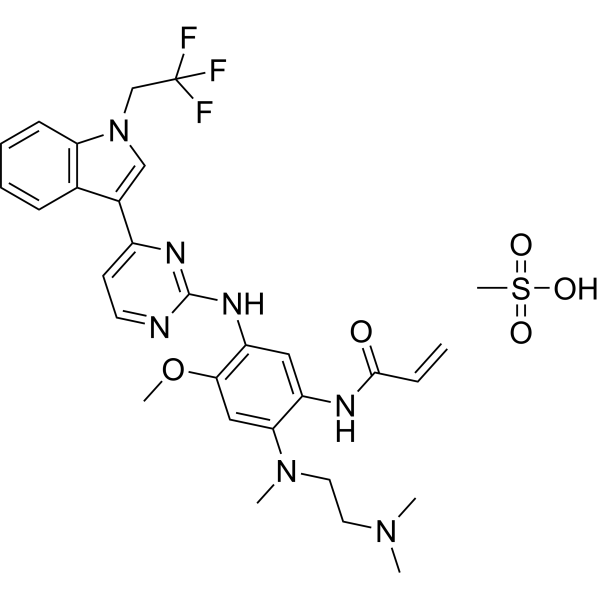
- HY-163434
-
|
|
EGFR
Histone Methyltransferase
|
Cancer
|
|
PRMT5/EGFR-IN-1 (Compound 10p) is an orally active dual PRMT5/EGFR inhibitor, with IC50s of 15.47 and 19.31 μM, respectively. PRMT5/EGFR-IN-1 exhibits antiproliferative activity against A549, MCF7, HeLa, and MDA-MB-231 cell lines. PRMT5/EGFR-IN-1 has favorable in vivo PK and PD properties. PRMT5/EGFR-IN-1 can significantly inhibit the growth of MCF7 orthotopic xenograft tumors .
|
-
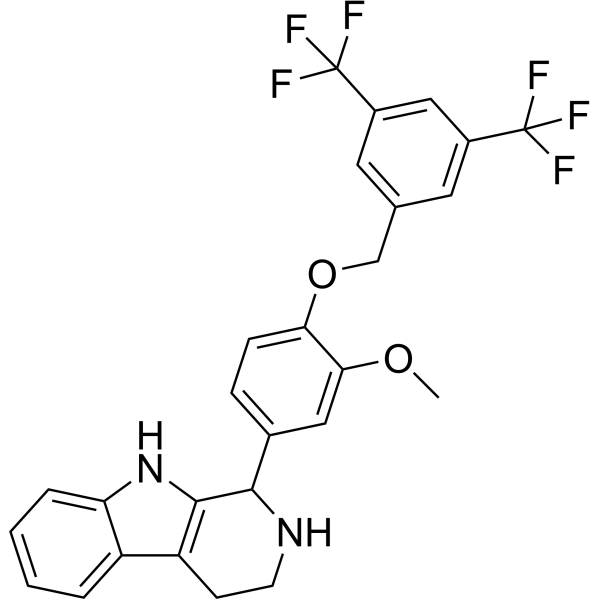
- HY-180922
-
|
|
EGFR
Akt
STAT
p38 MAPK
|
Cancer
|
|
EGFR kinase-IN-8 (Compound H8b) is an EGFR inhibitor. EGFR kinase-IN-8 potently inhibits both triple-mutated EGFR L858R/T790M/C797S (IC50 = 3.86 nM) and double-mutated EGFR L858R/T790M (IC50 = 1.23 nM). EGFR kinase-IN-8 suppresses EGFR phosphorylation and downstream AKT, STAT3, and MAPK signaling. EGFR kinase-IN-8 exhibits anticancer activity against non-small cell lung cancer .
|
-

- HY-137433
-
|
D-0316
|
EGFR
P-glycoprotein
Apoptosis
|
Cancer
|
|
Befotertinib (D-0316) is an orally active EGFR inhibitor and ABCB1 inhibitor. Befotertinib selectively targets EGFR mutations including EGFR T790M, EGFR L858R and delE746-A750, forms covalent bonds with EGFR C797, inhibits oncogenic signaling pathways, and exerts antiproliferative effects. Befotertinib inhibits ABCB1-mediated drug efflux, activates the ATPase activity of ABCB1, acts as a chemosensitizer and apoptosis enhancer, and restores the sensitivity of multidrug-resistant cancer cells. Befotertinib can be used in research related to multidrug-resistant cancers and non-small cell lung cancer .
|
-
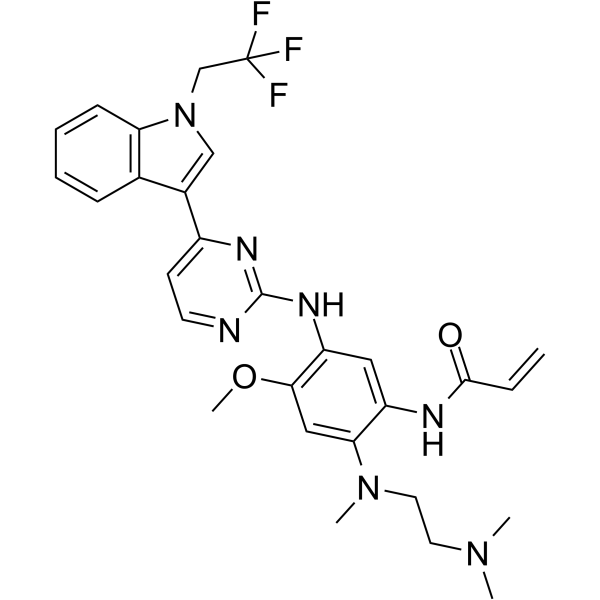
- HY-175011
-
|
|
EGFR
Apoptosis
|
Cancer
|
|
EGFR-IN-165 is a potent EGFR inhibitor. EGFR-IN-165 demonstrates superior potency with IC50s of 17.18 and 64.74 nM against EGFR L858R/T790M and EGFR WT; 2.17 and 6.2 μM against NCI-H1975 cells and A431 cells. EGFR-IN-165 significantly inhibits the migration and induces G1 phase cell cycle arrest and cell apoptosis. EGFR-IN-165 can be used for the study of cancers such as non-small cell lung cancer, colorectal cancer, and head and neck squamous cell carcinoma .
|
-

- HY-10325
-
|
EKI-785; WAY-EKI 785
|
EGFR
Apoptosis
|
Endocrinology
Cancer
|
|
CL-387785 (EKI-785; WAY-EKI 785) is an orally active EGFR inhibitor with an IC50 of 370 pM. CL-387785 inhibits EGF-stimulated EGFR autophosphorylation with an IC50 of approximately 5 nM. CL-387,785 exerts selective inhibition on cell lines overexpressing EGFR or c-erbB-2, whereas it shows weak inhibitory effects on cell lines with low expression of these two receptors. CL-387785 effectively induces cell cycle arrest and apoptosis. CL-387785 can be used for the research of non-small cell lung cancer and autosomal recessive polycystic kidney disease .
|
-
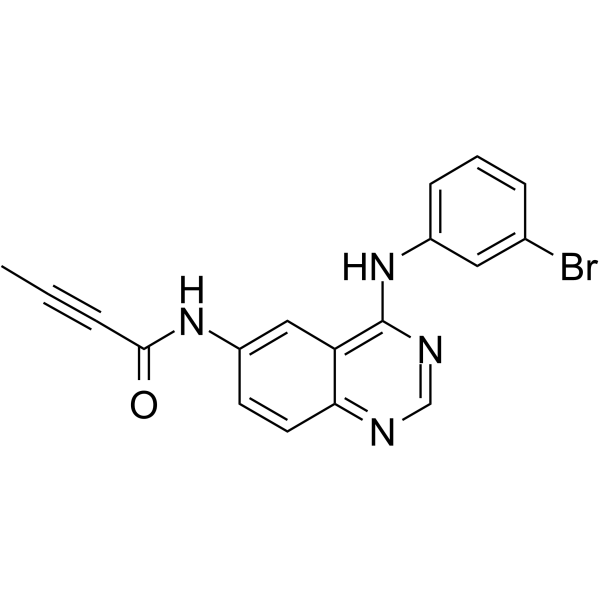
- HY-178955
-
|
|
EGFR
HSP
PI3K
Caspase
Apoptosis
CDK
ERK
Akt
|
Cancer
|
|
EGFR-IN-182 (Compound 4) is an EGFR inhibitor with an IC50 value of 199 nM. EGFR-IN-182 inhibits HSP90 and PI3K, with IC50 values of 5.007 and 13.596 μM respectively. EGFR-IN-182 exhibits strong anti-proliferative activity against MCF-7 and MDA-MB-231 cells. EGFR-IN-182 downregulates Cyclin D1, inducing cell cycle arrest; it enhances the activity of caspase-9, inducing cell apoptosis. EGFR-IN-182 downregulates the expressions of ERK and AKT. EGFR-IN-182 can be used for research on breast cancer .
|
-

- HY-173619
-
|
|
EGFR
|
Cancer
|
|
EGFR-IN-160 (Compound R12) is an EGFR inhibitor (IC50 values are 1.62, 0.49 and 0.98 μM for EGFR WT, EGFR T790M and EGFR L858R/T790M/C797S, respectively). EGFR-IN-160 induces G2/M and S phase arrest and apoptosis in NCI-H522 cells, and has anticancer activity. EGFR-IN-160 has antioxidant effects against DPPH (IC50: 12.11 µM) and H2O2 (IC50: 8.89 µM) .
|
-

- HY-149401
-
|
|
EGFR
|
Cancer
|
|
EGFR-IN-82 (Cmpound 8a) is a potent and orally active EGFR inhibitor with IC50 values of 0.09 and 0.06 nM for EGFR L858R/T790M/C797S and EGFR Del19/T790M/C797S, respectively. EGFR-IN-82 has no significant effect on EGFR WT. EGFR-IN-82 has anti-proliferative activity and inhibits tumor formation in nude mice. EGFR-IN-82 can be used in non-small cell lung cancer research .
|
-
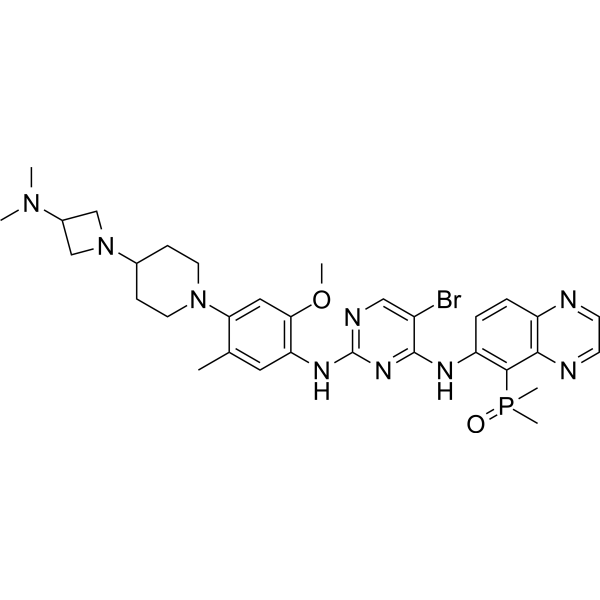
- HY-143445
-
|
|
EGFR
|
Cancer
|
|
EGFR-IN-48 is a potent and orally active EGFR inhibitor with IC50s of 0.193 nM, 0.251 nM, 10.4 nM for EGFR d19/TM/CS, EGFR LR/TM/CS, EGFR WT, respectively. EGFR-IN-48 inhibits the proliferation of BaF3 EGFR del19/T790M/C797S and PC-9 EGFR del19/T790M/C797S cells with IC50s of 1.526, 66.7 nM, respectively .
|
-
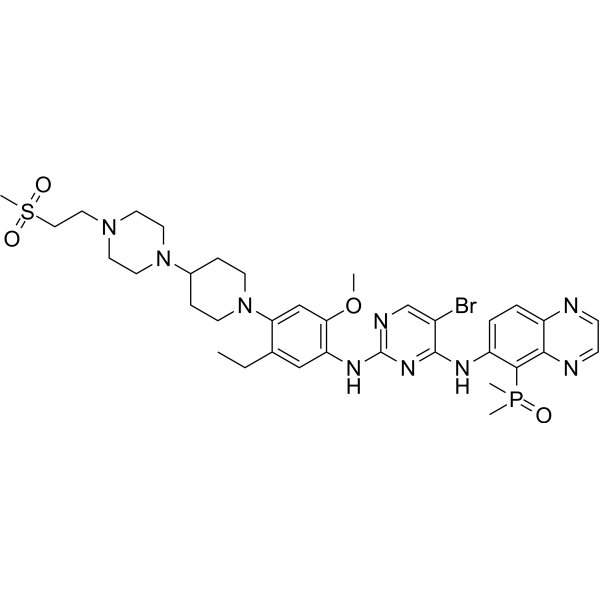
- HY-17654
-
|
|
EGFR
mTOR
|
Cancer
|
|
BIEGi-1 is an EGFR inhibitor. BIEGi-1 effectively disrupts the EGFR-Rheb interaction in cells. BIEGi-1 robustly inhibits EGFR kinase activity (reduces p-Y1068-EGFR) as well as mTORC1 activation (reduces p-T389-S6K1) in EGFR-mutant cells. BIEGi-1 shows strong antiproliferative effects on EGFR-mutant PC9 and HCC827 cells with IC50 values of 17 nM and 20 nM, respectively. BIEGi-1 can be used for the study of cancers harboring EGFR mutations, such as non-small cell lung cancer (NSCLC) .
|
-

- HY-N1988R
-
|
Hemslecin A (Standard)
|
Reference Standards
Apoptosis
EGFR
Autophagy
MEK
Caspase
ERK
STAT
Survivin
Raf
p38 MAPK
CaMK
|
Inflammation/Immunology
Cancer
|
|
Cucurbitacin IIa (Hemslecin A) (Standard) is the analytical standard for Cucurbitacin IIa (HY-N1988). This product is used for research and analytical applications. Cucurbitacin IIa is an orally active, blood-brain barrier-penetrating EGFR inhibitor with an IC50 of 1.455 nM for human EGFR. Cucurbitacin IIa induces caspase-3 dependent cell apoptosis, downregulates survivin expression, enhances autophagy levels, disrupts the actin cytoskeleton through actin aggregation, blocks the cell cycle at the G2/M phase, and inhibits the EGFR-MAPK signaling pathway to exert anti-inflammatory activity. Cucurbitacin IIa can be used in research on inflammatory-related diseases, depression, and non-small cell lung cancer and other cancers.
|
-

- HY-170438
-
|
|
EGFR
|
Cancer
|
|
EGFR-IN-139 (compound PD 18) is an epidermal growth factor receptor (EGFR) inhibitor, with IC50s of 12.88 (wild type), 10.84 (L858R/T790M), 42.68 (L858R/T790M/C797S) nM, respectively. EGFR-IN-139 displays strong anticancer activity against A549 and H1975 cancer cell lines, which are highly expressed EGFR. EGFR-IN-139 has a strong selectivity to cancer cells. EGFR-IN-139 can be used for nonsmall cell lung cancer (NSCLC) research[1].
|
-

- HY-173492
-
|
|
EGFR
Apoptosis
|
Cancer
|
|
EGFR-IN-156 (Compound 7f) is an EGFR inhibitor that also has inhibitory activity against mutations EGFRL858R and EGFRT790M (IC50 values are 0.186, 0.131, and 0.107 μM, respectively). EGFR-IN-156 has significant anticancer activity against human cancer cell lines HepG-29 (liver cancer), MCF-7 (breast cancer), and HCT-116 (colon cancer) (IC50 values are 1.67, 5.32, and 6.56 μM, respectively). EGFR-IN-156 inhibits cancer cell proliferation by inducing cell cycle arrest at the G/G1 phase and triggering apoptosis. EGFR-IN-156 shows promise in EGFR-related cancers .
|
-

- HY-182064
-
|
|
EGFR
NO Synthase
COX
NF-κB
Interleukin Related
Apoptosis
|
Cancer
|
|
EGFR-IN-206 is an orally active EGFR inhibitor. EGFR-IN-206 inhibits the phosphorylation of the key tumor growth protein EGFR, and suppresses the proliferation, migration and invasion of EGFR triple-mutant tumor cell lines. EGFR-IN-206 downregulates the expression of inflammation-related proteins iNOS, COX-2 and NF-κB (p65). EGFR-IN-206 promotes the secretion of NO. EGFR-IN-206 reduces the secretion of IL-6. EGFR-IN-206 induces apoptosis (apoptosis) of EGFR triple-mutant tumor cells. EGFR-IN-206 exerts antitumor activity in EGFR triple-mutant mice. EGFR-IN-206 is applicable to the research of non-small cell lung cancer .
|
-

- HY-181659
-
|
|
EGFR
Apoptosis
Akt
ERK
Caspase
Bcl-2 Family
|
Cancer
|
|
EGFR-IN-201 is a potent EGFR inhibitor, with an IC50 of 0.091 μM against wild-type EGFR; for mutant EGFR variants, the IC50 values of EGFR T790M, EGFR L858R and EGFR C797S are 0.147 μM, 0.221 μM and 0.703 μM, respectively. EGFR-IN-201 inhibits EGFR downstream signaling proteins AKT1 (IC50 = 0.225 μg/mL) and ERK1 (IC50 = 0.705 μg/mL). EGFR-IN-201 induces G0/G1 cell cycle arrest, apoptosis and low-level necrosis in cancer cells. EGFR-IN-201 is applicable to research on cancers such as colon cancer .
|
-

- HY-170968
-
|
|
EGFR
Apoptosis
|
Cancer
|
|
EGFR-IN-150 is an EGFR inhibitor that effectively suppresses the phosphorylation of mutant epidermal growth factor receptor (EGFR) and its downstream AKT signaling pathway, thereby exerting antitumor effects and inducing HMOX1 expression to trigger ferroptosis. EGFR-IN-150 exhibits an IC50 of 0.386 μM against the non-small cell lung cancer (NSCLC) cell line H1975, and significantly inhibits colony formation and migration of both H1975 and A549 cells while inducing apoptosis. In addition, EGFR-IN-150 markedly suppresses tumor growth in the H1975 cell-derived xenograft (CDX) mouse model. EGFR-IN-150 holds promise for research related to non-small cell lung cancer .
|
-

- HY-161275
-
|
|
EGFR
Akt
ERK
Ribosomal S6 Kinase (RSK)
|
Cancer
|
|
BI-4732 is an orally active, reversible, ATP-competitive EGFR inhibitor with blood-brain barrier penetration. BI-4732 inhibits the kinase activity of EGFR L858R, T790M and C797S with IC50 values of 1 nM while sparing EGFR wild-type. BI-4732 inhibits EGFR and reduces the phosphorylation of AKT, ERK, and S6K. BI-4732 demonstrates excellent intracranial anti-tumor efficacy in YU-1097 xenograft model harboring EGFR_E19del/T790M/C797S. BI-4732 can be used for the study of non-small cell lung cancer (NSCLC) .
|
-
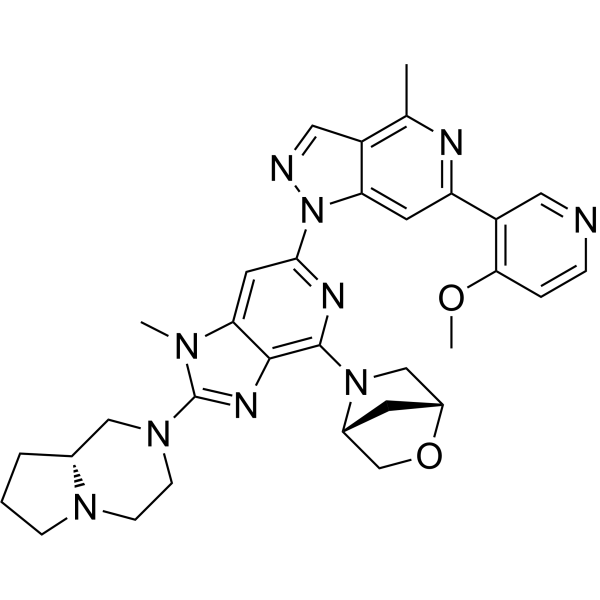
- HY-156041
-
|
Lyso-PE (egg); LPE (egg); L-α-lysophosphatidylethanolamine
|
Endogenous Metabolite
|
Metabolic Disease
|
|
Lysophosphatidylethanolamine (LPE) is a naturally-occurring lysophospholipid that can be generated via deacylation of phosphatidylethanolamine by phospholipase A2 (PLA2). It increases the phosphorylation of ERK1/2 in PC12 cells, an effect that can be blocked by the MEK inhibitors U-0126 (HY-12031A) and PD 98059 (HY-12028) and the EGFR inhibitor AG-1478 (HY-13524).1 LPE also increases neurite outgrowth and expression of neurofilament M in PC12 cells. LPE inhibits the activity of phospholipase D (PLD) partially purified from cabbage.3 This product contains lysophosphatidylethanolamine molecular species with variable fatty acyl chain lengths at the sn-1 position and a hydroxy group at the sn-2 position.
|
-

- HY-181954
-
|
|
EGFR
Apoptosis
|
Cancer
|
|
ZW-49 is an orally active pan-EGFR inhibitor with IC50 values at 0.03-1.5 nM. ZW-49 inhibits all subgroups of EGFR mutations with selectivity over wild-type EGFR and other target families. ZW-49 blocks the ATP-binding pocket, occupies a conserved hydrophobic subpocket, avoids steric conflicts with PACC mutation P loops. ZW-49 inhibits cancer cells proliferation, induces G0/G1 phase cell-cycle arrest and apoptosis, and demonstrates anti-proliferative activity in xenograft mice models. ZW-49 can be used for the research of cancer, such as non-small cell lung cancer .
|
-

- HY-10325R
-
|
EKI-785 (Standard); WAY-EKI 785 (Standard)
|
Reference Standards
EGFR
Apoptosis
|
Endocrinology
Cancer
|
|
CL-387785 (EKI-785; WAY-EKI 785) (Standard) is the analytical standard of CL-387785 (HY-10325). This product is intended for research and analytical applications. CL-387785 is an orally active EGFR inhibitor with an IC50 of 370 pM. CL-387785 inhibits EGF-stimulated EGFR autophosphorylation with an IC50 of approximately 5 nM. CL-387,785 exerts selective inhibition on cell lines overexpressing EGFR or c-erbB-2, whereas it shows weak inhibitory effects on cell lines with low expression of these two receptors. CL-387785 effectively induces cell cycle arrest and apoptosis. CL-387785 can be used for the research of non-small cell lung cancer and autosomal recessive polycystic kidney disease.
|
-

- HY-119396
-
|
|
Endogenous Metabolite
|
Cancer
|
|
DY3002 is a selective and highly potent EGFR inhibitor with activity in overcoming T790M-mediated drug resistance in non-small cell lung cancer. DY3002 exhibited superior inhibitory effects against EGFR T790M mutants in kinase assays (IC50 = 0.71 nM), compared to weaker inhibitory effects against wild-type EGFR (IC50 = 448.7 nM). DY3002 was significantly superior to rociletinib and osimertinib in selectivity, showing an extremely high selectivity index (SI = 632.0). In cell experiments, DY3002 had an IC50 value of 0.037 μM against H1975 cells, showing enhanced inhibitory potency. In addition, DY3002 was superior to other alternative compounds in terms of biological properties and did not cause hyperglycemia .
|
-

- HY-147183
-
|
|
EGFR
|
Cancer
|
|
JBJ-09-063 is a mutant-selective allosteric EGFR inhibitor with IC50s of 0.147 nM, 0.063 nM, 0.083 nM and 0.396 nM for EGFR L858R, EGFR L858R/T790M, EGFR L858R/T790M/C797S and EGFRLT/L747S. JBJ-09-063 effectively reduces EGFR, Akt and ERK1/2 phosphorylation. JBJ-09-063 is effective across EGFR tyrosine kinase inhibitor (TKI)-sensitive and resistant models. JBJ-09-063 can be used for researching EGFR-mutant lung cancer .
|
-
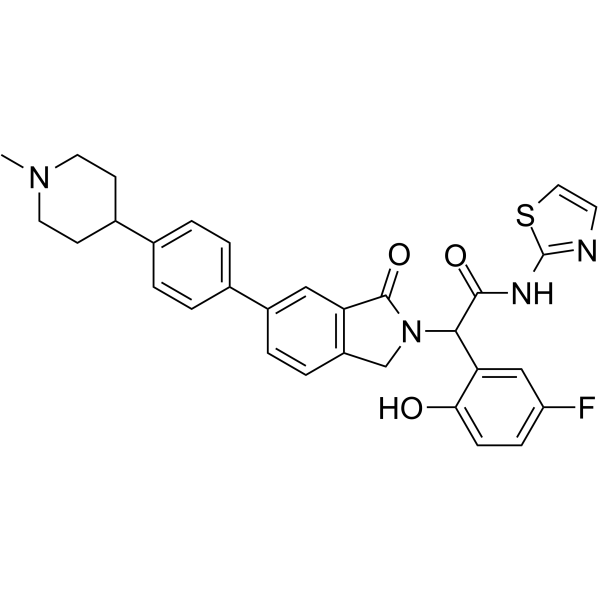
- HY-147183A
-
|
|
EGFR
|
Cancer
|
|
JBJ-09-063 TFA is a mutant-selective allosteric EGFR inhibitor with IC50s of 0.147 nM, 0.063 nM, 0.083 nM and 0.396 nM for EGFR L858R, EGFR L858R/T790M, EGFR L858R/T790M/C797S and EGFRLT/L747S. JBJ-09-063 TFA effectively reduces EGFR, Akt and ERK1/2 phosphorylation. JBJ-09-063 TFA is effective across EGFR tyrosine kinase inhibitor (TKI)-sensitive and resistant models. JBJ-09-063 TFA can be used for researching EGFR-mutant lung cancer .
|
-
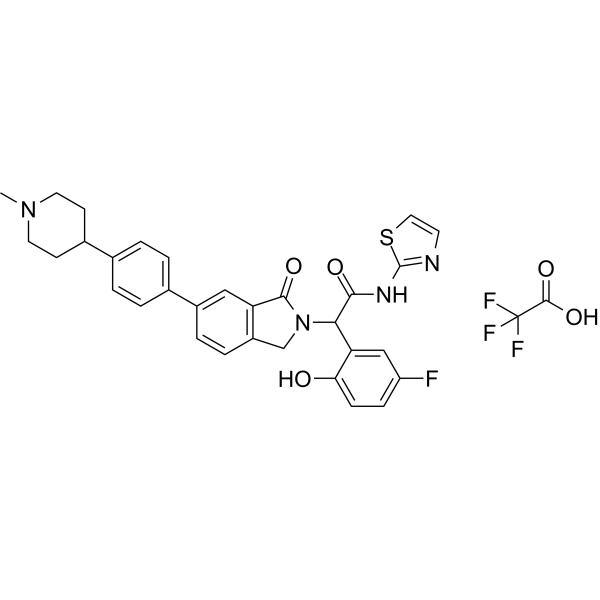
- HY-155358
-
|
|
EGFR
Apoptosis
|
Cancer
|
|
Os30, a potent fourth-generation EGFR inhibitor, is a potent EGFRC797S-TK inhibitor with IC50 values of 18 nM and 113 nM for EGFRDel19/T790M/C797S TK and EGFRL858R/T790M/C797S TK, respectively. Os30 can suppress EGFR phosphorylation, arrest at G1 phase and induce the apoptosis of KC-0116 (BaF3-EGFRDel19/T790M/C797S) cells. Os30 shows potent antitumor efficacy on non-small cell lung cancer (NSCLC) with EGFmRC797S mutation .
|
-
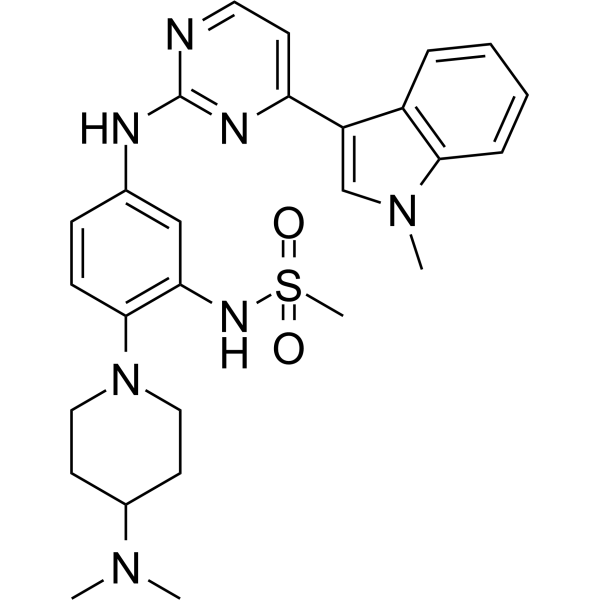
- HY-157432
-
|
|
EGFR
Apoptosis
|
Cancer
|
|
EGFR-IN-97 (compound 6q) is a EGFR inhibitor. EGFR-IN-97 shows inhibitory activity against Ba/F3-EGFR L858R/T790M/C797S and Ba/F3-EGFR Del19/T790M/C797S cells, with IC50 values of 0.42 μM and 0.41 μM, respectively. EGFR-IN-97 can promote apoptosis of NCI-H1975-EGFR L858R/T790M/C797S cells at the concentration of 0.8 μM .
|
-
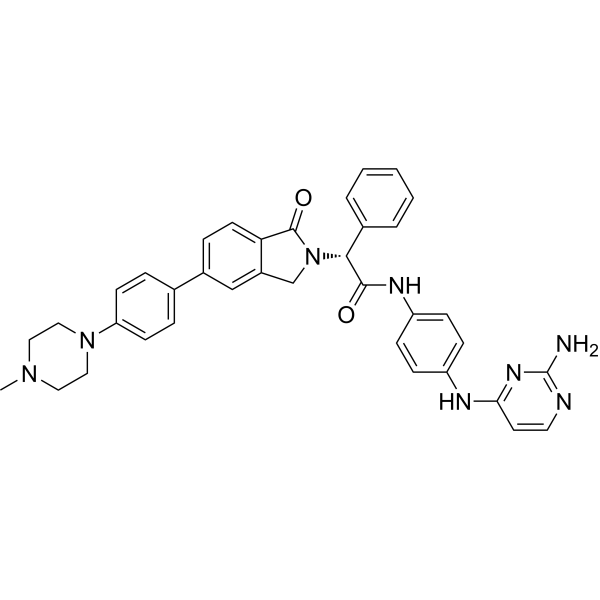
- HY-147183B
-
|
|
EGFR
|
Cancer
|
|
JBJ-09-063 hydrochloride is a mutant-selective allosteric EGFR inhibitor with IC50s of 0.147 nM, 0.063 nM, 0.083 nM and 0.396 nM for EGFR L858R, EGFR L858R/T790M, EGFR L858R/T790M/C797S and EGFRLT/L747S. JBJ-09-063 hydrochloride effectively reduces EGFR, Akt and ERK1/2 phosphorylation. JBJ-09-063 hydrochloride is effective across EGFR tyrosine kinase inhibitor (TKI)-sensitive and resistant models. JBJ-09-063 hydrochloride can be used for researching EGFR-mutant lung cancer .
|
-
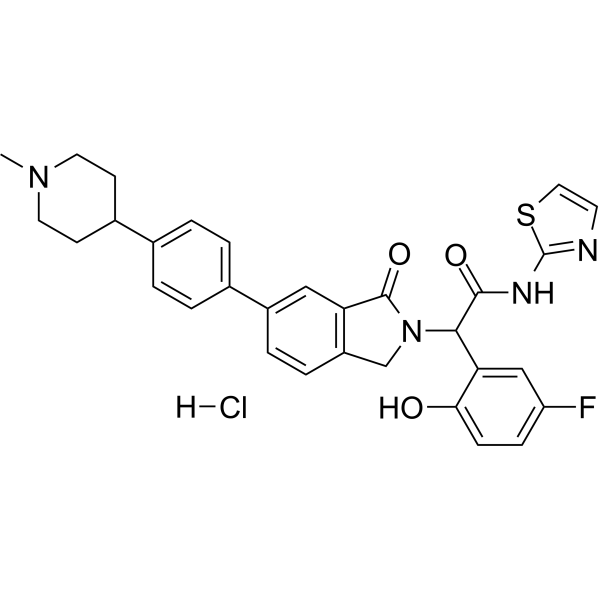
- HY-161923
-
|
|
EGFR
Apoptosis
Akt
ERK
|
Cancer
|
|
EGFR-IN-120 (Compound 11eg) is an orally active EGFR inhibitor. EGFR-IN-120 inhibits EGFR L858R/T790M/C797S with an IC50 value of 0.053 μM, and has a relatively weak effect on EGFR WT (IC50: 1.05 μM). EGFR-IN-120 inhibits the phosphorylation of EGFR and main downstream effectors (STAT3, AKT, and Erk). EGFR-IN-120 induces cell cycle arrest and cell apoptosis in EGFR mutant cells. EGFR-IN-120 inhibits the proliferation of the NSCLC cells harboring EGFR L858R/T790M/C797S with an IC50 of 0.052 μM .
|
-

- HY-184116
-
|
|
Adenosine Receptor
EGFR
MDM-2/p53
Caspase
Bcl-2 Family
Apoptosis
|
Cancer
|
|
A2AR/EGFR-IN-1 is a dual A2AR/EGFR inhibitor, with an IC50 of 0.037 μM against A2AR and an IC50 of 8.37 μM against EGFR. A2AR/EGFR-IN-1 induces cell cycle arrest at S and G2/M phases. A2AR/EGFR-IN-1 upregulates the expression of TP53, Caspase3 and Bax, downregulates the expression of Bcl2, and promotes cell Apoptosis. A2AR/EGFR-IN-1 restores colon crypt structure in an azoxymethane (HY-111375)-induced colorectal cancer model in vivo. A2AR/EGFR-IN-1 can be used for research related to colorectal cancer .
|
-

- HY-181502
-
|
|
EGFR
ERK
PARP
Caspase
Bcl-2 Family
Apoptosis
|
Cancer
|
|
EGFR-IN-197 is an EGFR inhibitor with IC50 values of 19.5 nM and 12.0 nM against EGFR L858R/T790M and EGFR L858R/T790M/C797S, respectively. EGFR-IN-197 arrests the cell cycle of NCI-H1975 cells at the G2/M phase, while inhibiting their proliferation, colony formation and migration; it also inhibits mitochondrial translocation and upregulates mitochondrial H2S levels. EGFR-IN-197 disrupts anti-apoptotic signaling pathways by regulating apoptosis-related proteins; it induces DNA damage and activates pro-apoptotic pathways to trigger apoptosis. EGFR-IN-197 can be used in studies related to non-small cell lung cancer (NSCLC) .
|
-

- HY-172877
-
|
|
Raf
EGFR
Apoptosis
Bcl-2 Family
|
Cancer
|
|
EGFR/BRAFV600E-IN-5 (Compound 7I) is a dual BRAFV600E/EGFR inhibitor with IC50 of 0.048 μM and 0.037 μM, respectively. EGFR/BRAFV600E-IN-5 has significant anti-melanoma activity with IC50 of 3.16 μM and 2.50 μM against MALME-3M and LOX-IMVI cell lines, respectively. EGFR/BRAFV600E-IN-5 exerts anti-tumor effects by inducing G1 arrest, inhibiting DNA synthesis, and activating the mitochondrial apoptosis pathway. EGFR/BRAFV600E-IN-5 can be used for melanoma research, especially for combined inhibition of BRAFV600E mutation and EGFR signaling pathway .
|
-

- HY-P990957
-
|
BCA-101; FMAB2
|
EGFR
TGF-beta/Smad
|
Inflammation/Immunology
Cancer
|
|
Ficerafusp alfa (BCA-101) is a bispecific antibody targeting EGFR and TGFβ, with a Kd of 2.58 nM against EGFR and a Kd of 61.3 nM against TGFβ1. Ficerafusp alfa binds to EGFR, inhibits EGFR phosphorylation, blocks EGF-dependent cell proliferation, and mediates antibody-dependent cellular cytotoxicity against EGFR-positive tumor cells. Ficerafusp alfa sequesters TGFβ via its TGFβRII ECD domain, neutralizes the activity of TGFβ and TGFβ1, and blocks TGFβ-dependent processes, including epithelial-mesenchymal transition, cell invasion, and differentiation of inducible regulatory T cells. Ficerafusp alfa is applicable to research related to head and neck squamous cell carcinoma, advanced solid tumors, squamous non-small cell lung cancer, anal squamous cell carcinoma, colorectal cancer, and pancreatic cancer .
|
-

- HY-178283
-
|
|
EGFR
|
Cancer
|
|
EGFR-IN-177 is a potent EGFR inhibitor with IC50s of 0.32, 1.04, 0.65, 0.67, 0.48, 0.55 and 0.38 nM against EGFR L858R, EGFR L858R/T790M, EGFR L858R/T790M/C797S, EGFR D746-750, EGFR D746-750/C797S, EGFR D770_N77linsNPG, and EGFR WT. EGFR-IN-177 inhibits lung cancer proliferation and EGFR phosphorylation. EGFR-IN-177 can be used for the study of cancers such as non-small cell lung cancer .
|
-

- HY-139997
-
|
|
PROTACs
EGFR
|
Cancer
|
|
DDC-01-163 is an allosteric PROTAC degrader targeting EGFR. DDC-01-163 is dependent on the ubiquitin–proteasome system. DDC-01-163 can selectively inhibit the proliferation of L858R/T790M (L/T) mutant Ba/F3 cells. DDC-01-163 is effective against Osimertinib (HY-15772)-resistant cells with L/T/C797S and L/T/L718Q EGFR mutations. DDC-01-163 exhibits enhanced anti-proliferative activity against L858R/T790M EGFR-Ba/F3 cells when combined with the ATP-site EGFR inhibitor Osimertinib. DDC-01-163 can be used for the study of non-small cell lung cancer .
|
-

| Cat. No. |
Product Name |
Target |
Research Area |
Image |
-
- HY-P990957
-
|
BCA-101; FMAB2
|
EGFR
TGF-beta/Smad
|
Inflammation/Immunology
Cancer
|
|
Ficerafusp alfa (BCA-101) is a bispecific antibody targeting EGFR and TGFβ, with a Kd of 2.58 nM against EGFR and a Kd of 61.3 nM against TGFβ1. Ficerafusp alfa binds to EGFR, inhibits EGFR phosphorylation, blocks EGF-dependent cell proliferation, and mediates antibody-dependent cellular cytotoxicity against EGFR-positive tumor cells. Ficerafusp alfa sequesters TGFβ via its TGFβRII ECD domain, neutralizes the activity of TGFβ and TGFβ1, and blocks TGFβ-dependent processes, including epithelial-mesenchymal transition, cell invasion, and differentiation of inducible regulatory T cells. Ficerafusp alfa is applicable to research related to head and neck squamous cell carcinoma, advanced solid tumors, squamous non-small cell lung cancer, anal squamous cell carcinoma, colorectal cancer, and pancreatic cancer .
|
-

(5)
-
- HY-P99041A
-
|
|
EGFR
|
Cancer
|
|
Panitumumab (anti-EGFR) is a fully human IgG2 anti-EGFR monoclonal antibody with anti-tumor activity. Panitumumab (anti-EGFR) inhibits tumor cell proliferation, survival and angiogenesis. Panitumumab (anti-EGFR) can be used in the research of cancers, such as colon cancer .
|
-
(5)
-
- HY-P99921
-
|
HuMax-AXL-ADC
|
Antibody-Drug Conjugates (ADCs)
TAM Receptor
|
Cancer
|
|
Enapotamab vedotin is an AXL-targeted antibody-drug conjugate (ADC) with inhibitory potential against high AXL expressing non-small cell lung cancer (NSCLC). Enapotamab vedotin also exhibits resistant to EGFR inhibitor such as Osimertinib (HY-15772) .
|
-
(5)
| Cat. No. |
Product Name |
Category |
Target |
Chemical Structure |
| Cat. No. |
Product Name |
Chemical Structure |
-
- HY-14596S
-
|
|
|
Genistein-d4 is the deuterium labeled Genistein. Genistein, a soy isoflavone, is a multiple tyrosine kinases (e.g., EGFR) inhibitor which acts as a chemotherapeutic agent against different types of cancer, mainly by altering apoptosis, the cell cycle, and angiogenesis and inhibiting metastasis .
|
-
-
- HY-15772S1
-
|
|
|
Osimertinib- 13C,d3 is the deuterium and 13C labeled Osimertinib. Osimertinib (AZD9291) is a covalent, orally active, irreversible, and mutant-selective EGFR inhibitor with an apparent IC50 of 12 nM against L858R and 1 nM against L858R/T790M, respectively.
|
-
-
- HY-15772S
-
|
|
|
Osimertinib-d6 is a deuterium labeled osimertinib. Osimertinib is a covalent, orally active, irreversible, and mutant-selective EGFR inhibitor with an apparent IC50 of 12 nM against L858R and 1 nM against L858R/T790M. Osimertinib overcomes T790M-mediated resistance to EGFR inhibitors in lung cancer .
|
-
-
- HY-142283AS
-
|
|
|
Dosimertinib-d5 (mesylate) is a potent and orally active EGFR inhibitor. Dosimertinib-d5 (mesylate) decreases the expression of p-EGFR and p-ERK protein levels. Dosimertinib-d5 (mesylate) shows antiproliferative and anti-tumor activity. Dosimertinib-d5 (mesylate) has the potential for the research of non-small-cell lung cancer (NSCLC) .
|
-
-
- HY-142283
-
|
|
|
Dosimertinib-d3-d3 is a potent and orally active EGFR inhibitor. Dosimertinib-d3-d3 decreases the expression of p-EGFR and p-ERK protein levels. Dosimertinib-d3-d3 shows antiproliferative and anti-tumor activity. Dosimertinib-d3-d3 has the potential for the research of non-small-cell lung cancer (NSCLC) .
|
-
-
- HY-B0793S1
-
|
|
|
AZ-5104-d2 is the deuterium labeled AZ-5104. AZ-5104 is an EGFR inhibitor with IC50s of 1 nM, 6 nM, 1 nM, 25 nM and 7 nM for EGFRL858R/T790M, EGFRL858R, EGFRL861Q, EGFR and ErbB4, respectively .
|
-
-
- HY-15164AS
-
|
|
|
Icotinib-d4 is the deuterium-labeled Icotinib (HY-15164A). Icotinib-d4 (BPI-2009) is a potent and specific EGFR inhibitor with an IC50 of 5 nM; also inhibits mutant EGFR L858R, EGFR L858R/T790M, EGFR T790M and EGFR L861Q. Icotinib-d4 is a click chemistry reagent, itcontains an Alkyne group and can undergo copper-catalyzed azide-alkyne cycloaddition (CuAAc) with molecules containing Azide groups.
|
-
-
- HY-112870AS
-
|
|
|
Firmonertinib-d3 (Alflutinib-d3) mesylate is the deuterium labeled Firmonertinib mesylate (HY-112870A). Firmonertinib (Alflutinib; Furmonertinib) mesylate is is an orally active, mutant-selective, and blood-brain barrier penetrant EGFR inhibitor. Firmonertinib mesylate inhibits EGFR active mutations as well as the T790M acquired resistant mutation. Firmonertinib mesylate has the potential for the research of cancer diseases, especially advanced non-small cell lung cancer (NSCLC) with EGFR ex20ins mutation.
|
-
| Cat. No. |
Product Name |
|
Classification |
-
- HY-15164A
-
|
BPI-2009
|
|
Alkynes
|
|
Icotinib (BPI-2009) is a potent, CNS-penetrant and specific EGFR inhibitor with an IC50 of 5 nM; also inhibits mutant EGFR L858R, EGFR L858R/T790M, EGFR T790M and EGFR L861Q. Icotinib is a click chemistry reagent, it contains an Alkyne group and can undergo copper-catalyzed azide-alkyne cycloaddition (CuAAc) with molecules containing Azide groups.
|
-
- HY-15164
-
|
BPI-2009H
|
|
Alkynes
|
|
Icotinib Hydrochloride (BPI-2009) is a potent, CNS-penetrant and specific EGFR inhibitor with an IC50 of 5 nM; also inhibits mutant EGFR L858R, EGFR L858R/T790M, EGFR T790M and EGFR L861Q. Icotinib (Hydrochloride) is a click chemistry reagent, it contains an Alkyne group and can undergo copper-catalyzed azide-alkyne cycloaddition (CuAAc) with molecules containing Azide groups.
|
-
- HY-104066
-
|
Xiliertinib; HMPL-309
|
|
Alkynes
|
|
Theliatinib (Xiliertinib) is a potent, ATP-competitive, orally active and highly selective EGFR inhibitor with a Ki of 0.05 nM and an IC50 of 3 nM. Theliatinib has an IC50 of 22 nM for EGFR T790M/L858R mutant. Theliatinib shows >50-fold selectivity for EGFR than other kinases . Theliatinib is a click chemistry reagent, it contains an Alkyne group and can undergo copper-catalyzed azide-alkyne cycloaddition (CuAAc) with molecules containing Azide groups.
|
-
- HY-150781
-
|
|
|
Alkynes
|
|
EGFR-IN-71 is a potent narrow spectrum epidermal growth factor receptor (EGFR) inhibitor with IC50 values of 3.7 μM. EGFR-IN-71 can be used for researching chordoma . EGFR-IN-71 is a click chemistry reagent, it contains an Alkyne group and can undergo copper-catalyzed azide-alkyne cycloaddition (CuAAc) with molecules containing Azide groups.
|
-
- HY-150782
-
|
|
|
Alkynes
|
|
UNC-CA359 is a potent epidermal growth factor receptor (EGFR) inhibitor, with an IC50 value of 18 nM. UNC-CA359 exhibits strong anti-tumor activity, can be used to Chordoma research . UNC-CA359 is a click chemistry reagent, it contains an Alkyne group and can undergo copper-catalyzed azide-alkyne cycloaddition (CuAAc) with molecules containing Azide groups.
|
-
- HY-104066A
-
|
Xiliertinib tartrate; HMPL-309 tartrate
|
|
Alkynes
|
|
Theliatinib (Xiliertinib) tartrate is a potent, ATP-competitive, orally active and highly selective EGFR inhibitor with a Ki of 0.05 nM and an IC50 of 3 nM. Theliatinib has an IC50 of 22 nM for EGFR T790M/L858R mutant. Theliatinib shows >50-fold selectivity for EGFR than other kinases . Theliatinib (tartrate) is a click chemistry reagent, it contains an Alkyne group and can undergo copper-catalyzed azide-alkyne cycloaddition (CuAAc) with molecules containing Azide groups.
|
-
- HY-164694
-
|
TAS3351
|
|
Alkynes
|
|
Emupertinib (example 37) is a potent EGFR inhibitor with IC50 values of <0.3 nM, 0.52 nM, 0.5 nM, 0.69 nM and 0.92 nM for EGFR (d746-750/T790M/C779S), EGFR (L858R/T790M/C797S), EGFR (d746-750/C797S), EGFR (L858R/C797S), and EGFR (wild-type), respectively .
|
-
- HY-181701
-
|
|
|
Alkynes
|
|
EGFR-IN-202 is an epidermal growth factor receptor (EGFR) inhibitor that selectively targets EGFR exon 20 insertion mutations. EGFR-IN-202 can be used in research related to non-small cell lung cancer .
|
Your information is safe with us. * Required Fields.
Inquiry Information
- Product Name:
- Cat. No.:
- Quantity:
- MCE Japan Authorized Agent:








