



Lifirafenib
Based on 3 publication(s) in Google Scholar
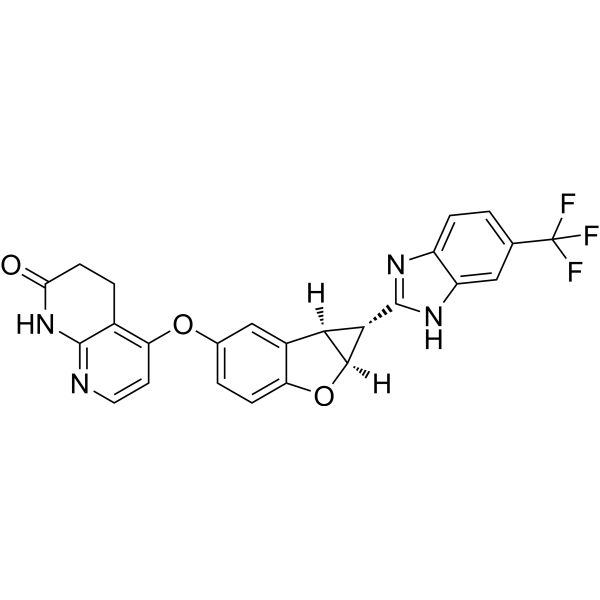
Lifirafenib (BGB-283) is a novel and potent Raf Kinase and EGFR inhibitor with IC50 values of 23 and 29 nM for recombinant BRafV600E and EGFR, respectively.
For research use only. We do not sell to patients.
- Purity : 98.01%
- CAS No.: 1446090-79-4
- Formula: C25H17F3N4O3
- Molecular Weight:478.42
-
Storage:Powder -20°C, 3 years , 4°C, 2 years ; In solvent -80°C, 2 years , -20°C, 1 year

To place orders, for customer services and technical support, please contact: MedChemExpress USA
Tel: 609-228-6898 E-mail: [email protected] [email protected]


-
 Biological Activity
-
Chemical Information
-
Solvent & Solubility
- Purity & Documentation
- References
-
 Help & FAQs


-
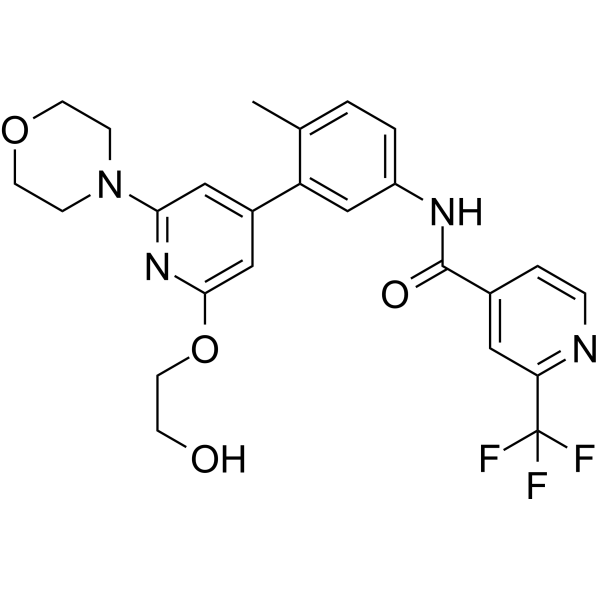
HY-112089
NaporafenibB/CRAF Inhibitor -
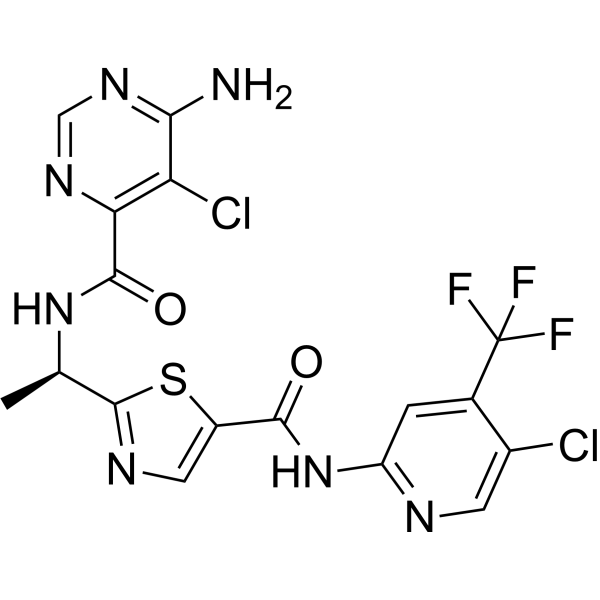
HY-15246
TovorafenibRaf Kinase Inhibitor -
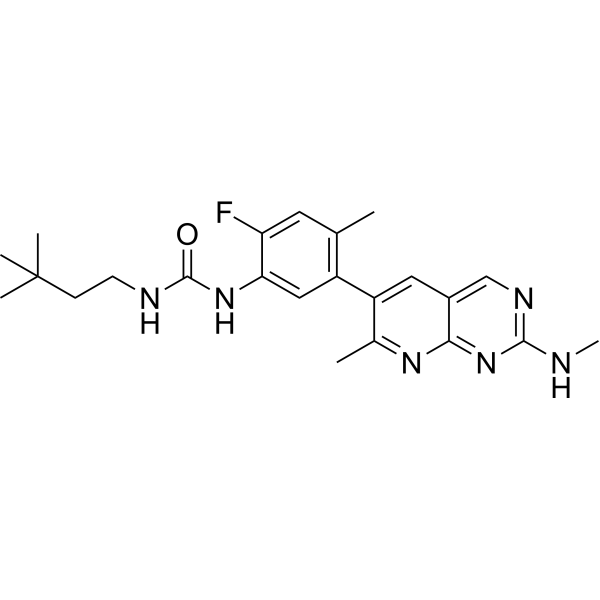
HY-12558
LY3009120Pan RAF Inhibitor -
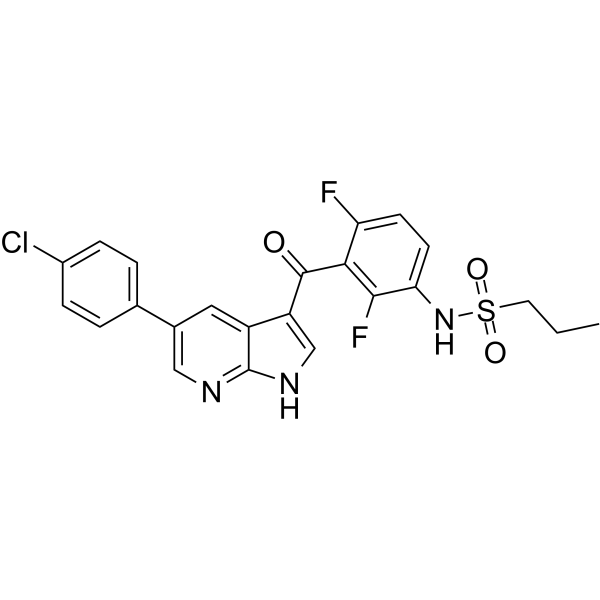
HY-12057
VemurafenibB-Raf Inhibitor -
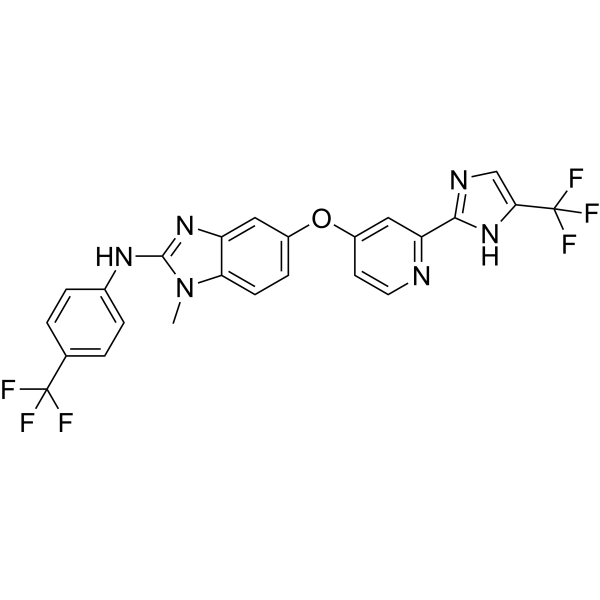
HY-10248
RAF265RAF/VEGFR2 Inhibitor -
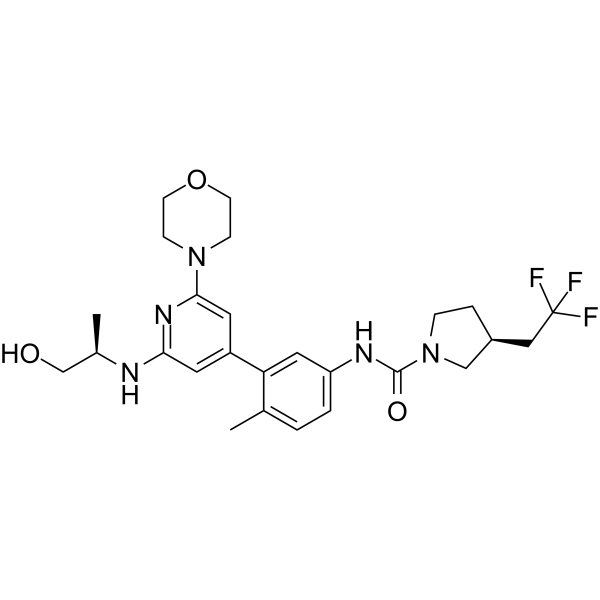
HY-147268
Exarafenibpan-RAF Inhibitor -
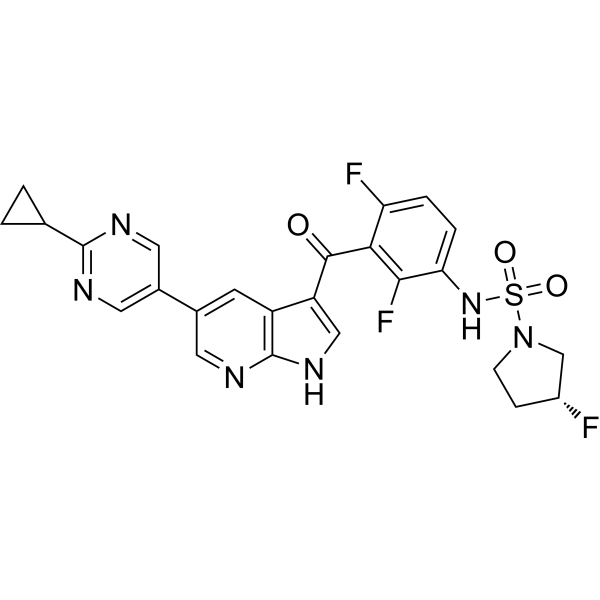
HY-18972
PlixorafenibBRAF Inhibitor -
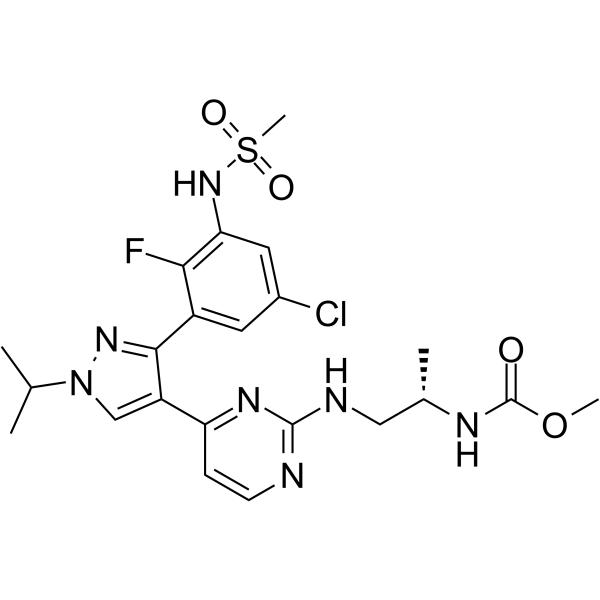
HY-15605
EncorafenibBRAF Inhibitor -
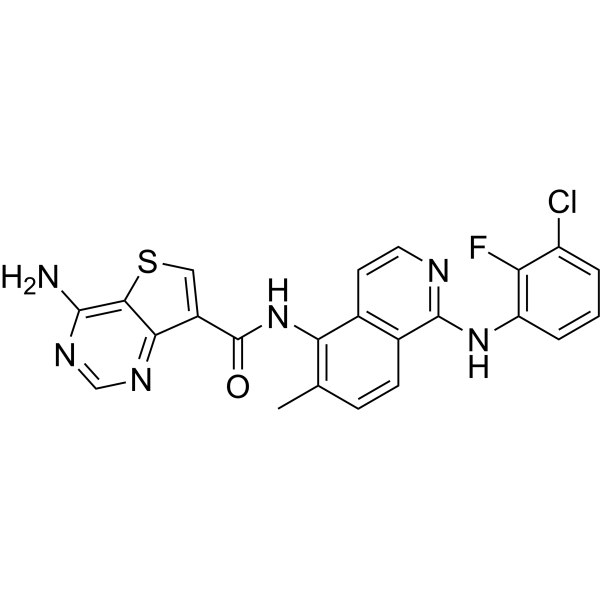
HY-109080
BelvarafenibRAF Inhibitor -
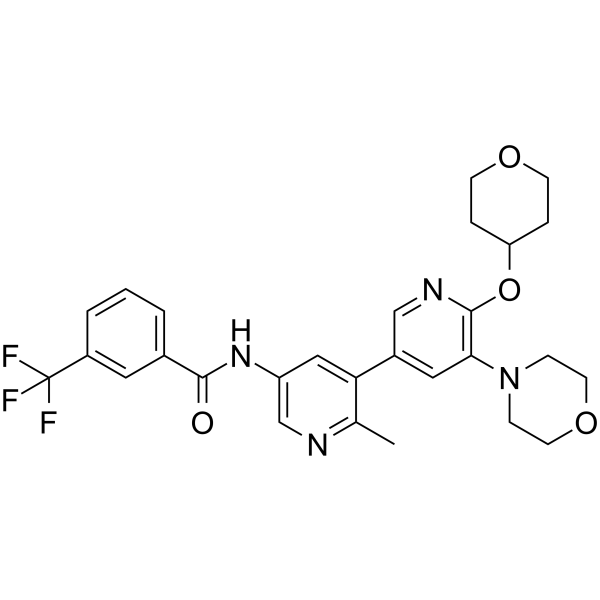
HY-100510
RAF709RAF Inhibitor -
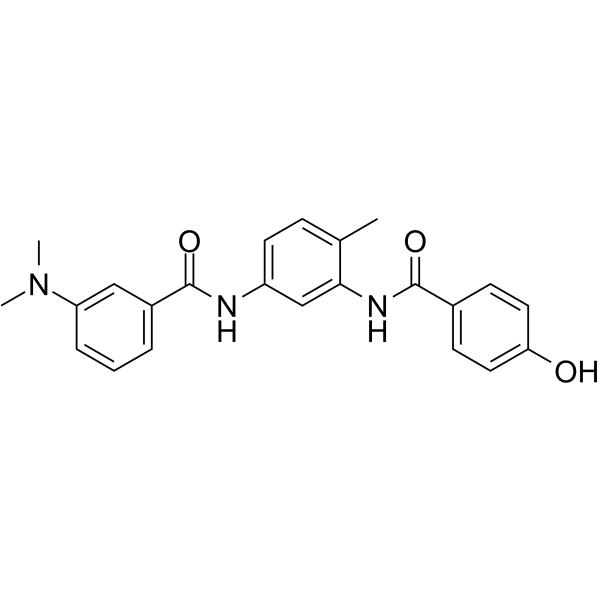
HY-13343
ZM 336372c-Raf Inhibitor -
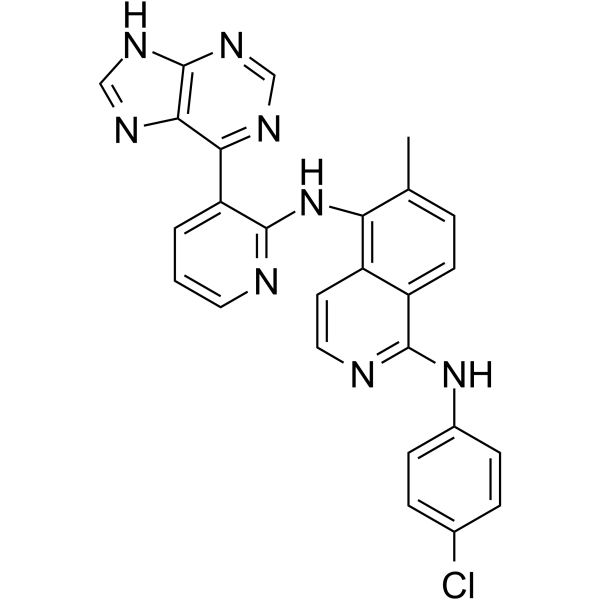
HY-14177
Raf inhibitor 1Raf Inhibitor
Publications Citing Use of MedChemExpress (MCE) Lifirafenib
MoreAll EGFR Isoforms
More

Biological Activity
Description
IC50 & Target
[1]|
EGFR 29 nM (IC50) |
BRafV600E 23 nM (IC50) |
EGFRL858R/T790M 495 nM (IC50) |
In Vitro
Lifirafenib (BGB-283) potently inhibits BRafV600E-activated ERK phosphorylation and cell proliferation. It demonstrates selective cytotoxicity and preferentially inhibits proliferation of cancer cells harboring BRafV600E and EGFR mutation/amplification. In BRafV600E colorectal cancer cell lines, Lifirafenib (BGB-283) effectively inhibits the reactivation of EGFR and EGFR-mediated cell proliferation[1].
MedChemExpress (MCE) has not independently confirmed the accuracy of these methods. They are for reference only.
In Vivo
MedChemExpress (MCE) has not independently confirmed the accuracy of these methods. They are for reference only.
Clinical Trial
| NCT Number | Sponsor | Condition | Start Date |
Phase

|
|---|---|---|---|---|
| NCT01329991 | 2011-05 | PHASE1 |


Chemical Information
-
CAS No. 1446090-79-4
-
Appearance Solid
-
Molecular Weight 478.42
-
Formula C25H17F3N4O3
-
Color White to off-white
-
SMILES
O=C1NC2=NC=CC(OC3=CC=C(O[C@@]4([H])[C@]5([H])[C@@H]4C6=NC7=CC=C(C(F)(F)F)C=C7N6)C5=C3)=C2CC1
-
Synonyms
BGB-283
-
Shipping
Room temperature in continental US; may vary elsewhere.
-
Storage
Powder -20°C 3 years 4°C 2 years In solvent -80°C 2 years -20°C 1 year


Publications (3)
-
Journal Impact Factor
-
Most Recent
-
J Mol Med (Berl)
The role and mechanism of TNFRSF21 in promoting necroptosis of vascular endothelial cells and inducing vascular leakage in sepsis. [Abstract]2026 Apr 23;104(1):68. PMID: 42020785 -
J Med Virol
Small molecule RAF265 as an antiviral therapy acts against HSV-1 by regulating cytoskeleton rearrangement and cellular translation machinery. [Abstract]2023 Jan;95(1):e28226. PMID: 36251738 -
bioRxiv
A structure-based modelling approach identifies effective drug combinations for RAS-mutant acute myeloid leukemia. [Abstract]2025 May 3:2025.04.29.651188. PMID: 40654850


Solvent & Solubility
In Vitro:
DMSO : ≥ 100 mg/mL (209.02 mM; Hygroscopic DMSO has a significant impact on the solubility of product, please use newly opened DMSO)
* "≥" means soluble, but saturation unknown.
Please refer to the solubility information to select the appropriate solvent. Once prepared, please aliquot and store the solution to prevent product inactivation from repeated freeze-thaw cycles.
Storage method and period of stock solution: -80°C, 2 years; -20°C, 1 year. When stored at -80°C, please use it within 2 years. When stored at -20°C, please use it within 1 year.
Please refer to the solubility information to select the appropriate solvent. Once prepared, please aliquot and store the solution to prevent product inactivation from repeated freeze-thaw cycles.
Storage method and period of stock solution: -80°C, 2 years; -20°C, 1 year. When stored at -80°C, please use it within 2 years. When stored at -20°C, please use it within 1 year.
Concentration (start) × Volume (start) = Concentration (final) × Volume (final)
In Vivo:
Select the appropriate dissolution method based on your experimental animal and administration route.
- For the following dissolution methods, please ensure to first prepare a clear stock solution using an In Vitro approach and then sequentially add co-solvents:
- To ensure reliable experimental results, the clarified stock solution can be appropriately stored based on storage conditions. As for the working solution for In Vivo experiments, it is recommended to prepare freshly and use it on the same day.
- The percentages shown for the solvents indicate their volumetric ratio in the final prepared solution. If precipitation or phase separation occurs during preparation, heat and/or sonication can be used to aid dissolution.
Add each solvent one by one: 10% DMSO 40% PEG300 5% Tween-80 45% Saline
Solubility: ≥ 2.5 mg/mL (5.23 mM); Clear solution
This protocol yields a clear solution of ≥ 2.5 mg/mL (saturation unknown).
Taking 1 mL working solution as an example, add 100 μL DMSO stock solution (25.0 mg/mL) to 400 μL PEG300, and mix evenly; then add 50 μL Tween-80 and mix evenly; then add 450 μL Saline to adjust the volume to 1 mL.
Preparation of Saline: Dissolve 0.9 g sodium chloride in ddH₂O and dilute to 100 mL to obtain a clear Saline solution.
In Vivo Dissolution Calculator
Please enter the basic information of animal experiments:
-
-
-
-
Recommended: Prepare an additional quantity of animals to account for potential losses during experiments.
Please enter your animal formula composition:
-
%DMSO +
Recommended: Keep the proportion of DMSO in working solution below 2% if your animal is weak.
-
%+
-
+%Tween-80 + +
-
%Saline +
The co-solvents required include: DMSO, . All of co-solvents are available by MedChemExpress (MCE). , Tween 80. All of co-solvents are available by MedChemExpress (MCE).
Working solution concentration: 0.22 mg/mL
Method for preparing stock solution: mg drug dissolved in μL DMSO. Stock solution concentration: mg/mL.
1. Take μL DMSO stock solution;
2. Add μL .
μL , mix evenly;
3. Then add μL Tween 80, mix evenly;
4. Then add μL
Please ensure that the stock solution in the first step is dissolved to a clear state, and add co-solvents in sequence. You can use ultrasonic heating (ultrasonic cleaner, recommended frequency 20-40 kHz), vortexing, etc. to assist dissolution.


Purity & Documentation
-
Data Sheet (275 KB)
-
SDS (393 KB)
- English - EN (393 KB)
- Français - FR (393 KB)
- Deutsch - DE (393 KB)
- Norwegian - NO (393 KB)
- Español - ES (393 KB)
- Swedish - SV (393 KB)
- Italian - IT (393 KB)
- Korean - KR (393 KB)
- Portuguese - PT (393 KB)
-
Handling Instructions (2659 KB)
References


Complete Stock Solution Preparation Table
Please refer to the solubility information to select the appropriate solvent. Once prepared, please aliquot and store the solution to prevent product inactivation from repeated freeze-thaw cycles.
Storage method and period of stock solution: -80°C, 2 years; -20°C, 1 year. When stored at -80°C, please use it within 2 years. When stored at -20°C, please use it within 1 year.
| Optional Solvent | Concentration Solvent Mass | 1 mg | 5 mg | 10 mg | 25 mg |
|---|---|---|---|---|---|
| DMSO | 1 mM | 2.0902 mL | 10.4511 mL | 20.9021 mL | 52.2553 mL |
| 5 mM | 0.4180 mL | 2.0902 mL | 4.1804 mL | 10.4511 mL | |
| 10 mM | 0.2090 mL | 1.0451 mL | 2.0902 mL | 5.2255 mL | |
| 15 mM | 0.1393 mL | 0.6967 mL | 1.3935 mL | 3.4837 mL | |
| 20 mM | 0.1045 mL | 0.5226 mL | 1.0451 mL | 2.6128 mL | |
| 25 mM | 0.0836 mL | 0.4180 mL | 0.8361 mL | 2.0902 mL | |
| 30 mM | 0.0697 mL | 0.3484 mL | 0.6967 mL | 1.7418 mL | |
| 40 mM | 0.0523 mL | 0.2613 mL | 0.5226 mL | 1.3064 mL | |
| 50 mM | 0.0418 mL | 0.2090 mL | 0.4180 mL | 1.0451 mL | |
| 60 mM | 0.0348 mL | 0.1742 mL | 0.3484 mL | 0.8709 mL | |
| 80 mM | 0.0261 mL | 0.1306 mL | 0.2613 mL | 0.6532 mL | |
| 100 mM | 0.0209 mL | 0.1045 mL | 0.2090 mL | 0.5226 mL |


Lifirafenib Related Classifications
HY-18957 Related Classifications
 Powered by Bioz