



AV-412 free base
Based on 5 publication(s) in Google Scholar
AV-412 free base (MP-412 free base) is an EGFR inhibitor with IC50s of 0.75, 0.5, 0.79, 2.3, 19 nM for EGFR, EGFRL858R, EGFRT790M, EGFRL858R/T790M and ErbB2, respectively.
For research use only. We do not sell to patients.
- Purity : 98.10%
- CAS No.: 451492-95-8
- Formula: C27H28ClFN6O
- Molecular Weight:507.00
-
Storage:Powder -20°C, 3 years , 4°C, 2 years ; In solvent -80°C, 2 years , -20°C, 1 year

To place orders, for customer services and technical support, please contact: MedChemExpress USA
Tel: 609-228-6898 E-mail: [email protected] [email protected]


-
 Biological Activity
-
Chemical Information
-
Solvent & Solubility
- Purity & Documentation
- References
-
 Help & FAQs


-
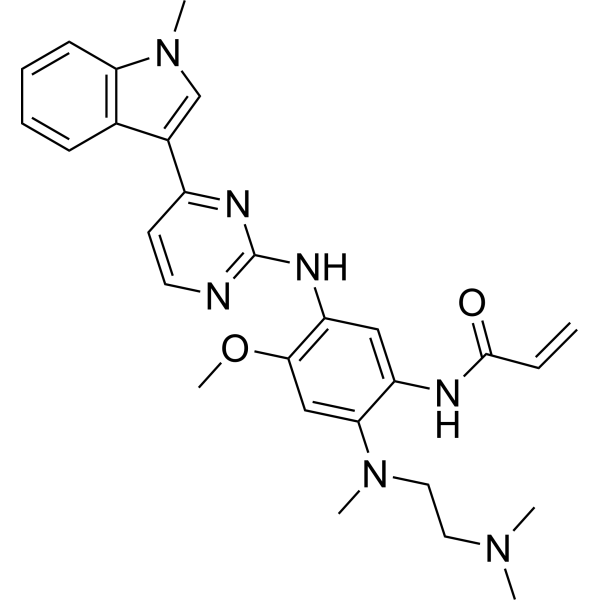
HY-15772
OsimertinibMutant-Selective EGFR Inhibitor -
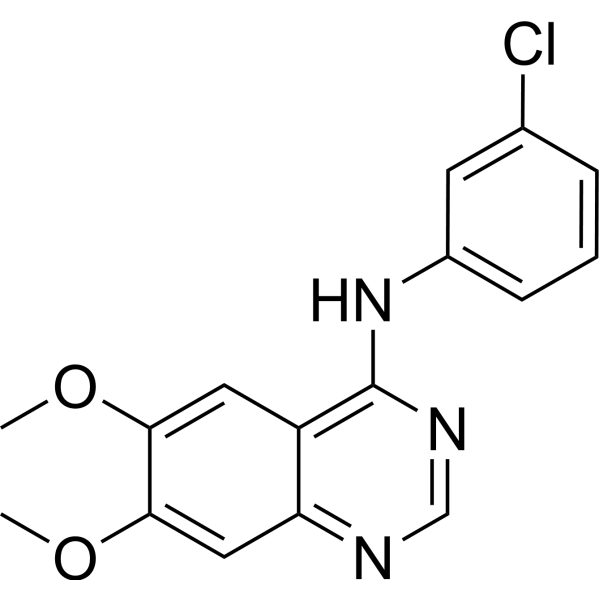
HY-13524
AG-1478EGFR Inhibitor -
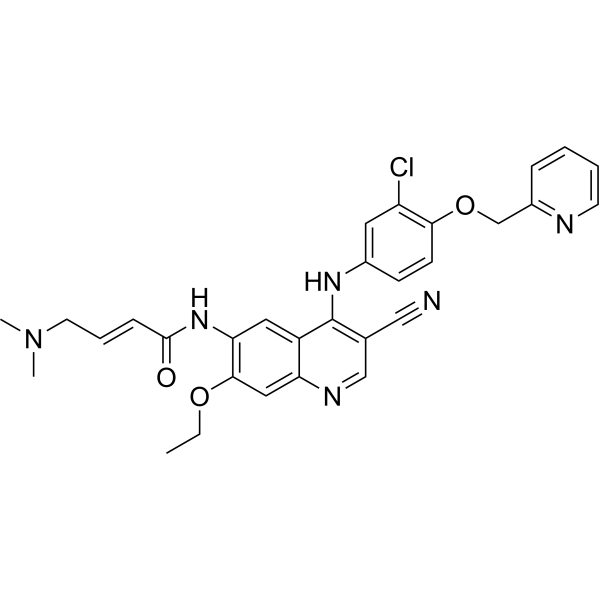
HY-32721
NeratinibHER2/EGFR Inhibitor -
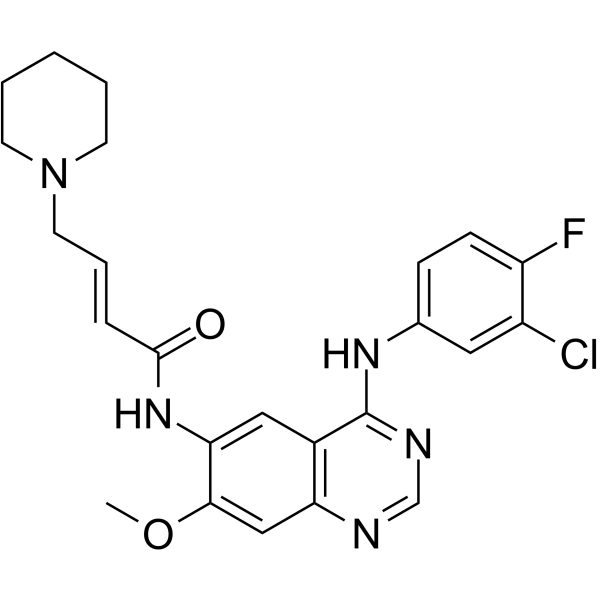
HY-13272
DacomitinibErbB Inhibitor -
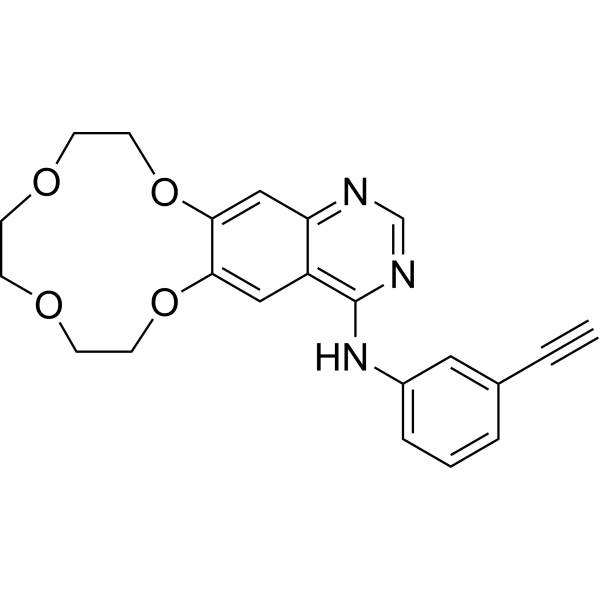
HY-15164A
IcotinibEGFR Inhibitor -

HY-15772R
Osimertinib (Standard)Mutant-Selective EGFR Inhibitor -
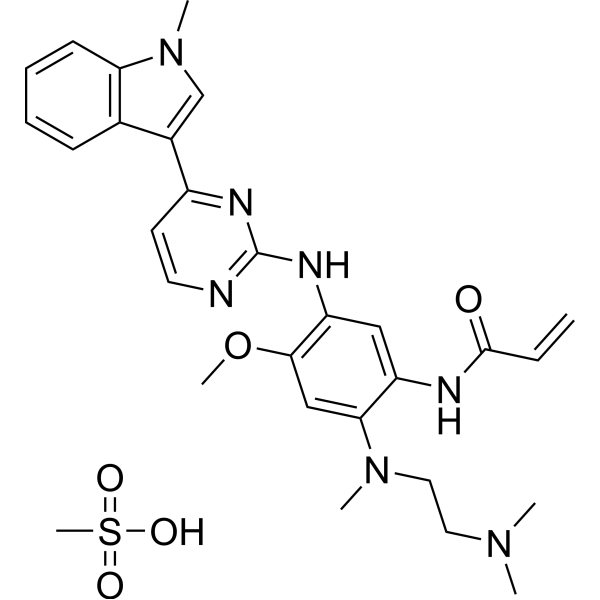
HY-15772A
Osimertinib mesylateMutant-Selective EGFR Inhibitor -
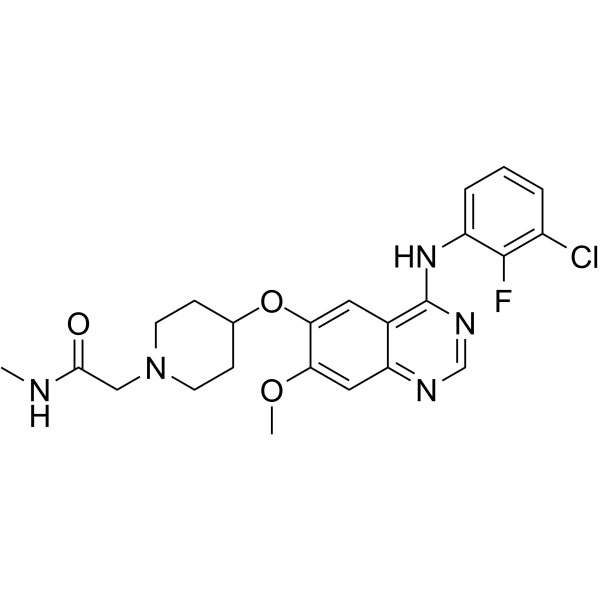
HY-13050
SapitinibErbB1/2/3 Inhibitor -
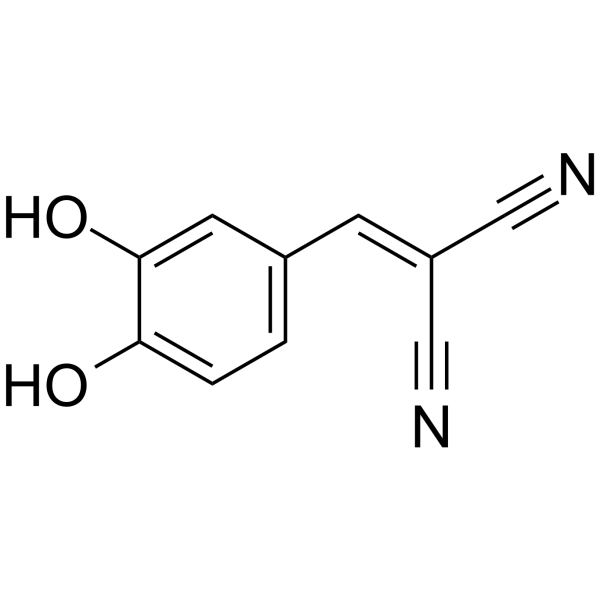
HY-15644
Tyrphostin 23EGFR Inhibitor -
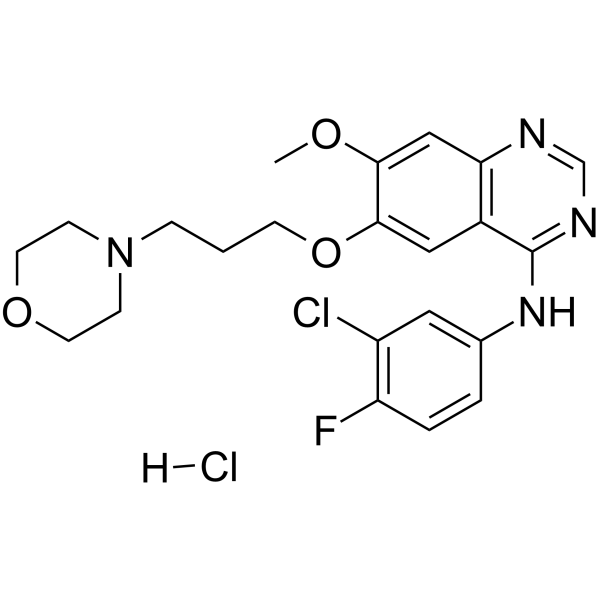
HY-50895A
Gefitinib hydrochlorideEGFR Inhibitor -
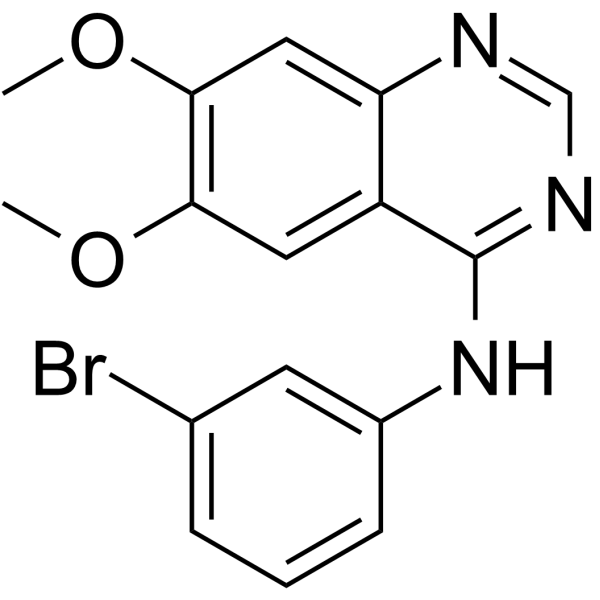
HY-14346
PD153035EGFR Inhibitor -
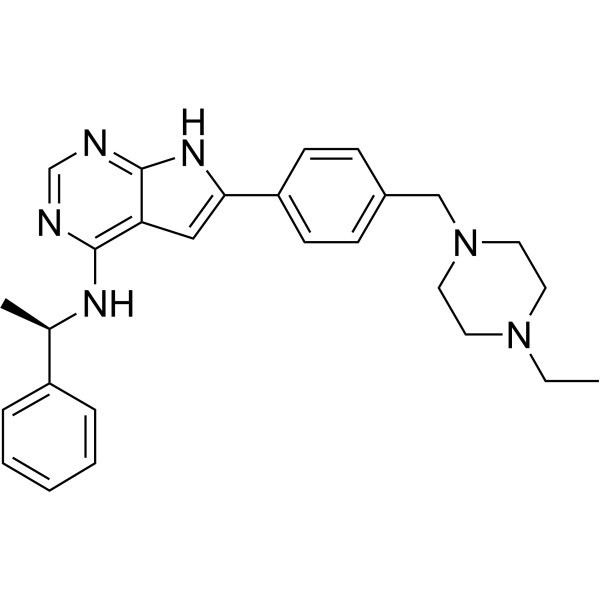
HY-10045
AEE788EGFR/ErbB2 Inhibitor
Publications Citing Use of MedChemExpress (MCE) AV-412 free base
More Customer Validation & Images

-
WB
-
Others
-
Flow Cytometry
-
Cell Proliferation/Viability Assay
All EGFR Isoforms
More

Biological Activity
Description
IC50 & Target
[1]|
EGFR 0.75 nM (IC50) |
ErbB2 19 nM (IC50) |
EGFRL858R 0.51 nM (IC50) |
EGFRL858R/T790M 2.3 nM (IC50) |
EGFRT790M 0.79 nM (IC50) |
Cellular Effect
|
Cell Line

|
Type | Value | Description | References |
|---|---|---|---|---|
| A-431 | IC50 |
0.1 μM
Compound: 33; AV-412; MP-412
|
Antiproliferative activity against human A431 cells expressing wild type EGFR incubated for 72 hrs by MTS assay
Antiproliferative activity against human A431 cells expressing wild type EGFR incubated for 72 hrs by MTS assay
|
[PMID: 28754471] |
In Vitro
AV-412 inhibits autophosphorylation of EGFR and ErbB2 with IC50 of 43 and 282 nM, respectively. AV-412 also inhibits epidermal growth factor (EGF)-dependent cell proliferation with an IC50 of 100 nM. AV-412 abrogates EGFR signaling in the gefitinib-resistant H1975 cell line, which harbors a double mutation of L858R and T790M in EGFR[1].
MedChemExpress (MCE) has not independently confirmed the accuracy of these methods. They are for reference only. .
In Vivo
MedChemExpress (MCE) has not independently confirmed the accuracy of these methods. They are for reference only.


Chemical Information
-
CAS No. 451492-95-8
-
Appearance Solid
-
Molecular Weight 507.00
-
Formula C27H28ClFN6O
-
Color White to yellow
-
SMILES
O=C(C=C)NC1=CC2=C(NC3=CC=C(C(Cl)=C3)F)N=CN=C2C=C1C#CC(C)(C)N(CC4)CCN4C
-
Synonyms
MP-412 free base
-
Shipping
Room temperature in continental US; may vary elsewhere.
-
Storage
Powder -20°C 3 years 4°C 2 years In solvent -80°C 2 years -20°C 1 year


Publications (5)
-
Journal Impact Factor
-
Most Recent
-
Nature
2026 Jan;649(8098):1032-1041. PMID: 41299171
AV-412 free base purchased from MedChemExpress. Usage Cited in: Nature. 2026 Jan;649(8098):1032-1041. [Abstract]
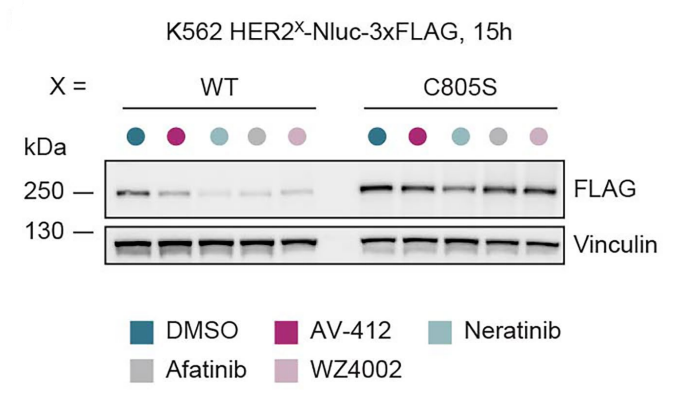
Immunoblot analysis of cell lines (K562 HER2WT or HER2C805S Nluc-3xFLAG reporter cell lines) treated for 15 h with AV-412 (HY-10346; 2.5 µM), neratinib (HY-32721; 10 µM), afatinib (HY-10261; 10 µM), WZ4002 (HY-12026; 10 µM).
AV-412 free base purchased from MedChemExpress. Usage Cited in: Nature. 2026 Jan;649(8098):1032-1041. [Abstract]
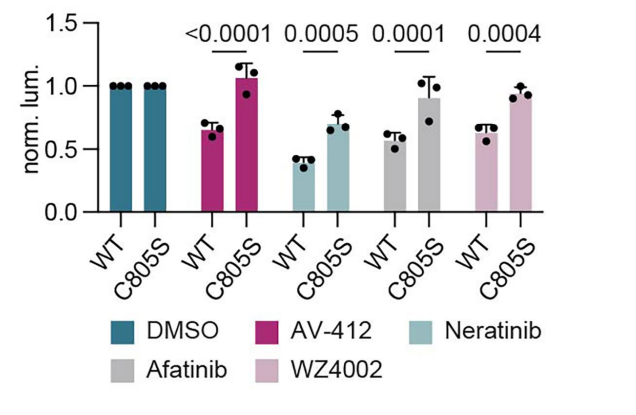
Luminescent reporter assay of K562 HER2WT or HER2C805S Nluc-3xFLAG reporter cell lines treated for 15 h with the indicated compounds (AV-412 (HY-10346; 2.5 µM), neratinib (HY-32721; 10 µM), afatinib (HY-10261; 10 µM), WZ4002 (HY-12026; 10 µM)) shown as normalized luminescence per genetic construct (two-way ANOVA, Sidak corrected) (n = 3).
-
Science
2017 Dec 1;358(6367):eaan4368. PMID: 29191878 -
Proc Natl Acad Sci U S A
2019 Feb 19;116(8):2996-3005. PMID: 30718432
AV-412 free base purchased from MedChemExpress. Usage Cited in: Proc Natl Acad Sci U S A. 2019 Feb 19;116(8):2996-3005. [Abstract]
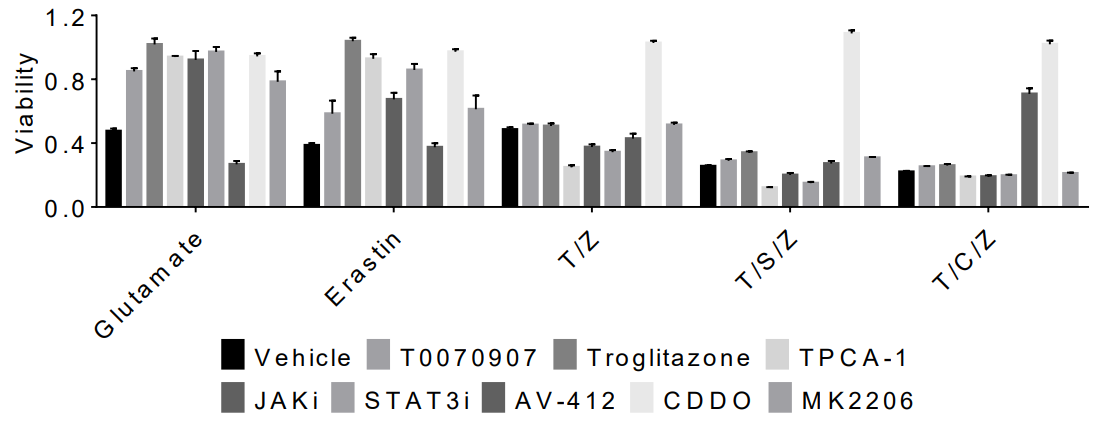
HT22 cells were pretreated with the indicated inhibitors (CDDO (Bardoxolone, HY-14909); T0070907 (HY-13202); Troglitazone (HY-50935 ); TPCA-1 (HY-10074); JAKi; STAT3i; AV-412 (HY-10346); and MK2206 (HY-10358)) and then treated with T/Z, T/S/Z, T/C/Z for 9 h or Glutamate, Erastin (T: 20 ng/ml; Z: 50 μM; S: 20 nM; C: 1 μg/ml; Glutamate: 50 mM; Erastin 10 μM) for 12 h. Cell viability was measured by CellTiterGlo assay.
-
Sci Data
High-throughput drug screening identifies novel therapeutics for Low Grade Serous Ovarian Carcinoma. [Abstract]2024 Sep 19;11(1):1024. PMID: 39300112 -
Cancer Med
Proton pump inhibitors stabilize the expression of PD-L1 on cell membrane depending on the phosphorylation of GSK3β. [Abstract]2024 May;13(10):e7083. PMID: 38752436
AV-412 free base purchased from MedChemExpress. Usage Cited in: Cancer Med. 2024 May;13(10):e7083. [Abstract]
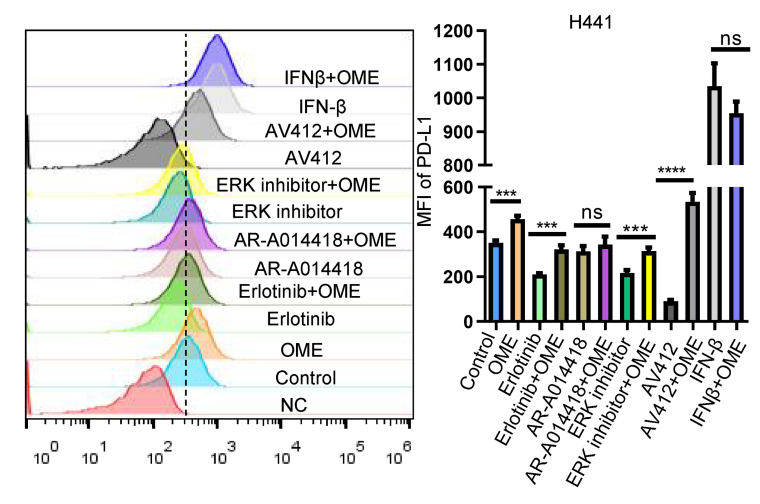
FACS analysis was used to perform the MFI of cell membrane of PD‐L1 in H441 cells with control or multiply small molecular inhibitors (Seen in the Table 1, 24 h) (n = 3). AV412 (HY‐10346; 20, 50 nM), ERK1/2 inhibitor 1 (HY‐112287; 20, 50 nM), AR‐A014418 (HY‐10512; 100, 200 nM), Erlotinib (HY‐50896; 50, 100 nM).


Solvent & Solubility
In Vitro:
DMSO : 50 mg/mL (98.62 mM; Need ultrasonic; Hygroscopic DMSO has a significant impact on the solubility of product, please use newly opened DMSO)
Please refer to the solubility information to select the appropriate solvent. Once prepared, please aliquot and store the solution to prevent product inactivation from repeated freeze-thaw cycles.
Storage method and period of stock solution: -80°C, 2 years; -20°C, 1 year. When stored at -80°C, please use it within 2 years. When stored at -20°C, please use it within 1 year.
Please refer to the solubility information to select the appropriate solvent. Once prepared, please aliquot and store the solution to prevent product inactivation from repeated freeze-thaw cycles.
Storage method and period of stock solution: -80°C, 2 years; -20°C, 1 year. When stored at -80°C, please use it within 2 years. When stored at -20°C, please use it within 1 year.
Concentration (start) × Volume (start) = Concentration (final) × Volume (final)
In Vivo:
Select the appropriate dissolution method based on your experimental animal and administration route.
- For the following dissolution methods, please ensure to first prepare a clear stock solution using an In Vitro approach and then sequentially add co-solvents:
- To ensure reliable experimental results, the clarified stock solution can be appropriately stored based on storage conditions. As for the working solution for In Vivo experiments, it is recommended to prepare freshly and use it on the same day.
- The percentages shown for the solvents indicate their volumetric ratio in the final prepared solution. If precipitation or phase separation occurs during preparation, heat and/or sonication can be used to aid dissolution.
Add each solvent one by one: 10% DMSO 40% PEG300 5% Tween-80 45% Saline
Solubility: ≥ 2.5 mg/mL (4.93 mM); Clear solution
This protocol yields a clear solution of ≥ 2.5 mg/mL (saturation unknown).
Taking 1 mL working solution as an example, add 100 μL DMSO stock solution (25.0 mg/mL) to 400 μL PEG300, and mix evenly; then add 50 μL Tween-80 and mix evenly; then add 450 μL Saline to adjust the volume to 1 mL.
Preparation of Saline: Dissolve 0.9 g sodium chloride in ddH₂O and dilute to 100 mL to obtain a clear Saline solution.
In Vivo Dissolution Calculator
Please enter the basic information of animal experiments:
-
-
-
-
Recommended: Prepare an additional quantity of animals to account for potential losses during experiments.
Please enter your animal formula composition:
-
%DMSO +
Recommended: Keep the proportion of DMSO in working solution below 2% if your animal is weak.
-
%+
-
+%Tween-80 + +
-
%Saline +
The co-solvents required include: DMSO, . All of co-solvents are available by MedChemExpress (MCE). , Tween 80. All of co-solvents are available by MedChemExpress (MCE).
Working solution concentration: 0.22 mg/mL
Method for preparing stock solution: mg drug dissolved in μL DMSO. Stock solution concentration: mg/mL.
1. Take μL DMSO stock solution;
2. Add μL .
μL , mix evenly;
3. Then add μL Tween 80, mix evenly;
4. Then add μL
Please ensure that the stock solution in the first step is dissolved to a clear state, and add co-solvents in sequence. You can use ultrasonic heating (ultrasonic cleaner, recommended frequency 20-40 kHz), vortexing, etc. to assist dissolution.


Purity & Documentation
-
Data Sheet (279 KB)
-
SDS (393 KB)
- English - EN (393 KB)
- Français - FR (393 KB)
- Deutsch - DE (393 KB)
- Norwegian - NO (393 KB)
- Español - ES (393 KB)
- Swedish - SV (393 KB)
- Italian - IT (393 KB)
- Korean - KR (393 KB)
- Portuguese - PT (393 KB)
-
Handling Instructions (2659 KB)
References


Complete Stock Solution Preparation Table
Please refer to the solubility information to select the appropriate solvent. Once prepared, please aliquot and store the solution to prevent product inactivation from repeated freeze-thaw cycles.
Storage method and period of stock solution: -80°C, 2 years; -20°C, 1 year. When stored at -80°C, please use it within 2 years. When stored at -20°C, please use it within 1 year.
| Optional Solvent | Concentration Solvent Mass | 1 mg | 5 mg | 10 mg | 25 mg |
|---|---|---|---|---|---|
| DMSO | 1 mM | 1.9724 mL | 9.8619 mL | 19.7239 mL | 49.3097 mL |
| 5 mM | 0.3945 mL | 1.9724 mL | 3.9448 mL | 9.8619 mL | |
| 10 mM | 0.1972 mL | 0.9862 mL | 1.9724 mL | 4.9310 mL | |
| 15 mM | 0.1315 mL | 0.6575 mL | 1.3149 mL | 3.2873 mL | |
| 20 mM | 0.0986 mL | 0.4931 mL | 0.9862 mL | 2.4655 mL | |
| 25 mM | 0.0789 mL | 0.3945 mL | 0.7890 mL | 1.9724 mL | |
| 30 mM | 0.0657 mL | 0.3287 mL | 0.6575 mL | 1.6437 mL | |
| 40 mM | 0.0493 mL | 0.2465 mL | 0.4931 mL | 1.2327 mL | |
| 50 mM | 0.0394 mL | 0.1972 mL | 0.3945 mL | 0.9862 mL | |
| 60 mM | 0.0329 mL | 0.1644 mL | 0.3287 mL | 0.8218 mL | |
| 80 mM | 0.0247 mL | 0.1233 mL | 0.2465 mL | 0.6164 mL |


AV-412 free base Related Classifications
HY-10346A Related Classifications
 Powered by Bioz