Search Result
Results for "
Plasmodium+falciparum
" in MedChemExpress (MCE) Product Catalog:
1
Biochemical Assay Reagents
3
Isotope-Labeled Compounds
| Cat. No. |
Product Name |
Target |
Research Areas |
Chemical Structure |
-
- HY-B0770
-
|
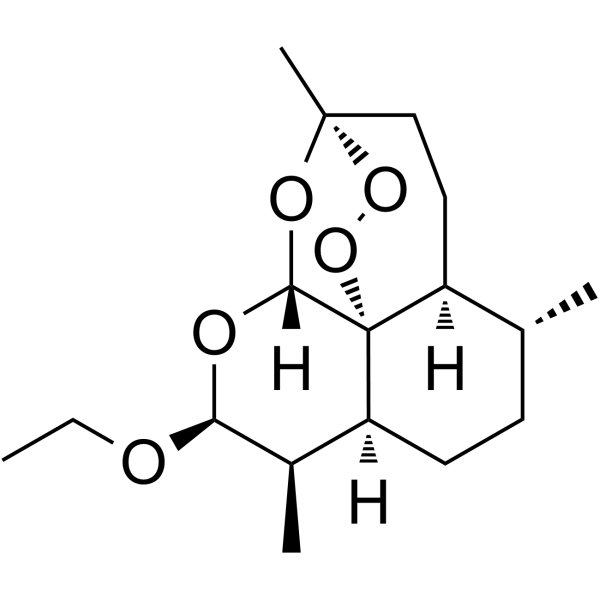
β-Arteether; (+)-Arteether; Arteether
|
CXCR
Parasite
|
Infection
Cancer
|
|
Artemotil (β-Arteether) has antimalarial activity for the treatment of chloroquine-resistant Plasmodium falciparum malaria with an IC50 of 1.61 nM. Artemotil also has central nervous system (CNS) neurotoxicity and anorectic toxicity in rats, dogs and monkeys .
|
-
-
- HY-128204
-
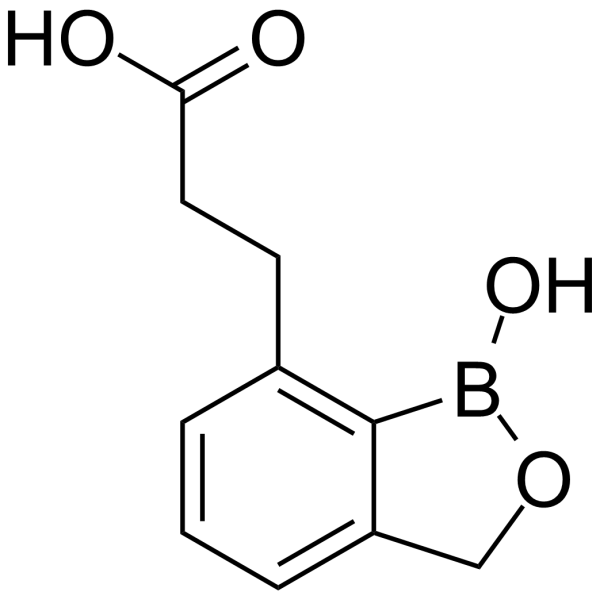
AN3661
2 Publications Verification
|
Parasite
|
Infection
|
|
AN3661, a potent antimalarial lead compound, targets a Plasmodium falciparum cleavage and polyadenylation specificity factor homologue subunit 3 (PfCPSF3). AN3661 inhibits Plasmodium falciparum laboratory-adapted strains (mean IC50=32 nM), Ugandan field isolates (mean ex vivo IC50=64 nM), and murine P. berghei and P. falciparum infections .
|
-
-
- HY-B0529A
-
|
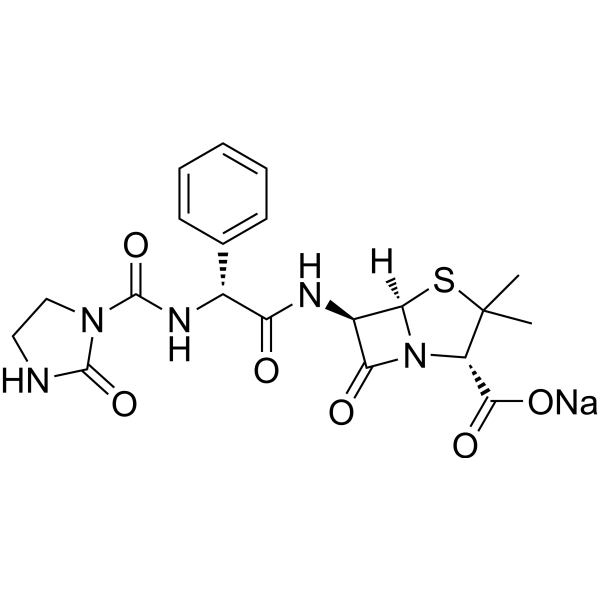
Sodium azlocillin
|
Bacterial
Parasite
Antibiotic
|
Infection
|
|
Azlocillin sodium salt (Sodium azlocillin), a semisynthetic penicillin, is a broad spectrum β-lactam antibiotic. Azlocillin sodium salt shows antipseudomonal activity, and also potent against the malarial parasite Plasmodium falciparum .
|
-
-
- HY-153007
-
|
|
Dihydrofolate reductase (DHFR)
|
Infection
|
|
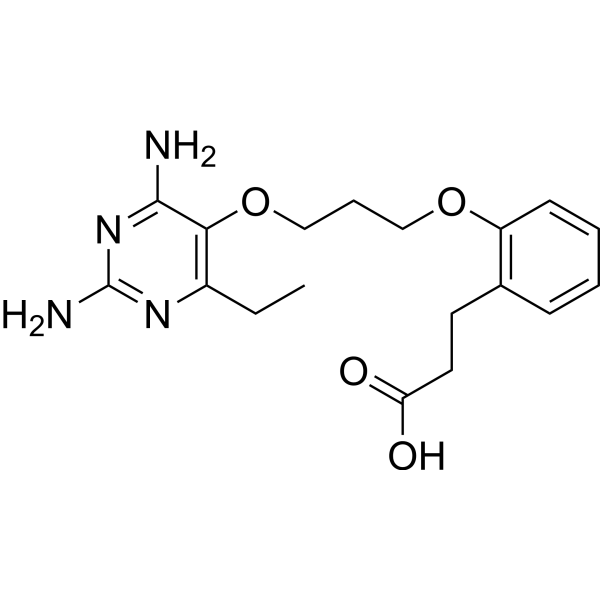
DHFR-IN-5 is a potent and orally active dihydrofolate reductase (DHFR) inhibitor with a Ki value of 0.54 nM for quadruple mutant Plasmodium falciparum DHFR. DHFR-IN-5 shows anti-malaria activity .
|
-
-
- HY-126130
-
|
|
Aminoacyl-tRNA Synthetase
|
Infection
|
|
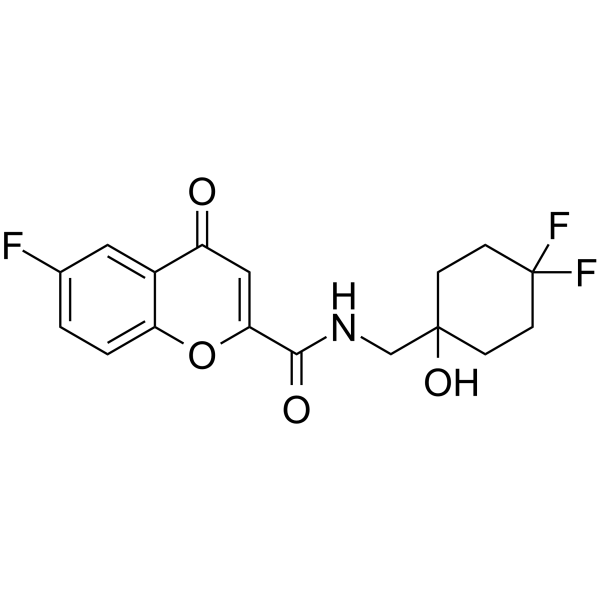
LysRs-IN-2 is a lysyl-tRNA synthetase (KRS) inhibitor with IC50s of 0.015 μM and 0.13 μM for Plasmodium falciparum lysyl-tRNA synthetase (PfKRS) and Cryptosporidium parvum lysyl-tRNA synthetase (CpKRS), respectively .
|
-
-
- HY-N7583
-
|
|
Parasite
|
Infection
|
|
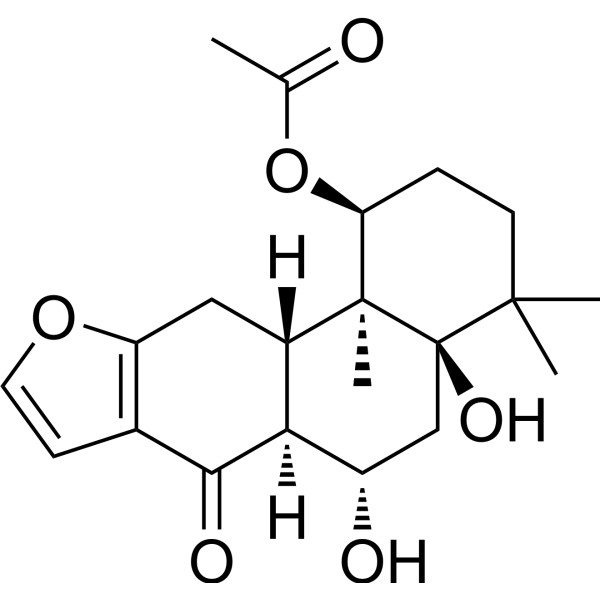
Norcaesalpinin E, a C-17-norcassane-type diterpene found in Caesalpinia crista, is a Plasmodium falciparum growth inhibitor with an IC50 of 90 nM. Norcaesalpinin E induces dose-dependent growth inhibition of Plasmodium falciparum. Norcaesalpinin E can be used for the research of malaria .
|
-
-
- HY-129651
-
|
|
SHMT
|
Infection
|
|
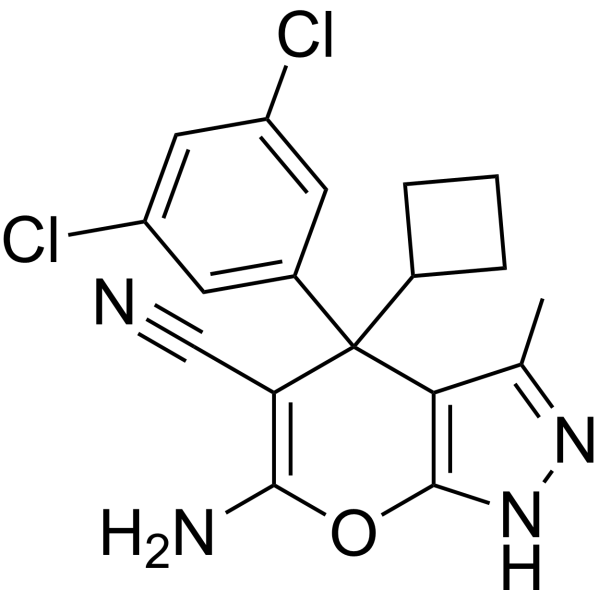
SHMT-IN-1 is a Plasmodium falciparum Serine Hydroxymethyltransferase (PfSHMT) inhibitor with an IC50 of 350 nM. SHMT-IN-1 can be used for the research of malaria .
|
-
-
- HY-100358
-
|
|
Parasite
|
Infection
|
|
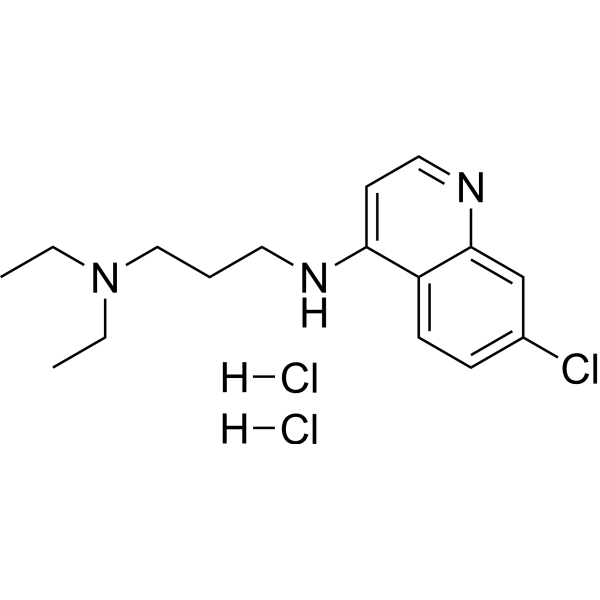
AQ-13 dihydrochloride is an aminoquinoline antimalarial agent that is effective against drug-resistant strains of Plasmodium falciparum.
|
-
-
- HY-15873
-
|
|
Farnesyl Transferase
|
Cancer
|
|
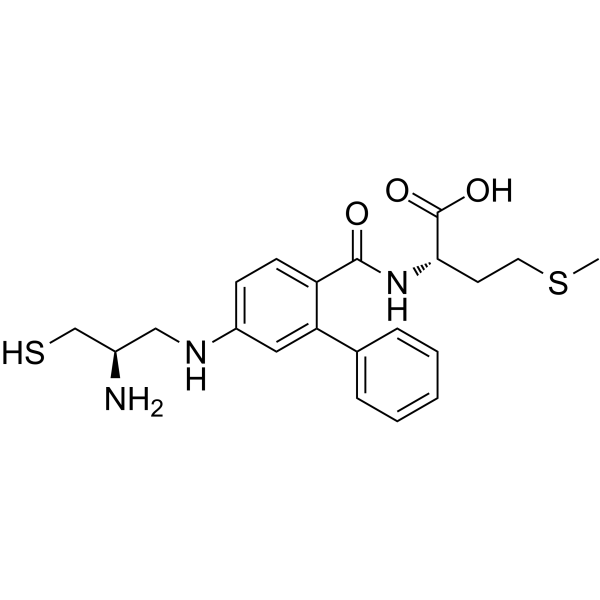
FTI-276 is a protein farnesyl transferase (PFT) inhibitor with IC50s of 0.9 and 0.5 nM for Plasmodium falciparum and human.
|
-
-
- HY-148433
-
|
|
Parasite
|
Infection
Inflammation/Immunology
|
|
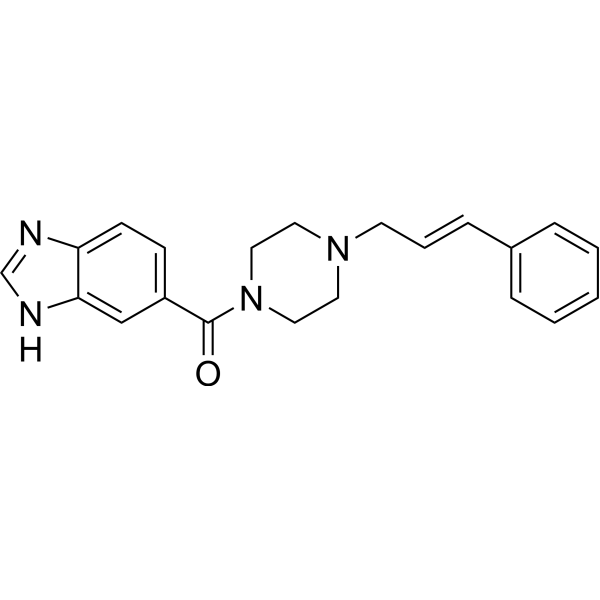
SpdSyn binder-1 is a weak binder, which binds in the active site of plasmodium falciparum spermidine synthase. SpdSyn binder-1 can be used for the research of malaria .
|
-
-
- HY-135578
-
|
|
Parasite
|
Infection
|
|
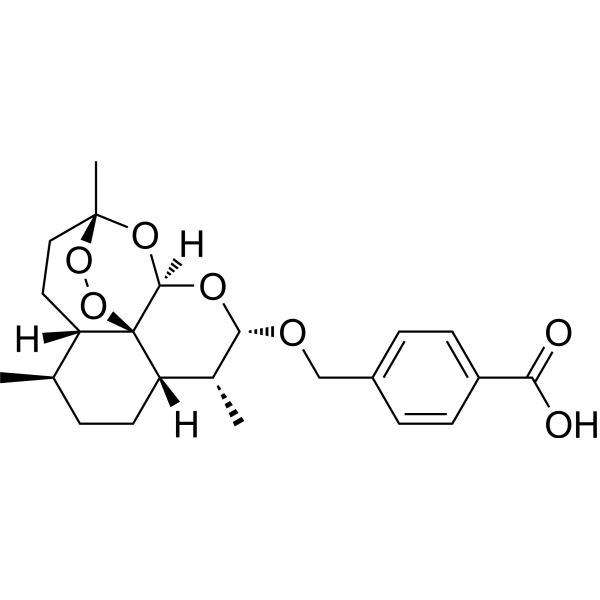
Artelinic acid, a derivative of Artemisinin, is an antimalarial agent for the treatment of multidrug resistant strains of Plasmodium falciparum. Artelinic acid can be administered by various routes of administration, including intravenous, intramuscular and oral routes .
|
-
-
- HY-117015
-
|
|
Parasite
|
Infection
|
|
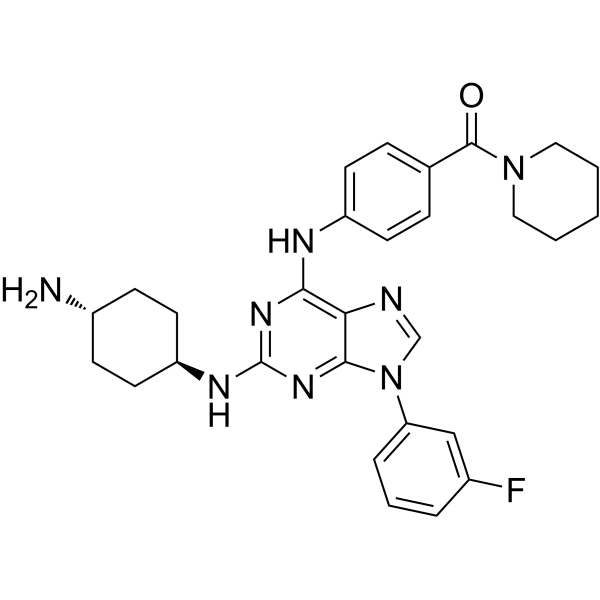
Purfalcamine is an orally active, selective Plasmodium falciparum calcium-dependent protein kinase 1 (PfCDPK1) inhibitor with an IC50 of 17 nM and an EC50 of 230 nM. Purfalcamine has antimalarial activity and causes malaria parasites developmental arrest at the schizont stage .
|
-
-
- HY-A0163D
-
|
(E)-Clopenthixol
|
Antibiotic
Bacterial
Parasite
|
Infection
|
|
trans-Clopenthixol ((E)-Clopenthixol) is an antibiotic, without neuroleptic effect. trans-Clopenthixol can be used to inhibit Pseudomonas aeruginosa and Plasmodium falciparum in vitro .
|
-

-
- HY-135648
-
-
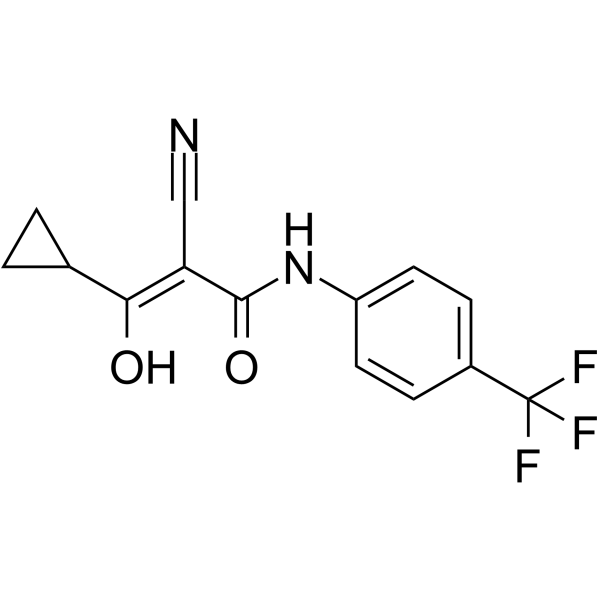
-
- HY-W109038
-
|
|
Drug Derivative
Parasite
|
Infection
|
|
4-Propylcatechol is an Allylpyrocatechol (HY-124127) analog. 4-Propylcatechol shows anti-malarial activity against Plasmodium falciparum CDC-1 with an IC50 of 32 µM .
|
-

-
- HY-112435
-
|
|
PI4K
Parasite
|
Infection
|
|
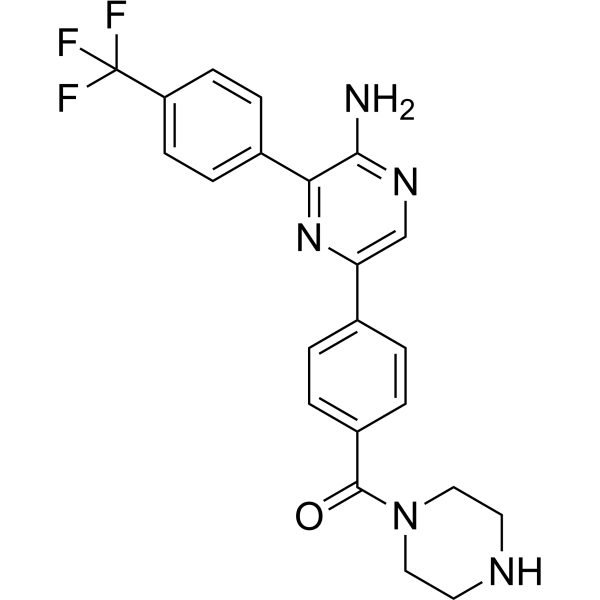
UCT943 is a next-generation Plasmodium falciparum PI4K inhibitor. UCT943 inhibits the P. vivax PI4K (PvPI4K) enzyme with an IC50 of 23 nM .
|
-
-
- HY-B1401
-
|
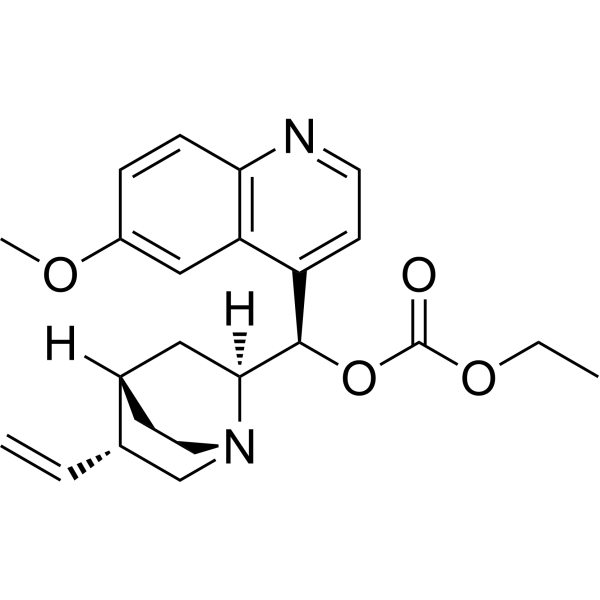
Quinine ethyl carbonate
|
Parasite
|
Infection
|
|
Euquinine is an odorless salt that can be used as
a substitute for quinine. Euquinine has anti-Plasmodium falciparum activity.
Euquinine can be used for the study of multidrug resistance and bioavailability
of Plasmodium falciparum .
|
-
-
- HY-159637
-
|
NVP-IWY357
|
Parasite
|
Infection
|
|
IWY357 is a long-acting, blood-stage inhibitor of Plasmodium falciparum .
|
-

-
- HY-N10928
-
|
|
Parasite
|
Infection
|
|
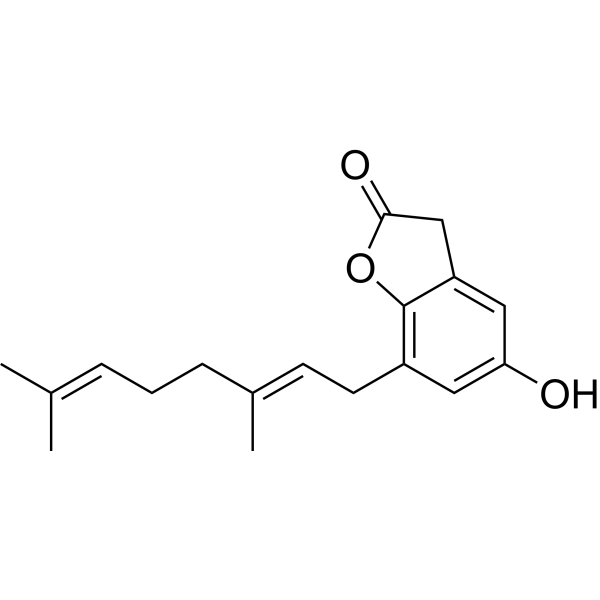
Lettowienolide, a geranylbenzoquinonoid, exhibits mild in vitro activity against the Plasmodium falciparum malaria parasite (IC50~20 μg/mL) .
|
-
-
- HY-N9320
-
|
|
Parasite
|
Infection
|
|
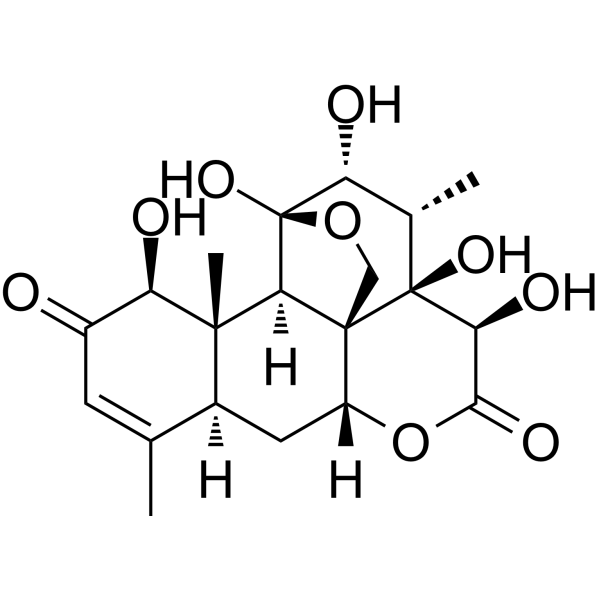
13,21-Dihydroeurycomanone, a natural compound isolated from Eurycoma longifolia root, possesses anti-parasite activity for Plasmodium falciparum and Toxoplasma gondii .
|
-
-
- HY-121770
-
|
|
Drug Derivative
Parasite
Fungal
|
Infection
|
|
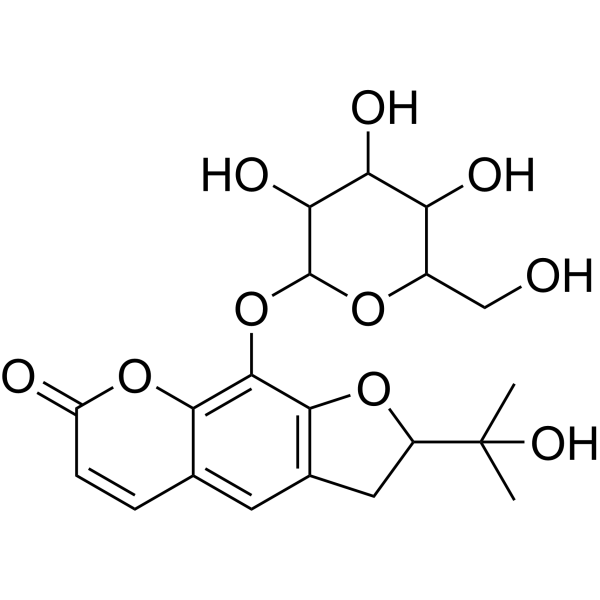
Rutarin is a Coumarin (HY-N0709) derivative with antimalarial and antifungal activities. Rutarin inhibits Plasmodium falciparum with an IC50 of 88 μg/mL. Rutarin also inhibits Coniophora cerebella .
|
-
-
- HY-N11031
-
|
|
Parasite
|
Infection
|
|
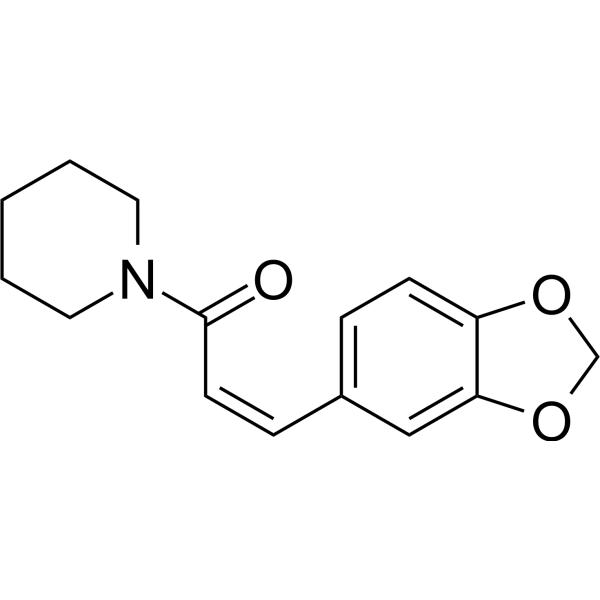
Z-Antiepilepsirine is an amide alkaloid that can be found in Piper capense L.f. Z-Antiepilepsirine shows antiplasmodial activity with an IC50 value of 27 µM for W2 strain of Plasmodium falciparum .
|
-
-
- HY-161079
-
|
|
Parasite
|
Infection
|
|
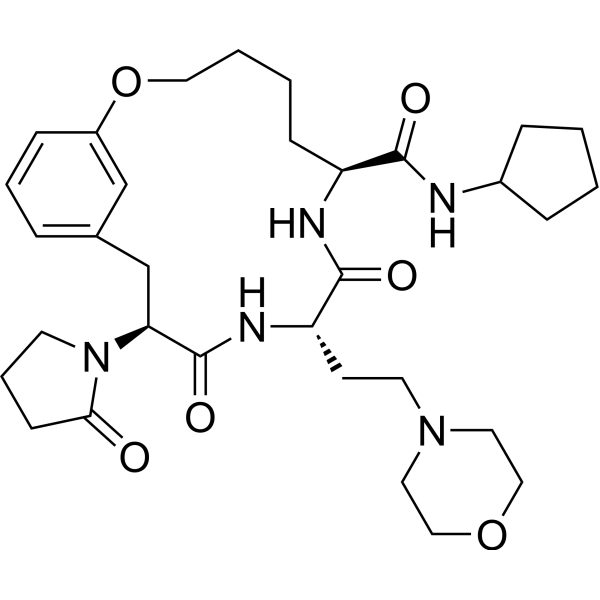
TDI-8304, a macrocyclic peptide, is a potent, species selective, and noncovalent Plasmodium falciparum (Pf20S) inhibitor. TDI-8304 shows highly selective for Pf20S over human proteasomes .
|
-
-
- HY-121211
-
|
|
Parasite
|
Infection
|
|
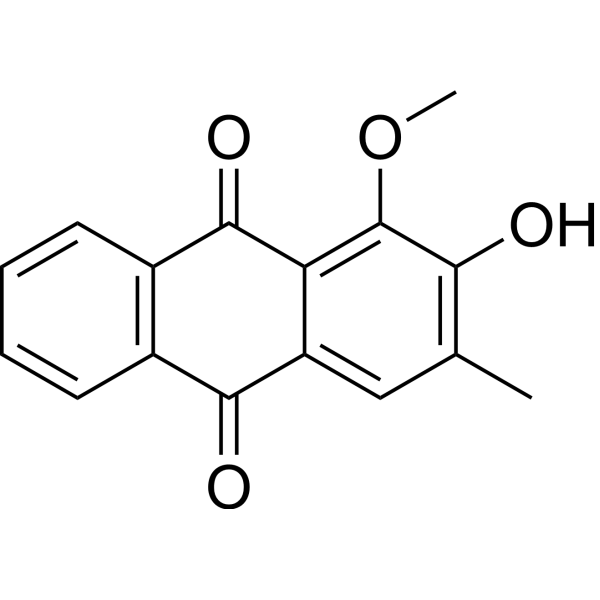
Digitolutein is a natural product that can be isolated from the stem bark and the roots of Morinda lucida Benth. Digitolutein effectively inhibits the growth of Plasmodium falciparum with an IC50 value of 12.92 μg/mL. Digitolutein can be used for the research of infection .
|
-
-
- HY-186055
-
|
|
Parasite
|
Infection
|
|
Antimalarial agent 58 is a diaminoquinoline methanol compound with weak in vitro activity against Plasmodium falciparum strain D6, and no activity against Plasmodium falciparum strains W2, C235 and C2A .
|
-

-
- HY-N8257
-
-
-
- HY-W010354
-
|
|
Drug Intermediate
|
Infection
|
|
2,2-Diethoxyethanol is a drug intermediate used in research related to Plasmodium falciparum infection .
|
-

-
- HY-A0163C
-
|
(E)-Clopenthixol dihydrochloride
|
Antibiotic
Bacterial
Parasite
|
Infection
|
|
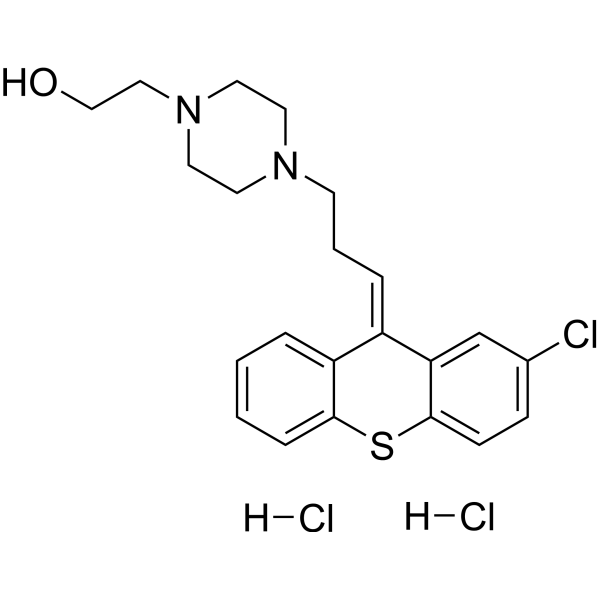
trans-Clopenthixol ((E)-Clopenthixol) dihydrochloride is an antibiotic agent, without neuroleptic effect. trans-Clopenthixol dihydrochloride can be used to inhibit Pseudomonas aeruginosa and Plasmodium falciparum in vitro .
|
-
-
- HY-174393
-
|
|
Parasite
Mitochondrial Metabolism
|
Infection
|
|
Gamhepathiopine is a thienopyrimidinone compound. Gamhepathiopine exerts antimalarial effects by targeting the Qo site of Plasmodium falciparum cytochrome b and inhibiting the activity of complex III in the electron transport chain .
|
-

-
- HY-149289
-
|
|
Parasite
DNA Methyltransferase
|
Others
|
|
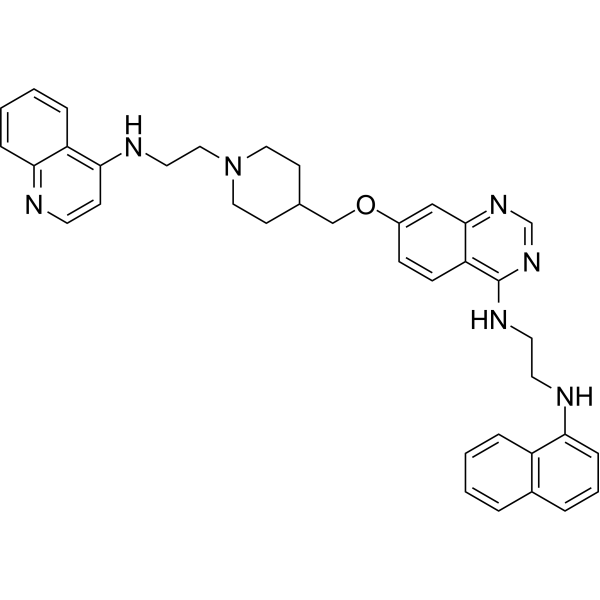
DNMT-IN-3 is an DNA Methyltransferase (DNMT) inhibitor, and plays an antimalarial role with IC50 of 60 nM against Plasmodium falciparum (Plasmodium). DNMT-IN-3 can be used for malaria related research .
|
-
-
- HY-122274
-
|
|
Parasite
|
Infection
|
|
MMV666693 is a translation inhibitor specific for Plasmodium falciparum. MMV666693 has low cytotoxicity in human fibroblasts (IC50>32 µM) and can be used in the development of antimalarial drugs .
|
-

-
- HY-111746
-
|
|
Parasite
|
Infection
|
|
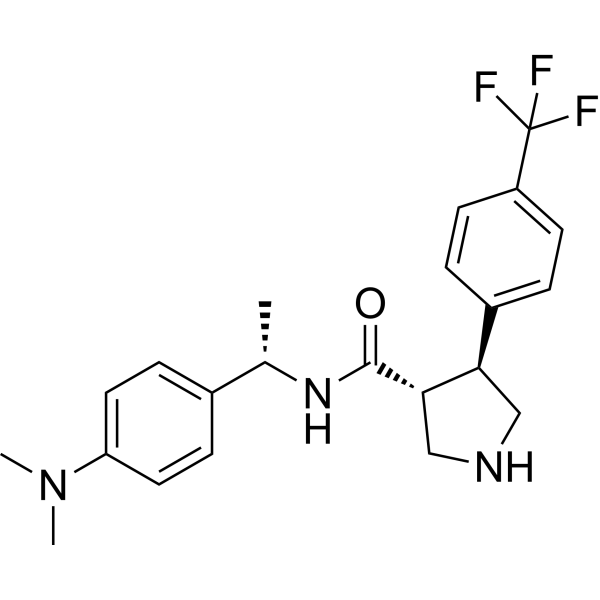
CWHM-1008 is a potent and orally active antimalarial agent, with EC50 values of 46 and 21 nM against agent-sensitive Plasmodium falciparum 3D7 and drug-resistant Dd2 strains, respectively .
|
-
-
- HY-175362
-
|
|
Parasite
|
Infection
|
|
WEHI-326 is a potent antimalarial agent targeting Plasmodium falciparum ROM8 and CSC1 proteins (IC50=0.006 μM). WEHI-326 is promising for research of malaria .
|
-

-
- HY-N7648
-
|
Atherospermine
|
Parasite
Phosphodiesterase (PDE)
|
Infection
|
|
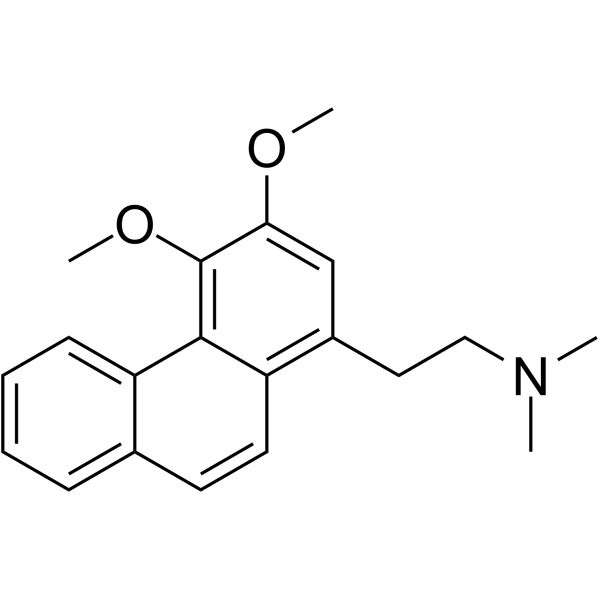
Atherosperminine (Atherospermine) is a phosphodiesterase inhibitor. Atherosperminine inhibits growth of chloroquine-resistant Plasmodium falciparum. Atherosperminine scavenges DPPH free radicals, exhibits ferric reducing power, and chelates metal ions. Atherosperminine can be used for the research of malaria .
|
-
-
- HY-175732
-
|
|
PI4K
Parasite
|
Infection
|
|
PI4Kβ-IN-1 is an orally active and selective PI4Kβ inhibitor, with an IC50 of 0.9 nM. PI4Kβ-IN-1 exhibits inhibitory activity against all stages of the P. falciparum life cycle, including blood, liver, and transmission stages. PI4Kβ-IN-1 demonstrates potent antimalarial efficacy in the mouse model infected with Plasmodium falciparum. PI4Kβ-IN-1 can be used for the study of malaria caused by Plasmodium falciparum .
|
-

-
- HY-161801
-
|
M-833
|
Parasite
|
Infection
|
|
MMV006833 is an inhibitor for Plasmodium falciparum. MMV006833 targets the lipid-transfer protein PfSTART1 and inhibits the development of Plasmodium falciparum at the ring stage .
|
-

-
- HY-148178
-
|
|
Parasite
|
Infection
|
|
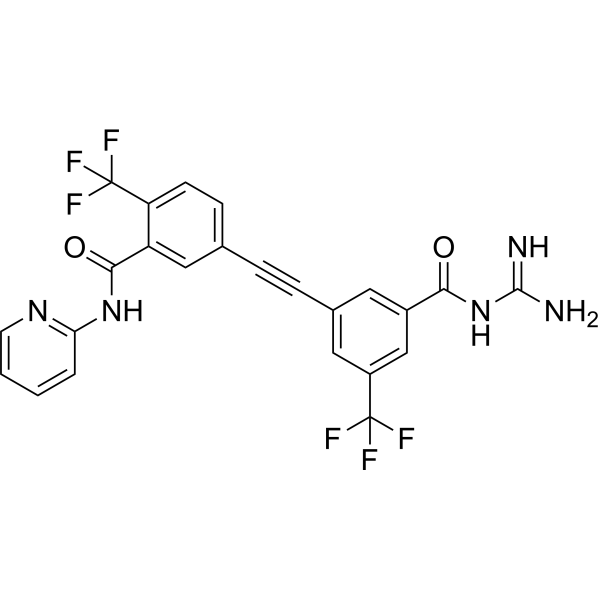
MMV688533 is an antimalarial agent. MMV688533 interferes with intracellular trafficking, lipid utilization, and endocytosis pathways in Plasmodium falciparum. MMV688533 rapidly kills asexual blood-stage Plasmodium falciparum and Plasmodium vivax parasites in vitro and reduces parasitemia in a Plasmodium falciparum NSG mouse model. MMV688533 can be used for the research of malaria .
|
-
-
- HY-158818
-
|
|
Parasite
|
Infection
|
|
DXR-IN-2 is a 1-deoxy-D-xylulose-5-phosphate reductoisomerase (DXR) inhibitor and an antimalarial agent (IC50: 0.1062 μM for Plasmodium falciparum DXR and 0.369 μM for Plasmodium falciparum). DXR-IN-2 inhibits Plasmodium falciparum growth by suppressing the methyl erythritol phosphate (MEP) pathway via DXR .
|
-

-
- HY-122385
-
|
|
Parasite
|
Infection
|
|
Dabequin phosphate is an antimalarial agent, that exhibits inhibitory activity against Plasmodium falciparum .
|
-

-
- HY-170848
-
|
|
Parasite
|
Infection
|
|
Antimalarial agent 48 (Compound 15a) is a triazine-class compound with antimalarial activity, showing inhibitory concentrations of 280 nM against Plasmodium falciparum K1 and 290 nM against Plasmodium falciparum FCR3. Antimalarial agent 48 is expected to be useful for research in the field of antimalarial infections .
|
-

-
- HY-W779377
-
|
|
Parasite
|
Infection
|
|
Erythromycin B has anti-malarial activity and effectively inhibits the asexual reproduction of Plasmodium falciparum .
|
-

-
- HY-145233
-
|
|
Parasite
|
Infection
|
|
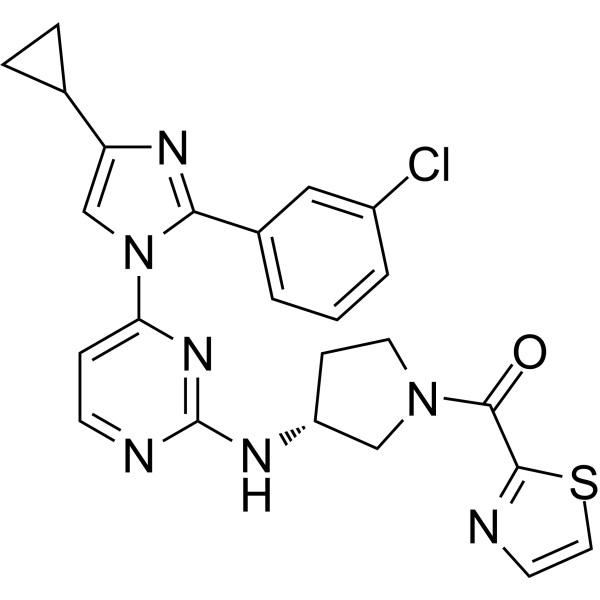
PfPKG-IN-1 is a imidazole-based inhibitor of Plasmodium falciparum cGMP-dependent protein kinase (PfPKG).
|
-
-
- HY-163833
-
|
|
Parasite
|
Infection
Cancer
|
|
MMV1634566 is a potent antimalarial agent. MMV1634566 inhibits Plasmodium falciparum. MMV1634566 shows cytotoxicity .
|
-

-
- HY-125419
-
|
|
Antibiotic
Parasite
Bacterial
|
Infection
|
|
Amythiamicin B is a trisubstituted pyridine thiopeptide with antibiotic properties against Gram-positive bacteria and activity against Plasmodium falciparum .
|
-

-
- HY-170840
-
|
|
Parasite
|
Infection
|
|
Antimalarial agent 47 (compound F14) is an antimalarial compound, with an IC50 of 235 nM for the Plasmodium falciparum W2 strain .
|
-

-
- HY-155130
-
|
|
Parasite
|
Infection
|
|
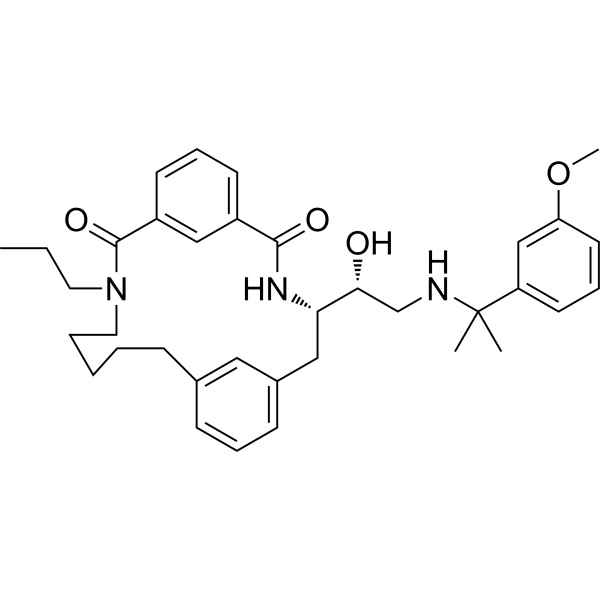
Antimalarial agent 31 (compound 7k) is an orally active Plasmodium falciparum aspartic protease plasmepsin X (PMX) inhibitor .
|
-
-
- HY-N12452
-
|
|
Parasite
|
Infection
|
|
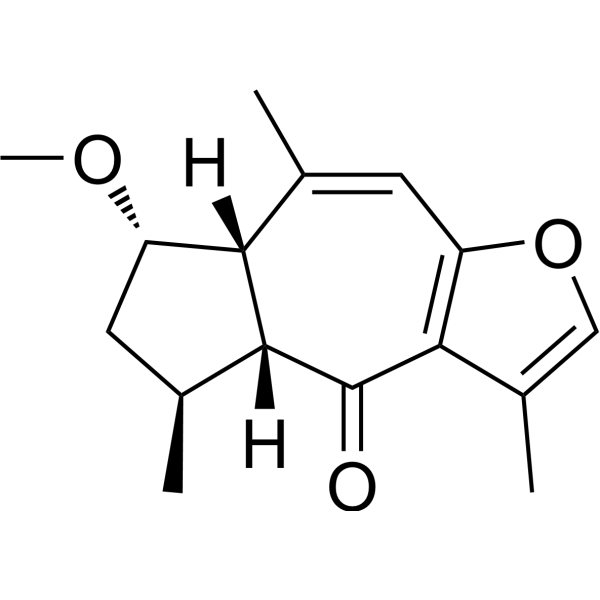
Myrrhterpenoid O (Compound 18) is a sesquiterpenoid compound that exhibits good inhibitory activity against Plasmodium falciparum (IC50 = 21 μM) .
|
-
-
- HY-N13885
-
|
|
Antibiotic
Bacterial
Parasite
|
Infection
|
|
Amythiamicin A is an antimicrobial antibiotic against Gram-positive bacteria (including methicillin-resistant Staphylococcus aureus (MRSA)) and activity against Plasmodium falciparum .
|
-

-
- HY-N12538
-
|
|
Parasite
|
Infection
|
|
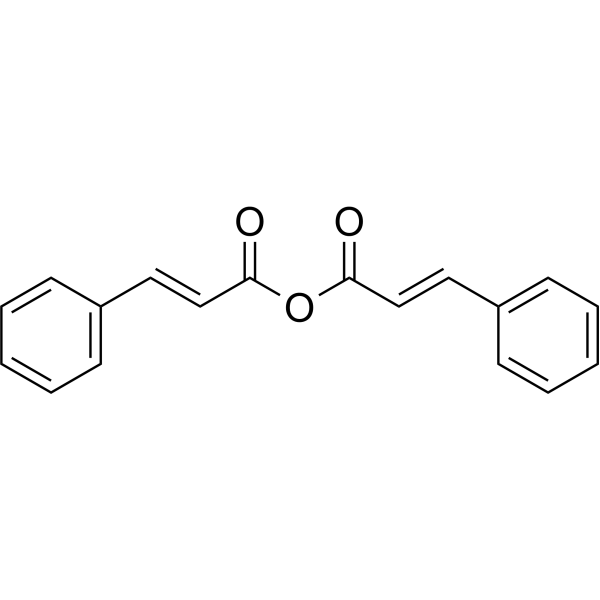
trans-Cinnamic anhydride is a Parasite inhibitor tnat can be isolated from Cinnamomum zeylanicum and exhibits moderate activity against Plasmodium falciparum .
|
-
-
- HY-N13288
-
|
|
Parasite
|
Infection
|
|
Cordysinin C/D (compound 9) is a potential anti-plasmodial compound that can effectively inhibit Plasmodium falciparum 3D7 strain .
|
-

- HY-N8383
-
|
|
Parasite
|
Infection
|
|
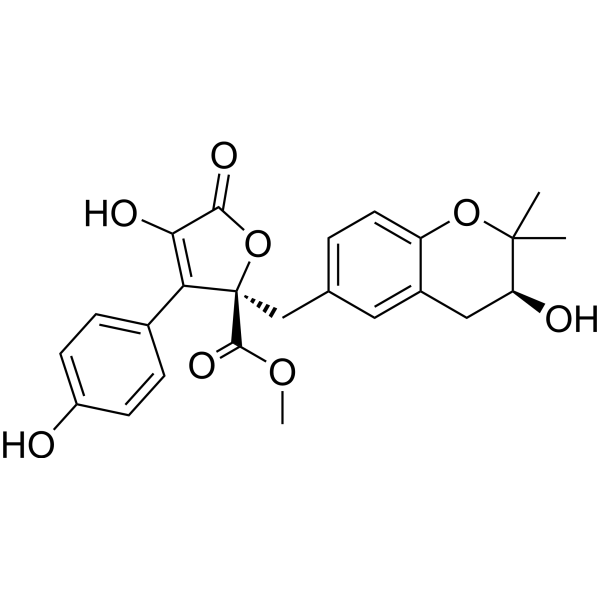
Butyrolactone V is a butanolide compound. Butyrolactone V shows antiplasmodial activity against Plasmodium falciparum K1 with an IC50 of 7.9 µg/ml .
|
-
- HY-N13881
-
|
|
Antibiotic
Bacterial
Parasite
|
Infection
|
|
Amythiamicin C is an antimicrobial antibiotic against Gram-positive bacteria (including methicillin-resistant Staphylococcus aureus (MRSA)) and activity against Plasmodium falciparum .
|
-

- HY-116535B
-
|
|
Parasite
|
Infection
|
|
DL-threo-PPMP is an inhibitor of sphingosine synthetase in Plasmodium falciparum. DL-threo-PPMP inhibits the activity of sphingosine synthetase by mimicking the substrate sphingosine. This inhibition leads to a rapid decrease in the activity of sensitive sphingosine synthetase, selectively destroying the interconnected tubular network of TVMs in the host cell cytoplasm, and this inhibition also blocks the proliferation of Plasmodium falciparum. DL-threo-PPMP can be used for the study of Plasmodium biology and the search for new antimalarial strategies .
|
-

- HY-157840
-
|
|
Parasite
|
Infection
|
|
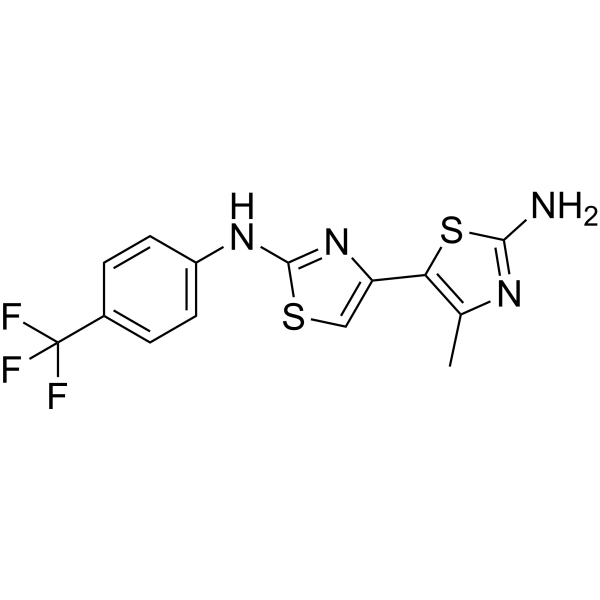
Anti-infective agent 9 (compound 1) is a Plasmodium falciparum inhibitor (IC50=600 nM), can downregulate pyruvate levels and TCA cycle in Plasmodium. Anti-infective agent 9It has good metabolic stability and low toxicity to human liver cells. The study found, Anti-infective agent 9Potential targets for inhibiting Plasmodium falciparum are not 1-deoxidation-d-xylulose-5-Phosphate synthase (DXPS) .
|
-
- HY-N8513
-
|
|
Parasite
|
Infection
|
|
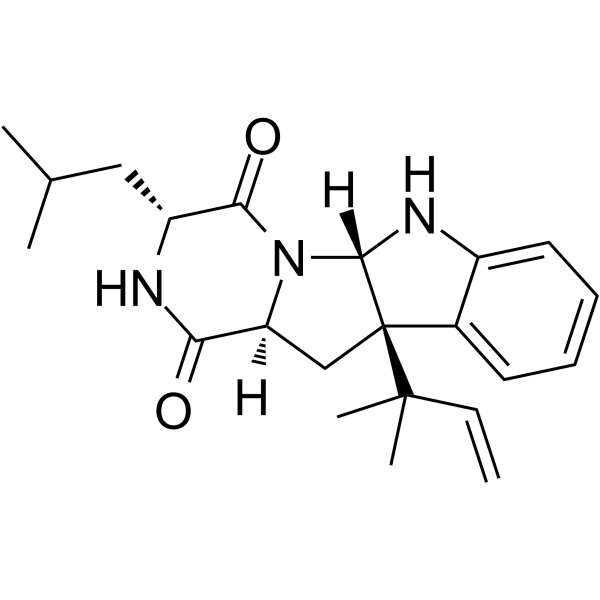
Brevicompanine B, a diketopiperazine alkaloid, is an antiplasmodial agent. Brevicompanine B is active against the malaria parasite Plasmodium falciparum 3D7 IC50 of 35 mg/mL .
|
-
- HY-156105
-
|
|
Parasite
Proteasome
|
Infection
|
|
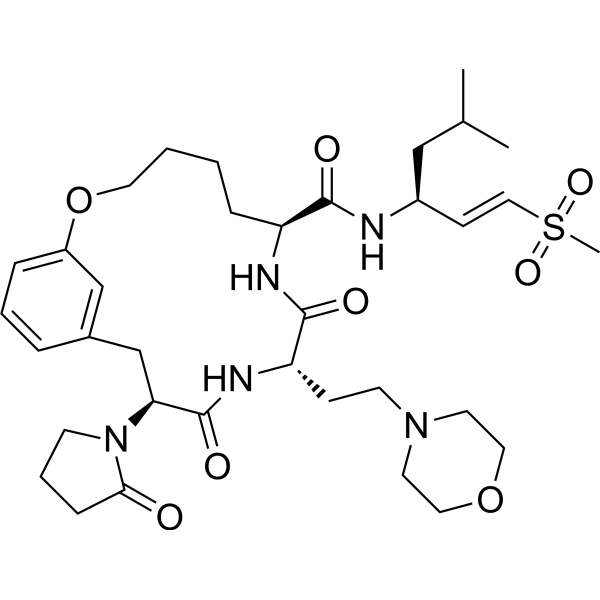
8304-vs is a macrocyclic anti-Plasmodial agent that covalently and irreversibly targets the Plasmodium proteasome. 8304-vs effectively inhibits the growth of Plasmodium falciparum .
|
-
- HY-160675
-
|
|
Parasite
|
Infection
|
|
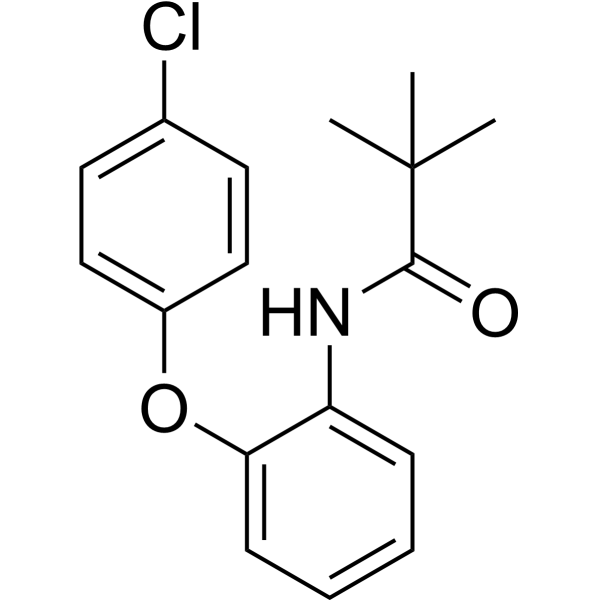
TCMDC-137332 is a compound that exhibits antimalarial activity against Plasmodium falciparum with an IC50 value of 7 nM. TCMDC-137332 can be utilized for the research of malaria .
|
-
- HY-144298
-
|
|
Parasite
HDAC
|
Infection
|
|
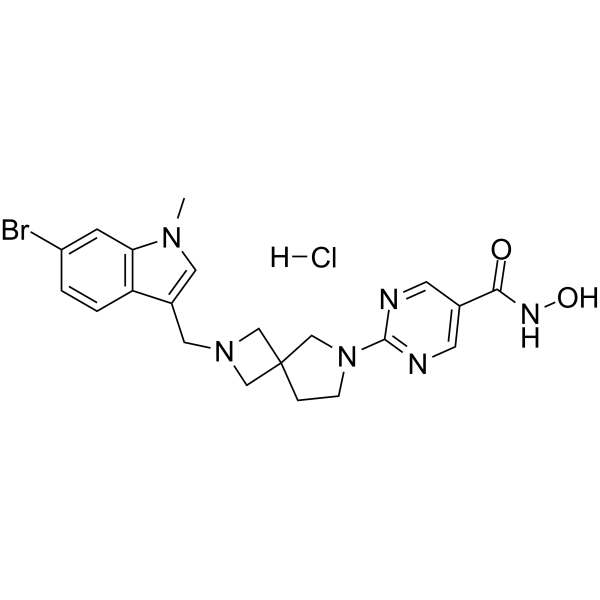
HDAC1-IN-4 (JX34) is a potent Plasmodium falciparum HDAC1 inhibitor shows antimalarial activity (IC50 < 5 nM) and lower cytotoxicity .
|
-
- HY-N8338
-
|
|
Parasite
|
Infection
|
|
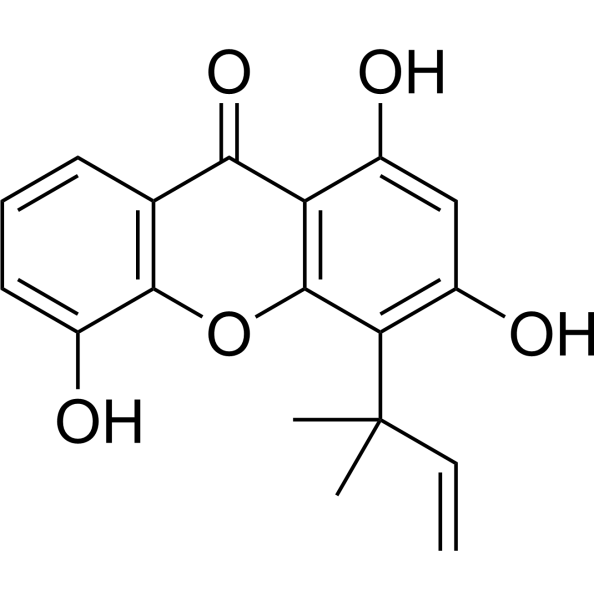
Pancixanthone A is a xanthone that can be isolated from Garcinia vieillardii. Pancixanthone A has antimalarial activity against chloroquino-resistant strains of Plasmodium falciparum with an IC50 of 1.6 μg/mL .
|
-
- HY-161309
-
|
|
Parasite
|
Infection
|
|
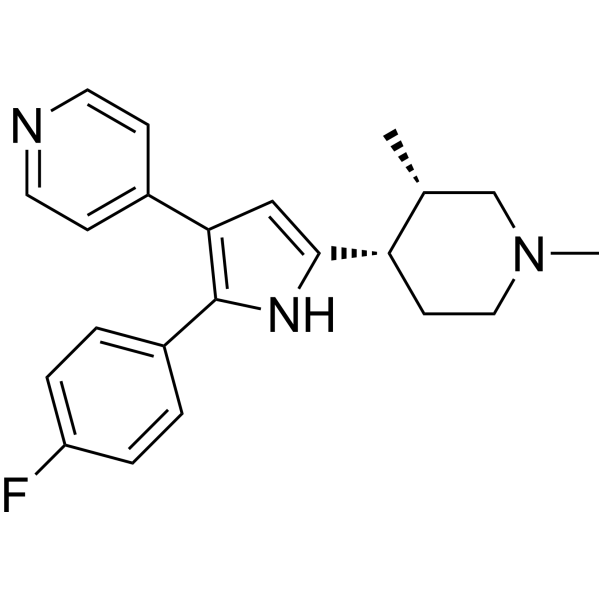
RUPB-61 is a potent Plasmodium falciparum cGMP-dependent protein kinase (PfPKG) inhibitor with an IC50 value of 13 nM. RUPB-61 shows antiparasitic activity .
|
-
- HY-N8455
-
|
Assiguxanthone A
|
Parasite
|
Infection
|
|
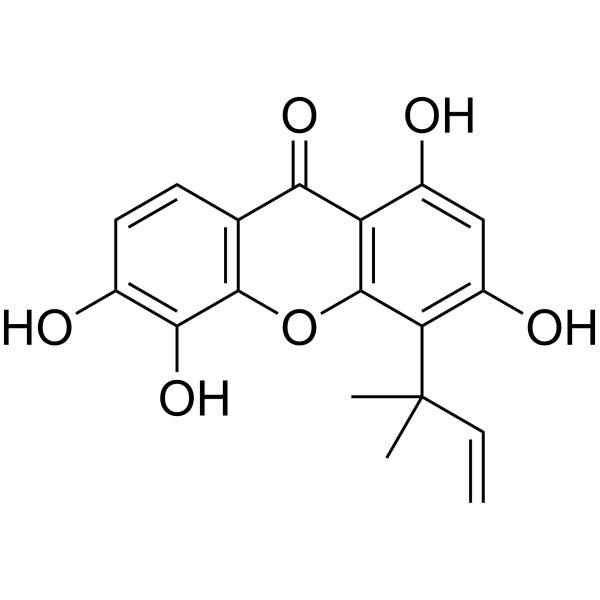
Isocudraniaxanthone A is a xanthone that can be isolated from Garcinia vieillardii. Isocudraniaxanthone A has antimalarial activity against chloroquino-resistant strains of Plasmodium falciparum with an IC50 of 2.3 μg/mL .
|
-
- HY-N3957
-
|
|
Parasite
|
Infection
|
|
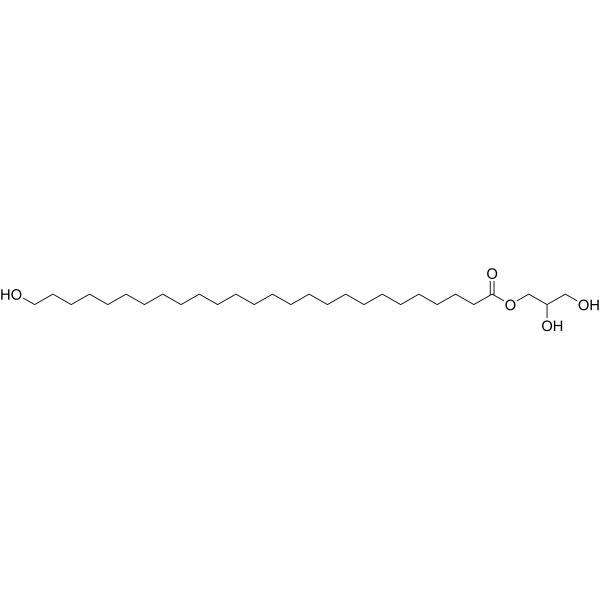
1-(26-Hydroxyhexacosanoyl)-glycerol is a potent antimalarial agent. 1-(26-Hydroxyhexacosanoyl)-glycerol shows antimalarial activity with an IC50 value of 9.48 µM for Plasmodium falciparum .
|
-
- HY-150598
-
|
|
PI4K
PI3K
|
Infection
|
|
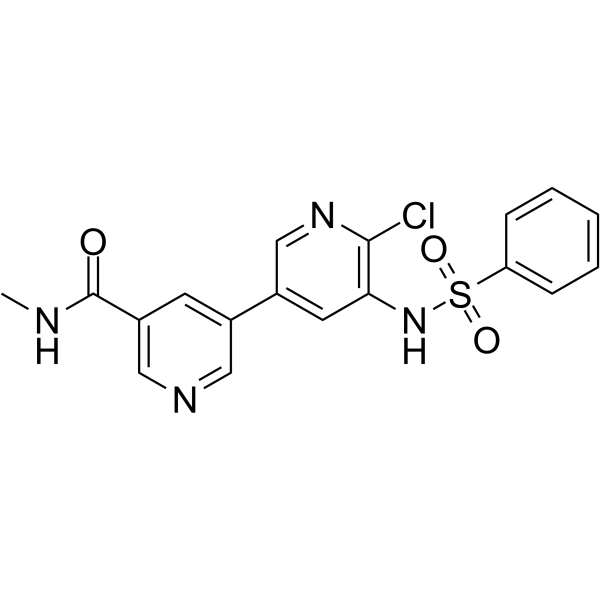
CHMFL-PI4K-127 (compound 15g) is an orally active, potent and high selective PfPI4K (Plasmodium falciparum PI4K kinase) inhibitor, with an IC50 of 0.9 nM. CHMFL-PI4K-127 exhibits potent activity against 3D7 Plasmodium falciparum, with an EC50 of 25.1 nM. CHMFL-PI4K-127 shows antimalaria efficacy .
|
-
- HY-145912
-
-
- HY-163997
-
|
|
Parasite
|
Infection
|
|
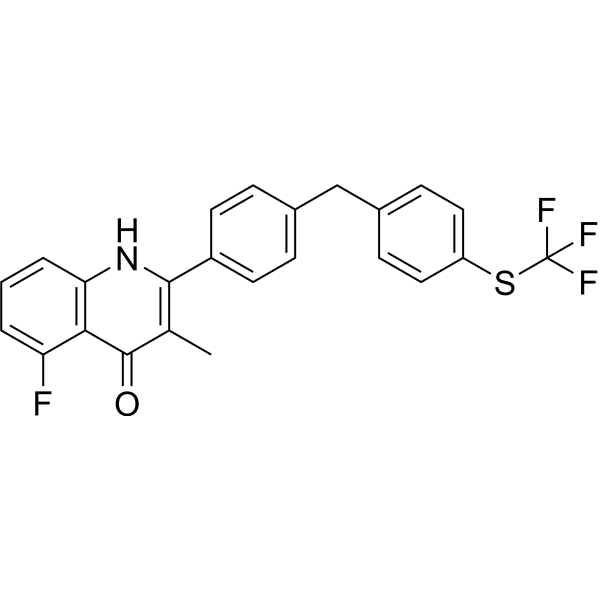
Antimalarial agent 42 (Compound 2) is an antimalarial agent, that inhibits Plasmodium falciparum in the phase of asexual blood stages (IC50 <0.5μM) and gametocytes (IC50 is 0.14 μM) .
|
-

- HY-162072
-
|
|
Parasite
|
Infection
|
|
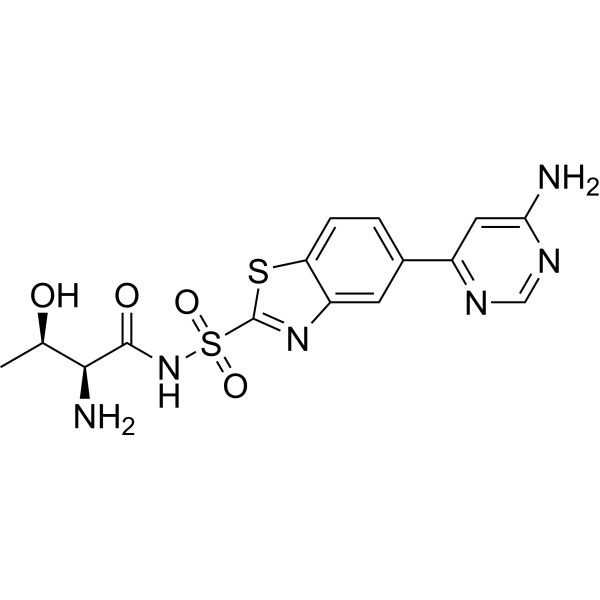
PfThrRS-IN-1 (compound 11) is a potent inhibitor of Plasmodium falciparum threonyl tRNA synthetase (PfThrRS), with the IC50 value of 0.1 μM. PfThrRS-IN-1 is a potent antimalaria agent .
|
-
- HY-153007A
-
|
|
Dihydrofolate reductase (DHFR)
|
Infection
|
|
DHFR-IN-5 hydrochloride is a potent and orally active dihydrofolate reductase (DHFR) inhibitor with a Ki value of 0.54 nM for quadruple mutant Plasmodium falciparum DHFR. DHFR-IN-5 hydrochloride shows anti-malaria activity .
|
-

- HY-144296
-
|
|
Parasite
|
Infection
|
|
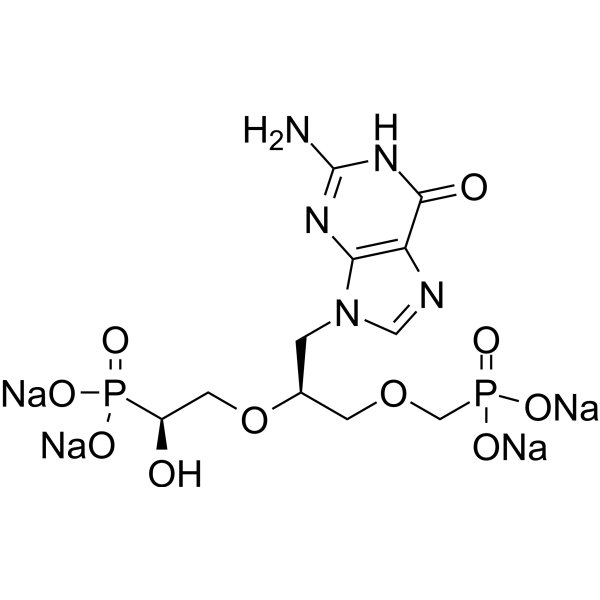
Purine phosphoribosyltransferase-IN-2 is a potent inhibitor of the Plasmodium falciparum ((Pf)), Plasmodium vivax ((Pv)) and Trypanosoma brucei ((Tbr)) 6-oxopurine phosphoribosyltransferase (PRT), with Kis of 30, 20 and 2 nM, respectively .
|
-
- HY-145327
-
|
|
Na+/K+ ATPase
Parasite
|
Infection
|
|
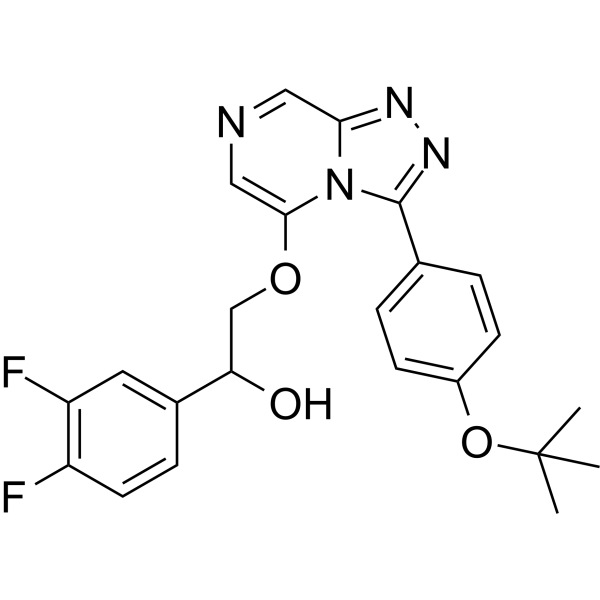
Antimalarial agent 7 is a potent inhibitor of PfATP4. PfATP4 is an essential ion pump on the parasite surface. Antimalarial agent 7 has the potential for the research of human malaria parasite, Plasmodium falciparum .
|
-
- HY-N15562
-
|
|
Parasite
|
Infection
|
|
Batzelladine L is a potent Plasmodium falciparum inhibitor (IC50= 0.4 μM). Batzelladine L shows moderate cytotoxicity to HepG2 cells (CC50= 14 μM) with antimalarial properties. Batzelladine L is promising for research of antimalarial agents .
|
-

- HY-W078844
-
|
|
Dihydroorotate Dehydrogenase
Parasite
|
Infection
|
|
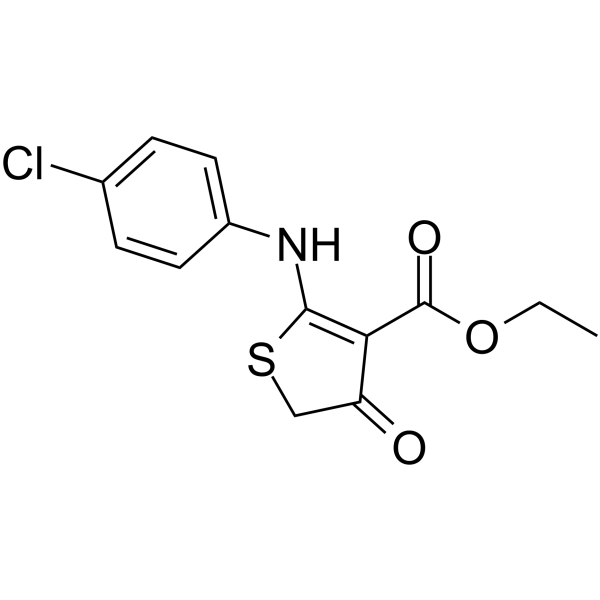
PfDHODH-IN-2, a dihydrothiophenone derivative (Compound 11), is a potent Plasmodium falciparum dihydroorotate dehydrogenase (PfDHODH) inhibitor with an IC50 of 1.11 µM. PfDHODH-IN-2 acts as an antimalarial agent and can be used for the research of malaria .
|
-
- HY-N12151
-
|
|
Parasite
|
Infection
|
|
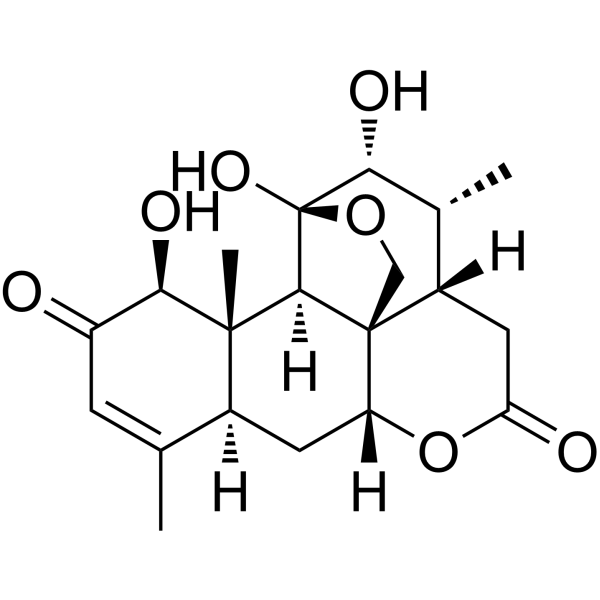
Chaparrinone is a quassinoid that can be isolated from the root of Eurycoma harmandiana. Chaparrinone has antimalarial and cytotoxic activities against Plasmodium falciparum and P-388 cells (IC50: 0.037 and 0.34 μg/mL respectively) .
|
-
- HY-124078
-
|
|
Parasite
|
Infection
|
NIC is a host invasion inhibitor. NIC can suppress host invasion by interacting with the major invasion-related protein, merozoite surface protein 1 (MSP-1). NIC prevents the invasion of Plasmodium falciparum and Plasmodium vivax into the host .
|
-

- HY-160633
-
|
|
Parasite
|
Infection
|
|
PfFAS-II inhibitor 1 (Compound 3) is a Plasmodium falciparum type II fatty acid biosynthesis pathway (PfFAS-II) inhibitor, with an IC50 of 0.63 μM for PfFabI enzyme. PfFAS-II inhibitor 1 has antimalarial activity .
|
-
- HY-182394
-
|
|
Parasite
|
Infection
|
|
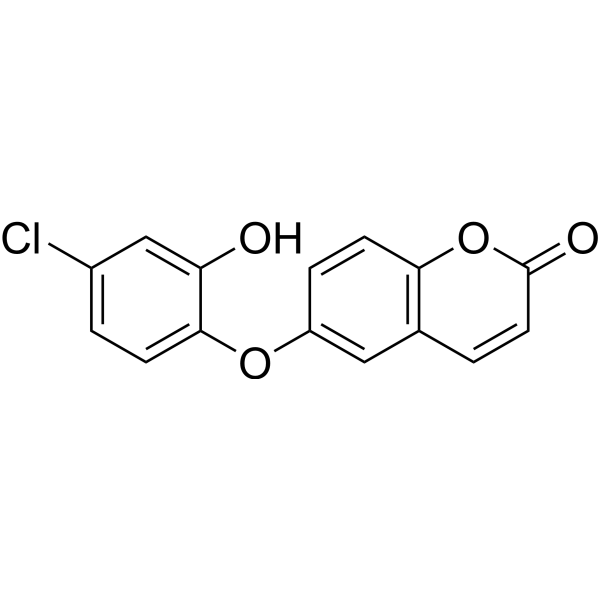
DM-1157 is an orally active asymmetric bisquinoline heme inhibitor with a IC50 of 1.6 μM and a Kd of 1.7 μM. DM-1157 binds to heme dimers in solution, inhibits β-hematin formation, suppresses hemozoin formation in the digestive vacuole of Plasmodium falciparum, accumulates in the digestive vacuole of Plasmodium falciparum, induces enlargement of the digestive vacuole of Plasmodium falciparum, and inhibits the growth of Chloroquine (HY-17589A)-sensitive and resistant Plasmodium falciparum strains. DM-1157 can be used for the research of malaria and Plasmodium falciparum-type malaria .
|
-

- HY-181821
-
|
|
Parasite
Na+/K+ ATPase
|
Infection
|
|
MMV1581361 is a PfATP4 inhibitor and an orally active, transmission-blocking agent with nanomolar activity against Plasmodium falciparum blood-stage isolates. MMV1581361 disrupts sodium ion (Na +) homeostasis in Plasmodium falciparum. MMV1581361 inhibits male gamete exflagellation, reduces oocyst intensity, and blocks transmission of Plasmodium falciparum. MMV1581361 demonstrates efficacy in the humanized Plasmodium falciparum NOD scid IL2Rγ null mouse model. MMV1581361 can be used for the research of malaria .
|
-

- HY-181813
-
|
|
PROTACs
Ligands for E3 Ligase
Dihydrofolate reductase (DHFR)
Parasite
|
Infection
|
|
PROTAC DHFR Degrader-1 is a selective PROTAC degrader targeting Plasmodium falciparum DHFR-TS with a Ki of 2.01 nM. PROTAC DHFR Degrader-1 exhibits no inhibitory activity against human DHFR and suppresses the growth of Plasmodium falciparum. PROTAC DHFR Degrader-1 can be used for the research of Plasmodium falciparum and malaria .
|
-

- HY-N12352
-
|
|
Others
Parasite
|
Infection
Others
Inflammation/Immunology
|
|
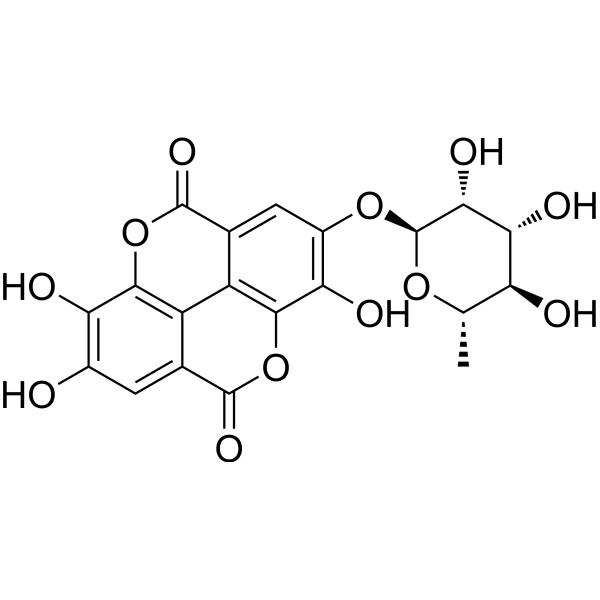
Eschweilenol C is a selective Plasmodium falciparum growth inhibitor. Eschweilenol C disrupts haemoglobin metabolism, reduces haemozoin production, kills Plasmodium falciparum ring and trophozoite stages. Eschweilenol C can be used for the research of inflammatory disorders and malaria .
|
-
- HY-148269
-
|
|
Parasite
|
Infection
|
|
AN13762 is a benzoxaborole antimalarial agent. AN13762 augments Plasmodium falciparum stress responses. AN13762 acts against cultured and fresh Plasmodium falciparum isolates and in vivo murine malaria models. AN13762 can be used for the research of malaria .
|
-

- HY-117908
-
|
|
Dihydroorotate Dehydrogenase
Parasite
|
Infection
|
|
DSM267 is a triazolopyrimidine inhibitor of Plasmodium falciparum dihydroorotate dehydrogenase (PfDHODH), with an IC50 of 38 nM, while its IC50 against human DHODH exceeds 100000 nM. DSM267 is used for the in vitro systematic screening and characterization of the resistance evolution pathways of Plasmodium falciparum to DHODH inhibitors .
|
-

- HY-183238
-
|
|
Parasite
|
Infection
|
|
Antimalarial agent 61 is an antimalarial agent. Antimalarial agent 61 disrupts hemoglobin breakdown in Plasmodium falciparum asexual blood stage trophozoites. Antimalarial agent 61 exerts antiplasmodial activity against Chloroquine (HY-17589A)-sensitive Plasmodium falciparum parasites. Antimalarial agent 61 can be used for the research of malaria .
|
-

- HY-183009
-
|
|
Proteasome
Parasite
|
Infection
|
|
Pf20S-IN-1 is a selective inhibitor of the 20S proteasome β5 subunit of Plasmodium falciparum. Pf20S-IN-1 exhibits antiparasitic activity against Plasmodium falciparum, with an EC50 of 20.1 nM against the Plasmodium falciparum W2 strain. Pf20S-IN-1 shows weak inhibitory effect on human 20S proteasome, has no obvious toxicity to human foreskin fibroblasts (HFF), and has a selectivity index > 25000. Pf20S-IN-1 can be used in malaria research .
|
-

- HY-182348
-
|
|
Parasite
|
Infection
|
|
LSPN959 is a slow-acting indole peptidomimetic antiplasmodial agent with submicromolar activity against the Plasmodium falciparum 3D7 strain. LSPN959 does not inhibit plastid-dependent isoprenoid biosynthesis. The combination of LSPN959 with Artesunate (HY-N0193) exhibits an additive effect against Plasmodium falciparum. LSPN959 can be used in malaria research .
|
-

- HY-136783
-
|
|
Parasite
|
Infection
|
|
G6PD-IN-2 is a Plasmodium falciparum glucose-6-phosphate dehydrogenase (G6PD) inhibitor with an IC50 value of 0.2 μM. G6PD-IN-2 exerts weak inhibitory activity on Plasmodium falciparum glucose-6-phosphate dehydrogenase-6-phosphogluconolactonase (PfGluPho) with an IC50 value of 22.0 μM. G6PD-IN-2 inhibits growth of Plasmodium falciparum 3D7 strain and exhibits low cytotoxicity in hepatocytes. G6PD-IN-2 can be used for the research of malaria .
|
-

- HY-107331
-
|
|
Parasite
|
Infection
|
|
Chlorproguanil is an antifolate with an IC50 of 4.68 μM against Plasmodium falciparum female gamete formation. Chlorproguanil can be used for the research of malaria .
|
-

- HY-182683
-
|
|
Parasite
TrxR
Reactive Oxygen Species (ROS)
|
Infection
|
|
MMV085203 is a potent Plasmodium falciparum inhibitor, with a PfTrxR EC50 of 900 nM. MMV085203 exerts potent antimalarial activity against both blood‑stage and sexual‑stage Plasmodium falciparum parasites, with superior efficacy toward clinical isolates of high clonal diversity. MMV085203 modulates parasite redox homeostasis, induces ROS production, and elevates mitochondrial TCA cycle intermediates. MMV085203 can be used for the research of malaria .
|
-

- HY-181864
-
|
|
Parasite
|
Infection
|
|
Rac1-IN-6 (Compound 5e) is a selective Rac1 inhibitor and antimalarial agent. Rac1-IN-6 inhibits Rac1 activation induced by the Escherichia coli CNF1 toxin. Rac1-IN-6 suppresses the growth of chloroquine-sensitive Plasmodium falciparum D10 (IC50 = 76.0 nM) and chloroquine-resistant Plasmodium falciparum W2 (IC50 = 236.6 nM) .
|
-

- HY-182711
-
|
|
Bacterial
Parasite
|
Infection
|
|
SCR0911 is an inhibitor of mycobacterial cytochrome bcc oxidase and Plasmodium falciparum cytochrome bc1. SCR0911 disrupts oxidative phosphorylation by binding to mycobacterial cytochrome bcc, binds to the Qi site of Plasmodium falciparum cytochrome bc1, inhibits mycobacterial cell growth and ATP synthesis, and exhibits broad-spectrum anti-mycobacterial and anti-malarial activities. SCR0911 can be used in research related to tuberculosis, malaria, and isolated persistent hypermethioninemia (iph) .
|
-

- HY-W413619
-
|
NITD609 enantiomer; KAE609 enantiomer
|
Parasite
|
Infection
|
|
Cipargamin enantiomer (NITD609 enantiomer) is a Plasmodium falciparum inhibitor that can be characterized as a spirotetrahydro β-carboline (1S,3R stereoisomer). Cipargamin enantiomer exerts antiplasmodial activity against Plasmodium falciparum strains NF54 (IC50 of 77 nM) and K1. Cipargamin enantiomer displays low liver microsomal intrinsic clearance in mouse and human systems. Cipargamin enantiomer does not inhibit CYP2C9. Cipargamin enantiomer can be used for the research of malaria .
|
-

- HY-W742094
-
|
|
Parasite
|
Infection
|
|
Cycotiamine is an S-acylated thiamine derivative with antiplasmodial activity. Cycotiamine inhibits the proliferation of Plasmodium falciparum and Plasmodium knowlesi. Cycotiamine can be used in malaria-related research .
|
-

- HY-N12452A
-
|
|
Drug Isomer
|
Infection
|
|
Myrrhterpenoid O enantiomer is a enantiomer of Myrrhterpenoid O (HY-N12452). Myrrhterpenoid O is a sesquiterpenoid compound that exhibits good inhibitory activity against Plasmodium falciparum (IC50 = 21 μM) .
|
-

- HY-113760
-
|
(+)-Xestoquinone
|
Parasite
|
Infection
|
|
Xestoquinone ((+)-Xestoquinone) is a Plasmodium falciparum protein kinase Pfnek-1 inhibitor (IC50=1.1 μM). Xestoquinone is promising for research of antimalarial agents .
|
-

- HY-W842297
-
|
|
Parasite
|
Infection
|
|
Epiquinine is a stereoisomer of Quinine (HY-D0143). Epiquinine exhibits activity against chloroquine-sensitive and chloroquine-resistant Plasmodium falciparum parasites. Epiquinine can be used for the research of malaria .
|
-

- HY-N19628
-
|
|
Parasite
|
Infection
|
|
Dianellin is an orally active anti-malarial agent found in Kniphofia foliosa. Dianellin binds to Plasmodium falciparum plasmepsin II and shows anti-malarial activity in mice. Dianellin can be used for the research of malaria .
|
-

- HY-164686
-
|
|
Parasite
|
Infection
|
|
MMV019662 is a PfNCR1 inhibitor. MMV019662 specifically interact with PfNCR1. MMV019662 induces opening of the SSD. MMV019662 can be used in the research of Plasmodium falciparum infection .
|
-

- HY-170780A
-
|
|
Dihydroorotate Dehydrogenase
|
Infection
|
|
(S)-DSM1465 is a Plasmodium dihydroorotate dehydrogenase (DHODH) inhibitor. (S)-DSM1465 exhibits potential inhibitory activity against Plasmodium falciparum and Plasmodium vivax, and can be used in malaria research .
|
-

- HY-N12700S
-
|
|
Isotope-Labeled Compounds
Parasite
|
Infection
|
|
Puberulic acid- 13C8 is the 13C-labeled Puberulic acid. Puberulic acid possesses anti-malarial activity with an IC50 value of 0.050 μM against Plasmodium falciparum K1 (chloroquine-resistant) .
|
-

- HY-N20619
-
|
|
Parasite
|
Cardiovascular Disease
Infection
|
|
Sterekunthal B is a naphthoquinone compound and antimalarial agent. Sterekunthal B can be isolated from plants of the Bignoniaceae family, including the root bark of Stereospermum colais. Sterekunthal B inhibits the growth of Chloroquine (HY-17589A)-sensitive Plasmodium falciparum strain PoW with an IC50 of 23.3 μg/mL. Sterekunthal B also inhibits the growth of Chloroquine-resistant Plasmodium falciparum strain Dd2 with an IC50 of 15.2 μg/mL. Sterekunthal B exhibits non-selective cytotoxicity toward endothelial cells. Sterekunthal B can be used in malaria-related research .
|
-

- HY-186053
-
|
|
Parasite
|
Infection
|
|
Antimalarial agent 56 is an orally active antimalarial agent. Antimalarial agent 56 inhibits the growth of both drug-sensitive and drug-resistant Plasmodium falciparum strains in vitro. Antimalarial agent 56 can be used in malaria research .
|
-

- HY-100358R
-
|
|
Parasite
Reference Standards
|
Infection
|
|
AQ-13 dihydrochloride (Standard) is the analytical standard of AQ-13 dihydrochloride (HY-100358). This product is intended for research and analytical applications. AQ-13 dihydrochloride is an aminoquinoline antimalarial agent that is effective against drug-resistant strains of Plasmodium falciparum.
|
-

- HY-163727
-
|
|
Parasite
|
Infection
|
|
MMV1557817 is an orally active and potent antimalarial compound. MMV1557817 is a selective, nanomolar inhibitor of both Plasmodium falciparum and Plasmodium vivax aminopeptidases M1 and M17, leading to inhibition of end-stage hemoglobin digestion in asexual parasites .
|
-

- HY-135619
-
-
- HY-121647
-
|
|
Parasite
|
Others
|
|
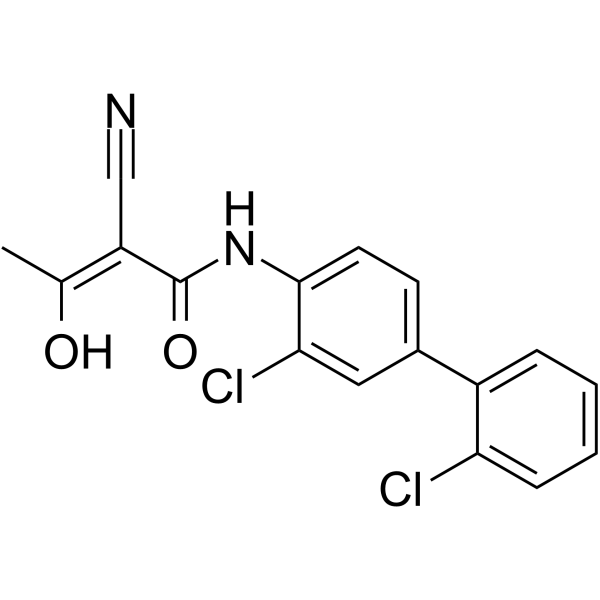
Nopol is a quinoline derivative based on nopol that has inhibitory activity against the asexual blood stage of Plasmodium falciparum. Derivatives with different structures have different activities against different Plasmodium strains, and some derivatives have submicromolar EC50 values in specific strains.
|
-

- HY-12912
-
|
|
PI4K
Parasite
|
Infection
|
|
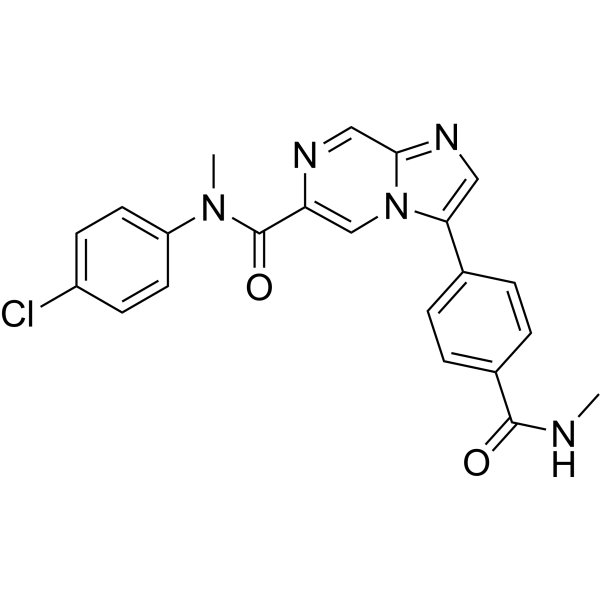
KDU691, an imidazopyrazine with potent anti-parasitic activity against blood stage schizonts, gametocytes and liver stages, is a Plasmodium PI4K inhibitor. KDU691 selectively inhibits dihydroartemisinin-pretreated Plasmodium falciparum ring-stage parasites .
|
-
- HY-144294
-
|
|
Parasite
|
Infection
|
|
Purine phosphoribosyltransferase-IN-1 (Compound (S,R)-48) is a potent inhibitor of the Plasmodium falciparum (Pf), P. vivax (Pv) and Trypanosoma brucei (Tbr) 6-oxopurine purine phosphoribosyltransferases (PRTs), with Ki values of 50, 20, and 2 nM, respectively .
|
-
- HY-N18356
-
|
7-O-Methylmyricetin
|
Others
|
Infection
|
|
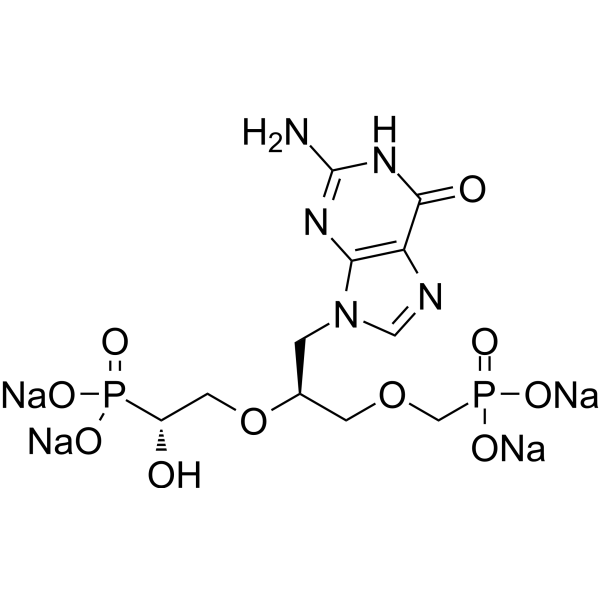
Europetin (7-O-Methylmyricetin) is a natural product. Europetin can be isolated from the peels of Citrus aurantifolia. Europetin shows no antiplasmodial activity against Plasmodium falciparum NF54 with an IC50 > 50 μM. Europetin can be used for the research of malaria .
|
-

- HY-151574
-
|
|
Ser/Thr Kinase
Parasite
GSK-3
|
Infection
|
|
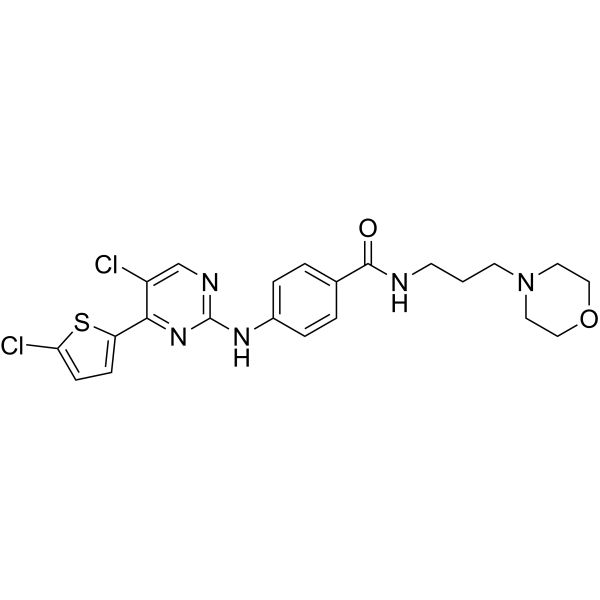
PfGSK3/PfPK6-IN-1 is a dual Plasmodium serine/threonine kinase inhibitor, with an IC50 of 97 nM against PfGSK3 and 8 nM against PfPK6 of Plasmodium falciparum. PfGSK3/PfPK6-IN-1 inhibits the proliferation of blood-stage parasites of Plasmodium falciparum 3D7. PfGSK3/PfPK6-IN-1 shows low cytotoxicity to hepatocytes at a concentration of 200 nM, and reduces cell viability at a concentration of 2 μM. PfGSK3/PfPK6-IN-1 is applicable to malaria-related research .
|
-
- HY-123905
-
|
|
MicroRNA
Parasite
|
Infection
Cancer
|
|
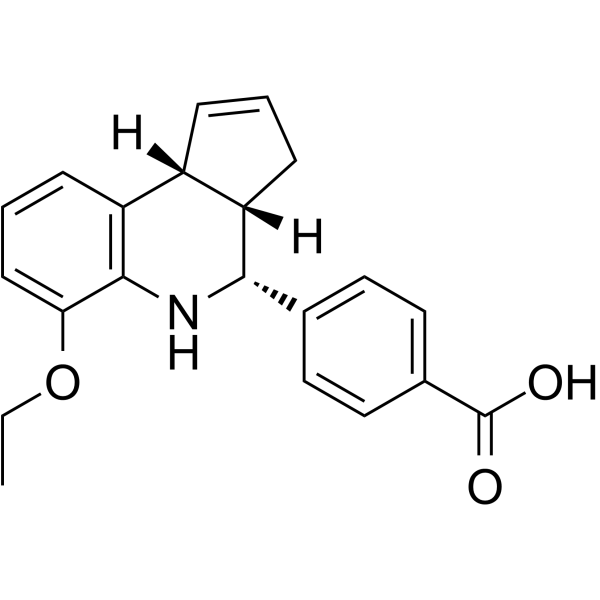
LIN28 inhibitor LI71 is a LIN28 inhibitor that effectively inhibits LIN28:let-7 binding (IC50: 7 μM). LIN28 inhibitor LI71 can abolish LIN28-mediated oligouridylation of let-7 precursor (IC50: 27 μM). LIN28 inhibitor LI71 has potential application value in LIN28-driven cancer research. LIN28 inhibitor LI71 inhibits the interaction of cold shock protein of Plasmodium falciparum (PfCoSP) with DNA and α/β tubulin and has an inhibitory effect on Plasmodium falciparum .
|
-
- HY-N5109
-
|
|
Parasite
|
Infection
|
|
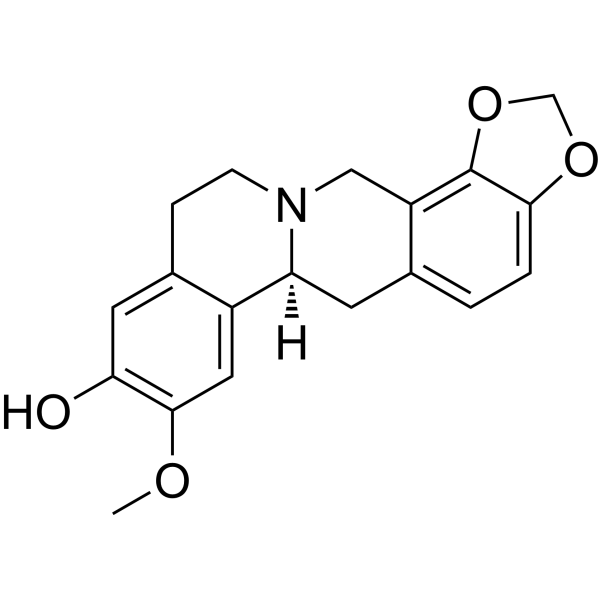
Cheilanthifoline, an alkaloid, is isolated from Corydalis calliantha. Cheilanthifoline exhibits antiplasmodial activities against Plasmodium falciparum, with IC50s of 0.90 μg/mL and 1.22 μg/mL for wild type (TM4) and multidrug resistant (K1) strains, respectively .
|
-
- HY-169099
-
|
|
Parasite
|
Infection
|
|
Antiproliferative agent-56 (Compound 31) is an antimalarial agent, that inhibits Plasmodium falciparum 3D7 (Pf3D7) with an IC50 >12.5 (48h) and 0.03 μM (98h), and reveals a slow-acting property .
|
-

- HY-N2815
-
|
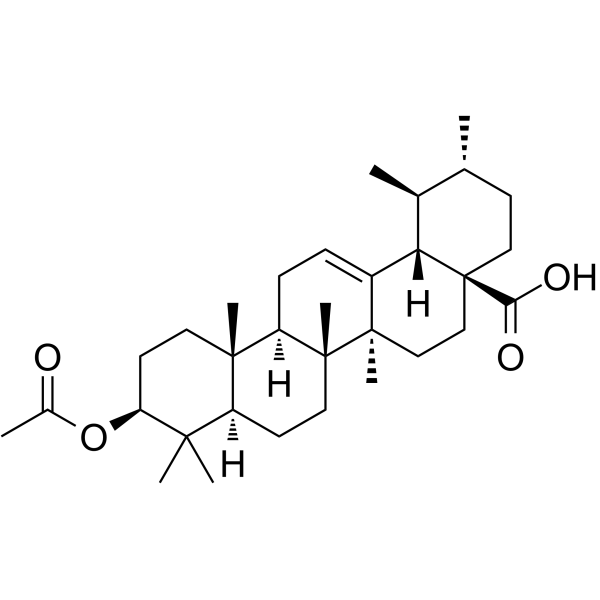
Acetylursolic acid; 3-Acetylursolic acid
|
Parasite
HSP
|
Infection
Cancer
|
|
Ursolic acid acetate (Acetylursolic acid) is a triterpenoid compound and an inhibitor of Plasmodium falciparum heat shock protein 90 (PfHsp90) with a KD of 8.16 μM. Ursolic acid acetate is cytotoxic to KB cells, with an IC50 value of 8.4 μM. Ursolic acid acetate can be used in tumor and antimalarial research .
|
-
- HY-A0163CR
-
|
(E)-Clopenthixol dihydrochloride (Standard)
|
Antibiotic
Bacterial
Parasite
Reference Standards
|
Infection
|
|
trans-Clopenthixol (dihydrochloride) (Standard) is the analytical standard of trans-Clopenthixol (dihydrochloride). This product is intended for research and analytical applications. trans-Clopenthixol ((E)-Clopenthixol) dihydrochloride is an antibiotic agent, without neuroleptic effect. trans-Clopenthixol can be used to inhibit Pseudomonas aeruginosa and Plasmodium falciparum in vitro[1][2].
|
-

- HY-N18179
-
|
|
Parasite
|
Infection
|
|
8-Acetonylidihydrochelerythrine is a benzophenanthridine alkaloid found in the stem bark of Zanthoxylum gilletii. 8-Acetonylidihydrochelerythrine inhibits growth of Chloroquine (HY-17589A)-resistant and Chloroquine-sensitive Plasmodium falciparum strains. 8-Acetonylidihydrochelerythrine can be used for the research of malaria .
|
-

- HY-173027
-
|
|
Parasite
|
Infection
|
|
SPB07935 inhibits the plasmepsin II in Plasmodium falciparum and can be used as an antimalarial agent. SPB07935 regulates the life cycle of P. falciparum, inhibits the growth of Plasmodium strains FcB1 and 3D7 with IC50 of 8 μM and 4.7 μM .
|
-

- HY-W675573
-
|
|
DNA/RNA Synthesis
Parasite
|
Infection
Cancer
|
|
VF-149 is a Ribonucleotide reductase inhibitor. VF-149 significantly inhibits Plasmodium falciparum growth with an IC50 of 6.4 μM. VF-149 has antimalarial and antitumor activities. VF-149 can be used for malarial infections and cancers research .
|
-

- HY-135652
-
|
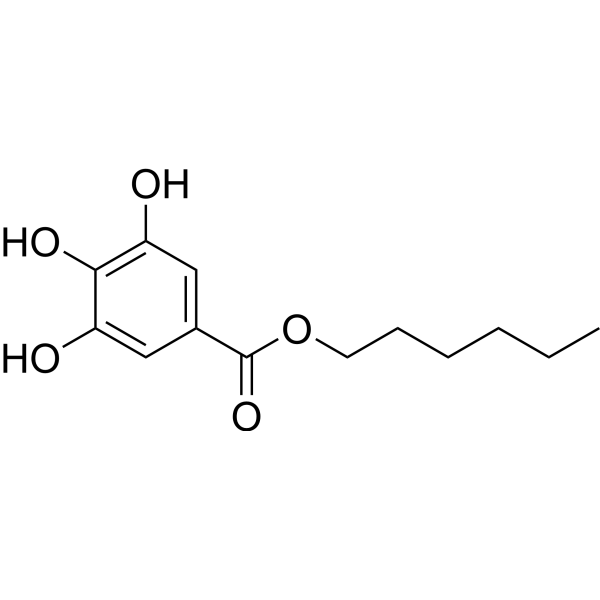
Hexyl 3,4,5-trihydroxybenzoate
|
Bacterial
Parasite
|
Infection
|
|
Hexyl gallates (Hexyl 3,4,5-trihydroxybenzoate) shows antibacterial activity and inhibits the production of rhamnolipid and pyocyanin by inhibiting RhlR . Hexyl gallate, a alkyl ester derivative of gallic acid, exhibits potent antimalarial activity against Plasmodium falciparum, with IC50 of 0.11 mM .
|
-
- HY-B0529AR
-
|
Sodium azlocillin (Standard)
|
Reference Standards
Bacterial
Parasite
Antibiotic
|
Infection
|
|
Azlocillin (sodium salt) (Standard) is the analytical standard of Azlocillin (sodium salt). This product is intended for research and analytical applications. Azlocillin sodium salt (Sodium azlocillin), a semisynthetic penicillin, is a broad spectrum β-lactam antibiotic. Azlocillin sodium salt shows antipseudomonal activity, and also potent against the malarial parasite Plasmodium falciparum .
|
-

- HY-N10109A
-
|
|
SARS-CoV
Parasite
Cathepsin
|
Infection
|
|
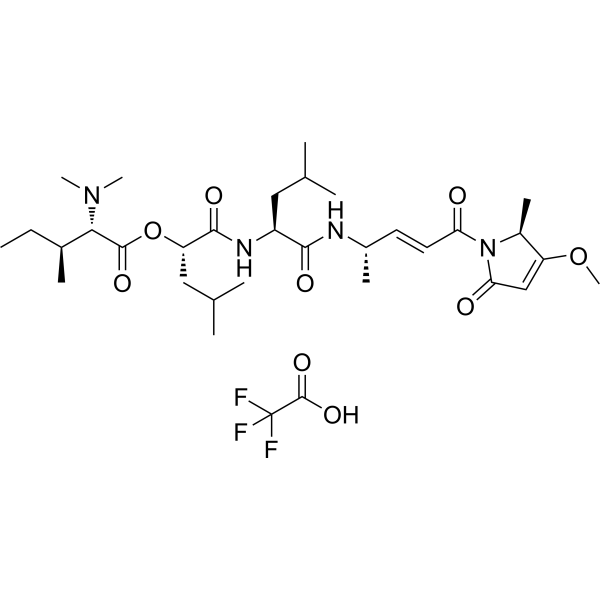
Gallinamide A TFA is a linearly depositing peptide and a potent inhibitor of cathepsin L (CatL) (IC50: 17.6 pM). Gallinamide A TFA inhibits SARS-CoV-2 infection by inhibiting CatL (EC50: 28 nM). Gallinamide A TFA also inhibits Plasmodium falciparum (IC50: 50 nM) .
|
-
- HY-117897
-
CK-2-68
1 Publications Verification
|
Parasite
|
Infection
|
|
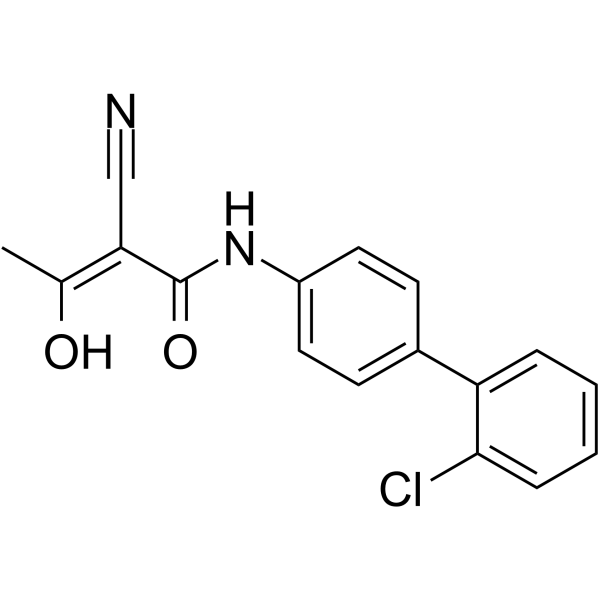
CK-2-68 is an inhibitor for complex III in protozoan mitochondrial respiratory chain, by targeting the alternative NADH dehydrogenase (NDH2) of the malarial parasite Plasmodium. CK-2-68 exhibits antimalaria efficacy, that inhibits Plasmodium falciparum infected erythrocytes with an IC50 of 40 nM .
|
-

- HY-W046346
-
|
|
FKBP
Parasite
|
Infection
|
|
D44 is a Plasmodium FKBP35 inhibitor that selectively inhibits the FKBD35 PPIase activity, with PPIase IC50 values of 132 nM and 125 nM for Plasmodium falciparum and Plasmodium vivax, respectively. D44 exhibits antiplasmodium activity and can be used in research related to infectious diseases .
|
-

- HY-135666
-
-
- HY-103397
-
|
|
Antibiotic
DNA Methyltransferase
Parasite
|
Infection
Cancer
|
|
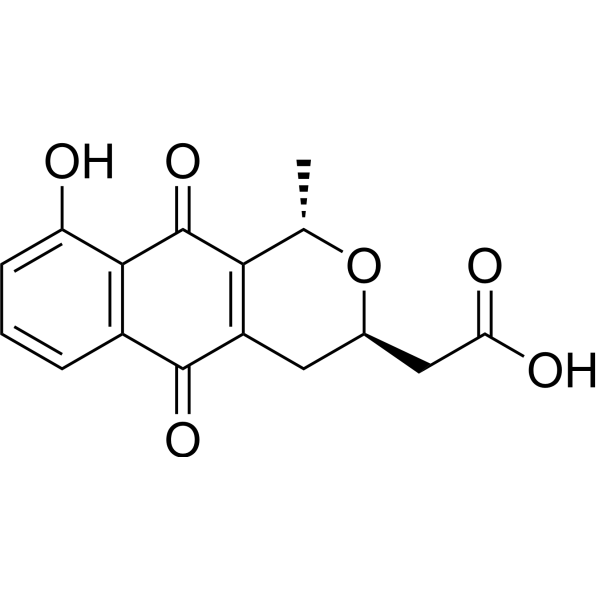
Nanaomycin A is the first selective DNMT3B inhibitor with an IC50 of 500 nM. Nanaomycin A, a quinone antibiotics, reactivates silenced tumor suppressor genes in human cancer cells . Nanaomycin A inhibits in vitro growth of the human malaria parasite Plasmodium falciparum with an IC80 value of 33.1 nM .
|
-
- HY-106515
-
|
WR228258
|
Parasite
|
Infection
|
|
Tebuquine (WR228258), a 4-aminoquinoline, is a potent antimalarial agent. Tebuquine is active against the Chloroquine (HY-17589A) sensitive HB3 strain and the Chloroquine resistant K1 strain of Plasmodium falciparum with IC50s of 0.9 nM and 20.8 nM, respectively .
|
-

- HY-116552
-
|
|
Parasite
|
Infection
|
|
KAR425 is a potent and orally active antimalarial agent. KAR425 shows antimalarial activity against the Chloroquine-sensitive (CQS) D6, the Chloroquine-resistant (CQR) Dd2, and 7G8 strains of Plasmodium falciparum, with IC50 values of 62 nM, 55 nM, and 60 nM, respectively .
|
-

- HY-174342
-
|
|
Cytochrome P450
Parasite
|
Infection
|
|
ELQ-453 is an inhibitor targeting the Qo site of the Plasmodium falciparum cytochrome bc1 complex (CytB) with an IC50 value of 0.57 nM. ELQ-453 blocks the mitochondrial function of the parasite, and suppresses Plasmodium infection in mosquitoes. ELQ-453 is promising for research of malaria .
|
-

- HY-N13034
-
|
|
Caspase
Apoptosis
Parasite
|
Infection
Cancer
|
|
Diuvaretin is an antimalarial agent and a C-phenylated dihydrochalcone. Diuvaretin can be isolated from the roots of U. acuminata. Diuvaretin increases the activity of Caspase-3 and triggers Apoptosis. Diuvaretin exhibits antiparasitic activity against Plasmodium falciparum. Diuvaretin can be used in the research of promyelocytic leukemia and malaria .
|
-

- HY-148075
-
|
|
PI4K
|
Infection
|
|
PI4KIIIbeta-IN-11 is an inhibitor of PI4KIIIβ, with a mean pIC50 value of at least 9.1. PI4KIIIβ plays a key role in diseases research of RNA viruses and Plasmodium falciparum .
|
-
- HY-120104
-
|
(±)-Nitidanin
|
Parasite
HCV
|
Infection
|
|
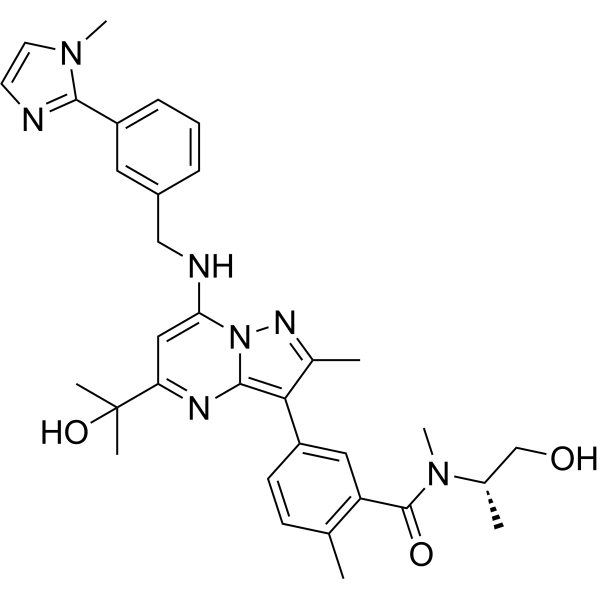
Nitidanin ((±)-Nitidanin) is an antimalarial and antiviral compound that can be isolated from the wood of Xanthoxylum nitidun D. C. Nitidanin is shows IC50 values of 21.2 and 18.4 μM for D6 and W2 clones of Plasmodium falciparum, respectively. Nitidanin can be used for the research of malaria and virus infection .
|
-
- HY-N5005
-
|
Atisinium chloride
|
Parasite
|
Infection
|
|
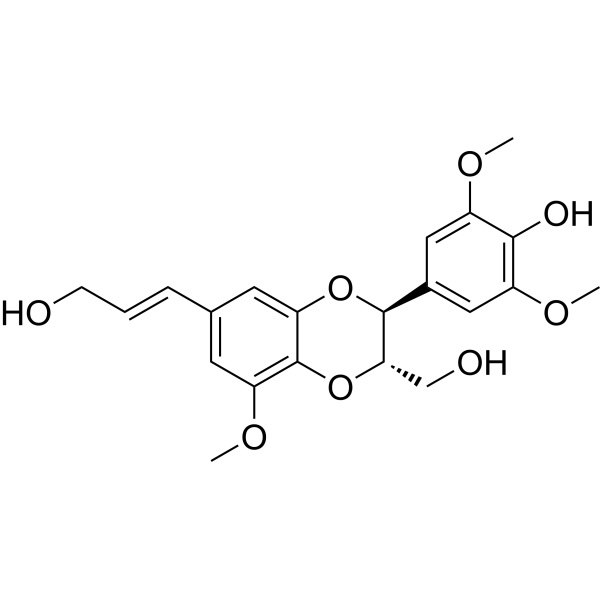
Guanfu base H (Atisinium chloride) is a diterpenoid alkaloid isolated from Aconitum coreanum and has antiplasmodial activity against the malarial Plasmodium falciparum strains TM4/8.2 (wild type) and K1CB1 with IC50 values of 4 μM and 3.6 μM, respectively .
|
-
- HY-B0148
-
|
Risedronate
|
Parasite
Apoptosis
|
Infection
Metabolic Disease
Cancer
|
|
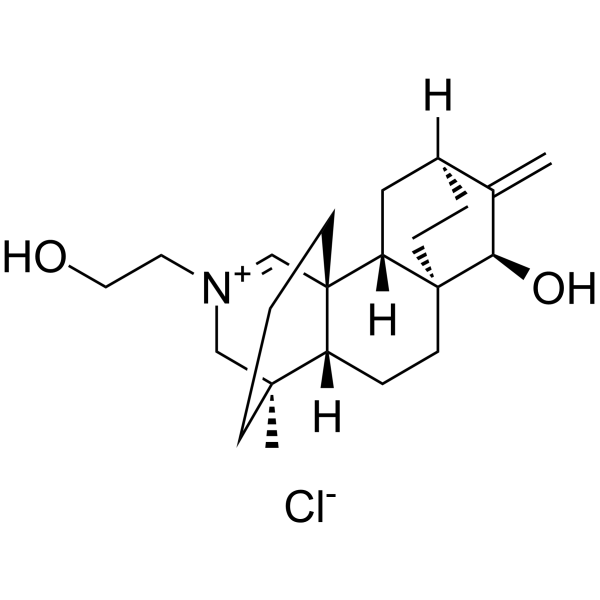
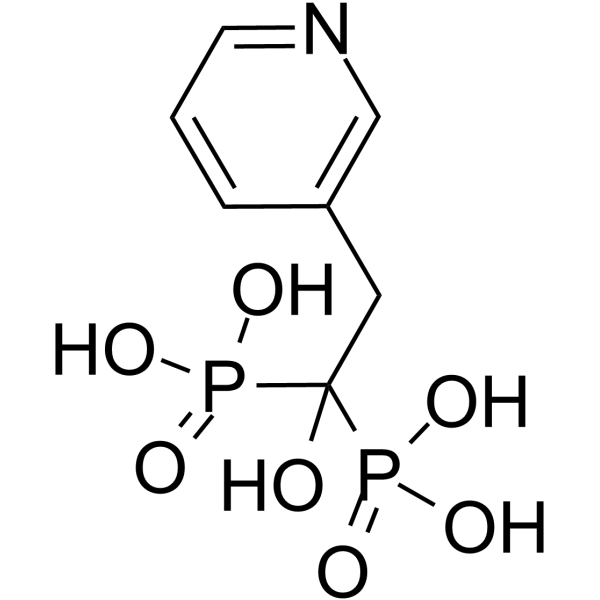
Risedronic acid (Risedronate) is a bisphosphonate and potent antiresorptive agent. Risedronic acid induces Apoptosis. Risedronic acid inhibits the transfer of farnesyl pyrophosphate groups to parasite proteins. Risedronic acid inhibits osteoclast-mediated bone resorption and alters bone metabolism. Risedronic acid inhibits blood-stage Plasmodium falciparum (IC50 of 20.3 μM) .
|
-
- HY-148315
-
|
|
GLUT
|
Infection
|
|
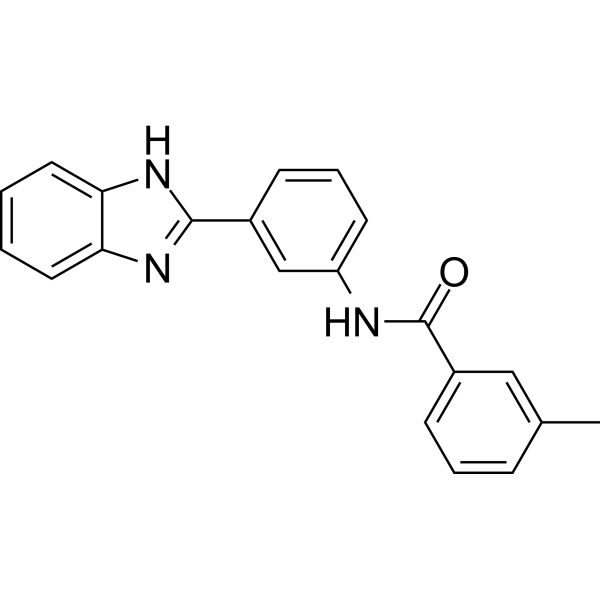
GLUT1-IN-2 (compound 17) is a GLUT1 inhibitor with an IC50 value of 12 μM. GLUT1-IN-2 shows inhibitory effect to Plasmodium falciparum hexose transporter PfHT with an IC50 value of 13 μM. GLUT1-IN-2 can be used for the research of infection .
|
-
- HY-145379
-
|
|
Parasite
Endogenous Metabolite
|
Infection
|
|
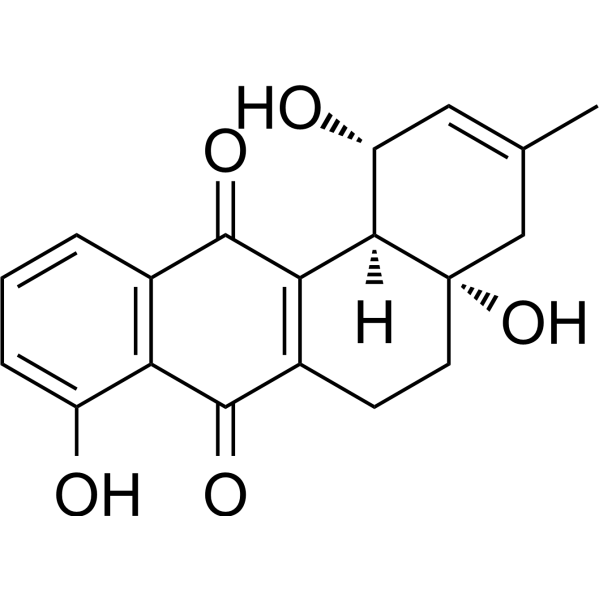
Miaosporone A, an angucyclic quinone, exhibits antimalarial activity against Plasmodium falciparum K1 and antibacterial activity against Mycobacterium tuberculosis with respective IC50 values of 2.5 and 2.4 μM and displays cytotoxic activities against both cancerous (MCF-7 and NCI-H187) and nonmalignant (Vero) cells .
|
-
- HY-173567
-
|
|
Parasite
|
Infection
|
|
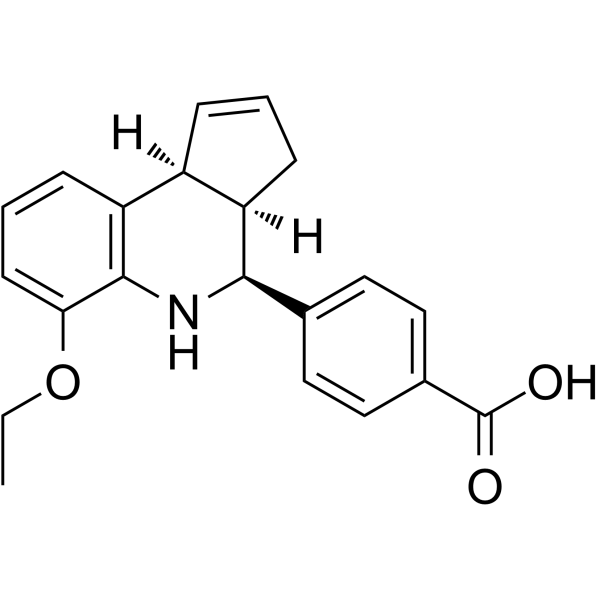
WJM664 is a potent Plasmodium falciparum PfATP4 inhibitor. WJM664 shows strong activity against malaria parasites. WJM664 blocks gamete development and transmission to mosquitoes by inhibiting PfATP4-mediated Na +-dependent ATPase activity, and acts on multiple stages of the malaria parasite life cycle .
|
-

- HY-123905A
-
|
|
Drug Isomer
MicroRNA
Parasite
|
Infection
Cancer
|
|
LIN28 inhibitor LI71 enantiomer is the less active enantiomer of LIN28 inhibitor LI71 (HY-123905). LIN28 inhibitor LI71 is a LIN28 inhibitor that effectively inhibits LIN28:let-7 binding (IC50: 7 μM). LIN28 inhibitor LI71 can abolish LIN28-mediated oligouridylation of let-7 precursor (IC50: 27 μM). LIN28 inhibitor LI71 has potential application value in LIN28-driven cancer research. LIN28 inhibitor LI71 inhibits the interaction of cold shock protein of Plasmodium falciparum (PfCoSP) with DNA and α/β tubulin and has an inhibitory effect on Plasmodium falciparum .
|
-
- HY-182685
-
|
|
Acetyl-CoA synthetase
Parasite
|
Infection
|
|
MMV693183 is an orally active inhibitor of Plasmodium falciparum acetyl-CoA synthetase (AcAS), with an IC50 of 300 nM against Plasmodium falciparum. MMV693183 exhibits potent inhibitory activity against clinical isolates of malaria parasites, including Artemisinin (HY-B0094)-resistant strains. MMV693183 is metabolized in vivo into the active antimetabolite CoA-MMV693183, which exerts effects of killing asexual blood-stage parasites and blocking transmission to Anopheles mosquitoes by binding to and inhibiting the function of acetyl-CoA synthetase, thereby reducing the levels of acetyl-CoA and 4'-phosphopantetheine. In humanized mouse models, MMV693183 shows favorable in vivo efficacy, drug-like properties, and no significant cytotoxicity or off-target activity against human cells. MMV693183 is widely used in malaria-related research as a parasiticide and metabolic disruptor .
|
-

- HY-N6009
-
|
|
Parasite
NF-κB
|
Infection
|
|
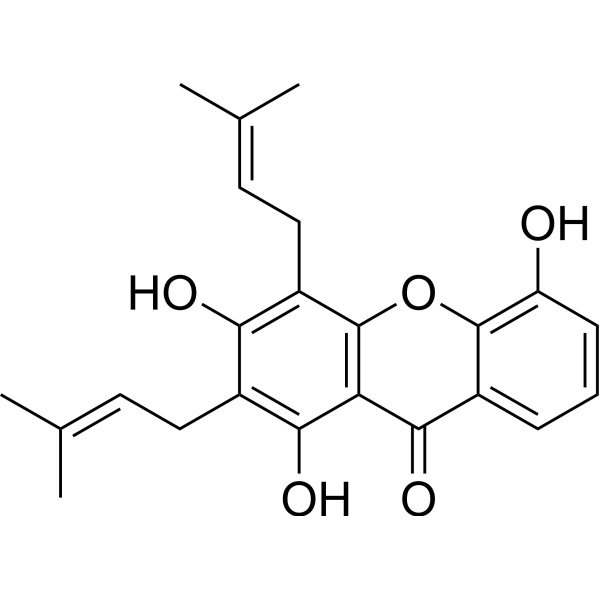
8-Deoxygartanin, a prenylated xanthones from G. mangostana, is a selective inhibitor of butyrylcholinesterase (BChE) . 8-Deoxygartanin exhibits antiplasmodial activity with an IC50 of 11.8 μM for the W2 strain of Plasmodium falciparum . 8-Deoxygartanin inhibits NF-κB (p65) activation with an IC50 of 11.3 μM .
|
-
- HY-181658
-
|
|
Parasite
|
Infection
Cancer
|
|
Antimalarial agent 59 is an antimalarial agent. Antimalarial agent 59 inhibits the growth of Chloroquine (HY-17589A)-resistant FcB1 strain of Plasmodium falciparum with an IC50 of 46 nM. Antimalarial agent 59 also shows cytotoxic activity against cancer cells. Antimalarial agent 59 can be used for the researches of malaria and ovarian cancer .
|
-

- HY-136429
-
|
Optochin
|
Bacterial
Parasite
|
Infection
|
|
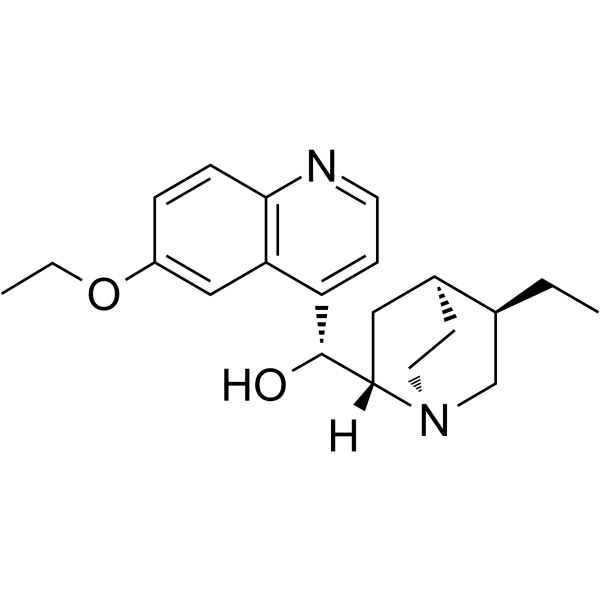
Ethylhydrocupreine (Optochin) is a quinine derivate with antimicrobial activity against S. pneumoniae. Ethylhydrocupreine also possesses antimalarial activity against Plasmodium falciparum, with an IC50 of 25.75 nM. Ethylhydrocupreine is a Gallus gallus taste 2 receptors (ggTas2r1, ggTas2r2 and ggTas2r7) agonist .
|
-
- HY-136429A
-
|
Optochin hydrochloride
|
Bacterial
Parasite
|
Infection
|
|
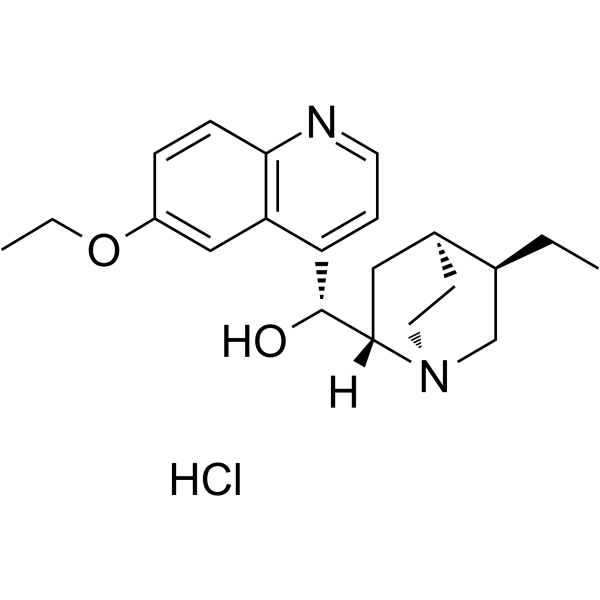
Ethylhydrocupreine hydrochloride (Optochin hydrochloride) is a quinine derivate with antimicrobial activity against S. pneumoniae. Ethylhydrocupreine hydrochloride also possesses antimalarial activity against Plasmodium falciparum, with an IC50 of 25.75 nM. Ethylhydrocupreine hydrochloride is a Gallus gallus taste 2 receptors (ggTas2r1, ggTas2r2 and ggTas2r7) agonist .
|
-
- HY-103353
-
|
|
Cathepsin
Parasite
|
Infection
Cancer
|
|
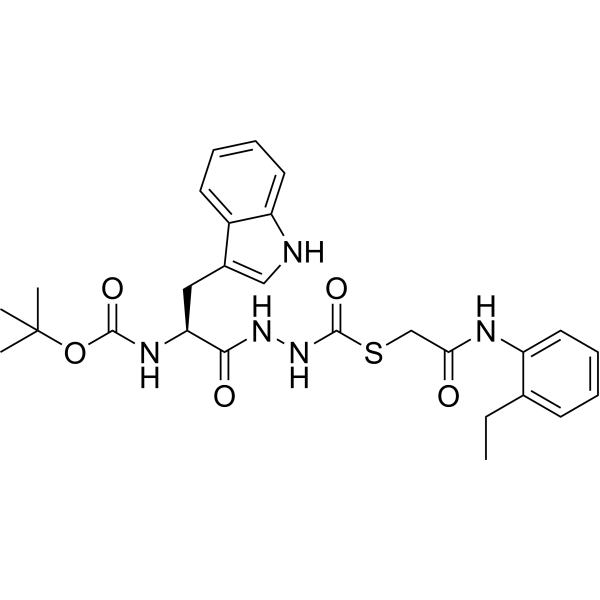
SID 26681509 is a potent, reversible, competitive, and selective inhibitor of human cathepsin L with an IC50 of 56 nM. SID 26681509 inhibits in vitro propagation of malaria parasite Plasmodium falciparum and inhibits Leishmania major with IC50s of 15.4 μM and 12.5 μM, respectively. SID 26681509 shows no inhibitory activity against cathepsin G .
|
-
- HY-116392B
-
|
|
Glucosylceramide Synthase (GCS)
Parasite
|
Infection
Endocrinology
Cancer
|
|
DL-threo-PDMP hydrochloride is a competitive glucosylceramide synthase (GCS) inhibitor and antimalarial agent. DL-threo-PDMP hydrochloride competitively inhibits the activity of GCS. DL-threo-PDMP hydrochloride restores cisplatin sensitivity in cisplatin-resistant testicular germ cell tumor cells. DL-threo-PDMP hydrochloride blocks the growth of ring-stage Plasmodium falciparum parasites .
|
-
- HY-N0352R
-
|
|
Reference Standards
Parasite
|
Infection
|
|
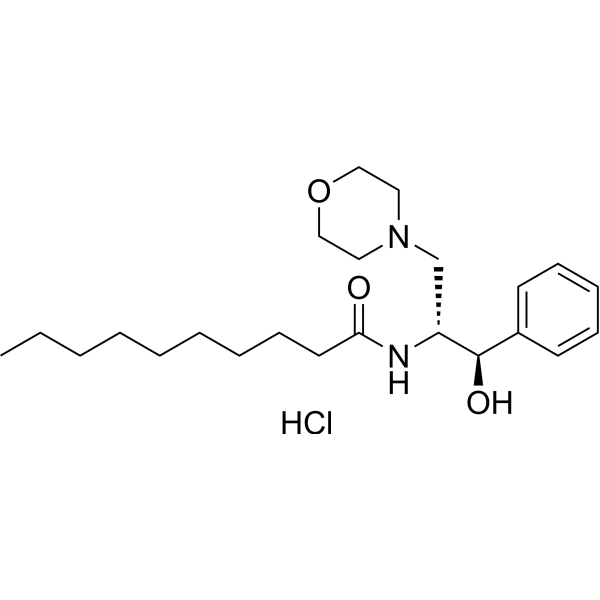
Tuberostemonine (Standard) is the analytical standard of Tuberostemonine. This product is intended for research and analytical applications. Tuberostemonine is a stenine alkaloid that can be isolated from Stemona tuberosa and Stemona sessifolia. Tuberostemonine is an antimalarial agent that has inhibitory activity Ferredoxin-NADP + reductases (FNRs) from Plasmodium falciparum (PfFNR). Tuberostemonine has a level of activity as a feeding deterrent .
|
-

- HY-N15748
-
|
(-)-Pelorol
|
Parasite
|
Infection
|
|
Pelorol ((-)-Pelorol) is a sesquiterpene found in the tropical marine sponge Dactylospongia elegans. Pelorol has weak antitrypanosomal activity with an IC50 of 17.4 μg/mL and antiplasmodial activity against Plasmodium falciparum clones K1 and NF54 with IC50 values of 786 ng/mL and 1911 ng/mL, respectively. Pelorol is promising for research of parasitic diseases, such as trypanosomiasis and malaria .
|
-

- HY-129476
-
|
|
Parasite
Endogenous Metabolite
|
Infection
Cancer
|
|
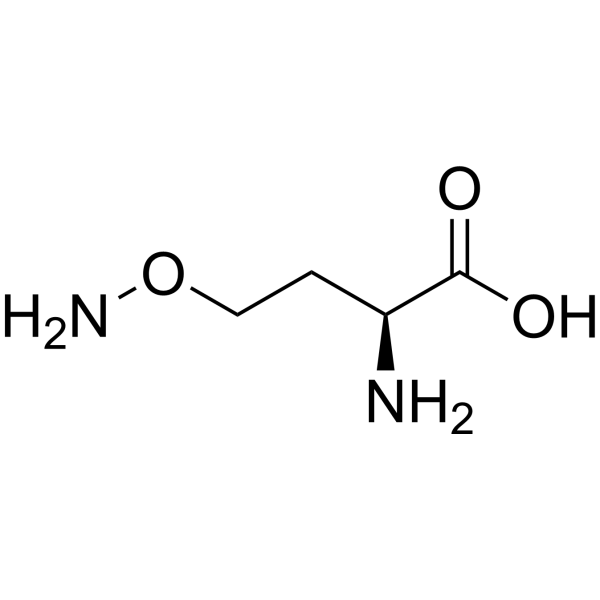
L-Canaline is a nonprotein amino acid stored in many leguminous plants. L-Canaline is a cytotoxic metabolite catalyzed by L-canavanine and its arginase. L-Canaline is a potent and irreversible inhibitor of ornithine aminotransferase. L-Canaline inhibits the growth of the malaria parasite Plasmodium falciparum with an IC50 of 297 nM. L-Canaline has anticancer and antiproliferative effects .
|
-
- HY-N16123
-
|
|
Parasite
|
Infection
|
|
Chloranthalactone C (Compound 43), a lindenane-type sesquiterpenoid, is an antimalarial agent. Chloranthalactone C can be isolated from plant Chloranthus japonicas Sieb. Chloranthalactone C inhibits Chloroquine (HY-17589A)-resistant Plasmodium falciparum strain Dd2 growth. Chloranthalactone C can be used for parasitic infections research .
|
-

- HY-172953
-
|
|
Parasite
|
Infection
|
|
Insecticidal agent 24 is an orally active pyridylspiroindoline frontrunner. Insecticidal agent 24 has antiplasmodial activity (Pf NF54 IC50: 0.08 μM). Insecticidal agent 24 inhibits hERG activity (IC50: 6.5 μM). Insecticidal agent 24 reduces parasitemia in a humanized immunodeficient NSG mouse Plasmodium falciparum infection model .
|
-

- HY-103353A
-
|
|
Cathepsin
Parasite
|
Infection
Cancer
|
|
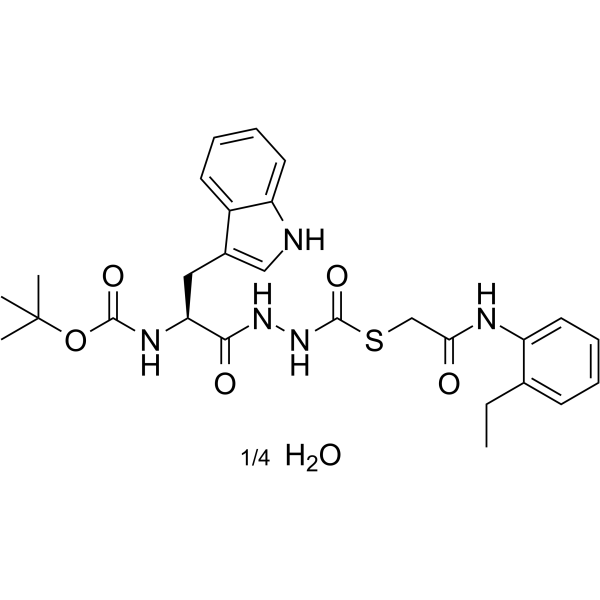
SID 26681509 quarterhydrate is a potent, reversible, competitive, and selective inhibitor of human cathepsin L with an IC50 of 56 nM. SID 26681509 quarterhydrate inhibits in vitro propagation of malaria parasite Plasmodium falciparum and inhibits Leishmania major with IC50s of 15.4 μM and 12.5 μM, respectively. SID 26681509 quarterhydrate shows no inhibitory activity against cathepsin G .
|
-
- HY-W779743
-
|
|
Drug Derivative
|
Infection
Cancer
|
|
NE58043 (Compound 21) is a nitrogen-containing bisphosphonate compound. NE58043 has no significant inhibitory activity against Entamoeba histolytica and Plasmodium falciparum with IC50 > 200 μM. NE58043 shows a LD50 of 171 μM for human nasopharyngeal carcinoma KB cells. NE58043 can be used for the research of cancer and infection, such as nasopharyngeal carcinoma .
|
-

- HY-N12232
-
|
|
Parasite
Bacterial
|
Infection
Cancer
|
|
Carbazomycin D exhibits antituberculosis and antimalarial activities, that inhibits Plasmodium falciparum with an IC50 > 10 μg/mL, inhibits Mycobacterium tuberculosis with MIC of 25 μg/mL. Carbazomycin D exhibits cytotoxicity in cell MCF-7, KB, NCI-H187 and Vero, with IC50s of 21.3, 33.2, 12.9, and 34.3 μg/mL, respectively .
|
-

- HY-B0119
-
|
Risedronate sodium
|
Parasite
Apoptosis
|
Infection
Metabolic Disease
Cancer
|
|
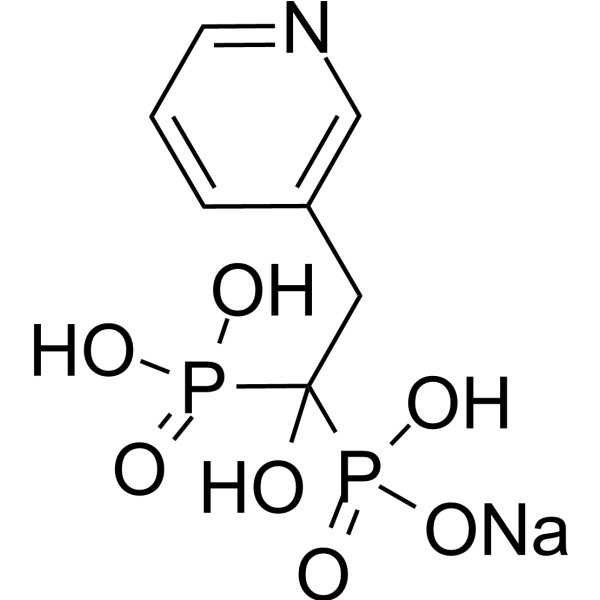
Risedronic acid (Risedronate) sodium, a bisphosphonate, is a potent anti-resorption agent that inhibits osteoclast-mediated bone resorption and changes the bone metabolism. Risedronic acid sodium suppresses osteoblast differentiation and induced caspase- and isoprenoid depletion-dependent apoptosis. Risedronic acid sodium inhibits blood stages of Plasmodium falciparum (IC50 of 20.3 μM). Risedronic acid sodium inhibits the transfer of the farnesyl pyrophosphate group to parasite proteins .
|
-
- HY-N10096
-
|
|
Parasite
|
Infection
|
|
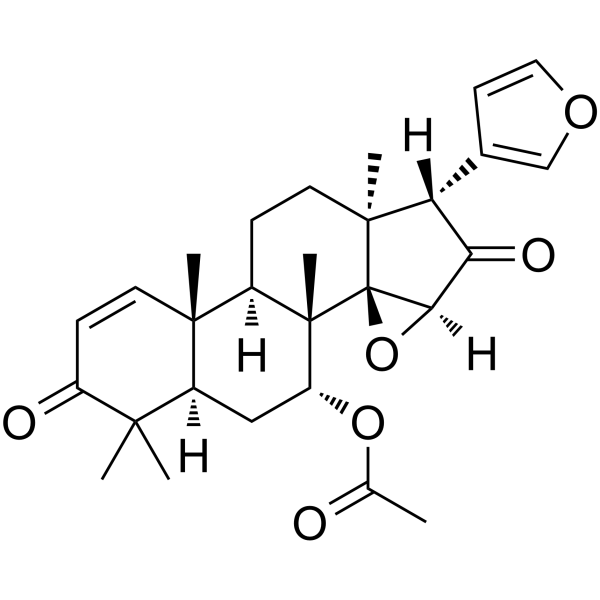
Epoxyazadiradione is a limonoid purified from neem (Azadirachta indica) fruits. Epoxyazadiradione inhibits the tautomerase activity of MIF of both human (huMIF) and malaria parasites (Plasmodium falciparum (PfMIF) and Plasmodium yoelii (PyMIF)) non-competitively in a reversible fashion (Ki, 2.11-5.23 μM). Epoxyazadiradione has the potential against proinflammatory reactions induced by MIF of both malaria parasites and human .
|
-
- HY-151575
-
|
|
GSK-3
|
Infection
|
|
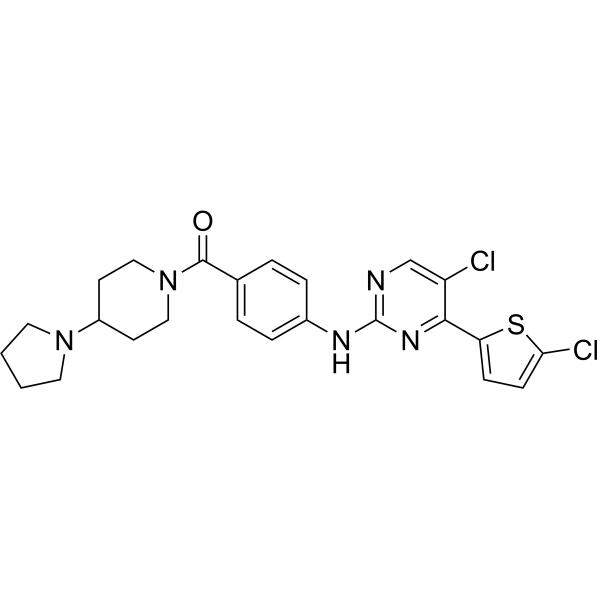
PfGSK3/PfPK6-IN-2 is a potent dual PfGSK3/PfPK6 (Plasmodium falciparum GSK3/PK6) inhibitor (IC50: 172 nM and 11 nM respectively). PfGSK3/PfPK6-IN-2 can be used in the research of Malaria .
|
-
- HY-161800
-
|
|
Aminoacyl-tRNA Synthetase
|
Infection
|
|
Aminoacyl tRNA synthetase-IN-3 (compound 36K3) is an inhibitor of lysine tRNA synthetase (PfLysRS) from Plasmodium falciparum (IC50=59.2 nM), which inhibits the activity of PfLysRS by occupying the ATP binding site and L-lysine binding site of PfLysRS. Aminoacyl tRNA synthetase-IN-3 can be used in the development of antimalarial drugs .
|
-

- HY-103397R
-
|
|
Antibiotic
Reference Standards
DNA Methyltransferase
Parasite
|
Infection
Cancer
|
|
Nanaomycin A (Standard) is the analytical standard of Nanaomycin A. This product is intended for research and analytical applications. Nanaomycin A is the first selective DNMT3B inhibitor with an IC50 of 500 nM. Nanaomycin A, a quinone antibiotics, reactivates silenced tumor suppressor genes in human cancer cells[1]. Nanaomycin A inhibits in vitro growth of the human malaria parasite Plasmodium falciparum with an IC80 value of 33.1 nM[2].
|
-

- HY-N2891
-
|
Aristololactam A II
|
Parasite
COX
|
Infection
|
|
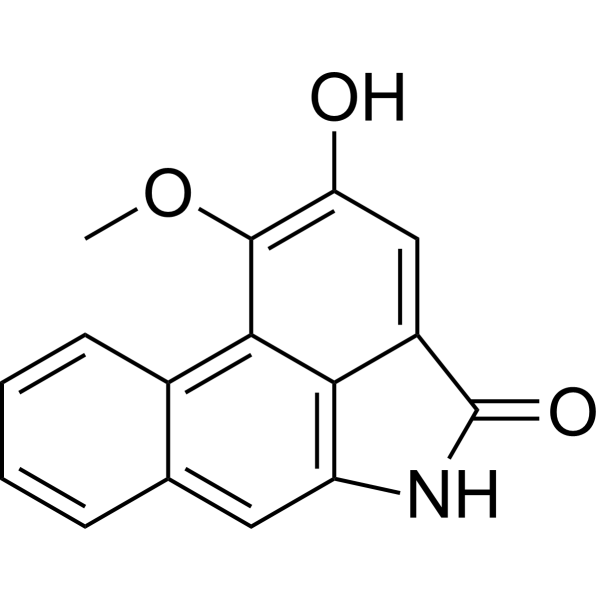
Aristolactam A II (Aristololactam A II) is a weak COX inhibitor with cytotoxic and anti-plasmodial activities. Aristolactam A II exhibits inhibitory activity against Chloroquine (HY-17589A)-sensitive strains, and exerts its inhibitory effect on Plasmodium falciparum growth by inducing cell membrane damage marked by LDH release. Aristolactam A II can be applied to the research of malaria-related mechanisms .
|
-
- HY-153612
-
|
|
GLUT
Parasite
|
Infection
Inflammation/Immunology
|
|
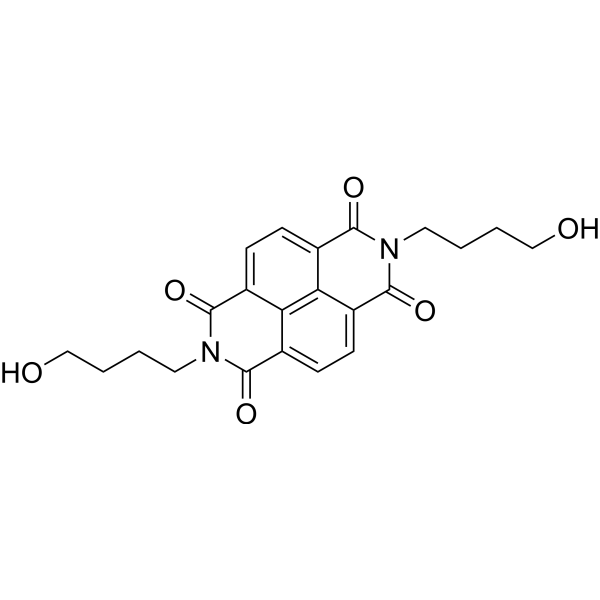
MMV009085 is a potent PfHT1 (Plasmodium falciparum hexose transporter)-specific inhibitor and a potential anti-malarial agent . MMV009085 is also a human glucose transporter inhibitor, it has high potency in inhibiting both glucose uptake (IC50: 2.6 μM in glucose uptake assay) and growth of the parasites (EC50: 1.23±0.04 μM against 3D7) .
|
-
- HY-N3702
-
|
|
Syk
|
Infection
Inflammation/Immunology
|
|
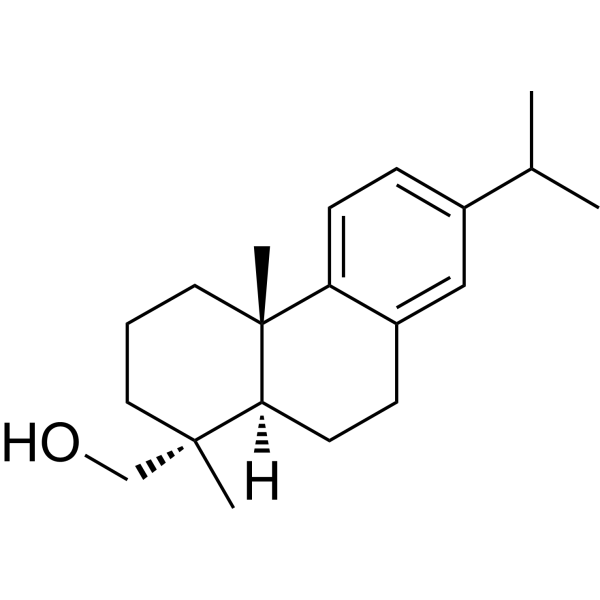
Dehydroabietinol is a SYK inhibitor with an IC50 of 46.4 μM. Dehydroabietinol inhibits the growth of Trypanosoma cruzi epimastigotes, Leishmania braziliensis promastigotes and Leishmania infantum promastigotes. Dehydroabietinol indirectly inhibits the growth of Plasmodium falciparum, alters the erythrocyte membrane, and induces spherostomatocyte transformation and endovesicle formation. Dehydroabietinol can be used in studies related to immune-mediated diseases, Chagas disease, leishmaniasis and malaria .
|
-
- HY-182309
-
|
|
DNA Methyltransferase
Parasite
|
Infection
|
|
SC83288 is a Plasmodium falciparum PfDNMT2 inhibitor with an IC50 of 7 μM. SC83288 disrupts the epigenetic regulation of malaria parasites, blocks DNA replication and nuclear division, arrests the development of the asexual blood stage, induces the formation of pyknotic morphology in malaria parasites, and does not affect cytokinesis after nuclear division or parasite egress. SC83288 is applicable to malaria-related research .
|
-

- HY-N8374
-
|
|
Parasite
|
Infection
|
|
Pheanthine (Compound 2) is an antiplasmodial agent, that inhibits chloroquine-resistant Plasmodium falciparum K-1 (IC50 is 0.8 μM) and chloroquine-sensitive P. falciparum strain NF54 A19A (IC50 of 0.03 μM). Pheanthine exhibits low cytotoxicity in human lung fibrosblast (MRC-5, IC50 is 11.2 μM) and macrophages (PMM, IC50 is 8 μM) .
|
-

- HY-P5344
-
|
Fluorigenic PEXEL peptide
|
Parasite
|
Others
|
|
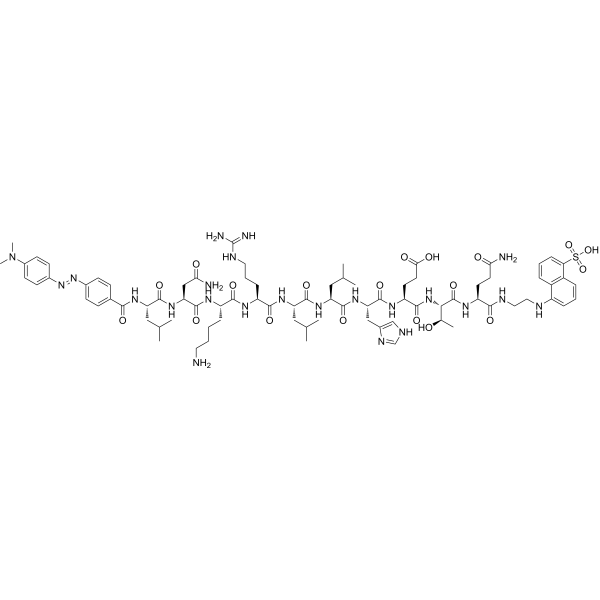
Dabcyl-LNKRLLHETQ-Edans (Fluorigenic PEXEL peptide) is a biological active peptide. (This FRET substrate peptide for Plasmepsin V (PMV) is derived from the conserved Plasmodium Export Element (PEXEL) motif of Histidine-Rich Protein II (HRPII). PMV is an ER aspartic protease that recognizes and cleaves the RXL sequence within the PEXEL motif of proteins exported by human malaria parasite Plasmodium falciparum, allowing them to translocate into host erythrocytes.)
|
-
- HY-N15159
-
|
|
Cyclic GMP-AMP Synthase
STING
Parasite
|
Infection
Inflammation/Immunology
|
|
Cladophorol A is a cyclic GMP-AMP synthase (cGAS) inhibitor. Cladophorol A binds to the conserved adenosine nucleobase binding site within the cGAS active site to inhibit its catalytic activity. Cladophorol A effectively inhibits the overactivation of the cGAS-STING pathway with an IC50 of 370 nM. Cladophorol A inhibits asexual blood-stage Plasmodium falciparum with an EC50 of 0.7 μg/mL. Cladophorol A can be used for the researches of inflammatory disease and malaria .
|
-

- HY-B0439S1
-
|
Sulphadoxine d3
|
Parasite
Antibiotic
|
Infection
|
|
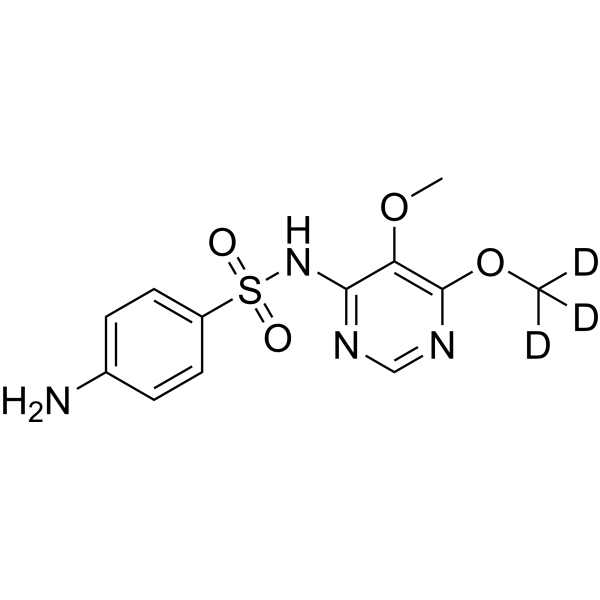
Sulfadoxine-d3 is a deuterium labeled Sulfadoxine (HY-B0439). Sulfadoxine is a sulfonamide that is used, usually in combination with Pyrimethamine(HY-18062), for multidrug-resistant Plasmodium falciparum and P. vivax inhibition. Unlike PYR, Sulfadoxine has no impact on HIV replication or MT-2 cell cycle progression. But also Sulfadoxine exhibits suppression on respiratory, and urinary tract infections .
|
-
- HY-N18294
-
|
|
Parasite
|
Infection
Cancer
|
|
(R,R)-Polysphorin is a neolignan antimalarial agent that is isolated from the dried leaves and stems of Rhaphidophora decursiva. (R,R)-Polysphorin inhibits the growth of chloroquine-sensitive and chloroquine-resistant Plasmodium falciparum clones in vitro by mediating free radical damage to key cellular components via conjugated double bonds. (R,R)-Polysphorin also exhibits cytotoxicity against human oral epidermoid carcinoma cells .
|
-

- HY-B0148R
-
|
Risedronate (Standard)
|
Parasite
Reference Standards
Apoptosis
|
Infection
Metabolic Disease
Cancer
|
|
Risedronic acid (Standard) (Risedronate (Standard)) is the analytical standard of Risedronic acid (HY-B0148). This product is intended for research and analytical applications. Risedronic acid (Risedronate) is a bisphosphonate and potent antiresorptive agent. Risedronic acid induces Apoptosis. Risedronic acid inhibits the transfer of farnesyl pyrophosphate groups to parasite proteins. Risedronic acid inhibits osteoclast-mediated bone resorption and alters bone metabolism. Risedronic acid inhibits blood-stage Plasmodium falciparum (IC50 of 20.3 μM).
|
-

- HY-159479
-
|
|
Parasite
|
Infection
|
|
PfSUB1-IN-1 (compound 4c) is a plasmodium falciparum subtilisin-like serine protease 1 (PfSUB1) Inhibitor (IC50: 15 nM). PfSUB1 is an antimalarial target. PfSUB1-IN-1 inhibits the growth of a genetically modified P. falciparum line expressing reduced levels of PfSUB1 13-fold more efficiently compared to a wild-type parasite line .
|
-

- HY-136429AR
-
|
Optochin hydrochloride (Standard)
|
Reference Standards
Bacterial
Parasite
|
Infection
|
|
Ethylhydrocupreine (hydrochloride) (Standard) is the analytical standard of Ethylhydrocupreine (hydrochloride). This product is intended for research and analytical applications. Ethylhydrocupreine hydrochloride (Optochin hydrochloride) is a quinine derivate with antimicrobial activity against S. pneumoniae. Ethylhydrocupreine hydrochloride also possesses antimalarial activity against Plasmodium falciparum, with an IC50 of 25.75 nM. Ethylhydrocupreine hydrochloride is a Gallus gallus taste 2 receptors (ggTas2r1, ggTas2r2 and ggTas2r7) agonist .
|
-

- HY-147850
-
|
|
Parasite
|
Infection
|
|
JMI-346 is a potent PfFP-2 (Plasmodium falciparum falcipain-2 protease) inhibitor. JMI-346 inhibits the growth of CQ S (3D7; IC50=13 µM) and CQ R (RKL-9; IC50=33 µM) strains of P. falciparum. JMI-346 has the potential to be used as an anti-malarial agent .
|
-
- HY-111817
-
|
|
Parasite
|
Infection
|
|
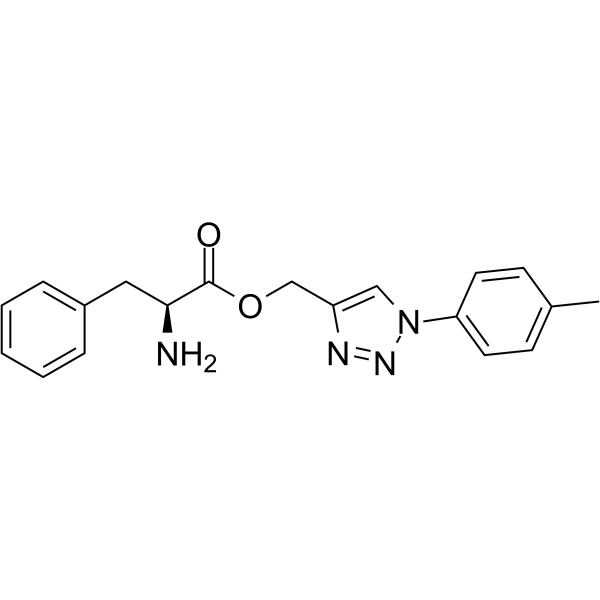
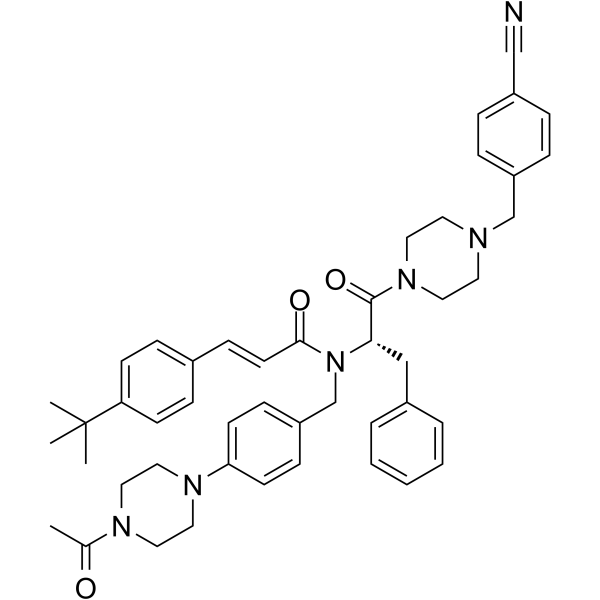
ACT-451840 is an orally active, potent and low-toxicity compound, showing activity against sensitive and resistant plasmodium falciparum strains. ACT-451840 targets all asexual blood stages of the parasite, has a rapid onset of action. ACT-451840 behaves in a way similar to artemisinin derivatives, with very rapid onset of action and elimination of parasite. ACT-451840 can be used for the research of malarial .
|
-
- HY-168069
-
|
|
Parasite
Dihydrofolate reductase (DHFR)
|
Infection
|
|
DHFR-IN-20 (Compound LA1) is a Plasmodium falciparum dihydrofolate reductase (DHFR) inhibitor, with Kis of 0.16, 0.30, 6.6 nM for PfDHFR-WT, PfDHFR-QM, HsDHFR. DHFR-IN-20 has antimalarial activities (IC50: 1.4 nM and 1.6 μM for P. falciparum carrying the wild-type (TM4/8.2) and the quadruple mutant (V1/S) PfDHFR enzyme .
|
-

- HY-126640
-
|
|
Parasite
|
Infection
Cancer
|
|
Phomoxanthone A is a xanthone dimer, which can be isolated from Phomopsis. Phomoxanthone A exhibits antimalarial and antitubercular activities against Plasmodium falciparum (K1, multidrug-resistant strain, IC50 is 0.11 µg/mL) and Mycobacterium tuberculosis (H37Ra strain, MIC is 0.50 µg/mL). Phomoxanthone A exhibits cytotoxicity in cells KB, BC-1 and Vero, IC50 is 0.99, 0.51 and 1.4 µg/mL, respectively .
|
-

- HY-100662
-
|
Bisdesethylchloroquine
|
Drug Metabolite
|
Cardiovascular Disease
Infection
|
|
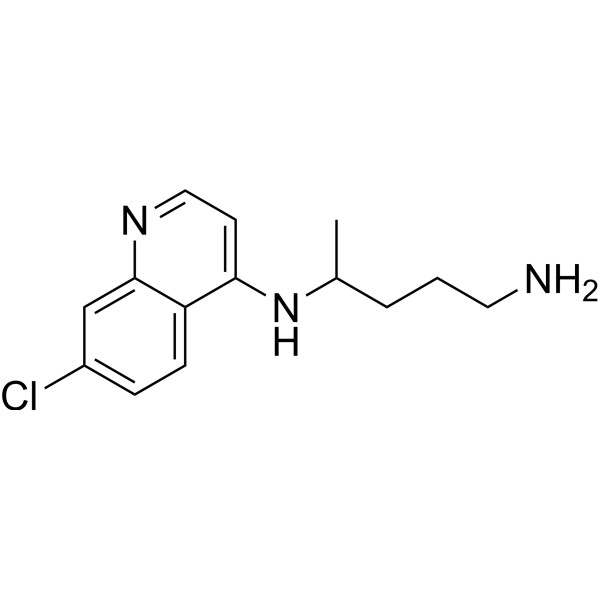
Didesethyl chloroquine (Bisdesethylchloroquine) is the major metabolite of the antimalarial agent Chloroquine (HY-17589A). Didesethyl chloroquine is a potent myocardial inhibitor. Didesethyl chloroquine reduces calcium binding and accumulation in cardiac mitochondria, induces mitochondrial swelling, rupture and membrane conformational changes. Didesethyl chloroquine inhibits the growth of Plasmodium falciparum strains. Didesethyl chloroquine can be used in research related to malaria, chikungunya virus infection, and cardiovascular and cerebrovascular diseases .
|
-
- HY-182347
-
|
|
Parasite
|
Infection
|
|
LSPN954 (compound 4i) is an indole-based peptidomimetic antiplasmodial agent that exhibits submicromolar activity against both sensitive and multidrug-resistant *Plasmodium falciparum* strains, with low cytotoxicity to human cells and a high selectivity index. LSPN954 shows slow-acting inhibitory activity, allowing the initial development of *Plasmodium* followed by morphological changes, and its activity is independent of the inhibition of plastid-dependent isoprenoid biosynthesis. LSPN954 can be used in malaria research .
|
-

- HY-116535A
-
|
|
Parasite
|
Infection
|
|
DL-threo-PPMP hydrochloride is an inhibitor of sphingosine synthetase in Plasmodium falciparum. DL-threo-PPMP hydrochloride inhibits the activity of sphingosine synthetase (sphingosine synthetase) by binding to a substrate that mimics sphingosine. This inhibition leads to a rapid decline in sensitive sphingomyelin synthase (SSS) activity, selectively disrupting the interconnected tubular network of TVM in the cytoplasm of the host cell, and this inhibition also blocks the proliferation of the parasite. DL-threo-PPMP hydrochloride can be used in the study of malaria parasite biology and the search for new antimalarial strategies .
|
-

- HY-143218
-
|
Tetraphenylethene maleimide
|
Huntingtin
Parasite
|
Infection
Neurological Disease
|
|
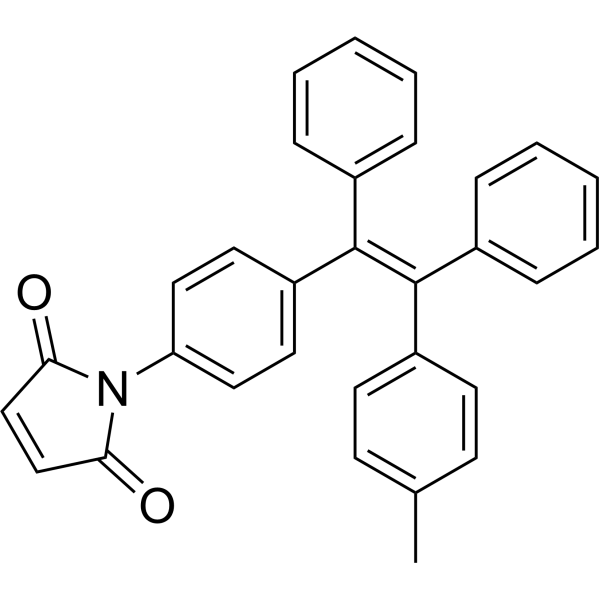
TPE-MI (Tetraphenylethene maleimide) is a thiol probe for measuring unfolded protein load and proteostasis in cells (the excitation wavelength is 350 nm and the emission wavelength is 470 nm). TPE-MI can report imbalances in proteostasis in induced pluripotent stem cell models of Huntington disease, as well as cells transfected with mutant Huntington exon 1 before the formation of visible aggregates. TPE-MI also detects protein damage following dihydroartemisinin research of the malaria parasites Plasmodium falciparum .
|
-
- HY-155845
-
|
|
Parasite
|
Infection
|
|
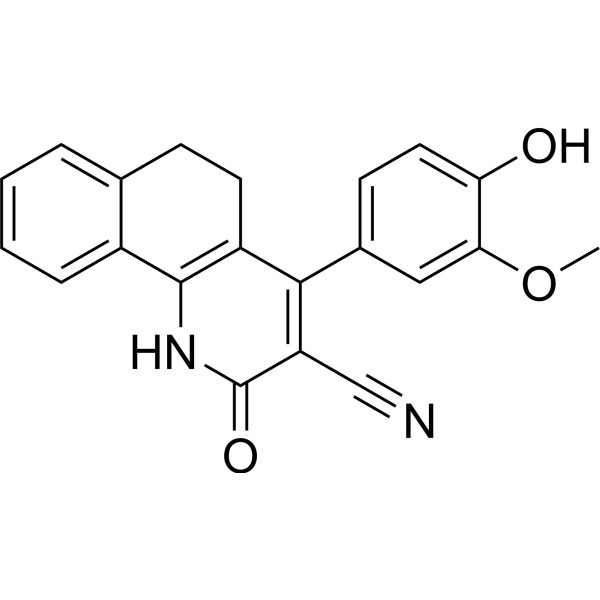
Antileishmanial agent-21 (compound 4e) is an antileishmanial agent that targets the Leishmania pteridine reductase 1 (Lm-PTR1). Antileishmanial agent-21 has an anti-folate mechanism, and folic acid and leucovorin can reverse the anti-leishmanial activity of Antileishmanial agent-21. Antileishmanial agent-21 inhibits the Chloroquine (HY-17589A)-resistant strain of Plasmodium falciparum (RKL9) with an IC50 of 0.0198-0.096 μM .
|
-
- HY-159963
-
|
|
Parasite
|
Infection
|
|
PfCLK3-IN-1 (Compound 4) is a covalent inhibitor for Plasmodium falciparum CLK3 (Pf CLK3) under alkaline conditions with an pEC50 of 7.1. PfCLK3-IN-1 reduces mature gametocytes in sexual stage parasites, and prevents transmission. PfCLK3-IN-1 inhibits P. falciparum Dd2-B2 clone with an IC50 of 239.5 nM .
|
-

- HY-175181
-
|
|
Parasite
Bacterial
|
Infection
|
|
SufS-IN-1, a (2R,3R)-3-ethoxycarbonylaziridine-2-carboxylic acid (EAC), is a selective Cysteine desulfurase type II (SufS) inhibitor. SufS-IN-1 significantly inhibits the SufS activity by covalently binding to the cofactor PLP to form a stable PLP-ligand conjugates. SufS-IN-1 can be used for pathogenic microorganisms research, such as Plasmodium falciparum, Staphylococcus aureus and Mycobacterium tuberculosis .
|
-

- HY-180373
-
|
|
Parasite
|
Infection
|
|
WR 30090 (Compound 37) is a broad-spectrum antimalarial agent that does not rely on the classical antifolate pathway. WR 30090 exhibits strong activity against a variety of chloroquine-sensitive and resistant Plasmodium falciparum strains, especially the highly resistant Vietnamese strain. WR 30090 shows high activity in mouse malaria tests, with a minimum effective dose of 5 mg/kg and a minimum cure dose of 20 mg/kg. WR 30090 can be used for research on acute malaria .
|
-

- HY-119511
-
|
|
Parasite
|
Cardiovascular Disease
Infection
|
|
Isopentaquine is an orally active antimalarial agent. Isopentaquine induces mild morphological changes in the exoerythrocytic stage of Plasmodium fallax, with a ED50 of 6.7 mg/L. Isopentaquine causes degenerative changes in the development of Plasmodium oocysts in infected mosquitoes. Isopentaquine reduces the infectivity of Plasmodium falciparum gametocytes. Isopentaquine impairs sympathetic cardiovascular reflexes. Isopentaquine decreases the recurrence rate and total disease duration of Plasmodium vivax infection. Isopentaquine can be used in malaria-related research .
|
-

- HY-B0148S
-
|
Risedronate-d4
|
Isotope-Labeled Compounds
Parasite
Apoptosis
|
Infection
Metabolic Disease
Cancer
|
|
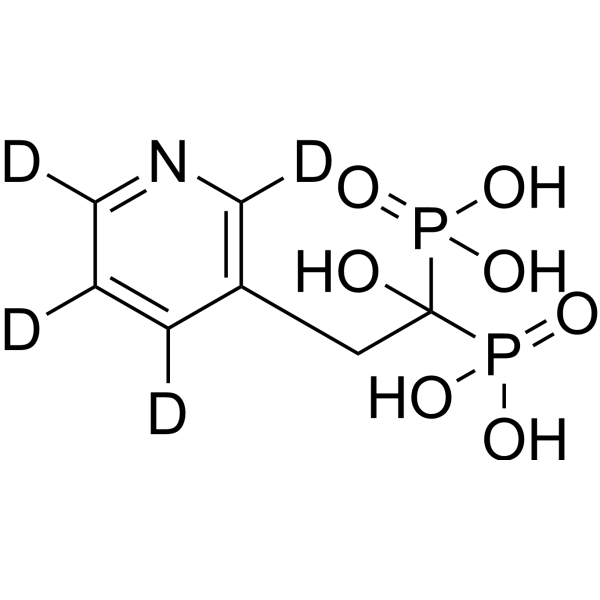
Risedronic acid-d4 (Risedronate-d4) is the deuterium labeled Risedronic acid (HY-B0148). Risedronic acid (Risedronate) is a bisphosphonate and potent antiresorptive agent. Risedronic acid induces Apoptosis. Risedronic acid inhibits the transfer of farnesyl pyrophosphate groups to parasite proteins. Risedronic acid inhibits osteoclast-mediated bone resorption and alters bone metabolism. Risedronic acid inhibits blood-stage Plasmodium falciparum (IC50 of 20.3 μM) .
|
-
- HY-N14970
-
|
|
Parasite
Bacterial
|
Infection
Cancer
|
|
Hexacyclinol has moderate anti-Gram-positive bacteria activity, 4-40 μg/mL can inhibit the production of oxidants by polymorphonuclear neutrophils (PMNL) stimulated by zymosan. Hexacyclinol inhibits the growth of L-930 and K 562 cells with IC50s of 1.4 μg/mL and 0.4 μg/mL, respectively, and the IC50 of HeLa cells is 10 μg/mL. Hexacyclinol also has an anti-Plasmodium effect, and its IC50 for Plasmodium falciparum is 2.4 μg/mL .
|
-

- HY-N0941
-
|
β-Mangostin
|
Bacterial
Parasite
Apoptosis
|
Infection
Cancer
|
|
beta-Mangostin (β-Mangostin) is a xanthone compound present in Cratoxylum arborescens, with antibacterial and antimalarial activities. beta-Mangostin exhibits antimycobacterial activity against Mycobacterium tuberculosis with an MIC of 6.25 μg/mL. beta-Mangostin possesses in vitro antimalarial activity against Plasmodium falciparum, with an IC50 of 3.00 μg/mL. beta-Mangostin has potent anticancer activity against various cancers (such as hepatocellular carcinoma, leukaemic) .
|
-
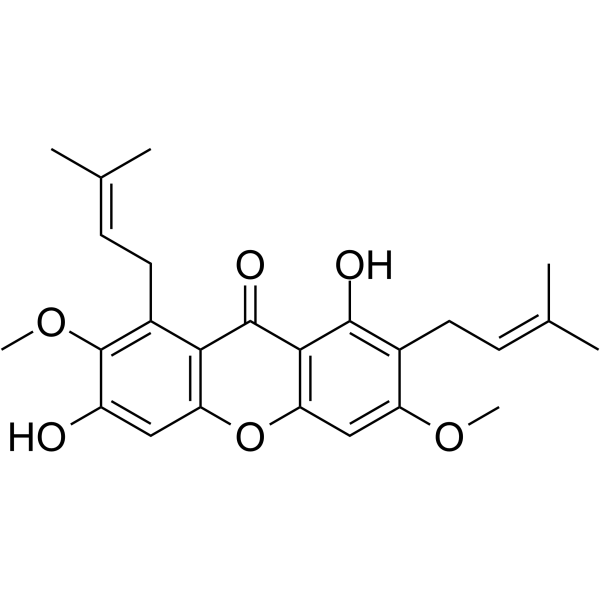
- HY-181010
-
|
|
HDAC
Parasite
|
Infection
|
|
HDAC1-IN-12 is a Plasmodium falciparum HDAC1 (PfHDAC1) inhibitor with an IC50 of 4.1 nM against Pf3D7. HDAC1-IN-12 inhibits PfHDAC1, upregulates histone H3 acetylation in P. falciparum parasites, downregulates malaria invasion-related gene expression, and exhibits favorable safety profiles, improved physicochemical properties, and potent in vivo antimalarial activity. HDAC1-IN-12 can be used for the research of malaria .
|
-

- HY-170783
-
|
|
Parasite
|
Infection
|
|
DXR-IN-4 (Compound 12a) is the inhibitor for 1-deoxy-D-xylulose 5-phosphate reductoisomerase (DXR). DXR-IN-4 inhibits DXR in Plasmodium falciparum Pf DXR, Escherichia coli Ec DXR, and Mycobacterium tuberculosis Mt DXR with IC50s of 18, 4.9 and 89 nM, respectively. DXR-IN-4 exhibits antimalarial activity that inhibits P. falciparum strains 3D7 and Dd2 with IC50 of 11 μM and 12 μM .
|
-

- HY-131904A
-
|
|
Enolase
Parasite
|
Infection
Cancer
|
|
Hex is an enolase inhibitor and antimalarial agent with Ki values of 74.4 nM and 269.4 nM for ENO2 and ENO1, respectively. Hex is a NfENO and TbENO inhibitor with IC50s value of 0.14 μM and 2.1 μM, respectively. Hex has antimalarial activity against Plasmodium falciparum 3D7, Naegleria fowleri trophozoites and Plasmodium berghei ANKA strain. Hex has anti-tumor effects against intracranial tumors .
|
-
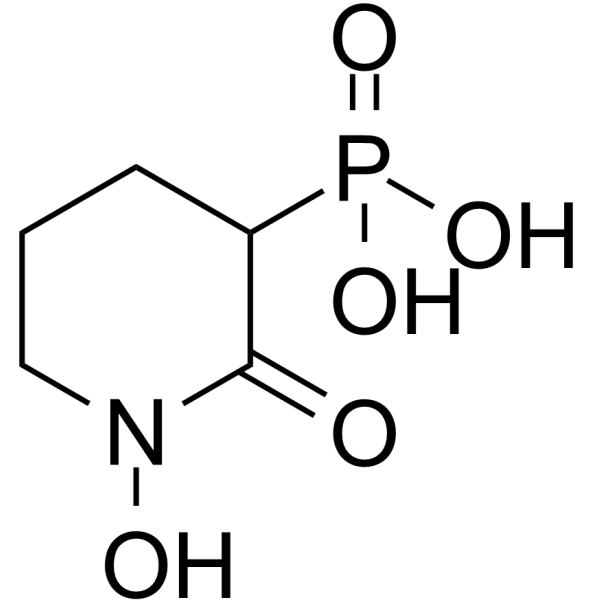
- HY-178728
-
|
|
PROTACs
Parasite
Dihydrofolate reductase (DHFR)
|
Infection
|
|
BION106 is a dihydrofolate reductasethymidylate synthase (DHFR-TS) PROTAC degrader. BION106 exhibits extremely strong anti-malarial activity with a Ki and toxicity of 2.68 nM and 0.2 μM against Plasmodium falciparum, and > 100 μM and 44.2 μM in mammalian cells. BION106 can be used for the study of antimalarial parasites (Blue: Idasanutlin ligand (HY-15676); Pink: DHFR-TS ligand (HY-153007); Black: Linker (HY-W021401)) .
|
-

- HY-A0130R
-
|
Sulfametopyrazine (Standard); AS-18908 (Standard)
|
Reference Standards
Parasite
|
Infection
|
|
Sulfalene (Standard) is the analytical standard of Sulfalene. This product is intended for research and analytical applications. Sulfalene (Sulfametopyrazine; AS-18908) is an orally active antimalarial agent. Sulfalene competes for para-aminobenzoic acid binding in plasmodial folic acid synthesis. Sulfalene, combined with Trimethoprim (HY-B0510), clears parasites, resolves fever, and resists induced resistance against drug-sensitive and drug-resistant Plasmodium falciparum. Sulfalene can be used for the research of acute falciparum malaria and Schistosoma mansoni infection .
|
-

- HY-17656
-
|
|
Parasite
|
Infection
|
|
C3361 is a moderate specific Plasmodium falciparum hexose transporter 1 (PfHT1) and Plasmodium berghei hexose transporter 1 (PbHT1) inhibitor with Ki values of 8.6 and 9.4 μM. C3361 inhibits TgGT1 with a Ki of 82 μM. C3361 attenuates hepatic (IC50 = 15 μM) and ookinete development of P. berghei. C3361 can suppress the growth of blood-stage parasites. C3361 can be used for the research of infection, such as malaria .
|
-

- HY-158721
-
|
Marinamide
|
Endogenous Metabolite
Parasite
|
Infection
Cancer
|
|
Penicinoline (Marinamide) (Compound 1), a pyrrolyl 4-quinolinone alkaloid, is a microbial secondary metabolite. Penicinoline can be isolated from endophytic fungus Penicillium sp. Penicinoline has antimalarial activity against Chloroquine (HY-17589A) sensitive strain (pf3d7) and against Chloroquine resistant strain (pfDd2) of plasmodium falciparum. Penicinoline also has strong insecticidal activity against Aphis gossypii and selective anticancer effect with significant cytotoxicity for 95-D and HepG2 cells .
|
-

- HY-N0352
-
|
|
Parasite
|
Infection
|
|
Tuberostemonine is a stenine alkaloid that can be isolated from Stemona tuberosa and Stemona sessifolia. Tuberostemonine is an antimalarial agent that has inhibitory activity against Ferredoxin-NADP + reductases (FNRs) from Plasmodium falciparum (PfFNR). Tuberostemonine can reduce the number of citric acid-induced coughs in guinea pigs. Tuberostemonine decreases bronchoalveolar lavage fluid (BALF), neutrophil and macrophage infiltration and reduces peribronchial and perivascular inflammatory cell infiltration in mouse model of acute lung inflammation. Tuberostemonine has a level of activity as a feeding deterrent .
|
-
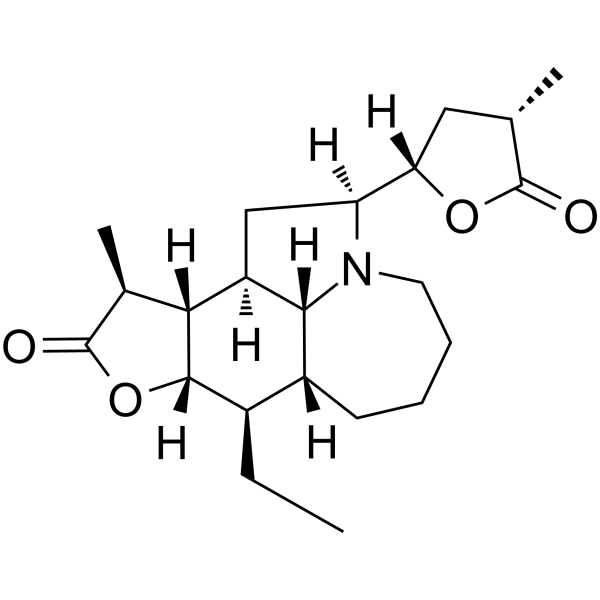
- HY-163765
-
|
|
PI4K
Potassium Channel
|
Infection
|
|
Antimalarial agent 41 (Compound 17) exhibits antimalarial activity, which inhibits Plasmodium falciparum with an IC50 of 40 nM (NF54 strain) and 76 nM (K1 strain). Antimalarial agent 41 is an inhibitor for P. falciparum phosphatidylinositol-4-kinase β (Pf PI4K) and hERG channel, with an IC50 of 53 nM and 3 μM. Antimalarial agent 41 exhibits cytotoxicity to CHO cells with an IC50 of 34 μM. Antimalarial agent 41 ameliorates the malaria infection and exhibits good pharmacokinetic characters in mouse models .
|
-

- HY-125728
-
|
|
Bacterial
Parasite
HCV
|
Infection
|
|
Micrococcin P1 is a macrocyclic peptide antibiotic and is a potent hepatitis C virus (HCV) inhibitor with an EC50 range of 0.1-0.5 μM . Micrococcin P1 has in vitro antibacterial activity against Gram-positive bacterial strains. The MIC values of Micrococcin P1 against S. aureus 1974149, E. faecalis 1674621 and S. pyogenes 1744264 are 2 μg/mL, 1 μg/mL and 1 μg/mL, respectively . Micrococcin P1 is also a potent inhibitor of the malaria parasite Plasmodium falciparum .
|
-
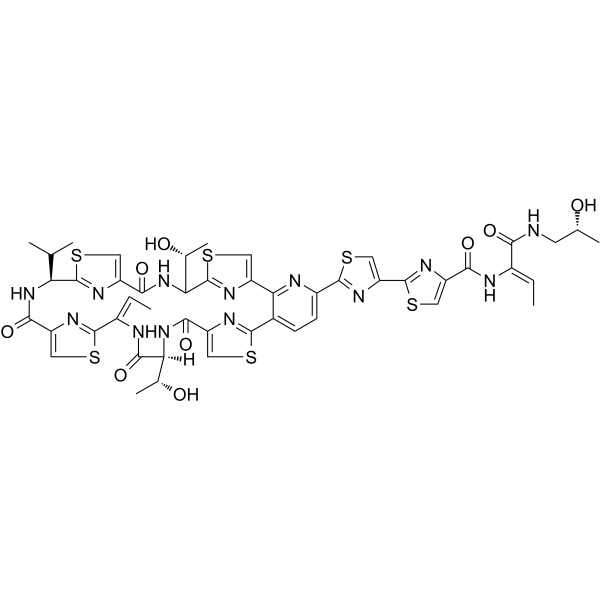
- HY-157892
-
|
|
Parasite
|
Infection
|
|
Antimalarial agent 38 is an orally active antimalarial agent, which inhibits Plasmodium falciparum D6 strain, Chloroquine (HY-17589A)-sensitive Thai strain and Chloroquine-resistant FcB1 strain and K1 strain, with IC50s of 0.5, 13, 1 and 13 μM, respectively. Antimalarial agent 38 is non-cytotoxic for mammalian cells MCR58 (IC50 >140 μM). Antimalarial agent 38 improves the survival rate of Plasmodium yoelii nigeriensis infected mouse model .
|
-

- HY-136453
-
|
|
Eukaryotic Initiation Factor (eIF)
Apoptosis
|
Cancer
|
|
CR-1-31-B is a synthetic rocaglate and a potent eIF4A inhibitor. CR-1-31-B exhibits powerful inhibitory effects over eIF4A by perturbing the interaction between eIF4A and RNA, sequentially impeding initiation during protein synthesis. CR-1-31-B perturbs association of Plasmodium falciparum eIF4A (PfeIF4A) with RNA. CR-1-31-B induces apoptosis of neuroblastoma and gallbladder cancer cells .
|
-
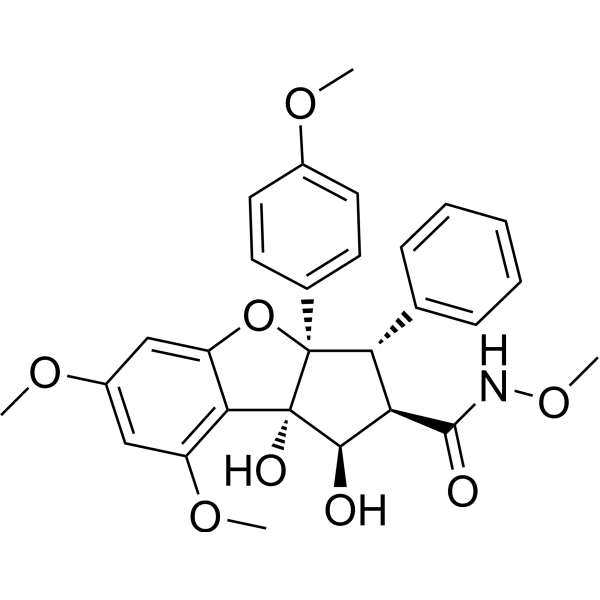
- HY-N15168
-
|
|
Parasite
|
Infection
Cancer
|
|
3,4,5'-Trihydroxy-3'-methoxy-trans-stilbene (Compound 3) is a stilbenoid compound found in Stuhlmannia moavi. 3,4,5'-Trihydroxy-3'-methoxy-trans-stilbene exerts weak proliferative inhibitory activity and antimalarial activity with IC50 values of 54 and 27 μM against A2780 human ovarian cancer cells and Plasmodium falciparum. 3,4,5'-Trihydroxy-3'-methoxy-trans-stilbene can be used for researches of ovarian cancer and malaria .
|
-

- HY-147849
-
|
|
Parasite
|
Infection
|
|
JMI-105 is a potent PfFP-2 (Plasmodium falciparum falcipain-2 protease) inhibitor. JMI-105 inhibits the growth of CQ S (3D7; IC50=8.8 µM) and CQ R (RKL-9; IC50=14.3 µM) strains of P. falciparum. JMI-105 significantly decreases parasitemia and prolonged host survival in a murine model with P. berghei ANKA infection. JMI-105 has the potential to be used as an anti-malarial agent .
|
-
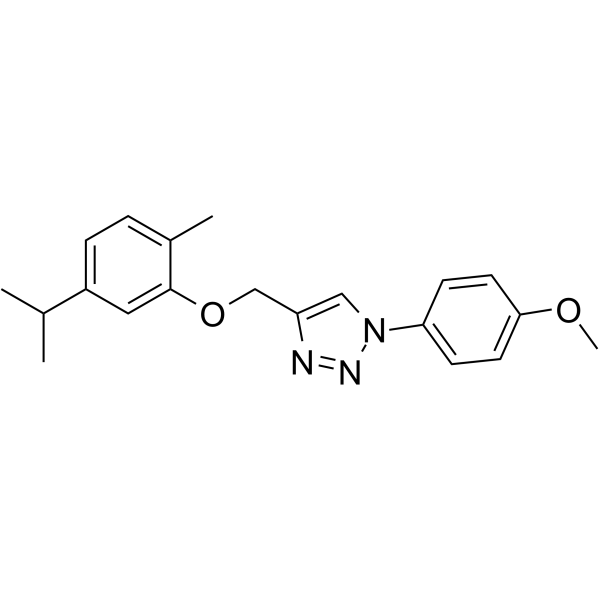
- HY-N6742
-
|
Treponemycin
|
CDK
Parasite
Apoptosis
Antibiotic
|
Infection
|
|
Borrelidin (Treponemycin) is a bacterial and eukaryal threonyl-tRNA synthetase inhibitor which is a nitrile-containing macrolide antibiotic isolated from Streptomyces rochei . Borrelidin is an inhibitor of Cdc28/Cln2 of the budding yeast, with an IC50 of 24 μM . Borrelidin is a potent angiogenesis inhibitor, with an IC50 of 0.8 nM. Borrelidin induces apoptosis in the tube-forming cells . Borrelidin has strong antimalarial activities, with IC50s of 1.9 nM and 1.8 nM against K1 and FCR3 strains of Plasmodium falciparum, respectively .
|
-
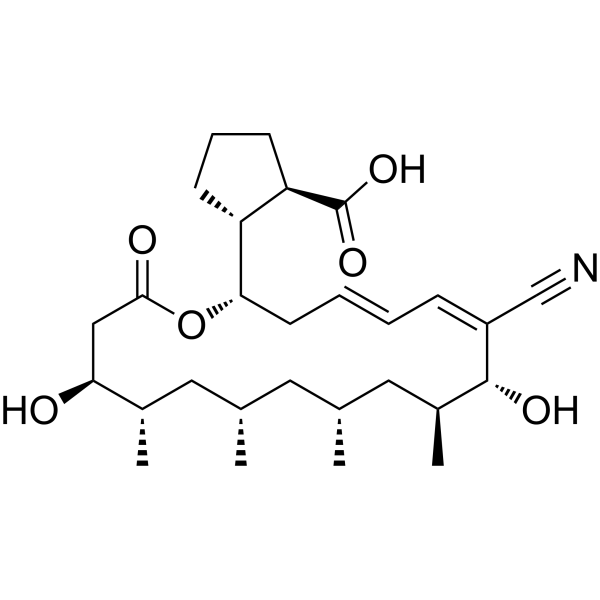
- HY-178724
-
|
|
Fungal
Bacterial
Parasite
|
Infection
Cancer
|
|
Mollicellin K is a depsidone that can be isolated from the fungus Chaetomium brasiliense. Mollicellin K exhibits antimicrobial activity against Myobacterium tuberculosis, antimalarial activity (IC50 = 1.2 μM) against Plasmodium falciparum as well as antifungal property (IC50 = 1.2 μM) against Candida albicans. Mollicellin K is cytotoxic against KB (IC50 = 1.9 μM), BC1 (IC50 = 6.8 μM), NCI-H187 (IC50 = 0.35 μM), and five cholangiocarcinoma cell lines. Mollicellin K also has an MIC of 12.5 μM for tuberculosis .
|
-

- HY-N0941R
-
|
β-Mangostin (Standard)
|
Reference Standards
Bacterial
Parasite
Apoptosis
|
Infection
Cancer
|
|
beta-Mangostin (Standard) is the analytical standard of beta-Mangostin. This product is intended for research and analytical applications. beta-Mangostin (β-Mangostin) is a xanthone compound present in Cratoxylum arborescens, with antibacterial and antimalarial activities. beta-Mangostin exhibits antimycobacterial activity against Mycobacterium tuberculosis with an MIC of 6.25 μg/mL. beta-Mangostin possesses in vitro antimalarial activity against Plasmodium falciparum, with an IC50 of 3.00 μg/mL. beta-Mangostin has potent anticancer activity against various cancers (such as hepatocellular carcinoma, leukaemic) .
|
-

- HY-131708A
-
|
|
HDAC
Parasite
|
Infection
|
|
FNDR-20123 is a safe, first-in-class, and orally active anti-malarial HDAC inhibitor with IC50s of 31 nM and 3 nM for Plasmodium and human HDAC, respectively. FNDR-20123 exerts anti-malarial activity against Plasmodium falciparum asexual stage (IC50=41 nM) and sexual blood stage (IC50=190 nM for male gametocytes). FNDR-20123 inhibits HDAC1, HDAC2, HDAC3, HDAC6, and HDAC8 (IC50=25/29/2/11/282 nM, respectively.) and inhibits Class III HDAC isoforms at nanomolar concentrations .
|
-
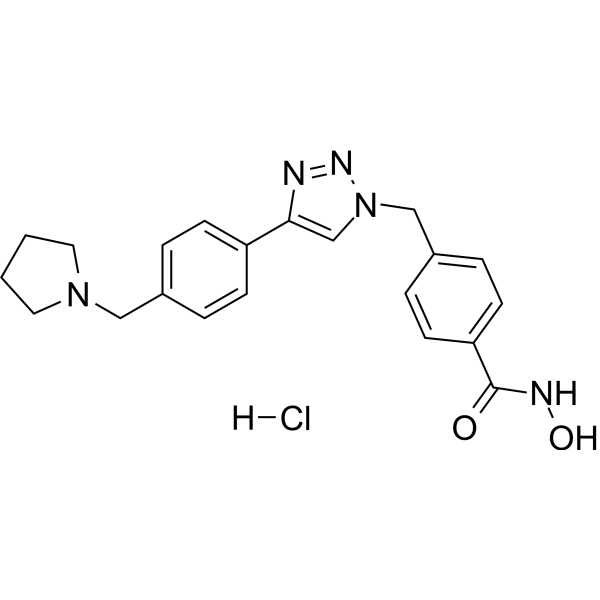
- HY-W653841
-
|
|
Endogenous Metabolite
Parasite
|
Infection
Inflammation/Immunology
Cancer
|
|
Chondroitin sulfate A disodium is a mucopolysaccharide extracted from animal cartilages such as porcine nasal cartilage, and serves as a major structural component of cartilage. Chondroitin sulfate A disodium is one of the specific receptors for the adhesion of Plasmodium falciparum-infected red blood cells in the microcirculation. Chondroitin sulfate A disodium can be used together with selenium to prepare nanoparticles for protecting cartilage against T‑2 toxin-induced damage. Chondroitin sulfate A disodium is abnormally highly expressed in ameloblastoma, and is particularly enriched in stellate reticulum-like tumor cells. Chondroitin sulfate A disodium can be applied to studies on Plasmodium infection mechanisms, cartilage protection and oral tumors .
|
-

- HY-131708
-
|
|
HDAC
Parasite
|
Infection
|
|
FNDR-20123 free base is a safe, first-in-class, and orally active anti-malarial HDAC inhibitor with IC50s of 31 nM and 3 nM for Plasmodium and human HDAC, respectively. FNDR-20123 free base exerts anti-malarial activity against Plasmodium falciparum asexual stage (IC50=41 nM) and sexual blood stage (IC50=190 nM for male gametocytes). FNDR-20123 free base inhibits HDAC1, HDAC2, HDAC3, HDAC6, and HDAC8 (IC50=25, 29, 2, 11, and 282 nM, respectively) and inhibits Class III HDAC isoforms at nanomolar concentrations .
|
-
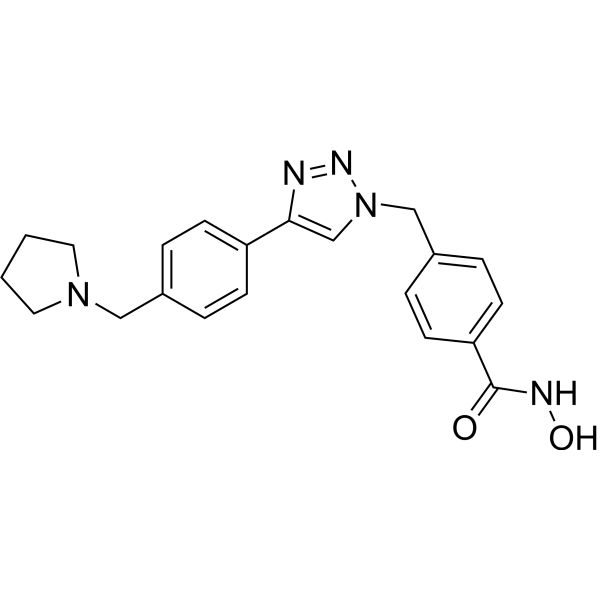
- HY-42034
-
|
Dihydroquinine
|
Bacterial
Parasite
Reactive Oxygen Species (ROS)
Protein Arginine Deiminase
|
Infection
|
|
Hydroquinine (Dihydroquinine) is an anti-bacterial agent that inhibits both Gram-positive and Gram-negative bacteria. Hydroquinine inhibits the growth of multidrug-resistant pseudomonas aeruginosa via the suppression of the arginine deiminase pathway genes. Hydroquinine inhibits Plasmodium falciparum and Plasmodium berghei. Hydroquinine displays anti-malarial and demelanizing activities. Hydroquinine effectively induces specific RND-type efflux pump systems in Pseudomonas aeruginosa, particularly the MexCD-OprJ and MexXY efflux pumps. Hydroquinine inhibits Pseudomonas aeruginosa adhesion and biofilm formation. Hydroquinine serves as a precursor for derivatives such as C9 epihydroquinine, 9-acetoxy-10,11-dihydroquinine, and 10,11-dihydroquinine monohydrochloride .
|
-
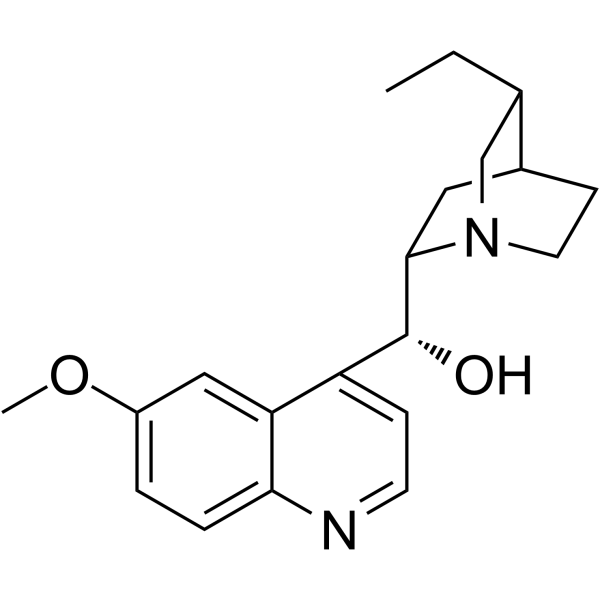
- HY-181266
-
|
|
Parasite
Aminopeptidase
|
Infection
|
|
Antimalarial agent 55 is an orally potent inhibitor of PfA-M1 and PfA-M17 aminopeptidases from Plasmodium falciparum, with Ki values of 27 nM and 81 nM, respectively. Antimalarial agent 55 exhibits potent nanomolar activity against homologous enzymes from Plasmodium vivax and Plasmodium berghei, with Ki values of 2 nM, 4 nM, 190 nM and 18 nM for Pv-M1, Pb-M1, Pv-M17 and Pb-M17, respectively. Antimalarial agent 55 possesses significant antiplasmodial activity, as well as cross-species inhibitory capacity and broad-spectrum activity that is unaffected by existing drug resistance mechanisms. Antimalarial agent 55 can be used in malaria research .
|
-

- HY-126929
-
|
TXN-B
|
DNA Alkylator/Crosslinker
Apoptosis
Bacterial
Parasite
Fungal
|
Infection
Cancer
|
|
Trioxacarcin B (TXN-B) is a potent cytotoxic agent and DNA-targeted inhibitor. Trioxacarcin B disrupts DNA function and induces apoptosis in cancer cells. Trioxacarcin B not only effectively inhibits the growth of various Gram-positive and Gram-negative bacteria as well as Plasmodium falciparum, but also blocks the colony formation of cancer stem cells, significantly reduces tumor volume and prolongs survival in preclinical in vivo models. The activity of Trioxacarcin B is highly dependent on its intact spiro-epoxide structure; it loses efficacy once this moiety undergoes hydrolysis, and Trioxacarcin B shows no activity against fungi, microalgae and small RNA viruses. Trioxacarcin B can be used for research on bacterial infections, malaria, and various cancers including colon cancer and melanoma .
|
-

- HY-173064
-
|
|
HDAC
Parasite
|
Infection
Cancer
|
|
DS-103 is an inhibitor for HDAC that inhibits HDAC1, HDAC2, HDAC3, HDAC6 and HDAC8 with IC50s of 0.029, 0.123, 0.022, 0.367 and 9.26 μM, respectively. DS-103 inhibits Plasmodium falciparum 3D7 with IC50 of 5.08 μM. DS-103 exhibits cytotoxicity in cells A2780 and Cal27 with IC50 of 1.48 μM and 1.47 μM, reverses Cisplatin (HY-17394) resistance in A2780 and Cal27 with IC50 of 4.62 μM and 2.23 μM. DS-103 exhibits synergistic effect with Cisplatin (HY-17394), enhances Cisplatin-induced apoptosis .
|
-

- HY-134421
-
|
|
HMG-CoA Reductase (HMGCR)
|
Metabolic Disease
|
|
2-Butenoyl coenzyme A lithium is an inactivator and a substrate of Plasmodium falciparum enoyl-β-hydroxyacyl-acyl carrier protein (ACP) reductase and other enoyl-CoA reductases, and it is also the lithium salt of trans-2-methyl-2-butenoyl coenzyme A. 2-Butenoyl coenzyme A lithium acts on short-chain and medium-chain coenzyme A dehydrogenases as well as glutaryl-CoA dehydrogenase, and shows no activity against wild-type isovaleryl-CoA dehydrogenase. 2-Butenoyl coenzyme A lithium functions as a metabolite in the L-isoleucine catabolic pathway, and can serve as a substrate in the activity assay of 3-ketothiolase. 2-Butenoyl coenzyme A lithium is applicable to research related to 3-ketothiolase deficiency .
|
-
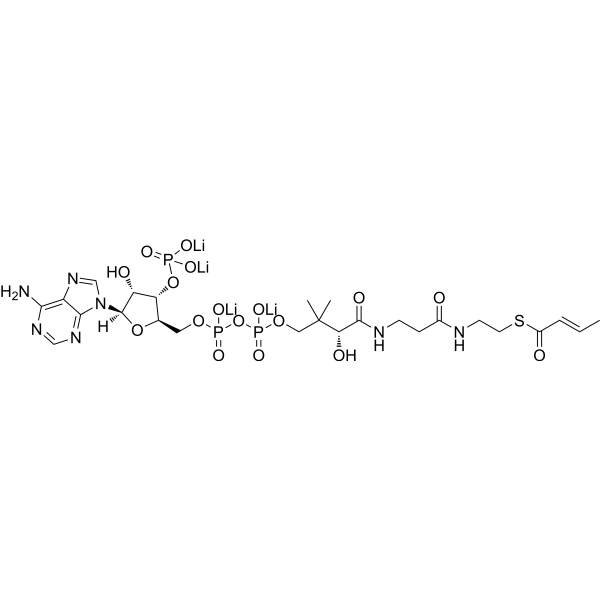
- HY-42034R
-
|
Dihydroquinine (Standard)
|
Reference Standards
Bacterial
Parasite
Reactive Oxygen Species (ROS)
Protein Arginine Deiminase
|
Inflammation/Immunology
|
|
Hydroquinine (Standard) is the analytical standard of Hydroquinine. Hydroquinine (Dihydroquinine) is an anti-bacterial agent that inhibits both Gram-positive and Gram-negative bacteria. Hydroquinine inhibits the growth of multidrug-resistant pseudomonas aeruginosa via the suppression of the arginine deiminase pathway genes. Hydroquinine inhibits Plasmodium falciparum and Plasmodium berghei. Hydroquinine displays anti-malarial and demelanizing activities. Hydroquinine effectively induces specific RND-type efflux pump systems in Pseudomonas aeruginosa, particularly the MexCD-OprJ and MexXY efflux pumps. Hydroquinine inhibits Pseudomonas aeruginosa adhesion and biofilm formation. Hydroquinine serves as a precursor for derivatives such as C9 epihydroquinine, 9-acetoxy-10,11-dihydroquinine, and 10,11-dihydroquinine monohydrochloride .
|
-

- HY-N1255A
-
|
(-)-Scoulerine hydrochloride; Discretamine hydrochloride
|
Apoptosis
PI3K
Akt
mTOR
Adrenergic Receptor
GABA Receptor
Beta-secretase
Bcl-2 Family
|
Cancer
|
|
Scoulerine ((-)-Scoulerine; Discretamine) hydrochloride is a multi-target inhibitor with anti-tumor and antioxidant activities. Scoulerine hydrochloride mainly targets the PI3K/Akt/mTOR signaling axis and α1D-adrenergic receptor, disrupts microtubule structure, and induces cell cycle arrest and apoptosis. Scoulerine hydrochloride effectively inhibits mitochondrial dehydrogenase activity, targets GABA receptors and BACE1, and suppresses the proliferation, migration, invasion, epithelial-mesenchymal transition and stem cell properties of cancer cells. Scoulerine hydrochloride also exhibits multiple pharmacological activities including anti-Plasmodium falciparum, antibacterial, antiemetic and antitussive effects, and regulates endoplasmic reticulum stress and mitochondrial function (modulates Bax, Bcl-2 and cytochrome c). Scoulerine hydrochloride is applicable to research related to leukemia, ovarian cancer, and colorectal cancer .
|
-

- HY-N1255
-
|
(-)-Scoulerine; Discretamine
|
Bcl-2 Family
Apoptosis
mTOR
GABA Receptor
PI3K
Adrenergic Receptor
Beta-secretase
Akt
|
Cancer
|
|
Scoulerine ((-)-Scoulerine; Discretamine) hydrochloride is a multi-target inhibitor with anti-tumor and antioxidant activities. Scoulerine mainly targets the PI3K/Akt/mTOR signaling axis and α1D-adrenergic receptor, disrupts microtubule structure, and induces cell cycle arrest and apoptosis. Scoulerine effectively inhibits mitochondrial dehydrogenase activity, targets GABA receptors and BACE1, and suppresses the proliferation, migration, invasion, epithelial-mesenchymal transition and stem cell properties of cancer cells. Scoulerine also exhibits multiple pharmacological activities including anti-Plasmodium falciparum, antibacterial, antiemetic and antitussive effects, and regulates endoplasmic reticulum stress and mitochondrial function (modulates Bax, Bcl-2 and cytochrome c). Scoulerine is applicable to research related to leukemia, ovarian cancer, and colorectal cancer .
|
-
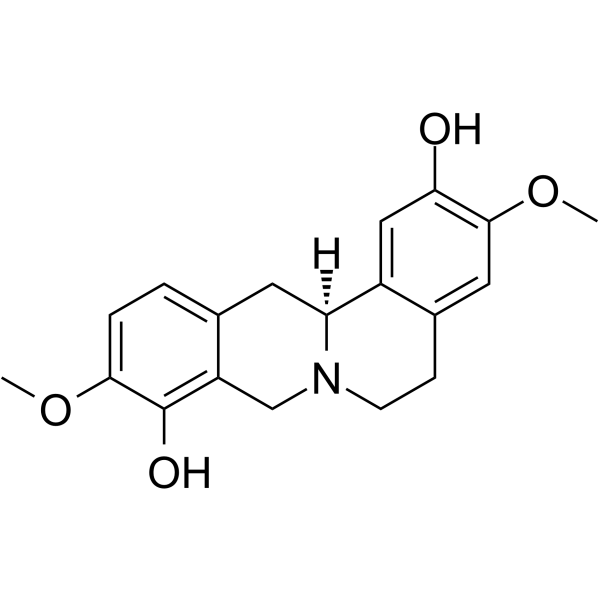
- HY-137985
-
|
Stachybotrydial; F 1839M; Stachybotrydial
|
HSV
Virus Protease
|
Infection
|
|
Mer-NF5003F (Stachybotrydial; F 1839M), a sesquiterpene isolated from Stachybotrys, inhibits avian medulloblastoma virus (AMV) protease (IC50=7.8 μM). Mer-NF5003F inhibits sialyltransferase 6N (ST6N), ST3O, and ST3N (IC50=0.61, 6.7, and 10 μg/mL, respectively), and fucosyltransferase (IC50=11.3 μg/mL). Mer-NF5003F has in vitro activity against herpes simplex virus HSV-1 (IC50=4.32 μg/mL) and multidrug-resistant Plasmodium falciparum K1 strain (IC50=0.85 μg/mL).
|
-

- HY-178775
-
|
|
PI4K
Parasite
MAP4K
PI3K
|
Infection
|
|
PI4K-IN-3 (Compound 27) is an orally active PI4K inhibitor with an IC50 of 1.9 nM for Plasmodium vivax PI4K. PI4K-IN-3 has no hERG channel inhibition and mammalian cytotoxicity. PI4K-IN-3 has significant selectivity against the human MINK1 and MAP4K4 kinases but with low selectivity against human PI3Kα and PI4Kβ. PI4K-IN-3 has potent antimalarial activity and significantly reduces parasitaemia in NSG mice mouse models of Plasmodium falciparum malaria .
|
-

- HY-121362
-
|
|
Bacterial
Endogenous Metabolite
TrxR
|
Infection
Neurological Disease
Inflammation/Immunology
Cancer
|
|
Evernic Acid is an orally active thioredoxin reductase 1 (TrxR1) inhibitor and antiproliferative agent. Evernic Acid inhibits the proliferation and migration of human breast cancer cells. Evernic Acid blocks the NF-κB pathway by inhibiting p65 nuclear translocation and IκBα phosphorylation, thereby suppressing downstream inflammatory mediators. Evernic Acid acts as an antioxidant, anti-inflammatory agent and neuroprotective agent, protects neurons from cell death, mitochondrial dysfunction and oxidative stress damage, reduces astrocyte activation, and ameliorates dopaminergic neuron loss and neuroinflammation. Evernic Acid inhibits enoyl reductases FabI and FabZ of Plasmodium falciparum. Evernic Acid downregulates the expression of lasB and rhlA genes in Pseudomonas aeruginosa, inhibits quorum sensing and biofilm formation, and exerts antibacterial activity against Gram-positive bacteria, Gram-negative bacteria and fungi. Evernic Acid is applicable to research related to breast cancer, Parkinson's disease, bacterial infections and fungal infections .
|
-
| Cat. No. |
Product Name |
Type |
-
- HY-143218
-
|
Tetraphenylethene maleimide
|
Fluorescent Dyes
|
|
TPE-MI (Tetraphenylethene maleimide) is a thiol probe for measuring unfolded protein load and proteostasis in cells (the excitation wavelength is 350 nm and the emission wavelength is 470 nm). TPE-MI can report imbalances in proteostasis in induced pluripotent stem cell models of Huntington disease, as well as cells transfected with mutant Huntington exon 1 before the formation of visible aggregates. TPE-MI also detects protein damage following dihydroartemisinin research of the malaria parasites Plasmodium falciparum .
|
| Cat. No. |
Product Name |
Type |
-
- HY-134421
-
|
|
Biochemical Assay Reagents
|
|
2-Butenoyl coenzyme A lithium is an inactivator and a substrate of Plasmodium falciparum enoyl-β-hydroxyacyl-acyl carrier protein (ACP) reductase and other enoyl-CoA reductases, and it is also the lithium salt of trans-2-methyl-2-butenoyl coenzyme A. 2-Butenoyl coenzyme A lithium acts on short-chain and medium-chain coenzyme A dehydrogenases as well as glutaryl-CoA dehydrogenase, and shows no activity against wild-type isovaleryl-CoA dehydrogenase. 2-Butenoyl coenzyme A lithium functions as a metabolite in the L-isoleucine catabolic pathway, and can serve as a substrate in the activity assay of 3-ketothiolase. 2-Butenoyl coenzyme A lithium is applicable to research related to 3-ketothiolase deficiency .
|
| Cat. No. |
Product Name |
Target |
Research Area |
-
- HY-P5344
-
|
Fluorigenic PEXEL peptide
|
Parasite
|
Others
|
|
Dabcyl-LNKRLLHETQ-Edans (Fluorigenic PEXEL peptide) is a biological active peptide. (This FRET substrate peptide for Plasmepsin V (PMV) is derived from the conserved Plasmodium Export Element (PEXEL) motif of Histidine-Rich Protein II (HRPII). PMV is an ER aspartic protease that recognizes and cleaves the RXL sequence within the PEXEL motif of proteins exported by human malaria parasite Plasmodium falciparum, allowing them to translocate into host erythrocytes.)
|
| Cat. No. |
Product Name |
Category |
Target |
Chemical Structure |
-
- HY-N0941
-
-
-
- HY-N6742
-
-
-
- HY-B0770
-
-
-
- HY-N1255
-
|
(-)-Scoulerine; Discretamine
|
Alkaloids
Structural Classification
other families
Classification of Application Fields
Phenols
Polyphenols
Plants
Isoquinoline Alkaloids
Disease Research Fields
Source Classification
Cancer
|
Bcl-2 Family
Apoptosis
mTOR
GABA Receptor
PI3K
Adrenergic Receptor
Beta-secretase
Akt
|
|
Scoulerine ((-)-Scoulerine; Discretamine) hydrochloride is a multi-target inhibitor with anti-tumor and antioxidant activities. Scoulerine mainly targets the PI3K/Akt/mTOR signaling axis and α1D-adrenergic receptor, disrupts microtubule structure, and induces cell cycle arrest and apoptosis. Scoulerine effectively inhibits mitochondrial dehydrogenase activity, targets GABA receptors and BACE1, and suppresses the proliferation, migration, invasion, epithelial-mesenchymal transition and stem cell properties of cancer cells. Scoulerine also exhibits multiple pharmacological activities including anti-Plasmodium falciparum, antibacterial, antiemetic and antitussive effects, and regulates endoplasmic reticulum stress and mitochondrial function (modulates Bax, Bcl-2 and cytochrome c). Scoulerine is applicable to research related to leukemia, ovarian cancer, and colorectal cancer .
|
-
-
- HY-121362
-
|
|
Structural Classification
other families
Classification of Application Fields
Ketones, Aldehydes, Acids
Plants
Inflammation/Immunology
Disease Research Fields
Source Classification
|
Bacterial
Endogenous Metabolite
TrxR
|
|
Evernic Acid is an orally active thioredoxin reductase 1 (TrxR1) inhibitor and antiproliferative agent. Evernic Acid inhibits the proliferation and migration of human breast cancer cells. Evernic Acid blocks the NF-κB pathway by inhibiting p65 nuclear translocation and IκBα phosphorylation, thereby suppressing downstream inflammatory mediators. Evernic Acid acts as an antioxidant, anti-inflammatory agent and neuroprotective agent, protects neurons from cell death, mitochondrial dysfunction and oxidative stress damage, reduces astrocyte activation, and ameliorates dopaminergic neuron loss and neuroinflammation. Evernic Acid inhibits enoyl reductases FabI and FabZ of Plasmodium falciparum. Evernic Acid downregulates the expression of lasB and rhlA genes in Pseudomonas aeruginosa, inhibits quorum sensing and biofilm formation, and exerts antibacterial activity against Gram-positive bacteria, Gram-negative bacteria and fungi. Evernic Acid is applicable to research related to breast cancer, Parkinson's disease, bacterial infections and fungal infections .
|
-
-
- HY-N2815
-
-
-
- HY-129476
-
-
-
- HY-N0352
-
|
|
Infection
Alkaloids
other families
Pyrrole Alkaloids
Classification of Application Fields
Plants
Disease Research Fields
Source Classification
|
Parasite
|
|
Tuberostemonine is a stenine alkaloid that can be isolated from Stemona tuberosa and Stemona sessifolia. Tuberostemonine is an antimalarial agent that has inhibitory activity against Ferredoxin-NADP + reductases (FNRs) from Plasmodium falciparum (PfFNR). Tuberostemonine can reduce the number of citric acid-induced coughs in guinea pigs. Tuberostemonine decreases bronchoalveolar lavage fluid (BALF), neutrophil and macrophage infiltration and reduces peribronchial and perivascular inflammatory cell infiltration in mouse model of acute lung inflammation. Tuberostemonine has a level of activity as a feeding deterrent .
|
-
-
- HY-42034
-
-
-
- HY-134421
-
|
|
Human Gut Microbiota Metabolites
Microorganisms
Endogenous metabolite
Source Classification
|
HMG-CoA Reductase (HMGCR)
|
|
2-Butenoyl coenzyme A lithium is an inactivator and a substrate of Plasmodium falciparum enoyl-β-hydroxyacyl-acyl carrier protein (ACP) reductase and other enoyl-CoA reductases, and it is also the lithium salt of trans-2-methyl-2-butenoyl coenzyme A. 2-Butenoyl coenzyme A lithium acts on short-chain and medium-chain coenzyme A dehydrogenases as well as glutaryl-CoA dehydrogenase, and shows no activity against wild-type isovaleryl-CoA dehydrogenase. 2-Butenoyl coenzyme A lithium functions as a metabolite in the L-isoleucine catabolic pathway, and can serve as a substrate in the activity assay of 3-ketothiolase. 2-Butenoyl coenzyme A lithium is applicable to research related to 3-ketothiolase deficiency .
|
-
-
- HY-N7583
-
-
-
- HY-N5109
-
-
-
- HY-N6009
-
-
-
- HY-N5005
-
-
-
- HY-N15159
-
-
-
- HY-N10928
-
-
-
- HY-N9320
-
-
-
- HY-121770
-
-
-
- HY-N11031
-
-
-
- HY-121211
-
|
|
Morinda lucida Benth.
Rubiaceae
Plants
|
Parasite
|
|
Digitolutein is a natural product that can be isolated from the stem bark and the roots of Morinda lucida Benth. Digitolutein effectively inhibits the growth of Plasmodium falciparum with an IC50 value of 12.92 μg/mL. Digitolutein can be used for the research of infection .
|
-
-
- HY-120104
-
-
-
- HY-N15748
-
|
(-)-Pelorol
|
Terpenoids
Sesquiterpenes
Marine natural products
Sponge
Source Classification
|
Parasite
|
|
Pelorol ((-)-Pelorol) is a sesquiterpene found in the tropical marine sponge Dactylospongia elegans. Pelorol has weak antitrypanosomal activity with an IC50 of 17.4 μg/mL and antiplasmodial activity against Plasmodium falciparum clones K1 and NF54 with IC50 values of 786 ng/mL and 1911 ng/mL, respectively. Pelorol is promising for research of parasitic diseases, such as trypanosomiasis and malaria .
|
-
-
- HY-N10096
-
-
-
- HY-N2891
-
-
-
- HY-N8257
-
-
-
- HY-W010354
-
-
-
- HY-N7648
-
-
-
- HY-N0352R
-
-
-
- HY-N16123
-
-
-
- HY-N3702
-
|
|
Structural Classification
Terpenoids
Verbenaceae
Callicarpa bodinieri Levl.
Diterpenoids
Plants
Source Classification
|
Syk
|
|
Dehydroabietinol is a SYK inhibitor with an IC50 of 46.4 μM. Dehydroabietinol inhibits the growth of Trypanosoma cruzi epimastigotes, Leishmania braziliensis promastigotes and Leishmania infantum promastigotes. Dehydroabietinol indirectly inhibits the growth of Plasmodium falciparum, alters the erythrocyte membrane, and induces spherostomatocyte transformation and endovesicle formation. Dehydroabietinol can be used in studies related to immune-mediated diseases, Chagas disease, leishmaniasis and malaria .
|
-
-
- HY-126640
-
|
|
Quinones
Microorganisms
Anthraquinones
Source Classification
|
Parasite
|
|
Phomoxanthone A is a xanthone dimer, which can be isolated from Phomopsis. Phomoxanthone A exhibits antimalarial and antitubercular activities against Plasmodium falciparum (K1, multidrug-resistant strain, IC50 is 0.11 µg/mL) and Mycobacterium tuberculosis (H37Ra strain, MIC is 0.50 µg/mL). Phomoxanthone A exhibits cytotoxicity in cells KB, BC-1 and Vero, IC50 is 0.99, 0.51 and 1.4 µg/mL, respectively .
|
-
-
- HY-158721
-
|
Marinamide
|
Structural Classification
Alkaloids
Microorganisms
Indole Alkaloids
Source Classification
|
Endogenous Metabolite
Parasite
|
|
Penicinoline (Marinamide) (Compound 1), a pyrrolyl 4-quinolinone alkaloid, is a microbial secondary metabolite. Penicinoline can be isolated from endophytic fungus Penicillium sp. Penicinoline has antimalarial activity against Chloroquine (HY-17589A) sensitive strain (pf3d7) and against Chloroquine resistant strain (pfDd2) of plasmodium falciparum. Penicinoline also has strong insecticidal activity against Aphis gossypii and selective anticancer effect with significant cytotoxicity for 95-D and HepG2 cells .
|
-
-
- HY-W779377
-
-
-
- HY-125419
-
-
-
- HY-N12452
-
-
-
- HY-N13885
-
-
-
- HY-N12538
-
-
-
- HY-N13288
-
-
-
- HY-N8383
-
-
-
- HY-N13881
-
-
-
- HY-N8513
-
-
-
- HY-N8338
-
-
-
- HY-N8455
-
-
-
- HY-N3957
-
-
-
- HY-N15562
-
-
-
- HY-N12151
-
-
-
- HY-N10109A
-
-
-
- HY-145379
-
-
-
- HY-N12232
-
-
-
- HY-N8374
-
-
- HY-N14970
-
|
|
Microorganisms
Antibiotics
Other Antibiotics
Source Classification
|
Parasite
Bacterial
|
|
Hexacyclinol has moderate anti-Gram-positive bacteria activity, 4-40 μg/mL can inhibit the production of oxidants by polymorphonuclear neutrophils (PMNL) stimulated by zymosan. Hexacyclinol inhibits the growth of L-930 and K 562 cells with IC50s of 1.4 μg/mL and 0.4 μg/mL, respectively, and the IC50 of HeLa cells is 10 μg/mL. Hexacyclinol also has an anti-Plasmodium effect, and its IC50 for Plasmodium falciparum is 2.4 μg/mL .
|
-
- HY-N0941R
-
|
β-Mangostin (Standard)
|
Structural Classification
Xanthones
Guttiferae
Phenols
Polyphenols
Garcinia mangostana Linn.
Plants
Source Classification
|
Reference Standards
Bacterial
Parasite
Apoptosis
|
|
beta-Mangostin (Standard) is the analytical standard of beta-Mangostin. This product is intended for research and analytical applications. beta-Mangostin (β-Mangostin) is a xanthone compound present in Cratoxylum arborescens, with antibacterial and antimalarial activities. beta-Mangostin exhibits antimycobacterial activity against Mycobacterium tuberculosis with an MIC of 6.25 μg/mL. beta-Mangostin possesses in vitro antimalarial activity against Plasmodium falciparum, with an IC50 of 3.00 μg/mL. beta-Mangostin has potent anticancer activity against various cancers (such as hepatocellular carcinoma, leukaemic) .
|
-
- HY-42034R
-
|
Dihydroquinine (Standard)
|
Alkaloids
Structural Classification
Rubiaceae
Cinchona calisaya Wedd.
Quinoline Alkaloids
Plants
Source Classification
|
Reference Standards
Bacterial
Parasite
Reactive Oxygen Species (ROS)
Protein Arginine Deiminase
|
|
Hydroquinine (Standard) is the analytical standard of Hydroquinine. Hydroquinine (Dihydroquinine) is an anti-bacterial agent that inhibits both Gram-positive and Gram-negative bacteria. Hydroquinine inhibits the growth of multidrug-resistant pseudomonas aeruginosa via the suppression of the arginine deiminase pathway genes. Hydroquinine inhibits Plasmodium falciparum and Plasmodium berghei. Hydroquinine displays anti-malarial and demelanizing activities. Hydroquinine effectively induces specific RND-type efflux pump systems in Pseudomonas aeruginosa, particularly the MexCD-OprJ and MexXY efflux pumps. Hydroquinine inhibits Pseudomonas aeruginosa adhesion and biofilm formation. Hydroquinine serves as a precursor for derivatives such as C9 epihydroquinine, 9-acetoxy-10,11-dihydroquinine, and 10,11-dihydroquinine monohydrochloride .
|
-
- HY-N12352
-
-
- HY-N12452A
-
-
- HY-W842297
-
-
- HY-N19628
-
-
- HY-N20619
-
|
|
Quinones
Structural Classification
Stereospermum chelonoides DC.
Benzene Quinones
Bignoniaceae
Plants
Source Classification
|
Parasite
|
|
Sterekunthal B is a naphthoquinone compound and antimalarial agent. Sterekunthal B can be isolated from plants of the Bignoniaceae family, including the root bark of Stereospermum colais. Sterekunthal B inhibits the growth of Chloroquine (HY-17589A)-sensitive Plasmodium falciparum strain PoW with an IC50 of 23.3 μg/mL. Sterekunthal B also inhibits the growth of Chloroquine-resistant Plasmodium falciparum strain Dd2 with an IC50 of 15.2 μg/mL. Sterekunthal B exhibits non-selective cytotoxicity toward endothelial cells. Sterekunthal B can be used in malaria-related research .
|
-
- HY-N18356
-
-
- HY-N18179
-
-
- HY-N13034
-
-
- HY-N18294
-
-
- HY-N15168
-
-
- HY-N1255A
-
|
(-)-Scoulerine hydrochloride; Discretamine hydrochloride
|
Structural Classification
Alkaloids
Phenols
Polyphenols
Umbelliferae
Plants
Isoquinoline Alkaloids
Carphephorus corymbosus (Nutt.) Torr. & A.Gray
Source Classification
|
Apoptosis
PI3K
Akt
mTOR
Adrenergic Receptor
GABA Receptor
Beta-secretase
Bcl-2 Family
|
|
Scoulerine ((-)-Scoulerine; Discretamine) hydrochloride is a multi-target inhibitor with anti-tumor and antioxidant activities. Scoulerine hydrochloride mainly targets the PI3K/Akt/mTOR signaling axis and α1D-adrenergic receptor, disrupts microtubule structure, and induces cell cycle arrest and apoptosis. Scoulerine hydrochloride effectively inhibits mitochondrial dehydrogenase activity, targets GABA receptors and BACE1, and suppresses the proliferation, migration, invasion, epithelial-mesenchymal transition and stem cell properties of cancer cells. Scoulerine hydrochloride also exhibits multiple pharmacological activities including anti-Plasmodium falciparum, antibacterial, antiemetic and antitussive effects, and regulates endoplasmic reticulum stress and mitochondrial function (modulates Bax, Bcl-2 and cytochrome c). Scoulerine hydrochloride is applicable to research related to leukemia, ovarian cancer, and colorectal cancer .
|
-
| Cat. No. |
Product Name |
Chemical Structure |
-
- HY-B0439S1
-
|
|
|
Sulfadoxine-d3 is a deuterium labeled Sulfadoxine (HY-B0439). Sulfadoxine is a sulfonamide that is used, usually in combination with Pyrimethamine(HY-18062), for multidrug-resistant Plasmodium falciparum and P. vivax inhibition. Unlike PYR, Sulfadoxine has no impact on HIV replication or MT-2 cell cycle progression. But also Sulfadoxine exhibits suppression on respiratory, and urinary tract infections .
|
-
-
- HY-B0148S
-
|
|
|
Risedronic acid-d4 (Risedronate-d4) is the deuterium labeled Risedronic acid (HY-B0148). Risedronic acid (Risedronate) is a bisphosphonate and potent antiresorptive agent. Risedronic acid induces Apoptosis. Risedronic acid inhibits the transfer of farnesyl pyrophosphate groups to parasite proteins. Risedronic acid inhibits osteoclast-mediated bone resorption and alters bone metabolism. Risedronic acid inhibits blood-stage Plasmodium falciparum (IC50 of 20.3 μM) .
|
-
-
- HY-N12700S
-
|
|
|
Puberulic acid- 13C8 is the 13C-labeled Puberulic acid. Puberulic acid possesses anti-malarial activity with an IC50 value of 0.050 μM against Plasmodium falciparum K1 (chloroquine-resistant) .
|
-
Your information is safe with us. * Required Fields.
Inquiry Information
- Product Name:
- Cat. No.:
- Quantity:
- MCE Japan Authorized Agent:








