Search Result
Results for "
AZD
" in MedChemExpress (MCE) Product Catalog:
2
Biochemical Assay Reagents
13
Isotope-Labeled Compounds
| Cat. No. |
Product Name |
Target |
Research Areas |
Chemical Structure |
-
- HY-111783
-
|
|
DNA-PK
ATM/ATR
PI3K
Apoptosis
|
Cancer
|
|
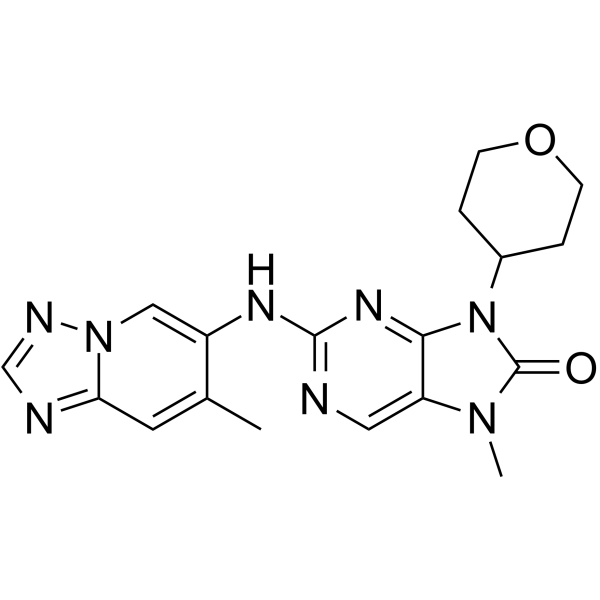
AZD-7648 is a potent, orally active, selective DNA-PK inhibitor with an IC50 of 0.6 nM. AZD-7648 induces apoptosis and shows antitumor activity .
|
-
-
- HY-10422
-
|
|
mTOR
Autophagy
Apoptosis
|
Cancer
|
|
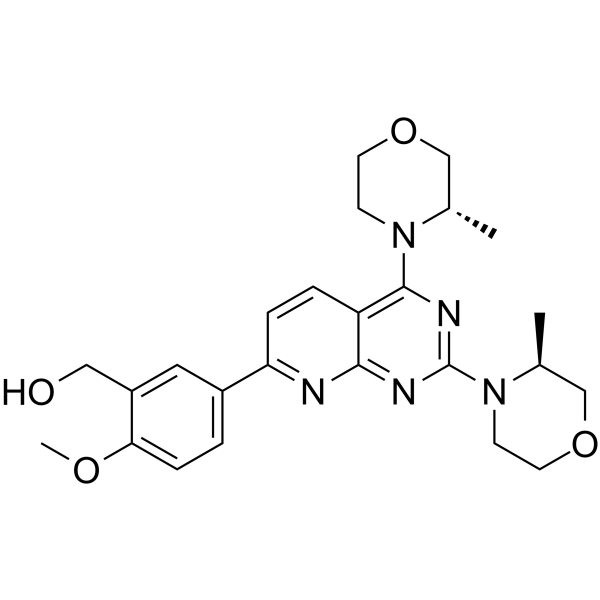
AZD-8055 is a potent, selective, and orally bioavailable ATP-competitive mTOR kinase inhibitor with an IC50 of 0.8 nM. AZD-8055 inhibits both mTORC1 and mTORC2 .
|
-
-
- HY-19855
-
-
-
- HY-10992
-
-
-
- HY-10193
-
|
|
JAK
|
Cancer
|
|
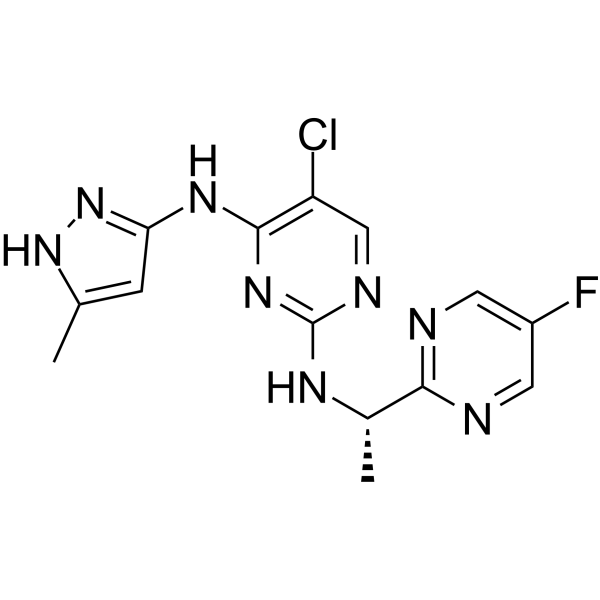
AZD-1480 is an ATP-competitive inhibitor of JAK1 and JAK2 with IC50s of 1.3 nM and <0.4 nM, respectively .
|
-
-
- HY-10012
-
|
|
CDK
|
Cancer
|
|
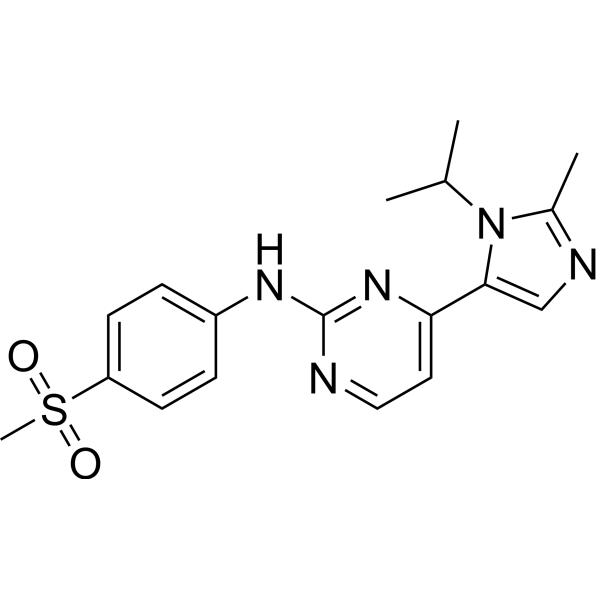
AZD-5438 is a potent CDK1, CDK2, and CDK9 inhibitor, with IC50s of 16 nM, 6 nM, and 20 nM in cell-free assays, respectively. AZD-5438 shows less inhibition activity against GSK3β, CDK5 and CDK6
.
|
-
-
- HY-101533
-
|
|
Bcl-2 Family
|
Cancer
|
|
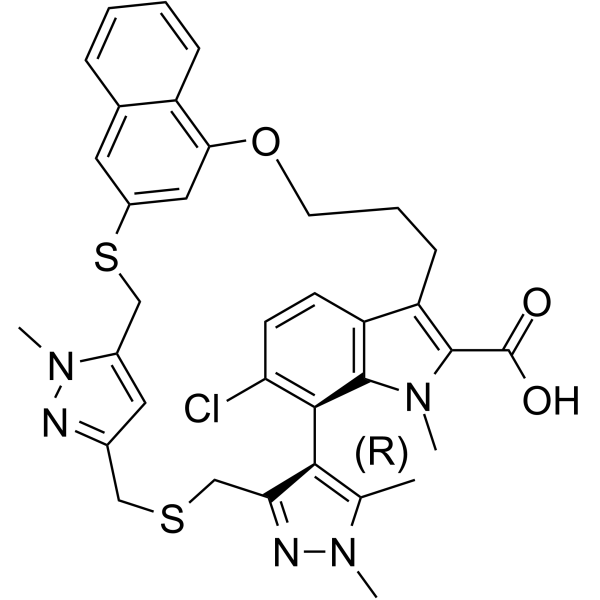
AZD-5991 is a potent and selective Mcl-1 inhibitor with an IC50 of 0.7 nM in FRET assay and a Kd of 0.17 nM in surface plasmon resonance (SPR) assay .
|
-
-
- HY-15247
-
|
AZD2014
|
mTOR
Autophagy
Apoptosis
|
Cancer
|
|
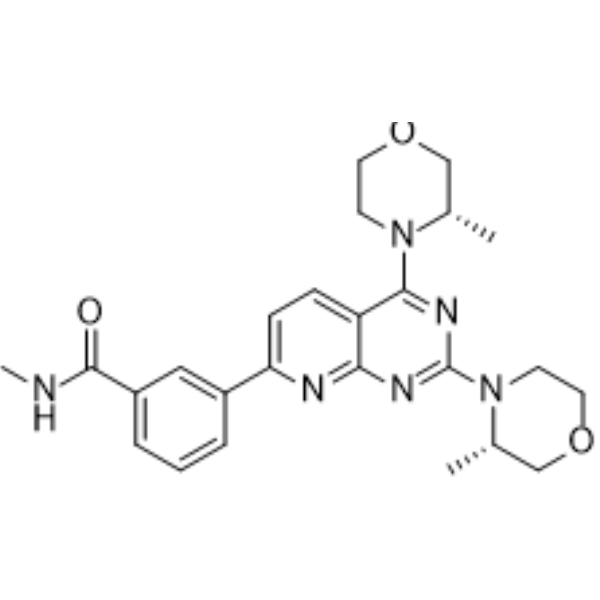
Vistusertib (AZD2014) is an ATP competitive mTOR inhibitor with an IC50 of 2.81 nM. AZD2014 inhibits both mTORC1 and mTORC2 complexes.
|
-
-
- HY-148517
-
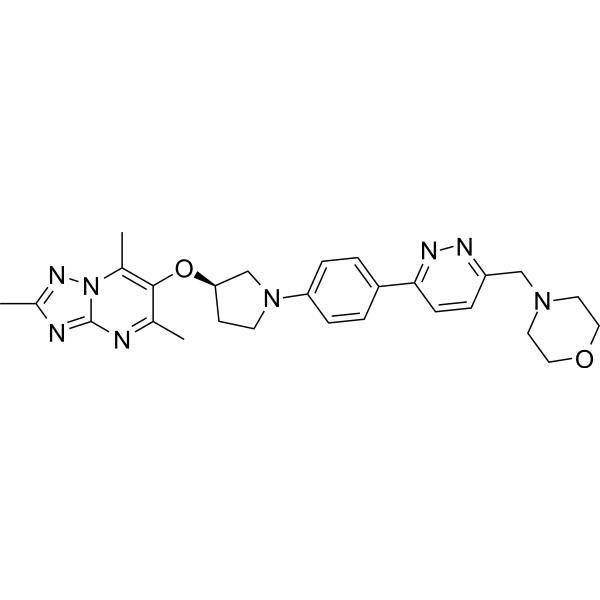
AZD0095
4 Publications Verification
|
Monocarboxylate Transporter
|
Cancer
|
|
AZD0095 is a selective and orally active MCT4 inhibitor (IC50: 1.3 nM). AZD0095 effectively inhibits the tumor growth in NCI-H358 xenograft in combination with Cediranib (HY-10205) .
|
-
-
- HY-145804
-
|
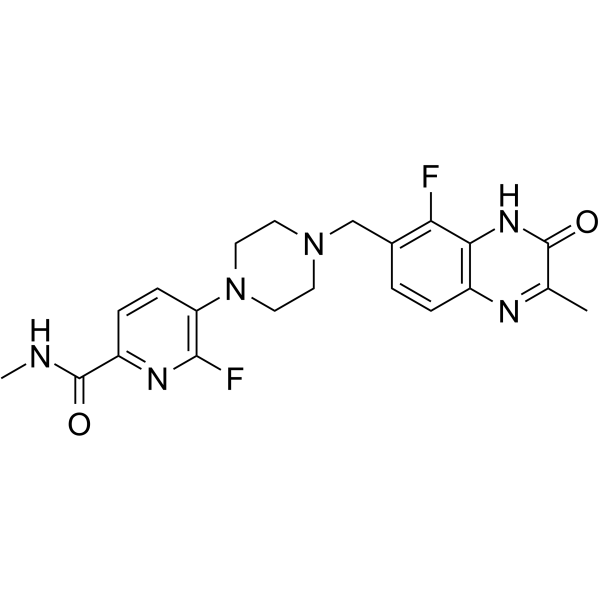
AZD-9574
|
PPAR
|
Neurological Disease
Cancer
|
|
AZD-9574 is a potent and brain penetrant PARP1 inhibitor and shows >8000-fold selectivity for PARP1 compared to PARP2/3/5a/6. AZD-9574 acts by selectively inhibiting and trapping PARP1 at the sites of SSBs. AZD-9574 is an anti-cancer agent and can be used for HRD +?breast cancer and advanced solid malignancies research .
|
-
-
- HY-173637
-
|
|
Ras
|
Cancer
|
|
AZD0022 is a selective and orally active KRAS G12D inhibitor. AZD0022 inhibits KRAS pathway suppression in the GP2D xenograft model .
|
-

-
- HY-158106
-
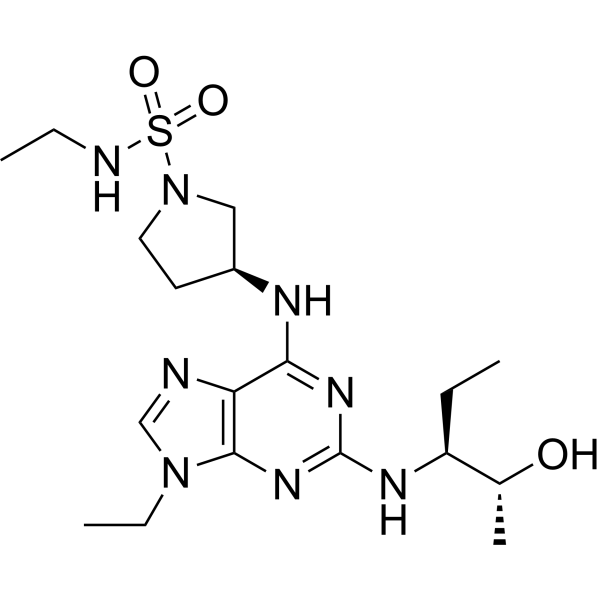
AZD8421
1 Publications Verification
|
CDK
|
Cancer
|
|
AZD8421 is a selective CDK2 inhibitor (IC50 = 9 nM) as well as achieving CDK family selectivity in cells versus key off-targets (CDK1, CDK4/6, CDK9), AZD8421 had no significant kinase inhibition outside the CDK family. AZD8421 inhibits cancer cell proliferation by inhibiting pRB phosphorylation, inducing cell cycle arrest in G1/S phase and senescence. AZD8421 can be studied in research for breast cancer and ovarian cancer .
|
-
-
- HY-12870
-
|
|
Estrogen Receptor/ERR
|
Cancer
|
|
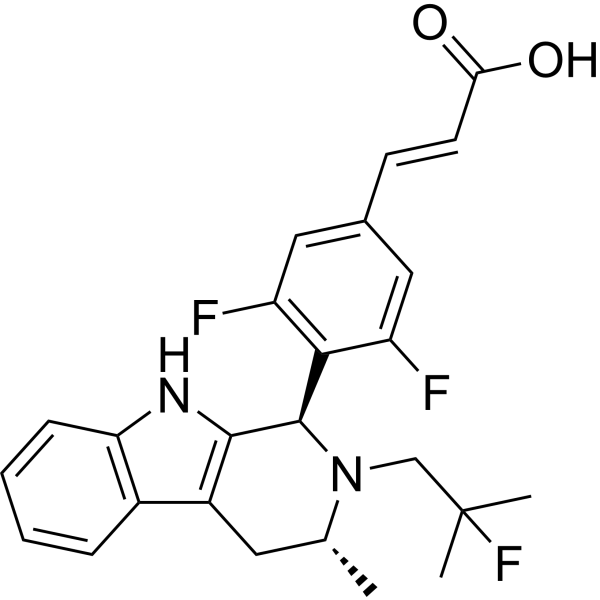
AZD9496 is an effective, selective estrogen receptor (ERα) antagonist with an IC50 of 0.28 nM. AZD9496 is an orally active, selective estrogen receptor degrader (SERD).
|
-
-
- HY-13862
-
AZD1080
5 Publications Verification
|
GSK-3
|
Neurological Disease
|
|
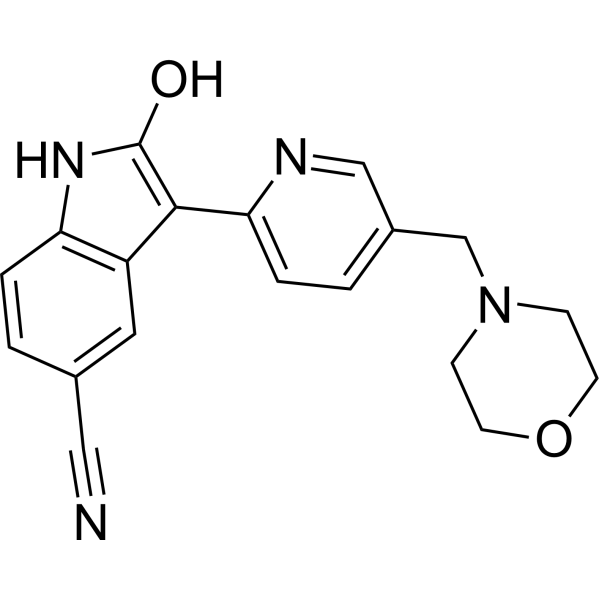
AZD1080 is a potent and selective GSK3 inhibitor. AZD1080 inhibits recombinant human GSK3α and GSK3β with pKi (IC50) of 8.2 (6.9 nM) and 7.5 (31 nM), respectively.
|
-
-
- HY-172317
-
|
|
FAP
|
Metabolic Disease
|
|
AZD2389 is a potent and orally active FAP inhibitor. AZD2389 can be used for the study of metabolic dysfunction-associated steatohepatitis .
|
-

-
- HY-162877
-
|
|
NOD-like Receptor (NLR)
Interleukin Related
Potassium Channel
|
Inflammation/Immunology
|
|
AZD4144 is an orally active NLRP3 inhibitor (EC50: 0.082 μM). AZD4144 effectively inhibits the release of IL-1β when NLRP3 is overactivated, exerting an anti-inflammatory effect. AZD4144 has low inhibitory effect on hERG and low cardiotoxicity. AZD4144 has the potential to study diseases and conditions associated with NLRP3 inflammasome activation .
|
-

-
- HY-100653
-
AZD5153
5 Publications Verification
|
Epigenetic Reader Domain
Apoptosis
|
Cancer
|
|
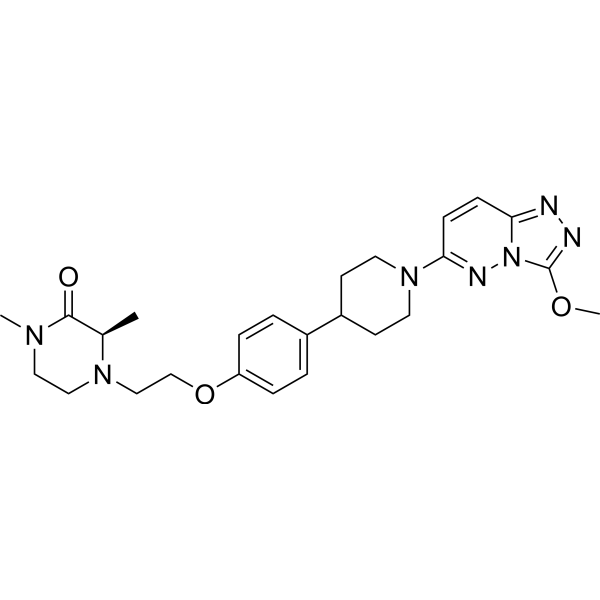
AZD5153 is a bivalent, selective, and orally active BET/BRD4 bromodomain inhibitor with an IC50 of value of 5 nM for full-length BRD4 (FL-BRD4). AZD5153 ligates two bromodomains in BRD4 simultaneously. AZD5153 can be used for the study of cancer, such as acute myeloid leukemia, multiple myeloma, and diffuse large B-cell lymphoma .
|
-
-
- HY-15799
-
|
|
P2Y Receptor
|
Cardiovascular Disease
|
|
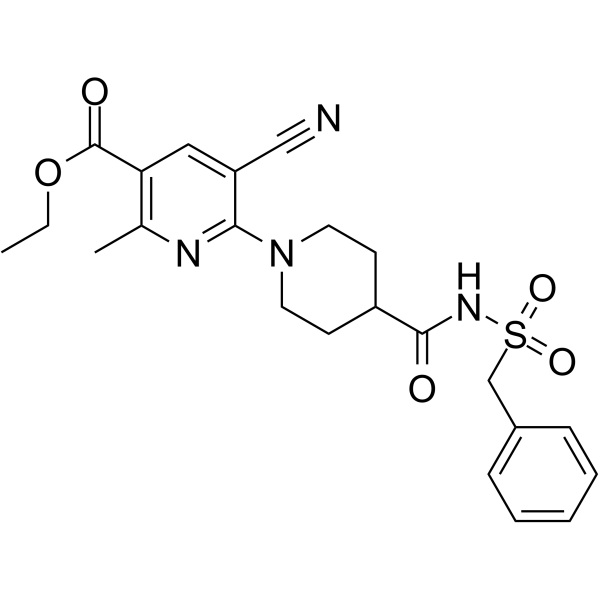
AZD1283 is a potent P2Y12 receptor antagonist with a binding IC50 of 11 nM and a GTPγS IC50 of 25 nM. AZD1283 has excellent antiplatelet aggregation potency. AZD1283 can be used to research thromboembolic disorders .
|
-
-
- HY-13536
-
|
|
PARP
|
Cancer
|
|
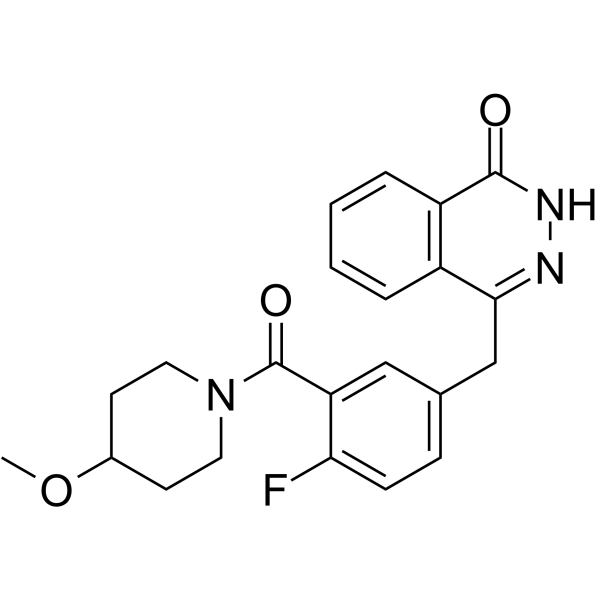
AZD-2461 is a potent PARP inhibitor, with IC50s of 5 nM, 2 nM and 200 nM for PARP1, PARP2 and PARP3, respectively.
|
-
-
- HY-15545
-
|
|
CCR
|
Inflammation/Immunology
|
|
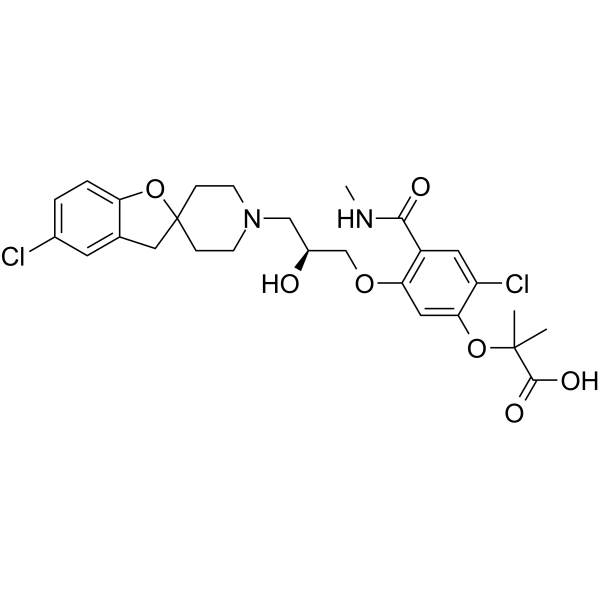
AZD-4818 is a potent, orally active antagonist of chemokine CCR1. AZD-4818 can be used for researching chronic obstructive pulmonary disease (COPD) .
|
-
-
- HY-120384
-
|
|
ROR
|
Inflammation/Immunology
|
|
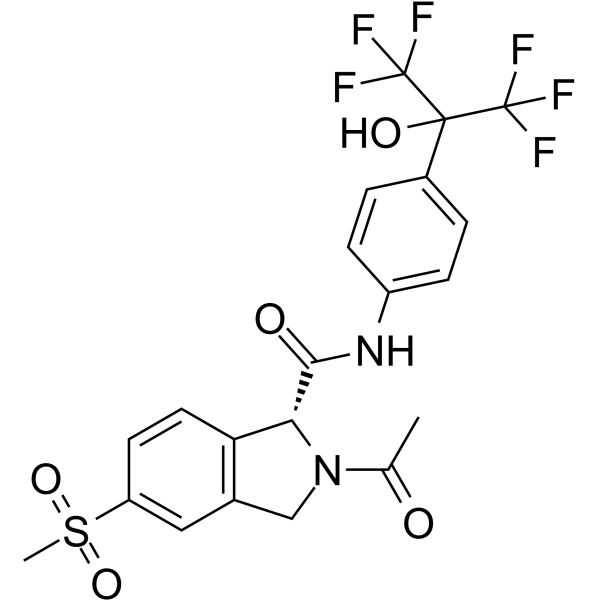
AZD-0284 is a selective inverse agonist of the nuclear receptor RORγ. AZD-0284 has the potential for plaque psoriasis vulgaris and respiratory tract disorders treatment .
|
-
-
- HY-16079
-
AZD3514
3 Publications Verification
|
Androgen Receptor
|
Cancer
|
|
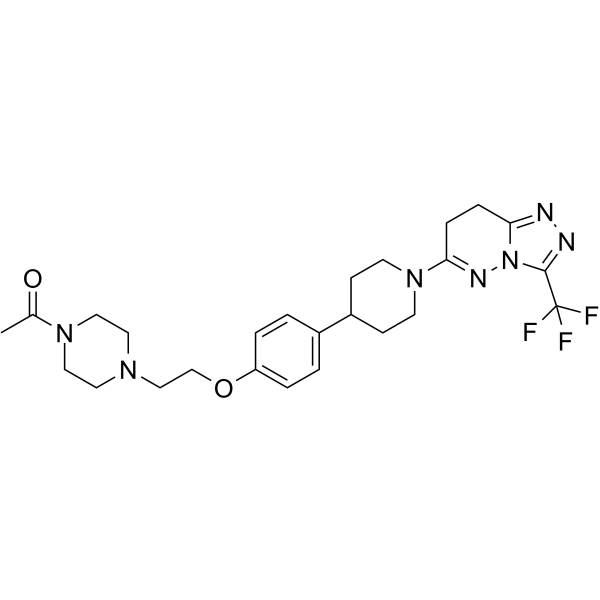
AZD3514 is an orally activie and selective androgen receptor (AR) inhibitor. AZD3514 androgen-dependently and -independently inhibits AR signal. AZD351 down-regulates nuclear AR levels in human LNCaP prostate cancer cells in the absence of androgen with an pIC50 value of 5.75. AZD3514 can be used for the research of prostate cancer .
|
-
-
- HY-50861
-
AZD3988
1 Publications Verification
|
Acyltransferase
|
Metabolic Disease
|
|
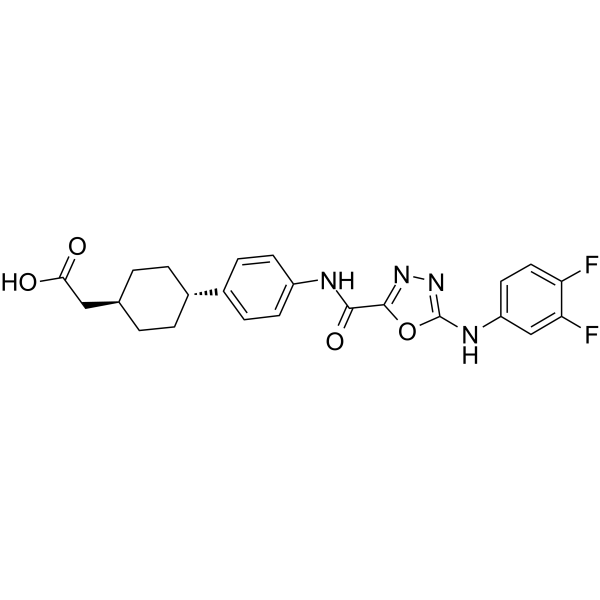
AZD3988 is an orally active diacylglycerol acyl transferase-1 (DGAT-1) inhibitor. AZD3988 has excellent DGAT-1 (human) potency with an IC50 value of 0. 6 nM. AZD3988 can be used for the research of metabolic diseases such as diabetes, obesity .
|
-
-
- HY-154959
-
|
|
Ras
|
Cancer
|
|
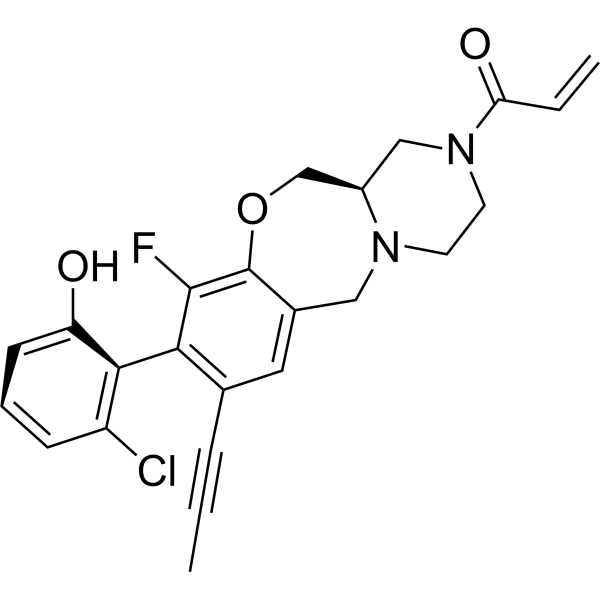
AZD4747 is a selective, blood-brain barrier-permeable mutant GTPase KRAS G12C inhibitor. AZD4747 has the potential to study cancer .
|
-
-
- HY-15675
-
|
|
Glucokinase
|
Metabolic Disease
|
|
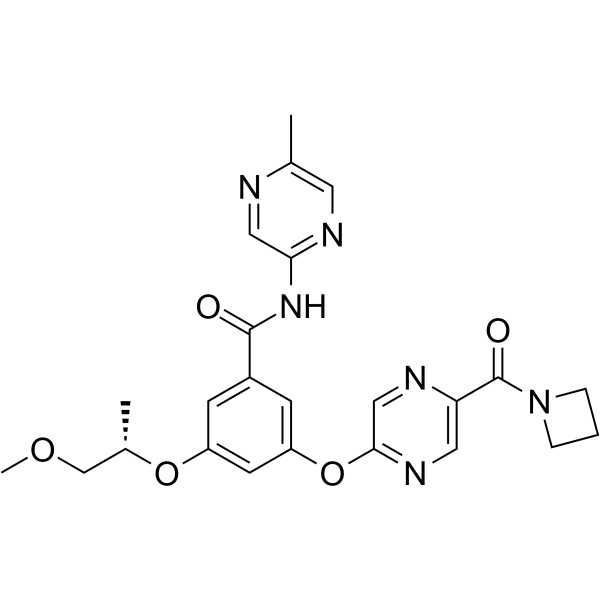
AZD1656 is a potent, selective and orally active glucokinase activator with an EC50 of 60 nM. AZD1656 has the potential for type 2 diabetes research .
|
-
-
- HY-112802
-
|
|
c-Kit
|
Cancer
|
|
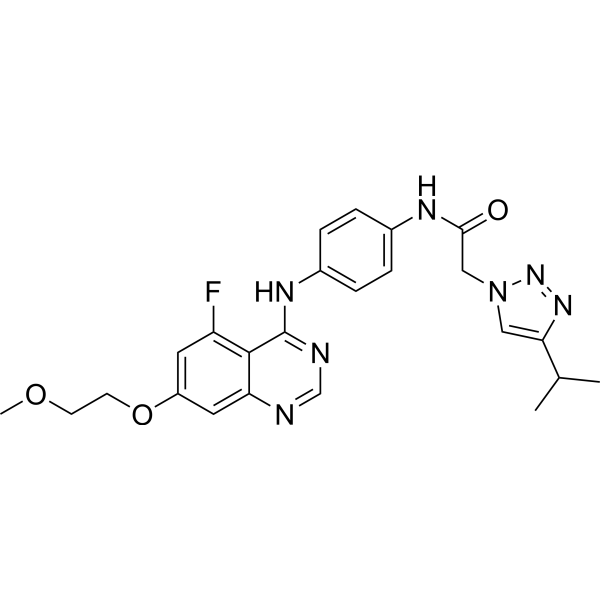
AZD3229 is a potent pan-KIT mutant inhibitor for the treatment of gastrointestinal stromal tumors. AZD3229 inhibits c-KIT with an IC50 value of 223.3 nM .
|
-
-
- HY-50914
-
|
|
CDK
|
Cancer
|
|
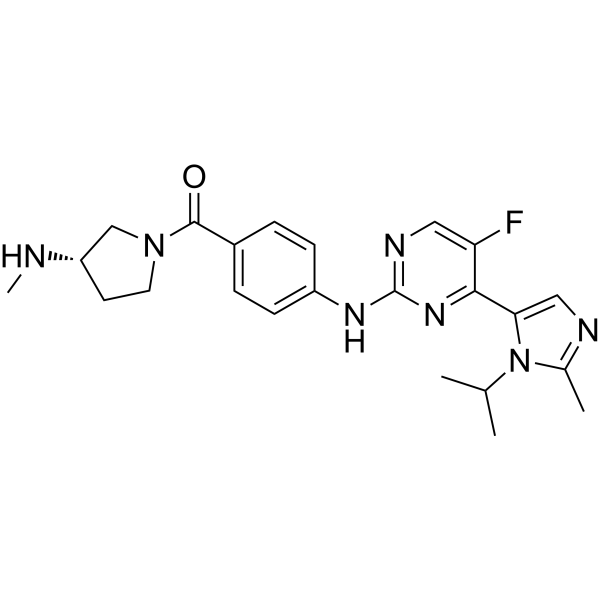
AZD5597 is an inhibitor of CDK with IC50 values of both 2 nM for CDK1 and CDK2. AZD5597 can inhibit the proliferation of tumor cells and has anti-tumor activity .
|
-
-
- HY-119259
-
|
|
CXCR
|
Inflammation/Immunology
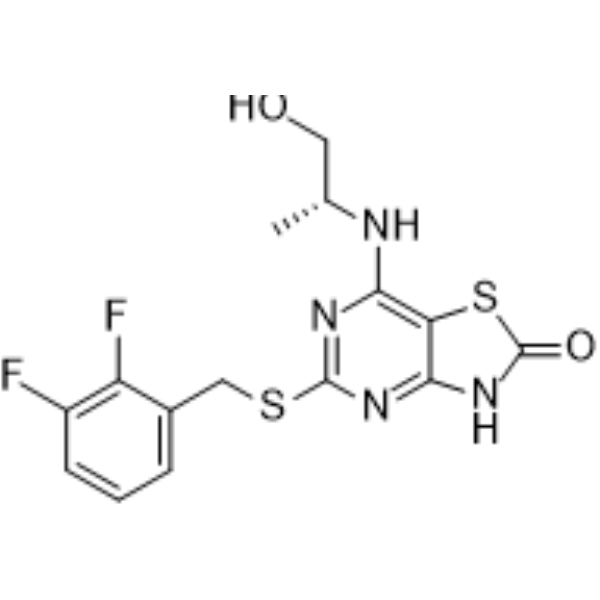
|
|
AZD8309 is an orally active antagonist of CXCR2. AZD8309 has the ability to regulate the transmigration of neutrophils. AZD8309 can be used in the study of inflammatory diseases .
|
-
-
- HY-15950
-
AZD1981
2 Publications Verification
|
Prostaglandin Receptor
|
Inflammation/Immunology
|
|
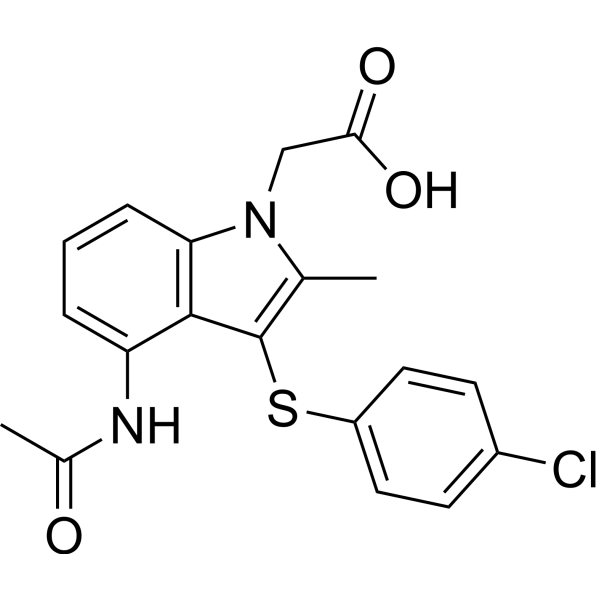
AZD1981 is the antagonist for GPR44 (also known also PTGDR2, DP2 or CRTh). AZD1981 blocks the binding of PGD2 to CRTH2. AZD1981 exhibits immunomodulatory effects and can be used in research of chronic spontaneous urticaria .
|
-
-
- HY-175746
-
|
|
CX3CR1
|
Cardiovascular Disease
|
|
AZD0233 is an orally active CX3CR1 antagonist. AZD0233 modulates the CX3CR1/CX3CL1 signaling axis via immunomodulatory effects. AZD0233 has improved physicochemical properties, metabolic stability, low toxicity and CYP inhibition. AZD0233 improves cardiac function and reduces macrophages and fibrotic scar in mice model of dilated cardiomyopathy. AZD0233 can be used for cardiovascular diseases like dilated cardiomyopathy research .
|
-

-
- HY-102066
-
|
AZD-7451
|
Trk Receptor
|
Cancer
|
|
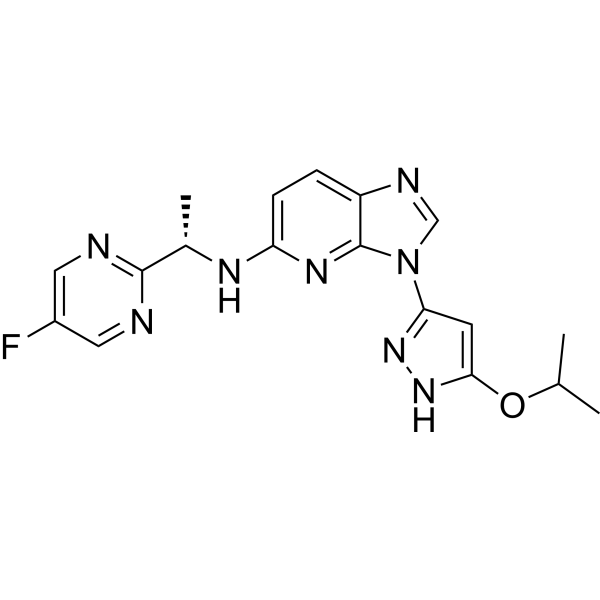
Utatrectinib (AZD-7451) is a potent, selective and orally active Trk inhibitor. Utatrectinib blocks TrkC activation and associated tumorigenic behaviors .
|
-
-
- HY-13224
-
|
|
Kinesin
Apoptosis
Mitosis
|
Cancer
|
|
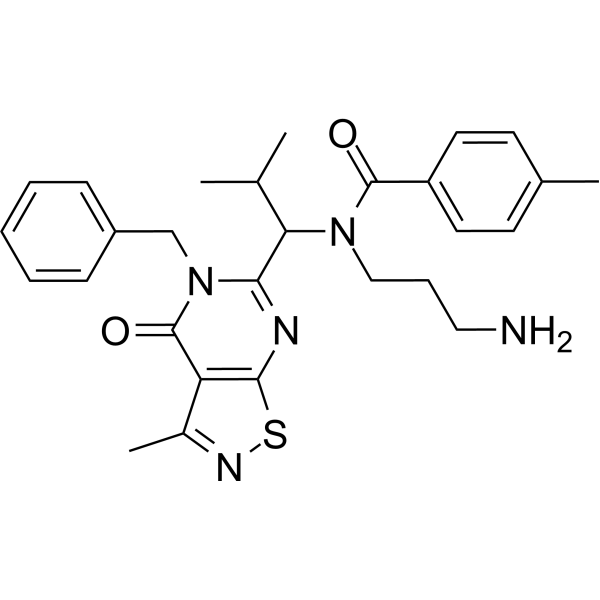
AZD4877 is another isostere to Ispinesib (HY-50759)and also a kinesin spindle protein (Eg5) inhibitor with IC50 of 2 nM.AZD4877 arrests cell mitosis, leads to the formation of the monopolar spindle phenotype and induces apoptosis. AZD4877 inhibits circulating peripheral blood mononuclear cells (PBMCs) and has anti-cancer activity .
|
-
-
- HY-10992A
-
|
|
Checkpoint Kinase (Chk)
|
Cancer
|
|
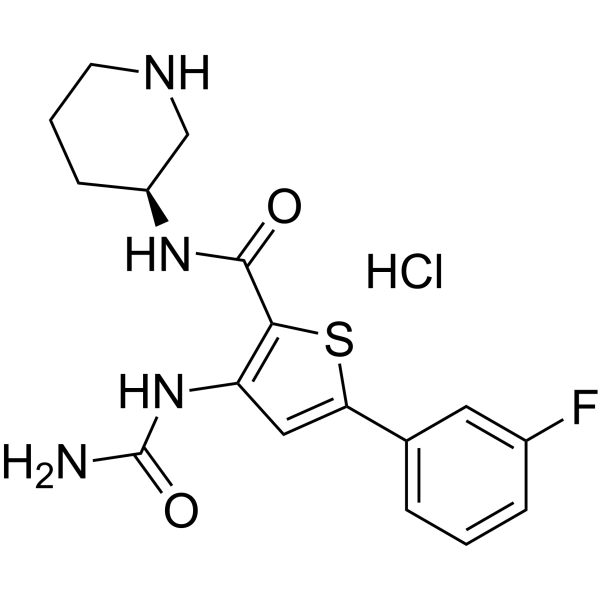
AZD-7762 hydrochloride is a potent ATP-competitive checkpoint kinase (Chk) inhibitor in with an IC50 of 5 nM for Chk1.
|
-
-
- HY-115870
-
|
|
PI3K
|
Inflammation/Immunology
|
|
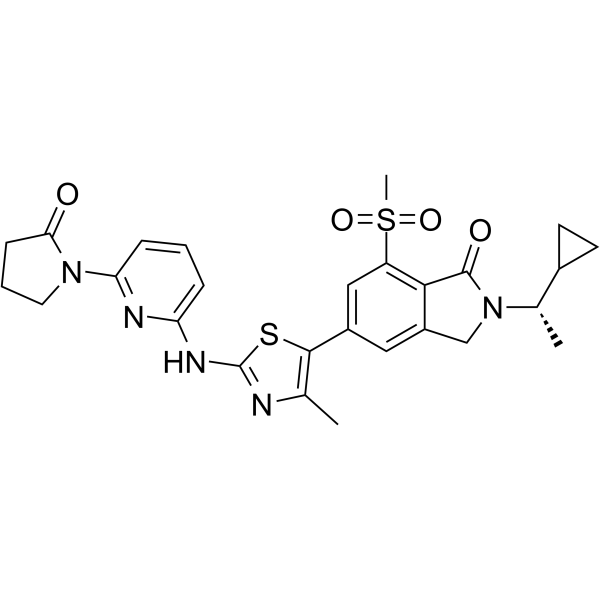
AZD8154 is a selective PI3Kγδ dual inhibitor. AZD8154 can suppress PI3Kγ and PI3Kδ signaling pathway activation. AZD8154 can be used for the researches of inflammation and immunology, such as asthma .
|
-
-
- HY-108243
-
-
-
- HY-119101
-
|
|
CCR
Potassium Channel
P-glycoprotein
|
Inflammation/Immunology
|
|
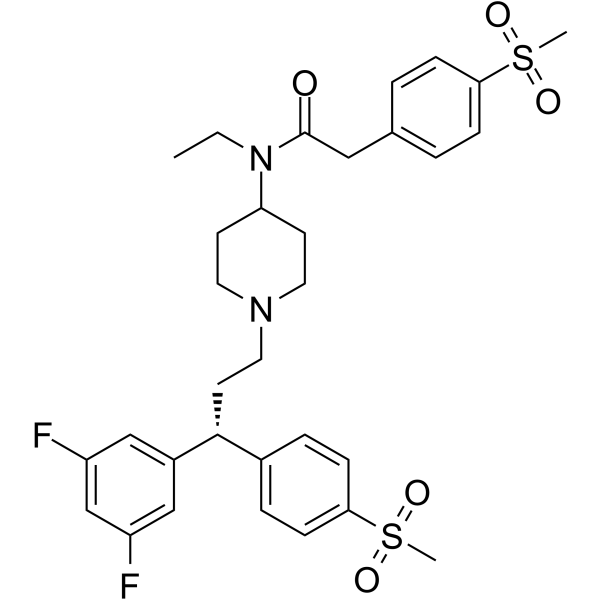
AZD-5672 is an orally active, potent, and selective CCR5 antagonist (IC50=0.32 nM). AZD-5672 shows moderate activity against the hERG ion channel (binding IC50=7.3 μM). AZD5672 is a substrate of human P-gp, and inhibits P-gp-mediated digoxin transport (IC50=32 μM). AZD-5672 can be used for the research of rheumatoid arthritis .
|
-
-
- HY-110254
-
|
|
mGluR
|
Neurological Disease
|
|
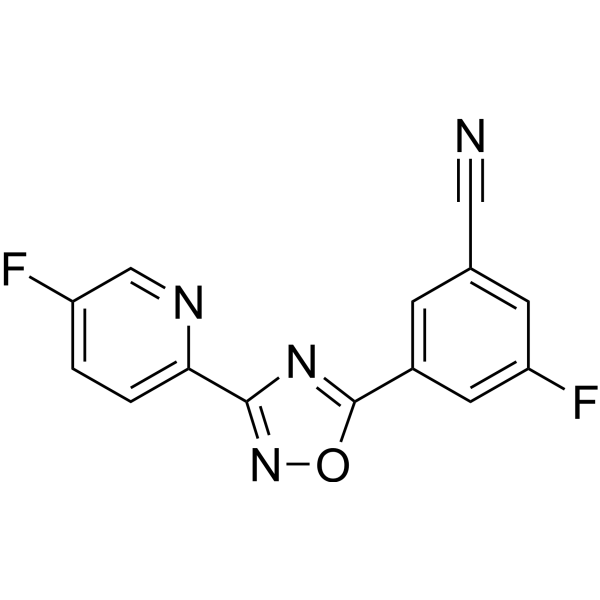
AZD 9272 is a selective, orally active and brain penetrant mGluR5 antagonist with IC50s of 2.6 nM and 7.6 nM for rat and human receptors, respectively. AZD 9272 shows >3900-fold selectivity over other mGlu receptors 2].
|
-
-
- HY-126329
-
AZD9898
1 Publications Verification
|
Glutathione S-transferase
|
Inflammation/Immunology
|
|
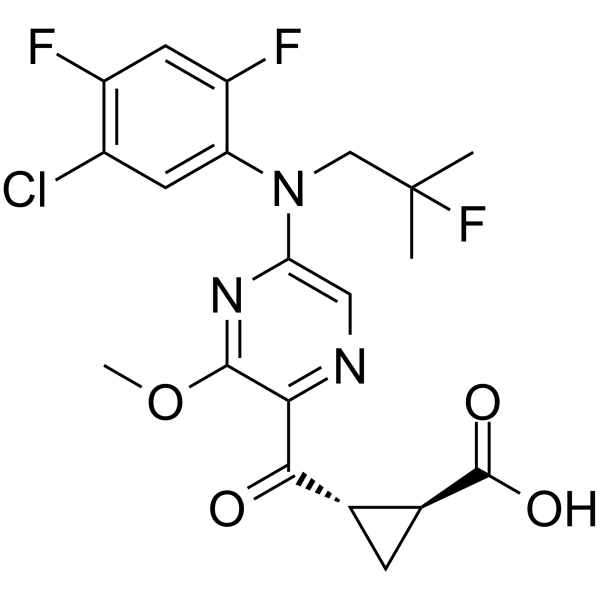
AZD9898 is an orally active leukotriene-C4 synthetase (LTC4S, glutathione S-transferase II) inhibitor, with an IC50 of 0.28 nM. AZD9898 mitigates the GABA binding and hepatic toxicity signal. AZD9898 has the potential to treat asthma .
|
-
-
- HY-101533A
-
|
|
Bcl-2 Family
|
Cancer
|
|
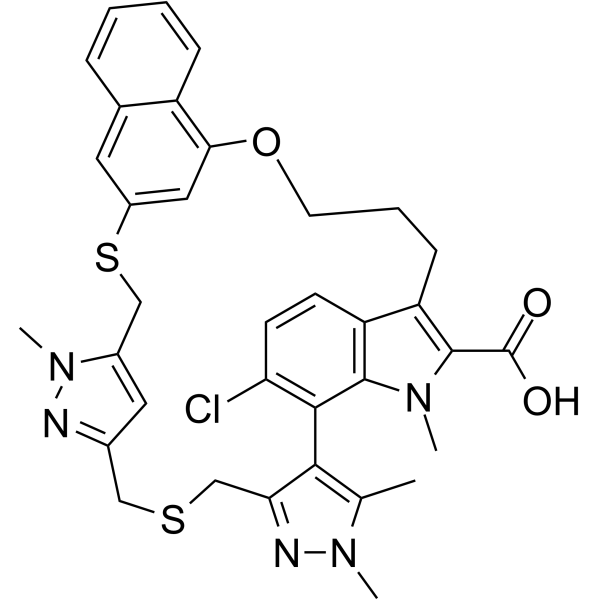
AZD-5991 Racemate is the racemate of AZD-5991. AZD-5991 Racemate is a Mcl-1 inhibitor with an IC50 of <3 nM in FRET assay.
|
-
-
- HY-123791
-
-

-
- HY-101533B
-
|
|
Bcl-2 Family
|
Cancer
|
|
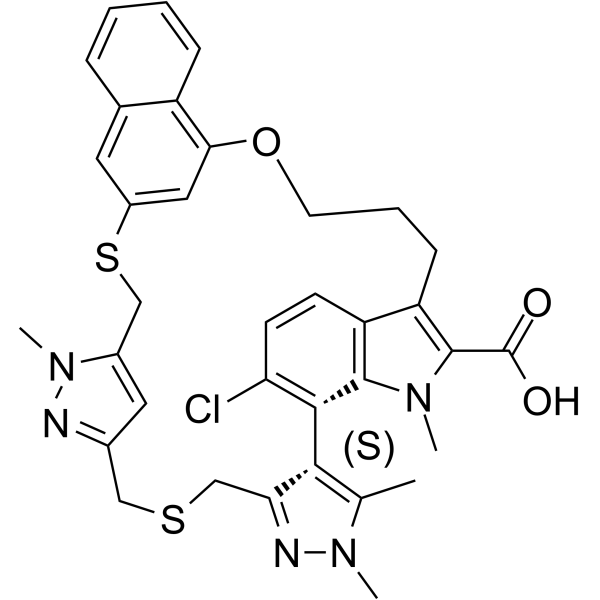
AZD-5991 S-enantiomer is the less active enantiomer of AZD-5991. AZD-5991 S-enantiomer is a Mcl-1 inhibitor with an IC50 of 6.3 μM in FRET assay and a Kd of 0.98 μM in surface plasmon resonance (SPR) assay.
|
-
-
- HY-117714
-
|
|
Sodium Channel
|
Neurological Disease
|
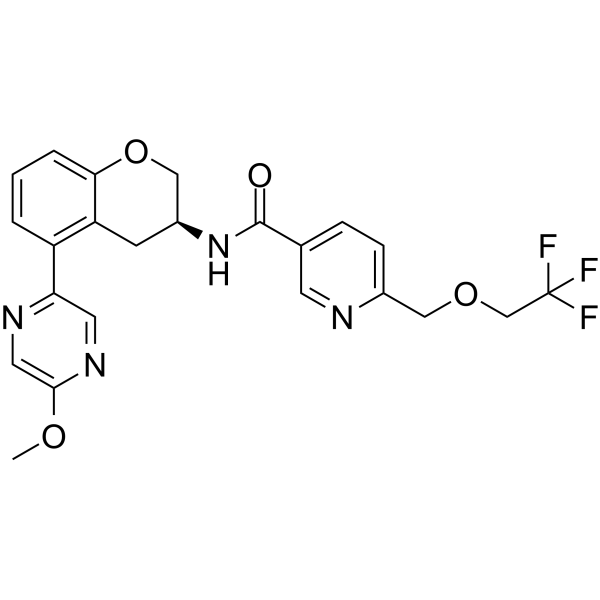
|
AZD-3161 is a potent and selective blocker of NaV1.7 channel, with a pIC50 of 7.1. AZD-3161 can be used for the research of neuropathic and inflammatory pain .
|
-
-
- HY-109511
-
|
|
CCR
|
Others
|
|
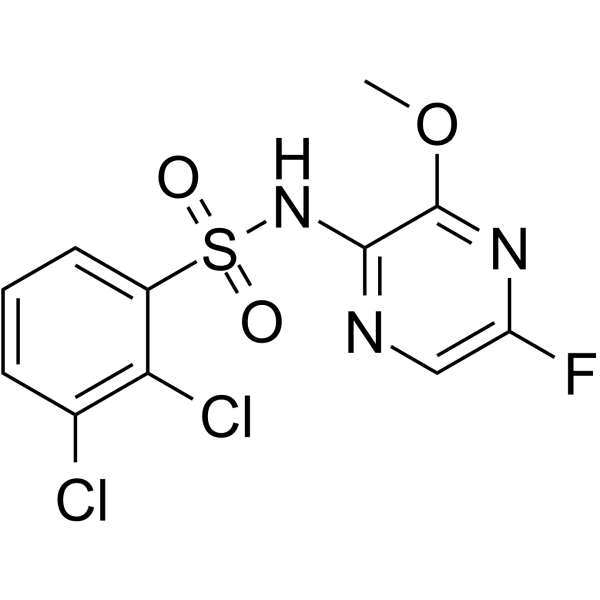
AZD-1678 is a potent CCR4 receptor antagonist, with a pIC50 of 8.6 .
|
-
-
- HY-113820
-
|
|
PPAR
|
Metabolic Disease
|
|
AZD4619 is an orally active, selective peroxisome proliferator-activated receptor α (PPARα) agonist. AZD4619 increases alanine aminotransferase 1 (ALT1) protein expression in a dose-dependent manner in human, but not in rat primary hepatocytes. AZD4619 is a lipid-lowering drug .
|
-

-
- HY-12870A
-
|
|
Estrogen Receptor/ERR
|
Cancer
|
|
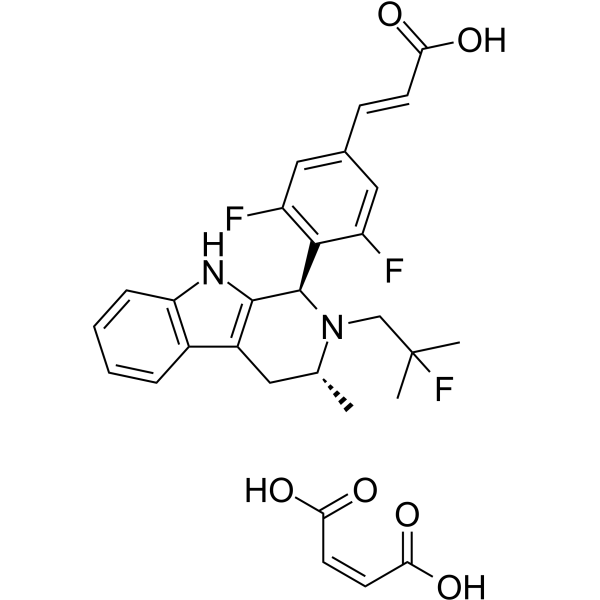
AZD9496 maleate is a potent and selective estrogen receptor (ERα) antagonist with IC50 of 0.28 nM. AZD9496 maleate is an orally bioavailable selective oestrogen receptor degrader (SERD).
|
-
-
- HY-129250
-
|
|
Histamine Receptor
|
Neurological Disease
|
|
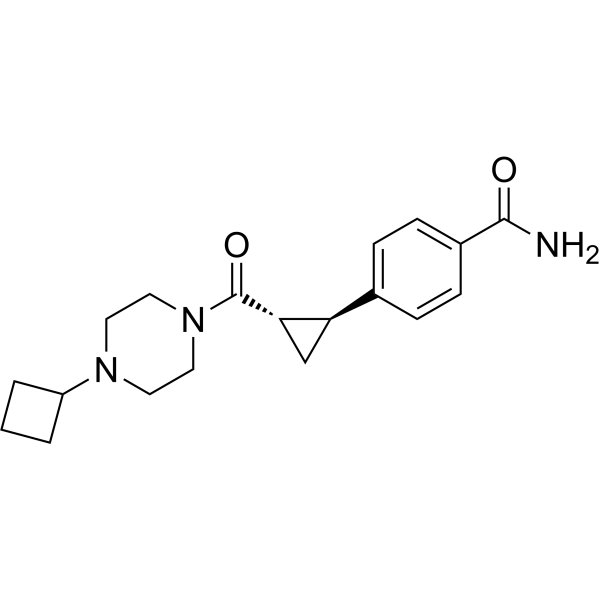
AZD5213 is a selective and competitive human H3 receptor antagonist with a pKi value of 9.3 for hH3R. AZD5213 can be used for the research of sleep and cognitive regulation .
|
-
-
- HY-12652
-
AZD3147
1 Publications Verification
|
mTOR
|
Cancer
|
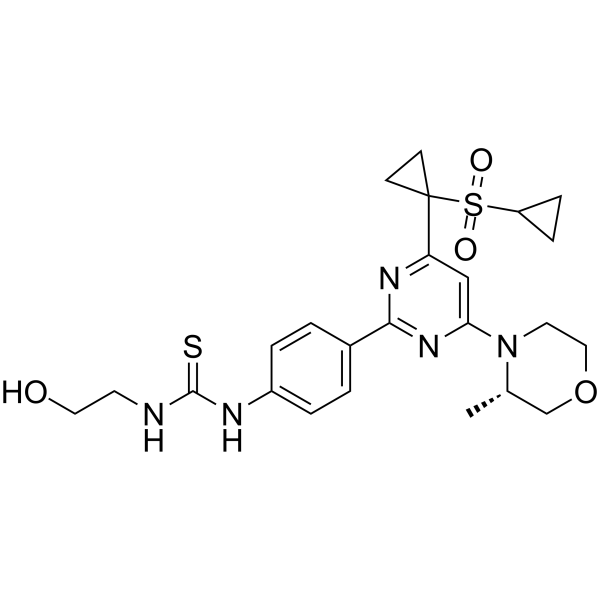
AZD3147 is a potent, orally active, selective dual inhibitor of mTORC1 and mTORC2 with an IC50 value of 1.5 nM. AZD3147 also has a selective effect on PI3K .
|
-
-
- HY-107023
-
-

-
- HY-160937
-
|
|
Ligands for Target Protein for PROTAC
PARP
|
Cancer
|
|
AZD-9574-acid (Compound 70D) is a PARP-1 ligand. AZD-9574-acid serves as a Ligand for Target Protein for PROTAC for the synthesis of PARP-1 PROTAC degraders. AZD-9574-acid is applicable to cancer research .
|
-

-
- HY-111783G
-
|
|
DNA-PK
ATM/ATR
PI3K
Apoptosis
|
Cancer
|
|
AZD-7648 (GMP) is AZD-7648 (HY-111783) produced by using GMP guidelines. GMP small molecules works appropriately as an auxiliary reagent for cell therapy manufacture. AZD-7648 is a potent, orally active, selective DNA-PK inhibitor with an IC50 of 0.6 nM. AZD-7648 induces apoptosis and shows antitumor activity .
|
-

- HY-141808
-
|
|
Beta-lactamase
|
Cancer
|
|
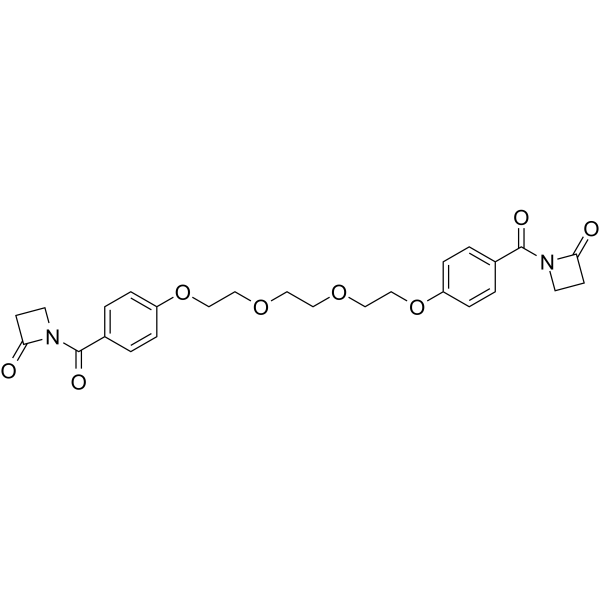
AZD-CO-Ph-PEG4-Ph-CO-AZD is a bis-β-lactam linker can be used for antibody-siRNA conjugate synthesis .
|
-
- HY-120499
-
|
|
Hedgehog
Smo
|
Cancer
|
|
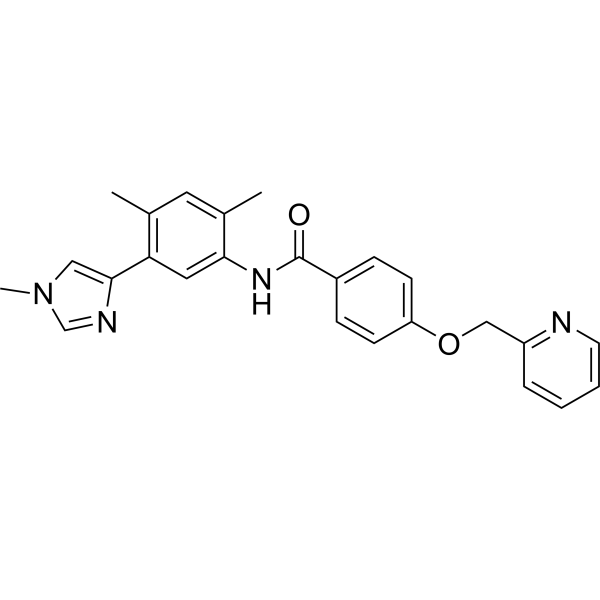
AZD8542 is an antagonist of Smoothened (SMO), playing an important role in oncology. AZD8542 is an Hedgehog (Hh) pathway antagonist on tumor progression with an emphasis on the role of the stroma compartment .
|
-
- HY-12888
-
|
|
Topoisomerase
Bacterial
|
Infection
|
|
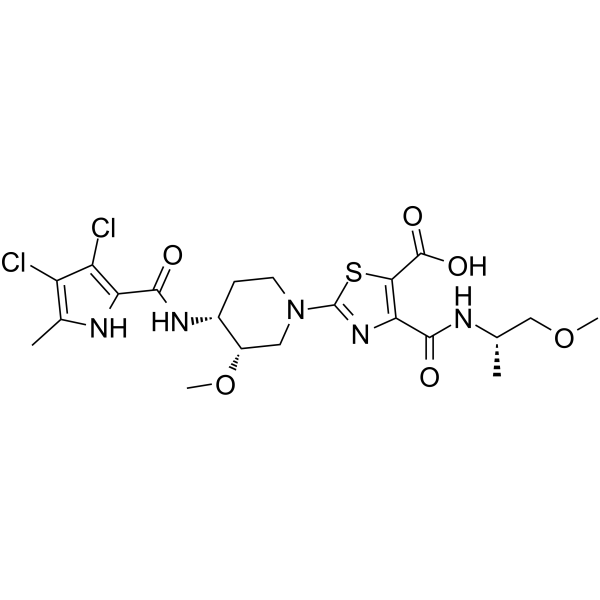
AZD5099, an antibacterial agent, is a potent and selective bacterial topoisomerase II inhibitor. AZD5099 potently inhibits the infections caused by Gram-positive and fastidious Gram-negative bacteria .
|
-
- HY-146223
-
|
|
Ras
p38 MAPK
PI3K
Apoptosis
|
Cancer
|
|
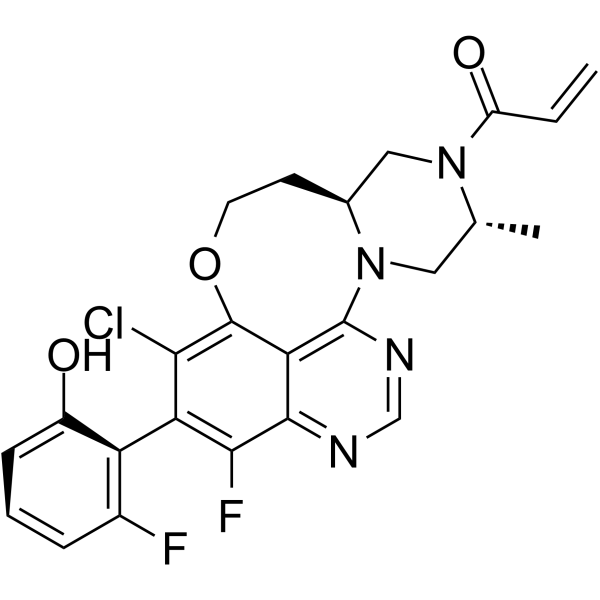
AZD4625 is an orally active, selective irreversible, covalent allosteric GTPase KRASG12C inhibitor with an IC50 of 3 nM. AZD4625 can inhibit the MAPK pathway (with decreased pCRAF, pMEK, and pERK) and the PI3K pathway (with decreased pAKT and pS6), and induce cell apoptosis. AZD4625 has no binding and inhibition of wild-type RAS or isoforms carrying non-KRASG12C mutations. AZD4625 can be used for the study of KRASG12C mutant non-small cell lung cancer .
|
-
- HY-110255
-
|
|
mGluR
Calcium Channel
Trk Receptor
|
Neurological Disease
|
|
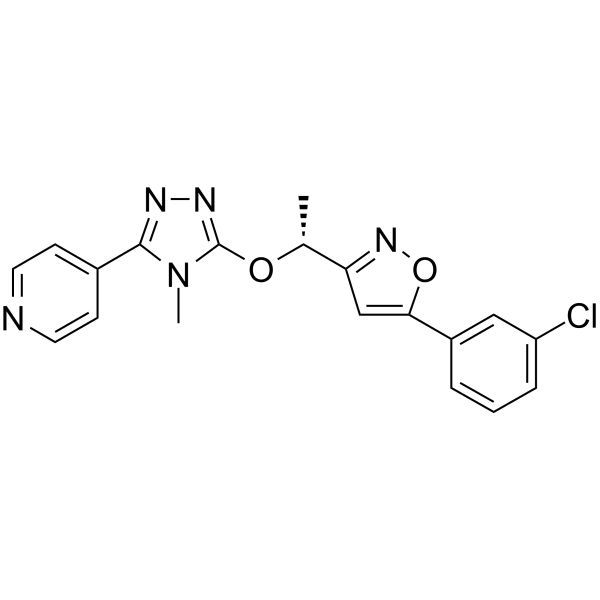
AZD-2066 is a selective, orally active and blood-brain barrier-permeating mGluR5 antagonist. AZD 2066 activates the BDNF/trkB signaling pathway. AZD 2066 can be used in the research of neuropathic pain, major depressive disorder and gastroesophageal reflux disease .
|
-
- HY-120452
-
|
|
Thrombin
|
Cardiovascular Disease
|
|
AZD-8165 is a highly selective neutral thrombin inhibitor. AZD-8165 is promising for research of cardiovascular diseases such as hypertension and heart failure .
|
-

- HY-108043
-
|
|
Opioid Receptor
|
Neurological Disease
|
|
AZD-2327 is a potent and selective δ-opioid receptor agonist. AZD-2327 binds to the human opioid receptor (Ki of 0.49 and 0.75 nM and EC50 of 24 and 9.2 nM at the C27 and F27 isoforms, respectively). AZD-2327 shows selectivity of >1000-fold over the human μ- and κ-opioid receptor subtypes as well as >130 other receptors and channels. AZD-2327 exhibits antidepressant and anxiolytic activities and can be used for the research of neurological disease .
|
-

- HY-12996
-
|
|
FLAP
Leukotriene Receptor
|
Inflammation/Immunology
|
|
AZD6642 is a 5-lipoxygenase activating protein (FLAP) inhibitor. AZD6642 can effectively inhibit the production of LTB4. AZD6642 exhibits high oral bioavailability in rats and dogs. AZD6642 can be used in the research of inflammatory diseases .
|
-

- HY-111087
-
-
- HY-13438A
-
|
|
Beta-secretase
|
Cancer
|
|
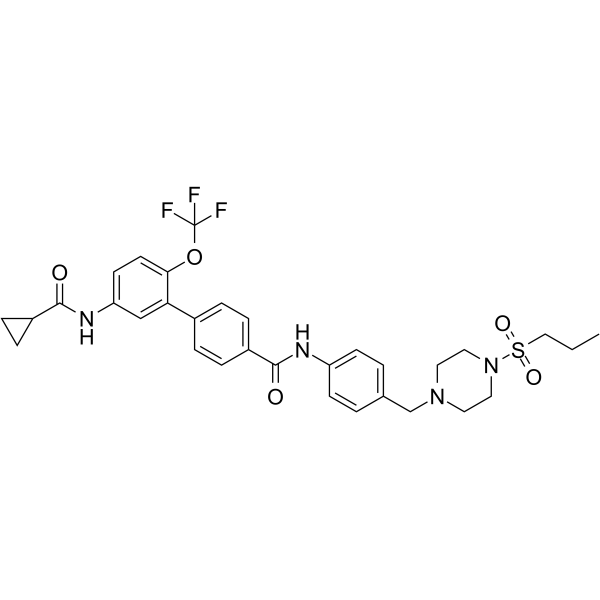
AZD3839 fumarate is an orally available, selective, reversible inhibitor of the β-site amyloid precursor protein cleaving enzyme BACE1 that can cross the blood-brain barrier. AZD3839 fumarate inhibits recombinant human BACE1 with a Ki=26.1 nM. AZD3839 fumarate inhibits A40 production in SH-SY5Y cells with an IC50 of 4.8 nM. AZD3839 fumarate binds to BACE1 and reduces the Aβ amyloid produced by the cleavage of amyloid precursor protein (APP) by BACE1 and γ-secretase. AZD3839 fumarate can be used in the field of Alzheimer's disease research .
|
-

- HY-112314
-
|
|
Src
Bcr-Abl
Apoptosis
|
Cancer
|
|
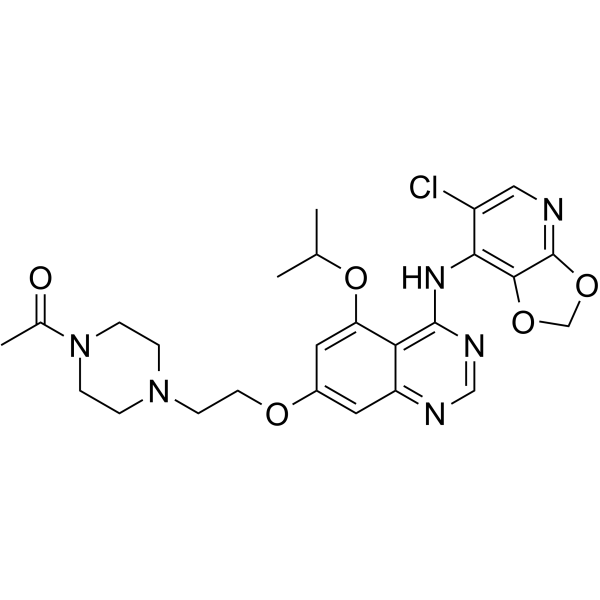
AZD0424 is an orally active, and dual selective Src/Abl kinase inhibitor with potential antineoplastic activity . AZD0424 induces apoptosis and cell cycle arrest in lymphoma cells .
|
-
- HY-110254R
-
|
|
mGluR
|
Neurological Disease
|
|
AZD 9272 (Standard) is the analytical standard of AZD 9272. This product is intended for research and analytical applications. AZD 9272 is a brain penetrant mGluR5 antagonist.
|
-

- HY-110255A
-
|
|
mGluR
Calcium Channel
Trk Receptor
|
Neurological Disease
|
|
AZD-2066 hydrate is a selective, orally active and blood-brain barrier-permeating mGluR5 antagonist. AZD 2066 hydrate activates the BDNF/trkB signaling pathway. AZD 2066 hydrate can be used in the research of neuropathic pain, major depressive disorder and gastroesophageal reflux disease .
|
-
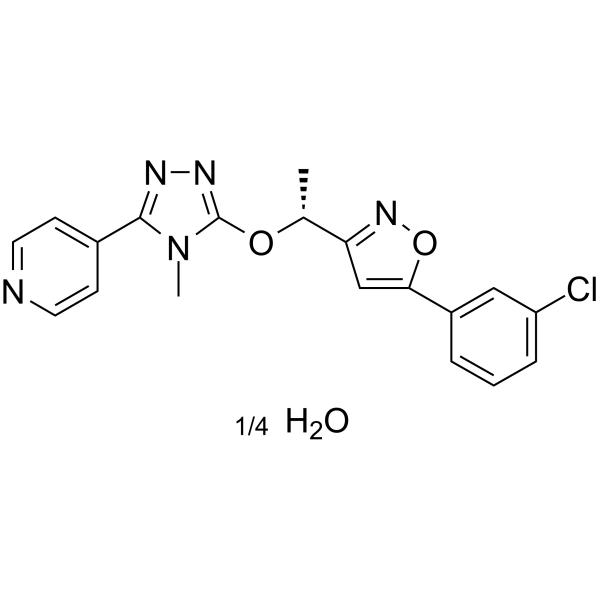
- HY-10012R
-
|
|
Reference Standards
CDK
|
Cancer
|
|
AZD-5438 (Standard) is the analytical standard of AZD-5438. This product is intended for research and analytical applications. AZD-5438 is a potent CDK1, CDK2, and CDK9 inhibitor, with IC50s of 16 nM, 6 nM, and 20 nM in cell-free assays, respectively. AZD-5438 shows less inhibition activity against GSK3β, CDK5 and CDK6
.
|
-

- HY-148850
-
|
|
Cannabinoid Receptor
|
Metabolic Disease
|
|
AZD-2207 is a cannabinoid receptor CB1 antagonist, known for its high lipophilicity. AZD-2207 has good intestinal permeability in the Caco-2 model and can be used in research related to type 2 diabetes and obesity .
|
-

- HY-100038
-
|
|
IGF-1R
Insulin Receptor
|
Cancer
|
|
AZD9362 is a reversible, ATP-competitive and orally active small molecule inhibitor of IGF-1R and insulin receptor. AZD9362 inhibits the IGF-1R enzyme with an IC50 of 14 nM. AZD9362 can enhance the anti-tumor effect of AZD5363 (HY-15431). AZD9362 can be used for the research of cancer, such as breast cancer .
|
-

- HY-113692
-
|
|
mAChR
|
Others
|
|
AZD-9164 (bromide) is a long-acting muscarinic M3 antagonist. AZD-9164 (bromide) is promising for research of airways diseases, such as chronic obstructive pulmonary disease (COPD) or asthma .
|
-

- HY-110255B
-
|
|
mGluR
Calcium Channel
Trk Receptor
|
Neurological Disease
|
|
AZD-2066 hydrochloride is a selective, orally active and blood-brain barrier-permeating mGluR5 antagonist. AZD 2066 hydrochloride activates the BDNF/trkB signaling pathway. AZD 2066 hydrochloride can be used in the research of neuropathic pain, major depressive disorder and gastroesophageal reflux disease .
|
-

- HY-119185
-
|
|
Endogenous Metabolite
|
Cancer
|
|
AZD-6605 is a potent, reversible inhibitor of MMP2, MMP9, MMP12 and MMP13 with excellent selectivity. During drug development, AZD-6605 was optimized for activity, solubility and DMPK properties against MMP13 by replacing the zinc hydroxide binding group associated with historical inhibitors .
|
-

- HY-116507
-
|
|
nAChR
|
Neurological Disease
|
|
AZD0328 is a selective α7 nAChR partial agonist. AZD0328 selectively enhances midbrain dopaminergic neuronal activity and enhances cortical dopamine levels in rats. AZD0328 improves cognitive performance .
|
-

- HY-15950R
-
|
|
Prostaglandin Receptor
|
Inflammation/Immunology
|
|
AZD1981 (Standard) is the analytical standard of AZD1981. This product is intended for research and analytical applications. AZD1981 is the antagonist for GPR44 (also known also PTGDR2, DP2 or CRTh). AZD1981 blocks the binding of PGD2 to CRTH2. AZD1981 exhibits immunomodulatory effects and can be used in research of chronic spontaneous urticaria .
|
-

- HY-13224A
-
|
|
Endogenous Metabolite
|
Cancer
|
|
AZD4877 hydrochloride is a synthetic dynein inhibitor with potential anti-tumor activity. AZD4877 selectively inhibits the microtubule dynein KSP (also known as kinesin-5 or Eg5), which may lead to inhibition of mitotic spindle assembly. The action of AZD4877 may activate the spindle assembly checkpoint, leading to cell cycle arrest at the mitotic stage. AZD4877 may induce cell death in actively dividing tumor cells. AZD4877 may be less likely to cause peripheral neuropathy associated with microtubule-targeted compounds as it is not involved in post-mitotic processes. AZD4877 is essential for the formation of bipolar spindles and the proper segregation of sister chromosomes .
|
-

- HY-164461
-
|
|
Trk Receptor
|
Cancer
|
|
AZD6918 is an orally active and selective Trk tyrosine kinase inhibitor. AZD6918 induces cell death as a single agent and attenuates BDNF/TrkB-induced protection from Etoposide (HY-13629) in vitro. AZD6918 can be used for the research of neuroblastoma .
|
-

- HY-111245
-
-
- HY-12586
-
|
|
Thrombin
|
Others
|
|
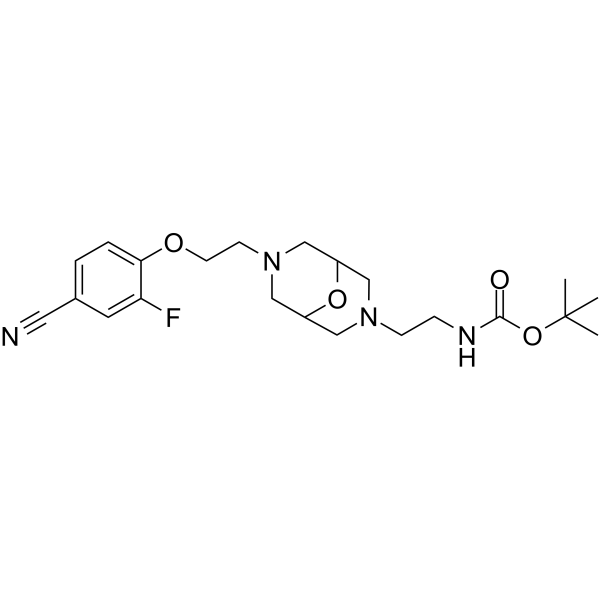
AZD6564 is an orally active inhibitor for fibrinolysis through disruption of plasma kinase-fibrin interaction. AZD6564 dissolves human plasma clot with an IC50 of 0.44 μM. AZD6564 ameliorates hemorrhage in rats with EC50 of 1.62 μM, and exhibits good pharmacokinetic characteristics in rats .
|
-

- HY-105997
-
|
|
p38 MAPK
|
Others
|
|
AZD 6703 is a p38α MAP kinase inhibitor with activity in inflammatory diseases.
|
-

- HY-19427
-
|
|
P2X Receptor
|
Cancer
|
|
AZD9056 is a P2X7 purinergic receptor antagonist with anticancer activity. AZD9056 can inhibit the invasion and metastasis of cancer stem cells .
|
-

- HY-121070
-
|
|
Glucokinase
|
Metabolic Disease
|
|
AZD1092 is an orally active glucokinase (GK) activator with an EC50 value of 0.03 μM. AZD1092 can be used for the research of Type 2 Diabetes (T2D) .
|
-
- HY-171794
-
|
|
5-HT Receptor
|
Neurological Disease
|
|
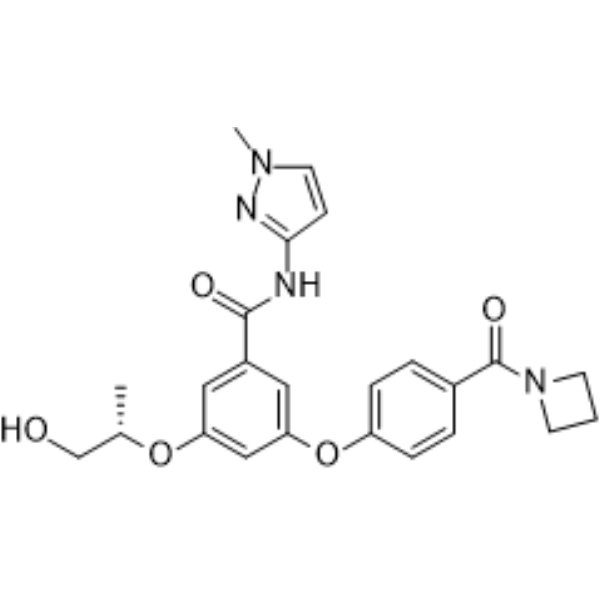
AZD1134 is an orally active, brain-penetrant and highly selective 5-HT1B receptor antagonist with IC50 values of 2.9 nM (human) and 0.108 nM (guinea pig), respectively. AZD1134 increases synaptic serotonin levels in guinea pigs. AZD1134 is promising for research of psychiatric disorders, such as depression and anxiety .
|
-

- HY-111052R
-
|
|
GABA Receptor
Cytochrome P450
|
Neurological Disease
Inflammation/Immunology
|
|
AZD7325 (Standard) is the analytical standard of AZD7325. This product is intended for research and analytical applications. AZD7325 is a potent and orally active partial selective PAM of GABAAα2 and Aα3 receptor (Ki=0.3 and 1.3 nM, respectively), and has less antagonistic efficacy at the Aα1 and Aα5 receptor subtypes . AZD7325 is a moderate CYP1A2 and a potent CYP3A4 inducer in vitro . AZD7325 has the potential for the investigation of anxiety and dravet syndrome . PAM: positive allosteric modulator.
|
-

- HY-U00217
-
-
- HY-120660
-
|
|
RSV
|
Infection
|
|
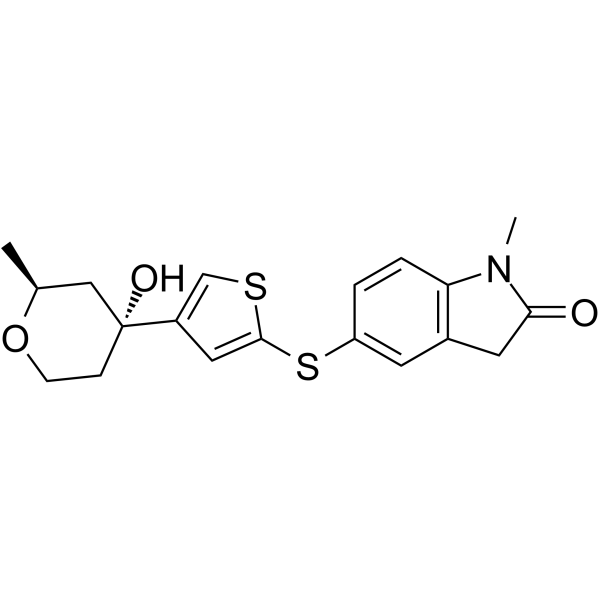
AZD-4316 is a respiratory syncytial virus (RSV) L protein inhibitor. AZD-4316 has an inhibitory effect on RSV A subtypes (such as strain A2) and can effectively block viral replication in the early stage of infection (the viral entry stage). AZD-4316 is inactive when administered 12-24 hours after infection. AZD-4316 can be used for the research of RSV infection .
|
-

- HY-10422R
-
|
|
Reference Standards
mTOR
Autophagy
Apoptosis
|
Cancer
|
|
AZD-8055 (Standard) is the analytical standard of AZD-8055 (HY-10422). This product is intended for research and analytical applications. AZD-8055 is a potent, selective, and orally bioavailable ATP-competitive mTOR kinase inhibitor with an IC50 of 0.8 nM. AZD-8055 inhibits both mTORC1 and mTORC2 .
|
-

- HY-116580
-
|
|
Endogenous Metabolite
|
Neurological Disease
|
|
AZD-3289 is a potent BACE1 inhibitor with potential Alzheimer's disease inhibitory activity. The application of AZD-3289 is intended to slow the pathological progression of Alzheimer's disease by inhibiting the production of β-amyloid protein. The development of AZD-3289 responds to the need to reduce neurodegenerative changes associated with Alzheimer's disease. As a BACE1 inhibitor, AZD-3289 can effectively reduce the accumulation of β-amyloid peptide in the brain, which may improve cognitive function .
|
-

- HY-182719
-
|
|
Arginase
|
Cancer
|
|
AZD0011, a prodrug of AZD0011-PL (HY-182718), is an orally active arginase 1 inhibitor with an IC50 of 328 nM. AZD0011 undergoes in vivo hydrolysis to release an arginase inhibitor payload, inhibiting arginine hydrolysis, increases arginine levels in plasma and the tumor microenvironment. AZD0011 restores innate immune function and inhibits tumor growth. AZD0011 can be used for the research of cancer, such as fibrosarcoma .
|
-

- HY-10193R
-
|
|
Reference Standards
JAK
|
Cancer
|
|
AZD-1480 (Standard) is the analytical standard of AZD-1480 (HY-10193). This product is intended for research and analytical applications. AZD-1480 is an ATP-competitive inhibitor of JAK1 and JAK2 with IC50s of 1.3 nM and <0.4 nM, respectively .
|
-

- HY-101533R
-
|
|
Bcl-2 Family
Reference Standards
|
Cancer
|
|
AZD-5991 (Standard) is the analytical standard of AZD-5991 (HY-101533). This product is intended for research and analytical applications. AZD-5991 is a potent and selective Mcl-1 inhibitor with an IC50 of 0.7 nM in FRET assay and a Kd of 0.17 nM in surface plasmon resonance (SPR) assay .
|
-

- HY-107457AR
-
|
|
Reference Standards
mGluR
|
Neurological Disease
|
|
AZD-8529 mesylate (Standard) is the analytical standard of AZD-8529 (mesylate) (HY-107457A). This product is intended for research and analytical applications. AZD-8529 mesylate is a potent, highly selective and orally bioavailable positive allosteric modulator of mGluR2, with an EC50 of 285 nM, and shows no positive allosteric modulator responses at 20-25 M on the mGluR1, 3, 4, 5, 6, 7, and 8 subtypes .
|
-

- HY-182718
-
|
|
Arginase
|
Inflammation/Immunology
Cancer
|
|
AZD0011-PL is a human arginase 1/ 2 inhibitor with IC50 values of 0.01 μM and 0.02 μM. AZD0011-PL can be used for the researches of cancer, respiratory inflammatory disease .
|
-

- HY-10344R
-
|
KIN-193 (Standard)
|
Reference Standards
PI3K
Autophagy
|
Cancer
|
|
AZD 6482 (Standard) is the analytical standard of AZD 6482 (HY-10344). This product is intended for research and analytical applications. AZD 6482 (KIN-193) is a potent and selective p110β inhibitor with an IC50 of 0.69 nM.
|
-

- HY-182439
-
|
|
Histamine Receptor
CCR
|
Inflammation/Immunology
|
|
AZD3778 (Compound 8) is an inhibitor of CCR3 and histamine H1 receptor (histamine H1 receptor), with IC50 values of 8.1 nM and 40 nM, respectively. AZD3778 inhibits the binding of eosinophil chemokines to CCR3, as well as the binding of histamine to histamine H1 receptor. AZD3778 exhibits anti-eosinophilic activity. AZD3778 alleviates symptoms associated with allergic rhinitis. AZD3778 can be used in research related to allergic rhinitis and asthma .
|
-

- HY-183630
-
|
|
DNA/RNA Synthesis
|
Cancer
|
|
AZD4956 is a potent and selective DNA polymerase theta (POLQ) inhibitor. AZD4956 exhibits an IC50 value of less than 3 μmol/L against POLQ and 3.4 μmol/L against MMEJ. AZD4956 suppresses the MMEJ pathway and enhances the activity of DNA-damaging agents in HRR-deficient cellular contexts. AZD4956 shows antitumor activity in BRCA1/2-mutated triple-negative breast cancer and prostate cancer models. AZD4956 can be used for the study of homologous recombination-deficient tumors .
|
-

- HY-103672R
-
-

- HY-108243R
-
|
|
Reference Standards
Glucocorticoid Receptor
|
Inflammation/Immunology
Endocrinology
|
|
AZD5423 (Standard) is the analytical standard of AZD5423 (HY-108243). This product is intended for research and analytical applications. AZD5423 is an inhaled, potent, selective, and non-steroidal glucocorticoid receptor (GR) modulator (SGRM) . AZD5423 effectively reduces allergen-induced responses in subjects with mild allergic asthma .
|
-

- HY-19871
-
-

- HY-182440
-
|
|
5-HT Receptor
|
Neurological Disease
|
|
AZD3783 is an orally active, blood-brain barrier-penetrant 5-HT1B receptor antagonist. AZD3783 reverses agonist-induced hypothermia, inhibits separation-induced vocalizations in guinea pig pups, and acts as a moderately permeable glycoprotein substrate with moderate clearance. AZD3783 inhibits hERG channel activity. AZD3783 is applicable for research on depression, anxiety disorders, and other psychiatric diseases associated with serotonergic neurotransmission .
|
-

- HY-100016R
-
|
|
ATM/ATR
Reference Standards
Apoptosis
|
Cancer
|
|
AZD0156 (Standard) is the analytical standard of AZD0156 (HY-100016). This product is intended for research and analytical applications. AZD0156 is a potent, selective and orally active ATM inhibitor with an IC50 of 0.58 nM. AZD0156 inhibits the ATM-mediated signaling, prevents DNA damage checkpoint activation, disrupts DNA damage repair, and induces tumor cell apoptosis .
|
-

- HY-118473
-
-

- HY-159692C
-
-

- HY-158827B
-
|
|
PCSK9
|
Metabolic Disease
|
|
AZD8233 sodium scrambled negative control is the sequence scrambled negative control of AZD8233 sodium.
|
-

- HY-13050
-
|
AZD-8931
|
EGFR
|
Cancer
|
|
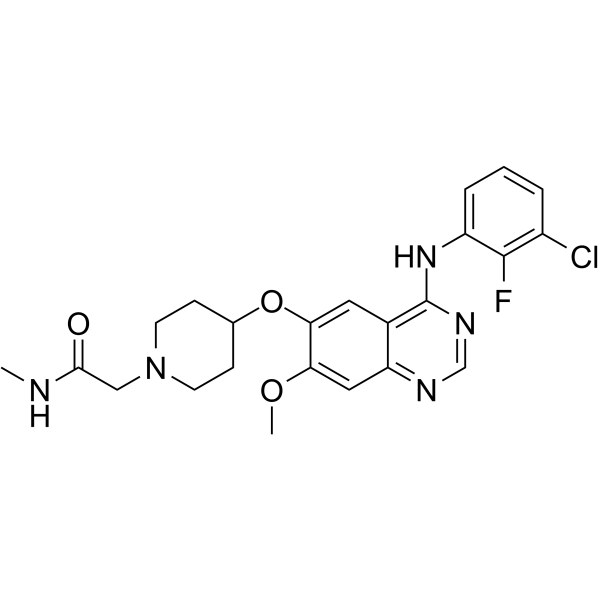
Sapitinib (AZD-8931) is a reversible, ATP competitive EGFR inhibitor of with IC50s of 4, 3 and 4 nM for EGFR, ErbB2 and ErbB3 in cells, respectively.
|
-
- HY-110346
-
|
|
IAP
Apoptosis
|
Cancer
|
|
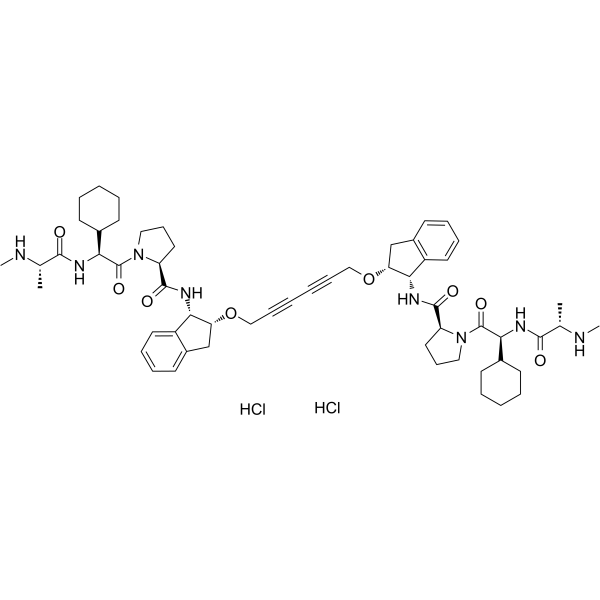
AZD5582 dihydrochloride is an antagonist of the inhibitor of apoptosis proteins (IAPs), which binds to the BIR3 domains cIAP1, cIAP2, and XIAP with IC50s of 15, 21, and 15 nM, respectively. AZD5582 induces apoptosis .
|
-
- HY-12600
-
|
|
IAP
Apoptosis
|
Cancer
|
|
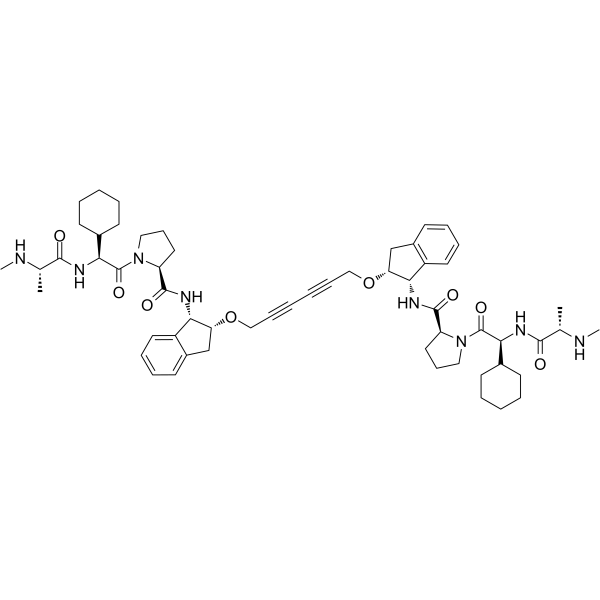
AZD5582 is an antagonist of the inhibitor of apoptosis proteins (IAPs), which binds to the BIR3 domains cIAP1, cIAP2, and XIAP with IC50s of 15, 21, and 15 nM, respectively. AZD5582 induces apoptosis .
|
-
- HY-135891
-
|
|
CCR
|
Neurological Disease
|
|
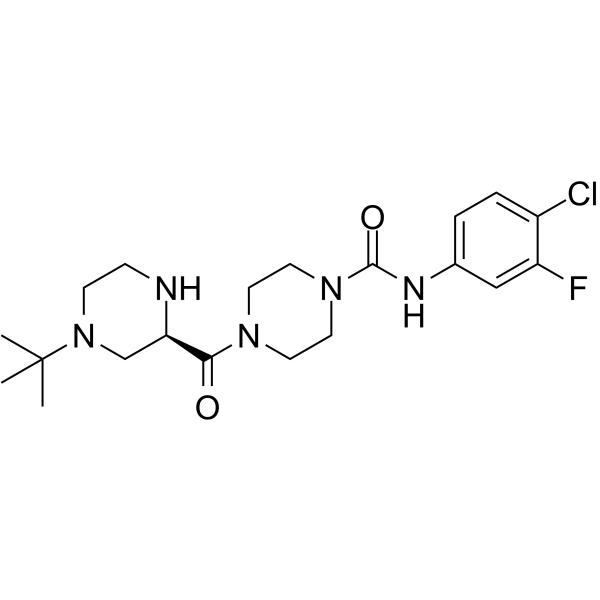
AZD2423 is a potent, selective, orally bioavailable, and non-competitive CCR2 chemokine receptor negative allosteric modulator. AZD2423 has an IC50 of 1.2 nM for CCR2 Ca 2+ flux .
|
-
- HY-10126
-
|
AZD2811; INH-34; AZD1152-HQPA
|
Aurora Kinase
Apoptosis
|
Cancer
|
|
Barasertib-HQPA (AZD2811) is a highly selective Aurora B inhibitor with an IC50 of 0.37 nM in a cell-free assay. Barasertib-HQPA (AZD2811) induces growth arrest and apoptosis in cancer cells .
|
-
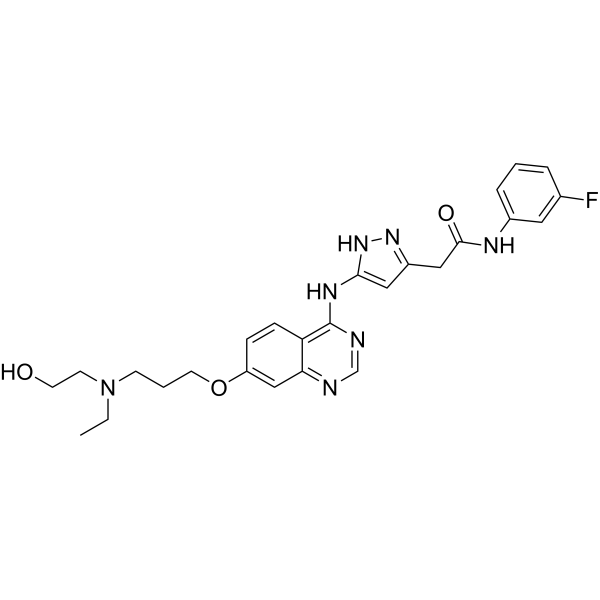
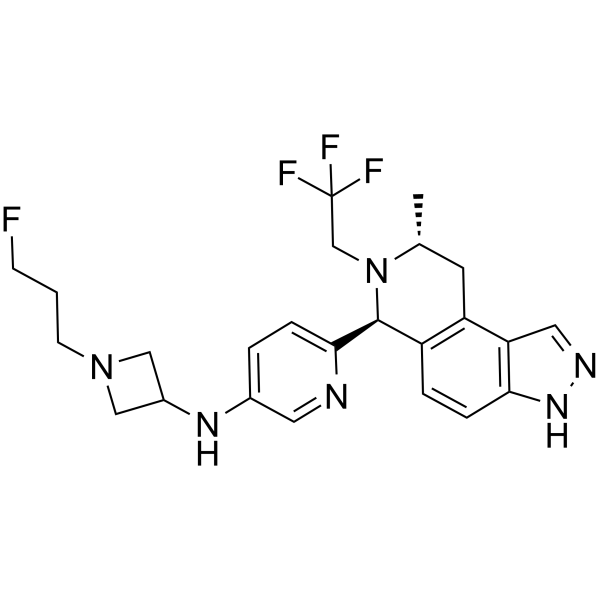
- HY-136255
-
|
AZD-9833
|
Estrogen Receptor/ERR
|
Cancer
|
|
Camizestrant (AZD-9833) is a potent and orally active estrogen receptor (ER) antagonist. Camizestrant is used for the study of ER + HER2-advanced breast cancer .
|
-
- HY-175652
-
|
|
PROTACs
Adenosine Receptor
|
Cancer
|
|
AZD9750 is an orally active, Cereblon (CRBN)-recruiting, androgen receptor (AR)-targeted PROTAC degrader. AZD9750 induces the proteasome-dependent degradation of both wild-type AR and the drug-resistant mutant AR L702H, thereby inhibiting the AR signaling pathway. AZD9750 suppresses tumor growth in mouse prostate cancer xenograft models and has been utilized in prostate cancer research .
|
-

- HY-119282
-
|
|
mGluR
|
Neurological Disease
|
|
AZD6538 is a potent, selective and brain penetrant mGluR5 negative allosteric modulator. AZD6538 inhibits DHPG (HY-12598A)-stimulated intracellular Ca2+ release in HEK cells expressing rat or human mGluR5, with IC50 values of 3.2 and 13.4 nM for rat mGluR5 and human mGluR5, respectively. AZD6538 can be used for the research of neuropathic pain .
|
-

- HY-15497
-
AZD7687
1 Publications Verification
|
Acyltransferase
|
Metabolic Disease
|
|
AZD7687 is a potent, selective, reversible and orally active diacylglycerol acyltransferase 1 (DGAT1) inhibitor with an IC50 of 80 nM for human DGAT1. AZD7687 can be used for type 2 diabetes mellitus and obesity research .
|
-
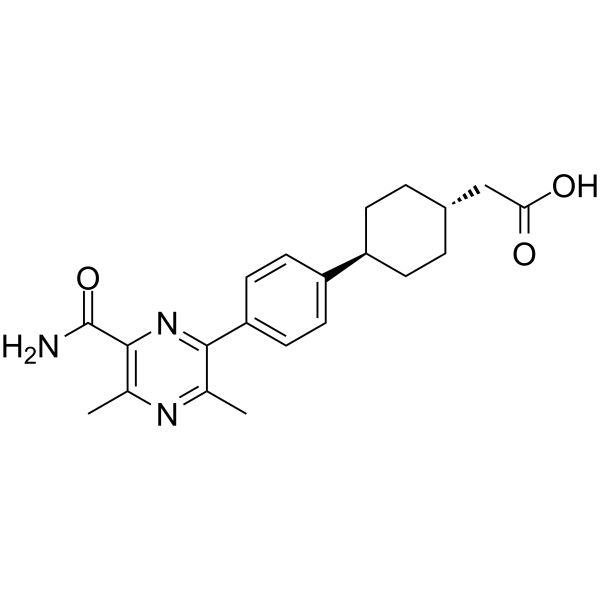
- HY-19362
-
-
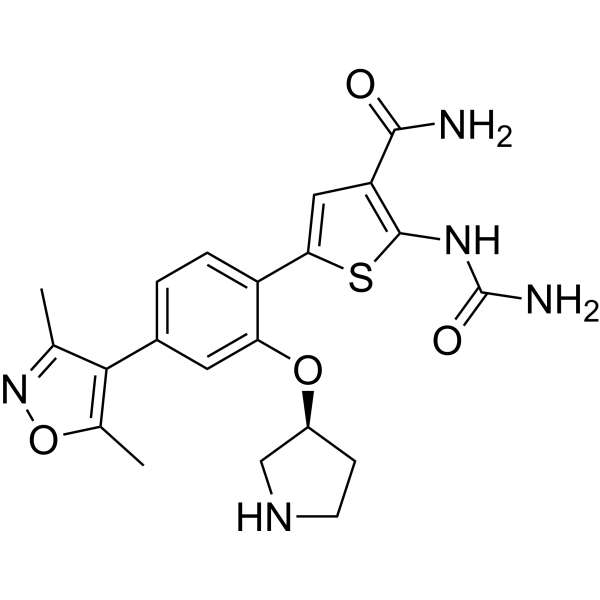
- HY-10993
-
|
AZD1775; MK-1775
|
Wee1
|
Cancer
|
|
Adavosertib (AZD-1775; MK-1775) is a potent Wee1 inhibitor with an IC50 of 5.2 nM.
|
-
- HY-100016
-
|
|
ATM/ATR
Apoptosis
|
Cancer
|
|
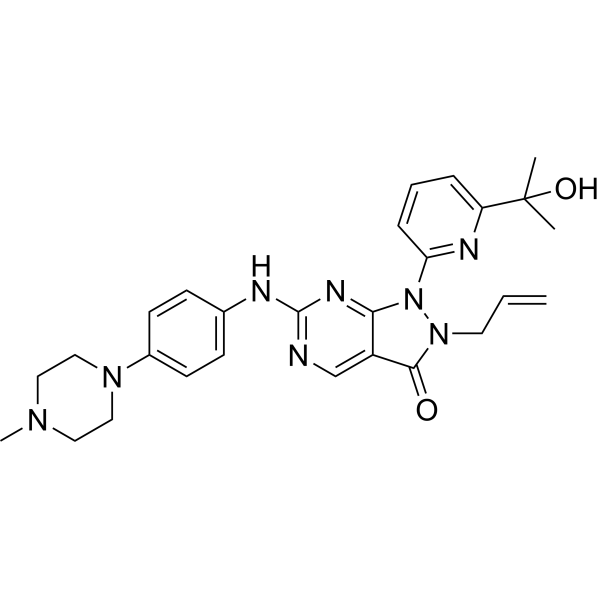
AZD0156 is a potent, selective and orally active ATM inhibitor with an IC50 of 0.58 nM. AZD0156 inhibits the ATM-mediated signaling, prevents DNA damage checkpoint activation, disrupts DNA damage repair, and induces tumor cell apoptosis .
|
-
- HY-107457
-
|
|
mGluR
|
Neurological Disease
|
|
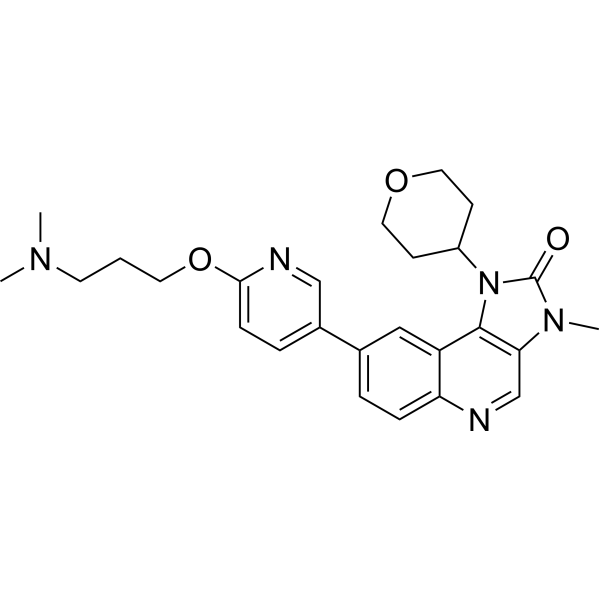
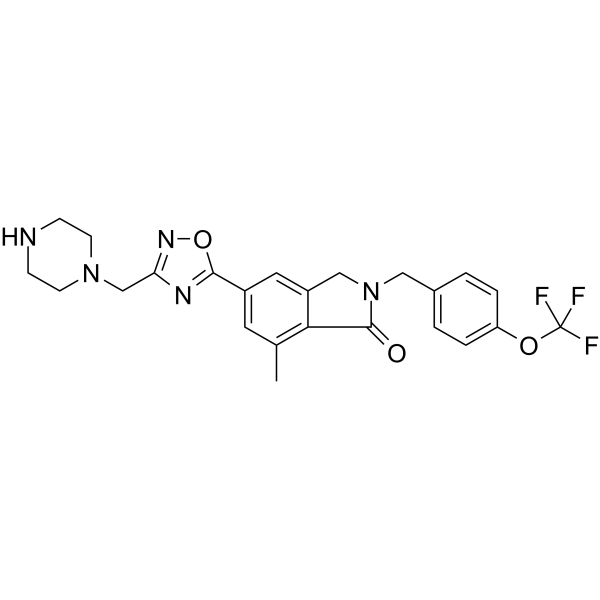
AZD-8529 is a potent, highly selective and orally bioavailable positive allosteric modulator of mGluR2, with an EC50 of 285 nM, and shows no positive allosteric modulator responses at 20-25 M on the mGluR1, 3, 4, 5, 6, 7, and 8 subtypes.
|
-
- HY-123445
-
-

- HY-107457A
-
|
|
mGluR
|
Neurological Disease
|
|
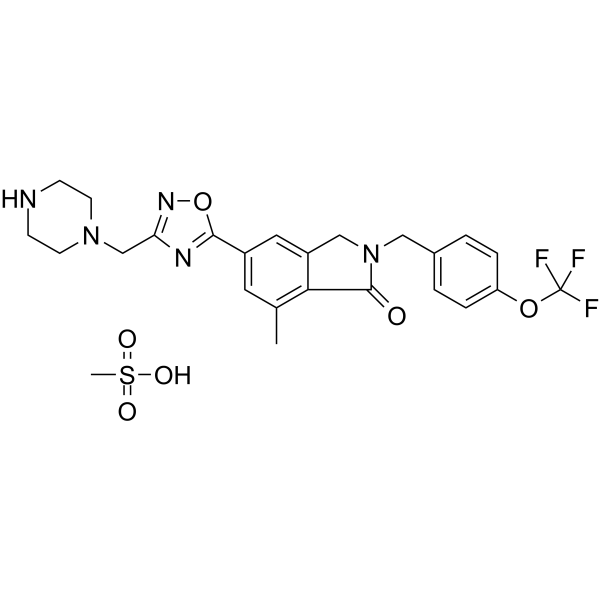
AZD-8529 mesylate is a potent, highly selective and orally bioavailable positive allosteric modulator of mGluR2, with an EC50 of 285 nM, and shows no positive allosteric modulator responses at 20-25 M on the mGluR1, 3, 4, 5, 6, 7, and 8 subtypes .
|
-
- HY-10344
-
|
KIN-193
|
PI3K
Autophagy
|
Cancer
|
|
AZD 6482 (KIN-193) is a potent and selective p110β inhibitor with an IC50 of 0.69 nM.
|
-
- HY-159692A
-
|
IONIS-1063734 sodium
|
TGF-beta/Smad
|
Inflammation/Immunology
Cancer
|
|
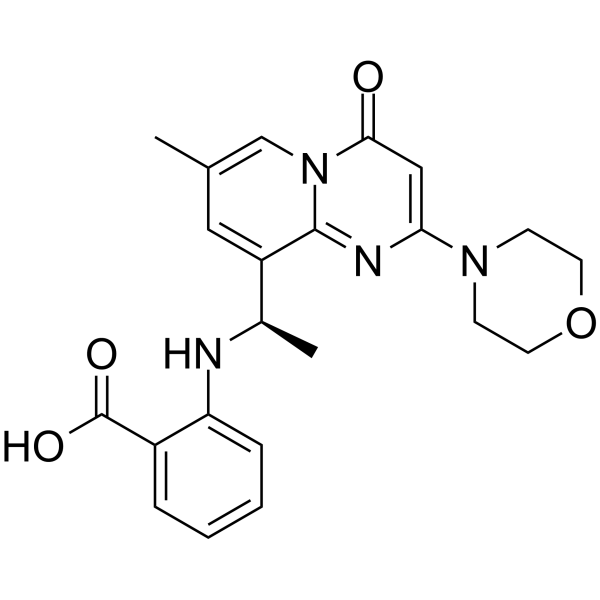
AZD8701 (IONIS-1063734) sodium is an antisense oligonucleotide targeting FOXP3 in regulatory T cells (Tregs). AZD8701 sodium can relieve immunosuppression in cancer .
|
-

- HY-18053
-
|
|
11β-HSD
|
Metabolic Disease
|
|
AZD 4017 is a potent, selective 11β-Hydroxysteroid Dehydrogenase Type 1 (11β-HSD1) inhibitor, with an IC50 of 7 nM.
|
-
- HY-15604
-
-
- HY-103672
-
-
- HY-15604A
-
-
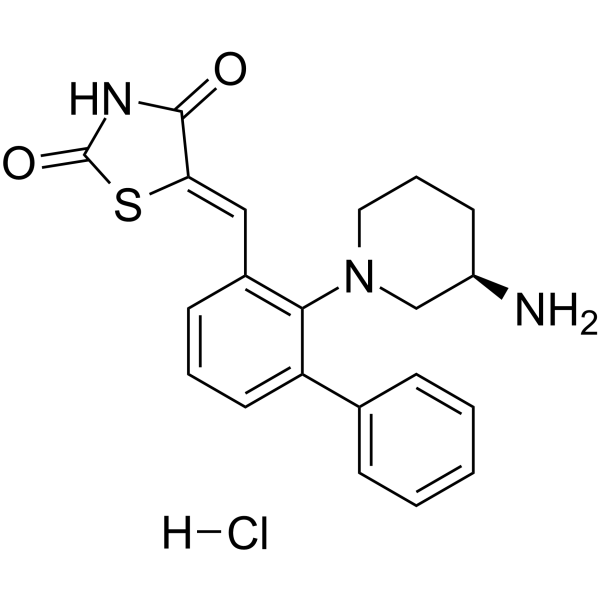
- HY-13438
-
|
|
Beta-secretase
|
Neurological Disease
|
|
AZD3839 is an orally available, selective, reversible inhibitor of the β-site amyloid precursor protein cleaving enzyme BACE1 that can cross the blood-brain barrier. AZD3839 inhibits recombinant human BACE1 with a Ki=26.1 nM. AZD3839 inhibits A40 production in SH-SY5Y cells with an IC50 of 4.8 nM. AZD3839 binds to BACE1 and reduces the Aβ amyloid produced by the cleavage of amyloid precursor protein (APP) by BACE1 and γ-secretase. AZD3839 can be used in the field of Alzheimer's disease research .
|
-
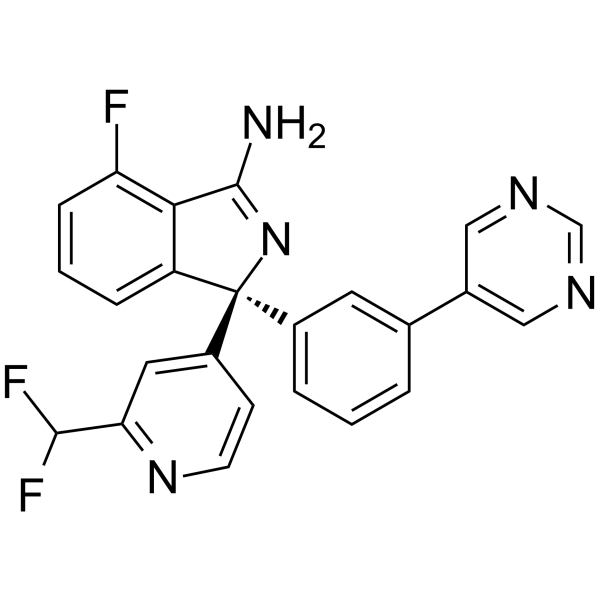
- HY-158827A
-
|
|
PCSK9
|
Metabolic Disease
|
|
AZD8233 sodium, a liver-targeting antisense oligonucleotide (ASO), inhibits subtilisin/kexin type 9 (PCSK9) protein synthesis. AZD8233 sodium increases the available LDL receptors by reducing PCSK9 levels, thereby clearing LDL from the blood and decreasing LDL-C levels.
|
-

- HY-10127A
-
|
AZD1152 dihydrochloride
|
Aurora Kinase
Apoptosis
|
Cancer
|
|
Barasertib (AZD1152 dihydrochloride), a pro-drug of Barasertib-hQPA, is a highly selective Aurora B inhibitor with an IC50 of 0.37 nM in a cell-free assay. Barasertib (AZD1152 dihydrochloride) induces growth arrest and apoptosis in cancer cells .
|
-
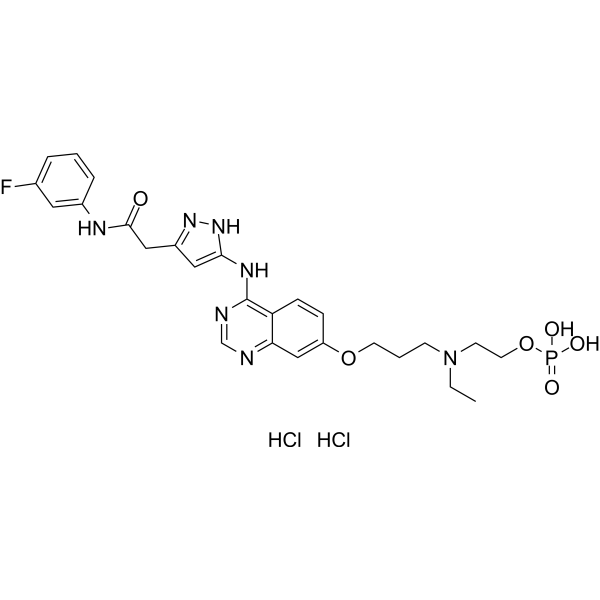
- HY-10127
-
|
AZD1152
|
Aurora Kinase
Apoptosis
|
Cancer
|
|
Barasertib (AZD1152), a pro-drug of Barasertib-hQPA, is a highly selective Aurora B inhibitor with an IC50 of 0.37 nM in a cell-free assay. Barasertib (AZD1152) induces growth arrest and apoptosis in cancer cells .
|
-
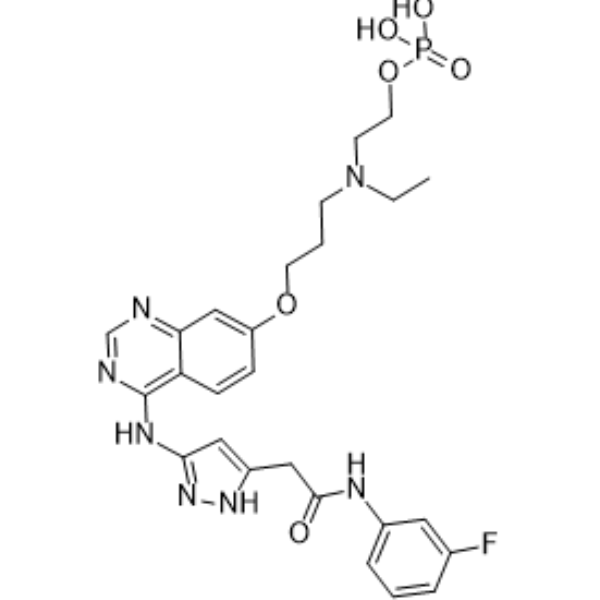
- HY-120078
-
|
|
Phospholipase
|
|
|
AZD2716 is a selective sPLA2 (secretory phospholipase A2) inhibitor. AZD2716 significantly reduces the production of pro-inflammatory lipids by inhibiting sPLA2-IIa (IC50 = 10 nM), sPLA2-V (IC50 = 40 nM), and sPLA2-X (IC50 = 400 nM), thereby decreasing macrophage activation and foam cell formation. AZD2716 is promising for studying mechanisms related to atherosclerosis and inflammatory diseases associated with sPLA2 .
|
-

- HY-15993
-
|
AZD2563; AZD5847
|
Antibiotic
|
Infection
|
|
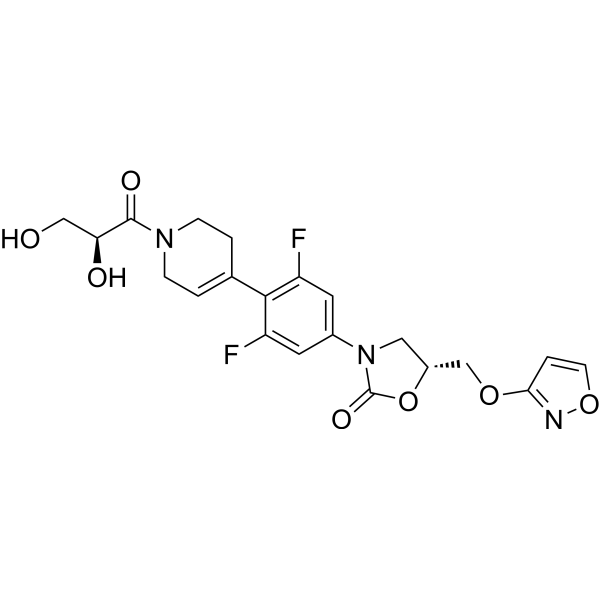
Posizolid (AZD2563), an oxazolidinone antibiotic, is developed by AstraZeneca for the study of bacterial infections. Posizolid shows very good anti-mycobacterial activity .
|
-
- HY-158827
-
|
|
PCSK9
|
Metabolic Disease
|
|
AZD8233, a liver-targeting antisense oligonucleotide (ASO), inhibits proprotein convertase subtilisin/kexin type 9 (PCSK9) protein synthesis. AZD8233 increases the available LDL receptors by reducing PCSK9 levels, thereby clearing LDL from the blood and decreasing LDL-C levels.
|
-

- HY-119104
-
AZD1940
1 Publications Verification
|
Cannabinoid Receptor
|
Neurological Disease
|
|
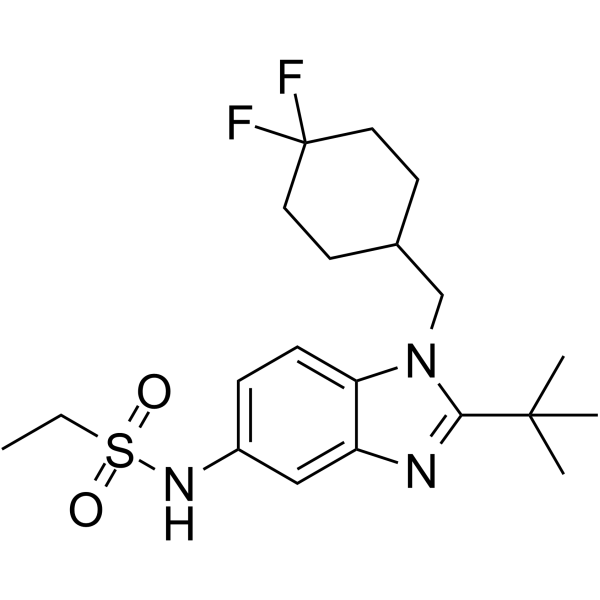
AZD1940 is an orally active, high affinity cannabinoid CB1/CB2 receptor agonist with pKi values of 7.93 and 9.06 for human CB1R and CB2R, respectively. AZD1940 shows a robust analgesia action .
|
-
- HY-177928
-
|
AZD1775 acid; MK-1775 acid
|
Drug Intermediate
Drug Derivative
|
Cancer
|
|
Adavosertib (AZD1775; MK-1775) acid (Compound 9) is a derivative of AZD1775 (HY-10993) and can be used for the synthesis of PROTAC .
|
-

- HY-15959
-
|
Volitinib; HMPL-504; AZD-6094
|
c-Met/HGFR
|
Cancer
|
|
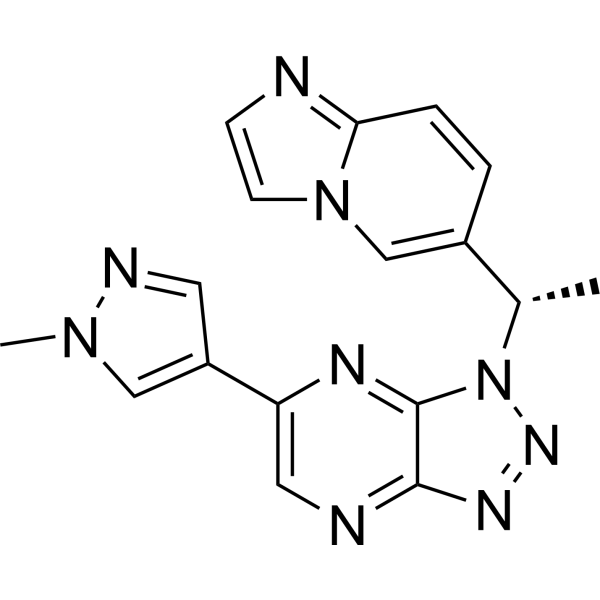
Savolitinib (AZD-6094) is a potent, highly selective, and orally bioavailable c-Met inhibitor with IC50 s of 5 nM and 3 nM for c-Met and p-Met, respectively. Savolitinib (AZD-6094) selectively binds to and inhibits the activation of c-Met in an ATP-competitive manner, and disrupts c-Met signal transduction pathways. Antineoplastic activity .
|
-
- HY-113854
-
AZD2906
1 Publications Verification
|
Glucocorticoid Receptor
|
Cardiovascular Disease
Endocrinology
|
|
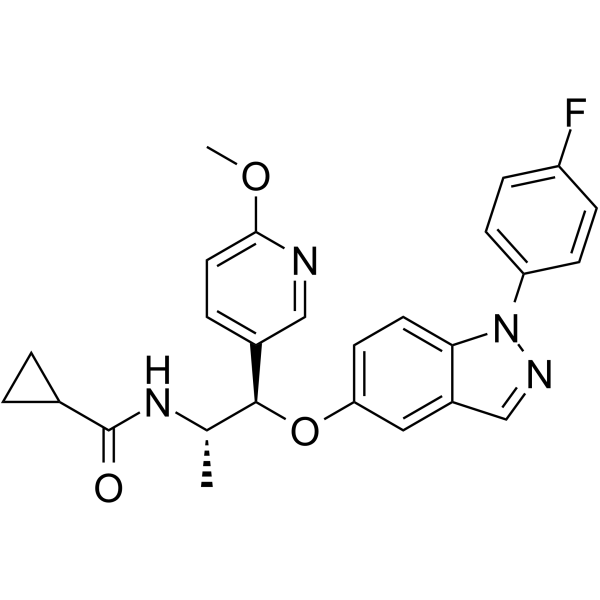
AZD2906 is a selective glucocorticoid receptor (GR) agonist, increases micronucleated immature erythrocytes in the bone marrow of rats. AZD2906 shows IC50s of 2.2, 0.3, 41.6 and 7.5 nM at GR in human, rat PBMC and human, rat whole blood, respectively .
|
-
- HY-101276
-
-

- HY-U00257
-
-
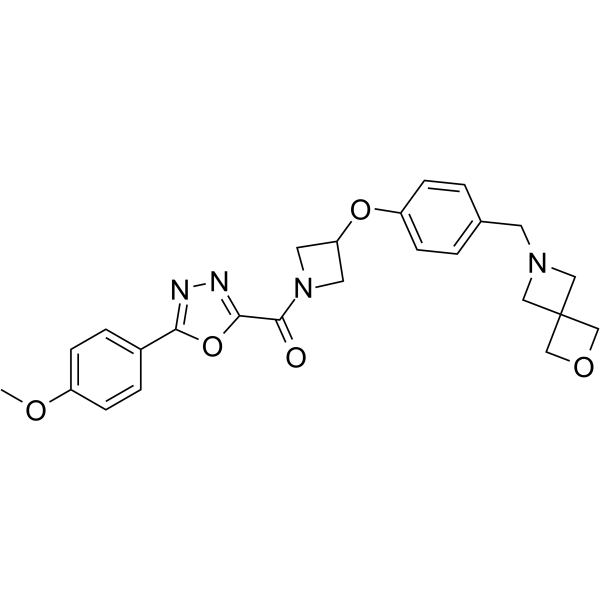
- HY-13049
-
|
AZD-2171 maleate
|
VEGFR
Autophagy
PDGFR
|
Cancer
|
|
Cediranib maleate (AZD-2171 maleate) is a highly potent, orally available VEGFR inhibitor with IC50s of <1, <3, 5, 5, 36, 2 nM for Flt1, KDR, Flt4, PDGFRα, PDGFRβ, c-Kit, respectively.
|
-
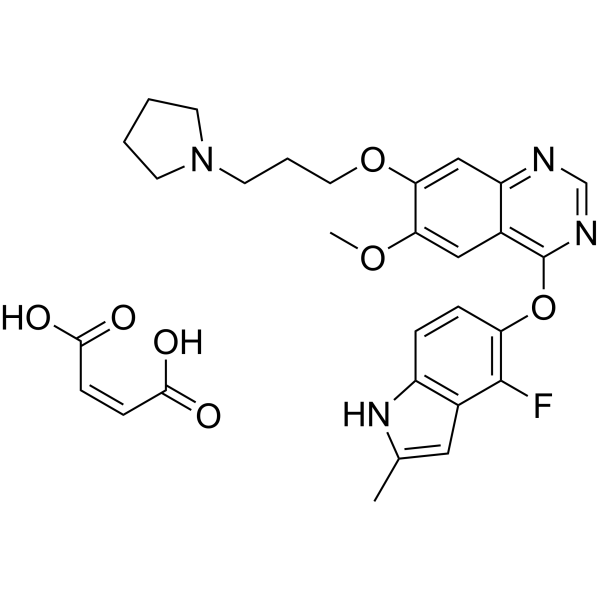
- HY-159692
-
|
IONIS-1063734
|
TGF-beta/Smad
|
Inflammation/Immunology
Cancer
|
|
AZD8701 (IONIS-1063734) is an antisense oligonucleotide targeting FOXP3 in regulatory T cells (Tregs), with a human IC50 of 65.2 nM. AZD8701 binds to intronic sites of all FOXP3 pre-mRNA isoforms and mediates dose-dependent FOXP3 knockdown via free uptake. AZD8701 can be used in cancer-related research .
|
-

- HY-117244
-
AZD7507
2 Publications Verification
|
c-Fms
|
Cancer
|
|
AZD7507 is a potent and orally active CSF-1R inhibitor, with antitumor activity.
|
-
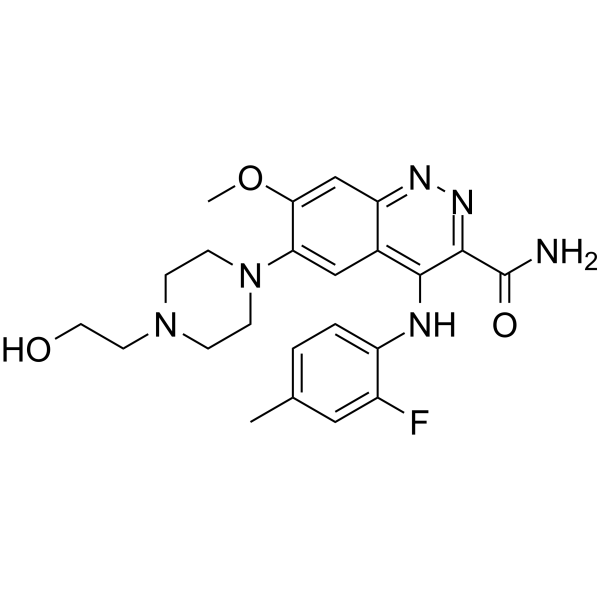
- HY-10062
-
|
EBP-921
|
Akt
Farnesyl Transferase
|
Cancer
|
|
AZD3409 is a prenyl inhibitor that exhibits inhibitory activity against both farnesyl transferase and geranylgeranyl transferase I. AZD3409 inhibits the growth of breast cancer cells, with IC50s of 220 nM (MDA-MB-468), 180 nM (MDA-MB-361), and 290 nM (SK-Br-3). AZD3409 significantly reduces the activation level of AKT in breast cancer cell lines. AZD3409 induces G0/G1 phase arrest in MDA-MB-468 cells, causes G2/M phase arrest in MDA-MB-361 cells. AZD3409 can be used for the study of breast cancer .
|
-

- HY-W190985
-
|
|
Biochemical Assay Reagents
|
Others
|
|
AZD-PEG5-methyl ester is a PEG linker containing an AZD group and a methyl ester group which can be hydrolyzed under strong basic condition. The hydrophilic PEG spacer increases solubility in aqueous media.
|
-

- HY-W190912
-
|
|
Biochemical Assay Reagents
|
Others
|
|
AZD-PEG2-PFP is a PEG linker containing an AZD group and a PFP ester group, an activated ester that reacts with primary amines to form amide bonds. The hydrophilic PEG spacer increases solubility in aqueous media.
|
-

- HY-111052
-
|
|
GABA Receptor
Cytochrome P450
|
Neurological Disease
Inflammation/Immunology
|
|
AZD7325 is a potent and orally active partial selective PAM of GABAAα2 and Aα3 receptor (Ki=0.3 and 1.3 nM, respectively), and has less antagonistic efficacy at the Aα1 and Aα5 receptor subtypes . AZD7325 is a moderate CYP1A2 and a potent CYP3A4 inducer in vitro . AZD7325 has the potential for the investigation of anxiety and dravet syndrome . PAM: positive allosteric modulator.
|
-
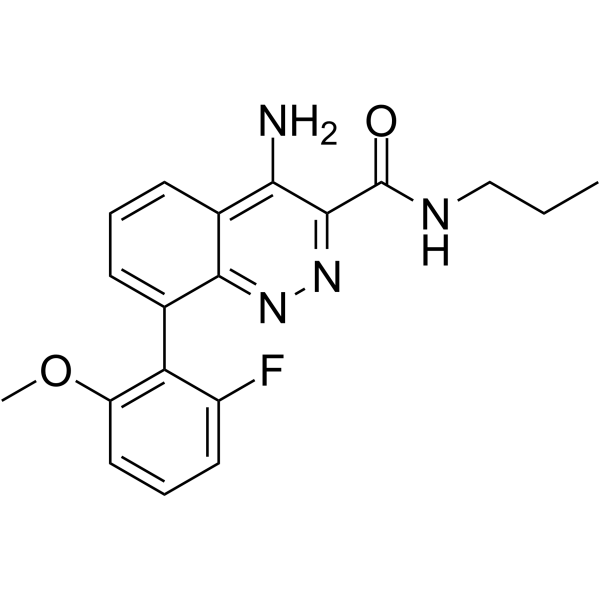
- HY-100653A
-
|
|
Epigenetic Reader Domain
|
Cancer
|
|
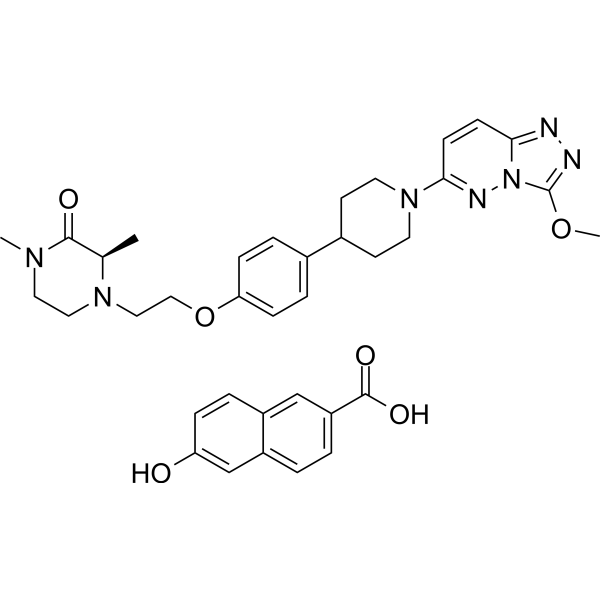
AZD5153 6-Hydroxy-2-naphthoic acid is the 6-Hydroxy-2-naphthoic acid of AZD5153. AZD5153 is a potent, selective, and orally available BET/BRD4 bromodomain inhibitor; disrupts BRD4 with an IC50 of 1.7 nM.
|
-
- HY-100412
-
|
AZD0865
|
Proton Pump
|
Cancer
|
|
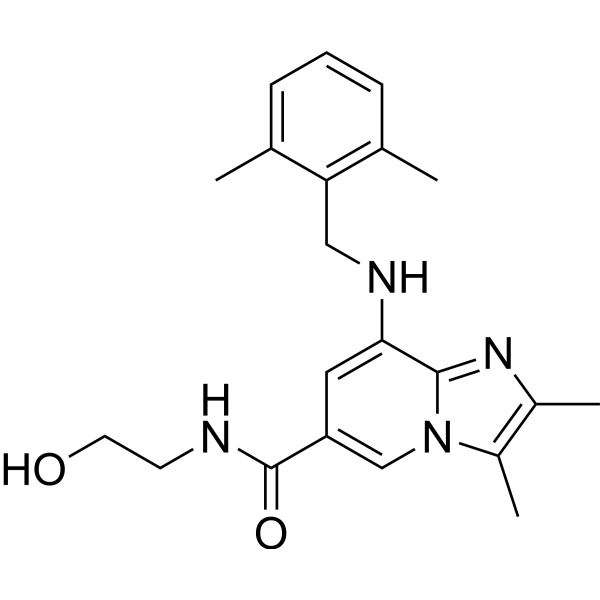
Linaprazan (AZD0865) can inhibit H+,K+ -ATPase in the stomach through K+ competitive binding, (IC50: 1.0 ± 0.2 μM), it has a strong inhibitory effect on acid. Linaprazan (AZD0865) can be used for research on reflux esophagitis with oral activity .
|
-
- HY-W190910
-
|
|
Biochemical Assay Reagents
|
Others
|
|
AZD-PEG2-acid is a PEG linker containing an AZD group and a terminal carboxylic acid. The hydrophilic PEG spacer increases solubility in aqueous media. The terminal carboxylic acid can react with primary amine groups in the presence of activators (e.g. EDC, or HATU) to form a stable amide bond.
|
-

- HY-112802A
-
|
AZD3229 tosylate
|
c-Kit
|
Cancer
|
|
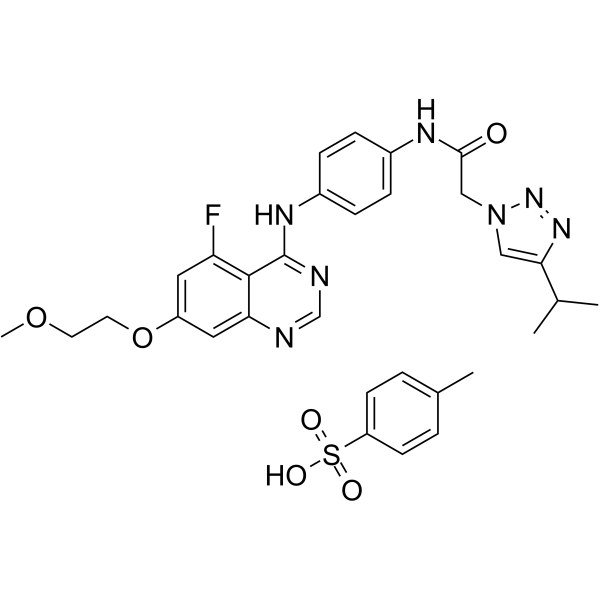
AZD3229 Tosylate is a potent pan-KIT mutant inhibitor for the treatment of gastrointestinal stromal tumors.
|
-
- HY-19323
-
|
AZD6738
|
ATM/ATR
|
Cancer
|
|
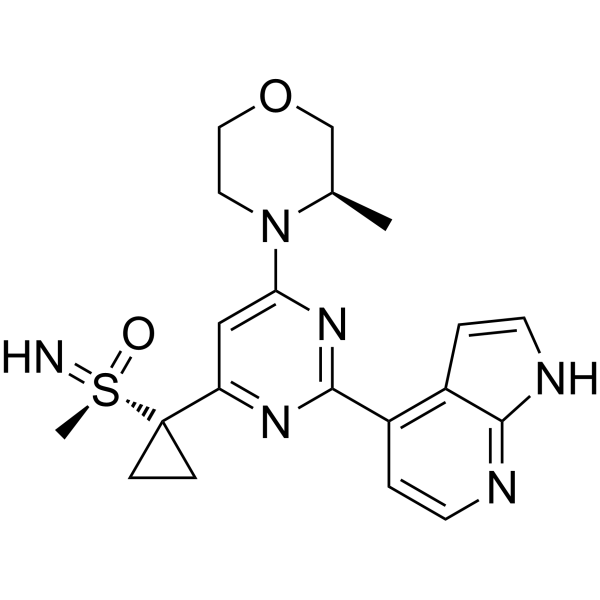
Ceralasertib (AZD6738) is an orally active and bioavailable inhibitor of ATR kinase with an IC50 of 1 nM.
|
-
- HY-111341
-
-
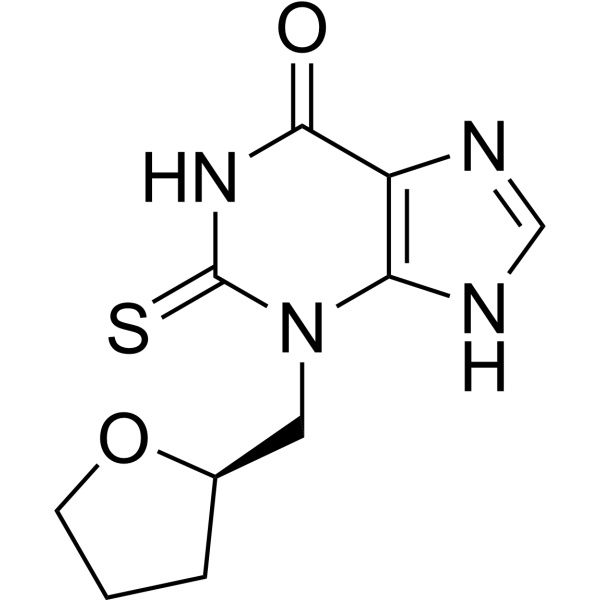
- HY-15609
-
-
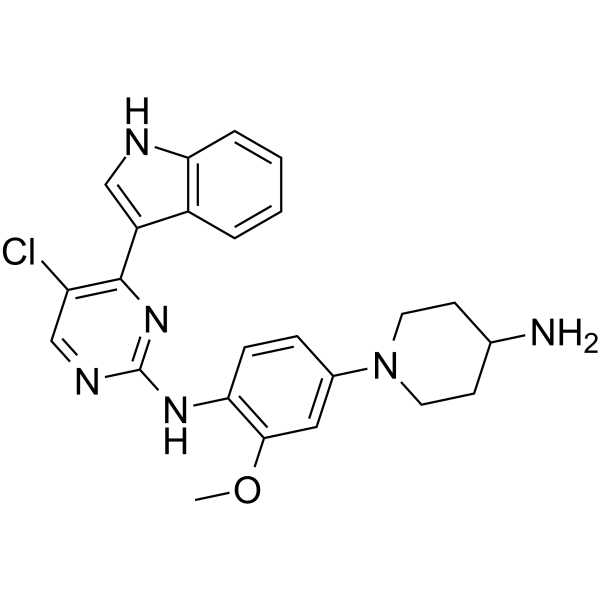
- HY-164460
-
|
|
Pim
|
Cancer
|
|
AZD1897 is a PIM1, PIM2, and PIM3 inhibitor with IC50 values of less than 3 nM for these three PIM kinases. AZD1897 exhibits anticancer activity and synergistically inhibits the activity of acute myeloid leukemia (AML) cells in combination with Capivasertib (HY-15431). This synergistic inhibitory effect is achieved through the inhibition of the mTOR and MCL1 pathways .
|
-

- HY-109566
-
-
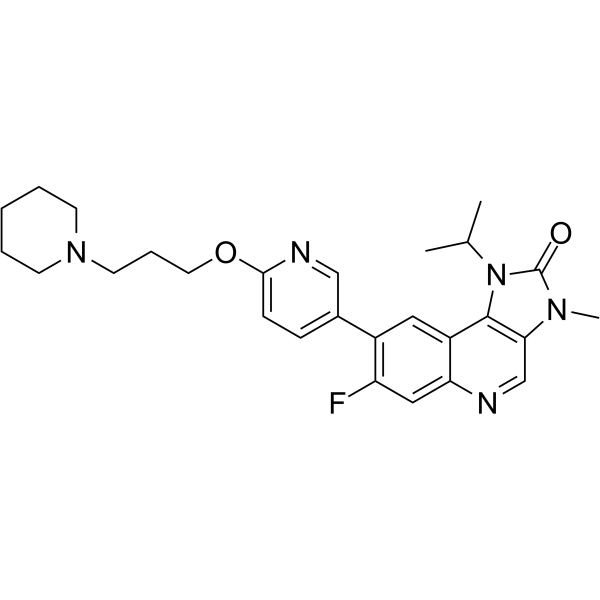
- HY-12750
-
-
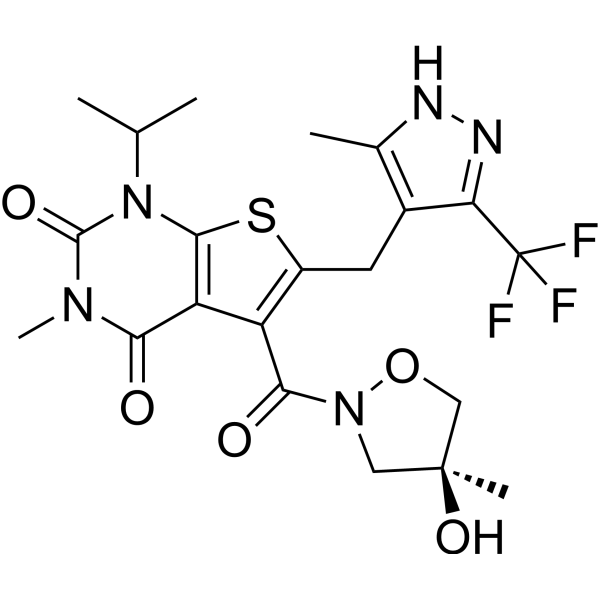
- HY-147744
-
|
|
Smo
|
Cancer
|
|
AZD7254 is an orally active Smoothened (SMO) inhibitor with an EC50 of 1.0 nM against sonic Hh protein (shh) .
|
-
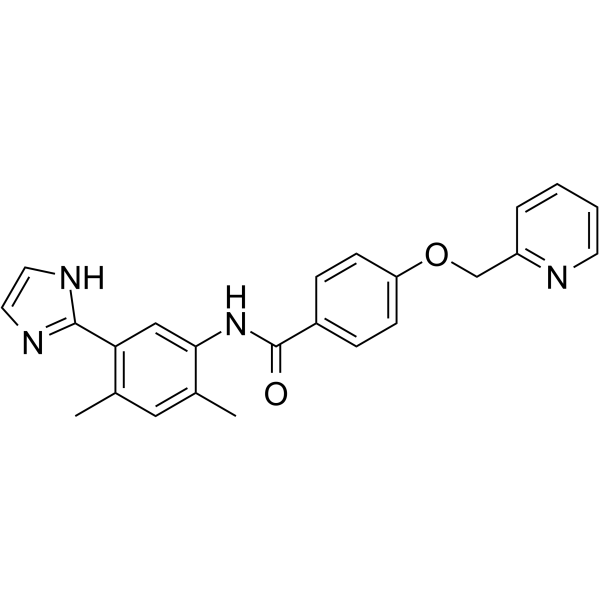
- HY-12733
-
-
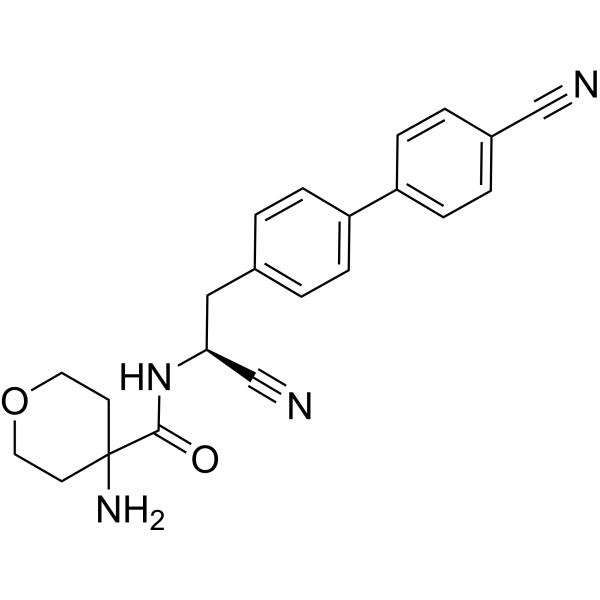
- HY-19872
-
-
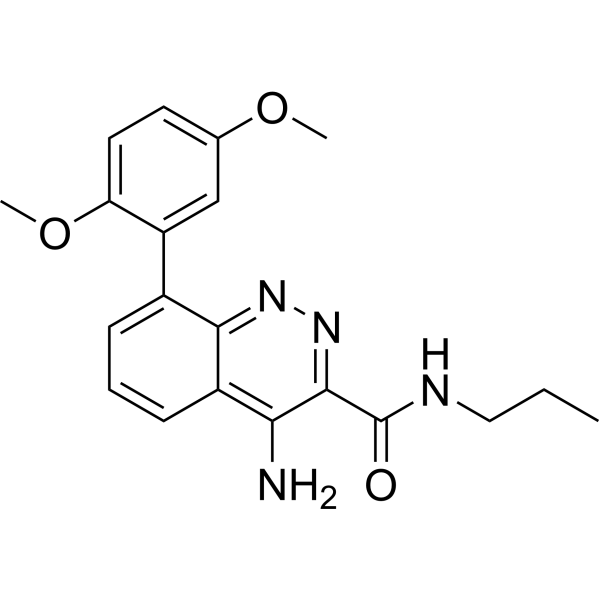
- HY-100653AR
-
|
|
Epigenetic Reader Domain
Reference Standards
|
Cancer
|
|
AZD5153 (6-Hydroxy-2-naphthoic acid) (Standard) is the analytical standard of AZD5153 (6-Hydroxy-2-naphthoic acid) (HY-100653A). This product is intended for research and analytical applications. AZD5153 6-Hydroxy-2-naphthoic acid is the 6-Hydroxy-2-naphthoic acid of AZD5153. AZD5153 is a potent, selective, and orally available BET/BRD4 bromodomain inhibitor; disrupts BRD4 with an IC50 of 1.7 nM.
|
-

- HY-P99604
-
|
AZD-1061; COV2-2130
|
SARS-CoV
|
Infection
|
|
Cilgavimab (AZD-1061; COV2-2130) is a human SARS-CoV-2-neutralizing monoclonal antibody, can compose monoclonal-antibody combination AZD7442 with Tixagevimab (HY-P99556). Cilgavimab shows protective action on mouse models of SARS-CoV-2 infection .
|
-

- HY-108204
-
|
THRX 918661
|
GABA Receptor
|
Others
|
|
AZD 3043 (THRX 918661) is a positive allosteric modulator of GABA(A) receptors with sedative and hypnotic activity. AZD 3043 can enhance GABA(A) receptor-mediated chloride currents in vitro and produce hypnotic and electroencephalographic inhibitory effects in vivo. Due to its esterase-dependent metabolic pathway, it has a short duration of action and can be quickly cleared even after long-term infusion, which may have clinical application potential.
|
-

- HY-111269
-
-
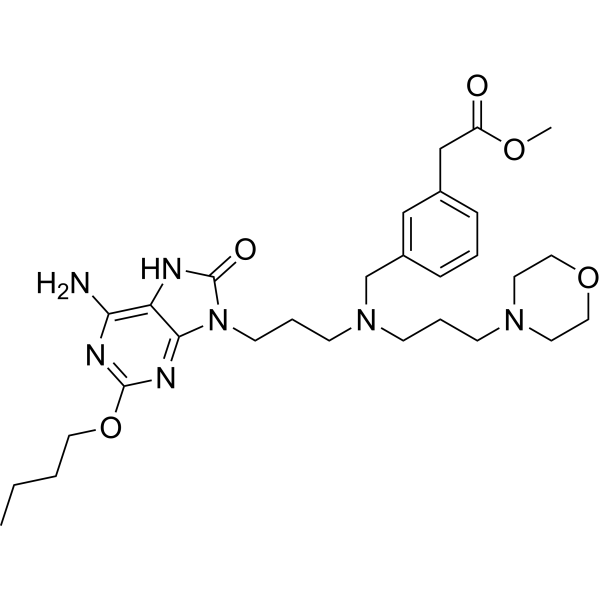
- HY-112088
-
|
|
CDK
|
Cancer
|
|
AZD4573 is a potent and highly selective CDK9 inhibitor (IC50 of <4 nM) that enables transient target engagement for the treatment of hematologic malignancies .
|
-
- HY-19427A
-
|
|
P2X Receptor
|
Inflammation/Immunology
|
|
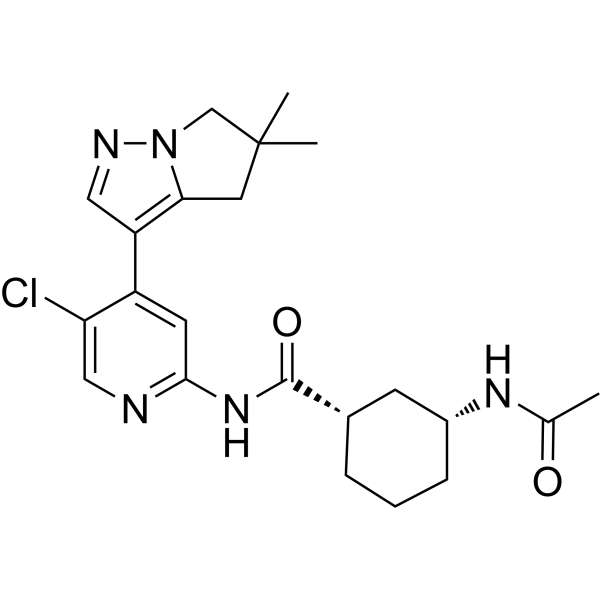
AZD9056 hydrochloride is a selective orally active inhibitor of P2X7 which plays a significant role in inflammation and pain-causing diseases.
|
-
- HY-15247R
-
|
AZD2014 (Standard)
|
mTOR
Autophagy
Apoptosis
Reference Standards
|
Cancer
|
|
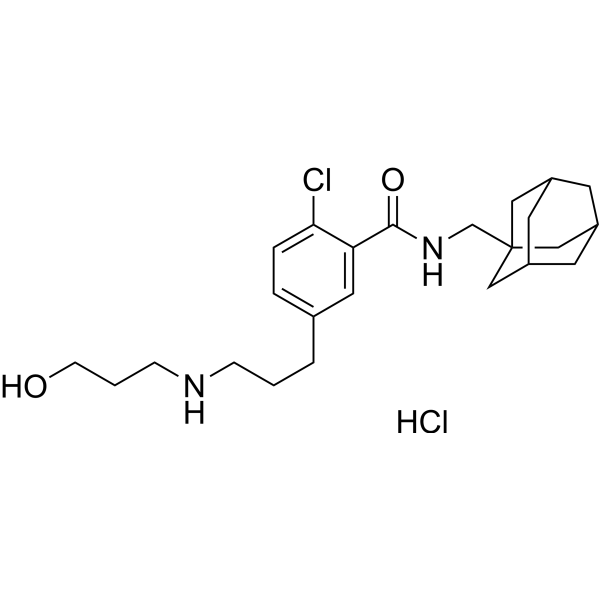
Vistusertib (Standard) is the analytical standard of Vistusertib. This product is intended for research and analytical applications. Vistusertib (AZD2014) is an ATP competitive mTOR inhibitor with an IC50 of 2.81 nM. AZD2014 inhibits both mTORC1 and mTORC2 complexes.
|
-

- HY-123536
-
|
A-831
|
PI4K
HCV
|
Infection
|
|
AZD2836 (A-831) is a 4-aminopyrazolone compound with anti-HCV activity. AZD2836 inhibits the activity of the host cell kinase PI4KIIIα, causing metabolic disorder of the cell membrane component PI4P that is necessary for viral replication. In the HCV subgenomic replicon cell model, the EC50 values of AZD2836 for genotype 1b (Con1 strain) and genotype 1a (Lemon strain) are 270 nM and 550 nM, respectively .
|
-

- HY-102066R
-
|
AZD-7451 (Standard)
|
Reference Standards
Trk Receptor
|
Cancer
|
|
Utatrectinib (Standard) is the analytical standard of Utatrectinib (HY-102066). This product is intended for research and analytical applications. Utatrectinib (AZD-7451) is a potent, selective and orally active Trk inhibitor. Utatrectinib blocks TrkC activation and associated tumorigenic behaviors .
|
-

- HY-173639
-
|
|
Antibody-Drug Conjugates (ADCs)
Topoisomerase
Apoptosis
|
Cancer
|
|
AZD0516 is a first-in-class antibody-drug conjugate (ADC) targeting six-transmembrane epithelial antigen of the prostate-2 (STEAP2). The anti-STEAP2 monoclonal antibody (mAb) is conjugated via interchain cysteines to a maleimide-reactive, β-glucuronidase-cleavable linker (HY-173635) bearing the topoisomerase 1 inhibitor, Exatecan (HY-13631). AZD0516 can be used for the study of prostate cancer .
|
-

- HY-17647
-
|
ETX0914; AZD0914
|
DNA/RNA Synthesis
Bacterial
Antibiotic
|
Infection
|
|
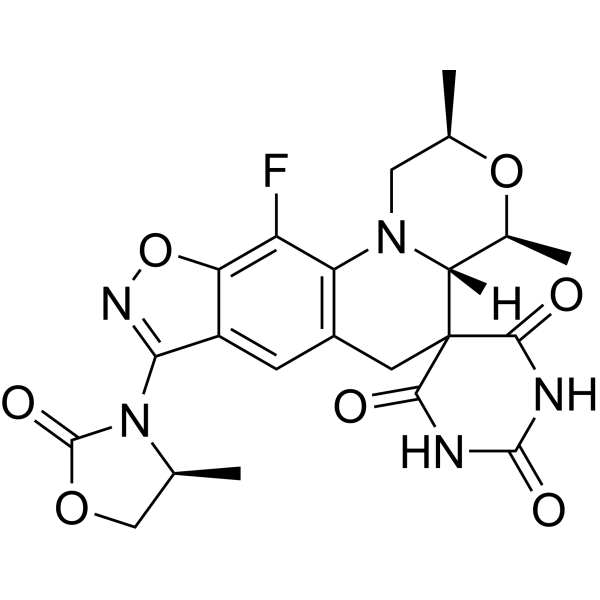
Zoliflodacin (ETX0914;AZD0914) is a novel spiropyrimidinetrione bacterial DNA gyrase/topoisomerase inhibitor. Zoliflodacin has potent in vitro antibacterial activity against Gram-positive and Gram-negative organisms, including S. aureus with the MIC90 of 0.25 μg/mL.
|
-
- HY-101980
-
|
HTL1071; AZD4635
|
Adenosine Receptor
|
Cancer
|
|
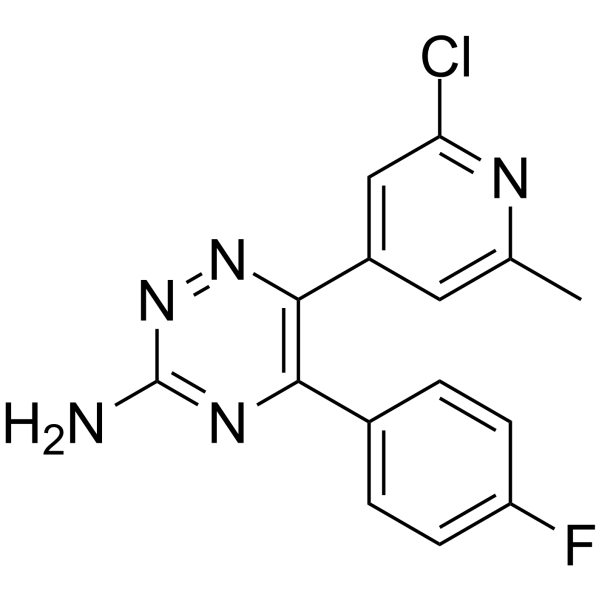
AZD4635 (HTL1071) is a potent, selective and orally active adenosine A2A receptor (A2AR) antagonist. AZD4635 binds to human A2AR with a Ki of 1.7 nM and shows >30-fold selectivity over other adenosine receptors .
|
-
- HY-W190950
-
|
|
Biochemical Assay Reagents
|
Others
|
|
AZD-PEG5-PFP is a PEG linker containing an AZD group and a PFP ester group, an activated ester that reacts with primary amines to form amide bonds. PFP ester has been found to be more stable than other amine reactive groups because it is less likely to undergo hydrolysis. The hydrophilic PEG spacer increases solubility in aqueous media.
|
-

- HY-W800610
-
|
|
Biochemical Assay Reagents
|
Others
|
|
AZD-PEG13-PFP is a PEG linker containing an AZD group and a PFP ester group, an activated ester that reacts with primary amines to form amide bonds. PFP ester has been found to be more stable than other amine reactive groups because it is less likely to undergo hydrolysis. The hydrophilic PEG spacer increases solubility in aqueous media.
|
-

- HY-10061
-
|
AZD-3355
|
GABA Receptor
|
Metabolic Disease
|
|
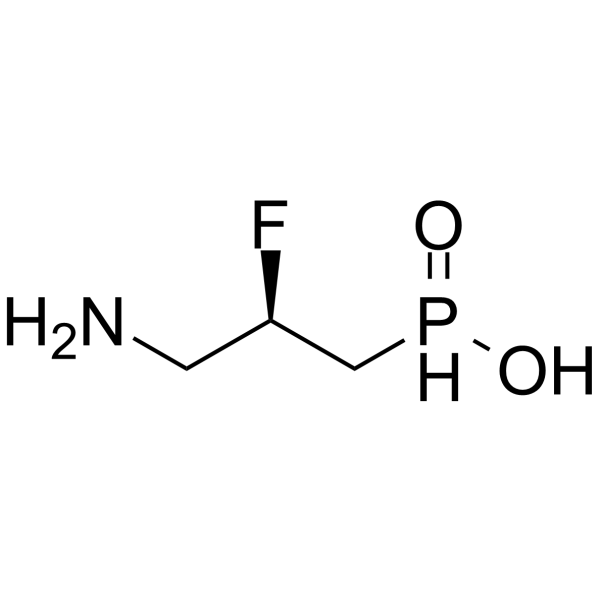
Lesogaberan (AZD-3355) is a potent and selective GABAB receptor agonist with an EC50 of 8.6 nM for human recombinant GABAB receptors. The affinity (Kis) of Lesogaberan for rat GABAB and GABAA receptors, as measured by displacement of [ 3H]GABA binding in brain membranes: 5.1 nM and 1.4 μM, respectively. Lesogaberan inhibits transient lower esophageal sphincter relaxation through a peripheral mode of action .
|
-
- HY-10061B
-
|
AZD-3355 hydrochloride
|
GABA Receptor
|
Metabolic Disease
|
|
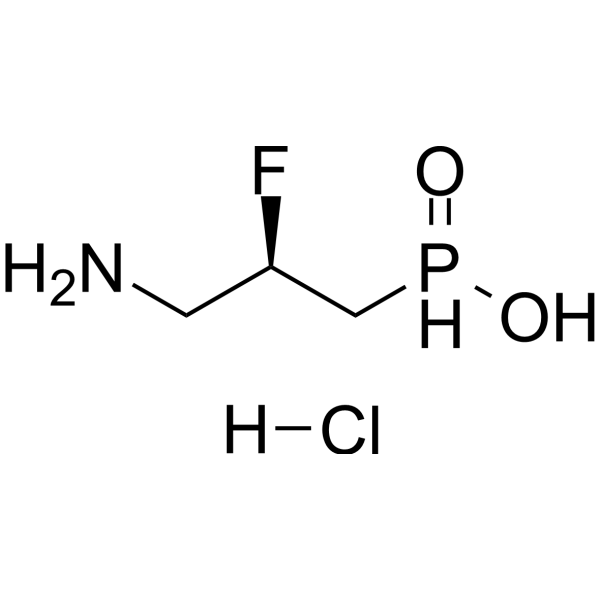
Lesogaberan (AZD-3355) hydrochloride is a potent and selective GABAB receptor agonist with an EC50 of 8.6 nM for human recombinant GABAB receptor. The affinity (Kis) of Lesogaberan hydrochloride for rat GABAB and GABAA receptors, as measured by displacement of [ 3H]GABA binding in brain membranes: 5.1 nM and 1.4 μM, respectively. Lesogaberan hydrochloride inhibits transient lower esophageal sphincter relaxation through a peripheral mode of action .
|
-
- HY-17646
-
|
AZD3241
|
Glutathione Peroxidase
|
Neurological Disease
|
|
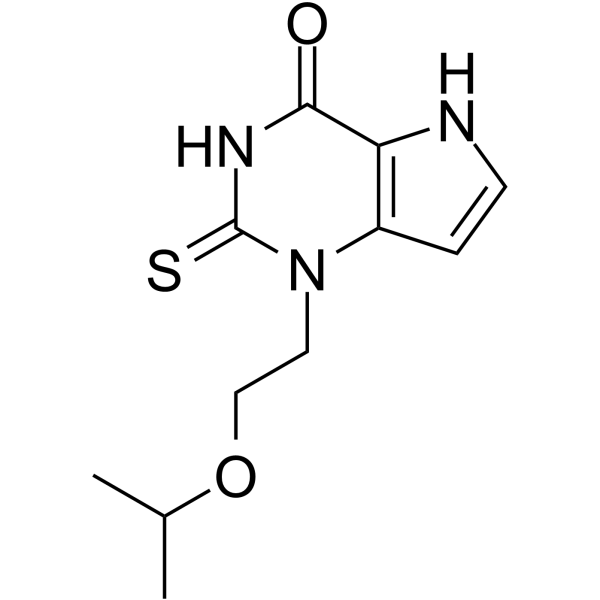
Verdiperstat (AZD3241) is a selective, irreversible and orally active myeloperoxidase (MPO) inhibitor, with an IC50 of 630 nM, and can be used in the research of neurodegenerative brain disorders.
|
-
- HY-12869
-
|
|
PI3K
|
Cancer
|
|
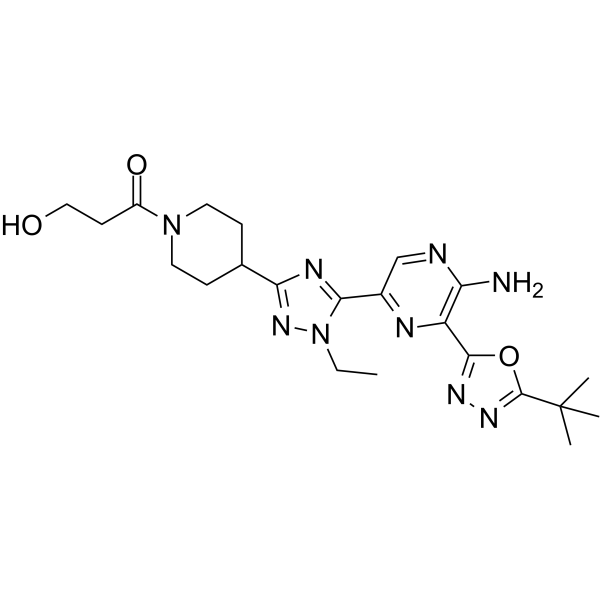
AZD8835 is a potent and selective inhibitor of PI3Kα and PI3Kδ with IC50s of 6.2 and 5.7 nM, respectively.
|
-
- HY-111453
-
-
- HY-10126R
-
|
AZD2811 (Standard); INH-34 (Standard); AZD1152-HQPA (Standard)
|
Aurora Kinase
Reference Standards
Apoptosis
|
Cancer
|
|
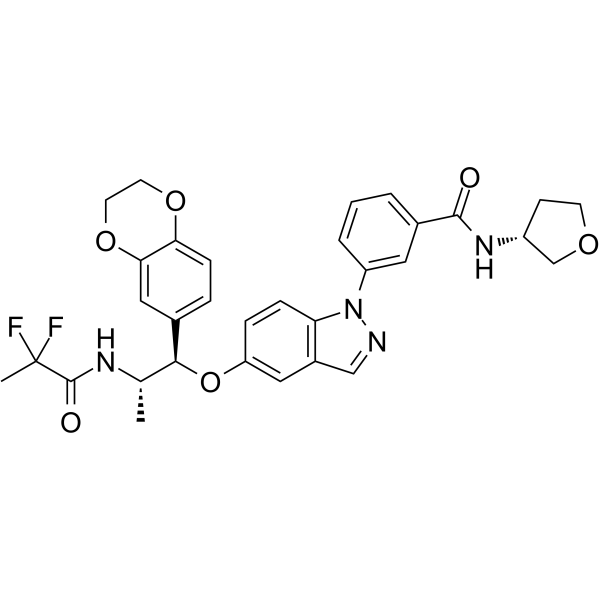
Barasertib-HQPA (Standard) is the analytical standard of Barasertib-HQPA (HY-10126). This product is intended for research and analytical applications. Barasertib-HQPA (AZD2811) is a highly selective Aurora B inhibitor with an IC50 of 0.37 nM in a cell-free assay. Barasertib-HQPA (AZD2811) induces growth arrest and apoptosis in cancer cells .
|
-

- HY-50706
-
-
- HY-10127R
-
|
AZD1152 (Standard)
|
Reference Standards
Aurora Kinase
Apoptosis
|
Cancer
|
|
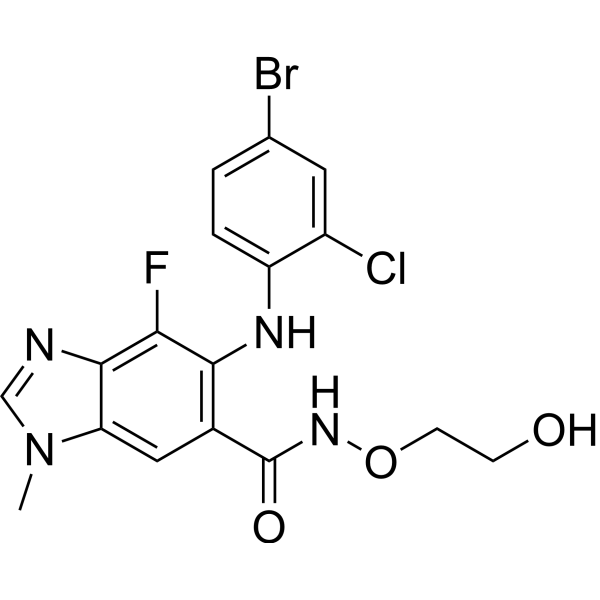
Barasertib (Standard) is the analytical standard of Barasertib. This product is intended for research and analytical applications. Barasertib (AZD1152), a pro-drug of Barasertib-hQPA, is a highly selective Aurora B inhibitor with an IC50 of 0.37 nM in a cell-free assay. Barasertib (AZD1152) induces growth arrest and apoptosis in cancer cells .
|
-

- HY-10993R
-
|
AZD1775 (Standard); MK-1775 (Standard)
|
Reference Standards
Wee1
|
Cancer
|
|
Adavosertib (Standard) is the analytical standard of Adavosertib. This product is intended for research and analytical applications. Adavosertib (AZD-1775; MK-1775) is a potent Wee1 inhibitor with an IC50 of 5.2 nM.
|
-

- HY-16082
-
AZD7545
4 Publications Verification
|
PDHK
|
Metabolic Disease
|
|
AZD7545 is a potent, competitive, selective PDHK2 (pyruvate dehydrogenase kinase 2) inhibitor with IC50s of 36.8 nM, 6.4 nM for PDHK1 and PDHK2, respectively .
|
-
- HY-120274
-
-
- HY-13049R
-
|
AZD-2171 maleate (Standard)
|
VEGFR
Autophagy
PDGFR
Reference Standards
|
Cancer
|
|
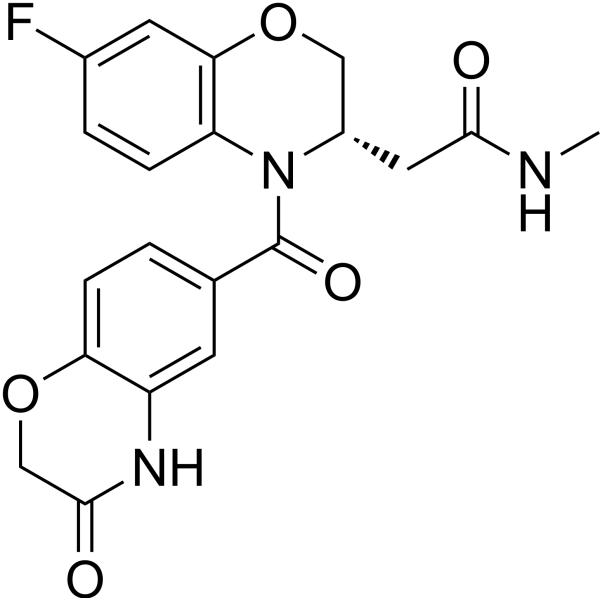
Cediranib (maleate) (Standard) is the analytical standard of Cediranib (maleate). This product is intended for research and analytical applications. Cediranib maleate (AZD-2171 maleate) is a highly potent, orally available VEGFR inhibitor with IC50s of <1, <3, 5, 5, 36, 2 nM for Flt1, KDR, Flt4, PDGFRα, PDGFRβ, c-Kit, respectively.
|
-

- HY-18179
-
|
|
PDGFR
VEGFR
FLT3
c-Kit
|
Cancer
|
|
AZD2932 is a potent and multi-targeted kinase inhibitor VEGFR2, PDGFβ, Flt-3 and c-Kit with IC50s of 8, 4, 7 and 9 nM in cell assay, respectively.
|
-
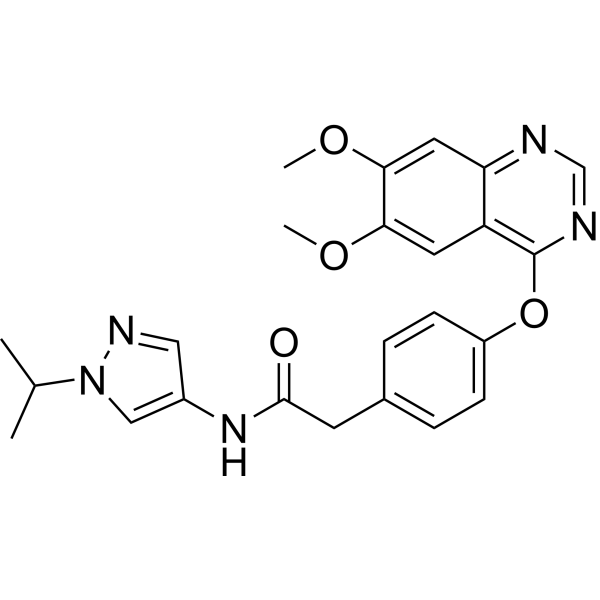
- HY-122908
-
|
AZD5718
|
FLAP
|
Cardiovascular Disease
|
|
Atuliflapon (AZD5718) is an orally active inhibitor of FLAP (5?Lipoxygenase activating protein), with an IC50 of 2 nM. Atuliflapon is used in the study for coronary artery disease .
|
-
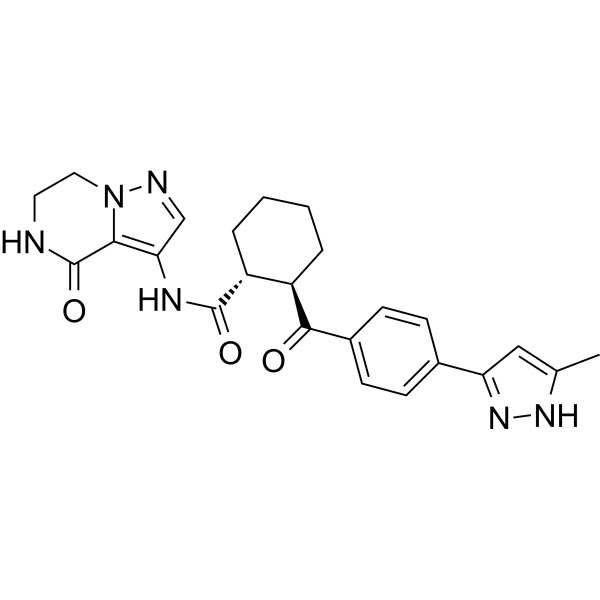
- HY-111483
-
|
AZD0364
|
ERK
|
Cancer
|
|
Tizaterkib (AZD0364) is a potent and selective ERK2 inhibitor extracted from patent WO2017080979A1, compound example 18, has an IC50 of 0.6 nM.
|
-
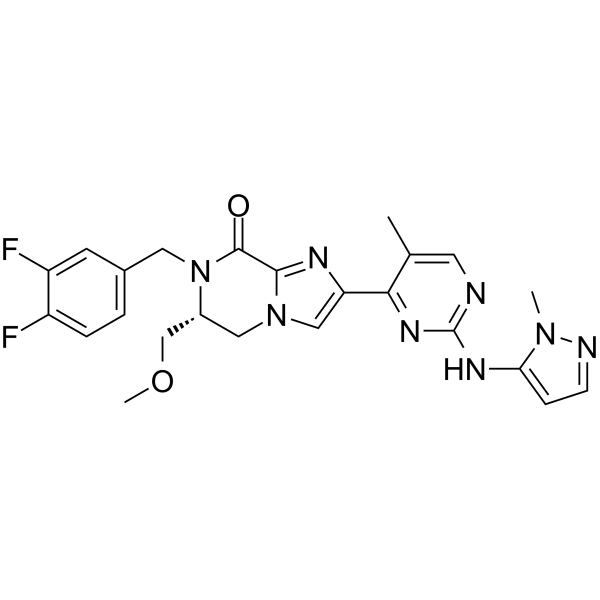
- HY-46340
-
-
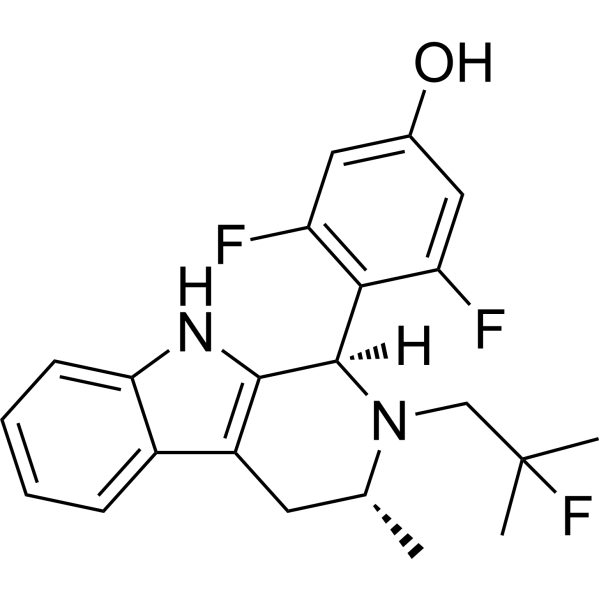
- HY-W800675
-
|
|
Biochemical Assay Reagents
|
Others
|
|
AZD-PEG2-azide is a biochemical reagent that can be used as a biological material or organic compound for life science related research.
|
-

- HY-148087
-
AZD5462
1 Publications Verification
|
RXFP Receptor
|
Cardiovascular Disease
|
|
AZD5462 is a RXFP1 modulator, can be used for heart failure research. RXFP1 is the cognate receptor for human relaxin, belongs to GPCR family 1c number with anti-fibrotic and anti-inflammatory properties .
|
-
- HY-15651
-
|
AZD9668
|
Elastase
|
Inflammation/Immunology
|
|
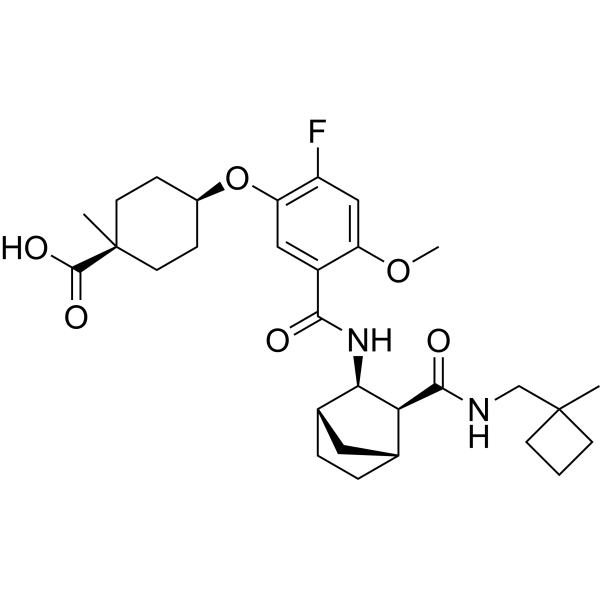
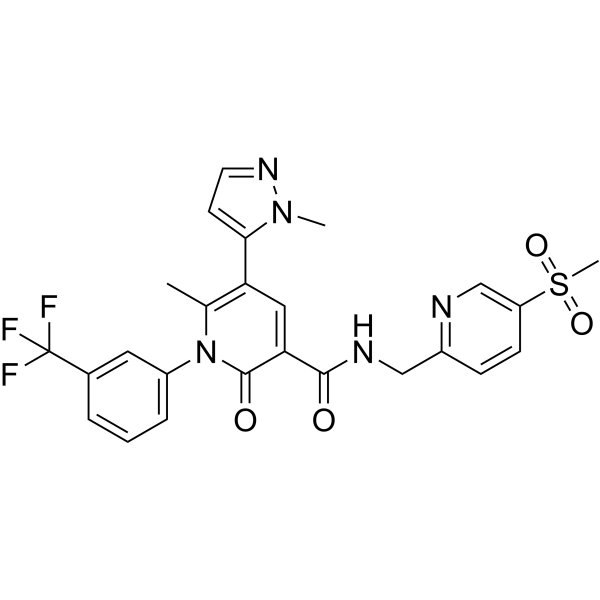
Alvelestat (AZD9668) is an orally bioavailable, affinity and selective inhibitor of neutrophil elastase (NE) with a pIC50 value of 7.9 nM, a Ki value of 9.4 nM and a Kd value of 9.5 nM .
|
-
- HY-79077
-
|
AZD-9291 dimesylate; Mereletinib dimesylate
|
EGFR
|
Cancer
|
|
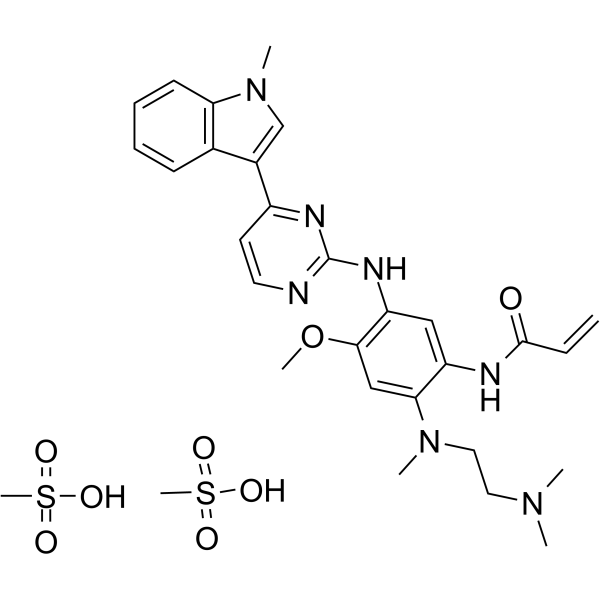
Osimertinib dimesylate (AZD-9291 dimesylate) is an irreversible and mutant selective EGFR inhibitor with IC50s of 12 and 1 nM against EGFR L858R and EGFR L858R/T790M, respectively.
|
-
- HY-15431
-
|
AZD5363
|
Akt
Autophagy
|
Cancer
|
|
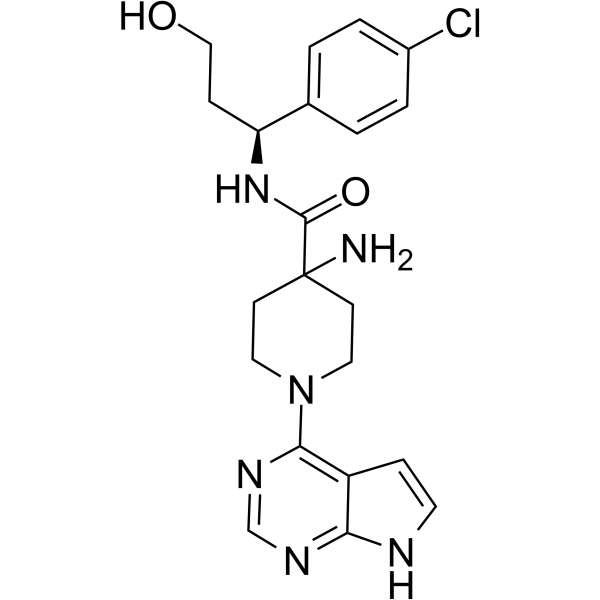
Capivasertib (AZD5363) is an orally active and potent pan-AKT kinase inhibitor with IC50 of 3, 7 and 7 nM for Akt1,Akt2 and Akt3, respectively.
|
-
- HY-107361R
-
|
AZD4205 (Standard)
|
Reference Standards
JAK
|
Cancer
|
|
Golidocitinib (Standard) (AZD4205 (Standard)) is the analytical standard of Golidocitinib (HY-107361). This product is intended for research and analytical applications. Golidocitinib (AZD4205) is a selective JAK1 inhibitor, with an IC50 of 73 nM, weakly inhibits JAK2 (IC50>14.7 μM), and shows little inhibition on JAK3 (IC50>30 μM) .
|
-

- HY-100412R
-
|
AZD0865 (Standard)
|
Reference Standards
Proton Pump
|
Cancer
|
|
Linaprazan (Standard) is the analytical standard of Linaprazan. This product is intended for research and analytical applications. Linaprazan (AZD0865) can inhibit H+,K+ -ATPase in the stomach through K+ competitive binding, (IC50: 1.0 ± 0.2 μM), it has a strong inhibitory effect on acid. Linaprazan (AZD0865) can be used for research on reflux esophagitis with oral activity .
|
-

- HY-15761
-
|
|
GSK-3
|
Neurological Disease
|
|
AZD2858 is a potent, orally active GSK-3 inhibitor, with IC50s of 0.9 and 5 nM for GSK-3α and GSK-3β, respectively, used in the research of fracture healing.
|
-
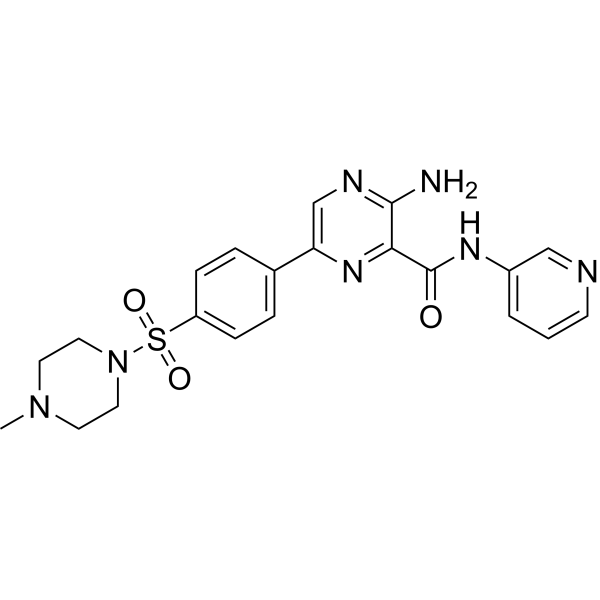
- HY-176364
-
-

- HY-122557
-
|
|
|
Neurological Disease
|
|
AZD3676 is an orally active and blood-brain barrier-permeable ligand for 5-HT1A and 5-HT1B receptors, with nanomolar binding affinity for human and monkey receptors (human 5-HT1A: 0.16 nM, monkey 5-HT1A: 0.13 nM, human 5-HT1B: 2.3 nM, monkey 5-HT1B: 2.4 nM). AZD3676 is applicable to research related to cognitive impairment in Alzheimer's disease .
|
-

- HY-U00064
-
AZD2098
4 Publications Verification
|
CCR
|
Inflammation/Immunology
Endocrinology
|
|
AZD2098 is a potent and selective CC-chemokine receptor 4 (CCR4) inhibitor with pIC50s of 7.8, 8.0, 8.0 and 7.6 for human, rat, mouse and dog respectively, used for asthma research .
|
-
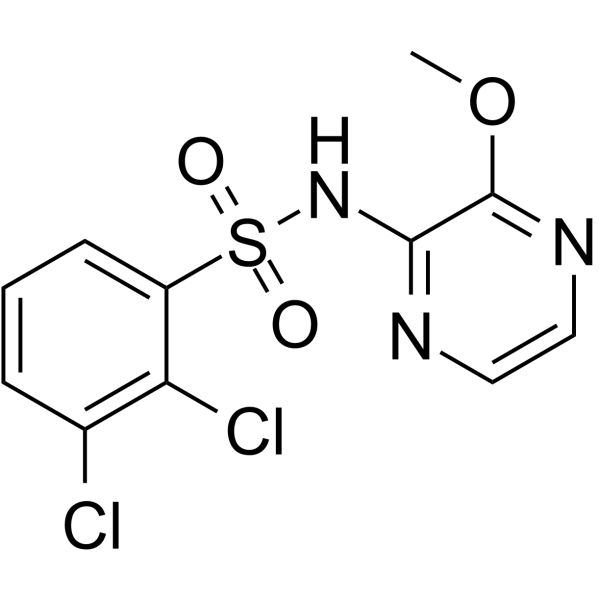
- HY-10061A
-
|
AZD-3355 napadisylate
|
GABA Receptor
|
Metabolic Disease
|
|
Lesogaberan (AZD-3355) napadisylate is a potent and selective GABAB receptor agonist with an EC50 of 8.6 nM for human recombinant GABAB receptors. The affinity (Kis) of Lesogaberan napadisylate for rat GABAB and GABAA receptors, as measured by displacement of [ 3H]GABA binding in brain membranes: 5.1 nM and 1.4 μM, respectively. Lesogaberan napadisylate inhibits transient lower esophageal sphincter relaxation through a peripheral mode of action .
|
-
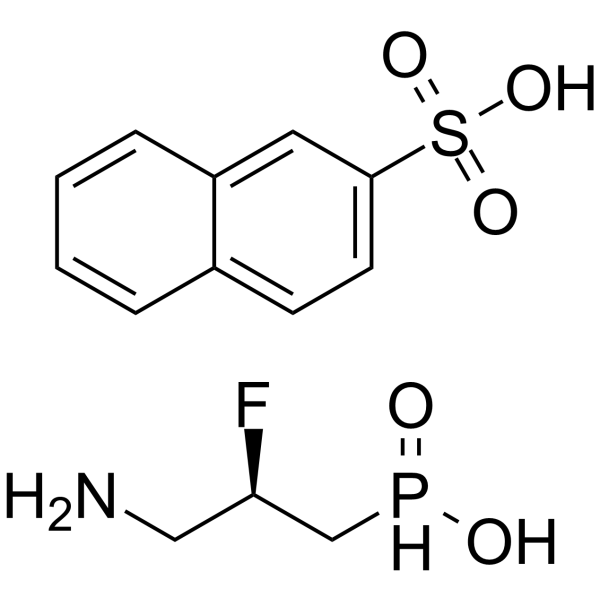
- HY-112416
-
AZD4320
5 Publications Verification
|
Bcl-2 Family
|
Cancer
|
|
AZD4320 is a novel BH3-mimicking dual BCL2/BCLxL inhibitor with IC50s of 26 nM, 17 nM, and 170 nM for KPUM-MS3, KPUM-UH1, and STR-428 cells, respectively.
|
-
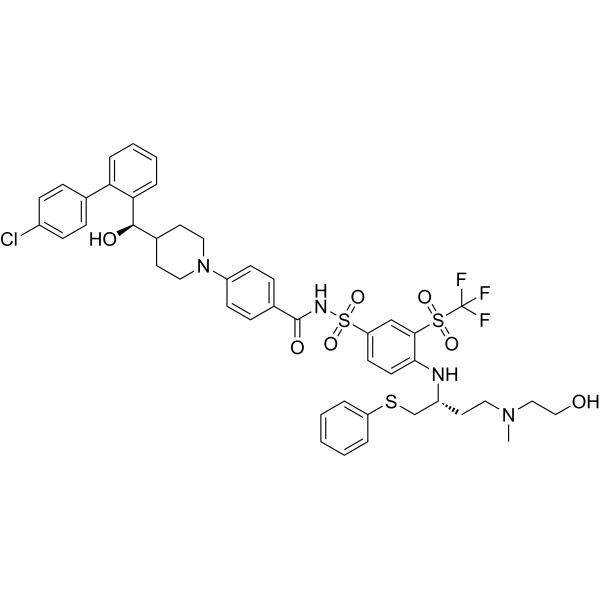
- HY-171689
-
|
AZD 8205; P-Sam
|
Antibody-Drug Conjugates (ADCs)
Topoisomerase
|
Cancer
|
|
Puxitatug samrotecan (AZD 8205) is a B7-H4-directed antibody-drug conjugate (ADC) bearing a Topoisomerase I inhibitor (TOP1i) payload. Puxitatug samrotecan improves HR +/HER2 - breast cancer .
|
-

- HY-50706R
-
|
AZD6244 (Standard); ARRY-142886 (Standard)
|
MEK
Apoptosis
Reference Standards
|
Cancer
|
|
Selumetinib (Standard) is the analytical standard of Selumetinib. This product is intended for research and analytical applications. Selumetinib (AZD6244) is selective, non-ATP-competitive oral MEK1/2 inhibitor, with an IC50 of 14 nM for MEK1. Selumetinib (AZD6244) inhibits ERK1/2 phosphorylation.
|
-

- HY-10064
-
-
- HY-12058
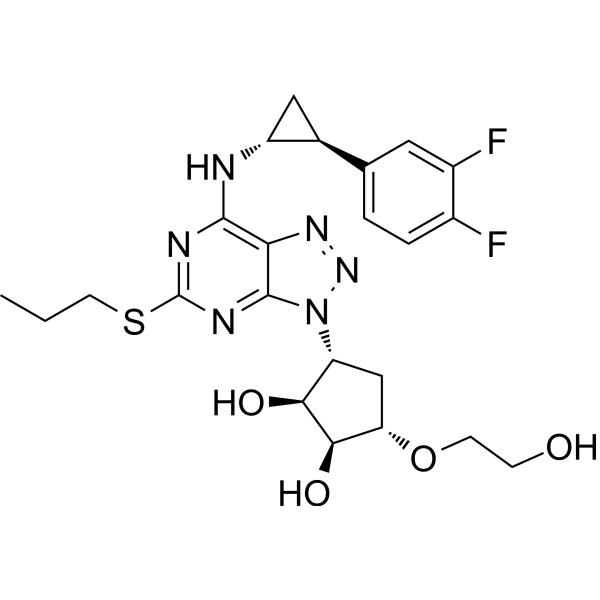
-
|
ARRY-424704; ARRY-704
|
MEK
|
Cancer
|
|
AZD8330 (ARRY-424704) is a potent, uncompetitive MEK1/MEK2 inhibitor, with an IC50 of 7 nM.
|
-
- HY-120012
-
|
AZD9567
|
Glucocorticoid Receptor
|
Inflammation/Immunology
Endocrinology
|
|
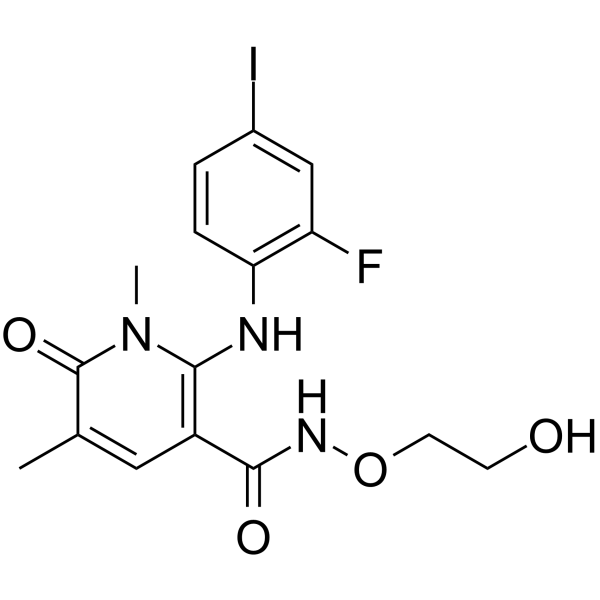
Mizacorat (AZD9567; compound 15) is a potent, oral active, non-steroidal and selective glucocorticoid receptor modulator (SGRM), with an IC50 of 3.8 nM. Exhibits excellent efficacy in the streptococcal cell wall (SCW) reactivation model of joint inflammation .
|
-
- HY-107361
-
|
AZD4205
|
JAK
|
Cancer
|
|
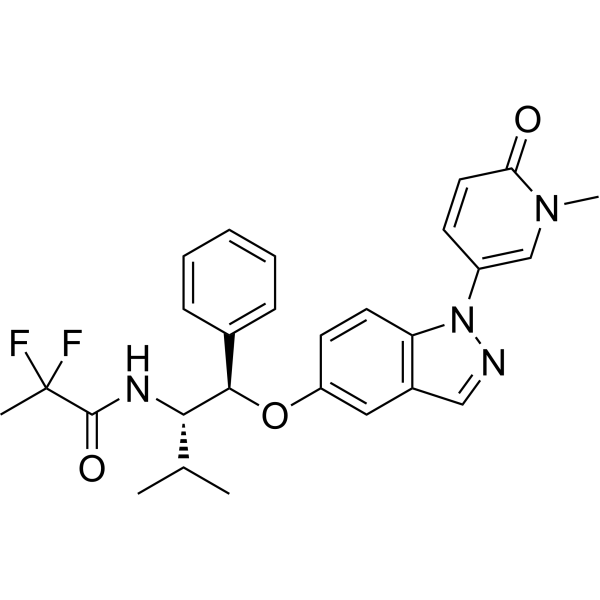
Golidocitinib (AZD4205) is a selective JAK1 inhibitor, with an IC50 of 73 nM, weakly inhibits JAK2 (IC50>14.7 μM), and shows little inhibition on JAK3 (IC50>30 μM) .
|
-
- HY-145640
-
|
AZD4721; RIST4721
|
CXCR
|
Inflammation/Immunology
|
|
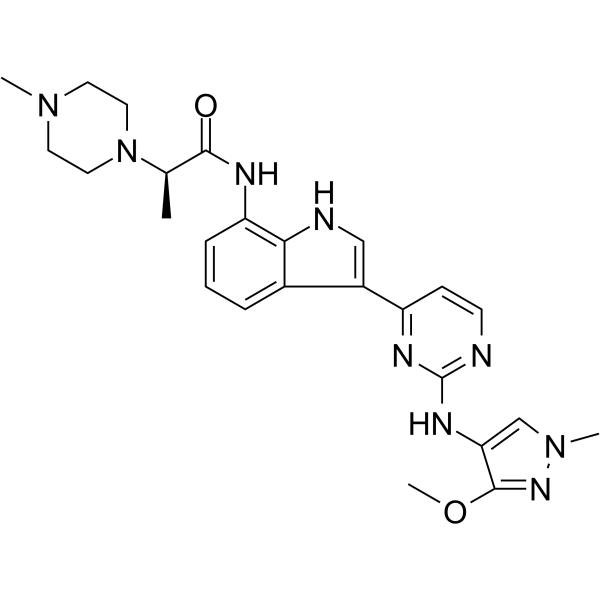
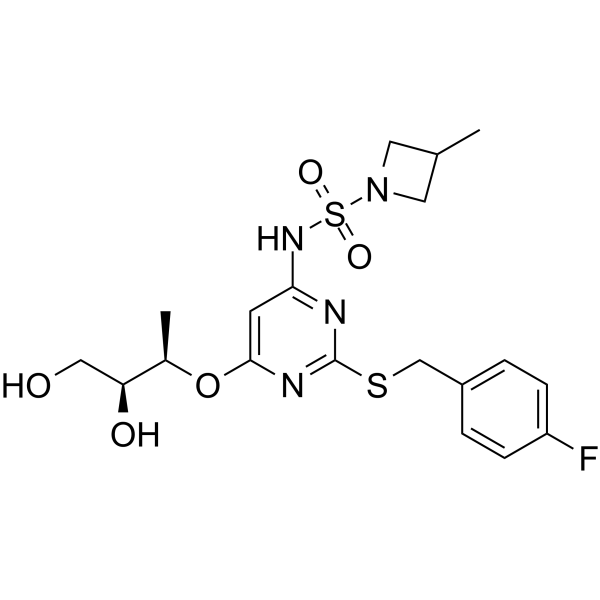
Vimnerixin (AZD4721) is the potent and orally active antagonist of acidic CXC chemokine receptor 2 (CXCR2). Vimnerixin has the potential for the research of inflammatory disease .
|
-
- HY-10234
-
|
AZD0530
|
Src
Autophagy
|
Cancer
|
|
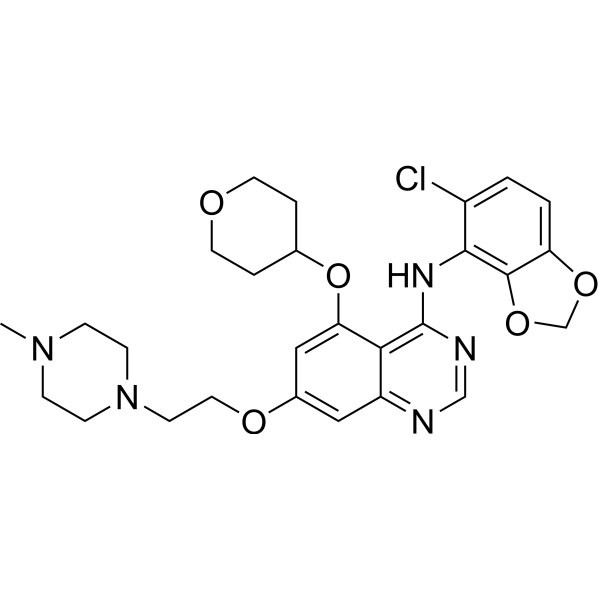
Saracatinib (AZD0530) is a potent Src family inhibitor with IC50s of 2.7 to 11 nM for c-Src, Lck, c-YES, Lyn, Fyn, Fgr, and Blk. Saracatinib shows high selectivity over other tyrosine kinases .
|
-
- HY-P991503
-
|
AZD0516 antibody
|
ADC Antibody
|
Cancer
|
|
Anti-STEAP2 Antibody (AZD0516 antibody) is an antibody targeting six-transmembrane epithelial antigen of the prostate 2 (STEAP2). Anti-STEAP2 Antibody can be used for the synthesis of the ADC molecule AZD0516 (HY-173639). Anti-STEAP2 Antibody can be used in the research of prostate cancer .
|
-

- HY-108235
-
|
AZD6765
|
iGluR
|
Neurological Disease
|
|
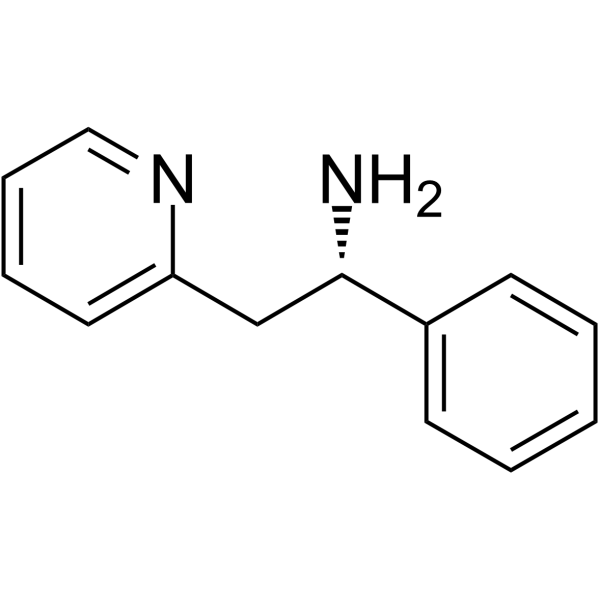
Lanicemine (AZD6765) is a low-trapping NMDA channel blocker (Ki of 0.56-2.1 μM for NMDA receptor; IC50s of 4-7 μM and 6.4 μM in CHO and Xenopus oocyte cells, respectively). Antidepressant effects .
|
-
- HY-132167
-
|
AZD5305
|
PARP
|
Cancer
|
|
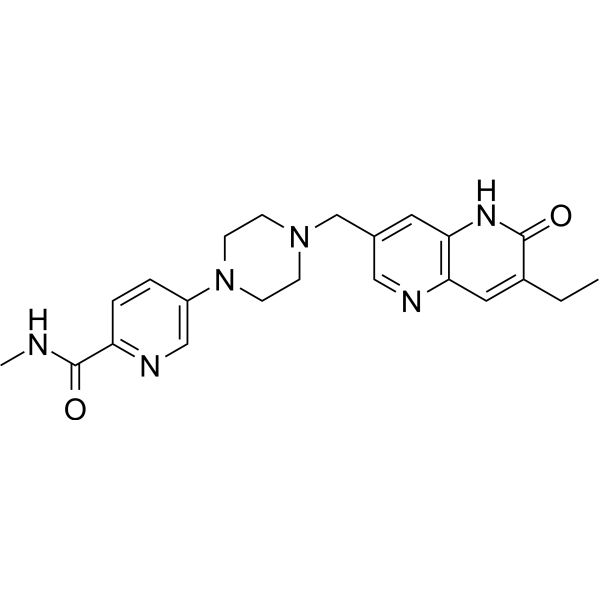
Saruparib (AZD5305) is a potent, orally active and selective PARP inhibitor and trapper with IC50 values of 3 nM and 1400 nM for PARP1 and PARP2, respectively. Saruparib has anti-proliferative activity and inhibits growth in cells with deficiencies in DNA repair .
|
-
- HY-50706A
-
-
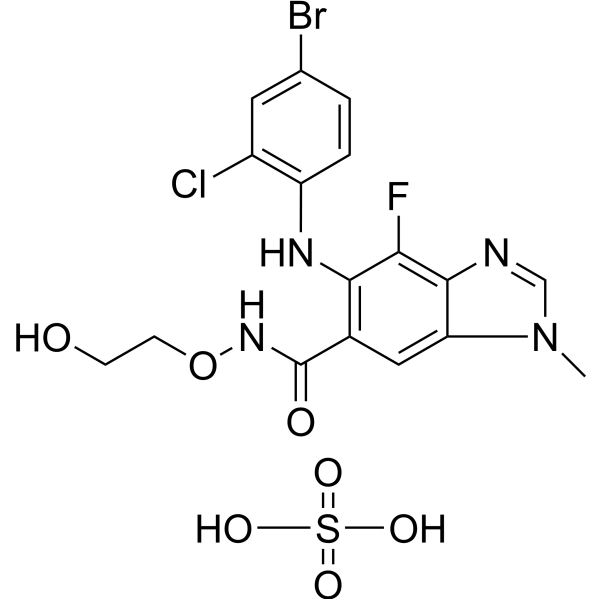
- HY-100740
-
|
AZD3293; LY3314814
|
Beta-secretase
|
Neurological Disease
|
|
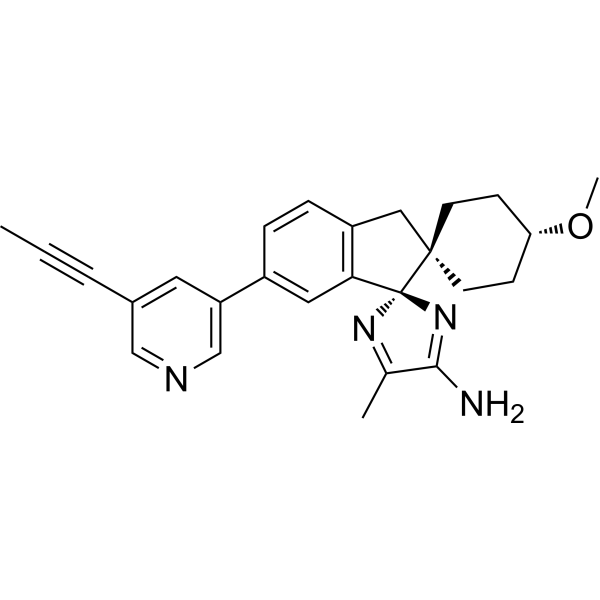
Lanabecestat (AZD3293; LY3314814) is a potent, orally active and blood-brain barrier penetrating BACE1 inhibitor with a Ki of 0.4 nM. Lanabecestat is used for the research of Alzheimer's disease .
|
-
- HY-10064S1
-
-

- HY-15772S3
-
|
asandeutertinibum; Osimertinib-d3; AZD-9291-d3
|
EGFR
|
Cancer
|
|
Asandeutertinib (Osimertinib-d3; AZD-9291-d3) is a epidermal growth factor receptor (EGFR) tyrosine kinase inhibitor, with antineoplastic effect .
|
-

- HY-100412A
-
|
AZD-0865 mesylate
|
Proton Pump
|
Cancer
|
|
Linaprazan mesylate can inhibit H+,K+ -ATPase in the stomach through K+ competitive binding. (IC 50: 1.0 ± 0.2 μM), it has a strong inhibitory effect on acid. Linaprazan (AZD0865) mesylate can be used for research on reflux esophagitis with oral activity .
|
-

- HY-10234S
-
|
AZD0530-d3
|
Src
|
Infection
|
|
Saracatinib-d3 (AZD0530-d3) (ZG5129) is the deuterium-labeled analog of Saracatinib (HY-10234). Saracatinib-d3 is an inhibitor of the Src kinase, which can inhibit severe sepsis caused by bacterial or various microbial infections .
|
-

- HY-P991699
-
|
AZD9829 antibody; INT-020
|
ADC Antibody
Interleukin Related
|
Cancer
|
|
Lixarkitug (AZD9829 antibody; INT-020) is a humanized IgG1κ antibody targeting IL-3Ra/CD123. Lixarkitug can be conjugated with Samrotecan to form the intact ADC molecule lixarkitug samrotecan (AZD9829), which is used in studies of acute myeloid leukemia (AML) . The isotype control corresponding to Lixarkitug is Human IgG1 kappa, Isotype Control (HY-P99001).
|
-

- HY-10061BR
-
|
AZD-3355 hydrochloride (Standard)
|
GABA Receptor
Reference Standards
|
Metabolic Disease
|
|
Lesogaberan (hydrochloride) (Standard) is the analytical standard of Lesogaberan (hydrochloride) (HY-10061B). This product is intended for research and analytical applications. Lesogaberan (AZD-3355) hydrochloride is a potent and selective GABAB receptor agonist with an EC50 of 8.6 nM for human recombinant GABAB receptor. The affinity (Kis) of Lesogaberan hydrochloride for rat GABAB and GABAA receptors, as measured by displacement of [3H]GABA binding in brain membranes: 5.1 nM and 1.4 μM, respectively. Lesogaberan hydrochloride inhibits transient lower esophageal sphincter relaxation through a peripheral mode of action .
|
-

- HY-120802
-
|
AZD-8871; LAS191351
|
mAChR
Adrenergic Receptor
|
Inflammation/Immunology
|
|
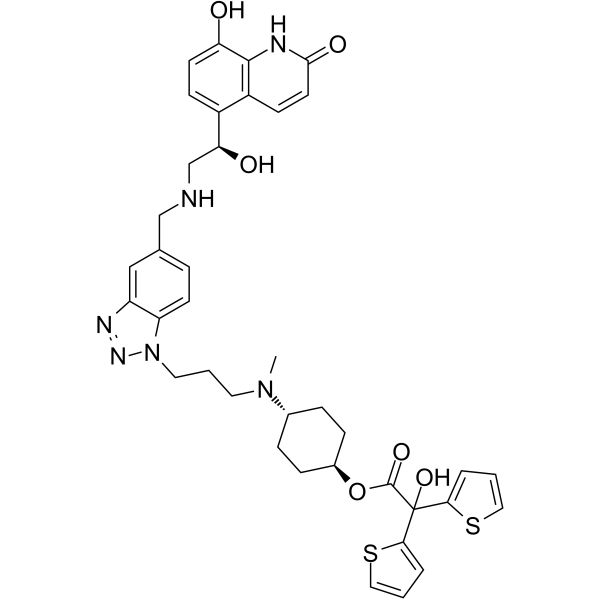
Navafenterol (AZD-8871) is an inhaled dual-acting, potent, selective, and long-lasting M3-antagonist/β2-agonist (MABA) with long-lasting effects and favorable safety profile. The pIC50 is 9.5 for human M3 receptor, and the pEC50 is 9.5 for β2-adrenoceptor. Navafenterol can be used for the research of chronic obstructive pulmonary disease (COPD). Bronchoprotective and antisialagogue effects. Favorable cardiovascular profile .
|
-
- HY-10205
-
|
AZD2171
|
VEGFR
Autophagy
PDGFR
|
Infection
Neurological Disease
Inflammation/Immunology
Cancer
|
|
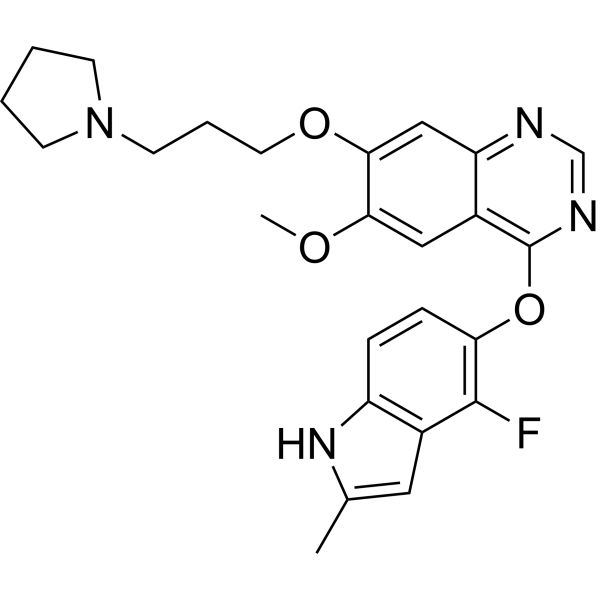
Cediranib (AZD2171) is a highly potent, orally available and blood-brain barrier permeability VEGFR tyrosine kinase inhibitor with IC50s of <1, <3, 5, 5, 36, 2 nM for Flt1, KDR, Flt4, PDGFRα, PDGFRβ, c-Kit, respectively.
|
-
- HY-112443
-
-
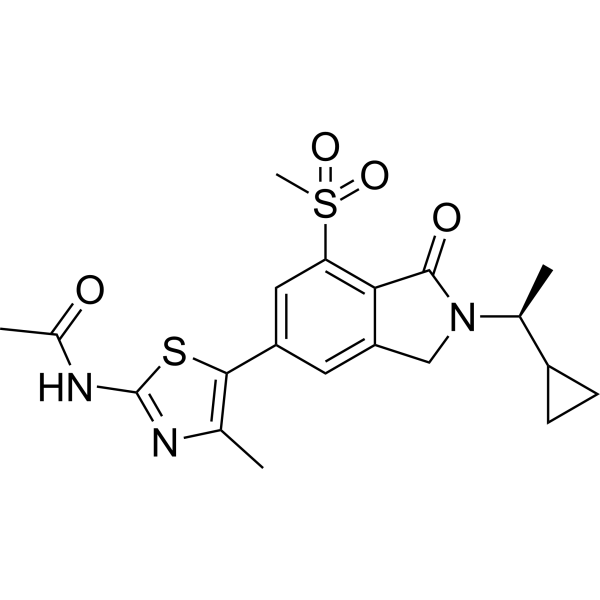
- HY-10234A
-
|
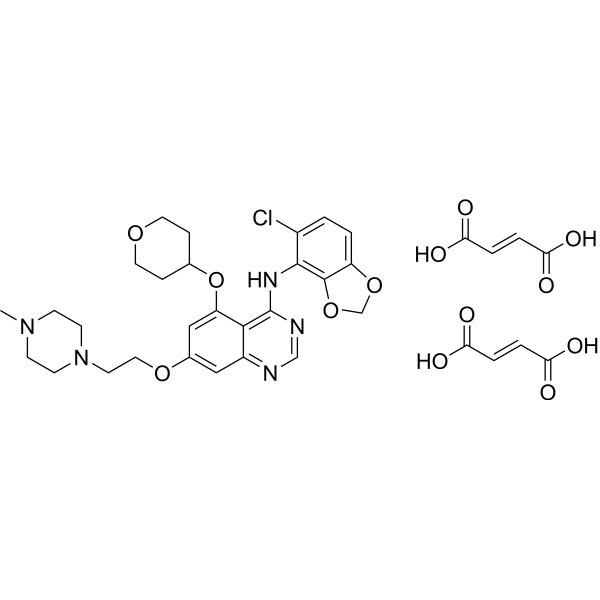
AZD0530 difumarate
|
Src
|
Cancer
|
|
Saracatinib (AZD0530) difumarate is a potent Src inhibitor with IC50 values of 2.7-11 nM for c-Src, Lck, c-YES, Lyn, Fyn, Fgr and Blk, and is selective for other tyrosine kinases. .
|
-
- HY-126294
-
|
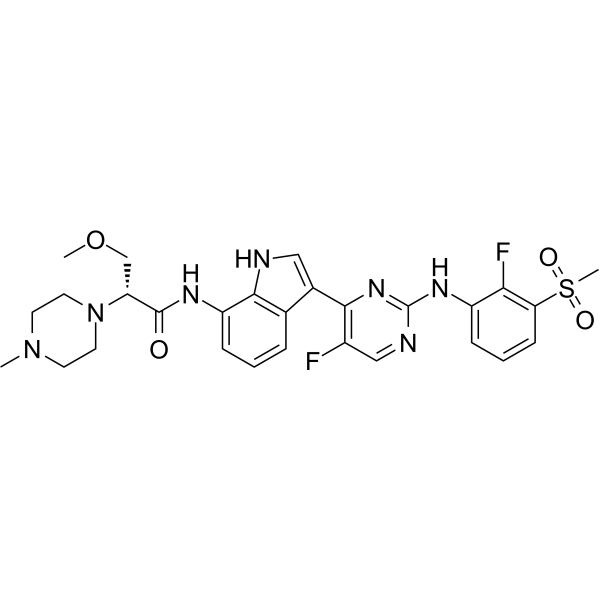
AZD4604; JAK1-IN-7
|
JAK
|
Inflammation/Immunology
|
|
Londamocitinib (AZD4604) is a potent and selective JAK1 inhibitor with IC50 at 0.54 nM. Londamocitinib has anti-inflammatory activity .
|
-
- HY-113683
-
|
AZD7268
|
Opioid Receptor
|
Neurological Disease
|
|
AZ 12488024 (AZD7268) is a SNC80 (HY-101202) derivative and a δ-opioid receptor agonist. AZ 12488024 is available for research into major depressive disorder .
|
-

- HY-101980R
-
|
HTL1071 (Standard); AZD4635 (Standard)
|
Reference Standards
Adenosine Receptor
|
Cancer
|
|
Imaradenant (Standard) is the analytical standard of Imaradenant (HY-101980). This product is intended for research and analytical applications. AZD4635 (HTL1071) is a potent, selective and orally active adenosine A2A receptor (A2AR) antagonist. AZD4635 binds to human A2AR with a Ki of 1.7 nM and shows >30-fold selectivity over other adenosine receptors .
|
-

- HY-13330
-
|
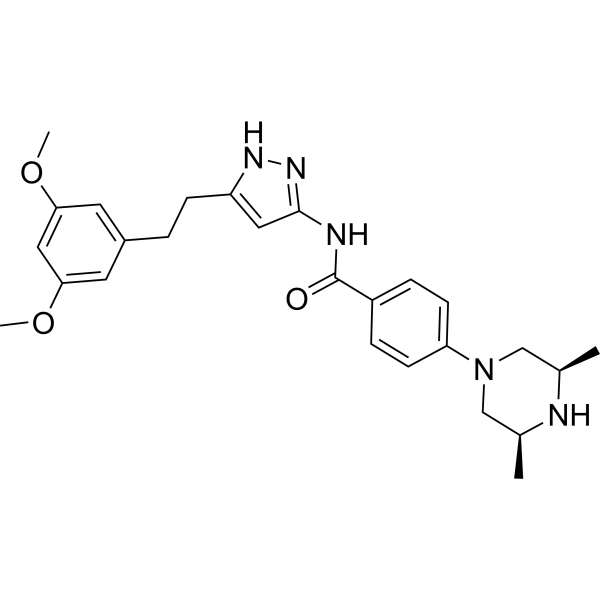
AZD4547; ADSK091
|
FGFR
|
Cancer
|
|
Fexagratinib (AZD4547; ADSK091) is a potent inhibitor of the FGFR family with IC50s of 0.2 nM, 2.5 nM, 1.8 nM, and 165 nM for FGFR1, FGFR2, FGFR3, and FGFR4, respectively.
|
-
- HY-P990766
-
|
AZD3152
|
SARS-CoV
|
Infection
|
|
Sipavibart (AZD3152) is a human IgG1 λ2 monoclonal antibody against SARS-CoV-2. Sipavibart is applicable to research related to COVID-19. The isotype control product for Sipavibart is Human IgG1 lambda2, Isotype Control (HY-P990096) .
|
-

- HY-12330
-
|
|
PI3K
|
Cancer
|
|
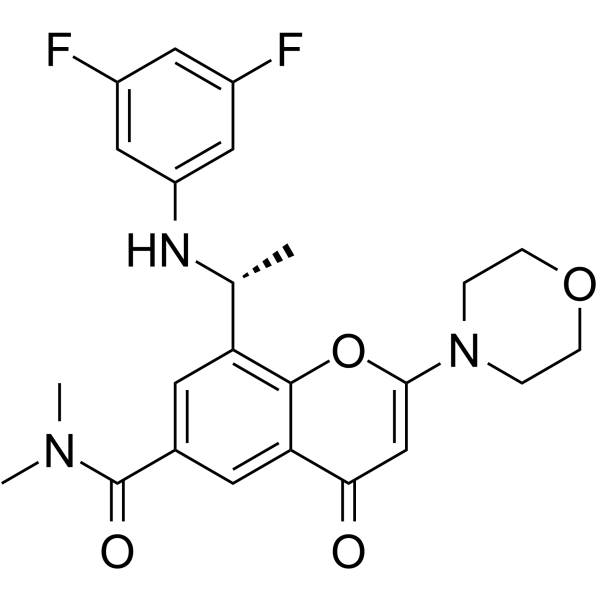
AZD8186 is a PI3K inhibitor, which potently inhibits PI3Kβ (IC50=4 nM) and PI3Kδ (IC5050=12 nM) with selectivity over PI3Kα (IC50=35 nM) and PI3Kγ (IC50=675 nM).
|
-
- HY-18173
-
|
|
11β-HSD
|
Metabolic Disease
|
|
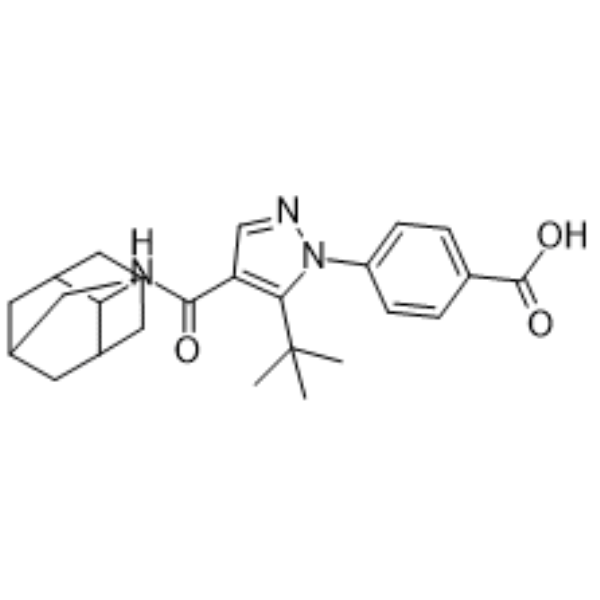
AZD8329 is a potent 11β-Hydroxysteroid dehydrogenase type 1 (11β-HSD1) inhibitor with an IC50 of 9 nM for human 11β-HSD1, displays excellent selectivity versus 11β-HSD2, 17β-HSD1 and 17β-HSD3 .
|
-
- HY-13848
-
-
- HY-79077R
-
|
AZD-9291 dimesylate (Standard); Mereletinib dimesylate (Standard)
|
EGFR
Reference Standards
|
Cancer
|
|
Osimertinib (dimesylate) (Standard) is the analytical standard of Osimertinib (dimesylate). This product is intended for research and analytical applications. Osimertinib dimesylate (AZD-9291 dimesylate) is an irreversible and mutant selective EGFR inhibitor with IC50s of 12 and 1 nM against EGFRL858R and EGFRL858R/T790M, respectively.
|
-

- HY-50706AR
-
|
AZD6244 sulfate (Standard); ARRY-142886 sulfate (Standard)
|
MEK
Apoptosis
Reference Standards
|
Cancer
|
|
Selumetinib (sulfate) (Standard) is the analytical standard of Selumetinib (sulfate). This product is intended for research and analytical applications. Selumetinib (AZD6244) is selective, non-ATP-competitive oral MEK1/2 inhibitor, with an IC50 of 14 nM for MEK1. Selumetinib (AZD6244) inhibits ERK1/2 phosphorylation.
|
-

- HY-15991A
-
|
AZD1722 hydrochloride; RDX5791 hydrochloride
|
Na+/H+ Exchanger (NHE)
|
Metabolic Disease
|
|
Tenapanor (AZD1722) hydrochloride is a potent and orally active sodium/hydrogen exchanger isoform 3 (NHE3) inhibitor. Tenapanor hydrochloride reduces intestinal phosphate absorption predominantly through reduction of passive paracellular phosphate flux. Tenapanor hydrochloride has the potential for the research of hyperphosphatemia .
|
-
- HY-15991
-
|
AZD1722; RDX5791
|
Na+/H+ Exchanger (NHE)
|
Metabolic Disease
|
|
Tenapanor (AZD1722) is a potent and orally active sodium/hydrogen exchanger isoform 3 (NHE3) inhibitor. Tenapanor reduces intestinal phosphate absorption predominantly through reduction of passive paracellular phosphate flux. Tenapanor has the potential for the research of hyperphosphatemia .
|
-
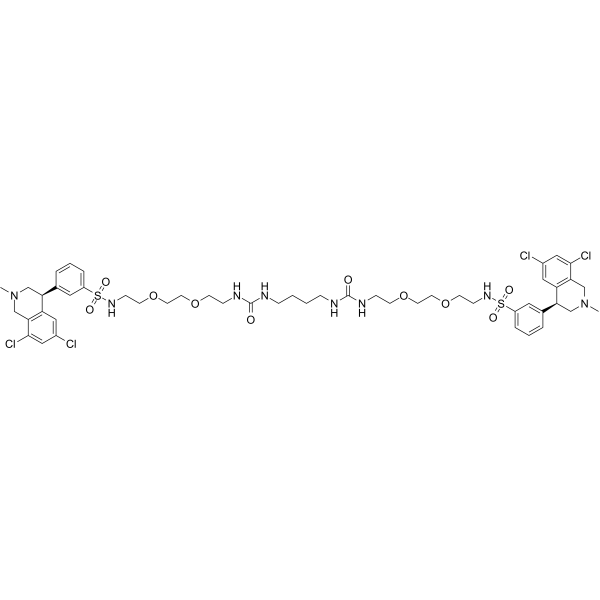
- HY-P990947
-
|
AZD9592 Antibody
|
ADC Antibody
EGFR
|
Cancer
|
|
Tilatamig (AZD9592 Antibody) is a human antibody of the Ig (G1-κ_G1-λ2) subtype that targets EGFR/MET. Tilatamig conjugates with the Top1 inhibitor AZ14170133 (HY-145399) to form the antibody-drug conjugate (ADC) Tilatamig samrotecan (HY-171124) (AZD9592). Tilatamig accurately targets NSCLC models including EGFR-mutant, EGFR-wildtype, and EGFR tyrosine kinase inhibitor-treated ones, and its activity correlates with high expression of EGFR, c-MET and SLFN11. Tilatamig is available for in vivo anti-tumor studies in patient-derived xenograft models of non-small cell lung cancer (NSCLC) and head and neck squamous cell carcinoma (HNSCC) .
|
-

- HY-15651R
-
|
AZD9668 (Standard)
|
Elastase
Reference Standards
|
Inflammation/Immunology
|
|
Alvelestat (Standard) is the analytical standard of Alvelestat. This product is intended for research and analytical applications. Alvelestat (AZD9668) is an orally bioavailable, affinity and selective inhibitor of neutrophil elastase (NE) with a pIC50 value of 7.9 nM, a Ki value of 9.4 nM and a Kd value of 9.5 nM .
|
-

- HY-18750A
-
|
AZD3759 hydrochloride
|
EGFR
Apoptosis
|
Cancer
|
|
Zorifertinib (AZD3759) hydrochloride is a potent, orally active, BBB-penetrant, EGFR inhibitor (IC50s: 0.3, 0.2, and 0.2 nM for EGFR wt, EGFR L858R, and EGFR exon 19Del, respectively). Zorifertinib hydrochloride induces cancer cell apoptosis. Zorifertinib hydrochloride has antitumor activity, and can be used for NSCLC, HCC etc. research .
|
-
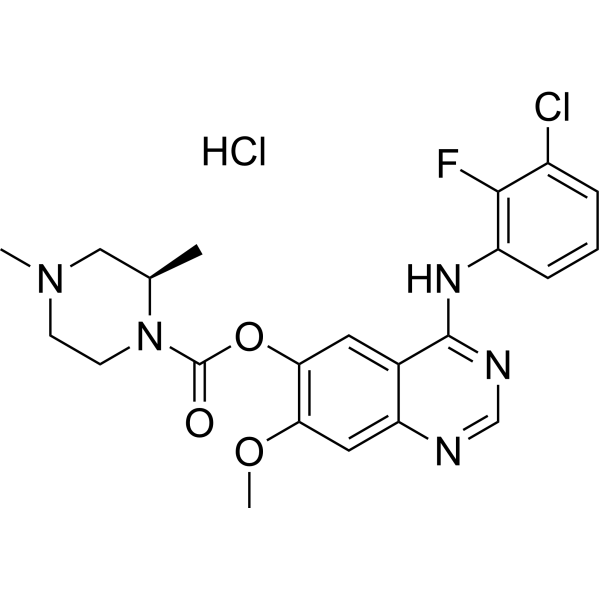
- HY-15431R
-
|
AZD5363 (Standard)
|
Akt
Autophagy
Reference Standards
|
Cancer
|
|
Capivasertib (Standard) is the analytical standard of Capivasertib. This product is intended for research and analytical applications. Capivasertib (AZD5363) is an orally active and potent pan-AKT kinase inhibitor with IC50 of 3, 7 and 7 nM for Akt1,Akt2 and Akt3, respectively.
|
-

- HY-18159
-
|
AZD1446
|
nAChR
|
Neurological Disease
|
|
TC-6683 (AZD1446) is a selective α4β2 nicotinic acetylcholine receptor (nAChR) agonist. TC-6683 does not show significant therapeutic effects in the animal model of DYT1 dystonia.TC-6683 can be used for the research of neurological disease, such as cognitive disorder .
|
-

- HY-18750
-
|
AZD3759
|
EGFR
Apoptosis
|
Infection
Neurological Disease
Metabolic Disease
Inflammation/Immunology
Cancer
|
|
Zorifertinib (AZD3759) is a potent, orally active, BBB-penetrant, EGFR inhibitor. At Km ATP concentrations, the IC50s are 0.3, 0.2, and 0.2 nM for EGFR wt, EGFR L858R, and EGFR exon 19Del, respectively. Zorifertinib induces cancer cell apoptosis. Zorifertinib has antitumor activity, and can be used for NSCLC, HCC etc. research .
|
-
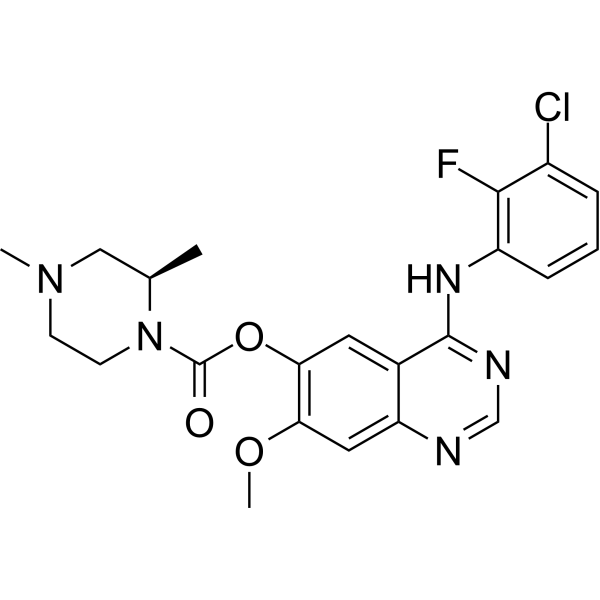
- HY-108235A
-
|
AZD6765 dihydrochloride; ARL 15896AR
|
iGluR
|
Neurological Disease
|
|
Lanicemine (AZD6765) dihydrochloride is a low-trapping NMDA channel blocker (Ki of 0.56-2.1 μM for NMDA receptor; IC50s of 4-7 μM and 6.4 μM in CHO and Xenopus oocyte cells, respectively). Antidepressant effects .
|
-
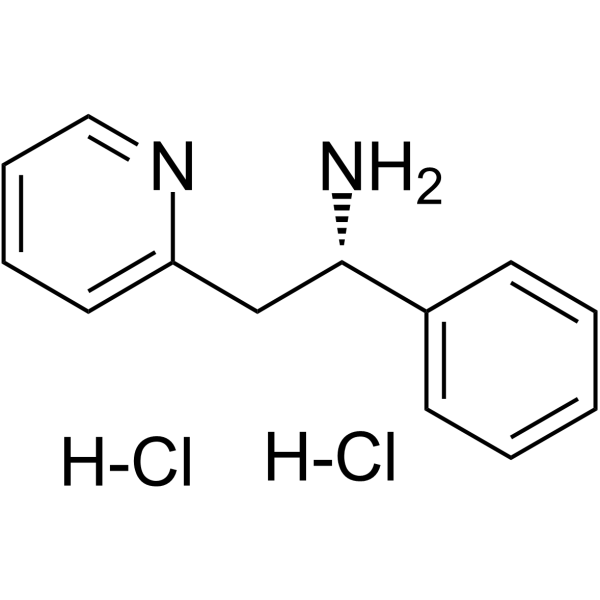
- HY-15772
-
|
AZD-9291; Mereletinib
|
EGFR
|
Cancer
|
|
Osimertinib (AZD9291) is a covalent, orally active, irreversible, and mutant-selective EGFR inhibitor with an apparent IC50 of 12 nM against L858R and 1 nM against L858R/T790M, respectively. Osimertinib overcomes T790M-mediated resistance to EGFR inhibitors in lung cancer .
|
-
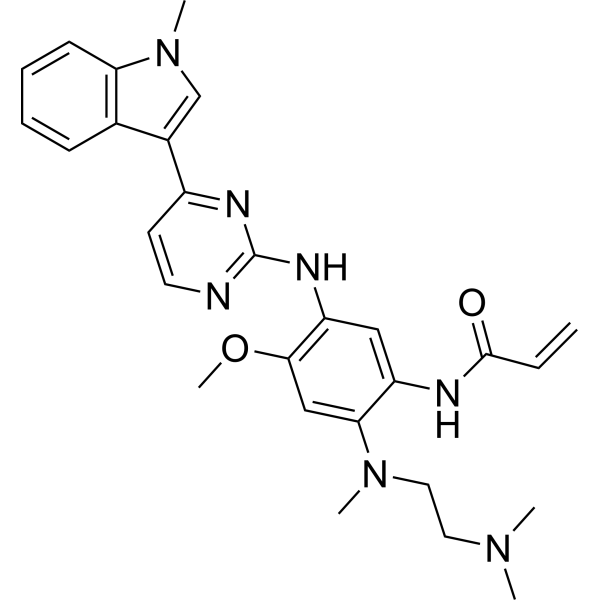
- HY-15772A
-
|
AZD-9291 mesylate; Mereletinib mesylate
|
EGFR
|
Cancer
|
|
Osimertinib mesylate (AZD9291 mesylate) is a covalent, orally active, irreversible, and mutant-selective EGFR inhibitor with an apparent IC50 of 12 nM against L858R and 1 nM against L858R/T790M. Osimertinib overcomes T790M-mediated resistance to EGFR inhibitors in lung cancer .
|
-
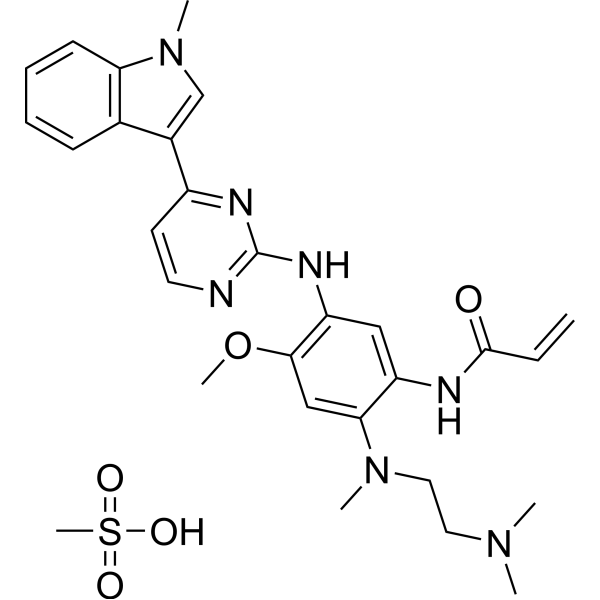
- HY-140349
-
|
|
PROTAC Linkers
|
Cancer
|
|
AZD-CO-C2-Ph-amido-Ph-azide is an alkyl chain-based PROTAC linker that can be used in the synthesis of PROTACs . AZD-CO-C2-Ph-amido-Ph-azide is a click chemistry reagent, it contains an Azide group and can undergo copper-catalyzed azide-alkyne cycloaddition reaction (CuAAc) with molecules containing Alkyne groups. It can also undergo strain-promoted alkyne-azide cycloaddition (SPAAC) reactions with molecules containing DBCO or BCN groups.
|
-
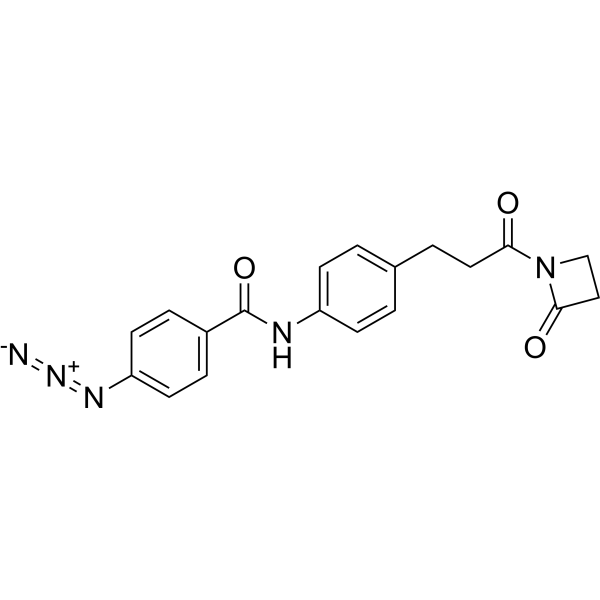
- HY-100740B
-
|
LY3314814 camsylate; AZD3293 camsylate
|
Beta-secretase
|
Neurological Disease
|
|
Lanabecestat (AZD3293; LY3314814) camsylate is a potent, orally active and blood-brain barrier penetrating BACE1 inhibitor with a Ki of 0.4 nM. Lanabecestat camsylate is used for the research of Alzheimer's disease .
|
-

- HY-10162
-
Olaparib
Maximum Cited Publications
347 Publications Verification
AZD2281; KU0059436
|
PARP
Autophagy
Mitophagy
|
Cancer
|
|
Olaparib (AZD2281; KU0059436) is a potent and orally active PARP inhibitor with IC50s of 5 and 1 nM for PARP1 and PARP2, respectively. Olaparib is an autophagy and mitophagy activator. Olaparib cannot cross the intact blood-brain barrier (BBB) .
|
-
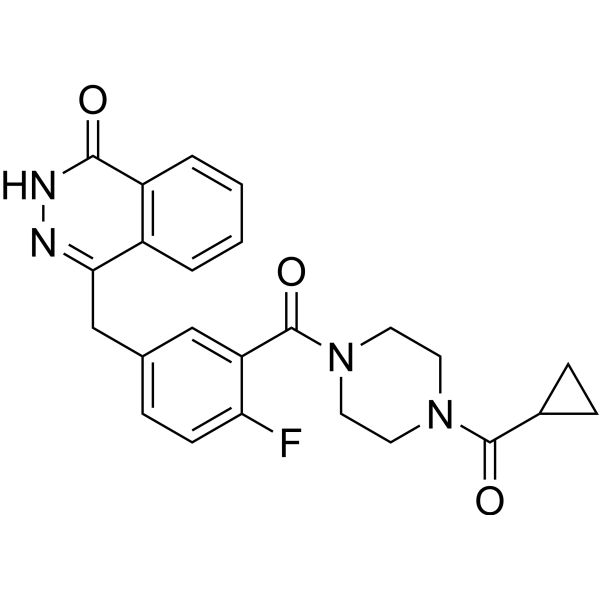
- HY-101056
-
|
AZD7986; INS 1007
|
Dipeptidyl Peptidase
|
Inflammation/Immunology
|
|
Brensocatib (AZD7986) is an oral dipeptidyl peptidase 1 (DPP1) inhibitor with pIC50s of 6.85, 7.6, 7.7, 7.8, and 7.8 in human, mouse, rat, dog and rabbit, respectively .
|
-
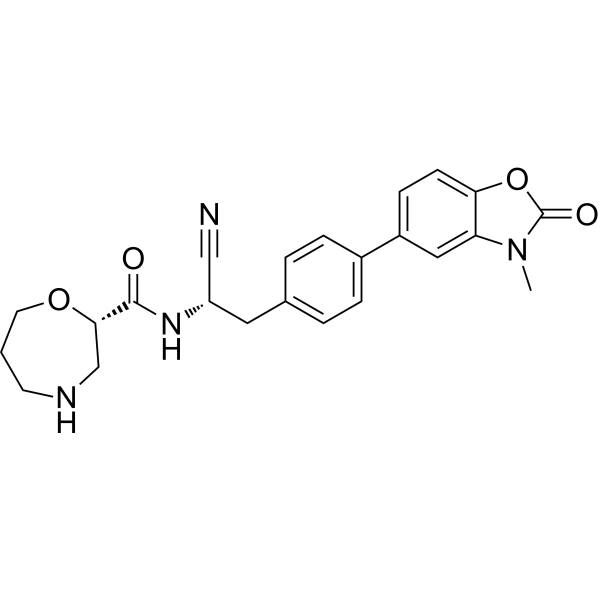
- HY-15790
-
|
A 3309; AZD 7806
|
Apical Sodium-Dependent Bile Acid Transporter
|
Metabolic Disease
Inflammation/Immunology
Cancer
|
|
Elobixibat (A 3309; AZD 7806) is an orally active, bile acid transporter (IBAT) inhibitor with IC50 values ??of 0.53 nM (human IBAT), 0.13 nM (mouse IBAT), and 5.8 nM (canine IBAT). Elobixibat can lower LDL cholesterol, increase serum GLP-1, promote colonic motility, and has the potential to study metabolic syndrome. Elobixibat can be used in the study of chronic functional constipation (CIC), dyslipidemia, non-alcoholic hepatitis, and liver tumors in the elderly .
|
-
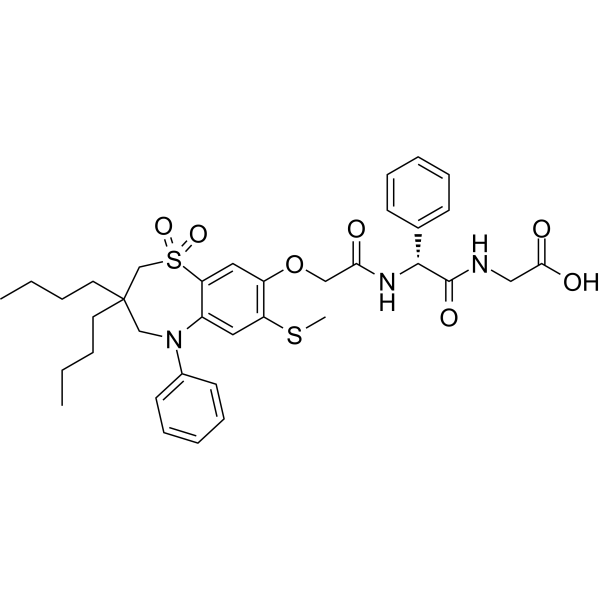
- HY-15790A
-
|
A 3309 hydrate; AZD 7806 hydrate
|
Apical Sodium-Dependent Bile Acid Transporter
|
Metabolic Disease
Cancer
|
|
Elobixibat (A 3309; AZD 7806) hydrate is an orally active, bile acid transporter (IBAT) inhibitor with IC50 values ??of 0.53 nM (human IBAT), 0.13 nM (mouse IBAT), and 5.8 nM (canine IBAT). Elobixibat hydrate can lower LDL cholesterol, increase serum GLP-1, promote colonic motility, and has the potential to study metabolic syndrome. Elobixibat hydrate can be used in the study of chronic functional constipation (CIC), dyslipidemia, non-alcoholic hepatitis, and liver tumors in the elderly .
|
-
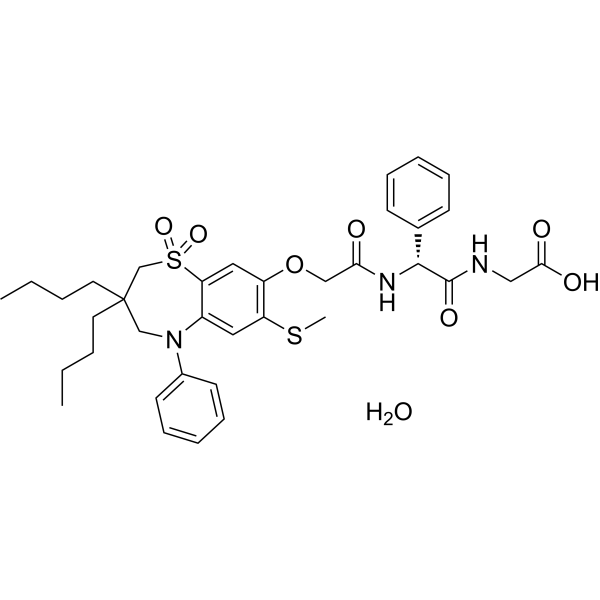
- HY-10234R
-
|
AZD0530 (Standard)
|
Reference Standards
Src
Autophagy
|
Cancer
|
|
Saracatinib (Standard) is the analytical standard of Saracatinib. This product is intended for research and analytical applications. Saracatinib (AZD0530) is a potent Src family inhibitor with IC50s of 2.7 to 11 nM for c-Src, Lck, c-YES, Lyn, Fyn, Fgr, and Blk. Saracatinib shows high selectivity over other tyrosine kinases .
|
-

- HY-P99556
-
|
AZD8895; COV2-2196
|
SARS-CoV
|
Infection
|
|
Tixagevimab (AZD8895) is a human monoclonal antibody that targets the SARS-CoV-2 receptor binding domain (RBD). It exhibits neutralizing activity against SARS-CoV-2 by binding to the RBD and the S-glycoprotein ectodomain and blocking S-glycoprotein-mediated binding to the receptor .
|
-

- HY-10205R
-
|
AZD2171 (Standard)
|
Reference Standards
VEGFR
Autophagy
PDGFR
|
Cancer
|
|
Cediranib (Standard) is the analytical standard of Cediranib. This product is intended for research and analytical applications. Cediranib (AZD2171) is a highly potent, orally available VEGFR tyrosine kinase inhibitor with IC50s of <1, <3, 5, 5, 36, 2 nM for Flt1, KDR, Flt4, PDGFRα, PDGFRβ, c-Kit, respectively.
|
-

- HY-10162S
-
|
AZD2281-d5; KU0059436-d5
|
Isotope-Labeled Compounds
PARP
Autophagy
Mitophagy
|
Cancer
|
|
Olaparib-d5 (AZD2281-d5) is the deuterium labeled Olaparib (HY-10162). Olaparib is a potent and orally active PARP inhibitor with IC50s of 5 and 1 nM for PARP1 and PARP2, respectively. Olaparib is an autophagy and mitophagy activator .
|
-
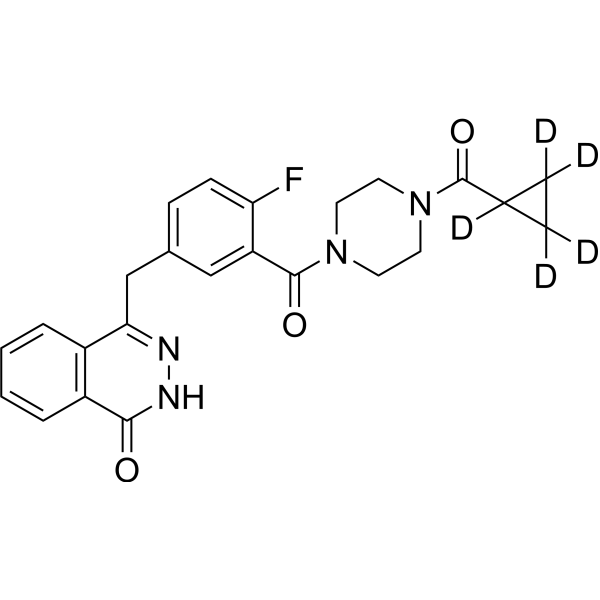
- HY-10162S1
-
|
AZD2281-d8; KU0059436-d8
|
Isotope-Labeled Compounds
PARP
Autophagy
Mitophagy
|
Cancer
|
|
Olaparib-d8 (AZD2281-d8) is the deuterium labeled Olaparib (HY-10162). Olaparib is a potent and orally active PARP inhibitor with IC50s of 5 and 1 nM for PARP1 and PARP2, respectively. Olaparib is an autophagy and mitophagy activator .
|
-
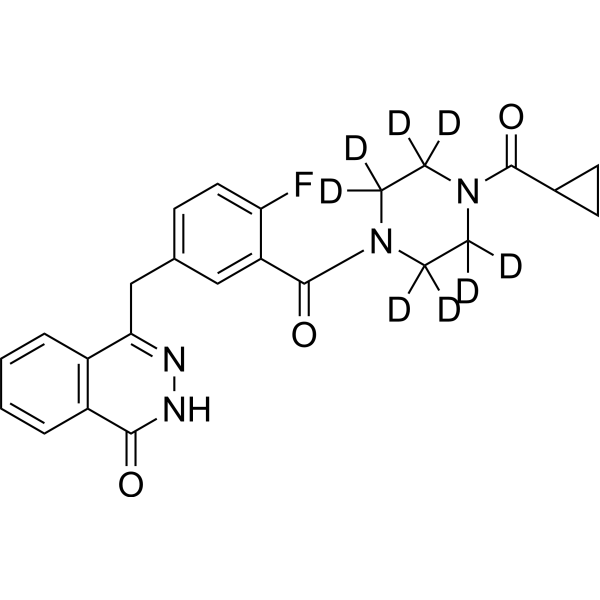
- HY-10064R
-
|
AZD6140 (Standard); AR-C 126532XX (Standard)
|
Reference Standards
P2Y Receptor
|
Cardiovascular Disease
Cancer
|
|
Ticagrelor (Standard) is the analytical standard of Ticagrelor. This product is intended for research and analytical applications. Ticagrelor (AZD6140) is a reversible oral P2Y12 receptor antagonist for the treatment of platelet aggregation.
|
-

- HY-100740R
-
|
AZD3293 (Standard); LY3314814 (Standard)
|
Reference Standards
Beta-secretase
|
Neurological Disease
|
|
Lanabecestat (Standard) is the analytical standard of Lanabecestat. This product is intended for research and analytical applications. Lanabecestat (AZD3293) is a potent, orally active and blood-brain barrier penetrating BACE1 inhibitor with a Ki of 0.4 nM. Lanabecestat is used for the research of Alzheimer's disease .
|
-

- HY-145581
-
|
AZD4831
|
Glutathione Peroxidase
Cytochrome P450
|
Cardiovascular Disease
Inflammation/Immunology
|
|
Mitiperstat (AZD4831) is an effective oral inhibitor of myeloperoxidase (MPO). Mitiperstat inhibits MPO and thyroid peroxidase (TPO) with IC50s of 1.5 nM and 0.69 μM. Mitiperstat exhibits a weak inhibitory activity against CYP3A4 with an IC50 of 6 μM. Mitiperstat can reduce inflammation and improve microvascular function, and it can be used in studies related to heart failure, preserved or mildly reduced ejection fraction, non-alcoholic fatty liver disease, and chronic obstructive pulmonary disease .
|
-
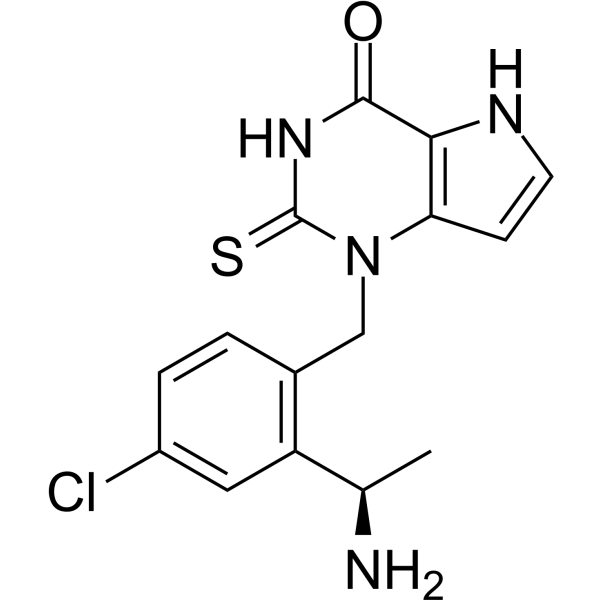
- HY-148527
-
|
AZD8999
|
Adrenergic Receptor
mAChR
|
Others
|
|
LAS190792 (AZD8999) is a potent muscarinic antagonist and β2-adrenoceptor agonist with pIC50 8.9, 8.8, 8.8, 9.2, 8.2, 7.5, 9.1, 5.6 for M1, M2, M3, M4, M5, β1, β2, β3, respectively. LAS190792 can be used as a bronchodilator .
|
-
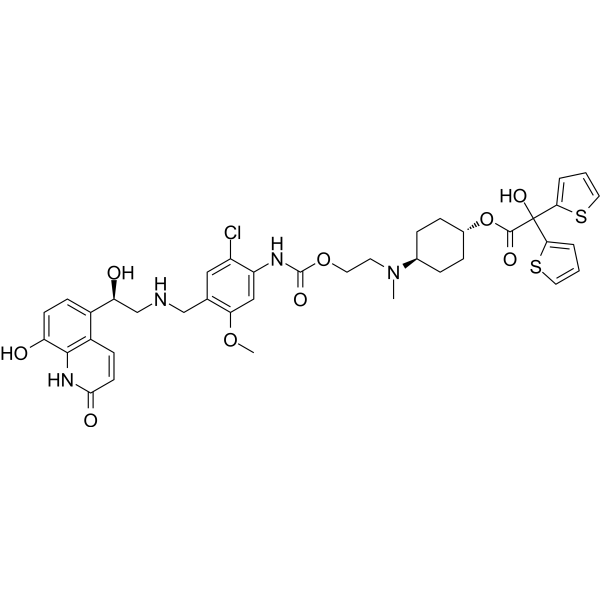
- HY-10234AR
-
|
AZD0530 difumarate (Standard)
|
Src
Reference Standards
|
Cancer
|
|
Saracatinib (difumarate) (Standard) is the analytical standard of Saracatinib (difumarate). This product is intended for research and analytical applications. Saracatinib (AZD0530) difumarate is a potent Src inhibitor with IC50 values of 2.7-11 nM for c-Src, Lck, c-YES, Lyn, Fyn, Fgr and Blk, and is selective for other tyrosine kinases. .
|
-

- HY-100740A
-
|
AZD-3293 hydrochloride; LY3314814 hydrochloride
|
Beta-secretase
|
Neurological Disease
|
|
Lanabecestat (AZD3293; LY3314814) hydrochloride is a potent BACE1 inhibitor that has been investigated for its potential as a modifying treatment for Alzheimer's disease. Lanabecestat (hydrochloride) demonstrated significant dose- and time-dependent reductions in concentrations of amyloid beta peptides in plasma, cerebrospinal fluid, and brain. Lanabecestat (hydrochloride) was also shown to produce reductions in Aβ neuritic plaque burden without demonstrating clinical benefits or slowing the progression of Alzheimer's disease pathophysiology.
|
-

- HY-163487
-
|
AZD8205 drug-linker
|
Drug-Linker Conjugates for ADC
Topoisomerase
|
Cancer
|
|
Puxitatug samrotecan drug-linker (AZD8205 drug-linker) is a drug-linker conjugate for ADC, which comprises a topoisomerase I inhibitor and a linker. Puxitatug samrotecan drug-linker can be used to synthesis antibody-drug conjugate (ADC), Puxitatug samrotecan (HY-171689) .
|
-

- HY-10162S3
-
|
AZD2281-d4-1; KU0059436-d4-1
|
Isotope-Labeled Compounds
PARP
Autophagy
Mitophagy
|
Cancer
|
|
Olaparib-d4-1 (AZD2281-d4-1) is the deuterium labeled Olaparib (HY-10162). Olaparib is a potent and orally active PARP inhibitor with IC50s of 5 and 1 nM for PARP1 and PARP2, respectively. Olaparib is an autophagy and mitophagy activator .
|
-
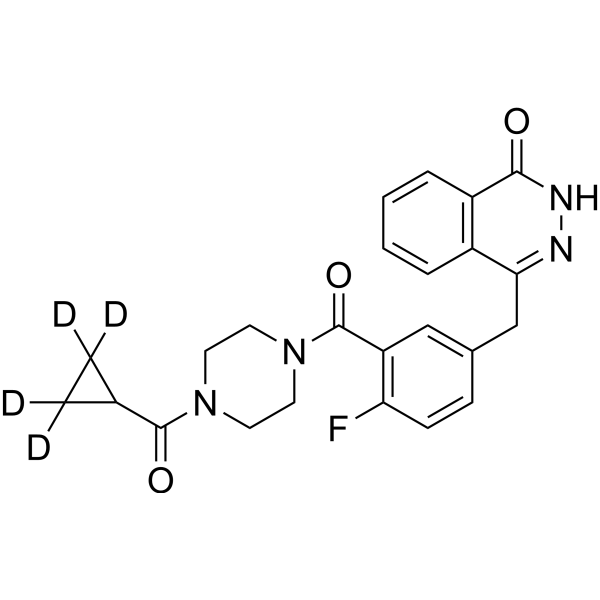
- HY-10162R
-
|
AZD2281 (Standard); KU0059436 (Standard)
|
Reference Standards
PARP
Autophagy
Mitophagy
|
Cancer
|
|
Olaparib (Standard) is the analytical standard of Olaparib. This product is intended for research and analytical applications. Olaparib (AZD2281; KU0059436) is a potent and orally active PARP inhibitor with IC50s of 5 and 1 nM for PARP1 and PARP2, respectively. Olaparib is an autophagy and mitophagy activator .
|
-

- HY-13330R
-
|
AZD4547 (Standard); ADSK091 (Standard)
|
Reference Standards
FGFR
|
Cancer
|
|
Fexagratinib (Standard) is the analytical standard of Fexagratinib. This product is intended for research and analytical applications. Fexagratinib (AZD4547; ADSK091) is a potent inhibitor of the FGFR family with IC50s of 0.2 nM, 2.5 nM, 1.8 nM, and 165 nM for FGFR1, FGFR2, FGFR3, and FGFR4, respectively.
|
-

- HY-145729
-
|
AZD9150
|
STAT
Apoptosis
|
Cancer
|
|
Danvatirsen (AZD9150) is an antisense oligonucleotide targeting STAT3. Danvatirsen reduces the viability and promotes apoptosis of leukemia cell lines. Danvatirsen inhibits the expression of endogenous STAT3 and its downstream target genes, and reduces the proliferation and tumorigenicity of neuroblastoma and lymphoma cells. Danvatirsen inhibited tumor growth in mouse models of neuroblastoma, lymphoma, and non-small cell lung cancer. Danvatirsen achieves STAT3 mRNA and protein depletion in a mouse model of epidermoid carcinoma. Danvatirsen can be used in research related to lymphoma, myelodysplastic syndrome, acute myeloid leukemia, neuroblastoma and non-small cell lung cancer .
|
-

- HY-145729A
-
|
AZD9150 sodium
|
STAT
Apoptosis
|
Cancer
|
|
Danvatirsen sodium (AZD9150 sodium) is an antisense oligonucleotide targeting STAT3. Danvatirsen sodium reduces the viability and promotes apoptosis of leukemia cell lines. Danvatirsen sodium inhibits the expression of endogenous STAT3 and its downstream target genes, and reduces the proliferation and tumorigenicity of neuroblastoma and lymphoma cells. Danvatirsen sodium inhibited tumor growth in mouse models of neuroblastoma, lymphoma, and non-small cell lung cancer. Danvatirsen sodium achieves STAT3 mRNA and protein depletion in a mouse model of epidermoid carcinoma. Danvatirsen sodium can be used in research related to lymphoma, myelodysplastic syndrome, acute myeloid leukemia, neuroblastoma and non-small cell lung cancer .
|
-

- HY-P990059
-
|
INT-016; AZD8205 Antibody
|
ADC Antibody
CD276/B7-H3
|
Cancer
|
|
Puxitatug (INT-016; AZD8205 Antibody) is a monoclonal antibody targeting VTCN1/B7-H4. Puxitatug can be used to synthesize antibody-drug conjugates (ADCs), such as Puxitatug samrotecan (HY-171689), which can be applied to various solid tumors. Puxitatug can also be used for researching adjuvant therapies for gastric cancer .
|
-

- HY-P991028
-
|
AZD0486; TNB-486
|
CD3
CD19
Interleukin Related
TNF Receptor
IFNAR
|
Cancer
|
|
Surovatamig (AZD0486; TNB-486) is a fully human anti-CD19/CD3 IgG4 bispecific antibody. Surovatamig triggers T cell activation, releases cytotoxic granules, and induces T cell-dependent cellular cytotoxicity and tumor cell lysis. Surovatamig can reduces release of pro-inflammatory cytokines including IL-2, IFNγ, TNF. Surovatamig can be used for the research of cancer, such as B cell non-Hodgkin lymphoma .
|
-

- HY-15790R
-
|
A 3309 (Standard); AZD 7806 (Standard)
|
Apical Sodium-Dependent Bile Acid Transporter
Reference Standards
|
Metabolic Disease
Inflammation/Immunology
Cancer
|
|
Elobixibat (Standard) is the analytical standard of Elobixibat (HY-15790). This product is intended for research and analytical applications. Elobixibat (A 3309; AZD 7806) is orally active, bile acid transporter (IBAT) inhibitor with IC50 values ??of 0.53 nM (human IBAT), 0.13 nM (mouse IBAT), and 5.8 nM (canine IBAT). Elobixibat can lower LDL cholesterol, increase serum GLP-1, promote colonic motility, and has the potential to treat metabolic syndrome. Elobixibat can be used in the study of chronic functional constipation (CIC), dyslipidemia, non-alcoholic hepatitis, and liver tumors in the elderly .
|
-

- HY-P990716
-
|
AZD7789
|
PD-1/PD-L1
Tim3
|
Inflammation/Immunology
|
|
Sabestomig (AZD7789) is a monovalent bispecific antibody targeting PD-1 and TIM-3. Sabestomig binds to PD-1 and an epitope in the TIM-3 IgV domain outside the phosphatidylserine-binding cleft, thereby precisely regulating immune responses. Sabestomig promotes IL-2 production, efferocytosis and cross-presentation of tumor antigens, and enhances the release of anti-tumor T cell cytokines, cytotoxicity, and secretion of IFN-γ. Sabestomig inhibits the growth of solid tumors, prolongs the duration of tumor suppression, and significantly enhances anti-tumor responses following anti-PD-1 therapy. Sabestomig has been used in studies related to non-small cell lung cancer and classical Hodgkin lymphoma .
|
-

- HY-15651S
-
-

- HY-15772AR
-
|
AZD-9291 mesylate (Standard); Mereletinib mesylate (Standard)
|
Reference Standards
EGFR
|
Cancer
|
|
Osimertinib (mesylate) (Standard) is the analytical standard of Osimertinib (mesylate). This product is intended for research and analytical applications. Osimertinib mesylate (AZD9291 mesylate) is a covalent, orally active, irreversible, and mutant-selective EGFR inhibitor with an apparent IC50 of 12 nM against L858R and 1 nM against L858R/T790M. Osimertinib overcomes T790M-mediated resistance to EGFR inhibitors in lung cancer .
|
-

- HY-15772R
-
|
AZD-9291 (Standard); Mereletinib (Standard)
|
Reference Standards
EGFR
|
Cancer
|
|
Osimertinib (Standard) is the analytical standard of Osimertinib. This product is intended for research and analytical applications. Osimertinib (AZD9291) is a covalent, orally active, irreversible, and mutant-selective EGFR inhibitor with an apparent IC50 of 12 nM against L858R and 1 nM against L858R/T790M, respectively. Osimertinib overcomes T790M-mediated resistance to EGFR inhibitors in lung cancer .
|
-

- HY-108235AR
-
|
AZD6765 dihydrochloride (Standard); ARL 15896AR (Standard)
|
Reference Standards
iGluR
|
Neurological Disease
|
|
Lanicemine dihydrochloride (Standard) is the analytical standard of Lanicemine (dihydrochloride) (HY-108235A). This product is intended for research and analytical applications. Lanicemine (AZD6765) dihydrochloride is a low-trapping NMDA channel blocker (Ki of 0.56-2.1 μM for NMDA receptor; IC50s of 4-7 μM and 6.4 μM in CHO and Xenopus oocyte cells, respectively). Antidepressant effects .
|
-

- HY-101056R
-
|
AZD7986 (Standard); INS 1007 (Standard)
|
Dipeptidyl Peptidase
Reference Standards
|
Inflammation/Immunology
|
|
Brensocatib (Standard) is the analytical standard of Brensocatib (HY-101056). This product is intended for research and analytical applications. Brensocatib (AZD7986) is an oral dipeptidyl peptidase 1 (DPP1) inhibitor with pIC50s of 6.85, 7.6, 7.7, 7.8, and 7.8 in human, mouse, rat, dog and rabbit, respectively .
|
-

- HY-171124
-
|
AZD9592
|
Antibody-Drug Conjugates (ADCs)
EGFR
c-Met/HGFR
Topoisomerase
DNA/RNA Synthesis
|
Cancer
|
|
Tilatamig samrotecan (AZD9592) is an anti-EGFR/c-MET antibody-drug conjugate (ADC). Tilatamig samrotecan consists of an anti-EGFR/c-MET antibody with the drug-linker conjugate being AZ14170133 (HY-145399) (a topoisomerase I (TOP1i) inhibitor payload). Tilatamig samrotecan induces multiple DNA damage response pathway markers (like ATM, ATR, γH2AX). Tilatamig samrotecan selectively binds to EGFR and c-MET, delivering the cytotoxic payload. Tilatamig samrotecan exerts anti-tumor activity in vivo. Tilatamig samrotecan can be used for non-small cell lung cancer (NSCLC) and head and neck squamous cell carcinoma (HNSCC) research .
|
-

- HY-148673
-
|
AZD0780; PCSK9-IN-12
|
PCSK9
|
Cardiovascular Disease
Metabolic Disease
|
|
Laroprovstat (AZD0780) is an orall active PCSK9 inhibitor. PCSK9-IN-12 has bind affinity for PCSK9 with a Kd value of <200 nM. Laroprovstat binds to a pocket in the PCSK9 C-terminal domain and does not affect the PCSK9-LDL receptor (LDLR) interaction. Laroprovstat inhibits lysosomal trafficking of PSCK9-LDLR complexes and prevents PCSK9-induced LDLR degradation. Laroprovstat can be used for the research of hypercholesterolemia .
|
-
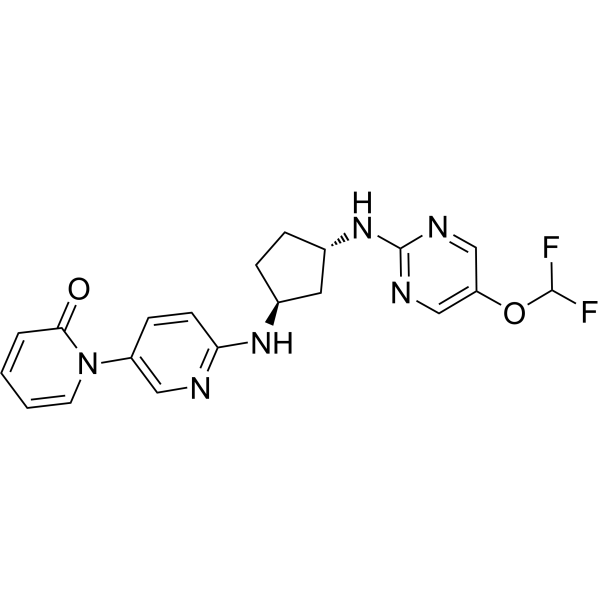
- HY-120802A
-
|
AZD-8871 saccharinate; LAS191351 saccharinate
|
mAChR
Adrenergic Receptor
|
Infection
Inflammation/Immunology
|
|
Navafenterol (AZD-8871) saccharinate is an inhaled dual-acting, potent, selective, and long-lasting M3-antagonist/β2-agonist (MABA) with long-lasting effects and favorable safety profile. The pIC50 is 9.5 for human M3 receptor, and the pEC50 is 9.5 for β2-adrenoceptor. Navafenterol saccharinate can be used for the research of chronic obstructive pulmonary disease (COPD). Bronchoprotective and antisialagogue effects. Favorable cardiovascular profile .
|
-
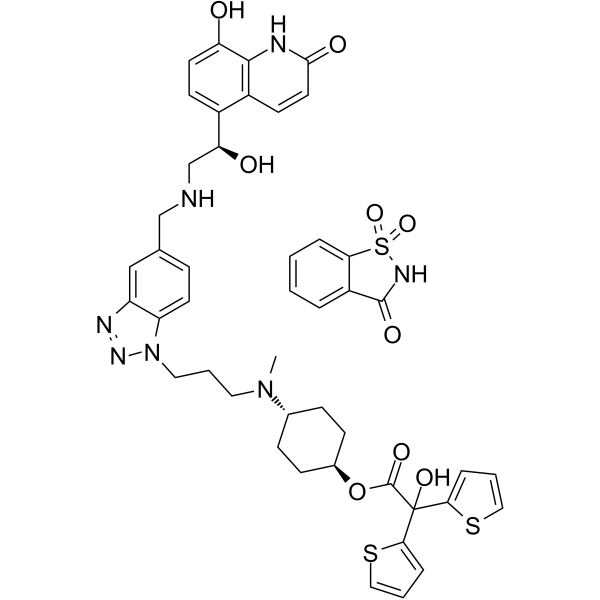
- HY-15772S1
-
|
AZD-9291-13C,d3; Mereletinib-13C,d3
|
EGFR
|
Cancer
|
|
Osimertinib- 13C,d3 is the deuterium and 13C labeled Osimertinib. Osimertinib (AZD9291) is a covalent, orally active, irreversible, and mutant-selective EGFR inhibitor with an apparent IC50 of 12 nM against L858R and 1 nM against L858R/T790M, respectively.
|
-
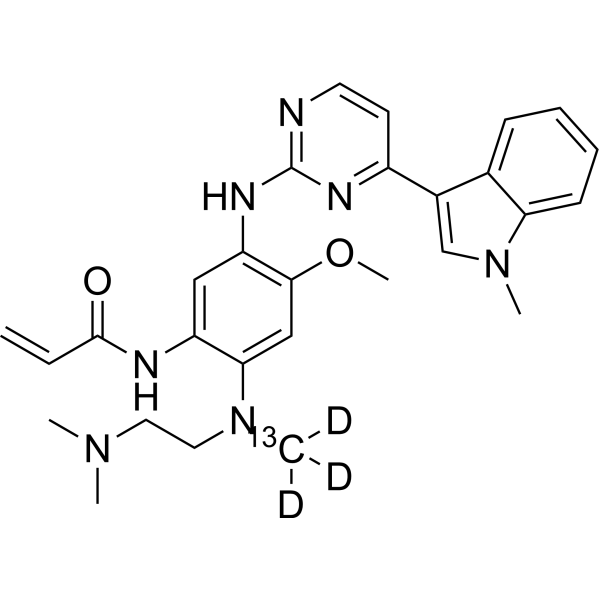
- HY-15790S
-
|
A 3309-d5; AZD 7806-d5
|
Isotope-Labeled Compounds
Apical Sodium-Dependent Bile Acid Transporter
|
Metabolic Disease
Inflammation/Immunology
Cancer
|
|
Elobixibat-d5 is the deuterium labeled Elobixibat (HY-15790). Elobixibat (A 3309; AZD 7806) is orally active, bile acid transporter (IBAT) inhibitor with IC50 values ??of 0.53 nM (human IBAT), 0.13 nM (mouse IBAT), and 5.8 nM (canine IBAT). Elobixibat can lower LDL cholesterol, increase serum GLP-1, promote colonic motility, and has the potential to treat metabolic syndrome. Elobixibat can be used in the study of chronic functional constipation (CIC), dyslipidemia, non-alcoholic hepatitis, and liver tumors in the elderly .
|
-

- HY-110255C
-
-

- HY-14432
-
-
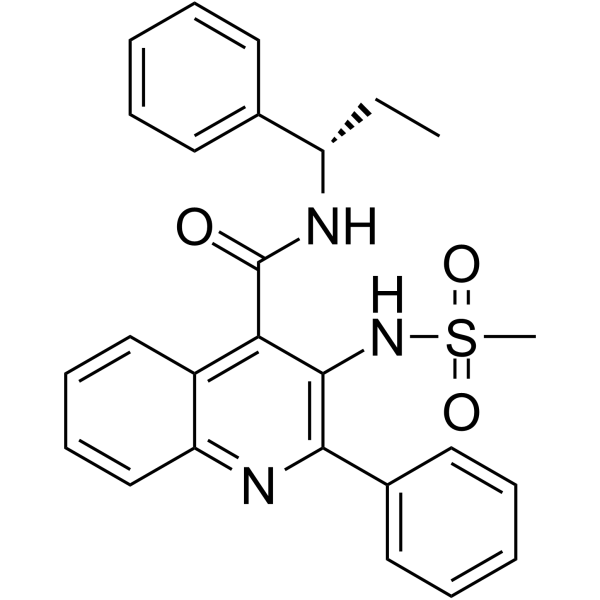
- HY-158143
-
-

- HY-P992318
-
-

- HY-14931
-
|
AZD 3582; HCT 3012; Nitronaproxen
|
COX
|
Inflammation/Immunology
|
|
Naproxcinod (Nitronaproxen) is the first in class of cyclooxygenase (COX)-inhibiting nitric oxide donators (CINODs). Naproxcinod shows analgesic and anti-inflammatory effects, it can be used for the research of osteoarthritis and inflammation .
|
-
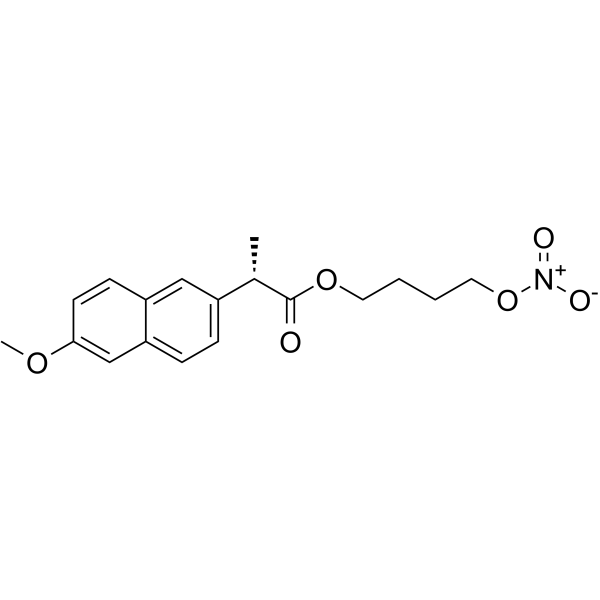
- HY-13050A
-
|
AZD-8931 fumarate
|
EGFR
|
Cancer
|
|
Sapitinib fumarate is a reversible, ATP competitive EGFR inhibitor of with IC50s of 4, 3 and 4 nM for EGFR, ErbB2 and ErbB3 in cells, respectively.
|
-

- HY-P990704
-
|
AZD-2936
|
PD-1/PD-L1
|
Inflammation/Immunology
|
|
Rilvegostomig is an anti-PDCD1/TIGIT human IgG1 κ monoclonal antibody . Recommend Isotype Controls: Human IgG1 kappa, Isotype Control (HY-P99001).
|
-

- HY-P992123
-
|
AZD-5148
|
Bacterial
|
Infection
|
|
Ombetoxabart is a humanized IgG1-κ monoclonal antibody targeting TcdB (Clostridioides difficile toxin B), which exerts its function by neutralizing the toxicity of TcdB. Ombetoxabart can be used for the study of Clostridioides difficile infection .
|
-

- HY-P991717
-
|
AZD-8630
|
Interleukin Related
|
Inflammation/Immunology
Cancer
|
|
Sunakiment is a humanized IgG1λ monoclonal antibody inhibitor targeting Thymic stromal lymphopoietin (TSLP). Sunakiment can be used for inflammatory and immune system disorders like ulcerative colitis, rheumatoid arthritis and allergy and cancers research .
|
-

- HY-15651A
-
|
AZD9668 tosylate
|
Elastase
|
Inflammation/Immunology
|
|
Alvelestat (tosylate) is an orally bioavailable, affinity and selective inhibitor of neutrophil elastase (NE) with a pIC50 value of 7.9 nM, a Ki value of 9.4 nM and a Kd value of 9.5 nM .
|
-
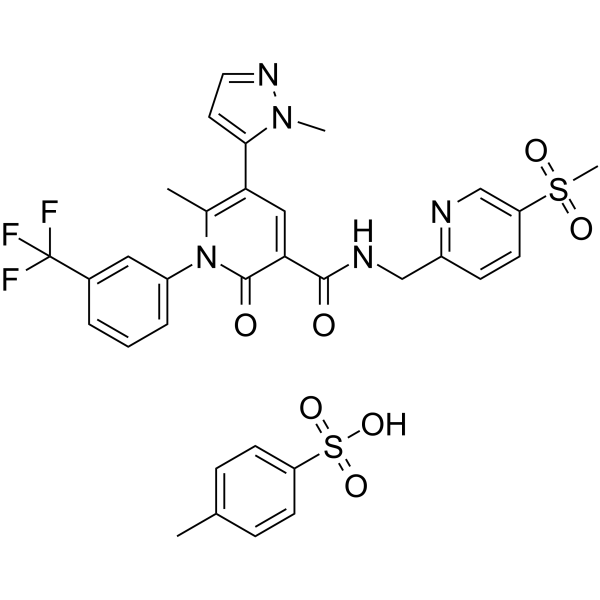
- HY-14432R
-
-

- HY-15462
-
-
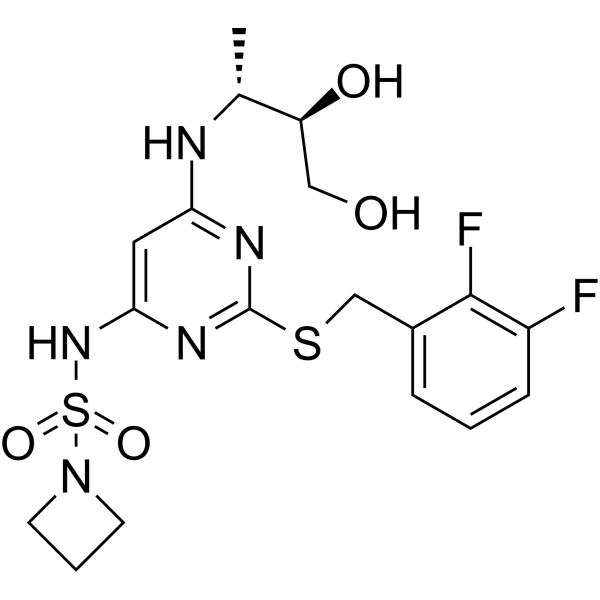
- HY-15590
-
AZ-23
3 Publications Verification
AZD1332
|
Trk Receptor
|
Cancer
|
|
AZ-23 is an ATP-competitive and orally bioavailable Trk kinase A/B/C inhibitor with IC50s of 2 nM (TrkA), 8 nM (TrkB), 24 nM (FGFR1), 52 nM (Flt3), 55 nM (Ret), 84 nM (MuSk), 99 nM (Lck), respectively.
|
-
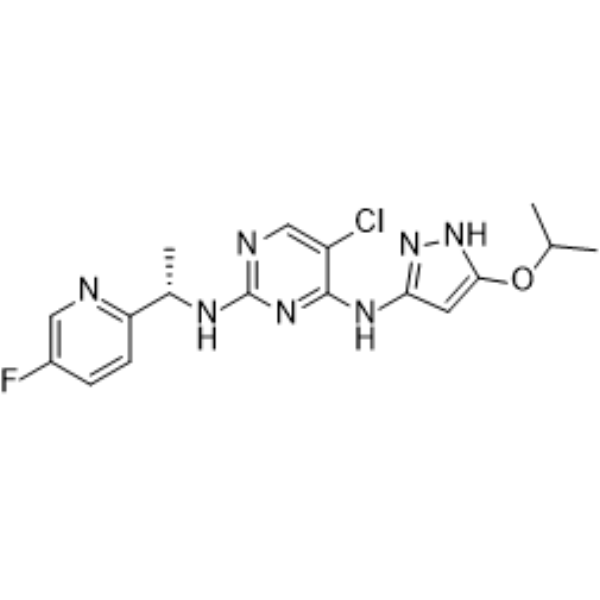
- HY-123502
-
|
AZD-6738 formate
|
ATM/ATR
|
Cancer
|
|
Ceralasertib formate is a potent, selective and orally active ATR inhibitor with an IC50 value of 1 nM. Ceralasertib formate inhibits cell viability and induces DNA damage. Ceralasertib formate induces cell senescence. Ceralasertib formate shows antitumor activity .
|
-

- HY-111144
-
|
AZD0548; LAS100977
|
Adrenergic Receptor
|
Inflammation/Immunology
|
|
Abediterol (LAS100977) is an inhaled long-acting β2-adrenoceptor agonist (LABA) and can be used for the research of asthma and chronic obstructive pulmonary disease (COPD) .
|
-
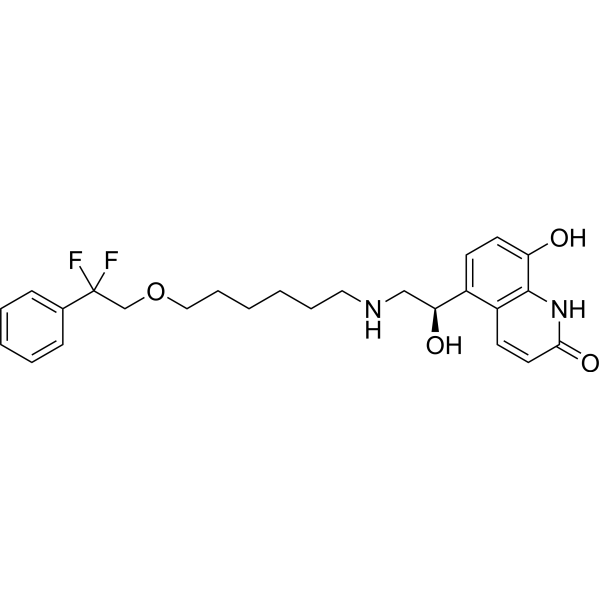
- HY-177653
-
|
AZD2373, ION-972190
|
Apolipoprotein
|
Metabolic Disease
|
|
Opemalirsen is an antisense oligonucleotide targeted to apolipoprotein L1 (APOL1). It is used for the study of Kidney disorders.
|
-

- HY-10273
-
|
AZD0837; Atecegatran fexenetil
|
Thrombin
|
Cardiovascular Disease
|
|
Atecegatran metoxil is a oral anticoagulant, which inhibits thrombin factor II and is used in thromboembolic disorders. In vivo, Atecegatran metoxil is converted to AR-H067637, a selective and reversible direct thrombin inhibitor.
|
-
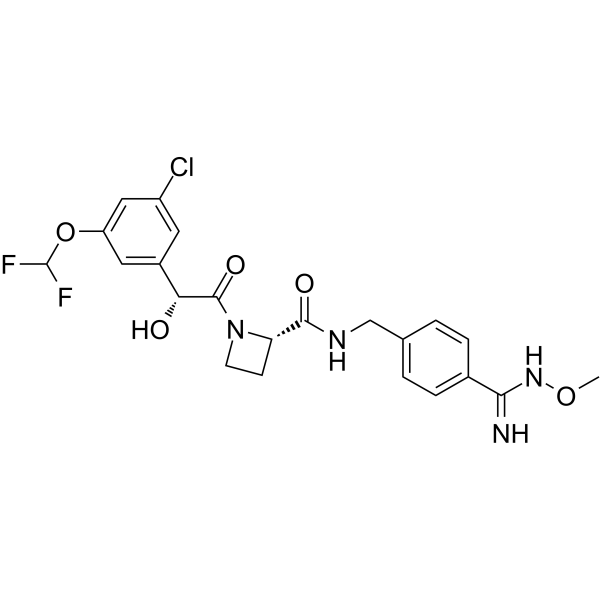
- HY-177653A
-
|
AZD2373 sodium, ION-972190 sodium
|
Apolipoprotein
|
Metabolic Disease
|
|
Opemalirsen sodium is an antisense oligonucleotide targeted to apolipoprotein L1 (APOL1). It is used for the study of Kidney disorders.
|
-

- HY-P991164
-
|
AZD5335 Antibody; INT-019
|
Antifolate
|
Inflammation/Immunology
|
|
Torvutatug is an anti-FOLR1 human IgG1 κ monoclonal antibody. Recommend Isotype Controls: Human IgG1 kappa, Isotype Control (HY-P99001) .
|
-

- HY-17647R
-
|
ETX0914 (Standard); AZD0914 (Standard)
|
Reference Standards
DNA/RNA Synthesis
Bacterial
Antibiotic
|
Infection
|
|
Oxyphenonium (bromide) (Standard) is the analytical standard of Oxyphenonium (bromide). This product is intended for research and analytical applications. Oxyphenonium bromide is an antiacetylcholine compound. Oxyphenonium bromide is an antagonist of mAChR. Oxyphenonium bromide protects against the bronchial obstructive effects .
|
-

- HY-124397
-
|
ZD-6126; AZD-6126; ANG-453
|
Microtubule/Tubulin
|
Cancer
|
|
N-Acetylcolchinol phosphate is an inhibitor of tubulin polymerisation. N-Acetylcolchinol phosphate can bind to tubulin cytoskeleton of the endothelial cells in blood vessels of tumor. N-Acetylcolchinol phosphate can be studied in anti-cancer research .
|
-

- HY-117024
-
|
AZD0548 napadisylate; LAS100977 napadisylate
|
Adrenergic Receptor
|
Inflammation/Immunology
|
|
Abediterol napadisylate is an inhaled long-acting β2-adrenoceptor agonist (LABA) and can be used for the research of asthma and chronic obstructive pulmonary disease (COPD) .
|
-

- HY-142283AS
-
|
AZD-9291-d5 mesylate; Mereletinib-d5 mesylate
|
EGFR
|
Cancer
|
|
Dosimertinib-d5 (mesylate) is a potent and orally active EGFR inhibitor. Dosimertinib-d5 (mesylate) decreases the expression of p-EGFR and p-ERK protein levels. Dosimertinib-d5 (mesylate) shows antiproliferative and anti-tumor activity. Dosimertinib-d5 (mesylate) has the potential for the research of non-small-cell lung cancer (NSCLC) .
|
-
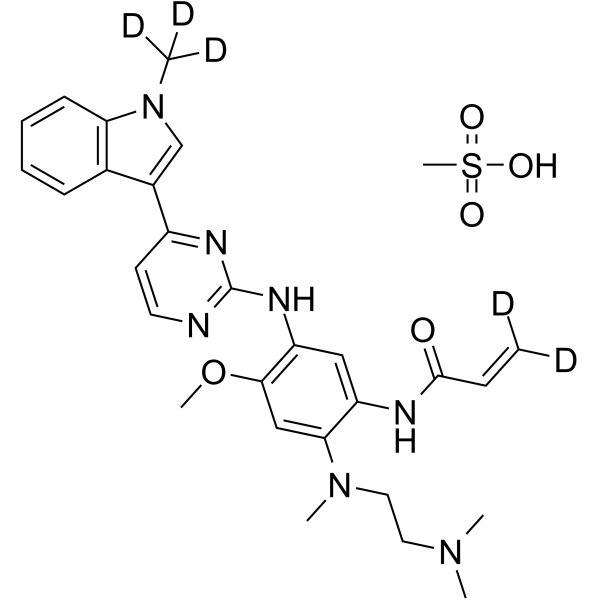
- HY-P991197
-
|
LM-305 antibody; AZD-0305 antibody
|
CD3
|
Cancer
|
|
Anti-GPRC5D Antibody (LM-305 antibody) is a humanized IgG1 monoclonal antibody that targets GPRC5D. Anti-GPRC5D Antibody is the antibody part of the ADC molecule LM-305. Recommend Isotype Controls: Human IgG1 kappa, Isotype Control (HY-P99001).
|
-

- HY-15772S
-
|
AZD-9291-d6; Mereletinib-d6
|
EGFR
|
Cancer
|
|
Osimertinib-d6 is a deuterium labeled osimertinib. Osimertinib is a covalent, orally active, irreversible, and mutant-selective EGFR inhibitor with an apparent IC50 of 12 nM against L858R and 1 nM against L858R/T790M. Osimertinib overcomes T790M-mediated resistance to EGFR inhibitors in lung cancer .
|
-
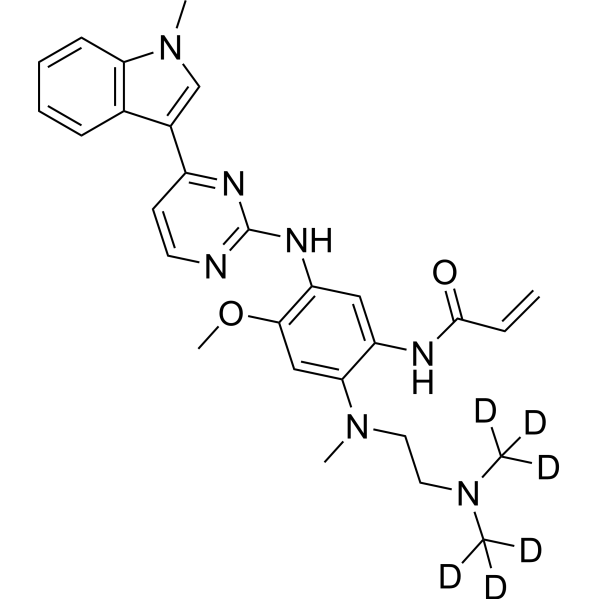
- HY-75124
-
|
(Rac)-KIN-193
|
PI3K
Autophagy
|
Cancer
|
|
(Rac)-AZD 6482 ((Rac)-KIN-193) is the racemate of AZD 6482. AZD 6482 is a potent and selective p110β inhibitor with an IC50 of 0.69 nM.
|
-
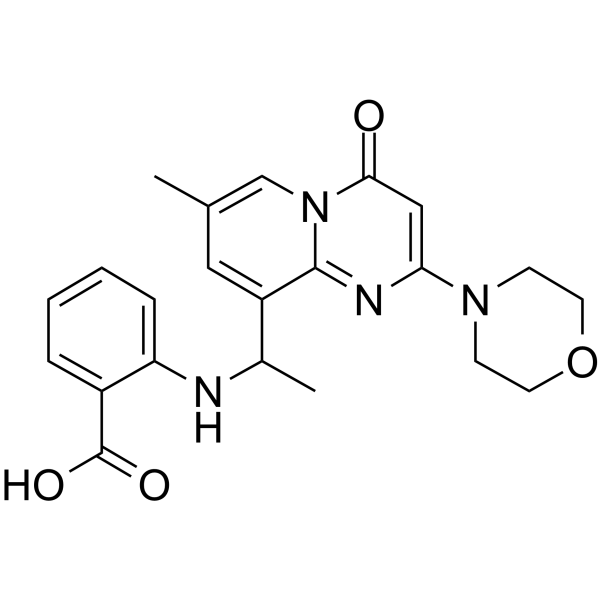
- HY-173637A
-
|
|
Ras
|
Cancer
|
|
(S)-AZD0022 is an isomer of AZD0022, AZD0022 is a selective and orally active KRAS G12D inhibitor. AZD0022 inhibits KRAS pathway suppression in the GP2D xenograft model .
|
-

- HY-133703A
-
|
|
Wee1
|
Cancer
|
|
i-AZD1775 (TFA) is an immobilizable analogue of AZD1775. i-AZD1775 (TFA) retains the ability to inhibit WEE1 in vitro. i-AZD1775 (TFA) can be studied in anticancer research .
|
-

- HY-158827C
-
-

- HY-159692D
-
-

- HY-10193A
-
|
|
JAK
|
Cancer
|
|
(1R)-AZD-1480 is the (1R) chiral isomer of AZD-1480, an ATP competitive JAK1 and JAK2 inhibitor .
|
-

- HY-10193AR
-
|
|
Reference Standards
JAK
|
Cancer
|
|
(1R)-AZD-1480 (Standard) is the analytical standard of (1R)-AZD-1480 (HY-10193A). This product is intended for research and analytical applications. (1R)-AZD-1480 is the (1R) chiral isomer of AZD-1480, an ATP competitive JAK1 and JAK2 inhibitor .
|
-

- HY-W800678
-
|
|
Biochemical Assay Reagents
|
Others
|
|
Bromoacetamido-PEG2-AZD is a PEG linker containing an AZD group and a bromide group which is a very good leaving group for nucleophilic substitution reactions. The hydrophilic PEG spacer increases solubility in aqueous media.
|
-

- HY-159692E
-
-

- HY-158827D
-
-

- HY-103268
-
|
|
Potassium Channel
|
Neurological Disease
|
|
(Rac)-AZD3839 is an orally active beta-amyloid precursor protein cleaving enzyme (BACE1) inhibitor that is blood-brain barrier-permeable. (Rac)-AZD3839 has an affinity for the human ether-a-go-go related gene (hERG) ion channel. (Rac)-AZD3839 can be used in the research of Alzheimer's disease .
|
-
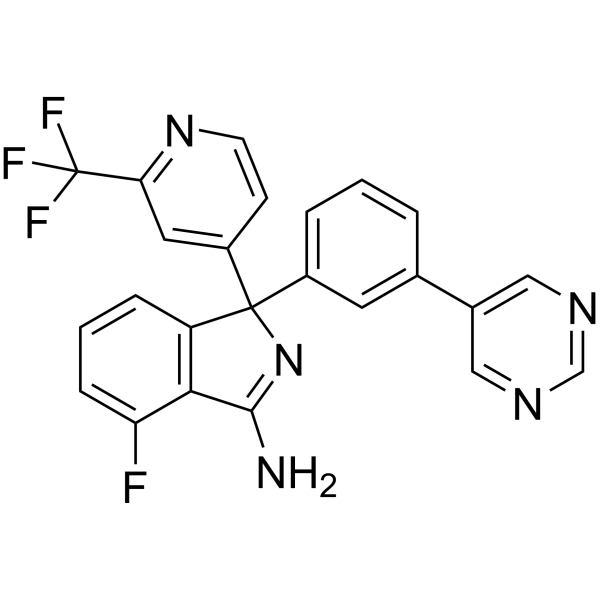
- HY-154959A
-
|
|
Ras
|
Cancer
|
|
(9R,12aR)-AZD4747 is a diastereomer of AZD4747 (HY-154959). AZD4747 is a selective mutant GTPase KRAS G12C inhibitor with blood-brain barrier permeability. AZD4747 has the potential to study cancer .
|
-
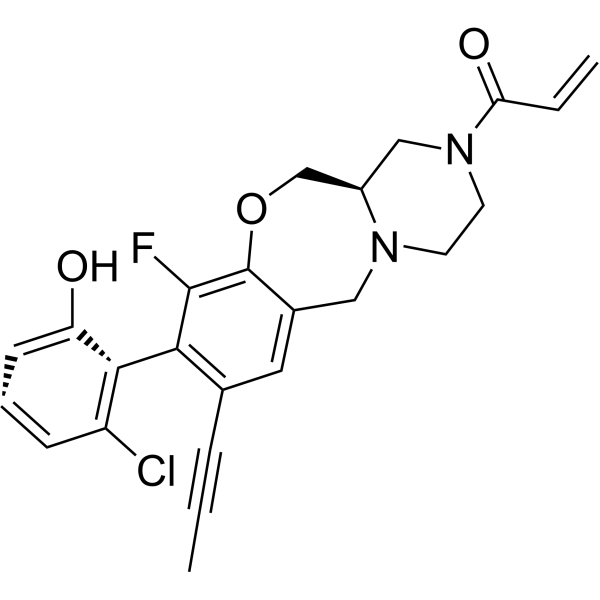
- HY-113697
-
|
Mal-PEG2-AZD
|
PROTAC Linkers
|
Cancer
|
|
Mal-amido-PEG2-C2-amido-Ph-C2-CO-AZD (Mal-PEG2-AZD) is a PEG-based PROTAC linker that can be used in the synthesis of PROTACs .
|
-
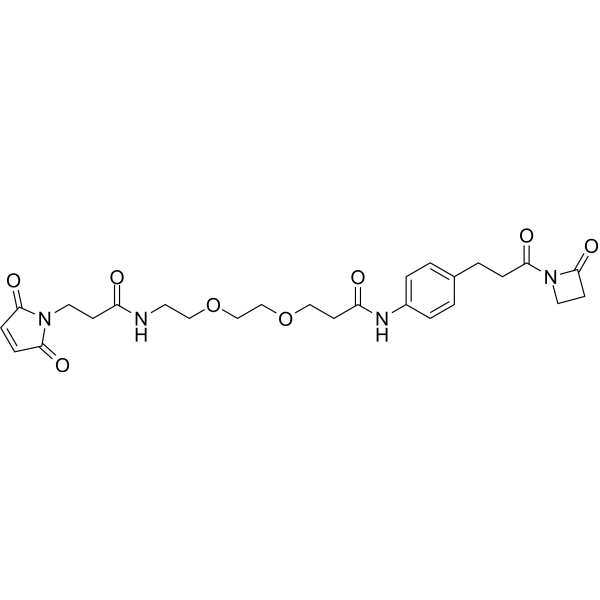
- HY-146223A
-
|
|
Ras
PI3K
p38 MAPK
Apoptosis
|
Cancer
|
|
(3R,10R,14aS)-AZD4625 is the isomer of AZD4625 (HY-146223), and can be used as an experimental control. AZD4625 is an orally active, selective irreversible, covalent allosteric GTPase KRASG12C inhibitor with an IC50 of 3 nM. AZD4625 can inhibit the MAPK pathway (with decreased pCRAF, pMEK, and pERK) and the PI3K pathway (with decreased pAKT and pS6), and induce cell apoptosis. AZD4625 has no binding and inhibition of wild-type RAS or isoforms carrying non-KRASG12C mutations. AZD4625 can be used for the study of KRASG12C mutant non-small cell lung cancer .
|
-
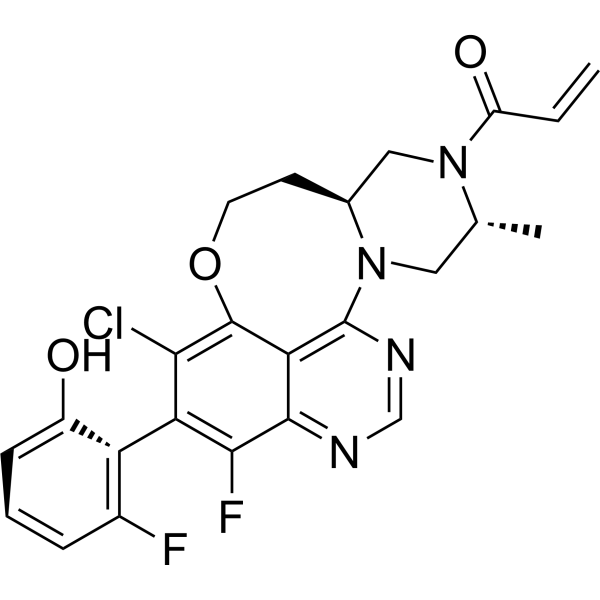
- HY-108958
-
|
|
PI3K
|
Cancer
|
|
Rac)-AZD8186 is the racemate of AZD8186 (HY-12330), a PI3K inhibitor that inhibits PI3Kβ (IC50=4 nM), PI3Kδ (IC50=12 nM), PI3Kα (IC50=35 nM) and PI3Kγ (IC50=675 nM) .
|
-

- HY-15431A
-
|
(R)-AZD5363
|
Akt
|
Cancer
|
|
(R)-Capivasertib ((R)-AZD5363) is the R-enantiomer of Capivasertib (HY-15431) .
|
-
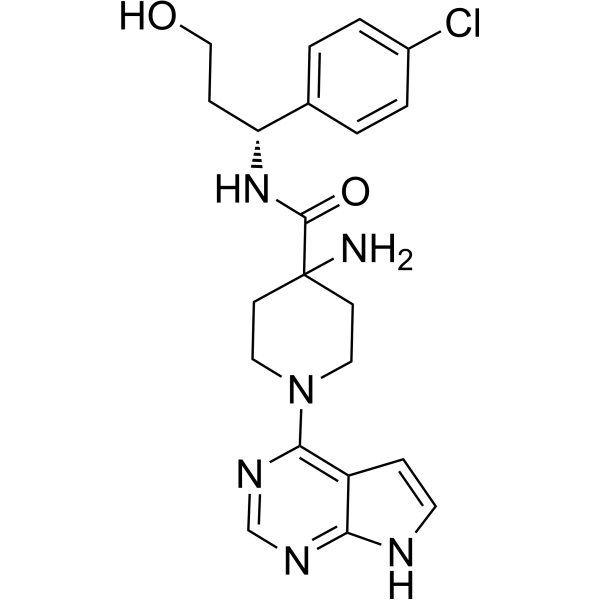
- HY-108235B
-
|
(Rac)-AZD6765
|
iGluR
|
Neurological Disease
|
|
(Rac)-Lanicemine ((Rac)-AZD6765) is the racemate of Lanicemine. Lanicemine (AZD6765) is a low-trapping NMDA channel blocker (Ki of 0.56-2.1 μM for NMDA receptor; IC50s of 4-7 μM and 6.4 μM in CHO and Xenopus oocyte cells, respectively). Antidepressant effects .
|
-
- HY-108235C
-
|
(R)-AZD6765
|
iGluR
|
Neurological Disease
|
|
(R)-Lanicemine ((R)-AZD6765) is the less active R-enantiomer of Lanicemine. Lanicemine (AZD6765) is a low-trapping NMDA channel blocker (Ki of 0.56-2.1 μM for NMDA receptor; IC50s of 4-7 μM and 6.4 μM in CHO and Xenopus oocyte cells, respectively). Antidepressant effects .
|
-
- HY-19323A
-
|
(S)-AZD6738
|
ATM/ATR
|
Cancer
|
|
(S)-Ceralasertib ((S)-AZD6738) is the S-enantiomer of Ceralasertib (HY-19323). (S)-Ceralasertib is the inhibitor for ataxia telangiectasia mutated and rad3 related (ATR) .
|
-
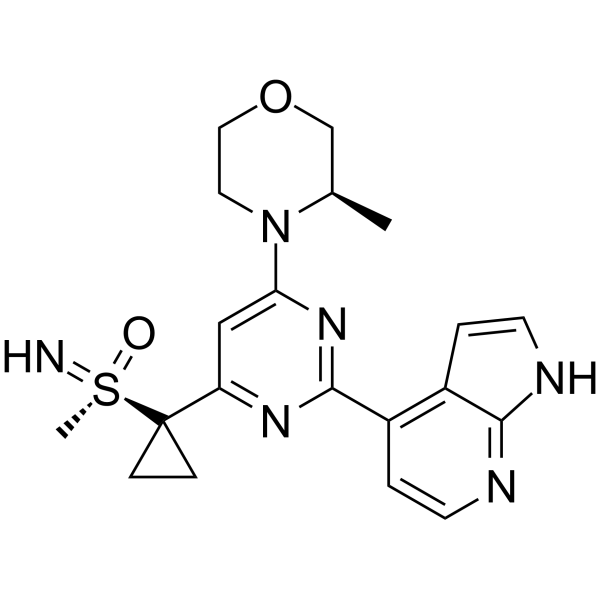
- HY-118236
-
|
(S)-KIN-193
|
PI3K
|
Cardiovascular Disease
|
|
(S)-AZD6482 ((S)-KIN-193) is a highly effective and selective ATP-competitive inhibitor of PI3Kβ, exhibiting an IC(50) of 0.01 μM, and it can reduce insulin-induced glucose uptake by human adipocytes in vitro with an IC(50) of 4.4 μM.
|
-

- HY-108235BR
-
|
(Rac)-AZD6765 (Standard)
|
iGluR
Reference Standards
|
Neurological Disease
|
|
(Rac)-Lanicemine (Standard) is the analytical standard of (Rac)-Lanicemine. This product is intended for research and analytical applications. (Rac)-Lanicemine ((Rac)-AZD6765) is the racemate of Lanicemine. Lanicemine (AZD6765) is a low-trapping NMDA channel blocker (Ki of 0.56-2.1 μM for NMDA receptor; IC50s of 4-7 μM and 6.4 μM in CHO and Xenopus oocyte cells, respectively). Antidepressant effects .
|
-

- HY-14878
-
|
(2R)-AZD-0837
|
Thrombin
|
Cardiovascular Disease
|
|
(2R)-Atecegatran ((2R)-AZD-0837; (Ph(3-Cl)(5-OCHF2)-(R)CH(OH)C(O)-Aze-Pab)) is a thrombin inhibitor. (2R)-Atecegatran can be used in research related to thromboembolic disorders .
|
-

- HY-100740C
-
|
(1α,1'S,4β)-AZD3293; (1α,1'S,4β)-LY3314814
|
Beta-secretase
|
Neurological Disease
|
|
(1α,1'S,4β)-Lanabecestat ((1α,1'S,4β)-AZD3293) a less active enantiomer of Lanabecestat. Lanabecestat is a potent, orally active and blood-brain barrier penetrating BACE1 inhibitor with a Ki of 0.4 nM .
|
-
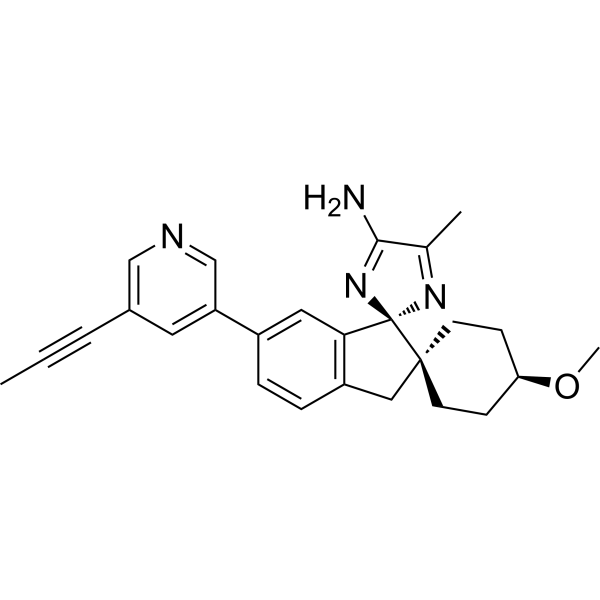
- HY-100740CR
-
|
(1α,1'S,4β)-AZD3293 (Standard); (1α,1'S,4β)-LY3314814 (Standard)
|
Beta-secretase
Reference Standards
|
Neurological Disease
|
|
(1α,1'S,4β)-Lanabecestat (Standard) is the analytical standard of (1α,1'S,4β)-Lanabecestat (HY-100740C). This product is intended for research and analytical applications. (1α,1'S,4β)-Lanabecestat ((1α,1'S,4β)-AZD3293) a less active enantiomer of Lanabecestat. Lanabecestat is a potent, orally active and blood-brain barrier penetrating BACE1 inhibitor with a Ki of 0.4 nM .
|
-

- HY-145399
-
|
SG 3932; AZ-0133
|
Drug-Linker Conjugates for ADC
Topoisomerase
|
Cancer
|
|
AZ14170133 (SG 3932; AZ-0133) is a Drug-Linker Conjugates for ADC. AZ14170133 consists of the ADC cytotoxic payload topoisomerase 1 inhibitor and a linker. AZ14170133 can be used for synthesis of ADC AZD9592 (HY-171124) and AZD 8205 (HY-171689). AZ14170133 can be used for the research of cancer .
|
-
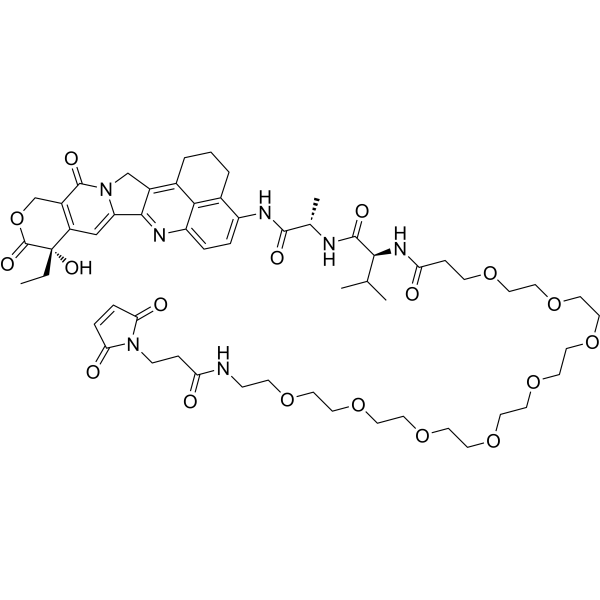
- HY-B0794A
-
-
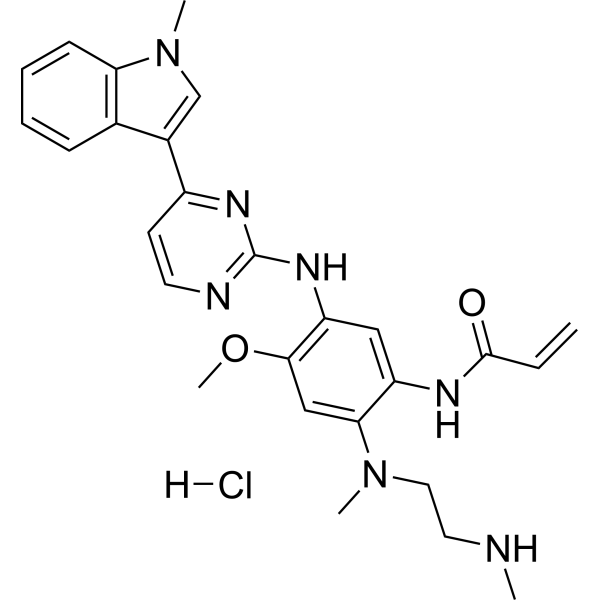
- HY-B0794
-
-
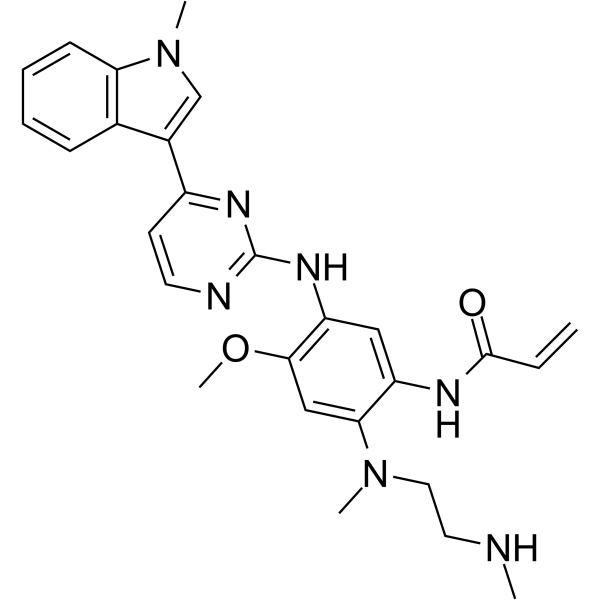
- HY-B0794B
-
-
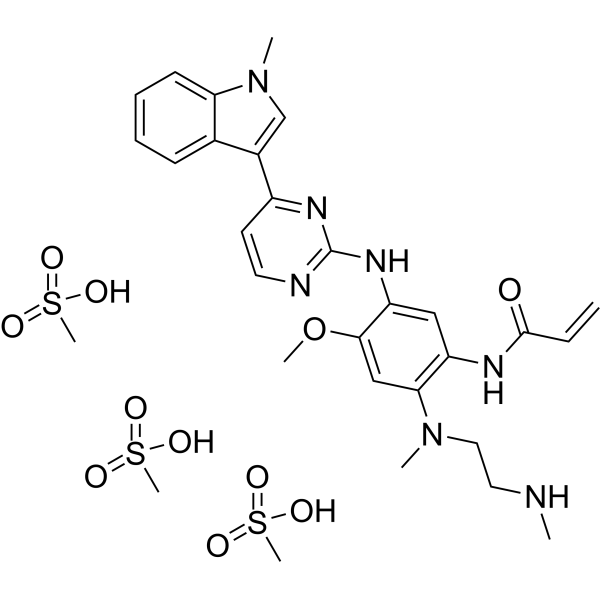
- HY-15790H
-
-

- HY-143343
-
|
|
Wee1
|
Cancer
|
|
LEB-03-153 is a WEE1 DUBTAC (deubiquitinase-targeting chimera) linking AZD1775 (Adavosertib) to the OTUB1 recruiter EN523 through no linker .
|
-
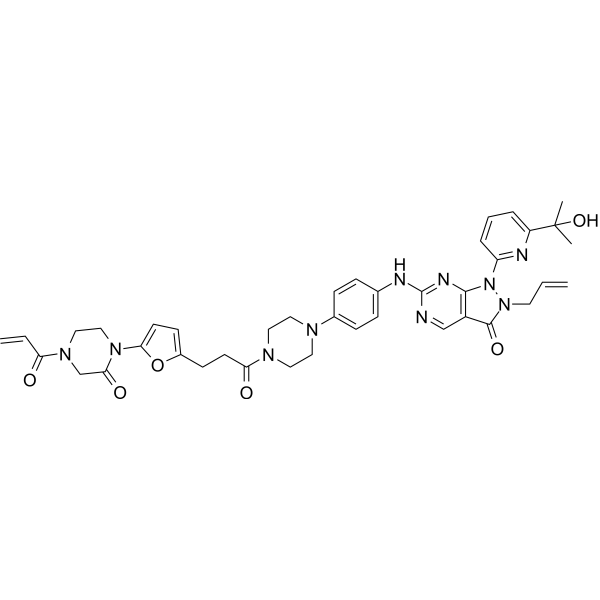
- HY-161838
-
|
|
ATM/ATR
|
Cancer
|
|
ICT10336 is a hypoxia-responsive prodrug of ATR inhibitor, AZD6738 (HY-19323). ICT10336 is hypoxia-activated and specifically releases AZD6738 only in hypoxic conditions in vitro. This can inhibit ATR activation (T1989 and S428 phosphorylation) and subsequently abrogate HIF1a-mediated adaptation of hypoxic cancers cells, thus selectively inducing cell death in 2D and 3D cancer models. ICT10336 is a metabolic substrate of CYPOR activity.
|
-

- HY-10064S
-
-
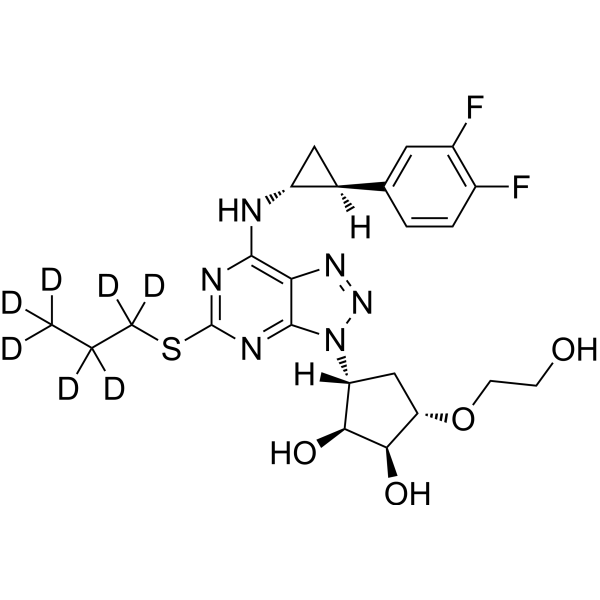
- HY-143340
-
|
|
Wee1
|
Cancer
|
|
LEB-03-145 is a WEE1 DUBTAC (deubiquitinase-targeting chimera) linking AZD1775 (Adavosertib) to the OTUB1 recruiter EN523 through a C5 alkyl linker .
|
-
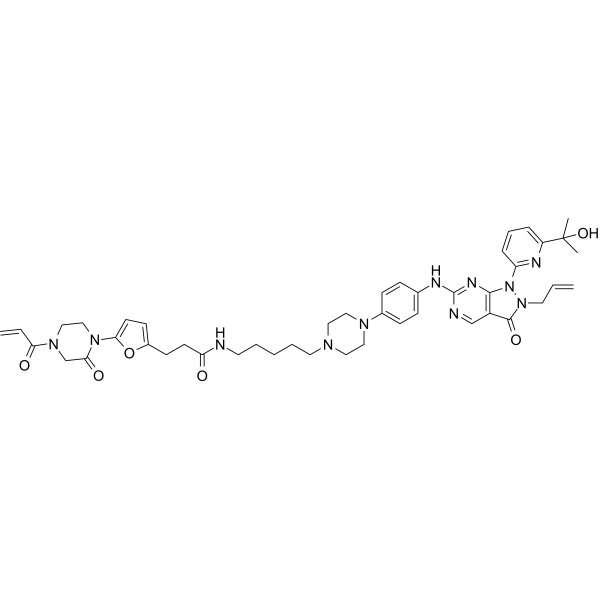
- HY-B0794BR
-
|
AZ7550 trimesylate salt (Standard)
|
Reference Standards
EGFR
IGF-1R
Drug Metabolite
|
Endocrinology
Cancer
|
|
AZ7550 Mesylate (Standard) is the analytical standard of AZ7550 Mesylate. This product is intended for research and analytical applications. AZ7550 Mesylate is an active metabolite of AZD9291 and inhibits the activity of IGF1R with an IC50 of 1.6 μM.
|
-

- HY-P3669
-
|
|
ADC Linker
Drug Intermediate
|
Cancer
|
|
Gly-Gly-Phe-Gly is a peptide spacer and can be applied to Doxorubicin (HY-15142A) (DXR) conjugates. Gly-Gly-Phe-Gly can be used as an ADC linker to synthesize ADCs, such as Puxitatug samrotecan (AZD 8205) (HY-171689) .
|
-
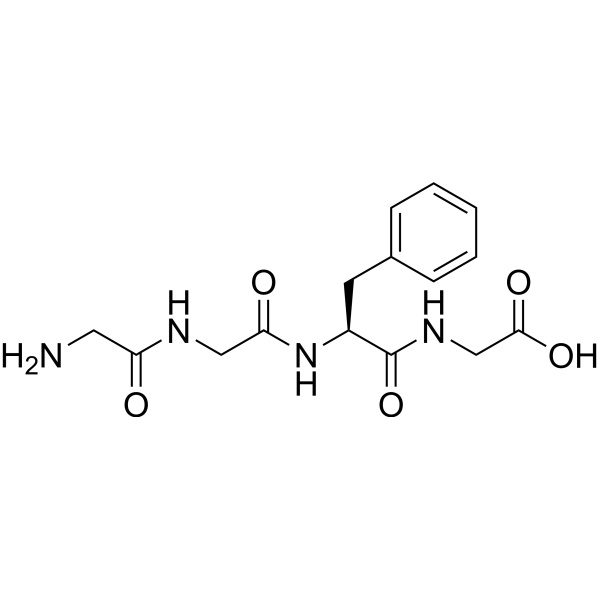
- HY-133702
-
|
|
PROTAC Linkers
|
Cancer
|
|
Aniline-piperazine-C3-NH-Boc (Compound Int-3) is a PROTAC linker, and can be used for synthesis of Pomalidomide-C3-adavosertib (HY-133618) and AZD1775 (HY-10993) (a Wee1 inhibitor) .
|
-

- HY-144999
-
|
|
Wee1
|
Cancer
|
|
LEB-03-146 is a WEE1 DUBTAC (deubiquitinase-targeting chimera) linking AZD1775 (Adavosertib) to the OTUB1 recruiter EN523 through a PEG2 linker. LEB-03-146 shows significant WEE1 stabilization in HEP3B hepatoma cancer cells .
|
-
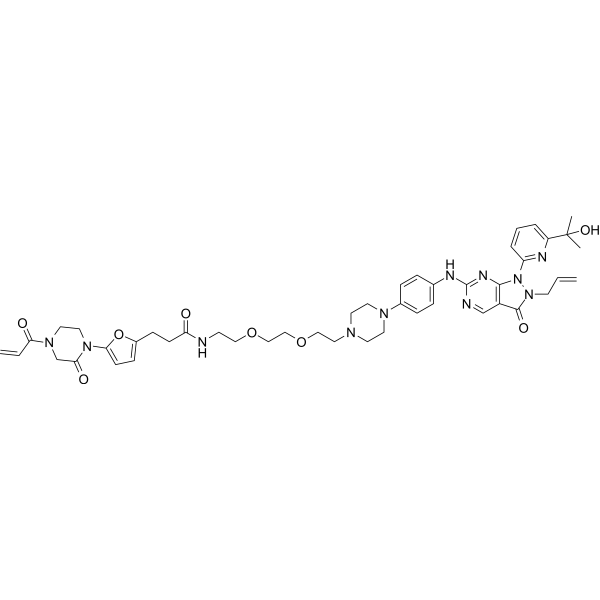
- HY-143342
-
|
|
Wee1
|
Cancer
|
|
LEB-03-144 is a WEE1 DUBTAC (deubiquitinase-targeting chimera) linking AZD1775 (Adavosertib) to the OTUB1 recruiter EN523 through a C3 alkyl linker. LEB-03-144 shows significant WEE1 stabilization in HEP3B hepatoma cancer cells .
|
-
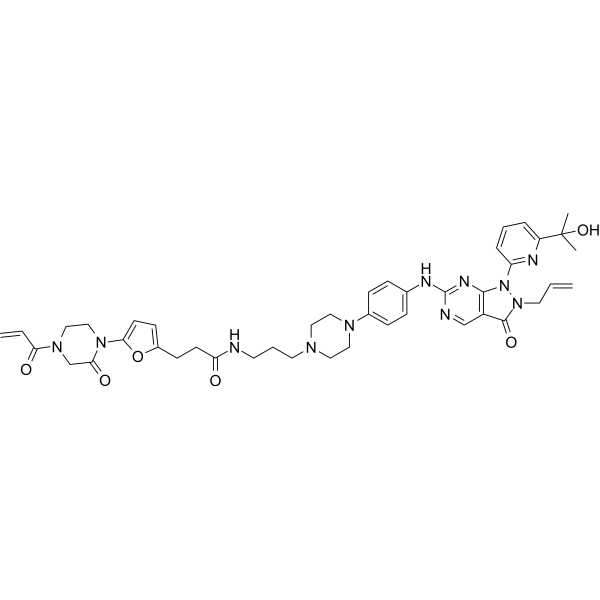
- HY-159078
-
|
|
DNA/RNA Synthesis
|
Cancer
|
|
PolQi1 is a selective inhibitor targeting the Polθ domain of DNA polymerase. PolQi1 inhibits the Polθ-mediated microhomology end joining (TMEJ/alt-EJ) pathway, reducing insertion/deletion (Indels) and imprecise editing events during DNA repair. PolQi1 can enhance the efficiency and accuracy of homology-directed repair (HDR) or Prime editing, and reduce off-target effects; and in combination with DNA-PK inhibitor AZD-7648 (HY-111783), exert efficient genome editing capabilities with dual pathway regulation. PolQi1 can be mainly used in gene editing research (such as CRISPR-Cas9 or Prime editing system optimization) to improve the precision editing efficiency of difficult-to-edit cells (such as primary hepatocytes and mouse embryos) .
|
-

- HY-B0794S
-
|
|
EGFR
IGF-1R
Drug Metabolite
|
Others
|
|
AZ7550-d5 is the deuterium labeled AZ7550?(HY-B0794). AZ7550, an active metabolite of Osimtinib (AZD9291; HY-15772), inhibits the activity of?IGF1R?with an?IC50?of 1.6 μM .
|
-
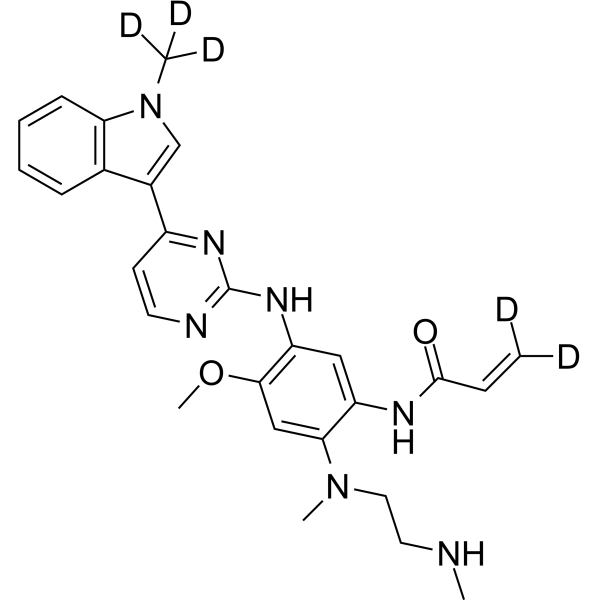
- HY-B0793
-
|
|
EGFR
|
Cancer
|
|
AZ-5104 is an active, demethylated metabolite of AZD 9291. AZ-5104 is an EGFR inhibitor with IC50s of 1, 6, 1, 25 and 7 nM for EGFR L858R/T790M, EGFR L858R, EGFR L861Q, EGFR and ErbB4, respectively.
|
-
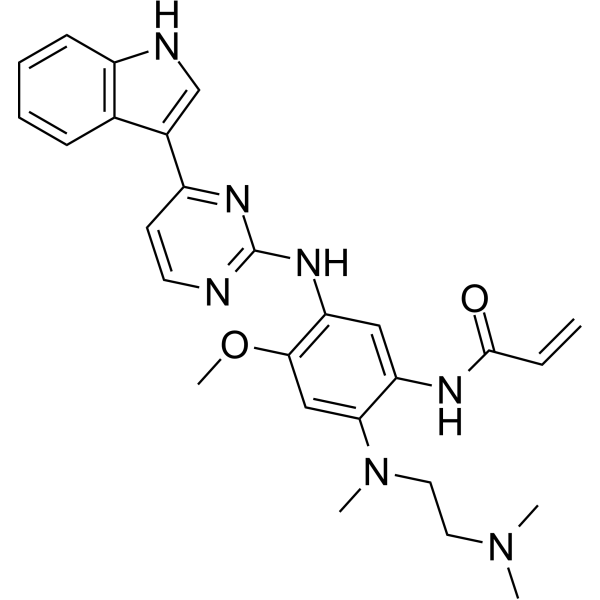
- HY-174293
-
|
|
Drug Derivative
|
Cancer
|
|
Osimertinib dimer is a dimer of Osimertinib (HY-15772). Osimertinib (AZD9291) is a covalent, orally active, irreversible, and mutant-selective EGFR inhibitor with an apparent IC50 of 12 nM against L858R and 1 nM against L858R/T790M, respectively. Osimertinib overcomes T790M-mediated resistance to EGFR inhibitors in lung cancer .
|
-

- HY-163817
-
|
|
PARP
|
Cancer
|
|
PARP1/2-IN-3 (Compound 29) is an orally active inhibitor for PARP 1 and PARP 2 with IC50 of 0.2235 nM and <0.001 nM. PARP1/2-IN-3 inhibits the proliferation of Capan-1 wildtype, AZD2281 or BMN673 resistant cells with IC50 of 1.82-9.98 nM. PARP1/2-IN-3 exhibits antitumor efficacy in mice .
|
-

- HY-173635
-
|
|
ADC Linker
|
Cancer
|
|
Mal((3S,3aR,6S,6aR)-Hexahydrofuro[3,2-b]furan-3,6-diamine-PEG12)-β-Glu-PAB is an interchain cysteines to a Maleimide-reactive, β-glucuronidase-cleavable ADC linker used in the synthesis of antibody-drug conjugates (ADCs), such as AZD0516 (HY-173639) .
|
-
![Mal((3S,3aR,6S,6aR)-Hexahydrofuro[3,2-b]furan-3,6-diamine-PEG12)-β-Glu-PAB](//file.medchemexpress.com/product_pic/hy-173635.gif)
- HY-E70717
-
|
|
FGFR
|
Cancer
|
|
FGFR1 has been implicated in numerous cancer types including non-small cell lung cancer (NSCLC). FGFR1 is activated upon FGF binding to its extracellular domain, resulting in protein dimerization and transautophosphorylation of the intracellular tyrosine kinase domains. FGFR1 V561M gatekeeper mutation drives Fexagratinib (AZD4547) (HY-13330) resistance through STAT3 Activation and EMT. FGFR1 V561M Recombinant Human Active Protein Kinase is a recombinant FGFR1 V561M protein that can be used to study FGFR1 V561M-related functions .
|
-

- HY-173634
-
|
|
Drug-Linker Conjugates for ADC
Topoisomerase
|
Cancer
|
|
Mal((3S,3aR,6S,6aR)-Hexahydrofuro[3,2-b]furan-3,6-diamine-PEG12)-β-Glu-PAB-Exatecan (LP1) is a drug-linker conjugate composed of a potent a DNA Topoisomerase I inhibitor Exatecan (HY-13631) and a linker Mal((3S,3aR,6S,6aR)-Hexahydrofuro[3,2-b]furan-3,6-diamine-PEG12)-β-Glu-PAB (HY-173635) to make antibody agent conjugate (ADC), AZD0516 (HY-173639) .
|
-
![Mal((3S,3aR,6S,6aR)-Hexahydrofuro[3,2-b]furan-3,6-diamine-PEG12)-β-Glu-PAB-Exatecan](//file.medchemexpress.com/product_pic/hy-173634.gif)
| Cat. No. |
Product Name |
Type |
-
- HY-173639
-
|
|
Fluorescent Dye
|
|
AZD0516 is a first-in-class antibody-drug conjugate (ADC) targeting six-transmembrane epithelial antigen of the prostate-2 (STEAP2). The anti-STEAP2 monoclonal antibody (mAb) is conjugated via interchain cysteines to a maleimide-reactive, β-glucuronidase-cleavable linker (HY-173635) bearing the topoisomerase 1 inhibitor, Exatecan (HY-13631). AZD0516 can be used for the study of prostate cancer .
|
-
- HY-111783G
-
|
|
Fluorescent Dye
|
|
AZD-7648 (GMP) is AZD-7648 (HY-111783) produced by using GMP guidelines. GMP small molecules works appropriately as an auxiliary reagent for cell therapy manufacture. AZD-7648 is a potent, orally active, selective DNA-PK inhibitor with an IC50 of 0.6 nM. AZD-7648 induces apoptosis and shows antitumor activity .
|
| Cat. No. |
Product Name |
Type |
-
- HY-111783G
-
|
|
Biochemical Assay Reagents
|
|
AZD-7648 (GMP) is AZD-7648 (HY-111783) produced by using GMP guidelines. GMP small molecules works appropriately as an auxiliary reagent for cell therapy manufacture. AZD-7648 is a potent, orally active, selective DNA-PK inhibitor with an IC50 of 0.6 nM. AZD-7648 induces apoptosis and shows antitumor activity .
|
-
- HY-123445
-
|
|
Biochemical Assay Reagents
|
|
AZD7009 is a novel antiarrhythmic agrnt. AZD7009 inhibits hKv1.5 and hKv4.3/hKChIP2.2 currents with IC50s of 27.0 and 23.7 muM, respectively .
|
| Cat. No. |
Product Name |
Target |
Research Area |
-
- HY-P3669
-
|
|
ADC Linker
Drug Intermediate
|
Cancer
|
|
Gly-Gly-Phe-Gly is a peptide spacer and can be applied to Doxorubicin (HY-15142A) (DXR) conjugates. Gly-Gly-Phe-Gly can be used as an ADC linker to synthesize ADCs, such as Puxitatug samrotecan (AZD 8205) (HY-171689) .
|
| Cat. No. |
Product Name |
Target |
Research Area |
Image |
-
- HY-P991028
-
|
AZD0486; TNB-486
|
CD3
CD19
Interleukin Related
TNF Receptor
IFNAR
|
Cancer
|
|
Surovatamig (AZD0486; TNB-486) is a fully human anti-CD19/CD3 IgG4 bispecific antibody. Surovatamig triggers T cell activation, releases cytotoxic granules, and induces T cell-dependent cellular cytotoxicity and tumor cell lysis. Surovatamig can reduces release of pro-inflammatory cytokines including IL-2, IFNγ, TNF. Surovatamig can be used for the research of cancer, such as B cell non-Hodgkin lymphoma .
|
-

(5)
-
- HY-P991503
-
|
AZD0516 antibody
|
ADC Antibody
|
Cancer
|
|
Anti-STEAP2 Antibody (AZD0516 antibody) is an antibody targeting six-transmembrane epithelial antigen of the prostate 2 (STEAP2). Anti-STEAP2 Antibody can be used for the synthesis of the ADC molecule AZD0516 (HY-173639). Anti-STEAP2 Antibody can be used in the research of prostate cancer .
|
-
(5)
-
- HY-P99604
-
|
AZD-1061; COV2-2130
|
SARS-CoV
|
Infection
|
|
Cilgavimab (AZD-1061; COV2-2130) is a human SARS-CoV-2-neutralizing monoclonal antibody, can compose monoclonal-antibody combination AZD7442 with Tixagevimab (HY-P99556). Cilgavimab shows protective action on mouse models of SARS-CoV-2 infection .
|
-
(5)
-
- HY-P99556
-
|
AZD8895; COV2-2196
|
SARS-CoV
|
Infection
|
|
Tixagevimab (AZD8895) is a human monoclonal antibody that targets the SARS-CoV-2 receptor binding domain (RBD). It exhibits neutralizing activity against SARS-CoV-2 by binding to the RBD and the S-glycoprotein ectodomain and blocking S-glycoprotein-mediated binding to the receptor .
|
-
(5)
-
- HY-P991699
-
|
AZD9829 antibody; INT-020
|
ADC Antibody
Interleukin Related
|
Cancer
|
|
Lixarkitug (AZD9829 antibody; INT-020) is a humanized IgG1κ antibody targeting IL-3Ra/CD123. Lixarkitug can be conjugated with Samrotecan to form the intact ADC molecule lixarkitug samrotecan (AZD9829), which is used in studies of acute myeloid leukemia (AML) . The isotype control corresponding to Lixarkitug is Human IgG1 kappa, Isotype Control (HY-P99001).
|
-
(5)
-
- HY-P990766
-
|
AZD3152
|
SARS-CoV
|
Infection
|
|
Sipavibart (AZD3152) is a human IgG1 λ2 monoclonal antibody against SARS-CoV-2. Sipavibart is applicable to research related to COVID-19. The isotype control product for Sipavibart is Human IgG1 lambda2, Isotype Control (HY-P990096) .
|
-
(5)
-
- HY-P990059
-
|
INT-016; AZD8205 Antibody
|
ADC Antibody
CD276/B7-H3
|
Cancer
|
|
Puxitatug (INT-016; AZD8205 Antibody) is a monoclonal antibody targeting VTCN1/B7-H4. Puxitatug can be used to synthesize antibody-drug conjugates (ADCs), such as Puxitatug samrotecan (HY-171689), which can be applied to various solid tumors. Puxitatug can also be used for researching adjuvant therapies for gastric cancer .
|
-
(5)
-
- HY-P990704
-
|
AZD-2936
|
PD-1/PD-L1
|
Inflammation/Immunology
|
|
Rilvegostomig is an anti-PDCD1/TIGIT human IgG1 κ monoclonal antibody . Recommend Isotype Controls: Human IgG1 kappa, Isotype Control (HY-P99001).
|
-
(5)
-
- HY-P991197
-
|
LM-305 antibody; AZD-0305 antibody
|
CD3
|
Cancer
|
|
Anti-GPRC5D Antibody (LM-305 antibody) is a humanized IgG1 monoclonal antibody that targets GPRC5D. Anti-GPRC5D Antibody is the antibody part of the ADC molecule LM-305. Recommend Isotype Controls: Human IgG1 kappa, Isotype Control (HY-P99001).
|
-
(5)
-
- HY-P991164
-
|
AZD5335 Antibody; INT-019
|
Antifolate
|
Inflammation/Immunology
|
|
Torvutatug is an anti-FOLR1 human IgG1 κ monoclonal antibody. Recommend Isotype Controls: Human IgG1 kappa, Isotype Control (HY-P99001) .
|
-
(5)
-
- HY-P99935
-
|
PRS-060; AZD1402
|
Inhibitory Antibodies
|
Inflammation/Immunology
|
|
Elarekibep (PRS-060) (AZD1402) is a high affinity, slowly dissociating, long-acting full antagonist of IL-4Ra. Elarekibep can be used for the research of T2 endotype asthma .
|
-

(5)
-
- HY-P990947
-
|
AZD9592 Antibody
|
ADC Antibody
EGFR
|
Cancer
|
|
Tilatamig (AZD9592 Antibody) is a human antibody of the Ig (G1-κ_G1-λ2) subtype that targets EGFR/MET. Tilatamig conjugates with the Top1 inhibitor AZ14170133 (HY-145399) to form the antibody-drug conjugate (ADC) Tilatamig samrotecan (HY-171124) (AZD9592). Tilatamig accurately targets NSCLC models including EGFR-mutant, EGFR-wildtype, and EGFR tyrosine kinase inhibitor-treated ones, and its activity correlates with high expression of EGFR, c-MET and SLFN11. Tilatamig is available for in vivo anti-tumor studies in patient-derived xenograft models of non-small cell lung cancer (NSCLC) and head and neck squamous cell carcinoma (HNSCC) .
|
-
(5)
-
- HY-P991717
-
|
AZD-8630
|
Interleukin Related
|
Inflammation/Immunology
Cancer
|
|
Sunakiment is a humanized IgG1λ monoclonal antibody inhibitor targeting Thymic stromal lymphopoietin (TSLP). Sunakiment can be used for inflammatory and immune system disorders like ulcerative colitis, rheumatoid arthritis and allergy and cancers research .
|
-
(5)
-
- HY-P990716
-
|
AZD7789
|
PD-1/PD-L1
Tim3
|
Inflammation/Immunology
|
|
Sabestomig (AZD7789) is a monovalent bispecific antibody targeting PD-1 and TIM-3. Sabestomig binds to PD-1 and an epitope in the TIM-3 IgV domain outside the phosphatidylserine-binding cleft, thereby precisely regulating immune responses. Sabestomig promotes IL-2 production, efferocytosis and cross-presentation of tumor antigens, and enhances the release of anti-tumor T cell cytokines, cytotoxicity, and secretion of IFN-γ. Sabestomig inhibits the growth of solid tumors, prolongs the duration of tumor suppression, and significantly enhances anti-tumor responses following anti-PD-1 therapy. Sabestomig has been used in studies related to non-small cell lung cancer and classical Hodgkin lymphoma .
|
-
(5)
-
- HY-P992318
-
-
(5)
-
- HY-P992123
-
|
AZD-5148
|
Bacterial
|
Infection
|
|
Ombetoxabart is a humanized IgG1-κ monoclonal antibody targeting TcdB (Clostridioides difficile toxin B), which exerts its function by neutralizing the toxicity of TcdB. Ombetoxabart can be used for the study of Clostridioides difficile infection .
|
-
(5)
| Cat. No. |
Product Name |
Chemical Structure |
-
- HY-15772S1
-
|
|
|
Osimertinib- 13C,d3 is the deuterium and 13C labeled Osimertinib. Osimertinib (AZD9291) is a covalent, orally active, irreversible, and mutant-selective EGFR inhibitor with an apparent IC50 of 12 nM against L858R and 1 nM against L858R/T790M, respectively.
|
-
-
- HY-10162S
-
|
|
|
Olaparib-d5 (AZD2281-d5) is the deuterium labeled Olaparib (HY-10162). Olaparib is a potent and orally active PARP inhibitor with IC50s of 5 and 1 nM for PARP1 and PARP2, respectively. Olaparib is an autophagy and mitophagy activator .
|
-
-
- HY-15772S
-
|
|
|
Osimertinib-d6 is a deuterium labeled osimertinib. Osimertinib is a covalent, orally active, irreversible, and mutant-selective EGFR inhibitor with an apparent IC50 of 12 nM against L858R and 1 nM against L858R/T790M. Osimertinib overcomes T790M-mediated resistance to EGFR inhibitors in lung cancer .
|
-
-
- HY-10162S1
-
|
|
|
Olaparib-d8 (AZD2281-d8) is the deuterium labeled Olaparib (HY-10162). Olaparib is a potent and orally active PARP inhibitor with IC50s of 5 and 1 nM for PARP1 and PARP2, respectively. Olaparib is an autophagy and mitophagy activator .
|
-
-
- HY-B0794S
-
|
|
|
AZ7550-d5 is the deuterium labeled AZ7550?(HY-B0794). AZ7550, an active metabolite of Osimtinib (AZD9291; HY-15772), inhibits the activity of?IGF1R?with an?IC50?of 1.6 μM .
|
-
-
- HY-15772S3
-
|
|
|
Asandeutertinib (Osimertinib-d3; AZD-9291-d3) is a epidermal growth factor receptor (EGFR) tyrosine kinase inhibitor, with antineoplastic effect .
|
-
-
- HY-10064S
-
|
|
|
Ticagrelor-d7 is the deuterium labeled Ticagrelor. Ticagrelor (AZD6140) is a reversible oral P2Y12 receptor antagonist for the treatment of platelet aggregation .
|
-
-
- HY-142283AS
-
|
|
|
Dosimertinib-d5 (mesylate) is a potent and orally active EGFR inhibitor. Dosimertinib-d5 (mesylate) decreases the expression of p-EGFR and p-ERK protein levels. Dosimertinib-d5 (mesylate) shows antiproliferative and anti-tumor activity. Dosimertinib-d5 (mesylate) has the potential for the research of non-small-cell lung cancer (NSCLC) .
|
-
-
- HY-10162S3
-
|
|
|
Olaparib-d4-1 (AZD2281-d4-1) is the deuterium labeled Olaparib (HY-10162). Olaparib is a potent and orally active PARP inhibitor with IC50s of 5 and 1 nM for PARP1 and PARP2, respectively. Olaparib is an autophagy and mitophagy activator .
|
-
-
- HY-10064S1
-
|
|
|
Ticagrelor-d4 (AZD6140-d4) is deuterium labeled Ticagrelor. Ticagrelor (AZD6140) is a reversible oral P2Y12 receptor antagonist for the treatment of platelet aggregation.
|
-
-
- HY-10234S
-
|
|
|
Saracatinib-d3 (AZD0530-d3) (ZG5129) is the deuterium-labeled analog of Saracatinib (HY-10234). Saracatinib-d3 is an inhibitor of the Src kinase, which can inhibit severe sepsis caused by bacterial or various microbial infections .
|
-
-
- HY-15651S
-
|
|
|
Alvelestat- 13C,d3 (AZD9668- 13C,d3) is 13C-labeled Alvelestat (HY-15651) .
|
-
-
- HY-15790S
-
|
|
|
Elobixibat-d5 is the deuterium labeled Elobixibat (HY-15790). Elobixibat (A 3309; AZD 7806) is orally active, bile acid transporter (IBAT) inhibitor with IC50 values ??of 0.53 nM (human IBAT), 0.13 nM (mouse IBAT), and 5.8 nM (canine IBAT). Elobixibat can lower LDL cholesterol, increase serum GLP-1, promote colonic motility, and has the potential to treat metabolic syndrome. Elobixibat can be used in the study of chronic functional constipation (CIC), dyslipidemia, non-alcoholic hepatitis, and liver tumors in the elderly .
|
-
| Cat. No. |
Product Name |
|
Classification |
-
- HY-173637
-
|
|
|
Alkynes
|
|
AZD0022 is a selective and orally active KRAS G12D inhibitor. AZD0022 inhibits KRAS pathway suppression in the GP2D xenograft model .
|
-
- HY-140349
-
|
|
|
PROTAC Synthesis
Azide
|
|
AZD-CO-C2-Ph-amido-Ph-azide is an alkyl chain-based PROTAC linker that can be used in the synthesis of PROTACs . AZD-CO-C2-Ph-amido-Ph-azide is a click chemistry reagent, it contains an Azide group and can undergo copper-catalyzed azide-alkyne cycloaddition reaction (CuAAc) with molecules containing Alkyne groups. It can also undergo strain-promoted alkyne-azide cycloaddition (SPAAC) reactions with molecules containing DBCO or BCN groups.
|
| Cat. No. |
Product Name |
|
Classification |
-
- HY-145729
-
|
AZD9150
|
|
Antisense Oligonucleotides
|
|
Danvatirsen (AZD9150) is an antisense oligonucleotide targeting STAT3. Danvatirsen reduces the viability and promotes apoptosis of leukemia cell lines. Danvatirsen inhibits the expression of endogenous STAT3 and its downstream target genes, and reduces the proliferation and tumorigenicity of neuroblastoma and lymphoma cells. Danvatirsen inhibited tumor growth in mouse models of neuroblastoma, lymphoma, and non-small cell lung cancer. Danvatirsen achieves STAT3 mRNA and protein depletion in a mouse model of epidermoid carcinoma. Danvatirsen can be used in research related to lymphoma, myelodysplastic syndrome, acute myeloid leukemia, neuroblastoma and non-small cell lung cancer .
|
-
- HY-158827A
-
|
|
|
Antisense Oligonucleotides
|
|
AZD8233 sodium, a liver-targeting antisense oligonucleotide (ASO), inhibits subtilisin/kexin type 9 (PCSK9) protein synthesis. AZD8233 sodium increases the available LDL receptors by reducing PCSK9 levels, thereby clearing LDL from the blood and decreasing LDL-C levels.
|
-
- HY-159692
-
|
IONIS-1063734
|
|
Antisense Oligonucleotides
|
|
AZD8701 (IONIS-1063734) is an antisense oligonucleotide targeting FOXP3 in regulatory T cells (Tregs), with a human IC50 of 65.2 nM. AZD8701 binds to intronic sites of all FOXP3 pre-mRNA isoforms and mediates dose-dependent FOXP3 knockdown via free uptake. AZD8701 can be used in cancer-related research .
|
-
- HY-145729A
-
|
AZD9150 sodium
|
|
Antisense Oligonucleotides
|
|
Danvatirsen sodium (AZD9150 sodium) is an antisense oligonucleotide targeting STAT3. Danvatirsen sodium reduces the viability and promotes apoptosis of leukemia cell lines. Danvatirsen sodium inhibits the expression of endogenous STAT3 and its downstream target genes, and reduces the proliferation and tumorigenicity of neuroblastoma and lymphoma cells. Danvatirsen sodium inhibited tumor growth in mouse models of neuroblastoma, lymphoma, and non-small cell lung cancer. Danvatirsen sodium achieves STAT3 mRNA and protein depletion in a mouse model of epidermoid carcinoma. Danvatirsen sodium can be used in research related to lymphoma, myelodysplastic syndrome, acute myeloid leukemia, neuroblastoma and non-small cell lung cancer .
|
-
- HY-177653A
-
|
AZD2373 sodium, ION-972190 sodium
|
|
Antisense Oligonucleotides
|
|
Opemalirsen sodium is an antisense oligonucleotide targeted to apolipoprotein L1 (APOL1). It is used for the study of Kidney disorders.
|
-
- HY-177653
-
|
AZD2373, ION-972190
|
|
Antisense Oligonucleotides
|
|
Opemalirsen is an antisense oligonucleotide targeted to apolipoprotein L1 (APOL1). It is used for the study of Kidney disorders.
|
-
- HY-158827
-
|
|
|
Antisense Oligonucleotides
|
|
AZD8233, a liver-targeting antisense oligonucleotide (ASO), inhibits proprotein convertase subtilisin/kexin type 9 (PCSK9) protein synthesis. AZD8233 increases the available LDL receptors by reducing PCSK9 levels, thereby clearing LDL from the blood and decreasing LDL-C levels.
|
-
- HY-159692A
-
|
IONIS-1063734 sodium
|
|
Antisense Oligonucleotides
|
|
AZD8701 (IONIS-1063734) sodium is an antisense oligonucleotide targeting FOXP3 in regulatory T cells (Tregs). AZD8701 sodium can relieve immunosuppression in cancer .
|
-
- HY-158827C
-
-
- HY-159692D
-
-
- HY-159692E
-
-
- HY-158827D
-
-
- HY-159692C
-
|
|
|
Antisense Oligonucleotides
|
|
AZD8701 sodium scrambled negative control is the sequence scrambled negative control of AZD8701 sodium.
|
-
- HY-158827B
-
|
|
|
Antisense Oligonucleotides
|
|
AZD8233 sodium scrambled negative control is the sequence scrambled negative control of AZD8233 sodium.
|
| Cat. No. |
Product Name |
Target |
Research Areas |
Chemical Structure |
-
- HY-111783G
-
|
|
DNA-PK
ATM/ATR
PI3K
Apoptosis
|
Cancer
|
|
AZD-7648 (GMP) is AZD-7648 (HY-111783) produced by using GMP guidelines. GMP small molecules works appropriately as an auxiliary reagent for cell therapy manufacture. AZD-7648 is a potent, orally active, selective DNA-PK inhibitor with an IC50 of 0.6 nM. AZD-7648 induces apoptosis and shows antitumor activity .
|
-
Your information is safe with us. * Required Fields.
Inquiry Information
- Product Name:
- Cat. No.:
- Quantity:
- MCE Japan Authorized Agent:





![Mal((3S,3aR,6S,6aR)-Hexahydrofuro[3,2-b]furan-3,6-diamine-PEG12)-β-Glu-PAB](http://file.medchemexpress.com/product_pic/hy-173635.gif)

![Mal((3S,3aR,6S,6aR)-Hexahydrofuro[3,2-b]furan-3,6-diamine-PEG12)-β-Glu-PAB-Exatecan](http://file.medchemexpress.com/product_pic/hy-173634.gif)





