



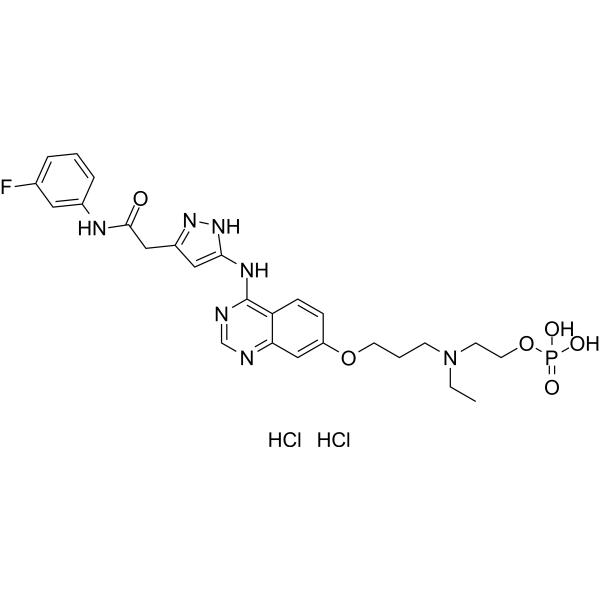
Barasertib dihydrochloride
Based on 25 publication(s) in Google Scholar
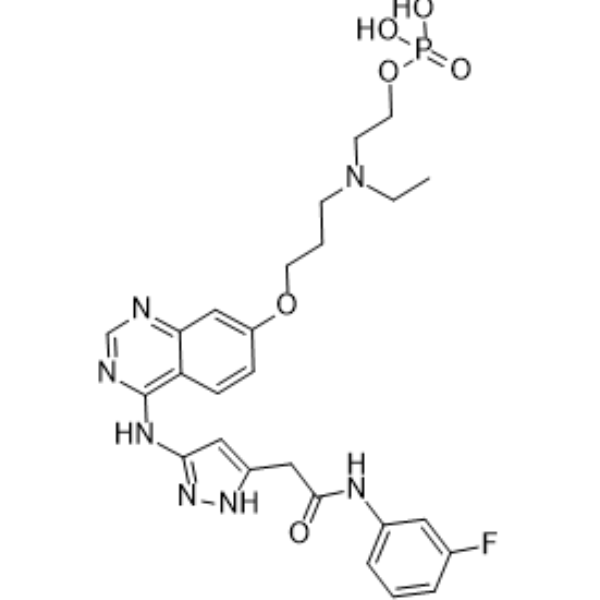
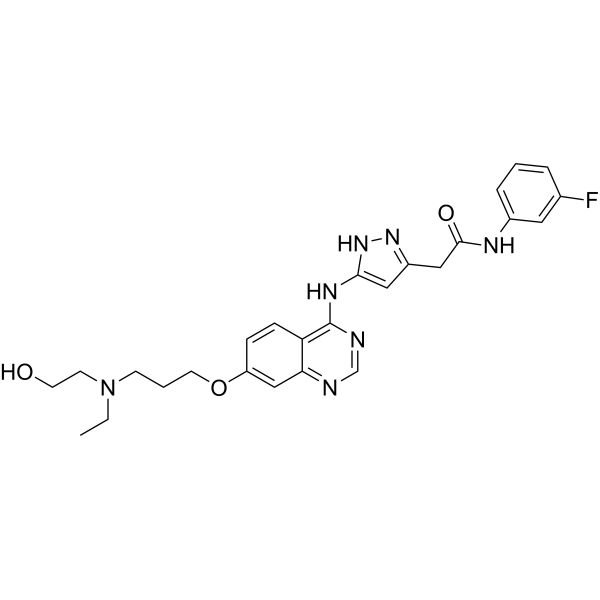
Barasertib (AZD1152 dihydrochloride), a pro-drug of Barasertib-hQPA, is a highly selective Aurora B inhibitor with an IC50 of 0.37 nM in a cell-free assay. Barasertib (AZD1152 dihydrochloride) induces growth arrest and apoptosis in cancer cells.
For research use only. We do not sell to patients.
- CAS No.: 722543-50-2
- Formula: C26H33Cl2FN7O6P
- Molecular Weight:660.46
-
Storage:
Please store the product under the recommended conditions in the Certificate of Analysis.

To place orders, for customer services and technical support, please contact: MedChemExpress USA
Tel: 609-228-6898 E-mail: [email protected] [email protected]


-
 Biological Activity
-
Chemical Information
- Purity & Documentation
- References
-
 Help & FAQs


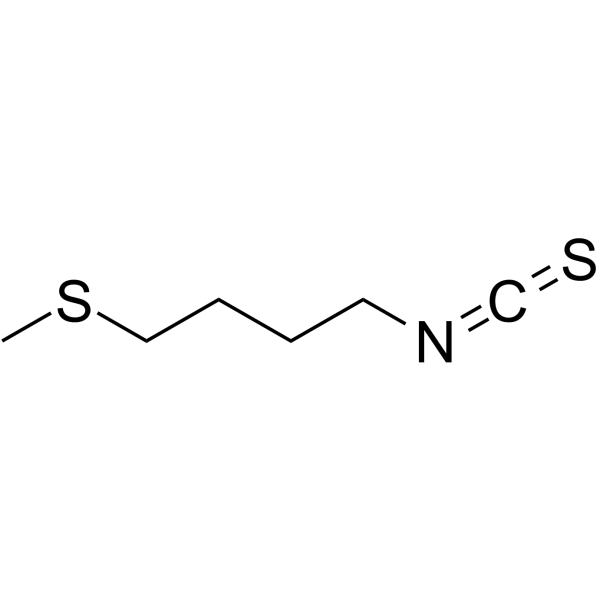
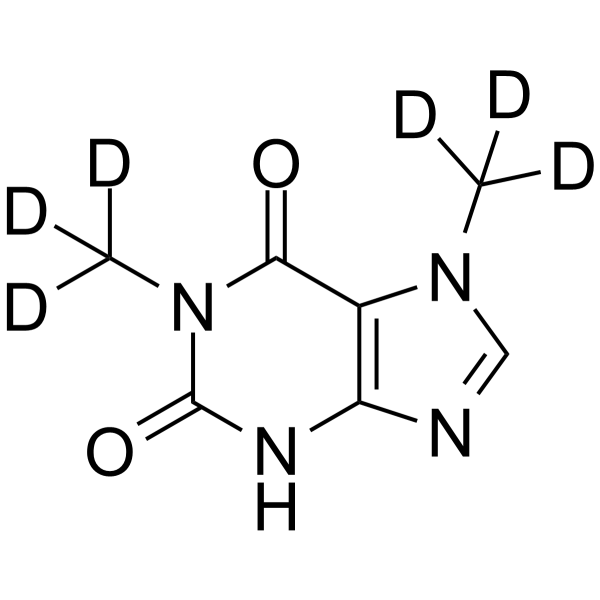
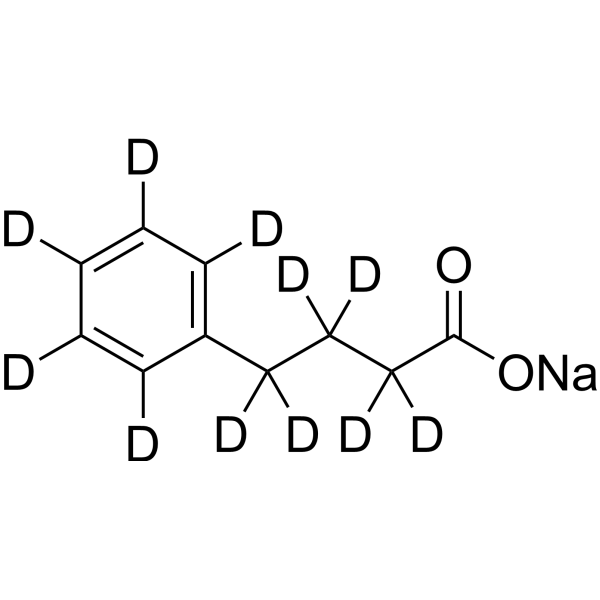
Publications Citing Use of MedChemExpress (MCE) Barasertib dihydrochloride
More- Science. 2017 Dec 1;358(6367):eaan4368. [Abstract]
- Nat Commun. 2023 Oct 10;14(1):6332. [Abstract]
- Nat Commun. 2019 Apr 18;10(1):1812. [Abstract]
- Nucleic Acids Res. 2025 Apr 10;53(7):gkaf294. [Abstract]
- Adv Sci (Weinh). 2026 Apr;13(21):e17108. [Abstract]
- Cell Death Differ. 2025 Oct 30. [Abstract]
- Phytomedicine. 2026 May:154:158036. [Abstract]
- Clin Cancer Res. 2019 Jul 15;25(14):4552-4566. [Abstract]
- NPJ Precis Oncol. 2025 Dec 10. [Abstract]
- Dev Cell. 2023 Dec 4;58(23):2666-2683.e9. [Abstract]
- Leukemia. 2025 Aug 14. [Abstract]
- Cell Rep. 2024 Sep 13;43(9):114739. [Abstract]
- Sci Data. 2024 Sep 19;11(1):1024. [Abstract]
- Mol Syst Biol. 2024 Jan;20(1):28-55. [Abstract]
- Cancers (Basel). 2024 Nov 5;16(22):3732. [Abstract]
- Cell Signal. 2026 Jul:143:112490. [Abstract]
- J Biol Chem. 2025 Feb;301(2):108196. [Abstract]
- Am J Cancer Res. 2021 Jun 15;11(6):3021-3038. [Abstract]
- Leuk Lymphoma. 2020 Dec;61(14):3451-3459. [Abstract]
- bioRxiv. 2025 Jul 21.
- bioRxiv. 2023 Nov 30.
- Biomed Pharmacother. 2023 Oct:166:115343. [Abstract]
- Patent. US20210299273A1.
- bioRxiv. 2021 Feb 5.
- Patent. US20180263995A1.
 Customer Validation & Images

-
Cell Proliferation/Viability Assay
-
WB
-
IF
-
Cell Imaging/Staining
-
Apoptosis Analysis
All Aurora Kinase Isoforms
More

Biological Activity
Description
IC50 & Target
IC50: 0.37 nM (Aurora B)
In Vitro
Barasertib-HQPA (3 μM, 3 hours) significantly decreases expression of the phosphorylated forms of histone H3 in freshly isolated leukemia cells[1].
Barasertib-hydroxyquinazoline pyrazol anilide (HQPA)] is converted rapidly to the active Barasertib-HQPA in plasma[2].
Barasertib-HQPA induces a marked anti-propliferative effect accompanied by the appearance of a polyploid population, which in most cases led to apoptosis[3].
MedChemExpress (MCE) has not independently confirmed the accuracy of these methods. They are for reference only.
In Vivo
Barasertib (AZD1152, 5 mg/kg) enhances the ability of vincristine or daunorubicin to inhibit the proliferation of human MOLM13 leukemic xenografts[1].
Barasertib (AZD1152, (10-150 mg/kg/d) potently inhibited the growth of human colon, lung, and hematologic tumor xenografts (mean tumor growth inhibition range, 55% to z100%; P < 0.05) in immunodeficient mice[2].
MedChemExpress (MCE) has not independently confirmed the accuracy of these methods. They are for reference only.


Chemical Information
-
CAS No. 722543-50-2
-
Molecular Weight 660.46
-
Formula C26H33Cl2FN7O6P
-
SMILES
O=C(CC1=NNC(NC2=C3C=CC(OCCCN(CCOP(O)(O)=O)CC)=CC3=NC=N2)=C1)NC4=CC(F)=CC=C4.Cl.Cl
-
Synonyms
AZD1152 dihydrochloride
-
Shipping
Room temperature in continental US; may vary elsewhere.
-
Storage
Please store the product under the recommended conditions in the Certificate of Analysis.


Publications (25)
-
Journal Impact Factor
-
Most Recent
-
Science
2017 Dec 1;358(6367):eaan4368. PMID: 29191878 -
Nat Commun
Signature-driven repurposing of Midostaurin for combination with MEK1/2 and KRASG12C inhibitors in lung cancer. [Abstract]2023 Oct 10;14(1):6332. PMID: 37816716
Barasertib dihydrochloride purchased from MedChemExpress. Usage Cited in: Nat Commun. 2023 Oct 10;14(1):6332. [Abstract]
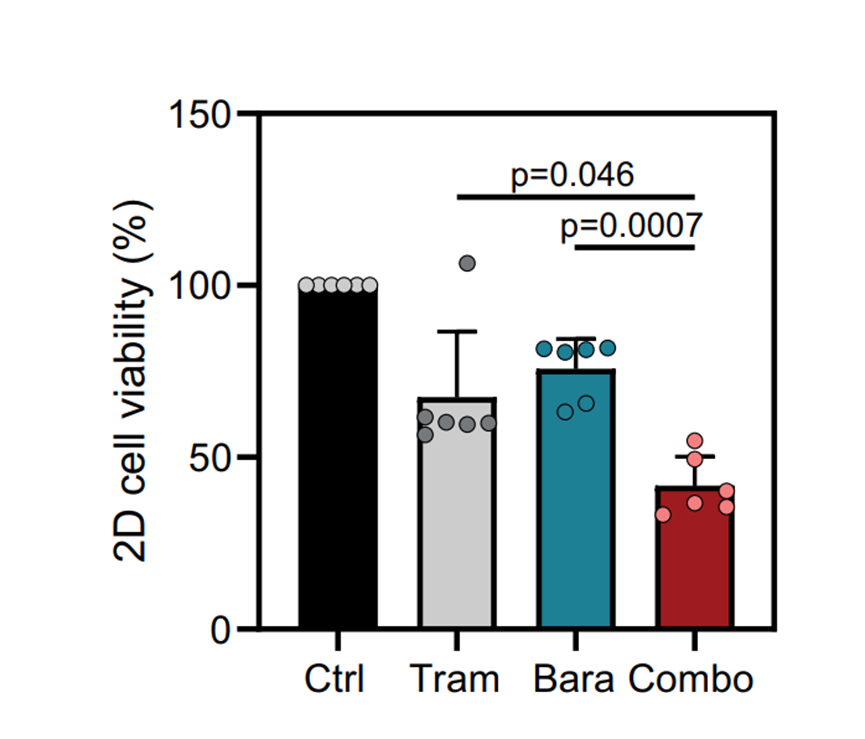
Effects of Barasertib (25–1000 nM, 72 h) combination on cell viability of mut KRAS (H1792, H2009, A549, HCC44, H23, H358) cells.
-
Nat Commun
AURKB as a target in non-small cell lung cancer with acquired resistance to anti-EGFR therapy. [Abstract]2019 Apr 18;10(1):1812. PMID: 31000705
Barasertib dihydrochloride purchased from MedChemExpress. Usage Cited in: Nat Commun. 2019 Apr 18;10(1):1812. [Abstract]
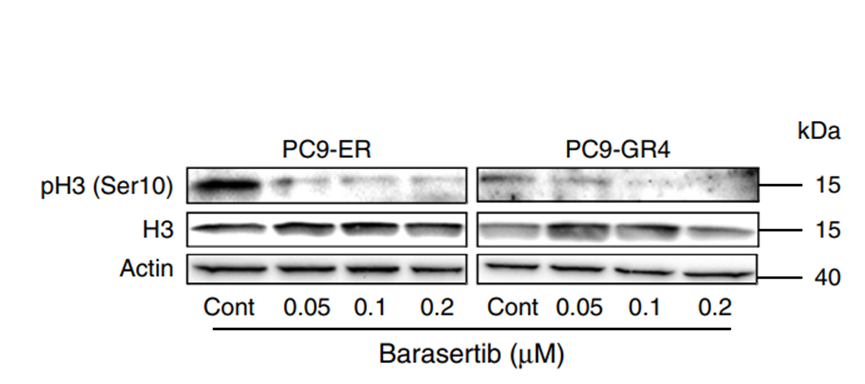
Western blot showing the dose-dependent decrease of pH3 levels induced by Barasertib (0.05, 0.1, 0.2 μM) at 24 h in PC9-ER and PC9-GR4 cells.
Barasertib dihydrochloride purchased from MedChemExpress. Usage Cited in: Nat Commun. 2019 Apr 18;10(1):1812. [Abstract]
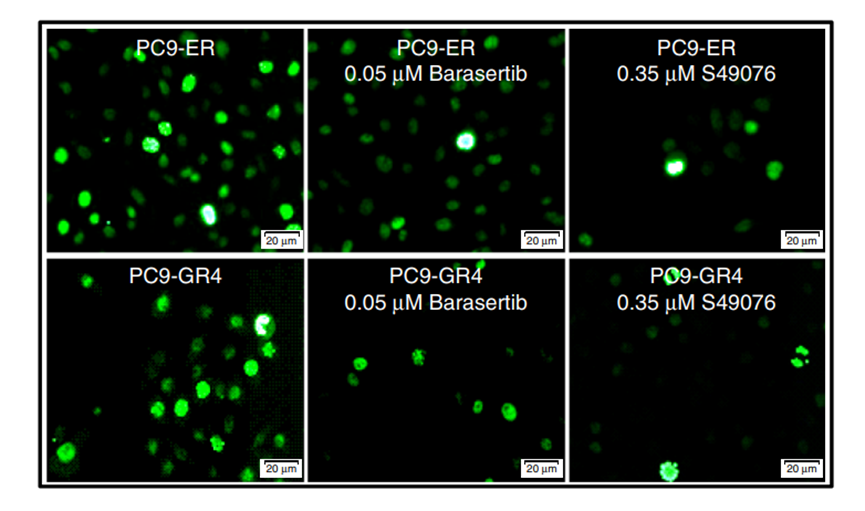
ICC showing the inhibition of non-mitotic pH3 by Barasertib (0.05 μM) and the MET/AXL/FGFR/AURKB inhibitor S49076 after 24 h in PC9-ER and PC9-GR4 cells.
Barasertib dihydrochloride purchased from MedChemExpress. Usage Cited in: Nat Commun. 2019 Apr 18;10(1):1812. [Abstract]
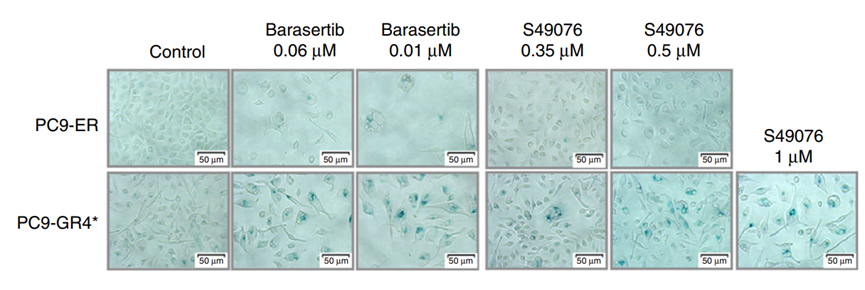
Acidic beta-galactosidase staining of PC9-ER and PC9-GR4 cells after 48 h with Barasertib (0.01, 0.06 μM) or S49076, showing the induction of senescence-associated activity in PC9-GR4.
Barasertib dihydrochloride purchased from MedChemExpress. Usage Cited in: Nat Commun. 2019 Apr 18;10(1):1812. [Abstract]
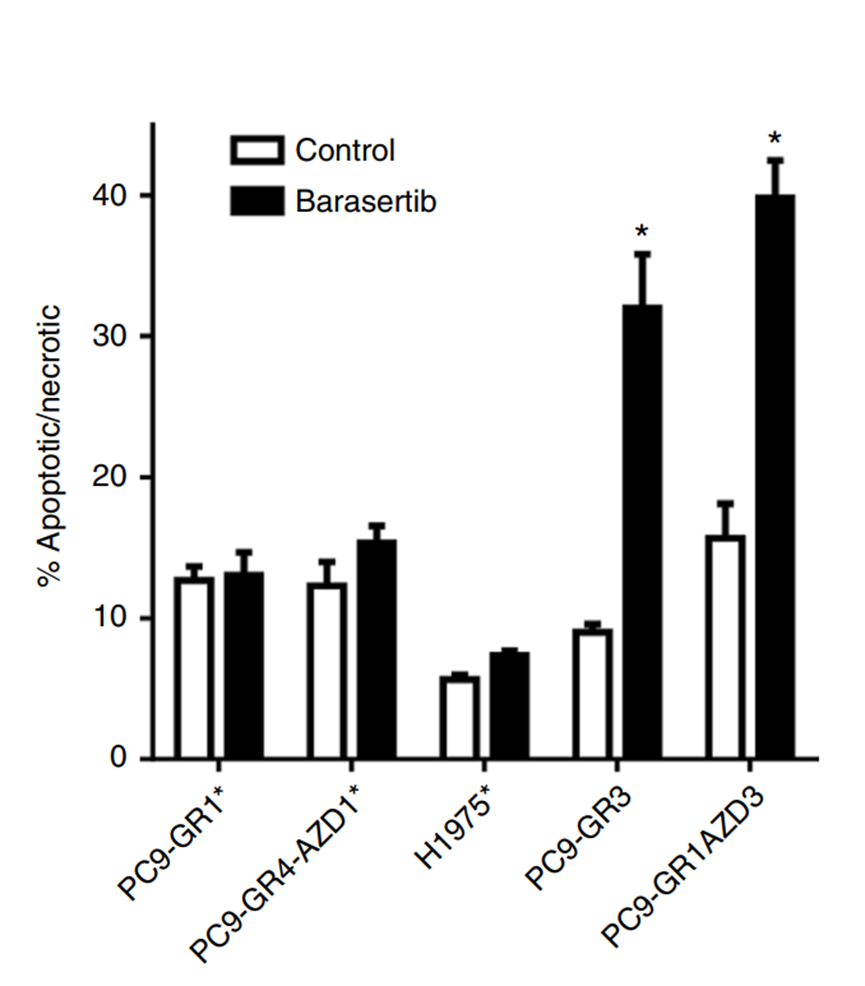
Results of flow-cytometry experiments of PC9-GR1, PC9-GR4-AZD1, H1975 (p.T790M positive), PC9-GR3, and PC9-GR1-AZD3 (p.T790M negative), showing the induction of apoptosis only in p.T790M-negative cells after 24 h treatment with Barasertib (0.06 µM).
-
Nucleic Acids Res
Chromatin-associated α-satellite RNA maintains chromosome stability by reestablishing SAF-A in the mitotic cell cycle. [Abstract]2025 Apr 10;53(7):gkaf294. PMID: 40219970 -
Adv Sci (Weinh)
Targeted Extracellular Vesicles Deliver Asiaticoside to Inhibit AURKB/DRP1-Mediated Mitochondrial Fission and Attenuate Hypertrophic Scar Formation. [Abstract]2026 Apr;13(21):e17108. PMID: 41637535 -
Cell Death Differ
CRISPR/Cas9 library screening uncovered CCT2 as a critical driver of acquired resistance to EGFR-targeted therapy by stabilizing TMX1 in non-small cell lung cancer. [Abstract]2025 Oct 30. PMID: 41168408 -
Phytomedicine
Diosmetin alleviates the immunosuppressive tumor microenvironment in esophageal squamous cell carcinoma by dually inhibiting angiogenesis and promoting CD8+T cell cytotoxicity. [Abstract]2026 May:154:158036. PMID: 41830859 -
Clin Cancer Res
High-throughput Chemical Screening Identifies Focal Adhesion Kinase and Aurora Kinase B Inhibition as a Synergistic Treatment Combination in Ewing Sarcoma. [Abstract]2019 Jul 15;25(14):4552-4566. PMID: 30979745 -
NPJ Precis Oncol
Targeting high-risk MYC-overexpressed osteosarcoma with an Aurora kinase inhibitor:--results from a pilot umbrella trial. [Abstract]2025 Dec 10. PMID: 41372533 -
Dev Cell
The anaphase-promoting complex controls a ubiquitination-phosphoprotein axis in chromatin during neurodevelopment. [Abstract]2023 Dec 4;58(23):2666-2683.e9. PMID: 37875116 -
Leukemia
Unraveling the impact of crizotinib to promote megakaryopoiesis for alleviating thrombocytopenia in myelodysplastic neoplasms. [Abstract]2025 Aug 14. PMID: 40813622 -
Cell Rep
2024 Sep 13;43(9):114739. PMID: 39276350 -
Sci Data
High-throughput drug screening identifies novel therapeutics for Low Grade Serous Ovarian Carcinoma. [Abstract]2024 Sep 19;11(1):1024. PMID: 39300112 -
Mol Syst Biol
Illuminating phenotypic drug responses of sarcoma cells to kinase inhibitors by phosphoproteomics. [Abstract]2024 Jan;20(1):28-55. PMID: 38177929 -
Cancers (Basel)
Targeting the EGFR and Spindle Assembly Checkpoint Pathways in Oral Cancer: A Plausible Alliance to Enhance Cell Death. [Abstract]2024 Nov 5;16(22):3732. PMID: 39594688 -
Cell Signal
Molecular mechanism of S100P promotes hepatocellular carcinoma by regulating MYBL2-mediated transcription of AURKB. [Abstract]2026 Jul:143:112490. PMID: 41856224 -
J Biol Chem
Targeting the mitotic kinase NEK2 enhances CDK4/6 inhibitor efficacy by potentiating genome instability. [Abstract]2025 Feb;301(2):108196. PMID: 39826695 -
Am J Cancer Res
Epigenetic heterogeneity promotes acquired resistance to BET bromodomain inhibition in ovarian cancer. [Abstract]2021 Jun 15;11(6):3021-3038. PMID: 34249442 -
Leuk Lymphoma
Let-7b regulates the adriamycin resistance of chronic myelogenous leukemia by targeting AURKB in K562/ADM cells. [Abstract]2020 Dec;61(14):3451-3459. PMID: 32856506 -
-
-
Biomed Pharmacother
Barasertib impedes chondrocyte senescence and alleviates osteoarthritis by mitigating the destabilization of heterochromatin induced by AURKB. [Abstract]2023 Oct:166:115343. PMID: 37634474 -
-
-


Purity & Documentation
References
[1]. Yang J, et al. AZD1152, a novel and selective aurora B kinase inhibitor, induces growth arrest, apoptosis, and sensitization for tubulin depolymerizing agent or topoisomerase II inhibitor in human acute leukemia cells in vitro and in vivo. Blood. 2007 Sep [Content Brief]
[2]. Oke A, et al. AZD1152 rapidly and negatively affects the growth and survival of human acute myeloid leukemia cells in vitro and in vivo. Cancer Res. 2009 May 15;69(10):4150-8. [Content Brief]
[3]. Wilkinson RW, et al. AZD1152, a selective inhibitor of Aurora B kinase, inhibits human tumor xenograft growth by inducing apoptosis. Clin Cancer Res. 2007 Jun 15;13(12):3682-8. [Content Brief]

Calculators
Concentration (start) × Volume (start) = Concentration (final) × Volume (final)


Barasertib dihydrochloride Related Classifications
HY-10127A Related Classifications
 Powered by Bioz