



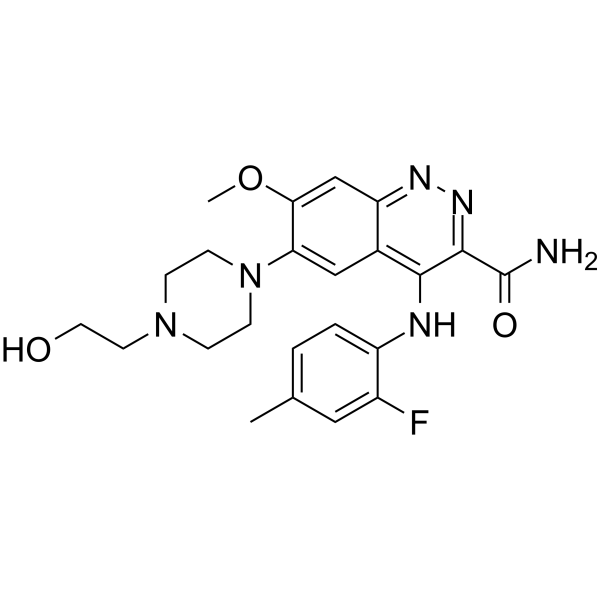
AZD7507
Based on 3 publication(s) in Google Scholar
AZD7507 is a potent and orally active CSF-1R inhibitor, with antitumor activity.
Nos produits utilisent uniquement pour la recherche. Nous ne vendons pas aux patients.
- Pureté : 99.57%
- CAS No.: 1041852-85-0
- Formule: C23H27FN6O3
- Masse moléculaire:454.50
-
Stockage:Powder -20°C, 3 years , 4°C, 2 years ; In solvent -80°C, 2 years , -20°C, 1 year

To place orders, for customer services and technical support, please contact: MedChemExpress USA
Tel: 609-228-6898 E-mail: [email protected] [email protected]


-
 Activité biologique
-
Chemical Information
-
Solvant et solubilité
- Protocole
- Pureté et documentation
- Références
-
 Help & FAQs


-
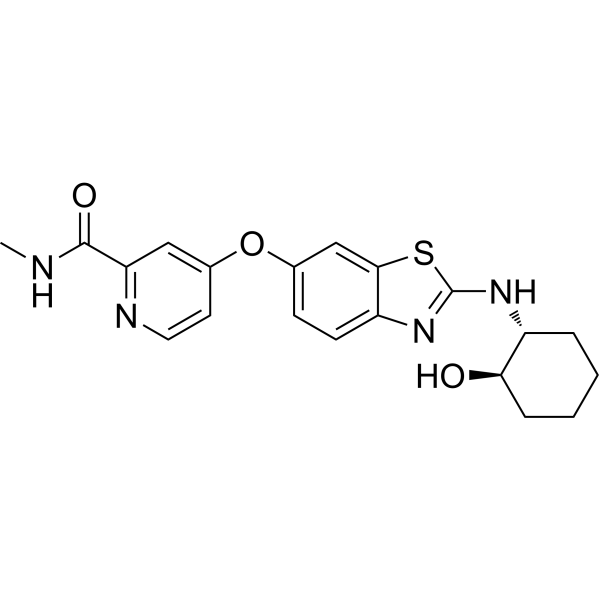
HY-12768
SotuletinibCSF-1R Inhibitor -
HY-114153C
PLX5622 in AIN-76A Diet (1200 ppm)PLX5622 Microglia Clearance Diet -
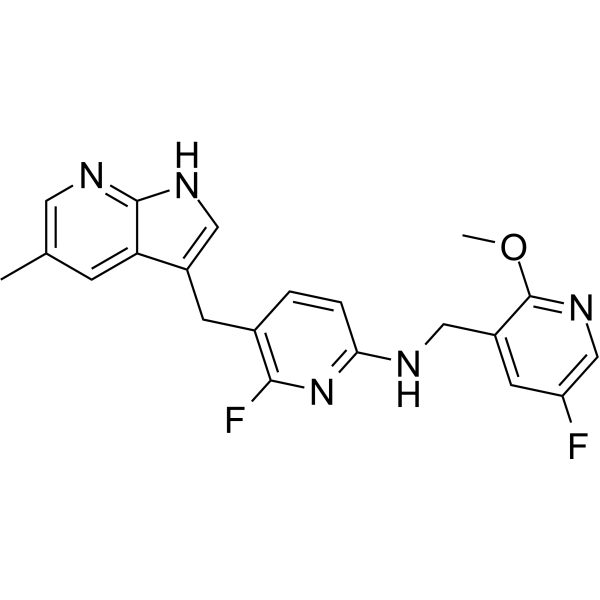
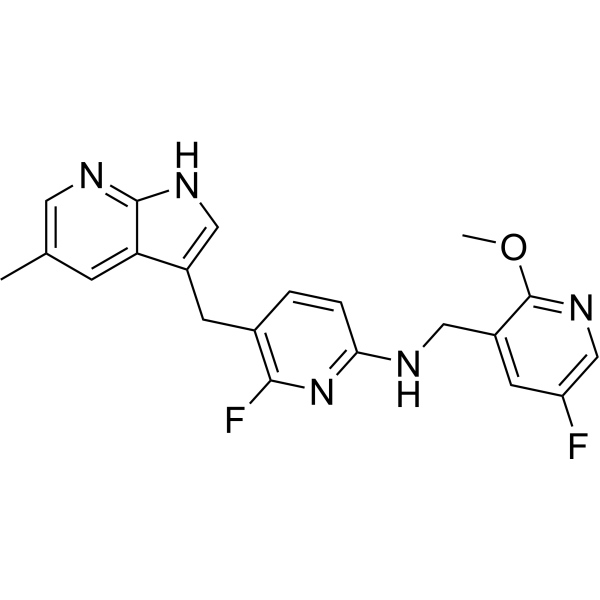
HY-114153
PLX5622CSF1R Inhibitor -
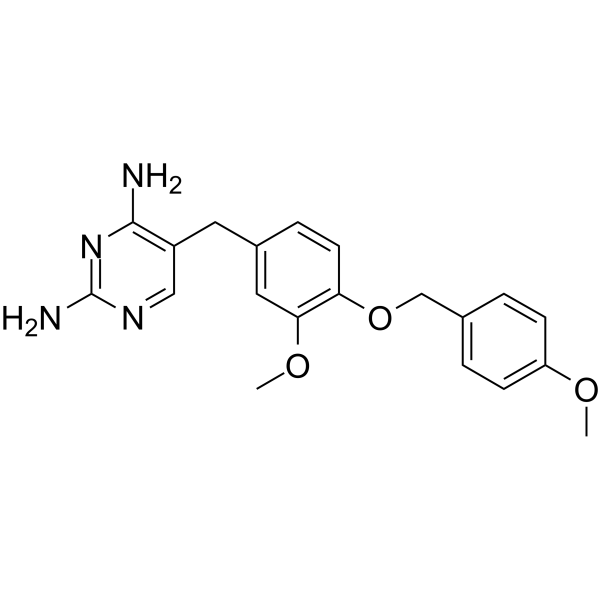
HY-10917
GW2580c-Fms Inhibitor -
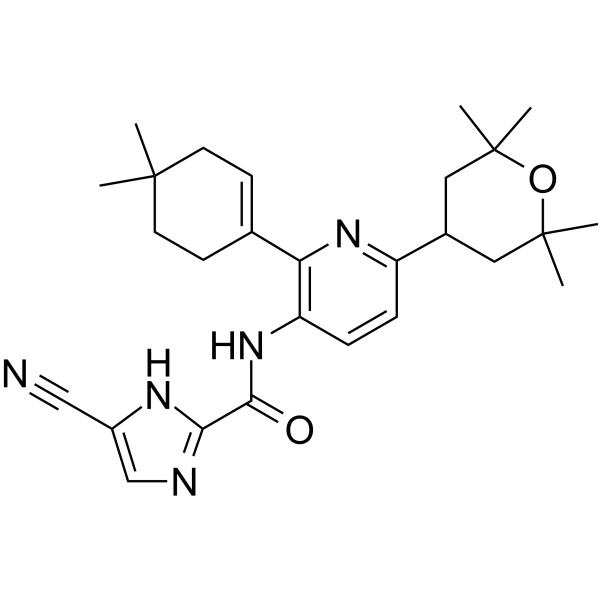
HY-109086
EdicotinibCSF-1R Inhibitor -
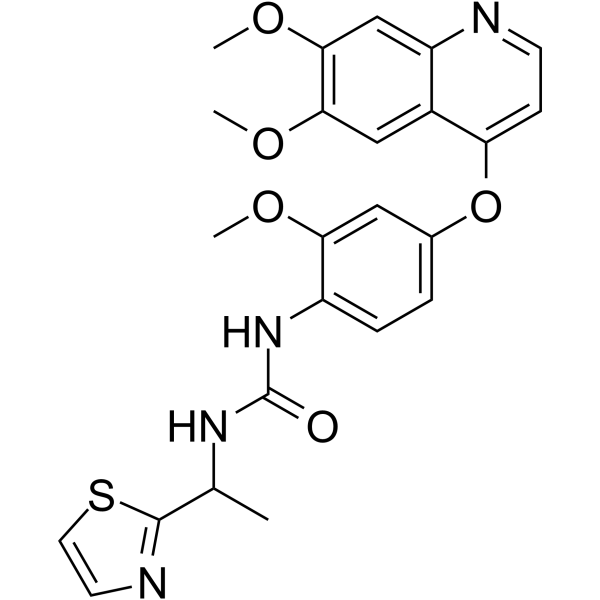
HY-10408
Ki20227CSF1R Inhibitor -
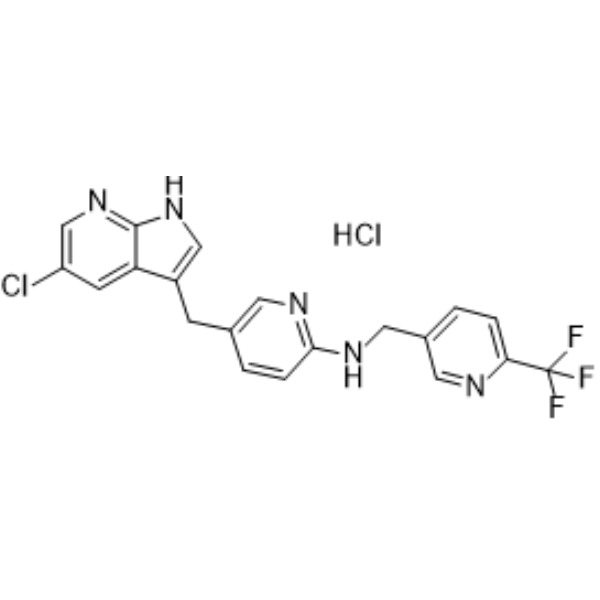
HY-16749A
Pexidartinib hydrochlorideCSF1R/c-Kit Inhibitor -
HY-101774
CSF1R-IN-1 -
HY-16749
PexidartinibCSF1R/c-Kit Inhibitor -
HY-112451
cFMS Receptor Inhibitor IIc-Fms Inhibitor -
HY-136256
Vimseltinibc-FMS(CSF-IR)/c-Kitdual Inhibitor -

HY-109086R
Edicotinib (Standard)Reference Standard
Publications Citing Use of MedChemExpress (MCE) AZD7507
More

Activité biologique
Description
IC50 & Target
CSF-1R[1]
Cellular Effect
|
Cell Line

|
Type | Value | Description | References |
|---|---|---|---|---|
| NIH3T3 | IC50 |
0.032 μM
Compound: 31
|
Antiproliferative activity against CSF-1-stimulated mouse 3T3 cells expressing CSF1R
Antiproliferative activity against CSF-1-stimulated mouse 3T3 cells expressing CSF1R
|
[PMID: 23842474] |
In Vitro
AZD7507 (Compound 31) inhibits the proliferation of 3T3 cells engineered to express CSF-1R and stimulated with CSF-1 (IC50, 32 nM), shows inhibitory activity against hERG and NaV1.5, with IC50s of >30 and 26 μM[1].
MedChemExpress (MCE) has not independently confirmed the accuracy of these methods. They are for reference only.
In Vivo
MedChemExpress (MCE) has not independently confirmed the accuracy of these methods. They are for reference only.


Chemical Information
-
CAS No. 1041852-85-0
-
Appearance Solid
-
Masse moléculaire 454.50
-
Formule C23H27FN6O3
-
Color Light yellow to yellow
-
SMILES
O=C(N)C1=NN=C2C=C(C(N3CCN(CC3)CCO)=CC2=C1NC4=CC=C(C=C4F)C)OC
-
Livraison
Room temperature in continental US; may vary elsewhere.
-
Stockage
Powder -20°C 3 years 4°C 2 years In solvent -80°C 2 years -20°C 1 year


Publications (3)
-
Journal Impact Factor
-
Most Recent
-
Cancer Res Commun
Pancreatic Ductal Adenocarcinoma Cells Regulate NLRP3 Activation to Generate a Tolerogenic Microenvironment. [Abstract]2023 Sep 20;3(9):1899-1911. PMID: 37772994 -
Mol Immunol
CSF1R signaling contributes to macrophage-associated CCL11 production and eosinophil recruitment in murine allergic conjunctivitis. [Abstract]2026 Jul:195:93-100. PMID: 42105679 -


Solvant et solubilité
In Vitro:
DMSO : 130 mg/mL (286.03 mM; Need ultrasonic; Hygroscopic DMSO has a significant impact on the solubility of product, please use newly opened DMSO)
Please refer to the solubility information to select the appropriate solvent. Once prepared, please aliquot and store the solution to prevent product inactivation from repeated freeze-thaw cycles.
Storage method and period of stock solution: -80°C, 2 years; -20°C, 1 year. When stored at -80°C, please use it within 2 years. When stored at -20°C, please use it within 1 year.
Please refer to the solubility information to select the appropriate solvent. Once prepared, please aliquot and store the solution to prevent product inactivation from repeated freeze-thaw cycles.
Storage method and period of stock solution: -80°C, 2 years; -20°C, 1 year. When stored at -80°C, please use it within 2 years. When stored at -20°C, please use it within 1 year.
Concentration (start) × Volume (start) = Concentration (final) × Volume (final)
In Vivo:
Select the appropriate dissolution method based on your experimental animal and administration route.
- For the following dissolution methods, please ensure to first prepare a clear stock solution using an In Vitro approach and then sequentially add co-solvents:
- To ensure reliable experimental results, the clarified stock solution can be appropriately stored based on storage conditions. As for the working solution for In Vivo experiments, it is recommended to prepare freshly and use it on the same day.
- The percentages shown for the solvents indicate their volumetric ratio in the final prepared solution. If precipitation or phase separation occurs during preparation, heat and/or sonication can be used to aid dissolution.
Add each solvent one by one: 10% DMSO 40% PEG300 5% Tween-80 45% Saline
Solubility: ≥ 2.17 mg/mL (4.77 mM); Clear solution
This protocol yields a clear solution of ≥ 2.17 mg/mL (saturation unknown).
Taking 1 mL working solution as an example, add 100 μL DMSO stock solution (21.7 mg/mL) to 400 μL PEG300, and mix evenly; then add 50 μL Tween-80 and mix evenly; then add 450 μL Saline to adjust the volume to 1 mL.
Preparation of Saline: Dissolve 0.9 g sodium chloride in ddH₂O and dilute to 100 mL to obtain a clear Saline solution.
In Vivo Dissolution Calculator
Please enter the basic information of animal experiments:
-
-
-
-
Recommended: Prepare an additional quantity of animals to account for potential losses during experiments.
Please enter your animal formula composition:
-
%DMSO +
Recommended: Keep the proportion of DMSO in working solution below 2% if your animal is weak.
-
%+
-
+%Tween-80 + +
-
%Saline +
The co-solvents required include: DMSO, . All of co-solvents are available by MedChemExpress (MCE). , Tween 80. All of co-solvents are available by MedChemExpress (MCE).
Working solution concentration: 0.22 mg/mL
Method for preparing stock solution: mg drug dissolved in μL DMSO. Stock solution concentration: mg/mL.
1. Take μL DMSO stock solution;
2. Add μL .
μL , mix evenly;
3. Then add μL Tween 80, mix evenly;
4. Then add μL
Please ensure that the stock solution in the first step is dissolved to a clear state, and add co-solvents in sequence. You can use ultrasonic heating (ultrasonic cleaner, recommended frequency 20-40 kHz), vortexing, etc. to assist dissolution.


Pureté et documentation
-
Fiche technique (276 KB)
-
SDS (392 KB)
- English - EN (392 KB)
- Français - FR (392 KB)
- Deutsch - DE (392 KB)
- Norwegian - NO (392 KB)
- Español - ES (392 KB)
- Swedish - SV (392 KB)
- Italian - IT (392 KB)
- Korean - KR (392 KB)
- Portuguese - PT (392 KB)
-
Instruction de manipulation (2659 KB)
Références
[1]. Scott DA, et al. Mitigation of cardiovascular toxicity in a series of CSF-1R inhibitors, and the identification of AZD7507. Bioorg Med Chem Lett. 2013 Aug 15;23(16):4591-6. [Content Brief]
[2]. Boulter L, et al. WNT signaling drives cholangiocarcinoma growth and can be pharmacologically inhibited. Send to J Clin Invest. 2015 Mar 2;125(3):1269-85. [Content Brief]


Complete Stock Solution Preparation Table
Please refer to the solubility information to select the appropriate solvent. Once prepared, please aliquot and store the solution to prevent product inactivation from repeated freeze-thaw cycles.
Storage method and period of stock solution: -80°C, 2 years; -20°C, 1 year. When stored at -80°C, please use it within 2 years. When stored at -20°C, please use it within 1 year.
| Optional Solvent | Concentration Solvent Mass | 1 mg | 5 mg | 10 mg | 25 mg |
|---|---|---|---|---|---|
| DMSO | 1 mM | 2.2002 mL | 11.0011 mL | 22.0022 mL | 55.0055 mL |
| 5 mM | 0.4400 mL | 2.2002 mL | 4.4004 mL | 11.0011 mL | |
| 10 mM | 0.2200 mL | 1.1001 mL | 2.2002 mL | 5.5006 mL | |
| 15 mM | 0.1467 mL | 0.7334 mL | 1.4668 mL | 3.6670 mL | |
| 20 mM | 0.1100 mL | 0.5501 mL | 1.1001 mL | 2.7503 mL | |
| 25 mM | 0.0880 mL | 0.4400 mL | 0.8801 mL | 2.2002 mL | |
| 30 mM | 0.0733 mL | 0.3667 mL | 0.7334 mL | 1.8335 mL | |
| 40 mM | 0.0550 mL | 0.2750 mL | 0.5501 mL | 1.3751 mL | |
| 50 mM | 0.0440 mL | 0.2200 mL | 0.4400 mL | 1.1001 mL | |
| 60 mM | 0.0367 mL | 0.1834 mL | 0.3667 mL | 0.9168 mL | |
| 80 mM | 0.0275 mL | 0.1375 mL | 0.2750 mL | 0.6876 mL | |
| 100 mM | 0.0220 mL | 0.1100 mL | 0.2200 mL | 0.5501 mL |


AZD7507 Related Classifications
HY-117244 Related Classifications
 Powered by Bioz