



AZD-5069
Based on 12 publication(s) in Google Scholar
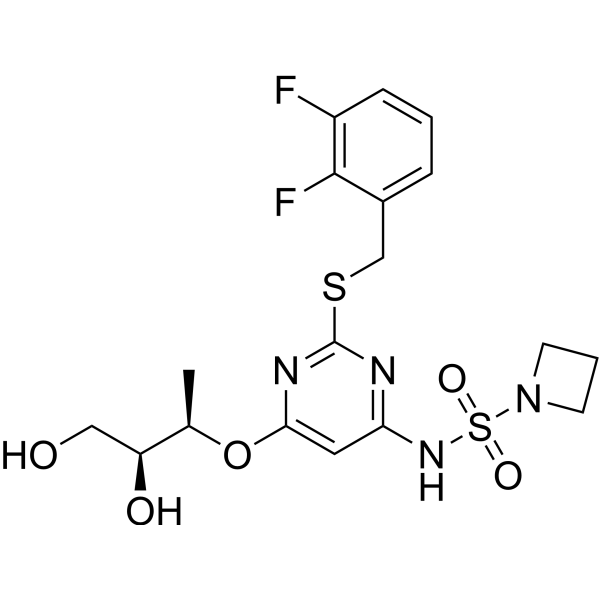
AZD-5069 is a potent CXCR2 chemokine receptor antagonist, used for caner treatment.
Nur für Forschungszwecke. Wir verkaufen nicht an Patienten.
- Reinheit : 99.91%
- CAS. Nr.: 878385-84-3
- Formel: C18H22F2N4O5S2
- Molecular Weight:476.52
-
Speicherung:Powder -20°C, 3 years , 4°C, 2 years ; In solvent -80°C, 2 years , -20°C, 1 year

To place orders, for customer services and technical support, please contact: MedChemExpress USA
Tel: 609-228-6898 E-mail: [email protected] [email protected]


-
 Biologische Aktivität
-
Chemical Information
-
Lösungsmittel & Löslichkeit
- Reinheit & Dokumentation
- Verweise
-
 Help & FAQs


-
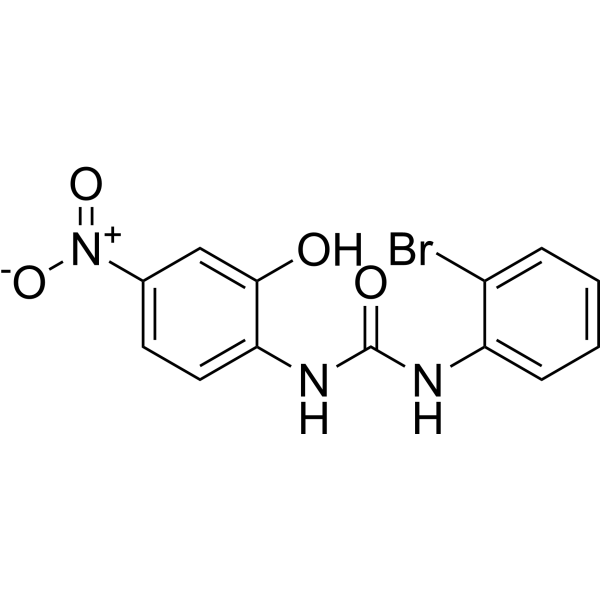
HY-16711
SB225002CXCR2 Antagonist -
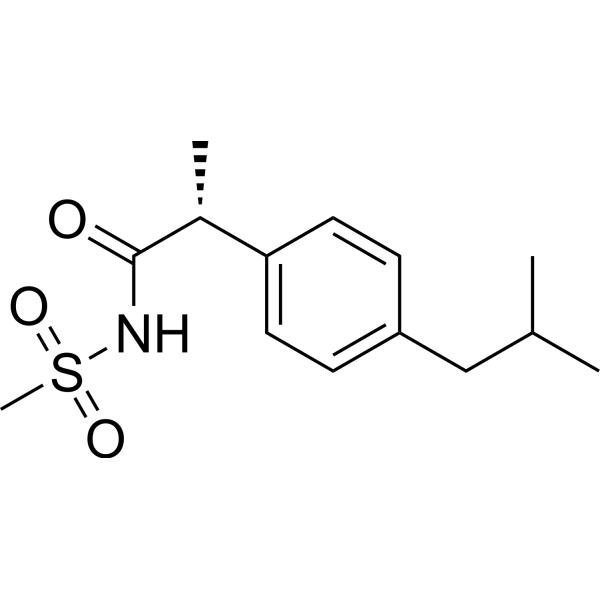
HY-15251
ReparixinCXCR1/2 Inhibitor -
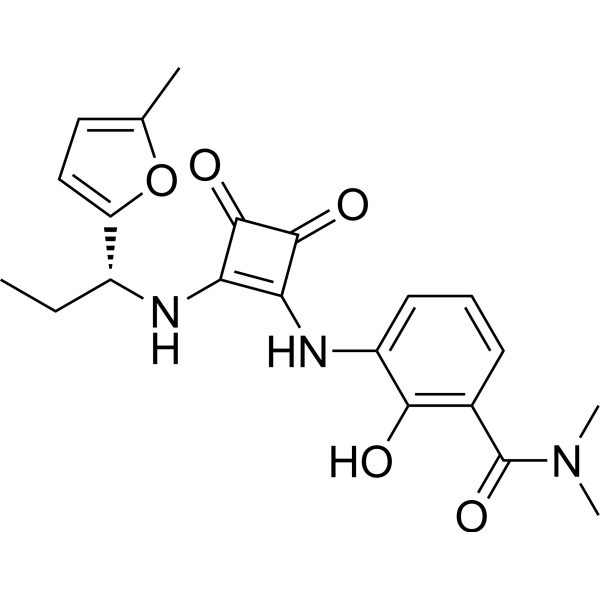
HY-10198
NavarixinCXCR1/2 Antagonist -
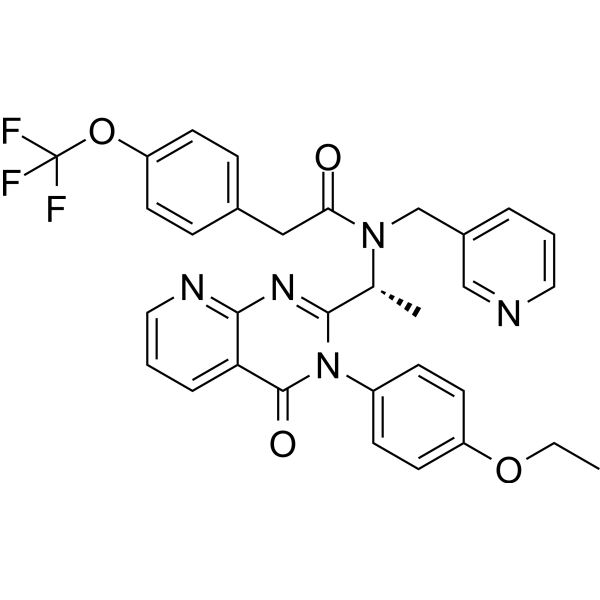
HY-15319
AMG 487CXCR3 Antagonist -
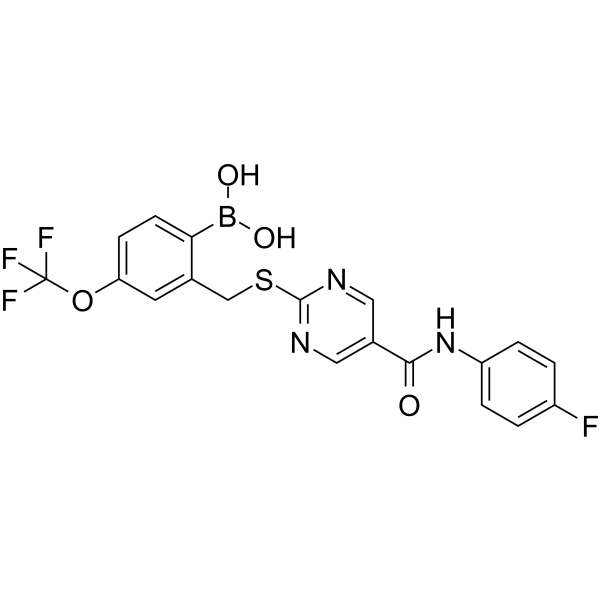
HY-119339
SX-682CXCR1/2 Inhibitor -
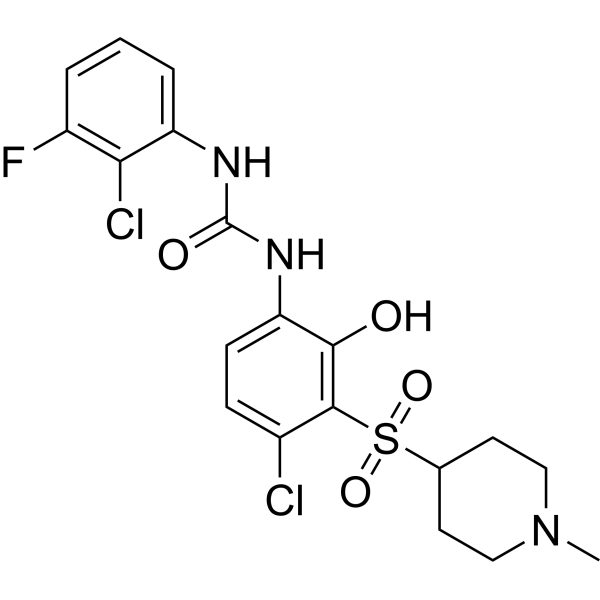
HY-101022
CXCR2-IN-1CXCR2 Antagonist -
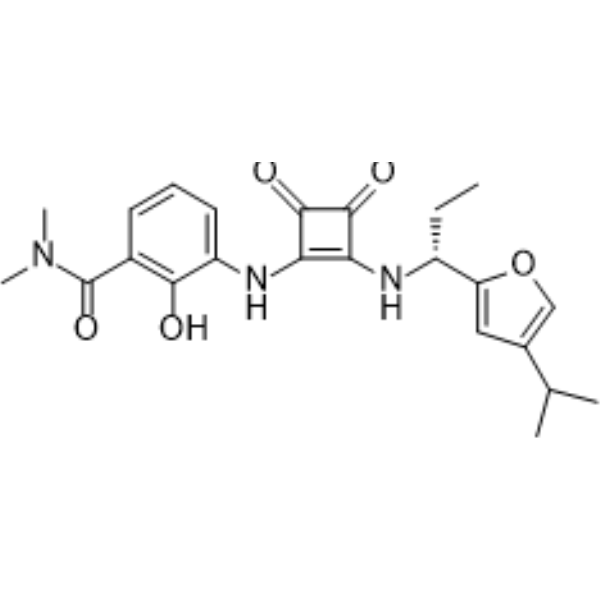
HY-10011
SCH 563705CXCR Antagonist -
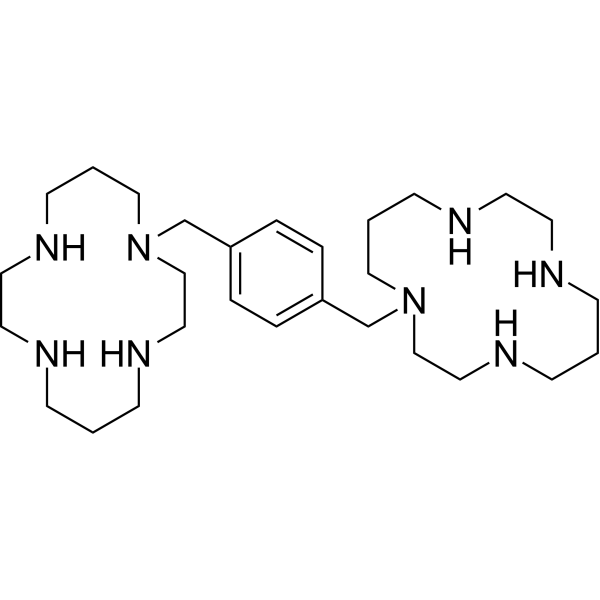
HY-10046
PlerixaforCXCR4 Antagonist -
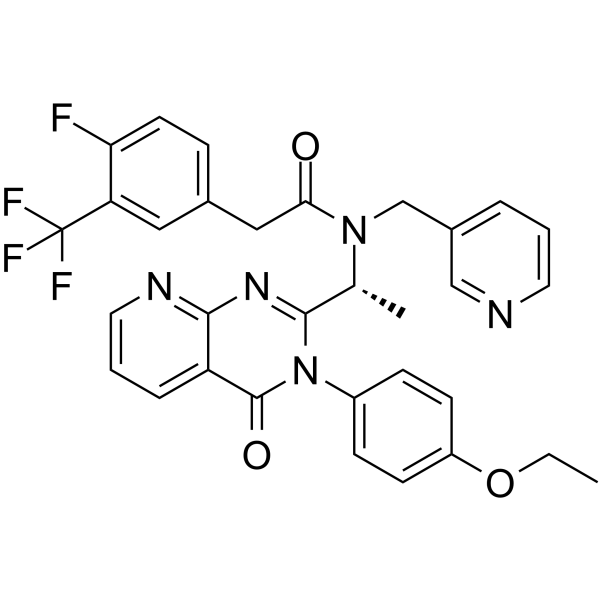
HY-15320
NBI-74330CXCR Antagonist -
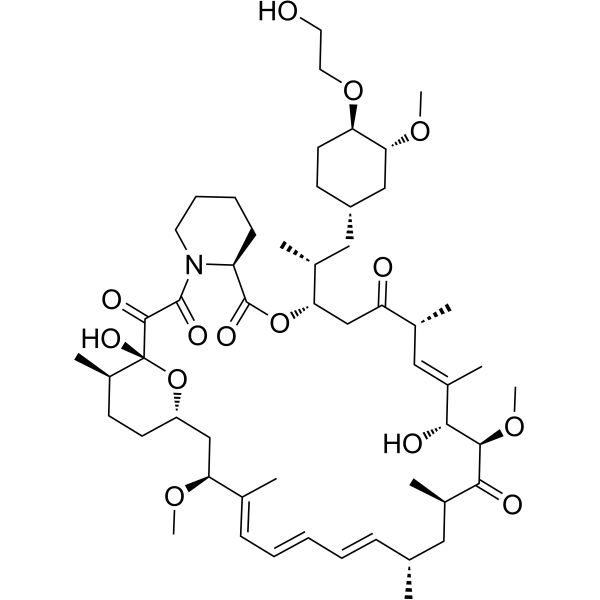
HY-10218
EverolimusmTORC Inhibitor -
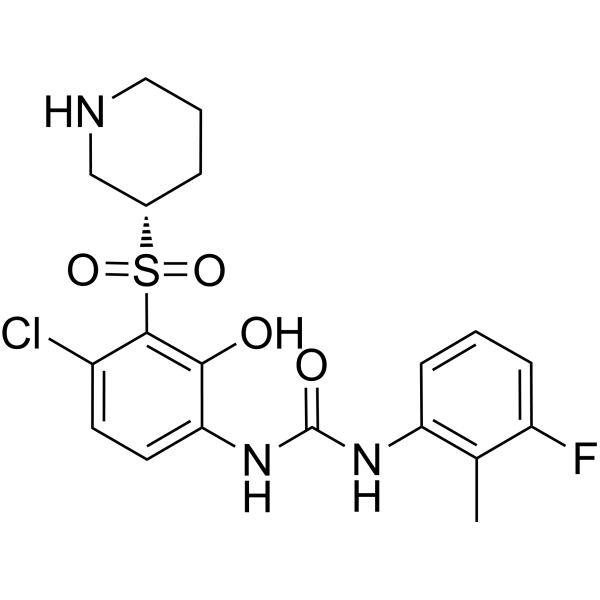
HY-19768
DanirixinCXCR Antagonist -
HY-17031
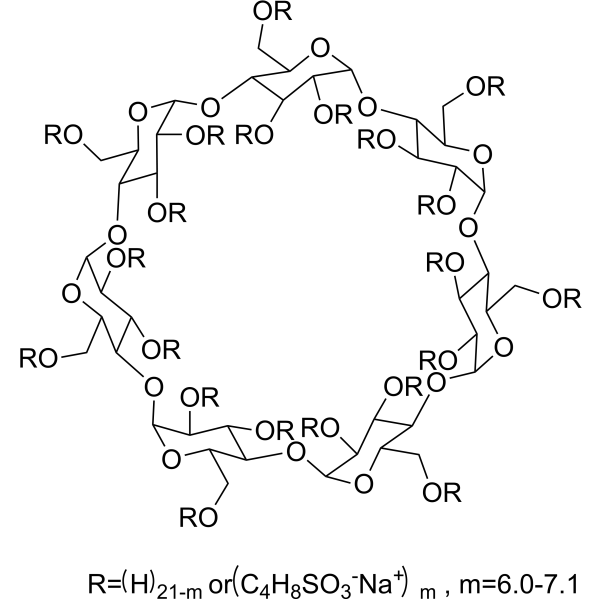
SBE-β-CDExcipient
Publications Citing Use of MedChemExpress (MCE) AZD-5069
More- J Extracell Vesicles. 2023 Jul;12(7):e12342. [Abstract]
- Cell Rep. 2023 Nov 13;42(11):113424. [Abstract]
- J Med Chem. 2024 Apr 25;67(8):6327-6343. [Abstract]
- Cancers (Basel). 2023 Dec 1;15(23):5686. [Abstract]
- J Cereb Blood Flow Metab. 2023 Sep;43(9):1503-1518. [Abstract]
- iScience. 2025 Aug 20;28(9):113407. [Abstract]
- J Med Microbiol. 2024 Apr;73(4). [Abstract]
- Biomed Pharmacother. 2026 Sep:202:119803.
- The University of Texas at Dallas. 2026.
- bioRxiv. 2024 Jul 7:2024.07.04.601620. [Abstract]
- Research Square Preprint. 2023 Dec 4.
- bioRxiv. 2023 Nov 24.
 Customer Validation & Images

-
Microbiological Assay

-
RT-PCR

-
In Vivo Efficacy Study

-
Histological Imaging/Staining

-
Histological Imaging/Staining


Biologische Aktivität
Beschreibung
IC50 & Target
[1]|
125I-IL-8-CXCR2 |
In Vitro
AZD-5069 (Compound 2) acts as CXCR2 antagonist by inhibition of [125I]-IL-8 binding to human CXCR2 receptors and as inhibitor of GROα-induced Ca2+ flux in human neutrophils loaded with fluo-3 dye[1].
MedChemExpress (MCE) has not independently confirmed the accuracy of these methods. They are for reference only.
Clinical Trial
| NCT Number | Sponsor | Condition | Start Date |
Phase

|
|---|---|---|---|---|
| NCT01329991 | 2011-05 | PHASE1 |


Chemical Information
-
CAS. Nr. 878385-84-3
-
Appearance Solid
-
Molecular Weight 476.52
-
Formel C18H22F2N4O5S2
-
Color White to light yellow
-
SMILES
O=S(N1CCC1)(NC2=NC(SCC3=CC=CC(F)=C3F)=NC(O[C@H](C)[C@@H](O)CO)=C2)=O
-
Versand
Room temperature in continental US; may vary elsewhere.
-
Speicherung
Powder -20°C 3 years 4°C 2 years In solvent -80°C 2 years -20°C 1 year


Publications (12)
-
Journal Impact Factor
-
Most Recent
-
J Extracell Vesicles
Stromal cell-derived small extracellular vesicles enhance radioresistance of prostate cancer cells via interleukin-8-induced autophagy. [Abstract]2023 Jul;12(7):e12342. PMID: 37387557 -
Cell Rep
Prostate cancer cell-derived exosomal IL-8 fosters immune evasion by disturbing glucolipid metabolism of CD8+ T cell. [Abstract]2023 Nov 13;42(11):113424. PMID: 37963015 -
J Med Chem
Development and Initial Characterization of the First 18F-CXCR2-Targeting Radiotracer for PET Imaging of Neutrophils. [Abstract]2024 Apr 25;67(8):6327-6343. PMID: 38570909 -
Cancers (Basel)
Radiation-Induced Innate Neutrophil Response in Tumor Is Mediated by the CXCLs/CXCR2 Axis. [Abstract]2023 Dec 1;15(23):5686. PMID: 38067390 -
J Cereb Blood Flow Metab
2023 Sep;43(9):1503-1518. PMID: 37194247
AZD-5069 purchased from MedChemExpress. Usage Cited in: J Cereb Blood Flow Metab. 2023 Sep;43(9):1503-1518. [Abstract]
Quantification of infarct volume and endogenous IgG positive area of mice treated with AZD-5069 (10 mg/kg; ICV), JNJ-47965567 and vehicle 7 days after MCAO (n = 6 per group, one-way ANOVA with Bonferroni multiple comparisons test).
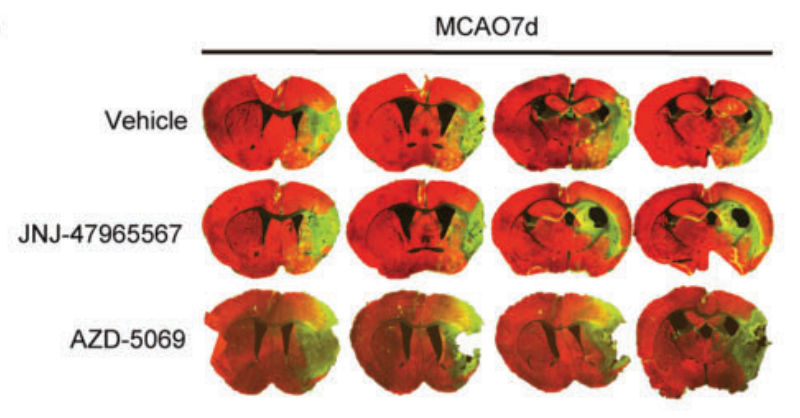
AZD-5069 purchased from MedChemExpress. Usage Cited in: J Cereb Blood Flow Metab. 2023 Sep;43(9):1503-1518. [Abstract]
Representative MAP2 staining of brain infarct and endogenous mouse IgG staining of BBB leakage 7 days after MCAO in mice treated with AZD-5069 (10 mg/kg; ICV), JNJ-47965567 or vehicle via ICV injection.
-
iScience
Microenvironmental signals combine to induce non-additive molecular and phenotypic responses in mammary epithelial cells. [Abstract]2025 Aug 20;28(9):113407. PMID: 41054517 -
J Med Microbiol
2024 Apr;73(4). PMID: 38567642
AZD-5069 purchased from MedChemExpress. Usage Cited in: J Med Microbiol. 2024 Apr;73(4). [Abstract]
Implanted catheters were infected with S. aureus, and mice were treated with 0 (vehicle), 50 or 100 µg/g AZD-5069 (i.p.) daily for 5 days. Bacterial burdens associated with the catheter and surrounding soft tissue were quantified. The results showed that compared to vehicle control mice, AZD-5069 treatment markedly increased bacterial burdens associated with both the indwelling catheter and surrounding soft tissues.
AZD-5069 purchased from MedChemExpress. Usage Cited in: J Med Microbiol. 2024 Apr;73(4). [Abstract]
Implanted catheters were infected with S. aureus, and mice were treated with 0 (vehicle), 50 or 100 µg/g AZD-5069 (i.p.) daily for 5 days. RNA was isolated from the soft tissues and Cxcr2 expression was quantified. AZD-5069 treatment resulted in 8- to 14-fold increases in Cxcr2 expression.
AZD-5069 purchased from MedChemExpress. Usage Cited in: J Med Microbiol. 2024 Apr;73(4). [Abstract]
Implanted catheters were infected with S. aureus, and mice were treated with 0 (vehicle), 50 or 100 µg/g AZD-5069 (i.p.) daily for 5 days. Animal weights during the study were recorded as a measure of health. AZD-5069 significantly increased weight loss over the course of the study, compared to vehicle treatment.
AZD-5069 purchased from MedChemExpress. Usage Cited in: J Med Microbiol. 2024 Apr;73(4). [Abstract]
Implanted catheters were infected with S. aureus, and mice were treated with 0 (vehicle), 50 or 100 µg/g AZD-5069 (i.p.) daily for 5 days. Representative images of H&E staining for histopathology in vehicle, 50 µg/g, and 100 µg/g treated animal tissues are shown. Histopathological analyses of infected tissues from AZD-5069-treated animals revealed evidence of robust fibrosis and chronic inflammation proximal to visible biofilm and implant site.
-
-
-
bioRxiv
Rebalancing Viral and Immune Damage versus Tissue Repair Prevents Death from Lethal Influenza Infection. [Abstract]2024 Jul 7:2024.07.04.601620. PMID: 39372755 -
-


Lösungsmittel & Löslichkeit
In Vitro:
DMSO : 90 mg/mL (188.87 mM; Need ultrasonic; Hygroscopic DMSO has a significant impact on the solubility of product, please use newly opened DMSO)
Please refer to the solubility information to select the appropriate solvent. Once prepared, please aliquot and store the solution to prevent product inactivation from repeated freeze-thaw cycles.
Storage method and period of stock solution: -80°C, 2 years; -20°C, 1 year. When stored at -80°C, please use it within 2 years. When stored at -20°C, please use it within 1 year.
Please refer to the solubility information to select the appropriate solvent. Once prepared, please aliquot and store the solution to prevent product inactivation from repeated freeze-thaw cycles.
Storage method and period of stock solution: -80°C, 2 years; -20°C, 1 year. When stored at -80°C, please use it within 2 years. When stored at -20°C, please use it within 1 year.
Konzentration (Stammlösung) × Volumen (Stammlösung) = Konzentration (Ziellösung) × Volumen (Ziellösung)
In Vivo:
Select the appropriate dissolution method based on your experimental animal and administration route.
- For the following dissolution methods, please ensure to first prepare a clear stock solution using an In Vitro approach and then sequentially add co-solvents:
- To ensure reliable experimental results, the clarified stock solution can be appropriately stored based on storage conditions. As for the working solution for In Vivo experiments, it is recommended to prepare freshly and use it on the same day.
- The percentages shown for the solvents indicate their volumetric ratio in the final prepared solution. If precipitation or phase separation occurs during preparation, heat and/or sonication can be used to aid dissolution.
Add each solvent one by one: 10% DMSO 40% PEG300 5% Tween-80 45% Saline
Solubility: ≥ 2.25 mg/mL (4.72 mM); Clear solution
This protocol yields a clear solution of ≥ 2.25 mg/mL (saturation unknown).
Taking 1 mL working solution as an example, add 100 μL DMSO stock solution (22.5 mg/mL) to 400 μL PEG300, and mix evenly; then add 50 μL Tween-80 and mix evenly; then add 450 μL Saline to adjust the volume to 1 mL.
Preparation of Saline: Dissolve 0.9 g sodium chloride in ddH₂O and dilute to 100 mL to obtain a clear Saline solution.
Add each solvent one by one: 10% DMSO 90% (20% SBE-β-CD in Saline)
Solubility: ≥ 2.25 mg/mL (4.72 mM); Clear solution
This protocol yields a clear solution of ≥ 2.25 mg/mL (saturation unknown).
Taking 1 mL working solution as an example, add 100 μL DMSO stock solution (22.5 mg/mL) to 900 μL 20% SBE-β-CD in Saline, and mix evenly.
Preparation of 20% SBE-β-CD in Saline (4°C, storage for one week): 2 g SBE-β-CD powder is dissolved in 10 mL Saline, completely dissolve until clear.
For the following dissolution methods, please prepare the working solution directly:
It is recommended to prepare fresh solutions and use them promptly within a short period of time.
The percentages shown for the solvents indicate their volumetric ratio in the final prepared solution. If precipitation or phase separation occurs during preparation, heat and/or sonication can be used to aid dissolution.
Add each solvent one by one: 50% PEG300 50% Saline
Solubility: 12.5 mg/mL (26.23 mM); Suspended solution; Need ultrasonic
In Vivo Dissolution Calculator
Please enter the basic information of animal experiments:
-
-
-
-
Recommended: Prepare an additional quantity of animals to account for potential losses during experiments.
Please enter your animal formula composition:
-
%DMSO +
Recommended: Keep the proportion of DMSO in working solution below 2% if your animal is weak.
-
%+
-
+%Tween-80 + +
-
%Saline +
The co-solvents required include: DMSO, . All of co-solvents are available by MedChemExpress (MCE). , Tween 80. All of co-solvents are available by MedChemExpress (MCE).
Working solution concentration: 0.22 mg/mL
Method for preparing stock solution: mg drug dissolved in μL DMSO. Stock solution concentration: mg/mL.
1. Take μL DMSO stock solution;
2. Add μL .
μL , mix evenly;
3. Then add μL Tween 80, mix evenly;
4. Then add μL
Please ensure that the stock solution in the first step is dissolved to a clear state, and add co-solvents in sequence. You can use ultrasonic heating (ultrasonic cleaner, recommended frequency 20-40 kHz), vortexing, etc. to assist dissolution.


Reinheit & Dokumentation
-
Data Sheet (276 KB)
-
SDS (643 KB)
- English - EN (643 KB)
- Français - FR (643 KB)
- Deutsch - DE (643 KB)
- Norwegian - NO (643 KB)
- Español - ES (643 KB)
- Swedish - SV (643 KB)
- Italian - IT (643 KB)
- Korean - KR (643 KB)
- Portuguese - PT (643 KB)
-
Handling Instructions (2659 KB)
Verweise


Complete Stock Solution Preparation Table
Please refer to the solubility information to select the appropriate solvent. Once prepared, please aliquot and store the solution to prevent product inactivation from repeated freeze-thaw cycles.
Storage method and period of stock solution: -80°C, 2 years; -20°C, 1 year. When stored at -80°C, please use it within 2 years. When stored at -20°C, please use it within 1 year.
| Optional Solvent | Concentration Solvent Mass | 1 mg | 5 mg | 10 mg | 25 mg |
|---|---|---|---|---|---|
| DMSO | 1 mM | 2.0985 mL | 10.4927 mL | 20.9855 mL | 52.4637 mL |
| 5 mM | 0.4197 mL | 2.0985 mL | 4.1971 mL | 10.4927 mL | |
| 10 mM | 0.2099 mL | 1.0493 mL | 2.0985 mL | 5.2464 mL | |
| 15 mM | 0.1399 mL | 0.6995 mL | 1.3990 mL | 3.4976 mL | |
| 20 mM | 0.1049 mL | 0.5246 mL | 1.0493 mL | 2.6232 mL | |
| 25 mM | 0.0839 mL | 0.4197 mL | 0.8394 mL | 2.0985 mL | |
| 30 mM | 0.0700 mL | 0.3498 mL | 0.6995 mL | 1.7488 mL | |
| 40 mM | 0.0525 mL | 0.2623 mL | 0.5246 mL | 1.3116 mL | |
| 50 mM | 0.0420 mL | 0.2099 mL | 0.4197 mL | 1.0493 mL | |
| 60 mM | 0.0350 mL | 0.1749 mL | 0.3498 mL | 0.8744 mL | |
| 80 mM | 0.0262 mL | 0.1312 mL | 0.2623 mL | 0.6558 mL | |
| 100 mM | 0.0210 mL | 0.1049 mL | 0.2099 mL | 0.5246 mL |


AZD-5069 Related Classifications
HY-19855 Related Classifications
 Powered by Bioz