



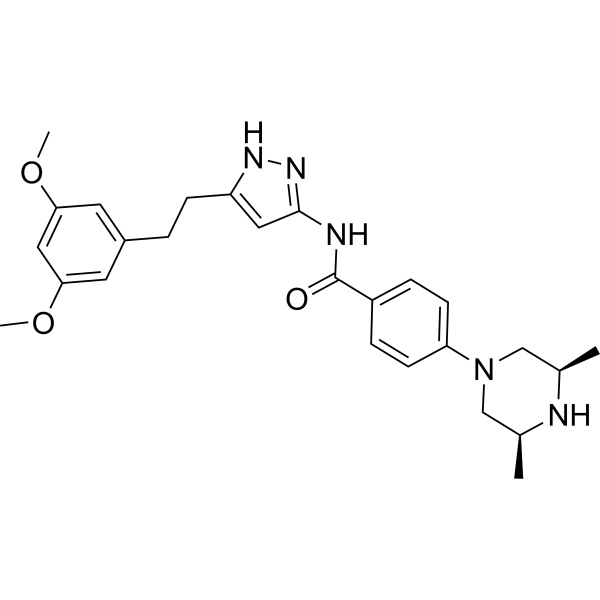
Fexagratinib
Based on 38 publication(s) in Google Scholar
Fexagratinib (AZD4547; ADSK091) is a potent inhibitor of the FGFR family with IC50s of 0.2 nM, 2.5 nM, 1.8 nM, and 165 nM for FGFR1, FGFR2, FGFR3, and FGFR4, respectively.
商品は「研究用試薬」です。人や動物の医療用・臨床診断用・食品用の製品ではありません。
研究用途以外に使用した場合、当社は一切の責任を負いかねます。
- 純度 : 99.92%
- CAS 番号: 1035270-39-3
- 分子式: C26H33N5O3
- 分子量:463.57
-
保管条件:Powder -20°C, 3 years , 4°C, 2 years ; In solvent -80°C, 2 years , -20°C, 1 year

To place orders, for customer services and technical support, please contact: MedChemExpress USA
Tel: 609-228-6898 E-mail: [email protected] [email protected]


-
 生物活性
生物活性
-
化学情報
-
溶剤 & 溶解度
- 純度とドキュメンテーション
- 参考文献
-
 Help & FAQs


-
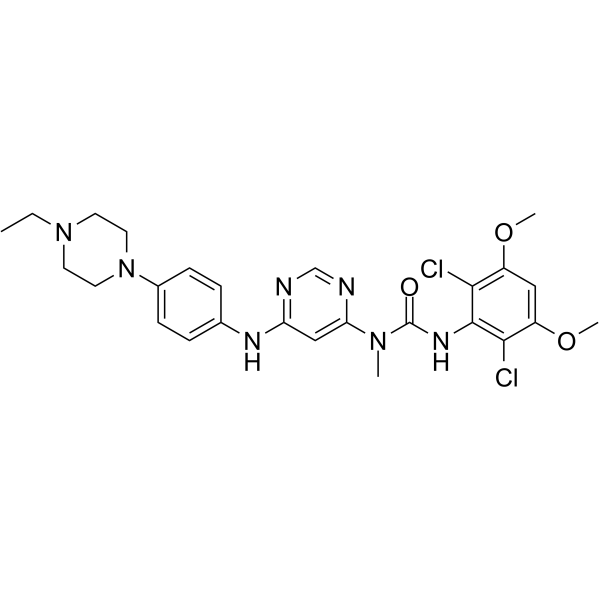
HY-13311
InfigratinibFGFR Inhibitor -
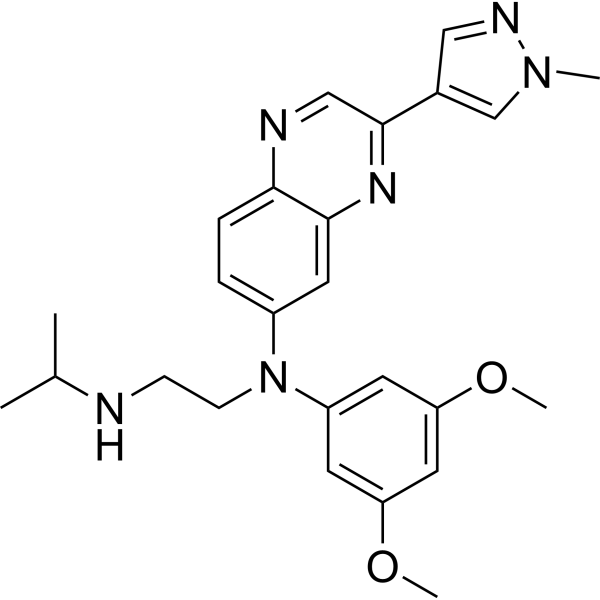
HY-18708
ErdafitinibFGFR Inhibitor -
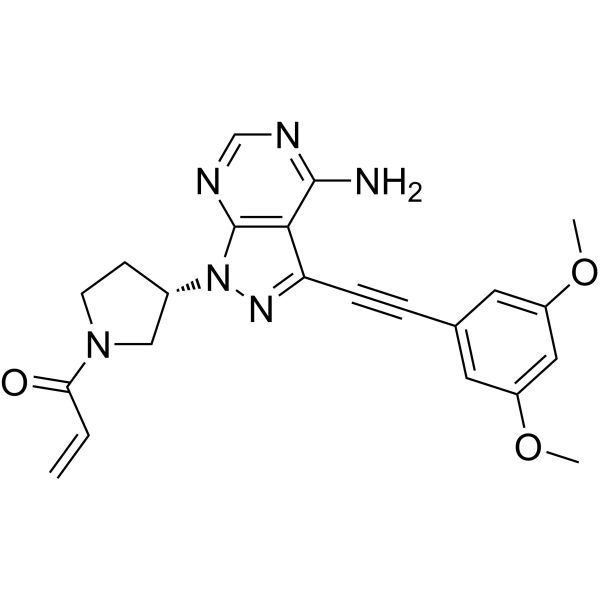
HY-100818
FutibatinibFGFR Inhibitor -
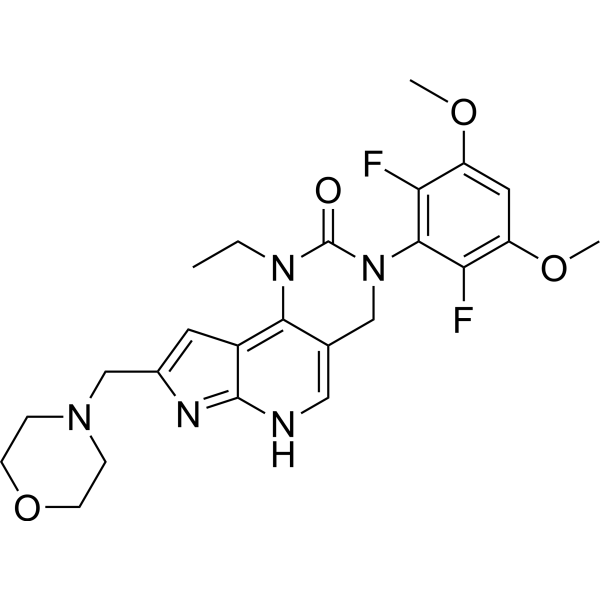
HY-109099
PemigatinibFGFR Inhibitor -
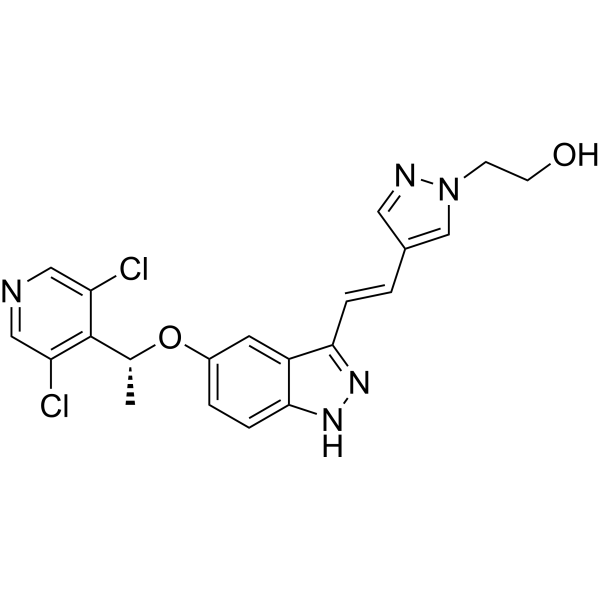
HY-13304
LY2874455FGFR Inhibitor -
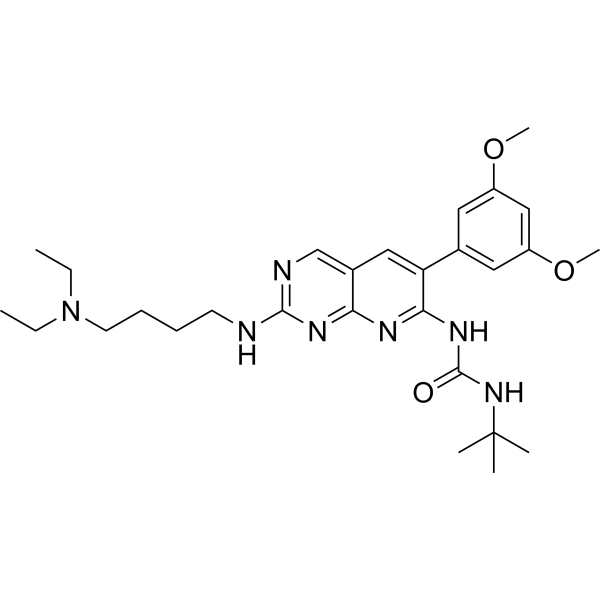
HY-10321
PD173074FGFR1 Inhibitor -
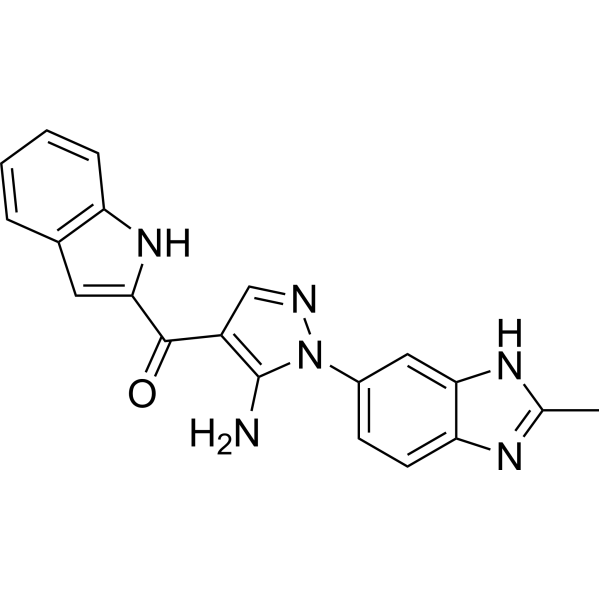
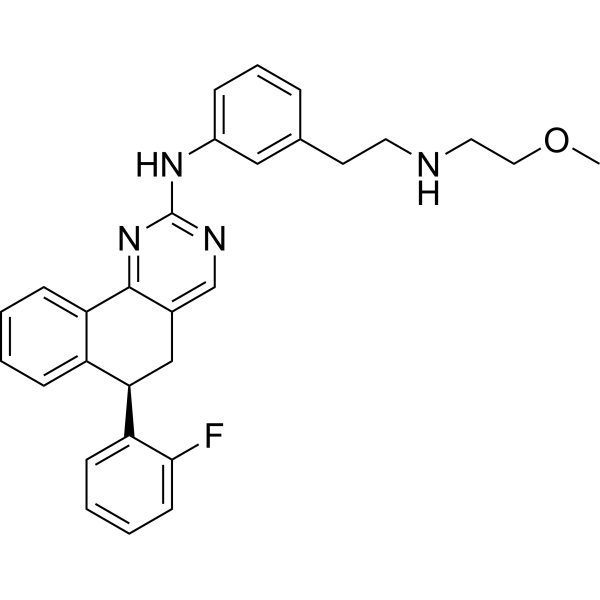
HY-19957
Zoligratinib -
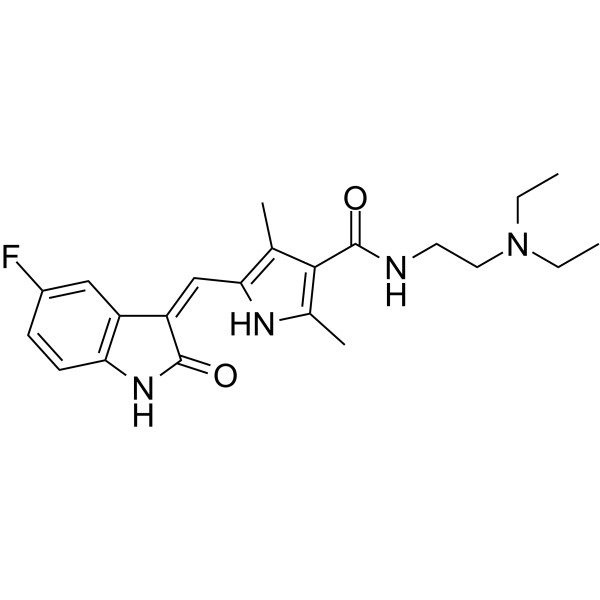
HY-19981
Derazantinib -
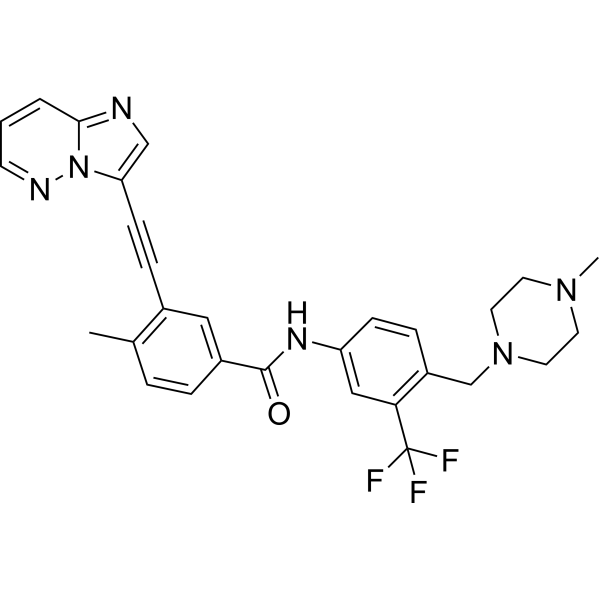
HY-10255A
SunitinibMulti-targeted RTK Inhibitor -
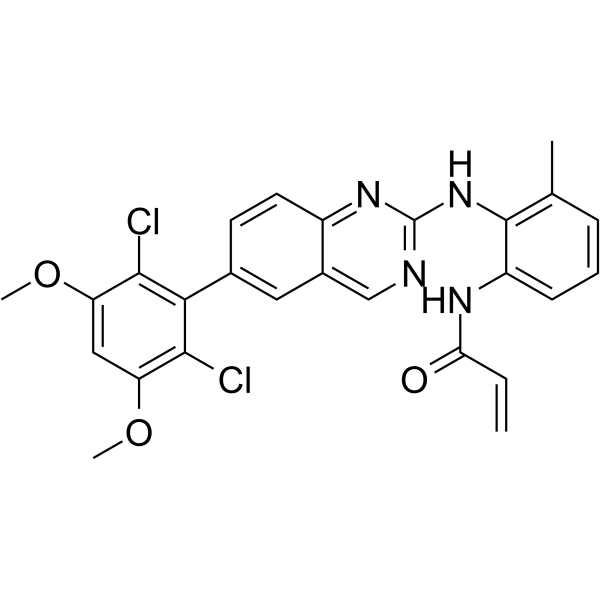
HY-12047
PonatinibMulti-targeted Kinase Inhibitor -
HY-12823
BLU9931FGFR4 Inhibitor -
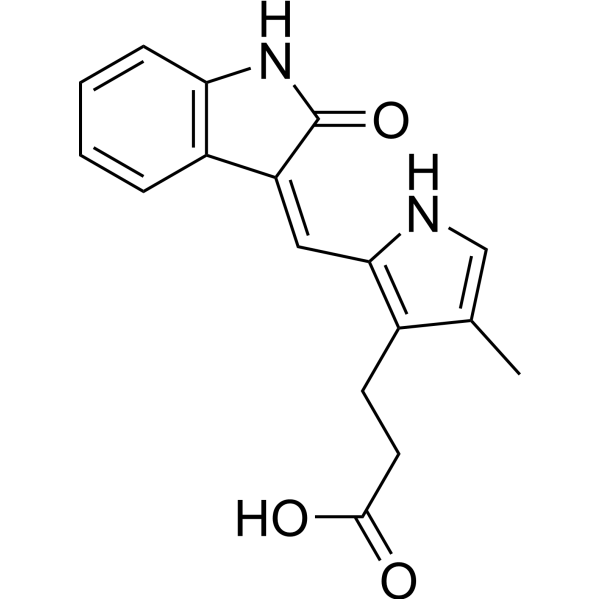
HY-10407
SU 5402Tyrosine Kinase Inhibitor
MedChemExpress(MCE)の使用を引用している文献 Fexagratinib
More- Bioact Mater. 2022 Jan 2:15:131-144. [Abstract]
- Cancer Res. 2025 Jun 24. [Abstract]
- Nat Commun. 2020 Aug 13;11(1):4053. [Abstract]
- Sci Transl Med. 2018 Jul 18;10(450):eaaq1093. [Abstract]
- J Nanobiotechnology. 2023 Feb 17;21(1):55. [Abstract]
- J Exp Clin Cancer Res. 2023 Apr 3;42(1):79. [Abstract]
- Adv Sci (Weinh). 2025 Jan;12(2):e2407662. [Abstract]
- J Control Release. 2026 Jul 10:395:115007. [Abstract]
- Cell Death Dis. 2026 May 19;17(1):632. [Abstract]
- J Neuroinflammation. 2023 Jan 17;20(1):10. [Abstract]
- Mater Today Bio. 2024 May 27:26:101104. [Abstract]
- Acta Pharmacol Sin. 2023 Apr;44(4):801-810. [Abstract]
- NPJ Precis Oncol. 2021 Jul 16;5(1):66. [Abstract]
- Cell Prolif. 2025 Jan;58(1):e13732. [Abstract]
- J Med Chem. 2025 Oct 23;68(20):21766-21785. [Abstract]
- Sci Signal. 2019 May 28;12(583):eaaw9450. [Abstract]
- Eur J Pharmacol. 2025 Dec 15:1009:178390. [Abstract]
- Respir Res. 2022 Oct 1;23(1):269. [Abstract]
- Int J Mol Sci. 2023 Sep 18;24(18):14215. [Abstract]
- Cell Oncol (Dordr). 2022 Feb;45(1):41-56. [Abstract]
- Front Cell Dev Biol. 2020 May 7:8:287. [Abstract]
- PLoS Pathog. 2023 Nov 30;19(11):e1011754. [Abstract]
- Cancers (Basel). 2024 Jul 3;16(13):2447. [Abstract]
- Cell Signal. 2026 Aug 22:149:112838.
- Mol Oncol. 2020 Nov;14(11):2894-2919. [Abstract]
- Am J Physiol Endocrinol Metab. 2024 Feb 1;326(2):E134-E147. [Abstract]
- Development. 2021 Apr 15;148(8):dev195651. [Abstract]
- Mol Carcinog. 2022 Jul;61(7):664-676. [Abstract]
- Mol Cell Endocrinol. 2024 Aug 1:589:112248. [Abstract]
- Biomed Pharmacother. 2026 Sep:202:119803.
- bioRxiv. 2026 May 26.
- Comput Biol Med. 2025 Jul 7;196(Pt A):110688. [Abstract]
- Res Sq. 2025 Jul 24.
- bioRxiv. 2025 Jun 16:2025.06.11.659120. [Abstract]
- bioRxiv. 2025 Jun 7:2025.06.04.657911. [Abstract]
- bioRxiv. 2024 Nov 6:2024.11.04.621884. [Abstract]
- Patent. US20220305015A1.
- Oncotarget. 2020 Nov 3;11(44):3921-3932. [Abstract]
 Customer Validation & Images

-
WB
-
Cell Proliferation/Viability Assay
-
In Vivo Efficacy Study
-
PK/PD Analysis
-
In Vivo Efficacy Study


生物活性
製品説明
IC50 & Target
[1]|
FGFR1 0.2 nM (IC50) |
FGFR2 2.5 nM (IC50) |
FGFR3 1.8 nM (IC50) |
FGFR4 165 nM (IC50) |
Cellular Effect
|
Cell Line

|
Type | Value | Description | References |
|---|---|---|---|---|
| A549 | IC50 |
0.062 μM
Compound: AZD4547
|
Cytotoxicity against human A549 cells after 72 hrs by MTT assay
Cytotoxicity against human A549 cells after 72 hrs by MTT assay
|
[PMID: 25736993] |
| B16-F10 | IC50 |
0.051 μM
Compound: AZD4547
|
Cytotoxicity against mouse B16F10 cells after 72 hrs by MTT assay
Cytotoxicity against mouse B16F10 cells after 72 hrs by MTT assay
|
[PMID: 25736993] |
| BaF3 | IC50 |
222 nM
Compound: 1; AZD-4547
|
Antiproliferative activity against mouse BAF3 cells expressing VEGFR2 after 72 hrs
Antiproliferative activity against mouse BAF3 cells expressing VEGFR2 after 72 hrs
|
[PMID: 29775937] |
| BaF3 | IC50 |
339.2 nM
Compound: 1; AZD-4547
|
Antiproliferative activity against mouse BAF3 cells expressing TEL-fused FGFR4 kinase after 72 hrs by CCK8 or MTT assay
Antiproliferative activity against mouse BAF3 cells expressing TEL-fused FGFR4 kinase after 72 hrs by CCK8 or MTT assay
|
[PMID: 29522671] |
| BaF3 | IC50 |
543.5 nM
Compound: 1; AZD-4547
|
Antiproliferative activity against mouse BAF3 cells expressing TEL-fused KDR kinase after 72 hrs by CCK8 or MTT assay
Antiproliferative activity against mouse BAF3 cells expressing TEL-fused KDR kinase after 72 hrs by CCK8 or MTT assay
|
[PMID: 29522671] |
| BGC-823 | IC50 |
7.9 μM
Compound: AZD4547
|
Antiproliferative activity against human BGC823 cells after 72 hrs by MTT assay
Antiproliferative activity against human BGC823 cells after 72 hrs by MTT assay
|
[PMID: 27829519] |
| DMS-114 | IC50 |
14 nM
Compound: AZD4547
|
Antiproliferative activity against human DMS-114 cells assessed as inhibition of cell growth incubated for 120 hrs by MTT assay
Antiproliferative activity against human DMS-114 cells assessed as inhibition of cell growth incubated for 120 hrs by MTT assay
|
[PMID: 36096343] |
| HeLa 229 | IC50 |
0.14 μM
Compound: AZD4547
|
Cytotoxicity against human HeLa 229 cells after 72 hrs by MTT assay
Cytotoxicity against human HeLa 229 cells after 72 hrs by MTT assay
|
[PMID: 25736993] |
| HepG2 | IC50 |
3.13 μM
Compound: AZD4547
|
Antiproliferative activity against human HepG2 cells assessed as inhibition of cell growth incubated for 72 hrs by MTT assay
Antiproliferative activity against human HepG2 cells assessed as inhibition of cell growth incubated for 72 hrs by MTT assay
|
[PMID: 38643670] |
| HT-29 | EC50 |
19 nM
Compound: AZD4547; F2
|
Anti-necroptosis activity against TNFalpha-induced human HT-29 cells assessed as reduction in cell viability
Anti-necroptosis activity against TNFalpha-induced human HT-29 cells assessed as reduction in cell viability
|
[PMID: 38199165] |
| HT-29 | EC50 |
19 nM
Compound: AZD4547; F2
|
Anti-necroptosis activity against TSZ-induced human HT-29 cells assessed as reduction in cell viability by Cell-titer glo luminescent based analysis
Anti-necroptosis activity against TSZ-induced human HT-29 cells assessed as reduction in cell viability by Cell-titer glo luminescent based analysis
|
[PMID: 38199165] |
| Huh-7 | IC50 |
>10 μM
Compound: AZD4547
|
Antiproliferative activity against human Huh-7 cells assessed as inhibition of cell growth measured after 96 hrs by CCK-8 assay
Antiproliferative activity against human Huh-7 cells assessed as inhibition of cell growth measured after 96 hrs by CCK-8 assay
|
[PMID: 34129329] |
| Huh-7 | IC50 |
284.3 nM
Compound: 1; AZD-4547
|
Antiproliferative activity against FGF19/FGFR4 expressing human HuH7 cells after 72 hrs by CCK8 or MTT assay
Antiproliferative activity against FGF19/FGFR4 expressing human HuH7 cells after 72 hrs by CCK8 or MTT assay
|
[PMID: 29522671] |
| HUVEC | IC50 |
37.95 μM
Compound: AZD4547
|
Cytotoxicity against HUVEC cells assessed as inhibition of cell growth incubated for 72 hrs by MTT assay
Cytotoxicity against HUVEC cells assessed as inhibition of cell growth incubated for 72 hrs by MTT assay
|
[PMID: 38643670] |
| KG-1 | IC50 |
<0.2 nM
Compound: AZD4547
|
Inhibition of FGFR1 in human KG1 cells assessed as suppression of cell proliferation after 72 hrs by SRB/CCK-8 assay
Inhibition of FGFR1 in human KG1 cells assessed as suppression of cell proliferation after 72 hrs by SRB/CCK-8 assay
|
[PMID: 27117427] |
| KG-1 | IC50 |
<0.2 nM
Compound: AZD4547
|
Antiproliferative activity against human KG1 cells after 72 hrs by CCK-8 assay
Antiproliferative activity against human KG1 cells after 72 hrs by CCK-8 assay
|
[PMID: 27326339] |
| KG-1 | IC50 |
1.9 nM
Compound: 1; AZD-4547
|
Antiproliferative activity against human KG1 cells expressing FGFR1 after 72 hrs
Antiproliferative activity against human KG1 cells expressing FGFR1 after 72 hrs
|
[PMID: 29775937] |
| KG-1 | IC50 |
3.3 nM
Compound: AZD4547
|
Antiproliferative activity against human KG1 cells after 72 hrs by CCK-8 assay
Antiproliferative activity against human KG1 cells after 72 hrs by CCK-8 assay
|
[PMID: 28687204] |
| KG-1 | IC50 |
3.7 nM
Compound: 1; AZD4547
|
Antiproliferative activity against human KG1 cells measured after 72 hrs by CCK8 assay
Antiproliferative activity against human KG1 cells measured after 72 hrs by CCK8 assay
|
[PMID: 31335138] |
| KG-1 | IC50 |
5.8 nM
Compound: AZD4547
|
Antiproliferative activity against FGFR1 fused human KG1 cells after 72 hrs by CCK8 assay
Antiproliferative activity against FGFR1 fused human KG1 cells after 72 hrs by CCK8 assay
|
[PMID: 30572178] |
| KG-1 | IC50 |
6.4 nM
Compound: 5
|
Antiproliferative activity against FGFR1-translocated human KG1 cells after 72 hrs by CCK8/MTT assay
Antiproliferative activity against FGFR1-translocated human KG1 cells after 72 hrs by CCK8/MTT assay
|
[PMID: 27348537] |
| L02 | IC50 |
18.21 μM
Compound: AZD4547
|
Cytotoxicity against human HL7702 cells after 72 hrs by MTT assay
Cytotoxicity against human HL7702 cells after 72 hrs by MTT assay
|
[PMID: 25736993] |
| MDA-MB-231 | IC50 |
7.19 μM
Compound: AZD4547
|
Antiproliferative activity against human MDA-MB-231 cells assessed as inhibition of cell growth incubated for 72 hrs by MTT assay
Antiproliferative activity against human MDA-MB-231 cells assessed as inhibition of cell growth incubated for 72 hrs by MTT assay
|
[PMID: 38643670] |
| MDA-MB-435 | IC50 |
21.58 μM
Compound: AZD4547
|
Antiproliferative activity against human MDA-MB-435 cells assessed as inhibition of cell growth incubated for 72 hrs by MTT assay
Antiproliferative activity against human MDA-MB-435 cells assessed as inhibition of cell growth incubated for 72 hrs by MTT assay
|
[PMID: 38643670] |
| MGC-803 | IC50 |
6.2 μM
Compound: AZD4547
|
Antiproliferative activity against human MGC803 cells after 72 hrs by MTT assay
Antiproliferative activity against human MGC803 cells after 72 hrs by MTT assay
|
[PMID: 27829519] |
| NCI-H1581 | IC50 |
0.024 μM
Compound: AZD4547
|
Antiproliferative activity against human NCI-H1581 cells expressing FGFR1 assessed as inhibition of cell growth measured after 96 hrs by CCK-8 assay
Antiproliferative activity against human NCI-H1581 cells expressing FGFR1 assessed as inhibition of cell growth measured after 96 hrs by CCK-8 assay
|
[PMID: 34129329] |
| NCI-H1581 | IC50 |
15.8 nM
Compound: AZ04547
|
Antiproliferative activity against human NCI-H1581 cells expressing FGFR1 assessed as reduction in cell viability measured after 72 hrs
Antiproliferative activity against human NCI-H1581 cells expressing FGFR1 assessed as reduction in cell viability measured after 72 hrs
|
[PMID: 36802596] |
| NCI-H1581 | IC50 |
37.9 nM
Compound: AZD4547
|
Antiproliferative activity against human NCI-H1581 cells after 72 hrs by CCK-8 assay
Antiproliferative activity against human NCI-H1581 cells after 72 hrs by CCK-8 assay
|
[PMID: 27326339] |
| NCI-H1581 | IC50 |
4 nM
Compound: AZD4547
|
Antiproliferative activity against human NCI-H1581 cells assessed as inhibition of cell growth incubated for 120 hrs by MTT assay
Antiproliferative activity against human NCI-H1581 cells assessed as inhibition of cell growth incubated for 120 hrs by MTT assay
|
[PMID: 36096343] |
| NCI-H1581 | IC50 |
40 nM
Compound: 1; AZD-4547
|
Antiproliferative activity against FGFR1 amplified human NCI-H1581 cells after 72 hrs by CCK8 or MTT assay
Antiproliferative activity against FGFR1 amplified human NCI-H1581 cells after 72 hrs by CCK8 or MTT assay
|
[PMID: 29522671] |
| NCI-H1581 | IC50 |
40 nM
Compound: 1; AZD-4547
|
Antiproliferative activity against human NCI-H1581 cells expressing FGFR1 after 72 hrs
Antiproliferative activity against human NCI-H1581 cells expressing FGFR1 after 72 hrs
|
[PMID: 29775937] |
| NCI-H1581 | IC50 |
92.1 nM
Compound: 5
|
Antiproliferative activity against FGFR1-amplified human NCI-H1581 cells after 72 hrs by CCK8/MTT assay
Antiproliferative activity against FGFR1-amplified human NCI-H1581 cells after 72 hrs by CCK8/MTT assay
|
[PMID: 27348537] |
| NCI-H460 | IC50 |
>10 μM
Compound: AZD4547
|
Antiproliferative activity against human NCI-H460 cells assessed as inhibition of cell growth measured after 96 hrs by CCK-8 assay
Antiproliferative activity against human NCI-H460 cells assessed as inhibition of cell growth measured after 96 hrs by CCK-8 assay
|
[PMID: 34129329] |
| NCI-H716 | IC50 |
0.6 nM
Compound: AZ04547
|
Antiproliferative activity against human NCI-H716 cells expressing FGFR2 assessed as reduction in cell viability measured after 72 hrs
Antiproliferative activity against human NCI-H716 cells expressing FGFR2 assessed as reduction in cell viability measured after 72 hrs
|
[PMID: 36802596] |
| NCI-H716 | IC50 |
5.9 nM
Compound: AZD4547
|
Antiproliferative activity against FGFR2 amplified human NCI-H716 cells after 72 hrs by CCK8 assay
Antiproliferative activity against FGFR2 amplified human NCI-H716 cells after 72 hrs by CCK8 assay
|
[PMID: 30572178] |
| OPM-2 | IC50 |
83.6 nM
Compound: 1; AZD-4547
|
Antiproliferative activity against FGFR3 amplified human OPM2 cells after 72 hrs by CCK8 or MTT assay
Antiproliferative activity against FGFR3 amplified human OPM2 cells after 72 hrs by CCK8 or MTT assay
|
[PMID: 29522671] |
| OPM-2 | IC50 |
83.6 nM
Compound: AZ04547
|
Antiproliferative activity against human OPM-2 cells expressing FGFR3 assessed as reduction in cell viability measured after 72 hrs
Antiproliferative activity against human OPM-2 cells expressing FGFR3 assessed as reduction in cell viability measured after 72 hrs
|
[PMID: 36802596] |
| RT-112 | GI50 |
0.0292 μM
Compound: AZD4547
|
Antiproliferative activity against human RT112 cells after 72 hrs by MTT assay
Antiproliferative activity against human RT112 cells after 72 hrs by MTT assay
|
[PMID: 27599742] |
| RT-112 | IC50 |
0.6 nM
Compound: AZD4547
|
Inhibition of FGFR3 in human RT112 cells assessed as suppression of cell proliferation after 72 hrs by SRB/CCK-8 assay
Inhibition of FGFR3 in human RT112 cells assessed as suppression of cell proliferation after 72 hrs by SRB/CCK-8 assay
|
[PMID: 27117427] |
| RT-112 | IC50 |
0.6 nM
Compound: AZD4547
|
Antiproliferative activity against human RT112 cells after 72 hrs by CCK-8 assay
Antiproliferative activity against human RT112 cells after 72 hrs by CCK-8 assay
|
[PMID: 27326339] |
| RT-112 | IC50 |
36.4 nM
Compound: 1; AZD-4547
|
Antiproliferative activity against FGFR3 amplified human RT112 cells after 72 hrs by CCK8 or MTT assay
Antiproliferative activity against FGFR3 amplified human RT112 cells after 72 hrs by CCK8 or MTT assay
|
[PMID: 29522671] |
| RT-112 | IC50 |
83.8 nM
Compound: 1; AZD-4547
|
Antiproliferative activity against human RT112 cells expressing FGFR3 after 72 hrs
Antiproliferative activity against human RT112 cells expressing FGFR3 after 72 hrs
|
[PMID: 29775937] |
| RT-112 | IC50 |
88.4 nM
Compound: 5
|
Antiproliferative activity against FGFR3-amplified human RT112 cells after 72 hrs by CCK8/MTT assay
Antiproliferative activity against FGFR3-amplified human RT112 cells after 72 hrs by CCK8/MTT assay
|
[PMID: 27348537] |
| SGC-7901 | IC50 |
2.8 μM
Compound: AZD4547
|
Antiproliferative activity against human SGC7901 cells after 72 hrs by MTT assay
Antiproliferative activity against human SGC7901 cells after 72 hrs by MTT assay
|
[PMID: 27829519] |
| SK-HEP1 | IC50 |
2.78 μM
Compound: AZD4547
|
Antiproliferative activity against human SK-HEP1 cells expressing FGFR4 assessed as inhibition of cell growth measured after 96 hrs by CCK-8 assay
Antiproliferative activity against human SK-HEP1 cells expressing FGFR4 assessed as inhibition of cell growth measured after 96 hrs by CCK-8 assay
|
[PMID: 34129329] |
| SNU-16 | IC50 |
0.006 μM
Compound: AZD4547
|
Antiproliferative activity against human SNU-16 cells expressing FGFR2 assessed as inhibition of cell growth measured after 96 hrs by CCK-8 assay
Antiproliferative activity against human SNU-16 cells expressing FGFR2 assessed as inhibition of cell growth measured after 96 hrs by CCK-8 assay
|
[PMID: 34129329] |
| SNU-16 | IC50 |
1.2 nM
Compound: AZD4547
|
Antiproliferative activity against human SNU16 cells after 72 hrs by CCK-8 assay
Antiproliferative activity against human SNU16 cells after 72 hrs by CCK-8 assay
|
[PMID: 27326339] |
| SNU-16 | IC50 |
1.5 nM
Compound: 1; AZD-4547
|
Antiproliferative activity against FGFR2 amplified human SNU16 cells after 72 hrs by CCK8 or MTT assay
Antiproliferative activity against FGFR2 amplified human SNU16 cells after 72 hrs by CCK8 or MTT assay
|
[PMID: 29522671] |
| SNU-16 | IC50 |
13.4 nM
Compound: 5
|
Antiproliferative activity against FGFR2-amplified human SNU16 cells after 72 hrs by CCK8/MTT assay
Antiproliferative activity against FGFR2-amplified human SNU16 cells after 72 hrs by CCK8/MTT assay
|
[PMID: 27348537] |
| SNU-16 | IC50 |
19.6 nM
Compound: AZD4547
|
Antiproliferative activity against FGFR2 amplified human SNU16 cells after 72 hrs by CCK8 assay
Antiproliferative activity against FGFR2 amplified human SNU16 cells after 72 hrs by CCK8 assay
|
[PMID: 30572178] |
| SNU-16 | IC50 |
3.4 nM
Compound: AZD4547
|
Antiproliferative activity against human SNU16 cells after 72 hrs by CCK-8 assay
Antiproliferative activity against human SNU16 cells after 72 hrs by CCK-8 assay
|
[PMID: 28687204] |
| SNU-16 | IC50 |
3.6 nM
Compound: AZD4547
|
Inhibition of recombinant FGFR2 in human SNU16 cells assessed as suppression of cell proliferation after 72 hrs by SRB/CCK-8 assay
Inhibition of recombinant FGFR2 in human SNU16 cells assessed as suppression of cell proliferation after 72 hrs by SRB/CCK-8 assay
|
[PMID: 27117427] |
| SNU-16 | IC50 |
3.7 nM
Compound: AZ04547
|
Antiproliferative activity against human SNU-16 cells assessed as reduction in cell viability measured for 72 hrs
Antiproliferative activity against human SNU-16 cells assessed as reduction in cell viability measured for 72 hrs
|
[PMID: 36802596] |
| SNU-16 | IC50 |
4.9 nM
Compound: 1; AZD4547
|
Antiproliferative activity against human SNU16 cells measured after 72 hrs by CCK8 assay
Antiproliferative activity against human SNU16 cells measured after 72 hrs by CCK8 assay
|
[PMID: 31335138] |
| SNU-16 | IC50 |
6.2 nM
Compound: 1; AZD-4547
|
Antiproliferative activity against human SNU16 cells expressing FGFR2 after 72 hrs
Antiproliferative activity against human SNU16 cells expressing FGFR2 after 72 hrs
|
[PMID: 29775937] |
| SNU-16 | IC50 |
64 nM
Compound: 8; AZD4547
|
Antiproliferative activity against human SNU-16 cells overexpressing FGFR2 assessed as inhibition of cell proliferative by measuring ATP level after 72 hrs by luminescence based assay
Antiproliferative activity against human SNU-16 cells overexpressing FGFR2 assessed as inhibition of cell proliferative by measuring ATP level after 72 hrs by luminescence based assay
|
[PMID: 33199155] |
| TOV21G | EC50 |
52 nM
Compound: AZD4547; F2
|
Anti-necroptosis activity against TNFalpha-induced human TOV-21G cells assessed as reduction in cell viability
Anti-necroptosis activity against TNFalpha-induced human TOV-21G cells assessed as reduction in cell viability
|
[PMID: 38199165] |
| U-87MG ATCC | IC50 |
25.41 μM
Compound: AZD4547
|
Antiproliferative activity against human U-87 MG cells incubated for 48 hrs by MTT assay
Antiproliferative activity against human U-87 MG cells incubated for 48 hrs by MTT assay
|
[PMID: 37651879] |
| U-937 | EC50 |
31 nM
Compound: AZD4547; F2
|
Anti-necroptosis activity against TNFalpha-induced human U-937 cells assessed as reduction in cell viability
Anti-necroptosis activity against TNFalpha-induced human U-937 cells assessed as reduction in cell viability
|
[PMID: 38199165] |
体外実験
Fexagratinib also inhibits recombinant VEGFR2 (KDR) kinase activity with an IC50 of 24 nM. In KG1a, Sum52-PE, MCF7, and KMS11 cell lines, Fexagratinib potently inhibits autophosphorylation of FGFR1, 2, and 3 tyrosine kinases (IC50 values of 12, 2, and 40 nM, respectively) and displays weaker inhibition of FGFR4 cellular kinase activity (IC50=142 nM). Significantly weaker inhibitory activity is observed versus cellular KDR and IGFR ligand-induced phosphorylation (IC50 values of 258 and 828 nM, respectively), representing approximately 20- and 70-fold selectivity over cellular FGFR1. Besides, Fexagratinib potently inhibits FGFR phosphorylation and downstream signaling affected through FRS2, PLCγ, and MAPK at the cellular level[1].
MedChemExpress (MCE) has not independently confirmed the accuracy of these methods. They are for reference only.
体内実験
MedChemExpress (MCE) has not independently confirmed the accuracy of these methods. They are for reference only.
臨床実験
| NCT Number | Sponsor | Condition | Start Date |
Phase
|
|---|---|---|---|---|
| NCT01329991 | 2011-05 | PHASE1 |


化学情報
-
CAS 番号 1035270-39-3
-
性状 Solid
-
分子量 463.57
-
分子式 C26H33N5O3
-
Color White to yellow
-
SMILES
C[C@H](C1)N[C@@H](C)CN1C2=CC=C(C(NC3=NNC(CCC4=CC(OC)=CC(OC)=C4)=C3)=O)C=C2
-
別名
AZD4547; ADSK091
-
輸送条件
Room temperature in continental US; may vary elsewhere.
-
保管条件
Powder -20°C 3 years 4°C 2 years In solvent -80°C 2 years -20°C 1 year


Publications (38)
-
Journal Impact Factor
-
Most Recent
-
Bioact Mater
2022 Jan 2:15:131-144. PMID: 35386336 -
Cancer Res
The C-terminal Kinase Domain-Binding and Suppression Motif Prevents Constitutive Activation of FGFR2. [Abstract]2025 Jun 24. PMID: 40554806
Fexagratinib purchased from MedChemExpress. Usage Cited in: Cancer Res. 2025 Jun 24. [Abstract]
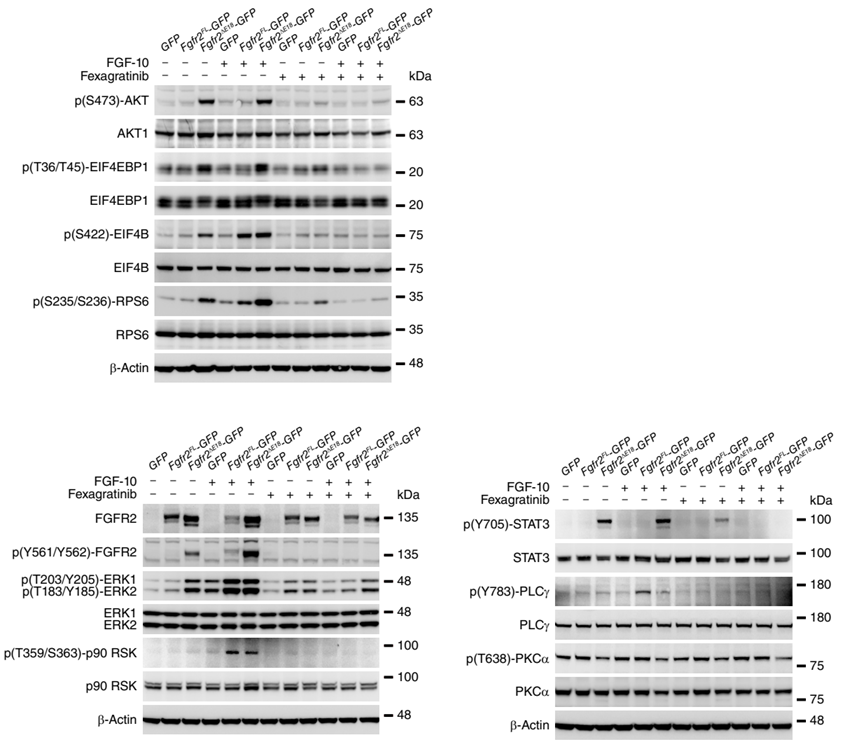
Quantifications of Western blots showing expression and phosphorylation of indicated proteins in serum-starved GFPhi NMuMG cells expressing GFP, Fgfr2FL-GFP, or Fgfr2ΔE18-GFP and treated for 15 minutes with 20 ng/mL FGF-10 and/or for 3 hours with 100 nmol/L Fexagratinib.
-
Nat Commun
PLK1 inhibition exhibits strong anti-tumoral activity in CCND1-driven breast cancer metastases with acquired palbociclib resistance. [Abstract]2020 Aug 13;11(1):4053. PMID: 32792481
Fexagratinib purchased from MedChemExpress. Usage Cited in: Nat Commun. 2020 Aug 13;11(1):4053. [Abstract]
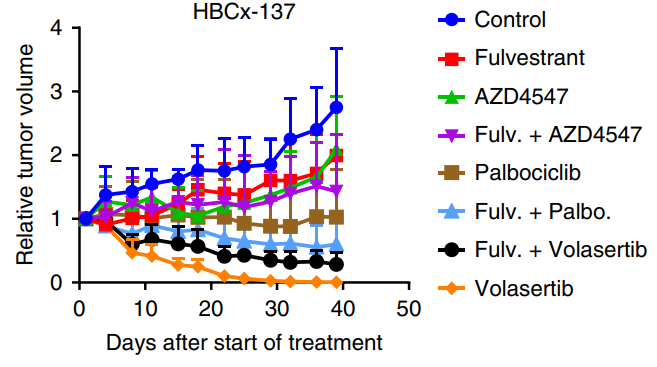
In vivo targeting of HBCx-137 PDX by volasertib (10 mg/kg 4 times/week), palbociclib (75 mg/kg 5 days/week) and Fexagratinib (AZD4547, 12.5 mg/kg; p.o.; 5 days per week) in monotherapy and in combination with fulvestrant. n = 5 independent xenografts (control, fulvestrant, AZD4547, fulv. + AZD4547), n = 7 (volasertib), n = 8 (fulv.+vola), n = 9 (palbo, palbo + fulv.). Mean ± SD. Volasertib treated xenografts were monitored after end of treatment to detect tumour recurrence. Two xenografts relapsed at day 70 and 100 and were rechallenged with volasertib.
-
Sci Transl Med
PP2A inhibition is a druggable MEK inhibitor resistance mechanism in KRAS-mutant lung cancer cells. [Abstract]2018 Jul 18;10(450):eaaq1093. PMID: 30021885 -
J Nanobiotechnology
Hyaluronic acid-FGF2-derived peptide bioconjugates for suppression of FGFR2 and AR simultaneously as an acne antagonist. [Abstract]2023 Feb 17;21(1):55. PMID: 36803994
Fexagratinib purchased from MedChemExpress. Usage Cited in: J Nanobiotechnology. 2023 Feb 17;21(1):55. [Abstract]
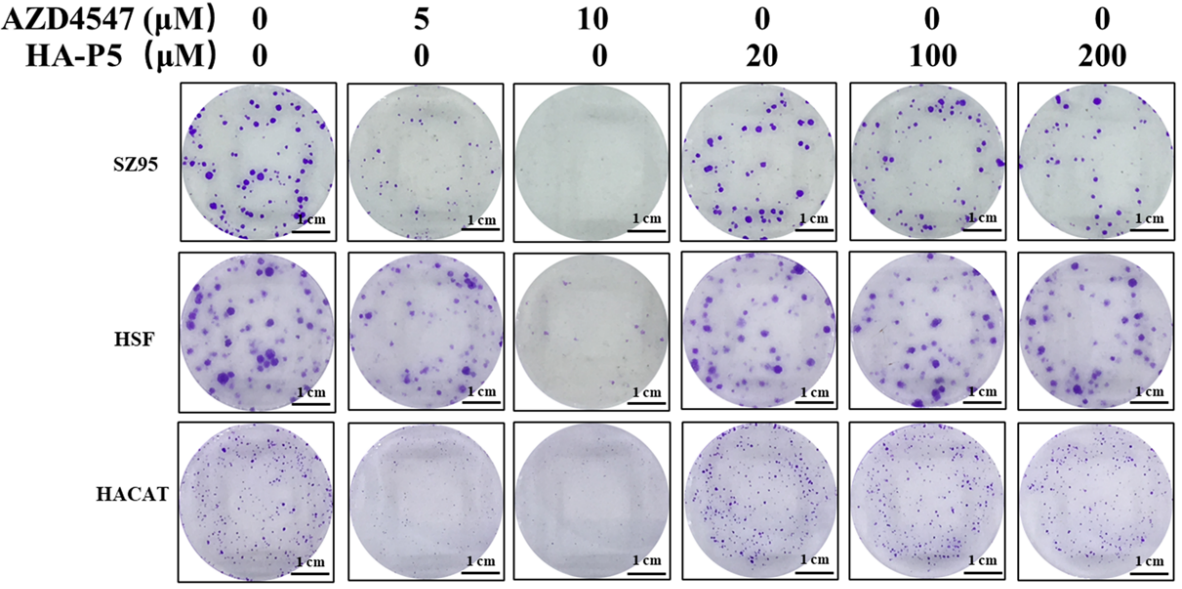
HA-P5 and Fexagratinib (AZD4547, 5-10 μM; 48 h) inhibited the colony formation in SZ95, HaCaT, and HSF cells.
Fexagratinib purchased from MedChemExpress. Usage Cited in: J Nanobiotechnology. 2023 Feb 17;21(1):55. [Abstract]
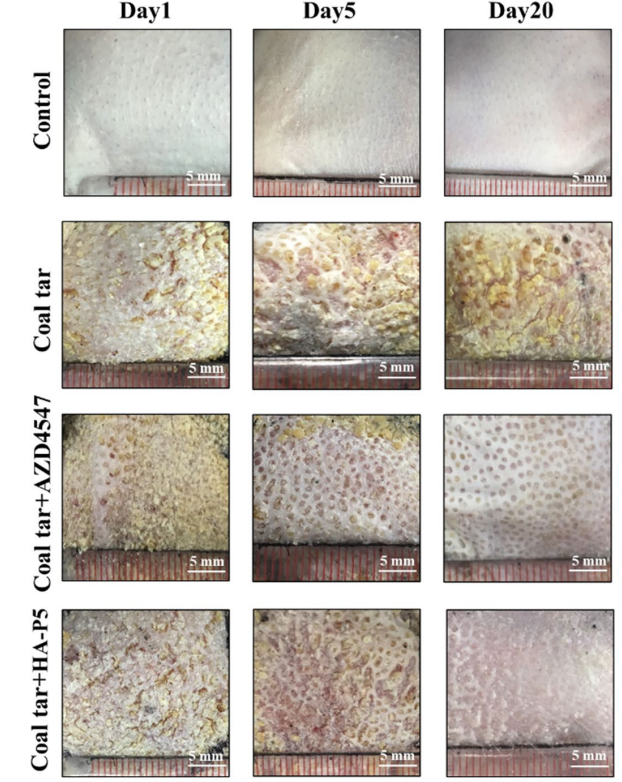
HA-P5 (100 μM; administered daily for up to 20 days) and Fexagratinib (AZD4547, 5 μM; administered daily for up to 20 days) remedied acne on the ears of male New Zealand rabbits with smoother epidermis and thinner stratum corneum.
-
J Exp Clin Cancer Res
Platform combining statistical modeling and patient-derived organoids to facilitate personalized treatment of colorectal carcinoma. [Abstract]2023 Apr 3;42(1):79. PMID: 37013646
Fexagratinib purchased from MedChemExpress. Usage Cited in: J Exp Clin Cancer Res. 2023 Apr 3;42(1):79. [Abstract]
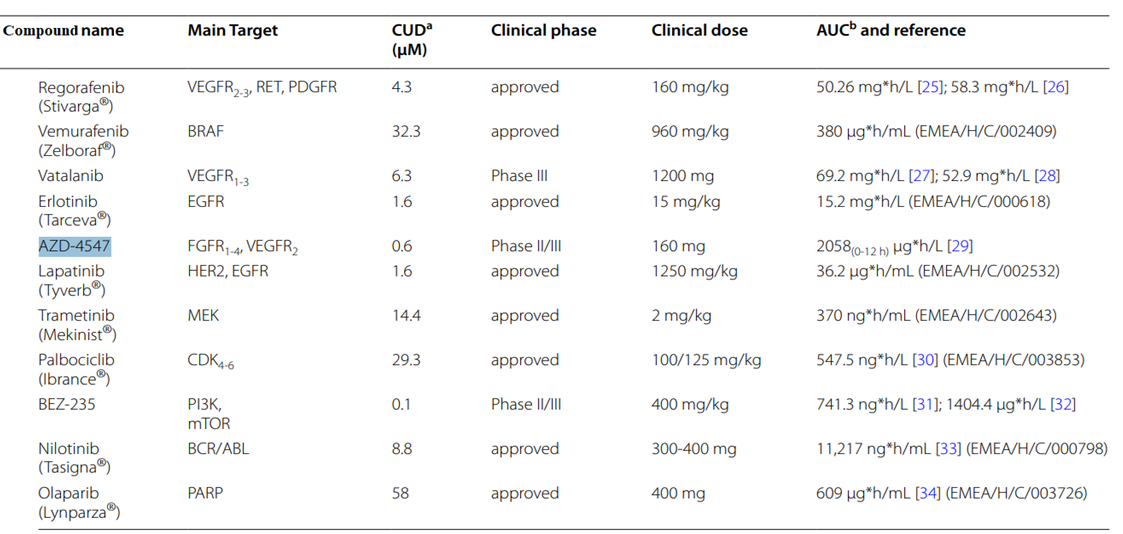
The set of drugs (Regorafenib, Vemurafenib, Vatalanib, Erlotinib, Fexagratinib (AZD4547), Lapatinib, Trametinib, Palbociclib, BEZ-235, Nilotinib, Olaparib) used in the screen, their main targets, and clinical information aCUD Clinically used dose, calculated using the area under the curve b(AUC0-24 h) of each drug, which corresponds to the plasma concentration of the drug over the first 24 h, and is used to calculate the average drug concentration in that time. Data was obtained from pharmacokinetic studies performed in patients exposed to the drugs at standard or maximum tolerated doses
-
Adv Sci (Weinh)
Osteoblast-Derived ECM1 Promotes Anti-Androgen Resistance in Bone Metastatic Prostate Cancer. [Abstract]2025 Jan;12(2):e2407662. PMID: 39563492 -
J Control Release
FGFR2-responsive self-assembled hydrogel releases its inhibitor to suppress the progression of endometriosis. [Abstract]2026 Jul 10:395:115007. PMID: 42114779 -
Cell Death Dis
Stattic enhances the anti-tumor activity of AZD4547 in LUSC by blocking STAT3/RRM2-mediated DNA repair and inducing ROS-driven mitochondrial dysfunction. [Abstract]2026 May 19;17(1):632. PMID: 42156709 -
J Neuroinflammation
The FGF/FGFR system in the microglial neuroinflammation with Borrelia burgdorferi: likely intersectionality with other neurological conditions. [Abstract]2023 Jan 17;20(1):10. PMID: 36650549 -
Mater Today Bio
Turning sublimed sulfur and bFGF into a nanocomposite to accelerate wound healing via co-activate FGFR and Hippo signaling pathway. [Abstract]2024 May 27:26:101104. PMID: 38952539 -
Acta Pharmacol Sin
Repurposing of the FGFR inhibitor AZD4547 as a potent inhibitor of necroptosis by selectively targeting RIPK1. [Abstract]2023 Apr;44(4):801-810. PMID: 36216899 -
NPJ Precis Oncol
Comprehensive functional evaluation of variants of fibroblast growth factor receptor genes in cancer. [Abstract]2021 Jul 16;5(1):66. PMID: 34272467 -
Cell Prolif
Flavonoid chrysin activates both TrkB and FGFR1 receptors while upregulates their endogenous ligands such as brain derived neurotrophic factor to promote human neurogenesis. [Abstract]2025 Jan;58(1):e13732. PMID: 39331585 -
J Med Chem
Discovery of a 1 H-Pyrazol-3-Amine Derivative as a Novel, Selective, and Orally Available RIPK1 Inhibitor for the Treatment of Inflammatory Disease. [Abstract]2025 Oct 23;68(20):21766-21785. PMID: 41077763 -
Sci Signal
2019 May 28;12(583):eaaw9450. PMID: 31138768 -
Eur J Pharmacol
Angiotensin II-induced fibrosis is mediated by activation of FGFR1 pathway in renal epithelial cells: Attenuation by chimeric peptide. [Abstract]2025 Dec 15:1009:178390. PMID: 41274591 -
Respir Res
Fibroblast growth factor 10 attenuates chronic obstructive pulmonary disease by protecting against glycocalyx impairment and endothelial apoptosis. [Abstract]2022 Oct 1;23(1):269. PMID: 36183124 -
Int J Mol Sci
2023 Sep 18;24(18):14215. PMID: 37762517 -
Cell Oncol (Dordr)
AZD4547 targets the FGFR/Akt/SOX2 axis to overcome paclitaxel resistance in head and neck cancer. [Abstract]2022 Feb;45(1):41-56. PMID: 34837170 -
Front Cell Dev Biol
2020 May 7:8:287. PMID: 32457900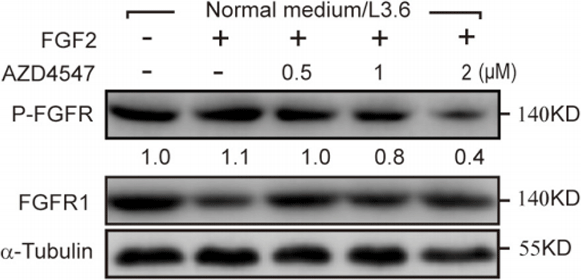
Fexagratinib purchased from MedChemExpress. Usage Cited in: Front Cell Dev Biol. 2020 May 7:8:287. [Abstract]
Determination in L3.6 cells of FGF2-induced FGFR phosphorylation by Western blot in the presence of AZD4547 . FGFR1 and alpha-Tubulin are used as loading controls.
-
PLoS Pathog
Antimicrobial peptide-producing dermal preadipocytes defend against Candida albicans skin infection via the FGFR-MEK-ERK pathway. [Abstract]2023 Nov 30;19(11):e1011754. PMID: 38032898 -
Cancers (Basel)
TMEM176B Promotes EMT via FGFR/JNK Signalling in Development and Tumourigenesis of Lung Adenocarcinoma. [Abstract]2024 Jul 3;16(13):2447. PMID: 39001509 -
-
Mol Oncol
Optimized low-dose combinatorial drug treatment boosts selectivity and efficacy of colorectal carcinoma treatment. [Abstract]2020 Nov;14(11):2894-2919. PMID: 33021054 -
Am J Physiol Endocrinol Metab
Vertical sleeve gastrectomy improves glucose-insulin homeostasis by enhancing beta cell function and survival via FGF15/19. [Abstract]2024 Feb 1;326(2):E134-E147. PMID: 38117265 -
Development
Regulation of otocyst patterning by Tbx2 and Tbx3 is required for inner ear morphogenesis in the mouse. [Abstract]2021 Apr 15;148(8):dev195651. PMID: 33795231 -
Mol Carcinog
Epidermal growth factor receptor signaling in precancerous keratinocytes promotes neighboring head and neck cancer squamous cell carcinoma cancer stem cell-like properties and phosphoinositide 3-kinase inhibitor insensitivity. [Abstract]2022 Jul;61(7):664-676. PMID: 35417043 -
Mol Cell Endocrinol
FGF2 promotes the proliferation of injured granulosa cells in premature ovarian failure via Hippo-YAP signaling pathway. [Abstract]2024 Aug 1:589:112248. PMID: 38663484 -
-
-
Comput Biol Med
PANoptosis-driven molecular stratification in esophageal squamous cell carcinoma: A multi-omics prognostic model and FGFR-Targeted therapeutic validation. [Abstract]2025 Jul 7;196(Pt A):110688. PMID: 40628169 -
-
bioRxiv
A Hotspot Phosphorylation Site on SHP2 Drives Oncoprotein Activation and Drug Resistance. [Abstract]2025 Jun 16:2025.06.11.659120. PMID: 40667115 -
bioRxiv
Modeling acquired TKI resistance and effective combination therapeutic strategies in murine RET+ lung adenocarcinoma. [Abstract]2025 Jun 7:2025.06.04.657911. PMID: 40502048 -
bioRxiv
PAIRWISE: Deep Learning-based Prediction of Effective Personalized Drug Combinations in Cancer. [Abstract]2024 Nov 6:2024.11.04.621884. PMID: 39574568 -
-
Oncotarget
2020 Nov 3;11(44):3921-3932. PMID: 33216841


溶剤 & 溶解度
体外:
DMSO : 125 mg/mL (269.65 mM; Need ultrasonic; Hygroscopic DMSO has a significant impact on the solubility of product, please use newly opened DMSO)
Please refer to the solubility information to select the appropriate solvent. Once prepared, please aliquot and store the solution to prevent product inactivation from repeated freeze-thaw cycles.
Storage method and period of stock solution: -80°C, 2 years; -20°C, 1 year. When stored at -80°C, please use it within 2 years. When stored at -20°C, please use it within 1 year.
Please refer to the solubility information to select the appropriate solvent. Once prepared, please aliquot and store the solution to prevent product inactivation from repeated freeze-thaw cycles.
Storage method and period of stock solution: -80°C, 2 years; -20°C, 1 year. When stored at -80°C, please use it within 2 years. When stored at -20°C, please use it within 1 year.
濃度 (開始) × 体積 (開始) = 濃度 (終了) × 体積 (終了)
体内:
Select the appropriate dissolution method based on your experimental animal and administration route.
- For the following dissolution methods, please ensure to first prepare a clear stock solution using an In Vitro approach and then sequentially add co-solvents:
- To ensure reliable experimental results, the clarified stock solution can be appropriately stored based on storage conditions. As for the working solution for In Vivo experiments, it is recommended to prepare freshly and use it on the same day.
- The percentages shown for the solvents indicate their volumetric ratio in the final prepared solution. If precipitation or phase separation occurs during preparation, heat and/or sonication can be used to aid dissolution.
Add each solvent one by one: 10% DMSO 40% PEG300 5% Tween-80 45% Saline
Solubility: ≥ 2.5 mg/mL (5.39 mM); Clear solution
This protocol yields a clear solution of ≥ 2.5 mg/mL (saturation unknown).
Taking 1 mL working solution as an example, add 100 μL DMSO stock solution (25.0 mg/mL) to 400 μL PEG300, and mix evenly; then add 50 μL Tween-80 and mix evenly; then add 450 μL Saline to adjust the volume to 1 mL.
Preparation of Saline: Dissolve 0.9 g sodium chloride in ddH₂O and dilute to 100 mL to obtain a clear Saline solution.
Add each solvent one by one: 10% DMSO 90% (20% SBE-β-CD in Saline)
Solubility: ≥ 2.08 mg/mL (4.49 mM); Clear solution
This protocol yields a clear solution of ≥ 2.08 mg/mL (saturation unknown).
Taking 1 mL working solution as an example, add 100 μL DMSO stock solution (20.8 mg/mL) to 900 μL 20% SBE-β-CD in Saline, and mix evenly.
Preparation of 20% SBE-β-CD in Saline (4°C, storage for one week): 2 g SBE-β-CD powder is dissolved in 10 mL Saline, completely dissolve until clear.
For the following dissolution methods, please prepare the working solution directly:
It is recommended to prepare fresh solutions and use them promptly within a short period of time.
The percentages shown for the solvents indicate their volumetric ratio in the final prepared solution. If precipitation or phase separation occurs during preparation, heat and/or sonication can be used to aid dissolution.
Add each solvent one by one: 1% CMC-Na/saline water
Solubility: 3.33 mg/mL (7.18 mM); Suspended solution; Need ultrasonic and warming and heat to 60°C
In Vivo Dissolution Calculator
Please enter the basic information of animal experiments:
-
-
-
-
Recommended: Prepare an additional quantity of animals to account for potential losses during experiments.
Please enter your animal formula composition:
-
%DMSO +
Recommended: Keep the proportion of DMSO in working solution below 2% if your animal is weak.
-
%+
-
+%Tween-80 + +
-
%Saline +
The co-solvents required include: DMSO, . All of co-solvents are available by MedChemExpress (MCE). , Tween 80. All of co-solvents are available by MedChemExpress (MCE).
Working solution concentration: 0.22 mg/mL
Method for preparing stock solution: mg drug dissolved in μL DMSO. Stock solution concentration: mg/mL.
1. Take μL DMSO stock solution;
2. Add μL .
μL , mix evenly;
3. Then add μL Tween 80, mix evenly;
4. Then add μL
Please ensure that the stock solution in the first step is dissolved to a clear state, and add co-solvents in sequence. You can use ultrasonic heating (ultrasonic cleaner, recommended frequency 20-40 kHz), vortexing, etc. to assist dissolution.


純度とドキュメンテーション
-
データシート (279 KB)
-
SDS (396 KB)
- English - EN (396 KB)
- Français - FR (396 KB)
- Deutsch - DE (396 KB)
- Norwegian - NO (396 KB)
- Español - ES (396 KB)
- Swedish - SV (396 KB)
- Italian - IT (396 KB)
- Korean - KR (396 KB)
- Portuguese - PT (396 KB)
-
取扱説明書 (2659 KB)
参考文献


Complete Stock Solution Preparation Table
Please refer to the solubility information to select the appropriate solvent. Once prepared, please aliquot and store the solution to prevent product inactivation from repeated freeze-thaw cycles.
Storage method and period of stock solution: -80°C, 2 years; -20°C, 1 year. When stored at -80°C, please use it within 2 years. When stored at -20°C, please use it within 1 year.
| Optional Solvent | Concentration Solvent Mass | 1 mg | 5 mg | 10 mg | 25 mg |
|---|---|---|---|---|---|
| DMSO | 1 mM | 2.1572 mL | 10.7859 mL | 21.5717 mL | 53.9293 mL |
| 5 mM | 0.4314 mL | 2.1572 mL | 4.3143 mL | 10.7859 mL | |
| 10 mM | 0.2157 mL | 1.0786 mL | 2.1572 mL | 5.3929 mL | |
| 15 mM | 0.1438 mL | 0.7191 mL | 1.4381 mL | 3.5953 mL | |
| 20 mM | 0.1079 mL | 0.5393 mL | 1.0786 mL | 2.6965 mL | |
| 25 mM | 0.0863 mL | 0.4314 mL | 0.8629 mL | 2.1572 mL | |
| 30 mM | 0.0719 mL | 0.3595 mL | 0.7191 mL | 1.7976 mL | |
| 40 mM | 0.0539 mL | 0.2696 mL | 0.5393 mL | 1.3482 mL | |
| 50 mM | 0.0431 mL | 0.2157 mL | 0.4314 mL | 1.0786 mL | |
| 60 mM | 0.0360 mL | 0.1798 mL | 0.3595 mL | 0.8988 mL | |
| 80 mM | 0.0270 mL | 0.1348 mL | 0.2696 mL | 0.6741 mL | |
| 100 mM | 0.0216 mL | 0.1079 mL | 0.2157 mL | 0.5393 mL |


Fexagratinib 関連分類
HY-13330 関連分類
 Powered by Bioz