



AZD-5672
Based on 1 publication(s) in Google Scholar
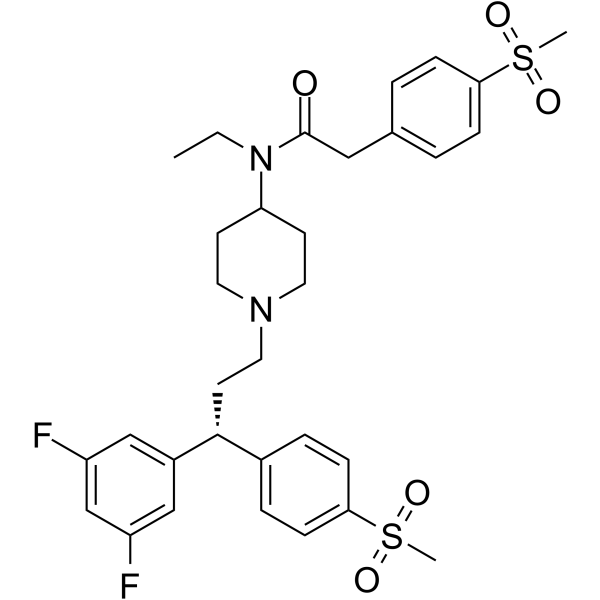
AZD-5672 is an orally active, potent, and selective CCR5 antagonist (IC50=0.32 nM). AZD-5672 shows moderate activity against the hERG ion channel (binding IC50=7.3 μM). AZD5672 is a substrate of human P-gp, and inhibits P-gp-mediated digoxin transport (IC50=32 μM). AZD-5672 can be used for the research of rheumatoid arthritis.
For research use only. We do not sell to patients.
- Purity : 95.74%
- CAS No.: 780750-65-4
- Formula: C32H38F2N2O5S2
- Molecular Weight:632.78
-
Storage:Powder -20°C, 3 years , 4°C, 2 years ; In solvent -80°C, 6 months , -20°C, 1 month

To place orders, for customer services and technical support, please contact: MedChemExpress USA
Tel: 609-228-6898 E-mail: [email protected] [email protected]


-
 Biological Activity
-
Chemical Information
-
Solvent & Solubility
- Protocols
- Purity & Documentation
- References
-
 Help & FAQs


-
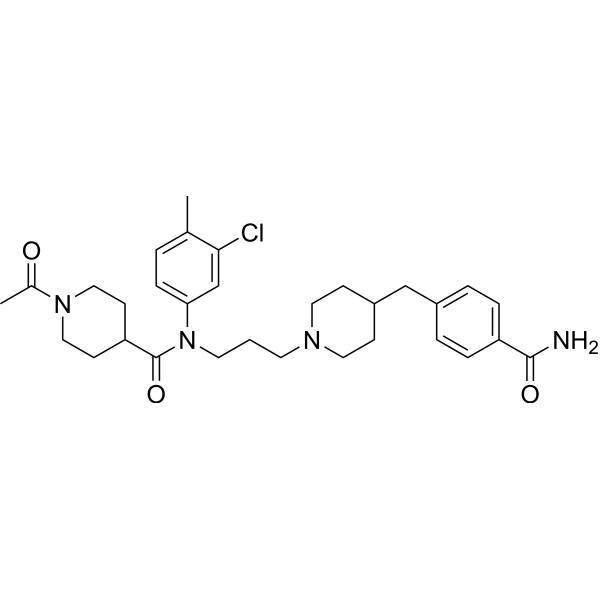
HY-19974
TAK-220CCR Antagonist -
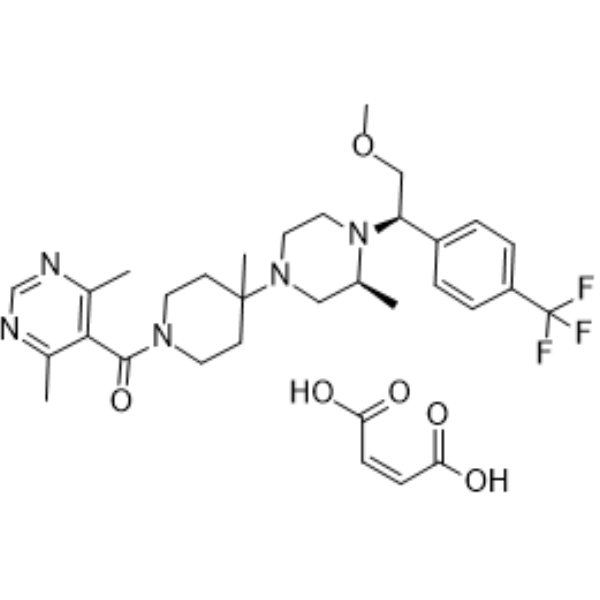
HY-17377
Vicriviroc maleateCCR Antagonist -
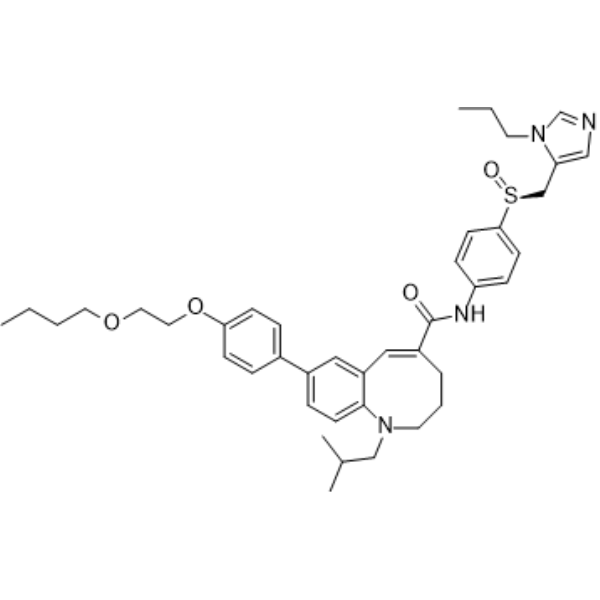
HY-14882
CenicrivirocCCR2/5 Antagonist -
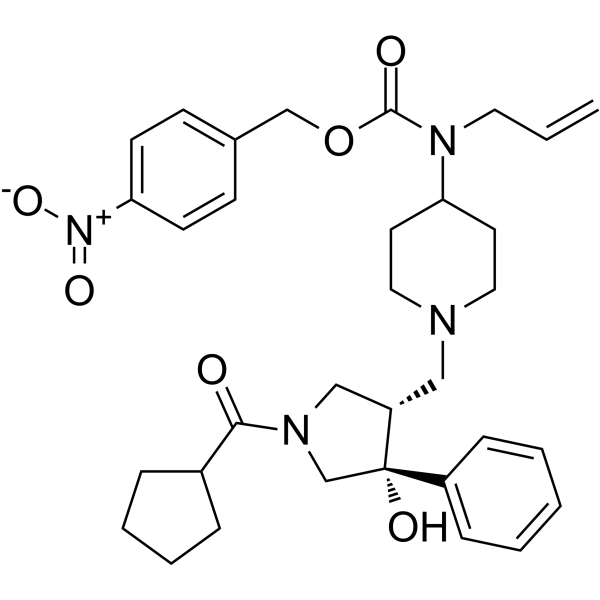
HY-111069
NifevirocCCR5 Inhibitor -
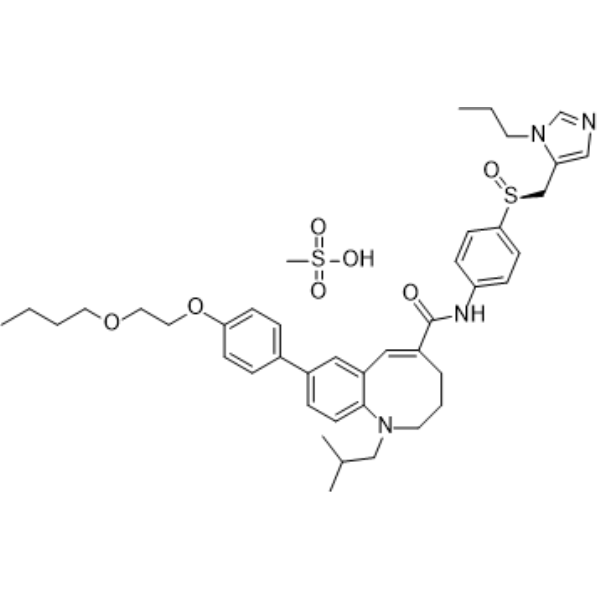
HY-14882A
Cenicriviroc MesylateCCR2/5 Antagonist -
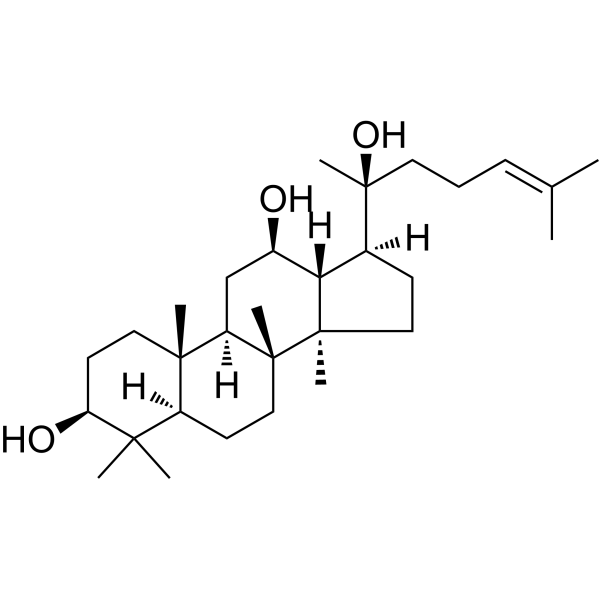
HY-N0797
(20S)-ProtopanaxadiolAkt activity inhibitor -
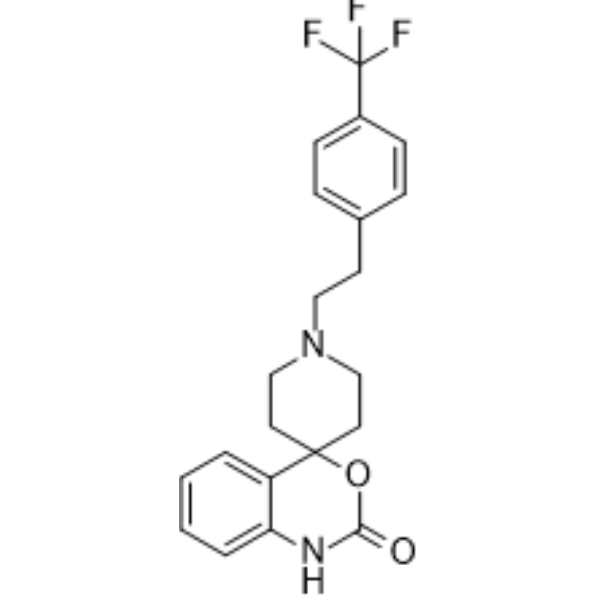
HY-18611A
AbaucinCCR Antagonist -
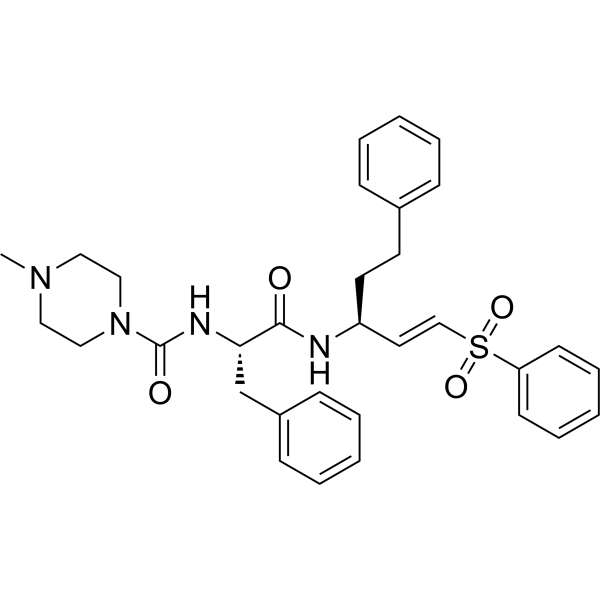
HY-119293
K777Cysteine Protease Inhibitor -
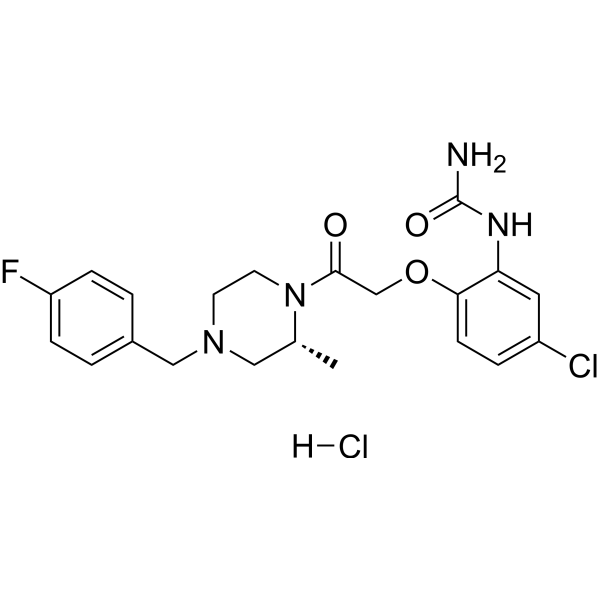
HY-12080A
BX471 hydrochlorideCCR Antagonist -
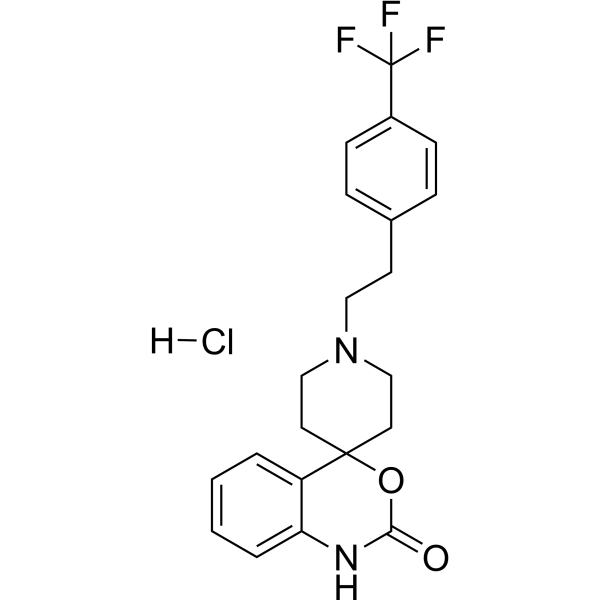
HY-18611
Abaucin hydrochlorideCCR2antagonist -
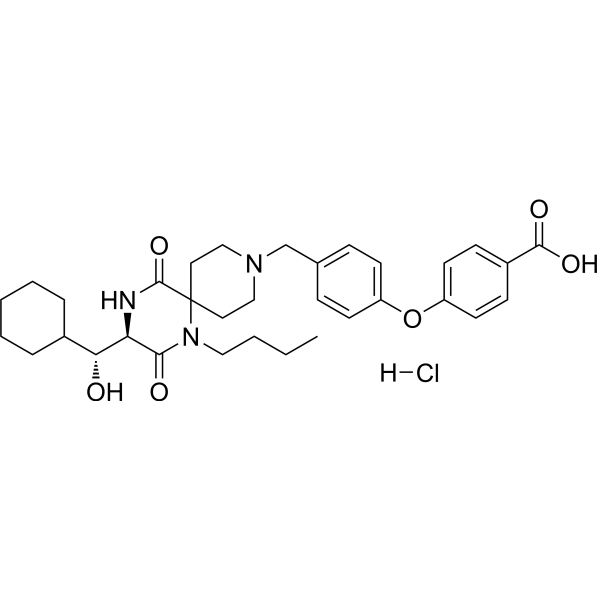
HY-17450A
Aplaviroc hydrochlorideCCR5 Antagonist -
HY-133073
CCR7 Ligand 1CCR7 Antagonist
Publications Citing Use of MedChemExpress (MCE) AZD-5672
More

Biological Activity
Description
|
CCR5 0.32 nM (IC50) |
hERG 7.3 μM (IC50) |
hP-gp 32 μM (IC50) |
Cellular Effect
|
Cell Line

|
Type | Value | Description | References |
|---|---|---|---|---|
| CHO | IC50 |
0.32 nM
Compound: 1
|
Displacement of [125I]MIP-1alpha from human recombinant CCR5 expressed in CHO cells
Displacement of [125I]MIP-1alpha from human recombinant CCR5 expressed in CHO cells
|
[PMID: 22266038] |
| CHO | IC50 |
0.32 nM
Compound: 9g
|
Displacement of [125I]MIP-1-alpha to human recombinant CCR5 expressed in CHO cells
Displacement of [125I]MIP-1-alpha to human recombinant CCR5 expressed in CHO cells
|
[PMID: 16631366] |
| HEK293 | IC50 |
7.3 μM
Compound: 1
|
Displacement of 3,7-Bis[2-(4-nitro[3,5-3H]phenyl)ethyl]-3,7-diazabicyclo[3.3.1]nonane from human ERG expressed in HEK cells after 3 hrs
Displacement of 3,7-Bis[2-(4-nitro[3,5-3H]phenyl)ethyl]-3,7-diazabicyclo[3.3.1]nonane from human ERG expressed in HEK cells after 3 hrs
|
[PMID: 22266038] |
| T-cell | IC50 |
0.12 nM
Compound: 9g
|
Inhibition of MIP-1-beta-stimulated calcium transient in human AlloT cells
Inhibition of MIP-1-beta-stimulated calcium transient in human AlloT cells
|
[PMID: 16631366] |
| T-cell | IC50 |
2.8 nM
Compound: 9g
|
Inhibition of MIP-1-beta-stimulated chemotaxis of human AlloT cells
Inhibition of MIP-1-beta-stimulated chemotaxis of human AlloT cells
|
[PMID: 16631366] |
In Vitro
AZD-5672 (0, 0.1, 0.3, 1, 3, 10, 30, and 100 μM) inhibits P-gp-mediated digoxin transport in a concentration-dependent manner (mean apparent IC50: 32 μM) in Caco-2 cells[2].
MedChemExpress (MCE) has not independently confirmed the accuracy of these methods. They are for reference only.
In Vivo
| Species | CIa (mL/min/kg) |
Vssa (L/kg) | t1/2a (h) | Fb (%) |
| Rat | 28 | 5.3 | 2.6 | 38 |
| Dog | 18 | 5.7 | 3.9 | 86 |
a AZD-5672 dosed 1-2 mg/kg i.v.
b AZD-5672 dosed 2-5 mg/kg p.o.
MedChemExpress (MCE) has not independently confirmed the accuracy of these methods. They are for reference only.
Clinical Trial
| NCT Number | Sponsor | Condition | Start Date |
Phase
|
|---|---|---|---|---|
| NCT01329991 | 2011-05 | PHASE1 |


Chemical Information
-
CAS No. 780750-65-4
-
Appearance Solid
-
Molecular Weight 632.78
-
Formula C32H38F2N2O5S2
-
Color White to light brown
-
SMILES
O=C(N(C1CCN(CC[C@@H](C2=CC(F)=CC(F)=C2)C3=CC=C(S(=O)(C)=O)C=C3)CC1)CC)CC4=CC=C(S(=O)(C)=O)C=C4
-
Shipping
Room temperature in continental US; may vary elsewhere.
-
Storage
Powder -20°C 3 years 4°C 2 years In solvent -80°C 6 months -20°C 1 month


Publications (1)
-
Journal Impact Factor
-
Most Recent


Solvent & Solubility
In Vitro:
DMSO : 33.33 mg/mL (52.67 mM; ultrasonic and warming and heat to 60°C; Hygroscopic DMSO has a significant impact on the solubility of product, please use newly opened DMSO)
Please refer to the solubility information to select the appropriate solvent. Once prepared, please aliquot and store the solution to prevent product inactivation from repeated freeze-thaw cycles.
Storage method and period of stock solution: -80°C, 6 months; -20°C, 1 month. When stored at -80°C, please use it within 6 months. When stored at -20°C, please use it within 1 month.
Please refer to the solubility information to select the appropriate solvent. Once prepared, please aliquot and store the solution to prevent product inactivation from repeated freeze-thaw cycles.
Storage method and period of stock solution: -80°C, 6 months; -20°C, 1 month. When stored at -80°C, please use it within 6 months. When stored at -20°C, please use it within 1 month.
Concentration (start) × Volume (start) = Concentration (final) × Volume (final)


Purity & Documentation
-
Data Sheet (278 KB)
-
SDS (251 KB)
- English - EN (251 KB)
- Français - FR (251 KB)
- Deutsch - DE (251 KB)
- Norwegian - NO (251 KB)
- Español - ES (251 KB)
- Swedish - SV (251 KB)
- Italian - IT (251 KB)
- Korean - KR (251 KB)
- Portuguese - PT (251 KB)
-
Handling Instructions (2659 KB)
References
[1]. Cumming JG, et al. Balancing hERG affinity and absorption in the discovery of AZD5672, an orally active CCR5 antagonist for the treatment of rheumatoid arthritis. Bioorg Med Chem Lett. 2012 Feb 15;22(4):1655-9. [Content Brief]
[2]. Elsby R, et al. The utility of in vitro data in making accurate predictions of human P-glycoprotein-mediated drug-drug interactions: a case study for AZD5672. Drug Metab Dispos. 2011 Feb;39(2):275-82. [Content Brief]
[3]. Gerlag DM, et al. Preclinical and clinical investigation of a CCR5 antagonist, AZD5672, in patients with rheumatoid arthritis receiving methotrexate. Arthritis Rheum. 2010 Nov;62(11):3154-60. [Content Brief]


Complete Stock Solution Preparation Table
Please refer to the solubility information to select the appropriate solvent. Once prepared, please aliquot and store the solution to prevent product inactivation from repeated freeze-thaw cycles.
Storage method and period of stock solution: -80°C, 6 months; -20°C, 1 month. When stored at -80°C, please use it within 6 months. When stored at -20°C, please use it within 1 month.
| Optional Solvent | Concentration Solvent Mass | 1 mg | 5 mg | 10 mg | 25 mg |
|---|---|---|---|---|---|
| DMSO | 1 mM | 1.5803 mL | 7.9016 mL | 15.8033 mL | 39.5082 mL |
| 5 mM | 0.3161 mL | 1.5803 mL | 3.1607 mL | 7.9016 mL | |
| 10 mM | 0.1580 mL | 0.7902 mL | 1.5803 mL | 3.9508 mL | |
| 15 mM | 0.1054 mL | 0.5268 mL | 1.0536 mL | 2.6339 mL | |
| 20 mM | 0.0790 mL | 0.3951 mL | 0.7902 mL | 1.9754 mL | |
| 25 mM | 0.0632 mL | 0.3161 mL | 0.6321 mL | 1.5803 mL | |
| 30 mM | 0.0527 mL | 0.2634 mL | 0.5268 mL | 1.3169 mL | |
| 40 mM | 0.0395 mL | 0.1975 mL | 0.3951 mL | 0.9877 mL | |
| 50 mM | 0.0316 mL | 0.1580 mL | 0.3161 mL | 0.7902 mL |


AZD-5672 Related Classifications
HY-119101 Related Classifications
 Powered by Bioz