



AZD5582 dihydrochloride
Based on 16 publication(s) in Google Scholar
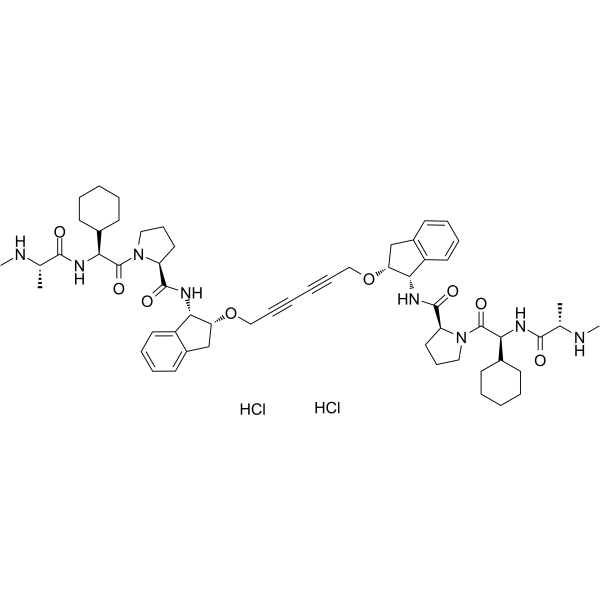
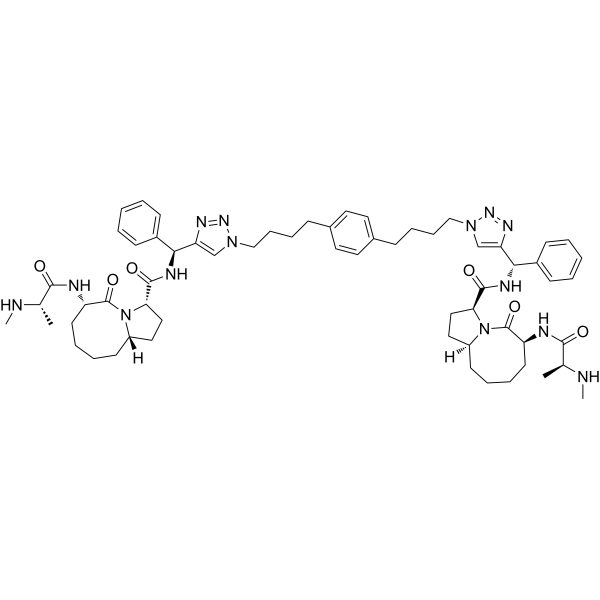
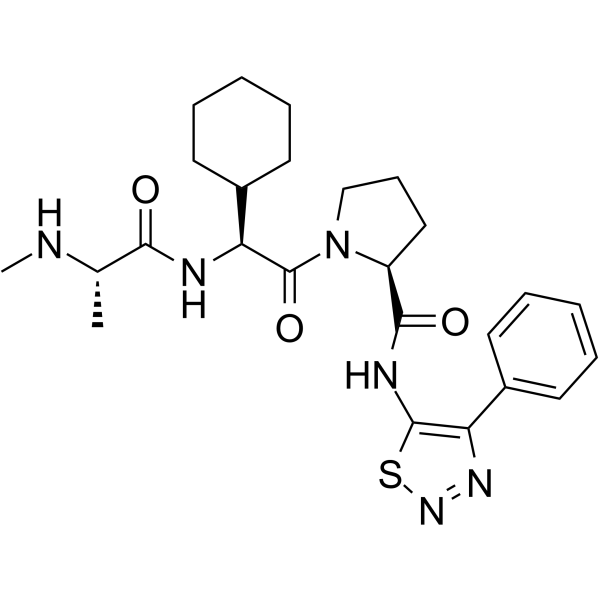
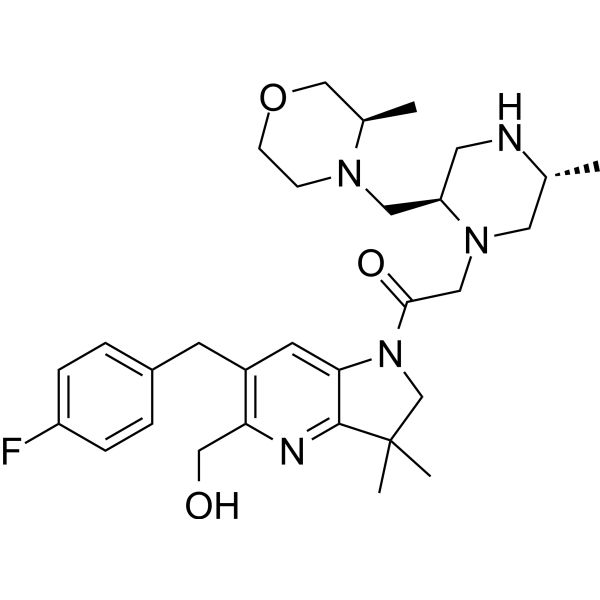
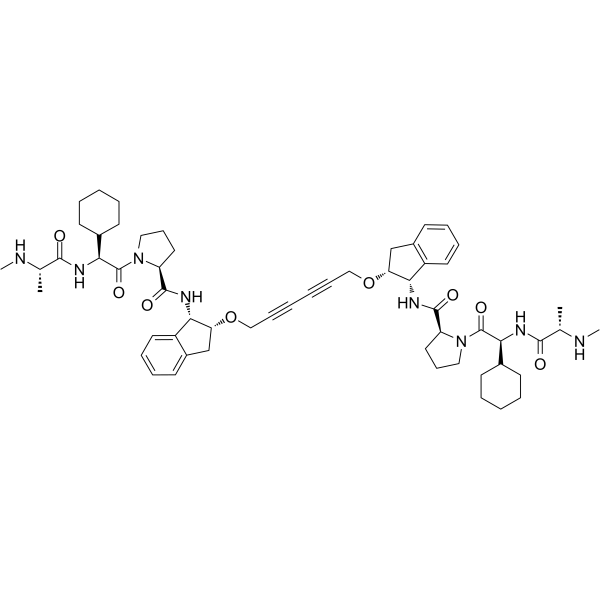
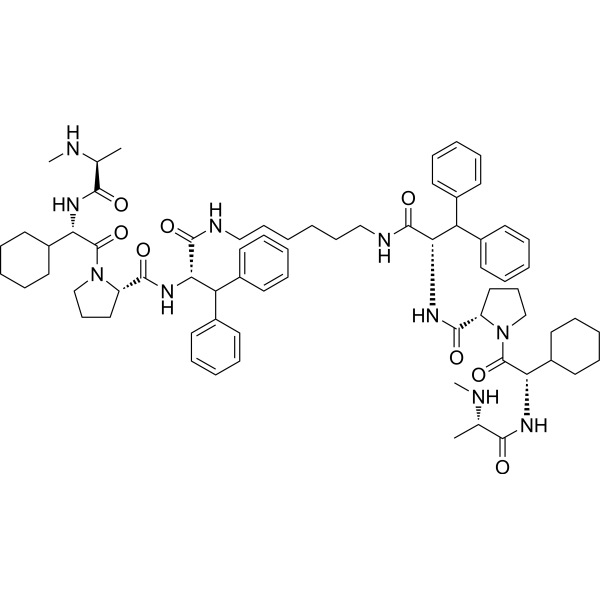
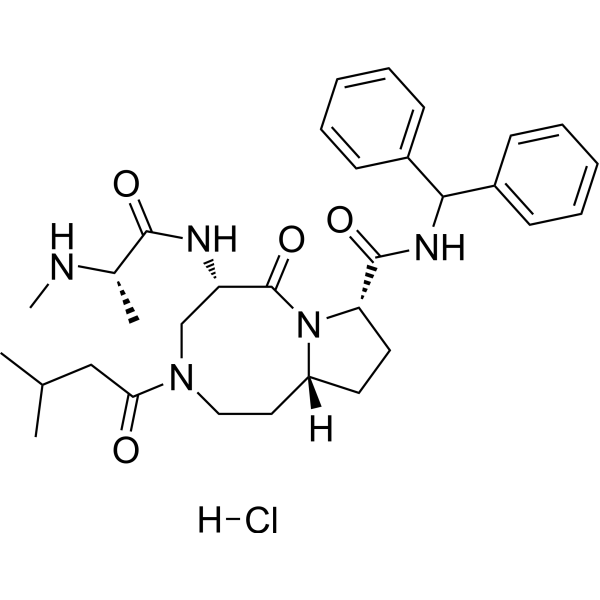
AZD5582 dihydrochloride is an antagonist of the inhibitor of apoptosis proteins (IAPs), which binds to the BIR3 domains cIAP1, cIAP2, and XIAP with IC50s of 15, 21, and 15 nM, respectively. AZD5582 induces apoptosis.
For research use only. We do not sell to patients.
- Purity : 99.76%
- CAS No.: 1883545-51-4
- Formula: C58H80Cl2N8O8
- Molecular Weight:1088.21
-
Storage:
4°C, sealed storage, away from moisture and light
* In solvent : -80°C, 6 months; -20°C, 1 month (sealed storage, away from moisture and light)

To place orders, for customer services and technical support, please contact: MedChemExpress USA
Tel: 609-228-6898 E-mail: [email protected] [email protected]


-
 Biological Activity
-
Chemical Information
-
Solvent & Solubility
- Purity & Documentation
- References
-
 Help & FAQs


Publications Citing Use of MedChemExpress (MCE) AZD5582 dihydrochloride
More- Signal Transduct Target Ther. 2025 Jun 21;10(1):196. [Abstract]
- Antioxidants (Basel). 2024 Mar 12;13(3):340. [Abstract]
- Cancer Immunol Res. 2023 Apr 3;11(4):450-465. [Abstract]
- Biomater Adv. 2023 Nov:154:213639. [Abstract]
- Biomater Adv. 2022 Feb:133:112615. [Abstract]
- J Mol Med (Berl). 2022 Apr;100(4):629-643. [Abstract]
- Biochim Biophys Acta Mol Basis Dis. 2019 Oct 1;1865(10):2618-2632. [Abstract]
- Cell Signal. 2020 Aug:72:109654. [Abstract]
- Acta Histochem. 2025 May 24;127(3):152270. [Abstract]
- bioRxiv. 2026 Feb 6.
- Res Sq. 2026 Jan 13.
- Icahn School of Medicine at Mount Sinai. 2025.
- University of Cologne. 2024.
- bioRxiv. 2024 Sep 3:2024.08.30.610517. [Abstract]
- bioRxiv. 2023 Jul 28:2023.07.28.551016. [Abstract]
- Research Square Preprint. 2021 May.
 Customer Validation & Images

-
WB
-
Cell Proliferation/Viability Assay
-
Cell Imaging/Staining
-
Flow Cytometry
-
WB


Biological Activity
Description
IC50 & Target
[1]|
cIAP1 15 nM (IC50) |
cIAP2 21 nM (IC50) |
XIAP 15 nM (IC50) |
In Vitro
AZD5582 (20 nM; 48 hours) inhibits cell viability by cooperation with IFNγ or viral double-stranded RNA (dsRNA) in H1975 NSCLC cells[2]. AZD5582 (20 nM; 17 or 25 hours) downregulates cIAP-1, activates RIPK1 (upstream regulator of caspase-8), and triggers the activation of extrinsic (caspase-8) and intrinsic (caspase-9) apoptosis pathways, causing the cleavage of caspase-3 and caspase-7[2]. AZD5582 (20 nM; 48 hours) involves in apoptosis due to induction of cell death and active caspase-3/8 activities by AZD5582 and IFNγ co-treatment in HCC827 NSCLC cells[2].
MedChemExpress (MCE) has not independently confirmed the accuracy of these methods. They are for reference only.
-
Cell Line:H1975 NSCLC cell line
-
Concentration:20 nM
-
Incubation Time:48 hours
-
Result:Cooperated with IFNγ or viral double-stranded RNA (dsRNA) to inhibit cell viability even cell death.
-
Cell Line:HCC827 NSCLC cell line
-
Concentration:20 nM
-
Incubation Time:48 hours
-
Result:Had an inhibitory effect on cell viability by cooperating with IFNγ.
-
Cell Line:H1975 NSCLC cell line
-
Concentration:20 nM
-
Incubation Time:17 or 25 hours
-
Result:Down-regulated cIAP-1, activated RIPK1 (upstream regulator of caspase-8), triggered the cleavage (activation) of caspase-3,7,8 and 9.
In Vivo
MedChemExpress (MCE) has not independently confirmed the accuracy of these methods. They are for reference only.
-
Animal Model:MDA-MB-231 xenograft-bearing mice[1]
-
Dosage:0.1 mg/kg, 0.5 mg/kg, 3.0 mg/kg
-
Administration:Intravenous injection; once a week; 2 weeks
-
Result:Resulted in cIAP1 degradation and caspase-3 cleavage within tumor cells and causes substantial tumor regressions following two weekly doses of 3.0 mg/kg


Chemical Information
-
CAS No. 1883545-51-4
-
Appearance Solid
-
Molecular Weight 1088.21
-
Formula C58H80Cl2N8O8
-
Color Off-white to light yellow
-
SMILES
CN[C@@H](C)C(N[C@H](C(N1[C@H](C(N[C@H]2C3=CC=CC=C3C[C@H]2OCC#CC#CCO[C@H]4[C@@H](NC([C@@H]5CCCN5C([C@@H](NC([C@H](C)NC)=O)C6CCCCC6)=O)=O)C(C=CC=C7)=C7C4)=O)CCC1)=O)C8CCCCC8)=O.Cl.Cl
-
Shipping
Room temperature in continental US; may vary elsewhere.
-
Storage
4°C, sealed storage, away from moisture and light
* In solvent : -80°C, 6 months; -20°C, 1 month (sealed storage, away from moisture and light)


Publications (16)
-
Journal Impact Factor
-
Most Recent
-
Signal Transduct Target Ther
TSC22 domain family member 3 links natural killer cells to CD8+ T cell-mediated drug hypersensitivity. [Abstract]2025 Jun 21;10(1):196. PMID: 40544157 -
Antioxidants (Basel)
Potential Phytotherapy of DSS-Induced Colitis: Ameliorating Reactive Oxygen Species-Mediated Necroptosis and Gut Dysbiosis with a New Crataegus pinnatifida Bunge Variety-Daehong. [Abstract]2024 Mar 12;13(3):340. PMID: 38539873 -
Cancer Immunol Res
Inhibitor of apoptosis proteins (IAP) antagonist induces T-cell proliferation after cross-presentation by dendritic cells. [Abstract]2023 Apr 3;11(4):450-465. PMID: 36753604
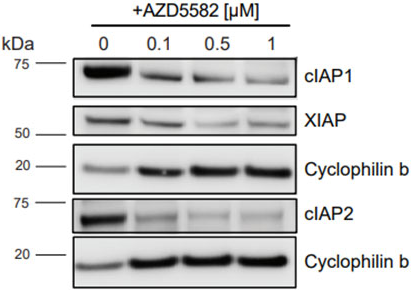
AZD5582 dihydrochloride purchased from MedChemExpress. Usage Cited in: Cancer Immunol Res. 2023 Apr 3;11(4):450-465. [Abstract]
AZD5582 (0.1-1 μM; 24 h) decreases the expression of cIAP1, cIAP2 and XIAP in GM-CSF DCs.
-
Biomater Adv
Optimized lipopolymers with curcumin to enhance AZD5582 and GDC0152 activity and downregulate inhibitors of apoptosis proteins in glioblastoma multiforme. [Abstract]2023 Nov:154:213639. PMID: 37793310 -
Biomater Adv
Enhanced activity of AZD5582 and SM-164 in rabies virus glycoprotein-lactoferrin-liposomes to downregulate inhibitors of apoptosis proteins in glioblastoma. [Abstract]2022 Feb:133:112615. PMID: 35525732 -
J Mol Med (Berl)
EV-T synergizes with AZD5582 to overcome TRAIL resistance through concomitant suppression of cFLIP, MCL-1, and IAPs in hepatocarcinoma. [Abstract]2022 Apr;100(4):629-643. PMID: 35247069
AZD5582 dihydrochloride purchased from MedChemExpress. Usage Cited in: J Mol Med (Berl). 2022 Apr;100(4):629-643. [Abstract]
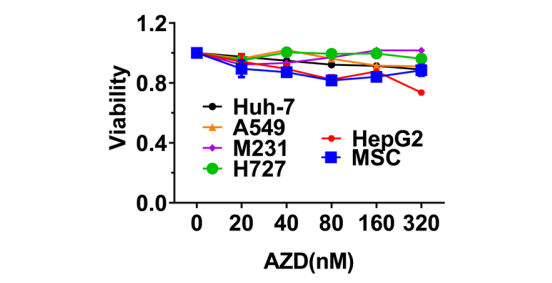
Evaluation of cell growth inhibition by AZD5582 on a panel of 6 cell lines including 5 cancer lines (Huh7, M231, H727, HepG2, and A549) and 1 normal line (MSC). Cells were treated by AZD5582 at indicated series of concentration for 24 h and then analyzed for cell viability and proliferation by CCK-8 kit.
AZD5582 dihydrochloride purchased from MedChemExpress. Usage Cited in: J Mol Med (Berl). 2022 Apr;100(4):629-643. [Abstract]
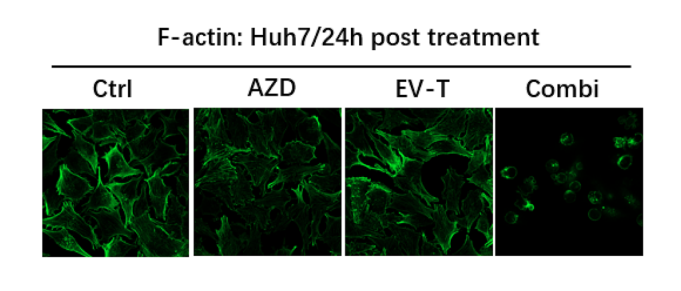
AZD5582 (20 nM). Detection of FITC-phalloidin (green) labeled filamentous actin (F-actin) cytoskeleton in Huh7 cells.
AZD5582 dihydrochloride purchased from MedChemExpress. Usage Cited in: J Mol Med (Berl). 2022 Apr;100(4):629-643. [Abstract]
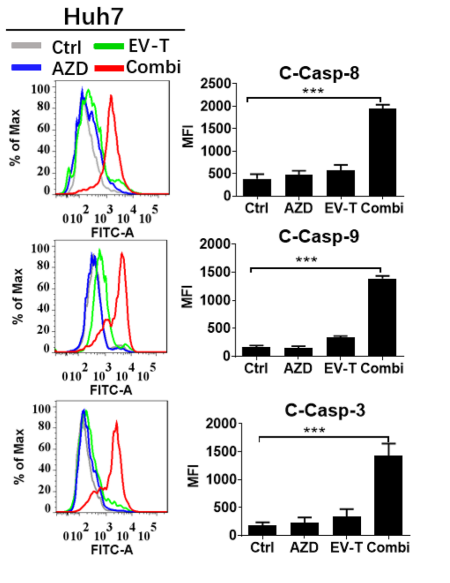
AZD5582 (20 nM). The expression levels of activated caspase-8 (C-Casp-8), -9 (C-Casp-9), and -3 (C-Casp-3) in Huh7 cells were compared using flow cytometry with a specific FITC-labeled inhibitor.
AZD5582 dihydrochloride purchased from MedChemExpress. Usage Cited in: J Mol Med (Berl). 2022 Apr;100(4):629-643. [Abstract]
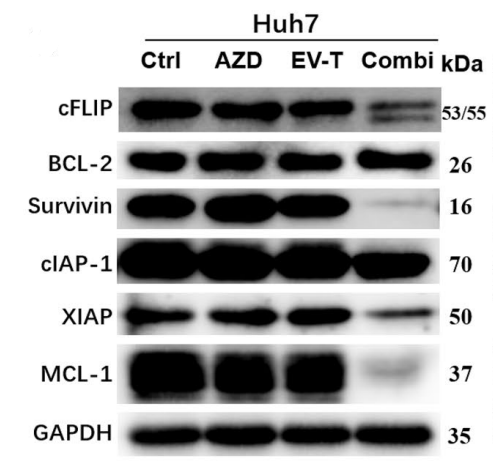
Cells were treated with vector (Ctrl), 2.0 ng/mL EV-T TRAIL (EV-T) and/or 20 nM AZD5582 (AZD)/(Combi) for 24 hours, respectively, followed by Western blotting analysis using antibodies against cFLIP, BC1-2, MCl-1, Survivin, cIAP-1, XIAP, and GAPDH. Huh7 cells were treated and analyzed.
AZD5582 dihydrochloride purchased from MedChemExpress. Usage Cited in: J Mol Med (Berl). 2022 Apr;100(4):629-643. [Abstract]
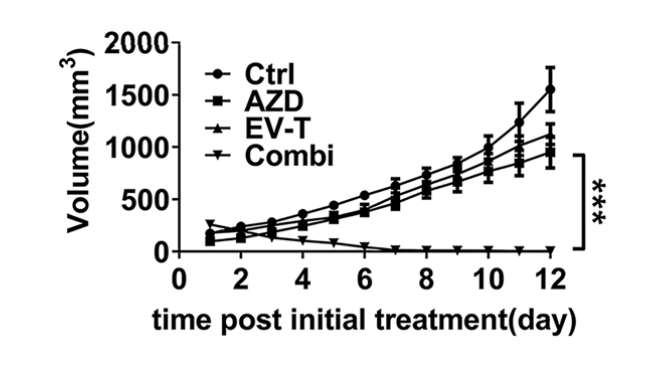
Tumor growth/volume curves. Each treatment comprises of intratumoral injection per animal of 100 μL saline vehicle (Ctrl), 8.0 ng EV-T TRAIL (EV-T), 2.0 μg AZD5582 (AZD), or the combination of AZD and EV-T (Combi), respectively, and total three injections were performed with a 48-h interval.
-
Biochim Biophys Acta Mol Basis Dis
Directed elimination of senescent cells attenuates development of osteoarthritis by inhibition of c-IAP and XIAP. [Abstract]2019 Oct 1;1865(10):2618-2632. PMID: 31251987 -
Cell Signal
2020 Aug:72:109654. PMID: 32334028 -
Acta Histochem
Exosomal delivery of AZD5582 to overcome TRAIL resistance as an optimal therapy against triple-negative breast cancer. [Abstract]2025 May 24;127(3):152270. PMID: 40413911 -
-
-
-
-
bioRxiv
Integrator complex subunit 12 knockout overcomes a transcriptional block to HIV latency reversal. [Abstract]2024 Sep 3:2024.08.30.610517. PMID: 39257755 -
bioRxiv
A CRISPR screen of HIV dependency factors reveals CCNT1 is non-essential in T cells but required for HIV-1 reactivation from latency. [Abstract]2023 Jul 28:2023.07.28.551016. PMID: 37546973 -


Solvent & Solubility
In Vitro:
DMSO : 50 mg/mL (45.95 mM; Need ultrasonic; Hygroscopic DMSO has a significant impact on the solubility of product, please use newly opened DMSO)
Please refer to the solubility information to select the appropriate solvent. Once prepared, please aliquot and store the solution to prevent product inactivation from repeated freeze-thaw cycles.
Storage method and period of stock solution: -80°C, 6 months; -20°C, 1 month (sealed storage, away from moisture and light). When stored at -80°C, please use it within 6 months. When stored at -20°C, please use it within 1 month.
Please refer to the solubility information to select the appropriate solvent. Once prepared, please aliquot and store the solution to prevent product inactivation from repeated freeze-thaw cycles.
Storage method and period of stock solution: -80°C, 6 months; -20°C, 1 month (sealed storage, away from moisture and light). When stored at -80°C, please use it within 6 months. When stored at -20°C, please use it within 1 month.
Concentration (start) × Volume (start) = Concentration (final) × Volume (final)
In Vivo:
Select the appropriate dissolution method based on your experimental animal and administration route.
- For the following dissolution methods, please ensure to first prepare a clear stock solution using an In Vitro approach and then sequentially add co-solvents:
- To ensure reliable experimental results, the clarified stock solution can be appropriately stored based on storage conditions. As for the working solution for In Vivo experiments, it is recommended to prepare freshly and use it on the same day.
- The percentages shown for the solvents indicate their volumetric ratio in the final prepared solution. If precipitation or phase separation occurs during preparation, heat and/or sonication can be used to aid dissolution.
Add each solvent one by one: 10% DMSO 40% PEG300 5% Tween-80 45% Saline
Solubility: ≥ 2.5 mg/mL (2.30 mM); Clear solution
This protocol yields a clear solution of ≥ 2.5 mg/mL (saturation unknown).
Taking 1 mL working solution as an example, add 100 μL DMSO stock solution (25.0 mg/mL) to 400 μL PEG300, and mix evenly; then add 50 μL Tween-80 and mix evenly; then add 450 μL Saline to adjust the volume to 1 mL.
Preparation of Saline: Dissolve 0.9 g sodium chloride in ddH₂O and dilute to 100 mL to obtain a clear Saline solution.
Add each solvent one by one: 10% DMSO 90% (20% SBE-β-CD in Saline)
Solubility: ≥ 2.5 mg/mL (2.30 mM); Clear solution
This protocol yields a clear solution of ≥ 2.5 mg/mL (saturation unknown).
Taking 1 mL working solution as an example, add 100 μL DMSO stock solution (25.0 mg/mL) to 900 μL 20% SBE-β-CD in Saline, and mix evenly.
Preparation of 20% SBE-β-CD in Saline (4°C, storage for one week): 2 g SBE-β-CD powder is dissolved in 10 mL Saline, completely dissolve until clear.
In Vivo Dissolution Calculator
Please enter the basic information of animal experiments:
-
-
-
-
Recommended: Prepare an additional quantity of animals to account for potential losses during experiments.
Please enter your animal formula composition:
-
%DMSO +
Recommended: Keep the proportion of DMSO in working solution below 2% if your animal is weak.
-
%+
-
+%Tween-80 + +
-
%Saline +
The co-solvents required include: DMSO, . All of co-solvents are available by MedChemExpress (MCE). , Tween 80. All of co-solvents are available by MedChemExpress (MCE).
Working solution concentration: 0.22 mg/mL
Method for preparing stock solution: mg drug dissolved in μL DMSO. Stock solution concentration: mg/mL. * In solvent : -80°C, 6 months; -20°C, 1 month (sealed storage, away from moisture and light)
1. Take μL DMSO stock solution;
2. Add μL .
μL , mix evenly;
3. Then add μL Tween 80, mix evenly;
4. Then add μL
Please ensure that the stock solution in the first step is dissolved to a clear state, and add co-solvents in sequence. You can use ultrasonic heating (ultrasonic cleaner, recommended frequency 20-40 kHz), vortexing, etc. to assist dissolution.


Purity & Documentation
-
Data Sheet (279 KB)
-
SDS (252 KB)
- English - EN (252 KB)
- Français - FR (252 KB)
- Deutsch - DE (252 KB)
- Norwegian - NO (252 KB)
- Español - ES (252 KB)
- Swedish - SV (252 KB)
- Italian - IT (252 KB)
- Korean - KR (252 KB)
- Portuguese - PT (252 KB)
-
Handling Instructions (2659 KB)
References
[1]. Hennessy EJ, et al. Discovery of a novel class of dimeric Smac mimetics as potent IAP antagonists resulting in a clinical candidate for the treatment of cancer (AZD5582). J Med Chem. 2013 Dec 27;56(24):9897-919. [Content Brief]
[2]. Qin Hao, et al. IF-γ and Smac mimetics synergize to induce apoptosis of lung cancer cells in a TNFα-independent manner,Cancer Cell Int. 2018; 18: 84. [Content Brief]


Complete Stock Solution Preparation Table
Please refer to the solubility information to select the appropriate solvent. Once prepared, please aliquot and store the solution to prevent product inactivation from repeated freeze-thaw cycles.
Storage method and period of stock solution: -80°C, 6 months; -20°C, 1 month (sealed storage, away from moisture and light). When stored at -80°C, please use it within 6 months. When stored at -20°C, please use it within 1 month.
| Optional Solvent | Concentration Solvent Mass | 1 mg | 5 mg | 10 mg | 25 mg |
|---|---|---|---|---|---|
| DMSO | 1 mM | 0.9189 mL | 4.5947 mL | 9.1894 mL | 22.9735 mL |
| 5 mM | 0.1838 mL | 0.9189 mL | 1.8379 mL | 4.5947 mL | |
| 10 mM | 0.0919 mL | 0.4595 mL | 0.9189 mL | 2.2974 mL | |
| 15 mM | 0.0613 mL | 0.3063 mL | 0.6126 mL | 1.5316 mL | |
| 20 mM | 0.0459 mL | 0.2297 mL | 0.4595 mL | 1.1487 mL | |
| 25 mM | 0.0368 mL | 0.1838 mL | 0.3676 mL | 0.9189 mL | |
| 30 mM | 0.0306 mL | 0.1532 mL | 0.3063 mL | 0.7658 mL | |
| 40 mM | 0.0230 mL | 0.1149 mL | 0.2297 mL | 0.5743 mL |


AZD5582 dihydrochloride Related Classifications
HY-110346 Related Classifications
 Powered by Bioz