



Xevinapant
Based on 13 publication(s) in Google Scholar
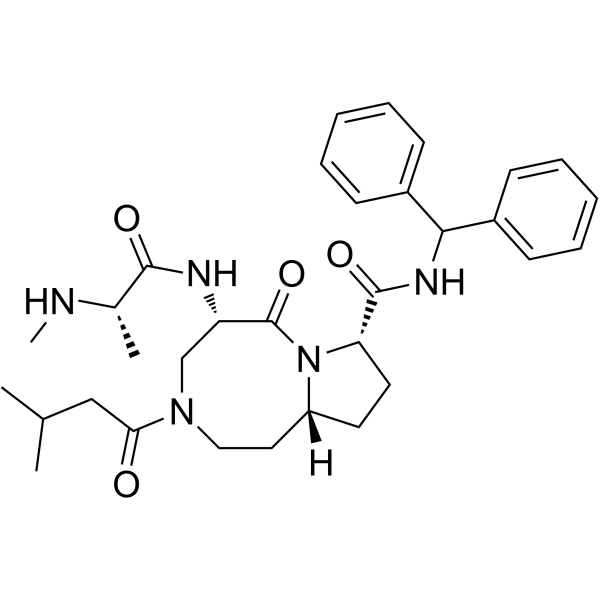
Xevinapant (AT-406) is a potent and orally bioavailable Smac mimetic and an antagonist of IAPs, and it binds to XIAP, cIAP1, and cIAP2 proteins with Ki of 66.4, 1.9, and 5.1 nM, respectively.
Nur für Forschungszwecke. Wir verkaufen nicht an Patienten.
- Reinheit : 99.91%
- CAS. Nr.: 1071992-99-8
- Formel: C32H43N5O4
- Molecular Weight:561.71
-
Speicherung:Powder -20°C, 3 years , 4°C, 2 years ; In solvent -80°C, 2 years , -20°C, 1 year

To place orders, for customer services and technical support, please contact: MedChemExpress USA
Tel: 609-228-6898 E-mail: [email protected] [email protected]


-
 Biologische Aktivität
-
Chemical Information
-
Lösungsmittel & Löslichkeit
- Reinheit & Dokumentation
- Verweise
-
 Help & FAQs


-
HY-16591
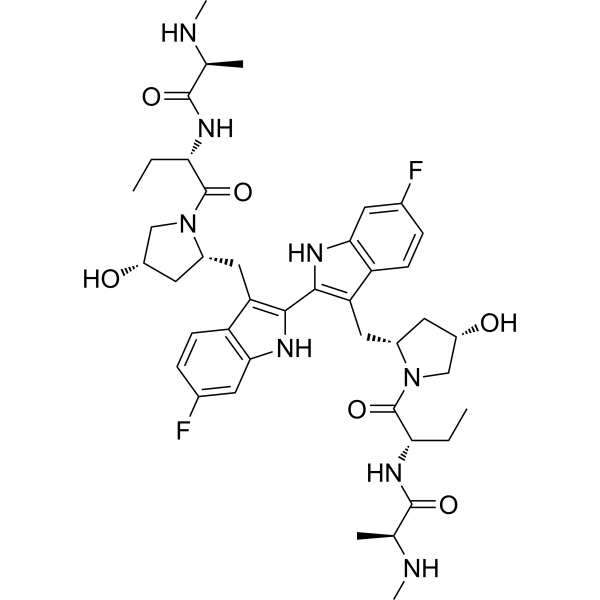
BirinapantXIAP/cIAP1 Antagonist -
HY-15518
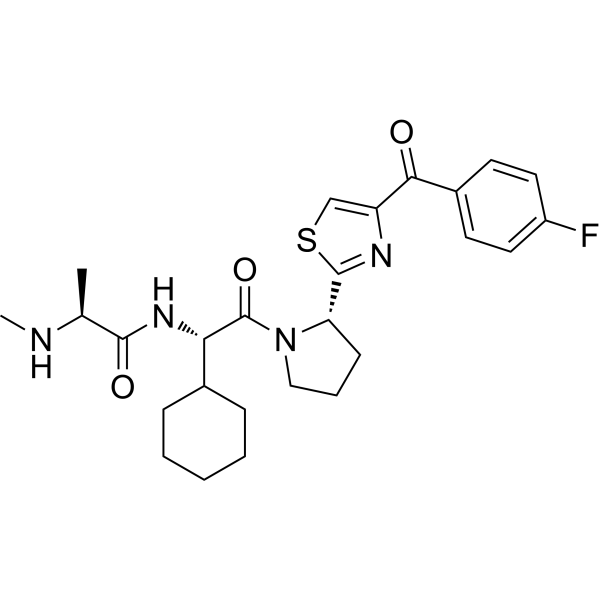
LCL161IAP Inhibitor -
HY-15989
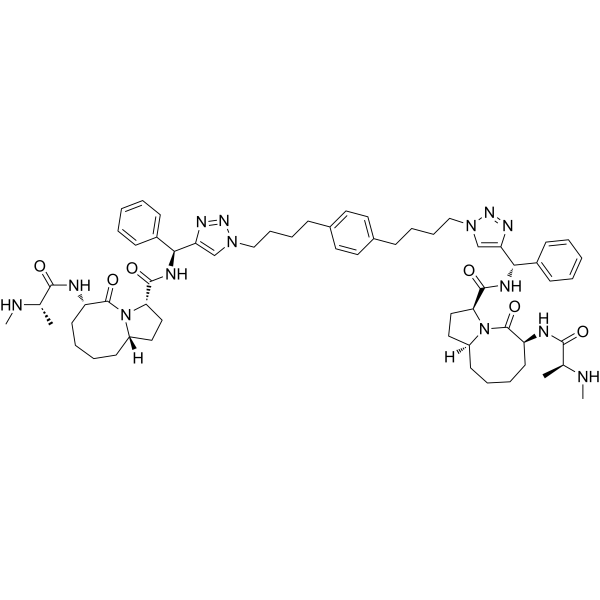
SM-164IAP Antagonist -
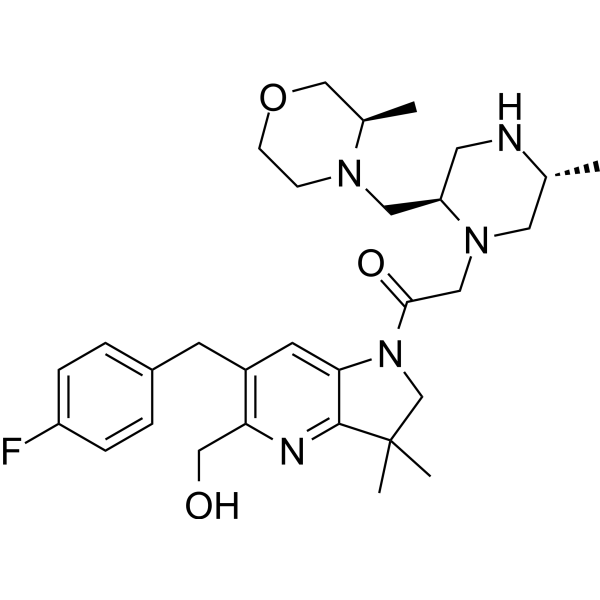
HY-109565
TolinapantIAP Antagonist -
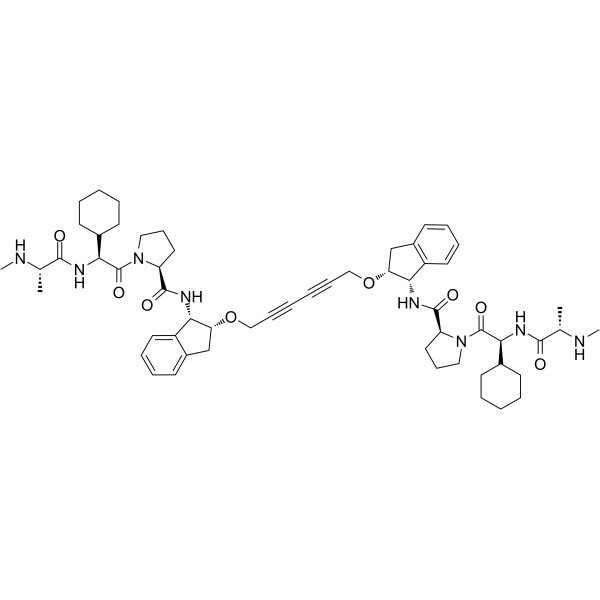
HY-12600
AZD5582 -
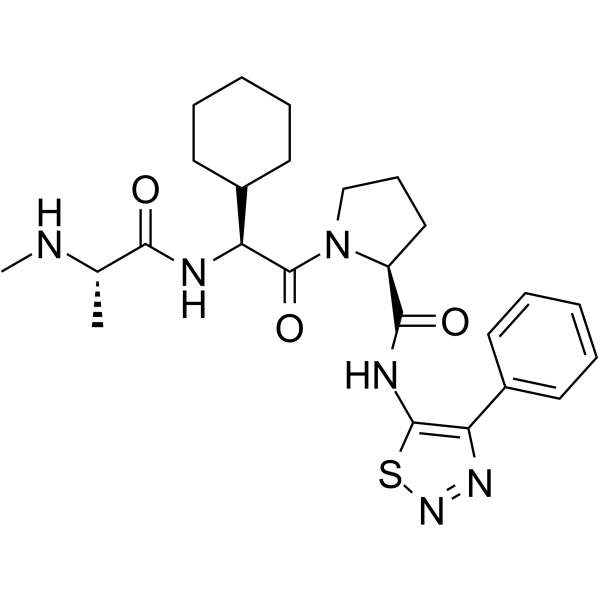
HY-13638
GDC-0152IAP Inhibitor -
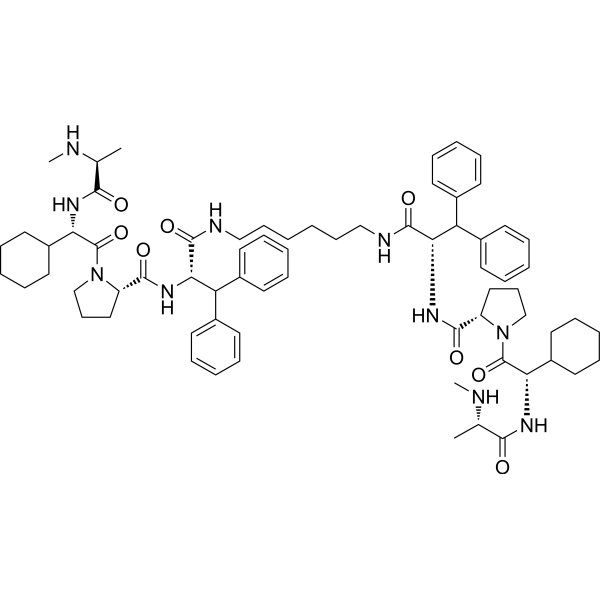
HY-16701
BV6cIAP1/XIAP Antagonist -
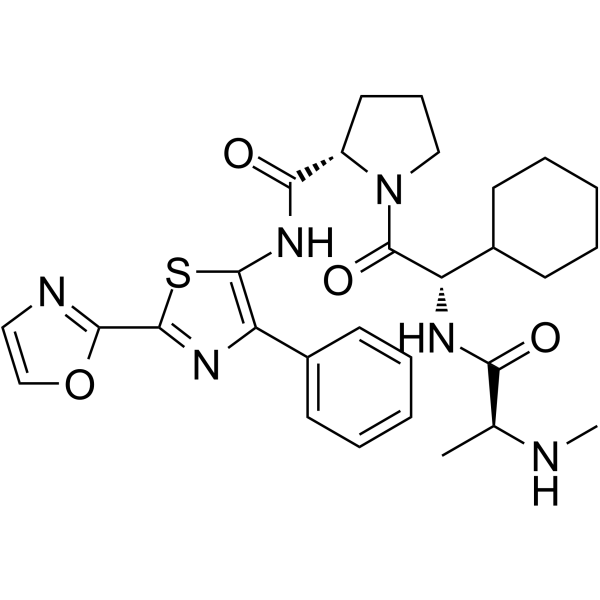
HY-15835
CUDC-427IAP Inhibitor -
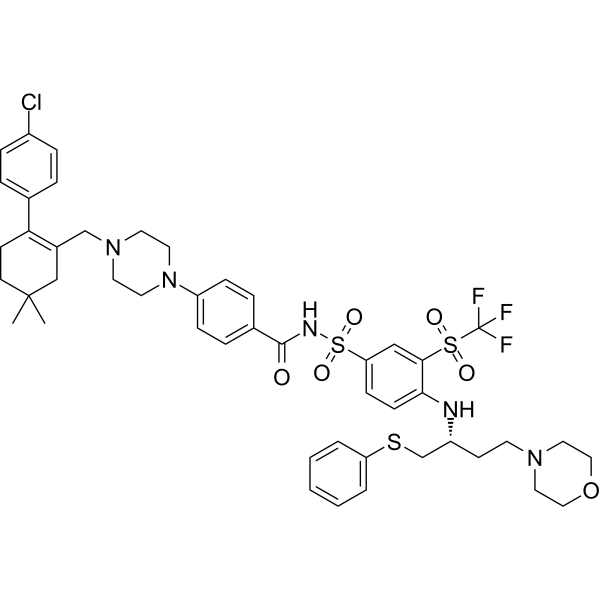
HY-10087
NavitoclaxBcl-2 Inhibitor -
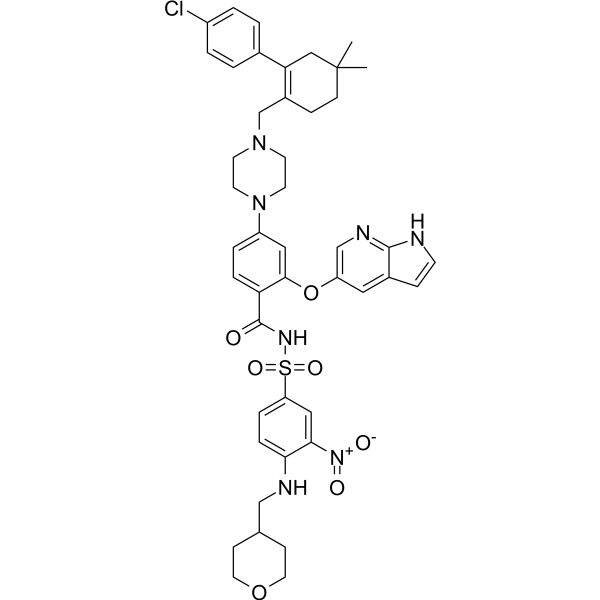
HY-15531
VenetoclaxBCL-2 Inhibitor -
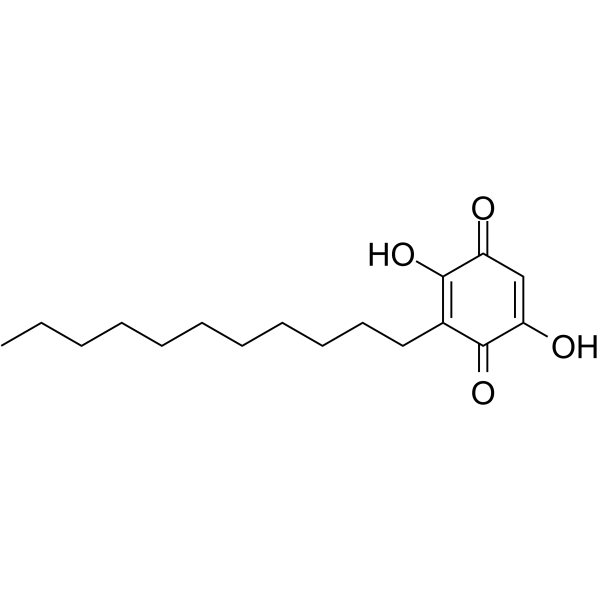
HY-17473
EmbelinXIAP Inhibitor -
HY-16658B
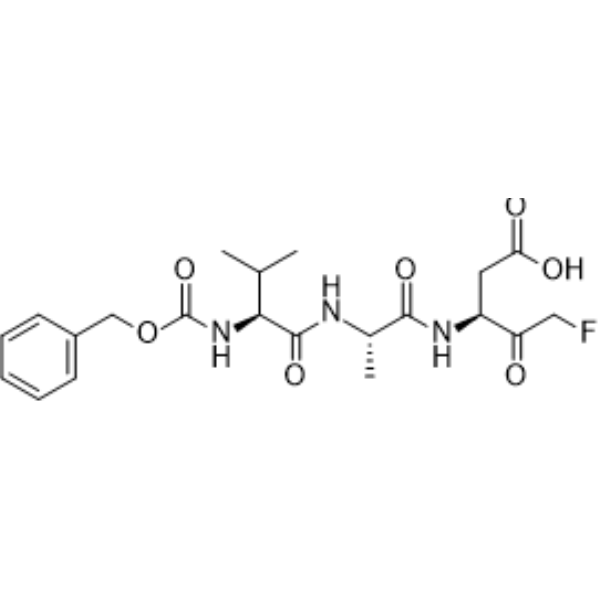
Z-VAD-FMKPan-Caspase Inhibitor
Publications Citing Use of MedChemExpress (MCE) Xevinapant
More- Nat Chem Biol. 2025 Aug;21(8):1238-1249. [Abstract]
- Biomark Res. 2025 Jan 9;13(1):8. [Abstract]
- J Exp Clin Cancer Res. 2025 Jul 4;44(1):191. [Abstract]
- J Med Chem. 2019 Oct 24;62(20):9188-9200. [Abstract]
- Cancer Gene Ther. 2026 May 2. [Abstract]
- Biochim Biophys Acta Mol Basis Dis. 2019 Oct 1;1865(10):2618-2632. [Abstract]
- Sci Rep. 2026 Feb 11;16(1):5882. [Abstract]
- Viruses. 2021 Dec 13;13(12):2490. [Abstract]
- Gene. 2023 Aug 5:876:147492. [Abstract]
- Biomed Pharmacother. 2026 Sep:202:119803.
- bioRxiv. 2026 Mar 6.
- bioRxiv. 2024 Nov 28:2024.11.25.625306. [Abstract]
- Research Square Preprint. 2024 Apr 15.
 Customer Validation & Images

-
Cell Proliferation/Viability Assay
-
Cell Proliferation/Viability Assay
-
Bio/Physico-chemical Assay
-
In Vivo Efficacy Study
-
Bio/Physico-chemical Assay


Biologische Aktivität
Beschreibung
IC50 & Target
[1]|
cIAP1 1.9 nM (Ki) |
cIAP2 5.1 nM (Ki) |
XIAP 66.4 nM (Ki) |
Cellular Effect
|
Cell Line

|
Type | Value | Description | References |
|---|---|---|---|---|
| EVSA-T | EC50 |
0.0021 μM
Compound: Debio-1143
|
Cytotoxicity against human sensitive EVSA-T cells assessed as inhibition of cell growth after 72 hrs by Alamar Blue assay
Cytotoxicity against human sensitive EVSA-T cells assessed as inhibition of cell growth after 72 hrs by Alamar Blue assay
|
[PMID: 26218264] |
| HCT-116 | EC50 |
>10 μM
Compound: Debio-1143
|
Cytotoxicity against human insensitive HCT116 cells assessed as inhibition of cell growth after 72 hrs by Alamar Blue assay
Cytotoxicity against human insensitive HCT116 cells assessed as inhibition of cell growth after 72 hrs by Alamar Blue assay
|
[PMID: 26218264] |
| HEK293 | EC50 |
0.034 μM
Compound: Debio-1143
|
Antagonist activity at full-length FLAG-tagged XIAP (unknown origin) transfected in HEK293 cells assessed as inhibition of interaction with caspase 9 after 2 hrs by immunoprecipitation assay
Antagonist activity at full-length FLAG-tagged XIAP (unknown origin) transfected in HEK293 cells assessed as inhibition of interaction with caspase 9 after 2 hrs by immunoprecipitation assay
|
[PMID: 26218264] |
| MDA-MB-231 | EC50 |
0.019 μM
Compound: Debio-1143
|
Cytotoxicity against human sensitive MDA-MB-231 cells assessed as inhibition of cell growth after 72 hrs by Alamar Blue assay
Cytotoxicity against human sensitive MDA-MB-231 cells assessed as inhibition of cell growth after 72 hrs by Alamar Blue assay
|
[PMID: 26218264] |
| MDA-MB-231 | IC50 |
144 nM
Compound: 2, SM-406
|
Growth inhibition of human MDA-MB-231 cells after 4 days by WST8 assay
Growth inhibition of human MDA-MB-231 cells after 4 days by WST8 assay
|
[PMID: 21443232] |
| SK-OV-3 | IC50 |
142 nM
Compound: 2, SM-406
|
Growth inhibition of human SKOV3 cells after 4 days by WST8 assay
Growth inhibition of human SKOV3 cells after 4 days by WST8 assay
|
[PMID: 21443232] |
In Vitro
Xevinapant mimic closely the AVPI peptide in both hydrogen bonding and hydrophobic interactions with XIAP, with additional hydrophobic contacts with W323 of XIAP. Xevinapant is more sensitive to these IAPs than Smac AVPI peptide with 50-100 fold binding affinities. Xevinapant (1 μM) completely restores the activity of caspase-9, which is suppressed by 500 nM XIAP BIR3 in a cell-free system. In MDA-MB-231 cell, Xevinapant induces rapid cellular cIAP1 degradation and also pulls down the cellular XIAP protein. Xevinapant effectively inhibits lots of human cancer cell lines and shows IC50 of 144 and 142 nM in MDA-MB-231 cell and SK-OV-3 ovarian cell, with low toxicity against normal-like human breast epithelial MCF-12F cells and primary human normal prostate epithelial cells. Xevinapant induces apoptosis in MDA-MB-231 cell by inducing activation of caspase-3 and cleavage of PARP[1]. Xevinapant displays single agent activity in ovarian cancer cell lines. The IC50 values of AT-406 in these ovarian cancer cells range from 0.05-0.5 μg/mL. Xevinapant exhibits anti-ovarian cancer efficacy both as a single agent and in combination with carboplatin. Xevinapant (30 μg/mL) induced degradation of XIAP in the drug sensitive ovarian cancer cell lines[2].
MedChemExpress (MCE) has not independently confirmed the accuracy of these methods. They are for reference only.
In Vivo
MedChemExpress (MCE) has not independently confirmed the accuracy of these methods. They are for reference only.
-
Animal Model:SCID mice bearing MDA-MB-231 xenograft tumors[1]
-
Dosage:30 and 100 mg/kg
-
Administration:p.o.; 5 days a week for 2 weeks
-
Result:Strongly inhibits tumor growth at 30 and 100 mg/kg and completely inhibits tumor growth during the treatment with 100 mg/kg.


Chemical Information
-
CAS. Nr. 1071992-99-8
-
Appearance Solid
-
Molecular Weight 561.71
-
Formel C32H43N5O4
-
Color White to off-white
-
SMILES
O=C([C@@H]1CC[C@@](CCN(C(CC(C)C)=O)C[C@@H]2NC([C@@H](NC)C)=O)([H])N1C2=O)NC(C3=CC=CC=C3)C4=CC=CC=C4
-
Synonyms
AT-406; Debio 1143; SM-406
-
Versand
Room temperature in continental US; may vary elsewhere.
-
Speicherung
Powder -20°C 3 years 4°C 2 years In solvent -80°C 2 years -20°C 1 year


Publications (13)
-
Journal Impact Factor
-
Most Recent
-
Nat Chem Biol
Persistent activation of TRPM4 triggers necrotic cell death characterized by sodium overload. [Abstract]2025 Aug;21(8):1238-1249. PMID: 39915626 -
Biomark Res
SMAC-armed oncolytic virotherapy enhances the anticancer activity of PD1 blockade by modulating PANoptosis. [Abstract]2025 Jan 9;13(1):8. PMID: 39789615 -
J Exp Clin Cancer Res
The reprogramming impact of SMAC-mimetic on glioblastoma stem cells and the immune tumor microenvironment evolution. [Abstract]2025 Jul 4;44(1):191. PMID: 40616096
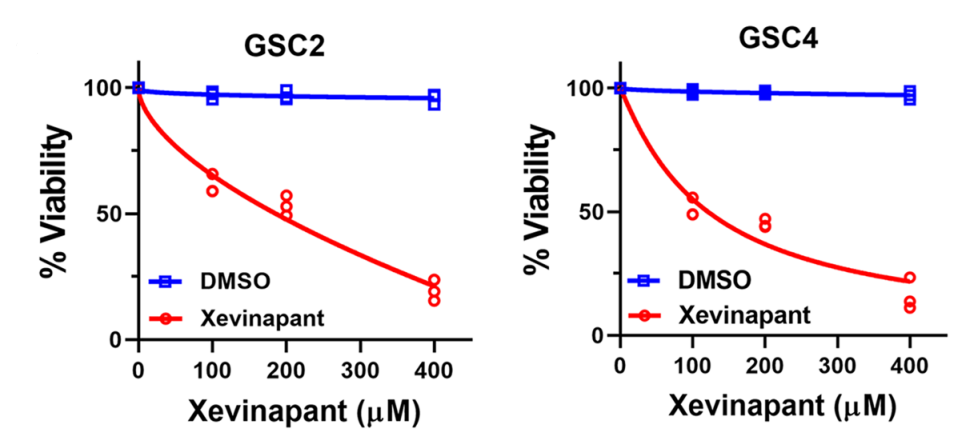
Xevinapant purchased from MedChemExpress. Usage Cited in: J Exp Clin Cancer Res. 2025 Jul 4;44(1):191. [Abstract]
Cell viabilities were measured following different doses of Xevinapant (0-400 μM) in human GSC2 and GSC4.
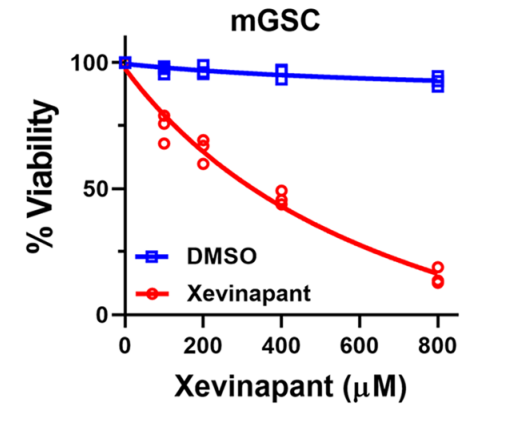
Xevinapant purchased from MedChemExpress. Usage Cited in: J Exp Clin Cancer Res. 2025 Jul 4;44(1):191. [Abstract]
Cell viabilities were measured following different doses of Xevinapant in mGSC.
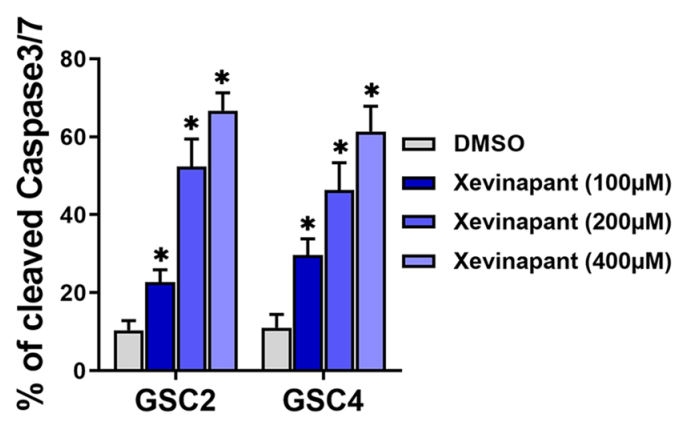
Xevinapant purchased from MedChemExpress. Usage Cited in: J Exp Clin Cancer Res. 2025 Jul 4;44(1):191. [Abstract]
Caspase 3/7 activity measurement following different dosing of Xevinapant (100-400 μM) in human GSCs.
Xevinapant purchased from MedChemExpress. Usage Cited in: J Exp Clin Cancer Res. 2025 Jul 4;44(1):191. [Abstract]
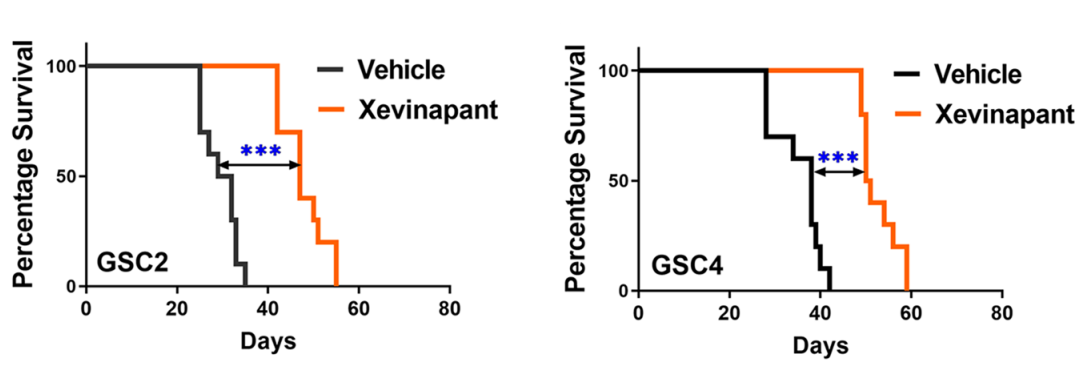
Kaplan-Meier survival curves of immunocompromised mice bearing GSC2 and GSC4 treated with Vehicle or Xevinapant (50 mg/kg/day, oral, 2 weeks).
Xevinapant purchased from MedChemExpress. Usage Cited in: J Exp Clin Cancer Res. 2025 Jul 4;44(1):191. [Abstract]
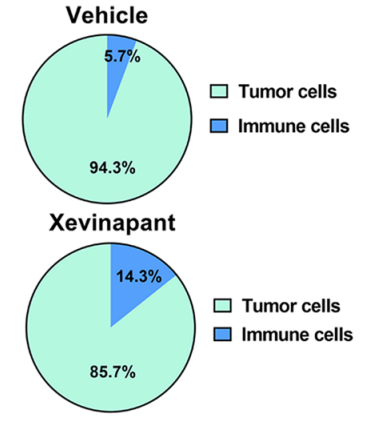
Tumor cell and immune cell ratio in vehicle and Xevinapant tumors respectively.
-
J Med Chem
Aryl-fluorosulfate-based Lysine Covalent Pan-Inhibitors of Apoptosis Protein (IAP) Antagonists with Cellular Efficacy. [Abstract]2019 Oct 24;62(20):9188-9200. PMID: 31550155 -
Cancer Gene Ther
b-AP15 enhances TRAIL-induced cell death in HNSCC via the induction of ROS/JNK/DR5 signalling. [Abstract]2026 May 2. PMID: 42069980 -
Biochim Biophys Acta Mol Basis Dis
Directed elimination of senescent cells attenuates development of osteoarthritis by inhibition of c-IAP and XIAP. [Abstract]2019 Oct 1;1865(10):2618-2632. PMID: 31251987 -
Sci Rep
Comparing and combining xevinapant with ATR and PARP inhibition for the radiosensitization of HPV-negative HNSCC cells. [Abstract]2026 Feb 11;16(1):5882. PMID: 41673235 -
Viruses
The A179L Gene of African Swine Fever Virus Suppresses Virus-Induced Apoptosis but Enhances Necroptosis. [Abstract]2021 Dec 13;13(12):2490. PMID: 34960759 -
Gene
2023 Aug 5:876:147492. PMID: 37209886 -
-
-
bioRxiv
2024 Nov 28:2024.11.25.625306. PMID: 39651304 -


Lösungsmittel & Löslichkeit
In Vitro:
DMSO : 100 mg/mL (178.03 mM; Need ultrasonic; Hygroscopic DMSO has a significant impact on the solubility of product, please use newly opened DMSO)
Please refer to the solubility information to select the appropriate solvent. Once prepared, please aliquot and store the solution to prevent product inactivation from repeated freeze-thaw cycles.
Storage method and period of stock solution: -80°C, 2 years; -20°C, 1 year. When stored at -80°C, please use it within 2 years. When stored at -20°C, please use it within 1 year.
Please refer to the solubility information to select the appropriate solvent. Once prepared, please aliquot and store the solution to prevent product inactivation from repeated freeze-thaw cycles.
Storage method and period of stock solution: -80°C, 2 years; -20°C, 1 year. When stored at -80°C, please use it within 2 years. When stored at -20°C, please use it within 1 year.
Konzentration (Stammlösung) × Volumen (Stammlösung) = Konzentration (Ziellösung) × Volumen (Ziellösung)
In Vivo:
Select the appropriate dissolution method based on your experimental animal and administration route.
- For the following dissolution methods, please ensure to first prepare a clear stock solution using an In Vitro approach and then sequentially add co-solvents:
- To ensure reliable experimental results, the clarified stock solution can be appropriately stored based on storage conditions. As for the working solution for In Vivo experiments, it is recommended to prepare freshly and use it on the same day.
- The percentages shown for the solvents indicate their volumetric ratio in the final prepared solution. If precipitation or phase separation occurs during preparation, heat and/or sonication can be used to aid dissolution.
Add each solvent one by one: 10% DMSO 40% PEG300 5% Tween-80 45% Saline
Solubility: ≥ 2.5 mg/mL (4.45 mM); Clear solution
This protocol yields a clear solution of ≥ 2.5 mg/mL (saturation unknown).
Taking 1 mL working solution as an example, add 100 μL DMSO stock solution (25.0 mg/mL) to 400 μL PEG300, and mix evenly; then add 50 μL Tween-80 and mix evenly; then add 450 μL Saline to adjust the volume to 1 mL.
Preparation of Saline: Dissolve 0.9 g sodium chloride in ddH₂O and dilute to 100 mL to obtain a clear Saline solution.
Add each solvent one by one: 10% DMSO 90% (20% SBE-β-CD in Saline)
Solubility: ≥ 2.5 mg/mL (4.45 mM); Clear solution
This protocol yields a clear solution of ≥ 2.5 mg/mL (saturation unknown).
Taking 1 mL working solution as an example, add 100 μL DMSO stock solution (25.0 mg/mL) to 900 μL 20% SBE-β-CD in Saline, and mix evenly.
Preparation of 20% SBE-β-CD in Saline (4°C, storage for one week): 2 g SBE-β-CD powder is dissolved in 10 mL Saline, completely dissolve until clear.
In Vivo Dissolution Calculator
Please enter the basic information of animal experiments:
-
-
-
-
Recommended: Prepare an additional quantity of animals to account for potential losses during experiments.
Please enter your animal formula composition:
-
%DMSO +
Recommended: Keep the proportion of DMSO in working solution below 2% if your animal is weak.
-
%+
-
+%Tween-80 + +
-
%Saline +
The co-solvents required include: DMSO, . All of co-solvents are available by MedChemExpress (MCE). , Tween 80. All of co-solvents are available by MedChemExpress (MCE).
Working solution concentration: 0.22 mg/mL
Method for preparing stock solution: mg drug dissolved in μL DMSO. Stock solution concentration: mg/mL.
1. Take μL DMSO stock solution;
2. Add μL .
μL , mix evenly;
3. Then add μL Tween 80, mix evenly;
4. Then add μL
Please ensure that the stock solution in the first step is dissolved to a clear state, and add co-solvents in sequence. You can use ultrasonic heating (ultrasonic cleaner, recommended frequency 20-40 kHz), vortexing, etc. to assist dissolution.


Reinheit & Dokumentation
-
Data Sheet (280 KB)
-
SDS (393 KB)
- English - EN (393 KB)
- Français - FR (393 KB)
- Deutsch - DE (393 KB)
- Norwegian - NO (393 KB)
- Español - ES (393 KB)
- Swedish - SV (393 KB)
- Italian - IT (393 KB)
- Korean - KR (393 KB)
- Portuguese - PT (393 KB)
-
Handling Instructions (2659 KB)
Verweise


Complete Stock Solution Preparation Table
Please refer to the solubility information to select the appropriate solvent. Once prepared, please aliquot and store the solution to prevent product inactivation from repeated freeze-thaw cycles.
Storage method and period of stock solution: -80°C, 2 years; -20°C, 1 year. When stored at -80°C, please use it within 2 years. When stored at -20°C, please use it within 1 year.
| Optional Solvent | Concentration Solvent Mass | 1 mg | 5 mg | 10 mg | 25 mg |
|---|---|---|---|---|---|
| DMSO | 1 mM | 1.7803 mL | 8.9014 mL | 17.8028 mL | 44.5070 mL |
| 5 mM | 0.3561 mL | 1.7803 mL | 3.5606 mL | 8.9014 mL | |
| 10 mM | 0.1780 mL | 0.8901 mL | 1.7803 mL | 4.4507 mL | |
| 15 mM | 0.1187 mL | 0.5934 mL | 1.1869 mL | 2.9671 mL | |
| 20 mM | 0.0890 mL | 0.4451 mL | 0.8901 mL | 2.2253 mL | |
| 25 mM | 0.0712 mL | 0.3561 mL | 0.7121 mL | 1.7803 mL | |
| 30 mM | 0.0593 mL | 0.2967 mL | 0.5934 mL | 1.4836 mL | |
| 40 mM | 0.0445 mL | 0.2225 mL | 0.4451 mL | 1.1127 mL | |
| 50 mM | 0.0356 mL | 0.1780 mL | 0.3561 mL | 0.8901 mL | |
| 60 mM | 0.0297 mL | 0.1484 mL | 0.2967 mL | 0.7418 mL | |
| 80 mM | 0.0223 mL | 0.1113 mL | 0.2225 mL | 0.5563 mL | |
| 100 mM | 0.0178 mL | 0.0890 mL | 0.1780 mL | 0.4451 mL |


Xevinapant Related Classifications
HY-15454 Related Classifications
 Powered by Bioz