



Tolinapant
Based on 5 publication(s) in Google Scholar
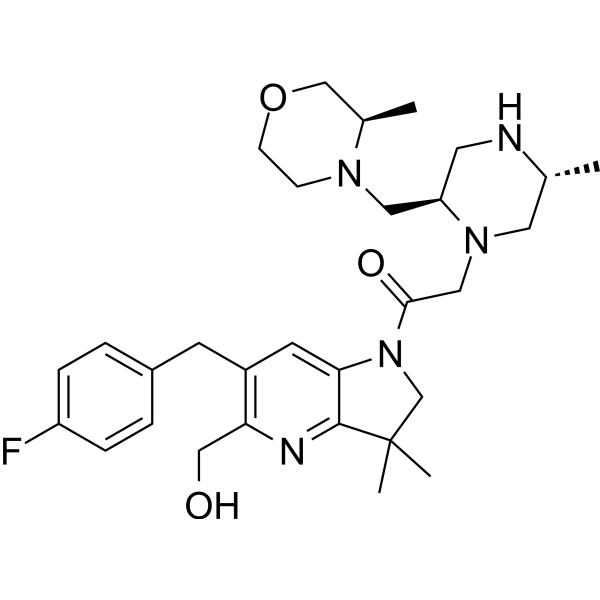
Tolinapant (ASTX660) is an orally active cIAP1/2 and XIAP antagonist, with an IC50 of < 40 nM against XIAP and an IC50 of <12 nM against cIAP1. Tolinapant triggers TNFα-dependent Apoptosis in cancer cells. Tolinapant inhibits tumor growth in mouse xenograft models. Tolinapant can be used in research related to breast cancer, melanoma, lymphoma, multiple myeloma, acute lymphoblastic leukemia and advanced solid tumors.
For research use only. We do not sell to patients.
- Purity : 99.81%
- CAS No.: 1799328-86-1
- Formula: C30H42FN5O3
- Molecular Weight:539.68
-
Storage:Powder -20°C, 3 years , 4°C, 2 years ; In solvent -80°C, 2 years , -20°C, 1 year

To place orders, for customer services and technical support, please contact: MedChemExpress USA
Tel: 609-228-6898 E-mail: [email protected] [email protected]


-
 Biological Activity
-
Chemical Information
-
Solvent & Solubility
- Protocols
- Purity & Documentation
- References
-
 Help & FAQs


-
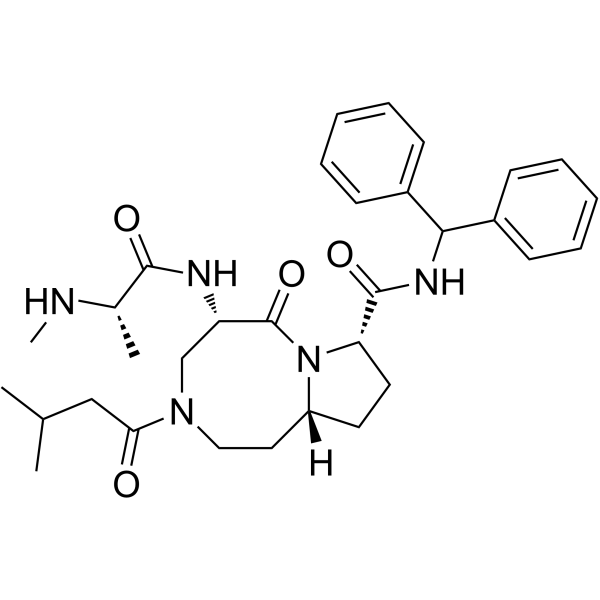
HY-15454
XevinapantSmac Mimetic/IAPs Antagonist -
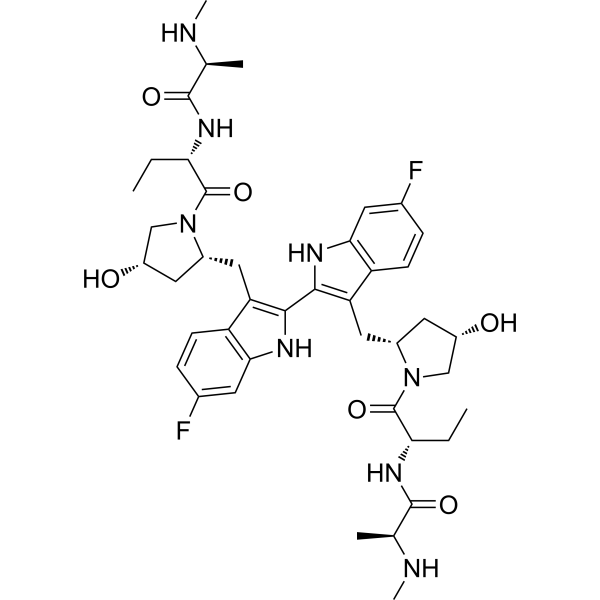
HY-16591
BirinapantXIAP/cIAP1 Antagonist -
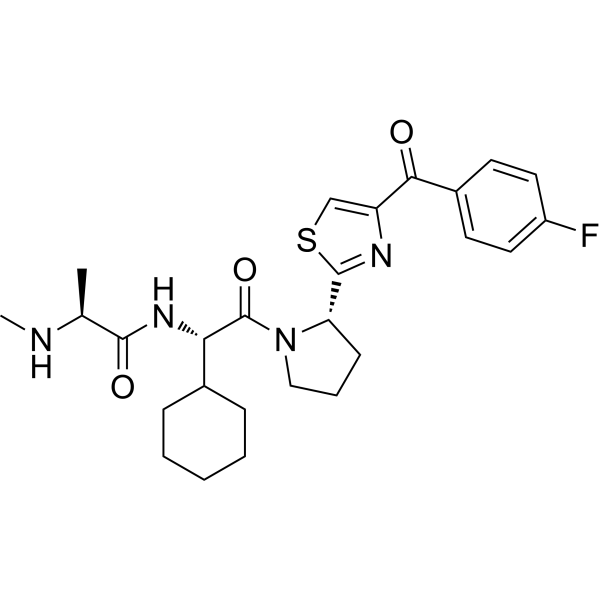
HY-15518
LCL161IAP Inhibitor -
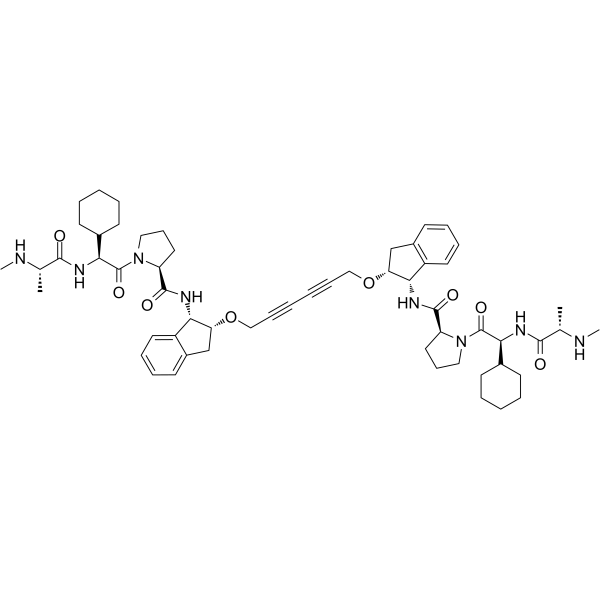
HY-12600
AZD5582 -
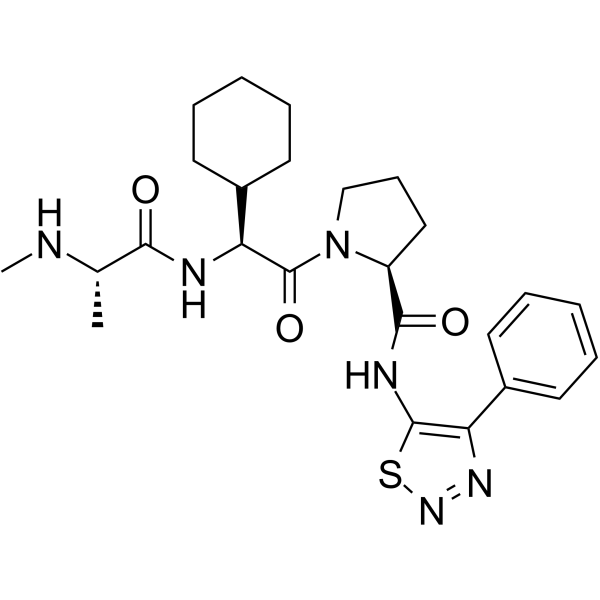
HY-13638
GDC-0152IAP Inhibitor -
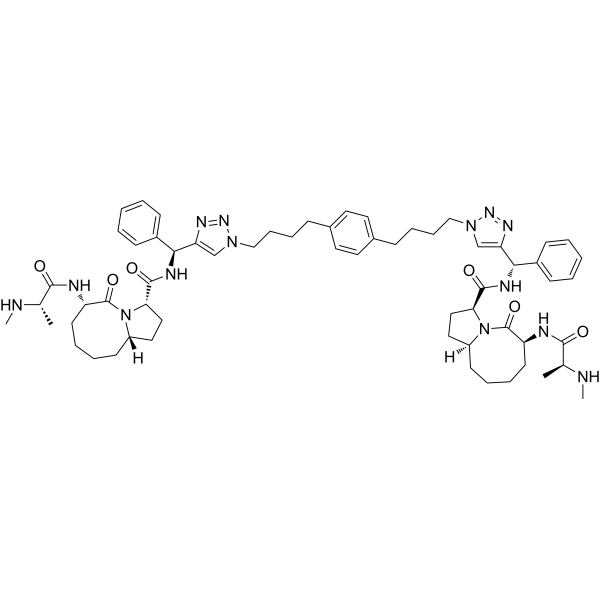
HY-15989
SM-164IAP Antagonist -
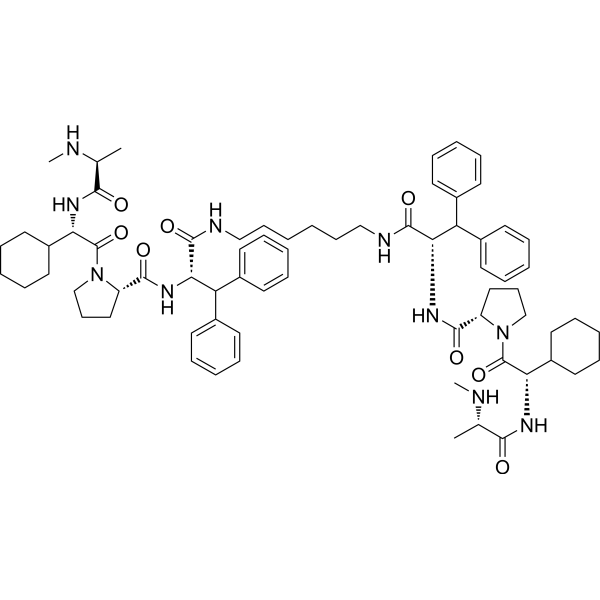
HY-16701
BV6cIAP1/XIAP Antagonist -
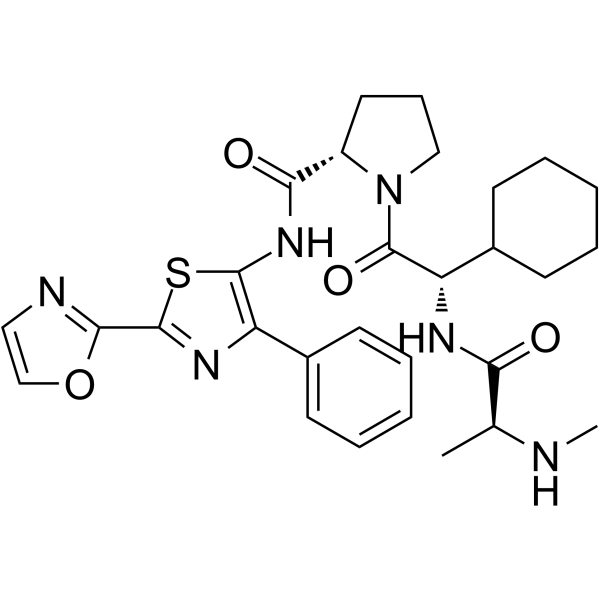
HY-15835
CUDC-427IAP Inhibitor -
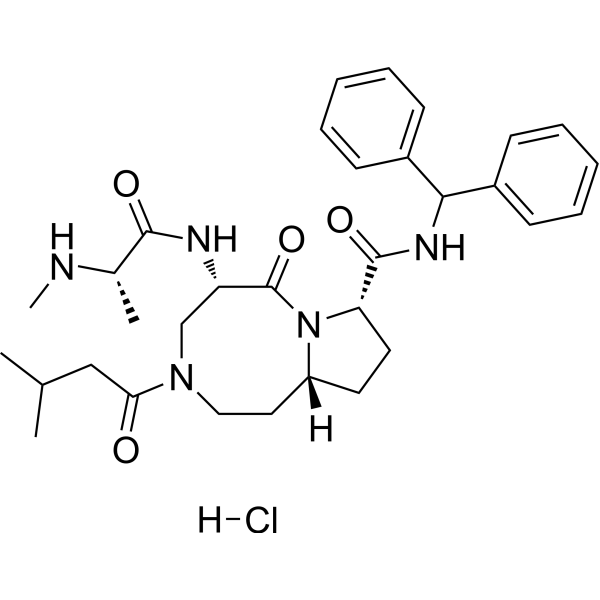
HY-13208
Xevinapant hydrochlorideIAPs Antagonist -
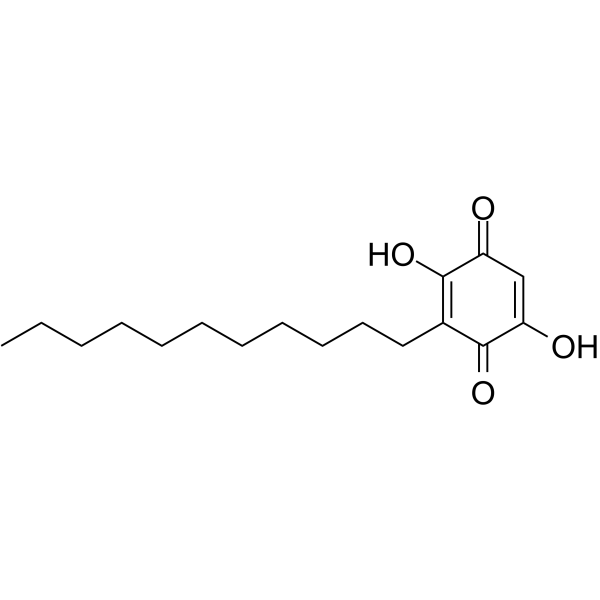
HY-17473
EmbelinXIAP Inhibitor -
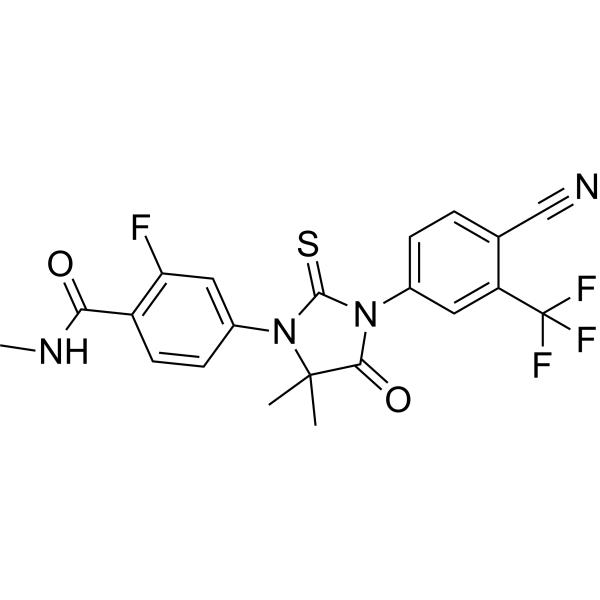
HY-70002
EnzalutamideAndrogen Receptor Antagonist -
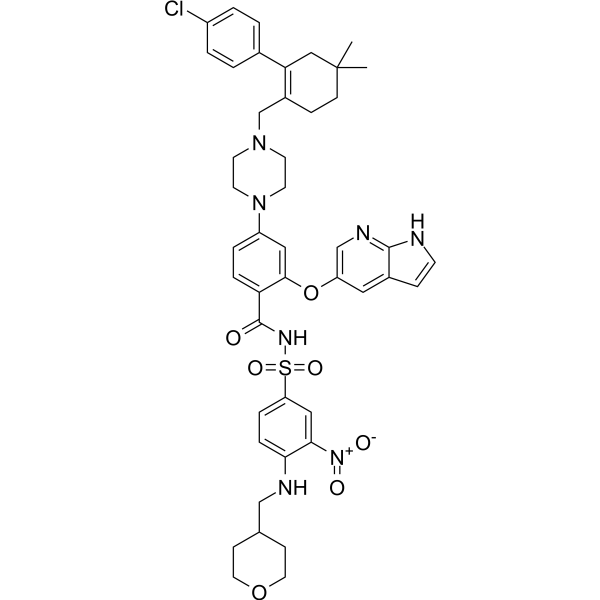
HY-15531
VenetoclaxBCL-2 Inhibitor
Publications Citing Use of MedChemExpress (MCE) Tolinapant
More

Biological Activity
Description
IC50 & Target
|
cIAP1 <12 nM (IC50) |
cIAP2 |
XIAP <40 nM (IC50) |
Cellular Effect
|
Cell Line

|
Type | Value | Description | References |
|---|---|---|---|---|
| MDA-MB-231 | IC50 |
1.8 nM
Compound: 27; ASTX660
|
Antiproliferative activity against human MDA-MB-231 cells after 72 hrs by Alamar blue assay
Antiproliferative activity against human MDA-MB-231 cells after 72 hrs by Alamar blue assay
|
[PMID: 30091600] |
In Vitro
Tolinapant (0.001-10 μM; 5 min-16 h) dihydrochloride antagonizes endogenous XIAP in A375 melanoma cells, and displaces SMAC from XIAP at concentrations above 0.01 μM after 16 h, or within 5 min at a concentration of 1 μM[1].
Tolinapant (1-3 μM; 24 h) dihydrochloride significantly enhances the lytic activity of NY-ESO-1 TCR-T cells against A375 melanoma cells, and this effect is dependent on TNF-α[4].
Tolinapant (0.01-1 μM; 48 h) dihydrochloride significantly enhances CD19 CAR-NK cell-mediated lysis of NALM6-Luc2 cells in a TNF-α-dependent manner[4].
MedChemExpress (MCE) has not independently confirmed the accuracy of these methods. They are for reference only.
-
Cell Line:A375 human melanoma cells
-
Concentration:0.001-10 μmol/L (16 h incubation); 1 μmol/L (short-term incubation)
-
Incubation Time:16 h (0.001-10 μmol/L); 5-240 min (1 μmol/L)
-
Result:Reduced SMAC levels immunoprecipitated with XIAP at concentrations above 0.01 μmol/L after 16 hours of treatment.
Antagonized the interaction of SMAC with XIAP within 5 minutes of exposure to 1 μmol/L.
-
Cell Line:human CD19 CAR-T cells, NALM6-Luc2 (B-ALL)
-
Concentration:3 μM
-
Incubation Time:at least 33 days
-
Result:Increased CD19 CAR-T cell growth rate relative to DMSO control, with CAR-T cells persisting for at least 33 days (compared to decline by Day 18 in controls).
Maintained specific lysis of NALM6-Luc2 cells at consistently high 80-90% throughout the study period.
Preserved expression of the memory T cell marker CCR7.
In Vivo
MedChemExpress (MCE) has not independently confirmed the accuracy of these methods. They are for reference only.
-
Animal Model:BALB/cJHanHsd-Prkdcscid (male)[1]
-
Dosage:5 mg/kg; 10 mg/kg; 20 mg/kg; 20 mg/kg (intermittent schedule)
-
Administration:p.o.; daily; 25 days; p.o.; 7 days on/7 days off; 2 cycles
-
Result:Significantly inhibited tumor growth (P < 0.05 from days 15, 18, and 11 for 5, 10, and 20 mg/kg daily dosing, respectively).
Achieved significant tumor growth inhibition (P < 0.05 vs. vehicle from day 8) with intermittent 20 mg/kg schedule, equivalent to continuous 20 mg/kg daily schedule.
Distributed to tumors with detectable compound levels up to 168 hours post-dose (AUC_last = 129 μmol/L/h/mL).
Induced rapid cIAP1 degradation, reduced XIAP:SMAC association (persisting up to 3 days), and increased cleaved PARP and cleaved caspase-3 within 1 hour post-dose.
Showed no excessive body weight loss or adverse effects.
-
Animal Model:BALB/cOlaHsd-Foxn1nu (male)[1]
-
Dosage:10 mg/kg; 20 mg/kg
-
Administration:p.o.; daily; 14 days
-
Result:Caused significant tumor growth inhibition (P < 0.05 from day 8).
Showed no excessive body weight loss or adverse effects.
-
Animal Model:NOD/SCID/IL2Rγcnull (NOG) (6- to 8-week-old female; disseminated multiple myeloma xenograft model)[4]
-
Dosage:16 mg/kg
-
Administration:p.o.; once daily; 21 days
-
Result:Attenuated tumor expansion by day 11 and reduced tumor load thereafter when combined with 1×10⁵ MMG49 CAR-T cells, resulting in lower tumor load than treatment with 1×10⁶ MMG49 CAR-T cells alone by day 21.
Accelerated in vivo MMG49 CAR-T cell expansion, with significantly higher CAR-T cell numbers in the combination group than in the CAR-T monotherapy group between days 10 and 17.
Showed no anti-tumor effect when used alone.
- Detection of Apoptosis
- TUNEL staining for apoptotic DNA fragmentation
- Annexin V plus membrane-impermeant dye apoptosis staining
- Patient-Derived Xenograft (PDX)
- Apoptosis Solutions
- Patient-Derived Orthotopic Xenograft (PDOX)
- Splenic/Portal-Vein Liver Metastasis Xenograft
- Subcutaneous Cell-Line-Derived Xenograft
- Breast Cancer Modeling
- Orthotopic Cell-Line Xenograft
- Intraperitoneal/Peritoneal Dissemination Xenograft
Clinical Trial
| NCT Number | Sponsor | Condition | Start Date |
Phase
|
|---|---|---|---|---|
| NCT01329991 | 2011-05 | PHASE1 |


Chemical Information
-
CAS No. 1799328-86-1
-
Appearance Solid
-
Molecular Weight 539.68
-
Formula C30H42FN5O3
-
Color White to off-white
-
SMILES
C[C@H]1N(C[C@@H]2N(CC(N3CC(C)(C)C4=NC(CO)=C(CC5=CC=C(F)C=C5)C=C43)=O)C[C@@H](C)NC2)CCOC1
-
Synonyms
ASTX660
-
Shipping
Room temperature in continental US; may vary elsewhere.
-
Storage
Powder -20°C 3 years 4°C 2 years In solvent -80°C 2 years -20°C 1 year


Publications (5)
-
Journal Impact Factor
-
Most Recent
-
Cell Rep Med
Pharmacological Activation of Non-canonical NF-κB Signaling Activates Latent HIV-1 Reservoirs In Vivo. [Abstract]2020 Jun 23;1(3):100037. PMID: 33205060 -
-
Cancer Gene Ther
b-AP15 enhances TRAIL-induced cell death in HNSCC via the induction of ROS/JNK/DR5 signalling. [Abstract]2026 May 2. PMID: 42069980 -
Blood Res
Translational investigation of tolinapant (ASTX660) in acute myeloid leukemia by integrating clinical, bioinformatic and pharmacological approaches. [Abstract]2025 Dec 30;60(1):67. PMID: 41469824 -
bioRxiv
2024 Nov 28:2024.11.25.625306. PMID: 39651304


Solvent & Solubility
In Vitro:
DMSO : 100 mg/mL (185.29 mM; Need ultrasonic; Hygroscopic DMSO has a significant impact on the solubility of product, please use newly opened DMSO)
Please refer to the solubility information to select the appropriate solvent. Once prepared, please aliquot and store the solution to prevent product inactivation from repeated freeze-thaw cycles.
Storage method and period of stock solution: -80°C, 2 years; -20°C, 1 year. When stored at -80°C, please use it within 2 years. When stored at -20°C, please use it within 1 year.
Please refer to the solubility information to select the appropriate solvent. Once prepared, please aliquot and store the solution to prevent product inactivation from repeated freeze-thaw cycles.
Storage method and period of stock solution: -80°C, 2 years; -20°C, 1 year. When stored at -80°C, please use it within 2 years. When stored at -20°C, please use it within 1 year.
Concentration (start) × Volume (start) = Concentration (final) × Volume (final)
In Vivo:
Select the appropriate dissolution method based on your experimental animal and administration route.
- For the following dissolution methods, please ensure to first prepare a clear stock solution using an In Vitro approach and then sequentially add co-solvents:
- To ensure reliable experimental results, the clarified stock solution can be appropriately stored based on storage conditions. As for the working solution for In Vivo experiments, it is recommended to prepare freshly and use it on the same day.
- The percentages shown for the solvents indicate their volumetric ratio in the final prepared solution. If precipitation or phase separation occurs during preparation, heat and/or sonication can be used to aid dissolution.
Add each solvent one by one: 10% DMSO 40% PEG300 5% Tween-80 45% Saline
Solubility: ≥ 2.5 mg/mL (4.63 mM); Clear solution
This protocol yields a clear solution of ≥ 2.5 mg/mL (saturation unknown).
Taking 1 mL working solution as an example, add 100 μL DMSO stock solution (25.0 mg/mL) to 400 μL PEG300, and mix evenly; then add 50 μL Tween-80 and mix evenly; then add 450 μL Saline to adjust the volume to 1 mL.
Preparation of Saline: Dissolve 0.9 g sodium chloride in ddH₂O and dilute to 100 mL to obtain a clear Saline solution.
Add each solvent one by one: 10% DMSO 90% (20% SBE-β-CD in Saline)
Solubility: ≥ 2.5 mg/mL (4.63 mM); Clear solution
This protocol yields a clear solution of ≥ 2.5 mg/mL (saturation unknown).
Taking 1 mL working solution as an example, add 100 μL DMSO stock solution (25.0 mg/mL) to 900 μL 20% SBE-β-CD in Saline, and mix evenly.
Preparation of 20% SBE-β-CD in Saline (4°C, storage for one week): 2 g SBE-β-CD powder is dissolved in 10 mL Saline, completely dissolve until clear.
In Vivo Dissolution Calculator
Please enter the basic information of animal experiments:
-
-
-
-
Recommended: Prepare an additional quantity of animals to account for potential losses during experiments.
Please enter your animal formula composition:
-
%DMSO +
Recommended: Keep the proportion of DMSO in working solution below 2% if your animal is weak.
-
%+
-
+%Tween-80 + +
-
%Saline +
The co-solvents required include: DMSO, . All of co-solvents are available by MedChemExpress (MCE). , Tween 80. All of co-solvents are available by MedChemExpress (MCE).
Working solution concentration: 0.22 mg/mL
Method for preparing stock solution: mg drug dissolved in μL DMSO. Stock solution concentration: mg/mL.
1. Take μL DMSO stock solution;
2. Add μL .
μL , mix evenly;
3. Then add μL Tween 80, mix evenly;
4. Then add μL
Please ensure that the stock solution in the first step is dissolved to a clear state, and add co-solvents in sequence. You can use ultrasonic heating (ultrasonic cleaner, recommended frequency 20-40 kHz), vortexing, etc. to assist dissolution.


Purity & Documentation
-
Data Sheet (301 KB)
-
SDS (396 KB)
- English - EN (396 KB)
- Français - FR (396 KB)
- Deutsch - DE (396 KB)
- Norwegian - NO (396 KB)
- Español - ES (396 KB)
- Swedish - SV (396 KB)
- Italian - IT (396 KB)
- Korean - KR (396 KB)
- Portuguese - PT (396 KB)
-
Handling Instructions (2659 KB)
References
[1]. Ward GA, et al. ASTX660, a Novel Non-peptidomimetic Antagonist of cIAP1/2 and XIAP, Potently Induces TNFα-Dependent Apoptosis in Cancer Cell Lines and Inhibits Tumor Growth. Molecular cancer therapeutics. 2018 Jul;17(7):1381-1391. [Content Brief]
[2]. Martins V, et al. The preclinical pharmacokinetics of Tolinapant-A dual cIAP1/XIAP antagonist with in vivo efficacy. Pharmacology research & perspectives. 2024 Dec;12(6):e70030. [Content Brief]
[4]. Tazuru K, et al. The IAP antagonist tolinapant enhances the anti-tumor activity of cell therapies. European journal of pharmacology. 2025 May 15;995:177400. [Content Brief]
[5]. Mita MM, et al. A Phase I Study of ASTX660, an Antagonist of Inhibitors of Apoptosis Proteins, in Adults with Advanced Cancers or Lymphoma. Clinical cancer research : an official journal of the American Association for Cancer Research. 2020 Jun 15;26(12):2819-2826. [Content Brief]


Complete Stock Solution Preparation Table
Please refer to the solubility information to select the appropriate solvent. Once prepared, please aliquot and store the solution to prevent product inactivation from repeated freeze-thaw cycles.
Storage method and period of stock solution: -80°C, 2 years; -20°C, 1 year. When stored at -80°C, please use it within 2 years. When stored at -20°C, please use it within 1 year.
| Optional Solvent | Concentration Solvent Mass | 1 mg | 5 mg | 10 mg | 25 mg |
|---|---|---|---|---|---|
| DMSO | 1 mM | 1.8529 mL | 9.2647 mL | 18.5295 mL | 46.3237 mL |
| 5 mM | 0.3706 mL | 1.8529 mL | 3.7059 mL | 9.2647 mL | |
| 10 mM | 0.1853 mL | 0.9265 mL | 1.8529 mL | 4.6324 mL | |
| 15 mM | 0.1235 mL | 0.6176 mL | 1.2353 mL | 3.0882 mL | |
| 20 mM | 0.0926 mL | 0.4632 mL | 0.9265 mL | 2.3162 mL | |
| 25 mM | 0.0741 mL | 0.3706 mL | 0.7412 mL | 1.8529 mL | |
| 30 mM | 0.0618 mL | 0.3088 mL | 0.6176 mL | 1.5441 mL | |
| 40 mM | 0.0463 mL | 0.2316 mL | 0.4632 mL | 1.1581 mL | |
| 50 mM | 0.0371 mL | 0.1853 mL | 0.3706 mL | 0.9265 mL | |
| 60 mM | 0.0309 mL | 0.1544 mL | 0.3088 mL | 0.7721 mL | |
| 80 mM | 0.0232 mL | 0.1158 mL | 0.2316 mL | 0.5790 mL | |
| 100 mM | 0.0185 mL | 0.0926 mL | 0.1853 mL | 0.4632 mL |


Tolinapant Related Classifications
HY-109565 Related Classifications
 Powered by Bioz