



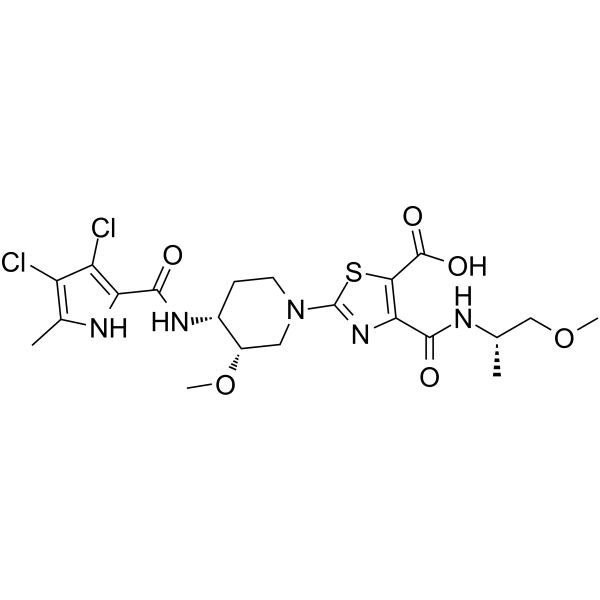
AZD5099

Based on 1 Customer Validation
AZD5099 is an orally effective pyrrole amide inhibitor and antibacterial agent. AZD5099 shows over 10000-fold higher selectivity for bacterial type II topoisomerases than for human topoisomerase IIα, with a IC50 value of 0.032 μmol/L against Staphylococcus aureus GyrB, a IC50 of 0.760 μmol/L against Escherichia coli GyrB, a IC50 of 73 nM against Escherichia coli ParE, a Kd of 83.8 nmol/L for Staphylococcus aureus GyrB, and a IC50 of >50 μM against human topoisomerase IIα. AZD5099 inhibits rat Mrp2 ATPase activity, competitively binds to the ATP-binding site of bacterial type II topoisomerases, blocks enzyme activity, reduces bacterial DNA and RNA synthesis, disrupts DNA replication and transcription processes, and induces mitochondrial toxicity. AZD5099 exhibits activity against Gram-positive bacteria, fastidious Gram-negative bacteria and drug-resistant strains, reduces bacterial loads in mouse infection models, and has a low spontaneous resistance frequency. AZD5099 can be used in studies related to infections caused by Gram-positive bacteria and fastidious Gram-negative bacteria, methicillin-resistant Staphylococcus aureus infections, Streptococcus pneumoniae pulmonary infections, as well as Staphylococcus aureus and Escherichia coli infections.
For research use only. We do not sell to patients.
- Purity : 98.40%
- CAS No.: 907543-25-3
- Formula: C21H27Cl2N5O6S
- Molecular Weight:548.44
-
Storage:Powder -20°C, 3 years , 4°C, 2 years ; In solvent -80°C, 6 months , -20°C, 1 month

To place orders, for customer services and technical support, please contact: MedChemExpress USA
Tel: 609-228-6898 E-mail: [email protected] [email protected]


-
 Biological Activity
-
Chemical Information
- Protocols
- Purity & Documentation
- References
-
 Help & FAQs


All Topoisomerase Isoforms
More

Biological Activity
Description
|
Topoisomerase II |
In Vitro
AZD5099 potently inhibits purified S. aureus GyrB (IC50 < 10 nM) and E. coli ParE bacterial type II topoisomerases[1].
AZD5099 exhibits potent antibacterial activity against Gram-positive pathogens including MSSA (MIC = 0.03 μg/mL), MRSA, Streptococcus pyogenes, Streptococcus pneumoniae, and Enterococcus spp, its activity against wild-type Escherichia coli is weak, whereas potency is markedly enhanced in the efflux-deficient ΔtolC E. coli strain[1].
AZD5099 (sub-lethal concentration) selectively inhibits DNA biosynthesis (103.6-fold reduction in 3H-thymidine incorporation) and secondary RNA biosynthesis (102.8-fold reduction in 3H-uridine incorporation) in S. aureus cultures, with no effect on protein or cell wall biosynthesis[1].
AZD5099 (4× and 8× the concentration that prevented confluent bacterial growth) has very low spontaneous resistance frequencies (< 9.6 × 10⁻¹⁰ in S. aureus and S. pneumoniae, ≤ 3.7 × 10⁻⁹ in Enterococcus spp., 1.4 × 10⁻⁷ to < 3.4 × 10⁻¹⁰ in S. pyogenes), with resistant S. aureus variants exhibiting target-based gyrB mutations[1].
AZD5099 exhibits greater than 10,000-fold selectivity for bacterial type II topoisomerases over human topoisomerase IIα, with an IC50 > 50 µM against the human enzyme[1].
AZD5099 (highest concentrations tested) is not mutagenic in preclinical in vitro assays including the Ames assay, mouse lymphoma micronucleus assay, and mouse lymphoma TK assay[1].
AZD5099 (100 µM) does not inhibit hERG or other ion channels, providing a greater than 200-fold safety margin relative to predicted free Cmax[1].
AZD5099 (50 µM) does not inhibit human Cyp1A2, Cyp2C19, Cyp2C9, Cyp2D6, or Cyp3A4 enzymes, mitigating cytochrome P450-mediated drug-drug interaction risks[1].
AZD5099 inhibits ATPase activity of human MRP2 and rat Mrp2 expressed in Sf9 cells, a trait associated with reduced in vivo clearance relative to transporter-activating analogs[1].
AZD5099 potently inhibits Staphylococcus aureus gyrase with an IC50 of 32 nM[3].
AZD5099 inhibits Escherichia coli gyrase with an IC50 of 0.760 μmol/L[3].
AZD5099 (0.008-128 μg/mL; 18-24 h) inhibits the growth of Staphylococcus aureus (ATCC29213) with an MIC of 0.015 μg/mL[3].
AZD5099 (0.008-128 μg/mL; 18-24 h) inhibits the growth of Escherichia coli (ATCC25922) with an MIC of 32 μg/mL[3].
AZD5099 (25-400 nmol/L; 120 s association, 180 s dissociation) binds to Staphylococcus aureus GyrB24 with high affinity, exhibiting a KD of 83.8 nmol/L[3].
AZD5099 (0.008-128 μg/mL; 18-24 h) inhibits the growth of susceptible and resistant Gram-positive bacteria including Staphylococcus aureus (MRSA, MSSA, VISA), Staphylococcus epidermidis (MRSE, MSSE), Enterococcus faecalis, and Enterococcus faecium, with an MIC of 0.015 μg/mL for VISA strains and 0.03 μg/mL for most other strains, but is inactive against tested Gram-negative strains[3].
AZD5099 (50-800 μmol/L; 24 h) shows significant mitochondrial toxicity in HepG2 cells, with an IC50 < 200 μmol/L and complete damage at 400 μmol/L[3].
AZD5099 potently inhibits Staphylococcus aureus DNA gyrase (IC50 <10 nM) and Escherichia coli topoisomerase IV (IC50 73 nM), and exhibits antibacterial activity with MIC values of 0.036 μg/mL against Staphylococcus aureus, 24 μg/mL against wild-type Escherichia coli, and 0.94 μg/mL against Escherichia coli tolC mutant strain[4].
MedChemExpress (MCE) has not independently confirmed the accuracy of these methods. They are for reference only. Further protocols information, click here.
In Vivo
AZD5099 exhibits high in vivo antibacterial activity against Streptococcus pneumoniae in a mouse lung infection model[2].
AZD5099 (10 mg/kg; i.g.; single dose) provides 100% survival protection in MRSA-induced sepsis in mice, with an ED50 of 7.5 mg/kg[3].
MedChemExpress (MCE) has not independently confirmed the accuracy of these methods. They are for reference only.
-
Animal Model:ICR (20-22 g; male and female; intraperitoneally injected with ~108 CFU of methicillin-resistant Staphylococcus aureus ATCC43300)[3]
-
Dosage:10 mg/kg
-
Administration:i.g.; single dose
-
Result:Achieved 100% survival rate over 7 days.
Reached a median effective dose (ED50) of 7.5 mg/kg.
Clinical Trial
| NCT Number | Sponsor | Condition | Start Date |
Phase

|
|---|---|---|---|---|
| NCT01329991 | Plexxikon| | 2011-05 | PHASE1 |


Chemical Information
-
CAS No. 907543-25-3
-
Appearance Solid
-
Molecular Weight 548.44
-
Formula C21H27Cl2N5O6S
-
Color White to light yellow
-
SMILES
O=C(C(N=C(N(CC[C@H]1NC(C(NC(C)=C2Cl)=C2Cl)=O)C[C@@H]1OC)S3)=C3C(O)=O)N[C@@H](C)COC
-
Shipping
Room temperature in continental US; may vary elsewhere.
-
Storage
Powder -20°C 3 years 4°C 2 years In solvent -80°C 6 months -20°C 1 month

Protocols
-
Research Protocol for Infectious Diseases
Infectious-disease experiments test how pathogens interact with host barriers, innate immune receptors, inflammatory signaling, pathogen replication, and tissue injury; pattern-recognition receptors such as TLRs, RIG-I-like receptors, NOD-like receptors, and inflammasomes detect microbial molecules and activate NF-κB, interferon, and cytokine responses. The central hypothesis is that infection severity reflects the balance between pathogen burden and host response: protective inflammation restricts pathogen growth, whereas excessive or mislocalized inflammation contributes to tissue damage and disease phenotype. Unresolved questions include which host pathways are protective versus pathogenic, why some infection models fail to translate to human disease, and which combined readouts best predict clinically relevant infection outcomes.
-
Cell Cytotoxicity Assay
Cytotoxicity assays are usually based on the assessment of cell membrane damage, which can also be indirectly detected by measuring cell viability. Detection methods include MTT assay, CKK-8 assay, LDH assay and ATP assay, etc.
-
PCNA Immunodetection Proliferation Assay
PCNA immunodetection measures proliferative activity by detecting proliferating cell nuclear antigen, a nuclear protein associated with DNA polymerase δ function and DNA replication. The assay readout is the proportion of PCNA-positive nuclei among total counted cells, but PCNA labeling is not identical to BrdU labeling because PCNA can mark late G1/early S-associated replication competence and may persist beyond active DNA synthesis depending on fixation and extraction conditions.
-
Gram Staining of Tissue Sections
Gram staining of tissue sections is a histochemical technique used to differentiate Gram-positive and Gram-negative bacteria within histological specimens based on differences in bacterial cell wall structure and dye retention, adapted from classical bacteriological Gram staining into tissue-compatible “histological Gram stain” variants. In tissue applications, modifications of the Brown-Hopps and Brown-Brenn methods are commonly used to improve differentiation of microorganisms embedded within host connective tissue and to reduce overstaining or loss of Gram-negative signal, which are known limitations of earlier approaches. The principle relies on crystal violet-iodine complex retention in Gram-positive organisms and subsequent decolorization and counterstaining steps that allow contrast visualization of Gram-negative organisms against tissue background.


Purity & Documentation
-
Data Sheet (280 KB)
-
SDS (393 KB)
- English - EN (393 KB)
- Français - FR (393 KB)
- Deutsch - DE (393 KB)
- Norwegian - NO (393 KB)
- Español - ES (393 KB)
- Swedish - SV (393 KB)
- Italian - IT (393 KB)
- Korean - KR (393 KB)
- Portuguese - PT (393 KB)
-
Handling Instructions (2659 KB)
References
[1]. Basarab GS, Hill PJ, Garner CE, Hull K, Green O, Sherer BA, Dangel PB, Manchester JI, Bist S, Hauck S, Zhou F. Optimization of pyrrolamide topoisomerase II inhibitors toward identification of an antibacterial clinical candidate (AZD5099). Journal of Medicinal Chemistry. 2014 Jul 24;57(14):6060-82. [Content Brief]
[2]. Maqueira A, Eddy E. Discovery of Novel Bacterial DNA Gyrase Inhibitors. [Content Brief]
[3]. Zhao X, et al. Discovery and druggability evaluation of pyrrolamide-type GyrB/ParE inhibitor against drug-resistant bacterial infection. Acta Pharm Sin B. 2023;13(12):4945-4962. [Content Brief]
[4]. Sofi FA, Masoodi MH, Tabassum N. Recent advancements in the development of next-generation dual-targeting antibacterial agents. RSC Medicinal Chemistry. 2025;16(5):1891-922. [Content Brief]

Calculators
Concentration (start) × Volume (start) = Concentration (final) × Volume (final)


AZD5099 Related Classifications
HY-12888 Related Classifications
 Powered by Bioz
Keywords
- AZD5099
- 907543-25-3
- AZD 5099
- AZD-5099
- Topoisomerase
- Bacterial
- bacterial type II topoisomerases
- methicillin-resistant Staphylococcus aureus
- Staphylococcus aureus GyrB
- Escherichia coli GyrB
- rat Mrp2
- mouse infection models
- HepG2 cells
- Escherichia coli ParE
- Streptococcus pneumoniae
- human topoisomerase IIα
- Inhibitor
- inhibitor
- inhibit