



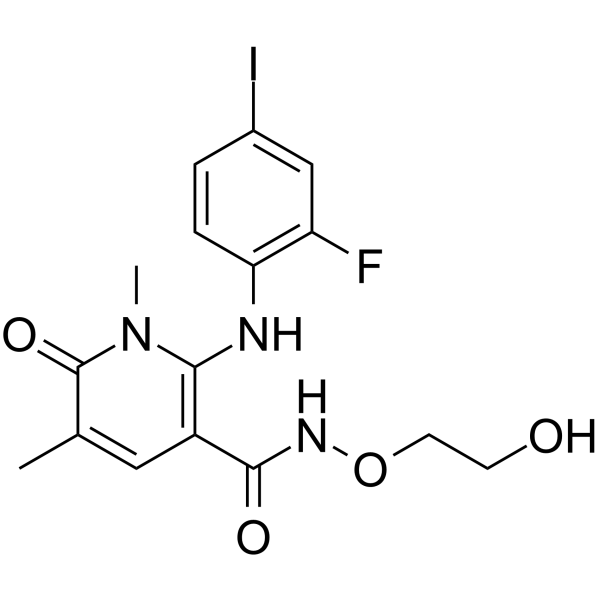
AZD8330
Based on 8 publication(s) in Google Scholar
AZD8330 (ARRY-424704) is a potent, uncompetitive MEK1/MEK2 inhibitor, with an IC50 of 7 nM.
For research use only. We do not sell to patients.
- Purity : 99.05%
- CAS No.: 869357-68-6
- Formula: C16H17FIN3O4
- Molecular Weight:461.23
-
Storage:Powder -20°C, 3 years , 4°C, 2 years ; In solvent -80°C, 2 years , -20°C, 1 year

To place orders, for customer services and technical support, please contact: MedChemExpress USA
Tel: 609-228-6898 E-mail: [email protected] [email protected]


-
 Biological Activity
-
Chemical Information
-
Solvent & Solubility
- Purity & Documentation
- References
-
 Help & FAQs


-
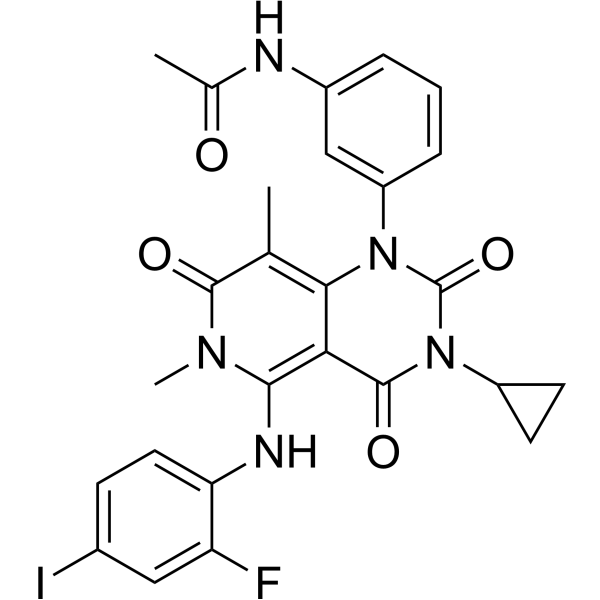
HY-10999
TrametinibMEK Inhibitor -
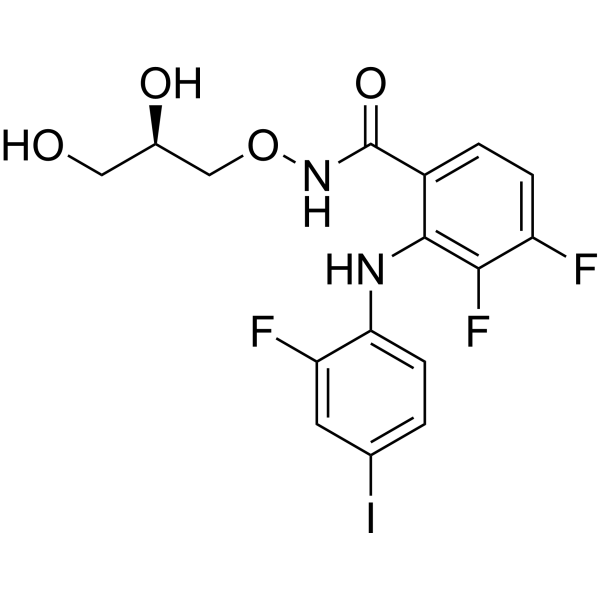
HY-10254
MirdametinibMEK Inhibitor -
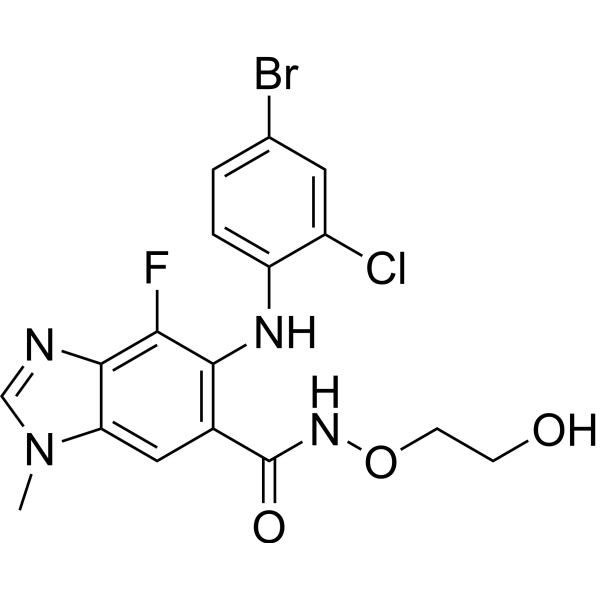
HY-50706
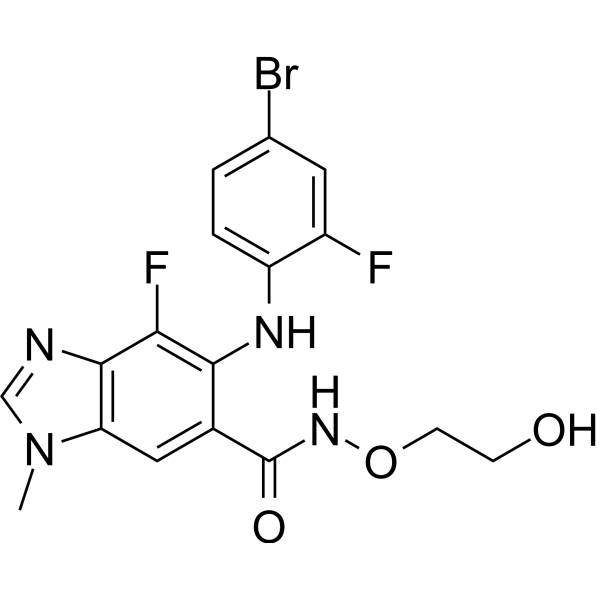
SelumetinibMEK1/2 Inhibitor -
HY-15202
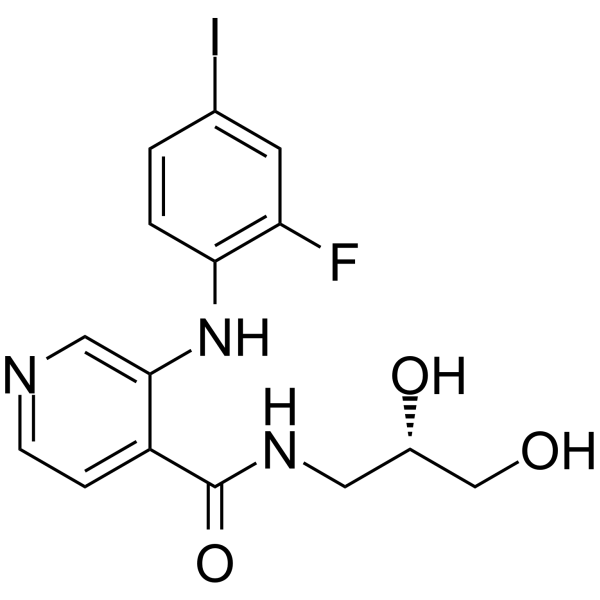
BinimetinibMEK1/2 Inhibitor -
HY-12042
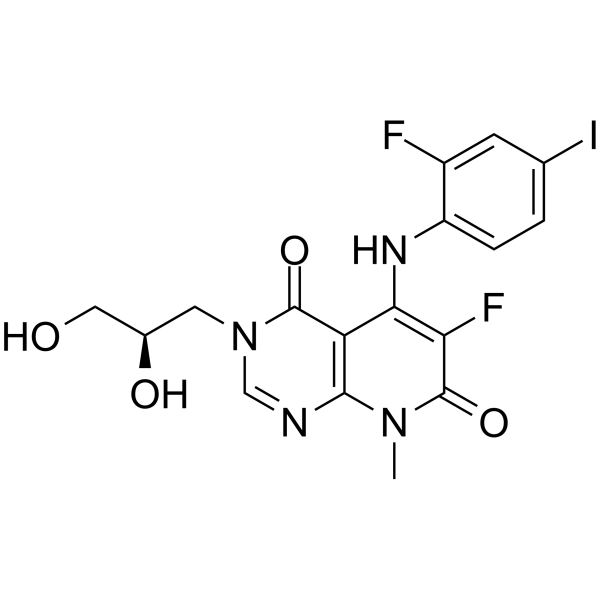
PimasertibMEK1/2 Inhibitor -
HY-13449
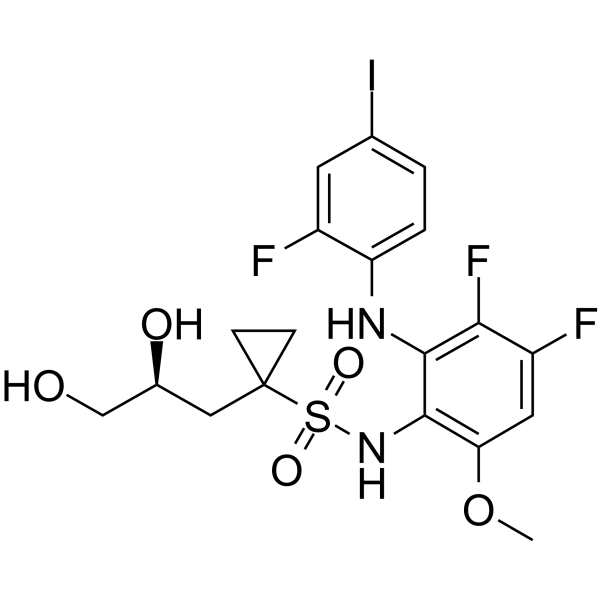
TAK-733MEK Inhibitor -
HY-14691
RefametinibMEK1/MEK2 Inhibitor -
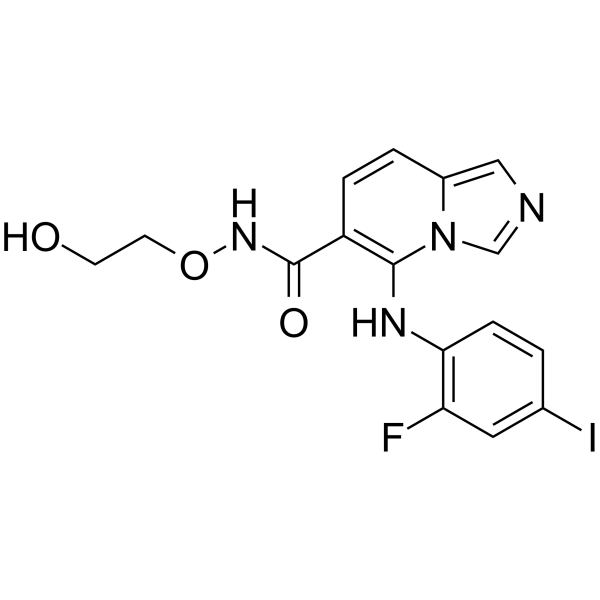
HY-15610
GDC-0623MEK1 Inhibitor -
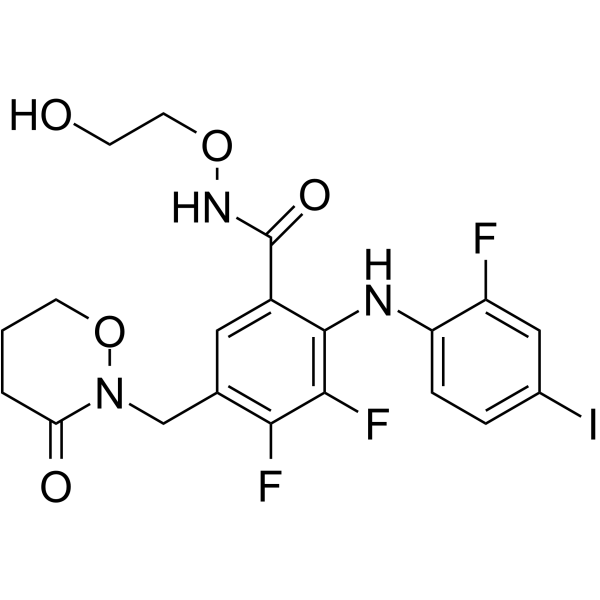
HY-14719
RO4987655MEK Inhibitor -
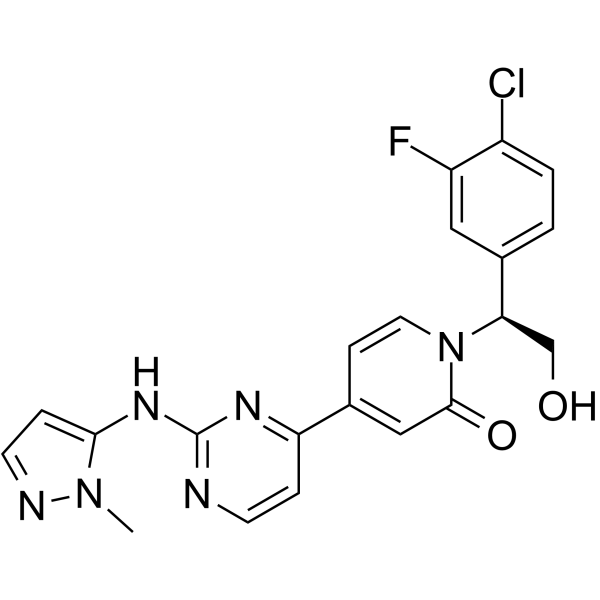
HY-15947
RavoxertinibERK1/2 Inhibitor -
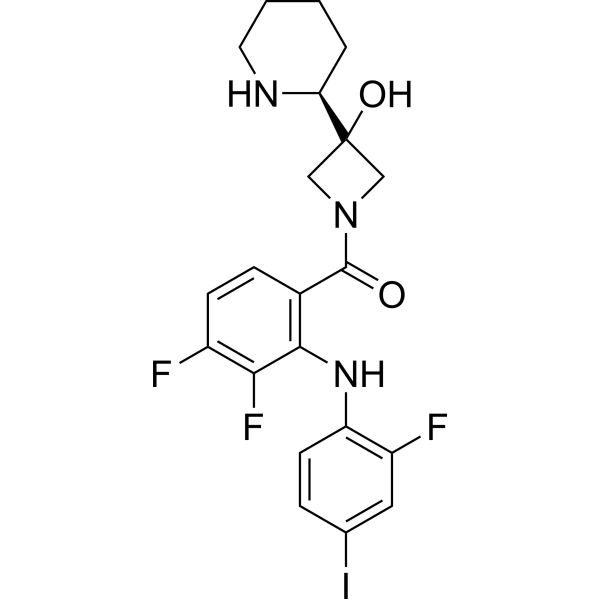
HY-13064
CobimetinibMEK1 Inhibitor -
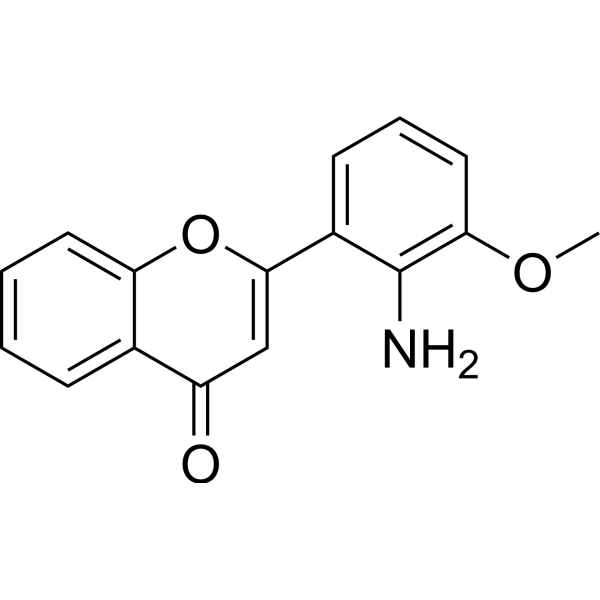
HY-12028
PD98059MEK Inhibitor
Publications Citing Use of MedChemExpress (MCE) AZD8330
More- Cell Res. 2018 Dec;28(12):1171-1185. [Abstract]
- Sci Transl Med. 2018 Jul 18;10(450):eaaq1093. [Abstract]
- Cell Rep Med. 2025 Dec 16;6(12):102513. [Abstract]
- Clin Cancer Res. 2014 Nov 1;20(21):5483-95. [Abstract]
- Cell Mol Life Sci. 2024 Jul 30;81(1):325. [Abstract]
- Glia. 2019 Jul;67(7):1320-1332. [Abstract]
- Viruses. 2022 Nov 8;14(11):2466. [Abstract]
- ACS Comb Sci. 2019 Dec 9;21(12):805-816. [Abstract]
All MEK Isoforms
More

Biological Activity
Description
IC50 & Target
[1]|
MEK1 7 nM (IC50) |
MEK2 7 nM (IC50) |
Cellular Effect
|
Cell Line

|
Type | Value | Description | References |
|---|---|---|---|---|
| A549 | CC50 |
>100 μM
Compound: 53; AZD-8330
|
Cytotoxicity against human A549 cells
Cytotoxicity against human A549 cells
|
[PMID: 33539089] |
In Vitro
AZD8330 is a selective allosteric MEK1/ MEK2 inhibitor. Exposing human osteosarcoma cell lines MOS, U2OS, and 143B to a concentration of 0.5 μM of Trametinib, AZD8330 or TAK-733 for 6 hours, leads to loss of ERK phosphorylation indicating effective MEK inhibition.The activity of these three inhibitors is tested using concentration ranges in six osteosarcoma cell lines: MOS, U2OS, KPD, ZK58, 143b and Saos-2. All three inhibitors decrease viability of MOS and U2OS and strongly affect 143b. By contrast, viability of KPD, ZK58 and Saos-2 is not affected by any of the three inhibitors[2].
MedChemExpress (MCE) has not independently confirmed the accuracy of these methods. They are for reference only.
In Vivo
MedChemExpress (MCE) has not independently confirmed the accuracy of these methods. They are for reference only.
Clinical Trial
| NCT Number | Sponsor | Condition | Start Date |
Phase
|
|---|---|---|---|---|
| NCT01329991 | 2011-05 | PHASE1 |


Chemical Information
-
CAS No. 869357-68-6
-
Appearance Solid
-
Molecular Weight 461.23
-
Formula C16H17FIN3O4
-
Color Off-white to light yellow
-
SMILES
IC1=CC(F)=C(C=C1)NC(N2C)=C(C=C(C2=O)C)C(NOCCO)=O
-
Synonyms
ARRY-424704; ARRY-704
-
Shipping
Room temperature in continental US; may vary elsewhere.
-
Storage
Powder -20°C 3 years 4°C 2 years In solvent -80°C 2 years -20°C 1 year


Publications (8)
-
Journal Impact Factor
-
Most Recent
-
Cell Res
2018 Dec;28(12):1171-1185. PMID: 30287942 -
Sci Transl Med
PP2A inhibition is a druggable MEK inhibitor resistance mechanism in KRAS-mutant lung cancer cells. [Abstract]2018 Jul 18;10(450):eaaq1093. PMID: 30021885 -
Cell Rep Med
Lung adenocarcinoma surfaceome remodeling with EGFR inhibitors uncovers placental alkaline phosphatase as a target for combination therapy. [Abstract]2025 Dec 16;6(12):102513. PMID: 41406940 -
Clin Cancer Res
Upregulation of IGF1R by mutant RAS in leukemia and potentiation of RAS signaling inhibitors by small-molecule inhibition of IGF1R. [Abstract]2014 Nov 1;20(21):5483-95. PMID: 25186968 -
Cell Mol Life Sci
Suppression of Skp2 contributes to sepsis-induced acute lung injury by enhancing ferroptosis through the ubiquitination of SLC3A2. [Abstract]2024 Jul 30;81(1):325. PMID: 39079969 -
Glia
Inhibition of MAPK/ERK pathway promotes oligodendrocytes generation and recovery of demyelinating diseases. [Abstract]2019 Jul;67(7):1320-1332. PMID: 30815939 -
Viruses
TGF-β from the Porcine Intestinal Cell Line IPEC-J2 Induced by Porcine Circovirus 2 Increases the Frequency of Treg Cells via the Activation of ERK (in CD4+ T Cells) and NF-κB (in IPEC-J2). [Abstract]2022 Nov 8;14(11):2466. PMID: 36366564 -
ACS Comb Sci
Benzimidazolyl-pyrazolo[3,4- b]pyridinones, Selective Inhibitors of MOLT-4 Leukemia Cell Growth and Sea Urchin Embryo Spiculogenesis: Target Quest. [Abstract]2019 Dec 9;21(12):805-816. PMID: 31689077


Solvent & Solubility
In Vitro:
DMSO : ≥ 100 mg/mL (216.81 mM; Hygroscopic DMSO has a significant impact on the solubility of product, please use newly opened DMSO)
* "≥" means soluble, but saturation unknown.
Please refer to the solubility information to select the appropriate solvent. Once prepared, please aliquot and store the solution to prevent product inactivation from repeated freeze-thaw cycles.
Storage method and period of stock solution: -80°C, 2 years; -20°C, 1 year. When stored at -80°C, please use it within 2 years. When stored at -20°C, please use it within 1 year.
Please refer to the solubility information to select the appropriate solvent. Once prepared, please aliquot and store the solution to prevent product inactivation from repeated freeze-thaw cycles.
Storage method and period of stock solution: -80°C, 2 years; -20°C, 1 year. When stored at -80°C, please use it within 2 years. When stored at -20°C, please use it within 1 year.
Concentration (start) × Volume (start) = Concentration (final) × Volume (final)
In Vivo:
Select the appropriate dissolution method based on your experimental animal and administration route.
- For the following dissolution methods, please ensure to first prepare a clear stock solution using an In Vitro approach and then sequentially add co-solvents:
- To ensure reliable experimental results, the clarified stock solution can be appropriately stored based on storage conditions. As for the working solution for In Vivo experiments, it is recommended to prepare freshly and use it on the same day.
- The percentages shown for the solvents indicate their volumetric ratio in the final prepared solution. If precipitation or phase separation occurs during preparation, heat and/or sonication can be used to aid dissolution.
Add each solvent one by one: 10% DMSO 40% PEG300 5% Tween-80 45% Saline
Solubility: ≥ 3.25 mg/mL (7.05 mM); Clear solution
This protocol yields a clear solution of ≥ 3.25 mg/mL (saturation unknown).
Taking 1 mL working solution as an example, add 100 μL DMSO stock solution (32.5 mg/mL) to 400 μL PEG300, and mix evenly; then add 50 μL Tween-80 and mix evenly; then add 450 μL Saline to adjust the volume to 1 mL.
Preparation of Saline: Dissolve 0.9 g sodium chloride in ddH₂O and dilute to 100 mL to obtain a clear Saline solution.
Add each solvent one by one: 10% DMSO 90% (20% SBE-β-CD in Saline)
Solubility: ≥ 3.25 mg/mL (7.05 mM); Clear solution
This protocol yields a clear solution of ≥ 3.25 mg/mL (saturation unknown).
Taking 1 mL working solution as an example, add 100 μL DMSO stock solution (32.5 mg/mL) to 900 μL 20% SBE-β-CD in Saline, and mix evenly.
Preparation of 20% SBE-β-CD in Saline (4°C, storage for one week): 2 g SBE-β-CD powder is dissolved in 10 mL Saline, completely dissolve until clear.
In Vivo Dissolution Calculator
Please enter the basic information of animal experiments:
-
-
-
-
Recommended: Prepare an additional quantity of animals to account for potential losses during experiments.
Please enter your animal formula composition:
-
%DMSO +
Recommended: Keep the proportion of DMSO in working solution below 2% if your animal is weak.
-
%+
-
+%Tween-80 + +
-
%Saline +
The co-solvents required include: DMSO, . All of co-solvents are available by MedChemExpress (MCE). , Tween 80. All of co-solvents are available by MedChemExpress (MCE).
Working solution concentration: 0.22 mg/mL
Method for preparing stock solution: mg drug dissolved in μL DMSO. Stock solution concentration: mg/mL.
1. Take μL DMSO stock solution;
2. Add μL .
μL , mix evenly;
3. Then add μL Tween 80, mix evenly;
4. Then add μL
Please ensure that the stock solution in the first step is dissolved to a clear state, and add co-solvents in sequence. You can use ultrasonic heating (ultrasonic cleaner, recommended frequency 20-40 kHz), vortexing, etc. to assist dissolution.


Purity & Documentation
-
Data Sheet (287 KB)
-
SDS (643 KB)
- English - EN (643 KB)
- Français - FR (643 KB)
- Deutsch - DE (643 KB)
- Norwegian - NO (643 KB)
- Español - ES (643 KB)
- Swedish - SV (643 KB)
- Italian - IT (643 KB)
- Korean - KR (643 KB)
- Portuguese - PT (643 KB)
-
Handling Instructions (2659 KB)
References
[1]. Cohen RB, et al. A phase I dose-finding, safety and tolerability study of AZD8330 in patients with advanced malignancies. Eur J Cancer. 2013 May;49(7):1521-9. [Content Brief]
[2]. Baranski Z, et al. MEK inhibition induces apoptosis in osteosarcoma cells with constitutive ERK1/2 phosphorylation. Genes Cancer. 2015 Nov;6(11-12):503-12. [Content Brief]


Complete Stock Solution Preparation Table
Please refer to the solubility information to select the appropriate solvent. Once prepared, please aliquot and store the solution to prevent product inactivation from repeated freeze-thaw cycles.
Storage method and period of stock solution: -80°C, 2 years; -20°C, 1 year. When stored at -80°C, please use it within 2 years. When stored at -20°C, please use it within 1 year.
| Optional Solvent | Concentration Solvent Mass | 1 mg | 5 mg | 10 mg | 25 mg |
|---|---|---|---|---|---|
| DMSO | 1 mM | 2.1681 mL | 10.8406 mL | 21.6812 mL | 54.2029 mL |
| 5 mM | 0.4336 mL | 2.1681 mL | 4.3362 mL | 10.8406 mL | |
| 10 mM | 0.2168 mL | 1.0841 mL | 2.1681 mL | 5.4203 mL | |
| 15 mM | 0.1445 mL | 0.7227 mL | 1.4454 mL | 3.6135 mL | |
| 20 mM | 0.1084 mL | 0.5420 mL | 1.0841 mL | 2.7101 mL | |
| 25 mM | 0.0867 mL | 0.4336 mL | 0.8672 mL | 2.1681 mL | |
| 30 mM | 0.0723 mL | 0.3614 mL | 0.7227 mL | 1.8068 mL | |
| 40 mM | 0.0542 mL | 0.2710 mL | 0.5420 mL | 1.3551 mL | |
| 50 mM | 0.0434 mL | 0.2168 mL | 0.4336 mL | 1.0841 mL | |
| 60 mM | 0.0361 mL | 0.1807 mL | 0.3614 mL | 0.9034 mL | |
| 80 mM | 0.0271 mL | 0.1355 mL | 0.2710 mL | 0.6775 mL | |
| 100 mM | 0.0217 mL | 0.1084 mL | 0.2168 mL | 0.5420 mL |


AZD8330 Related Classifications
HY-12058 Related Classifications
 Powered by Bioz