



MEK5
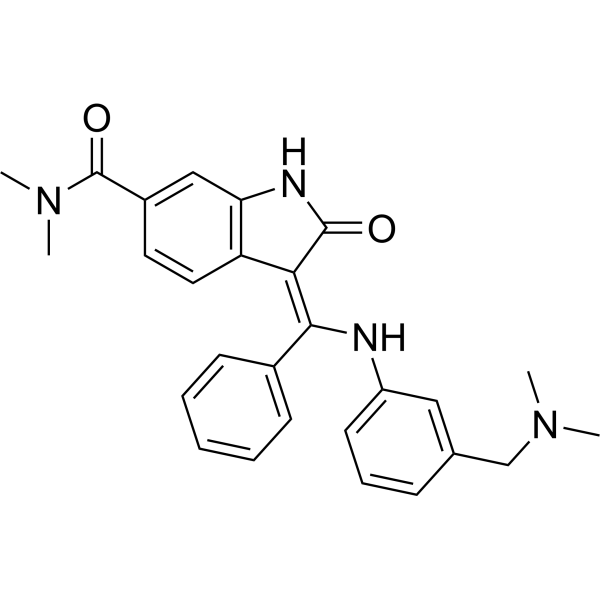
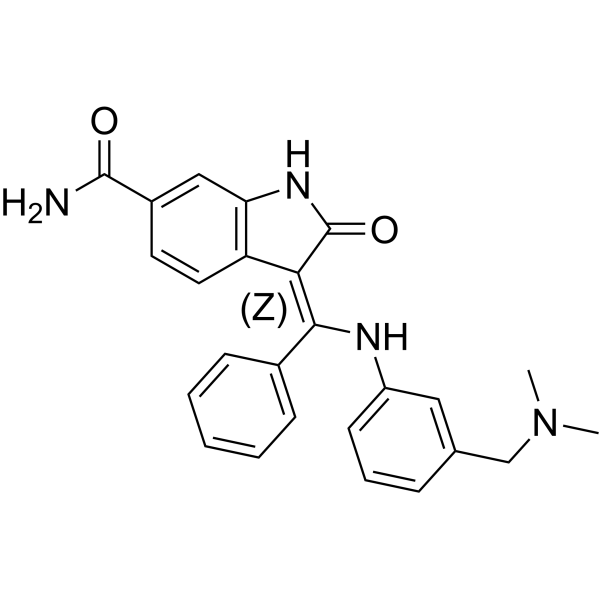
MEK5 (MAP2K5) is a dual-specificity MAPK kinase that functions as the direct upstream activator of ERK5/MAPK7, forming the core of the MEK5-ERK5 signaling module within the mitogen-activated protein kinase network[1][2]. Mechanistically, MEK5 is activated downstream of MEKK2 and MEKK3, and transmits signals that regulate cell survival, proliferation, differentiation, migration, and stress-responsive transcriptional programs through ERK5 activation[2][3]. The pathway is unusual among MAPK cascades because it responds to both mitogenic and stress-related stimuli, including cytokines, oxidative stress, osmotic stress, and fluid shear stress, linking environmental sensing to adaptive cellular responses[1]. In physiological systems, MEK5-ERK5 signaling has a prominent role in endothelial mechanotransduction and contributes to the maintenance of tissue integrity in mechanically stressed tissues such as bone, cartilage, and muscle[1]. In disease models, aberrant activation of the pathway has been associated with tumor cell survival, proliferation, therapeutic resistance, and adaptive signaling during targeted cancer treatment[1][4]. Compared with the closely related MEK1/2-ERK1/2 pathway, MEK5 exhibits distinct signaling specificity because MEK5 activates ERK5 but not ERK1/2, whereas MEK1/2 do not activate ERK5, supporting the functional separation of these parallel MAPK modules[4]. For experimental applications, selective MEK5 inhibitors such as BIX02189 are widely used to interrogate MEK5-ERK5 pathway function in cellular and disease models[4][5].
References:
- [1]. Paudel R, et al. The MEK5/ERK5 Pathway in Health and Disease. Int J Mol Sci. 2021 Jul 15;22(14):7594. [Content Brief]
- [2]. Le, et al. (2018). MEK5/ERK5. In: Choi, S. (eds) Encyclopedia of Signaling Molecules. Springer, Cham.
- [3]. Hoang VT, et al. Oncogenic signaling of MEK5-ERK5. Cancer Lett. 2017 Apr 28;392:51-59. [Content Brief]
- [4]. Cook SJ, et al. ERK5 Signalling and Resistance to ERK1/2 Pathway Therapeutics: The Path Less Travelled? Front Cell Dev Biol. 2022 Jul 12;10:839997. [Content Brief]
- [5]. Tatake RJ, O'Neill MM, Kennedy CA, Wayne AL, Jakes S, Wu D, Kugler SZ Jr, Kashem MA, Kaplita P, Snow RJ. Identification of pharmacological inhibitors of the MEK5/ERK5 pathway. Biochem Biophys Res Commun. 2008 Dec 5;377(1):120-5. [Content Brief]
All Product Categories
-
MEK5 Related Products (4)
Related Products (4)

-
GW284543 hydrochloride
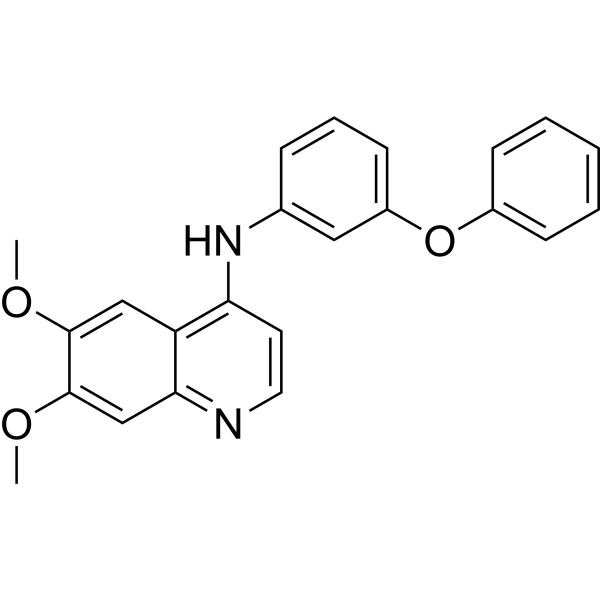
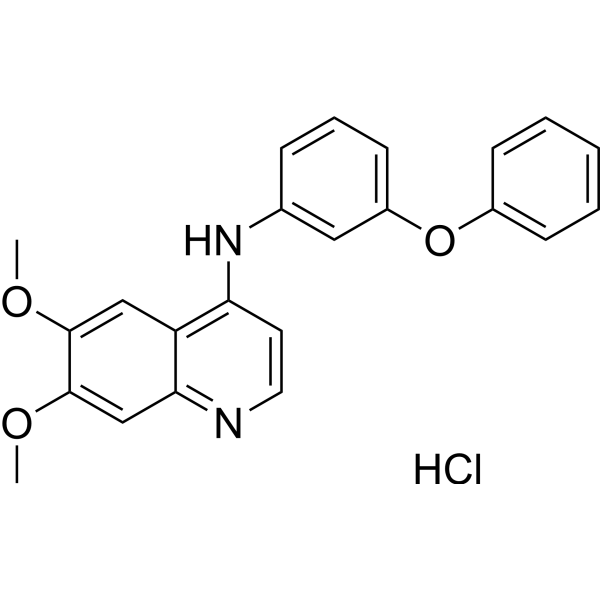 0 ImagesCat. No.: HY-114189ACAS No.: 179246-08-3Synonyms: UNC10225170 hydrochlorideGW284543 (UNC10225170) hydrochloride is a selective MEK5 inhibitor. GW284543 reduces pERK5, and decreases endogenous MYC protein.



