



BIX02189
Based on 12 publication(s) in Google Scholar
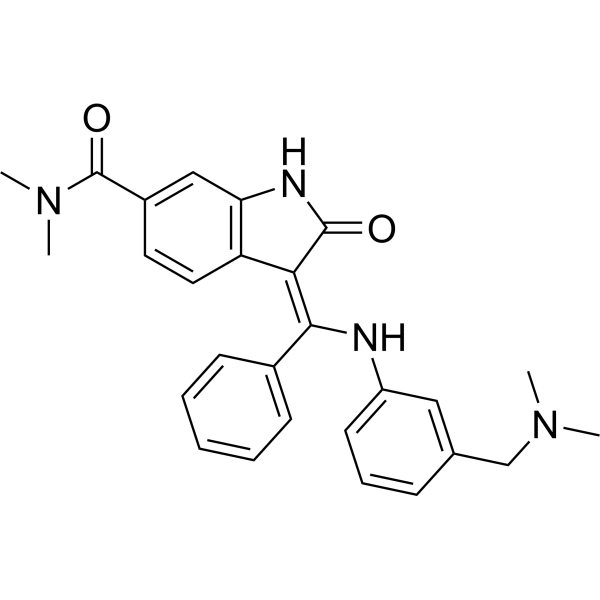
BIX02189 is a potent and selective MEK5 inhibitor with an IC50 of 1.5 nM. BIX02189 also inhibits ERK5 catalytic activity with an IC50 of 59 nM.
Nur für Forschungszwecke. Wir verkaufen nicht an Patienten.
- Reinheit : 99.72%
- CAS. Nr.: 1265916-41-3
- Formel: C27H28N4O2
- Molecular Weight:440.55
-
Speicherung:Powder -20°C, 3 years , 4°C, 2 years ; In solvent -80°C, 1 year , -20°C, 6 months

To place orders, for customer services and technical support, please contact: MedChemExpress USA
Tel: 609-228-6898 E-mail: [email protected] [email protected]


-
 Biologische Aktivität
-
Chemical Information
-
Lösungsmittel & Löslichkeit
- Reinheit & Dokumentation
- Verweise
-
 Help & FAQs


-
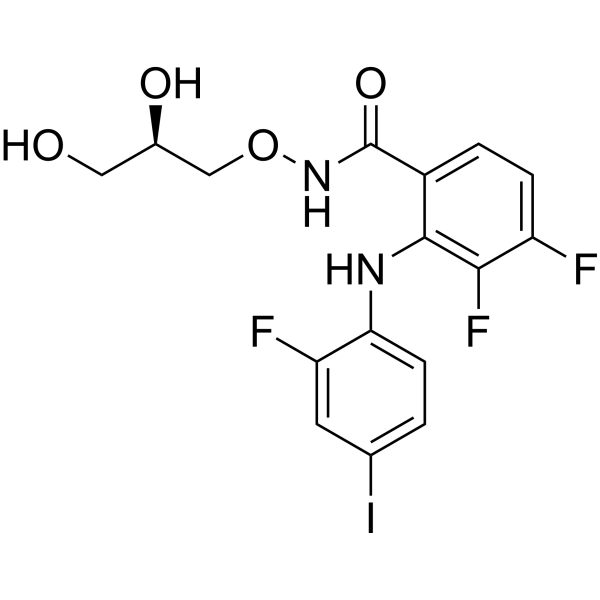
HY-10254
MirdametinibMEK Inhibitor -
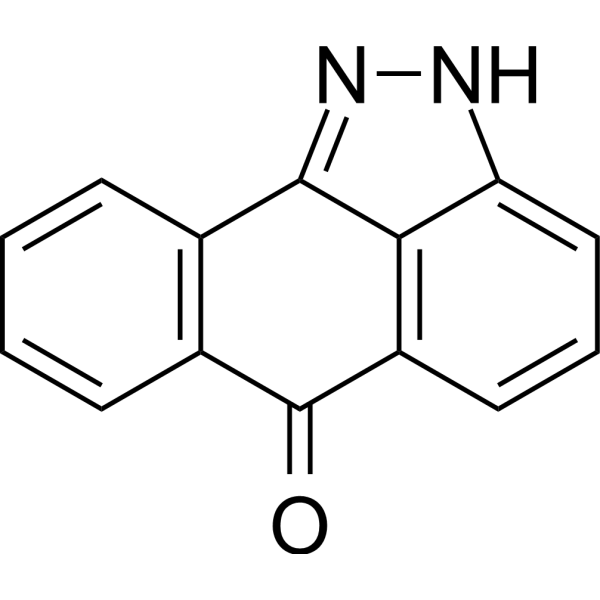
HY-12041
SP600125JNK Inhibitor -
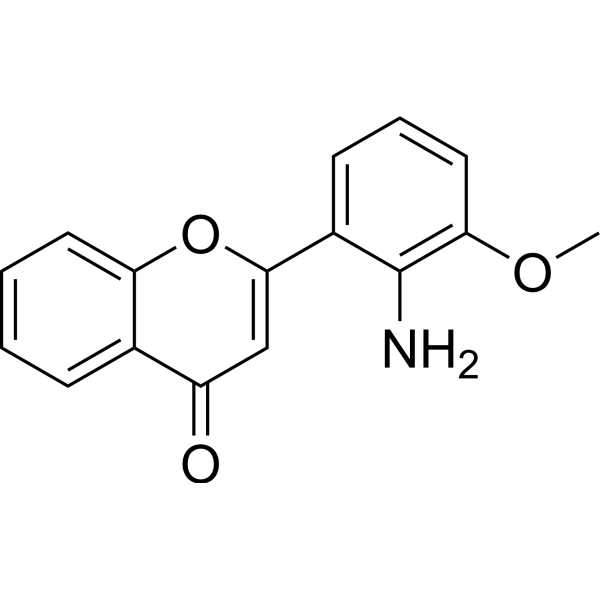
HY-12028
PD98059MEK Inhibitor -
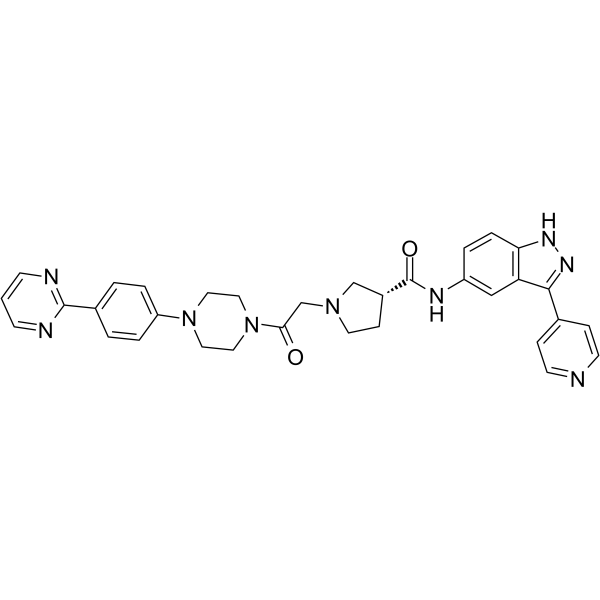
HY-50846
SCH772984ERK1/2 Inhibitor -
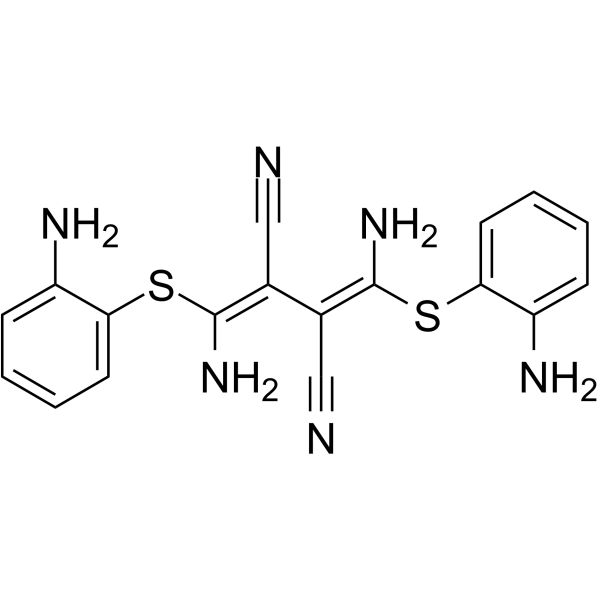
HY-12031A
U0126MEK1/2 Inhibitor -
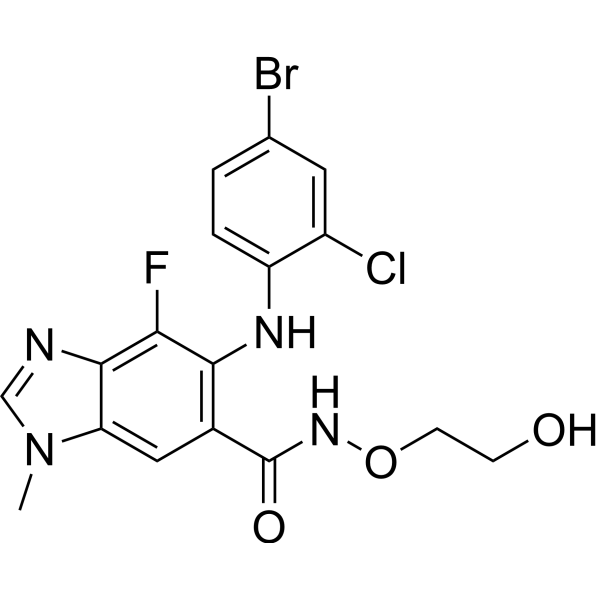
HY-50706
SelumetinibMEK1/2 Inhibitor -
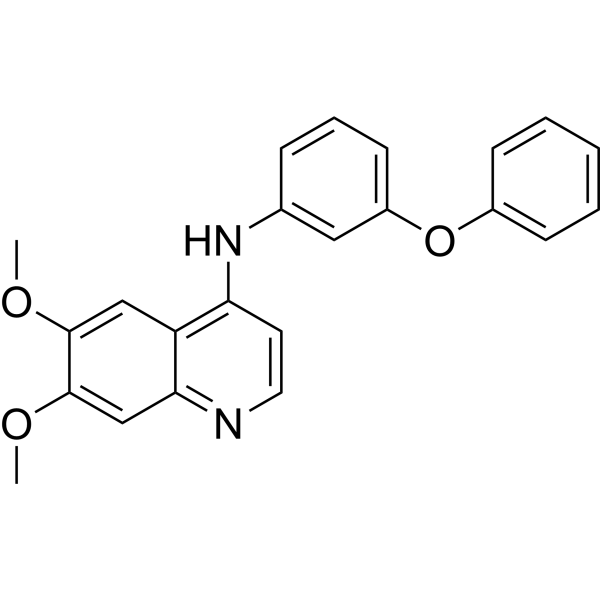
HY-114189
GW284543MEK5 Inhibitor -
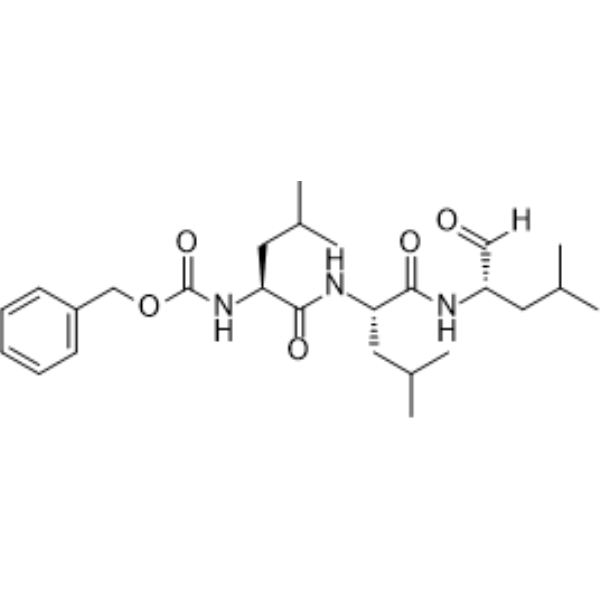
HY-13259
MG-132Proteasome Inhibitor -
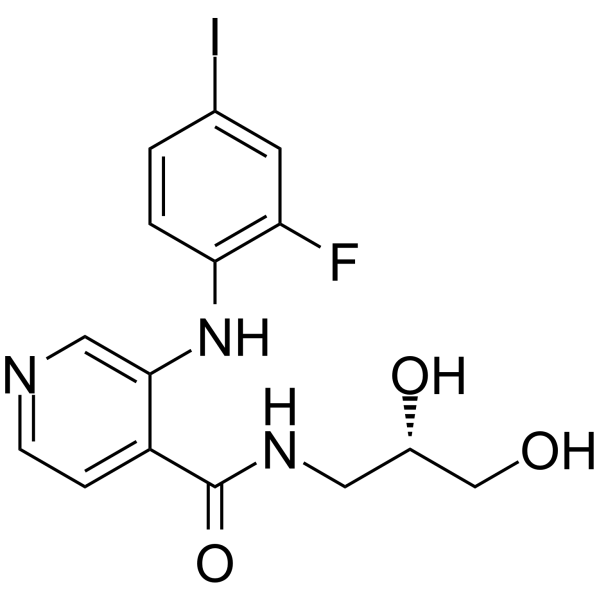
HY-12042
PimasertibMEK1/2 Inhibitor -
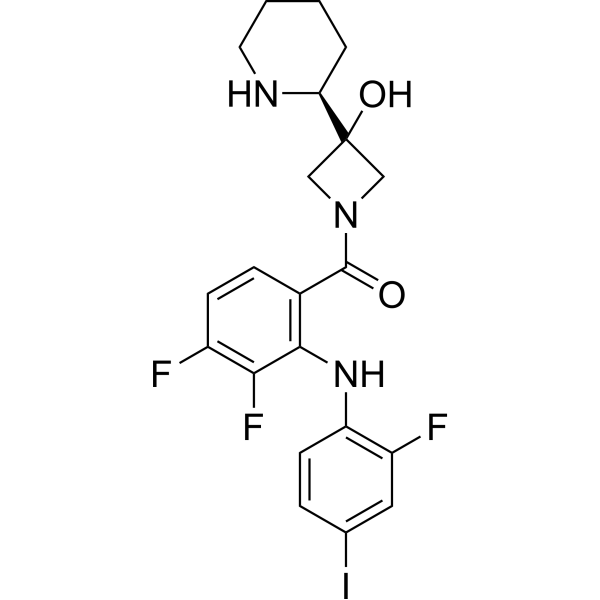
HY-13064
CobimetinibMEK1 Inhibitor -
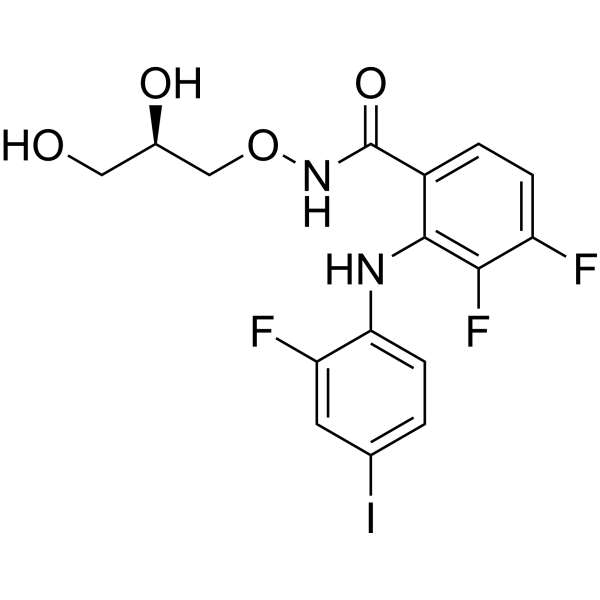
HY-10254G
Mirdametinib (GMP)MEK Inhibitor -
HY-10999
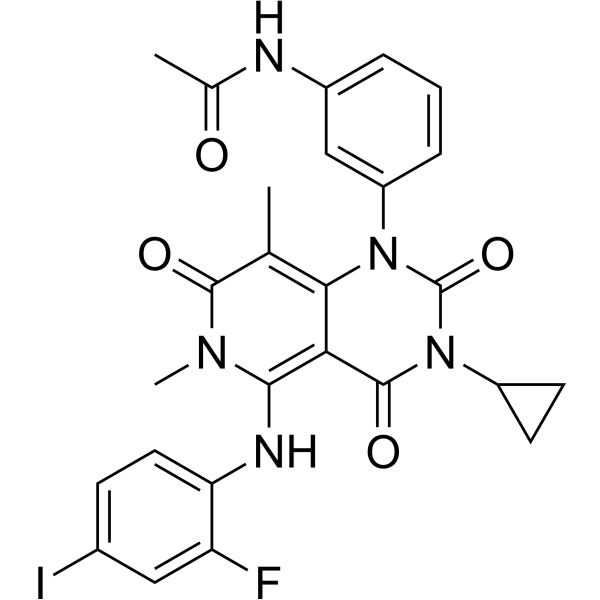
TrametinibMEK Inhibitor
Publications Citing Use of MedChemExpress (MCE) BIX02189
More- Cancer Lett. 2021 Oct 28:519:141-149. [Abstract]
- J Invest Dermatol. 2025 Jun;145(6):1422-1432.e10. [Abstract]
- Int Immunopharmacol. 2026 Jul 13:186:117133.
- Cell Oncol (Dordr). 2025 Jun;48(3):789-799. [Abstract]
- Stem Cell Reports. 2018 Oct 9;11(4):929-943. [Abstract]
- Mol Immunol. 2023 Oct:162:45-53. [Abstract]
- J Cancer Res Clin Oncol. 2022 Dec;148(12):3257-3266. [Abstract]
- FEBS Open Bio. 2022 Aug;12(8):1498-1508. [Abstract]
- International Journal of Biomedicine.2026;16(1);33-40.
- bioRxiv. 2026 Aug 7:2026.08.06.743109.
- Research Square Preprint. 2021 Dec.
- Universitat Autònoma de Barcelona. 2020 Oct.
 Customer Validation & Images

-
WB
Alle MEK Isoform-spezifische Produkte anzeigen
More

Biologische Aktivität
Beschreibung
IC50 & Target
[1]|
MEK5 1.5 nM (IC50) |
ERK5 59 nM (IC50) |
CSF1R (FMS) 46 nM (IC50) |
LCK 250 nM (IC50) |
JAK3 440 nM (IC50) |
TGFβR1 580 nM (IC50) |
RPS6KA6 (RSK4) 990 nM (IC50) |
RPS6KA3 (RSK2) 2.1 μM (IC50) |
FGFR1 1 μM (IC50) |
KIT 1.1 μM (IC50) |
ABL1 2.4 μM (IC50) |
MAPK14 (p38 alpha) 3.7 μM (IC50) |
SRC 7.6 μM (IC50) |
Cellular Effect
|
Cell Line

|
Type | Value | Description | References |
|---|---|---|---|---|
| HeLa | IC50 |
59 nM
Compound: BIX02189
|
Inhibition of ERK5 phosphorylation in sorbitol-stimulated human HeLa cells
Inhibition of ERK5 phosphorylation in sorbitol-stimulated human HeLa cells
|
[PMID: 23656407] |
In Vitro
BIX02189 blocks phosphorylation of ERK5, without affecting phosphorylation of ERK1/2 in sorbitol-stimulated HeLa cells. BIX02189 inhibits ERK5 phosphorylation in a dose dependent manner[1]. Fluvastatin reduces advanced glycation endproduct (AGE)-induced vascular smooth muscle cells (VSMCs) proliferation. To confirm this effect, VSMCs are treated with AGEs in the presence or absence of Fluvastatin and then subject to MTT assay. AGEs are found to dose-dependently induce cell proliferation, and this is significantly suppressed by Fluvastatin. In addition to MTT assay, the similar results are got with cell counting. This suppressive effect of Fluvastatin is prevented when VSMCs are pretreated with BIX02189. Whether ERK5 activation can reduce proliferation is also examined by using Ad-CA-MEK5α encoding a constitutively active mutant form of MEK5α (an upstream kinase of ERK5). AGE-induced proliferation determined by both MTT assay and cell counting is significantly diminished in the presence of Ad-CA-MEK5α, and Nrf2 depletion using siRNA restored AGE-induced proliferation[2].
MedChemExpress (MCE) has not independently confirmed the accuracy of these methods. They are for reference only. .
In Vivo
MedChemExpress (MCE) has not independently confirmed the accuracy of these methods. They are for reference only.


Chemical Information
-
CAS. Nr. 1265916-41-3
-
Appearance Solid
-
Molecular Weight 440.55
-
Formel C27H28N4O2
-
Color White to yellow
-
SMILES
O=C(N(C)C)C1=CC(NC2=O)=C(/C2=C(C3=CC=CC=C3)/NC4=CC=CC(CN(C)C)=C4)C=C1
-
Versand
Room temperature in continental US; may vary elsewhere.
-
Speicherung
Powder -20°C 3 years 4°C 2 years In solvent -80°C 1 year -20°C 6 months


Publications (12)
-
Journal Impact Factor
-
Most Recent
-
Cancer Lett
Inhibition of MEK5/ERK5 signaling overcomes acquired resistance to the third generation EGFR inhibitor, osimertinib, via enhancing Bim-dependent apoptosis. [Abstract]2021 Oct 28:519:141-149. PMID: 34245854 -
J Invest Dermatol
Trehalose Prevents IL-4/IL-13-Induced Skin Barrier Impairment by Suppressing IL-33 Expression and Increasing NRF2 Activation in Human Keratinocytes In Vitro. [Abstract]2025 Jun;145(6):1422-1432.e10. PMID: 39384017 -
-
Cell Oncol (Dordr)
The MEK5/ERK5 pathway promotes the activation of the Hedgehog/GLI signaling in melanoma cells. [Abstract]2025 Jun;48(3):789-799. PMID: 39998753 -
Stem Cell Reports
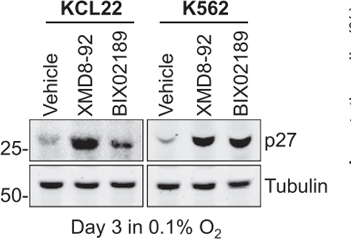
Targeting the Extracellular Signal-Regulated Kinase 5 Pathway to Suppress Human Chronic Myeloid Leukemia Stem Cells. [Abstract]2018 Oct 9;11(4):929-943. PMID: 30245209
BIX02189 purchased from MedChemExpress. Usage Cited in: Stem Cell Reports. 2018 Oct 9;11(4):929-943. [Abstract]
Immunoblotting of total cell lysates of CML cell lines; tubulin is a loading control; representative images from four independent experiments.
-
Mol Immunol
Melatonin enhances the ability of M2 macrophages to secrete IL10 by inhibiting Erk5 signaling pathway. [Abstract]2023 Oct:162:45-53. PMID: 37647773 -
J Cancer Res Clin Oncol
Aberrant MEK5 signalling promotes clear cell renal cell carcinoma development via mTOR activation. [Abstract]2022 Dec;148(12):3257-3266. PMID: 35713705 -
FEBS Open Bio
Ulinastatin promotes macrophage efferocytosis and ameliorates lung inflammation via the ERK5/Mer signaling pathway. [Abstract]2022 Aug;12(8):1498-1508. PMID: 35778889 -
-
-
-


Lösungsmittel & Löslichkeit
In Vitro:
DMSO : ≥ 49.4 mg/mL (112.13 mM; Hygroscopic DMSO has a significant impact on the solubility of product, please use newly opened DMSO)
* "≥" means soluble, but saturation unknown.
Please refer to the solubility information to select the appropriate solvent. Once prepared, please aliquot and store the solution to prevent product inactivation from repeated freeze-thaw cycles.
Storage method and period of stock solution: -80°C, 1 year; -20°C, 6 months. When stored at -80°C, please use it within 1 year. When stored at -20°C, please use it within 6 months.
Please refer to the solubility information to select the appropriate solvent. Once prepared, please aliquot and store the solution to prevent product inactivation from repeated freeze-thaw cycles.
Storage method and period of stock solution: -80°C, 1 year; -20°C, 6 months. When stored at -80°C, please use it within 1 year. When stored at -20°C, please use it within 6 months.
Konzentration (Stammlösung) × Volumen (Stammlösung) = Konzentration (Ziellösung) × Volumen (Ziellösung)
In Vivo:
Select the appropriate dissolution method based on your experimental animal and administration route.
- For the following dissolution methods, please ensure to first prepare a clear stock solution using an In Vitro approach and then sequentially add co-solvents:
- To ensure reliable experimental results, the clarified stock solution can be appropriately stored based on storage conditions. As for the working solution for In Vivo experiments, it is recommended to prepare freshly and use it on the same day.
- The percentages shown for the solvents indicate their volumetric ratio in the final prepared solution. If precipitation or phase separation occurs during preparation, heat and/or sonication can be used to aid dissolution.
Add each solvent one by one: 10% DMSO 40% PEG300 5% Tween-80 45% Saline
Solubility: ≥ 2.5 mg/mL (5.67 mM); Clear solution
This protocol yields a clear solution of ≥ 2.5 mg/mL (saturation unknown).
Taking 1 mL working solution as an example, add 100 μL DMSO stock solution (25.0 mg/mL) to 400 μL PEG300, and mix evenly; then add 50 μL Tween-80 and mix evenly; then add 450 μL Saline to adjust the volume to 1 mL.
Preparation of Saline: Dissolve 0.9 g sodium chloride in ddH₂O and dilute to 100 mL to obtain a clear Saline solution.
Add each solvent one by one: 10% DMSO 90% (20% SBE-β-CD in Saline)
Solubility: ≥ 2.5 mg/mL (5.67 mM); Clear solution
This protocol yields a clear solution of ≥ 2.5 mg/mL (saturation unknown).
Taking 1 mL working solution as an example, add 100 μL DMSO stock solution (25.0 mg/mL) to 900 μL 20% SBE-β-CD in Saline, and mix evenly.
Preparation of 20% SBE-β-CD in Saline (4°C, storage for one week): 2 g SBE-β-CD powder is dissolved in 10 mL Saline, completely dissolve until clear.
In Vivo Dissolution Calculator
Please enter the basic information of animal experiments:
-
-
-
-
Recommended: Prepare an additional quantity of animals to account for potential losses during experiments.
Please enter your animal formula composition:
-
%DMSO +
Recommended: Keep the proportion of DMSO in working solution below 2% if your animal is weak.
-
%+
-
+%Tween-80 + +
-
%Saline +
The co-solvents required include: DMSO, . All of co-solvents are available by MedChemExpress (MCE). , Tween 80. All of co-solvents are available by MedChemExpress (MCE).
Working solution concentration: 0.22 mg/mL
Method for preparing stock solution: mg drug dissolved in μL DMSO. Stock solution concentration: mg/mL.
1. Take μL DMSO stock solution;
2. Add μL .
μL , mix evenly;
3. Then add μL Tween 80, mix evenly;
4. Then add μL
Please ensure that the stock solution in the first step is dissolved to a clear state, and add co-solvents in sequence. You can use ultrasonic heating (ultrasonic cleaner, recommended frequency 20-40 kHz), vortexing, etc. to assist dissolution.


Reinheit & Dokumentation
-
Data Sheet (283 KB)
-
SDS (396 KB)
- English - EN (396 KB)
- Français - FR (396 KB)
- Deutsch - DE (396 KB)
- Norwegian - NO (396 KB)
- Español - ES (396 KB)
- Swedish - SV (396 KB)
- Italian - IT (396 KB)
- Korean - KR (396 KB)
- Portuguese - PT (396 KB)
-
Handling Instructions (2659 KB)
Verweise
[1]. Tatake RJ, et al. Identification of pharmacological inhibitors of the MEK5/ERK5 pathway. Biochem Biophys Res Commun. 2008 Dec 5;377(1):120-5. [Content Brief]
[2]. Hwang AR, et al. Fluvastatin inhibits AGE-induced cell proliferation and migration via an ERK5-dependent Nrf2 pathway in vascular smooth muscle cells. PLoS One. 2017 May 22;12(5):e0178278. [Content Brief]
[3]. Kim M, et al. Laminar flow activation of ERK5 protein in vascular endothelium leads to atheroprotective effect via NF-E2-related factor 2 (Nrf2) activation. J Biol Chem. 2012 Nov 23;287(48):40722-31. [Content Brief]


Complete Stock Solution Preparation Table
Please refer to the solubility information to select the appropriate solvent. Once prepared, please aliquot and store the solution to prevent product inactivation from repeated freeze-thaw cycles.
Storage method and period of stock solution: -80°C, 1 year; -20°C, 6 months. When stored at -80°C, please use it within 1 year. When stored at -20°C, please use it within 6 months.
| Optional Solvent | Concentration Solvent Mass | 1 mg | 5 mg | 10 mg | 25 mg |
|---|---|---|---|---|---|
| DMSO | 1 mM | 2.2699 mL | 11.3494 mL | 22.6989 mL | 56.7472 mL |
| 5 mM | 0.4540 mL | 2.2699 mL | 4.5398 mL | 11.3494 mL | |
| 10 mM | 0.2270 mL | 1.1349 mL | 2.2699 mL | 5.6747 mL | |
| 15 mM | 0.1513 mL | 0.7566 mL | 1.5133 mL | 3.7831 mL | |
| 20 mM | 0.1135 mL | 0.5675 mL | 1.1349 mL | 2.8374 mL | |
| 25 mM | 0.0908 mL | 0.4540 mL | 0.9080 mL | 2.2699 mL | |
| 30 mM | 0.0757 mL | 0.3783 mL | 0.7566 mL | 1.8916 mL | |
| 40 mM | 0.0567 mL | 0.2837 mL | 0.5675 mL | 1.4187 mL | |
| 50 mM | 0.0454 mL | 0.2270 mL | 0.4540 mL | 1.1349 mL | |
| 60 mM | 0.0378 mL | 0.1892 mL | 0.3783 mL | 0.9458 mL | |
| 80 mM | 0.0284 mL | 0.1419 mL | 0.2837 mL | 0.7093 mL | |
| 100 mM | 0.0227 mL | 0.1135 mL | 0.2270 mL | 0.5675 mL |


BIX02189 Related Classifications
HY-12056 Related Classifications
 Powered by Bioz