



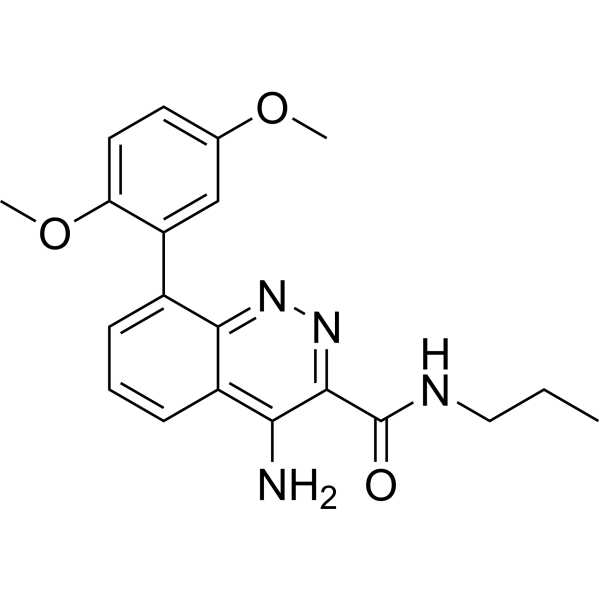
AZD6280

Based on 1 Customer Validation
AZD6280 is an orally active, blood-brain barrier-permeable GABAA receptor modulator, with Ki values of 21 nM, 31 nM and 1680 nM against human receptors containing α2, α3 and α5 subtypes, respectively, and subtype-specific Ki values of < 30 nM for α2 and α3 subtypes. AZD6280 selectively potentiates GABAA receptors containing α2/α3 subtypes with higher potency than α1/α5 subtypes, exerts no modulatory effect on receptors containing α1 subtypes, and regulates the tuberoinfundibular dopaminergic pathway. AZD6280 decreases peak saccadic velocity, increases serum and plasma prolactin levels, rescues dendritic abnormalities of cortical neurons induced by DISC1 knockdown. AZD6280 can be used in studies related to anxiety disorders.
연구목적의 판매만을 진행합니다. 환자를 대상으로 한 판매는 하지 않습니다.
- Purity : 98.49%
- CAS No.: 942436-93-3
- 화학식: C20H22N4O3
- 분자량:366.41
-
보관:Powder -20°C, 3 years , 4°C, 2 years ; In solvent -80°C, 2 years , -20°C, 1 year

To place orders, for customer services and technical support, please contact: MedChemExpress USA
Tel: 609-228-6898 E-mail: [email protected] [email protected]


-
 Biological Activity
-
Chemical Information
-
용액&용해도
- Protocol
- 순도&문서
- References
-
 Help & FAQs


-
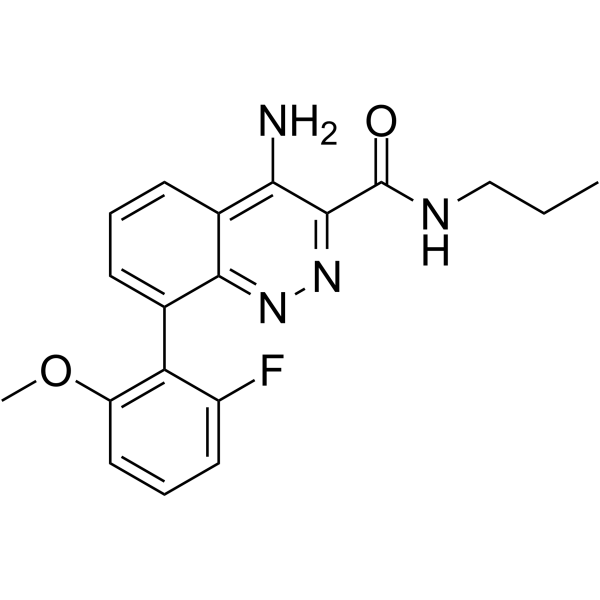
HY-111052
AZD7325GABAA Receptor Modulator -
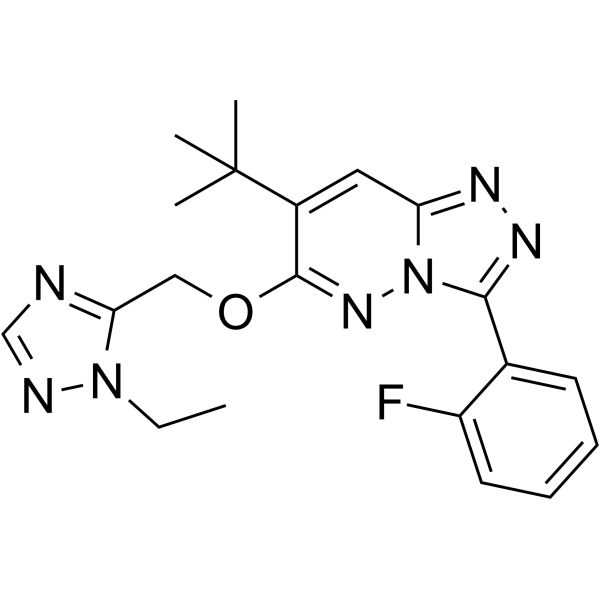
HY-101640
TPA 023GABAAalpha2/3 Agonist -
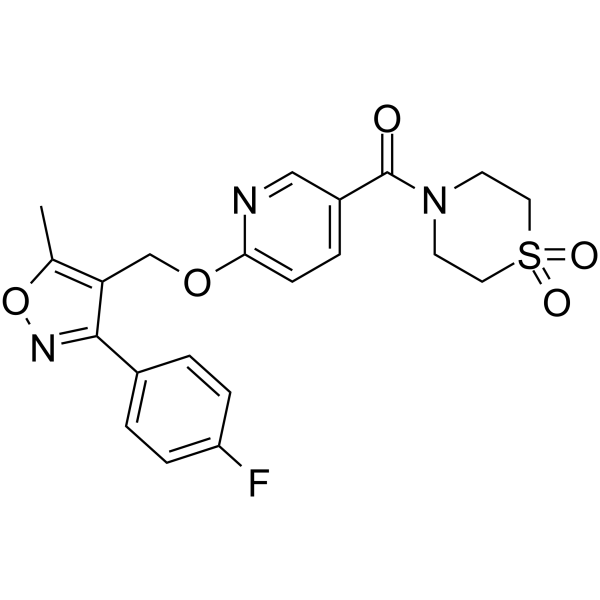
HY-16716
BasmisanilGABAAα5 NAMs -
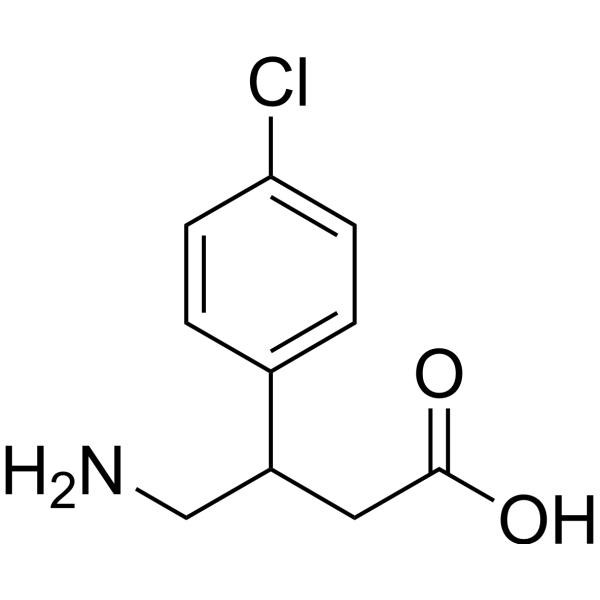
HY-B0007
BaclofenGABABR Agonist -
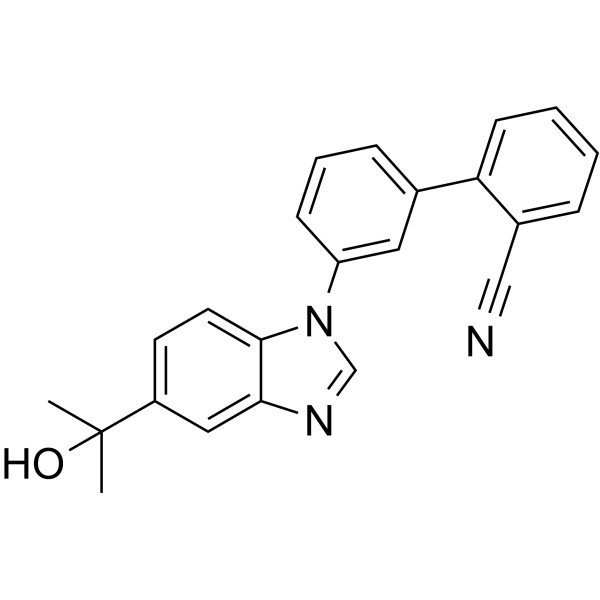
HY-11048
NS11394GABAA PAM -
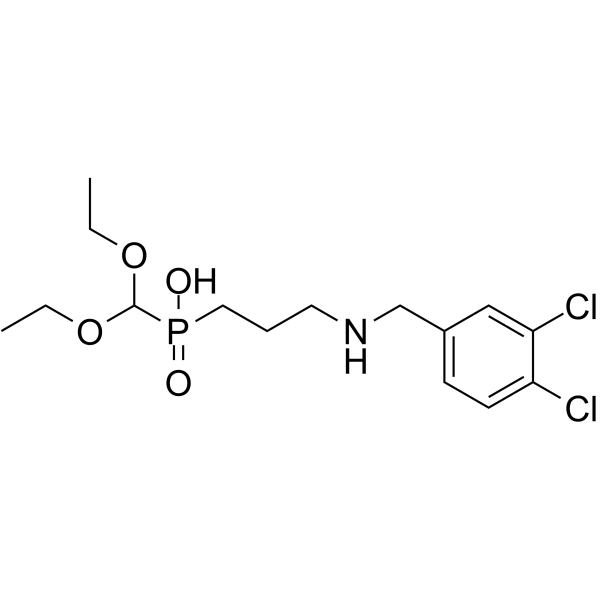
HY-103531
CGP52432GABAB Antagonist -
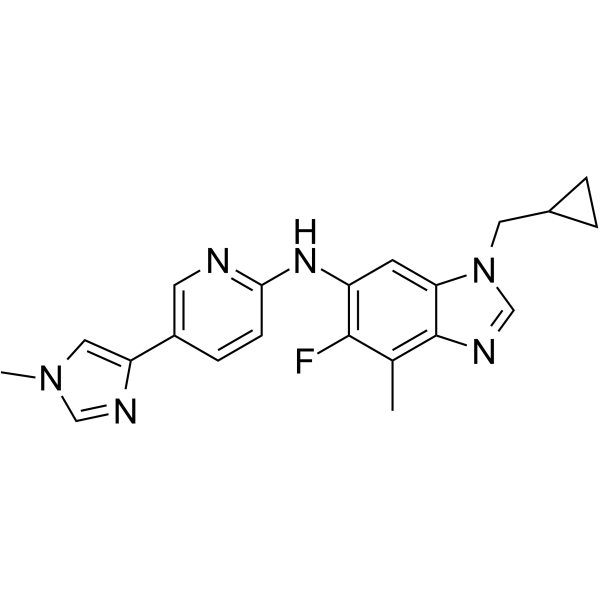
HY-112788
ONO-8590580 -
HY-B1715
OxiracetamNootropic Agent -
HY-B0696
TiagabineGAT-1 Inhibitor -
HY-B0696A
Tiagabine hydrochlorideGAT-1 Inhibitor -
HY-B1122
L-CycloserineHIV Inhibitor -
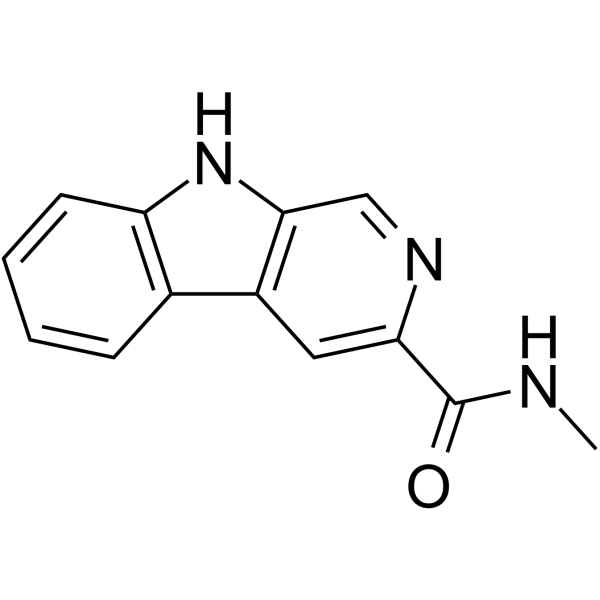
HY-100991
FG 7142GABAA Receptor Inhibitor


Biological Activity
제품 설명
|
14298 21 nM (Ki) |
14299 31 nM (Ki) |
14300 1.68 μM (Ki) |
In Vitro
AZD6280 (1 µM) shows high binding selectivity for α1, α2, and α3 over α5-containing human recombinant GABAA receptors, and acts as a positive modulator with preferential efficacy at α2 and α3 subtypes, while having no efficacy at α1 and minimal efficacy at α5 subtypes[1].
AZD6280 acts as a partial, subtype-selective GABAAα2,3 receptor positive modulator with high affinity for α1, α2, and α3 subunits, low affinity for α5 subunits, and 32-34% of the maximal diazepam response at α2β3γ2 and α3β3γ2 subtypes[3].
AZD6280 is a potent, selective GABAA α2/3 receptor modulator with a Ki < 30 nM for GABAA α2/3 subunits and low affinity for GABAA α5 subunits[4].
AZD6280 (0.1 μM; 7 days) reverses DISC1 knockdown-induced dendritic deficits in primary cultured cortical neurons, restoring dendrite branch count, total length, and complexity to near-control levels[6].
MedChemExpress (MCE) has not independently confirmed the accuracy of these methods. They are for reference only.
In Vivo
MedChemExpress (MCE) has not independently confirmed the accuracy of these methods. They are for reference only.
-
Animal Model:Wistar Hanover rats (male and female; intact and bile duct-cannulated)[7]
-
Dosage:7 mg/kg (oral); 1 mg/kg (i.v.)
-
Administration:p.o.; single dose; i.v.; single dose
-
Result:Achieved mean overall recovery of total radioactivity of 97.4% in male rats and 99.8% in female rats after oral administration, with 7.3% and 13.2% recovered in urine, 88.8% and 85.1% in faeces, respectively.
Achieved mean overall recovery of total radioactivity of 101% in male rats and 99.5% in female rats after i.v. administration, with 8.0% and 11.9% recovered in urine, 91.7% and 85.6% in faeces, respectively.
Achieved 98.9% overall recovery in BDC male rats after oral administration, with 17.7% in urine, 7.6% in faeces, and 72.4% in bile.
Achieved 99.1% overall recovery in BDC male rats after i.v. administration, with 12.5% in urine, 4.5% in faeces, and 81.1% in bile.
Reached mean Cmax of 1.3 μM, Tmax of 0.8 h, terminal half-life of 2.6 h, and AUC(0-24h) of 5.9 μM·h in male rats after single 7 mg/kg oral dose.
Reached mean Cmax of 3.0 μM, Tmax of 1.2 h, terminal half-life of 5.7 h, and AUC(0-24h) of 23.9 μM·h in female rats after single 7 mg/kg oral dose.
Underwent extensive biotransformation, with 28 metabolites detected in urine, bile, and faeces, and no unchanged parent drug detected in excreta.
Clinical Trial
| NCT Number | Sponsor | Condition | Start Date |
Phase

|
|---|---|---|---|---|
| NCT01329991 | Plexxikon| | 2011-05 | PHASE1 |


Chemical Information
-
CAS No. 942436-93-3
-
Appearance Solid
-
분자량 366.41
-
화학식 C20H22N4O3
-
Color Light yellow to yellow
-
SMILES
O=C(C1=NN=C2C(C3=CC(OC)=CC=C3OC)=CC=CC2=C1N)NCCC
-
선적
Room temperature in continental US; may vary elsewhere.
-
보관
Powder -20°C 3 years 4°C 2 years In solvent -80°C 2 years -20°C 1 year


용액&용해도
In Vitro:
DMSO : 62.5 mg/mL (170.57 mM; Need ultrasonic; Hygroscopic DMSO has a significant impact on the solubility of product, please use newly opened DMSO)
Please refer to the solubility information to select the appropriate solvent. Once prepared, please aliquot and store the solution to prevent product inactivation from repeated freeze-thaw cycles.
Storage method and period of stock solution: -80°C, 2 years; -20°C, 1 year. When stored at -80°C, please use it within 2 years. When stored at -20°C, please use it within 1 year.
Please refer to the solubility information to select the appropriate solvent. Once prepared, please aliquot and store the solution to prevent product inactivation from repeated freeze-thaw cycles.
Storage method and period of stock solution: -80°C, 2 years; -20°C, 1 year. When stored at -80°C, please use it within 2 years. When stored at -20°C, please use it within 1 year.
Concentration (start) × Volume (start) = Concentration (final) × Volume (final)
In Vivo:
Select the appropriate dissolution method based on your experimental animal and administration route.
- For the following dissolution methods, please ensure to first prepare a clear stock solution using an In Vitro approach and then sequentially add co-solvents:
- To ensure reliable experimental results, the clarified stock solution can be appropriately stored based on storage conditions. As for the working solution for In Vivo experiments, it is recommended to prepare freshly and use it on the same day.
- The percentages shown for the solvents indicate their volumetric ratio in the final prepared solution. If precipitation or phase separation occurs during preparation, heat and/or sonication can be used to aid dissolution.
Add each solvent one by one: 10% DMSO 40% PEG300 5% Tween-80 45% Saline
Solubility: ≥ 2.08 mg/mL (5.68 mM); Clear solution
This protocol yields a clear solution of ≥ 2.08 mg/mL (saturation unknown).
Taking 1 mL working solution as an example, add 100 μL DMSO stock solution (20.8 mg/mL) to 400 μL PEG300, and mix evenly; then add 50 μL Tween-80 and mix evenly; then add 450 μL Saline to adjust the volume to 1 mL.
Preparation of Saline: Dissolve 0.9 g sodium chloride in ddH₂O and dilute to 100 mL to obtain a clear Saline solution.
In Vivo Dissolution Calculator
Please enter the basic information of animal experiments:
-
-
-
-
Recommended: Prepare an additional quantity of animals to account for potential losses during experiments.
Please enter your animal formula composition:
-
%DMSO +
Recommended: Keep the proportion of DMSO in working solution below 2% if your animal is weak.
-
%+
-
+%Tween-80 + +
-
%Saline +
The co-solvents required include: DMSO, . All of co-solvents are available by MedChemExpress (MCE). , Tween 80. All of co-solvents are available by MedChemExpress (MCE).
Working solution concentration: 0.22 mg/mL
Method for preparing stock solution: mg drug dissolved in μL DMSO. Stock solution concentration: mg/mL.
1. Take μL DMSO stock solution;
2. Add μL .
μL , mix evenly;
3. Then add μL Tween 80, mix evenly;
4. Then add μL
Please ensure that the stock solution in the first step is dissolved to a clear state, and add co-solvents in sequence. You can use ultrasonic heating (ultrasonic cleaner, recommended frequency 20-40 kHz), vortexing, etc. to assist dissolution.


순도&문서
-
Data Sheet (281 KB)
-
SDS (254 KB)
- English - EN (254 KB)
- Français - FR (254 KB)
- Deutsch - DE (254 KB)
- Norwegian - NO (254 KB)
- Español - ES (254 KB)
- Swedish - SV (254 KB)
- Italian - IT (254 KB)
- Korean - KR (254 KB)
- Portuguese - PT (254 KB)
-
Handling Instructions (2659 KB)
References
[1]. Chen X, et al. Human pharmacology of positive GABA-A subtype-selective receptor modulators for the treatment of anxiety. Acta pharmacologica Sinica. 2019 May;40(5):571-582. [Content Brief]
[2]. Te Beek ET, et al. The effects of the nonselective benzodiazepine lorazepam and the α2 /α3 subunit-selective GABAA receptor modulators AZD7325 and AZD6280 on plasma prolactin levels. Clinical pharmacology in drug development. 2015 Mar;4(2):149-54. [Content Brief]
[3]. Jucaite A, et al. GABA receptor occupancy by subtype selective GABA modulators: PET studies in humans. Psychopharmacology. 2017 Feb;234(4):707-716. [Content Brief]
[5]. Chen X, et al. AZD6280, a novel partial γ-aminobutyric acid A receptor modulator, demonstrates a pharmacodynamically selective effect profile in healthy male volunteers. Journal of clinical psychopharmacology. 2015 Feb;35(1):22-33. [Content Brief]
[6]. Saito A, et al. Early postnatal GABAA receptor modulation reverses deficits in neuronal maturation in a conditional neurodevelopmental mouse model of DISC1. Molecular psychiatry. 2016 Oct;21(10):1449-59. [Content Brief]


Complete Stock Solution Preparation Table
Please refer to the solubility information to select the appropriate solvent. Once prepared, please aliquot and store the solution to prevent product inactivation from repeated freeze-thaw cycles.
Storage method and period of stock solution: -80°C, 2 years; -20°C, 1 year. When stored at -80°C, please use it within 2 years. When stored at -20°C, please use it within 1 year.
| Optional Solvent | Concentration Solvent Mass | 1 mg | 5 mg | 10 mg | 25 mg |
|---|---|---|---|---|---|
| DMSO | 1 mM | 2.7292 mL | 13.6459 mL | 27.2918 mL | 68.2296 mL |
| 5 mM | 0.5458 mL | 2.7292 mL | 5.4584 mL | 13.6459 mL | |
| 10 mM | 0.2729 mL | 1.3646 mL | 2.7292 mL | 6.8230 mL | |
| 15 mM | 0.1819 mL | 0.9097 mL | 1.8195 mL | 4.5486 mL | |
| 20 mM | 0.1365 mL | 0.6823 mL | 1.3646 mL | 3.4115 mL | |
| 25 mM | 0.1092 mL | 0.5458 mL | 1.0917 mL | 2.7292 mL | |
| 30 mM | 0.0910 mL | 0.4549 mL | 0.9097 mL | 2.2743 mL | |
| 40 mM | 0.0682 mL | 0.3411 mL | 0.6823 mL | 1.7057 mL | |
| 50 mM | 0.0546 mL | 0.2729 mL | 0.5458 mL | 1.3646 mL | |
| 60 mM | 0.0455 mL | 0.2274 mL | 0.4549 mL | 1.1372 mL | |
| 80 mM | 0.0341 mL | 0.1706 mL | 0.3411 mL | 0.8529 mL | |
| 100 mM | 0.0273 mL | 0.1365 mL | 0.2729 mL | 0.6823 mL |


AZD6280 Related Classifications
HY-19872 Related Classifications
 Powered by Bioz
Keywords
- AZD6280
- 942436-93-3
- AZD 6280
- AZD-6280
- GABA Receptor
- α2-containing GABAA receptor subtypes
- α5-containing GABAA receptor subtypes
- anxiety disorders
- GABAA receptor
- tuberoinfundibular dopaminergic pathway
- cortical neurons
- human recombinant GABA(A) receptors
- DISC1
- α3-containing GABAA receptor subtypes
- Wistar Hanover rats
- Inhibitor
- inhibitor
- inhibit