1. Search Result
Search Result
Isoforms Recommended: Cathepsin S
Results for "

cathepsins

" in MedChemExpress (MCE) Product Catalog:

311

Inhibitors & Agonists

1

Screening Libraries

6

Fluorescent Dyes

9

Biochemical Assay Reagents

67

Peptides

1

Inhibitory Antibodies

16

Natural
Products

2

Recombinant Proteins

2

Isotope-Labeled Compounds

1

Antibodies

13

Click Chemistry

1

Oligonucleotides

2

GMP Molecules

Cat. No. Product Name Target Research Areas Chemical Structure
  • HY-20336
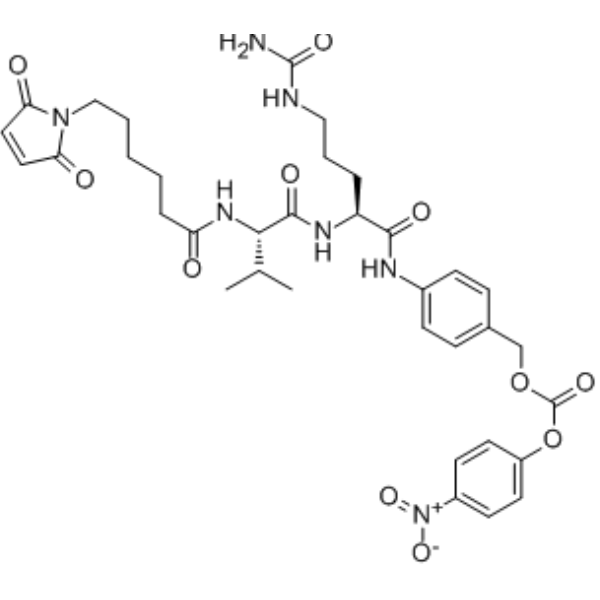
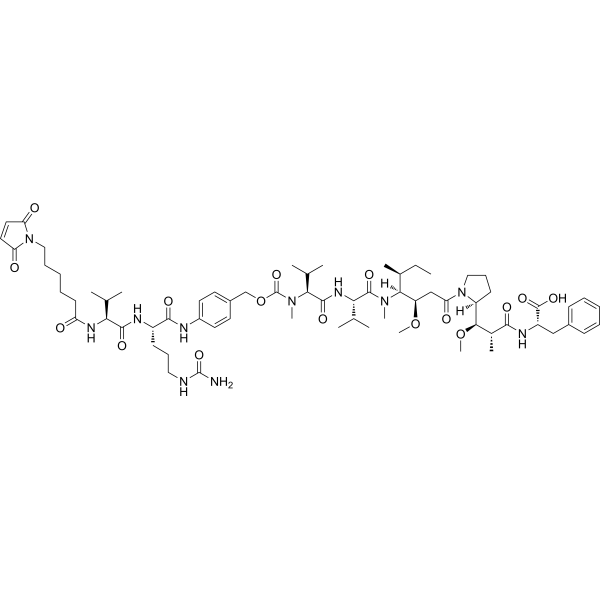
    Mc-Val-Cit-PABC-PNP
    5+ Cited Publications

    Maleimidocaproyl-L-valine-L-citrulline-p-aminobenzyl alcohol p-nitrophenyl carbonate

    ADC Linker Others Inflammation/Immunology Cancer
    Mc-Val-Cit-PABC-PNP is a cathepsin cleavable linker for antibody-drug conjugates (ADCs) which couples the antibody element to the effecting compound. Mc-Val-Cit-PABC-PNP can be used in the synthesis of ADCs .
    Mc-Val-Cit-PABC-PNP
  • HY-103351

    Cathepsin Inflammation/Immunology
    Cathepsin G Inhibitor I (Compound 7) is a potent, selective, reversible, competitive, non-peptidic Cathepsin G inhibitor (IC50 = 53 nM; Ki = 63 nM). Cathepsin G Inhibitor I can be used in research related to immune disorders .
    Cathepsin G Inhibitor I
  • HY-134434
    Z-Arg-Arg-AMC hydrochloride
    1 Publications Verification

    Cathepsin Fluorescent Dye Others
    Z-Arg-Arg-AMC hydrochloride is a highly selective fluorescent Cathepsin B substrate. Z-Arg-Arg-AMC hydrochloride can be hydrolyzed by Cathepsin B to produce a fluorescent product for enzyme activity detection .
    Z-Arg-Arg-AMC hydrochloride
  • HY-128971
    LHVS
    3 Publications Verification

    Cathepsin Parasite Infection Neurological Disease
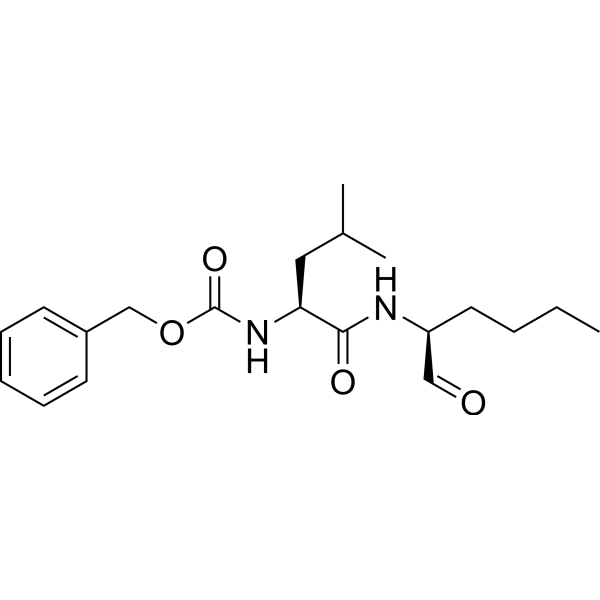
    LHVS is a potent, non-selective, irreversible, cell-permeable cysteine protease and cathepsin inhibitor. LHVS decreases actin ring formation. LHVS inhibits T. gondii invasion with an IC50 of 10 μM .
    LHVS
  • HY-P1759

    Z-FR-AMC

    Cathepsin Others
    N-CBZ-Phe-Arg-AMC (Z-FR-AMC) is a cathepsin substrate used in assessment activity of lysosomal cathepsin enzymes .
    N-CBZ-Phe-Arg-AMC
  • HY-N2905
    Aurantiamide acetate
    3 Publications Verification

    Asperglaucide

    Cathepsin Inflammation/Immunology
    Aurantiamide acetate (TMC-58A) is a selective and orally active cathepsin inhibitor isolated from Portulaca oleracea L. Aurantiamide acetate has anti-inflammatory activities and can be used for the study of inflammatory diseases .
    Aurantiamide acetate
  • HY-15100
    Balicatib
    2 Publications Verification

    AAE581

    Cathepsin Inflammation/Immunology
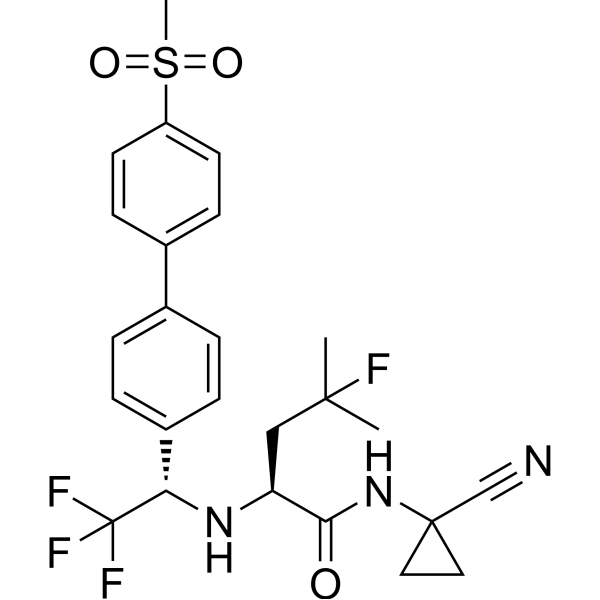
    Balicatib (AAE581) is a potent, orally active and selective cathepsin K inhibitor with IC50 values of 22, 61, 48, 2900 nM for cathepsin K, cathepsin B, cathepsin L, cathepsin S, respectively. Balicatib inhibits bone turnover, decreases bone formation rates. Balicatib has the potential for the research of osteoporosis .
    Balicatib
  • HY-137841

    Arginine 4-methyl-7-coumarylamide hydrochloride

    Cathepsin Others
    L-Arginine-7-amido-4-methylcoumarin (Arginine 4-methyl-7-coumarylamide) hydrochloride is a specific substrate of cathepsin H but not for cathepsins L and B .
    L-Arginine-7-amido-4-methylcoumarin hydrochloride
  • HY-101779

    Glycosidase Others
    DCG04 is a multivalent ligand for the mannose-6-phosphate receptor. DCG-04 is an activity-based probe for cysteine cathepsins, and can be used for labelling numerous cysteine cathepsins in cell and tissue lysates .
    DCG04
  • HY-103352

    L-235

    Cathepsin Metabolic Disease
    L-006235 (L-235) is a potent, selective, reversible and orally active inhibitor of cathepsin K, with an IC50 of 5 nM in bone resorption assay. L-006235 shows selectivity for cathepsin K (Ki=0.2 nM) over cathepsin B, cathepsin L, and cathepsin S (Ki=1, 6, and 47 μM, respectively). L-006235 can reduce collagen degradation and prevent bone loss .
    L-006235
  • HY-142021

    Cathepsin Parasite Infection Inflammation/Immunology
    Z-Leu-Arg-AMC is a fluorogenic peptide substrate for cysteine proteases (e.g., Cathepsin) (Ex=350 nm,Em=460 nm). Z-Leu-Arg-AMC is preferentially cleaved by Cathepsin K and S under weakly acidic conditions, while its hydrolysis relies on residual Cathepsin S activity at neutral pH. Z-Leu-Arg-AMC serves as a substrate for recombinant Sphenophorus levis Cathepsin L, falcipain-2, falcipain-3, berghepain-2, knowlepain-2, vivapain-2, as well as falcipain-2 chimeras and constructs. It enables quantitative detection of cysteine protease activity in human inflammatory bronchoalveolar lavage fluid via fluorescence generation. Z-Leu-Arg-AMC can be used in research related to pulmonary inflammatory diseases and malaria .
    Z-Leu-Arg-AMC
  • HY-P0111
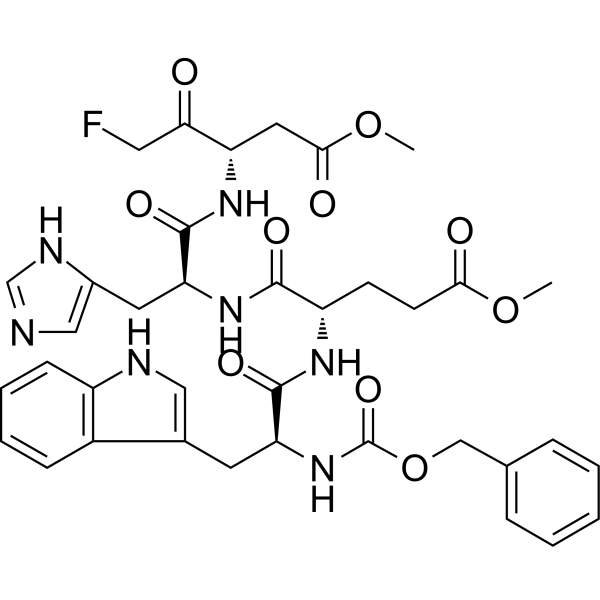
    Z-WEHD-FMK
    4 Publications Verification

    Z-WE(OMe)HD(OMe)-FMK

    Caspase Cathepsin Cancer
    Z-WEHD-FMK is a potent, cell-permeable and irreversible caspase-1/5 inhibitor. Z-WEHD-FMK also exhibits a robust inhibitory effect on cathepsin B activity (IC50=6 μM). Z-WEHD-FMK can be used to investigate cells for evidence of apoptosis .
    Z-WEHD-FMK
  • HY-164278

    STING Cathepsin Cancer
    diABZI-V/C-Mal is a STING agonist (with a STING EC50 of 314 nM in TH1 dual reporter cells) and a Cathepsin B substrate. diABZI-V/C-Mal activates STING, thereby triggering the IRF3 signaling pathway. diABZI-V/C-Mal is cleaved by Cathepsin B to regenerate diABZI-NH2 .
    diABZI-V/C-Mal
  • HY-115733
    Cathepsin L-IN-2
    1 Publications Verification

    (Rac)-Z-Phe-Phe-FMK

    Cathepsin Cancer
    Cathepsin L-IN-2 ((Rac)-Z-Phe-Phe-FMK) is an isomer of the Cathepsin L inhibitor Z-Phe-Phe-FMK (HY-141867), with an IC50 of 15 μM for cathepsin L. Z-Phe-Phe-FMK irreversibly blocks the proteolytic function of cathepsins by covalently binding to the cysteine residues in the active center of the enzyme. Cathepsin L-IN-2 and Z-Phe-Phe-FMK can be used to study neurodegenerative diseases (such as GRN-related frontotemporal dementia) and cancer invasion and metastasis.
    Cathepsin L-IN-2
  • HY-102087
    JPM-OEt
    3 Publications Verification

    Cathepsin Cancer
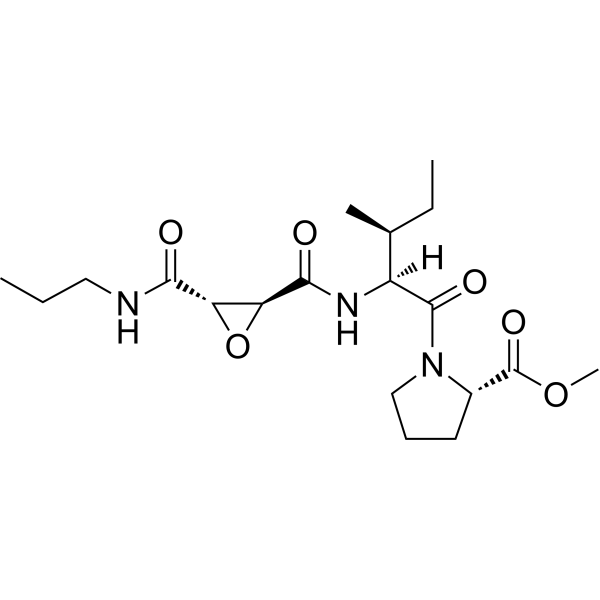
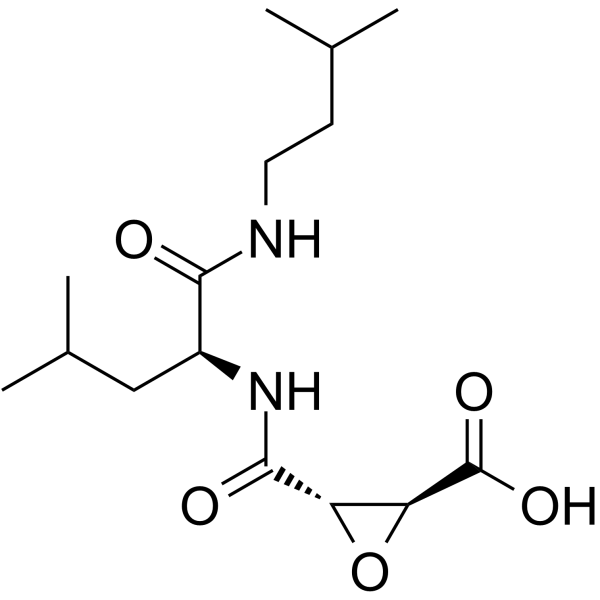
    JPM-OEt is a broad spectrum cysteine cathepsin inhibitor. JPM-OEt binds covalently in the active site, and irreversibly inhibits the cysteine cathepsin family. Antitumor activity .
    JPM-OEt
  • HY-136888

    Elastase Inhibitor III

    Elastase Cathepsin Others
    MeOSuc-AAPV-CMK (Elastase Inhibitor III) is an elastase inhibitor. MeOSuc-AAPV-CMK also inhibits cathepsin G and proteinase 3.MeOSuc-AAPV-CMK blocks the cleavage of adiponectin by leukocyte elastase .
    MeOSuc-AAPV-CMK
  • HY-149931

    Fluorescent Dye Cancer
    BMV109 is a quenched probe that becomes fluorescent when cleaved and covalently bound by active cathepsin proteases. BMV109 can be exploited for tumor imaging .
    BMV109
  • HY-P4425

    Biochemical Assay Reagents Others
    Gly-Phe-AMC is a fluorogenic peptide substrate consisting of a peptide sequence composed of glycine and phenylalanine, linked to the fluorophore AMC. Gly-Phe-AMC also serves as a cathepsin C substrate. Gly-Phe-AMC is widely used to detect the activity of various proteases .
    Gly-Phe-AMC
  • HY-146985
    Cathepsin X-IN-1
    1 Publications Verification

    Cathepsin Neurological Disease Cancer
    Cathepsin X-IN-1 (compound 25) is a potent Cathepsin X inhibitor with an IC50 of 7.13 µM. Cathepsin X-IN-1 decreases PC-3 cell migration with low cytotoxic .
    Cathepsin X-IN-1
  • HY-118959

    Bz-Phe-Val-Arg-pNA

    Cathepsin Others
    S2160 is a substrate of Cathepsin B that can be utilized in the calorimetric assay for the measurement of cathepsin B .
    S2160
  • HY-P4217
    Z-Gly-Pro-Arg-AMC hydrochloride
    1 Publications Verification

    Cathepsin Others
    Z-Gly-Pro-Arg-AMC hydrochloride a fluorescent trypsin and cathepsin K substrate. Z-Gly-Pro-Arg-AMC hydrochloride can be used to determine trypsin and cathepsin K activity .
    Z-Gly-Pro-Arg-AMC hydrochloride
  • HY-E70226

    CTSS

    Ser/Thr Protease Cardiovascular Disease Inflammation/Immunology Cancer
    Cathepsin S, human, is a potent cysteine protease that promotes the degradation of damaged or harmful proteins in the endolysosomal pathway. Cathepsin S, human, is involved in multiple pathological processes, including arthritis, cancer, and cardiovascular disease .
    Cathepsin S, human
  • HY-112318A

    Cathepsin Inflammation/Immunology
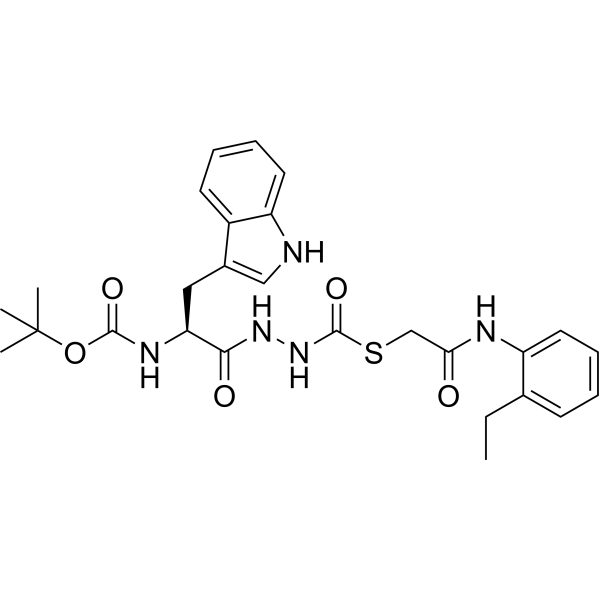
    GSK-2793660 is an orally active and irreversible inhibitor of Cathepsin C (CTSC). GSK-2793660 can be used for the research of bronchiectasis .
    GSK-2793660
  • HY-P1759A

    Z-FR-AMC hydrochloride

    Cathepsin Others
    N-CBZ-Phe-Arg-AMC (Z-FR-AMC) hydrochloride is a cathepsin substrate used in assessment activity of lysosomal cathepsin enzymes .
    N-CBZ-Phe-Arg-AMC hydrochloride
  • HY-P3012

    Cathepsin ERK p38 MAPK PKC Protease Activated Receptor (PAR) MMP Inflammation/Immunology
    Cathepsin G is a pH-dependent serine protease. Cathepsin G hydrolyzes diverse synthetic and protein substrates and remodels extracellular matrix. Cathepsin G exerts immunomodulatory effects via recruiting phagocytes, enhancing T cell motility, activating ERK1/2 and p38 MAPK signaling, and mediating PKCζ membrane translocation. Cathepsin G regulates inflammatory responses by cleaving inflammatory mediators. Cathepsin G participates in vascular regulation by converting angiotensin I to angiotensin II. Cathepsin G induces PAR4-dependent platelet activation, facilitates platelet-neutrophil aggregation, and mediates VITT-related NETosis, thrombus formation. Cathepsin G can be used for the research of immune thrombotic thrombocytopenia, cardiovascular disease, and select autoimmune and inflammatory diseases .
    Cathepsin G
  • HY-118762

    Cathepsin Cancer
    KGP94 is a selective inhibitor of cathepsin L with an IC50 of 189 nM . KGP94 inhibits migration and invasion of metastatic carcinoma and shows low cytotoxicity (GI50=26.9 µM) against various human cell lines .
    KGP94
  • HY-W790014

    Cathepsin Infection
    Z-FG-NHO-BzOME is a cysteine protease inhibitor that selectively inhibits cathepsin B, cathepsin L, cathepsin S, and papain .
    Z-FG-NHO-BzOME
  • HY-W796158

    Cathepsin Inflammation/Immunology
    Z-DEVD-CMK is an irreversible inhibitor of most of the cathepsins in vitro .
    Z-DEVD-CMK
  • HY-P2498A

    Cathepsin Cancer
    Cathepsin D and E FRET Substrate acetate is a fluorogenic substrate for cathepsins D and E and not for B, H or L. The cleavage occurs at the Phe-Phe amide bond resul. Cathepsin D and E FRET Substrate is a valuable tool for routine assays and for mechanistic studies on cathepsins E and D .
    Cathepsin D and E FRET Substrate acetate
  • HY-P4306

    Cathepsin Inflammation/Immunology
    Z-Phe-Phe-Diazomethylketone is a selective inhibitor of cathepsin L .
    Z-Phe-Phe-Diazomethylketone
  • HY-P4500

    Cathepsin Others
    Z-Arg-Arg-pNA is a substrate for cathepsin B and can be used to detect this enzyme activity .
    Z-Arg-Arg-pNA
  • HY-137367

    Cathepsin Infection
    Z-Val-Val-Arg-AMC is a fluorescent peptide substrate that can be used to test the activity of cathepsins .
    Z-Val-Val-Arg-AMC
  • HY-P3153
    Cathepsin K
    1 Publications Verification

    Cathepsin Metabolic Disease
    Cathepsin K is a cysteine protease with endo and collagenolytic activities. Cathepsin K induces degradation of bone collagen and can be used for the research of osteoporosis .
    Cathepsin K
  • HY-155667A

    Cathepsin Others
    Z-Nle-Lys-Arg-AMC acetate is a fluorogenic peptide substrate that specifically monitors cathepsin B activity over a broad pH range .
    Z-Nle-Lys-Arg-AMC acetate
  • HY-Y0241

    Cathepsin Metabolic Disease
    2-Cyanopyrimidine is a potent and non-selective cysteine protease cathepsin K inhibitor with an IC50 of 170 nM. 2-Cyanopyrimidine is used for osteoporos .
    2-Cyanopyrimidine
  • HY-P3798

    Ser/Thr Protease Others
    Eglin c (41-49) is a peptide fragment related to eglin c. Eglin c (41-49) shows inhibitory effects to cathepsin G and α-chymotrypsin with Ki values of 42 and 20 μM, respectively .
    Eglin c (41-49)
  • HY-P2922

    Cathepsin Cancer
    Cathepsin C is a lysosomal cysteine protease essential for catalytic activation of many serine proteases, including proteinase 3 (PR3), neutrophil elastase (NE), cathepsin G (CTSG), granzyme A/B/C, and mast cell chymase .
    Cathepsin C
  • HY-152204

    Cathepsin Cancer
    Cathepsin L/S-IN-1 is a dual inhibitor of Cathepsin L and Cathepsin S with IC50s of 4.10 μM and 1.79 μM, respectively. Cathepsin L/S-IN-1 shows a significant antimetastatic and invasive effects on pancreatic cancer BxPC-3 and PANC-1 cells .
    Cathepsin L/S-IN-1
  • HY-137392

    1-Naphthalenesulfonyl-Ile-Trp-CHO

    Cathepsin Others
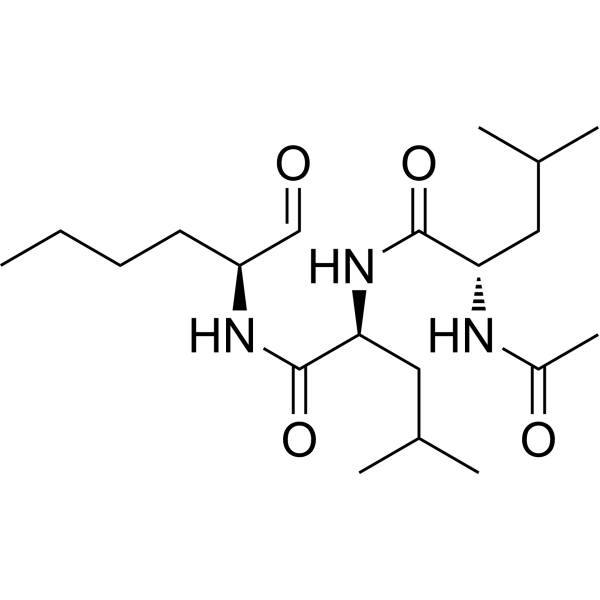
    Cathepsin L-IN-4 is an inhibitor of cathepsin L with IC50 at nanomolar concentrations .
    Cathepsin L-IN-4
  • HY-164634

    Cathepsin Cholecystokinin Receptor Neurological Disease Metabolic Disease Cancer
    CLIK-148 is a highly selective, irreversible and orally active cysteine protease inhibitor, primarily targeting Cathepsin L. CLIK-148 effectively inhibits the Cathepsin L-dependent degradation of HMG-CoA reductase in the endoplasmic reticulum (ER) membrane. CLIK-148 inhibits the processing of proCCK by Cathepsin L, thereby reducing the production of CCK8 (HY-P0093). CLIK-148 inhibits the degradation of type I collagen by osteoclasts' secreted Cathepsin L, reducing tumor-induced bone metastasis and malignant hypercalcemia. CLIK-148 can be used for the studies of bone metabolism disorders and regulation of neuropeptide processing .
    CLIK-148
  • HY-P5378A

    Cathepsin S substrate TFA

    Ser/Thr Protease Others
    Ac-KQKLR-AMC TFA is a substrate peptide of Cathepsin S fluorescently labeled with AMC (Ex/Em=354 nm/442 nm). Ac-KQKLR-AMC TFA can be used to measure Cathepsin S activity) .
    Ac-KQKLR-AMC TFA
  • HY-122161

    RWJ-355871

    Cathepsin Inflammation/Immunology
    JNJ-10311795 (RWJ-355871), a potent dual inhibitor of neutrophil cathepsin G (Ki = 38 nM) and mast cell chymase (Ki = 2.3 nM), exhibits noteworthy antiinflammatory activity .
    JNJ-10311795
  • HY-129461

    DTS

    Cathepsin Cancer
    Dibenzyl trisulfide (DTS) is an active ingredient that can be isolated from Petiveria alliacea L.. Dibenzyl trisulfide inhibits cell proliferation and migration. Dibenzyl trisulfide decreased the mRNA and protein expression of BAK-1 and LTA. Dibenzyl trisulfide induces lysosomal membrane permeabilization and cathepsin B release .
    Dibenzyl trisulfide
  • HY-115454A

    Cathepsin Others
    GB111-NH2 hydrochloride is a cysteine cathepsin inhibitor, and can be used for cancer study .
    GB111-NH2 hydrochloride
  • HY-112318

    Cathepsin Inflammation/Immunology
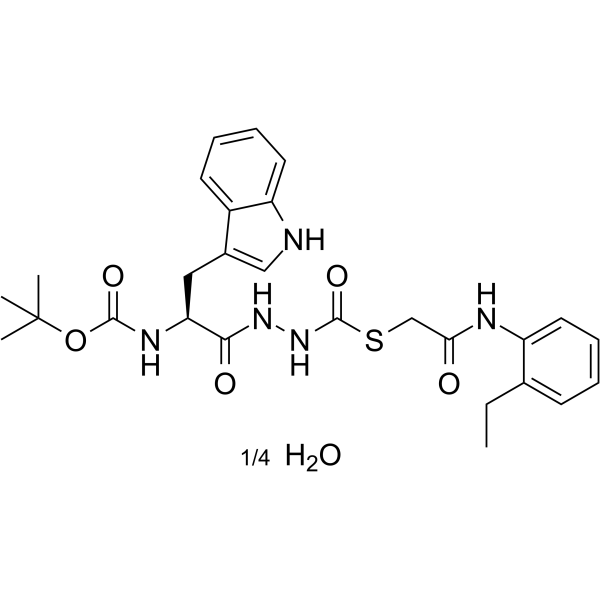
    GSK-2793660 (free base) is an oral, irreversible inhibitor of Cathepsin C (CTSC). GSK-2793660 (free base) can be used for the research of bronchiectasis .
    GSK-2793660 free base
  • HY-176548

    YAP Annexin A Inflammation/Immunology
    PY-PAP is a photoactivatable affinity probe and a derivative of PY-60 (HY-141644). PY-PAP retains the cellular function of activating YAP transcriptional activity. In 293A cells, PY-PAP can label cathepsin D (CTSD) and annexin A2 (ANXA2) through ultraviolet crosslinking and click reactions. PY-PAP plays a key role in identifying ANXA2 as the specific target of PY-60 .
    PY-PAP
  • HY-P2750
    Cathepsin D
    1 Publications Verification

    CTSD

    Biochemical Assay Reagents Cardiovascular Disease Neurological Disease Cancer
    Cathepsin D (CTSD) is a lysosomal aspartic protease encoded by the CTSD gene. Cathepsin D regulates lysosomal protease activity. Loss of Cathepsin D leads to lysosomal dysfunction and the accumulation of various cellular proteins associated with neurodegenerative diseases. Cathepsin D is involved in breast cancer metastasis. Cathepsin D can be used in research on diseases such as breast cancer and stroke .
    Cathepsin D
  • HY-P2498

    Cathepsin Others
    Cathepsin D and E FRET Substrate is a fluorogenic substrate for cathepsins D and E and not for B, H or L. The cleavage occurs at the Phe-Phe amide bond resul. Cathepsin D and E FRET Substrate is a valuable tool for routine assays and for mechanistic studies on cathepsins E and D .
    Cathepsin D and E FRET Substrate
  • HY-164956

    Cathepsin Beta-secretase Cancer
    TB-9, a Tasiamide B (HY-N15154) derivative, is a potent cathepsin D, cathepsin E, and BACE1 inhibitor with IC50s of 0.0783 nM, 0.724 nM, and 54.2 nM, respectively .
    TB-9
  • HY-P10923

    Cathepsin Others
    KYS-1 is a selective substrate for cathepsin E with a Km value of 1.9 μM. KYS-1 was incubated with cathepsin E (1.0 ng) with the pH optimum of approximately pH 4.0 .
    KYS-1

Inquiry Online

Your information is safe with us. * Required Fields.

Salutation


Country or Region *

Applicant Name *


Organization Name *

Department *


Email Address *


Product Name *

Cat. No.


Requested quantity *

Phone Number *


Remarks

Inquiry Online

Inquiry Information

Product Name:
Cat. No.:
Quantity:
MCE Japan Authorized Agent:

