



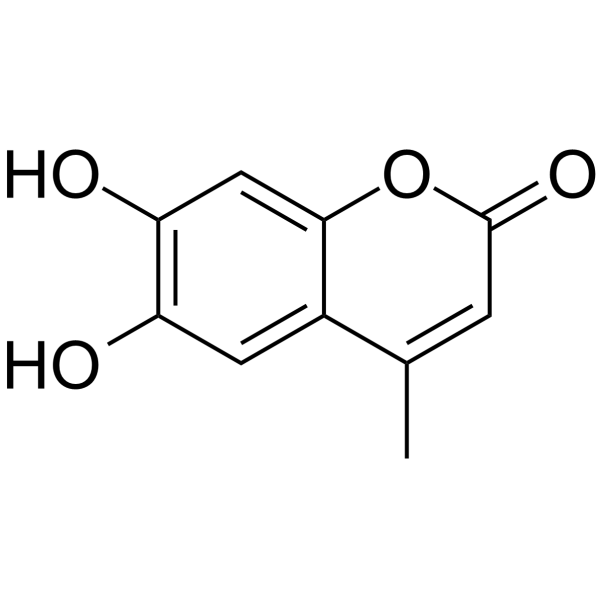
4-Methylesculetin
Based on 3 publication(s) in Google Scholar
4-Methylesculetin is an orally active coumarin derivative, with potent anti-oxidant and anti-inflammatory activities. 4-Methylesculetin inhibits myeloperoxidase activity. 4-Methylesculetin protects bone resorption by reducing the elevated levels of bone-joint exoglycosidases, cathepsin-D and tartrate resistant acid phosphatases. 4-Methylesculetin ameliorats the upregulated non-enzymatic inflammatory markers like TNF-α, IL-1β, IL-6, COX-2 and PGE2, which is promising for research of inflammatory diseases.
For research use only. We do not sell to patients.
- Purity : 99.27%
- CAS No.: 529-84-0
- Formula: C10H8O4
- Molecular Weight:192.17
-
Storage:
4°C, protect from light
* In solvent : -80°C, 6 months; -20°C, 1 month (protect from light)

To place orders, for customer services and technical support, please contact: MedChemExpress USA
Tel: 609-228-6898 E-mail: [email protected] [email protected]


-
 Biological Activity
-
Chemical Information
-
Solvent & Solubility
- Protocols
- Purity & Documentation
- References
-
 Help & FAQs


-
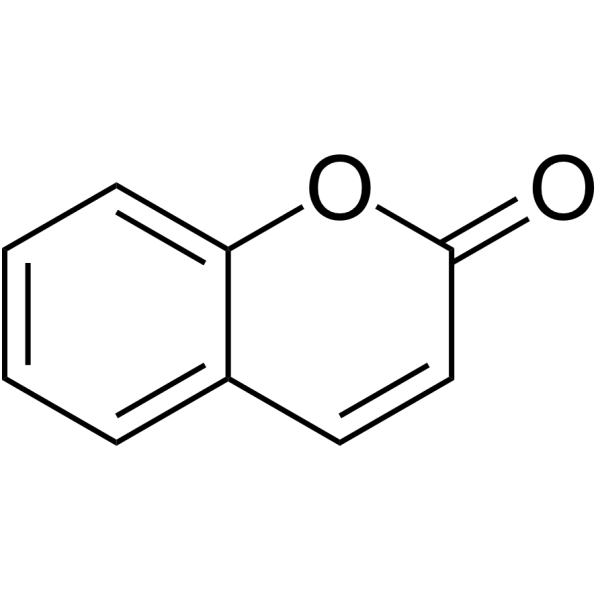
HY-N0709
CoumarinAnti-inflammatory Agent -
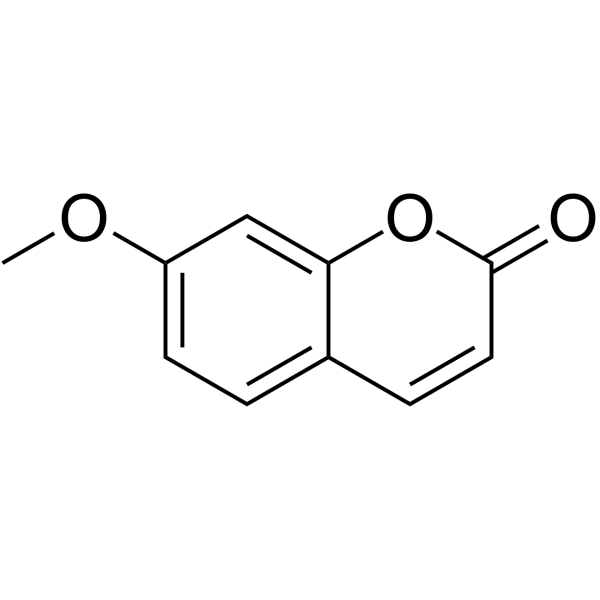
HY-N1366
HerniarinAnticancer Agent -
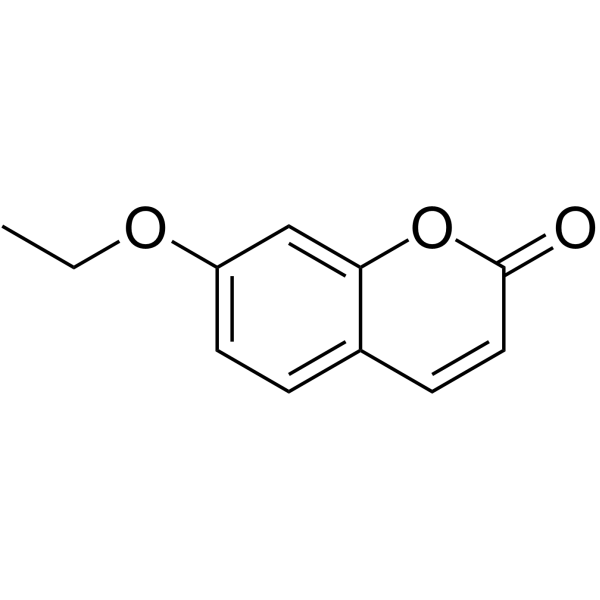
HY-133091
7-EthoxycoumarinCytochrome P451 Substrate -
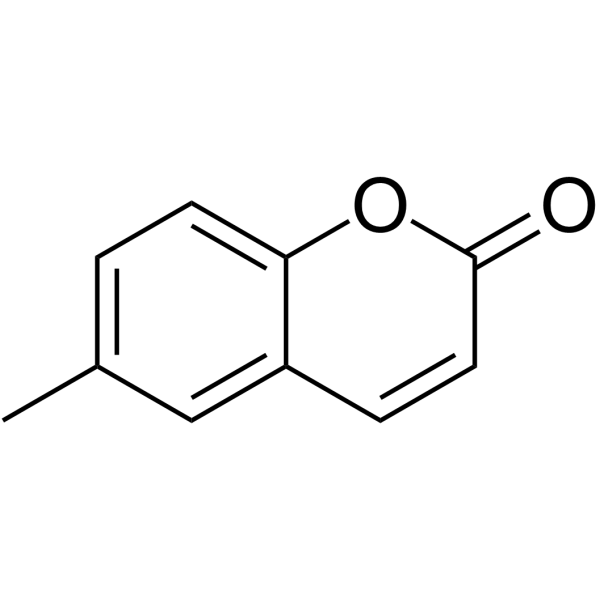
HY-N1406
6-MethylcoumarinSynthetic Fragrance -
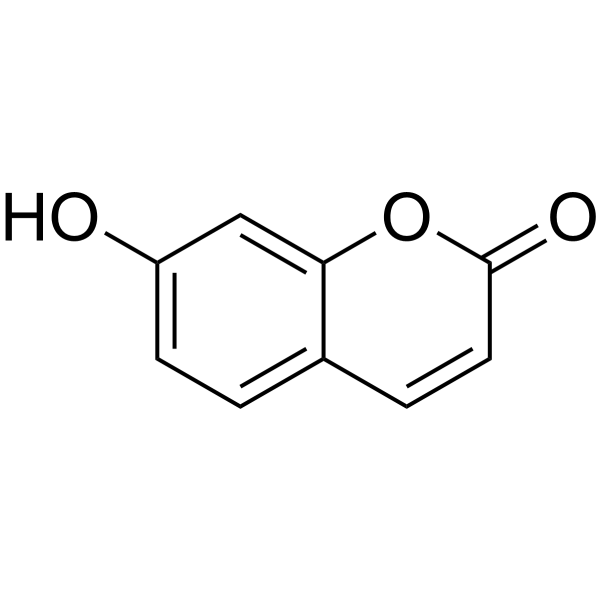
HY-N0573
UmbelliferoneFluorescence Probe -
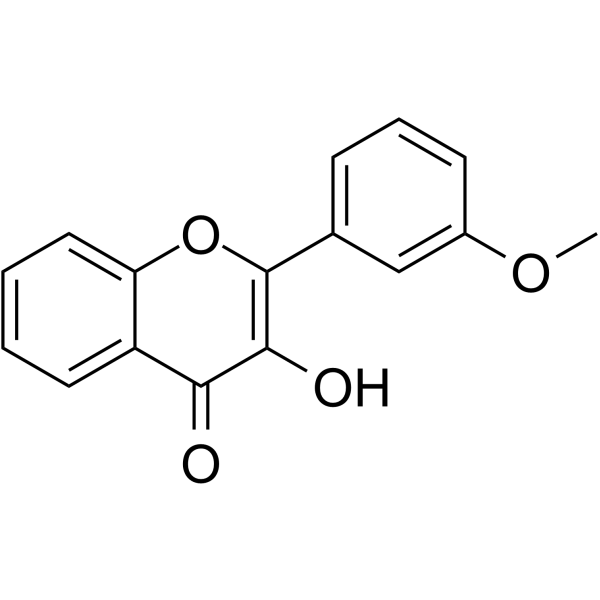
HY-N6629
3'-MethoxyflavonolNMU2R Agonist -
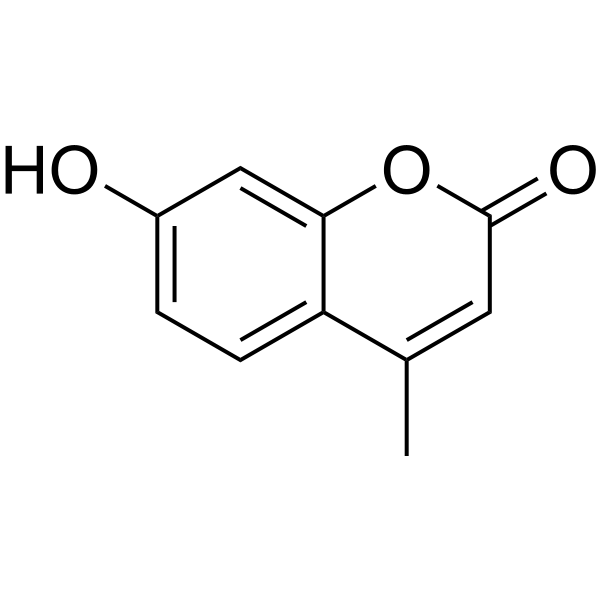
HY-N0187
4-MethylumbelliferoneHyaluronic Acid Biosynthesis Inhibitor -
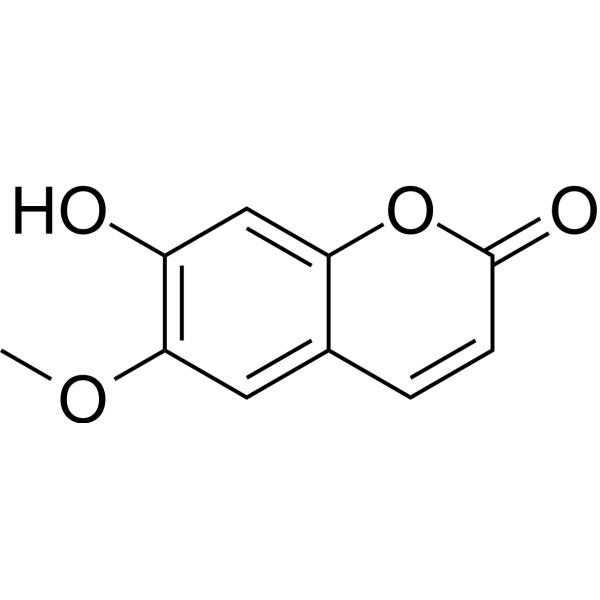
HY-N0342
ScopoletinCholinesterase (ChE) Inhibitor -
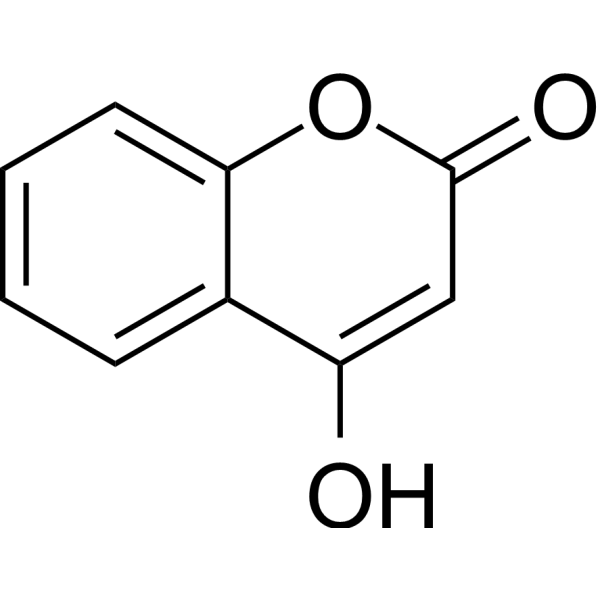
HY-N6856
4-HydroxycoumarinBacterial Inhibitor -

HY-N0342R
Scopoletin (Standard)Cholinesterase (ChE) Inhibitor -
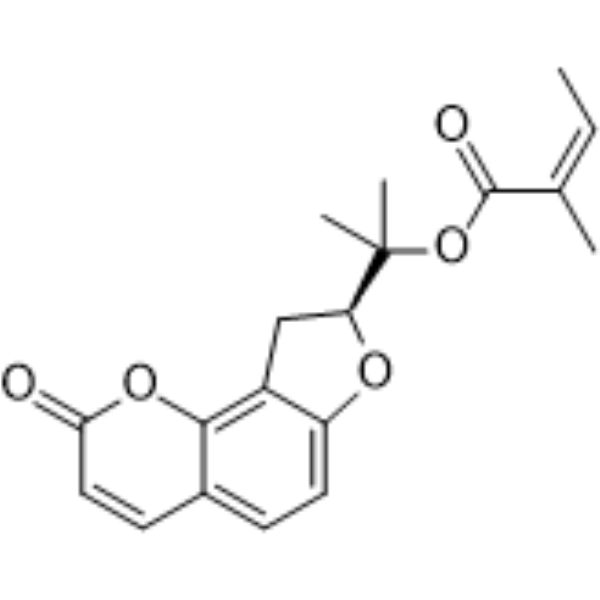
HY-N0362
ColumbianadinApoptosis Inducer -

HY-N0187R
4-Methylumbelliferone (Standard)Hyaluronic Acid Biosynthesis Inhibitor
Publications Citing Use of MedChemExpress (MCE) 4-Methylesculetin
MoreAll Cathepsin Isoforms
More

Biological Activity
Description
Cellular Effect
|
Cell Line

|
Type | Value | Description | References |
|---|---|---|---|---|
| U-937 | CC50 |
76 μM
Compound: 21
|
Cytotoxicity against human U937 cells assessed as decrease in cell viability after 48 hrs
Cytotoxicity against human U937 cells assessed as decrease in cell viability after 48 hrs
|
[PMID: 26188907] |
| U-937 | CC50 |
76 μM
Compound: 4
|
Cytotoxicity against human U937 cells after 48 hrs by trypan blue assay
Cytotoxicity against human U937 cells after 48 hrs by trypan blue assay
|
[PMID: 22925447] |
| U-937 | IC50 |
97.4 μM
Compound: 21
|
Antiproliferative activity against human U937 cells after 3 days
Antiproliferative activity against human U937 cells after 3 days
|
[PMID: 26188907] |
| U-937 | IC50 |
97.4 μM
Compound: 4
|
Antiproliferative activity against human U937 cells assessed as incorporation of [3H]-methyl-thymidine after 12 hrs by scintillation counting
Antiproliferative activity against human U937 cells assessed as incorporation of [3H]-methyl-thymidine after 12 hrs by scintillation counting
|
[PMID: 22925447] |
In Vivo
4-Methylesculetin (25 and 50 mg/kg, p.o., once a day from 11th day to 25th day) significantly prevents the swelling, bone and cartilage destruction at the joint in arthritic rats[2].
MedChemExpress (MCE) has not independently confirmed the accuracy of these methods. They are for reference only.
-
Animal Model:DSS rat model[1]
-
Dosage:5 or 25 mg/kg
-
Administration:p.o., daily for 8 days
-
Result:Reduced MPO activity, IL-6 levels and counteracted GSH depletion induced by inflammatory process.
-
Animal Model:Arthritic rats[2]
-
Dosage:25 and 50 mg/kg
-
Administration:p.o., once a day from 11th day to 25th day
-
Result:Exhibited remarkable decline in paw volume and showed a prompt recovery of normal weight.


Chemical Information
-
CAS No. 529-84-0
-
Appearance Solid
-
Molecular Weight 192.17
-
Formula C10H8O4
-
SMILES
O=C1C=C(C)C2=CC(O)=C(O)C=C2O1
-
Structure Classification
-
Initial Source
-
Shipping
Room temperature in continental US; may vary elsewhere.
-
Storage
4°C, protect from light
* In solvent : -80°C, 6 months; -20°C, 1 month (protect from light)


Publications (3)
-
Journal Impact Factor
-
Most Recent


Solvent & Solubility
In Vitro:
DMSO : 50 mg/mL (260.19 mM; Need ultrasonic; Hygroscopic DMSO has a significant impact on the solubility of product, please use newly opened DMSO)
H2O : < 0.1 mg/mL (insoluble)
Please refer to the solubility information to select the appropriate solvent. Once prepared, please aliquot and store the solution to prevent product inactivation from repeated freeze-thaw cycles.
Storage method and period of stock solution: -80°C, 6 months; -20°C, 1 month (protect from light). When stored at -80°C, please use it within 6 months. When stored at -20°C, please use it within 1 month.
Please refer to the solubility information to select the appropriate solvent. Once prepared, please aliquot and store the solution to prevent product inactivation from repeated freeze-thaw cycles.
Storage method and period of stock solution: -80°C, 6 months; -20°C, 1 month (protect from light). When stored at -80°C, please use it within 6 months. When stored at -20°C, please use it within 1 month.
Concentration (start) × Volume (start) = Concentration (final) × Volume (final)
In Vivo:
Select the appropriate dissolution method based on your experimental animal and administration route.
- For the following dissolution methods, please ensure to first prepare a clear stock solution using an In Vitro approach and then sequentially add co-solvents:
- To ensure reliable experimental results, the clarified stock solution can be appropriately stored based on storage conditions. As for the working solution for In Vivo experiments, it is recommended to prepare freshly and use it on the same day.
- The percentages shown for the solvents indicate their volumetric ratio in the final prepared solution. If precipitation or phase separation occurs during preparation, heat and/or sonication can be used to aid dissolution.
Add each solvent one by one: 10% DMSO 40% PEG300 5% Tween-80 45% Saline
Solubility: ≥ 2.08 mg/mL (10.82 mM); Clear solution
This protocol yields a clear solution of ≥ 2.08 mg/mL (saturation unknown).
Taking 1 mL working solution as an example, add 100 μL DMSO stock solution (20.8 mg/mL) to 400 μL PEG300, and mix evenly; then add 50 μL Tween-80 and mix evenly; then add 450 μL Saline to adjust the volume to 1 mL.
Preparation of Saline: Dissolve 0.9 g sodium chloride in ddH₂O and dilute to 100 mL to obtain a clear Saline solution.
Add each solvent one by one: 10% DMSO 90% (20% SBE-β-CD in Saline)
Solubility: ≥ 2.08 mg/mL (10.82 mM); Clear solution
This protocol yields a clear solution of ≥ 2.08 mg/mL (saturation unknown).
Taking 1 mL working solution as an example, add 100 μL DMSO stock solution (20.8 mg/mL) to 900 μL 20% SBE-β-CD in Saline, and mix evenly.
Preparation of 20% SBE-β-CD in Saline (4°C, storage for one week): 2 g SBE-β-CD powder is dissolved in 10 mL Saline, completely dissolve until clear.
In Vivo Dissolution Calculator
Please enter the basic information of animal experiments:
-
-
-
-
Recommended: Prepare an additional quantity of animals to account for potential losses during experiments.
Please enter your animal formula composition:
-
%DMSO +
Recommended: Keep the proportion of DMSO in working solution below 2% if your animal is weak.
-
%+
-
+%Tween-80 + +
-
%Saline +
The co-solvents required include: DMSO, . All of co-solvents are available by MedChemExpress (MCE). , Tween 80. All of co-solvents are available by MedChemExpress (MCE).
Working solution concentration: 0.22 mg/mL
Method for preparing stock solution: mg drug dissolved in μL DMSO. Stock solution concentration: mg/mL. * In solvent : -80°C, 6 months; -20°C, 1 month (protect from light)
1. Take μL DMSO stock solution;
2. Add μL .
μL , mix evenly;
3. Then add μL Tween 80, mix evenly;
4. Then add μL
Please ensure that the stock solution in the first step is dissolved to a clear state, and add co-solvents in sequence. You can use ultrasonic heating (ultrasonic cleaner, recommended frequency 20-40 kHz), vortexing, etc. to assist dissolution.


Purity & Documentation
-
Data Sheet (277 KB)
-
SDS (393 KB)
- English - EN (393 KB)
- Français - FR (393 KB)
- Deutsch - DE (393 KB)
- Norwegian - NO (393 KB)
- Español - ES (393 KB)
- Swedish - SV (393 KB)
- Italian - IT (393 KB)
- Korean - KR (393 KB)
- Portuguese - PT (393 KB)
-
Handling Instructions (2659 KB)
References
[1]. Witaicenis A, et al. 4-methylesculetin, a coumarin derivative, ameliorates dextran sulfate sodium-induced intestinal inflammation. Chem Biol Interact. 2018 Jan 25;280:59-63. [Content Brief]
[2]. Hemshekhar M, et al. Antiarthritic and antiinflammatory propensity of 4-methylesculetin, a coumarin derivative. Biochimie. 2013 Jun;95(6):1326-35. [Content Brief]


Complete Stock Solution Preparation Table
Please refer to the solubility information to select the appropriate solvent. Once prepared, please aliquot and store the solution to prevent product inactivation from repeated freeze-thaw cycles.
Storage method and period of stock solution: -80°C, 6 months; -20°C, 1 month (protect from light). When stored at -80°C, please use it within 6 months. When stored at -20°C, please use it within 1 month.
| Optional Solvent | Concentration Solvent Mass | 1 mg | 5 mg | 10 mg | 25 mg |
|---|---|---|---|---|---|
| DMSO | 1 mM | 5.2037 mL | 26.0186 mL | 52.0373 mL | 130.0931 mL |
| 5 mM | 1.0407 mL | 5.2037 mL | 10.4075 mL | 26.0186 mL | |
| 10 mM | 0.5204 mL | 2.6019 mL | 5.2037 mL | 13.0093 mL | |
| 15 mM | 0.3469 mL | 1.7346 mL | 3.4692 mL | 8.6729 mL | |
| 20 mM | 0.2602 mL | 1.3009 mL | 2.6019 mL | 6.5047 mL | |
| 25 mM | 0.2081 mL | 1.0407 mL | 2.0815 mL | 5.2037 mL | |
| 30 mM | 0.1735 mL | 0.8673 mL | 1.7346 mL | 4.3364 mL | |
| 40 mM | 0.1301 mL | 0.6505 mL | 1.3009 mL | 3.2523 mL | |
| 50 mM | 0.1041 mL | 0.5204 mL | 1.0407 mL | 2.6019 mL | |
| 60 mM | 0.0867 mL | 0.4336 mL | 0.8673 mL | 2.1682 mL | |
| 80 mM | 0.0650 mL | 0.3252 mL | 0.6505 mL | 1.6262 mL | |
| 100 mM | 0.0520 mL | 0.2602 mL | 0.5204 mL | 1.3009 mL |


4-Methylesculetin Related Classifications
HY-N4288 Related Classifications
 Powered by Bioz