Search Result
Results for "
SPAAC click reaction
" in MedChemExpress (MCE) Product Catalog:
41
Biochemical Assay Reagents
5
Isotope-Labeled Compounds
| Cat. No. |
Product Name |
Target |
Research Areas |
Chemical Structure |
-
- HY-129832
-
|
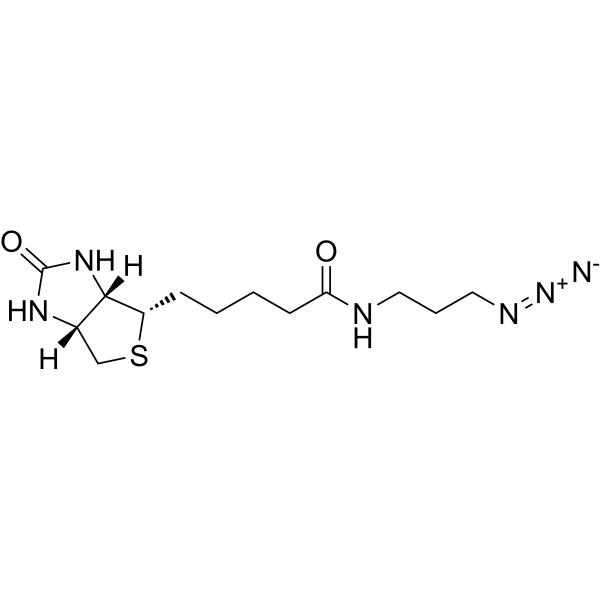
N-(3-Azidopropyl)biotinamide
|
Biochemical Assay Reagents
|
Others
|
|
Biotin-azide (N-(3-Azidopropyl)biotinamide) is a form of biotin with a terminal azide group. Biotin-azide can be used to prepare various biotinylated conjugates via Click Chemistry . Biotin-azide is a click chemistry reagent, it contains an Azide group and can undergo copper-catalyzed azide-alkyne cycloaddition reaction (CuAAc) with molecules containing Alkyne groups. It can also undergo strain-promoted alkyne-azide cycloaddition (SPAAC) reactions with molecules containing DBCO or BCN groups.
|
-
-
- HY-130809
-
|
|
Biochemical Assay Reagents
|
Cancer
|
|
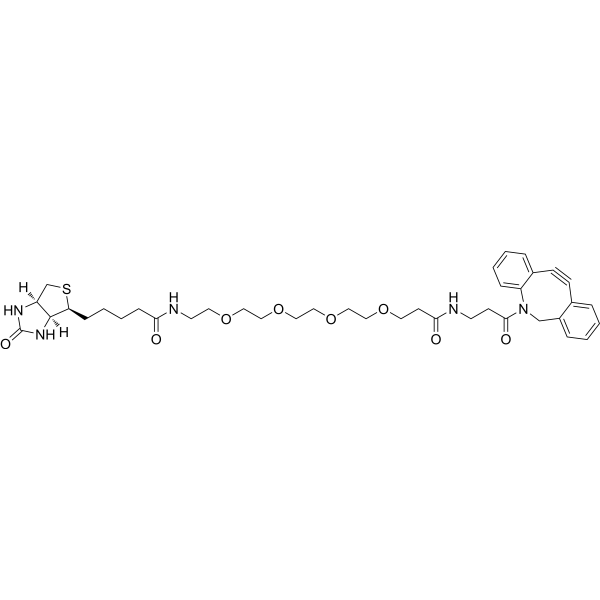
DBCO-PEG4-Biotin is an azadibenzocyclooctyne-biotin derivative containing a biotin group and 4 PEGs. DBCO-PEG4-Biotin is a versatile biotinylation reagent used for the introduction of a biotin moiety to azide-labeled biomolecules via copper-free strain-promoted alkyne-azide click chemistry (SPAAC) reaction . DBCO-PEG4-Biotin is a click chemistry reagent, it contains a DBCO group that can undergo strain-promoted alkyne-azide cycloaddition (SPAAC) with molecules containing Azide groups.
|
-
-
- HY-16714
-
|
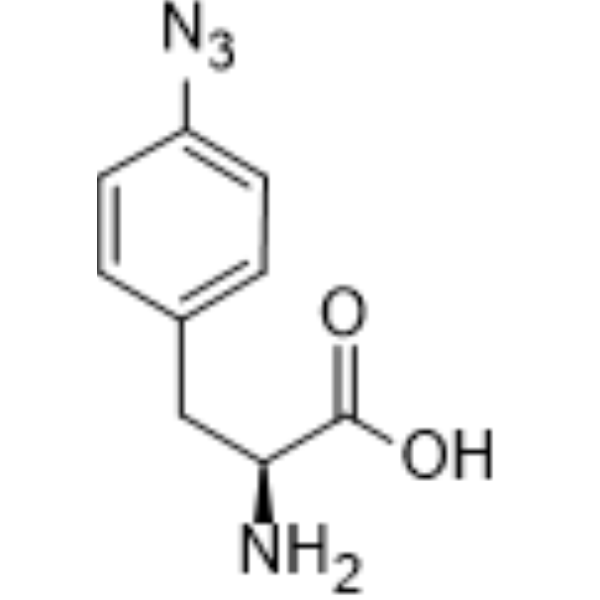
p-Azidophenylalanine; p-Azido-L-phenylalanine
|
Biochemical Assay Reagents
|
Others
|
|
4-Azido-L-phenylalanine is an unnatural amino acid, which is used as an effective vibrational reporter of local protein environments. 4-Azido-L-phenylalanine is a click chemistry reagent, it contains an Azide group and can undergo copper-catalyzed azide-alkyne cycloaddition reaction (CuAAc) with molecules containing Alkyne groups. It can also undergo strain-promoted alkyne-azide cycloaddition (SPAAC) reactions with molecules containing DBCO or BCN groups.
|
-
-
- HY-141128
-
|
|
PROTAC Linkers
|
Cancer
|
|
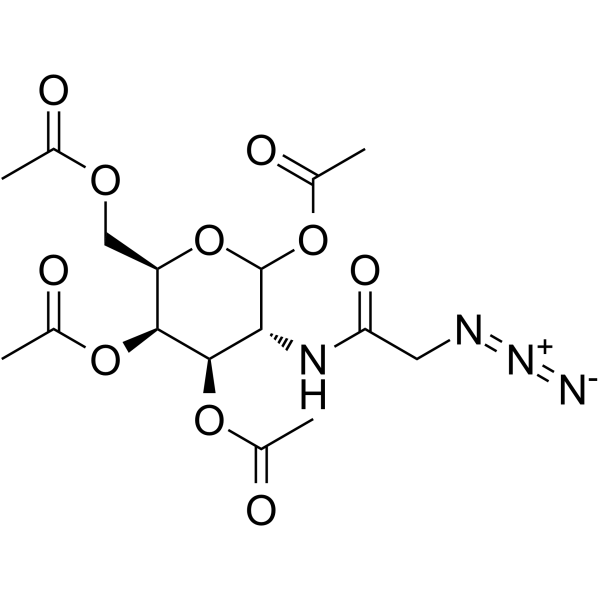
Ac4GalNAz is an alkyl chain-based PROTAC linker that can be used in the synthesis of PROTACs . Ac4GalNAz is a click chemistry reagent, it contains an Azide group and can undergo copper-catalyzed azide-alkyne cycloaddition reaction (CuAAc) with molecules containing Alkyne groups. It can also undergo strain-promoted alkyne-azide cycloaddition (SPAAC) reactions with molecules containing DBCO or BCN groups.
|
-
-
- HY-151656
-
|
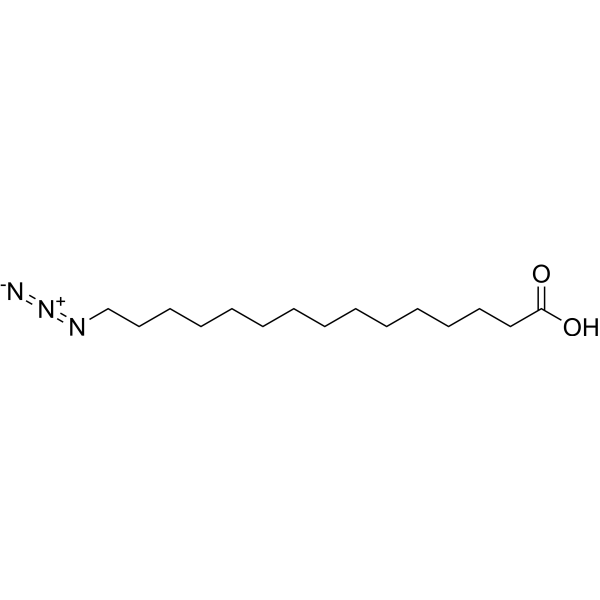
Azido Palmitic Acid
|
ADC Linker
|
Others
|
|
15-Azido-pentadecanoic acid is a click chemistry reagent containing an azide group. Azido Palmitic Acid can be used to identify and characterize post-translationally palmitylated proteins with using a simple and robust two-step labeling and detection technique . 15-Azido-pentadecanoic acid is a click chemistry reagent, it contains an Azide group and can undergo copper-catalyzed azide-alkyne cycloaddition reaction (CuAAc) with molecules containing Alkyne groups. It can also undergo strain-promoted alkyne-azide cycloaddition (SPAAC) reactions with molecules containing DBCO or BCN groups.
|
-
-
- HY-140346A
-
|
|
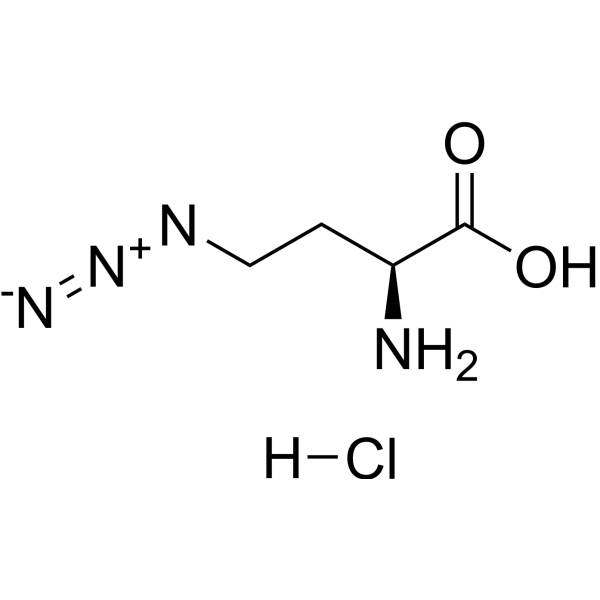
PROTAC Linkers
|
Cancer
|
|
L-Azidohomoalanine hydrochloride is an alkyl chain-based PROTAC linker that can be used in the synthesis of PROTACs . L-Azidohomoalanine (hydrochloride) is a click chemistry reagent, it contains an Azide group and can undergo copper-catalyzed azide-alkyne cycloaddition reaction (CuAAc) with molecules containing Alkyne groups. It can also undergo strain-promoted alkyne-azide cycloaddition (SPAAC) reactions with molecules containing DBCO or BCN groups.
|
-
-
- HY-151685
-
|
|
ADC Linker
|
Others
|
|
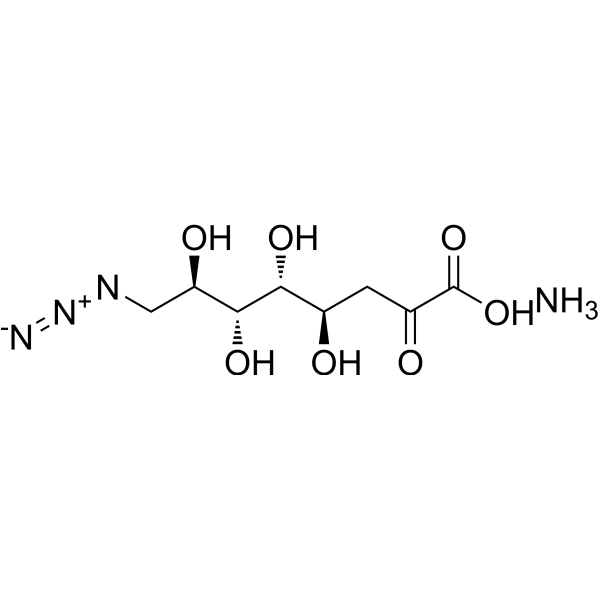
Kdo Azide is a click chemistry reagent containing an azide. Kdo Azide is a metabolic labeling reagent . Kdo Azide is a click chemistry reagent, it contains an Azide group and can undergo copper-catalyzed azide-alkyne cycloaddition reaction (CuAAc) with molecules containing Alkyne groups. It can also undergo strain-promoted alkyne-azide cycloaddition (SPAAC) reactions with molecules containing DBCO or BCN groups.
|
-
-
- HY-151840
-
|
|
ADC Linker
|
Others
|
|
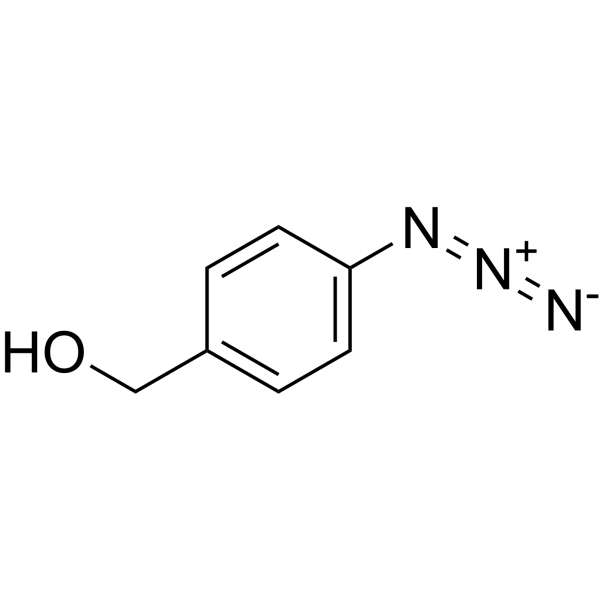
4-Azidobenzyl alcohol is a click chemistry reagent containing an azide group . 4-Azidobenzyl alcohol is a click chemistry reagent, it contains an Azide group and can undergo copper-catalyzed azide-alkyne cycloaddition reaction (CuAAc) with molecules containing Alkyne groups. It can also undergo strain-promoted alkyne-azide cycloaddition (SPAAC) reactions with molecules containing DBCO or BCN groups.
|
-
-
- HY-16714A
-
|
p-Azidophenylalanine hydrochloride; p-Azido-L-phenylalanine hydrochloride
|
Biochemical Assay Reagents
|
Others
|
|
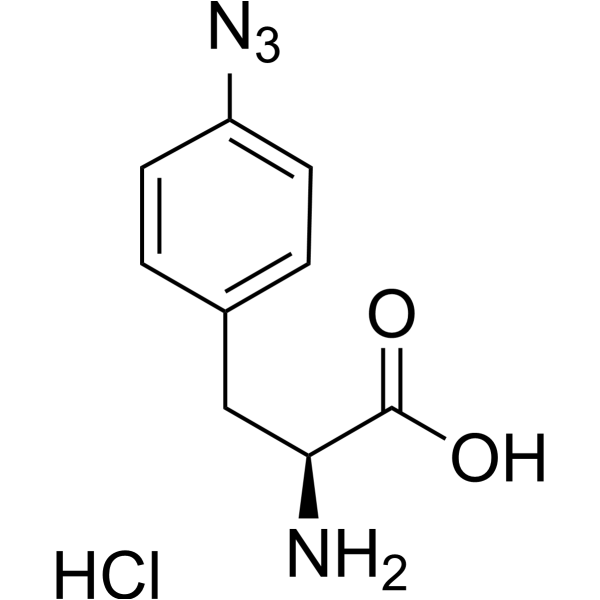
4-Azido-L-phenylalanine hydrochloride is an unnatural amino acid, which is used as an effective vibrational reporter of local protein environments. 4-Azido-L-phenylalanine (hydrochloride) is a click chemistry reagent, it contains an Azide group and can undergo copper-catalyzed azide-alkyne cycloaddition reaction (CuAAc) with molecules containing Alkyne groups. It can also undergo strain-promoted alkyne-azide cycloaddition (SPAAC) reactions with molecules containing DBCO or BCN groups.
|
-
-
- HY-140456
-
|
|
PROTAC Linkers
|
Cancer
|
|
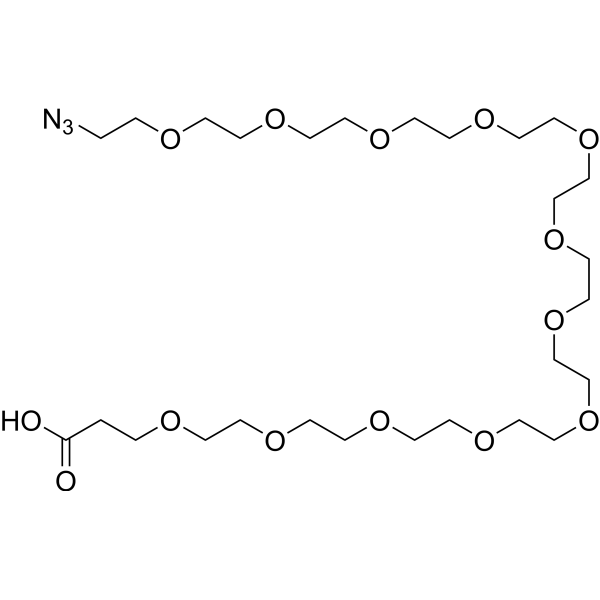
Azido-PEG12-acid is a PEG-based PROTAC linker that can be used in the synthesis of PROTACs . Azido-PEG12-acid is a click chemistry reagent, it contains an Azide group and can undergo copper-catalyzed azide-alkyne cycloaddition reaction (CuAAc) with molecules containing Alkyne groups. It can also undergo strain-promoted alkyne-azide cycloaddition (SPAAC) reactions with molecules containing DBCO or BCN groups.
|
-
-
- HY-140453
-
|
|
PROTAC Linkers
|
Cancer
|
|
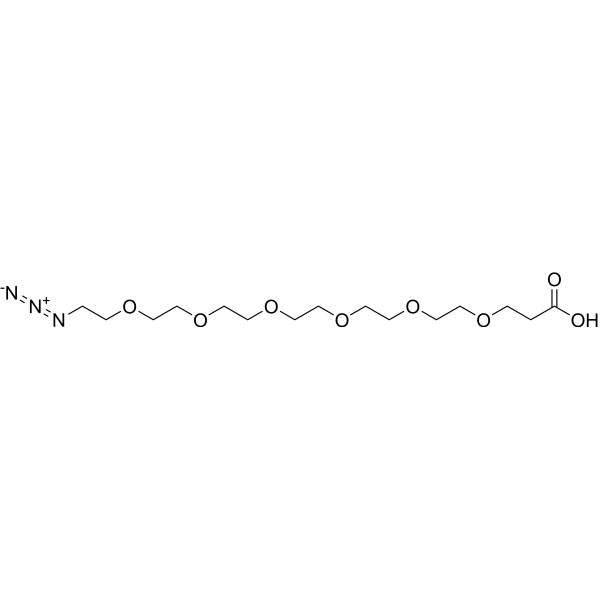
Azido-PEG6-acid is a PEG-based PROTAC linker that can be used in the synthesis of PROTACs . Azido-PEG6-acid is a click chemistry reagent, it contains an Azide group and can undergo copper-catalyzed azide-alkyne cycloaddition reaction (CuAAc) with molecules containing Alkyne groups. It can also undergo strain-promoted alkyne-azide cycloaddition (SPAAC) reactions with molecules containing DBCO or BCN groups.
|
-
-
- HY-W879064
-
|
|
Biochemical Assay Reagents
|
Others
|
|
DBCO-Palmitic is a click chemical organic compound. DBCO-Palmitic can be used in the azide-alkyne cycloaddition (SPAAC) reaction.
|
-

-
- HY-138461
-
|
|
PROTAC Linkers
|
Cancer
|
|
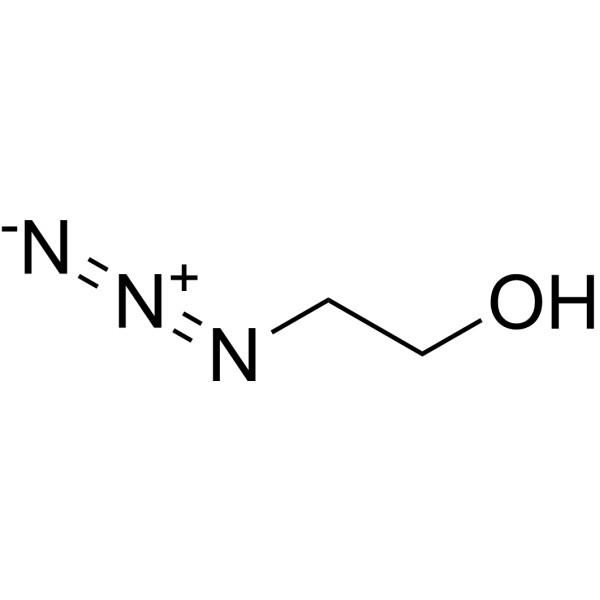
Azido-PEG1 is a PEG-based PROTAC linker that can be used in the synthesis of PROTACs . Azido-PEG1 is a click chemistry reagent, it contains an Azide group and can undergo copper-catalyzed azide-alkyne cycloaddition reaction (CuAAc) with molecules containing Alkyne groups. It can also undergo strain-promoted alkyne-azide cycloaddition (SPAAC) reactions with molecules containing DBCO or BCN groups.
|
-
-
- HY-151655
-
|
|
ADC Linker
|
Others
|
|
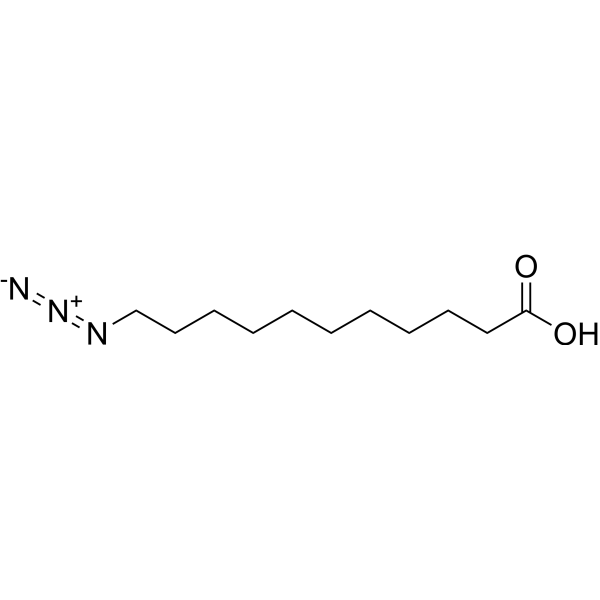
11-Azidoundecanoic acid is a click chemistry reagent containing an azide group. 11-Azidoundecanoic acid acts as a hydrophobic bioconjugation linker that can be further modified at the azido-position using Staudinger ligation or Click-chemistry. 11-Azidoundecanoic acid is substrate of lipoic acid ligase (LpIA) for labeling . 11-Azidoundecanoic acid is a click chemistry reagent, it contains an Azide group and can undergo copper-catalyzed azide-alkyne cycloaddition reaction (CuAAc) with molecules containing Alkyne groups. It can also undergo strain-promoted alkyne-azide cycloaddition (SPAAC) reactions with molecules containing DBCO or BCN groups.
|
-
-
- HY-110128
-
|
SF7-AM
|
Fluorescent Dye
|
Others
|
|
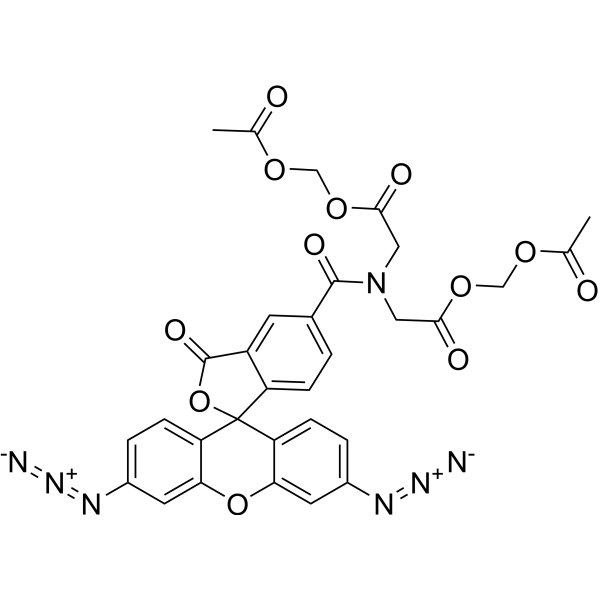
Sulfidefluor 7-AM is a stable hydrogen sulphide (H2S) fluorescent probe . Sulfidefluor 7-AM is a click chemistry reagent, it contains an Azide group and can undergo copper-catalyzed azide-alkyne cycloaddition reaction (CuAAc) with molecules containing Alkyne groups. It can also undergo strain-promoted alkyne-azide cycloaddition (SPAAC) reactions with molecules containing DBCO or BCN groups.
|
-
-
- HY-138387
-
|
|
ADC Linker
|
Cancer
|
|
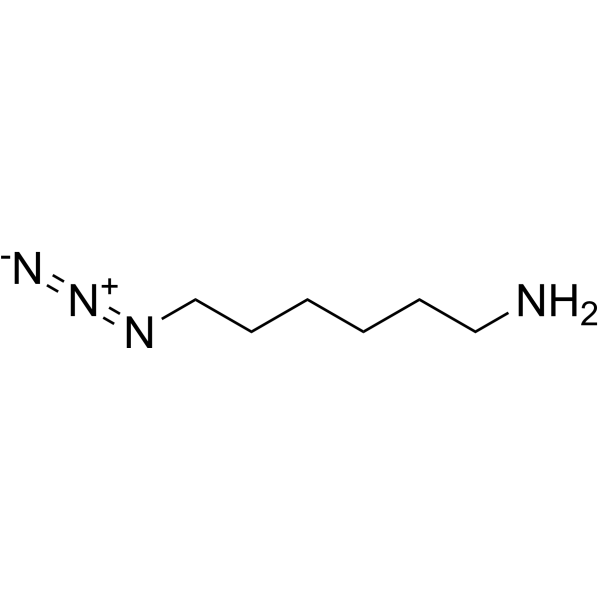
6-Azido-hexylamine is a cleavable ADC linker used in the synthesis of antibody-drug conjugates (ADCs) . 6-Azido-hexylamine is a click chemistry reagent, it contains an Azide group and can undergo copper-catalyzed azide-alkyne cycloaddition reaction (CuAAc) with molecules containing Alkyne groups. It can also undergo strain-promoted alkyne-azide cycloaddition (SPAAC) reactions with molecules containing DBCO or BCN groups.
|
-
-
- HY-W336328
-
|
|
Biochemical Assay Reagents
|
Others
|
|
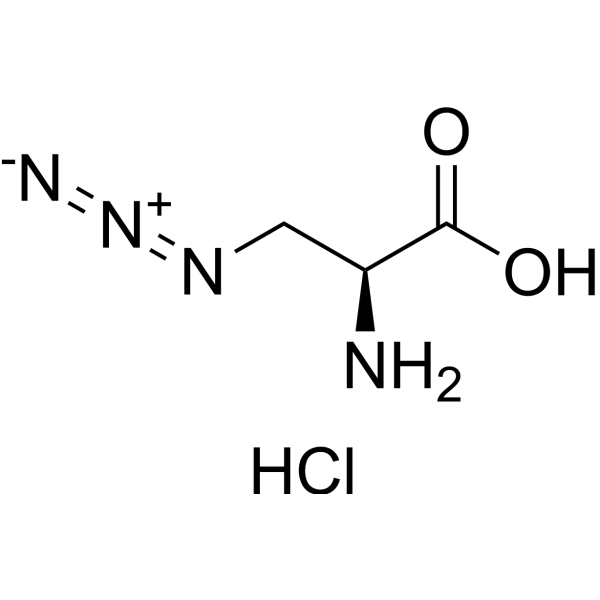
3-Azido-L-alanine hydrochloride is an aliphatic functionalized amino acid with side chain lengths of up to four carbons . 3-Azido-L-alanine (hydrochloride) is a click chemistry reagent, it contains an Azide group and can undergo copper-catalyzed azide-alkyne cycloaddition reaction (CuAAc) with molecules containing Alkyne groups. It can also undergo strain-promoted alkyne-azide cycloaddition (SPAAC) reactions with molecules containing DBCO or BCN groups.
|
-
-
- HY-140756
-
|
|
PROTAC Linkers
|
Cancer
|
|
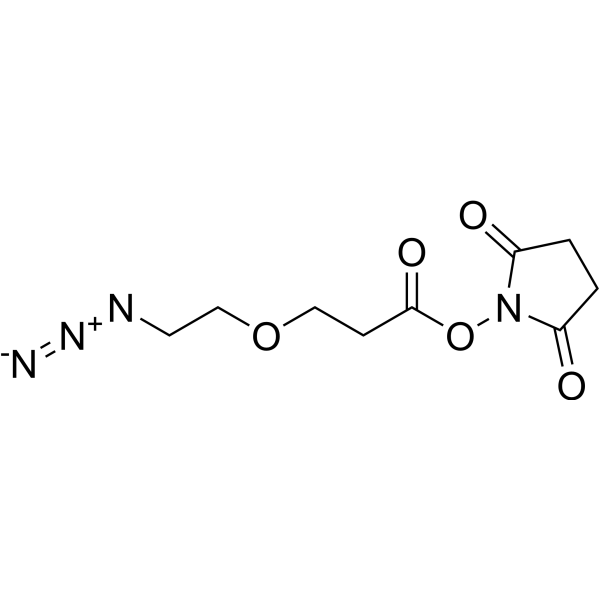
Azido-PEG1-NHS ester is a PEG-based PROTAC linker that can be used in the synthesis of PROTACs . Azido-PEG1-NHS ester is a click chemistry reagent, it contains an Azide group and can undergo copper-catalyzed azide-alkyne cycloaddition reaction (CuAAc) with molecules containing Alkyne groups. It can also undergo strain-promoted alkyne-azide cycloaddition (SPAAC) reactions with molecules containing DBCO or BCN groups.
|
-
-
- HY-147325
-
|
|
ADC Linker
|
Others
|
|
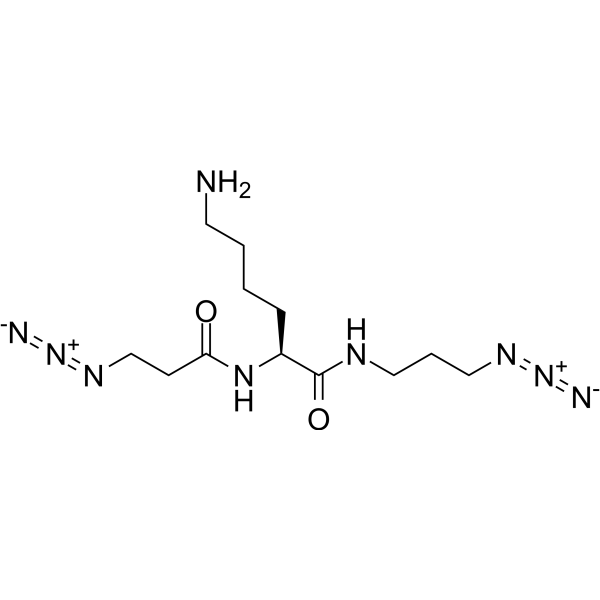
bisSP1 is an antibody agent conjugates linker . bisSP1 is a click chemistry reagent, it contains an Azide group and can undergo copper-catalyzed azide-alkyne cycloaddition reaction (CuAAc) with molecules containing Alkyne groups. It can also undergo strain-promoted alkyne-azide cycloaddition (SPAAC) reactions with molecules containing DBCO or BCN groups.
|
-
-
- HY-10870
-
RO-9187
5 Publications Verification
|
HCV
|
Infection
|
|
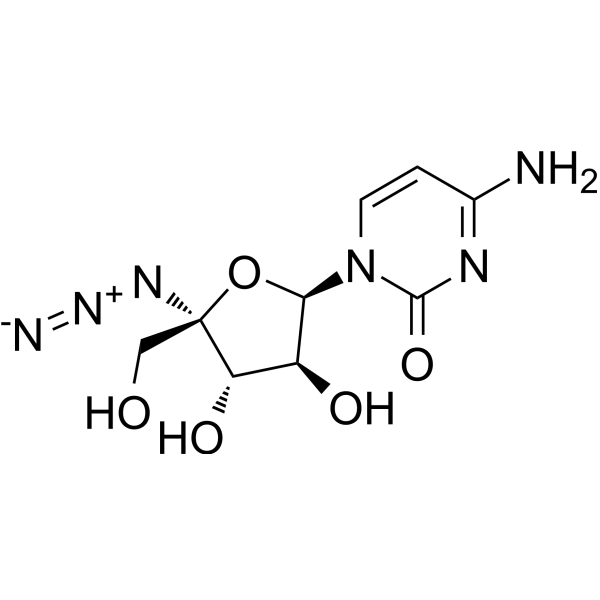
RO-9187 is a potent inhibitor of HCV virus replication with an IC50 of 171 nM. RO-9187 is a click chemistry reagent, it contains an Azide group and can undergo copper-catalyzed azide-alkyne cycloaddition reaction (CuAAc) with molecules containing Alkyne groups. It can also undergo strain-promoted alkyne-azide cycloaddition (SPAAC) reactions with molecules containing DBCO or BCN groups.
|
-
-
- HY-140104
-
|
|
ADC Linker
|
Cancer
|
|
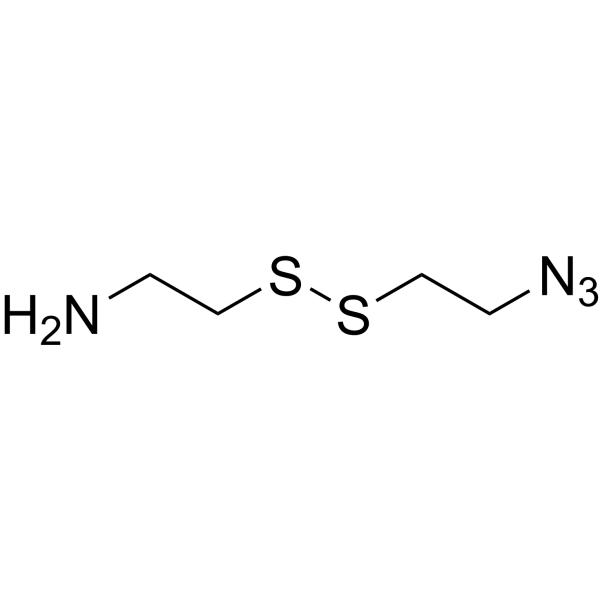
Azidoethyl-SS-ethylamine is a cleavable ADC linker used in the synthesis of antibody-drug conjugates (ADCs) . Azidoethyl-SS-ethylamine is a click chemistry reagent, it contains an Azide group and can undergo copper-catalyzed azide-alkyne cycloaddition reaction (CuAAc) with molecules containing Alkyne groups. It can also undergo strain-promoted alkyne-azide cycloaddition (SPAAC) reactions with molecules containing DBCO or BCN groups.
|
-
-
- HY-148254
-
|
|
Deubiquitinase
|
Cancer
|
|
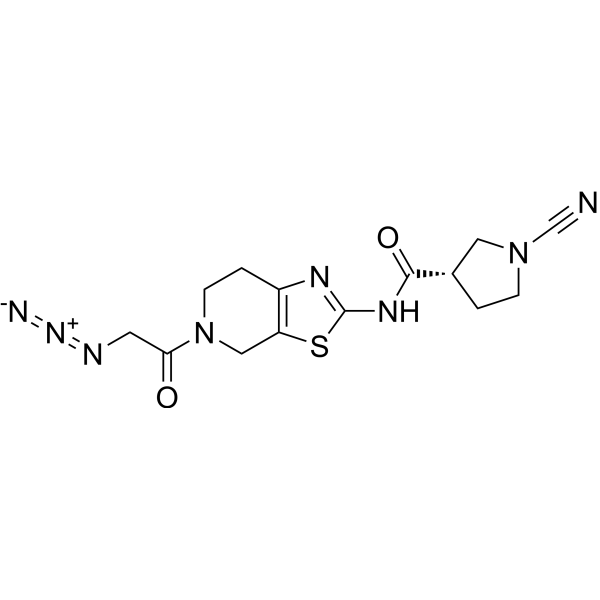
8RK64, a chemical probe, is a covalent UCHL1 inhibitor (IC50: 0.32 μM) . 8RK64 is a click chemistry reagent, it contains an Azide group and can undergo copper-catalyzed azide-alkyne cycloaddition reaction (CuAAc) with molecules containing Alkyne groups. It can also undergo strain-promoted alkyne-azide cycloaddition (SPAAC) reactions with molecules containing DBCO or BCN groups.
|
-
-
- HY-W440999
-
|
|
Liposome
|
Others
|
|
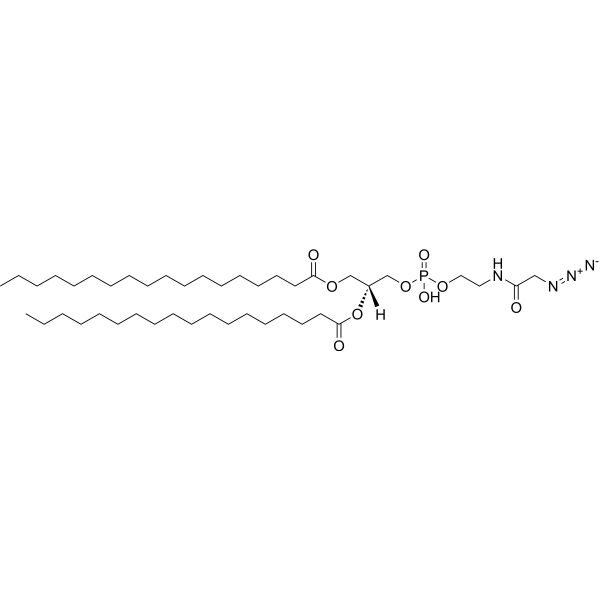
DSPE-N3 is a lipid. DSPE-N3 can be used for the research of various biochemical . DSPE-N3 is a click chemistry reagent, it contains an Azide group and can undergo copper-catalyzed azide-alkyne cycloaddition reaction (CuAAc) with molecules containing Alkyne groups. It can also undergo strain-promoted alkyne-azide cycloaddition (SPAAC) reactions with molecules containing DBCO or BCN groups.
|
-
-
- HY-133393
-
|
|
PROTAC Linkers
|
Cancer
|
|
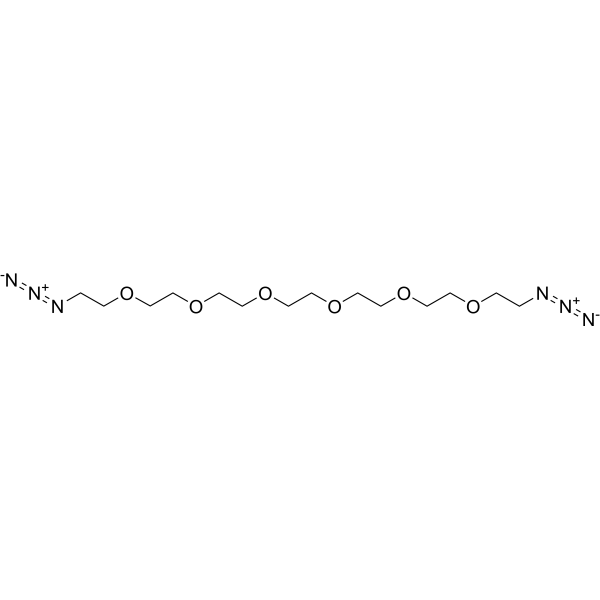
Azido-PEG6-azide is a PEG-based PROTAC linker that can be used in the synthesis of PROTACs . Azido-PEG6-azide is a click chemistry reagent, it contains an Azide group and can undergo copper-catalyzed azide-alkyne cycloaddition reaction (CuAAc) with molecules containing Alkyne groups. It can also undergo strain-promoted alkyne-azide cycloaddition (SPAAC) reactions with molecules containing DBCO or BCN groups.
|
-
-
- HY-140857
-
|
|
PROTAC Linkers
|
Cancer
|
|
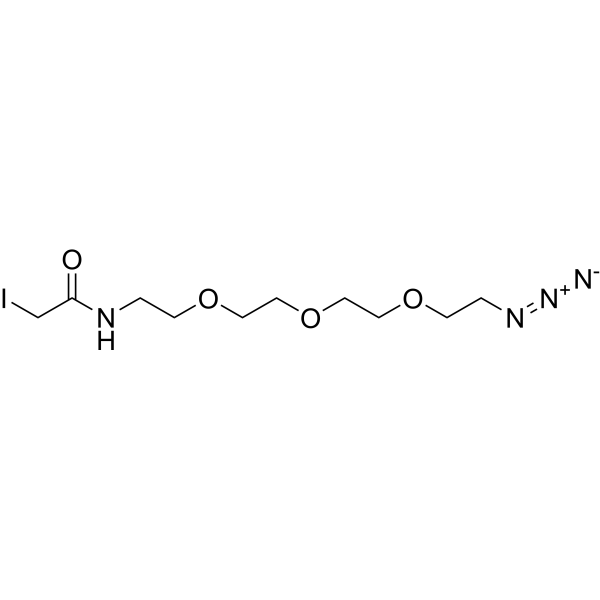
Iodoacetamide-PEG3-azide is a PEG-based PROTAC linker that can be used in the synthesis of PROTACs . Iodoacetamide-PEG3-azide is a click chemistry reagent, it contains an Azide group and can undergo copper-catalyzed azide-alkyne cycloaddition reaction (CuAAc) with molecules containing Alkyne groups. It can also undergo strain-promoted alkyne-azide cycloaddition (SPAAC) reactions with molecules containing DBCO or BCN groups.
|
-
-
- HY-151669
-
|
|
ADC Linker
|
Others
|
|
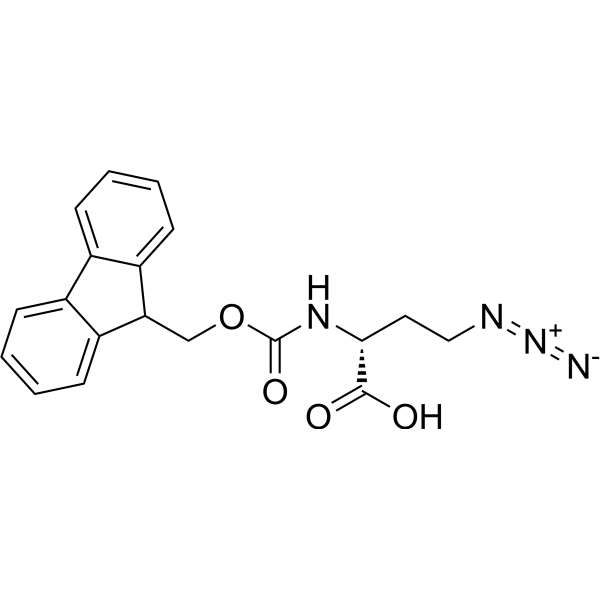
Fmoc-D-Aha-OH is a click chemistry reagent containing an azide . Fmoc-D-Aha-OH is a click chemistry reagent, it contains an Azide group and can undergo copper-catalyzed azide-alkyne cycloaddition reaction (CuAAc) with molecules containing Alkyne groups. It can also undergo strain-promoted alkyne-azide cycloaddition (SPAAC) reactions with molecules containing DBCO or BCN groups.
|
-
-
- HY-151666
-
|
|
Biochemical Assay Reagents
|
Others
|
|
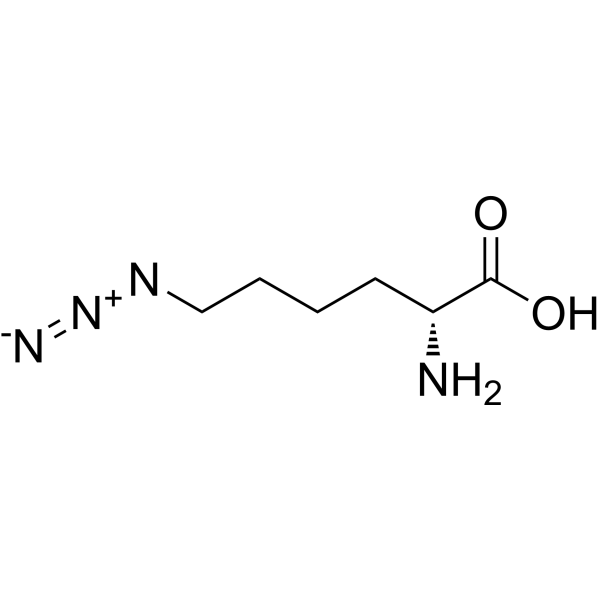
6-Azido-D-lysine is a click chemistry reagent containing an azide . 6-Azido-D-lysine is a click chemistry reagent, it contains an Azide group and can undergo copper-catalyzed azide-alkyne cycloaddition reaction (CuAAc) with molecules containing Alkyne groups. It can also undergo strain-promoted alkyne-azide cycloaddition (SPAAC) reactions with molecules containing DBCO or BCN groups.
|
-
-
- HY-151675
-
|
|
Biochemical Assay Reagents
|
Others
|
|
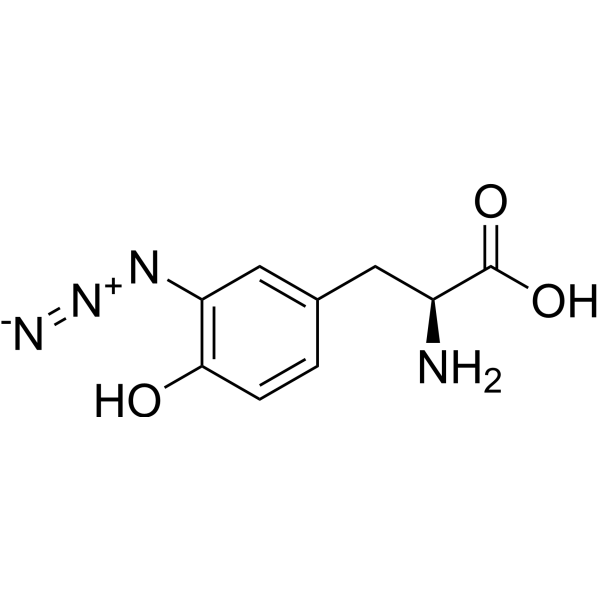
H-L-Tyr(3-N3)-OH is a click chemistry reagent containing an azide . H-L-Tyr(3-N3)-OH is a click chemistry reagent, it contains an Azide group and can undergo copper-catalyzed azide-alkyne cycloaddition reaction (CuAAc) with molecules containing Alkyne groups. It can also undergo strain-promoted alkyne-azide cycloaddition (SPAAC) reactions with molecules containing DBCO or BCN groups .
|
-
-
- HY-147309
-
|
|
Fluorescent Dye
|
Others
|
|
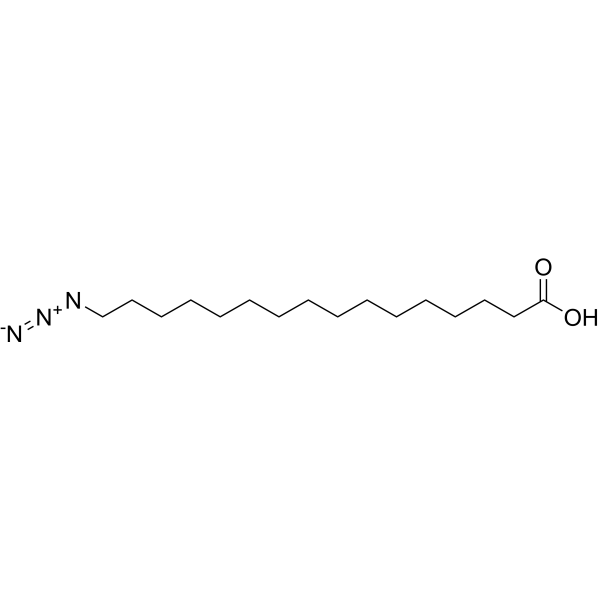
16-Azidohexadecanoic acid, a synthetic fatty acid, can be used as a modification marker for nucleotides and a molecular probe for fatty acid metabolism . 16-Azidohexadecanoic acid is a click chemistry reagent, it contains an Azide group and can undergo copper-catalyzed azide-alkyne cycloaddition reaction (CuAAc) with molecules containing Alkyne groups. It can also undergo strain-promoted alkyne-azide cycloaddition (SPAAC) reactions with molecules containing DBCO or BCN groups.
|
-
-
- HY-151666A
-
|
|
Biochemical Assay Reagents
|
Others
|
|
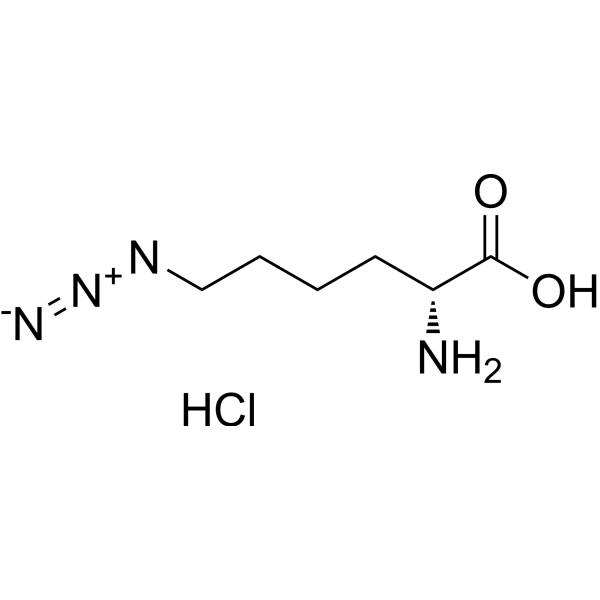
6-Azido-D-lysine hydrochloride is a click chemistry reagent containing an azide . 6-Azido-D-lysine hydrochloride is a click chemistry reagent, it contains an Azide group and can undergo copper-catalyzed azide-alkyne cycloaddition reaction (CuAAc) with molecules containing Alkyne groups. It can also undergo strain-promoted alkyne-azide cycloaddition (SPAAC) reactions with molecules containing DBCO or BCN groups.
|
-
-
- HY-13025
-
|
|
HIV
HIV Integrase
|
Infection
|
|
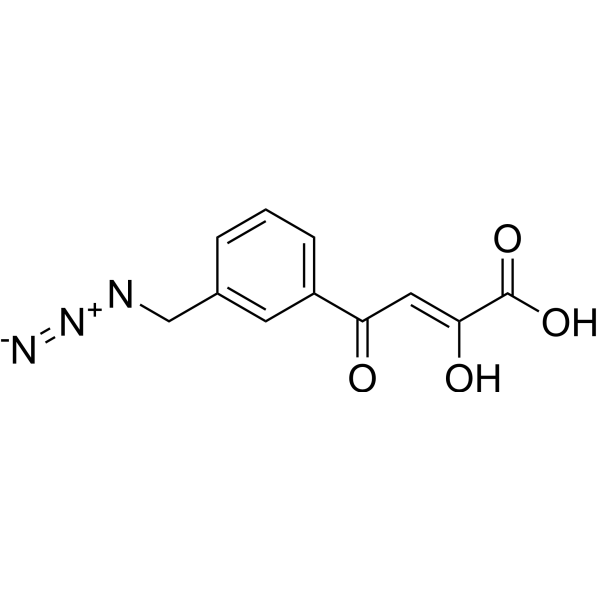
HIV-1 integrase inhibitor is a click chemistry reagent, it contains an Azide group and can undergo copper-catalyzed azide-alkyne cycloaddition reaction (CuAAc) with molecules containing Alkyne groups. It can also undergo strain-promoted alkyne-azide cycloaddition (SPAAC) reactions with molecules containing DBCO or BCN groups.
|
-
-
- HY-140346
-
|
|
PROTAC Linkers
|
Cancer
|
|
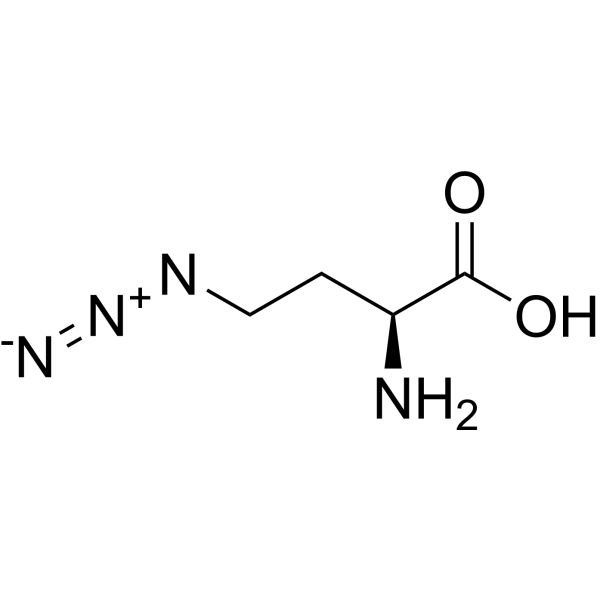
L-Azidohomoalanine is an alkyl chain-based PROTAC linker that can be used in the synthesis of PROTACs . L-Azidohomoalanine is a click chemistry reagent, it contains an Azide group and can undergo copper-catalyzed azide-alkyne cycloaddition reaction (CuAAc) with molecules containing Alkyne groups. It can also undergo strain-promoted alkyne-azide cycloaddition (SPAAC) reactions with molecules containing DBCO or BCN groups.
|
-
-
- HY-105674
-
|
|
Bacterial
Antibiotic
|
Infection
|
|
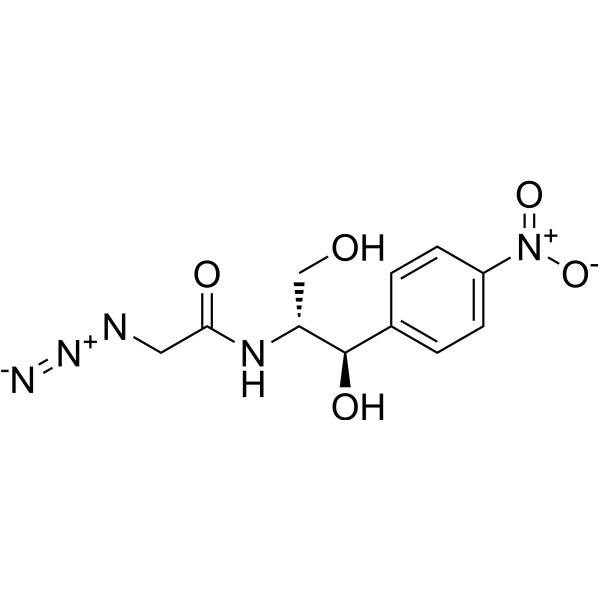
Azidamfenicol is a broad-spectrum chloramphenicol-like antibiotic. Azidamfenicol inhibits ribosomal peptidyltransferase (Ki=22 μM) . Azidamfenicol is a click chemistry reagent, it contains an Azide group and can undergo copper-catalyzed azide-alkyne cycloaddition reaction (CuAAc) with molecules containing Alkyne groups. It can also undergo strain-promoted alkyne-azide cycloaddition (SPAAC) reactions with molecules containing DBCO or BCN groups.
|
-
-
- HY-W127601
-
|
|
Biochemical Assay Reagents
|
Others
|
|
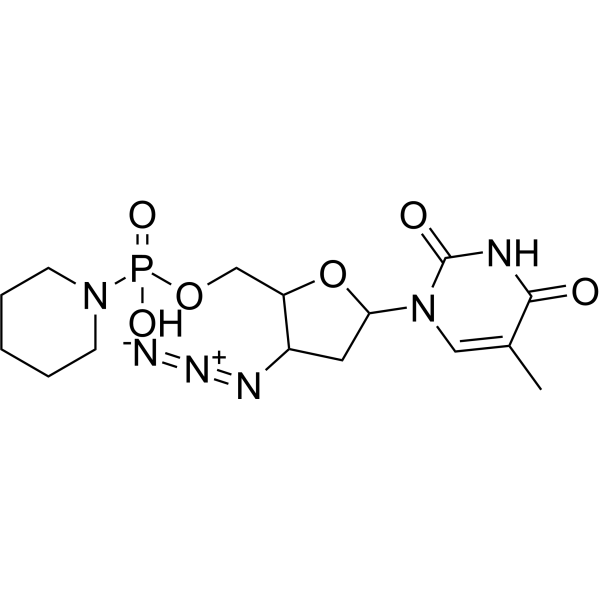
Lard oil is a biochemical reagent that can be used as a biological material or organic compound for life science related research. Lard oil is a click chemistry reagent, it contains an Azide group and can undergo copper-catalyzed azide-alkyne cycloaddition reaction (CuAAc) with molecules containing Alkyne groups. It can also undergo strain-promoted alkyne-azide cycloaddition (SPAAC) reactions with molecules containing DBCO or BCN groups.
|
-
-
- HY-132078
-
|
|
PROTAC Linkers
|
Cancer
|
|
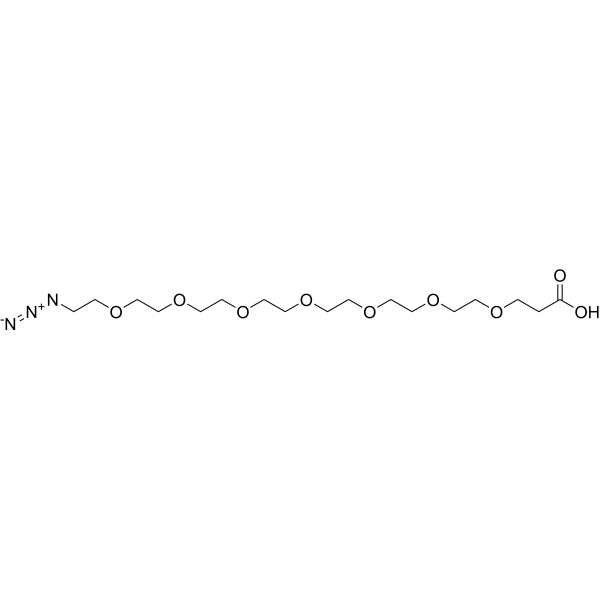
Azido-PEG7-acid is a PEG-based PROTAC linker that can be used in the synthesis of PROTACs . Azido-PEG7-acid is a click chemistry reagent, it contains an Azide group and can undergo copper-catalyzed azide-alkyne cycloaddition reaction (CuAAc) with molecules containing Alkyne groups. It can also undergo strain-promoted alkyne-azide cycloaddition (SPAAC) reactions with molecules containing DBCO or BCN groups.
|
-
-
- HY-134320
-
|
8-Azidoadenosine 5'-triphosphate; 8-N3-ATP
|
Potassium Channel
|
Metabolic Disease
|
|
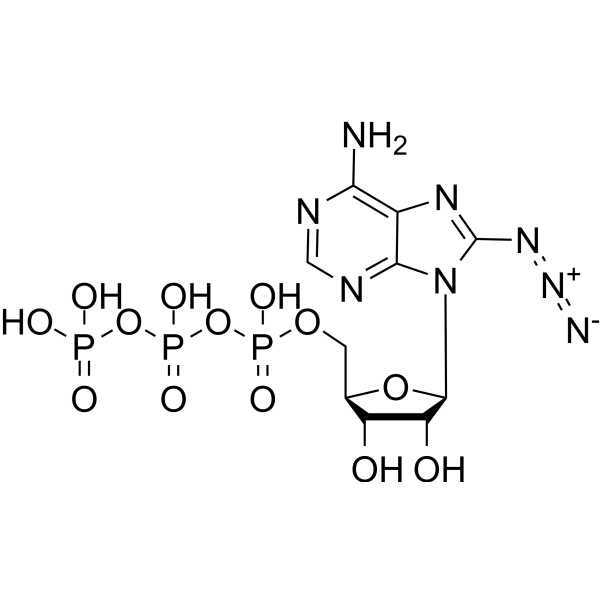
8-Azido-ATP, a photoreactable nucleotide analog, is useful for the identification of proteins, such as DNA-dependent RNA polymerase . 8-Azido-ATP is a click chemistry reagent, it contains an Azide group and can undergo copper-catalyzed azide-alkyne cycloaddition reaction (CuAAc) with molecules containing Alkyne groups. It can also undergo strain-promoted alkyne-azide cycloaddition (SPAAC) reactions with molecules containing DBCO or BCN groups.
|
-
-
- HY-151641
-
|
|
Biochemical Assay Reagents
|
Others
|
|
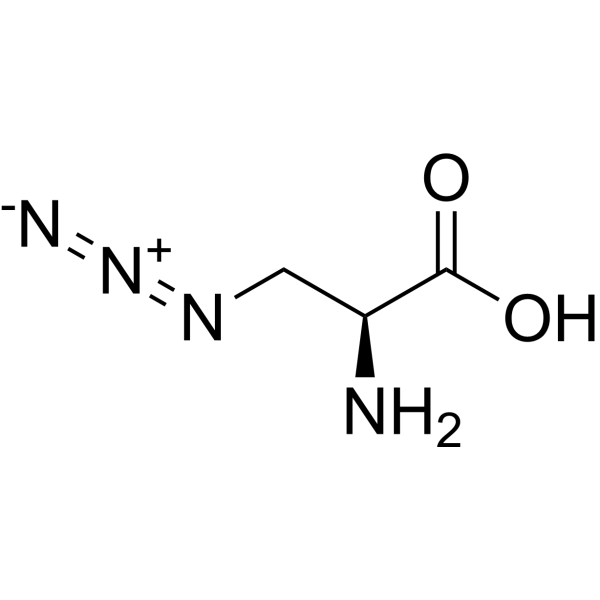
3-Azido-L-alanine is an aliphatic functionalized amino acid with side chain lengths of up to four carbons . 3-Azido-L-alanine is a click chemistry reagent, it contains an Azide group and can undergo copper-catalyzed azide-alkyne cycloaddition reaction (CuAAc) with molecules containing Alkyne groups. It can also undergo strain-promoted alkyne-azide cycloaddition (SPAAC) reactions with molecules containing DBCO or BCN groups.
|
-
-
- HY-138518
-
|
|
PROTAC Linkers
|
Cancer
|
|
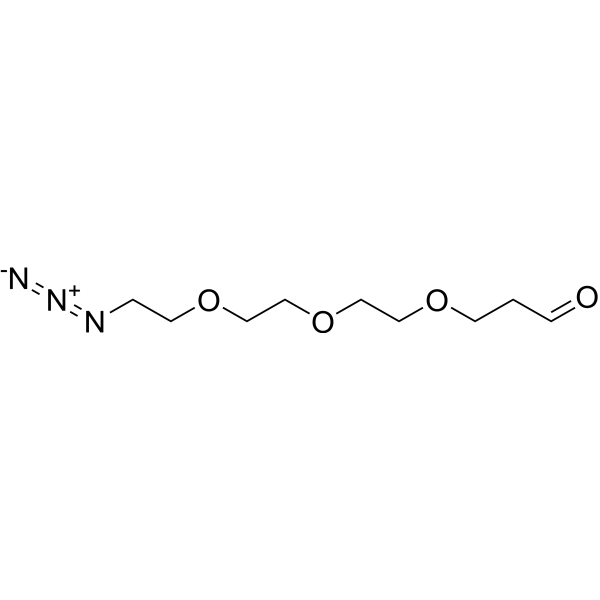
Azido-PEG3-aldehyde is a PEG-based PROTAC linker that can be used in the synthesis of PROTACs . Azido-PEG3-aldehyde is a click chemistry reagent, it contains an Azide group and can undergo copper-catalyzed azide-alkyne cycloaddition reaction (CuAAc) with molecules containing Alkyne groups. It can also undergo strain-promoted alkyne-azide cycloaddition (SPAAC) reactions with molecules containing DBCO or BCN groups.
|
-
-
- HY-D1625
-
|
|
Fluorescent Dye
|
Others
|
|
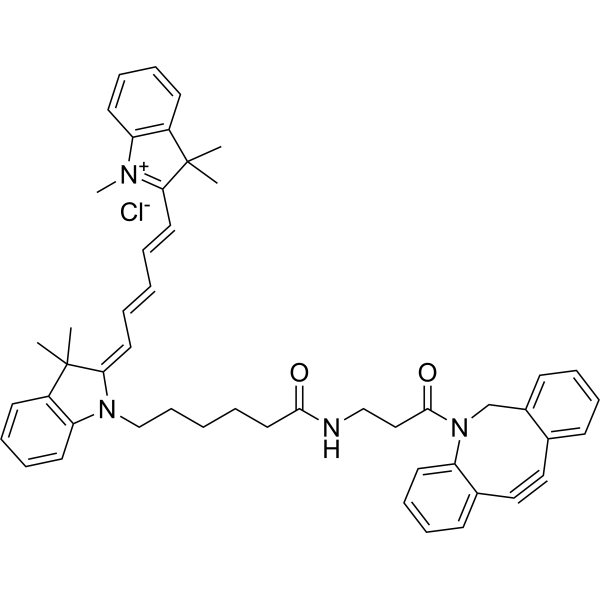
Cy5 DBCO chloride is an azide reaction probe and the addition of DBCO molecules allows the imaging of azide-labelled biomolecules by a copper-free "Click Chemistry" reaction . Cy5 DBCO (chloride) is a click chemistry reagent, it contains a DBCO group that can undergo strain-promoted alkyne-azide cycloaddition (SPAAC) with molecules containing Azide groups.
|
-
-
- HY-151745
-
|
|
ADC Linker
|
Others
|
|
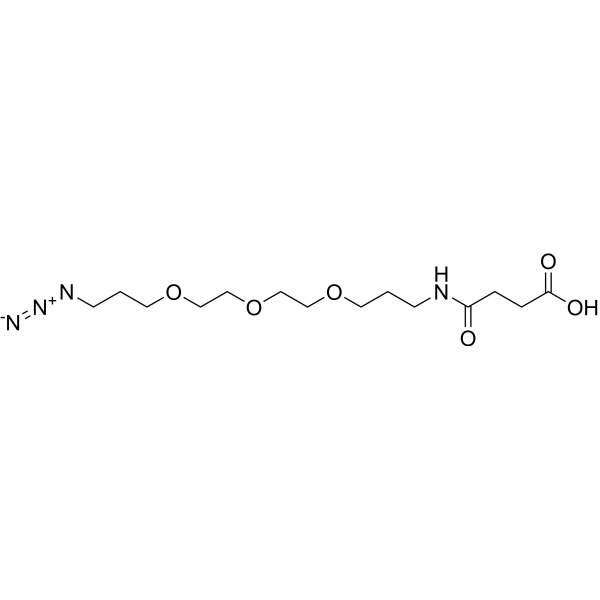
N3-TOTA-Suc is a click chemistry reagent containing an azide group. Click chemistry is a powerful chemical reaction with excellent bioorthogonality features: biocompatible, rapid and highly specific in biological environments . N3-TOTA-Suc is a click chemistry reagent, it contains an Azide group and can undergo copper-catalyzed azide-alkyne cycloaddition reaction (CuAAc) with molecules containing Alkyne groups. It can also undergo strain-promoted alkyne-azide cycloaddition (SPAAC) reactions with molecules containing DBCO or BCN groups.
|
-
-
- HY-151844
-
|
|
ADC Linker
|
Others
|
|
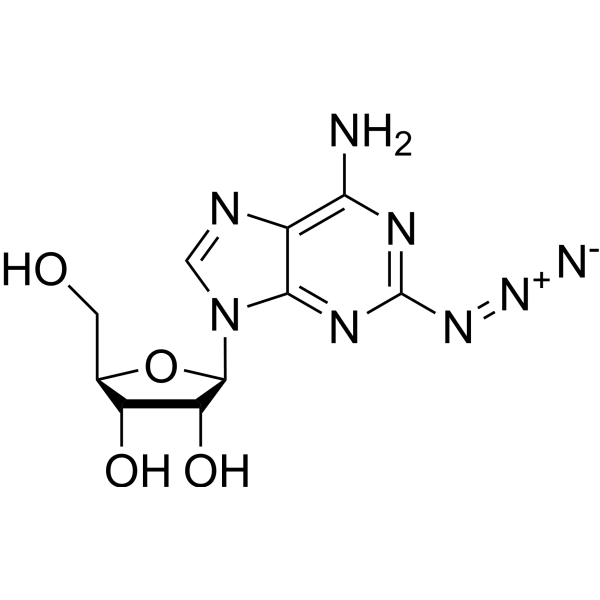
2-Azido-adenosine is a click chemistry reagent containing an azide group . 2-Azido-adenosine is a click chemistry reagent, it contains an Azide group and can undergo copper-catalyzed azide-alkyne cycloaddition reaction (CuAAc) with molecules containing Alkyne groups. It can also undergo strain-promoted alkyne-azide cycloaddition (SPAAC) reactions with molecules containing DBCO or BCN groups.
|
-
-
- HY-151749
-
|
|
ADC Linker
|
Others
|
|
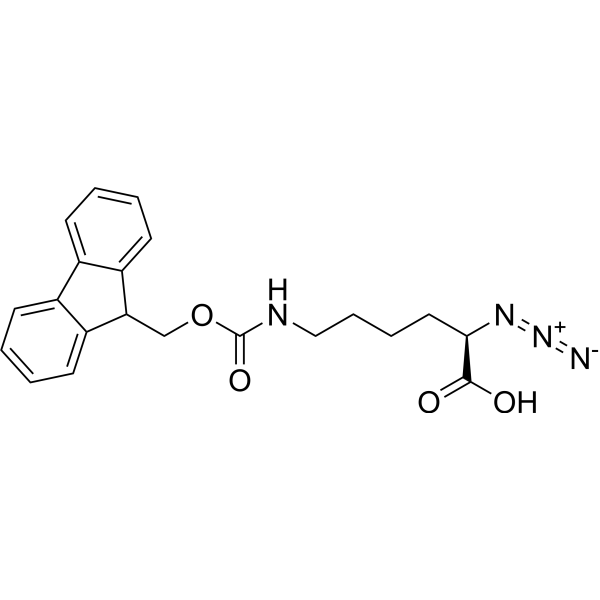
N3-D-Lys(Fmoc)-OH is a click chemistry reagent containing an azide group. Click chemistry is a powerful chemical reaction with excellent bioorthogonality features: biocompatible, rapid and highly specific in biological environments . N3-D-Lys(Fmoc)-OH is a click chemistry reagent, it contains an Azide group and can undergo copper-catalyzed azide-alkyne cycloaddition reaction (CuAAc) with molecules containing Alkyne groups. It can also undergo strain-promoted alkyne-azide cycloaddition (SPAAC) reactions with molecules containing DBCO or BCN groups.
|
-
-
- HY-151736
-
|
|
ADC Linker
|
Others
|
|
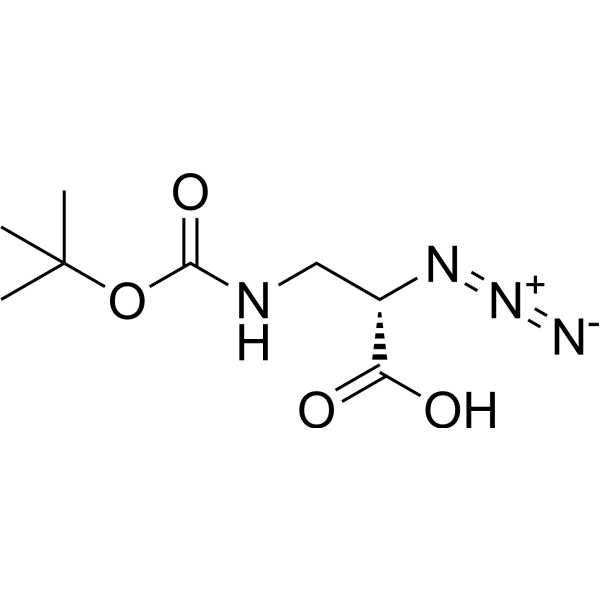
N3-L-Dap(Boc)-OH is a click chemistry reagent containing an azide group. Click chemistry is a powerful chemical reaction with excellent bioorthogonality features: biocompatible, rapid and highly specific in biological environments . N3-L-Dap(Boc)-OH is a click chemistry reagent, it contains an Azide group and can undergo copper-catalyzed azide-alkyne cycloaddition reaction (CuAAc) with molecules containing Alkyne groups. It can also undergo strain-promoted alkyne-azide cycloaddition (SPAAC) reactions with molecules containing DBCO or BCN groups.
|
-
-
- HY-151842
-
|
|
ADC Linker
|
Others
|
|
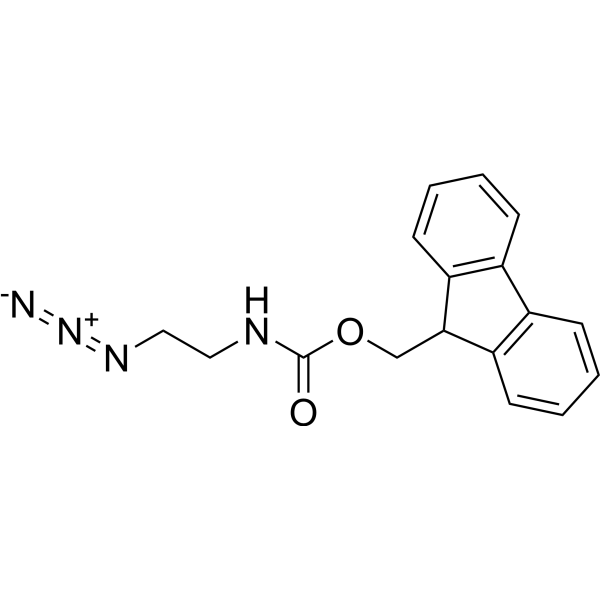
Fmoc-EDA-N3 is a click chemistry reagent containing an azide group . Fmoc-EDA-N3 is a click chemistry reagent, it contains an Azide group and can undergo copper-catalyzed azide-alkyne cycloaddition reaction (CuAAc) with molecules containing Alkyne groups. It can also undergo strain-promoted alkyne-azide cycloaddition (SPAAC) reactions with molecules containing DBCO or BCN groups.
|
-
-
- HY-151841
-
|
|
ADC Linker
|
Others
|
|
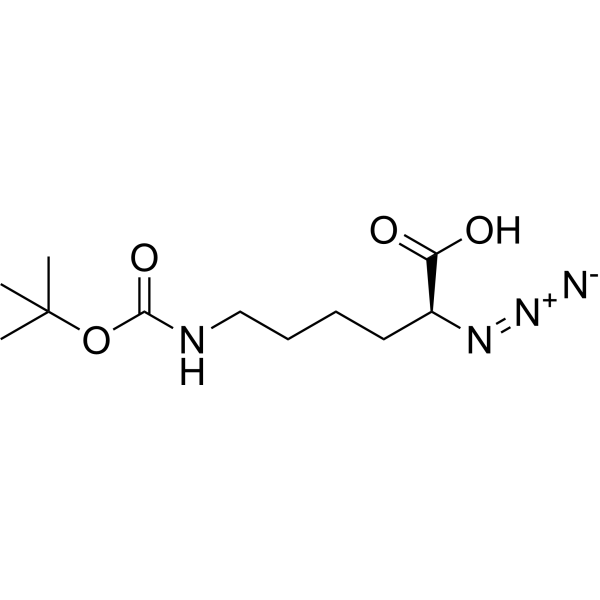
N3-L-Lys(Boc)-OH is a click chemistry reagent containing an azide group . N3-L-Lys(Boc)-OH is a click chemistry reagent, it contains an Azide group and can undergo copper-catalyzed azide-alkyne cycloaddition reaction (CuAAc) with molecules containing Alkyne groups. It can also undergo strain-promoted alkyne-azide cycloaddition (SPAAC) reactions with molecules containing DBCO or BCN groups.
|
-
-
- HY-151843
-
|
|
ADC Linker
|
Others
|
|
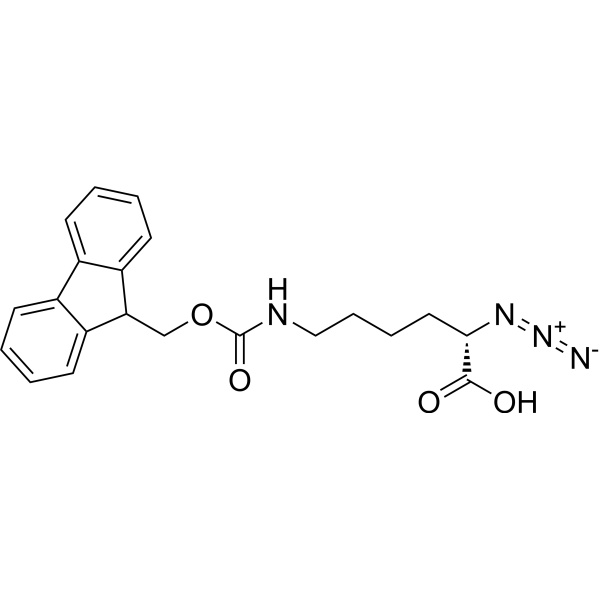
N3-L-Lys(Fmoc)-OH is a click chemistry reagent containing an azide group . N3-L-Lys(Fmoc)-OH is a click chemistry reagent, it contains an Azide group and can undergo copper-catalyzed azide-alkyne cycloaddition reaction (CuAAc) with molecules containing Alkyne groups. It can also undergo strain-promoted alkyne-azide cycloaddition (SPAAC) reactions with molecules containing DBCO or BCN groups.
|
-
-
- HY-151729
-
|
|
ADC Linker
|
Others
|
|
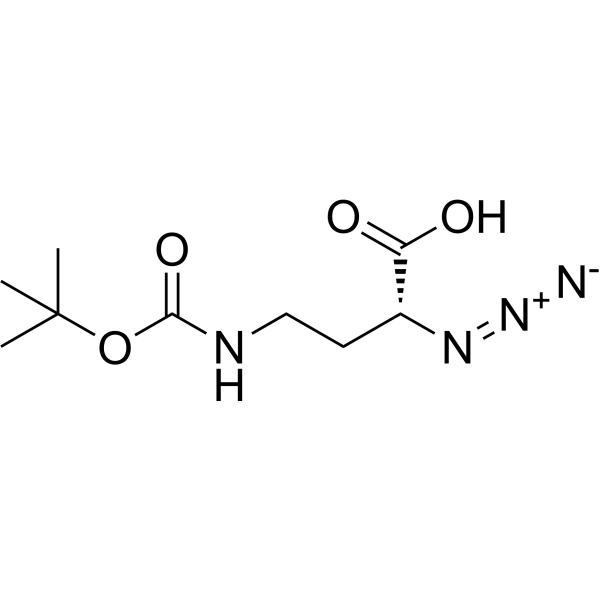
N3-D-Dab(Boc)-OH is a click chemistry reagent containing an Azide . N3-D-Dab(Boc)-OH is a click chemistry reagent, it contains an Azide group and can undergo copper-catalyzed azide-alkyne cycloaddition reaction (CuAAc) with molecules containing Alkyne groups. It can also undergo strain-promoted alkyne-azide cycloaddition (SPAAC) reactions with molecules containing DBCO or BCN groups.
|
-
-
- HY-151733
-
|
|
ADC Linker
|
Others
|
|
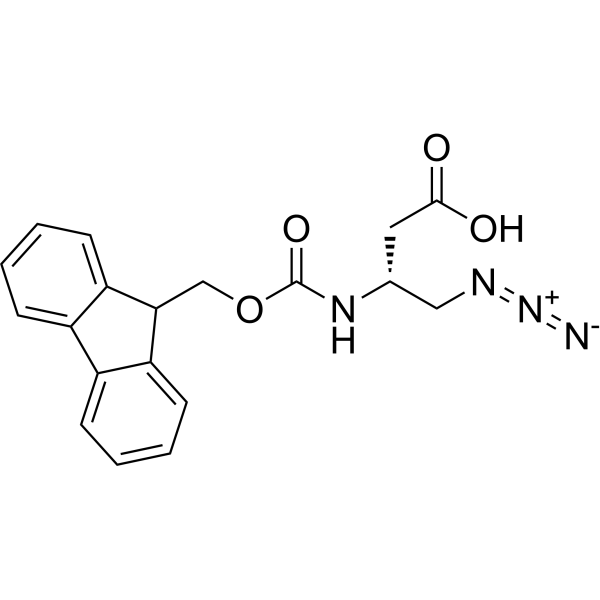
Fmoc-D-Dbu(N3)-OH is a click chemistry reagent containing an Azide . Fmoc-D-Dbu(N3)-OH is a click chemistry reagent, it contains an Azide group and can undergo copper-catalyzed azide-alkyne cycloaddition reaction (CuAAc) with molecules containing Alkyne groups. It can also undergo strain-promoted alkyne-azide cycloaddition (SPAAC) reactions with molecules containing DBCO or BCN groups.
|
-
-
- HY-100825
-
|
|
Biochemical Assay Reagents
|
Others
|
|
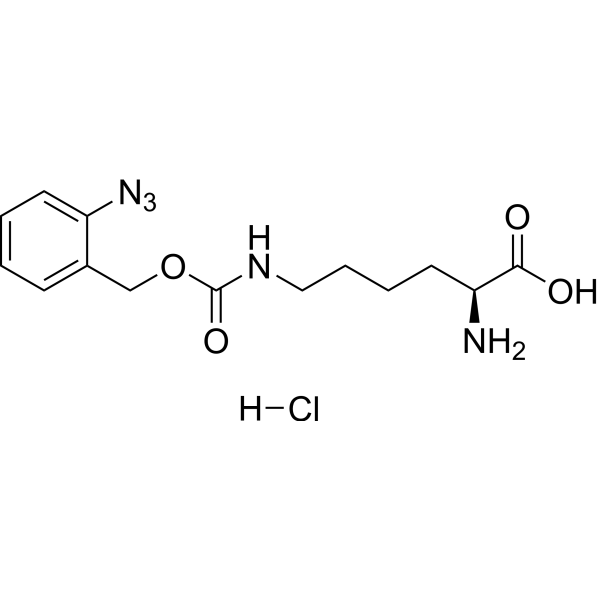
OABK hydrochloride is a small-molecule switch that can be used to control protein activity. OABK (hydrochloride) is a click chemistry reagent, it contains an Azide group and can undergo copper-catalyzed azide-alkyne cycloaddition reaction (CuAAc) with molecules containing Alkyne groups. It can also undergo strain-promoted alkyne-azide cycloaddition (SPAAC) reactions with molecules containing DBCO or BCN groups.
|
-
-
- HY-151795
-
|
|
ADC Linker
|
Others
|
|
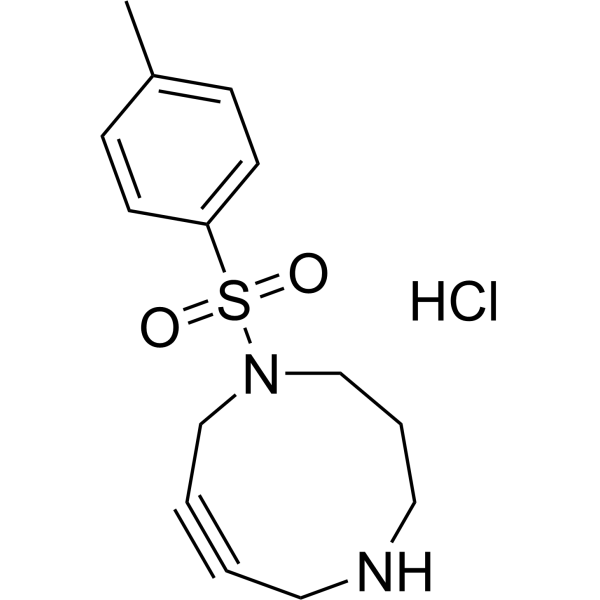
DACN(Tos) hydrochloride is a click chemistry reagent containing a cycloalkyne group. The alkyne moiety within the ring has a unique bent structure and high reactivity toward cycloaddition reactions, such strain-promoted azide-alkyne cycloadditions (SPAAC) by using cycloalkynes. DACNs possesses high thermal and chemical stability along with comparable click reactivity. DACN(Tos) hydrochloride can be used for the research of molecular conjugation .
|
-
- HY-151647
-
|
|
Biochemical Assay Reagents
|
Others
|
|
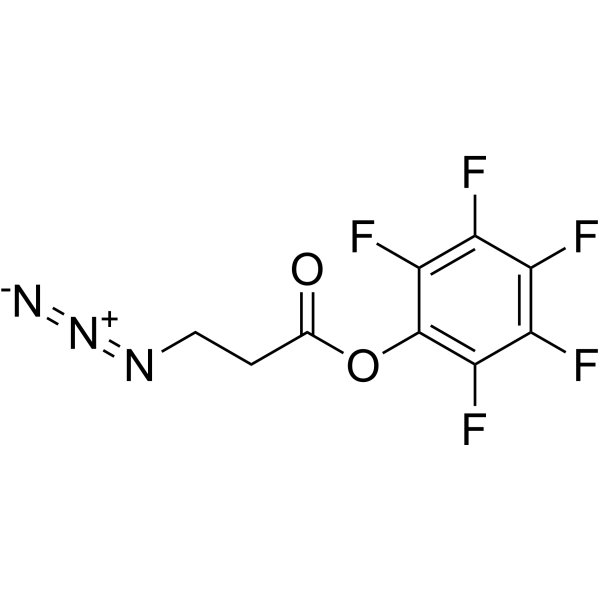
3-Azidopropanoic acid-PFP ester is an azidopropanoic acid linker that contains an activated PFP ester. The azide group can undergo copper-catalyzed Click Chemistry reactions with alkynes, DBCO and BCN to form triazole linkages. The activated PFP ester can react with amine groups to form stable amide bonds . 3-Azidopropanoic acid-PFP ester is a click chemistry reagent, it contains an Azide group and can undergo copper-catalyzed azide-alkyne cycloaddition reaction (CuAAc) with molecules containing Alkyne groups. It can also undergo strain-promoted alkyne-azide cycloaddition (SPAAC) reactions with molecules containing DBCO or BCN groups.
|
-
- HY-140102
-
|
|
ADC Linker
|
Cancer
|
|
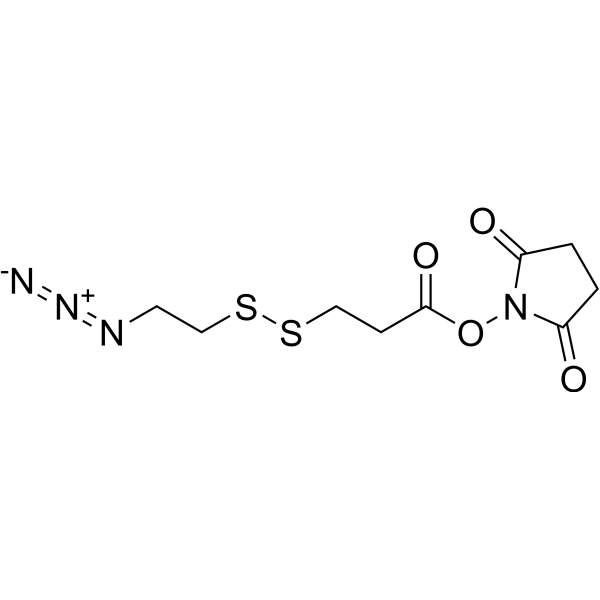
Azidoethyl-SS-propionic NHS ester is a cleavable ADC linker used in the synthesis of antibody-drug conjugates (ADCs) . Azidoethyl-SS-propionic NHS ester is a click chemistry reagent, it contains an Azide group and can undergo copper-catalyzed azide-alkyne cycloaddition reaction (CuAAc) with molecules containing Alkyne groups. It can also undergo strain-promoted alkyne-azide cycloaddition (SPAAC) reactions with molecules containing DBCO or BCN groups.
|
-
- HY-140775
-
|
|
PROTAC Linkers
|
Cancer
|
|
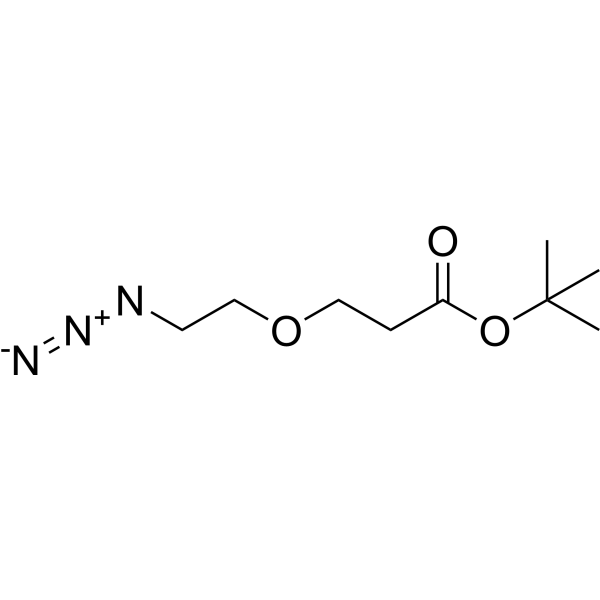
Azido-PEG1-Boc is a PEG-based PROTAC linker that can be used in the synthesis of PROTACs . Azido-PEG1-Boc is a click chemistry reagent, it contains an Azide group and can undergo copper-catalyzed azide-alkyne cycloaddition reaction (CuAAc) with molecules containing Alkyne groups. It can also undergo strain-promoted alkyne-azide cycloaddition (SPAAC) reactions with molecules containing DBCO or BCN groups.
|
-
- HY-132049
-
|
|
PROTAC Linkers
|
Cancer
|
|
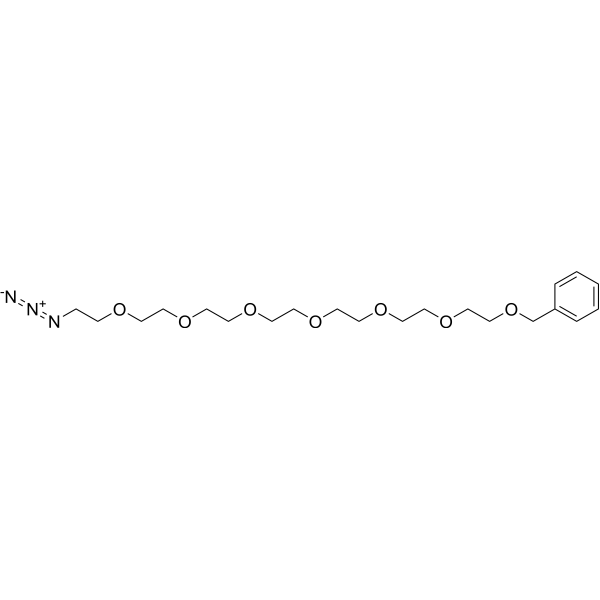
Benzyl-PEG7-azide is a PEG-based PROTAC linker that can be used in the synthesis of PROTACs . Benzyl-PEG7-azide is a click chemistry reagent, it contains an Azide group and can undergo copper-catalyzed azide-alkyne cycloaddition reaction (CuAAc) with molecules containing Alkyne groups. It can also undergo strain-promoted alkyne-azide cycloaddition (SPAAC) reactions with molecules containing DBCO or BCN groups.
|
-
- HY-77651
-
|
|
Nucleoside Antimetabolite/Analog
HCV
|
Infection
|
|
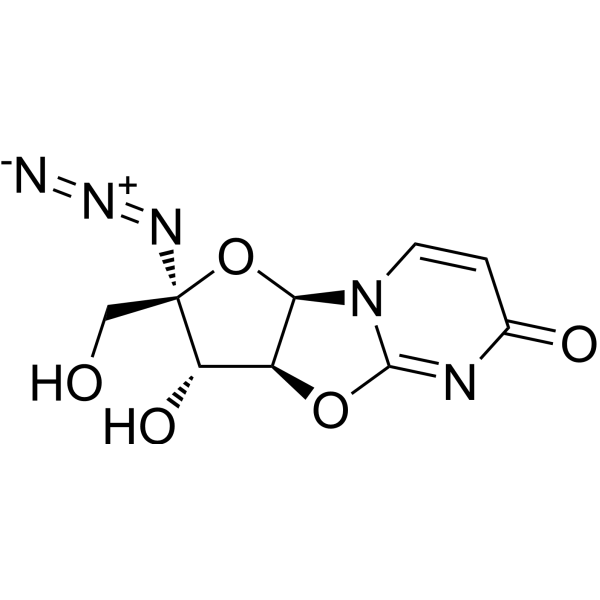
Nucleoside-Analog-1 is a click chemistry reagent, it contains an Azide group and can undergo copper-catalyzed azide-alkyne cycloaddition reaction (CuAAc) with molecules containing Alkyne groups. It can also undergo strain-promoted alkyne-azide cycloaddition (SPAAC) reactions with molecules containing DBCO or BCN groups.
|
-
- HY-151816
-
|
|
ADC Linker
|
Others
|
|
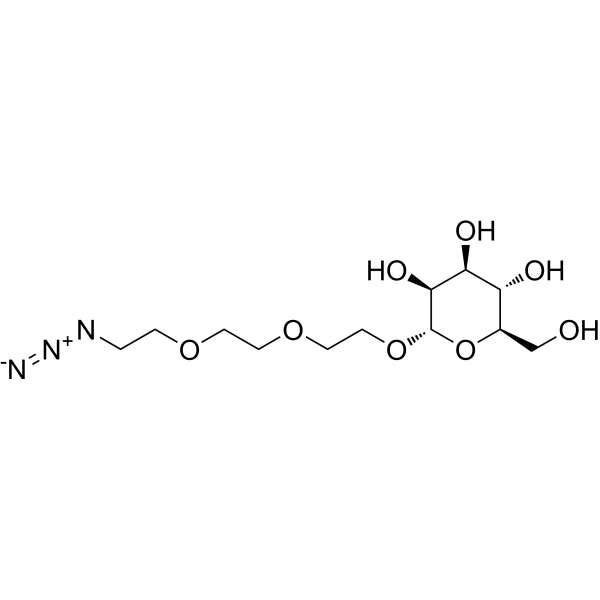
alpha-Man-TEG-N3 is a click chemistry reagent containing an azide group . alpha-Man-TEG-N3 is a click chemistry reagent, it contains an Azide group and can undergo copper-catalyzed azide-alkyne cycloaddition reaction (CuAAc) with molecules containing Alkyne groups. It can also undergo strain-promoted alkyne-azide cycloaddition (SPAAC) reactions with molecules containing DBCO or BCN groups.
|
-
- HY-W714234
-
|
|
Biochemical Assay Reagents
|
Others
|
|
Endo-BCN CE-phosphoramidite is a stable and one of the most reactive cyclooctynes for copper-free click chemistry. Unlike dibenzocyclooctyne (DBCO), BCN is reactive both to azides (strain-promoted azyde-alkyne cycloaddition, SPAAC) and tetrazines (inverse electron demand Diels-Alder reaction, IEDDA).
|
-

- HY-181228
-
|
|
Biochemical Assay Reagents
|
Others
|
|
DBCO-PEG10-Biotin is an azadibenzocyclooctyne-biotin derivative containing a biotin group and 10 PEGs. DBCO-PEG10-Biotin is a versatile biotinylation reagent used for the introduction of a biotin moiety to azide-labeled biomolecules via copper-free strain-promoted alkyne-azide click chemistry (SPAAC) reaction. DBCO-PEG10-Biotin is a click chemistry reagent, it contains a DBCO group that can undergo strain-promoted alkyne-azide cycloaddition (SPAAC) with molecules containing Azide groups .
|
-

- HY-D1944
-
|
|
Fluorescent Dye
|
Others
|
|
ATTO 590 Azide is an azide derivative of ATTO 590 with excitation/emission maxima at 594/622 nm. ATTO 590 azide is a click chemistry reagent, it contains an Azide group and can undergo copper-catalyzed azide-alkyne cycloaddition reaction (CuAAc) with molecules containing Alkyne groups. It can also undergo strain-promoted alkyne-azide cycloaddition (SPAAC) reactions with molecules containing DBCO or BCN groups.
|
-
- HY-151671
-
|
|
ADC Linker
|
Others
|
|
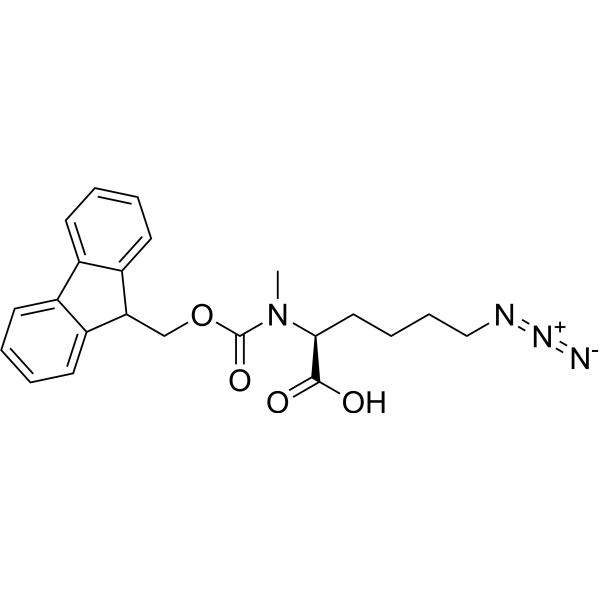
Fmoc-L-MeLys(N3)-OH is a click chemistry reagent containing an azide. Fmoc-L-MeLys(N3)-OH is a SPPS building-block for the introduction of N-Me-Lys that can be modified at the N3-group using Click-chemistry . Fmoc-L-MeLys(N3)-OH is a click chemistry reagent, it contains an Azide group and can undergo copper-catalyzed azide-alkyne cycloaddition reaction (CuAAc) with molecules containing Alkyne groups. It can also undergo strain-promoted alkyne-azide cycloaddition (SPAAC) reactions with molecules containing DBCO or BCN groups.
|
-
- HY-140105
-
|
|
ADC Linker
|
Cancer
|
|
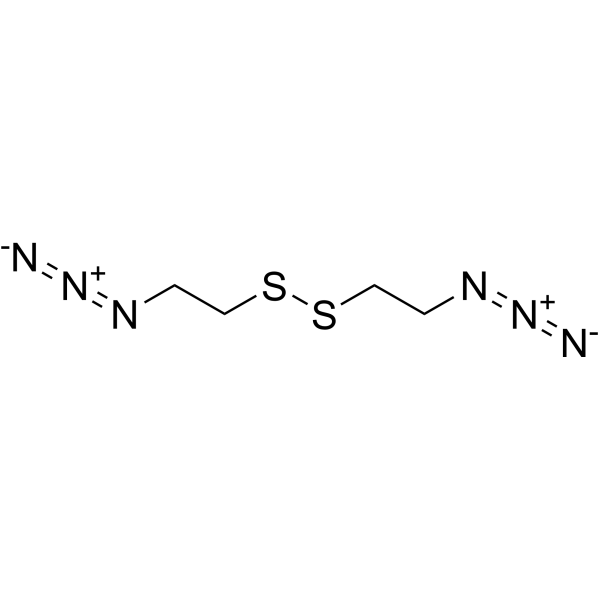
Azidoethyl-SS-ethylazide is a cleavable ADC linker used in the synthesis of antibody-drug conjugates (ADCs) . Azidoethyl-SS-ethylazide is a click chemistry reagent, it contains an Azide group and can undergo copper-catalyzed azide-alkyne cycloaddition reaction (CuAAc) with molecules containing Alkyne groups. It can also undergo strain-promoted alkyne-azide cycloaddition (SPAAC) reactions with molecules containing DBCO or BCN groups.
|
-
- HY-140100
-
|
|
ADC Linker
|
Cancer
|
|
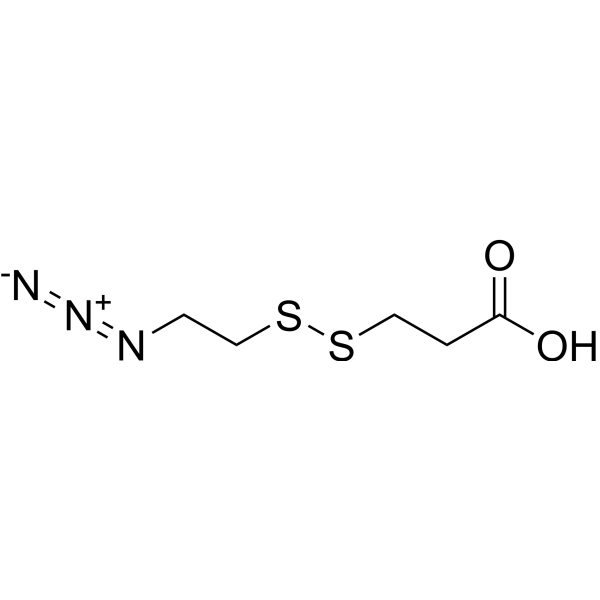
Azidoethyl-SS-propionic acid is a cleavable ADC linker used in the synthesis of antibody-drug conjugates (ADCs) . Azidoethyl-SS-propionic acid is a click chemistry reagent, it contains an Azide group and can undergo copper-catalyzed azide-alkyne cycloaddition reaction (CuAAc) with molecules containing Alkyne groups. It can also undergo strain-promoted alkyne-azide cycloaddition (SPAAC) reactions with molecules containing DBCO or BCN groups.
|
-
- HY-151650
-
|
|
ADC Linker
|
Others
|
|
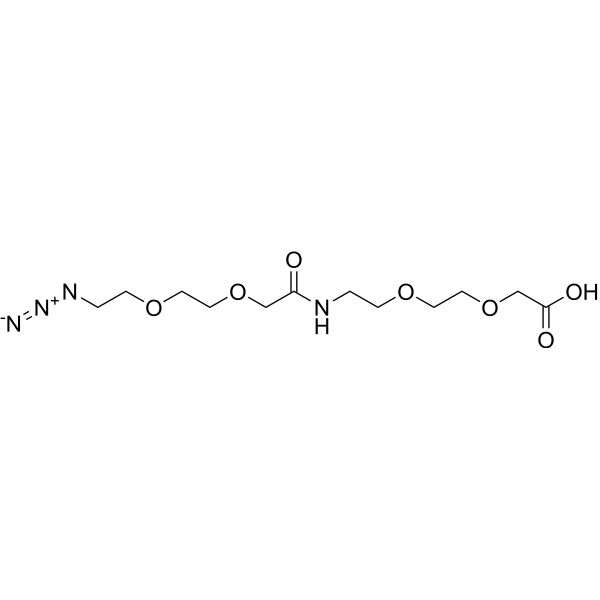
N3-O2Oc-O2Oc-OH is a click chemistry reagent containing an azide . N3-O2Oc-O2Oc-OH is a click chemistry reagent, it contains an Azide group and can undergo copper-catalyzed azide-alkyne cycloaddition reaction (CuAAc) with molecules containing Alkyne groups. It can also undergo strain-promoted alkyne-azide cycloaddition (SPAAC) reactions with molecules containing DBCO or BCN groups.
|
-
- HY-77652
-
|
|
Nucleoside Antimetabolite/Analog
HCV
|
Infection
|
|
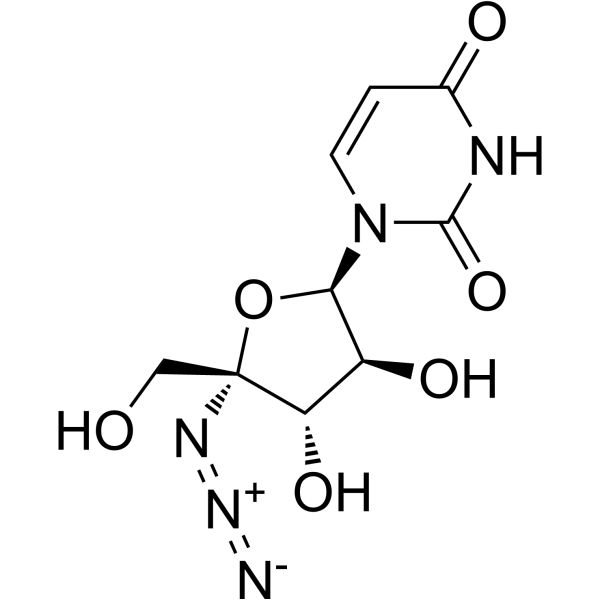
Nucleoside-Analog-2 is a 4'-Azidocytidine analogue against Hepatitis C virus (HCV) replication. Nucleoside-Analog-2 is a click chemistry reagent, it contains an Azide group and can undergo copper-catalyzed azide-alkyne cycloaddition reaction (CuAAc) with molecules containing Alkyne groups. It can also undergo strain-promoted alkyne-azide cycloaddition (SPAAC) reactions with molecules containing DBCO or BCN groups.
|
-
- HY-140455
-
|
|
PROTAC Linkers
|
Cancer
|
|
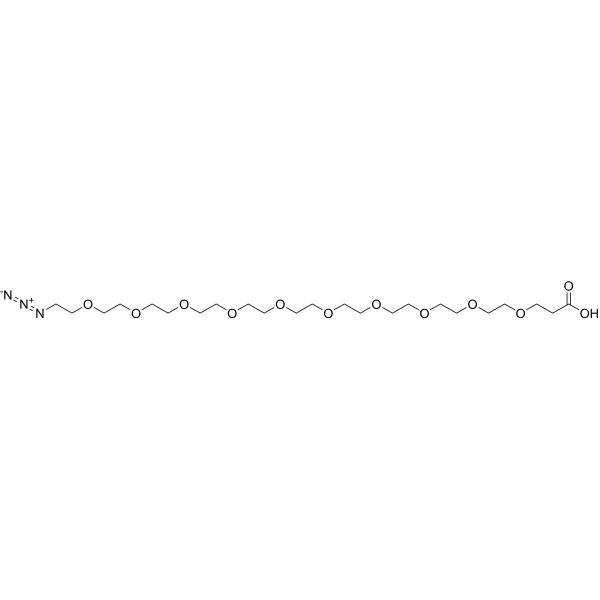
Azido-PEG10-acid is a PEG-based PROTAC linker that can be used in the synthesis of PROTACs . Azido-PEG10-acid is a click chemistry reagent, it contains an Azide group and can undergo copper-catalyzed azide-alkyne cycloaddition reaction (CuAAc) with molecules containing Alkyne groups. It can also undergo strain-promoted alkyne-azide cycloaddition (SPAAC) reactions with molecules containing DBCO or BCN groups.
|
-
- HY-133317
-
|
N3-PEG11-CH2CH2COOH
|
PROTAC Linkers
|
Cancer
|
|
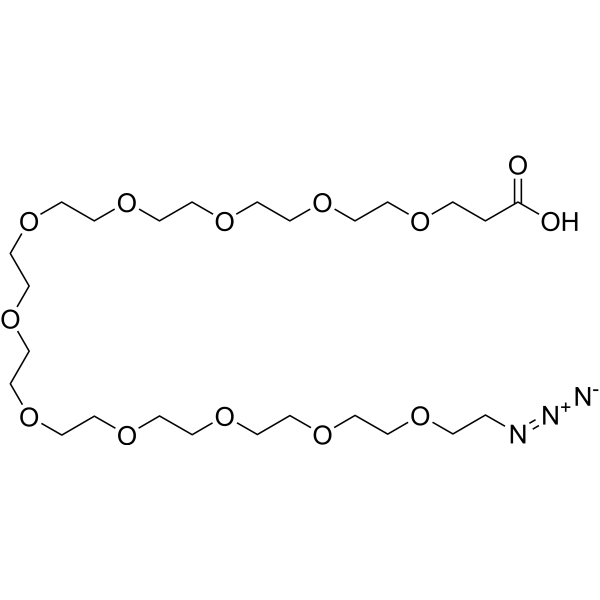
Azido-PEG11-acid is a PEG-based PROTAC linker that can be used in the synthesis of PROTACs . Azido-PEG11-acid is a click chemistry reagent, it contains an Azide group and can undergo copper-catalyzed azide-alkyne cycloaddition reaction (CuAAc) with molecules containing Alkyne groups. It can also undergo strain-promoted alkyne-azide cycloaddition (SPAAC) reactions with molecules containing DBCO or BCN groups.
|
-
- HY-147275
-
|
|
Biochemical Assay Reagents
|
Cancer
|
|
Tazide is an antineoplastic agent . Tazide is a click chemistry reagent, it contains an Azide group and can undergo copper-catalyzed azide-alkyne cycloaddition reaction (CuAAc) with molecules containing Alkyne groups. It can also undergo strain-promoted alkyne-azide cycloaddition (SPAAC) reactions with molecules containing DBCO or BCN groups.
|
-
- HY-128708
-
|
|
Biochemical Assay Reagents
|
Others
|
|
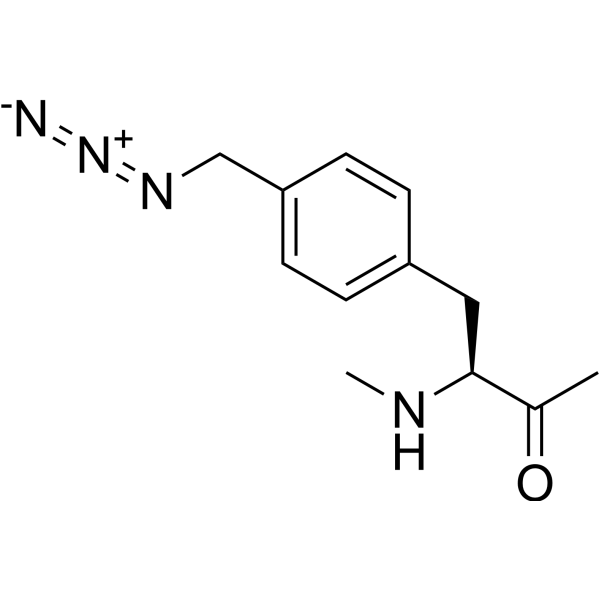
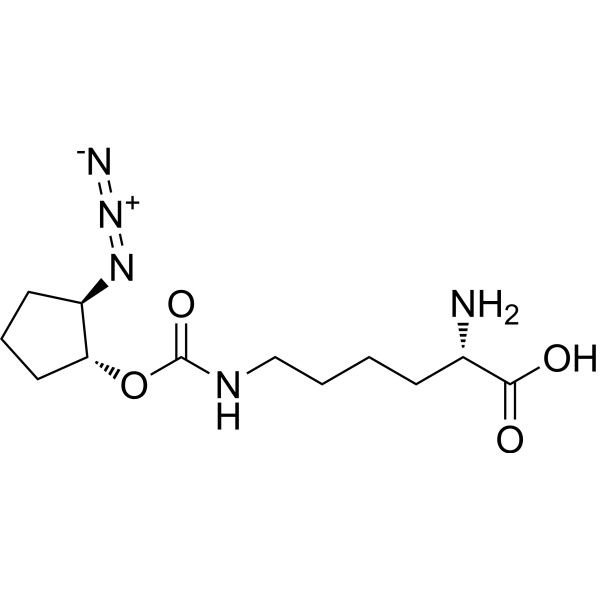
ACPK is a pyrrolysine analogue bearing an azide residue. ACPK is a click chemistry reagent, it contains an Azide group and can undergo copper-catalyzed azide-alkyne cycloaddition reaction (CuAAc) with molecules containing Alkyne groups. It can also undergo strain-promoted alkyne-azide cycloaddition (SPAAC) reactions with molecules containing DBCO or BCN groups.
|
-
- HY-103700A
-
|
UAA crosslinker 2
|
Amino Acid Derivatives
|
Others
|
|
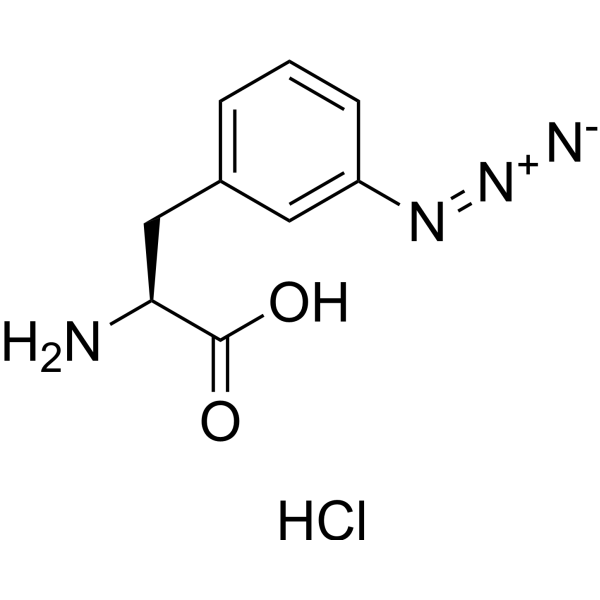
Azide-phenylalanine hydrochloride is a phenylalanine derivative. Azide-phenylalanine (hydrochloride) is a click chemistry reagent, it contains an Azide group and can undergo copper-catalyzed azide-alkyne cycloaddition reaction (CuAAc) with molecules containing Alkyne groups. It can also undergo strain-promoted alkyne-azide cycloaddition (SPAAC) reactions with molecules containing DBCO or BCN groups.
|
-
- HY-151737
-
|
|
ADC Linker
|
Others
|
|
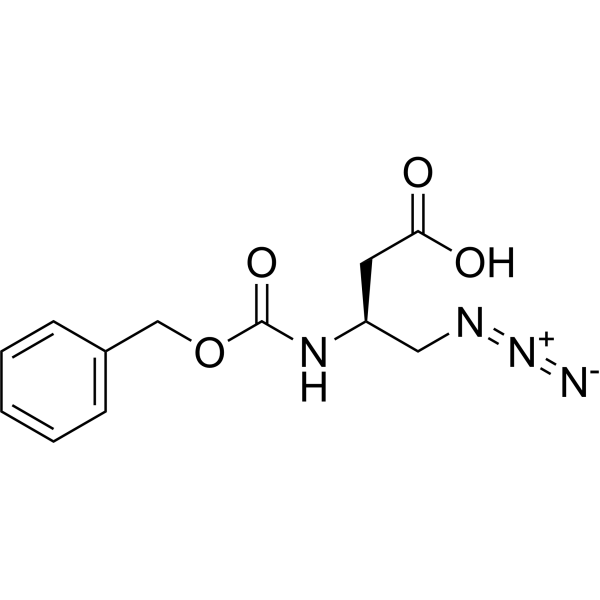
Z-L-Dbu(N3)-OH is a click chemistry reagent containing an Azide . Z-L-Dbu(N3)-OH is a click chemistry reagent, it contains an Azide group and can undergo copper-catalyzed azide-alkyne cycloaddition reaction (CuAAc) with molecules containing Alkyne groups. It can also undergo strain-promoted alkyne-azide cycloaddition (SPAAC) reactions with molecules containing DBCO or BCN groups.
|
-
- HY-151654
-
|
|
ADC Linker
|
Others
|
|
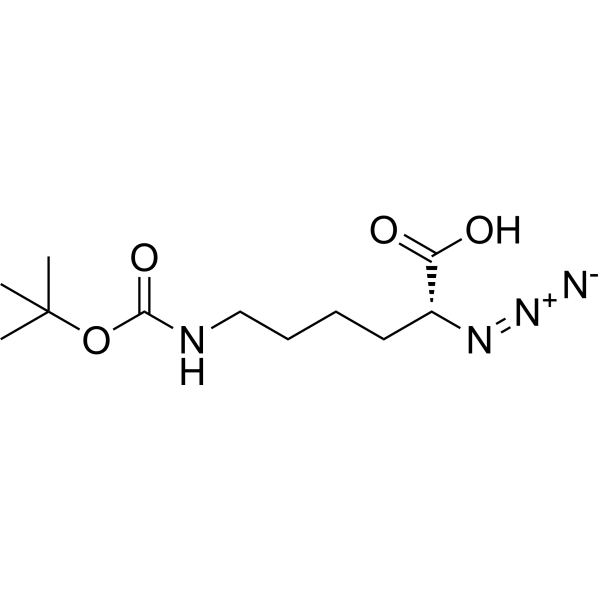
N3-D-Lys(Boc)-OH is a click chemistry reagent containing an Azide . N3-D-Lys(Boc)-OH is a click chemistry reagent, it contains an Azide group and can undergo copper-catalyzed azide-alkyne cycloaddition reaction (CuAAc) with molecules containing Alkyne groups. It can also undergo strain-promoted alkyne-azide cycloaddition (SPAAC) reactions with molecules containing DBCO or BCN groups.
|
-
- HY-D1548
-
|
|
Fluorescent Dye
|
Others
|
|
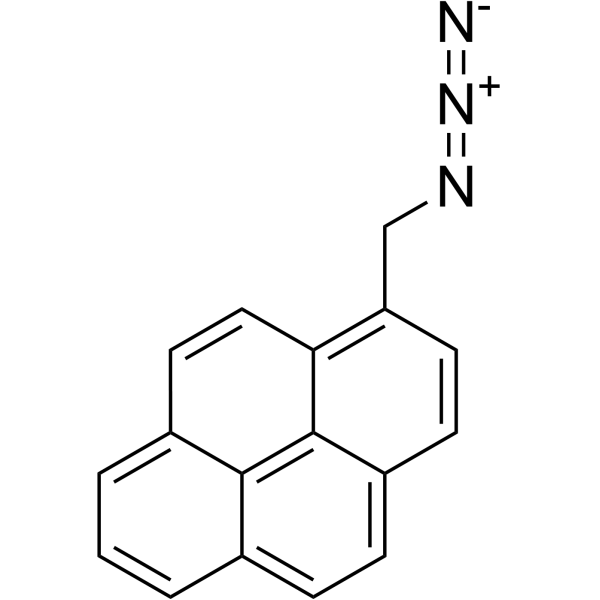
1-(Azidomethyl)pyrene is a fluorescent dye . 1-(Azidomethyl)pyrene is a click chemistry reagent, it contains an Azide group and can undergo copper-catalyzed azide-alkyne cycloaddition reaction (CuAAc) with molecules containing Alkyne groups. It can also undergo strain-promoted alkyne-azide cycloaddition (SPAAC) reactions with molecules containing DBCO or BCN groups.
|
-
- HY-W1049136E
-
|
|
Biochemical Assay Reagents
|
Others
|
|
N3-PEG1000-N3 is a click chemistry reagent, it contains an Azide group and can undergo copper-catalyzed azide-alkyne cycloaddition reaction (CuAAc) with molecules containing Alkyne groups. It can also undergo strain-promoted alkyne-azide cycloaddition (SPAAC) reactions with molecules containing DBCO or BCN groups .
|
-

- HY-144584
-
|
|
Biochemical Assay Reagents
|
Others
|
|
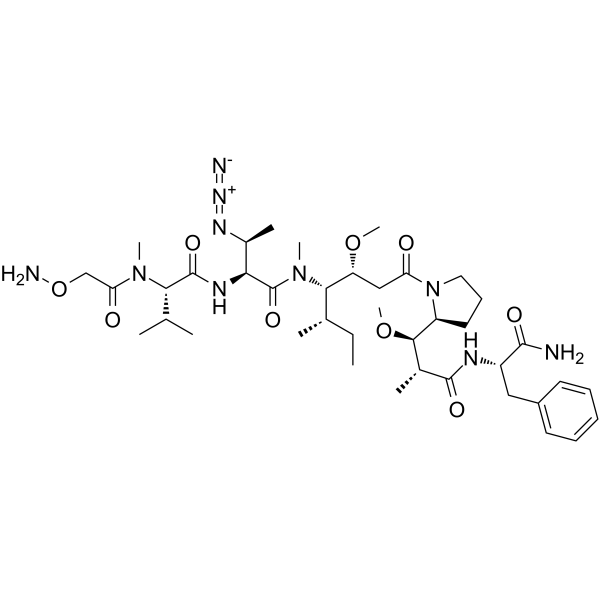
AGL-0182-30 is a proprietary microtubule disrupting agent . AGL-0182-30 is a click chemistry reagent, it contains an Azide group and can undergo copper-catalyzed azide-alkyne cycloaddition reaction (CuAAc) with molecules containing Alkyne groups. It can also undergo strain-promoted alkyne-azide cycloaddition (SPAAC) reactions with molecules containing DBCO or BCN groups.
|
-
- HY-D1295
-
|
|
PROTAC Linkers
|
Cancer
|
|
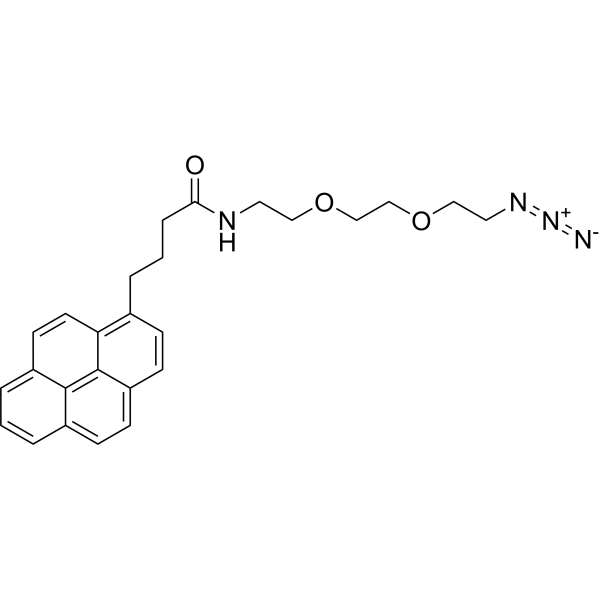
Pyrene azide 3 is a PEG-based PROTAC linker that can be used in the synthesis of PROTACs . Pyrene azide 3 is a click chemistry reagent, it contains an Azide group and can undergo copper-catalyzed azide-alkyne cycloaddition reaction (CuAAc) with molecules containing Alkyne groups. It can also undergo strain-promoted alkyne-azide cycloaddition (SPAAC) reactions with molecules containing DBCO or BCN groups.
|
-
- HY-D1920
-
|
|
Fluorescent Dye
|
Others
|
|
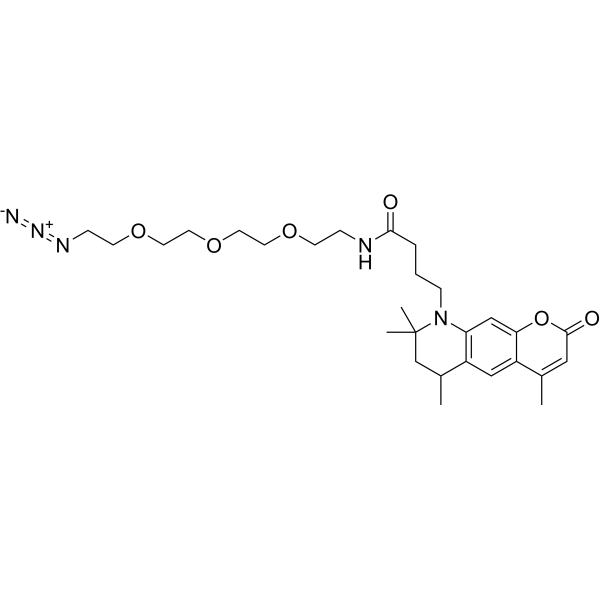
ATTO 390 azide is an azide derivative of ATTO 390 with excitation/emission maxima at 390/476 nm. ATTO 390 azide is a click chemistry reagent, it contains an Azide group and can undergo copper-catalyzed azide-alkyne cycloaddition reaction (CuAAc) with molecules containing Alkyne groups. It can also undergo strain-promoted alkyne-azide cycloaddition (SPAAC) reactions with molecules containing DBCO or BCN groups.
|
-
- HY-D2033
-
|
|
Fluorescent Dye
|
Others
|
|
ATTO 514 azide is an azide derivative of ATTO 514 with excitation/emission maxima at 511/531 nm. ATTO 514 azide is a click chemistry reagent, it contains an Azide group and can undergo copper-catalyzed azide-alkyne cycloaddition reaction (CuAAc) with molecules containing Alkyne groups. It can also undergo strain-promoted alkyne-azide cycloaddition (SPAAC) reactions with molecules containing DBCO or BCN groups.
|
-
- HY-D2077
-
|
|
Fluorescent Dye
|
Others
|
|
ATTO 725 azide is an azide derivative of ATTO 725 with excitation/emission maxima at 728/751 nm. ATTO 725 azide is a click chemistry reagent, it contains an Azide group and can undergo copper-catalyzed azide-alkyne cycloaddition reaction (CuAAc) with molecules containing Alkyne groups. It can also undergo strain-promoted alkyne-azide cycloaddition (SPAAC) reactions with molecules containing DBCO or BCN groups.
|
-
- HY-W749217A
-
|
|
Fluorescent Dye
|
Others
|
|
Cyanine 3.5 azide is a cyanine dye functionalized with an azide. Cyanine 3.5 azide is a click chemistry reagent, it contains an Azide group and can undergo copper-catalyzed azide-alkyne cycloaddition reaction (CuAAc) with molecules containing Alkyne groups. It can also undergo strain-promoted alkyne-azide cycloaddition (SPAAC) reactions with molecules containing DBCO or BCN groups (Ex/Em = 633/670 nm).
|
-

- HY-134695
-
|
|
PROTAC Linkers
|
Cancer
|
|
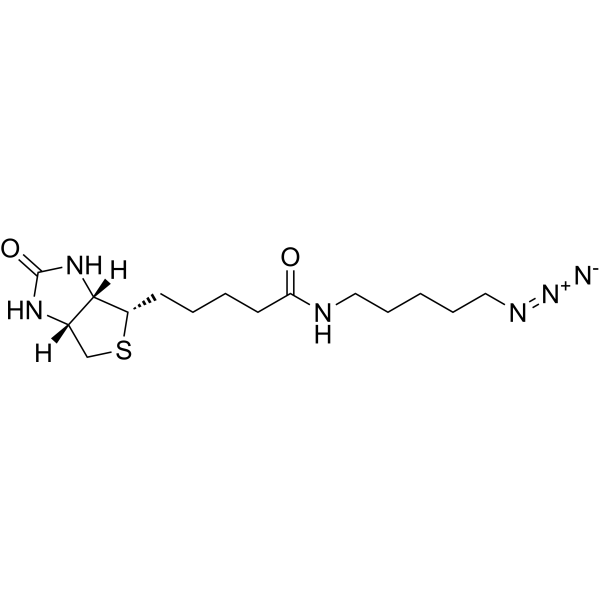
5-Biotinamidopentylazide is an alkyl chain-based PROTAC linker that can be used in the synthesis of PROTACs . 5-(Biotinamido)pentylazide is a click chemistry reagent, it contains an Azide group and can undergo copper-catalyzed azide-alkyne cycloaddition reaction (CuAAc) with molecules containing Alkyne groups. It can also undergo strain-promoted alkyne-azide cycloaddition (SPAAC) reactions with molecules containing DBCO or BCN groups.
|
-
- HY-147115
-
|
|
Fluorescent Dye
|
Others
|
|
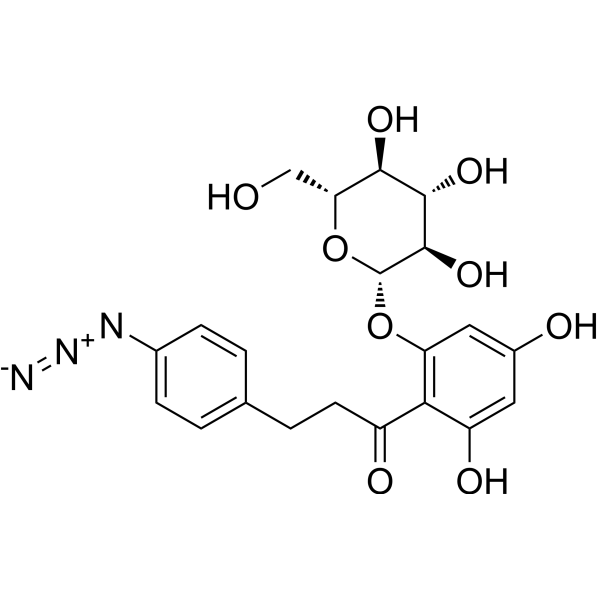
4-Azidophlorizin is a high affinity probe and photoaffinity label for the glucose transporter in brush border membranes . 4-Azidophlorizin is a click chemistry reagent, it contains an Azide group and can undergo copper-catalyzed azide-alkyne cycloaddition reaction (CuAAc) with molecules containing Alkyne groups. It can also undergo strain-promoted alkyne-azide cycloaddition (SPAAC) reactions with molecules containing DBCO or BCN groups.
|
-
- HY-134321
-
|
|
Fluorescent Dye
|
Others
|
|
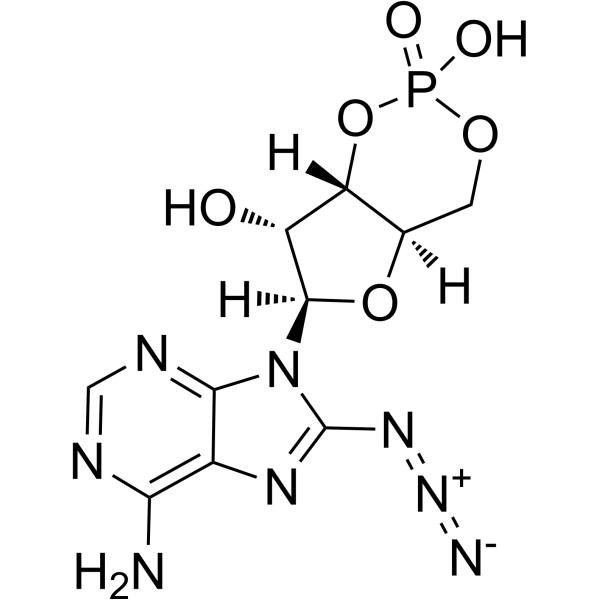
8-Azido-cAMP is a fluorescent cAMP analog, acting as the model target of detecting cAMP . 8-Azido-cAMP is a click chemistry reagent, it contains an Azide group and can undergo copper-catalyzed azide-alkyne cycloaddition reaction (CuAAc) with molecules containing Alkyne groups. It can also undergo strain-promoted alkyne-azide cycloaddition (SPAAC) reactions with molecules containing DBCO or BCN groups.
|
-
- HY-D1930
-
|
|
Fluorescent Dye
|
Others
|
|
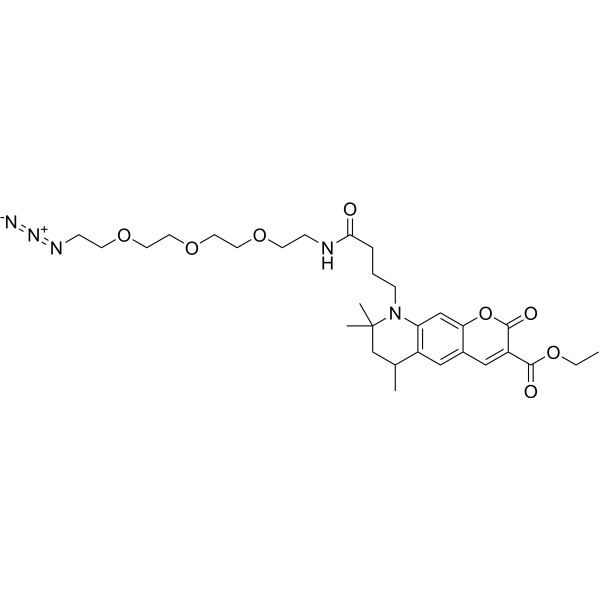
ATTO 425 Azide is an azide derivative of ATTO 425, the maximum excitation and emission wavelength: 439/489 nm. ATTO 425 azide is a click chemistry reagent, it contains an Azide group and can undergo copper-catalyzed azide-alkyne cycloaddition reaction (CuAAc) with molecules containing Alkyne groups. It can also undergo strain-promoted alkyne-azide cycloaddition (SPAAC) reactions with molecules containing DBCO or BCN groups.
|
-
- HY-157737A
-
|
|
PROTAC Linkers
ADC Linker
|
Cancer
|
|
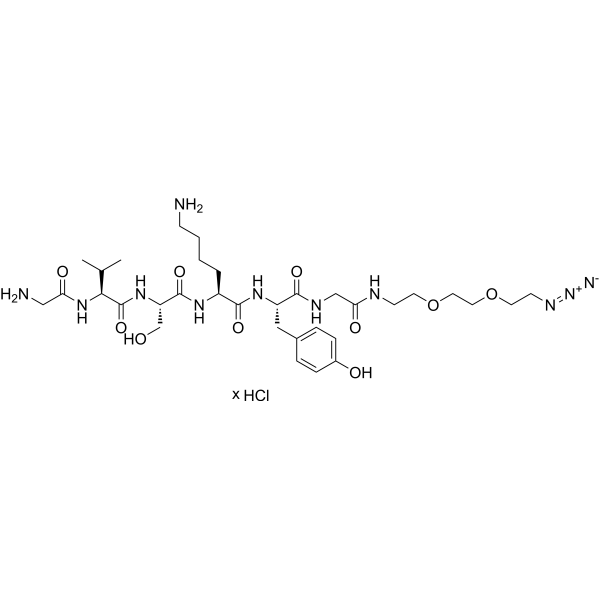
GVSKYG-PEG2-azide (hydrochloride) is a click chemistry reagent, it contains an Azide group and can undergo copper-catalyzed azide-alkyne cycloaddition reaction (CuAAc) with molecules containing Alkyne groups. Strain-promoted alkyne-azide cycloaddition (SPAAC) can also occur with molecules containing DBCO or BCN groups.
|
-
- HY-140457
-
|
|
PROTAC Linkers
|
Cancer
|
|
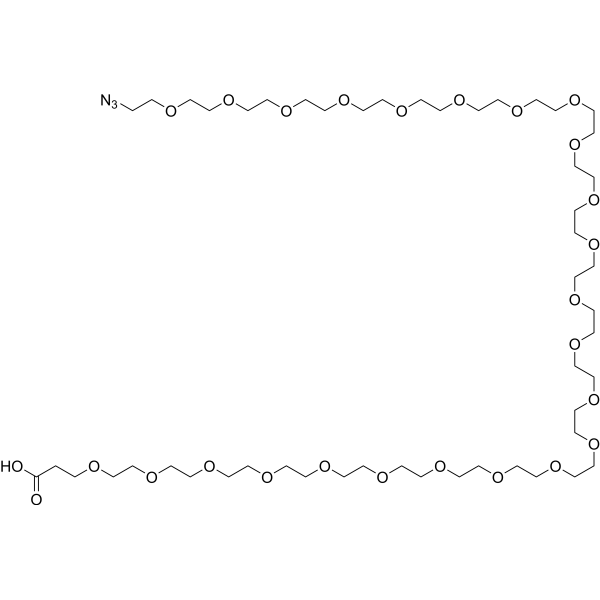
Azido-PEG24-acid is a PEG-based PROTAC linker that can be used in the synthesis of PROTACs . Azido-PEG24-acid is a click chemistry reagent, it contains an Azide group and can undergo copper-catalyzed azide-alkyne cycloaddition reaction (CuAAc) with molecules containing Alkyne groups. It can also undergo strain-promoted alkyne-azide cycloaddition (SPAAC) reactions with molecules containing DBCO or BCN groups.
|
-
- HY-140458
-
|
|
PROTAC Linkers
|
Cancer
|
|
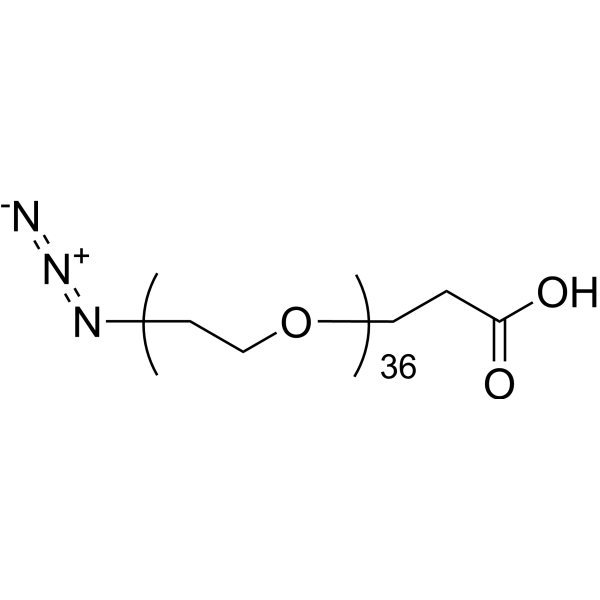
Azido-PEG36-acid is a PEG-based PROTAC linker that can be used in the synthesis of PROTACs . Azido-PEG36-acid is a click chemistry reagent, it contains an Azide group and can undergo copper-catalyzed azide-alkyne cycloaddition reaction (CuAAc) with molecules containing Alkyne groups. It can also undergo strain-promoted alkyne-azide cycloaddition (SPAAC) reactions with molecules containing DBCO or BCN groups.
|
-
- HY-133318
-
|
N3-PEG16-CH2CH2COOH
|
PROTAC Linkers
|
Cancer
|
|
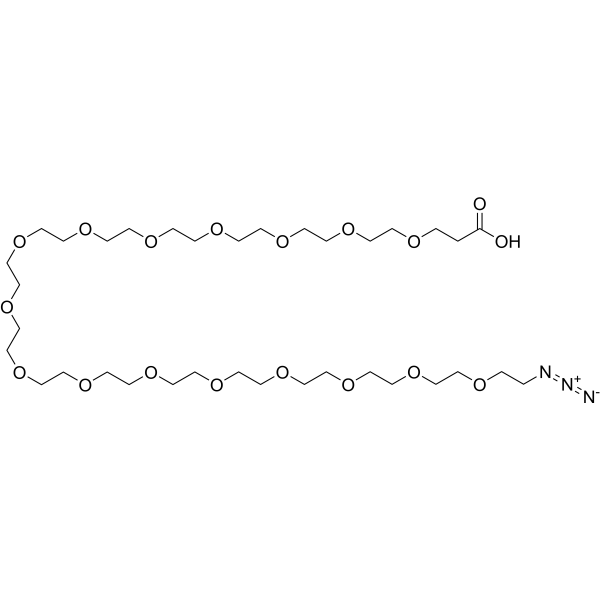
Azido-PEG16-acid is a PEG-based PROTAC linker that can be used in the synthesis of PROTACs . Azido-PEG16-acid is a click chemistry reagent, it contains an Azide group and can undergo copper-catalyzed azide-alkyne cycloaddition reaction (CuAAc) with molecules containing Alkyne groups. It can also undergo strain-promoted alkyne-azide cycloaddition (SPAAC) reactions with molecules containing DBCO or BCN groups.
|
-
- HY-138435
-
|
|
PROTAC Linkers
|
Cancer
|
|
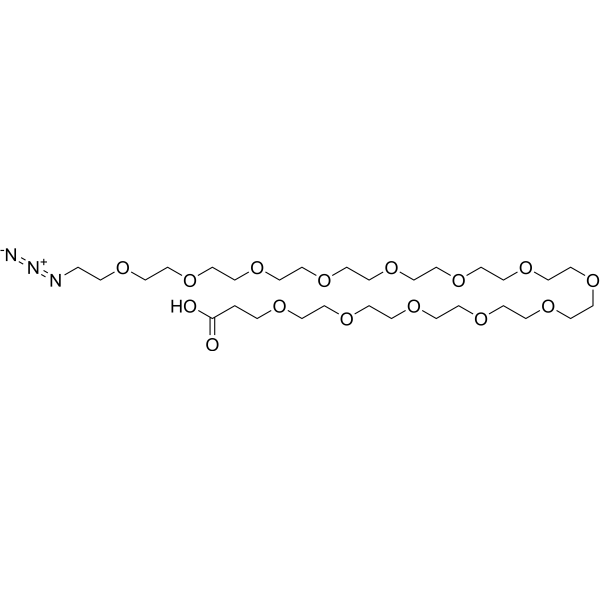
Azido-PEG13-acid is a PEG-based PROTAC linker that can be used in the synthesis of PROTACs . Azido-PEG13-acid is a click chemistry reagent, it contains an Azide group and can undergo copper-catalyzed azide-alkyne cycloaddition reaction (CuAAc) with molecules containing Alkyne groups. It can also undergo strain-promoted alkyne-azide cycloaddition (SPAAC) reactions with molecules containing DBCO or BCN groups.
|
-
- HY-112295
-
|
|
Biochemical Assay Reagents
|
Infection
|
|
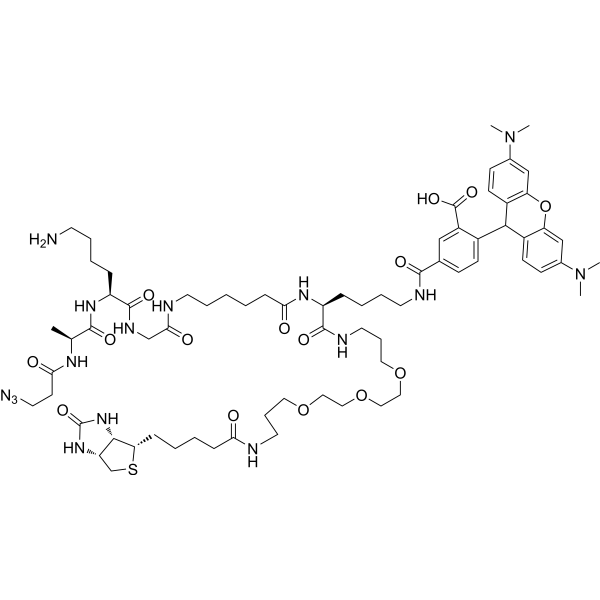
AzKTB is a capture reagent which bears a short trypsin-cleavable peptide sequence between the azide module and the TAMRA/PEG-biotin labels. AzKTB is a click chemistry reagent, it contains an Azide group and can undergo copper-catalyzed azide-alkyne cycloaddition reaction (CuAAc) with molecules containing Alkyne groups. It can also undergo strain-promoted alkyne-azide cycloaddition (SPAAC) reactions with molecules containing DBCO or BCN groups.
|
-
- HY-157737
-
|
|
PROTAC Linkers
ADC Linker
|
Cancer
|
|
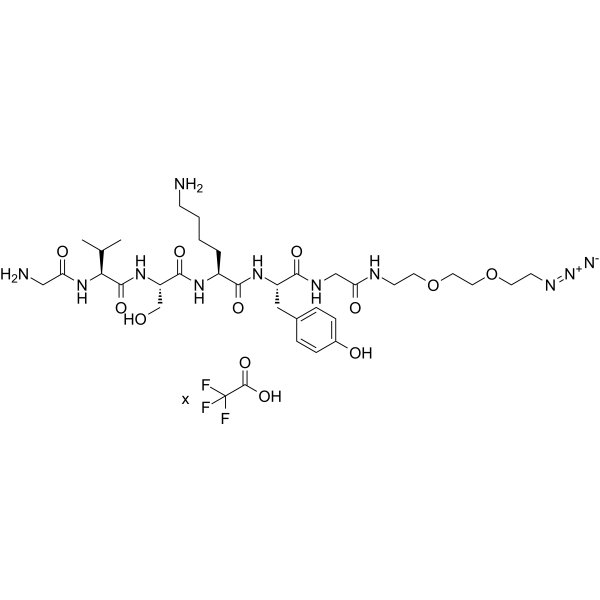
GVSKYG-PEG2-azide (TFA) is a click chemistry reagent, it contains an Azide group and can undergo copper-catalyzed azide-alkyne cycloaddition reaction (CuAAc) with molecules containing Alkyne groups. Strain-promoted alkyne-azide cycloaddition (SPAAC) can also occur with molecules containing DBCO or BCN groups.
|
-
- HY-140852
-
|
|
PROTAC Linkers
|
Cancer
|
|
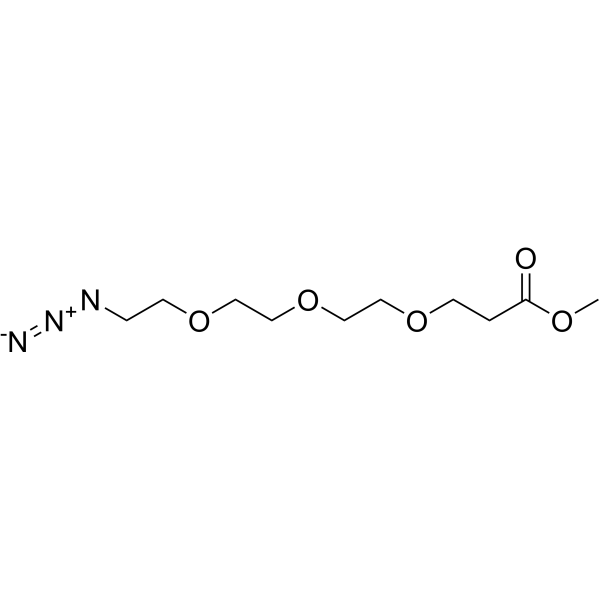
Azido-PEG3-methyl ester is a PEG-based PROTAC linker that can be used in the synthesis of PROTACs . Azido-PEG3-methyl ester is a click chemistry reagent, it contains an Azide group and can undergo copper-catalyzed azide-alkyne cycloaddition reaction (CuAAc) with molecules containing Alkyne groups. It can also undergo strain-promoted alkyne-azide cycloaddition (SPAAC) reactions with molecules containing DBCO or BCN groups.
|
-
- HY-133394
-
|
|
PROTAC Linkers
|
Cancer
|
|
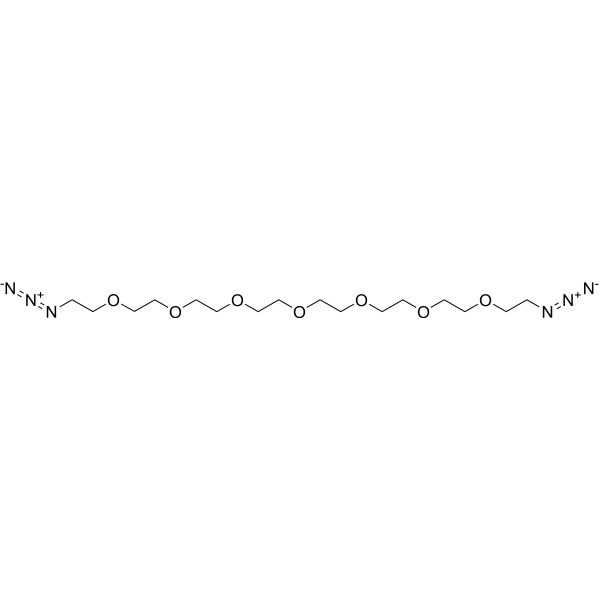
Azido-PEG7-azide is a PEG-based PROTAC linker that can be used in the synthesis of PROTACs . Azido-PEG7-azide is a click chemistry reagent, it contains an Azide group and can undergo copper-catalyzed azide-alkyne cycloaddition reaction (CuAAc) with molecules containing Alkyne groups. It can also undergo strain-promoted alkyne-azide cycloaddition (SPAAC) reactions with molecules containing DBCO or BCN groups.
|
-
- HY-133395
-
|
|
PROTAC Linkers
|
Cancer
|
|
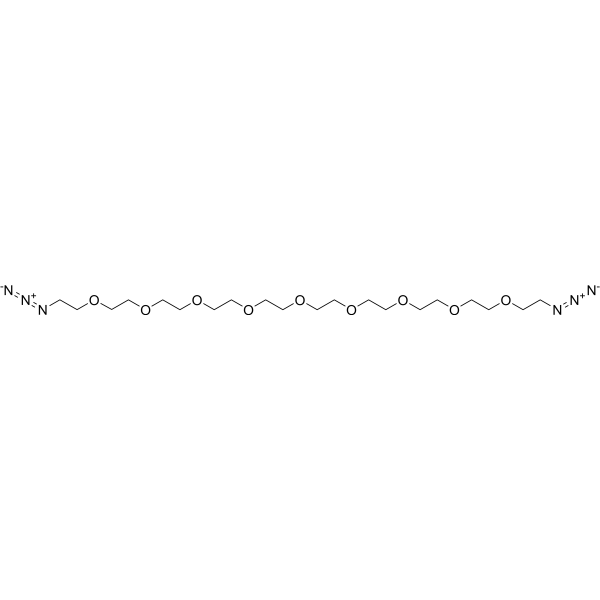
Azido-PEG9-azide is a PEG-based PROTAC linker that can be used in the synthesis of PROTACs . Azido-PEG9-azide is a click chemistry reagent, it contains an Azide group and can undergo copper-catalyzed azide-alkyne cycloaddition reaction (CuAAc) with molecules containing Alkyne groups. It can also undergo strain-promoted alkyne-azide cycloaddition (SPAAC) reactions with molecules containing DBCO or BCN groups.
|
-
- HY-140784
-
|
|
PROTAC Linkers
|
Cancer
|
|
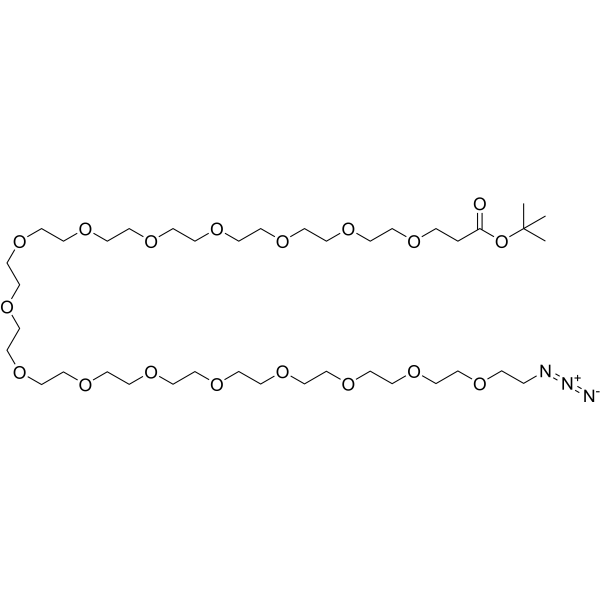
Azido-PEG16-Boc is a PEG-based PROTAC linker that can be used in the synthesis of PROTACs . Azido-PEG16-Boc is a click chemistry reagent, it contains an Azide group and can undergo copper-catalyzed azide-alkyne cycloaddition reaction (CuAAc) with molecules containing Alkyne groups. It can also undergo strain-promoted alkyne-azide cycloaddition (SPAAC) reactions with molecules containing DBCO or BCN groups.
|
-
- HY-140842
-
|
|
PROTAC Linkers
|
Cancer
|
|
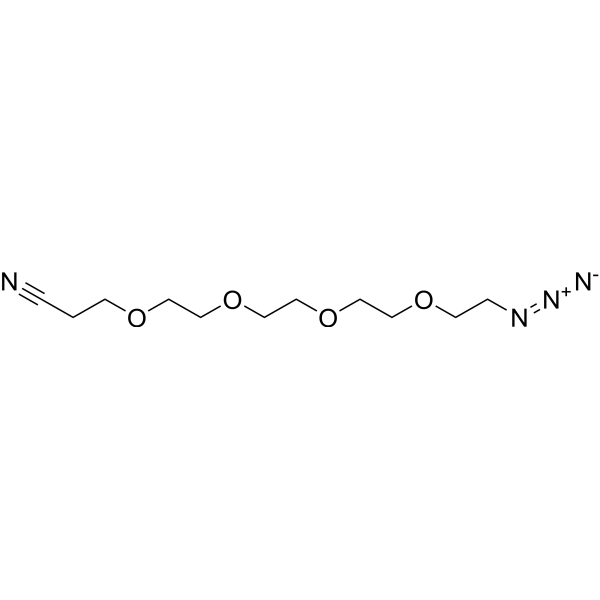
Azido-PEG4-nitrile is a PEG-based PROTAC linker that can be used in the synthesis of PROTACs . Azido-PEG4-nitrile is a click chemistry reagent, it contains an Azide group and can undergo copper-catalyzed azide-alkyne cycloaddition reaction (CuAAc) with molecules containing Alkyne groups. It can also undergo strain-promoted alkyne-azide cycloaddition (SPAAC) reactions with molecules containing DBCO or BCN groups.
|
-
- HY-133319
-
|
|
PROTAC Linkers
|
Cancer
|
|
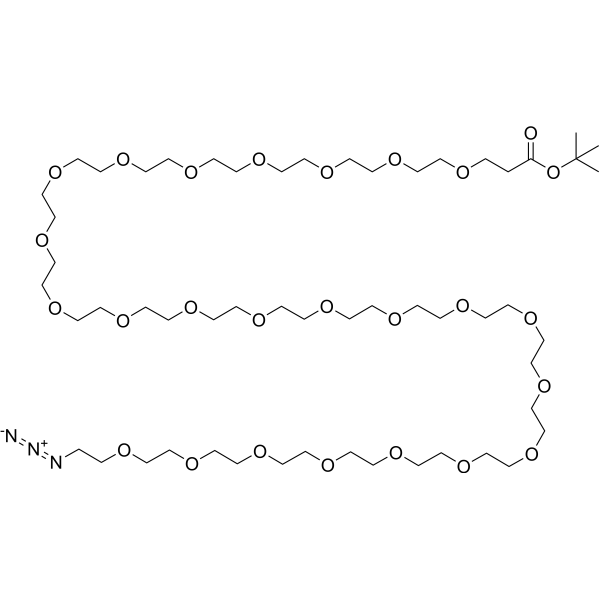
Azido-PEG24-Boc is a PEG-based PROTAC linker that can be used in the synthesis of PROTACs . Azido-PEG24-Boc is a click chemistry reagent, it contains an Azide group and can undergo copper-catalyzed azide-alkyne cycloaddition reaction (CuAAc) with molecules containing Alkyne groups. It can also undergo strain-promoted alkyne-azide cycloaddition (SPAAC) reactions with molecules containing DBCO or BCN groups.
|
-
- HY-140861
-
|
|
PROTAC Linkers
|
Cancer
|
|
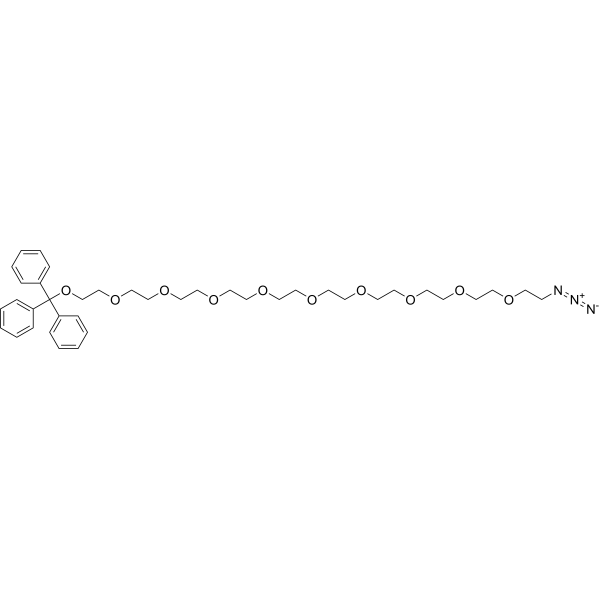
Trityl-PEG10-azide is a PEG-based PROTAC linker that can be used in the synthesis of PROTACs . Trityl-PEG10-azide is a click chemistry reagent, it contains an Azide group and can undergo copper-catalyzed azide-alkyne cycloaddition reaction (CuAAc) with molecules containing Alkyne groups. It can also undergo strain-promoted alkyne-azide cycloaddition (SPAAC) reactions with molecules containing DBCO or BCN groups.
|
-
- HY-W096078
-
|
|
PROTAC Linkers
|
Cancer
|
|
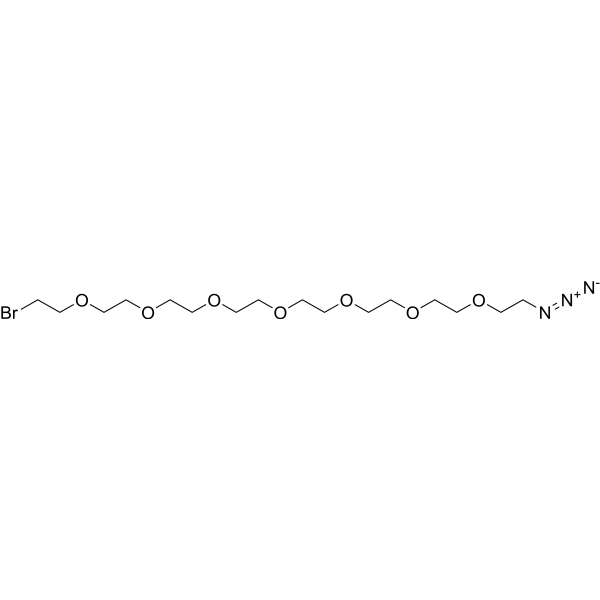
Bromo-PEG7-azide is a PEG-based PROTAC linker that can be used in the synthesis of PROTACs . Bromo-PEG7-azide is a click chemistry reagent, it contains an Azide group and can undergo copper-catalyzed azide-alkyne cycloaddition reaction (CuAAc) with molecules containing Alkyne groups. It can also undergo strain-promoted alkyne-azide cycloaddition (SPAAC) reactions with molecules containing DBCO or BCN groups.
|
-
- HY-183649
-
|
|
Biochemical Assay Reagents
|
Cardiovascular Disease
|
|
BCN-PEG6-OH is a neutralizing agent and anticoagulant inhibitor containing strained alkyne. BCN-PEG6-OH undergoes strain-promoted alkyne-azide cycloaddition (SPAAC) click reaction with azido-Warfarin to generate an inactive product that can be rapidly cleared via the kidneys. In mice, BCN-PEG6-OH effectively reduces the anticoagulant activity of azido-Warfarin in a dose-dependent manner, normalizes prothrombin time, and exhibits no inherent anticoagulant or procoagulant effects when administered alone. BCN-PEG6-OH can be used for the research of drug-induced coagulopathy .
|
-

- HY-N15824
-
|
|
Fluorescent Dye
|
Others
|
|
Cyanine 3.5 azide is a cyanine dye functionalized with an azide. Cyanine 3.5 azide is a click chemistry reagent, it contains an Azide group and can undergo copper-catalyzed azide-alkyne cycloaddition reaction (CuAAc) with molecules containing Alkyne groups. It can also undergo strain-promoted alkyne-azide cycloaddition (SPAAC) reactions with molecules containing DBCO or BCN groups (Ex/Em = 591/604 nm).
|
-

- HY-140862
-
|
|
PROTAC Linkers
|
Cancer
|
|
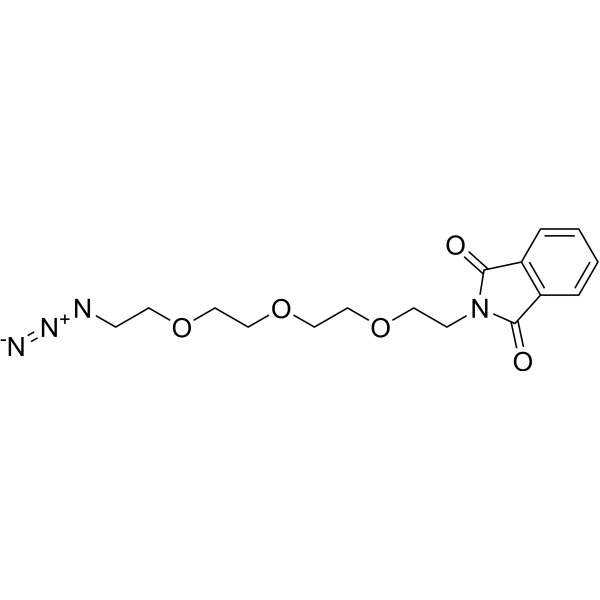
Phthalamide-PEG3-azide is a PEG-based PROTAC linker that can be used in the synthesis of PROTACs . Phthalamide-PEG3-azide is a click chemistry reagent, it contains an Azide group and can undergo copper-catalyzed azide-alkyne cycloaddition reaction (CuAAc) with molecules containing Alkyne groups. It can also undergo strain-promoted alkyne-azide cycloaddition (SPAAC) reactions with molecules containing DBCO or BCN groups.
|
-
- HY-138715
-
|
|
PROTAC Linkers
|
Cancer
|
|
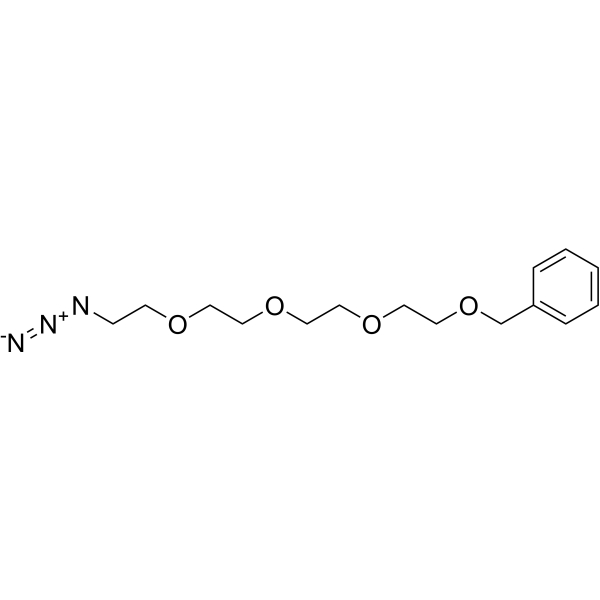
Benzyl-PEG4-Azido is a PEG-based PROTAC linker can be used in the synthesis of PROTACs. Benzyl-PEG4-Azido is a click chemistry reagent, it contains an Azide group and can undergo copper-catalyzed azide-alkyne cycloaddition reaction (CuAAc) with molecules containing Alkyne groups. It can also undergo strain-promoted alkyne-azide cycloaddition (SPAAC) reactions with molecules containing DBCO or BCN groups.
|
-
- HY-140802
-
|
|
PROTAC Linkers
|
Cancer
|
|
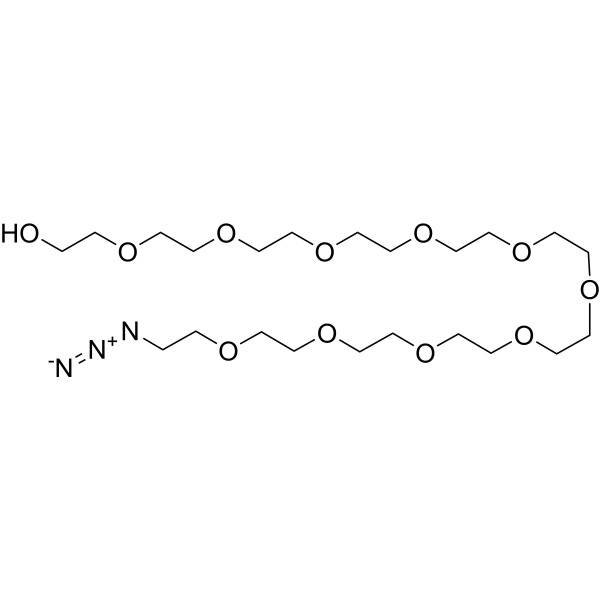
Azido-PEG11-alcohol is a PEG-based PROTAC linker that can be used in the synthesis of PROTACs . Azido-PEG11-alcohol is a click chemistry reagent, it contains an Azide group and can undergo copper-catalyzed azide-alkyne cycloaddition reaction (CuAAc) with molecules containing Alkyne groups. It can also undergo strain-promoted alkyne-azide cycloaddition (SPAAC) reactions with molecules containing DBCO or BCN groups.
|
-
- HY-W044155
-
|
|
PROTAC Linkers
|
Cancer
|
|
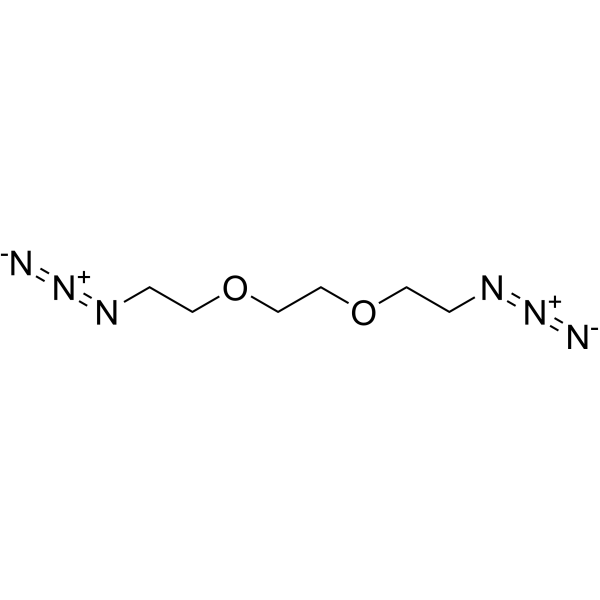
Azido-PEG2-azide is a PEG-based PROTAC linker that can be used in the synthesis of PROTACs . Azido-PEG2-azide is a click chemistry reagent, it contains an Azide group and can undergo copper-catalyzed azide-alkyne cycloaddition reaction (CuAAc) with molecules containing Alkyne groups. It can also undergo strain-promoted alkyne-azide cycloaddition (SPAAC) reactions with molecules containing DBCO or BCN groups.
|
-
- HY-140823
-
|
|
PROTAC Linkers
|
Cancer
|
|
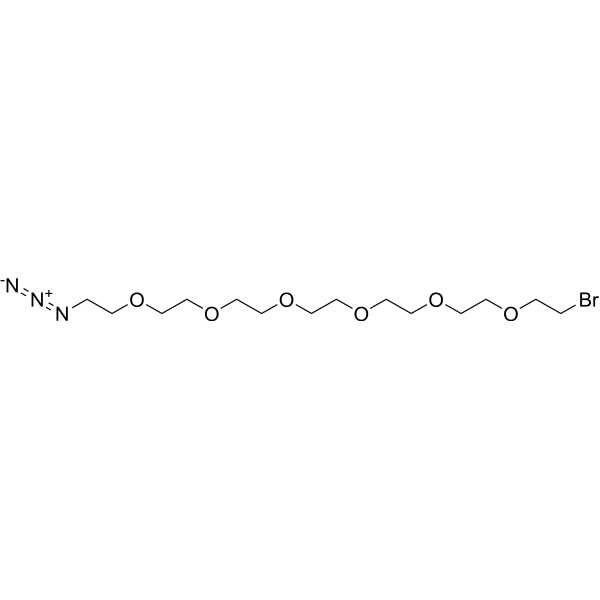
Bromo-PEG6-azide is a PEG-based PROTAC linker that can be used in the synthesis of PROTACs . Bromo-PEG6-azide is a click chemistry reagent, it contains an Azide group and can undergo copper-catalyzed azide-alkyne cycloaddition reaction (CuAAc) with molecules containing Alkyne groups. It can also undergo strain-promoted alkyne-azide cycloaddition (SPAAC) reactions with molecules containing DBCO or BCN groups.
|
-
- HY-140355
-
|
|
PROTAC Linkers
|
Cancer
|
|
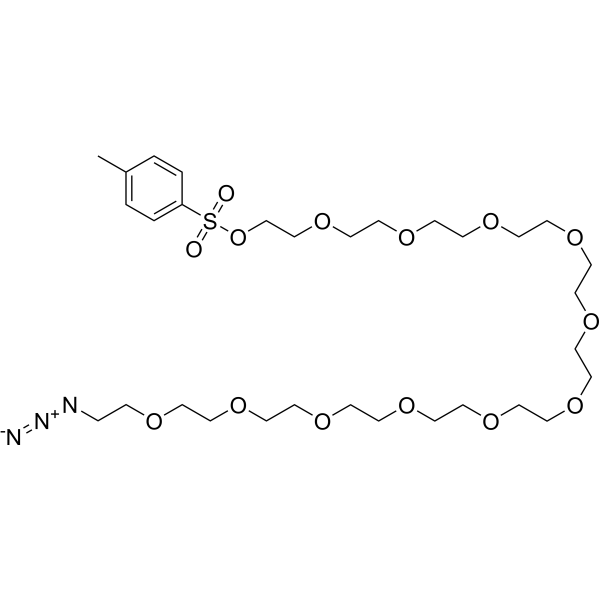
Azide-PEG12-Tos is a PEG-based PROTAC linker that can be used in the synthesis of PROTACs . Azide-PEG12-Tos is a click chemistry reagent, it contains an Azide group and can undergo copper-catalyzed azide-alkyne cycloaddition reaction (CuAAc) with molecules containing Alkyne groups. It can also undergo strain-promoted alkyne-azide cycloaddition (SPAAC) reactions with molecules containing DBCO or BCN groups.
|
-
- HY-138333
-
|
|
PROTAC Linkers
|
Cancer
|
|
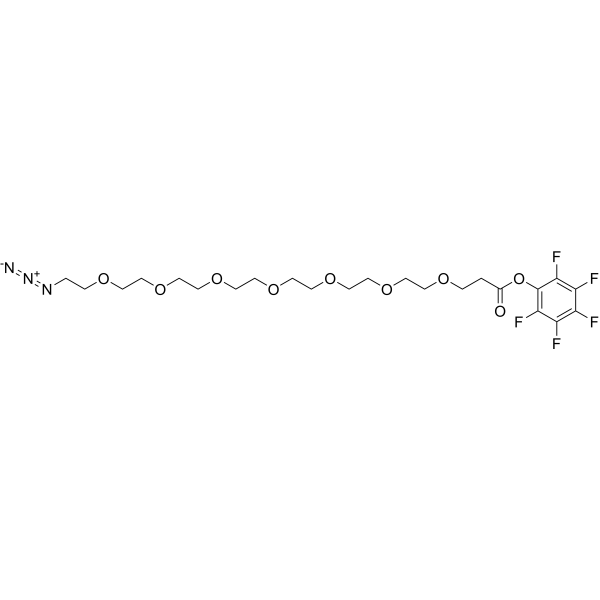
Azido-PEG7-PFP ester is a PEG-based PROTAC linker that can be used in the synthesis of PROTACs . Azido-PEG7-PFP ester is a click chemistry reagent, it contains an Azide group and can undergo copper-catalyzed azide-alkyne cycloaddition reaction (CuAAc) with molecules containing Alkyne groups. It can also undergo strain-promoted alkyne-azide cycloaddition (SPAAC) reactions with molecules containing DBCO or BCN groups.
|
-
- HY-140758
-
|
|
PROTAC Linkers
|
Cancer
|
|
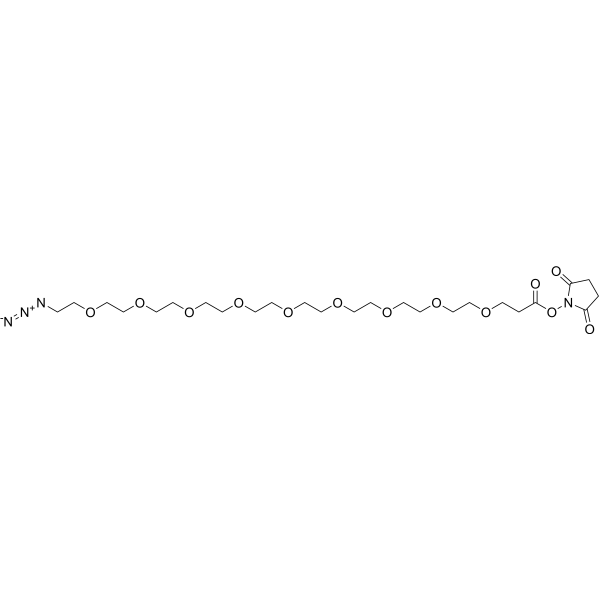
Azido-PEG9-NHS ester is a PEG-based PROTAC linker that can be used in the synthesis of PROTACs . Azido-PEG9-NHS ester is a click chemistry reagent, it contains an Azide group and can undergo copper-catalyzed azide-alkyne cycloaddition reaction (CuAAc) with molecules containing Alkyne groups. It can also undergo strain-promoted alkyne-azide cycloaddition (SPAAC) reactions with molecules containing DBCO or BCN groups.
|
-
- HY-W016735
-
|
|
PROTAC Linkers
|
Cancer
|
|
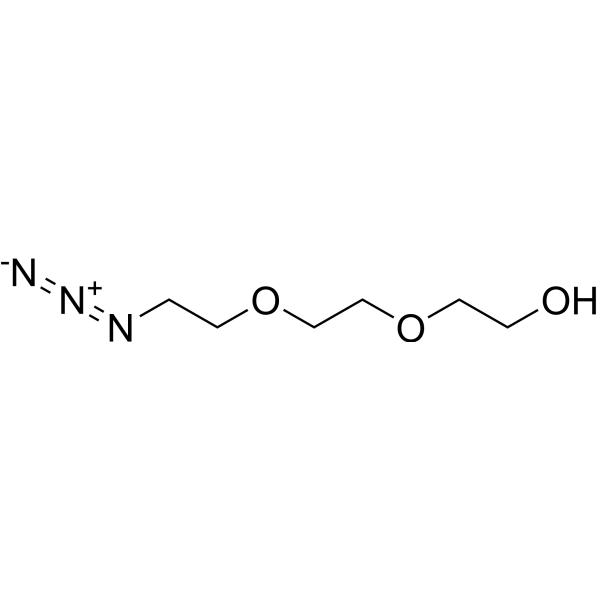
Azido-PEG3-alcohol is a PEG-based PROTAC linker can be used in the synthesis of PROTACs . Azido-PEG3-alcohol is a click chemistry reagent, it contains an Azide group and can undergo copper-catalyzed azide-alkyne cycloaddition reaction (CuAAc) with molecules containing Alkyne groups. It can also undergo strain-promoted alkyne-azide cycloaddition (SPAAC) reactions with molecules containing DBCO or BCN groups.
|
-
- HY-138706
-
|
|
PROTAC Linkers
|
Cancer
|
|
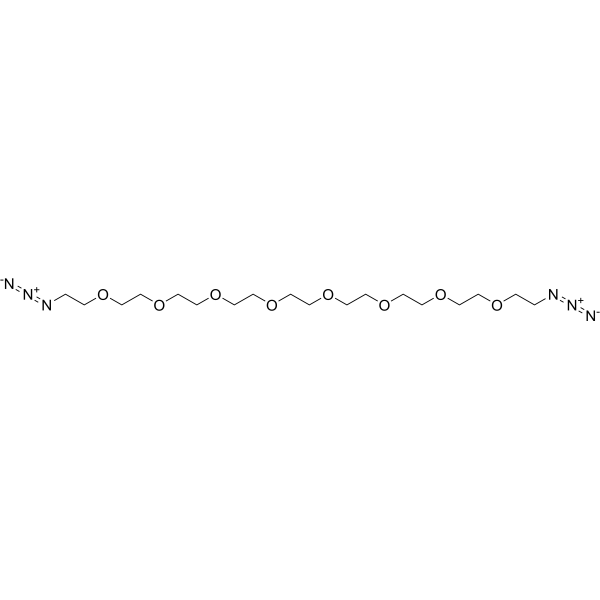
Azido-PEG8-azide is a PEG-based PROTAC linker can be used in the synthesis of PROTACs. Azido-PEG8-azide is a click chemistry reagent, it contains an Azide group and can undergo copper-catalyzed azide-alkyne cycloaddition reaction (CuAAc) with molecules containing Alkyne groups. It can also undergo strain-promoted alkyne-azide cycloaddition (SPAAC) reactions with molecules containing DBCO or BCN groups.
|
-
- HY-138472
-
|
|
PROTAC Linkers
|
Cancer
|
|
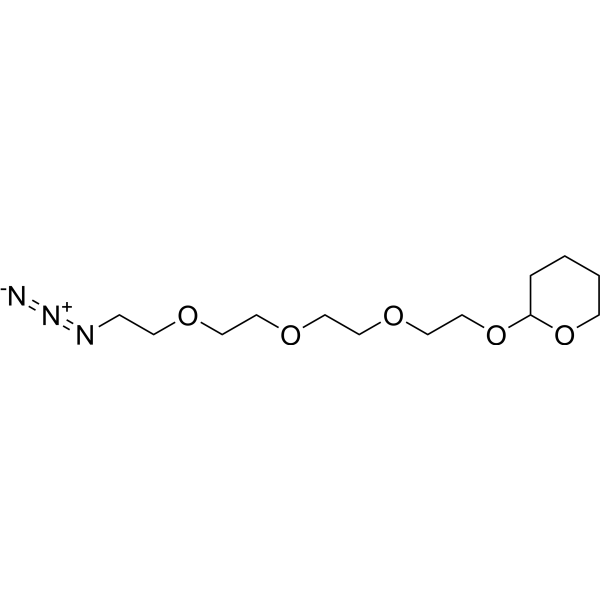
Azido-PEG4-THP is a PEG-based PROTAC linker that can be used in the synthesis of PROTACs . Azido-PEG4-THP is a click chemistry reagent, it contains an Azide group and can undergo copper-catalyzed azide-alkyne cycloaddition reaction (CuAAc) with molecules containing Alkyne groups. It can also undergo strain-promoted alkyne-azide cycloaddition (SPAAC) reactions with molecules containing DBCO or BCN groups.
|
-
- HY-140804
-
|
|
PROTAC Linkers
|
Cancer
|
|
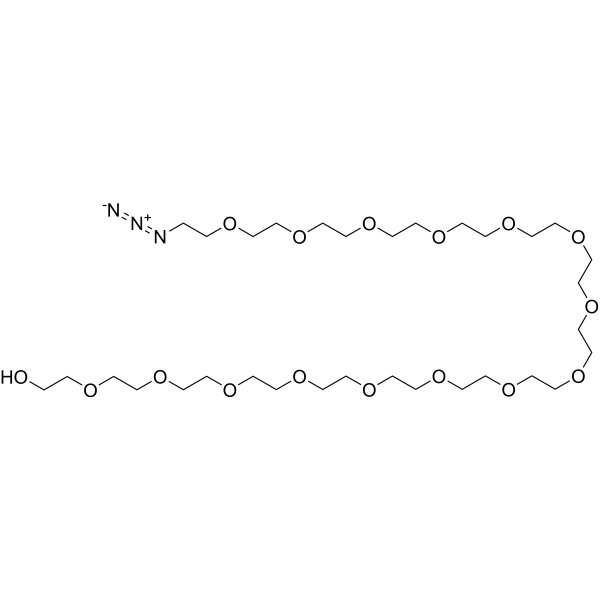
Azide-PEG16-alcohol is a PEG-based PROTAC linker that can be used in the synthesis of PROTACs . Azide-PEG16-alcohol is a click chemistry reagent, it contains an Azide group and can undergo copper-catalyzed azide-alkyne cycloaddition reaction (CuAAc) with molecules containing Alkyne groups. It can also undergo strain-promoted alkyne-azide cycloaddition (SPAAC) reactions with molecules containing DBCO or BCN groups.
|
-
- HY-140660
-
|
|
PROTAC Linkers
|
Cancer
|
|
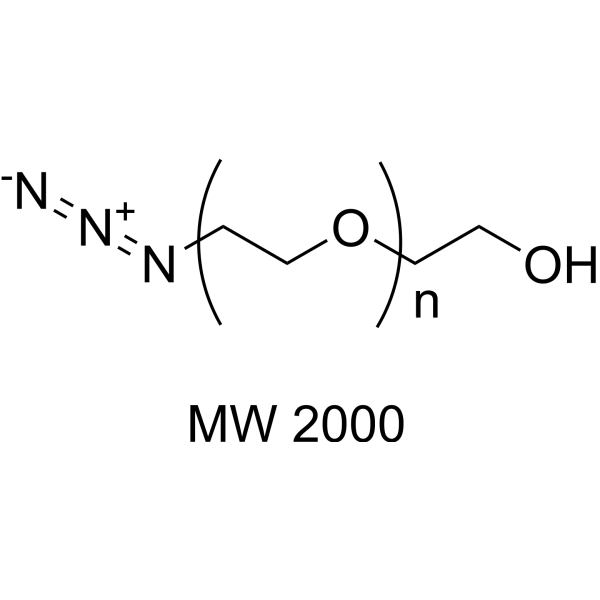
Azide-PEG2000-alcohol is a PEG-based PROTAC linker that can be used in the synthesis of PROTACs . Azide-PEG2000-alcohol is a click chemistry reagent, it contains an Azide group and can undergo copper-catalyzed azide-alkyne cycloaddition reaction (CuAAc) with molecules containing Alkyne groups. It can also undergo strain-promoted alkyne-azide cycloaddition (SPAAC) reactions with molecules containing DBCO or BCN groups.
|
-
- HY-140913
-
|
|
PROTAC Linkers
|
Cancer
|
|
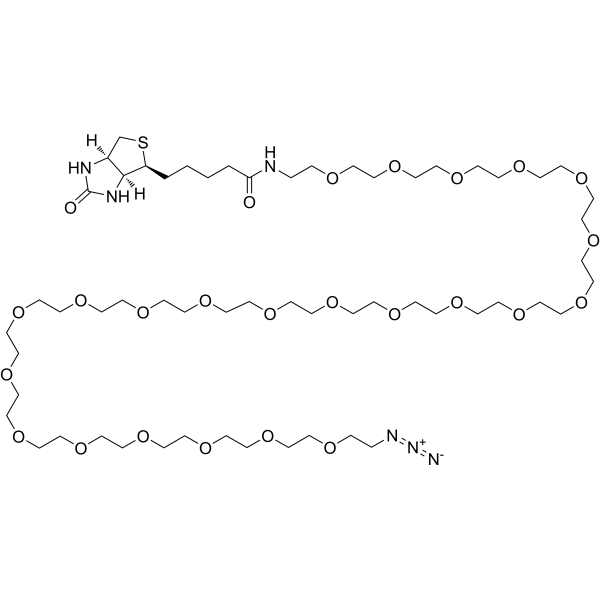
Biotin-PEG23-azide is a PEG-based PROTAC linker that can be used in the synthesis of PROTACs . Biotin-PEG23-azide is a click chemistry reagent, it contains an Azide group and can undergo copper-catalyzed azide-alkyne cycloaddition reaction (CuAAc) with molecules containing Alkyne groups. It can also undergo strain-promoted alkyne-azide cycloaddition (SPAAC) reactions with molecules containing DBCO or BCN groups.
|
-
- HY-140830
-
|
|
PROTAC Linkers
|
Cancer
|
|
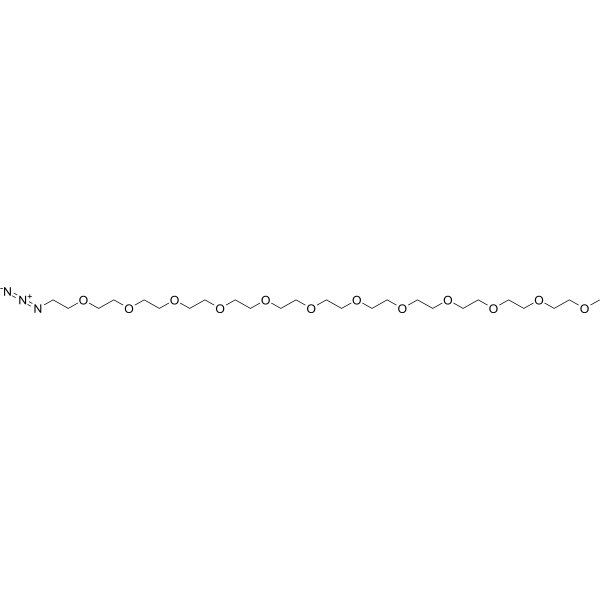
m-PEG12-azide is a PEG-based PROTAC linker that can be used in the synthesis of PROTACs . m-PEG12-azide is a click chemistry reagent, it contains an Azide group and can undergo copper-catalyzed azide-alkyne cycloaddition reaction (CuAAc) with molecules containing Alkyne groups. It can also undergo strain-promoted alkyne-azide cycloaddition (SPAAC) reactions with molecules containing DBCO or BCN groups.
|
-
- HY-140351
-
|
|
PROTAC Linkers
|
Cancer
|
|
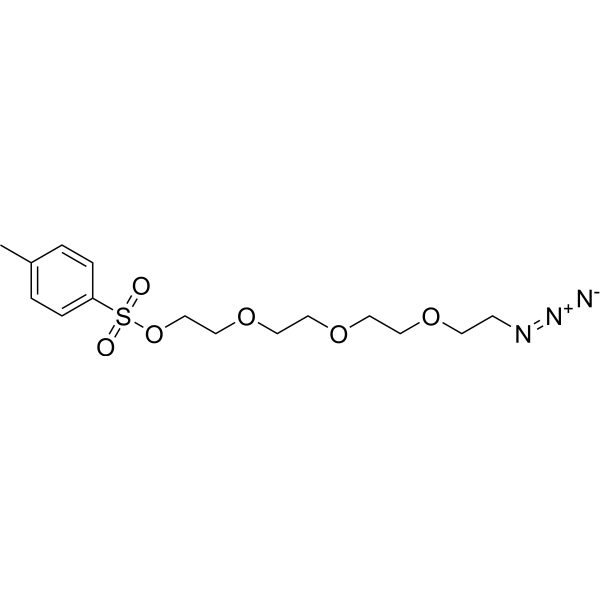
Azide-PEG4-Tos is a PEG-based PROTAC linker that can be used in the synthesis of PROTACs . Azide-PEG4-Tos is a click chemistry reagent, it contains an Azide group and can undergo copper-catalyzed azide-alkyne cycloaddition reaction (CuAAc) with molecules containing Alkyne groups. It can also undergo strain-promoted alkyne-azide cycloaddition (SPAAC) reactions with molecules containing DBCO or BCN groups.
|
-
- HY-140219
-
|
|
PROTAC Linkers
|
Cancer
|
|
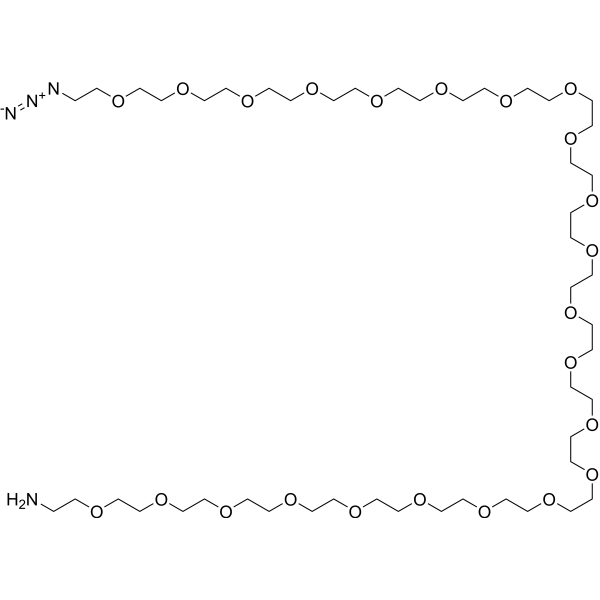
Azido-PEG23-amine is a PEG-based PROTAC linker that can be used in the synthesis of PROTACs . Azido-PEG23-amine is a click chemistry reagent, it contains an Azide group and can undergo copper-catalyzed azide-alkyne cycloaddition reaction (CuAAc) with molecules containing Alkyne groups. It can also undergo strain-promoted alkyne-azide cycloaddition (SPAAC) reactions with molecules containing DBCO or BCN groups.
|
-
- HY-133390
-
|
|
PROTAC Linkers
|
Cancer
|
|
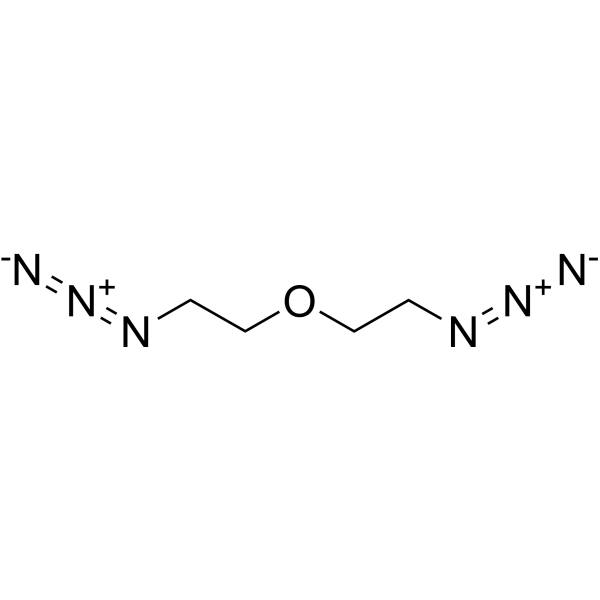
Azido-PEG1-azide is a PEG-based PROTAC linker that can be used in the synthesis of PROTACs . Azido-PEG1-azide is a click chemistry reagent, it contains an Azide group and can undergo copper-catalyzed azide-alkyne cycloaddition reaction (CuAAc) with molecules containing Alkyne groups. It can also undergo strain-promoted alkyne-azide cycloaddition (SPAAC) reactions with molecules containing DBCO or BCN groups.
|
-
- HY-140772
-
|
|
PROTAC Linkers
|
Cancer
|
|
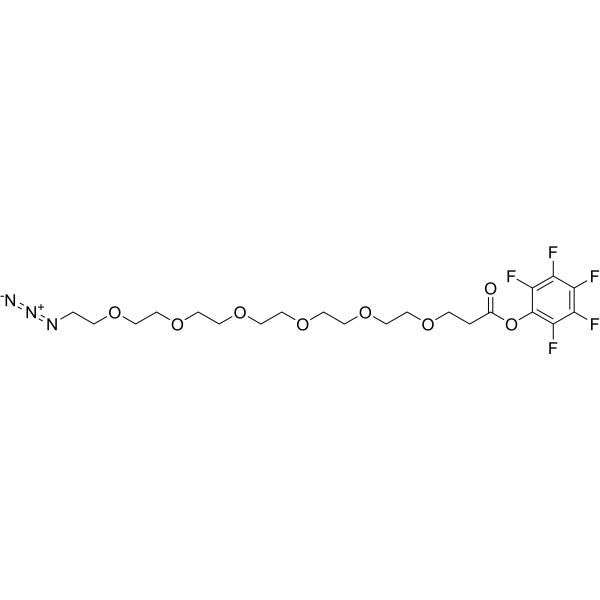
Azido-PEG6-PFP ester is a PEG-based PROTAC linker that can be used in the synthesis of PROTACs . Azido-PEG6-PFP ester is a click chemistry reagent, it contains an Azide group and can undergo copper-catalyzed azide-alkyne cycloaddition reaction (CuAAc) with molecules containing Alkyne groups. It can also undergo strain-promoted alkyne-azide cycloaddition (SPAAC) reactions with molecules containing DBCO or BCN groups.
|
-
- HY-153486
-
|
|
Biochemical Assay Reagents
|
Others
|
|
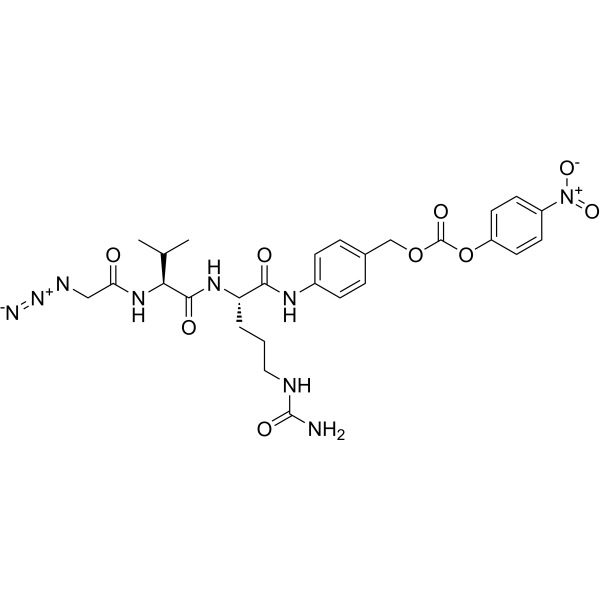
N3-VC-PAB-PNP is the intermediate of bicyclic peptide ligand STING conjugates . N3-VC-PAB-PNP is a click chemistry reagent, it contains an Azide group and can undergo copper-catalyzed azide-alkyne cycloaddition reaction (CuAAc) with molecules containing Alkyne groups. It can also undergo strain-promoted alkyne-azide cycloaddition (SPAAC) reactions with molecules containing DBCO or BCN groups.
|
-
- HY-132055
-
|
|
PROTAC Linkers
|
Cancer
|
|
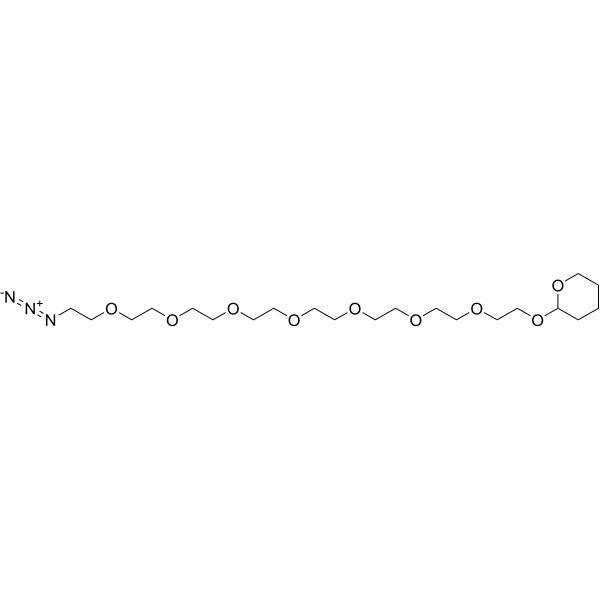
Azido-PEG8-THP is a PEG-based PROTAC linker that can be used in the synthesis of PROTACs . Azido-PEG8-THP is a click chemistry reagent, it contains an Azide group and can undergo copper-catalyzed azide-alkyne cycloaddition reaction (CuAAc) with molecules containing Alkyne groups. It can also undergo strain-promoted alkyne-azide cycloaddition (SPAAC) reactions with molecules containing DBCO or BCN groups.
|
-
- HY-132085
-
|
|
PROTAC Linkers
|
Cancer
|
|
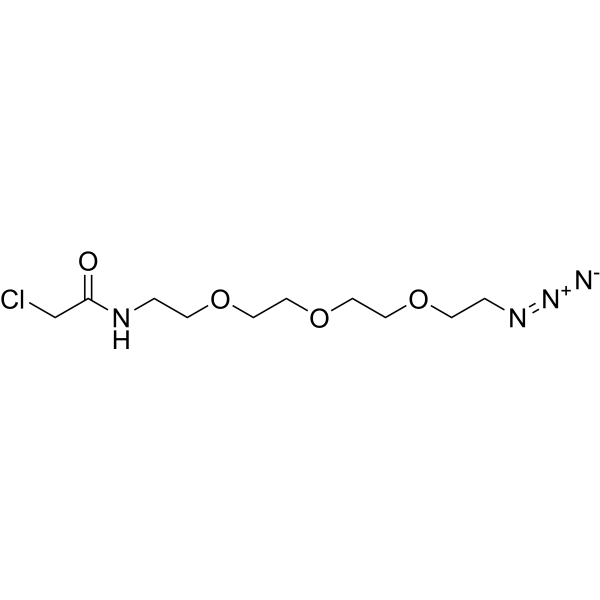
Azido-PEG3-chloroacetamide is a PEG-based PROTAC linker that can be used in the synthesis of PROTACs . Azido-PEG3-chloroacetamide is a click chemistry reagent, it contains an Azide group and can undergo copper-catalyzed azide-alkyne cycloaddition reaction (CuAAc) with molecules containing Alkyne groups. It can also undergo strain-promoted alkyne-azide cycloaddition (SPAAC) reactions with molecules containing DBCO or BCN groups.
|
-
- HY-140667
-
|
|
PROTAC Linkers
|
Cancer
|
|
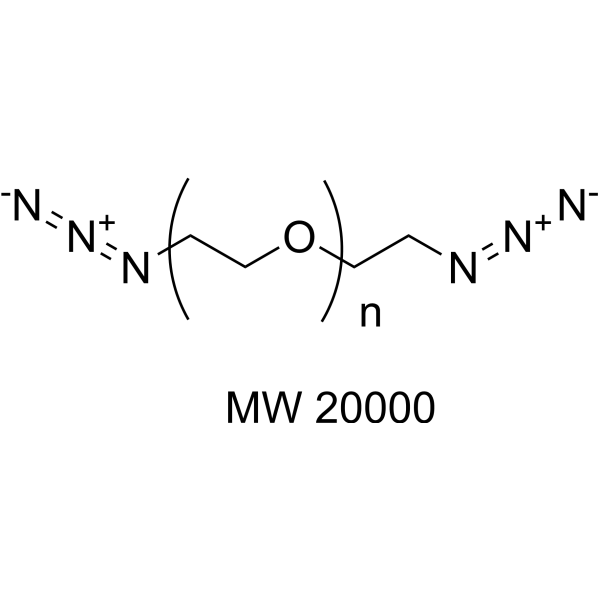
Azide-PEG20000-azide is a PEG-based PROTAC linker that can be used in the synthesis of PROTACs . Azide-PEG20000-azide is a click chemistry reagent, it contains an Azide group and can undergo copper-catalyzed azide-alkyne cycloaddition reaction (CuAAc) with molecules containing Alkyne groups. It can also undergo strain-promoted alkyne-azide cycloaddition (SPAAC) reactions with molecules containing DBCO or BCN groups.
|
-
- HY-140752
-
|
|
PROTAC Linkers
|
Cancer
|
|
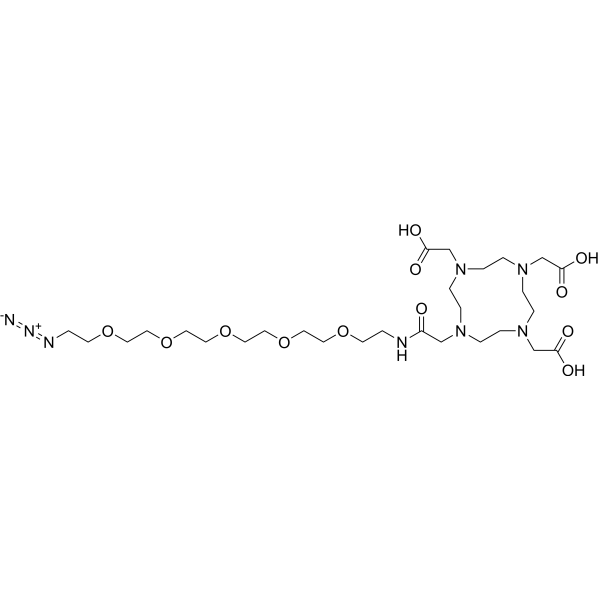
DOTA-PEG5-azide is a PEG-based PROTAC linker that can be used in the synthesis of PROTACs . DOTA-PEG5-azide is a click chemistry reagent, it contains an Azide group and can undergo copper-catalyzed azide-alkyne cycloaddition reaction (CuAAc) with molecules containing Alkyne groups. It can also undergo strain-promoted alkyne-azide cycloaddition (SPAAC) reactions with molecules containing DBCO or BCN groups.
|
-
- HY-138717
-
|
|
PROTAC Linkers
|
Cancer
|
|
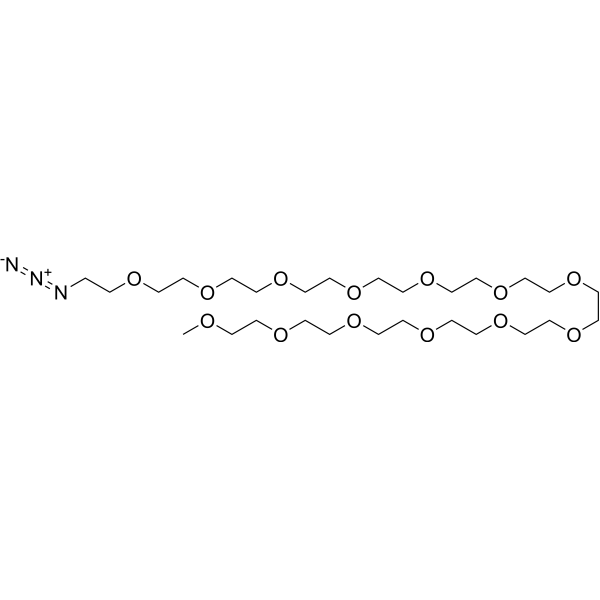
m-PEG13-azide is a PEG-based PROTAC linker that can be used in the synthesis of PROTACs. m-PEG13-azide is a click chemistry reagent, it contains an Azide group and can undergo copper-catalyzed azide-alkyne cycloaddition reaction (CuAAc) with molecules containing Alkyne groups. It can also undergo strain-promoted alkyne-azide cycloaddition (SPAAC) reactions with molecules containing DBCO or BCN groups.
|
-
- HY-130143
-
|
|
PROTAC Linkers
|
Cancer
|
|
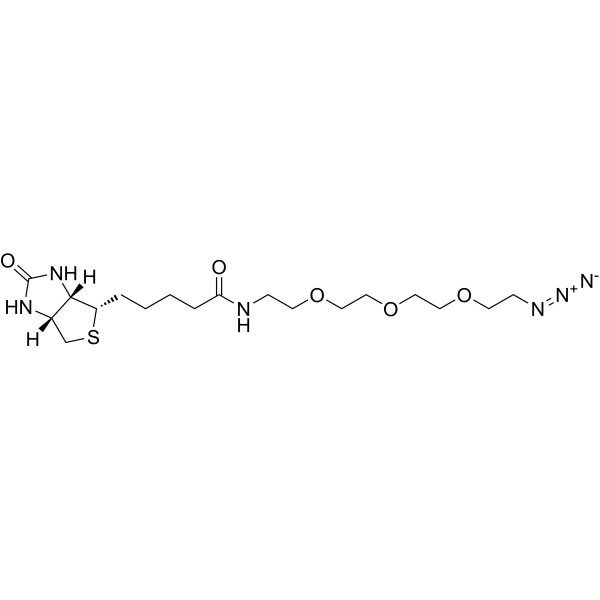
Biotin-PEG3-azide is a PEG-based PROTAC linker can be used in the synthesis of PROTACs. Biotin-PEG3-azide is a click chemistry reagent, it contains an Azide group and can undergo copper-catalyzed azide-alkyne cycloaddition reaction (CuAAc) with molecules containing Alkyne groups. It can also undergo strain-promoted alkyne-azide cycloaddition (SPAAC) reactions with molecules containing DBCO or BCN groups.
|
-
- HY-130578
-
|
|
PROTAC Linkers
|
Cancer
|
|
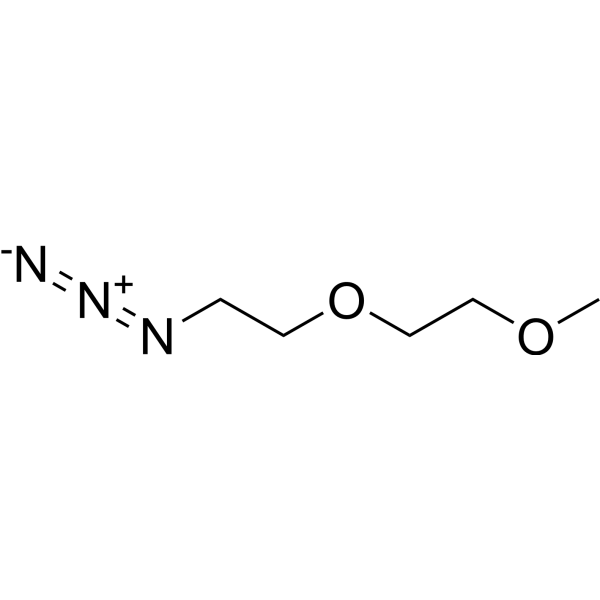
m-PEG2-azide is a PEG-based PROTAC linker can be used in the synthesis of PROTACs. m-PEG2-azide is a click chemistry reagent, it contains an Azide group and can undergo copper-catalyzed azide-alkyne cycloaddition reaction (CuAAc) with molecules containing Alkyne groups. It can also undergo strain-promoted alkyne-azide cycloaddition (SPAAC) reactions with molecules containing DBCO or BCN groups.
|
-
- HY-154835
-
|
|
Biochemical Assay Reagents
|
Others
|
|
N6-[[(4-Azidophenyl)methoxy]carbonyl]-L-lysine is an unnatural amino acid . N6-[[(4-Azidophenyl)methoxy]carbonyl]-L-lysine is a click chemistry reagent, it contains an Azide group and can undergo copper-catalyzed azide-alkyne cycloaddition reaction (CuAAc) with molecules containing Alkyne groups. It can also undergo strain-promoted alkyne-azide cycloaddition (SPAAC) reactions with molecules containing DBCO or BCN groups.
|
-
![N6-[[(4-Azidophenyl)methoxy]carbonyl]-L-lysine](//file.medchemexpress.com/product_pic/hy-154835.gif)
- HY-132059
-
|
|
PROTAC Linkers
|
Cancer
|
|
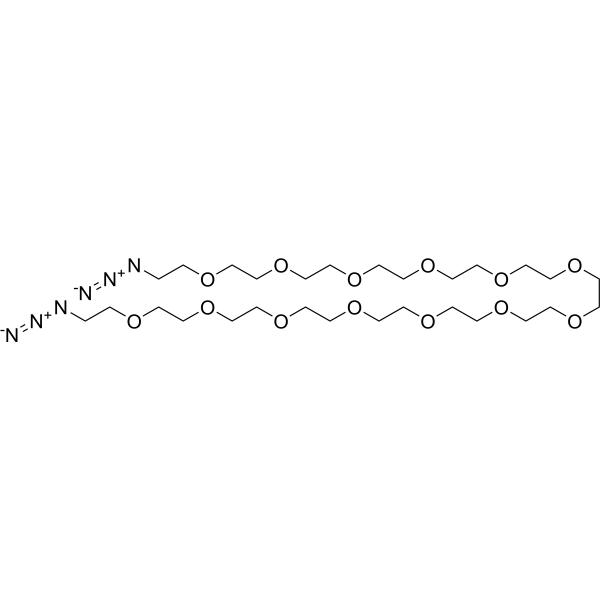
Azido-PEG13-azide is a PEG-based PROTAC linker that can be used in the synthesis of PROTACs . Azido-PEG13-azide is a click chemistry reagent, it contains an Azide group and can undergo copper-catalyzed azide-alkyne cycloaddition reaction (CuAAc) with molecules containing Alkyne groups. It can also undergo strain-promoted alkyne-azide cycloaddition (SPAAC) reactions with molecules containing DBCO or BCN groups.
|
-
- HY-133396
-
|
|
PROTAC Linkers
|
Cancer
|
|
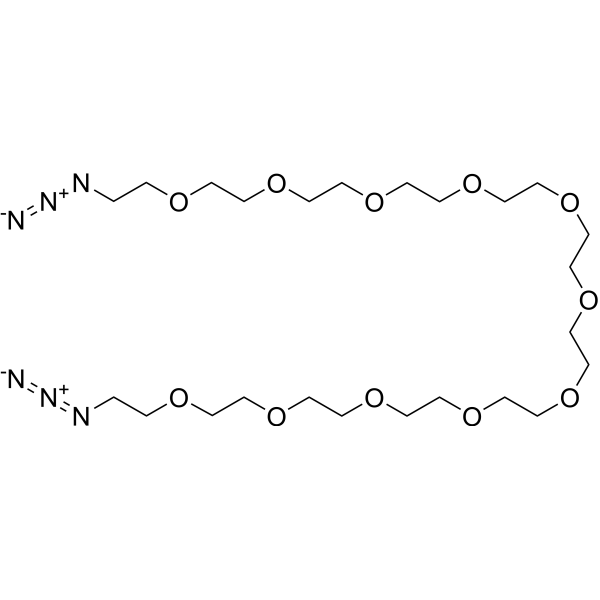
Azido-PEG11-azide is a PEG-based PROTAC linker that can be used in the synthesis of PROTACs . Azido-PEG11-azide is a click chemistry reagent, it contains an Azide group and can undergo copper-catalyzed azide-alkyne cycloaddition reaction (CuAAc) with molecules containing Alkyne groups. It can also undergo strain-promoted alkyne-azide cycloaddition (SPAAC) reactions with molecules containing DBCO or BCN groups.
|
-
- HY-140217
-
|
|
PROTAC Linkers
|
Cancer
|
|
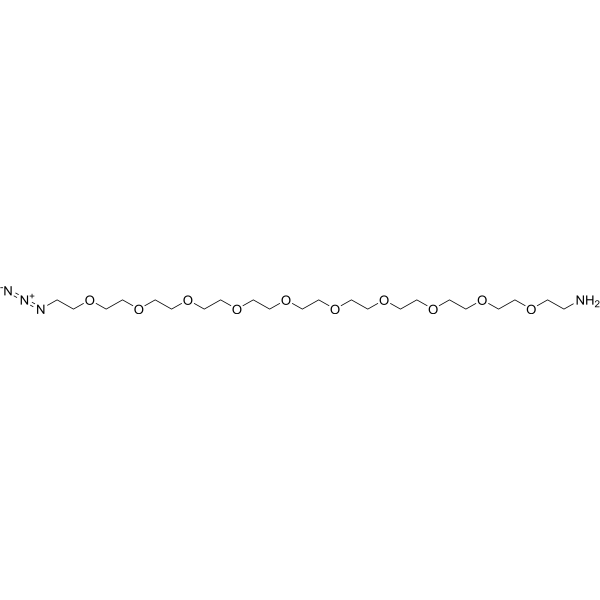
Azido-PEG10-amine is a PEG-based PROTAC linker that can be used in the synthesis of PROTACs . Azido-PEG10-amine is a click chemistry reagent, it contains an Azide group and can undergo copper-catalyzed azide-alkyne cycloaddition reaction (CuAAc) with molecules containing Alkyne groups. It can also undergo strain-promoted alkyne-azide cycloaddition (SPAAC) reactions with molecules containing DBCO or BCN groups.
|
-
- HY-140683
-
|
|
PROTAC Linkers
|
Cancer
|
|
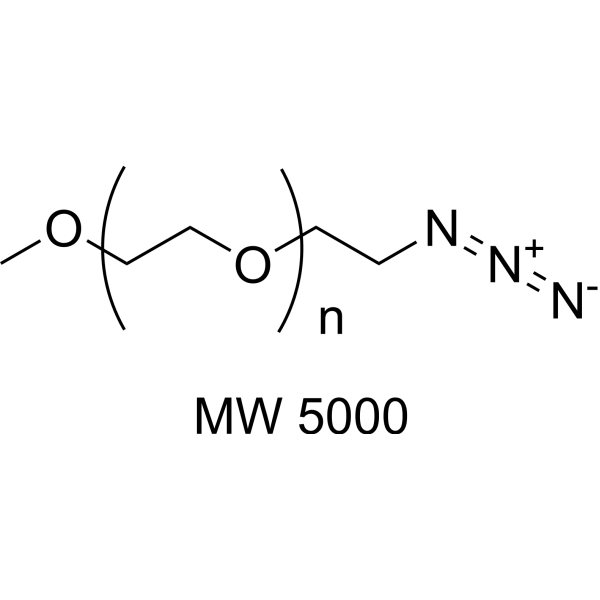
m-PEG5000-azide is a PEG-based PROTAC linker that can be used in the synthesis of PROTACs . m-PEG5000-azide is a click chemistry reagent, it contains an Azide group and can undergo copper-catalyzed azide-alkyne cycloaddition reaction (CuAAc) with molecules containing Alkyne groups. It can also undergo strain-promoted alkyne-azide cycloaddition (SPAAC) reactions with molecules containing DBCO or BCN groups.
|
-
- HY-140805
-
|
|
PROTAC Linkers
|
Cancer
|
|
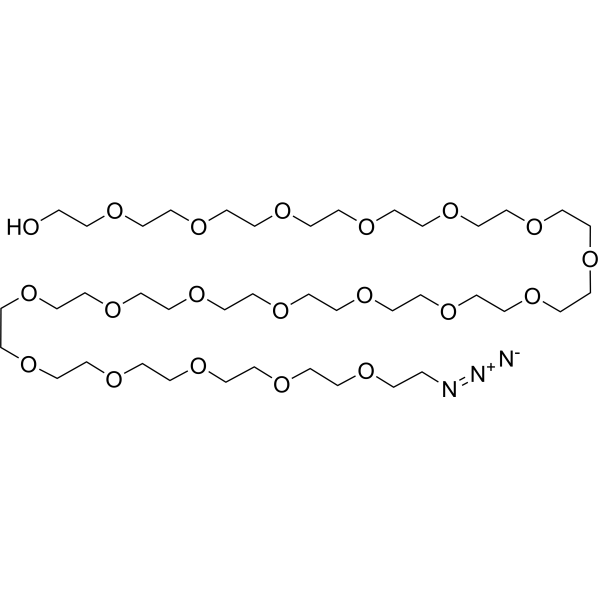
Azido-PEG20-alcohol is a PEG-based PROTAC linker that can be used in the synthesis of PROTACs . Azido-PEG20-alcohol is a click chemistry reagent, it contains an Azide group and can undergo copper-catalyzed azide-alkyne cycloaddition reaction (CuAAc) with molecules containing Alkyne groups. It can also undergo strain-promoted alkyne-azide cycloaddition (SPAAC) reactions with molecules containing DBCO or BCN groups.
|
-
- HY-140814
-
|
|
PROTAC Linkers
|
Cancer
|
|
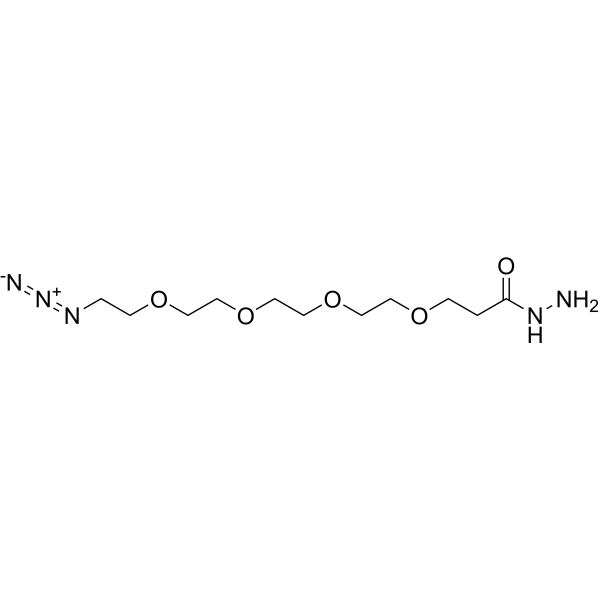
Azido-PEG4-hydrazide is a PEG-based PROTAC linker that can be used in the synthesis of PROTACs . Azido-PEG4-hydrazide is a click chemistry reagent, it contains an Azide group and can undergo copper-catalyzed azide-alkyne cycloaddition reaction (CuAAc) with molecules containing Alkyne groups. It can also undergo strain-promoted alkyne-azide cycloaddition (SPAAC) reactions with molecules containing DBCO or BCN groups.
|
-
- HY-140827
-
|
|
PROTAC Linkers
|
Cancer
|
|
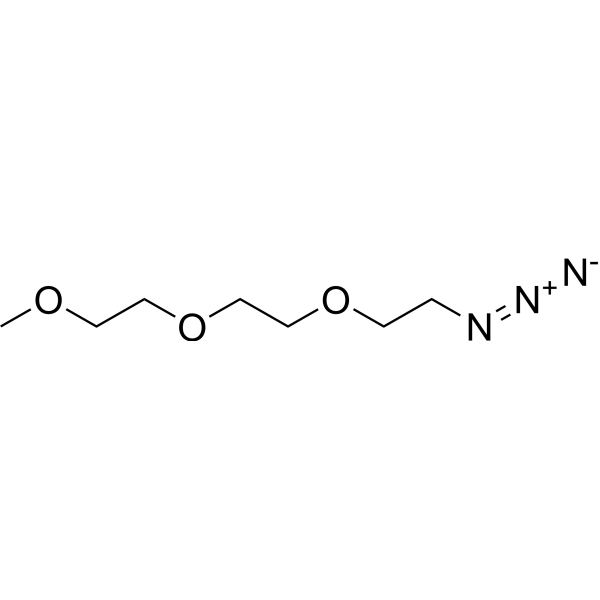
m-PEG3-azide is a PEG-based PROTAC linker that can be used in the synthesis of PROTACs . m-PEG3-azide is a click chemistry reagent, it contains an Azide group and can undergo copper-catalyzed azide-alkyne cycloaddition reaction (CuAAc) with molecules containing Alkyne groups. It can also undergo strain-promoted alkyne-azide cycloaddition (SPAAC) reactions with molecules containing DBCO or BCN groups.
|
-
- HY-140220
-
|
|
PROTAC Linkers
|
Cancer
|
|
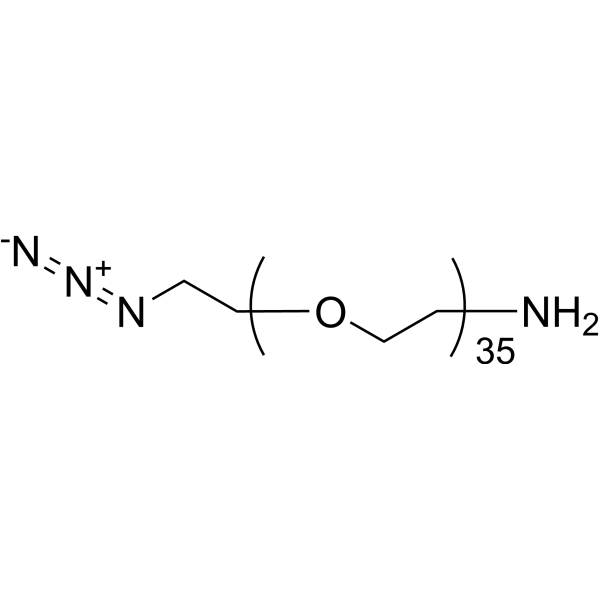
Azido-PEG35-amine is a PEG-based PROTAC linker that can be used in the synthesis of PROTACs . Azido-PEG35-amine is a click chemistry reagent, it contains an Azide group and can undergo copper-catalyzed azide-alkyne cycloaddition reaction (CuAAc) with molecules containing Alkyne groups. It can also undergo strain-promoted alkyne-azide cycloaddition (SPAAC) reactions with molecules containing DBCO or BCN groups.
|
-
- HY-130204
-
|
|
PROTAC Linkers
|
Cancer
|
|
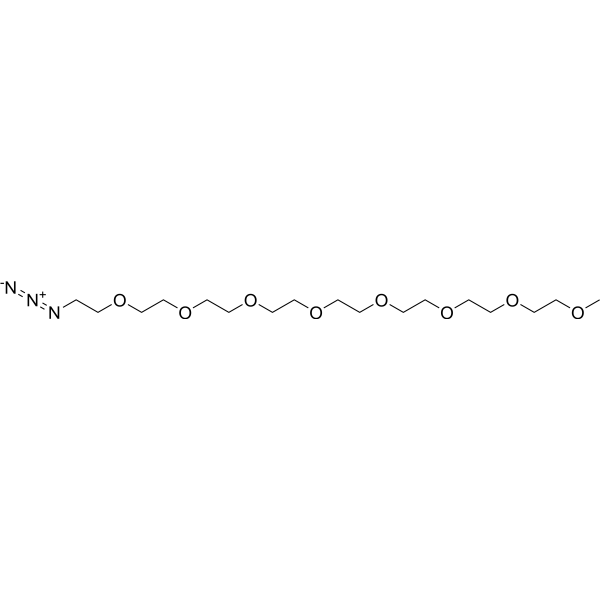
m-PEG8-azide is a PEG-based PROTAC linker can be used in the synthesis of PROTACs. m-PEG8-azide is a click chemistry reagent, it contains an Azide group and can undergo copper-catalyzed azide-alkyne cycloaddition reaction (CuAAc) with molecules containing Alkyne groups. It can also undergo strain-promoted alkyne-azide cycloaddition (SPAAC) reactions with molecules containing DBCO or BCN groups.
|
-
- HY-134717
-
|
|
PROTAC Linkers
|
Cancer
|
|
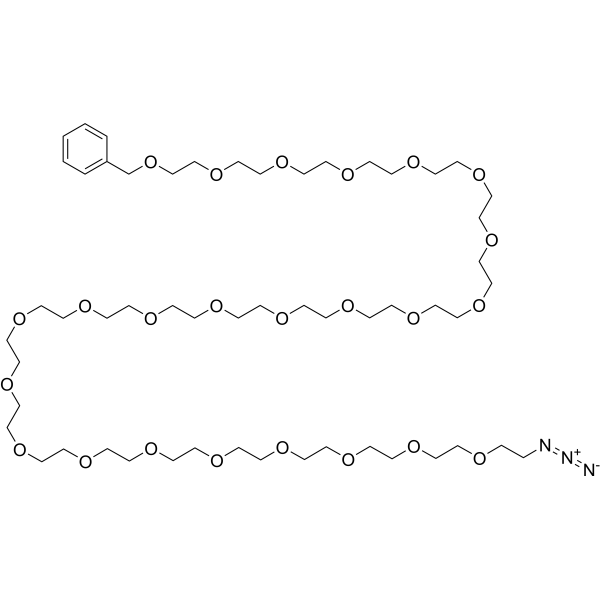
Benzyl-PEG24-azide is a PEG-based PROTAC linker that can be used in the synthesis of PROTACs . Benzyl-PEG24-azide is a click chemistry reagent, it contains an Azide group and can undergo copper-catalyzed azide-alkyne cycloaddition reaction (CuAAc) with molecules containing Alkyne groups. It can also undergo strain-promoted alkyne-azide cycloaddition (SPAAC) reactions with molecules containing DBCO or BCN groups.
|
-
- HY-133455
-
|
|
PROTAC Linkers
|
Cancer
|
|
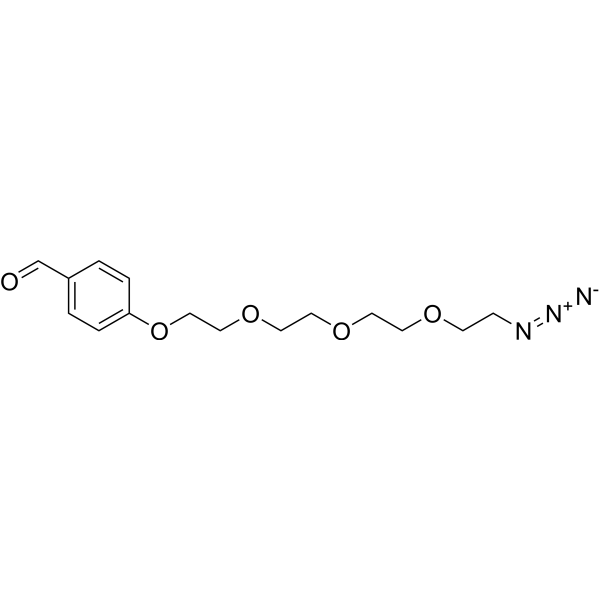
Benzaldehyde-PEG4-azide is a PEG-based PROTAC linker that can be used in the synthesis of PROTACs . Benzaldehyde-PEG4-azide is a click chemistry reagent, it contains an Azide group and can undergo copper-catalyzed azide-alkyne cycloaddition reaction (CuAAc) with molecules containing Alkyne groups. It can also undergo strain-promoted alkyne-azide cycloaddition (SPAAC) reactions with molecules containing DBCO or BCN groups.
|
-
- HY-140821
-
|
|
PROTAC Linkers
|
Cancer
|
|
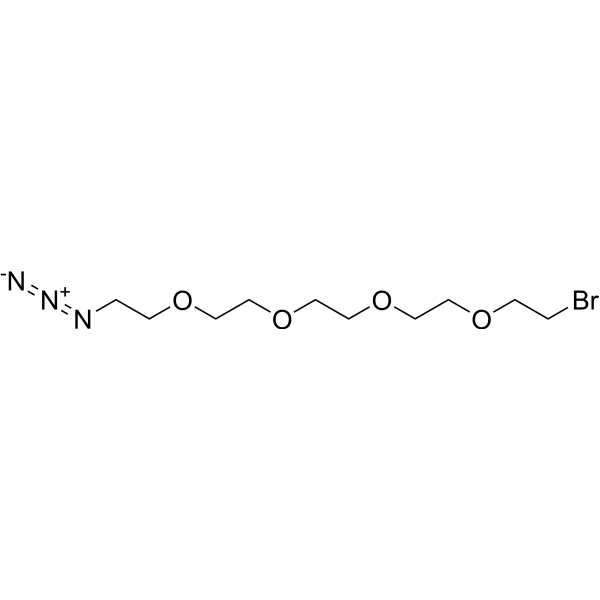
Bromo-PEG5-azide is a PEG-based PROTAC linker that can be used in the synthesis of PROTACs . Bromo-PEG4-azide is a click chemistry reagent, it contains an Azide group and can undergo copper-catalyzed azide-alkyne cycloaddition reaction (CuAAc) with molecules containing Alkyne groups. It can also undergo strain-promoted alkyne-azide cycloaddition (SPAAC) reactions with molecules containing DBCO or BCN groups.
|
-
- HY-140797
-
|
|
PROTAC Linkers
|
Cancer
|
|
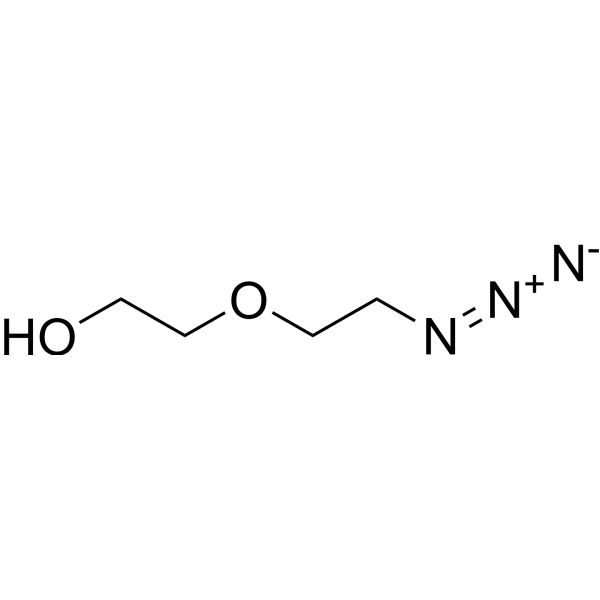
Azido-PEG2-alcohol is a PEG-based PROTAC linker that can be used in the synthesis of PROTACs . Azido-PEG2-alcohol is a click chemistry reagent, it contains an Azide group and can undergo copper-catalyzed azide-alkyne cycloaddition reaction (CuAAc) with molecules containing Alkyne groups. It can also undergo strain-promoted alkyne-azide cycloaddition (SPAAC) reactions with molecules containing DBCO or BCN groups.
|
-
- HY-138374
-
|
|
PROTAC Linkers
|
Cancer
|
|
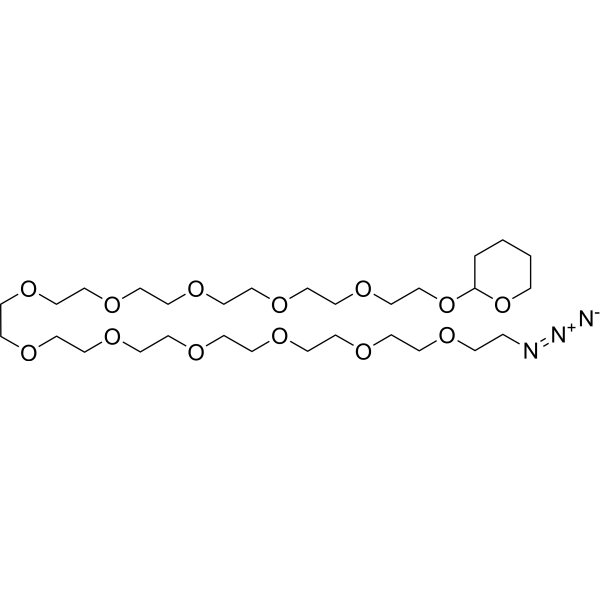
Azido-PEG12-THP is a PEG-based PROTAC linker that can be used in the synthesis of PROTACs . Azido-PEG12-THP is a click chemistry reagent, it contains an Azide group and can undergo copper-catalyzed azide-alkyne cycloaddition reaction (CuAAc) with molecules containing Alkyne groups. It can also undergo strain-promoted alkyne-azide cycloaddition (SPAAC) reactions with molecules containing DBCO or BCN groups.
|
-
- HY-118781
-
|
|
PROTAC Linkers
|
Cancer
|
|
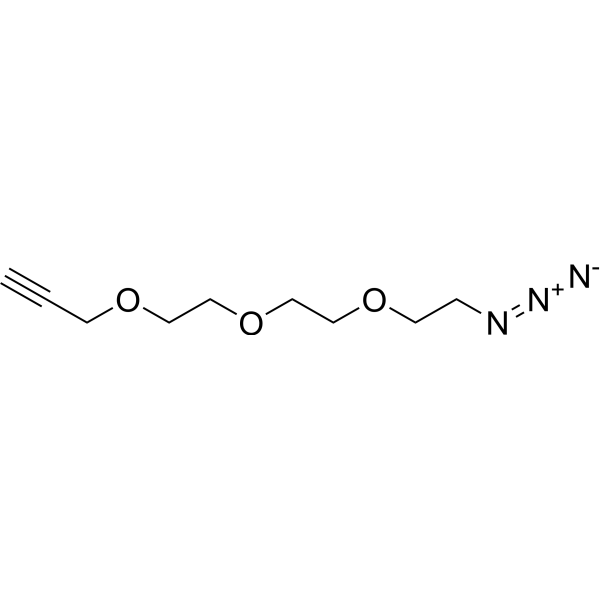
Propargyl-PEG3-azide is a PEG-based PROTAC linker that can be used in the synthesis of PROTACs . Propargyl-PEG3-azide is a click chemistry reagent, it contains an Azide group and can undergo copper-catalyzed azide-alkyne cycloaddition reaction (CuAAc) with molecules containing Alkyne groups. It can also undergo strain-promoted alkyne-azide cycloaddition (SPAAC) reactions with molecules containing DBCO or BCN groups.
|
-
- HY-140781
-
|
|
PROTAC Linkers
|
Cancer
|
|
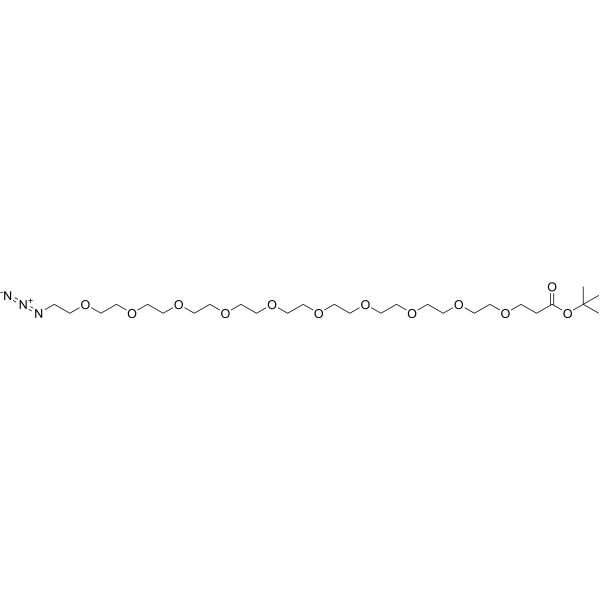
Azido-PEG10-Boc is a PEG-based PROTAC linker that can be used in the synthesis of PROTACs . Azido-PEG10-Boc is a click chemistry reagent, it contains an Azide group and can undergo copper-catalyzed azide-alkyne cycloaddition reaction (CuAAc) with molecules containing Alkyne groups. It can also undergo strain-promoted alkyne-azide cycloaddition (SPAAC) reactions with molecules containing DBCO or BCN groups.
|
-
- HY-140684
-
|
|
PROTAC Linkers
|
Cancer
|
|
m-PEG10000-azide is a PEG-based PROTAC linker that can be used in the synthesis of PROTACs . m-PEG10000-azide is a click chemistry reagent, it contains an Azide group and can undergo copper-catalyzed azide-alkyne cycloaddition reaction (CuAAc) with molecules containing Alkyne groups. It can also undergo strain-promoted alkyne-azide cycloaddition (SPAAC) reactions with molecules containing DBCO or BCN groups.
|
-
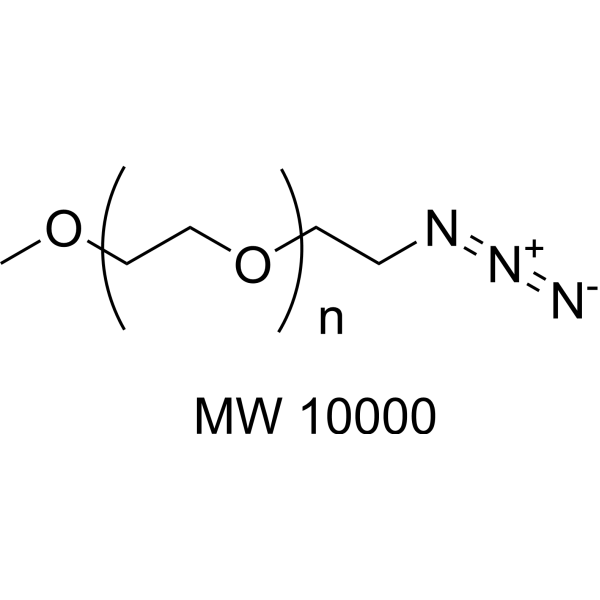
- HY-140216
-
|
|
PROTAC Linkers
|
Cancer
|
|
Azido-PEG8-amine is a PEG-based PROTAC linker that can be used in the synthesis of PROTACs . Azido-PEG8-amine is a click chemistry reagent, it contains an Azide group and can undergo copper-catalyzed azide-alkyne cycloaddition reaction (CuAAc) with molecules containing Alkyne groups. It can also undergo strain-promoted alkyne-azide cycloaddition (SPAAC) reactions with molecules containing DBCO or BCN groups.
|
-
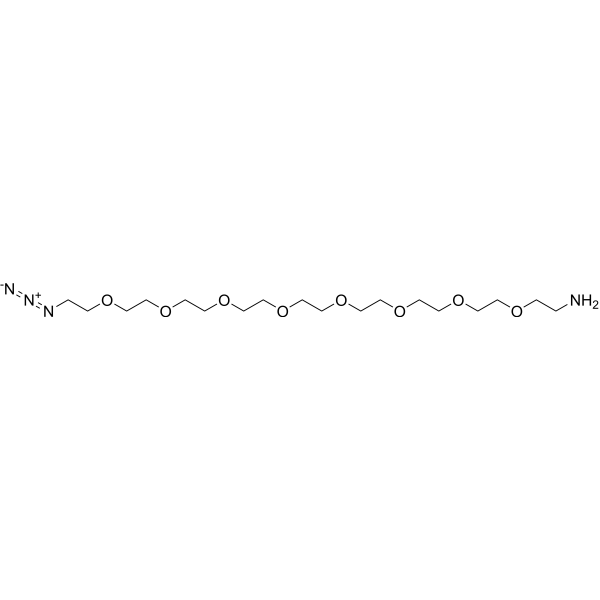
- HY-140682
-
|
|
PROTAC Linkers
|
Cancer
|
|
m-PEG2000-azide is a PEG-based PROTAC linker that can be used in the synthesis of PROTACs . m-PEG2000-azide is a click chemistry reagent, it contains an Azide group and can undergo copper-catalyzed azide-alkyne cycloaddition reaction (CuAAc) with molecules containing Alkyne groups. It can also undergo strain-promoted alkyne-azide cycloaddition (SPAAC) reactions with molecules containing DBCO or BCN groups.
|
-
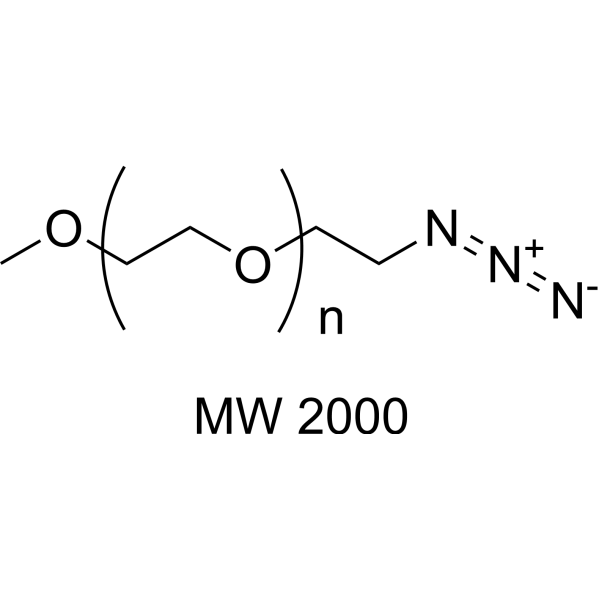
- HY-140665
-
|
|
PROTAC Linkers
|
Cancer
|
|
Azide-PEG5000-azide is a PEG-based PROTAC linker that can be used in the synthesis of PROTACs . Azide-PEG5000-azide is a click chemistry reagent, it contains an Azide group and can undergo copper-catalyzed azide-alkyne cycloaddition reaction (CuAAc) with molecules containing Alkyne groups. It can also undergo strain-promoted alkyne-azide cycloaddition (SPAAC) reactions with molecules containing DBCO or BCN groups.
|
-
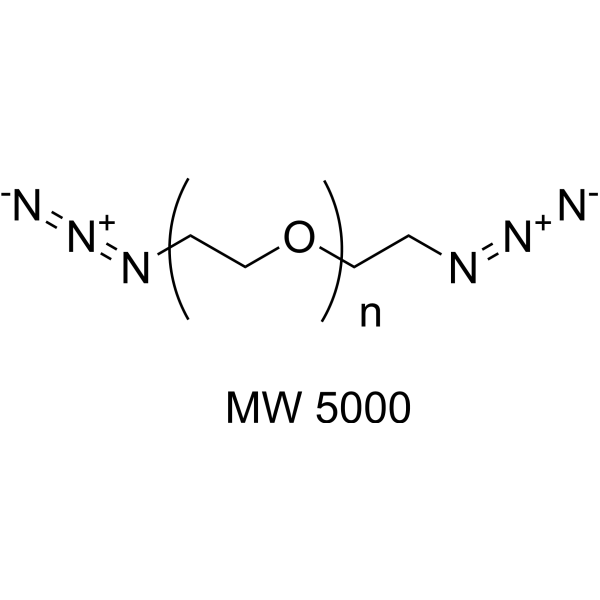
- HY-133391
-
|
|
PROTAC Linkers
|
Cancer
|
|
Azido-PEG3-azide is a PEG-based PROTAC linker that can be used in the synthesis of PROTACs . Azido-PEG3-azide is a click chemistry reagent, it contains an Azide group and can undergo copper-catalyzed azide-alkyne cycloaddition reaction (CuAAc) with molecules containing Alkyne groups. It can also undergo strain-promoted alkyne-azide cycloaddition (SPAAC) reactions with molecules containing DBCO or BCN groups.
|
-
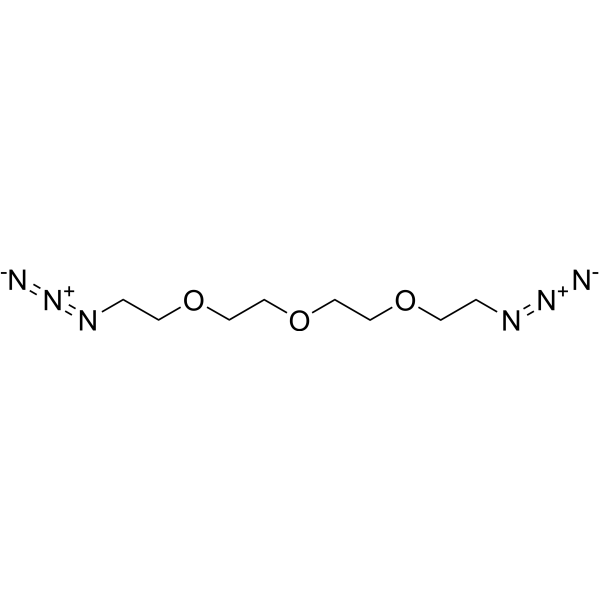
- HY-140762
-
|
|
PROTAC Linkers
|
Cancer
|
|
Azido-PEG24-NHS ester is a PEG-based PROTAC linker that can be used in the synthesis of PROTACs . Azido-PEG24-NHS ester is a click chemistry reagent, it contains an Azide group and can undergo copper-catalyzed azide-alkyne cycloaddition reaction (CuAAc) with molecules containing Alkyne groups. It can also undergo strain-promoted alkyne-azide cycloaddition (SPAAC) reactions with molecules containing DBCO or BCN groups.
|
-
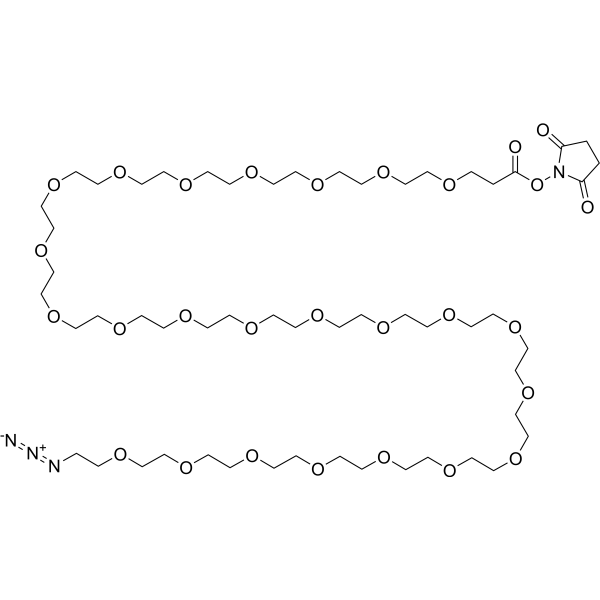
- HY-138516
-
|
|
PROTAC Linkers
|
Cancer
|
|
CG-PEG5-azido is a PEG-based PROTAC linker that can be used in the synthesis of PROTACs . CG-PEG5-azido is a click chemistry reagent, it contains an Azide group and can undergo copper-catalyzed azide-alkyne cycloaddition reaction (CuAAc) with molecules containing Alkyne groups. It can also undergo strain-promoted alkyne-azide cycloaddition (SPAAC) reactions with molecules containing DBCO or BCN groups.
|
-
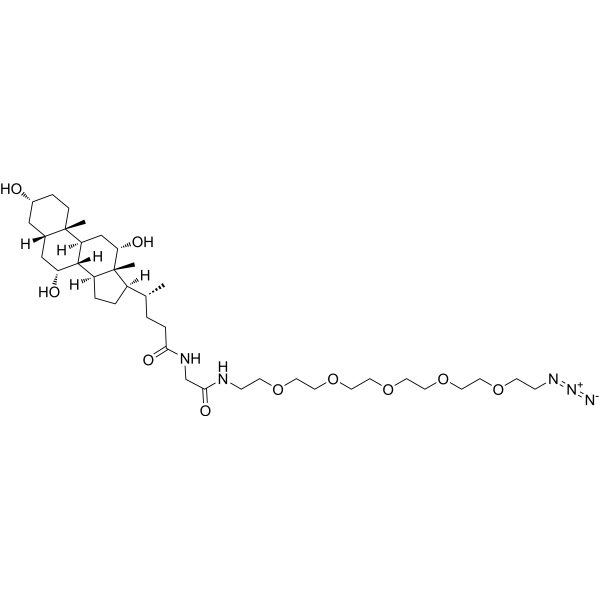
- HY-138740
-
|
|
PROTAC Linkers
|
Cancer
|
|
Azido-PEG2-propargyl is a PEG-based PROTAC linker that can be used in the synthesis of PROTACs . Azido-PEG2-propargyl is a click chemistry reagent, it contains an Azide group and can undergo copper-catalyzed azide-alkyne cycloaddition reaction (CuAAc) with molecules containing Alkyne groups. It can also undergo strain-promoted alkyne-azide cycloaddition (SPAAC) reactions with molecules containing DBCO or BCN groups.
|
-
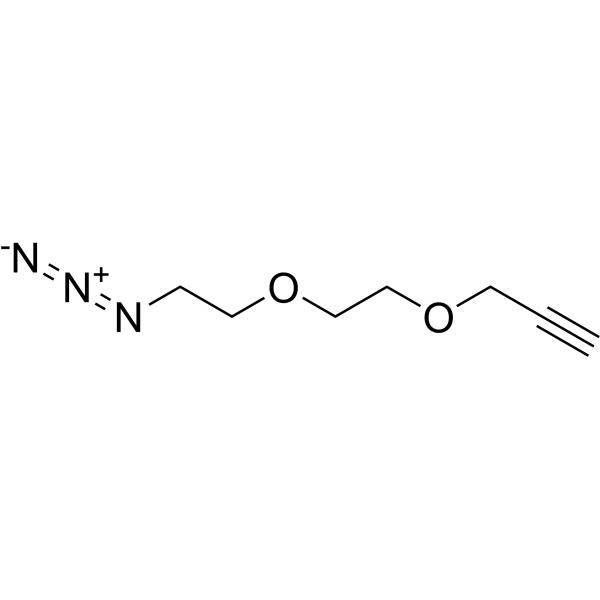
- HY-140815
-
|
|
PROTAC Linkers
|
Cancer
|
|
Azido-PEG8-hydrazide is a PEG-based PROTAC linker that can be used in the synthesis of PROTACs . Azido-PEG8-hydrazide is a click chemistry reagent, it contains an Azide group and can undergo copper-catalyzed azide-alkyne cycloaddition reaction (CuAAc) with molecules containing Alkyne groups. It can also undergo strain-promoted alkyne-azide cycloaddition (SPAAC) reactions with molecules containing DBCO or BCN groups.
|
-
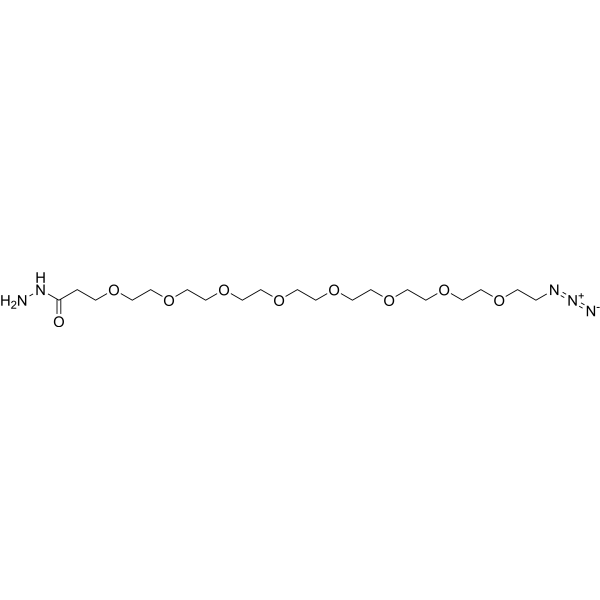
- HY-132096
-
|
|
PROTAC Linkers
|
Cancer
|
|
Azido-PEG4-acyl chloride is a PEG-based PROTAC linker that can be used in the synthesis of PROTACs . Azido-PEG4-acyl chloride is a click chemistry reagent, it contains an Azide group and can undergo copper-catalyzed azide-alkyne cycloaddition reaction (CuAAc) with molecules containing Alkyne groups. It can also undergo strain-promoted alkyne-azide cycloaddition (SPAAC) reactions with molecules containing DBCO or BCN groups.
|
-
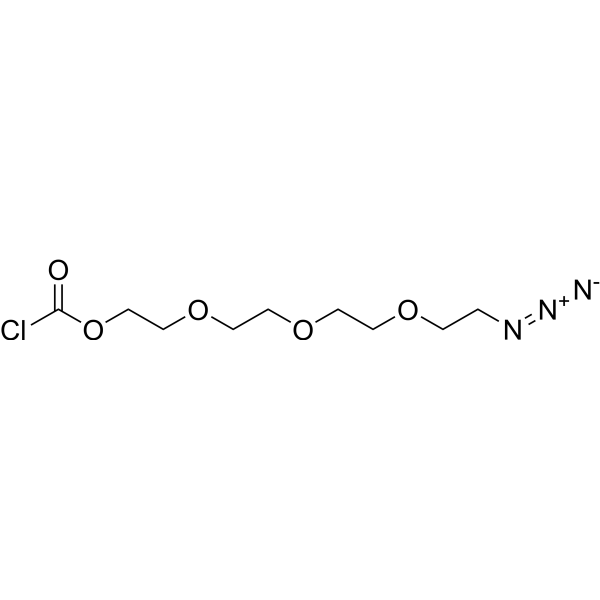
- HY-140801
-
|
|
PROTAC Linkers
|
Cancer
|
|
Azido-PEG10-alcohol is a PEG-based PROTAC linker that can be used in the synthesis of PROTACs . Azido-PEG10-alcohol is a click chemistry reagent, it contains an Azide group and can undergo copper-catalyzed azide-alkyne cycloaddition reaction (CuAAc) with molecules containing Alkyne groups. It can also undergo strain-promoted alkyne-azide cycloaddition (SPAAC) reactions with molecules containing DBCO or BCN groups.
|
-
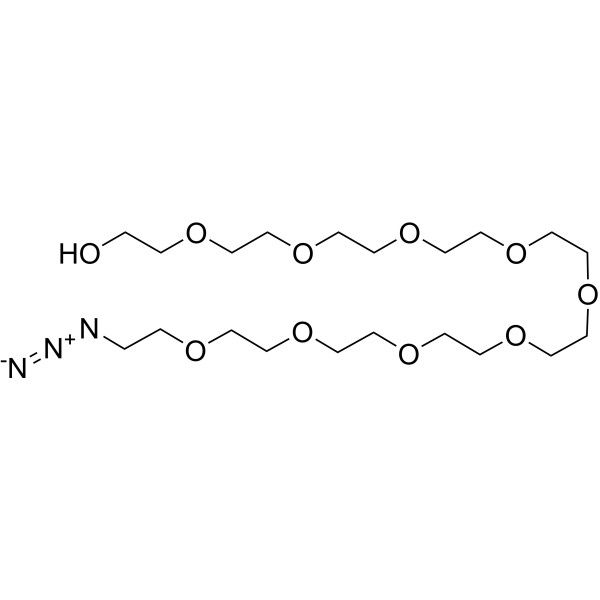
- HY-140800
-
|
|
PROTAC Linkers
|
Cancer
|
|
Azido-PEG9-alcohol is a PEG-based PROTAC linker that can be used in the synthesis of PROTACs . Azido-PEG9-alcohol is a click chemistry reagent, it contains an Azide group and can undergo copper-catalyzed azide-alkyne cycloaddition reaction (CuAAc) with molecules containing Alkyne groups. It can also undergo strain-promoted alkyne-azide cycloaddition (SPAAC) reactions with molecules containing DBCO or BCN groups.
|
-
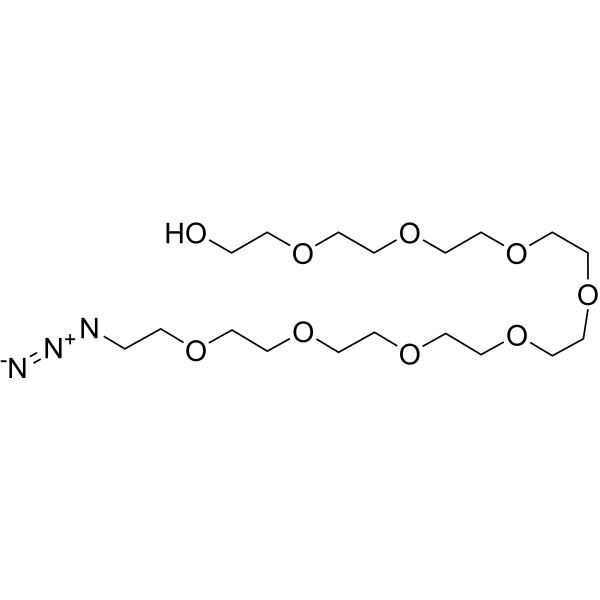
- HY-140778
-
|
|
PROTAC Linkers
|
Cancer
|
|
Azide-PEG5-Boc is a PEG-based PROTAC linker that can be used in the synthesis of PROTACs . Azide-PEG5-Boc is a click chemistry reagent, it contains an Azide group and can undergo copper-catalyzed azide-alkyne cycloaddition reaction (CuAAc) with molecules containing Alkyne groups. It can also undergo strain-promoted alkyne-azide cycloaddition (SPAAC) reactions with molecules containing DBCO or BCN groups.
|
-
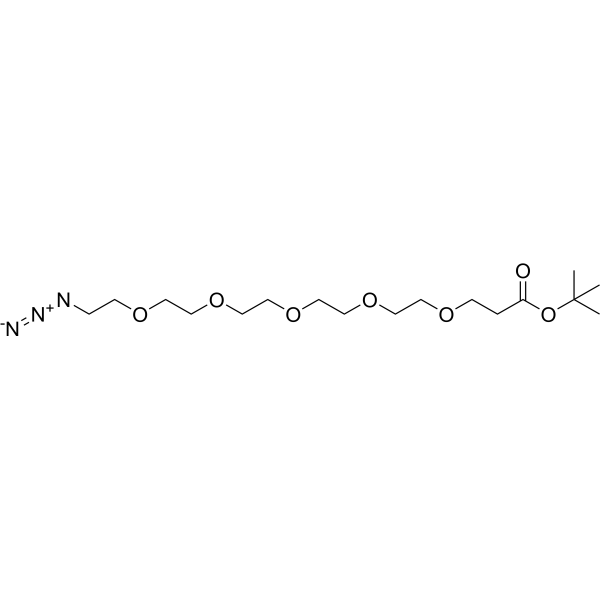
- HY-130188
-
|
|
PROTAC Linkers
|
Cancer
|
|
Benzyl-PEG2-azide is a PEG-based PROTAC linker can be used in the synthesis of PROTACs. Benzyl-PEG2-azide is a click chemistry reagent, it contains an Azide group and can undergo copper-catalyzed azide-alkyne cycloaddition reaction (CuAAc) with molecules containing Alkyne groups. It can also undergo strain-promoted alkyne-azide cycloaddition (SPAAC) reactions with molecules containing DBCO or BCN groups.
|
-
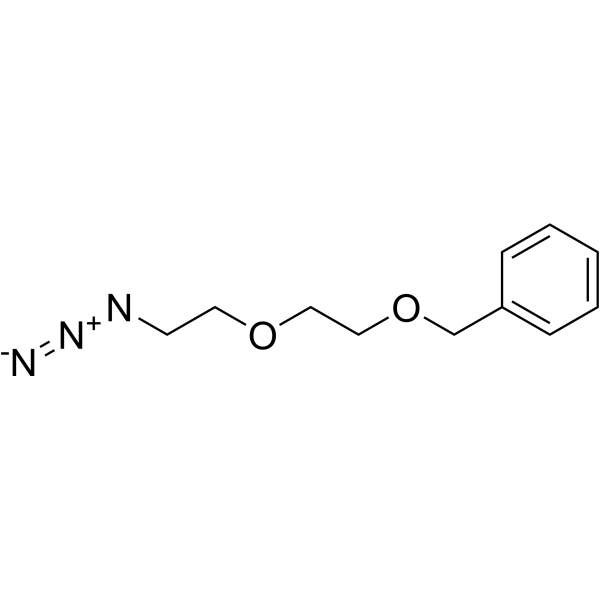
- HY-143963S
-
|
|
Drug Metabolite
Isotope-Labeled Compounds
|
Others
|
|
Irbesartan impurity 20-d4 is the deuterium labeled Irbesartan impurity 20 . Irbesartan impurity 20-d4 is a click chemistry reagent, it contains an Azide group and can undergo copper-catalyzed azide-alkyne cycloaddition reaction (CuAAc) with molecules containing Alkyne groups. It can also undergo strain-promoted alkyne-azide cycloaddition (SPAAC) reactions with molecules containing DBCO or BCN groups.
|
-
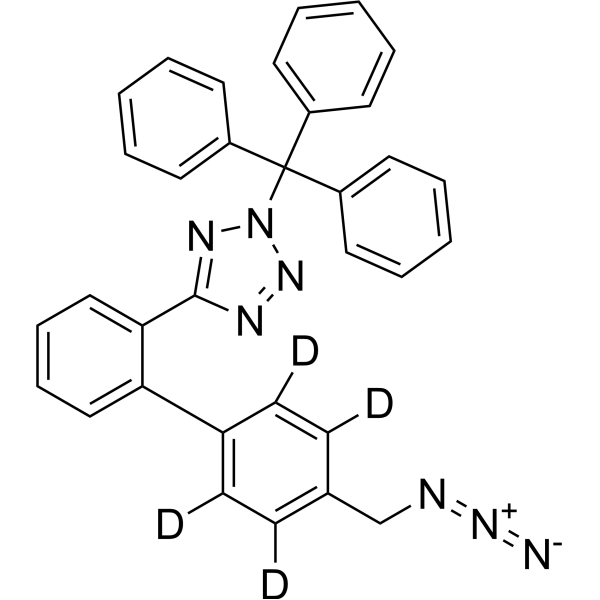
- HY-140214
-
|
|
PROTAC Linkers
|
Cancer
|
|
Azido-PEG5-amine is a PEG-based PROTAC linker that can be used in the synthesis of PROTACs . Azido-PEG5-amine is a click chemistry reagent, it contains an Azide group and can undergo copper-catalyzed azide-alkyne cycloaddition reaction (CuAAc) with molecules containing Alkyne groups. It can also undergo strain-promoted alkyne-azide cycloaddition (SPAAC) reactions with molecules containing DBCO or BCN groups.
|
-
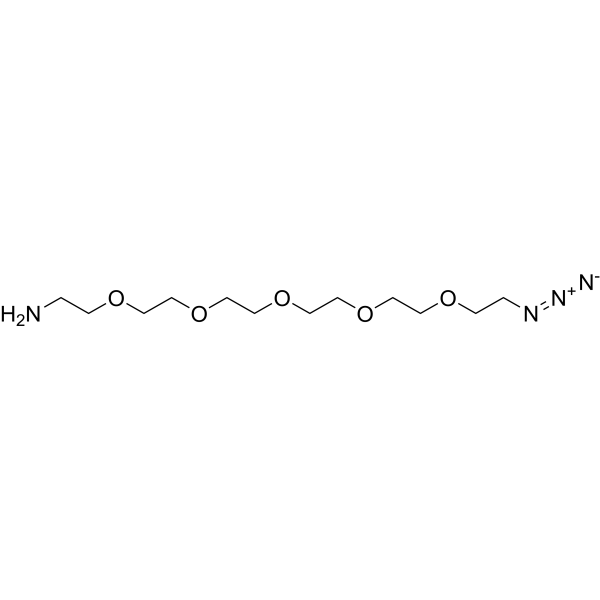
- HY-143980S
-
|
|
Drug Metabolite
Isotope-Labeled Compounds
|
Others
|
|
Losartan impurity 21-d4 is the deuterium labeled Losartan impurity 21 . Losartan impurity 21-d4 is a click chemistry reagent, it contains an Azide group and can undergo copper-catalyzed azide-alkyne cycloaddition reaction (CuAAc) with molecules containing Alkyne groups. It can also undergo strain-promoted alkyne-azide cycloaddition (SPAAC) reactions with molecules containing DBCO or BCN groups.
|
-
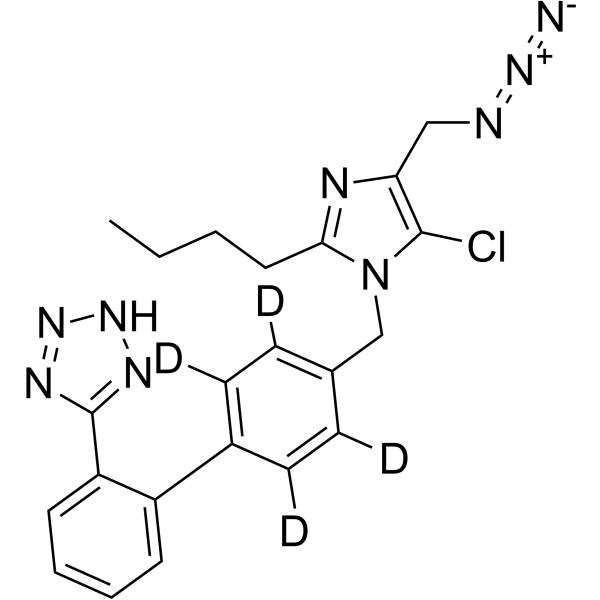
- HY-133175
-
|
|
PROTAC Linkers
|
Cancer
|
|
Biotin-PEG7-azide is a PEG-based PROTAC linker can be used in the synthesis of PROTAC. Biotin-PEG7-azide is a click chemistry reagent, it contains an Azide group and can undergo copper-catalyzed azide-alkyne cycloaddition reaction (CuAAc) with molecules containing Alkyne groups. It can also undergo strain-promoted alkyne-azide cycloaddition (SPAAC) reactions with molecules containing DBCO or BCN groups.
|
-
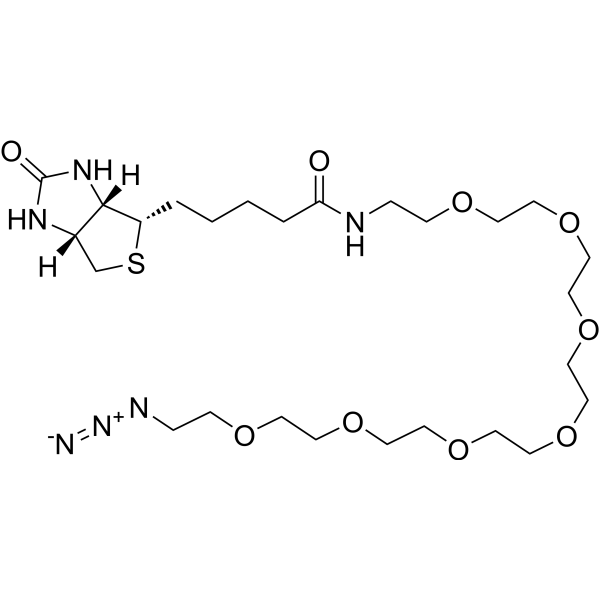
- HY-140825
-
|
|
PROTAC Linkers
|
Cancer
|
|
Bromoacetamido-PEG3-azide is a PEG-based PROTAC linker that can be used in the synthesis of PROTACs . Bromoacetamido-PEG3-azide is a click chemistry reagent, it contains an Azide group and can undergo copper-catalyzed azide-alkyne cycloaddition reaction (CuAAc) with molecules containing Alkyne groups. It can also undergo strain-promoted alkyne-azide cycloaddition (SPAAC) reactions with molecules containing DBCO or BCN groups.
|
-
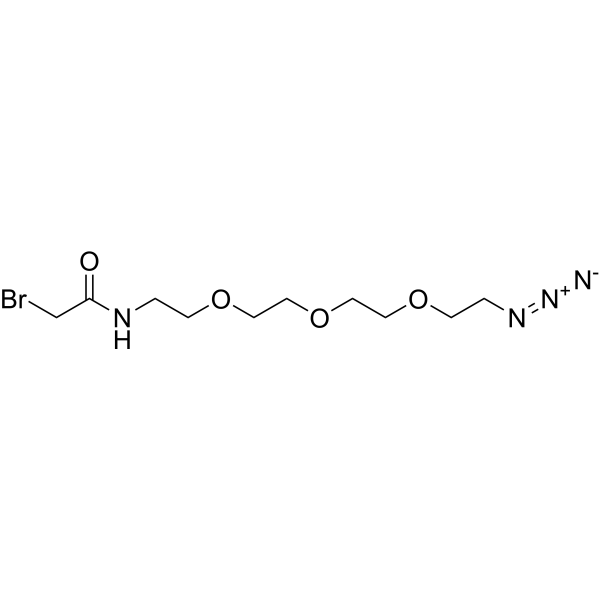
- HY-140218
-
|
|
PROTAC Linkers
|
Cancer
|
|
Azido-PEG11-amine is a PEG-based PROTAC linker that can be used in the synthesis of PROTACs . Azido-PEG11-amine is a click chemistry reagent, it contains an Azide group and can undergo copper-catalyzed azide-alkyne cycloaddition reaction (CuAAc) with molecules containing Alkyne groups. It can also undergo strain-promoted alkyne-azide cycloaddition (SPAAC) reactions with molecules containing DBCO or BCN groups.
|
-
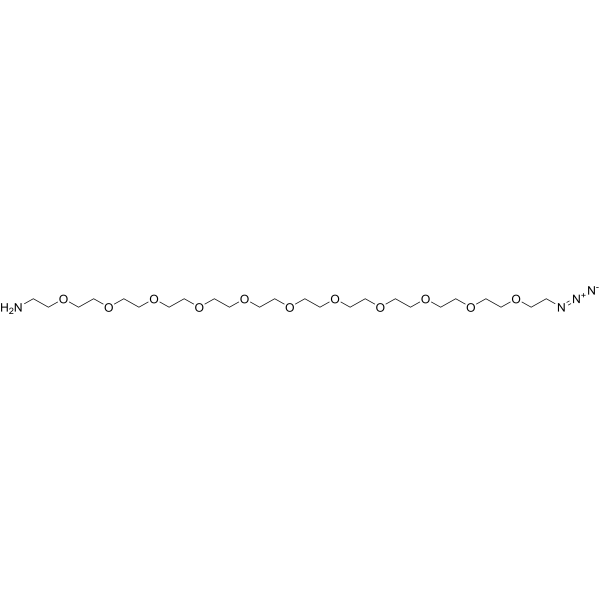
- HY-140795
-
|
|
PROTAC Linkers
|
Cancer
|
|
Azido-PEG5-Boc is a PEG-based PROTAC linker that can be used in the synthesis of PROTACs . Azido-PEG5-Boc is a click chemistry reagent, it contains an Azide group and can undergo copper-catalyzed azide-alkyne cycloaddition reaction (CuAAc) with molecules containing Alkyne groups. It can also undergo strain-promoted alkyne-azide cycloaddition (SPAAC) reactions with molecules containing DBCO or BCN groups.
|
-
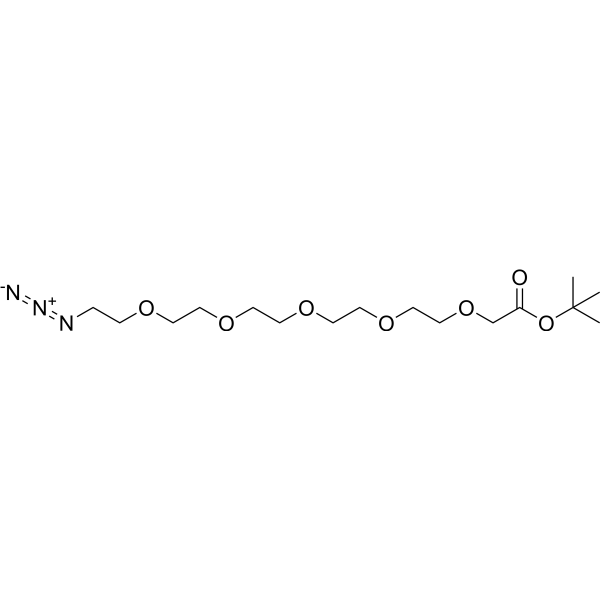
- HY-133397
-
|
|
PROTAC Linkers
|
Cancer
|
|
Azido-PEG15-azide is a PEG-based PROTAC linker that can be used in the synthesis of PROTACs . Azido-PEG15-azide is a click chemistry reagent, it contains an Azide group and can undergo copper-catalyzed azide-alkyne cycloaddition reaction (CuAAc) with molecules containing Alkyne groups. It can also undergo strain-promoted alkyne-azide cycloaddition (SPAAC) reactions with molecules containing DBCO or BCN groups.
|
-
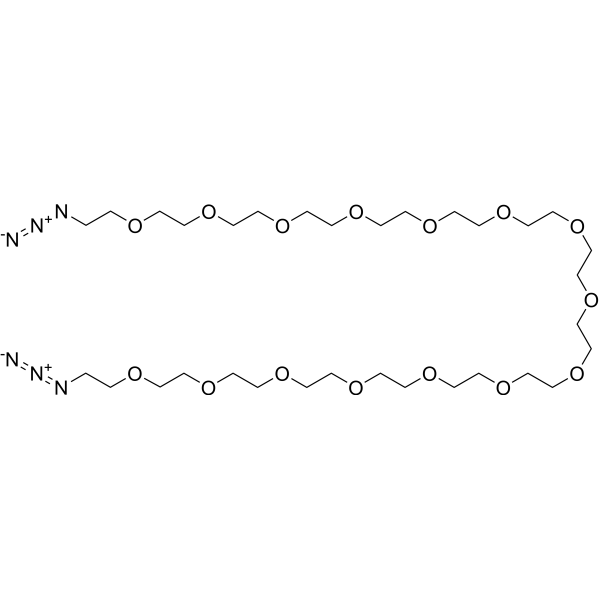
- HY-140856
-
|
|
PROTAC Linkers
|
Cancer
|
|
Azido-PEG5-triethoxysilane is a PEG-based PROTAC linker that can be used in the synthesis of PROTACs . Azido-PEG5-triethoxysilane is a click chemistry reagent, it contains an Azide group and can undergo copper-catalyzed azide-alkyne cycloaddition reaction (CuAAc) with molecules containing Alkyne groups. It can also undergo strain-promoted alkyne-azide cycloaddition (SPAAC) reactions with molecules containing DBCO or BCN groups.
|
-
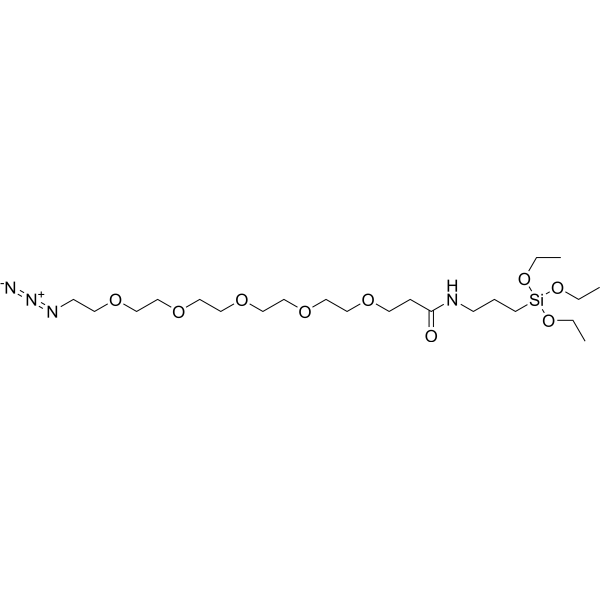
- HY-140761
-
|
|
PROTAC Linkers
|
Cancer
|
|
Azido-PEG16-NHS ester is a PEG-based PROTAC linker that can be used in the synthesis of PROTACs . Azido-PEG16-NHS ester is a click chemistry reagent, it contains an Azide group and can undergo copper-catalyzed azide-alkyne cycloaddition reaction (CuAAc) with molecules containing Alkyne groups. It can also undergo strain-promoted alkyne-azide cycloaddition (SPAAC) reactions with molecules containing DBCO or BCN groups.
|
-
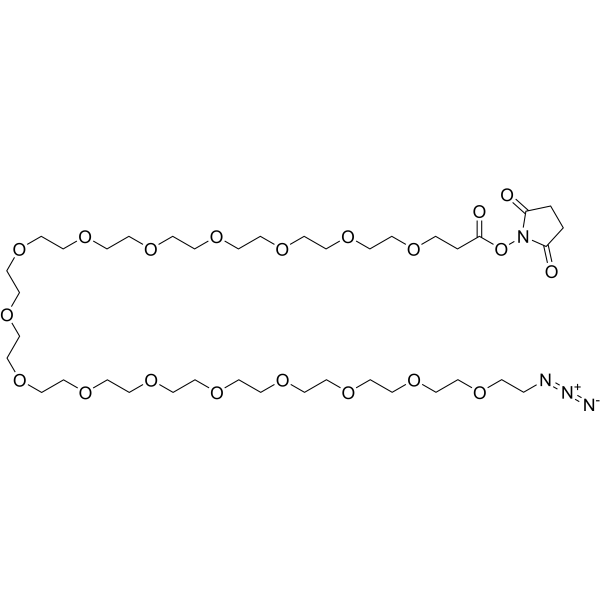
- HY-138716
-
|
|
PROTAC Linkers
|
Cancer
|
|
m-PEG9-azide is a PEG-based PROTAC linker can be used in the synthesis of PROTACs. m-PEG9-azide is a click chemistry reagent, it contains an Azide group and can undergo copper-catalyzed azide-alkyne cycloaddition reaction (CuAAc) with molecules containing Alkyne groups. It can also undergo strain-promoted alkyne-azide cycloaddition (SPAAC) reactions with molecules containing DBCO or BCN groups.
|
-
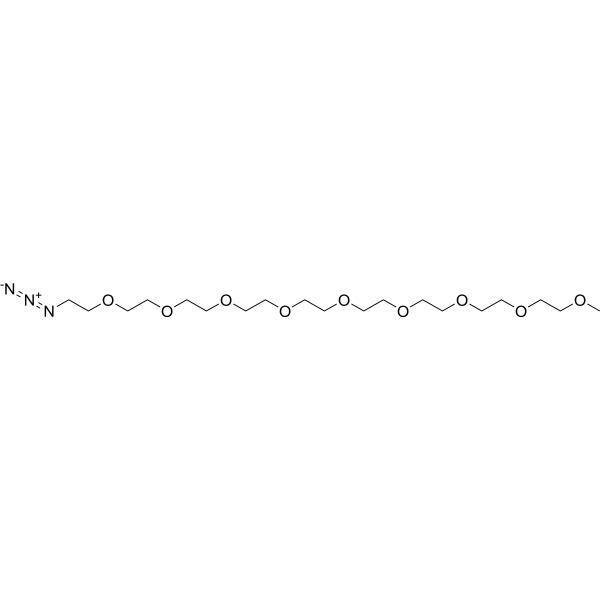
- HY-132082
-
|
|
PROTAC Linkers
|
Cancer
|
|
Benzyl-PEG13-azide is a PEG-based PROTAC linker that can be used in the synthesis of PROTACs . Benzyl-PEG13-azide is a click chemistry reagent, it contains an Azide group and can undergo copper-catalyzed azide-alkyne cycloaddition reaction (CuAAc) with molecules containing Alkyne groups. It can also undergo strain-promoted alkyne-azide cycloaddition (SPAAC) reactions with molecules containing DBCO or BCN groups.
|
-
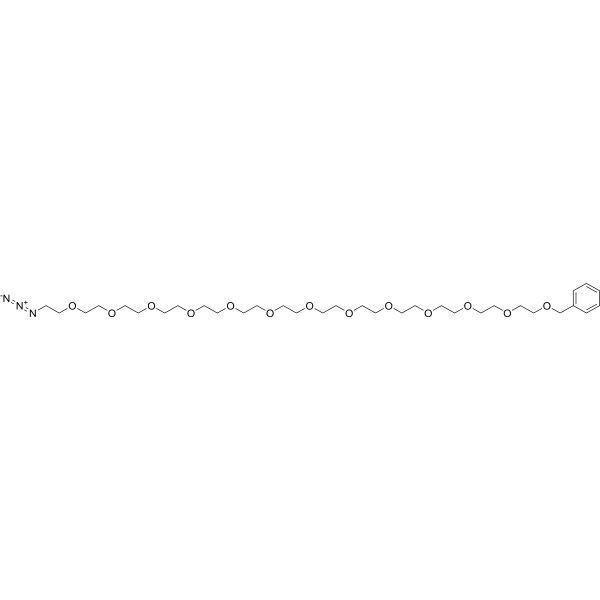
- HY-140158
-
|
|
PROTAC Linkers
|
Cancer
|
|
Methylamino-PEG3-azide is a PEG-based PROTAC linker that can be used in the synthesis of PROTACs . Methylamino-PEG3-azide is a click chemistry reagent, it contains an Azide group and can undergo copper-catalyzed azide-alkyne cycloaddition reaction (CuAAc) with molecules containing Alkyne groups. It can also undergo strain-promoted alkyne-azide cycloaddition (SPAAC) reactions with molecules containing DBCO or BCN groups.
|
-
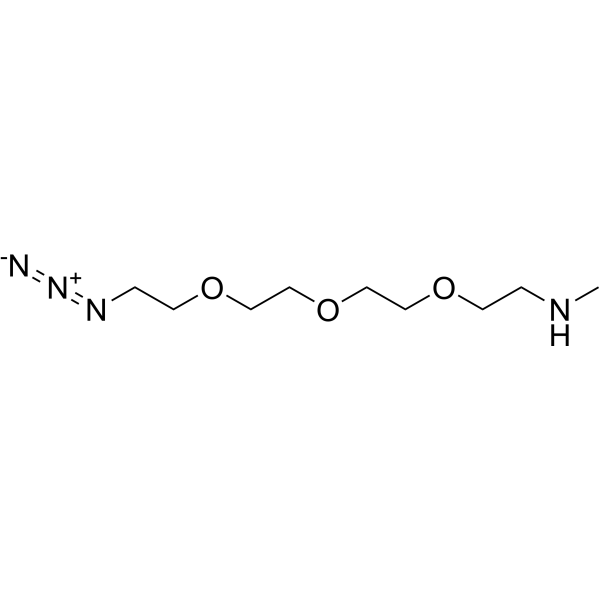
- HY-N15944
-
|
|
Biochemical Assay Reagents
|
Others
|
|
C6(6-Azido) gluCer is a lipid containing an omega-terminal azide. C6(6-Azido) gluCer is a click chemistry reagent, it contains an Azide group and can undergo copper-catalyzed azide-alkyne cycloaddition reaction (CuAAc) with molecules containing Alkyne groups. It can also undergo strain-promoted alkyne-azide cycloaddition (SPAAC) reactions with molecules containing DBCO or BCN groups.
|
-

- HY-138363
-
|
|
PROTAC Linkers
|
Cancer
|
|
Azido-PEG6-MS is a PEG-based PROTAC linker that can be used in the synthesis of PROTACs . Azido-PEG6-MS is a click chemistry reagent, it contains an Azide group and can undergo copper-catalyzed azide-alkyne cycloaddition reaction (CuAAc) with molecules containing Alkyne groups. It can also undergo strain-promoted alkyne-azide cycloaddition (SPAAC) reactions with molecules containing DBCO or BCN groups.
|
-
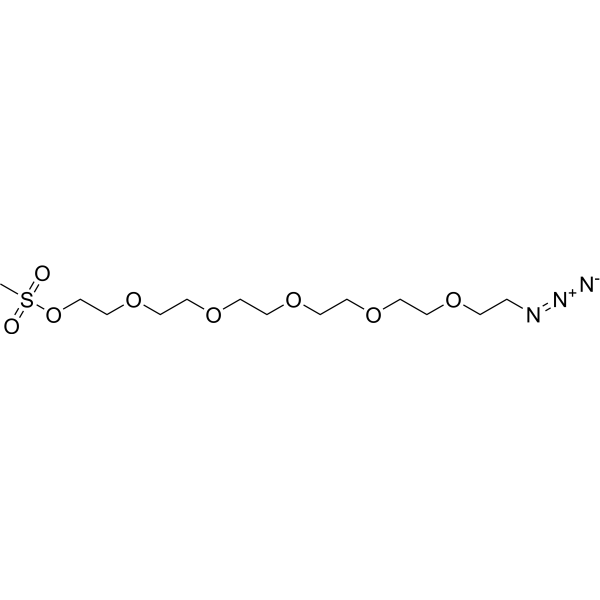
- HY-138692
-
|
|
PROTAC Linkers
|
Cancer
|
|
Azido-PEG4-azide is a PEG-based PROTAC linker can be used in the synthesis of PROTACs. Azido-PEG4-azide is a click chemistry reagent, it contains an Azide group and can undergo copper-catalyzed azide-alkyne cycloaddition reaction (CuAAc) with molecules containing Alkyne groups. It can also undergo strain-promoted alkyne-azide cycloaddition (SPAAC) reactions with molecules containing DBCO or BCN groups.
|
-
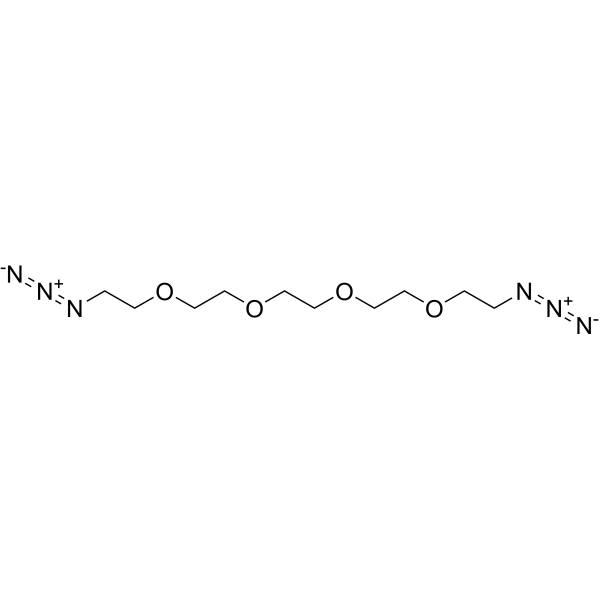
- HY-138463
-
|
|
PROTAC Linkers
|
Cancer
|
|
Azido-PEG36-NHS ester is a PEG-based PROTAC linker that can be used in the synthesis of PROTACs . Azido-PEG36-NHS ester is a click chemistry reagent, it contains an Azide group and can undergo copper-catalyzed azide-alkyne cycloaddition reaction (CuAAc) with molecules containing Alkyne groups. It can also undergo strain-promoted alkyne-azide cycloaddition (SPAAC) reactions with molecules containing DBCO or BCN groups.
|
-
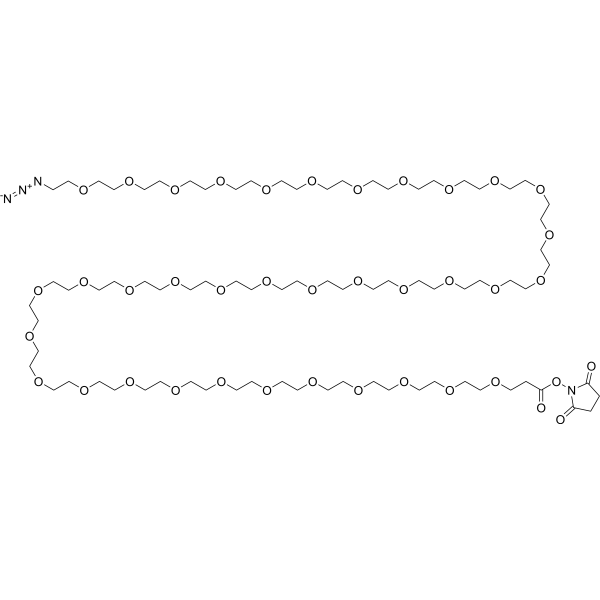
- HY-140662
-
|
|
PROTAC Linkers
|
Cancer
|
|
Azide-PEG3500-amine is a PEG-based PROTAC linker that can be used in the synthesis of PROTACs . Azide-PEG3500-amine is a click chemistry reagent, it contains an Azide group and can undergo copper-catalyzed azide-alkyne cycloaddition reaction (CuAAc) with molecules containing Alkyne groups. It can also undergo strain-promoted alkyne-azide cycloaddition (SPAAC) reactions with molecules containing DBCO or BCN groups.
|
-
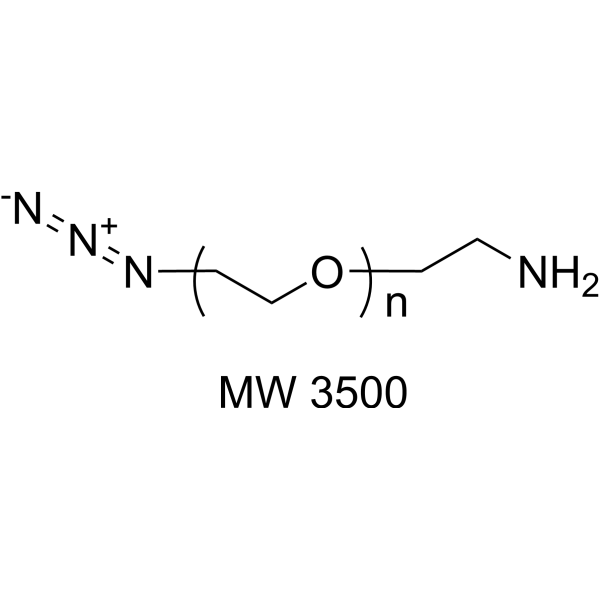
- HY-140798
-
|
|
PROTAC Linkers
|
Cancer
|
|
Azido-PEG7-alcohol is a PEG-based PROTAC linker that can be used in the synthesis of PROTACs . Azido-PEG7-alcohol is a click chemistry reagent, it contains an Azide group and can undergo copper-catalyzed azide-alkyne cycloaddition reaction (CuAAc) with molecules containing Alkyne groups. It can also undergo strain-promoted alkyne-azide cycloaddition (SPAAC) reactions with molecules containing DBCO or BCN groups.
|
-
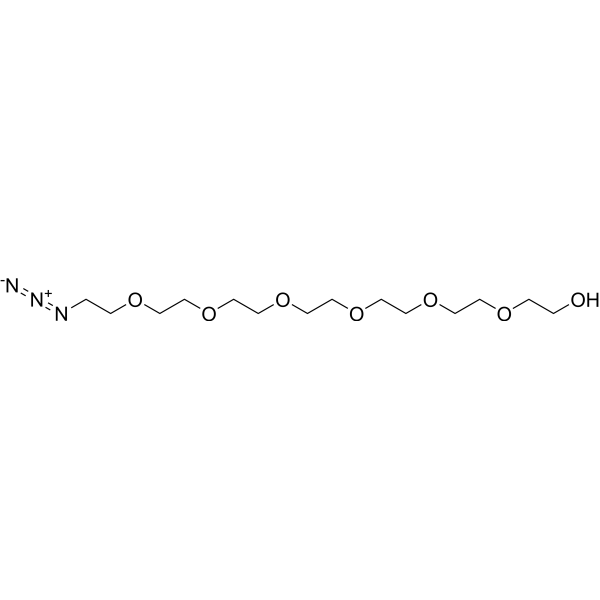
- HY-130424
-
|
|
PROTAC Linkers
|
Cancer
|
|
m-PEG10-azide a PEG-based PROTAC linker can be used in the synthesis of PROTACs. m-PEG10-azide is a click chemistry reagent, it contains an Azide group and can undergo copper-catalyzed azide-alkyne cycloaddition reaction (CuAAc) with molecules containing Alkyne groups. It can also undergo strain-promoted alkyne-azide cycloaddition (SPAAC) reactions with molecules containing DBCO or BCN groups.
|
-
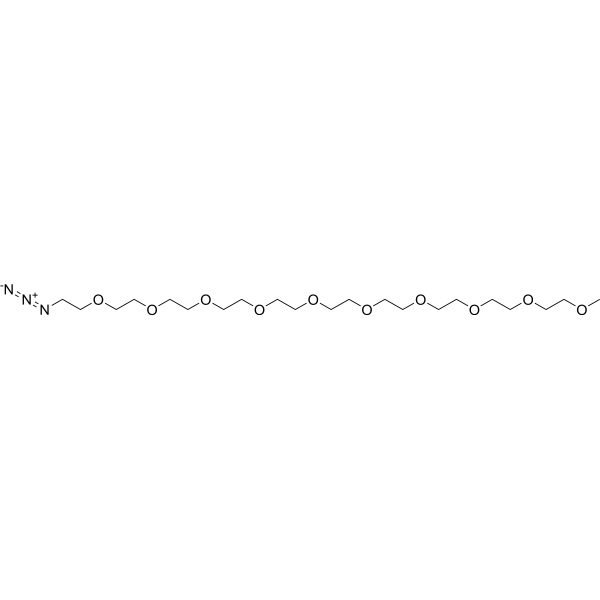
- HY-140617B
-
|
|
Biochemical Assay Reagents
|
Others
|
|
DNP-PEG12-azide is a PEG derivative that can be used for drug delivery and other research. DNP-PEG12-azide is a click chemistry reagent, it contains an Azide group and can undergo copper-catalyzed azide-alkyne cycloaddition reaction (CuAAc) with molecules containing Alkyne groups. It can also undergo strain-promoted alkyne-azide cycloaddition (SPAAC) reactions with molecules containing DBCO or BCN groups .
|
-

- HY-126957
-
|
|
PROTAC Linkers
|
Cancer
|
|
Biotin-PEG2-azide is a PEG-based PROTAC linker can be used in the synthesis of PROTACs. Biotin-PEG2-azide is a click chemistry reagent, it contains an Azide group and can undergo copper-catalyzed azide-alkyne cycloaddition reaction (CuAAc) with molecules containing Alkyne groups. It can also undergo strain-promoted alkyne-azide cycloaddition (SPAAC) reactions with molecules containing DBCO or BCN groups.
|
-
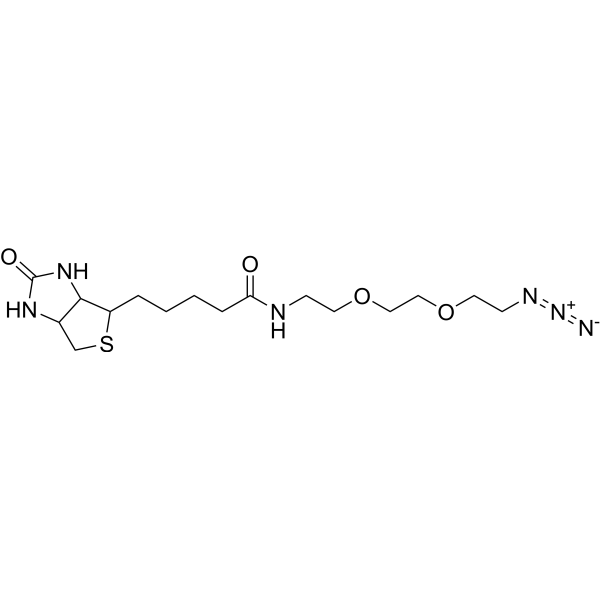
- HY-140663
-
|
|
PROTAC Linkers
|
Cancer
|
|
Azide-PEG5000-amine is a PEG-based PROTAC linker that can be used in the synthesis of PROTACs . Azide-PEG5000-amine is a click chemistry reagent, it contains an Azide group and can undergo copper-catalyzed azide-alkyne cycloaddition reaction (CuAAc) with molecules containing Alkyne groups. It can also undergo strain-promoted alkyne-azide cycloaddition (SPAAC) reactions with molecules containing DBCO or BCN groups.
|
-
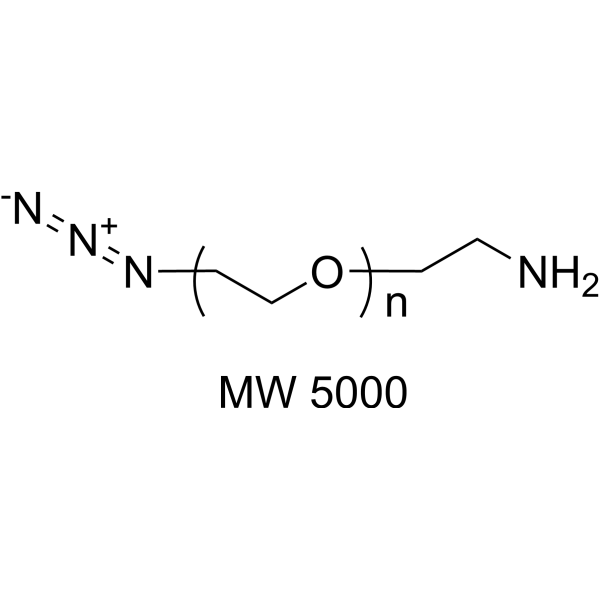
- HY-130507
-
|
|
PROTAC Linkers
|
Cancer
|
|
Aminooxy-PEG5-azide is a PEG-based PROTAC linker can be used in the synthesis of PROTACs . Aminooxy-PEG5-azide is a click chemistry reagent, it contains an Azide group and can undergo copper-catalyzed azide-alkyne cycloaddition reaction (CuAAc) with molecules containing Alkyne groups. It can also undergo strain-promoted alkyne-azide cycloaddition (SPAAC) reactions with molecules containing DBCO or BCN groups.
|
-
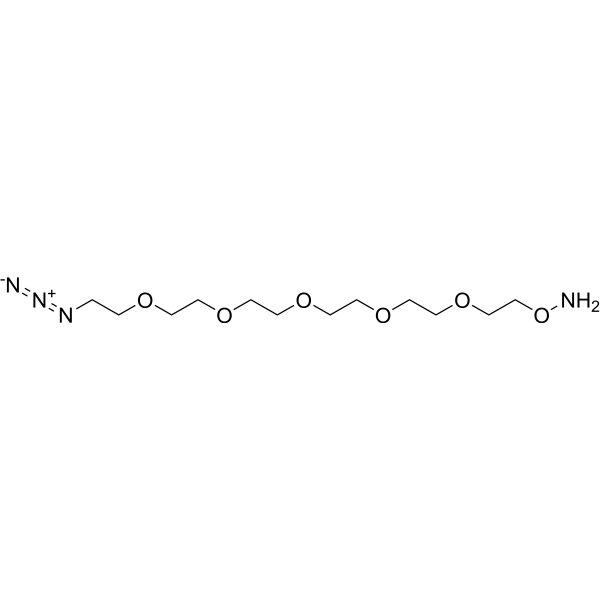
- HY-140685
-
|
|
PROTAC Linkers
|
Cancer
|
|
m-PEG20000-azide is a PEG-based PROTAC linker that can be used in the synthesis of PROTACs . m-PEG20000-azide is a click chemistry reagent, it contains an Azide group and can undergo copper-catalyzed azide-alkyne cycloaddition reaction (CuAAc) with molecules containing Alkyne groups. It can also undergo strain-promoted alkyne-azide cycloaddition (SPAAC) reactions with molecules containing DBCO or BCN groups.
|
-
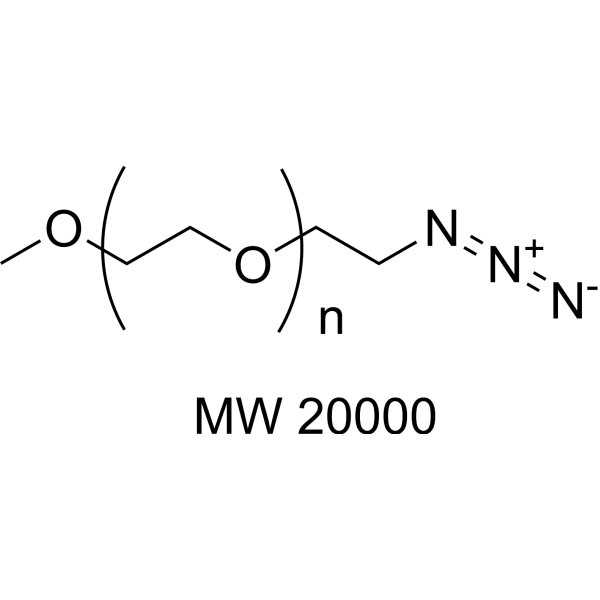
- HY-140617A
-
|
|
Biochemical Assay Reagents
|
Others
|
|
DNP-PEG2-azide is a PEG derivative that can be used for drug delivery and other research. DNP-PEG2-azide is a click chemistry reagent, it contains an Azide group and can undergo copper-catalyzed azide-alkyne cycloaddition reaction (CuAAc) with molecules containing Alkyne groups. It can also undergo strain-promoted alkyne-azide cycloaddition (SPAAC) reactions with molecules containing DBCO or BCN groups .
|
-

- HY-133174
-
|
|
PROTAC Linkers
|
Cancer
|
|
Biotin-PEG5-azide is a PEG-based PROTAC linker can be used in the synthesis of PROTAC. Biotin-PEG5-azide is a click chemistry reagent, it contains an Azide group and can undergo copper-catalyzed azide-alkyne cycloaddition reaction (CuAAc) with molecules containing Alkyne groups. It can also undergo strain-promoted alkyne-azide cycloaddition (SPAAC) reactions with molecules containing DBCO or BCN groups.
|
-
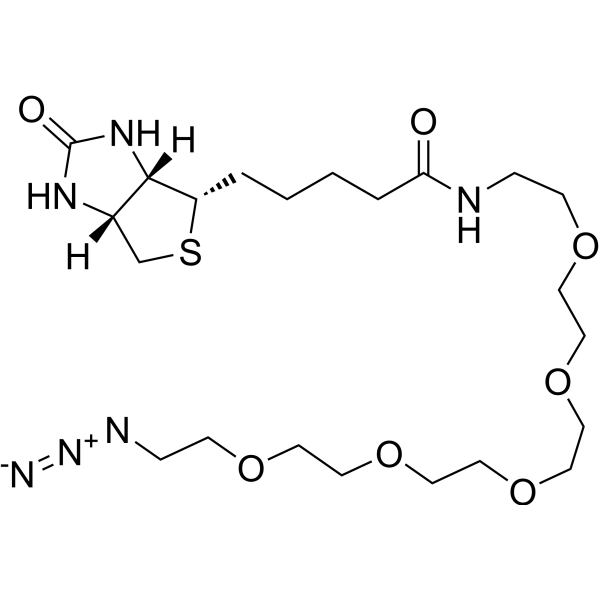
- HY-140954
-
|
|
PROTAC Linkers
|
Cancer
|
|
DSPE-PEG5-azide is a PEG-based PROTAC linker that can be used in the synthesis of PROTACs . DSPE-PEG5-azide is a click chemistry reagent, it contains an Azide group and can undergo copper-catalyzed azide-alkyne cycloaddition reaction (CuAAc) with molecules containing Alkyne groups. It can also undergo strain-promoted alkyne-azide cycloaddition (SPAAC) reactions with molecules containing DBCO or BCN groups.
|
-
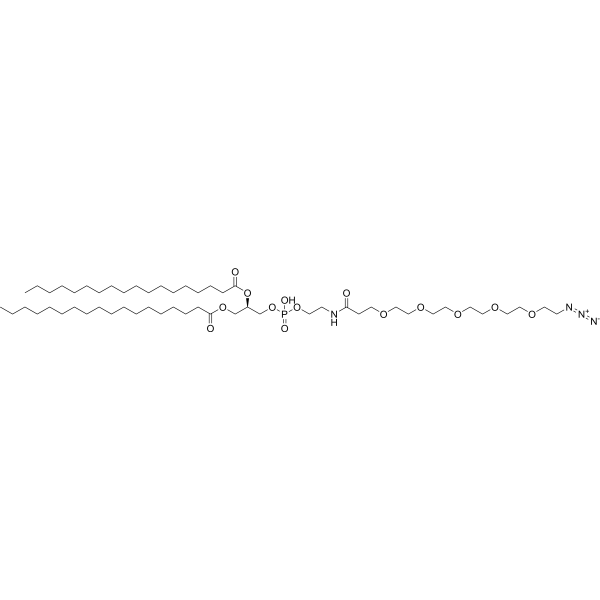
- HY-145715
-
|
|
E3 Ligase Ligand-Linker Conjugates
|
Cancer
|
|
Azido-PEG2-VHL is a multikinase degrader which can be used in the synthesis of PROTACs . Azido-PEG2-VHL is a click chemistry reagent, it contains an Azide group and can undergo copper-catalyzed azide-alkyne cycloaddition reaction (CuAAc) with molecules containing Alkyne groups. It can also undergo strain-promoted alkyne-azide cycloaddition (SPAAC) reactions with molecules containing DBCO or BCN groups.
|
-
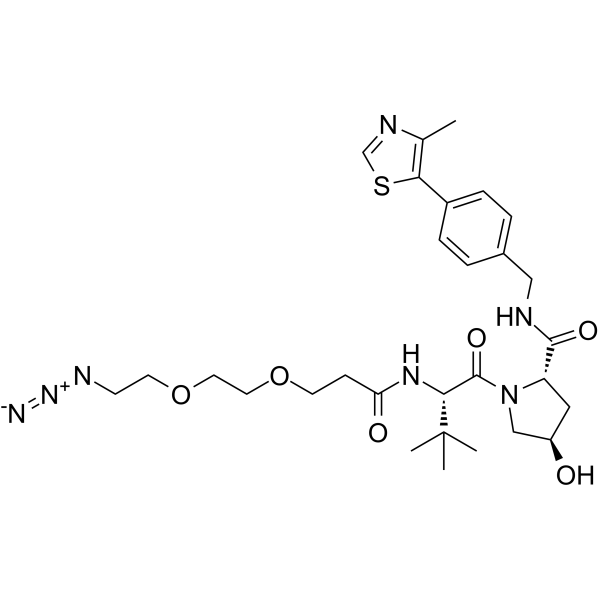
- HY-138738
-
|
|
PROTAC Linkers
|
Cancer
|
|
Propargyl-PEG5-azide is a PEG-based PROTAC linker that can be used in the synthesis of PROTACs . Propargyl-PEG5-azide is a click chemistry reagent, it contains an Azide group and can undergo copper-catalyzed azide-alkyne cycloaddition reaction (CuAAc) with molecules containing Alkyne groups. It can also undergo strain-promoted alkyne-azide cycloaddition (SPAAC) reactions with molecules containing DBCO or BCN groups.
|
-
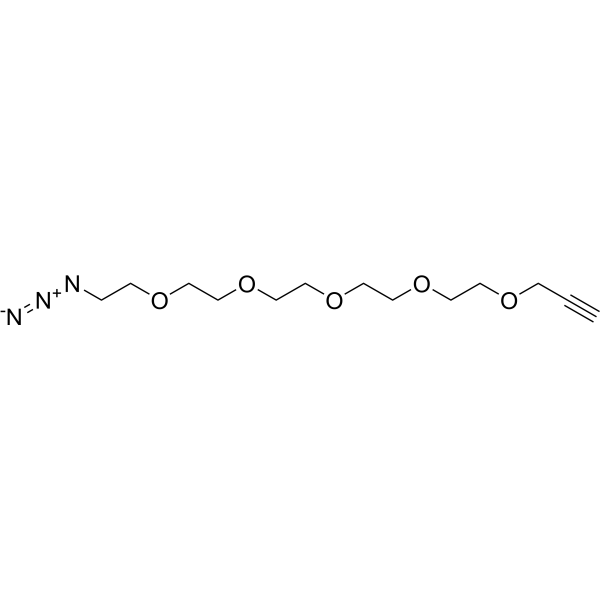
- HY-138325
-
|
|
PROTAC Linkers
|
Cancer
|
|
Azido-PEG6-THP is a PEG-based PROTAC linker that can be used in the synthesis of PROTACs . Azido-PEG6-THP is a click chemistry reagent, it contains an Azide group and can undergo copper-catalyzed azide-alkyne cycloaddition reaction (CuAAc) with molecules containing Alkyne groups. It can also undergo strain-promoted alkyne-azide cycloaddition (SPAAC) reactions with molecules containing DBCO or BCN groups.
|
-
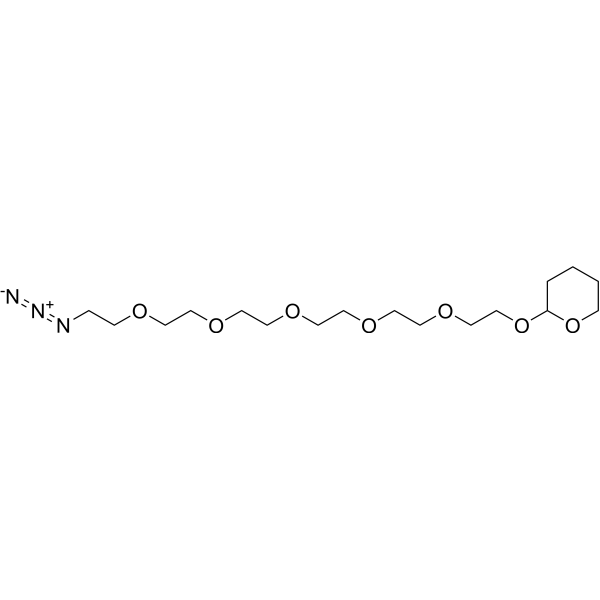
- HY-143964S
-
|
|
Drug Metabolite
Isotope-Labeled Compounds
|
Others
|
|
Irbesartan impurity 14-d4 is the deuterium labeled Irbesartan impurity 14 . Irbesartan impurity 14-d4 is a click chemistry reagent, it contains an Azide group and can undergo copper-catalyzed azide-alkyne cycloaddition reaction (CuAAc) with molecules containing Alkyne groups. It can also undergo strain-promoted alkyne-azide cycloaddition (SPAAC) reactions with molecules containing DBCO or BCN groups.
|
-
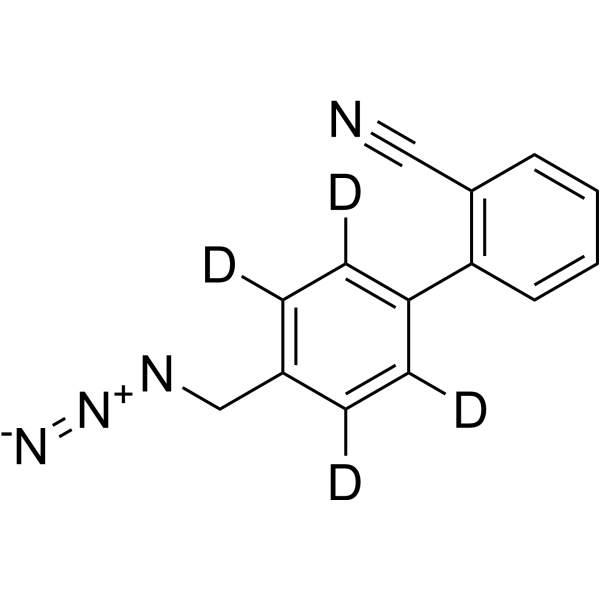
- HY-138525
-
|
|
PROTAC Linkers
|
Cancer
|
|
Azido-PEG4-Thiol is a PEG-based PROTAC linker that can be used in the synthesis of PROTACs . Azido-PEG4-Thiol is a click chemistry reagent, it contains an Azide group and can undergo copper-catalyzed azide-alkyne cycloaddition reaction (CuAAc) with molecules containing Alkyne groups. It can also undergo strain-promoted alkyne-azide cycloaddition (SPAAC) reactions with molecules containing DBCO or BCN groups.
|
-
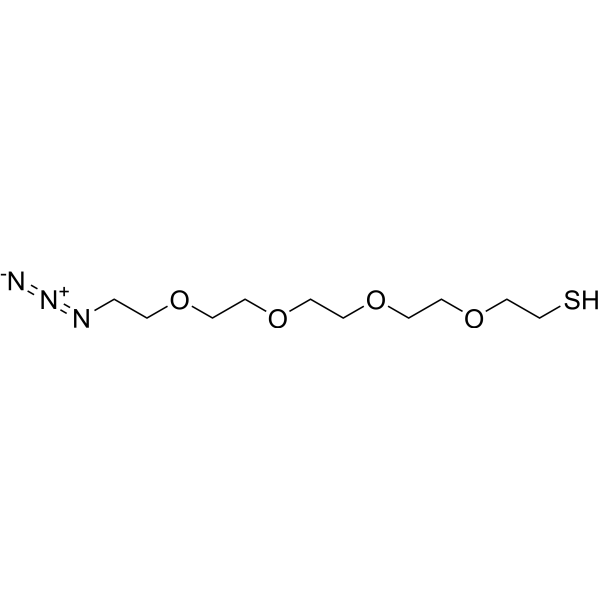
- HY-138437
-
|
|
PROTAC Linkers
|
Cancer
|
|
Azido-PEG8-TFP ester is a PEG-based PROTAC linker that can be used in the synthesis of PROTACs . Azido-PEG8-TFP ester is a click chemistry reagent, it contains an Azide group and can undergo copper-catalyzed azide-alkyne cycloaddition reaction (CuAAc) with molecules containing Alkyne groups. It can also undergo strain-promoted alkyne-azide cycloaddition (SPAAC) reactions with molecules containing DBCO or BCN groups.
|
-
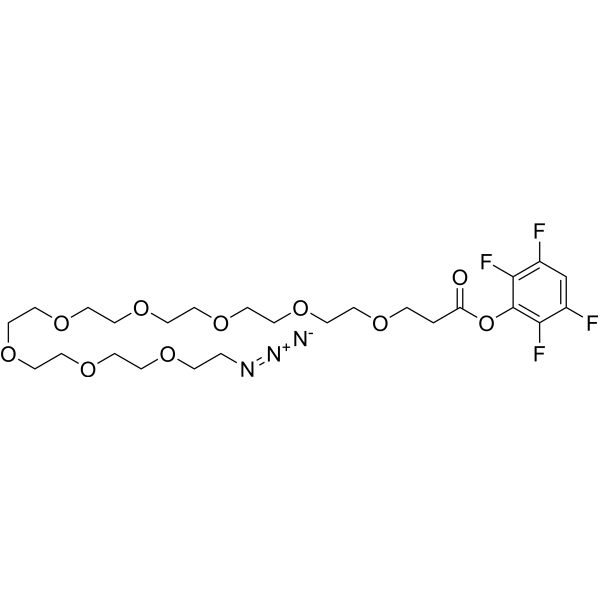
- HY-140806
-
|
|
PROTAC Linkers
|
Cancer
|
|
Azido-PEG24-alcohol is a PEG-based PROTAC linker that can be used in the synthesis of PROTACs . Azido-PEG24-alcohol is a click chemistry reagent, it contains an Azide group and can undergo copper-catalyzed azide-alkyne cycloaddition reaction (CuAAc) with molecules containing Alkyne groups. It can also undergo strain-promoted alkyne-azide cycloaddition (SPAAC) reactions with molecules containing DBCO or BCN groups.
|
-
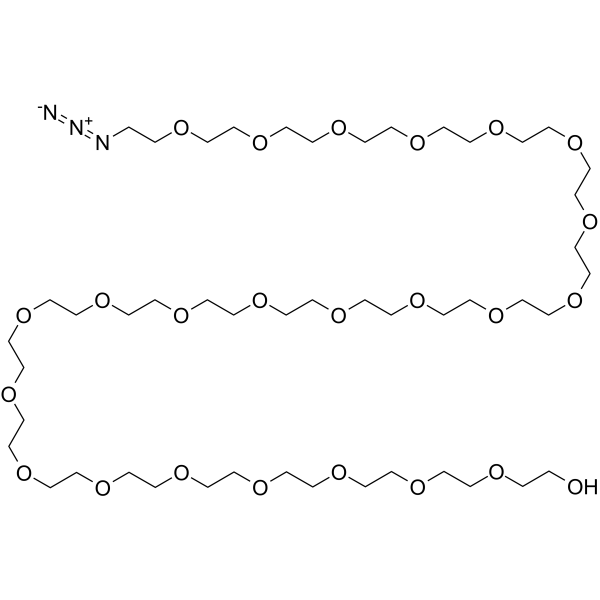
- HY-140807
-
|
|
PROTAC Linkers
|
Cancer
|
|
Azido-PEG36-alcohol is a PEG-based PROTAC linker that can be used in the synthesis of PROTACs . Azido-PEG36-alcohol is a click chemistry reagent, it contains an Azide group and can undergo copper-catalyzed azide-alkyne cycloaddition reaction (CuAAc) with molecules containing Alkyne groups. It can also undergo strain-promoted alkyne-azide cycloaddition (SPAAC) reactions with molecules containing DBCO or BCN groups.
|
-
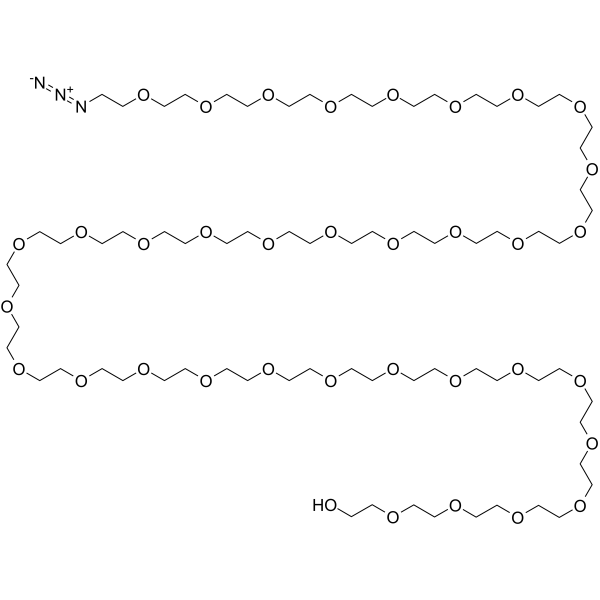
- HY-138708
-
|
|
PROTAC Linkers
|
Cancer
|
|
Azido-PEG8-NHBoc is a PEG-based PROTAC linker can be used in the synthesis of PROTACs. Azido-PEG8-NHBoc is a click chemistry reagent, it contains an Azide group and can undergo copper-catalyzed azide-alkyne cycloaddition reaction (CuAAc) with molecules containing Alkyne groups. It can also undergo strain-promoted alkyne-azide cycloaddition (SPAAC) reactions with molecules containing DBCO or BCN groups.
|
-
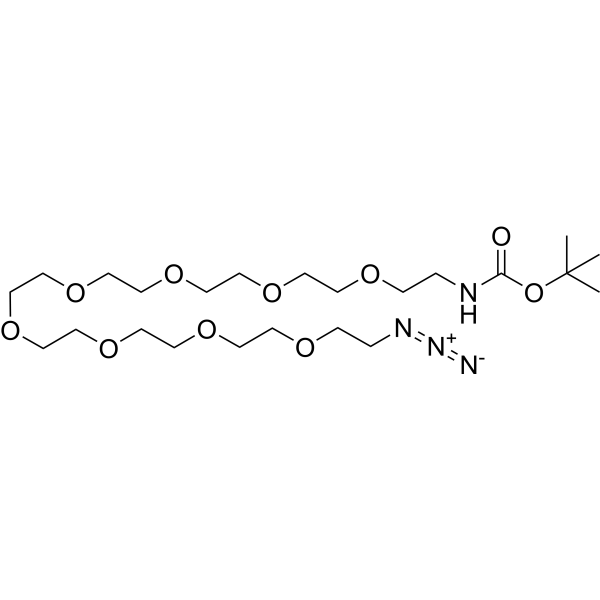
- HY-140661
-
|
|
PROTAC Linkers
|
Cancer
|
|
Azide-PEG2000-amine is a PEG-based PROTAC linker that can be used in the synthesis of PROTACs . Azide-PEG2000-amine is a click chemistry reagent, it contains an Azide group and can undergo copper-catalyzed azide-alkyne cycloaddition reaction (CuAAc) with molecules containing Alkyne groups. It can also undergo strain-promoted alkyne-azide cycloaddition (SPAAC) reactions with molecules containing DBCO or BCN groups.
|
-
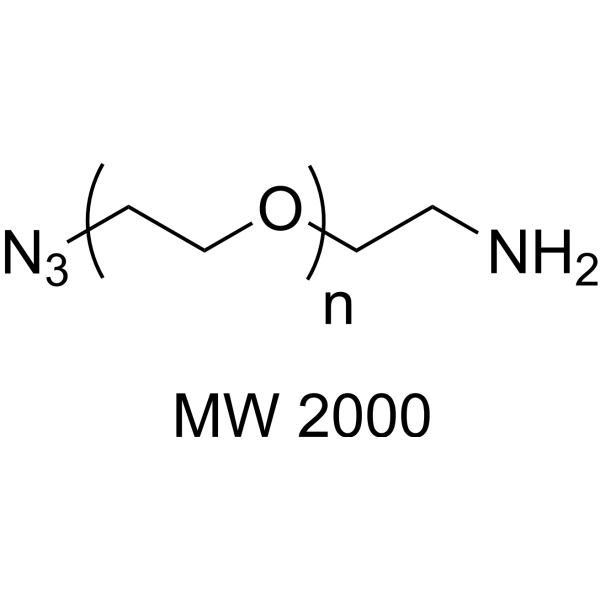
- HY-140863
-
|
|
PROTAC Linkers
|
Cancer
|
|
PC-PEG11-Azide is a PEG-based PROTAC linker that can be used in the synthesis of PROTACs . PC-PEG11-Azide is a click chemistry reagent, it contains an Azide group and can undergo copper-catalyzed azide-alkyne cycloaddition reaction (CuAAc) with molecules containing Alkyne groups. It can also undergo strain-promoted alkyne-azide cycloaddition (SPAAC) reactions with molecules containing DBCO or BCN groups.
|
-
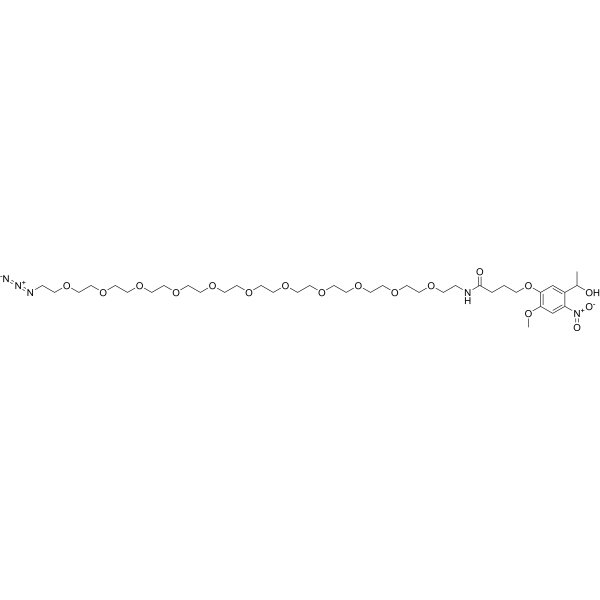
- HY-140822
-
|
|
PROTAC Linkers
|
Cancer
|
|
Bromo-PEG6-azide is a PEG-based PROTAC linker that can be used in the synthesis of PROTACs . Bromo-PEG5-azide is a click chemistry reagent, it contains an Azide group and can undergo copper-catalyzed azide-alkyne cycloaddition reaction (CuAAc) with molecules containing Alkyne groups. It can also undergo strain-promoted alkyne-azide cycloaddition (SPAAC) reactions with molecules containing DBCO or BCN groups.
|
-
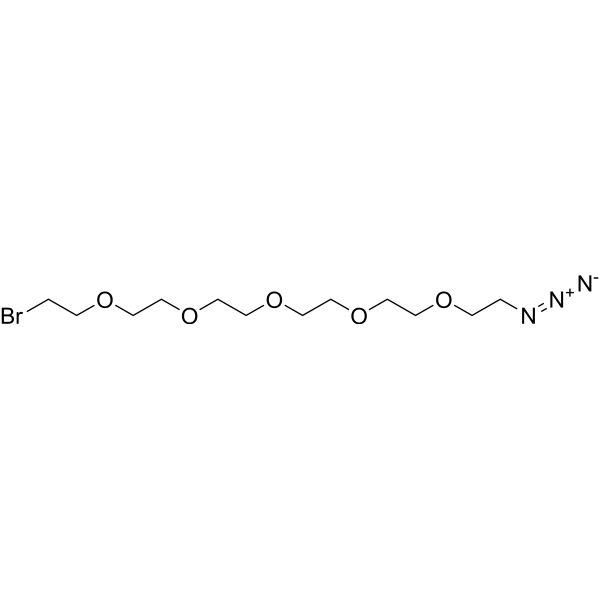
- HY-140782
-
|
|
PROTAC Linkers
|
Cancer
|
|
Azido-PEG12-Boc is a PEG-based PROTAC linker that can be used in the synthesis of PROTACs . Azido-PEG12-Boc is a click chemistry reagent, it contains an Azide group and can undergo copper-catalyzed azide-alkyne cycloaddition reaction (CuAAc) with molecules containing Alkyne groups. It can also undergo strain-promoted alkyne-azide cycloaddition (SPAAC) reactions with molecules containing DBCO or BCN groups.
|
-
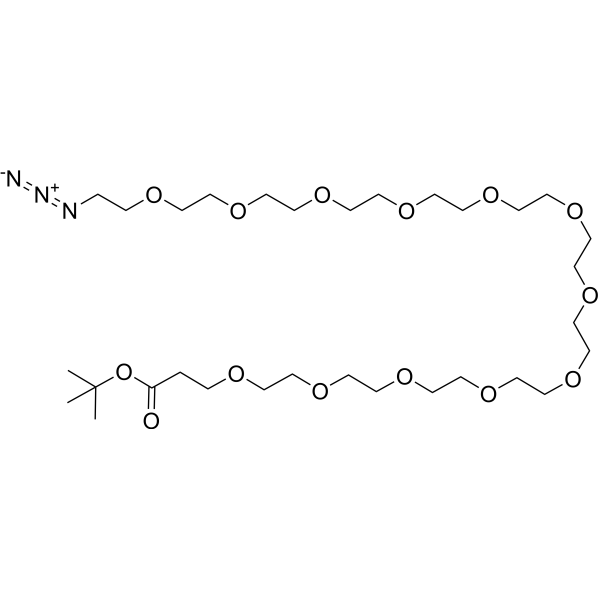
- HY-140832
-
|
|
PROTAC Linkers
|
Cancer
|
|
m-PEG24-azide is a PEG-based PROTAC linker that can be used in the synthesis of PROTACs . m-PEG24-azide is a click chemistry reagent, it contains an Azide group and can undergo copper-catalyzed azide-alkyne cycloaddition reaction (CuAAc) with molecules containing Alkyne groups. It can also undergo strain-promoted alkyne-azide cycloaddition (SPAAC) reactions with molecules containing DBCO or BCN groups.
|
-
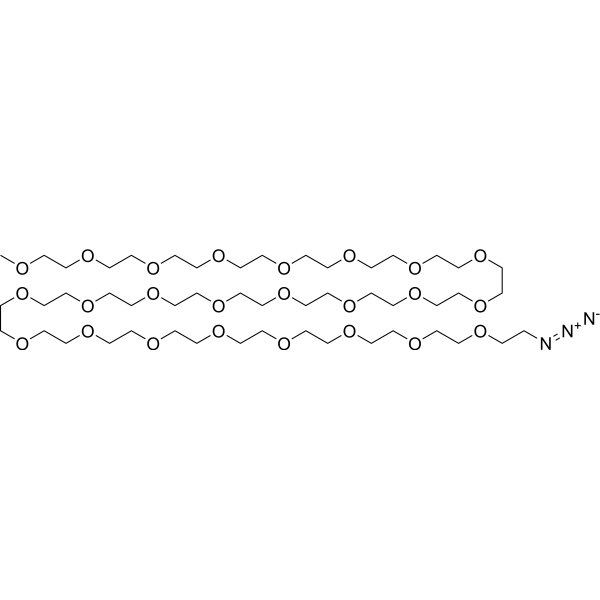
- HY-140829
-
|
|
PROTAC Linkers
|
Cancer
|
|
m-PEG11-azide is a PEG-based PROTAC linker that can be used in the synthesis of PROTACs . m-PEG11-azide is a click chemistry reagent, it contains an Azide group and can undergo copper-catalyzed azide-alkyne cycloaddition reaction (CuAAc) with molecules containing Alkyne groups. It can also undergo strain-promoted alkyne-azide cycloaddition (SPAAC) reactions with molecules containing DBCO or BCN groups.
|
-
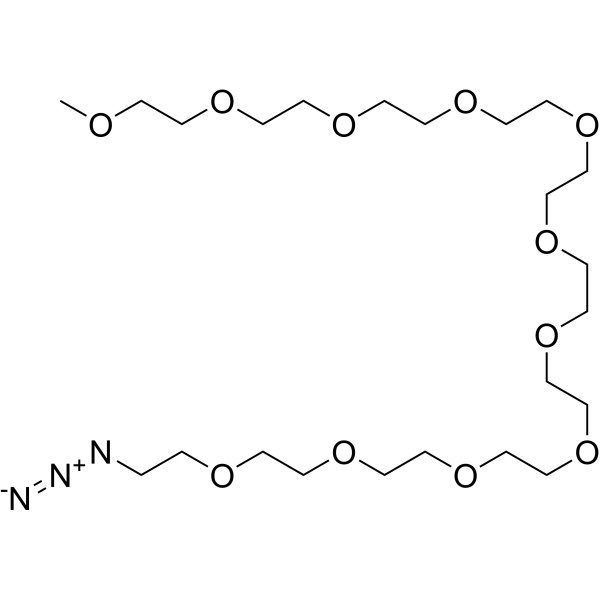
- HY-140381
-
|
|
PROTAC Linkers
|
Cancer
|
|
Azide-PEG2-Ms is a PEG-based PROTAC linker that can be used in the synthesis of PROTACs . Azide-PEG2-Ms is a click chemistry reagent, it contains an Azide group and can undergo copper-catalyzed azide-alkyne cycloaddition reaction (CuAAc) with molecules containing Alkyne groups. It can also undergo strain-promoted alkyne-azide cycloaddition (SPAAC) reactions with molecules containing DBCO or BCN groups.
|
-
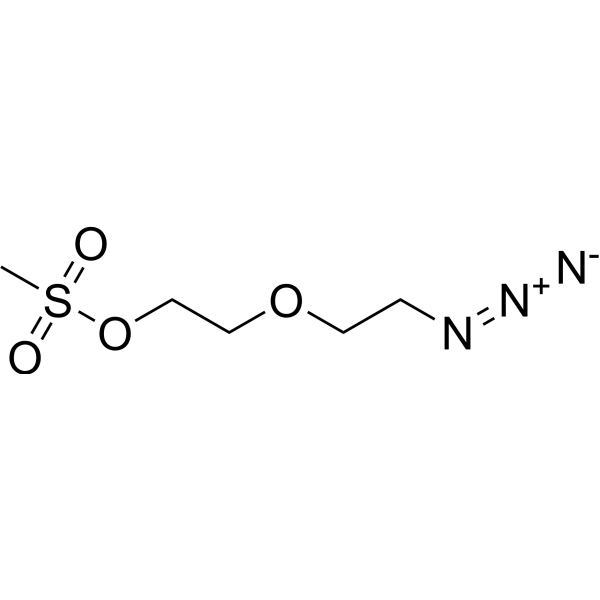
- HY-140777
-
|
|
PROTAC Linkers
|
Cancer
|
|
Azido-PEG4-Boc is a PEG-based PROTAC linker that can be used in the synthesis of PROTACs . Azido-PEG4-Boc is a click chemistry reagent, it contains an Azide group and can undergo copper-catalyzed azide-alkyne cycloaddition reaction (CuAAc) with molecules containing Alkyne groups. It can also undergo strain-promoted alkyne-azide cycloaddition (SPAAC) reactions with molecules containing DBCO or BCN groups.
|
-
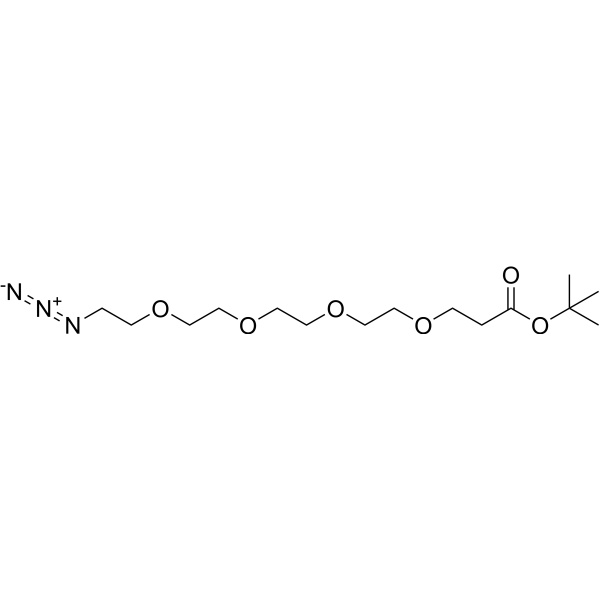
- HY-W096120
-
|
|
PROTAC Linkers
|
Cancer
|
|
Azide-PEG3-Desthiobiotin is a PEG-based PROTAC linker that can be used in the synthesis of PROTACs . Azide-PEG3-Desthiobiotin is a click chemistry reagent, it contains an Azide group and can undergo copper-catalyzed azide-alkyne cycloaddition reaction (CuAAc) with molecules containing Alkyne groups. It can also undergo strain-promoted alkyne-azide cycloaddition (SPAAC) reactions with molecules containing DBCO or BCN groups.
|
-
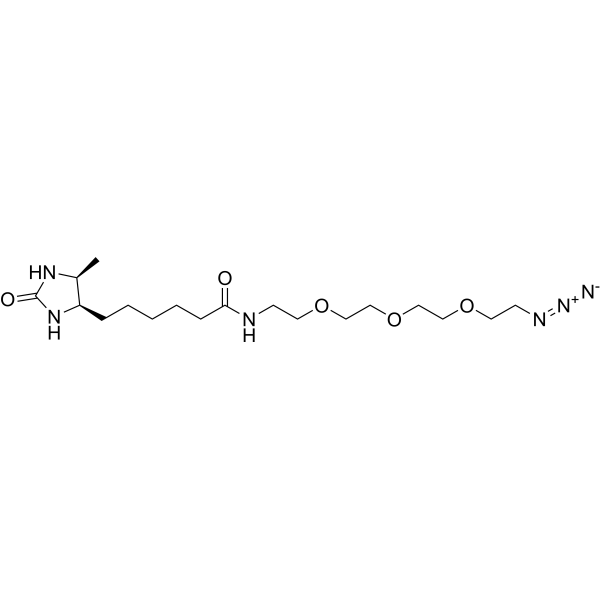
- HY-140617
-
|
|
PROTAC Linkers
|
Cancer
|
|
DNP-PEG3-azide is a PEG-based PROTAC linker that can be used in the synthesis of PROTACs . DNP-PEG3-azide is a click chemistry reagent, it contains an Azide group and can undergo copper-catalyzed azide-alkyne cycloaddition reaction (CuAAc) with molecules containing Alkyne groups. It can also undergo strain-promoted alkyne-azide cycloaddition (SPAAC) reactions with molecules containing DBCO or BCN groups.
|
-
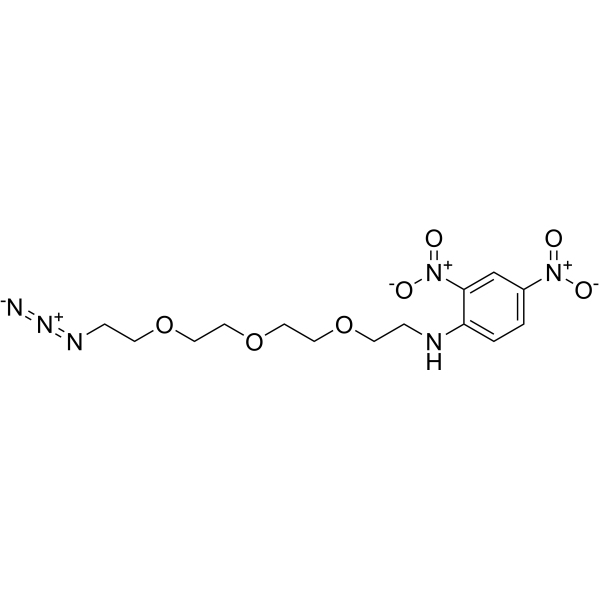
- HY-140799
-
|
|
PROTAC Linkers
|
Cancer
|
|
Azide-PEG8-alcohol is a PEG-based PROTAC linker that can be used in the synthesis of PROTACs . Azide-PEG8-alcohol is a click chemistry reagent, it contains an Azide group and can undergo copper-catalyzed azide-alkyne cycloaddition reaction (CuAAc) with molecules containing Alkyne groups. It can also undergo strain-promoted alkyne-azide cycloaddition (SPAAC) reactions with molecules containing DBCO or BCN groups.
|
-
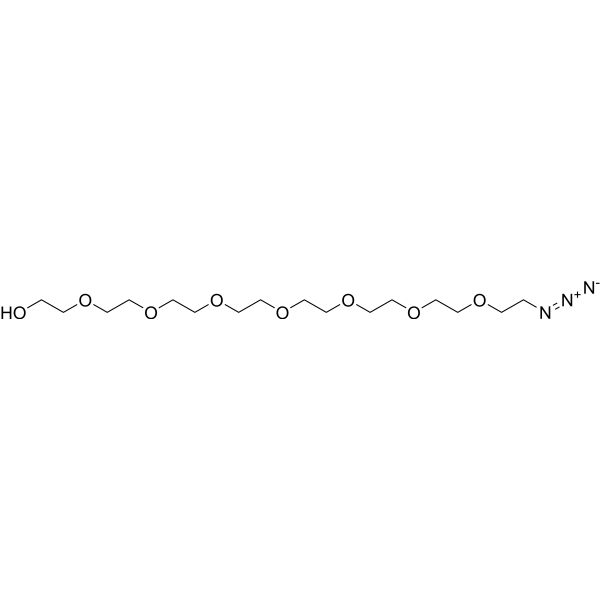
- HY-140826
-
|
|
PROTAC Linkers
|
Cancer
|
|
Bromoacetamido-PEG5-azide is a PEG-based PROTAC linker that can be used in the synthesis of PROTACs . Bromoacetamido-PEG5-azide is a click chemistry reagent, it contains an Azide group and can undergo copper-catalyzed azide-alkyne cycloaddition reaction (CuAAc) with molecules containing Alkyne groups. It can also undergo strain-promoted alkyne-azide cycloaddition (SPAAC) reactions with molecules containing DBCO or BCN groups.
|
-
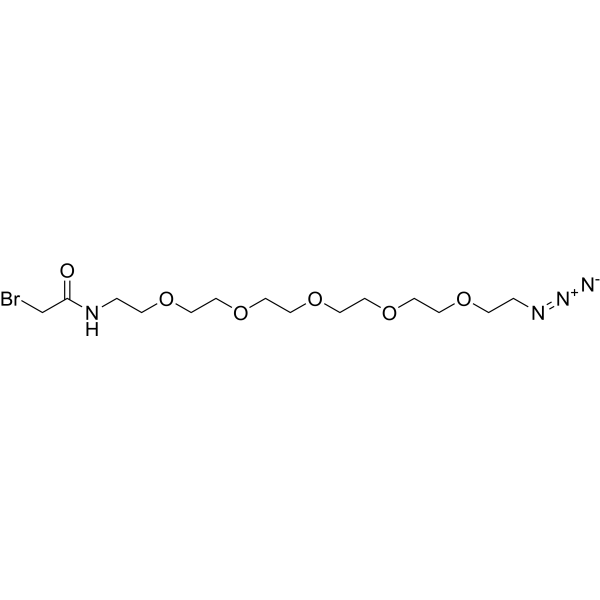
- HY-139262
-
FNC-TP
1 Publications Verification
|
Reverse Transcriptase
HIV
HBV
HCV
|
Infection
|
|
FNC-TP is the intracellular active form of FNC. FNC is a potent nucleoside reverse transcriptase inhibitor (NRTI), with antiviral activity on HIV, HBV and HCV . FNC-TP is a click chemistry reagent, it contains an Azide group and can undergo copper-catalyzed azide-alkyne cycloaddition reaction (CuAAc) with molecules containing Alkyne groups. It can also undergo strain-promoted alkyne-azide cycloaddition (SPAAC) reactions with molecules containing DBCO or BCN groups.
|
-
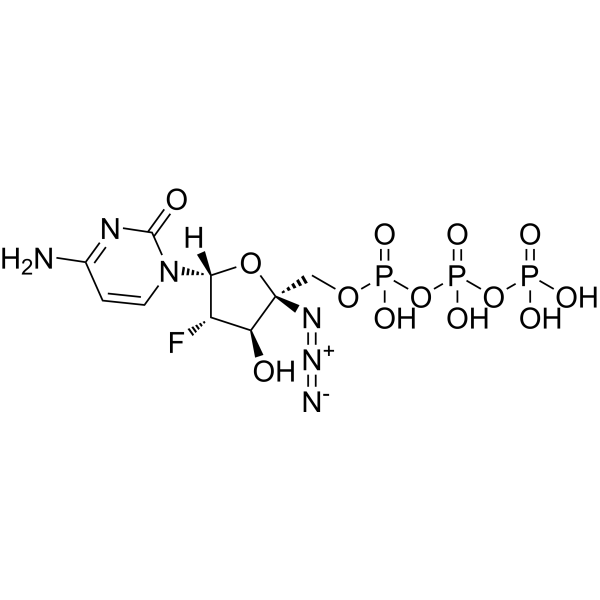
- HY-140666
-
|
|
PROTAC Linkers
|
Cancer
|
|
Azide-PEG10000-azide is a PEG-based PROTAC linker that can be used in the synthesis of PROTACs . Azide-PEG10000-azide is a click chemistry reagent, it contains an Azide group and can undergo copper-catalyzed azide-alkyne cycloaddition reaction (CuAAc) with molecules containing Alkyne groups. It can also undergo strain-promoted alkyne-azide cycloaddition (SPAAC) reactions with molecules containing DBCO or BCN groups.
|
-
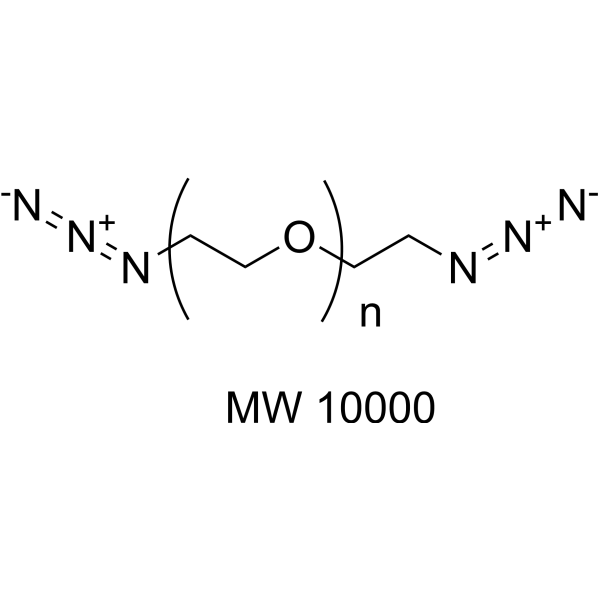
- HY-140765
-
|
|
PROTAC Linkers
|
Cancer
|
|
Azido-PEG4-NHS-ester is a PEG-based PROTAC linker that can be used in the synthesis of PROTACs . Azido-PEG4-NHS-ester is a click chemistry reagent, it contains an Azide group and can undergo copper-catalyzed azide-alkyne cycloaddition reaction (CuAAc) with molecules containing Alkyne groups. It can also undergo strain-promoted alkyne-azide cycloaddition (SPAAC) reactions with molecules containing DBCO or BCN groups.
|
-
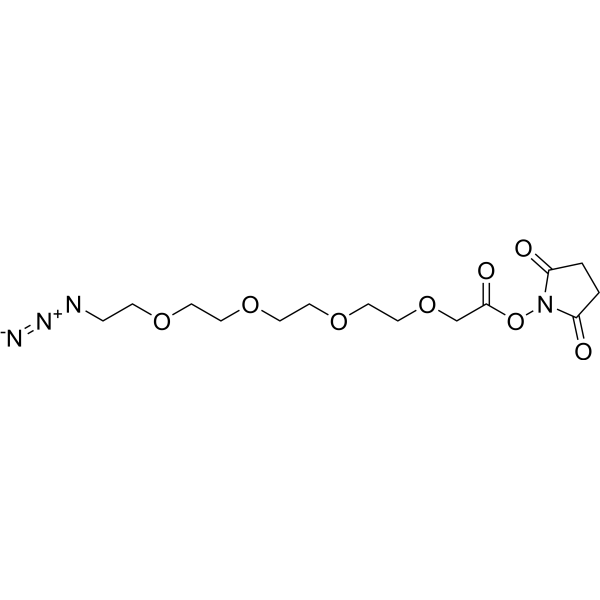
- HY-140744
-
|
|
PROTAC Linkers
|
Cancer
|
|
Benzyl-PEG5-azide is a PEG-based PROTAC linker that can be used in the synthesis of PROTACs . Benzyl-PEG5-azide is a click chemistry reagent, it contains an Azide group and can undergo copper-catalyzed azide-alkyne cycloaddition reaction (CuAAc) with molecules containing Alkyne groups. It can also undergo strain-promoted alkyne-azide cycloaddition (SPAAC) reactions with molecules containing DBCO or BCN groups.
|
-
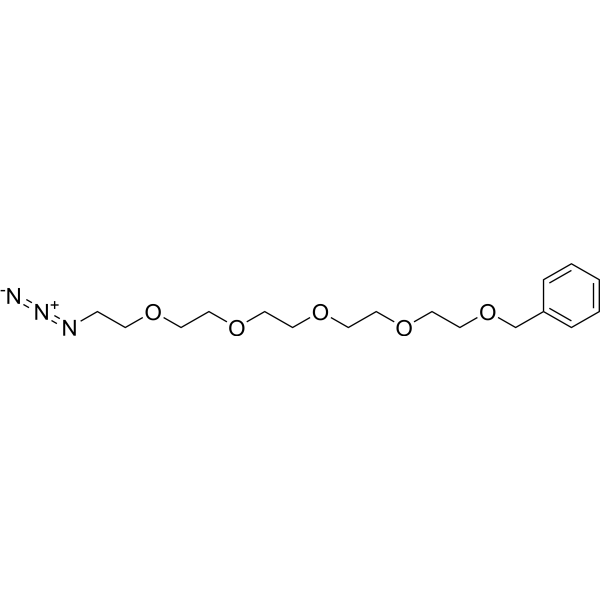
- HY-140833
-
|
|
PROTAC Linkers
|
Cancer
|
|
m-PEG36-azide is a PEG-based PROTAC linker that can be used in the synthesis of PROTACs . m-PEG36-azide is a click chemistry reagent, it contains an Azide group and can undergo copper-catalyzed azide-alkyne cycloaddition reaction (CuAAc) with molecules containing Alkyne groups. It can also undergo strain-promoted alkyne-azide cycloaddition (SPAAC) reactions with molecules containing DBCO or BCN groups.
|
-
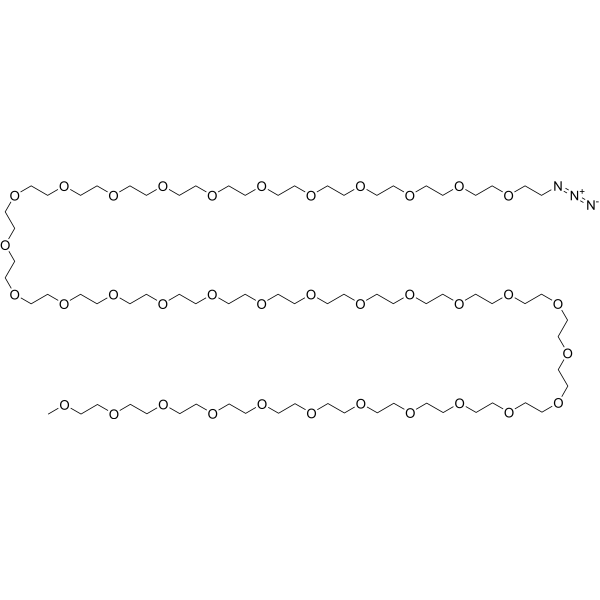
- HY-140771
-
|
|
PROTAC Linkers
|
Cancer
|
|
Azido-PEG1-PFP ester is a PEG-based PROTAC linker that can be used in the synthesis of PROTACs . Azido-PEG1-PFP ester is a click chemistry reagent, it contains an Azide group and can undergo copper-catalyzed azide-alkyne cycloaddition reaction (CuAAc) with molecules containing Alkyne groups. It can also undergo strain-promoted alkyne-azide cycloaddition (SPAAC) reactions with molecules containing DBCO or BCN groups.
|
-
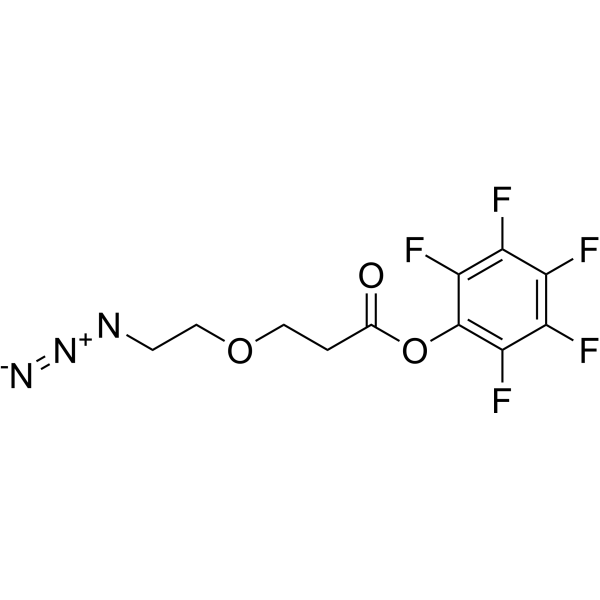
- HY-22340
-
|
|
PROTAC Linkers
|
Cancer
|
|
Azido-PEG4-alcohol is a PEG-based PROTAC linker can be used in the synthesis of PROTACs . Azido-PEG4-alcohol is a click chemistry reagent, it contains an Azide group and can undergo copper-catalyzed azide-alkyne cycloaddition reaction (CuAAc) with molecules containing Alkyne groups. It can also undergo strain-promoted alkyne-azide cycloaddition (SPAAC) reactions with molecules containing DBCO or BCN groups.
|
-
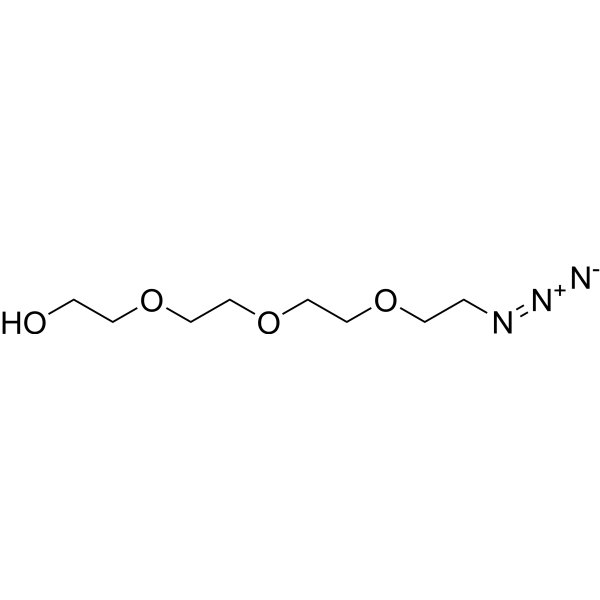
- HY-140860
-
|
|
PROTAC Linkers
|
Cancer
|
|
Trityl-PEG8-azide is a PEG-based PROTAC linker that can be used in the synthesis of PROTACs . Trityl-PEG8-azide is a click chemistry reagent, it contains an Azide group and can undergo copper-catalyzed azide-alkyne cycloaddition reaction (CuAAc) with molecules containing Alkyne groups. It can also undergo strain-promoted alkyne-azide cycloaddition (SPAAC) reactions with molecules containing DBCO or BCN groups.
|
-
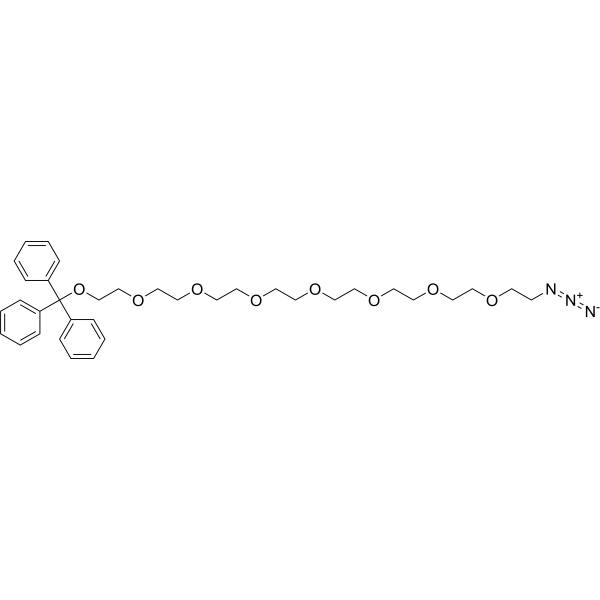
- HY-140764
-
|
|
PROTAC Linkers
|
Cancer
|
|
Azido-PEG3-NHS ester is a PEG-based PROTAC linker that can be used in the synthesis of PROTACs . Azido-PEG3-NHS ester is a click chemistry reagent, it contains an Azide group and can undergo copper-catalyzed azide-alkyne cycloaddition reaction (CuAAc) with molecules containing Alkyne groups. It can also undergo strain-promoted alkyne-azide cycloaddition (SPAAC) reactions with molecules containing DBCO or BCN groups.
|
-
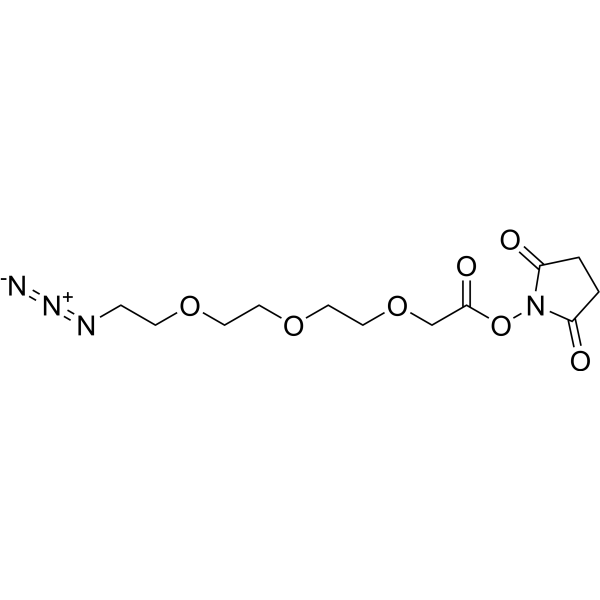
- HY-140912
-
|
|
PROTAC Linkers
|
Cancer
|
|
Biotin-PEG11-azide is a PEG-based PROTAC linker that can be used in the synthesis of PROTACs . Biotin-PEG11-azide is a click chemistry reagent, it contains an Azide group and can undergo copper-catalyzed azide-alkyne cycloaddition reaction (CuAAc) with molecules containing Alkyne groups. It can also undergo strain-promoted alkyne-azide cycloaddition (SPAAC) reactions with molecules containing DBCO or BCN groups.
|
-
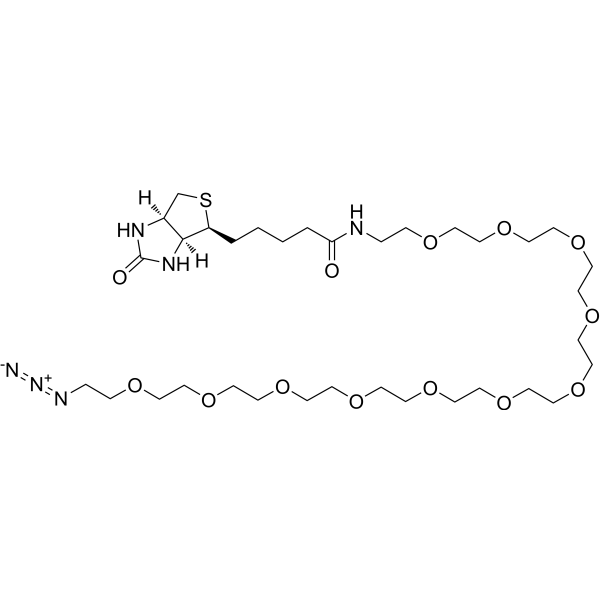
- HY-W096070
-
|
|
PROTAC Linkers
|
Cancer
|
|
Benzyl-PEG6-azide is a PEG-based PROTAC linker that can be used in the synthesis of PROTACs . Benzyl-PEG6-azide is a click chemistry reagent, it contains an Azide group and can undergo copper-catalyzed azide-alkyne cycloaddition reaction (CuAAc) with molecules containing Alkyne groups. It can also undergo strain-promoted alkyne-azide cycloaddition (SPAAC) reactions with molecules containing DBCO or BCN groups.
|
-
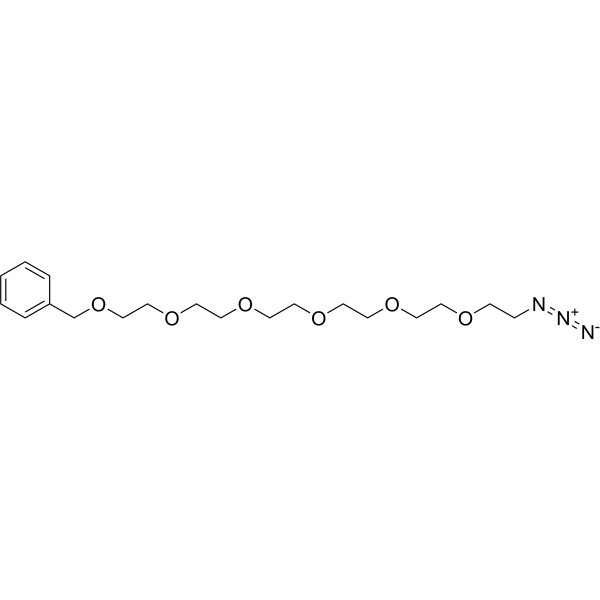
- HY-138457
-
|
|
PROTAC Linkers
|
Cancer
|
|
Azido-PEG20-Boc is a PEG-based PROTAC linker that can be used in the synthesis of PROTACs . Azido-PEG20-Boc is a click chemistry reagent, it contains an Azide group and can undergo copper-catalyzed azide-alkyne cycloaddition reaction (CuAAc) with molecules containing Alkyne groups. It can also undergo strain-promoted alkyne-azide cycloaddition (SPAAC) reactions with molecules containing DBCO or BCN groups.
|
-
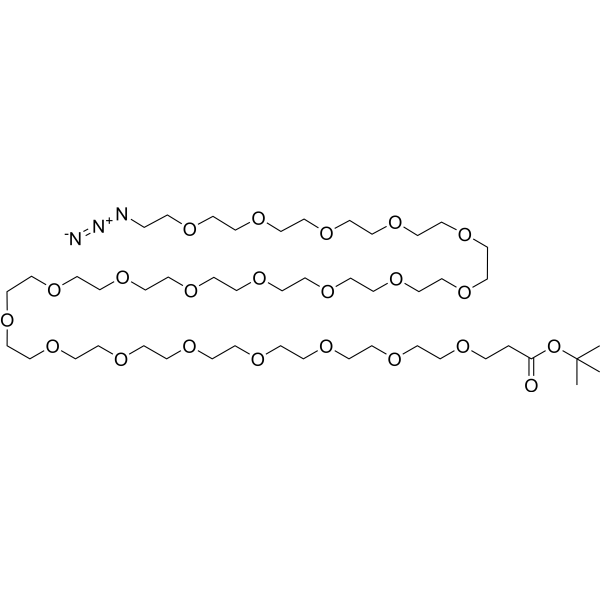
- HY-140773
-
|
|
PROTAC Linkers
|
Cancer
|
|
Azido-PEG8-PFP ester is a PEG-based PROTAC linker that can be used in the synthesis of PROTACs . Azido-PEG8-PFP ester is a click chemistry reagent, it contains an Azide group and can undergo copper-catalyzed azide-alkyne cycloaddition reaction (CuAAc) with molecules containing Alkyne groups. It can also undergo strain-promoted alkyne-azide cycloaddition (SPAAC) reactions with molecules containing DBCO or BCN groups.
|
-
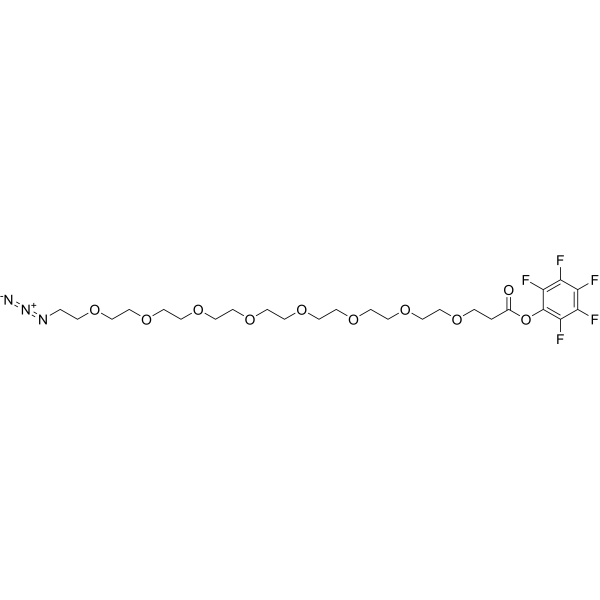
- HY-140785
-
|
|
PROTAC Linkers
|
Cancer
|
|
Azido-PEG36-Boc is a PEG-based PROTAC linker that can be used in the synthesis of PROTACs . Azido-PEG36-Boc is a click chemistry reagent, it contains an Azide group and can undergo copper-catalyzed azide-alkyne cycloaddition reaction (CuAAc) with molecules containing Alkyne groups. It can also undergo strain-promoted alkyne-azide cycloaddition (SPAAC) reactions with molecules containing DBCO or BCN groups.
|
-
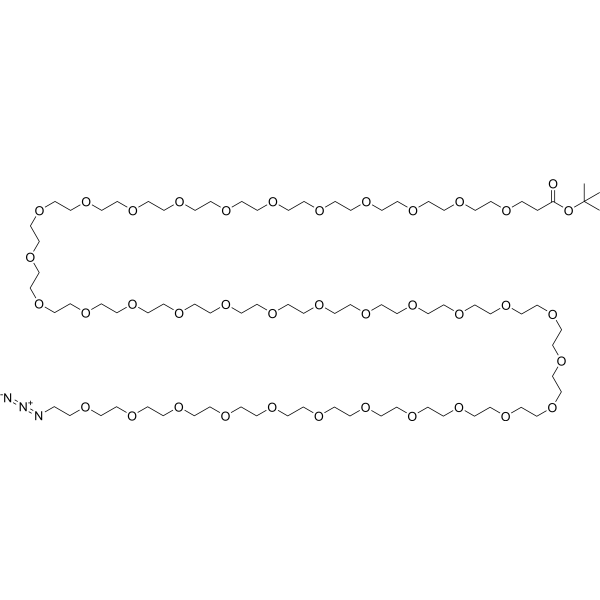
- HY-132010
-
|
|
PROTAC Linkers
|
Cancer
|
|
Benzyl-PEG8-azide is a PEG-based PROTAC linker that can be used in the synthesis of PROTACs . Benzyl-PEG8-azide is a click chemistry reagent, it contains an Azide group and can undergo copper-catalyzed azide-alkyne cycloaddition reaction (CuAAc) with molecules containing Alkyne groups. It can also undergo strain-promoted alkyne-azide cycloaddition (SPAAC) reactions with molecules containing DBCO or BCN groups.
|
-
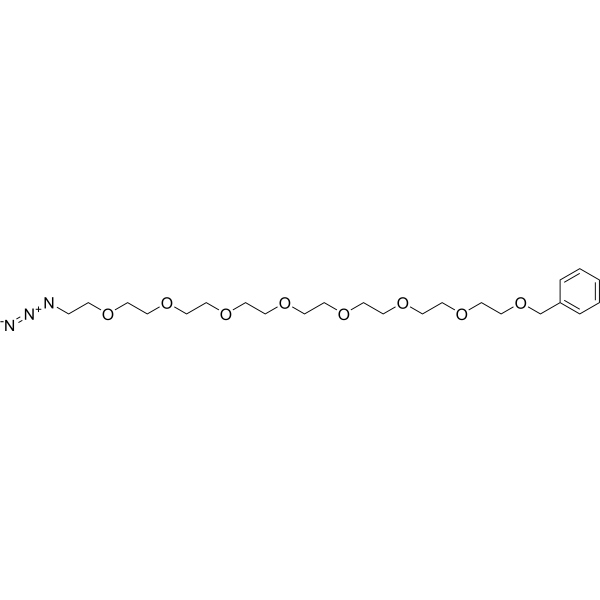
- HY-W048205
-
|
|
Amino Acid Derivatives
|
Others
|
|
N6-Diazo-L-Fmoc-lysine is an active compand and can be used in a variety of chemical studies. N6-Diazo-L-Fmoc-lysine is a click chemistry reagent, it contains an Azide group and can undergo copper-catalyzed azide-alkyne cycloaddition reaction (CuAAc) with molecules containing Alkyne groups. It can also undergo strain-promoted alkyne-azide cycloaddition (SPAAC) reactions with molecules containing DBCO or BCN groups.
|
-
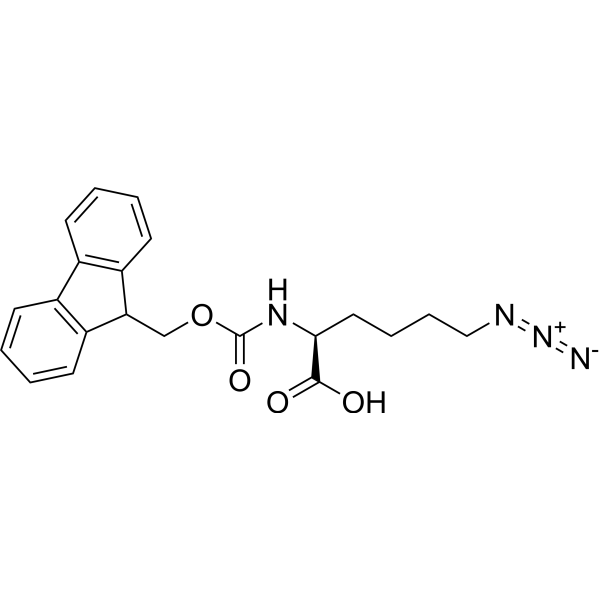
- HY-140831
-
|
|
PROTAC Linkers
|
Cancer
|
|
m-PEG16-azide is a PEG-based PROTAC linker that can be used in the synthesis of PROTACs . m-PEG16-azide is a click chemistry reagent, it contains an Azide group and can undergo copper-catalyzed azide-alkyne cycloaddition reaction (CuAAc) with molecules containing Alkyne groups. It can also undergo strain-promoted alkyne-azide cycloaddition (SPAAC) reactions with molecules containing DBCO or BCN groups.
|
-
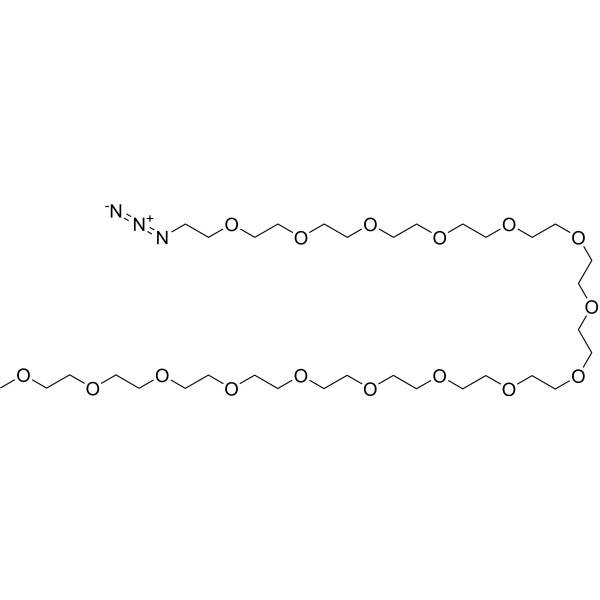
- HY-140759
-
|
|
PROTAC Linkers
|
Cancer
|
|
Azido-PEG10-NHS ester is a PEG-based PROTAC linker that can be used in the synthesis of PROTACs . Azido-PEG10-NHS ester is a click chemistry reagent, it contains an Azide group and can undergo copper-catalyzed azide-alkyne cycloaddition reaction (CuAAc) with molecules containing Alkyne groups. It can also undergo strain-promoted alkyne-azide cycloaddition (SPAAC) reactions with molecules containing DBCO or BCN groups.
|
-
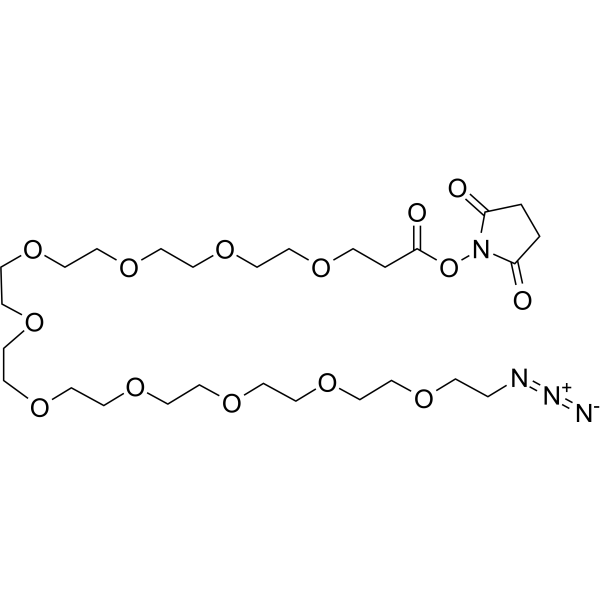
- HY-140212
-
|
|
PROTAC Linkers
|
Cancer
|
|
Azido-PEG1-amine is a PEG-based PROTAC linker that can be used in the synthesis of PROTACs . Azido-PEG1-amine is a click chemistry reagent, it contains an Azide group and can undergo copper-catalyzed azide-alkyne cycloaddition reaction (CuAAc) with molecules containing Alkyne groups. It can also undergo strain-promoted alkyne-azide cycloaddition (SPAAC) reactions with molecules containing DBCO or BCN groups.
|
-
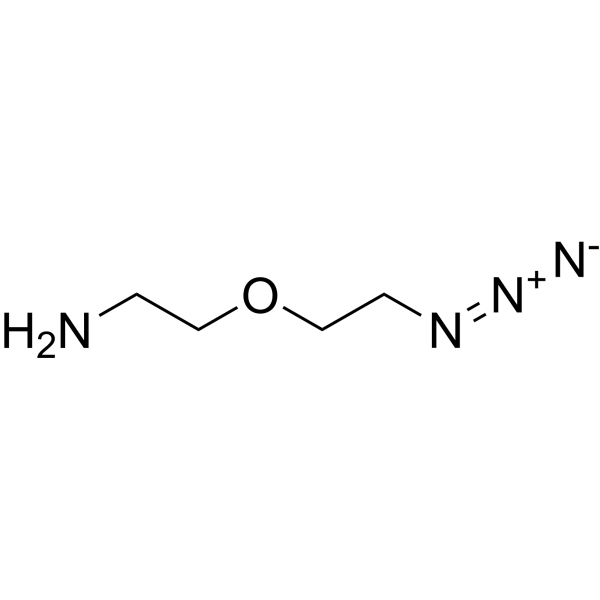
- HY-138343
-
|
|
PROTAC Linkers
|
Cancer
|
|
Azido-PEG3-MS is a PEG-based PROTAC linker that can be used in the synthesis of PROTACs . Azido-PEG3-MS is a click chemistry reagent, it contains an Azide group and can undergo copper-catalyzed azide-alkyne cycloaddition reaction (CuAAc) with molecules containing Alkyne groups. It can also undergo strain-promoted alkyne-azide cycloaddition (SPAAC) reactions with molecules containing DBCO or BCN groups.
|
-
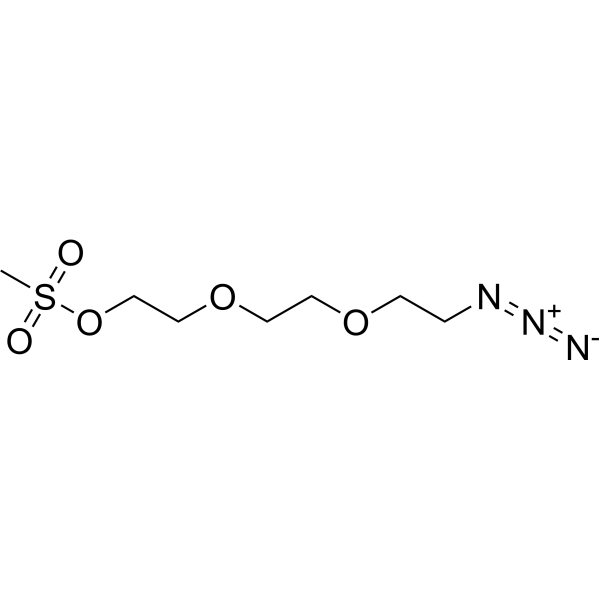
- HY-138769
-
|
|
PROTAC Linkers
|
Cancer
|
|
Azido-PEG12-alcohol is a PEG-based PROTAC linker that can be used in the synthesis of PROTACs . Azido-PEG12-alcohol is a click chemistry reagent, it contains an Azide group and can undergo copper-catalyzed azide-alkyne cycloaddition reaction (CuAAc) with molecules containing Alkyne groups. It can also undergo strain-promoted alkyne-azide cycloaddition (SPAAC) reactions with molecules containing DBCO or BCN groups.
|
-
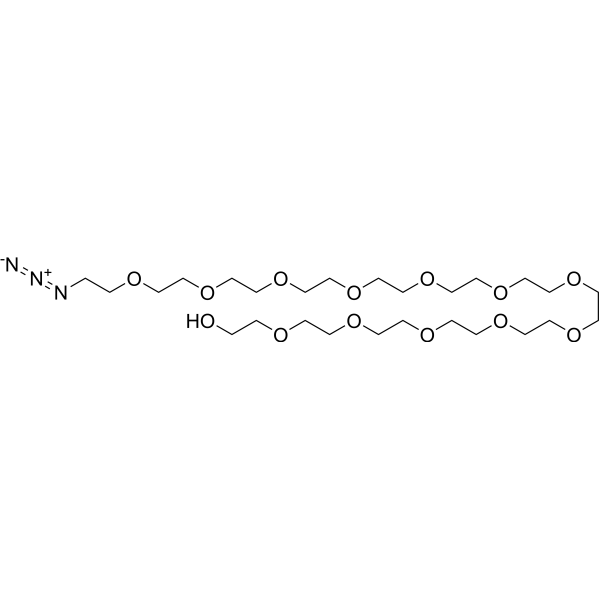
- HY-130168
-
|
|
PROTAC Linkers
|
Cancer
|
|
m-PEG5-azide is a PEG-based PROTAC linker can be used in the synthesis of PROTACs. m-PEG5-azide is a click chemistry reagent, it contains an Azide group and can undergo copper-catalyzed azide-alkyne cycloaddition reaction (CuAAc) with molecules containing Alkyne groups. It can also undergo strain-promoted alkyne-azide cycloaddition (SPAAC) reactions with molecules containing DBCO or BCN groups.
|
-
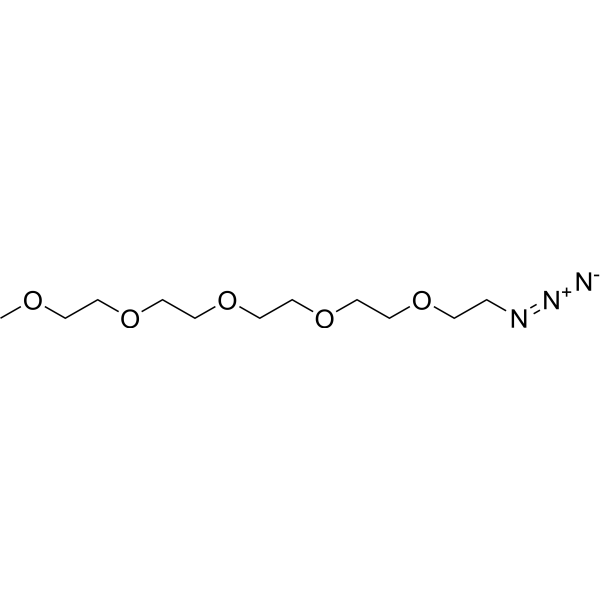
- HY-133392
-
|
|
PROTAC Linkers
|
Cancer
|
|
Azido-PEG5-azide is a PEG-based PROTAC linker that can be used in the synthesis of PROTACs . Azido-PEG5-azide is a click chemistry reagent, it contains an Azide group and can undergo copper-catalyzed azide-alkyne cycloaddition reaction (CuAAc) with molecules containing Alkyne groups. It can also undergo strain-promoted alkyne-azide cycloaddition (SPAAC) reactions with molecules containing DBCO or BCN groups.
|
-
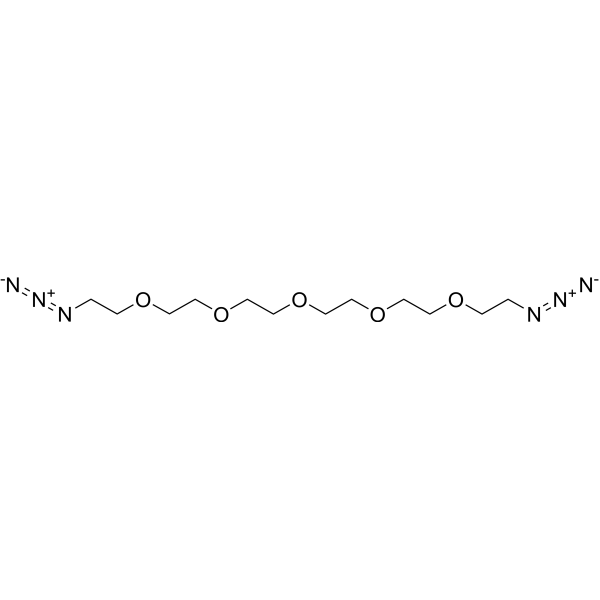
- HY-140760
-
|
|
PROTAC Linkers
|
Cancer
|
|
Azido-PEG12-NHS ester is a PEG-based PROTAC linker that can be used in the synthesis of PROTACs . Azido-PEG12-NHS ester is a click chemistry reagent, it contains an Azide group and can undergo copper-catalyzed azide-alkyne cycloaddition reaction (CuAAc) with molecules containing Alkyne groups. It can also undergo strain-promoted alkyne-azide cycloaddition (SPAAC) reactions with molecules containing DBCO or BCN groups.
|
-
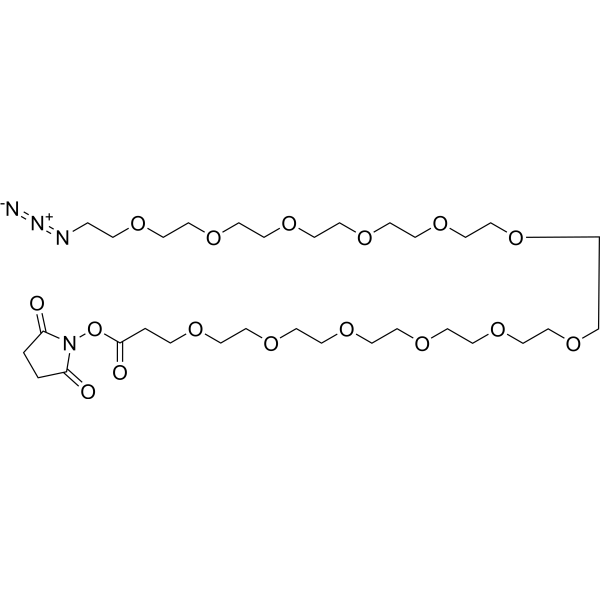
- HY-130197
-
|
|
PROTAC Linkers
|
Cancer
|
|
Lipoamido-PEG4-azide is a PEG-based PROTAC linker can be used in the synthesis of PROTACs. Lipoamido-PEG4-azide is a click chemistry reagent, it contains an Azide group and can undergo copper-catalyzed azide-alkyne cycloaddition reaction (CuAAc) with molecules containing Alkyne groups. It can also undergo strain-promoted alkyne-azide cycloaddition (SPAAC) reactions with molecules containing DBCO or BCN groups.
|
-
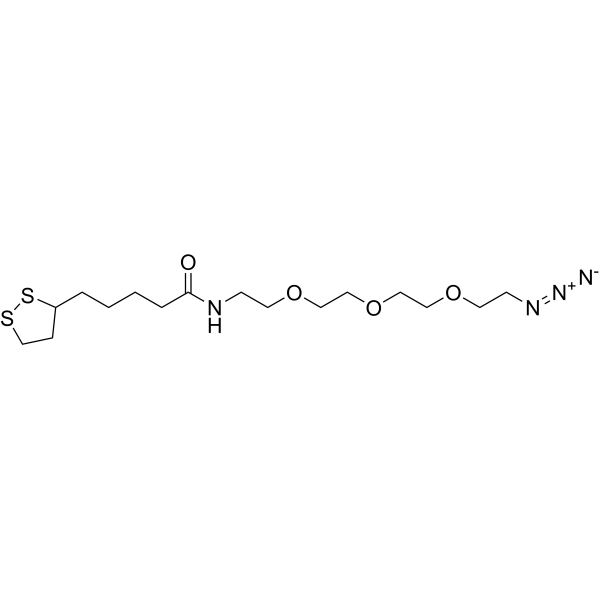
- HY-134687
-
|
|
PROTAC Linkers
|
Cancer
|
|
Iodoacetamide-PEG5-azide is a PEG-based PROTAC linker that can be used in the synthesis of PROTACs . Iodoacetamide-PEG5-azide is a click chemistry reagent, it contains an Azide group and can undergo copper-catalyzed azide-alkyne cycloaddition reaction (CuAAc) with molecules containing Alkyne groups. It can also undergo strain-promoted alkyne-azide cycloaddition (SPAAC) reactions with molecules containing DBCO or BCN groups.
|
-
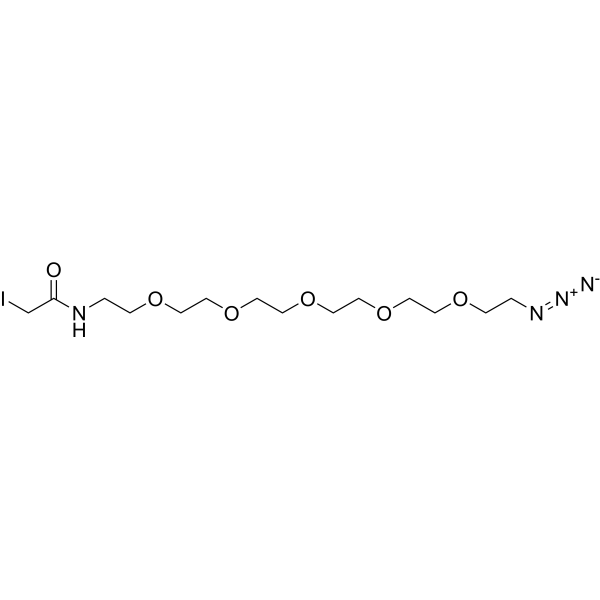
- HY-140820
-
|
|
PROTAC Linkers
|
Cancer
|
|
Bromo-PEG4-azide is a PEG-based PROTAC linker that can be used in the synthesis of PROTACs . Bromo-PEG3-azide is a click chemistry reagent, it contains an Azide group and can undergo copper-catalyzed azide-alkyne cycloaddition reaction (CuAAc) with molecules containing Alkyne groups. It can also undergo strain-promoted alkyne-azide cycloaddition (SPAAC) reactions with molecules containing DBCO or BCN groups.
|
-
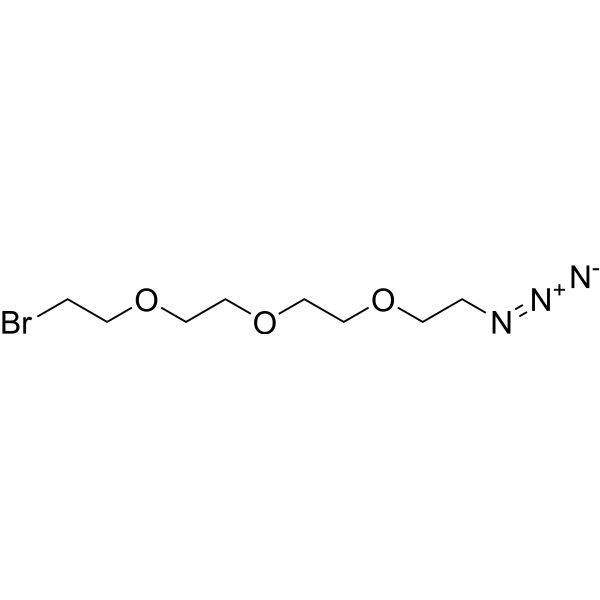
- HY-140780
-
|
|
PROTAC Linkers
|
Cancer
|
|
Azido-PEG9-Boc is a PEG-based PROTAC linker that can be used in the synthesis of PROTACs . Azido-PEG9-Boc is a click chemistry reagent, it contains an Azide group and can undergo copper-catalyzed azide-alkyne cycloaddition reaction (CuAAc) with molecules containing Alkyne groups. It can also undergo strain-promoted alkyne-azide cycloaddition (SPAAC) reactions with molecules containing DBCO or BCN groups.
|
-
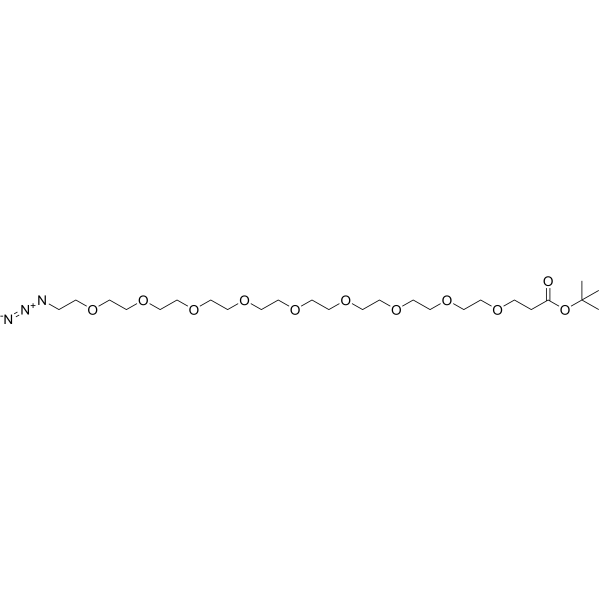
- HY-138707
-
|
|
PROTAC Linkers
|
Cancer
|
|
Azido-PEG7-NHS ester is a PEG-based PROTAC linker that can be used in the synthesis of PROTACs . Azido-PEG7-NHS ester is a click chemistry reagent, it contains an Azide group and can undergo copper-catalyzed azide-alkyne cycloaddition reaction (CuAAc) with molecules containing Alkyne groups. It can also undergo strain-promoted alkyne-azide cycloaddition (SPAAC) reactions with molecules containing DBCO or BCN groups.
|
-
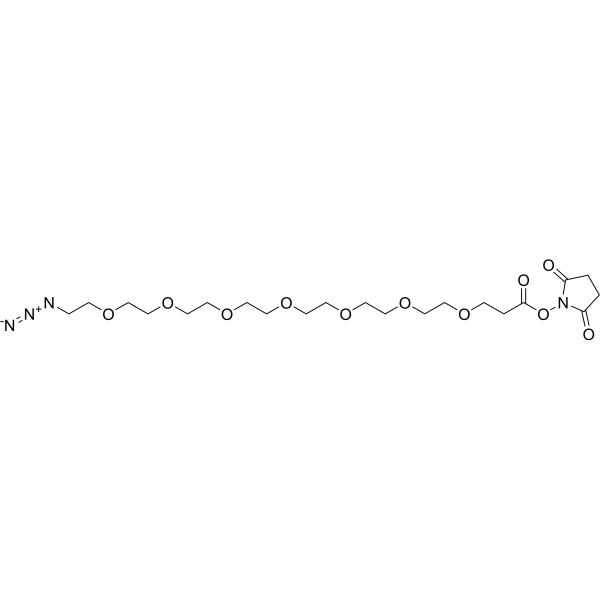
- HY-126948
-
|
|
PROTAC Linkers
|
Cancer
|
|
Aminooxy-PEG1-azide is a PEG-based PROTAC linker can be used in the synthesis of PROTACs . Aminooxy-PEG1-azide is a click chemistry reagent, it contains an Azide group and can undergo copper-catalyzed azide-alkyne cycloaddition reaction (CuAAc) with molecules containing Alkyne groups. It can also undergo strain-promoted alkyne-azide cycloaddition (SPAAC) reactions with molecules containing DBCO or BCN groups.
|
-
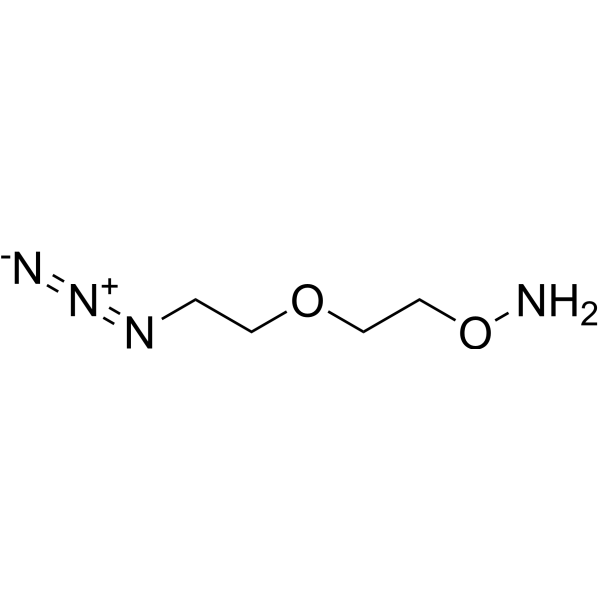
- HY-126950
-
|
|
PROTAC Linkers
|
Cancer
|
|
Aminooxy-PEG4-azide is a PEG-based PROTAC linker can be used in the synthesis of PROTACs . Aminooxy-PEG4-azide is a click chemistry reagent, it contains an Azide group and can undergo copper-catalyzed azide-alkyne cycloaddition reaction (CuAAc) with molecules containing Alkyne groups. It can also undergo strain-promoted alkyne-azide cycloaddition (SPAAC) reactions with molecules containing DBCO or BCN groups.
|
-
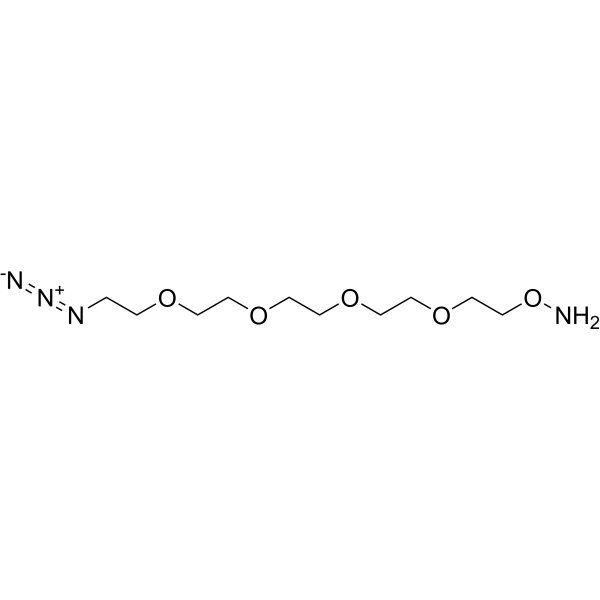
- HY-140354
-
|
|
PROTAC Linkers
|
Cancer
|
|
Azide-PEG7-Tos is a PEG-based PROTAC linker that can be used in the synthesis of PROTACs . Azide-PEG7-Tos is a click chemistry reagent, it contains an Azide group and can undergo copper-catalyzed azide-alkyne cycloaddition reaction (CuAAc) with molecules containing Alkyne groups. It can also undergo strain-promoted alkyne-azide cycloaddition (SPAAC) reactions with molecules containing DBCO or BCN groups.
|
-
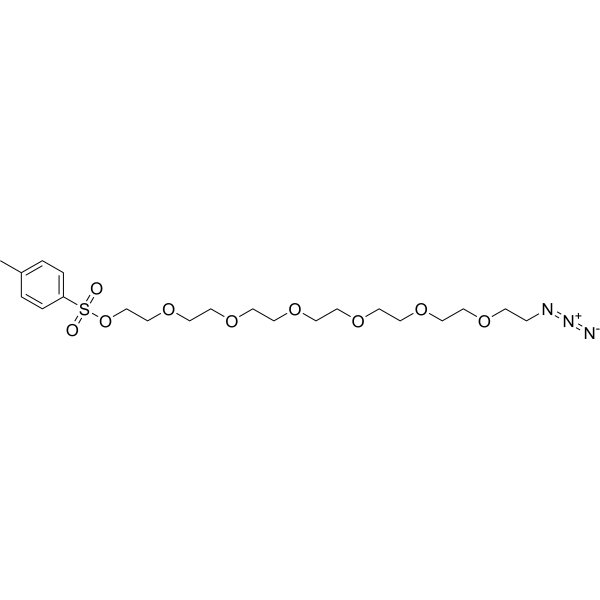
- HY-140757
-
|
|
PROTAC Linkers
|
Cancer
|
|
Azido-PEG5-NHS ester is a PEG-based PROTAC linker that can be used in the synthesis of PROTACs . Azido-PEG5-NHS ester is a click chemistry reagent, it contains an Azide group and can undergo copper-catalyzed azide-alkyne cycloaddition reaction (CuAAc) with molecules containing Alkyne groups. It can also undergo strain-promoted alkyne-azide cycloaddition (SPAAC) reactions with molecules containing DBCO or BCN groups.
|
-
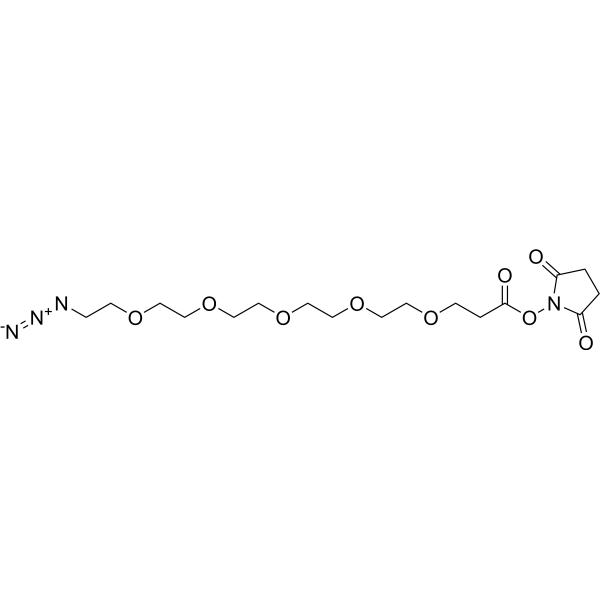
- HY-140159
-
|
|
PROTAC Linkers
|
Cancer
|
|
Methylamino-PEG5-azide is a PEG-based PROTAC linker that can be used in the synthesis of PROTACs . Methylamino-PEG5-azide is a click chemistry reagent, it contains an Azide group and can undergo copper-catalyzed azide-alkyne cycloaddition reaction (CuAAc) with molecules containing Alkyne groups. It can also undergo strain-promoted alkyne-azide cycloaddition (SPAAC) reactions with molecules containing DBCO or BCN groups.
|
-
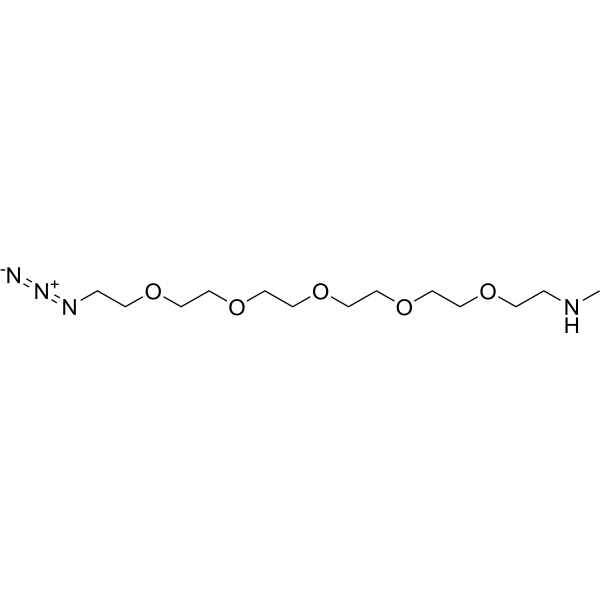
- HY-141092
-
|
|
PROTAC Linkers
|
Cancer
|
|
Pyrene-PEG2-azide is a PEG-based PROTAC linker that can be used in the synthesis of PROTACs . Pyrene-PEG2-azide is a click chemistry reagent, it contains an Azide group and can undergo copper-catalyzed azide-alkyne cycloaddition reaction (CuAAc) with molecules containing Alkyne groups. It can also undergo strain-promoted alkyne-azide cycloaddition (SPAAC) reactions with molecules containing DBCO or BCN groups.
|
-
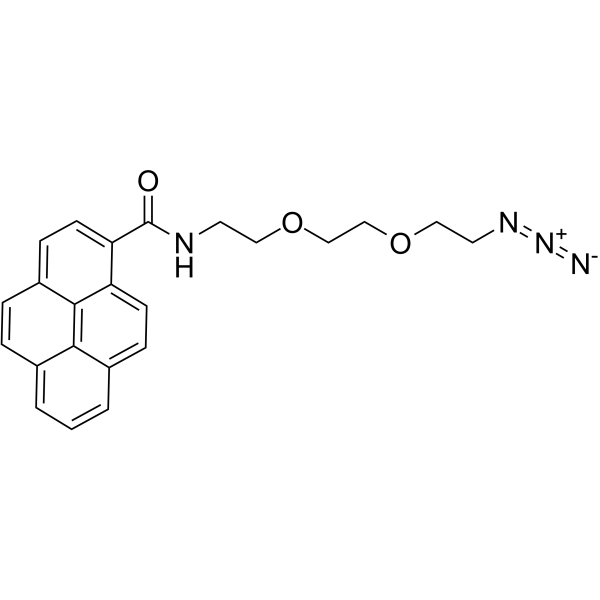
- HY-130561
-
|
|
PROTAC Linkers
|
Cancer
|
|
m-PEG7-azide is a PEG-based PROTAC linker can be used in the synthesis of PROTACs. m-PEG7-azide is a click chemistry reagent, it contains an Azide group and can undergo copper-catalyzed azide-alkyne cycloaddition reaction (CuAAc) with molecules containing Alkyne groups. It can also undergo strain-promoted alkyne-azide cycloaddition (SPAAC) reactions with molecules containing DBCO or BCN groups.
|
-
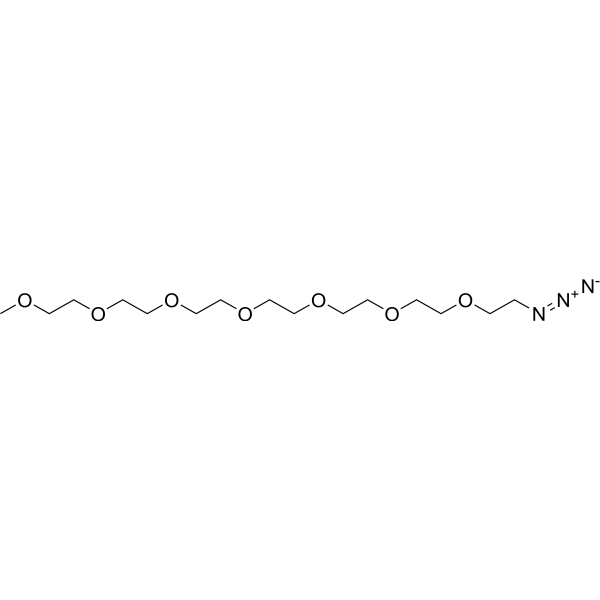
- HY-140664
-
|
|
PROTAC Linkers
|
Cancer
|
|
Azide-PEG2000-azide is a PEG-based PROTAC linker that can be used in the synthesis of PROTACs . Azide-PEG2000-azide is a click chemistry reagent, it contains an Azide group and can undergo copper-catalyzed azide-alkyne cycloaddition reaction (CuAAc) with molecules containing Alkyne groups. It can also undergo strain-promoted alkyne-azide cycloaddition (SPAAC) reactions with molecules containing DBCO or BCN groups.
|
-
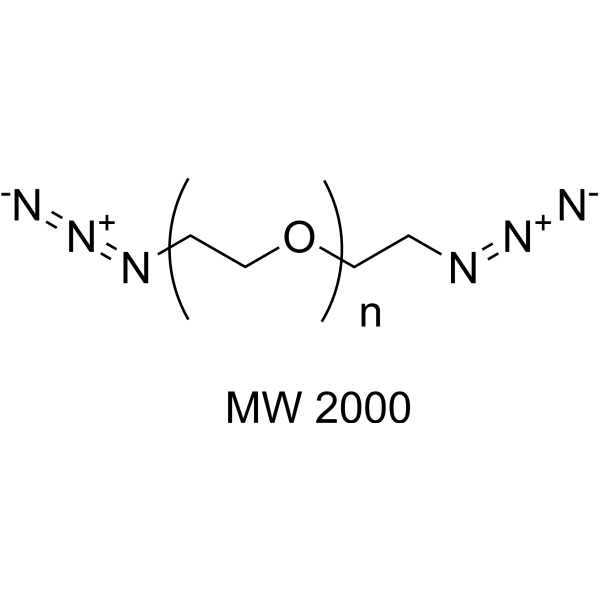
- HY-132076
-
|
|
PROTAC Linkers
|
Cancer
|
|
Azido-PEG10-azide is a PEG-based PROTAC linker that can be used in the synthesis of PROTACs . Azido-PEG10-azide is a click chemistry reagent, it contains an Azide group and can undergo copper-catalyzed azide-alkyne cycloaddition reaction (CuAAc) with molecules containing Alkyne groups. It can also undergo strain-promoted alkyne-azide cycloaddition (SPAAC) reactions with molecules containing DBCO or BCN groups.
|
-
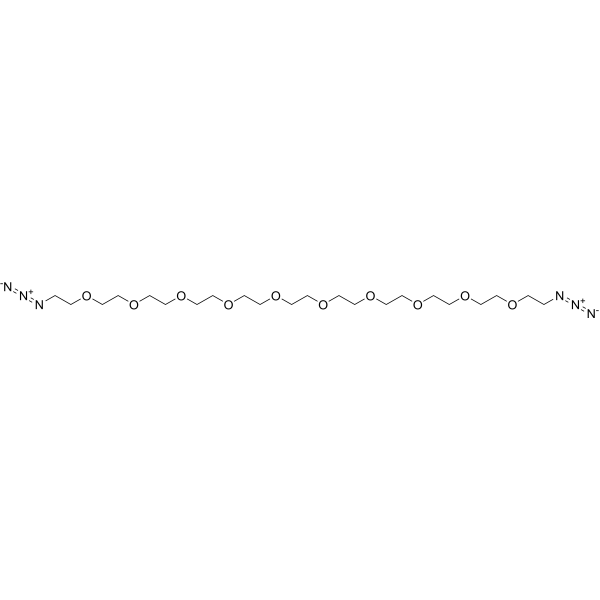
- HY-140353
-
|
|
PROTAC Linkers
|
Cancer
|
|
Azide-PEG6-Tos is a PEG-based PROTAC linker that can be used in the synthesis of PROTACs . Azide-PEG6-Tos is a click chemistry reagent, it contains an Azide group and can undergo copper-catalyzed azide-alkyne cycloaddition reaction (CuAAc) with molecules containing Alkyne groups. It can also undergo strain-promoted alkyne-azide cycloaddition (SPAAC) reactions with molecules containing DBCO or BCN groups.
|
-
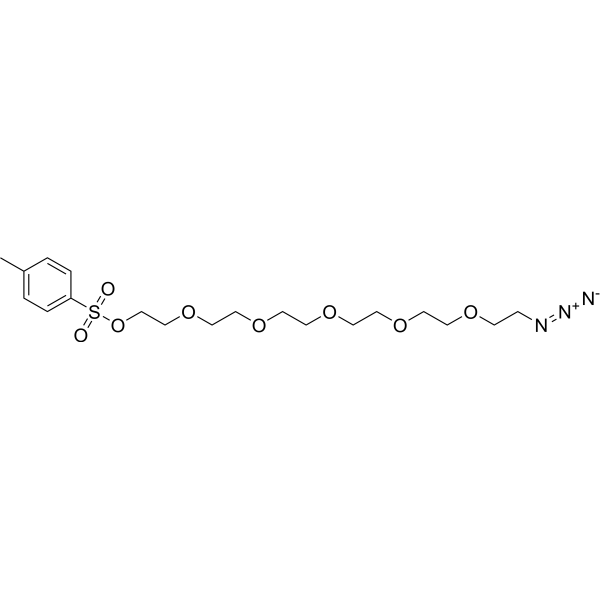
- HY-140803
-
|
|
PROTAC Linkers
|
Cancer
|
|
Azide-PEG12-alcohol is a PEG-based PROTAC linker that can be used in the synthesis of PROTACs . Azide-PEG12-alcohol is a click chemistry reagent, it contains an Azide group and can undergo copper-catalyzed azide-alkyne cycloaddition reaction (CuAAc) with molecules containing Alkyne groups. It can also undergo strain-promoted alkyne-azide cycloaddition (SPAAC) reactions with molecules containing DBCO or BCN groups.
|
-
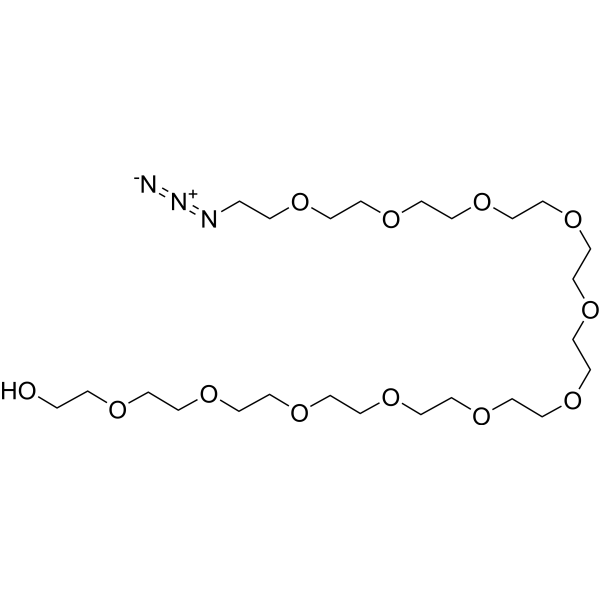
- HY-151850
-
|
|
ADC Linker
|
Others
|
|
(2S,4R)-Fmoc-L-Pro(4-N3)-OH is a click chemistry reagent containing an azide . (2S,4R)-Fmoc-L-Pro(4-N3)-OH is a click chemistry reagent, it contains an Azide group and can undergo copper-catalyzed azide-alkyne cycloaddition reaction (CuAAc) with molecules containing Alkyne groups. It can also undergo strain-promoted alkyne-azide cycloaddition (SPAAC) reactions with molecules containing DBCO or BCN groups.
|
-
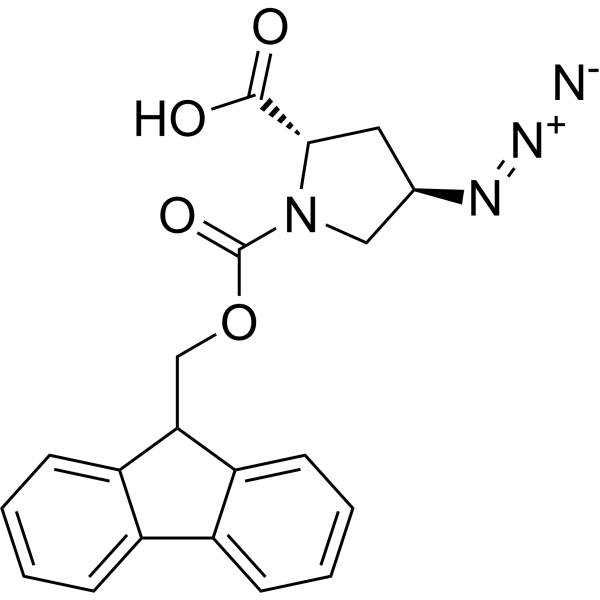
- HY-151836
-
|
|
ADC Linker
|
Others
|
|
(2S,3R)-H-Abu(3-N3)-OH (hydrochloride) is a click chemistry reagent containing an azide group . (2S,3R)-H-Abu(3-N3)-OH (hydrochloride) is a click chemistry reagent, it contains an Azide group and can undergo copper-catalyzed azide-alkyne cycloaddition reaction (CuAAc) with molecules containing Alkyne groups. It can also undergo strain-promoted alkyne-azide cycloaddition (SPAAC) reactions with molecules containing DBCO or BCN groups.
|
-
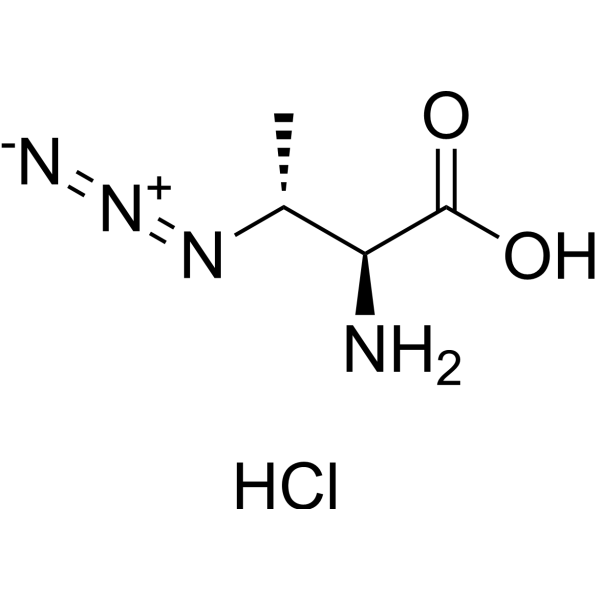
- HY-151838
-
|
|
ADC Linker
|
Others
|
|
(2S,3S)-H-Abu(3-N3)-OH (hydrochloride) is a click chemistry reagent containing an azide group . (2S,3S)-H-Abu(3-N3)-OH (hydrochloride) is a click chemistry reagent, it contains an Azide group and can undergo copper-catalyzed azide-alkyne cycloaddition reaction (CuAAc) with molecules containing Alkyne groups. It can also undergo strain-promoted alkyne-azide cycloaddition (SPAAC) reactions with molecules containing DBCO or BCN groups.
|
-
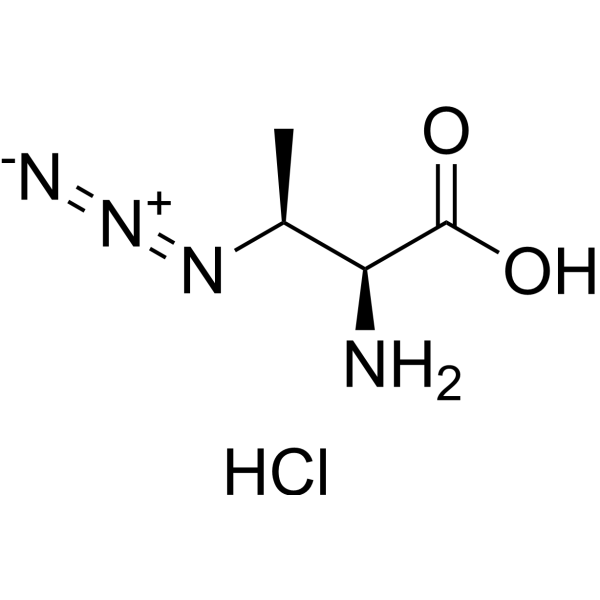
- HY-D1597
-
|
|
Fluorescent Dye
|
Others
|
|
Cyanine3.5 azide chloride, an analog of Cyanine3.5 azide, is a potent green fluorescent dye. Cyanine3.5 azide chloride uses click chemistry to tag the ethylidene group. (λex=591 nm, λem=604 nm) . Cyanine3.5 azide (chloride) is a click chemistry reagent, it contains an Azide group and can undergo copper-catalyzed azide-alkyne cycloaddition reaction (CuAAc) with molecules containing Alkyne groups. It can also undergo strain-promoted alkyne-azide cycloaddition (SPAAC) reactions with molecules containing DBCO or BCN groups.
|
-
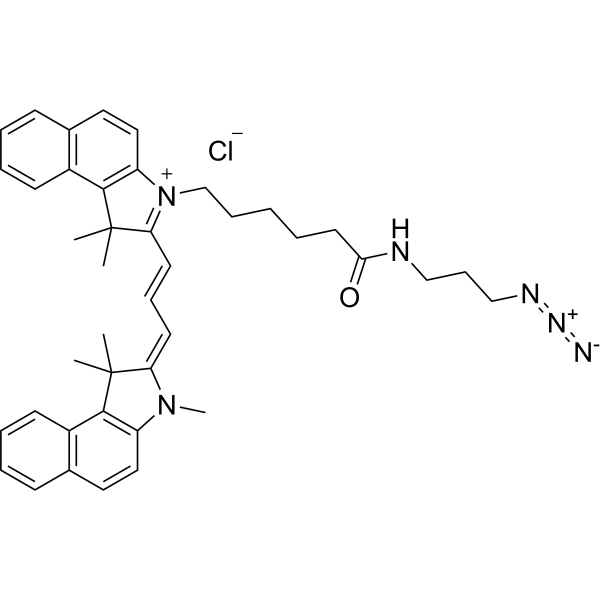
- HY-151766
-
|
|
ADC Linker
|
Others
|
|
DACN(Tos,Suc-OH) is a click chemistry reagent containing a cycloalkyne group. The alkyne moiety within the ring has a unique bent structure and high reactivity toward cycloaddition reactions. Such strain-promoted azide-alkyne cycloadditions (SPAAC) using cycloalkynes have served for reliable molecular conjugation in a broad range of fields. The nitrogens are used as connection points for a variety of functional units. DACNs possess high thermal and chemical stability along with comparable click reactivity .
|
-
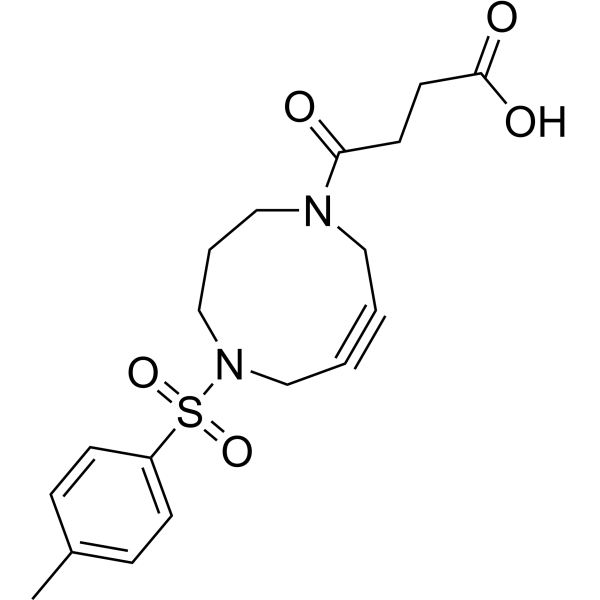
- HY-D1269
-
|
|
Fluorescent Dye
|
Others
|
|
Rhodamine-N3 chloride is an azide-rhodamine fluorescent dye that can be used to label biomolecules containing alkyne groups . Rhodamine-N3 chloride is a click chemistry reagent, it contains an Azide group and can undergo copper-catalyzed azide-alkyne cycloaddition reaction (CuAAc) with molecules containing Alkyne groups. It can also undergo strain-promoted alkyne-azide cycloaddition (SPAAC) reactions with molecules containing DBCO or BCN groups (Ex/Em = 544/576 nm).
|
-
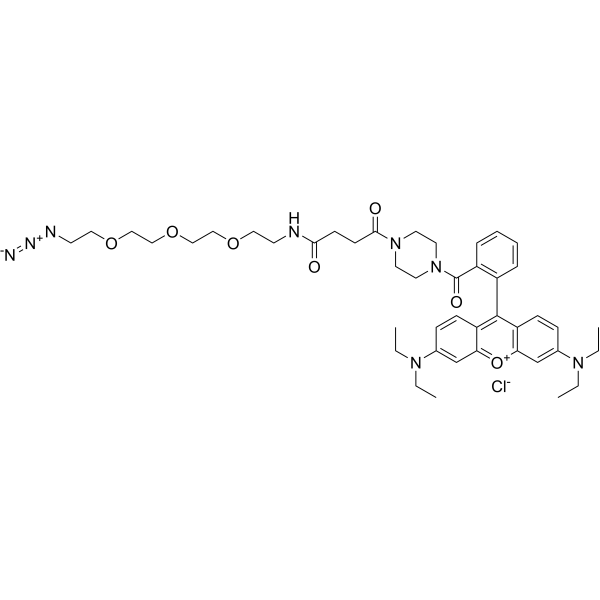
- HY-140434
-
|
|
PROTAC Linkers
|
Cancer
|
|
t-Boc-Aminooxy-PEG5-azide is a PEG-based PROTAC linker that can be used in the synthesis of PROTACs . t-Boc-Aminooxy-PEG5-azide is a click chemistry reagent, it contains an Azide group and can undergo copper-catalyzed azide-alkyne cycloaddition reaction (CuAAc) with molecules containing Alkyne groups. It can also undergo strain-promoted alkyne-azide cycloaddition (SPAAC) reactions with molecules containing DBCO or BCN groups.
|
-
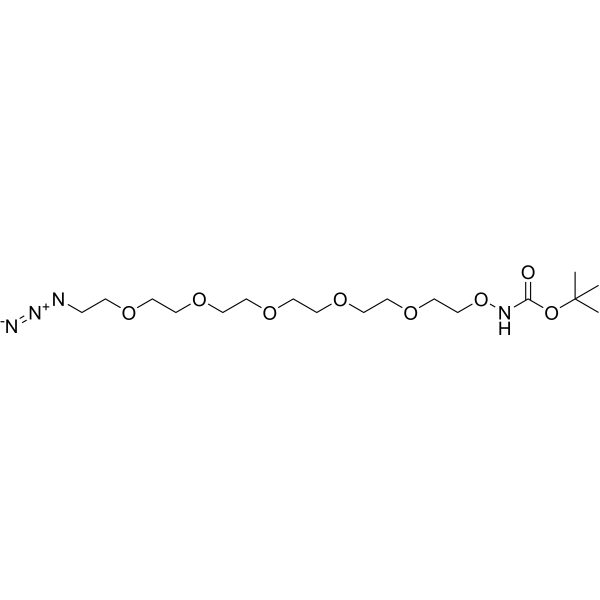
- HY-140770
-
|
|
PROTAC Linkers
|
Cancer
|
|
Azido-PEG3-aminoacetic acid-NHS ester is a PEG-based PROTAC linker that can be used in the synthesis of PROTACs . Azido-PEG3-aminoacetic acid-NHS ester is a click chemistry reagent, it contains an Azide group and can undergo copper-catalyzed azide-alkyne cycloaddition reaction (CuAAc) with molecules containing Alkyne groups. It can also undergo strain-promoted alkyne-azide cycloaddition (SPAAC) reactions with molecules containing DBCO or BCN groups.
|
-
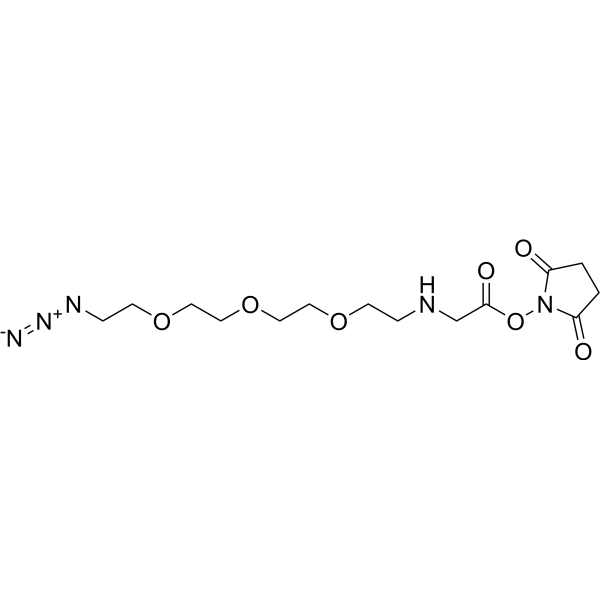
- HY-144585
-
|
|
Microtubule/Tubulin
ADC Payload
|
Others
|
|
AGD-0182 is a microtubule disrupting agent. AGD-0182 is a synthetic analogue of the naturally occurring tubulin-binding molecule Dolastatin 10 . AGD-0182 is a click chemistry reagent, it contains an Azide group and can undergo copper-catalyzed azide-alkyne cycloaddition reaction (CuAAc) with molecules containing Alkyne groups. It can also undergo strain-promoted alkyne-azide cycloaddition (SPAAC) reactions with molecules containing DBCO or BCN groups.
|
-
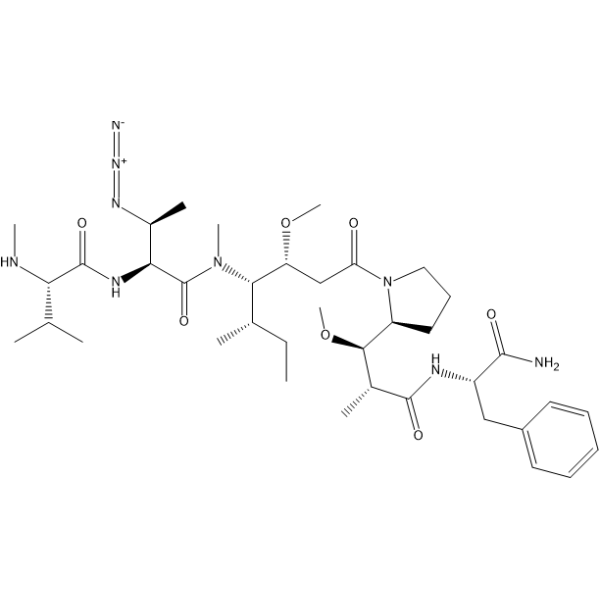
- HY-140769
-
|
|
PROTAC Linkers
|
Cancer
|
|
Azido-PEG5-succinimidyl carbonate is a PEG-based PROTAC linker that can be used in the synthesis of PROTACs . Azido-PEG5-succinimidyl carbonate is a click chemistry reagent, it contains an Azide group and can undergo copper-catalyzed azide-alkyne cycloaddition reaction (CuAAc) with molecules containing Alkyne groups. It can also undergo strain-promoted alkyne-azide cycloaddition (SPAAC) reactions with molecules containing DBCO or BCN groups.
|
-
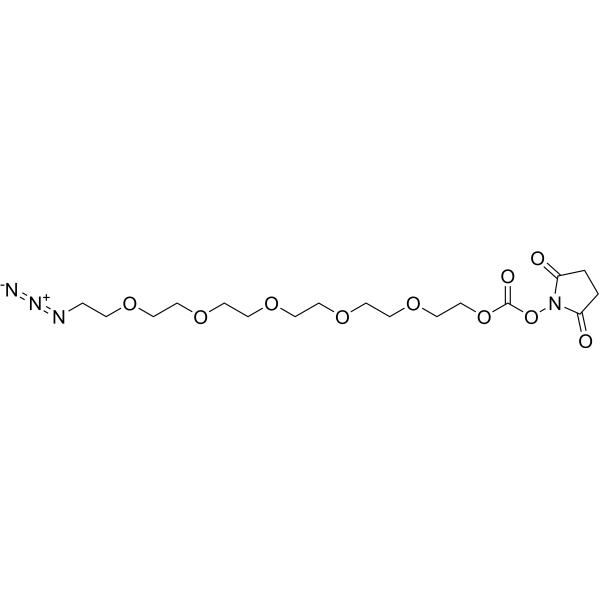
- HY-136099
-
|
|
ADC Linker
|
Cancer
|
|
Bocaminooxyacetamide-PEG2-Azido is a cleavable 2 unit PEG ADC linker used in the synthesis of antibody-drug conjugates (ADCs) . Bocaminooxyacetamide-PEG2-Azido is a click chemistry reagent, it contains an Azide group and can undergo copper-catalyzed azide-alkyne cycloaddition reaction (CuAAc) with molecules containing Alkyne groups. It can also undergo strain-promoted alkyne-azide cycloaddition (SPAAC) reactions with molecules containing DBCO or BCN groups.
|
-
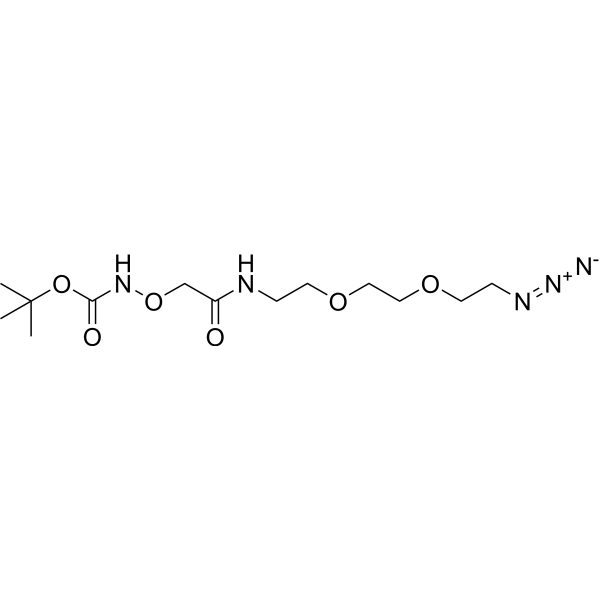
- HY-140848
-
|
|
PROTAC Linkers
|
Cancer
|
|
Azide-PEG3-L-alanine-Fmoc is a PEG-based PROTAC linker that can be used in the synthesis of PROTACs . Azide-PEG3-L-alanine-Fmoc is a click chemistry reagent, it contains an Azide group and can undergo copper-catalyzed azide-alkyne cycloaddition reaction (CuAAc) with molecules containing Alkyne groups. It can also undergo strain-promoted alkyne-azide cycloaddition (SPAAC) reactions with molecules containing DBCO or BCN groups.
|
-
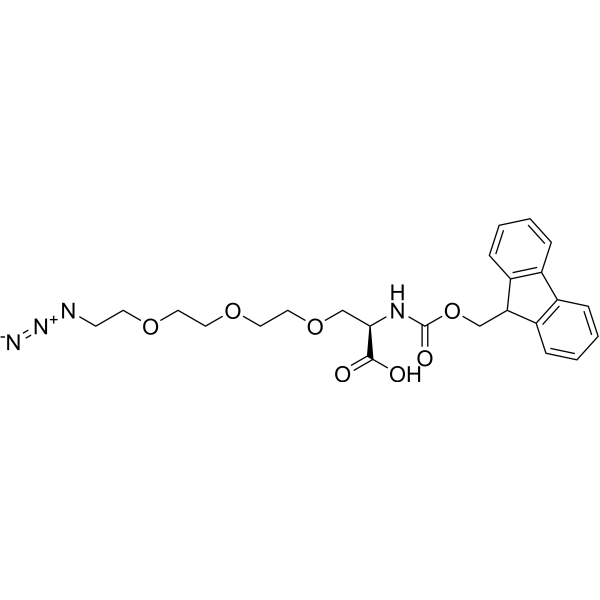
- HY-140817
-
|
|
PROTAC Linkers
|
Cancer
|
|
Azido-PEG4-hydrazide-Boc is a PEG-based PROTAC linker that can be used in the synthesis of PROTACs . Azido-PEG4-hydrazide-Boc is a click chemistry reagent, it contains an Azide group and can undergo copper-catalyzed azide-alkyne cycloaddition reaction (CuAAc) with molecules containing Alkyne groups. It can also undergo strain-promoted alkyne-azide cycloaddition (SPAAC) reactions with molecules containing DBCO or BCN groups.
|
-
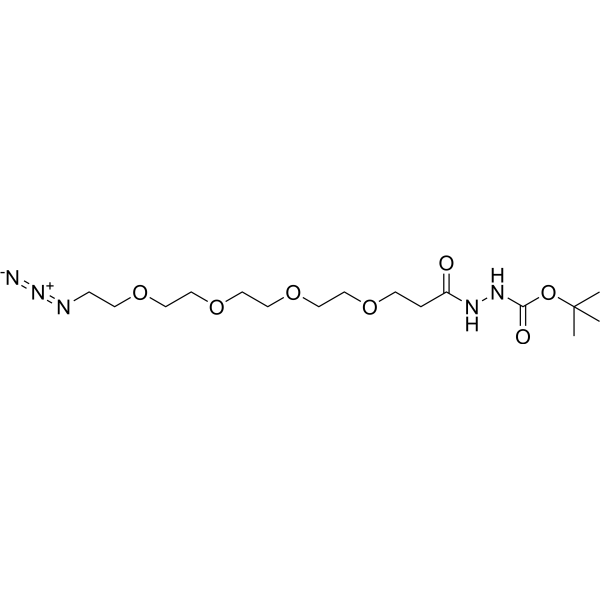
- HY-145066
-
|
|
ADC Linker
|
Cancer
|
|
Gly-Gly-Gly-PEG4-azide is an ADC linker used in the synthesis of antibody-drug conjugates (ADCs) . Gly-Gly-Gly-PEG4-azide is a click chemistry reagent, it contains an Azide group and can undergo copper-catalyzed azide-alkyne cycloaddition reaction (CuAAc) with molecules containing Alkyne groups. It can also undergo strain-promoted alkyne-azide cycloaddition (SPAAC) reactions with molecules containing DBCO or BCN groups.
|
-
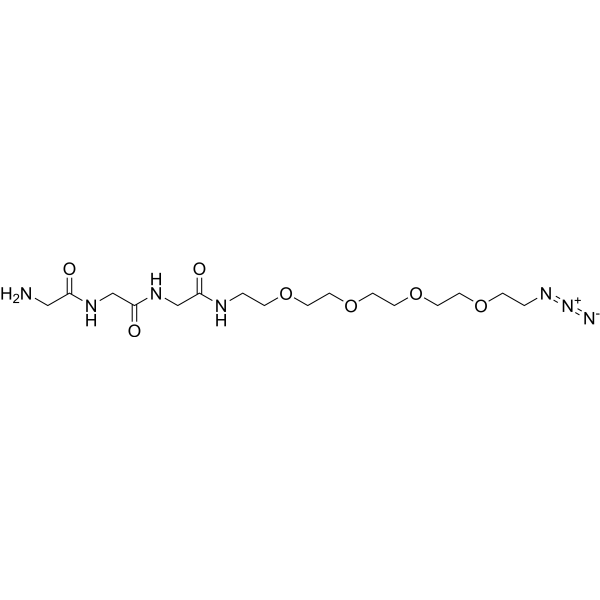
- HY-140916
-
|
|
PROTAC Linkers
|
Cancer
|
|
Dde Biotin-PEG4-azide is a PEG-based PROTAC linker that can be used in the synthesis of PROTACs . Dde Biotin-PEG4-azide is a click chemistry reagent, it contains an Azide group and can undergo copper-catalyzed azide-alkyne cycloaddition reaction (CuAAc) with molecules containing Alkyne groups. It can also undergo strain-promoted alkyne-azide cycloaddition (SPAAC) reactions with molecules containing DBCO or BCN groups.
|
-
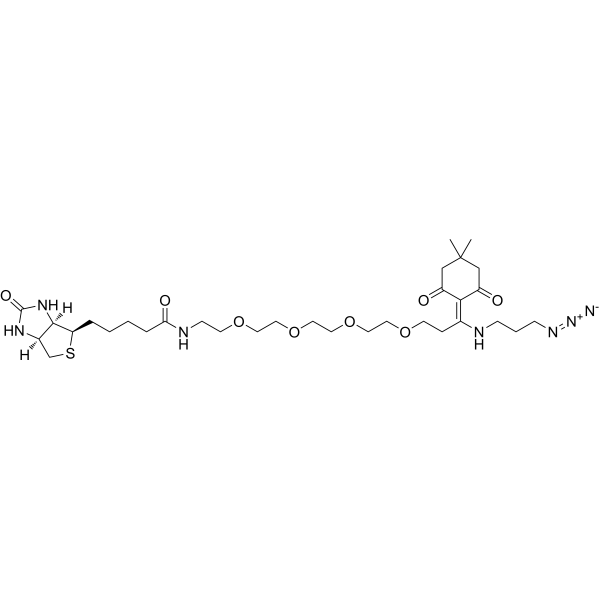
- HY-123609
-
|
|
PROTAC Linkers
|
Cancer
|
|
Pyrene-amido-PEG4-azide is a PEG-based PROTAC linker that can be used in the synthesis of PROTACs . Pyrene-amido-PEG4-azide is a click chemistry reagent, it contains an Azide group and can undergo copper-catalyzed azide-alkyne cycloaddition reaction (CuAAc) with molecules containing Alkyne groups. It can also undergo strain-promoted alkyne-azide cycloaddition (SPAAC) reactions with molecules containing DBCO or BCN groups.
|
-
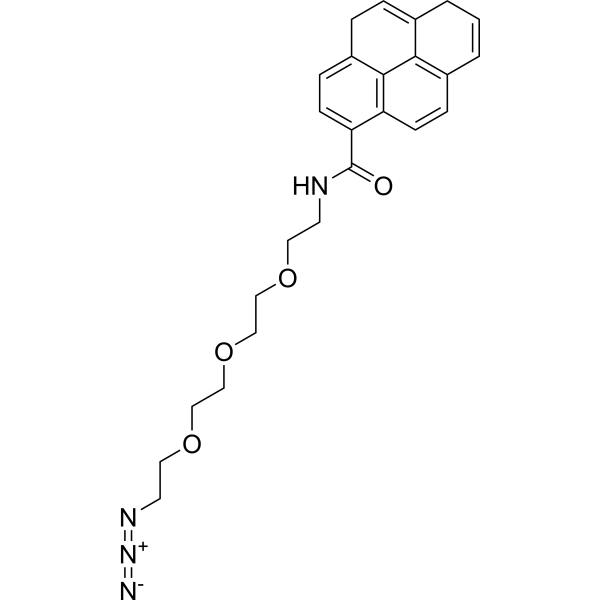
- HY-132093
-
|
|
PROTAC Linkers
|
Cancer
|
|
Azido-PEG5-S-methyl ethanethioate is a PEG-based PROTAC linker that can be used in the synthesis of PROTACs . Azido-PEG5-S-methyl ethanethioate is a click chemistry reagent, it contains an Azide group and can undergo copper-catalyzed azide-alkyne cycloaddition reaction (CuAAc) with molecules containing Alkyne groups. It can also undergo strain-promoted alkyne-azide cycloaddition (SPAAC) reactions with molecules containing DBCO or BCN groups.
|
-
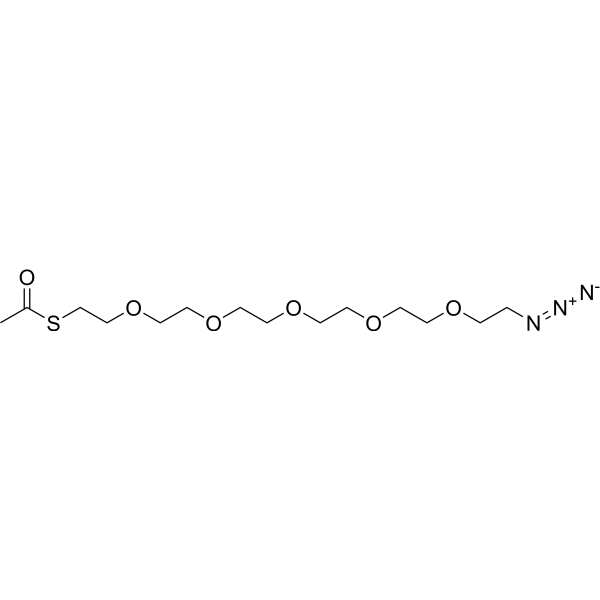
- HY-141090
-
|
|
PROTAC Linkers
|
Cancer
|
|
Carboxyrhodamine 110-PEG3-Azide is a PEG-based PROTAC linker that can be used in the synthesis of PROTACs . Carboxyrhodamine 110-PEG3-Azide is a click chemistry reagent, it contains an Azide group and can undergo copper-catalyzed azide-alkyne cycloaddition reaction (CuAAc) with molecules containing Alkyne groups. It can also undergo strain-promoted alkyne-azide cycloaddition (SPAAC) reactions with molecules containing DBCO or BCN groups.
|
-
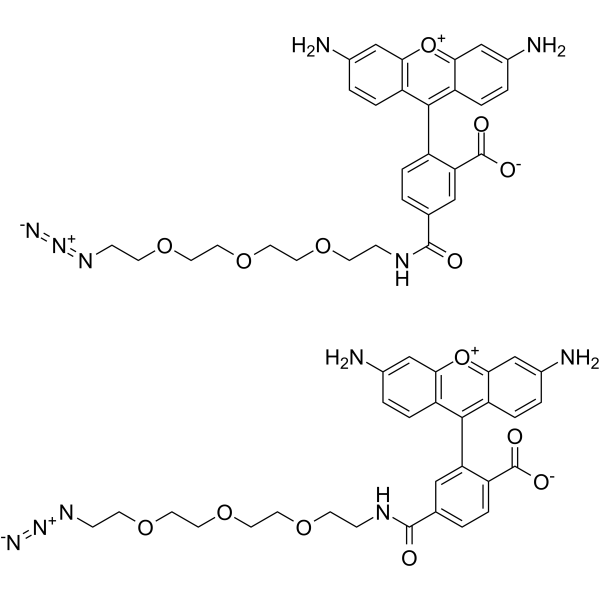
- HY-133469
-
|
|
PROTAC Linkers
|
Cancer
|
|
Methyltetrazine-PEG8-N3 is a PEG-based PROTAC linker that can be used in the synthesis of PROTACs . Methyltetrazine-PEG8-N3 is a click chemistry reagent, it contains an Azide group and can undergo copper-catalyzed azide-alkyne cycloaddition reaction (CuAAc) with molecules containing Alkyne groups. It can also undergo strain-promoted alkyne-azide cycloaddition (SPAAC) reactions with molecules containing DBCO or BCN groups.
|
-
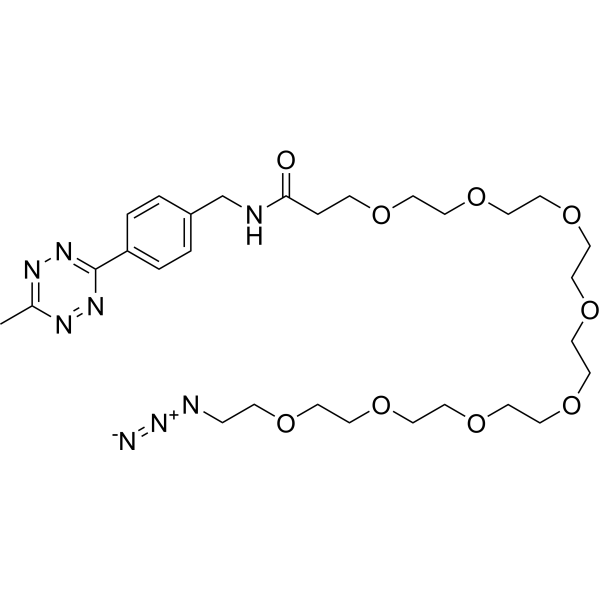
- HY-140858
-
|
|
PROTAC Linkers
|
Cancer
|
|
Azido-PEG4-4-nitrophenyl carbonate is a PEG-based PROTAC linker that can be used in the synthesis of PROTACs . Azido-PEG4-4-nitrophenyl carbonate is a click chemistry reagent, it contains an Azide group and can undergo copper-catalyzed azide-alkyne cycloaddition reaction (CuAAc) with molecules containing Alkyne groups. It can also undergo strain-promoted alkyne-azide cycloaddition (SPAAC) reactions with molecules containing DBCO or BCN groups.
|
-
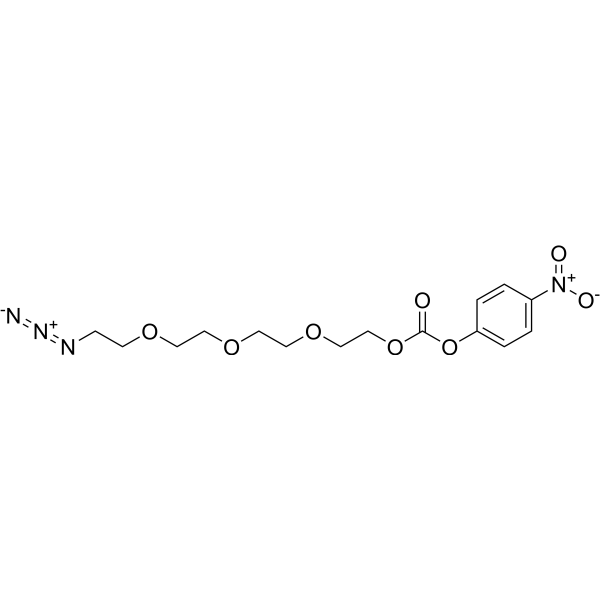
- HY-133356
-
|
|
PROTAC Linkers
|
Cancer
|
|
Boc-NH-PEG15-azide is a PEG-based PROTAC linker that can be used in the synthesis of PROTACs . Boc-NH-PEG15-azide is a click chemistry reagent, it contains an Azide group and can undergo copper-catalyzed azide-alkyne cycloaddition reaction (CuAAc) with molecules containing Alkyne groups. It can also undergo strain-promoted alkyne-azide cycloaddition (SPAAC) reactions with molecules containing DBCO or BCN groups.
|
-
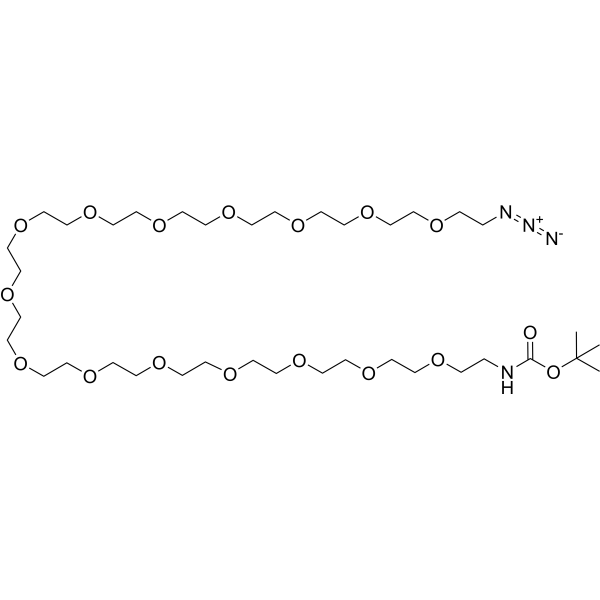
- HY-140917
-
|
|
PROTAC Linkers
|
Cancer
|
|
Dde Biotin-PEG4-Picolyl azide is a PEG-based PROTAC linker that can be used in the synthesis of PROTACs . Dde Biotin-PEG4-Picolyl azide is a click chemistry reagent, it contains an Azide group and can undergo copper-catalyzed azide-alkyne cycloaddition reaction (CuAAc) with molecules containing Alkyne groups. It can also undergo strain-promoted alkyne-azide cycloaddition (SPAAC) reactions with molecules containing DBCO or BCN groups.
|
-
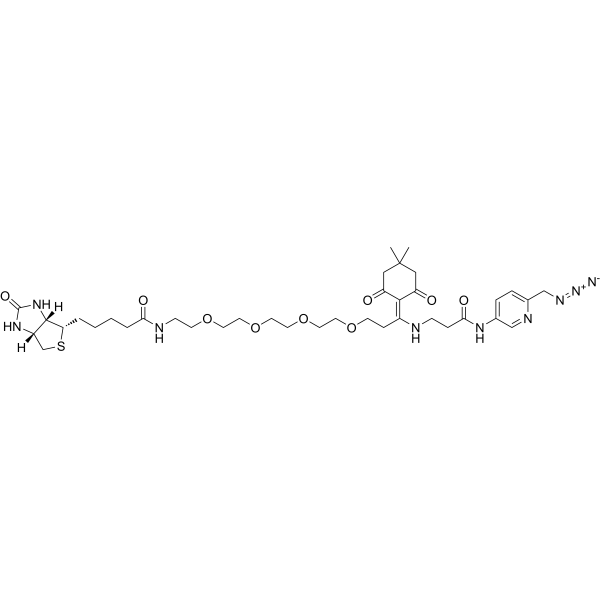
- HY-157275
-
|
|
ADC Linker
|
Cancer
|
|
Gly-Gly-Gly-PEG2-azide is an ADC linker used in the synthesis of antibody-drug conjugates (ADCs) . Gly-Gly-Gly-PEG4-azide is a click chemistry reagent, it contains an Azide group and can undergo copper-catalyzed azide-alkyne cycloaddition reaction (CuAAc) with molecules containing Alkyne groups. It can also undergo strain-promoted alkyne-azide cycloaddition (SPAAC) reactions with molecules containing DBCO or BCN groups.
|
-
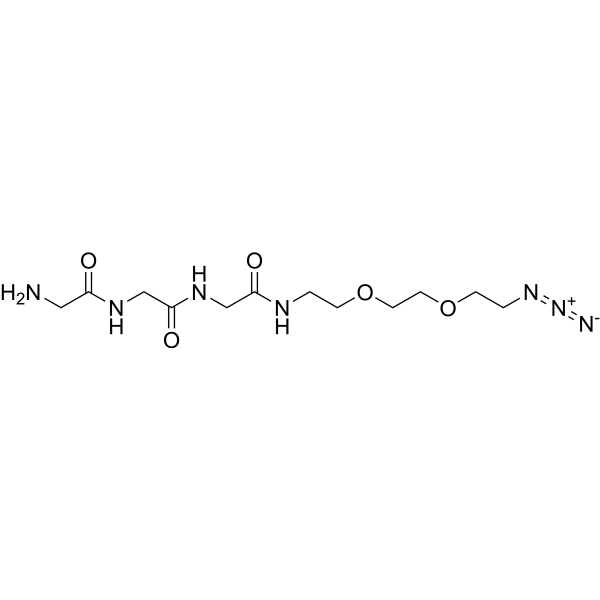
- HY-W440832
-
|
|
Liposome
|
Infection
|
|
DSPE-PEG2000-azide is an azide containing lipid that can be used to form micelles as nanoparticles for drug delivery . DSPE-PEG2000-azide is a click chemistry reagent, it contains an Azide group and can undergo copper-catalyzed azide-alkyne cycloaddition reaction (CuAAc) with molecules containing Alkyne groups. It can also undergo strain-promoted alkyne-azide cycloaddition (SPAAC) reactions with molecules containing DBCO or BCN groups.
|
-
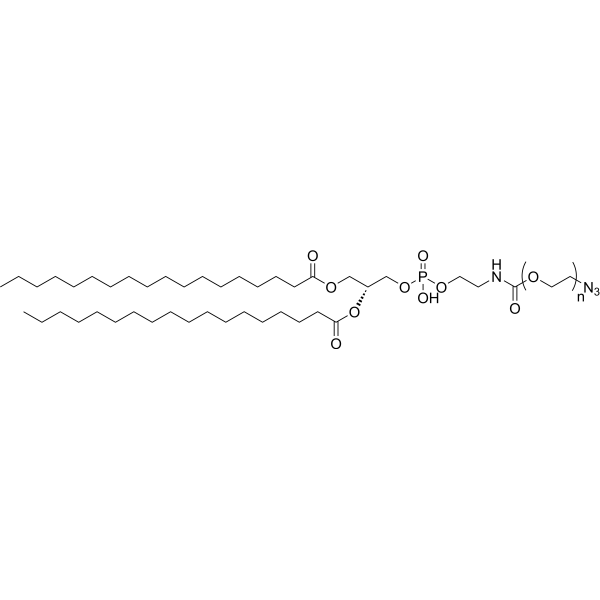
- HY-140837
-
|
|
PROTAC Linkers
|
Cancer
|
|
Boc-NH-PEG5-azide is a PEG-based PROTAC linker that can be used in the synthesis of PROTACs . Boc-NH-PEG5-azide is a click chemistry reagent, it contains an Azide group and can undergo copper-catalyzed azide-alkyne cycloaddition reaction (CuAAc) with molecules containing Alkyne groups. It can also undergo strain-promoted alkyne-azide cycloaddition (SPAAC) reactions with molecules containing DBCO or BCN groups.
|
-
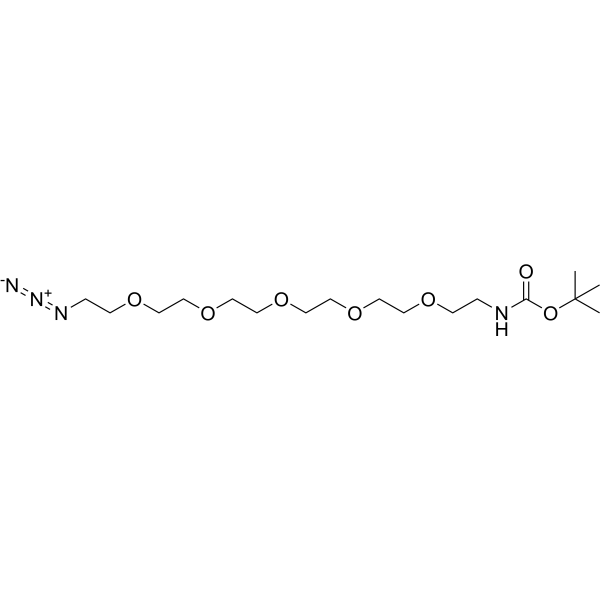
- HY-140840
-
|
|
PROTAC Linkers
|
Cancer
|
|
Boc-NH-PEG9-azide is a PEG-based PROTAC linker that can be used in the synthesis of PROTACs . Boc-NH-PEG9-azide is a click chemistry reagent, it contains an Azide group and can undergo copper-catalyzed azide-alkyne cycloaddition reaction (CuAAc) with molecules containing Alkyne groups. It can also undergo strain-promoted alkyne-azide cycloaddition (SPAAC) reactions with molecules containing DBCO or BCN groups.
|
-
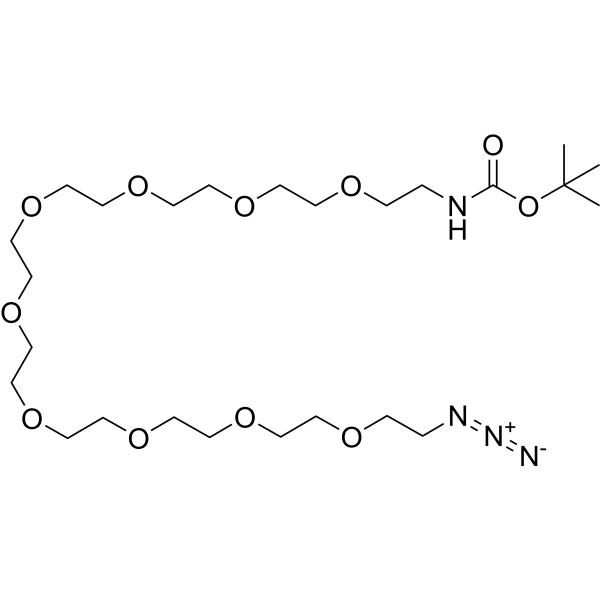
- HY-140755
-
|
|
PROTAC Linkers
|
Cancer
|
|
Aeide-C1-NHS ester is an alkyl/ether-based PROTAC linker that can be used in the synthesis of PROTACs . Aeide-C1-NHS ester is a click chemistry reagent, it contains an Azide group and can undergo copper-catalyzed azide-alkyne cycloaddition reaction (CuAAc) with molecules containing Alkyne groups. It can also undergo strain-promoted alkyne-azide cycloaddition (SPAAC) reactions with molecules containing DBCO or BCN groups.
|
-
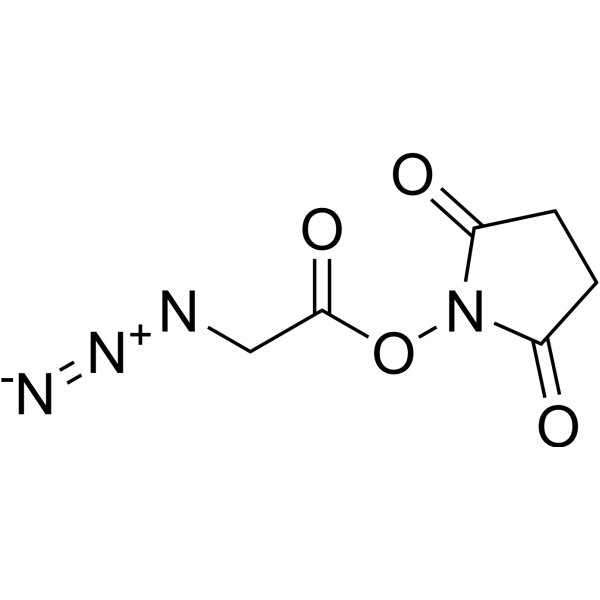
- HY-140849
-
|
|
PROTAC Linkers
|
Cancer
|
|
Azido-PEG3-Ala-Boc is a PEG-based PROTAC linker that can be used in the synthesis of PROTACs . Azido-PEG3-Ala-Boc is a click chemistry reagent, it contains an Azide group and can undergo copper-catalyzed azide-alkyne cycloaddition reaction (CuAAc) with molecules containing Alkyne groups. It can also undergo strain-promoted alkyne-azide cycloaddition (SPAAC) reactions with molecules containing DBCO or BCN groups.
|
-
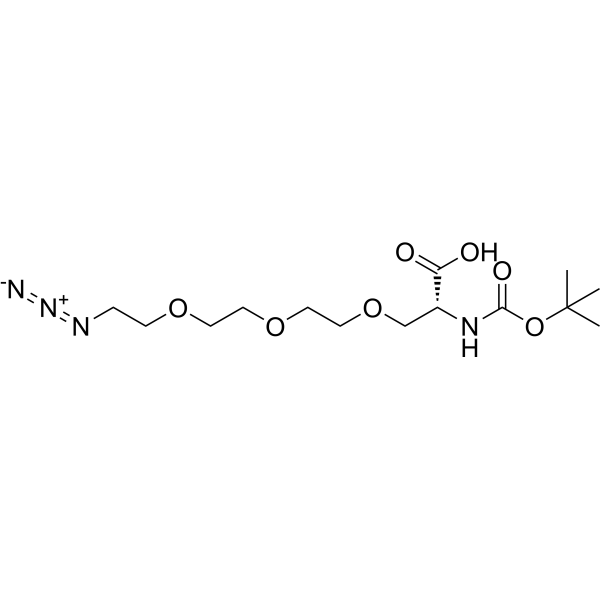
- HY-140859
-
|
|
PROTAC Linkers
|
Cancer
|
|
S-Acetyl-PEG3-azide is a PEG-based PROTAC linker that can be used in the synthesis of PROTACs . S-Acetyl-PEG3-azide is a click chemistry reagent, it contains an Azide group and can undergo copper-catalyzed azide-alkyne cycloaddition reaction (CuAAc) with molecules containing Alkyne groups. It can also undergo strain-promoted alkyne-azide cycloaddition (SPAAC) reactions with molecules containing DBCO or BCN groups.
|
-
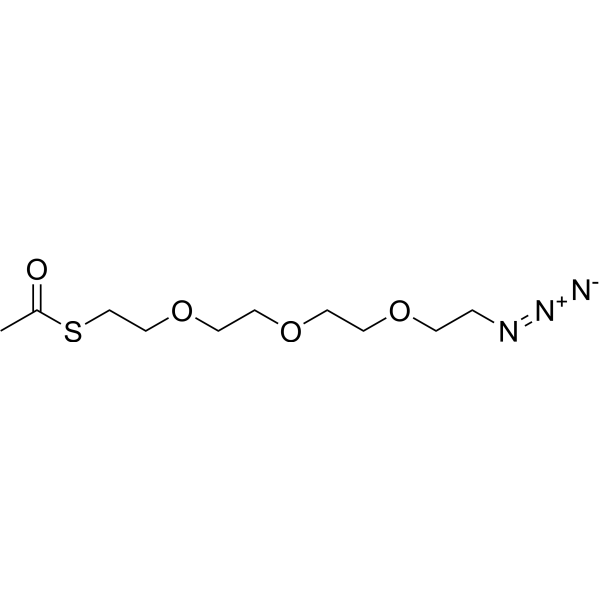
- HY-140431
-
|
|
PROTAC Linkers
|
Cancer
|
|
t-Boc-Aminooxy-PEG2-azide is a PEG-based PROTAC linker that can be used in the synthesis of PROTACs . t-Boc-Aminooxy-PEG2-azide is a click chemistry reagent, it contains an Azide group and can undergo copper-catalyzed azide-alkyne cycloaddition reaction (CuAAc) with molecules containing Alkyne groups. It can also undergo strain-promoted alkyne-azide cycloaddition (SPAAC) reactions with molecules containing DBCO or BCN groups.
|
-
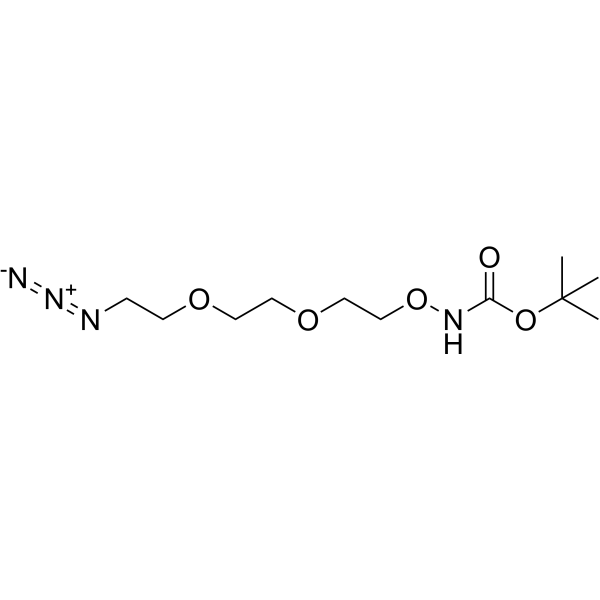
- HY-140835
-
|
|
PROTAC Linkers
|
Cancer
|
|
Boc-N-Amido-PEG3-azide is a PEG-based PROTAC linker that can be used in the synthesis of PROTACs . Boc-N-Amido-PEG3-azide is a click chemistry reagent, it contains an Azide group and can undergo copper-catalyzed azide-alkyne cycloaddition reaction (CuAAc) with molecules containing Alkyne groups. It can also undergo strain-promoted alkyne-azide cycloaddition (SPAAC) reactions with molecules containing DBCO or BCN groups.
|
-
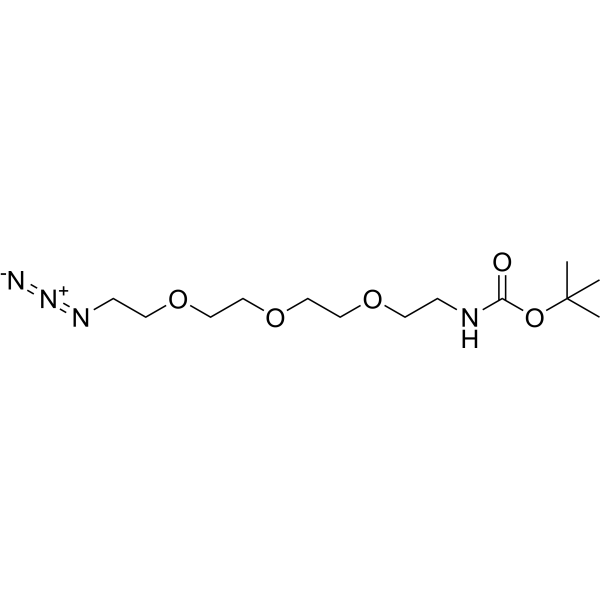
- HY-140838
-
|
|
PROTAC Linkers
|
Cancer
|
|
Boc-NH-PEG6-azide is a PEG-based PROTAC linker that can be used in the synthesis of PROTACs . Boc-NH-PEG6-azide is a click chemistry reagent, it contains an Azide group and can undergo copper-catalyzed azide-alkyne cycloaddition reaction (CuAAc) with molecules containing Alkyne groups. It can also undergo strain-promoted alkyne-azide cycloaddition (SPAAC) reactions with molecules containing DBCO or BCN groups.
|
-
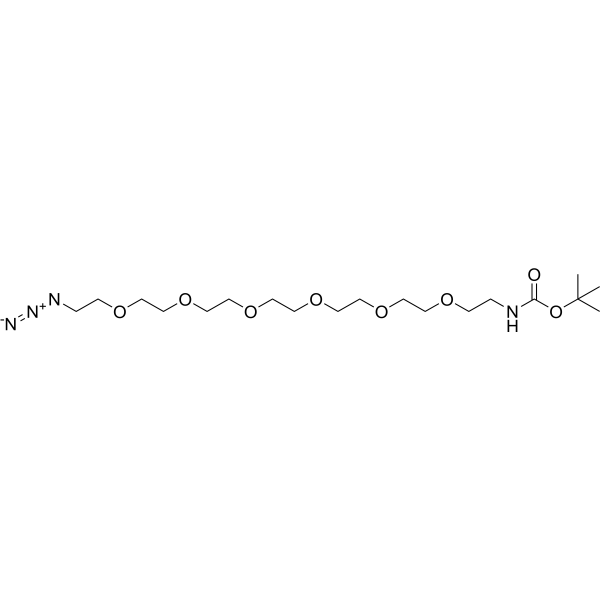
- HY-130525
-
|
|
PROTAC Linkers
|
Cancer
|
|
Iodo-PEG3-N3 is a PEG-based PROTAC linker that can be used in the synthesis of PROTACs . Iodo-PEG3-N3 is a click chemistry reagent, it contains an Azide group and can undergo copper-catalyzed azide-alkyne cycloaddition reaction (CuAAc) with molecules containing Alkyne groups. It can also undergo strain-promoted alkyne-azide cycloaddition (SPAAC) reactions with molecules containing DBCO or BCN groups.
|
-
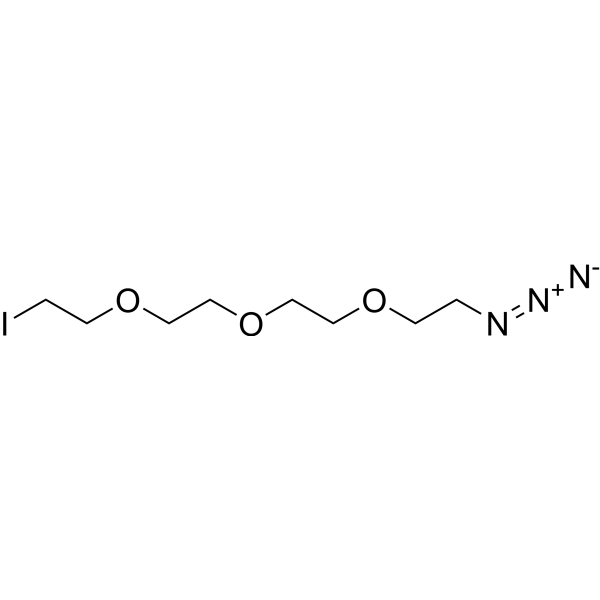
- HY-140142
-
|
|
PROTAC Linkers
|
Cancer
|
|
PC Azido-PEG11-NHS carbonate ester is a PEG-based PROTAC linker that can be used in the synthesis of PROTACs . PC Azido-PEG11-NHS carbonate ester is a click chemistry reagent, it contains an Azide group and can undergo copper-catalyzed azide-alkyne cycloaddition reaction (CuAAc) with molecules containing Alkyne groups. It can also undergo strain-promoted alkyne-azide cycloaddition (SPAAC) reactions with molecules containing DBCO or BCN groups.
|
-
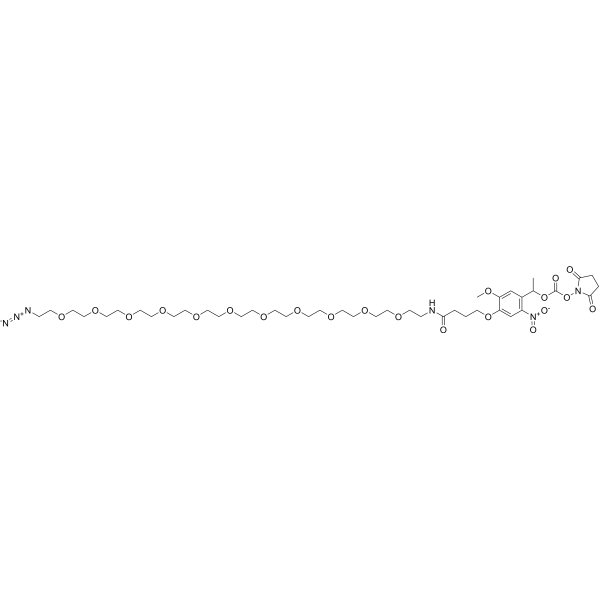
- HY-140107
-
|
|
PROTAC Linkers
|
Cancer
|
|
Azidoethyl-SS-PEG2-Boc is a PEG-based PROTAC linker that can be used in the synthesis of PROTACs . Azidoethyl-SS-PEG2-Boc is a click chemistry reagent, it contains an Azide group and can undergo copper-catalyzed azide-alkyne cycloaddition reaction (CuAAc) with molecules containing Alkyne groups. It can also undergo strain-promoted alkyne-azide cycloaddition (SPAAC) reactions with molecules containing DBCO or BCN groups.
|
-
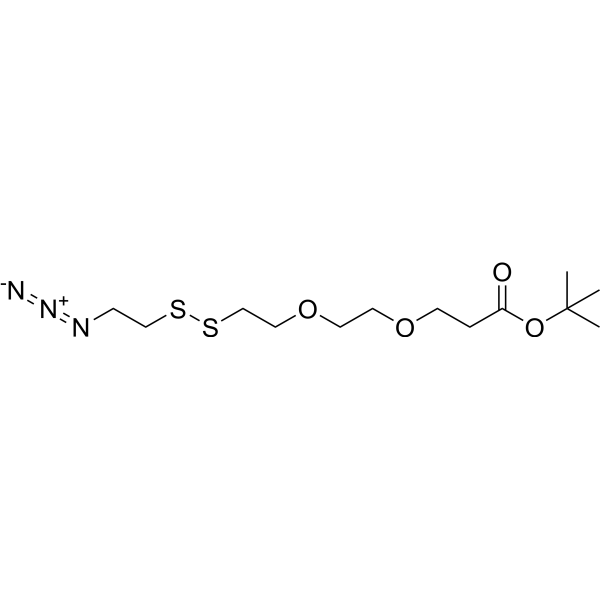
- HY-140843
-
|
|
PROTAC Linkers
|
Cancer
|
|
1-Isothiocyanato-PEG3-azide is a PEG-based PROTAC linker that can be used in the synthesis of PROTACs . 1-Isothiocyanato-PEG3-azide is a click chemistry reagent, it contains an Azide group and can undergo copper-catalyzed azide-alkyne cycloaddition reaction (CuAAc) with molecules containing Alkyne groups. It can also undergo strain-promoted alkyne-azide cycloaddition (SPAAC) reactions with molecules containing DBCO or BCN groups.
|
-
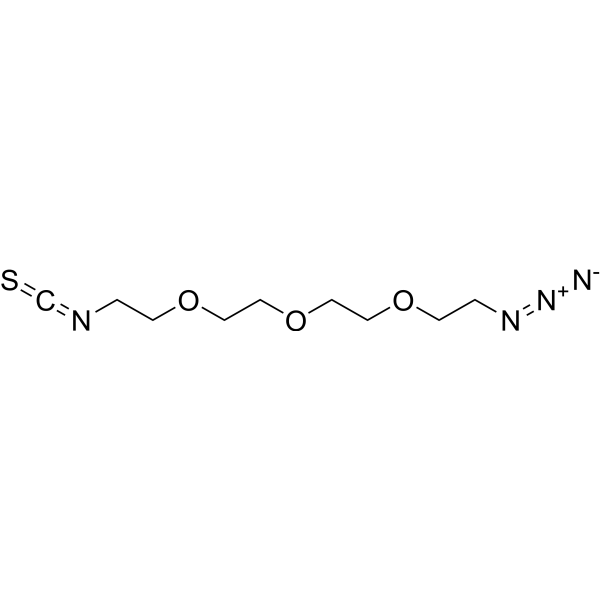
- HY-132099
-
|
|
PROTAC Linkers
|
Cancer
|
|
Fmoc-N-amido-PEG2-azide is a PEG-based PROTAC linker that can be used in the synthesis of PROTACs . Fmoc-N-amido-PEG2-azide is a click chemistry reagent, it contains an Azide group and can undergo copper-catalyzed azide-alkyne cycloaddition reaction (CuAAc) with molecules containing Alkyne groups. It can also undergo strain-promoted alkyne-azide cycloaddition (SPAAC) reactions with molecules containing DBCO or BCN groups.
|
-
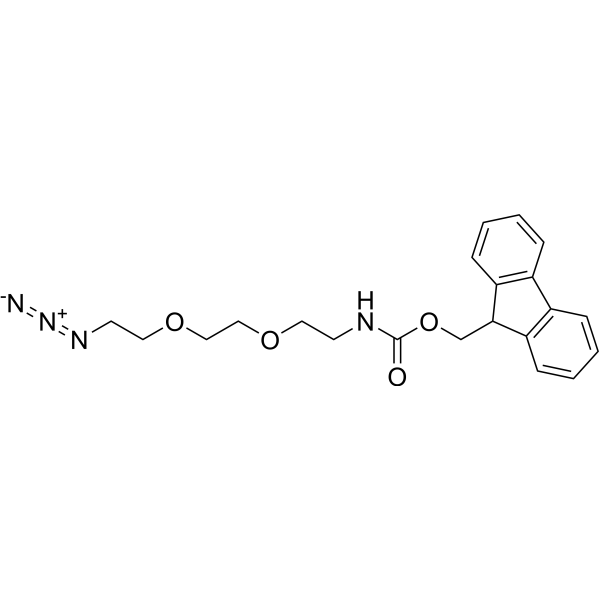
- HY-140920
-
|
|
PROTAC Linkers
|
Cancer
|
|
UV Cleavable Biotin-PEG2-Azide is a PEG-based PROTAC linker that can be used in the synthesis of PROTACs . UV Cleavable Biotin-PEG2-Azide is a click chemistry reagent, it contains an Azide group and can undergo copper-catalyzed azide-alkyne cycloaddition reaction (CuAAc) with molecules containing Alkyne groups. It can also undergo strain-promoted alkyne-azide cycloaddition (SPAAC) reactions with molecules containing DBCO or BCN groups.
|
-
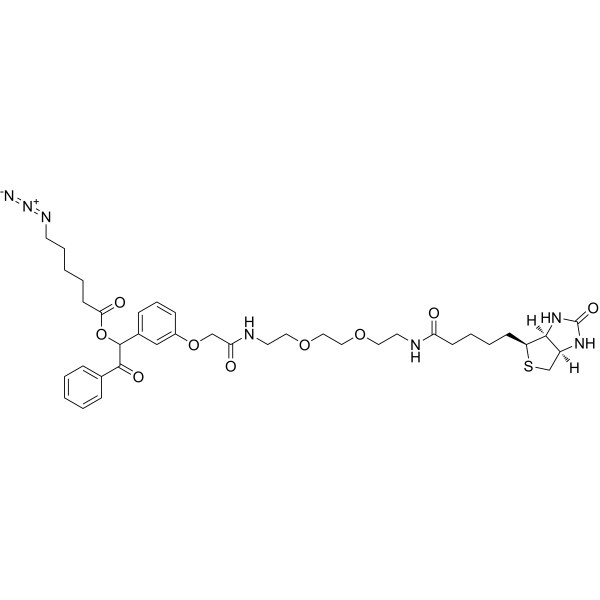
- HY-140919
-
|
|
PROTAC Linkers
|
Cancer
|
|
N-(Azido-PEG4)-biocytin is a PEG-based PROTAC linker that can be used in the synthesis of PROTACs . N-(Azido-PEG4)-biocytin is a click chemistry reagent, it contains an Azide group and can undergo copper-catalyzed azide-alkyne cycloaddition reaction (CuAAc) with molecules containing Alkyne groups. It can also undergo strain-promoted alkyne-azide cycloaddition (SPAAC) reactions with molecules containing DBCO or BCN groups.
|
-
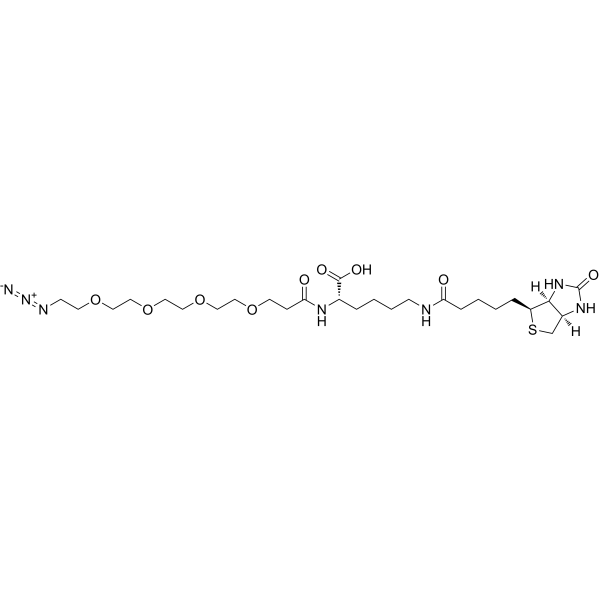
- HY-138521
-
|
|
ADC Linker
|
Cancer
|
|
Azido-C6-OH is a cleavable ADC linker used in the synthesis of antibody-drug conjugates (ADCs) . Azido-C6-OH is a click chemistry reagent, it contains an Azide group and can undergo copper-catalyzed azide-alkyne cycloaddition reaction (CuAAc) with molecules containing Alkyne groups. It can also undergo strain-promoted alkyne-azide cycloaddition (SPAAC) reactions with molecules containing DBCO or BCN groups.
|
-
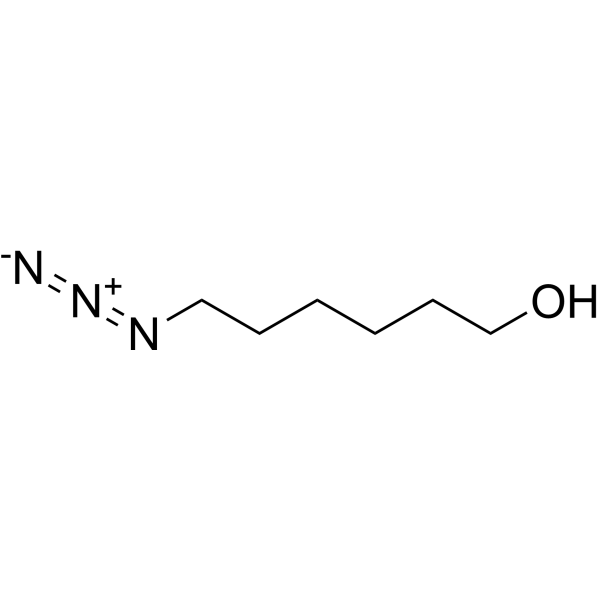
- HY-140783
-
|
|
PROTAC Linkers
|
Cancer
|
|
Azido-PEG15-t-butyl ester is a PEG-based PROTAC linker that can be used in the synthesis of PROTACs . Azido-PEG15-t-butyl ester is a click chemistry reagent, it contains an Azide group and can undergo copper-catalyzed azide-alkyne cycloaddition reaction (CuAAc) with molecules containing Alkyne groups. It can also undergo strain-promoted alkyne-azide cycloaddition (SPAAC) reactions with molecules containing DBCO or BCN groups.
|
-
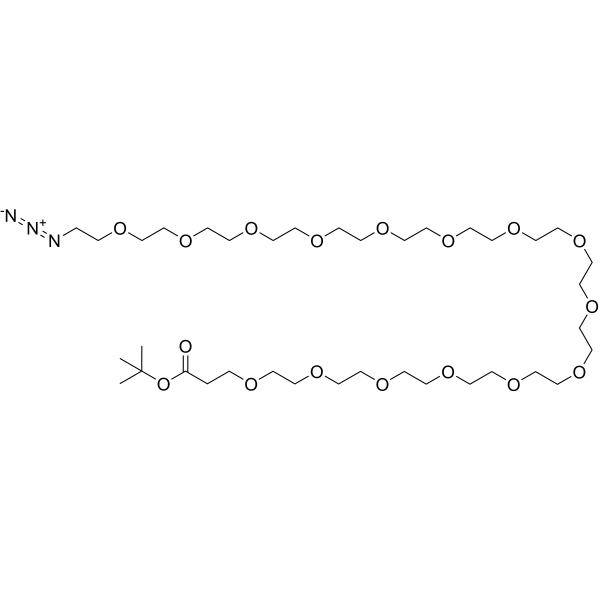
- HY-135835
-
|
|
Fluorescent Dye
|
Others
|
|
6-FAM-PEG3-Azide is a fluorescent dye that can be used to label oligonucleotide . 6-FAM-PEG3-Azide is a click chemistry reagent, it contains an Azide group and can undergo copper-catalyzed azide-alkyne cycloaddition reaction (CuAAc) with molecules containing Alkyne groups. It can also undergo strain-promoted alkyne-azide cycloaddition (SPAAC) reactions with molecules containing DBCO or BCN groups.
|
-
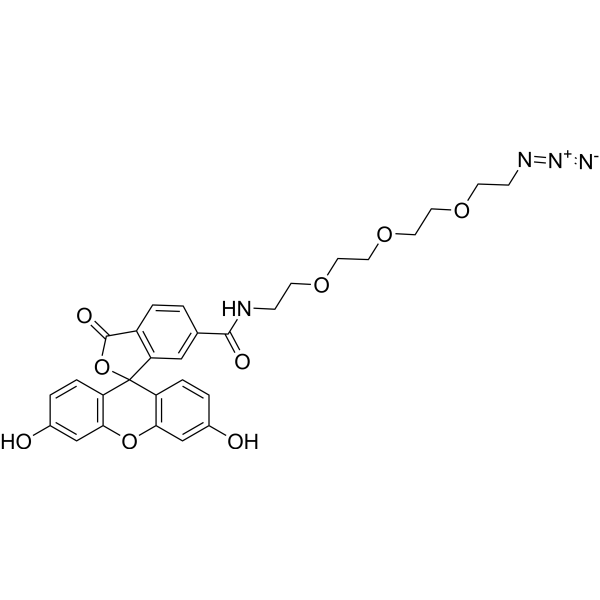
- HY-120832
-
|
|
HIV
|
Infection
|
|
Azt-pmap, a nucleoside analogue, is an aryl phosphate derivative of AZT. Azt-pmap shows anti-HIV activity . AZT is a nucleoside reverse transcriptase inhibitor (NRTI) for HIV infection . Azt-pmap is a click chemistry reagent, it contains an Azide group and can undergo copper-catalyzed azide-alkyne cycloaddition reaction (CuAAc) with molecules containing Alkyne groups. It can also undergo strain-promoted alkyne-azide cycloaddition (SPAAC) reactions with molecules containing DBCO or BCN groups.
|
-
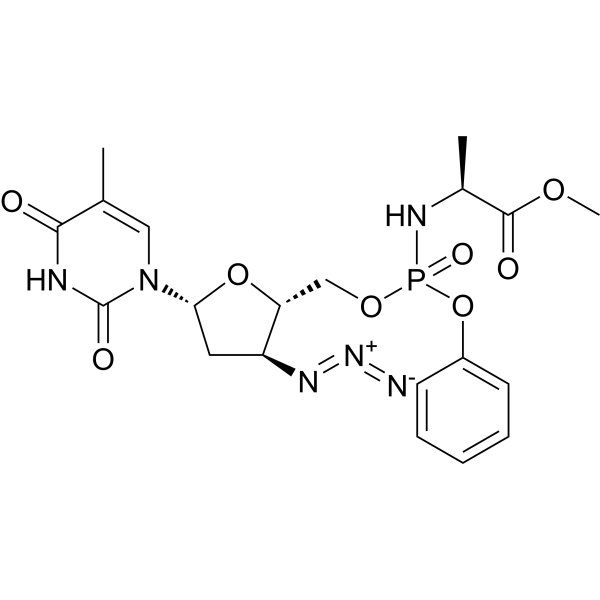
- HY-139262A
-
|
|
Reverse Transcriptase
HIV
HBV
HCV
|
Infection
|
|
FNC-TP trisodium is the intracellular active form of FNC. FNC is a potent nucleoside reverse transcriptase inhibitor (NRTI), with antiviral activity on HIV, HBV and HCV . FNC-TP (trisodium) is a click chemistry reagent, it contains an Azide group and can undergo copper-catalyzed azide-alkyne cycloaddition reaction (CuAAc) with molecules containing Alkyne groups. It can also undergo strain-promoted alkyne-azide cycloaddition (SPAAC) reactions with molecules containing DBCO or BCN groups.
|
-
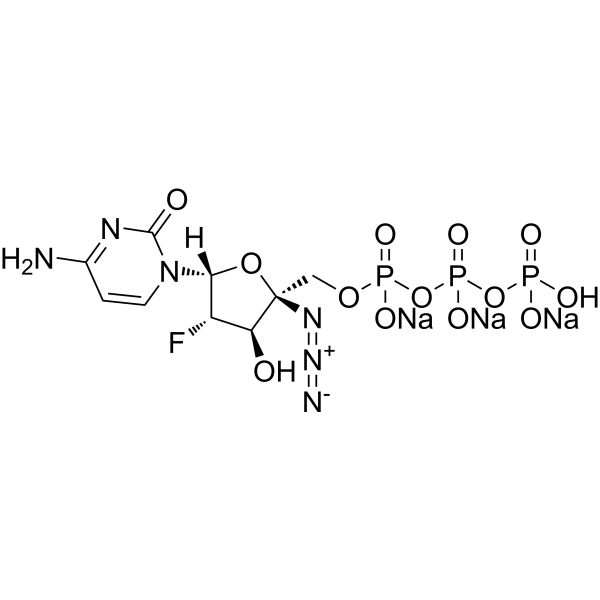
- HY-138464
-
|
|
PROTAC Linkers
|
Cancer
|
|
Br-Boc-C2-azido is an alkyl/ether-based PROTAC linker that can be used in the synthesis of PROTACs . Br-Boc-C2-azido is a click chemistry reagent, it contains an Azide group and can undergo copper-catalyzed azide-alkyne cycloaddition reaction (CuAAc) with molecules containing Alkyne groups. It can also undergo strain-promoted alkyne-azide cycloaddition (SPAAC) reactions with molecules containing DBCO or BCN groups.
|
-
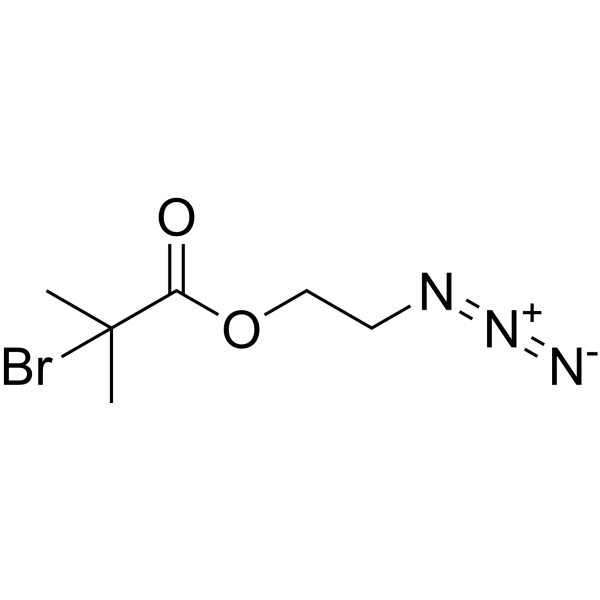
- HY-130742
-
|
|
PROTAC Linkers
|
Cancer
|
|
Azido-PEG8-Boc is a PEG- and Alkyl/ether-based PROTAC linker can be used in the synthesis of PROTACs . Azido-PEG8-Boc is a click chemistry reagent, it contains an Azide group and can undergo copper-catalyzed azide-alkyne cycloaddition reaction (CuAAc) with molecules containing Alkyne groups. It can also undergo strain-promoted alkyne-azide cycloaddition (SPAAC) reactions with molecules containing DBCO or BCN groups.
|
-
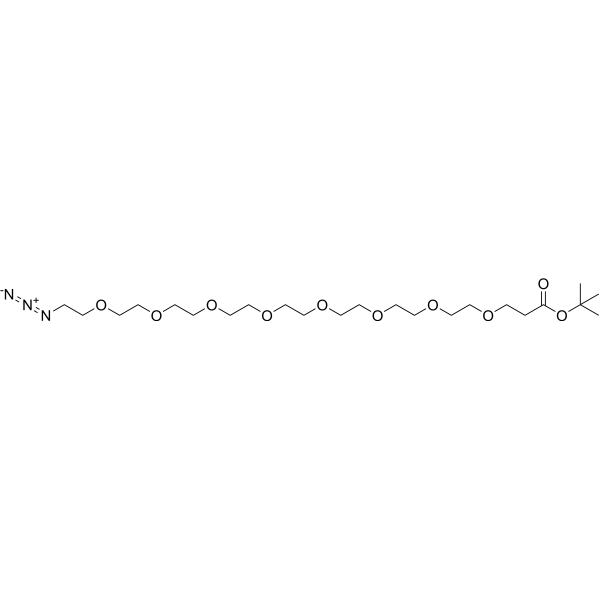
- HY-140794
-
|
|
PROTAC Linkers
|
Cancer
|
|
Azido-PEG3-C-Boc is a PEG-based PROTAC linker that can be used in the synthesis of PROTACs . Azido-PEG3-C-Boc is a click chemistry reagent, it contains an Azide group and can undergo copper-catalyzed azide-alkyne cycloaddition reaction (CuAAc) with molecules containing Alkyne groups. It can also undergo strain-promoted alkyne-azide cycloaddition (SPAAC) reactions with molecules containing DBCO or BCN groups.
|
-
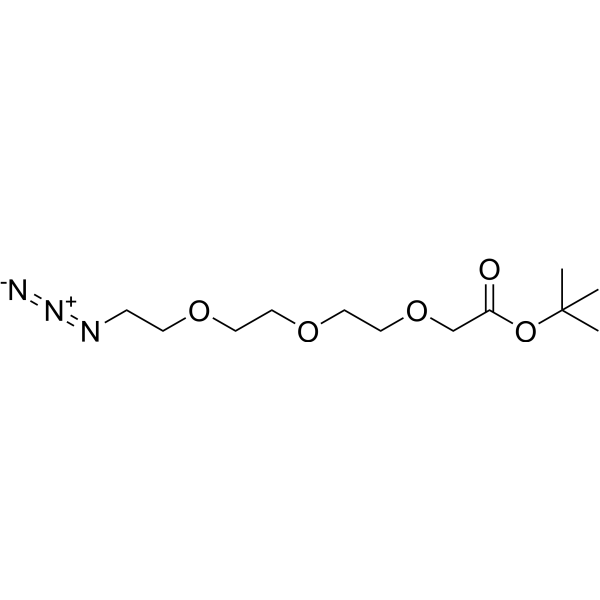
- HY-138745
-
|
|
ADC Linker
|
Cancer
|
|
Bis-sulfone-PEG3-Azide is a cleavable ADC linker used in the synthesis of antibody-drug conjugates (ADCs). Bis-sulfone-PEG3-Azide is a click chemistry reagent, it contains an Azide group and can undergo copper-catalyzed azide-alkyne cycloaddition reaction (CuAAc) with molecules containing Alkyne groups. It can also undergo strain-promoted alkyne-azide cycloaddition (SPAAC) reactions with molecules containing DBCO or BCN groups.
|
-
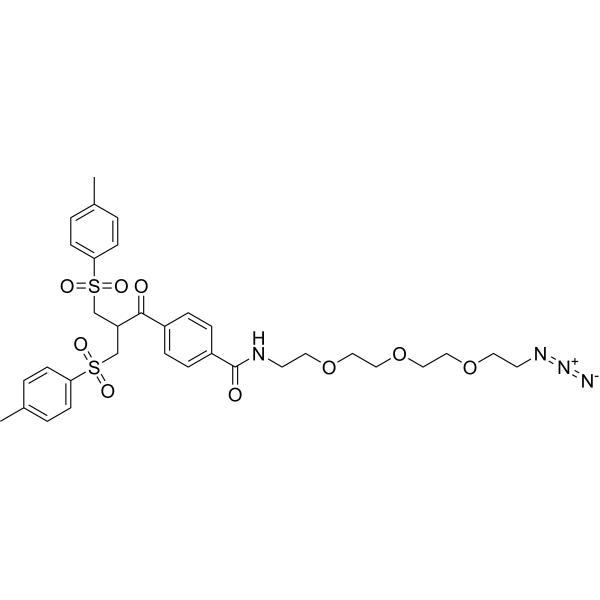
- HY-140551
-
|
|
PROTAC Linkers
|
Cancer
|
|
NH-bis(PEG3-azide) is a PEG-based PROTAC linker that can be used in the synthesis of PROTACs . NH-bis(PEG3-azide) is a click chemistry reagent, it contains an Azide group and can undergo copper-catalyzed azide-alkyne cycloaddition reaction (CuAAc) with molecules containing Alkyne groups. It can also undergo strain-promoted alkyne-azide cycloaddition (SPAAC) reactions with molecules containing DBCO or BCN groups.
|
-
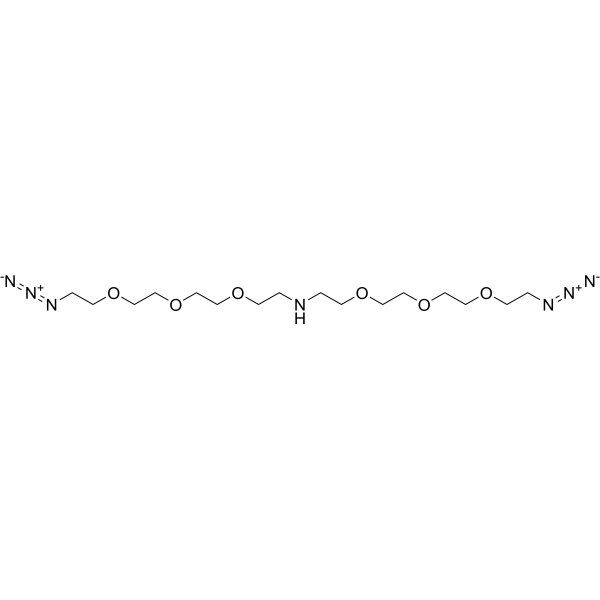
- HY-140433
-
|
|
PROTAC Linkers
|
Cancer
|
|
Boc-Aminooxy-PEG4-azide is a PEG-based PROTAC linker that can be used in the synthesis of PROTACs . Boc-Aminooxy-PEG4-azide is a click chemistry reagent, it contains an Azide group and can undergo copper-catalyzed azide-alkyne cycloaddition reaction (CuAAc) with molecules containing Alkyne groups. It can also undergo strain-promoted alkyne-azide cycloaddition (SPAAC) reactions with molecules containing DBCO or BCN groups.
|
-
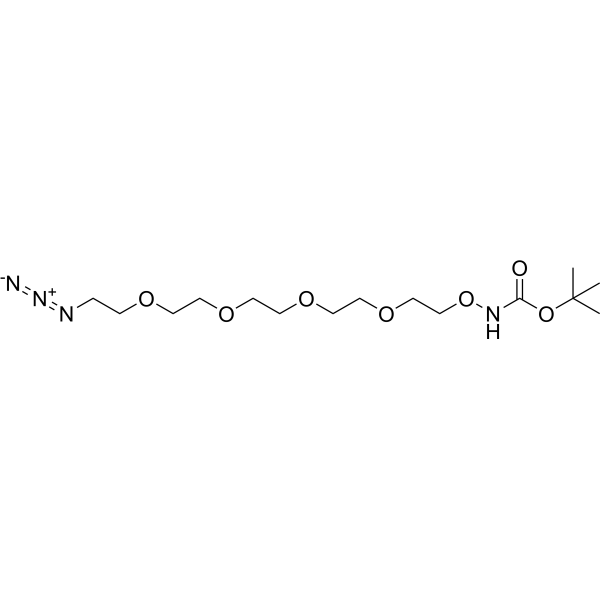
- HY-140911
-
|
|
PROTAC Linkers
|
Cancer
|
|
Biotin-PEG6-azide is a biotin-labeled, PEG-based PROTAC linker that can be used in the synthesis of PROTACs . Biotin-PEG6-azide is a click chemistry reagent, it contains an Azide group and can undergo copper-catalyzed azide-alkyne cycloaddition reaction (CuAAc) with molecules containing Alkyne groups. It can also undergo strain-promoted alkyne-azide cycloaddition (SPAAC) reactions with molecules containing DBCO or BCN groups.
|
-
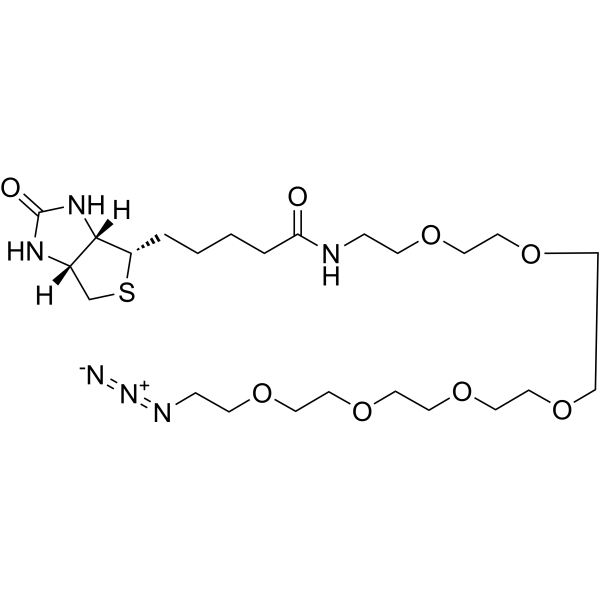
- HY-132061
-
|
|
PROTAC Linkers
|
Cancer
|
|
Azido-PEG14-t-butyl ester is a PEG-based PROTAC linker that can be used in the synthesis of PROTACs . Azido-PEG14-t-butyl ester is a click chemistry reagent, it contains an Azide group and can undergo copper-catalyzed azide-alkyne cycloaddition reaction (CuAAc) with molecules containing Alkyne groups. It can also undergo strain-promoted alkyne-azide cycloaddition (SPAAC) reactions with molecules containing DBCO or BCN groups.
|
-
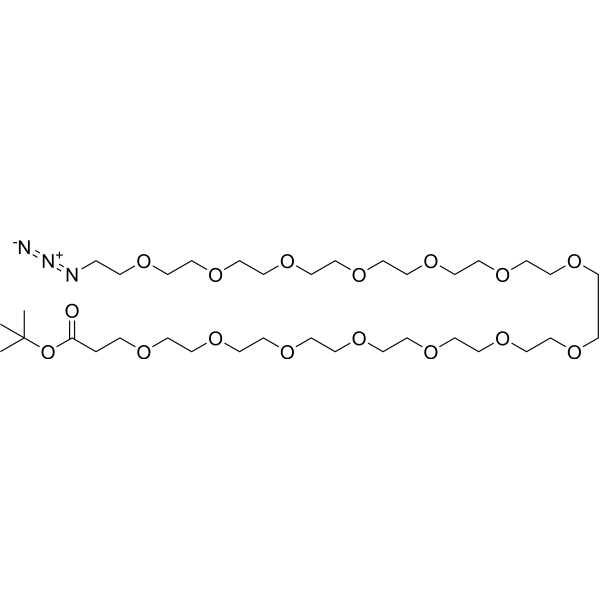
- HY-141249
-
|
|
PROTAC Linkers
|
Cancer
|
|
Azido-PEG4-Amido-Tris is a PEG-based PROTAC linker that can be used in the synthesis of PROTACs . Azido-PEG4-Amido-Tris is a click chemistry reagent, it contains an Azide group and can undergo copper-catalyzed azide-alkyne cycloaddition reaction (CuAAc) with molecules containing Alkyne groups. It can also undergo strain-promoted alkyne-azide cycloaddition (SPAAC) reactions with molecules containing DBCO or BCN groups.
|
-
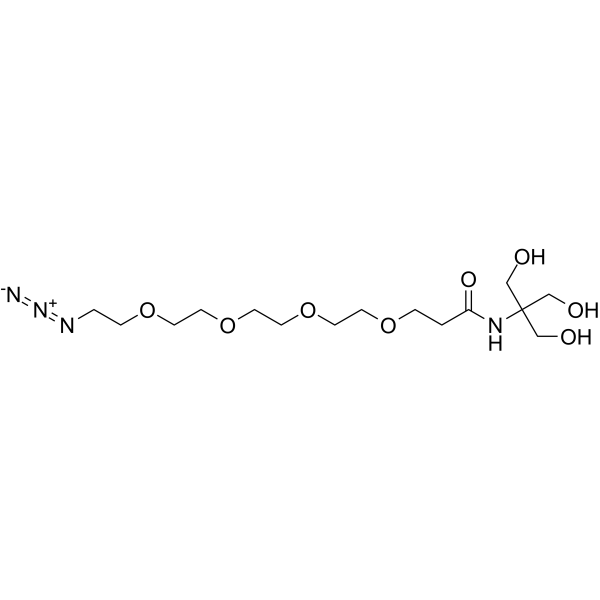
- HY-130906
-
|
|
PROTAC Linkers
|
Cancer
|
|
DSPE-PEG46-N3 is a PEG-based PROTAC linker that can be used in the synthesis of PROTACs . DSPE-PEG46-N3 is a click chemistry reagent, it contains an Azide group and can undergo copper-catalyzed azide-alkyne cycloaddition reaction (CuAAc) with molecules containing Alkyne groups. It can also undergo strain-promoted alkyne-azide cycloaddition (SPAAC) reactions with molecules containing DBCO or BCN groups.
|
-
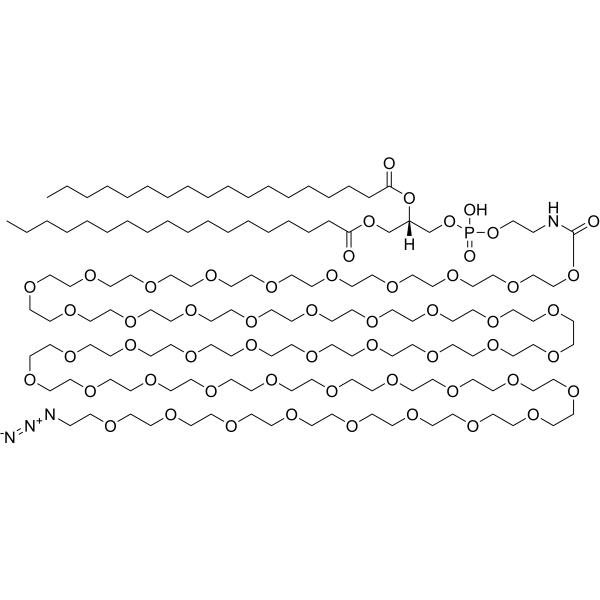
- HY-140816
-
|
|
PROTAC Linkers
|
Cancer
|
|
Azido-PEG2-hydrazide-Boc is a PEG-based PROTAC linker that can be used in the synthesis of PROTACs . Azido-PEG2-hydrazide-Boc is a click chemistry reagent, it contains an Azide group and can undergo copper-catalyzed azide-alkyne cycloaddition reaction (CuAAc) with molecules containing Alkyne groups. It can also undergo strain-promoted alkyne-azide cycloaddition (SPAAC) reactions with molecules containing DBCO or BCN groups.
|
-
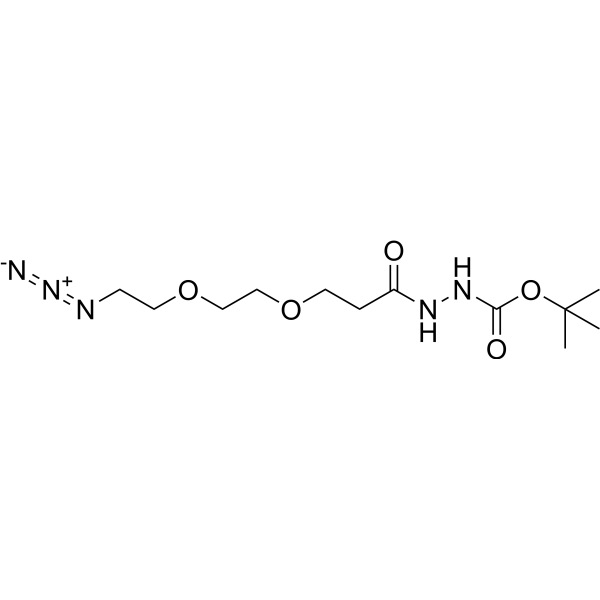
- HY-141277
-
|
|
PROTAC Linkers
|
Cancer
|
|
Methyltetrazine-amido-PEG7-azide is a PEG-based PROTAC linker that can be used in the synthesis of PROTACs . Methyltetrazine-amido-PEG7-azide is a click chemistry reagent, it contains an Azide group and can undergo copper-catalyzed azide-alkyne cycloaddition reaction (CuAAc) with molecules containing Alkyne groups. It can also undergo strain-promoted alkyne-azide cycloaddition (SPAAC) reactions with molecules containing DBCO or BCN groups.
|
-
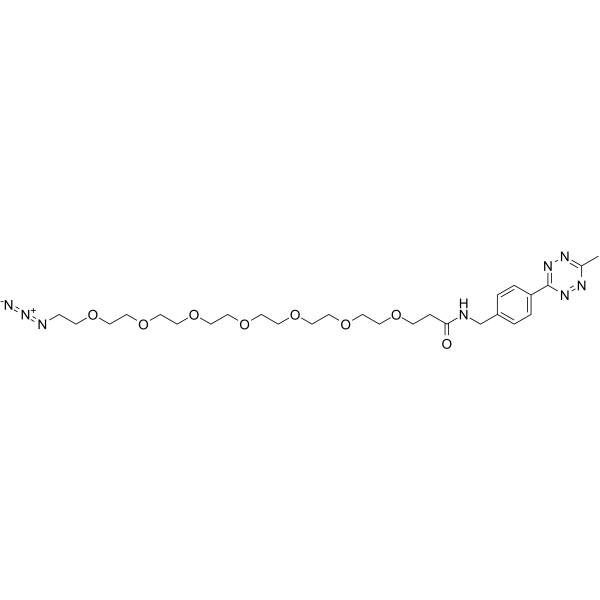
- HY-132110
-
|
|
PROTAC Linkers
|
Cancer
|
|
Fmoc-N-amido-PEG3-azide is a PEG-based PROTAC linker that can be used in the synthesis of PROTACs . Fmoc-N-amido-PEG3-azide is a click chemistry reagent, it contains an Azide group and can undergo copper-catalyzed azide-alkyne cycloaddition reaction (CuAAc) with molecules containing Alkyne groups. It can also undergo strain-promoted alkyne-azide cycloaddition (SPAAC) reactions with molecules containing DBCO or BCN groups.
|
-
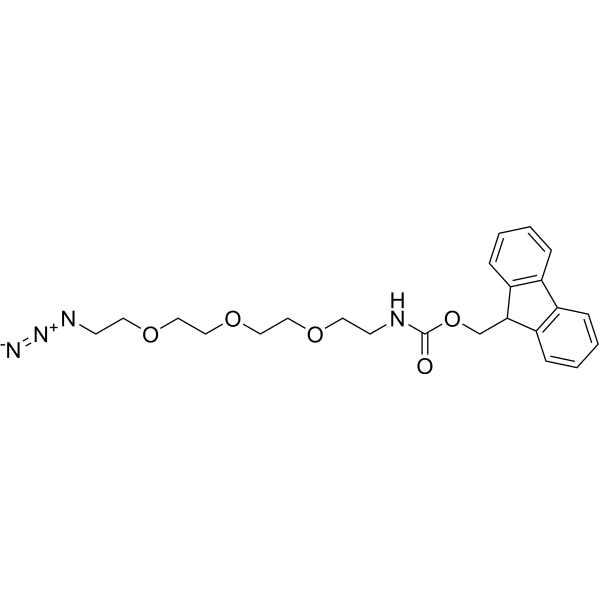
- HY-140430
-
|
|
PROTAC Linkers
|
Cancer
|
|
Boc-Aminooxy-PEG1-azide is a PEG-based PROTAC linker that can be used in the synthesis of PROTACs . Boc-Aminooxy-PEG1-azide is a click chemistry reagent, it contains an Azide group and can undergo copper-catalyzed azide-alkyne cycloaddition reaction (CuAAc) with molecules containing Alkyne groups. It can also undergo strain-promoted alkyne-azide cycloaddition (SPAAC) reactions with molecules containing DBCO or BCN groups.
|
-
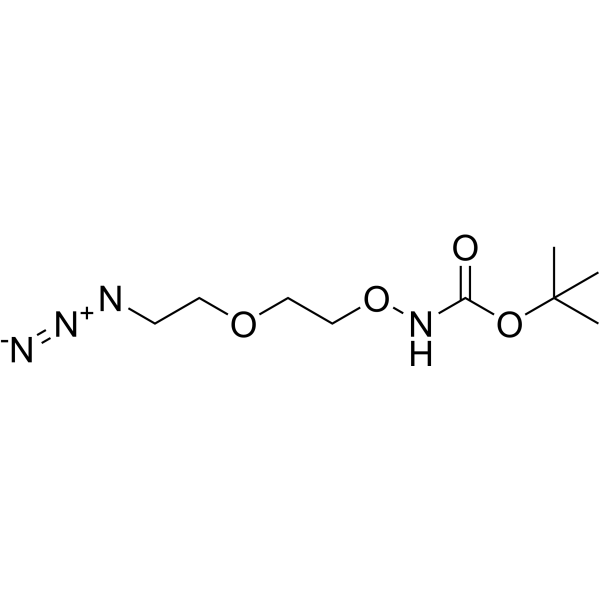
- HY-139107
-
|
|
ADC Linker
|
Cancer
|
|
Biotin-PEG4-SS-azide is a cleavable, biotin-labeled, ADC linker used in the synthesis of antibody-drug conjugates (ADCs). Biotin-PEG4-SS-azide is a click chemistry reagent, it contains an Azide group and can undergo copper-catalyzed azide-alkyne cycloaddition reaction (CuAAc) with molecules containing Alkyne groups. It can also undergo strain-promoted alkyne-azide cycloaddition (SPAAC) reactions with molecules containing DBCO or BCN groups.
|
-
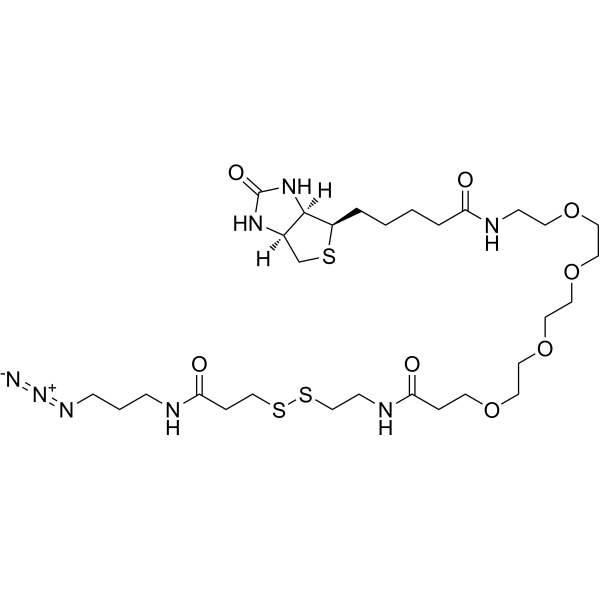
- HY-141011
-
|
|
E3 Ligase Ligand-Linker Conjugates
Autophagy
Apoptosis
|
Cancer
|
|
Thalidomide-O-amido-PEG4-azide is a PEG-based PROTAC linker that can be used in the synthesis of PROTACs . Thalidomide-O-amido-PEG4-azide is a click chemistry reagent, it contains an Azide group and can undergo copper-catalyzed azide-alkyne cycloaddition reaction (CuAAc) with molecules containing Alkyne groups. It can also undergo strain-promoted alkyne-azide cycloaddition (SPAAC) reactions with molecules containing DBCO or BCN groups.
|
-
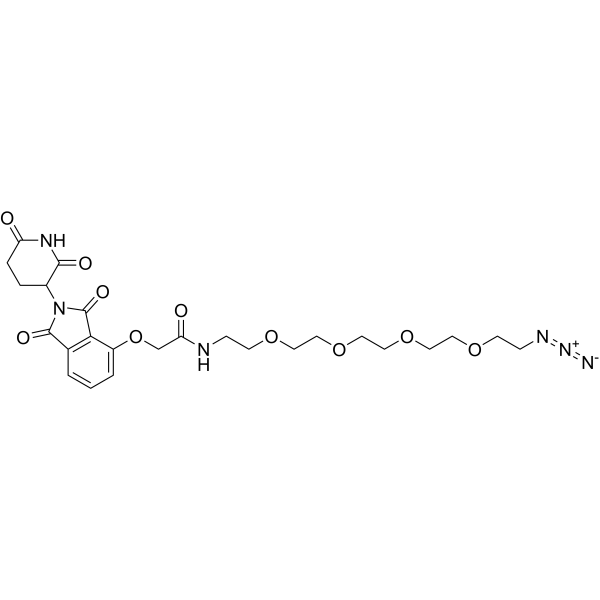
- HY-132060
-
|
|
PROTAC Linkers
|
Cancer
|
|
Azido-PEG7-t-butyl ester is a PEG-based PROTAC linker that can be used in the synthesis of PROTACs . Azido-PEG7-t-butyl ester is a click chemistry reagent, it contains an Azide group and can undergo copper-catalyzed azide-alkyne cycloaddition reaction (CuAAc) with molecules containing Alkyne groups. It can also undergo strain-promoted alkyne-azide cycloaddition (SPAAC) reactions with molecules containing DBCO or BCN groups.
|
-
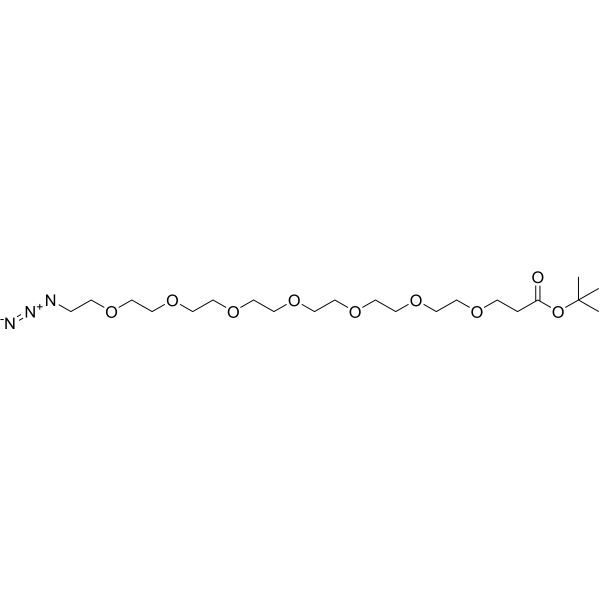
- HY-132111
-
|
|
PROTAC Linkers
|
Cancer
|
|
Fmoc-N-amido-PEG5-azide is a PEG-based PROTAC linker that can be used in the synthesis of PROTACs . Fmoc-N-amido-PEG5-azide is a click chemistry reagent, it contains an Azide group and can undergo copper-catalyzed azide-alkyne cycloaddition reaction (CuAAc) with molecules containing Alkyne groups. It can also undergo strain-promoted alkyne-azide cycloaddition (SPAAC) reactions with molecules containing DBCO or BCN groups.
|
-
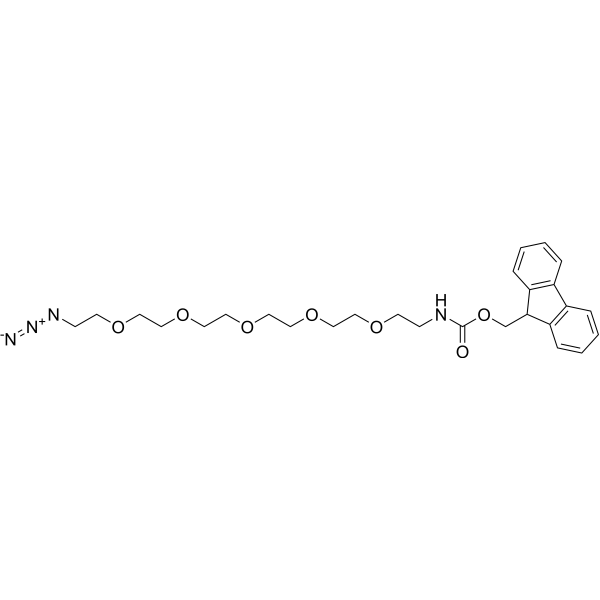
- HY-148835
-
|
|
Fluorescent Dye
|
Others
|
|
AzGGK is an unnatural amino acid. AzGGK is site-specifically incorporated into proteins via genetic-code expansion. AzGGK can be used as site-specific probe for ubiquitylation and SUMOylation . AzGGK is a click chemistry reagent, it contains an Azide group and can undergo copper-catalyzed azide-alkyne cycloaddition reaction (CuAAc) with molecules containing Alkyne groups. It can also undergo strain-promoted alkyne-azide cycloaddition (SPAAC) reactions with molecules containing DBCO or BCN groups.
|
-
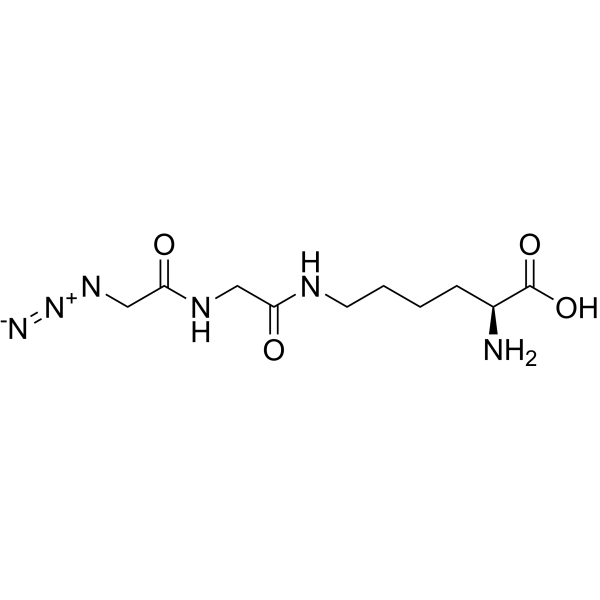
- HY-130160
-
|
|
PROTAC Linkers
|
Cancer
|
|
Fluorescein-thiourea-PEG2-azide is a PEG-based PROTAC linker that can be used in the synthesis of PROTACs . Fluorescein-thiourea-PEG2-azide is a click chemistry reagent, it contains an Azide group and can undergo copper-catalyzed azide-alkyne cycloaddition reaction (CuAAc) with molecules containing Alkyne groups. It can also undergo strain-promoted alkyne-azide cycloaddition (SPAAC) reactions with molecules containing DBCO or BCN groups.
|
-
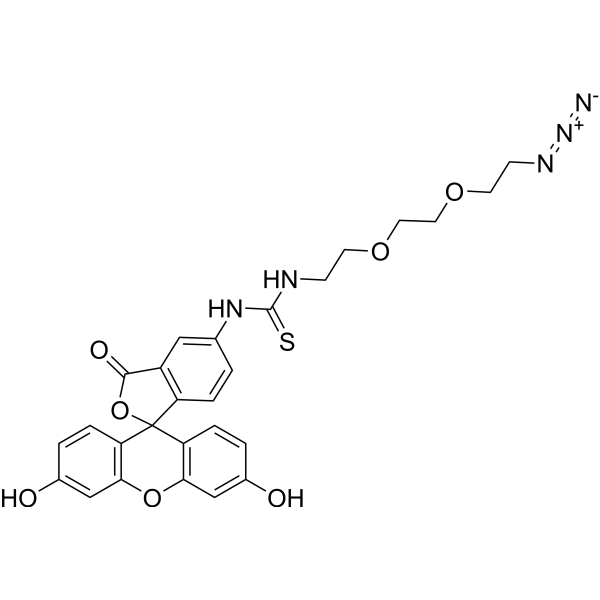
- HY-140012
-
|
|
PROTAC Linkers
|
Cancer
|
|
Azido-PEG4-beta-D-glucose is a PEG-based PROTAC linker that can be used in the synthesis of PROTACs . Azido-PEG4-beta-D-glucose is a click chemistry reagent, it contains an Azide group and can undergo copper-catalyzed azide-alkyne cycloaddition reaction (CuAAc) with molecules containing Alkyne groups. It can also undergo strain-promoted alkyne-azide cycloaddition (SPAAC) reactions with molecules containing DBCO or BCN groups.
|
-
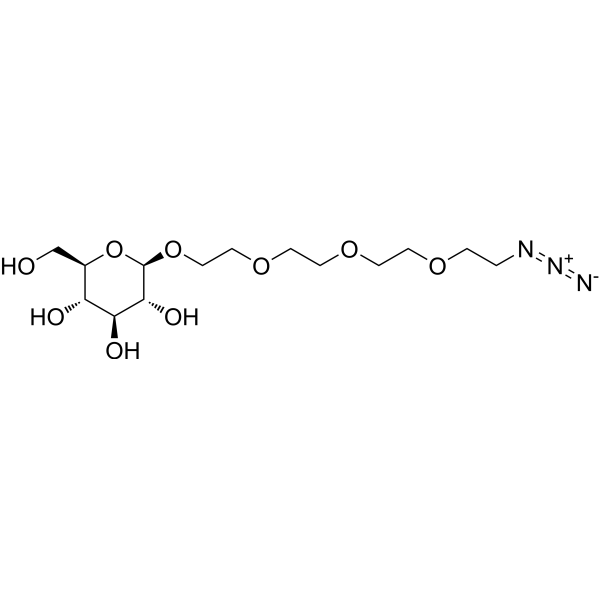
- HY-173606
-
|
|
Liposome
|
Others
|
|
DSPE-PEG2000-Azide ammonium is an azide containing lipid that can be used to form micelles as nanoparticles for drug delivery . DSPE-PEG2000-Azide ammonium is a click chemistry reagent, it contains an Azide group and can undergo copper-catalyzed azide-alkyne cycloaddition reaction (CuAAc) with molecules containing Alkyne groups. It can also undergo strain-promoted alkyne-azide cycloaddition (SPAAC) reactions with molecules containing DBCO or BCN groups.
|
-

- HY-130183
-
|
|
PROTAC Linkers
|
Cancer
|
|
Propargyl-PEG6-N3 is a PEG-based PROTAC linker that can be used in the synthesis of PROTACs . Propargyl-PEG6-N3 is a click chemistry reagent, it contains an Azide group and can undergo copper-catalyzed azide-alkyne cycloaddition reaction (CuAAc) with molecules containing Alkyne groups. It can also undergo strain-promoted alkyne-azide cycloaddition (SPAAC) reactions with molecules containing DBCO or BCN groups.
|
-
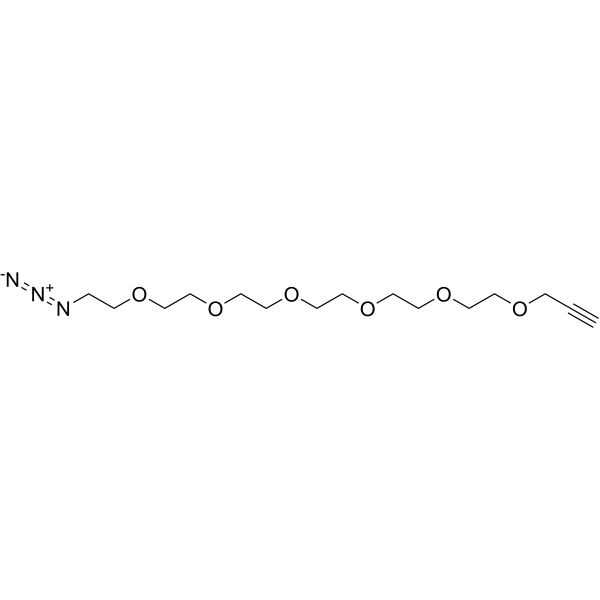
- HY-140779
-
|
|
PROTAC Linkers
|
Cancer
|
|
Azido-PEG6-Boc is a PEG-based PROTAC linker that can be used in the synthesis of PROTACs . Azido-PEG6-C2-Boc is a click chemistry reagent, it contains an Azide group and can undergo copper-catalyzed azide-alkyne cycloaddition reaction (CuAAc) with molecules containing Alkyne groups. It can also undergo strain-promoted alkyne-azide cycloaddition (SPAAC) reactions with molecules containing DBCO or BCN groups.
|
-
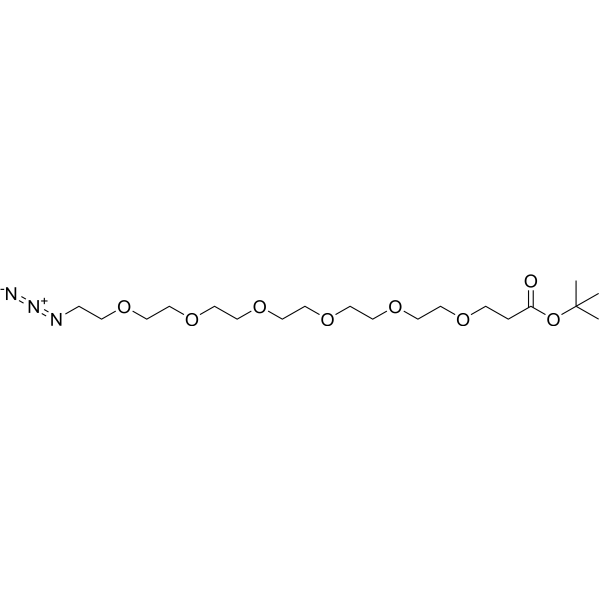
- HY-140768
-
|
|
PROTAC Linkers
|
Cancer
|
|
Azido-PEG3-O-NHS ester is a PEG-based PROTAC linker that can be used in the synthesis of PROTACs . Azido-PEG3-O-NHS ester is a click chemistry reagent, it contains an Azide group and can undergo copper-catalyzed azide-alkyne cycloaddition reaction (CuAAc) with molecules containing Alkyne groups. It can also undergo strain-promoted alkyne-azide cycloaddition (SPAAC) reactions with molecules containing DBCO or BCN groups.
|
-
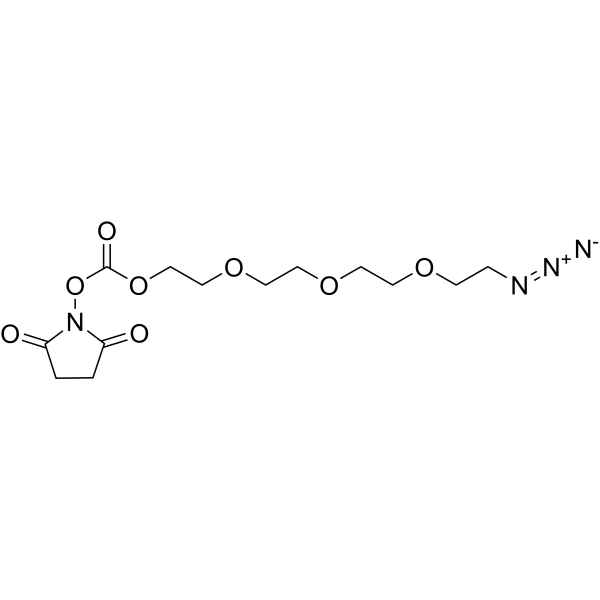
- HY-140839
-
|
|
PROTAC Linkers
|
Cancer
|
|
Boc-NH-PEG7-azide is a PEG-based PROTAC linker that can be used in the synthesis of PROTACs . Boc-NH-PEG7-azide is a click chemistry reagent, it contains an Azide group and can undergo copper-catalyzed azide-alkyne cycloaddition reaction (CuAAc) with molecules containing Alkyne groups. It can also undergo strain-promoted alkyne-azide cycloaddition (SPAAC) reactions with molecules containing DBCO or BCN groups.
|
-
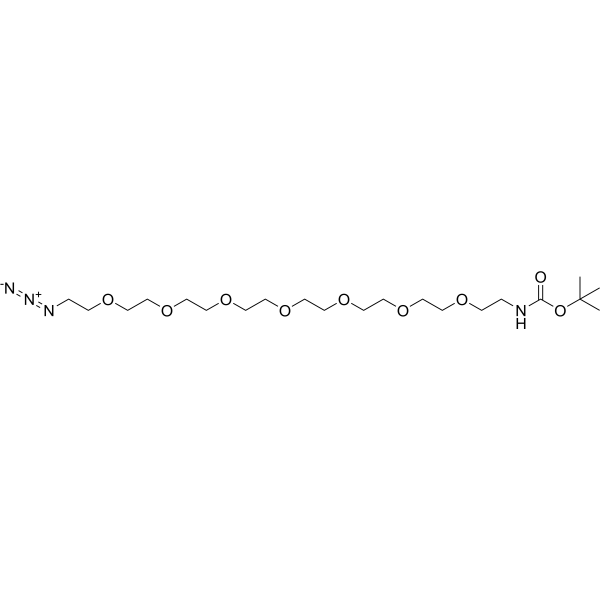
- HY-132062
-
|
|
PROTAC Linkers
|
Cancer
|
|
Azido-PEG11-t-butyl ester is a PEG-based PROTAC linker that can be used in the synthesis of PROTACs . Azido-PEG11-t-butyl ester is a click chemistry reagent, it contains an Azide group and can undergo copper-catalyzed azide-alkyne cycloaddition reaction (CuAAc) with molecules containing Alkyne groups. It can also undergo strain-promoted alkyne-azide cycloaddition (SPAAC) reactions with molecules containing DBCO or BCN groups.
|
-
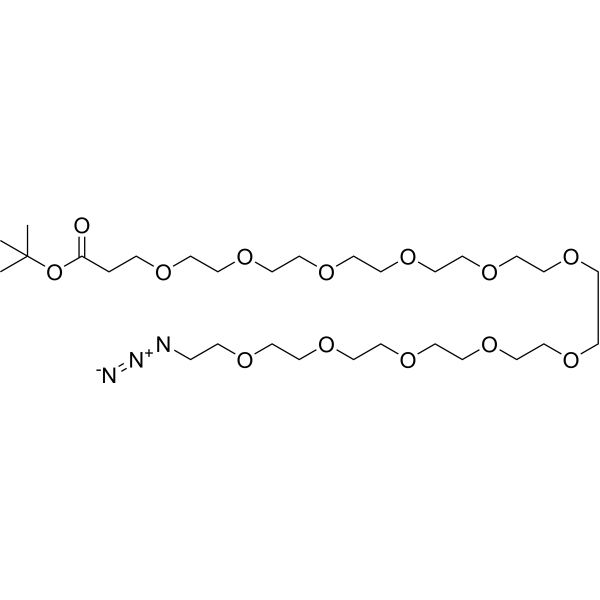
- HY-W096133
-
|
|
ADC Linker
|
Cancer
|
|
Biotin-PEG1-azide is a cleavable 1 unit PEG ADC linker used in the synthesis of antibody-drug conjugates (ADCs) . Biotin-PEG1-azide is a click chemistry reagent, it contains an Azide group and can undergo copper-catalyzed azide-alkyne cycloaddition reaction (CuAAc) with molecules containing Alkyne groups. It can also undergo strain-promoted alkyne-azide cycloaddition (SPAAC) reactions with molecules containing DBCO or BCN groups.
|
-
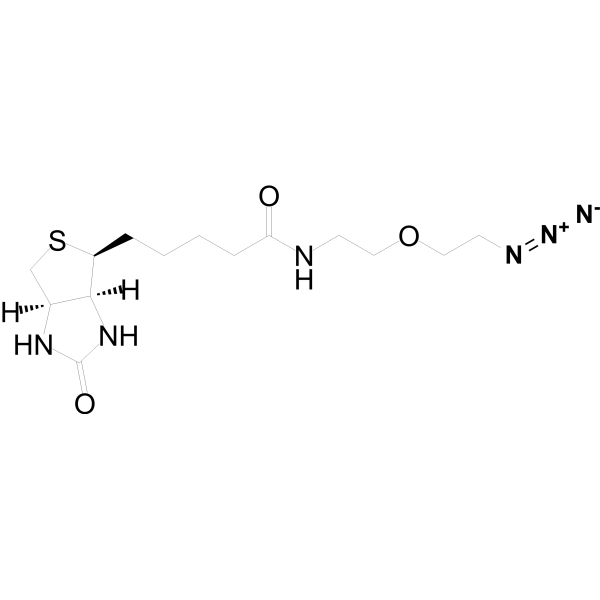
- HY-132094
-
|
|
PROTAC Linkers
|
Cancer
|
|
Azido-PEG9-S-methyl ethanethioate is a PEG-based PROTAC linker that can be used in the synthesis of PROTACs . Azido-PEG9-S-methyl ethanethioate is a click chemistry reagent, it contains an Azide group and can undergo copper-catalyzed azide-alkyne cycloaddition reaction (CuAAc) with molecules containing Alkyne groups. It can also undergo strain-promoted alkyne-azide cycloaddition (SPAAC) reactions with molecules containing DBCO or BCN groups.
|
-
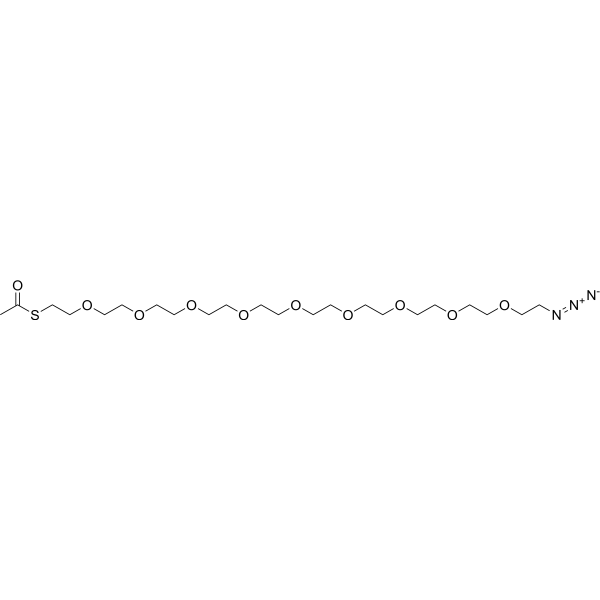
- HY-120781
-
|
|
PROTAC Linkers
|
Cancer
|
|
Fluorescein-thiourea-PEG4-azide is a PEG-based PROTAC linker can be used in the synthesis of PROTACs. Fluorescein-thiourea-PEG4-azide is a click chemistry reagent, it contains an Azide group and can undergo copper-catalyzed azide-alkyne cycloaddition reaction (CuAAc) with molecules containing Alkyne groups. It can also undergo strain-promoted alkyne-azide cycloaddition (SPAAC) reactions with molecules containing DBCO or BCN groups.
|
-
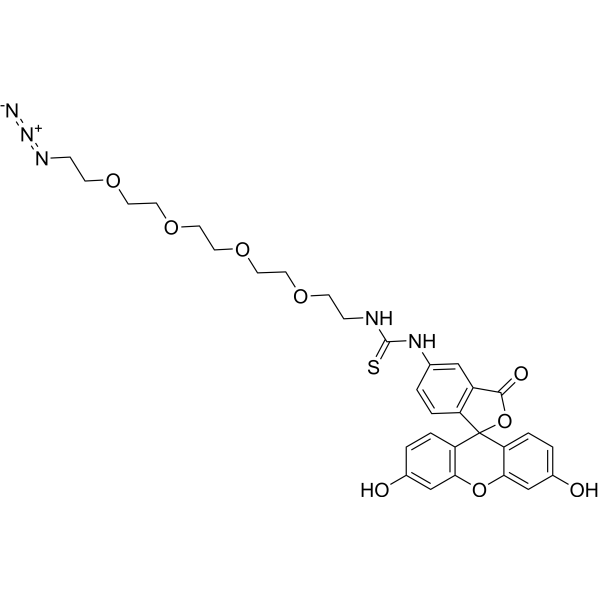
- HY-W878608
-
|
|
Fluorescent Dye
|
Others
|
|
Cyanine7 azide is a potent fluorescent dye. Cyanine7 azide can be used for NIR live organism imaging (λex=756 nm, λem=779 nm). Cyanine7 azide is a click chemistry reagent, it contains an Azide group and can undergo copper-catalyzed azide-alkyne cycloaddition reaction (CuAAc) with molecules containing Alkyne groups. It can also undergo strain-promoted alkyne-azide cycloaddition (SPAAC) reactions with molecules containing DBCO or BCN groups .
|
-

- HY-140432
-
|
|
PROTAC Linkers
|
Cancer
|
|
Boc-Aminooxy-PEG3-azide is a PEG-based PROTAC linker that can be used in the synthesis of PROTACs . Boc-Aminooxy-PEG3-azide is a click chemistry reagent, it contains an Azide group and can undergo copper-catalyzed azide-alkyne cycloaddition reaction (CuAAc) with molecules containing Alkyne groups. It can also undergo strain-promoted alkyne-azide cycloaddition (SPAAC) reactions with molecules containing DBCO or BCN groups.
|
-
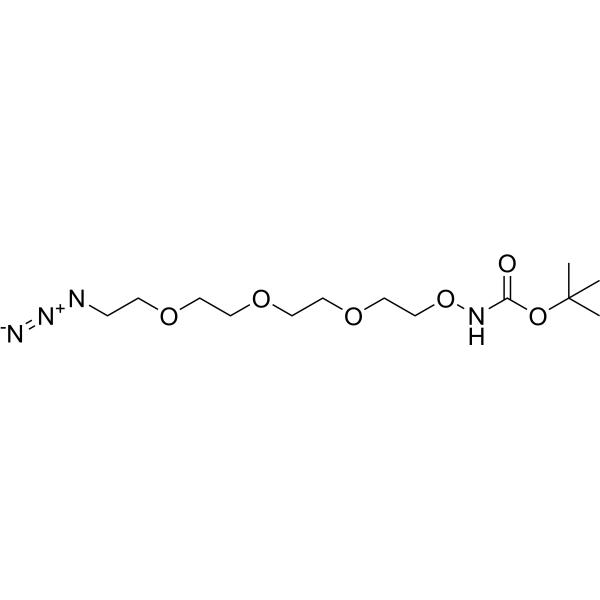
- HY-115374
-
|
|
ADC Linker
|
Inflammation/Immunology
Cancer
|
|
m-PEG6-azide is a non-cleavable 6 unit PEG ADC linker used in the synthesis of antibody-drug conjugates (ADCs). m-PEG6-azide is a click chemistry reagent, it contains an Azide group and can undergo copper-catalyzed azide-alkyne cycloaddition reaction (CuAAc) with molecules containing Alkyne groups. It can also undergo strain-promoted alkyne-azide cycloaddition (SPAAC) reactions with molecules containing DBCO or BCN groups.
|
-
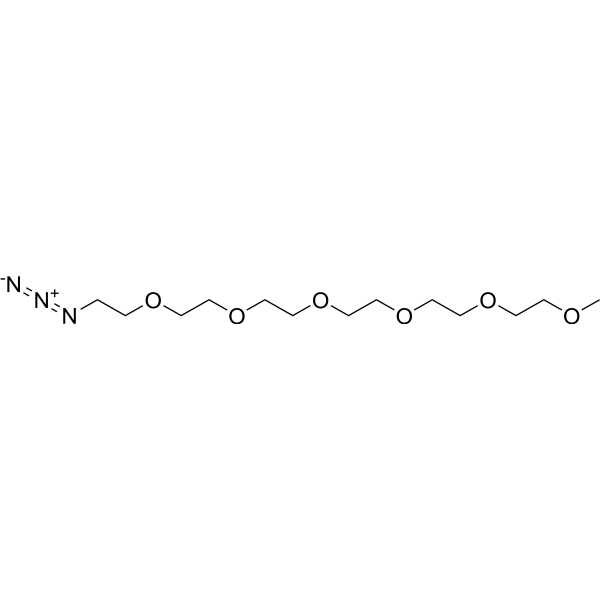
- HY-140352
-
|
|
ADC Linker
|
Cancer
|
|
Azide-PEG5-Tos is a cleavable 5 unit PEG ADC linker used in the synthesis of antibody-drug conjugates (ADCs) . Azide-PEG5-Tos is a click chemistry reagent, it contains an Azide group and can undergo copper-catalyzed azide-alkyne cycloaddition reaction (CuAAc) with molecules containing Alkyne groups. It can also undergo strain-promoted alkyne-azide cycloaddition (SPAAC) reactions with molecules containing DBCO or BCN groups.
|
-
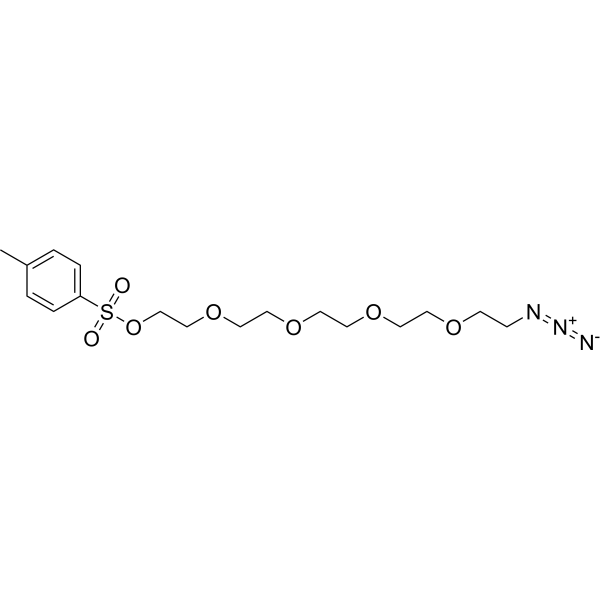
- HY-151667
-
|
DecarboxyBiotin-N3
|
Fluorescent Dye
|
Others
|
|
Biotin-C5-Azide (DecarboxyBiotin-N3) is a biotin reagent and can be used to prepare biotinylated conjugates . Biotin-C5-Azide is a click chemistry reagent, it contains an Azide group and can undergo copper-catalyzed azide-alkyne cycloaddition reaction (CuAAc) with molecules containing Alkyne groups. It can also undergo strain-promoted alkyne-azide cycloaddition (SPAAC) reactions with molecules containing DBCO or BCN groups.
|
-
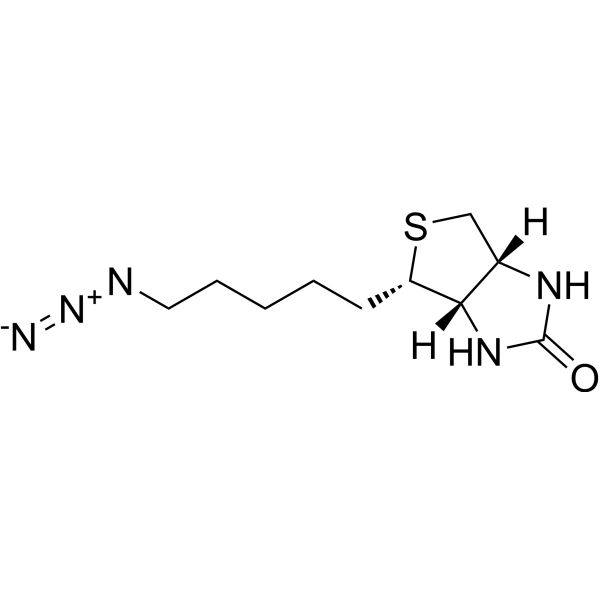
- HY-136038
-
|
|
ADC Linker
|
Cancer
|
|
Azido-PEG3-SSPy is a cleavable 3 unit PEG ADC linker used in the synthesis of antibody-drug conjugates (ADCs) . Azido-PEG3-SSPy is a click chemistry reagent, it contains an Azide group and can undergo copper-catalyzed azide-alkyne cycloaddition reaction (CuAAc) with molecules containing Alkyne groups. It can also undergo strain-promoted alkyne-azide cycloaddition (SPAAC) reactions with molecules containing DBCO or BCN groups.
|
-
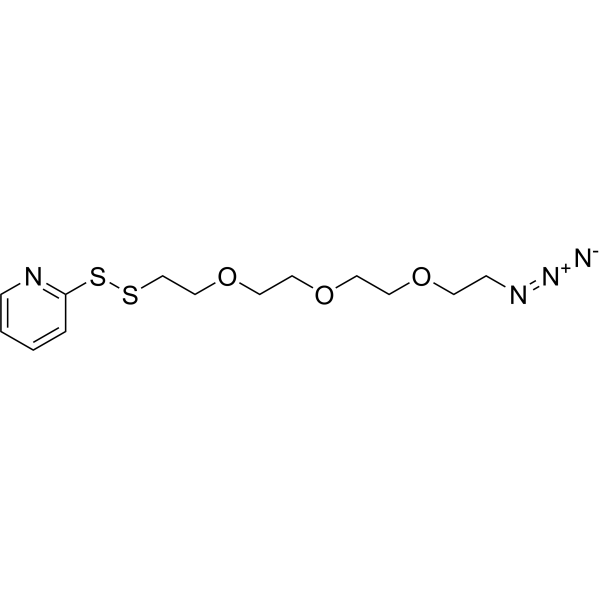
- HY-P5112
-
|
Azido-PEG3-FLAG
|
Biochemical Assay Reagents
|
Others
|
|
Azido-PEG3-DYKDDDDK (azide-PEG3-FLAG) is a multifunctional fusion tag for the purification of recombinant proteins. Azido-PEG3-DYKDDDDK is a click chemistry reagent, it contains an Azide group and can undergo copper-catalyzed azide-alkyne cycloaddition reaction (CuAAc) with molecules containing Alkyne groups. It can also undergo strain-promoted alkyne-azide cycloaddition (SPAAC) reactions with molecules containing DBCO or BCN groups .
|
-
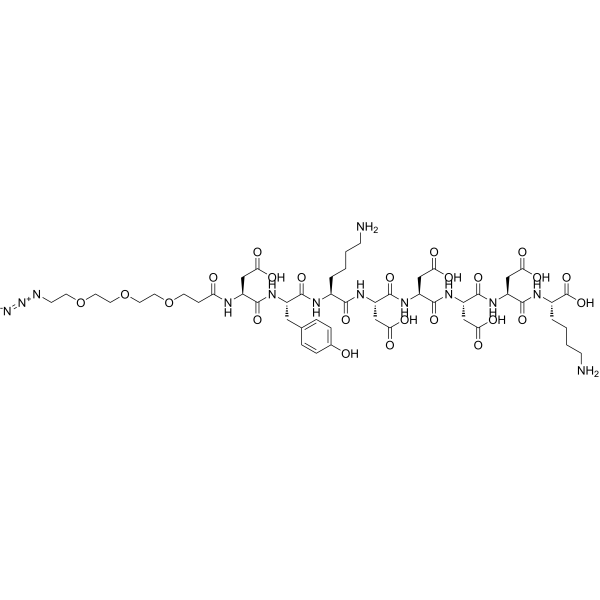
- HY-140836
-
|
|
PROTAC Linkers
|
Cancer
|
|
Boc-NH-PEG4-azide is a PEG-based PROTAC linker that can be used in the synthesis of PROTACs . Boc-NH-PEG4-azide is a click chemistry reagent, it contains an Azide group and can undergo copper-catalyzed azide-alkyne cycloaddition reaction (CuAAc) with molecules containing Alkyne groups. It can also undergo strain-promoted alkyne-azide cycloaddition (SPAAC) reactions with molecules containing DBCO or BCN groups.
|
-
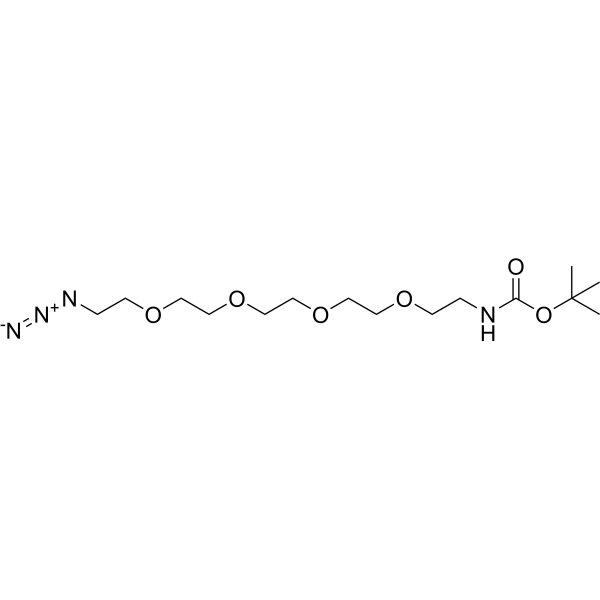
- HY-138388
-
|
|
PROTAC Linkers
|
Cancer
|
|
Azido-PEG4-formylhydrazine-Boc is a PEG-based PROTAC linker that can be used in the synthesis of PROTACs . Azido-PEG4-formylhydrazine-Boc is a click chemistry reagent, it contains an Azide group and can undergo copper-catalyzed azide-alkyne cycloaddition reaction (CuAAc) with molecules containing Alkyne groups. It can also undergo strain-promoted alkyne-azide cycloaddition (SPAAC) reactions with molecules containing DBCO or BCN groups.
|
-
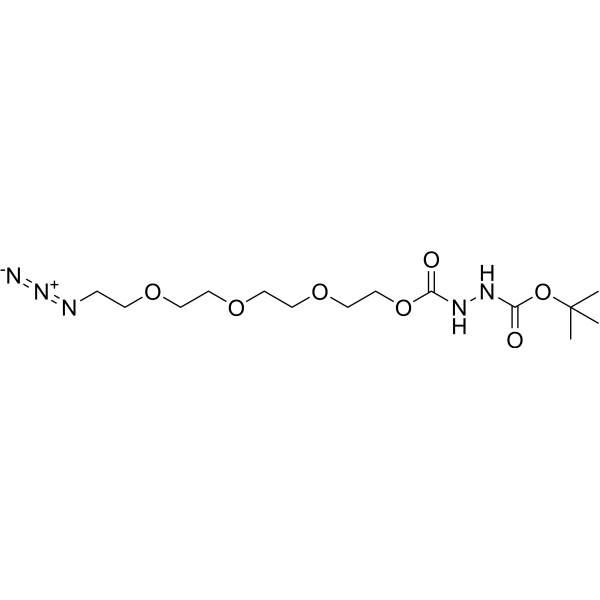
- HY-138535
-
|
|
ADC Linker
|
Cancer
|
|
Azide-C2-Azide is a cleavable ADC linker used in the synthesis of antibody-drug conjugates (ADCs) . Azide-C2-Azide is a click chemistry reagent, it contains an Azide group and can undergo copper-catalyzed azide-alkyne cycloaddition reaction (CuAAc) with molecules containing Alkyne groups. It can also undergo strain-promoted alkyne-azide cycloaddition (SPAAC) reactions with molecules containing DBCO or BCN groups.
|
-
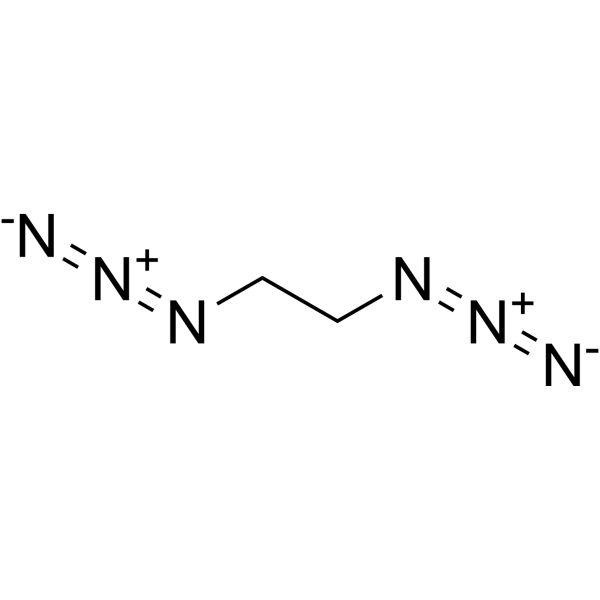
- HY-138438
-
|
|
PROTAC Linkers
|
Cancer
|
|
Azido-PEG3-amino-OPSS is a PEG-based PROTAC linker that can be used in the synthesis of PROTACs . Azido-PEG3-amino-OPSS is a click chemistry reagent, it contains an Azide group and can undergo copper-catalyzed azide-alkyne cycloaddition reaction (CuAAc) with molecules containing Alkyne groups. It can also undergo strain-promoted alkyne-azide cycloaddition (SPAAC) reactions with molecules containing DBCO or BCN groups.
|
-
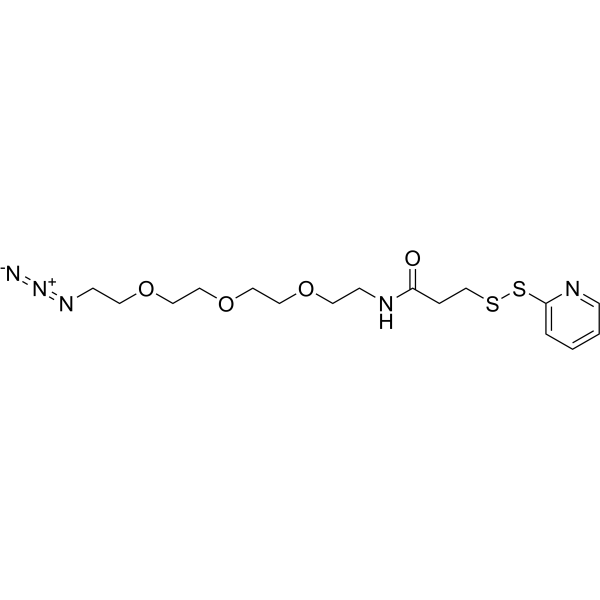
- HY-140910
-
|
|
PROTAC Linkers
|
Cancer
|
|
Biotin-PEG4-azide is a biotin-labeled, PEG-based PROTAC linker that can be used in the synthesis of PROTACs . Biotin-PEG4-azide is a click chemistry reagent, it contains an Azide group and can undergo copper-catalyzed azide-alkyne cycloaddition reaction (CuAAc) with molecules containing Alkyne groups. It can also undergo strain-promoted alkyne-azide cycloaddition (SPAAC) reactions with molecules containing DBCO or BCN groups.
|
-
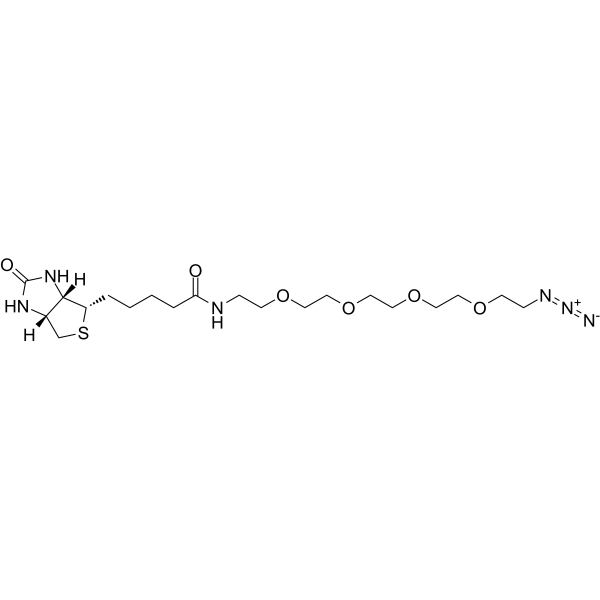
- HY-111642
-
|
|
Nucleoside Antimetabolite/Analog
|
Others
|
|
3'-Azido-3'-deoxy-beta-L-uridine (Compound 25) is a nucleoside derivative. 3'-Azido-3'-deoxy-beta-L-uridine is a click chemistry reagent, it contains an Azide group and can undergo copper-catalyzed azide-alkyne cycloaddition reaction (CuAAc) with molecules containing Alkyne groups. It can also undergo strain-promoted alkyne-azide cycloaddition (SPAAC) reactions with molecules containing DBCO or BCN groups.
|
-
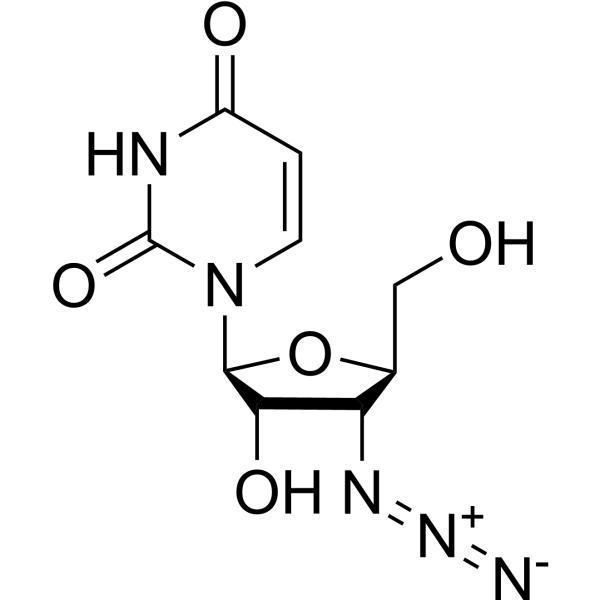
- HY-140915
-
|
|
PROTAC Linkers
|
Cancer
|
|
Biotin-PEG4-Picolyl azide is a PEG-based PROTAC linker that can be used in the synthesis of PROTACs . Biotin-PEG4-Picolyl azide is a click chemistry reagent, it contains an Azide group and can undergo copper-catalyzed azide-alkyne cycloaddition reaction (CuAAc) with molecules containing Alkyne groups. It can also undergo strain-promoted alkyne-azide cycloaddition (SPAAC) reactions with molecules containing DBCO or BCN groups.
|
-
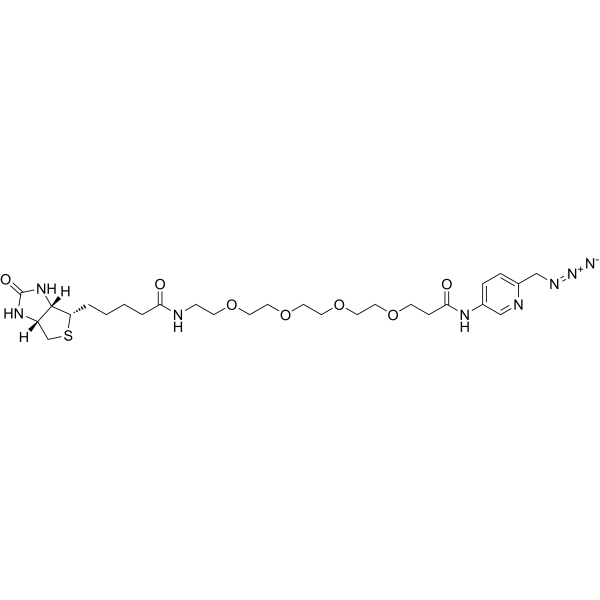
- HY-130420
-
|
|
PROTAC Linkers
|
Cancer
|
|
Azido-PEG5-PFP ester is a PEG- and Alkyl/ether-based PROTAC linker can be used in the synthesis of PROTACs . Azido-PEG5-PFP ester is a click chemistry reagent, it contains an Azide group and can undergo copper-catalyzed azide-alkyne cycloaddition reaction (CuAAc) with molecules containing Alkyne groups. It can also undergo strain-promoted alkyne-azide cycloaddition (SPAAC) reactions with molecules containing DBCO or BCN groups.
|
-
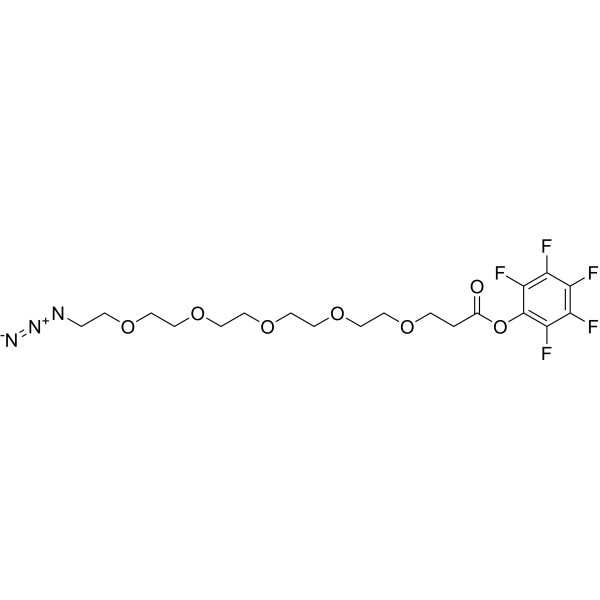
- HY-140813
-
|
|
PROTAC Linkers
|
Cancer
|
|
Azido-PEG3-phosphonic acid ethyl ester is a PEG-based PROTAC linker that can be used in the synthesis of PROTACs . Azido-PEG3-phosphonic acid ethyl ester is a click chemistry reagent, it contains an Azide group and can undergo copper-catalyzed azide-alkyne cycloaddition reaction (CuAAc) with molecules containing Alkyne groups. It can also undergo strain-promoted alkyne-azide cycloaddition (SPAAC) reactions with molecules containing DBCO or BCN groups.
|
-
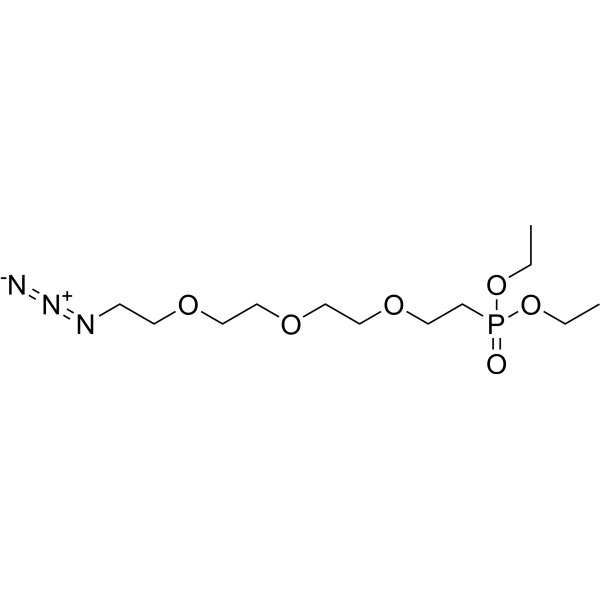
- HY-140851
-
|
|
PROTAC Linkers
|
Cancer
|
|
Azido-PEG1-methyl ester is an alkyl/ether-based PROTAC linker that can be used in the synthesis of PROTACs . Azido-PEG1-methyl ester is a click chemistry reagent, it contains an Azide group and can undergo copper-catalyzed azide-alkyne cycloaddition reaction (CuAAc) with molecules containing Alkyne groups. It can also undergo strain-promoted alkyne-azide cycloaddition (SPAAC) reactions with molecules containing DBCO or BCN groups.
|
-
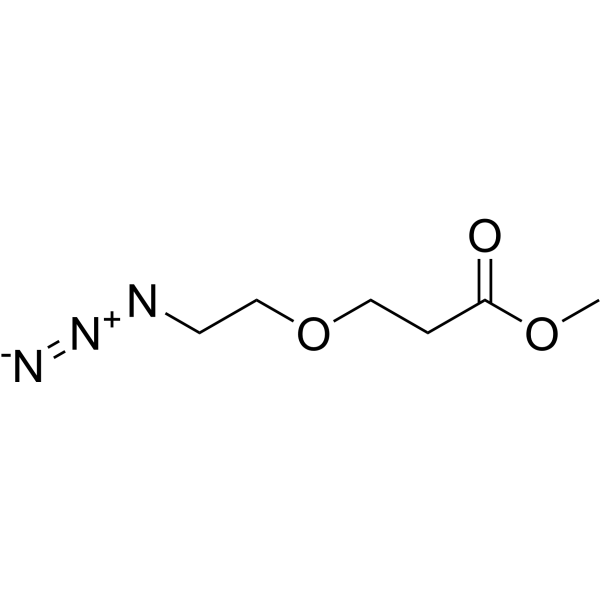
- HY-138377
-
|
|
PROTAC Linkers
|
Cancer
|
|
Azido-PEG8-C-Boc is a PEG-based PROTAC linker that can be used in the synthesis of PROTACs . Azido-PEG8-C-Boc is a click chemistry reagent, it contains an Azide group and can undergo copper-catalyzed azide-alkyne cycloaddition reaction (CuAAc) with molecules containing Alkyne groups. It can also undergo strain-promoted alkyne-azide cycloaddition (SPAAC) reactions with molecules containing DBCO or BCN groups.
|
-
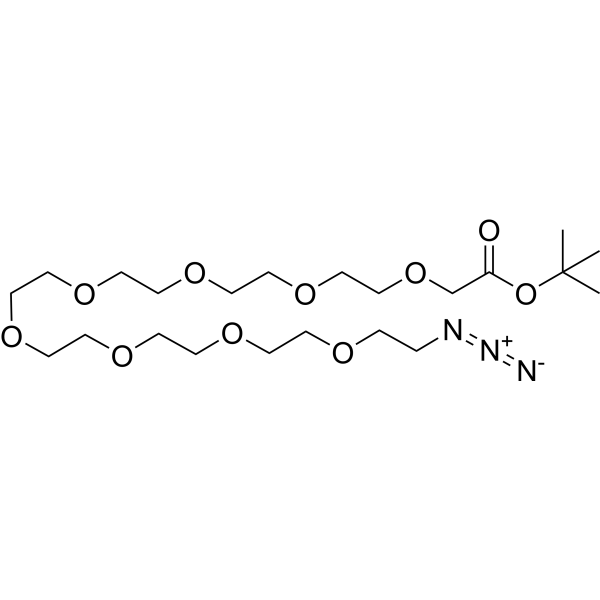
- HY-W142062
-
|
Fmoc-(2S,4S)-4-azidoproline
|
Amino Acid Derivatives
|
Others
|
|
cis-Fmoc-Pro(4-N3)-OH is a proline derivative . cis-Fmoc-Pro(4-N3)-OH is a click chemistry reagent, it contains an Azide group and can undergo copper-catalyzed azide-alkyne cycloaddition reaction (CuAAc) with molecules containing Alkyne groups. It can also undergo strain-promoted alkyne-azide cycloaddition (SPAAC) reactions with molecules containing DBCO or BCN groups.
|
-
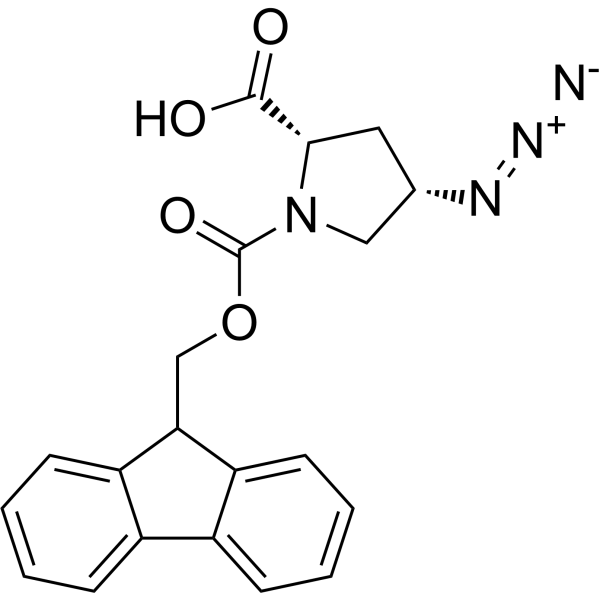
- HY-140918
-
|
|
PROTAC Linkers
|
Cancer
|
|
Diazo Biotin-PEG3-azide is a PEG-based PROTAC linker that can be used in the synthesis of PROTACs . Diazo Biotin-PEG3-azide is a click chemistry reagent, it contains an Azide group and can undergo copper-catalyzed azide-alkyne cycloaddition reaction (CuAAc) with molecules containing Alkyne groups. It can also undergo strain-promoted alkyne-azide cycloaddition (SPAAC) reactions with molecules containing DBCO or BCN groups.
|
-
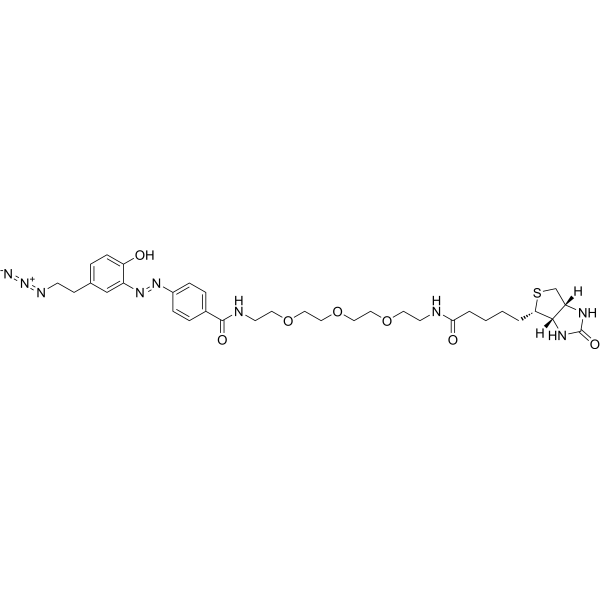
- HY-151677A
-
|
|
ADC Linker
|
Others
|
|
(2R,4S)-Boc-D-Pro(4-N3)-OH DCHA is a click chemistry reagent containing an azide . (2R,4S)-Boc-D-Pro(4-N3)-OH (DCHA) is a click chemistry reagent, it contains an Azide group and can undergo copper-catalyzed azide-alkyne cycloaddition reaction (CuAAc) with molecules containing Alkyne groups. It can also undergo strain-promoted alkyne-azide cycloaddition (SPAAC) reactions with molecules containing DBCO or BCN groups.
|
-
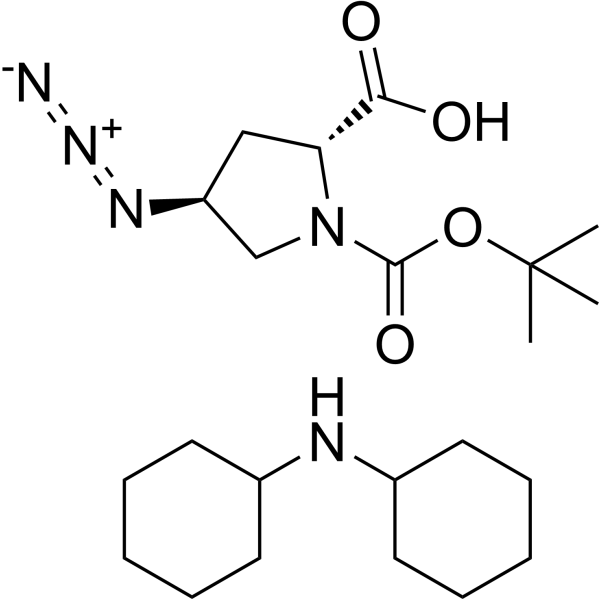
- HY-151839
-
|
|
ADC Linker
|
Others
|
|
(2R,4R)-H-D-Pro(4-N3)-OH (hydrochloride) is a click chemistry reagent containing an azide group . (2R,4R)-H-D-Pro(4-N3)-OH (hydrochloride) is a click chemistry reagent, it contains an Azide group and can undergo copper-catalyzed azide-alkyne cycloaddition reaction (CuAAc) with molecules containing Alkyne groups. It can also undergo strain-promoted alkyne-azide cycloaddition (SPAAC) reactions with molecules containing DBCO or BCN groups.
|
-
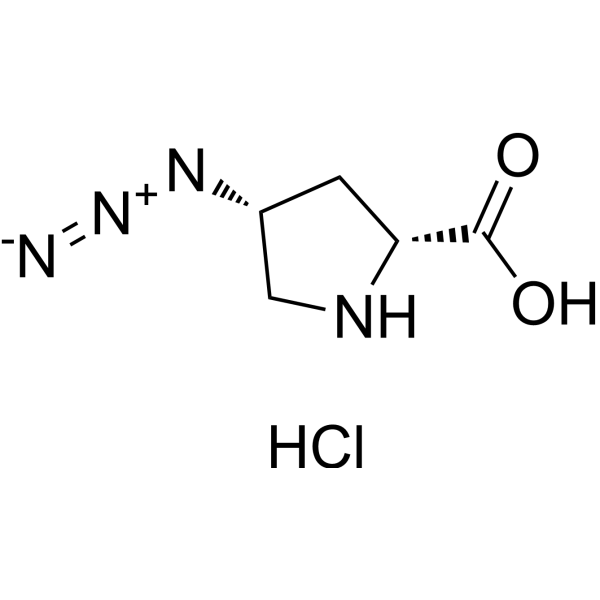
- HY-151677
-
|
|
ADC Linker
|
Others
|
|
(2R,4S)-Boc-D-Pro(4-N3)-OH is a click chemistry reagent containing an azide . (2R,4S)-Boc-D-Pro(4-N3)-OH is a click chemistry reagent, it contains an Azide group and can undergo copper-catalyzed azide-alkyne cycloaddition reaction (CuAAc) with molecules containing Alkyne groups. It can also undergo strain-promoted alkyne-azide cycloaddition (SPAAC) reactions with molecules containing DBCO or BCN groups.
|
-
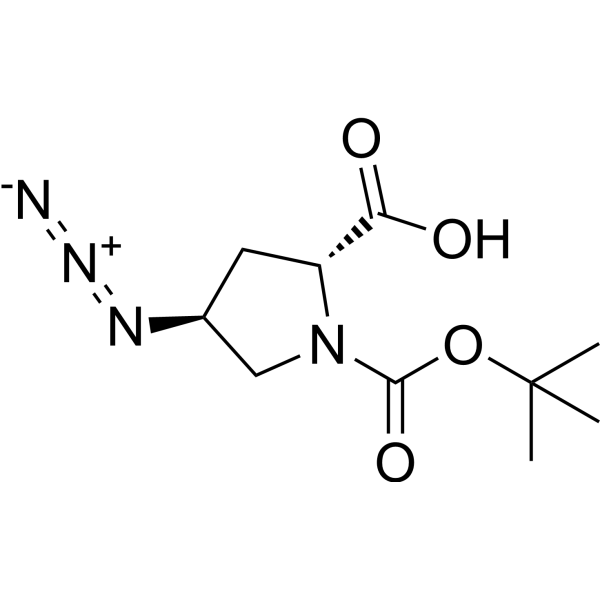
- HY-151760
-
|
|
ADC Linker
|
Others
|
|
(2R,4S)-H-D-Pro(4-N3)-OH is a click chemistry reagent containing an azide group . (2R,4S)-H-D-Pro(4-N3)-OH is a click chemistry reagent, it contains an Azide group and can undergo copper-catalyzed azide-alkyne cycloaddition reaction (CuAAc) with molecules containing Alkyne groups. It can also undergo strain-promoted alkyne-azide cycloaddition (SPAAC) reactions with molecules containing DBCO or BCN groups.
|
-
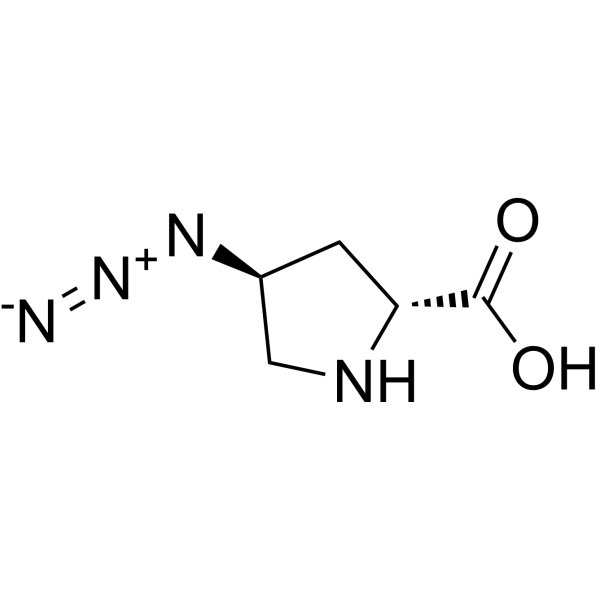
- HY-D1327
-
|
|
Fluorescent Dye
|
Others
|
|
Cyanine3 azide chloride, an analog of Cy3 azide, is a potent green fluorescent dye. Cyanine3 azide chloride uses click chemistry coupled with Alkyne-labeled proteins. Cyanine3 azide chloride can be detected by fluorometers, imagers, and microscopes. (λex=684 nm, λem=710 nm) [1]. Cyanine3 azide (chloride) is a click chemistry reagent, it contains an Azide group and can undergo copper-catalyzed azide-alkyne cycloaddition reaction (CuAAc) with molecules containing Alkyne groups. It can also undergo strain-promoted alkyne-azide cycloaddition (SPAAC) reactions with molecules containing DBCO or BCN groups.
|
-
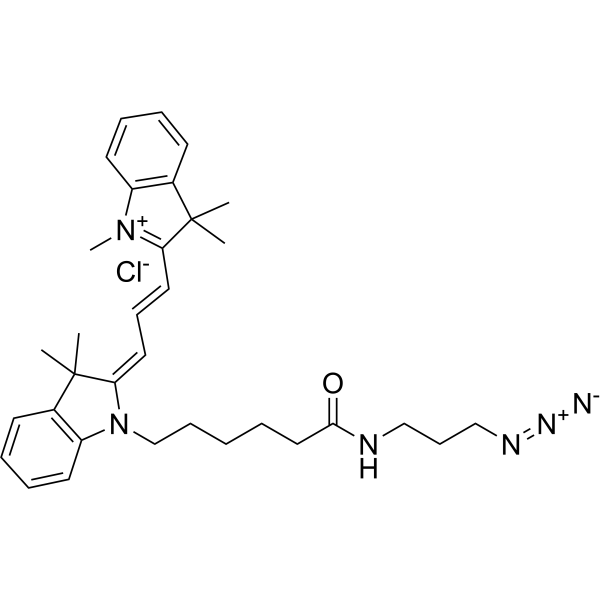
- HY-133321
-
|
|
PROTAC Linkers
|
Cancer
|
|
N3-PEG24-Hydrazide is a PEG-based PROTAC linker that can be used in the synthesis of PROTACs . N3-PEG24-Hydrazide is a click chemistry reagent, it contains an Azide group and can undergo copper-catalyzed azide-alkyne cycloaddition reaction (CuAAc) with molecules containing Alkyne groups. It can also undergo strain-promoted alkyne-azide cycloaddition (SPAAC) reactions with molecules containing DBCO or BCN groups.
|
-
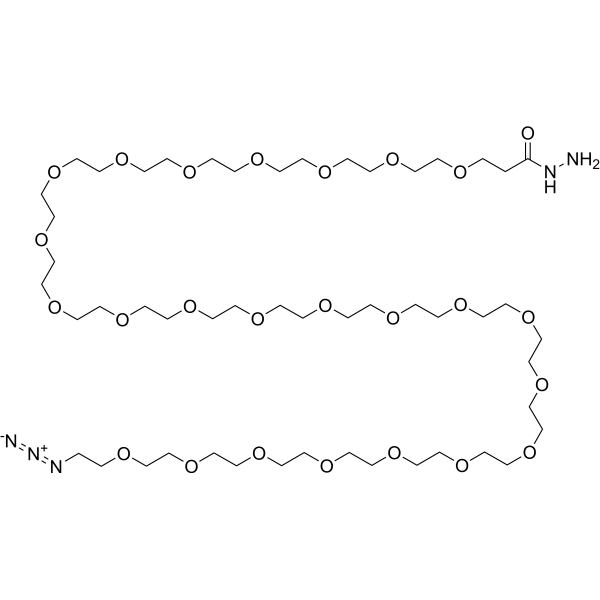
- HY-W145563
-
|
|
Biochemical Assay Reagents
|
Others
|
|
2-Azidoethyl β-D-Glucopyranoside is a biochemical reagent that can be used as a biological material or organic compound for life science related research. 2-Azidoethyl β-D-glucopyranoside is a click chemistry reagent, it contains an Azide group and can undergo copper-catalyzed azide-alkyne cycloaddition reaction (CuAAc) with molecules containing Alkyne groups. It can also undergo strain-promoted alkyne-azide cycloaddition (SPAAC) reactions with molecules containing DBCO or BCN groups.
|
-
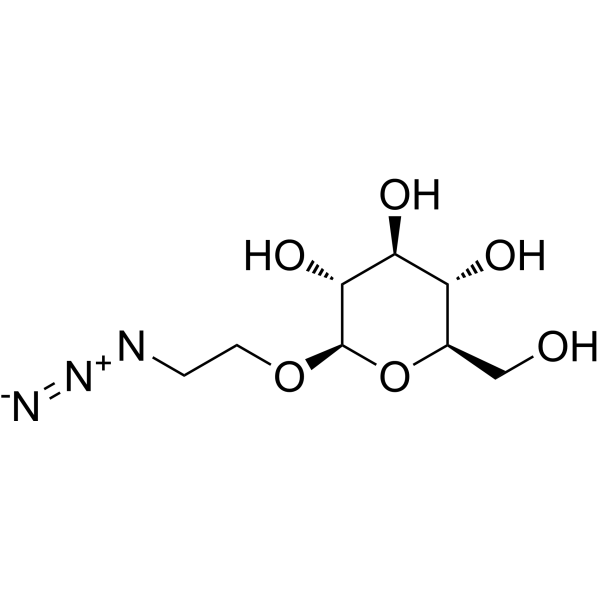
- HY-140874
-
|
|
PROTAC Linkers
|
Cancer
|
|
Azido-PEG4-Amido-tri-(t-butoxycarbonylethoxymethyl)-methane is a PEG-based PROTAC linker that can be used in the synthesis of PROTACs . Azido-PEG4-Amido-tri-(t-butoxycarbonylethoxymethyl)-methane is a click chemistry reagent, it contains an Azide group and can undergo copper-catalyzed azide-alkyne cycloaddition reaction (CuAAc) with molecules containing Alkyne groups. It can also undergo strain-promoted alkyne-azide cycloaddition (SPAAC) reactions with molecules containing DBCO or BCN groups.
|
-
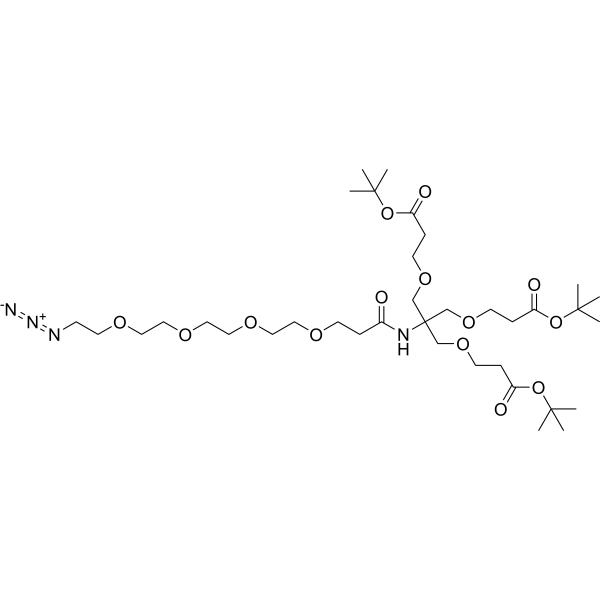
- HY-131803
-
|
|
Nucleoside Antimetabolite/Analog
|
Inflammation/Immunology
|
|
Urolignoside is an antioxidant with free radical scavenging activity. Urolignoside potently scavenges DPPH radical, and exhibits antioxidant to β-carotene-lineoleate model . 3'-Azido-3'-deoxyguanosine is a click chemistry reagent, it contains an Azide group and can undergo copper-catalyzed azide-alkyne cycloaddition reaction (CuAAc) with molecules containing Alkyne groups. It can also undergo strain-promoted alkyne-azide cycloaddition (SPAAC) reactions with molecules containing DBCO or BCN groups.
|
-
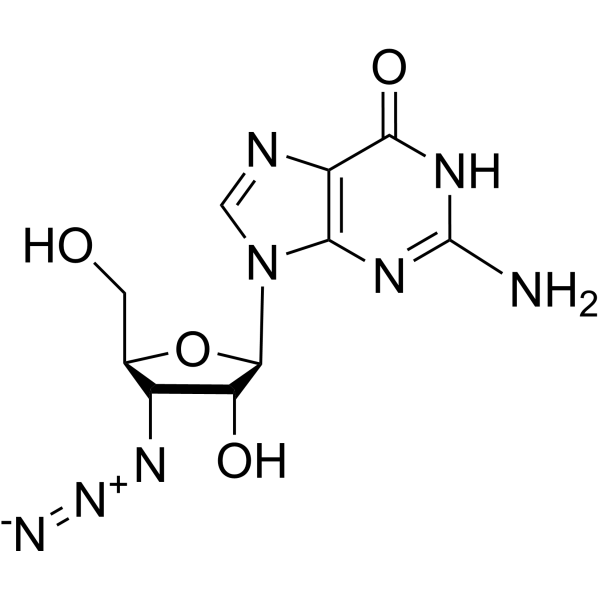
- HY-126523
-
|
|
ADC Linker
|
Cancer
|
|
N3-C5-NHS ester is a noncleavable ADC linker used in the synthesis of antibody-drug conjugates (ADCs). N3-C5-NHS ester is a click chemistry reagent, it contains an Azide group and can undergo copper-catalyzed azide-alkyne cycloaddition reaction (CuAAc) with molecules containing Alkyne groups. It can also undergo strain-promoted alkyne-azide cycloaddition (SPAAC) reactions with molecules containing DBCO or BCN groups.
|
-
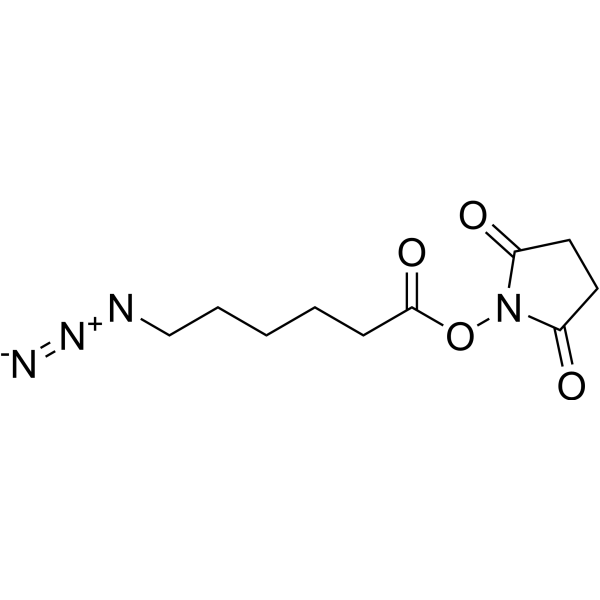
- HY-140793
-
|
|
PROTAC Linkers
|
Cancer
|
|
Azido-PEG2-C1-Boc is a PEG-based PROTAC linker that can be used in the synthesis of PROTACs . Azido-PEG2-C1-Boc is a click chemistry reagent, it contains an Azide group and can undergo copper-catalyzed azide-alkyne cycloaddition reaction (CuAAc) with molecules containing Alkyne groups. It can also undergo strain-promoted alkyne-azide cycloaddition (SPAAC) reactions with molecules containing DBCO or BCN groups.
|
-
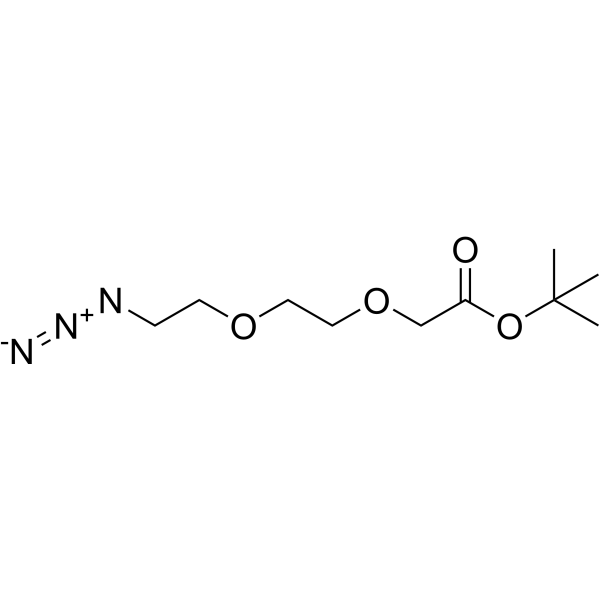
- HY-131033
-
|
|
Biochemical Assay Reagents
|
Others
|
|
L-Azidonorleucine hydrochloride, an unnatural amino acid, is A Methionine surrogate. L-Azidonorleucine hydrochloride can be used to label mammalian cell proteins and identify a diverse set of methionyl-tRNA synthetase (MetRS) mutants . L-Azidonorleucine (hydrochloride) is a click chemistry reagent, it contains an Azide group and can undergo copper-catalyzed azide-alkyne cycloaddition reaction (CuAAc) with molecules containing Alkyne groups. It can also undergo strain-promoted alkyne-azide cycloaddition (SPAAC) reactions with molecules containing DBCO or BCN groups.
|
-
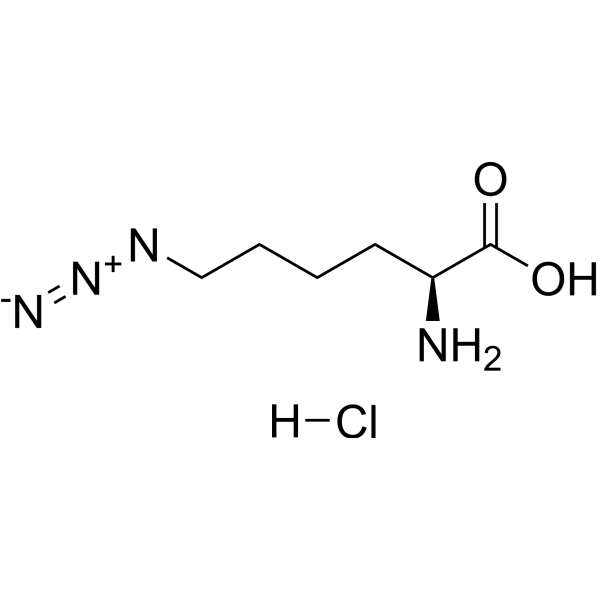
- HY-140635
-
|
|
PROTAC Linkers
|
Cancer
|
|
Ald-CH2-PEG8-azide is a PEG-based PROTAC linker that can be used in the synthesis of PROTACs . Ald-CH2-PEG8-azide is a click chemistry reagent, it contains an Azide group and can undergo copper-catalyzed azide-alkyne cycloaddition reaction (CuAAc) with molecules containing Alkyne groups. It can also undergo strain-promoted alkyne-azide cycloaddition (SPAAC) reactions with molecules containing DBCO or BCN groups.
|
-
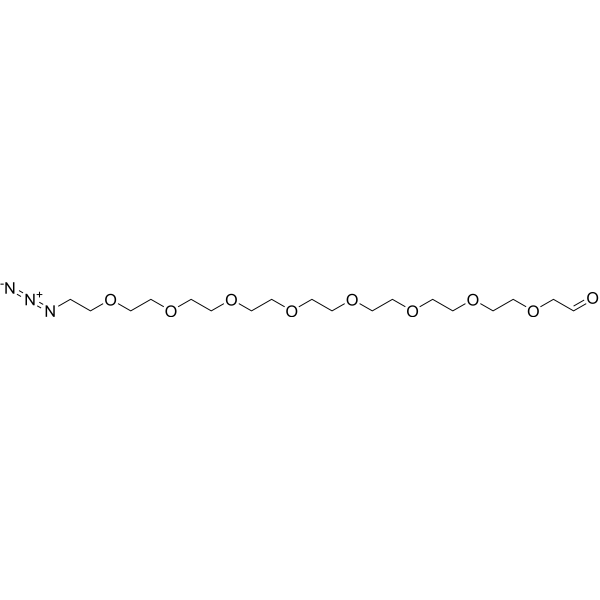
- HY-140845
-
|
|
PROTAC Linkers
|
Cancer
|
|
1,1,1-Trifluoroethyl-PEG2-azide is a PEG-based PROTAC linker that can be used in the synthesis of PROTACs . 1,1,1-Trifluoroethyl-PEG2-azide is a click chemistry reagent, it contains an Azide group and can undergo copper-catalyzed azide-alkyne cycloaddition reaction (CuAAc) with molecules containing Alkyne groups. It can also undergo strain-promoted alkyne-azide cycloaddition (SPAAC) reactions with molecules containing DBCO or BCN groups.
|
-
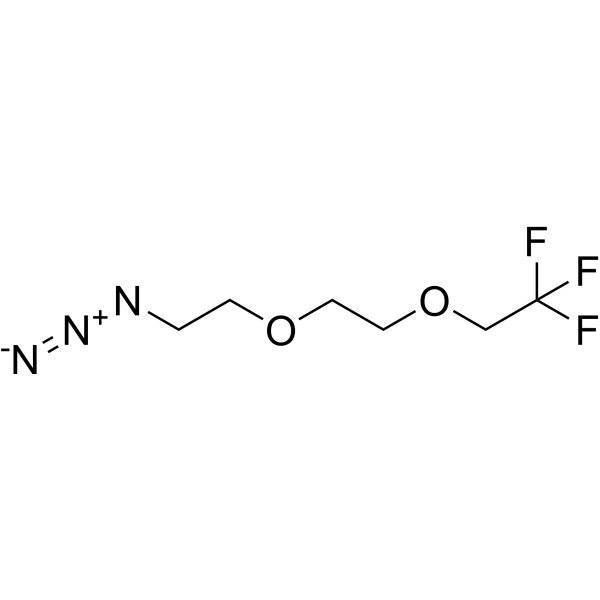
- HY-140556
-
|
|
PROTAC Linkers
|
Cancer
|
|
N-Boc-N-bis(PEG4-azide) is a PEG-based PROTAC linker that can be used in the synthesis of PROTACs . N-Boc-N-bis(PEG4-azide) is a click chemistry reagent, it contains an Azide group and can undergo copper-catalyzed azide-alkyne cycloaddition reaction (CuAAc) with molecules containing Alkyne groups. It can also undergo strain-promoted alkyne-azide cycloaddition (SPAAC) reactions with molecules containing DBCO or BCN groups.
|
-
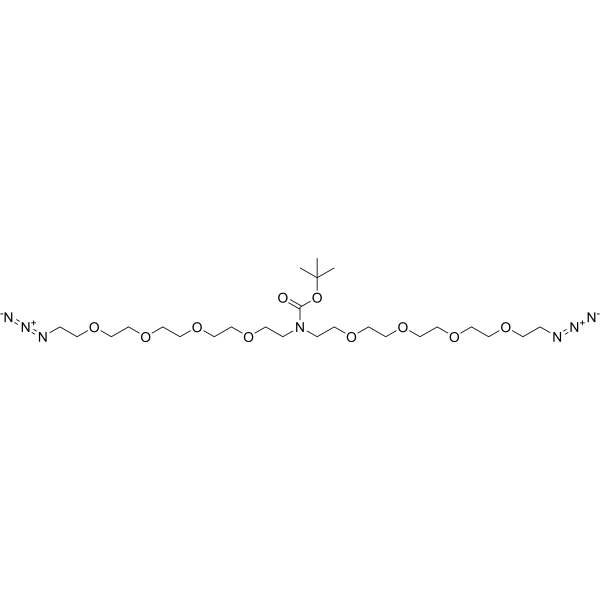
- HY-138470
-
|
|
PROTAC Linkers
|
Cancer
|
|
Azido-PEG2-C6-Cl is a PEG-based PROTAC linker that can be used in the synthesis of PROTACs . Azido-PEG2-C6-Cl is a click chemistry reagent, it contains an Azide group and can undergo copper-catalyzed azide-alkyne cycloaddition reaction (CuAAc) with molecules containing Alkyne groups. It can also undergo strain-promoted alkyne-azide cycloaddition (SPAAC) reactions with molecules containing DBCO or BCN groups.
|
-
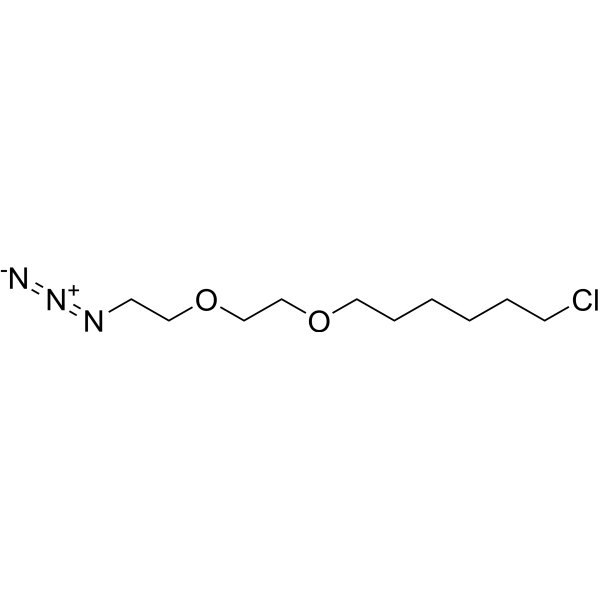
- HY-130940
-
|
PTAD-PEG4-N3
|
ADC Linker
|
Cancer
|
|
PTAD-PEG4-N3 is a cleavable 4 unit PEG ADC linker used in the synthesis of antibody-drug conjugates (ADCs) . PTAD-PEG4-N3 is a click chemistry reagent, it contains an Azide group and can undergo copper-catalyzed azide-alkyne cycloaddition reaction (CuAAc) with molecules containing Alkyne groups. It can also undergo strain-promoted alkyne-azide cycloaddition (SPAAC) reactions with molecules containing DBCO or BCN groups.
|
-
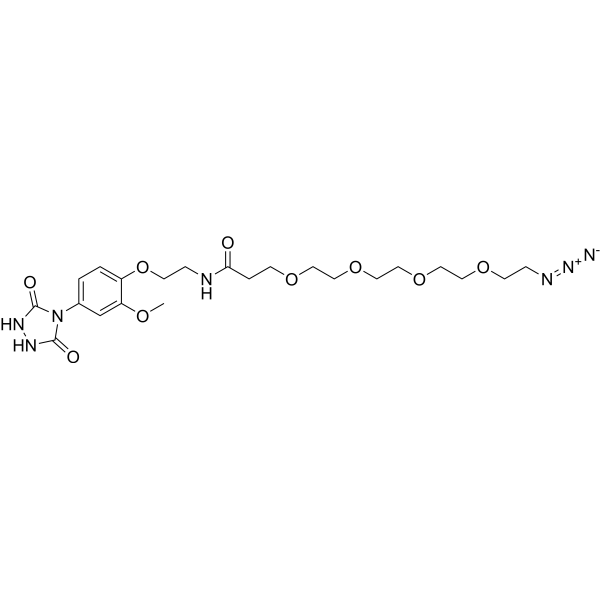
- HY-138466
-
|
|
PROTAC Linkers
|
Cancer
|
|
Azido-PEG3-C6-Cl is a PEG-based PROTAC linker that can be used in the synthesis of PROTACs . Azido-PEG3-C6-Cl is a click chemistry reagent, it contains an Azide group and can undergo copper-catalyzed azide-alkyne cycloaddition reaction (CuAAc) with molecules containing Alkyne groups. It can also undergo strain-promoted alkyne-azide cycloaddition (SPAAC) reactions with molecules containing DBCO or BCN groups.
|
-
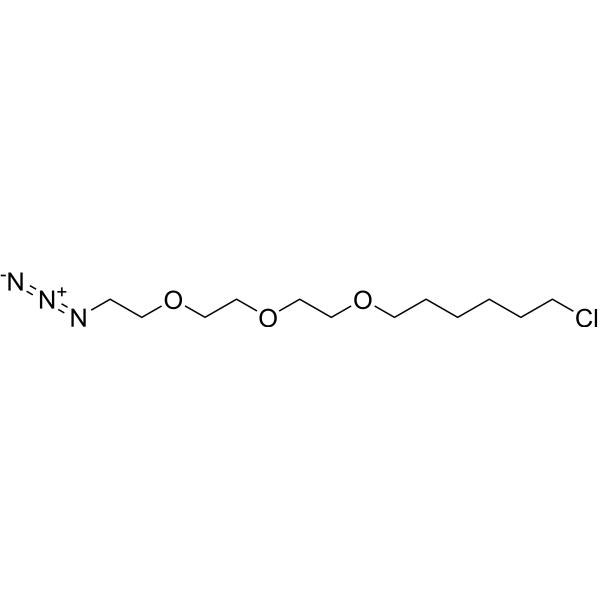
- HY-152523
-
|
|
Nucleoside Antimetabolite/Analog
|
Others
|
|
5-(Azidomethyl) arauridine is a thymidine analogue. Analogs of this series have insertional activity towards replicated DNA. They can be used to label cells and track DNA synthesis . 5-(Azidomethyl) arauridine is a click chemistry reagent, it contains an Azide group and can undergo copper-catalyzed azide-alkyne cycloaddition reaction (CuAAc) with molecules containing Alkyne groups. It can also undergo strain-promoted alkyne-azide cycloaddition (SPAAC) reactions with molecules containing DBCO or BCN groups.
|
-
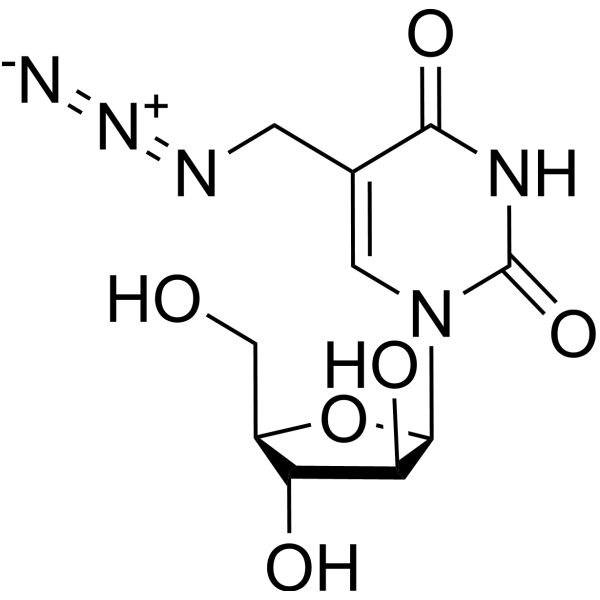
- HY-133320
-
|
|
PROTAC Linkers
|
Cancer
|
|
N3-PEG16-Hydrazide is a PEG-based PROTAC linker that can be used in the synthesis of PROTACs . N3-PEG16-Hydrazide is a click chemistry reagent, it contains an Azide group and can undergo copper-catalyzed azide-alkyne cycloaddition reaction (CuAAc) with molecules containing Alkyne groups. It can also undergo strain-promoted alkyne-azide cycloaddition (SPAAC) reactions with molecules containing DBCO or BCN groups.
|
-
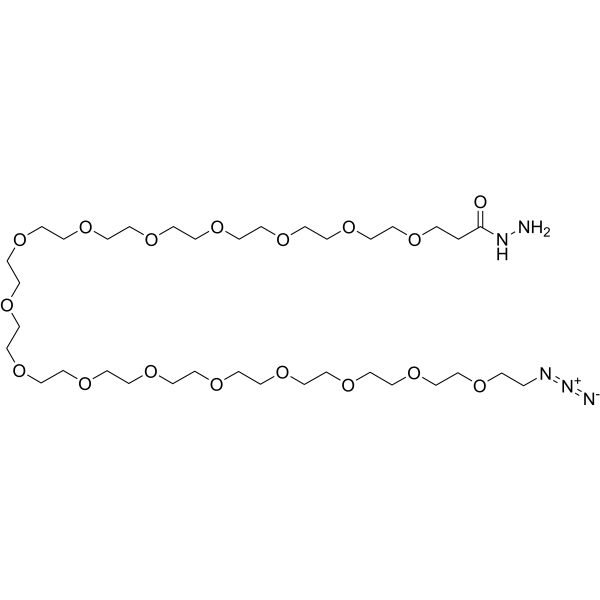
- HY-111641
-
|
|
Nucleoside Antimetabolite/Analog
|
Infection
Inflammation/Immunology
|
|
3'-Azido-3'-deoxy-5-fluorocytidine (Compound 12) is a cytidine derivative. 3'-Azido-3'-deoxy-5-fluorocytidine is a click chemistry reagent, it contains an Azide group and can undergo copper-catalyzed azide-alkyne cycloaddition reaction (CuAAc) with molecules containing Alkyne groups. It can also undergo strain-promoted alkyne-azide cycloaddition (SPAAC) reactions with molecules containing DBCO or BCN groups.
|
-
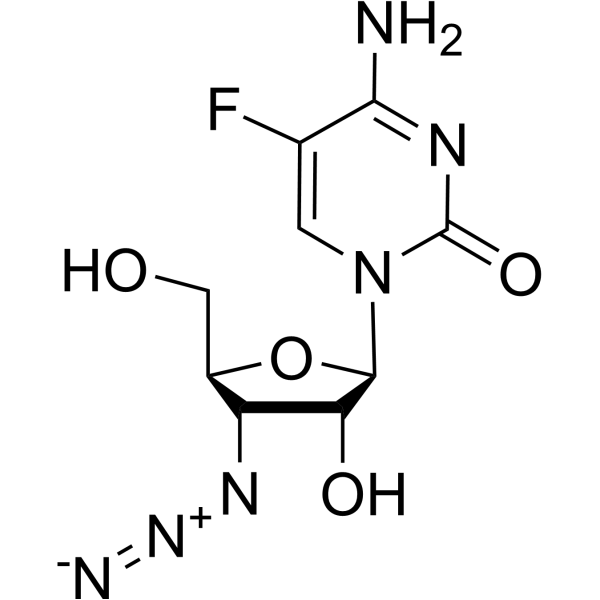
- HY-D1051
-
|
|
Fluorescent Dye
|
Cancer
|
|
Cy3-N3 is a Cy3-azide fluorescent dye used to label for protein and nucleic acid. Cy3-N3 is a click chemistry reagent, it contains an Azide group and can undergo copper-catalyzed azide-alkyne cycloaddition reaction (CuAAc) with molecules containing Alkyne groups. It can also undergo strain-promoted alkyne-azide cycloaddition (SPAAC) reactions with molecules containing DBCO or BCN groups (Ex/Em = 548/563 nm).
|
-
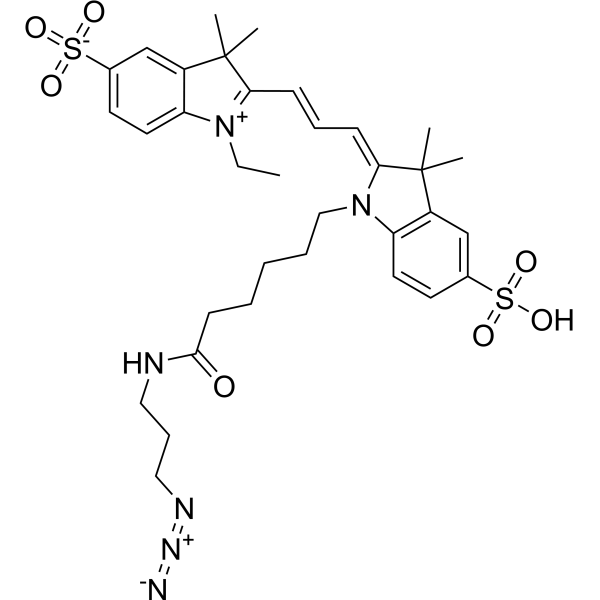
- HY-D2802A
-
|
|
Fluorescent Dye
|
Others
|
|
FITC-PEG1000-N3 is an azide fluorescent dye containing polyethylene glycol (PEG) and FITC (HY-66019). FITC-PEG1000-N3 is a click chemistry reagent, it contains an Azide group and can undergo copper-catalyzed azide-alkyne cycloaddition reaction (CuAAc) with molecules containing Alkyne groups. It can also undergo strain-promoted alkyne-azide cycloaddition (SPAAC) reactions with molecules containing DBCO or BCN groups.
|
-

- HY-126522
-
|
|
ADC Linker
|
Cancer
|
|
N3-C4-NHS ester is a noncleavable ADC linker used in the synthesis of antibody-drug conjugates (ADCs). N3-C4-NHS ester is a click chemistry reagent, it contains an Azide group and can undergo copper-catalyzed azide-alkyne cycloaddition reaction (CuAAc) with molecules containing Alkyne groups. It can also undergo strain-promoted alkyne-azide cycloaddition (SPAAC) reactions with molecules containing DBCO or BCN groups.
|
-
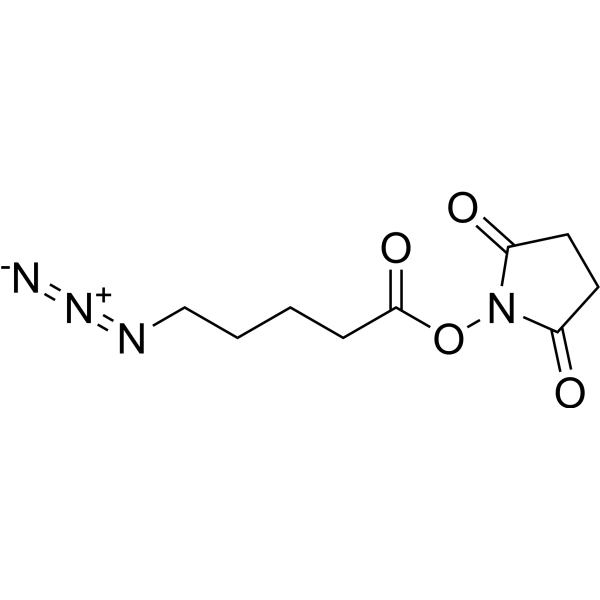
- HY-133501
-
|
|
PROTAC Linkers
|
Cancer
|
|
Boc-HyNic-PEG2-N3 is a PEG-based PROTAC linker that can be used in the synthesis of PROTACs . Boc-HyNic-PEG2-N3 is a click chemistry reagent, it contains an Azide group and can undergo copper-catalyzed azide-alkyne cycloaddition reaction (CuAAc) with molecules containing Alkyne groups. It can also undergo strain-promoted alkyne-azide cycloaddition (SPAAC) reactions with molecules containing DBCO or BCN groups.
|
-
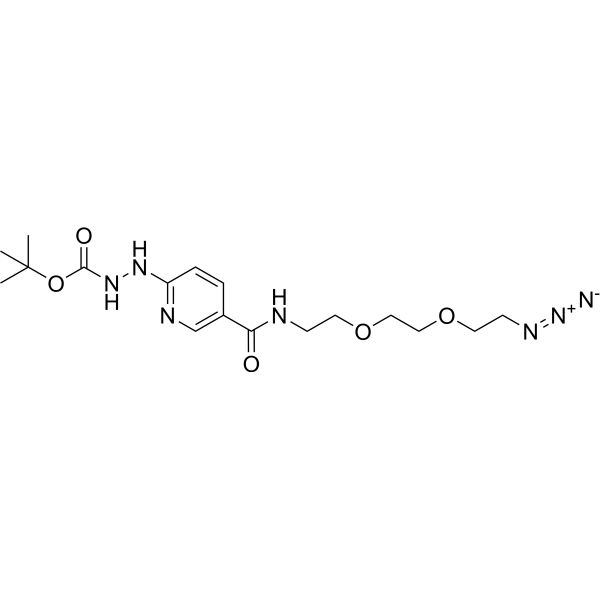
- HY-133434
-
|
|
ADC Linker
|
Cancer
|
|
Aminoxyacetamide-PEG3-azide is a non-cleavable 3 unit PEG ADC linker used in the synthesis of antibody-drug conjugates (ADCs) . Aminoxyacetamide-PEG3-azide is a click chemistry reagent, it contains an Azide group and can undergo copper-catalyzed azide-alkyne cycloaddition reaction (CuAAc) with molecules containing Alkyne groups. It can also undergo strain-promoted alkyne-azide cycloaddition (SPAAC) reactions with molecules containing DBCO or BCN groups.
|
-
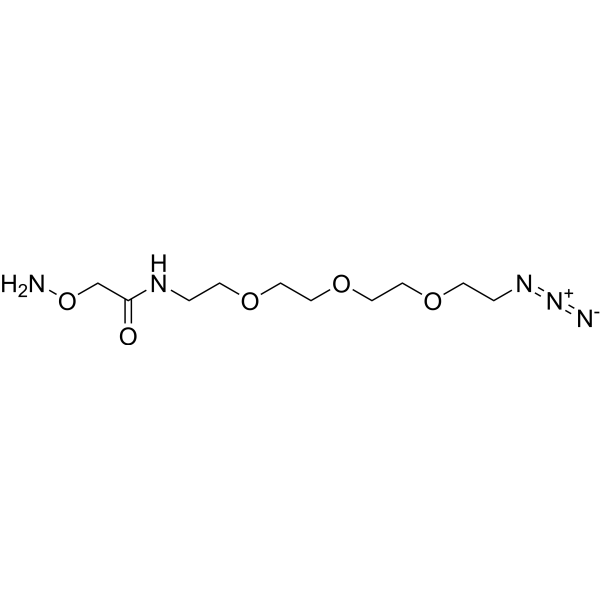
- HY-140221
-
|
|
PROTAC Linkers
|
Cancer
|
|
Azido-PEG1-C2-methylamine is a PEG-based PROTAC linker that can be used in the synthesis of PROTACs . Azido-PEG1-C2-methylamine is a click chemistry reagent, it contains an Azide group and can undergo copper-catalyzed azide-alkyne cycloaddition reaction (CuAAc) with molecules containing Alkyne groups. It can also undergo strain-promoted alkyne-azide cycloaddition (SPAAC) reactions with molecules containing DBCO or BCN groups.
|
-
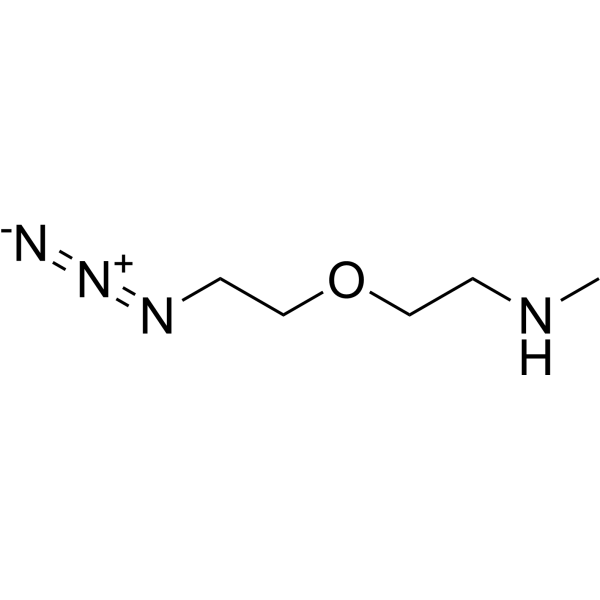
- HY-147150
-
|
|
Fluorescent Dye
|
Others
|
|
8-Azido-cADPR, with its photoactive azido group, is a potent photoaffinity probe. 8-Azido-cADPR can be used for the identification and characterization of cADPR-binding proteins . 8-Azido-cADPR is a click chemistry reagent, it contains an Azide group and can undergo copper-catalyzed azide-alkyne cycloaddition reaction (CuAAc) with molecules containing Alkyne groups. It can also undergo strain-promoted alkyne-azide cycloaddition (SPAAC) reactions with molecules containing DBCO or BCN groups.
|
-
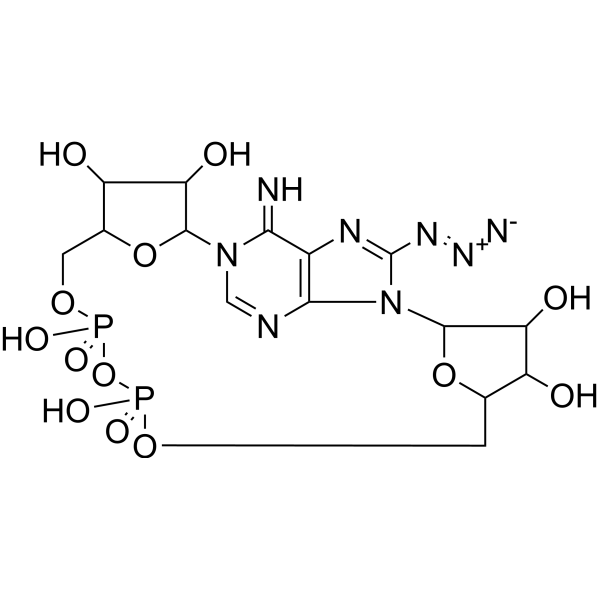
- HY-140850
-
|
|
PROTAC Linkers
|
Cancer
|
|
Azide-PEG3-C1-Ala is a PEG-based PROTAC linker that can be used in the synthesis of PROTACs . Azide-PEG3-C1-Ala is a click chemistry reagent, it contains an Azide group and can undergo copper-catalyzed azide-alkyne cycloaddition reaction (CuAAc) with molecules containing Alkyne groups. It can also undergo strain-promoted alkyne-azide cycloaddition (SPAAC) reactions with molecules containing DBCO or BCN groups.
|
-
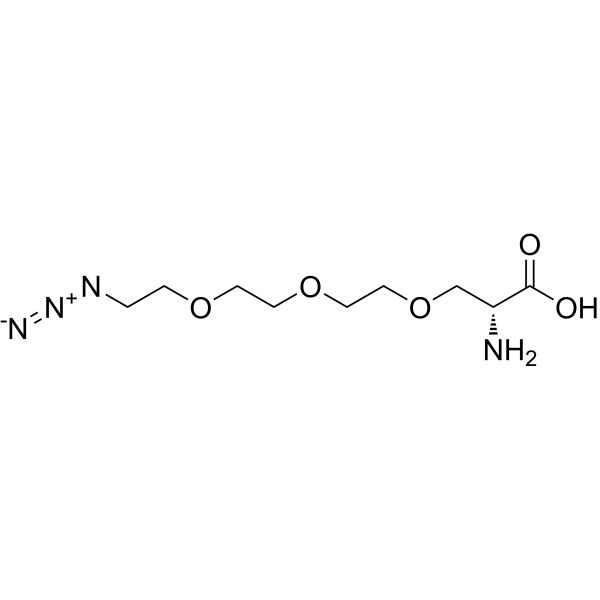
- HY-140846
-
|
|
PROTAC Linkers
|
Cancer
|
|
N-Fmoc-N'-(azido-PEG4)-L-Lysine is an alkyl/ether-based PROTAC linker that can be used in the synthesis of PROTACs . N-Fmoc-N'-(azido-PEG4)-L-Lysine is a click chemistry reagent, it contains an Azide group and can undergo copper-catalyzed azide-alkyne cycloaddition reaction (CuAAc) with molecules containing Alkyne groups. It can also undergo strain-promoted alkyne-azide cycloaddition (SPAAC) reactions with molecules containing DBCO or BCN groups.
|
-
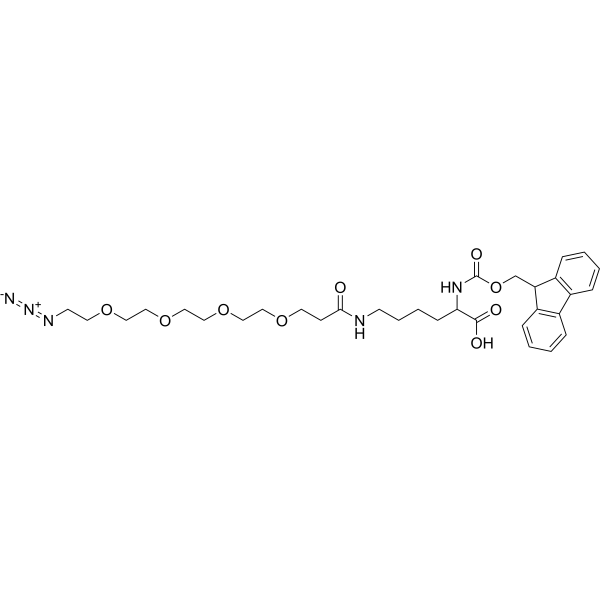
- HY-138416
-
|
|
PROTAC Linkers
|
Cancer
|
|
Azido-PEG10-CH2COOH is a PEG-based PROTAC linker that can be used in the synthesis of PROTACs . Azido-PEG10-CH2COOH is a click chemistry reagent, it contains an Azide group and can undergo copper-catalyzed azide-alkyne cycloaddition reaction (CuAAc) with molecules containing Alkyne groups. It can also undergo strain-promoted alkyne-azide cycloaddition (SPAAC) reactions with molecules containing DBCO or BCN groups.
|
-
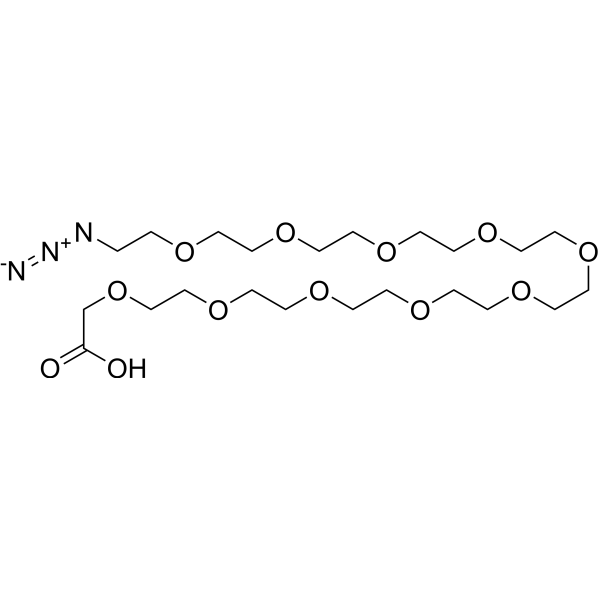
- HY-141059
-
|
|
PROTAC Linkers
|
Cancer
|
|
Cy5-PEG5-azide is a PEG-based PROTAC linker that can be used in the synthesis of PROTACs . Cy5-PEG5-azide is a click chemistry reagent, it contains an Azide group and can undergo copper-catalyzed azide-alkyne cycloaddition reaction (CuAAc) with molecules containing Alkyne groups. It can also undergo strain-promoted alkyne-azide cycloaddition (SPAAC) reactions with molecules containing DBCO or BCN groups.
|
-
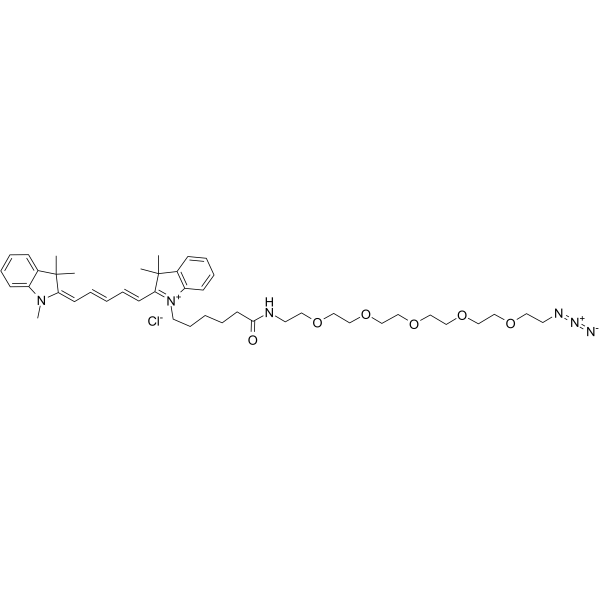
- HY-130885
-
|
|
PROTAC Linkers
|
Cancer
|
|
N3-PEG6-Propanehydrazide is a PEG-based PROTAC linker that can be used in the synthesis of PROTACs . N3-PEG6-Propanehydrazide is a click chemistry reagent, it contains an Azide group and can undergo copper-catalyzed azide-alkyne cycloaddition reaction (CuAAc) with molecules containing Alkyne groups. It can also undergo strain-promoted alkyne-azide cycloaddition (SPAAC) reactions with molecules containing DBCO or BCN groups.
|
-
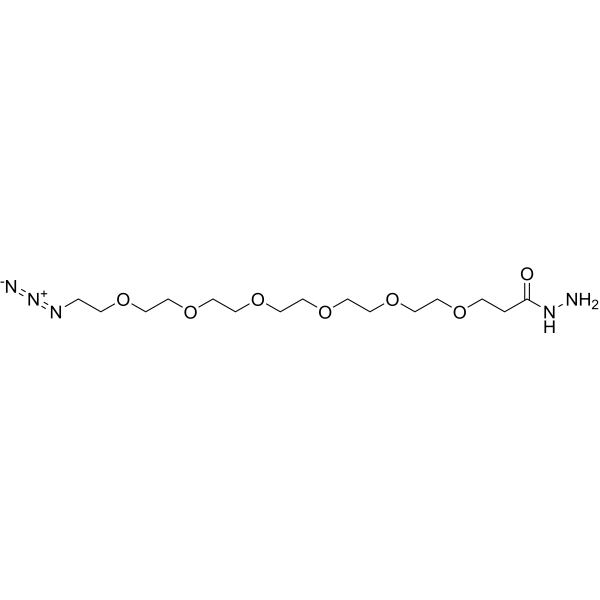
- HY-134696
-
|
|
PROTAC Linkers
|
Cancer
|
|
Azido-PEG6-CH2COOH is a PEG-based PROTAC linker that can be used in the synthesis of PROTACs . Azido-PEG6-CH2COOH is a click chemistry reagent, it contains an Azide group and can undergo copper-catalyzed azide-alkyne cycloaddition reaction (CuAAc) with molecules containing Alkyne groups. It can also undergo strain-promoted alkyne-azide cycloaddition (SPAAC) reactions with molecules containing DBCO or BCN groups.
|
-
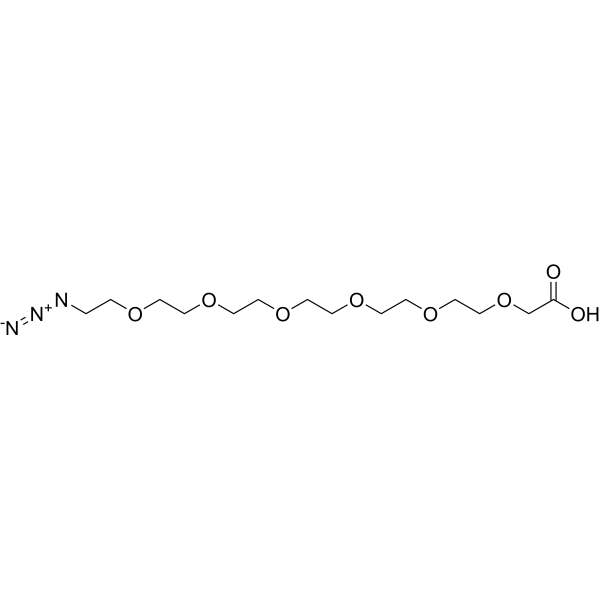
- HY-D2802B
-
|
|
Fluorescent Dye
|
Others
|
|
FITC-PEG3400-N3 is an azide fluorescent dye containing polyethylene glycol (PEG) and FITC (HY-66019). FITC-PEG3400-N3 is a click chemistry reagent, it contains an Azide group and can undergo copper-catalyzed azide-alkyne cycloaddition reaction (CuAAc) with molecules containing Alkyne groups. It can also undergo strain-promoted alkyne-azide cycloaddition (SPAAC) reactions with molecules containing DBCO or BCN groups.
|
-

- HY-148835A
-
|
|
Fluorescent Dye
|
Others
|
|
AzGGK TFA is an unnatural amino acid. AzGGK TFA is site-specifically incorporated into proteins via genetic-code expansion. AzGGK TFA can be used as a site-specific probe for ubiquitylation and SUMOylation. AzGGK TFA is a click chemistry reagent, it contains an Azide group and can undergo copper-catalyzed azide-alkyne cycloaddition reaction (CuAAc) with molecules containing Alkyne groups. It can also undergo strain-promoted alkyne-azide cycloaddition (SPAAC) reactions with molecules containing DBCO or BCN groups .
|
-

- HY-138358
-
|
|
PROTAC Linkers
|
Cancer
|
|
Azido-PEG23-C2-azide is a PEG-based PROTAC linker that can be used in the synthesis of PROTACs . Azido-PEG23-C2-azide is a click chemistry reagent, it contains an Azide group and can undergo copper-catalyzed azide-alkyne cycloaddition reaction (CuAAc) with molecules containing Alkyne groups. It can also undergo strain-promoted alkyne-azide cycloaddition (SPAAC) reactions with molecules containing DBCO or BCN groups.
|
-
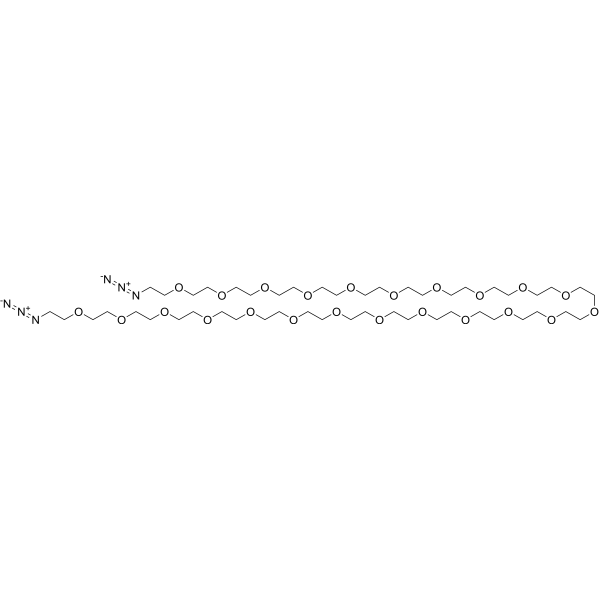
- HY-140523
-
|
|
PROTAC Linkers
|
Cancer
|
|
Azido-PEG4-amido-tri-(carboxyethoxymethyl)-methane is a PEG-based PROTAC linker that can be used in the synthesis of PROTACs . Azido-PEG4-amido-tri-(carboxyethoxymethyl)-methane is a click chemistry reagent, it contains an Azide group and can undergo copper-catalyzed azide-alkyne cycloaddition reaction (CuAAc) with molecules containing Alkyne groups. It can also undergo strain-promoted alkyne-azide cycloaddition (SPAAC) reactions with molecules containing DBCO or BCN groups.
|
-
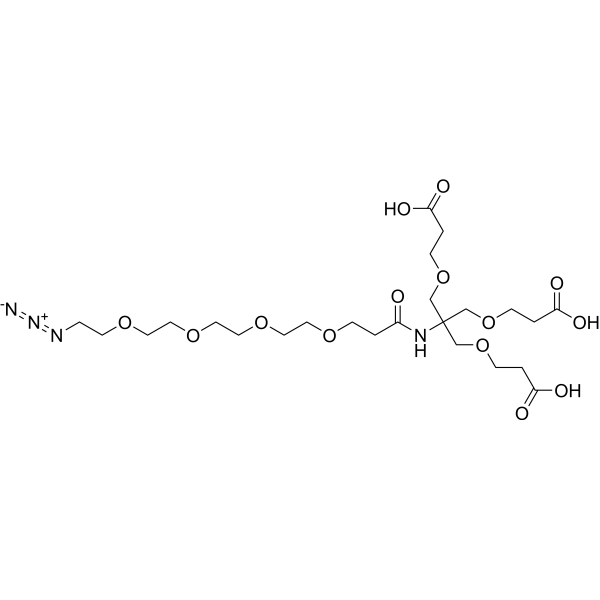
- HY-126525
-
|
|
ADC Linker
|
Cancer
|
|
4-N3Pfp-NHS ester is a noncleavable ADC linker used in the synthesis of antibody-drug conjugates (ADCs) . 4-N3Pfp-NHS ester is a click chemistry reagent, it contains an Azide group and can undergo copper-catalyzed azide-alkyne cycloaddition reaction (CuAAc) with molecules containing Alkyne groups. It can also undergo strain-promoted alkyne-azide cycloaddition (SPAAC) reactions with molecules containing DBCO or BCN groups.
|
-
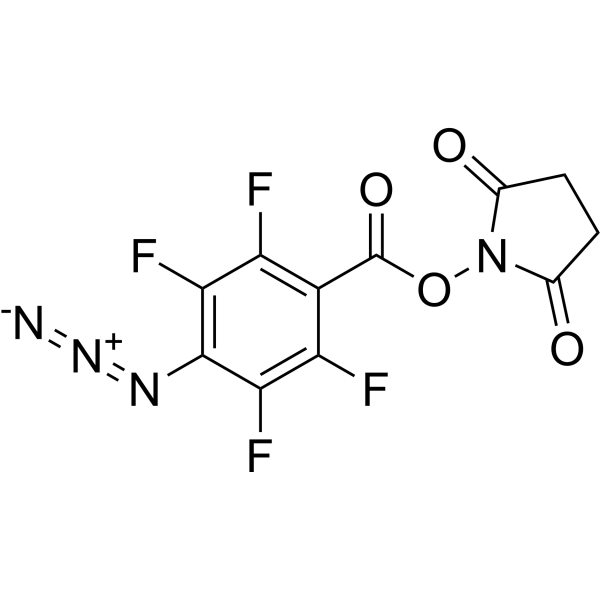
- HY-126520
-
|
|
ADC Linker
|
Cancer
|
|
N3-C2-NHS ester is a noncleavable ADC linker used in the synthesis of antibody-drug conjugates (ADCs). N3-C2-NHS ester is a click chemistry reagent, it contains an Azide group and can undergo copper-catalyzed azide-alkyne cycloaddition reaction (CuAAc) with molecules containing Alkyne groups. It can also undergo strain-promoted alkyne-azide cycloaddition (SPAAC) reactions with molecules containing DBCO or BCN groups.
|
-
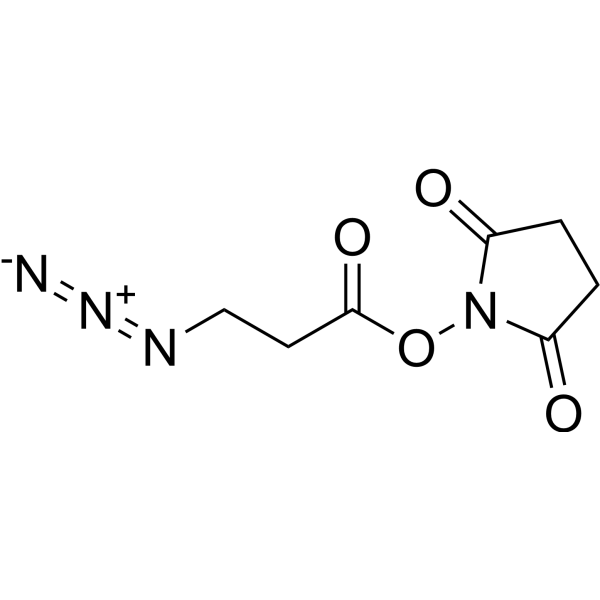
- HY-140164
-
|
|
PROTAC Linkers
|
Cancer
|
|
Azido-PEG2-C2-sulfonic acid is a PEG-based PROTAC linker that can be used in the synthesis of PROTACs . Azido-PEG2-C2-sulfonic acid is a click chemistry reagent, it contains an Azide group and can undergo copper-catalyzed azide-alkyne cycloaddition reaction (CuAAc) with molecules containing Alkyne groups. It can also undergo strain-promoted alkyne-azide cycloaddition (SPAAC) reactions with molecules containing DBCO or BCN groups.
|
-
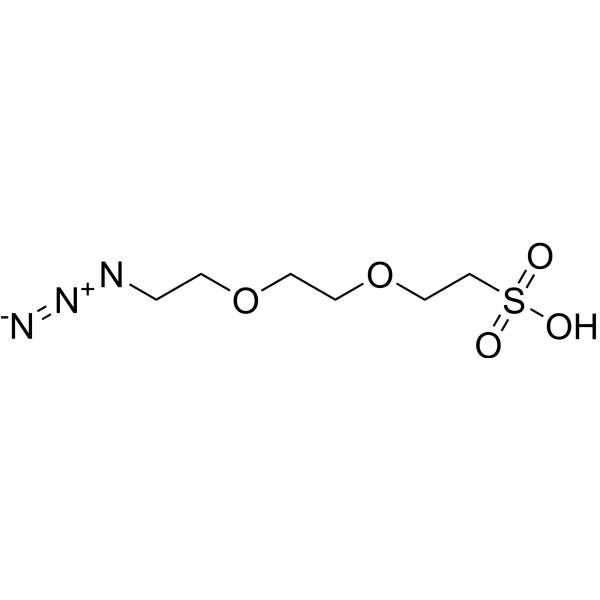
- HY-P5112A
-
|
Azido-PEG3-FLAG TFA
|
Biochemical Assay Reagents
|
Others
|
|
Azido-PEG3-DYKDDDDK (azide-PEG3-FLAG) TFA is a multifunctional fusion tag for the purification of recombinant proteins. Azido-PEG3-DYKDDDDK TFA is a click chemistry reagent, it contains an Azide group and can undergo copper-catalyzed azide-alkyne cycloaddition reaction (CuAAc) with molecules containing Alkyne groups. It can also undergo strain-promoted alkyne-azide cycloaddition (SPAAC) reactions with molecules containing DBCO or BCN groups .
|
-

- HY-141015
-
|
|
E3 Ligase Ligand-Linker Conjugates
|
Cancer
|
|
Pomalidomide-PEG4-azide is a synthesized E3 ligase ligand-linker conjugate that incorporates the Pomalidomide based cereblon ligand and a linker used in PROTAC technology . Pomalidomide-PEG4-azide is a click chemistry reagent, it contains an Azide group and can undergo copper-catalyzed azide-alkyne cycloaddition reaction (CuAAc) with molecules containing Alkyne groups. It can also undergo strain-promoted alkyne-azide cycloaddition (SPAAC) reactions with molecules containing DBCO or BCN groups.
|
-
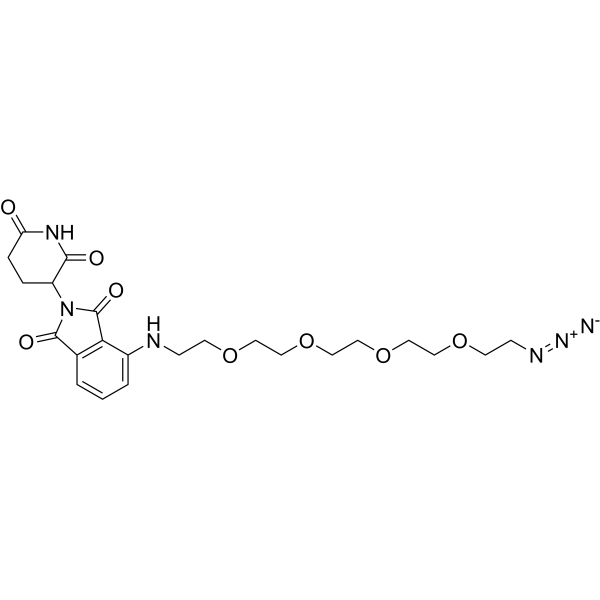
- HY-130543
-
|
|
PROTAC Linkers
|
Cancer
|
|
111-Trifluoroethyl-PEG4-azide is a PEG-based PROTAC linker that can be used in the synthesis of PROTACs . 1,1,1-Trifluoroethyl-PEG4-azide is a click chemistry reagent, it contains an Azide group and can undergo copper-catalyzed azide-alkyne cycloaddition reaction (CuAAc) with molecules containing Alkyne groups. It can also undergo strain-promoted alkyne-azide cycloaddition (SPAAC) reactions with molecules containing DBCO or BCN groups.
|
-
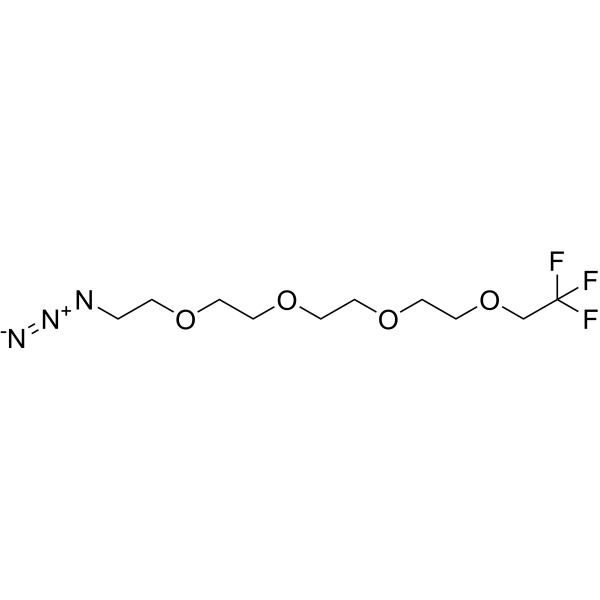
- HY-138417
-
|
|
PROTAC Linkers
|
Cancer
|
|
Azido-PEG9-CH2COOH is a PEG-based PROTAC linker that can be used in the synthesis of PROTACs . Azido-PEG9-CH2COOH is a click chemistry reagent, it contains an Azide group and can undergo copper-catalyzed azide-alkyne cycloaddition reaction (CuAAc) with molecules containing Alkyne groups. It can also undergo strain-promoted alkyne-azide cycloaddition (SPAAC) reactions with molecules containing DBCO or BCN groups.
|
-
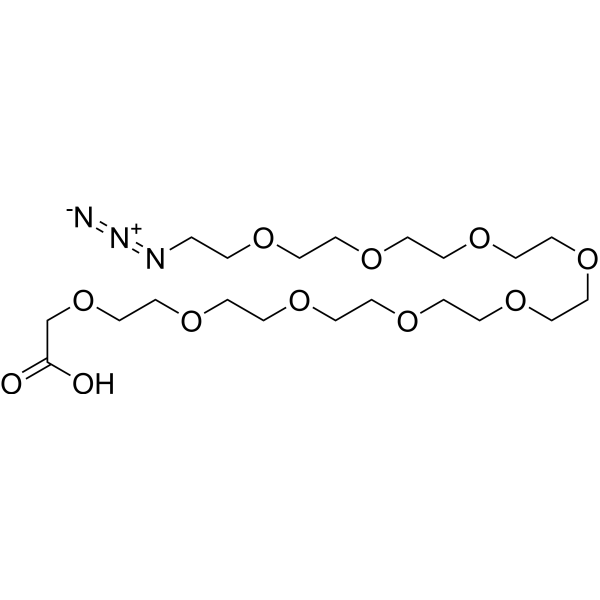
- HY-108370
-
|
N3-TEG-COOH; 14-Azido-3,6,9,12-tetraoxatetradecanoic acid
|
PROTAC Linkers
|
Cancer
|
|
N33-TEG-COOH (N3-TEG-COOH) is a PEG-based PROTAC linker can be used in the synthesis of PROTACs . N33-TEG-COOH is a click chemistry reagent, it contains an Azide group and can undergo copper-catalyzed azide-alkyne cycloaddition reaction (CuAAc) with molecules containing Alkyne groups. It can also undergo strain-promoted alkyne-azide cycloaddition (SPAAC) reactions with molecules containing DBCO or BCN groups.
|
-
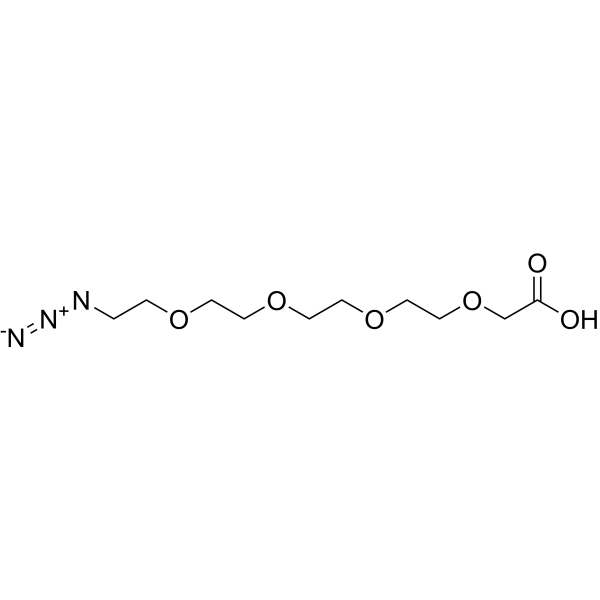
- HY-140009
-
|
|
PROTAC Linkers
|
Cancer
|
|
Azido-PEG1-C2-acid is a PEG-based PROTAC linker that can be used in the synthesis of PROTACs . Azido-PEG1-C2-acid is a click chemistry reagent, it contains an Azide group and can undergo copper-catalyzed azide-alkyne cycloaddition reaction (CuAAc) with molecules containing Alkyne groups. It can also undergo strain-promoted alkyne-azide cycloaddition (SPAAC) reactions with molecules containing DBCO or BCN groups.
|
-
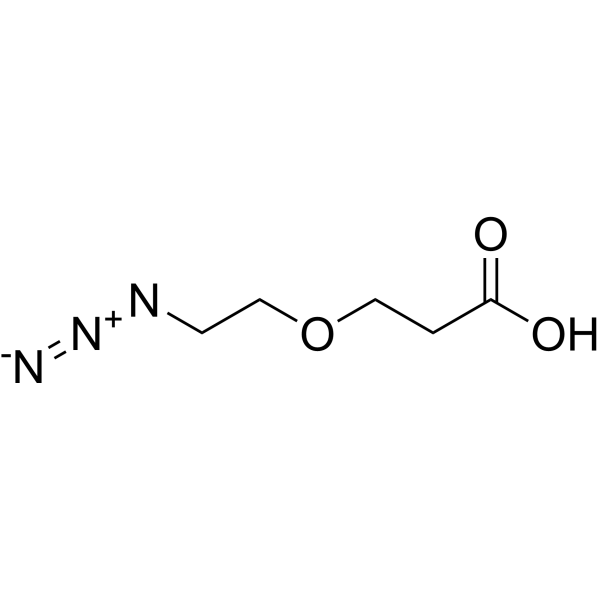
- HY-139162
-
|
|
Biochemical Assay Reagents
|
Others
|
|
BGN3 is a good substrate for the SNAP-tag ? and H 5 enzymes. The activities of SNAP-tag ? and H 5 enzymes on BGN3 are reasonable (IC50= 15.6 and 23.5 μM, respectively) . BGN3 is a click chemistry reagent, it contains an Azide group and can undergo copper-catalyzed azide-alkyne cycloaddition reaction (CuAAc) with molecules containing Alkyne groups. It can also undergo strain-promoted alkyne-azide cycloaddition (SPAAC) reactions with molecules containing DBCO or BCN groups.
|
-
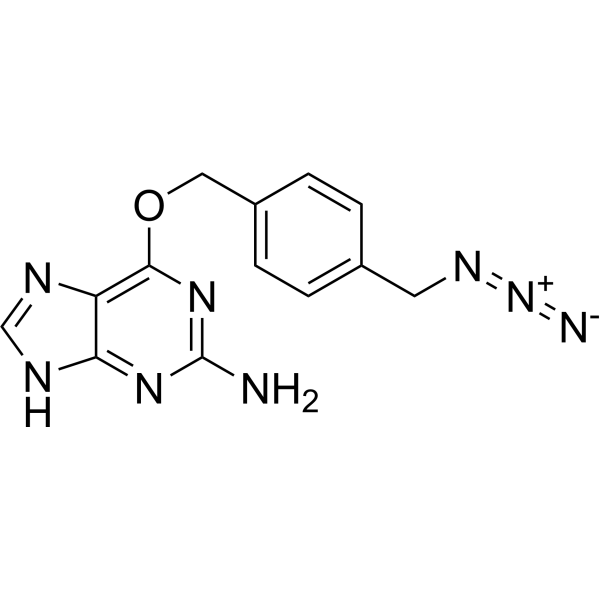
- HY-140602
-
|
|
PROTAC Linkers
|
Cancer
|
|
Azido-PEG3-Sulfone-PEG4-acid is a PEG-based PROTAC linker that can be used in the synthesis of PROTACs . Azido-PEG3-Sulfone-PEG4-acid is a click chemistry reagent, it contains an Azide group and can undergo copper-catalyzed azide-alkyne cycloaddition reaction (CuAAc) with molecules containing Alkyne groups. It can also undergo strain-promoted alkyne-azide cycloaddition (SPAAC) reactions with molecules containing DBCO or BCN groups.
|
-
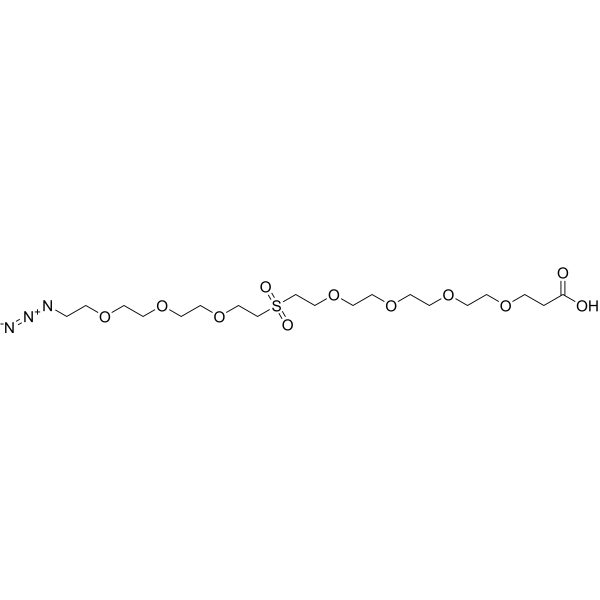
- HY-154255
-
|
|
Nucleoside Antimetabolite/Analog
|
Cancer
|
|
5-(3-Azidopropyl)uridine is a thymidine analog. Analogs of this series have insertional activity towards replicated DNA. They can be used to label cells and track DNA synthesis . 5-(3-Azidopropyl)uridine is a click chemistry reagent, it contains an Azide group and can undergo copper-catalyzed azide-alkyne cycloaddition reaction (CuAAc) with molecules containing Alkyne groups. It can also undergo strain-promoted alkyne-azide cycloaddition (SPAAC) reactions with molecules containing DBCO or BCN groups.
|
-
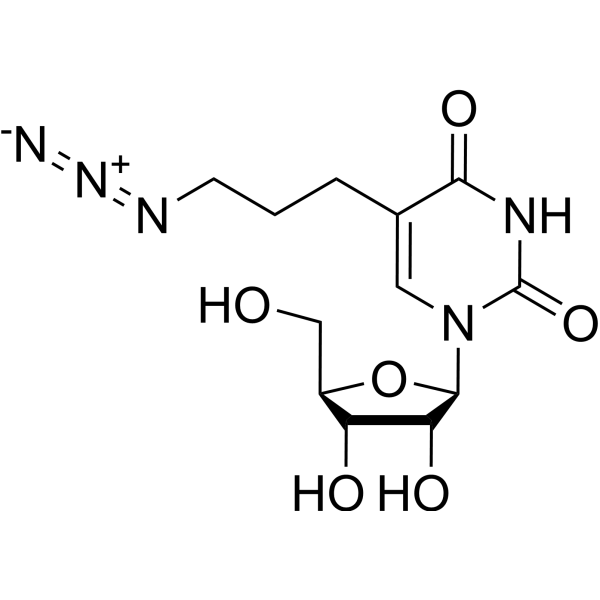
- HY-140796
-
|
|
PROTAC Linkers
|
Cancer
|
|
Azido-PEG6-C1-Boc is a PEG-based PROTAC linker that can be used in the synthesis of PROTACs . Azido-PEG6-C1-Boc is a click chemistry reagent, it contains an Azide group and can undergo copper-catalyzed azide-alkyne cycloaddition reaction (CuAAc) with molecules containing Alkyne groups. It can also undergo strain-promoted alkyne-azide cycloaddition (SPAAC) reactions with molecules containing DBCO or BCN groups.
|
-
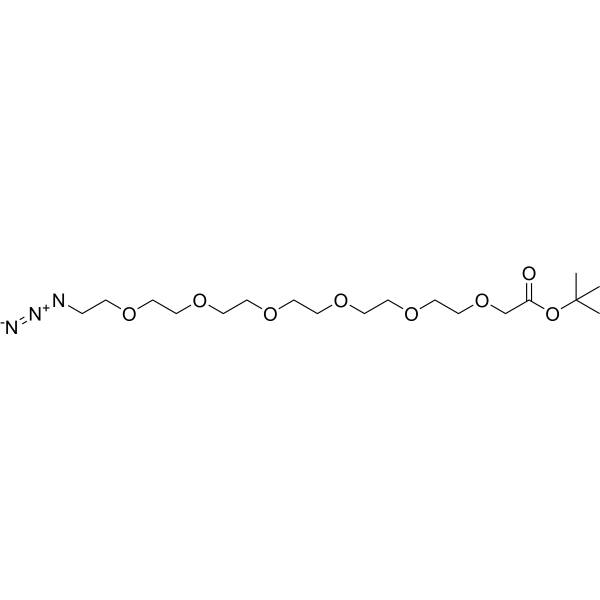
- HY-108368
-
|
|
PROTAC Linkers
|
Cancer
|
|
Azido-PEG2-CH2COOH is a PEG-based PROTAC linker can be used in the synthesis of PROTACs . Azido-PEG2-CH2COOH is a click chemistry reagent, it contains an Azide group and can undergo copper-catalyzed azide-alkyne cycloaddition reaction (CuAAc) with molecules containing Alkyne groups. It can also undergo strain-promoted alkyne-azide cycloaddition (SPAAC) reactions with molecules containing DBCO or BCN groups.
|
-
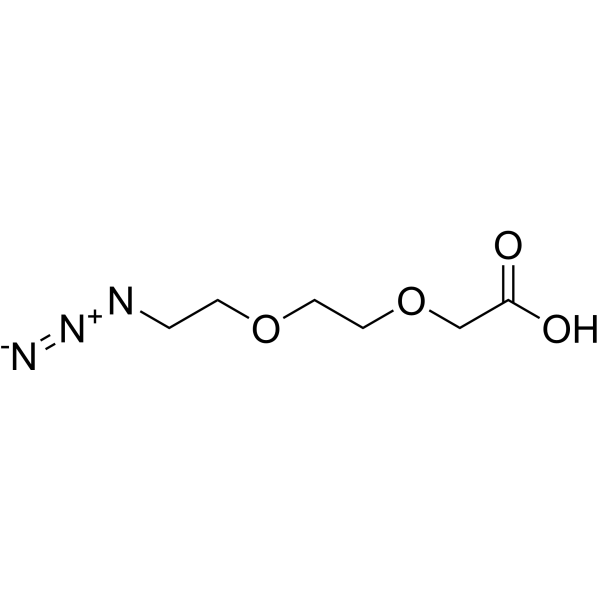
- HY-126521
-
|
|
ADC Linker
|
Cancer
|
|
N3-C3-NHS ester is a noncleavable ADC linker used in the synthesis of antibody-drug conjugates (ADCs). N3-C3-NHS ester is a click chemistry reagent, it contains an Azide group and can undergo copper-catalyzed azide-alkyne cycloaddition reaction (CuAAc) with molecules containing Alkyne groups. It can also undergo strain-promoted alkyne-azide cycloaddition (SPAAC) reactions with molecules containing DBCO or BCN groups.
|
-
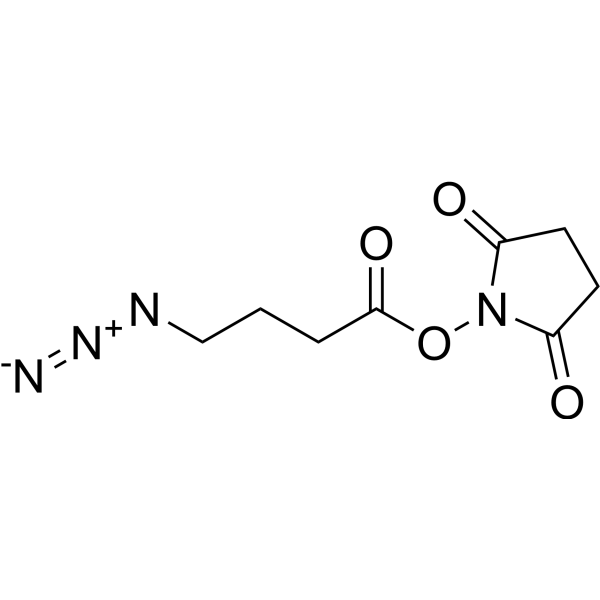
- HY-135966
-
|
|
ADC Linker
|
Cancer
|
|
Azido-PEG3-SS-NHS is a cleavable 3 unit PEG ADC linker used in the synthesis of antibody-drug conjugates (ADCs) . Azido-PEG3-SS-NHS is a click chemistry reagent, it contains an Azide group and can undergo copper-catalyzed azide-alkyne cycloaddition reaction (CuAAc) with molecules containing Alkyne groups. It can also undergo strain-promoted alkyne-azide cycloaddition (SPAAC) reactions with molecules containing DBCO or BCN groups.
|
-
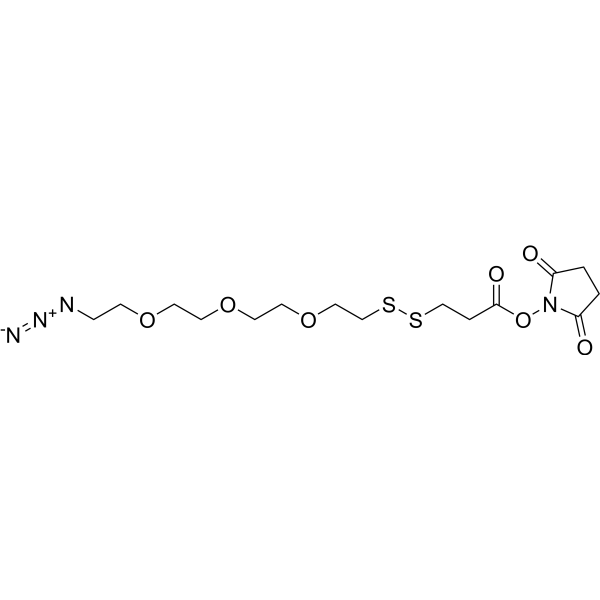
- HY-130883
-
|
|
PROTAC Linkers
|
Cancer
|
|
N3-PEG3-Propanehydrazide is a PEG-based PROTAC linker that can be used in the synthesis of PROTACs . N3-PEG3-Propanehydrazide is a click chemistry reagent, it contains an Azide group and can undergo copper-catalyzed azide-alkyne cycloaddition reaction (CuAAc) with molecules containing Alkyne groups. It can also undergo strain-promoted alkyne-azide cycloaddition (SPAAC) reactions with molecules containing DBCO or BCN groups.
|
-
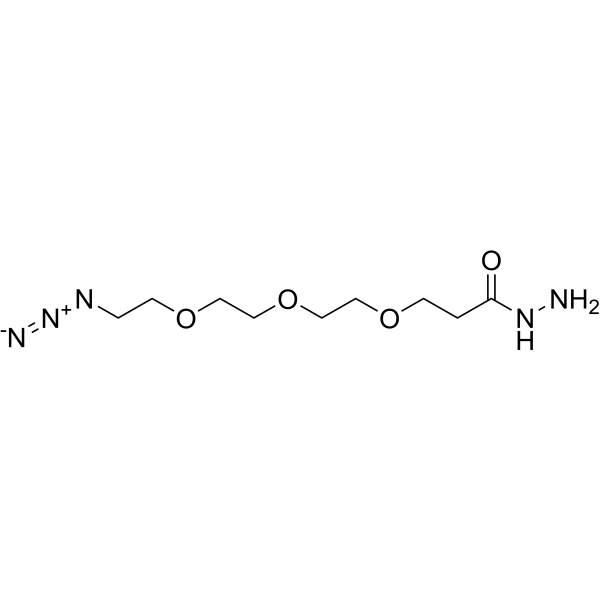
- HY-140452
-
|
|
PROTAC Linkers
|
Cancer
|
|
Azido-PEG2-C2-acid is a PEG-based PROTAC linker that can be used in the synthesis of PROTACs . Azido-PEG2-C2-acid is a click chemistry reagent, it contains an Azide group and can undergo copper-catalyzed azide-alkyne cycloaddition reaction (CuAAc) with molecules containing Alkyne groups. It can also undergo strain-promoted alkyne-azide cycloaddition (SPAAC) reactions with molecules containing DBCO or BCN groups.
|
-
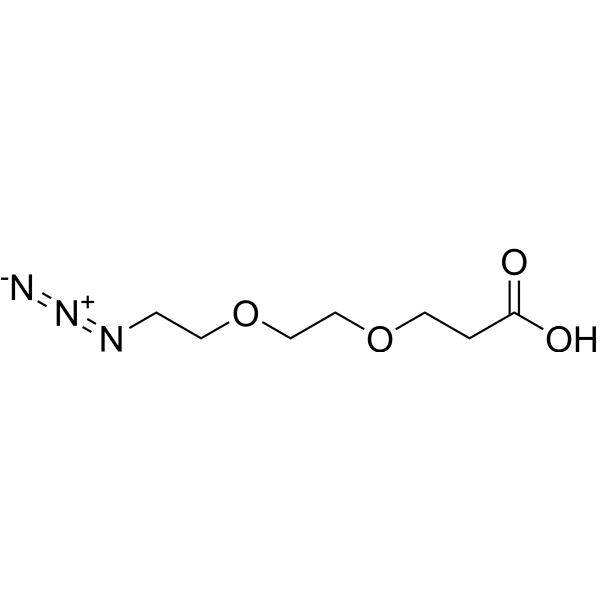
- HY-136034
-
|
|
ADC Linker
|
Cancer
|
|
Azido-PEG1-Val-Cit-OH is a cleavable 1 unit PEG ADC linker used in the synthesis of antibody-drug conjugates (ADCs) . Azido-PEG1-Val-Cit-OH is a click chemistry reagent, it contains an Azide group and can undergo copper-catalyzed azide-alkyne cycloaddition reaction (CuAAc) with molecules containing Alkyne groups. It can also undergo strain-promoted alkyne-azide cycloaddition (SPAAC) reactions with molecules containing DBCO or BCN groups.
|
-
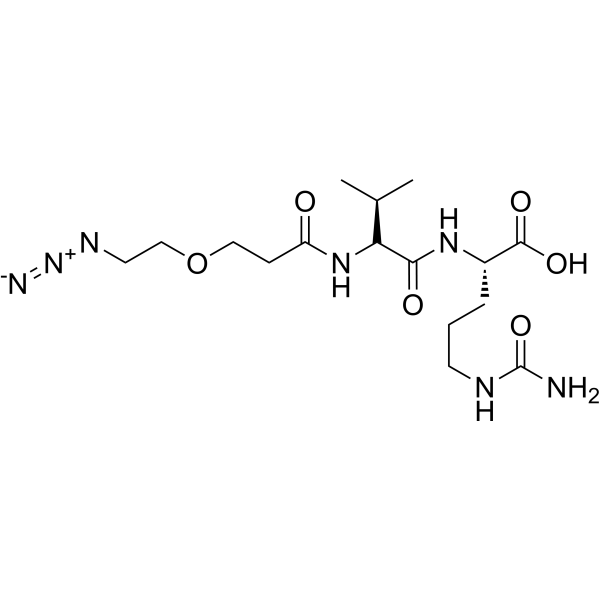
- HY-138418
-
|
|
PROTAC Linkers
|
Cancer
|
|
Azido-PEG7-CH2COOH is a PEG-based PROTAC linker that can be used in the synthesis of PROTACs . Azido-PEG7-CH2COOH is a click chemistry reagent, it contains an Azide group and can undergo copper-catalyzed azide-alkyne cycloaddition reaction (CuAAc) with molecules containing Alkyne groups. It can also undergo strain-promoted alkyne-azide cycloaddition (SPAAC) reactions with molecules containing DBCO or BCN groups.
|
-
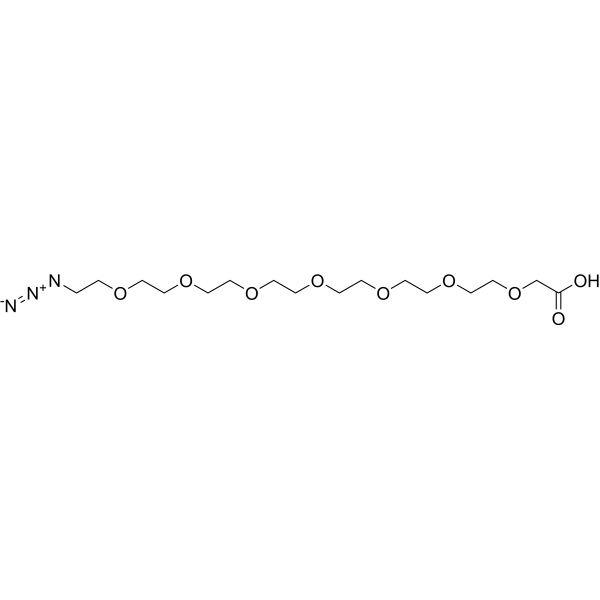
- HY-103700B
-
|
|
Amino Acid Derivatives
|
Others
|
|
(Rac)-Azide-phenylalanine is a racemate of Azide-phenylalanine. Azide-phenylalanine is a phenylalanine derivative and a non-natural amino acid. Azide-phenylalanine can be site-specifically incorporated into proteins and used to label proteins . (Rac)-Azide-phenylalanine is a click chemistry reagent, it contains an Azide group and can undergo copper-catalyzed azide-alkyne cycloaddition reaction (CuAAc) with molecules containing Alkyne groups. It can also undergo strain-promoted alkyne-azide cycloaddition (SPAAC) reactions with molecules containing DBCO or BCN groups.
|
-
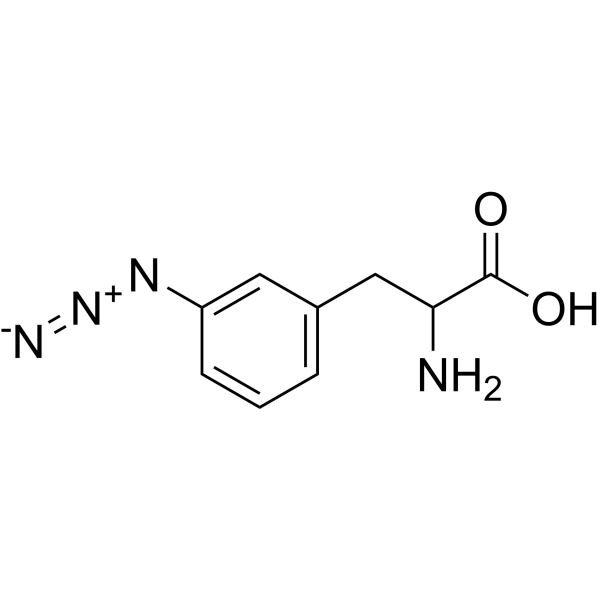
- HY-139163
-
|
|
Biochemical Assay Reagents
|
Others
|
|
BGSN3 is a good substrate for the SNAP-tag ? and H 5 enzymes. The activities of SNAP-tag ? and H 5 enzymes on BGSN3 are reasonable (IC50=17.8 and 10 μM, respectively) . BGSN3 is a click chemistry reagent, it contains an Azide group and can undergo copper-catalyzed azide-alkyne cycloaddition reaction (CuAAc) with molecules containing Alkyne groups. It can also undergo strain-promoted alkyne-azide cycloaddition (SPAAC) reactions with molecules containing DBCO or BCN groups.
|
-
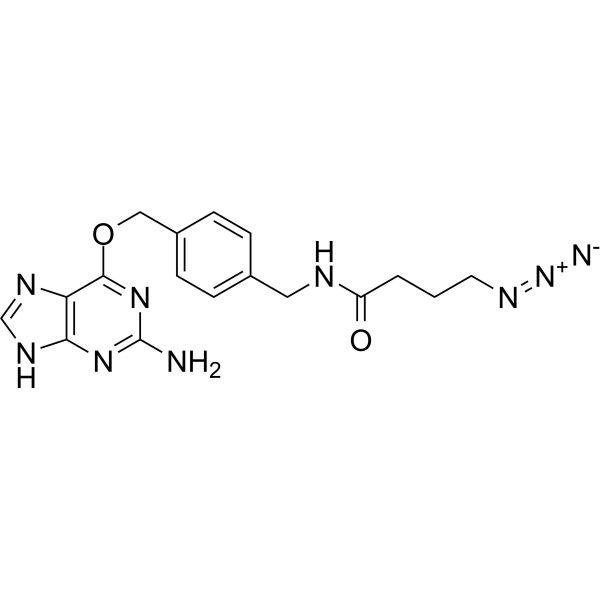
- HY-130886
-
|
Azide-PEG12-hydrazide
|
PROTAC Linkers
|
Cancer
|
|
N3-PEG12-Hydrazide is a PEG-based PROTAC linker that can be used in the synthesis of PROTACs . N3-PEG12-Hydrazide is a click chemistry reagent, it contains an Azide group and can undergo copper-catalyzed azide-alkyne cycloaddition reaction (CuAAc) with molecules containing Alkyne groups. It can also undergo strain-promoted alkyne-azide cycloaddition (SPAAC) reactions with molecules containing DBCO or BCN groups.
|
-
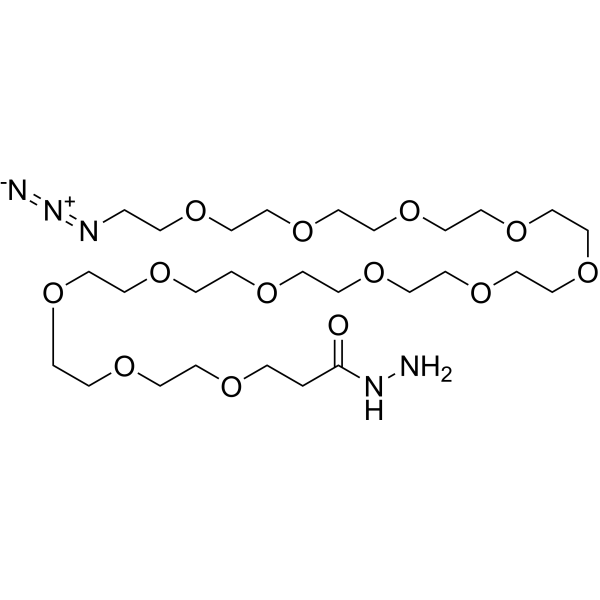
- HY-140633
-
|
N3-PEG4-CH2CH2CHO
|
PROTAC Linkers
|
Cancer
|
|
Ald-C2-PEG4-azide is a PEG-based PROTAC linker that can be used in the synthesis of PROTACs . Ald-C2-PEG4-azide is a click chemistry reagent, it contains an Azide group and can undergo copper-catalyzed azide-alkyne cycloaddition reaction (CuAAc) with molecules containing Alkyne groups. It can also undergo strain-promoted alkyne-azide cycloaddition (SPAAC) reactions with molecules containing DBCO or BCN groups.
|
-
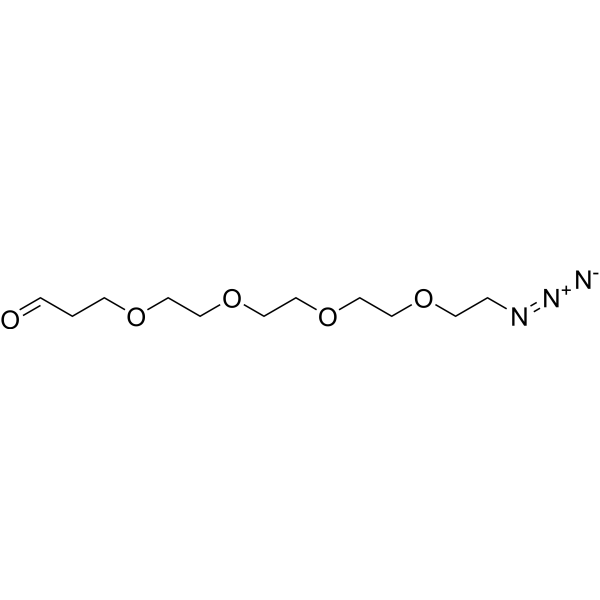
- HY-140459
-
|
|
PROTAC Linkers
|
Cancer
|
|
2-((Azido-PEG8-carbamoyl)methoxy)acetic acid is a PEG-based PROTAC linker that can be used in the synthesis of PROTACs . 2-((Azido-PEG8-carbamoyl)methoxy)acetic acid is a click chemistry reagent, it contains an Azide group and can undergo copper-catalyzed azide-alkyne cycloaddition reaction (CuAAc) with molecules containing Alkyne groups. It can also undergo strain-promoted alkyne-azide cycloaddition (SPAAC) reactions with molecules containing DBCO or BCN groups.
|
-
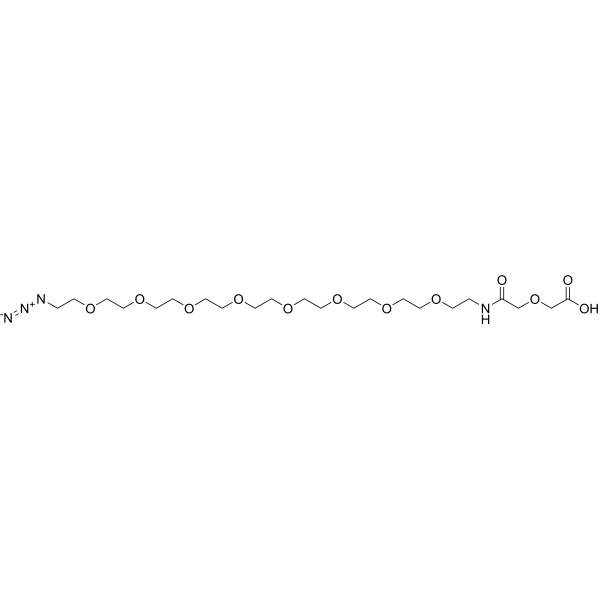
- HY-138415
-
|
|
PROTAC Linkers
|
Cancer
|
|
Azido-PEG11-CH2COOH is a PEG-based PROTAC linker that can be used in the synthesis of PROTACs . Azido-PEG11-CH2COOH is a click chemistry reagent, it contains an Azide group and can undergo copper-catalyzed azide-alkyne cycloaddition reaction (CuAAc) with molecules containing Alkyne groups. It can also undergo strain-promoted alkyne-azide cycloaddition (SPAAC) reactions with molecules containing DBCO or BCN groups.
|
-
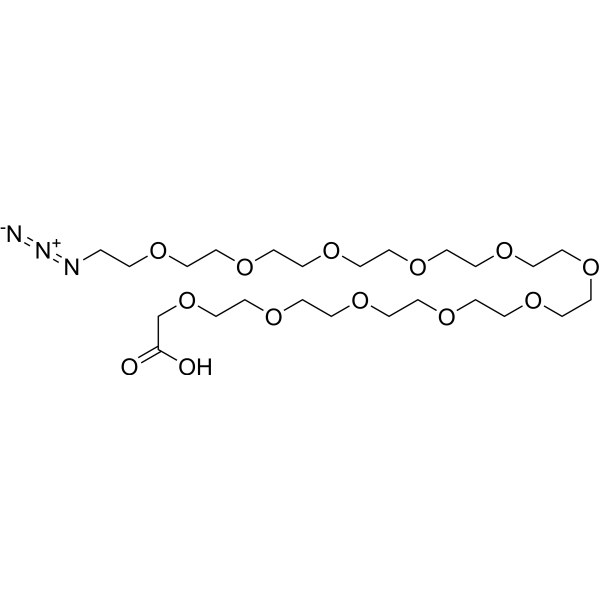
- HY-D2802D
-
|
|
Fluorescent Dye
|
Others
|
|
FITC-PEG10000-N3 is an azide fluorescent dye containing polyethylene glycol (PEG) and FITC (HY-66019). FITC-PEG10000-N3 is a click chemistry reagent, it contains an Azide group and can undergo copper-catalyzed azide-alkyne cycloaddition reaction (CuAAc) with molecules containing Alkyne groups. It can also undergo strain-promoted alkyne-azide cycloaddition (SPAAC) reactions with molecules containing DBCO or BCN groups.
|
-

- HY-138471
-
|
|
PROTAC Linkers
|
Cancer
|
|
Azido-PEG2-C6-OH is a PEG-based PROTAC linker that can be used in the synthesis of PROTACs . Azido-PEG2-C6-OH is a click chemistry reagent, it contains an Azide group and can undergo copper-catalyzed azide-alkyne cycloaddition reaction (CuAAc) with molecules containing Alkyne groups. It can also undergo strain-promoted alkyne-azide cycloaddition (SPAAC) reactions with molecules containing DBCO or BCN groups.
|
-
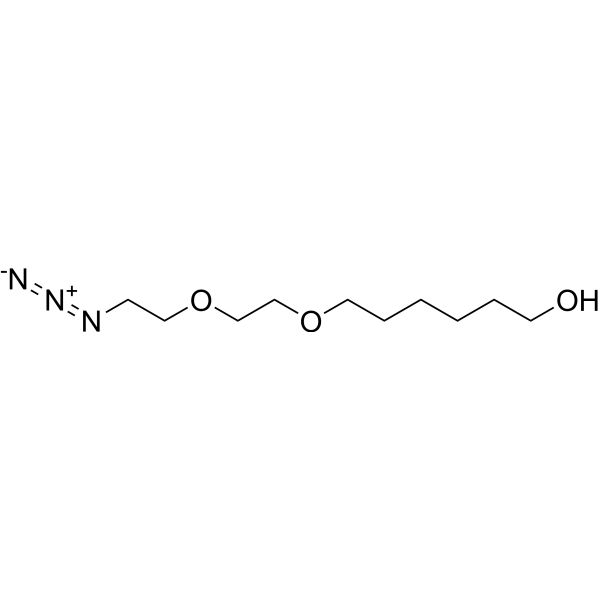
- HY-140808
-
|
|
PROTAC Linkers
|
Cancer
|
|
Azido-PEG3-C3-OH is a PEG-based PROTAC linker that can be used in the synthesis of PROTACs . Azido-PEG3-C3-OH is a click chemistry reagent, it contains an Azide group and can undergo copper-catalyzed azide-alkyne cycloaddition reaction (CuAAc) with molecules containing Alkyne groups. It can also undergo strain-promoted alkyne-azide cycloaddition (SPAAC) reactions with molecules containing DBCO or BCN groups.
|
-
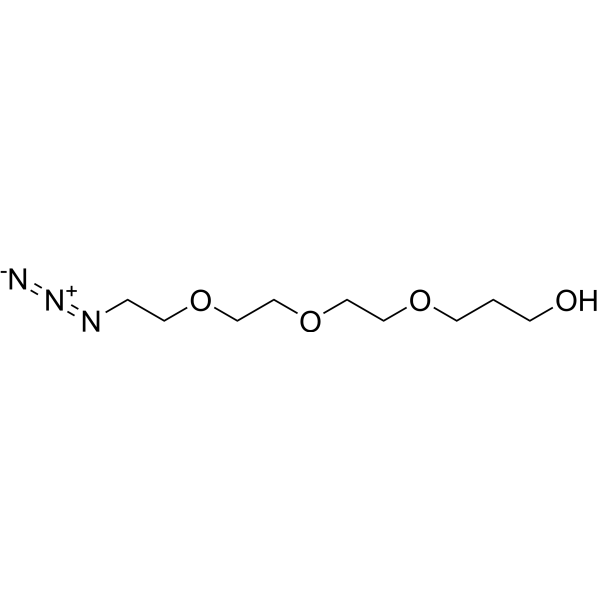
- HY-140841
-
|
|
PROTAC Linkers
|
Cancer
|
|
APN-C3-PEG4-azide is a PEG-based PROTAC linker that can be used in the synthesis of PROTACs . APN-C3-PEG4-azide is a click chemistry reagent, it contains an Azide group and can undergo copper-catalyzed azide-alkyne cycloaddition reaction (CuAAc) with molecules containing Alkyne groups. It can also undergo strain-promoted alkyne-azide cycloaddition (SPAAC) reactions with molecules containing DBCO or BCN groups.
|
-
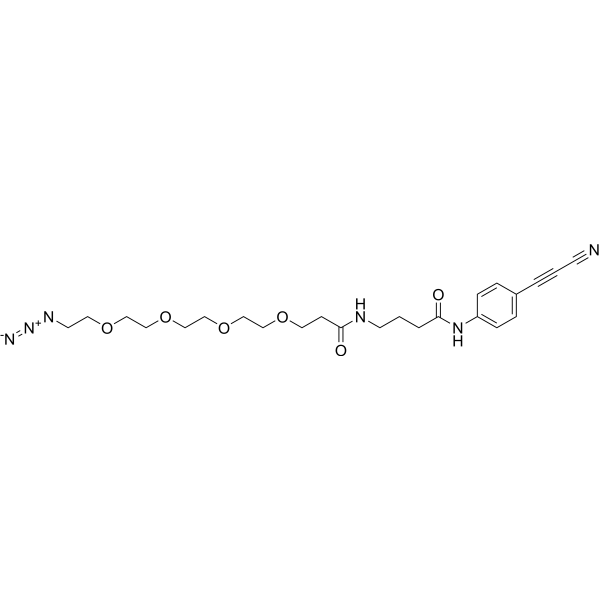
- HY-D2802C
-
|
|
Fluorescent Dye
|
Others
|
|
FITC-PEG5000-N3 is an azide fluorescent dye containing polyethylene glycol (PEG) and FITC (HY-66019). FITC-PEG5000-N3 is a click chemistry reagent, it contains an Azide group and can undergo copper-catalyzed azide-alkyne cycloaddition reaction (CuAAc) with molecules containing Alkyne groups. It can also undergo strain-promoted alkyne-azide cycloaddition (SPAAC) reactions with molecules containing DBCO or BCN groups.
|
-

- HY-140819
-
|
|
PROTAC Linkers
|
Cancer
|
|
Bromo-PEG1-C2-azide is a PEG-based PROTAC linker that can be used in the synthesis of PROTACs . Bromo-PEG1-C2-azide is a click chemistry reagent, it contains an Azide group and can undergo copper-catalyzed azide-alkyne cycloaddition reaction (CuAAc) with molecules containing Alkyne groups. It can also undergo strain-promoted alkyne-azide cycloaddition (SPAAC) reactions with molecules containing DBCO or BCN groups.
|
-
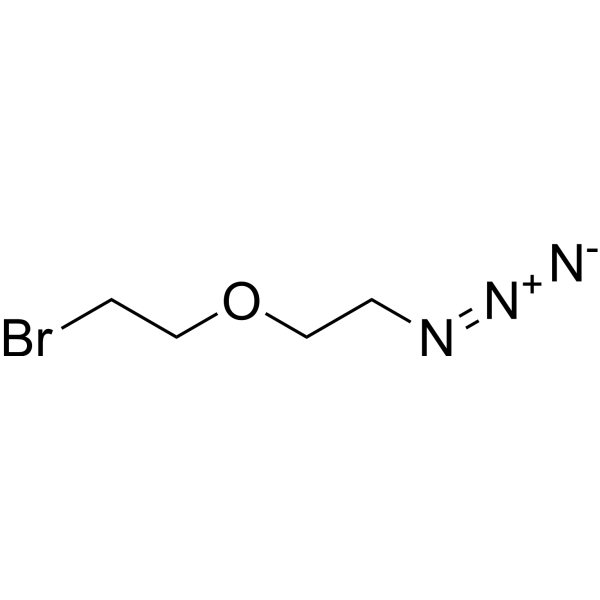
- HY-141127
-
|
|
PROTAC Linkers
|
Cancer
|
|
Azido-PEG4-tetra-Ac-beta-D-glucose is a PEG-based PROTAC linker that can be used in the synthesis of PROTACs . Azido-PEG4-tetra-Ac-beta-D-glucose is a click chemistry reagent, it contains an Azide group and can undergo copper-catalyzed azide-alkyne cycloaddition reaction (CuAAc) with molecules containing Alkyne groups. It can also undergo strain-promoted alkyne-azide cycloaddition (SPAAC) reactions with molecules containing DBCO or BCN groups.
|
-
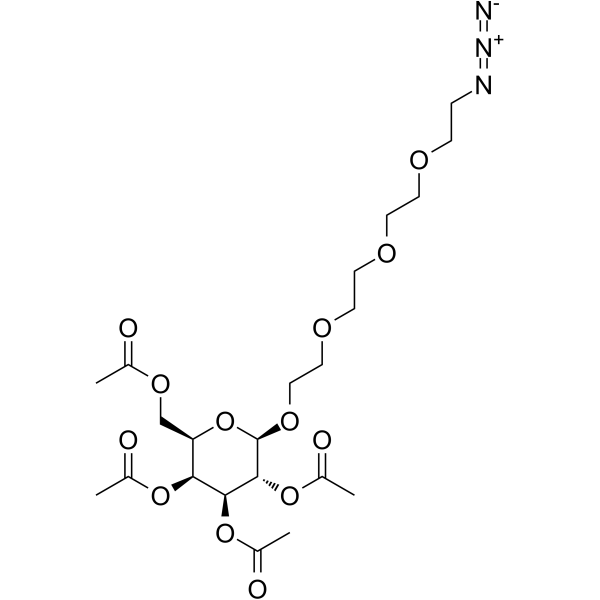
- HY-140944
-
|
|
ADC Linker
|
Cancer
|
|
Biotin-PEG3-SS-azide is a cleavable 3 unit PEG ADC linker used in the synthesis of antibody-drug conjugates (ADCs) . Biotin-PEG3-SS-azide is a click chemistry reagent, it contains an Azide group and can undergo copper-catalyzed azide-alkyne cycloaddition reaction (CuAAc) with molecules containing Alkyne groups. It can also undergo strain-promoted alkyne-azide cycloaddition (SPAAC) reactions with molecules containing DBCO or BCN groups.
|
-
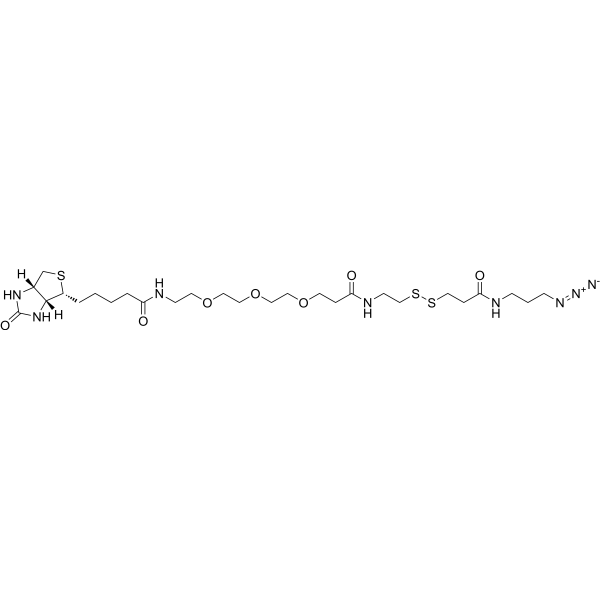
- HY-140132
-
|
|
ADC Linker
|
Cancer
|
|
PC Biotin-PEG3-azide is a cleavable 3 unit PEG ADC linker used in the synthesis of antibody-drug conjugates (ADCs) . PC Biotin-PEG3-azide is a click chemistry reagent, it contains an Azide group and can undergo copper-catalyzed azide-alkyne cycloaddition reaction (CuAAc) with molecules containing Alkyne groups. It can also undergo strain-promoted alkyne-azide cycloaddition (SPAAC) reactions with molecules containing DBCO or BCN groups.
|
-
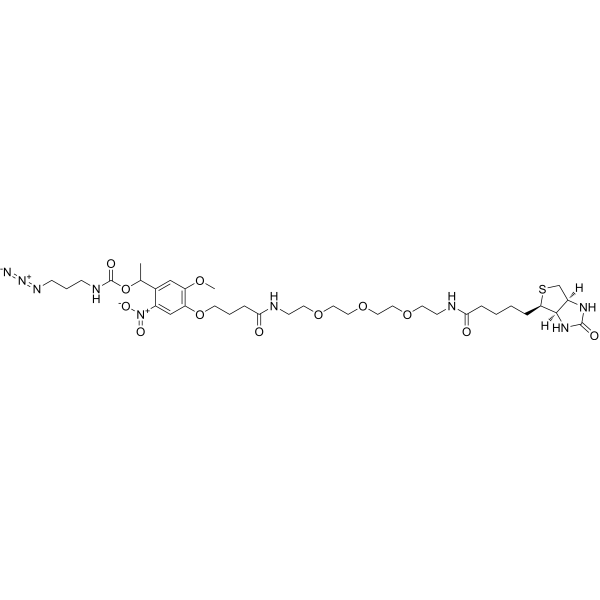
- HY-140555
-
|
|
PROTAC Linkers
|
Cancer
|
|
N-Boc-N-bis(PEG3-azide) is a PEG-based PROTAC linker that can be used in the synthesis of PROTACs . N-Boc-N-bis(PEG3-azide) is a click chemistry reagent, it contains an Azide group and can undergo copper-catalyzed azide-alkyne cycloaddition reaction (CuAAc) with molecules containing Alkyne groups. It can also undergo strain-promoted alkyne-azide cycloaddition (SPAAC) reactions with molecules containing DBCO or BCN groups.
|
-
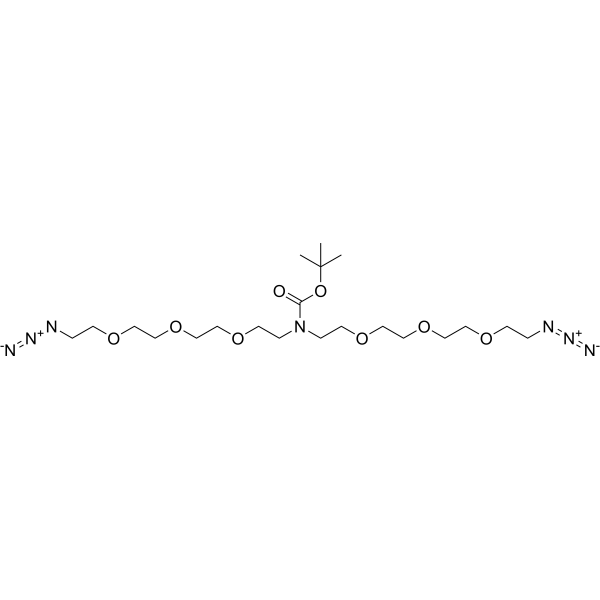
- HY-140767
-
|
|
PROTAC Linkers
|
Cancer
|
|
Azido-PEG8-C1-NHS ester is a PEG-based PROTAC linker that can be used in the synthesis of PROTACs . Azido-PEG8-C1-NHS ester is a click chemistry reagent, it contains an Azide group and can undergo copper-catalyzed azide-alkyne cycloaddition reaction (CuAAc) with molecules containing Alkyne groups. It can also undergo strain-promoted alkyne-azide cycloaddition (SPAAC) reactions with molecules containing DBCO or BCN groups.
|
-
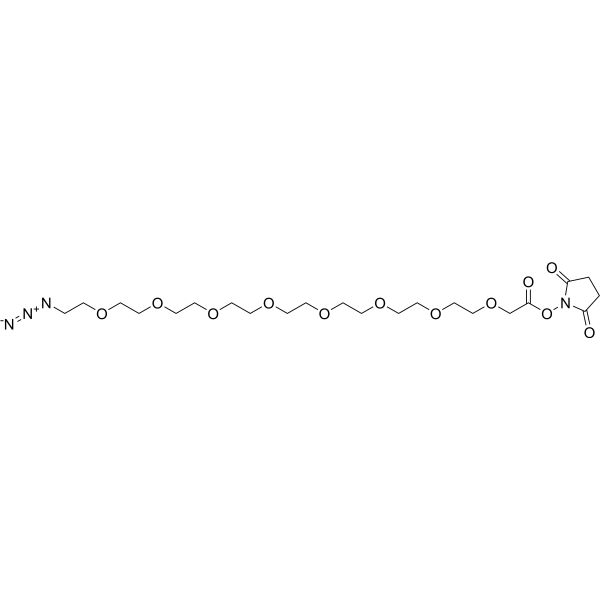
- HY-140776
-
|
|
PROTAC Linkers
|
Cancer
|
|
Azido-PEG2-C2-Boc is a PEG-based PROTAC linker that can be used in the synthesis of PROTACs . Azido-PEG2-C2-Boc is a click chemistry reagent, it contains an Azide group and can undergo copper-catalyzed azide-alkyne cycloaddition reaction (CuAAc) with molecules containing Alkyne groups. It can also undergo strain-promoted alkyne-azide cycloaddition (SPAAC) reactions with molecules containing DBCO or BCN groups.
|
-
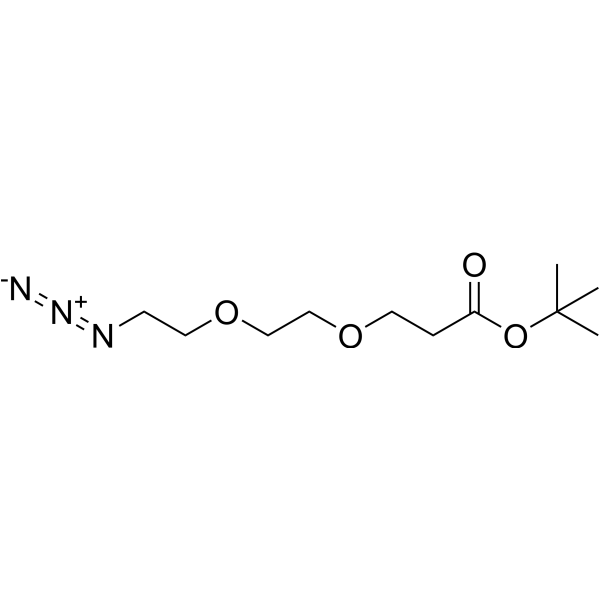
- HY-141058
-
|
|
Fluorescent Dye
|
Cancer
|
|
Cy5-PEG3-azide is a PEG-based PROTAC linker that can be used in the synthesis of PROTACs . Cy5-PEG3-azide is a click chemistry reagent, it contains an Azide group and can undergo copper-catalyzed azide-alkyne cycloaddition reaction (CuAAc) with molecules containing Alkyne groups. It can also undergo strain-promoted alkyne-azide cycloaddition (SPAAC) reactions with molecules containing DBCO or BCN groups.
|
-
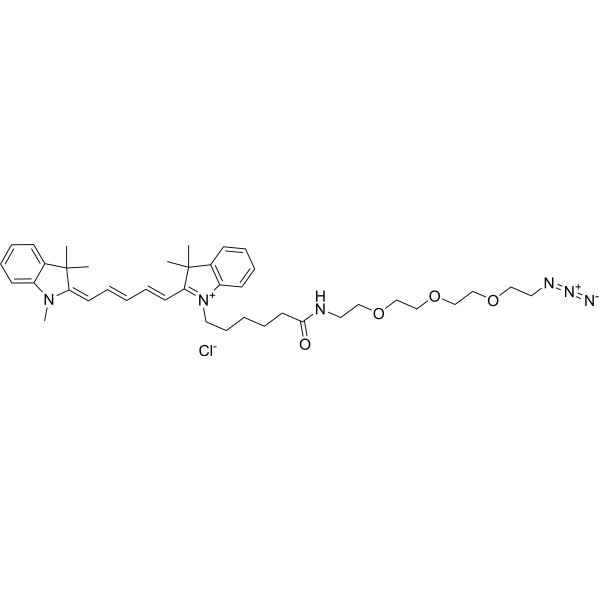
- HY-D2802
-
|
|
Fluorescent Dye
|
Others
|
|
FITC-PEG400-N3 is an azide fluorescent dye containing polyethylene glycol (PEG) and FITC (HY-66019). FITC-PEG400-N3 is a click chemistry reagent, it contains an Azide group and can undergo copper-catalyzed azide-alkyne cycloaddition reaction (CuAAc) with molecules containing Alkyne groups. It can also undergo strain-promoted alkyne-azide cycloaddition (SPAAC) reactions with molecules containing DBCO or BCN groups.
|
-

- HY-130954
-
|
|
ADC Linker
|
Cancer
|
|
Hynic-PEG3-N3 is a cleavable 3 unit PEG ADC linker used in the synthesis of antibody-drug conjugates (ADCs) . Hynic-PEG3-N3 is a click chemistry reagent, it contains an Azide group and can undergo copper-catalyzed azide-alkyne cycloaddition reaction (CuAAc) with molecules containing Alkyne groups. It can also undergo strain-promoted alkyne-azide cycloaddition (SPAAC) reactions with molecules containing DBCO or BCN groups.
|
-
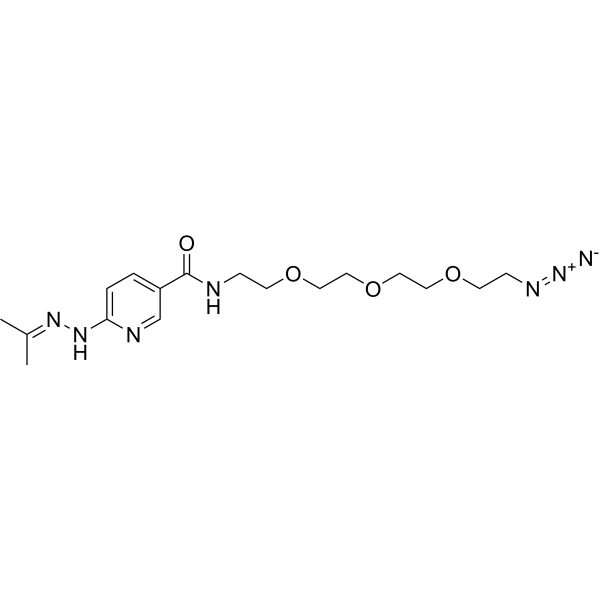
- HY-134976
-
|
|
Biochemical Assay Reagents
|
Others
|
|
Azido-FTY720 is a photoactivatable analogue of FTY720. Azido-FTY720 is used for identifying binding sites between FTY720 and its receptors . Azido-FTY720 is a click chemistry reagent, it contains an Azide group and can undergo copper-catalyzed azide-alkyne cycloaddition reaction (CuAAc) with molecules containing Alkyne groups. It can also undergo strain-promoted alkyne-azide cycloaddition (SPAAC) reactions with molecules containing DBCO or BCN groups.
|
-
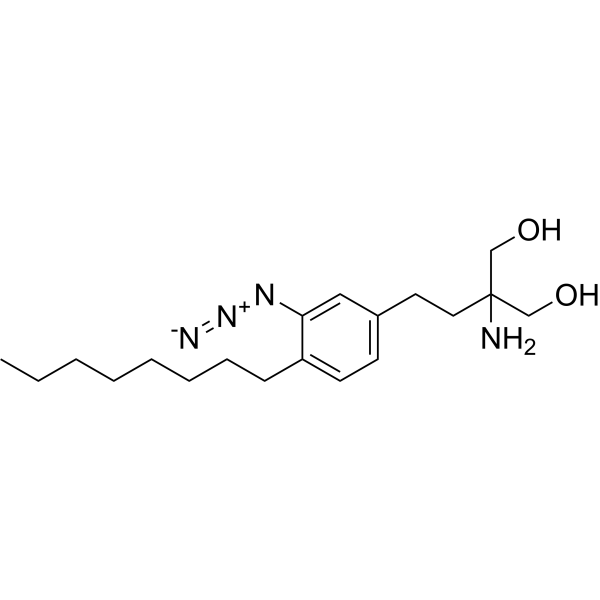
- HY-117042
-
|
|
PROTAC Linkers
|
Cancer
|
|
Biotin-PEG2-C6-azide is a PEG-based PROTAC linker can be used in the synthesis of PROTAC. Biotin-PEG2-C6-azide is a click chemistry reagent, it contains an Azide group and can undergo copper-catalyzed azide-alkyne cycloaddition reaction (CuAAc) with molecules containing Alkyne groups. It can also undergo strain-promoted alkyne-azide cycloaddition (SPAAC) reactions with molecules containing DBCO or BCN groups.
|
-
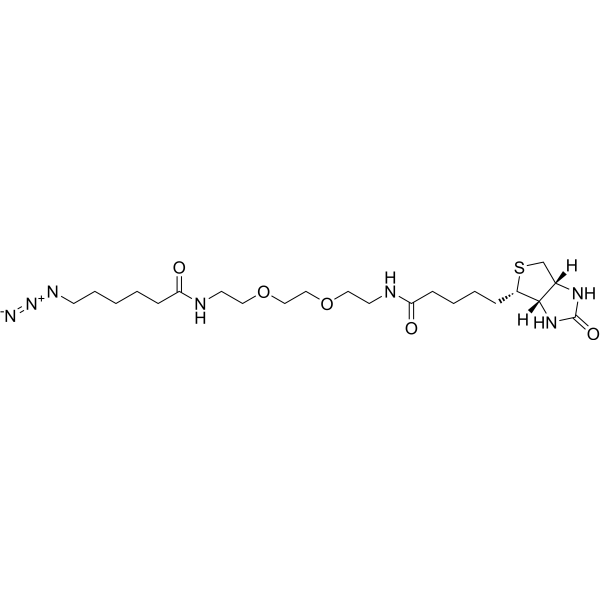
- HY-151697
-
|
|
ADC Linker
|
Others
|
|
DACN(Tos2) is a a click chemistry reagent containing an cycloalkynes group. The alkyne moiety within the ring has a unique bent structure and high reactivity toward cycloaddition reactions. DACN(Tos2) through such strain-promoted azide-alkyne cycloadditions (SPAAC) using cycloalkynes. DACN(Tos2) can be used for the research of molecular conjugation .
|
-
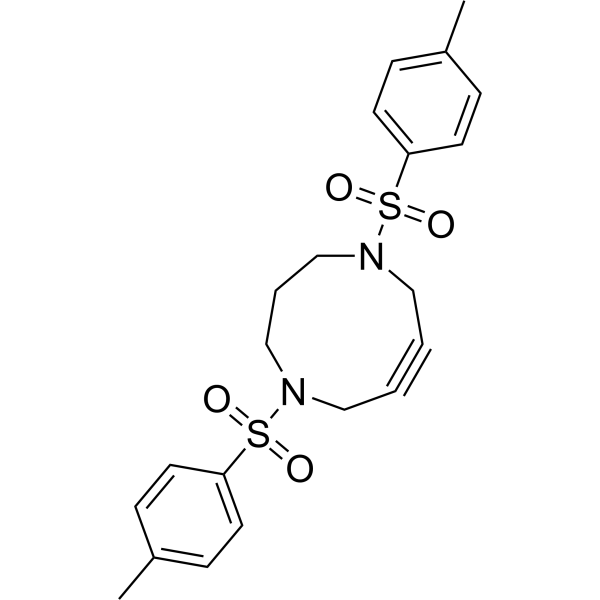
- HY-W1051916C
-
|
|
Biochemical Assay Reagents
|
Others
|
|
NH2-PEG5000-DBCO is a compound composed of an amino group, PEG, and DBCO, and can be used for drug delivery. NH2-PEG5000-DBCO contains clickable functional groups DBCO and PEG, and can undergo a ring-strain-driven acetylene-azide cycloaddition reaction (SPAAC) with molecules containing an azide group.
|
-

- HY-W1051916A
-
|
|
Biochemical Assay Reagents
|
Others
|
|
NH2-PEG2000-DBCO is a compound composed of an amino group, PEG, and DBCO, and can be used for drug delivery. NH2-PEG2000-DBCO contains clickable functional groups DBCO and PEG, and can undergo a ring-strain-driven acetylene-azide cycloaddition reaction (SPAAC) with molecules containing an azide group.
|
-

- HY-W1051916H
-
|
|
Biochemical Assay Reagents
|
Others
|
|
NH2-PEG400-DBCO is a compound composed of an amino group, PEG, and DBCO, and can be used for drug delivery. NH2-PEG400-DBCO contains clickable functional groups DBCO and PEG, and can undergo a ring-strain-driven acetylene-azide cycloaddition reaction (SPAAC) with molecules containing an azide group.
|
-

- HY-W1051916I
-
|
|
Biochemical Assay Reagents
|
Others
|
|
NH2-PEG600-DBCO is a compound composed of an amino group, PEG, and DBCO, and can be used for drug delivery. NH2-PEG600-DBCO contains clickable functional groups DBCO and PEG, and can undergo a ring-strain-driven acetylene-azide cycloaddition reaction (SPAAC) with molecules containing an azide group.
|
-

- HY-W1051916
-
|
|
Biochemical Assay Reagents
|
Others
|
|
NH2-PEG1000-DBCO is a compound composed of an amino group, PEG, and DBCO, and can be used for drug delivery. NH2-PEG1000-DBCO contains clickable functional groups DBCO and PEG, and can undergo a ring-strain-driven acetylene-azide cycloaddition reaction (SPAAC) with molecules containing an azide group.
|
-

- HY-W1051916B
-
|
|
Biochemical Assay Reagents
|
Others
|
|
NH2-PEG3400-DBCO is a compound composed of an amino group, PEG, and DBCO, and can be used for drug delivery. NH2-PEG3400-DBCO contains clickable functional groups DBCO and PEG, and can undergo a ring-strain-driven acetylene-azide cycloaddition reaction (SPAAC) with molecules containing an azide group.
|
-

- HY-W1051916D
-
|
|
Biochemical Assay Reagents
|
Others
|
|
NH2-PEG10000-DBCO is a compound composed of an amino group, PEG, and DBCO, and can be used for drug delivery. NH2-PEG10000-DBCO contains clickable functional groups DBCO and PEG, and can undergo a ring-strain-driven acetylene-azide cycloaddition reaction (SPAAC) with molecules containing an azide group.
|
-

- HY-151857
-
|
|
Fluorescent Dye
|
Others
|
|
TAMRA azide, 5-isomer is a click chemical containing azide groups that can be used as a linker for TAMRA. The azide group of TAMRA Azide, 5-isomer enables copper-catalyzed click chemical reactions with alkynes, DBCO, and BCN . It contains an azide group and can undergo copper-catalyzed azide-alkyne cycloaddition (CuAAc) with molecules containing alkyne groups. It can also undergo ring strain-promoted alkyne-azide cycloaddition (SPAAC) with molecules containing DBCO or BCN groups (Ex/Em = 555/580 nm).
|
-
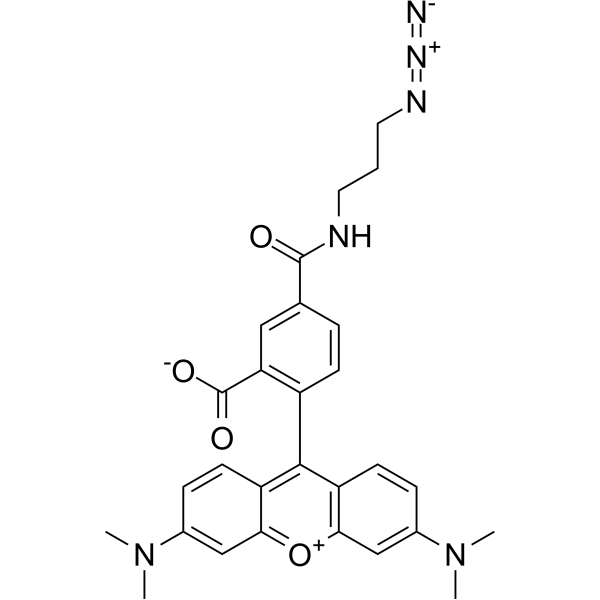
- HY-140525
-
|
|
PROTAC Linkers
|
Cancer
|
|
N-(Azido-PEG2)-N-Boc-PEG4-acid is a PEG-based PROTAC linker that can be used in the synthesis of PROTACs . N-(Azido-PEG2)-N-Boc-PEG4-acid is a click chemistry reagent, it contains an Azide group and can undergo copper-catalyzed azide-alkyne cycloaddition reaction (CuAAc) with molecules containing Alkyne groups. It can also undergo strain-promoted alkyne-azide cycloaddition (SPAAC) reactions with molecules containing DBCO or BCN groups.
|
-
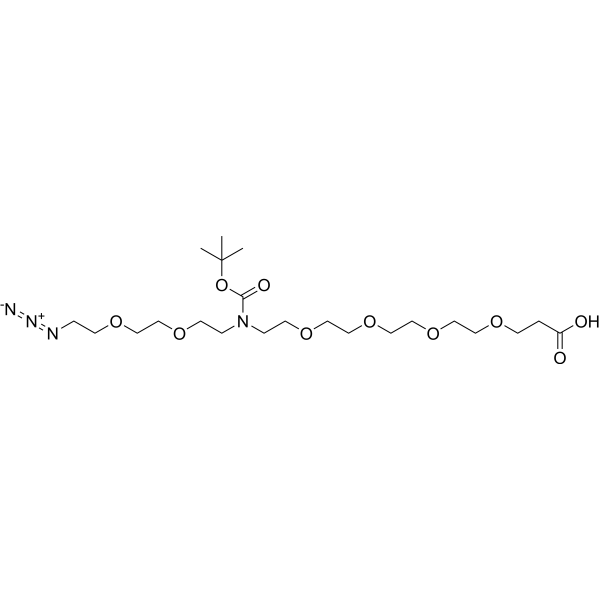
- HY-140550
-
|
|
PROTAC Linkers
|
Cancer
|
|
NH-bis(C2-PEG1-azide) is a PEG-based PROTAC linker that can be used in the synthesis of PROTACs . NH-bis(C2-PEG1-azide) is a click chemistry reagent, it contains an Azide group and can undergo copper-catalyzed azide-alkyne cycloaddition reaction (CuAAc) with molecules containing Alkyne groups. It can also undergo strain-promoted alkyne-azide cycloaddition (SPAAC) reactions with molecules containing DBCO or BCN groups.
|
-
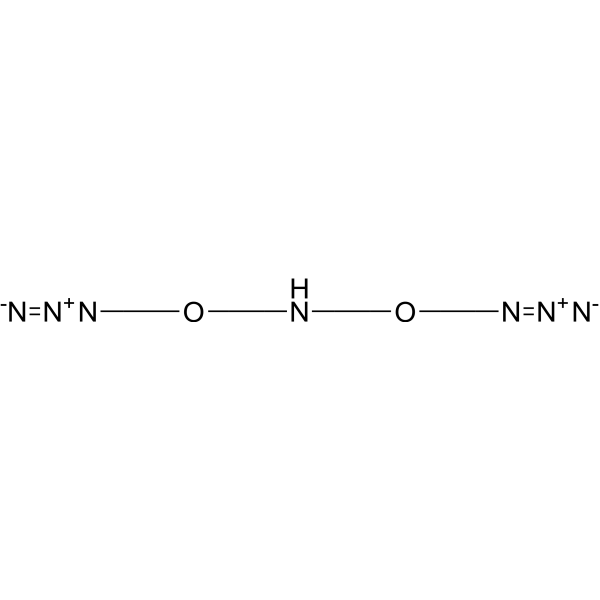
- HY-132208
-
|
|
E3 Ligase Ligand-Linker Conjugates
|
Cancer
|
|
Pomalidomide 4'-PEG2-azide is a synthesized E3 ligase ligand-linker conjugate that incorporates the Pomalidomide based cereblon ligand and a linker used in PROTAC technology . Pomalidomide 4'-PEG2-azide is a click chemistry reagent, it contains an Azide group and can undergo copper-catalyzed azide-alkyne cycloaddition reaction (CuAAc) with molecules containing Alkyne groups. It can also undergo strain-promoted alkyne-azide cycloaddition (SPAAC) reactions with molecules containing DBCO or BCN groups.
|
-
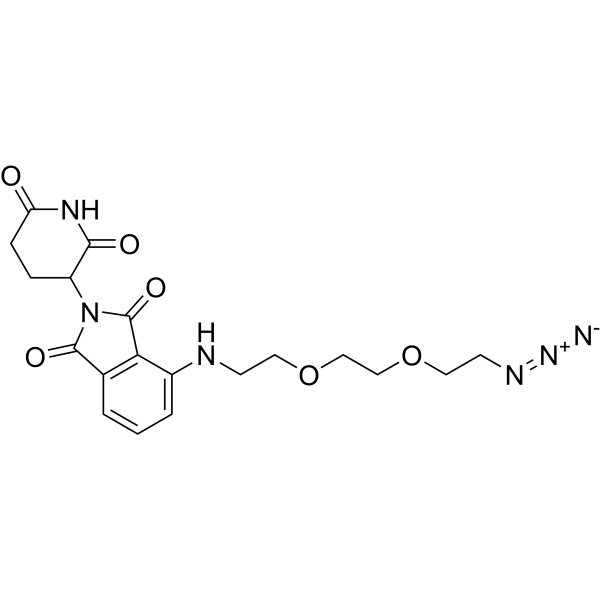
- HY-140854
-
|
|
PROTAC Linkers
|
Cancer
|
|
Azido-PEG4-(CH2)3-methyl ester is a PEG-based PROTAC linker that can be used in the synthesis of PROTACs . Azido-PEG4-(CH2)3-methyl ester is a click chemistry reagent, it contains an Azide group and can undergo copper-catalyzed azide-alkyne cycloaddition reaction (CuAAc) with molecules containing Alkyne groups. It can also undergo strain-promoted alkyne-azide cycloaddition (SPAAC) reactions with molecules containing DBCO or BCN groups.
|
-
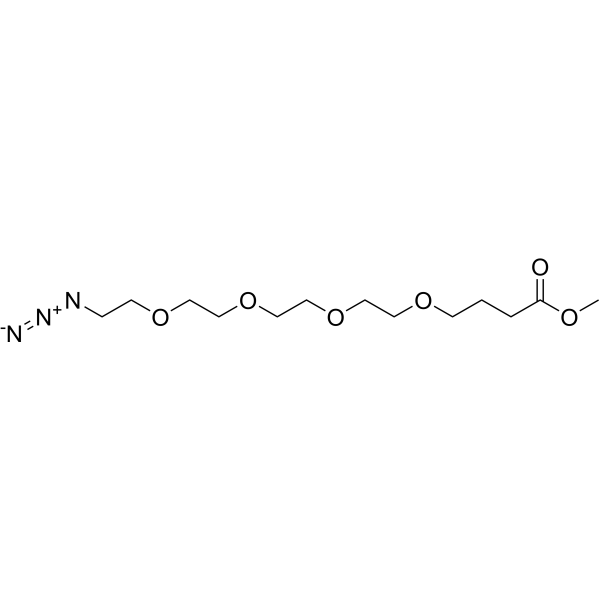
- HY-149058
-
|
|
Influenza Virus
|
Infection
|
|
Neuraminidase-IN-13 (Compound 10) is a neuraminidase inhibitor with antiviral activity and low cytotoxicity. Neuraminidase-IN-13 significantly inhibits NDV infection of Vero cells by preventing the release of viral particles from infected cells . Neuraminidase-IN-13 is a click chemistry reagent, it contains an Azide group and can undergo copper-catalyzed azide-alkyne cycloaddition reaction (CuAAc) with molecules containing Alkyne groups. It can also undergo strain-promoted alkyne-azide cycloaddition (SPAAC) reactions with molecules containing DBCO or BCN groups.
|
-
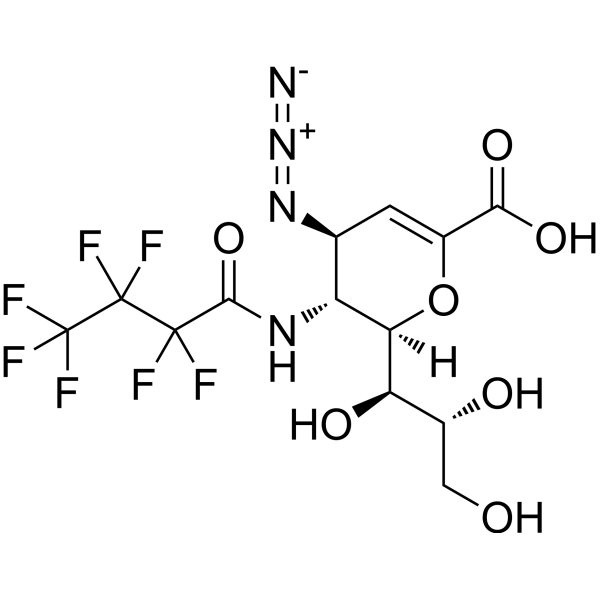
- HY-136137
-
|
|
ADC Linker
|
Cancer
|
|
Azide-PEG1-Val-Cit-PABC-OH is a cleavable 1 unit PEG ADC linker used in the synthesis of antibody-drug conjugates (ADCs) . Azide-PEG1-Val-Cit-PABC-OH is a click chemistry reagent, it contains an Azide group and can undergo copper-catalyzed azide-alkyne cycloaddition reaction (CuAAc) with molecules containing Alkyne groups. It can also undergo strain-promoted alkyne-azide cycloaddition (SPAAC) reactions with molecules containing DBCO or BCN groups.
|
-
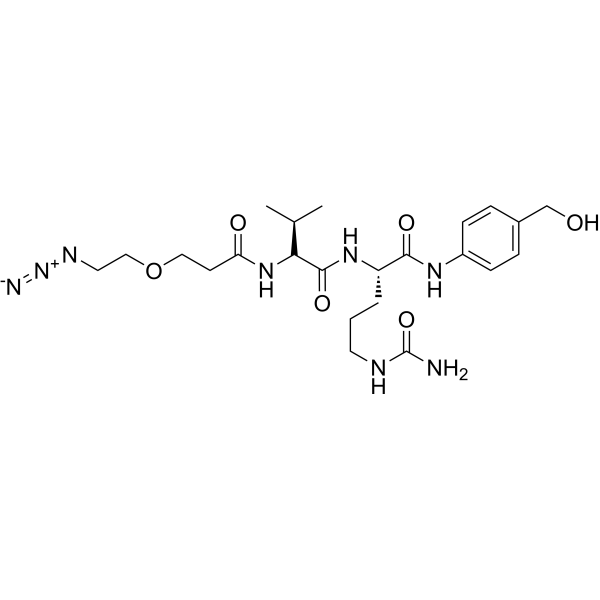
- HY-130667
-
|
|
PROTAC Linkers
|
Cancer
|
|
Ald-Ph-amido-C2-PEG3-azide is a PEG-based PROTAC linker that can be used in the synthesis of PROTACs . Ald-Ph-amido-C2-PEG3-azide is a click chemistry reagent, it contains an Azide group and can undergo copper-catalyzed azide-alkyne cycloaddition reaction (CuAAc) with molecules containing Alkyne groups. It can also undergo strain-promoted alkyne-azide cycloaddition (SPAAC) reactions with molecules containing DBCO or BCN groups.
|
-
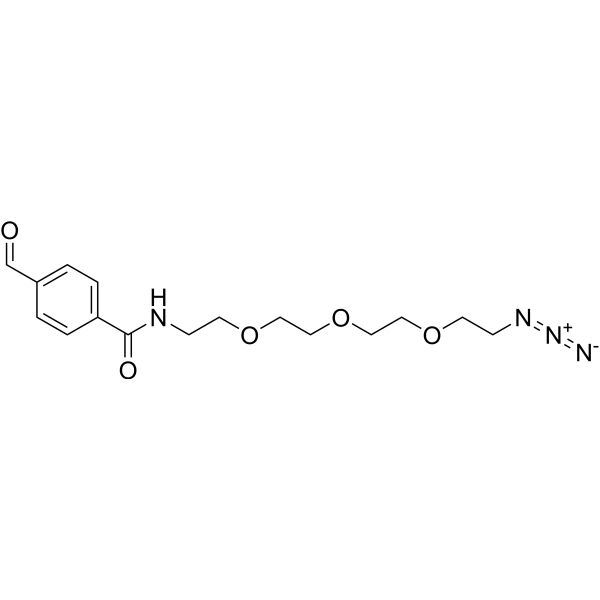
- HY-145934B
-
|
|
OGT
Biochemical Assay Reagents
Glycosidase
|
Metabolic Disease
|
|
UDP-GlcNAz is the analogue of UDP-GlcNAc disodium (HY-112174). UDP-GlcNAc disodium is the donor substrate of many N-acetylgalactosaminyltransferases, enzymes which transfer GlcNAc from the nucleotide sugar to a saccharide or peptide acceptor. UDP-GlcNAc disodium is a click chemistry reagent, it contains an Azide group and can undergo copper-catalyzed azide-alkyne cycloaddition reaction (CuAAc) with molecules containing Alkyne groups. It can also undergo strain-promoted alkyne-azide cycloaddition (SPAAC) reactions with molecules containing DBCO or BCN groups .
|
-

- HY-140517
-
|
|
PROTAC Linkers
|
Cancer
|
|
N-(Azido-PEG3)-N-bis(PEG3-acid) is a PEG-based PROTAC linker that can be used in the synthesis of PROTACs . N-(Azido-PEG3)-N-bis(PEG3-acid) is a click chemistry reagent, it contains an Azide group and can undergo copper-catalyzed azide-alkyne cycloaddition reaction (CuAAc) with molecules containing Alkyne groups. It can also undergo strain-promoted alkyne-azide cycloaddition (SPAAC) reactions with molecules containing DBCO or BCN groups.
|
-
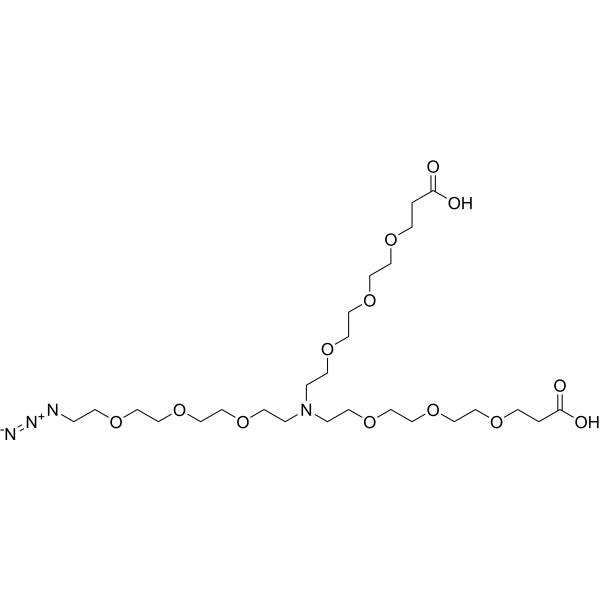
- HY-140148
-
|
|
ADC Linker
|
Cancer
|
|
Azido-PEG3-Val-Cit-PAB-OH is a cleavable 3 unit PEG ADC linker used in the synthesis of antibody-drug conjugates (ADCs) . Azido-PEG3-Val-Cit-PAB-OH is a click chemistry reagent, it contains an Azide group and can undergo copper-catalyzed azide-alkyne cycloaddition reaction (CuAAc) with molecules containing Alkyne groups. It can also undergo strain-promoted alkyne-azide cycloaddition (SPAAC) reactions with molecules containing DBCO or BCN groups.
|
-
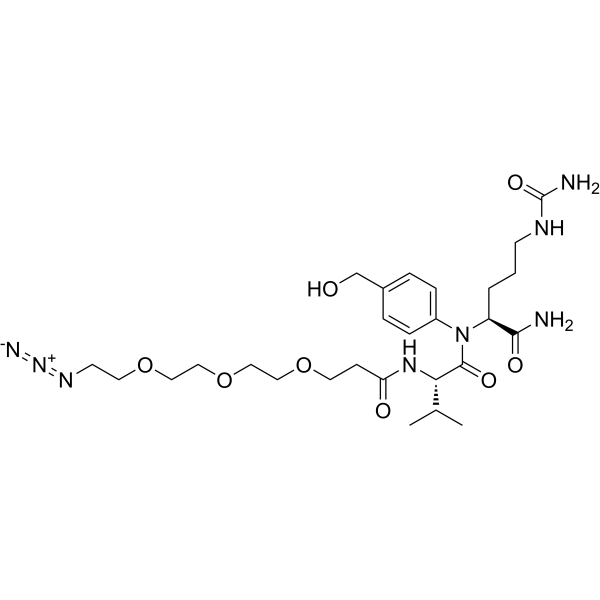
- HY-141150
-
|
|
ADC Linker
|
Cancer
|
|
Azido-PEG5-Ala-Ala-Asn-PAB is a cleavable 5 unit PEG ADC linker used in the synthesis of antibody-drug conjugates (ADCs) . Azido-PEG5-Ala-Ala-Asn-PAB is a click chemistry reagent, it contains an Azide group and can undergo copper-catalyzed azide-alkyne cycloaddition reaction (CuAAc) with molecules containing Alkyne groups. It can also undergo strain-promoted alkyne-azide cycloaddition (SPAAC) reactions with molecules containing DBCO or BCN groups.
|
-
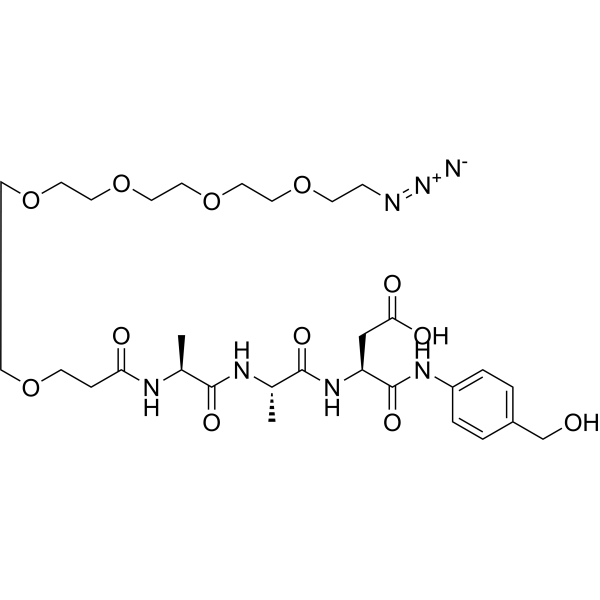
- HY-140349
-
|
|
PROTAC Linkers
|
Cancer
|
|
AZD-CO-C2-Ph-amido-Ph-azide is an alkyl chain-based PROTAC linker that can be used in the synthesis of PROTACs . AZD-CO-C2-Ph-amido-Ph-azide is a click chemistry reagent, it contains an Azide group and can undergo copper-catalyzed azide-alkyne cycloaddition reaction (CuAAc) with molecules containing Alkyne groups. It can also undergo strain-promoted alkyne-azide cycloaddition (SPAAC) reactions with molecules containing DBCO or BCN groups.
|
-
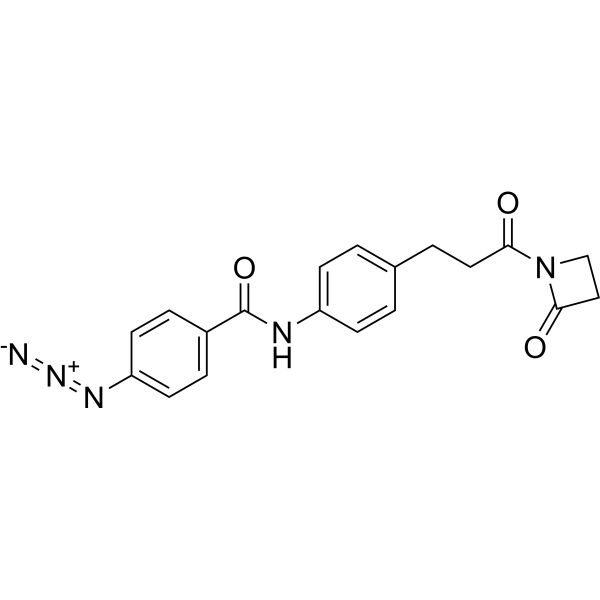
- HY-179193H
-
|
N3-PEG10000-OPSS
|
Biochemical Assay Reagents
|
Others
|
|
Azide-PEG10000-OPSS (N3-PEG10000-OPSS) is a compound composed of an azide group, PEG, and o-dithiopyridine (OPSS) and can be used for drug delivery. Azide-PEG10000-OPSS is a click chemistry reagent. It contains an Azide group and can undergo a copper-catalyzed azido-yne cycloaddition reaction (CuAAc) with molecules containing an Alkyne group. It can also undergo ring-strain-driven acetylene-azidocycloaddition (SPAAC) reactions with molecules containing DBCO or BCN groups.
|
-

- HY-179193B
-
|
N3-PEG1000-OPSS
|
Biochemical Assay Reagents
|
Others
|
|
Azide-PEG1000-OPSS (N3-PEG1000-OPSS) is a compound composed of an azide group, PEG, and o-dithiopyridine (OPSS) and can be used for drug delivery. Azide-PEG1000-OPSS is a click chemistry reagent. It contains an Azide group and can undergo a copper-catalyzed azido-yne cycloaddition reaction (CuAAc) with molecules containing an Alkyne group. It can also undergo ring-strain-driven acetylene-azidocycloaddition (SPAAC) reactions with molecules containing DBCO or BCN groups.
|
-

- HY-D1246
-
|
|
DNA Stain
|
Others
|
|
Ethidium monoazide bromide is a DNA intercalating fluorescent dye that enters bacteria with damaged membranes. Ethidium monoazide bromide can be covalently linked to DNA by photoactivation. Ethidium monoazide bromide stains only dead cells . Ethidium monoazide (bromide) is a click chemistry reagent, it contains an Azide group and can undergo copper-catalyzed azide-alkyne cycloaddition reaction (CuAAc) with molecules containing Alkyne groups. It can also undergo strain-promoted alkyne-azide cycloaddition (SPAAC) reactions with molecules containing DBCO or BCN groups.
|
-
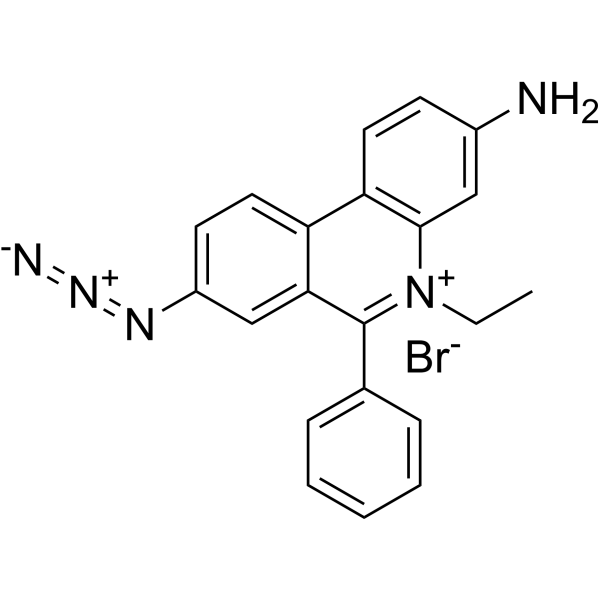
- HY-140520
-
|
|
PROTAC Linkers
|
Cancer
|
|
N-(acid-PEG3)-N-bis(PEG3-azide) is a PEG-based PROTAC linker that can be used in the synthesis of PROTACs . N-(acid-PEG3)-N-bis(PEG3-azide) is a click chemistry reagent, it contains an Azide group and can undergo copper-catalyzed azide-alkyne cycloaddition reaction (CuAAc) with molecules containing Alkyne groups. It can also undergo strain-promoted alkyne-azide cycloaddition (SPAAC) reactions with molecules containing DBCO or BCN groups.
|
-
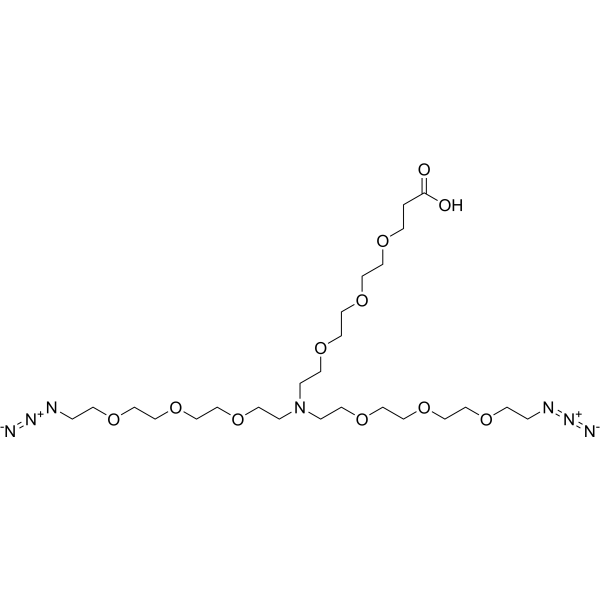
- HY-137538
-
|
|
E3 Ligase Ligand-Linker Conjugates
|
Cancer
|
|
Pomalidomide-PEG3-azide is a synthesized E3 ligase ligand-linker conjugate that incorporates the Pomalidomide based cereblon ligand and 3-unit PEG linker used in PROTAC technology . Pomalidomide-PEG3-azide is a click chemistry reagent, it contains an Azide group and can undergo copper-catalyzed azide-alkyne cycloaddition reaction (CuAAc) with molecules containing Alkyne groups. It can also undergo strain-promoted alkyne-azide cycloaddition (SPAAC) reactions with molecules containing DBCO or BCN groups.
|
-
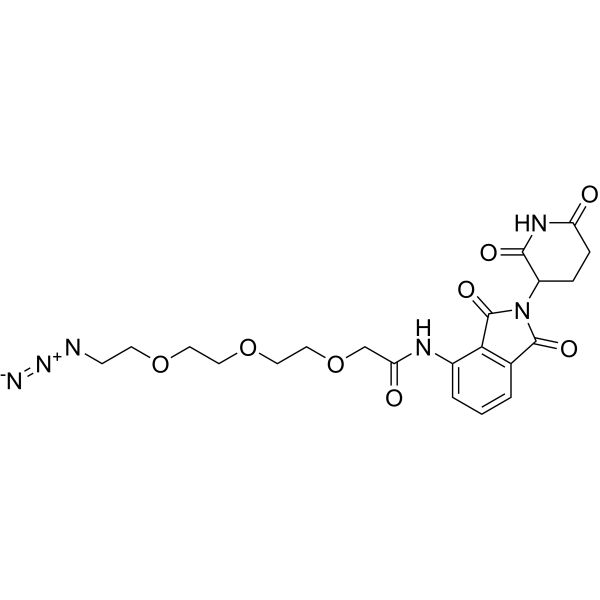
- HY-140518
-
|
|
PROTAC Linkers
|
Cancer
|
|
N-(Azido-PEG3)-N-bis(PEG4-acid) is a PEG-based PROTAC linker that can be used in the synthesis of PROTACs . N-(Azido-PEG3)-N-bis(PEG4-acid) is a click chemistry reagent, it contains an Azide group and can undergo copper-catalyzed azide-alkyne cycloaddition reaction (CuAAc) with molecules containing Alkyne groups. It can also undergo strain-promoted alkyne-azide cycloaddition (SPAAC) reactions with molecules containing DBCO or BCN groups.
|
-
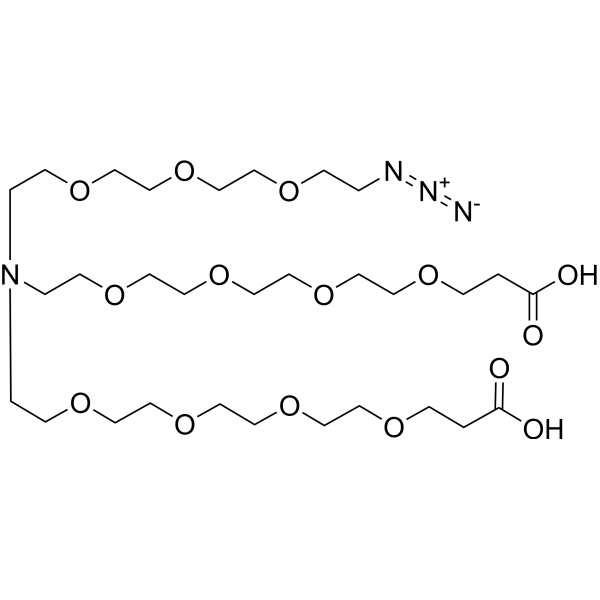
- HY-152789
-
|
|
Nucleoside Antimetabolite/Analog
|
Others
|
|
5-(2-Azidoethyl)cytidine is a cytidine nucleoside analog. Cytidine analogs have a mechanism of inhibiting DNA methyltransferases (such as Zebularine, HY-13420), and have potential anti-metabolic and anti-tumor activities . 5-(2-Azidoethyl)cytidine is a click chemistry reagent, it contains an Azide group and can undergo copper-catalyzed azide-alkyne cycloaddition reaction (CuAAc) with molecules containing Alkyne groups. It can also undergo strain-promoted alkyne-azide cycloaddition (SPAAC) reactions with molecules containing DBCO or BCN groups.
|
-
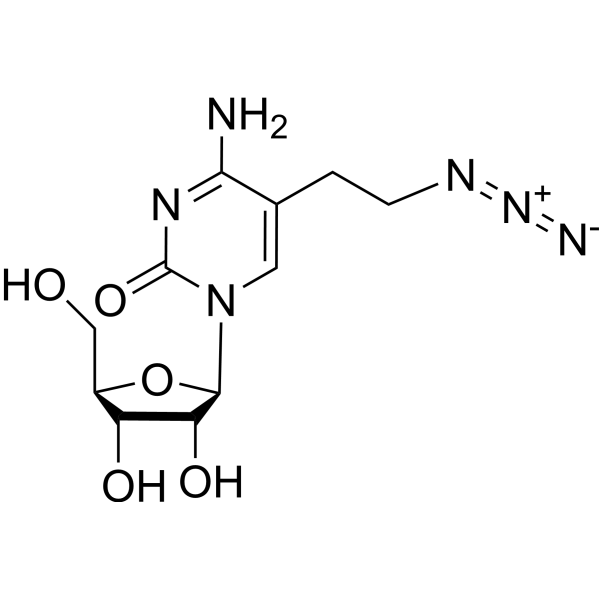
- HY-179193D
-
|
N3-PEG3400-OPSS
|
Biochemical Assay Reagents
|
Others
|
|
Azide-PEG3400-OPSS (N3-PEG3400-OPSS) is a compound composed of an azide group, PEG, and o-dithiopyridine (OPSS) and can be used for drug delivery. Azide-PEG3400-OPSS is a click chemistry reagent. It contains an Azide group and can undergo a copper-catalyzed azido-yne cycloaddition reaction (CuAAc) with molecules containing an Alkyne group. It can also undergo ring-strain-driven acetylene-azidocycloaddition (SPAAC) reactions with molecules containing DBCO or BCN groups.
|
-

- HY-140809
-
|
|
PROTAC Linkers
|
Cancer
|
|
Azido-PEG4-(CH2)3OH is a PEG-based PROTAC linker that can be used in the synthesis of PROTACs . Azido-PEG4-(CH2)3OH is a click chemistry reagent, it contains an Azide group and can undergo copper-catalyzed azide-alkyne cycloaddition reaction (CuAAc) with molecules containing Alkyne groups. It can also undergo strain-promoted alkyne-azide cycloaddition (SPAAC) reactions with molecules containing DBCO or BCN groups.
|
-
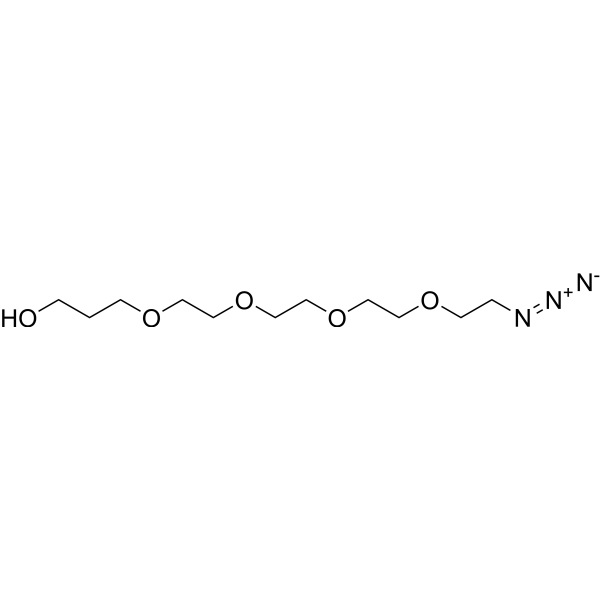
- HY-136155
-
|
|
ADC Linker
|
Cancer
|
|
Fmoc-NH-Azide-PEG4-L-Lysine-PFP ester is a cleavable 4 unit PEG ADC linker used in the synthesis of antibody-drug conjugates (ADCs) . Fmoc-NH-Azide-PEG4-L-Lysine-PFP ester is a click chemistry reagent, it contains an Azide group and can undergo copper-catalyzed azide-alkyne cycloaddition reaction (CuAAc) with molecules containing Alkyne groups. It can also undergo strain-promoted alkyne-azide cycloaddition (SPAAC) reactions with molecules containing DBCO or BCN groups.
|
-
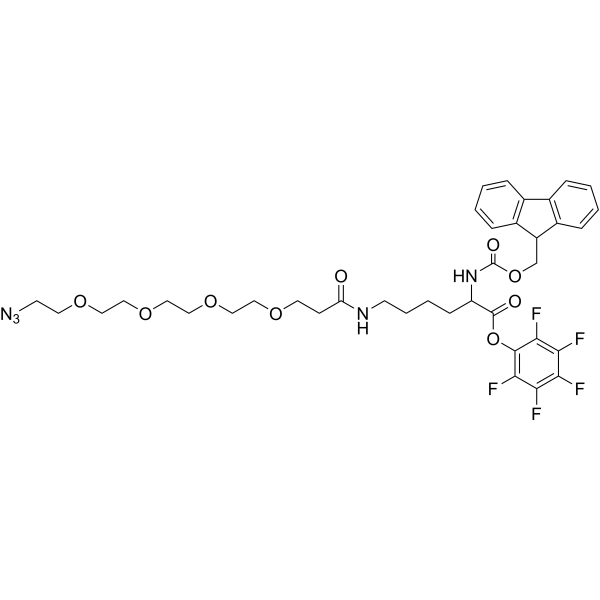
- HY-136054
-
|
|
ADC Linker
|
Cancer
|
|
N3-PEG5-aldehyde is a cleavable 5 unit PEG ADC linker used in the synthesis of antibody-drug conjugates (ADCs) . N3-PEG5-aldehyde is a click chemistry reagent, it contains an Azide group and can undergo copper-catalyzed azide-alkyne cycloaddition reaction (CuAAc) with molecules containing Alkyne groups. It can also undergo strain-promoted alkyne-azide cycloaddition (SPAAC) reactions with molecules containing DBCO or BCN groups.
|
-
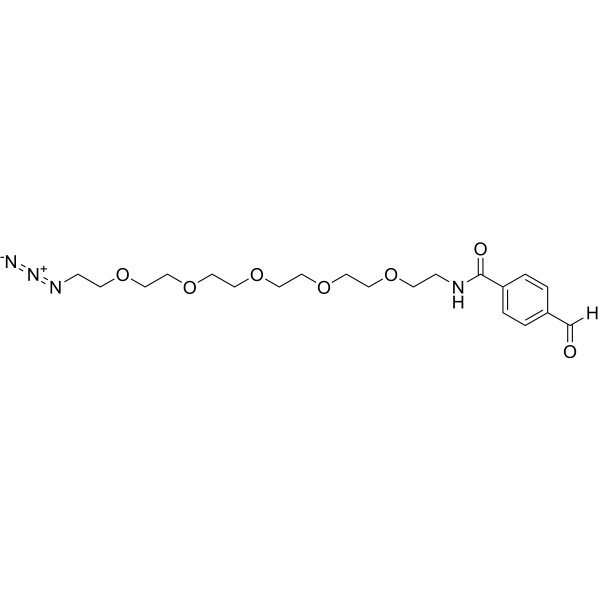
- HY-140914
-
|
|
PROTAC Linkers
|
Cancer
|
|
Biotin-PEG4-Amide-C6-Azide is a PEG-based PROTAC linker that can be used in the synthesis of PROTACs . Biotin-PEG4-Amide-C6-Azide is a click chemistry reagent, it contains an Azide group and can undergo copper-catalyzed azide-alkyne cycloaddition reaction (CuAAc) with molecules containing Alkyne groups. It can also undergo strain-promoted alkyne-azide cycloaddition (SPAAC) reactions with molecules containing DBCO or BCN groups.
|
-
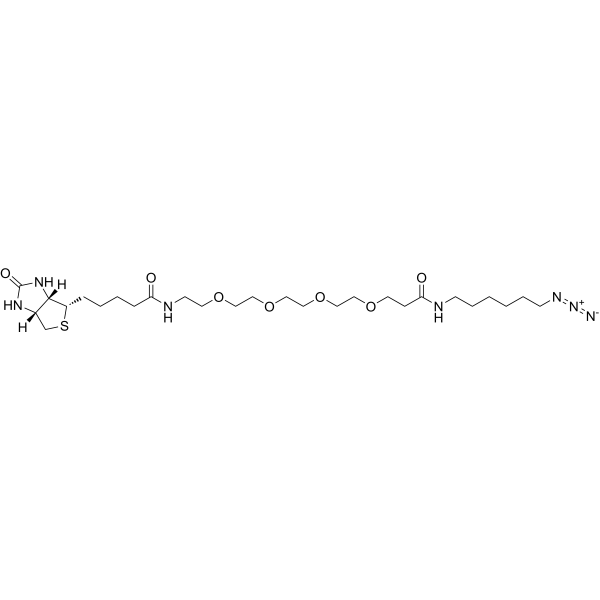
- HY-135957
-
|
N3dUrd
|
DNA/RNA Synthesis
|
Cancer
|
|
2'-Azido-2'-deoxyuridine (N3dUrd) is a ribonucleotide reductase inhibitor. 2'-Azido-2'-deoxyuridine has anti-cancer activity . 2'-Azido-2'-deoxyuridine is a click chemistry reagent, it contains an Azide group and can undergo copper-catalyzed azide-alkyne cycloaddition reaction (CuAAc) with molecules containing Alkyne groups. It can also undergo strain-promoted alkyne-azide cycloaddition (SPAAC) reactions with molecules containing DBCO or BCN groups.
|
-
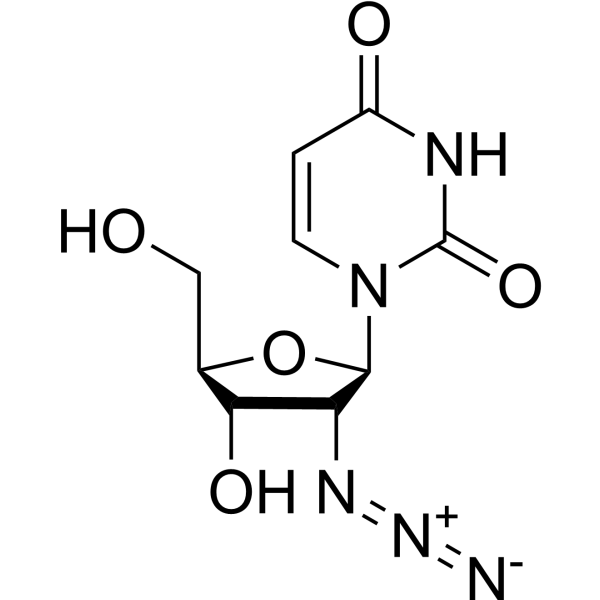
- HY-140604
-
|
|
PROTAC Linkers
|
Cancer
|
|
Azido-PEG3-Sulfone-PEG4-Boc is a PEG-based PROTAC linker that can be used in the synthesis of PROTACs . Azido-PEG3-Sulfone-PEG4-Boc is a click chemistry reagent, it contains an Azide group and can undergo copper-catalyzed azide-alkyne cycloaddition reaction (CuAAc) with molecules containing Alkyne groups. It can also undergo strain-promoted alkyne-azide cycloaddition (SPAAC) reactions with molecules containing DBCO or BCN groups.
|
-
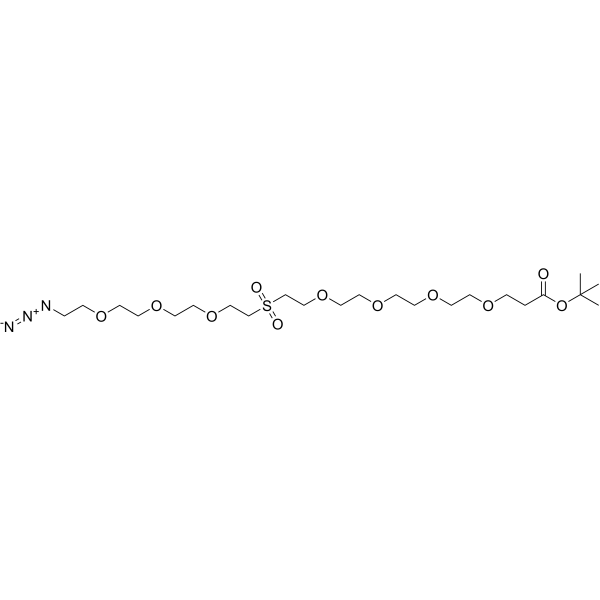
- HY-140787
-
|
17-(Azide-PEG6-ethylcarbamoyl)heptadecanoic t-butyl ester
|
PROTAC Linkers
|
Cancer
|
|
Azide-PEG6-amido-C16-Boc is an alkyl/ether-based PROTAC linker that can be used in the synthesis of PROTACs . Azide-PEG6-amido-C16-Boc is a click chemistry reagent, it contains an Azide group and can undergo copper-catalyzed azide-alkyne cycloaddition reaction (CuAAc) with molecules containing Alkyne groups. It can also undergo strain-promoted alkyne-azide cycloaddition (SPAAC) reactions with molecules containing DBCO or BCN groups.
|
-
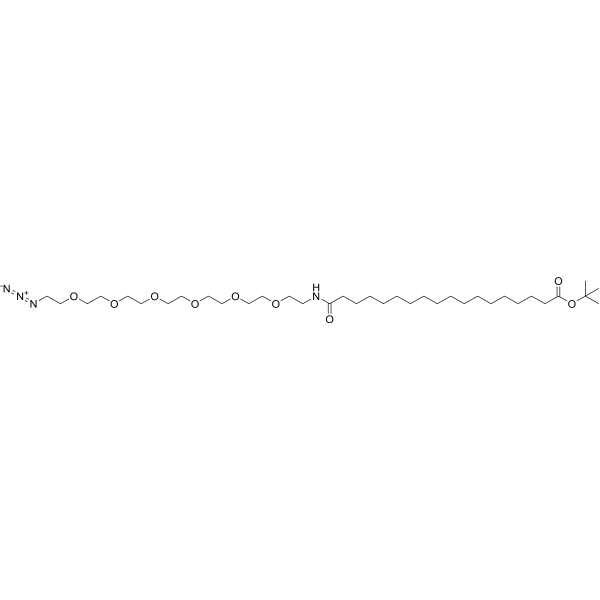
- HY-140789
-
|
9-(Azide-PEG9-ethylcarbamoyl)nonanoic t-butyl ester
|
PROTAC Linkers
|
Cancer
|
|
Azide-PEG9-amido-C8-Boc is a PEG-based PROTAC linker that can be used in the synthesis of PROTACs . Azide-PEG9-amido-C8-Boc is a click chemistry reagent, it contains an Azide group and can undergo copper-catalyzed azide-alkyne cycloaddition reaction (CuAAc) with molecules containing Alkyne groups. It can also undergo strain-promoted alkyne-azide cycloaddition (SPAAC) reactions with molecules containing DBCO or BCN groups.
|
-
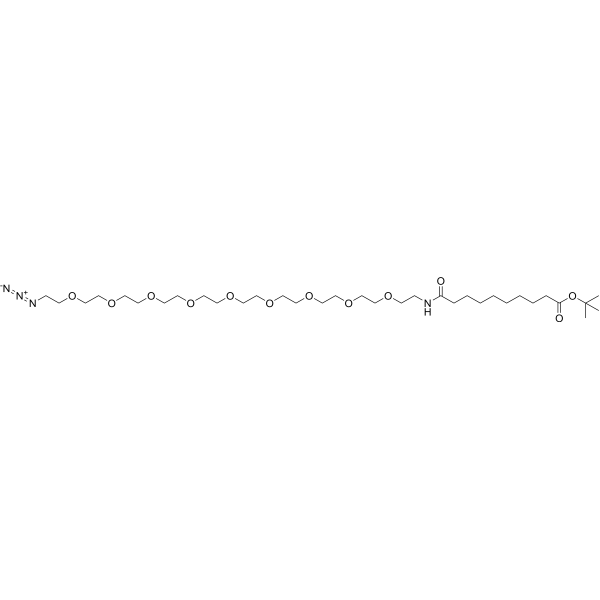
- HY-140592
-
|
|
PROTAC Linkers
|
Cancer
|
|
Azido-PEG3-S-PEG4-t-butyl ester is a PEG-based PROTAC linker that can be used in the synthesis of PROTACs . Azido-PEG3-S-PEG4-t-butyl ester is a click chemistry reagent, it contains an Azide group and can undergo copper-catalyzed azide-alkyne cycloaddition reaction (CuAAc) with molecules containing Alkyne groups. It can also undergo strain-promoted alkyne-azide cycloaddition (SPAAC) reactions with molecules containing DBCO or BCN groups.
|
-
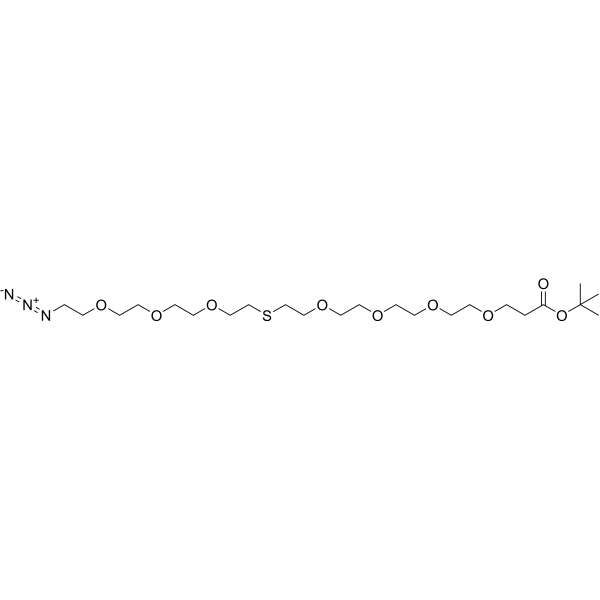
- HY-140544
-
|
|
PROTAC Linkers
|
Cancer
|
|
N-(Azido-PEG2)-N-Fluorescein-PEG3-acid is a PEG-based PROTAC linker that can be used in the synthesis of PROTACs . N-(Azido-PEG2)-N-Fluorescein-PEG3-acid is a click chemistry reagent, it contains an Azide group and can undergo copper-catalyzed azide-alkyne cycloaddition reaction (CuAAc) with molecules containing Alkyne groups. It can also undergo strain-promoted alkyne-azide cycloaddition (SPAAC) reactions with molecules containing DBCO or BCN groups.
|
-
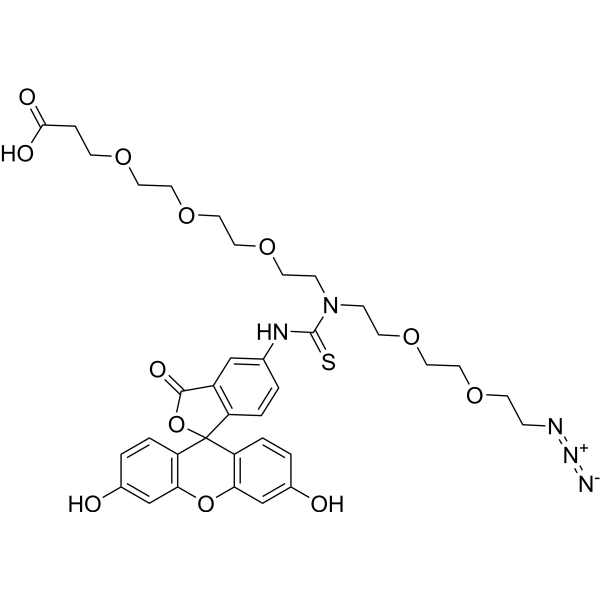
- HY-140524
-
|
|
PROTAC Linkers
|
Cancer
|
|
N-(Azido-PEG2)-N-Boc-PEG3-acid is a PEG-based PROTAC linker that can be used in the synthesis of PROTACs . N-(Azido-PEG2)-N-Boc-PEG3-acid is a click chemistry reagent, it contains an Azide group and can undergo copper-catalyzed azide-alkyne cycloaddition reaction (CuAAc) with molecules containing Alkyne groups. It can also undergo strain-promoted alkyne-azide cycloaddition (SPAAC) reactions with molecules containing DBCO or BCN groups.
|
-
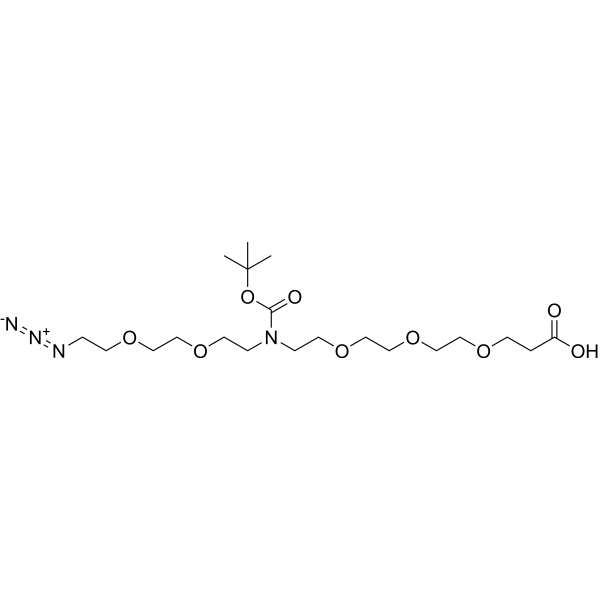
- HY-140834
-
|
|
PROTAC Linkers
|
Cancer
|
|
Boc-N-Amido-PEG2-C2-azide is a PEG-based PROTAC linker that can be used in the synthesis of PROTACs . Boc-N-Amido-PEG2-C2-azide is a click chemistry reagent, it contains an Azide group and can undergo copper-catalyzed azide-alkyne cycloaddition reaction (CuAAc) with molecules containing Alkyne groups. It can also undergo strain-promoted alkyne-azide cycloaddition (SPAAC) reactions with molecules containing DBCO or BCN groups.
|
-
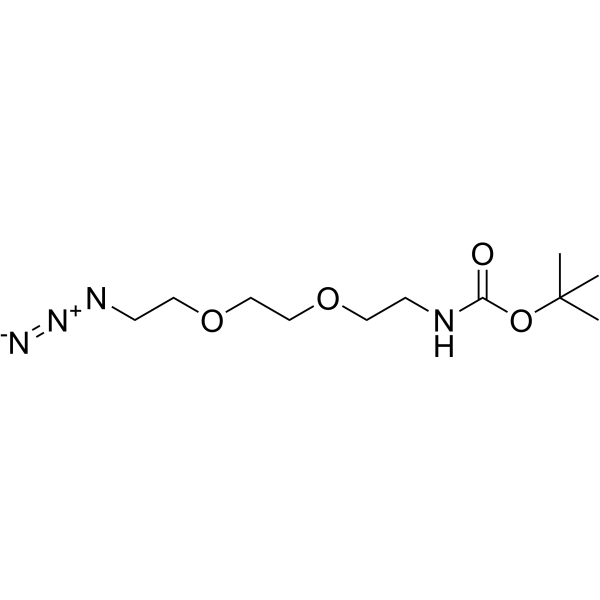
- HY-140521
-
|
|
PROTAC Linkers
|
Cancer
|
|
N-(Acid-PEG2)-N-bis(PEG3-azide) is a PEG-based PROTAC linker that can be used in the synthesis of PROTACs . N-(Acid-PEG2)-N-bis(PEG3-azide) is a click chemistry reagent, it contains an Azide group and can undergo copper-catalyzed azide-alkyne cycloaddition reaction (CuAAc) with molecules containing Alkyne groups. It can also undergo strain-promoted alkyne-azide cycloaddition (SPAAC) reactions with molecules containing DBCO or BCN groups.
|
-
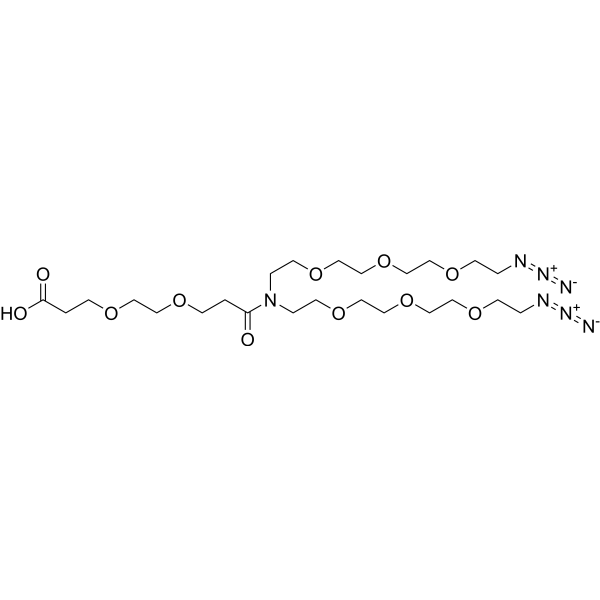
- HY-140774
-
|
|
PROTAC Linkers
|
Cancer
|
|
Azido-PEG8-CH2COO-PFP is a PEG-based PROTAC linker that can be used in the synthesis of PROTACs . Azido-PEG8-CH2COO-PFP is a click chemistry reagent, it contains an Azide group and can undergo copper-catalyzed azide-alkyne cycloaddition reaction (CuAAc) with molecules containing Alkyne groups. It can also undergo strain-promoted alkyne-azide cycloaddition (SPAAC) reactions with molecules containing DBCO or BCN groups.
|
-
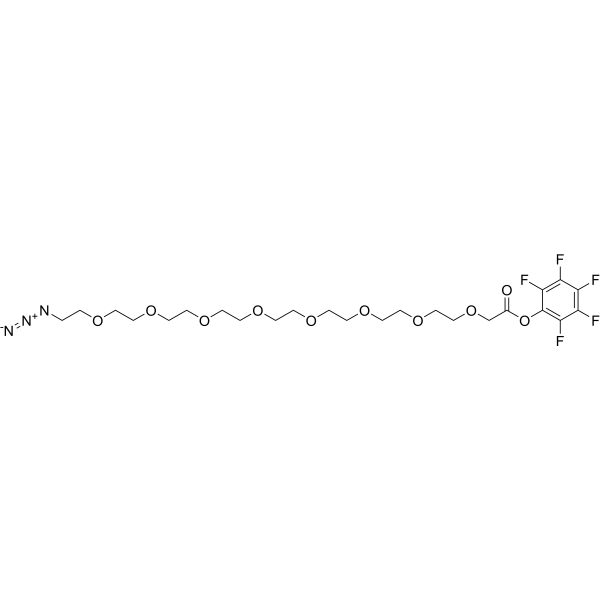
- HY-131082
-
|
|
ADC Linker
|
Cancer
|
|
(R)-8-Azido-2-(Fmoc-amino)octanoic acid is a non-cleavable ADC linker used in the synthesis of antibody-drug conjugates (ADCs) . (R)-8-Azido-2-(Fmoc-amino)octanoic acid is a click chemistry reagent, it contains an Azide group and can undergo copper-catalyzed azide-alkyne cycloaddition reaction (CuAAc) with molecules containing Alkyne groups. It can also undergo strain-promoted alkyne-azide cycloaddition (SPAAC) reactions with molecules containing DBCO or BCN groups.
|
-
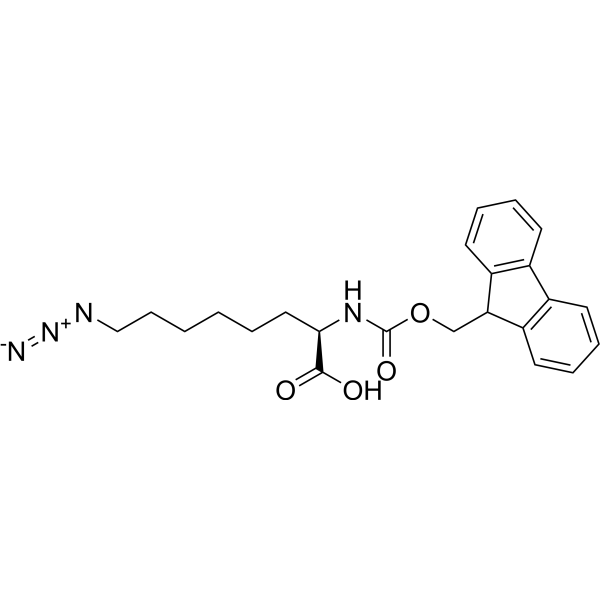
- HY-152787
-
|
|
Nucleoside Antimetabolite/Analog
|
Others
|
|
5-(3-Azidopropyl)cytidine is a cytidine nucleoside analog. Cytidine analogs have a mechanism of inhibiting DNA methyltransferases (such as Zebularine, HY-13420), and have potential anti-metabolic and anti-tumor activities . 5-(3-Azidopropyl)cytidine is a click chemistry reagent, it contains an Azide group and can undergo copper-catalyzed azide-alkyne cycloaddition reaction (CuAAc) with molecules containing Alkyne groups. It can also undergo strain-promoted alkyne-azide cycloaddition (SPAAC) reactions with molecules containing DBCO or BCN groups.
|
-
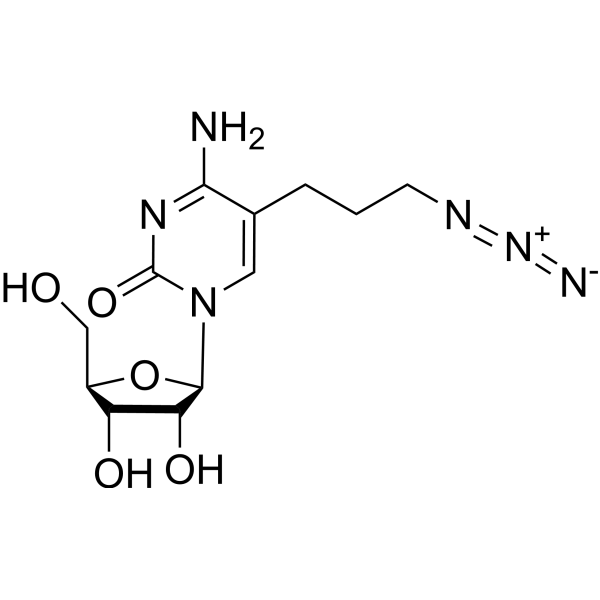
- HY-77650
-
|
4'-Azidouridine
|
Nucleoside Antimetabolite/Analog
|
Others
|
|
4'-C-azidouridine (4'-Azidouridine) is a uridine analogue. Uridine has potential antiepileptic effects, and its analogs can be used to study anticonvulsant and anxiolytic activities, as well as to develop new antihypertensive agents . 4'-C-Azidouridine is a click chemistry reagent, it contains an Azide group and can undergo copper-catalyzed azide-alkyne cycloaddition reaction (CuAAc) with molecules containing Alkyne groups. It can also undergo strain-promoted alkyne-azide cycloaddition (SPAAC) reactions with molecules containing DBCO or BCN groups.
|
-
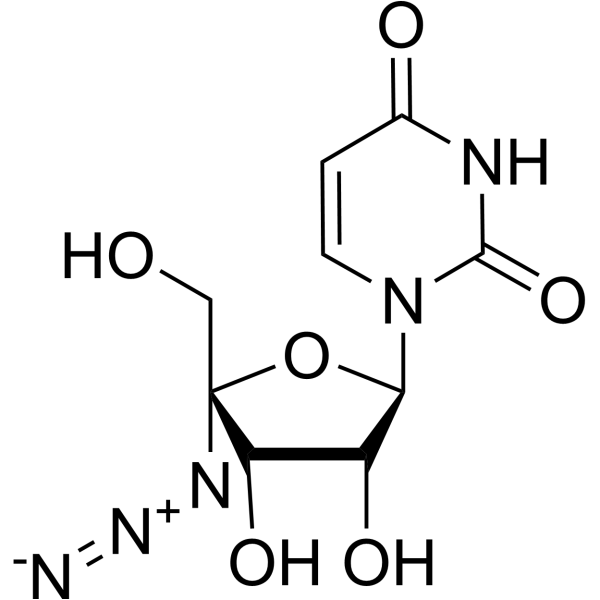
- HY-140127
-
|
|
ADC Linker
|
Cancer
|
|
Azide-C2-SS-C2-biotin is a cleavable ADC linker used in the synthesis of antibody-drug conjugates (ADCs) . Azide-C2-SS-C2-biotin is a click chemistry reagent, it contains an Azide group and can undergo copper-catalyzed azide-alkyne cycloaddition reaction (CuAAc) with molecules containing Alkyne groups. It can also undergo strain-promoted alkyne-azide cycloaddition (SPAAC) reactions with molecules containing DBCO or BCN groups.
|
-
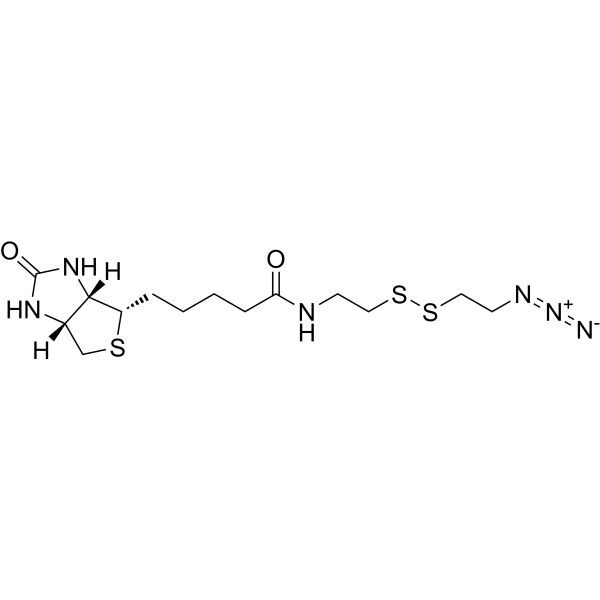
- HY-140010
-
|
|
PROTAC Linkers
|
Cancer
|
|
N-methyl-N'-(azide-PEG3)-Cy3 is a PEG-based PROTAC linker that can be used in the synthesis of PROTACs . N-methyl-N'-(azide-PEG3)-Cy3 is a click chemistry reagent, it contains an Azide group and can undergo copper-catalyzed azide-alkyne cycloaddition reaction (CuAAc) with molecules containing Alkyne groups. It can also undergo strain-promoted alkyne-azide cycloaddition (SPAAC) reactions with molecules containing DBCO or BCN groups.
|
-
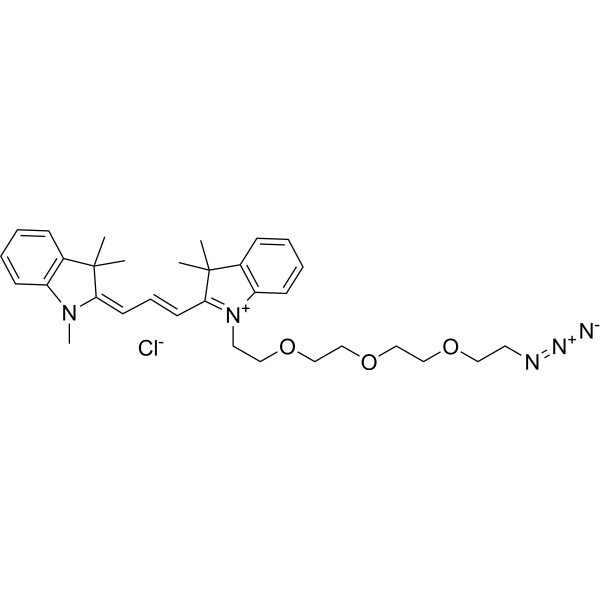
- HY-D2608
-
|
|
Fluorescent Dye
|
Others
|
|
ICG PEG10000 N3 is a Indocyanine green (ICG) (HY-D0711)-azide fluorescent dye used to label for protein and nucleic acid. ICG PEG10000 N3 is a click chemistry reagent, it contains an Azide group and can undergo copper-catalyzed azide-alkyne cycloaddition reaction (CuAAc) with molecules containing Alkyne groups. It can also undergo strain-promoted alkyne-azide cycloaddition (SPAAC) reactions with molecules containing DBCO or BCN groups (Ex/Em=785/813 nm).
|
-

- HY-140552
-
|
|
PROTAC Linkers
|
Cancer
|
|
N-(Azido-PEG3)-NH-PEG3-acid is a PEG-based PROTAC linker that can be used in the synthesis of PROTACs . N-(Azido-PEG3)-NH-PEG3-acid is a click chemistry reagent, it contains an Azide group and can undergo copper-catalyzed azide-alkyne cycloaddition reaction (CuAAc) with molecules containing Alkyne groups. It can also undergo strain-promoted alkyne-azide cycloaddition (SPAAC) reactions with molecules containing DBCO or BCN groups.
|
-
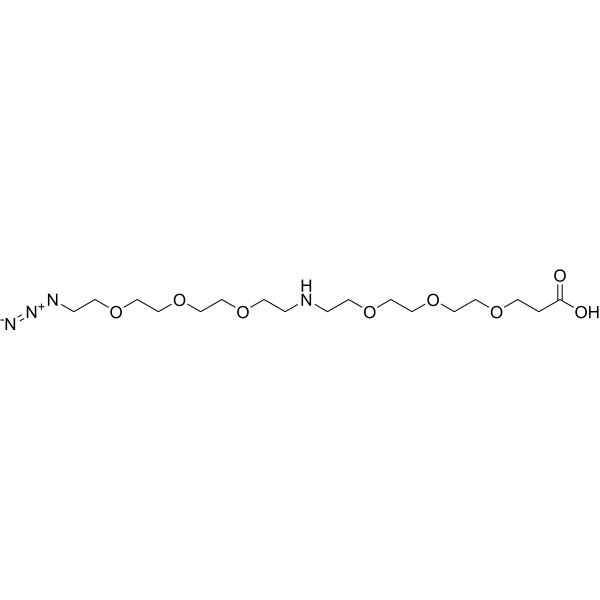
- HY-140519
-
|
|
PROTAC Linkers
|
Cancer
|
|
N-(Azido-PEG4)-N-bis(PEG4-acid) is a PEG-based PROTAC linker that can be used in the synthesis of PROTACs . N-(Azido-PEG4)-N-bis(PEG4-acid) is a click chemistry reagent, it contains an Azide group and can undergo copper-catalyzed azide-alkyne cycloaddition reaction (CuAAc) with molecules containing Alkyne groups. It can also undergo strain-promoted alkyne-azide cycloaddition (SPAAC) reactions with molecules containing DBCO or BCN groups.
|
-
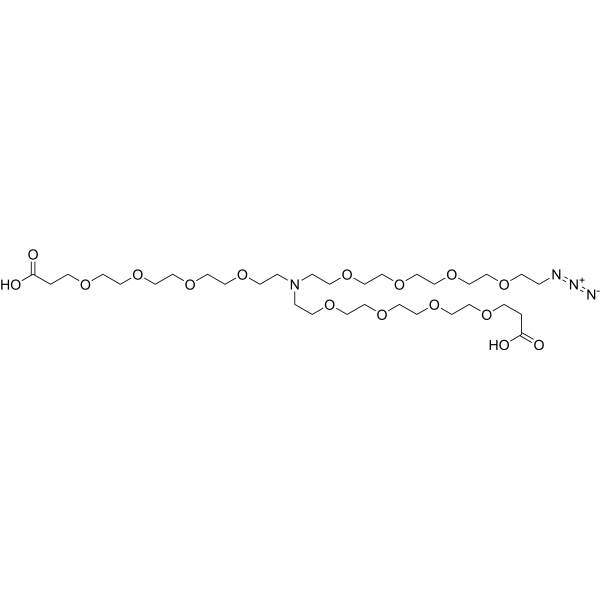
- HY-140019
-
|
|
PROTAC Linkers
|
Cancer
|
|
Azido-PEG3-amide-C3-triethoxysilane is a PEG-based PROTAC linker that can be used in the synthesis of PROTACs . Azido-PEG3-amide-C3-triethoxysilane is a click chemistry reagent, it contains an Azide group and can undergo copper-catalyzed azide-alkyne cycloaddition reaction (CuAAc) with molecules containing Alkyne groups. It can also undergo strain-promoted alkyne-azide cycloaddition (SPAAC) reactions with molecules containing DBCO or BCN groups.
|
-
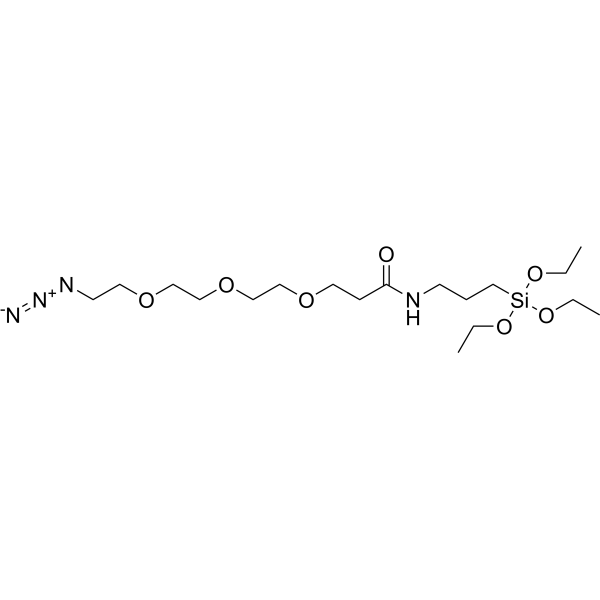
- HY-179193A
-
|
N3-PEG600-OPSS
|
Biochemical Assay Reagents
|
Others
|
|
Azide-PEG600-OPSS (N3-PEG600-OPSS) is a compound composed of an azide group, PEG, and o-dithiopyridine (OPSS) and can be used for drug delivery. Azide-PEG600-OPSS is a click chemistry reagent. It contains an Azide group and can undergo a copper-catalyzed azido-yne cycloaddition reaction (CuAAc) with molecules containing an Alkyne group. It can also undergo ring-strain-driven acetylene-azidocycloaddition (SPAAC) reactions with molecules containing DBCO or BCN groups.
|
-

- HY-140526
-
|
|
PROTAC Linkers
|
Cancer
|
|
N-(Azido-PEG3)-N-Boc-PEG3-acid is a PEG-based PROTAC linker that can be used in the synthesis of PROTACs . N-(Azido-PEG3)-N-Boc-PEG3-acid is a click chemistry reagent, it contains an Azide group and can undergo copper-catalyzed azide-alkyne cycloaddition reaction (CuAAc) with molecules containing Alkyne groups. It can also undergo strain-promoted alkyne-azide cycloaddition (SPAAC) reactions with molecules containing DBCO or BCN groups.
|
-
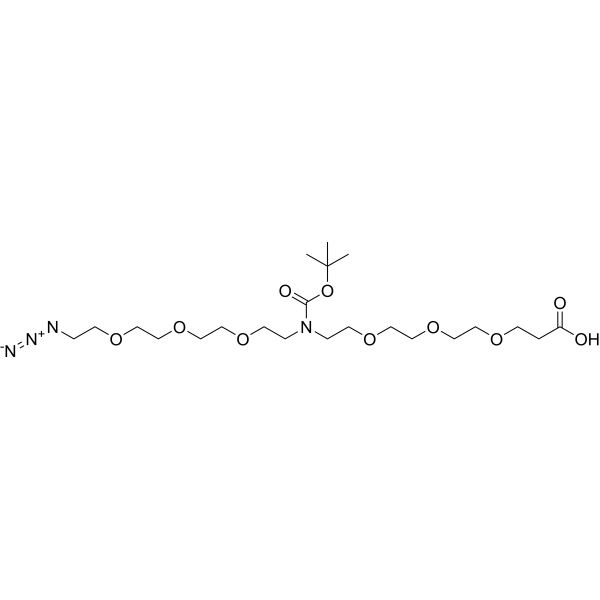
- HY-174945B
-
|
DSPE-PEG8-N3
|
Biochemical Assay Reagents
|
Others
|
|
DSPE-PEG8-azide (DSPE-PEG8-N3) is an azide containing lipid that can be used to form micelles as nanoparticles for drug delivery. DSPE-PEG8-azide is a click chemistry reagent, it contains an Azide group and can undergo copper-catalyzed azide-alkyne cycloaddition reaction (CuAAc) with molecules containing Alkyne groups. It can also undergo strain-promoted alkyne-azide cycloaddition (SPAAC) reactions with molecules containing DBCO or BCN groups .
|
-

- HY-141029
-
|
|
PROTAC Linkers
|
Cancer
|
|
N-Hydroxypropyl-N’-(azide-PEG3)-Cy3 is a PEG-based PROTAC linker that can be used in the synthesis of PROTACs . N-Hydroxypropyl-N’-(azide-PEG3)-Cy3 is a click chemistry reagent, it contains an Azide group and can undergo copper-catalyzed azide-alkyne cycloaddition reaction (CuAAc) with molecules containing Alkyne groups. It can also undergo strain-promoted alkyne-azide cycloaddition (SPAAC) reactions with molecules containing DBCO or BCN groups.
|
-
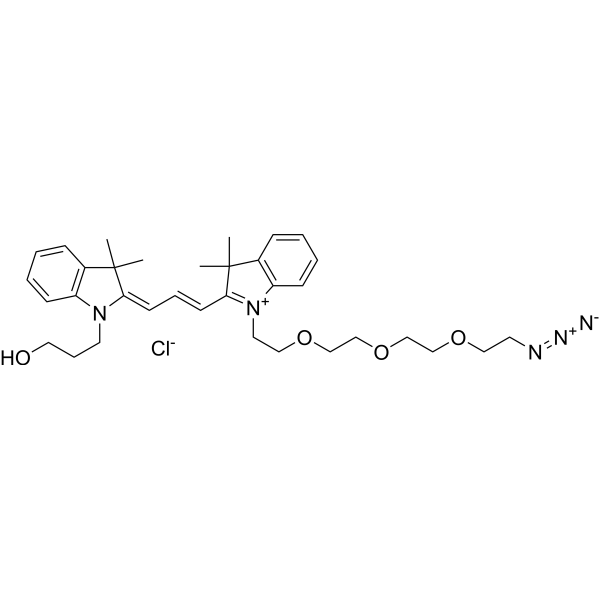
- HY-D2604
-
|
|
Fluorescent Dye
|
Others
|
|
ICG PEG1000 N3 is a Indocyanine green (ICG) (HY-D0711)-azide fluorescent dye used to label for protein and nucleic acid. ICG PEG1000 N3 is a click chemistry reagent, it contains an Azide group and can undergo copper-catalyzed azide-alkyne cycloaddition reaction (CuAAc) with molecules containing Alkyne groups. It can also undergo strain-promoted alkyne-azide cycloaddition (SPAAC) reactions with molecules containing DBCO or BCN groups (Ex/Em=785/813 nm).
|
-

- HY-W743931
-
|
|
Isotope-Labeled Compounds
PROTAC Linkers
|
Cancer
|
|
2-Azidoethanol-d4 is the deuterium labeled Azido-PEG1 (HY-138461). Azido-PEG1 is a PEG-based PROTAC linker that can be used in the synthesis of PROTACs . Azido-PEG1 is a click chemistry reagent, it contains an Azide group and can undergo copper-catalyzed azide-alkyne cycloaddition reaction (CuAAc) with molecules containing Alkyne groups. It can also undergo strain-promoted alkyne-azide cycloaddition (SPAAC) reactions with molecules containing DBCO or BCN groups.
|
-

- HY-140106
-
|
|
PROTAC Linkers
|
Cancer
|
|
Azido-PEG3-SS-PEG3-azide is a PEG-based PROTAC linker that can be used in the synthesis of PROTACs . Azido-PEG3-SS-PEG3-azide is a click chemistry reagent, it contains an Azide group and can undergo copper-catalyzed azide-alkyne cycloaddition reaction (CuAAc) with molecules containing Alkyne groups. It can also undergo strain-promoted alkyne-azide cycloaddition (SPAAC) reactions with molecules containing DBCO or BCN groups.
|
-
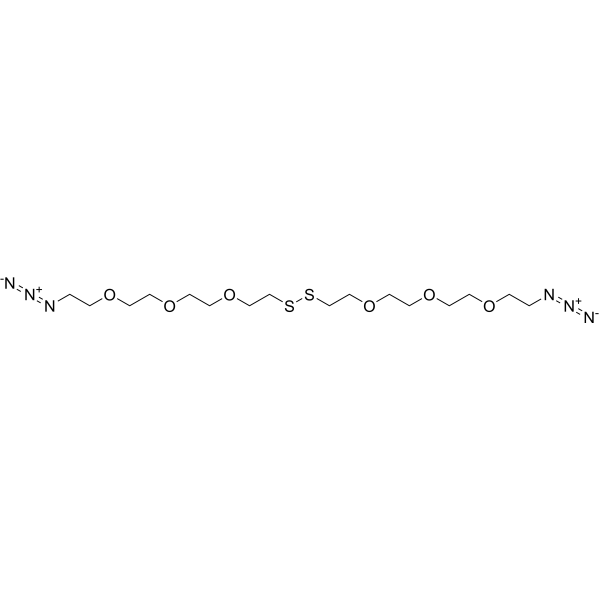
- HY-140603
-
|
|
PROTAC Linkers
|
Cancer
|
|
Azide-PEG3-Sulfone-PEG3-azide is a PEG-based PROTAC linker that can be used in the synthesis of PROTACs . Azide-PEG3-Sulfone-PEG3-azide is a click chemistry reagent, it contains an Azide group and can undergo copper-catalyzed azide-alkyne cycloaddition reaction (CuAAc) with molecules containing Alkyne groups. It can also undergo strain-promoted alkyne-azide cycloaddition (SPAAC) reactions with molecules containing DBCO or BCN groups.
|
-
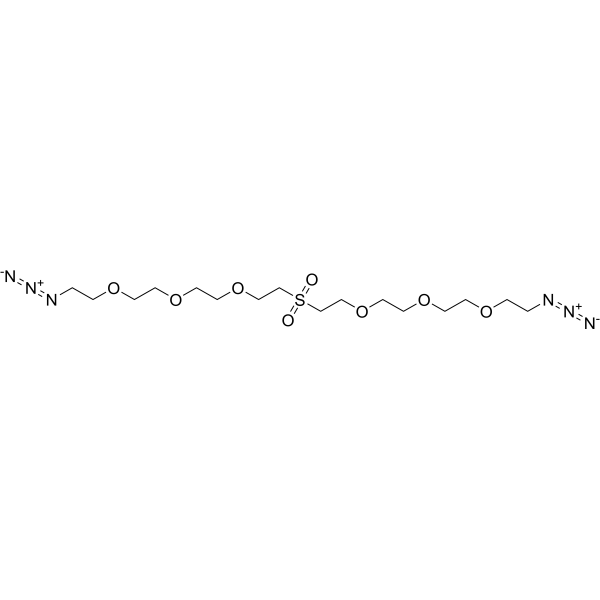
- HY-140753
-
|
|
PROTAC Linkers
|
Cancer
|
|
DOTA-(t-butyl)3-PEG5-azide is a PEG-based PROTAC linker that can be used in the synthesis of PROTACs . DOTA-(t-butyl)3-PEG5-azide is a click chemistry reagent, it contains an Azide group and can undergo copper-catalyzed azide-alkyne cycloaddition reaction (CuAAc) with molecules containing Alkyne groups. It can also undergo strain-promoted alkyne-azide cycloaddition (SPAAC) reactions with molecules containing DBCO or BCN groups.
|
-
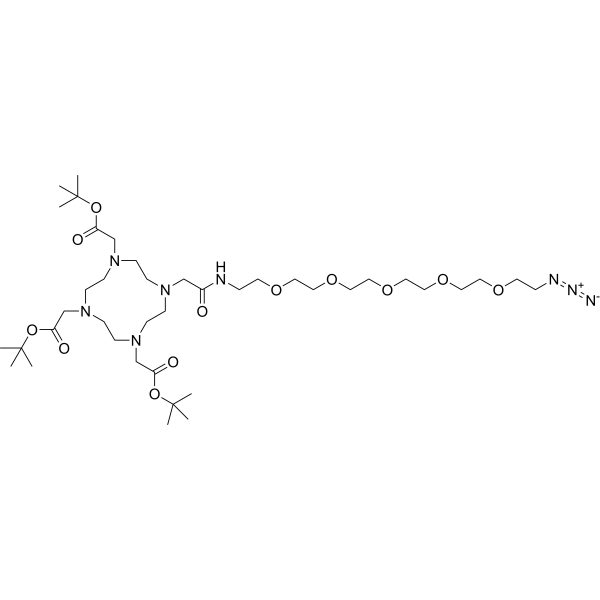
- HY-140590
-
|
|
PROTAC Linkers
|
Cancer
|
|
Azido-PEG3-S-PEG3-azide is a PEG-based PROTAC linker that can be used in the synthesis of PROTACs . Azido-PEG3-S-PEG3-azide is a click chemistry reagent, it contains an Azide group and can undergo copper-catalyzed azide-alkyne cycloaddition reaction (CuAAc) with molecules containing Alkyne groups. It can also undergo strain-promoted alkyne-azide cycloaddition (SPAAC) reactions with molecules containing DBCO or BCN groups.
|
-
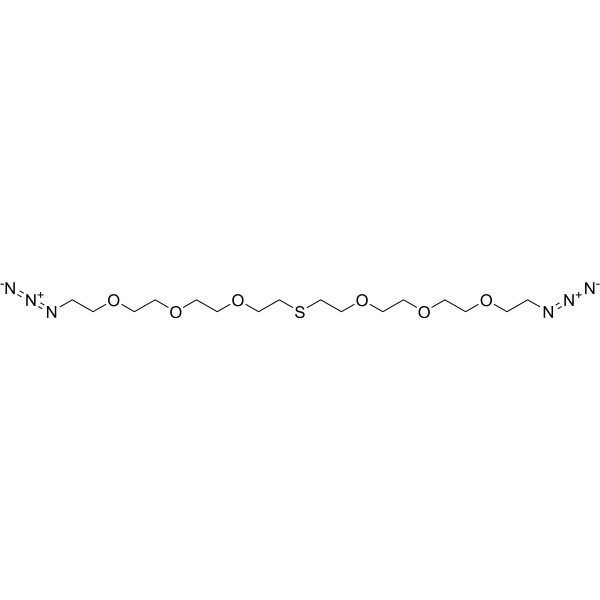
- HY-137537
-
|
|
E3 Ligase Ligand-Linker Conjugates
|
Cancer
|
|
Pomalidomide-PEG2-azide is a synthesized E3 ligase ligand-linker conjugate that incorporates the Pomalidomide based cereblon ligand and 2-unit PEG linker used in PROTAC technology . Pomalidomide-PEG2-azide is a click chemistry reagent, it contains an Azide group and can undergo copper-catalyzed azide-alkyne cycloaddition reaction (CuAAc) with molecules containing Alkyne groups. It can also undergo strain-promoted alkyne-azide cycloaddition (SPAAC) reactions with molecules containing DBCO or BCN groups.
|
-
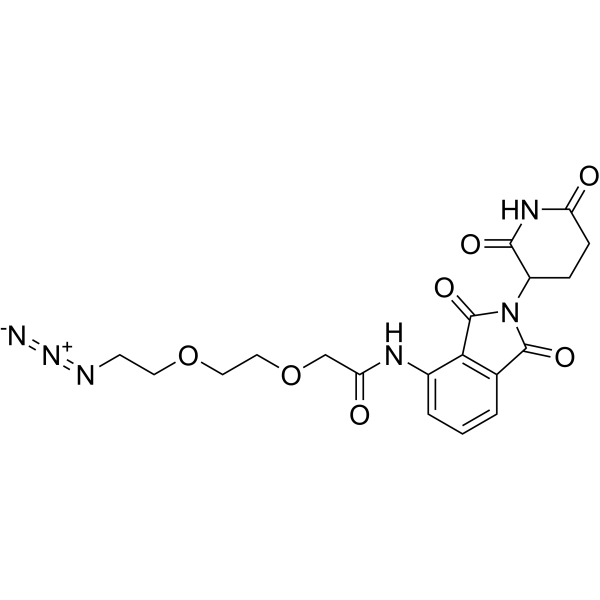
- HY-145934A
-
|
|
OGT
Biochemical Assay Reagents
Glycosidase
|
Metabolic Disease
|
|
UDP-GlcNAz disodium is the analogue of UDP-GlcNAc disodium (HY-112174). UDP-GlcNAc disodium is the donor substrate of many N-acetylgalactosaminyltransferases, enzymes which transfer GlcNAc from the nucleotide sugar to a saccharide or peptide acceptor. UDP-GlcNAc disodium is a click chemistry reagent, it contains an Azide group and can undergo copper-catalyzed azide-alkyne cycloaddition reaction (CuAAc) with molecules containing Alkyne groups. It can also undergo strain-promoted alkyne-azide cycloaddition (SPAAC) reactions with molecules containing DBCO or BCN groups .
|
-
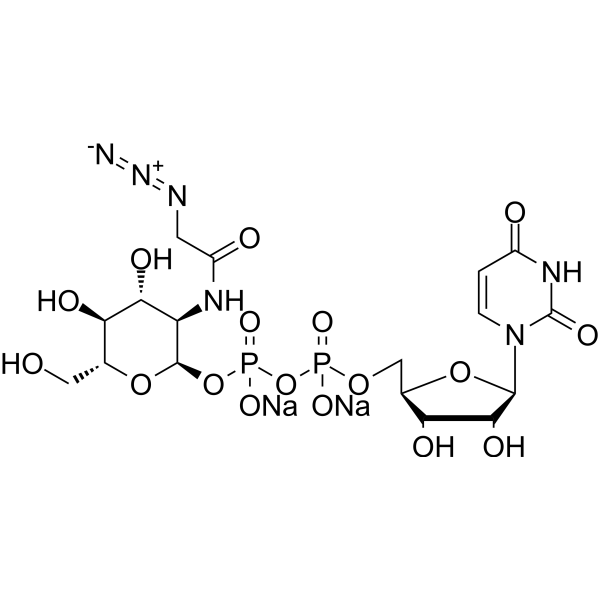
- HY-10443A
-
|
Ro 4588161 hydrochloride; R1626 hydrochloride
|
HCV
DNA/RNA Synthesis
|
Infection
|
|
Balapiravir hydrochloride (Ro 4588161 hydrochloride; R1626 hydrochloride) is an orally active proagent of a nucleoside analogue inhibitor of the RNA-dependent RNA polymerase (RdRp) of HCV (R1479; 4'-Azidocytidine). Balapiravir hydrochloride has anti-HCV activity . Balapiravir (hydrochloride) is a click chemistry reagent, it contains an Azide group and can undergo copper-catalyzed azide-alkyne cycloaddition reaction (CuAAc) with molecules containing Alkyne groups. It can also undergo strain-promoted alkyne-azide cycloaddition (SPAAC) reactions with molecules containing DBCO or BCN groups.
|
-
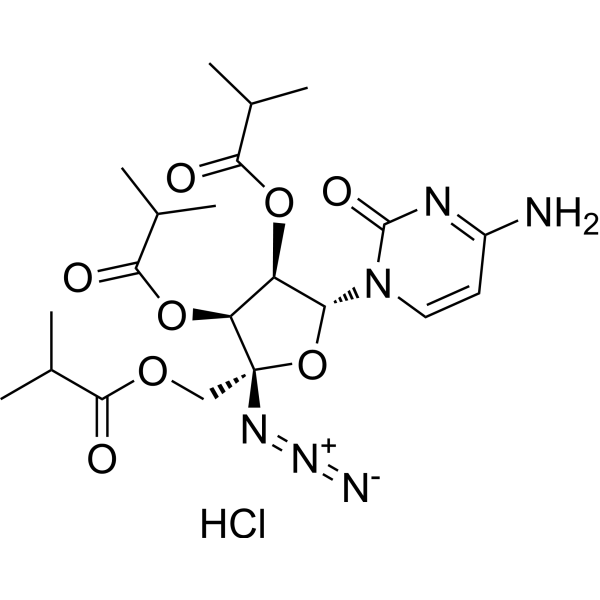
- HY-179193E
-
|
N3-PEG5000-OPSS
|
Biochemical Assay Reagents
|
Others
|
|
Azide-PEG5000-OPSS (N3-PEG5000-OPSS) is a compound composed of an azide group, PEG, and o-dithiopyridine (OPSS) and can be used for drug delivery. Azide-PEG5000-OPSS is a click chemistry reagent. It contains an Azide group and can undergo a copper-catalyzed azido-yne cycloaddition reaction (CuAAc) with molecules containing an Alkyne group. It can also undergo ring-strain-driven acetylene-azidocycloaddition (SPAAC) reactions with molecules containing DBCO or BCN groups.
|
-

- HY-140788
-
|
5-(Azide-PEG9-ethylcarbamoyl)pentanoic t-butyl ester
|
PROTAC Linkers
|
Cancer
|
|
Azide-PEG9-amido-C4-Boc is a PEG-based PROTAC linker that can be used in the synthesis of PROTACs . Azide-PEG9-amido-C4-Boc is a click chemistry reagent, it contains an Azide group and can undergo copper-catalyzed azide-alkyne cycloaddition reaction (CuAAc) with molecules containing Alkyne groups. It can also undergo strain-promoted alkyne-azide cycloaddition (SPAAC) reactions with molecules containing DBCO or BCN groups.
|
-
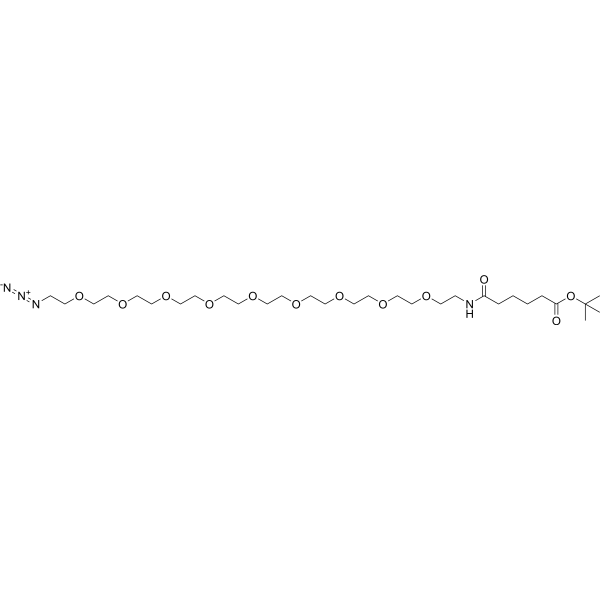
- HY-179193C
-
|
N3-PEG2000-OPSS
|
Biochemical Assay Reagents
|
Others
|
|
Azide-PEG2000-OPSS (N3-PEG2000-OPSS) is a compound composed of an azide group, PEG, and o-dithiopyridine (OPSS) and can be used for drug delivery. Azide-PEG2000-OPSS is a click chemistry reagent. It contains an Azide group and can undergo a copper-catalyzed azido-yne cycloaddition reaction (CuAAc) with molecules containing an Alkyne group. It can also undergo ring-strain-driven acetylene-azidocycloaddition (SPAAC) reactions with molecules containing DBCO or BCN groups.
|
-

- HY-10443
-
|
Ro 4588161; R1626
|
HCV
DNA/RNA Synthesis
|
Infection
|
|
Balapiravir (Ro 4588161; R1626) is an orally active proagent of a nucleoside analogue inhibitor of the RNA-dependent RNA polymerase (RdRp) of HCV (R1479; 4'-Azidocytidine). Balapiravir has anti-HCV activity . Balapiravir is a click chemistry reagent, it contains an Azide group and can undergo copper-catalyzed azide-alkyne cycloaddition reaction (CuAAc) with molecules containing Alkyne groups. It can also undergo strain-promoted alkyne-azide cycloaddition (SPAAC) reactions with molecules containing DBCO or BCN groups.
|
-
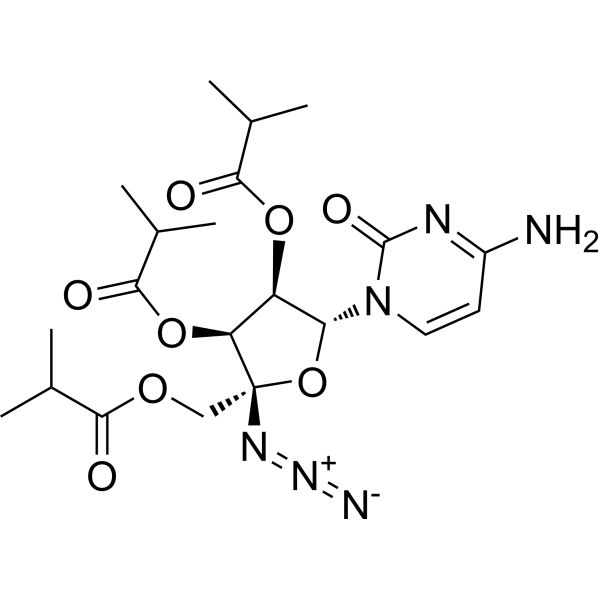
- HY-140844
-
|
|
E3 Ligase Ligand-Linker Conjugates
Autophagy
Apoptosis
|
Cancer
|
|
Thalidomide-O-PEG4-azide is a synthesized E3 ligase ligand-linker conjugate that incorporates the Thalidomide based cereblon ligand and a linker used in PROTAC technology. Thalidomide-O-PEG4-azide is a click chemistry reagent, it contains an Azide group and can undergo copper-catalyzed azide-alkyne cycloaddition reaction (CuAAc) with molecules containing Alkyne groups. It can also undergo strain-promoted alkyne-azide cycloaddition (SPAAC) reactions with molecules containing DBCO or BCN groups.
|
-
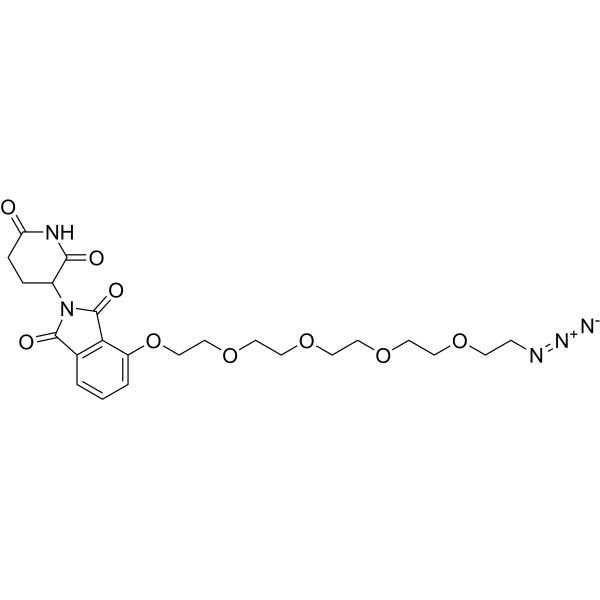
- HY-140546
-
|
|
PROTAC Linkers
|
Cancer
|
|
N-(Azido-PEG3)-N-Fluorescein-PEG4-acid is a PEG-based PROTAC linker that can be used in the synthesis of PROTACs . N-(Azido-PEG3)-N-Fluorescein-PEG4-acid is a click chemistry reagent, it contains an Azide group and can undergo copper-catalyzed azide-alkyne cycloaddition reaction (CuAAc) with molecules containing Alkyne groups. It can also undergo strain-promoted alkyne-azide cycloaddition (SPAAC) reactions with molecules containing DBCO or BCN groups.
|
-
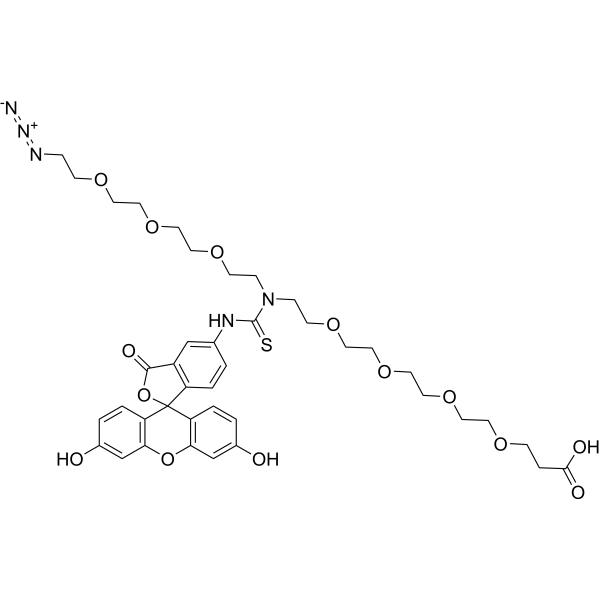
- HY-140791
-
|
17-(Azide-PEG9-ethylcarbamoyl)heptadecanoic t-butyl ester
|
PROTAC Linkers
|
Cancer
|
|
Azide-PEG9-amido-C16-Boc is an alkyl/ether-based PROTAC linker that can be used in the synthesis of PROTACs . Azide-PEG9-amido-C16-Boc is a click chemistry reagent, it contains an Azide group and can undergo copper-catalyzed azide-alkyne cycloaddition reaction (CuAAc) with molecules containing Alkyne groups. It can also undergo strain-promoted alkyne-azide cycloaddition (SPAAC) reactions with molecules containing DBCO or BCN groups.
|
-
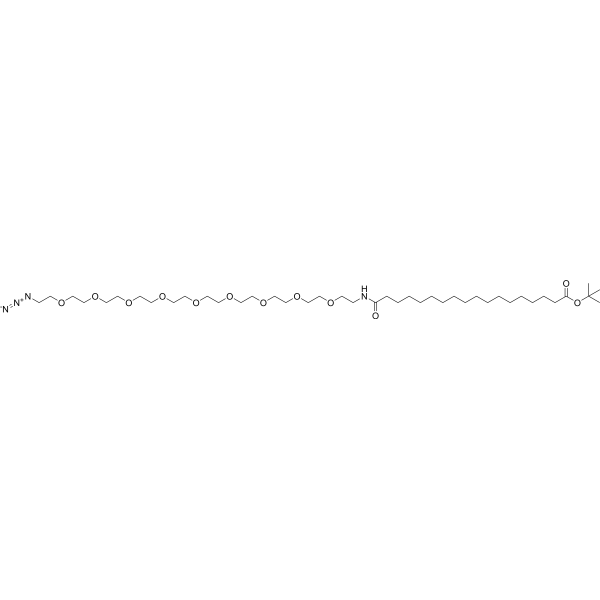
- HY-140792
-
|
|
PROTAC Linkers
|
Cancer
|
|
Azido-PEG1-C1-Boc is an alkyl/ether-based PROTAC linker that can be used in the synthesis of PROTACs . Azido-PEG1-C1-Boc is a click chemistry reagent, it contains an Azide group and can undergo copper-catalyzed azide-alkyne cycloaddition reaction (CuAAc) with molecules containing Alkyne groups. It can also undergo strain-promoted alkyne-azide cycloaddition (SPAAC) reactions with molecules containing DBCO or BCN groups.
|
-
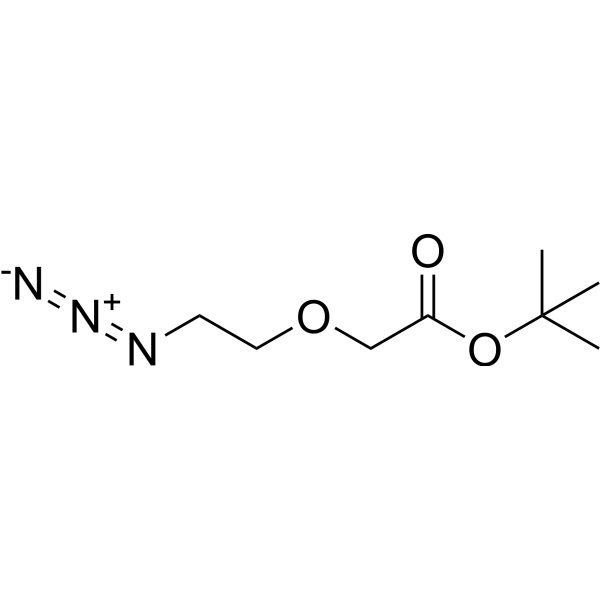
- HY-140847
-
|
|
PROTAC Linkers
|
Cancer
|
|
N-Fmoc-N'-(azido-PEG4)-L-Lysine-PFP ester is an alkyl/ether and PEG-based PROTAC linker that can be used in the synthesis of PROTACs . N-Fmoc-N'-(azido-PEG4)-L-Lysine-PFP ester is a click chemistry reagent, it contains an Azide group and can undergo copper-catalyzed azide-alkyne cycloaddition reaction (CuAAc) with molecules containing Alkyne groups. It can also undergo strain-promoted alkyne-azide cycloaddition (SPAAC) reactions with molecules containing DBCO or BCN groups.
|
-
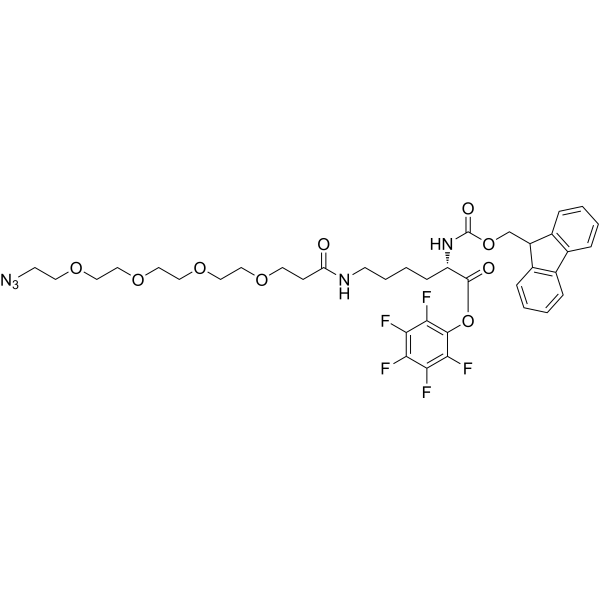
- HY-D2606
-
|
|
Fluorescent Dye
|
Others
|
|
ICG PEG3400 N3 is a Indocyanine green (ICG) (HY-D0711)-azide fluorescent dye used to label for protein and nucleic acid. ICG PEG3400 N3 is a click chemistry reagent, it contains an Azide group and can undergo copper-catalyzed azide-alkyne cycloaddition reaction (CuAAc) with molecules containing Alkyne groups. It can also undergo strain-promoted alkyne-azide cycloaddition (SPAAC) reactions with molecules containing DBCO or BCN groups (Ex/Em=785/813 nm).
|
-

- HY-140606
-
|
|
PROTAC Linkers
|
Cancer
|
|
m-PEG3-Sulfone-PEG3-azide is a PEG-based PROTAC linker that can be used in the synthesis of PROTACs . m-PEG3-Sulfone-PEG3-azide is a click chemistry reagent, it contains an Azide group and can undergo copper-catalyzed azide-alkyne cycloaddition reaction (CuAAc) with molecules containing Alkyne groups. It can also undergo strain-promoted alkyne-azide cycloaddition (SPAAC) reactions with molecules containing DBCO or BCN groups.
|
-
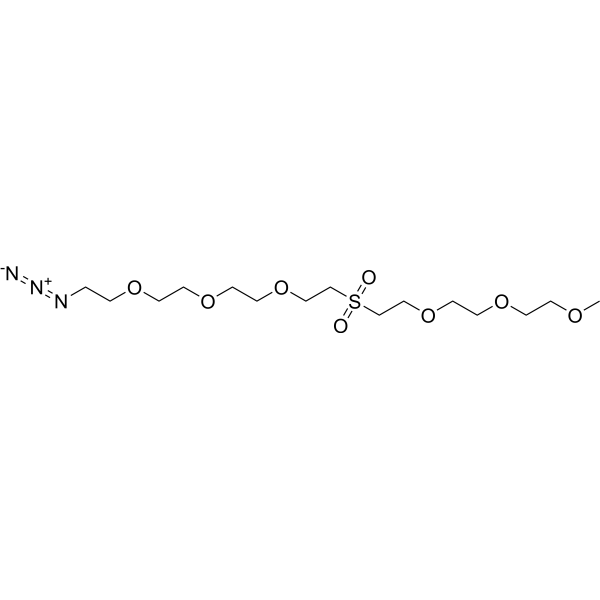
- HY-D2605
-
|
|
Fluorescent Dye
|
Others
|
|
ICG PEG2000 N3 is a Indocyanine green (ICG) (HY-D0711)-azide fluorescent dye used to label for protein and nucleic acid. ICG PEG2000 N3 is a click chemistry reagent, it contains an Azide group and can undergo copper-catalyzed azide-alkyne cycloaddition reaction (CuAAc) with molecules containing Alkyne groups. It can also undergo strain-promoted alkyne-azide cycloaddition (SPAAC) reactions with molecules containing DBCO or BCN groups (Ex/Em=785/813 nm).
|
-

- HY-174945A
-
|
DSPE-PEG1-N3
|
Biochemical Assay Reagents
|
Others
|
|
DSPE-PEG1-azide (DSPE-PEG1-N3) is an azide containing lipid that can be used to form micelles as nanoparticles for drug delivery. DSPE-PEG1-azide is a click chemistry reagent, it contains an Azide group and can undergo copper-catalyzed azide-alkyne cycloaddition reaction (CuAAc) with molecules containing Alkyne groups. It can also undergo strain-promoted alkyne-azide cycloaddition (SPAAC) reactions with molecules containing DBCO or BCN groups .
|
-

- HY-140786
-
|
|
PROTAC Linkers
|
Cancer
|
|
Azido-PEG4-amido-PEG4-Boc is a PEG-based PROTAC linker that can be used in the synthesis of PROTACs . Azido-PEG4-amido-PEG4-Boc is a click chemistry reagent, it contains an Azide group and can undergo copper-catalyzed azide-alkyne cycloaddition reaction (CuAAc) with molecules containing Alkyne groups. It can also undergo strain-promoted alkyne-azide cycloaddition (SPAAC) reactions with molecules containing DBCO or BCN groups.
|
-
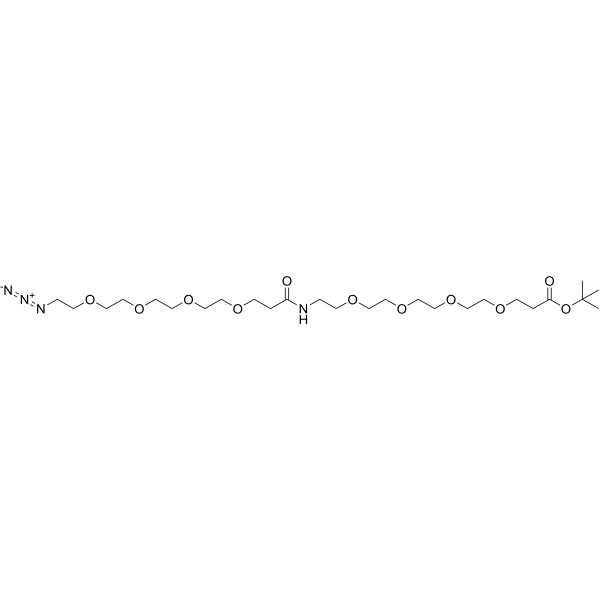
- HY-140790
-
|
13-(Azide-PEG9-ethylcarbamoyl)tridecanoic t-butyl ester
|
PROTAC Linkers
|
Cancer
|
|
Azide-PEG9-amido-C12-Boc is a PEG-based PROTAC linker that can be used in the synthesis of PROTACs . Azide-PEG9-amido-C12-Boc is a click chemistry reagent, it contains an Azide group and can undergo copper-catalyzed azide-alkyne cycloaddition reaction (CuAAc) with molecules containing Alkyne groups. It can also undergo strain-promoted alkyne-azide cycloaddition (SPAAC) reactions with molecules containing DBCO or BCN groups.
|
-
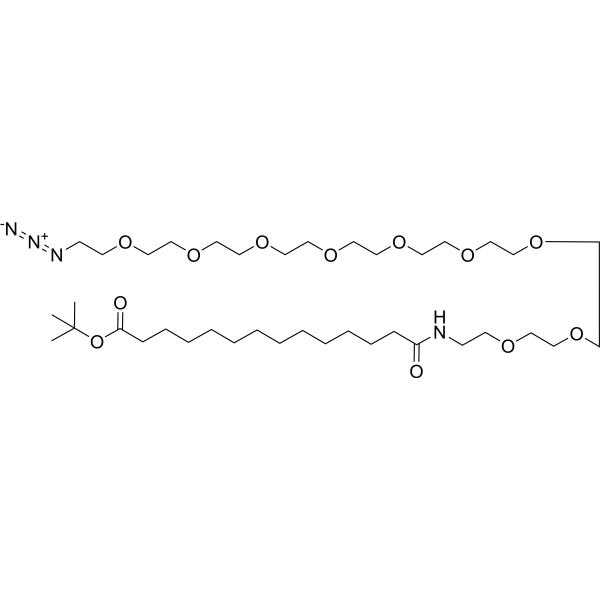
- HY-174945
-
|
DSPE-PEG3-N3
|
Biochemical Assay Reagents
|
Others
|
|
DSPE-PEG3-azide (DSPE-PEG3-N3) is an azide containing lipid that can be used to form micelles as nanoparticles for drug delivery. DSPE-PEG3-azide is a click chemistry reagent, it contains an Azide group and can undergo copper-catalyzed azide-alkyne cycloaddition reaction (CuAAc) with molecules containing Alkyne groups. It can also undergo strain-promoted alkyne-azide cycloaddition (SPAAC) reactions with molecules containing DBCO or BCN groups .
|
-

- HY-141079
-
|
|
PROTAC Linkers
|
Cancer
|
|
N,N'-bis-(azide-PEG3)-chlorocyclohexenyl Cy7 is a PEG-based PROTAC linker that can be used in the synthesis of PROTACs . N,N'-bis-(azide-PEG3)-chlorocyclohexenyl Cy7 is a click chemistry reagent, it contains an Azide group and can undergo copper-catalyzed azide-alkyne cycloaddition reaction (CuAAc) with molecules containing Alkyne groups. It can also undergo strain-promoted alkyne-azide cycloaddition (SPAAC) reactions with molecules containing DBCO or BCN groups.
|
-
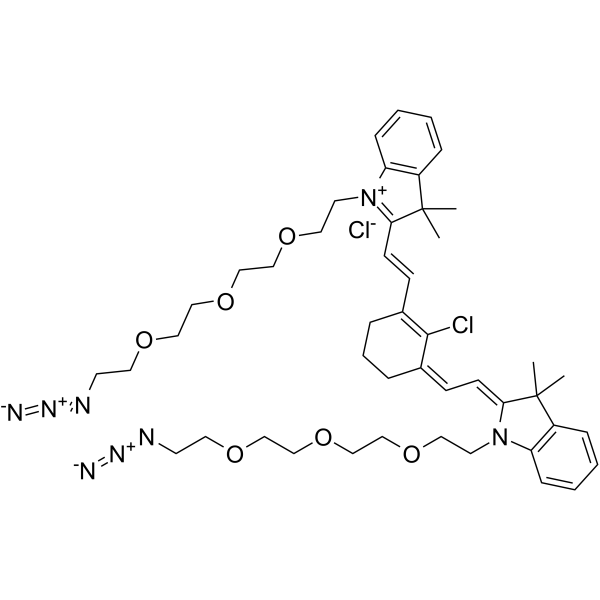
- HY-118297
-
|
|
Biochemical Assay Reagents
|
Metabolic Disease
|
|
Ac4ManNAz is an azido-containing metabolic glycoprotein labeling reagent. Ac4ManNAz can be used to selectively modify proteins. Ac4ManNAz can be used in cell labeling, tracking and proteomic analysis . Ac4ManNAz is a click chemistry reagent, it contains an Azide group and can undergo copper-catalyzed azide-alkyne cycloaddition reaction (CuAAc) with molecules containing Alkyne groups. It can also undergo strain-promoted alkyne-azide cycloaddition (SPAAC) reactions with molecules containing DBCO or BCN groups.
|
-
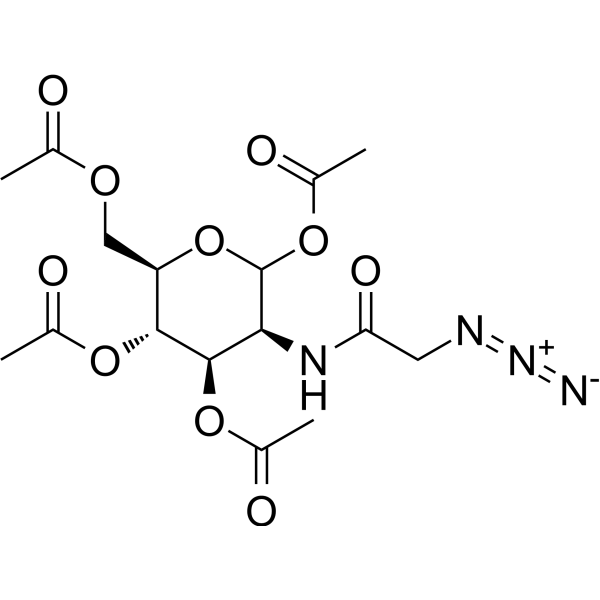
- HY-140828
-
|
13-Azido-2,5,8,11-tetraoxatridecane
|
PROTAC Linkers
|
Cancer
|
|
m-PEG4-azide (13-Azido-2,5,8,11-tetraoxatridecane) is a PEG-based PROTAC linker can be used in the synthesis of PROTACs . m-PEG4-azide is a click chemistry reagent, it contains an Azide group and can undergo copper-catalyzed azide-alkyne cycloaddition reaction (CuAAc) with molecules containing Alkyne groups. It can also undergo strain-promoted alkyne-azide cycloaddition (SPAAC) reactions with molecules containing DBCO or BCN groups.
|
-
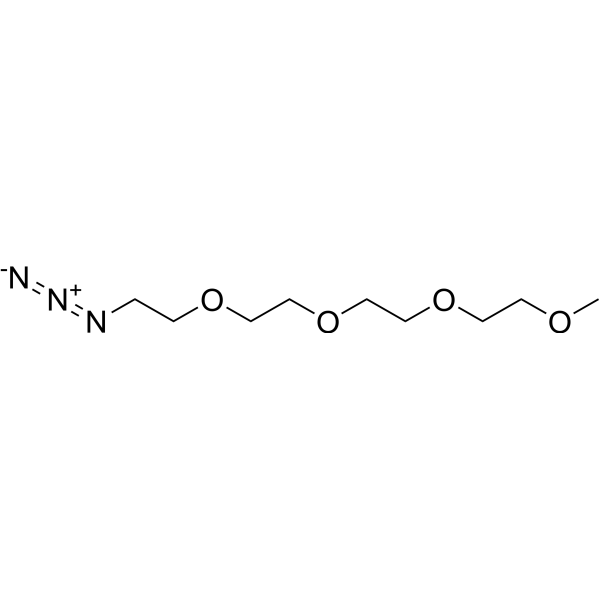
- HY-136105
-
|
|
ADC Linker
|
Cancer
|
|
Azido-PEG1-Val-Cit-PABC-PNP is a cleavable 1 unit PEG ADC linker used in the synthesis of antibody-drug conjugates (ADCs) . Azido-PEG1-Val-Cit-PABC-PNP is a click chemistry reagent, it contains an Azide group and can undergo copper-catalyzed azide-alkyne cycloaddition reaction (CuAAc) with molecules containing Alkyne groups. It can also undergo strain-promoted alkyne-azide cycloaddition (SPAAC) reactions with molecules containing DBCO or BCN groups.
|
-
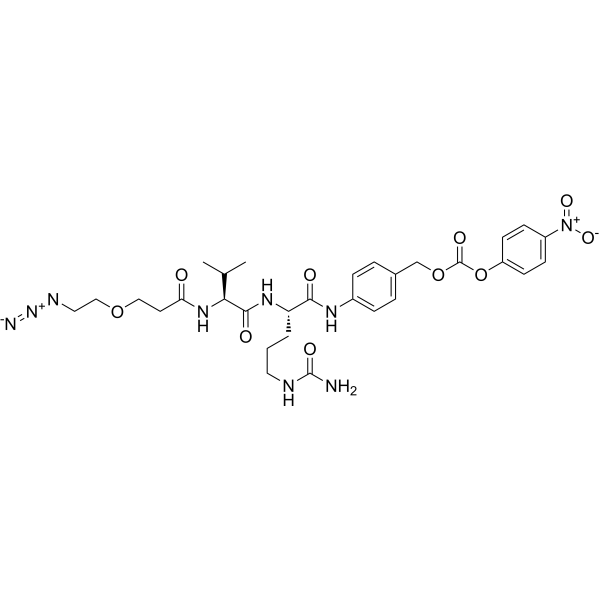
- HY-179193
-
|
N3-PEG400-OPSS
|
Biochemical Assay Reagents
|
Others
|
|
Azide-PEG400-OPSS (N3-PEG400-OPSS) is a compound composed of an azide group, PEG, and o-dithiopyridine (OPSS) and can be used for drug delivery. Azide-PEG400-OPSS is a click chemistry reagent. It contains an Azide group and can undergo a copper-catalyzed azido-yne cycloaddition reaction (CuAAc) with molecules containing an Alkyne group. It can also undergo ring-strain-driven acetylene-azidocycloaddition (SPAAC) reactions with molecules containing DBCO or BCN groups.
|
-

- HY-10870R
-
|
|
Reference Standards
HCV
|
Infection
|
|
RO-9187 (Standard) is the analytical standard of RO-9187 (HY-10870). This product is intended for research and analytical applications. RO-9187 is a potent inhibitor of HCV virus replication with an IC50 of 171 nM. RO-9187 is a click chemistry reagent, it contains an Azide group and can undergo copper-catalyzed azide-alkyne cycloaddition reaction (CuAAc) with molecules containing Alkyne groups. It can also undergo strain-promoted alkyne-azide cycloaddition (SPAAC) reactions with molecules containing DBCO or BCN groups.
|
-

- HY-D2607
-
|
|
Fluorescent Dye
|
Others
|
|
ICG PEG5000 N3 is a Indocyanine green (ICG) (HY-D0711)-azide fluorescent dye used to label for protein and nucleic acid. ICG PEG5000 N3 is a click chemistry reagent, it contains an Azide group and can undergo copper-catalyzed azide-alkyne cycloaddition reaction (CuAAc) with molecules containing Alkyne groups. It can also undergo strain-promoted alkyne-azide cycloaddition (SPAAC) reactions with molecules containing DBCO or BCN groups (Ex/Em=785/813 nm).
|
-

- HY-151746
-
|
|
ADC Linker
|
Others
|
|
N3-Gly-Gly-Gly-OH is a oligo-Gly click chemistry reagent containing an azide group. Oligo-Gly also has been used as linker to combine different subunits of dimeric or oligomeric proteins or to create artificial multi-domain proteins. By modification into Gly-Gly-Gly-Ser motifs high solubility can be achieved . N3-Gly-Gly-Gly-OH is a click chemistry reagent, it contains an Azide group and can undergo copper-catalyzed azide-alkyne cycloaddition reaction (CuAAc) with molecules containing Alkyne groups. It can also undergo strain-promoted alkyne-azide cycloaddition (SPAAC) reactions with molecules containing DBCO or BCN groups.
|
-
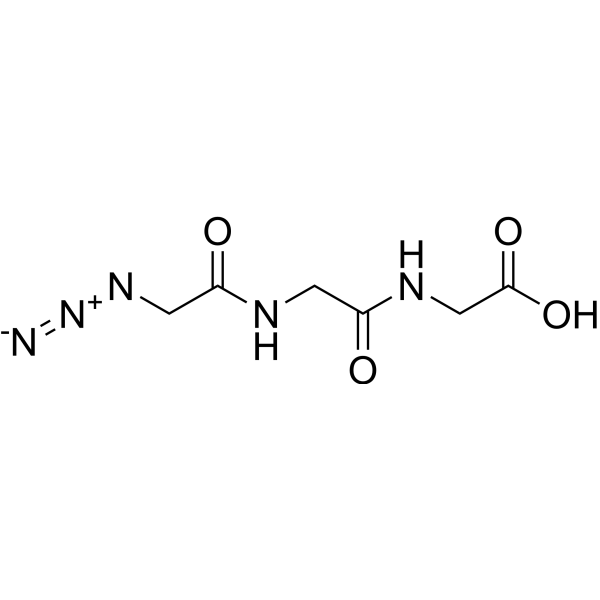
- HY-131027
-
|
JF646, Azide
|
Fluorescent Dye
|
Others
|
|
Janelia Fluor 646, Azide (JF646, Azide) is a red fluorogenic fluorescent dye containing a click chemistry group Azide. Janelia Fluor 646, Azide can be used for live-cell imaging experiments . Janelia Fluor products are licensed under U.S. Pat. Nos. 9,933,417, 10,018,624 and 10,161,932 and other patents from Howard Hughes Medical Institute. Janelia Fluor? 646, Azide is a click chemistry reagent, it contains an Azide group and can undergo copper-catalyzed azide-alkyne cycloaddition reaction (CuAAc) with molecules containing Alkyne groups. It can also undergo strain-promoted alkyne-azide cycloaddition (SPAAC) reactions with molecules containing DBCO or BCN groups.
|
-
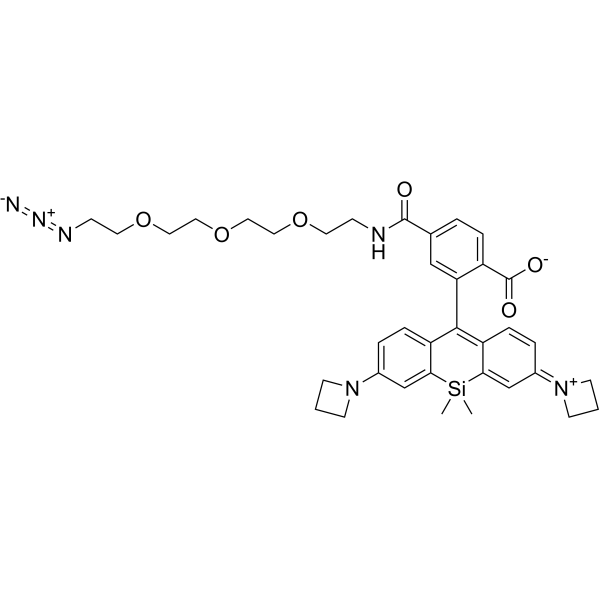
- HY-D2537
-
|
|
Fluorescent Dye
|
Others
|
|
Cy3-PEG2000-N3 is a Cy3 (HY-D0822)-azide fluorescent dye used to label for protein and nucleic acid. Cy3-PEG2000-N3 is a click chemistry reagent, it contains an Azide group and can undergo copper-catalyzed azide-alkyne cycloaddition reaction (CuAAc) with molecules containing Alkyne groups. It can also undergo strain-promoted alkyne-azide cycloaddition (SPAAC) reactions with molecules containing DBCO or BCN groups.
|
-

- HY-131157
-
|
|
ADC Linker
|
Cancer
|
|
Lys(MMT)-PAB-oxydiacetamide-PEG8-N3 is a cleavable antibody agent conjugate linker used in the synthesis of antibody-drug conjugates (ADCs) . Lys(MMT)-PAB-oxydiacetamide-PEG8-N3 is a click chemistry reagent, it contains an Azide group and can undergo copper-catalyzed azide-alkyne cycloaddition reaction (CuAAc) with molecules containing Alkyne groups. It can also undergo strain-promoted alkyne-azide cycloaddition (SPAAC) reactions with molecules containing DBCO or BCN groups.
|
-
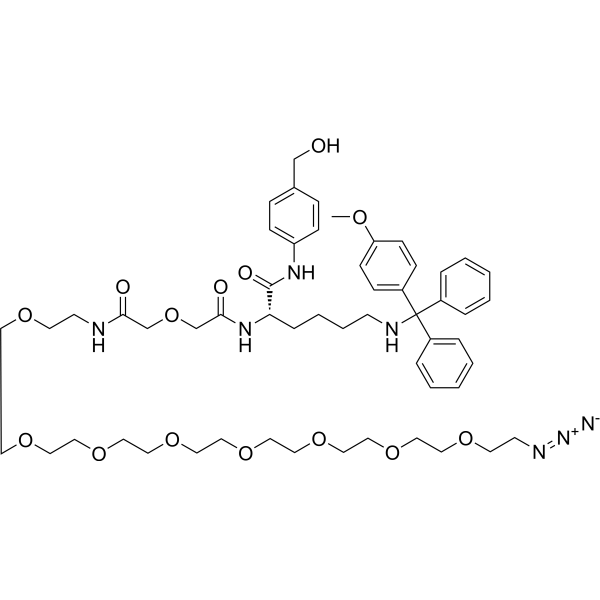
- HY-136058
-
|
Fmoc-Lys(PEG4-N3)-OH
|
ADC Linker
|
Cancer
|
|
N3-PEG4-amido-Lys(Fmoc)-acid is a cleavable 4 unit PEG ADC linker used in the synthesis of antibody-drug conjugates (ADCs) . N3-PEG4-amido-Lys(Fmoc)-acid is a click chemistry reagent, it contains an Azide group and can undergo copper-catalyzed azide-alkyne cycloaddition reaction (CuAAc) with molecules containing Alkyne groups. It can also undergo strain-promoted alkyne-azide cycloaddition (SPAAC) reactions with molecules containing DBCO or BCN groups.
|
-
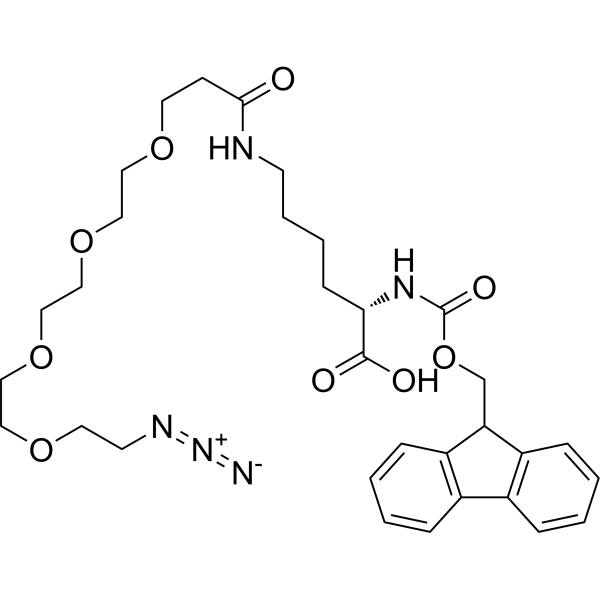
- HY-140766
-
|
|
PROTAC Linkers
|
Cancer
|
|
Azido-PEG5-CH2CO2-NHS is a PEG-based PROTAC linker that can be used in the synthesis of PROTACs . Azido-PEG5-CH2CO2-NHS is a click chemistry reagent, it contains an Azide group and can undergo copper-catalyzed azide-alkyne cycloaddition reaction (CuAAc) with molecules containing Alkyne groups. It can also undergo strain-promoted alkyne-azide cycloaddition (SPAAC) reactions with molecules containing DBCO or BCN groups.
|
-
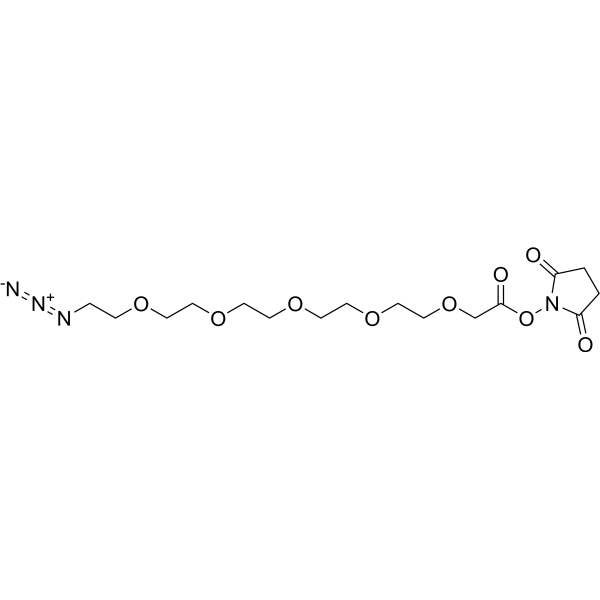
- HY-152901
-
|
|
Fluorescent Dye
|
Others
|
|
Chol-N3 is a bioorthogonal-based chol probe. Chol-N3 can combine with super-resolution fluorescence microscopy (SRM), providing direct visualization of nanoscale lipid heterogeneity in the cell surface of resting living cells . Chol-N3 is a click chemistry reagent, it contains an Azide group and can undergo copper-catalyzed azide-alkyne cycloaddition reaction (CuAAc) with molecules containing Alkyne groups. It can also undergo strain-promoted alkyne-azide cycloaddition (SPAAC) reactions with molecules containing DBCO or BCN groups.
|
-
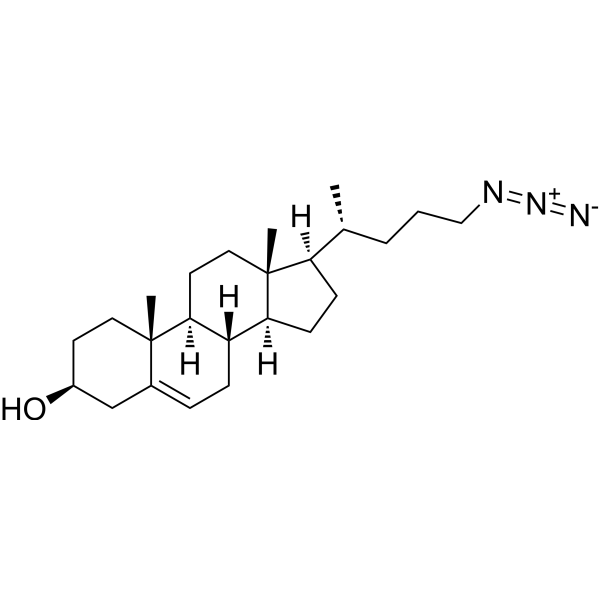
- HY-139999
-
|
|
E3 Ligase Ligand-Linker Conjugates
|
Cancer
|
|
LCL-PEG3-N3 is a decoy oligonucleotide ligand for E3 ligase which can be used for developing chimeric molecules LCL-ER(dec), degrading the estrogen receptor . LCL-PEG3-N3 is a click chemistry reagent, it contains an Azide group and can undergo copper-catalyzed azide-alkyne cycloaddition reaction (CuAAc) with molecules containing Alkyne groups. It can also undergo strain-promoted alkyne-azide cycloaddition (SPAAC) reactions with molecules containing DBCO or BCN groups.
|
-
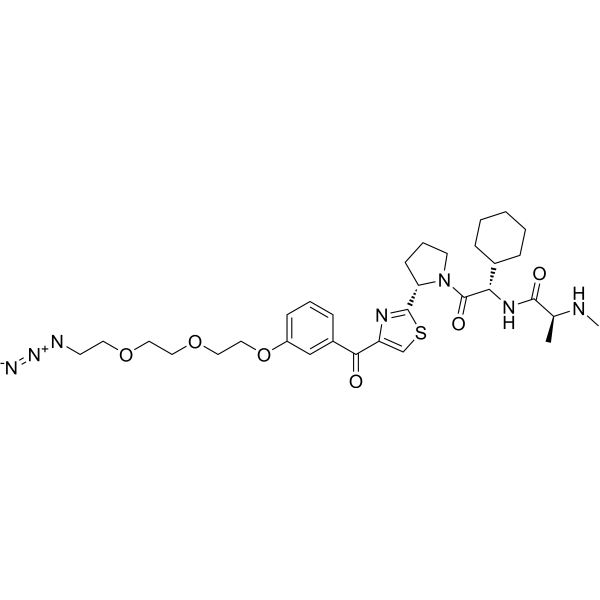
- HY-140867
-
|
|
PROTAC Linkers
|
Cancer
|
|
N-(Azido-PEG2)-N-bis(PEG4-Boc) is a PEG-based PROTAC linker that can be used in the synthesis of PROTACs . N-(Azido-PEG2)-N-bis(PEG4-Boc) is a click chemistry reagent, it contains an Azide group and can undergo copper-catalyzed azide-alkyne cycloaddition reaction (CuAAc) with molecules containing Alkyne groups. It can also undergo strain-promoted alkyne-azide cycloaddition (SPAAC) reactions with molecules containing DBCO or BCN groups.
|
-
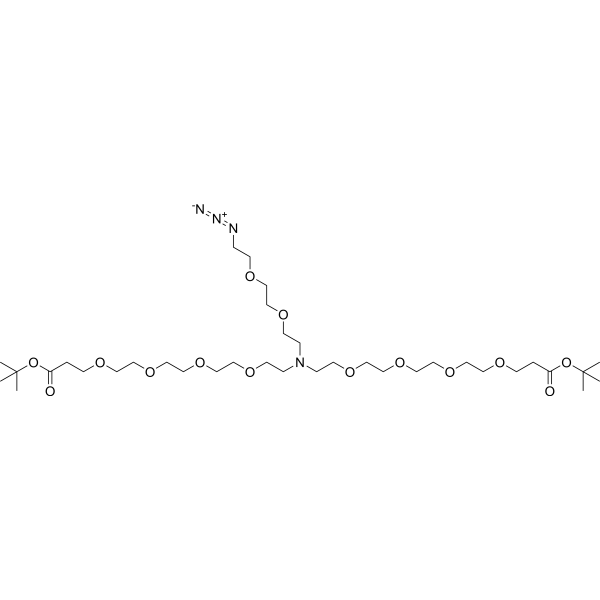
- HY-140087
-
|
|
PROTAC Linkers
|
Cancer
|
|
N-(Amino-PEG2)-N-bis(PEG3-azide) is a PEG-based PROTAC linker that can be used in the synthesis of PROTACs . N-(Amino-PEG2)-N-bis(PEG3-azide) is a click chemistry reagent, it contains an Azide group and can undergo copper-catalyzed azide-alkyne cycloaddition reaction (CuAAc) with molecules containing Alkyne groups. It can also undergo strain-promoted alkyne-azide cycloaddition (SPAAC) reactions with molecules containing DBCO or BCN groups.
|
-
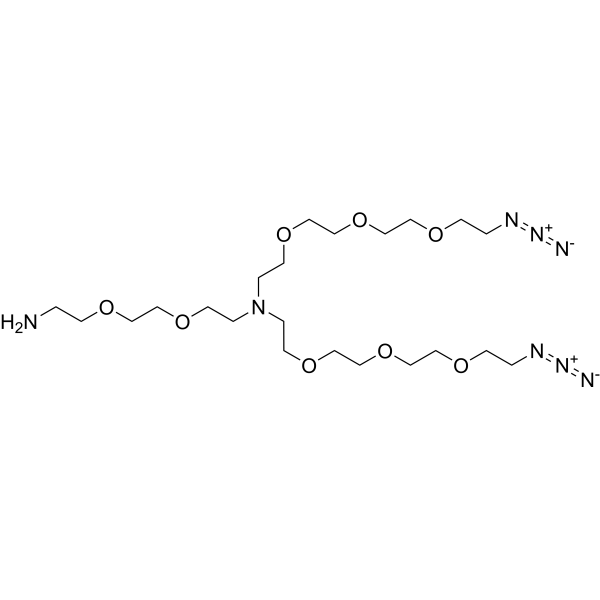
- HY-140566
-
|
|
PROTAC Linkers
|
Cancer
|
|
N-Azido-PEG4-N-Boc-N-PEG3-Boc is a PEG-based PROTAC linker that can be used in the synthesis of PROTACs . N-Azido-PEG4-N-Boc-N-PEG3-Boc is a click chemistry reagent, it contains an Azide group and can undergo copper-catalyzed azide-alkyne cycloaddition reaction (CuAAc) with molecules containing Alkyne groups. It can also undergo strain-promoted alkyne-azide cycloaddition (SPAAC) reactions with molecules containing DBCO or BCN groups.
|
-
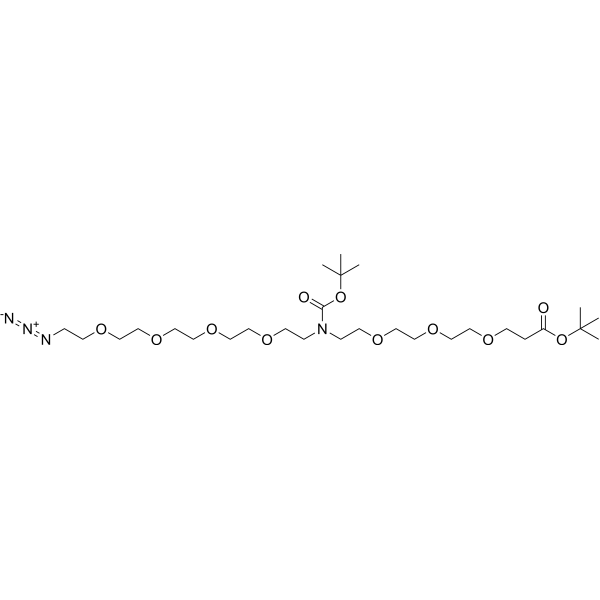
- HY-130228
-
|
|
PROTAC Linkers
|
Cancer
|
|
N3-PEG8-CH2COOH is a PEG-based PROTAC linker can be used in the synthesis of PROTACs . N3-PEG8-CH2COOH is a click chemistry reagent, it contains an Azide group and can undergo copper-catalyzed azide-alkyne cycloaddition reaction (CuAAc) with molecules containing Alkyne groups. It can also undergo strain-promoted alkyne-azide cycloaddition (SPAAC) reactions with molecules containing DBCO or BCN groups.
|
-
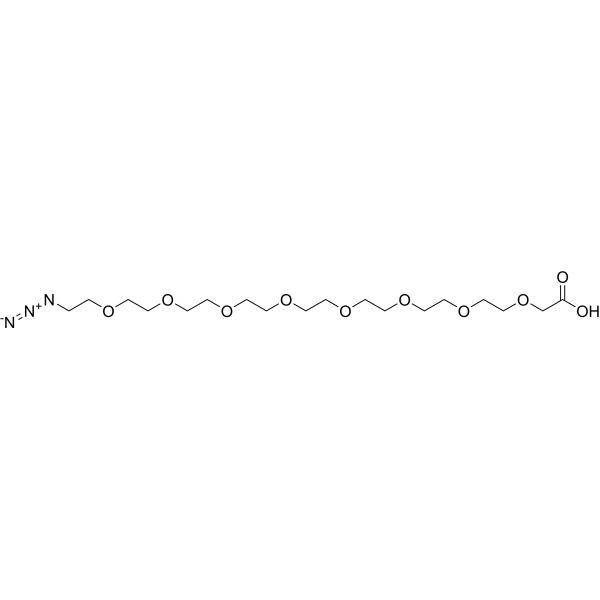
- HY-140865
-
|
|
PROTAC Linkers
|
Cancer
|
|
2-(Azido-PEG3-amido)-1,3-bis(NHS ester) is a PEG-based PROTAC linker that can be used in the synthesis of PROTACs . 2-(Azido-PEG3-amido)-1,3-bis(NHS ester) is a click chemistry reagent, it contains an Azide group and can undergo copper-catalyzed azide-alkyne cycloaddition reaction (CuAAc) with molecules containing Alkyne groups. It can also undergo strain-promoted alkyne-azide cycloaddition (SPAAC) reactions with molecules containing DBCO or BCN groups.
|
-
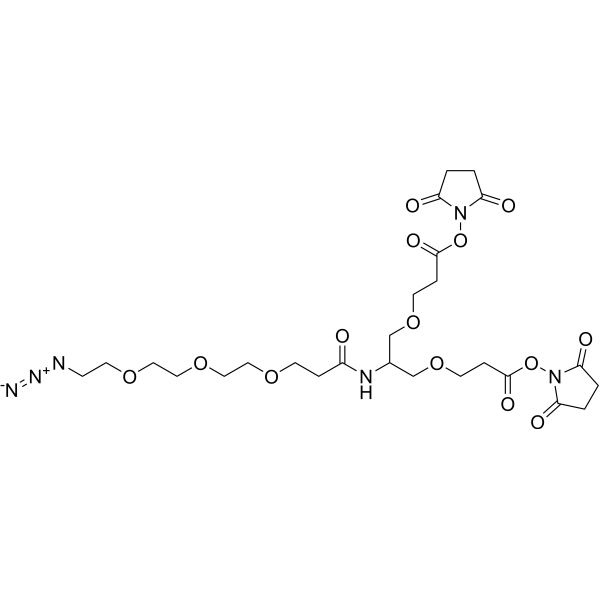
- HY-154256
-
|
|
Nucleoside Antimetabolite/Analog
|
Cancer
|
|
5-(2-Azidoethyl)uridine is a purine nucleoside analog. Purine nucleoside analogs have broad antitumor activity targeting indolent lymphoid malignancies. Anticancer mechanisms in this process rely on inhibition of DNA synthesis, induction of apoptosis, etc . 5-(2-Azidoethyl)uridine is a click chemistry reagent, it contains an Azide group and can undergo copper-catalyzed azide-alkyne cycloaddition reaction (CuAAc) with molecules containing Alkyne groups. It can also undergo strain-promoted alkyne-azide cycloaddition (SPAAC) reactions with molecules containing DBCO or BCN groups.
|
-
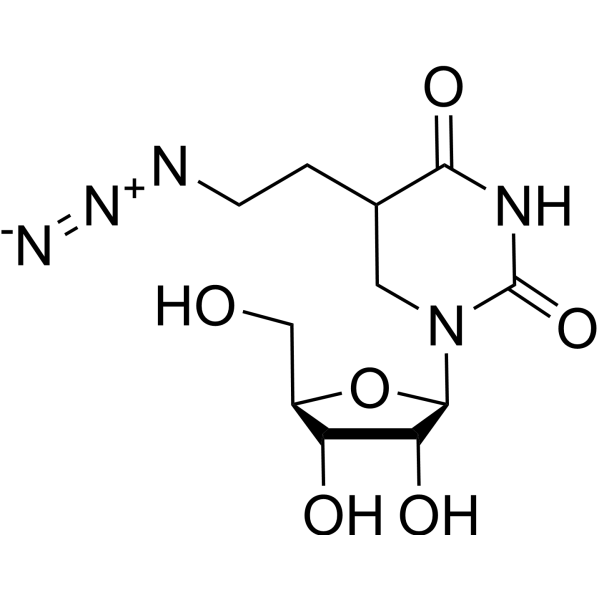
- HY-15861
-
|
TGP-210
|
MicroRNA
Apoptosis
|
Cancer
|
|
Targapremir-210 (TGP-210) is a potent and selective miR-210 (miRNA-210, microRNA-210) inhibitor. Targapremir-210 inhibits pre-miR-210 processing with high binding affinity (Kd~200 nM) . Targapremir-210 is a click chemistry reagent, it contains an Azide group and can undergo copper-catalyzed azide-alkyne cycloaddition reaction (CuAAc) with molecules containing Alkyne groups. It can also undergo strain-promoted alkyne-azide cycloaddition (SPAAC) reactions with molecules containing DBCO or BCN groups.
|
-
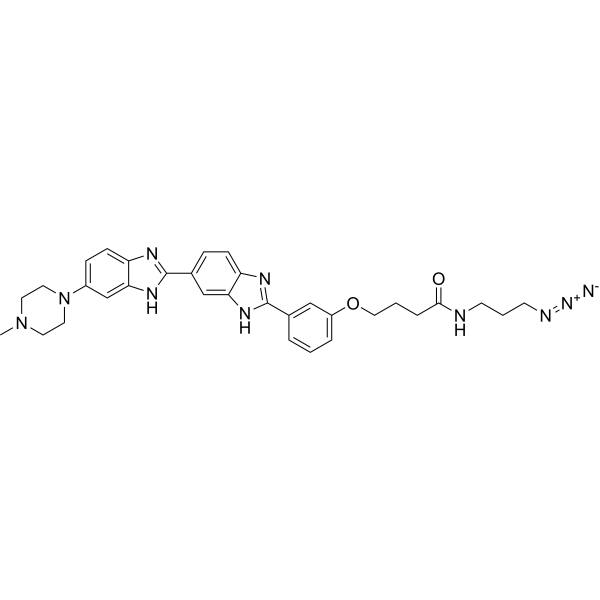
- HY-130768
-
|
|
PROTAC Linkers
|
Cancer
|
|
N-(Azido-PEG3)-N-Fluorescein-PEG3-acid is a PEG-based PROTAC linker which contains azide, fluorescein and carboxylic acid moieties. N-(Azido-PEG3)-N-Fluorescein-PEG3-acid is a click chemistry reagent, it contains an Azide group and can undergo copper-catalyzed azide-alkyne cycloaddition reaction (CuAAc) with molecules containing Alkyne groups. It can also undergo strain-promoted alkyne-azide cycloaddition (SPAAC) reactions with molecules containing DBCO or BCN groups.
|
-
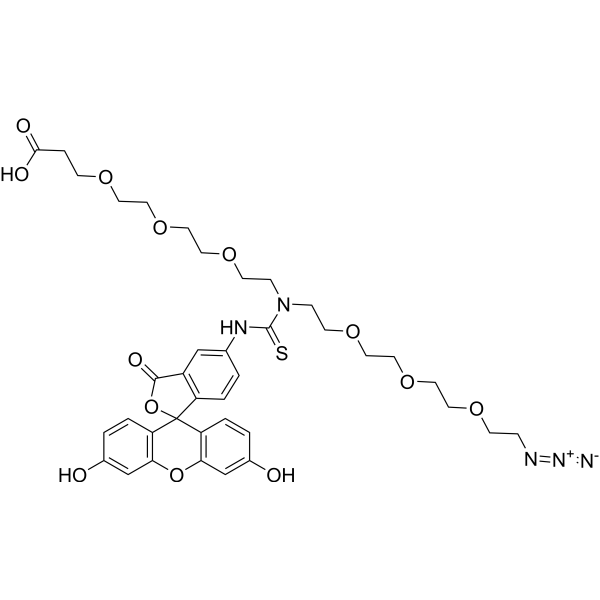
- HY-138350
-
|
|
PROTAC Linkers
|
Cancer
|
|
Azido-PEG10-CH2CO2-NHS is a PEG-based PROTAC linker that can be used in the synthesis of PROTACs . Azido-PEG10-CH2CO2-NHS is a click chemistry reagent, it contains an Azide group and can undergo copper-catalyzed azide-alkyne cycloaddition reaction (CuAAc) with molecules containing Alkyne groups. It can also undergo strain-promoted alkyne-azide cycloaddition (SPAAC) reactions with molecules containing DBCO or BCN groups.
|
-
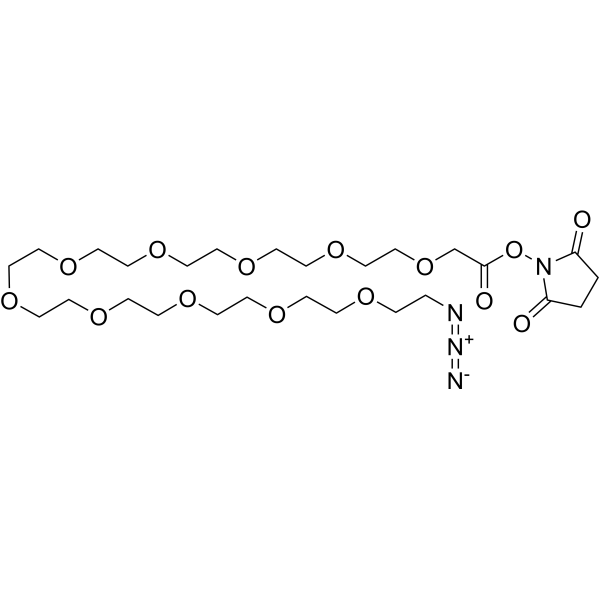
- HY-D2534
-
|
|
Fluorescent Dye
|
Others
|
|
Cy5-PEG3400-N3 is a Cy5 (HY-D0821)-azide fluorescent dye used to label for protein and nucleic acid. Cy5-PEG3400-N3 is a click chemistry reagent, it contains an Azide group and can undergo copper-catalyzed azide-alkyne cycloaddition reaction (CuAAc) with molecules containing Alkyne groups. It can also undergo strain-promoted alkyne-azide cycloaddition (SPAAC) reactions with molecules containing DBCO or BCN groups.
|
-

- HY-140563
-
|
|
PROTAC Linkers
|
Cancer
|
|
N-(Azido-PEG2)-N-Boc-PEG4-Boc is a PEG-based PROTAC linker that can be used in the synthesis of PROTACs . N-(Azido-PEG2)-N-Boc-PEG4-Boc is a click chemistry reagent, it contains an Azide group and can undergo copper-catalyzed azide-alkyne cycloaddition reaction (CuAAc) with molecules containing Alkyne groups. It can also undergo strain-promoted alkyne-azide cycloaddition (SPAAC) reactions with molecules containing DBCO or BCN groups.
|
-
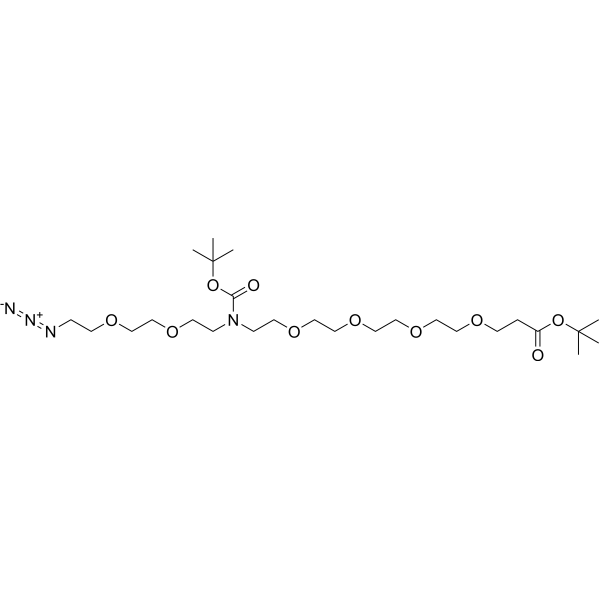
- HY-D2540
-
|
|
Fluorescent Dye
|
Others
|
|
Cy3-PEG10000-N3 is a Cy3 (HY-D0822)-azide fluorescent dye used to label for protein and nucleic acid. Cy3-PEG10000-N3 is a click chemistry reagent, it contains an Azide group and can undergo copper-catalyzed azide-alkyne cycloaddition reaction (CuAAc) with molecules containing Alkyne groups. It can also undergo strain-promoted alkyne-azide cycloaddition (SPAAC) reactions with molecules containing DBCO or BCN groups.
|
-

- HY-141041
-
|
|
PROTAC Linkers
|
Cancer
|
|
N-(Azide-PEG3)-N'-(PEG4-acid)-Cy5 is a PEG-based PROTAC linker that can be used in the synthesis of PROTACs . N-(Azide-PEG3)-N'-(PEG4-acid)-Cy5 is a click chemistry reagent, it contains an Azide group and can undergo copper-catalyzed azide-alkyne cycloaddition reaction (CuAAc) with molecules containing Alkyne groups. It can also undergo strain-promoted alkyne-azide cycloaddition (SPAAC) reactions with molecules containing DBCO or BCN groups.
|
-
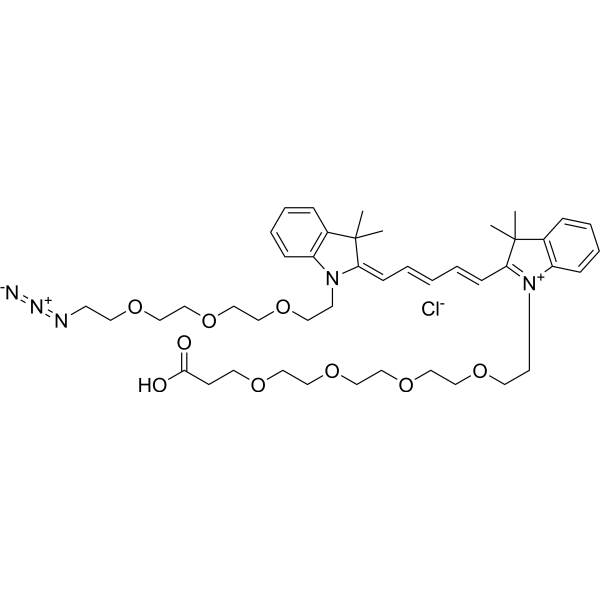
- HY-132119
-
|
|
PROTAC Linkers
|
Cancer
|
|
Boc-NHCH2CH2-PEG1-azide is a PEG-based PROTAC linker that can be used in the synthesis of PROTACs . Boc-NHCH2CH2-PEG1-azide is a click chemistry reagent, it contains an Azide group and can undergo copper-catalyzed azide-alkyne cycloaddition reaction (CuAAc) with molecules containing Alkyne groups. It can also undergo strain-promoted alkyne-azide cycloaddition (SPAAC) reactions with molecules containing DBCO or BCN groups.
|
-
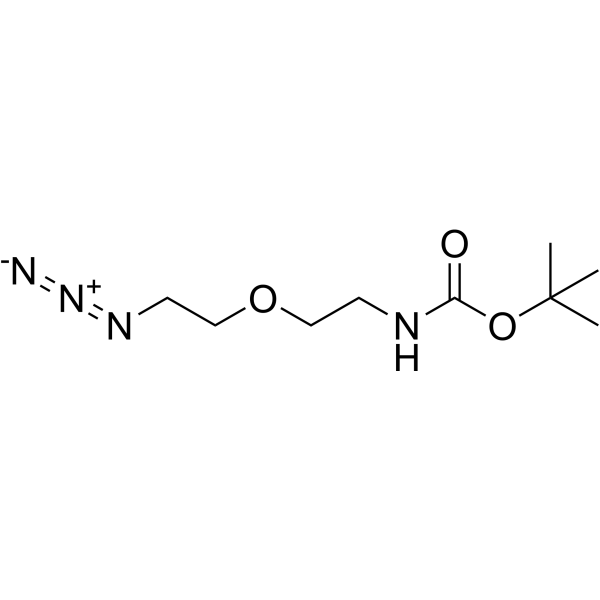
- HY-140853
-
|
|
PROTAC Linkers
|
Cancer
|
|
Azido-PEG3-CH2CO2Me is a PEG-based PROTAC linker that can be used in the synthesis of PROTACs . Azido-PEG3-CH2CO2Me is a click chemistry reagent, it contains an Azide group and can undergo copper-catalyzed azide-alkyne cycloaddition reaction (CuAAc) with molecules containing Alkyne groups. It can also undergo strain-promoted alkyne-azide cycloaddition (SPAAC) reactions with molecules containing DBCO or BCN groups.
|
-
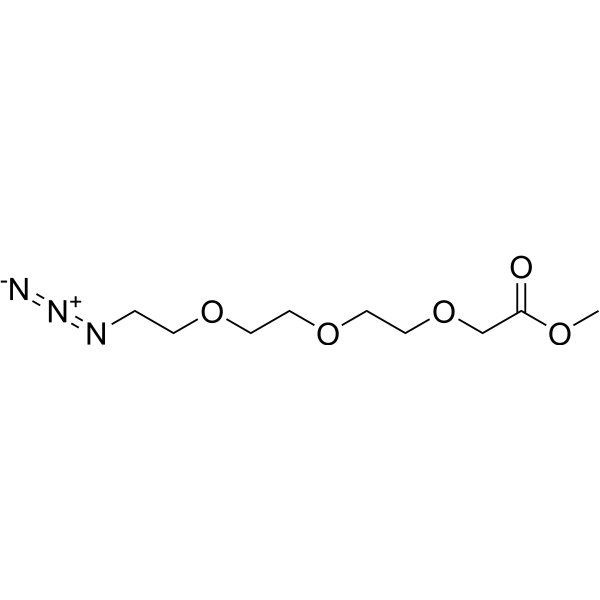
- HY-140561
-
|
|
PROTAC Linkers
|
Cancer
|
|
N-(Azido-PEG3)-N-Boc-PEG3-NHS ester is a PEG-based PROTAC linker that can be used in the synthesis of PROTACs . N-(Azido-PEG3)-N-Boc-PEG3-NHS ester is a click chemistry reagent, it contains an Azide group and can undergo copper-catalyzed azide-alkyne cycloaddition reaction (CuAAc) with molecules containing Alkyne groups. It can also undergo strain-promoted alkyne-azide cycloaddition (SPAAC) reactions with molecules containing DBCO or BCN groups.
|
-
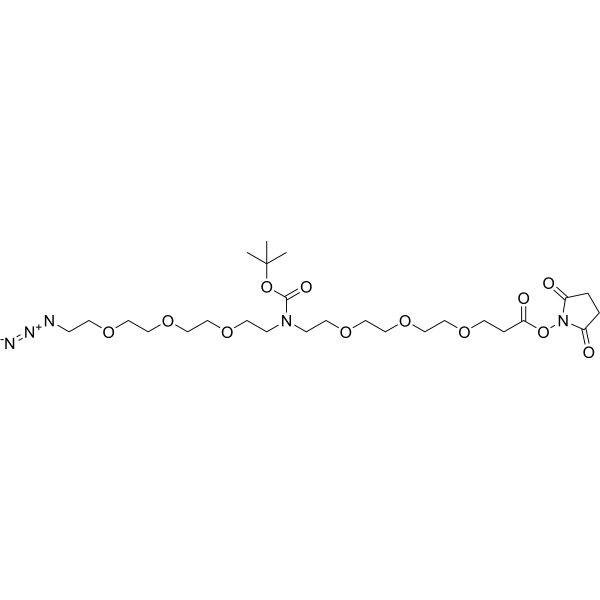
- HY-140868
-
|
|
PROTAC Linkers
|
Cancer
|
|
N-(Azido-PEG3)-N-bis(PEG3-Boc) is a PEG-based PROTAC linker that can be used in the synthesis of PROTACs . N-(Azido-PEG3)-N-bis(PEG3-Boc) is a click chemistry reagent, it contains an Azide group and can undergo copper-catalyzed azide-alkyne cycloaddition reaction (CuAAc) with molecules containing Alkyne groups. It can also undergo strain-promoted alkyne-azide cycloaddition (SPAAC) reactions with molecules containing DBCO or BCN groups.
|
-
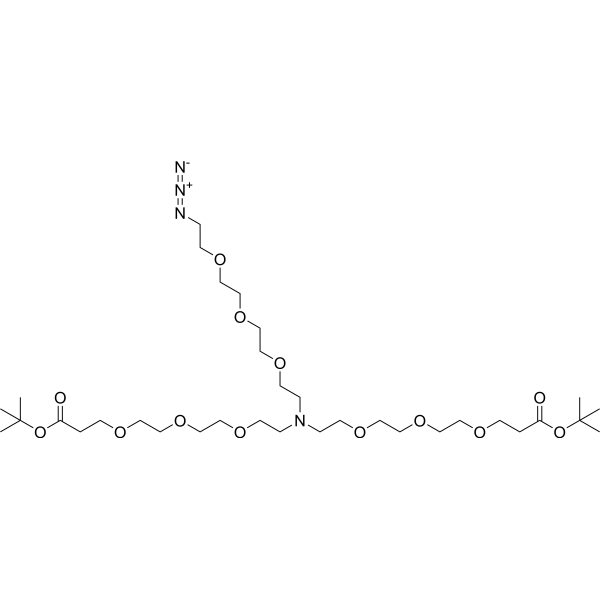
- HY-140564
-
|
|
PROTAC Linkers
|
Cancer
|
|
N-(Azido-PEG3)-N-Boc-PEG3-t-butyl ester is a PEG-based PROTAC linker that can be used in the synthesis of PROTACs . N-(Azido-PEG3)-N-Boc-PEG3-t-butyl ester is a click chemistry reagent, it contains an Azide group and can undergo copper-catalyzed azide-alkyne cycloaddition reaction (CuAAc) with molecules containing Alkyne groups. It can also undergo strain-promoted alkyne-azide cycloaddition (SPAAC) reactions with molecules containing DBCO or BCN groups.
|
-
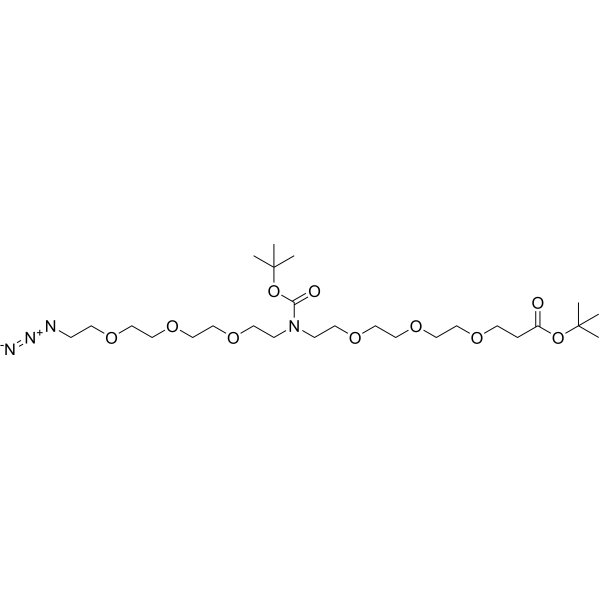
- HY-D1444
-
|
|
Fluorescent Dye
Bacterial
|
Infection
|
|
Propidium monoazide is a cell-impermeant photoreactive DNA-binding dye that preferentially binds to dsDNA. Propidium monoazide (PMA) prevents DNA from dead bacteria from being amplified during the PCR. PMA-PCR enhanced both the specificity and the sensitivity of PCR . Propidium monoazide is a click chemistry reagent, it contains an Azide group and can undergo copper-catalyzed azide-alkyne cycloaddition reaction (CuAAc) with molecules containing Alkyne groups. It can also undergo strain-promoted alkyne-azide cycloaddition (SPAAC) reactions with molecules containing DBCO or BCN groups.
|
-
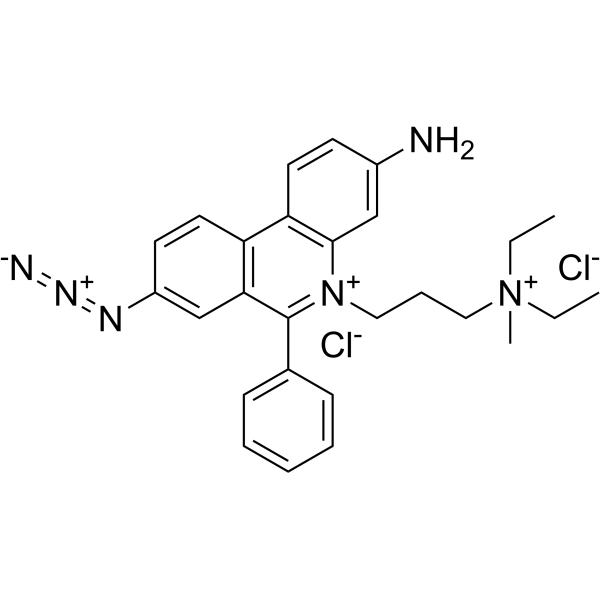
- HY-139999A
-
|
|
E3 Ligase Ligand-Linker Conjugates
|
Cancer
|
|
LCL-PEG3-N3 (hydrochloride) is a decoy oligonucleotide ligand for E3 ligase which can be used for developing chimeric molecules LCL-ER(dec), degrading the estrogen receptor . LCL-PEG3-N3 (hydrochloride) is a click chemistry reagent, it contains an Azide group and can undergo copper-catalyzed azide-alkyne cycloaddition reaction (CuAAc) with molecules containing Alkyne groups. It can also undergo strain-promoted alkyne-azide cycloaddition (SPAAC) reactions with molecules containing DBCO or BCN groups.
|
-
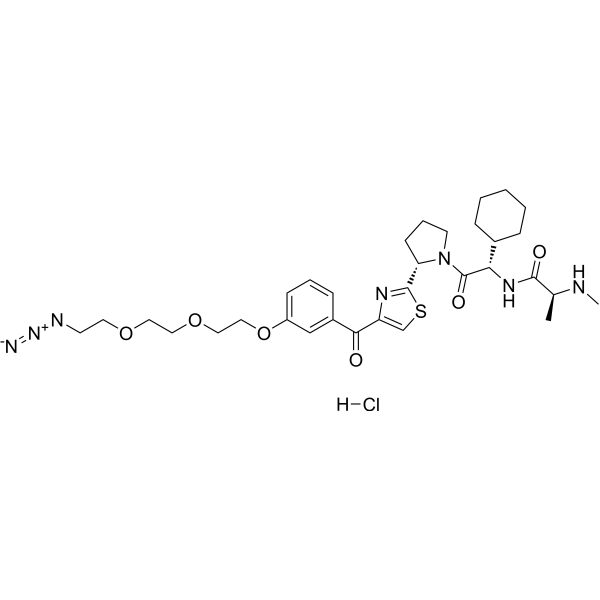
- HY-154253
-
|
5-AmdU; α-Azidothymidine
|
Nucleoside Antimetabolite/Analog
|
Cancer
|
|
5-Azidomethyl-2'-deoxyuridine (5-AmdU) is a purine nucleoside analog. 5-Azidomethyl-2'-deoxyuridine demonstrates effective radiosensitization in EMT6 tumor cells. . 5-Azidomethyl-2'-deoxyuridine is a click chemistry reagent, it contains an Azide group and can undergo copper-catalyzed azide-alkyne cycloaddition reaction (CuAAc) with molecules containing Alkyne groups. It can also undergo strain-promoted alkyne-azide cycloaddition (SPAAC) reactions with molecules containing DBCO or BCN groups.
|
-
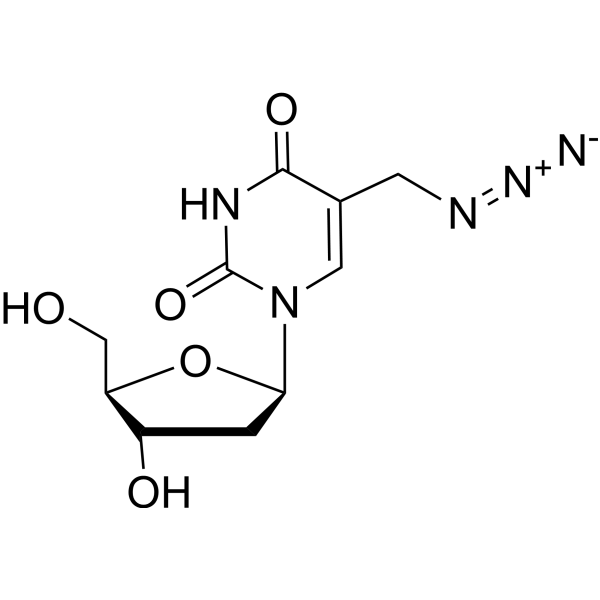
- HY-D2538
-
|
|
Fluorescent Dye
|
Others
|
|
Cy3-PEG3400-N3 is a Cy3 (HY-D0822)-azide fluorescent dye used to label for protein and nucleic acid. Cy3-PEG3400-N3 is a click chemistry reagent, it contains an Azide group and can undergo copper-catalyzed azide-alkyne cycloaddition reaction (CuAAc) with molecules containing Alkyne groups. It can also undergo strain-promoted alkyne-azide cycloaddition (SPAAC) reactions with molecules containing DBCO or BCN groups.
|
-

- HY-140869
-
|
|
PROTAC Linkers
|
Cancer
|
|
N-(Azido-PEG3)-N-bis(PEG4-Boc) is a PEG-based PROTAC linker that can be used in the synthesis of PROTACs . N-(Azido-PEG3)-N-bis(PEG4-Boc) is a click chemistry reagent, it contains an Azide group and can undergo copper-catalyzed azide-alkyne cycloaddition reaction (CuAAc) with molecules containing Alkyne groups. It can also undergo strain-promoted alkyne-azide cycloaddition (SPAAC) reactions with molecules containing DBCO or BCN groups.
|
-
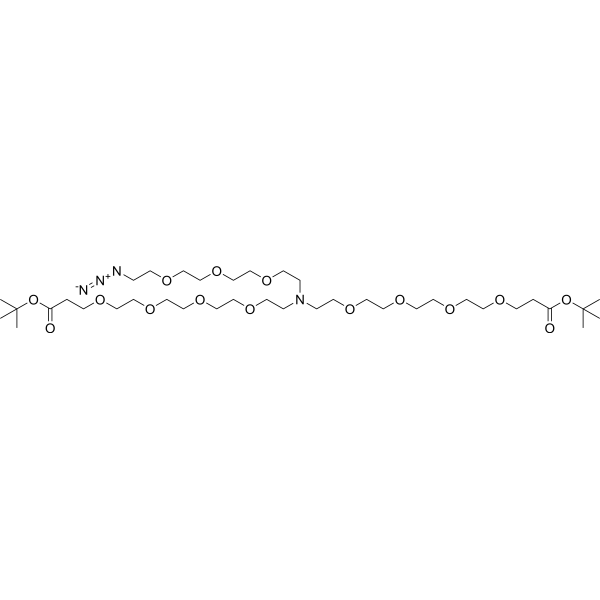
- HY-130475
-
|
|
PROTAC Linkers
ADC Linker
|
Inflammation/Immunology
Cancer
|
|
Azido-PEG9-acid is a non-cleavable 9 unit PEG ADC linker used in the synthesis of antibody-drug conjugates (ADCs). Azido-PEG9-acid is a PEG-based PROTAC linker can be used in the synthesis of PROTACs. Azido-PEG9-acid is a click chemistry reagent, it contains an Azide group and can undergo copper-catalyzed azide-alkyne cycloaddition reaction (CuAAc) with molecules containing Alkyne groups. It can also undergo strain-promoted alkyne-azide cycloaddition (SPAAC) reactions with molecules containing DBCO or BCN groups.
|
-
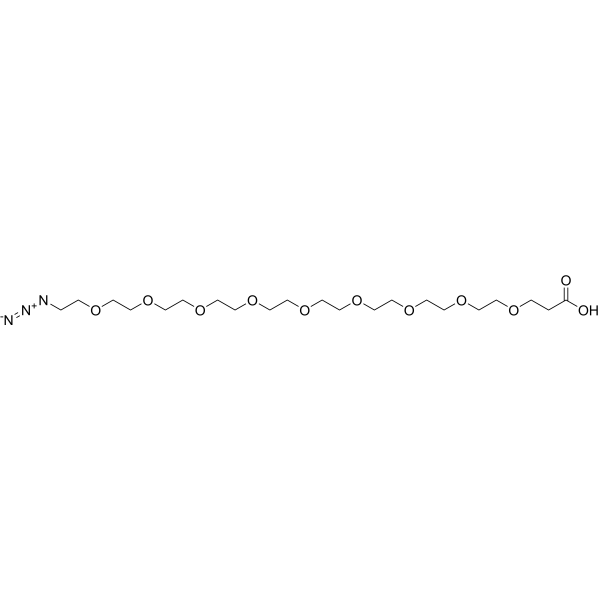
- HY-140873
-
|
|
PROTAC Linkers
|
Cancer
|
|
N-(Azido-PEG3)-N-bis(PEG1-t-butyl ester) is a PEG-based PROTAC linker that can be used in the synthesis of PROTACs . N-(Azido-PEG3)-N-bis(PEG1-t-butyl ester) is a click chemistry reagent, it contains an Azide group and can undergo copper-catalyzed azide-alkyne cycloaddition reaction (CuAAc) with molecules containing Alkyne groups. It can also undergo strain-promoted alkyne-azide cycloaddition (SPAAC) reactions with molecules containing DBCO or BCN groups.
|
-
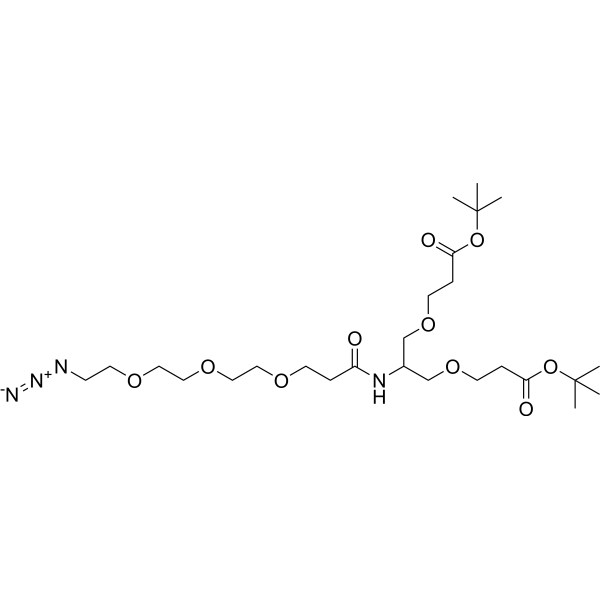
- HY-130598
-
|
|
PROTAC Linkers
|
Cancer
|
|
N-(Azido-PEG3)-N-Boc-PEG4-acid is a PEG-based PROTAC linker with a terminal azide group and is used in the synthesis of PROTACs N-(Azido-PEG3)-N-Boc-PEG4-acid is a click chemistry reagent, it contains an Azide group and can undergo copper-catalyzed azide-alkyne cycloaddition reaction (CuAAc) with molecules containing Alkyne groups. It can also undergo strain-promoted alkyne-azide cycloaddition (SPAAC) reactions with molecules containing DBCO or BCN groups.
|
-
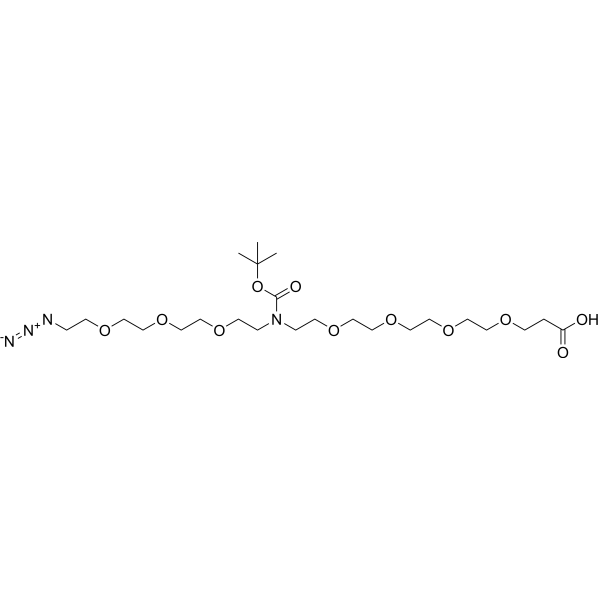
- HY-162947
-
|
|
PROTAC Linkers
|
Cancer
|
|
2-(2-(2-(6-Azidohexanamido)ethoxy)ethoxy)acetic acid is a PROTACT linker and can be used for synthesis of P60-L3-VHL (HY-162943). 2-(2-(2-(6-Azidohexanamido)ethoxy)ethoxy)acetic acid is a click chemistry reagent, it contains an Azide group and can undergo copper-catalyzed azide-alkyne cycloaddition reaction (CuAAc) with molecules containing Alkyne groups. It can also undergo strain-promoted alkyne-azide cycloaddition (SPAAC) reactions with molecules containing DBCO or BCN groups .
|
-

- HY-141248
-
|
|
PROTAC Linkers
|
Cancer
|
|
2-(Azido-PEG2-amido)-13-propandiol is a PEG-based PROTAC linker that can be used in the synthesis of PROTACs . 2-(Azido-PEG2-amido)-1,3-propandiol is a click chemistry reagent, it contains an Azide group and can undergo copper-catalyzed azide-alkyne cycloaddition reaction (CuAAc) with molecules containing Alkyne groups. It can also undergo strain-promoted alkyne-azide cycloaddition (SPAAC) reactions with molecules containing DBCO or BCN groups.
|
-
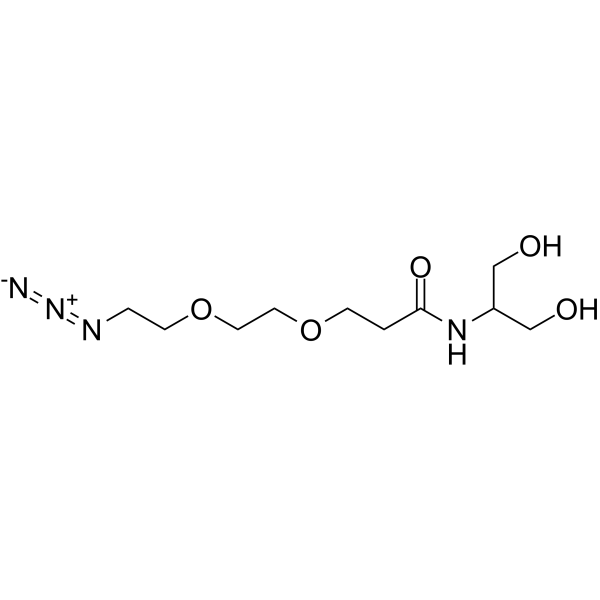
- HY-W145647
-
|
|
Biochemical Assay Reagents
|
Others
|
|
2,3,4,6-Tetra-O-acetyl-β-D-galactopyranosyl Azide is a biochemical reagent that can be used as a biological material or organic compound for life science related research. 2,3,4,6-Tetra-O-acetyl-β-D-galactopyranosyl azide is a click chemistry reagent, it contains an Azide group and can undergo copper-catalyzed azide-alkyne cycloaddition reaction (CuAAc) with molecules containing Alkyne groups. It can also undergo strain-promoted alkyne-azide cycloaddition (SPAAC) reactions with molecules containing DBCO or BCN groups.
|
-
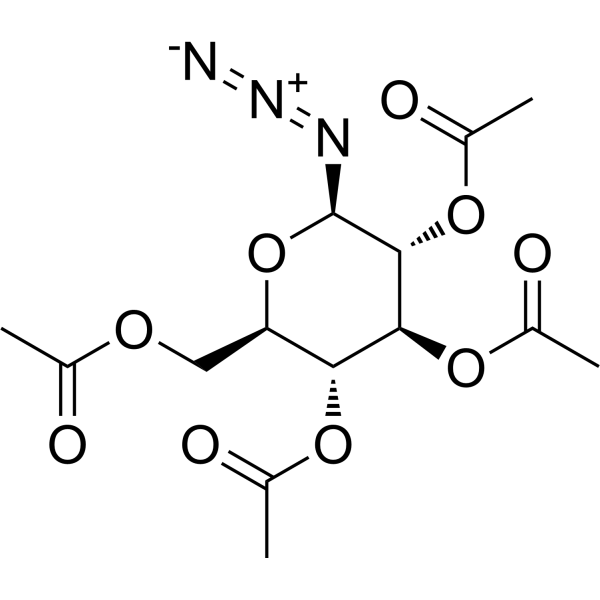
- HY-140565
-
|
|
PROTAC Linkers
|
Cancer
|
|
N-(Azido-PEG3)-N-Boc-PEG4-Boc is a PEG-based PROTAC linker that can be used in the synthesis of PROTACs . N-(Azido-PEG3)-N-Boc-PEG4-Boc is a click chemistry reagent, it contains an Azide group and can undergo copper-catalyzed azide-alkyne cycloaddition reaction (CuAAc) with molecules containing Alkyne groups. It can also undergo strain-promoted alkyne-azide cycloaddition (SPAAC) reactions with molecules containing DBCO or BCN groups.
|
-
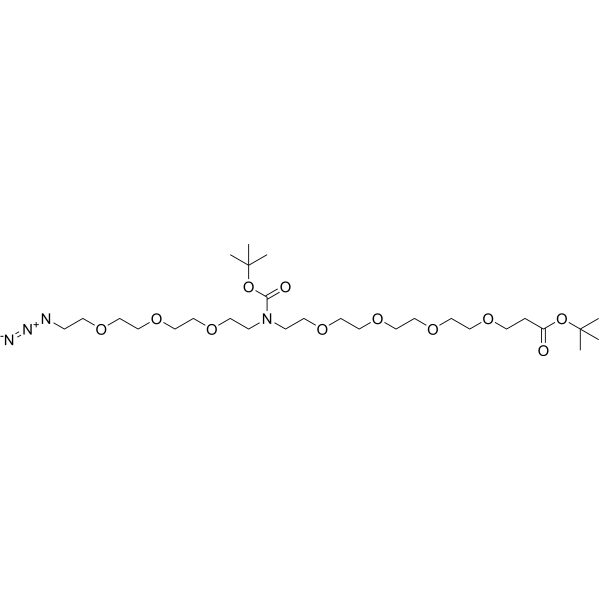
- HY-140866
-
|
|
PROTAC Linkers
|
Cancer
|
|
N-(Azido-PEG4)-N-bis(PEG4-NHS ester) is a PEG-based PROTAC linker that can be used in the synthesis of PROTACs . N-(Azido-PEG4)-N-bis(PEG4-NHS ester) is a click chemistry reagent, it contains an Azide group and can undergo copper-catalyzed azide-alkyne cycloaddition reaction (CuAAc) with molecules containing Alkyne groups. It can also undergo strain-promoted alkyne-azide cycloaddition (SPAAC) reactions with molecules containing DBCO or BCN groups.
|
-
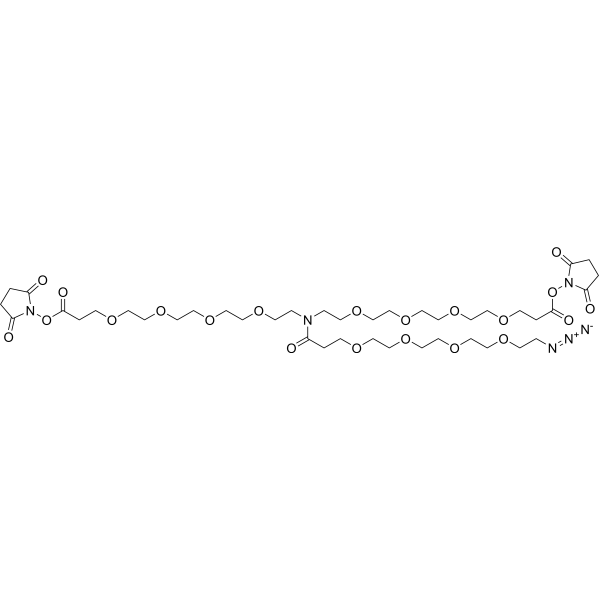
- HY-140562
-
|
|
PROTAC Linkers
|
Cancer
|
|
N-(Azido-PEG2)-N-Boc-PEG3-Boc is a PEG-based PROTAC linker that can be used in the synthesis of PROTACs . N-(Azido-PEG2)-N-Boc-PEG3-Boc is a click chemistry reagent, it contains an Azide group and can undergo copper-catalyzed azide-alkyne cycloaddition reaction (CuAAc) with molecules containing Alkyne groups. It can also undergo strain-promoted alkyne-azide cycloaddition (SPAAC) reactions with molecules containing DBCO or BCN groups.
|
-
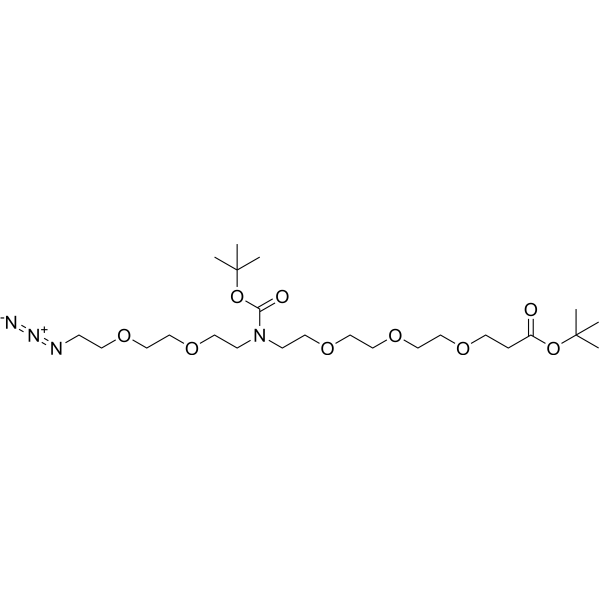
- HY-140554
-
|
|
PROTAC Linkers
|
Cancer
|
|
N-Boc-N-bis(C2-PEG1-azide) is an alkyl/ether-based PROTAC linker that can be used in the synthesis of PROTACs . N-Boc-N-bis(C2-PEG1-azide) is a click chemistry reagent, it contains an Azide group and can undergo copper-catalyzed azide-alkyne cycloaddition reaction (CuAAc) with molecules containing Alkyne groups. It can also undergo strain-promoted alkyne-azide cycloaddition (SPAAC) reactions with molecules containing DBCO or BCN groups.
|
-
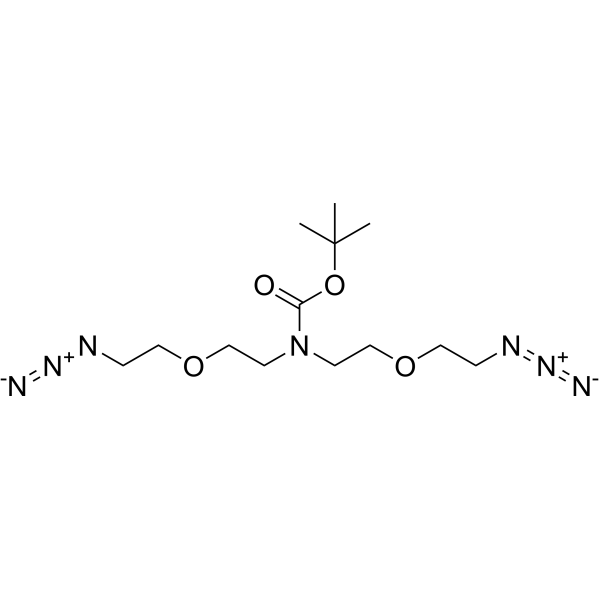
- HY-103476
-
|
|
GABA Receptor
|
Neurological Disease
|
|
Ro15-4513, imidazobenzodiazepinone derivative, is a partial inverse agonist of benzodiazepine receptor (BZR) . Ro15-4513 is a potent ethanol antagonist . Ro15-4513 has anti-anxiety effect . Ro15-4513 is a click chemistry reagent, it contains an Azide group and can undergo copper-catalyzed azide-alkyne cycloaddition reaction (CuAAc) with molecules containing Alkyne groups. It can also undergo strain-promoted alkyne-azide cycloaddition (SPAAC) reactions with molecules containing DBCO or BCN groups.
|
-
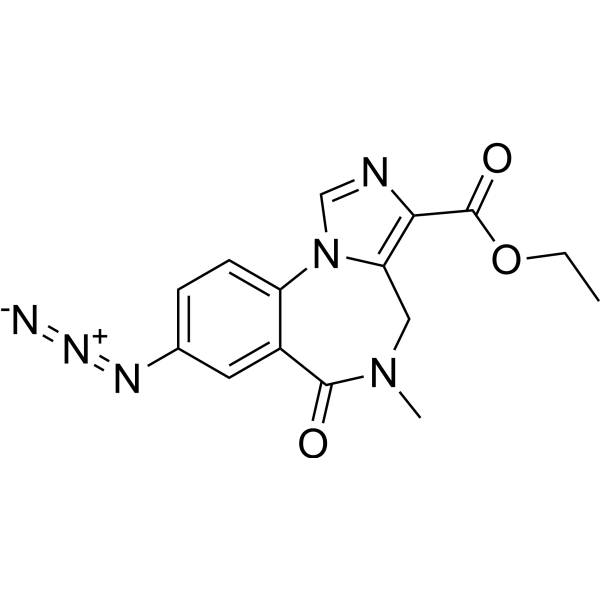
- HY-D2536
-
|
|
Fluorescent Dye
|
Others
|
|
Cy5-PEG10000-N3 is a Cy5 (HY-D0821)-azide fluorescent dye used to label for protein and nucleic acid. Cy5-PEG10000-N3 is a click chemistry reagent, it contains an Azide group and can undergo copper-catalyzed azide-alkyne cycloaddition reaction (CuAAc) with molecules containing Alkyne groups. It can also undergo strain-promoted alkyne-azide cycloaddition (SPAAC) reactions with molecules containing DBCO or BCN groups.
|
-

- HY-140872
-
|
|
PROTAC Linkers
|
Cancer
|
|
N-(Boc-PEG2)-N-bis(PEG3-azide) is a PEG-based PROTAC linker that can be used in the synthesis of PROTACs . N-(Boc-PEG2)-N-bis(PEG3-azide) is a click chemistry reagent, it contains an Azide group and can undergo copper-catalyzed azide-alkyne cycloaddition reaction (CuAAc) with molecules containing Alkyne groups. It can also undergo strain-promoted alkyne-azide cycloaddition (SPAAC) reactions with molecules containing DBCO or BCN groups.
|
-
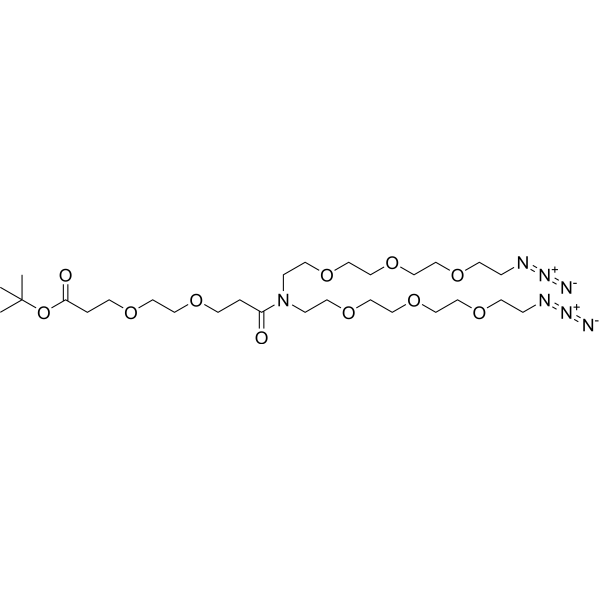
- HY-140559
-
|
|
PROTAC Linkers
|
Cancer
|
|
N-(Azido-PEG2)-N-Boc-PEG3-NHS ester is a PEG-based PROTAC linker that can be used in the synthesis of PROTACs . N-(Azido-PEG2)-N-Boc-PEG3-NHS ester is a click chemistry reagent, it contains an Azide group and can undergo copper-catalyzed azide-alkyne cycloaddition reaction (CuAAc) with molecules containing Alkyne groups. It can also undergo strain-promoted alkyne-azide cycloaddition (SPAAC) reactions with molecules containing DBCO or BCN groups.
|
-
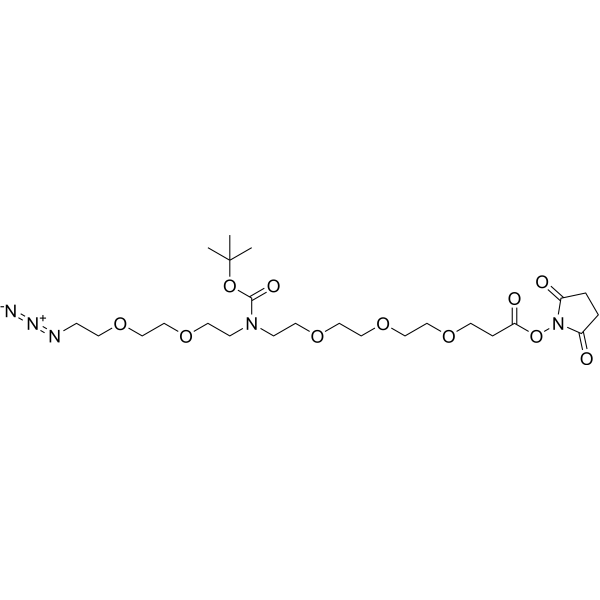
- HY-140567
-
|
|
PROTAC Linkers
|
Cancer
|
|
N-(Azido-PEG4)-N-Boc-PEG4-Boc is a PEG-based PROTAC linker that can be used in the synthesis of PROTACs . N-(Azido-PEG4)-N-Boc-PEG4-Boc is a click chemistry reagent, it contains an Azide group and can undergo copper-catalyzed azide-alkyne cycloaddition reaction (CuAAc) with molecules containing Alkyne groups. It can also undergo strain-promoted alkyne-azide cycloaddition (SPAAC) reactions with molecules containing DBCO or BCN groups.
|
-
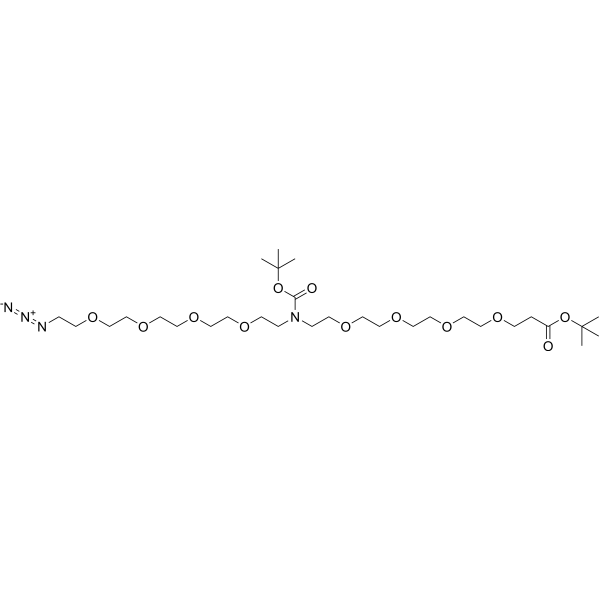
- HY-D2533
-
|
|
Fluorescent Dye
|
Others
|
|
Cy5-PEG2000-N3 is a Cy5 (HY-D0821)-azide fluorescent dye used to label for protein and nucleic acid. Cy5-PEG2000-N3 is a click chemistry reagent, it contains an Azide group and can undergo copper-catalyzed azide-alkyne cycloaddition reaction (CuAAc) with molecules containing Alkyne groups. It can also undergo strain-promoted alkyne-azide cycloaddition (SPAAC) reactions with molecules containing DBCO or BCN groups.
|
-

- HY-140560
-
|
|
PROTAC Linkers
|
Cancer
|
|
N-(Azido-PEG2)-N-Boc-PEG4-NHS ester is a PEG-based PROTAC linker that can be used in the synthesis of PROTACs . N-(Azido-PEG2)-N-Boc-PEG4-NHS ester is a click chemistry reagent, it contains an Azide group and can undergo copper-catalyzed azide-alkyne cycloaddition reaction (CuAAc) with molecules containing Alkyne groups. It can also undergo strain-promoted alkyne-azide cycloaddition (SPAAC) reactions with molecules containing DBCO or BCN groups.
|
-
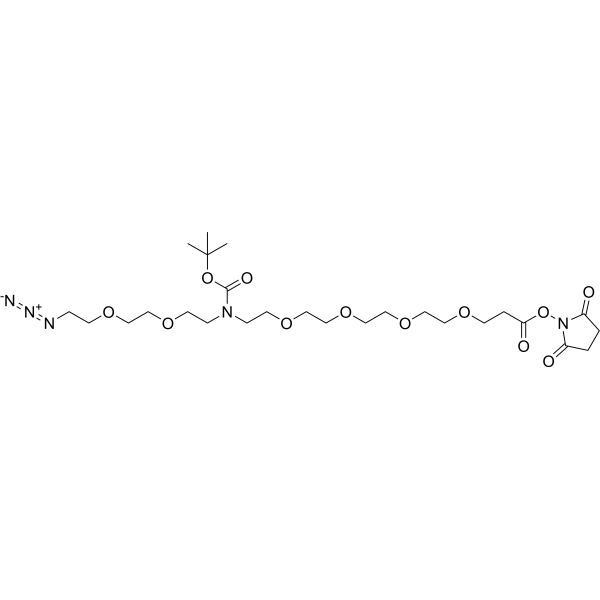
- HY-D2539
-
|
|
Fluorescent Dye
|
Others
|
|
Cy3-PEG5000-N3 is a Cy3 (HY-D0822)-azide fluorescent dye used to label for protein and nucleic acid. Cy3-PEG5000-N3 is a click chemistry reagent, it contains an Azide group and can undergo copper-catalyzed azide-alkyne cycloaddition reaction (CuAAc) with molecules containing Alkyne groups. It can also undergo strain-promoted alkyne-azide cycloaddition (SPAAC) reactions with molecules containing DBCO or BCN groups.
|
-

- HY-D2590
-
|
|
Fluorescent Dye
|
Others
|
|
Cy7.5 PEG-N3 is a CY7.5 (HY-D0926)-azide fluorescent dye used to label for protein and nucleic acid. Cy7.5 PEG-N3 is a click chemistry reagent, it contains an Azide group and can undergo copper-catalyzed azide-alkyne cycloaddition reaction (CuAAc) with molecules containing Alkyne groups. It can also undergo strain-promoted alkyne-azide cycloaddition (SPAAC) reactions with molecules containing DBCO or BCN groups (Ex/Em = 770/820 nm).
|
-

- HY-141061
-
|
|
PROTAC Linkers
|
Cancer
|
|
N-PEG3-N'-(azide-PEG3)-Cy5 (chloride) is a PEG-based PROTAC linker that can be used in the synthesis of PROTACs . N-PEG3-N'-(azide-PEG3)-Cy5 is a click chemistry reagent, it contains an Azide group and can undergo copper-catalyzed azide-alkyne cycloaddition reaction (CuAAc) with molecules containing Alkyne groups. It can also undergo strain-promoted alkyne-azide cycloaddition (SPAAC) reactions with molecules containing DBCO or BCN groups.
|
-
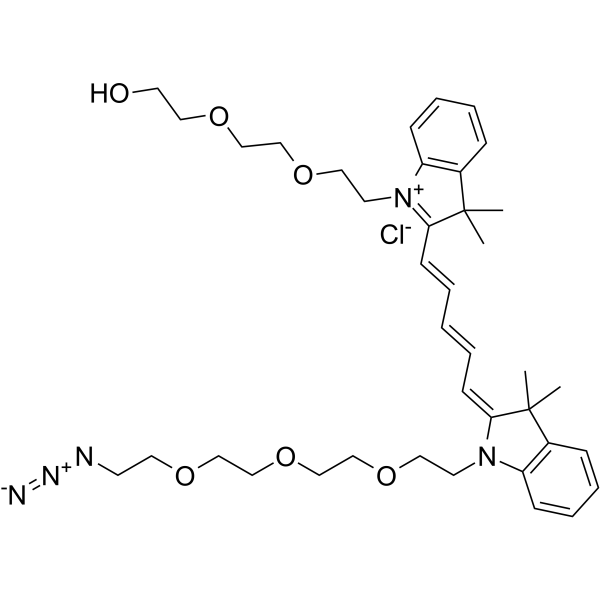
- HY-140522
-
|
|
PROTAC Linkers
|
Cancer
|
|
2-Azido-PEG3-amido-13-biscarboxylethoxypropane is a PEG-based PROTAC linker that can be used in the synthesis of PROTACs . 2-(Azido-PEG3-amido)-1,3-bis(carboxylethoxy)propane is a click chemistry reagent, it contains an Azide group and can undergo copper-catalyzed azide-alkyne cycloaddition reaction (CuAAc) with molecules containing Alkyne groups. It can also undergo strain-promoted alkyne-azide cycloaddition (SPAAC) reactions with molecules containing DBCO or BCN groups.
|
-
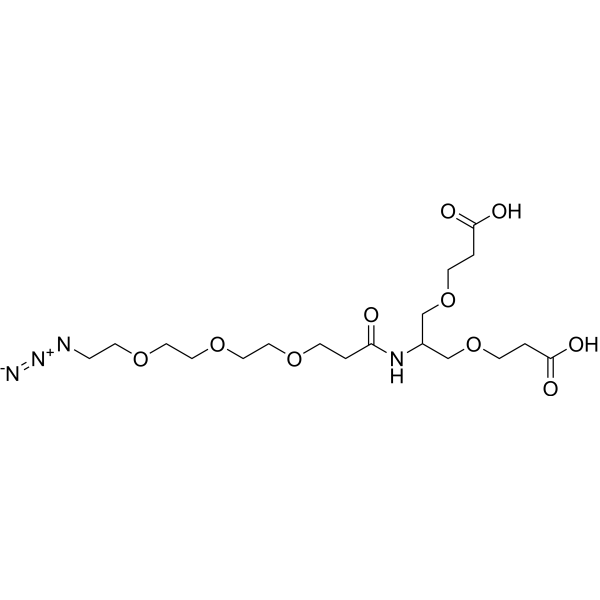
- HY-148556
-
|
|
E3 Ligase Ligand-Linker Conjugates
Autophagy
Apoptosis
|
Cancer
|
|
Thalidomide-O-C6-azide is a synthesized E3 ligase ligand-linker conjugate that incorporates the Thalidomide (HY-14658) based cereblon ligand and a linker used in PROTAC technology . Thalidomide-O-C6-azide is a click chemistry reagent, it contains an Azide group and can undergo copper-catalyzed azide-alkyne cycloaddition reaction (CuAAc) with molecules containing Alkyne groups. It can also undergo strain-promoted alkyne-azide cycloaddition (SPAAC) reactions with molecules containing DBCO or BCN groups.
|
-
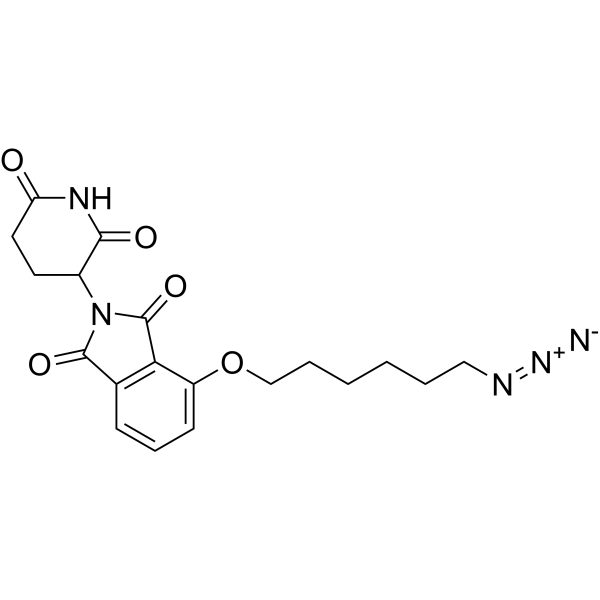
- HY-140921
-
|
|
PROTAC Linkers
|
Cancer
|
|
Biotin-PEG4-amino-t-Bu-DADPS-C6-azide is a PEG-based PROTAC linker that can be used in the synthesis of PROTACs . Biotin-PEG4-amino-t-Bu-DADPS-C6-azide is a click chemistry reagent, it contains an Azide group and can undergo copper-catalyzed azide-alkyne cycloaddition reaction (CuAAc) with molecules containing Alkyne groups. It can also undergo strain-promoted alkyne-azide cycloaddition (SPAAC) reactions with molecules containing DBCO or BCN groups.
|
-
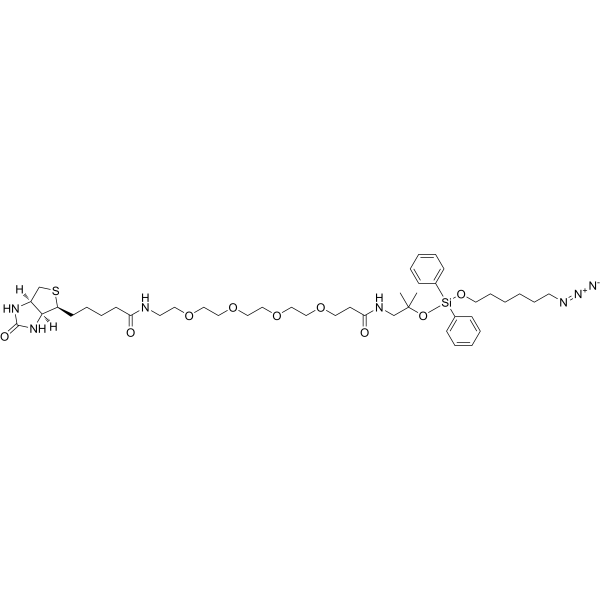
- HY-140871
-
|
|
PROTAC Linkers
|
Cancer
|
|
N-(Boc-PEG3)-N-bis(PEG3-azide) is a PEG-based PROTAC linker that can be used in the synthesis of PROTACs . N-(Boc-PEG3)-N-bis(PEG3-azide) is a click chemistry reagent, it contains an Azide group and can undergo copper-catalyzed azide-alkyne cycloaddition reaction (CuAAc) with molecules containing Alkyne groups. It can also undergo strain-promoted alkyne-azide cycloaddition (SPAAC) reactions with molecules containing DBCO or BCN groups.
|
-
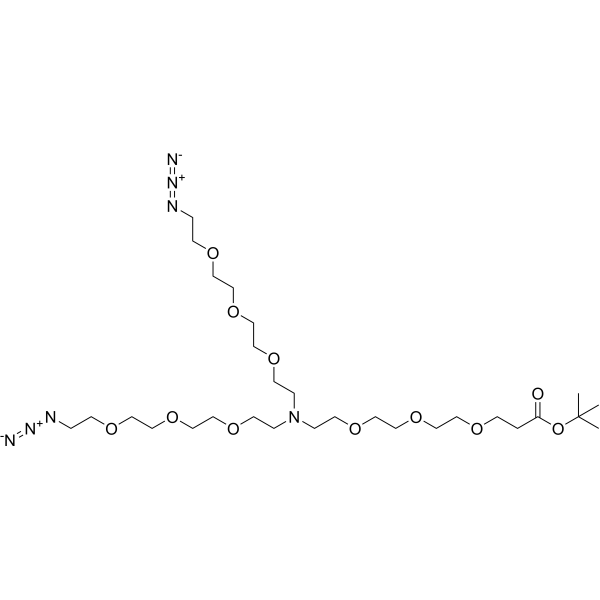
- HY-140634
-
|
|
ADC Linker
|
Cancer
|
|
Ald-CH2-PEG5-azide is a non-cleavable 5 unit PEG ADC linker used in the synthesis of antibody-drug conjugates (ADCs) . Ald-CH2-PEG5-azide is a click chemistry reagent, it contains an Azide group and can undergo copper-catalyzed azide-alkyne cycloaddition reaction (CuAAc) with molecules containing Alkyne groups. It can also undergo strain-promoted alkyne-azide cycloaddition (SPAAC) reactions with molecules containing DBCO or BCN groups.
|
-
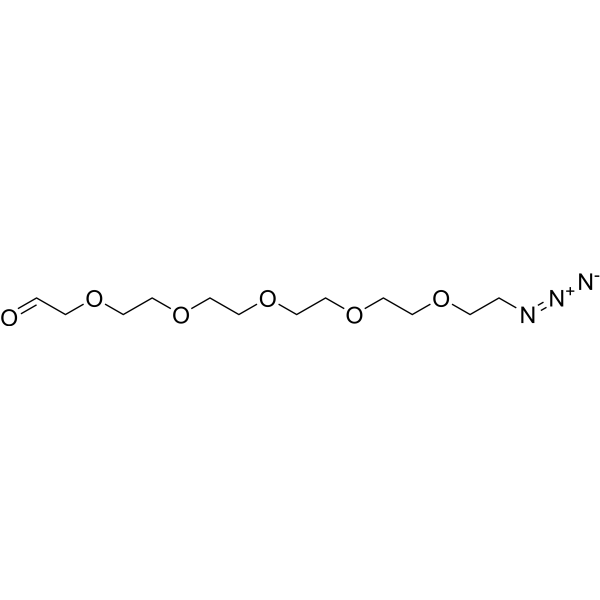
- HY-140133
-
|
|
ADC Linker
|
Cancer
|
|
PC-Biotin-PEG4-PEG3-azide is a cleavable 7 unit PEG ADC linker used in the synthesis of antibody-drug conjugates (ADCs) . PC-Biotin-PEG4-PEG3-azide is a click chemistry reagent, it contains an Azide group and can undergo copper-catalyzed azide-alkyne cycloaddition reaction (CuAAc) with molecules containing Alkyne groups. It can also undergo strain-promoted alkyne-azide cycloaddition (SPAAC) reactions with molecules containing DBCO or BCN groups.
|
-
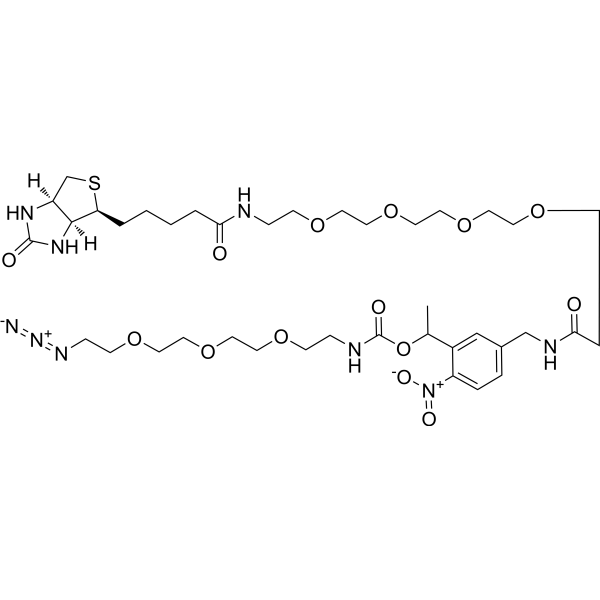
- HY-140581
-
|
|
PROTAC Linkers
|
Cancer
|
|
N-(Azido-PEG3)-N-Biotin-PEG4-methyl ester is a PEG-based PROTAC linker that can be used in the synthesis of PROTACs . N-(Azido-PEG3)-N-Biotin-PEG4-methyl ester is a click chemistry reagent, it contains an Azide group and can undergo copper-catalyzed azide-alkyne cycloaddition reaction (CuAAc) with molecules containing Alkyne groups. It can also undergo strain-promoted alkyne-azide cycloaddition (SPAAC) reactions with molecules containing DBCO or BCN groups.
|
-
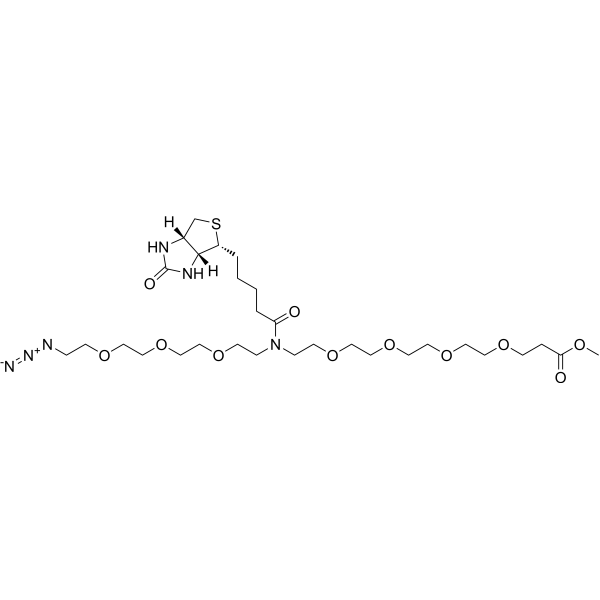
- HY-136318
-
|
|
ADC Linker
|
Cancer
|
|
β-D-tetraacetylgalactopyranoside-PEG1-N3 is a cleavable 1 unit PEG ADC linker used in the synthesis of antibody-drug conjugates (ADCs) . β-D-tetraacetylgalactopyranoside-PEG1-N3 is a click chemistry reagent, it contains an Azide group and can undergo copper-catalyzed azide-alkyne cycloaddition reaction (CuAAc) with molecules containing Alkyne groups. It can also undergo strain-promoted alkyne-azide cycloaddition (SPAAC) reactions with molecules containing DBCO or BCN groups.
|
-
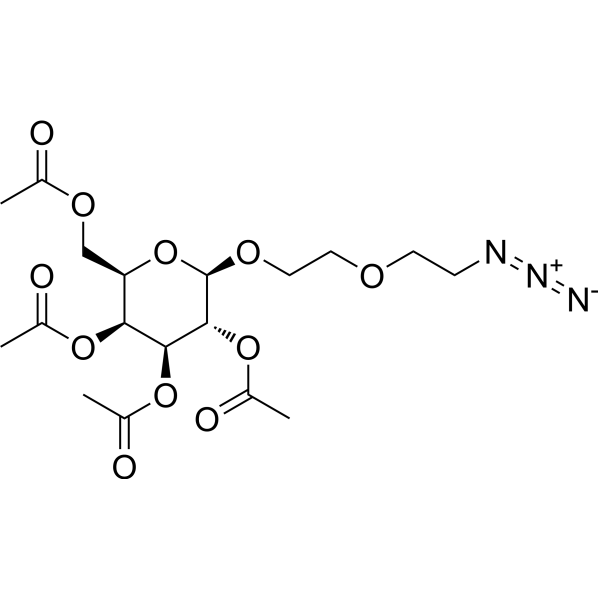
- HY-140870
-
|
|
PROTAC Linkers
|
Cancer
|
|
N-(Azido-PEG4)-N-bis(PEG4-t-butyl ester) is a PEG-based PROTAC linker that can be used in the synthesis of PROTACs . N-(Azido-PEG4)-N-bis(PEG4-t-butyl ester) is a click chemistry reagent, it contains an Azide group and can undergo copper-catalyzed azide-alkyne cycloaddition reaction (CuAAc) with molecules containing Alkyne groups. It can also undergo strain-promoted alkyne-azide cycloaddition (SPAAC) reactions with molecules containing DBCO or BCN groups.
|
-
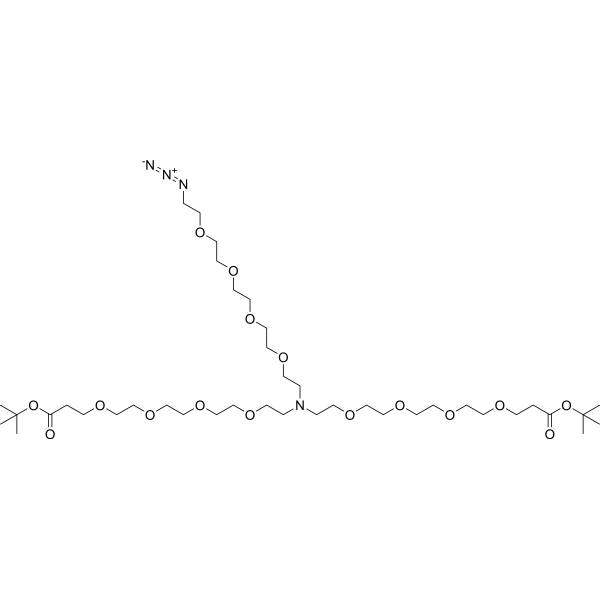
- HY-D2535
-
|
|
Fluorescent Dye
|
Others
|
|
Cy5-PEG5000-N3 is a Cy5 (HY-D0821)-azide fluorescent dye used to label for protein and nucleic acid. Cy5-PEG5000-N3 is a click chemistry reagent, it contains an Azide group and can undergo copper-catalyzed azide-alkyne cycloaddition reaction (CuAAc) with molecules containing Alkyne groups. It can also undergo strain-promoted alkyne-azide cycloaddition (SPAAC) reactions with molecules containing DBCO or BCN groups.
|
-

- HY-138474
-
|
|
PROTAC Linkers
|
Cancer
|
|
Boc-PEG1-PPG2-C2-azido is a PEG-based PROTAC linker that can be used in the synthesis of PROTACs . Boc-PEG1-PPG2-C2-azido is a click chemistry reagent, it contains an Azide group and can undergo copper-catalyzed azide-alkyne cycloaddition reaction (CuAAc) with molecules containing Alkyne groups. It can also undergo strain-promoted alkyne-azide cycloaddition (SPAAC) reactions with molecules containing DBCO or BCN groups.
|
-
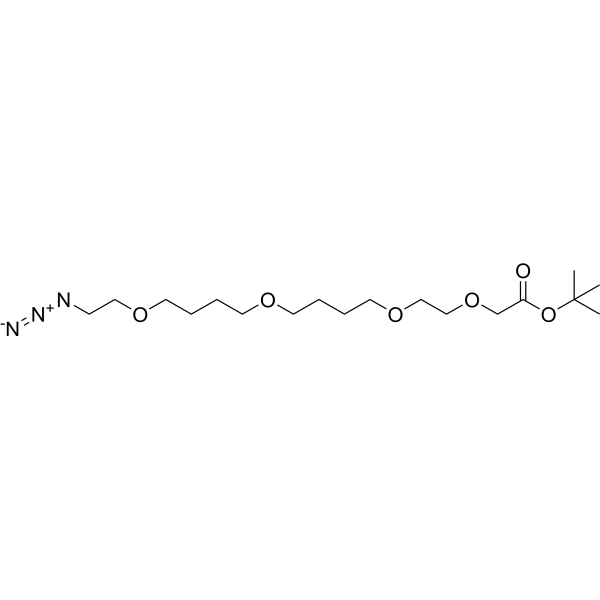
- HY-134318B
-
|
|
DNA/RNA Synthesis
|
Others
|
|
8-Azido-ADP (disodium) is a covalent-binding inhibitor of mitochondrial adenine nucleotide translocation. 8-Azido-ADP (disodium) causes irreversible inhibition of adenine nucleotide exchange in a light-dependent reaction. 8-Azido-ADP (disodium) inhibits the normal state 4 → 3 transitions of mitochondrial respiration induced by ADP . 8-Azido-ADP (disodium) is a click chemistry reagent, it contains an Azide group and can undergo copper-catalyzed azide-alkyne cycloaddition reaction (CuAAc) with molecules containing Alkyne groups. It can also undergo strain-promoted alkyne-azide cycloaddition (SPAAC) reactions with molecules containing DBCO or BCN groups.
|
-
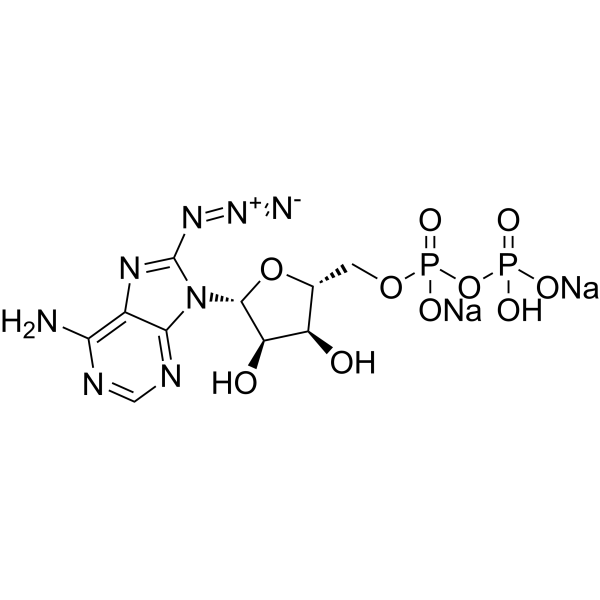
- HY-140313
-
|
|
ADC Linker
|
Cancer
|
|
Methyltetrazine-DBCO is a non-cleavable ADC linker used in the synthesis of antibody-drug conjugates (ADCs) . Methyltetrazine-DBCO is a click chemistry reagent, it contains a DBCO group that can undergo strain-promoted alkyne-azide cycloaddition (SPAAC) with molecules containing Azide groups. Methyltetrazine-DBCO also contains a Tetrazine group that can undergo an inverse electron demand Diels-Alder reaction (iEDDA) with molecules containing TCO groups.
|
-
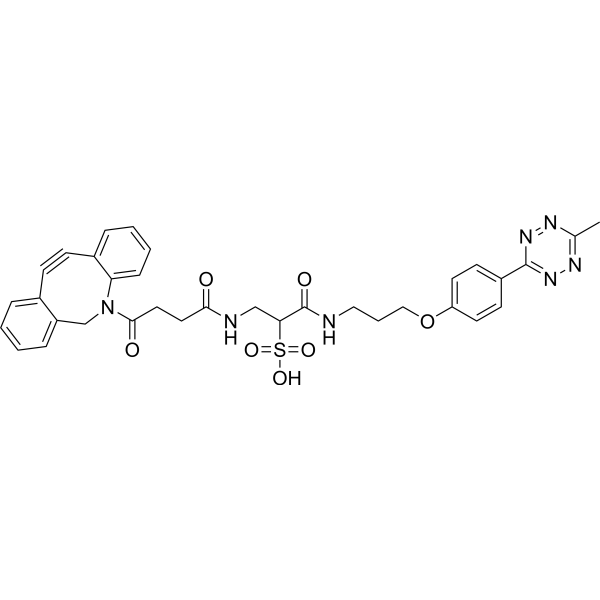
- HY-133438
-
|
|
PROTAC Linkers
|
Cancer
|
|
BCN-PEG4-hydrazide is a PEG-based PROTAC linker that can be used in the synthesis of PROTACs . BCN-PEG4-hydrazide is a click chemistry reagent, it contains an Azide group and can undergo copper-catalyzed azide-alkyne cycloaddition reaction (CuAAc) with molecules containing Alkyne groups. Strain-promoted alkyne-azide cycloaddition (SPAAC) can also occur with molecules containing DBCO or BCN groups.
|
-
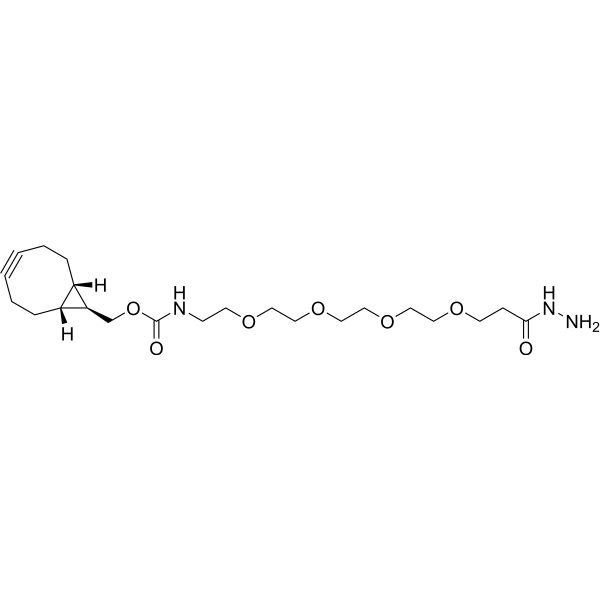
- HY-174894
-
|
|
Biochemical Assay Reagents
|
Others
|
|
Azido-PEG11-NHS ester is a PEG derivative that can be used for drug delivery and other research. Azido-PEG11-NHS ester is a click chemistry reagent. It contains an azide group and can undergo copper-catalyzed azide-alkyne cycloaddition reaction (CuAAc) with molecules containing an alkyne group. It can also undergo ring strain driven alkyne-azide cycloaddition (SPAAC) with molecules containing DBCO or BCN groups .
|
-

- HY-140313A
-
|
|
ADC Linker
|
Cancer
|
|
Methyltetrazine-DBCO TEA is a non-cleavable ADC linker used in the synthesis of antibody-drug conjugates (ADCs). Methyltetrazine-DBCO TEA is a click chemistry reagent, it contains a DBCO group that can undergo strain-promoted alkyne-azide cycloaddition (SPAAC) with molecules containing Azide groups. Methyltetrazine-DBCO TEA also contains a Tetrazine group that can undergo an inverse electron demand Diels-Alder reaction (iEDDA) with molecules containing TCO groups .
|
-

- HY-174922
-
|
|
Biochemical Assay Reagents
|
Others
|
|
Azido-PEG24-Tos is a PEG derivative that can be used for drug delivery and other research. Azido-PEG24-Tos is a click chemistry reagent. It contains an azide group and can undergo copper-catalyzed azide-alkyne cycloaddition reaction (CuAAc) with molecules containing an alkyne group. It can also undergo ring strain driven alkyne-azide cycloaddition (SPAAC) with molecules containing DBCO or BCN groups.
|
-

- HY-152870
-
|
|
Nucleoside Antimetabolite/Analog
|
Others
|
|
2’-O-(2-Azidoethyl)adenosine is a purine nucleoside analogue. Purine nucleoside analogs have broad antitumor activity targeting indolent lymphoid malignancies. Anticancer mechanisms in this process rely on inhibition of DNA synthesis, induction of apoptosis, etc . 2’-O-(2-Azidoethyl)adenosine is a click chemistry reagent, it contains an Azide group and can undergo copper-catalyzed azide-alkyne cycloaddition reaction (CuAAc) with molecules containing Alkyne groups. It can also undergo strain-promoted alkyne-azide cycloaddition (SPAAC) reactions with molecules containing DBCO or BCN groups.
|
-
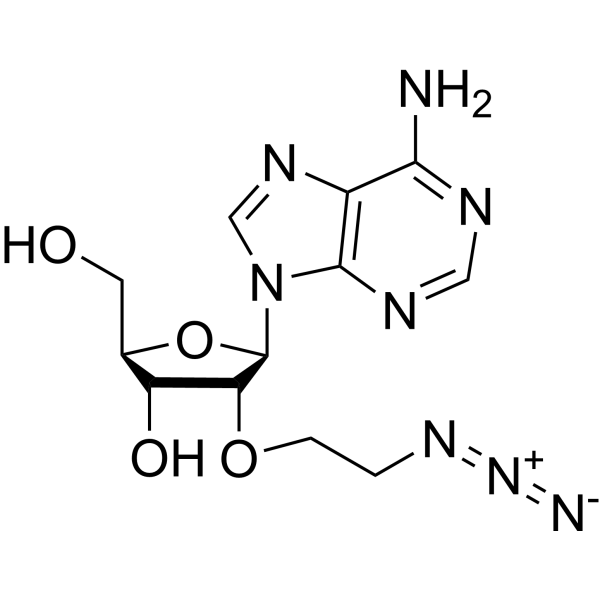
- HY-D2561
-
|
|
Fluorescent Dye
|
Others
|
|
Cy5.5-PEG3400-N3 is a Cy5.5 (HY-D0924)-azide fluorescent dye used to label for protein and nucleic acid. Cy5.5-PEG3400-N3 is a click chemistry reagent, it contains an Azide group and can undergo copper-catalyzed azide-alkyne cycloaddition reaction (CuAAc) with molecules containing Alkyne groups. It can also undergo strain-promoted alkyne-azide cycloaddition (SPAAC) reactions with molecules containing DBCO or BCN groups.
|
-

- HY-136288
-
|
|
Drug-Linker Conjugates for ADC
|
Cancer
|
|
Azide-PEG4-VC-PAB-Doxorubicin is a agent-linker conjugate composed of a cytotoxic anthracycline antibiotic Doxorubicin and a linker Azide-PEG4-VC-PAB to make antibody agent conjugate (ADC) . Azide-PEG4-VC-PAB-Doxorubicin is a click chemistry reagent, it contains an Azide group and can undergo copper-catalyzed azide-alkyne cycloaddition reaction (CuAAc) with molecules containing Alkyne groups. It can also undergo strain-promoted alkyne-azide cycloaddition (SPAAC) reactions with molecules containing DBCO or BCN groups.
|
-
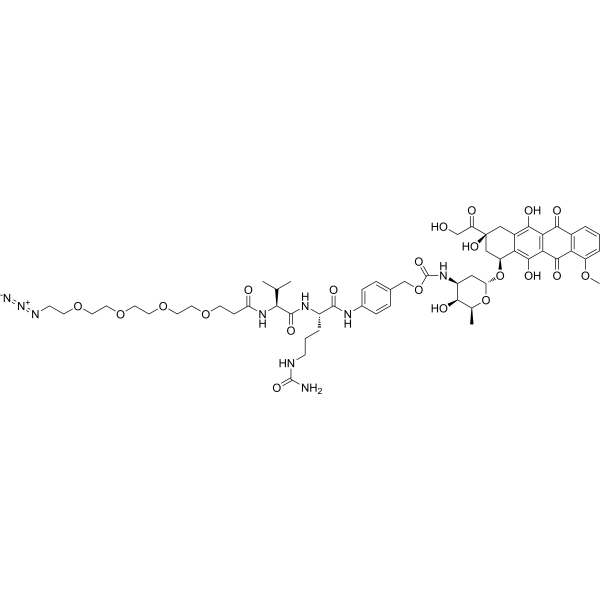
- HY-141048
-
|
|
PROTAC Linkers
|
Cancer
|
|
N-(Azide-PEG3)-N'-(PEG4-NHS ester)-Cy5 is a PEG-based PROTAC linker that can be used in the synthesis of PROTACs . N-(Azide-PEG3)-N'-(PEG4-NHS ester)-Cy5 is a click chemistry reagent, it contains an Azide group and can undergo copper-catalyzed azide-alkyne cycloaddition reaction (CuAAc) with molecules containing Alkyne groups. It can also undergo strain-promoted alkyne-azide cycloaddition (SPAAC) reactions with molecules containing DBCO or BCN groups.
|
-
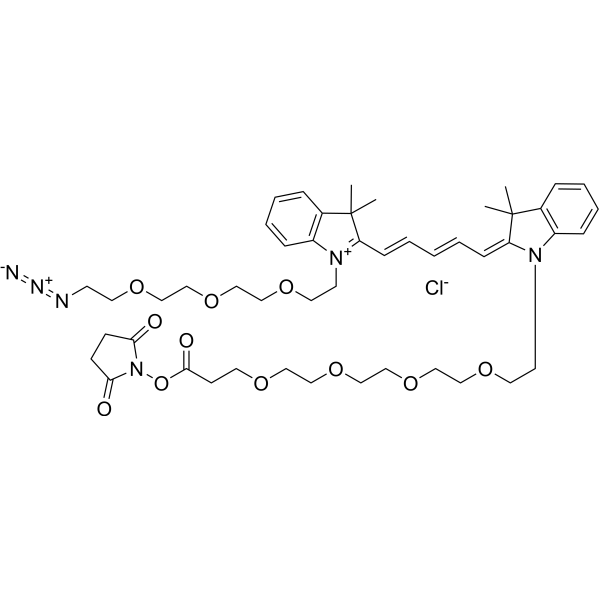
- HY-152737
-
|
|
Nucleoside Antimetabolite/Analog
|
Others
|
|
3’-Deoxy-3’-azido-isocytidine is a purine nucleoside analogue. Purine nucleoside analogs have broad antitumor activity targeting indolent lymphoid malignancies. Anticancer mechanisms in this process rely on inhibition of DNA synthesis, induction of apoptosis, etc . 3’-Deoxy-3’-azido-isocytidine is a click chemistry reagent, it contains an Azide group and can undergo copper-catalyzed azide-alkyne cycloaddition reaction (CuAAc) with molecules containing Alkyne groups. It can also undergo strain-promoted alkyne-azide cycloaddition (SPAAC) reactions with molecules containing DBCO or BCN groups.
|
-
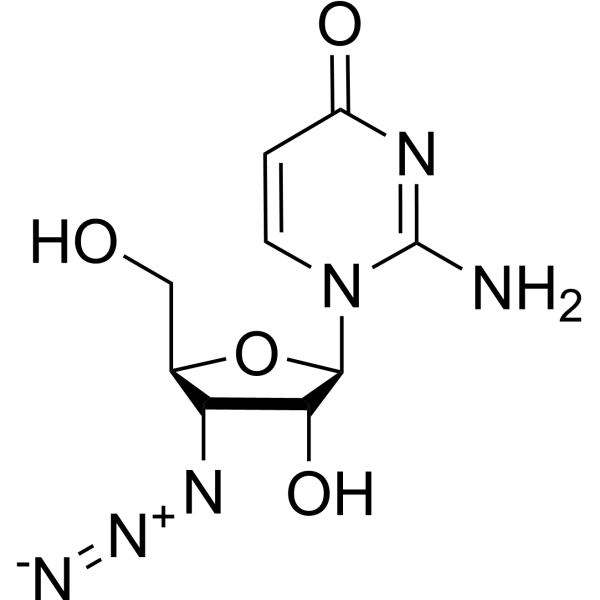
- HY-141062
-
|
|
PROTAC Linkers
|
Cancer
|
|
N-Methyl-N'-(azido-PEG2-C5)-Cy5 is a PEG-based PROTAC linker that can be used in the synthesis of PROTACs . N-Methyl-N'-(azido-PEG2-C5)-Cy5 is a click chemistry reagent, it contains an Azide group and can undergo copper-catalyzed azide-alkyne cycloaddition reaction (CuAAc) with molecules containing Alkyne groups. It can also undergo strain-promoted alkyne-azide cycloaddition (SPAAC) reactions with molecules containing DBCO or BCN groups.
|
-
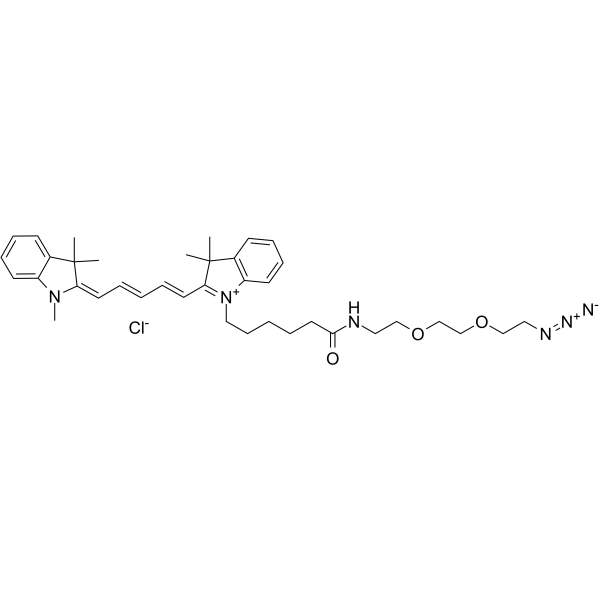
- HY-140454
-
|
|
ADC Linker
PROTAC Linkers
|
Cancer
|
|
Azido-PEG8-acid is a non-cleavable 8 unit PEG ADC linker used in the synthesis of antibody-drug conjugates (ADCs). Azido-PEG8-acid is also a PEG-based PROTAC linker that can be used in the synthesis of PROTACs . Azido-PEG8-acid is a click chemistry reagent, it contains an Azide group and can undergo copper-catalyzed azide-alkyne cycloaddition reaction (CuAAc) with molecules containing Alkyne groups. It can also undergo strain-promoted alkyne-azide cycloaddition (SPAAC) reactions with molecules containing DBCO or BCN groups.
|
-
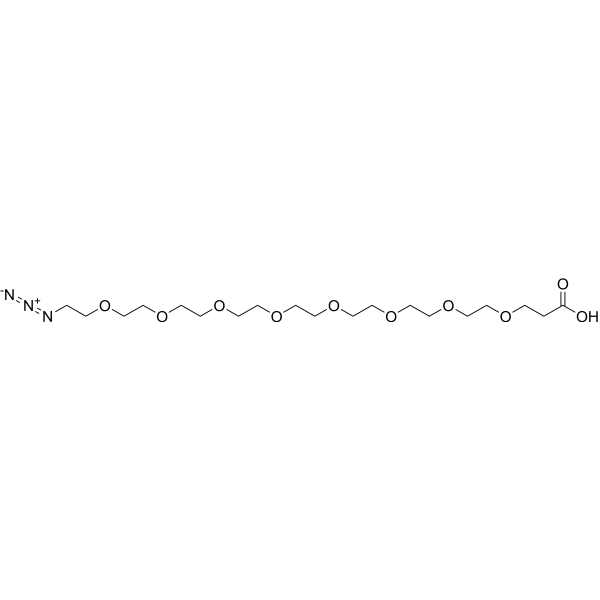
- HY-140247
-
|
|
PROTAC Linkers
|
Cancer
|
|
N-(Azido-PEG3)-N-(PEG2-amine)-PEG3-acid is a PEG-based PROTAC linker that can be used in the synthesis of PROTACs . N-(Azido-PEG3)-N-(PEG2-amine)-PEG3-acid is a click chemistry reagent, it contains an Azide group and can undergo copper-catalyzed azide-alkyne cycloaddition reaction (CuAAc) with molecules containing Alkyne groups. It can also undergo strain-promoted alkyne-azide cycloaddition (SPAAC) reactions with molecules containing DBCO or BCN groups.
|
-
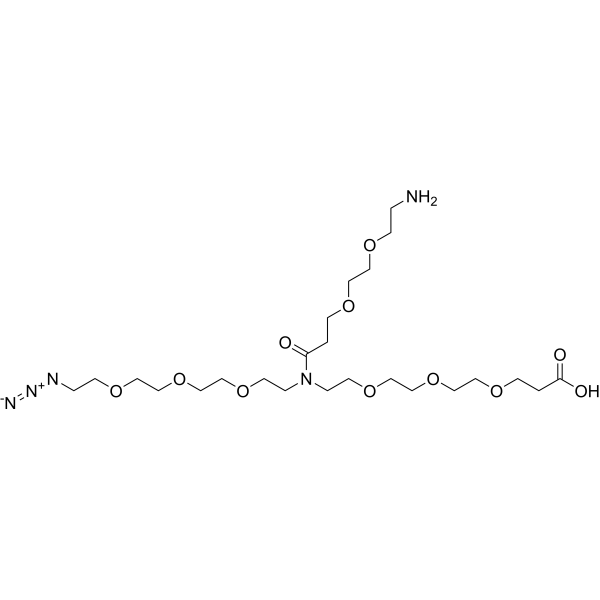
- HY-130108
-
|
|
ADC Linker
|
Cancer
|
|
N3-PEG4-C2-Pfp ester is a nonclaevable 4-unit PEG linker used in the synthesis of antibody-drug conjugates (ADCs). N3-PEG4-C2-Pfp ester is a click chemistry reagent, it contains an Azide group and can undergo copper-catalyzed azide-alkyne cycloaddition reaction (CuAAc) with molecules containing Alkyne groups. It can also undergo strain-promoted alkyne-azide cycloaddition (SPAAC) reactions with molecules containing DBCO or BCN groups.
|
-
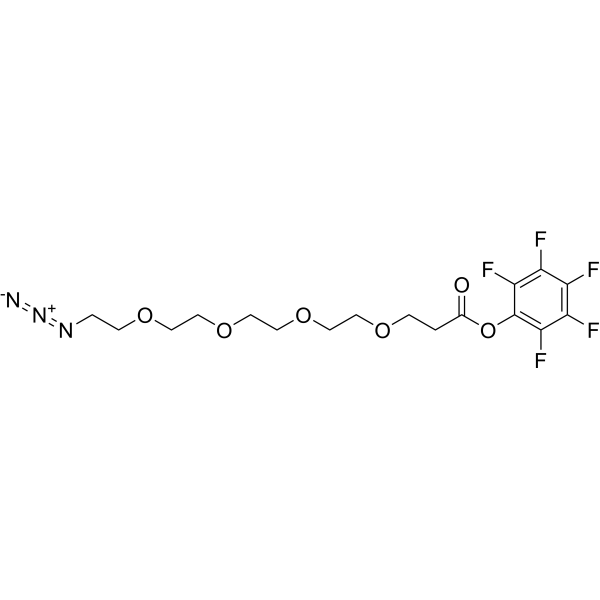
- HY-140763
-
|
|
PROTAC Linkers
|
Cancer
|
|
Azido-PEG1-CH2CO2-NHS is an alkyl/ether-based PROTAC linker that can be used in the synthesis of PROTACs . Azido-PEG1-CH2CO2-NHS is a click chemistry reagent, it contains an Azide group and can undergo copper-catalyzed azide-alkyne cycloaddition reaction (CuAAc) with molecules containing Alkyne groups. It can also undergo strain-promoted alkyne-azide cycloaddition (SPAAC) reactions with molecules containing DBCO or BCN groups.
|
-
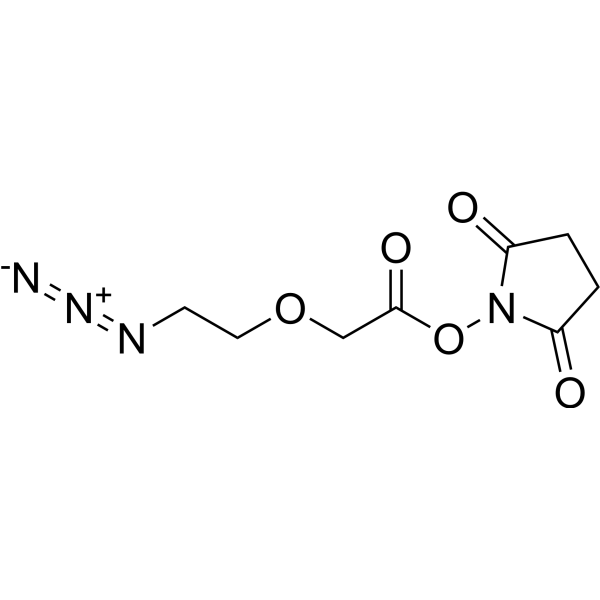
- HY-141078
-
|
|
PROTAC Linkers
|
Cancer
|
|
N-(m-PEG4)-N'-(azide-PEG4)-Cy7 is a PEG-based PROTAC linker that can be used in the synthesis of PROTACs . N-(m-PEG4)-N'-(azide-PEG4)-Cy7 is a click chemistry reagent, it contains an Azide group and can undergo copper-catalyzed azide-alkyne cycloaddition reaction (CuAAc) with molecules containing Alkyne groups. It can also undergo strain-promoted alkyne-azide cycloaddition (SPAAC) reactions with molecules containing DBCO or BCN groups.
|
-
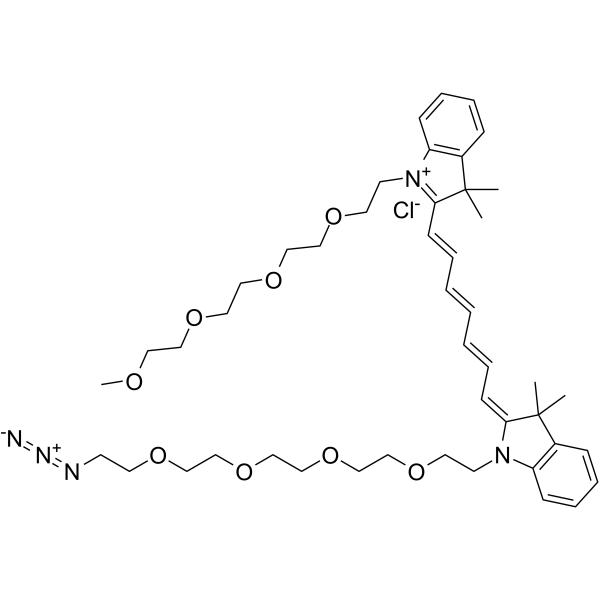
- HY-152720
-
|
|
Nucleoside Antimetabolite/Analog
|
Others
Cancer
|
|
3’-Azido-3’-deoxyuridine is a purine nucleoside analogue. Purine nucleoside analogs have broad antitumor activity targeting indolent lymphoid malignancies. Anticancer mechanisms in this process rely on inhibition of DNA synthesis, induction of apoptosis, etc . 3’-Azido-3’-deoxyuridine is a click chemistry reagent, it contains an Azide group and can undergo copper-catalyzed azide-alkyne cycloaddition reaction (CuAAc) with molecules containing Alkyne groups. It can also undergo strain-promoted alkyne-azide cycloaddition (SPAAC) reactions with molecules containing DBCO or BCN groups.
|
-
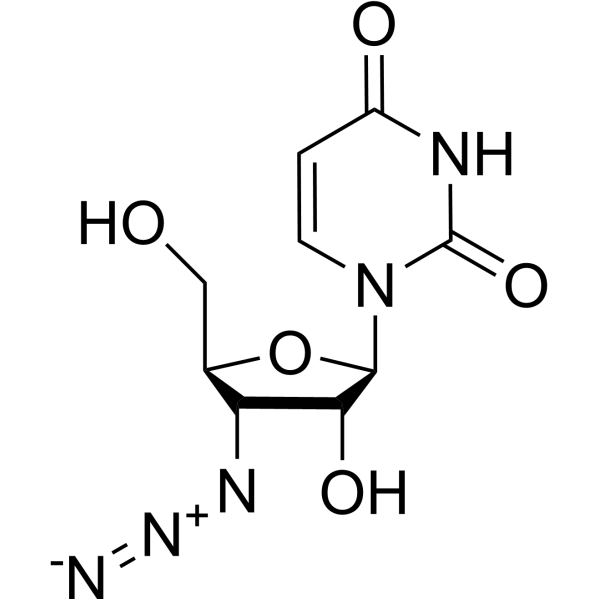
- HY-P0132A
-
|
|
NO Synthase
|
Cancer
|
|
YIGSR-Lys(N3) is a peptide that can inhibit the tumour growth and metastasis of leukaemic cells. YIGSR blocks the cellular binding to laminin I via a 67-kDa laminin-binding protein, and inhibits shear-induced increase in eNOS expression of laminin cells . YIGSR-Lys(N3) is a click chemistry reagent, it contains an Azide group and can undergo copper-catalyzed azide-alkyne cycloaddition reaction (CuAAc) with molecules containing Alkyne groups. It can also undergo strain-promoted alkyne-azide cycloaddition (SPAAC) reactions with molecules containing DBCO or BCN groups.
|
-

- HY-130693
-
|
|
PROTAC Linkers
|
Cancer
|
|
Azido-PEG5-CH2CO2-PFP is a PEG- and Alkyl/ether-based PROTAC linker can be used in the synthesis of PROTACs . Azido-PEG5-CH2CO2-PFP is a click chemistry reagent, it contains an Azide group and can undergo copper-catalyzed azide-alkyne cycloaddition reaction (CuAAc) with molecules containing Alkyne groups. It can also undergo strain-promoted alkyne-azide cycloaddition (SPAAC) reactions with molecules containing DBCO or BCN groups.
|
-
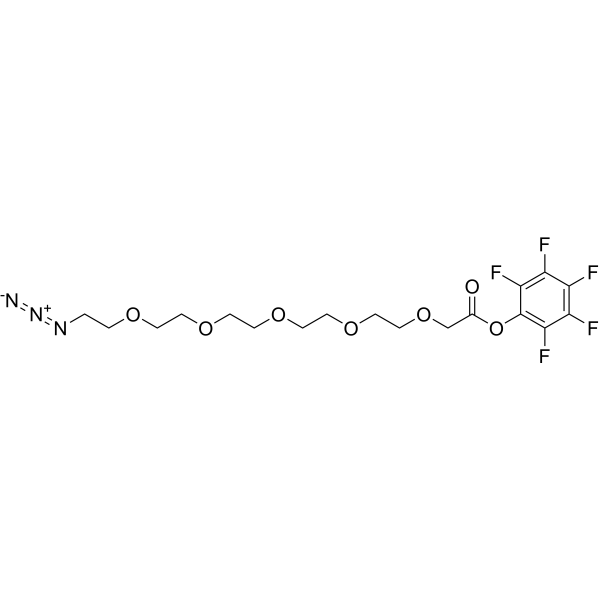
- HY-D1539
-
|
CY 5.5 azide; Lumiprobe CY 5.5 azide
|
Fluorescent Dye
|
Others
|
|
Cyanine 5.5 azide (CY 5.5 azide) is a potent fluorescent dye. Cyanine 5.5 azide can label DNA. Cyanine 5.5 azide can be used for NIR live organism imaging. (λex=684 nm, λem=710 nm) . Cyanine 5.5 azide is a click chemistry reagent, it contains an Azide group and can undergo copper-catalyzed azide-alkyne cycloaddition reaction (CuAAc) with molecules containing Alkyne groups. It can also undergo strain-promoted alkyne-azide cycloaddition (SPAAC) reactions with molecules containing DBCO or BCN groups.
|
-
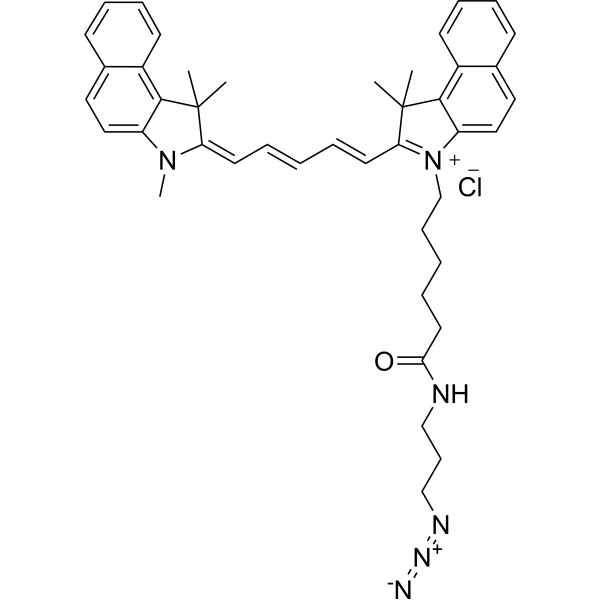
- HY-154054
-
|
|
Nucleoside Antimetabolite/Analog
|
Cancer
|
|
5′-Azido-5′-deoxyadenosine is a purine nucleoside analog. Purine nucleoside analogs have broad antitumor activity targeting indolent lymphoid malignancies. Anticancer mechanisms in this process rely on inhibition of DNA synthesis, induction of apoptosis, etc . 5′-Azido-5′-deoxyadenosine is a click chemistry reagent, it contains an Azide group and can undergo copper-catalyzed azide-alkyne cycloaddition reaction (CuAAc) with molecules containing Alkyne groups. It can also undergo strain-promoted alkyne-azide cycloaddition (SPAAC) reactions with molecules containing DBCO or BCN groups.
|
-
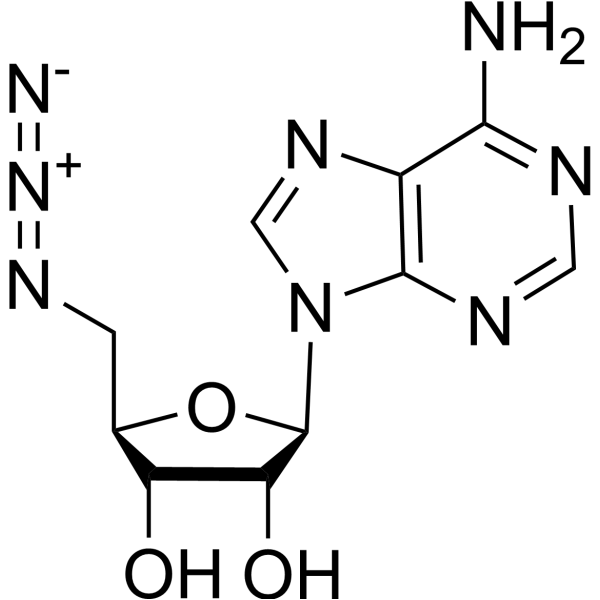
- HY-10444
-
R-1479
3 Publications Verification
4'-Azidocytidine
|
HCV
DNA/RNA Synthesis
|
Infection
|
|
R-1479 (4'-Azidocytidine), a nucleoside analogue, is a specific inhibitor of RNA-dependent RNA polymerase (RdRp) of HCV. R-1479 inhibits HCV replication in the HCV subgenomic replicon system (IC50=1.28 μM) . R-1479 is a click chemistry reagent, it contains an Azide group and can undergo copper-catalyzed azide-alkyne cycloaddition reaction (CuAAc) with molecules containing Alkyne groups. It can also undergo strain-promoted alkyne-azide cycloaddition (SPAAC) reactions with molecules containing DBCO or BCN groups.
|
-
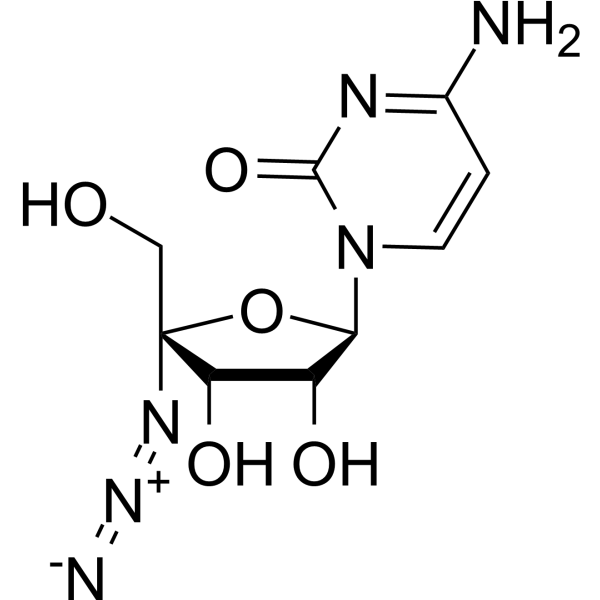
- HY-148908
-
|
|
TNF Receptor
|
Cardiovascular Disease
Inflammation/Immunology
Cancer
|
|
TNF-α-IN-8 (compound I-42) is a TNF-α inhibitor. TNF-α-IN-8 is an isoindole-imide compound. TNF-α-IN-8 can be used for the research of cancer, heart disease, osteoporosis, inflammatory, allergic and autoimmune diseases . TNF-α-IN-8 is a click chemistry reagent, it contains an Azide group and can undergo copper-catalyzed azide-alkyne cycloaddition reaction (CuAAc) with molecules containing Alkyne groups. It can also undergo strain-promoted alkyne-azide cycloaddition (SPAAC) reactions with molecules containing DBCO or BCN groups.
|
-
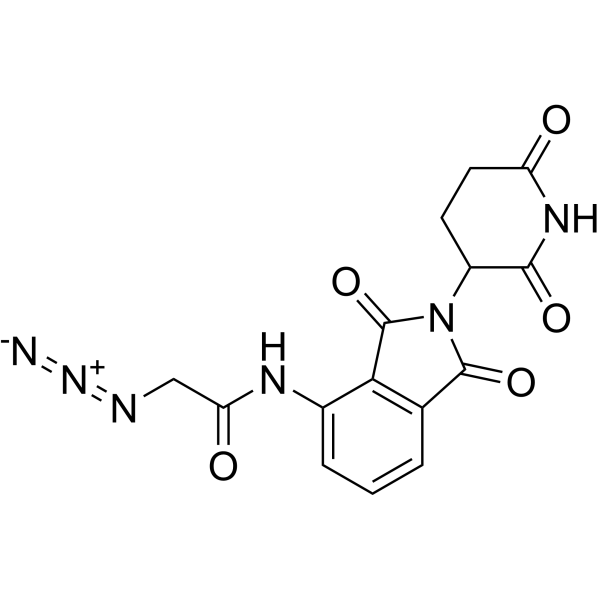
- HY-140101
-
|
|
ADC Linker
|
Cancer
|
|
Azido-C2-SS-PEG2-C2-acid is a cleavable 2 unit PEG ADC linker used in the synthesis of antibody-drug conjugates (ADCs) . Azido-C2-SS-PEG2-C2-acid is a click chemistry reagent, it contains an Azide group and can undergo copper-catalyzed azide-alkyne cycloaddition reaction (CuAAc) with molecules containing Alkyne groups. It can also undergo strain-promoted alkyne-azide cycloaddition (SPAAC) reactions with molecules containing DBCO or BCN groups.
|
-
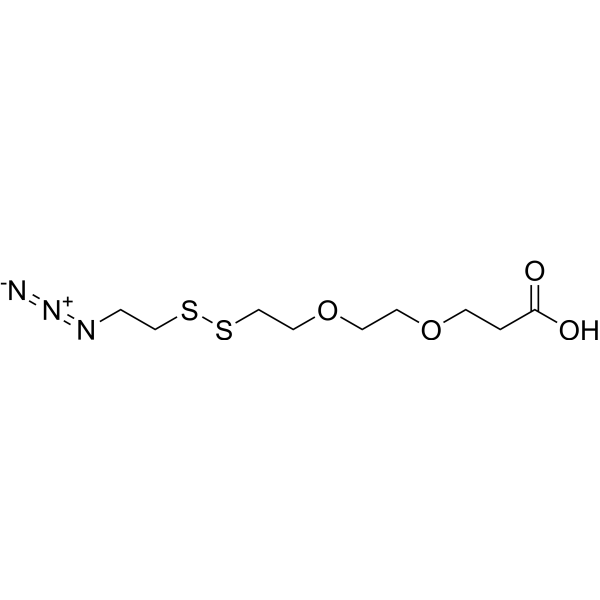
- HY-D2562
-
|
|
Fluorescent Dye
|
Others
|
|
Cy5.5-PEG5000-N3 is a Cy5.5 (HY-D0924)-azide fluorescent dye used to label for protein and nucleic acid. Cy5.5-PEG5000-N3 is a click chemistry reagent, it contains an Azide group and can undergo copper-catalyzed azide-alkyne cycloaddition reaction (CuAAc) with molecules containing Alkyne groups. It can also undergo strain-promoted alkyne-azide cycloaddition (SPAAC) reactions with molecules containing DBCO or BCN groups.
|
-

- HY-42637
-
|
PROTAC Linker 14
|
PROTAC Linkers
|
Cancer
|
|
N3-PEG3-CH2COOH (PROTAC Linker 14) is a PEG-based PROTAC linker can be used in the synthesis of PROTACs . N3-PEG3-CH2COOH is a click chemistry reagent, it contains an Azide group and can undergo copper-catalyzed azide-alkyne cycloaddition reaction (CuAAc) with molecules containing Alkyne groups. It can also undergo strain-promoted alkyne-azide cycloaddition (SPAAC) reactions with molecules containing DBCO or BCN groups.
|
-
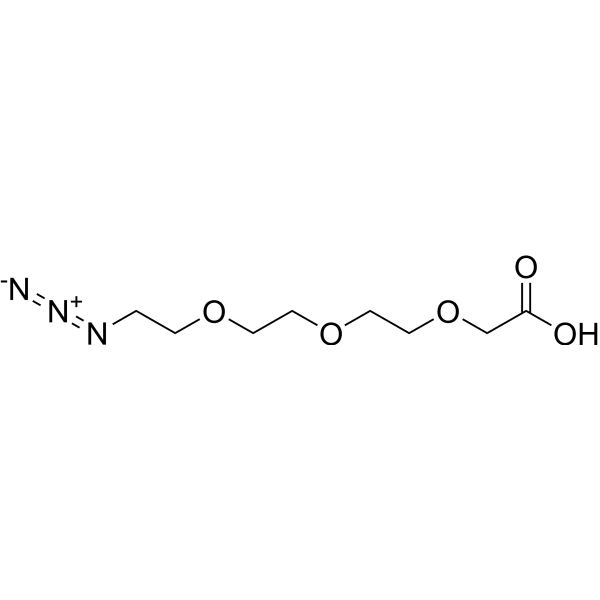
- HY-126527
-
|
|
ADC Linker
|
Cancer
|
|
N3-PEG2-C2-PFP ester is a nonclaevable 2-unit PEG linker used in the synthesis of antibody-drug conjugates (ADCs). N3-PEG2-C2-PFP ester is a click chemistry reagent, it contains an Azide group and can undergo copper-catalyzed azide-alkyne cycloaddition reaction (CuAAc) with molecules containing Alkyne groups. It can also undergo strain-promoted alkyne-azide cycloaddition (SPAAC) reactions with molecules containing DBCO or BCN groups.
|
-
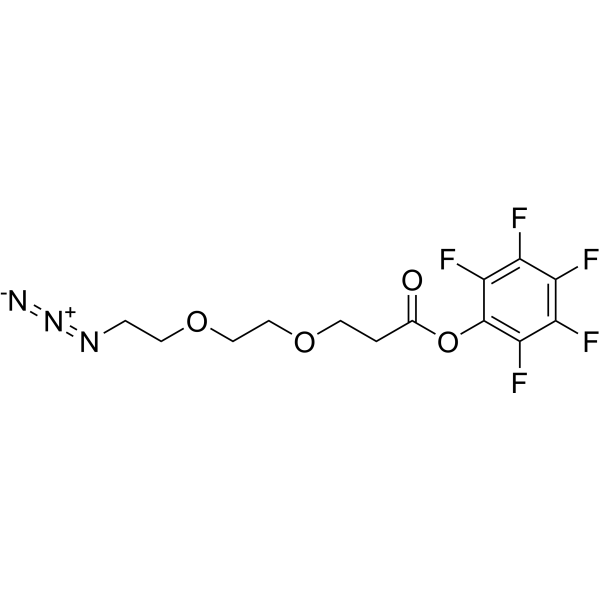
- HY-130879
-
|
|
PROTAC Linkers
|
Cancer
|
|
HS-PEG5-CH2CH2N3 is a PEG-based PROTAC linker that can be used in the synthesis of PROTACs . HS-PEG5-CH2CH2N3 is a click chemistry reagent, it contains an Azide group and can undergo copper-catalyzed azide-alkyne cycloaddition reaction (CuAAc) with molecules containing Alkyne groups. It can also undergo strain-promoted alkyne-azide cycloaddition (SPAAC) reactions with molecules containing DBCO or BCN groups.
|
-
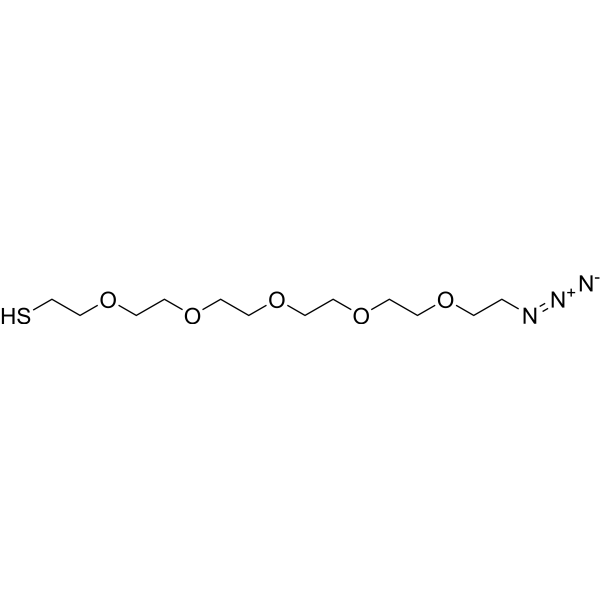
- HY-152868
-
|
|
Nucleoside Antimetabolite/Analog
|
Others
|
|
3’-O-(2-Azidoethyl)adenosine is a purine nucleoside analogue. Purine nucleoside analogs have broad antitumor activity targeting indolent lymphoid malignancies. Anticancer mechanisms in this process rely on inhibition of DNA synthesis, induction of apoptosis, etc . 3’-O-(2-Azidoethyl)adenosine is a click chemistry reagent, it contains an Azide group and can undergo copper-catalyzed azide-alkyne cycloaddition reaction (CuAAc) with molecules containing Alkyne groups. It can also undergo strain-promoted alkyne-azide cycloaddition (SPAAC) reactions with molecules containing DBCO or BCN groups.
|
-
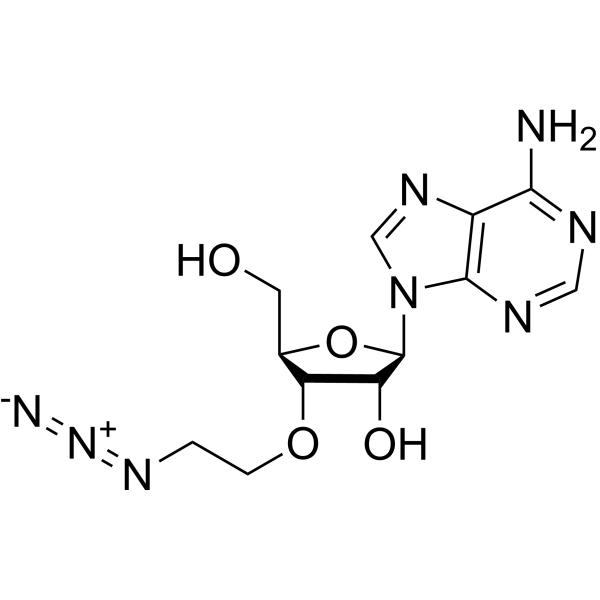
- HY-134693
-
|
|
PROTAC Linkers
|
Cancer
|
|
Azido-C1-PEG4-C3-NH2 is a PEG-based PROTAC linker that can be used in the synthesis of PROTACs . Azido-C1-PEG4-C3-NH2 is a click chemistry reagent, it contains an Azide group and can undergo copper-catalyzed azide-alkyne cycloaddition reaction (CuAAc) with molecules containing Alkyne groups. It can also undergo strain-promoted alkyne-azide cycloaddition (SPAAC) reactions with molecules containing DBCO or BCN groups.
|
-
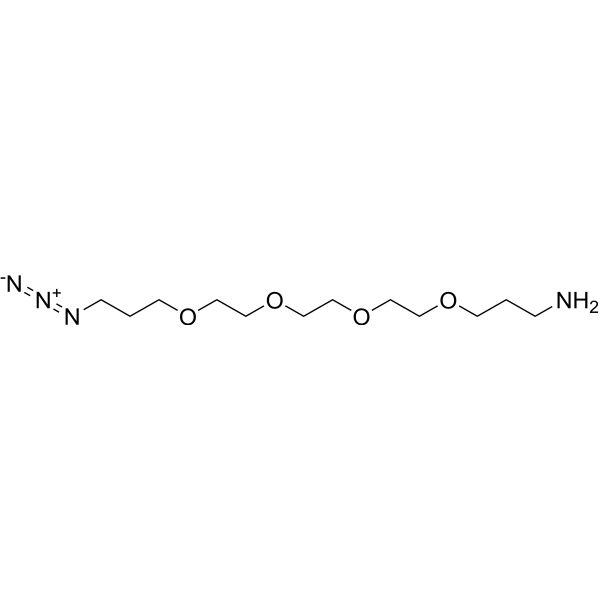
- HY-B2091
-
|
|
Antibiotic
Bacterial
|
Infection
|
|
Azidocillin, a semi-synthetic Penicillin, is an orally active β-lactam antibiotic. Azidocillin bears an azide functionality and retains on-target activity within bacteria. Azidocillin can be used to research osteitis caused by dental surgery, otitis media, enterococcal septicemia and other bacterial infectious diseases . Azidocillin is a click chemistry reagent, it contains an Azide group and can undergo copper-catalyzed azide-alkyne cycloaddition reaction (CuAAc) with molecules containing Alkyne groups. It can also undergo strain-promoted alkyne-azide cycloaddition (SPAAC) reactions with molecules containing DBCO or BCN groups.
|
-
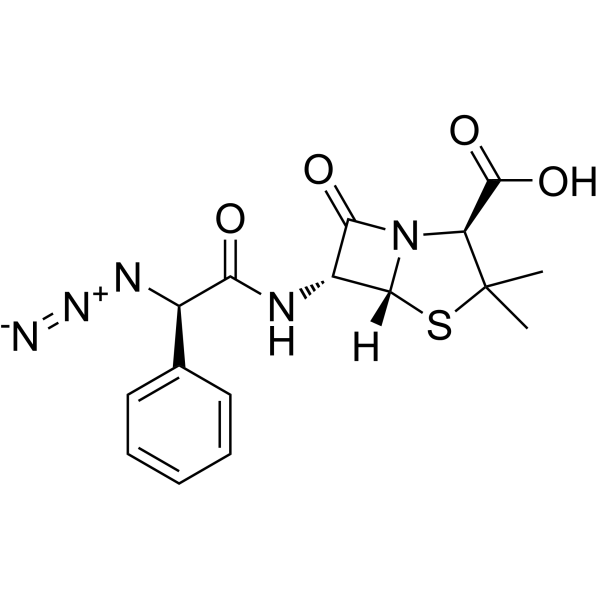
- HY-W145547
-
|
|
Biochemical Assay Reagents
|
Others
|
|
2-Azidoethyl 2,3,4,6-Tetra-O-acetyl-β-D-glucopyranoside is a biochemical reagent that can be used as a biological material or organic compound for life science related research. 2-Azidoethyl 2,3,4,6-Tetra-O-acetyl-β-D-glucopyranoside is a click chemistry reagent, it contains an Azide group and can undergo copper-catalyzed azide-alkyne cycloaddition reaction (CuAAc) with molecules containing Alkyne groups. It can also undergo strain-promoted alkyne-azide cycloaddition (SPAAC) reactions with molecules containing DBCO or BCN groups.
|
-
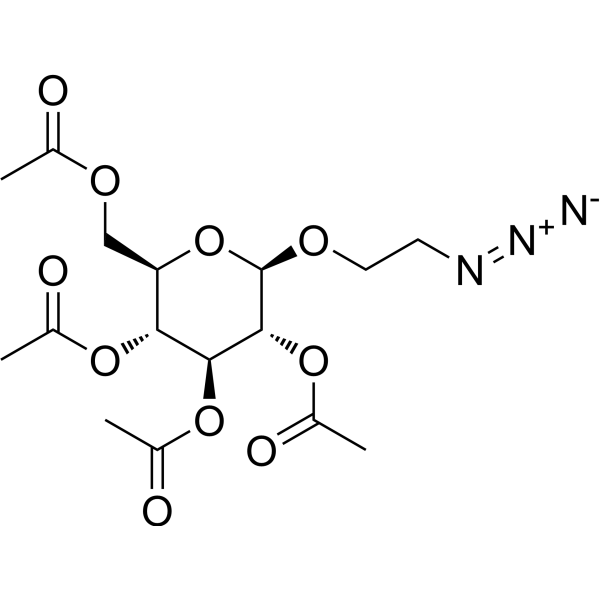
- HY-134692
-
|
|
PROTAC Linkers
|
Cancer
|
|
Azido-C1-PEG3-C3-NH2 is a PEG-based PROTAC linker that can be used in the synthesis of PROTACs . Azido-C1-PEG3-C3-NH2 is a click chemistry reagent, it contains an Azide group and can undergo copper-catalyzed azide-alkyne cycloaddition reaction (CuAAc) with molecules containing Alkyne groups. It can also undergo strain-promoted alkyne-azide cycloaddition (SPAAC) reactions with molecules containing DBCO or BCN groups.
|
-
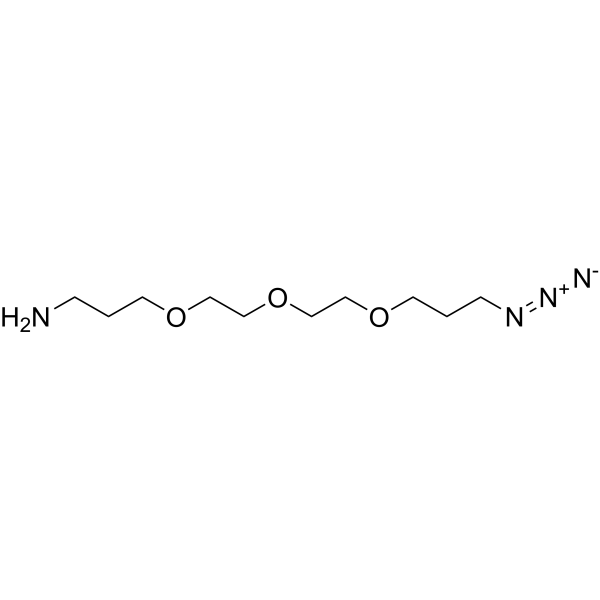
- HY-132138
-
|
|
DNA/RNA Synthesis
|
Others
|
|
5-Propargylamino-3'-azidomethyl-dCTP is a nucleoside molecule extracted from patent WO2004018497A2, compound 17. 5-Propargylamino-3'-azidomethyl-dCTP can be used in DNA synthesis and DNA sequencing . 5-Propargylamino-3'-azidomethyl-dCTP is a click chemistry reagent, it contains an Azide group and can undergo copper-catalyzed azide-alkyne cycloaddition reaction (CuAAc) with molecules containing Alkyne groups. It can also undergo strain-promoted alkyne-azide cycloaddition (SPAAC) reactions with molecules containing DBCO or BCN groups.
|
-
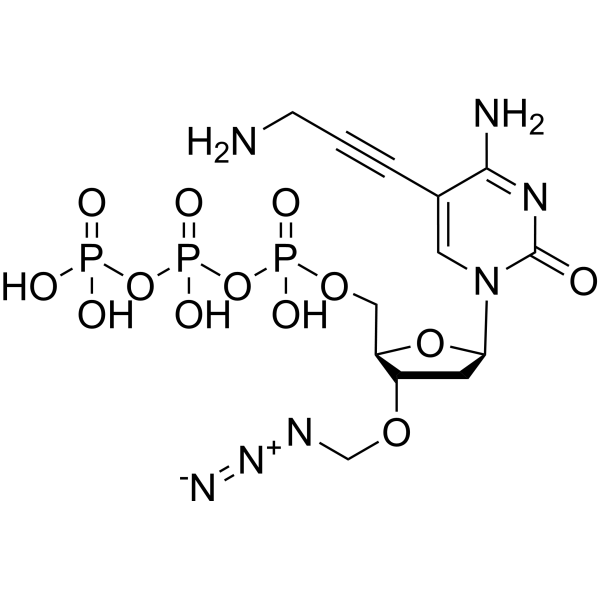
- HY-145934
-
|
UDP-N-azidoacetylgalactosamine disodium
|
Biochemical Assay Reagents
OGT
Glycosidase
|
Metabolic Disease
|
|
UDP-GalNAz (UDP-N-azidoacetylgalactosamine) disodium is the analogue of UDP-GalNAc disodium (HY-114365). UDP-GalNAc disodium is the donor substrate of many N-acetylgalactosaminyltransferases, enzymes which transfer GalNAc from the nucleotide sugar to a saccharide or peptide acceptor. UDP-GalNAz disodium is a click chemistry reagent, it contains an Azide group and can undergo copper-catalyzed azide-alkyne cycloaddition reaction (CuAAc) with molecules containing Alkyne groups. It can also undergo strain-promoted alkyne-azide cycloaddition (SPAAC) reactions with molecules containing DBCO or BCN groups .
|
-
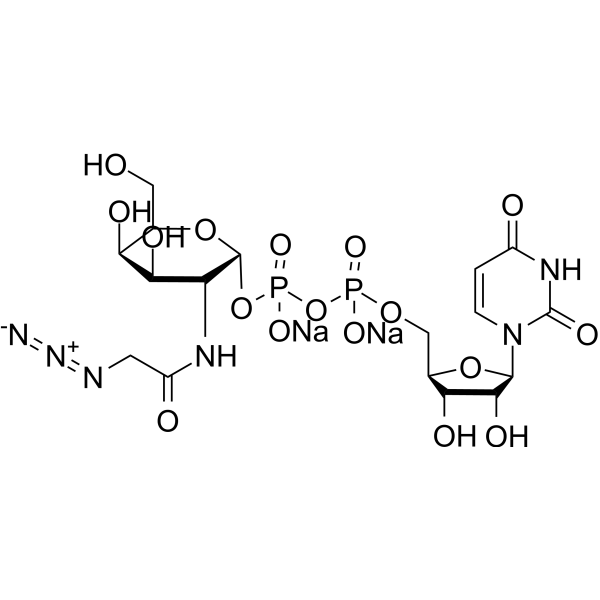
- HY-D2563
-
|
|
Fluorescent Dye
|
Others
|
|
Cy5.5-PEG10000-N3 is a Cy5.5 (HY-D0924)-azide fluorescent dye used to label for protein and nucleic acid. Cy5.5-PEG10000-N3 is a click chemistry reagent, it contains an Azide group and can undergo copper-catalyzed azide-alkyne cycloaddition reaction (CuAAc) with molecules containing Alkyne groups. It can also undergo strain-promoted alkyne-azide cycloaddition (SPAAC) reactions with molecules containing DBCO or BCN groups.
|
-

- HY-135912
-
|
|
PROTAC Linkers
|
Cancer
|
|
Biotin-PEG2-CH2CH2N3 is a PEG-based PROTAC linker that can be used in the synthesis of PROTACs . Biotin-PEG2-CH2CH2N3 is a click chemistry reagent, it contains an Azide group and can undergo copper-catalyzed azide-alkyne cycloaddition reaction (CuAAc) with molecules containing Alkyne groups. It can also undergo strain-promoted alkyne-azide cycloaddition (SPAAC) reactions with molecules containing DBCO or BCN groups.
|
-
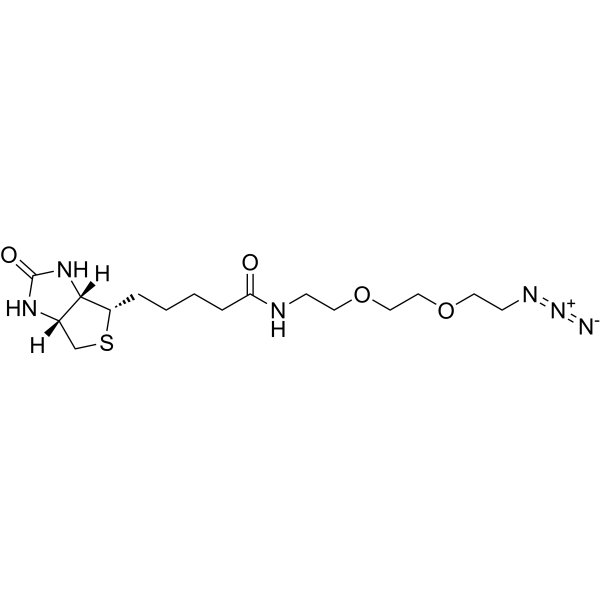
- HY-154405
-
|
|
Nucleoside Antimetabolite/Analog
|
Cancer
|
|
5’-Azido-5’-deoxyuridine is a purine nucleoside analog. Purine nucleoside analogs have broad antitumor activity targeting indolent lymphoid malignancies. Anticancer mechanisms in this process rely on inhibition of DNA synthesis, induction of apoptosis, etc . 5’-Azido-5’-deoxyuridine is a click chemistry reagent, it contains an Azide group and can undergo copper-catalyzed azide-alkyne cycloaddition reaction (CuAAc) with molecules containing Alkyne groups. It can also undergo strain-promoted alkyne-azide cycloaddition (SPAAC) reactions with molecules containing DBCO or BCN groups.
|
-
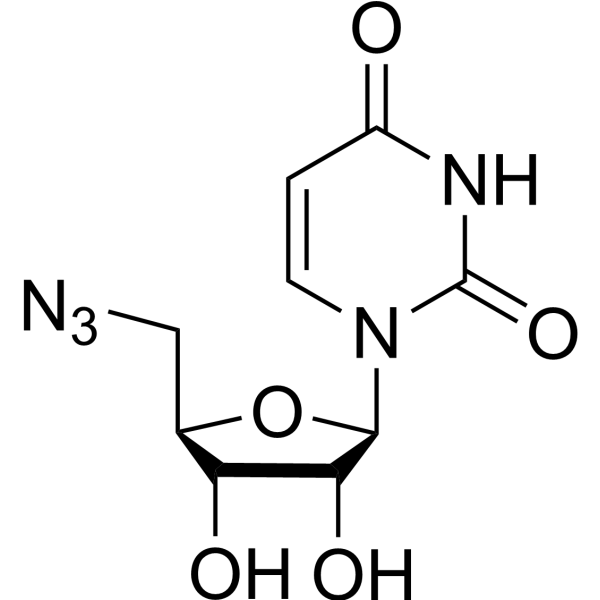
- HY-130169
-
|
|
ADC Linker
PROTAC Linkers
|
Cancer
|
|
Azido-PEG9-amine is a non-cleavable 9 unit PEG ADC linker used in the synthesis of antibody-drug conjugates (ADCs). Azido-PEG9-amine is also a PEG-based PROTAC linker that can be used in the synthesis of PROTACs . Azido-PEG9-amine is a click chemistry reagent, it contains an Azide group and can undergo copper-catalyzed azide-alkyne cycloaddition reaction (CuAAc) with molecules containing Alkyne groups. It can also undergo strain-promoted alkyne-azide cycloaddition (SPAAC) reactions with molecules containing DBCO or BCN groups.
|
-
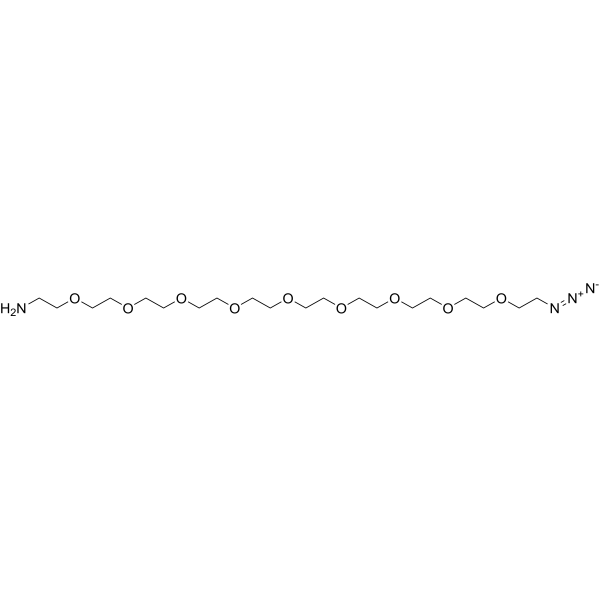
- HY-154666
-
|
|
Nucleoside Antimetabolite/Analog
|
Cancer
|
|
3’-Azido-3’-deoxyinosine is a purine nucleoside analog. Purine nucleoside analogs have broad antitumor activity targeting indolent lymphoid malignancies. Anticancer mechanisms in this process rely on inhibition of DNA synthesis, induction of apoptosis, etc . 3’-Azido-3’-deoxyinosine is a click chemistry reagent, it contains an Azide group and can undergo copper-catalyzed azide-alkyne cycloaddition reaction (CuAAc) with molecules containing Alkyne groups. It can also undergo strain-promoted alkyne-azide cycloaddition (SPAAC) reactions with molecules containing DBCO or BCN groups.
|
-
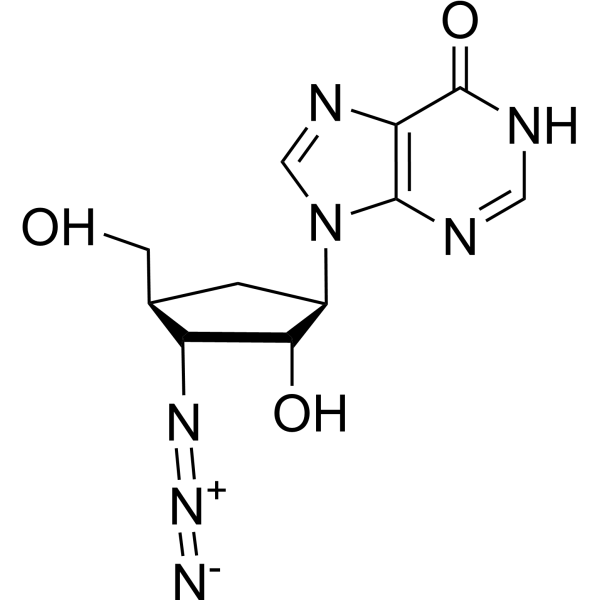
- HY-152985
-
|
|
Nucleoside Antimetabolite/Analog
|
Others
|
|
6-Chloro-N1-(trimethylsilylethoxymethyl)pseudouridine is a uridine analog. Uridine has potential antiepileptic effects, and its analogs can be used to study anticonvulsant and anxiolytic activities, as well as to develop new antihypertensive agents . 3’-Azido-3’-deoxy-4-deoxyuridine is a click chemistry reagent, it contains an Azide group and can undergo copper-catalyzed azide-alkyne cycloaddition reaction (CuAAc) with molecules containing Alkyne groups. It can also undergo strain-promoted alkyne-azide cycloaddition (SPAAC) reactions with molecules containing DBCO or BCN groups.
|
-
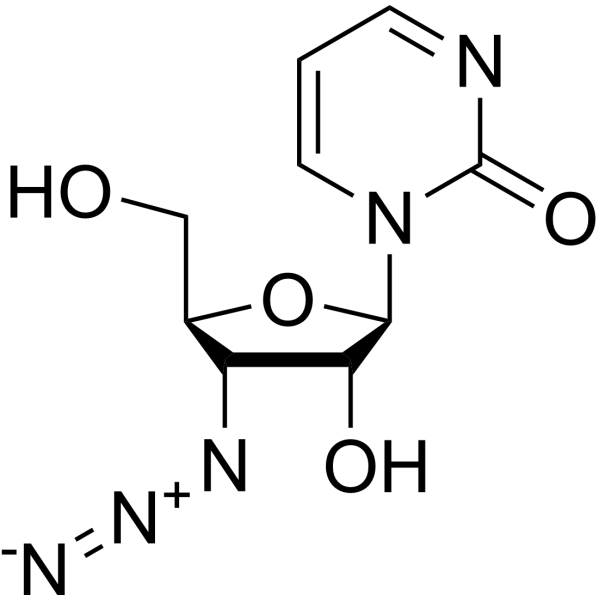
- HY-126529
-
|
|
ADC Linker
|
Cancer
|
|
N3-PEG3-C2-PFP ester is a nonclaevable 3-unit PEG linker used in the synthesis of antibody-drug conjugates (ADCs). N3-PEG3-C2-PFP ester is a click chemistry reagent, it contains an Azide group and can undergo copper-catalyzed azide-alkyne cycloaddition reaction (CuAAc) with molecules containing Alkyne groups. It can also undergo strain-promoted alkyne-azide cycloaddition (SPAAC) reactions with molecules containing DBCO or BCN groups.
|
-
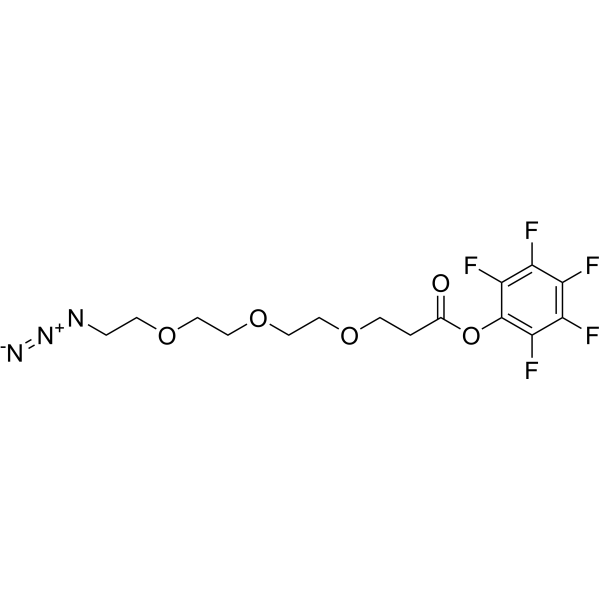
- HY-141077
-
|
|
PROTAC Linkers
|
Cancer
|
|
N-(Ac-PEG3)-N'-(azide-PEG3)-Cy7 (chloride) is a PEG-based PROTAC linker that can be used in the synthesis of PROTACs . N-(Ac-PEG3)-N'-(azide-PEG3)-Cy7 (chloride) is a click chemistry reagent, it contains an Azide group and can undergo copper-catalyzed azide-alkyne cycloaddition reaction (CuAAc) with molecules containing Alkyne groups. It can also undergo strain-promoted alkyne-azide cycloaddition (SPAAC) reactions with molecules containing DBCO or BCN groups.
|
-
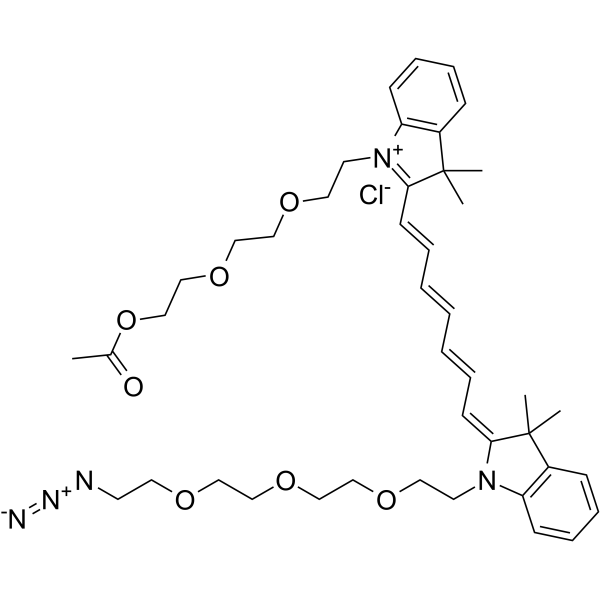
- HY-162948
-
|
|
E3 Ligase Ligand-Linker Conjugates
|
Cancer
|
|
(S,R,S)-AHPC-PEG2-C5-N3 is a synthesized E3 ligase ligand-linker conjugate. (S,R,S)-AHPC-PEG2-C5-N3 is a click chemistry reagent, it contains an Azide group and can undergo copper-catalyzed azide-alkyne cycloaddition reaction (CuAAc) with molecules containing Alkyne groups. It can also undergo strain-promoted alkyne-azide cycloaddition (SPAAC) reactions with molecules containing DBCO or BCN groups .
|
-

- HY-141063
-
|
|
PROTAC Linkers
|
Cancer
|
|
N-(m-PEG4)-N'-(azide-PEG3)-Cy5 is a PEG-based PROTAC linker that can be used in the synthesis of PROTACs . N-(m-PEG4)-N'-(azide-PEG3)-Cy5 is a click chemistry reagent, it contains an Azide group and can undergo copper-catalyzed azide-alkyne cycloaddition reaction (CuAAc) with molecules containing Alkyne groups. It can also undergo strain-promoted alkyne-azide cycloaddition (SPAAC) reactions with molecules containing DBCO or BCN groups.
|
-
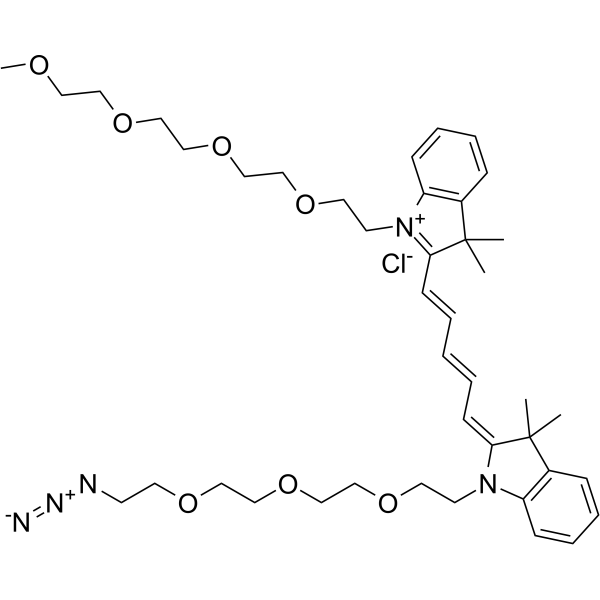
- HY-141064
-
|
|
PROTAC Linkers
|
Cancer
|
|
N-(azide-PEG3)-N'-(m-PEG4)-Benzothiazole Cy5 is a PEG-based PROTAC linker that can be used in the synthesis of PROTACs . N-(azide-PEG3)-N'-(m-PEG4)-Benzothiazole Cy5 is a click chemistry reagent, it contains an Azide group and can undergo copper-catalyzed azide-alkyne cycloaddition reaction (CuAAc) with molecules containing Alkyne groups. It can also undergo strain-promoted alkyne-azide cycloaddition (SPAAC) reactions with molecules containing DBCO or BCN groups.
|
-
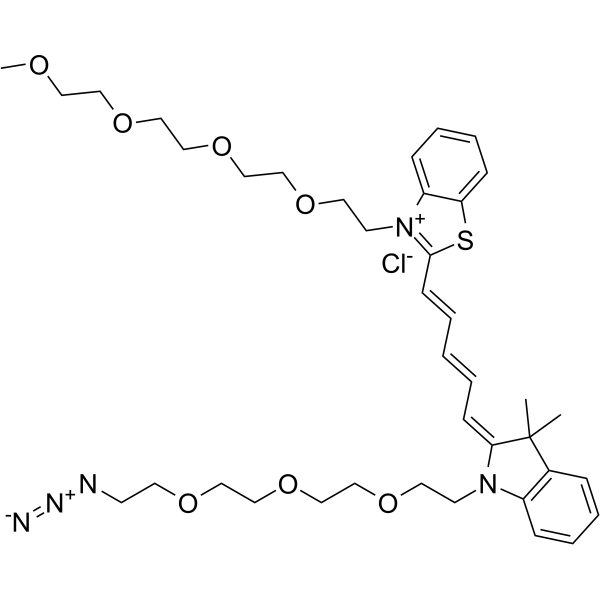
- HY-D2560
-
|
|
Fluorescent Dye
|
Others
|
|
Cy5.5-PEG2000-N3 is a Cy5.5 (HY-D0924)-azide fluorescent dye used to label for protein and nucleic acid. Cy5.5-PEG2000-N3 is a click chemistry reagent, it contains an Azide group and can undergo copper-catalyzed azide-alkyne cycloaddition reaction (CuAAc) with molecules containing Alkyne groups. It can also undergo strain-promoted alkyne-azide cycloaddition (SPAAC) reactions with molecules containing DBCO or BCN groups.
|
-

- HY-161131
-
|
|
E3 Ligase Ligand-Linker Conjugates
|
Inflammation/Immunology
|
|
Lenalidomide 4'-alkyl-C3-azide (compound 4a) is a click chemical modified Lenalidomide (HY-A0003) that can be used to synthesize PROTACs. Lenalidomide is an orally active immunomodulator and a ligand for the ubiquitin E3 ligase cereblon (CRBN). Lenalidomide 4'-alkyl-C3-azide contains an Azide group and can undergo copper-catalyzed azide-alkyne cycloaddition reaction (CuAAc) with molecules containing Alkyne groups. Strain-promoted alkyne-azide cycloaddition reactions (SPAAC) can also occur with molecules containing DBCO or BCN groups .
|
-
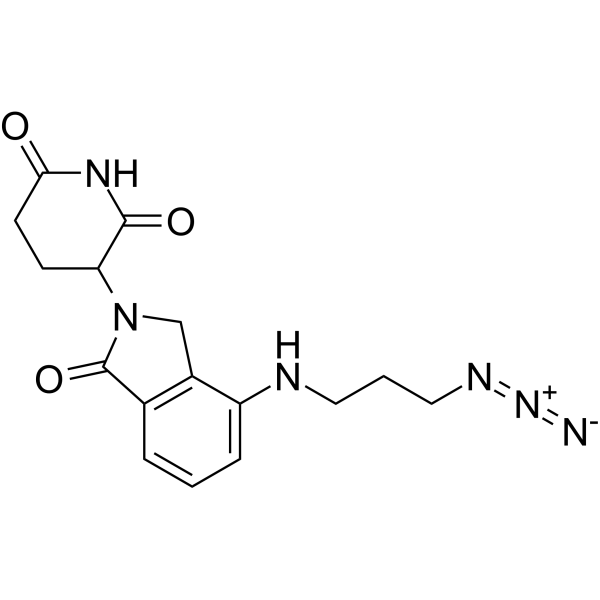
- HY-130324
-
|
|
ADC Linker
PROTAC Linkers
|
Cancer
|
|
Azido-PEG7-amine is a non-cleavable 7 unit PEG ADC linker used in the synthesis of antibody-drug conjugates (ADCs). Azido-PEG7-amine is also a PEG-based PROTAC linker that can be used in the synthesis of PROTACs . Azido-PEG7-amine is a click chemistry reagent, it contains an Azide group and can undergo copper-catalyzed azide-alkyne cycloaddition reaction (CuAAc) with molecules containing Alkyne groups. It can also undergo strain-promoted alkyne-azide cycloaddition (SPAAC) reactions with molecules containing DBCO or BCN groups.
|
-
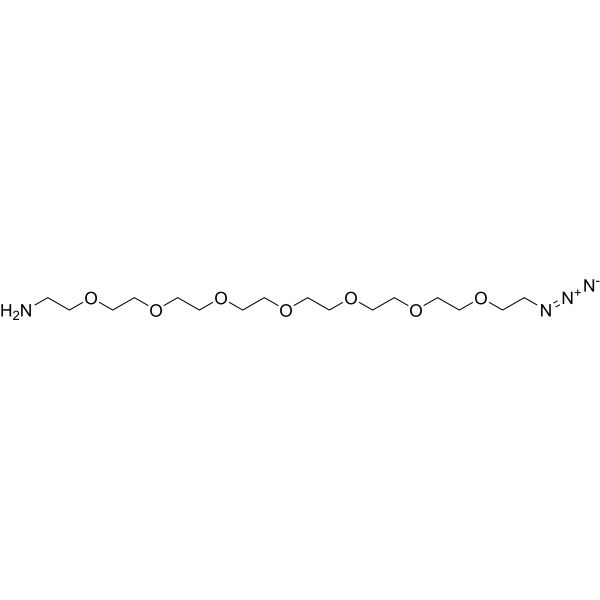
- HY-149057
-
|
|
Influenza Virus
|
Infection
|
|
NDV-IN-1 is an antiviral agent with high neuraminidase inhibitory activity. NDV-IN-1 exhibits in vitro inhibitory activity against Newcastle disease virus (NDV). NDV-IN-1 significantly inhibits NDV infection of Vero cells by preventing the release of virus particles from infected cells . Neuraminidase-IN-12 is a click chemistry reagent, it contains an Azide group and can undergo copper-catalyzed azide-alkyne cycloaddition reaction (CuAAc) with molecules containing Alkyne groups. It can also undergo strain-promoted alkyne-azide cycloaddition (SPAAC) reactions with molecules containing DBCO or BCN groups.
|
-
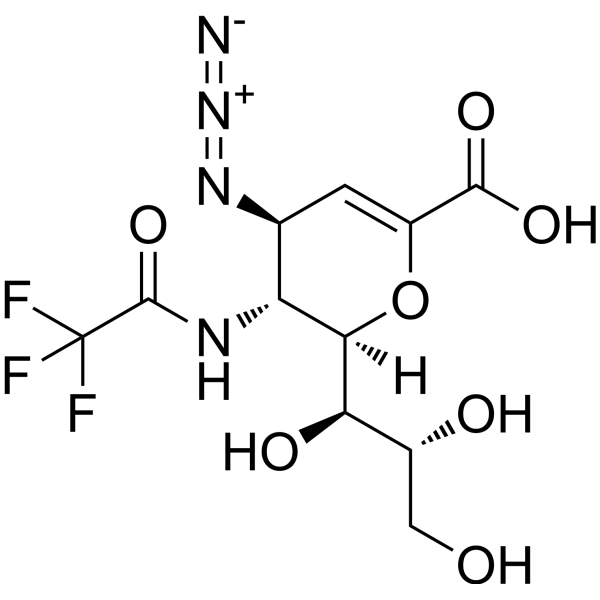
- HY-130880
-
|
|
PROTAC Linkers
|
Cancer
|
|
HS-PEG11-CH2CH2N3 is a PEG-based PROTAC linker that can be used in the synthesis of PROTACs . HS-PEG11-CH2CH2N3 is a click chemistry reagent, it contains an Azide group and can undergo copper-catalyzed azide-alkyne cycloaddition reaction (CuAAc) with molecules containing Alkyne groups. It can also undergo strain-promoted alkyne-azide cycloaddition (SPAAC) reactions with molecules containing DBCO or BCN groups.
|
-
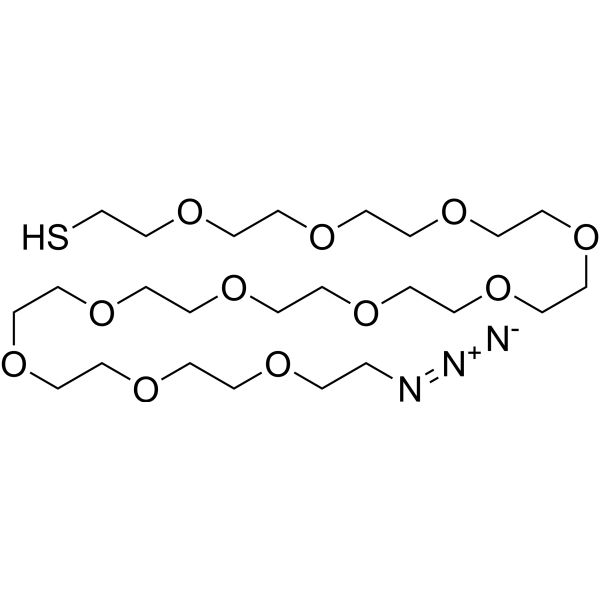
- HY-126528
-
|
|
ADC Linker
|
Cancer
|
|
N3-PEG3-C2-NHS ester is a nonclaevable 3-unit PEG linker used in the synthesis of antibody-drug conjugates (ADCs). N3-PEG3-C2-NHS ester is a click chemistry reagent, it contains an Azide group and can undergo copper-catalyzed azide-alkyne cycloaddition reaction (CuAAc) with molecules containing Alkyne groups. It can also undergo strain-promoted alkyne-azide cycloaddition (SPAAC) reactions with molecules containing DBCO or BCN groups.
|
-
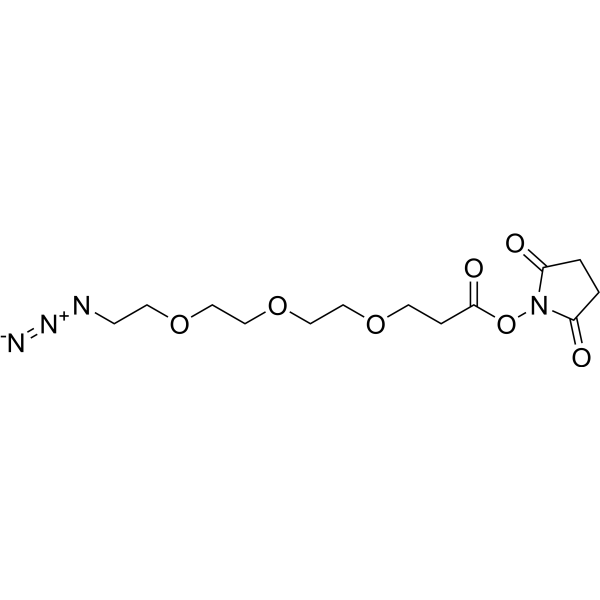
- HY-130882
-
|
|
PROTAC Linkers
|
Cancer
|
|
HS-PEG7-CH2CH2N3 is a PEG-based PROTAC linker that can be used in the synthesis of PROTACs . HS-PEG7-CH2CH2N3 is a click chemistry reagent, it contains an Azide group and can undergo copper-catalyzed azide-alkyne cycloaddition reaction (CuAAc) with molecules containing Alkyne groups. It can also undergo strain-promoted alkyne-azide cycloaddition (SPAAC) reactions with molecules containing DBCO or BCN groups.
|
-
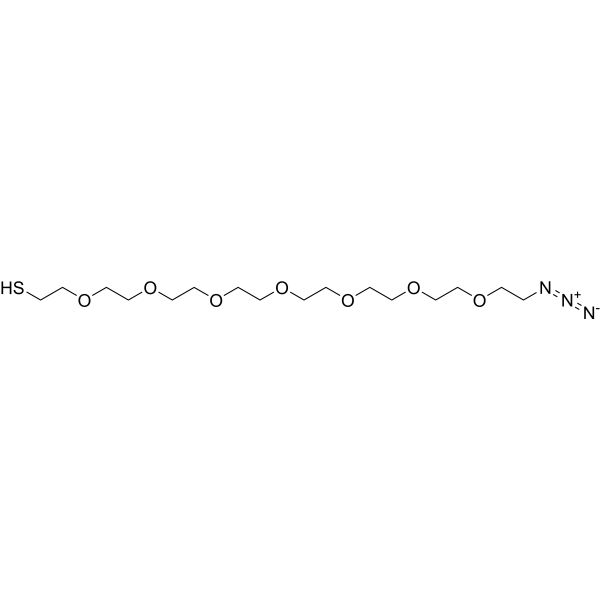
- HY-W145549
-
|
|
Biochemical Assay Reagents
|
Others
|
|
2-Azidoethyl 2-Acetamido-2-deoxy-β-D-glucopyranoside is a biochemical reagent that can be used as a biological material or organic compound for life science related research. 2-Azidoethyl 2-Acetamido-2-deoxy-β-D-glucopyranoside is a click chemistry reagent, it contains an Azide group and can undergo copper-catalyzed azide-alkyne cycloaddition reaction (CuAAc) with molecules containing Alkyne groups. It can also undergo strain-promoted alkyne-azide cycloaddition (SPAAC) reactions with molecules containing DBCO or BCN groups.
|
-
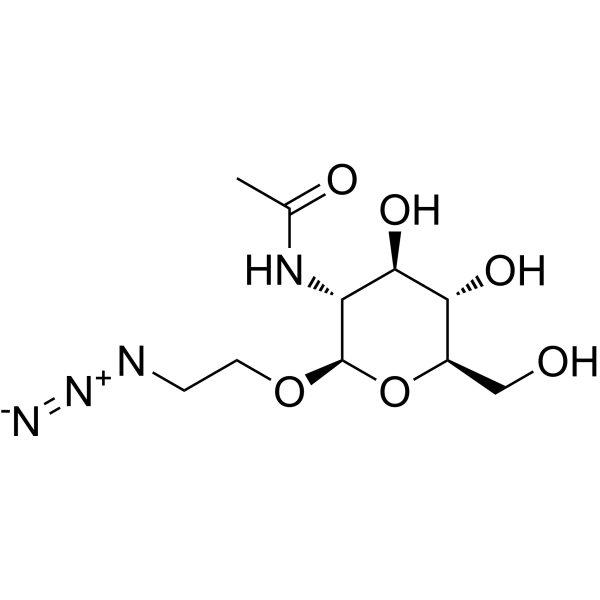
- HY-152728
-
|
|
Nucleoside Antimetabolite/Analog
|
Others
|
|
3’-Azido-3’-deoxycytidine is a purine nucleoside analogue. Purine nucleoside analogs have broad antitumor activity targeting indolent lymphoid malignancies. Anticancer mechanisms in this process rely on inhibition of DNA synthesis, induction of apoptosis, etc . 3’-Azido-3’-deoxycytidine is a click chemistry reagent, it contains an Azide group and can undergo copper-catalyzed azide-alkyne cycloaddition reaction (CuAAc) with molecules containing Alkyne groups. It can also undergo strain-promoted alkyne-azide cycloaddition (SPAAC) reactions with molecules containing DBCO or BCN groups.
|
-
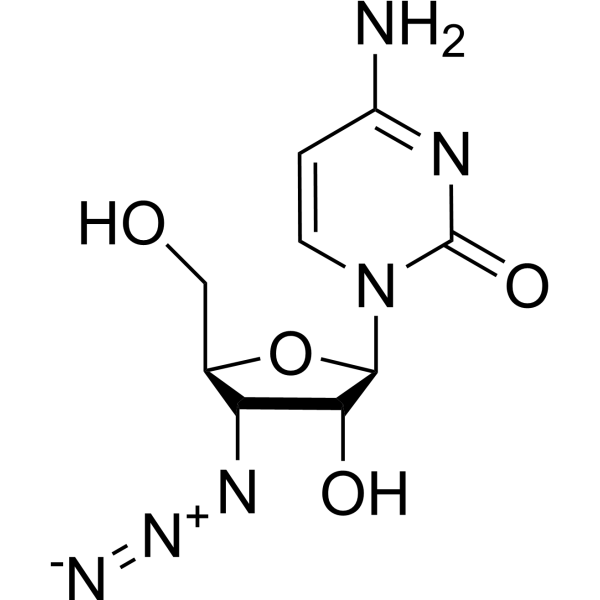
- HY-126526
-
|
|
ADC Linker
|
Cancer
|
|
N3-PEG2-C2-NHS ester is a nonclaevable 2-unit PEG linker used in the synthesis of antibody-drug conjugates (ADCs). N3-PEG2-C2-NHS ester is a click chemistry reagent, it contains an Azide group and can undergo copper-catalyzed azide-alkyne cycloaddition reaction (CuAAc) with molecules containing Alkyne groups. It can also undergo strain-promoted alkyne-azide cycloaddition (SPAAC) reactions with molecules containing DBCO or BCN groups.
|
-
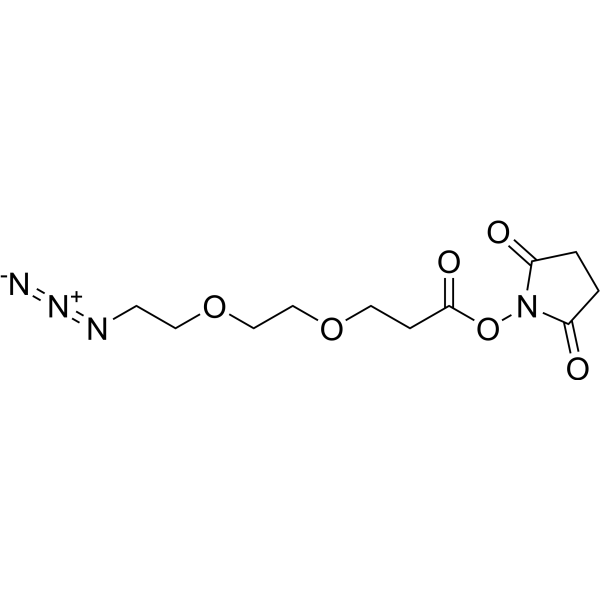
- HY-141030
-
|
|
PROTAC Linkers
|
Cancer
|
|
N-(m-PEG4)-N'-(azide-PEG4)-Cy3 is a PEG-based PROTAC linker that can be used in the synthesis of PROTACs . N-(m-PEG4)-N'-(azide-PEG4)-Cy3 is a click chemistry reagent, it contains an Azide group and can undergo copper-catalyzed azide-alkyne cycloaddition reaction (CuAAc) with molecules containing Alkyne groups. It can also undergo strain-promoted alkyne-azide cycloaddition (SPAAC) reactions with molecules containing DBCO or BCN groups.
|
-
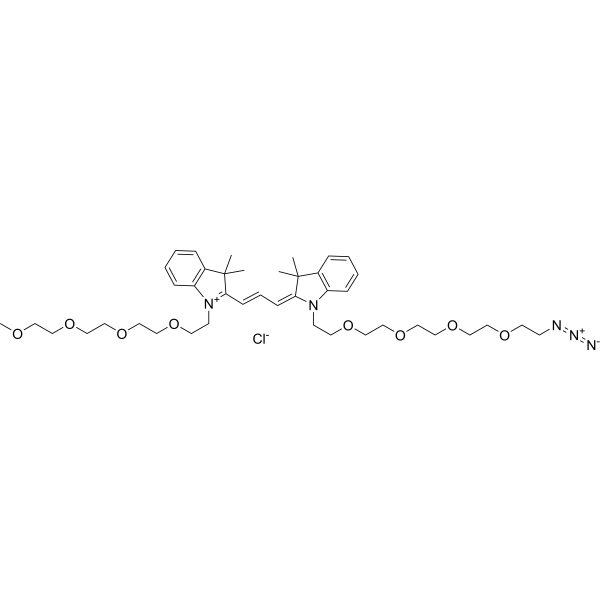
- HY-130957
-
|
|
ADC Linker
|
Cancer
|
|
Amino-PEG6-amido-bis-PEG5-N3 is a cleavable 11 unit PEG ADC linker used in the synthesis of antibody-drug conjugates (ADCs) . Amino-PEG6-amido-bis-PEG5-N3 is a click chemistry reagent, it contains an Azide group and can undergo copper-catalyzed azide-alkyne cycloaddition reaction (CuAAc) with molecules containing Alkyne groups. It can also undergo strain-promoted alkyne-azide cycloaddition (SPAAC) reactions with molecules containing DBCO or BCN groups.
|
-
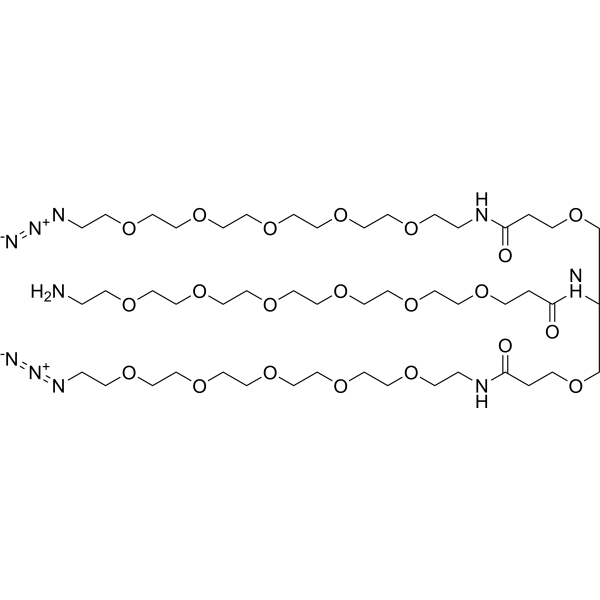
- HY-W021401
-
|
|
PROTAC Linkers
|
Cancer
|
|
Amino-PEG3-C2-Azido is a PEG-based PROTAC linker can be used in the synthesis of the PARP1 degrader iRucaparib-TP3 (HY-130645) . Amino-PEG3-C2-Azido is a click chemistry reagent, it contains an Azide group and can undergo copper-catalyzed azide-alkyne cycloaddition reaction (CuAAc) with molecules containing Alkyne groups. It can also undergo strain-promoted alkyne-azide cycloaddition (SPAAC) reactions with molecules containing DBCO or BCN groups.
|
-
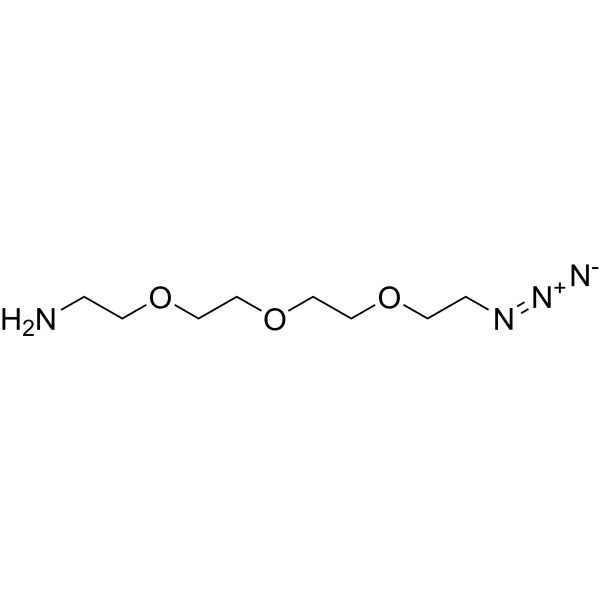
- HY-136090
-
|
|
ADC Linker
|
Cancer
|
|
Amino-PEG4-bis-PEG3-N3 is a cleavable 7 unit PEG ADC linker used in the synthesis of antibody-drug conjugates (ADCs) . Amino-PEG4-bis-PEG3-N3 is a click chemistry reagent, it contains an Azide group and can undergo copper-catalyzed azide-alkyne cycloaddition reaction (CuAAc) with molecules containing Alkyne groups. It can also undergo strain-promoted alkyne-azide cycloaddition (SPAAC) reactions with molecules containing DBCO or BCN groups.
|
-
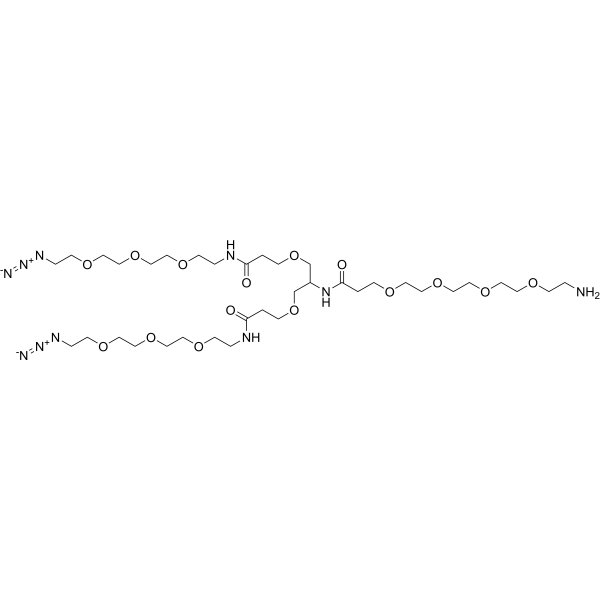
- HY-154055
-
|
|
Nucleoside Antimetabolite/Analog
|
Cancer
|
|
5′-Azido-2′,5′-dideoxyadenosine is a purine nucleoside analog. Purine nucleoside analogs have broad antitumor activity targeting indolent lymphoid malignancies. Anticancer mechanisms in this process rely on inhibition of DNA synthesis, induction of apoptosis, etc . 5′-Azido-2′,5′-dideoxyadenosine is a click chemistry reagent, it contains an Azide group and can undergo copper-catalyzed azide-alkyne cycloaddition reaction (CuAAc) with molecules containing Alkyne groups. It can also undergo strain-promoted alkyne-azide cycloaddition (SPAAC) reactions with molecules containing DBCO or BCN groups.
|
-
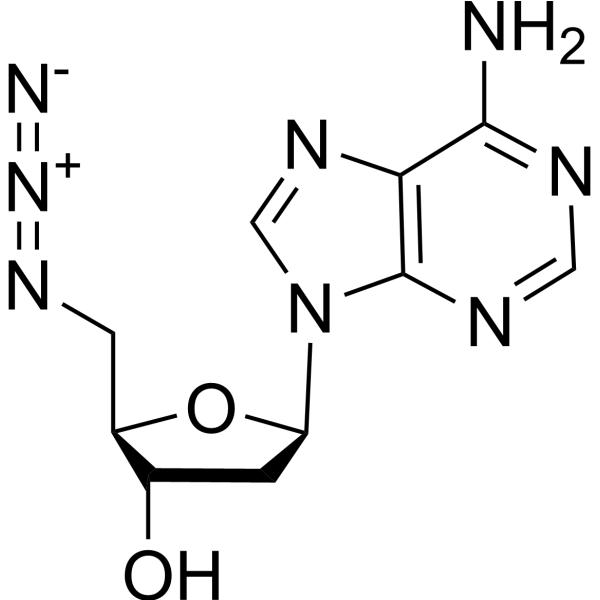
- HY-B2091A
-
|
|
Bacterial
Antibiotic
|
Infection
|
|
Azidocillin sodium, a semi-synthetic Penicillin, is an orally active β-lactam antibiotic. Azidocillin sodium bears an azide functionality and retains on-target activity within bacteria. Azidocillin sodium can be used to research osteitis caused by dental surgery, otitis media, enterococcal septicemia and other bacterial infectious diseases . Azidocillin sodium is a click chemistry reagent, it contains an Azide group and can undergo copper-catalyzed azide-alkyne cycloaddition reaction (CuAAc) with molecules containing Alkyne groups. It can also undergo strain-promoted alkyne-azide cycloaddition (SPAAC) reactions with molecules containing DBCO or BCN groups.
|
-

- HY-10443R
-
|
Ro 4588161 (Standard); R1626 (Standard)
|
Reference Standards
HCV
DNA/RNA Synthesis
|
Infection
|
|
Balapiravir (Standard) is the analytical standard of Balapiravir. This product is intended for research and analytical applications. Balapiravir (Ro 4588161; R1626) is an orally active proagent of a nucleoside analogue inhibitor of the RNA-dependent RNA polymerase (RdRp) of HCV (R1479; 4'-Azidocytidine). Balapiravir has anti-HCV activity . Balapiravir is a click chemistry reagent, it contains an Azide group and can undergo copper-catalyzed azide-alkyne cycloaddition reaction (CuAAc) with molecules containing Alkyne groups. It can also undergo strain-promoted alkyne-azide cycloaddition (SPAAC) reactions with molecules containing DBCO or BCN groups.
|
-

- HY-130969
-
|
|
ADC Linker
|
Cancer
|
|
Ald-Ph-PEG4-bis-PEG3-N3 is a cleavable 6 unit PEG ADC linker used in the synthesis of antibody-drug conjugates (ADCs) . Ald-Ph-PEG4-bis-PEG3-N3 is a click chemistry reagent, it contains an Azide group and can undergo copper-catalyzed azide-alkyne cycloaddition reaction (CuAAc) with molecules containing Alkyne groups. It can also undergo strain-promoted alkyne-azide cycloaddition (SPAAC) reactions with molecules containing DBCO or BCN groups.
|
-
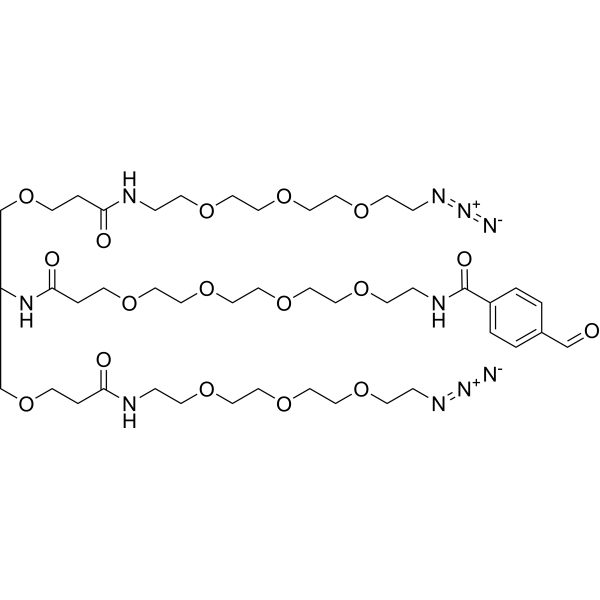
- HY-130109
-
|
|
ADC Linker
|
Cancer
|
|
N3-PEG4-C2-NHS ester is a nonclaevable 4-unit PEG linker used in the synthesis of antibody-drug conjugates (ADCs). N3-PEG4-C2-NHS ester is a click chemistry reagent, it contains an Azide group and can undergo copper-catalyzed azide-alkyne cycloaddition reaction (CuAAc) with molecules containing Alkyne groups. It can also undergo strain-promoted alkyne-azide cycloaddition (SPAAC) reactions with molecules containing DBCO or BCN groups.
|
-
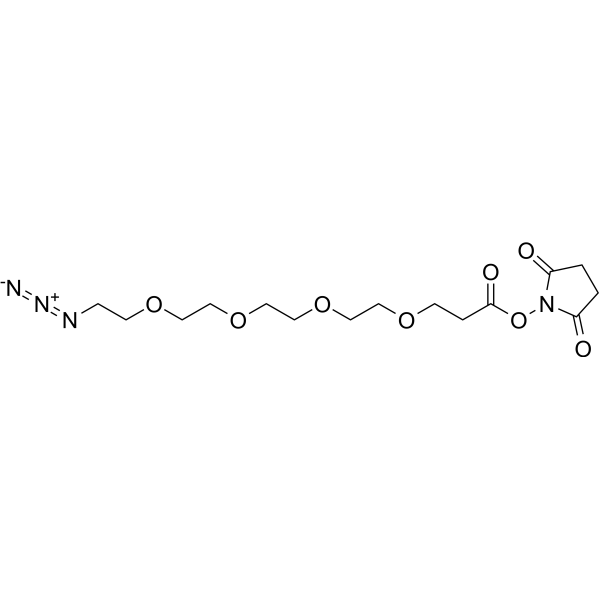
- HY-128835
-
|
PROTAC Linker 21
|
PROTAC Linkers
|
Cancer
|
|
Phenol-amido-C1-PEG3-N3 (PROTAC Linker 21) is an PEG-based PROTAC linker can be used in the synthesis of PROTACs . Phenol-amido-C1-PEG3-N3 is a click chemistry reagent, it contains an Azide group and can undergo copper-catalyzed azide-alkyne cycloaddition reaction (CuAAc) with molecules containing Alkyne groups. It can also undergo strain-promoted alkyne-azide cycloaddition (SPAAC) reactions with molecules containing DBCO or BCN groups.
|
-
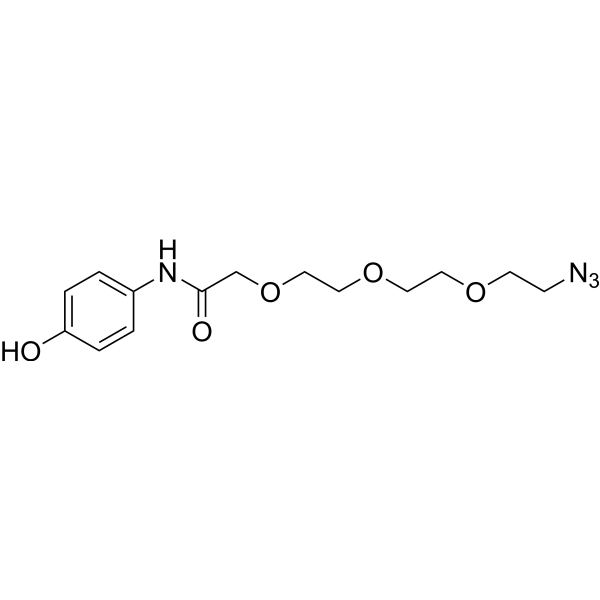
- HY-160773
-
|
|
Biochemical Assay Reagents
|
Others
|
|
DBCO-PEG6-NHS ester is a click chemistry PEG reagent containing an NHS ester that reacts specifically with primary amines, such as side chains of lysine residues or aminosilane-coated surfaces, under neutral or slightly alkaline conditions. , efficient reaction to form covalent bonds. DBCO-PEG6-NHS ester also contains a DBCO group that can undergo strain-promoted alkyne-azide cycloaddition (SPAAC) with molecules containing Azide groups .
|
-
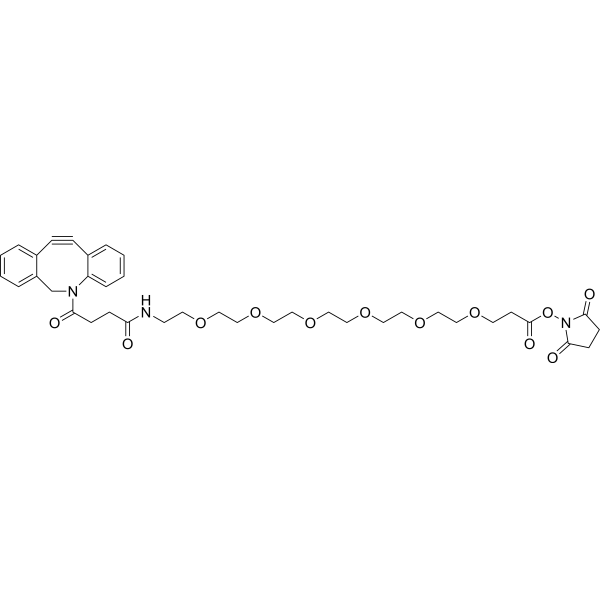
- HY-151672
-
|
|
ADC Linker
|
Others
|
|
Biotin-TEG-ATFBA is a click chemistry reagent containing a perfluorophenylazide group. Biotin-TEG-ATFBA forms a highly stable azene intermediate that undergoes insertion and addition reactions (non-intermolecular rearrangement) in moderate to good yields after photolysis. It contains an azide group and can undergo copper-catalyzed azide-alkyne cycloaddition (CuAAc) with molecules containing alkyne groups. It can also undergo ring strain-promoted alkyne-azide cycloaddition (SPAAC) with molecules containing DBCO or BCN groups.
|
-
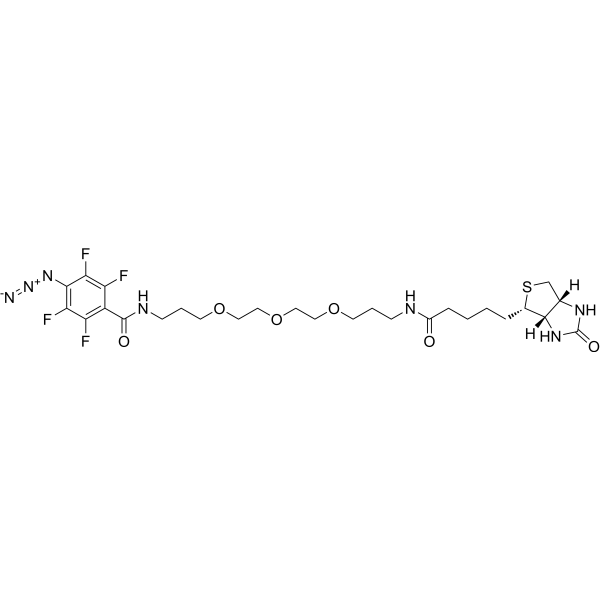
- HY-151708
-
|
|
Fluorescent Dye
|
Others
|
|
CalFluor 488 Azide is a water-soluble fluorogenic azide probe. CalFluor 488 Azide is activated by Cu-catalyzed or metal-free click reaction. CalFluor 488 Azide is not fluorescent until it is reacted with alkynes . It contains an azide group and can undergo copper-catalyzed azide-alkyne cycloaddition (CuAAc) with molecules containing alkyne groups. It can also undergo ring strain-promoted alkyne-azide cycloaddition (SPAAC) with molecules containing DBCO or BCN groups.
|
-
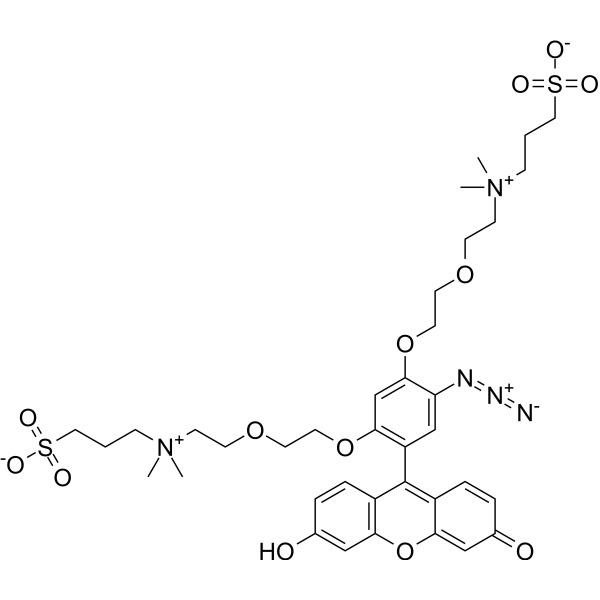
- HY-D1320
-
|
|
Fluorescent Dye
|
Others
|
|
Cyanine5 azide chloride is a potent fluorescent dye. Cyanine5 azide chloride can be reacted with terminal alkynes via a copper-catalyzed click reaction (CuAAC). (λex=646 nm, λem=662 nm) . It contains an azide group and can undergo copper-catalyzed azide-alkyne cycloaddition (CuAAc) with molecules containing alkyne groups. It can also undergo ring strain-promoted alkyne-azide cycloaddition (SPAAC) with molecules containing DBCO or BCN groups.
|
-
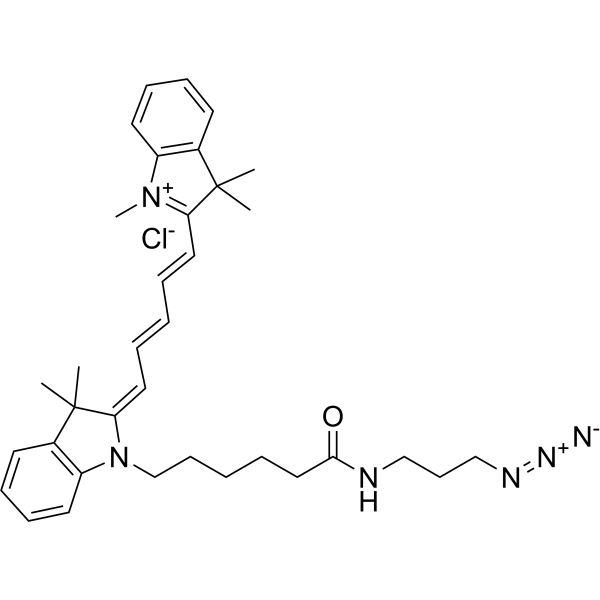
- HY-151791
-
|
|
ADC Linker
|
Others
|
|
(S,R,S)-AHPC-C6-PEG3-butyl-N3 is a click chemistry reagent containing an azide group. (S,R,S)-AHPC-C6-PEG3-butyl-N3 serves as crosslinker-E3 ligase ligand conjugate, Click reactive protein degrader building block for PROTAC research, Template for synthesis of targeted protein degrader, VH032 conjugate . (S,R,S)-AHPC-C6-PEG3-butyl-N3 is a click chemistry reagent, it contains an Azide group and can undergo copper-catalyzed azide-alkyne cycloaddition reaction (CuAAc) with molecules containing Alkyne groups. It can also undergo strain-promoted alkyne-azide cycloaddition (SPAAC) reactions with molecules containing DBCO or BCN groups.
|
-
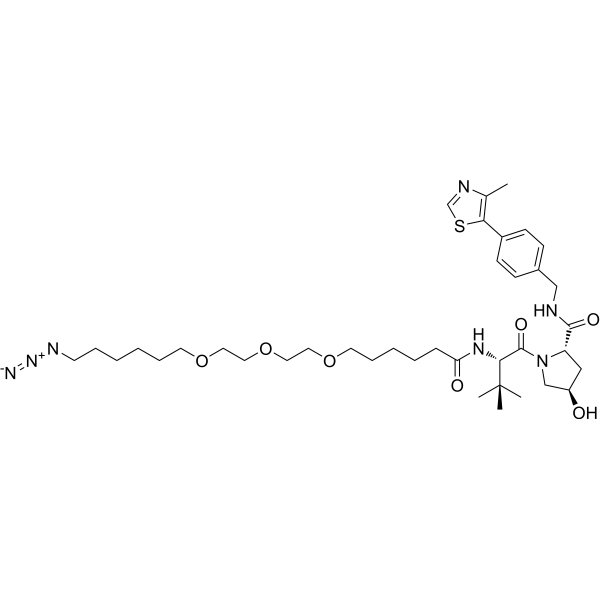
- HY-151679
-
|
|
ADC Linker
|
Others
|
|
Fmoc-L-Lys(4-N3-Z)-OH is a click chemistry reagent containing an azide group. Fmoc-L-Lys(4-N3-Z)-OH acts as Lysine building-block for SPPS containing an Azide moiety as a bioorthogonal ligation handle, an infrared probe and a photo-affinity reagent. It can be decaged by trans-cyclooctenols via a strain-promoted 1,3-dipolar cycloaddition . Fmoc-L-Lys(4-N3-Z)-OH is a click chemistry reagent, it contains an Azide group and can undergo copper-catalyzed azide-alkyne cycloaddition reaction (CuAAc) with molecules containing Alkyne groups. It can also undergo strain-promoted alkyne-azide cycloaddition (SPAAC) reactions with molecules containing DBCO or BCN groups.
|
-
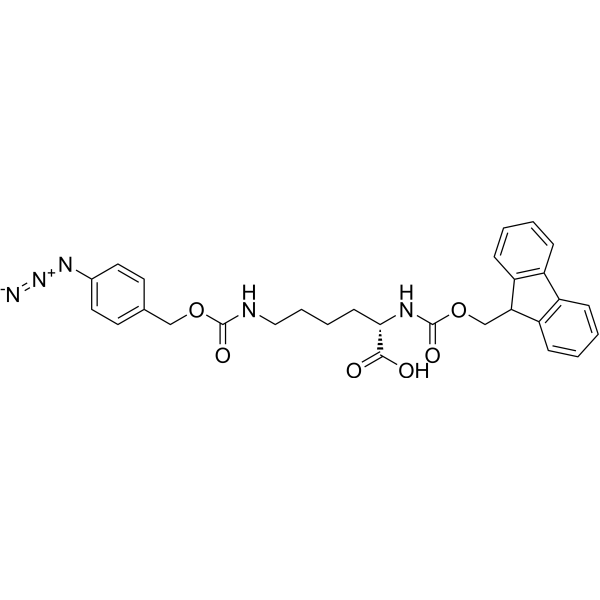
- HY-151715
-
|
|
Biochemical Assay Reagents
|
Others
|
|
N3-D-Dap(Fmoc)-OH is a click chemistry reagent. N3-D-Dap(Fmoc)-OH can be used as a component for coupling by click reaction and as an orthogonally protected diaminocarboxylic acid derivative. N3-D-Dap(Fmoc)-OH contains an azide group and can undergo copper-catalyzed azide-alkyne cycloaddition (CuAAc) with molecules containing alkyne groups. N3-D-Dap(Fmoc)-OH can also undergo ring strain-promoted alkyne-azide cycloaddition (SPAAC) with molecules containing DBCO or BCN groups .
|
-
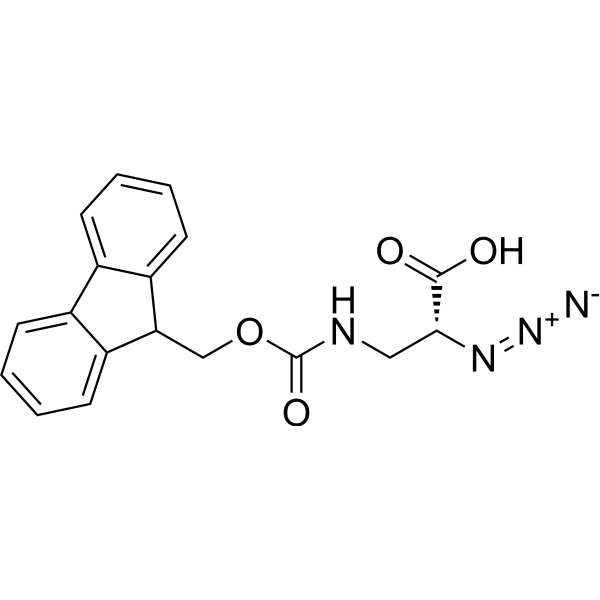
- HY-130897
-
|
|
PROTAC Linkers
|
Cancer
|
|
Boc-NH-PEG11-CH2CH2N3 is a PEG-based PROTAC linker that can be used in the synthesis of PROTACs . Boc-NH-PEG11-CH2CH2N3 is a click chemistry reagent, it contains an Azide group and can undergo copper-catalyzed azide-alkyne cycloaddition reaction (CuAAc) with molecules containing Alkyne groups. It can also undergo strain-promoted alkyne-azide cycloaddition (SPAAC) reactions with molecules containing DBCO or BCN groups.
|
-
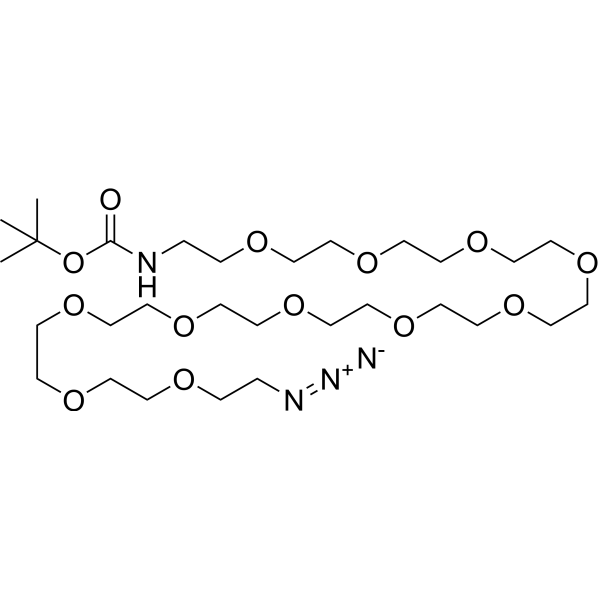
- HY-130474
-
|
|
ADC Linker
PROTAC Linkers
|
Cancer
|
|
Azido-PEG6-NHS ester is a cleavable 6 unit PEG ADC linker used in the synthesis of antibody-drug conjugates (ADCs) . Azido-PEG6-NHS ester is also a PEG- and Alkyl/ether based PROTAC linker that can be used in the synthesis of PROTACs . Azido-PEG6-NHS ester is a click chemistry reagent, it contains an Azide group and can undergo copper-catalyzed azide-alkyne cycloaddition reaction (CuAAc) with molecules containing Alkyne groups. It can also undergo strain-promoted alkyne-azide cycloaddition (SPAAC) reactions with molecules containing DBCO or BCN groups.
|
-
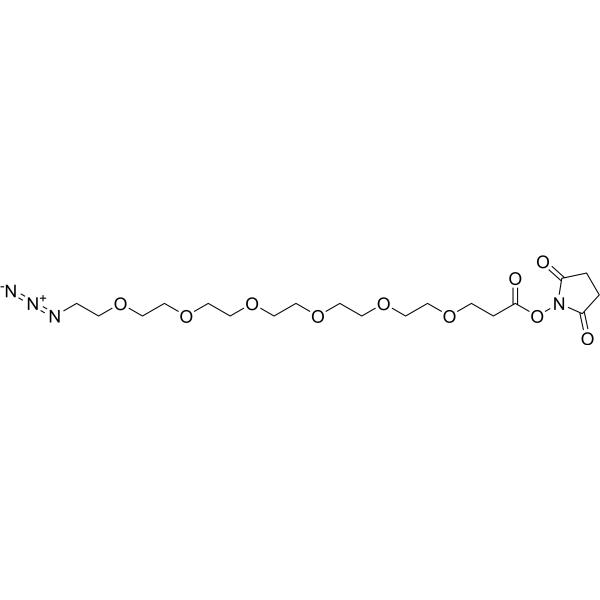
- HY-140215
-
|
|
PROTAC Linkers
ADC Linker
|
Cancer
|
|
Azido-PEG6-amine is a PEG-based PROTAC linker that can be used in the synthesis of PROTACs . Azido-PEG6-amine is also a non-cleavable 6 unit PEG ADC linker used in the synthesis of antibody-drug conjugates (ADCs) . Azido-PEG6-amine is a click chemistry reagent, it contains an Azide group and can undergo copper-catalyzed azide-alkyne cycloaddition reaction (CuAAc) with molecules containing Alkyne groups. It can also undergo strain-promoted alkyne-azide cycloaddition (SPAAC) reactions with molecules containing DBCO or BCN groups.
|
-
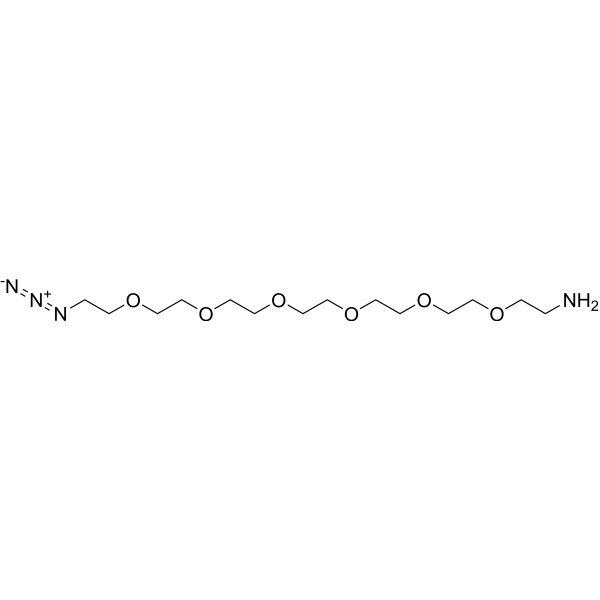
- HY-130899
-
|
|
PROTAC Linkers
|
Cancer
|
|
Boc-NH-PEG23-CH2CH2N3 is a PEG-based PROTAC linker that can be used in the synthesis of PROTACs . Boc-NH-PEG23-CH2CH2N3 is a click chemistry reagent, it contains an Azide group and can undergo copper-catalyzed azide-alkyne cycloaddition reaction (CuAAc) with molecules containing Alkyne groups. It can also undergo strain-promoted alkyne-azide cycloaddition (SPAAC) reactions with molecules containing DBCO or BCN groups.
|
-
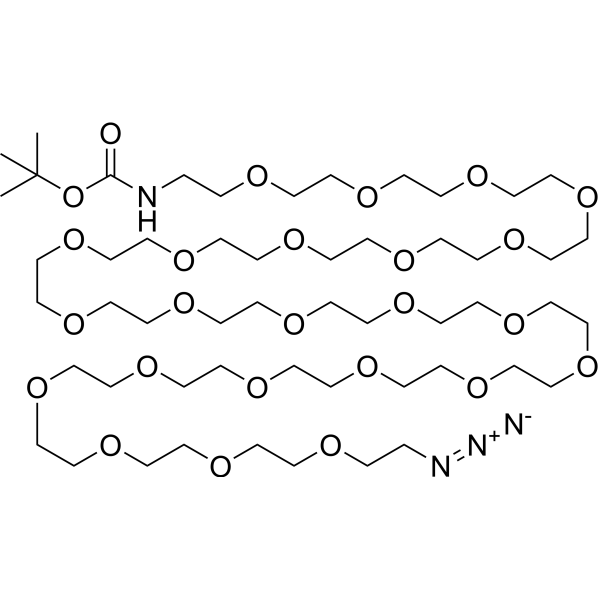
- HY-152514
-
|
|
Nucleoside Antimetabolite/Analog
|
Cancer
|
|
5-Azidomethyl-2’-beta-methyl uridine is a purine nucleoside analog. Purine nucleoside analogs have broad antitumor activity targeting indolent lymphoid malignancies. Anticancer mechanisms in this process rely on inhibition of DNA synthesis, induction of apoptosis, etc . 5-Azidomethyl-2’-beta-methyl uridine is a click chemistry reagent, it contains an Azide group and can undergo copper-catalyzed azide-alkyne cycloaddition reaction (CuAAc) with molecules containing Alkyne groups. It can also undergo strain-promoted alkyne-azide cycloaddition (SPAAC) reactions with molecules containing DBCO or BCN groups.
|
-
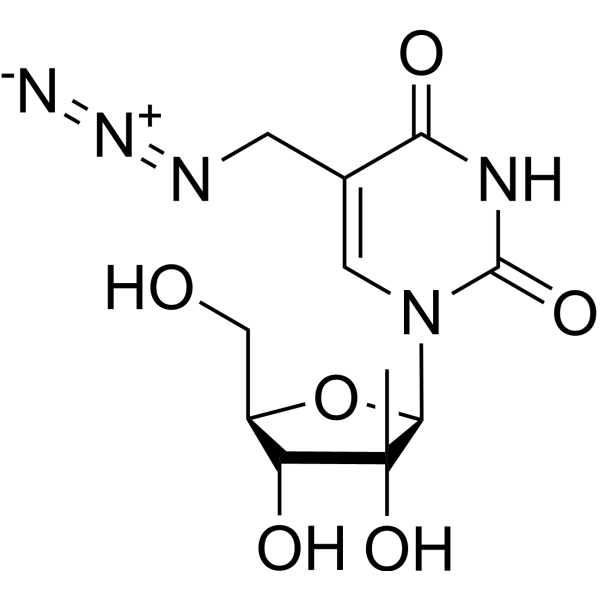
- HY-141287
-
|
|
PROTAC Linkers
|
Cancer
|
|
N-(Azido-PEG3)-N-(PEG2-NH-Boc)-PEG3-acid is a PEG-based PROTAC linker that can be used in the synthesis of PROTACs . N-(Azido-PEG3)-N-(PEG2-NH-Boc)-PEG3-acid is a click chemistry reagent, it contains an Azide group and can undergo copper-catalyzed azide-alkyne cycloaddition reaction (CuAAc) with molecules containing Alkyne groups. It can also undergo strain-promoted alkyne-azide cycloaddition (SPAAC) reactions with molecules containing DBCO or BCN groups.
|
-
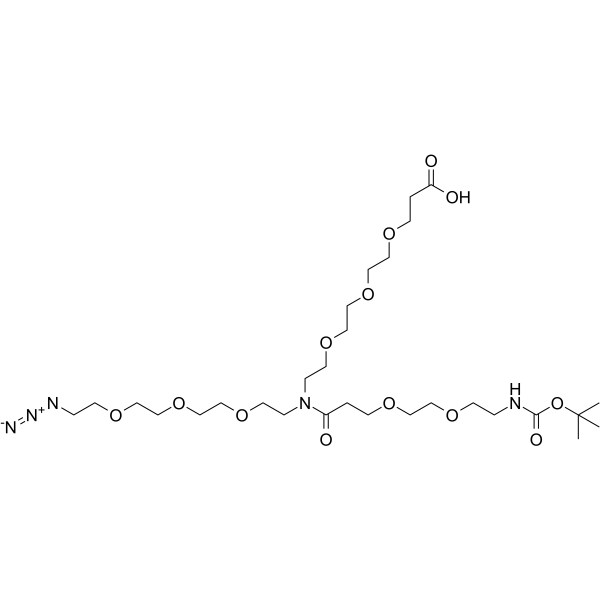
- HY-140004
-
|
|
PROTAC Linkers
ADC Linker
|
Cancer
|
|
Azide-PEG3-Tos is a PEG-based PROTAC linker that can be used in the synthesis of PROTACs . Azide-PEG3-Tos is also a non-cleavable 3 unit PEG ADC linker used in the synthesis of antibody-drug conjugates (ADCs) . Azide-PEG3-Tos is a click chemistry reagent, it contains an Azide group and can undergo copper-catalyzed azide-alkyne cycloaddition reaction (CuAAc) with molecules containing Alkyne groups. It can also undergo strain-promoted alkyne-azide cycloaddition (SPAAC) reactions with molecules containing DBCO or BCN groups.
|
-
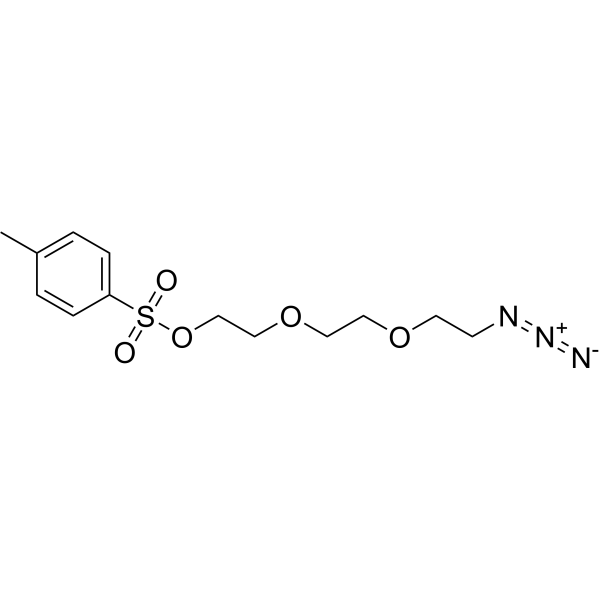
- HY-152592
-
|
|
Nucleoside Antimetabolite/Analog
|
Others
|
|
3’-Azido-3’-deoxy-beta-L-cytidine is a purine nucleoside analogue. Purine nucleoside analogs have broad antitumor activity targeting indolent lymphoid malignancies. Anticancer mechanisms in this process rely on inhibition of DNA synthesis, induction of apoptosis, etc . 3’-Azido-3’-deoxy-beta-L-cytidine is a click chemistry reagent, it contains an Azide group and can undergo copper-catalyzed azide-alkyne cycloaddition reaction (CuAAc) with molecules containing Alkyne groups. It can also undergo strain-promoted alkyne-azide cycloaddition (SPAAC) reactions with molecules containing DBCO or BCN groups.
|
-
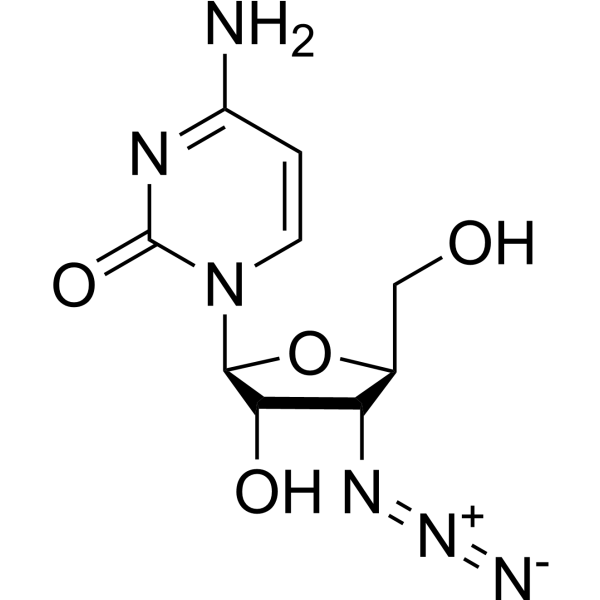
- HY-113931
-
|
|
PROTAC Linkers
ADC Linker
|
Cancer
|
|
Aminooxy-PEG2-azide is a PEG-based PROTAC linker that can be used in the synthesis of PROTACs . Aminooxy-PEG2-azide is also a non-cleavable 2 unit PEG ADC linker used in the synthesis of antibody-drug conjugates (ADCs) . Aminooxy-PEG2-azide is a click chemistry reagent, it contains an Azide group and can undergo copper-catalyzed azide-alkyne cycloaddition reaction (CuAAc) with molecules containing Alkyne groups. It can also undergo strain-promoted alkyne-azide cycloaddition (SPAAC) reactions with molecules containing DBCO or BCN groups.
|
-
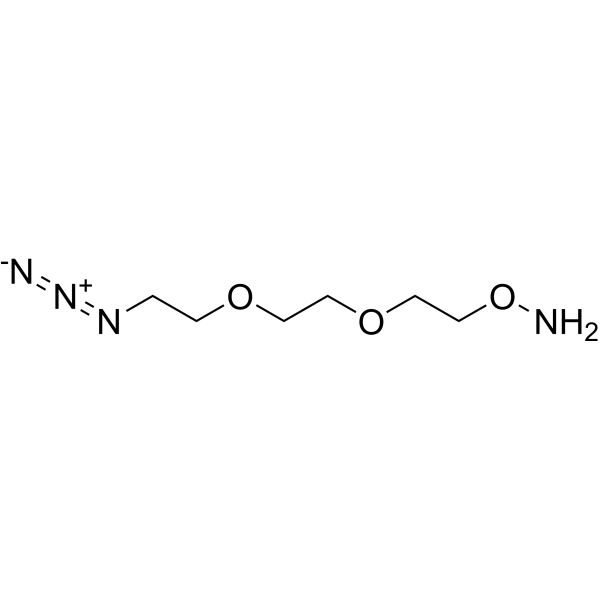
- HY-103601
-
|
VH032-PEG4-N3; VHL Ligand-Linker Conjugates 5; E3 ligase Ligand-Linker Conjugates 4
|
E3 Ligase Ligand-Linker Conjugates
|
Others
|
|
(S,R,S)-AHPC-PEG4-N3 is a synthesized E3 ligase ligand-linker conjugate that incorporates the (S,R,S)-AHPC based VHL ligand and 4-unit PEG linker used in PROTAC technology. (S,R,S)-AHPC-PEG4-N3 is a click chemistry reagent, it contains an Azide group and can undergo copper-catalyzed azide-alkyne cycloaddition reaction (CuAAc) with molecules containing Alkyne groups. It can also undergo strain-promoted alkyne-azide cycloaddition (SPAAC) reactions with molecules containing DBCO or BCN groups.
|
-
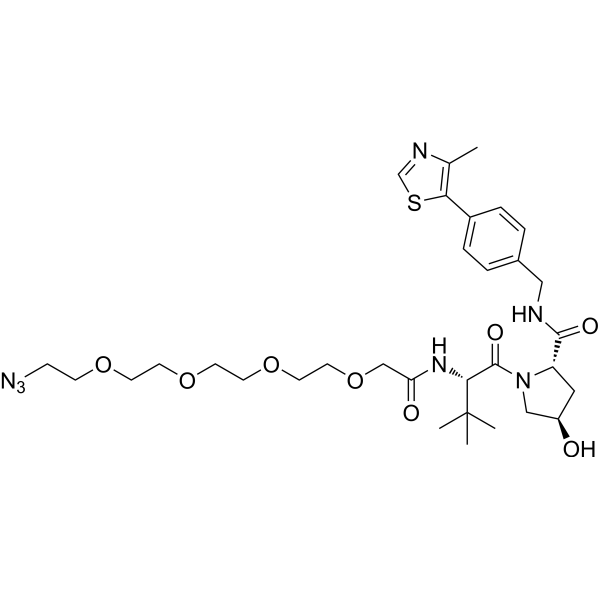
- HY-130184
-
|
|
ADC Linker
PROTAC Linkers
|
Cancer
|
|
Azido-PEG8-NHS ester is a cleavable 8 unit PEG ADC linker used in the synthesis of antibody-drug conjugates (ADCs) . Azido-PEG8-NHS ester is also a PEG- and Alkyl/ether-based PROTAC linker that can be used in the synthesis of PROTACs . Azido-PEG8-NHS ester is a click chemistry reagent, it contains an Azide group and can undergo copper-catalyzed azide-alkyne cycloaddition reaction (CuAAc) with molecules containing Alkyne groups. It can also undergo strain-promoted alkyne-azide cycloaddition (SPAAC) reactions with molecules containing DBCO or BCN groups.
|
-
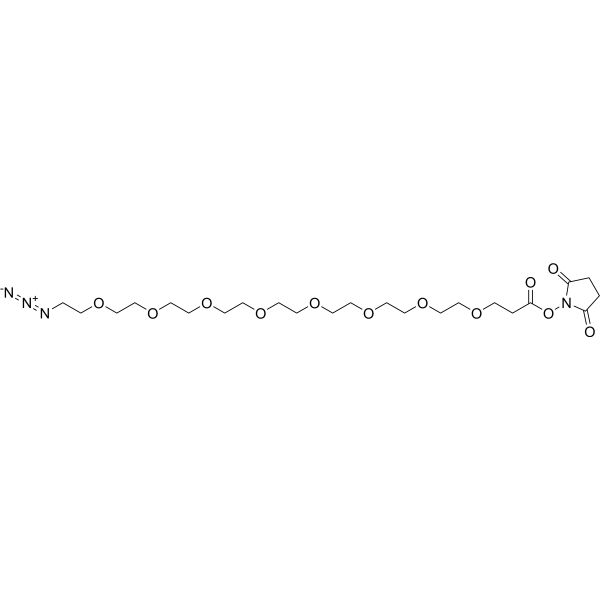
- HY-130537
-
|
|
PROTAC Linkers
ADC Linker
|
Cancer
|
|
Azido-PEG6-alcohol is a PEG-based PROTAC linker that can be used in the synthesis of PROTACs . Azido-PEG6-alcohol is also a non-cleavable 6 unit PEG ADC linker used in the synthesis of antibody-drug conjugates (ADCs) . Azido-PEG6-alcohol is a click chemistry reagent, it contains an Azide group and can undergo copper-catalyzed azide-alkyne cycloaddition reaction (CuAAc) with molecules containing Alkyne groups. It can also undergo strain-promoted alkyne-azide cycloaddition (SPAAC) reactions with molecules containing DBCO or BCN groups.
|
-
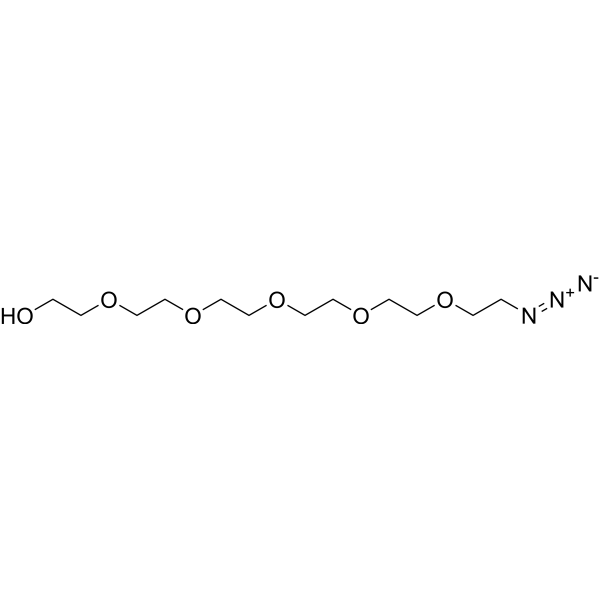
- HY-130211
-
|
|
ADC Linker
PROTAC Linkers
|
Cancer
|
|
Azido-PEG5-alcohol is a non-cleavable 5 unit PEG ADC linker used in the synthesis of antibody-drug conjugates (ADCs) . Azido-PEG5-alcohol is also a PEG-based PROTAC linker that can be used in the synthesis of PROTACs . Azido-PEG5-alcohol is a click chemistry reagent, it contains an Azide group and can undergo copper-catalyzed azide-alkyne cycloaddition reaction (CuAAc) with molecules containing Alkyne groups. It can also undergo strain-promoted alkyne-azide cycloaddition (SPAAC) reactions with molecules containing DBCO or BCN groups.
|
-
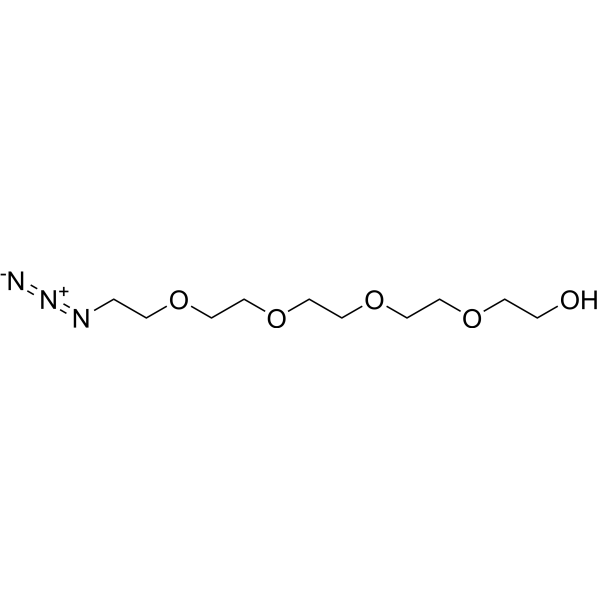
- HY-D2886A
-
|
Rhodamine B-PEG600-N3
|
Fluorescent Dye
|
Others
|
|
RB-PEG600-N3 (Rhodamine B-PEG600-N3) is a fluorescent dye composed of Rhodamine B (HY-Y0016), PEG and azide group (N3). RB-PEG600-N3 is a click chemistry reagent, it contains an Azide group and can undergo copper-catalyzed azide-alkyne cycloaddition reaction (CuAAc) with molecules containing Alkyne groups. It can also undergo strain-promoted alkyne-azide cycloaddition (SPAAC) reactions with molecules containing DBCO or BCN groups (Ex/Em=546/610 nm) .
|
-

- HY-D2886B
-
|
Rhodamine B-PEG1000-N3
|
Fluorescent Dye
|
Others
|
|
RB-PEG1000-N3 (Rhodamine B-PEG1000-N3) is a fluorescent dye composed of Rhodamine B (HY-Y0016), PEG and azide group (N3). RB-PEG1000-N3 is a click chemistry reagent, it contains an Azide group and can undergo copper-catalyzed azide-alkyne cycloaddition reaction (CuAAc) with molecules containing Alkyne groups. It can also undergo strain-promoted alkyne-azide cycloaddition (SPAAC) reactions with molecules containing DBCO or BCN groups (Ex/Em=546/610 nm) .
|
-

- HY-D2886C
-
|
Rhodamine B-PEG2000-N3
|
Fluorescent Dye
|
Others
|
|
RB-PEG2000-N3 (Rhodamine B-PEG2000-N3) is a fluorescent dye composed of Rhodamine B (HY-Y0016), PEG and azide group (N3). RB-PEG2000-N3 is a click chemistry reagent, it contains an Azide group and can undergo copper-catalyzed azide-alkyne cycloaddition reaction (CuAAc) with molecules containing Alkyne groups. It can also undergo strain-promoted alkyne-azide cycloaddition (SPAAC) reactions with molecules containing DBCO or BCN groups (Ex/Em=546/610 nm) .
|
-

- HY-128834
-
|
PROTAC Linker 20
|
PROTAC Linkers
|
Cancer
|
|
N3-PEG4-C2-NH2 (PROTAC Linker 20) is a PEG-based PROTAC linker can be used in the synthesis of PROTACs . N3-PEG4-C2-NH2 is a click chemistry reagent, it contains an Azide group and can undergo copper-catalyzed azide-alkyne cycloaddition reaction (CuAAc) with molecules containing Alkyne groups. It can also undergo strain-promoted alkyne-azide cycloaddition (SPAAC) reactions with molecules containing DBCO or BCN groups.
|
-
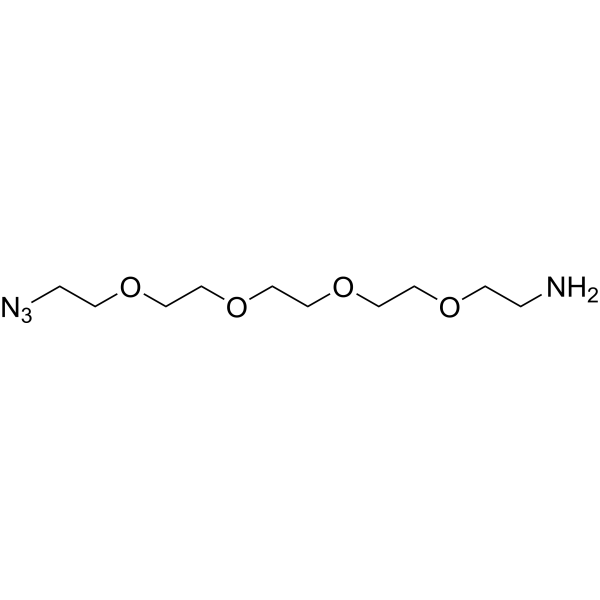
- HY-154461
-
|
|
Nucleoside Antimetabolite/Analog
|
Cancer
|
|
5-Azidomethyl-2’,3’,5’-tri-O-benzoyl uridine is a thymidine analog. Analogs of this series have insertional activity towards replicated DNA. They can be used to label cells and track DNA synthesis . 5-Azidomethyl-2’,3’,5’-tri-O-benzoyl uridine is a click chemistry reagent, it contains an Azide group and can undergo copper-catalyzed azide-alkyne cycloaddition reaction (CuAAc) with molecules containing Alkyne groups. It can also undergo strain-promoted alkyne-azide cycloaddition (SPAAC) reactions with molecules containing DBCO or BCN groups.
|
-
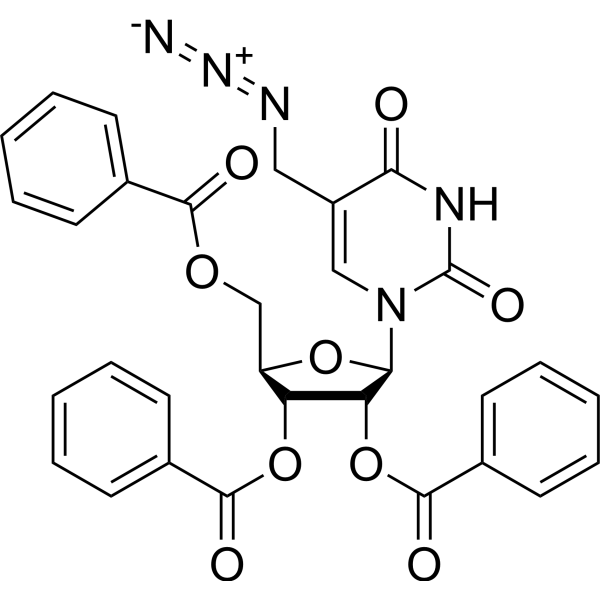
- HY-126781
-
|
BM-211290
|
HIV
DNA/RNA Synthesis
|
Infection
|
|
Fozivudine tidoxil (BM-211290) is an orally active thioether lipid-zidovudine (ZDV) conjugate with anti-HIV activity. Fozivudine tidoxil, a member of the NRTI family of agent, is incorporated into the newly synthesized strand of DNA during intracellular viral replication and irreversibly binds viral RT which disrupts viral reverse-transcription . Fozivudine tidoxil is a click chemistry reagent, it contains an Azide group and can undergo copper-catalyzed azide-alkyne cycloaddition reaction (CuAAc) with molecules containing Alkyne groups. It can also undergo strain-promoted alkyne-azide cycloaddition (SPAAC) reactions with molecules containing DBCO or BCN groups.
|
-
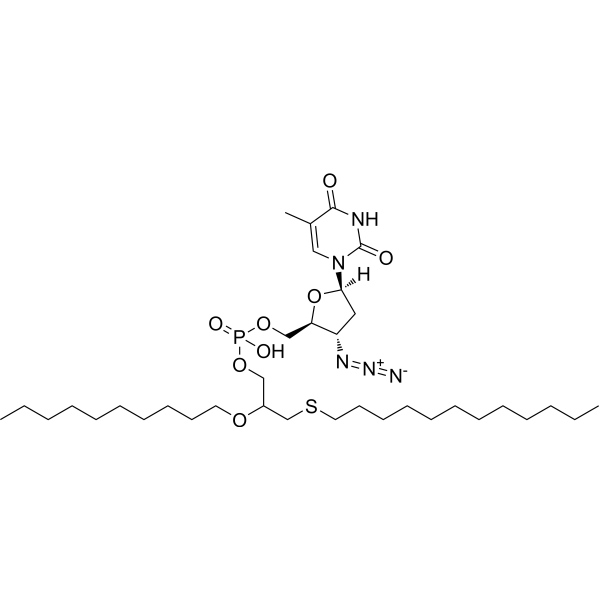
- HY-152601
-
|
|
Nucleoside Antimetabolite/Analog
|
Others
|
|
3’-Azido-3’-deoxy-beta-L-adenosine is a purine nucleoside analogue. Purine nucleoside analogs have broad antitumor activity targeting indolent lymphoid malignancies. Anticancer mechanisms in this process rely on inhibition of DNA synthesis, induction of apoptosis, etc . 3’-Azido-3’-deoxy-beta-L-adenosine is a click chemistry reagent, it contains an Azide group and can undergo copper-catalyzed azide-alkyne cycloaddition reaction (CuAAc) with molecules containing Alkyne groups. It can also undergo strain-promoted alkyne-azide cycloaddition (SPAAC) reactions with molecules containing DBCO or BCN groups.
|
-
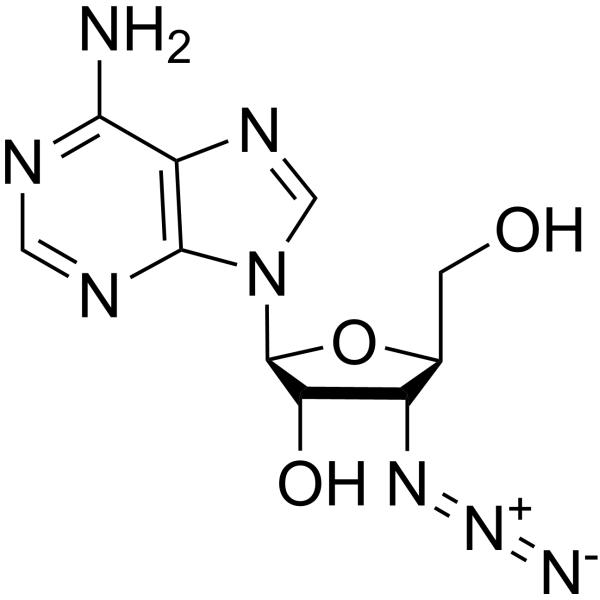
- HY-D2886E
-
|
Rhodamine B-PEG5000-N3
|
Fluorescent Dye
|
Others
|
|
RB-PEG5000-N3 (Rhodamine B-PEG5000-N3) is a fluorescent dye composed of Rhodamine B (HY-Y0016), PEG and azide group (N3). RB-PEG5000-N3 is a click chemistry reagent, it contains an Azide group and can undergo copper-catalyzed azide-alkyne cycloaddition reaction (CuAAc) with molecules containing Alkyne groups. It can also undergo strain-promoted alkyne-azide cycloaddition (SPAAC) reactions with molecules containing DBCO or BCN groups (Ex/Em=546/610 nm) .
|
-

- HY-103598
-
|
VH032-PEG3-N3; VHL Ligand-Linker Conjugates 8; E3 ligase Ligand-Linker Conjugates 12
|
E3 Ligase Ligand-Linker Conjugates
|
Cancer
|
|
(S,R,S)-AHPC-PEG3-N3 is a synthesized E3 ligase ligand-linker conjugate that incorporates the (S,R,S)-AHPC based VHL ligand and 3-unit PEG linker used in PROTAC technology. (S,R,S)-AHPC-PEG3-N3 is a click chemistry reagent, it contains an Azide group and can undergo copper-catalyzed azide-alkyne cycloaddition reaction (CuAAc) with molecules containing Alkyne groups. It can also undergo strain-promoted alkyne-azide cycloaddition (SPAAC) reactions with molecules containing DBCO or BCN groups.
|
-
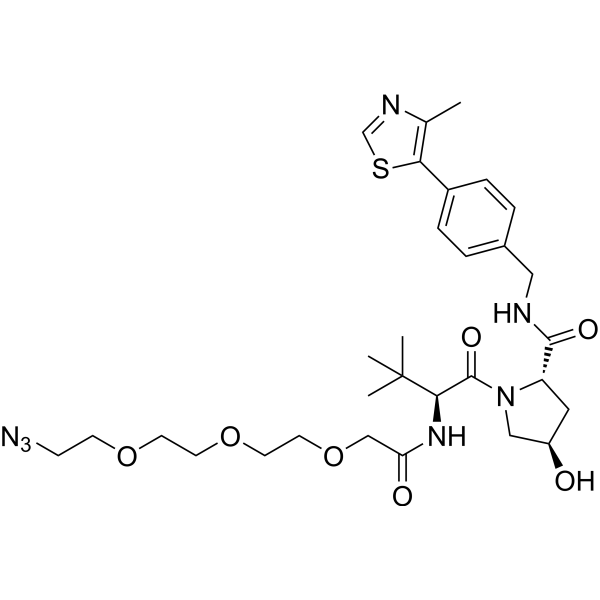
- HY-D2886
-
|
Rhodamine B-PEG400-N3
|
Fluorescent Dye
|
Others
|
|
RB-PEG400-N3 (Rhodamine B-PEG400-N3) is a fluorescent dye composed of Rhodamine B (HY-Y0016), PEG and azide group (N3). RB-PEG400-N3 is a click chemistry reagent, it contains an Azide group and can undergo copper-catalyzed azide-alkyne cycloaddition reaction (CuAAc) with molecules containing Alkyne groups. It can also undergo strain-promoted alkyne-azide cycloaddition (SPAAC) reactions with molecules containing DBCO or BCN groups (Ex/Em=546/610 nm) .
|
-

- HY-D2886H
-
|
Rhodamine B-PEG10000-N3
|
Fluorescent Dye
|
Others
|
|
RB-PEG10000-N3 (Rhodamine B-PEG10000-N3) is a fluorescent dye composed of Rhodamine B (HY-Y0016), PEG and azide group (N3). RB-PEG10000-N3 is a click chemistry reagent, it contains an Azide group and can undergo copper-catalyzed azide-alkyne cycloaddition reaction (CuAAc) with molecules containing Alkyne groups. It can also undergo strain-promoted alkyne-azide cycloaddition (SPAAC) reactions with molecules containing DBCO or BCN groups (Ex/Em=546/610 nm) .
|
-

- HY-D2886D
-
|
Rhodamine B-PEG3400-N3
|
Fluorescent Dye
|
Others
|
|
RB-PEG3400-N3 (Rhodamine B-PEG3400-N3) is a fluorescent dye composed of Rhodamine B (HY-Y0016), PEG and azide group (N3). RB-PEG3400-N3 is a click chemistry reagent, it contains an Azide group and can undergo copper-catalyzed azide-alkyne cycloaddition reaction (CuAAc) with molecules containing Alkyne groups. It can also undergo strain-promoted alkyne-azide cycloaddition (SPAAC) reactions with molecules containing DBCO or BCN groups (Ex/Em=546/610 nm) .
|
-

- HY-152525
-
|
|
Nucleoside Antimetabolite/Analog
|
Others
|
|
5-(Azidomethyl)-2’-O-(2-methoxyethyl)uridine is a thymidine analogue. Analogs of this series have insertional activity towards replicated DNA. They can be used to label cells and track DNA synthesis . 5-(Azidomethyl)-2’-O-(2-methoxyethyl)uridine is a click chemistry reagent, it contains an Azide group and can undergo copper-catalyzed azide-alkyne cycloaddition reaction (CuAAc) with molecules containing Alkyne groups. It can also undergo strain-promoted alkyne-azide cycloaddition (SPAAC) reactions with molecules containing DBCO or BCN groups.
|
-
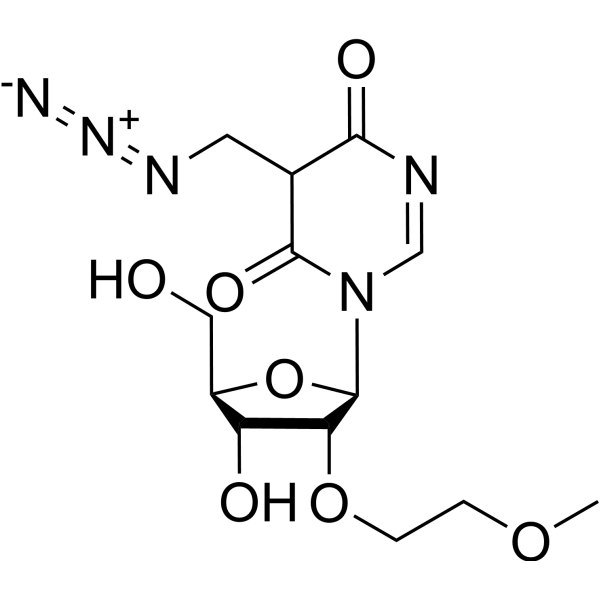
- HY-152233
-
|
|
HIV
|
Infection
|
|
Reverse transcriptase-IN-4 (compound F10) is a potent and selective non-nucleoside reverse transcriptase (NNRT) inhibitor with an EC50 value of 0.053 μM for wild-type HIV-1 and an EC50 value of 0.26 μM for HIV-1 mutant E138K . Reverse transcriptase-IN-4 is a click chemistry reagent, it contains an Azide group and can undergo copper-catalyzed azide-alkyne cycloaddition reaction (CuAAc) with molecules containing Alkyne groups. It can also undergo strain-promoted alkyne-azide cycloaddition (SPAAC) reactions with molecules containing DBCO or BCN groups.
|
-
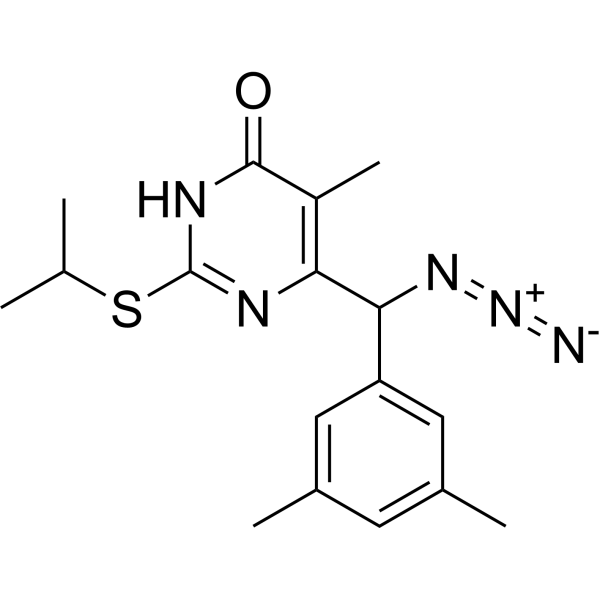
- HY-154590
-
|
|
Nucleoside Antimetabolite/Analog
|
Cancer
|
|
2’,3’-Di-O-isopropylidene-4’-alpha-C-azidouridine is a uridine analog. Uridine has potential antiepileptic effects, and its analogs can be used to study anticonvulsant and anxiolytic activities, as well as to develop new antihypertensive agents . 2’,3’-Di-O-isopropylidene-4’-alpha-C-azidouridine is a click chemistry reagent, it contains an Azide group and can undergo copper-catalyzed azide-alkyne cycloaddition reaction (CuAAc) with molecules containing Alkyne groups. It can also undergo strain-promoted alkyne-azide cycloaddition (SPAAC) reactions with molecules containing DBCO or BCN groups.
|
-
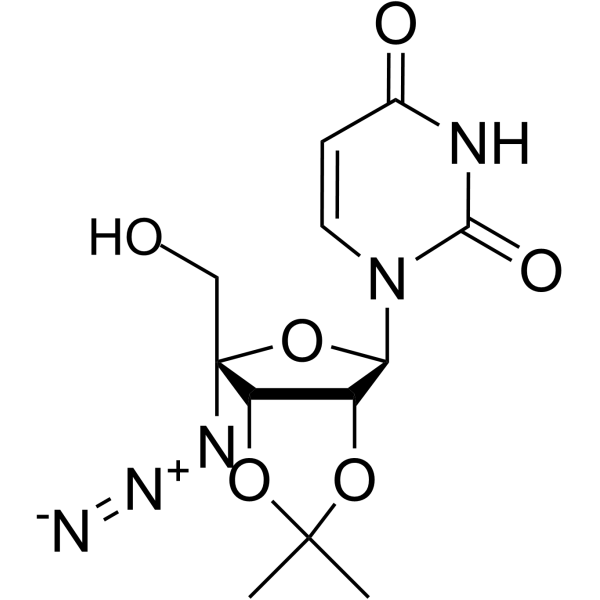
- HY-140346AS
-
|
|
Isotope-Labeled Compounds
PROTAC Linkers
|
Cancer
|
|
L-Azidohomoalanine-1,2,3,4- 13C4 (hydrochloride) is the 13C- and 15N-labeled L-Azidohomoalanine hydrochloride. L-Azidohomoalanine hydrochloride is an alkyl chain-based PROTAC linker that can be used in the synthesis of PROTACs . L-Azidohomoalanine-1,2,3,4-13C4 (hydrochloride) is a click chemistry reagent, it contains an Azide group and can undergo copper-catalyzed azide-alkyne cycloaddition reaction (CuAAc) with molecules containing Alkyne groups. It can also undergo strain-promoted alkyne-azide cycloaddition (SPAAC) reactions with molecules containing DBCO or BCN groups.
|
-
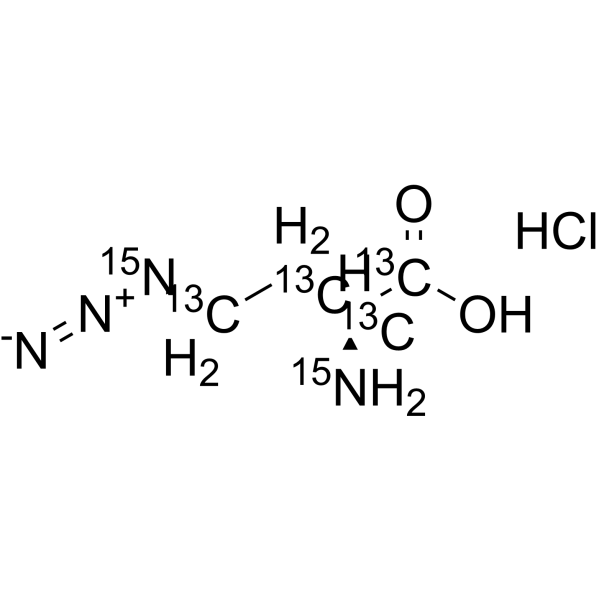
- HY-174900
-
|
Azido-PEG13-NH2
|
Biochemical Assay Reagents
|
Others
|
|
Azido-PEG13-amine (Azido-PEG13-NH2) is a PEG derivative that can be used for drug delivery and other research. Azido-PEG13-amine is a click chemistry reagent. It contains an azide group and can undergo copper-catalyzed azide-alkyne cycloaddition reaction (CuAAc) with molecules containing an alkyne group. It can also undergo ring strain driven alkyne-azide cycloaddition (SPAAC) with molecules containing DBCO or BCN groups .
|
-

- HY-140807C
-
|
Azido-PEG22-acid
|
Biochemical Assay Reagents
|
Others
|
|
Azido-PEG22-alcohol (Azido-PEG22-acid) is a PEG derivative that can be used for drug delivery and other research. Azido-PEG22-alcohol is a click chemistry reagent. It contains an azide group and can undergo copper-catalyzed azide-alkyne cycloaddition reaction (CuAAc) with molecules containing an alkyne group. It can also undergo ring strain driven alkyne-azide cycloaddition (SPAAC) with molecules containing DBCO or BCN groups .
|
-

- HY-140807B
-
|
Azido-PEG39-acid
|
Biochemical Assay Reagents
|
Others
|
|
Azido-PEG39-alcohol (Azido-PEG39-acid) is a PEG derivative that can be used for drug delivery and other research. Azido-PEG39-alcohol is a click chemistry reagent. It contains an azide group and can undergo copper-catalyzed azide-alkyne cycloaddition reaction (CuAAc) with molecules containing an alkyne group. It can also undergo ring strain driven alkyne-azide cycloaddition (SPAAC) with molecules containing DBCO or BCN groups .
|
-

- HY-140312
-
|
|
PROTAC Linkers
|
Cancer
|
|
Methyltetrazine-PEG12-DBCO is a PEG-based PROTAC linker that can be used in the synthesis of PROTACs . Methyltetrazine-PEG12-DBCO is a click chemistry reagent, it contains a DBCO group that can undergo strain-promoted alkyne-azide cycloaddition (SPAAC) with molecules containing Azide groups. Methyltetrazine-PEG12-DBCO also contains a Tetrazine group that can undergo an inverse electron demand Diels-Alder reaction (iEDDA) with molecules containing TCO groups.
|
-
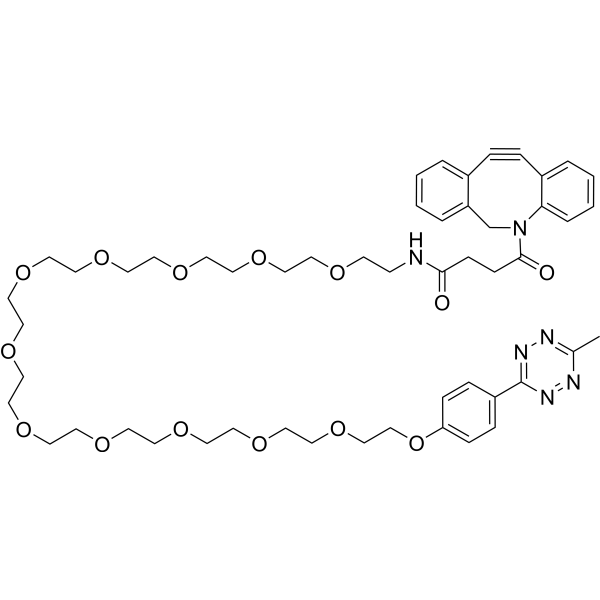
- HY-140807A
-
|
Azido-PEG35-acid
|
Biochemical Assay Reagents
|
Others
|
|
Azido-PEG35-alcohol (Azido-PEG35-acid) is a PEG derivative that can be used for drug delivery and other research. Azido-PEG35-alcohol is a click chemistry reagent. It contains an azide group and can undergo copper-catalyzed azide-alkyne cycloaddition reaction (CuAAc) with molecules containing an alkyne group. It can also undergo ring strain driven alkyne-azide cycloaddition (SPAAC) with molecules containing DBCO or BCN groups .
|
-

- HY-D1071
-
|
|
Fluorescent Dye
|
Others
|
|
DBCO-PEG12-TCO cantains a TCO and a DBCO moiety. TCO group can specifically react with terrahydrazine. DBCO-PEG12-TCO is a click chemistry reagent, it contains a DBCO group that can undergo strain-promoted alkyne-azide cycloaddition (SPAAC) with molecules containing Azide groups. DBCO-PEG12-TCO also contains a TCO group that can undergo an inverse electron demand Diels-Alder reaction (iEDDA) with molecules containing Tetrazine groups.
|
-
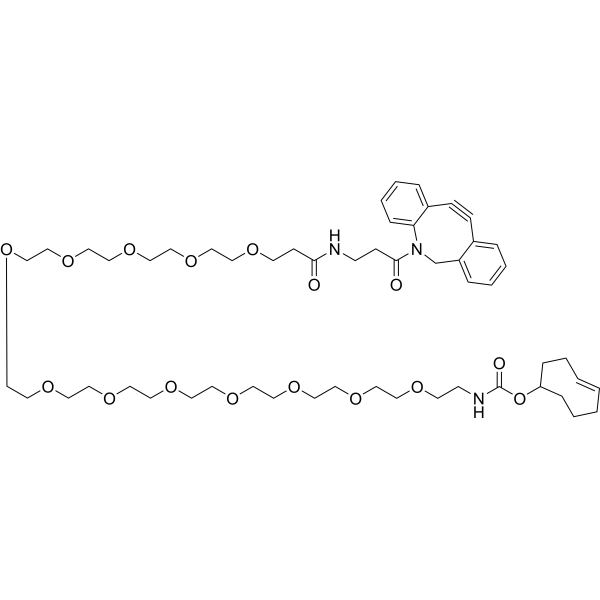
- HY-D2501
-
|
|
Fluorescent Dye
|
Others
|
|
Sulfo Cy7-N3 is a Sulfo Cy7-azide, which is a fluorescent dye. Sulfo Cy7-N3 can be used in cell imagine by Click reaction. It contains an azide group and can undergo copper-catalyzed azide-alkyne cycloaddition (CuAAc) with molecules containing alkyne groups. It can also undergo ring strain-promoted alkyne-azide cycloaddition (SPAAC) with molecules containing DBCO or BCN groups.
|
-

- HY-153739
-
|
|
Drug-Linker Conjugates for ADC
|
Cancer
|
|
N3-PEG3-VC-PAB-MMAF (Comp T-88-5) is a drug-linker conjugate containing the ADC linker N3-PEG3-VC-PAB and the tubulin inhibitor MMAF . N3-PEG3-VC-PAB-MMAF is a click chemistry reagent, it contains an Azide group and can undergo copper-catalyzed azide-alkyne cycloaddition reaction (CuAAc) with molecules containing Alkyne groups. It can also undergo strain-promoted alkyne-azide cycloaddition (SPAAC) reactions with molecules containing DBCO or BCN groups.
|
-
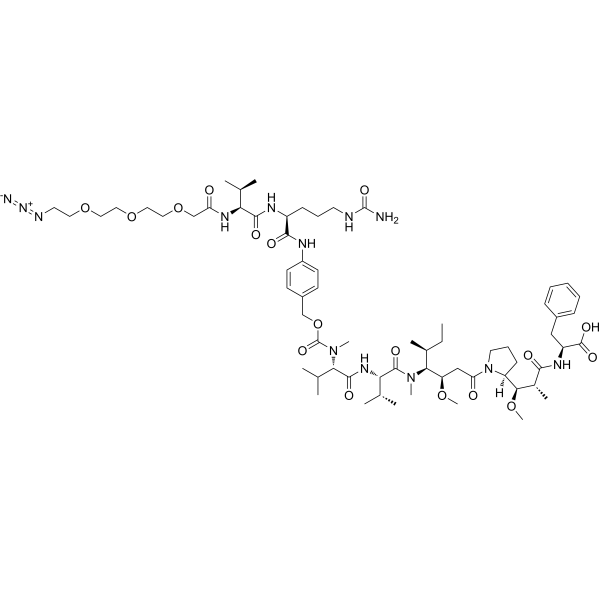
- HY-154305
-
|
|
Nucleoside Antimetabolite/Analog
|
Cancer
|
|
5′-Azido-2′,5′-dideoxy-2′-fluorouridine is a purine nucleoside analog. Purine nucleoside analogs have broad antitumor activity targeting indolent lymphoid malignancies. Anticancer mechanisms in this process rely on inhibition of DNA synthesis, induction of apoptosis, etc . 5′-Azido-2′,5′-dideoxy-2′-fluorouridine is a click chemistry reagent, it contains an Azide group and can undergo copper-catalyzed azide-alkyne cycloaddition reaction (CuAAc) with molecules containing Alkyne groups. It can also undergo strain-promoted alkyne-azide cycloaddition (SPAAC) reactions with molecules containing DBCO or BCN groups.
|
-
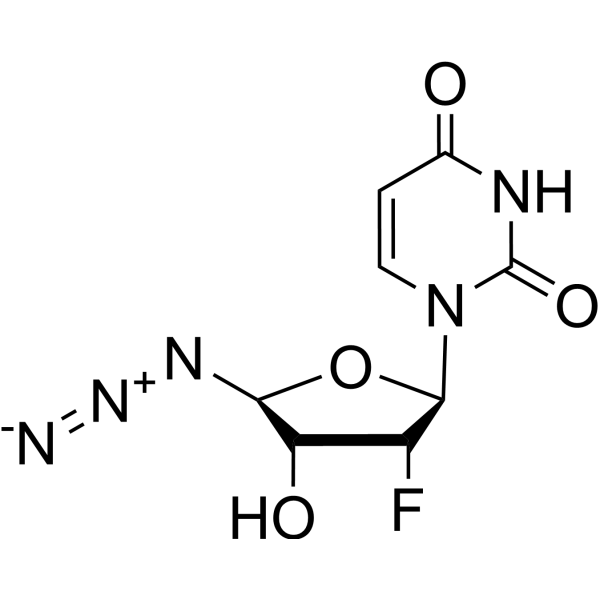
- HY-152353
-
|
|
Nucleoside Antimetabolite/Analog
|
Others
|
|
3’-Azido-3’-deoxy-2-thiouridine is a purine nucleoside analogue. Purine nucleoside analogs have broad antitumor activity targeting indolent lymphoid malignancies. Anticancer mechanisms in this process rely on inhibition of DNA synthesis, induction of apoptosis, etc . 3’-Azido-3’-deoxy-2-thiouridine is a click chemistry reagent, it contains an Azide group and can undergo copper-catalyzed azide-alkyne cycloaddition reaction (CuAAc) with molecules containing Alkyne groups. It can also undergo strain-promoted alkyne-azide cycloaddition (SPAAC) reactions with molecules containing DBCO or BCN groups.
|
-
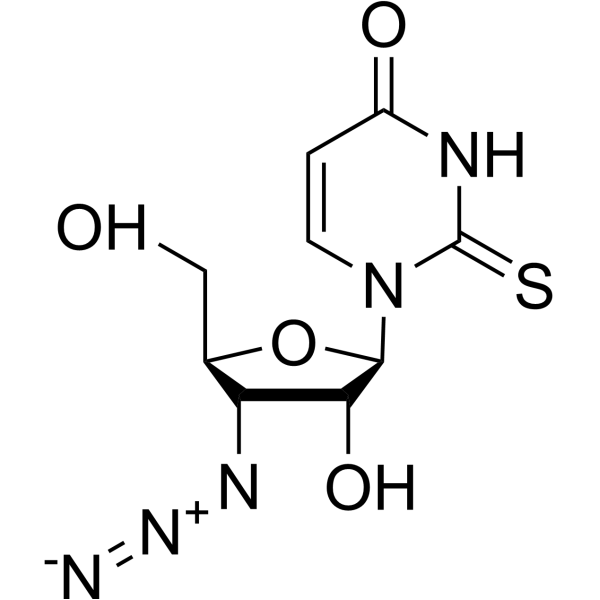
- HY-152802
-
|
|
Nucleoside Antimetabolite/Analog
|
Others
|
|
2’-O-(3-Azidopropyl)-5-azacytidine is a purine nucleoside analogue. Purine nucleoside analogs have broad antitumor activity targeting indolent lymphoid malignancies. Anticancer mechanisms in this process rely on inhibition of DNA synthesis, induction of apoptosis, etc . 2’-O-(3-Azidopropyl)-5-azacytidine is a click chemistry reagent, it contains an Azide group and can undergo copper-catalyzed azide-alkyne cycloaddition reaction (CuAAc) with molecules containing Alkyne groups. It can also undergo strain-promoted alkyne-azide cycloaddition (SPAAC) reactions with molecules containing DBCO or BCN groups.
|
-
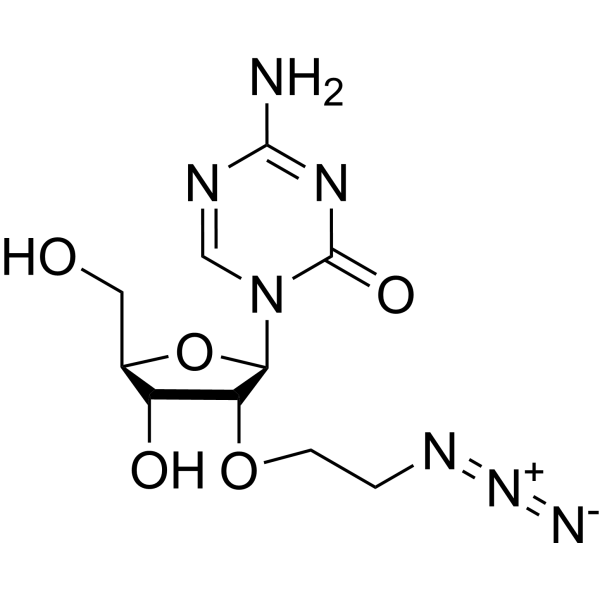
- HY-152782
-
|
|
Nucleoside Antimetabolite/Analog
|
Others
|
|
4’-Azido-2’-deoxy-2’-fluoro-beta-D-arabinouridine is a uridine analogue. Uridine has potential antiepileptic effects, and its analogs can be used to study anticonvulsant and anxiolytic activities, as well as to develop new antihypertensive agents . 4’-Azido-2’-deoxy-2’-fluoro-beta-D-arabinouridine is a click chemistry reagent, it contains an Azide group and can undergo copper-catalyzed azide-alkyne cycloaddition reaction (CuAAc) with molecules containing Alkyne groups. It can also undergo strain-promoted alkyne-azide cycloaddition (SPAAC) reactions with molecules containing DBCO or BCN groups.
|
-
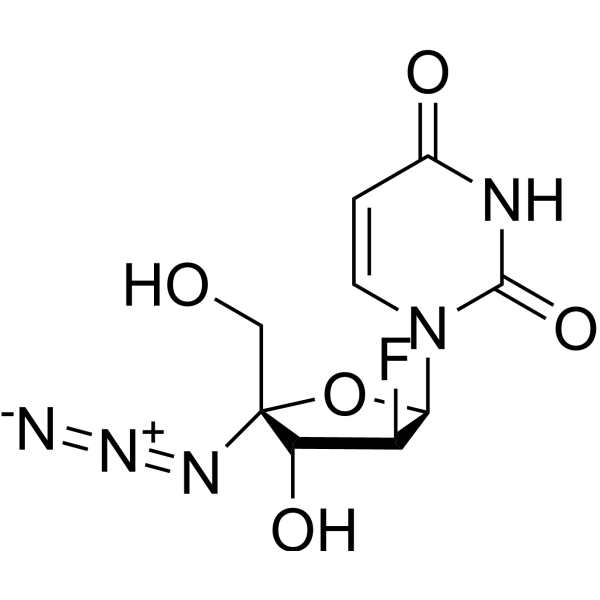
- HY-136129
-
|
|
ADC Linker
|
Cancer
|
|
N,N-Bis(PEG2-N3)-N-amido-PEG2-thiol is a cleavable 4 unit PEG ADC linker used in the synthesis of antibody-drug conjugates (ADCs) . N,N-Bis(PEG2-N3)-N-amido-PEG2-thiol is a click chemistry reagent, it contains an Azide group and can undergo copper-catalyzed azide-alkyne cycloaddition reaction (CuAAc) with molecules containing Alkyne groups. It can also undergo strain-promoted alkyne-azide cycloaddition (SPAAC) reactions with molecules containing DBCO or BCN groups.
|
-
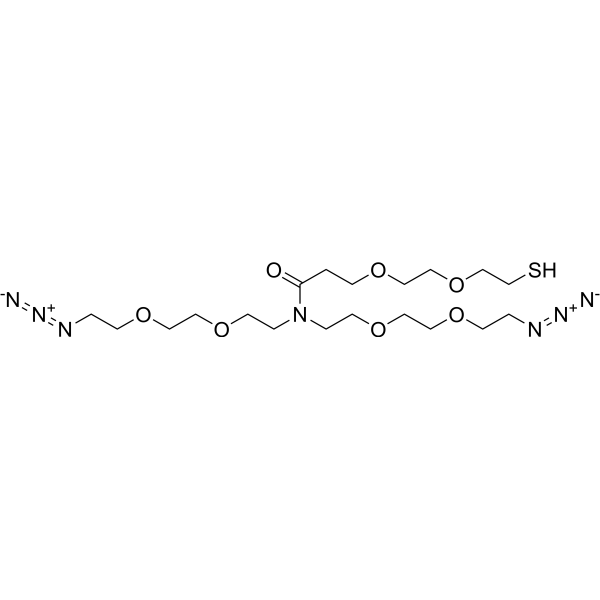
- HY-130572
-
|
|
PROTAC Linkers
ADC Linker
|
Inflammation/Immunology
Cancer
|
|
Azido-PEG5-acid is a PEG-based PROTAC linker can be used in the synthesis of PROTACs, such as the conjugate CPT-APO (CPT: Camptothecin (HY-16560)). Azido-PEG5-acid is a non-cleavable 5 unit PEG ADC linker used in the synthesis of antibody-drug conjugates (ADCs) . Azido-PEG5-acid is a click chemistry reagent, it contains an Azide group and can undergo copper-catalyzed azide-alkyne cycloaddition reaction (CuAAc) with molecules containing Alkyne groups. It can also undergo strain-promoted alkyne-azide cycloaddition (SPAAC) reactions with molecules containing DBCO or BCN groups.
|
-
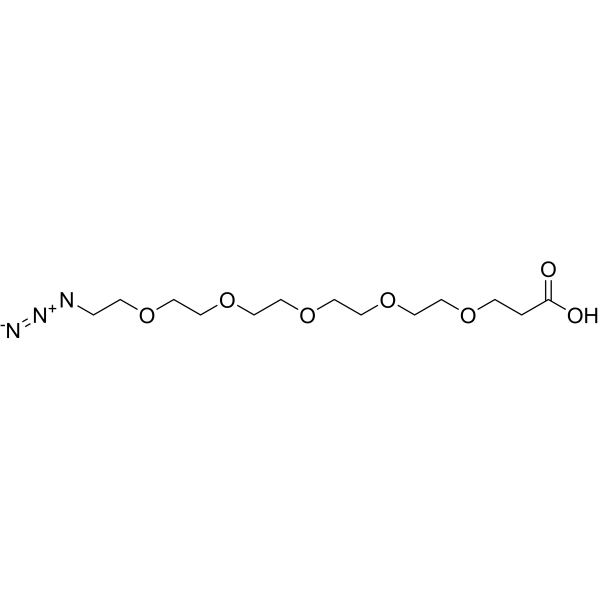
- HY-152642
-
|
|
Nucleoside Antimetabolite/Analog
|
Cancer
|
|
2’-Azido-2’-deoxy-5-methyl cytidine is a purine nucleoside analog. Purine nucleoside analogs have broad antitumor activity targeting indolent lymphoid malignancies. Anticancer mechanisms in this process rely on inhibition of DNA synthesis, induction of apoptosis, etc . 2’-Azido-2’-deoxy-5-methyl cytidine is a click chemistry reagent, it contains an Azide group and can undergo copper-catalyzed azide-alkyne cycloaddition reaction (CuAAc) with molecules containing Alkyne groups. It can also undergo strain-promoted alkyne-azide cycloaddition (SPAAC) reactions with molecules containing DBCO or BCN groups.
|
-
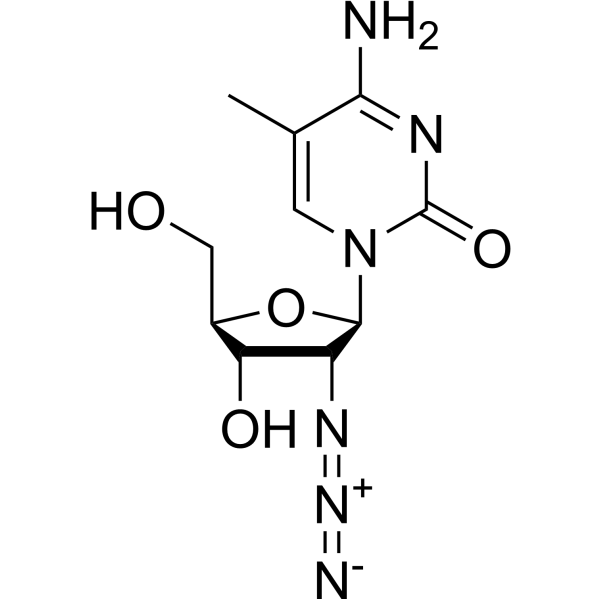
- HY-152724
-
|
|
Nucleoside Antimetabolite/Analog
|
Others
|
|
3’-Azido-3’-deoxy-5-iodouridine is a purine nucleoside analogue. Purine nucleoside analogs have broad antitumor activity targeting indolent lymphoid malignancies. Anticancer mechanisms in this process rely on inhibition of DNA synthesis, induction of apoptosis, etc . 3’-Azido-3’-deoxy-5-iodouridine is a click chemistry reagent, it contains an Azide group and can undergo copper-catalyzed azide-alkyne cycloaddition reaction (CuAAc) with molecules containing Alkyne groups. It can also undergo strain-promoted alkyne-azide cycloaddition (SPAAC) reactions with molecules containing DBCO or BCN groups.
|
-
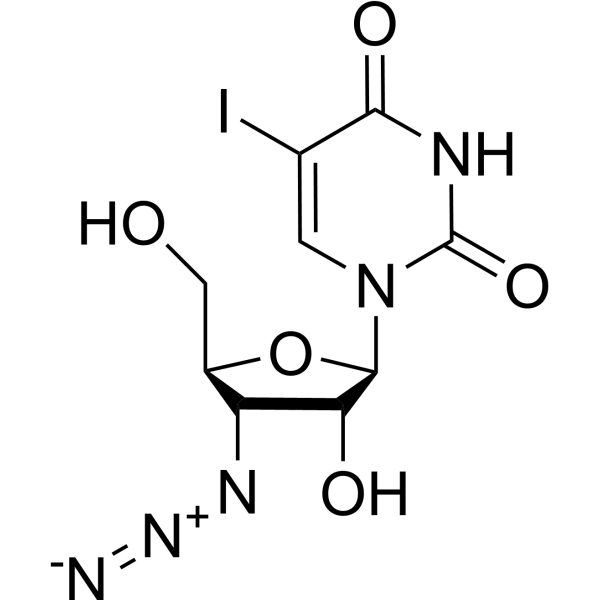
- HY-152645
-
|
|
Nucleoside Antimetabolite/Analog
|
Others
|
|
3’-Azido-3’-deoxy-5-methyluridine is a purine nucleoside analogue. Purine nucleoside analogs have broad antitumor activity targeting indolent lymphoid malignancies. Anticancer mechanisms in this process rely on inhibition of DNA synthesis, induction of apoptosis, etc . 3’-Azido-3’-deoxy-5-methyluridine is a click chemistry reagent, it contains an Azide group and can undergo copper-catalyzed azide-alkyne cycloaddition reaction (CuAAc) with molecules containing Alkyne groups. It can also undergo strain-promoted alkyne-azide cycloaddition (SPAAC) reactions with molecules containing DBCO or BCN groups.
|
-
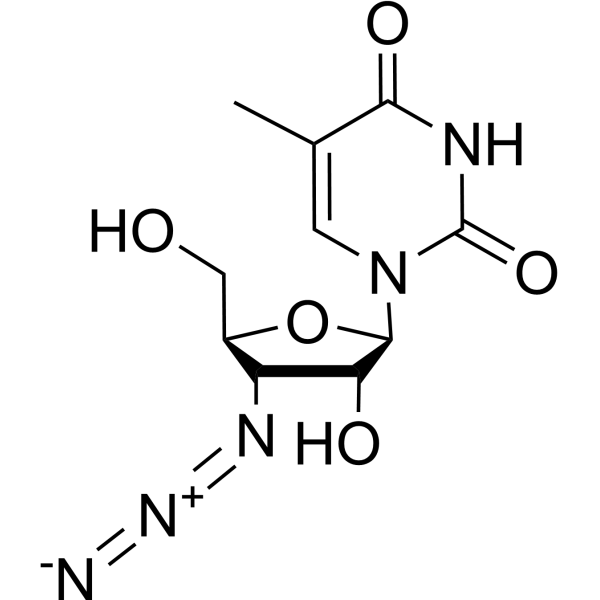
- HY-141065
-
|
|
PROTAC Linkers
|
Cancer
|
|
N-(azide-PEG3)-N'-(Amine-C3-Amide-PEG4)-Cy5 is a PEG-based PROTAC linker that can be used in the synthesis of PROTACs . N-(azide-PEG3)-N'-(Amine-C3-Amide-PEG4)-Cy5 is a click chemistry reagent, it contains an Azide group and can undergo copper-catalyzed azide-alkyne cycloaddition reaction (CuAAc) with molecules containing Alkyne groups. It can also undergo strain-promoted alkyne-azide cycloaddition (SPAAC) reactions with molecules containing DBCO or BCN groups.
|
-
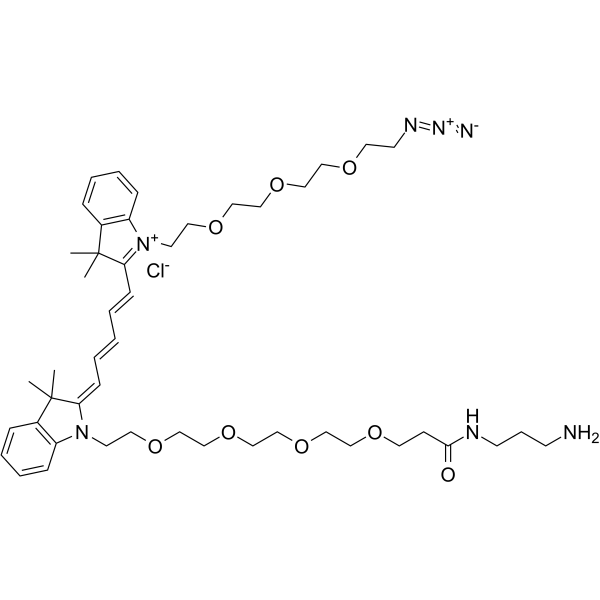
- HY-154320
-
|
|
Nucleoside Antimetabolite/Analog
|
Cancer
|
|
3’-Azido-3’-deoxy-3-deazauridine is a purine nucleoside analog. Purine nucleoside analogs have broad antitumor activity targeting indolent lymphoid malignancies. Anticancer mechanisms in this process rely on inhibition of DNA synthesis, induction of apoptosis, etc . 3’-Azido-3’-deoxy-3-deazauridine is a click chemistry reagent, it contains an Azide group and can undergo copper-catalyzed azide-alkyne cycloaddition reaction (CuAAc) with molecules containing Alkyne groups. It can also undergo strain-promoted alkyne-azide cycloaddition (SPAAC) reactions with molecules containing DBCO or BCN groups.
|
-
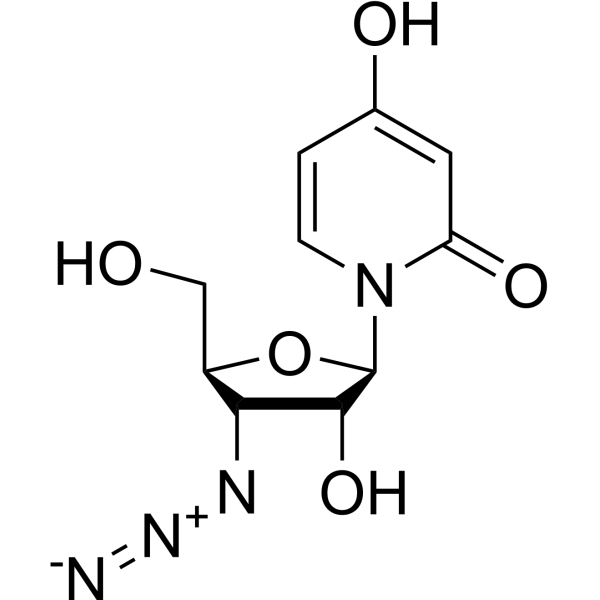
- HY-W190943
-
|
|
Drug-Linker Conjugates for ADC
|
Cancer
|
|
Azido-PEG4-Val-Cit-PAB-MMAE is a agent-linker conjugate for ADC by using the anti-mitotic agent, monomethyl auristatin E (MMAE, a tubulin inhibitor), linked via the cleavable linker Azido-PEG4-Val-Cit-PAB-OH . Azido-PEG4-Val-Cit-PAB-MMAE is a click chemistry reagent, it contains an Azide group and can undergo copper-catalyzed azide-alkyne cycloaddition reaction (CuAAc) with molecules containing Alkyne groups. It can also undergo strain-promoted alkyne-azide cycloaddition (SPAAC) reactions with molecules containing DBCO or BCN groups.
|
-
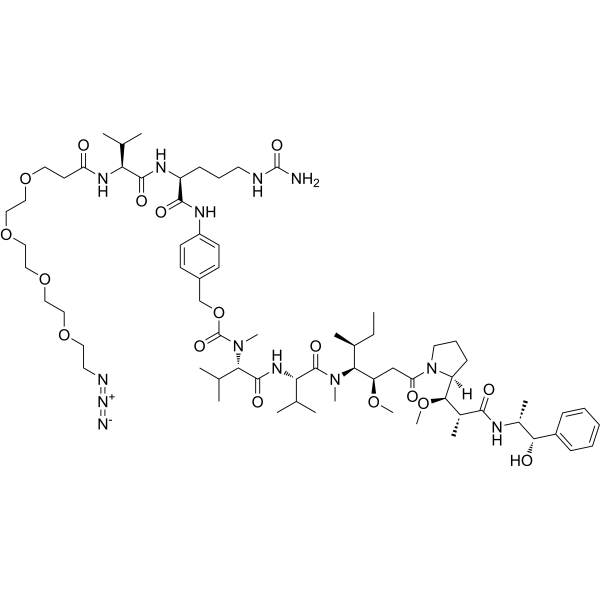
- HY-152713
-
|
|
Nucleoside Antimetabolite/Analog
|
Others
|
|
3’-Azido-3’-deoxy-5-methoxyuridine is a purine nucleoside analogue. Purine nucleoside analogs have broad antitumor activity targeting indolent lymphoid malignancies. Anticancer mechanisms in this process rely on inhibition of DNA synthesis, induction of apoptosis, etc . 3’-Azido-3’-deoxy-5-methoxyuridine is a click chemistry reagent, it contains an Azide group and can undergo copper-catalyzed azide-alkyne cycloaddition reaction (CuAAc) with molecules containing Alkyne groups. It can also undergo strain-promoted alkyne-azide cycloaddition (SPAAC) reactions with molecules containing DBCO or BCN groups.
|
-
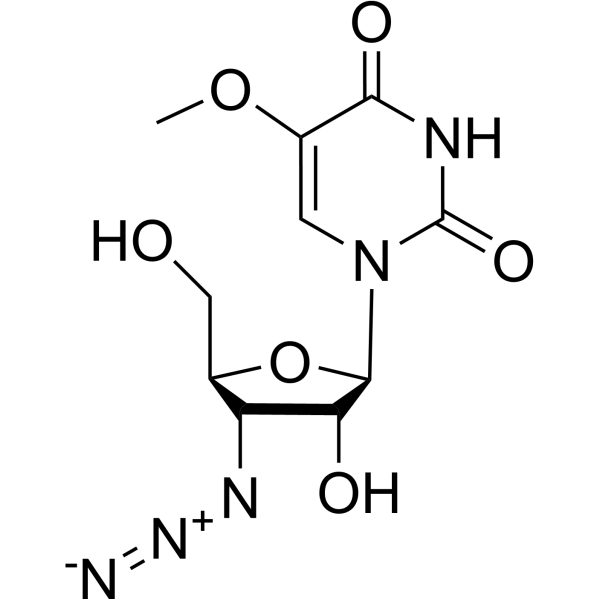
- HY-154308
-
|
|
Nucleoside Antimetabolite/Analog
|
Cancer
|
|
5’-Azido-5’-deoxy-2’-O-methyluridine is a purine nucleoside analog. Purine nucleoside analogs have broad antitumor activity targeting indolent lymphoid malignancies. Anticancer mechanisms in this process rely on inhibition of DNA synthesis, induction of apoptosis, etc . 5’-Azido-5’-deoxy-2’-O-methyluridine is a click chemistry reagent, it contains an Azide group and can undergo copper-catalyzed azide-alkyne cycloaddition reaction (CuAAc) with molecules containing Alkyne groups. It can also undergo strain-promoted alkyne-azide cycloaddition (SPAAC) reactions with molecules containing DBCO or BCN groups.
|
-
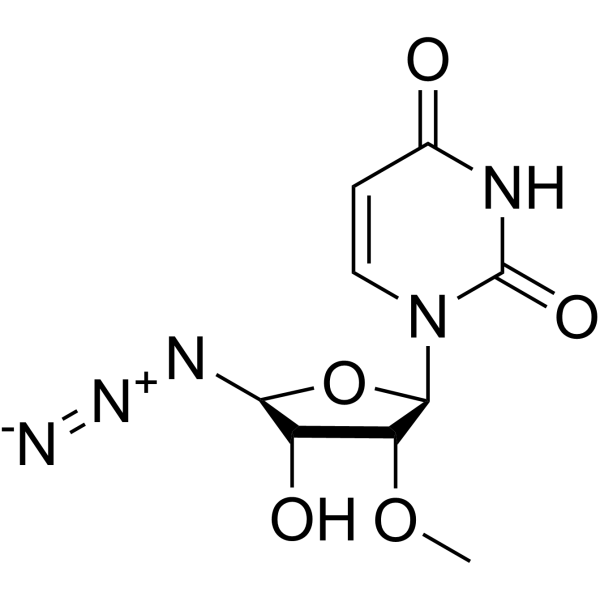
- HY-105268
-
|
CS-92
|
HIV
Reverse Transcriptase
Nucleoside Antimetabolite/Analog
|
Infection
|
|
AzddMeC (CS-92) is an antiviral nucleoside analogue and a potent potent, selective and orally active HIV-1 reverse transcriptase and HIV-1 replication inhibitor. In HIV-1-infected human PBM cells and HIV-1-infected human macrophages, the EC50 values of AzddMeC are 9 nM and 6 nM, respectively . AzddMeC is a click chemistry reagent, it contains an Azide group and can undergo copper-catalyzed azide-alkyne cycloaddition reaction (CuAAc) with molecules containing Alkyne groups. It can also undergo strain-promoted alkyne-azide cycloaddition (SPAAC) reactions with molecules containing DBCO or BCN groups.
|
-
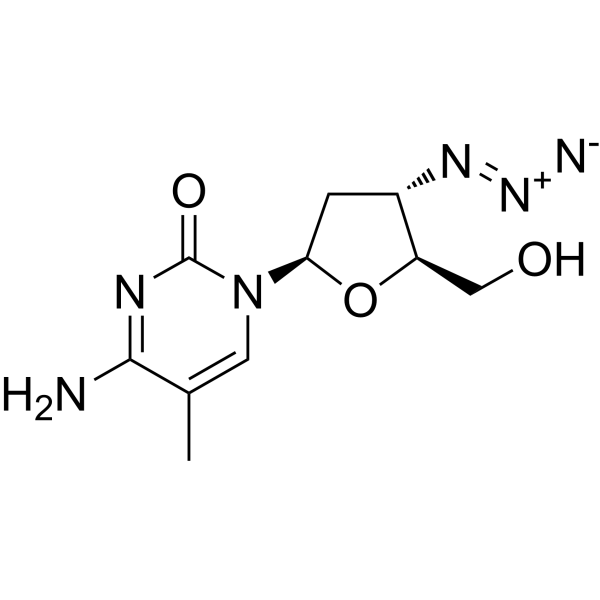
- HY-154579
-
|
|
Nucleoside Antimetabolite/Analog
|
Cancer
|
|
3’-Azido-N6-benzoyl-3’-deoxyadenosine is a purine nucleoside analog. Purine nucleoside analogs have broad antitumor activity targeting indolent lymphoid malignancies. Anticancer mechanisms in this process rely on inhibition of DNA synthesis, induction of apoptosis, etc . 3’-Azido-N6-benzoyl-3’-deoxyadenosine is a click chemistry reagent, it contains an Azide group and can undergo copper-catalyzed azide-alkyne cycloaddition reaction (CuAAc) with molecules containing Alkyne groups. It can also undergo strain-promoted alkyne-azide cycloaddition (SPAAC) reactions with molecules containing DBCO or BCN groups.
|
-
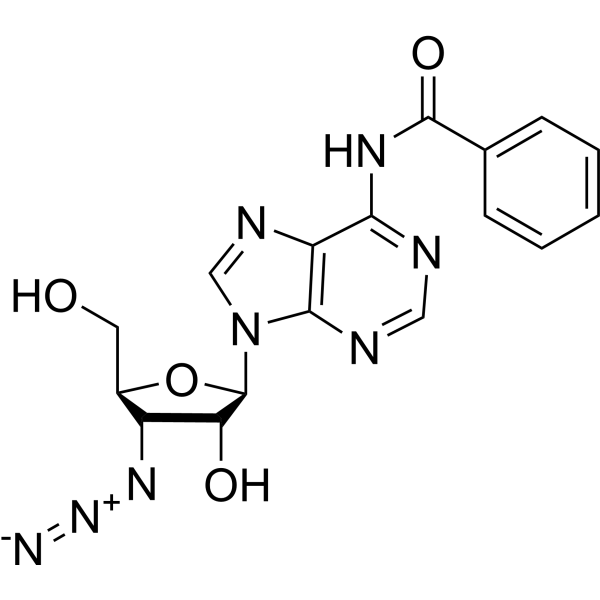
- HY-141067
-
|
|
PROTAC Linkers
|
Cancer
|
|
N-methyl-N'-methyl-O-(m-PEG4)-O'-(azide-PEG4)-Cy5 is a PEG-based PROTAC linker that can be used in the synthesis of PROTACs . N-methyl-N'-methyl-O-(m-PEG4)-O'-(azide-PEG4)-Cy5 is a click chemistry reagent, it contains an Azide group and can undergo copper-catalyzed azide-alkyne cycloaddition reaction (CuAAc) with molecules containing Alkyne groups. It can also undergo strain-promoted alkyne-azide cycloaddition (SPAAC) reactions with molecules containing DBCO or BCN groups.
|
-
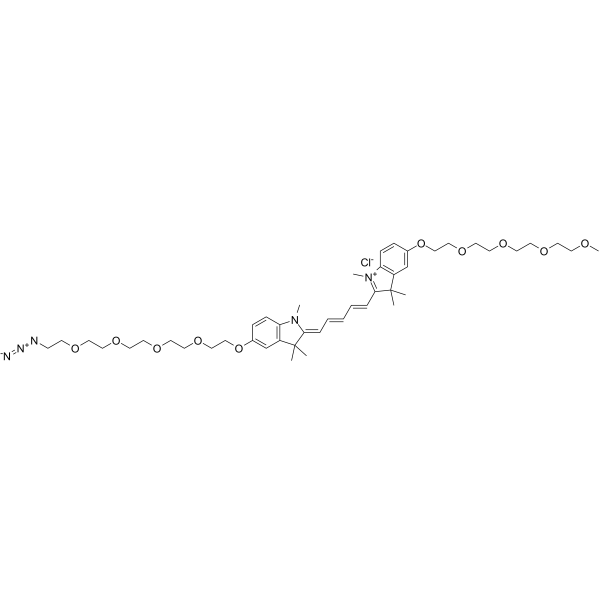
- HY-154357
-
|
|
Nucleoside Antimetabolite/Analog
|
Cancer
|
|
4’-alpha-C-Azido-2’,3’-bis(O-t-butyldimethylsilyl)uridine is a uridine analog. Uridine has potential antiepileptic effects, and its analogs can be used to study anticonvulsant and anxiolytic activities, as well as to develop new antihypertensive agents . 4’-alpha-C-Azido-2’,3’-bis(O-t-butyldimethylsilyl)uridine is a click chemistry reagent, it contains an Azide group and can undergo copper-catalyzed azide-alkyne cycloaddition reaction (CuAAc) with molecules containing Alkyne groups. It can also undergo strain-promoted alkyne-azide cycloaddition (SPAAC) reactions with molecules containing DBCO or BCN groups.
|
-
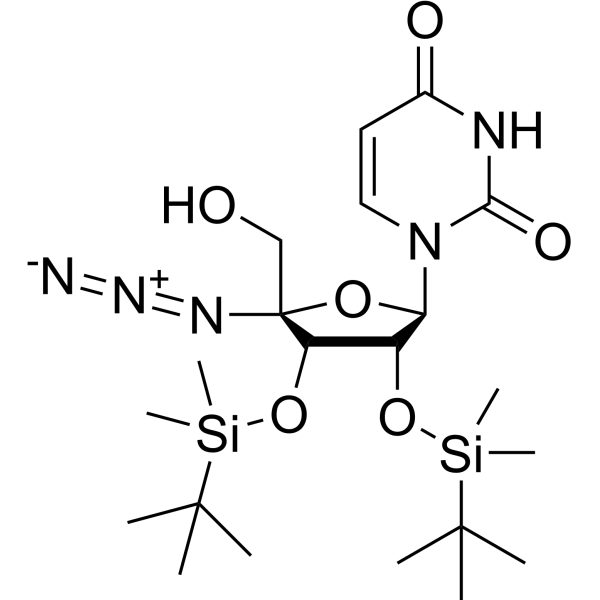
- HY-108374
-
|
|
PROTAC Linkers
|
Cancer
|
|
4-Azidobutylamine is a PROTAC linker, which refers to the alkyl chain composition. 4-Azidobutylamine can be used in the synthesis of a series of PROTACs. PROTACs contain two different ligands connected by a linker; one is a ligand for an E3 ubiquitin ligase and the other is for the target protein. PROTACs exploit the intracellular ubiquitin-proteasome system to selectively degrade target proteins . 4-Azidobutylamine is a click chemistry reagent, it contains an Azide group and can undergo copper-catalyzed azide-alkyne cycloaddition reaction (CuAAc) with molecules containing Alkyne groups. It can also undergo strain-promoted alkyne-azide cycloaddition (SPAAC) reactions with molecules containing DBCO or BCN groups.
|
-
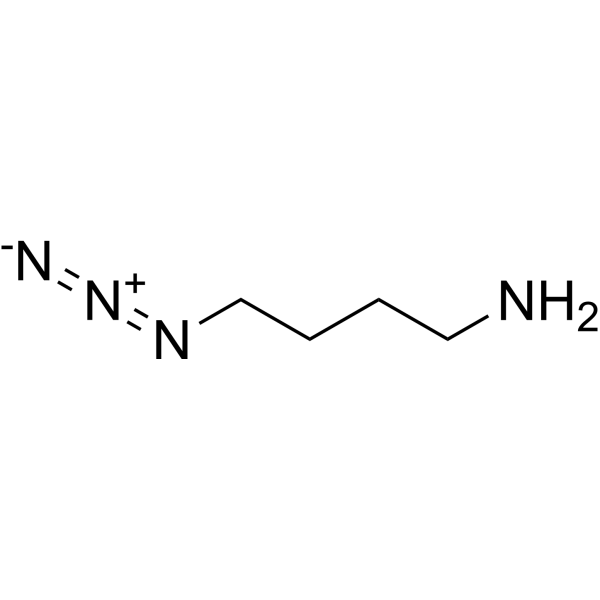
- HY-154402
-
|
|
Nucleoside Antimetabolite/Analog
|
Cancer
|
|
2′-Azido-2′-deoxy-5-methyluridine is a purine nucleoside analog. Purine nucleoside analogs have broad antitumor activity targeting indolent lymphoid malignancies. Anticancer mechanisms in this process rely on inhibition of DNA synthesis, induction of apoptosis, etc . 2′-Azido-2′-deoxy-5-methyluridine is a click chemistry reagent, it contains an Azide group and can undergo copper-catalyzed azide-alkyne cycloaddition reaction (CuAAc) with molecules containing Alkyne groups. It can also undergo strain-promoted alkyne-azide cycloaddition (SPAAC) reactions with molecules containing DBCO or BCN groups.
|
-
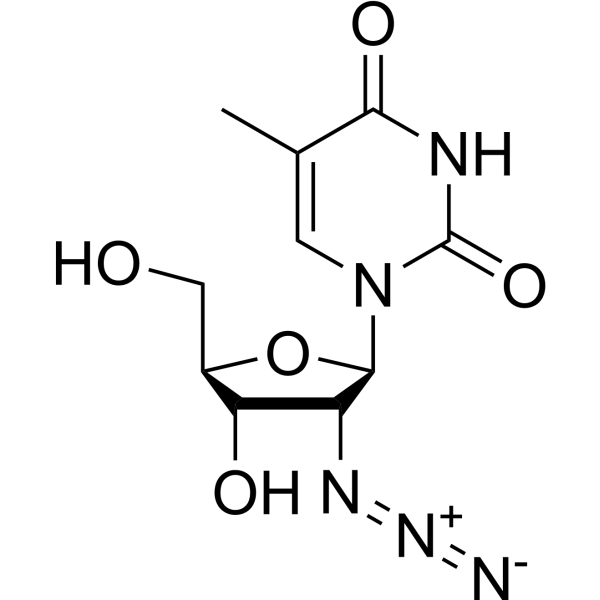
- HY-141031
-
|
|
PROTAC Linkers
|
Cancer
|
|
N-Methyl-N'-methyl-O-(m-PEG4)-O'-(azide-PEG4)-Cy3 is a PEG-based PROTAC linker that can be used in the synthesis of PROTACs . N-Methyl-N'-methyl-O-(m-PEG4)-O'-(azide-PEG4)-Cy3 is a click chemistry reagent, it contains an Azide group and can undergo copper-catalyzed azide-alkyne cycloaddition reaction (CuAAc) with molecules containing Alkyne groups. It can also undergo strain-promoted alkyne-azide cycloaddition (SPAAC) reactions with molecules containing DBCO or BCN groups.
|
-
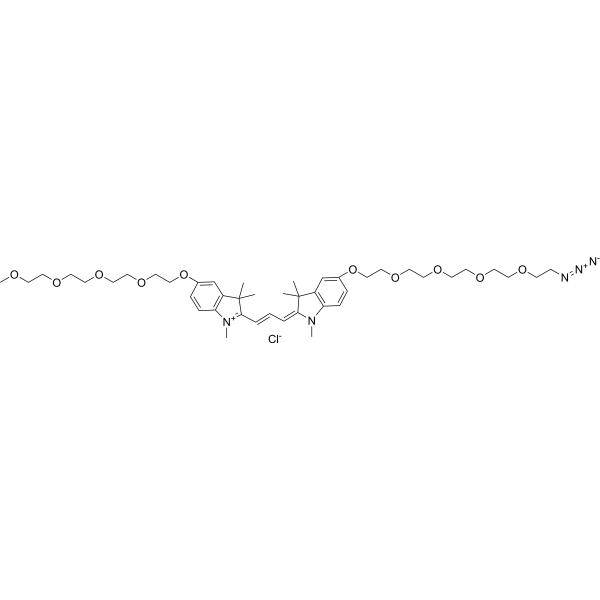
- HY-134317
-
|
|
Nucleoside Antimetabolite/Analog
|
Cancer
|
|
8-Azidoadenosine is an adenosine analog. Adenosine analogs mostly act as smooth muscle vasodilators and have also been shown to inhibit cancer progression. Its popular products are adenosine phosphate, Acadesine (HY-13417), Clofarabine (HY-A0005), Fludarabine phosphate (HY-B0028) and Vidarabine (HY-B0277) . 8-Azidoadenosine is a click chemistry reagent, it contains an Azide group and can undergo copper-catalyzed azide-alkyne cycloaddition reaction (CuAAc) with molecules containing Alkyne groups. It can also undergo strain-promoted alkyne-azide cycloaddition (SPAAC) reactions with molecules containing DBCO or BCN groups.
|
-
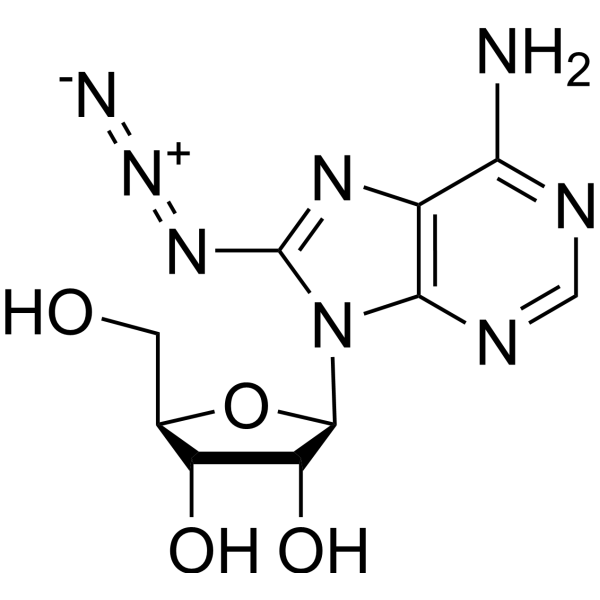
- HY-126949
-
|
|
ADC Linker
PROTAC Linkers
|
Cancer
|
|
Aminooxy-PEG3-azide is a non-cleavable 3 unit PEG ADC linker used in the synthesis of antibody-drug conjugates (ADCs) . Aminooxy-C2-PEG3-azide is also a PEG-based PROTAC linker that can be used in the synthesis of PROTACs . Aminooxy-PEG3-azide is a click chemistry reagent, it contains an Azide group and can undergo copper-catalyzed azide-alkyne cycloaddition reaction (CuAAc) with molecules containing Alkyne groups. It can also undergo strain-promoted alkyne-azide cycloaddition (SPAAC) reactions with molecules containing DBCO or BCN groups.
|
-
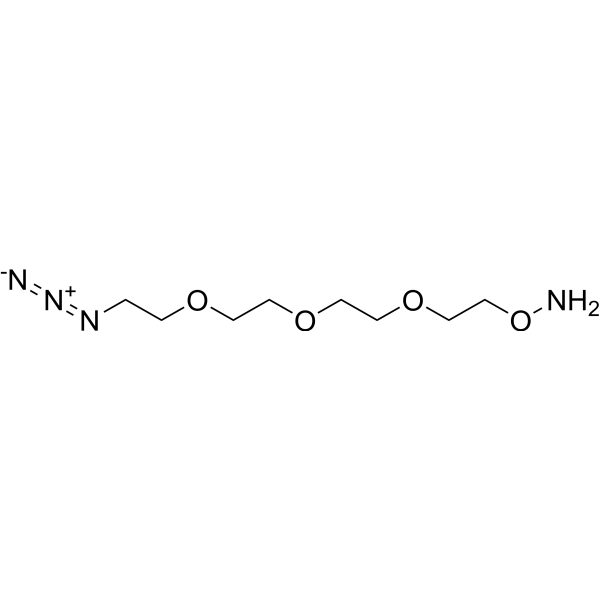
- HY-152315
-
|
|
Nucleoside Antimetabolite/Analog
|
Others
|
|
3’-Azido-3’-deoxy-N6-methyladenosine is a purine nucleoside analogue. Purine nucleoside analogs have broad antitumor activity targeting indolent lymphoid malignancies. Anticancer mechanisms in this process rely on inhibition of DNA synthesis, induction of apoptosis, etc . 3’-Azido-3’-deoxy-N6-methyladenosine is a click chemistry reagent, it contains an Azide group and can undergo copper-catalyzed azide-alkyne cycloaddition reaction (CuAAc) with molecules containing Alkyne groups. It can also undergo strain-promoted alkyne-azide cycloaddition (SPAAC) reactions with molecules containing DBCO or BCN groups.
|
-
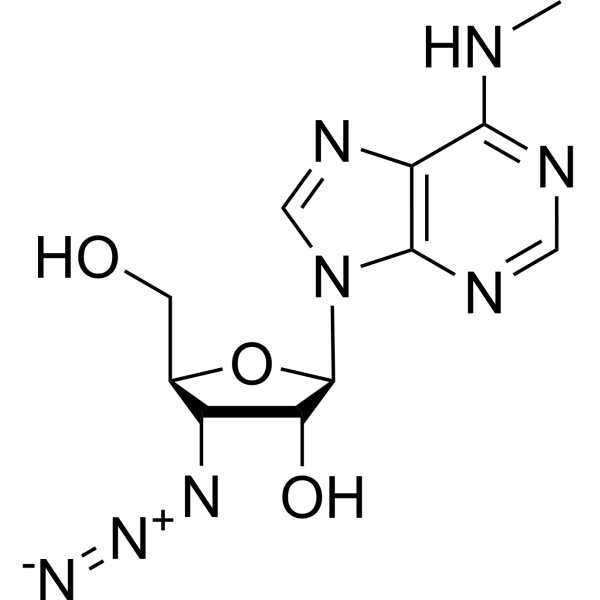
- HY-152708
-
|
|
Nucleoside Antimetabolite/Analog
|
Others
|
|
3’-Azido-3’-deoxy-5-trifluoromethyluridine is a purine nucleoside analogue. Purine nucleoside analogs have broad antitumor activity targeting indolent lymphoid malignancies. Anticancer mechanisms in this process rely on inhibition of DNA synthesis, induction of apoptosis, etc . 3’-Azido-3’-deoxy-5-trifluoromethyluridine is a click chemistry reagent, it contains an Azide group and can undergo copper-catalyzed azide-alkyne cycloaddition reaction (CuAAc) with molecules containing Alkyne groups. It can also undergo strain-promoted alkyne-azide cycloaddition (SPAAC) reactions with molecules containing DBCO or BCN groups.
|
-
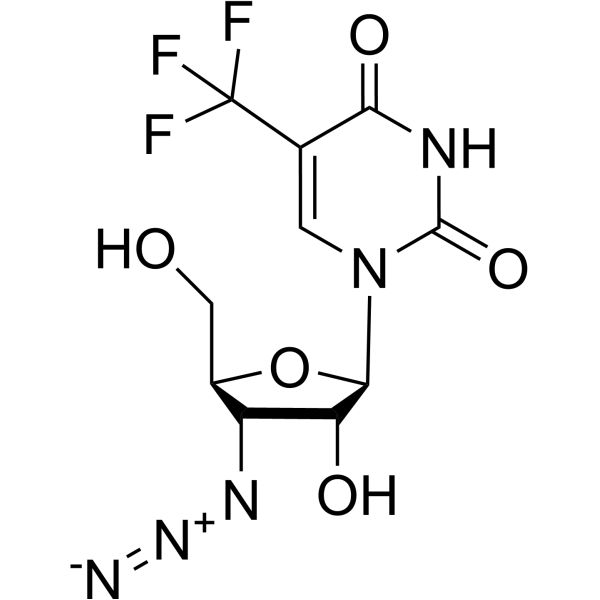
- HY-133139
-
|
|
E3 Ligase Ligand-Linker Conjugates
|
Cancer
|
|
Lenalidomide-PEG1-azide is a E3 ligase lgand-linker conjugate. Lenalidomide-PEG1-azide incorporates the Lenalidomide based cereblon ligand and a linker.?Lenalidomide-PEG1-azide?can be used to design a PROTAC BRD4 Degrader-2 (HY-133136) . Lenalidomide-PEG1-azide is a click chemistry reagent, it contains an Azide group and can undergo copper-catalyzed azide-alkyne cycloaddition reaction (CuAAc) with molecules containing Alkyne groups. It can also undergo strain-promoted alkyne-azide cycloaddition (SPAAC) reactions with molecules containing DBCO or BCN groups.
|
-
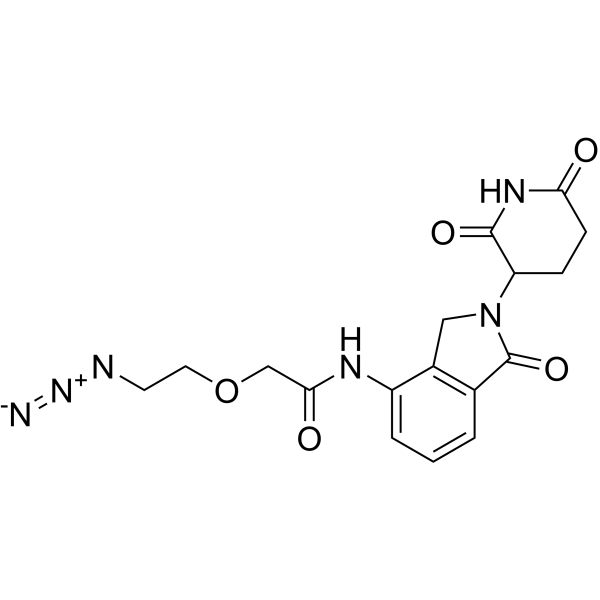
- HY-152688
-
|
|
Nucleoside Antimetabolite/Analog
|
Others
|
|
3’-Azido-3’-deoxy-5-fluorouridine is a purine nucleoside analogue. Purine nucleoside analogs have broad antitumor activity targeting indolent lymphoid malignancies. Anticancer mechanisms in this process rely on inhibition of DNA synthesis, induction of apoptosis, etc . 3’-Azido-3’-deoxy-5-fluorouridine is a click chemistry reagent, it contains an Azide group and can undergo copper-catalyzed azide-alkyne cycloaddition reaction (CuAAc) with molecules containing Alkyne groups. It can also undergo strain-promoted alkyne-azide cycloaddition (SPAAC) reactions with molecules containing DBCO or BCN groups.
|
-
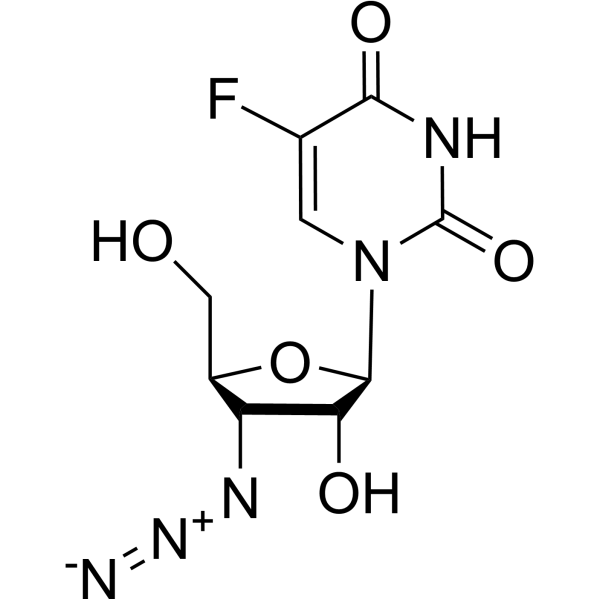
- HY-154119
-
|
|
Nucleoside Antimetabolite/Analog
|
Cancer
|
|
3’-Azido-3’-deoxy-6-azauridine is a purine nucleoside analog. Purine nucleoside analogs have broad antitumor activity targeting indolent lymphoid malignancies. Anticancer mechanisms in this process rely on inhibition of DNA synthesis, induction of apoptosis, etc . 3’-Azido-3’-deoxy-6-azauridine is a click chemistry reagent, it contains an Azide group and can undergo copper-catalyzed azide-alkyne cycloaddition reaction (CuAAc) with molecules containing Alkyne groups. It can also undergo strain-promoted alkyne-azide cycloaddition (SPAAC) reactions with molecules containing DBCO or BCN groups.
|
-
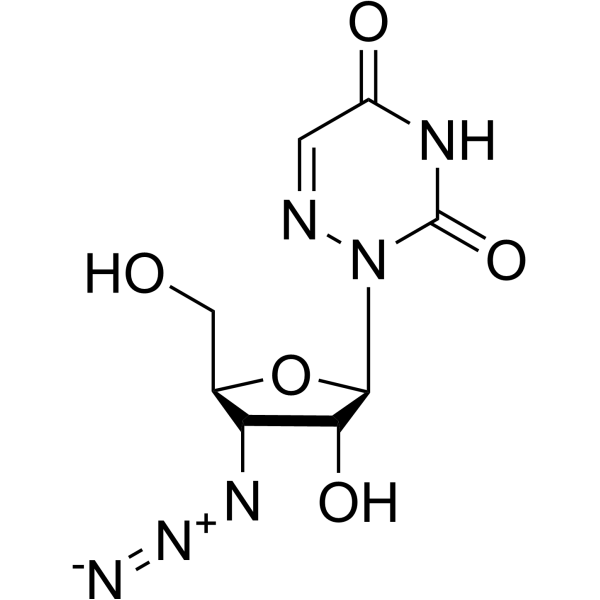
- HY-154346
-
|
|
Nucleoside Antimetabolite/Analog
|
Cancer
|
|
5’-Azido-5’-deoxy-5-methyluridine is a purine nucleoside analog. Purine nucleoside analogs have broad antitumor activity targeting indolent lymphoid malignancies. Anticancer mechanisms in this process rely on inhibition of DNA synthesis, induction of apoptosis, etc . 5’-Azido-5’-deoxy-5-methyluridine is a click chemistry reagent, it contains an Azide group and can undergo copper-catalyzed azide-alkyne cycloaddition reaction (CuAAc) with molecules containing Alkyne groups. It can also undergo strain-promoted alkyne-azide cycloaddition (SPAAC) reactions with molecules containing DBCO or BCN groups.
|
-
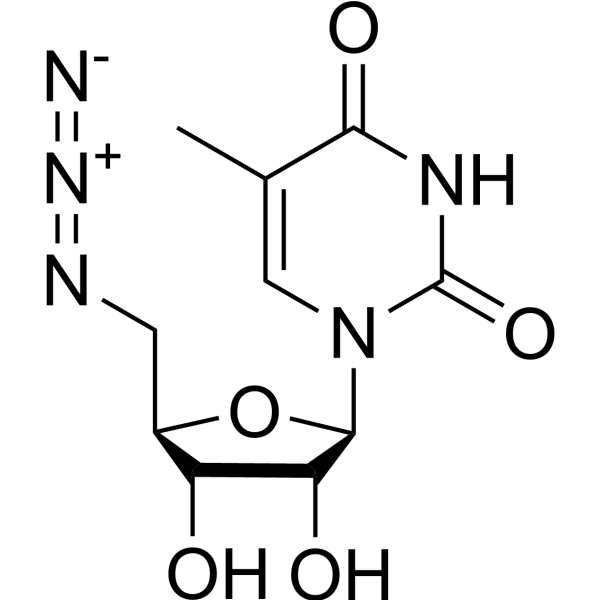
- HY-151744
-
|
|
ADC Linker
|
Others
|
|
N3-TFBA-O2Oc is a click chemistry reagent containing an azide group and an aryl group. Aryl azides are well-known precursors of nitrenes and have been introduced by Fleet et al. as versatile photoaffinity labeling agents to probe biological receptors. This type of compounds has been used as photo-cross linker (λmax=258 nm) in estrogen receptor studies and for direct surface coating of carbon and organic based polymers . N3-TFBA-O2Oc is a click chemistry reagent, it contains an Azide group and can undergo copper-catalyzed azide-alkyne cycloaddition reaction (CuAAc) with molecules containing Alkyne groups. It can also undergo strain-promoted alkyne-azide cycloaddition (SPAAC) reactions with molecules containing DBCO or BCN groups.
|
-
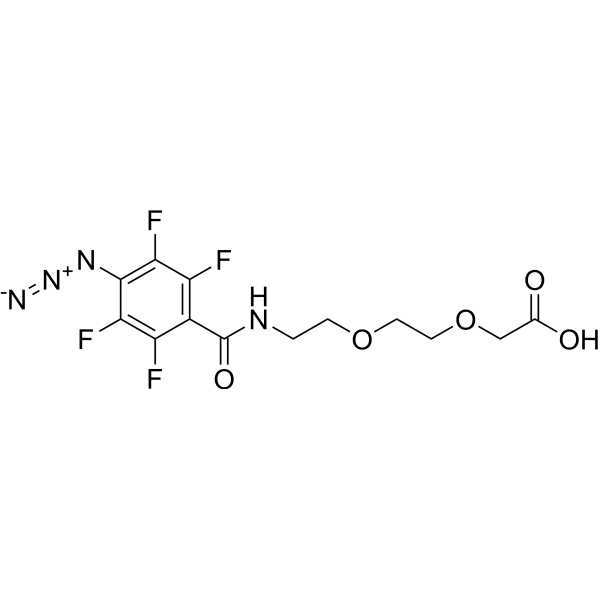
- HY-160773A
-
|
|
Biochemical Assay Reagents
|
Others
|
|
DBCO-C3-amide-PEG6-NHS ester is a click chemistry PEG reagent containing an NHS ester that reacts specifically with primary amines, such as side chains of lysine residues or aminosilane-coated surfaces, under neutral or slightly alkaline conditions. , efficient reaction to form covalent bonds. DBCO-C3-amide-PEG6-NHS ester also contains a DBCO group that can undergo strain-promoted alkyne-azide cycloaddition (SPAAC) with molecules containing Azide groups .
|
-

- HY-133428
-
|
|
ADC Linker
|
Cancer
|
|
DBCO-PEG3-TCO is a non-cleavable 3 unit PEG ADC linker used in the synthesis of antibody-drug conjugates (ADCs) . DBCO-PEG3-TCO is a click chemistry reagent, it contains a DBCO group that can undergo strain-promoted alkyne-azide cycloaddition (SPAAC) with molecules containing Azide groups. DBCO-PEG3-TCO also contains a TCO group that can undergo an inverse electron demand Diels-Alder reaction (iEDDA) with molecules containing Tetrazine groups.
|
-
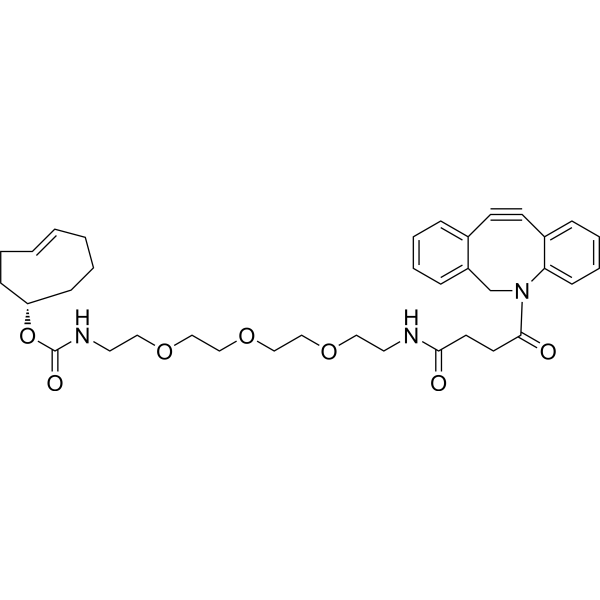
- HY-134320B
-
|
8-Azidoadenosine 5'-triphosphate trisodium; 8-N3-ATP trisodium
|
Potassium Channel
|
Metabolic Disease
|
|
8-Azido-ATP (8-N3-ATP) trisodium, a photoreactable nucleotide analog, is useful for the identification of proteins, such as DNA-dependent RNA polymerase. 8-Azido-ATP trisodium is a click chemistry reagent that contains an Azide group and can undergo copper-catalyzed azide-alkyne cycloaddition reaction (CuAAc) with molecules containing Alkyne groups. 8-Azido-ATP trisodium can also undergo strain-promoted alkyne-azide cycloaddition (SPAAC) with molecules containing DBCO or BCN groups .
|
-
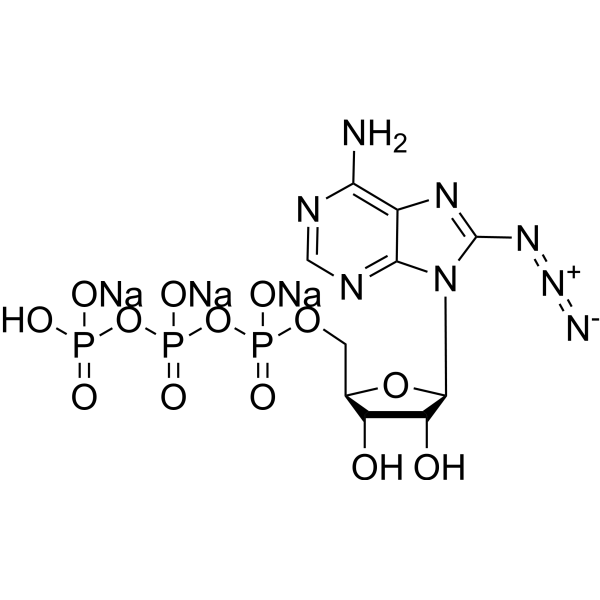
- HY-D2490
-
|
|
Fluorescent Dye
|
Others
|
|
Sulfo Cy5.5-N3 is a Sulfo Cy5.5-azide, which is a fluorescent dye. Sulfo Cy5.5-N3 can be used in cell imagine by Click reaction. It contains an azide group and can undergo copper-catalyzed azide-alkyne cycloaddition (CuAAc) with molecules containing alkyne groups. It can also undergo ring strain-promoted alkyne-azide cycloaddition (SPAAC) with molecules containing DBCO or BCN groups.
|
-

- HY-174893
-
|
|
Biochemical Assay Reagents
|
Others
|
|
Azido-PEG20-NHS ester is a PEG derivative that can be used for drug delivery and other research. Azido-PEG20-NHS ester is a click chemistry reagent. Azido-PEG20-NHS contains an azide group and can undergo copper-catalyzed azide-alkyne cycloaddition reaction (CuAAc) with molecules containing an alkyne group. Azido-PEG20-NHS can also undergo ring strain driven alkyne-azide cycloaddition (SPAAC) with molecules containing DBCO or BCN groups .
|
-

- HY-D1069
-
|
DBCO-Sulfo-Cy3
|
Fluorescent Dye
|
Others
|
|
DBCO-Cy3 (DBCO-Sulfo-Cy3) is the derivative of Cyanine3 fluorophore, a pH insensitive from pH (4-10) orange fluorescent dyewith excitation maximum 555 nm and emission maximum of 580nm. DBCO-Cy3 has fast reaction kinetics and good stability, and is productive to use in many standard fluorescent instrumentations. DBCO-Cy3 is a click chemistry reagent, it contains a DBCO group that can undergo strain-promoted alkyne-azide cycloaddition (SPAAC) with molecules containing Azide groups.
|
-
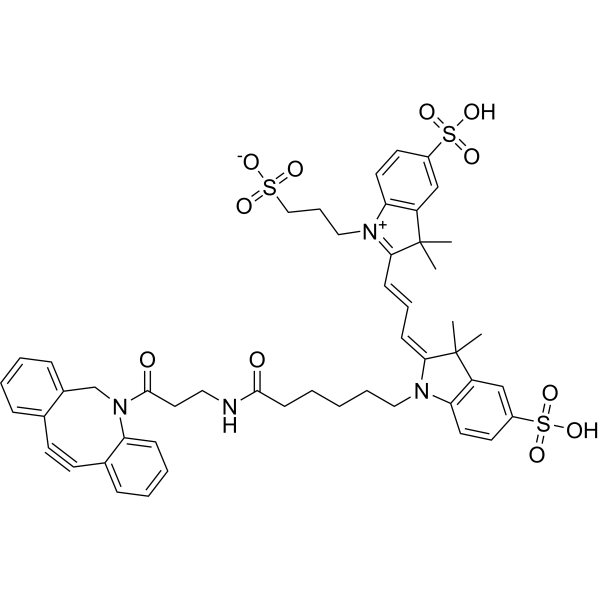
- HY-134320A
-
|
8-Azidoadenosine 5'-triphosphate tetrasodium; 8-N3-ATP tetrasodium
|
Potassium Channel
|
Metabolic Disease
|
|
8-Azido-ATP (8-Azidoadenosine 5'-triphosphate) tetrasodium, a photoreactable nucleotide analog, is useful for the identification of proteins, such as DNA-dependent RNA polymerase. 8-Azido-ATP tetrasodium is a click chemistry reagent that contains an Azide group and can undergo copper-catalyzed azide-alkyne cycloaddition reaction (CuAAc) with molecules containing Alkyne groups. 8-Azido-ATP tetrasodium can also undergo strain-promoted alkyne-azide cycloaddition (SPAAC) with molecules containing DBCO or BCN groups .
|
-

- HY-152585
-
|
|
Nucleoside Antimetabolite/Analog
|
Others
|
|
3’-Azido-3’-deoxy-5-fluoro-beta-L-uridine is a purine nucleoside analogue. Purine nucleoside analogs have broad antitumor activity targeting indolent lymphoid malignancies. Anticancer mechanisms in this process rely on inhibition of DNA synthesis, induction of apoptosis, etc . 3’-Azido-3’-deoxy-5-fluoro-beta-L-uridine is a click chemistry reagent, it contains an Azide group and can undergo copper-catalyzed azide-alkyne cycloaddition reaction (CuAAc) with molecules containing Alkyne groups. It can also undergo strain-promoted alkyne-azide cycloaddition (SPAAC) reactions with molecules containing DBCO or BCN groups.
|
-
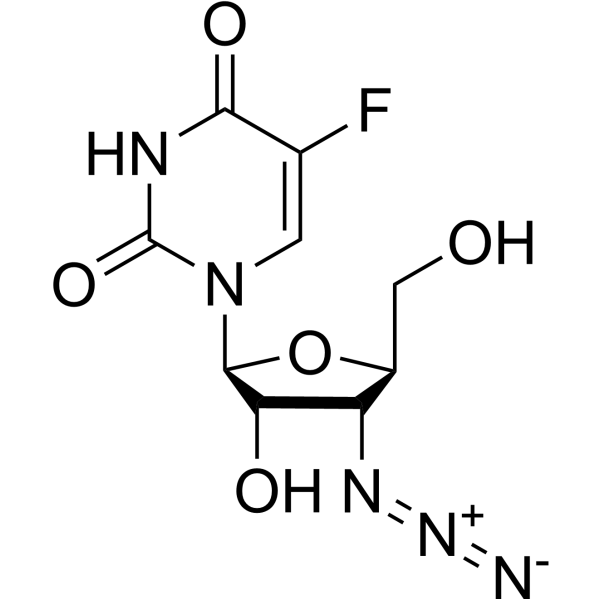
- HY-130485
-
|
|
ADC Linker
PROTAC Linkers
|
Cancer
|
|
Bromo-PEG2-C2-azide is a non-cleavable ADC linker used in the synthesis of antibody-drug conjugates (ADCs). Bromo-PEG2-C2-azide is also a PEG-based PROTAC linker that can be used in the synthesis of PROTACs . Bromo-PEG2-C2-azide is a click chemistry reagent, it contains an Azide group and can undergo copper-catalyzed azide-alkyne cycloaddition reaction (CuAAc) with molecules containing Alkyne groups. It can also undergo strain-promoted alkyne-azide cycloaddition (SPAAC) reactions with molecules containing DBCO or BCN groups.
|
-
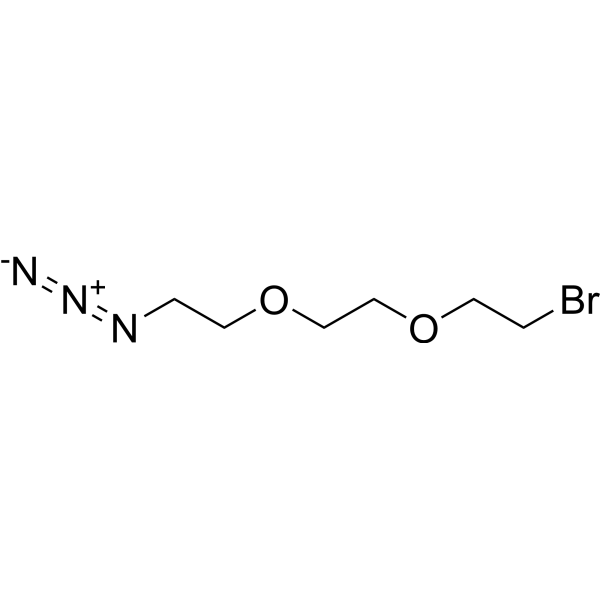
- HY-108370R
-
|
N3-TEG-COOH (Standard); 14-Azido-3,6,9,12-tetraoxatetradecanoic acid (Standard)
|
Reference Standards
PROTAC Linkers
|
Cancer
|
|
N33-TEG-COOH (Standard) is the analytical standard of N33-TEG-COOH (HY-108370). This product is intended for research and analytical applications. N33-TEG-COOH (N3-TEG-COOH) is a PEG-based PROTAC linker can be used in the synthesis of PROTACs . N33-TEG-COOH is a click chemistry reagent, it contains an Azide group and can undergo copper-catalyzed azide-alkyne cycloaddition reaction (CuAAc) with molecules containing Alkyne groups. It can also undergo strain-promoted alkyne-azide cycloaddition (SPAAC) reactions with molecules containing DBCO or BCN groups.
|
-

- HY-140150
-
|
|
ADC Linker
PROTAC Linkers
|
Cancer
|
|
Azido-PEG3-Val-Cit-PAB-PNP is a cleavable 3 unit PEG ADC linker used in the synthesis of antibody-drug conjugates (ADCs) . Azido-PEG3-Val-Cit-PAB-PNP is also a PEG-based PROTAC linker that can be used in the synthesis of PROTACs . Azido-PEG3-Val-Cit-PAB-PNP is a click chemistry reagent, it contains an Azide group and can undergo copper-catalyzed azide-alkyne cycloaddition reaction (CuAAc) with molecules containing Alkyne groups. It can also undergo strain-promoted alkyne-azide cycloaddition (SPAAC) reactions with molecules containing DBCO or BCN groups.
|
-
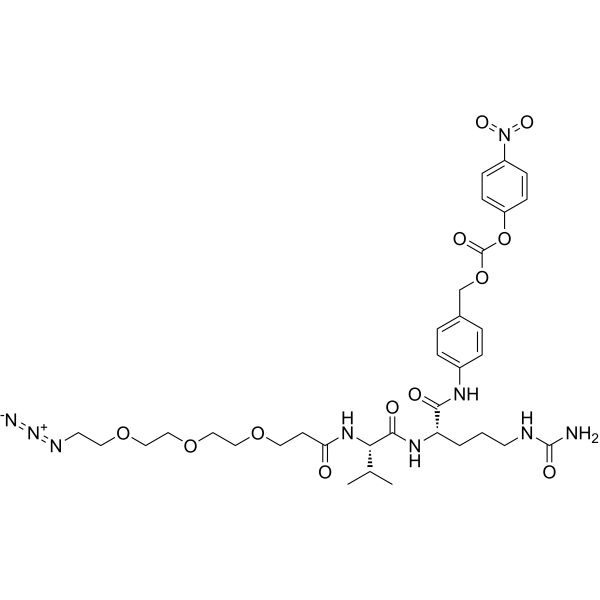
- HY-140149
-
|
|
ADC Linker
PROTAC Linkers
|
Cancer
|
|
Azido-PEG4-Val-Cit-PAB-OH is a cleavable 4 unit PEG ADC linker used in the synthesis of antibody-drug conjugates (ADCs) . Azido-PEG4-Val-Cit-PAB-OH is also a PEG-based PROTAC linker that can be used in the synthesis of PROTACs . Azido-PEG4-Val-Cit-PAB-OH is a click chemistry reagent, it contains an Azide group and can undergo copper-catalyzed azide-alkyne cycloaddition reaction (CuAAc) with molecules containing Alkyne groups. It can also undergo strain-promoted alkyne-azide cycloaddition (SPAAC) reactions with molecules containing DBCO or BCN groups.
|
-
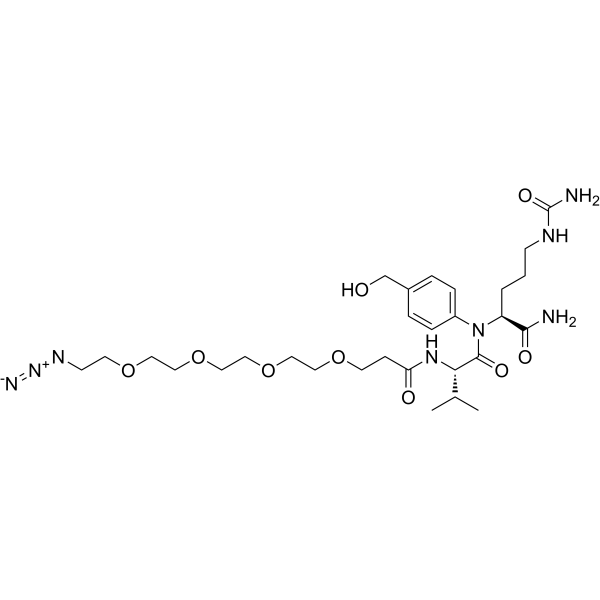
- HY-100874
-
|
|
Drug-Linker Conjugates for ADC
|
Cancer
|
|
N3-PEG3-vc-PAB-MMAE is a synthesized agent-linker conjugate for ADC that incorporates the MMAE (a tubulin inhibitor ) and 3-unit PEG linker. N3-PEG3-vc-PAB-MMAE shows potent antitumor activity. N3-PEG3-vc-PAB-MMAE is a click chemistry reagent, it contains an Azide group and can undergo copper-catalyzed azide-alkyne cycloaddition reaction (CuAAc) with molecules containing Alkyne groups. It can also undergo strain-promoted alkyne-azide cycloaddition (SPAAC) reactions with molecules containing DBCO or BCN groups.
|
-
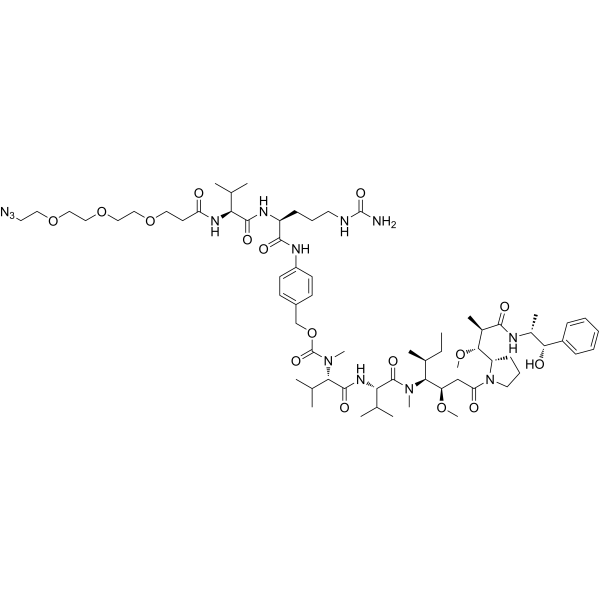
- HY-130144
-
|
|
ADC Linker
PROTAC Linkers
|
Cancer
|
|
Ald-CH2-PEG3-azide is a cleavable 3 unit PEG ADC linker used in the synthesis of antibody-drug conjugates (ADCs). Ald-CH2-PEG3-azide is a PEG-based PROTAC linker can be used in the synthesis of PROTACs . Ald-CH2-PEG3-azide is a click chemistry reagent, it contains an Azide group and can undergo copper-catalyzed azide-alkyne cycloaddition reaction (CuAAc) with molecules containing Alkyne groups. It can also undergo strain-promoted alkyne-azide cycloaddition (SPAAC) reactions with molecules containing DBCO or BCN groups.
|
-
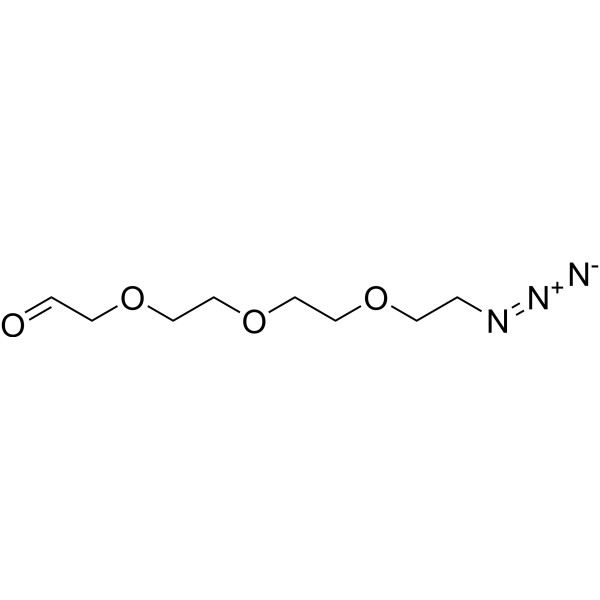
- HY-152448
-
|
|
Nucleoside Antimetabolite/Analog
|
Others
|
|
2’-Azido-2’-deoxycytidine is a purine nucleoside analogue. Purine nucleoside analogs have broad antitumor activity targeting indolent lymphoid malignancies. Anticancer mechanisms in this process rely on inhibition of DNA synthesis, induction of apoptosis, etc . 2’-Azido-2’-deoxycytidine is a click chemistry reagent, it contains an Azide group and can undergo copper-catalyzed azide-alkyne cycloaddition reaction (CuAAc) with molecules containing Alkyne groups. It can also undergo strain-promoted alkyne-azide cycloaddition (SPAAC) reactions with molecules containing DBCO or BCN groups. 2’-Azido-2’-deoxycytidine is an azidonucleoside,and it should be phosphorylated twice to become an inhibitor of the nucleotide reductase.
|
-
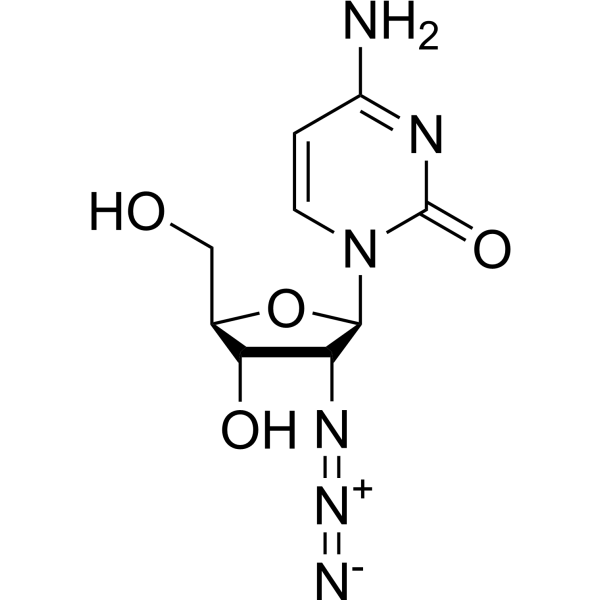
- HY-130653
-
|
|
PROTAC Linkers
ADC Linker
|
Inflammation/Immunology
Cancer
|
|
Azido-PEG4-C2-acid a PEG-based PROTAC linker can be used in the synthesis of vRucaparib-TP4. Azido-PEG4-C2-acid is also a non-cleavable 4 unit PEG ADC linker used in the synthesis of antibody-drug conjugates (ADCs). Azido-PEG4-C2-acid is a click chemistry reagent, it contains an Azide group and can undergo copper-catalyzed azide-alkyne cycloaddition reaction (CuAAc) with molecules containing Alkyne groups. It can also undergo strain-promoted alkyne-azide cycloaddition (SPAAC) reactions with molecules containing DBCO or BCN groups.
|
-
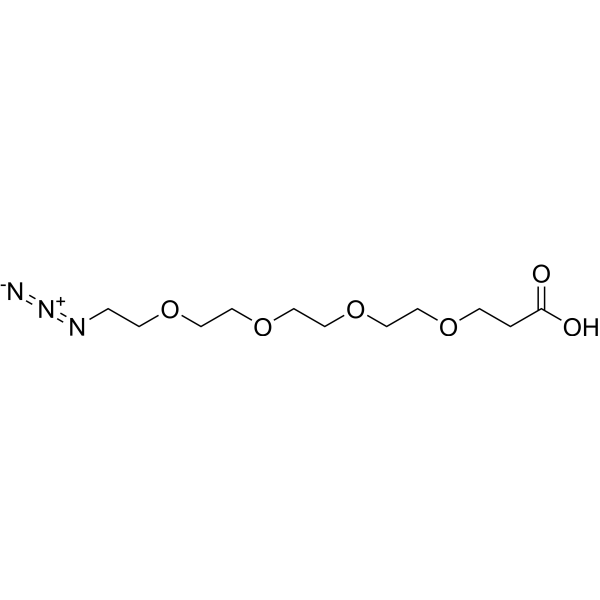
- HY-152583
-
|
|
Nucleoside Antimetabolite/Analog
|
Others
|
|
3’-Azido-3’-deoxy-5-methyl-beta-L-uridine is a purine nucleoside analogue. Purine nucleoside analogs have broad antitumor activity targeting indolent lymphoid malignancies. Anticancer mechanisms in this process rely on inhibition of DNA synthesis, induction of apoptosis, etc . 3’-Azido-3’-deoxy-5-methyl-beta-L-uridine is a click chemistry reagent, it contains an Azide group and can undergo copper-catalyzed azide-alkyne cycloaddition reaction (CuAAc) with molecules containing Alkyne groups. It can also undergo strain-promoted alkyne-azide cycloaddition (SPAAC) reactions with molecules containing DBCO or BCN groups.
|
-
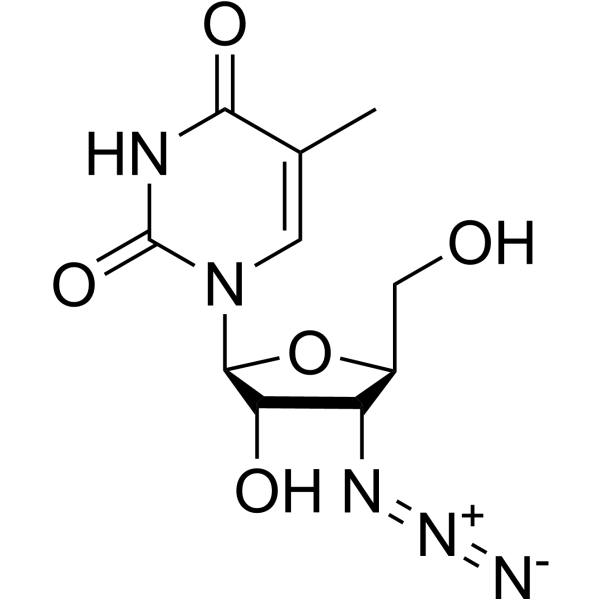
- HY-152389
-
|
|
Nucleoside Antimetabolite/Analog
|
Others
|
|
6-Methylpurine-β-D-(3-azido-3-deoxy)riboside is a purine nucleoside analogue. Purine nucleoside analogs have broad antitumor activity targeting indolent lymphoid malignancies. Anticancer mechanisms in this process rely on inhibition of DNA synthesis, induction of apoptosis, etc . 6-Methylpurine-β-D-(3-azido-3-deoxy)riboside is a click chemistry reagent, it contains an Azide group and can undergo copper-catalyzed azide-alkyne cycloaddition reaction (CuAAc) with molecules containing Alkyne groups. It can also undergo strain-promoted alkyne-azide cycloaddition (SPAAC) reactions with molecules containing DBCO or BCN groups.
|
-
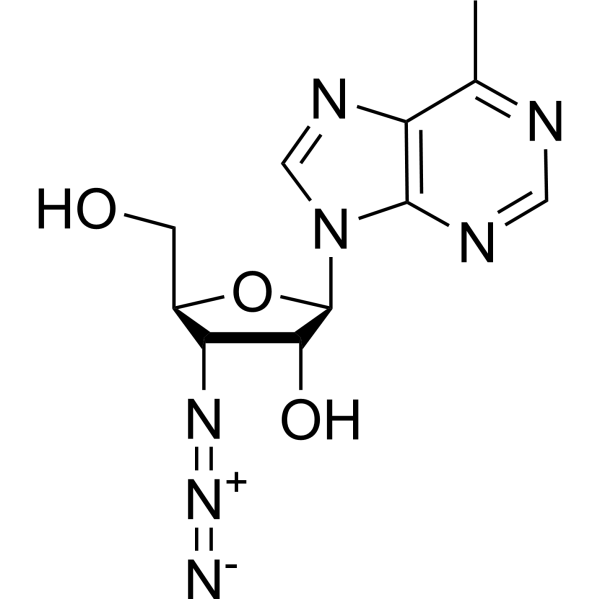
- HY-130984
-
|
|
PROTAC Linkers
|
Cancer
|
|
Azido-PEG1-CH2COO-Cl (compound 43a) is an alkyl/ether-based PROTAC linker. Azido-PEG1-CH2COO-Cl can be used in the synthesis of PROTAC BRD4 Degrader-1 (HY-133131) . Azido-PEG1-CH2COO-Cl is a click chemistry reagent, it contains an Azide group and can undergo copper-catalyzed azide-alkyne cycloaddition reaction (CuAAc) with molecules containing Alkyne groups. It can also undergo strain-promoted alkyne-azide cycloaddition (SPAAC) reactions with molecules containing DBCO or BCN groups.
|
-
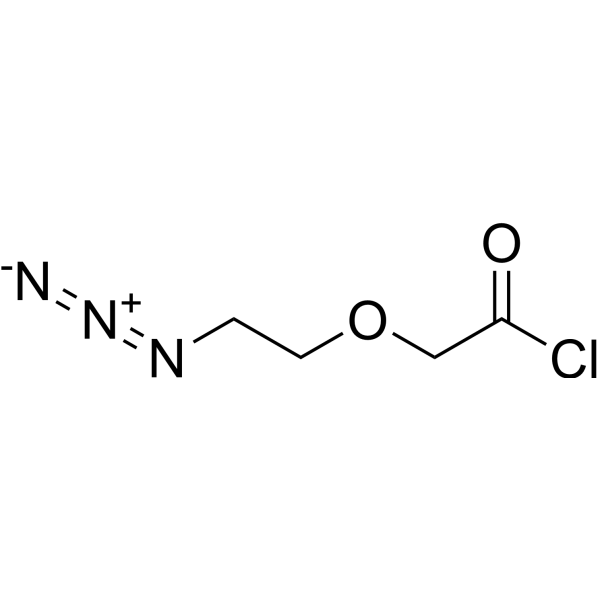
- HY-W145616
-
|
|
Biochemical Assay Reagents
|
Others
|
|
1,3,4,6-Tetra-O-acetyl-2-azido-2-deoxy-α-D-mannopyranose is a biochemical reagent that can be used as a biological material or organic compound for life science related research. 1,3,4,6-Tetra-O-acetyl-2-azido-2-deoxy-α-D-mannopyranose is a click chemistry reagent, it contains an Azide group and can undergo copper-catalyzed azide-alkyne cycloaddition reaction (CuAAc) with molecules containing Alkyne groups. It can also undergo strain-promoted alkyne-azide cycloaddition (SPAAC) reactions with molecules containing DBCO or BCN groups.
|
-
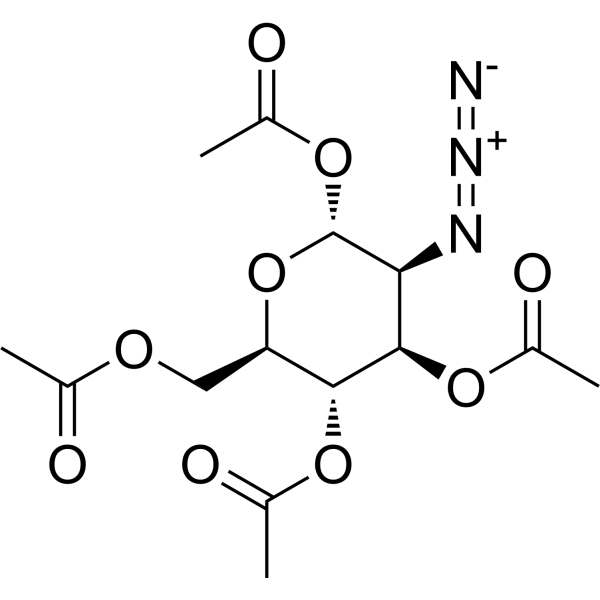
- HY-145273
-
|
|
Glycosidase
|
Infection
|
|
EB-0150 is a potent inhibitor of ER α-glucosidases (α-Glu) Iand II with IC50s of 0.73 and 0.0337 μM, respectively. EB-0150 is a N-substituted derivative of valiolamine with broad-spectrum antiviral. EB-0150 has the potential for the reseach of broad-spectrum agent against the existing and emerging viruses . EB-0150 is a click chemistry reagent, it contains an Azide group and can undergo copper-catalyzed azide-alkyne cycloaddition reaction (CuAAc) with molecules containing Alkyne groups. It can also undergo strain-promoted alkyne-azide cycloaddition (SPAAC) reactions with molecules containing DBCO or BCN groups.
|
-
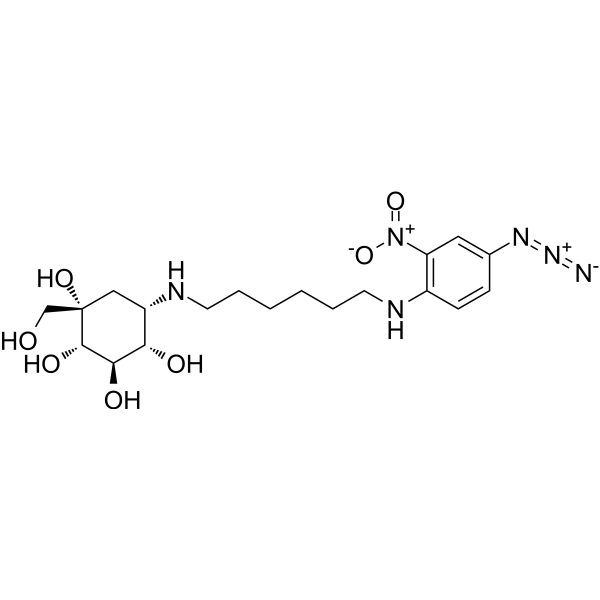
- HY-103476R
-
|
|
Reference Standards
GABA Receptor
|
Neurological Disease
|
|
Ro15-4513 (Standard) is the analytical standard of Ro15-4513. This product is intended for research and analytical applications. Ro15-4513, imidazobenzodiazepinone derivative, is a partial inverse agonist of benzodiazepine receptor (BZR) . Ro15-4513 is a potent ethanol antagonist . Ro15-4513 has anti-anxiety effect . Ro15-4513 is a click chemistry reagent, it contains an Azide group and can undergo copper-catalyzed azide-alkyne cycloaddition reaction (CuAAc) with molecules containing Alkyne groups. It can also undergo strain-promoted alkyne-azide cycloaddition (SPAAC) reactions with molecules containing DBCO or BCN groups.
|
-

- HY-133138
-
|
|
E3 Ligase Ligand-Linker Conjugates
|
Cancer
|
|
Pomalidomide-PEG1-azide is a E3 ligase lgand-linker conjugate. Pomalidomide-PEG1-azide incorporates the Pomalidomide based cereblon ligand and a linker.?Pomalidomide-PEG1-azide?can be used to design a?PROTAC BRD4 Degrader-1 (HY-133131) . Pomalidomide-PEG1-azide is a click chemistry reagent, it contains an Azide group and can undergo copper-catalyzed azide-alkyne cycloaddition reaction (CuAAc) with molecules containing Alkyne groups. It can also undergo strain-promoted alkyne-azide cycloaddition (SPAAC) reactions with molecules containing DBCO or BCN groups.
|
-
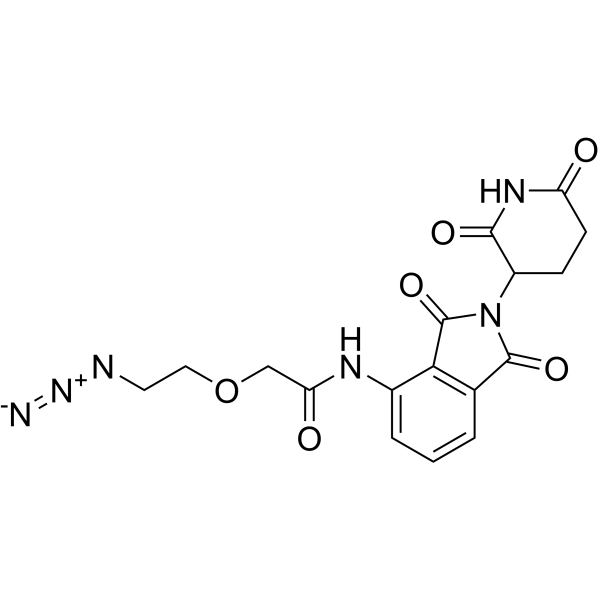
- HY-19314A
-
|
RO-0622 hydrochloride; FNC hydrochloride
|
Reverse Transcriptase
HIV
HBV
HCV
|
Infection
|
|
Azvudine (RO-0622) hydrochloride is a potent nucleoside reverse transcriptase inhibitor (NRTI), with antiviral activity on HIV, HBV and HCV. Azvudine hydrochloride exerts highly potent inhibition on HIV-1 (EC50s ranging from 0.03 to 6.92 nM) and HIV-2 (EC50s ranging from 0.018 to 0.025 nM). Azvudine hydrochloride inhibits NRTI-resistant viral strains . Azvudine (hydrochloride) is a click chemistry reagent, it contains an Azide group and can undergo copper-catalyzed azide-alkyne cycloaddition reaction (CuAAc) with molecules containing Alkyne groups. It can also undergo strain-promoted alkyne-azide cycloaddition (SPAAC) reactions with molecules containing DBCO or BCN groups.
|
-
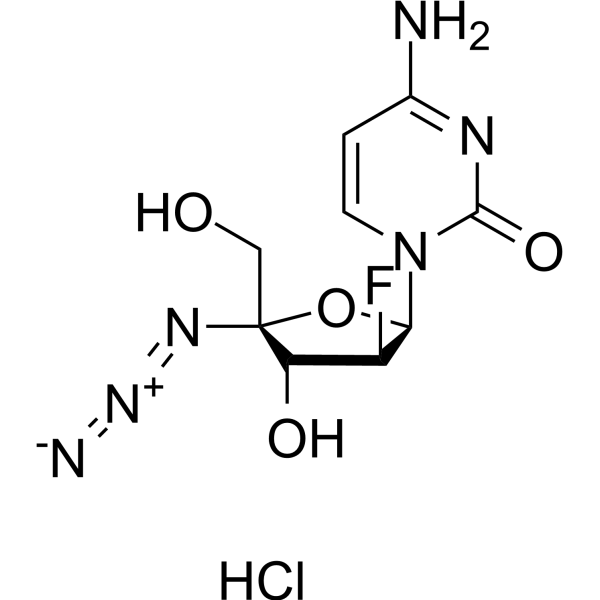
- HY-19314
-
Azvudine
Maximum Cited Publications
6 Publications Verification
RO-0622; FNC
|
Reverse Transcriptase
HIV
HBV
HCV
|
Infection
|
|
Azvudine (RO-0622) is a potent nucleoside reverse transcriptase inhibitor (NRTI), with antiviral activity on HIV, HBV and HCV. Azvudine exerts highly potent inhibition on HIV-1 (EC50s ranging from 0.03 to 6.92 nM) and HIV-2 (EC50s ranging from 0.018 to 0.025 nM). Azvudine inhibits NRTI-resistant viral strains . Azvudine is a click chemistry reagent, it contains an Azide group and can undergo copper-catalyzed azide-alkyne cycloaddition reaction (CuAAc) with molecules containing Alkyne groups. It can also undergo strain-promoted alkyne-azide cycloaddition (SPAAC) reactions with molecules containing DBCO or BCN groups.
|
-
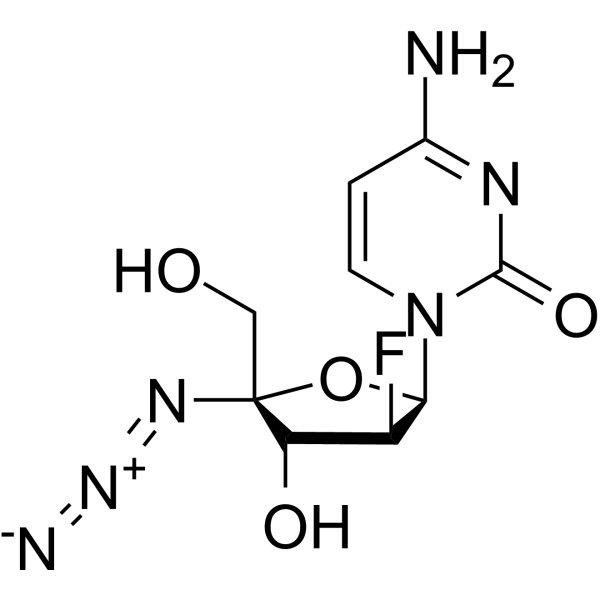
- HY-154462
-
|
|
Nucleoside Antimetabolite/Analog
|
Cancer
|
|
5-Azidomethyl-2’-beta-methyl-2’,3’,5’-tri-O-benzoyluridine is a thymidine analog. Analogs of this series have insertional activity towards replicated DNA. They can be used to label cells and track DNA synthesis . 5-Azidomethyl-2’-beta-methyl-2’,3’,5’-tri-O-benzoyluridine is a click chemistry reagent, it contains an Azide group and can undergo copper-catalyzed azide-alkyne cycloaddition reaction (CuAAc) with molecules containing Alkyne groups. It can also undergo strain-promoted alkyne-azide cycloaddition (SPAAC) reactions with molecules containing DBCO or BCN groups.
|
-
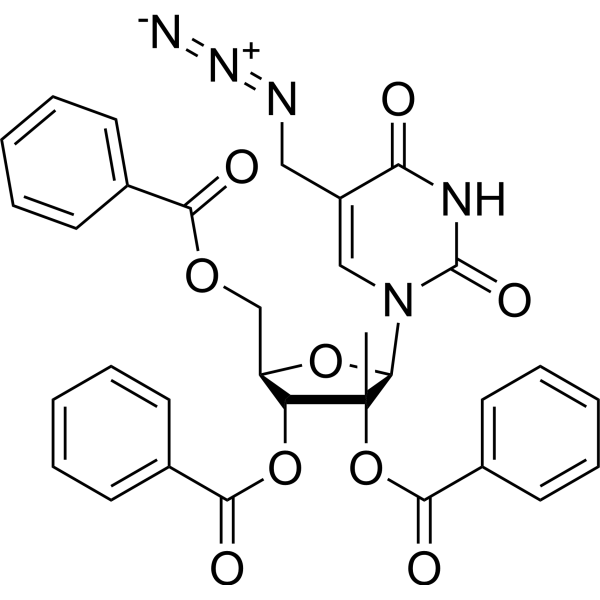
- HY-152597
-
|
|
Nucleoside Antimetabolite/Analog
|
Others
|
|
3’-Azido-3’-deoxy-5-fluoro-beta-L-cytidine is a purine nucleoside analogue. Purine nucleoside analogs have broad antitumor activity targeting indolent lymphoid malignancies. Anticancer mechanisms in this process rely on inhibition of DNA synthesis, induction of apoptosis, etc . 3’-Azido-3’-deoxy-5-fluoro-beta-L-cytidine is a click chemistry reagent, it contains an Azide group and can undergo copper-catalyzed azide-alkyne cycloaddition reaction (CuAAc) with molecules containing Alkyne groups. It can also undergo strain-promoted alkyne-azide cycloaddition (SPAAC) reactions with molecules containing DBCO or BCN groups.
|
-
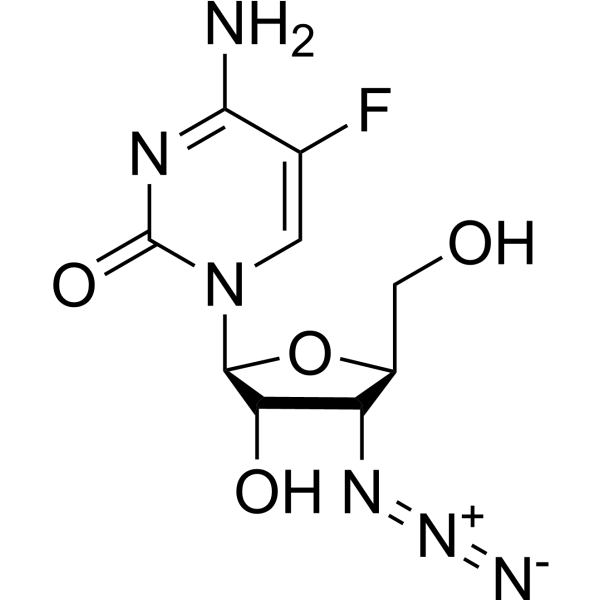
- HY-141126
-
|
|
Biochemical Assay Reagents
|
Cancer
|
|
Azido-PEG4-alpha-D-mannose is a PEG linker that combines an azide group with an alpha-D-mannose moiety. Azido-PEG4-alpha-D-mannose is a click chemistry reagent, it contains an Azide group and can undergo copper-catalyzed azide-alkyne cycloaddition reaction (CuAAc) with molecules containing Alkyne groups. It can also undergo strain-promoted alkyne-azide cycloaddition (SPAAC) reactions with molecules containing DBCO or BCN groups. Azido-PEG4-alpha-D-mannose has the targeting property of mannose, which can accurately deliver drugs to specific cells or tissues to improve the therapeutic effect of drugs .
|
-
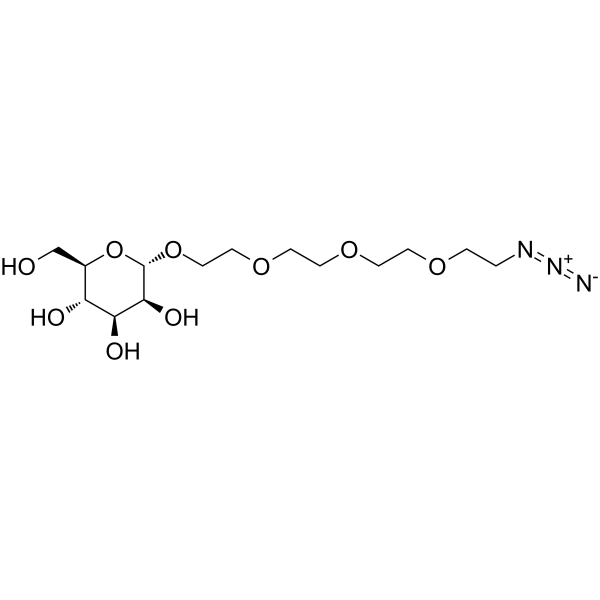
- HY-152595
-
|
|
Nucleoside Antimetabolite/Analog
|
Others
|
|
3’-Azido-3’-deoxy-5-methyl-beta-L-cytidine is a purine nucleoside analogue. Purine nucleoside analogs have broad antitumor activity targeting indolent lymphoid malignancies. Anticancer mechanisms in this process rely on inhibition of DNA synthesis, induction of apoptosis, etc . 3’-Azido-3’-deoxy-5-methyl-beta-L-cytidine is a click chemistry reagent, it contains an Azide group and can undergo copper-catalyzed azide-alkyne cycloaddition reaction (CuAAc) with molecules containing Alkyne groups. It can also undergo strain-promoted alkyne-azide cycloaddition (SPAAC) reactions with molecules containing DBCO or BCN groups.
|
-
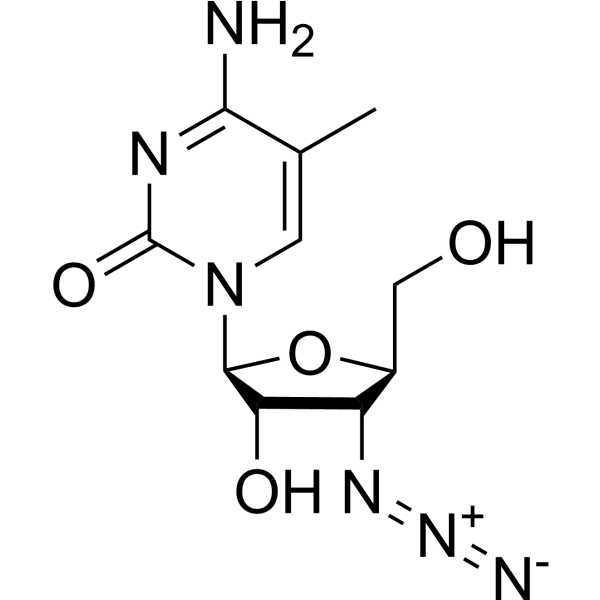
- HY-130312
-
|
|
PROTAC Linkers
|
Cancer
|
|
N-(Azido-PEG4)-N-Boc-PEG4-NHS ester is a PEG-based PROTAC linker with a terminal azide group. N-(Azido-PEG4)-N-Boc-PEG4-NHS ester is used in the synthesis of PROTACs N-(Azido-PEG4)-N-Boc-PEG4-NHS ester is a click chemistry reagent, it contains an Azide group and can undergo copper-catalyzed azide-alkyne cycloaddition reaction (CuAAc) with molecules containing Alkyne groups. It can also undergo strain-promoted alkyne-azide cycloaddition (SPAAC) reactions with molecules containing DBCO or BCN groups.
|
-
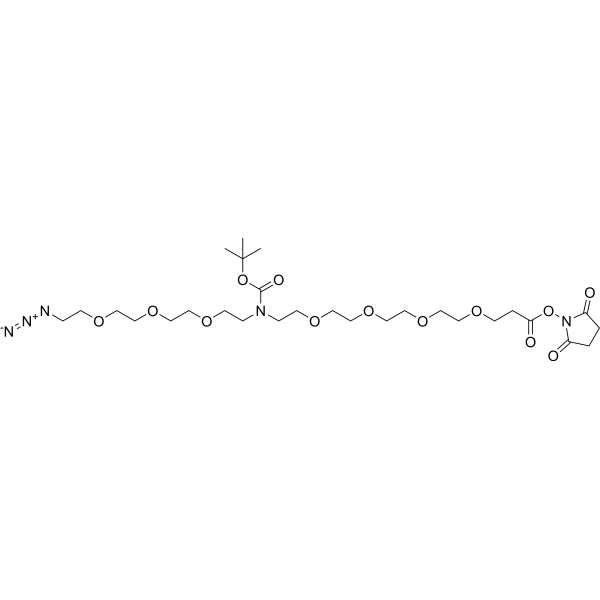
- HY-151754
-
|
|
ADC Linker
|
Others
|
|
DACN(Tos2,6-OH) is a click chemistry reagent containing an Azide. The alkyne moiety within the ring has a unique bent structure and high reactivity toward cycloaddition reactions. The reactivity of an alkyne heavily depends on the electronic and steric characteristics of the substituents as well as structural strain. In comparison to nonbent acyclic alkynes, cyclononyne alkynes show remarkably high reactivity. Such strain-promoted azide-alkyne cycloadditions (SPAAC) using cycloalkynes have served for reliable molecular conjugation in a broad range of fields. The nitrogens are used as connection points for a variety of functional units. In comparison to cyclooctynes, DACNs possess high thermal and chemical stability along with comparable click reactivity . DACN(Tos2,6-OH) is a click chemistry reagent, it contains an Alkyne group and can undergo copper-catalyzed azide-alkyne cycloaddition (CuAAc) with molecules containing Azide groups.
|
-
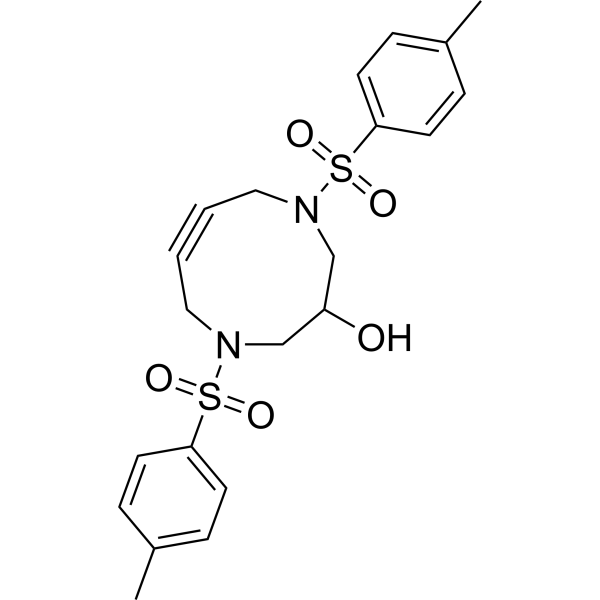
- HY-131088
-
|
|
Drug-Linker Conjugates for ADC
EGFR
|
Cancer
|
|
N3-PEG8-Phe-Lys-PABC-Gefitinib is a agent-linker conjugate for ADC with potent antitumor activity by using the anti-tumor agent, Gefitinib (HY-50895) (orally active EGFR tyrosine kinase inhibitor), linked via the cleavable linker N3-PEG8-Phe-Lys-PABC. N3-PEG8-Phe-Lys-PABC-Gefitinib is a click chemistry reagent, it contains an Azide group and can undergo copper-catalyzed azide-alkyne cycloaddition reaction (CuAAc) with molecules containing Alkyne groups. It can also undergo strain-promoted alkyne-azide cycloaddition (SPAAC) reactions with molecules containing DBCO or BCN groups.
|
-
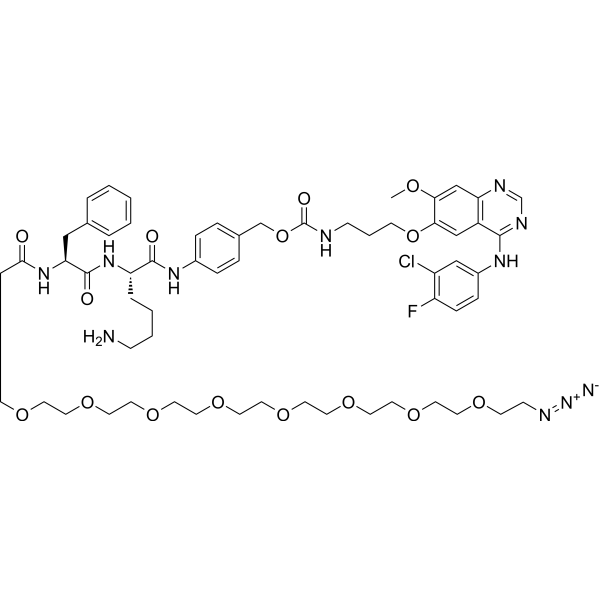
- HY-106850
-
|
AzdU; AzddU; CS-87
|
HIV
|
Infection
|
|
3′-Azido-2′,3′-dideoxyuridine (AzdU) is a nucleoside analog of Zidovudine (HY-17413). 3′-Azido-2′,3′-dideoxyuridine is a potent inhibitor of human immunodeficiency virus (HIV) replication in human peripheral blood mononuclear cells (PBMC) with limited toxicity for human bone marrow cells (BMC) . 3′-Azido-2′,3′-dideoxyuridine is a click chemistry reagent, it contains an Azide group and can undergo copper-catalyzed azide-alkyne cycloaddition reaction (CuAAc) with molecules containing Alkyne groups. It can also undergo strain-promoted alkyne-azide cycloaddition (SPAAC) reactions with molecules containing DBCO or BCN groups.
|
-
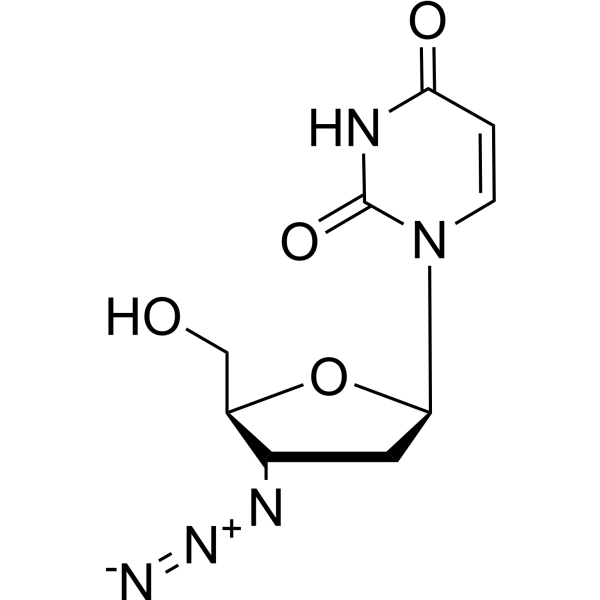
- HY-W145531
-
|
|
Biochemical Assay Reagents
|
Others
|
|
Neu5GcAc[1Me,478Ac,9N3]-β-SPh is a biochemical reagent that can be used as a biological material or organic compound for life science related research. Neu5GcAc[1Me,478Ac,9N3]-β-SPh is a click chemistry reagent, it contains an Azide group and can undergo copper-catalyzed azide-alkyne cycloaddition reaction (CuAAc) with molecules containing Alkyne groups. It can also undergo strain-promoted alkyne-azide cycloaddition (SPAAC) reactions with molecules containing DBCO or BCN groups.
|
-
![Neu5GcAc[1Me,478Ac,9N3]-β-SPh](//file.medchemexpress.com/product_pic/hy-w145531.gif)
- HY-108368R
-
|
|
Reference Standards
PROTAC Linkers
|
Cancer
|
|
Azido-PEG2-CH2COOH (Standard) is the analytical standard of Azido-PEG2-CH2COOH (HY-108368). This product is intended for research and analytical applications. Azido-PEG2-CH2COOH is a PEG-based PROTAC linker can be used in the synthesis of PROTACs . Azido-PEG2-CH2COOH is a click chemistry reagent, it contains an Azide group and can undergo copper-catalyzed azide-alkyne cycloaddition reaction (CuAAc) with molecules containing Alkyne groups. It can also undergo strain-promoted alkyne-azide cycloaddition (SPAAC) reactions with molecules containing DBCO or BCN groups.
|
-

- HY-154383
-
|
|
Nucleoside Antimetabolite/Analog
|
Cancer
|
|
5’-Azido-5’-deoxy-2’-O-(2-methoxyethyl)uridine is a purine nucleoside analog. Purine nucleoside analogs have broad antitumor activity targeting indolent lymphoid malignancies. Anticancer mechanisms in this process rely on inhibition of DNA synthesis, induction of apoptosis, etc . 5’-Azido-5’-deoxy-2’-O-(2-methoxyethyl)uridine is a click chemistry reagent, it contains an Azide group and can undergo copper-catalyzed azide-alkyne cycloaddition reaction (CuAAc) with molecules containing Alkyne groups. It can also undergo strain-promoted alkyne-azide cycloaddition (SPAAC) reactions with molecules containing DBCO or BCN groups.
|
-
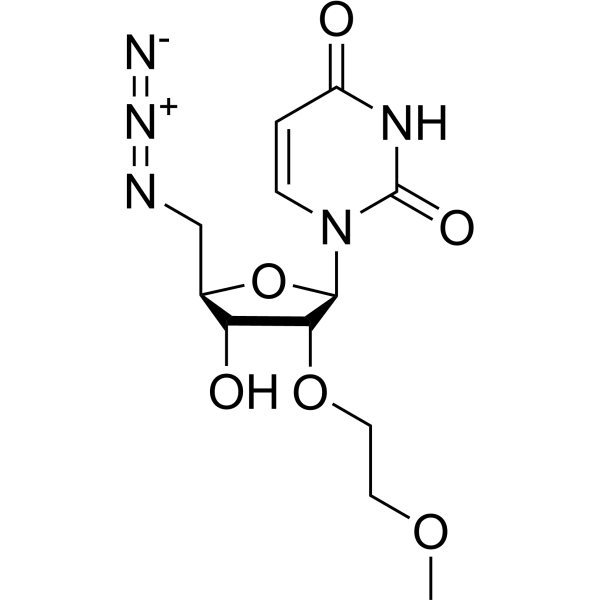
- HY-130946
-
|
|
ADC Linker
|
Cancer
|
|
NH2-C5-PEG4-N3-L-Lysine-PEG3-N3 is a cleavable 7 unit PEG ADC linker used in the synthesis of antibody-drug conjugates (ADCs) . NH2-C5-PEG4-N3-L-Lysine-PEG3-N3 is a click chemistry reagent, it contains an Azide group and can undergo copper-catalyzed azide-alkyne cycloaddition reaction (CuAAc) with molecules containing Alkyne groups. It can also undergo strain-promoted alkyne-azide cycloaddition (SPAAC) reactions with molecules containing DBCO or BCN groups.
|
-
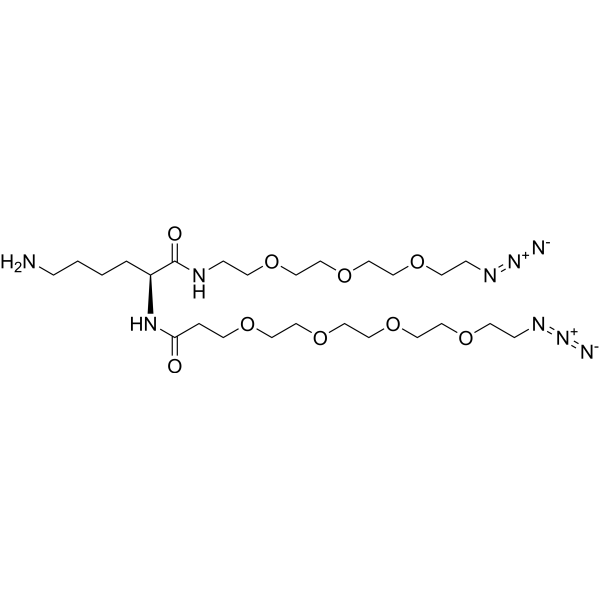
- HY-42618
-
|
|
ADC Linker
PROTAC Linkers
|
Cancer
|
|
Azido-PEG4-CH2-Boc is a cleavable 4 unit PEG ADC linker used in the synthesis of antibody-drug conjugates (ADCs) . Azido-PEG4-CH2-Boc is also a PEG- and Alkyl/ether-based PROTAC linker that can be used in the synthesis of PROTACs . Azido-PEG4-CH2-Boc is a click chemistry reagent, it contains an Azide group and can undergo copper-catalyzed azide-alkyne cycloaddition reaction (CuAAc) with molecules containing Alkyne groups. It can also undergo strain-promoted alkyne-azide cycloaddition (SPAAC) reactions with molecules containing DBCO or BCN groups.
|
-
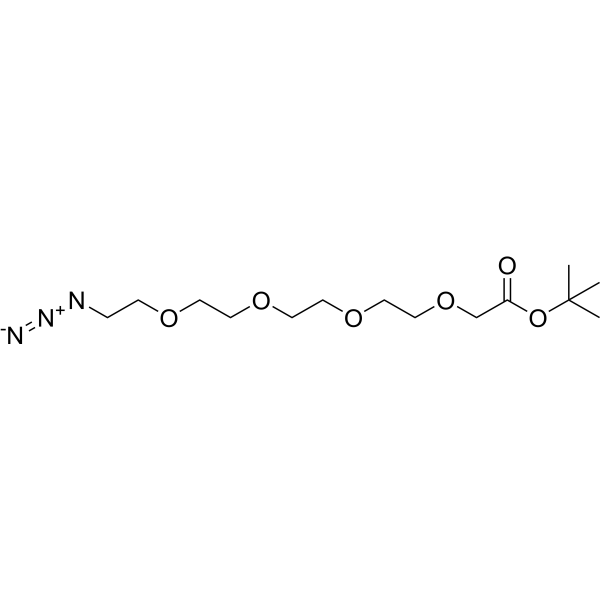
- HY-154423
-
|
|
Nucleoside Antimetabolite/Analog
|
Cancer
|
|
2′-Azido-5′-O-[bis(4-methoxyphenyl)phenylmethyl]-2′-deoxyuridine is a purine nucleoside analog. Purine nucleoside analogs have broad antitumor activity targeting indolent lymphoid malignancies. Anticancer mechanisms in this process rely on inhibition of DNA synthesis, induction of apoptosis, etc . 2′-Azido-5′-O-[bis(4-methoxyphenyl)phenylmethyl]-2′-deoxyuridine is a click chemistry reagent, it contains an Azide group and can undergo copper-catalyzed azide-alkyne cycloaddition reaction (CuAAc) with molecules containing Alkyne groups. It can also undergo strain-promoted alkyne-azide cycloaddition (SPAAC) reactions with molecules containing DBCO or BCN groups.
|
-
![2′-Azido-5′-O-[bis(4-methoxyphenyl)phenylmethyl]-2′-deoxyuridine](//file.medchemexpress.com/product_pic/hy-154423.gif)
- HY-154042
-
|
|
Nucleoside Antimetabolite/Analog
|
Cancer
|
|
5’-Azido-5’-deoxy-2’-O,4’-C-methyleneuridine is a purine nucleoside analog. Purine nucleoside analogs have broad antitumor activity targeting indolent lymphoid malignancies. Anticancer mechanisms in this process rely on inhibition of DNA synthesis, induction of apoptosis, etc . 5’-Azido-5’-deoxy-2’-O,4’-C-methyleneuridine is a click chemistry reagent, it contains an Azide group and can undergo copper-catalyzed azide-alkyne cycloaddition reaction (CuAAc) with molecules containing Alkyne groups. It can also undergo strain-promoted alkyne-azide cycloaddition (SPAAC) reactions with molecules containing DBCO or BCN groups.
|
-
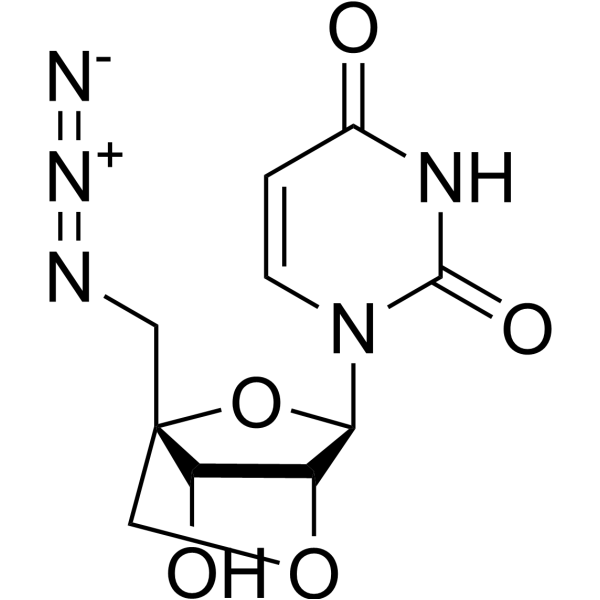
- HY-103600
-
|
VH032-PEG1-N3; VHL Ligand-Linker Conjugates 9; E3 ligase Ligand-Linker Conjugates 3
|
E3 Ligase Ligand-Linker Conjugates
|
Cancer
|
|
(S,R,S)-AHPC-PEG1-N3 (VH032-PEG1-N3) is a synthesized E3 ligase ligand-linker conjugate that incorporates the (S,R,S)-AHPC based VHL ligand and 1-unit PEG linker used in PROTAC technology. (S,R,S)-AHPC-PEG1-N3 is a click chemistry reagent, it contains an Azide group and can undergo copper-catalyzed azide-alkyne cycloaddition reaction (CuAAc) with molecules containing Alkyne groups. It can also undergo strain-promoted alkyne-azide cycloaddition (SPAAC) reactions with molecules containing DBCO or BCN groups.
|
-
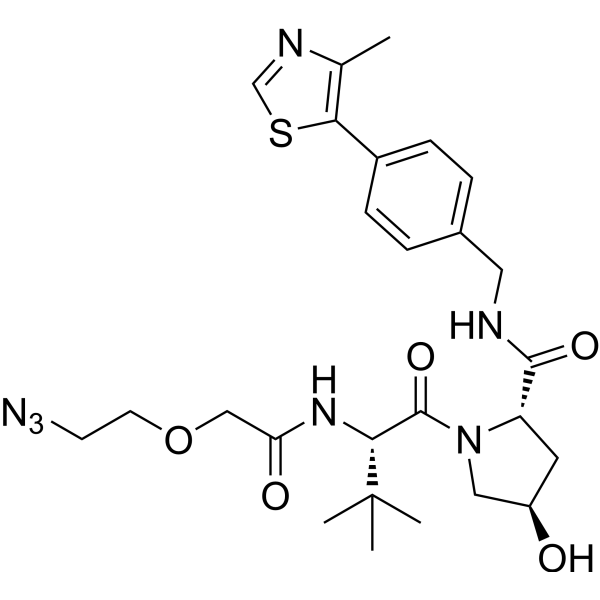
- HY-105268R
-
|
CS-92 (Standard)
|
Reference Standards
HIV
Reverse Transcriptase
Nucleoside Antimetabolite/Analog
|
Infection
|
|
AzddMeC (Standard) is the analytical standard of AzddMeC (HY-105268). This product is intended for research and analytical applications. AzddMeC (CS-92) is an antiviral nucleoside analogue and a potent potent, selective and orally active HIV-1 reverse transcriptase and HIV-1 replication inhibitor. In HIV-1-infected human PBM cells and HIV-1-infected human macrophages, the EC50 values of AzddMeC are 9 nM and 6 nM, respectively . AzddMeC is a click chemistry reagent, it contains an Azide group and can undergo copper-catalyzed azide-alkyne cycloaddition reaction (CuAAc) with molecules containing Alkyne groups. It can also undergo strain-promoted alkyne-azide cycloaddition (SPAAC) reactions with molecules containing DBCO or BCN groups.
|
-

- HY-128832
-
|
MDM2 Ligand-Linker Conjugates 1; E3 ligase Ligand-Linker Conjugates 48
|
E3 Ligase Ligand-Linker Conjugates
|
Cancer
|
|
Nutlin-C1-amido-PEG4-C2-N3 is a synthesized E3 ligase ligand-linker conjugate that incorporates the Nutlin 3 based MDM2 ligand and 4-unit PEG linker used in PROTAC technology. Nutlin-C1-amido-PEG4-C2-N3 is a click chemistry reagent, it contains an Azide group and can undergo copper-catalyzed azide-alkyne cycloaddition reaction (CuAAc) with molecules containing Alkyne groups. It can also undergo strain-promoted alkyne-azide cycloaddition (SPAAC) reactions with molecules containing DBCO or BCN groups.
|
-
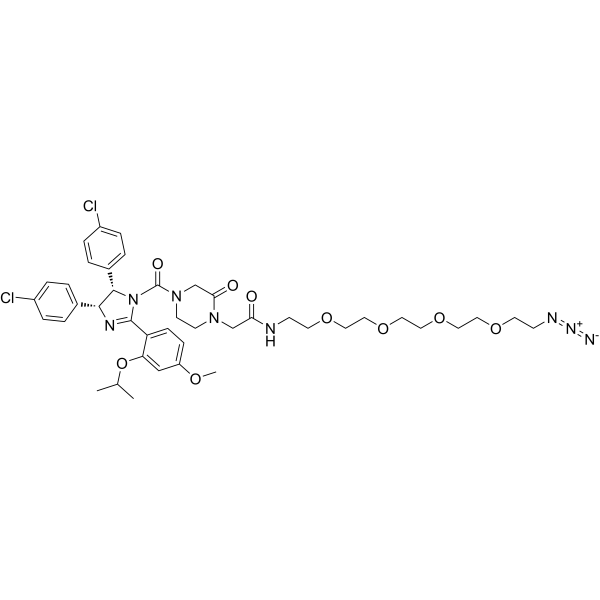
- HY-152319
-
|
|
Nucleoside Antimetabolite/Analog
|
Others
|
|
3’-Azido-3’-deoxy-N6,N6-dimethyladenosine is a purine nucleoside analogue. Purine nucleoside analogs have broad antitumor activity targeting indolent lymphoid malignancies. Anticancer mechanisms in this process rely on inhibition of DNA synthesis, induction of apoptosis, etc . 3’-Azido-3’-deoxy-N6,N6-dimethyladenosine is a click chemistry reagent, it contains an Azide group and can undergo copper-catalyzed azide-alkyne cycloaddition reaction (CuAAc) with molecules containing Alkyne groups. It can also undergo strain-promoted alkyne-azide cycloaddition (SPAAC) reactions with molecules containing DBCO or BCN groups.
|
-
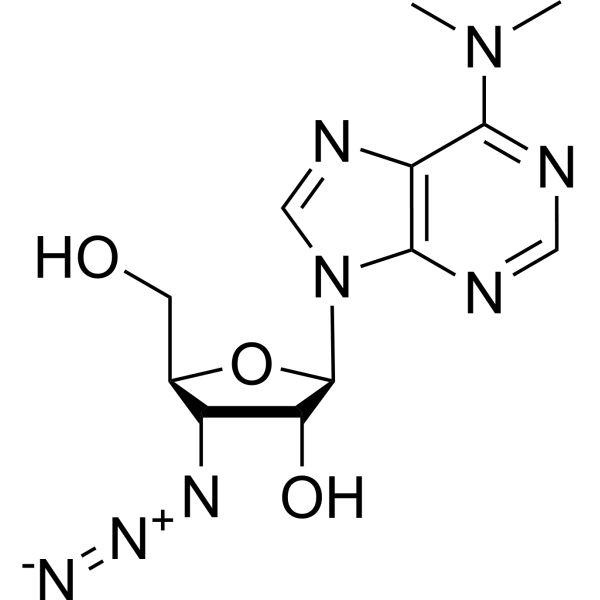
- HY-152310
-
|
|
Nucleoside Antimetabolite/Analog
|
Others
|
|
N4-(n-Palmitoyl)-4’-azido-2’-deoxy-2’-fluoro-arabinocytidine is a cytidine nucleoside analog. Cytidine analogs have a mechanism of inhibiting DNA methyltransferases (such as Zebularine, HY-13420), and have potential anti-metabolic and anti-tumor activities . N4-(n-Palmitoyl)-4’-azido-2’-deoxy-2’-fluoro-arabinocytidine is a click chemistry reagent, it contains an Azide group and can undergo copper-catalyzed azide-alkyne cycloaddition reaction (CuAAc) with molecules containing Alkyne groups. It can also undergo strain-promoted alkyne-azide cycloaddition (SPAAC) reactions with molecules containing DBCO or BCN groups.
|
-
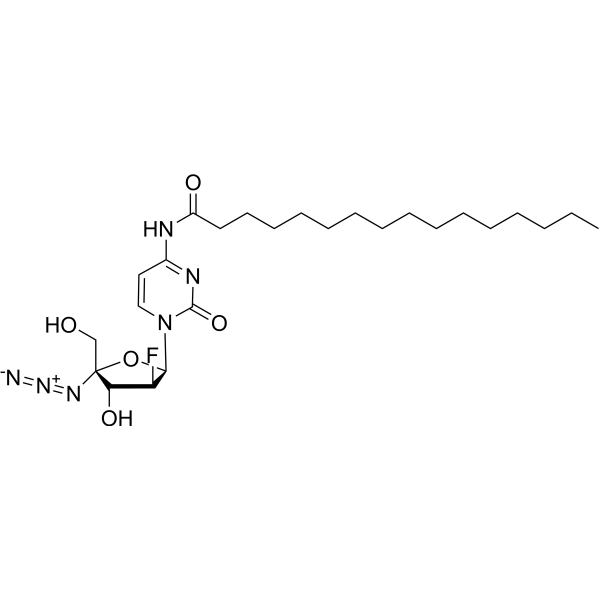
- HY-154377
-
|
|
Nucleoside Antimetabolite/Analog
|
Cancer
|
|
5’-Azido-5’-deoxy-2’-O-methyl-5-methyluridine is a purine nucleoside analog. Purine nucleoside analogs have broad antitumor activity targeting indolent lymphoid malignancies. Anticancer mechanisms in this process rely on inhibition of DNA synthesis, induction of apoptosis, etc . 5'-Azido-5'-deoxy-2'-O-methyl-5-methyluridine is a click chemistry reagent, it contains an Azide group and can undergo copper-catalyzed azide-alkyne cycloaddition reaction (CuAAc) with molecules containing Alkyne groups. It can also undergo strain-promoted alkyne-azide cycloaddition (SPAAC) reactions with molecules containing DBCO or BCN groups.
|
-
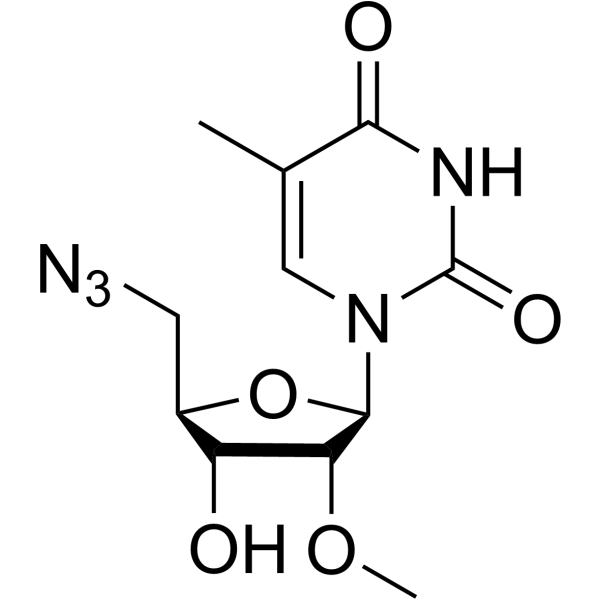
- HY-10444R
-
|
4'-Azidocytidine (Standard)
|
Reference Standards
HCV
DNA/RNA Synthesis
|
Infection
|
|
R-1479 (Standard) is the analytical standard of R-1479 (HY-10444). This product is intended for research and analytical applications. R-1479 (4'-Azidocytidine), a nucleoside analogue, is a specific inhibitor of RNA-dependent RNA polymerase (RdRp) of HCV. R-1479 inhibits HCV replication in the HCV subgenomic replicon system (IC50=1.28 μM) . R-1479 is a click chemistry reagent, it contains an Azide group and can undergo copper-catalyzed azide-alkyne cycloaddition reaction (CuAAc) with molecules containing Alkyne groups. It can also undergo strain-promoted alkyne-azide cycloaddition (SPAAC) reactions with molecules containing DBCO or BCN groups.
|
-

- HY-W127719
-
|
|
Biochemical Assay Reagents
|
Others
|
|
Photobiotin (acetate)It is a biological probe used to study biochemical processes such as protein interactions and enzymatic reactions. It is a molecule containing a photosensitive group, which can be combined with specific target molecules (such as proteins, nucleic acids, etc.) through photochemical cross-linking technology, so as to realize the labeling and detection of these molecules. During the photosensitive crosslinking process, Photobiotin (acetate)Can participate in the formation of covalent bonds and form stable compounds. In addition, the compound also has high biocompatibility and biological activity, so it is widely used in the field of biomedical research, such as enzymatic research, proteomics, western blotting and other aspects. Photobiotin (acetate) is a click chemistry reagent, it contains an Azide group and can undergo copper-catalyzed azide-alkyne cycloaddition reaction (CuAAc) with molecules containing Alkyne groups. It can also undergo strain-promoted alkyne-azide cycloaddition (SPAAC) reactions with molecules containing DBCO or BCN groups.
|
-
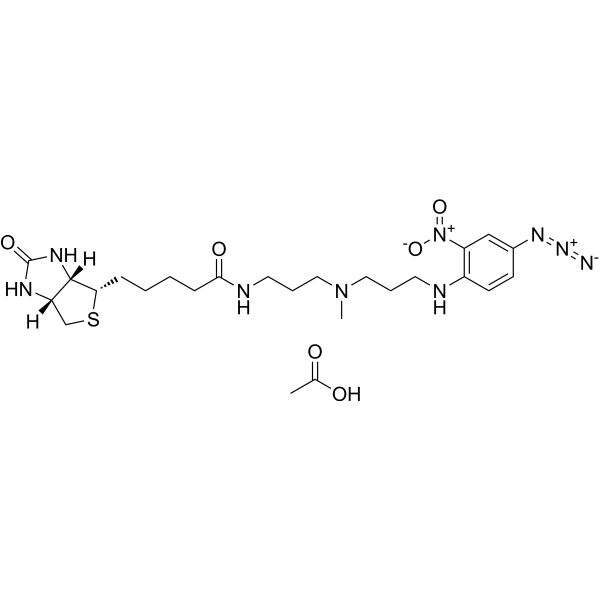
- HY-136079
-
|
|
ADC Linker
|
Cancer
|
|
Methyltetrazine-PEG4-hydrazone-DBCO is a cleavable 4 unit PEG ADC linker used in the synthesis of antibody-drug conjugates (ADCs) . Methyltetrazine-PEG4-hydrazone-DBCO is a click chemistry reagent, it contains a DBCO group that can undergo strain-promoted alkyne-azide cycloaddition (SPAAC) with molecules containing Azide groups. Methyltetrazine-PEG4-hydrazone-DBCO also contains a Tetrazine group that can undergo an inverse electron demand Diels-Alder reaction (iEDDA) with molecules containing TCO groups.
|
-
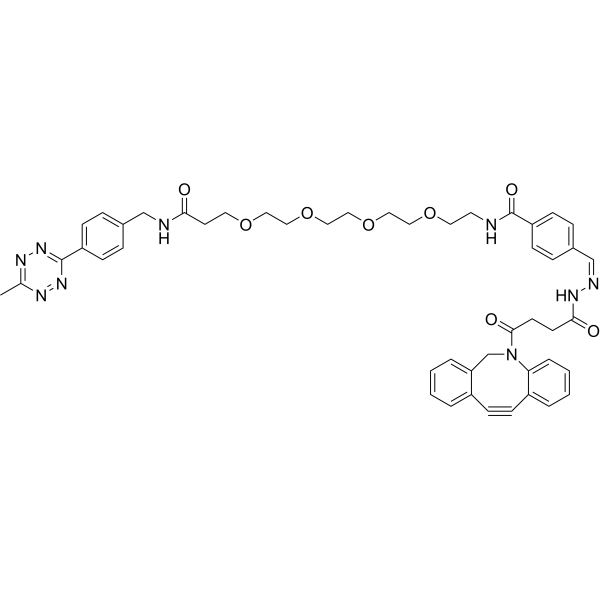
- HY-161133
-
|
|
E3 Ligase Ligand-Linker Conjugates
|
Cancer
|
|
Lenalidomide 4'-PEG1-azide (Compound 4g) is a lenalidomide-derived azide. Lenalidomide 4'-PEG1-azide incorporates the Lenalidomide based cereblon ligand and a linker. Lenalidomide 4'-PEG1-azide is a click chemistry reagent, it contains an Azide group and can undergo copper-catalyzed azide-alkyne cycloaddition reaction (CuAAc) with molecules containing Alkyne groups. Strain-promoted alkyne-azide cycloaddition (SPAAC) can also occur with molecules containing DBCO or BCN groups. .
|
-
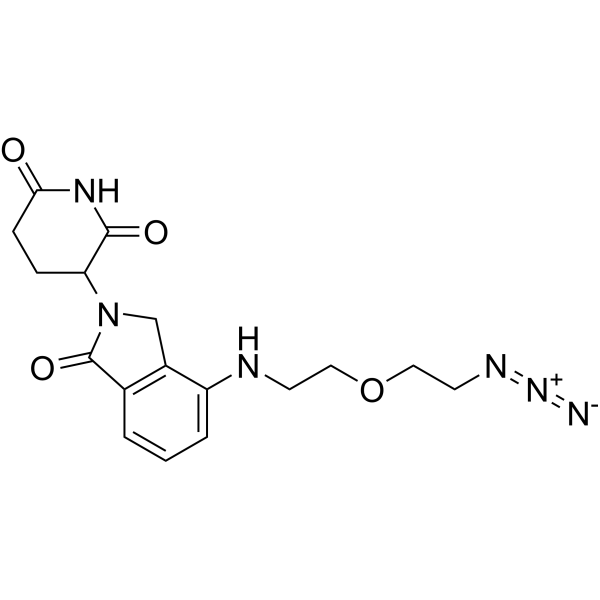
- HY-151738
-
|
|
ADC Linker
|
Others
|
|
Fmoc-Aeg(N3)-OH is a click chemistry reagent containing an Azide. Alkylating the Nitrogen of an amide bond results in peptoid structures, which leads to conformational restrains, like N-methylation and allows backbone derivatisation. Altering cytotoxicity, bacterial cell selectivity and receptor pharmacology through formation of peptoid derivatives have been published for Cilengitide, Piscidin 1, and MC3, MC4 and MC5 receptor agonist. This building block enables design of macrocycles through intermolecular crosslinking or backbone stabilization through intermolecular ring-closure. This compound is a potential building block for the construction of (customized) peptide nucleic acids (PNAs) and for peptoid synthesis . Fmoc-Aeg(N3)-OH is a click chemistry reagent, it contains an Azide group and can undergo copper-catalyzed azide-alkyne cycloaddition reaction (CuAAc) with molecules containing Alkyne groups. It can also undergo strain-promoted alkyne-azide cycloaddition (SPAAC) reactions with molecules containing DBCO or BCN groups.
|
-
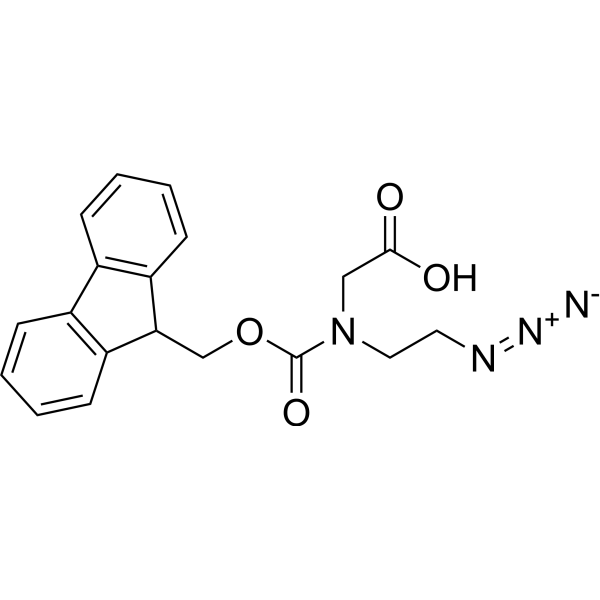
- HY-130508
-
|
|
PROTAC Linkers
|
Cancer
|
|
Methyltetrazine-Ph-PEG4-azide is a PEG-based PROTAC linker that can be used in the synthesis of PROTACs . Methyltetrazine-Ph-PEG4-azide is a click chemistry reagent, it contains a Tetrazine group that can undergo an inverse electron demand Diels-Alder reaction (iEDDA) with molecules containing TCO groups. It contains an azide group and can undergo copper-catalyzed azide-alkyne cycloaddition (CuAAc) with molecules containing alkyne groups. It can also undergo ring strain-promoted alkyne-azide cycloaddition (SPAAC) with molecules containing DBCO or BCN groups.
|
-
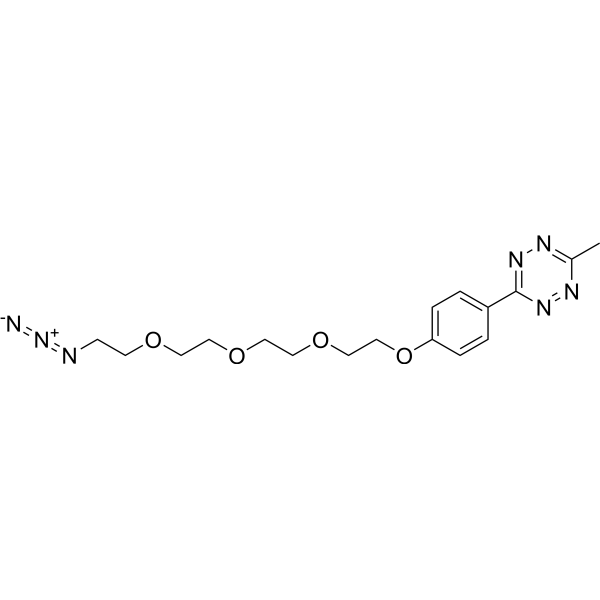
- HY-151782
-
|
|
ADC Linker
|
Others
|
|
The azide function is widely used for coupling to alkyne-containing fragments via the renowned Click reaction. Polyglycine fragments containing up to 7 glycines are reported to bind to surfaces and have potential application in nanotechnology constructs: constructs of Gly7-NHCH2-fragment containing peptides bind on mica surface in aqueous solution . It contains an azide group and can undergo copper-catalyzed azide-alkyne cycloaddition (CuAAc) with molecules containing alkyne groups. It can also undergo ring strain-promoted alkyne-azide cycloaddition (SPAAC) with molecules containing DBCO or BCN groups.
|
-
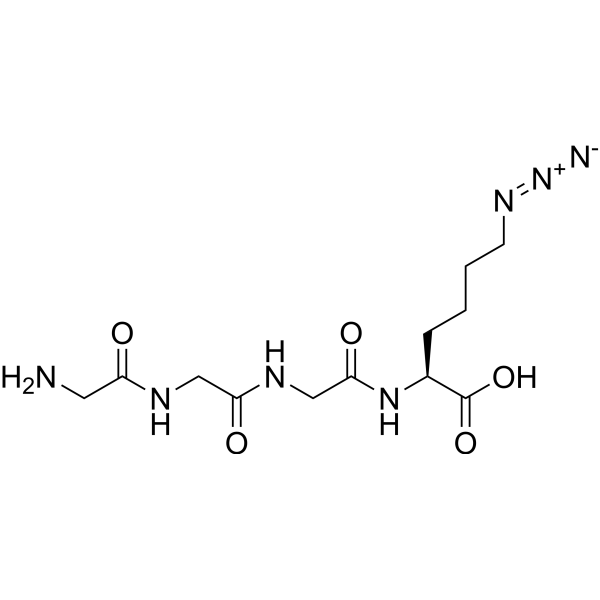
- HY-131088A
-
|
|
Drug-Linker Conjugates for ADC
EGFR
|
Cancer
|
|
N3-PEG8-Phe-Lys-PABC-Gefitinib TFA is a agent-linker conjugate for ADC with potent antitumor activity by using the anti-tumor agent, Gefitinib (HY-50895) (orally active EGFR tyrosine kinase inhibitor), linked via the cleavable linker N3-PEG8-Phe-Lys-PABC. N3-PEG8-Phe-Lys-PABC-Gefitinib TFA is a click chemistry reagent, it contains an Azide group and can undergo copper-catalyzed azide-alkyne cycloaddition reaction (CuAAc) with molecules containing Alkyne groups. It can also undergo strain-promoted alkyne-azide cycloaddition (SPAAC) reactions with molecules containing DBCO or BCN groups.
|
-

- HY-154146
-
|
|
Nucleoside Antimetabolite/Analog
|
Cancer
|
|
5-Nitro-1-(3-azido-3-deoxy-β-D-ribofuranosyl)-2(1H)-pyridinone is a purine nucleoside analog. Purine nucleoside analogs have broad antitumor activity targeting indolent lymphoid malignancies. Anticancer mechanisms in this process rely on inhibition of DNA synthesis, induction of apoptosis, etc . 5-Nitro-1-(3-azido-3-deoxy-β-D-ribofuranosyl)-2(1H)-pyridinone is a click chemistry reagent, it contains an Azide group and can undergo copper-catalyzed azide-alkyne cycloaddition reaction (CuAAc) with molecules containing Alkyne groups. It can also undergo strain-promoted alkyne-azide cycloaddition (SPAAC) reactions with molecules containing DBCO or BCN groups.
|
-
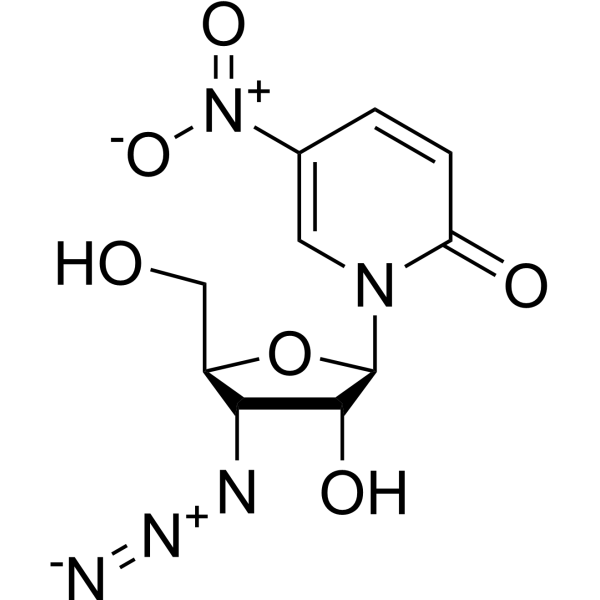
- HY-154386
-
|
|
Nucleoside Antimetabolite/Analog
|
Cancer
|
|
5’-Azido-5’-deoxy-2’-O-(2-methoxyethyl)-5-methyluridine is a purine nucleoside analog. Purine nucleoside analogs have broad antitumor activity targeting indolent lymphoid malignancies. Anticancer mechanisms in this process rely on inhibition of DNA synthesis, induction of apoptosis, etc . 5’-Azido-5’-deoxy-2’-O-(2-methoxyethyl)-5-methyluridine is a click chemistry reagent, it contains an Azide group and can undergo copper-catalyzed azide-alkyne cycloaddition reaction (CuAAc) with molecules containing Alkyne groups. It can also undergo strain-promoted alkyne-azide cycloaddition (SPAAC) reactions with molecules containing DBCO or BCN groups.
|
-
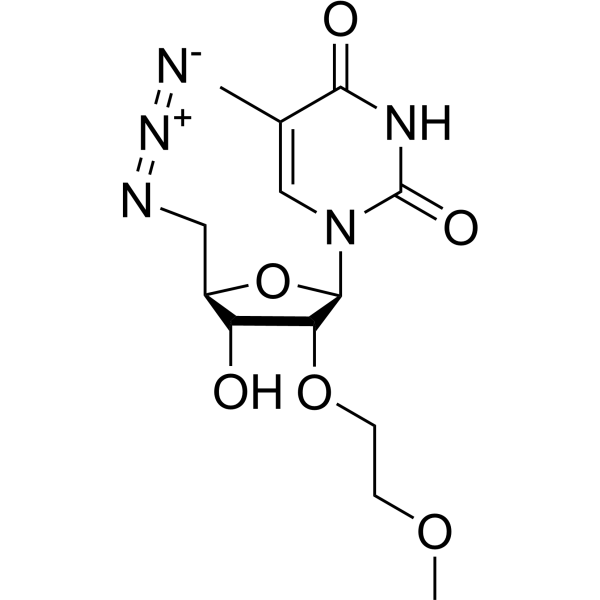
- HY-131455A
-
|
|
Biochemical Assay Reagents
|
Others
|
|
Biotin-C1-PEG3-C3-amido-C5-Gly-Arg-Gly-N3 TFA is used for detection of modification site for N-myristoylated and GPI-anchored proteins in blood-stage P. falciparum . Biotin-C1-PEG3-C3-amido-C5-Gly-Arg-Gly-N3 (TFA) is a click chemistry reagent, it contains an Azide group and can undergo copper-catalyzed azide-alkyne cycloaddition reaction (CuAAc) with molecules containing Alkyne groups. It can also undergo strain-promoted alkyne-azide cycloaddition (SPAAC) reactions with molecules containing DBCO or BCN groups.
|
-
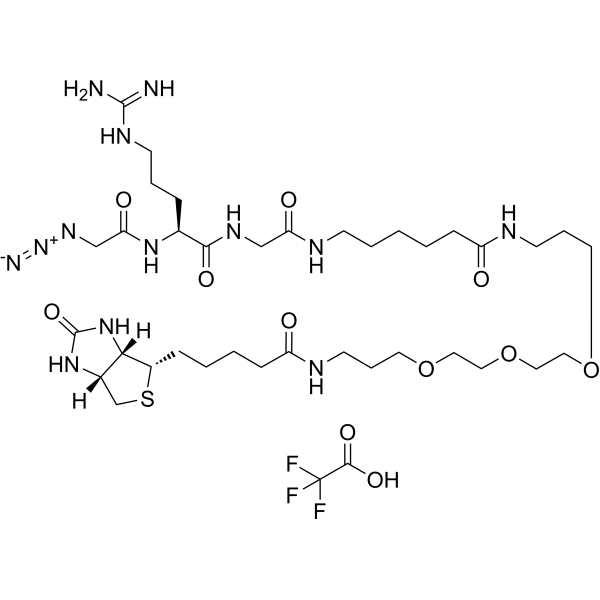
- HY-154334
-
|
|
Nucleoside Antimetabolite/Analog
|
Cancer
|
|
2’-O-Acetyl-3’-azido-5’-O-(4-methylbenzoyl)-3’-deoxyuridine is a purine nucleoside analog. Purine nucleoside analogs have broad antitumor activity targeting indolent lymphoid malignancies. Anticancer mechanisms in this process rely on inhibition of DNA synthesis, induction of apoptosis, etc . 2’-O-Acetyl-3’-azido-5’-O-(4-methylbenzoyl)-3’-deoxyuridine is a click chemistry reagent, it contains an Azide group and can undergo copper-catalyzed azide-alkyne cycloaddition reaction (CuAAc) with molecules containing Alkyne groups. It can also undergo strain-promoted alkyne-azide cycloaddition (SPAAC) reactions with molecules containing DBCO or BCN groups.
|
-
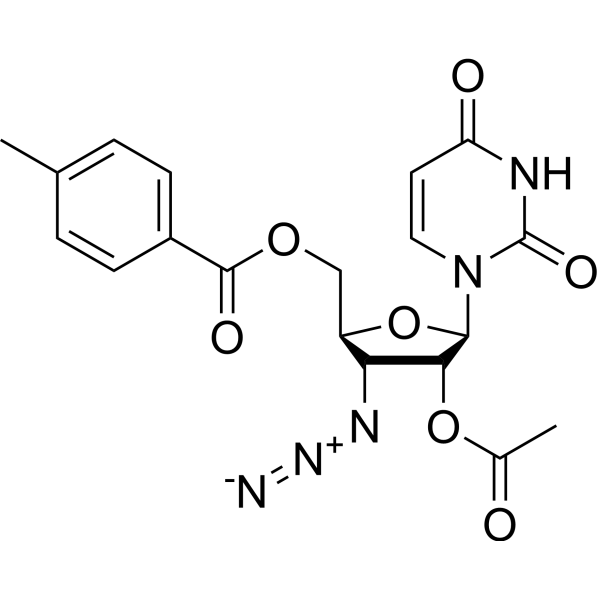
- HY-130194
-
|
|
ADC Linker
PROTAC Linkers
|
Cancer
|
|
Azido-PEG5-CH2CO2H is a cleavable 5 unit PEG ADC linker used in the synthesis of antibody-drug conjugates (ADCs). Azido-PEG5-CH2CO2H is also a PEG-based PROTAC linker that can be used in the synthesis of PROTACs . Azido-PEG5-CH2CO2H is a click chemistry reagent, it contains an Azide group and can undergo copper-catalyzed azide-alkyne cycloaddition reaction (CuAAc) with molecules containing Alkyne groups. It can also undergo strain-promoted alkyne-azide cycloaddition (SPAAC) reactions with molecules containing DBCO or BCN groups.
|
-
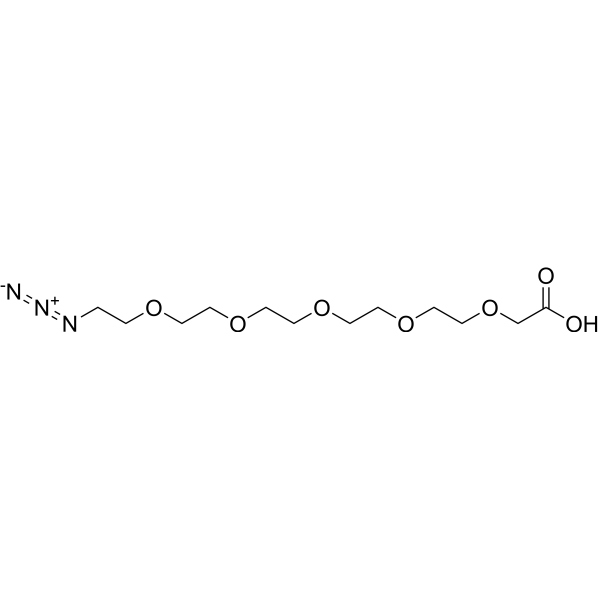
- HY-141068
-
|
|
PROTAC Linkers
|
Cancer
|
|
N-(m-PEG4)-N'-(m-PEG4)-O-(m-PEG4)-O'-(azide-PEG4)-Cy5 is a PEG-based PROTAC linker that can be used in the synthesis of PROTACs . N-(m-PEG4)-N'-(m-PEG4)-O-(m-PEG4)-O'-(azide-PEG4)-Cy5 is a click chemistry reagent, it contains an Azide group and can undergo copper-catalyzed azide-alkyne cycloaddition reaction (CuAAc) with molecules containing Alkyne groups. It can also undergo strain-promoted alkyne-azide cycloaddition (SPAAC) reactions with molecules containing DBCO or BCN groups.
|
-
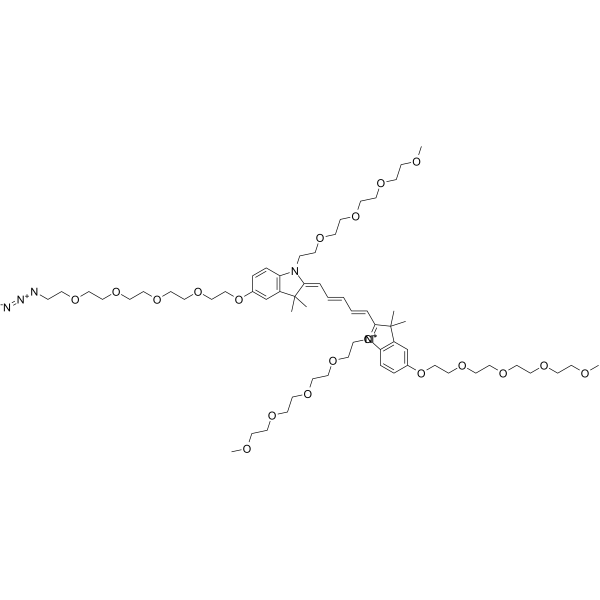
- HY-15843
-
|
|
MicroRNA
Apoptosis
|
Cancer
|
|
MIR96-IN-1 targets the Drosha site in the miR-96 (miRNA-96, microRNA-96) hairpin precursor, inhibiting its biogenesis, derepressing downstream targets, and triggering apoptosis in breast cancer cells. MIR96-IN-1 binds to RNAs with Kds of 1.3, 9.4, 3.4, 1.3 and 7.4 μM for RNA1, RNA2, RNA3, RNA4 and RNA5, respectively . MIR96-IN-1 is a click chemistry reagent, it contains an Azide group and can undergo copper-catalyzed azide-alkyne cycloaddition reaction (CuAAc) with molecules containing Alkyne groups. It can also undergo strain-promoted alkyne-azide cycloaddition (SPAAC) reactions with molecules containing DBCO or BCN groups.
|
-
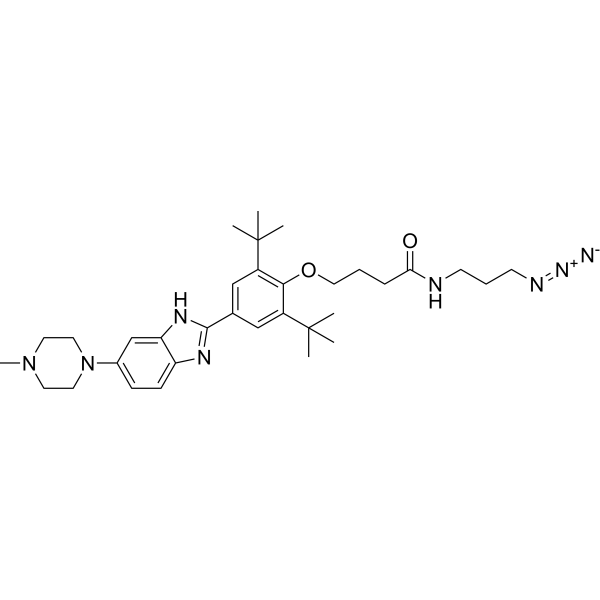
- HY-130652
-
|
|
E3 Ligase Ligand-Linker Conjugates
|
Cancer
|
|
Pomalidomide 4'-PEG3-azide is a synthesized E3 ligase ligand-linker conjugate that incorporates the Pomalidomide-based cereblon ligand and a linker. Pomalidomide 4'-PEG3-azide can be used for the synthesis of iRucaparib-TP3 (Compound 3). iRucaparib-TP3 is a highly efficient PARP1?degrader based on Rucaparib by using the PROTAC approach . Pomalidomide 4'-PEG3-azide is a click chemistry reagent, it contains an Azide group and can undergo copper-catalyzed azide-alkyne cycloaddition reaction (CuAAc) with molecules containing Alkyne groups. It can also undergo strain-promoted alkyne-azide cycloaddition (SPAAC) reactions with molecules containing DBCO or BCN groups.
|
-
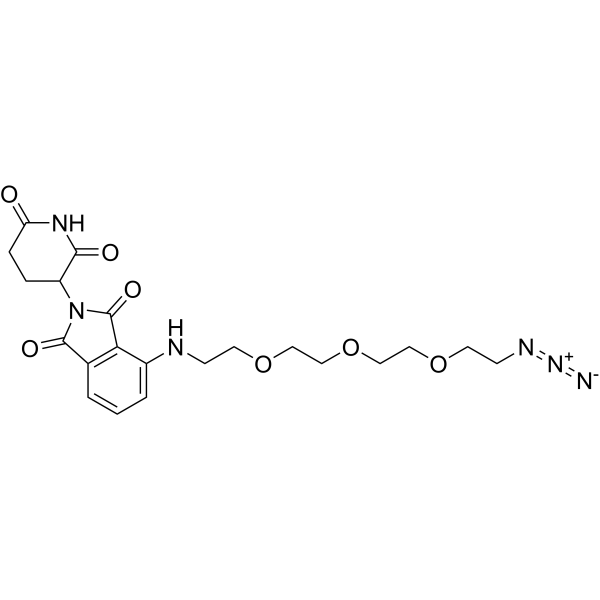
- HY-108374R
-
|
|
Reference Standards
PROTAC Linkers
|
Cancer
|
|
4-Azidobutylamine (Standard) is the analytical standard of 4-Azidobutylamine (HY-108374). This product is intended for research and analytical applications. 4-Azidobutylamine is a PROTAC linker, which refers to the alkyl chain composition. 4-Azidobutylamine can be used in the synthesis of a series of PROTACs. PROTACs contain two different ligands connected by a linker; one is a ligand for an E3 ubiquitin ligase and the other is for the target protein. PROTACs exploit the intracellular ubiquitin-proteasome system to selectively degrade target proteins . 4-Azidobutylamine is a click chemistry reagent, it contains an Azide group and can undergo copper-catalyzed azide-alkyne cycloaddition reaction (CuAAc) with molecules containing Alkyne groups. It can also undergo strain-promoted alkyne-azide cycloaddition (SPAAC) reactions with molecules containing DBCO or BCN groups.
|
-

- HY-19314R
-
|
RO-0622 (Standard); FNC (Standard)
|
Reverse Transcriptase
HIV
HBV
HCV
Reference Standards
|
Infection
|
|
Azvudine (Standard) is the analytical standard of Azvudine. This product is intended for research and analytical applications. Azvudine (RO-0622) is a potent nucleoside reverse transcriptase inhibitor (NRTI), with antiviral activity on HIV, HBV and HCV. Azvudine exerts highly potent inhibition on HIV-1 (EC50s ranging from 0.03 to 6.92 nM) and HIV-2 (EC50s ranging from 0.018 to 0.025 nM). Azvudine inhibits NRTI-resistant viral strains . Azvudine is a click chemistry reagent, it contains an Azide group and can undergo copper-catalyzed azide-alkyne cycloaddition reaction (CuAAc) with molecules containing Alkyne groups. It can also undergo strain-promoted alkyne-azide cycloaddition (SPAAC) reactions with molecules containing DBCO or BCN groups.
|
-

- HY-140310
-
|
|
ADC Linker
PROTAC Linkers
|
Cancer
|
|
TCO-PEG4-DBCO is a PEG-based PROTAC linker can be used in the synthesis of PROTACs. TCO-PEG4-DBCO is a cleavable ADC linker used in the synthesis of antibody-drug conjugates (ADCs) . TCO-PEG4-DBCO is a click chemistry reagent, it contains a DBCO group that can undergo strain-promoted alkyne-azide cycloaddition (SPAAC) with molecules containing Azide groups. TCO-PEG4-DBCO also contains a TCO group that can undergo an inverse electron demand Diels-Alder reaction (iEDDA) with molecules containing Tetrazine groups.
|
-
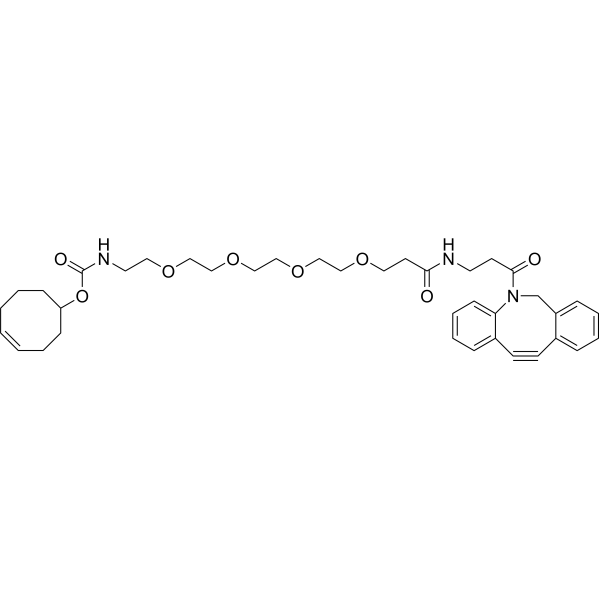
- HY-154310
-
|
|
Nucleoside Antimetabolite/Analog
|
Cancer
|
|
1,2-Di-O-acetyl-3-azido-3-deoxy-5-O-(4-methyl) benzoyl-L-ribofuranose is a purine nucleoside analog. Purine nucleoside analogs have broad antitumor activity targeting indolent lymphoid malignancies. Anticancer mechanisms in this process rely on inhibition of DNA synthesis, induction of apoptosis, etc . 1,2-Di-O-acetyl-3-azido-3-deoxy-5-O-(4-methyl) benzoyl-L-ribofuranose is a click chemistry reagent, it contains an Azide group and can undergo copper-catalyzed azide-alkyne cycloaddition reaction (CuAAc) with molecules containing Alkyne groups. It can also undergo strain-promoted alkyne-azide cycloaddition (SPAAC) reactions with molecules containing DBCO or BCN groups.
|
-
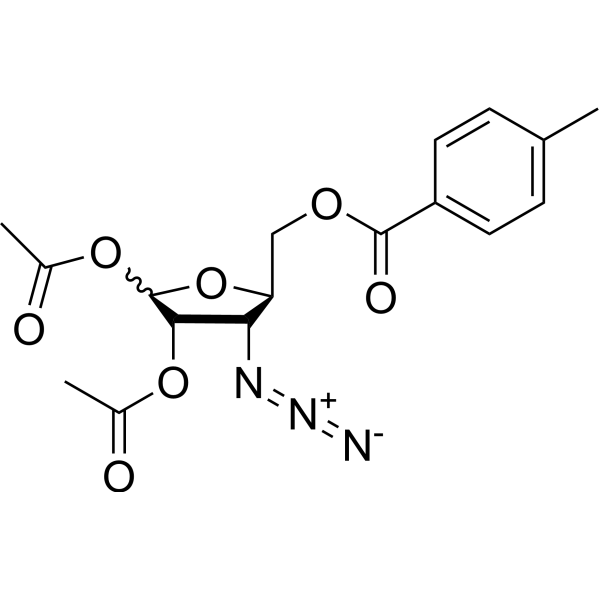
- HY-154318
-
|
|
Nucleoside Antimetabolite/Analog
|
Cancer
|
|
1,2-Di-O-acetyl-3-azido-3-deoxy-5-O-(4-methyl)benzoyl-D-ribofuranose is a purine nucleoside analog. Purine nucleoside analogs have broad antitumor activity targeting indolent lymphoid malignancies. Anticancer mechanisms in this process rely on inhibition of DNA synthesis, induction of apoptosis, etc . 1,2-Di-O-acetyl-3-azido-3-deoxy-5-O-(4-methyl)benzoyl-D-ribofuranose is a click chemistry reagent, it contains an Azide group and can undergo copper-catalyzed azide-alkyne cycloaddition reaction (CuAAc) with molecules containing Alkyne groups. It can also undergo strain-promoted alkyne-azide cycloaddition (SPAAC) reactions with molecules containing DBCO or BCN groups.
|
-
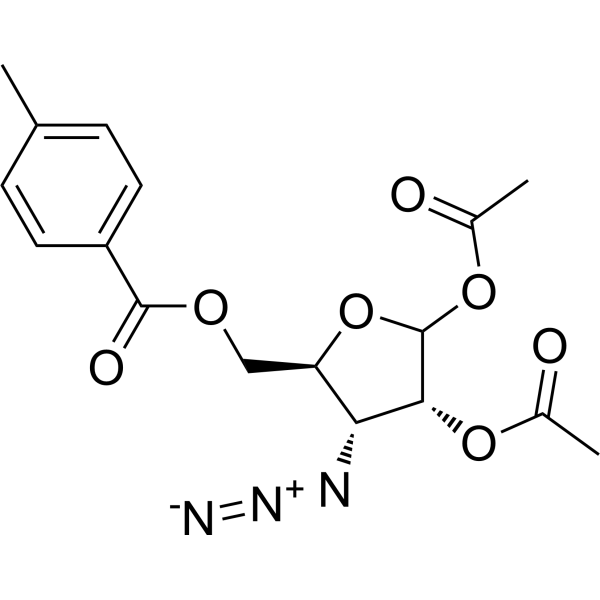
- HY-154678
-
|
|
Nucleoside Antimetabolite/Analog
|
Cancer
|
|
4’-Azido-3’-O-benzoyl-5’-O-(m-chlorobenzoyl)-2’-deoxy-2’-fluoro-beta-D-arabinouridine is a purine nucleoside analog. Purine nucleoside analogs have broad antitumor activity targeting indolent lymphoid malignancies. Anticancer mechanisms in this process rely on inhibition of DNA synthesis, induction of apoptosis, etc . 4’-Azido-3’-O-benzoyl-5’-O-(m-chlorobenzoyl)-2’-deoxy-2’-fluoro-beta-D-arabinouridine is a click chemistry reagent, it contains an Azide group and can undergo copper-catalyzed azide-alkyne cycloaddition reaction (CuAAc) with molecules containing Alkyne groups. It can also undergo strain-promoted alkyne-azide cycloaddition (SPAAC) reactions with molecules containing DBCO or BCN groups.
|
-
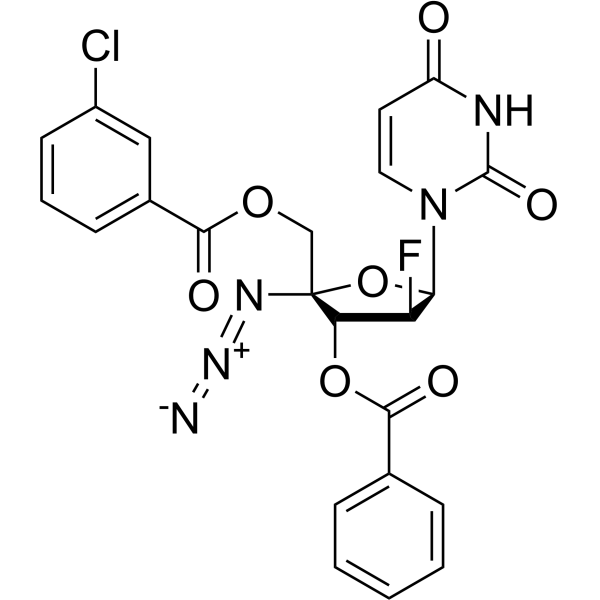
- HY-154341
-
|
|
Nucleoside Antimetabolite/Analog
|
Others
|
|
9-[2'-O-Acetyl-3'-azido-3'-deoxy-5'-O-toluoyl-b-L-ribofuranosyl)-6-chloropurine is a purine nucleoside analog. Purine nucleoside analogs have broad antitumor activity targeting indolent lymphoid malignancies. Anticancer mechanisms in this process rely on inhibition of DNA synthesis, induction of apoptosis, etc . 9-[2'-O-Acetyl-3'-azido-3'-deoxy-5'-O-toluoyl-b-L-ribofuranosyl)-6-chloropurine is a click chemistry reagent, it contains an Azide group and can undergo copper-catalyzed azide-alkyne cycloaddition reaction (CuAAc) with molecules containing Alkyne groups. It can also undergo strain-promoted alkyne-azide cycloaddition (SPAAC) reactions with molecules containing DBCO or BCN groups.
|
-
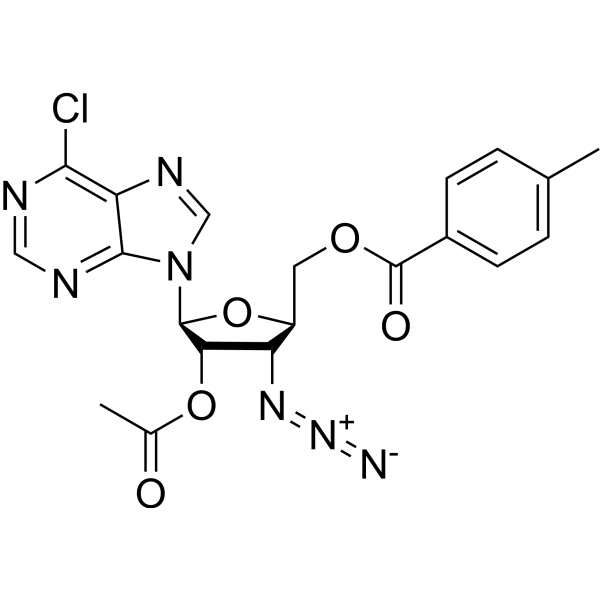
- HY-133736
-
|
|
PROTAC-Linker Conjugates for PAC
ADC Payload
Epigenetic Reader Domain
|
Cancer
|
|
PROTAC BRD4 Degrader-5-CO-PEG3-N3 is a PROTAC-linker Conjugate for PAC, comprises the BRD4 degrader (MZ 1 (HY-107425) analog) and PEG-based linker. PROTAC BRD4 Degrader-5-CO-PEG3-N3 is a click chemistry reagent, it contains an Azide group and can undergo copper-catalyzed azide-alkyne cycloaddition reaction (CuAAc) with molecules containing Alkyne groups. It can also undergo strain-promoted alkyne-azide cycloaddition (SPAAC) reactions with molecules containing DBCO or BCN groups. PROTAC BRD4 Degrader-5-CO-PEG3-N3 can be used for the research of HER2-positive breast cancer .
|
-
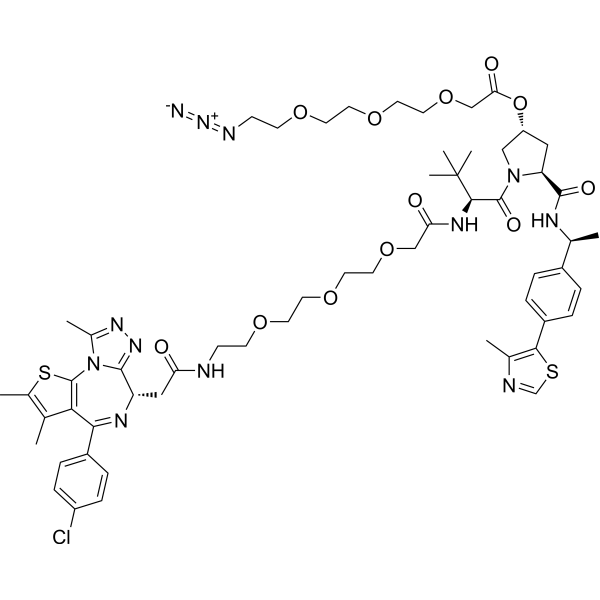
- HY-42489
-
|
|
ADC Linker
PROTAC Linkers
|
Cancer
|
|
N3-PEG3-CH2CH2-Boc is a cleavable 3 unit PEG ADC linker used in the synthesis of antibody-drug conjugates (ADCs) . N3-PEG3-CH2CH2-Boc is also a PEG- and Alkyl/ether-based PROTAC linker that can be used in the synthesis of PROTACs . N3-PEG3-CH2CH2-Boc is a click chemistry reagent, it contains an Azide group and can undergo copper-catalyzed azide-alkyne cycloaddition reaction (CuAAc) with molecules containing Alkyne groups. It can also undergo strain-promoted alkyne-azide cycloaddition (SPAAC) reactions with molecules containing DBCO or BCN groups.
|
-
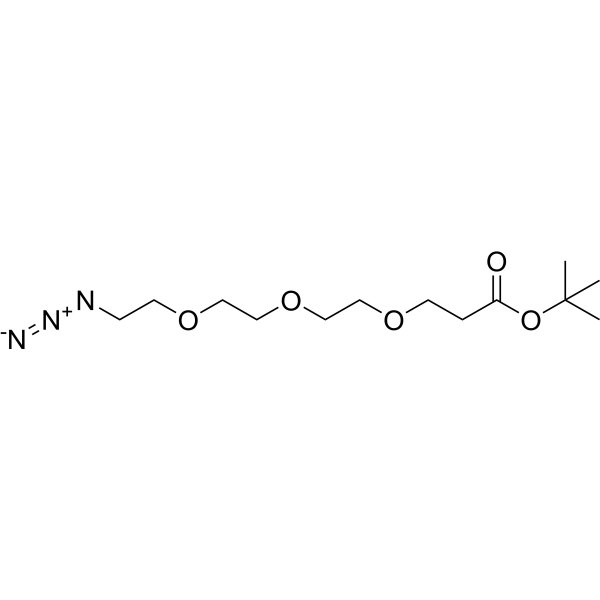
- HY-140213
-
|
N3-PEG2-CH2CH2NH2
|
PROTAC Linkers
ADC Linker
|
Cancer
|
|
Azido-PEG2-C2-amine (N3-PEG2-CH2CH2NH2) is a PEG-based PROTAC linker that can be used in the synthesis of PROTACs . Azido-PEG2-C2-amine is also a non-cleavable 2 unit PEG ADC linker used in the synthesis of antibody-drug conjugates (ADCs) . Azido-PEG2-C2-amine is a click chemistry reagent, it contains an Azide group and can undergo copper-catalyzed azide-alkyne cycloaddition reaction (CuAAc) with molecules containing Alkyne groups. It can also undergo strain-promoted alkyne-azide cycloaddition (SPAAC) reactions with molecules containing DBCO or BCN groups.
|
-
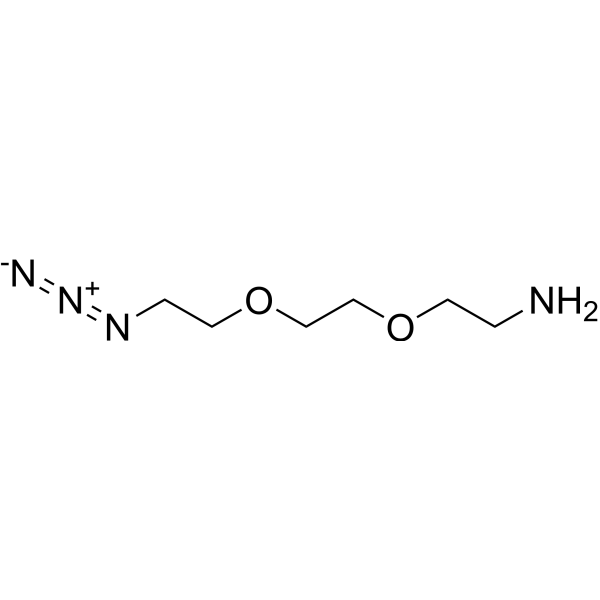
- HY-111640
-
|
|
HIV
Reverse Transcriptase
|
Infection
|
|
3'-Azido-3'-deoxy-5-methylcytidine (CS-92) is a potent xenotropic murine leukemia-related retrovirus (XMRV) inhibitor with a CC50 of 43.5 μM in MCF-7 cells. 3'-Azido-3'-deoxy-5-methylcytidine also inhibits HIV-1 reverse transcriptase with an EC50 of 0.06 μM in peripheral blood mononuclear (PBM) cells . 3'-Azido-3'-deoxy-5-methylcytidine is a click chemistry reagent, it contains an Azide group and can undergo copper-catalyzed azide-alkyne cycloaddition reaction (CuAAc) with molecules containing Alkyne groups. It can also undergo strain-promoted alkyne-azide cycloaddition (SPAAC) reactions with molecules containing DBCO or BCN groups.
|
-
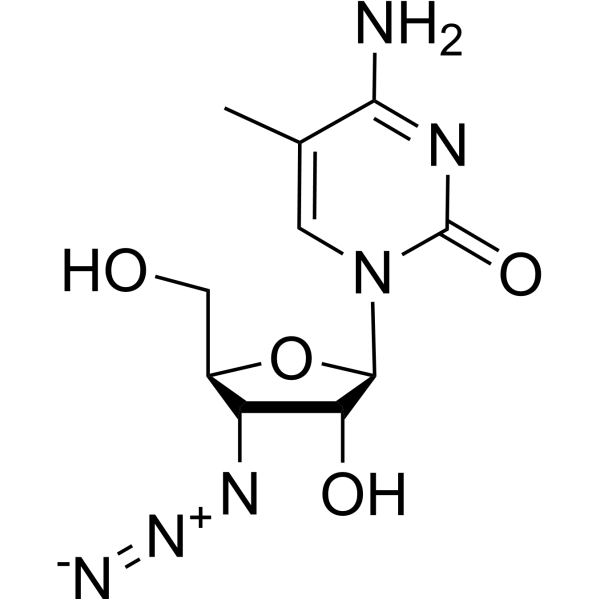
- HY-42490
-
|
|
PROTAC Linkers
ADC Linker
|
Inflammation/Immunology
Cancer
|
|
N3-PEG3-CH2CH2COOH a PEG-based PROTAC linker can be used in the synthesis of BI-3663 (HY-111546), BI-4216 and BI-0319. Azido-PEG3-acid is also a non-cleavable 3 unit PEG ADC linker used in the synthesis of antibody-drug conjugates (ADCs). N3-PEG3-CH2CH2COOH is a click chemistry reagent, it contains an Azide group and can undergo copper-catalyzed azide-alkyne cycloaddition reaction (CuAAc) with molecules containing Alkyne groups. It can also undergo strain-promoted alkyne-azide cycloaddition (SPAAC) reactions with molecules containing DBCO or BCN groups.
|
-
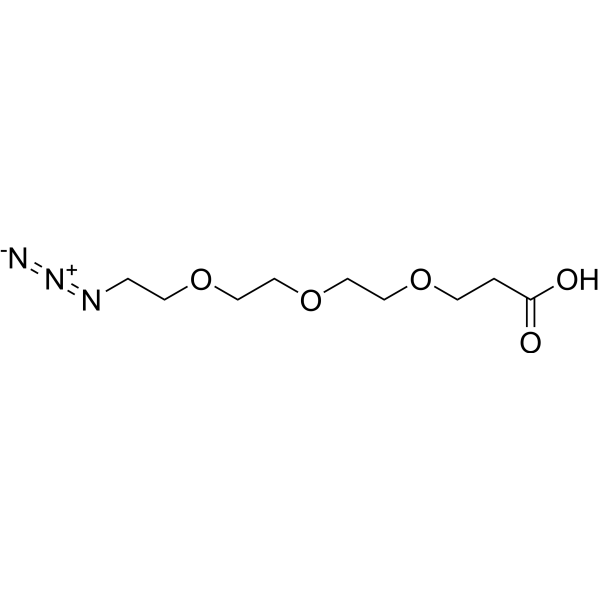
- HY-103601R
-
|
VH032-PEG4-N3 (Standard); VHL Ligand-Linker Conjugates 5 (Standard); E3 ligase Ligand-Linker Conjugates 4 (Standard)
|
Reference Standards
E3 Ligase Ligand-Linker Conjugates
|
Others
|
|
(S,R,S)-AHPC-PEG4-N3 (Standard) is the analytical standard of (S,R,S)-AHPC-PEG4-N3 (HY-103601). This product is intended for research and analytical applications. (S,R,S)-AHPC-PEG4-N3 is a synthesized E3 ligase ligand-linker conjugate that incorporates the (S,R,S)-AHPC based VHL ligand and 4-unit PEG linker used in PROTAC technology. (S,R,S)-AHPC-PEG4-N3 is a click chemistry reagent, it contains an Azide group and can undergo copper-catalyzed azide-alkyne cycloaddition reaction (CuAAc) with molecules containing Alkyne groups. It can also undergo strain-promoted alkyne-azide cycloaddition (SPAAC) reactions with molecules containing DBCO or BCN groups.
|
-

- HY-125843
-
|
Cereblon Ligand-Linker Conjugates 13; E3 ligase Ligand-Linker Conjugates 50
|
E3 Ligase Ligand-Linker Conjugates
|
Cancer
|
|
Pomalidomide-PEG1-C2-N3 is a synthesized E3 ligase ligand-linker conjugate that incorporates the Pomalidomide based cereblon ligand and 1-unit PEG linker used in PROTAC technology. Pomalidomide-PEG1-C2-N3 can be used to design a selective CDK6 PROTAC degrader CP-10. CP-10 induces the degradation of CDK6 with an DC50 of 2.1 nM . Pomalidomide-PEG1-C2-N3 is a click chemistry reagent, it contains an Azide group and can undergo copper-catalyzed azide-alkyne cycloaddition reaction (CuAAc) with molecules containing Alkyne groups. It can also undergo strain-promoted alkyne-azide cycloaddition (SPAAC) reactions with molecules containing DBCO or BCN groups.
|
-
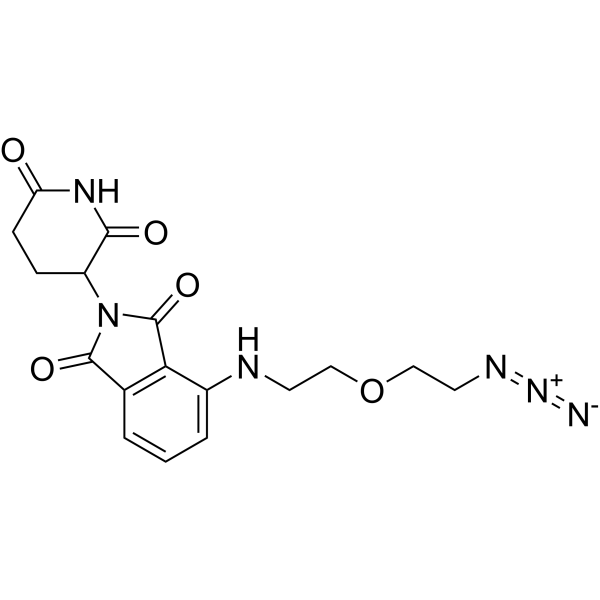
- HY-103600R
-
|
VH032-PEG1-N3 (Standard); VHL Ligand-Linker Conjugates 9 (Standard); E3 ligase Ligand-Linker Conjugates 3 (Standard)
|
Reference Standards
E3 Ligase Ligand-Linker Conjugates
|
Cancer
|
|
(S,R,S)-AHPC-PEG1-N3 (Standard) is the analytical standard of (S,R,S)-AHPC-PEG1-N3 (HY-103600). This product is intended for research and analytical applications. (S,R,S)-AHPC-PEG1-N3 (VH032-PEG1-N3) is a synthesized E3 ligase ligand-linker conjugate that incorporates the (S,R,S)-AHPC based VHL ligand and 1-unit PEG linker used in PROTAC technology. (S,R,S)-AHPC-PEG1-N3 is a click chemistry reagent, it contains an Azide group and can undergo copper-catalyzed azide-alkyne cycloaddition reaction (CuAAc) with molecules containing Alkyne groups. It can also undergo strain-promoted alkyne-azide cycloaddition (SPAAC) reactions with molecules containing DBCO or BCN groups.
|
-

- HY-153962
-
|
|
Drug-Linker Conjugates for ADC
|
Cancer
|
|
SN38-PAB-Lys(MMT)-oxydiacetamide-PEG8-N3 is a Drug-Linker Conjugate for ADC. SN38-PAB-Lys(MMT)-oxydiacetamide-PEG8-N3 consists of the anti-cancer agent SN38 (HY-13704) and a linker Lys(MMT)-PAB-oxydiacetamide-PEG8-N3 (HY-131157). SN38-PAB-Lys(MMT)-oxydiacetamide-PEG8-N3 can be used for synthesis of ADCs . SN38-PAB-Lys(MMT)-oxydiacetamide-PEG8-N3 is a click chemistry reagent, it contains an Azide group and can undergo copper-catalyzed azide-alkyne cycloaddition reaction (CuAAc) with molecules containing Alkyne groups. It can also undergo strain-promoted alkyne-azide cycloaddition (SPAAC) reactions with molecules containing DBCO or BCN groups.
|
-
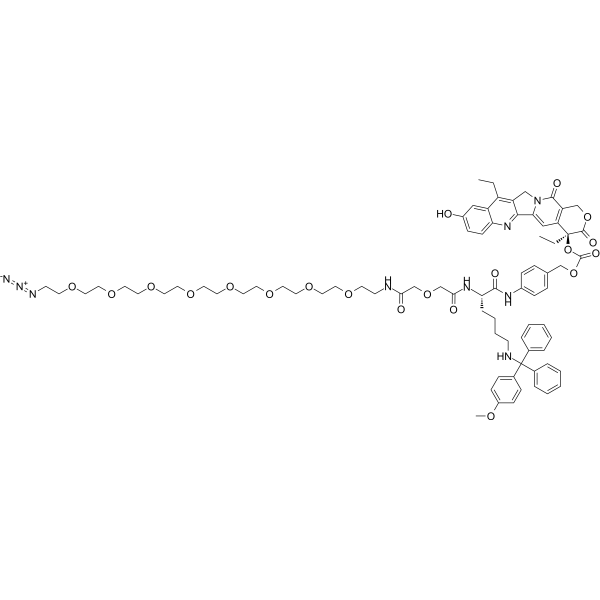
- HY-108369R
-
|
|
Reference Standards
PROTAC Linkers
|
Cancer
|
|
Azido-PEG1-CH2CO2H (Standard) is the analytical standard of Azido-PEG1-CH2CO2H (HY-108369). This product is intended for research and analytical applications. Azido-PEG1-CH2CO2H is a PROTAC linker, which refers to the alkyl/ether composition. Azido-PEG1-CH2CO2H can be used in the synthesis of PROTAC BRD4 Degrader-1 . Azido-PEG1-CH2CO2H is a click chemistry reagent, it contains an Azide group and can undergo copper-catalyzed azide-alkyne cycloaddition reaction (CuAAc) with molecules containing Alkyne groups. It can also undergo strain-promoted alkyne-azide cycloaddition (SPAAC) reactions with molecules containing DBCO or BCN groups.
|
-

- HY-130654
-
|
VH032-C2-PEG4-N3
|
E3 Ligase Ligand-Linker Conjugates
|
Cancer
|
|
(S,R,S)-AHPC-C2-PEG4-N3 (VH032-C2-PEG4-N3) is a synthesized E3 ligase ligand-linker conjugate that incorporates the (S,R,S)-AHPC based VHL ligand and 4-unit PEG linker used in PROTAC technology. (S,R,S)-AHPC-C2-PEG4-N3 can be used in the synthesis of vRucaparib-TP4 (HY-130647). vRucaparib-TP4 a highly potent PARP1 degrader with a half-maximal degrading concentration (DC50) of 82 nM . (S,R,S)-AHPC-C2-PEG4-N3 is a click chemistry reagent, it contains an Azide group and can undergo copper-catalyzed azide-alkyne cycloaddition reaction (CuAAc) with molecules containing Alkyne groups. It can also undergo strain-promoted alkyne-azide cycloaddition (SPAAC) reactions with molecules containing DBCO or BCN groups.
|
-
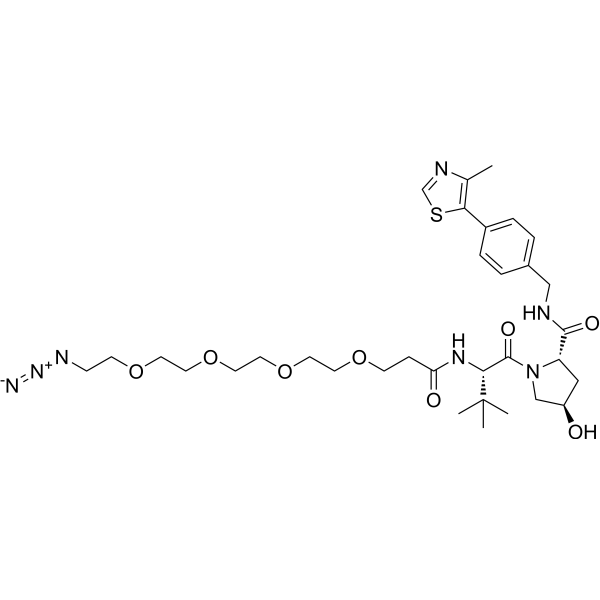
| Cat. No. |
Product Name |
Type |
-
- HY-D1069
-
|
DBCO-Sulfo-Cy3
|
Fluorescent Dyes
|
|
DBCO-Cy3 (DBCO-Sulfo-Cy3) is the derivative of Cyanine3 fluorophore, a pH insensitive from pH (4-10) orange fluorescent dyewith excitation maximum 555 nm and emission maximum of 580nm. DBCO-Cy3 has fast reaction kinetics and good stability, and is productive to use in many standard fluorescent instrumentations. DBCO-Cy3 is a click chemistry reagent, it contains a DBCO group that can undergo strain-promoted alkyne-azide cycloaddition (SPAAC) with molecules containing Azide groups.
|
-
- HY-151708
-
|
|
Fluorescent Dyes
|
|
CalFluor 488 Azide is a water-soluble fluorogenic azide probe. CalFluor 488 Azide is activated by Cu-catalyzed or metal-free click reaction. CalFluor 488 Azide is not fluorescent until it is reacted with alkynes . It contains an azide group and can undergo copper-catalyzed azide-alkyne cycloaddition (CuAAc) with molecules containing alkyne groups. It can also undergo ring strain-promoted alkyne-azide cycloaddition (SPAAC) with molecules containing DBCO or BCN groups.
|
-
- HY-D1269
-
|
|
Fluorescent Dyes
|
|
Rhodamine-N3 chloride is an azide-rhodamine fluorescent dye that can be used to label biomolecules containing alkyne groups . Rhodamine-N3 chloride is a click chemistry reagent, it contains an Azide group and can undergo copper-catalyzed azide-alkyne cycloaddition reaction (CuAAc) with molecules containing Alkyne groups. It can also undergo strain-promoted alkyne-azide cycloaddition (SPAAC) reactions with molecules containing DBCO or BCN groups (Ex/Em = 544/576 nm).
|
-
- HY-D1051
-
|
|
Fluorescent Dyes
|
|
Cy3-N3 is a Cy3-azide fluorescent dye used to label for protein and nucleic acid. Cy3-N3 is a click chemistry reagent, it contains an Azide group and can undergo copper-catalyzed azide-alkyne cycloaddition reaction (CuAAc) with molecules containing Alkyne groups. It can also undergo strain-promoted alkyne-azide cycloaddition (SPAAC) reactions with molecules containing DBCO or BCN groups (Ex/Em = 548/563 nm).
|
-
- HY-131027
-
|
JF646, Azide
|
Fluorescent Dyes
|
|
Janelia Fluor 646, Azide (JF646, Azide) is a red fluorogenic fluorescent dye containing a click chemistry group Azide. Janelia Fluor 646, Azide can be used for live-cell imaging experiments . Janelia Fluor products are licensed under U.S. Pat. Nos. 9,933,417, 10,018,624 and 10,161,932 and other patents from Howard Hughes Medical Institute. Janelia Fluor? 646, Azide is a click chemistry reagent, it contains an Azide group and can undergo copper-catalyzed azide-alkyne cycloaddition reaction (CuAAc) with molecules containing Alkyne groups. It can also undergo strain-promoted alkyne-azide cycloaddition (SPAAC) reactions with molecules containing DBCO or BCN groups.
|
-
- HY-D1444
-
|
|
Fluorescent Dyes
|
|
Propidium monoazide is a cell-impermeant photoreactive DNA-binding dye that preferentially binds to dsDNA. Propidium monoazide (PMA) prevents DNA from dead bacteria from being amplified during the PCR. PMA-PCR enhanced both the specificity and the sensitivity of PCR . Propidium monoazide is a click chemistry reagent, it contains an Azide group and can undergo copper-catalyzed azide-alkyne cycloaddition reaction (CuAAc) with molecules containing Alkyne groups. It can also undergo strain-promoted alkyne-azide cycloaddition (SPAAC) reactions with molecules containing DBCO or BCN groups.
|
-
- HY-D1320
-
|
|
Fluorescent Dyes
|
|
Cyanine5 azide chloride is a potent fluorescent dye. Cyanine5 azide chloride can be reacted with terminal alkynes via a copper-catalyzed click reaction (CuAAC). (λex=646 nm, λem=662 nm) . It contains an azide group and can undergo copper-catalyzed azide-alkyne cycloaddition (CuAAc) with molecules containing alkyne groups. It can also undergo ring strain-promoted alkyne-azide cycloaddition (SPAAC) with molecules containing DBCO or BCN groups.
|
-
- HY-135835
-
|
|
Fluorescent Dyes
|
|
6-FAM-PEG3-Azide is a fluorescent dye that can be used to label oligonucleotide . 6-FAM-PEG3-Azide is a click chemistry reagent, it contains an Azide group and can undergo copper-catalyzed azide-alkyne cycloaddition reaction (CuAAc) with molecules containing Alkyne groups. It can also undergo strain-promoted alkyne-azide cycloaddition (SPAAC) reactions with molecules containing DBCO or BCN groups.
|
-
- HY-D1539
-
|
CY 5.5 azide; Lumiprobe CY 5.5 azide
|
Fluorescent Dyes
|
|
Cyanine 5.5 azide (CY 5.5 azide) is a potent fluorescent dye. Cyanine 5.5 azide can label DNA. Cyanine 5.5 azide can be used for NIR live organism imaging. (λex=684 nm, λem=710 nm) . Cyanine 5.5 azide is a click chemistry reagent, it contains an Azide group and can undergo copper-catalyzed azide-alkyne cycloaddition reaction (CuAAc) with molecules containing Alkyne groups. It can also undergo strain-promoted alkyne-azide cycloaddition (SPAAC) reactions with molecules containing DBCO or BCN groups.
|
-
- HY-D1327
-
|
|
Fluorescent Dyes
|
|
Cyanine3 azide chloride, an analog of Cy3 azide, is a potent green fluorescent dye. Cyanine3 azide chloride uses click chemistry coupled with Alkyne-labeled proteins. Cyanine3 azide chloride can be detected by fluorometers, imagers, and microscopes. (λex=684 nm, λem=710 nm) [1]. Cyanine3 azide (chloride) is a click chemistry reagent, it contains an Azide group and can undergo copper-catalyzed azide-alkyne cycloaddition reaction (CuAAc) with molecules containing Alkyne groups. It can also undergo strain-promoted alkyne-azide cycloaddition (SPAAC) reactions with molecules containing DBCO or BCN groups.
|
-
- HY-D1071
-
|
|
Fluorescent Dyes
|
|
DBCO-PEG12-TCO cantains a TCO and a DBCO moiety. TCO group can specifically react with terrahydrazine. DBCO-PEG12-TCO is a click chemistry reagent, it contains a DBCO group that can undergo strain-promoted alkyne-azide cycloaddition (SPAAC) with molecules containing Azide groups. DBCO-PEG12-TCO also contains a TCO group that can undergo an inverse electron demand Diels-Alder reaction (iEDDA) with molecules containing Tetrazine groups.
|
-
- HY-D2563
-
|
|
Fluorescent Dyes
|
|
Cy5.5-PEG10000-N3 is a Cy5.5 (HY-D0924)-azide fluorescent dye used to label for protein and nucleic acid. Cy5.5-PEG10000-N3 is a click chemistry reagent, it contains an Azide group and can undergo copper-catalyzed azide-alkyne cycloaddition reaction (CuAAc) with molecules containing Alkyne groups. It can also undergo strain-promoted alkyne-azide cycloaddition (SPAAC) reactions with molecules containing DBCO or BCN groups.
|
-
- HY-D1625
-
|
|
Fluorescent Dyes
|
|
Cy5 DBCO chloride is an azide reaction probe and the addition of DBCO molecules allows the imaging of azide-labelled biomolecules by a copper-free "Click Chemistry" reaction . Cy5 DBCO (chloride) is a click chemistry reagent, it contains a DBCO group that can undergo strain-promoted alkyne-azide cycloaddition (SPAAC) with molecules containing Azide groups.
|
-
- HY-D2606
-
|
|
Fluorescent Dyes
|
|
ICG PEG3400 N3 is a Indocyanine green (ICG) (HY-D0711)-azide fluorescent dye used to label for protein and nucleic acid. ICG PEG3400 N3 is a click chemistry reagent, it contains an Azide group and can undergo copper-catalyzed azide-alkyne cycloaddition reaction (CuAAc) with molecules containing Alkyne groups. It can also undergo strain-promoted alkyne-azide cycloaddition (SPAAC) reactions with molecules containing DBCO or BCN groups (Ex/Em=785/813 nm).
|
-
- HY-D1944
-
|
|
Fluorescent Dyes
|
|
ATTO 590 Azide is an azide derivative of ATTO 590 with excitation/emission maxima at 594/622 nm. ATTO 590 azide is a click chemistry reagent, it contains an Azide group and can undergo copper-catalyzed azide-alkyne cycloaddition reaction (CuAAc) with molecules containing Alkyne groups. It can also undergo strain-promoted alkyne-azide cycloaddition (SPAAC) reactions with molecules containing DBCO or BCN groups.
|
-
- HY-D1246
-
|
|
Fluorescent Dyes
|
|
Ethidium monoazide bromide is a DNA intercalating fluorescent dye that enters bacteria with damaged membranes. Ethidium monoazide bromide can be covalently linked to DNA by photoactivation. Ethidium monoazide bromide stains only dead cells . Ethidium monoazide (bromide) is a click chemistry reagent, it contains an Azide group and can undergo copper-catalyzed azide-alkyne cycloaddition reaction (CuAAc) with molecules containing Alkyne groups. It can also undergo strain-promoted alkyne-azide cycloaddition (SPAAC) reactions with molecules containing DBCO or BCN groups.
|
-
- HY-D2604
-
|
|
Fluorescent Dyes
|
|
ICG PEG1000 N3 is a Indocyanine green (ICG) (HY-D0711)-azide fluorescent dye used to label for protein and nucleic acid. ICG PEG1000 N3 is a click chemistry reagent, it contains an Azide group and can undergo copper-catalyzed azide-alkyne cycloaddition reaction (CuAAc) with molecules containing Alkyne groups. It can also undergo strain-promoted alkyne-azide cycloaddition (SPAAC) reactions with molecules containing DBCO or BCN groups (Ex/Em=785/813 nm).
|
-
- HY-D1548
-
|
|
Fluorescent Dyes
|
|
1-(Azidomethyl)pyrene is a fluorescent dye . 1-(Azidomethyl)pyrene is a click chemistry reagent, it contains an Azide group and can undergo copper-catalyzed azide-alkyne cycloaddition reaction (CuAAc) with molecules containing Alkyne groups. It can also undergo strain-promoted alkyne-azide cycloaddition (SPAAC) reactions with molecules containing DBCO or BCN groups.
|
-
- HY-D1920
-
|
|
Fluorescent Dyes
|
|
ATTO 390 azide is an azide derivative of ATTO 390 with excitation/emission maxima at 390/476 nm. ATTO 390 azide is a click chemistry reagent, it contains an Azide group and can undergo copper-catalyzed azide-alkyne cycloaddition reaction (CuAAc) with molecules containing Alkyne groups. It can also undergo strain-promoted alkyne-azide cycloaddition (SPAAC) reactions with molecules containing DBCO or BCN groups.
|
-
- HY-D2033
-
|
|
Fluorescent Dyes
|
|
ATTO 514 azide is an azide derivative of ATTO 514 with excitation/emission maxima at 511/531 nm. ATTO 514 azide is a click chemistry reagent, it contains an Azide group and can undergo copper-catalyzed azide-alkyne cycloaddition reaction (CuAAc) with molecules containing Alkyne groups. It can also undergo strain-promoted alkyne-azide cycloaddition (SPAAC) reactions with molecules containing DBCO or BCN groups.
|
-
- HY-D2077
-
|
|
Fluorescent Dyes
|
|
ATTO 725 azide is an azide derivative of ATTO 725 with excitation/emission maxima at 728/751 nm. ATTO 725 azide is a click chemistry reagent, it contains an Azide group and can undergo copper-catalyzed azide-alkyne cycloaddition reaction (CuAAc) with molecules containing Alkyne groups. It can also undergo strain-promoted alkyne-azide cycloaddition (SPAAC) reactions with molecules containing DBCO or BCN groups.
|
-
- HY-D1930
-
|
|
Fluorescent Dyes
|
|
ATTO 425 Azide is an azide derivative of ATTO 425, the maximum excitation and emission wavelength: 439/489 nm. ATTO 425 azide is a click chemistry reagent, it contains an Azide group and can undergo copper-catalyzed azide-alkyne cycloaddition reaction (CuAAc) with molecules containing Alkyne groups. It can also undergo strain-promoted alkyne-azide cycloaddition (SPAAC) reactions with molecules containing DBCO or BCN groups.
|
-
- HY-D2802A
-
|
|
Fluorescent Dyes
|
|
FITC-PEG1000-N3 is an azide fluorescent dye containing polyethylene glycol (PEG) and FITC (HY-66019). FITC-PEG1000-N3 is a click chemistry reagent, it contains an Azide group and can undergo copper-catalyzed azide-alkyne cycloaddition reaction (CuAAc) with molecules containing Alkyne groups. It can also undergo strain-promoted alkyne-azide cycloaddition (SPAAC) reactions with molecules containing DBCO or BCN groups.
|
-
- HY-D2802B
-
|
|
Fluorescent Dyes
|
|
FITC-PEG3400-N3 is an azide fluorescent dye containing polyethylene glycol (PEG) and FITC (HY-66019). FITC-PEG3400-N3 is a click chemistry reagent, it contains an Azide group and can undergo copper-catalyzed azide-alkyne cycloaddition reaction (CuAAc) with molecules containing Alkyne groups. It can also undergo strain-promoted alkyne-azide cycloaddition (SPAAC) reactions with molecules containing DBCO or BCN groups.
|
-
- HY-D2802D
-
|
|
Fluorescent Dyes
|
|
FITC-PEG10000-N3 is an azide fluorescent dye containing polyethylene glycol (PEG) and FITC (HY-66019). FITC-PEG10000-N3 is a click chemistry reagent, it contains an Azide group and can undergo copper-catalyzed azide-alkyne cycloaddition reaction (CuAAc) with molecules containing Alkyne groups. It can also undergo strain-promoted alkyne-azide cycloaddition (SPAAC) reactions with molecules containing DBCO or BCN groups.
|
-
- HY-D2802C
-
|
|
Fluorescent Dyes
|
|
FITC-PEG5000-N3 is an azide fluorescent dye containing polyethylene glycol (PEG) and FITC (HY-66019). FITC-PEG5000-N3 is a click chemistry reagent, it contains an Azide group and can undergo copper-catalyzed azide-alkyne cycloaddition reaction (CuAAc) with molecules containing Alkyne groups. It can also undergo strain-promoted alkyne-azide cycloaddition (SPAAC) reactions with molecules containing DBCO or BCN groups.
|
-
- HY-D2802
-
|
|
Fluorescent Dyes
|
|
FITC-PEG400-N3 is an azide fluorescent dye containing polyethylene glycol (PEG) and FITC (HY-66019). FITC-PEG400-N3 is a click chemistry reagent, it contains an Azide group and can undergo copper-catalyzed azide-alkyne cycloaddition reaction (CuAAc) with molecules containing Alkyne groups. It can also undergo strain-promoted alkyne-azide cycloaddition (SPAAC) reactions with molecules containing DBCO or BCN groups.
|
-
- HY-D2605
-
|
|
Fluorescent Dyes
|
|
ICG PEG2000 N3 is a Indocyanine green (ICG) (HY-D0711)-azide fluorescent dye used to label for protein and nucleic acid. ICG PEG2000 N3 is a click chemistry reagent, it contains an Azide group and can undergo copper-catalyzed azide-alkyne cycloaddition reaction (CuAAc) with molecules containing Alkyne groups. It can also undergo strain-promoted alkyne-azide cycloaddition (SPAAC) reactions with molecules containing DBCO or BCN groups (Ex/Em=785/813 nm).
|
-
- HY-D2537
-
|
|
Fluorescent Dyes
|
|
Cy3-PEG2000-N3 is a Cy3 (HY-D0822)-azide fluorescent dye used to label for protein and nucleic acid. Cy3-PEG2000-N3 is a click chemistry reagent, it contains an Azide group and can undergo copper-catalyzed azide-alkyne cycloaddition reaction (CuAAc) with molecules containing Alkyne groups. It can also undergo strain-promoted alkyne-azide cycloaddition (SPAAC) reactions with molecules containing DBCO or BCN groups.
|
-
- HY-130768
-
|
|
Fluorescent Dyes
|
|
N-(Azido-PEG3)-N-Fluorescein-PEG3-acid is a PEG-based PROTAC linker which contains azide, fluorescein and carboxylic acid moieties. N-(Azido-PEG3)-N-Fluorescein-PEG3-acid is a click chemistry reagent, it contains an Azide group and can undergo copper-catalyzed azide-alkyne cycloaddition reaction (CuAAc) with molecules containing Alkyne groups. It can also undergo strain-promoted alkyne-azide cycloaddition (SPAAC) reactions with molecules containing DBCO or BCN groups.
|
-
- HY-D2540
-
|
|
Fluorescent Dyes
|
|
Cy3-PEG10000-N3 is a Cy3 (HY-D0822)-azide fluorescent dye used to label for protein and nucleic acid. Cy3-PEG10000-N3 is a click chemistry reagent, it contains an Azide group and can undergo copper-catalyzed azide-alkyne cycloaddition reaction (CuAAc) with molecules containing Alkyne groups. It can also undergo strain-promoted alkyne-azide cycloaddition (SPAAC) reactions with molecules containing DBCO or BCN groups.
|
-
- HY-D2539
-
|
|
Fluorescent Dyes
|
|
Cy3-PEG5000-N3 is a Cy3 (HY-D0822)-azide fluorescent dye used to label for protein and nucleic acid. Cy3-PEG5000-N3 is a click chemistry reagent, it contains an Azide group and can undergo copper-catalyzed azide-alkyne cycloaddition reaction (CuAAc) with molecules containing Alkyne groups. It can also undergo strain-promoted alkyne-azide cycloaddition (SPAAC) reactions with molecules containing DBCO or BCN groups.
|
-
- HY-D2590
-
|
|
Fluorescent Dyes
|
|
Cy7.5 PEG-N3 is a CY7.5 (HY-D0926)-azide fluorescent dye used to label for protein and nucleic acid. Cy7.5 PEG-N3 is a click chemistry reagent, it contains an Azide group and can undergo copper-catalyzed azide-alkyne cycloaddition reaction (CuAAc) with molecules containing Alkyne groups. It can also undergo strain-promoted alkyne-azide cycloaddition (SPAAC) reactions with molecules containing DBCO or BCN groups (Ex/Em = 770/820 nm).
|
-
- HY-D2535
-
|
|
Fluorescent Dyes
|
|
Cy5-PEG5000-N3 is a Cy5 (HY-D0821)-azide fluorescent dye used to label for protein and nucleic acid. Cy5-PEG5000-N3 is a click chemistry reagent, it contains an Azide group and can undergo copper-catalyzed azide-alkyne cycloaddition reaction (CuAAc) with molecules containing Alkyne groups. It can also undergo strain-promoted alkyne-azide cycloaddition (SPAAC) reactions with molecules containing DBCO or BCN groups.
|
-
- HY-D2561
-
|
|
Fluorescent Dyes
|
|
Cy5.5-PEG3400-N3 is a Cy5.5 (HY-D0924)-azide fluorescent dye used to label for protein and nucleic acid. Cy5.5-PEG3400-N3 is a click chemistry reagent, it contains an Azide group and can undergo copper-catalyzed azide-alkyne cycloaddition reaction (CuAAc) with molecules containing Alkyne groups. It can also undergo strain-promoted alkyne-azide cycloaddition (SPAAC) reactions with molecules containing DBCO or BCN groups.
|
-
- HY-D2562
-
|
|
Fluorescent Dyes
|
|
Cy5.5-PEG5000-N3 is a Cy5.5 (HY-D0924)-azide fluorescent dye used to label for protein and nucleic acid. Cy5.5-PEG5000-N3 is a click chemistry reagent, it contains an Azide group and can undergo copper-catalyzed azide-alkyne cycloaddition reaction (CuAAc) with molecules containing Alkyne groups. It can also undergo strain-promoted alkyne-azide cycloaddition (SPAAC) reactions with molecules containing DBCO or BCN groups.
|
-
- HY-D2560
-
|
|
Fluorescent Dyes
|
|
Cy5.5-PEG2000-N3 is a Cy5.5 (HY-D0924)-azide fluorescent dye used to label for protein and nucleic acid. Cy5.5-PEG2000-N3 is a click chemistry reagent, it contains an Azide group and can undergo copper-catalyzed azide-alkyne cycloaddition reaction (CuAAc) with molecules containing Alkyne groups. It can also undergo strain-promoted alkyne-azide cycloaddition (SPAAC) reactions with molecules containing DBCO or BCN groups.
|
-
- HY-D2886A
-
|
Rhodamine B-PEG600-N3
|
Fluorescent Dyes
|
|
RB-PEG600-N3 (Rhodamine B-PEG600-N3) is a fluorescent dye composed of Rhodamine B (HY-Y0016), PEG and azide group (N3). RB-PEG600-N3 is a click chemistry reagent, it contains an Azide group and can undergo copper-catalyzed azide-alkyne cycloaddition reaction (CuAAc) with molecules containing Alkyne groups. It can also undergo strain-promoted alkyne-azide cycloaddition (SPAAC) reactions with molecules containing DBCO or BCN groups (Ex/Em=546/610 nm) .
|
-
- HY-D2886B
-
|
Rhodamine B-PEG1000-N3
|
Fluorescent Dyes
|
|
RB-PEG1000-N3 (Rhodamine B-PEG1000-N3) is a fluorescent dye composed of Rhodamine B (HY-Y0016), PEG and azide group (N3). RB-PEG1000-N3 is a click chemistry reagent, it contains an Azide group and can undergo copper-catalyzed azide-alkyne cycloaddition reaction (CuAAc) with molecules containing Alkyne groups. It can also undergo strain-promoted alkyne-azide cycloaddition (SPAAC) reactions with molecules containing DBCO or BCN groups (Ex/Em=546/610 nm) .
|
-
- HY-D2886E
-
|
Rhodamine B-PEG5000-N3
|
Fluorescent Dyes
|
|
RB-PEG5000-N3 (Rhodamine B-PEG5000-N3) is a fluorescent dye composed of Rhodamine B (HY-Y0016), PEG and azide group (N3). RB-PEG5000-N3 is a click chemistry reagent, it contains an Azide group and can undergo copper-catalyzed azide-alkyne cycloaddition reaction (CuAAc) with molecules containing Alkyne groups. It can also undergo strain-promoted alkyne-azide cycloaddition (SPAAC) reactions with molecules containing DBCO or BCN groups (Ex/Em=546/610 nm) .
|
-
- HY-D2886D
-
|
Rhodamine B-PEG3400-N3
|
Fluorescent Dyes
|
|
RB-PEG3400-N3 (Rhodamine B-PEG3400-N3) is a fluorescent dye composed of Rhodamine B (HY-Y0016), PEG and azide group (N3). RB-PEG3400-N3 is a click chemistry reagent, it contains an Azide group and can undergo copper-catalyzed azide-alkyne cycloaddition reaction (CuAAc) with molecules containing Alkyne groups. It can also undergo strain-promoted alkyne-azide cycloaddition (SPAAC) reactions with molecules containing DBCO or BCN groups (Ex/Em=546/610 nm) .
|
-
- HY-D2490
-
|
|
Fluorescent Dyes
|
|
Sulfo Cy5.5-N3 is a Sulfo Cy5.5-azide, which is a fluorescent dye. Sulfo Cy5.5-N3 can be used in cell imagine by Click reaction. It contains an azide group and can undergo copper-catalyzed azide-alkyne cycloaddition (CuAAc) with molecules containing alkyne groups. It can also undergo ring strain-promoted alkyne-azide cycloaddition (SPAAC) with molecules containing DBCO or BCN groups.
|
-
- HY-D2608
-
|
|
Fluorescent Dyes
|
|
ICG PEG10000 N3 is a Indocyanine green (ICG) (HY-D0711)-azide fluorescent dye used to label for protein and nucleic acid. ICG PEG10000 N3 is a click chemistry reagent, it contains an Azide group and can undergo copper-catalyzed azide-alkyne cycloaddition reaction (CuAAc) with molecules containing Alkyne groups. It can also undergo strain-promoted alkyne-azide cycloaddition (SPAAC) reactions with molecules containing DBCO or BCN groups (Ex/Em=785/813 nm).
|
-
- HY-D2607
-
|
|
Fluorescent Dyes
|
|
ICG PEG5000 N3 is a Indocyanine green (ICG) (HY-D0711)-azide fluorescent dye used to label for protein and nucleic acid. ICG PEG5000 N3 is a click chemistry reagent, it contains an Azide group and can undergo copper-catalyzed azide-alkyne cycloaddition reaction (CuAAc) with molecules containing Alkyne groups. It can also undergo strain-promoted alkyne-azide cycloaddition (SPAAC) reactions with molecules containing DBCO or BCN groups (Ex/Em=785/813 nm).
|
-
- HY-D2534
-
|
|
Fluorescent Dyes
|
|
Cy5-PEG3400-N3 is a Cy5 (HY-D0821)-azide fluorescent dye used to label for protein and nucleic acid. Cy5-PEG3400-N3 is a click chemistry reagent, it contains an Azide group and can undergo copper-catalyzed azide-alkyne cycloaddition reaction (CuAAc) with molecules containing Alkyne groups. It can also undergo strain-promoted alkyne-azide cycloaddition (SPAAC) reactions with molecules containing DBCO or BCN groups.
|
-
- HY-D2538
-
|
|
Fluorescent Dyes
|
|
Cy3-PEG3400-N3 is a Cy3 (HY-D0822)-azide fluorescent dye used to label for protein and nucleic acid. Cy3-PEG3400-N3 is a click chemistry reagent, it contains an Azide group and can undergo copper-catalyzed azide-alkyne cycloaddition reaction (CuAAc) with molecules containing Alkyne groups. It can also undergo strain-promoted alkyne-azide cycloaddition (SPAAC) reactions with molecules containing DBCO or BCN groups.
|
-
- HY-D2536
-
|
|
Fluorescent Dyes
|
|
Cy5-PEG10000-N3 is a Cy5 (HY-D0821)-azide fluorescent dye used to label for protein and nucleic acid. Cy5-PEG10000-N3 is a click chemistry reagent, it contains an Azide group and can undergo copper-catalyzed azide-alkyne cycloaddition reaction (CuAAc) with molecules containing Alkyne groups. It can also undergo strain-promoted alkyne-azide cycloaddition (SPAAC) reactions with molecules containing DBCO or BCN groups.
|
-
- HY-D2533
-
|
|
Fluorescent Dyes
|
|
Cy5-PEG2000-N3 is a Cy5 (HY-D0821)-azide fluorescent dye used to label for protein and nucleic acid. Cy5-PEG2000-N3 is a click chemistry reagent, it contains an Azide group and can undergo copper-catalyzed azide-alkyne cycloaddition reaction (CuAAc) with molecules containing Alkyne groups. It can also undergo strain-promoted alkyne-azide cycloaddition (SPAAC) reactions with molecules containing DBCO or BCN groups.
|
-
- HY-D2886C
-
|
Rhodamine B-PEG2000-N3
|
Fluorescent Dyes
|
|
RB-PEG2000-N3 (Rhodamine B-PEG2000-N3) is a fluorescent dye composed of Rhodamine B (HY-Y0016), PEG and azide group (N3). RB-PEG2000-N3 is a click chemistry reagent, it contains an Azide group and can undergo copper-catalyzed azide-alkyne cycloaddition reaction (CuAAc) with molecules containing Alkyne groups. It can also undergo strain-promoted alkyne-azide cycloaddition (SPAAC) reactions with molecules containing DBCO or BCN groups (Ex/Em=546/610 nm) .
|
-
- HY-D2886
-
|
Rhodamine B-PEG400-N3
|
Fluorescent Dyes
|
|
RB-PEG400-N3 (Rhodamine B-PEG400-N3) is a fluorescent dye composed of Rhodamine B (HY-Y0016), PEG and azide group (N3). RB-PEG400-N3 is a click chemistry reagent, it contains an Azide group and can undergo copper-catalyzed azide-alkyne cycloaddition reaction (CuAAc) with molecules containing Alkyne groups. It can also undergo strain-promoted alkyne-azide cycloaddition (SPAAC) reactions with molecules containing DBCO or BCN groups (Ex/Em=546/610 nm) .
|
- HY-D2886H
-
|
Rhodamine B-PEG10000-N3
|
Fluorescent Dyes
|
|
RB-PEG10000-N3 (Rhodamine B-PEG10000-N3) is a fluorescent dye composed of Rhodamine B (HY-Y0016), PEG and azide group (N3). RB-PEG10000-N3 is a click chemistry reagent, it contains an Azide group and can undergo copper-catalyzed azide-alkyne cycloaddition reaction (CuAAc) with molecules containing Alkyne groups. It can also undergo strain-promoted alkyne-azide cycloaddition (SPAAC) reactions with molecules containing DBCO or BCN groups (Ex/Em=546/610 nm) .
|
- HY-D2501
-
|
|
Fluorescent Dyes
|
|
Sulfo Cy7-N3 is a Sulfo Cy7-azide, which is a fluorescent dye. Sulfo Cy7-N3 can be used in cell imagine by Click reaction. It contains an azide group and can undergo copper-catalyzed azide-alkyne cycloaddition (CuAAc) with molecules containing alkyne groups. It can also undergo ring strain-promoted alkyne-azide cycloaddition (SPAAC) with molecules containing DBCO or BCN groups.
|
| Cat. No. |
Product Name |
Type |
-
- HY-129832
-
|
N-(3-Azidopropyl)biotinamide
|
Biochemical Assay Reagents
|
|
Biotin-azide (N-(3-Azidopropyl)biotinamide) is a form of biotin with a terminal azide group. Biotin-azide can be used to prepare various biotinylated conjugates via Click Chemistry . Biotin-azide is a click chemistry reagent, it contains an Azide group and can undergo copper-catalyzed azide-alkyne cycloaddition reaction (CuAAc) with molecules containing Alkyne groups. It can also undergo strain-promoted alkyne-azide cycloaddition (SPAAC) reactions with molecules containing DBCO or BCN groups.
|
-
- HY-W440832
-
|
|
Biochemical Assay Reagents
|
|
DSPE-PEG2000-azide is an azide containing lipid that can be used to form micelles as nanoparticles for drug delivery . DSPE-PEG2000-azide is a click chemistry reagent, it contains an Azide group and can undergo copper-catalyzed azide-alkyne cycloaddition reaction (CuAAc) with molecules containing Alkyne groups. It can also undergo strain-promoted alkyne-azide cycloaddition (SPAAC) reactions with molecules containing DBCO or BCN groups.
|
-
- HY-145934A
-
|
|
Biochemical Assay Reagents
|
|
UDP-GlcNAz disodium is the analogue of UDP-GlcNAc disodium (HY-112174). UDP-GlcNAc disodium is the donor substrate of many N-acetylgalactosaminyltransferases, enzymes which transfer GlcNAc from the nucleotide sugar to a saccharide or peptide acceptor. UDP-GlcNAc disodium is a click chemistry reagent, it contains an Azide group and can undergo copper-catalyzed azide-alkyne cycloaddition reaction (CuAAc) with molecules containing Alkyne groups. It can also undergo strain-promoted alkyne-azide cycloaddition (SPAAC) reactions with molecules containing DBCO or BCN groups .
|
-
- HY-174893
-
|
|
Biochemical Assay Reagents
|
|
Azido-PEG20-NHS ester is a PEG derivative that can be used for drug delivery and other research. Azido-PEG20-NHS ester is a click chemistry reagent. Azido-PEG20-NHS contains an azide group and can undergo copper-catalyzed azide-alkyne cycloaddition reaction (CuAAc) with molecules containing an alkyne group. Azido-PEG20-NHS can also undergo ring strain driven alkyne-azide cycloaddition (SPAAC) with molecules containing DBCO or BCN groups .
|
-
- HY-W440999
-
|
|
Biochemical Assay Reagents
|
|
DSPE-N3 is a lipid. DSPE-N3 can be used for the research of various biochemical . DSPE-N3 is a click chemistry reagent, it contains an Azide group and can undergo copper-catalyzed azide-alkyne cycloaddition reaction (CuAAc) with molecules containing Alkyne groups. It can also undergo strain-promoted alkyne-azide cycloaddition (SPAAC) reactions with molecules containing DBCO or BCN groups.
|
-
- HY-W127601
-
|
|
Biochemical Assay Reagents
|
|
Lard oil is a biochemical reagent that can be used as a biological material or organic compound for life science related research. Lard oil is a click chemistry reagent, it contains an Azide group and can undergo copper-catalyzed azide-alkyne cycloaddition reaction (CuAAc) with molecules containing Alkyne groups. It can also undergo strain-promoted alkyne-azide cycloaddition (SPAAC) reactions with molecules containing DBCO or BCN groups.
|
-
- HY-W145647
-
|
|
Biochemical Assay Reagents
|
|
2,3,4,6-Tetra-O-acetyl-β-D-galactopyranosyl Azide is a biochemical reagent that can be used as a biological material or organic compound for life science related research. 2,3,4,6-Tetra-O-acetyl-β-D-galactopyranosyl azide is a click chemistry reagent, it contains an Azide group and can undergo copper-catalyzed azide-alkyne cycloaddition reaction (CuAAc) with molecules containing Alkyne groups. It can also undergo strain-promoted alkyne-azide cycloaddition (SPAAC) reactions with molecules containing DBCO or BCN groups.
|
-
- HY-W145549
-
|
|
Biochemical Assay Reagents
|
|
2-Azidoethyl 2-Acetamido-2-deoxy-β-D-glucopyranoside is a biochemical reagent that can be used as a biological material or organic compound for life science related research. 2-Azidoethyl 2-Acetamido-2-deoxy-β-D-glucopyranoside is a click chemistry reagent, it contains an Azide group and can undergo copper-catalyzed azide-alkyne cycloaddition reaction (CuAAc) with molecules containing Alkyne groups. It can also undergo strain-promoted alkyne-azide cycloaddition (SPAAC) reactions with molecules containing DBCO or BCN groups.
|
-
- HY-W145563
-
|
|
Biochemical Assay Reagents
|
|
2-Azidoethyl β-D-Glucopyranoside is a biochemical reagent that can be used as a biological material or organic compound for life science related research. 2-Azidoethyl β-D-glucopyranoside is a click chemistry reagent, it contains an Azide group and can undergo copper-catalyzed azide-alkyne cycloaddition reaction (CuAAc) with molecules containing Alkyne groups. It can also undergo strain-promoted alkyne-azide cycloaddition (SPAAC) reactions with molecules containing DBCO or BCN groups.
|
-
- HY-174945
-
|
DSPE-PEG3-N3
|
Biochemical Assay Reagents
|
|
DSPE-PEG3-azide (DSPE-PEG3-N3) is an azide containing lipid that can be used to form micelles as nanoparticles for drug delivery. DSPE-PEG3-azide is a click chemistry reagent, it contains an Azide group and can undergo copper-catalyzed azide-alkyne cycloaddition reaction (CuAAc) with molecules containing Alkyne groups. It can also undergo strain-promoted alkyne-azide cycloaddition (SPAAC) reactions with molecules containing DBCO or BCN groups .
|
-
- HY-174945A
-
|
DSPE-PEG1-N3
|
Biochemical Assay Reagents
|
|
DSPE-PEG1-azide (DSPE-PEG1-N3) is an azide containing lipid that can be used to form micelles as nanoparticles for drug delivery. DSPE-PEG1-azide is a click chemistry reagent, it contains an Azide group and can undergo copper-catalyzed azide-alkyne cycloaddition reaction (CuAAc) with molecules containing Alkyne groups. It can also undergo strain-promoted alkyne-azide cycloaddition (SPAAC) reactions with molecules containing DBCO or BCN groups .
|
-
- HY-W1049136E
-
|
|
Biochemical Assay Reagents
|
|
N3-PEG1000-N3 is a click chemistry reagent, it contains an Azide group and can undergo copper-catalyzed azide-alkyne cycloaddition reaction (CuAAc) with molecules containing Alkyne groups. It can also undergo strain-promoted alkyne-azide cycloaddition (SPAAC) reactions with molecules containing DBCO or BCN groups .
|
-
- HY-173606
-
|
|
Biochemical Assay Reagents
|
|
DSPE-PEG2000-Azide ammonium is an azide containing lipid that can be used to form micelles as nanoparticles for drug delivery . DSPE-PEG2000-Azide ammonium is a click chemistry reagent, it contains an Azide group and can undergo copper-catalyzed azide-alkyne cycloaddition reaction (CuAAc) with molecules containing Alkyne groups. It can also undergo strain-promoted alkyne-azide cycloaddition (SPAAC) reactions with molecules containing DBCO or BCN groups.
|
-
- HY-174945B
-
|
DSPE-PEG8-N3
|
Biochemical Assay Reagents
|
|
DSPE-PEG8-azide (DSPE-PEG8-N3) is an azide containing lipid that can be used to form micelles as nanoparticles for drug delivery. DSPE-PEG8-azide is a click chemistry reagent, it contains an Azide group and can undergo copper-catalyzed azide-alkyne cycloaddition reaction (CuAAc) with molecules containing Alkyne groups. It can also undergo strain-promoted alkyne-azide cycloaddition (SPAAC) reactions with molecules containing DBCO or BCN groups .
|
-
- HY-W145547
-
|
|
Biochemical Assay Reagents
|
|
2-Azidoethyl 2,3,4,6-Tetra-O-acetyl-β-D-glucopyranoside is a biochemical reagent that can be used as a biological material or organic compound for life science related research. 2-Azidoethyl 2,3,4,6-Tetra-O-acetyl-β-D-glucopyranoside is a click chemistry reagent, it contains an Azide group and can undergo copper-catalyzed azide-alkyne cycloaddition reaction (CuAAc) with molecules containing Alkyne groups. It can also undergo strain-promoted alkyne-azide cycloaddition (SPAAC) reactions with molecules containing DBCO or BCN groups.
|
-
- HY-132138
-
|
|
Biochemical Assay Reagents
|
|
5-Propargylamino-3'-azidomethyl-dCTP is a nucleoside molecule extracted from patent WO2004018497A2, compound 17. 5-Propargylamino-3'-azidomethyl-dCTP can be used in DNA synthesis and DNA sequencing . 5-Propargylamino-3'-azidomethyl-dCTP is a click chemistry reagent, it contains an Azide group and can undergo copper-catalyzed azide-alkyne cycloaddition reaction (CuAAc) with molecules containing Alkyne groups. It can also undergo strain-promoted alkyne-azide cycloaddition (SPAAC) reactions with molecules containing DBCO or BCN groups.
|
-
- HY-140807C
-
|
Azido-PEG22-acid
|
Biochemical Assay Reagents
|
|
Azido-PEG22-alcohol (Azido-PEG22-acid) is a PEG derivative that can be used for drug delivery and other research. Azido-PEG22-alcohol is a click chemistry reagent. It contains an azide group and can undergo copper-catalyzed azide-alkyne cycloaddition reaction (CuAAc) with molecules containing an alkyne group. It can also undergo ring strain driven alkyne-azide cycloaddition (SPAAC) with molecules containing DBCO or BCN groups .
|
-
- HY-W145531
-
|
|
Biochemical Assay Reagents
|
|
Neu5GcAc[1Me,478Ac,9N3]-β-SPh is a biochemical reagent that can be used as a biological material or organic compound for life science related research. Neu5GcAc[1Me,478Ac,9N3]-β-SPh is a click chemistry reagent, it contains an Azide group and can undergo copper-catalyzed azide-alkyne cycloaddition reaction (CuAAc) with molecules containing Alkyne groups. It can also undergo strain-promoted alkyne-azide cycloaddition (SPAAC) reactions with molecules containing DBCO or BCN groups.
|
-
- HY-W127719
-
|
|
Biochemical Assay Reagents
|
|
Photobiotin (acetate)It is a biological probe used to study biochemical processes such as protein interactions and enzymatic reactions. It is a molecule containing a photosensitive group, which can be combined with specific target molecules (such as proteins, nucleic acids, etc.) through photochemical cross-linking technology, so as to realize the labeling and detection of these molecules. During the photosensitive crosslinking process, Photobiotin (acetate)Can participate in the formation of covalent bonds and form stable compounds. In addition, the compound also has high biocompatibility and biological activity, so it is widely used in the field of biomedical research, such as enzymatic research, proteomics, western blotting and other aspects. Photobiotin (acetate) is a click chemistry reagent, it contains an Azide group and can undergo copper-catalyzed azide-alkyne cycloaddition reaction (CuAAc) with molecules containing Alkyne groups. It can also undergo strain-promoted alkyne-azide cycloaddition (SPAAC) reactions with molecules containing DBCO or BCN groups.
|
-
- HY-131455A
-
|
|
Biochemical Assay Reagents
|
|
Biotin-C1-PEG3-C3-amido-C5-Gly-Arg-Gly-N3 TFA is used for detection of modification site for N-myristoylated and GPI-anchored proteins in blood-stage P. falciparum . Biotin-C1-PEG3-C3-amido-C5-Gly-Arg-Gly-N3 (TFA) is a click chemistry reagent, it contains an Azide group and can undergo copper-catalyzed azide-alkyne cycloaddition reaction (CuAAc) with molecules containing Alkyne groups. It can also undergo strain-promoted alkyne-azide cycloaddition (SPAAC) reactions with molecules containing DBCO or BCN groups.
|
-
- HY-140617B
-
|
|
Biochemical Assay Reagents
|
|
DNP-PEG12-azide is a PEG derivative that can be used for drug delivery and other research. DNP-PEG12-azide is a click chemistry reagent, it contains an Azide group and can undergo copper-catalyzed azide-alkyne cycloaddition reaction (CuAAc) with molecules containing Alkyne groups. It can also undergo strain-promoted alkyne-azide cycloaddition (SPAAC) reactions with molecules containing DBCO or BCN groups .
|
-
- HY-140617A
-
|
|
Biochemical Assay Reagents
|
|
DNP-PEG2-azide is a PEG derivative that can be used for drug delivery and other research. DNP-PEG2-azide is a click chemistry reagent, it contains an Azide group and can undergo copper-catalyzed azide-alkyne cycloaddition reaction (CuAAc) with molecules containing Alkyne groups. It can also undergo strain-promoted alkyne-azide cycloaddition (SPAAC) reactions with molecules containing DBCO or BCN groups .
|
-
- HY-W1051916C
-
|
|
Biochemical Assay Reagents
|
|
NH2-PEG5000-DBCO is a compound composed of an amino group, PEG, and DBCO, and can be used for drug delivery. NH2-PEG5000-DBCO contains clickable functional groups DBCO and PEG, and can undergo a ring-strain-driven acetylene-azide cycloaddition reaction (SPAAC) with molecules containing an azide group.
|
-
- HY-W1051916A
-
|
|
Biochemical Assay Reagents
|
|
NH2-PEG2000-DBCO is a compound composed of an amino group, PEG, and DBCO, and can be used for drug delivery. NH2-PEG2000-DBCO contains clickable functional groups DBCO and PEG, and can undergo a ring-strain-driven acetylene-azide cycloaddition reaction (SPAAC) with molecules containing an azide group.
|
-
- HY-W1051916H
-
|
|
Biochemical Assay Reagents
|
|
NH2-PEG400-DBCO is a compound composed of an amino group, PEG, and DBCO, and can be used for drug delivery. NH2-PEG400-DBCO contains clickable functional groups DBCO and PEG, and can undergo a ring-strain-driven acetylene-azide cycloaddition reaction (SPAAC) with molecules containing an azide group.
|
-
- HY-W1051916I
-
|
|
Biochemical Assay Reagents
|
|
NH2-PEG600-DBCO is a compound composed of an amino group, PEG, and DBCO, and can be used for drug delivery. NH2-PEG600-DBCO contains clickable functional groups DBCO and PEG, and can undergo a ring-strain-driven acetylene-azide cycloaddition reaction (SPAAC) with molecules containing an azide group.
|
-
- HY-W1051916
-
|
|
Biochemical Assay Reagents
|
|
NH2-PEG1000-DBCO is a compound composed of an amino group, PEG, and DBCO, and can be used for drug delivery. NH2-PEG1000-DBCO contains clickable functional groups DBCO and PEG, and can undergo a ring-strain-driven acetylene-azide cycloaddition reaction (SPAAC) with molecules containing an azide group.
|
-
- HY-W1051916B
-
|
|
Biochemical Assay Reagents
|
|
NH2-PEG3400-DBCO is a compound composed of an amino group, PEG, and DBCO, and can be used for drug delivery. NH2-PEG3400-DBCO contains clickable functional groups DBCO and PEG, and can undergo a ring-strain-driven acetylene-azide cycloaddition reaction (SPAAC) with molecules containing an azide group.
|
-
- HY-W1051916D
-
|
|
Biochemical Assay Reagents
|
|
NH2-PEG10000-DBCO is a compound composed of an amino group, PEG, and DBCO, and can be used for drug delivery. NH2-PEG10000-DBCO contains clickable functional groups DBCO and PEG, and can undergo a ring-strain-driven acetylene-azide cycloaddition reaction (SPAAC) with molecules containing an azide group.
|
-
- HY-179193H
-
|
N3-PEG10000-OPSS
|
Biochemical Assay Reagents
|
|
Azide-PEG10000-OPSS (N3-PEG10000-OPSS) is a compound composed of an azide group, PEG, and o-dithiopyridine (OPSS) and can be used for drug delivery. Azide-PEG10000-OPSS is a click chemistry reagent. It contains an Azide group and can undergo a copper-catalyzed azido-yne cycloaddition reaction (CuAAc) with molecules containing an Alkyne group. It can also undergo ring-strain-driven acetylene-azidocycloaddition (SPAAC) reactions with molecules containing DBCO or BCN groups.
|
-
- HY-179193B
-
|
N3-PEG1000-OPSS
|
Biochemical Assay Reagents
|
|
Azide-PEG1000-OPSS (N3-PEG1000-OPSS) is a compound composed of an azide group, PEG, and o-dithiopyridine (OPSS) and can be used for drug delivery. Azide-PEG1000-OPSS is a click chemistry reagent. It contains an Azide group and can undergo a copper-catalyzed azido-yne cycloaddition reaction (CuAAc) with molecules containing an Alkyne group. It can also undergo ring-strain-driven acetylene-azidocycloaddition (SPAAC) reactions with molecules containing DBCO or BCN groups.
|
-
- HY-179193D
-
|
N3-PEG3400-OPSS
|
Biochemical Assay Reagents
|
|
Azide-PEG3400-OPSS (N3-PEG3400-OPSS) is a compound composed of an azide group, PEG, and o-dithiopyridine (OPSS) and can be used for drug delivery. Azide-PEG3400-OPSS is a click chemistry reagent. It contains an Azide group and can undergo a copper-catalyzed azido-yne cycloaddition reaction (CuAAc) with molecules containing an Alkyne group. It can also undergo ring-strain-driven acetylene-azidocycloaddition (SPAAC) reactions with molecules containing DBCO or BCN groups.
|
-
- HY-179193A
-
|
N3-PEG600-OPSS
|
Biochemical Assay Reagents
|
|
Azide-PEG600-OPSS (N3-PEG600-OPSS) is a compound composed of an azide group, PEG, and o-dithiopyridine (OPSS) and can be used for drug delivery. Azide-PEG600-OPSS is a click chemistry reagent. It contains an Azide group and can undergo a copper-catalyzed azido-yne cycloaddition reaction (CuAAc) with molecules containing an Alkyne group. It can also undergo ring-strain-driven acetylene-azidocycloaddition (SPAAC) reactions with molecules containing DBCO or BCN groups.
|
-
- HY-179193E
-
|
N3-PEG5000-OPSS
|
Biochemical Assay Reagents
|
|
Azide-PEG5000-OPSS (N3-PEG5000-OPSS) is a compound composed of an azide group, PEG, and o-dithiopyridine (OPSS) and can be used for drug delivery. Azide-PEG5000-OPSS is a click chemistry reagent. It contains an Azide group and can undergo a copper-catalyzed azido-yne cycloaddition reaction (CuAAc) with molecules containing an Alkyne group. It can also undergo ring-strain-driven acetylene-azidocycloaddition (SPAAC) reactions with molecules containing DBCO or BCN groups.
|
-
- HY-179193C
-
|
N3-PEG2000-OPSS
|
Biochemical Assay Reagents
|
|
Azide-PEG2000-OPSS (N3-PEG2000-OPSS) is a compound composed of an azide group, PEG, and o-dithiopyridine (OPSS) and can be used for drug delivery. Azide-PEG2000-OPSS is a click chemistry reagent. It contains an Azide group and can undergo a copper-catalyzed azido-yne cycloaddition reaction (CuAAc) with molecules containing an Alkyne group. It can also undergo ring-strain-driven acetylene-azidocycloaddition (SPAAC) reactions with molecules containing DBCO or BCN groups.
|
-
- HY-179193
-
|
N3-PEG400-OPSS
|
Biochemical Assay Reagents
|
|
Azide-PEG400-OPSS (N3-PEG400-OPSS) is a compound composed of an azide group, PEG, and o-dithiopyridine (OPSS) and can be used for drug delivery. Azide-PEG400-OPSS is a click chemistry reagent. It contains an Azide group and can undergo a copper-catalyzed azido-yne cycloaddition reaction (CuAAc) with molecules containing an Alkyne group. It can also undergo ring-strain-driven acetylene-azidocycloaddition (SPAAC) reactions with molecules containing DBCO or BCN groups.
|
-
- HY-174894
-
|
|
Biochemical Assay Reagents
|
|
Azido-PEG11-NHS ester is a PEG derivative that can be used for drug delivery and other research. Azido-PEG11-NHS ester is a click chemistry reagent. It contains an azide group and can undergo copper-catalyzed azide-alkyne cycloaddition reaction (CuAAc) with molecules containing an alkyne group. It can also undergo ring strain driven alkyne-azide cycloaddition (SPAAC) with molecules containing DBCO or BCN groups .
|
-
- HY-174922
-
|
|
Biochemical Assay Reagents
|
|
Azido-PEG24-Tos is a PEG derivative that can be used for drug delivery and other research. Azido-PEG24-Tos is a click chemistry reagent. It contains an azide group and can undergo copper-catalyzed azide-alkyne cycloaddition reaction (CuAAc) with molecules containing an alkyne group. It can also undergo ring strain driven alkyne-azide cycloaddition (SPAAC) with molecules containing DBCO or BCN groups.
|
-
- HY-174900
-
|
Azido-PEG13-NH2
|
Biochemical Assay Reagents
|
|
Azido-PEG13-amine (Azido-PEG13-NH2) is a PEG derivative that can be used for drug delivery and other research. Azido-PEG13-amine is a click chemistry reagent. It contains an azide group and can undergo copper-catalyzed azide-alkyne cycloaddition reaction (CuAAc) with molecules containing an alkyne group. It can also undergo ring strain driven alkyne-azide cycloaddition (SPAAC) with molecules containing DBCO or BCN groups .
|
-
- HY-140807B
-
|
Azido-PEG39-acid
|
Biochemical Assay Reagents
|
|
Azido-PEG39-alcohol (Azido-PEG39-acid) is a PEG derivative that can be used for drug delivery and other research. Azido-PEG39-alcohol is a click chemistry reagent. It contains an azide group and can undergo copper-catalyzed azide-alkyne cycloaddition reaction (CuAAc) with molecules containing an alkyne group. It can also undergo ring strain driven alkyne-azide cycloaddition (SPAAC) with molecules containing DBCO or BCN groups .
|
-
- HY-140807A
-
|
Azido-PEG35-acid
|
Biochemical Assay Reagents
|
|
Azido-PEG35-alcohol (Azido-PEG35-acid) is a PEG derivative that can be used for drug delivery and other research. Azido-PEG35-alcohol is a click chemistry reagent. It contains an azide group and can undergo copper-catalyzed azide-alkyne cycloaddition reaction (CuAAc) with molecules containing an alkyne group. It can also undergo ring strain driven alkyne-azide cycloaddition (SPAAC) with molecules containing DBCO or BCN groups .
|
| Cat. No. |
Product Name |
Target |
Research Area |
-
- HY-W048205
-
|
|
Amino Acid Derivatives
|
Others
|
|
N6-Diazo-L-Fmoc-lysine is an active compand and can be used in a variety of chemical studies. N6-Diazo-L-Fmoc-lysine is a click chemistry reagent, it contains an Azide group and can undergo copper-catalyzed azide-alkyne cycloaddition reaction (CuAAc) with molecules containing Alkyne groups. It can also undergo strain-promoted alkyne-azide cycloaddition (SPAAC) reactions with molecules containing DBCO or BCN groups.
|
-
- HY-148835
-
|
|
Fluorescent Dye
|
Others
|
|
AzGGK is an unnatural amino acid. AzGGK is site-specifically incorporated into proteins via genetic-code expansion. AzGGK can be used as site-specific probe for ubiquitylation and SUMOylation . AzGGK is a click chemistry reagent, it contains an Azide group and can undergo copper-catalyzed azide-alkyne cycloaddition reaction (CuAAc) with molecules containing Alkyne groups. It can also undergo strain-promoted alkyne-azide cycloaddition (SPAAC) reactions with molecules containing DBCO or BCN groups.
|
-
- HY-W142062
-
|
Fmoc-(2S,4S)-4-azidoproline
|
Amino Acid Derivatives
|
Others
|
|
cis-Fmoc-Pro(4-N3)-OH is a proline derivative . cis-Fmoc-Pro(4-N3)-OH is a click chemistry reagent, it contains an Azide group and can undergo copper-catalyzed azide-alkyne cycloaddition reaction (CuAAc) with molecules containing Alkyne groups. It can also undergo strain-promoted alkyne-azide cycloaddition (SPAAC) reactions with molecules containing DBCO or BCN groups.
|
-
- HY-P5112A
-
|
Azido-PEG3-FLAG TFA
|
Biochemical Assay Reagents
|
Others
|
|
Azido-PEG3-DYKDDDDK (azide-PEG3-FLAG) TFA is a multifunctional fusion tag for the purification of recombinant proteins. Azido-PEG3-DYKDDDDK TFA is a click chemistry reagent, it contains an Azide group and can undergo copper-catalyzed azide-alkyne cycloaddition reaction (CuAAc) with molecules containing Alkyne groups. It can also undergo strain-promoted alkyne-azide cycloaddition (SPAAC) reactions with molecules containing DBCO or BCN groups .
|
-
- HY-151641
-
|
|
Biochemical Assay Reagents
|
Others
|
|
3-Azido-L-alanine is an aliphatic functionalized amino acid with side chain lengths of up to four carbons . 3-Azido-L-alanine is a click chemistry reagent, it contains an Azide group and can undergo copper-catalyzed azide-alkyne cycloaddition reaction (CuAAc) with molecules containing Alkyne groups. It can also undergo strain-promoted alkyne-azide cycloaddition (SPAAC) reactions with molecules containing DBCO or BCN groups.
|
-
- HY-P5112
-
|
Azido-PEG3-FLAG
|
Biochemical Assay Reagents
|
Others
|
|
Azido-PEG3-DYKDDDDK (azide-PEG3-FLAG) is a multifunctional fusion tag for the purification of recombinant proteins. Azido-PEG3-DYKDDDDK is a click chemistry reagent, it contains an Azide group and can undergo copper-catalyzed azide-alkyne cycloaddition reaction (CuAAc) with molecules containing Alkyne groups. It can also undergo strain-promoted alkyne-azide cycloaddition (SPAAC) reactions with molecules containing DBCO or BCN groups .
|
-
- HY-157737A
-
|
|
PROTAC Linkers
ADC Linker
|
Cancer
|
|
GVSKYG-PEG2-azide (hydrochloride) is a click chemistry reagent, it contains an Azide group and can undergo copper-catalyzed azide-alkyne cycloaddition reaction (CuAAc) with molecules containing Alkyne groups. Strain-promoted alkyne-azide cycloaddition (SPAAC) can also occur with molecules containing DBCO or BCN groups.
|
-
- HY-157737
-
|
|
PROTAC Linkers
ADC Linker
|
Cancer
|
|
GVSKYG-PEG2-azide (TFA) is a click chemistry reagent, it contains an Azide group and can undergo copper-catalyzed azide-alkyne cycloaddition reaction (CuAAc) with molecules containing Alkyne groups. Strain-promoted alkyne-azide cycloaddition (SPAAC) can also occur with molecules containing DBCO or BCN groups.
|
-
- HY-148835A
-
|
|
Fluorescent Dye
|
Others
|
|
AzGGK TFA is an unnatural amino acid. AzGGK TFA is site-specifically incorporated into proteins via genetic-code expansion. AzGGK TFA can be used as a site-specific probe for ubiquitylation and SUMOylation. AzGGK TFA is a click chemistry reagent, it contains an Azide group and can undergo copper-catalyzed azide-alkyne cycloaddition reaction (CuAAc) with molecules containing Alkyne groups. It can also undergo strain-promoted alkyne-azide cycloaddition (SPAAC) reactions with molecules containing DBCO or BCN groups .
|
-
- HY-P0132A
-
|
|
NO Synthase
|
Cancer
|
|
YIGSR-Lys(N3) is a peptide that can inhibit the tumour growth and metastasis of leukaemic cells. YIGSR blocks the cellular binding to laminin I via a 67-kDa laminin-binding protein, and inhibits shear-induced increase in eNOS expression of laminin cells . YIGSR-Lys(N3) is a click chemistry reagent, it contains an Azide group and can undergo copper-catalyzed azide-alkyne cycloaddition reaction (CuAAc) with molecules containing Alkyne groups. It can also undergo strain-promoted alkyne-azide cycloaddition (SPAAC) reactions with molecules containing DBCO or BCN groups.
|
| Cat. No. |
Product Name |
Category |
Target |
Chemical Structure |
-
- HY-N11454
-
|
LNnDFH II
|
Polysaccharides
Microorganisms
Saccharides
Source Classification
|
Others
|
|
Lacto-N-neodifucohexaose II (Compd 9) is a derivative of key human milk tetrasaccharide . Lacto-N-neodifucohexaose II is a click chemistry reagent, it contains an Azide group and can undergo copper-catalyzed azide-alkyne cycloaddition reaction (CuAAc) with molecules containing Alkyne groups. It can also undergo strain-promoted alkyne-azide cycloaddition (SPAAC) reactions with molecules containing DBCO or BCN groups.
|
-
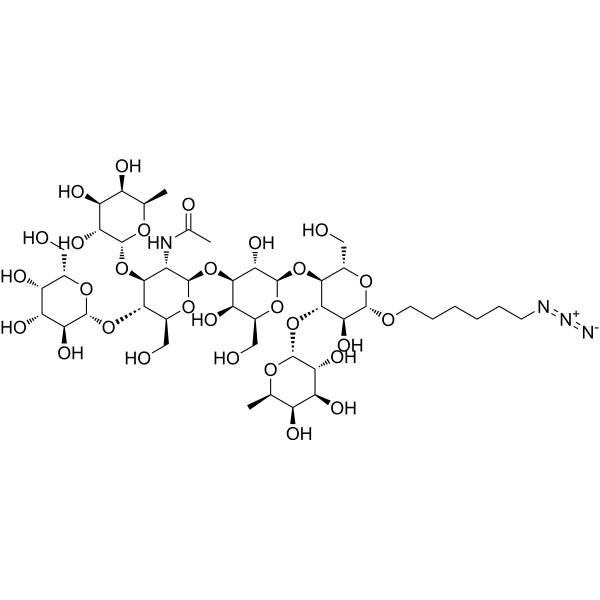
-
- HY-W749217A
-
|
|
Lipid
|
Fluorescent Dye
|
|
Cyanine 3.5 azide is a cyanine dye functionalized with an azide. Cyanine 3.5 azide is a click chemistry reagent, it contains an Azide group and can undergo copper-catalyzed azide-alkyne cycloaddition reaction (CuAAc) with molecules containing Alkyne groups. It can also undergo strain-promoted alkyne-azide cycloaddition (SPAAC) reactions with molecules containing DBCO or BCN groups (Ex/Em = 633/670 nm).
|
-
-
- HY-N15824
-
|
|
Lipid
|
Fluorescent Dye
|
|
Cyanine 3.5 azide is a cyanine dye functionalized with an azide. Cyanine 3.5 azide is a click chemistry reagent, it contains an Azide group and can undergo copper-catalyzed azide-alkyne cycloaddition reaction (CuAAc) with molecules containing Alkyne groups. It can also undergo strain-promoted alkyne-azide cycloaddition (SPAAC) reactions with molecules containing DBCO or BCN groups (Ex/Em = 591/604 nm).
|
-
-
- HY-N15944
-
|
|
Lipid
|
Biochemical Assay Reagents
|
|
C6(6-Azido) gluCer is a lipid containing an omega-terminal azide. C6(6-Azido) gluCer is a click chemistry reagent, it contains an Azide group and can undergo copper-catalyzed azide-alkyne cycloaddition reaction (CuAAc) with molecules containing Alkyne groups. It can also undergo strain-promoted alkyne-azide cycloaddition (SPAAC) reactions with molecules containing DBCO or BCN groups.
|
-
| Cat. No. |
Product Name |
Chemical Structure |
-
- HY-140346AS
-
|
|
|
L-Azidohomoalanine-1,2,3,4- 13C4 (hydrochloride) is the 13C- and 15N-labeled L-Azidohomoalanine hydrochloride. L-Azidohomoalanine hydrochloride is an alkyl chain-based PROTAC linker that can be used in the synthesis of PROTACs . L-Azidohomoalanine-1,2,3,4-13C4 (hydrochloride) is a click chemistry reagent, it contains an Azide group and can undergo copper-catalyzed azide-alkyne cycloaddition reaction (CuAAc) with molecules containing Alkyne groups. It can also undergo strain-promoted alkyne-azide cycloaddition (SPAAC) reactions with molecules containing DBCO or BCN groups.
|
-
-
- HY-143963S
-
|
|
|
Irbesartan impurity 20-d4 is the deuterium labeled Irbesartan impurity 20 . Irbesartan impurity 20-d4 is a click chemistry reagent, it contains an Azide group and can undergo copper-catalyzed azide-alkyne cycloaddition reaction (CuAAc) with molecules containing Alkyne groups. It can also undergo strain-promoted alkyne-azide cycloaddition (SPAAC) reactions with molecules containing DBCO or BCN groups.
|
-
-
- HY-143980S
-
|
|
|
Losartan impurity 21-d4 is the deuterium labeled Losartan impurity 21 . Losartan impurity 21-d4 is a click chemistry reagent, it contains an Azide group and can undergo copper-catalyzed azide-alkyne cycloaddition reaction (CuAAc) with molecules containing Alkyne groups. It can also undergo strain-promoted alkyne-azide cycloaddition (SPAAC) reactions with molecules containing DBCO or BCN groups.
|
-
-
- HY-143964S
-
|
|
|
Irbesartan impurity 14-d4 is the deuterium labeled Irbesartan impurity 14 . Irbesartan impurity 14-d4 is a click chemistry reagent, it contains an Azide group and can undergo copper-catalyzed azide-alkyne cycloaddition reaction (CuAAc) with molecules containing Alkyne groups. It can also undergo strain-promoted alkyne-azide cycloaddition (SPAAC) reactions with molecules containing DBCO or BCN groups.
|
-
-
- HY-W743931
-
|
|
|
2-Azidoethanol-d4 is the deuterium labeled Azido-PEG1 (HY-138461). Azido-PEG1 is a PEG-based PROTAC linker that can be used in the synthesis of PROTACs . Azido-PEG1 is a click chemistry reagent, it contains an Azide group and can undergo copper-catalyzed azide-alkyne cycloaddition reaction (CuAAc) with molecules containing Alkyne groups. It can also undergo strain-promoted alkyne-azide cycloaddition (SPAAC) reactions with molecules containing DBCO or BCN groups.
|
-
| Cat. No. |
Product Name |
|
Classification |
-
- HY-129832
-
|
N-(3-Azidopropyl)biotinamide
|
|
Azide
Labeling and Fluorescence Imaging
|
|
Biotin-azide (N-(3-Azidopropyl)biotinamide) is a form of biotin with a terminal azide group. Biotin-azide can be used to prepare various biotinylated conjugates via Click Chemistry . Biotin-azide is a click chemistry reagent, it contains an Azide group and can undergo copper-catalyzed azide-alkyne cycloaddition reaction (CuAAc) with molecules containing Alkyne groups. It can also undergo strain-promoted alkyne-azide cycloaddition (SPAAC) reactions with molecules containing DBCO or BCN groups.
|
-
- HY-130809
-
|
|
|
DBCO
|
|
DBCO-PEG4-Biotin is an azadibenzocyclooctyne-biotin derivative containing a biotin group and 4 PEGs. DBCO-PEG4-Biotin is a versatile biotinylation reagent used for the introduction of a biotin moiety to azide-labeled biomolecules via copper-free strain-promoted alkyne-azide click chemistry (SPAAC) reaction . DBCO-PEG4-Biotin is a click chemistry reagent, it contains a DBCO group that can undergo strain-promoted alkyne-azide cycloaddition (SPAAC) with molecules containing Azide groups.
|
-
- HY-16714
-
|
p-Azidophenylalanine; p-Azido-L-phenylalanine
|
|
Azide
|
|
4-Azido-L-phenylalanine is an unnatural amino acid, which is used as an effective vibrational reporter of local protein environments. 4-Azido-L-phenylalanine is a click chemistry reagent, it contains an Azide group and can undergo copper-catalyzed azide-alkyne cycloaddition reaction (CuAAc) with molecules containing Alkyne groups. It can also undergo strain-promoted alkyne-azide cycloaddition (SPAAC) reactions with molecules containing DBCO or BCN groups.
|
-
- HY-141128
-
|
|
|
Azide
PROTAC Synthesis
|
|
Ac4GalNAz is an alkyl chain-based PROTAC linker that can be used in the synthesis of PROTACs . Ac4GalNAz is a click chemistry reagent, it contains an Azide group and can undergo copper-catalyzed azide-alkyne cycloaddition reaction (CuAAc) with molecules containing Alkyne groups. It can also undergo strain-promoted alkyne-azide cycloaddition (SPAAC) reactions with molecules containing DBCO or BCN groups.
|
-
- HY-151656
-
|
Azido Palmitic Acid
|
|
Azide
Labeling and Fluorescence Imaging
|
|
15-Azido-pentadecanoic acid is a click chemistry reagent containing an azide group. Azido Palmitic Acid can be used to identify and characterize post-translationally palmitylated proteins with using a simple and robust two-step labeling and detection technique . 15-Azido-pentadecanoic acid is a click chemistry reagent, it contains an Azide group and can undergo copper-catalyzed azide-alkyne cycloaddition reaction (CuAAc) with molecules containing Alkyne groups. It can also undergo strain-promoted alkyne-azide cycloaddition (SPAAC) reactions with molecules containing DBCO or BCN groups.
|
-
- HY-140346A
-
|
|
|
Azide
PROTAC Synthesis
|
|
L-Azidohomoalanine hydrochloride is an alkyl chain-based PROTAC linker that can be used in the synthesis of PROTACs . L-Azidohomoalanine (hydrochloride) is a click chemistry reagent, it contains an Azide group and can undergo copper-catalyzed azide-alkyne cycloaddition reaction (CuAAc) with molecules containing Alkyne groups. It can also undergo strain-promoted alkyne-azide cycloaddition (SPAAC) reactions with molecules containing DBCO or BCN groups.
|
-
- HY-151685
-
|
|
|
Azide
Labeling and Fluorescence Imaging
|
|
Kdo Azide is a click chemistry reagent containing an azide. Kdo Azide is a metabolic labeling reagent . Kdo Azide is a click chemistry reagent, it contains an Azide group and can undergo copper-catalyzed azide-alkyne cycloaddition reaction (CuAAc) with molecules containing Alkyne groups. It can also undergo strain-promoted alkyne-azide cycloaddition (SPAAC) reactions with molecules containing DBCO or BCN groups.
|
-
- HY-151840
-
|
|
|
Azide
|
|
4-Azidobenzyl alcohol is a click chemistry reagent containing an azide group . 4-Azidobenzyl alcohol is a click chemistry reagent, it contains an Azide group and can undergo copper-catalyzed azide-alkyne cycloaddition reaction (CuAAc) with molecules containing Alkyne groups. It can also undergo strain-promoted alkyne-azide cycloaddition (SPAAC) reactions with molecules containing DBCO or BCN groups.
|
-
- HY-16714A
-
|
p-Azidophenylalanine hydrochloride; p-Azido-L-phenylalanine hydrochloride
|
|
Azide
|
|
4-Azido-L-phenylalanine hydrochloride is an unnatural amino acid, which is used as an effective vibrational reporter of local protein environments. 4-Azido-L-phenylalanine (hydrochloride) is a click chemistry reagent, it contains an Azide group and can undergo copper-catalyzed azide-alkyne cycloaddition reaction (CuAAc) with molecules containing Alkyne groups. It can also undergo strain-promoted alkyne-azide cycloaddition (SPAAC) reactions with molecules containing DBCO or BCN groups.
|
-
- HY-140456
-
|
|
|
PROTAC Synthesis
Azide
|
|
Azido-PEG12-acid is a PEG-based PROTAC linker that can be used in the synthesis of PROTACs . Azido-PEG12-acid is a click chemistry reagent, it contains an Azide group and can undergo copper-catalyzed azide-alkyne cycloaddition reaction (CuAAc) with molecules containing Alkyne groups. It can also undergo strain-promoted alkyne-azide cycloaddition (SPAAC) reactions with molecules containing DBCO or BCN groups.
|
-
- HY-140453
-
|
|
|
Azide
PROTAC Synthesis
|
|
Azido-PEG6-acid is a PEG-based PROTAC linker that can be used in the synthesis of PROTACs . Azido-PEG6-acid is a click chemistry reagent, it contains an Azide group and can undergo copper-catalyzed azide-alkyne cycloaddition reaction (CuAAc) with molecules containing Alkyne groups. It can also undergo strain-promoted alkyne-azide cycloaddition (SPAAC) reactions with molecules containing DBCO or BCN groups.
|
-
- HY-W879064
-
|
|
|
DBCO
|
|
DBCO-Palmitic is a click chemical organic compound. DBCO-Palmitic can be used in the azide-alkyne cycloaddition (SPAAC) reaction.
|
-
- HY-138461
-
|
|
|
PROTAC Synthesis
Azide
|
|
Azido-PEG1 is a PEG-based PROTAC linker that can be used in the synthesis of PROTACs . Azido-PEG1 is a click chemistry reagent, it contains an Azide group and can undergo copper-catalyzed azide-alkyne cycloaddition reaction (CuAAc) with molecules containing Alkyne groups. It can also undergo strain-promoted alkyne-azide cycloaddition (SPAAC) reactions with molecules containing DBCO or BCN groups.
|
-
- HY-151655
-
|
|
|
Azide
|
|
11-Azidoundecanoic acid is a click chemistry reagent containing an azide group. 11-Azidoundecanoic acid acts as a hydrophobic bioconjugation linker that can be further modified at the azido-position using Staudinger ligation or Click-chemistry. 11-Azidoundecanoic acid is substrate of lipoic acid ligase (LpIA) for labeling . 11-Azidoundecanoic acid is a click chemistry reagent, it contains an Azide group and can undergo copper-catalyzed azide-alkyne cycloaddition reaction (CuAAc) with molecules containing Alkyne groups. It can also undergo strain-promoted alkyne-azide cycloaddition (SPAAC) reactions with molecules containing DBCO or BCN groups.
|
-
- HY-110128
-
|
SF7-AM
|
|
Labeling and Fluorescence Imaging
Azide
|
|
Sulfidefluor 7-AM is a stable hydrogen sulphide (H2S) fluorescent probe . Sulfidefluor 7-AM is a click chemistry reagent, it contains an Azide group and can undergo copper-catalyzed azide-alkyne cycloaddition reaction (CuAAc) with molecules containing Alkyne groups. It can also undergo strain-promoted alkyne-azide cycloaddition (SPAAC) reactions with molecules containing DBCO or BCN groups.
|
-
- HY-138387
-
|
|
|
ADC Synthesis
Azide
|
|
6-Azido-hexylamine is a cleavable ADC linker used in the synthesis of antibody-drug conjugates (ADCs) . 6-Azido-hexylamine is a click chemistry reagent, it contains an Azide group and can undergo copper-catalyzed azide-alkyne cycloaddition reaction (CuAAc) with molecules containing Alkyne groups. It can also undergo strain-promoted alkyne-azide cycloaddition (SPAAC) reactions with molecules containing DBCO or BCN groups.
|
-
- HY-W336328
-
|
|
|
Azide
|
|
3-Azido-L-alanine hydrochloride is an aliphatic functionalized amino acid with side chain lengths of up to four carbons . 3-Azido-L-alanine (hydrochloride) is a click chemistry reagent, it contains an Azide group and can undergo copper-catalyzed azide-alkyne cycloaddition reaction (CuAAc) with molecules containing Alkyne groups. It can also undergo strain-promoted alkyne-azide cycloaddition (SPAAC) reactions with molecules containing DBCO or BCN groups.
|
-
- HY-140756
-
|
|
|
Azide
PROTAC Synthesis
|
|
Azido-PEG1-NHS ester is a PEG-based PROTAC linker that can be used in the synthesis of PROTACs . Azido-PEG1-NHS ester is a click chemistry reagent, it contains an Azide group and can undergo copper-catalyzed azide-alkyne cycloaddition reaction (CuAAc) with molecules containing Alkyne groups. It can also undergo strain-promoted alkyne-azide cycloaddition (SPAAC) reactions with molecules containing DBCO or BCN groups.
|
-
- HY-W016735
-
|
|
|
PROTAC Synthesis
Azide
|
|
Azido-PEG3-alcohol is a PEG-based PROTAC linker can be used in the synthesis of PROTACs . Azido-PEG3-alcohol is a click chemistry reagent, it contains an Azide group and can undergo copper-catalyzed azide-alkyne cycloaddition reaction (CuAAc) with molecules containing Alkyne groups. It can also undergo strain-promoted alkyne-azide cycloaddition (SPAAC) reactions with molecules containing DBCO or BCN groups.
|
-
- HY-147325
-
|
|
|
ADC Synthesis
Azide
|
|
bisSP1 is an antibody agent conjugates linker . bisSP1 is a click chemistry reagent, it contains an Azide group and can undergo copper-catalyzed azide-alkyne cycloaddition reaction (CuAAc) with molecules containing Alkyne groups. It can also undergo strain-promoted alkyne-azide cycloaddition (SPAAC) reactions with molecules containing DBCO or BCN groups.
|
-
- HY-10870
-
RO-9187
5 Publications Verification
|
|
Azide
|
|
RO-9187 is a potent inhibitor of HCV virus replication with an IC50 of 171 nM. RO-9187 is a click chemistry reagent, it contains an Azide group and can undergo copper-catalyzed azide-alkyne cycloaddition reaction (CuAAc) with molecules containing Alkyne groups. It can also undergo strain-promoted alkyne-azide cycloaddition (SPAAC) reactions with molecules containing DBCO or BCN groups.
|
-
- HY-140104
-
|
|
|
ADC Synthesis
Azide
|
|
Azidoethyl-SS-ethylamine is a cleavable ADC linker used in the synthesis of antibody-drug conjugates (ADCs) . Azidoethyl-SS-ethylamine is a click chemistry reagent, it contains an Azide group and can undergo copper-catalyzed azide-alkyne cycloaddition reaction (CuAAc) with molecules containing Alkyne groups. It can also undergo strain-promoted alkyne-azide cycloaddition (SPAAC) reactions with molecules containing DBCO or BCN groups.
|
-
- HY-148254
-
|
|
|
Azide
|
|
8RK64, a chemical probe, is a covalent UCHL1 inhibitor (IC50: 0.32 μM) . 8RK64 is a click chemistry reagent, it contains an Azide group and can undergo copper-catalyzed azide-alkyne cycloaddition reaction (CuAAc) with molecules containing Alkyne groups. It can also undergo strain-promoted alkyne-azide cycloaddition (SPAAC) reactions with molecules containing DBCO or BCN groups.
|
-
- HY-133393
-
|
|
|
PROTAC Synthesis
Azide
|
|
Azido-PEG6-azide is a PEG-based PROTAC linker that can be used in the synthesis of PROTACs . Azido-PEG6-azide is a click chemistry reagent, it contains an Azide group and can undergo copper-catalyzed azide-alkyne cycloaddition reaction (CuAAc) with molecules containing Alkyne groups. It can also undergo strain-promoted alkyne-azide cycloaddition (SPAAC) reactions with molecules containing DBCO or BCN groups.
|
-
- HY-140857
-
|
|
|
PROTAC Synthesis
Azide
|
|
Iodoacetamide-PEG3-azide is a PEG-based PROTAC linker that can be used in the synthesis of PROTACs . Iodoacetamide-PEG3-azide is a click chemistry reagent, it contains an Azide group and can undergo copper-catalyzed azide-alkyne cycloaddition reaction (CuAAc) with molecules containing Alkyne groups. It can also undergo strain-promoted alkyne-azide cycloaddition (SPAAC) reactions with molecules containing DBCO or BCN groups.
|
-
- HY-151669
-
|
|
|
Azide
|
|
Fmoc-D-Aha-OH is a click chemistry reagent containing an azide . Fmoc-D-Aha-OH is a click chemistry reagent, it contains an Azide group and can undergo copper-catalyzed azide-alkyne cycloaddition reaction (CuAAc) with molecules containing Alkyne groups. It can also undergo strain-promoted alkyne-azide cycloaddition (SPAAC) reactions with molecules containing DBCO or BCN groups.
|
-
- HY-151666
-
|
|
|
Azide
|
|
6-Azido-D-lysine is a click chemistry reagent containing an azide . 6-Azido-D-lysine is a click chemistry reagent, it contains an Azide group and can undergo copper-catalyzed azide-alkyne cycloaddition reaction (CuAAc) with molecules containing Alkyne groups. It can also undergo strain-promoted alkyne-azide cycloaddition (SPAAC) reactions with molecules containing DBCO or BCN groups.
|
-
- HY-151675
-
|
|
|
Azide
|
|
H-L-Tyr(3-N3)-OH is a click chemistry reagent containing an azide . H-L-Tyr(3-N3)-OH is a click chemistry reagent, it contains an Azide group and can undergo copper-catalyzed azide-alkyne cycloaddition reaction (CuAAc) with molecules containing Alkyne groups. It can also undergo strain-promoted alkyne-azide cycloaddition (SPAAC) reactions with molecules containing DBCO or BCN groups .
|
-
- HY-147309
-
|
|
|
Azide
|
|
16-Azidohexadecanoic acid, a synthetic fatty acid, can be used as a modification marker for nucleotides and a molecular probe for fatty acid metabolism . 16-Azidohexadecanoic acid is a click chemistry reagent, it contains an Azide group and can undergo copper-catalyzed azide-alkyne cycloaddition reaction (CuAAc) with molecules containing Alkyne groups. It can also undergo strain-promoted alkyne-azide cycloaddition (SPAAC) reactions with molecules containing DBCO or BCN groups.
|
-
- HY-151666A
-
|
|
|
Azide
|
|
6-Azido-D-lysine hydrochloride is a click chemistry reagent containing an azide . 6-Azido-D-lysine hydrochloride is a click chemistry reagent, it contains an Azide group and can undergo copper-catalyzed azide-alkyne cycloaddition reaction (CuAAc) with molecules containing Alkyne groups. It can also undergo strain-promoted alkyne-azide cycloaddition (SPAAC) reactions with molecules containing DBCO or BCN groups.
|
-
- HY-13025
-
|
|
|
Azide
|
|
HIV-1 integrase inhibitor is a click chemistry reagent, it contains an Azide group and can undergo copper-catalyzed azide-alkyne cycloaddition reaction (CuAAc) with molecules containing Alkyne groups. It can also undergo strain-promoted alkyne-azide cycloaddition (SPAAC) reactions with molecules containing DBCO or BCN groups.
|
-
- HY-140346
-
|
|
|
PROTAC Synthesis
Azide
|
|
L-Azidohomoalanine is an alkyl chain-based PROTAC linker that can be used in the synthesis of PROTACs . L-Azidohomoalanine is a click chemistry reagent, it contains an Azide group and can undergo copper-catalyzed azide-alkyne cycloaddition reaction (CuAAc) with molecules containing Alkyne groups. It can also undergo strain-promoted alkyne-azide cycloaddition (SPAAC) reactions with molecules containing DBCO or BCN groups.
|
-
- HY-105674
-
|
|
|
Azide
|
|
Azidamfenicol is a broad-spectrum chloramphenicol-like antibiotic. Azidamfenicol inhibits ribosomal peptidyltransferase (Ki=22 μM) . Azidamfenicol is a click chemistry reagent, it contains an Azide group and can undergo copper-catalyzed azide-alkyne cycloaddition reaction (CuAAc) with molecules containing Alkyne groups. It can also undergo strain-promoted alkyne-azide cycloaddition (SPAAC) reactions with molecules containing DBCO or BCN groups.
|
-
- HY-132078
-
|
|
|
PROTAC Synthesis
Azide
|
|
Azido-PEG7-acid is a PEG-based PROTAC linker that can be used in the synthesis of PROTACs . Azido-PEG7-acid is a click chemistry reagent, it contains an Azide group and can undergo copper-catalyzed azide-alkyne cycloaddition reaction (CuAAc) with molecules containing Alkyne groups. It can also undergo strain-promoted alkyne-azide cycloaddition (SPAAC) reactions with molecules containing DBCO or BCN groups.
|
-
- HY-134320
-
|
8-Azidoadenosine 5'-triphosphate; 8-N3-ATP
|
|
Azide
|
|
8-Azido-ATP, a photoreactable nucleotide analog, is useful for the identification of proteins, such as DNA-dependent RNA polymerase . 8-Azido-ATP is a click chemistry reagent, it contains an Azide group and can undergo copper-catalyzed azide-alkyne cycloaddition reaction (CuAAc) with molecules containing Alkyne groups. It can also undergo strain-promoted alkyne-azide cycloaddition (SPAAC) reactions with molecules containing DBCO or BCN groups.
|
-
- HY-151641
-
|
|
|
Azide
|
|
3-Azido-L-alanine is an aliphatic functionalized amino acid with side chain lengths of up to four carbons . 3-Azido-L-alanine is a click chemistry reagent, it contains an Azide group and can undergo copper-catalyzed azide-alkyne cycloaddition reaction (CuAAc) with molecules containing Alkyne groups. It can also undergo strain-promoted alkyne-azide cycloaddition (SPAAC) reactions with molecules containing DBCO or BCN groups.
|
-
- HY-138518
-
|
|
|
Azide
PROTAC Synthesis
|
|
Azido-PEG3-aldehyde is a PEG-based PROTAC linker that can be used in the synthesis of PROTACs . Azido-PEG3-aldehyde is a click chemistry reagent, it contains an Azide group and can undergo copper-catalyzed azide-alkyne cycloaddition reaction (CuAAc) with molecules containing Alkyne groups. It can also undergo strain-promoted alkyne-azide cycloaddition (SPAAC) reactions with molecules containing DBCO or BCN groups.
|
-
- HY-W044155
-
|
|
|
PROTAC Synthesis
Azide
|
|
Azido-PEG2-azide is a PEG-based PROTAC linker that can be used in the synthesis of PROTACs . Azido-PEG2-azide is a click chemistry reagent, it contains an Azide group and can undergo copper-catalyzed azide-alkyne cycloaddition reaction (CuAAc) with molecules containing Alkyne groups. It can also undergo strain-promoted alkyne-azide cycloaddition (SPAAC) reactions with molecules containing DBCO or BCN groups.
|
-
- HY-140758
-
|
|
|
PROTAC Synthesis
Azide
|
|
Azido-PEG9-NHS ester is a PEG-based PROTAC linker that can be used in the synthesis of PROTACs . Azido-PEG9-NHS ester is a click chemistry reagent, it contains an Azide group and can undergo copper-catalyzed azide-alkyne cycloaddition reaction (CuAAc) with molecules containing Alkyne groups. It can also undergo strain-promoted alkyne-azide cycloaddition (SPAAC) reactions with molecules containing DBCO or BCN groups.
|
-
- HY-D1625
-
|
|
|
DBCO
Labeling and Fluorescence Imaging
|
|
Cy5 DBCO chloride is an azide reaction probe and the addition of DBCO molecules allows the imaging of azide-labelled biomolecules by a copper-free "Click Chemistry" reaction . Cy5 DBCO (chloride) is a click chemistry reagent, it contains a DBCO group that can undergo strain-promoted alkyne-azide cycloaddition (SPAAC) with molecules containing Azide groups.
|
-
- HY-151745
-
|
|
|
Azide
|
|
N3-TOTA-Suc is a click chemistry reagent containing an azide group. Click chemistry is a powerful chemical reaction with excellent bioorthogonality features: biocompatible, rapid and highly specific in biological environments . N3-TOTA-Suc is a click chemistry reagent, it contains an Azide group and can undergo copper-catalyzed azide-alkyne cycloaddition reaction (CuAAc) with molecules containing Alkyne groups. It can also undergo strain-promoted alkyne-azide cycloaddition (SPAAC) reactions with molecules containing DBCO or BCN groups.
|
-
- HY-151749
-
|
|
|
Azide
|
|
N3-D-Lys(Fmoc)-OH is a click chemistry reagent containing an azide group. Click chemistry is a powerful chemical reaction with excellent bioorthogonality features: biocompatible, rapid and highly specific in biological environments . N3-D-Lys(Fmoc)-OH is a click chemistry reagent, it contains an Azide group and can undergo copper-catalyzed azide-alkyne cycloaddition reaction (CuAAc) with molecules containing Alkyne groups. It can also undergo strain-promoted alkyne-azide cycloaddition (SPAAC) reactions with molecules containing DBCO or BCN groups.
|
-
- HY-151736
-
|
|
|
Azide
|
|
N3-L-Dap(Boc)-OH is a click chemistry reagent containing an azide group. Click chemistry is a powerful chemical reaction with excellent bioorthogonality features: biocompatible, rapid and highly specific in biological environments . N3-L-Dap(Boc)-OH is a click chemistry reagent, it contains an Azide group and can undergo copper-catalyzed azide-alkyne cycloaddition reaction (CuAAc) with molecules containing Alkyne groups. It can also undergo strain-promoted alkyne-azide cycloaddition (SPAAC) reactions with molecules containing DBCO or BCN groups.
|
-
- HY-151842
-
|
|
|
Azide
|
|
Fmoc-EDA-N3 is a click chemistry reagent containing an azide group . Fmoc-EDA-N3 is a click chemistry reagent, it contains an Azide group and can undergo copper-catalyzed azide-alkyne cycloaddition reaction (CuAAc) with molecules containing Alkyne groups. It can also undergo strain-promoted alkyne-azide cycloaddition (SPAAC) reactions with molecules containing DBCO or BCN groups.
|
-
- HY-151841
-
|
|
|
Azide
|
|
N3-L-Lys(Boc)-OH is a click chemistry reagent containing an azide group . N3-L-Lys(Boc)-OH is a click chemistry reagent, it contains an Azide group and can undergo copper-catalyzed azide-alkyne cycloaddition reaction (CuAAc) with molecules containing Alkyne groups. It can also undergo strain-promoted alkyne-azide cycloaddition (SPAAC) reactions with molecules containing DBCO or BCN groups.
|
-
- HY-151843
-
|
|
|
Azide
|
|
N3-L-Lys(Fmoc)-OH is a click chemistry reagent containing an azide group . N3-L-Lys(Fmoc)-OH is a click chemistry reagent, it contains an Azide group and can undergo copper-catalyzed azide-alkyne cycloaddition reaction (CuAAc) with molecules containing Alkyne groups. It can also undergo strain-promoted alkyne-azide cycloaddition (SPAAC) reactions with molecules containing DBCO or BCN groups.
|
-
- HY-151729
-
|
|
|
Azide
|
|
N3-D-Dab(Boc)-OH is a click chemistry reagent containing an Azide . N3-D-Dab(Boc)-OH is a click chemistry reagent, it contains an Azide group and can undergo copper-catalyzed azide-alkyne cycloaddition reaction (CuAAc) with molecules containing Alkyne groups. It can also undergo strain-promoted alkyne-azide cycloaddition (SPAAC) reactions with molecules containing DBCO or BCN groups.
|
-
- HY-151733
-
|
|
|
Azide
|
|
Fmoc-D-Dbu(N3)-OH is a click chemistry reagent containing an Azide . Fmoc-D-Dbu(N3)-OH is a click chemistry reagent, it contains an Azide group and can undergo copper-catalyzed azide-alkyne cycloaddition reaction (CuAAc) with molecules containing Alkyne groups. It can also undergo strain-promoted alkyne-azide cycloaddition (SPAAC) reactions with molecules containing DBCO or BCN groups.
|
-
- HY-100825
-
|
|
|
Azide
|
|
OABK hydrochloride is a small-molecule switch that can be used to control protein activity. OABK (hydrochloride) is a click chemistry reagent, it contains an Azide group and can undergo copper-catalyzed azide-alkyne cycloaddition reaction (CuAAc) with molecules containing Alkyne groups. It can also undergo strain-promoted alkyne-azide cycloaddition (SPAAC) reactions with molecules containing DBCO or BCN groups.
|
-
- HY-151647
-
|
|
|
Azide
|
|
3-Azidopropanoic acid-PFP ester is an azidopropanoic acid linker that contains an activated PFP ester. The azide group can undergo copper-catalyzed Click Chemistry reactions with alkynes, DBCO and BCN to form triazole linkages. The activated PFP ester can react with amine groups to form stable amide bonds . 3-Azidopropanoic acid-PFP ester is a click chemistry reagent, it contains an Azide group and can undergo copper-catalyzed azide-alkyne cycloaddition reaction (CuAAc) with molecules containing Alkyne groups. It can also undergo strain-promoted alkyne-azide cycloaddition (SPAAC) reactions with molecules containing DBCO or BCN groups.
|
- HY-N11454
-
|
LNnDFH II
|
|
Azide
|
|
Lacto-N-neodifucohexaose II (Compd 9) is a derivative of key human milk tetrasaccharide . Lacto-N-neodifucohexaose II is a click chemistry reagent, it contains an Azide group and can undergo copper-catalyzed azide-alkyne cycloaddition reaction (CuAAc) with molecules containing Alkyne groups. It can also undergo strain-promoted alkyne-azide cycloaddition (SPAAC) reactions with molecules containing DBCO or BCN groups.
|
- HY-140102
-
|
|
|
Azide
ADC Synthesis
|
|
Azidoethyl-SS-propionic NHS ester is a cleavable ADC linker used in the synthesis of antibody-drug conjugates (ADCs) . Azidoethyl-SS-propionic NHS ester is a click chemistry reagent, it contains an Azide group and can undergo copper-catalyzed azide-alkyne cycloaddition reaction (CuAAc) with molecules containing Alkyne groups. It can also undergo strain-promoted alkyne-azide cycloaddition (SPAAC) reactions with molecules containing DBCO or BCN groups.
|
- HY-140775
-
|
|
|
Azide
PROTAC Synthesis
|
|
Azido-PEG1-Boc is a PEG-based PROTAC linker that can be used in the synthesis of PROTACs . Azido-PEG1-Boc is a click chemistry reagent, it contains an Azide group and can undergo copper-catalyzed azide-alkyne cycloaddition reaction (CuAAc) with molecules containing Alkyne groups. It can also undergo strain-promoted alkyne-azide cycloaddition (SPAAC) reactions with molecules containing DBCO or BCN groups.
|
- HY-132049
-
|
|
|
PROTAC Synthesis
Azide
|
|
Benzyl-PEG7-azide is a PEG-based PROTAC linker that can be used in the synthesis of PROTACs . Benzyl-PEG7-azide is a click chemistry reagent, it contains an Azide group and can undergo copper-catalyzed azide-alkyne cycloaddition reaction (CuAAc) with molecules containing Alkyne groups. It can also undergo strain-promoted alkyne-azide cycloaddition (SPAAC) reactions with molecules containing DBCO or BCN groups.
|
- HY-140802
-
|
|
|
PROTAC Synthesis
Azide
|
|
Azido-PEG11-alcohol is a PEG-based PROTAC linker that can be used in the synthesis of PROTACs . Azido-PEG11-alcohol is a click chemistry reagent, it contains an Azide group and can undergo copper-catalyzed azide-alkyne cycloaddition reaction (CuAAc) with molecules containing Alkyne groups. It can also undergo strain-promoted alkyne-azide cycloaddition (SPAAC) reactions with molecules containing DBCO or BCN groups.
|
- HY-140823
-
|
|
|
PROTAC Synthesis
Azide
|
|
Bromo-PEG6-azide is a PEG-based PROTAC linker that can be used in the synthesis of PROTACs . Bromo-PEG6-azide is a click chemistry reagent, it contains an Azide group and can undergo copper-catalyzed azide-alkyne cycloaddition reaction (CuAAc) with molecules containing Alkyne groups. It can also undergo strain-promoted alkyne-azide cycloaddition (SPAAC) reactions with molecules containing DBCO or BCN groups.
|
- HY-77651
-
|
|
|
Azide
|
|
Nucleoside-Analog-1 is a click chemistry reagent, it contains an Azide group and can undergo copper-catalyzed azide-alkyne cycloaddition reaction (CuAAc) with molecules containing Alkyne groups. It can also undergo strain-promoted alkyne-azide cycloaddition (SPAAC) reactions with molecules containing DBCO or BCN groups.
|
- HY-151816
-
|
|
|
Azide
|
|
alpha-Man-TEG-N3 is a click chemistry reagent containing an azide group . alpha-Man-TEG-N3 is a click chemistry reagent, it contains an Azide group and can undergo copper-catalyzed azide-alkyne cycloaddition reaction (CuAAc) with molecules containing Alkyne groups. It can also undergo strain-promoted alkyne-azide cycloaddition (SPAAC) reactions with molecules containing DBCO or BCN groups.
|
- HY-D1944
-
|
|
|
Azide
|
|
ATTO 590 Azide is an azide derivative of ATTO 590 with excitation/emission maxima at 594/622 nm. ATTO 590 azide is a click chemistry reagent, it contains an Azide group and can undergo copper-catalyzed azide-alkyne cycloaddition reaction (CuAAc) with molecules containing Alkyne groups. It can also undergo strain-promoted alkyne-azide cycloaddition (SPAAC) reactions with molecules containing DBCO or BCN groups.
|
- HY-151671
-
|
|
|
Azide
|
|
Fmoc-L-MeLys(N3)-OH is a click chemistry reagent containing an azide. Fmoc-L-MeLys(N3)-OH is a SPPS building-block for the introduction of N-Me-Lys that can be modified at the N3-group using Click-chemistry . Fmoc-L-MeLys(N3)-OH is a click chemistry reagent, it contains an Azide group and can undergo copper-catalyzed azide-alkyne cycloaddition reaction (CuAAc) with molecules containing Alkyne groups. It can also undergo strain-promoted alkyne-azide cycloaddition (SPAAC) reactions with molecules containing DBCO or BCN groups.
|
- HY-140105
-
|
|
|
ADC Synthesis
Azide
|
|
Azidoethyl-SS-ethylazide is a cleavable ADC linker used in the synthesis of antibody-drug conjugates (ADCs) . Azidoethyl-SS-ethylazide is a click chemistry reagent, it contains an Azide group and can undergo copper-catalyzed azide-alkyne cycloaddition reaction (CuAAc) with molecules containing Alkyne groups. It can also undergo strain-promoted alkyne-azide cycloaddition (SPAAC) reactions with molecules containing DBCO or BCN groups.
|
- HY-140100
-
|
|
|
Azide
ADC Synthesis
|
|
Azidoethyl-SS-propionic acid is a cleavable ADC linker used in the synthesis of antibody-drug conjugates (ADCs) . Azidoethyl-SS-propionic acid is a click chemistry reagent, it contains an Azide group and can undergo copper-catalyzed azide-alkyne cycloaddition reaction (CuAAc) with molecules containing Alkyne groups. It can also undergo strain-promoted alkyne-azide cycloaddition (SPAAC) reactions with molecules containing DBCO or BCN groups.
|
- HY-151650
-
|
|
|
Azide
|
|
N3-O2Oc-O2Oc-OH is a click chemistry reagent containing an azide . N3-O2Oc-O2Oc-OH is a click chemistry reagent, it contains an Azide group and can undergo copper-catalyzed azide-alkyne cycloaddition reaction (CuAAc) with molecules containing Alkyne groups. It can also undergo strain-promoted alkyne-azide cycloaddition (SPAAC) reactions with molecules containing DBCO or BCN groups.
|
- HY-77652
-
|
|
|
Azide
|
|
Nucleoside-Analog-2 is a 4'-Azidocytidine analogue against Hepatitis C virus (HCV) replication. Nucleoside-Analog-2 is a click chemistry reagent, it contains an Azide group and can undergo copper-catalyzed azide-alkyne cycloaddition reaction (CuAAc) with molecules containing Alkyne groups. It can also undergo strain-promoted alkyne-azide cycloaddition (SPAAC) reactions with molecules containing DBCO or BCN groups.
|
- HY-140455
-
|
|
|
PROTAC Synthesis
Azide
|
|
Azido-PEG10-acid is a PEG-based PROTAC linker that can be used in the synthesis of PROTACs . Azido-PEG10-acid is a click chemistry reagent, it contains an Azide group and can undergo copper-catalyzed azide-alkyne cycloaddition reaction (CuAAc) with molecules containing Alkyne groups. It can also undergo strain-promoted alkyne-azide cycloaddition (SPAAC) reactions with molecules containing DBCO or BCN groups.
|
- HY-133317
-
|
N3-PEG11-CH2CH2COOH
|
|
PROTAC Synthesis
Azide
|
|
Azido-PEG11-acid is a PEG-based PROTAC linker that can be used in the synthesis of PROTACs . Azido-PEG11-acid is a click chemistry reagent, it contains an Azide group and can undergo copper-catalyzed azide-alkyne cycloaddition reaction (CuAAc) with molecules containing Alkyne groups. It can also undergo strain-promoted alkyne-azide cycloaddition (SPAAC) reactions with molecules containing DBCO or BCN groups.
|
- HY-140355
-
|
|
|
Azide
PROTAC Synthesis
|
|
Azide-PEG12-Tos is a PEG-based PROTAC linker that can be used in the synthesis of PROTACs . Azide-PEG12-Tos is a click chemistry reagent, it contains an Azide group and can undergo copper-catalyzed azide-alkyne cycloaddition reaction (CuAAc) with molecules containing Alkyne groups. It can also undergo strain-promoted alkyne-azide cycloaddition (SPAAC) reactions with molecules containing DBCO or BCN groups.
|
- HY-138706
-
|
|
|
Azide
PROTAC Synthesis
|
|
Azido-PEG8-azide is a PEG-based PROTAC linker can be used in the synthesis of PROTACs. Azido-PEG8-azide is a click chemistry reagent, it contains an Azide group and can undergo copper-catalyzed azide-alkyne cycloaddition reaction (CuAAc) with molecules containing Alkyne groups. It can also undergo strain-promoted alkyne-azide cycloaddition (SPAAC) reactions with molecules containing DBCO or BCN groups.
|
- HY-147275
-
|
|
|
Azide
|
|
Tazide is an antineoplastic agent . Tazide is a click chemistry reagent, it contains an Azide group and can undergo copper-catalyzed azide-alkyne cycloaddition reaction (CuAAc) with molecules containing Alkyne groups. It can also undergo strain-promoted alkyne-azide cycloaddition (SPAAC) reactions with molecules containing DBCO or BCN groups.
|
- HY-128708
-
|
|
|
Azide
|
|
ACPK is a pyrrolysine analogue bearing an azide residue. ACPK is a click chemistry reagent, it contains an Azide group and can undergo copper-catalyzed azide-alkyne cycloaddition reaction (CuAAc) with molecules containing Alkyne groups. It can also undergo strain-promoted alkyne-azide cycloaddition (SPAAC) reactions with molecules containing DBCO or BCN groups.
|
- HY-103700A
-
|
UAA crosslinker 2
|
|
Azide
|
|
Azide-phenylalanine hydrochloride is a phenylalanine derivative. Azide-phenylalanine (hydrochloride) is a click chemistry reagent, it contains an Azide group and can undergo copper-catalyzed azide-alkyne cycloaddition reaction (CuAAc) with molecules containing Alkyne groups. It can also undergo strain-promoted alkyne-azide cycloaddition (SPAAC) reactions with molecules containing DBCO or BCN groups.
|
- HY-151737
-
|
|
|
Azide
|
|
Z-L-Dbu(N3)-OH is a click chemistry reagent containing an Azide . Z-L-Dbu(N3)-OH is a click chemistry reagent, it contains an Azide group and can undergo copper-catalyzed azide-alkyne cycloaddition reaction (CuAAc) with molecules containing Alkyne groups. It can also undergo strain-promoted alkyne-azide cycloaddition (SPAAC) reactions with molecules containing DBCO or BCN groups.
|
- HY-151654
-
|
|
|
Azide
|
|
N3-D-Lys(Boc)-OH is a click chemistry reagent containing an Azide . N3-D-Lys(Boc)-OH is a click chemistry reagent, it contains an Azide group and can undergo copper-catalyzed azide-alkyne cycloaddition reaction (CuAAc) with molecules containing Alkyne groups. It can also undergo strain-promoted alkyne-azide cycloaddition (SPAAC) reactions with molecules containing DBCO or BCN groups.
|
- HY-D1548
-
|
|
|
Azide
Labeling and Fluorescence Imaging
|
|
1-(Azidomethyl)pyrene is a fluorescent dye . 1-(Azidomethyl)pyrene is a click chemistry reagent, it contains an Azide group and can undergo copper-catalyzed azide-alkyne cycloaddition reaction (CuAAc) with molecules containing Alkyne groups. It can also undergo strain-promoted alkyne-azide cycloaddition (SPAAC) reactions with molecules containing DBCO or BCN groups.
|
- HY-144584
-
|
|
|
Azide
|
|
AGL-0182-30 is a proprietary microtubule disrupting agent . AGL-0182-30 is a click chemistry reagent, it contains an Azide group and can undergo copper-catalyzed azide-alkyne cycloaddition reaction (CuAAc) with molecules containing Alkyne groups. It can also undergo strain-promoted alkyne-azide cycloaddition (SPAAC) reactions with molecules containing DBCO or BCN groups.
|
- HY-D1295
-
|
|
|
Azide
PROTAC Synthesis
|
|
Pyrene azide 3 is a PEG-based PROTAC linker that can be used in the synthesis of PROTACs . Pyrene azide 3 is a click chemistry reagent, it contains an Azide group and can undergo copper-catalyzed azide-alkyne cycloaddition reaction (CuAAc) with molecules containing Alkyne groups. It can also undergo strain-promoted alkyne-azide cycloaddition (SPAAC) reactions with molecules containing DBCO or BCN groups.
|
- HY-D1920
-
|
|
|
Azide
|
|
ATTO 390 azide is an azide derivative of ATTO 390 with excitation/emission maxima at 390/476 nm. ATTO 390 azide is a click chemistry reagent, it contains an Azide group and can undergo copper-catalyzed azide-alkyne cycloaddition reaction (CuAAc) with molecules containing Alkyne groups. It can also undergo strain-promoted alkyne-azide cycloaddition (SPAAC) reactions with molecules containing DBCO or BCN groups.
|
- HY-D2033
-
|
|
|
Azide
|
|
ATTO 514 azide is an azide derivative of ATTO 514 with excitation/emission maxima at 511/531 nm. ATTO 514 azide is a click chemistry reagent, it contains an Azide group and can undergo copper-catalyzed azide-alkyne cycloaddition reaction (CuAAc) with molecules containing Alkyne groups. It can also undergo strain-promoted alkyne-azide cycloaddition (SPAAC) reactions with molecules containing DBCO or BCN groups.
|
- HY-D2077
-
|
|
|
Azide
|
|
ATTO 725 azide is an azide derivative of ATTO 725 with excitation/emission maxima at 728/751 nm. ATTO 725 azide is a click chemistry reagent, it contains an Azide group and can undergo copper-catalyzed azide-alkyne cycloaddition reaction (CuAAc) with molecules containing Alkyne groups. It can also undergo strain-promoted alkyne-azide cycloaddition (SPAAC) reactions with molecules containing DBCO or BCN groups.
|
- HY-134695
-
|
|
|
Azide
PROTAC Synthesis
|
|
5-Biotinamidopentylazide is an alkyl chain-based PROTAC linker that can be used in the synthesis of PROTACs . 5-(Biotinamido)pentylazide is a click chemistry reagent, it contains an Azide group and can undergo copper-catalyzed azide-alkyne cycloaddition reaction (CuAAc) with molecules containing Alkyne groups. It can also undergo strain-promoted alkyne-azide cycloaddition (SPAAC) reactions with molecules containing DBCO or BCN groups.
|
- HY-147115
-
|
|
|
Azide
|
|
4-Azidophlorizin is a high affinity probe and photoaffinity label for the glucose transporter in brush border membranes . 4-Azidophlorizin is a click chemistry reagent, it contains an Azide group and can undergo copper-catalyzed azide-alkyne cycloaddition reaction (CuAAc) with molecules containing Alkyne groups. It can also undergo strain-promoted alkyne-azide cycloaddition (SPAAC) reactions with molecules containing DBCO or BCN groups.
|
- HY-134321
-
|
|
|
Azide
|
|
8-Azido-cAMP is a fluorescent cAMP analog, acting as the model target of detecting cAMP . 8-Azido-cAMP is a click chemistry reagent, it contains an Azide group and can undergo copper-catalyzed azide-alkyne cycloaddition reaction (CuAAc) with molecules containing Alkyne groups. It can also undergo strain-promoted alkyne-azide cycloaddition (SPAAC) reactions with molecules containing DBCO or BCN groups.
|
- HY-D1930
-
|
|
|
Azide
|
|
ATTO 425 Azide is an azide derivative of ATTO 425, the maximum excitation and emission wavelength: 439/489 nm. ATTO 425 azide is a click chemistry reagent, it contains an Azide group and can undergo copper-catalyzed azide-alkyne cycloaddition reaction (CuAAc) with molecules containing Alkyne groups. It can also undergo strain-promoted alkyne-azide cycloaddition (SPAAC) reactions with molecules containing DBCO or BCN groups.
|
- HY-140457
-
|
|
|
PROTAC Synthesis
Azide
|
|
Azido-PEG24-acid is a PEG-based PROTAC linker that can be used in the synthesis of PROTACs . Azido-PEG24-acid is a click chemistry reagent, it contains an Azide group and can undergo copper-catalyzed azide-alkyne cycloaddition reaction (CuAAc) with molecules containing Alkyne groups. It can also undergo strain-promoted alkyne-azide cycloaddition (SPAAC) reactions with molecules containing DBCO or BCN groups.
|
- HY-140458
-
|
|
|
PROTAC Synthesis
Azide
|
|
Azido-PEG36-acid is a PEG-based PROTAC linker that can be used in the synthesis of PROTACs . Azido-PEG36-acid is a click chemistry reagent, it contains an Azide group and can undergo copper-catalyzed azide-alkyne cycloaddition reaction (CuAAc) with molecules containing Alkyne groups. It can also undergo strain-promoted alkyne-azide cycloaddition (SPAAC) reactions with molecules containing DBCO or BCN groups.
|
- HY-133318
-
|
N3-PEG16-CH2CH2COOH
|
|
Azide
PROTAC Synthesis
|
|
Azido-PEG16-acid is a PEG-based PROTAC linker that can be used in the synthesis of PROTACs . Azido-PEG16-acid is a click chemistry reagent, it contains an Azide group and can undergo copper-catalyzed azide-alkyne cycloaddition reaction (CuAAc) with molecules containing Alkyne groups. It can also undergo strain-promoted alkyne-azide cycloaddition (SPAAC) reactions with molecules containing DBCO or BCN groups.
|
- HY-138435
-
|
|
|
PROTAC Synthesis
Azide
|
|
Azido-PEG13-acid is a PEG-based PROTAC linker that can be used in the synthesis of PROTACs . Azido-PEG13-acid is a click chemistry reagent, it contains an Azide group and can undergo copper-catalyzed azide-alkyne cycloaddition reaction (CuAAc) with molecules containing Alkyne groups. It can also undergo strain-promoted alkyne-azide cycloaddition (SPAAC) reactions with molecules containing DBCO or BCN groups.
|
- HY-112295
-
|
|
|
Azide
|
|
AzKTB is a capture reagent which bears a short trypsin-cleavable peptide sequence between the azide module and the TAMRA/PEG-biotin labels. AzKTB is a click chemistry reagent, it contains an Azide group and can undergo copper-catalyzed azide-alkyne cycloaddition reaction (CuAAc) with molecules containing Alkyne groups. It can also undergo strain-promoted alkyne-azide cycloaddition (SPAAC) reactions with molecules containing DBCO or BCN groups.
|
- HY-157737
-
|
|
|
Azide
|
|
GVSKYG-PEG2-azide (TFA) is a click chemistry reagent, it contains an Azide group and can undergo copper-catalyzed azide-alkyne cycloaddition reaction (CuAAc) with molecules containing Alkyne groups. Strain-promoted alkyne-azide cycloaddition (SPAAC) can also occur with molecules containing DBCO or BCN groups.
|
- HY-140852
-
|
|
|
PROTAC Synthesis
Azide
|
|
Azido-PEG3-methyl ester is a PEG-based PROTAC linker that can be used in the synthesis of PROTACs . Azido-PEG3-methyl ester is a click chemistry reagent, it contains an Azide group and can undergo copper-catalyzed azide-alkyne cycloaddition reaction (CuAAc) with molecules containing Alkyne groups. It can also undergo strain-promoted alkyne-azide cycloaddition (SPAAC) reactions with molecules containing DBCO or BCN groups.
|
- HY-133394
-
|
|
|
PROTAC Synthesis
Azide
|
|
Azido-PEG7-azide is a PEG-based PROTAC linker that can be used in the synthesis of PROTACs . Azido-PEG7-azide is a click chemistry reagent, it contains an Azide group and can undergo copper-catalyzed azide-alkyne cycloaddition reaction (CuAAc) with molecules containing Alkyne groups. It can also undergo strain-promoted alkyne-azide cycloaddition (SPAAC) reactions with molecules containing DBCO or BCN groups.
|
- HY-133395
-
|
|
|
Azide
PROTAC Synthesis
|
|
Azido-PEG9-azide is a PEG-based PROTAC linker that can be used in the synthesis of PROTACs . Azido-PEG9-azide is a click chemistry reagent, it contains an Azide group and can undergo copper-catalyzed azide-alkyne cycloaddition reaction (CuAAc) with molecules containing Alkyne groups. It can also undergo strain-promoted alkyne-azide cycloaddition (SPAAC) reactions with molecules containing DBCO or BCN groups.
|
- HY-140784
-
|
|
|
PROTAC Synthesis
Azide
|
|
Azido-PEG16-Boc is a PEG-based PROTAC linker that can be used in the synthesis of PROTACs . Azido-PEG16-Boc is a click chemistry reagent, it contains an Azide group and can undergo copper-catalyzed azide-alkyne cycloaddition reaction (CuAAc) with molecules containing Alkyne groups. It can also undergo strain-promoted alkyne-azide cycloaddition (SPAAC) reactions with molecules containing DBCO or BCN groups.
|
- HY-140842
-
|
|
|
PROTAC Synthesis
Azide
|
|
Azido-PEG4-nitrile is a PEG-based PROTAC linker that can be used in the synthesis of PROTACs . Azido-PEG4-nitrile is a click chemistry reagent, it contains an Azide group and can undergo copper-catalyzed azide-alkyne cycloaddition reaction (CuAAc) with molecules containing Alkyne groups. It can also undergo strain-promoted alkyne-azide cycloaddition (SPAAC) reactions with molecules containing DBCO or BCN groups.
|
- HY-133319
-
|
|
|
PROTAC Synthesis
Azide
|
|
Azido-PEG24-Boc is a PEG-based PROTAC linker that can be used in the synthesis of PROTACs . Azido-PEG24-Boc is a click chemistry reagent, it contains an Azide group and can undergo copper-catalyzed azide-alkyne cycloaddition reaction (CuAAc) with molecules containing Alkyne groups. It can also undergo strain-promoted alkyne-azide cycloaddition (SPAAC) reactions with molecules containing DBCO or BCN groups.
|
- HY-140861
-
|
|
|
PROTAC Synthesis
Azide
|
|
Trityl-PEG10-azide is a PEG-based PROTAC linker that can be used in the synthesis of PROTACs . Trityl-PEG10-azide is a click chemistry reagent, it contains an Azide group and can undergo copper-catalyzed azide-alkyne cycloaddition reaction (CuAAc) with molecules containing Alkyne groups. It can also undergo strain-promoted alkyne-azide cycloaddition (SPAAC) reactions with molecules containing DBCO or BCN groups.
|
- HY-W096078
-
|
|
|
Azide
PROTAC Synthesis
|
|
Bromo-PEG7-azide is a PEG-based PROTAC linker that can be used in the synthesis of PROTACs . Bromo-PEG7-azide is a click chemistry reagent, it contains an Azide group and can undergo copper-catalyzed azide-alkyne cycloaddition reaction (CuAAc) with molecules containing Alkyne groups. It can also undergo strain-promoted alkyne-azide cycloaddition (SPAAC) reactions with molecules containing DBCO or BCN groups.
|
- HY-140862
-
|
|
|
PROTAC Synthesis
Azide
|
|
Phthalamide-PEG3-azide is a PEG-based PROTAC linker that can be used in the synthesis of PROTACs . Phthalamide-PEG3-azide is a click chemistry reagent, it contains an Azide group and can undergo copper-catalyzed azide-alkyne cycloaddition reaction (CuAAc) with molecules containing Alkyne groups. It can also undergo strain-promoted alkyne-azide cycloaddition (SPAAC) reactions with molecules containing DBCO or BCN groups.
|
- HY-138715
-
|
|
|
Azide
PROTAC Synthesis
|
|
Benzyl-PEG4-Azido is a PEG-based PROTAC linker can be used in the synthesis of PROTACs. Benzyl-PEG4-Azido is a click chemistry reagent, it contains an Azide group and can undergo copper-catalyzed azide-alkyne cycloaddition reaction (CuAAc) with molecules containing Alkyne groups. It can also undergo strain-promoted alkyne-azide cycloaddition (SPAAC) reactions with molecules containing DBCO or BCN groups.
|
- HY-138333
-
|
|
|
Azide
PROTAC Synthesis
|
|
Azido-PEG7-PFP ester is a PEG-based PROTAC linker that can be used in the synthesis of PROTACs . Azido-PEG7-PFP ester is a click chemistry reagent, it contains an Azide group and can undergo copper-catalyzed azide-alkyne cycloaddition reaction (CuAAc) with molecules containing Alkyne groups. It can also undergo strain-promoted alkyne-azide cycloaddition (SPAAC) reactions with molecules containing DBCO or BCN groups.
|
- HY-138472
-
|
|
|
PROTAC Synthesis
Azide
|
|
Azido-PEG4-THP is a PEG-based PROTAC linker that can be used in the synthesis of PROTACs . Azido-PEG4-THP is a click chemistry reagent, it contains an Azide group and can undergo copper-catalyzed azide-alkyne cycloaddition reaction (CuAAc) with molecules containing Alkyne groups. It can also undergo strain-promoted alkyne-azide cycloaddition (SPAAC) reactions with molecules containing DBCO or BCN groups.
|
- HY-140804
-
|
|
|
PROTAC Synthesis
Azide
|
|
Azide-PEG16-alcohol is a PEG-based PROTAC linker that can be used in the synthesis of PROTACs . Azide-PEG16-alcohol is a click chemistry reagent, it contains an Azide group and can undergo copper-catalyzed azide-alkyne cycloaddition reaction (CuAAc) with molecules containing Alkyne groups. It can also undergo strain-promoted alkyne-azide cycloaddition (SPAAC) reactions with molecules containing DBCO or BCN groups.
|
- HY-140660
-
|
|
|
Azide
PROTAC Synthesis
|
|
Azide-PEG2000-alcohol is a PEG-based PROTAC linker that can be used in the synthesis of PROTACs . Azide-PEG2000-alcohol is a click chemistry reagent, it contains an Azide group and can undergo copper-catalyzed azide-alkyne cycloaddition reaction (CuAAc) with molecules containing Alkyne groups. It can also undergo strain-promoted alkyne-azide cycloaddition (SPAAC) reactions with molecules containing DBCO or BCN groups.
|
- HY-140913
-
|
|
|
PROTAC Synthesis
Azide
|
|
Biotin-PEG23-azide is a PEG-based PROTAC linker that can be used in the synthesis of PROTACs . Biotin-PEG23-azide is a click chemistry reagent, it contains an Azide group and can undergo copper-catalyzed azide-alkyne cycloaddition reaction (CuAAc) with molecules containing Alkyne groups. It can also undergo strain-promoted alkyne-azide cycloaddition (SPAAC) reactions with molecules containing DBCO or BCN groups.
|
- HY-140830
-
|
|
|
PROTAC Synthesis
Azide
|
|
m-PEG12-azide is a PEG-based PROTAC linker that can be used in the synthesis of PROTACs . m-PEG12-azide is a click chemistry reagent, it contains an Azide group and can undergo copper-catalyzed azide-alkyne cycloaddition reaction (CuAAc) with molecules containing Alkyne groups. It can also undergo strain-promoted alkyne-azide cycloaddition (SPAAC) reactions with molecules containing DBCO or BCN groups.
|
- HY-140351
-
|
|
|
PROTAC Synthesis
Azide
|
|
Azide-PEG4-Tos is a PEG-based PROTAC linker that can be used in the synthesis of PROTACs . Azide-PEG4-Tos is a click chemistry reagent, it contains an Azide group and can undergo copper-catalyzed azide-alkyne cycloaddition reaction (CuAAc) with molecules containing Alkyne groups. It can also undergo strain-promoted alkyne-azide cycloaddition (SPAAC) reactions with molecules containing DBCO or BCN groups.
|
- HY-140219
-
|
|
|
Azide
PROTAC Synthesis
|
|
Azido-PEG23-amine is a PEG-based PROTAC linker that can be used in the synthesis of PROTACs . Azido-PEG23-amine is a click chemistry reagent, it contains an Azide group and can undergo copper-catalyzed azide-alkyne cycloaddition reaction (CuAAc) with molecules containing Alkyne groups. It can also undergo strain-promoted alkyne-azide cycloaddition (SPAAC) reactions with molecules containing DBCO or BCN groups.
|
- HY-140772
-
|
|
|
PROTAC Synthesis
Azide
|
|
Azido-PEG6-PFP ester is a PEG-based PROTAC linker that can be used in the synthesis of PROTACs . Azido-PEG6-PFP ester is a click chemistry reagent, it contains an Azide group and can undergo copper-catalyzed azide-alkyne cycloaddition reaction (CuAAc) with molecules containing Alkyne groups. It can also undergo strain-promoted alkyne-azide cycloaddition (SPAAC) reactions with molecules containing DBCO or BCN groups.
|
- HY-153486
-
|
|
|
Azide
|
|
N3-VC-PAB-PNP is the intermediate of bicyclic peptide ligand STING conjugates . N3-VC-PAB-PNP is a click chemistry reagent, it contains an Azide group and can undergo copper-catalyzed azide-alkyne cycloaddition reaction (CuAAc) with molecules containing Alkyne groups. It can also undergo strain-promoted alkyne-azide cycloaddition (SPAAC) reactions with molecules containing DBCO or BCN groups.
|
- HY-132055
-
|
|
|
Azide
PROTAC Synthesis
|
|
Azido-PEG8-THP is a PEG-based PROTAC linker that can be used in the synthesis of PROTACs . Azido-PEG8-THP is a click chemistry reagent, it contains an Azide group and can undergo copper-catalyzed azide-alkyne cycloaddition reaction (CuAAc) with molecules containing Alkyne groups. It can also undergo strain-promoted alkyne-azide cycloaddition (SPAAC) reactions with molecules containing DBCO or BCN groups.
|
- HY-132085
-
|
|
|
PROTAC Synthesis
Azide
|
|
Azido-PEG3-chloroacetamide is a PEG-based PROTAC linker that can be used in the synthesis of PROTACs . Azido-PEG3-chloroacetamide is a click chemistry reagent, it contains an Azide group and can undergo copper-catalyzed azide-alkyne cycloaddition reaction (CuAAc) with molecules containing Alkyne groups. It can also undergo strain-promoted alkyne-azide cycloaddition (SPAAC) reactions with molecules containing DBCO or BCN groups.
|
- HY-140667
-
|
|
|
Azide
PROTAC Synthesis
|
|
Azide-PEG20000-azide is a PEG-based PROTAC linker that can be used in the synthesis of PROTACs . Azide-PEG20000-azide is a click chemistry reagent, it contains an Azide group and can undergo copper-catalyzed azide-alkyne cycloaddition reaction (CuAAc) with molecules containing Alkyne groups. It can also undergo strain-promoted alkyne-azide cycloaddition (SPAAC) reactions with molecules containing DBCO or BCN groups.
|
- HY-140752
-
|
|
|
PROTAC Synthesis
Azide
|
|
DOTA-PEG5-azide is a PEG-based PROTAC linker that can be used in the synthesis of PROTACs . DOTA-PEG5-azide is a click chemistry reagent, it contains an Azide group and can undergo copper-catalyzed azide-alkyne cycloaddition reaction (CuAAc) with molecules containing Alkyne groups. It can also undergo strain-promoted alkyne-azide cycloaddition (SPAAC) reactions with molecules containing DBCO or BCN groups.
|
- HY-138717
-
|
|
|
Azide
PROTAC Synthesis
|
|
m-PEG13-azide is a PEG-based PROTAC linker that can be used in the synthesis of PROTACs. m-PEG13-azide is a click chemistry reagent, it contains an Azide group and can undergo copper-catalyzed azide-alkyne cycloaddition reaction (CuAAc) with molecules containing Alkyne groups. It can also undergo strain-promoted alkyne-azide cycloaddition (SPAAC) reactions with molecules containing DBCO or BCN groups.
|
- HY-130143
-
|
|
|
Azide
PROTAC Synthesis
|
|
Biotin-PEG3-azide is a PEG-based PROTAC linker can be used in the synthesis of PROTACs. Biotin-PEG3-azide is a click chemistry reagent, it contains an Azide group and can undergo copper-catalyzed azide-alkyne cycloaddition reaction (CuAAc) with molecules containing Alkyne groups. It can also undergo strain-promoted alkyne-azide cycloaddition (SPAAC) reactions with molecules containing DBCO or BCN groups.
|
- HY-130578
-
|
|
|
PROTAC Synthesis
Azide
|
|
m-PEG2-azide is a PEG-based PROTAC linker can be used in the synthesis of PROTACs. m-PEG2-azide is a click chemistry reagent, it contains an Azide group and can undergo copper-catalyzed azide-alkyne cycloaddition reaction (CuAAc) with molecules containing Alkyne groups. It can also undergo strain-promoted alkyne-azide cycloaddition (SPAAC) reactions with molecules containing DBCO or BCN groups.
|
- HY-154835
-
|
|
|
Azide
|
|
N6-[[(4-Azidophenyl)methoxy]carbonyl]-L-lysine is an unnatural amino acid . N6-[[(4-Azidophenyl)methoxy]carbonyl]-L-lysine is a click chemistry reagent, it contains an Azide group and can undergo copper-catalyzed azide-alkyne cycloaddition reaction (CuAAc) with molecules containing Alkyne groups. It can also undergo strain-promoted alkyne-azide cycloaddition (SPAAC) reactions with molecules containing DBCO or BCN groups.
|
- HY-132059
-
|
|
|
Azide
PROTAC Synthesis
|
|
Azido-PEG13-azide is a PEG-based PROTAC linker that can be used in the synthesis of PROTACs . Azido-PEG13-azide is a click chemistry reagent, it contains an Azide group and can undergo copper-catalyzed azide-alkyne cycloaddition reaction (CuAAc) with molecules containing Alkyne groups. It can also undergo strain-promoted alkyne-azide cycloaddition (SPAAC) reactions with molecules containing DBCO or BCN groups.
|
- HY-133396
-
|
|
|
PROTAC Synthesis
Azide
|
|
Azido-PEG11-azide is a PEG-based PROTAC linker that can be used in the synthesis of PROTACs . Azido-PEG11-azide is a click chemistry reagent, it contains an Azide group and can undergo copper-catalyzed azide-alkyne cycloaddition reaction (CuAAc) with molecules containing Alkyne groups. It can also undergo strain-promoted alkyne-azide cycloaddition (SPAAC) reactions with molecules containing DBCO or BCN groups.
|
- HY-140217
-
|
|
|
Azide
PROTAC Synthesis
|
|
Azido-PEG10-amine is a PEG-based PROTAC linker that can be used in the synthesis of PROTACs . Azido-PEG10-amine is a click chemistry reagent, it contains an Azide group and can undergo copper-catalyzed azide-alkyne cycloaddition reaction (CuAAc) with molecules containing Alkyne groups. It can also undergo strain-promoted alkyne-azide cycloaddition (SPAAC) reactions with molecules containing DBCO or BCN groups.
|
- HY-140683
-
|
|
|
PROTAC Synthesis
Azide
|
|
m-PEG5000-azide is a PEG-based PROTAC linker that can be used in the synthesis of PROTACs . m-PEG5000-azide is a click chemistry reagent, it contains an Azide group and can undergo copper-catalyzed azide-alkyne cycloaddition reaction (CuAAc) with molecules containing Alkyne groups. It can also undergo strain-promoted alkyne-azide cycloaddition (SPAAC) reactions with molecules containing DBCO or BCN groups.
|
- HY-140805
-
|
|
|
PROTAC Synthesis
Azide
|
|
Azido-PEG20-alcohol is a PEG-based PROTAC linker that can be used in the synthesis of PROTACs . Azido-PEG20-alcohol is a click chemistry reagent, it contains an Azide group and can undergo copper-catalyzed azide-alkyne cycloaddition reaction (CuAAc) with molecules containing Alkyne groups. It can also undergo strain-promoted alkyne-azide cycloaddition (SPAAC) reactions with molecules containing DBCO or BCN groups.
|
- HY-140814
-
|
|
|
PROTAC Synthesis
Azide
|
|
Azido-PEG4-hydrazide is a PEG-based PROTAC linker that can be used in the synthesis of PROTACs . Azido-PEG4-hydrazide is a click chemistry reagent, it contains an Azide group and can undergo copper-catalyzed azide-alkyne cycloaddition reaction (CuAAc) with molecules containing Alkyne groups. It can also undergo strain-promoted alkyne-azide cycloaddition (SPAAC) reactions with molecules containing DBCO or BCN groups.
|
- HY-140827
-
|
|
|
Azide
PROTAC Synthesis
|
|
m-PEG3-azide is a PEG-based PROTAC linker that can be used in the synthesis of PROTACs . m-PEG3-azide is a click chemistry reagent, it contains an Azide group and can undergo copper-catalyzed azide-alkyne cycloaddition reaction (CuAAc) with molecules containing Alkyne groups. It can also undergo strain-promoted alkyne-azide cycloaddition (SPAAC) reactions with molecules containing DBCO or BCN groups.
|
- HY-140220
-
|
|
|
Azide
PROTAC Synthesis
|
|
Azido-PEG35-amine is a PEG-based PROTAC linker that can be used in the synthesis of PROTACs . Azido-PEG35-amine is a click chemistry reagent, it contains an Azide group and can undergo copper-catalyzed azide-alkyne cycloaddition reaction (CuAAc) with molecules containing Alkyne groups. It can also undergo strain-promoted alkyne-azide cycloaddition (SPAAC) reactions with molecules containing DBCO or BCN groups.
|
- HY-130204
-
|
|
|
PROTAC Synthesis
Azide
|
|
m-PEG8-azide is a PEG-based PROTAC linker can be used in the synthesis of PROTACs. m-PEG8-azide is a click chemistry reagent, it contains an Azide group and can undergo copper-catalyzed azide-alkyne cycloaddition reaction (CuAAc) with molecules containing Alkyne groups. It can also undergo strain-promoted alkyne-azide cycloaddition (SPAAC) reactions with molecules containing DBCO or BCN groups.
|
- HY-134717
-
|
|
|
Azide
PROTAC Synthesis
|
|
Benzyl-PEG24-azide is a PEG-based PROTAC linker that can be used in the synthesis of PROTACs . Benzyl-PEG24-azide is a click chemistry reagent, it contains an Azide group and can undergo copper-catalyzed azide-alkyne cycloaddition reaction (CuAAc) with molecules containing Alkyne groups. It can also undergo strain-promoted alkyne-azide cycloaddition (SPAAC) reactions with molecules containing DBCO or BCN groups.
|
- HY-133455
-
|
|
|
PROTAC Synthesis
Azide
|
|
Benzaldehyde-PEG4-azide is a PEG-based PROTAC linker that can be used in the synthesis of PROTACs . Benzaldehyde-PEG4-azide is a click chemistry reagent, it contains an Azide group and can undergo copper-catalyzed azide-alkyne cycloaddition reaction (CuAAc) with molecules containing Alkyne groups. It can also undergo strain-promoted alkyne-azide cycloaddition (SPAAC) reactions with molecules containing DBCO or BCN groups.
|
- HY-140821
-
|
|
|
PROTAC Synthesis
Azide
|
|
Bromo-PEG5-azide is a PEG-based PROTAC linker that can be used in the synthesis of PROTACs . Bromo-PEG4-azide is a click chemistry reagent, it contains an Azide group and can undergo copper-catalyzed azide-alkyne cycloaddition reaction (CuAAc) with molecules containing Alkyne groups. It can also undergo strain-promoted alkyne-azide cycloaddition (SPAAC) reactions with molecules containing DBCO or BCN groups.
|
- HY-140797
-
|
|
|
Azide
PROTAC Synthesis
|
|
Azido-PEG2-alcohol is a PEG-based PROTAC linker that can be used in the synthesis of PROTACs . Azido-PEG2-alcohol is a click chemistry reagent, it contains an Azide group and can undergo copper-catalyzed azide-alkyne cycloaddition reaction (CuAAc) with molecules containing Alkyne groups. It can also undergo strain-promoted alkyne-azide cycloaddition (SPAAC) reactions with molecules containing DBCO or BCN groups.
|
- HY-138374
-
|
|
|
Azide
PROTAC Synthesis
|
|
Azido-PEG12-THP is a PEG-based PROTAC linker that can be used in the synthesis of PROTACs . Azido-PEG12-THP is a click chemistry reagent, it contains an Azide group and can undergo copper-catalyzed azide-alkyne cycloaddition reaction (CuAAc) with molecules containing Alkyne groups. It can also undergo strain-promoted alkyne-azide cycloaddition (SPAAC) reactions with molecules containing DBCO or BCN groups.
|
- HY-118781
-
|
|
|
Alkynes
PROTAC Synthesis
Azide
|
|
Propargyl-PEG3-azide is a PEG-based PROTAC linker that can be used in the synthesis of PROTACs . Propargyl-PEG3-azide is a click chemistry reagent, it contains an Azide group and can undergo copper-catalyzed azide-alkyne cycloaddition reaction (CuAAc) with molecules containing Alkyne groups. It can also undergo strain-promoted alkyne-azide cycloaddition (SPAAC) reactions with molecules containing DBCO or BCN groups.
|
- HY-140781
-
|
|
|
Azide
PROTAC Synthesis
|
|
Azido-PEG10-Boc is a PEG-based PROTAC linker that can be used in the synthesis of PROTACs . Azido-PEG10-Boc is a click chemistry reagent, it contains an Azide group and can undergo copper-catalyzed azide-alkyne cycloaddition reaction (CuAAc) with molecules containing Alkyne groups. It can also undergo strain-promoted alkyne-azide cycloaddition (SPAAC) reactions with molecules containing DBCO or BCN groups.
|
- HY-140684
-
|
|
|
Azide
PROTAC Synthesis
|
|
m-PEG10000-azide is a PEG-based PROTAC linker that can be used in the synthesis of PROTACs . m-PEG10000-azide is a click chemistry reagent, it contains an Azide group and can undergo copper-catalyzed azide-alkyne cycloaddition reaction (CuAAc) with molecules containing Alkyne groups. It can also undergo strain-promoted alkyne-azide cycloaddition (SPAAC) reactions with molecules containing DBCO or BCN groups.
|
- HY-140216
-
|
|
|
Azide
PROTAC Synthesis
|
|
Azido-PEG8-amine is a PEG-based PROTAC linker that can be used in the synthesis of PROTACs . Azido-PEG8-amine is a click chemistry reagent, it contains an Azide group and can undergo copper-catalyzed azide-alkyne cycloaddition reaction (CuAAc) with molecules containing Alkyne groups. It can also undergo strain-promoted alkyne-azide cycloaddition (SPAAC) reactions with molecules containing DBCO or BCN groups.
|
- HY-140682
-
|
|
|
Azide
PROTAC Synthesis
|
|
m-PEG2000-azide is a PEG-based PROTAC linker that can be used in the synthesis of PROTACs . m-PEG2000-azide is a click chemistry reagent, it contains an Azide group and can undergo copper-catalyzed azide-alkyne cycloaddition reaction (CuAAc) with molecules containing Alkyne groups. It can also undergo strain-promoted alkyne-azide cycloaddition (SPAAC) reactions with molecules containing DBCO or BCN groups.
|
- HY-140665
-
|
|
|
Azide
PROTAC Synthesis
|
|
Azide-PEG5000-azide is a PEG-based PROTAC linker that can be used in the synthesis of PROTACs . Azide-PEG5000-azide is a click chemistry reagent, it contains an Azide group and can undergo copper-catalyzed azide-alkyne cycloaddition reaction (CuAAc) with molecules containing Alkyne groups. It can also undergo strain-promoted alkyne-azide cycloaddition (SPAAC) reactions with molecules containing DBCO or BCN groups.
|
- HY-133391
-
|
|
|
PROTAC Synthesis
Azide
|
|
Azido-PEG3-azide is a PEG-based PROTAC linker that can be used in the synthesis of PROTACs . Azido-PEG3-azide is a click chemistry reagent, it contains an Azide group and can undergo copper-catalyzed azide-alkyne cycloaddition reaction (CuAAc) with molecules containing Alkyne groups. It can also undergo strain-promoted alkyne-azide cycloaddition (SPAAC) reactions with molecules containing DBCO or BCN groups.
|
- HY-140762
-
|
|
|
PROTAC Synthesis
Azide
|
|
Azido-PEG24-NHS ester is a PEG-based PROTAC linker that can be used in the synthesis of PROTACs . Azido-PEG24-NHS ester is a click chemistry reagent, it contains an Azide group and can undergo copper-catalyzed azide-alkyne cycloaddition reaction (CuAAc) with molecules containing Alkyne groups. It can also undergo strain-promoted alkyne-azide cycloaddition (SPAAC) reactions with molecules containing DBCO or BCN groups.
|
- HY-138516
-
|
|
|
Azide
PROTAC Synthesis
|
|
CG-PEG5-azido is a PEG-based PROTAC linker that can be used in the synthesis of PROTACs . CG-PEG5-azido is a click chemistry reagent, it contains an Azide group and can undergo copper-catalyzed azide-alkyne cycloaddition reaction (CuAAc) with molecules containing Alkyne groups. It can also undergo strain-promoted alkyne-azide cycloaddition (SPAAC) reactions with molecules containing DBCO or BCN groups.
|
- HY-138740
-
|
|
|
Azide
PROTAC Synthesis
Alkynes
|
|
Azido-PEG2-propargyl is a PEG-based PROTAC linker that can be used in the synthesis of PROTACs . Azido-PEG2-propargyl is a click chemistry reagent, it contains an Azide group and can undergo copper-catalyzed azide-alkyne cycloaddition reaction (CuAAc) with molecules containing Alkyne groups. It can also undergo strain-promoted alkyne-azide cycloaddition (SPAAC) reactions with molecules containing DBCO or BCN groups.
|
- HY-140815
-
|
|
|
PROTAC Synthesis
Azide
|
|
Azido-PEG8-hydrazide is a PEG-based PROTAC linker that can be used in the synthesis of PROTACs . Azido-PEG8-hydrazide is a click chemistry reagent, it contains an Azide group and can undergo copper-catalyzed azide-alkyne cycloaddition reaction (CuAAc) with molecules containing Alkyne groups. It can also undergo strain-promoted alkyne-azide cycloaddition (SPAAC) reactions with molecules containing DBCO or BCN groups.
|
- HY-132096
-
|
|
|
PROTAC Synthesis
Azide
|
|
Azido-PEG4-acyl chloride is a PEG-based PROTAC linker that can be used in the synthesis of PROTACs . Azido-PEG4-acyl chloride is a click chemistry reagent, it contains an Azide group and can undergo copper-catalyzed azide-alkyne cycloaddition reaction (CuAAc) with molecules containing Alkyne groups. It can also undergo strain-promoted alkyne-azide cycloaddition (SPAAC) reactions with molecules containing DBCO or BCN groups.
|
- HY-140801
-
|
|
|
PROTAC Synthesis
Azide
|
|
Azido-PEG10-alcohol is a PEG-based PROTAC linker that can be used in the synthesis of PROTACs . Azido-PEG10-alcohol is a click chemistry reagent, it contains an Azide group and can undergo copper-catalyzed azide-alkyne cycloaddition reaction (CuAAc) with molecules containing Alkyne groups. It can also undergo strain-promoted alkyne-azide cycloaddition (SPAAC) reactions with molecules containing DBCO or BCN groups.
|
- HY-140800
-
|
|
|
PROTAC Synthesis
Azide
|
|
Azido-PEG9-alcohol is a PEG-based PROTAC linker that can be used in the synthesis of PROTACs . Azido-PEG9-alcohol is a click chemistry reagent, it contains an Azide group and can undergo copper-catalyzed azide-alkyne cycloaddition reaction (CuAAc) with molecules containing Alkyne groups. It can also undergo strain-promoted alkyne-azide cycloaddition (SPAAC) reactions with molecules containing DBCO or BCN groups.
|
- HY-140778
-
|
|
|
PROTAC Synthesis
Azide
|
|
Azide-PEG5-Boc is a PEG-based PROTAC linker that can be used in the synthesis of PROTACs . Azide-PEG5-Boc is a click chemistry reagent, it contains an Azide group and can undergo copper-catalyzed azide-alkyne cycloaddition reaction (CuAAc) with molecules containing Alkyne groups. It can also undergo strain-promoted alkyne-azide cycloaddition (SPAAC) reactions with molecules containing DBCO or BCN groups.
|
- HY-130188
-
|
|
|
Azide
PROTAC Synthesis
|
|
Benzyl-PEG2-azide is a PEG-based PROTAC linker can be used in the synthesis of PROTACs. Benzyl-PEG2-azide is a click chemistry reagent, it contains an Azide group and can undergo copper-catalyzed azide-alkyne cycloaddition reaction (CuAAc) with molecules containing Alkyne groups. It can also undergo strain-promoted alkyne-azide cycloaddition (SPAAC) reactions with molecules containing DBCO or BCN groups.
|
- HY-143963S
-
|
|
|
Azide
|
|
Irbesartan impurity 20-d4 is the deuterium labeled Irbesartan impurity 20 . Irbesartan impurity 20-d4 is a click chemistry reagent, it contains an Azide group and can undergo copper-catalyzed azide-alkyne cycloaddition reaction (CuAAc) with molecules containing Alkyne groups. It can also undergo strain-promoted alkyne-azide cycloaddition (SPAAC) reactions with molecules containing DBCO or BCN groups.
|
- HY-140214
-
|
|
|
PROTAC Synthesis
Azide
|
|
Azido-PEG5-amine is a PEG-based PROTAC linker that can be used in the synthesis of PROTACs . Azido-PEG5-amine is a click chemistry reagent, it contains an Azide group and can undergo copper-catalyzed azide-alkyne cycloaddition reaction (CuAAc) with molecules containing Alkyne groups. It can also undergo strain-promoted alkyne-azide cycloaddition (SPAAC) reactions with molecules containing DBCO or BCN groups.
|
- HY-143980S
-
|
|
|
Azide
|
|
Losartan impurity 21-d4 is the deuterium labeled Losartan impurity 21 . Losartan impurity 21-d4 is a click chemistry reagent, it contains an Azide group and can undergo copper-catalyzed azide-alkyne cycloaddition reaction (CuAAc) with molecules containing Alkyne groups. It can also undergo strain-promoted alkyne-azide cycloaddition (SPAAC) reactions with molecules containing DBCO or BCN groups.
|
- HY-133175
-
|
|
|
PROTAC Synthesis
Azide
|
|
Biotin-PEG7-azide is a PEG-based PROTAC linker can be used in the synthesis of PROTAC. Biotin-PEG7-azide is a click chemistry reagent, it contains an Azide group and can undergo copper-catalyzed azide-alkyne cycloaddition reaction (CuAAc) with molecules containing Alkyne groups. It can also undergo strain-promoted alkyne-azide cycloaddition (SPAAC) reactions with molecules containing DBCO or BCN groups.
|
- HY-140825
-
|
|
|
PROTAC Synthesis
Azide
|
|
Bromoacetamido-PEG3-azide is a PEG-based PROTAC linker that can be used in the synthesis of PROTACs . Bromoacetamido-PEG3-azide is a click chemistry reagent, it contains an Azide group and can undergo copper-catalyzed azide-alkyne cycloaddition reaction (CuAAc) with molecules containing Alkyne groups. It can also undergo strain-promoted alkyne-azide cycloaddition (SPAAC) reactions with molecules containing DBCO or BCN groups.
|
- HY-140218
-
|
|
|
PROTAC Synthesis
Azide
|
|
Azido-PEG11-amine is a PEG-based PROTAC linker that can be used in the synthesis of PROTACs . Azido-PEG11-amine is a click chemistry reagent, it contains an Azide group and can undergo copper-catalyzed azide-alkyne cycloaddition reaction (CuAAc) with molecules containing Alkyne groups. It can also undergo strain-promoted alkyne-azide cycloaddition (SPAAC) reactions with molecules containing DBCO or BCN groups.
|
- HY-140795
-
|
|
|
PROTAC Synthesis
Azide
|
|
Azido-PEG5-Boc is a PEG-based PROTAC linker that can be used in the synthesis of PROTACs . Azido-PEG5-Boc is a click chemistry reagent, it contains an Azide group and can undergo copper-catalyzed azide-alkyne cycloaddition reaction (CuAAc) with molecules containing Alkyne groups. It can also undergo strain-promoted alkyne-azide cycloaddition (SPAAC) reactions with molecules containing DBCO or BCN groups.
|
- HY-133397
-
|
|
|
PROTAC Synthesis
Azide
|
|
Azido-PEG15-azide is a PEG-based PROTAC linker that can be used in the synthesis of PROTACs . Azido-PEG15-azide is a click chemistry reagent, it contains an Azide group and can undergo copper-catalyzed azide-alkyne cycloaddition reaction (CuAAc) with molecules containing Alkyne groups. It can also undergo strain-promoted alkyne-azide cycloaddition (SPAAC) reactions with molecules containing DBCO or BCN groups.
|
- HY-140856
-
|
|
|
PROTAC Synthesis
Azide
|
|
Azido-PEG5-triethoxysilane is a PEG-based PROTAC linker that can be used in the synthesis of PROTACs . Azido-PEG5-triethoxysilane is a click chemistry reagent, it contains an Azide group and can undergo copper-catalyzed azide-alkyne cycloaddition reaction (CuAAc) with molecules containing Alkyne groups. It can also undergo strain-promoted alkyne-azide cycloaddition (SPAAC) reactions with molecules containing DBCO or BCN groups.
|
- HY-140761
-
|
|
|
Azide
PROTAC Synthesis
|
|
Azido-PEG16-NHS ester is a PEG-based PROTAC linker that can be used in the synthesis of PROTACs . Azido-PEG16-NHS ester is a click chemistry reagent, it contains an Azide group and can undergo copper-catalyzed azide-alkyne cycloaddition reaction (CuAAc) with molecules containing Alkyne groups. It can also undergo strain-promoted alkyne-azide cycloaddition (SPAAC) reactions with molecules containing DBCO or BCN groups.
|
- HY-138716
-
|
|
|
Azide
PROTAC Synthesis
|
|
m-PEG9-azide is a PEG-based PROTAC linker can be used in the synthesis of PROTACs. m-PEG9-azide is a click chemistry reagent, it contains an Azide group and can undergo copper-catalyzed azide-alkyne cycloaddition reaction (CuAAc) with molecules containing Alkyne groups. It can also undergo strain-promoted alkyne-azide cycloaddition (SPAAC) reactions with molecules containing DBCO or BCN groups.
|
- HY-132082
-
|
|
|
PROTAC Synthesis
Azide
|
|
Benzyl-PEG13-azide is a PEG-based PROTAC linker that can be used in the synthesis of PROTACs . Benzyl-PEG13-azide is a click chemistry reagent, it contains an Azide group and can undergo copper-catalyzed azide-alkyne cycloaddition reaction (CuAAc) with molecules containing Alkyne groups. It can also undergo strain-promoted alkyne-azide cycloaddition (SPAAC) reactions with molecules containing DBCO or BCN groups.
|
- HY-140158
-
|
|
|
PROTAC Synthesis
Azide
|
|
Methylamino-PEG3-azide is a PEG-based PROTAC linker that can be used in the synthesis of PROTACs . Methylamino-PEG3-azide is a click chemistry reagent, it contains an Azide group and can undergo copper-catalyzed azide-alkyne cycloaddition reaction (CuAAc) with molecules containing Alkyne groups. It can also undergo strain-promoted alkyne-azide cycloaddition (SPAAC) reactions with molecules containing DBCO or BCN groups.
|
- HY-138363
-
|
|
|
Azide
PROTAC Synthesis
|
|
Azido-PEG6-MS is a PEG-based PROTAC linker that can be used in the synthesis of PROTACs . Azido-PEG6-MS is a click chemistry reagent, it contains an Azide group and can undergo copper-catalyzed azide-alkyne cycloaddition reaction (CuAAc) with molecules containing Alkyne groups. It can also undergo strain-promoted alkyne-azide cycloaddition (SPAAC) reactions with molecules containing DBCO or BCN groups.
|
- HY-138692
-
|
|
|
PROTAC Synthesis
Azide
|
|
Azido-PEG4-azide is a PEG-based PROTAC linker can be used in the synthesis of PROTACs. Azido-PEG4-azide is a click chemistry reagent, it contains an Azide group and can undergo copper-catalyzed azide-alkyne cycloaddition reaction (CuAAc) with molecules containing Alkyne groups. It can also undergo strain-promoted alkyne-azide cycloaddition (SPAAC) reactions with molecules containing DBCO or BCN groups.
|
- HY-138463
-
|
|
|
PROTAC Synthesis
Azide
|
|
Azido-PEG36-NHS ester is a PEG-based PROTAC linker that can be used in the synthesis of PROTACs . Azido-PEG36-NHS ester is a click chemistry reagent, it contains an Azide group and can undergo copper-catalyzed azide-alkyne cycloaddition reaction (CuAAc) with molecules containing Alkyne groups. It can also undergo strain-promoted alkyne-azide cycloaddition (SPAAC) reactions with molecules containing DBCO or BCN groups.
|
- HY-140662
-
|
|
|
Azide
PROTAC Synthesis
|
|
Azide-PEG3500-amine is a PEG-based PROTAC linker that can be used in the synthesis of PROTACs . Azide-PEG3500-amine is a click chemistry reagent, it contains an Azide group and can undergo copper-catalyzed azide-alkyne cycloaddition reaction (CuAAc) with molecules containing Alkyne groups. It can also undergo strain-promoted alkyne-azide cycloaddition (SPAAC) reactions with molecules containing DBCO or BCN groups.
|
- HY-140798
-
|
|
|
PROTAC Synthesis
Azide
|
|
Azido-PEG7-alcohol is a PEG-based PROTAC linker that can be used in the synthesis of PROTACs . Azido-PEG7-alcohol is a click chemistry reagent, it contains an Azide group and can undergo copper-catalyzed azide-alkyne cycloaddition reaction (CuAAc) with molecules containing Alkyne groups. It can also undergo strain-promoted alkyne-azide cycloaddition (SPAAC) reactions with molecules containing DBCO or BCN groups.
|
- HY-130424
-
|
|
|
PROTAC Synthesis
Azide
|
|
m-PEG10-azide a PEG-based PROTAC linker can be used in the synthesis of PROTACs. m-PEG10-azide is a click chemistry reagent, it contains an Azide group and can undergo copper-catalyzed azide-alkyne cycloaddition reaction (CuAAc) with molecules containing Alkyne groups. It can also undergo strain-promoted alkyne-azide cycloaddition (SPAAC) reactions with molecules containing DBCO or BCN groups.
|
- HY-126957
-
|
|
|
Azide
PROTAC Synthesis
|
|
Biotin-PEG2-azide is a PEG-based PROTAC linker can be used in the synthesis of PROTACs. Biotin-PEG2-azide is a click chemistry reagent, it contains an Azide group and can undergo copper-catalyzed azide-alkyne cycloaddition reaction (CuAAc) with molecules containing Alkyne groups. It can also undergo strain-promoted alkyne-azide cycloaddition (SPAAC) reactions with molecules containing DBCO or BCN groups.
|
- HY-140663
-
|
|
|
Azide
PROTAC Synthesis
|
|
Azide-PEG5000-amine is a PEG-based PROTAC linker that can be used in the synthesis of PROTACs . Azide-PEG5000-amine is a click chemistry reagent, it contains an Azide group and can undergo copper-catalyzed azide-alkyne cycloaddition reaction (CuAAc) with molecules containing Alkyne groups. It can also undergo strain-promoted alkyne-azide cycloaddition (SPAAC) reactions with molecules containing DBCO or BCN groups.
|
- HY-130507
-
|
|
|
Azide
PROTAC Synthesis
|
|
Aminooxy-PEG5-azide is a PEG-based PROTAC linker can be used in the synthesis of PROTACs . Aminooxy-PEG5-azide is a click chemistry reagent, it contains an Azide group and can undergo copper-catalyzed azide-alkyne cycloaddition reaction (CuAAc) with molecules containing Alkyne groups. It can also undergo strain-promoted alkyne-azide cycloaddition (SPAAC) reactions with molecules containing DBCO or BCN groups.
|
- HY-140685
-
|
|
|
Azide
PROTAC Synthesis
|
|
m-PEG20000-azide is a PEG-based PROTAC linker that can be used in the synthesis of PROTACs . m-PEG20000-azide is a click chemistry reagent, it contains an Azide group and can undergo copper-catalyzed azide-alkyne cycloaddition reaction (CuAAc) with molecules containing Alkyne groups. It can also undergo strain-promoted alkyne-azide cycloaddition (SPAAC) reactions with molecules containing DBCO or BCN groups.
|
- HY-133174
-
|
|
|
PROTAC Synthesis
Azide
|
|
Biotin-PEG5-azide is a PEG-based PROTAC linker can be used in the synthesis of PROTAC. Biotin-PEG5-azide is a click chemistry reagent, it contains an Azide group and can undergo copper-catalyzed azide-alkyne cycloaddition reaction (CuAAc) with molecules containing Alkyne groups. It can also undergo strain-promoted alkyne-azide cycloaddition (SPAAC) reactions with molecules containing DBCO or BCN groups.
|
- HY-140954
-
|
|
|
PROTAC Synthesis
Azide
|
|
DSPE-PEG5-azide is a PEG-based PROTAC linker that can be used in the synthesis of PROTACs . DSPE-PEG5-azide is a click chemistry reagent, it contains an Azide group and can undergo copper-catalyzed azide-alkyne cycloaddition reaction (CuAAc) with molecules containing Alkyne groups. It can also undergo strain-promoted alkyne-azide cycloaddition (SPAAC) reactions with molecules containing DBCO or BCN groups.
|
- HY-145715
-
|
|
|
Azide
|
|
Azido-PEG2-VHL is a multikinase degrader which can be used in the synthesis of PROTACs . Azido-PEG2-VHL is a click chemistry reagent, it contains an Azide group and can undergo copper-catalyzed azide-alkyne cycloaddition reaction (CuAAc) with molecules containing Alkyne groups. It can also undergo strain-promoted alkyne-azide cycloaddition (SPAAC) reactions with molecules containing DBCO or BCN groups.
|
- HY-138738
-
|
|
|
PROTAC Synthesis
Alkynes
Azide
|
|
Propargyl-PEG5-azide is a PEG-based PROTAC linker that can be used in the synthesis of PROTACs . Propargyl-PEG5-azide is a click chemistry reagent, it contains an Azide group and can undergo copper-catalyzed azide-alkyne cycloaddition reaction (CuAAc) with molecules containing Alkyne groups. It can also undergo strain-promoted alkyne-azide cycloaddition (SPAAC) reactions with molecules containing DBCO or BCN groups.
|
- HY-138325
-
|
|
|
Azide
PROTAC Synthesis
|
|
Azido-PEG6-THP is a PEG-based PROTAC linker that can be used in the synthesis of PROTACs . Azido-PEG6-THP is a click chemistry reagent, it contains an Azide group and can undergo copper-catalyzed azide-alkyne cycloaddition reaction (CuAAc) with molecules containing Alkyne groups. It can also undergo strain-promoted alkyne-azide cycloaddition (SPAAC) reactions with molecules containing DBCO or BCN groups.
|
- HY-143964S
-
|
|
|
Azide
|
|
Irbesartan impurity 14-d4 is the deuterium labeled Irbesartan impurity 14 . Irbesartan impurity 14-d4 is a click chemistry reagent, it contains an Azide group and can undergo copper-catalyzed azide-alkyne cycloaddition reaction (CuAAc) with molecules containing Alkyne groups. It can also undergo strain-promoted alkyne-azide cycloaddition (SPAAC) reactions with molecules containing DBCO or BCN groups.
|
- HY-138525
-
|
|
|
Azide
PROTAC Synthesis
|
|
Azido-PEG4-Thiol is a PEG-based PROTAC linker that can be used in the synthesis of PROTACs . Azido-PEG4-Thiol is a click chemistry reagent, it contains an Azide group and can undergo copper-catalyzed azide-alkyne cycloaddition reaction (CuAAc) with molecules containing Alkyne groups. It can also undergo strain-promoted alkyne-azide cycloaddition (SPAAC) reactions with molecules containing DBCO or BCN groups.
|
- HY-138437
-
|
|
|
Azide
PROTAC Synthesis
|
|
Azido-PEG8-TFP ester is a PEG-based PROTAC linker that can be used in the synthesis of PROTACs . Azido-PEG8-TFP ester is a click chemistry reagent, it contains an Azide group and can undergo copper-catalyzed azide-alkyne cycloaddition reaction (CuAAc) with molecules containing Alkyne groups. It can also undergo strain-promoted alkyne-azide cycloaddition (SPAAC) reactions with molecules containing DBCO or BCN groups.
|
- HY-140806
-
|
|
|
Azide
PROTAC Synthesis
|
|
Azido-PEG24-alcohol is a PEG-based PROTAC linker that can be used in the synthesis of PROTACs . Azido-PEG24-alcohol is a click chemistry reagent, it contains an Azide group and can undergo copper-catalyzed azide-alkyne cycloaddition reaction (CuAAc) with molecules containing Alkyne groups. It can also undergo strain-promoted alkyne-azide cycloaddition (SPAAC) reactions with molecules containing DBCO or BCN groups.
|
- HY-140807
-
|
|
|
PROTAC Synthesis
Azide
|
|
Azido-PEG36-alcohol is a PEG-based PROTAC linker that can be used in the synthesis of PROTACs . Azido-PEG36-alcohol is a click chemistry reagent, it contains an Azide group and can undergo copper-catalyzed azide-alkyne cycloaddition reaction (CuAAc) with molecules containing Alkyne groups. It can also undergo strain-promoted alkyne-azide cycloaddition (SPAAC) reactions with molecules containing DBCO or BCN groups.
|
- HY-138708
-
|
|
|
Azide
PROTAC Synthesis
|
|
Azido-PEG8-NHBoc is a PEG-based PROTAC linker can be used in the synthesis of PROTACs. Azido-PEG8-NHBoc is a click chemistry reagent, it contains an Azide group and can undergo copper-catalyzed azide-alkyne cycloaddition reaction (CuAAc) with molecules containing Alkyne groups. It can also undergo strain-promoted alkyne-azide cycloaddition (SPAAC) reactions with molecules containing DBCO or BCN groups.
|
- HY-140661
-
|
|
|
Azide
PROTAC Synthesis
|
|
Azide-PEG2000-amine is a PEG-based PROTAC linker that can be used in the synthesis of PROTACs . Azide-PEG2000-amine is a click chemistry reagent, it contains an Azide group and can undergo copper-catalyzed azide-alkyne cycloaddition reaction (CuAAc) with molecules containing Alkyne groups. It can also undergo strain-promoted alkyne-azide cycloaddition (SPAAC) reactions with molecules containing DBCO or BCN groups.
|
- HY-140863
-
|
|
|
PROTAC Synthesis
Azide
|
|
PC-PEG11-Azide is a PEG-based PROTAC linker that can be used in the synthesis of PROTACs . PC-PEG11-Azide is a click chemistry reagent, it contains an Azide group and can undergo copper-catalyzed azide-alkyne cycloaddition reaction (CuAAc) with molecules containing Alkyne groups. It can also undergo strain-promoted alkyne-azide cycloaddition (SPAAC) reactions with molecules containing DBCO or BCN groups.
|
- HY-140822
-
|
|
|
PROTAC Synthesis
Azide
|
|
Bromo-PEG6-azide is a PEG-based PROTAC linker that can be used in the synthesis of PROTACs . Bromo-PEG5-azide is a click chemistry reagent, it contains an Azide group and can undergo copper-catalyzed azide-alkyne cycloaddition reaction (CuAAc) with molecules containing Alkyne groups. It can also undergo strain-promoted alkyne-azide cycloaddition (SPAAC) reactions with molecules containing DBCO or BCN groups.
|
- HY-140782
-
|
|
|
Azide
PROTAC Synthesis
|
|
Azido-PEG12-Boc is a PEG-based PROTAC linker that can be used in the synthesis of PROTACs . Azido-PEG12-Boc is a click chemistry reagent, it contains an Azide group and can undergo copper-catalyzed azide-alkyne cycloaddition reaction (CuAAc) with molecules containing Alkyne groups. It can also undergo strain-promoted alkyne-azide cycloaddition (SPAAC) reactions with molecules containing DBCO or BCN groups.
|
- HY-140832
-
|
|
|
PROTAC Synthesis
Azide
|
|
m-PEG24-azide is a PEG-based PROTAC linker that can be used in the synthesis of PROTACs . m-PEG24-azide is a click chemistry reagent, it contains an Azide group and can undergo copper-catalyzed azide-alkyne cycloaddition reaction (CuAAc) with molecules containing Alkyne groups. It can also undergo strain-promoted alkyne-azide cycloaddition (SPAAC) reactions with molecules containing DBCO or BCN groups.
|
- HY-140829
-
|
|
|
PROTAC Synthesis
Azide
|
|
m-PEG11-azide is a PEG-based PROTAC linker that can be used in the synthesis of PROTACs . m-PEG11-azide is a click chemistry reagent, it contains an Azide group and can undergo copper-catalyzed azide-alkyne cycloaddition reaction (CuAAc) with molecules containing Alkyne groups. It can also undergo strain-promoted alkyne-azide cycloaddition (SPAAC) reactions with molecules containing DBCO or BCN groups.
|
- HY-140381
-
|
|
|
Azide
PROTAC Synthesis
|
|
Azide-PEG2-Ms is a PEG-based PROTAC linker that can be used in the synthesis of PROTACs . Azide-PEG2-Ms is a click chemistry reagent, it contains an Azide group and can undergo copper-catalyzed azide-alkyne cycloaddition reaction (CuAAc) with molecules containing Alkyne groups. It can also undergo strain-promoted alkyne-azide cycloaddition (SPAAC) reactions with molecules containing DBCO or BCN groups.
|
- HY-140777
-
|
|
|
PROTAC Synthesis
Azide
|
|
Azido-PEG4-Boc is a PEG-based PROTAC linker that can be used in the synthesis of PROTACs . Azido-PEG4-Boc is a click chemistry reagent, it contains an Azide group and can undergo copper-catalyzed azide-alkyne cycloaddition reaction (CuAAc) with molecules containing Alkyne groups. It can also undergo strain-promoted alkyne-azide cycloaddition (SPAAC) reactions with molecules containing DBCO or BCN groups.
|
- HY-W096120
-
|
|
|
Azide
PROTAC Synthesis
|
|
Azide-PEG3-Desthiobiotin is a PEG-based PROTAC linker that can be used in the synthesis of PROTACs . Azide-PEG3-Desthiobiotin is a click chemistry reagent, it contains an Azide group and can undergo copper-catalyzed azide-alkyne cycloaddition reaction (CuAAc) with molecules containing Alkyne groups. It can also undergo strain-promoted alkyne-azide cycloaddition (SPAAC) reactions with molecules containing DBCO or BCN groups.
|
- HY-140617
-
|
|
|
Azide
PROTAC Synthesis
|
|
DNP-PEG3-azide is a PEG-based PROTAC linker that can be used in the synthesis of PROTACs . DNP-PEG3-azide is a click chemistry reagent, it contains an Azide group and can undergo copper-catalyzed azide-alkyne cycloaddition reaction (CuAAc) with molecules containing Alkyne groups. It can also undergo strain-promoted alkyne-azide cycloaddition (SPAAC) reactions with molecules containing DBCO or BCN groups.
|
- HY-140799
-
|
|
|
Azide
PROTAC Synthesis
|
|
Azide-PEG8-alcohol is a PEG-based PROTAC linker that can be used in the synthesis of PROTACs . Azide-PEG8-alcohol is a click chemistry reagent, it contains an Azide group and can undergo copper-catalyzed azide-alkyne cycloaddition reaction (CuAAc) with molecules containing Alkyne groups. It can also undergo strain-promoted alkyne-azide cycloaddition (SPAAC) reactions with molecules containing DBCO or BCN groups.
|
- HY-140826
-
|
|
|
PROTAC Synthesis
Azide
|
|
Bromoacetamido-PEG5-azide is a PEG-based PROTAC linker that can be used in the synthesis of PROTACs . Bromoacetamido-PEG5-azide is a click chemistry reagent, it contains an Azide group and can undergo copper-catalyzed azide-alkyne cycloaddition reaction (CuAAc) with molecules containing Alkyne groups. It can also undergo strain-promoted alkyne-azide cycloaddition (SPAAC) reactions with molecules containing DBCO or BCN groups.
|
- HY-139262
-
FNC-TP
1 Publications Verification
|
|
Azide
|
|
FNC-TP is the intracellular active form of FNC. FNC is a potent nucleoside reverse transcriptase inhibitor (NRTI), with antiviral activity on HIV, HBV and HCV . FNC-TP is a click chemistry reagent, it contains an Azide group and can undergo copper-catalyzed azide-alkyne cycloaddition reaction (CuAAc) with molecules containing Alkyne groups. It can also undergo strain-promoted alkyne-azide cycloaddition (SPAAC) reactions with molecules containing DBCO or BCN groups.
|
- HY-140666
-
|
|
|
Azide
PROTAC Synthesis
|
|
Azide-PEG10000-azide is a PEG-based PROTAC linker that can be used in the synthesis of PROTACs . Azide-PEG10000-azide is a click chemistry reagent, it contains an Azide group and can undergo copper-catalyzed azide-alkyne cycloaddition reaction (CuAAc) with molecules containing Alkyne groups. It can also undergo strain-promoted alkyne-azide cycloaddition (SPAAC) reactions with molecules containing DBCO or BCN groups.
|
- HY-140765
-
|
|
|
Azide
PROTAC Synthesis
|
|
Azido-PEG4-NHS-ester is a PEG-based PROTAC linker that can be used in the synthesis of PROTACs . Azido-PEG4-NHS-ester is a click chemistry reagent, it contains an Azide group and can undergo copper-catalyzed azide-alkyne cycloaddition reaction (CuAAc) with molecules containing Alkyne groups. It can also undergo strain-promoted alkyne-azide cycloaddition (SPAAC) reactions with molecules containing DBCO or BCN groups.
|
- HY-140744
-
|
|
|
PROTAC Synthesis
Azide
|
|
Benzyl-PEG5-azide is a PEG-based PROTAC linker that can be used in the synthesis of PROTACs . Benzyl-PEG5-azide is a click chemistry reagent, it contains an Azide group and can undergo copper-catalyzed azide-alkyne cycloaddition reaction (CuAAc) with molecules containing Alkyne groups. It can also undergo strain-promoted alkyne-azide cycloaddition (SPAAC) reactions with molecules containing DBCO or BCN groups.
|
- HY-140833
-
|
|
|
Azide
PROTAC Synthesis
|
|
m-PEG36-azide is a PEG-based PROTAC linker that can be used in the synthesis of PROTACs . m-PEG36-azide is a click chemistry reagent, it contains an Azide group and can undergo copper-catalyzed azide-alkyne cycloaddition reaction (CuAAc) with molecules containing Alkyne groups. It can also undergo strain-promoted alkyne-azide cycloaddition (SPAAC) reactions with molecules containing DBCO or BCN groups.
|
- HY-140771
-
|
|
|
Azide
PROTAC Synthesis
|
|
Azido-PEG1-PFP ester is a PEG-based PROTAC linker that can be used in the synthesis of PROTACs . Azido-PEG1-PFP ester is a click chemistry reagent, it contains an Azide group and can undergo copper-catalyzed azide-alkyne cycloaddition reaction (CuAAc) with molecules containing Alkyne groups. It can also undergo strain-promoted alkyne-azide cycloaddition (SPAAC) reactions with molecules containing DBCO or BCN groups.
|
- HY-22340
-
|
|
|
PROTAC Synthesis
Azide
|
|
Azido-PEG4-alcohol is a PEG-based PROTAC linker can be used in the synthesis of PROTACs . Azido-PEG4-alcohol is a click chemistry reagent, it contains an Azide group and can undergo copper-catalyzed azide-alkyne cycloaddition reaction (CuAAc) with molecules containing Alkyne groups. It can also undergo strain-promoted alkyne-azide cycloaddition (SPAAC) reactions with molecules containing DBCO or BCN groups.
|
- HY-140860
-
|
|
|
PROTAC Synthesis
Azide
|
|
Trityl-PEG8-azide is a PEG-based PROTAC linker that can be used in the synthesis of PROTACs . Trityl-PEG8-azide is a click chemistry reagent, it contains an Azide group and can undergo copper-catalyzed azide-alkyne cycloaddition reaction (CuAAc) with molecules containing Alkyne groups. It can also undergo strain-promoted alkyne-azide cycloaddition (SPAAC) reactions with molecules containing DBCO or BCN groups.
|
- HY-140764
-
|
|
|
Azide
PROTAC Synthesis
|
|
Azido-PEG3-NHS ester is a PEG-based PROTAC linker that can be used in the synthesis of PROTACs . Azido-PEG3-NHS ester is a click chemistry reagent, it contains an Azide group and can undergo copper-catalyzed azide-alkyne cycloaddition reaction (CuAAc) with molecules containing Alkyne groups. It can also undergo strain-promoted alkyne-azide cycloaddition (SPAAC) reactions with molecules containing DBCO or BCN groups.
|
- HY-140912
-
|
|
|
PROTAC Synthesis
Azide
|
|
Biotin-PEG11-azide is a PEG-based PROTAC linker that can be used in the synthesis of PROTACs . Biotin-PEG11-azide is a click chemistry reagent, it contains an Azide group and can undergo copper-catalyzed azide-alkyne cycloaddition reaction (CuAAc) with molecules containing Alkyne groups. It can also undergo strain-promoted alkyne-azide cycloaddition (SPAAC) reactions with molecules containing DBCO or BCN groups.
|
- HY-W096070
-
|
|
|
Azide
PROTAC Synthesis
|
|
Benzyl-PEG6-azide is a PEG-based PROTAC linker that can be used in the synthesis of PROTACs . Benzyl-PEG6-azide is a click chemistry reagent, it contains an Azide group and can undergo copper-catalyzed azide-alkyne cycloaddition reaction (CuAAc) with molecules containing Alkyne groups. It can also undergo strain-promoted alkyne-azide cycloaddition (SPAAC) reactions with molecules containing DBCO or BCN groups.
|
- HY-138457
-
|
|
|
Azide
PROTAC Synthesis
|
|
Azido-PEG20-Boc is a PEG-based PROTAC linker that can be used in the synthesis of PROTACs . Azido-PEG20-Boc is a click chemistry reagent, it contains an Azide group and can undergo copper-catalyzed azide-alkyne cycloaddition reaction (CuAAc) with molecules containing Alkyne groups. It can also undergo strain-promoted alkyne-azide cycloaddition (SPAAC) reactions with molecules containing DBCO or BCN groups.
|
- HY-140773
-
|
|
|
PROTAC Synthesis
Azide
|
|
Azido-PEG8-PFP ester is a PEG-based PROTAC linker that can be used in the synthesis of PROTACs . Azido-PEG8-PFP ester is a click chemistry reagent, it contains an Azide group and can undergo copper-catalyzed azide-alkyne cycloaddition reaction (CuAAc) with molecules containing Alkyne groups. It can also undergo strain-promoted alkyne-azide cycloaddition (SPAAC) reactions with molecules containing DBCO or BCN groups.
|
- HY-140785
-
|
|
|
Azide
PROTAC Synthesis
|
|
Azido-PEG36-Boc is a PEG-based PROTAC linker that can be used in the synthesis of PROTACs . Azido-PEG36-Boc is a click chemistry reagent, it contains an Azide group and can undergo copper-catalyzed azide-alkyne cycloaddition reaction (CuAAc) with molecules containing Alkyne groups. It can also undergo strain-promoted alkyne-azide cycloaddition (SPAAC) reactions with molecules containing DBCO or BCN groups.
|
- HY-132010
-
|
|
|
PROTAC Synthesis
Azide
|
|
Benzyl-PEG8-azide is a PEG-based PROTAC linker that can be used in the synthesis of PROTACs . Benzyl-PEG8-azide is a click chemistry reagent, it contains an Azide group and can undergo copper-catalyzed azide-alkyne cycloaddition reaction (CuAAc) with molecules containing Alkyne groups. It can also undergo strain-promoted alkyne-azide cycloaddition (SPAAC) reactions with molecules containing DBCO or BCN groups.
|
- HY-W048205
-
|
|
|
Azide
|
|
N6-Diazo-L-Fmoc-lysine is an active compand and can be used in a variety of chemical studies. N6-Diazo-L-Fmoc-lysine is a click chemistry reagent, it contains an Azide group and can undergo copper-catalyzed azide-alkyne cycloaddition reaction (CuAAc) with molecules containing Alkyne groups. It can also undergo strain-promoted alkyne-azide cycloaddition (SPAAC) reactions with molecules containing DBCO or BCN groups.
|
- HY-140831
-
|
|
|
Azide
PROTAC Synthesis
|
|
m-PEG16-azide is a PEG-based PROTAC linker that can be used in the synthesis of PROTACs . m-PEG16-azide is a click chemistry reagent, it contains an Azide group and can undergo copper-catalyzed azide-alkyne cycloaddition reaction (CuAAc) with molecules containing Alkyne groups. It can also undergo strain-promoted alkyne-azide cycloaddition (SPAAC) reactions with molecules containing DBCO or BCN groups.
|
- HY-140759
-
|
|
|
Azide
PROTAC Synthesis
|
|
Azido-PEG10-NHS ester is a PEG-based PROTAC linker that can be used in the synthesis of PROTACs . Azido-PEG10-NHS ester is a click chemistry reagent, it contains an Azide group and can undergo copper-catalyzed azide-alkyne cycloaddition reaction (CuAAc) with molecules containing Alkyne groups. It can also undergo strain-promoted alkyne-azide cycloaddition (SPAAC) reactions with molecules containing DBCO or BCN groups.
|
- HY-140212
-
|
|
|
Azide
PROTAC Synthesis
|
|
Azido-PEG1-amine is a PEG-based PROTAC linker that can be used in the synthesis of PROTACs . Azido-PEG1-amine is a click chemistry reagent, it contains an Azide group and can undergo copper-catalyzed azide-alkyne cycloaddition reaction (CuAAc) with molecules containing Alkyne groups. It can also undergo strain-promoted alkyne-azide cycloaddition (SPAAC) reactions with molecules containing DBCO or BCN groups.
|
- HY-138343
-
|
|
|
PROTAC Synthesis
Azide
|
|
Azido-PEG3-MS is a PEG-based PROTAC linker that can be used in the synthesis of PROTACs . Azido-PEG3-MS is a click chemistry reagent, it contains an Azide group and can undergo copper-catalyzed azide-alkyne cycloaddition reaction (CuAAc) with molecules containing Alkyne groups. It can also undergo strain-promoted alkyne-azide cycloaddition (SPAAC) reactions with molecules containing DBCO or BCN groups.
|
- HY-138769
-
|
|
|
Azide
PROTAC Synthesis
|
|
Azido-PEG12-alcohol is a PEG-based PROTAC linker that can be used in the synthesis of PROTACs . Azido-PEG12-alcohol is a click chemistry reagent, it contains an Azide group and can undergo copper-catalyzed azide-alkyne cycloaddition reaction (CuAAc) with molecules containing Alkyne groups. It can also undergo strain-promoted alkyne-azide cycloaddition (SPAAC) reactions with molecules containing DBCO or BCN groups.
|
- HY-130168
-
|
|
|
PROTAC Synthesis
Azide
|
|
m-PEG5-azide is a PEG-based PROTAC linker can be used in the synthesis of PROTACs. m-PEG5-azide is a click chemistry reagent, it contains an Azide group and can undergo copper-catalyzed azide-alkyne cycloaddition reaction (CuAAc) with molecules containing Alkyne groups. It can also undergo strain-promoted alkyne-azide cycloaddition (SPAAC) reactions with molecules containing DBCO or BCN groups.
|
- HY-133392
-
|
|
|
PROTAC Synthesis
Azide
|
|
Azido-PEG5-azide is a PEG-based PROTAC linker that can be used in the synthesis of PROTACs . Azido-PEG5-azide is a click chemistry reagent, it contains an Azide group and can undergo copper-catalyzed azide-alkyne cycloaddition reaction (CuAAc) with molecules containing Alkyne groups. It can also undergo strain-promoted alkyne-azide cycloaddition (SPAAC) reactions with molecules containing DBCO or BCN groups.
|
- HY-140760
-
|
|
|
PROTAC Synthesis
Azide
|
|
Azido-PEG12-NHS ester is a PEG-based PROTAC linker that can be used in the synthesis of PROTACs . Azido-PEG12-NHS ester is a click chemistry reagent, it contains an Azide group and can undergo copper-catalyzed azide-alkyne cycloaddition reaction (CuAAc) with molecules containing Alkyne groups. It can also undergo strain-promoted alkyne-azide cycloaddition (SPAAC) reactions with molecules containing DBCO or BCN groups.
|
- HY-130197
-
|
|
|
PROTAC Synthesis
Azide
|
|
Lipoamido-PEG4-azide is a PEG-based PROTAC linker can be used in the synthesis of PROTACs. Lipoamido-PEG4-azide is a click chemistry reagent, it contains an Azide group and can undergo copper-catalyzed azide-alkyne cycloaddition reaction (CuAAc) with molecules containing Alkyne groups. It can also undergo strain-promoted alkyne-azide cycloaddition (SPAAC) reactions with molecules containing DBCO or BCN groups.
|
- HY-134687
-
|
|
|
PROTAC Synthesis
Azide
|
|
Iodoacetamide-PEG5-azide is a PEG-based PROTAC linker that can be used in the synthesis of PROTACs . Iodoacetamide-PEG5-azide is a click chemistry reagent, it contains an Azide group and can undergo copper-catalyzed azide-alkyne cycloaddition reaction (CuAAc) with molecules containing Alkyne groups. It can also undergo strain-promoted alkyne-azide cycloaddition (SPAAC) reactions with molecules containing DBCO or BCN groups.
|
- HY-140820
-
|
|
|
PROTAC Synthesis
Azide
|
|
Bromo-PEG4-azide is a PEG-based PROTAC linker that can be used in the synthesis of PROTACs . Bromo-PEG3-azide is a click chemistry reagent, it contains an Azide group and can undergo copper-catalyzed azide-alkyne cycloaddition reaction (CuAAc) with molecules containing Alkyne groups. It can also undergo strain-promoted alkyne-azide cycloaddition (SPAAC) reactions with molecules containing DBCO or BCN groups.
|
- HY-140780
-
|
|
|
Azide
PROTAC Synthesis
|
|
Azido-PEG9-Boc is a PEG-based PROTAC linker that can be used in the synthesis of PROTACs . Azido-PEG9-Boc is a click chemistry reagent, it contains an Azide group and can undergo copper-catalyzed azide-alkyne cycloaddition reaction (CuAAc) with molecules containing Alkyne groups. It can also undergo strain-promoted alkyne-azide cycloaddition (SPAAC) reactions with molecules containing DBCO or BCN groups.
|
- HY-138707
-
|
|
|
Azide
PROTAC Synthesis
|
|
Azido-PEG7-NHS ester is a PEG-based PROTAC linker that can be used in the synthesis of PROTACs . Azido-PEG7-NHS ester is a click chemistry reagent, it contains an Azide group and can undergo copper-catalyzed azide-alkyne cycloaddition reaction (CuAAc) with molecules containing Alkyne groups. It can also undergo strain-promoted alkyne-azide cycloaddition (SPAAC) reactions with molecules containing DBCO or BCN groups.
|
- HY-126948
-
|
|
|
Azide
PROTAC Synthesis
|
|
Aminooxy-PEG1-azide is a PEG-based PROTAC linker can be used in the synthesis of PROTACs . Aminooxy-PEG1-azide is a click chemistry reagent, it contains an Azide group and can undergo copper-catalyzed azide-alkyne cycloaddition reaction (CuAAc) with molecules containing Alkyne groups. It can also undergo strain-promoted alkyne-azide cycloaddition (SPAAC) reactions with molecules containing DBCO or BCN groups.
|
- HY-126950
-
|
|
|
Azide
PROTAC Synthesis
|
|
Aminooxy-PEG4-azide is a PEG-based PROTAC linker can be used in the synthesis of PROTACs . Aminooxy-PEG4-azide is a click chemistry reagent, it contains an Azide group and can undergo copper-catalyzed azide-alkyne cycloaddition reaction (CuAAc) with molecules containing Alkyne groups. It can also undergo strain-promoted alkyne-azide cycloaddition (SPAAC) reactions with molecules containing DBCO or BCN groups.
|
- HY-140354
-
|
|
|
PROTAC Synthesis
Azide
|
|
Azide-PEG7-Tos is a PEG-based PROTAC linker that can be used in the synthesis of PROTACs . Azide-PEG7-Tos is a click chemistry reagent, it contains an Azide group and can undergo copper-catalyzed azide-alkyne cycloaddition reaction (CuAAc) with molecules containing Alkyne groups. It can also undergo strain-promoted alkyne-azide cycloaddition (SPAAC) reactions with molecules containing DBCO or BCN groups.
|
- HY-140757
-
|
|
|
Azide
PROTAC Synthesis
|
|
Azido-PEG5-NHS ester is a PEG-based PROTAC linker that can be used in the synthesis of PROTACs . Azido-PEG5-NHS ester is a click chemistry reagent, it contains an Azide group and can undergo copper-catalyzed azide-alkyne cycloaddition reaction (CuAAc) with molecules containing Alkyne groups. It can also undergo strain-promoted alkyne-azide cycloaddition (SPAAC) reactions with molecules containing DBCO or BCN groups.
|
- HY-140159
-
|
|
|
PROTAC Synthesis
Azide
|
|
Methylamino-PEG5-azide is a PEG-based PROTAC linker that can be used in the synthesis of PROTACs . Methylamino-PEG5-azide is a click chemistry reagent, it contains an Azide group and can undergo copper-catalyzed azide-alkyne cycloaddition reaction (CuAAc) with molecules containing Alkyne groups. It can also undergo strain-promoted alkyne-azide cycloaddition (SPAAC) reactions with molecules containing DBCO or BCN groups.
|
- HY-141092
-
|
|
|
PROTAC Synthesis
Azide
|
|
Pyrene-PEG2-azide is a PEG-based PROTAC linker that can be used in the synthesis of PROTACs . Pyrene-PEG2-azide is a click chemistry reagent, it contains an Azide group and can undergo copper-catalyzed azide-alkyne cycloaddition reaction (CuAAc) with molecules containing Alkyne groups. It can also undergo strain-promoted alkyne-azide cycloaddition (SPAAC) reactions with molecules containing DBCO or BCN groups.
|
- HY-130561
-
|
|
|
Azide
PROTAC Synthesis
|
|
m-PEG7-azide is a PEG-based PROTAC linker can be used in the synthesis of PROTACs. m-PEG7-azide is a click chemistry reagent, it contains an Azide group and can undergo copper-catalyzed azide-alkyne cycloaddition reaction (CuAAc) with molecules containing Alkyne groups. It can also undergo strain-promoted alkyne-azide cycloaddition (SPAAC) reactions with molecules containing DBCO or BCN groups.
|
- HY-140664
-
|
|
|
PROTAC Synthesis
Azide
|
|
Azide-PEG2000-azide is a PEG-based PROTAC linker that can be used in the synthesis of PROTACs . Azide-PEG2000-azide is a click chemistry reagent, it contains an Azide group and can undergo copper-catalyzed azide-alkyne cycloaddition reaction (CuAAc) with molecules containing Alkyne groups. It can also undergo strain-promoted alkyne-azide cycloaddition (SPAAC) reactions with molecules containing DBCO or BCN groups.
|
- HY-132076
-
|
|
|
PROTAC Synthesis
Azide
|
|
Azido-PEG10-azide is a PEG-based PROTAC linker that can be used in the synthesis of PROTACs . Azido-PEG10-azide is a click chemistry reagent, it contains an Azide group and can undergo copper-catalyzed azide-alkyne cycloaddition reaction (CuAAc) with molecules containing Alkyne groups. It can also undergo strain-promoted alkyne-azide cycloaddition (SPAAC) reactions with molecules containing DBCO or BCN groups.
|
- HY-140353
-
|
|
|
PROTAC Synthesis
Azide
|
|
Azide-PEG6-Tos is a PEG-based PROTAC linker that can be used in the synthesis of PROTACs . Azide-PEG6-Tos is a click chemistry reagent, it contains an Azide group and can undergo copper-catalyzed azide-alkyne cycloaddition reaction (CuAAc) with molecules containing Alkyne groups. It can also undergo strain-promoted alkyne-azide cycloaddition (SPAAC) reactions with molecules containing DBCO or BCN groups.
|
- HY-140803
-
|
|
|
PROTAC Synthesis
Azide
|
|
Azide-PEG12-alcohol is a PEG-based PROTAC linker that can be used in the synthesis of PROTACs . Azide-PEG12-alcohol is a click chemistry reagent, it contains an Azide group and can undergo copper-catalyzed azide-alkyne cycloaddition reaction (CuAAc) with molecules containing Alkyne groups. It can also undergo strain-promoted alkyne-azide cycloaddition (SPAAC) reactions with molecules containing DBCO or BCN groups.
|
- HY-151850
-
|
|
|
Azide
|
|
(2S,4R)-Fmoc-L-Pro(4-N3)-OH is a click chemistry reagent containing an azide . (2S,4R)-Fmoc-L-Pro(4-N3)-OH is a click chemistry reagent, it contains an Azide group and can undergo copper-catalyzed azide-alkyne cycloaddition reaction (CuAAc) with molecules containing Alkyne groups. It can also undergo strain-promoted alkyne-azide cycloaddition (SPAAC) reactions with molecules containing DBCO or BCN groups.
|
- HY-151836
-
|
|
|
Azide
|
|
(2S,3R)-H-Abu(3-N3)-OH (hydrochloride) is a click chemistry reagent containing an azide group . (2S,3R)-H-Abu(3-N3)-OH (hydrochloride) is a click chemistry reagent, it contains an Azide group and can undergo copper-catalyzed azide-alkyne cycloaddition reaction (CuAAc) with molecules containing Alkyne groups. It can also undergo strain-promoted alkyne-azide cycloaddition (SPAAC) reactions with molecules containing DBCO or BCN groups.
|
- HY-151838
-
|
|
|
Azide
|
|
(2S,3S)-H-Abu(3-N3)-OH (hydrochloride) is a click chemistry reagent containing an azide group . (2S,3S)-H-Abu(3-N3)-OH (hydrochloride) is a click chemistry reagent, it contains an Azide group and can undergo copper-catalyzed azide-alkyne cycloaddition reaction (CuAAc) with molecules containing Alkyne groups. It can also undergo strain-promoted alkyne-azide cycloaddition (SPAAC) reactions with molecules containing DBCO or BCN groups.
|
- HY-D1597
-
|
|
|
Azide
|
|
Cyanine3.5 azide chloride, an analog of Cyanine3.5 azide, is a potent green fluorescent dye. Cyanine3.5 azide chloride uses click chemistry to tag the ethylidene group. (λex=591 nm, λem=604 nm) . Cyanine3.5 azide (chloride) is a click chemistry reagent, it contains an Azide group and can undergo copper-catalyzed azide-alkyne cycloaddition reaction (CuAAc) with molecules containing Alkyne groups. It can also undergo strain-promoted alkyne-azide cycloaddition (SPAAC) reactions with molecules containing DBCO or BCN groups.
|
- HY-D1269
-
|
|
|
Azide
Labeling and Fluorescence Imaging
|
|
Rhodamine-N3 chloride is an azide-rhodamine fluorescent dye that can be used to label biomolecules containing alkyne groups . Rhodamine-N3 chloride is a click chemistry reagent, it contains an Azide group and can undergo copper-catalyzed azide-alkyne cycloaddition reaction (CuAAc) with molecules containing Alkyne groups. It can also undergo strain-promoted alkyne-azide cycloaddition (SPAAC) reactions with molecules containing DBCO or BCN groups (Ex/Em = 544/576 nm).
|
- HY-140434
-
|
|
|
PROTAC Synthesis
Azide
|
|
t-Boc-Aminooxy-PEG5-azide is a PEG-based PROTAC linker that can be used in the synthesis of PROTACs . t-Boc-Aminooxy-PEG5-azide is a click chemistry reagent, it contains an Azide group and can undergo copper-catalyzed azide-alkyne cycloaddition reaction (CuAAc) with molecules containing Alkyne groups. It can also undergo strain-promoted alkyne-azide cycloaddition (SPAAC) reactions with molecules containing DBCO or BCN groups.
|
- HY-140770
-
|
|
|
Azide
PROTAC Synthesis
|
|
Azido-PEG3-aminoacetic acid-NHS ester is a PEG-based PROTAC linker that can be used in the synthesis of PROTACs . Azido-PEG3-aminoacetic acid-NHS ester is a click chemistry reagent, it contains an Azide group and can undergo copper-catalyzed azide-alkyne cycloaddition reaction (CuAAc) with molecules containing Alkyne groups. It can also undergo strain-promoted alkyne-azide cycloaddition (SPAAC) reactions with molecules containing DBCO or BCN groups.
|
- HY-144585
-
|
|
|
Azide
|
|
AGD-0182 is a microtubule disrupting agent. AGD-0182 is a synthetic analogue of the naturally occurring tubulin-binding molecule Dolastatin 10 . AGD-0182 is a click chemistry reagent, it contains an Azide group and can undergo copper-catalyzed azide-alkyne cycloaddition reaction (CuAAc) with molecules containing Alkyne groups. It can also undergo strain-promoted alkyne-azide cycloaddition (SPAAC) reactions with molecules containing DBCO or BCN groups.
|
- HY-140769
-
|
|
|
Azide
PROTAC Synthesis
|
|
Azido-PEG5-succinimidyl carbonate is a PEG-based PROTAC linker that can be used in the synthesis of PROTACs . Azido-PEG5-succinimidyl carbonate is a click chemistry reagent, it contains an Azide group and can undergo copper-catalyzed azide-alkyne cycloaddition reaction (CuAAc) with molecules containing Alkyne groups. It can also undergo strain-promoted alkyne-azide cycloaddition (SPAAC) reactions with molecules containing DBCO or BCN groups.
|
- HY-136099
-
|
|
|
ADC Synthesis
Azide
|
|
Bocaminooxyacetamide-PEG2-Azido is a cleavable 2 unit PEG ADC linker used in the synthesis of antibody-drug conjugates (ADCs) . Bocaminooxyacetamide-PEG2-Azido is a click chemistry reagent, it contains an Azide group and can undergo copper-catalyzed azide-alkyne cycloaddition reaction (CuAAc) with molecules containing Alkyne groups. It can also undergo strain-promoted alkyne-azide cycloaddition (SPAAC) reactions with molecules containing DBCO or BCN groups.
|
- HY-140848
-
|
|
|
PROTAC Synthesis
Azide
|
|
Azide-PEG3-L-alanine-Fmoc is a PEG-based PROTAC linker that can be used in the synthesis of PROTACs . Azide-PEG3-L-alanine-Fmoc is a click chemistry reagent, it contains an Azide group and can undergo copper-catalyzed azide-alkyne cycloaddition reaction (CuAAc) with molecules containing Alkyne groups. It can also undergo strain-promoted alkyne-azide cycloaddition (SPAAC) reactions with molecules containing DBCO or BCN groups.
|
- HY-140817
-
|
|
|
PROTAC Synthesis
Azide
|
|
Azido-PEG4-hydrazide-Boc is a PEG-based PROTAC linker that can be used in the synthesis of PROTACs . Azido-PEG4-hydrazide-Boc is a click chemistry reagent, it contains an Azide group and can undergo copper-catalyzed azide-alkyne cycloaddition reaction (CuAAc) with molecules containing Alkyne groups. It can also undergo strain-promoted alkyne-azide cycloaddition (SPAAC) reactions with molecules containing DBCO or BCN groups.
|
- HY-145066
-
|
|
|
Azide
ADC Synthesis
|
|
Gly-Gly-Gly-PEG4-azide is an ADC linker used in the synthesis of antibody-drug conjugates (ADCs) . Gly-Gly-Gly-PEG4-azide is a click chemistry reagent, it contains an Azide group and can undergo copper-catalyzed azide-alkyne cycloaddition reaction (CuAAc) with molecules containing Alkyne groups. It can also undergo strain-promoted alkyne-azide cycloaddition (SPAAC) reactions with molecules containing DBCO or BCN groups.
|
- HY-140916
-
|
|
|
PROTAC Synthesis
Azide
|
|
Dde Biotin-PEG4-azide is a PEG-based PROTAC linker that can be used in the synthesis of PROTACs . Dde Biotin-PEG4-azide is a click chemistry reagent, it contains an Azide group and can undergo copper-catalyzed azide-alkyne cycloaddition reaction (CuAAc) with molecules containing Alkyne groups. It can also undergo strain-promoted alkyne-azide cycloaddition (SPAAC) reactions with molecules containing DBCO or BCN groups.
|
- HY-123609
-
|
|
|
PROTAC Synthesis
Azide
|
|
Pyrene-amido-PEG4-azide is a PEG-based PROTAC linker that can be used in the synthesis of PROTACs . Pyrene-amido-PEG4-azide is a click chemistry reagent, it contains an Azide group and can undergo copper-catalyzed azide-alkyne cycloaddition reaction (CuAAc) with molecules containing Alkyne groups. It can also undergo strain-promoted alkyne-azide cycloaddition (SPAAC) reactions with molecules containing DBCO or BCN groups.
|
- HY-132093
-
|
|
|
Azide
PROTAC Synthesis
|
|
Azido-PEG5-S-methyl ethanethioate is a PEG-based PROTAC linker that can be used in the synthesis of PROTACs . Azido-PEG5-S-methyl ethanethioate is a click chemistry reagent, it contains an Azide group and can undergo copper-catalyzed azide-alkyne cycloaddition reaction (CuAAc) with molecules containing Alkyne groups. It can also undergo strain-promoted alkyne-azide cycloaddition (SPAAC) reactions with molecules containing DBCO or BCN groups.
|
- HY-141090
-
|
|
|
PROTAC Synthesis
Azide
|
|
Carboxyrhodamine 110-PEG3-Azide is a PEG-based PROTAC linker that can be used in the synthesis of PROTACs . Carboxyrhodamine 110-PEG3-Azide is a click chemistry reagent, it contains an Azide group and can undergo copper-catalyzed azide-alkyne cycloaddition reaction (CuAAc) with molecules containing Alkyne groups. It can also undergo strain-promoted alkyne-azide cycloaddition (SPAAC) reactions with molecules containing DBCO or BCN groups.
|
- HY-133469
-
|
|
|
Azide
Tetrazine
PROTAC Synthesis
|
|
Methyltetrazine-PEG8-N3 is a PEG-based PROTAC linker that can be used in the synthesis of PROTACs . Methyltetrazine-PEG8-N3 is a click chemistry reagent, it contains an Azide group and can undergo copper-catalyzed azide-alkyne cycloaddition reaction (CuAAc) with molecules containing Alkyne groups. It can also undergo strain-promoted alkyne-azide cycloaddition (SPAAC) reactions with molecules containing DBCO or BCN groups.
|
- HY-140858
-
|
|
|
PROTAC Synthesis
Azide
|
|
Azido-PEG4-4-nitrophenyl carbonate is a PEG-based PROTAC linker that can be used in the synthesis of PROTACs . Azido-PEG4-4-nitrophenyl carbonate is a click chemistry reagent, it contains an Azide group and can undergo copper-catalyzed azide-alkyne cycloaddition reaction (CuAAc) with molecules containing Alkyne groups. It can also undergo strain-promoted alkyne-azide cycloaddition (SPAAC) reactions with molecules containing DBCO or BCN groups.
|
- HY-133356
-
|
|
|
PROTAC Synthesis
Azide
|
|
Boc-NH-PEG15-azide is a PEG-based PROTAC linker that can be used in the synthesis of PROTACs . Boc-NH-PEG15-azide is a click chemistry reagent, it contains an Azide group and can undergo copper-catalyzed azide-alkyne cycloaddition reaction (CuAAc) with molecules containing Alkyne groups. It can also undergo strain-promoted alkyne-azide cycloaddition (SPAAC) reactions with molecules containing DBCO or BCN groups.
|
- HY-140917
-
|
|
|
PROTAC Synthesis
Azide
|
|
Dde Biotin-PEG4-Picolyl azide is a PEG-based PROTAC linker that can be used in the synthesis of PROTACs . Dde Biotin-PEG4-Picolyl azide is a click chemistry reagent, it contains an Azide group and can undergo copper-catalyzed azide-alkyne cycloaddition reaction (CuAAc) with molecules containing Alkyne groups. It can also undergo strain-promoted alkyne-azide cycloaddition (SPAAC) reactions with molecules containing DBCO or BCN groups.
|
- HY-157275
-
|
|
|
Azide
ADC Synthesis
|
|
Gly-Gly-Gly-PEG2-azide is an ADC linker used in the synthesis of antibody-drug conjugates (ADCs) . Gly-Gly-Gly-PEG4-azide is a click chemistry reagent, it contains an Azide group and can undergo copper-catalyzed azide-alkyne cycloaddition reaction (CuAAc) with molecules containing Alkyne groups. It can also undergo strain-promoted alkyne-azide cycloaddition (SPAAC) reactions with molecules containing DBCO or BCN groups.
|
- HY-W440832
-
|
|
|
Azide
|
|
DSPE-PEG2000-azide is an azide containing lipid that can be used to form micelles as nanoparticles for drug delivery . DSPE-PEG2000-azide is a click chemistry reagent, it contains an Azide group and can undergo copper-catalyzed azide-alkyne cycloaddition reaction (CuAAc) with molecules containing Alkyne groups. It can also undergo strain-promoted alkyne-azide cycloaddition (SPAAC) reactions with molecules containing DBCO or BCN groups.
|
- HY-140837
-
|
|
|
PROTAC Synthesis
Azide
|
|
Boc-NH-PEG5-azide is a PEG-based PROTAC linker that can be used in the synthesis of PROTACs . Boc-NH-PEG5-azide is a click chemistry reagent, it contains an Azide group and can undergo copper-catalyzed azide-alkyne cycloaddition reaction (CuAAc) with molecules containing Alkyne groups. It can also undergo strain-promoted alkyne-azide cycloaddition (SPAAC) reactions with molecules containing DBCO or BCN groups.
|
- HY-140840
-
|
|
|
PROTAC Synthesis
Azide
|
|
Boc-NH-PEG9-azide is a PEG-based PROTAC linker that can be used in the synthesis of PROTACs . Boc-NH-PEG9-azide is a click chemistry reagent, it contains an Azide group and can undergo copper-catalyzed azide-alkyne cycloaddition reaction (CuAAc) with molecules containing Alkyne groups. It can also undergo strain-promoted alkyne-azide cycloaddition (SPAAC) reactions with molecules containing DBCO or BCN groups.
|
- HY-140755
-
|
|
|
PROTAC Synthesis
Azide
|
|
Aeide-C1-NHS ester is an alkyl/ether-based PROTAC linker that can be used in the synthesis of PROTACs . Aeide-C1-NHS ester is a click chemistry reagent, it contains an Azide group and can undergo copper-catalyzed azide-alkyne cycloaddition reaction (CuAAc) with molecules containing Alkyne groups. It can also undergo strain-promoted alkyne-azide cycloaddition (SPAAC) reactions with molecules containing DBCO or BCN groups.
|
- HY-140849
-
|
|
|
PROTAC Synthesis
Azide
|
|
Azido-PEG3-Ala-Boc is a PEG-based PROTAC linker that can be used in the synthesis of PROTACs . Azido-PEG3-Ala-Boc is a click chemistry reagent, it contains an Azide group and can undergo copper-catalyzed azide-alkyne cycloaddition reaction (CuAAc) with molecules containing Alkyne groups. It can also undergo strain-promoted alkyne-azide cycloaddition (SPAAC) reactions with molecules containing DBCO or BCN groups.
|
- HY-140859
-
|
|
|
PROTAC Synthesis
Azide
|
|
S-Acetyl-PEG3-azide is a PEG-based PROTAC linker that can be used in the synthesis of PROTACs . S-Acetyl-PEG3-azide is a click chemistry reagent, it contains an Azide group and can undergo copper-catalyzed azide-alkyne cycloaddition reaction (CuAAc) with molecules containing Alkyne groups. It can also undergo strain-promoted alkyne-azide cycloaddition (SPAAC) reactions with molecules containing DBCO or BCN groups.
|
- HY-140431
-
|
|
|
PROTAC Synthesis
Azide
|
|
t-Boc-Aminooxy-PEG2-azide is a PEG-based PROTAC linker that can be used in the synthesis of PROTACs . t-Boc-Aminooxy-PEG2-azide is a click chemistry reagent, it contains an Azide group and can undergo copper-catalyzed azide-alkyne cycloaddition reaction (CuAAc) with molecules containing Alkyne groups. It can also undergo strain-promoted alkyne-azide cycloaddition (SPAAC) reactions with molecules containing DBCO or BCN groups.
|
- HY-140835
-
|
|
|
PROTAC Synthesis
Azide
|
|
Boc-N-Amido-PEG3-azide is a PEG-based PROTAC linker that can be used in the synthesis of PROTACs . Boc-N-Amido-PEG3-azide is a click chemistry reagent, it contains an Azide group and can undergo copper-catalyzed azide-alkyne cycloaddition reaction (CuAAc) with molecules containing Alkyne groups. It can also undergo strain-promoted alkyne-azide cycloaddition (SPAAC) reactions with molecules containing DBCO or BCN groups.
|
- HY-140838
-
|
|
|
PROTAC Synthesis
Azide
|
|
Boc-NH-PEG6-azide is a PEG-based PROTAC linker that can be used in the synthesis of PROTACs . Boc-NH-PEG6-azide is a click chemistry reagent, it contains an Azide group and can undergo copper-catalyzed azide-alkyne cycloaddition reaction (CuAAc) with molecules containing Alkyne groups. It can also undergo strain-promoted alkyne-azide cycloaddition (SPAAC) reactions with molecules containing DBCO or BCN groups.
|
- HY-130525
-
|
|
|
PROTAC Synthesis
Azide
|
|
Iodo-PEG3-N3 is a PEG-based PROTAC linker that can be used in the synthesis of PROTACs . Iodo-PEG3-N3 is a click chemistry reagent, it contains an Azide group and can undergo copper-catalyzed azide-alkyne cycloaddition reaction (CuAAc) with molecules containing Alkyne groups. It can also undergo strain-promoted alkyne-azide cycloaddition (SPAAC) reactions with molecules containing DBCO or BCN groups.
|
- HY-140142
-
|
|
|
PROTAC Synthesis
Azide
|
|
PC Azido-PEG11-NHS carbonate ester is a PEG-based PROTAC linker that can be used in the synthesis of PROTACs . PC Azido-PEG11-NHS carbonate ester is a click chemistry reagent, it contains an Azide group and can undergo copper-catalyzed azide-alkyne cycloaddition reaction (CuAAc) with molecules containing Alkyne groups. It can also undergo strain-promoted alkyne-azide cycloaddition (SPAAC) reactions with molecules containing DBCO or BCN groups.
|
- HY-140107
-
|
|
|
Azide
PROTAC Synthesis
|
|
Azidoethyl-SS-PEG2-Boc is a PEG-based PROTAC linker that can be used in the synthesis of PROTACs . Azidoethyl-SS-PEG2-Boc is a click chemistry reagent, it contains an Azide group and can undergo copper-catalyzed azide-alkyne cycloaddition reaction (CuAAc) with molecules containing Alkyne groups. It can also undergo strain-promoted alkyne-azide cycloaddition (SPAAC) reactions with molecules containing DBCO or BCN groups.
|
- HY-140843
-
|
|
|
PROTAC Synthesis
Azide
|
|
1-Isothiocyanato-PEG3-azide is a PEG-based PROTAC linker that can be used in the synthesis of PROTACs . 1-Isothiocyanato-PEG3-azide is a click chemistry reagent, it contains an Azide group and can undergo copper-catalyzed azide-alkyne cycloaddition reaction (CuAAc) with molecules containing Alkyne groups. It can also undergo strain-promoted alkyne-azide cycloaddition (SPAAC) reactions with molecules containing DBCO or BCN groups.
|
- HY-132099
-
|
|
|
PROTAC Synthesis
Azide
|
|
Fmoc-N-amido-PEG2-azide is a PEG-based PROTAC linker that can be used in the synthesis of PROTACs . Fmoc-N-amido-PEG2-azide is a click chemistry reagent, it contains an Azide group and can undergo copper-catalyzed azide-alkyne cycloaddition reaction (CuAAc) with molecules containing Alkyne groups. It can also undergo strain-promoted alkyne-azide cycloaddition (SPAAC) reactions with molecules containing DBCO or BCN groups.
|
- HY-140920
-
|
|
|
PROTAC Synthesis
Azide
|
|
UV Cleavable Biotin-PEG2-Azide is a PEG-based PROTAC linker that can be used in the synthesis of PROTACs . UV Cleavable Biotin-PEG2-Azide is a click chemistry reagent, it contains an Azide group and can undergo copper-catalyzed azide-alkyne cycloaddition reaction (CuAAc) with molecules containing Alkyne groups. It can also undergo strain-promoted alkyne-azide cycloaddition (SPAAC) reactions with molecules containing DBCO or BCN groups.
|
- HY-140919
-
|
|
|
PROTAC Synthesis
Azide
|
|
N-(Azido-PEG4)-biocytin is a PEG-based PROTAC linker that can be used in the synthesis of PROTACs . N-(Azido-PEG4)-biocytin is a click chemistry reagent, it contains an Azide group and can undergo copper-catalyzed azide-alkyne cycloaddition reaction (CuAAc) with molecules containing Alkyne groups. It can also undergo strain-promoted alkyne-azide cycloaddition (SPAAC) reactions with molecules containing DBCO or BCN groups.
|
- HY-138521
-
|
|
|
Azide
ADC Synthesis
|
|
Azido-C6-OH is a cleavable ADC linker used in the synthesis of antibody-drug conjugates (ADCs) . Azido-C6-OH is a click chemistry reagent, it contains an Azide group and can undergo copper-catalyzed azide-alkyne cycloaddition reaction (CuAAc) with molecules containing Alkyne groups. It can also undergo strain-promoted alkyne-azide cycloaddition (SPAAC) reactions with molecules containing DBCO or BCN groups.
|
- HY-140783
-
|
|
|
PROTAC Synthesis
Azide
|
|
Azido-PEG15-t-butyl ester is a PEG-based PROTAC linker that can be used in the synthesis of PROTACs . Azido-PEG15-t-butyl ester is a click chemistry reagent, it contains an Azide group and can undergo copper-catalyzed azide-alkyne cycloaddition reaction (CuAAc) with molecules containing Alkyne groups. It can also undergo strain-promoted alkyne-azide cycloaddition (SPAAC) reactions with molecules containing DBCO or BCN groups.
|
- HY-135835
-
|
|
|
Azide
Labeling and Fluorescence Imaging
|
|
6-FAM-PEG3-Azide is a fluorescent dye that can be used to label oligonucleotide . 6-FAM-PEG3-Azide is a click chemistry reagent, it contains an Azide group and can undergo copper-catalyzed azide-alkyne cycloaddition reaction (CuAAc) with molecules containing Alkyne groups. It can also undergo strain-promoted alkyne-azide cycloaddition (SPAAC) reactions with molecules containing DBCO or BCN groups.
|
- HY-120832
-
|
|
|
Azide
|
|
Azt-pmap, a nucleoside analogue, is an aryl phosphate derivative of AZT. Azt-pmap shows anti-HIV activity . AZT is a nucleoside reverse transcriptase inhibitor (NRTI) for HIV infection . Azt-pmap is a click chemistry reagent, it contains an Azide group and can undergo copper-catalyzed azide-alkyne cycloaddition reaction (CuAAc) with molecules containing Alkyne groups. It can also undergo strain-promoted alkyne-azide cycloaddition (SPAAC) reactions with molecules containing DBCO or BCN groups.
|
- HY-139262A
-
|
|
|
Azide
|
|
FNC-TP trisodium is the intracellular active form of FNC. FNC is a potent nucleoside reverse transcriptase inhibitor (NRTI), with antiviral activity on HIV, HBV and HCV . FNC-TP (trisodium) is a click chemistry reagent, it contains an Azide group and can undergo copper-catalyzed azide-alkyne cycloaddition reaction (CuAAc) with molecules containing Alkyne groups. It can also undergo strain-promoted alkyne-azide cycloaddition (SPAAC) reactions with molecules containing DBCO or BCN groups.
|
- HY-138464
-
|
|
|
PROTAC Synthesis
Azide
|
|
Br-Boc-C2-azido is an alkyl/ether-based PROTAC linker that can be used in the synthesis of PROTACs . Br-Boc-C2-azido is a click chemistry reagent, it contains an Azide group and can undergo copper-catalyzed azide-alkyne cycloaddition reaction (CuAAc) with molecules containing Alkyne groups. It can also undergo strain-promoted alkyne-azide cycloaddition (SPAAC) reactions with molecules containing DBCO or BCN groups.
|
- HY-130742
-
|
|
|
Azide
PROTAC Synthesis
|
|
Azido-PEG8-Boc is a PEG- and Alkyl/ether-based PROTAC linker can be used in the synthesis of PROTACs . Azido-PEG8-Boc is a click chemistry reagent, it contains an Azide group and can undergo copper-catalyzed azide-alkyne cycloaddition reaction (CuAAc) with molecules containing Alkyne groups. It can also undergo strain-promoted alkyne-azide cycloaddition (SPAAC) reactions with molecules containing DBCO or BCN groups.
|
- HY-140794
-
|
|
|
PROTAC Synthesis
Azide
|
|
Azido-PEG3-C-Boc is a PEG-based PROTAC linker that can be used in the synthesis of PROTACs . Azido-PEG3-C-Boc is a click chemistry reagent, it contains an Azide group and can undergo copper-catalyzed azide-alkyne cycloaddition reaction (CuAAc) with molecules containing Alkyne groups. It can also undergo strain-promoted alkyne-azide cycloaddition (SPAAC) reactions with molecules containing DBCO or BCN groups.
|
- HY-138745
-
|
|
|
Azide
ADC Synthesis
|
|
Bis-sulfone-PEG3-Azide is a cleavable ADC linker used in the synthesis of antibody-drug conjugates (ADCs). Bis-sulfone-PEG3-Azide is a click chemistry reagent, it contains an Azide group and can undergo copper-catalyzed azide-alkyne cycloaddition reaction (CuAAc) with molecules containing Alkyne groups. It can also undergo strain-promoted alkyne-azide cycloaddition (SPAAC) reactions with molecules containing DBCO or BCN groups.
|
- HY-140551
-
|
|
|
Azide
PROTAC Synthesis
|
|
NH-bis(PEG3-azide) is a PEG-based PROTAC linker that can be used in the synthesis of PROTACs . NH-bis(PEG3-azide) is a click chemistry reagent, it contains an Azide group and can undergo copper-catalyzed azide-alkyne cycloaddition reaction (CuAAc) with molecules containing Alkyne groups. It can also undergo strain-promoted alkyne-azide cycloaddition (SPAAC) reactions with molecules containing DBCO or BCN groups.
|
- HY-140433
-
|
|
|
Azide
PROTAC Synthesis
|
|
Boc-Aminooxy-PEG4-azide is a PEG-based PROTAC linker that can be used in the synthesis of PROTACs . Boc-Aminooxy-PEG4-azide is a click chemistry reagent, it contains an Azide group and can undergo copper-catalyzed azide-alkyne cycloaddition reaction (CuAAc) with molecules containing Alkyne groups. It can also undergo strain-promoted alkyne-azide cycloaddition (SPAAC) reactions with molecules containing DBCO or BCN groups.
|
- HY-140911
-
|
|
|
PROTAC Synthesis
Azide
|
|
Biotin-PEG6-azide is a biotin-labeled, PEG-based PROTAC linker that can be used in the synthesis of PROTACs . Biotin-PEG6-azide is a click chemistry reagent, it contains an Azide group and can undergo copper-catalyzed azide-alkyne cycloaddition reaction (CuAAc) with molecules containing Alkyne groups. It can also undergo strain-promoted alkyne-azide cycloaddition (SPAAC) reactions with molecules containing DBCO or BCN groups.
|
- HY-132061
-
|
|
|
PROTAC Synthesis
Azide
|
|
Azido-PEG14-t-butyl ester is a PEG-based PROTAC linker that can be used in the synthesis of PROTACs . Azido-PEG14-t-butyl ester is a click chemistry reagent, it contains an Azide group and can undergo copper-catalyzed azide-alkyne cycloaddition reaction (CuAAc) with molecules containing Alkyne groups. It can also undergo strain-promoted alkyne-azide cycloaddition (SPAAC) reactions with molecules containing DBCO or BCN groups.
|
- HY-141249
-
|
|
|
PROTAC Synthesis
Azide
|
|
Azido-PEG4-Amido-Tris is a PEG-based PROTAC linker that can be used in the synthesis of PROTACs . Azido-PEG4-Amido-Tris is a click chemistry reagent, it contains an Azide group and can undergo copper-catalyzed azide-alkyne cycloaddition reaction (CuAAc) with molecules containing Alkyne groups. It can also undergo strain-promoted alkyne-azide cycloaddition (SPAAC) reactions with molecules containing DBCO or BCN groups.
|
- HY-130906
-
|
|
|
Azide
PROTAC Synthesis
|
|
DSPE-PEG46-N3 is a PEG-based PROTAC linker that can be used in the synthesis of PROTACs . DSPE-PEG46-N3 is a click chemistry reagent, it contains an Azide group and can undergo copper-catalyzed azide-alkyne cycloaddition reaction (CuAAc) with molecules containing Alkyne groups. It can also undergo strain-promoted alkyne-azide cycloaddition (SPAAC) reactions with molecules containing DBCO or BCN groups.
|
- HY-140816
-
|
|
|
PROTAC Synthesis
Azide
|
|
Azido-PEG2-hydrazide-Boc is a PEG-based PROTAC linker that can be used in the synthesis of PROTACs . Azido-PEG2-hydrazide-Boc is a click chemistry reagent, it contains an Azide group and can undergo copper-catalyzed azide-alkyne cycloaddition reaction (CuAAc) with molecules containing Alkyne groups. It can also undergo strain-promoted alkyne-azide cycloaddition (SPAAC) reactions with molecules containing DBCO or BCN groups.
|
- HY-141277
-
|
|
|
PROTAC Synthesis
Tetrazine
Azide
|
|
Methyltetrazine-amido-PEG7-azide is a PEG-based PROTAC linker that can be used in the synthesis of PROTACs . Methyltetrazine-amido-PEG7-azide is a click chemistry reagent, it contains an Azide group and can undergo copper-catalyzed azide-alkyne cycloaddition reaction (CuAAc) with molecules containing Alkyne groups. It can also undergo strain-promoted alkyne-azide cycloaddition (SPAAC) reactions with molecules containing DBCO or BCN groups.
|
- HY-132110
-
|
|
|
PROTAC Synthesis
Azide
|
|
Fmoc-N-amido-PEG3-azide is a PEG-based PROTAC linker that can be used in the synthesis of PROTACs . Fmoc-N-amido-PEG3-azide is a click chemistry reagent, it contains an Azide group and can undergo copper-catalyzed azide-alkyne cycloaddition reaction (CuAAc) with molecules containing Alkyne groups. It can also undergo strain-promoted alkyne-azide cycloaddition (SPAAC) reactions with molecules containing DBCO or BCN groups.
|
- HY-140430
-
|
|
|
Azide
PROTAC Synthesis
|
|
Boc-Aminooxy-PEG1-azide is a PEG-based PROTAC linker that can be used in the synthesis of PROTACs . Boc-Aminooxy-PEG1-azide is a click chemistry reagent, it contains an Azide group and can undergo copper-catalyzed azide-alkyne cycloaddition reaction (CuAAc) with molecules containing Alkyne groups. It can also undergo strain-promoted alkyne-azide cycloaddition (SPAAC) reactions with molecules containing DBCO or BCN groups.
|
- HY-139107
-
|
|
|
ADC Synthesis
Azide
|
|
Biotin-PEG4-SS-azide is a cleavable, biotin-labeled, ADC linker used in the synthesis of antibody-drug conjugates (ADCs). Biotin-PEG4-SS-azide is a click chemistry reagent, it contains an Azide group and can undergo copper-catalyzed azide-alkyne cycloaddition reaction (CuAAc) with molecules containing Alkyne groups. It can also undergo strain-promoted alkyne-azide cycloaddition (SPAAC) reactions with molecules containing DBCO or BCN groups.
|
- HY-141011
-
|
|
|
PROTAC Synthesis
Azide
|
|
Thalidomide-O-amido-PEG4-azide is a PEG-based PROTAC linker that can be used in the synthesis of PROTACs . Thalidomide-O-amido-PEG4-azide is a click chemistry reagent, it contains an Azide group and can undergo copper-catalyzed azide-alkyne cycloaddition reaction (CuAAc) with molecules containing Alkyne groups. It can also undergo strain-promoted alkyne-azide cycloaddition (SPAAC) reactions with molecules containing DBCO or BCN groups.
|
- HY-132060
-
|
|
|
PROTAC Synthesis
Azide
|
|
Azido-PEG7-t-butyl ester is a PEG-based PROTAC linker that can be used in the synthesis of PROTACs . Azido-PEG7-t-butyl ester is a click chemistry reagent, it contains an Azide group and can undergo copper-catalyzed azide-alkyne cycloaddition reaction (CuAAc) with molecules containing Alkyne groups. It can also undergo strain-promoted alkyne-azide cycloaddition (SPAAC) reactions with molecules containing DBCO or BCN groups.
|
- HY-132111
-
|
|
|
PROTAC Synthesis
Azide
|
|
Fmoc-N-amido-PEG5-azide is a PEG-based PROTAC linker that can be used in the synthesis of PROTACs . Fmoc-N-amido-PEG5-azide is a click chemistry reagent, it contains an Azide group and can undergo copper-catalyzed azide-alkyne cycloaddition reaction (CuAAc) with molecules containing Alkyne groups. It can also undergo strain-promoted alkyne-azide cycloaddition (SPAAC) reactions with molecules containing DBCO or BCN groups.
|
- HY-148835
-
|
|
|
Azide
|
|
AzGGK is an unnatural amino acid. AzGGK is site-specifically incorporated into proteins via genetic-code expansion. AzGGK can be used as site-specific probe for ubiquitylation and SUMOylation . AzGGK is a click chemistry reagent, it contains an Azide group and can undergo copper-catalyzed azide-alkyne cycloaddition reaction (CuAAc) with molecules containing Alkyne groups. It can also undergo strain-promoted alkyne-azide cycloaddition (SPAAC) reactions with molecules containing DBCO or BCN groups.
|
- HY-130160
-
|
|
|
PROTAC Synthesis
Azide
|
|
Fluorescein-thiourea-PEG2-azide is a PEG-based PROTAC linker that can be used in the synthesis of PROTACs . Fluorescein-thiourea-PEG2-azide is a click chemistry reagent, it contains an Azide group and can undergo copper-catalyzed azide-alkyne cycloaddition reaction (CuAAc) with molecules containing Alkyne groups. It can also undergo strain-promoted alkyne-azide cycloaddition (SPAAC) reactions with molecules containing DBCO or BCN groups.
|
- HY-140012
-
|
|
|
PROTAC Synthesis
Azide
|
|
Azido-PEG4-beta-D-glucose is a PEG-based PROTAC linker that can be used in the synthesis of PROTACs . Azido-PEG4-beta-D-glucose is a click chemistry reagent, it contains an Azide group and can undergo copper-catalyzed azide-alkyne cycloaddition reaction (CuAAc) with molecules containing Alkyne groups. It can also undergo strain-promoted alkyne-azide cycloaddition (SPAAC) reactions with molecules containing DBCO or BCN groups.
|
- HY-130183
-
|
|
|
Azide
Alkynes
PROTAC Synthesis
|
|
Propargyl-PEG6-N3 is a PEG-based PROTAC linker that can be used in the synthesis of PROTACs . Propargyl-PEG6-N3 is a click chemistry reagent, it contains an Azide group and can undergo copper-catalyzed azide-alkyne cycloaddition reaction (CuAAc) with molecules containing Alkyne groups. It can also undergo strain-promoted alkyne-azide cycloaddition (SPAAC) reactions with molecules containing DBCO or BCN groups.
|
- HY-140779
-
|
|
|
Azide
PROTAC Synthesis
|
|
Azido-PEG6-Boc is a PEG-based PROTAC linker that can be used in the synthesis of PROTACs . Azido-PEG6-C2-Boc is a click chemistry reagent, it contains an Azide group and can undergo copper-catalyzed azide-alkyne cycloaddition reaction (CuAAc) with molecules containing Alkyne groups. It can also undergo strain-promoted alkyne-azide cycloaddition (SPAAC) reactions with molecules containing DBCO or BCN groups.
|
- HY-140768
-
|
|
|
Azide
PROTAC Synthesis
|
|
Azido-PEG3-O-NHS ester is a PEG-based PROTAC linker that can be used in the synthesis of PROTACs . Azido-PEG3-O-NHS ester is a click chemistry reagent, it contains an Azide group and can undergo copper-catalyzed azide-alkyne cycloaddition reaction (CuAAc) with molecules containing Alkyne groups. It can also undergo strain-promoted alkyne-azide cycloaddition (SPAAC) reactions with molecules containing DBCO or BCN groups.
|
- HY-140839
-
|
|
|
PROTAC Synthesis
Azide
|
|
Boc-NH-PEG7-azide is a PEG-based PROTAC linker that can be used in the synthesis of PROTACs . Boc-NH-PEG7-azide is a click chemistry reagent, it contains an Azide group and can undergo copper-catalyzed azide-alkyne cycloaddition reaction (CuAAc) with molecules containing Alkyne groups. It can also undergo strain-promoted alkyne-azide cycloaddition (SPAAC) reactions with molecules containing DBCO or BCN groups.
|
- HY-132062
-
|
|
|
Azide
PROTAC Synthesis
|
|
Azido-PEG11-t-butyl ester is a PEG-based PROTAC linker that can be used in the synthesis of PROTACs . Azido-PEG11-t-butyl ester is a click chemistry reagent, it contains an Azide group and can undergo copper-catalyzed azide-alkyne cycloaddition reaction (CuAAc) with molecules containing Alkyne groups. It can also undergo strain-promoted alkyne-azide cycloaddition (SPAAC) reactions with molecules containing DBCO or BCN groups.
|
- HY-W096133
-
|
|
|
ADC Synthesis
Azide
|
|
Biotin-PEG1-azide is a cleavable 1 unit PEG ADC linker used in the synthesis of antibody-drug conjugates (ADCs) . Biotin-PEG1-azide is a click chemistry reagent, it contains an Azide group and can undergo copper-catalyzed azide-alkyne cycloaddition reaction (CuAAc) with molecules containing Alkyne groups. It can also undergo strain-promoted alkyne-azide cycloaddition (SPAAC) reactions with molecules containing DBCO or BCN groups.
|
- HY-132094
-
|
|
|
PROTAC Synthesis
Azide
|
|
Azido-PEG9-S-methyl ethanethioate is a PEG-based PROTAC linker that can be used in the synthesis of PROTACs . Azido-PEG9-S-methyl ethanethioate is a click chemistry reagent, it contains an Azide group and can undergo copper-catalyzed azide-alkyne cycloaddition reaction (CuAAc) with molecules containing Alkyne groups. It can also undergo strain-promoted alkyne-azide cycloaddition (SPAAC) reactions with molecules containing DBCO or BCN groups.
|
- HY-120781
-
|
|
|
Azide
PROTAC Synthesis
|
|
Fluorescein-thiourea-PEG4-azide is a PEG-based PROTAC linker can be used in the synthesis of PROTACs. Fluorescein-thiourea-PEG4-azide is a click chemistry reagent, it contains an Azide group and can undergo copper-catalyzed azide-alkyne cycloaddition reaction (CuAAc) with molecules containing Alkyne groups. It can also undergo strain-promoted alkyne-azide cycloaddition (SPAAC) reactions with molecules containing DBCO or BCN groups.
|
- HY-W878608
-
|
|
|
Azide
|
|
Cyanine7 azide is a potent fluorescent dye. Cyanine7 azide can be used for NIR live organism imaging (λex=756 nm, λem=779 nm). Cyanine7 azide is a click chemistry reagent, it contains an Azide group and can undergo copper-catalyzed azide-alkyne cycloaddition reaction (CuAAc) with molecules containing Alkyne groups. It can also undergo strain-promoted alkyne-azide cycloaddition (SPAAC) reactions with molecules containing DBCO or BCN groups .
|
- HY-140432
-
|
|
|
PROTAC Synthesis
Azide
|
|
Boc-Aminooxy-PEG3-azide is a PEG-based PROTAC linker that can be used in the synthesis of PROTACs . Boc-Aminooxy-PEG3-azide is a click chemistry reagent, it contains an Azide group and can undergo copper-catalyzed azide-alkyne cycloaddition reaction (CuAAc) with molecules containing Alkyne groups. It can also undergo strain-promoted alkyne-azide cycloaddition (SPAAC) reactions with molecules containing DBCO or BCN groups.
|
- HY-115374
-
|
|
|
Azide
ADC Synthesis
|
|
m-PEG6-azide is a non-cleavable 6 unit PEG ADC linker used in the synthesis of antibody-drug conjugates (ADCs). m-PEG6-azide is a click chemistry reagent, it contains an Azide group and can undergo copper-catalyzed azide-alkyne cycloaddition reaction (CuAAc) with molecules containing Alkyne groups. It can also undergo strain-promoted alkyne-azide cycloaddition (SPAAC) reactions with molecules containing DBCO or BCN groups.
|
- HY-140352
-
|
|
|
ADC Synthesis
Azide
|
|
Azide-PEG5-Tos is a cleavable 5 unit PEG ADC linker used in the synthesis of antibody-drug conjugates (ADCs) . Azide-PEG5-Tos is a click chemistry reagent, it contains an Azide group and can undergo copper-catalyzed azide-alkyne cycloaddition reaction (CuAAc) with molecules containing Alkyne groups. It can also undergo strain-promoted alkyne-azide cycloaddition (SPAAC) reactions with molecules containing DBCO or BCN groups.
|
- HY-151667
-
|
DecarboxyBiotin-N3
|
|
Azide
|
|
Biotin-C5-Azide (DecarboxyBiotin-N3) is a biotin reagent and can be used to prepare biotinylated conjugates . Biotin-C5-Azide is a click chemistry reagent, it contains an Azide group and can undergo copper-catalyzed azide-alkyne cycloaddition reaction (CuAAc) with molecules containing Alkyne groups. It can also undergo strain-promoted alkyne-azide cycloaddition (SPAAC) reactions with molecules containing DBCO or BCN groups.
|
- HY-136038
-
|
|
|
Azide
ADC Synthesis
|
|
Azido-PEG3-SSPy is a cleavable 3 unit PEG ADC linker used in the synthesis of antibody-drug conjugates (ADCs) . Azido-PEG3-SSPy is a click chemistry reagent, it contains an Azide group and can undergo copper-catalyzed azide-alkyne cycloaddition reaction (CuAAc) with molecules containing Alkyne groups. It can also undergo strain-promoted alkyne-azide cycloaddition (SPAAC) reactions with molecules containing DBCO or BCN groups.
|
- HY-P5112
-
|
Azido-PEG3-FLAG
|
|
Azide
|
|
Azido-PEG3-DYKDDDDK (azide-PEG3-FLAG) is a multifunctional fusion tag for the purification of recombinant proteins. Azido-PEG3-DYKDDDDK is a click chemistry reagent, it contains an Azide group and can undergo copper-catalyzed azide-alkyne cycloaddition reaction (CuAAc) with molecules containing Alkyne groups. It can also undergo strain-promoted alkyne-azide cycloaddition (SPAAC) reactions with molecules containing DBCO or BCN groups .
|
- HY-140836
-
|
|
|
PROTAC Synthesis
Azide
|
|
Boc-NH-PEG4-azide is a PEG-based PROTAC linker that can be used in the synthesis of PROTACs . Boc-NH-PEG4-azide is a click chemistry reagent, it contains an Azide group and can undergo copper-catalyzed azide-alkyne cycloaddition reaction (CuAAc) with molecules containing Alkyne groups. It can also undergo strain-promoted alkyne-azide cycloaddition (SPAAC) reactions with molecules containing DBCO or BCN groups.
|
- HY-138388
-
|
|
|
PROTAC Synthesis
Azide
|
|
Azido-PEG4-formylhydrazine-Boc is a PEG-based PROTAC linker that can be used in the synthesis of PROTACs . Azido-PEG4-formylhydrazine-Boc is a click chemistry reagent, it contains an Azide group and can undergo copper-catalyzed azide-alkyne cycloaddition reaction (CuAAc) with molecules containing Alkyne groups. It can also undergo strain-promoted alkyne-azide cycloaddition (SPAAC) reactions with molecules containing DBCO or BCN groups.
|
- HY-138535
-
|
|
|
ADC Synthesis
Azide
|
|
Azide-C2-Azide is a cleavable ADC linker used in the synthesis of antibody-drug conjugates (ADCs) . Azide-C2-Azide is a click chemistry reagent, it contains an Azide group and can undergo copper-catalyzed azide-alkyne cycloaddition reaction (CuAAc) with molecules containing Alkyne groups. It can also undergo strain-promoted alkyne-azide cycloaddition (SPAAC) reactions with molecules containing DBCO or BCN groups.
|
- HY-138438
-
|
|
|
PROTAC Synthesis
Azide
|
|
Azido-PEG3-amino-OPSS is a PEG-based PROTAC linker that can be used in the synthesis of PROTACs . Azido-PEG3-amino-OPSS is a click chemistry reagent, it contains an Azide group and can undergo copper-catalyzed azide-alkyne cycloaddition reaction (CuAAc) with molecules containing Alkyne groups. It can also undergo strain-promoted alkyne-azide cycloaddition (SPAAC) reactions with molecules containing DBCO or BCN groups.
|
- HY-140910
-
|
|
|
PROTAC Synthesis
Azide
|
|
Biotin-PEG4-azide is a biotin-labeled, PEG-based PROTAC linker that can be used in the synthesis of PROTACs . Biotin-PEG4-azide is a click chemistry reagent, it contains an Azide group and can undergo copper-catalyzed azide-alkyne cycloaddition reaction (CuAAc) with molecules containing Alkyne groups. It can also undergo strain-promoted alkyne-azide cycloaddition (SPAAC) reactions with molecules containing DBCO or BCN groups.
|
- HY-111642
-
|
|
|
Azide
|
|
3'-Azido-3'-deoxy-beta-L-uridine (Compound 25) is a nucleoside derivative. 3'-Azido-3'-deoxy-beta-L-uridine is a click chemistry reagent, it contains an Azide group and can undergo copper-catalyzed azide-alkyne cycloaddition reaction (CuAAc) with molecules containing Alkyne groups. It can also undergo strain-promoted alkyne-azide cycloaddition (SPAAC) reactions with molecules containing DBCO or BCN groups.
|
- HY-140915
-
|
|
|
PROTAC Synthesis
Azide
|
|
Biotin-PEG4-Picolyl azide is a PEG-based PROTAC linker that can be used in the synthesis of PROTACs . Biotin-PEG4-Picolyl azide is a click chemistry reagent, it contains an Azide group and can undergo copper-catalyzed azide-alkyne cycloaddition reaction (CuAAc) with molecules containing Alkyne groups. It can also undergo strain-promoted alkyne-azide cycloaddition (SPAAC) reactions with molecules containing DBCO or BCN groups.
|
- HY-130420
-
|
|
|
PROTAC Synthesis
Azide
|
|
Azido-PEG5-PFP ester is a PEG- and Alkyl/ether-based PROTAC linker can be used in the synthesis of PROTACs . Azido-PEG5-PFP ester is a click chemistry reagent, it contains an Azide group and can undergo copper-catalyzed azide-alkyne cycloaddition reaction (CuAAc) with molecules containing Alkyne groups. It can also undergo strain-promoted alkyne-azide cycloaddition (SPAAC) reactions with molecules containing DBCO or BCN groups.
|
- HY-140813
-
|
|
|
PROTAC Synthesis
Azide
|
|
Azido-PEG3-phosphonic acid ethyl ester is a PEG-based PROTAC linker that can be used in the synthesis of PROTACs . Azido-PEG3-phosphonic acid ethyl ester is a click chemistry reagent, it contains an Azide group and can undergo copper-catalyzed azide-alkyne cycloaddition reaction (CuAAc) with molecules containing Alkyne groups. It can also undergo strain-promoted alkyne-azide cycloaddition (SPAAC) reactions with molecules containing DBCO or BCN groups.
|
- HY-140851
-
|
|
|
PROTAC Synthesis
Azide
|
|
Azido-PEG1-methyl ester is an alkyl/ether-based PROTAC linker that can be used in the synthesis of PROTACs . Azido-PEG1-methyl ester is a click chemistry reagent, it contains an Azide group and can undergo copper-catalyzed azide-alkyne cycloaddition reaction (CuAAc) with molecules containing Alkyne groups. It can also undergo strain-promoted alkyne-azide cycloaddition (SPAAC) reactions with molecules containing DBCO or BCN groups.
|
- HY-138377
-
|
|
|
PROTAC Synthesis
Azide
|
|
Azido-PEG8-C-Boc is a PEG-based PROTAC linker that can be used in the synthesis of PROTACs . Azido-PEG8-C-Boc is a click chemistry reagent, it contains an Azide group and can undergo copper-catalyzed azide-alkyne cycloaddition reaction (CuAAc) with molecules containing Alkyne groups. It can also undergo strain-promoted alkyne-azide cycloaddition (SPAAC) reactions with molecules containing DBCO or BCN groups.
|
- HY-W142062
-
|
Fmoc-(2S,4S)-4-azidoproline
|
|
Azide
|
|
cis-Fmoc-Pro(4-N3)-OH is a proline derivative . cis-Fmoc-Pro(4-N3)-OH is a click chemistry reagent, it contains an Azide group and can undergo copper-catalyzed azide-alkyne cycloaddition reaction (CuAAc) with molecules containing Alkyne groups. It can also undergo strain-promoted alkyne-azide cycloaddition (SPAAC) reactions with molecules containing DBCO or BCN groups.
|
- HY-140918
-
|
|
|
PROTAC Synthesis
Azide
|
|
Diazo Biotin-PEG3-azide is a PEG-based PROTAC linker that can be used in the synthesis of PROTACs . Diazo Biotin-PEG3-azide is a click chemistry reagent, it contains an Azide group and can undergo copper-catalyzed azide-alkyne cycloaddition reaction (CuAAc) with molecules containing Alkyne groups. It can also undergo strain-promoted alkyne-azide cycloaddition (SPAAC) reactions with molecules containing DBCO or BCN groups.
|
- HY-151677A
-
|
|
|
Azide
|
|
(2R,4S)-Boc-D-Pro(4-N3)-OH DCHA is a click chemistry reagent containing an azide . (2R,4S)-Boc-D-Pro(4-N3)-OH (DCHA) is a click chemistry reagent, it contains an Azide group and can undergo copper-catalyzed azide-alkyne cycloaddition reaction (CuAAc) with molecules containing Alkyne groups. It can also undergo strain-promoted alkyne-azide cycloaddition (SPAAC) reactions with molecules containing DBCO or BCN groups.
|
- HY-151839
-
|
|
|
Azide
|
|
(2R,4R)-H-D-Pro(4-N3)-OH (hydrochloride) is a click chemistry reagent containing an azide group . (2R,4R)-H-D-Pro(4-N3)-OH (hydrochloride) is a click chemistry reagent, it contains an Azide group and can undergo copper-catalyzed azide-alkyne cycloaddition reaction (CuAAc) with molecules containing Alkyne groups. It can also undergo strain-promoted alkyne-azide cycloaddition (SPAAC) reactions with molecules containing DBCO or BCN groups.
|
- HY-151677
-
|
|
|
Azide
|
|
(2R,4S)-Boc-D-Pro(4-N3)-OH is a click chemistry reagent containing an azide . (2R,4S)-Boc-D-Pro(4-N3)-OH is a click chemistry reagent, it contains an Azide group and can undergo copper-catalyzed azide-alkyne cycloaddition reaction (CuAAc) with molecules containing Alkyne groups. It can also undergo strain-promoted alkyne-azide cycloaddition (SPAAC) reactions with molecules containing DBCO or BCN groups.
|
- HY-151760
-
|
|
|
Azide
|
|
(2R,4S)-H-D-Pro(4-N3)-OH is a click chemistry reagent containing an azide group . (2R,4S)-H-D-Pro(4-N3)-OH is a click chemistry reagent, it contains an Azide group and can undergo copper-catalyzed azide-alkyne cycloaddition reaction (CuAAc) with molecules containing Alkyne groups. It can also undergo strain-promoted alkyne-azide cycloaddition (SPAAC) reactions with molecules containing DBCO or BCN groups.
|
- HY-D1327
-
|
|
|
Labeling and Fluorescence Imaging
Azide
|
|
Cyanine3 azide chloride, an analog of Cy3 azide, is a potent green fluorescent dye. Cyanine3 azide chloride uses click chemistry coupled with Alkyne-labeled proteins. Cyanine3 azide chloride can be detected by fluorometers, imagers, and microscopes. (λex=684 nm, λem=710 nm) [1]. Cyanine3 azide (chloride) is a click chemistry reagent, it contains an Azide group and can undergo copper-catalyzed azide-alkyne cycloaddition reaction (CuAAc) with molecules containing Alkyne groups. It can also undergo strain-promoted alkyne-azide cycloaddition (SPAAC) reactions with molecules containing DBCO or BCN groups.
|
- HY-133321
-
|
|
|
Azide
PROTAC Synthesis
|
|
N3-PEG24-Hydrazide is a PEG-based PROTAC linker that can be used in the synthesis of PROTACs . N3-PEG24-Hydrazide is a click chemistry reagent, it contains an Azide group and can undergo copper-catalyzed azide-alkyne cycloaddition reaction (CuAAc) with molecules containing Alkyne groups. It can also undergo strain-promoted alkyne-azide cycloaddition (SPAAC) reactions with molecules containing DBCO or BCN groups.
|
- HY-W145563
-
|
|
|
Azide
|
|
2-Azidoethyl β-D-Glucopyranoside is a biochemical reagent that can be used as a biological material or organic compound for life science related research. 2-Azidoethyl β-D-glucopyranoside is a click chemistry reagent, it contains an Azide group and can undergo copper-catalyzed azide-alkyne cycloaddition reaction (CuAAc) with molecules containing Alkyne groups. It can also undergo strain-promoted alkyne-azide cycloaddition (SPAAC) reactions with molecules containing DBCO or BCN groups.
|
- HY-140874
-
|
|
|
PROTAC Synthesis
Azide
|
|
Azido-PEG4-Amido-tri-(t-butoxycarbonylethoxymethyl)-methane is a PEG-based PROTAC linker that can be used in the synthesis of PROTACs . Azido-PEG4-Amido-tri-(t-butoxycarbonylethoxymethyl)-methane is a click chemistry reagent, it contains an Azide group and can undergo copper-catalyzed azide-alkyne cycloaddition reaction (CuAAc) with molecules containing Alkyne groups. It can also undergo strain-promoted alkyne-azide cycloaddition (SPAAC) reactions with molecules containing DBCO or BCN groups.
|
- HY-131803
-
|
|
|
Azide
|
|
Urolignoside is an antioxidant with free radical scavenging activity. Urolignoside potently scavenges DPPH radical, and exhibits antioxidant to β-carotene-lineoleate model . 3'-Azido-3'-deoxyguanosine is a click chemistry reagent, it contains an Azide group and can undergo copper-catalyzed azide-alkyne cycloaddition reaction (CuAAc) with molecules containing Alkyne groups. It can also undergo strain-promoted alkyne-azide cycloaddition (SPAAC) reactions with molecules containing DBCO or BCN groups.
|
- HY-126523
-
|
|
|
ADC Synthesis
Azide
|
|
N3-C5-NHS ester is a noncleavable ADC linker used in the synthesis of antibody-drug conjugates (ADCs). N3-C5-NHS ester is a click chemistry reagent, it contains an Azide group and can undergo copper-catalyzed azide-alkyne cycloaddition reaction (CuAAc) with molecules containing Alkyne groups. It can also undergo strain-promoted alkyne-azide cycloaddition (SPAAC) reactions with molecules containing DBCO or BCN groups.
|
- HY-140793
-
|
|
|
Azide
PROTAC Synthesis
|
|
Azido-PEG2-C1-Boc is a PEG-based PROTAC linker that can be used in the synthesis of PROTACs . Azido-PEG2-C1-Boc is a click chemistry reagent, it contains an Azide group and can undergo copper-catalyzed azide-alkyne cycloaddition reaction (CuAAc) with molecules containing Alkyne groups. It can also undergo strain-promoted alkyne-azide cycloaddition (SPAAC) reactions with molecules containing DBCO or BCN groups.
|
- HY-131033
-
|
|
|
Azide
|
|
L-Azidonorleucine hydrochloride, an unnatural amino acid, is A Methionine surrogate. L-Azidonorleucine hydrochloride can be used to label mammalian cell proteins and identify a diverse set of methionyl-tRNA synthetase (MetRS) mutants . L-Azidonorleucine (hydrochloride) is a click chemistry reagent, it contains an Azide group and can undergo copper-catalyzed azide-alkyne cycloaddition reaction (CuAAc) with molecules containing Alkyne groups. It can also undergo strain-promoted alkyne-azide cycloaddition (SPAAC) reactions with molecules containing DBCO or BCN groups.
|
- HY-140635
-
|
|
|
PROTAC Synthesis
Azide
|
|
Ald-CH2-PEG8-azide is a PEG-based PROTAC linker that can be used in the synthesis of PROTACs . Ald-CH2-PEG8-azide is a click chemistry reagent, it contains an Azide group and can undergo copper-catalyzed azide-alkyne cycloaddition reaction (CuAAc) with molecules containing Alkyne groups. It can also undergo strain-promoted alkyne-azide cycloaddition (SPAAC) reactions with molecules containing DBCO or BCN groups.
|
- HY-140845
-
|
|
|
PROTAC Synthesis
Azide
|
|
1,1,1-Trifluoroethyl-PEG2-azide is a PEG-based PROTAC linker that can be used in the synthesis of PROTACs . 1,1,1-Trifluoroethyl-PEG2-azide is a click chemistry reagent, it contains an Azide group and can undergo copper-catalyzed azide-alkyne cycloaddition reaction (CuAAc) with molecules containing Alkyne groups. It can also undergo strain-promoted alkyne-azide cycloaddition (SPAAC) reactions with molecules containing DBCO or BCN groups.
|
- HY-140556
-
|
|
|
Azide
PROTAC Synthesis
|
|
N-Boc-N-bis(PEG4-azide) is a PEG-based PROTAC linker that can be used in the synthesis of PROTACs . N-Boc-N-bis(PEG4-azide) is a click chemistry reagent, it contains an Azide group and can undergo copper-catalyzed azide-alkyne cycloaddition reaction (CuAAc) with molecules containing Alkyne groups. It can also undergo strain-promoted alkyne-azide cycloaddition (SPAAC) reactions with molecules containing DBCO or BCN groups.
|
- HY-138470
-
|
|
|
Azide
PROTAC Synthesis
|
|
Azido-PEG2-C6-Cl is a PEG-based PROTAC linker that can be used in the synthesis of PROTACs . Azido-PEG2-C6-Cl is a click chemistry reagent, it contains an Azide group and can undergo copper-catalyzed azide-alkyne cycloaddition reaction (CuAAc) with molecules containing Alkyne groups. It can also undergo strain-promoted alkyne-azide cycloaddition (SPAAC) reactions with molecules containing DBCO or BCN groups.
|
- HY-130940
-
|
PTAD-PEG4-N3
|
|
Azide
ADC Synthesis
|
|
PTAD-PEG4-N3 is a cleavable 4 unit PEG ADC linker used in the synthesis of antibody-drug conjugates (ADCs) . PTAD-PEG4-N3 is a click chemistry reagent, it contains an Azide group and can undergo copper-catalyzed azide-alkyne cycloaddition reaction (CuAAc) with molecules containing Alkyne groups. It can also undergo strain-promoted alkyne-azide cycloaddition (SPAAC) reactions with molecules containing DBCO or BCN groups.
|
- HY-138466
-
|
|
|
Azide
PROTAC Synthesis
|
|
Azido-PEG3-C6-Cl is a PEG-based PROTAC linker that can be used in the synthesis of PROTACs . Azido-PEG3-C6-Cl is a click chemistry reagent, it contains an Azide group and can undergo copper-catalyzed azide-alkyne cycloaddition reaction (CuAAc) with molecules containing Alkyne groups. It can also undergo strain-promoted alkyne-azide cycloaddition (SPAAC) reactions with molecules containing DBCO or BCN groups.
|
- HY-152523
-
|
|
|
Azide
|
|
5-(Azidomethyl) arauridine is a thymidine analogue. Analogs of this series have insertional activity towards replicated DNA. They can be used to label cells and track DNA synthesis . 5-(Azidomethyl) arauridine is a click chemistry reagent, it contains an Azide group and can undergo copper-catalyzed azide-alkyne cycloaddition reaction (CuAAc) with molecules containing Alkyne groups. It can also undergo strain-promoted alkyne-azide cycloaddition (SPAAC) reactions with molecules containing DBCO or BCN groups.
|
- HY-133320
-
|
|
|
PROTAC Synthesis
Azide
|
|
N3-PEG16-Hydrazide is a PEG-based PROTAC linker that can be used in the synthesis of PROTACs . N3-PEG16-Hydrazide is a click chemistry reagent, it contains an Azide group and can undergo copper-catalyzed azide-alkyne cycloaddition reaction (CuAAc) with molecules containing Alkyne groups. It can also undergo strain-promoted alkyne-azide cycloaddition (SPAAC) reactions with molecules containing DBCO or BCN groups.
|
- HY-D1051
-
|
|
|
Azide
Labeling and Fluorescence Imaging
|
|
Cy3-N3 is a Cy3-azide fluorescent dye used to label for protein and nucleic acid. Cy3-N3 is a click chemistry reagent, it contains an Azide group and can undergo copper-catalyzed azide-alkyne cycloaddition reaction (CuAAc) with molecules containing Alkyne groups. It can also undergo strain-promoted alkyne-azide cycloaddition (SPAAC) reactions with molecules containing DBCO or BCN groups (Ex/Em = 548/563 nm).
|
- HY-D2802A
-
|
|
|
Azide
|
|
FITC-PEG1000-N3 is an azide fluorescent dye containing polyethylene glycol (PEG) and FITC (HY-66019). FITC-PEG1000-N3 is a click chemistry reagent, it contains an Azide group and can undergo copper-catalyzed azide-alkyne cycloaddition reaction (CuAAc) with molecules containing Alkyne groups. It can also undergo strain-promoted alkyne-azide cycloaddition (SPAAC) reactions with molecules containing DBCO or BCN groups.
|
- HY-126522
-
|
|
|
Azide
ADC Synthesis
|
|
N3-C4-NHS ester is a noncleavable ADC linker used in the synthesis of antibody-drug conjugates (ADCs). N3-C4-NHS ester is a click chemistry reagent, it contains an Azide group and can undergo copper-catalyzed azide-alkyne cycloaddition reaction (CuAAc) with molecules containing Alkyne groups. It can also undergo strain-promoted alkyne-azide cycloaddition (SPAAC) reactions with molecules containing DBCO or BCN groups.
|
- HY-133501
-
|
|
|
Azide
PROTAC Synthesis
|
|
Boc-HyNic-PEG2-N3 is a PEG-based PROTAC linker that can be used in the synthesis of PROTACs . Boc-HyNic-PEG2-N3 is a click chemistry reagent, it contains an Azide group and can undergo copper-catalyzed azide-alkyne cycloaddition reaction (CuAAc) with molecules containing Alkyne groups. It can also undergo strain-promoted alkyne-azide cycloaddition (SPAAC) reactions with molecules containing DBCO or BCN groups.
|
- HY-133434
-
|
|
|
ADC Synthesis
Azide
|
|
Aminoxyacetamide-PEG3-azide is a non-cleavable 3 unit PEG ADC linker used in the synthesis of antibody-drug conjugates (ADCs) . Aminoxyacetamide-PEG3-azide is a click chemistry reagent, it contains an Azide group and can undergo copper-catalyzed azide-alkyne cycloaddition reaction (CuAAc) with molecules containing Alkyne groups. It can also undergo strain-promoted alkyne-azide cycloaddition (SPAAC) reactions with molecules containing DBCO or BCN groups.
|
- HY-140221
-
|
|
|
PROTAC Synthesis
Azide
|
|
Azido-PEG1-C2-methylamine is a PEG-based PROTAC linker that can be used in the synthesis of PROTACs . Azido-PEG1-C2-methylamine is a click chemistry reagent, it contains an Azide group and can undergo copper-catalyzed azide-alkyne cycloaddition reaction (CuAAc) with molecules containing Alkyne groups. It can also undergo strain-promoted alkyne-azide cycloaddition (SPAAC) reactions with molecules containing DBCO or BCN groups.
|
- HY-147150
-
|
|
|
Azide
|
|
8-Azido-cADPR, with its photoactive azido group, is a potent photoaffinity probe. 8-Azido-cADPR can be used for the identification and characterization of cADPR-binding proteins . 8-Azido-cADPR is a click chemistry reagent, it contains an Azide group and can undergo copper-catalyzed azide-alkyne cycloaddition reaction (CuAAc) with molecules containing Alkyne groups. It can also undergo strain-promoted alkyne-azide cycloaddition (SPAAC) reactions with molecules containing DBCO or BCN groups.
|
- HY-140850
-
|
|
|
PROTAC Synthesis
Azide
|
|
Azide-PEG3-C1-Ala is a PEG-based PROTAC linker that can be used in the synthesis of PROTACs . Azide-PEG3-C1-Ala is a click chemistry reagent, it contains an Azide group and can undergo copper-catalyzed azide-alkyne cycloaddition reaction (CuAAc) with molecules containing Alkyne groups. It can also undergo strain-promoted alkyne-azide cycloaddition (SPAAC) reactions with molecules containing DBCO or BCN groups.
|
- HY-140846
-
|
|
|
PROTAC Synthesis
Azide
|
|
N-Fmoc-N'-(azido-PEG4)-L-Lysine is an alkyl/ether-based PROTAC linker that can be used in the synthesis of PROTACs . N-Fmoc-N'-(azido-PEG4)-L-Lysine is a click chemistry reagent, it contains an Azide group and can undergo copper-catalyzed azide-alkyne cycloaddition reaction (CuAAc) with molecules containing Alkyne groups. It can also undergo strain-promoted alkyne-azide cycloaddition (SPAAC) reactions with molecules containing DBCO or BCN groups.
|
- HY-138416
-
|
|
|
Azide
PROTAC Synthesis
|
|
Azido-PEG10-CH2COOH is a PEG-based PROTAC linker that can be used in the synthesis of PROTACs . Azido-PEG10-CH2COOH is a click chemistry reagent, it contains an Azide group and can undergo copper-catalyzed azide-alkyne cycloaddition reaction (CuAAc) with molecules containing Alkyne groups. It can also undergo strain-promoted alkyne-azide cycloaddition (SPAAC) reactions with molecules containing DBCO or BCN groups.
|
- HY-141059
-
|
|
|
Azide
PROTAC Synthesis
|
|
Cy5-PEG5-azide is a PEG-based PROTAC linker that can be used in the synthesis of PROTACs . Cy5-PEG5-azide is a click chemistry reagent, it contains an Azide group and can undergo copper-catalyzed azide-alkyne cycloaddition reaction (CuAAc) with molecules containing Alkyne groups. It can also undergo strain-promoted alkyne-azide cycloaddition (SPAAC) reactions with molecules containing DBCO or BCN groups.
|
- HY-130885
-
|
|
|
PROTAC Synthesis
Azide
|
|
N3-PEG6-Propanehydrazide is a PEG-based PROTAC linker that can be used in the synthesis of PROTACs . N3-PEG6-Propanehydrazide is a click chemistry reagent, it contains an Azide group and can undergo copper-catalyzed azide-alkyne cycloaddition reaction (CuAAc) with molecules containing Alkyne groups. It can also undergo strain-promoted alkyne-azide cycloaddition (SPAAC) reactions with molecules containing DBCO or BCN groups.
|
- HY-134696
-
|
|
|
PROTAC Synthesis
Azide
|
|
Azido-PEG6-CH2COOH is a PEG-based PROTAC linker that can be used in the synthesis of PROTACs . Azido-PEG6-CH2COOH is a click chemistry reagent, it contains an Azide group and can undergo copper-catalyzed azide-alkyne cycloaddition reaction (CuAAc) with molecules containing Alkyne groups. It can also undergo strain-promoted alkyne-azide cycloaddition (SPAAC) reactions with molecules containing DBCO or BCN groups.
|
- HY-D2802B
-
|
|
|
Azide
|
|
FITC-PEG3400-N3 is an azide fluorescent dye containing polyethylene glycol (PEG) and FITC (HY-66019). FITC-PEG3400-N3 is a click chemistry reagent, it contains an Azide group and can undergo copper-catalyzed azide-alkyne cycloaddition reaction (CuAAc) with molecules containing Alkyne groups. It can also undergo strain-promoted alkyne-azide cycloaddition (SPAAC) reactions with molecules containing DBCO or BCN groups.
|
- HY-138358
-
|
|
|
PROTAC Synthesis
Azide
|
|
Azido-PEG23-C2-azide is a PEG-based PROTAC linker that can be used in the synthesis of PROTACs . Azido-PEG23-C2-azide is a click chemistry reagent, it contains an Azide group and can undergo copper-catalyzed azide-alkyne cycloaddition reaction (CuAAc) with molecules containing Alkyne groups. It can also undergo strain-promoted alkyne-azide cycloaddition (SPAAC) reactions with molecules containing DBCO or BCN groups.
|
- HY-140523
-
|
|
|
Azide
PROTAC Synthesis
|
|
Azido-PEG4-amido-tri-(carboxyethoxymethyl)-methane is a PEG-based PROTAC linker that can be used in the synthesis of PROTACs . Azido-PEG4-amido-tri-(carboxyethoxymethyl)-methane is a click chemistry reagent, it contains an Azide group and can undergo copper-catalyzed azide-alkyne cycloaddition reaction (CuAAc) with molecules containing Alkyne groups. It can also undergo strain-promoted alkyne-azide cycloaddition (SPAAC) reactions with molecules containing DBCO or BCN groups.
|
- HY-126525
-
|
|
|
Azide
ADC Synthesis
|
|
4-N3Pfp-NHS ester is a noncleavable ADC linker used in the synthesis of antibody-drug conjugates (ADCs) . 4-N3Pfp-NHS ester is a click chemistry reagent, it contains an Azide group and can undergo copper-catalyzed azide-alkyne cycloaddition reaction (CuAAc) with molecules containing Alkyne groups. It can also undergo strain-promoted alkyne-azide cycloaddition (SPAAC) reactions with molecules containing DBCO or BCN groups.
|
- HY-126520
-
|
|
|
ADC Synthesis
Azide
|
|
N3-C2-NHS ester is a noncleavable ADC linker used in the synthesis of antibody-drug conjugates (ADCs). N3-C2-NHS ester is a click chemistry reagent, it contains an Azide group and can undergo copper-catalyzed azide-alkyne cycloaddition reaction (CuAAc) with molecules containing Alkyne groups. It can also undergo strain-promoted alkyne-azide cycloaddition (SPAAC) reactions with molecules containing DBCO or BCN groups.
|
- HY-140164
-
|
|
|
PROTAC Synthesis
Azide
|
|
Azido-PEG2-C2-sulfonic acid is a PEG-based PROTAC linker that can be used in the synthesis of PROTACs . Azido-PEG2-C2-sulfonic acid is a click chemistry reagent, it contains an Azide group and can undergo copper-catalyzed azide-alkyne cycloaddition reaction (CuAAc) with molecules containing Alkyne groups. It can also undergo strain-promoted alkyne-azide cycloaddition (SPAAC) reactions with molecules containing DBCO or BCN groups.
|
- HY-P5112A
-
|
Azido-PEG3-FLAG TFA
|
|
Azide
|
|
Azido-PEG3-DYKDDDDK (azide-PEG3-FLAG) TFA is a multifunctional fusion tag for the purification of recombinant proteins. Azido-PEG3-DYKDDDDK TFA is a click chemistry reagent, it contains an Azide group and can undergo copper-catalyzed azide-alkyne cycloaddition reaction (CuAAc) with molecules containing Alkyne groups. It can also undergo strain-promoted alkyne-azide cycloaddition (SPAAC) reactions with molecules containing DBCO or BCN groups .
|
- HY-141015
-
|
|
|
Azide
|
|
Pomalidomide-PEG4-azide is a synthesized E3 ligase ligand-linker conjugate that incorporates the Pomalidomide based cereblon ligand and a linker used in PROTAC technology . Pomalidomide-PEG4-azide is a click chemistry reagent, it contains an Azide group and can undergo copper-catalyzed azide-alkyne cycloaddition reaction (CuAAc) with molecules containing Alkyne groups. It can also undergo strain-promoted alkyne-azide cycloaddition (SPAAC) reactions with molecules containing DBCO or BCN groups.
|
- HY-130543
-
|
|
|
PROTAC Synthesis
Azide
|
|
111-Trifluoroethyl-PEG4-azide is a PEG-based PROTAC linker that can be used in the synthesis of PROTACs . 1,1,1-Trifluoroethyl-PEG4-azide is a click chemistry reagent, it contains an Azide group and can undergo copper-catalyzed azide-alkyne cycloaddition reaction (CuAAc) with molecules containing Alkyne groups. It can also undergo strain-promoted alkyne-azide cycloaddition (SPAAC) reactions with molecules containing DBCO or BCN groups.
|
- HY-138417
-
|
|
|
Azide
PROTAC Synthesis
|
|
Azido-PEG9-CH2COOH is a PEG-based PROTAC linker that can be used in the synthesis of PROTACs . Azido-PEG9-CH2COOH is a click chemistry reagent, it contains an Azide group and can undergo copper-catalyzed azide-alkyne cycloaddition reaction (CuAAc) with molecules containing Alkyne groups. It can also undergo strain-promoted alkyne-azide cycloaddition (SPAAC) reactions with molecules containing DBCO or BCN groups.
|
- HY-108370
-
|
N3-TEG-COOH; 14-Azido-3,6,9,12-tetraoxatetradecanoic acid
|
|
PROTAC Synthesis
Azide
|
|
N33-TEG-COOH (N3-TEG-COOH) is a PEG-based PROTAC linker can be used in the synthesis of PROTACs . N33-TEG-COOH is a click chemistry reagent, it contains an Azide group and can undergo copper-catalyzed azide-alkyne cycloaddition reaction (CuAAc) with molecules containing Alkyne groups. It can also undergo strain-promoted alkyne-azide cycloaddition (SPAAC) reactions with molecules containing DBCO or BCN groups.
|
- HY-140009
-
|
|
|
PROTAC Synthesis
Azide
|
|
Azido-PEG1-C2-acid is a PEG-based PROTAC linker that can be used in the synthesis of PROTACs . Azido-PEG1-C2-acid is a click chemistry reagent, it contains an Azide group and can undergo copper-catalyzed azide-alkyne cycloaddition reaction (CuAAc) with molecules containing Alkyne groups. It can also undergo strain-promoted alkyne-azide cycloaddition (SPAAC) reactions with molecules containing DBCO or BCN groups.
|
- HY-139162
-
|
|
|
Azide
|
|
BGN3 is a good substrate for the SNAP-tag ? and H 5 enzymes. The activities of SNAP-tag ? and H 5 enzymes on BGN3 are reasonable (IC50= 15.6 and 23.5 μM, respectively) . BGN3 is a click chemistry reagent, it contains an Azide group and can undergo copper-catalyzed azide-alkyne cycloaddition reaction (CuAAc) with molecules containing Alkyne groups. It can also undergo strain-promoted alkyne-azide cycloaddition (SPAAC) reactions with molecules containing DBCO or BCN groups.
|
- HY-140602
-
|
|
|
PROTAC Synthesis
Azide
|
|
Azido-PEG3-Sulfone-PEG4-acid is a PEG-based PROTAC linker that can be used in the synthesis of PROTACs . Azido-PEG3-Sulfone-PEG4-acid is a click chemistry reagent, it contains an Azide group and can undergo copper-catalyzed azide-alkyne cycloaddition reaction (CuAAc) with molecules containing Alkyne groups. It can also undergo strain-promoted alkyne-azide cycloaddition (SPAAC) reactions with molecules containing DBCO or BCN groups.
|
- HY-154255
-
|
|
|
Azide
|
|
5-(3-Azidopropyl)uridine is a thymidine analog. Analogs of this series have insertional activity towards replicated DNA. They can be used to label cells and track DNA synthesis . 5-(3-Azidopropyl)uridine is a click chemistry reagent, it contains an Azide group and can undergo copper-catalyzed azide-alkyne cycloaddition reaction (CuAAc) with molecules containing Alkyne groups. It can also undergo strain-promoted alkyne-azide cycloaddition (SPAAC) reactions with molecules containing DBCO or BCN groups.
|
- HY-140796
-
|
|
|
PROTAC Synthesis
Azide
|
|
Azido-PEG6-C1-Boc is a PEG-based PROTAC linker that can be used in the synthesis of PROTACs . Azido-PEG6-C1-Boc is a click chemistry reagent, it contains an Azide group and can undergo copper-catalyzed azide-alkyne cycloaddition reaction (CuAAc) with molecules containing Alkyne groups. It can also undergo strain-promoted alkyne-azide cycloaddition (SPAAC) reactions with molecules containing DBCO or BCN groups.
|
- HY-108368
-
|
|
|
PROTAC Synthesis
Azide
|
|
Azido-PEG2-CH2COOH is a PEG-based PROTAC linker can be used in the synthesis of PROTACs . Azido-PEG2-CH2COOH is a click chemistry reagent, it contains an Azide group and can undergo copper-catalyzed azide-alkyne cycloaddition reaction (CuAAc) with molecules containing Alkyne groups. It can also undergo strain-promoted alkyne-azide cycloaddition (SPAAC) reactions with molecules containing DBCO or BCN groups.
|
- HY-126521
-
|
|
|
ADC Synthesis
Azide
|
|
N3-C3-NHS ester is a noncleavable ADC linker used in the synthesis of antibody-drug conjugates (ADCs). N3-C3-NHS ester is a click chemistry reagent, it contains an Azide group and can undergo copper-catalyzed azide-alkyne cycloaddition reaction (CuAAc) with molecules containing Alkyne groups. It can also undergo strain-promoted alkyne-azide cycloaddition (SPAAC) reactions with molecules containing DBCO or BCN groups.
|
- HY-135966
-
|
|
|
ADC Synthesis
Azide
|
|
Azido-PEG3-SS-NHS is a cleavable 3 unit PEG ADC linker used in the synthesis of antibody-drug conjugates (ADCs) . Azido-PEG3-SS-NHS is a click chemistry reagent, it contains an Azide group and can undergo copper-catalyzed azide-alkyne cycloaddition reaction (CuAAc) with molecules containing Alkyne groups. It can also undergo strain-promoted alkyne-azide cycloaddition (SPAAC) reactions with molecules containing DBCO or BCN groups.
|
- HY-130883
-
|
|
|
Azide
PROTAC Synthesis
|
|
N3-PEG3-Propanehydrazide is a PEG-based PROTAC linker that can be used in the synthesis of PROTACs . N3-PEG3-Propanehydrazide is a click chemistry reagent, it contains an Azide group and can undergo copper-catalyzed azide-alkyne cycloaddition reaction (CuAAc) with molecules containing Alkyne groups. It can also undergo strain-promoted alkyne-azide cycloaddition (SPAAC) reactions with molecules containing DBCO or BCN groups.
|
- HY-140452
-
|
|
|
Azide
PROTAC Synthesis
|
|
Azido-PEG2-C2-acid is a PEG-based PROTAC linker that can be used in the synthesis of PROTACs . Azido-PEG2-C2-acid is a click chemistry reagent, it contains an Azide group and can undergo copper-catalyzed azide-alkyne cycloaddition reaction (CuAAc) with molecules containing Alkyne groups. It can also undergo strain-promoted alkyne-azide cycloaddition (SPAAC) reactions with molecules containing DBCO or BCN groups.
|
- HY-136034
-
|
|
|
ADC Synthesis
Azide
|
|
Azido-PEG1-Val-Cit-OH is a cleavable 1 unit PEG ADC linker used in the synthesis of antibody-drug conjugates (ADCs) . Azido-PEG1-Val-Cit-OH is a click chemistry reagent, it contains an Azide group and can undergo copper-catalyzed azide-alkyne cycloaddition reaction (CuAAc) with molecules containing Alkyne groups. It can also undergo strain-promoted alkyne-azide cycloaddition (SPAAC) reactions with molecules containing DBCO or BCN groups.
|
- HY-138418
-
|
|
|
PROTAC Synthesis
Azide
|
|
Azido-PEG7-CH2COOH is a PEG-based PROTAC linker that can be used in the synthesis of PROTACs . Azido-PEG7-CH2COOH is a click chemistry reagent, it contains an Azide group and can undergo copper-catalyzed azide-alkyne cycloaddition reaction (CuAAc) with molecules containing Alkyne groups. It can also undergo strain-promoted alkyne-azide cycloaddition (SPAAC) reactions with molecules containing DBCO or BCN groups.
|
- HY-103700B
-
|
|
|
Azide
|
|
(Rac)-Azide-phenylalanine is a racemate of Azide-phenylalanine. Azide-phenylalanine is a phenylalanine derivative and a non-natural amino acid. Azide-phenylalanine can be site-specifically incorporated into proteins and used to label proteins . (Rac)-Azide-phenylalanine is a click chemistry reagent, it contains an Azide group and can undergo copper-catalyzed azide-alkyne cycloaddition reaction (CuAAc) with molecules containing Alkyne groups. It can also undergo strain-promoted alkyne-azide cycloaddition (SPAAC) reactions with molecules containing DBCO or BCN groups.
|
- HY-139163
-
|
|
|
Azide
|
|
BGSN3 is a good substrate for the SNAP-tag ? and H 5 enzymes. The activities of SNAP-tag ? and H 5 enzymes on BGSN3 are reasonable (IC50=17.8 and 10 μM, respectively) . BGSN3 is a click chemistry reagent, it contains an Azide group and can undergo copper-catalyzed azide-alkyne cycloaddition reaction (CuAAc) with molecules containing Alkyne groups. It can also undergo strain-promoted alkyne-azide cycloaddition (SPAAC) reactions with molecules containing DBCO or BCN groups.
|
- HY-130886
-
|
Azide-PEG12-hydrazide
|
|
Azide
PROTAC Synthesis
|
|
N3-PEG12-Hydrazide is a PEG-based PROTAC linker that can be used in the synthesis of PROTACs . N3-PEG12-Hydrazide is a click chemistry reagent, it contains an Azide group and can undergo copper-catalyzed azide-alkyne cycloaddition reaction (CuAAc) with molecules containing Alkyne groups. It can also undergo strain-promoted alkyne-azide cycloaddition (SPAAC) reactions with molecules containing DBCO or BCN groups.
|
- HY-140633
-
|
N3-PEG4-CH2CH2CHO
|
|
PROTAC Synthesis
Azide
|
|
Ald-C2-PEG4-azide is a PEG-based PROTAC linker that can be used in the synthesis of PROTACs . Ald-C2-PEG4-azide is a click chemistry reagent, it contains an Azide group and can undergo copper-catalyzed azide-alkyne cycloaddition reaction (CuAAc) with molecules containing Alkyne groups. It can also undergo strain-promoted alkyne-azide cycloaddition (SPAAC) reactions with molecules containing DBCO or BCN groups.
|
- HY-140459
-
|
|
|
PROTAC Synthesis
Azide
|
|
2-((Azido-PEG8-carbamoyl)methoxy)acetic acid is a PEG-based PROTAC linker that can be used in the synthesis of PROTACs . 2-((Azido-PEG8-carbamoyl)methoxy)acetic acid is a click chemistry reagent, it contains an Azide group and can undergo copper-catalyzed azide-alkyne cycloaddition reaction (CuAAc) with molecules containing Alkyne groups. It can also undergo strain-promoted alkyne-azide cycloaddition (SPAAC) reactions with molecules containing DBCO or BCN groups.
|
- HY-138415
-
|
|
|
PROTAC Synthesis
Azide
|
|
Azido-PEG11-CH2COOH is a PEG-based PROTAC linker that can be used in the synthesis of PROTACs . Azido-PEG11-CH2COOH is a click chemistry reagent, it contains an Azide group and can undergo copper-catalyzed azide-alkyne cycloaddition reaction (CuAAc) with molecules containing Alkyne groups. It can also undergo strain-promoted alkyne-azide cycloaddition (SPAAC) reactions with molecules containing DBCO or BCN groups.
|
- HY-D2802D
-
|
|
|
Azide
|
|
FITC-PEG10000-N3 is an azide fluorescent dye containing polyethylene glycol (PEG) and FITC (HY-66019). FITC-PEG10000-N3 is a click chemistry reagent, it contains an Azide group and can undergo copper-catalyzed azide-alkyne cycloaddition reaction (CuAAc) with molecules containing Alkyne groups. It can also undergo strain-promoted alkyne-azide cycloaddition (SPAAC) reactions with molecules containing DBCO or BCN groups.
|
- HY-138471
-
|
|
|
PROTAC Synthesis
Azide
|
|
Azido-PEG2-C6-OH is a PEG-based PROTAC linker that can be used in the synthesis of PROTACs . Azido-PEG2-C6-OH is a click chemistry reagent, it contains an Azide group and can undergo copper-catalyzed azide-alkyne cycloaddition reaction (CuAAc) with molecules containing Alkyne groups. It can also undergo strain-promoted alkyne-azide cycloaddition (SPAAC) reactions with molecules containing DBCO or BCN groups.
|
- HY-140808
-
|
|
|
PROTAC Synthesis
Azide
|
|
Azido-PEG3-C3-OH is a PEG-based PROTAC linker that can be used in the synthesis of PROTACs . Azido-PEG3-C3-OH is a click chemistry reagent, it contains an Azide group and can undergo copper-catalyzed azide-alkyne cycloaddition reaction (CuAAc) with molecules containing Alkyne groups. It can also undergo strain-promoted alkyne-azide cycloaddition (SPAAC) reactions with molecules containing DBCO or BCN groups.
|
- HY-140841
-
|
|
|
PROTAC Synthesis
Azide
|
|
APN-C3-PEG4-azide is a PEG-based PROTAC linker that can be used in the synthesis of PROTACs . APN-C3-PEG4-azide is a click chemistry reagent, it contains an Azide group and can undergo copper-catalyzed azide-alkyne cycloaddition reaction (CuAAc) with molecules containing Alkyne groups. It can also undergo strain-promoted alkyne-azide cycloaddition (SPAAC) reactions with molecules containing DBCO or BCN groups.
|
- HY-D2802C
-
|
|
|
Azide
|
|
FITC-PEG5000-N3 is an azide fluorescent dye containing polyethylene glycol (PEG) and FITC (HY-66019). FITC-PEG5000-N3 is a click chemistry reagent, it contains an Azide group and can undergo copper-catalyzed azide-alkyne cycloaddition reaction (CuAAc) with molecules containing Alkyne groups. It can also undergo strain-promoted alkyne-azide cycloaddition (SPAAC) reactions with molecules containing DBCO or BCN groups.
|
- HY-140819
-
|
|
|
PROTAC Synthesis
Azide
|
|
Bromo-PEG1-C2-azide is a PEG-based PROTAC linker that can be used in the synthesis of PROTACs . Bromo-PEG1-C2-azide is a click chemistry reagent, it contains an Azide group and can undergo copper-catalyzed azide-alkyne cycloaddition reaction (CuAAc) with molecules containing Alkyne groups. It can also undergo strain-promoted alkyne-azide cycloaddition (SPAAC) reactions with molecules containing DBCO or BCN groups.
|
- HY-141127
-
|
|
|
Azide
PROTAC Synthesis
|
|
Azido-PEG4-tetra-Ac-beta-D-glucose is a PEG-based PROTAC linker that can be used in the synthesis of PROTACs . Azido-PEG4-tetra-Ac-beta-D-glucose is a click chemistry reagent, it contains an Azide group and can undergo copper-catalyzed azide-alkyne cycloaddition reaction (CuAAc) with molecules containing Alkyne groups. It can also undergo strain-promoted alkyne-azide cycloaddition (SPAAC) reactions with molecules containing DBCO or BCN groups.
|
- HY-140944
-
|
|
|
ADC Synthesis
Azide
|
|
Biotin-PEG3-SS-azide is a cleavable 3 unit PEG ADC linker used in the synthesis of antibody-drug conjugates (ADCs) . Biotin-PEG3-SS-azide is a click chemistry reagent, it contains an Azide group and can undergo copper-catalyzed azide-alkyne cycloaddition reaction (CuAAc) with molecules containing Alkyne groups. It can also undergo strain-promoted alkyne-azide cycloaddition (SPAAC) reactions with molecules containing DBCO or BCN groups.
|
- HY-140132
-
|
|
|
Azide
ADC Synthesis
|
|
PC Biotin-PEG3-azide is a cleavable 3 unit PEG ADC linker used in the synthesis of antibody-drug conjugates (ADCs) . PC Biotin-PEG3-azide is a click chemistry reagent, it contains an Azide group and can undergo copper-catalyzed azide-alkyne cycloaddition reaction (CuAAc) with molecules containing Alkyne groups. It can also undergo strain-promoted alkyne-azide cycloaddition (SPAAC) reactions with molecules containing DBCO or BCN groups.
|
- HY-140555
-
|
|
|
PROTAC Synthesis
Azide
|
|
N-Boc-N-bis(PEG3-azide) is a PEG-based PROTAC linker that can be used in the synthesis of PROTACs . N-Boc-N-bis(PEG3-azide) is a click chemistry reagent, it contains an Azide group and can undergo copper-catalyzed azide-alkyne cycloaddition reaction (CuAAc) with molecules containing Alkyne groups. It can also undergo strain-promoted alkyne-azide cycloaddition (SPAAC) reactions with molecules containing DBCO or BCN groups.
|
- HY-140767
-
|
|
|
PROTAC Synthesis
Azide
|
|
Azido-PEG8-C1-NHS ester is a PEG-based PROTAC linker that can be used in the synthesis of PROTACs . Azido-PEG8-C1-NHS ester is a click chemistry reagent, it contains an Azide group and can undergo copper-catalyzed azide-alkyne cycloaddition reaction (CuAAc) with molecules containing Alkyne groups. It can also undergo strain-promoted alkyne-azide cycloaddition (SPAAC) reactions with molecules containing DBCO or BCN groups.
|
- HY-140776
-
|
|
|
Azide
PROTAC Synthesis
|
|
Azido-PEG2-C2-Boc is a PEG-based PROTAC linker that can be used in the synthesis of PROTACs . Azido-PEG2-C2-Boc is a click chemistry reagent, it contains an Azide group and can undergo copper-catalyzed azide-alkyne cycloaddition reaction (CuAAc) with molecules containing Alkyne groups. It can also undergo strain-promoted alkyne-azide cycloaddition (SPAAC) reactions with molecules containing DBCO or BCN groups.
|
- HY-141058
-
|
|
|
PROTAC Synthesis
Azide
|
|
Cy5-PEG3-azide is a PEG-based PROTAC linker that can be used in the synthesis of PROTACs . Cy5-PEG3-azide is a click chemistry reagent, it contains an Azide group and can undergo copper-catalyzed azide-alkyne cycloaddition reaction (CuAAc) with molecules containing Alkyne groups. It can also undergo strain-promoted alkyne-azide cycloaddition (SPAAC) reactions with molecules containing DBCO or BCN groups.
|
- HY-D2802
-
|
|
|
Azide
|
|
FITC-PEG400-N3 is an azide fluorescent dye containing polyethylene glycol (PEG) and FITC (HY-66019). FITC-PEG400-N3 is a click chemistry reagent, it contains an Azide group and can undergo copper-catalyzed azide-alkyne cycloaddition reaction (CuAAc) with molecules containing Alkyne groups. It can also undergo strain-promoted alkyne-azide cycloaddition (SPAAC) reactions with molecules containing DBCO or BCN groups.
|
- HY-130954
-
|
|
|
ADC Synthesis
Azide
|
|
Hynic-PEG3-N3 is a cleavable 3 unit PEG ADC linker used in the synthesis of antibody-drug conjugates (ADCs) . Hynic-PEG3-N3 is a click chemistry reagent, it contains an Azide group and can undergo copper-catalyzed azide-alkyne cycloaddition reaction (CuAAc) with molecules containing Alkyne groups. It can also undergo strain-promoted alkyne-azide cycloaddition (SPAAC) reactions with molecules containing DBCO or BCN groups.
|
- HY-134976
-
|
|
|
Azide
|
|
Azido-FTY720 is a photoactivatable analogue of FTY720. Azido-FTY720 is used for identifying binding sites between FTY720 and its receptors . Azido-FTY720 is a click chemistry reagent, it contains an Azide group and can undergo copper-catalyzed azide-alkyne cycloaddition reaction (CuAAc) with molecules containing Alkyne groups. It can also undergo strain-promoted alkyne-azide cycloaddition (SPAAC) reactions with molecules containing DBCO or BCN groups.
|
- HY-117042
-
|
|
|
Azide
PROTAC Synthesis
|
|
Biotin-PEG2-C6-azide is a PEG-based PROTAC linker can be used in the synthesis of PROTAC. Biotin-PEG2-C6-azide is a click chemistry reagent, it contains an Azide group and can undergo copper-catalyzed azide-alkyne cycloaddition reaction (CuAAc) with molecules containing Alkyne groups. It can also undergo strain-promoted alkyne-azide cycloaddition (SPAAC) reactions with molecules containing DBCO or BCN groups.
|
- HY-151857
-
|
|
|
Azide
Labeling and Fluorescence Imaging
|
|
TAMRA azide, 5-isomer is a click chemical containing azide groups that can be used as a linker for TAMRA. The azide group of TAMRA Azide, 5-isomer enables copper-catalyzed click chemical reactions with alkynes, DBCO, and BCN . It contains an azide group and can undergo copper-catalyzed azide-alkyne cycloaddition (CuAAc) with molecules containing alkyne groups. It can also undergo ring strain-promoted alkyne-azide cycloaddition (SPAAC) with molecules containing DBCO or BCN groups (Ex/Em = 555/580 nm).
|
- HY-140525
-
|
|
|
Azide
PROTAC Synthesis
|
|
N-(Azido-PEG2)-N-Boc-PEG4-acid is a PEG-based PROTAC linker that can be used in the synthesis of PROTACs . N-(Azido-PEG2)-N-Boc-PEG4-acid is a click chemistry reagent, it contains an Azide group and can undergo copper-catalyzed azide-alkyne cycloaddition reaction (CuAAc) with molecules containing Alkyne groups. It can also undergo strain-promoted alkyne-azide cycloaddition (SPAAC) reactions with molecules containing DBCO or BCN groups.
|
- HY-140550
-
|
|
|
Azide
PROTAC Synthesis
|
|
NH-bis(C2-PEG1-azide) is a PEG-based PROTAC linker that can be used in the synthesis of PROTACs . NH-bis(C2-PEG1-azide) is a click chemistry reagent, it contains an Azide group and can undergo copper-catalyzed azide-alkyne cycloaddition reaction (CuAAc) with molecules containing Alkyne groups. It can also undergo strain-promoted alkyne-azide cycloaddition (SPAAC) reactions with molecules containing DBCO or BCN groups.
|
- HY-132208
-
|
|
|
Azide
|
|
Pomalidomide 4'-PEG2-azide is a synthesized E3 ligase ligand-linker conjugate that incorporates the Pomalidomide based cereblon ligand and a linker used in PROTAC technology . Pomalidomide 4'-PEG2-azide is a click chemistry reagent, it contains an Azide group and can undergo copper-catalyzed azide-alkyne cycloaddition reaction (CuAAc) with molecules containing Alkyne groups. It can also undergo strain-promoted alkyne-azide cycloaddition (SPAAC) reactions with molecules containing DBCO or BCN groups.
|
- HY-140854
-
|
|
|
PROTAC Synthesis
Azide
|
|
Azido-PEG4-(CH2)3-methyl ester is a PEG-based PROTAC linker that can be used in the synthesis of PROTACs . Azido-PEG4-(CH2)3-methyl ester is a click chemistry reagent, it contains an Azide group and can undergo copper-catalyzed azide-alkyne cycloaddition reaction (CuAAc) with molecules containing Alkyne groups. It can also undergo strain-promoted alkyne-azide cycloaddition (SPAAC) reactions with molecules containing DBCO or BCN groups.
|
- HY-149058
-
|
|
|
Azide
|
|
Neuraminidase-IN-13 (Compound 10) is a neuraminidase inhibitor with antiviral activity and low cytotoxicity. Neuraminidase-IN-13 significantly inhibits NDV infection of Vero cells by preventing the release of viral particles from infected cells . Neuraminidase-IN-13 is a click chemistry reagent, it contains an Azide group and can undergo copper-catalyzed azide-alkyne cycloaddition reaction (CuAAc) with molecules containing Alkyne groups. It can also undergo strain-promoted alkyne-azide cycloaddition (SPAAC) reactions with molecules containing DBCO or BCN groups.
|
- HY-136137
-
|
|
|
ADC Synthesis
Azide
|
|
Azide-PEG1-Val-Cit-PABC-OH is a cleavable 1 unit PEG ADC linker used in the synthesis of antibody-drug conjugates (ADCs) . Azide-PEG1-Val-Cit-PABC-OH is a click chemistry reagent, it contains an Azide group and can undergo copper-catalyzed azide-alkyne cycloaddition reaction (CuAAc) with molecules containing Alkyne groups. It can also undergo strain-promoted alkyne-azide cycloaddition (SPAAC) reactions with molecules containing DBCO or BCN groups.
|
- HY-130667
-
|
|
|
PROTAC Synthesis
Azide
|
|
Ald-Ph-amido-C2-PEG3-azide is a PEG-based PROTAC linker that can be used in the synthesis of PROTACs . Ald-Ph-amido-C2-PEG3-azide is a click chemistry reagent, it contains an Azide group and can undergo copper-catalyzed azide-alkyne cycloaddition reaction (CuAAc) with molecules containing Alkyne groups. It can also undergo strain-promoted alkyne-azide cycloaddition (SPAAC) reactions with molecules containing DBCO or BCN groups.
|
- HY-140517
-
|
|
|
Azide
PROTAC Synthesis
|
|
N-(Azido-PEG3)-N-bis(PEG3-acid) is a PEG-based PROTAC linker that can be used in the synthesis of PROTACs . N-(Azido-PEG3)-N-bis(PEG3-acid) is a click chemistry reagent, it contains an Azide group and can undergo copper-catalyzed azide-alkyne cycloaddition reaction (CuAAc) with molecules containing Alkyne groups. It can also undergo strain-promoted alkyne-azide cycloaddition (SPAAC) reactions with molecules containing DBCO or BCN groups.
|
- HY-140148
-
|
|
|
ADC Synthesis
Azide
|
|
Azido-PEG3-Val-Cit-PAB-OH is a cleavable 3 unit PEG ADC linker used in the synthesis of antibody-drug conjugates (ADCs) . Azido-PEG3-Val-Cit-PAB-OH is a click chemistry reagent, it contains an Azide group and can undergo copper-catalyzed azide-alkyne cycloaddition reaction (CuAAc) with molecules containing Alkyne groups. It can also undergo strain-promoted alkyne-azide cycloaddition (SPAAC) reactions with molecules containing DBCO or BCN groups.
|
- HY-141150
-
|
|
|
Azide
ADC Synthesis
|
|
Azido-PEG5-Ala-Ala-Asn-PAB is a cleavable 5 unit PEG ADC linker used in the synthesis of antibody-drug conjugates (ADCs) . Azido-PEG5-Ala-Ala-Asn-PAB is a click chemistry reagent, it contains an Azide group and can undergo copper-catalyzed azide-alkyne cycloaddition reaction (CuAAc) with molecules containing Alkyne groups. It can also undergo strain-promoted alkyne-azide cycloaddition (SPAAC) reactions with molecules containing DBCO or BCN groups.
|
- HY-140349
-
|
|
|
Azide
PROTAC Synthesis
|
|
AZD-CO-C2-Ph-amido-Ph-azide is an alkyl chain-based PROTAC linker that can be used in the synthesis of PROTACs . AZD-CO-C2-Ph-amido-Ph-azide is a click chemistry reagent, it contains an Azide group and can undergo copper-catalyzed azide-alkyne cycloaddition reaction (CuAAc) with molecules containing Alkyne groups. It can also undergo strain-promoted alkyne-azide cycloaddition (SPAAC) reactions with molecules containing DBCO or BCN groups.
|
- HY-179193H
-
|
N3-PEG10000-OPSS
|
|
Azide
|
|
Azide-PEG10000-OPSS (N3-PEG10000-OPSS) is a compound composed of an azide group, PEG, and o-dithiopyridine (OPSS) and can be used for drug delivery. Azide-PEG10000-OPSS is a click chemistry reagent. It contains an Azide group and can undergo a copper-catalyzed azido-yne cycloaddition reaction (CuAAc) with molecules containing an Alkyne group. It can also undergo ring-strain-driven acetylene-azidocycloaddition (SPAAC) reactions with molecules containing DBCO or BCN groups.
|
- HY-179193B
-
|
N3-PEG1000-OPSS
|
|
Azide
|
|
Azide-PEG1000-OPSS (N3-PEG1000-OPSS) is a compound composed of an azide group, PEG, and o-dithiopyridine (OPSS) and can be used for drug delivery. Azide-PEG1000-OPSS is a click chemistry reagent. It contains an Azide group and can undergo a copper-catalyzed azido-yne cycloaddition reaction (CuAAc) with molecules containing an Alkyne group. It can also undergo ring-strain-driven acetylene-azidocycloaddition (SPAAC) reactions with molecules containing DBCO or BCN groups.
|
- HY-D1246
-
|
|
|
Azide
|
|
Ethidium monoazide bromide is a DNA intercalating fluorescent dye that enters bacteria with damaged membranes. Ethidium monoazide bromide can be covalently linked to DNA by photoactivation. Ethidium monoazide bromide stains only dead cells . Ethidium monoazide (bromide) is a click chemistry reagent, it contains an Azide group and can undergo copper-catalyzed azide-alkyne cycloaddition reaction (CuAAc) with molecules containing Alkyne groups. It can also undergo strain-promoted alkyne-azide cycloaddition (SPAAC) reactions with molecules containing DBCO or BCN groups.
|
- HY-140520
-
|
|
|
PROTAC Synthesis
Azide
|
|
N-(acid-PEG3)-N-bis(PEG3-azide) is a PEG-based PROTAC linker that can be used in the synthesis of PROTACs . N-(acid-PEG3)-N-bis(PEG3-azide) is a click chemistry reagent, it contains an Azide group and can undergo copper-catalyzed azide-alkyne cycloaddition reaction (CuAAc) with molecules containing Alkyne groups. It can also undergo strain-promoted alkyne-azide cycloaddition (SPAAC) reactions with molecules containing DBCO or BCN groups.
|
- HY-137538
-
|
|
|
Azide
|
|
Pomalidomide-PEG3-azide is a synthesized E3 ligase ligand-linker conjugate that incorporates the Pomalidomide based cereblon ligand and 3-unit PEG linker used in PROTAC technology . Pomalidomide-PEG3-azide is a click chemistry reagent, it contains an Azide group and can undergo copper-catalyzed azide-alkyne cycloaddition reaction (CuAAc) with molecules containing Alkyne groups. It can also undergo strain-promoted alkyne-azide cycloaddition (SPAAC) reactions with molecules containing DBCO or BCN groups.
|
- HY-140518
-
|
|
|
Azide
PROTAC Synthesis
|
|
N-(Azido-PEG3)-N-bis(PEG4-acid) is a PEG-based PROTAC linker that can be used in the synthesis of PROTACs . N-(Azido-PEG3)-N-bis(PEG4-acid) is a click chemistry reagent, it contains an Azide group and can undergo copper-catalyzed azide-alkyne cycloaddition reaction (CuAAc) with molecules containing Alkyne groups. It can also undergo strain-promoted alkyne-azide cycloaddition (SPAAC) reactions with molecules containing DBCO or BCN groups.
|
- HY-152789
-
|
|
|
Azide
|
|
5-(2-Azidoethyl)cytidine is a cytidine nucleoside analog. Cytidine analogs have a mechanism of inhibiting DNA methyltransferases (such as Zebularine, HY-13420), and have potential anti-metabolic and anti-tumor activities . 5-(2-Azidoethyl)cytidine is a click chemistry reagent, it contains an Azide group and can undergo copper-catalyzed azide-alkyne cycloaddition reaction (CuAAc) with molecules containing Alkyne groups. It can also undergo strain-promoted alkyne-azide cycloaddition (SPAAC) reactions with molecules containing DBCO or BCN groups.
|
- HY-179193D
-
|
N3-PEG3400-OPSS
|
|
Azide
|
|
Azide-PEG3400-OPSS (N3-PEG3400-OPSS) is a compound composed of an azide group, PEG, and o-dithiopyridine (OPSS) and can be used for drug delivery. Azide-PEG3400-OPSS is a click chemistry reagent. It contains an Azide group and can undergo a copper-catalyzed azido-yne cycloaddition reaction (CuAAc) with molecules containing an Alkyne group. It can also undergo ring-strain-driven acetylene-azidocycloaddition (SPAAC) reactions with molecules containing DBCO or BCN groups.
|
- HY-140809
-
|
|
|
PROTAC Synthesis
Azide
|
|
Azido-PEG4-(CH2)3OH is a PEG-based PROTAC linker that can be used in the synthesis of PROTACs . Azido-PEG4-(CH2)3OH is a click chemistry reagent, it contains an Azide group and can undergo copper-catalyzed azide-alkyne cycloaddition reaction (CuAAc) with molecules containing Alkyne groups. It can also undergo strain-promoted alkyne-azide cycloaddition (SPAAC) reactions with molecules containing DBCO or BCN groups.
|
- HY-136155
-
|
|
|
ADC Synthesis
Azide
|
|
Fmoc-NH-Azide-PEG4-L-Lysine-PFP ester is a cleavable 4 unit PEG ADC linker used in the synthesis of antibody-drug conjugates (ADCs) . Fmoc-NH-Azide-PEG4-L-Lysine-PFP ester is a click chemistry reagent, it contains an Azide group and can undergo copper-catalyzed azide-alkyne cycloaddition reaction (CuAAc) with molecules containing Alkyne groups. It can also undergo strain-promoted alkyne-azide cycloaddition (SPAAC) reactions with molecules containing DBCO or BCN groups.
|
- HY-136054
-
|
|
|
ADC Synthesis
Azide
|
|
N3-PEG5-aldehyde is a cleavable 5 unit PEG ADC linker used in the synthesis of antibody-drug conjugates (ADCs) . N3-PEG5-aldehyde is a click chemistry reagent, it contains an Azide group and can undergo copper-catalyzed azide-alkyne cycloaddition reaction (CuAAc) with molecules containing Alkyne groups. It can also undergo strain-promoted alkyne-azide cycloaddition (SPAAC) reactions with molecules containing DBCO or BCN groups.
|
- HY-140914
-
|
|
|
Azide
PROTAC Synthesis
|
|
Biotin-PEG4-Amide-C6-Azide is a PEG-based PROTAC linker that can be used in the synthesis of PROTACs . Biotin-PEG4-Amide-C6-Azide is a click chemistry reagent, it contains an Azide group and can undergo copper-catalyzed azide-alkyne cycloaddition reaction (CuAAc) with molecules containing Alkyne groups. It can also undergo strain-promoted alkyne-azide cycloaddition (SPAAC) reactions with molecules containing DBCO or BCN groups.
|
- HY-135957
-
|
N3dUrd
|
|
Azide
|
|
2'-Azido-2'-deoxyuridine (N3dUrd) is a ribonucleotide reductase inhibitor. 2'-Azido-2'-deoxyuridine has anti-cancer activity . 2'-Azido-2'-deoxyuridine is a click chemistry reagent, it contains an Azide group and can undergo copper-catalyzed azide-alkyne cycloaddition reaction (CuAAc) with molecules containing Alkyne groups. It can also undergo strain-promoted alkyne-azide cycloaddition (SPAAC) reactions with molecules containing DBCO or BCN groups.
|
- HY-140604
-
|
|
|
PROTAC Synthesis
Azide
|
|
Azido-PEG3-Sulfone-PEG4-Boc is a PEG-based PROTAC linker that can be used in the synthesis of PROTACs . Azido-PEG3-Sulfone-PEG4-Boc is a click chemistry reagent, it contains an Azide group and can undergo copper-catalyzed azide-alkyne cycloaddition reaction (CuAAc) with molecules containing Alkyne groups. It can also undergo strain-promoted alkyne-azide cycloaddition (SPAAC) reactions with molecules containing DBCO or BCN groups.
|
- HY-140787
-
|
17-(Azide-PEG6-ethylcarbamoyl)heptadecanoic t-butyl ester
|
|
Azide
PROTAC Synthesis
|
|
Azide-PEG6-amido-C16-Boc is an alkyl/ether-based PROTAC linker that can be used in the synthesis of PROTACs . Azide-PEG6-amido-C16-Boc is a click chemistry reagent, it contains an Azide group and can undergo copper-catalyzed azide-alkyne cycloaddition reaction (CuAAc) with molecules containing Alkyne groups. It can also undergo strain-promoted alkyne-azide cycloaddition (SPAAC) reactions with molecules containing DBCO or BCN groups.
|
- HY-140789
-
|
9-(Azide-PEG9-ethylcarbamoyl)nonanoic t-butyl ester
|
|
PROTAC Synthesis
Azide
|
|
Azide-PEG9-amido-C8-Boc is a PEG-based PROTAC linker that can be used in the synthesis of PROTACs . Azide-PEG9-amido-C8-Boc is a click chemistry reagent, it contains an Azide group and can undergo copper-catalyzed azide-alkyne cycloaddition reaction (CuAAc) with molecules containing Alkyne groups. It can also undergo strain-promoted alkyne-azide cycloaddition (SPAAC) reactions with molecules containing DBCO or BCN groups.
|
- HY-140592
-
|
|
|
Azide
PROTAC Synthesis
|
|
Azido-PEG3-S-PEG4-t-butyl ester is a PEG-based PROTAC linker that can be used in the synthesis of PROTACs . Azido-PEG3-S-PEG4-t-butyl ester is a click chemistry reagent, it contains an Azide group and can undergo copper-catalyzed azide-alkyne cycloaddition reaction (CuAAc) with molecules containing Alkyne groups. It can also undergo strain-promoted alkyne-azide cycloaddition (SPAAC) reactions with molecules containing DBCO or BCN groups.
|
- HY-140544
-
|
|
|
PROTAC Synthesis
Azide
|
|
N-(Azido-PEG2)-N-Fluorescein-PEG3-acid is a PEG-based PROTAC linker that can be used in the synthesis of PROTACs . N-(Azido-PEG2)-N-Fluorescein-PEG3-acid is a click chemistry reagent, it contains an Azide group and can undergo copper-catalyzed azide-alkyne cycloaddition reaction (CuAAc) with molecules containing Alkyne groups. It can also undergo strain-promoted alkyne-azide cycloaddition (SPAAC) reactions with molecules containing DBCO or BCN groups.
|
- HY-140524
-
|
|
|
Azide
PROTAC Synthesis
|
|
N-(Azido-PEG2)-N-Boc-PEG3-acid is a PEG-based PROTAC linker that can be used in the synthesis of PROTACs . N-(Azido-PEG2)-N-Boc-PEG3-acid is a click chemistry reagent, it contains an Azide group and can undergo copper-catalyzed azide-alkyne cycloaddition reaction (CuAAc) with molecules containing Alkyne groups. It can also undergo strain-promoted alkyne-azide cycloaddition (SPAAC) reactions with molecules containing DBCO or BCN groups.
|
- HY-140834
-
|
|
|
Azide
PROTAC Synthesis
|
|
Boc-N-Amido-PEG2-C2-azide is a PEG-based PROTAC linker that can be used in the synthesis of PROTACs . Boc-N-Amido-PEG2-C2-azide is a click chemistry reagent, it contains an Azide group and can undergo copper-catalyzed azide-alkyne cycloaddition reaction (CuAAc) with molecules containing Alkyne groups. It can also undergo strain-promoted alkyne-azide cycloaddition (SPAAC) reactions with molecules containing DBCO or BCN groups.
|
- HY-140521
-
|
|
|
PROTAC Synthesis
Azide
|
|
N-(Acid-PEG2)-N-bis(PEG3-azide) is a PEG-based PROTAC linker that can be used in the synthesis of PROTACs . N-(Acid-PEG2)-N-bis(PEG3-azide) is a click chemistry reagent, it contains an Azide group and can undergo copper-catalyzed azide-alkyne cycloaddition reaction (CuAAc) with molecules containing Alkyne groups. It can also undergo strain-promoted alkyne-azide cycloaddition (SPAAC) reactions with molecules containing DBCO or BCN groups.
|
- HY-140774
-
|
|
|
Azide
PROTAC Synthesis
|
|
Azido-PEG8-CH2COO-PFP is a PEG-based PROTAC linker that can be used in the synthesis of PROTACs . Azido-PEG8-CH2COO-PFP is a click chemistry reagent, it contains an Azide group and can undergo copper-catalyzed azide-alkyne cycloaddition reaction (CuAAc) with molecules containing Alkyne groups. It can also undergo strain-promoted alkyne-azide cycloaddition (SPAAC) reactions with molecules containing DBCO or BCN groups.
|
- HY-131082
-
|
|
|
Azide
ADC Synthesis
|
|
(R)-8-Azido-2-(Fmoc-amino)octanoic acid is a non-cleavable ADC linker used in the synthesis of antibody-drug conjugates (ADCs) . (R)-8-Azido-2-(Fmoc-amino)octanoic acid is a click chemistry reagent, it contains an Azide group and can undergo copper-catalyzed azide-alkyne cycloaddition reaction (CuAAc) with molecules containing Alkyne groups. It can also undergo strain-promoted alkyne-azide cycloaddition (SPAAC) reactions with molecules containing DBCO or BCN groups.
|
- HY-152787
-
|
|
|
Azide
|
|
5-(3-Azidopropyl)cytidine is a cytidine nucleoside analog. Cytidine analogs have a mechanism of inhibiting DNA methyltransferases (such as Zebularine, HY-13420), and have potential anti-metabolic and anti-tumor activities . 5-(3-Azidopropyl)cytidine is a click chemistry reagent, it contains an Azide group and can undergo copper-catalyzed azide-alkyne cycloaddition reaction (CuAAc) with molecules containing Alkyne groups. It can also undergo strain-promoted alkyne-azide cycloaddition (SPAAC) reactions with molecules containing DBCO or BCN groups.
|
- HY-140127
-
|
|
|
Azide
ADC Synthesis
|
|
Azide-C2-SS-C2-biotin is a cleavable ADC linker used in the synthesis of antibody-drug conjugates (ADCs) . Azide-C2-SS-C2-biotin is a click chemistry reagent, it contains an Azide group and can undergo copper-catalyzed azide-alkyne cycloaddition reaction (CuAAc) with molecules containing Alkyne groups. It can also undergo strain-promoted alkyne-azide cycloaddition (SPAAC) reactions with molecules containing DBCO or BCN groups.
|
- HY-140010
-
|
|
|
PROTAC Synthesis
Azide
|
|
N-methyl-N'-(azide-PEG3)-Cy3 is a PEG-based PROTAC linker that can be used in the synthesis of PROTACs . N-methyl-N'-(azide-PEG3)-Cy3 is a click chemistry reagent, it contains an Azide group and can undergo copper-catalyzed azide-alkyne cycloaddition reaction (CuAAc) with molecules containing Alkyne groups. It can also undergo strain-promoted alkyne-azide cycloaddition (SPAAC) reactions with molecules containing DBCO or BCN groups.
|
- HY-140552
-
|
|
|
Azide
PROTAC Synthesis
|
|
N-(Azido-PEG3)-NH-PEG3-acid is a PEG-based PROTAC linker that can be used in the synthesis of PROTACs . N-(Azido-PEG3)-NH-PEG3-acid is a click chemistry reagent, it contains an Azide group and can undergo copper-catalyzed azide-alkyne cycloaddition reaction (CuAAc) with molecules containing Alkyne groups. It can also undergo strain-promoted alkyne-azide cycloaddition (SPAAC) reactions with molecules containing DBCO or BCN groups.
|
- HY-140519
-
|
|
|
Azide
PROTAC Synthesis
|
|
N-(Azido-PEG4)-N-bis(PEG4-acid) is a PEG-based PROTAC linker that can be used in the synthesis of PROTACs . N-(Azido-PEG4)-N-bis(PEG4-acid) is a click chemistry reagent, it contains an Azide group and can undergo copper-catalyzed azide-alkyne cycloaddition reaction (CuAAc) with molecules containing Alkyne groups. It can also undergo strain-promoted alkyne-azide cycloaddition (SPAAC) reactions with molecules containing DBCO or BCN groups.
|
- HY-140019
-
|
|
|
PROTAC Synthesis
Azide
|
|
Azido-PEG3-amide-C3-triethoxysilane is a PEG-based PROTAC linker that can be used in the synthesis of PROTACs . Azido-PEG3-amide-C3-triethoxysilane is a click chemistry reagent, it contains an Azide group and can undergo copper-catalyzed azide-alkyne cycloaddition reaction (CuAAc) with molecules containing Alkyne groups. It can also undergo strain-promoted alkyne-azide cycloaddition (SPAAC) reactions with molecules containing DBCO or BCN groups.
|
- HY-179193A
-
|
N3-PEG600-OPSS
|
|
Azide
|
|
Azide-PEG600-OPSS (N3-PEG600-OPSS) is a compound composed of an azide group, PEG, and o-dithiopyridine (OPSS) and can be used for drug delivery. Azide-PEG600-OPSS is a click chemistry reagent. It contains an Azide group and can undergo a copper-catalyzed azido-yne cycloaddition reaction (CuAAc) with molecules containing an Alkyne group. It can also undergo ring-strain-driven acetylene-azidocycloaddition (SPAAC) reactions with molecules containing DBCO or BCN groups.
|
- HY-140526
-
|
|
|
PROTAC Synthesis
Azide
|
|
N-(Azido-PEG3)-N-Boc-PEG3-acid is a PEG-based PROTAC linker that can be used in the synthesis of PROTACs . N-(Azido-PEG3)-N-Boc-PEG3-acid is a click chemistry reagent, it contains an Azide group and can undergo copper-catalyzed azide-alkyne cycloaddition reaction (CuAAc) with molecules containing Alkyne groups. It can also undergo strain-promoted alkyne-azide cycloaddition (SPAAC) reactions with molecules containing DBCO or BCN groups.
|
- HY-141029
-
|
|
|
PROTAC Synthesis
Azide
|
|
N-Hydroxypropyl-N’-(azide-PEG3)-Cy3 is a PEG-based PROTAC linker that can be used in the synthesis of PROTACs . N-Hydroxypropyl-N’-(azide-PEG3)-Cy3 is a click chemistry reagent, it contains an Azide group and can undergo copper-catalyzed azide-alkyne cycloaddition reaction (CuAAc) with molecules containing Alkyne groups. It can also undergo strain-promoted alkyne-azide cycloaddition (SPAAC) reactions with molecules containing DBCO or BCN groups.
|
- HY-140106
-
|
|
|
Azide
PROTAC Synthesis
|
|
Azido-PEG3-SS-PEG3-azide is a PEG-based PROTAC linker that can be used in the synthesis of PROTACs . Azido-PEG3-SS-PEG3-azide is a click chemistry reagent, it contains an Azide group and can undergo copper-catalyzed azide-alkyne cycloaddition reaction (CuAAc) with molecules containing Alkyne groups. It can also undergo strain-promoted alkyne-azide cycloaddition (SPAAC) reactions with molecules containing DBCO or BCN groups.
|
- HY-140603
-
|
|
|
PROTAC Synthesis
Azide
|
|
Azide-PEG3-Sulfone-PEG3-azide is a PEG-based PROTAC linker that can be used in the synthesis of PROTACs . Azide-PEG3-Sulfone-PEG3-azide is a click chemistry reagent, it contains an Azide group and can undergo copper-catalyzed azide-alkyne cycloaddition reaction (CuAAc) with molecules containing Alkyne groups. It can also undergo strain-promoted alkyne-azide cycloaddition (SPAAC) reactions with molecules containing DBCO or BCN groups.
|
- HY-140753
-
|
|
|
PROTAC Synthesis
Azide
|
|
DOTA-(t-butyl)3-PEG5-azide is a PEG-based PROTAC linker that can be used in the synthesis of PROTACs . DOTA-(t-butyl)3-PEG5-azide is a click chemistry reagent, it contains an Azide group and can undergo copper-catalyzed azide-alkyne cycloaddition reaction (CuAAc) with molecules containing Alkyne groups. It can also undergo strain-promoted alkyne-azide cycloaddition (SPAAC) reactions with molecules containing DBCO or BCN groups.
|
- HY-140590
-
|
|
|
PROTAC Synthesis
Azide
|
|
Azido-PEG3-S-PEG3-azide is a PEG-based PROTAC linker that can be used in the synthesis of PROTACs . Azido-PEG3-S-PEG3-azide is a click chemistry reagent, it contains an Azide group and can undergo copper-catalyzed azide-alkyne cycloaddition reaction (CuAAc) with molecules containing Alkyne groups. It can also undergo strain-promoted alkyne-azide cycloaddition (SPAAC) reactions with molecules containing DBCO or BCN groups.
|
- HY-137537
-
|
|
|
Azide
|
|
Pomalidomide-PEG2-azide is a synthesized E3 ligase ligand-linker conjugate that incorporates the Pomalidomide based cereblon ligand and 2-unit PEG linker used in PROTAC technology . Pomalidomide-PEG2-azide is a click chemistry reagent, it contains an Azide group and can undergo copper-catalyzed azide-alkyne cycloaddition reaction (CuAAc) with molecules containing Alkyne groups. It can also undergo strain-promoted alkyne-azide cycloaddition (SPAAC) reactions with molecules containing DBCO or BCN groups.
|
- HY-145934A
-
|
|
|
Azide
|
|
UDP-GlcNAz disodium is the analogue of UDP-GlcNAc disodium (HY-112174). UDP-GlcNAc disodium is the donor substrate of many N-acetylgalactosaminyltransferases, enzymes which transfer GlcNAc from the nucleotide sugar to a saccharide or peptide acceptor. UDP-GlcNAc disodium is a click chemistry reagent, it contains an Azide group and can undergo copper-catalyzed azide-alkyne cycloaddition reaction (CuAAc) with molecules containing Alkyne groups. It can also undergo strain-promoted alkyne-azide cycloaddition (SPAAC) reactions with molecules containing DBCO or BCN groups .
|
- HY-10443A
-
|
Ro 4588161 hydrochloride; R1626 hydrochloride
|
|
Azide
|
|
Balapiravir hydrochloride (Ro 4588161 hydrochloride; R1626 hydrochloride) is an orally active proagent of a nucleoside analogue inhibitor of the RNA-dependent RNA polymerase (RdRp) of HCV (R1479; 4'-Azidocytidine). Balapiravir hydrochloride has anti-HCV activity . Balapiravir (hydrochloride) is a click chemistry reagent, it contains an Azide group and can undergo copper-catalyzed azide-alkyne cycloaddition reaction (CuAAc) with molecules containing Alkyne groups. It can also undergo strain-promoted alkyne-azide cycloaddition (SPAAC) reactions with molecules containing DBCO or BCN groups.
|
- HY-179193E
-
|
N3-PEG5000-OPSS
|
|
Azide
|
|
Azide-PEG5000-OPSS (N3-PEG5000-OPSS) is a compound composed of an azide group, PEG, and o-dithiopyridine (OPSS) and can be used for drug delivery. Azide-PEG5000-OPSS is a click chemistry reagent. It contains an Azide group and can undergo a copper-catalyzed azido-yne cycloaddition reaction (CuAAc) with molecules containing an Alkyne group. It can also undergo ring-strain-driven acetylene-azidocycloaddition (SPAAC) reactions with molecules containing DBCO or BCN groups.
|
- HY-140788
-
|
5-(Azide-PEG9-ethylcarbamoyl)pentanoic t-butyl ester
|
|
Azide
PROTAC Synthesis
|
|
Azide-PEG9-amido-C4-Boc is a PEG-based PROTAC linker that can be used in the synthesis of PROTACs . Azide-PEG9-amido-C4-Boc is a click chemistry reagent, it contains an Azide group and can undergo copper-catalyzed azide-alkyne cycloaddition reaction (CuAAc) with molecules containing Alkyne groups. It can also undergo strain-promoted alkyne-azide cycloaddition (SPAAC) reactions with molecules containing DBCO or BCN groups.
|
- HY-179193C
-
|
N3-PEG2000-OPSS
|
|
Azide
|
|
Azide-PEG2000-OPSS (N3-PEG2000-OPSS) is a compound composed of an azide group, PEG, and o-dithiopyridine (OPSS) and can be used for drug delivery. Azide-PEG2000-OPSS is a click chemistry reagent. It contains an Azide group and can undergo a copper-catalyzed azido-yne cycloaddition reaction (CuAAc) with molecules containing an Alkyne group. It can also undergo ring-strain-driven acetylene-azidocycloaddition (SPAAC) reactions with molecules containing DBCO or BCN groups.
|
- HY-10443
-
|
Ro 4588161; R1626
|
|
Azide
|
|
Balapiravir (Ro 4588161; R1626) is an orally active proagent of a nucleoside analogue inhibitor of the RNA-dependent RNA polymerase (RdRp) of HCV (R1479; 4'-Azidocytidine). Balapiravir has anti-HCV activity . Balapiravir is a click chemistry reagent, it contains an Azide group and can undergo copper-catalyzed azide-alkyne cycloaddition reaction (CuAAc) with molecules containing Alkyne groups. It can also undergo strain-promoted alkyne-azide cycloaddition (SPAAC) reactions with molecules containing DBCO or BCN groups.
|
- HY-140844
-
|
|
|
Azide
|
|
Thalidomide-O-PEG4-azide is a synthesized E3 ligase ligand-linker conjugate that incorporates the Thalidomide based cereblon ligand and a linker used in PROTAC technology. Thalidomide-O-PEG4-azide is a click chemistry reagent, it contains an Azide group and can undergo copper-catalyzed azide-alkyne cycloaddition reaction (CuAAc) with molecules containing Alkyne groups. It can also undergo strain-promoted alkyne-azide cycloaddition (SPAAC) reactions with molecules containing DBCO or BCN groups.
|
- HY-140546
-
|
|
|
Azide
PROTAC Synthesis
|
|
N-(Azido-PEG3)-N-Fluorescein-PEG4-acid is a PEG-based PROTAC linker that can be used in the synthesis of PROTACs . N-(Azido-PEG3)-N-Fluorescein-PEG4-acid is a click chemistry reagent, it contains an Azide group and can undergo copper-catalyzed azide-alkyne cycloaddition reaction (CuAAc) with molecules containing Alkyne groups. It can also undergo strain-promoted alkyne-azide cycloaddition (SPAAC) reactions with molecules containing DBCO or BCN groups.
|
- HY-140791
-
|
17-(Azide-PEG9-ethylcarbamoyl)heptadecanoic t-butyl ester
|
|
Azide
PROTAC Synthesis
|
|
Azide-PEG9-amido-C16-Boc is an alkyl/ether-based PROTAC linker that can be used in the synthesis of PROTACs . Azide-PEG9-amido-C16-Boc is a click chemistry reagent, it contains an Azide group and can undergo copper-catalyzed azide-alkyne cycloaddition reaction (CuAAc) with molecules containing Alkyne groups. It can also undergo strain-promoted alkyne-azide cycloaddition (SPAAC) reactions with molecules containing DBCO or BCN groups.
|
- HY-140792
-
|
|
|
Azide
PROTAC Synthesis
|
|
Azido-PEG1-C1-Boc is an alkyl/ether-based PROTAC linker that can be used in the synthesis of PROTACs . Azido-PEG1-C1-Boc is a click chemistry reagent, it contains an Azide group and can undergo copper-catalyzed azide-alkyne cycloaddition reaction (CuAAc) with molecules containing Alkyne groups. It can also undergo strain-promoted alkyne-azide cycloaddition (SPAAC) reactions with molecules containing DBCO or BCN groups.
|
- HY-140847
-
|
|
|
Azide
PROTAC Synthesis
|
|
N-Fmoc-N'-(azido-PEG4)-L-Lysine-PFP ester is an alkyl/ether and PEG-based PROTAC linker that can be used in the synthesis of PROTACs . N-Fmoc-N'-(azido-PEG4)-L-Lysine-PFP ester is a click chemistry reagent, it contains an Azide group and can undergo copper-catalyzed azide-alkyne cycloaddition reaction (CuAAc) with molecules containing Alkyne groups. It can also undergo strain-promoted alkyne-azide cycloaddition (SPAAC) reactions with molecules containing DBCO or BCN groups.
|
- HY-140606
-
|
|
|
PROTAC Synthesis
Azide
|
|
m-PEG3-Sulfone-PEG3-azide is a PEG-based PROTAC linker that can be used in the synthesis of PROTACs . m-PEG3-Sulfone-PEG3-azide is a click chemistry reagent, it contains an Azide group and can undergo copper-catalyzed azide-alkyne cycloaddition reaction (CuAAc) with molecules containing Alkyne groups. It can also undergo strain-promoted alkyne-azide cycloaddition (SPAAC) reactions with molecules containing DBCO or BCN groups.
|
- HY-174945A
-
|
DSPE-PEG1-N3
|
|
Azide
|
|
DSPE-PEG1-azide (DSPE-PEG1-N3) is an azide containing lipid that can be used to form micelles as nanoparticles for drug delivery. DSPE-PEG1-azide is a click chemistry reagent, it contains an Azide group and can undergo copper-catalyzed azide-alkyne cycloaddition reaction (CuAAc) with molecules containing Alkyne groups. It can also undergo strain-promoted alkyne-azide cycloaddition (SPAAC) reactions with molecules containing DBCO or BCN groups .
|
- HY-140786
-
|
|
|
Azide
PROTAC Synthesis
|
|
Azido-PEG4-amido-PEG4-Boc is a PEG-based PROTAC linker that can be used in the synthesis of PROTACs . Azido-PEG4-amido-PEG4-Boc is a click chemistry reagent, it contains an Azide group and can undergo copper-catalyzed azide-alkyne cycloaddition reaction (CuAAc) with molecules containing Alkyne groups. It can also undergo strain-promoted alkyne-azide cycloaddition (SPAAC) reactions with molecules containing DBCO or BCN groups.
|
- HY-140790
-
|
13-(Azide-PEG9-ethylcarbamoyl)tridecanoic t-butyl ester
|
|
PROTAC Synthesis
Azide
|
|
Azide-PEG9-amido-C12-Boc is a PEG-based PROTAC linker that can be used in the synthesis of PROTACs . Azide-PEG9-amido-C12-Boc is a click chemistry reagent, it contains an Azide group and can undergo copper-catalyzed azide-alkyne cycloaddition reaction (CuAAc) with molecules containing Alkyne groups. It can also undergo strain-promoted alkyne-azide cycloaddition (SPAAC) reactions with molecules containing DBCO or BCN groups.
|
- HY-174945
-
|
DSPE-PEG3-N3
|
|
Azide
|
|
DSPE-PEG3-azide (DSPE-PEG3-N3) is an azide containing lipid that can be used to form micelles as nanoparticles for drug delivery. DSPE-PEG3-azide is a click chemistry reagent, it contains an Azide group and can undergo copper-catalyzed azide-alkyne cycloaddition reaction (CuAAc) with molecules containing Alkyne groups. It can also undergo strain-promoted alkyne-azide cycloaddition (SPAAC) reactions with molecules containing DBCO or BCN groups .
|
- HY-141079
-
|
|
|
PROTAC Synthesis
Azide
|
|
N,N'-bis-(azide-PEG3)-chlorocyclohexenyl Cy7 is a PEG-based PROTAC linker that can be used in the synthesis of PROTACs . N,N'-bis-(azide-PEG3)-chlorocyclohexenyl Cy7 is a click chemistry reagent, it contains an Azide group and can undergo copper-catalyzed azide-alkyne cycloaddition reaction (CuAAc) with molecules containing Alkyne groups. It can also undergo strain-promoted alkyne-azide cycloaddition (SPAAC) reactions with molecules containing DBCO or BCN groups.
|
- HY-118297
-
|
|
|
Labeling and Fluorescence Imaging
Azide
|
|
Ac4ManNAz is an azido-containing metabolic glycoprotein labeling reagent. Ac4ManNAz can be used to selectively modify proteins. Ac4ManNAz can be used in cell labeling, tracking and proteomic analysis . Ac4ManNAz is a click chemistry reagent, it contains an Azide group and can undergo copper-catalyzed azide-alkyne cycloaddition reaction (CuAAc) with molecules containing Alkyne groups. It can also undergo strain-promoted alkyne-azide cycloaddition (SPAAC) reactions with molecules containing DBCO or BCN groups.
|
- HY-140828
-
|
13-Azido-2,5,8,11-tetraoxatridecane
|
|
Azide
PROTAC Synthesis
|
|
m-PEG4-azide (13-Azido-2,5,8,11-tetraoxatridecane) is a PEG-based PROTAC linker can be used in the synthesis of PROTACs . m-PEG4-azide is a click chemistry reagent, it contains an Azide group and can undergo copper-catalyzed azide-alkyne cycloaddition reaction (CuAAc) with molecules containing Alkyne groups. It can also undergo strain-promoted alkyne-azide cycloaddition (SPAAC) reactions with molecules containing DBCO or BCN groups.
|
- HY-136105
-
|
|
|
Azide
ADC Synthesis
|
|
Azido-PEG1-Val-Cit-PABC-PNP is a cleavable 1 unit PEG ADC linker used in the synthesis of antibody-drug conjugates (ADCs) . Azido-PEG1-Val-Cit-PABC-PNP is a click chemistry reagent, it contains an Azide group and can undergo copper-catalyzed azide-alkyne cycloaddition reaction (CuAAc) with molecules containing Alkyne groups. It can also undergo strain-promoted alkyne-azide cycloaddition (SPAAC) reactions with molecules containing DBCO or BCN groups.
|
- HY-179193
-
|
N3-PEG400-OPSS
|
|
Azide
|
|
Azide-PEG400-OPSS (N3-PEG400-OPSS) is a compound composed of an azide group, PEG, and o-dithiopyridine (OPSS) and can be used for drug delivery. Azide-PEG400-OPSS is a click chemistry reagent. It contains an Azide group and can undergo a copper-catalyzed azido-yne cycloaddition reaction (CuAAc) with molecules containing an Alkyne group. It can also undergo ring-strain-driven acetylene-azidocycloaddition (SPAAC) reactions with molecules containing DBCO or BCN groups.
|
- HY-151746
-
|
|
|
Azide
|
|
N3-Gly-Gly-Gly-OH is a oligo-Gly click chemistry reagent containing an azide group. Oligo-Gly also has been used as linker to combine different subunits of dimeric or oligomeric proteins or to create artificial multi-domain proteins. By modification into Gly-Gly-Gly-Ser motifs high solubility can be achieved . N3-Gly-Gly-Gly-OH is a click chemistry reagent, it contains an Azide group and can undergo copper-catalyzed azide-alkyne cycloaddition reaction (CuAAc) with molecules containing Alkyne groups. It can also undergo strain-promoted alkyne-azide cycloaddition (SPAAC) reactions with molecules containing DBCO or BCN groups.
|
- HY-131027
-
|
JF646, Azide
|
|
Azide
Labeling and Fluorescence Imaging
|
|
Janelia Fluor 646, Azide (JF646, Azide) is a red fluorogenic fluorescent dye containing a click chemistry group Azide. Janelia Fluor 646, Azide can be used for live-cell imaging experiments . Janelia Fluor products are licensed under U.S. Pat. Nos. 9,933,417, 10,018,624 and 10,161,932 and other patents from Howard Hughes Medical Institute. Janelia Fluor? 646, Azide is a click chemistry reagent, it contains an Azide group and can undergo copper-catalyzed azide-alkyne cycloaddition reaction (CuAAc) with molecules containing Alkyne groups. It can also undergo strain-promoted alkyne-azide cycloaddition (SPAAC) reactions with molecules containing DBCO or BCN groups.
|
- HY-131157
-
|
|
|
Azide
ADC Synthesis
|
|
Lys(MMT)-PAB-oxydiacetamide-PEG8-N3 is a cleavable antibody agent conjugate linker used in the synthesis of antibody-drug conjugates (ADCs) . Lys(MMT)-PAB-oxydiacetamide-PEG8-N3 is a click chemistry reagent, it contains an Azide group and can undergo copper-catalyzed azide-alkyne cycloaddition reaction (CuAAc) with molecules containing Alkyne groups. It can also undergo strain-promoted alkyne-azide cycloaddition (SPAAC) reactions with molecules containing DBCO or BCN groups.
|
- HY-136058
-
|
Fmoc-Lys(PEG4-N3)-OH
|
|
ADC Synthesis
Azide
|
|
N3-PEG4-amido-Lys(Fmoc)-acid is a cleavable 4 unit PEG ADC linker used in the synthesis of antibody-drug conjugates (ADCs) . N3-PEG4-amido-Lys(Fmoc)-acid is a click chemistry reagent, it contains an Azide group and can undergo copper-catalyzed azide-alkyne cycloaddition reaction (CuAAc) with molecules containing Alkyne groups. It can also undergo strain-promoted alkyne-azide cycloaddition (SPAAC) reactions with molecules containing DBCO or BCN groups.
|
- HY-140766
-
|
|
|
PROTAC Synthesis
Azide
|
|
Azido-PEG5-CH2CO2-NHS is a PEG-based PROTAC linker that can be used in the synthesis of PROTACs . Azido-PEG5-CH2CO2-NHS is a click chemistry reagent, it contains an Azide group and can undergo copper-catalyzed azide-alkyne cycloaddition reaction (CuAAc) with molecules containing Alkyne groups. It can also undergo strain-promoted alkyne-azide cycloaddition (SPAAC) reactions with molecules containing DBCO or BCN groups.
|
- HY-152901
-
|
|
|
Labeling and Fluorescence Imaging
Azide
|
|
Chol-N3 is a bioorthogonal-based chol probe. Chol-N3 can combine with super-resolution fluorescence microscopy (SRM), providing direct visualization of nanoscale lipid heterogeneity in the cell surface of resting living cells . Chol-N3 is a click chemistry reagent, it contains an Azide group and can undergo copper-catalyzed azide-alkyne cycloaddition reaction (CuAAc) with molecules containing Alkyne groups. It can also undergo strain-promoted alkyne-azide cycloaddition (SPAAC) reactions with molecules containing DBCO or BCN groups.
|
- HY-139999
-
|
|
|
Azide
|
|
LCL-PEG3-N3 is a decoy oligonucleotide ligand for E3 ligase which can be used for developing chimeric molecules LCL-ER(dec), degrading the estrogen receptor . LCL-PEG3-N3 is a click chemistry reagent, it contains an Azide group and can undergo copper-catalyzed azide-alkyne cycloaddition reaction (CuAAc) with molecules containing Alkyne groups. It can also undergo strain-promoted alkyne-azide cycloaddition (SPAAC) reactions with molecules containing DBCO or BCN groups.
|
- HY-140867
-
|
|
|
PROTAC Synthesis
Azide
|
|
N-(Azido-PEG2)-N-bis(PEG4-Boc) is a PEG-based PROTAC linker that can be used in the synthesis of PROTACs . N-(Azido-PEG2)-N-bis(PEG4-Boc) is a click chemistry reagent, it contains an Azide group and can undergo copper-catalyzed azide-alkyne cycloaddition reaction (CuAAc) with molecules containing Alkyne groups. It can also undergo strain-promoted alkyne-azide cycloaddition (SPAAC) reactions with molecules containing DBCO or BCN groups.
|
- HY-140087
-
|
|
|
PROTAC Synthesis
Azide
|
|
N-(Amino-PEG2)-N-bis(PEG3-azide) is a PEG-based PROTAC linker that can be used in the synthesis of PROTACs . N-(Amino-PEG2)-N-bis(PEG3-azide) is a click chemistry reagent, it contains an Azide group and can undergo copper-catalyzed azide-alkyne cycloaddition reaction (CuAAc) with molecules containing Alkyne groups. It can also undergo strain-promoted alkyne-azide cycloaddition (SPAAC) reactions with molecules containing DBCO or BCN groups.
|
- HY-140566
-
|
|
|
Azide
PROTAC Synthesis
|
|
N-Azido-PEG4-N-Boc-N-PEG3-Boc is a PEG-based PROTAC linker that can be used in the synthesis of PROTACs . N-Azido-PEG4-N-Boc-N-PEG3-Boc is a click chemistry reagent, it contains an Azide group and can undergo copper-catalyzed azide-alkyne cycloaddition reaction (CuAAc) with molecules containing Alkyne groups. It can also undergo strain-promoted alkyne-azide cycloaddition (SPAAC) reactions with molecules containing DBCO or BCN groups.
|
- HY-130228
-
|
|
|
PROTAC Synthesis
Azide
|
|
N3-PEG8-CH2COOH is a PEG-based PROTAC linker can be used in the synthesis of PROTACs . N3-PEG8-CH2COOH is a click chemistry reagent, it contains an Azide group and can undergo copper-catalyzed azide-alkyne cycloaddition reaction (CuAAc) with molecules containing Alkyne groups. It can also undergo strain-promoted alkyne-azide cycloaddition (SPAAC) reactions with molecules containing DBCO or BCN groups.
|
- HY-140865
-
|
|
|
PROTAC Synthesis
Azide
|
|
2-(Azido-PEG3-amido)-1,3-bis(NHS ester) is a PEG-based PROTAC linker that can be used in the synthesis of PROTACs . 2-(Azido-PEG3-amido)-1,3-bis(NHS ester) is a click chemistry reagent, it contains an Azide group and can undergo copper-catalyzed azide-alkyne cycloaddition reaction (CuAAc) with molecules containing Alkyne groups. It can also undergo strain-promoted alkyne-azide cycloaddition (SPAAC) reactions with molecules containing DBCO or BCN groups.
|
- HY-154256
-
|
|
|
Azide
|
|
5-(2-Azidoethyl)uridine is a purine nucleoside analog. Purine nucleoside analogs have broad antitumor activity targeting indolent lymphoid malignancies. Anticancer mechanisms in this process rely on inhibition of DNA synthesis, induction of apoptosis, etc . 5-(2-Azidoethyl)uridine is a click chemistry reagent, it contains an Azide group and can undergo copper-catalyzed azide-alkyne cycloaddition reaction (CuAAc) with molecules containing Alkyne groups. It can also undergo strain-promoted alkyne-azide cycloaddition (SPAAC) reactions with molecules containing DBCO or BCN groups.
|
- HY-15861
-
|
TGP-210
|
|
Azide
|
|
Targapremir-210 (TGP-210) is a potent and selective miR-210 (miRNA-210, microRNA-210) inhibitor. Targapremir-210 inhibits pre-miR-210 processing with high binding affinity (Kd~200 nM) . Targapremir-210 is a click chemistry reagent, it contains an Azide group and can undergo copper-catalyzed azide-alkyne cycloaddition reaction (CuAAc) with molecules containing Alkyne groups. It can also undergo strain-promoted alkyne-azide cycloaddition (SPAAC) reactions with molecules containing DBCO or BCN groups.
|
- HY-130768
-
|
|
|
Azide
PROTAC Synthesis
|
|
N-(Azido-PEG3)-N-Fluorescein-PEG3-acid is a PEG-based PROTAC linker which contains azide, fluorescein and carboxylic acid moieties. N-(Azido-PEG3)-N-Fluorescein-PEG3-acid is a click chemistry reagent, it contains an Azide group and can undergo copper-catalyzed azide-alkyne cycloaddition reaction (CuAAc) with molecules containing Alkyne groups. It can also undergo strain-promoted alkyne-azide cycloaddition (SPAAC) reactions with molecules containing DBCO or BCN groups.
|
- HY-138350
-
|
|
|
PROTAC Synthesis
Azide
|
|
Azido-PEG10-CH2CO2-NHS is a PEG-based PROTAC linker that can be used in the synthesis of PROTACs . Azido-PEG10-CH2CO2-NHS is a click chemistry reagent, it contains an Azide group and can undergo copper-catalyzed azide-alkyne cycloaddition reaction (CuAAc) with molecules containing Alkyne groups. It can also undergo strain-promoted alkyne-azide cycloaddition (SPAAC) reactions with molecules containing DBCO or BCN groups.
|
- HY-140563
-
|
|
|
PROTAC Synthesis
Azide
|
|
N-(Azido-PEG2)-N-Boc-PEG4-Boc is a PEG-based PROTAC linker that can be used in the synthesis of PROTACs . N-(Azido-PEG2)-N-Boc-PEG4-Boc is a click chemistry reagent, it contains an Azide group and can undergo copper-catalyzed azide-alkyne cycloaddition reaction (CuAAc) with molecules containing Alkyne groups. It can also undergo strain-promoted alkyne-azide cycloaddition (SPAAC) reactions with molecules containing DBCO or BCN groups.
|
- HY-141041
-
|
|
|
PROTAC Synthesis
Azide
|
|
N-(Azide-PEG3)-N'-(PEG4-acid)-Cy5 is a PEG-based PROTAC linker that can be used in the synthesis of PROTACs . N-(Azide-PEG3)-N'-(PEG4-acid)-Cy5 is a click chemistry reagent, it contains an Azide group and can undergo copper-catalyzed azide-alkyne cycloaddition reaction (CuAAc) with molecules containing Alkyne groups. It can also undergo strain-promoted alkyne-azide cycloaddition (SPAAC) reactions with molecules containing DBCO or BCN groups.
|
- HY-132119
-
|
|
|
PROTAC Synthesis
Azide
|
|
Boc-NHCH2CH2-PEG1-azide is a PEG-based PROTAC linker that can be used in the synthesis of PROTACs . Boc-NHCH2CH2-PEG1-azide is a click chemistry reagent, it contains an Azide group and can undergo copper-catalyzed azide-alkyne cycloaddition reaction (CuAAc) with molecules containing Alkyne groups. It can also undergo strain-promoted alkyne-azide cycloaddition (SPAAC) reactions with molecules containing DBCO or BCN groups.
|
- HY-140853
-
|
|
|
Azide
PROTAC Synthesis
|
|
Azido-PEG3-CH2CO2Me is a PEG-based PROTAC linker that can be used in the synthesis of PROTACs . Azido-PEG3-CH2CO2Me is a click chemistry reagent, it contains an Azide group and can undergo copper-catalyzed azide-alkyne cycloaddition reaction (CuAAc) with molecules containing Alkyne groups. It can also undergo strain-promoted alkyne-azide cycloaddition (SPAAC) reactions with molecules containing DBCO or BCN groups.
|
- HY-140561
-
|
|
|
PROTAC Synthesis
Azide
|
|
N-(Azido-PEG3)-N-Boc-PEG3-NHS ester is a PEG-based PROTAC linker that can be used in the synthesis of PROTACs . N-(Azido-PEG3)-N-Boc-PEG3-NHS ester is a click chemistry reagent, it contains an Azide group and can undergo copper-catalyzed azide-alkyne cycloaddition reaction (CuAAc) with molecules containing Alkyne groups. It can also undergo strain-promoted alkyne-azide cycloaddition (SPAAC) reactions with molecules containing DBCO or BCN groups.
|
- HY-140868
-
|
|
|
PROTAC Synthesis
Azide
|
|
N-(Azido-PEG3)-N-bis(PEG3-Boc) is a PEG-based PROTAC linker that can be used in the synthesis of PROTACs . N-(Azido-PEG3)-N-bis(PEG3-Boc) is a click chemistry reagent, it contains an Azide group and can undergo copper-catalyzed azide-alkyne cycloaddition reaction (CuAAc) with molecules containing Alkyne groups. It can also undergo strain-promoted alkyne-azide cycloaddition (SPAAC) reactions with molecules containing DBCO or BCN groups.
|
- HY-140564
-
|
|
|
Azide
PROTAC Synthesis
|
|
N-(Azido-PEG3)-N-Boc-PEG3-t-butyl ester is a PEG-based PROTAC linker that can be used in the synthesis of PROTACs . N-(Azido-PEG3)-N-Boc-PEG3-t-butyl ester is a click chemistry reagent, it contains an Azide group and can undergo copper-catalyzed azide-alkyne cycloaddition reaction (CuAAc) with molecules containing Alkyne groups. It can also undergo strain-promoted alkyne-azide cycloaddition (SPAAC) reactions with molecules containing DBCO or BCN groups.
|
- HY-D1444
-
|
|
|
Labeling and Fluorescence Imaging
Azide
|
|
Propidium monoazide is a cell-impermeant photoreactive DNA-binding dye that preferentially binds to dsDNA. Propidium monoazide (PMA) prevents DNA from dead bacteria from being amplified during the PCR. PMA-PCR enhanced both the specificity and the sensitivity of PCR . Propidium monoazide is a click chemistry reagent, it contains an Azide group and can undergo copper-catalyzed azide-alkyne cycloaddition reaction (CuAAc) with molecules containing Alkyne groups. It can also undergo strain-promoted alkyne-azide cycloaddition (SPAAC) reactions with molecules containing DBCO or BCN groups.
|
- HY-139999A
-
|
|
|
Azide
|
|
LCL-PEG3-N3 (hydrochloride) is a decoy oligonucleotide ligand for E3 ligase which can be used for developing chimeric molecules LCL-ER(dec), degrading the estrogen receptor . LCL-PEG3-N3 (hydrochloride) is a click chemistry reagent, it contains an Azide group and can undergo copper-catalyzed azide-alkyne cycloaddition reaction (CuAAc) with molecules containing Alkyne groups. It can also undergo strain-promoted alkyne-azide cycloaddition (SPAAC) reactions with molecules containing DBCO or BCN groups.
|
- HY-154253
-
|
5-AmdU; α-Azidothymidine
|
|
Azide
|
|
5-Azidomethyl-2'-deoxyuridine (5-AmdU) is a purine nucleoside analog. 5-Azidomethyl-2'-deoxyuridine demonstrates effective radiosensitization in EMT6 tumor cells. . 5-Azidomethyl-2'-deoxyuridine is a click chemistry reagent, it contains an Azide group and can undergo copper-catalyzed azide-alkyne cycloaddition reaction (CuAAc) with molecules containing Alkyne groups. It can also undergo strain-promoted alkyne-azide cycloaddition (SPAAC) reactions with molecules containing DBCO or BCN groups.
|
- HY-140869
-
|
|
|
PROTAC Synthesis
Azide
|
|
N-(Azido-PEG3)-N-bis(PEG4-Boc) is a PEG-based PROTAC linker that can be used in the synthesis of PROTACs . N-(Azido-PEG3)-N-bis(PEG4-Boc) is a click chemistry reagent, it contains an Azide group and can undergo copper-catalyzed azide-alkyne cycloaddition reaction (CuAAc) with molecules containing Alkyne groups. It can also undergo strain-promoted alkyne-azide cycloaddition (SPAAC) reactions with molecules containing DBCO or BCN groups.
|
- HY-130475
-
|
|
|
ADC Synthesis
PROTAC Synthesis
Azide
|
|
Azido-PEG9-acid is a non-cleavable 9 unit PEG ADC linker used in the synthesis of antibody-drug conjugates (ADCs). Azido-PEG9-acid is a PEG-based PROTAC linker can be used in the synthesis of PROTACs. Azido-PEG9-acid is a click chemistry reagent, it contains an Azide group and can undergo copper-catalyzed azide-alkyne cycloaddition reaction (CuAAc) with molecules containing Alkyne groups. It can also undergo strain-promoted alkyne-azide cycloaddition (SPAAC) reactions with molecules containing DBCO or BCN groups.
|
- HY-140873
-
|
|
|
PROTAC Synthesis
Azide
|
|
N-(Azido-PEG3)-N-bis(PEG1-t-butyl ester) is a PEG-based PROTAC linker that can be used in the synthesis of PROTACs . N-(Azido-PEG3)-N-bis(PEG1-t-butyl ester) is a click chemistry reagent, it contains an Azide group and can undergo copper-catalyzed azide-alkyne cycloaddition reaction (CuAAc) with molecules containing Alkyne groups. It can also undergo strain-promoted alkyne-azide cycloaddition (SPAAC) reactions with molecules containing DBCO or BCN groups.
|
- HY-130598
-
|
|
|
Azide
PROTAC Synthesis
|
|
N-(Azido-PEG3)-N-Boc-PEG4-acid is a PEG-based PROTAC linker with a terminal azide group and is used in the synthesis of PROTACs N-(Azido-PEG3)-N-Boc-PEG4-acid is a click chemistry reagent, it contains an Azide group and can undergo copper-catalyzed azide-alkyne cycloaddition reaction (CuAAc) with molecules containing Alkyne groups. It can also undergo strain-promoted alkyne-azide cycloaddition (SPAAC) reactions with molecules containing DBCO or BCN groups.
|
- HY-162947
-
|
|
|
Azide
|
|
2-(2-(2-(6-Azidohexanamido)ethoxy)ethoxy)acetic acid is a PROTACT linker and can be used for synthesis of P60-L3-VHL (HY-162943). 2-(2-(2-(6-Azidohexanamido)ethoxy)ethoxy)acetic acid is a click chemistry reagent, it contains an Azide group and can undergo copper-catalyzed azide-alkyne cycloaddition reaction (CuAAc) with molecules containing Alkyne groups. It can also undergo strain-promoted alkyne-azide cycloaddition (SPAAC) reactions with molecules containing DBCO or BCN groups .
|
- HY-141248
-
|
|
|
Azide
PROTAC Synthesis
|
|
2-(Azido-PEG2-amido)-13-propandiol is a PEG-based PROTAC linker that can be used in the synthesis of PROTACs . 2-(Azido-PEG2-amido)-1,3-propandiol is a click chemistry reagent, it contains an Azide group and can undergo copper-catalyzed azide-alkyne cycloaddition reaction (CuAAc) with molecules containing Alkyne groups. It can also undergo strain-promoted alkyne-azide cycloaddition (SPAAC) reactions with molecules containing DBCO or BCN groups.
|
- HY-W145647
-
|
|
|
Azide
|
|
2,3,4,6-Tetra-O-acetyl-β-D-galactopyranosyl Azide is a biochemical reagent that can be used as a biological material or organic compound for life science related research. 2,3,4,6-Tetra-O-acetyl-β-D-galactopyranosyl azide is a click chemistry reagent, it contains an Azide group and can undergo copper-catalyzed azide-alkyne cycloaddition reaction (CuAAc) with molecules containing Alkyne groups. It can also undergo strain-promoted alkyne-azide cycloaddition (SPAAC) reactions with molecules containing DBCO or BCN groups.
|
- HY-140565
-
|
|
|
Azide
PROTAC Synthesis
|
|
N-(Azido-PEG3)-N-Boc-PEG4-Boc is a PEG-based PROTAC linker that can be used in the synthesis of PROTACs . N-(Azido-PEG3)-N-Boc-PEG4-Boc is a click chemistry reagent, it contains an Azide group and can undergo copper-catalyzed azide-alkyne cycloaddition reaction (CuAAc) with molecules containing Alkyne groups. It can also undergo strain-promoted alkyne-azide cycloaddition (SPAAC) reactions with molecules containing DBCO or BCN groups.
|
- HY-140866
-
|
|
|
PROTAC Synthesis
Azide
|
|
N-(Azido-PEG4)-N-bis(PEG4-NHS ester) is a PEG-based PROTAC linker that can be used in the synthesis of PROTACs . N-(Azido-PEG4)-N-bis(PEG4-NHS ester) is a click chemistry reagent, it contains an Azide group and can undergo copper-catalyzed azide-alkyne cycloaddition reaction (CuAAc) with molecules containing Alkyne groups. It can also undergo strain-promoted alkyne-azide cycloaddition (SPAAC) reactions with molecules containing DBCO or BCN groups.
|
- HY-140562
-
|
|
|
PROTAC Synthesis
Azide
|
|
N-(Azido-PEG2)-N-Boc-PEG3-Boc is a PEG-based PROTAC linker that can be used in the synthesis of PROTACs . N-(Azido-PEG2)-N-Boc-PEG3-Boc is a click chemistry reagent, it contains an Azide group and can undergo copper-catalyzed azide-alkyne cycloaddition reaction (CuAAc) with molecules containing Alkyne groups. It can also undergo strain-promoted alkyne-azide cycloaddition (SPAAC) reactions with molecules containing DBCO or BCN groups.
|
- HY-140554
-
|
|
|
PROTAC Synthesis
Azide
|
|
N-Boc-N-bis(C2-PEG1-azide) is an alkyl/ether-based PROTAC linker that can be used in the synthesis of PROTACs . N-Boc-N-bis(C2-PEG1-azide) is a click chemistry reagent, it contains an Azide group and can undergo copper-catalyzed azide-alkyne cycloaddition reaction (CuAAc) with molecules containing Alkyne groups. It can also undergo strain-promoted alkyne-azide cycloaddition (SPAAC) reactions with molecules containing DBCO or BCN groups.
|
- HY-103476
-
|
|
|
Azide
|
|
Ro15-4513, imidazobenzodiazepinone derivative, is a partial inverse agonist of benzodiazepine receptor (BZR) . Ro15-4513 is a potent ethanol antagonist . Ro15-4513 has anti-anxiety effect . Ro15-4513 is a click chemistry reagent, it contains an Azide group and can undergo copper-catalyzed azide-alkyne cycloaddition reaction (CuAAc) with molecules containing Alkyne groups. It can also undergo strain-promoted alkyne-azide cycloaddition (SPAAC) reactions with molecules containing DBCO or BCN groups.
|
- HY-140872
-
|
|
|
PROTAC Synthesis
Azide
|
|
N-(Boc-PEG2)-N-bis(PEG3-azide) is a PEG-based PROTAC linker that can be used in the synthesis of PROTACs . N-(Boc-PEG2)-N-bis(PEG3-azide) is a click chemistry reagent, it contains an Azide group and can undergo copper-catalyzed azide-alkyne cycloaddition reaction (CuAAc) with molecules containing Alkyne groups. It can also undergo strain-promoted alkyne-azide cycloaddition (SPAAC) reactions with molecules containing DBCO or BCN groups.
|
- HY-140559
-
|
|
|
Azide
PROTAC Synthesis
|
|
N-(Azido-PEG2)-N-Boc-PEG3-NHS ester is a PEG-based PROTAC linker that can be used in the synthesis of PROTACs . N-(Azido-PEG2)-N-Boc-PEG3-NHS ester is a click chemistry reagent, it contains an Azide group and can undergo copper-catalyzed azide-alkyne cycloaddition reaction (CuAAc) with molecules containing Alkyne groups. It can also undergo strain-promoted alkyne-azide cycloaddition (SPAAC) reactions with molecules containing DBCO or BCN groups.
|
- HY-140567
-
|
|
|
PROTAC Synthesis
Azide
|
|
N-(Azido-PEG4)-N-Boc-PEG4-Boc is a PEG-based PROTAC linker that can be used in the synthesis of PROTACs . N-(Azido-PEG4)-N-Boc-PEG4-Boc is a click chemistry reagent, it contains an Azide group and can undergo copper-catalyzed azide-alkyne cycloaddition reaction (CuAAc) with molecules containing Alkyne groups. It can also undergo strain-promoted alkyne-azide cycloaddition (SPAAC) reactions with molecules containing DBCO or BCN groups.
|
- HY-140560
-
|
|
|
Azide
PROTAC Synthesis
|
|
N-(Azido-PEG2)-N-Boc-PEG4-NHS ester is a PEG-based PROTAC linker that can be used in the synthesis of PROTACs . N-(Azido-PEG2)-N-Boc-PEG4-NHS ester is a click chemistry reagent, it contains an Azide group and can undergo copper-catalyzed azide-alkyne cycloaddition reaction (CuAAc) with molecules containing Alkyne groups. It can also undergo strain-promoted alkyne-azide cycloaddition (SPAAC) reactions with molecules containing DBCO or BCN groups.
|
- HY-141061
-
|
|
|
PROTAC Synthesis
Azide
|
|
N-PEG3-N'-(azide-PEG3)-Cy5 (chloride) is a PEG-based PROTAC linker that can be used in the synthesis of PROTACs . N-PEG3-N'-(azide-PEG3)-Cy5 is a click chemistry reagent, it contains an Azide group and can undergo copper-catalyzed azide-alkyne cycloaddition reaction (CuAAc) with molecules containing Alkyne groups. It can also undergo strain-promoted alkyne-azide cycloaddition (SPAAC) reactions with molecules containing DBCO or BCN groups.
|
- HY-140522
-
|
|
|
PROTAC Synthesis
Azide
|
|
2-Azido-PEG3-amido-13-biscarboxylethoxypropane is a PEG-based PROTAC linker that can be used in the synthesis of PROTACs . 2-(Azido-PEG3-amido)-1,3-bis(carboxylethoxy)propane is a click chemistry reagent, it contains an Azide group and can undergo copper-catalyzed azide-alkyne cycloaddition reaction (CuAAc) with molecules containing Alkyne groups. It can also undergo strain-promoted alkyne-azide cycloaddition (SPAAC) reactions with molecules containing DBCO or BCN groups.
|
- HY-148556
-
|
|
|
Azide
|
|
Thalidomide-O-C6-azide is a synthesized E3 ligase ligand-linker conjugate that incorporates the Thalidomide (HY-14658) based cereblon ligand and a linker used in PROTAC technology . Thalidomide-O-C6-azide is a click chemistry reagent, it contains an Azide group and can undergo copper-catalyzed azide-alkyne cycloaddition reaction (CuAAc) with molecules containing Alkyne groups. It can also undergo strain-promoted alkyne-azide cycloaddition (SPAAC) reactions with molecules containing DBCO or BCN groups.
|
- HY-140921
-
|
|
|
Azide
PROTAC Synthesis
|
|
Biotin-PEG4-amino-t-Bu-DADPS-C6-azide is a PEG-based PROTAC linker that can be used in the synthesis of PROTACs . Biotin-PEG4-amino-t-Bu-DADPS-C6-azide is a click chemistry reagent, it contains an Azide group and can undergo copper-catalyzed azide-alkyne cycloaddition reaction (CuAAc) with molecules containing Alkyne groups. It can also undergo strain-promoted alkyne-azide cycloaddition (SPAAC) reactions with molecules containing DBCO or BCN groups.
|
- HY-140871
-
|
|
|
Azide
PROTAC Synthesis
|
|
N-(Boc-PEG3)-N-bis(PEG3-azide) is a PEG-based PROTAC linker that can be used in the synthesis of PROTACs . N-(Boc-PEG3)-N-bis(PEG3-azide) is a click chemistry reagent, it contains an Azide group and can undergo copper-catalyzed azide-alkyne cycloaddition reaction (CuAAc) with molecules containing Alkyne groups. It can also undergo strain-promoted alkyne-azide cycloaddition (SPAAC) reactions with molecules containing DBCO or BCN groups.
|
- HY-140634
-
|
|
|
Azide
ADC Synthesis
|
|
Ald-CH2-PEG5-azide is a non-cleavable 5 unit PEG ADC linker used in the synthesis of antibody-drug conjugates (ADCs) . Ald-CH2-PEG5-azide is a click chemistry reagent, it contains an Azide group and can undergo copper-catalyzed azide-alkyne cycloaddition reaction (CuAAc) with molecules containing Alkyne groups. It can also undergo strain-promoted alkyne-azide cycloaddition (SPAAC) reactions with molecules containing DBCO or BCN groups.
|
- HY-140133
-
|
|
|
Azide
ADC Synthesis
|
|
PC-Biotin-PEG4-PEG3-azide is a cleavable 7 unit PEG ADC linker used in the synthesis of antibody-drug conjugates (ADCs) . PC-Biotin-PEG4-PEG3-azide is a click chemistry reagent, it contains an Azide group and can undergo copper-catalyzed azide-alkyne cycloaddition reaction (CuAAc) with molecules containing Alkyne groups. It can also undergo strain-promoted alkyne-azide cycloaddition (SPAAC) reactions with molecules containing DBCO or BCN groups.
|
- HY-140581
-
|
|
|
PROTAC Synthesis
Azide
|
|
N-(Azido-PEG3)-N-Biotin-PEG4-methyl ester is a PEG-based PROTAC linker that can be used in the synthesis of PROTACs . N-(Azido-PEG3)-N-Biotin-PEG4-methyl ester is a click chemistry reagent, it contains an Azide group and can undergo copper-catalyzed azide-alkyne cycloaddition reaction (CuAAc) with molecules containing Alkyne groups. It can also undergo strain-promoted alkyne-azide cycloaddition (SPAAC) reactions with molecules containing DBCO or BCN groups.
|
- HY-136318
-
|
|
|
ADC Synthesis
Azide
|
|
β-D-tetraacetylgalactopyranoside-PEG1-N3 is a cleavable 1 unit PEG ADC linker used in the synthesis of antibody-drug conjugates (ADCs) . β-D-tetraacetylgalactopyranoside-PEG1-N3 is a click chemistry reagent, it contains an Azide group and can undergo copper-catalyzed azide-alkyne cycloaddition reaction (CuAAc) with molecules containing Alkyne groups. It can also undergo strain-promoted alkyne-azide cycloaddition (SPAAC) reactions with molecules containing DBCO or BCN groups.
|
- HY-140870
-
|
|
|
PROTAC Synthesis
Azide
|
|
N-(Azido-PEG4)-N-bis(PEG4-t-butyl ester) is a PEG-based PROTAC linker that can be used in the synthesis of PROTACs . N-(Azido-PEG4)-N-bis(PEG4-t-butyl ester) is a click chemistry reagent, it contains an Azide group and can undergo copper-catalyzed azide-alkyne cycloaddition reaction (CuAAc) with molecules containing Alkyne groups. It can also undergo strain-promoted alkyne-azide cycloaddition (SPAAC) reactions with molecules containing DBCO or BCN groups.
|
- HY-138474
-
|
|
|
PROTAC Synthesis
Azide
|
|
Boc-PEG1-PPG2-C2-azido is a PEG-based PROTAC linker that can be used in the synthesis of PROTACs . Boc-PEG1-PPG2-C2-azido is a click chemistry reagent, it contains an Azide group and can undergo copper-catalyzed azide-alkyne cycloaddition reaction (CuAAc) with molecules containing Alkyne groups. It can also undergo strain-promoted alkyne-azide cycloaddition (SPAAC) reactions with molecules containing DBCO or BCN groups.
|
- HY-134318B
-
|
|
|
Azide
|
|
8-Azido-ADP (disodium) is a covalent-binding inhibitor of mitochondrial adenine nucleotide translocation. 8-Azido-ADP (disodium) causes irreversible inhibition of adenine nucleotide exchange in a light-dependent reaction. 8-Azido-ADP (disodium) inhibits the normal state 4 → 3 transitions of mitochondrial respiration induced by ADP . 8-Azido-ADP (disodium) is a click chemistry reagent, it contains an Azide group and can undergo copper-catalyzed azide-alkyne cycloaddition reaction (CuAAc) with molecules containing Alkyne groups. It can also undergo strain-promoted alkyne-azide cycloaddition (SPAAC) reactions with molecules containing DBCO or BCN groups.
|
- HY-140313
-
|
|
|
DBCO
ADC Synthesis
Tetrazine
|
|
Methyltetrazine-DBCO is a non-cleavable ADC linker used in the synthesis of antibody-drug conjugates (ADCs) . Methyltetrazine-DBCO is a click chemistry reagent, it contains a DBCO group that can undergo strain-promoted alkyne-azide cycloaddition (SPAAC) with molecules containing Azide groups. Methyltetrazine-DBCO also contains a Tetrazine group that can undergo an inverse electron demand Diels-Alder reaction (iEDDA) with molecules containing TCO groups.
|
- HY-174894
-
|
|
|
Azide
|
|
Azido-PEG11-NHS ester is a PEG derivative that can be used for drug delivery and other research. Azido-PEG11-NHS ester is a click chemistry reagent. It contains an azide group and can undergo copper-catalyzed azide-alkyne cycloaddition reaction (CuAAc) with molecules containing an alkyne group. It can also undergo ring strain driven alkyne-azide cycloaddition (SPAAC) with molecules containing DBCO or BCN groups .
|
- HY-140313A
-
|
|
|
DBCO
|
|
Methyltetrazine-DBCO TEA is a non-cleavable ADC linker used in the synthesis of antibody-drug conjugates (ADCs). Methyltetrazine-DBCO TEA is a click chemistry reagent, it contains a DBCO group that can undergo strain-promoted alkyne-azide cycloaddition (SPAAC) with molecules containing Azide groups. Methyltetrazine-DBCO TEA also contains a Tetrazine group that can undergo an inverse electron demand Diels-Alder reaction (iEDDA) with molecules containing TCO groups .
|
- HY-174922
-
|
|
|
Azide
|
|
Azido-PEG24-Tos is a PEG derivative that can be used for drug delivery and other research. Azido-PEG24-Tos is a click chemistry reagent. It contains an azide group and can undergo copper-catalyzed azide-alkyne cycloaddition reaction (CuAAc) with molecules containing an alkyne group. It can also undergo ring strain driven alkyne-azide cycloaddition (SPAAC) with molecules containing DBCO or BCN groups.
|
- HY-152870
-
|
|
|
Azide
|
|
2’-O-(2-Azidoethyl)adenosine is a purine nucleoside analogue. Purine nucleoside analogs have broad antitumor activity targeting indolent lymphoid malignancies. Anticancer mechanisms in this process rely on inhibition of DNA synthesis, induction of apoptosis, etc . 2’-O-(2-Azidoethyl)adenosine is a click chemistry reagent, it contains an Azide group and can undergo copper-catalyzed azide-alkyne cycloaddition reaction (CuAAc) with molecules containing Alkyne groups. It can also undergo strain-promoted alkyne-azide cycloaddition (SPAAC) reactions with molecules containing DBCO or BCN groups.
|
- HY-136288
-
|
|
|
Azide
|
|
Azide-PEG4-VC-PAB-Doxorubicin is a agent-linker conjugate composed of a cytotoxic anthracycline antibiotic Doxorubicin and a linker Azide-PEG4-VC-PAB to make antibody agent conjugate (ADC) . Azide-PEG4-VC-PAB-Doxorubicin is a click chemistry reagent, it contains an Azide group and can undergo copper-catalyzed azide-alkyne cycloaddition reaction (CuAAc) with molecules containing Alkyne groups. It can also undergo strain-promoted alkyne-azide cycloaddition (SPAAC) reactions with molecules containing DBCO or BCN groups.
|
- HY-141048
-
|
|
|
PROTAC Synthesis
Azide
|
|
N-(Azide-PEG3)-N'-(PEG4-NHS ester)-Cy5 is a PEG-based PROTAC linker that can be used in the synthesis of PROTACs . N-(Azide-PEG3)-N'-(PEG4-NHS ester)-Cy5 is a click chemistry reagent, it contains an Azide group and can undergo copper-catalyzed azide-alkyne cycloaddition reaction (CuAAc) with molecules containing Alkyne groups. It can also undergo strain-promoted alkyne-azide cycloaddition (SPAAC) reactions with molecules containing DBCO or BCN groups.
|
- HY-152737
-
|
|
|
Azide
|
|
3’-Deoxy-3’-azido-isocytidine is a purine nucleoside analogue. Purine nucleoside analogs have broad antitumor activity targeting indolent lymphoid malignancies. Anticancer mechanisms in this process rely on inhibition of DNA synthesis, induction of apoptosis, etc . 3’-Deoxy-3’-azido-isocytidine is a click chemistry reagent, it contains an Azide group and can undergo copper-catalyzed azide-alkyne cycloaddition reaction (CuAAc) with molecules containing Alkyne groups. It can also undergo strain-promoted alkyne-azide cycloaddition (SPAAC) reactions with molecules containing DBCO or BCN groups.
|
- HY-141062
-
|
|
|
Azide
PROTAC Synthesis
|
|
N-Methyl-N'-(azido-PEG2-C5)-Cy5 is a PEG-based PROTAC linker that can be used in the synthesis of PROTACs . N-Methyl-N'-(azido-PEG2-C5)-Cy5 is a click chemistry reagent, it contains an Azide group and can undergo copper-catalyzed azide-alkyne cycloaddition reaction (CuAAc) with molecules containing Alkyne groups. It can also undergo strain-promoted alkyne-azide cycloaddition (SPAAC) reactions with molecules containing DBCO or BCN groups.
|
- HY-140454
-
|
|
|
Azide
PROTAC Synthesis
ADC Synthesis
|
|
Azido-PEG8-acid is a non-cleavable 8 unit PEG ADC linker used in the synthesis of antibody-drug conjugates (ADCs). Azido-PEG8-acid is also a PEG-based PROTAC linker that can be used in the synthesis of PROTACs . Azido-PEG8-acid is a click chemistry reagent, it contains an Azide group and can undergo copper-catalyzed azide-alkyne cycloaddition reaction (CuAAc) with molecules containing Alkyne groups. It can also undergo strain-promoted alkyne-azide cycloaddition (SPAAC) reactions with molecules containing DBCO or BCN groups.
|
- HY-140247
-
|
|
|
PROTAC Synthesis
Azide
|
|
N-(Azido-PEG3)-N-(PEG2-amine)-PEG3-acid is a PEG-based PROTAC linker that can be used in the synthesis of PROTACs . N-(Azido-PEG3)-N-(PEG2-amine)-PEG3-acid is a click chemistry reagent, it contains an Azide group and can undergo copper-catalyzed azide-alkyne cycloaddition reaction (CuAAc) with molecules containing Alkyne groups. It can also undergo strain-promoted alkyne-azide cycloaddition (SPAAC) reactions with molecules containing DBCO or BCN groups.
|
- HY-130108
-
|
|
|
ADC Synthesis
Azide
|
|
N3-PEG4-C2-Pfp ester is a nonclaevable 4-unit PEG linker used in the synthesis of antibody-drug conjugates (ADCs). N3-PEG4-C2-Pfp ester is a click chemistry reagent, it contains an Azide group and can undergo copper-catalyzed azide-alkyne cycloaddition reaction (CuAAc) with molecules containing Alkyne groups. It can also undergo strain-promoted alkyne-azide cycloaddition (SPAAC) reactions with molecules containing DBCO or BCN groups.
|
- HY-140763
-
|
|
|
Azide
PROTAC Synthesis
|
|
Azido-PEG1-CH2CO2-NHS is an alkyl/ether-based PROTAC linker that can be used in the synthesis of PROTACs . Azido-PEG1-CH2CO2-NHS is a click chemistry reagent, it contains an Azide group and can undergo copper-catalyzed azide-alkyne cycloaddition reaction (CuAAc) with molecules containing Alkyne groups. It can also undergo strain-promoted alkyne-azide cycloaddition (SPAAC) reactions with molecules containing DBCO or BCN groups.
|
- HY-141078
-
|
|
|
Azide
PROTAC Synthesis
|
|
N-(m-PEG4)-N'-(azide-PEG4)-Cy7 is a PEG-based PROTAC linker that can be used in the synthesis of PROTACs . N-(m-PEG4)-N'-(azide-PEG4)-Cy7 is a click chemistry reagent, it contains an Azide group and can undergo copper-catalyzed azide-alkyne cycloaddition reaction (CuAAc) with molecules containing Alkyne groups. It can also undergo strain-promoted alkyne-azide cycloaddition (SPAAC) reactions with molecules containing DBCO or BCN groups.
|
- HY-152720
-
|
|
|
Azide
|
|
3’-Azido-3’-deoxyuridine is a purine nucleoside analogue. Purine nucleoside analogs have broad antitumor activity targeting indolent lymphoid malignancies. Anticancer mechanisms in this process rely on inhibition of DNA synthesis, induction of apoptosis, etc . 3’-Azido-3’-deoxyuridine is a click chemistry reagent, it contains an Azide group and can undergo copper-catalyzed azide-alkyne cycloaddition reaction (CuAAc) with molecules containing Alkyne groups. It can also undergo strain-promoted alkyne-azide cycloaddition (SPAAC) reactions with molecules containing DBCO or BCN groups.
|
- HY-130693
-
|
|
|
PROTAC Synthesis
Azide
|
|
Azido-PEG5-CH2CO2-PFP is a PEG- and Alkyl/ether-based PROTAC linker can be used in the synthesis of PROTACs . Azido-PEG5-CH2CO2-PFP is a click chemistry reagent, it contains an Azide group and can undergo copper-catalyzed azide-alkyne cycloaddition reaction (CuAAc) with molecules containing Alkyne groups. It can also undergo strain-promoted alkyne-azide cycloaddition (SPAAC) reactions with molecules containing DBCO or BCN groups.
|
- HY-D1539
-
|
CY 5.5 azide; Lumiprobe CY 5.5 azide
|
|
Labeling and Fluorescence Imaging
Azide
|
|
Cyanine 5.5 azide (CY 5.5 azide) is a potent fluorescent dye. Cyanine 5.5 azide can label DNA. Cyanine 5.5 azide can be used for NIR live organism imaging. (λex=684 nm, λem=710 nm) . Cyanine 5.5 azide is a click chemistry reagent, it contains an Azide group and can undergo copper-catalyzed azide-alkyne cycloaddition reaction (CuAAc) with molecules containing Alkyne groups. It can also undergo strain-promoted alkyne-azide cycloaddition (SPAAC) reactions with molecules containing DBCO or BCN groups.
|
- HY-154054
-
|
|
|
Azide
|
|
5′-Azido-5′-deoxyadenosine is a purine nucleoside analog. Purine nucleoside analogs have broad antitumor activity targeting indolent lymphoid malignancies. Anticancer mechanisms in this process rely on inhibition of DNA synthesis, induction of apoptosis, etc . 5′-Azido-5′-deoxyadenosine is a click chemistry reagent, it contains an Azide group and can undergo copper-catalyzed azide-alkyne cycloaddition reaction (CuAAc) with molecules containing Alkyne groups. It can also undergo strain-promoted alkyne-azide cycloaddition (SPAAC) reactions with molecules containing DBCO or BCN groups.
|
- HY-10444
-
R-1479
3 Publications Verification
4'-Azidocytidine
|
|
Azide
|
|
R-1479 (4'-Azidocytidine), a nucleoside analogue, is a specific inhibitor of RNA-dependent RNA polymerase (RdRp) of HCV. R-1479 inhibits HCV replication in the HCV subgenomic replicon system (IC50=1.28 μM) . R-1479 is a click chemistry reagent, it contains an Azide group and can undergo copper-catalyzed azide-alkyne cycloaddition reaction (CuAAc) with molecules containing Alkyne groups. It can also undergo strain-promoted alkyne-azide cycloaddition (SPAAC) reactions with molecules containing DBCO or BCN groups.
|
- HY-148908
-
|
|
|
Azide
|
|
TNF-α-IN-8 (compound I-42) is a TNF-α inhibitor. TNF-α-IN-8 is an isoindole-imide compound. TNF-α-IN-8 can be used for the research of cancer, heart disease, osteoporosis, inflammatory, allergic and autoimmune diseases . TNF-α-IN-8 is a click chemistry reagent, it contains an Azide group and can undergo copper-catalyzed azide-alkyne cycloaddition reaction (CuAAc) with molecules containing Alkyne groups. It can also undergo strain-promoted alkyne-azide cycloaddition (SPAAC) reactions with molecules containing DBCO or BCN groups.
|
- HY-140101
-
|
|
|
Azide
ADC Synthesis
|
|
Azido-C2-SS-PEG2-C2-acid is a cleavable 2 unit PEG ADC linker used in the synthesis of antibody-drug conjugates (ADCs) . Azido-C2-SS-PEG2-C2-acid is a click chemistry reagent, it contains an Azide group and can undergo copper-catalyzed azide-alkyne cycloaddition reaction (CuAAc) with molecules containing Alkyne groups. It can also undergo strain-promoted alkyne-azide cycloaddition (SPAAC) reactions with molecules containing DBCO or BCN groups.
|
- HY-42637
-
|
PROTAC Linker 14
|
|
PROTAC Synthesis
Azide
|
|
N3-PEG3-CH2COOH (PROTAC Linker 14) is a PEG-based PROTAC linker can be used in the synthesis of PROTACs . N3-PEG3-CH2COOH is a click chemistry reagent, it contains an Azide group and can undergo copper-catalyzed azide-alkyne cycloaddition reaction (CuAAc) with molecules containing Alkyne groups. It can also undergo strain-promoted alkyne-azide cycloaddition (SPAAC) reactions with molecules containing DBCO or BCN groups.
|
- HY-126527
-
|
|
|
Azide
ADC Synthesis
|
|
N3-PEG2-C2-PFP ester is a nonclaevable 2-unit PEG linker used in the synthesis of antibody-drug conjugates (ADCs). N3-PEG2-C2-PFP ester is a click chemistry reagent, it contains an Azide group and can undergo copper-catalyzed azide-alkyne cycloaddition reaction (CuAAc) with molecules containing Alkyne groups. It can also undergo strain-promoted alkyne-azide cycloaddition (SPAAC) reactions with molecules containing DBCO or BCN groups.
|
- HY-130879
-
|
|
|
Azide
PROTAC Synthesis
|
|
HS-PEG5-CH2CH2N3 is a PEG-based PROTAC linker that can be used in the synthesis of PROTACs . HS-PEG5-CH2CH2N3 is a click chemistry reagent, it contains an Azide group and can undergo copper-catalyzed azide-alkyne cycloaddition reaction (CuAAc) with molecules containing Alkyne groups. It can also undergo strain-promoted alkyne-azide cycloaddition (SPAAC) reactions with molecules containing DBCO or BCN groups.
|
- HY-152868
-
|
|
|
Azide
|
|
3’-O-(2-Azidoethyl)adenosine is a purine nucleoside analogue. Purine nucleoside analogs have broad antitumor activity targeting indolent lymphoid malignancies. Anticancer mechanisms in this process rely on inhibition of DNA synthesis, induction of apoptosis, etc . 3’-O-(2-Azidoethyl)adenosine is a click chemistry reagent, it contains an Azide group and can undergo copper-catalyzed azide-alkyne cycloaddition reaction (CuAAc) with molecules containing Alkyne groups. It can also undergo strain-promoted alkyne-azide cycloaddition (SPAAC) reactions with molecules containing DBCO or BCN groups.
|
- HY-134693
-
|
|
|
Azide
PROTAC Synthesis
|
|
Azido-C1-PEG4-C3-NH2 is a PEG-based PROTAC linker that can be used in the synthesis of PROTACs . Azido-C1-PEG4-C3-NH2 is a click chemistry reagent, it contains an Azide group and can undergo copper-catalyzed azide-alkyne cycloaddition reaction (CuAAc) with molecules containing Alkyne groups. It can also undergo strain-promoted alkyne-azide cycloaddition (SPAAC) reactions with molecules containing DBCO or BCN groups.
|
- HY-B2091
-
|
|
|
Azide
|
|
Azidocillin, a semi-synthetic Penicillin, is an orally active β-lactam antibiotic. Azidocillin bears an azide functionality and retains on-target activity within bacteria. Azidocillin can be used to research osteitis caused by dental surgery, otitis media, enterococcal septicemia and other bacterial infectious diseases . Azidocillin is a click chemistry reagent, it contains an Azide group and can undergo copper-catalyzed azide-alkyne cycloaddition reaction (CuAAc) with molecules containing Alkyne groups. It can also undergo strain-promoted alkyne-azide cycloaddition (SPAAC) reactions with molecules containing DBCO or BCN groups.
|
- HY-W145547
-
|
|
|
Azide
|
|
2-Azidoethyl 2,3,4,6-Tetra-O-acetyl-β-D-glucopyranoside is a biochemical reagent that can be used as a biological material or organic compound for life science related research. 2-Azidoethyl 2,3,4,6-Tetra-O-acetyl-β-D-glucopyranoside is a click chemistry reagent, it contains an Azide group and can undergo copper-catalyzed azide-alkyne cycloaddition reaction (CuAAc) with molecules containing Alkyne groups. It can also undergo strain-promoted alkyne-azide cycloaddition (SPAAC) reactions with molecules containing DBCO or BCN groups.
|
- HY-134692
-
|
|
|
Azide
PROTAC Synthesis
|
|
Azido-C1-PEG3-C3-NH2 is a PEG-based PROTAC linker that can be used in the synthesis of PROTACs . Azido-C1-PEG3-C3-NH2 is a click chemistry reagent, it contains an Azide group and can undergo copper-catalyzed azide-alkyne cycloaddition reaction (CuAAc) with molecules containing Alkyne groups. It can also undergo strain-promoted alkyne-azide cycloaddition (SPAAC) reactions with molecules containing DBCO or BCN groups.
|
- HY-132138
-
|
|
|
Azide
|
|
5-Propargylamino-3'-azidomethyl-dCTP is a nucleoside molecule extracted from patent WO2004018497A2, compound 17. 5-Propargylamino-3'-azidomethyl-dCTP can be used in DNA synthesis and DNA sequencing . 5-Propargylamino-3'-azidomethyl-dCTP is a click chemistry reagent, it contains an Azide group and can undergo copper-catalyzed azide-alkyne cycloaddition reaction (CuAAc) with molecules containing Alkyne groups. It can also undergo strain-promoted alkyne-azide cycloaddition (SPAAC) reactions with molecules containing DBCO or BCN groups.
|
- HY-145934
-
|
UDP-N-azidoacetylgalactosamine disodium
|
|
Azide
|
|
UDP-GalNAz (UDP-N-azidoacetylgalactosamine) disodium is the analogue of UDP-GalNAc disodium (HY-114365). UDP-GalNAc disodium is the donor substrate of many N-acetylgalactosaminyltransferases, enzymes which transfer GalNAc from the nucleotide sugar to a saccharide or peptide acceptor. UDP-GalNAz disodium is a click chemistry reagent, it contains an Azide group and can undergo copper-catalyzed azide-alkyne cycloaddition reaction (CuAAc) with molecules containing Alkyne groups. It can also undergo strain-promoted alkyne-azide cycloaddition (SPAAC) reactions with molecules containing DBCO or BCN groups .
|
- HY-135912
-
|
|
|
Azide
PROTAC Synthesis
|
|
Biotin-PEG2-CH2CH2N3 is a PEG-based PROTAC linker that can be used in the synthesis of PROTACs . Biotin-PEG2-CH2CH2N3 is a click chemistry reagent, it contains an Azide group and can undergo copper-catalyzed azide-alkyne cycloaddition reaction (CuAAc) with molecules containing Alkyne groups. It can also undergo strain-promoted alkyne-azide cycloaddition (SPAAC) reactions with molecules containing DBCO or BCN groups.
|
- HY-154405
-
|
|
|
Azide
|
|
5’-Azido-5’-deoxyuridine is a purine nucleoside analog. Purine nucleoside analogs have broad antitumor activity targeting indolent lymphoid malignancies. Anticancer mechanisms in this process rely on inhibition of DNA synthesis, induction of apoptosis, etc . 5’-Azido-5’-deoxyuridine is a click chemistry reagent, it contains an Azide group and can undergo copper-catalyzed azide-alkyne cycloaddition reaction (CuAAc) with molecules containing Alkyne groups. It can also undergo strain-promoted alkyne-azide cycloaddition (SPAAC) reactions with molecules containing DBCO or BCN groups.
|
- HY-130169
-
|
|
|
PROTAC Synthesis
ADC Synthesis
Azide
|
|
Azido-PEG9-amine is a non-cleavable 9 unit PEG ADC linker used in the synthesis of antibody-drug conjugates (ADCs). Azido-PEG9-amine is also a PEG-based PROTAC linker that can be used in the synthesis of PROTACs . Azido-PEG9-amine is a click chemistry reagent, it contains an Azide group and can undergo copper-catalyzed azide-alkyne cycloaddition reaction (CuAAc) with molecules containing Alkyne groups. It can also undergo strain-promoted alkyne-azide cycloaddition (SPAAC) reactions with molecules containing DBCO or BCN groups.
|
- HY-154666
-
|
|
|
Azide
|
|
3’-Azido-3’-deoxyinosine is a purine nucleoside analog. Purine nucleoside analogs have broad antitumor activity targeting indolent lymphoid malignancies. Anticancer mechanisms in this process rely on inhibition of DNA synthesis, induction of apoptosis, etc . 3’-Azido-3’-deoxyinosine is a click chemistry reagent, it contains an Azide group and can undergo copper-catalyzed azide-alkyne cycloaddition reaction (CuAAc) with molecules containing Alkyne groups. It can also undergo strain-promoted alkyne-azide cycloaddition (SPAAC) reactions with molecules containing DBCO or BCN groups.
|
- HY-152985
-
|
|
|
Azide
|
|
6-Chloro-N1-(trimethylsilylethoxymethyl)pseudouridine is a uridine analog. Uridine has potential antiepileptic effects, and its analogs can be used to study anticonvulsant and anxiolytic activities, as well as to develop new antihypertensive agents . 3’-Azido-3’-deoxy-4-deoxyuridine is a click chemistry reagent, it contains an Azide group and can undergo copper-catalyzed azide-alkyne cycloaddition reaction (CuAAc) with molecules containing Alkyne groups. It can also undergo strain-promoted alkyne-azide cycloaddition (SPAAC) reactions with molecules containing DBCO or BCN groups.
|
- HY-126529
-
|
|
|
ADC Synthesis
Azide
|
|
N3-PEG3-C2-PFP ester is a nonclaevable 3-unit PEG linker used in the synthesis of antibody-drug conjugates (ADCs). N3-PEG3-C2-PFP ester is a click chemistry reagent, it contains an Azide group and can undergo copper-catalyzed azide-alkyne cycloaddition reaction (CuAAc) with molecules containing Alkyne groups. It can also undergo strain-promoted alkyne-azide cycloaddition (SPAAC) reactions with molecules containing DBCO or BCN groups.
|
- HY-141077
-
|
|
|
Azide
PROTAC Synthesis
|
|
N-(Ac-PEG3)-N'-(azide-PEG3)-Cy7 (chloride) is a PEG-based PROTAC linker that can be used in the synthesis of PROTACs . N-(Ac-PEG3)-N'-(azide-PEG3)-Cy7 (chloride) is a click chemistry reagent, it contains an Azide group and can undergo copper-catalyzed azide-alkyne cycloaddition reaction (CuAAc) with molecules containing Alkyne groups. It can also undergo strain-promoted alkyne-azide cycloaddition (SPAAC) reactions with molecules containing DBCO or BCN groups.
|
- HY-162948
-
|
|
|
Azide
|
|
(S,R,S)-AHPC-PEG2-C5-N3 is a synthesized E3 ligase ligand-linker conjugate. (S,R,S)-AHPC-PEG2-C5-N3 is a click chemistry reagent, it contains an Azide group and can undergo copper-catalyzed azide-alkyne cycloaddition reaction (CuAAc) with molecules containing Alkyne groups. It can also undergo strain-promoted alkyne-azide cycloaddition (SPAAC) reactions with molecules containing DBCO or BCN groups .
|
- HY-141063
-
|
|
|
Azide
PROTAC Synthesis
|
|
N-(m-PEG4)-N'-(azide-PEG3)-Cy5 is a PEG-based PROTAC linker that can be used in the synthesis of PROTACs . N-(m-PEG4)-N'-(azide-PEG3)-Cy5 is a click chemistry reagent, it contains an Azide group and can undergo copper-catalyzed azide-alkyne cycloaddition reaction (CuAAc) with molecules containing Alkyne groups. It can also undergo strain-promoted alkyne-azide cycloaddition (SPAAC) reactions with molecules containing DBCO or BCN groups.
|
- HY-141064
-
|
|
|
PROTAC Synthesis
Azide
|
|
N-(azide-PEG3)-N'-(m-PEG4)-Benzothiazole Cy5 is a PEG-based PROTAC linker that can be used in the synthesis of PROTACs . N-(azide-PEG3)-N'-(m-PEG4)-Benzothiazole Cy5 is a click chemistry reagent, it contains an Azide group and can undergo copper-catalyzed azide-alkyne cycloaddition reaction (CuAAc) with molecules containing Alkyne groups. It can also undergo strain-promoted alkyne-azide cycloaddition (SPAAC) reactions with molecules containing DBCO or BCN groups.
|
- HY-161131
-
|
|
|
Azide
|
|
Lenalidomide 4'-alkyl-C3-azide (compound 4a) is a click chemical modified Lenalidomide (HY-A0003) that can be used to synthesize PROTACs. Lenalidomide is an orally active immunomodulator and a ligand for the ubiquitin E3 ligase cereblon (CRBN). Lenalidomide 4'-alkyl-C3-azide contains an Azide group and can undergo copper-catalyzed azide-alkyne cycloaddition reaction (CuAAc) with molecules containing Alkyne groups. Strain-promoted alkyne-azide cycloaddition reactions (SPAAC) can also occur with molecules containing DBCO or BCN groups .
|
- HY-130324
-
|
|
|
ADC Synthesis
PROTAC Synthesis
Azide
|
|
Azido-PEG7-amine is a non-cleavable 7 unit PEG ADC linker used in the synthesis of antibody-drug conjugates (ADCs). Azido-PEG7-amine is also a PEG-based PROTAC linker that can be used in the synthesis of PROTACs . Azido-PEG7-amine is a click chemistry reagent, it contains an Azide group and can undergo copper-catalyzed azide-alkyne cycloaddition reaction (CuAAc) with molecules containing Alkyne groups. It can also undergo strain-promoted alkyne-azide cycloaddition (SPAAC) reactions with molecules containing DBCO or BCN groups.
|
- HY-149057
-
|
|
|
Azide
|
|
NDV-IN-1 is an antiviral agent with high neuraminidase inhibitory activity. NDV-IN-1 exhibits in vitro inhibitory activity against Newcastle disease virus (NDV). NDV-IN-1 significantly inhibits NDV infection of Vero cells by preventing the release of virus particles from infected cells . Neuraminidase-IN-12 is a click chemistry reagent, it contains an Azide group and can undergo copper-catalyzed azide-alkyne cycloaddition reaction (CuAAc) with molecules containing Alkyne groups. It can also undergo strain-promoted alkyne-azide cycloaddition (SPAAC) reactions with molecules containing DBCO or BCN groups.
|
- HY-130880
-
|
|
|
Azide
PROTAC Synthesis
|
|
HS-PEG11-CH2CH2N3 is a PEG-based PROTAC linker that can be used in the synthesis of PROTACs . HS-PEG11-CH2CH2N3 is a click chemistry reagent, it contains an Azide group and can undergo copper-catalyzed azide-alkyne cycloaddition reaction (CuAAc) with molecules containing Alkyne groups. It can also undergo strain-promoted alkyne-azide cycloaddition (SPAAC) reactions with molecules containing DBCO or BCN groups.
|
- HY-126528
-
|
|
|
ADC Synthesis
Azide
|
|
N3-PEG3-C2-NHS ester is a nonclaevable 3-unit PEG linker used in the synthesis of antibody-drug conjugates (ADCs). N3-PEG3-C2-NHS ester is a click chemistry reagent, it contains an Azide group and can undergo copper-catalyzed azide-alkyne cycloaddition reaction (CuAAc) with molecules containing Alkyne groups. It can also undergo strain-promoted alkyne-azide cycloaddition (SPAAC) reactions with molecules containing DBCO or BCN groups.
|
- HY-130882
-
|
|
|
PROTAC Synthesis
Azide
|
|
HS-PEG7-CH2CH2N3 is a PEG-based PROTAC linker that can be used in the synthesis of PROTACs . HS-PEG7-CH2CH2N3 is a click chemistry reagent, it contains an Azide group and can undergo copper-catalyzed azide-alkyne cycloaddition reaction (CuAAc) with molecules containing Alkyne groups. It can also undergo strain-promoted alkyne-azide cycloaddition (SPAAC) reactions with molecules containing DBCO or BCN groups.
|
- HY-152728
-
|
|
|
Azide
|
|
3’-Azido-3’-deoxycytidine is a purine nucleoside analogue. Purine nucleoside analogs have broad antitumor activity targeting indolent lymphoid malignancies. Anticancer mechanisms in this process rely on inhibition of DNA synthesis, induction of apoptosis, etc . 3’-Azido-3’-deoxycytidine is a click chemistry reagent, it contains an Azide group and can undergo copper-catalyzed azide-alkyne cycloaddition reaction (CuAAc) with molecules containing Alkyne groups. It can also undergo strain-promoted alkyne-azide cycloaddition (SPAAC) reactions with molecules containing DBCO or BCN groups.
|
- HY-126526
-
|
|
|
Azide
ADC Synthesis
|
|
N3-PEG2-C2-NHS ester is a nonclaevable 2-unit PEG linker used in the synthesis of antibody-drug conjugates (ADCs). N3-PEG2-C2-NHS ester is a click chemistry reagent, it contains an Azide group and can undergo copper-catalyzed azide-alkyne cycloaddition reaction (CuAAc) with molecules containing Alkyne groups. It can also undergo strain-promoted alkyne-azide cycloaddition (SPAAC) reactions with molecules containing DBCO or BCN groups.
|
- HY-141030
-
|
|
|
Azide
PROTAC Synthesis
|
|
N-(m-PEG4)-N'-(azide-PEG4)-Cy3 is a PEG-based PROTAC linker that can be used in the synthesis of PROTACs . N-(m-PEG4)-N'-(azide-PEG4)-Cy3 is a click chemistry reagent, it contains an Azide group and can undergo copper-catalyzed azide-alkyne cycloaddition reaction (CuAAc) with molecules containing Alkyne groups. It can also undergo strain-promoted alkyne-azide cycloaddition (SPAAC) reactions with molecules containing DBCO or BCN groups.
|
- HY-130957
-
|
|
|
ADC Synthesis
Azide
|
|
Amino-PEG6-amido-bis-PEG5-N3 is a cleavable 11 unit PEG ADC linker used in the synthesis of antibody-drug conjugates (ADCs) . Amino-PEG6-amido-bis-PEG5-N3 is a click chemistry reagent, it contains an Azide group and can undergo copper-catalyzed azide-alkyne cycloaddition reaction (CuAAc) with molecules containing Alkyne groups. It can also undergo strain-promoted alkyne-azide cycloaddition (SPAAC) reactions with molecules containing DBCO or BCN groups.
|
- HY-W021401
-
|
|
|
PROTAC Synthesis
Azide
|
|
Amino-PEG3-C2-Azido is a PEG-based PROTAC linker can be used in the synthesis of the PARP1 degrader iRucaparib-TP3 (HY-130645) . Amino-PEG3-C2-Azido is a click chemistry reagent, it contains an Azide group and can undergo copper-catalyzed azide-alkyne cycloaddition reaction (CuAAc) with molecules containing Alkyne groups. It can also undergo strain-promoted alkyne-azide cycloaddition (SPAAC) reactions with molecules containing DBCO or BCN groups.
|
- HY-136090
-
|
|
|
ADC Synthesis
Azide
|
|
Amino-PEG4-bis-PEG3-N3 is a cleavable 7 unit PEG ADC linker used in the synthesis of antibody-drug conjugates (ADCs) . Amino-PEG4-bis-PEG3-N3 is a click chemistry reagent, it contains an Azide group and can undergo copper-catalyzed azide-alkyne cycloaddition reaction (CuAAc) with molecules containing Alkyne groups. It can also undergo strain-promoted alkyne-azide cycloaddition (SPAAC) reactions with molecules containing DBCO or BCN groups.
|
- HY-154055
-
|
|
|
Azide
|
|
5′-Azido-2′,5′-dideoxyadenosine is a purine nucleoside analog. Purine nucleoside analogs have broad antitumor activity targeting indolent lymphoid malignancies. Anticancer mechanisms in this process rely on inhibition of DNA synthesis, induction of apoptosis, etc . 5′-Azido-2′,5′-dideoxyadenosine is a click chemistry reagent, it contains an Azide group and can undergo copper-catalyzed azide-alkyne cycloaddition reaction (CuAAc) with molecules containing Alkyne groups. It can also undergo strain-promoted alkyne-azide cycloaddition (SPAAC) reactions with molecules containing DBCO or BCN groups.
|
- HY-130969
-
|
|
|
ADC Synthesis
Azide
|
|
Ald-Ph-PEG4-bis-PEG3-N3 is a cleavable 6 unit PEG ADC linker used in the synthesis of antibody-drug conjugates (ADCs) . Ald-Ph-PEG4-bis-PEG3-N3 is a click chemistry reagent, it contains an Azide group and can undergo copper-catalyzed azide-alkyne cycloaddition reaction (CuAAc) with molecules containing Alkyne groups. It can also undergo strain-promoted alkyne-azide cycloaddition (SPAAC) reactions with molecules containing DBCO or BCN groups.
|
- HY-130109
-
|
|
|
Azide
ADC Synthesis
|
|
N3-PEG4-C2-NHS ester is a nonclaevable 4-unit PEG linker used in the synthesis of antibody-drug conjugates (ADCs). N3-PEG4-C2-NHS ester is a click chemistry reagent, it contains an Azide group and can undergo copper-catalyzed azide-alkyne cycloaddition reaction (CuAAc) with molecules containing Alkyne groups. It can also undergo strain-promoted alkyne-azide cycloaddition (SPAAC) reactions with molecules containing DBCO or BCN groups.
|
- HY-128835
-
|
PROTAC Linker 21
|
|
PROTAC Synthesis
Azide
|
|
Phenol-amido-C1-PEG3-N3 (PROTAC Linker 21) is an PEG-based PROTAC linker can be used in the synthesis of PROTACs . Phenol-amido-C1-PEG3-N3 is a click chemistry reagent, it contains an Azide group and can undergo copper-catalyzed azide-alkyne cycloaddition reaction (CuAAc) with molecules containing Alkyne groups. It can also undergo strain-promoted alkyne-azide cycloaddition (SPAAC) reactions with molecules containing DBCO or BCN groups.
|
- HY-160773
-
|
|
|
DBCO
|
|
DBCO-PEG6-NHS ester is a click chemistry PEG reagent containing an NHS ester that reacts specifically with primary amines, such as side chains of lysine residues or aminosilane-coated surfaces, under neutral or slightly alkaline conditions. , efficient reaction to form covalent bonds. DBCO-PEG6-NHS ester also contains a DBCO group that can undergo strain-promoted alkyne-azide cycloaddition (SPAAC) with molecules containing Azide groups .
|
- HY-151672
-
|
|
|
Azide
|
|
Biotin-TEG-ATFBA is a click chemistry reagent containing a perfluorophenylazide group. Biotin-TEG-ATFBA forms a highly stable azene intermediate that undergoes insertion and addition reactions (non-intermolecular rearrangement) in moderate to good yields after photolysis. It contains an azide group and can undergo copper-catalyzed azide-alkyne cycloaddition (CuAAc) with molecules containing alkyne groups. It can also undergo ring strain-promoted alkyne-azide cycloaddition (SPAAC) with molecules containing DBCO or BCN groups.
|
- HY-151708
-
|
|
|
Labeling and Fluorescence Imaging
Azide
|
|
CalFluor 488 Azide is a water-soluble fluorogenic azide probe. CalFluor 488 Azide is activated by Cu-catalyzed or metal-free click reaction. CalFluor 488 Azide is not fluorescent until it is reacted with alkynes . It contains an azide group and can undergo copper-catalyzed azide-alkyne cycloaddition (CuAAc) with molecules containing alkyne groups. It can also undergo ring strain-promoted alkyne-azide cycloaddition (SPAAC) with molecules containing DBCO or BCN groups.
|
- HY-D1320
-
|
|
|
Azide
Labeling and Fluorescence Imaging
|
|
Cyanine5 azide chloride is a potent fluorescent dye. Cyanine5 azide chloride can be reacted with terminal alkynes via a copper-catalyzed click reaction (CuAAC). (λex=646 nm, λem=662 nm) . It contains an azide group and can undergo copper-catalyzed azide-alkyne cycloaddition (CuAAc) with molecules containing alkyne groups. It can also undergo ring strain-promoted alkyne-azide cycloaddition (SPAAC) with molecules containing DBCO or BCN groups.
|
- HY-151791
-
|
|
|
Azide
|
|
(S,R,S)-AHPC-C6-PEG3-butyl-N3 is a click chemistry reagent containing an azide group. (S,R,S)-AHPC-C6-PEG3-butyl-N3 serves as crosslinker-E3 ligase ligand conjugate, Click reactive protein degrader building block for PROTAC research, Template for synthesis of targeted protein degrader, VH032 conjugate . (S,R,S)-AHPC-C6-PEG3-butyl-N3 is a click chemistry reagent, it contains an Azide group and can undergo copper-catalyzed azide-alkyne cycloaddition reaction (CuAAc) with molecules containing Alkyne groups. It can also undergo strain-promoted alkyne-azide cycloaddition (SPAAC) reactions with molecules containing DBCO or BCN groups.
|
- HY-151679
-
|
|
|
Azide
|
|
Fmoc-L-Lys(4-N3-Z)-OH is a click chemistry reagent containing an azide group. Fmoc-L-Lys(4-N3-Z)-OH acts as Lysine building-block for SPPS containing an Azide moiety as a bioorthogonal ligation handle, an infrared probe and a photo-affinity reagent. It can be decaged by trans-cyclooctenols via a strain-promoted 1,3-dipolar cycloaddition . Fmoc-L-Lys(4-N3-Z)-OH is a click chemistry reagent, it contains an Azide group and can undergo copper-catalyzed azide-alkyne cycloaddition reaction (CuAAc) with molecules containing Alkyne groups. It can also undergo strain-promoted alkyne-azide cycloaddition (SPAAC) reactions with molecules containing DBCO or BCN groups.
|
- HY-151715
-
|
|
|
Azide
|
|
N3-D-Dap(Fmoc)-OH is a click chemistry reagent. N3-D-Dap(Fmoc)-OH can be used as a component for coupling by click reaction and as an orthogonally protected diaminocarboxylic acid derivative. N3-D-Dap(Fmoc)-OH contains an azide group and can undergo copper-catalyzed azide-alkyne cycloaddition (CuAAc) with molecules containing alkyne groups. N3-D-Dap(Fmoc)-OH can also undergo ring strain-promoted alkyne-azide cycloaddition (SPAAC) with molecules containing DBCO or BCN groups .
|
- HY-130897
-
|
|
|
Azide
PROTAC Synthesis
|
|
Boc-NH-PEG11-CH2CH2N3 is a PEG-based PROTAC linker that can be used in the synthesis of PROTACs . Boc-NH-PEG11-CH2CH2N3 is a click chemistry reagent, it contains an Azide group and can undergo copper-catalyzed azide-alkyne cycloaddition reaction (CuAAc) with molecules containing Alkyne groups. It can also undergo strain-promoted alkyne-azide cycloaddition (SPAAC) reactions with molecules containing DBCO or BCN groups.
|
- HY-130474
-
|
|
|
Azide
PROTAC Synthesis
ADC Synthesis
|
|
Azido-PEG6-NHS ester is a cleavable 6 unit PEG ADC linker used in the synthesis of antibody-drug conjugates (ADCs) . Azido-PEG6-NHS ester is also a PEG- and Alkyl/ether based PROTAC linker that can be used in the synthesis of PROTACs . Azido-PEG6-NHS ester is a click chemistry reagent, it contains an Azide group and can undergo copper-catalyzed azide-alkyne cycloaddition reaction (CuAAc) with molecules containing Alkyne groups. It can also undergo strain-promoted alkyne-azide cycloaddition (SPAAC) reactions with molecules containing DBCO or BCN groups.
|
- HY-140215
-
|
|
|
ADC Synthesis
PROTAC Synthesis
Azide
|
|
Azido-PEG6-amine is a PEG-based PROTAC linker that can be used in the synthesis of PROTACs . Azido-PEG6-amine is also a non-cleavable 6 unit PEG ADC linker used in the synthesis of antibody-drug conjugates (ADCs) . Azido-PEG6-amine is a click chemistry reagent, it contains an Azide group and can undergo copper-catalyzed azide-alkyne cycloaddition reaction (CuAAc) with molecules containing Alkyne groups. It can also undergo strain-promoted alkyne-azide cycloaddition (SPAAC) reactions with molecules containing DBCO or BCN groups.
|
- HY-130899
-
|
|
|
Azide
PROTAC Synthesis
|
|
Boc-NH-PEG23-CH2CH2N3 is a PEG-based PROTAC linker that can be used in the synthesis of PROTACs . Boc-NH-PEG23-CH2CH2N3 is a click chemistry reagent, it contains an Azide group and can undergo copper-catalyzed azide-alkyne cycloaddition reaction (CuAAc) with molecules containing Alkyne groups. It can also undergo strain-promoted alkyne-azide cycloaddition (SPAAC) reactions with molecules containing DBCO or BCN groups.
|
- HY-152514
-
|
|
|
Azide
|
|
5-Azidomethyl-2’-beta-methyl uridine is a purine nucleoside analog. Purine nucleoside analogs have broad antitumor activity targeting indolent lymphoid malignancies. Anticancer mechanisms in this process rely on inhibition of DNA synthesis, induction of apoptosis, etc . 5-Azidomethyl-2’-beta-methyl uridine is a click chemistry reagent, it contains an Azide group and can undergo copper-catalyzed azide-alkyne cycloaddition reaction (CuAAc) with molecules containing Alkyne groups. It can also undergo strain-promoted alkyne-azide cycloaddition (SPAAC) reactions with molecules containing DBCO or BCN groups.
|
- HY-141287
-
|
|
|
PROTAC Synthesis
Azide
|
|
N-(Azido-PEG3)-N-(PEG2-NH-Boc)-PEG3-acid is a PEG-based PROTAC linker that can be used in the synthesis of PROTACs . N-(Azido-PEG3)-N-(PEG2-NH-Boc)-PEG3-acid is a click chemistry reagent, it contains an Azide group and can undergo copper-catalyzed azide-alkyne cycloaddition reaction (CuAAc) with molecules containing Alkyne groups. It can also undergo strain-promoted alkyne-azide cycloaddition (SPAAC) reactions with molecules containing DBCO or BCN groups.
|
- HY-140004
-
|
|
|
PROTAC Synthesis
Azide
ADC Synthesis
|
|
Azide-PEG3-Tos is a PEG-based PROTAC linker that can be used in the synthesis of PROTACs . Azide-PEG3-Tos is also a non-cleavable 3 unit PEG ADC linker used in the synthesis of antibody-drug conjugates (ADCs) . Azide-PEG3-Tos is a click chemistry reagent, it contains an Azide group and can undergo copper-catalyzed azide-alkyne cycloaddition reaction (CuAAc) with molecules containing Alkyne groups. It can also undergo strain-promoted alkyne-azide cycloaddition (SPAAC) reactions with molecules containing DBCO or BCN groups.
|
- HY-152592
-
|
|
|
Azide
|
|
3’-Azido-3’-deoxy-beta-L-cytidine is a purine nucleoside analogue. Purine nucleoside analogs have broad antitumor activity targeting indolent lymphoid malignancies. Anticancer mechanisms in this process rely on inhibition of DNA synthesis, induction of apoptosis, etc . 3’-Azido-3’-deoxy-beta-L-cytidine is a click chemistry reagent, it contains an Azide group and can undergo copper-catalyzed azide-alkyne cycloaddition reaction (CuAAc) with molecules containing Alkyne groups. It can also undergo strain-promoted alkyne-azide cycloaddition (SPAAC) reactions with molecules containing DBCO or BCN groups.
|
- HY-113931
-
|
|
|
Azide
PROTAC Synthesis
ADC Synthesis
|
|
Aminooxy-PEG2-azide is a PEG-based PROTAC linker that can be used in the synthesis of PROTACs . Aminooxy-PEG2-azide is also a non-cleavable 2 unit PEG ADC linker used in the synthesis of antibody-drug conjugates (ADCs) . Aminooxy-PEG2-azide is a click chemistry reagent, it contains an Azide group and can undergo copper-catalyzed azide-alkyne cycloaddition reaction (CuAAc) with molecules containing Alkyne groups. It can also undergo strain-promoted alkyne-azide cycloaddition (SPAAC) reactions with molecules containing DBCO or BCN groups.
|
- HY-103601
-
|
VH032-PEG4-N3; VHL Ligand-Linker Conjugates 5; E3 ligase Ligand-Linker Conjugates 4
|
|
Azide
|
|
(S,R,S)-AHPC-PEG4-N3 is a synthesized E3 ligase ligand-linker conjugate that incorporates the (S,R,S)-AHPC based VHL ligand and 4-unit PEG linker used in PROTAC technology. (S,R,S)-AHPC-PEG4-N3 is a click chemistry reagent, it contains an Azide group and can undergo copper-catalyzed azide-alkyne cycloaddition reaction (CuAAc) with molecules containing Alkyne groups. It can also undergo strain-promoted alkyne-azide cycloaddition (SPAAC) reactions with molecules containing DBCO or BCN groups.
|
- HY-130184
-
|
|
|
PROTAC Synthesis
ADC Synthesis
Azide
|
|
Azido-PEG8-NHS ester is a cleavable 8 unit PEG ADC linker used in the synthesis of antibody-drug conjugates (ADCs) . Azido-PEG8-NHS ester is also a PEG- and Alkyl/ether-based PROTAC linker that can be used in the synthesis of PROTACs . Azido-PEG8-NHS ester is a click chemistry reagent, it contains an Azide group and can undergo copper-catalyzed azide-alkyne cycloaddition reaction (CuAAc) with molecules containing Alkyne groups. It can also undergo strain-promoted alkyne-azide cycloaddition (SPAAC) reactions with molecules containing DBCO or BCN groups.
|
- HY-130537
-
|
|
|
ADC Synthesis
PROTAC Synthesis
Azide
|
|
Azido-PEG6-alcohol is a PEG-based PROTAC linker that can be used in the synthesis of PROTACs . Azido-PEG6-alcohol is also a non-cleavable 6 unit PEG ADC linker used in the synthesis of antibody-drug conjugates (ADCs) . Azido-PEG6-alcohol is a click chemistry reagent, it contains an Azide group and can undergo copper-catalyzed azide-alkyne cycloaddition reaction (CuAAc) with molecules containing Alkyne groups. It can also undergo strain-promoted alkyne-azide cycloaddition (SPAAC) reactions with molecules containing DBCO or BCN groups.
|
- HY-130211
-
|
|
|
PROTAC Synthesis
Azide
ADC Synthesis
|
|
Azido-PEG5-alcohol is a non-cleavable 5 unit PEG ADC linker used in the synthesis of antibody-drug conjugates (ADCs) . Azido-PEG5-alcohol is also a PEG-based PROTAC linker that can be used in the synthesis of PROTACs . Azido-PEG5-alcohol is a click chemistry reagent, it contains an Azide group and can undergo copper-catalyzed azide-alkyne cycloaddition reaction (CuAAc) with molecules containing Alkyne groups. It can also undergo strain-promoted alkyne-azide cycloaddition (SPAAC) reactions with molecules containing DBCO or BCN groups.
|
- HY-D2886A
-
|
Rhodamine B-PEG600-N3
|
|
Azide
|
|
RB-PEG600-N3 (Rhodamine B-PEG600-N3) is a fluorescent dye composed of Rhodamine B (HY-Y0016), PEG and azide group (N3). RB-PEG600-N3 is a click chemistry reagent, it contains an Azide group and can undergo copper-catalyzed azide-alkyne cycloaddition reaction (CuAAc) with molecules containing Alkyne groups. It can also undergo strain-promoted alkyne-azide cycloaddition (SPAAC) reactions with molecules containing DBCO or BCN groups (Ex/Em=546/610 nm) .
|
- HY-D2886B
-
|
Rhodamine B-PEG1000-N3
|
|
Azide
|
|
RB-PEG1000-N3 (Rhodamine B-PEG1000-N3) is a fluorescent dye composed of Rhodamine B (HY-Y0016), PEG and azide group (N3). RB-PEG1000-N3 is a click chemistry reagent, it contains an Azide group and can undergo copper-catalyzed azide-alkyne cycloaddition reaction (CuAAc) with molecules containing Alkyne groups. It can also undergo strain-promoted alkyne-azide cycloaddition (SPAAC) reactions with molecules containing DBCO or BCN groups (Ex/Em=546/610 nm) .
|
- HY-D2886C
-
|
Rhodamine B-PEG2000-N3
|
|
Azide
|
|
RB-PEG2000-N3 (Rhodamine B-PEG2000-N3) is a fluorescent dye composed of Rhodamine B (HY-Y0016), PEG and azide group (N3). RB-PEG2000-N3 is a click chemistry reagent, it contains an Azide group and can undergo copper-catalyzed azide-alkyne cycloaddition reaction (CuAAc) with molecules containing Alkyne groups. It can also undergo strain-promoted alkyne-azide cycloaddition (SPAAC) reactions with molecules containing DBCO or BCN groups (Ex/Em=546/610 nm) .
|
- HY-128834
-
|
PROTAC Linker 20
|
|
Azide
PROTAC Synthesis
|
|
N3-PEG4-C2-NH2 (PROTAC Linker 20) is a PEG-based PROTAC linker can be used in the synthesis of PROTACs . N3-PEG4-C2-NH2 is a click chemistry reagent, it contains an Azide group and can undergo copper-catalyzed azide-alkyne cycloaddition reaction (CuAAc) with molecules containing Alkyne groups. It can also undergo strain-promoted alkyne-azide cycloaddition (SPAAC) reactions with molecules containing DBCO or BCN groups.
|
- HY-154461
-
|
|
|
Azide
|
|
5-Azidomethyl-2’,3’,5’-tri-O-benzoyl uridine is a thymidine analog. Analogs of this series have insertional activity towards replicated DNA. They can be used to label cells and track DNA synthesis . 5-Azidomethyl-2’,3’,5’-tri-O-benzoyl uridine is a click chemistry reagent, it contains an Azide group and can undergo copper-catalyzed azide-alkyne cycloaddition reaction (CuAAc) with molecules containing Alkyne groups. It can also undergo strain-promoted alkyne-azide cycloaddition (SPAAC) reactions with molecules containing DBCO or BCN groups.
|
- HY-126781
-
|
BM-211290
|
|
Azide
|
|
Fozivudine tidoxil (BM-211290) is an orally active thioether lipid-zidovudine (ZDV) conjugate with anti-HIV activity. Fozivudine tidoxil, a member of the NRTI family of agent, is incorporated into the newly synthesized strand of DNA during intracellular viral replication and irreversibly binds viral RT which disrupts viral reverse-transcription . Fozivudine tidoxil is a click chemistry reagent, it contains an Azide group and can undergo copper-catalyzed azide-alkyne cycloaddition reaction (CuAAc) with molecules containing Alkyne groups. It can also undergo strain-promoted alkyne-azide cycloaddition (SPAAC) reactions with molecules containing DBCO or BCN groups.
|
- HY-152601
-
|
|
|
Azide
|
|
3’-Azido-3’-deoxy-beta-L-adenosine is a purine nucleoside analogue. Purine nucleoside analogs have broad antitumor activity targeting indolent lymphoid malignancies. Anticancer mechanisms in this process rely on inhibition of DNA synthesis, induction of apoptosis, etc . 3’-Azido-3’-deoxy-beta-L-adenosine is a click chemistry reagent, it contains an Azide group and can undergo copper-catalyzed azide-alkyne cycloaddition reaction (CuAAc) with molecules containing Alkyne groups. It can also undergo strain-promoted alkyne-azide cycloaddition (SPAAC) reactions with molecules containing DBCO or BCN groups.
|
- HY-D2886E
-
|
Rhodamine B-PEG5000-N3
|
|
Azide
|
|
RB-PEG5000-N3 (Rhodamine B-PEG5000-N3) is a fluorescent dye composed of Rhodamine B (HY-Y0016), PEG and azide group (N3). RB-PEG5000-N3 is a click chemistry reagent, it contains an Azide group and can undergo copper-catalyzed azide-alkyne cycloaddition reaction (CuAAc) with molecules containing Alkyne groups. It can also undergo strain-promoted alkyne-azide cycloaddition (SPAAC) reactions with molecules containing DBCO or BCN groups (Ex/Em=546/610 nm) .
|
- HY-103598
-
|
VH032-PEG3-N3; VHL Ligand-Linker Conjugates 8; E3 ligase Ligand-Linker Conjugates 12
|
|
Azide
|
|
(S,R,S)-AHPC-PEG3-N3 is a synthesized E3 ligase ligand-linker conjugate that incorporates the (S,R,S)-AHPC based VHL ligand and 3-unit PEG linker used in PROTAC technology. (S,R,S)-AHPC-PEG3-N3 is a click chemistry reagent, it contains an Azide group and can undergo copper-catalyzed azide-alkyne cycloaddition reaction (CuAAc) with molecules containing Alkyne groups. It can also undergo strain-promoted alkyne-azide cycloaddition (SPAAC) reactions with molecules containing DBCO or BCN groups.
|
- HY-D2886
-
|
Rhodamine B-PEG400-N3
|
|
Azide
|
|
RB-PEG400-N3 (Rhodamine B-PEG400-N3) is a fluorescent dye composed of Rhodamine B (HY-Y0016), PEG and azide group (N3). RB-PEG400-N3 is a click chemistry reagent, it contains an Azide group and can undergo copper-catalyzed azide-alkyne cycloaddition reaction (CuAAc) with molecules containing Alkyne groups. It can also undergo strain-promoted alkyne-azide cycloaddition (SPAAC) reactions with molecules containing DBCO or BCN groups (Ex/Em=546/610 nm) .
|
- HY-D2886H
-
|
Rhodamine B-PEG10000-N3
|
|
Azide
|
|
RB-PEG10000-N3 (Rhodamine B-PEG10000-N3) is a fluorescent dye composed of Rhodamine B (HY-Y0016), PEG and azide group (N3). RB-PEG10000-N3 is a click chemistry reagent, it contains an Azide group and can undergo copper-catalyzed azide-alkyne cycloaddition reaction (CuAAc) with molecules containing Alkyne groups. It can also undergo strain-promoted alkyne-azide cycloaddition (SPAAC) reactions with molecules containing DBCO or BCN groups (Ex/Em=546/610 nm) .
|
- HY-D2886D
-
|
Rhodamine B-PEG3400-N3
|
|
Azide
|
|
RB-PEG3400-N3 (Rhodamine B-PEG3400-N3) is a fluorescent dye composed of Rhodamine B (HY-Y0016), PEG and azide group (N3). RB-PEG3400-N3 is a click chemistry reagent, it contains an Azide group and can undergo copper-catalyzed azide-alkyne cycloaddition reaction (CuAAc) with molecules containing Alkyne groups. It can also undergo strain-promoted alkyne-azide cycloaddition (SPAAC) reactions with molecules containing DBCO or BCN groups (Ex/Em=546/610 nm) .
|
- HY-152525
-
|
|
|
Azide
|
|
5-(Azidomethyl)-2’-O-(2-methoxyethyl)uridine is a thymidine analogue. Analogs of this series have insertional activity towards replicated DNA. They can be used to label cells and track DNA synthesis . 5-(Azidomethyl)-2’-O-(2-methoxyethyl)uridine is a click chemistry reagent, it contains an Azide group and can undergo copper-catalyzed azide-alkyne cycloaddition reaction (CuAAc) with molecules containing Alkyne groups. It can also undergo strain-promoted alkyne-azide cycloaddition (SPAAC) reactions with molecules containing DBCO or BCN groups.
|
- HY-152233
-
|
|
|
Azide
|
|
Reverse transcriptase-IN-4 (compound F10) is a potent and selective non-nucleoside reverse transcriptase (NNRT) inhibitor with an EC50 value of 0.053 μM for wild-type HIV-1 and an EC50 value of 0.26 μM for HIV-1 mutant E138K . Reverse transcriptase-IN-4 is a click chemistry reagent, it contains an Azide group and can undergo copper-catalyzed azide-alkyne cycloaddition reaction (CuAAc) with molecules containing Alkyne groups. It can also undergo strain-promoted alkyne-azide cycloaddition (SPAAC) reactions with molecules containing DBCO or BCN groups.
|
- HY-154590
-
|
|
|
Azide
|
|
2’,3’-Di-O-isopropylidene-4’-alpha-C-azidouridine is a uridine analog. Uridine has potential antiepileptic effects, and its analogs can be used to study anticonvulsant and anxiolytic activities, as well as to develop new antihypertensive agents . 2’,3’-Di-O-isopropylidene-4’-alpha-C-azidouridine is a click chemistry reagent, it contains an Azide group and can undergo copper-catalyzed azide-alkyne cycloaddition reaction (CuAAc) with molecules containing Alkyne groups. It can also undergo strain-promoted alkyne-azide cycloaddition (SPAAC) reactions with molecules containing DBCO or BCN groups.
|
- HY-140346AS
-
|
|
|
Azide
PROTAC Synthesis
|
|
L-Azidohomoalanine-1,2,3,4- 13C4 (hydrochloride) is the 13C- and 15N-labeled L-Azidohomoalanine hydrochloride. L-Azidohomoalanine hydrochloride is an alkyl chain-based PROTAC linker that can be used in the synthesis of PROTACs . L-Azidohomoalanine-1,2,3,4-13C4 (hydrochloride) is a click chemistry reagent, it contains an Azide group and can undergo copper-catalyzed azide-alkyne cycloaddition reaction (CuAAc) with molecules containing Alkyne groups. It can also undergo strain-promoted alkyne-azide cycloaddition (SPAAC) reactions with molecules containing DBCO or BCN groups.
|
- HY-174900
-
|
Azido-PEG13-NH2
|
|
Azide
|
|
Azido-PEG13-amine (Azido-PEG13-NH2) is a PEG derivative that can be used for drug delivery and other research. Azido-PEG13-amine is a click chemistry reagent. It contains an azide group and can undergo copper-catalyzed azide-alkyne cycloaddition reaction (CuAAc) with molecules containing an alkyne group. It can also undergo ring strain driven alkyne-azide cycloaddition (SPAAC) with molecules containing DBCO or BCN groups .
|
- HY-140807C
-
|
Azido-PEG22-acid
|
|
Azide
|
|
Azido-PEG22-alcohol (Azido-PEG22-acid) is a PEG derivative that can be used for drug delivery and other research. Azido-PEG22-alcohol is a click chemistry reagent. It contains an azide group and can undergo copper-catalyzed azide-alkyne cycloaddition reaction (CuAAc) with molecules containing an alkyne group. It can also undergo ring strain driven alkyne-azide cycloaddition (SPAAC) with molecules containing DBCO or BCN groups .
|
- HY-140807B
-
|
Azido-PEG39-acid
|
|
Azide
|
|
Azido-PEG39-alcohol (Azido-PEG39-acid) is a PEG derivative that can be used for drug delivery and other research. Azido-PEG39-alcohol is a click chemistry reagent. It contains an azide group and can undergo copper-catalyzed azide-alkyne cycloaddition reaction (CuAAc) with molecules containing an alkyne group. It can also undergo ring strain driven alkyne-azide cycloaddition (SPAAC) with molecules containing DBCO or BCN groups .
|
- HY-140312
-
|
|
|
Tetrazine
DBCO
PROTAC Synthesis
|
|
Methyltetrazine-PEG12-DBCO is a PEG-based PROTAC linker that can be used in the synthesis of PROTACs . Methyltetrazine-PEG12-DBCO is a click chemistry reagent, it contains a DBCO group that can undergo strain-promoted alkyne-azide cycloaddition (SPAAC) with molecules containing Azide groups. Methyltetrazine-PEG12-DBCO also contains a Tetrazine group that can undergo an inverse electron demand Diels-Alder reaction (iEDDA) with molecules containing TCO groups.
|
- HY-140807A
-
|
Azido-PEG35-acid
|
|
Azide
|
|
Azido-PEG35-alcohol (Azido-PEG35-acid) is a PEG derivative that can be used for drug delivery and other research. Azido-PEG35-alcohol is a click chemistry reagent. It contains an azide group and can undergo copper-catalyzed azide-alkyne cycloaddition reaction (CuAAc) with molecules containing an alkyne group. It can also undergo ring strain driven alkyne-azide cycloaddition (SPAAC) with molecules containing DBCO or BCN groups .
|
- HY-D1071
-
|
|
|
DBCO
|
|
DBCO-PEG12-TCO cantains a TCO and a DBCO moiety. TCO group can specifically react with terrahydrazine. DBCO-PEG12-TCO is a click chemistry reagent, it contains a DBCO group that can undergo strain-promoted alkyne-azide cycloaddition (SPAAC) with molecules containing Azide groups. DBCO-PEG12-TCO also contains a TCO group that can undergo an inverse electron demand Diels-Alder reaction (iEDDA) with molecules containing Tetrazine groups.
|
- HY-153739
-
|
|
|
ADC Synthesis
Azide
|
|
N3-PEG3-VC-PAB-MMAF (Comp T-88-5) is a drug-linker conjugate containing the ADC linker N3-PEG3-VC-PAB and the tubulin inhibitor MMAF . N3-PEG3-VC-PAB-MMAF is a click chemistry reagent, it contains an Azide group and can undergo copper-catalyzed azide-alkyne cycloaddition reaction (CuAAc) with molecules containing Alkyne groups. It can also undergo strain-promoted alkyne-azide cycloaddition (SPAAC) reactions with molecules containing DBCO or BCN groups.
|
- HY-154305
-
|
|
|
Azide
|
|
5′-Azido-2′,5′-dideoxy-2′-fluorouridine is a purine nucleoside analog. Purine nucleoside analogs have broad antitumor activity targeting indolent lymphoid malignancies. Anticancer mechanisms in this process rely on inhibition of DNA synthesis, induction of apoptosis, etc . 5′-Azido-2′,5′-dideoxy-2′-fluorouridine is a click chemistry reagent, it contains an Azide group and can undergo copper-catalyzed azide-alkyne cycloaddition reaction (CuAAc) with molecules containing Alkyne groups. It can also undergo strain-promoted alkyne-azide cycloaddition (SPAAC) reactions with molecules containing DBCO or BCN groups.
|
- HY-152353
-
|
|
|
Azide
|
|
3’-Azido-3’-deoxy-2-thiouridine is a purine nucleoside analogue. Purine nucleoside analogs have broad antitumor activity targeting indolent lymphoid malignancies. Anticancer mechanisms in this process rely on inhibition of DNA synthesis, induction of apoptosis, etc . 3’-Azido-3’-deoxy-2-thiouridine is a click chemistry reagent, it contains an Azide group and can undergo copper-catalyzed azide-alkyne cycloaddition reaction (CuAAc) with molecules containing Alkyne groups. It can also undergo strain-promoted alkyne-azide cycloaddition (SPAAC) reactions with molecules containing DBCO or BCN groups.
|
- HY-152802
-
|
|
|
Azide
|
|
2’-O-(3-Azidopropyl)-5-azacytidine is a purine nucleoside analogue. Purine nucleoside analogs have broad antitumor activity targeting indolent lymphoid malignancies. Anticancer mechanisms in this process rely on inhibition of DNA synthesis, induction of apoptosis, etc . 2’-O-(3-Azidopropyl)-5-azacytidine is a click chemistry reagent, it contains an Azide group and can undergo copper-catalyzed azide-alkyne cycloaddition reaction (CuAAc) with molecules containing Alkyne groups. It can also undergo strain-promoted alkyne-azide cycloaddition (SPAAC) reactions with molecules containing DBCO or BCN groups.
|
- HY-152782
-
|
|
|
Azide
|
|
4’-Azido-2’-deoxy-2’-fluoro-beta-D-arabinouridine is a uridine analogue. Uridine has potential antiepileptic effects, and its analogs can be used to study anticonvulsant and anxiolytic activities, as well as to develop new antihypertensive agents . 4’-Azido-2’-deoxy-2’-fluoro-beta-D-arabinouridine is a click chemistry reagent, it contains an Azide group and can undergo copper-catalyzed azide-alkyne cycloaddition reaction (CuAAc) with molecules containing Alkyne groups. It can also undergo strain-promoted alkyne-azide cycloaddition (SPAAC) reactions with molecules containing DBCO or BCN groups.
|
- HY-136129
-
|
|
|
Azide
ADC Synthesis
|
|
N,N-Bis(PEG2-N3)-N-amido-PEG2-thiol is a cleavable 4 unit PEG ADC linker used in the synthesis of antibody-drug conjugates (ADCs) . N,N-Bis(PEG2-N3)-N-amido-PEG2-thiol is a click chemistry reagent, it contains an Azide group and can undergo copper-catalyzed azide-alkyne cycloaddition reaction (CuAAc) with molecules containing Alkyne groups. It can also undergo strain-promoted alkyne-azide cycloaddition (SPAAC) reactions with molecules containing DBCO or BCN groups.
|
- HY-130572
-
|
|
|
Azide
ADC Synthesis
PROTAC Synthesis
|
|
Azido-PEG5-acid is a PEG-based PROTAC linker can be used in the synthesis of PROTACs, such as the conjugate CPT-APO (CPT: Camptothecin (HY-16560)). Azido-PEG5-acid is a non-cleavable 5 unit PEG ADC linker used in the synthesis of antibody-drug conjugates (ADCs) . Azido-PEG5-acid is a click chemistry reagent, it contains an Azide group and can undergo copper-catalyzed azide-alkyne cycloaddition reaction (CuAAc) with molecules containing Alkyne groups. It can also undergo strain-promoted alkyne-azide cycloaddition (SPAAC) reactions with molecules containing DBCO or BCN groups.
|
- HY-152642
-
|
|
|
Azide
|
|
2’-Azido-2’-deoxy-5-methyl cytidine is a purine nucleoside analog. Purine nucleoside analogs have broad antitumor activity targeting indolent lymphoid malignancies. Anticancer mechanisms in this process rely on inhibition of DNA synthesis, induction of apoptosis, etc . 2’-Azido-2’-deoxy-5-methyl cytidine is a click chemistry reagent, it contains an Azide group and can undergo copper-catalyzed azide-alkyne cycloaddition reaction (CuAAc) with molecules containing Alkyne groups. It can also undergo strain-promoted alkyne-azide cycloaddition (SPAAC) reactions with molecules containing DBCO or BCN groups.
|
- HY-152724
-
|
|
|
Azide
|
|
3’-Azido-3’-deoxy-5-iodouridine is a purine nucleoside analogue. Purine nucleoside analogs have broad antitumor activity targeting indolent lymphoid malignancies. Anticancer mechanisms in this process rely on inhibition of DNA synthesis, induction of apoptosis, etc . 3’-Azido-3’-deoxy-5-iodouridine is a click chemistry reagent, it contains an Azide group and can undergo copper-catalyzed azide-alkyne cycloaddition reaction (CuAAc) with molecules containing Alkyne groups. It can also undergo strain-promoted alkyne-azide cycloaddition (SPAAC) reactions with molecules containing DBCO or BCN groups.
|
- HY-152645
-
|
|
|
Azide
|
|
3’-Azido-3’-deoxy-5-methyluridine is a purine nucleoside analogue. Purine nucleoside analogs have broad antitumor activity targeting indolent lymphoid malignancies. Anticancer mechanisms in this process rely on inhibition of DNA synthesis, induction of apoptosis, etc . 3’-Azido-3’-deoxy-5-methyluridine is a click chemistry reagent, it contains an Azide group and can undergo copper-catalyzed azide-alkyne cycloaddition reaction (CuAAc) with molecules containing Alkyne groups. It can also undergo strain-promoted alkyne-azide cycloaddition (SPAAC) reactions with molecules containing DBCO or BCN groups.
|
- HY-141065
-
|
|
|
PROTAC Synthesis
Azide
|
|
N-(azide-PEG3)-N'-(Amine-C3-Amide-PEG4)-Cy5 is a PEG-based PROTAC linker that can be used in the synthesis of PROTACs . N-(azide-PEG3)-N'-(Amine-C3-Amide-PEG4)-Cy5 is a click chemistry reagent, it contains an Azide group and can undergo copper-catalyzed azide-alkyne cycloaddition reaction (CuAAc) with molecules containing Alkyne groups. It can also undergo strain-promoted alkyne-azide cycloaddition (SPAAC) reactions with molecules containing DBCO or BCN groups.
|
- HY-154320
-
|
|
|
Azide
|
|
3’-Azido-3’-deoxy-3-deazauridine is a purine nucleoside analog. Purine nucleoside analogs have broad antitumor activity targeting indolent lymphoid malignancies. Anticancer mechanisms in this process rely on inhibition of DNA synthesis, induction of apoptosis, etc . 3’-Azido-3’-deoxy-3-deazauridine is a click chemistry reagent, it contains an Azide group and can undergo copper-catalyzed azide-alkyne cycloaddition reaction (CuAAc) with molecules containing Alkyne groups. It can also undergo strain-promoted alkyne-azide cycloaddition (SPAAC) reactions with molecules containing DBCO or BCN groups.
|
- HY-W190943
-
|
|
|
ADC Synthesis
Azide
|
|
Azido-PEG4-Val-Cit-PAB-MMAE is a agent-linker conjugate for ADC by using the anti-mitotic agent, monomethyl auristatin E (MMAE, a tubulin inhibitor), linked via the cleavable linker Azido-PEG4-Val-Cit-PAB-OH . Azido-PEG4-Val-Cit-PAB-MMAE is a click chemistry reagent, it contains an Azide group and can undergo copper-catalyzed azide-alkyne cycloaddition reaction (CuAAc) with molecules containing Alkyne groups. It can also undergo strain-promoted alkyne-azide cycloaddition (SPAAC) reactions with molecules containing DBCO or BCN groups.
|
- HY-152713
-
|
|
|
Azide
|
|
3’-Azido-3’-deoxy-5-methoxyuridine is a purine nucleoside analogue. Purine nucleoside analogs have broad antitumor activity targeting indolent lymphoid malignancies. Anticancer mechanisms in this process rely on inhibition of DNA synthesis, induction of apoptosis, etc . 3’-Azido-3’-deoxy-5-methoxyuridine is a click chemistry reagent, it contains an Azide group and can undergo copper-catalyzed azide-alkyne cycloaddition reaction (CuAAc) with molecules containing Alkyne groups. It can also undergo strain-promoted alkyne-azide cycloaddition (SPAAC) reactions with molecules containing DBCO or BCN groups.
|
- HY-154308
-
|
|
|
Azide
|
|
5’-Azido-5’-deoxy-2’-O-methyluridine is a purine nucleoside analog. Purine nucleoside analogs have broad antitumor activity targeting indolent lymphoid malignancies. Anticancer mechanisms in this process rely on inhibition of DNA synthesis, induction of apoptosis, etc . 5’-Azido-5’-deoxy-2’-O-methyluridine is a click chemistry reagent, it contains an Azide group and can undergo copper-catalyzed azide-alkyne cycloaddition reaction (CuAAc) with molecules containing Alkyne groups. It can also undergo strain-promoted alkyne-azide cycloaddition (SPAAC) reactions with molecules containing DBCO or BCN groups.
|
- HY-105268
-
|
CS-92
|
|
Azide
|
|
AzddMeC (CS-92) is an antiviral nucleoside analogue and a potent potent, selective and orally active HIV-1 reverse transcriptase and HIV-1 replication inhibitor. In HIV-1-infected human PBM cells and HIV-1-infected human macrophages, the EC50 values of AzddMeC are 9 nM and 6 nM, respectively . AzddMeC is a click chemistry reagent, it contains an Azide group and can undergo copper-catalyzed azide-alkyne cycloaddition reaction (CuAAc) with molecules containing Alkyne groups. It can also undergo strain-promoted alkyne-azide cycloaddition (SPAAC) reactions with molecules containing DBCO or BCN groups.
|
- HY-154579
-
|
|
|
Azide
|
|
3’-Azido-N6-benzoyl-3’-deoxyadenosine is a purine nucleoside analog. Purine nucleoside analogs have broad antitumor activity targeting indolent lymphoid malignancies. Anticancer mechanisms in this process rely on inhibition of DNA synthesis, induction of apoptosis, etc . 3’-Azido-N6-benzoyl-3’-deoxyadenosine is a click chemistry reagent, it contains an Azide group and can undergo copper-catalyzed azide-alkyne cycloaddition reaction (CuAAc) with molecules containing Alkyne groups. It can also undergo strain-promoted alkyne-azide cycloaddition (SPAAC) reactions with molecules containing DBCO or BCN groups.
|
- HY-141067
-
|
|
|
PROTAC Synthesis
Azide
|
|
N-methyl-N'-methyl-O-(m-PEG4)-O'-(azide-PEG4)-Cy5 is a PEG-based PROTAC linker that can be used in the synthesis of PROTACs . N-methyl-N'-methyl-O-(m-PEG4)-O'-(azide-PEG4)-Cy5 is a click chemistry reagent, it contains an Azide group and can undergo copper-catalyzed azide-alkyne cycloaddition reaction (CuAAc) with molecules containing Alkyne groups. It can also undergo strain-promoted alkyne-azide cycloaddition (SPAAC) reactions with molecules containing DBCO or BCN groups.
|
- HY-154357
-
|
|
|
Azide
|
|
4’-alpha-C-Azido-2’,3’-bis(O-t-butyldimethylsilyl)uridine is a uridine analog. Uridine has potential antiepileptic effects, and its analogs can be used to study anticonvulsant and anxiolytic activities, as well as to develop new antihypertensive agents . 4’-alpha-C-Azido-2’,3’-bis(O-t-butyldimethylsilyl)uridine is a click chemistry reagent, it contains an Azide group and can undergo copper-catalyzed azide-alkyne cycloaddition reaction (CuAAc) with molecules containing Alkyne groups. It can also undergo strain-promoted alkyne-azide cycloaddition (SPAAC) reactions with molecules containing DBCO or BCN groups.
|
- HY-108374
-
|
|
|
PROTAC Synthesis
Azide
|
|
4-Azidobutylamine is a PROTAC linker, which refers to the alkyl chain composition. 4-Azidobutylamine can be used in the synthesis of a series of PROTACs. PROTACs contain two different ligands connected by a linker; one is a ligand for an E3 ubiquitin ligase and the other is for the target protein. PROTACs exploit the intracellular ubiquitin-proteasome system to selectively degrade target proteins . 4-Azidobutylamine is a click chemistry reagent, it contains an Azide group and can undergo copper-catalyzed azide-alkyne cycloaddition reaction (CuAAc) with molecules containing Alkyne groups. It can also undergo strain-promoted alkyne-azide cycloaddition (SPAAC) reactions with molecules containing DBCO or BCN groups.
|
- HY-154402
-
|
|
|
Azide
|
|
2′-Azido-2′-deoxy-5-methyluridine is a purine nucleoside analog. Purine nucleoside analogs have broad antitumor activity targeting indolent lymphoid malignancies. Anticancer mechanisms in this process rely on inhibition of DNA synthesis, induction of apoptosis, etc . 2′-Azido-2′-deoxy-5-methyluridine is a click chemistry reagent, it contains an Azide group and can undergo copper-catalyzed azide-alkyne cycloaddition reaction (CuAAc) with molecules containing Alkyne groups. It can also undergo strain-promoted alkyne-azide cycloaddition (SPAAC) reactions with molecules containing DBCO or BCN groups.
|
- HY-141031
-
|
|
|
Azide
PROTAC Synthesis
|
|
N-Methyl-N'-methyl-O-(m-PEG4)-O'-(azide-PEG4)-Cy3 is a PEG-based PROTAC linker that can be used in the synthesis of PROTACs . N-Methyl-N'-methyl-O-(m-PEG4)-O'-(azide-PEG4)-Cy3 is a click chemistry reagent, it contains an Azide group and can undergo copper-catalyzed azide-alkyne cycloaddition reaction (CuAAc) with molecules containing Alkyne groups. It can also undergo strain-promoted alkyne-azide cycloaddition (SPAAC) reactions with molecules containing DBCO or BCN groups.
|
- HY-126949
-
|
|
|
ADC Synthesis
Azide
PROTAC Synthesis
|
|
Aminooxy-PEG3-azide is a non-cleavable 3 unit PEG ADC linker used in the synthesis of antibody-drug conjugates (ADCs) . Aminooxy-C2-PEG3-azide is also a PEG-based PROTAC linker that can be used in the synthesis of PROTACs . Aminooxy-PEG3-azide is a click chemistry reagent, it contains an Azide group and can undergo copper-catalyzed azide-alkyne cycloaddition reaction (CuAAc) with molecules containing Alkyne groups. It can also undergo strain-promoted alkyne-azide cycloaddition (SPAAC) reactions with molecules containing DBCO or BCN groups.
|
- HY-152315
-
|
|
|
Azide
|
|
3’-Azido-3’-deoxy-N6-methyladenosine is a purine nucleoside analogue. Purine nucleoside analogs have broad antitumor activity targeting indolent lymphoid malignancies. Anticancer mechanisms in this process rely on inhibition of DNA synthesis, induction of apoptosis, etc . 3’-Azido-3’-deoxy-N6-methyladenosine is a click chemistry reagent, it contains an Azide group and can undergo copper-catalyzed azide-alkyne cycloaddition reaction (CuAAc) with molecules containing Alkyne groups. It can also undergo strain-promoted alkyne-azide cycloaddition (SPAAC) reactions with molecules containing DBCO or BCN groups.
|
- HY-152708
-
|
|
|
Azide
|
|
3’-Azido-3’-deoxy-5-trifluoromethyluridine is a purine nucleoside analogue. Purine nucleoside analogs have broad antitumor activity targeting indolent lymphoid malignancies. Anticancer mechanisms in this process rely on inhibition of DNA synthesis, induction of apoptosis, etc . 3’-Azido-3’-deoxy-5-trifluoromethyluridine is a click chemistry reagent, it contains an Azide group and can undergo copper-catalyzed azide-alkyne cycloaddition reaction (CuAAc) with molecules containing Alkyne groups. It can also undergo strain-promoted alkyne-azide cycloaddition (SPAAC) reactions with molecules containing DBCO or BCN groups.
|
- HY-133139
-
|
|
|
PROTAC Synthesis
Azide
|
|
Lenalidomide-PEG1-azide is a E3 ligase lgand-linker conjugate. Lenalidomide-PEG1-azide incorporates the Lenalidomide based cereblon ligand and a linker.?Lenalidomide-PEG1-azide?can be used to design a PROTAC BRD4 Degrader-2 (HY-133136) . Lenalidomide-PEG1-azide is a click chemistry reagent, it contains an Azide group and can undergo copper-catalyzed azide-alkyne cycloaddition reaction (CuAAc) with molecules containing Alkyne groups. It can also undergo strain-promoted alkyne-azide cycloaddition (SPAAC) reactions with molecules containing DBCO or BCN groups.
|
- HY-152688
-
|
|
|
Azide
|
|
3’-Azido-3’-deoxy-5-fluorouridine is a purine nucleoside analogue. Purine nucleoside analogs have broad antitumor activity targeting indolent lymphoid malignancies. Anticancer mechanisms in this process rely on inhibition of DNA synthesis, induction of apoptosis, etc . 3’-Azido-3’-deoxy-5-fluorouridine is a click chemistry reagent, it contains an Azide group and can undergo copper-catalyzed azide-alkyne cycloaddition reaction (CuAAc) with molecules containing Alkyne groups. It can also undergo strain-promoted alkyne-azide cycloaddition (SPAAC) reactions with molecules containing DBCO or BCN groups.
|
- HY-154119
-
|
|
|
Azide
|
|
3’-Azido-3’-deoxy-6-azauridine is a purine nucleoside analog. Purine nucleoside analogs have broad antitumor activity targeting indolent lymphoid malignancies. Anticancer mechanisms in this process rely on inhibition of DNA synthesis, induction of apoptosis, etc . 3’-Azido-3’-deoxy-6-azauridine is a click chemistry reagent, it contains an Azide group and can undergo copper-catalyzed azide-alkyne cycloaddition reaction (CuAAc) with molecules containing Alkyne groups. It can also undergo strain-promoted alkyne-azide cycloaddition (SPAAC) reactions with molecules containing DBCO or BCN groups.
|
- HY-154346
-
|
|
|
Azide
|
|
5’-Azido-5’-deoxy-5-methyluridine is a purine nucleoside analog. Purine nucleoside analogs have broad antitumor activity targeting indolent lymphoid malignancies. Anticancer mechanisms in this process rely on inhibition of DNA synthesis, induction of apoptosis, etc . 5’-Azido-5’-deoxy-5-methyluridine is a click chemistry reagent, it contains an Azide group and can undergo copper-catalyzed azide-alkyne cycloaddition reaction (CuAAc) with molecules containing Alkyne groups. It can also undergo strain-promoted alkyne-azide cycloaddition (SPAAC) reactions with molecules containing DBCO or BCN groups.
|
- HY-151744
-
|
|
|
Azide
Labeling and Fluorescence Imaging
|
|
N3-TFBA-O2Oc is a click chemistry reagent containing an azide group and an aryl group. Aryl azides are well-known precursors of nitrenes and have been introduced by Fleet et al. as versatile photoaffinity labeling agents to probe biological receptors. This type of compounds has been used as photo-cross linker (λmax=258 nm) in estrogen receptor studies and for direct surface coating of carbon and organic based polymers . N3-TFBA-O2Oc is a click chemistry reagent, it contains an Azide group and can undergo copper-catalyzed azide-alkyne cycloaddition reaction (CuAAc) with molecules containing Alkyne groups. It can also undergo strain-promoted alkyne-azide cycloaddition (SPAAC) reactions with molecules containing DBCO or BCN groups.
|
- HY-160773A
-
|
|
|
DBCO
|
|
DBCO-C3-amide-PEG6-NHS ester is a click chemistry PEG reagent containing an NHS ester that reacts specifically with primary amines, such as side chains of lysine residues or aminosilane-coated surfaces, under neutral or slightly alkaline conditions. , efficient reaction to form covalent bonds. DBCO-C3-amide-PEG6-NHS ester also contains a DBCO group that can undergo strain-promoted alkyne-azide cycloaddition (SPAAC) with molecules containing Azide groups .
|
- HY-133428
-
|
|
|
DBCO
TCO
ADC Synthesis
|
|
DBCO-PEG3-TCO is a non-cleavable 3 unit PEG ADC linker used in the synthesis of antibody-drug conjugates (ADCs) . DBCO-PEG3-TCO is a click chemistry reagent, it contains a DBCO group that can undergo strain-promoted alkyne-azide cycloaddition (SPAAC) with molecules containing Azide groups. DBCO-PEG3-TCO also contains a TCO group that can undergo an inverse electron demand Diels-Alder reaction (iEDDA) with molecules containing Tetrazine groups.
|
- HY-174893
-
|
|
|
Azide
|
|
Azido-PEG20-NHS ester is a PEG derivative that can be used for drug delivery and other research. Azido-PEG20-NHS ester is a click chemistry reagent. Azido-PEG20-NHS contains an azide group and can undergo copper-catalyzed azide-alkyne cycloaddition reaction (CuAAc) with molecules containing an alkyne group. Azido-PEG20-NHS can also undergo ring strain driven alkyne-azide cycloaddition (SPAAC) with molecules containing DBCO or BCN groups .
|
- HY-D1069
-
|
DBCO-Sulfo-Cy3
|
|
Labeling and Fluorescence Imaging
DBCO
|
|
DBCO-Cy3 (DBCO-Sulfo-Cy3) is the derivative of Cyanine3 fluorophore, a pH insensitive from pH (4-10) orange fluorescent dyewith excitation maximum 555 nm and emission maximum of 580nm. DBCO-Cy3 has fast reaction kinetics and good stability, and is productive to use in many standard fluorescent instrumentations. DBCO-Cy3 is a click chemistry reagent, it contains a DBCO group that can undergo strain-promoted alkyne-azide cycloaddition (SPAAC) with molecules containing Azide groups.
|
- HY-134320A
-
|
8-Azidoadenosine 5'-triphosphate tetrasodium; 8-N3-ATP tetrasodium
|
|
Azide
|
|
8-Azido-ATP (8-Azidoadenosine 5'-triphosphate) tetrasodium, a photoreactable nucleotide analog, is useful for the identification of proteins, such as DNA-dependent RNA polymerase. 8-Azido-ATP tetrasodium is a click chemistry reagent that contains an Azide group and can undergo copper-catalyzed azide-alkyne cycloaddition reaction (CuAAc) with molecules containing Alkyne groups. 8-Azido-ATP tetrasodium can also undergo strain-promoted alkyne-azide cycloaddition (SPAAC) with molecules containing DBCO or BCN groups .
|
- HY-152585
-
|
|
|
Azide
|
|
3’-Azido-3’-deoxy-5-fluoro-beta-L-uridine is a purine nucleoside analogue. Purine nucleoside analogs have broad antitumor activity targeting indolent lymphoid malignancies. Anticancer mechanisms in this process rely on inhibition of DNA synthesis, induction of apoptosis, etc . 3’-Azido-3’-deoxy-5-fluoro-beta-L-uridine is a click chemistry reagent, it contains an Azide group and can undergo copper-catalyzed azide-alkyne cycloaddition reaction (CuAAc) with molecules containing Alkyne groups. It can also undergo strain-promoted alkyne-azide cycloaddition (SPAAC) reactions with molecules containing DBCO or BCN groups.
|
- HY-130485
-
|
|
|
Azide
ADC Synthesis
PROTAC Synthesis
|
|
Bromo-PEG2-C2-azide is a non-cleavable ADC linker used in the synthesis of antibody-drug conjugates (ADCs). Bromo-PEG2-C2-azide is also a PEG-based PROTAC linker that can be used in the synthesis of PROTACs . Bromo-PEG2-C2-azide is a click chemistry reagent, it contains an Azide group and can undergo copper-catalyzed azide-alkyne cycloaddition reaction (CuAAc) with molecules containing Alkyne groups. It can also undergo strain-promoted alkyne-azide cycloaddition (SPAAC) reactions with molecules containing DBCO or BCN groups.
|
- HY-140150
-
|
|
|
ADC Synthesis
Azide
PROTAC Synthesis
|
|
Azido-PEG3-Val-Cit-PAB-PNP is a cleavable 3 unit PEG ADC linker used in the synthesis of antibody-drug conjugates (ADCs) . Azido-PEG3-Val-Cit-PAB-PNP is also a PEG-based PROTAC linker that can be used in the synthesis of PROTACs . Azido-PEG3-Val-Cit-PAB-PNP is a click chemistry reagent, it contains an Azide group and can undergo copper-catalyzed azide-alkyne cycloaddition reaction (CuAAc) with molecules containing Alkyne groups. It can also undergo strain-promoted alkyne-azide cycloaddition (SPAAC) reactions with molecules containing DBCO or BCN groups.
|
- HY-140149
-
|
|
|
ADC Synthesis
Azide
PROTAC Synthesis
|
|
Azido-PEG4-Val-Cit-PAB-OH is a cleavable 4 unit PEG ADC linker used in the synthesis of antibody-drug conjugates (ADCs) . Azido-PEG4-Val-Cit-PAB-OH is also a PEG-based PROTAC linker that can be used in the synthesis of PROTACs . Azido-PEG4-Val-Cit-PAB-OH is a click chemistry reagent, it contains an Azide group and can undergo copper-catalyzed azide-alkyne cycloaddition reaction (CuAAc) with molecules containing Alkyne groups. It can also undergo strain-promoted alkyne-azide cycloaddition (SPAAC) reactions with molecules containing DBCO or BCN groups.
|
- HY-100874
-
|
|
|
Azide
ADC Synthesis
|
|
N3-PEG3-vc-PAB-MMAE is a synthesized agent-linker conjugate for ADC that incorporates the MMAE (a tubulin inhibitor ) and 3-unit PEG linker. N3-PEG3-vc-PAB-MMAE shows potent antitumor activity. N3-PEG3-vc-PAB-MMAE is a click chemistry reagent, it contains an Azide group and can undergo copper-catalyzed azide-alkyne cycloaddition reaction (CuAAc) with molecules containing Alkyne groups. It can also undergo strain-promoted alkyne-azide cycloaddition (SPAAC) reactions with molecules containing DBCO or BCN groups.
|
- HY-130144
-
|
|
|
PROTAC Synthesis
ADC Synthesis
Azide
|
|
Ald-CH2-PEG3-azide is a cleavable 3 unit PEG ADC linker used in the synthesis of antibody-drug conjugates (ADCs). Ald-CH2-PEG3-azide is a PEG-based PROTAC linker can be used in the synthesis of PROTACs . Ald-CH2-PEG3-azide is a click chemistry reagent, it contains an Azide group and can undergo copper-catalyzed azide-alkyne cycloaddition reaction (CuAAc) with molecules containing Alkyne groups. It can also undergo strain-promoted alkyne-azide cycloaddition (SPAAC) reactions with molecules containing DBCO or BCN groups.
|
- HY-152448
-
|
|
|
Azide
|
|
2’-Azido-2’-deoxycytidine is a purine nucleoside analogue. Purine nucleoside analogs have broad antitumor activity targeting indolent lymphoid malignancies. Anticancer mechanisms in this process rely on inhibition of DNA synthesis, induction of apoptosis, etc . 2’-Azido-2’-deoxycytidine is a click chemistry reagent, it contains an Azide group and can undergo copper-catalyzed azide-alkyne cycloaddition reaction (CuAAc) with molecules containing Alkyne groups. It can also undergo strain-promoted alkyne-azide cycloaddition (SPAAC) reactions with molecules containing DBCO or BCN groups. 2’-Azido-2’-deoxycytidine is an azidonucleoside,and it should be phosphorylated twice to become an inhibitor of the nucleotide reductase.
|
- HY-130653
-
|
|
|
PROTAC Synthesis
ADC Synthesis
Azide
|
|
Azido-PEG4-C2-acid a PEG-based PROTAC linker can be used in the synthesis of vRucaparib-TP4. Azido-PEG4-C2-acid is also a non-cleavable 4 unit PEG ADC linker used in the synthesis of antibody-drug conjugates (ADCs). Azido-PEG4-C2-acid is a click chemistry reagent, it contains an Azide group and can undergo copper-catalyzed azide-alkyne cycloaddition reaction (CuAAc) with molecules containing Alkyne groups. It can also undergo strain-promoted alkyne-azide cycloaddition (SPAAC) reactions with molecules containing DBCO or BCN groups.
|
- HY-152583
-
|
|
|
Azide
|
|
3’-Azido-3’-deoxy-5-methyl-beta-L-uridine is a purine nucleoside analogue. Purine nucleoside analogs have broad antitumor activity targeting indolent lymphoid malignancies. Anticancer mechanisms in this process rely on inhibition of DNA synthesis, induction of apoptosis, etc . 3’-Azido-3’-deoxy-5-methyl-beta-L-uridine is a click chemistry reagent, it contains an Azide group and can undergo copper-catalyzed azide-alkyne cycloaddition reaction (CuAAc) with molecules containing Alkyne groups. It can also undergo strain-promoted alkyne-azide cycloaddition (SPAAC) reactions with molecules containing DBCO or BCN groups.
|
- HY-152389
-
|
|
|
Azide
|
|
6-Methylpurine-β-D-(3-azido-3-deoxy)riboside is a purine nucleoside analogue. Purine nucleoside analogs have broad antitumor activity targeting indolent lymphoid malignancies. Anticancer mechanisms in this process rely on inhibition of DNA synthesis, induction of apoptosis, etc . 6-Methylpurine-β-D-(3-azido-3-deoxy)riboside is a click chemistry reagent, it contains an Azide group and can undergo copper-catalyzed azide-alkyne cycloaddition reaction (CuAAc) with molecules containing Alkyne groups. It can also undergo strain-promoted alkyne-azide cycloaddition (SPAAC) reactions with molecules containing DBCO or BCN groups.
|
- HY-130984
-
|
|
|
PROTAC Synthesis
Azide
|
|
Azido-PEG1-CH2COO-Cl (compound 43a) is an alkyl/ether-based PROTAC linker. Azido-PEG1-CH2COO-Cl can be used in the synthesis of PROTAC BRD4 Degrader-1 (HY-133131) . Azido-PEG1-CH2COO-Cl is a click chemistry reagent, it contains an Azide group and can undergo copper-catalyzed azide-alkyne cycloaddition reaction (CuAAc) with molecules containing Alkyne groups. It can also undergo strain-promoted alkyne-azide cycloaddition (SPAAC) reactions with molecules containing DBCO or BCN groups.
|
- HY-W145616
-
|
|
|
Azide
|
|
1,3,4,6-Tetra-O-acetyl-2-azido-2-deoxy-α-D-mannopyranose is a biochemical reagent that can be used as a biological material or organic compound for life science related research. 1,3,4,6-Tetra-O-acetyl-2-azido-2-deoxy-α-D-mannopyranose is a click chemistry reagent, it contains an Azide group and can undergo copper-catalyzed azide-alkyne cycloaddition reaction (CuAAc) with molecules containing Alkyne groups. It can also undergo strain-promoted alkyne-azide cycloaddition (SPAAC) reactions with molecules containing DBCO or BCN groups.
|
- HY-145273
-
|
|
|
Azide
|
|
EB-0150 is a potent inhibitor of ER α-glucosidases (α-Glu) Iand II with IC50s of 0.73 and 0.0337 μM, respectively. EB-0150 is a N-substituted derivative of valiolamine with broad-spectrum antiviral. EB-0150 has the potential for the reseach of broad-spectrum agent against the existing and emerging viruses . EB-0150 is a click chemistry reagent, it contains an Azide group and can undergo copper-catalyzed azide-alkyne cycloaddition reaction (CuAAc) with molecules containing Alkyne groups. It can also undergo strain-promoted alkyne-azide cycloaddition (SPAAC) reactions with molecules containing DBCO or BCN groups.
|
- HY-133138
-
|
|
|
PROTAC Synthesis
Azide
|
|
Pomalidomide-PEG1-azide is a E3 ligase lgand-linker conjugate. Pomalidomide-PEG1-azide incorporates the Pomalidomide based cereblon ligand and a linker.?Pomalidomide-PEG1-azide?can be used to design a?PROTAC BRD4 Degrader-1 (HY-133131) . Pomalidomide-PEG1-azide is a click chemistry reagent, it contains an Azide group and can undergo copper-catalyzed azide-alkyne cycloaddition reaction (CuAAc) with molecules containing Alkyne groups. It can also undergo strain-promoted alkyne-azide cycloaddition (SPAAC) reactions with molecules containing DBCO or BCN groups.
|
- HY-19314A
-
|
RO-0622 hydrochloride; FNC hydrochloride
|
|
Azide
|
|
Azvudine (RO-0622) hydrochloride is a potent nucleoside reverse transcriptase inhibitor (NRTI), with antiviral activity on HIV, HBV and HCV. Azvudine hydrochloride exerts highly potent inhibition on HIV-1 (EC50s ranging from 0.03 to 6.92 nM) and HIV-2 (EC50s ranging from 0.018 to 0.025 nM). Azvudine hydrochloride inhibits NRTI-resistant viral strains . Azvudine (hydrochloride) is a click chemistry reagent, it contains an Azide group and can undergo copper-catalyzed azide-alkyne cycloaddition reaction (CuAAc) with molecules containing Alkyne groups. It can also undergo strain-promoted alkyne-azide cycloaddition (SPAAC) reactions with molecules containing DBCO or BCN groups.
|
- HY-19314
-
Azvudine
Maximum Cited Publications
6 Publications Verification
RO-0622; FNC
|
|
Azide
|
|
Azvudine (RO-0622) is a potent nucleoside reverse transcriptase inhibitor (NRTI), with antiviral activity on HIV, HBV and HCV. Azvudine exerts highly potent inhibition on HIV-1 (EC50s ranging from 0.03 to 6.92 nM) and HIV-2 (EC50s ranging from 0.018 to 0.025 nM). Azvudine inhibits NRTI-resistant viral strains . Azvudine is a click chemistry reagent, it contains an Azide group and can undergo copper-catalyzed azide-alkyne cycloaddition reaction (CuAAc) with molecules containing Alkyne groups. It can also undergo strain-promoted alkyne-azide cycloaddition (SPAAC) reactions with molecules containing DBCO or BCN groups.
|
- HY-154462
-
|
|
|
Azide
|
|
5-Azidomethyl-2’-beta-methyl-2’,3’,5’-tri-O-benzoyluridine is a thymidine analog. Analogs of this series have insertional activity towards replicated DNA. They can be used to label cells and track DNA synthesis . 5-Azidomethyl-2’-beta-methyl-2’,3’,5’-tri-O-benzoyluridine is a click chemistry reagent, it contains an Azide group and can undergo copper-catalyzed azide-alkyne cycloaddition reaction (CuAAc) with molecules containing Alkyne groups. It can also undergo strain-promoted alkyne-azide cycloaddition (SPAAC) reactions with molecules containing DBCO or BCN groups.
|
- HY-152597
-
|
|
|
Azide
|
|
3’-Azido-3’-deoxy-5-fluoro-beta-L-cytidine is a purine nucleoside analogue. Purine nucleoside analogs have broad antitumor activity targeting indolent lymphoid malignancies. Anticancer mechanisms in this process rely on inhibition of DNA synthesis, induction of apoptosis, etc . 3’-Azido-3’-deoxy-5-fluoro-beta-L-cytidine is a click chemistry reagent, it contains an Azide group and can undergo copper-catalyzed azide-alkyne cycloaddition reaction (CuAAc) with molecules containing Alkyne groups. It can also undergo strain-promoted alkyne-azide cycloaddition (SPAAC) reactions with molecules containing DBCO or BCN groups.
|
- HY-141126
-
|
|
|
PROTAC Synthesis
Azide
|
|
Azido-PEG4-alpha-D-mannose is a PEG linker that combines an azide group with an alpha-D-mannose moiety. Azido-PEG4-alpha-D-mannose is a click chemistry reagent, it contains an Azide group and can undergo copper-catalyzed azide-alkyne cycloaddition reaction (CuAAc) with molecules containing Alkyne groups. It can also undergo strain-promoted alkyne-azide cycloaddition (SPAAC) reactions with molecules containing DBCO or BCN groups. Azido-PEG4-alpha-D-mannose has the targeting property of mannose, which can accurately deliver drugs to specific cells or tissues to improve the therapeutic effect of drugs .
|
- HY-152595
-
|
|
|
Azide
|
|
3’-Azido-3’-deoxy-5-methyl-beta-L-cytidine is a purine nucleoside analogue. Purine nucleoside analogs have broad antitumor activity targeting indolent lymphoid malignancies. Anticancer mechanisms in this process rely on inhibition of DNA synthesis, induction of apoptosis, etc . 3’-Azido-3’-deoxy-5-methyl-beta-L-cytidine is a click chemistry reagent, it contains an Azide group and can undergo copper-catalyzed azide-alkyne cycloaddition reaction (CuAAc) with molecules containing Alkyne groups. It can also undergo strain-promoted alkyne-azide cycloaddition (SPAAC) reactions with molecules containing DBCO or BCN groups.
|
- HY-130312
-
|
|
|
Azide
PROTAC Synthesis
|
|
N-(Azido-PEG4)-N-Boc-PEG4-NHS ester is a PEG-based PROTAC linker with a terminal azide group. N-(Azido-PEG4)-N-Boc-PEG4-NHS ester is used in the synthesis of PROTACs N-(Azido-PEG4)-N-Boc-PEG4-NHS ester is a click chemistry reagent, it contains an Azide group and can undergo copper-catalyzed azide-alkyne cycloaddition reaction (CuAAc) with molecules containing Alkyne groups. It can also undergo strain-promoted alkyne-azide cycloaddition (SPAAC) reactions with molecules containing DBCO or BCN groups.
|
- HY-131088
-
|
|
|
ADC Synthesis
Azide
|
|
N3-PEG8-Phe-Lys-PABC-Gefitinib is a agent-linker conjugate for ADC with potent antitumor activity by using the anti-tumor agent, Gefitinib (HY-50895) (orally active EGFR tyrosine kinase inhibitor), linked via the cleavable linker N3-PEG8-Phe-Lys-PABC. N3-PEG8-Phe-Lys-PABC-Gefitinib is a click chemistry reagent, it contains an Azide group and can undergo copper-catalyzed azide-alkyne cycloaddition reaction (CuAAc) with molecules containing Alkyne groups. It can also undergo strain-promoted alkyne-azide cycloaddition (SPAAC) reactions with molecules containing DBCO or BCN groups.
|
- HY-106850
-
|
AzdU; AzddU; CS-87
|
|
Azide
|
|
3′-Azido-2′,3′-dideoxyuridine (AzdU) is a nucleoside analog of Zidovudine (HY-17413). 3′-Azido-2′,3′-dideoxyuridine is a potent inhibitor of human immunodeficiency virus (HIV) replication in human peripheral blood mononuclear cells (PBMC) with limited toxicity for human bone marrow cells (BMC) . 3′-Azido-2′,3′-dideoxyuridine is a click chemistry reagent, it contains an Azide group and can undergo copper-catalyzed azide-alkyne cycloaddition reaction (CuAAc) with molecules containing Alkyne groups. It can also undergo strain-promoted alkyne-azide cycloaddition (SPAAC) reactions with molecules containing DBCO or BCN groups.
|
- HY-W145531
-
|
|
|
Azide
|
|
Neu5GcAc[1Me,478Ac,9N3]-β-SPh is a biochemical reagent that can be used as a biological material or organic compound for life science related research. Neu5GcAc[1Me,478Ac,9N3]-β-SPh is a click chemistry reagent, it contains an Azide group and can undergo copper-catalyzed azide-alkyne cycloaddition reaction (CuAAc) with molecules containing Alkyne groups. It can also undergo strain-promoted alkyne-azide cycloaddition (SPAAC) reactions with molecules containing DBCO or BCN groups.
|
- HY-154383
-
|
|
|
Azide
|
|
5’-Azido-5’-deoxy-2’-O-(2-methoxyethyl)uridine is a purine nucleoside analog. Purine nucleoside analogs have broad antitumor activity targeting indolent lymphoid malignancies. Anticancer mechanisms in this process rely on inhibition of DNA synthesis, induction of apoptosis, etc . 5’-Azido-5’-deoxy-2’-O-(2-methoxyethyl)uridine is a click chemistry reagent, it contains an Azide group and can undergo copper-catalyzed azide-alkyne cycloaddition reaction (CuAAc) with molecules containing Alkyne groups. It can also undergo strain-promoted alkyne-azide cycloaddition (SPAAC) reactions with molecules containing DBCO or BCN groups.
|
- HY-130946
-
|
|
|
Azide
ADC Synthesis
|
|
NH2-C5-PEG4-N3-L-Lysine-PEG3-N3 is a cleavable 7 unit PEG ADC linker used in the synthesis of antibody-drug conjugates (ADCs) . NH2-C5-PEG4-N3-L-Lysine-PEG3-N3 is a click chemistry reagent, it contains an Azide group and can undergo copper-catalyzed azide-alkyne cycloaddition reaction (CuAAc) with molecules containing Alkyne groups. It can also undergo strain-promoted alkyne-azide cycloaddition (SPAAC) reactions with molecules containing DBCO or BCN groups.
|
- HY-42618
-
|
|
|
PROTAC Synthesis
Azide
ADC Synthesis
|
|
Azido-PEG4-CH2-Boc is a cleavable 4 unit PEG ADC linker used in the synthesis of antibody-drug conjugates (ADCs) . Azido-PEG4-CH2-Boc is also a PEG- and Alkyl/ether-based PROTAC linker that can be used in the synthesis of PROTACs . Azido-PEG4-CH2-Boc is a click chemistry reagent, it contains an Azide group and can undergo copper-catalyzed azide-alkyne cycloaddition reaction (CuAAc) with molecules containing Alkyne groups. It can also undergo strain-promoted alkyne-azide cycloaddition (SPAAC) reactions with molecules containing DBCO or BCN groups.
|
- HY-154423
-
|
|
|
Azide
|
|
2′-Azido-5′-O-[bis(4-methoxyphenyl)phenylmethyl]-2′-deoxyuridine is a purine nucleoside analog. Purine nucleoside analogs have broad antitumor activity targeting indolent lymphoid malignancies. Anticancer mechanisms in this process rely on inhibition of DNA synthesis, induction of apoptosis, etc . 2′-Azido-5′-O-[bis(4-methoxyphenyl)phenylmethyl]-2′-deoxyuridine is a click chemistry reagent, it contains an Azide group and can undergo copper-catalyzed azide-alkyne cycloaddition reaction (CuAAc) with molecules containing Alkyne groups. It can also undergo strain-promoted alkyne-azide cycloaddition (SPAAC) reactions with molecules containing DBCO or BCN groups.
|
- HY-154042
-
|
|
|
Azide
|
|
5’-Azido-5’-deoxy-2’-O,4’-C-methyleneuridine is a purine nucleoside analog. Purine nucleoside analogs have broad antitumor activity targeting indolent lymphoid malignancies. Anticancer mechanisms in this process rely on inhibition of DNA synthesis, induction of apoptosis, etc . 5’-Azido-5’-deoxy-2’-O,4’-C-methyleneuridine is a click chemistry reagent, it contains an Azide group and can undergo copper-catalyzed azide-alkyne cycloaddition reaction (CuAAc) with molecules containing Alkyne groups. It can also undergo strain-promoted alkyne-azide cycloaddition (SPAAC) reactions with molecules containing DBCO or BCN groups.
|
- HY-103600
-
|
VH032-PEG1-N3; VHL Ligand-Linker Conjugates 9; E3 ligase Ligand-Linker Conjugates 3
|
|
Azide
|
|
(S,R,S)-AHPC-PEG1-N3 (VH032-PEG1-N3) is a synthesized E3 ligase ligand-linker conjugate that incorporates the (S,R,S)-AHPC based VHL ligand and 1-unit PEG linker used in PROTAC technology. (S,R,S)-AHPC-PEG1-N3 is a click chemistry reagent, it contains an Azide group and can undergo copper-catalyzed azide-alkyne cycloaddition reaction (CuAAc) with molecules containing Alkyne groups. It can also undergo strain-promoted alkyne-azide cycloaddition (SPAAC) reactions with molecules containing DBCO or BCN groups.
|
- HY-128832
-
|
MDM2 Ligand-Linker Conjugates 1; E3 ligase Ligand-Linker Conjugates 48
|
|
Azide
|
|
Nutlin-C1-amido-PEG4-C2-N3 is a synthesized E3 ligase ligand-linker conjugate that incorporates the Nutlin 3 based MDM2 ligand and 4-unit PEG linker used in PROTAC technology. Nutlin-C1-amido-PEG4-C2-N3 is a click chemistry reagent, it contains an Azide group and can undergo copper-catalyzed azide-alkyne cycloaddition reaction (CuAAc) with molecules containing Alkyne groups. It can also undergo strain-promoted alkyne-azide cycloaddition (SPAAC) reactions with molecules containing DBCO or BCN groups.
|
- HY-152319
-
|
|
|
Azide
|
|
3’-Azido-3’-deoxy-N6,N6-dimethyladenosine is a purine nucleoside analogue. Purine nucleoside analogs have broad antitumor activity targeting indolent lymphoid malignancies. Anticancer mechanisms in this process rely on inhibition of DNA synthesis, induction of apoptosis, etc . 3’-Azido-3’-deoxy-N6,N6-dimethyladenosine is a click chemistry reagent, it contains an Azide group and can undergo copper-catalyzed azide-alkyne cycloaddition reaction (CuAAc) with molecules containing Alkyne groups. It can also undergo strain-promoted alkyne-azide cycloaddition (SPAAC) reactions with molecules containing DBCO or BCN groups.
|
- HY-152310
-
|
|
|
Azide
|
|
N4-(n-Palmitoyl)-4’-azido-2’-deoxy-2’-fluoro-arabinocytidine is a cytidine nucleoside analog. Cytidine analogs have a mechanism of inhibiting DNA methyltransferases (such as Zebularine, HY-13420), and have potential anti-metabolic and anti-tumor activities . N4-(n-Palmitoyl)-4’-azido-2’-deoxy-2’-fluoro-arabinocytidine is a click chemistry reagent, it contains an Azide group and can undergo copper-catalyzed azide-alkyne cycloaddition reaction (CuAAc) with molecules containing Alkyne groups. It can also undergo strain-promoted alkyne-azide cycloaddition (SPAAC) reactions with molecules containing DBCO or BCN groups.
|
- HY-154377
-
|
|
|
Azide
|
|
5’-Azido-5’-deoxy-2’-O-methyl-5-methyluridine is a purine nucleoside analog. Purine nucleoside analogs have broad antitumor activity targeting indolent lymphoid malignancies. Anticancer mechanisms in this process rely on inhibition of DNA synthesis, induction of apoptosis, etc . 5'-Azido-5'-deoxy-2'-O-methyl-5-methyluridine is a click chemistry reagent, it contains an Azide group and can undergo copper-catalyzed azide-alkyne cycloaddition reaction (CuAAc) with molecules containing Alkyne groups. It can also undergo strain-promoted alkyne-azide cycloaddition (SPAAC) reactions with molecules containing DBCO or BCN groups.
|
- HY-W127719
-
|
|
|
Azide
|
|
Photobiotin (acetate)It is a biological probe used to study biochemical processes such as protein interactions and enzymatic reactions. It is a molecule containing a photosensitive group, which can be combined with specific target molecules (such as proteins, nucleic acids, etc.) through photochemical cross-linking technology, so as to realize the labeling and detection of these molecules. During the photosensitive crosslinking process, Photobiotin (acetate)Can participate in the formation of covalent bonds and form stable compounds. In addition, the compound also has high biocompatibility and biological activity, so it is widely used in the field of biomedical research, such as enzymatic research, proteomics, western blotting and other aspects. Photobiotin (acetate) is a click chemistry reagent, it contains an Azide group and can undergo copper-catalyzed azide-alkyne cycloaddition reaction (CuAAc) with molecules containing Alkyne groups. It can also undergo strain-promoted alkyne-azide cycloaddition (SPAAC) reactions with molecules containing DBCO or BCN groups.
|
- HY-136079
-
|
|
|
DBCO
Tetrazine
ADC Synthesis
|
|
Methyltetrazine-PEG4-hydrazone-DBCO is a cleavable 4 unit PEG ADC linker used in the synthesis of antibody-drug conjugates (ADCs) . Methyltetrazine-PEG4-hydrazone-DBCO is a click chemistry reagent, it contains a DBCO group that can undergo strain-promoted alkyne-azide cycloaddition (SPAAC) with molecules containing Azide groups. Methyltetrazine-PEG4-hydrazone-DBCO also contains a Tetrazine group that can undergo an inverse electron demand Diels-Alder reaction (iEDDA) with molecules containing TCO groups.
|
- HY-161133
-
|
|
|
Azide
|
|
Lenalidomide 4'-PEG1-azide (Compound 4g) is a lenalidomide-derived azide. Lenalidomide 4'-PEG1-azide incorporates the Lenalidomide based cereblon ligand and a linker. Lenalidomide 4'-PEG1-azide is a click chemistry reagent, it contains an Azide group and can undergo copper-catalyzed azide-alkyne cycloaddition reaction (CuAAc) with molecules containing Alkyne groups. Strain-promoted alkyne-azide cycloaddition (SPAAC) can also occur with molecules containing DBCO or BCN groups. .
|
- HY-151738
-
|
|
|
Azide
|
|
Fmoc-Aeg(N3)-OH is a click chemistry reagent containing an Azide. Alkylating the Nitrogen of an amide bond results in peptoid structures, which leads to conformational restrains, like N-methylation and allows backbone derivatisation. Altering cytotoxicity, bacterial cell selectivity and receptor pharmacology through formation of peptoid derivatives have been published for Cilengitide, Piscidin 1, and MC3, MC4 and MC5 receptor agonist. This building block enables design of macrocycles through intermolecular crosslinking or backbone stabilization through intermolecular ring-closure. This compound is a potential building block for the construction of (customized) peptide nucleic acids (PNAs) and for peptoid synthesis . Fmoc-Aeg(N3)-OH is a click chemistry reagent, it contains an Azide group and can undergo copper-catalyzed azide-alkyne cycloaddition reaction (CuAAc) with molecules containing Alkyne groups. It can also undergo strain-promoted alkyne-azide cycloaddition (SPAAC) reactions with molecules containing DBCO or BCN groups.
|
- HY-130508
-
|
|
|
Tetrazine
Azide
PROTAC Synthesis
|
|
Methyltetrazine-Ph-PEG4-azide is a PEG-based PROTAC linker that can be used in the synthesis of PROTACs . Methyltetrazine-Ph-PEG4-azide is a click chemistry reagent, it contains a Tetrazine group that can undergo an inverse electron demand Diels-Alder reaction (iEDDA) with molecules containing TCO groups. It contains an azide group and can undergo copper-catalyzed azide-alkyne cycloaddition (CuAAc) with molecules containing alkyne groups. It can also undergo ring strain-promoted alkyne-azide cycloaddition (SPAAC) with molecules containing DBCO or BCN groups.
|
- HY-151782
-
|
|
|
Azide
|
|
The azide function is widely used for coupling to alkyne-containing fragments via the renowned Click reaction. Polyglycine fragments containing up to 7 glycines are reported to bind to surfaces and have potential application in nanotechnology constructs: constructs of Gly7-NHCH2-fragment containing peptides bind on mica surface in aqueous solution . It contains an azide group and can undergo copper-catalyzed azide-alkyne cycloaddition (CuAAc) with molecules containing alkyne groups. It can also undergo ring strain-promoted alkyne-azide cycloaddition (SPAAC) with molecules containing DBCO or BCN groups.
|
- HY-131088A
-
|
|
|
Azide
|
|
N3-PEG8-Phe-Lys-PABC-Gefitinib TFA is a agent-linker conjugate for ADC with potent antitumor activity by using the anti-tumor agent, Gefitinib (HY-50895) (orally active EGFR tyrosine kinase inhibitor), linked via the cleavable linker N3-PEG8-Phe-Lys-PABC. N3-PEG8-Phe-Lys-PABC-Gefitinib TFA is a click chemistry reagent, it contains an Azide group and can undergo copper-catalyzed azide-alkyne cycloaddition reaction (CuAAc) with molecules containing Alkyne groups. It can also undergo strain-promoted alkyne-azide cycloaddition (SPAAC) reactions with molecules containing DBCO or BCN groups.
|
- HY-154146
-
|
|
|
Azide
|
|
5-Nitro-1-(3-azido-3-deoxy-β-D-ribofuranosyl)-2(1H)-pyridinone is a purine nucleoside analog. Purine nucleoside analogs have broad antitumor activity targeting indolent lymphoid malignancies. Anticancer mechanisms in this process rely on inhibition of DNA synthesis, induction of apoptosis, etc . 5-Nitro-1-(3-azido-3-deoxy-β-D-ribofuranosyl)-2(1H)-pyridinone is a click chemistry reagent, it contains an Azide group and can undergo copper-catalyzed azide-alkyne cycloaddition reaction (CuAAc) with molecules containing Alkyne groups. It can also undergo strain-promoted alkyne-azide cycloaddition (SPAAC) reactions with molecules containing DBCO or BCN groups.
|
- HY-154386
-
|
|
|
Azide
|
|
5’-Azido-5’-deoxy-2’-O-(2-methoxyethyl)-5-methyluridine is a purine nucleoside analog. Purine nucleoside analogs have broad antitumor activity targeting indolent lymphoid malignancies. Anticancer mechanisms in this process rely on inhibition of DNA synthesis, induction of apoptosis, etc . 5’-Azido-5’-deoxy-2’-O-(2-methoxyethyl)-5-methyluridine is a click chemistry reagent, it contains an Azide group and can undergo copper-catalyzed azide-alkyne cycloaddition reaction (CuAAc) with molecules containing Alkyne groups. It can also undergo strain-promoted alkyne-azide cycloaddition (SPAAC) reactions with molecules containing DBCO or BCN groups.
|
- HY-131455A
-
|
|
|
Azide
|
|
Biotin-C1-PEG3-C3-amido-C5-Gly-Arg-Gly-N3 TFA is used for detection of modification site for N-myristoylated and GPI-anchored proteins in blood-stage P. falciparum . Biotin-C1-PEG3-C3-amido-C5-Gly-Arg-Gly-N3 (TFA) is a click chemistry reagent, it contains an Azide group and can undergo copper-catalyzed azide-alkyne cycloaddition reaction (CuAAc) with molecules containing Alkyne groups. It can also undergo strain-promoted alkyne-azide cycloaddition (SPAAC) reactions with molecules containing DBCO or BCN groups.
|
- HY-154334
-
|
|
|
Azide
|
|
2’-O-Acetyl-3’-azido-5’-O-(4-methylbenzoyl)-3’-deoxyuridine is a purine nucleoside analog. Purine nucleoside analogs have broad antitumor activity targeting indolent lymphoid malignancies. Anticancer mechanisms in this process rely on inhibition of DNA synthesis, induction of apoptosis, etc . 2’-O-Acetyl-3’-azido-5’-O-(4-methylbenzoyl)-3’-deoxyuridine is a click chemistry reagent, it contains an Azide group and can undergo copper-catalyzed azide-alkyne cycloaddition reaction (CuAAc) with molecules containing Alkyne groups. It can also undergo strain-promoted alkyne-azide cycloaddition (SPAAC) reactions with molecules containing DBCO or BCN groups.
|
- HY-130194
-
|
|
|
ADC Synthesis
PROTAC Synthesis
Azide
|
|
Azido-PEG5-CH2CO2H is a cleavable 5 unit PEG ADC linker used in the synthesis of antibody-drug conjugates (ADCs). Azido-PEG5-CH2CO2H is also a PEG-based PROTAC linker that can be used in the synthesis of PROTACs . Azido-PEG5-CH2CO2H is a click chemistry reagent, it contains an Azide group and can undergo copper-catalyzed azide-alkyne cycloaddition reaction (CuAAc) with molecules containing Alkyne groups. It can also undergo strain-promoted alkyne-azide cycloaddition (SPAAC) reactions with molecules containing DBCO or BCN groups.
|
- HY-141068
-
|
|
|
PROTAC Synthesis
Azide
|
|
N-(m-PEG4)-N'-(m-PEG4)-O-(m-PEG4)-O'-(azide-PEG4)-Cy5 is a PEG-based PROTAC linker that can be used in the synthesis of PROTACs . N-(m-PEG4)-N'-(m-PEG4)-O-(m-PEG4)-O'-(azide-PEG4)-Cy5 is a click chemistry reagent, it contains an Azide group and can undergo copper-catalyzed azide-alkyne cycloaddition reaction (CuAAc) with molecules containing Alkyne groups. It can also undergo strain-promoted alkyne-azide cycloaddition (SPAAC) reactions with molecules containing DBCO or BCN groups.
|
- HY-15843
-
|
|
|
Azide
|
|
MIR96-IN-1 targets the Drosha site in the miR-96 (miRNA-96, microRNA-96) hairpin precursor, inhibiting its biogenesis, derepressing downstream targets, and triggering apoptosis in breast cancer cells. MIR96-IN-1 binds to RNAs with Kds of 1.3, 9.4, 3.4, 1.3 and 7.4 μM for RNA1, RNA2, RNA3, RNA4 and RNA5, respectively . MIR96-IN-1 is a click chemistry reagent, it contains an Azide group and can undergo copper-catalyzed azide-alkyne cycloaddition reaction (CuAAc) with molecules containing Alkyne groups. It can also undergo strain-promoted alkyne-azide cycloaddition (SPAAC) reactions with molecules containing DBCO or BCN groups.
|
- HY-130652
-
|
|
|
Azide
PROTAC Synthesis
|
|
Pomalidomide 4'-PEG3-azide is a synthesized E3 ligase ligand-linker conjugate that incorporates the Pomalidomide-based cereblon ligand and a linker. Pomalidomide 4'-PEG3-azide can be used for the synthesis of iRucaparib-TP3 (Compound 3). iRucaparib-TP3 is a highly efficient PARP1?degrader based on Rucaparib by using the PROTAC approach . Pomalidomide 4'-PEG3-azide is a click chemistry reagent, it contains an Azide group and can undergo copper-catalyzed azide-alkyne cycloaddition reaction (CuAAc) with molecules containing Alkyne groups. It can also undergo strain-promoted alkyne-azide cycloaddition (SPAAC) reactions with molecules containing DBCO or BCN groups.
|
- HY-140310
-
|
|
|
DBCO
PROTAC Synthesis
ADC Synthesis
TCO
|
|
TCO-PEG4-DBCO is a PEG-based PROTAC linker can be used in the synthesis of PROTACs. TCO-PEG4-DBCO is a cleavable ADC linker used in the synthesis of antibody-drug conjugates (ADCs) . TCO-PEG4-DBCO is a click chemistry reagent, it contains a DBCO group that can undergo strain-promoted alkyne-azide cycloaddition (SPAAC) with molecules containing Azide groups. TCO-PEG4-DBCO also contains a TCO group that can undergo an inverse electron demand Diels-Alder reaction (iEDDA) with molecules containing Tetrazine groups.
|
- HY-154310
-
|
|
|
Azide
|
|
1,2-Di-O-acetyl-3-azido-3-deoxy-5-O-(4-methyl) benzoyl-L-ribofuranose is a purine nucleoside analog. Purine nucleoside analogs have broad antitumor activity targeting indolent lymphoid malignancies. Anticancer mechanisms in this process rely on inhibition of DNA synthesis, induction of apoptosis, etc . 1,2-Di-O-acetyl-3-azido-3-deoxy-5-O-(4-methyl) benzoyl-L-ribofuranose is a click chemistry reagent, it contains an Azide group and can undergo copper-catalyzed azide-alkyne cycloaddition reaction (CuAAc) with molecules containing Alkyne groups. It can also undergo strain-promoted alkyne-azide cycloaddition (SPAAC) reactions with molecules containing DBCO or BCN groups.
|
- HY-154318
-
|
|
|
Azide
|
|
1,2-Di-O-acetyl-3-azido-3-deoxy-5-O-(4-methyl)benzoyl-D-ribofuranose is a purine nucleoside analog. Purine nucleoside analogs have broad antitumor activity targeting indolent lymphoid malignancies. Anticancer mechanisms in this process rely on inhibition of DNA synthesis, induction of apoptosis, etc . 1,2-Di-O-acetyl-3-azido-3-deoxy-5-O-(4-methyl)benzoyl-D-ribofuranose is a click chemistry reagent, it contains an Azide group and can undergo copper-catalyzed azide-alkyne cycloaddition reaction (CuAAc) with molecules containing Alkyne groups. It can also undergo strain-promoted alkyne-azide cycloaddition (SPAAC) reactions with molecules containing DBCO or BCN groups.
|
- HY-154678
-
|
|
|
Azide
|
|
4’-Azido-3’-O-benzoyl-5’-O-(m-chlorobenzoyl)-2’-deoxy-2’-fluoro-beta-D-arabinouridine is a purine nucleoside analog. Purine nucleoside analogs have broad antitumor activity targeting indolent lymphoid malignancies. Anticancer mechanisms in this process rely on inhibition of DNA synthesis, induction of apoptosis, etc . 4’-Azido-3’-O-benzoyl-5’-O-(m-chlorobenzoyl)-2’-deoxy-2’-fluoro-beta-D-arabinouridine is a click chemistry reagent, it contains an Azide group and can undergo copper-catalyzed azide-alkyne cycloaddition reaction (CuAAc) with molecules containing Alkyne groups. It can also undergo strain-promoted alkyne-azide cycloaddition (SPAAC) reactions with molecules containing DBCO or BCN groups.
|
- HY-154341
-
|
|
|
Azide
|
|
9-[2'-O-Acetyl-3'-azido-3'-deoxy-5'-O-toluoyl-b-L-ribofuranosyl)-6-chloropurine is a purine nucleoside analog. Purine nucleoside analogs have broad antitumor activity targeting indolent lymphoid malignancies. Anticancer mechanisms in this process rely on inhibition of DNA synthesis, induction of apoptosis, etc . 9-[2'-O-Acetyl-3'-azido-3'-deoxy-5'-O-toluoyl-b-L-ribofuranosyl)-6-chloropurine is a click chemistry reagent, it contains an Azide group and can undergo copper-catalyzed azide-alkyne cycloaddition reaction (CuAAc) with molecules containing Alkyne groups. It can also undergo strain-promoted alkyne-azide cycloaddition (SPAAC) reactions with molecules containing DBCO or BCN groups.
|
- HY-133736
-
|
|
|
Azide
PROTAC Synthesis
|
|
PROTAC BRD4 Degrader-5-CO-PEG3-N3 is a PROTAC-linker Conjugate for PAC, comprises the BRD4 degrader (MZ 1 (HY-107425) analog) and PEG-based linker. PROTAC BRD4 Degrader-5-CO-PEG3-N3 is a click chemistry reagent, it contains an Azide group and can undergo copper-catalyzed azide-alkyne cycloaddition reaction (CuAAc) with molecules containing Alkyne groups. It can also undergo strain-promoted alkyne-azide cycloaddition (SPAAC) reactions with molecules containing DBCO or BCN groups. PROTAC BRD4 Degrader-5-CO-PEG3-N3 can be used for the research of HER2-positive breast cancer .
|
- HY-42489
-
|
|
|
PROTAC Synthesis
ADC Synthesis
Azide
|
|
N3-PEG3-CH2CH2-Boc is a cleavable 3 unit PEG ADC linker used in the synthesis of antibody-drug conjugates (ADCs) . N3-PEG3-CH2CH2-Boc is also a PEG- and Alkyl/ether-based PROTAC linker that can be used in the synthesis of PROTACs . N3-PEG3-CH2CH2-Boc is a click chemistry reagent, it contains an Azide group and can undergo copper-catalyzed azide-alkyne cycloaddition reaction (CuAAc) with molecules containing Alkyne groups. It can also undergo strain-promoted alkyne-azide cycloaddition (SPAAC) reactions with molecules containing DBCO or BCN groups.
|
- HY-140213
-
|
N3-PEG2-CH2CH2NH2
|
|
Azide
ADC Synthesis
PROTAC Synthesis
|
|
Azido-PEG2-C2-amine (N3-PEG2-CH2CH2NH2) is a PEG-based PROTAC linker that can be used in the synthesis of PROTACs . Azido-PEG2-C2-amine is also a non-cleavable 2 unit PEG ADC linker used in the synthesis of antibody-drug conjugates (ADCs) . Azido-PEG2-C2-amine is a click chemistry reagent, it contains an Azide group and can undergo copper-catalyzed azide-alkyne cycloaddition reaction (CuAAc) with molecules containing Alkyne groups. It can also undergo strain-promoted alkyne-azide cycloaddition (SPAAC) reactions with molecules containing DBCO or BCN groups.
|
- HY-111640
-
|
|
|
Azide
|
|
3'-Azido-3'-deoxy-5-methylcytidine (CS-92) is a potent xenotropic murine leukemia-related retrovirus (XMRV) inhibitor with a CC50 of 43.5 μM in MCF-7 cells. 3'-Azido-3'-deoxy-5-methylcytidine also inhibits HIV-1 reverse transcriptase with an EC50 of 0.06 μM in peripheral blood mononuclear (PBM) cells . 3'-Azido-3'-deoxy-5-methylcytidine is a click chemistry reagent, it contains an Azide group and can undergo copper-catalyzed azide-alkyne cycloaddition reaction (CuAAc) with molecules containing Alkyne groups. It can also undergo strain-promoted alkyne-azide cycloaddition (SPAAC) reactions with molecules containing DBCO or BCN groups.
|
- HY-42490
-
|
|
|
PROTAC Synthesis
Azide
ADC Synthesis
|
|
N3-PEG3-CH2CH2COOH a PEG-based PROTAC linker can be used in the synthesis of BI-3663 (HY-111546), BI-4216 and BI-0319. Azido-PEG3-acid is also a non-cleavable 3 unit PEG ADC linker used in the synthesis of antibody-drug conjugates (ADCs). N3-PEG3-CH2CH2COOH is a click chemistry reagent, it contains an Azide group and can undergo copper-catalyzed azide-alkyne cycloaddition reaction (CuAAc) with molecules containing Alkyne groups. It can also undergo strain-promoted alkyne-azide cycloaddition (SPAAC) reactions with molecules containing DBCO or BCN groups.
|
- HY-125843
-
|
Cereblon Ligand-Linker Conjugates 13; E3 ligase Ligand-Linker Conjugates 50
|
|
PROTAC Synthesis
Azide
|
|
Pomalidomide-PEG1-C2-N3 is a synthesized E3 ligase ligand-linker conjugate that incorporates the Pomalidomide based cereblon ligand and 1-unit PEG linker used in PROTAC technology. Pomalidomide-PEG1-C2-N3 can be used to design a selective CDK6 PROTAC degrader CP-10. CP-10 induces the degradation of CDK6 with an DC50 of 2.1 nM . Pomalidomide-PEG1-C2-N3 is a click chemistry reagent, it contains an Azide group and can undergo copper-catalyzed azide-alkyne cycloaddition reaction (CuAAc) with molecules containing Alkyne groups. It can also undergo strain-promoted alkyne-azide cycloaddition (SPAAC) reactions with molecules containing DBCO or BCN groups.
|
- HY-153962
-
|
|
|
Azide
|
|
SN38-PAB-Lys(MMT)-oxydiacetamide-PEG8-N3 is a Drug-Linker Conjugate for ADC. SN38-PAB-Lys(MMT)-oxydiacetamide-PEG8-N3 consists of the anti-cancer agent SN38 (HY-13704) and a linker Lys(MMT)-PAB-oxydiacetamide-PEG8-N3 (HY-131157). SN38-PAB-Lys(MMT)-oxydiacetamide-PEG8-N3 can be used for synthesis of ADCs . SN38-PAB-Lys(MMT)-oxydiacetamide-PEG8-N3 is a click chemistry reagent, it contains an Azide group and can undergo copper-catalyzed azide-alkyne cycloaddition reaction (CuAAc) with molecules containing Alkyne groups. It can also undergo strain-promoted alkyne-azide cycloaddition (SPAAC) reactions with molecules containing DBCO or BCN groups.
|
- HY-130654
-
|
VH032-C2-PEG4-N3
|
|
Azide
|
|
(S,R,S)-AHPC-C2-PEG4-N3 (VH032-C2-PEG4-N3) is a synthesized E3 ligase ligand-linker conjugate that incorporates the (S,R,S)-AHPC based VHL ligand and 4-unit PEG linker used in PROTAC technology. (S,R,S)-AHPC-C2-PEG4-N3 can be used in the synthesis of vRucaparib-TP4 (HY-130647). vRucaparib-TP4 a highly potent PARP1 degrader with a half-maximal degrading concentration (DC50) of 82 nM . (S,R,S)-AHPC-C2-PEG4-N3 is a click chemistry reagent, it contains an Azide group and can undergo copper-catalyzed azide-alkyne cycloaddition reaction (CuAAc) with molecules containing Alkyne groups. It can also undergo strain-promoted alkyne-azide cycloaddition (SPAAC) reactions with molecules containing DBCO or BCN groups.
|
| Cat. No. |
Product Name |
|
Classification |
-
- HY-145934
-
|
UDP-N-azidoacetylgalactosamine disodium
|
|
Nucleotide Analogs
|
|
UDP-GalNAz (UDP-N-azidoacetylgalactosamine) disodium is the analogue of UDP-GalNAc disodium (HY-114365). UDP-GalNAc disodium is the donor substrate of many N-acetylgalactosaminyltransferases, enzymes which transfer GalNAc from the nucleotide sugar to a saccharide or peptide acceptor. UDP-GalNAz disodium is a click chemistry reagent, it contains an Azide group and can undergo copper-catalyzed azide-alkyne cycloaddition reaction (CuAAc) with molecules containing Alkyne groups. It can also undergo strain-promoted alkyne-azide cycloaddition (SPAAC) reactions with molecules containing DBCO or BCN groups .
|
-
- HY-19314
-
Azvudine
Maximum Cited Publications
6 Publications Verification
RO-0622; FNC
|
|
Nucleoside Analogs
Cytidine
|
|
Azvudine (RO-0622) is a potent nucleoside reverse transcriptase inhibitor (NRTI), with antiviral activity on HIV, HBV and HCV. Azvudine exerts highly potent inhibition on HIV-1 (EC50s ranging from 0.03 to 6.92 nM) and HIV-2 (EC50s ranging from 0.018 to 0.025 nM). Azvudine inhibits NRTI-resistant viral strains . Azvudine is a click chemistry reagent, it contains an Azide group and can undergo copper-catalyzed azide-alkyne cycloaddition reaction (CuAAc) with molecules containing Alkyne groups. It can also undergo strain-promoted alkyne-azide cycloaddition (SPAAC) reactions with molecules containing DBCO or BCN groups.
|
-
- HY-W440832
-
|
|
|
Pegylated Lipids
|
|
DSPE-PEG2000-azide is an azide containing lipid that can be used to form micelles as nanoparticles for drug delivery . DSPE-PEG2000-azide is a click chemistry reagent, it contains an Azide group and can undergo copper-catalyzed azide-alkyne cycloaddition reaction (CuAAc) with molecules containing Alkyne groups. It can also undergo strain-promoted alkyne-azide cycloaddition (SPAAC) reactions with molecules containing DBCO or BCN groups.
|
-
- HY-19314A
-
|
RO-0622 hydrochloride; FNC hydrochloride
|
|
Nucleoside Analogs
Cytidine
|
|
Azvudine (RO-0622) hydrochloride is a potent nucleoside reverse transcriptase inhibitor (NRTI), with antiviral activity on HIV, HBV and HCV. Azvudine hydrochloride exerts highly potent inhibition on HIV-1 (EC50s ranging from 0.03 to 6.92 nM) and HIV-2 (EC50s ranging from 0.018 to 0.025 nM). Azvudine hydrochloride inhibits NRTI-resistant viral strains . Azvudine (hydrochloride) is a click chemistry reagent, it contains an Azide group and can undergo copper-catalyzed azide-alkyne cycloaddition reaction (CuAAc) with molecules containing Alkyne groups. It can also undergo strain-promoted alkyne-azide cycloaddition (SPAAC) reactions with molecules containing DBCO or BCN groups.
|
-
- HY-10444
-
R-1479
3 Publications Verification
4'-Azidocytidine
|
|
Nucleoside Analogs
Cytidine
|
|
R-1479 (4'-Azidocytidine), a nucleoside analogue, is a specific inhibitor of RNA-dependent RNA polymerase (RdRp) of HCV. R-1479 inhibits HCV replication in the HCV subgenomic replicon system (IC50=1.28 μM) . R-1479 is a click chemistry reagent, it contains an Azide group and can undergo copper-catalyzed azide-alkyne cycloaddition reaction (CuAAc) with molecules containing Alkyne groups. It can also undergo strain-promoted alkyne-azide cycloaddition (SPAAC) reactions with molecules containing DBCO or BCN groups.
|
-
- HY-10870
-
RO-9187
5 Publications Verification
|
|
Nucleoside Analogs
Cytidine
|
|
RO-9187 is a potent inhibitor of HCV virus replication with an IC50 of 171 nM. RO-9187 is a click chemistry reagent, it contains an Azide group and can undergo copper-catalyzed azide-alkyne cycloaddition reaction (CuAAc) with molecules containing Alkyne groups. It can also undergo strain-promoted alkyne-azide cycloaddition (SPAAC) reactions with molecules containing DBCO or BCN groups.
|
-
- HY-W440999
-
|
|
|
Phospholipids
|
|
DSPE-N3 is a lipid. DSPE-N3 can be used for the research of various biochemical . DSPE-N3 is a click chemistry reagent, it contains an Azide group and can undergo copper-catalyzed azide-alkyne cycloaddition reaction (CuAAc) with molecules containing Alkyne groups. It can also undergo strain-promoted alkyne-azide cycloaddition (SPAAC) reactions with molecules containing DBCO or BCN groups.
|
-
- HY-154253
-
|
5-AmdU; α-Azidothymidine
|
|
Nucleoside Analogs
Uridine
|
|
5-Azidomethyl-2'-deoxyuridine (5-AmdU) is a purine nucleoside analog. 5-Azidomethyl-2'-deoxyuridine demonstrates effective radiosensitization in EMT6 tumor cells. . 5-Azidomethyl-2'-deoxyuridine is a click chemistry reagent, it contains an Azide group and can undergo copper-catalyzed azide-alkyne cycloaddition reaction (CuAAc) with molecules containing Alkyne groups. It can also undergo strain-promoted alkyne-azide cycloaddition (SPAAC) reactions with molecules containing DBCO or BCN groups.
|
-
- HY-111641
-
|
|
|
Nucleoside Analogs
Cytidine
|
|
3'-Azido-3'-deoxy-5-fluorocytidine (Compound 12) is a cytidine derivative. 3'-Azido-3'-deoxy-5-fluorocytidine is a click chemistry reagent, it contains an Azide group and can undergo copper-catalyzed azide-alkyne cycloaddition reaction (CuAAc) with molecules containing Alkyne groups. It can also undergo strain-promoted alkyne-azide cycloaddition (SPAAC) reactions with molecules containing DBCO or BCN groups.
|
-
- HY-152720
-
|
|
|
Nucleoside Analogs
Uridine
|
|
3’-Azido-3’-deoxyuridine is a purine nucleoside analogue. Purine nucleoside analogs have broad antitumor activity targeting indolent lymphoid malignancies. Anticancer mechanisms in this process rely on inhibition of DNA synthesis, induction of apoptosis, etc . 3’-Azido-3’-deoxyuridine is a click chemistry reagent, it contains an Azide group and can undergo copper-catalyzed azide-alkyne cycloaddition reaction (CuAAc) with molecules containing Alkyne groups. It can also undergo strain-promoted alkyne-azide cycloaddition (SPAAC) reactions with molecules containing DBCO or BCN groups.
|
-
- HY-154054
-
|
|
|
Nucleoside Analogs
Adenosine
|
|
5′-Azido-5′-deoxyadenosine is a purine nucleoside analog. Purine nucleoside analogs have broad antitumor activity targeting indolent lymphoid malignancies. Anticancer mechanisms in this process rely on inhibition of DNA synthesis, induction of apoptosis, etc . 5′-Azido-5′-deoxyadenosine is a click chemistry reagent, it contains an Azide group and can undergo copper-catalyzed azide-alkyne cycloaddition reaction (CuAAc) with molecules containing Alkyne groups. It can also undergo strain-promoted alkyne-azide cycloaddition (SPAAC) reactions with molecules containing DBCO or BCN groups.
|
-
- HY-152448
-
|
|
|
Nucleoside Analogs
Cytidine
|
|
2’-Azido-2’-deoxycytidine is a purine nucleoside analogue. Purine nucleoside analogs have broad antitumor activity targeting indolent lymphoid malignancies. Anticancer mechanisms in this process rely on inhibition of DNA synthesis, induction of apoptosis, etc . 2’-Azido-2’-deoxycytidine is a click chemistry reagent, it contains an Azide group and can undergo copper-catalyzed azide-alkyne cycloaddition reaction (CuAAc) with molecules containing Alkyne groups. It can also undergo strain-promoted alkyne-azide cycloaddition (SPAAC) reactions with molecules containing DBCO or BCN groups. 2’-Azido-2’-deoxycytidine is an azidonucleoside,and it should be phosphorylated twice to become an inhibitor of the nucleotide reductase.
|
-
- HY-151844
-
|
|
|
Nucleoside Analogs
Adenosine
|
|
2-Azido-adenosine is a click chemistry reagent containing an azide group . 2-Azido-adenosine is a click chemistry reagent, it contains an Azide group and can undergo copper-catalyzed azide-alkyne cycloaddition reaction (CuAAc) with molecules containing Alkyne groups. It can also undergo strain-promoted alkyne-azide cycloaddition (SPAAC) reactions with molecules containing DBCO or BCN groups.
|
-
- HY-154255
-
|
|
|
Nucleoside Analogs
Uridine
|
|
5-(3-Azidopropyl)uridine is a thymidine analog. Analogs of this series have insertional activity towards replicated DNA. They can be used to label cells and track DNA synthesis . 5-(3-Azidopropyl)uridine is a click chemistry reagent, it contains an Azide group and can undergo copper-catalyzed azide-alkyne cycloaddition reaction (CuAAc) with molecules containing Alkyne groups. It can also undergo strain-promoted alkyne-azide cycloaddition (SPAAC) reactions with molecules containing DBCO or BCN groups.
|
-
- HY-152601
-
|
|
|
Nucleoside Analogs
Adenosine
|
|
3’-Azido-3’-deoxy-beta-L-adenosine is a purine nucleoside analogue. Purine nucleoside analogs have broad antitumor activity targeting indolent lymphoid malignancies. Anticancer mechanisms in this process rely on inhibition of DNA synthesis, induction of apoptosis, etc . 3’-Azido-3’-deoxy-beta-L-adenosine is a click chemistry reagent, it contains an Azide group and can undergo copper-catalyzed azide-alkyne cycloaddition reaction (CuAAc) with molecules containing Alkyne groups. It can also undergo strain-promoted alkyne-azide cycloaddition (SPAAC) reactions with molecules containing DBCO or BCN groups.
|
-
- HY-152782
-
|
|
|
Nucleoside Analogs
Uridine
|
|
4’-Azido-2’-deoxy-2’-fluoro-beta-D-arabinouridine is a uridine analogue. Uridine has potential antiepileptic effects, and its analogs can be used to study anticonvulsant and anxiolytic activities, as well as to develop new antihypertensive agents . 4’-Azido-2’-deoxy-2’-fluoro-beta-D-arabinouridine is a click chemistry reagent, it contains an Azide group and can undergo copper-catalyzed azide-alkyne cycloaddition reaction (CuAAc) with molecules containing Alkyne groups. It can also undergo strain-promoted alkyne-azide cycloaddition (SPAAC) reactions with molecules containing DBCO or BCN groups.
|
-
- HY-154678
-
|
|
|
Nucleoside Analogs
Uridine
|
|
4’-Azido-3’-O-benzoyl-5’-O-(m-chlorobenzoyl)-2’-deoxy-2’-fluoro-beta-D-arabinouridine is a purine nucleoside analog. Purine nucleoside analogs have broad antitumor activity targeting indolent lymphoid malignancies. Anticancer mechanisms in this process rely on inhibition of DNA synthesis, induction of apoptosis, etc . 4’-Azido-3’-O-benzoyl-5’-O-(m-chlorobenzoyl)-2’-deoxy-2’-fluoro-beta-D-arabinouridine is a click chemistry reagent, it contains an Azide group and can undergo copper-catalyzed azide-alkyne cycloaddition reaction (CuAAc) with molecules containing Alkyne groups. It can also undergo strain-promoted alkyne-azide cycloaddition (SPAAC) reactions with molecules containing DBCO or BCN groups.
|
-
- HY-152523
-
|
|
|
Nucleoside Analogs
Uridine
|
|
5-(Azidomethyl) arauridine is a thymidine analogue. Analogs of this series have insertional activity towards replicated DNA. They can be used to label cells and track DNA synthesis . 5-(Azidomethyl) arauridine is a click chemistry reagent, it contains an Azide group and can undergo copper-catalyzed azide-alkyne cycloaddition reaction (CuAAc) with molecules containing Alkyne groups. It can also undergo strain-promoted alkyne-azide cycloaddition (SPAAC) reactions with molecules containing DBCO or BCN groups.
|
-
- HY-152789
-
|
|
|
Nucleoside Analogs
Cytidine
|
|
5-(2-Azidoethyl)cytidine is a cytidine nucleoside analog. Cytidine analogs have a mechanism of inhibiting DNA methyltransferases (such as Zebularine, HY-13420), and have potential anti-metabolic and anti-tumor activities . 5-(2-Azidoethyl)cytidine is a click chemistry reagent, it contains an Azide group and can undergo copper-catalyzed azide-alkyne cycloaddition reaction (CuAAc) with molecules containing Alkyne groups. It can also undergo strain-promoted alkyne-azide cycloaddition (SPAAC) reactions with molecules containing DBCO or BCN groups.
|
-
- HY-152787
-
|
|
|
Nucleoside Analogs
Cytidine
|
|
5-(3-Azidopropyl)cytidine is a cytidine nucleoside analog. Cytidine analogs have a mechanism of inhibiting DNA methyltransferases (such as Zebularine, HY-13420), and have potential anti-metabolic and anti-tumor activities . 5-(3-Azidopropyl)cytidine is a click chemistry reagent, it contains an Azide group and can undergo copper-catalyzed azide-alkyne cycloaddition reaction (CuAAc) with molecules containing Alkyne groups. It can also undergo strain-promoted alkyne-azide cycloaddition (SPAAC) reactions with molecules containing DBCO or BCN groups.
|
-
- HY-77650
-
|
4'-Azidouridine
|
|
Nucleoside Analogs
Uridine
|
|
4'-C-azidouridine (4'-Azidouridine) is a uridine analogue. Uridine has potential antiepileptic effects, and its analogs can be used to study anticonvulsant and anxiolytic activities, as well as to develop new antihypertensive agents . 4'-C-Azidouridine is a click chemistry reagent, it contains an Azide group and can undergo copper-catalyzed azide-alkyne cycloaddition reaction (CuAAc) with molecules containing Alkyne groups. It can also undergo strain-promoted alkyne-azide cycloaddition (SPAAC) reactions with molecules containing DBCO or BCN groups.
|
-
- HY-154256
-
|
|
|
Nucleoside Analogs
Uridine
|
|
5-(2-Azidoethyl)uridine is a purine nucleoside analog. Purine nucleoside analogs have broad antitumor activity targeting indolent lymphoid malignancies. Anticancer mechanisms in this process rely on inhibition of DNA synthesis, induction of apoptosis, etc . 5-(2-Azidoethyl)uridine is a click chemistry reagent, it contains an Azide group and can undergo copper-catalyzed azide-alkyne cycloaddition reaction (CuAAc) with molecules containing Alkyne groups. It can also undergo strain-promoted alkyne-azide cycloaddition (SPAAC) reactions with molecules containing DBCO or BCN groups.
|
-
- HY-152870
-
|
|
|
Nucleoside Analogs
Adenosine
|
|
2’-O-(2-Azidoethyl)adenosine is a purine nucleoside analogue. Purine nucleoside analogs have broad antitumor activity targeting indolent lymphoid malignancies. Anticancer mechanisms in this process rely on inhibition of DNA synthesis, induction of apoptosis, etc . 2’-O-(2-Azidoethyl)adenosine is a click chemistry reagent, it contains an Azide group and can undergo copper-catalyzed azide-alkyne cycloaddition reaction (CuAAc) with molecules containing Alkyne groups. It can also undergo strain-promoted alkyne-azide cycloaddition (SPAAC) reactions with molecules containing DBCO or BCN groups.
|
-
- HY-152737
-
|
|
|
Nucleoside Analogs
Cytidine
|
|
3’-Deoxy-3’-azido-isocytidine is a purine nucleoside analogue. Purine nucleoside analogs have broad antitumor activity targeting indolent lymphoid malignancies. Anticancer mechanisms in this process rely on inhibition of DNA synthesis, induction of apoptosis, etc . 3’-Deoxy-3’-azido-isocytidine is a click chemistry reagent, it contains an Azide group and can undergo copper-catalyzed azide-alkyne cycloaddition reaction (CuAAc) with molecules containing Alkyne groups. It can also undergo strain-promoted alkyne-azide cycloaddition (SPAAC) reactions with molecules containing DBCO or BCN groups.
|
-
- HY-152868
-
|
|
|
Nucleoside Analogs
Adenosine
|
|
3’-O-(2-Azidoethyl)adenosine is a purine nucleoside analogue. Purine nucleoside analogs have broad antitumor activity targeting indolent lymphoid malignancies. Anticancer mechanisms in this process rely on inhibition of DNA synthesis, induction of apoptosis, etc . 3’-O-(2-Azidoethyl)adenosine is a click chemistry reagent, it contains an Azide group and can undergo copper-catalyzed azide-alkyne cycloaddition reaction (CuAAc) with molecules containing Alkyne groups. It can also undergo strain-promoted alkyne-azide cycloaddition (SPAAC) reactions with molecules containing DBCO or BCN groups.
|
-
- HY-132138
-
|
|
|
Nucleotide Analogs
|
|
5-Propargylamino-3'-azidomethyl-dCTP is a nucleoside molecule extracted from patent WO2004018497A2, compound 17. 5-Propargylamino-3'-azidomethyl-dCTP can be used in DNA synthesis and DNA sequencing . 5-Propargylamino-3'-azidomethyl-dCTP is a click chemistry reagent, it contains an Azide group and can undergo copper-catalyzed azide-alkyne cycloaddition reaction (CuAAc) with molecules containing Alkyne groups. It can also undergo strain-promoted alkyne-azide cycloaddition (SPAAC) reactions with molecules containing DBCO or BCN groups.
|
-
- HY-154405
-
|
|
|
Nucleoside Analogs
Uridine
|
|
5’-Azido-5’-deoxyuridine is a purine nucleoside analog. Purine nucleoside analogs have broad antitumor activity targeting indolent lymphoid malignancies. Anticancer mechanisms in this process rely on inhibition of DNA synthesis, induction of apoptosis, etc . 5’-Azido-5’-deoxyuridine is a click chemistry reagent, it contains an Azide group and can undergo copper-catalyzed azide-alkyne cycloaddition reaction (CuAAc) with molecules containing Alkyne groups. It can also undergo strain-promoted alkyne-azide cycloaddition (SPAAC) reactions with molecules containing DBCO or BCN groups.
|
-
- HY-154666
-
|
|
|
Nucleoside Analogs
Inosine
|
|
3’-Azido-3’-deoxyinosine is a purine nucleoside analog. Purine nucleoside analogs have broad antitumor activity targeting indolent lymphoid malignancies. Anticancer mechanisms in this process rely on inhibition of DNA synthesis, induction of apoptosis, etc . 3’-Azido-3’-deoxyinosine is a click chemistry reagent, it contains an Azide group and can undergo copper-catalyzed azide-alkyne cycloaddition reaction (CuAAc) with molecules containing Alkyne groups. It can also undergo strain-promoted alkyne-azide cycloaddition (SPAAC) reactions with molecules containing DBCO or BCN groups.
|
-
- HY-152985
-
|
|
|
Nucleoside Analogs
Uridine
|
|
6-Chloro-N1-(trimethylsilylethoxymethyl)pseudouridine is a uridine analog. Uridine has potential antiepileptic effects, and its analogs can be used to study anticonvulsant and anxiolytic activities, as well as to develop new antihypertensive agents . 3’-Azido-3’-deoxy-4-deoxyuridine is a click chemistry reagent, it contains an Azide group and can undergo copper-catalyzed azide-alkyne cycloaddition reaction (CuAAc) with molecules containing Alkyne groups. It can also undergo strain-promoted alkyne-azide cycloaddition (SPAAC) reactions with molecules containing DBCO or BCN groups.
|
-
- HY-152728
-
|
|
|
Nucleoside Analogs
Cytidine
|
|
3’-Azido-3’-deoxycytidine is a purine nucleoside analogue. Purine nucleoside analogs have broad antitumor activity targeting indolent lymphoid malignancies. Anticancer mechanisms in this process rely on inhibition of DNA synthesis, induction of apoptosis, etc . 3’-Azido-3’-deoxycytidine is a click chemistry reagent, it contains an Azide group and can undergo copper-catalyzed azide-alkyne cycloaddition reaction (CuAAc) with molecules containing Alkyne groups. It can also undergo strain-promoted alkyne-azide cycloaddition (SPAAC) reactions with molecules containing DBCO or BCN groups.
|
-
- HY-154055
-
|
|
|
Nucleoside Analogs
Adenosine
|
|
5′-Azido-2′,5′-dideoxyadenosine is a purine nucleoside analog. Purine nucleoside analogs have broad antitumor activity targeting indolent lymphoid malignancies. Anticancer mechanisms in this process rely on inhibition of DNA synthesis, induction of apoptosis, etc . 5′-Azido-2′,5′-dideoxyadenosine is a click chemistry reagent, it contains an Azide group and can undergo copper-catalyzed azide-alkyne cycloaddition reaction (CuAAc) with molecules containing Alkyne groups. It can also undergo strain-promoted alkyne-azide cycloaddition (SPAAC) reactions with molecules containing DBCO or BCN groups.
|
-
- HY-152514
-
|
|
|
Nucleoside Analogs
Uridine
|
|
5-Azidomethyl-2’-beta-methyl uridine is a purine nucleoside analog. Purine nucleoside analogs have broad antitumor activity targeting indolent lymphoid malignancies. Anticancer mechanisms in this process rely on inhibition of DNA synthesis, induction of apoptosis, etc . 5-Azidomethyl-2’-beta-methyl uridine is a click chemistry reagent, it contains an Azide group and can undergo copper-catalyzed azide-alkyne cycloaddition reaction (CuAAc) with molecules containing Alkyne groups. It can also undergo strain-promoted alkyne-azide cycloaddition (SPAAC) reactions with molecules containing DBCO or BCN groups.
|
-
- HY-152592
-
|
|
|
Nucleoside Analogs
Cytidine
|
|
3’-Azido-3’-deoxy-beta-L-cytidine is a purine nucleoside analogue. Purine nucleoside analogs have broad antitumor activity targeting indolent lymphoid malignancies. Anticancer mechanisms in this process rely on inhibition of DNA synthesis, induction of apoptosis, etc . 3’-Azido-3’-deoxy-beta-L-cytidine is a click chemistry reagent, it contains an Azide group and can undergo copper-catalyzed azide-alkyne cycloaddition reaction (CuAAc) with molecules containing Alkyne groups. It can also undergo strain-promoted alkyne-azide cycloaddition (SPAAC) reactions with molecules containing DBCO or BCN groups.
|
-
- HY-154461
-
|
|
|
Nucleoside Analogs
Uridine
|
|
5-Azidomethyl-2’,3’,5’-tri-O-benzoyl uridine is a thymidine analog. Analogs of this series have insertional activity towards replicated DNA. They can be used to label cells and track DNA synthesis . 5-Azidomethyl-2’,3’,5’-tri-O-benzoyl uridine is a click chemistry reagent, it contains an Azide group and can undergo copper-catalyzed azide-alkyne cycloaddition reaction (CuAAc) with molecules containing Alkyne groups. It can also undergo strain-promoted alkyne-azide cycloaddition (SPAAC) reactions with molecules containing DBCO or BCN groups.
|
-
- HY-152525
-
|
|
|
Nucleoside Analogs
Uridine
|
|
5-(Azidomethyl)-2’-O-(2-methoxyethyl)uridine is a thymidine analogue. Analogs of this series have insertional activity towards replicated DNA. They can be used to label cells and track DNA synthesis . 5-(Azidomethyl)-2’-O-(2-methoxyethyl)uridine is a click chemistry reagent, it contains an Azide group and can undergo copper-catalyzed azide-alkyne cycloaddition reaction (CuAAc) with molecules containing Alkyne groups. It can also undergo strain-promoted alkyne-azide cycloaddition (SPAAC) reactions with molecules containing DBCO or BCN groups.
|
-
- HY-154590
-
|
|
|
Nucleoside Analogs
Uridine
|
|
2’,3’-Di-O-isopropylidene-4’-alpha-C-azidouridine is a uridine analog. Uridine has potential antiepileptic effects, and its analogs can be used to study anticonvulsant and anxiolytic activities, as well as to develop new antihypertensive agents . 2’,3’-Di-O-isopropylidene-4’-alpha-C-azidouridine is a click chemistry reagent, it contains an Azide group and can undergo copper-catalyzed azide-alkyne cycloaddition reaction (CuAAc) with molecules containing Alkyne groups. It can also undergo strain-promoted alkyne-azide cycloaddition (SPAAC) reactions with molecules containing DBCO or BCN groups.
|
-
- HY-134317
-
|
|
|
Nucleoside Analogs
Adenosine
|
|
8-Azidoadenosine is an adenosine analog. Adenosine analogs mostly act as smooth muscle vasodilators and have also been shown to inhibit cancer progression. Its popular products are adenosine phosphate, Acadesine (HY-13417), Clofarabine (HY-A0005), Fludarabine phosphate (HY-B0028) and Vidarabine (HY-B0277) . 8-Azidoadenosine is a click chemistry reagent, it contains an Azide group and can undergo copper-catalyzed azide-alkyne cycloaddition reaction (CuAAc) with molecules containing Alkyne groups. It can also undergo strain-promoted alkyne-azide cycloaddition (SPAAC) reactions with molecules containing DBCO or BCN groups.
|
-
- HY-154305
-
|
|
|
Nucleoside Analogs
Uridine
|
|
5′-Azido-2′,5′-dideoxy-2′-fluorouridine is a purine nucleoside analog. Purine nucleoside analogs have broad antitumor activity targeting indolent lymphoid malignancies. Anticancer mechanisms in this process rely on inhibition of DNA synthesis, induction of apoptosis, etc . 5′-Azido-2′,5′-dideoxy-2′-fluorouridine is a click chemistry reagent, it contains an Azide group and can undergo copper-catalyzed azide-alkyne cycloaddition reaction (CuAAc) with molecules containing Alkyne groups. It can also undergo strain-promoted alkyne-azide cycloaddition (SPAAC) reactions with molecules containing DBCO or BCN groups.
|
-
- HY-152353
-
|
|
|
Nucleoside Analogs
Uridine
|
|
3’-Azido-3’-deoxy-2-thiouridine is a purine nucleoside analogue. Purine nucleoside analogs have broad antitumor activity targeting indolent lymphoid malignancies. Anticancer mechanisms in this process rely on inhibition of DNA synthesis, induction of apoptosis, etc . 3’-Azido-3’-deoxy-2-thiouridine is a click chemistry reagent, it contains an Azide group and can undergo copper-catalyzed azide-alkyne cycloaddition reaction (CuAAc) with molecules containing Alkyne groups. It can also undergo strain-promoted alkyne-azide cycloaddition (SPAAC) reactions with molecules containing DBCO or BCN groups.
|
-
- HY-152802
-
|
|
|
Nucleoside Analogs
Cytidine
|
|
2’-O-(3-Azidopropyl)-5-azacytidine is a purine nucleoside analogue. Purine nucleoside analogs have broad antitumor activity targeting indolent lymphoid malignancies. Anticancer mechanisms in this process rely on inhibition of DNA synthesis, induction of apoptosis, etc . 2’-O-(3-Azidopropyl)-5-azacytidine is a click chemistry reagent, it contains an Azide group and can undergo copper-catalyzed azide-alkyne cycloaddition reaction (CuAAc) with molecules containing Alkyne groups. It can also undergo strain-promoted alkyne-azide cycloaddition (SPAAC) reactions with molecules containing DBCO or BCN groups.
|
-
- HY-152642
-
|
|
|
Nucleoside Analogs
Cytidine
|
|
2’-Azido-2’-deoxy-5-methyl cytidine is a purine nucleoside analog. Purine nucleoside analogs have broad antitumor activity targeting indolent lymphoid malignancies. Anticancer mechanisms in this process rely on inhibition of DNA synthesis, induction of apoptosis, etc . 2’-Azido-2’-deoxy-5-methyl cytidine is a click chemistry reagent, it contains an Azide group and can undergo copper-catalyzed azide-alkyne cycloaddition reaction (CuAAc) with molecules containing Alkyne groups. It can also undergo strain-promoted alkyne-azide cycloaddition (SPAAC) reactions with molecules containing DBCO or BCN groups.
|
-
- HY-152724
-
|
|
|
Nucleoside Analogs
Uridine
|
|
3’-Azido-3’-deoxy-5-iodouridine is a purine nucleoside analogue. Purine nucleoside analogs have broad antitumor activity targeting indolent lymphoid malignancies. Anticancer mechanisms in this process rely on inhibition of DNA synthesis, induction of apoptosis, etc . 3’-Azido-3’-deoxy-5-iodouridine is a click chemistry reagent, it contains an Azide group and can undergo copper-catalyzed azide-alkyne cycloaddition reaction (CuAAc) with molecules containing Alkyne groups. It can also undergo strain-promoted alkyne-azide cycloaddition (SPAAC) reactions with molecules containing DBCO or BCN groups.
|
-
- HY-152645
-
|
|
|
Nucleoside Analogs
Uridine
|
|
3’-Azido-3’-deoxy-5-methyluridine is a purine nucleoside analogue. Purine nucleoside analogs have broad antitumor activity targeting indolent lymphoid malignancies. Anticancer mechanisms in this process rely on inhibition of DNA synthesis, induction of apoptosis, etc . 3’-Azido-3’-deoxy-5-methyluridine is a click chemistry reagent, it contains an Azide group and can undergo copper-catalyzed azide-alkyne cycloaddition reaction (CuAAc) with molecules containing Alkyne groups. It can also undergo strain-promoted alkyne-azide cycloaddition (SPAAC) reactions with molecules containing DBCO or BCN groups.
|
-
- HY-154320
-
|
|
|
Nucleoside Analogs
Uridine
|
|
3’-Azido-3’-deoxy-3-deazauridine is a purine nucleoside analog. Purine nucleoside analogs have broad antitumor activity targeting indolent lymphoid malignancies. Anticancer mechanisms in this process rely on inhibition of DNA synthesis, induction of apoptosis, etc . 3’-Azido-3’-deoxy-3-deazauridine is a click chemistry reagent, it contains an Azide group and can undergo copper-catalyzed azide-alkyne cycloaddition reaction (CuAAc) with molecules containing Alkyne groups. It can also undergo strain-promoted alkyne-azide cycloaddition (SPAAC) reactions with molecules containing DBCO or BCN groups.
|
-
- HY-152713
-
|
|
|
Nucleoside Analogs
Uridine
|
|
3’-Azido-3’-deoxy-5-methoxyuridine is a purine nucleoside analogue. Purine nucleoside analogs have broad antitumor activity targeting indolent lymphoid malignancies. Anticancer mechanisms in this process rely on inhibition of DNA synthesis, induction of apoptosis, etc . 3’-Azido-3’-deoxy-5-methoxyuridine is a click chemistry reagent, it contains an Azide group and can undergo copper-catalyzed azide-alkyne cycloaddition reaction (CuAAc) with molecules containing Alkyne groups. It can also undergo strain-promoted alkyne-azide cycloaddition (SPAAC) reactions with molecules containing DBCO or BCN groups.
|
-
- HY-154308
-
|
|
|
Nucleoside Analogs
Uridine
|
|
5’-Azido-5’-deoxy-2’-O-methyluridine is a purine nucleoside analog. Purine nucleoside analogs have broad antitumor activity targeting indolent lymphoid malignancies. Anticancer mechanisms in this process rely on inhibition of DNA synthesis, induction of apoptosis, etc . 5’-Azido-5’-deoxy-2’-O-methyluridine is a click chemistry reagent, it contains an Azide group and can undergo copper-catalyzed azide-alkyne cycloaddition reaction (CuAAc) with molecules containing Alkyne groups. It can also undergo strain-promoted alkyne-azide cycloaddition (SPAAC) reactions with molecules containing DBCO or BCN groups.
|
-
- HY-154579
-
|
|
|
Nucleoside Analogs
Adenosine
|
|
3’-Azido-N6-benzoyl-3’-deoxyadenosine is a purine nucleoside analog. Purine nucleoside analogs have broad antitumor activity targeting indolent lymphoid malignancies. Anticancer mechanisms in this process rely on inhibition of DNA synthesis, induction of apoptosis, etc . 3’-Azido-N6-benzoyl-3’-deoxyadenosine is a click chemistry reagent, it contains an Azide group and can undergo copper-catalyzed azide-alkyne cycloaddition reaction (CuAAc) with molecules containing Alkyne groups. It can also undergo strain-promoted alkyne-azide cycloaddition (SPAAC) reactions with molecules containing DBCO or BCN groups.
|
-
- HY-154357
-
|
|
|
Nucleoside Analogs
Uridine
|
|
4’-alpha-C-Azido-2’,3’-bis(O-t-butyldimethylsilyl)uridine is a uridine analog. Uridine has potential antiepileptic effects, and its analogs can be used to study anticonvulsant and anxiolytic activities, as well as to develop new antihypertensive agents . 4’-alpha-C-Azido-2’,3’-bis(O-t-butyldimethylsilyl)uridine is a click chemistry reagent, it contains an Azide group and can undergo copper-catalyzed azide-alkyne cycloaddition reaction (CuAAc) with molecules containing Alkyne groups. It can also undergo strain-promoted alkyne-azide cycloaddition (SPAAC) reactions with molecules containing DBCO or BCN groups.
|
-
- HY-154402
-
|
|
|
Nucleoside Analogs
Uridine
|
|
2′-Azido-2′-deoxy-5-methyluridine is a purine nucleoside analog. Purine nucleoside analogs have broad antitumor activity targeting indolent lymphoid malignancies. Anticancer mechanisms in this process rely on inhibition of DNA synthesis, induction of apoptosis, etc . 2′-Azido-2′-deoxy-5-methyluridine is a click chemistry reagent, it contains an Azide group and can undergo copper-catalyzed azide-alkyne cycloaddition reaction (CuAAc) with molecules containing Alkyne groups. It can also undergo strain-promoted alkyne-azide cycloaddition (SPAAC) reactions with molecules containing DBCO or BCN groups.
|
-
- HY-152315
-
|
|
|
Nucleoside Analogs
Adenosine
|
|
3’-Azido-3’-deoxy-N6-methyladenosine is a purine nucleoside analogue. Purine nucleoside analogs have broad antitumor activity targeting indolent lymphoid malignancies. Anticancer mechanisms in this process rely on inhibition of DNA synthesis, induction of apoptosis, etc . 3’-Azido-3’-deoxy-N6-methyladenosine is a click chemistry reagent, it contains an Azide group and can undergo copper-catalyzed azide-alkyne cycloaddition reaction (CuAAc) with molecules containing Alkyne groups. It can also undergo strain-promoted alkyne-azide cycloaddition (SPAAC) reactions with molecules containing DBCO or BCN groups.
|
- HY-152708
-
|
|
|
Nucleoside Analogs
Uridine
|
|
3’-Azido-3’-deoxy-5-trifluoromethyluridine is a purine nucleoside analogue. Purine nucleoside analogs have broad antitumor activity targeting indolent lymphoid malignancies. Anticancer mechanisms in this process rely on inhibition of DNA synthesis, induction of apoptosis, etc . 3’-Azido-3’-deoxy-5-trifluoromethyluridine is a click chemistry reagent, it contains an Azide group and can undergo copper-catalyzed azide-alkyne cycloaddition reaction (CuAAc) with molecules containing Alkyne groups. It can also undergo strain-promoted alkyne-azide cycloaddition (SPAAC) reactions with molecules containing DBCO or BCN groups.
|
- HY-152688
-
|
|
|
Nucleoside Analogs
Uridine
|
|
3’-Azido-3’-deoxy-5-fluorouridine is a purine nucleoside analogue. Purine nucleoside analogs have broad antitumor activity targeting indolent lymphoid malignancies. Anticancer mechanisms in this process rely on inhibition of DNA synthesis, induction of apoptosis, etc . 3’-Azido-3’-deoxy-5-fluorouridine is a click chemistry reagent, it contains an Azide group and can undergo copper-catalyzed azide-alkyne cycloaddition reaction (CuAAc) with molecules containing Alkyne groups. It can also undergo strain-promoted alkyne-azide cycloaddition (SPAAC) reactions with molecules containing DBCO or BCN groups.
|
- HY-154119
-
|
|
|
Nucleoside Analogs
Uridine
|
|
3’-Azido-3’-deoxy-6-azauridine is a purine nucleoside analog. Purine nucleoside analogs have broad antitumor activity targeting indolent lymphoid malignancies. Anticancer mechanisms in this process rely on inhibition of DNA synthesis, induction of apoptosis, etc . 3’-Azido-3’-deoxy-6-azauridine is a click chemistry reagent, it contains an Azide group and can undergo copper-catalyzed azide-alkyne cycloaddition reaction (CuAAc) with molecules containing Alkyne groups. It can also undergo strain-promoted alkyne-azide cycloaddition (SPAAC) reactions with molecules containing DBCO or BCN groups.
|
- HY-154346
-
|
|
|
Nucleoside Analogs
Uridine
|
|
5’-Azido-5’-deoxy-5-methyluridine is a purine nucleoside analog. Purine nucleoside analogs have broad antitumor activity targeting indolent lymphoid malignancies. Anticancer mechanisms in this process rely on inhibition of DNA synthesis, induction of apoptosis, etc . 5’-Azido-5’-deoxy-5-methyluridine is a click chemistry reagent, it contains an Azide group and can undergo copper-catalyzed azide-alkyne cycloaddition reaction (CuAAc) with molecules containing Alkyne groups. It can also undergo strain-promoted alkyne-azide cycloaddition (SPAAC) reactions with molecules containing DBCO or BCN groups.
|
- HY-152585
-
|
|
|
Nucleoside Analogs
Uridine
|
|
3’-Azido-3’-deoxy-5-fluoro-beta-L-uridine is a purine nucleoside analogue. Purine nucleoside analogs have broad antitumor activity targeting indolent lymphoid malignancies. Anticancer mechanisms in this process rely on inhibition of DNA synthesis, induction of apoptosis, etc . 3’-Azido-3’-deoxy-5-fluoro-beta-L-uridine is a click chemistry reagent, it contains an Azide group and can undergo copper-catalyzed azide-alkyne cycloaddition reaction (CuAAc) with molecules containing Alkyne groups. It can also undergo strain-promoted alkyne-azide cycloaddition (SPAAC) reactions with molecules containing DBCO or BCN groups.
|
- HY-152583
-
|
|
|
Nucleoside Analogs
Uridine
|
|
3’-Azido-3’-deoxy-5-methyl-beta-L-uridine is a purine nucleoside analogue. Purine nucleoside analogs have broad antitumor activity targeting indolent lymphoid malignancies. Anticancer mechanisms in this process rely on inhibition of DNA synthesis, induction of apoptosis, etc . 3’-Azido-3’-deoxy-5-methyl-beta-L-uridine is a click chemistry reagent, it contains an Azide group and can undergo copper-catalyzed azide-alkyne cycloaddition reaction (CuAAc) with molecules containing Alkyne groups. It can also undergo strain-promoted alkyne-azide cycloaddition (SPAAC) reactions with molecules containing DBCO or BCN groups.
|
- HY-152389
-
|
|
|
Nucleoside Analogs
|
|
6-Methylpurine-β-D-(3-azido-3-deoxy)riboside is a purine nucleoside analogue. Purine nucleoside analogs have broad antitumor activity targeting indolent lymphoid malignancies. Anticancer mechanisms in this process rely on inhibition of DNA synthesis, induction of apoptosis, etc . 6-Methylpurine-β-D-(3-azido-3-deoxy)riboside is a click chemistry reagent, it contains an Azide group and can undergo copper-catalyzed azide-alkyne cycloaddition reaction (CuAAc) with molecules containing Alkyne groups. It can also undergo strain-promoted alkyne-azide cycloaddition (SPAAC) reactions with molecules containing DBCO or BCN groups.
|
- HY-154462
-
|
|
|
Nucleoside Analogs
Uridine
|
|
5-Azidomethyl-2’-beta-methyl-2’,3’,5’-tri-O-benzoyluridine is a thymidine analog. Analogs of this series have insertional activity towards replicated DNA. They can be used to label cells and track DNA synthesis . 5-Azidomethyl-2’-beta-methyl-2’,3’,5’-tri-O-benzoyluridine is a click chemistry reagent, it contains an Azide group and can undergo copper-catalyzed azide-alkyne cycloaddition reaction (CuAAc) with molecules containing Alkyne groups. It can also undergo strain-promoted alkyne-azide cycloaddition (SPAAC) reactions with molecules containing DBCO or BCN groups.
|
- HY-152597
-
|
|
|
Nucleoside Analogs
Cytidine
|
|
3’-Azido-3’-deoxy-5-fluoro-beta-L-cytidine is a purine nucleoside analogue. Purine nucleoside analogs have broad antitumor activity targeting indolent lymphoid malignancies. Anticancer mechanisms in this process rely on inhibition of DNA synthesis, induction of apoptosis, etc . 3’-Azido-3’-deoxy-5-fluoro-beta-L-cytidine is a click chemistry reagent, it contains an Azide group and can undergo copper-catalyzed azide-alkyne cycloaddition reaction (CuAAc) with molecules containing Alkyne groups. It can also undergo strain-promoted alkyne-azide cycloaddition (SPAAC) reactions with molecules containing DBCO or BCN groups.
|
- HY-152595
-
|
|
|
Nucleoside Analogs
Cytidine
|
|
3’-Azido-3’-deoxy-5-methyl-beta-L-cytidine is a purine nucleoside analogue. Purine nucleoside analogs have broad antitumor activity targeting indolent lymphoid malignancies. Anticancer mechanisms in this process rely on inhibition of DNA synthesis, induction of apoptosis, etc . 3’-Azido-3’-deoxy-5-methyl-beta-L-cytidine is a click chemistry reagent, it contains an Azide group and can undergo copper-catalyzed azide-alkyne cycloaddition reaction (CuAAc) with molecules containing Alkyne groups. It can also undergo strain-promoted alkyne-azide cycloaddition (SPAAC) reactions with molecules containing DBCO or BCN groups.
|
- HY-154383
-
|
|
|
Nucleoside Analogs
Uridine
|
|
5’-Azido-5’-deoxy-2’-O-(2-methoxyethyl)uridine is a purine nucleoside analog. Purine nucleoside analogs have broad antitumor activity targeting indolent lymphoid malignancies. Anticancer mechanisms in this process rely on inhibition of DNA synthesis, induction of apoptosis, etc . 5’-Azido-5’-deoxy-2’-O-(2-methoxyethyl)uridine is a click chemistry reagent, it contains an Azide group and can undergo copper-catalyzed azide-alkyne cycloaddition reaction (CuAAc) with molecules containing Alkyne groups. It can also undergo strain-promoted alkyne-azide cycloaddition (SPAAC) reactions with molecules containing DBCO or BCN groups.
|
- HY-154423
-
|
|
|
Nucleoside Analogs
Uridine
|
|
2′-Azido-5′-O-[bis(4-methoxyphenyl)phenylmethyl]-2′-deoxyuridine is a purine nucleoside analog. Purine nucleoside analogs have broad antitumor activity targeting indolent lymphoid malignancies. Anticancer mechanisms in this process rely on inhibition of DNA synthesis, induction of apoptosis, etc . 2′-Azido-5′-O-[bis(4-methoxyphenyl)phenylmethyl]-2′-deoxyuridine is a click chemistry reagent, it contains an Azide group and can undergo copper-catalyzed azide-alkyne cycloaddition reaction (CuAAc) with molecules containing Alkyne groups. It can also undergo strain-promoted alkyne-azide cycloaddition (SPAAC) reactions with molecules containing DBCO or BCN groups.
|
- HY-154042
-
|
|
|
Nucleoside Analogs
Uridine
|
|
5’-Azido-5’-deoxy-2’-O,4’-C-methyleneuridine is a purine nucleoside analog. Purine nucleoside analogs have broad antitumor activity targeting indolent lymphoid malignancies. Anticancer mechanisms in this process rely on inhibition of DNA synthesis, induction of apoptosis, etc . 5’-Azido-5’-deoxy-2’-O,4’-C-methyleneuridine is a click chemistry reagent, it contains an Azide group and can undergo copper-catalyzed azide-alkyne cycloaddition reaction (CuAAc) with molecules containing Alkyne groups. It can also undergo strain-promoted alkyne-azide cycloaddition (SPAAC) reactions with molecules containing DBCO or BCN groups.
|
- HY-152319
-
|
|
|
Nucleoside Analogs
Adenosine
|
|
3’-Azido-3’-deoxy-N6,N6-dimethyladenosine is a purine nucleoside analogue. Purine nucleoside analogs have broad antitumor activity targeting indolent lymphoid malignancies. Anticancer mechanisms in this process rely on inhibition of DNA synthesis, induction of apoptosis, etc . 3’-Azido-3’-deoxy-N6,N6-dimethyladenosine is a click chemistry reagent, it contains an Azide group and can undergo copper-catalyzed azide-alkyne cycloaddition reaction (CuAAc) with molecules containing Alkyne groups. It can also undergo strain-promoted alkyne-azide cycloaddition (SPAAC) reactions with molecules containing DBCO or BCN groups.
|
- HY-152310
-
|
|
|
Nucleoside Analogs
Cytidine
|
|
N4-(n-Palmitoyl)-4’-azido-2’-deoxy-2’-fluoro-arabinocytidine is a cytidine nucleoside analog. Cytidine analogs have a mechanism of inhibiting DNA methyltransferases (such as Zebularine, HY-13420), and have potential anti-metabolic and anti-tumor activities . N4-(n-Palmitoyl)-4’-azido-2’-deoxy-2’-fluoro-arabinocytidine is a click chemistry reagent, it contains an Azide group and can undergo copper-catalyzed azide-alkyne cycloaddition reaction (CuAAc) with molecules containing Alkyne groups. It can also undergo strain-promoted alkyne-azide cycloaddition (SPAAC) reactions with molecules containing DBCO or BCN groups.
|
- HY-154377
-
|
|
|
Nucleoside Analogs
Uridine
|
|
5’-Azido-5’-deoxy-2’-O-methyl-5-methyluridine is a purine nucleoside analog. Purine nucleoside analogs have broad antitumor activity targeting indolent lymphoid malignancies. Anticancer mechanisms in this process rely on inhibition of DNA synthesis, induction of apoptosis, etc . 5'-Azido-5'-deoxy-2'-O-methyl-5-methyluridine is a click chemistry reagent, it contains an Azide group and can undergo copper-catalyzed azide-alkyne cycloaddition reaction (CuAAc) with molecules containing Alkyne groups. It can also undergo strain-promoted alkyne-azide cycloaddition (SPAAC) reactions with molecules containing DBCO or BCN groups.
|
- HY-154146
-
|
|
|
Nucleoside Analogs
|
|
5-Nitro-1-(3-azido-3-deoxy-β-D-ribofuranosyl)-2(1H)-pyridinone is a purine nucleoside analog. Purine nucleoside analogs have broad antitumor activity targeting indolent lymphoid malignancies. Anticancer mechanisms in this process rely on inhibition of DNA synthesis, induction of apoptosis, etc . 5-Nitro-1-(3-azido-3-deoxy-β-D-ribofuranosyl)-2(1H)-pyridinone is a click chemistry reagent, it contains an Azide group and can undergo copper-catalyzed azide-alkyne cycloaddition reaction (CuAAc) with molecules containing Alkyne groups. It can also undergo strain-promoted alkyne-azide cycloaddition (SPAAC) reactions with molecules containing DBCO or BCN groups.
|
- HY-154386
-
|
|
|
Nucleoside Analogs
Uridine
|
|
5’-Azido-5’-deoxy-2’-O-(2-methoxyethyl)-5-methyluridine is a purine nucleoside analog. Purine nucleoside analogs have broad antitumor activity targeting indolent lymphoid malignancies. Anticancer mechanisms in this process rely on inhibition of DNA synthesis, induction of apoptosis, etc . 5’-Azido-5’-deoxy-2’-O-(2-methoxyethyl)-5-methyluridine is a click chemistry reagent, it contains an Azide group and can undergo copper-catalyzed azide-alkyne cycloaddition reaction (CuAAc) with molecules containing Alkyne groups. It can also undergo strain-promoted alkyne-azide cycloaddition (SPAAC) reactions with molecules containing DBCO or BCN groups.
|
- HY-154334
-
|
|
|
Nucleoside Analogs
Uridine
|
|
2’-O-Acetyl-3’-azido-5’-O-(4-methylbenzoyl)-3’-deoxyuridine is a purine nucleoside analog. Purine nucleoside analogs have broad antitumor activity targeting indolent lymphoid malignancies. Anticancer mechanisms in this process rely on inhibition of DNA synthesis, induction of apoptosis, etc . 2’-O-Acetyl-3’-azido-5’-O-(4-methylbenzoyl)-3’-deoxyuridine is a click chemistry reagent, it contains an Azide group and can undergo copper-catalyzed azide-alkyne cycloaddition reaction (CuAAc) with molecules containing Alkyne groups. It can also undergo strain-promoted alkyne-azide cycloaddition (SPAAC) reactions with molecules containing DBCO or BCN groups.
|
- HY-154310
-
|
|
|
Nucleoside Analogs
|
|
1,2-Di-O-acetyl-3-azido-3-deoxy-5-O-(4-methyl) benzoyl-L-ribofuranose is a purine nucleoside analog. Purine nucleoside analogs have broad antitumor activity targeting indolent lymphoid malignancies. Anticancer mechanisms in this process rely on inhibition of DNA synthesis, induction of apoptosis, etc . 1,2-Di-O-acetyl-3-azido-3-deoxy-5-O-(4-methyl) benzoyl-L-ribofuranose is a click chemistry reagent, it contains an Azide group and can undergo copper-catalyzed azide-alkyne cycloaddition reaction (CuAAc) with molecules containing Alkyne groups. It can also undergo strain-promoted alkyne-azide cycloaddition (SPAAC) reactions with molecules containing DBCO or BCN groups.
|
- HY-154318
-
|
|
|
Nucleoside Analogs
|
|
1,2-Di-O-acetyl-3-azido-3-deoxy-5-O-(4-methyl)benzoyl-D-ribofuranose is a purine nucleoside analog. Purine nucleoside analogs have broad antitumor activity targeting indolent lymphoid malignancies. Anticancer mechanisms in this process rely on inhibition of DNA synthesis, induction of apoptosis, etc . 1,2-Di-O-acetyl-3-azido-3-deoxy-5-O-(4-methyl)benzoyl-D-ribofuranose is a click chemistry reagent, it contains an Azide group and can undergo copper-catalyzed azide-alkyne cycloaddition reaction (CuAAc) with molecules containing Alkyne groups. It can also undergo strain-promoted alkyne-azide cycloaddition (SPAAC) reactions with molecules containing DBCO or BCN groups.
|
- HY-154341
-
|
|
|
Nucleoside Analogs
|
|
9-[2'-O-Acetyl-3'-azido-3'-deoxy-5'-O-toluoyl-b-L-ribofuranosyl)-6-chloropurine is a purine nucleoside analog. Purine nucleoside analogs have broad antitumor activity targeting indolent lymphoid malignancies. Anticancer mechanisms in this process rely on inhibition of DNA synthesis, induction of apoptosis, etc . 9-[2'-O-Acetyl-3'-azido-3'-deoxy-5'-O-toluoyl-b-L-ribofuranosyl)-6-chloropurine is a click chemistry reagent, it contains an Azide group and can undergo copper-catalyzed azide-alkyne cycloaddition reaction (CuAAc) with molecules containing Alkyne groups. It can also undergo strain-promoted alkyne-azide cycloaddition (SPAAC) reactions with molecules containing DBCO or BCN groups.
|
Your information is safe with us. * Required Fields.
Inquiry Information
- Product Name:
- Cat. No.:
- Quantity:
- MCE Japan Authorized Agent:





![N6-[[(4-Azidophenyl)methoxy]carbonyl]-L-lysine](http://file.medchemexpress.com/product_pic/hy-154835.gif)


![Neu5GcAc[1Me,478Ac,9N3]-β-SPh](http://file.medchemexpress.com/product_pic/hy-w145531.gif)

![2′-Azido-5′-O-[bis(4-methoxyphenyl)phenylmethyl]-2′-deoxyuridine](http://file.medchemexpress.com/product_pic/hy-154423.gif)





