



N3-C4-NHS ester

Based on 1 Customer Validation
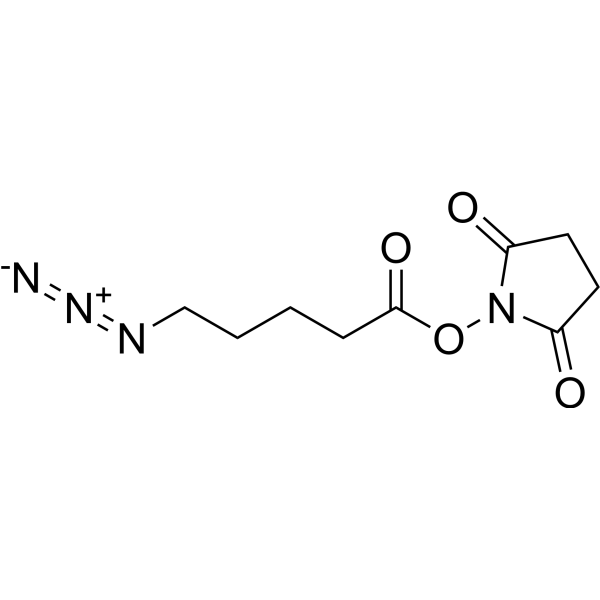
N3-C4-NHS ester is a noncleavable ADC linker used in the synthesis of antibody-drug conjugates (ADCs). N3-C4-NHS ester is a click chemistry reagent, it contains an Azide group and can undergo copper-catalyzed azide-alkyne cycloaddition reaction (CuAAc) with molecules containing Alkyne groups. It can also undergo strain-promoted alkyne-azide cycloaddition (SPAAC) reactions with molecules containing DBCO or BCN groups.
Nos produits utilisent uniquement pour la recherche. Nous ne vendons pas aux patients.
- Pureté : 99.53%
- CAS No.: 478801-48-8
- Formule: C9H12N4O4
- Masse moléculaire:240.22
-
Stockage:Pure form -20°C, 3 years ; In solvent -80°C, 6 months , -20°C, 1 month

To place orders, for customer services and technical support, please contact: MedChemExpress USA
Tel: 609-228-6898 E-mail: [email protected] [email protected]


-
 Activité biologique
-
Chemical Information
- Protocole
- Pureté et documentation
- Références
-
 Help & FAQs


-
HY-126521
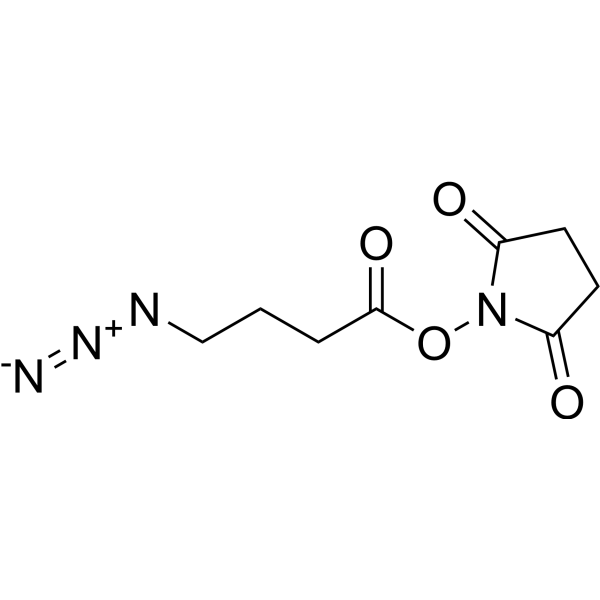
N3-C3-NHS esterADC Linker -
HY-126523
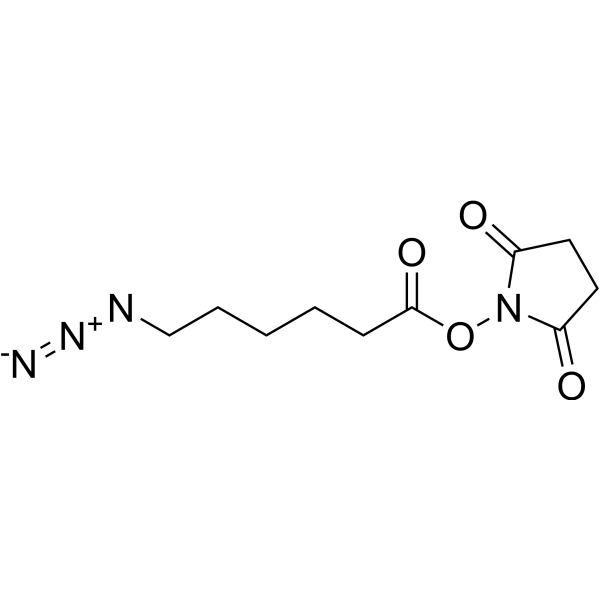
N3-C5-NHS esterADC Linker -
HY-126520
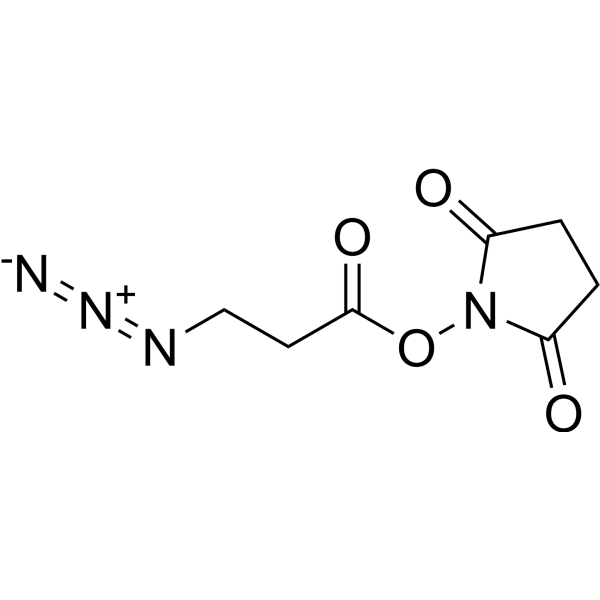
N3-C2-NHS esterADC Linker -

HY-W588704
4-Azidobutyric acidPROTAC Linker -

HY-W123015
6-Azidohexanoic acidDrug Intermediate -
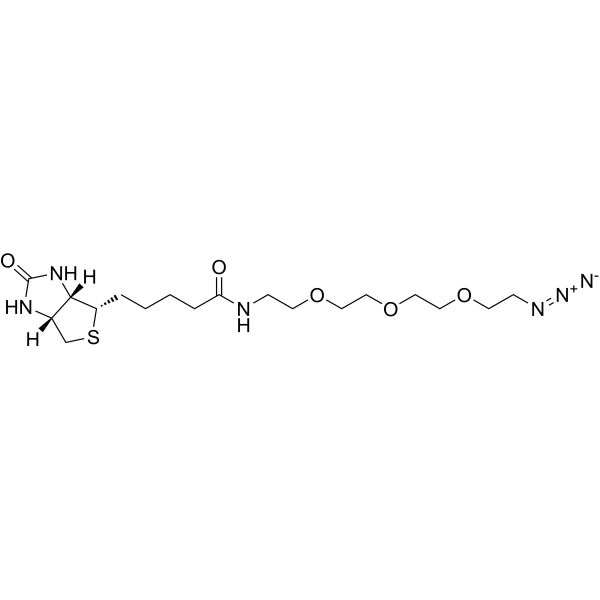
HY-130143
Biotin-PEG3-azidePROTAC Linker -

HY-130544
5-Azidopentanoic acidCrosslinker -
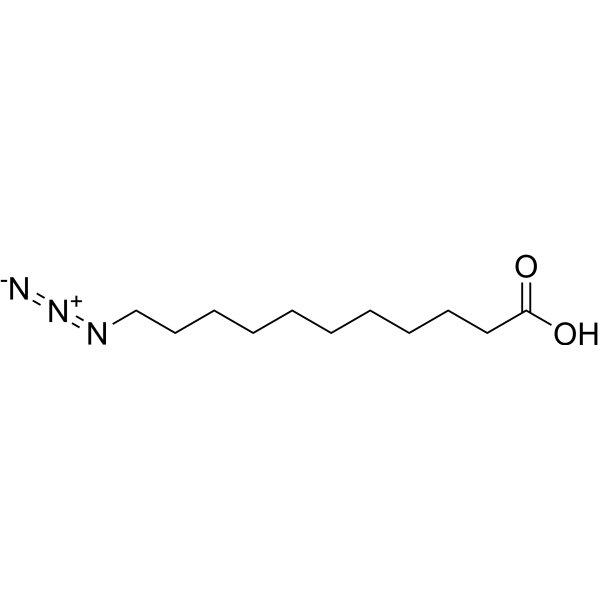
HY-151655
11-Azidoundecanoic acidLpIA Substrate
Voir tous les produits spécifiques à Isoform ADC Linkers
More

Activité biologique
Description
IC50 & Target
|
Non-cleavable Linker |
In Vitro
ADCs are comprised of an antibody to which is attached an ADC cytotoxin through an ADC linker.
MedChemExpress (MCE) has not independently confirmed the accuracy of these methods. They are for reference only.


Chemical Information
-
CAS No. 478801-48-8
-
Appearance Solid-Liquid Mixture
-
Masse moléculaire 240.22
-
Formule C9H12N4O4
-
Color Colorless to light yellow
-
SMILES
O=C(ON1C(CCC1=O)=O)CCCCN=[N+]=[N-]
-
Livraison
Room temperature in continental US; may vary elsewhere.
-
Stockage
Pure form -20°C 3 years In solvent -80°C 6 months -20°C 1 month


Pureté et documentation
-
Fiche technique (266 KB)
-
SDS (251 KB)
- English - EN (251 KB)
- Français - FR (251 KB)
- Deutsch - DE (251 KB)
- Norwegian - NO (251 KB)
- Español - ES (251 KB)
- Swedish - SV (251 KB)
- Italian - IT (251 KB)
- Korean - KR (251 KB)
- Portuguese - PT (251 KB)
-
Instruction de manipulation (2659 KB)
Références

Calculators
Concentration (start) × Volume (start) = Concentration (final) × Volume (final)


N3-C4-NHS ester Related Classifications
HY-126522 Related Classifications
 Powered by Bioz