



Glycosidase Cleavable Linker
Glycosidase cleavable linkers use enzyme-triggered hydrolysis to connect targeted ligands or prodrugs with cytotoxic payloads, supporting selective release at tumor cells or defined biological sites[1][2]. Mechanistically, β-glucuronide linkers can be cleaved by lysosomal β-glucuronidase, and this design enabled CS5001 to release a DNA-crosslinking PBD dimer in ROR1-expressing malignancy models[3]. In antibody-enzyme prodrug therapy, a monoclonal antibody-β-glucuronidase conjugate activated epirubicin-glucuronide at antigen-positive tumor cells, restoring cytotoxicity after prodrug hydrolysis[4]. Compared with non-cleavable or nonspecifically labile linkers, ideal ADC linkers should remain stable in circulation and release payload specifically in tumors, because nonspecific release contributes to off-target toxicity[2]. Glycosylated paclitaxel prodrugs also showed improved solubility, serum release behavior, and β-glucuronidase-mediated parent-drug release, supporting glycosylation as a practical prodrug modification strategy[5]. Therefore, glycosidase cleavable linkers provide research value for ADCs, prodrugs, and targeted drug conjugates when linker stability, enzyme access, tumor selectivity, and payload release must be experimentally balanced[1][2][5].
References:
- [1]. Jia G, et al. Targeted drug conjugates in cancer therapy: Challenges and opportunities. Pharm Sci Adv. 2024 Aug 6;2:100048. [Content Brief]
- [2]. Su Z, et al. Antibody-drug conjugates: Recent advances in linker chemistry. Acta Pharm Sin B. 2021 Dec;11(12):3889-3907. [Content Brief]
- [3]. Ali SR, et al. Nerve Density and Neuronal Biomarkers in Cancer. Cancers (Basel). 2022 Oct 1;14(19):4817. [Content Brief]
- [4]. Haisma HJ, et al. A monoclonal antibody-beta-glucuronidase conjugate as activator of the prodrug epirubicin-glucuronide for specific treatment of cancer. Br J Cancer. 1992 Sep;66(3):474-8. [Content Brief]
- [5]. Mao Y, et al. Synthesis, Biological Evaluation and Low-Toxic Formulation Development of Glycosylated Paclitaxel Prodrugs. Molecules. 2018 Dec 5;23(12):3211. [Content Brief]
-
Glycosidase Cleavable Linker Related Products (6)
Related Products (6)

-
MAC glucuronide linker-2
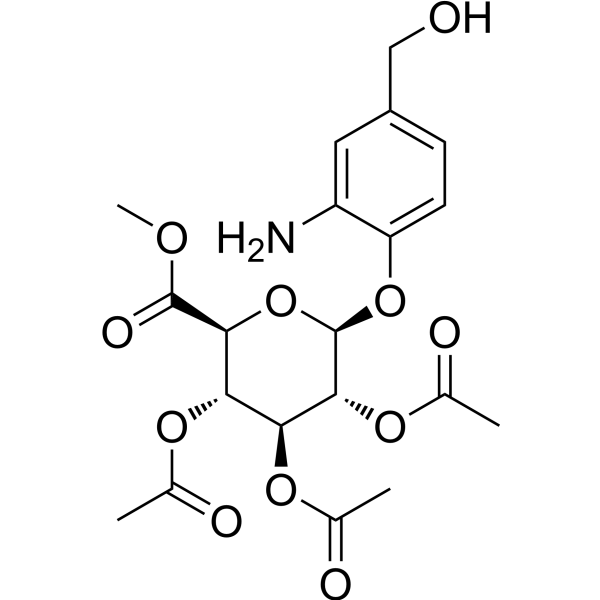 0 ImagesMAC glucuronide linker-2 is a cleavable ADC linker used in the synthesis of antibody-drug conjugates (ADCs).
-
β-D-glucuronide-pNP-carbonate
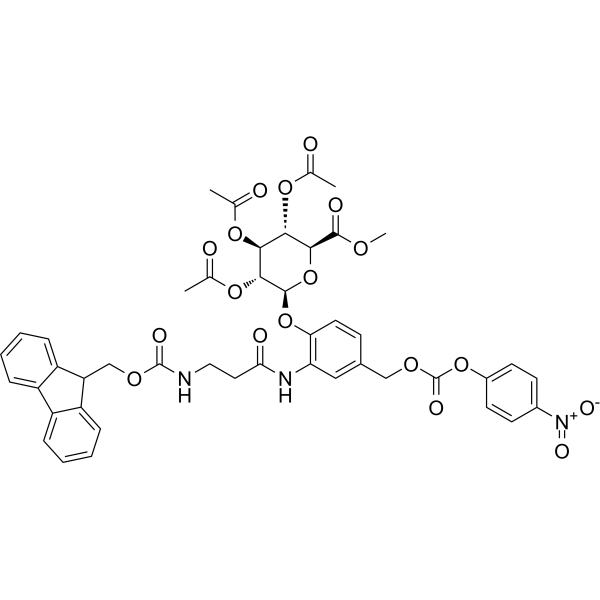 0 Imagesβ-D-glucuronide-pNP-carbonate is a cleavable ADC linker used in the synthesis of antibody-drug conjugates (ADCs).
-
MAC glucuronide linker-1
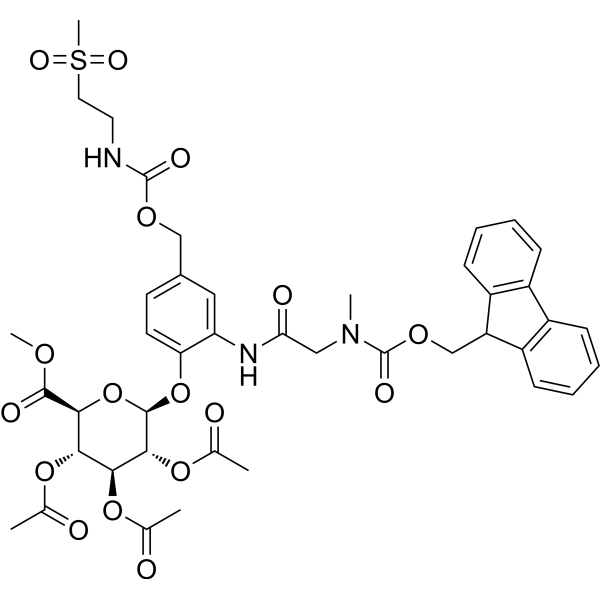 0 ImagesCat. No.: HY-44221CAS No.: 2222981-71-5MAC glucuronide linker-1 is a claevable ADC linker for antibody-agent-conjugations (ADCs).
-
Me-triacetyl-β-D-glucopyranuronate-Ph-CH2OH-Fmoc
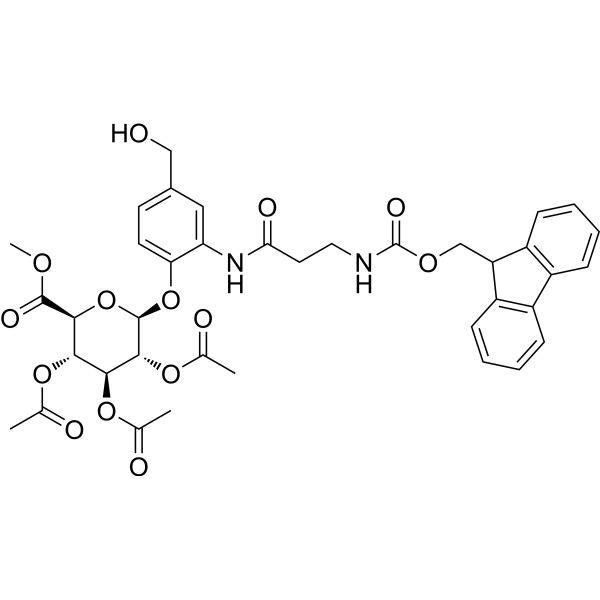 0 ImagesMe-triacetyl-β-D-glucopyranuronate-Ph-CH2OH-Fmoc is a cleavable ADC linker used in the synthesis of antibody-drug conjugates (ADCs).
-
Me-triacetyl-β-D-glucopyranuronate-Ph-ald-NO2
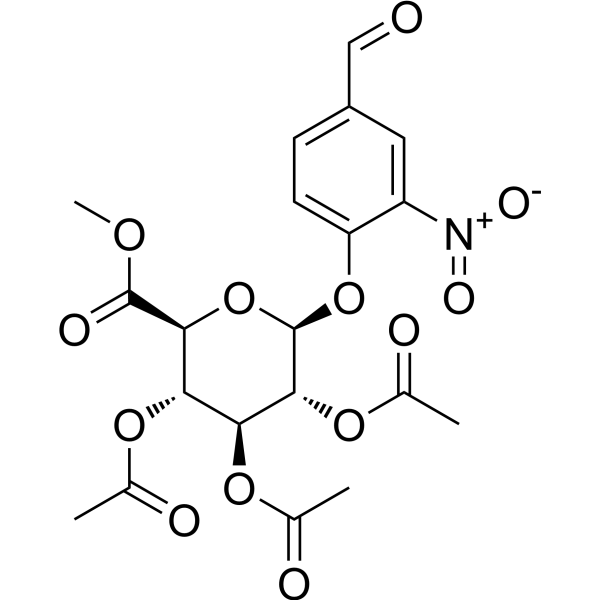 0 ImagesMe-triacetyl-β-D-glucopyranuronate-Ph-ald-NO2 is a cleavable ADC linker used in the synthesis of antibody-drug conjugates (ADCs).
-
β-D-tetraacetylgalactopyranoside-PEG1-N3
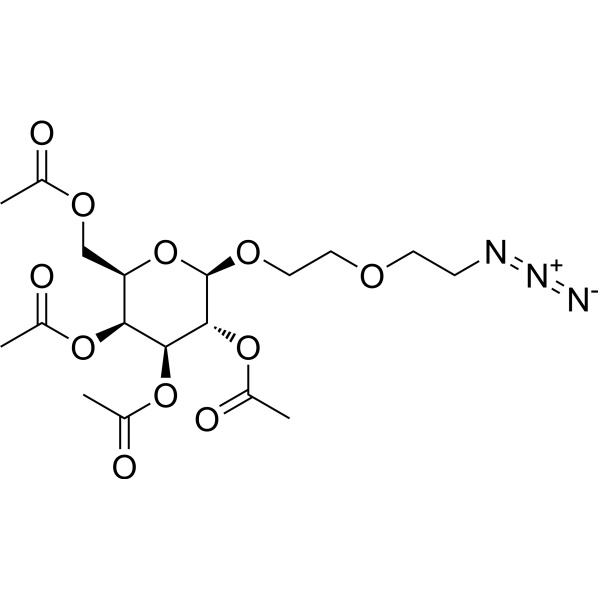 0 Imagesβ-D-tetraacetylgalactopyranoside-PEG1-N3 is a cleavable 1 unit PEG ADC linker used in the synthesis of antibody-drug conjugates (ADCs). β-D-tetraacetylgalactopyranoside-PEG1-N3 is a click chemistry reagent, it contains an Azide group and can undergo copper-catalyzed azide-alkyne cycloaddition reaction (CuAAc) with molecules containing Alkyne groups. It can also undergo strain-promoted alkyne-azide cycloaddition (SPAAC) reactions with molecules containing DBCO or BCN groups.



