



Phosphatase Cleavable Linker
Phosphatase-cleavable linkers are enzyme-responsive linker systems designed to exploit phosphatase-mediated hydrolysis for controlled intracellular payload release, particularly within lysosomal compartments enriched with phosphatases and pyrophosphatases[1][1]. These linkers commonly incorporate phosphate or pyrophosphate motifs that undergo enzymatic cleavage after cellular internalization, enabling sequential activation through phosphatase-sensitive and self-immolative mechanisms[1][2]. Mechanistically, phosphate-based linker architectures are engineered to maintain plasma stability while promoting cleavage in intracellular compartments, thereby improving the balance between systemic stability and site-specific drug release[1][3]. In antibody-drug conjugate (ADC) research, phosphatase-cleavable designs have attracted interest because phosphate-containing structures increase aqueous solubility and may reduce aggregation of highly hydrophobic payload conjugates[1][1]. Disease-focused applications have primarily been explored in oncology models, where phosphatase-responsive linkers are integrated into targeted delivery systems for selective release of cytotoxic agents or glucocorticoid payloads following tumor-cell internalization[1][2]. Compared with more established protease-cleavable peptide linkers such as valine-citrulline systems, phosphatase-cleavable linkers rely on phosphatase activity rather than protease recognition, providing a distinct enzymatic release mechanism and an alternative strategy for linker optimization[1][2]. For experimental applications, reported phosphate- and pyrophosphate-containing linkers have demonstrated high plasma stability, rapid lysosomal processing, and efficient payload release, supporting their continued evaluation in next-generation ADC development[1][2].
References:
- [1]. Su Z, et al. Antibody-drug conjugates: Recent advances in linker chemistry. Acta Pharm Sin B. 2021 Dec;11(12):3889-3907. [Content Brief]
- [2]. Marvin CC, et al. Self-Immolative Carbamate Linkers for CD19-Budesonide Antibody-Drug Conjugates. Bioconjug Chem. 2023 Oct 18;34(10):1835-1850. [Content Brief]
- [3]. WO2015153401A1
-
Phosphatase Cleavable Linker Related Products (1)
Related Products (1)

-
Fmoc-PEA
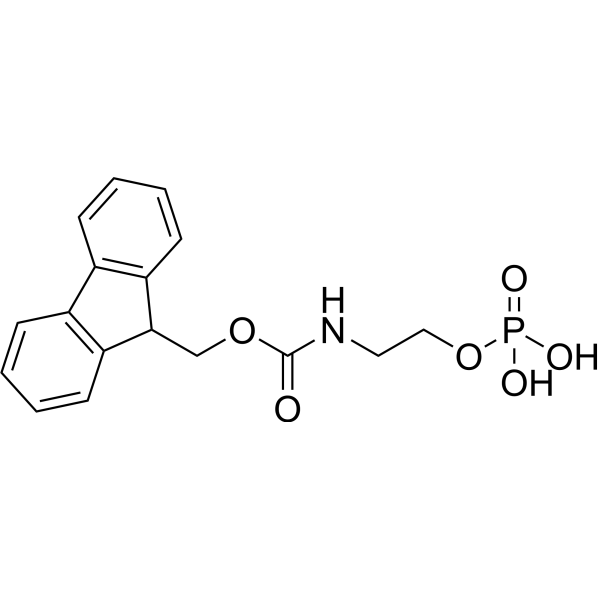 0 ImagesFmoc-PEA (Example 1-2) is a used as a cleavable linker for antibody-drug conjugates (ADC).



