



Biotin-azide
Based on 11 publication(s) in Google Scholar
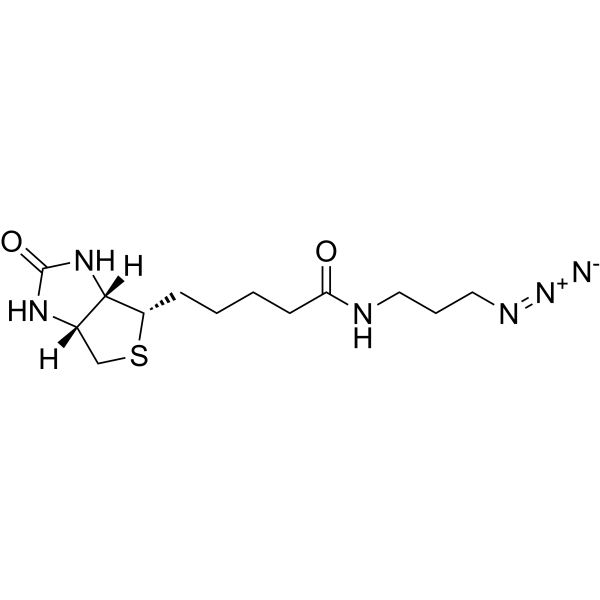
Biotin-azide (N-(3-Azidopropyl)biotinamide) is a form of biotin with a terminal azide group. Biotin-azide can be used to prepare various biotinylated conjugates via Click Chemistry. Biotin-azide is a click chemistry reagent, it contains an Azide group and can undergo copper-catalyzed azide-alkyne cycloaddition reaction (CuAAc) with molecules containing Alkyne groups. It can also undergo strain-promoted alkyne-azide cycloaddition (SPAAC) reactions with molecules containing DBCO or BCN groups.
For research use only. We do not sell to patients.
- Purity : 99.84%
- CAS No.: 908007-17-0
- Formula: C13H22N6O2S
- Molecular Weight:326.42
-
Storage:Powder -20°C, 3 years , 4°C, 2 years ; In solvent -80°C, 6 months , -20°C, 1 month

To place orders, for customer services and technical support, please contact: MedChemExpress USA
Tel: 609-228-6898 E-mail: [email protected] [email protected]


-
 Biological Activity
-
Chemical Information
-
Solvent & Solubility
- Protocols
- Purity & Documentation
- References
-
 Help & FAQs


-
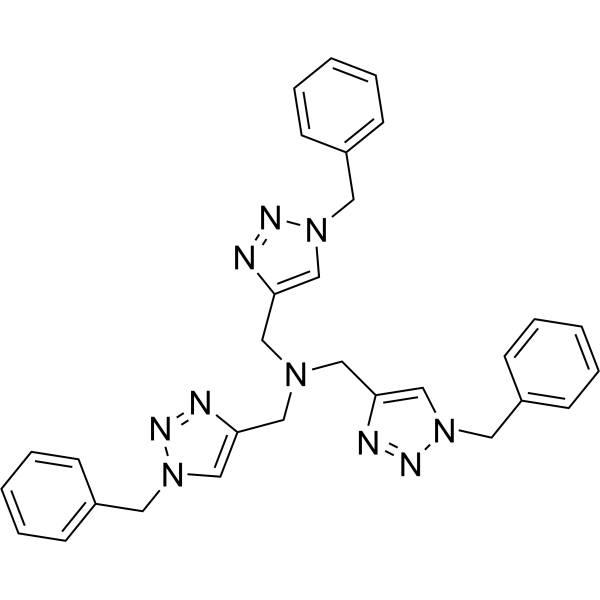
HY-116677
Tris(benzyltriazolylmethyl)amineBiochemical Tool -
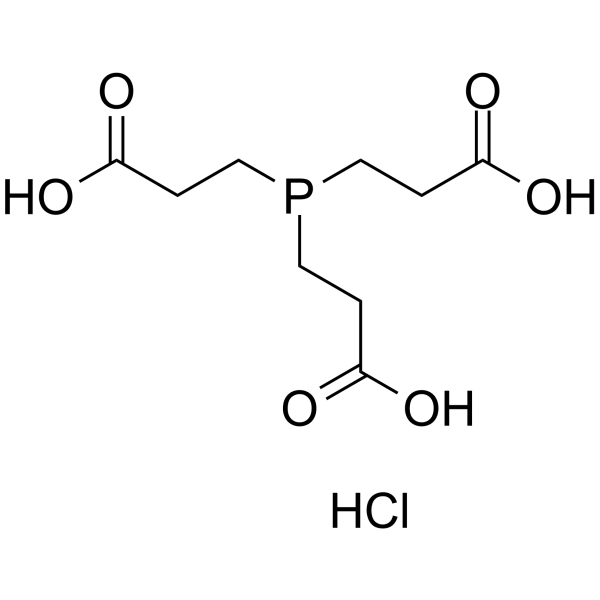
HY-W011500
TCEP hydrochlorideNon-Thiol Reducing Agent -
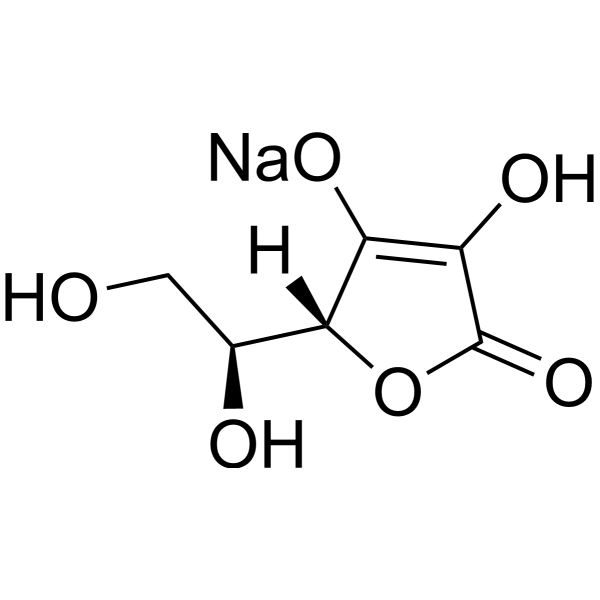
HY-B0166A
L-Ascorbic acid sodium saltCalcium Channel Inhibitor -
HY-K0208
Streptavidin Magnetic Beads -
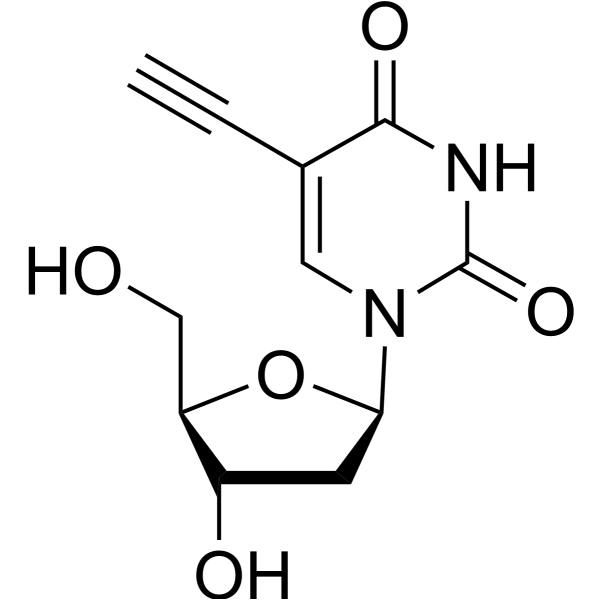
HY-118411
5-Ethynyl-2'-deoxyuridinePROTAC Linkers -
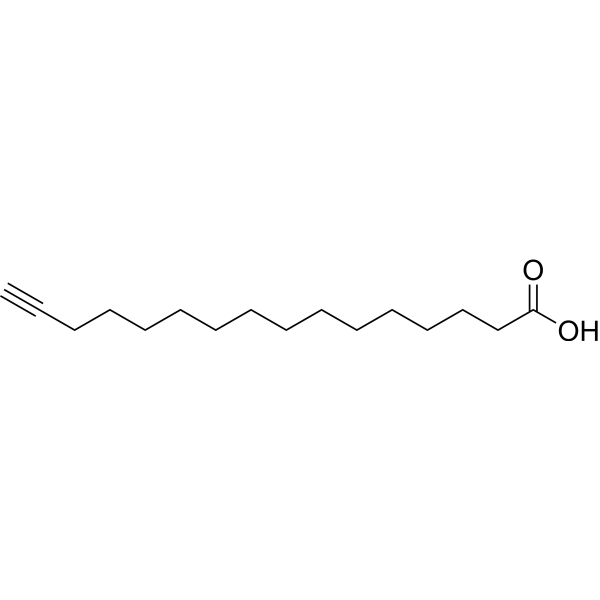
HY-W040304
Alkynyl Palmitic Acid -

HY-Y1878C
Copper sulfate anhydrous, 99%Bactericide -
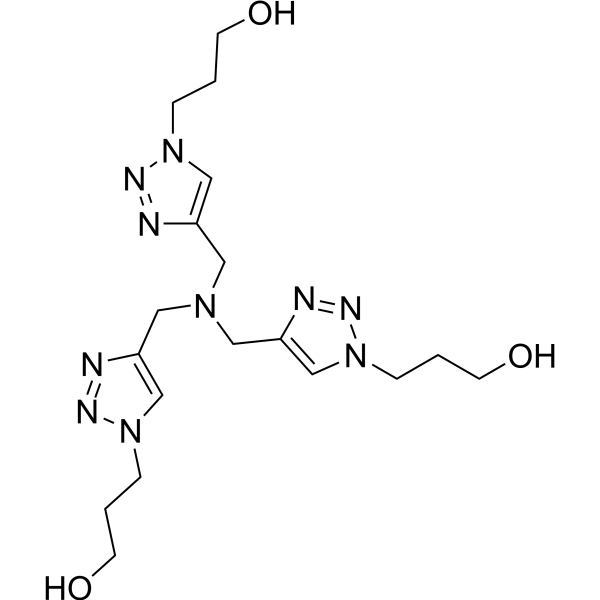
HY-W021042
Tris(3-hydroxypropyltriazolylmethyl)amineCuAAC Ligand -
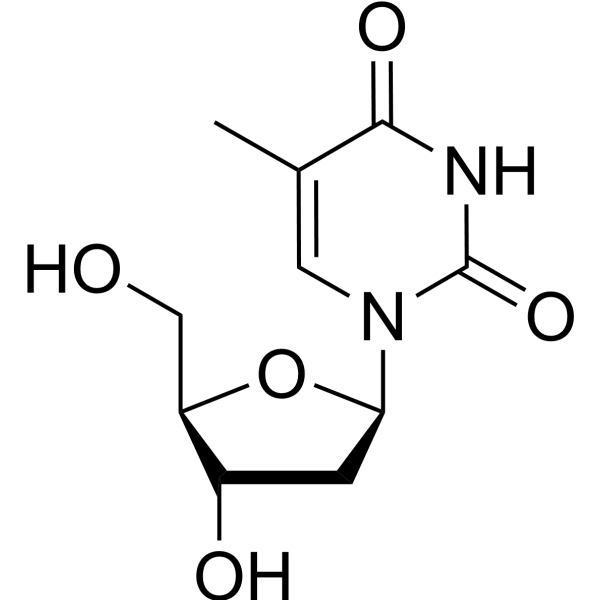
HY-N1150
ThymidineDNA Synthesis Inhibitor -
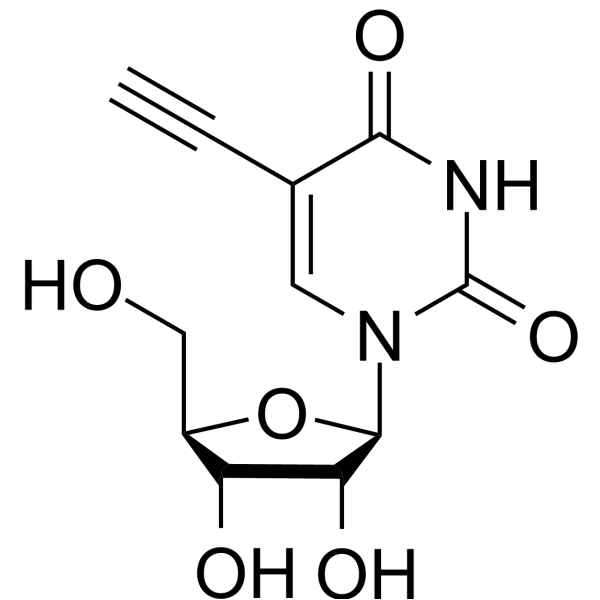
HY-141140
5-EthynyluridineCell-permeable Nucleoside -

HY-Y1878
Copper(Ⅱ) sulfateBiochemical Reagent -
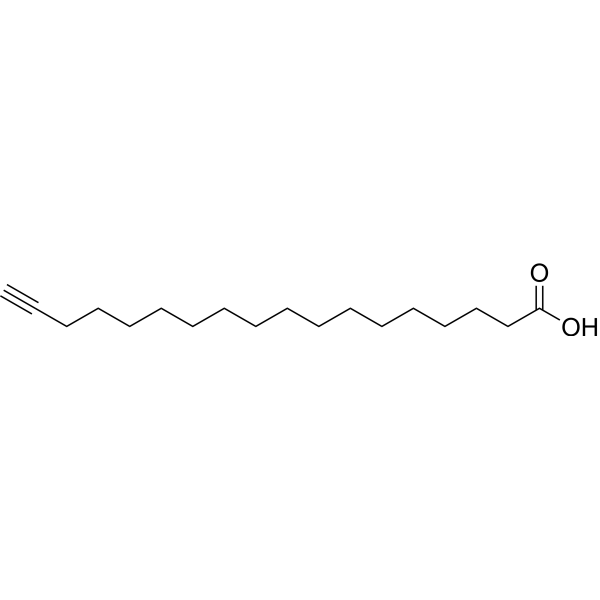
HY-101016
17-ODYACYP450 ω-Hydroxylase Inhibitor
Publications Citing Use of MedChemExpress (MCE) Biotin-azide
More- Signal Transduct Target Ther. 2025 Dec 17;10(1):413. [Abstract]
- Nat Commun. 2025 Jul 25;16(1):6880. [Abstract]
- Cell Rep. 2026 Mar 30;45(4):117179. [Abstract]
- Cell Rep. 2025 Oct 15;44(10):116429. [Abstract]
- Aging Cell. 2024 May;23(5):e14124. [Abstract]
- Aging Cell. 2023 Mar;22(3):e13745. [Abstract]
- Int Immunopharmacol. 2026 Jun 1:178:116578. [Abstract]
- J Virol. 2025 Jun 17;99(6):e0034725. [Abstract]
- bioRxiv. 2026 Apr 30.
- Res Sq. 2026 Jan 12.
- bioRxiv. 2025 March 21.
 Customer Validation & Images

-
WB


Biological Activity
Description
In Vitro
Click chemical functionalization postcrosslinking with a Biotin-azide probe enabled the isolation of transcriptional protein complexes from yeast cells[3].
MedChemExpress (MCE) has not independently confirmed the accuracy of these methods. They are for reference only. Further protocols information, click here.


Chemical Information
-
CAS No. 908007-17-0
-
Appearance Solid
-
Molecular Weight 326.42
-
Formula C13H22N6O2S
-
Color White to off-white
-
SMILES
O=C(NCCCN=[N+]=[N-])CCCC[C@@H]1SC[C@]([C@]1([H])N2)([H])NC2=O
-
Synonyms
N-(3-Azidopropyl)biotinamide
-
Shipping
Room temperature in continental US; may vary elsewhere.
-
Storage
Powder -20°C 3 years 4°C 2 years In solvent -80°C 6 months -20°C 1 month


Publications (11)
-
Journal Impact Factor
-
Most Recent
-
Signal Transduct Target Ther
Disruption of heme homeostasis by nuclear receptor Nur77 induces pyroptosis through granzyme B-dependent GSDMC cleavage. [Abstract]2025 Dec 17;10(1):413. PMID: 41407678 -
Nat Commun
The RNA-binding protein RRP1 brakes macrophage one-carbon metabolism to suppress autoinflammation. [Abstract]2025 Jul 25;16(1):6880. PMID: 40715096 -
Cell Rep
4-octyl itaconate inhibits cytokine-mediated inflammation via alkylation of TYK2 and JAK1. [Abstract]2026 Mar 30;45(4):117179. PMID: 41915469 -
Cell Rep
STBD1 mediates the crosstalk between glycogen and lipid droplets in clear cell renal cell carcinoma. [Abstract]2025 Oct 15;44(10):116429. PMID: 41105508 -
Aging Cell
2024 May;23(5):e14124. PMID: 38380563 -
Aging Cell
2023 Mar;22(3):e13745. PMID: 36437524
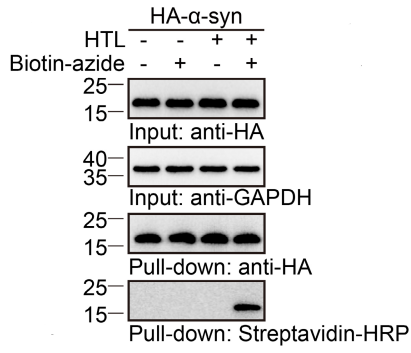
Biotin-azide purchased from MedChemExpress. Usage Cited in: Aging Cell. 2023 Mar;22(3):e13745. [Abstract]
Verification of the selectivity of the Biotin-azide (200 μM) probe.
-
Int Immunopharmacol
Neutrophil aconitate decarboxylase 1/itaconate axis suppresses extracellular traps via alkylating GSDMD and alleviates murine liver injury. [Abstract]2026 Jun 1:178:116578. PMID: 41915992 -
J Virol
Palmitoylation enhances the stability of porcine epidemic diarrhea virus spike protein by antagonizing its degradation via chaperone-mediated autophagy to facilitate viral proliferation. [Abstract]2025 Jun 17;99(6):e0034725. PMID: 40401979 -
-
-


Solvent & Solubility
In Vitro:
DMSO : 100 mg/mL (306.35 mM; Need ultrasonic; Hygroscopic DMSO has a significant impact on the solubility of product, please use newly opened DMSO)
H2O : 4 mg/mL (12.25 mM; Need ultrasonic)
Please refer to the solubility information to select the appropriate solvent. Once prepared, please aliquot and store the solution to prevent product inactivation from repeated freeze-thaw cycles.
Storage method and period of stock solution: -80°C, 6 months; -20°C, 1 month. When stored at -80°C, please use it within 6 months. When stored at -20°C, please use it within 1 month.
* Note: If you choose water as the stock solution, please dilute it to the working solution, then filter and sterilize it with a 0.22 μm filter before use.
Please refer to the solubility information to select the appropriate solvent. Once prepared, please aliquot and store the solution to prevent product inactivation from repeated freeze-thaw cycles.
Storage method and period of stock solution: -80°C, 6 months; -20°C, 1 month. When stored at -80°C, please use it within 6 months. When stored at -20°C, please use it within 1 month.
* Note: If you choose water as the stock solution, please dilute it to the working solution, then filter and sterilize it with a 0.22 μm filter before use.
Concentration (start) × Volume (start) = Concentration (final) × Volume (final)
In Vivo:
Select the appropriate dissolution method based on your experimental animal and administration route.
- For the following dissolution methods, please ensure to first prepare a clear stock solution using an In Vitro approach and then sequentially add co-solvents:
- To ensure reliable experimental results, the clarified stock solution can be appropriately stored based on storage conditions. As for the working solution for In Vivo experiments, it is recommended to prepare freshly and use it on the same day.
- The percentages shown for the solvents indicate their volumetric ratio in the final prepared solution. If precipitation or phase separation occurs during preparation, heat and/or sonication can be used to aid dissolution.
Add each solvent one by one: 10% DMSO 40% PEG300 5% Tween-80 45% Saline
Solubility: ≥ 2.08 mg/mL (6.37 mM); Clear solution
This protocol yields a clear solution of ≥ 2.08 mg/mL (saturation unknown).
Taking 1 mL working solution as an example, add 100 μL DMSO stock solution (20.8 mg/mL) to 400 μL PEG300, and mix evenly; then add 50 μL Tween-80 and mix evenly; then add 450 μL Saline to adjust the volume to 1 mL.
Preparation of Saline: Dissolve 0.9 g sodium chloride in ddH₂O and dilute to 100 mL to obtain a clear Saline solution.
Add each solvent one by one: 10% DMSO 90% (20% SBE-β-CD in Saline)
Solubility: ≥ 2.08 mg/mL (6.37 mM); Clear solution
This protocol yields a clear solution of ≥ 2.08 mg/mL (saturation unknown).
Taking 1 mL working solution as an example, add 100 μL DMSO stock solution (20.8 mg/mL) to 900 μL 20% SBE-β-CD in Saline, and mix evenly.
Preparation of 20% SBE-β-CD in Saline (4°C, storage for one week): 2 g SBE-β-CD powder is dissolved in 10 mL Saline, completely dissolve until clear.
In Vivo Dissolution Calculator
Please enter the basic information of animal experiments:
-
-
-
-
Recommended: Prepare an additional quantity of animals to account for potential losses during experiments.
Please enter your animal formula composition:
-
%DMSO +
Recommended: Keep the proportion of DMSO in working solution below 2% if your animal is weak.
-
%+
-
+%Tween-80 + +
-
%Saline +
The co-solvents required include: DMSO, . All of co-solvents are available by MedChemExpress (MCE). , Tween 80. All of co-solvents are available by MedChemExpress (MCE).
Working solution concentration: 0.22 mg/mL
Method for preparing stock solution: mg drug dissolved in μL DMSO. Stock solution concentration: mg/mL.
1. Take μL DMSO stock solution;
2. Add μL .
μL , mix evenly;
3. Then add μL Tween 80, mix evenly;
4. Then add μL
Please ensure that the stock solution in the first step is dissolved to a clear state, and add co-solvents in sequence. You can use ultrasonic heating (ultrasonic cleaner, recommended frequency 20-40 kHz), vortexing, etc. to assist dissolution.

Protocols
-
EdU Incorporation Assay (Click Chemistry-Based DNA Synthesis Measurement)
The EdU incorporation assay measures DNA synthesis by adding the thymidine analog 5-ethynyl-2′-deoxyuridine to cells or tissues, where it is incorporated into newly synthesized DNA during S phase. Incorporated EdU is detected by copper-catalyzed azide-alkyne cycloaddition, in which a fluorescent azide covalently reacts with the ethynyl group on EdU, allowing S-phase cells to be detected by fluorescence microscopy, flow cytometry, or high-content imaging. EdU detection does not require DNA denaturation or anti-BrdU antibody access, which preserves sample structure and improves compatibility with immunostaining and multiparameter cytometry compared with BrdU-based detection. EdU can be cytotoxic in a cell-type- and exposure-dependent manner, so pulse duration, concentration, and continuous-labeling designs should be validated for each cell type.


Purity & Documentation
-
Data Sheet (271 KB)
-
SDS (252 KB)
- English - EN (252 KB)
- Français - FR (252 KB)
- Deutsch - DE (252 KB)
- Norwegian - NO (252 KB)
- Español - ES (252 KB)
- Swedish - SV (252 KB)
- Italian - IT (252 KB)
- Korean - KR (252 KB)
- Portuguese - PT (252 KB)
-
Handling Instructions (2659 KB)
References
[1]. Bruckman MA, et al. Tobacco mosaic virus-based protein nanoparticles and nanorods for chemotherapy delivery targeting breast cancer. J Control Release. 2016;231:103‐113. [Content Brief]
[2]. Kim HY, et al. An azido-biotin reagent for use in the isolation of protein adducts of lipid-derived electrophiles by streptavidin catch and photorelease. Mol Cell Proteomics. 2009;8(9):2080‐2089. [Content Brief]
[3]. Joiner CM, et al. A Bifunctional Amino Acid Enables Both Covalent Chemical Capture and Isolation of in Vivo Protein-Protein Interactions. Chembiochem. 2017 Jan 17;18(2):181-184. [Content Brief]


Complete Stock Solution Preparation Table
Please refer to the solubility information to select the appropriate solvent. Once prepared, please aliquot and store the solution to prevent product inactivation from repeated freeze-thaw cycles.
Storage method and period of stock solution: -80°C, 6 months; -20°C, 1 month. When stored at -80°C, please use it within 6 months. When stored at -20°C, please use it within 1 month.
| Optional Solvent | Concentration Solvent Mass | 1 mg | 5 mg | 10 mg | 25 mg |
|---|---|---|---|---|---|
| H2O / DMSO | 1 mM | 3.0635 mL | 15.3177 mL | 30.6354 mL | 76.5884 mL |
| 5 mM | 0.6127 mL | 3.0635 mL | 6.1271 mL | 15.3177 mL | |
| 10 mM | 0.3064 mL | 1.5318 mL | 3.0635 mL | 7.6588 mL | |
| DMSO | 15 mM | 0.2042 mL | 1.0212 mL | 2.0424 mL | 5.1059 mL |
| 20 mM | 0.1532 mL | 0.7659 mL | 1.5318 mL | 3.8294 mL | |
| 25 mM | 0.1225 mL | 0.6127 mL | 1.2254 mL | 3.0635 mL | |
| 30 mM | 0.1021 mL | 0.5106 mL | 1.0212 mL | 2.5529 mL | |
| 40 mM | 0.0766 mL | 0.3829 mL | 0.7659 mL | 1.9147 mL | |
| 50 mM | 0.0613 mL | 0.3064 mL | 0.6127 mL | 1.5318 mL | |
| 60 mM | 0.0511 mL | 0.2553 mL | 0.5106 mL | 1.2765 mL | |
| 80 mM | 0.0383 mL | 0.1915 mL | 0.3829 mL | 0.9574 mL | |
| 100 mM | 0.0306 mL | 0.1532 mL | 0.3064 mL | 0.7659 mL |
* Note: If you choose water as the stock solution, please dilute it to the working solution, then filter and sterilize it with a 0.22 μm filter before use.


Biotin-azide Related Classifications
HY-129832 Related Classifications
 Powered by Bioz