1. Search Result
Search Result
Results for "

schizophrenia

" in MedChemExpress (MCE) Product Catalog:

487

Inhibitors & Agonists

2

Biochemical Assay Reagents

7

Peptides

1

Inhibitory Antibodies

22

Natural
Products

2

Recombinant Proteins

32

Isotope-Labeled Compounds

1

Oligonucleotides

Cat. No. Product Name Target Research Areas Chemical Structure
  • HY-14539
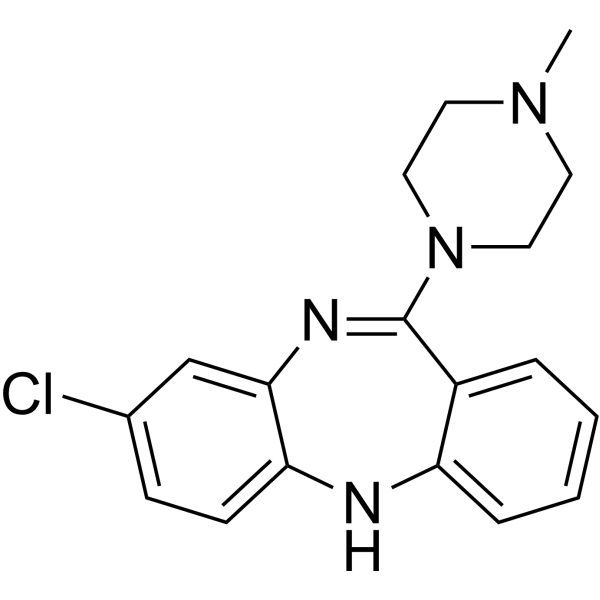
    Clozapine
    10+ Cited Publications

    HF 1854; ZINC000019796155

    Dopamine Receptor mAChR Adrenergic Receptor 5-HT Receptor Ligands for E3 Ligase Neurological Disease Cancer
    Clozapine (HF 1854) is an antipsychotic used for the research of schizophrenia. Clozapine has high affinity for a number of neuroreceptors. Clozapine is a potent antagonist of dopamine D2 with a Ki of 75 nM. Clozapine inhibits the muscarinic M1 receptor and serotonin 5HT2A receptor with Kis of 9.5 nM and 4 nM, respectively . Clozapine is also a potent and selective agonist at the muscarinic M4 receptor (EC50=11 nM) .
    Clozapine
  • HY-105182
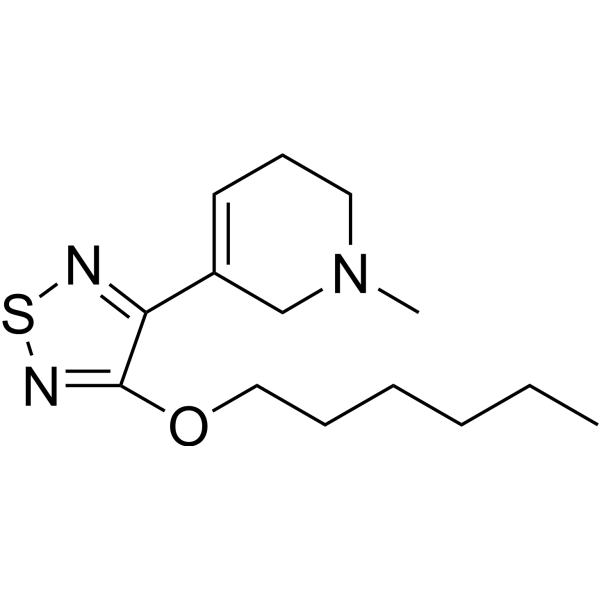
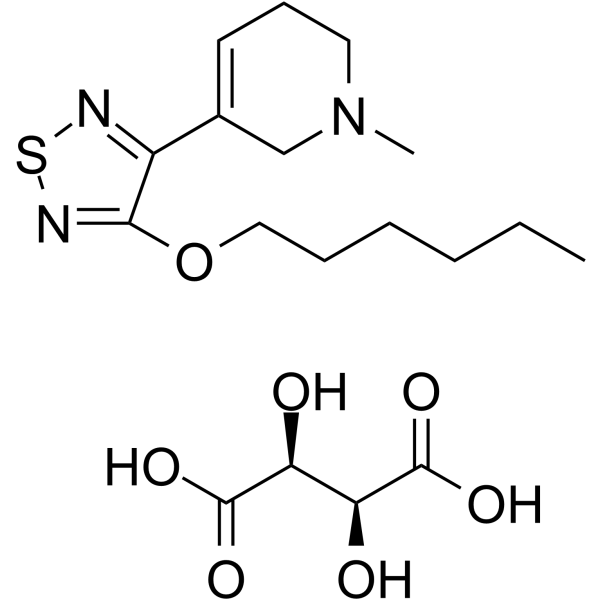
    Xanomeline
    5+ Cited Publications

    LY-246708

    mAChR Neurological Disease
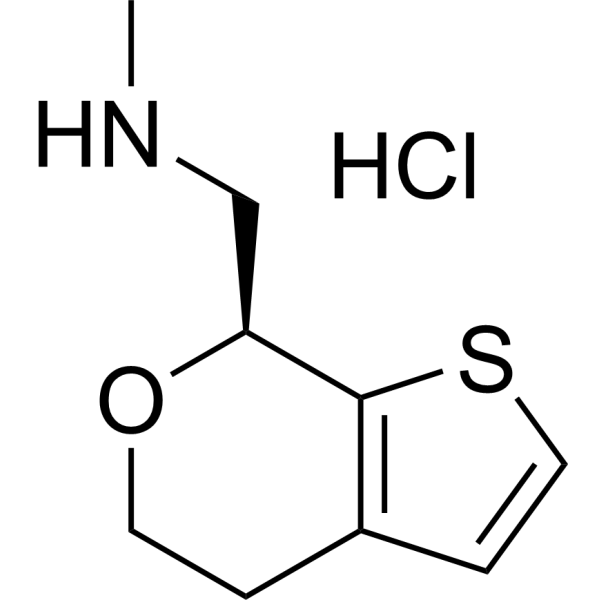
    Xanomeline, as an effective and selective muscarinic type 1 and type 4 (M1/M4) receptor agonist, increases neuronal excitability. Xanomeline can be used for the research of neurological disorders, such as schizophrenia .
    Xanomeline
  • HY-101037
    Sarcosine
    3 Publications Verification

    N-Methylglycine; Sarcosin

    Endogenous Metabolite GlyT Cancer
    Sarcosine (N-Methylglycine), an endogenous amino acid, is a competitive glycine transporter type I (GlyT1) inhibitor and N-methyl-D-aspartate (NMDA) receptor co-agonist. Sarcosine increases the glycine concentration, resulting in an indirect potentiation of the NMDA receptor. Sarcosine is commonly used for the research of schizophrenia .
    Sarcosine
  • HY-138935
    Iclepertin
    3 Publications Verification

    BI-425809

    GlyT Neurological Disease
    Iclepertin (BI-425809) is a potent, selective and orally active glycine transporter 1 (GlyT1) inhibitor. Iclepertin is inactive against GlyT2. Iclepertin can be used for Alzheimer disease and schizophrenia research .
    Iclepertin
  • HY-B0532
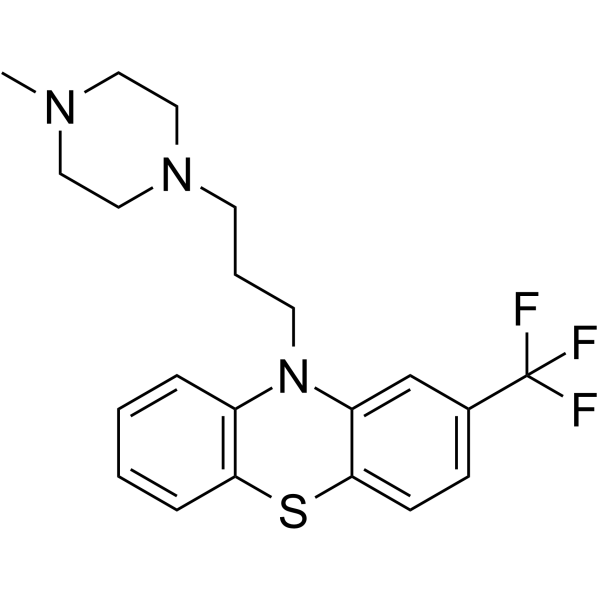
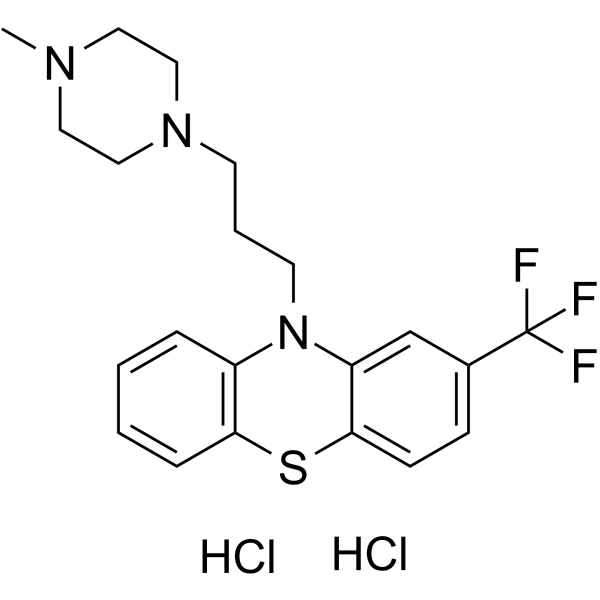
    Trifluoperazine
    5+ Cited Publications

    Dopamine Receptor Adrenergic Receptor P-glycoprotein CaMK Influenza Virus Autophagy Neurological Disease
    Trifluoperazine, an antipsychotic agent, acts by blocking central dopamine receptors. Trifluoperazine is a potent α1-adrenergic receptor antagonist. Trifluoperazine is a potent NUPR1 inhibitor exerting anticancer activity. Trifluoperazine is a calmodulin inhibitor, and also inhibits P-glycoprotein. Trifluoperazine can be used for the research of schizophrenia. Trifluoperazine acts as a reversible inhibitor of influenza virus morphogenesis .
    Trifluoperazine
  • HY-17410
    Iloperidone
    2 Publications Verification

    HP 873

    5-HT Receptor Dopamine Receptor Neurological Disease
    Iloperidone (HP 873) is a D2/5-HT2 receptor antagonist. Iloperidone is an atypical antipsychotic for the schizophrenia symptoms .
    Iloperidone
  • HY-10933
    CX516
    2 Publications Verification

    BDP 12

    iGluR Neurological Disease
    CX516 (BDP 12) is an ampakine and acts as an AMPA receptor positive allosteric modulator for the research of Alzheimer's disease, schizophrenia and mild cognitive impairment (MCI) .
    CX516
  • HY-153093

    MK-8189

    Phosphodiesterase (PDE) Neurological Disease
    Elpipodect (MK-8189) is an orally active and selective PDE10A inhibitor with a Ki value of 29 pM. Elpipodect can be used in research of schizophrenia .
    Elpipodect
  • HY-108751
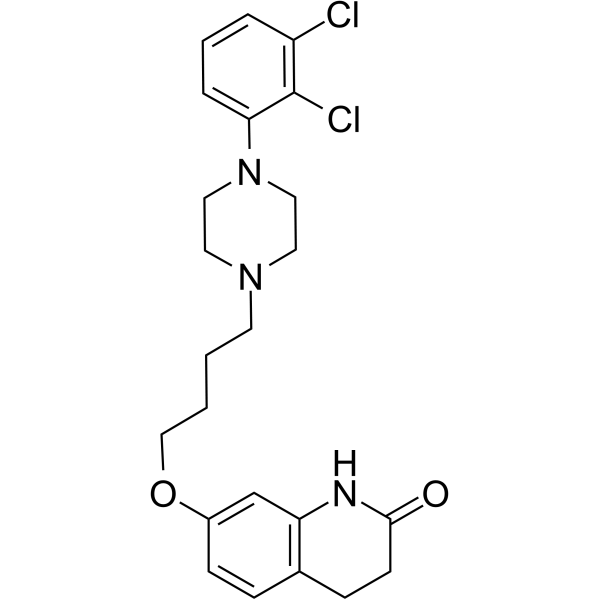
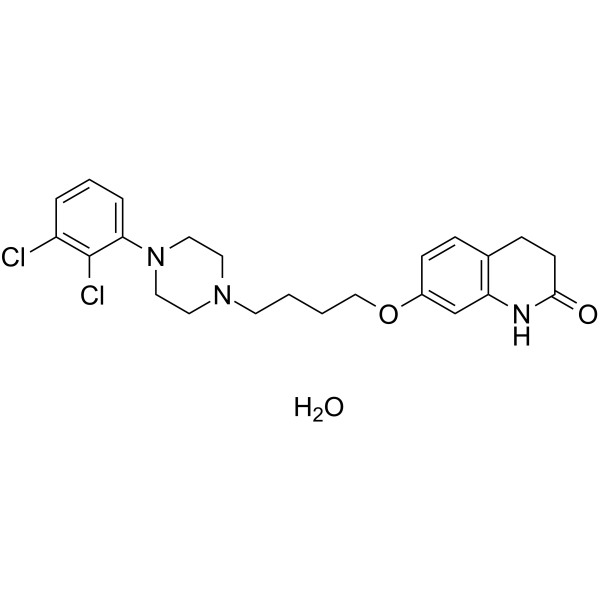
    Aripiprazole Lauroxil
    2 Publications Verification

    Dopamine Receptor Neurological Disease
    Aripiprazole lauroxil, an N-acyloxymethyl proagent of Aripiprazole (HY-14546), is a Long-acting injectable (LAI) typical antipsychotic for schizophrenia and a ligand of dopamine receptor D2R/D4R. Aripiprazole lauroxil is cleaved by body’s enzyme esterase to N-hydroxymethyl aripiprazole (plus lauric acid) and then to aripiprazole (plus formaldehyde), no toxicity.
    Aripiprazole Lauroxil
  • HY-113323
    3-Methoxy-4-hydroxyphenylglycol
    2 Publications Verification

    HMPG; MHPG; MOPEG

    Endogenous Metabolite Neurological Disease
    3-Methoxy-4-hydroxyphenylglycol (HMPG) is a metabolite of norepinephrine degradation in the brain. 3-Methoxy-4-hydroxyphenylglycol is an indicators of central nervous system noradrenergic activity. 3-Methoxy-4-hydroxyphenylglycol can be used for research of depression, chronic schizophrenia, etc .
    3-Methoxy-4-hydroxyphenylglycol
  • HY-132228

    TAK-041; NBI-1065846

    GPR139 Neurological Disease
    Zelatriazin (TAK-041; NBI-1065846) is a potent and selective GPR139 agonist with an EC50 of 22 nM. Zelatriazin has the potential for the research of negative symptoms associated with schizophrenia .
    Zelatriazin
  • HY-111066A

    Dopamine Receptor Neurological Disease
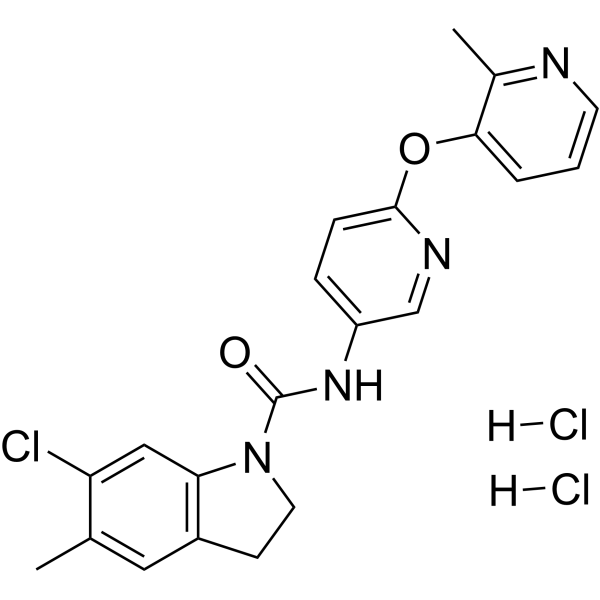
    JNJ-37822681 dihydrochloride is a potent, specific, centrally active, fast-dissociating dopamine D2 receptor antagonist with a moderate binding affinity for the dopamine D2L receptor (Ki =158 nM), which has potential for the treatment of schizophrenia and bipolar disorder .
    JNJ-37822681 dihydrochloride
  • HY-14689

    SCH 39166 hydrochloride

    Dopamine Receptor 5-HT Receptor Adrenergic Receptor Neurological Disease Metabolic Disease
    Ecopipam (SCH 39166) hydrochloride is a potent, selective and orally active antagonist of dopamine D1/D5 receptor, with Kis of 1.2 nM and 2.0 nM, respectively. Ecopipam hydrochloride shows more than 40-flod selectivity over D2, D4, 5-HT, and α2a receptor (Ki=0.98, 5.52, 0.08, and 0.73 μM, respectively). Ecopipam hydrochloride can be used for the research of schizophrenia and obesity .
    Ecopipam hydrochloride
  • HY-14552
    Talnetant
    3 Publications Verification

    SB 223412

    Neurokinin Receptor Neurological Disease Endocrinology
    Talnetant (SB 223412) is a selective, competitive, brain-permeable NK3 receptor antagonist with a Ki of 1.4 nM in hNK-3-CHO cells. Talnetant is 100-fold more selective for hNK-3 relative to the hNK-2 receptor and has no affinity for hNK-1. Talnetant can be used in schizophrenia-related studies .
    Talnetant
  • HY-119943
    PF-06256142
    1 Publications Verification

    Dopamine Receptor Neurological Disease
    PF-06256142 is a potent, selective, CNS-penetrant and orally active agonist of the D1 receptor, with an EC50 and Ki of 33 nM and 12 nM, respectively. PF-06256142 has the potential for the research of schizophrenia and Parkinson's disease .
    PF-06256142
  • HY-162235

    Orexin Receptor (OX Receptor) Cardiovascular Disease
    CVN766 is an orally active inhibitor of orexin 1 receptor antagonist with blood-brain permeability with the IC50 values of 8 nM and >10 μM for OX1R and OX2R, respectively. CVN766 can be used for study schizophrenia .
    CVN766
  • HY-14690

    SCH 39166

    Dopamine Receptor 5-HT Receptor Adrenergic Receptor Neurological Disease Metabolic Disease
    Ecopipam (SCH 39166) is a potent, selective and orally active antagonist of dopamine D1/D5 receptor, with Kis of 1.2 nM and 2.0 nM, respectively. Ecopipam shows more than 40-flod selectivity over D2, D4, 5-HT, and α2a receptor (Ki=0.98, 5.52, 0.08, and 0.73 μM, respectively). Ecopipam can be used for the research of schizophrenia and obesity .
    Ecopipam
  • HY-114753A

    CR-2249 hydrochloride; XY-2401 hydrochloride

    iGluR Neurological Disease
    Neboglamine (CR-2249, XY-2401) hydrochloride is an orally active NMDA receptor glycine site positive modulator that can be used in schizophrenia research .
    Neboglamine hydrochloride
  • HY-14538B
    Haloperidol lactate
    20+ Cited Publications

    Dopamine Receptor Neurological Disease Cancer
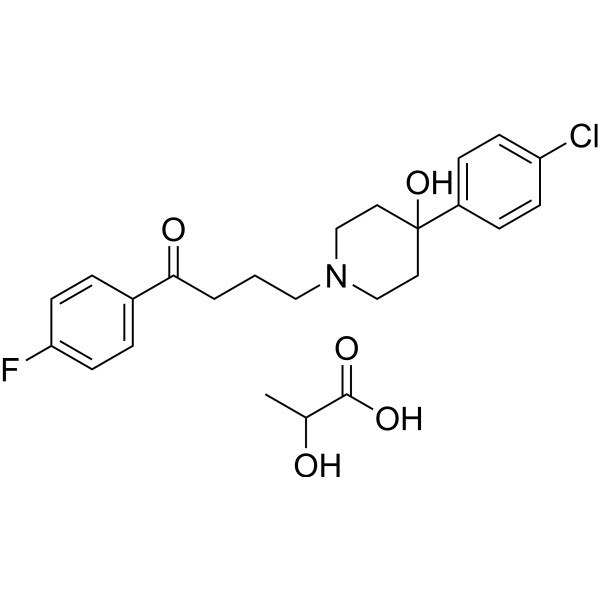
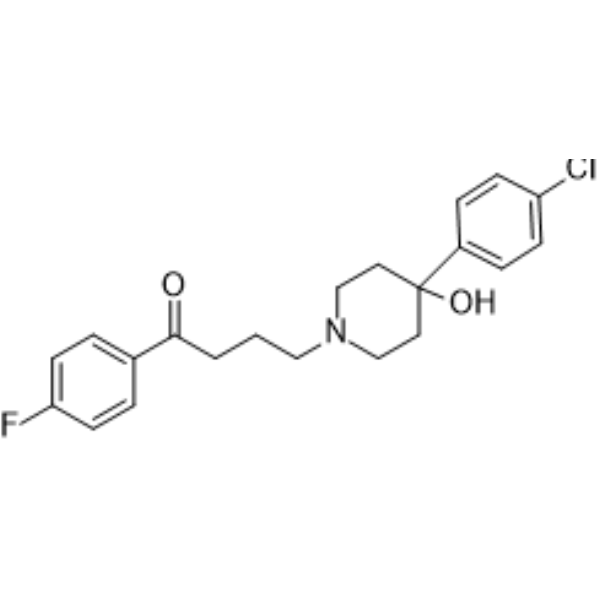
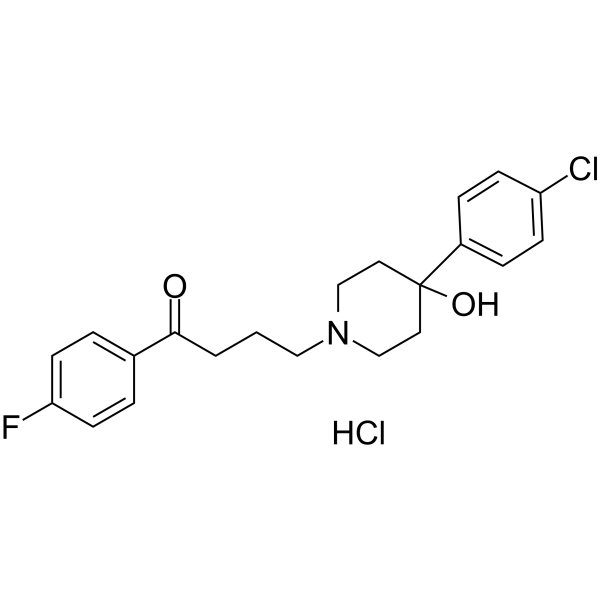
    Haloperidol lactate is a potent antipsychotic agent. Haloperidol lactate can be used in acute and chronic schizophrenia and gilles de la tourette's syndrome. Haloperidol lactate has the potential for the research of psychotic disorders .
    Haloperidol lactate
  • HY-14551

    SR142801

    Neurokinin Receptor Neurological Disease
    Osanetant (SR142801) is a selective NK3 receptor antagonist. Osanetant produces anxiolytic- and antidepressant-like effects and is researched for schizophrenia .
    Osanetant
  • HY-42346

    Trace Amine-associated Receptor (TAAR) Neurological Disease
    ZH8651 is an agonist of TAAR1 which can activate both Gs and Gq signal pathway. ZH8651 can used in study schizophrenia .
    ZH8651
  • HY-120023
    VU0453595
    2 Publications Verification

    mAChR Neurological Disease
    VU0453595 is a highly selective, systemically active M1 positive allosteric modulator (PAM, EC50=2140 nM) for the research of schizophrenia .
    VU0453595
  • HY-14338A

    Lu AE58054 hydrochloride

    5-HT Receptor Neurological Disease
    Idalopirdine hydrochloride (Lu AE58054 hydrochloride) is a potent, selective 5-HT6 receptor antagonist with a Ki value of 0.83 nM. Idalopirdine hydrochloride may be used in studies of Alzheimer's disease and schizophrenia, among other related disorders .
    Idalopirdine hydrochloride
  • HY-147398

    Dopamine Receptor Neurological Disease
    Dopamine D4 receptor antagonist-1 is a selective DRD4 antagonists, with a Ki of 9.0 nM for Hd4.2. Dopamine D4 receptor antagonist-1 can be used in study of schizophrenia .
    Dopamine D4 receptor antagonist-1
  • HY-10716A

    GlyT Neurological Disease
    PF-03463275 is a centrally penetrant, orally available, selective, and competitive GlyT1 (glycine transporter-1) reversible inhibitor, with a Ki of 11.6 nM. PF-03463275 has the potential for Schizophrenia research .
    PF-03463275
  • HY-133910
    Lu AE98134
    1 Publications Verification

    Sodium Channel Neurological Disease
    Lu AE98134, an activator of voltage-gated sodium channels, acts as a partly selective Nav1.1 channels positive modulator. Lu AE98134 also increases the activity of Nav1.2 and Nav1.5 channels but not of Nav1.4, Nav1.6 and Nav1.7 channels. Lu AE98134 can be used to analyze pathophysiological functions of the Nav1.1 channel in various central nervous system diseases, including cognitive restoring in schizophrenia, et al .
    Lu AE98134
  • HY-122255

    mGluR Neurological Disease
    LY487379 is a selective human mGluR2 positive allosteric modulator (PAM). LY487379 potentiates glutamate-stimulated [ 35S]GTPγS binding with EC50 values of 1.7 μM and >10 μM for mGlu2 and mGlu3 receptors respectively. LY487379 promotes cognitive flexibility and facilitates behavioral inhibition in a rat model. LY487379 can be used for schizophrenia research .
    LY487379
  • HY-G0003

    P88; Hydroxy Iloperidone

    Drug Metabolite Neurological Disease
    Iloperidone metabolite Hydroxy Iloperidone (P88; Hydroxy Iloperidone) is an active reduced metabolite of Iloperidone (HY-17410). Iloperidone metabolite Hydroxy Iloperidone can be used for the research of schizophrenia .
    Iloperidone metabolite Hydroxy Iloperidone
  • HY-A0151
    Thioproperazine
    2 Publications Verification

    RP 7843; SKF 5883; Thioperazine

    Dopamine Receptor Neurological Disease
    Thioproperazine (RP 7843) is an orally active antipsychotic agent with calming, antiemetic activity. Thioproperazine is effective in promoting the release of dopamine in rat striatum. Thioproperazine can be used in studies of schizophrenia and bipolar disorder .
    Thioproperazine
  • HY-101037R

    N-Methylglycine (Standard); Sarcosin (Standard)

    Reference Standards Endogenous Metabolite GlyT Cancer
    Sarcosine (Standard) is the analytical standard of Sarcosine. This product is intended for research and analytical applications. Sarcosine (N-Methylglycine), an endogenous amino acid, is a competitive glycine transporter type I (GlyT1) inhibitor and N-methyl-D-aspartate (NMDA) receptor co-agonist. Sarcosine increases the glycine concentration, resulting in an indirect potentiation of the NMDA receptor. Sarcosine is commonly used for the research of schizophrenia .
    Sarcosine (Standard)
  • HY-119677

    WIN-18501-2

    5-HT Receptor Dopamine Receptor Neurological Disease
    Oxypertine (WIN-18501-2) is a neuroprotective agent. Oxypertine shows high affinity for the 5-HT2 and dopamine D2 receptors with Kis of 8.6 nM and 30 nM, respectively. Oxypertine can be used in the research of neurological conditions, such as anxiety and schizophrenia .
    Oxypertine
  • HY-14539A
    Clozapine hydrochloride
    10+ Cited Publications

    HF 1854 hydrochloride

    Dopamine Receptor mAChR Adrenergic Receptor 5-HT Receptor Neurological Disease
    Clozapine hydrochloride (HF 1854 hydrochloride) is an antipsychotic used for the research of schizophrenia. Clozapine hydrochloride has high affinity for a number of neuroreceptors. Clozapine hydrochloride is a potent antagonist of dopamine D2 with a Ki of 75 nM. Clozapine hydrochloride inhibits the muscarinic M1 receptor and serotonin 5HT2A receptor with Kis of 9.5 nM and 4 nM, respectively . Clozapine hydrochloride is also a potent and selective agonist at the muscarinic M4 receptor (EC50=11 nM) .
    Clozapine hydrochloride
  • HY-105040C

    LY2140023 hydrochloride

    mGluR Neurological Disease
    Pomaglumetad methionil hydrochloride (LY2140023 hydrochloride) is an orally active, methionine prodrug of the selective mGlu2/3 receptor agonist LY404039. Pomaglumetad methionil hydrochloride has the potential for schizophrenia research .
    Pomaglumetad methionil hydrochloride
  • HY-119943A

    Dopamine Receptor Neurological Disease
    (Rac)-PF-06256142 is the less effective enantiomer of PF-06256142 (HY-119943). (Rac)-PF-06256142 is an agonist of D1 receptor, with an EC50 of 107 nM. (Rac)-PF-06256142 can be used for the research of schizophrenia and Parkinson's disease .
    (Rac)-PF-06256142
  • HY-113323A

    HMPG sulfate; MHPG sulfate; MOPEG sulfate

    Endogenous Metabolite Neurological Disease
    3-Methoxy-4-hydroxyphenylglycol sulfate (HMPG sulfate) is a metabolite of norepinephrine degradation in the brain. 3-Methoxy-4-hydroxyphenylglycol sulfate is an indicators of central nervous system noradrenergic activity. 3-Methoxy-4-hydroxyphenylglycol sulfate can be used for research of depression, chronic schizophrenia, etc .
    3-Methoxy-4-hydroxyphenylglycol sulfate
  • HY-152838

    RO554965

    Phosphodiesterase (PDE) Neurological Disease
    Gemlapodect (RO554965) is an inhibitor of phosphodiesterase 10A (PDE10A). Gemlapodect can be used for researching schizophrenia .
    Gemlapodect
  • HY-107434

    (±)-Molindone; SPN-810M

    Dopamine Receptor Neurological Disease
    Molindone ((±)-Molindone), an indole derivative, is a potent dopamine D2 and D5 receptor antagonist. Molindone ((±)-Molindone) can be used for the research of schizophrenia and severe mental illness .
    Molindone
  • HY-123852

    mAChR Neurological Disease
    PF-06764427 is a selective M1 muscarinic acetylcholine receptor positive allosteric modulator. PF-06764427 exhibits robust M1 agonist activity. PF-06764427 can be used in the research of Alzheimer's disease and schizophrenia .
    PF-06764427
  • HY-127086A

    Dopamine Receptor Neurological Disease
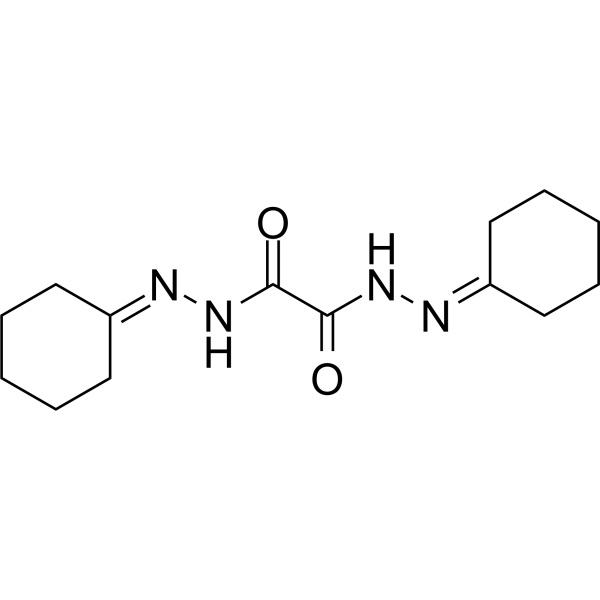
    Dicarbine dihydrochloride blocks dopamine receptors in various brain parts and prevents the depression of the conditioned defence reflexes caused by stimulation of the mesencephalic portion of the reticular formation. Dicarbine dihydrochloride could be used in the schizophrenia and alcoholic psychosis studies .
    Dicarbine dihydrochloride
  • HY-110176

    GlyT Neurological Disease
    ASP2535 is a potent, orally bioavailable, selective, brain permeable and centrally-active glycine transporter-1 (GlyT1) inhibitor. ASP2535 can improve cognitive impairment in animal models of schizophrenia and Alzheimer's disease .
    ASP2535
  • HY-14338

    Lu AE58054

    5-HT Receptor Neurological Disease
    Idalopirdine (Lu AE58054 ) is a potent, selective 5-HT6 receptor antagonist with a Ki value of 0.83 nM. Idalopirdine may be used in studies of Alzheimer's disease and schizophrenia, among other related disorders .
    Idalopirdine
  • HY-19490A

    (S)-AQW-051

    nAChR Neurological Disease
    (S)-VQW-765 ((S)-AQW-051) is an orally active, selective and effective α7 nicotinic ACh receptor (nAChR) partial agonist. (S)-VQW-765 has potential applications in cognitive disorders related to neurological diseases, such as Alzheimer's disease or schizophrenia .
    (S)-VQW-765
  • HY-110033

    SCH 39166 hydrobromide

    Dopamine Receptor 5-HT Receptor Adrenergic Receptor Neurological Disease Metabolic Disease
    Ecopipam (SCH 39166) hydrobromide is a potent, selective and orally active antagonist of dopamine D1/D5 receptor, with Kis of 1.2 nM and 2.0 nM, respectively. Ecopipam hydrobromide shows more than 40-flod selectivity over D2, D4, 5-HT, and α2a receptor (Ki=0.98, 5.52, 0.08, and 0.73 μM, respectively). Ecopipam hydrobromide can be used for the research of schizophrenia and obesity .
    Ecopipam hydrobromide
  • HY-168977

    RL-007; FSV7-007

    GABA Receptor Neurological Disease
    Inidascamine is the modulator for cholinergic, glutamatergic, and GABAB receptor, and can be used for researchs of schizophrenia .
    Inidascamine
  • HY-136678A

    5-HT Receptor Neurological Disease
    SB 258741 hydrochloride is a specific 5-HT7 receptor antagonist and can be used for the research of schizophrenia .
    SB 258741 hydrochloride
  • HY-112320

    Dopamine Receptor Neurological Disease
    UCSF34 (Compound 54) is a Haloperidol (HY-14538) analogue. UCSF34 binds to the human D2L receptor, with an estimated pKi of 7.49. UCSF34 can be used in the research of schizophrenia .
    UCSF34
  • HY-17410A

    HP 873 hydrochloride

    5-HT Receptor Dopamine Receptor Neurological Disease
    Iloperidone hydrochloride (HP 873 hydrochloride) is a D2/5-HT2 receptor antagonist. Iloperidone hydrochloride is an atypical antipsychotic for the schizophrenia symptoms .
    Iloperidone hydrochloride
  • HY-168537

    Dopamine Receptor 5-HT Receptor Neurological Disease
    LB-102 is an orally active inhibitor of dopamine D2, D3, and 5-HT7 receptors, which can be used in research on schizophrenia and other psychiatric disorders .
    LB-102
  • HY-106862A

    Dopamine Receptor Neurological Disease
    CGS 15873A is an orally active benzopyranopyridine derivative. CGS 15873A has selective dopamine receptor activation activity. CGS 15873A can be used for research on schizophrenia or Parkinson's disease .
    CGS 15873A
  • HY-120641

    mGluR Neurological Disease
    BMS-955829 is an orally active and selective mGluR5 positive allosteric modulator with an EC50 of 2.6 nM. BMS-955829 has no intrinsic agonist activity and a low glutamate fold shift (2.4). BMS-955829 can effectively improve cognitive and executive function deficits in rodents. BMS-955829 can be used in the research of cognitive impairment diseases such as schizophrenia .
    BMS-955829

Inquiry Online

Your information is safe with us. * Required Fields.

Salutation


Country or Region *

Applicant Name *


Organization Name *

Department *


Email Address *


Product Name *

Cat. No.


Requested quantity *

Phone Number *


Remarks

Inquiry Online

Inquiry Information

Product Name:
Cat. No.:
Quantity:
MCE Japan Authorized Agent:

