1. Search Result
Search Result
Results for "

kallikrein-related peptidase 6

" in MedChemExpress (MCE) Product Catalog:

241

Inhibitors & Agonists

4

Screening Libraries

2

Fluorescent Dyes

3

Biochemical Assay Reagents

43

Peptides

1

Inhibitory Antibodies

20

Natural
Products

70

Recombinant Proteins

10

Isotope-Labeled Compounds

33

Antibodies

1

Click Chemistry

Cat. No. Compare Product Name Species Source Image
  • HY-P77047

    ACO protease; KLK15; kallikrein-related peptidase 15

    Human HEK293
    Kallikrein-15 is a kallikrein (KLK) with trypsin-like activity that may promote cancer metastasis. The study found that Kallikrein-15 is only strongly expressed in mature sperm cells and not in immature germ cells. KLK15 may be able to cleave many extracellular matrix (ECM) components, interact with the extracellular matrix (ECM) receptor group, and be associated with tumorigenesis. Kallikrein-15 Protein, Human (HEK293, Fc) is the recombinant human-derived Kallikrein-15 protein, expressed by HEK293 , with C-hFc labeled tag.
  • HY-P77048

    ACO protease; KLK15; kallikrein-related peptidase 15

    Human HEK293
    Kallikrein-15 is a kallikrein (KLK) with trypsin-like activity that may promote cancer metastasis. The study found that Kallikrein-15 is only strongly expressed in mature sperm cells and not in immature germ cells. KLK15 may be able to cleave many extracellular matrix (ECM) components, interact with the extracellular matrix (ECM) receptor group, and be associated with tumorigenesis. Kallikrein-15 Protein, Human (HEK293, His, solution) is the recombinant human-derived Kallikrein-15 protein, expressed by HEK293 , with C-His labeled tag.
  • HY-P77048A

    ACO protease; KLK15; kallikrein-related peptidase 15

    Human HEK293
    Kallikrein-15 is a kallikrein (KLK) with trypsin-like activity that may promote cancer metastasis. The study found that Kallikrein-15 is only strongly expressed in mature sperm cells and not in immature germ cells. KLK15 may be able to cleave many extracellular matrix (ECM) components, interact with the extracellular matrix (ECM) receptor group, and be associated with tumorigenesis. Kallikrein-15 Protein, Human (HEK293, His) is the recombinant human-derived Kallikrein-15 protein, expressed by HEK293 , with C-His labeled tag.
  • HY-P70883

    kallikrein-7; Klk7; Serine protease 6; Stratum corneum chymotryptic enzyme; Thymopsin; kallikrein-related peptidase 7; PRSS6; SCCEkallikrein-7

    Mouse HEK293
    Kallikrein-7 is an important contributor to skin integrity and may catalyze the degradation of intercellular adhesive structures that are critical for continuous cell shedding.Kallikrein-7 exhibits cleavage activity against insulin A and B chains, with specificity for aromatic residues at position P1 indicating versatility in substrate recognition.Kallikrein-7 Protein, Mouse (HEK293, His) is the recombinant mouse-derived Kallikrein-7 protein, expressed by HEK293 , with C-6*His labeled tag.
  • HY-P71590

    Klk14; Gk14kallikrein-14; EC 3.4.21.-; Glandular kallikrein KLK14; mGK14; kallikrein related-peptidase 14

    Mouse E. coli
    Kallikrein-14 protein is a serine-type endopeptidase with multiple substrate specificities and has trypsin-like and chymotrypsin-like activities. It activates/inactivates protease-activated receptors (F2R, F2RL1, F2RL3) and other kallikreins (KLK1, KLK3, KLK5, KLK11). Kallikrein-14 Protein, Mouse (His) is the recombinant mouse-derived Kallikrein-14 protein, expressed by E. coli , with N-His labeled tag.
  • HY-P75280

    Dipeptidyl peptidase 2; Dipeptidyl peptidase 7; DPP II; DPP7; DPP2; QPP

    Human HEK293
    The DPP2 protein is a key member of the dipeptidyl peptidase family and plays a crucial role in the degradation of specific oligopeptides. It hydrolyzes oligopeptide bonds and promotes the breakdown of peptides into amino acids, emphasizing its importance in the regulation of cellular catabolism and peptide metabolism. DPP2 Protein, Human (HEK293, His) is the recombinant human-derived DPP2 protein, expressed by HEK293 , with C-His labeled tag.
  • HY-P75712

    Dipeptidyl peptidase 2; Dipeptidyl peptidase 7; DPP II; DPP7; DPP2; QPP

    Mouse HEK293
    DPP2 Protein plays a crucial role in the degradation of specific oligopeptides, serving as a key participant in the process. DPP2 Protein, Mouse (HEK293, His) is the recombinant mouse-derived DPP2 protein, expressed by HEK293 , with C-His labeled tag.
  • HY-P70112

    rHuDipeptidyl peptidase 3/DPP3, His; Dipeptidyl peptidase 3; Dipeptidyl aminopeptidase III; Dipeptidyl arylamidase III; Dipeptidyl peptidase III; Enkephalinase B; DPP3

    Human E. coli
    According to research reports, dipeptidyl peptidase 3 (DPP3) protein, as an enzymatic entity, is able to cleave and degrade various bioactive peptides, including substrates such as angiotensin, leucine-enkephalin, and methionine-enkephalin. According to the results of multiple studies, in addition to its role in processing these bioactive peptides, DPP3 also has the ability to cleave Arg-Arg-β-naphthylamide in vitro. Dipeptidyl peptidase 3/DPP3 Protein, Human (His) is the recombinant human-derived Dipeptidyl peptidase 3/DPP3 protein, expressed by E. coli , with N-6*His labeled tag.
  • HY-P72975

    Dipeptidyl peptidase 4; ADABP; ADCP-2; DPP IV; TP103; CD26; DPP4

    Human HEK293
    The CD26/dipeptidyl peptidase 4 protein is a cell surface glycoprotein receptor that induces T cell proliferation and NF-kappa-B activation. CD26 also works with FAP to promote pericellular proteolysis, endothelial cell migration, and invasion of the extracellular matrix. CD26/Dipeptidyl Peptidase 4 Protein, Human (HEK293) is the recombinant human-derived CD26/Dipeptidyl Peptidase 4 protein, expressed by HEK293 , with tag free.
  • HY-P70017

    rHuDipeptidyl peptidase 4/CD26, His; Dipeptidyl peptidase 4; ADABP; Adenosine deaminase complexing protein 2; ADCP-2; Dipeptidyl peptidase IV; DPP IV; T-cell activation antigen CD26

    Human HEK293
    The CD26/dipeptidyl peptidase 4 protein is a cell surface glycoprotein receptor that induces T cell proliferation and NF-kappa-B activation. CD26 also works with FAP to promote pericellular proteolysis, endothelial cell migration, and invasion of the extracellular matrix. CD26/Dipeptidyl Peptidase 4 Protein, Human (HEK293, His) is the recombinant human-derived CD26/Dipeptidyl Peptidase 4 protein, expressed by HEK293 , with C-6*His labeled tag.
  • HY-P72976

    Dipeptidyl peptidase 4; ADABP; ADCP-2; DPP IV; TP103; CD26; DPP4

    Human HEK293
    The CD26/dipeptidyl peptidase 4 protein is a cell surface glycoprotein receptor that induces T cell proliferation and NF-kappa-B activation. CD26 also works with FAP to promote pericellular proteolysis, endothelial cell migration, and invasion of the extracellular matrix. CD26/Dipeptidyl Peptidase 4 Protein, Human (HEK293, Fc) is the recombinant human-derived CD26/Dipeptidyl Peptidase 4 protein, expressed by HEK293 , with N-hFc labeled tag.
  • HY-P75429

    Dipeptidyl peptidase 4; ADABP; ADCP-2; DPP IV; TP103; CD26; DPP4

    Mouse HEK293
    CD26/dipeptidyl peptidase 4 is a key cell surface receptor for T cell activation. It binds to ADA, CAV1, IGF2R and PTPRC to promote T cell proliferation and NF-kappa-B activation. CD26/Dipeptidyl Peptidase 4 Protein, Mouse (HEK293, Fc) is the recombinant mouse-derived CD26/Dipeptidyl Peptidase 4 protein, expressed by HEK293 , with N-hFc labeled tag.
  • HY-P705426

    Dipeptidyl peptidase 4; ADABP; ADCP-2; DPP IV; TP103; CD26; DPP4

    Mouse HEK293
  • HY-P76875

    Dipeptidyl peptidase 4; ADABP; ADCP-2; DPP IV; TP103; CD26; DPP4

    Cynomolgus HEK293
    CD26/Dipeptidyl Peptidase 4 Protein is a serine membrane anchored exopeptidase, belonging to dipeptidyl peptidase (DPP) family. CD26/Dipeptidyl Peptidase 4 Protein is widely expressed in a variety of tissues and many cells. CD26/Dipeptidyl Peptidase 4 Protein, Cynomolgus/Rhesus macaque (HEK293) is the recombinant cynomolgus-derived CD26/Dipeptidyl Peptidase 4 protein, expressed by HEK293 , with tag free.
  • HY-P76876

    Dipeptidyl peptidase 4; ADABP; ADCP-2; DPP IV; TP103; CD26; DPP4

    Cynomolgus HEK293
    CD26/Dipeptidyl Peptidase 4 Protein is a serine membrane anchored exopeptidase, belonging to dipeptidyl peptidase (DPP) family. CD26/Dipeptidyl Peptidase 4 Protein is widely expressed in a variety of tissues and many cells. CD26/Dipeptidyl Peptidase 4 Protein, Cynomolgus/Rhesus macaque (HEK293, His) is the recombinant cynomolgus-derived CD26/Dipeptidyl Peptidase 4 protein, expressed by HEK293 , with C-His labeled tag.
  • HY-P76877

    Dipeptidyl peptidase 4; ADABP; ADCP-2; DPP IV; TP103; CD26; DPP4

    Cynomolgus HEK293
    CD26/Dipeptidyl Peptidase 4 Protein is a serine membrane anchored exopeptidase, belonging to dipeptidyl peptidase (DPP) family. CD26/Dipeptidyl Peptidase 4 Protein is widely expressed in a variety of tissues and many cells. CD26/Dipeptidyl Peptidase 4 Protein, Cynomolgus/Rhesus macaque (HEK293, Fc) is the recombinant cynomolgus-derived CD26/Dipeptidyl Peptidase 4 protein, expressed by HEK293 , with N-hFc labeled tag.
  • HY-P705417

    Dipeptidyl peptidase 4; ADABP; ADCP-2; DPP IV; TP103; CD26; DPP4

    Human HEK293
  • HY-P703988

    DPP III; Dipeptidyl peptidase 3; Enkephalinase B

    Rat E. coli
    DPP3 Protein, Rat (His) is the recombinant rat-derived DPP3 protein, expressed by E. coli, with N-His tag.
  • HY-P703989

    DPP III; Dipeptidyl peptidase 3; Enkephalinase B

    Mouse E. coli
    DPP3 Protein, Mouse (His) is the recombinant mouse-derived DPP3 protein, expressed by E. coli, with N-His tag.
  • HY-P701873

    DPP8; Dipeptidyl peptidase 8; DP8; Dipeptidyl peptidase IV-related protein 1; DPRP-1; Dipeptidyl peptidase VIII; DPP VIII; Prolyl dipeptidase DPP8

    Human Sf9 insect cells
    The DPP8 protein cleaves N-terminal dipeptides from proteins with Pro or Ala at position 2. DPP8 Protein, Human (sf9) is the recombinant human-derived DPP8 protein, expressed by sf9 insect cells , with tag free.
  • HY-P701874

    DPP8; Dipeptidyl peptidase 8; DP8; Dipeptidyl peptidase IV-related protein 1; DPRP-1; Dipeptidyl peptidase VIII; DPP VIII; Prolyl dipeptidase DPP8

    Human Sf9 insect cells
    The DPP8 protein cleaves N-terminal dipeptides from proteins with Pro or Ala at position 2. DPP8 Protein, Human (sf9, His) is the recombinant human-derived DPP8 protein, expressed by sf9 insect cells , with N-8*His labeled tag.
  • HY-P71451

    TPP2; Tripeptidyl-peptidase 2; TPP-2; EC 3.4.14.10; Tripeptidyl aminopeptidase; Tripeptidyl-peptidase II; TPP-II

    Human E. coli
    TPP2 protein, a cytosolic tripeptidyl-peptidase, is a vital component of the ubiquitin-proteasome pathway, operating downstream of the 26S proteasome. It plays a crucial role in maintaining intracellular amino acid homeostasis by releasing N-terminal tripeptides from polypeptides. Furthermore, TPP2 protein is implicated in stimulating adipogenesis, contributing to processes involved in adipose tissue formation. TPP2 Protein, Human (Myc, His) is the recombinant human-derived TPP2 protein, expressed by E. coli , with N-His, C-Myc labeled tag.
  • HY-P75705

    peptidase 1; Allergen Der p I; DERP1

    Others HEK293
    DERP1 Protein, a thiol protease, selectively cleaves target proteins with distinct structural features, favoring substrates with a large hydrophobic side chain in the P2 position or basic residues. This specificity underscores DERP1's functional significance in cellular processes. DERP1 Protein, Dermatophagoides pteronyssinus (HEK293, His) is the recombinant DERP1 protein, expressed by HEK293 , with C-10*His, C-His labeled tag.
  • HY-P701247

    Cathepsin C; cathepsin CEC 3.4.14.1; Cathepsin J; CPPIHMS; CTSC; dipeptidyl peptidase 1; Dipeptidyl peptidase I; Dipeptidyl transferase; dipeptidyl-peptidase I; DPP1; DPPI; DPP-I; JP; JPD; PALS; PLS

    Mouse E. coli
    The cathepsin C/DPPI protein is a thiol protease that acts as a dipeptidyl peptidase with multiple substrate specificities, excluding proline at the P1 position and arginine at the P2 position. It has both exopeptidase and endopeptidase functions and can activate serine proteases such as elastase, cathepsin G, and granzymes A and B. Cathepsin C/DPPI Protein, Mouse (Inactive, His-Myc) is the recombinant mouse-derived Cathepsin C/DPPI protein, expressed by E. coli , with N-10*His, C-Myc labeled tag. The accession of Cathepsin C/DPPI Protein, Mouse (Inactive, His-Myc) is P97821 (D25-W134).
  • HY-P704009

    Cathepsin C; cathepsin CEC 3.4.14.1; Cathepsin J; CPPIHMS; CTSC; dipeptidyl peptidase 1; Dipeptidyl peptidase I; Dipeptidyl transferase; dipeptidyl-peptidase I; DPP1; DPPI; DPP-I; JP; JPD; PALS; PLS

    Human HEK293
    Cathepsin C/DPPI Protein, a thiol protease, exhibits dipeptidylpeptidase activity with broad substrate specificity, excluding proline at the P1 position and arginine at the P2 position. Operating as both exopeptidase and endopeptidase, it displays catalytic versatility. Crucially, Cathepsin C/DPPI activates serine proteases like elastase, cathepsin G, and granzymes A and B. Cathepsin C/DPPI Protein, Human (HEK293, C-His) is the recombinant human-derived Cathepsin C/DPPI protein, expressed by HEK293, with C-10*His labeled tag.
  • HY-P704018

    Cathepsin C; cathepsin CEC 3.4.14.1; Cathepsin J; CPPIHMS; CTSC; dipeptidyl peptidase 1; Dipeptidyl peptidase I; Dipeptidyl transferase; dipeptidyl-peptidase I; DPP1; DPPI; DPP-I; JP; JPD; PALS; PLS

    Mouse HEK293
    The cathepsin C/DPPI protein is a thiol protease that acts as a dipeptidyl peptidase with multiple substrate specificities, excluding proline at the P1 position and arginine at the P2 position. It has both exopeptidase and endopeptidase functions and can activate serine proteases such as elastase, cathepsin G, and granzymes A and B. Cathepsin C/DPPI Protein, Mouse (Active, HEK293, His) is the recombinant mouse-derived Cathepsin C/DPPI protein, expressed by HEK293, with C-10*His labeled tag. The proform was activated by Recombinant Human Cathepsin L and further purified.
  • HY-P704017

    Cathepsin C; cathepsin CEC 3.4.14.1; Cathepsin J; CPPIHMS; CTSC; dipeptidyl peptidase 1; Dipeptidyl peptidase I; Dipeptidyl transferase; dipeptidyl-peptidase I; DPP1; DPPI; DPP-I; JP; JPD; PALS; PLS

    Mouse HEK293
    The cathepsin C/DPPI protein is a thiol protease that acts as a dipeptidyl peptidase with multiple substrate specificities, excluding proline at the P1 position and arginine at the P2 position. It has both exopeptidase and endopeptidase functions and can activate serine proteases such as elastase, cathepsin G, and granzymes A and B. Cathepsin C/DPPI Protein, Mouse (HEK293, His) is the recombinant mouse-derived Cathepsin C/DPPI protein, expressed by HEK293, with C-10*His labeled tag.
  • HY-P76112

    Tripeptidyl-peptidase 1; LPIC; Tripeptidyl Aminopeptidase; TPP-I; CLN2

    Mouse Sf9 insect cells
    TPP1, a lysosomal serine protease, acts as a non-specific lysosomal peptidase, displaying tripeptidyl-peptidase I activity in lysosomal protein degradation. Its function involves generating tripeptides from the breakdown products of other lysosomal proteinases, emphasizing its role in processing and hydrolyzing peptides within the lysosomal environment. Notably, TPP1 requires substrates with an unsubstituted N-terminus. TPP1 Protein, Mouse (sf9, His) is the recombinant mouse-derived TPP1 protein, expressed by Sf9 insect cells , with C-His labeled tag.
  • HY-P75281

    Inactive dipeptidyl peptidase 10; DPRP-3; DPP X; DPL2; DPP10

    Human HEK293
    The DPP10 protein is a key regulator that promotes cell surface expression of the potassium channel KCND2, modulating its activity and gating properties. Despite its name, DPP10 lacks dipeptidyl aminopeptidase activity. DPP10 Protein, Human (HEK293, His) is the recombinant human-derived DPP10 protein, expressed by HEK293 , with N-His labeled tag.
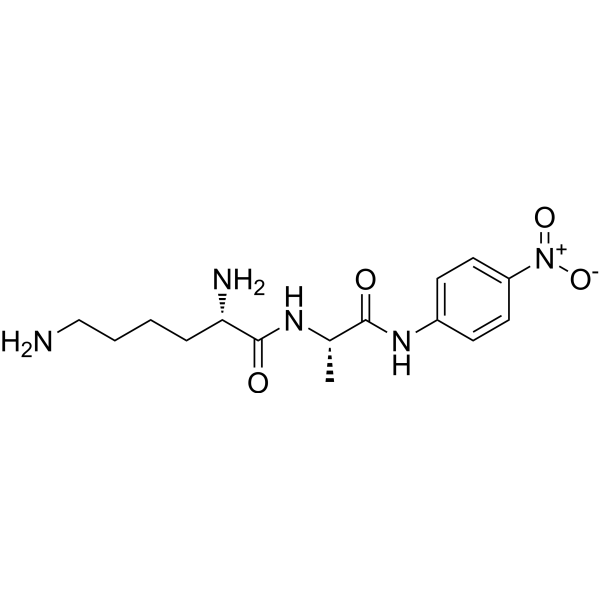
  • HY-P701424

    USP50; Inactive ubiquitin carboxyl-terminal hydrolase 50; Inactive ubiquitin-specific peptidase 50

    Human Sf9 insect cells
    USP50 protein, also known as ubiquitin-specific protease 50, is a protein without peptidase activity. Peptidase activity generally refers to the ability of an enzyme to cleave peptide bonds in proteins. USP50 Protein, Human (sf9) is the recombinant human-derived USP50 protein, expressed by sf9 insect cells , with tag free.
  • HY-P75706

    peptidase 1; Allergen Der p I; DERP1

    Others HEK293
    DERP1 Protein, a thiol protease, selectively cleaves target proteins with distinct structural features, favoring substrates with a large hydrophobic side chain in the P2 position or basic residues. This specificity underscores DERP1's functional significance in cellular processes. DERP1 Protein, Dermatophagoides pteronyssinus (C132A, N150E, HEK293, His) is the recombinant DERP1 protein, expressed by HEK293 , with C-His labeled tag and C132A, N150E mutation.
  • HY-P701423

    USP50; Inactive ubiquitin carboxyl-terminal hydrolase 50; Inactive ubiquitin-specific peptidase 50

    Human Sf9 insect cells
    USP50 protein, also known as ubiquitin-specific protease 50, is a protein without peptidase activity. Peptidase activity generally refers to the ability of an enzyme to cleave peptide bonds in proteins. USP50 Protein, Human (sf9, GST) is the recombinant human-derived USP50 protein, expressed by sf9 insect cells , with N-GST labeled tag.
  • HY-P70980

    Tripeptidyl-peptidase 1; TPP-1; Cell Growth-Inhibiting Gene 1 Protein; Lysosomal Pepstatin-Insensitive Protease; LPIC; Tripeptidyl Aminopeptidase; Tripeptidyl-peptidase I; TPP-I; TPP1; CLN2

    Human HEK293
    TPP1, a lysosomal serine protease, acts as a non-specific lysosomal peptidase, displaying tripeptidyl-peptidase I activity in lysosomal protein degradation. Its function involves generating tripeptides from the breakdown products of other lysosomal proteinases, emphasizing its role in processing and hydrolyzing peptides within the lysosomal environment. Notably, TPP1 requires substrates with an unsubstituted N-terminus. TPP1 Protein, Human (HEK293, His) is the recombinant human-derived TPP1 protein, expressed by HEK293 , with C-6*His labeled tag.
  • HY-P703362

    Dipeptidyl peptidase 3; Dipeptidyl aminopeptidase III; Dipeptidyl arylamidase III; Dipeptidyl peptidase III; DPP III; Enkephalinase B; Dpp3; Mus musculus; Mouse; DPP III; Aminopeptidase; Hydrolase; Metalloprotease; Protease; 3.4.14.4

    Mouse E. coli
    DPP3 Protein, Mouse (His, Strep) is the recombinant mouse-derived DPP3, expressed by E. coli , with Strep, His labeled tag.
  • HY-P703379

    Dipeptidyl peptidase 3; Dipeptidyl aminopeptidase III; Dipeptidyl arylamidase III; Dipeptidyl peptidase III; DPP III; Enkephalinase B; Dpp3; Rattus norvegicus; Rat; DPP III; Aminopeptidase; Hydrolase; Metalloprotease; Protease; 3.4.14.4

    Rat E. coli
    DPP3 Protein, Rat (His, Strep) is the recombinant rat-derived DPP3, expressed by E. coli , with Strep, His labeled tag.
  • HY-P79459

    Sentrin-specific protease 1; SENP1; Sentrin/SUMO-specific protease SENP1; SUMO-Specific peptidase 1

    Human E. coli
    SENP1 Catalytic Domain Protein hydrolyzes SUMO propeptides (SUMO1, SUMO2, and SUMO3), maturing them. It also deconjugates SUMO1, SUMO2, and SUMO3 from target proteins, impacting their activities. Interacts with MTA1 and CCAR2, influencing SIRT1 interaction and transcriptional activities, showcasing its regulatory role in SUMOylation processes. SENP1 Catalytic Domain Protein, Human (His) is the recombinant human-derived SENP1 Catalytic Domain protein, expressed by E. coli , with N-His labeled tag.
  • HY-P703796

    ADCP2; CD26; DPPIV; DPP4; ADABP; TP103; EC 3.4.14.5

    Cynomolgus;Rhesus Macaque HEK293
    CD26/Dipeptidyl Peptidase 4 Protein is a serine membrane anchored exopeptidase, belonging to dipeptidyl peptidase (DPP) family. CD26/Dipeptidyl Peptidase 4 Protein is widely expressed in a variety of tissues and many cells. CD26/Dipeptidyl Peptidase 4 Protein, Cynomolgus/Rhesus macaque (HEK293, N-His) is the recombinant cynomolgus/rhesus macaque-derived DPPIV/CD26 protein, expressed by HEK293, with N-His labeled tag.
  • HY-P7270

    rHuNeuroserpin; peptidase inhibitor 12; Serpin I1; SERPINI1

    Human CHO
    Neuroserpin Protein, Human (CHO) is a member of the serpin family of serine protease inhibitors, playing an important role in synaptic plasticity and memory formation in the hippocampus.
  • HY-P74703

    Neuroserpin; peptidase inhibitor 12; Serpin I1; SERPINI1

    Mouse HEK293
    Neuroserpin is a serine protease inhibitor that significantly inhibits plasminogen activator and plasmin without affecting thrombin.In addition to their role in protease inhibition, neuroserine proteases contribute to synaptic plasticity, affecting synaptic connections in the adult nervous system.Neuroserpin Protein, Mouse (HEK293, His) is the recombinant mouse-derived Neuroserpin protein, expressed by HEK293 , with C-His labeled tag.
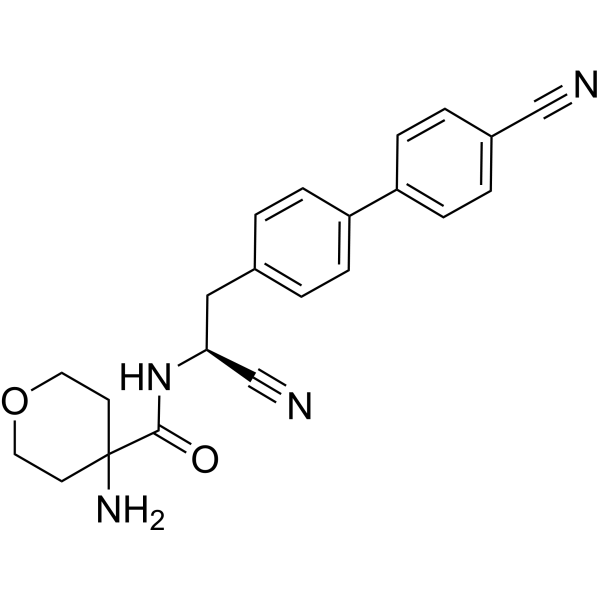
  • HY-P74780

    Cytosol aminopeptidase; LAP-3; peptidase S; LAP3; LAPEP; PEPS

    Human HEK293
    The LAP3 protein is a cytosolic metallopeptidase that serves as a catalytic entity responsible for the removal of unsubstituted N-terminal hydrophobic amino acids from a variety of peptides. The peptidase activity of LAP3 depends on the presence of Zn(2+) ions, and its substrate specificity can be modulated by binding to other cofactors. LAP3 Protein, Human (HEK293, His) is the recombinant human-derived LAP3 protein, expressed by HEK293 , with C-His labeled tag.
  • HY-P77196

    Serpin B10; Bomapin; peptidase inhibitor 10; PI-10
    Mouse Sf9 insect cells
    SERPINB10 is an important protease inhibitor that may regulate protease activity in hematopoiesis and TNF-induced apoptosis. SERPINB10 acts in both the cytoplasm and the nucleus, demonstrating versatility in influencing key cellular processes. SERPINB10 Protein, Mouse (sf9, His) is the recombinant mouse-derived SERPINB10 protein, expressed by Sf9 insect cells , with C-His labeled tag.
  • HY-P79457

    Ubiquitin Specific peptidase 2; UBP41; Ubiquitin-Specific-Processing Protease 2; Ubiquitin Carboxyl-Terminal Hydrolase 2; 41 KDa Ubiquitin-Specific Protease; Deubiquitinating Enzyme 2; Ubiquitin-specific Protease 2

    Human E. coli
    USP2 catalytic domain proteins act as hydrolases and target polyubiquitinated proteins such as MDM2, MDM4, and CCND1. Both isoform 1 and isoform 4 exhibit ubiquitin-specific peptidase and isopeptidase activities. USP2 Catalytic Domain Protein, Human (His) is the recombinant human-derived USP2 Catalytic Domain protein, expressed by E. coli , with N-6*His labeled tag.
  • HY-P701422

    USP48; Ubiquitin carboxyl-terminal hydrolase 48; Deubiquitinating enzyme 48; Ubiquitin thioesterase 48; Ubiquitin-specific peptidase 48; Ubiquitin-specific protease 48; Ubiquitin-specific-processing protease 48

    Human Sf9 insect cells
    USP48 protein, a deubiquitinase, hydrolyzes ubiquitin bonds at the C-terminal Gly, processing poly-ubiquitin precursors and ubiquitinated proteins. It may regulate NF-kappa-B activation by the TNF receptor superfamily via RELA and TRAF2 interactions. With potential roles at postsynaptic sites, USP48 exhibits multifunctionality, influencing ubiquitin processing and signaling pathways involved in immune response and synaptic function. USP48 Protein, Human (sf9, FLAG) is the recombinant human-derived USP48 protein, expressed by sf9 insect cells , with C-Flag labeled tag.
  • HY-P76061

    NK13; Serine (Or cysteine) peptidase inhibitor, clade B, member 6B

    Mouse Sf9 insect cells
    Serpin B6b protein is an important member of the serine protease inhibitor family and plays a crucial role as a serine protease inhibitor, regulating proteolytic activity.His research enhances the understanding of cellular processes related to proteolysis and its therapeutic applications.Serpin B6b Protein, Mouse (sf9, His) is the recombinant mouse-derived Serpin B6b protein, expressed by Sf9 insect cells , with C-His labeled tag.
  • HY-P77198
    Serpin B4 Protein, Human (sf9, His)
    1 Publications Verification

    Serpin B4; Leupin; peptidase inhibitor 11; PI-11; SCCA-2

    Human Sf9 insect cells
    Serpin B4 is a protease inhibitor that may modulate the host immune response against tumor cells, suggesting a crucial role in fine-tuning immune balance. Its ability to inhibit proteases emphasizes its importance in influencing key regulatory pathways, enhancing the immune system's effectiveness against cancer cells. Serpin B4 Protein, Human (sf9, His) is the recombinant human-derived Serpin B4 protein, expressed by Sf9 insect cells , with N-His labeled tag.
  • HY-P705955

    Acylamino-acid-releasing enzyme; AARE; EC 3.4.19.1; Acyl-peptide hydrolase; APH; Acylaminoacyl-peptidase; Oxidized protein hydrolase; OPH

    Human HEK293
  • HY-P76837
    CNDP2 Protein, Human (sf9, His)
    1 Publications Verification

    Cytosolic non-specific dipeptidase; CNDP dipeptidase 2; peptidase A; CN2; CPGL; HEL-S-13; PEPA

    Human Sf9 insect cells
    The CNDP2 protein is a catalyst that coordinates the oxidative cleavage of heme at the α-methylene bridge carbon, releasing carbon monoxide (CO) and generating biliverdin IXalpha. This enzymatic process releases ferrous iron from the central heme iron chelate. CNDP2 Protein, Human (sf9, His) is the recombinant human-derived CNDP2 protein, expressed by Sf9 insect cells , with C-His labeled tag.
  • HY-P76641

    Cytoplasmic antiproteinase 2; CAP-2; peptidase inhibitor 8; PI-8; SERPINB8

    Mouse Sf9 insect cells
    The Serpin B8 protein plays a critical role in promoting epithelial desmosome-mediated intercellular adhesion, underscoring its importance in maintaining cell adhesion within epithelial tissues.The protein's involvement suggests an important contribution to the structural integrity and stability of desmosomes, key cellular structures that mediate adhesion between adjacent cells.Serpin B8 Protein, Mouse (sf9, His) is the recombinant mouse-derived Serpin B8 protein, expressed by Sf9 insect cells , with C-His labeled tag.
  • HY-P704245

    speB; Streptopain; EC 3.4.22.10; Exotoxin type B; SPE B; Streptococcal cysteine proteinase; Streptococcus peptidase A; SPP

    Others E. coli
    SPEB Protein, Streptococcus pyogenes (His-SUMO) is the recombinant SPEB protein, expressed by E. coli, with N-6*His & N-SUMO tag.
  • HY-P71306

    Cytoplasmic antiproteinase 3; peptidase inhibitor 9; CAP3; PI-9; Serpin B9

    Human HEK293
    The Serpin B9 Protein, a member of the serpin family, crucially regulates immune responses by specifically inhibiting granzyme B, a protease involved in immune cell-mediated apoptosis. Acting as a potent inhibitor, Serpin B9 modulates granzyme B's cytotoxic activity, fine-tuning immune responses and preventing unwarranted cell death, emphasizing its significance in maintaining immune balance. Serpin B9 Protein, Human (HEK293, His) is the recombinant human-derived Serpin B9 protein, expressed by HEK293 , with C-6*His labeled tag.

Inquiry Online

Your information is safe with us. * Required Fields.

Salutation


Country or Region *

Applicant Name *


Organization Name *

Department *


Email Address *


Product Name *

Cat. No.


Requested quantity *

Phone Number *


Remarks

Inquiry Online

Inquiry Information

Product Name:
Cat. No.:
Quantity:
MCE Japan Authorized Agent: