



Teneligliptin hydrobromide hydrate
Based on 6 publication(s) in Google Scholar
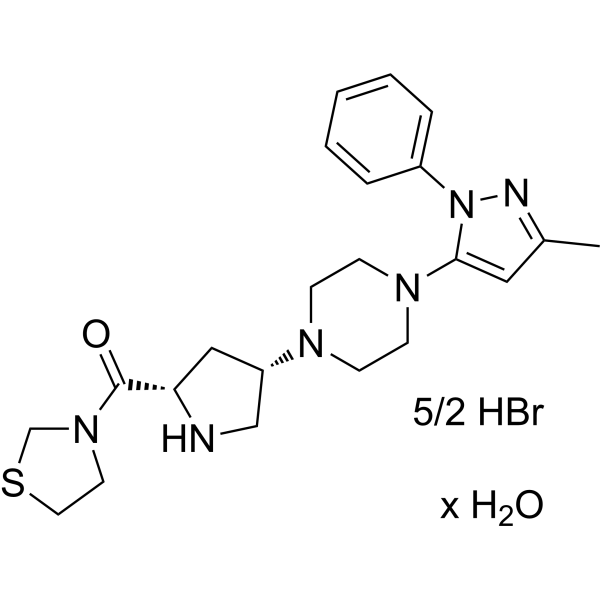
Teneligliptin (MP-513) hydrobromide hydrate is an orally active and selective dipeptidyl peptidase 4 (DPP-4) inhibitor (IC50s: 0.37 and 0.29 nM for the human and rat DPP-4, respectively). Teneligliptin hydrobromide hydrate improves blood glucose levels and can be used in researches related to type 2 diabetes mellitus.
For research use only. We do not sell to patients.
- Purity : 99.97%
- CAS No.: 1572583-29-9
- Formula: C22H30N6OS·xH2O·2.5Br
- Molecular Weight:426.58 (free base)
-
Storage:
4°C, sealed storage, away from moisture
* In solvent : -80°C, 6 months; -20°C, 1 month (sealed storage, away from moisture)

To place orders, for customer services and technical support, please contact: MedChemExpress USA
Tel: 609-228-6898 E-mail: [email protected] [email protected]


-
 Biological Activity
-
Chemical Information
-
Solvent & Solubility
- Protocols
- Purity & Documentation
- References
-
 Help & FAQs


-
HY-10219
RapamycinmTOR Inhibitor -
HY-K0023
Phosphatase Inhibitor Cocktail Ⅲ (100× in DMSO) -
HY-10285
SaxagliptinDPP-4 Inhibitor -
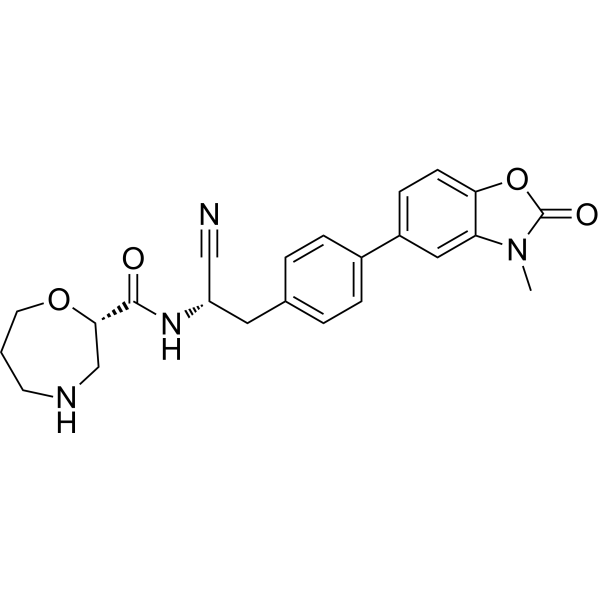
HY-101056
BrensocatibDPP1 Inhibitor -
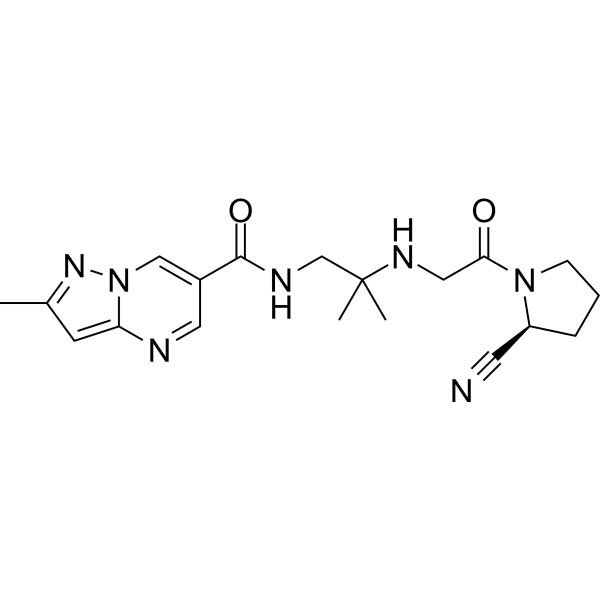
HY-14877
AnagliptinDPP-4 Inhibitor -
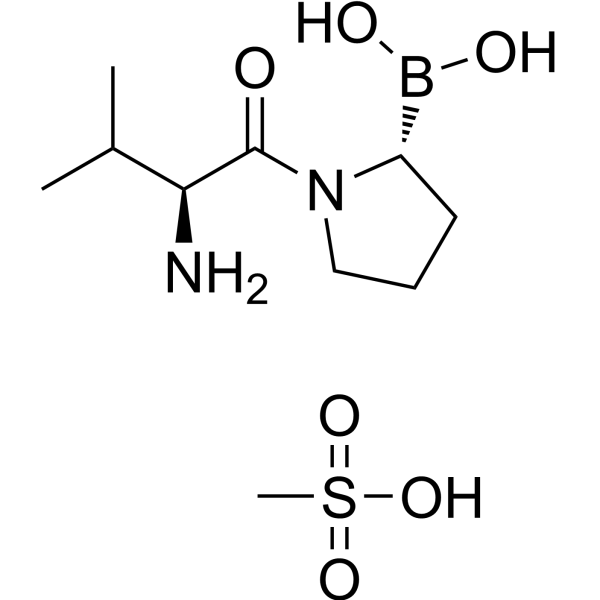
HY-13233A
Talabostat mesylateDipeptidyl Peptidase Inhibitor -
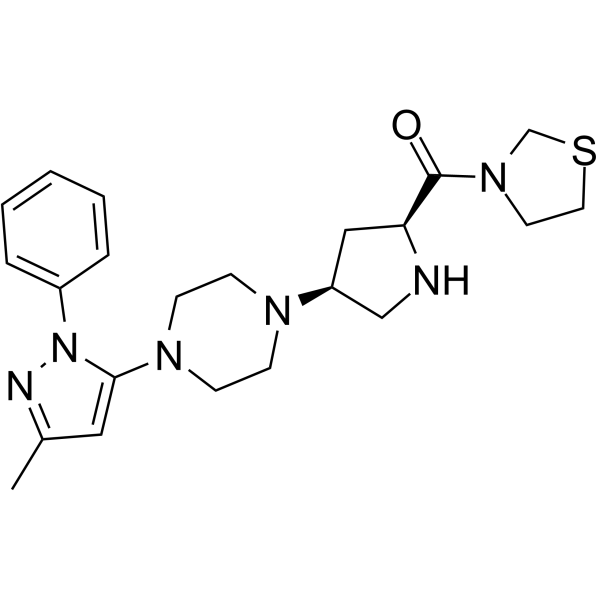
HY-14806
TeneligliptinDPP-4 Inhibitor -
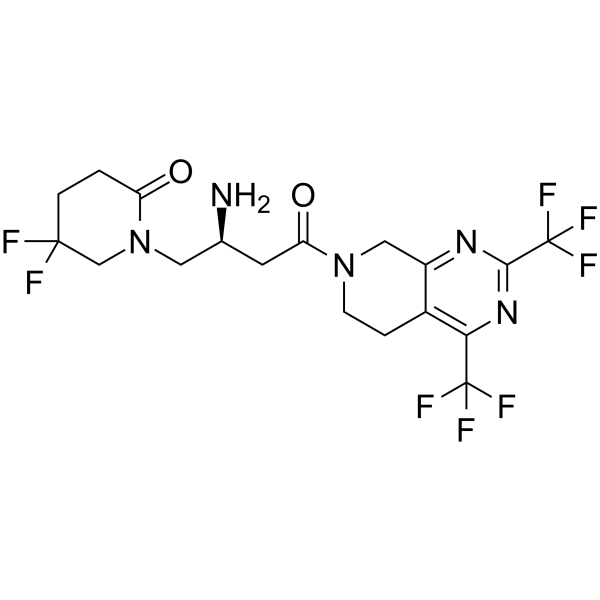
HY-14892
GemigliptinDipeptidyl Peptidase Inhibitor -

HY-10285R
Saxagliptin (Standard)DPP-4 Inhibitor -
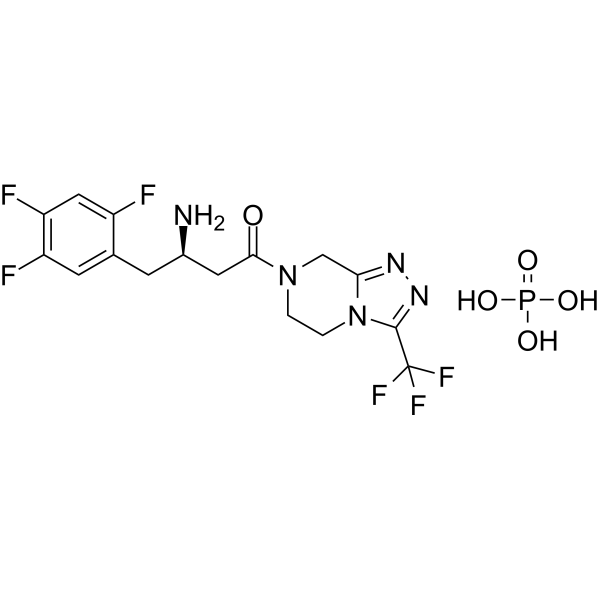
HY-13749A
Sitagliptin phosphatePDD4 Inhibitor -
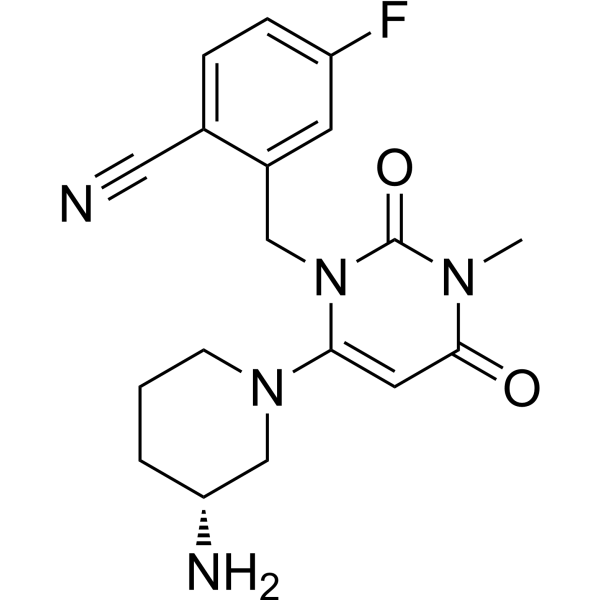
HY-15408
TrelagliptinDPP-4 Inhibitor -
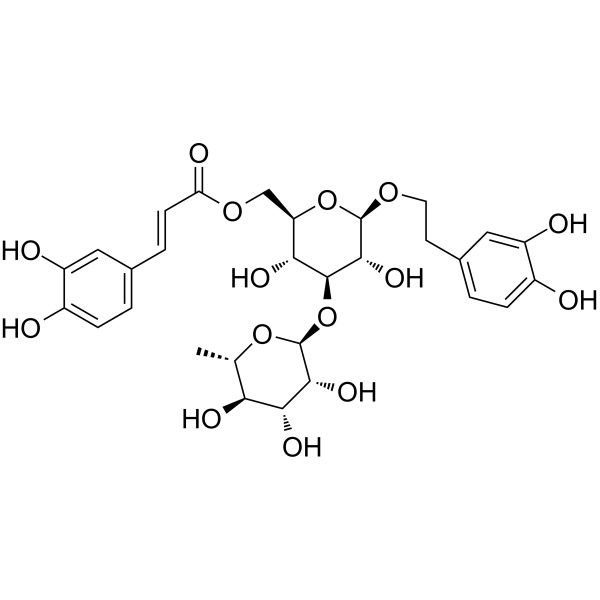
HY-N0022
IsoacteosideNatural Product
Publications Citing Use of MedChemExpress (MCE) Teneligliptin hydrobromide hydrate
More- Nephrol Dial Transplant. 2019 Oct 1;34(10):1669-1680. [Abstract]
- Antioxidants (Basel). 2023 Jul 24;12(7):1478. [Abstract]
- Antioxidants (Basel). 2021 Sep 9;10(9):1438. [Abstract]
- Eur J Med Chem. 2021 Feb 15:212:113030. [Abstract]
- Cosmetics. 2024 Mar 1, 11(2), 35.
- Chem Res Toxicol. 2020 Aug 17;33(8):2164-2171. [Abstract]
All AMPK Isoforms
More

Biological Activity
Description
|
TLR4 |
NLRP3 inflammasome |
DPP-4 |
In Vitro
Teneligliptin (2.5-5 μM, 24 h) hydrobromide hydrate prevents activation of the NLRP3 inflammasome and injury by increasing the phosphorylation of AMPK in primary mouse cardiomyocytes treated with high glucose[3].
Teneligliptin (1-3 μM, 12 h) hydrobromide hydrate protects against hypoxia/reoxygenation-induced endothelial cell injury in rat cardiac microvascular endothelial cells, with suppressing reactive oxygen species (ROS) production[5].
Teneligliptin (1.5-3 μM, 24 h) hydrobromide hydrate prevents Doxorubicin (HY-15142A)-induced inflammation (cytokines, including MCP-1 and IL-1β) and Apoptosis (improvement of the Bax/Bcl-2 ratio) in H9c2 cells[6].
Teneligliptin (2.5-5 μM, 2-48 h) hydrobromide hydrate inhibits Lipopolysaccharide-induced cytotoxicity and inflammation through inhibiting TLR4 and JNK/AP1/NF-κB signaling in dental pulp cells, with reducing oxidative stress[7].
Teneligliptin (3 μM, 3 h) hydrobromide hydrate prevents high glucose and H2O2 induced USP22-SIRT1 downregulation by p38MAPK inhibition and inhibits high glucose induced mitochondrial dysfunction, beta cell apoptosis as well as insulin secretion decreases in INS-1 cells[8].
Teneligliptin (3 μM, 3 h) hydrobromide hydrate inhibits high glucose induced mitochondrial dysfunction by SIRT1 activation in human 1.1b4 beta cells[8].
MedChemExpress (MCE) has not independently confirmed the accuracy of these methods. They are for reference only. Further protocols information, click here.
-
Cell Line:Primary mouse cardiomyocytes treated with high glucose (30 mmol/L)
-
Concentration:2.5, 5 μM
-
Incubation Time:24 h
-
Result:Inhibited NLRP3 and caspase-1 at 2.5 and 5 µM.
Increased the p-AMPK.
-
Cell Line:Cardiac microvascular endothelial cells isolated from 1- to 4-day-old SD rats
-
Concentration:1, 3 μM
-
Incubation Time:12 h
-
Result:Suppressed reactive oxygen species (ROS) and the vascular adhesion molecule ICAM-1.
Suppressed transcriptional factor Egr-1 expression.
-
Cell Line:Human dental pulp cell
-
Concentration:2.5, 5 μM
-
Incubation Time:24 h
-
Result:Suppressed c-Jun and c-Fos expression
Suppressed nuclear p65 protein accumulation
In Vivo
Teneligliptin (30 mg/kg, p.o., 4 weeks) hydrobromide hydrate attenuates myocardial hypertrophy, injury and associated inflammatory response in STZ (HY-13753)-induced diabetic cardiomyopathy mice by inhibiting NLRP3 inflammasome activation[3].
Teneligliptin (30-60 mg/kg, drinking water, 10 weeks) hydrobromide hydrate prevents obesity and obesity-related manifestations with increased energy expenditure in a mouse model of high-fat diet-induced obesity (inhibition of adipocyte hypertrophy, hepatic steatosis)[4].
Teneligliptin (0.1-1 mg/kg, p.o.) hydrobromide hydrate has excellent pharmacokinetic profile in rats and monkeys[1].
Pharmacokinetics properties of teneligliptin hydrobromide hydrate by oral administration
| Animal | Dose (mg/kg) | tmax (h) | Cmax (ng/mL) | t1/2 (h) | AUC0-last (h × ng/mL) | BA (%) |
| Rat | 0.1 | 0.88 | 5.48 | 15.84 | 91.81 | 85.9 |
| Rat | 0.3 | 0.75 | 20.65 | 8.97 | 202.12 | 63 |
| Rat | 1 | 0.75 | 152.41 | 8.43 | 672.94 | 62.9 |
| Monkey | 0.1 | 0.5 | 28.27 | 18.86 | 295.44 | 83.2 |
| Monkey | 0.3 | 1.38 | 85.13 | 15.24 | 613.16 | 57.6 |
| Monkey | 1 | 0.88 | 273.54 | 16.11 | 1571.64 | 44.1 |





 Powered by Bioz