



Cilastatin
Based on 8 publication(s) in Google Scholar
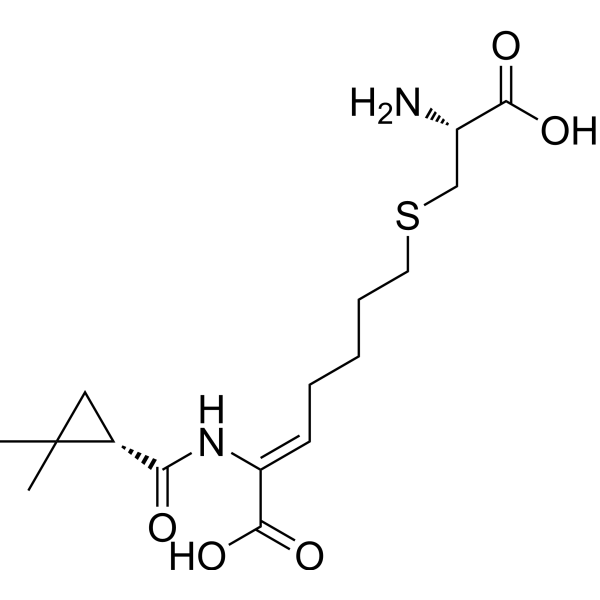
Cilastatin (MK0791) is a reversible, competitive renal dehydropeptidase I inhibitor with an IC50 of 0.1 μM. Cilastatin inhibits the bacterial metallob-lactamase enzyme CphA with an IC50 of 178 μM. Cilastatin is an antibacterial adjunct.
For research use only. We do not sell to patients.
- Purity : 99.91%
- CAS No.: 82009-34-5
- Formula: C16H26N2O5S
- Molecular Weight:358.45
-
Storage:Powder -20°C, 3 years , 4°C, 2 years ; In solvent -80°C, 2 years , -20°C, 1 year

To place orders, for customer services and technical support, please contact: MedChemExpress USA
Tel: 609-228-6898 E-mail: [email protected] [email protected]


-
 Biological Activity
-
Chemical Information
-
Solvent & Solubility
- Protocols
- Purity & Documentation
- References
-
 Help & FAQs


-
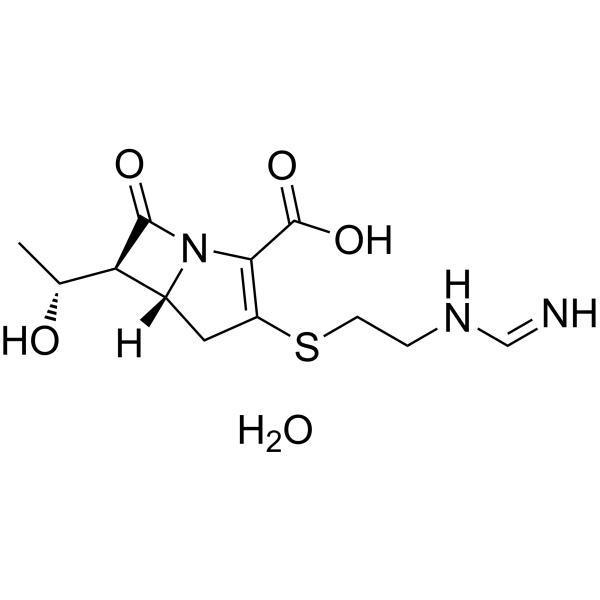
HY-B1369
Imipenem monohydrateAntibiotic -
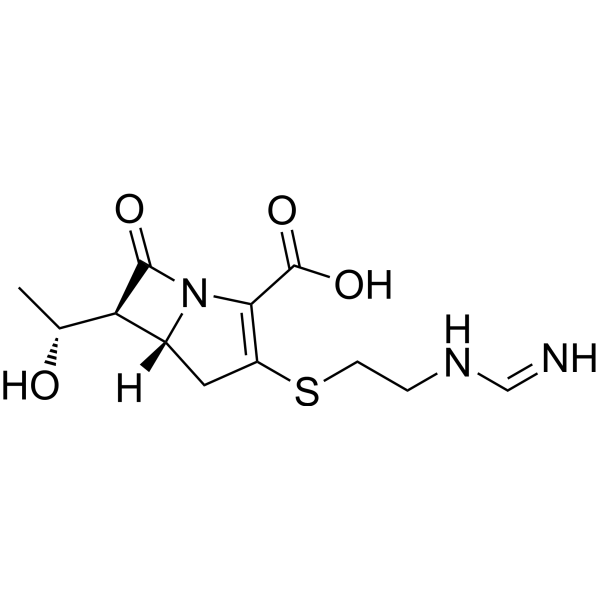
HY-B1369A
ImipenemAntibiotic -
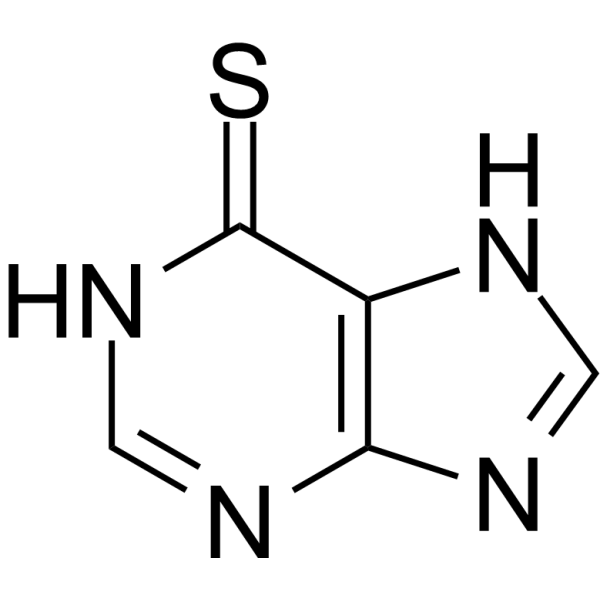
HY-13677
6-Mercaptopurine -
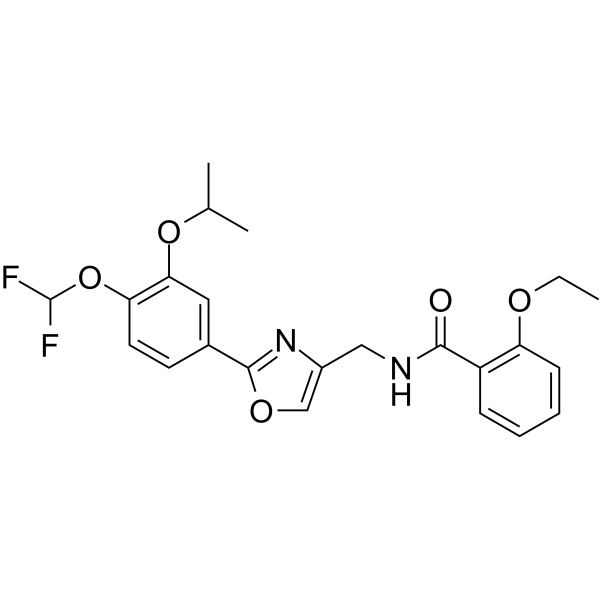
HY-109085
DifamilastPDE4 Inhibitor -
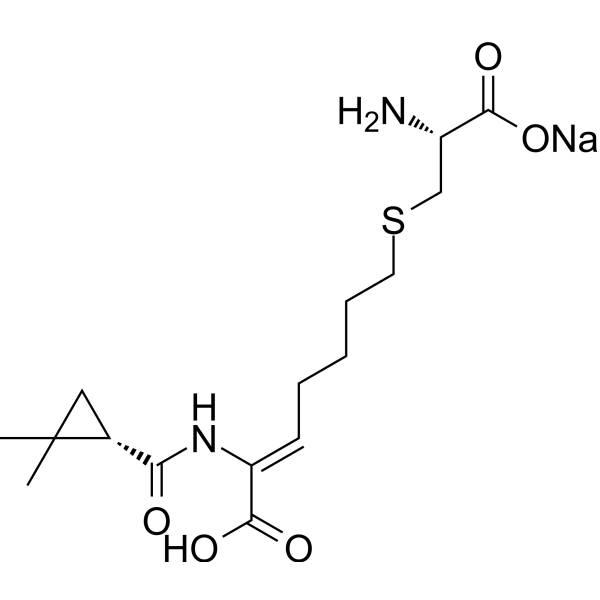
HY-A0166A
Cilastatin sodiumRenal Dehydropeptidase I Inhibitor -
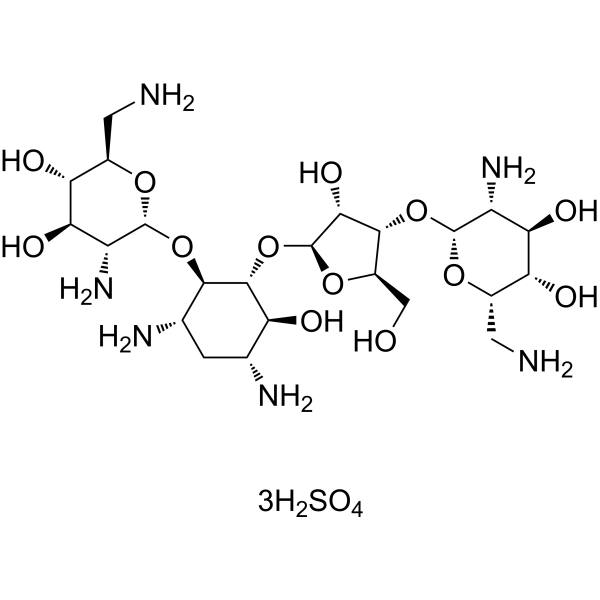
HY-B0470
Neomycin sulfatePhospholipase C Inhibitor, Angiogenesis Modulator -
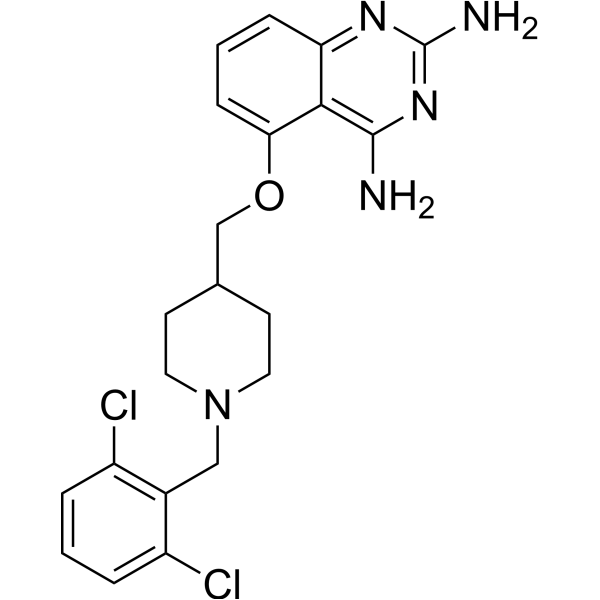
HY-102020
RG3039DcpS Inhibitor -

HY-A0166R
Cilastatin (Standard)Renal Dehydropeptidase I Inhibitor -
HY-120234
Z-LLNle-CHOγ-Secretase Inhibitor I
Publications Citing Use of MedChemExpress (MCE) Cilastatin
More- Nat Commun. 2024 Sep 13;15(1):8038. [Abstract]
- J Tissue Eng. 2026 Jul 24:17:20417314261472260.
- ACS Environ Au. 2025 Aug 5;5(6):573-582. [Abstract]
- Anal Chem. 2025 Jun 3;97(21):11099-11109. [Abstract]
- Antimicrob Agents Chemother. 2023 Dec 14;67(12):e0034623. [Abstract]
- Biomed Mater. 2026 Jun 4;21(3). [Abstract]
- Toxicon. 2022 Dec:220:106960. [Abstract]
- Complutense University of Madrid. 2025.
All Antibiotic Isoforms
More

Biological Activity
Description
IC50 & Target
|
β-lactam |
Cellular Effect
|
Cell Line

|
Type | Value | Description | References |
|---|---|---|---|---|
| S2 | IC50 |
2387 μM
Compound: Cilastatin
|
TP_TRANSPORTER: inhibition of PHA uptake (PHA: 5uM) in rOAT1-expressing S2 cells
TP_TRANSPORTER: inhibition of PHA uptake (PHA: 5uM) in rOAT1-expressing S2 cells
|
[PMID: 14978359] |
| S2 | IC50 |
249 μM
Compound: Cilastatin
|
TP_TRANSPORTER: inhibition of ES uptake (ES: 50nM) in hOAT3-expressing S2 cells
TP_TRANSPORTER: inhibition of ES uptake (ES: 50nM) in hOAT3-expressing S2 cells
|
[PMID: 14978359] |
| S2 | IC50 |
2550 μM
Compound: Cilastatin
|
TP_TRANSPORTER: inhibition of PHA uptake (PHA: 5uM) in hOAT1-expressing S2 cells
TP_TRANSPORTER: inhibition of PHA uptake (PHA: 5uM) in hOAT1-expressing S2 cells
|
[PMID: 14978359] |
| S2 | IC50 |
742 μM
Compound: Cilastatin
|
TP_TRANSPORTER: inhibition of ES uptake (ES: 50nM) in rOAT3-expressing S2 cells
TP_TRANSPORTER: inhibition of ES uptake (ES: 50nM) in rOAT3-expressing S2 cells
|
[PMID: 14978359] |
In Vitro
Cilastatin (200 μg/mL; 24 hours; RPTECs) treatment protects against Vancomycin-induced proximal tubule apoptosis and increases cell viability, without compromising the antimicrobial effect of Vancomycin[2].
MedChemExpress (MCE) has not independently confirmed the accuracy of these methods. They are for reference only.
-
Cell Line:Renal proximal tubular epithelial cells (RPTECs)
-
Concentration:200 μg/mL
-
Incubation Time:24 hours
-
Result:Significantly ameliorated Vancomycin-induced nuclear apoptosis.
In Vivo
MedChemExpress (MCE) has not independently confirmed the accuracy of these methods. They are for reference only.


Chemical Information
-
CAS No. 82009-34-5
-
Appearance Solid
-
Molecular Weight 358.45
-
Formula C16H26N2O5S
-
Color White to off-white
-
SMILES
O=C(O)/C(NC([C@@H]1C(C)(C)C1)=O)=C/CCCCSC[C@H](N)C(O)=O
-
Synonyms
MK0791
-
Shipping
Room temperature in continental US; may vary elsewhere.
-
Storage
Powder -20°C 3 years 4°C 2 years In solvent -80°C 2 years -20°C 1 year


Publications (8)
-
Journal Impact Factor
-
Most Recent
-
Nat Commun
Podocyte-specific KLF6 primes proximal tubule CaMK1D signaling to attenuate diabetic kidney disease. [Abstract]2024 Sep 13;15(1):8038. PMID: 39271683 -
-
ACS Environ Au
Machine Learning-Assisted Recognition of Environmental Sulfur-Containing Chemicals in Nontargeted Mass Spectrometry Analysis of Inadequate Mass Resolution. [Abstract]2025 Aug 5;5(6):573-582. PMID: 41277996 -
Anal Chem
Exposome-Scale Investigation of Cl-/Br-Containing Chemicals Using High-Resolution Mass Spectrometry, Multistage Machine Learning, and Cloud Computing. [Abstract]2025 Jun 3;97(21):11099-11109. PMID: 40401576 -
Antimicrob Agents Chemother
In vitro and in vivo activity of cefiderocol against Achromobacter spp. and Burkholderia cepacia complex, including carbapenem-non-susceptible isolates. [Abstract]2023 Dec 14;67(12):e0034623. PMID: 37971240 -
Biomed Mater
Multi-channel microfluidic chip with bilateral stripe for reconstruction of tissue barrier models in vitro. [Abstract]2026 Jun 4;21(3). PMID: 42173142 -
Toxicon
Megalin blockade with cilastatin ameliorates multiple wasp sting-induced acute kidney injury in rats. [Abstract]2022 Dec:220:106960. PMID: 36341900 -


Solvent & Solubility
In Vitro:
DMSO : 100 mg/mL (278.98 mM; Need ultrasonic; Hygroscopic DMSO has a significant impact on the solubility of product, please use newly opened DMSO)
1M NaOH : 100 mg/mL (278.98 mM; ultrasonic and adjust pH to 12 with NaOH)
H2O : 5 mg/mL (13.95 mM; ultrasonic and warming and heat to 60°C)
Please refer to the solubility information to select the appropriate solvent. Once prepared, please aliquot and store the solution to prevent product inactivation from repeated freeze-thaw cycles.
Storage method and period of stock solution: -80°C, 2 years; -20°C, 1 year. When stored at -80°C, please use it within 2 years. When stored at -20°C, please use it within 1 year.
* Note: If you choose water as the stock solution, please dilute it to the working solution, then filter and sterilize it with a 0.22 μm filter before use.
Please refer to the solubility information to select the appropriate solvent. Once prepared, please aliquot and store the solution to prevent product inactivation from repeated freeze-thaw cycles.
Storage method and period of stock solution: -80°C, 2 years; -20°C, 1 year. When stored at -80°C, please use it within 2 years. When stored at -20°C, please use it within 1 year.
* Note: If you choose water as the stock solution, please dilute it to the working solution, then filter and sterilize it with a 0.22 μm filter before use.
Concentration (start) × Volume (start) = Concentration (final) × Volume (final)
In Vivo:
Select the appropriate dissolution method based on your experimental animal and administration route.
- For the following dissolution methods, please ensure to first prepare a clear stock solution using an In Vitro approach and then sequentially add co-solvents:
- To ensure reliable experimental results, the clarified stock solution can be appropriately stored based on storage conditions. As for the working solution for In Vivo experiments, it is recommended to prepare freshly and use it on the same day.
- The percentages shown for the solvents indicate their volumetric ratio in the final prepared solution. If precipitation or phase separation occurs during preparation, heat and/or sonication can be used to aid dissolution.
Add each solvent one by one: 10% DMSO 40% PEG300 5% Tween-80 45% Saline
Solubility: ≥ 2.75 mg/mL (7.67 mM); Clear solution
This protocol yields a clear solution of ≥ 2.75 mg/mL (saturation unknown).
Taking 1 mL working solution as an example, add 100 μL DMSO stock solution (27.5 mg/mL) to 400 μL PEG300, and mix evenly; then add 50 μL Tween-80 and mix evenly; then add 450 μL Saline to adjust the volume to 1 mL.
Preparation of Saline: Dissolve 0.9 g sodium chloride in ddH₂O and dilute to 100 mL to obtain a clear Saline solution.
Add each solvent one by one: 10% DMSO 90% (20% SBE-β-CD in Saline)
Solubility: ≥ 2.5 mg/mL (6.97 mM); Clear solution
This protocol yields a clear solution of ≥ 2.5 mg/mL (saturation unknown).
Taking 1 mL working solution as an example, add 100 μL DMSO stock solution (25.0 mg/mL) to 900 μL 20% SBE-β-CD in Saline, and mix evenly.
Preparation of 20% SBE-β-CD in Saline (4°C, storage for one week): 2 g SBE-β-CD powder is dissolved in 10 mL Saline, completely dissolve until clear.
For the following dissolution methods, please prepare the working solution directly:
It is recommended to prepare fresh solutions and use them promptly within a short period of time.
The percentages shown for the solvents indicate their volumetric ratio in the final prepared solution. If precipitation or phase separation occurs during preparation, heat and/or sonication can be used to aid dissolution.
Add each solvent one by one: 50% PEG300 50% Saline
Solubility: 20 mg/mL (55.80 mM); Clear solution; Need ultrasonic
In Vivo Dissolution Calculator
Please enter the basic information of animal experiments:
-
-
-
-
Recommended: Prepare an additional quantity of animals to account for potential losses during experiments.
Please enter your animal formula composition:
-
%DMSO +
Recommended: Keep the proportion of DMSO in working solution below 2% if your animal is weak.
-
%+
-
+%Tween-80 + +
-
%Saline +
The co-solvents required include: DMSO, . All of co-solvents are available by MedChemExpress (MCE). , Tween 80. All of co-solvents are available by MedChemExpress (MCE).
Working solution concentration: 0.22 mg/mL
Method for preparing stock solution: mg drug dissolved in μL DMSO. Stock solution concentration: mg/mL.
1. Take μL DMSO stock solution;
2. Add μL .
μL , mix evenly;
3. Then add μL Tween 80, mix evenly;
4. Then add μL
Please ensure that the stock solution in the first step is dissolved to a clear state, and add co-solvents in sequence. You can use ultrasonic heating (ultrasonic cleaner, recommended frequency 20-40 kHz), vortexing, etc. to assist dissolution.


Purity & Documentation
-
Data Sheet (275 KB)
-
SDS (393 KB)
- English - EN (393 KB)
- Français - FR (393 KB)
- Deutsch - DE (393 KB)
- Norwegian - NO (393 KB)
- Español - ES (393 KB)
- Swedish - SV (393 KB)
- Italian - IT (393 KB)
- Korean - KR (393 KB)
- Portuguese - PT (393 KB)
-
Handling Instructions (2659 KB)
References
[1]. The renal membrane dipeptidase (dehydropeptidase I) inhibitor, cilastatin, inhibits the bacterialmetallo-beta-lactamase enzyme CphA. Antimicrob Agents Chemother. 1995 Jul;39(7):1629-31. [Content Brief]
[2]. Blanca Humanes, et al. Protective Effects of Cilastatin Against Vancomycin-Induced Nephrotoxicity. Biomed Res Int. 2015;2015:704382. [Content Brief]
[3]. P J Petersen, et al. In Vitro and in Vivo Activities of LJC10,627, a New Carbapenem With Stability to Dehydropeptidase I. Antimicrob Agents Chemother. 1991 Jan;35(1):203-7. [Content Brief]


Complete Stock Solution Preparation Table
Please refer to the solubility information to select the appropriate solvent. Once prepared, please aliquot and store the solution to prevent product inactivation from repeated freeze-thaw cycles.
Storage method and period of stock solution: -80°C, 2 years; -20°C, 1 year. When stored at -80°C, please use it within 2 years. When stored at -20°C, please use it within 1 year.
| Optional Solvent | Concentration Solvent Mass | 1 mg | 5 mg | 10 mg | 25 mg |
|---|---|---|---|---|---|
| H2O / DMSO / 1M NaOH | 1 mM | 2.7898 mL | 13.9489 mL | 27.8979 mL | 69.7447 mL |
| 5 mM | 0.5580 mL | 2.7898 mL | 5.5796 mL | 13.9489 mL | |
| 10 mM | 0.2790 mL | 1.3949 mL | 2.7898 mL | 6.9745 mL | |
| DMSO / 1M NaOH | 15 mM | 0.1860 mL | 0.9299 mL | 1.8599 mL | 4.6496 mL |
| 20 mM | 0.1395 mL | 0.6974 mL | 1.3949 mL | 3.4872 mL | |
| 25 mM | 0.1116 mL | 0.5580 mL | 1.1159 mL | 2.7898 mL | |
| 30 mM | 0.0930 mL | 0.4650 mL | 0.9299 mL | 2.3248 mL | |
| 40 mM | 0.0697 mL | 0.3487 mL | 0.6974 mL | 1.7436 mL | |
| 50 mM | 0.0558 mL | 0.2790 mL | 0.5580 mL | 1.3949 mL | |
| 60 mM | 0.0465 mL | 0.2325 mL | 0.4650 mL | 1.1624 mL | |
| 80 mM | 0.0349 mL | 0.1744 mL | 0.3487 mL | 0.8718 mL | |
| 100 mM | 0.0279 mL | 0.1395 mL | 0.2790 mL | 0.6974 mL |
* Note: If you choose water as the stock solution, please dilute it to the working solution, then filter and sterilize it with a 0.22 μm filter before use.


Cilastatin Related Classifications
HY-A0166 Related Classifications
 Powered by Bioz