



1. Search Result
Search Result
Results for "

Lead

" in MedChemExpress (MCE) Product Catalog:

302

Inhibitors & Agonists

71

Screening Libraries

15

Biochemical Assay Reagents

22

Peptides

4

Inhibitory Antibodies

41

Natural
Products

17

Isotope-Labeled Compounds

2

Click Chemistry

4

Oligonucleotides

Cat. No. Product Name Target Research Areas Chemical Structure
  • HY-B1285
    Dimercaprol
    1 Publications Verification

    2,3-Dimercapto-1-propanol; Dithioglycerol

    HIV Infection
    Dimercaprol (2,3-Dimercapto-1-propanol) is an anti-heavy metal-poisoning agent, which exhibits anti-HIV activity. Dimercaprol can be used for the study for arsenic, mercury, gold, lead, antimony, and other toxic metal poisoning .
    Dimercaprol
  • HY-147429

    Abx MCP; RG6006

    Antibiotic Bacterial Infection
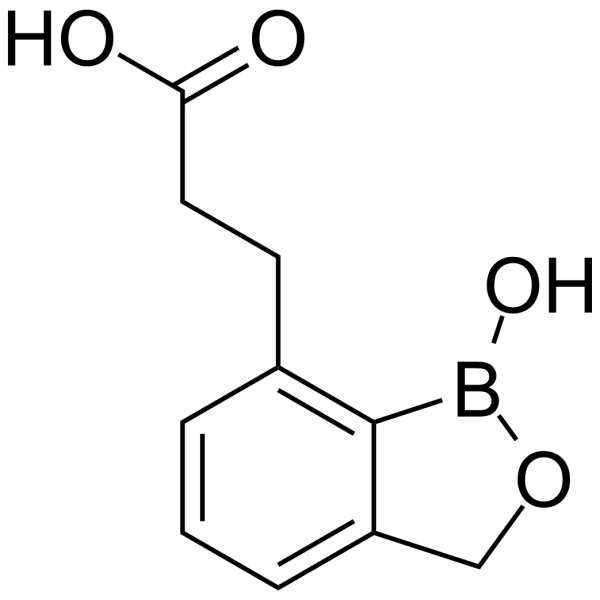
    Zosurabalpin is a polypeptide antibiotic targeting LPS transporter (LptB2FGC complex), which can block the transport of LPS and lead to endotoxin accumulation in cells, and has shown excellent antibacterial activity against Carbapenem-resistant Acinetobacter baumanni (CRAB) .
    Zosurabalpin
  • HY-139399
    Safimaltib
    2 Publications Verification

    JNJ-67856633

    MALT1 Cancer
    Safimaltib (JNJ-67856633) is an orally active, first-in-class, potent, selective and allosteric MALT1 protease inhibitor. Safimaltib in some cases lead to tumor stasis .
    Safimaltib
  • HY-100226
    A-205804
    5 Publications Verification

    Integrin Inflammation/Immunology
    A-205804 is an orally bioavailable, potent and selective lead inhibitor of E-selectin and ICAM-1 expression, with an IC50 of 20 nM and 25 nM for E-selectin and ICAM-1, respectively. A-205804 can be used in the research of chronic inflammatory diseases .
    A-205804
  • HY-13991
    CCG-1423
    10+ Cited Publications

    Ras Apoptosis Cancer
    CCG-1423 is an inhibitor of Rho/MRTF/SRF pathway. CCG-1423 shows activities in several cancer cells. CCG-1423 is a promising lead compound for the development of novel pharmacologic tools, and it can be used for the research of cancer and diabetes .
    CCG-1423
  • HY-P2970

    Apoptosis PARP Caspase Bcl-2 Family Bacterial Interleukin Related Infection Inflammation/Immunology Cancer
    Stem bromelain (EC 3.4.22.32) is a cysteine protease and antibacterial agent. Stem bromelain can be isolated from the stem of the pineapple (Ananas comosus). Stem bromelain induces dose-dependent secretion of IL-12p70, and IL-6, induces Apoptosis, causes cleavage of full-length PARP protein, Caspase 3, and Caspase 9, increases Bax, and decreases Bcl-2. Stem bromelain possesses various fibrinolytic, antiedema, antithrombotic, and anti-inflammatory activities. Stem bromelain also exhibits in vivo antitumor and antileukemic activities, as well as antimetastatic effects. Stem bromelain has antimycobacterial activity. Stem bromelain provides protection against lead poisoning .
    Stem bromelain
  • HY-W015967
    Glycolic acid
    1 Publications Verification

    Hydroxyethanoic acid

    Environmental Pollutants Endogenous Metabolite Tyrosinase Metabolic Disease
    Glycolic acid is an inhibitor of tyrosinase, suppressing melanin formation and lead to a lightening of skin colour.
    Glycolic acid
  • HY-Y0061
    Oxindole
    3 Publications Verification

    2-Indolinone

    HIV Endogenous Metabolite Infection Neurological Disease Metabolic Disease Inflammation/Immunology Endocrinology Cancer
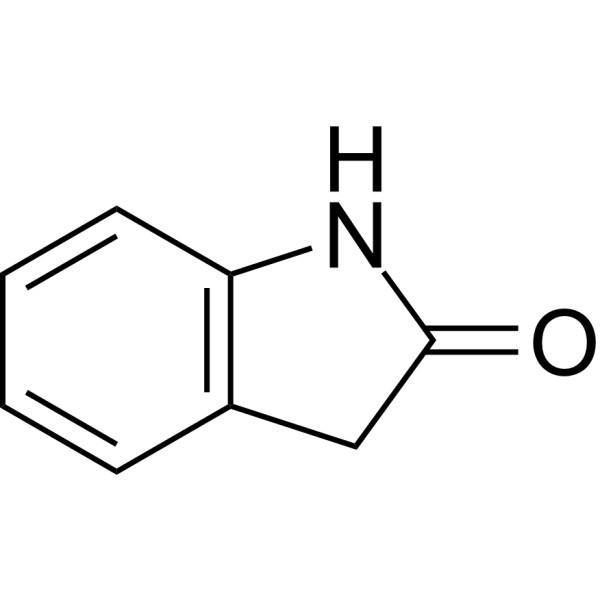
    Oxindole (Indolin-2-one) is an aromatic heterocyclic building block. 2-indolinone derivatives have become lead compounds in the research of kinase inhibitors.
    Oxindole
  • HY-Y0351
    Phenylthiourea
    3 Publications Verification

    Phenylthiocarbamide

    Tyrosinase Endogenous Metabolite Others
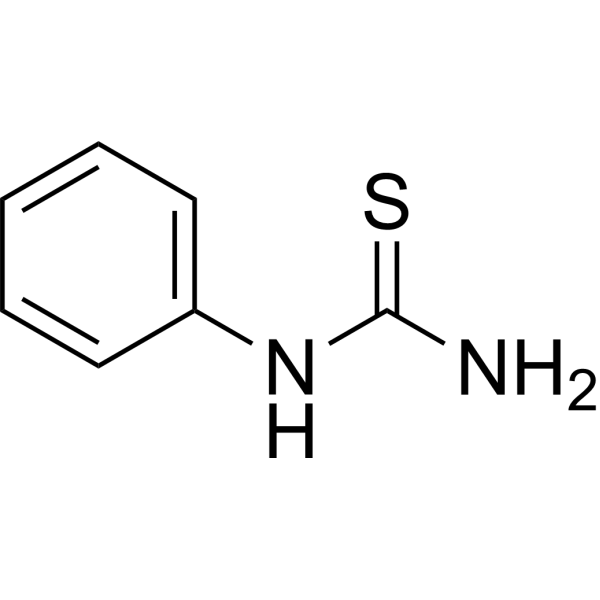
    Phenylthiourea (Phenylthiocarbamide) is an inhibitor for phenoloxidase. Phenylthiourea inhibits enzymatic oxidation of DOPA by phenoloxidase (Ki = 0.21 μM). Phenylthiourea is an effective inhibitor for tyrosinase. Phenylthiourea can lead to graying of hair in black rats due to the interference with melanin formation .
    Phenylthiourea
  • HY-143228
    SH-42
    3 Publications Verification

    SARS-CoV Cardiovascular Disease Inflammation/Immunology Cancer
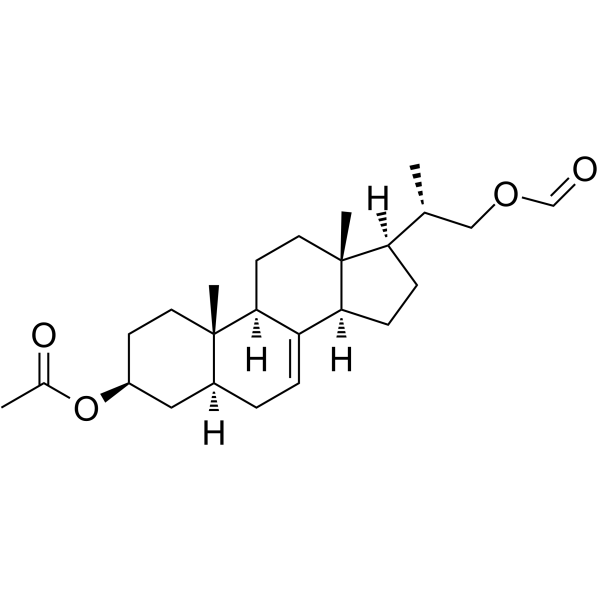
    SH-42 is a potent and selective inhibitor of human Δ 24-dehydrocholesterol reductase (DHCR24), with an IC50 of 42 nM. SH-42 can lead to a significant increase in plasma desmosterol levels of mice .
    SH-42
  • HY-N0071

    Isoguanosine

    FLT3 HDAC Cancer
    Crotonoside is isolated from Chinese medicinal herb, Croton. Crotonoside inhibits FLT3 and HDAC3/6, exhibits selective inhibition in acute myeloid leukemia (AML) cells. Crotonoside could be a promising new lead compound for the research of AML .
    Crotonoside
  • HY-N2582
    Calcium Phytate
    1 Publications Verification

    Phytin

    Endogenous Metabolite Metabolic Disease
    Calcium phytate (Phytin) is an insoluble phosphorus-containing compound widely present in plant-based foods such as cereals and legumes. Calcium phytate can be found in feces and can alleviate lead poisoning .
    Calcium Phytate
  • HY-W115721

    Sodium rhodizonate dibasic

    Reactive Oxygen Species (ROS) DNA/RNA Synthesis Others
    Rhodizonic acid disodium (Sodium rhodizonate dibasic) is a transition metal-dependent pro-oxidant and lead detection agent that induces reactive oxygen species generation, DNA damage, and inhibits Aconitase activity. Rhodizonic acid disodium generates superoxide anion radicals in an iron (II)-dependent manner, leading to aconitase inactivation. Rhodizonic acid disodium also triggers hydroxyl radical-mediated DNA strand breaks and 8-OHdG formation via copper ion reduction. Rhodizonic acid disodium reacts with lead to form a scarlet precipitate, with the color intensity proportional to lead content, enabling qualitative or quantitative analysis of lead. Rhodizonic acid disodium can also be used for real-time visualization of the dynamic process of lead sequestration in the plant rhizosphere and evaluation of the effects of environmental factors such as soil type on the stability of lead-sequestering structures .
    Rhodizonic acid disodium
  • HY-114399

    STING Inflammation/Immunology
    STING ligand-1 is a lead STING ligand with an IC50 of 68 nM for HAQ STING .
    STING ligand-1
  • HY-12281

    BRD-9424

    Mitochondrial Metabolism Metabolic Disease Cancer
    FPH2 induces of functional proliferation of primary human hepatocytes and may lead to the development of new therapeutics for liver diseases.
    FPH2
  • HY-B1973

    Environmental Pollutants Insecticide Others
    Diflubenzuron is an insecticide with larvicidal and ovicidal activities. Diflubenzuron can inhibit the synthesis of chitin in insects, affect insect molting and lead to the death of insects .
    Diflubenzuron
  • HY-100427

    CL29926; (±)-Imazamox

    Environmental Pollutants Acetolactate Synthase (ALS) Others
    Imazamox (CL29926) is a systemic herbicide that inhibits the production of acetolactate synthase (ALS) in plants with high selectivity, high activity, safety and broadspectrum activity, which would then inhibit plant growth and ultimately lead to plant death .
    Imazamox
  • HY-W010162

    L-Alanyl-L-alanine; Ala-Ala

    Amino Acid Derivatives Others
    H-Ala-Ala-OH (L-Alanyl-L-alanine; Ala-Ala) is a nonpolar dipeptide that is absorbed by human intestinal Caco-2 cells. The transport of alanine (Ala), like proton/amino acid symport, can lead to cytoplasmic acidification .
    H-Ala-Ala-OH
  • HY-W014075

    Aryl Hydrocarbon Receptor Cytochrome P450 Collagen Inflammation/Immunology
    1-Hydroxypyrene, a biomarker of exposure to polycyclic aromatic hydrocarbons (PAHs), is analyzed in urine samples. 1-Hydroxypyrene is the major biomarker of exposure to pyrenes. 1-Hydroxypyrene is the orally active agonist for aryl hydrocarbon receptor (AhR) and can lead to renal fibrosis .
    1-Hydroxypyrene
  • HY-W032388

    Biochemical Assay Reagents Others
    1,3,4-Thiadiazole-2,5-dithiol is a reagent for the determination of bismuth, copper and lead .
    1,3,4-Thiadiazole-2,5-dithiol
  • HY-W015967S

    Endogenous Metabolite Tyrosinase Metabolic Disease
    Glycolic acid-d2 is the deuterium labeled Glycolic acid. Glycolic acid is an inhibitor of tyrosinase, suppressing melanin formation and lead to a lightening of skin colour.
    Glycolic acid-d2
  • HY-133159

    (-)-Resolvin E2

    Lipoxygenase Inflammation/Immunology
    Resolvin E2 ((-)-Resolvin E2), a proresolving lipid mediator, is useful as a lead for anti-inflammatory agent .
    Resolvin E2
  • HY-B1243
    Propoxycaine hydrochloride
    1 Publications Verification

    Sodium Channel Neurological Disease
    Propoxycaine hydrochloride inhibits voltage-gated sodium channels, and thereby inhibits the ionic flux required for the initiation and conduction of impulses. Propoxycaine hydrochloride application can lead to a loss of sensation.
    Propoxycaine hydrochloride
  • HY-148564

    Bacterial Infection
    TBI-166, a riminophenazine analogue, is an orally active anti-tuberculosis agent with fewer adverse reactions than the lead riminophenazine compound, Clofazimine (HY-B1046) .
    TBI-166
  • HY-21200

    1-Perfluoroheptanesulfonic acid; Perfluoroheptanesulphonic acid; PFHpS

    iGluR Infection
    Perfluoroheptanesulfonic acid (1-Perfluoroheptanesulfonic acid; Perfluoroheptanesulphonic acid) is a perfluoroalkyl substance (PFAS). PFHpS can induce malformations in zebrafish larvae (EC50=168.1 μM). It has also been found in landfill leachate, and fetal exposure to PFHpS can lead to reduced birth weight.
    Perfluoroheptanesulfonic acid
  • HY-Y0319D

    Endogenous Metabolite AMPK Reactive Oxygen Species (ROS) Caspase Fungal PPAR Infection Neurological Disease Metabolic Disease Inflammation/Immunology Cancer
    Acetic acid lead is a carboxylic acid and short-chain fatty acid (SCFAs). Magnesium acetate tetrahydrate activates AMPK, increases ROS, cleaved caspase 9, PPARα, downregulates SREBP-1c, ChREBP expression. Acetic acid lead exhibits antifungal activity against Saccharomyces cerevisiae W303-1A. Acetic acid lead regulates energy metabolism. Acetic acid lead has anticancer activity against gastric cancer. Acetic acid lead induces writhing reaction and ulcerative colitis. Acetic acid lead can be used in the researches for gastric cancer, ulcerative colitis, hepatic steatosis, and pain .
    Acetic acid lead
  • HY-128487

    G3335

    PPAR Metabolic Disease
    H-​Trp-​Glu-​OH is a selective, reversible and cell-permeable PPARγ with a Kd of ~8 µM. H-​Trp-​Glu-​OH might be developed as a possible lead compound in diabetes research .
    H-​Trp-​Glu-​OH
  • HY-W094464

    Biochemical Assay Reagents Neurological Disease
    Lithium sulfate is an inorganic compound that can improve the cycling life and efficiency of a 2 V/20 A H lead-acid battery. Lithium sulfate can be used to study mental illnesses .
    Lithium sulfate
  • HY-157891

    Apoptosis Cancer
    JBC117 is a novel anticancer lead compound targeting Pygo2 PHD. JBC117 can effectively antagonize the cell effect of β-catenin-dependent activity and inhibit the migration and invasion of cancer cells. JBC117 can induce apoptosis .
    JBC117
  • HY-W010488

    Biochemical Assay Reagents Others
    Dithiooxamide (Rubeanic Acid) is a selective chelating agent and sulfur-containing analog of Oxamide. Dithiooxamide forms stable chelates with various metal ions (such as lead, iron, cadmium, manganese, and aluminum), which can be separated, enriched, and detected by adsorption on solid adsorbents or electrode surfaces .
    Dithiooxamide
  • HY-169955

    Histone Acetyltransferase Molecular Glues Cardiovascular Disease
    WIZ degrader 8 (compound 10) is a potent and selective degrader of the transcription factor WIZ, which can potently induce HbF expression. WIZ degrader 8 can lead to WIZ degradation and induce HbF expression, and has the potential to be an inhibitor of sickle cell disease .
    WIZ degrader 8
  • HY-Y1877

    Biochemical Assay Reagents
    Lead carbonate(II) is a kind of biochemical reagent.
    Lead carbonate(II)
  • HY-P1453A

    STAT Cancer
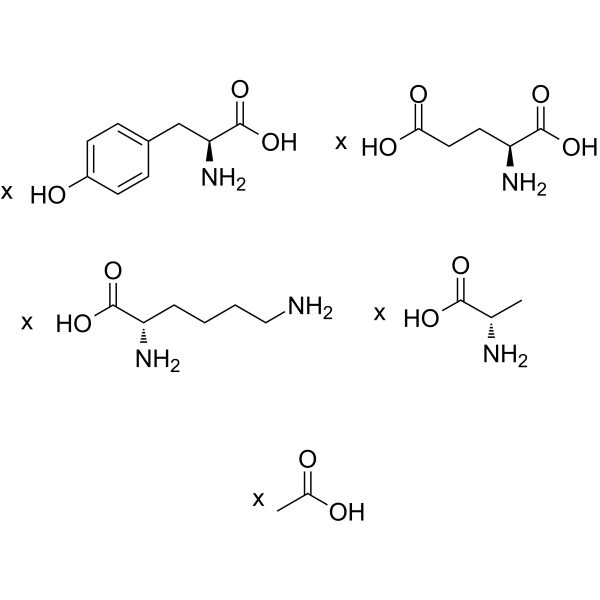
    CMD178 TFA is a lead peptide that consistently reduced the expression of Foxp3 and STAT5 induced by IL-2/s IL-2Rα signaling and inhibits Treg cell development .
    CMD178 TFA
  • HY-D0216

    Biochemical Assay Reagents Cancer
    Salicylaldoxime is an organic compound, that has been used as a reagent for the gravimetric determination and separation of Cooper, Nickel, Palladium, Lead, Bismuth and Zine. The copper complex of Salicylaldoxime has anticancer activity .
    Salicylaldoxime
  • HY-W018004S

    Isotope-Labeled Compounds Endogenous Metabolite Metabolic Disease
    L-Homocitrulline-d3 is the deuterium labeled L-Homocitrulline. L-Homocitrulline is metabolized to homoarginine through homoargininosuccinate via the urea cycle pathway and its metabolic abnormality could lead to Lysinuric Protein Intolerance (LPI).
    L-Homocitrulline-d3
  • HY-W013179

    Endogenous Metabolite Metabolic Disease
    18-Hydroxycorticosterone is a corticosteroid and a derivative of corticosterone, which can lead to serious electrolyte imbalances.
    18-Hydroxycorticosterone
  • HY-W018004R

    Reference Standards Endogenous Metabolite Metabolic Disease
    L-Homocitrulline is metabolized to homoarginine through homoargininosuccinate via the urea cycle pathway and its metabolic abnormality could lead to Lysinuric Protein Intolerance (LPI).
    L-Homocitrulline (Standard)
  • HY-W127746

    Biochemical Assay Reagents Others
    Picrolonic acid is the reagent for the separation of amines as crystalline π-complexes. Pyrrolic acid is an analytical reagent for the determination of calcium, magnesium, lead, strontium and thorium. It is also used for the analysis of alkaloids, tryptophan and phenylalanine.
    Picrolonic acid
  • HY-W276106

    Others Cancer
    KM02894 is an inhibitor of glutamate release. Cancer cells release high levels of glutamate, which disrupts normal bone turnover and may lead to cancer-induced bone pain. KM02894 can be used for cancer related research .
    KM02894
  • HY-133084A

    ERK Cancer
    ERK-IN-2 free base is a ERK2 inhibitor with an IC50 value of 1.8 nM. ERK-IN-2 free base might lead to off-target toxicity and/or off-target activity at dose >10 μM .
    ERK-IN-2 free base
  • HY-W783917

    Biochemical Assay Reagents Endogenous Metabolite
    Lead Ionophore IV is an ionophore that has the activity of promoting metal ion transport. Lead Ionophore IV is often used in biological research to study the biological effects of lead ions and their effects on cell function. Lead Ionophore IV can also be used to develop drug delivery systems to improve the bioavailability of compounds.
    Lead Ionophore IV
  • HY-W076166C

    Biochemical Assay Reagents Others
    Lead (II) iodide can be used as detector material for photocell X-ray and γ-ray detection .
    Lead (II) iodide
  • HY-B1285R

    2,3-Dimercapto-1-propanol (Standard); Dithioglycerol (Standard)

    Reference Standards HIV Infection
    Dimercaprol (Standard) is the analytical standard of Dimercaprol. This product is intended for research and analytical applications. Dimercaprol (2,3-Dimercapto-1-propanol) is an anti-heavy metal-poisoning agent, which exhibits anti-HIV activity. Dimercaprol can be used for the study for arsenic, mercury, gold, lead, antimony, and other toxic metal poisoning .
    Dimercaprol (Standard)
  • HY-112905

    Parasite mRNA Infection
    AN11736 is a CPSF3 inhibitor. AN11736 exerts a potent anti-trypsin effect by specifically inhibiting the activity of the trypanosome CPSF3 endonuclease, disrupting the mRNA maturation process. AN11736 exhibits IC50s against T. congolense and T. vivax of 0.14 and 1.3 nM, respectively. AN11736 exhibits strong anti-trypsin activity in mouse and cattle models .
    AN11736
  • HY-114535

    EGFR Cancer
    Jaceidin is a promising lead molecule for potent VEGFR inhibitor with excellent membrane permeability and oral bioavailability. Jaceidin exhibits anti-tumor activities .
    Jaceidin
  • HY-146141

    Ephrin Receptor Cancer
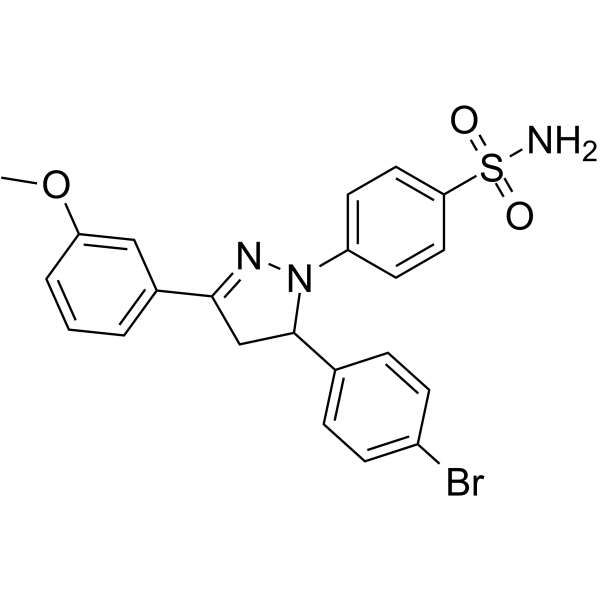
    EphA2 agonist 2 (Lead compound) is a selective EphA2 agonist with antitumor activities. EphA2 agonist 2 can cross the BBB .
    EphA2 agonist 2
  • HY-19144

    5 alpha Reductase Others
    ONO-3805 is an early lead compound of a non-steroidal 5α-reductase inhibitor, used to inhibit the conversion of testosterone to dihydrotestosterone, with potential effects in inhibiting benign prostatic hyperplasia.
    ONO-3805
  • HY-W778203

    Hydroxyethanoic acid-13C2

    Isotope-Labeled Compounds Others
    Glycolic acid- 13C2 is the 13C-labeled Glycolic acid (HY-W015967). Glycolic acid- 13C2 is an inhibitor of tyrosinase, suppressing melanin formation and lead to a lightening of skin colour.
    Glycolic acid-13C2
  • HY-133084

    ERK Cancer
    ERK-IN-2 is a ERK2 inhibitor with an IC50 value of 1.8 nM. ERK-IN-2 might lead to off-target toxicity and/or off-target activity at dose >10 μM .
    ERK-IN-2
  • HY-139424

    Bacterial Cancer
    SQ609 is a lead compound from a library of dipiperidines. SQ609 inhibits more than 90% of intracellular bacterial growth at 4μg/ml and is toxic to these cells. SQ609 displays a potent antitubercular activity .
    SQ609

Inquiry Online

Your information is safe with us. * Required Fields.

Salutation


Country or Region *

Applicant Name *


Organization Name *

Department *


Email Address *


Product Name *

Cat. No.


Requested quantity *

Phone Number *


Remarks

Inquiry Online

Inquiry Information

Product Name:
Cat. No.:
Quantity:
MCE Japan Authorized Agent:

