



Peniterphenyl A
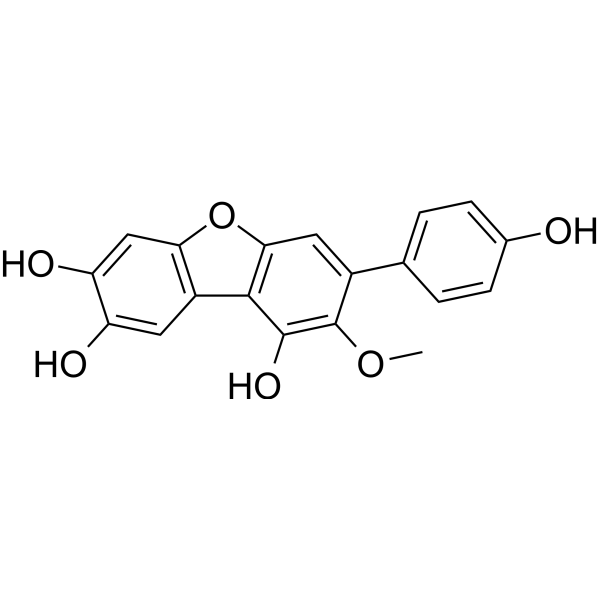
Peniterphenyl A is a natural product obtained from a deep-sea-derived Penicillium sp. Peniterphenyl A inhibits HSV-1/2 virus entry into cells and may block HSV-1/2 infection through direct interaction with virus envelope glycoprotein D to interfere with virus adsorption and membrane fusion. Peniterphenyl A is a promising lead compound against HSV-1/2.
For research use only. We do not sell to patients.
- CAS No.: 2864816-15-7
- Formula: C19H14O6
- Molecular Weight:338.31
-
Storage:
Please store the product under the recommended conditions in the Certificate of Analysis.

To place orders, for customer services and technical support, please contact: MedChemExpress USA
Tel: 609-228-6898 E-mail: [email protected] [email protected]


-
 Biological Activity
-
Chemical Information
- Protocols
- Purity & Documentation
- References
-
 Help & FAQs




Biological Activity
Description
IC50 & Target
|
HSV-1 |
Cellular Effect
|
Cell Line

|
Type | Value | Description | References |
|---|---|---|---|---|
| Vero | CC50 |
>100 μM
Compound: 1
|
Cytotoxicity against African green monkey Vero cells assessed as reduction in cell viability incubated for 3 days by MTT assay
Cytotoxicity against African green monkey Vero cells assessed as reduction in cell viability incubated for 3 days by MTT assay
|
[PMID: 34766503] |


Chemical Information
-
CAS No. 2864816-15-7
-
Molecular Weight 338.31
-
Formula C19H14O6
-
SMILES
COC1=C(C2=C(OC3=C2C=C(C(O)=C3)O)C=C1C4=CC=C(C=C4)O)O
-
Structure Classification
-
Initial Source
deep-sea-derived Penicillium sp. SCSIO41030
-
Shipping
Room temperature in continental US; may vary elsewhere.
-
Storage
Please store the product under the recommended conditions in the Certificate of Analysis.


Purity & Documentation
References

Calculators
Concentration (start) × Volume (start) = Concentration (final) × Volume (final)


Peniterphenyl A Related Classifications
HY-N10177 Related Classifications
 Powered by Bioz