



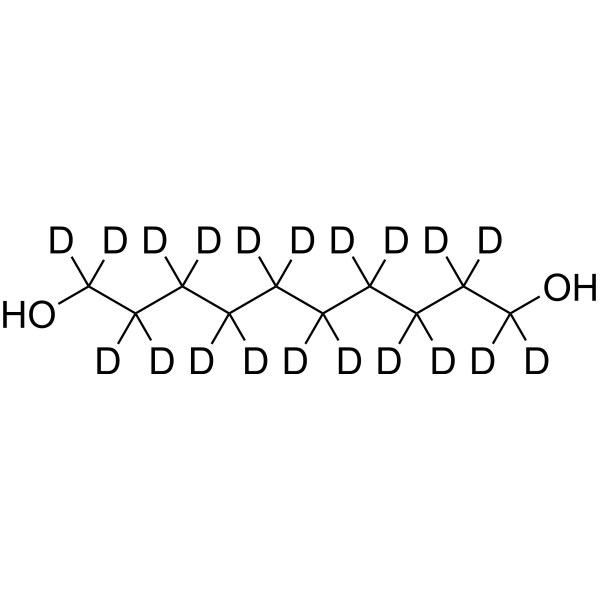
1,10-Decanediol-d20
1,10-Decanediol-d20 is the deuterium labeled 1,10-Decanediol. 1,10-Decanediol is a diol compound that can react with α-ketoglutarate (aKG) to generate polymeric microparticles (termed paKG MPs) for the sustained release of aKG, thereby promoting immunosuppressive regulation. Additionally, paKG MPs can bind to dendritic cells (DCs), reducing their glycolysis and mitochondrial respiration in vitro. These metabolic changes lead to the modulation of MHC-II and CD86 expression in DCs and alter the frequency of regulatory T cells (Tregs) as well as T-helper type 1/2/17 cells in vitro. 1,10-Decanediol can be used in research within the field of immunometabolism. can be used as a surfactant/stabilizer in the synthesis of nanomaterials.
For research use only. We do not sell to patients.
- CAS No.: 347841-78-5
- Formula: C10H2D20O2
- Molecular Weight:194.40
-
Storage:
Please store the product under the recommended conditions in the Certificate of Analysis.

To place orders, for customer services and technical support, please contact: MedChemExpress USA
Tel: 609-228-6898 E-mail: [email protected] [email protected]


-
 Biological Activity
-
Chemical Information
- Protocols
- Purity & Documentation
- References
-
 Help & FAQs




Biological Activity
Description
In Vitro
Stable heavy isotopes of hydrogen, carbon, and other elements have been incorporated into drug molecules, largely as tracers for quantitation during the drug development process. Deuteration has gained attention because of its potential to affect the pharmacokinetic and metabolic profiles of drugs[1].
MedChemExpress (MCE) has not independently confirmed the accuracy of these methods. They are for reference only. Further protocols information, click here.
Application
1. This compound can be used as a tracer
2. This compound can be used as an internal standard for quantitative analysis by NMR, GC-MS, or LC-MS.


Chemical Information
-
CAS No. 347841-78-5
-
Unlabeled CAS 112-47-0
-
Molecular Weight 194.40
-
Formula C10H2D20O2
-
SMILES
OC([2H])([2H])C([2H])([2H])C([2H])([2H])C([2H])([2H])C([2H])([2H])C([2H])([2H])C([2H])([2H])C([2H])([2H])C([2H])([2H])C([2H])([2H])O
-
Shipping
Room temperature in continental US; may vary elsewhere.
-
Storage
Please store the product under the recommended conditions in the Certificate of Analysis.

Protocols
-
RNA extraction experimental
By lysing cells, releasing RNA, and removing impurities such as proteins and DNA, high-purity RNA products are finally obtained. The commonly used traditional method is the guanidine isothiocyanate/phenol/chloroform method (Trizol), which is suitable for a variety of animal materials including animal tissues, microorganisms, cultured cells, etc., and most plant materials.
-
Monocyte-derived dendritic cell differentiation
Human monocyte-derived dendritic cells are generated by isolating PBMC-derived monocytes and culturing them with GM-CSF plus IL-4, which produces cells with dendritic-cell antigen-presenting properties, reduced monocyte phenotype, and increased dendritic-cell functional readouts such as antigen uptake, allogeneic T-cell stimulation, and expression of markers including HLA-DR, CD80, CD86, CD83, CD1a, or CD209 depending on protocol and maturation state. The main readout is phenotypic and functional differentiation: immature MoDCs are commonly evaluated by loss or reduction of CD14 with acquisition of dendritic-cell markers and antigen uptake capacity, whereas mature MoDCs are evaluated by increased CD83, CD80, CD86, HLA-DR, and T-cell stimulatory function after exposure to maturation stimuli such as TNF-α or a cytokine/PGE2 cocktail.


Purity & Documentation
References

Calculators
Concentration (start) × Volume (start) = Concentration (final) × Volume (final)


1,10-Decanediol-d20 Related Classifications
HY-W016773S Related Classifications
 Powered by Bioz