



Rhodizonic acid disodium

Based on 1 Customer Validation
Rhodizonic acid disodium (Sodium rhodizonate dibasic) is a transition metal-dependent pro-oxidant and lead detection agent that induces reactive oxygen species generation, DNA damage, and inhibits Aconitase activity. Rhodizonic acid disodium generates superoxide anion radicals in an iron (II)-dependent manner, leading to aconitase inactivation. Rhodizonic acid disodium also triggers hydroxyl radical-mediated DNA strand breaks and 8-OHdG formation via copper ion reduction. Rhodizonic acid disodium reacts with lead to form a scarlet precipitate, with the color intensity proportional to lead content, enabling qualitative or quantitative analysis of lead. Rhodizonic acid disodium can also be used for real-time visualization of the dynamic process of lead sequestration in the plant rhizosphere and evaluation of the effects of environmental factors such as soil type on the stability of lead-sequestering structures.
For research use only. We do not sell to patients.
- CAS No.: 523-21-7
- Formula: C6Na2O6
- Molecular Weight:214.04
-
Storage:
4°C, sealed storage, away from moisture
* In solvent : -80°C, 6 months; -20°C, 1 month (sealed storage, away from moisture)


To place orders, for customer services and technical support, please contact: MedChemExpress USA
Tel: 609-228-6898 E-mail: [email protected] [email protected]


-
 Biological Activity
-
Chemical Information
-
Solvent & Solubility
- Purity & Documentation
- References
-
 Help & FAQs


-
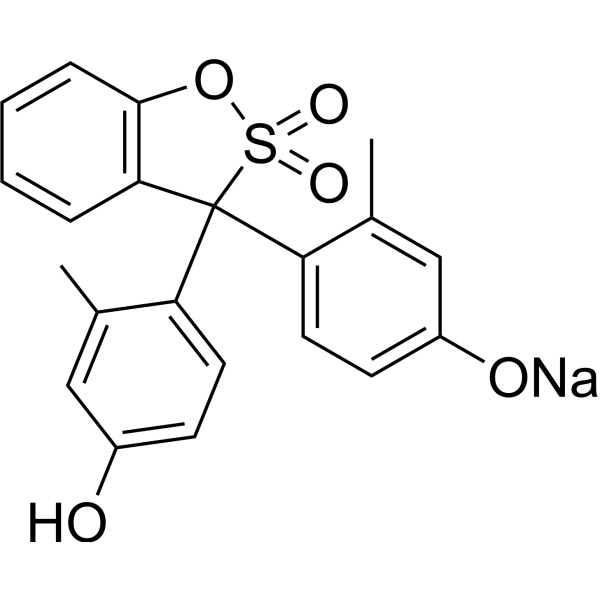
HY-D0276
m-Cresol purple sodium -
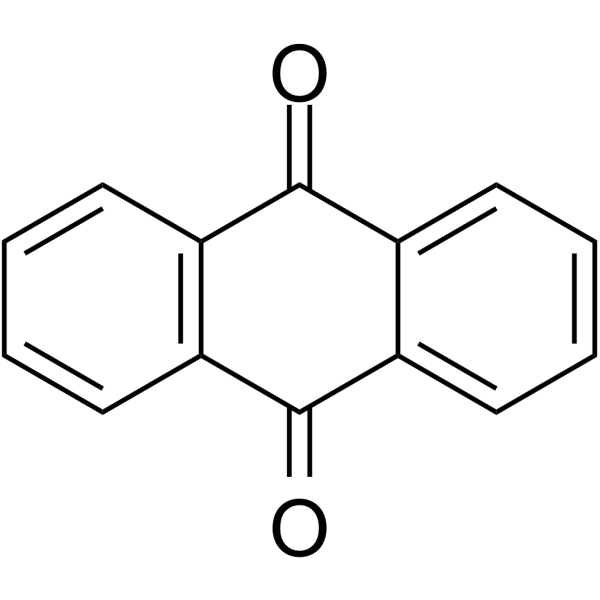
HY-N0354
Anthraquinone -
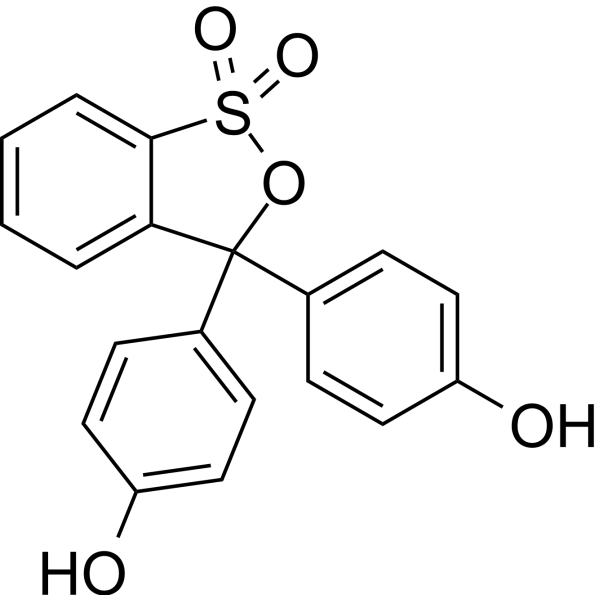
HY-D0169
Phenol Red -
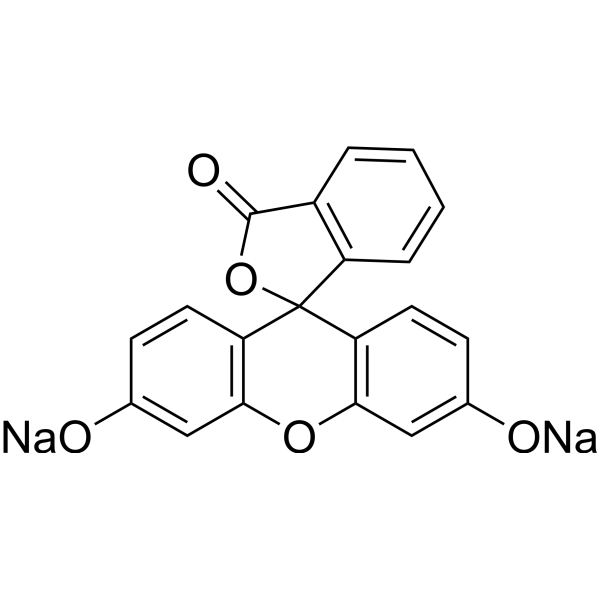
HY-D0208
Fluorescein sodium -
HY-B1571
Bromophenol blue -
HY-W008818
4'-Aminoacetophenone -
HY-D0309
Rhodamine 6G -
HY-D0236
Congo Red -

HY-Y0024
4-Methoxyacetophenone -
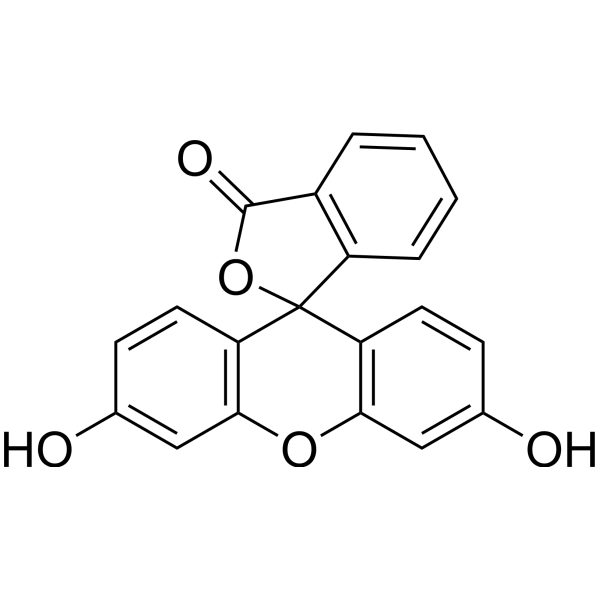
HY-D0251
Fluorescein -
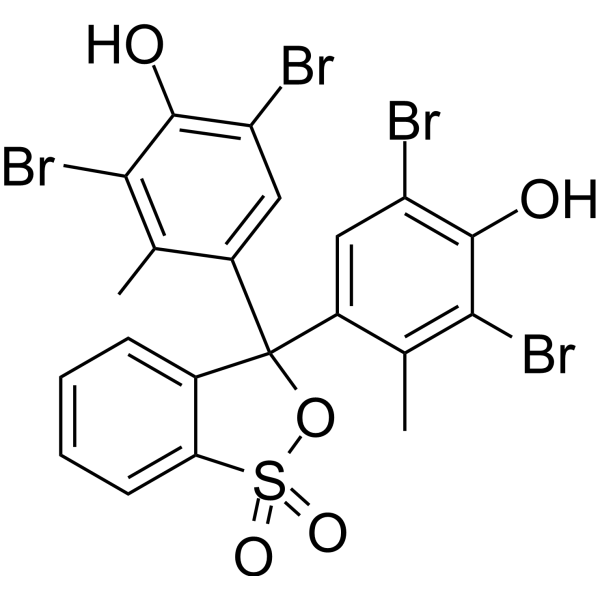
HY-W040144
Bromocresol green -

HY-W110791
Sodium diphenylamine-4-sulfonate
All DNA/RNA Synthesis Isoforms
More

Biological Activity
Description
In Vitro
Disodium rhodizonate (5 mg) serves as a highly efficient real-time staining agent for detecting lead sequestration by living root border cells and their mucilage in Golden Bantam maize. It forms a scarlet precipitate proportional to lead content, while showing pale yellow staining under lead-free conditions[2].
Procedure: Staining for 10 sec; lead exposure for 1 min/60 min; incubation with lead + nuclease for 60 min; nuclease incubation for 20 min after lead treatment[2].
MedChemExpress (MCE) has not independently confirmed the accuracy of these methods. They are for reference only.


Chemical Information
-
CAS No. 523-21-7
-
Appearance Solid
-
Molecular Weight 214.04
-
Formula C6Na2O6
-
Color Brown to black
-
SMILES
O=C(C(O[Na])=C(C1=O)O[Na])C(C1=O)=O
-
Synonyms
Sodium rhodizonate dibasic
-
Shipping
Room temperature in continental US; may vary elsewhere.
-
Storage
4°C, sealed storage, away from moisture
* In solvent : -80°C, 6 months; -20°C, 1 month (sealed storage, away from moisture)


Solvent & Solubility
In Vitro:
H2O : 1.96 mg/mL (9.16 mM; ultrasonic and warming and adjust pH to 2 with 1 M HCl and heat to 60°C)
Please refer to the solubility information to select the appropriate solvent. Once prepared, please aliquot and store the solution to prevent product inactivation from repeated freeze-thaw cycles.
Storage method and period of stock solution: -80°C, 6 months; -20°C, 1 month (sealed storage, away from moisture). When stored at -80°C, please use it within 6 months. When stored at -20°C, please use it within 1 month.
* Note: If you choose water as the stock solution, please dilute it to the working solution, then filter and sterilize it with a 0.22 μm filter before use.
Please refer to the solubility information to select the appropriate solvent. Once prepared, please aliquot and store the solution to prevent product inactivation from repeated freeze-thaw cycles.
Storage method and period of stock solution: -80°C, 6 months; -20°C, 1 month (sealed storage, away from moisture). When stored at -80°C, please use it within 6 months. When stored at -20°C, please use it within 1 month.
* Note: If you choose water as the stock solution, please dilute it to the working solution, then filter and sterilize it with a 0.22 μm filter before use.
Concentration (start) × Volume (start) = Concentration (final) × Volume (final)


Purity & Documentation
-
Data Sheet (280 KB)
-
SDS (393 KB)
- English - EN (393 KB)
- Français - FR (393 KB)
- Deutsch - DE (393 KB)
- Norwegian - NO (393 KB)
- Español - ES (393 KB)
- Swedish - SV (393 KB)
- Italian - IT (393 KB)
- Korean - KR (393 KB)
- Portuguese - PT (393 KB)
-
Handling Instructions (2659 KB)
References
[1]. Murakami K, et al. Prooxidant action of rhodizonic acid: transition metal-dependent generation of reactive oxygen species causing the formation of 8-hydroxy-2'-deoxyguanosine formation in DNA. Toxicol In Vitro. 2006;20(6):910-914. [Content Brief]
[2]. Huskey DA, et al. Use of rhodizonic acid for rapid detection of root border cell trapping of lead and reversal of trapping with DNase. Appl Plant Sci. 2019;7(4):e01240. Published 2019 Apr 12. [Content Brief]


Complete Stock Solution Preparation Table
Please refer to the solubility information to select the appropriate solvent. Once prepared, please aliquot and store the solution to prevent product inactivation from repeated freeze-thaw cycles.
Storage method and period of stock solution: -80°C, 6 months; -20°C, 1 month (sealed storage, away from moisture). When stored at -80°C, please use it within 6 months. When stored at -20°C, please use it within 1 month.
| Optional Solvent | Concentration Solvent Mass | 1 mg | 5 mg | 10 mg | 25 mg |
|---|---|---|---|---|---|
| H2O | 1 mM | 4.6720 mL | 23.3601 mL | 46.7202 mL | 116.8006 mL |
| 5 mM | 0.9344 mL | 4.6720 mL | 9.3440 mL | 23.3601 mL |
* Note: If you choose water as the stock solution, please dilute it to the working solution, then filter and sterilize it with a 0.22 μm filter before use.


Rhodizonic acid disodium Related Classifications
HY-W115721 Related Classifications
 Powered by Bioz
Keywords