



Rhodamine 6G
Based on 5 publication(s) in Google Scholar
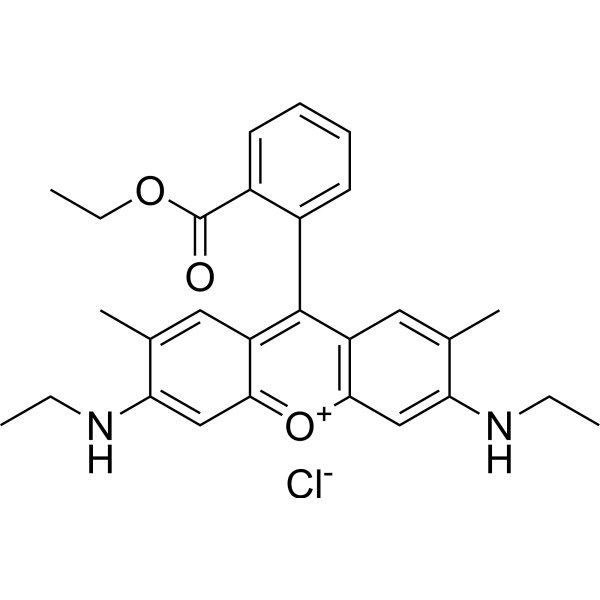
Rhodamine dyes are membrane-permeable cationic fluorescent probes that specifically recognize mitochondrial membrane potentials, thereby attaching to mitochondria and producing bright fluorescence, and at certain concentrations, rhodamine dyes have low toxicity to cells, so they are commonly used to detect mitochondria in animal cells, plant cells, and microorganisms.
Nur für Forschungszwecke. Wir verkaufen nicht an Patienten.
- Reinheit : 98.02%
- CAS. Nr.: 989-38-8
- Formel: C28H31ClN2O3
- Molecular Weight:479.01
-
Speicherung:
4°C, sealed storage, away from moisture and light
* In solvent : -80°C, 6 months; -20°C, 1 month (sealed storage, away from moisture and light)

To place orders, for customer services and technical support, please contact: MedChemExpress USA
Tel: 609-228-6898 E-mail: [email protected] [email protected]


-
 Biologische Aktivität
-
Chemical Information
-
Lösungsmittel & Löslichkeit
- Reinheit & Dokumentation
- Verweise
-
 Help & FAQs


-
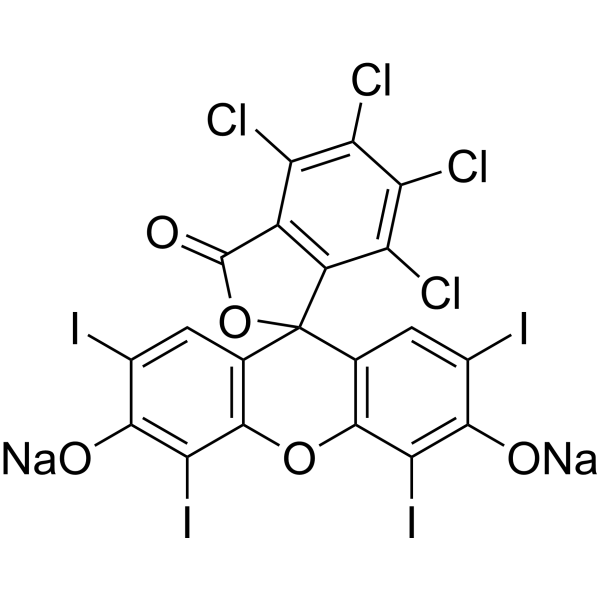
HY-D0214
Acid Red 94 sodiumPhotosensitizer -
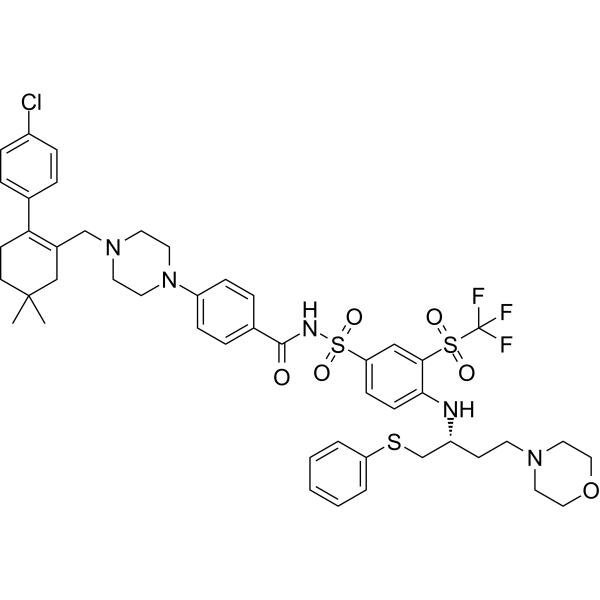
HY-10087
NavitoclaxBcl-2 Inhibitor -
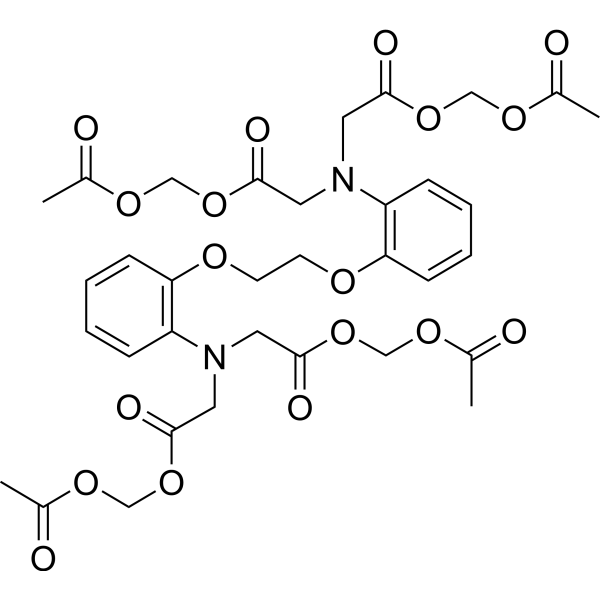
HY-100545
BAPTA-AMCa2+ Chelator -
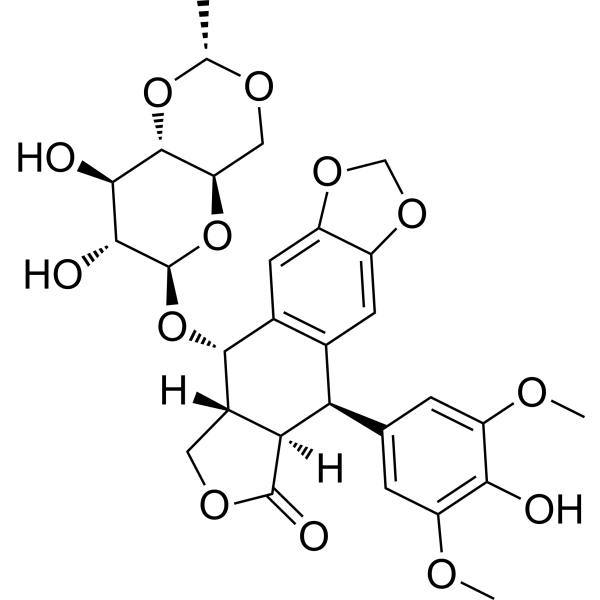
HY-13629
EtoposideTopoisomerase II Inhibitor -
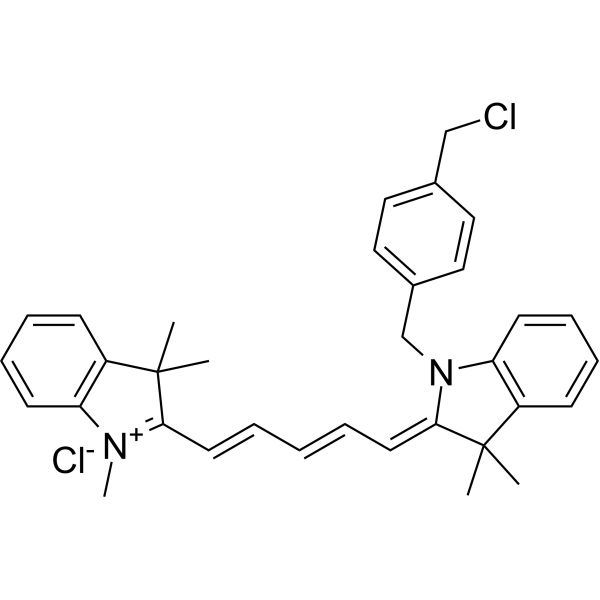
HY-D1783
MitoTracker Deep Red FMRed Fluorescent Dye -
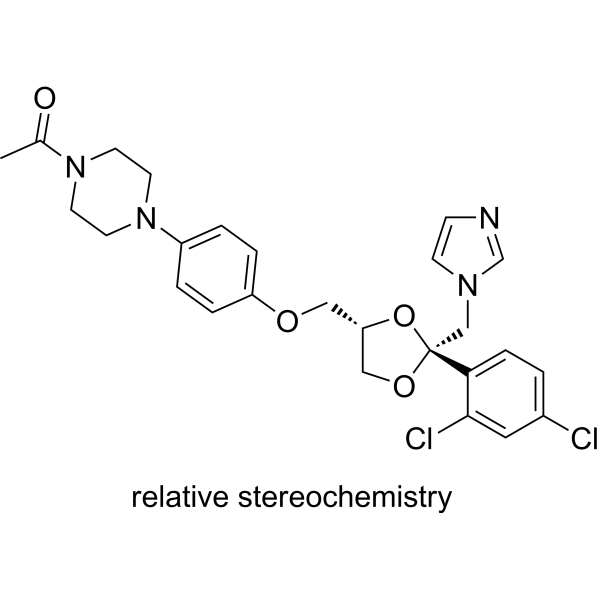
HY-B0105
KetoconazoleCYP3A4 Inhibitor -
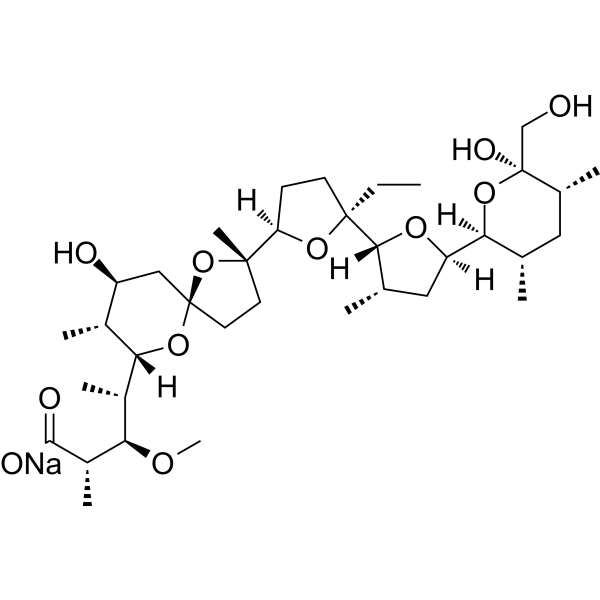
HY-N0150
Monensin sodiumAntibiotic -
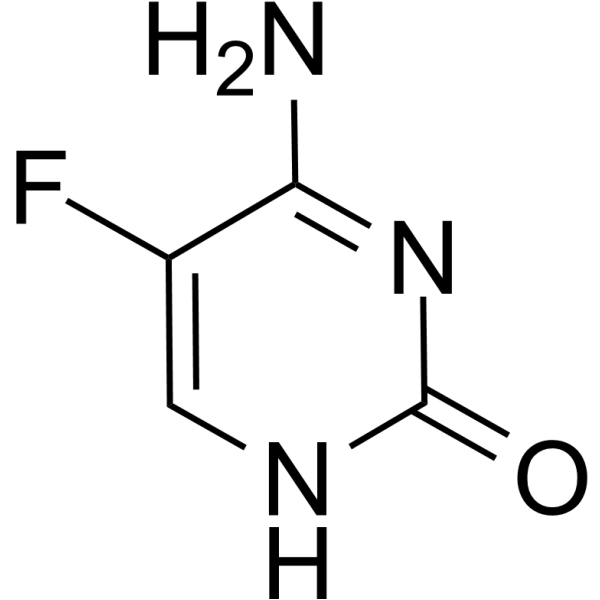
HY-B0139
FlucytosineAntifungal Agent -
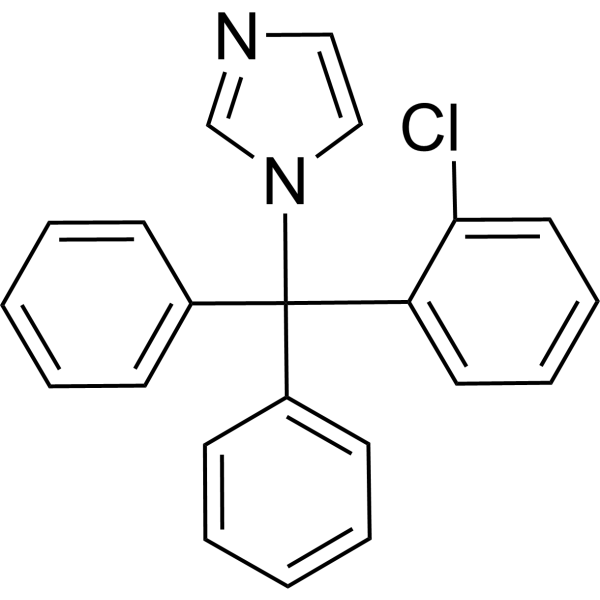
HY-10882
ClotrimazoleAutophagy Inhibitor -
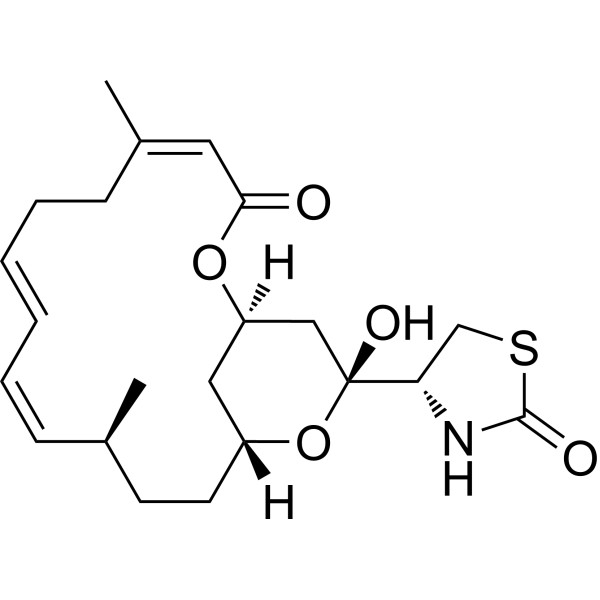
HY-16929
Latrunculin AG-actin Polymerization Inhibitor -
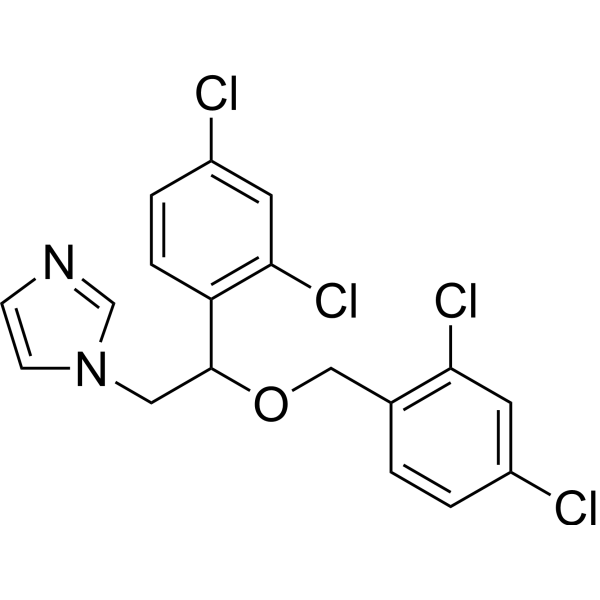
HY-B0454
MiconazoleAntifungal Agent -
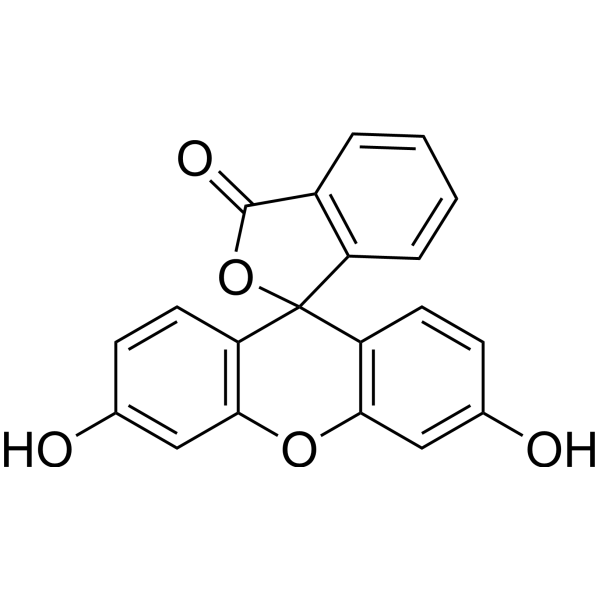
HY-D0251
FluoresceinFluorescent Tracer
Publications Citing Use of MedChemExpress (MCE) Rhodamine 6G
More Customer Validation & Images

-
Cell Imaging/Staining


Biologische Aktivität
Beschreibung
In Vitro
Guide (The following is our recommended experimental protocol. This protocol serves merely as a reference guide; specific procedures should be adjusted according to your actual requirements.)
1. Preparation of Rhodamine 6G Working Solution
1.1 Preparation of Stock Solution
Dilute 1 mg of Rhodamine 6G with 525 μL of anhydrous DMSO to prepare a 5 mM stock solution.
1.2 Preparation of Working Solution
Dilute the stock solution with pre-warmed serum-free cell culture medium or PBS to prepare a Rhodamine 6G working solution with a concentration of 1–20 μM.
Note: Please adjust the concentration of the Rhodamine 6G working solution according to your specific needs, and prepare it immediately before use.
2. Cell Staining (Suspension Cells)
2.1 Centrifuge to harvest the cells, then wash twice with PBS (5 minutes per wash). Adjust the cell density to 1 × 10⁶ cells/mL.
2.2 Add 1 mL of the Rhodamine 6G working solution and incubate at room temperature for 30–60 minutes.
2.3 Centrifuge at 400 × g for 3–4 minutes, and discard the supernatant.
2.4 Wash the cells twice with PBS (5 minutes per wash).
2.5 Resuspend the cells in 1 mL of serum-free medium or PBS, then observe using a fluorescence microscope or flow cytometer.
3. Cell Staining (Adherent Cells)
3.1 Culture the adherent cells on sterile coverslips.
3.2 Remove the coverslips from the culture medium and aspirate any excess medium.
3.3 Add 100 μL of the dye working solution, gently agitate to ensure the solution completely covers the cells, and incubate for 5–30 minutes.
3.4 Aspirate the working dye solution, wash with culture medium 2–3 times (5 minutes each), and observe using a fluorescence microscope or flow cytometer.
MedChemExpress (MCE) has not independently confirmed the accuracy of these methods. They are for reference only.
In Vivo
MedChemExpress (MCE) has not independently confirmed the accuracy of these methods. They are for reference only.
Clinical Trial
| NCT Number | Sponsor | Condition | Start Date |
Phase

|
|---|---|---|---|---|
| NCT01329991 | 2011-05 | PHASE1 |
Emission (Em)
552
Excitation (Ex)
530


Chemical Information
-
CAS. Nr. 989-38-8
-
Appearance Solid
-
Molecular Weight 479.01
-
Formel C28H31ClN2O3
-
Color Brown to reddish brown
-
SMILES
CC1=CC2=C(C3=CC=CC=C3C(OCC)=O)C4=C([O+]=C2C=C1NCC)C=C(NCC)C(C)=C4.[Cl-]
-
Synonyms
Basic Red 1
-
Versand
Room temperature in continental US; may vary elsewhere.
-
Speicherung
4°C, sealed storage, away from moisture and light
* In solvent : -80°C, 6 months; -20°C, 1 month (sealed storage, away from moisture and light)


Publications (5)
-
Journal Impact Factor
-
Most Recent
-
-
Int J Biol Macromol
Low molecular weight protein tyrosine phosphatase: A driver of lipid metabolic remodeling in Caenorhabditis elegans. [Abstract]2025 May;306(Pt 1):141332. PMID: 39988157
Rhodamine 6G purchased from MedChemExpress. Usage Cited in: Int J Biol Macromol. 2025 May;306(Pt 1):141332. [Abstract]
Representative images and relative fluorescence intensity of membrane potential in control and lmwptp RNAi-treated C. elegans, stained with Rhodamine 6G.
-
Thromb Haemost
Inhibition of IP3 (Inositol 1,4,5-Trisphosphate) Receptors Retards SARS-CoV-2-Induced Endothelial von Willebrand Factor Secretion and Thrombosis. [Abstract]2025 Mar 6. PMID: 40049586 -
J Mol Cell Cardiol
Homocysteine activates endothelial TP receptor to promote von Willebrand factor secretion and thrombosis. [Abstract]2025 Nov 1:210:59-71. PMID: 41183610 -


Lösungsmittel & Löslichkeit
In Vitro:
DMSO : 23.33 mg/mL (48.70 mM; Need ultrasonic; Hygroscopic DMSO has a significant impact on the solubility of product, please use newly opened DMSO)
H2O : 10 mg/mL (20.88 mM; ultrasonic and warming and heat to 60°C)
Please refer to the solubility information to select the appropriate solvent. Once prepared, please aliquot and store the solution to prevent product inactivation from repeated freeze-thaw cycles.
Storage method and period of stock solution: -80°C, 6 months; -20°C, 1 month (sealed storage, away from moisture and light). When stored at -80°C, please use it within 6 months. When stored at -20°C, please use it within 1 month.
* Note: If you choose water as the stock solution, please dilute it to the working solution, then filter and sterilize it with a 0.22 μm filter before use.
Please refer to the solubility information to select the appropriate solvent. Once prepared, please aliquot and store the solution to prevent product inactivation from repeated freeze-thaw cycles.
Storage method and period of stock solution: -80°C, 6 months; -20°C, 1 month (sealed storage, away from moisture and light). When stored at -80°C, please use it within 6 months. When stored at -20°C, please use it within 1 month.
* Note: If you choose water as the stock solution, please dilute it to the working solution, then filter and sterilize it with a 0.22 μm filter before use.
Konzentration (Stammlösung) × Volumen (Stammlösung) = Konzentration (Ziellösung) × Volumen (Ziellösung)


Reinheit & Dokumentation
-
Data Sheet (282 KB)
-
SDS (785 KB)
- English - EN (785 KB)
- Français - FR (785 KB)
- Deutsch - DE (785 KB)
- Norwegian - NO (785 KB)
- Español - ES (785 KB)
- Swedish - SV (785 KB)
- Italian - IT (785 KB)
- Korean - KR (785 KB)
- Portuguese - PT (785 KB)
-
Handling Instructions (2659 KB)
Verweise
[1]. Kutushov M, et al. Low concentrations of Rhodamine 6G selectively destroy tumor cells and improve survival of melanoma transplanted mice. Neoplasma. 2013;60(3):262-73. [Content Brief]
[2]. Zehentbauer FM, et al. Fluorescence spectroscopy of Rhodamine 6G: concentration and solvent effects. Spectrochim Acta A Mol Biomol Spectrosc. 2014;121:147-51. [Content Brief]
[3]. Kutushov M, et al. Low concentrations of Rhodamine 6G selectively destroy tumor cells and improve survival of melanoma transplanted mice. Neoplasma. 2013;60(3):262-73. [Content Brief]
[4]. Jain RK, et al. Measuring leukocyte-endothelial interactions in mice. Cold Spring Harb Protoc. 2013 Jun 1;2013(6):561-3. [Content Brief]


Complete Stock Solution Preparation Table
Please refer to the solubility information to select the appropriate solvent. Once prepared, please aliquot and store the solution to prevent product inactivation from repeated freeze-thaw cycles.
Storage method and period of stock solution: -80°C, 6 months; -20°C, 1 month (sealed storage, away from moisture and light). When stored at -80°C, please use it within 6 months. When stored at -20°C, please use it within 1 month.
| Optional Solvent | Concentration Solvent Mass | 1 mg | 5 mg | 10 mg | 25 mg |
|---|---|---|---|---|---|
| H2O / DMSO | 1 mM | 2.0876 mL | 10.4382 mL | 20.8764 mL | 52.1910 mL |
| 5 mM | 0.4175 mL | 2.0876 mL | 4.1753 mL | 10.4382 mL | |
| 10 mM | 0.2088 mL | 1.0438 mL | 2.0876 mL | 5.2191 mL | |
| 15 mM | 0.1392 mL | 0.6959 mL | 1.3918 mL | 3.4794 mL | |
| 20 mM | 0.1044 mL | 0.5219 mL | 1.0438 mL | 2.6095 mL | |
| DMSO | 25 mM | 0.0835 mL | 0.4175 mL | 0.8351 mL | 2.0876 mL |
| 30 mM | 0.0696 mL | 0.3479 mL | 0.6959 mL | 1.7397 mL | |
| 40 mM | 0.0522 mL | 0.2610 mL | 0.5219 mL | 1.3048 mL |
* Note: If you choose water as the stock solution, please dilute it to the working solution, then filter and sterilize it with a 0.22 μm filter before use.


Rhodamine 6G Related Classifications
HY-D0309 Related Classifications
 Powered by Bioz