
1. Search Result
Search Result
Pathways Recommended: Membrane Transporter/Ion Channel
Results for "

Lipid membrane

" in MedChemExpress (MCE) Product Catalog:

376

Inhibitors & Agonists

5

Bibliothèques de criblage

44

Fluorescent Dyes

67

Biochemical Assay Reagents

35

Peptides

74

Natural
Products

38

Isotope-Labeled Compounds

4

Antibodies

53

Oligonucleotides

2

GMP Molecules

Cat. No. Nom du produit Target Research Area
  • HY-P1902
    Cardiotoxin Analog (CTX) IV (6-12)
    Maximum Cited Publications
    10 Publications Verification

    Apoptosis Cardiovascular Disease
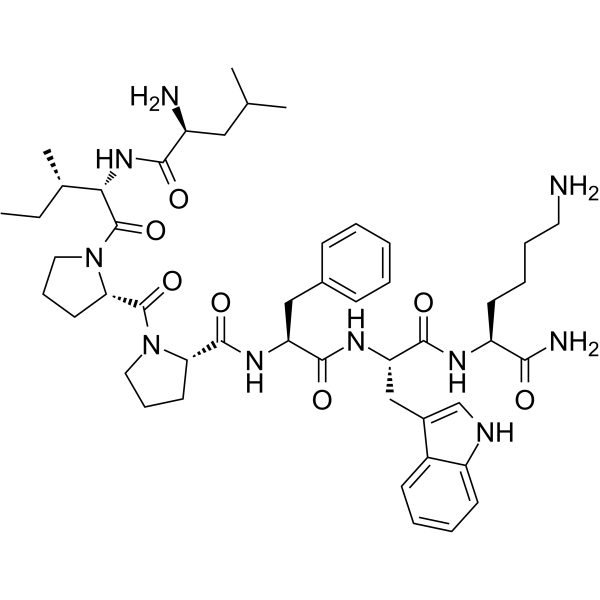
    Cardiotoxin Analog (CTX) IV (6-12) is a membrane active peptide that specifically targets negatively charged phospholipid membranes (such as phosphatidylserine and phosphatidylinositol). Cardiotoxin Analog (CTX) IV (6-12) was discovered in the venom of the Taiwan cobra. Cardiotoxin Analog (CTX) IV (6-12) is a chemically synthesized snake venom cardiotoxin that binds to cell membranes and embeds into lipid bilayers through hydrophobic interactions and electrostatic attraction, thereby destroying the stability of membrane structure. Cardiotoxin Analog (CTX) IV (6-12) can induce membrane lipid disorder and cell lysis, exhibiting hemolysis and cytotoxicity .
  • HY-P1902A
    Cardiotoxin Analog (CTX) IV (6-12) TFA
    Maximum Cited Publications
    10 Publications Verification

    Apoptosis Cardiovascular Disease
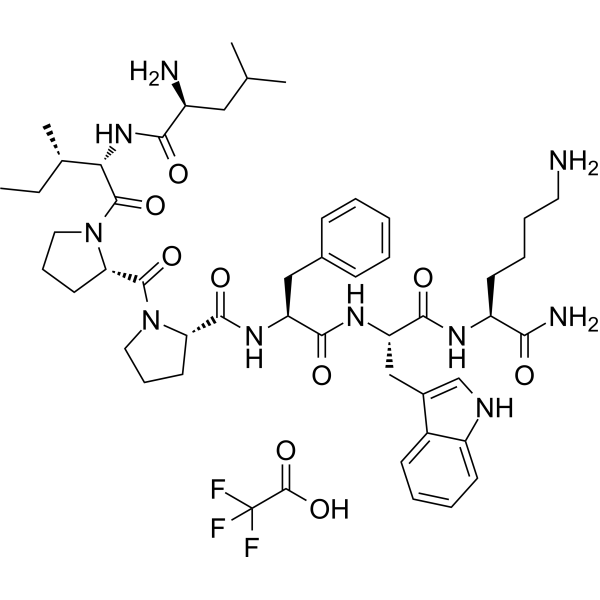
    Cardiotoxin Analog (CTX) IV (6-12) TFA is a membrane active peptide that specifically targets negatively charged phospholipid membranes (such as phosphatidylserine and phosphatidylinositol). Cardiotoxin Analog (CTX) IV (6-12) TFA was discovered in the venom of the Taiwan cobra. Cardiotoxin Analog (CTX) IV (6-12) TFA is a chemically synthesized snake venom cardiotoxin that binds to cell membranes and embeds into lipid bilayers through hydrophobic interactions and electrostatic attraction, thereby destroying the stability of membrane structure. Cardiotoxin Analog (CTX) IV (6-12) TFA can induce membrane lipid disorder and cell lysis, exhibiting hemolysis and cytotoxicity .
  • HY-P5366

    Liposome Others
    PEP1 is an amphipathic α-helical peptide containing 31 residues. The interaction of PEP1 with POPC-supported lipid bilayers (SLBs) is concentration-dependent: at low concentrations, it inserts into SLBs to generate compressive stress; at medium concentrations, it saturates the membrane surface to maintain constant stress; and at high concentrations, it solubilizes SLBs. PEP1 can be used for research on the mechanism of membrane-peptide interactions .
  • HY-P0311

    Bacterial Infection
    LAH4, an alpha-helix of the designed amphipathic peptide antibiotic, exhibits potent antimicrobial, nucleic acid transfection and cell penetration activities. LAH4 possesses high plasmid DNA delivery capacities. LAH4 has a strong affinity for anionic lipids found in the outer membrane of bacterial membranes .
  • HY-P5712
    Gramicidin S
    1 Publications Verification

    Gramicidin soviet

    Antibiotic Bacterial Na+/K+ ATPase Infection
    Gramicidin S (Gramicidin soviet) is a cationic cyclic peptide antibiotic that selectively targets bacterial cell membranes and has anticancer activity. Gramicidin S also exerts antibacterial activity by destroying membrane integrity and interfering with membrane protein function. Gramicidin S inserts into the phospholipid bilayer through hydrophobic amino acid residues, specifically binds to negatively charged membrane lipids and disrupts membrane structure, thereby inhibiting cell division and cell wall synthesis, and ultimately causing bacterial death. Gramicidin S also inhibits ion channels, with IC50s of 41 μM, 24 μM, and 3 μM for Na +/K +-ATPase, tobacco leaf plasma membrane Mg 2+/K +-ATPase, and rat heart plasma membrane Ca 2+-ATPase, respectively .
  • HY-P1723
    Spexin
    2 Publications Verification

    Neuropeptide Q

    Neuropeptide Y Receptor Apoptosis Ferroptosis Autophagy Cardiovascular Disease Neurological Disease
    Spexin (Neuropeptide Q) is a selective agonist of galanin receptors GAL2 and GAL3, and is a conserved peptide that functions as a neurotransmitter/neuromodulator and endocrine factor. Spexin can function through both central and peripheral actions. Spexin upregulates Beclin 1 to inhibit ferroptosis induced by excessive autophagy, reduces the uptake of long-chain fatty acids by adipocytes, and regulates energy metabolism by increasing lipid oxidation (e.g., reducing the respiratory exchange ratio in rodents). Spexin improves cardiac function in the Doxorubicin hydrochloride (HY-15142)-induced cardiotoxicity model, protects mitochondrial membrane potential, and reduces iron accumulation and lipid peroxidation. Spexin can be used to study obesity and its related metabolic disorders, cardiovascular diseases (e.g., cardioprotection), and side effects of tumor chemotherapy .
  • HY-P10233A

    Bacterial Infection
    SAAP 148 TFA is a synthetic antimicrobial peptide (bacteria) that interacts with and disrupts the lipid bilayer of bacterial cytoplasmic membranes, thereby inducing changes in membrane permeability and bacterial death. SAAP 148 TFA kills drug-resistant, multidrug-resistant and persister bacterial strains, inhibits biofilm formation, eliminates established biofilms, and blocks bacterial colonization on implant surfaces. SAAP 148 TFA retains its activity after modification or immobilization, exhibits variable cytotoxicity in different human cell models, and shows reduced efficacy in protein-rich environments. SAAP 148 TFA can be used in infection-related research .
  • HY-P0311A

    Bacterial Infection
    LAH4 TFA, an alpha-helix of the designed amphipathic peptide antibiotic, exhibits potent antimicrobial, nucleic acid transfection and cell penetration activities. LAH4 TFA possesses high plasmid DNA delivery capacities. LAH4 TFA has a strong affinity for anionic lipids found in the outer membrane of bacterial membranes .
  • HY-P3512

    IB-367

    Bacterial Fungal Parasite Infection Cancer
    Iseganan is an anti-microbial peptide that is active against both Gram-positive and Gram-negative bacteria and fungi. Iseganan kills a broad-spectrum of bacteria and fungi by attaching to and destroying the integrity of the lipid cell membranes. Iseganan can be used for oral mucositis research .
  • HY-P10471A

    MARCKS-ED TFA

    MARCKS PKC Others
    MPSD TFA (MARCKS-ED TFA) is the TFA salt form of MPSD (HY-P10471). MPSD TFA is a 25-amino acid peptide based on the effector domain sequence of the intracellular membrane protein myristoylated alanine-rich C-kinase substrate (MARCKS). MPSD TFA can sense membrane curvature and recognize phosphatidylserine. MPSD TFA can be utilized as biological probe to study membrane shape and lipid composition .
  • HY-P4119

    Biochemical Assay Reagents Others
    Pep-1-Cysteamine is an amphipathic chimeric cell-penetrating peptide. Pep-1-Cysteamine can penetrate biological membranes in an energy-independent manner without forming transmembrane pores, and efficiently deliver active proteins into cells, with its translocation dominated by electrostatic interactions and membrane perturbation .
  • HY-P10862

    Exosomes Virus Protease Infection Cancer
    AH-D peptide is a brain-penetrant antiviral agent disrupting highly curved lipid membranes. AH-D peptide exhibits broad-spectrum antiviral activity against ZIKV, Dengue virus, Chikungunya virus, yellow fever virus and Japanese encephalitis virus, with
    IC50
    values of 11.9, 12.5, 35.7, 206 and 136 nM, respectively. AH-D peptide reduces the viral load in the brain, suppresses inflammation, protects neurons, and does not damage the blood brain barrier. AH-D peptide restores antitumor immunity by decreasing circulating PD-L1 + exosomes, reducing intratumoral immunosuppressive cells (regulatory T cells, myeloid-derived suppressor cells), and enhancing T cell function. AH-D peptide inhibits membrane-enveloped viruses and cancer cell metastasis in vivo. AH-D peptide exhibits no immunogenicity and has negligible effects on normal tissues. AH-D peptide can be used for research in Zika virus and other mosquito-borne viruses, cancer immunotherapy and metastasis .
  • HY-P11430

    Biochemical Assay Reagents Infection
    UBI (31-38) is a Ubiquicidin-derived octapeptide and anti-bacterial agent. UBI (31-38) selectively interacts with anionic phospholipid membranes and restricts lipid lateral motion. UBI (31-38) induces anionic vesicle aggregation via electrostatic repulsion screening, and undergoes conformational changes in membrane-mimicking environments. UBI (31-38) can be used for the research of infection imaging probes .
  • HY-P10514

    Small Interfering RNA (siRNA) Others
    Transportan 10 is a derivative of Transportan (HY-P1732) and is an amphiphilic cell penetrating peptide (CPP). Transportan 10 helps molecules penetrate cell membrane barriers by directly interacting with the lipid bilayer. Transportan 10 can be used in gene therapy or siRNA delivery vector research .
  • HY-P10233

    Bacterial Infection
    SAAP 148 is a synthetic antimicrobial peptide (bacteria) that interacts with and disrupts the lipid bilayer of bacterial cytoplasmic membranes, thereby inducing changes in membrane permeability and bacterial death. SAAP 148 kills drug-resistant, multidrug-resistant and persister bacterial strains, inhibits biofilm formation, eliminates established biofilms, and blocks bacterial colonization on implant surfaces. SAAP 148 retains its activity after modification or immobilization, exhibits variable cytotoxicity in different human cell models, and shows reduced efficacy in protein-rich environments. SAAP 148 can be used in infection-related research .
  • HY-P3911

    Bacterial Infection
    CAP 37 (20-44) is a peptide based on amino acid residues 20 through 44 of CAP37. CAP37, a Cationic antimicrobial protein of 37 kDa, is a multifunctional protein .
  • HY-P5159

    Sodium Channel Inflammation/Immunology
    Crotamine is a Na + channel modulator. Crotamine is a 42 amino acid toxin cross-linked by three disulfide bridges. Crotamine has analgesic activity. Crotamine also interacts with lipid membranes and shows myonecrotic activity. Crotamine can be isolated from Crotalus durissus terrificus venom .
  • HY-P5159A

    Sodium Channel Inflammation/Immunology
    Crotamine TFA is a Na + channel modulator. Crotamine is a 42 amino acid toxin cross-linked by three disulfide bridges. Crotamine has analgesic activity. Crotamine also interacts with lipid membranes and shows myonecrotic activity. Crotamine can be isolated from Crotalus durissus terrificus venom .
  • HY-P10471

    MARCKS-ED

    MARCKS PKC Others
    MPSD (MARCKS-ED) is a 25-amino acid peptide based on the effector domain sequence of the intracellular membrane protein myristoylated alanine-rich C-kinase substrate (MARCKS). MPSD can sense membrane curvature and recognize phosphatidylserine. MPSD can be utilized as biological probe to study membrane shape and lipid composition .
  • HY-P10471D

    MARCKS-ED control peptide

    MARCKS PKC Others
    MPSD control peptide (MARCKS-ED control peptide) is a control peptide for MPSD peptide (HY-P10471). MPSD (MARCKS-ED) is a 25-amino acid peptide based on the effector domain sequence of the intracellular membrane protein myristoylated alanine-rich C-kinase substrate (MARCKS). MPSD can sense membrane curvature and recognize phosphatidylserine. MPSD can be utilized as biological probe to study membrane shape and lipid composition .
  • HY-40118

    Boc-L-proline methyl ester

    Liposome Others
    Boc-Pro-OMe (Boc-L-proline methyl ester) is a lipid compound that can be used for liposome preparation. Liposomes are the main component of vesicles with concentric phospholipid bilayer membranes, which can be used to construct drug delivery systems for anti-cancer and anti-infection fields. Highly polar water-soluble loads can be captured in the internal aqueous space of liposomes, while lipophilic loads can be distributed into the lipid bilayer and become part of the lipid bilayer. Especially for the delivery of antisense oligonucleotides, it can overcome the problems of inefficient cellular uptake and rapid loss in the body.
  • HY-P4134

    Peptides Others
    Lipid Membrane Translocating Peptide is a cell-penetrating peptide consisting of 13 amino acids .
  • HY-P10536

    Bacterial Infection
    Temporin SHF is a broad-spectrum antimicrobial peptide that is active against Gram-positive and Gram-negative bacteria and yeasts, but does not have hemolytic activity. Temporin SHF disrupts the acyl chain stacking of anionic lipid bilayers, leading to cracks and disintegration of microbial membranes. Temporin SHF can be used in the development of antimicrobial drugs .
  • HY-P1723A

    Neuropeptide Q TFA

    Neuropeptide Y Receptor Apoptosis Ferroptosis Autophagy Cardiovascular Disease Metabolic Disease
    Spexin (Neuropeptide Q) TFA is a selective agonist of galanin receptors GAL2 and GAL3, and is a conserved peptide that functions as a neurotransmitter/neuromodulator and endocrine factor. Spexin TFA can function through both central and peripheral actions. Spexin TFA upregulates Beclin 1 to inhibit ferroptosis induced by excessive autophagy, reduces the uptake of long-chain fatty acids by adipocytes, and regulates energy metabolism by increasing lipid oxidation (e.g., reducing the respiratory exchange ratio in rodents). Spexin TFA improves cardiac function in the Doxorubicin hydrochloride (HY-15142)-induced cardiotoxicity model, protects mitochondrial membrane potential, and reduces iron accumulation and lipid peroxidation. Spexin TFA can be used to study obesity and its related metabolic disorders, cardiovascular diseases (e.g., cardioprotection), and side effects of tumor chemotherapy .
  • HY-P10035

    Amyloid-β Neurological Disease
    β Amyloid(28-35) human is a β-amyloid peptide (Abeta), a lipid-induced amyloid core fragment. β Amyloid oligomers are neurotoxic, and β Amyloid(28-35) human can interact with neuronal membranes, regulate secondary structure and neurotoxicity, and cause Alzheimer's disease. β Amyloid(28-35) human has anisotropic effects on the acidic phospholipid DPH, resulting in enhanced internal fluidity of lipid membrane bilayers .
  • HY-P10968
    KT2

    Bacterial Antibiotic Infection
    KT2 is a cationic amphipathic antibacterial peptide. KT2 can completely kill cells of E. coli O157:H7. KT2 has potent anti-biofilm activity and prevents biofilm formation of E. coli O157:H7. KT2 significantly binds to bacterial surface LPS and interacts with the lipids of liposomes with great penetration capability into bacterial cells, followed by bond to DNA and other cytoplasmic membrane .
  • HY-P11220

    Bacterial Interleukin Related Infection
    Hs02 is a cationic amphiphilic antibacterial peptide derived from human proteins, and it is the membrane-active module of the core chimeric peptide Chim2. Hs02 exhibits broad-spectrum and potent antibacterial activity against various human pathogenic bacteria with the MIC for Staphylococcus aureus and Escherichia coli of as low as 2 μM, and the MBC is 2-4 μM. Hs02 primarily kills bacteria by disrupting the integrity of the bacterial cell membrane, and it has a relatively low selectivity for eukaryotic cell membranes. Hs02 induces the release of IL-12 but does not induce the release of IL-6, indicating its potential for pro-inflammatory or immune activation. Hs02 can be used in antibacterial and immunomodulatory research .
  • HY-P11180

    Antibiotic Bacterial Infection
    Clavanin A is a peptide Antibiotic and membrane permeabilizer. Clavanin A permeabilizes cytoplasmic membranes and unilamellar lipid bilayers, and dissipates membrane potential. Clavanin A inserts into phospholipid monolayers via hydrophobic interactions under physiologically relevant surface pressures. Clavanin A exhibits antibacterial activity against Micrococcus flavus. Clavanin A can be used in studies related to Micrococcus flavus infection .
  • HY-P11180A

    Antibiotic Bacterial Infection
    Clavanin A acetate is a peptide Antibiotic and membrane permeabilizer. Clavanin A acetate permeabilizes cytoplasmic membranes and unilamellar lipid bilayers, and dissipates membrane potential. Clavanin A acetate inserts into phospholipid monolayers via hydrophobic interactions under physiologically relevant surface pressures. Clavanin A acetate exhibits antibacterial activity against Micrococcus flavus. Clavanin A acetate can be used in studies related to Micrococcus flavus infection .
  • HY-P5423C

    Peptides Others
    GALA-Cys is a chemically modified GALA peptide (HY-P5423) that retains GALA functions while acquiring strong covalent conjugation capability. GALA-Cys undergoes pH-driven reversible secondary structure transition, rearranges into an amphipathic α-helix, self-oligomerizes, penetrates lipid membranes to form pores, and disrupts lipid bilayers, thereby enabling endosomal escape and cytosolic cargo delivery. GALA-Cys can be conjugated with lipid DPTE for integration into liposomes, self-assembles into a tilted monolayer on gold surfaces, and serves as a pH-responsive coating for particle surface functionalization. GALA-Cys is applicable to studies related to targeted cargo delivery .
  • HY-P11601

    Biochemical Assay Reagents Cancer
    MAF-10L is a membrane-disrupting agent, a cationic amphipathic Mastoparan AF derivative with enhanced α-helicity. MAF-10L preferentially interacts with DOPS lipids in cancer cell membranes, disrupting cancer cell membranes to trigger membrane leakage. MAF-10L can be used for the research of cancer .
  • HY-P11742

    Ac-GWW(LA)8LWWA-NH2

    Biochemical Assay Reagents Others
    WALP23 is a synthetic model peptide. WALP23 induces heterogeneity in lipid bilayers, forming stripe-like microdomains in DPPC bilayers. WALP23 can be used to study protein-membrane interactions. WALP23 is also used as a model peptide to determine helical orientation during the association process .
  • HY-P11607

    Bacterial Infection
    CyLip-10 is a microbial-derived cyclic-lipid antimicrobial peptide. CyLip-10 has broad-spectrum antimicrobial efficacy, low hemolytic activity, and excellent stability. CyLip-10 can disrupt membrane integrity, inhibit biofilm formation and induce membrane permeabilization and bacterial cell death. CyLip-10 reduces bacterial load, promotes wound healing, and alleviates inflammatory responses in a mouse Methicillin (HY-121544)-resistant Staphylococcus aureus skin wound infection model. CyLip-10 can be used for the bacterial infection .
  • HY-P11475

    Bacterial Reactive Oxygen Species (ROS) Infection
    DD-S067 is an antibacterial peptide. DD-S067 exhibits multiple antibacterial mechanisms, including disrupting both the outer and inner bacterial membranes, and inducing ROS that trigger lipid peroxidation. DD-S067 inhibits the electron transport chain. DD-S067 demonstrates potent antibacterial activity, achieving a GM value of 4.1 μM against 27 MDR bacteria. DD-S067 exhibits significant protective effects in a CRAB-induced septic shock mouse model .
  • HY-P11614

    Liposome Cancer
    LCA-H10 is a lithocholic acid-histidine decapeptide conjugate, a biocompatible lipid nanoparticle (LNP) additive that reduces ionizable lipid proportions, functions as an endosomal escape inducer, and enhances siRNA encapsulation. LCA-H10 increases hepatic accumulation of LNPs in mice after intravenous injection when incorporated into LiLNP-LH and reduces proinflammatory cytokines (IL-6, TNF, IL-1β) in mouse serum. LCA-H10 can be used for the research of prostate cancer .

Demande en ligne

Your information is safe with us. * Required Fields.

Civilité


Country or Region *

Nom du demandeur *


Nom de l'organisation *

Department *


Adresse e-mail *


Nom du produit *

Cat. No.


Requested quantity *

Numéro de téléphone *


Remarques

Demande en ligne

Inquiry Information

Nom du produit:
Cat. No.:
Quantité:
MCE Japan Authorized Agent:

