



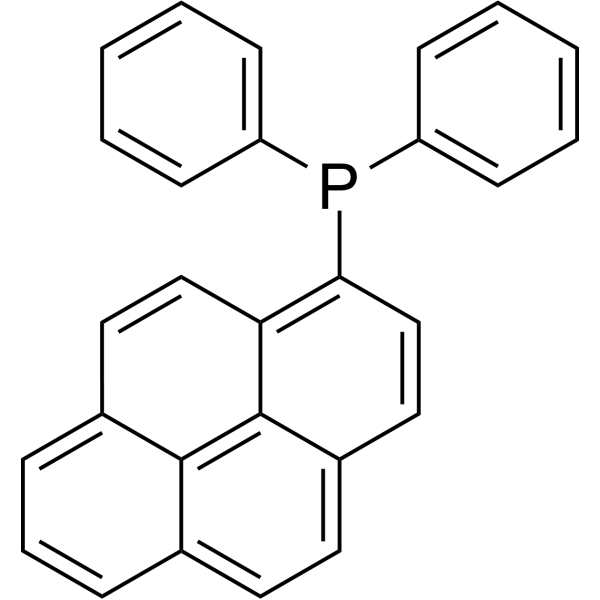
Diphenyl-1-pyrenylphosphine

Based on 1 Customer Validation
Diphenyl-1-pyrenylphosphine (DPPP) is a functional organic molecule with both fluorescent properties and metal coordination ability, which is commonly used in materials and coordination chemistry research. Upon exposure to ultraviolet light, Diphenyl-1-pyrenylphosphine undergoes photoinduced phosphorus atom oxidation to form O-DPPP, triggering a transition from aggregation-induced emission (AIE) to aggregation-caused quenching (ACQ). Diphenyl-1-pyrenylphosphine reacts stoichiometrically with lipid hydroperoxides to produce fluorescent diphenyl-1-pyrenylphosphine oxide. Diphenyl-1-pyrenylphosphine can insert into cell membranes to monitor lipid peroxidation processes in living cells.
For research use only. We do not sell to patients.
- Purity : 98.56%
- CAS No.: 110231-30-6
- Formula: C28H19P
- Molecular Weight:386.42
-
Storage:
4°C, protect from light
* In solvent : -80°C, 6 months; -20°C, 1 month (protect from light)

To place orders, for customer services and technical support, please contact: MedChemExpress USA
Tel: 609-228-6898 E-mail: [email protected] [email protected]


-
 Biological Activity
-
Chemical Information
-
Solvent & Solubility
- Protocols
- Purity & Documentation
- References
-
 Help & FAQs


-
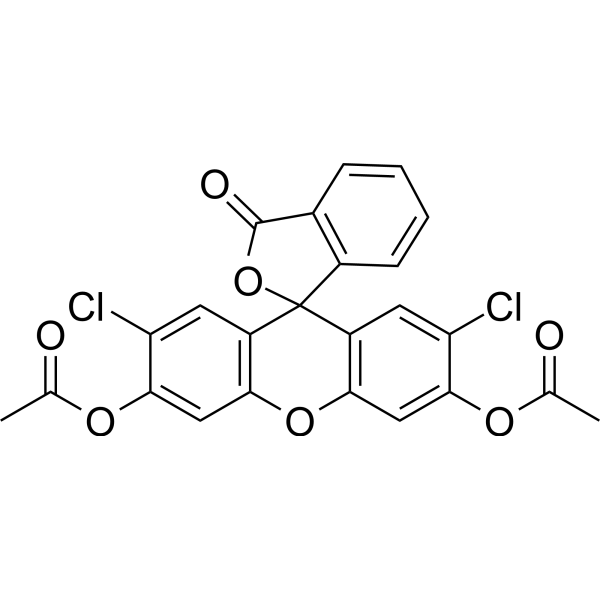
HY-126793
2′,7′-Dichlorofluorescein diacetateFluorescent Probe -
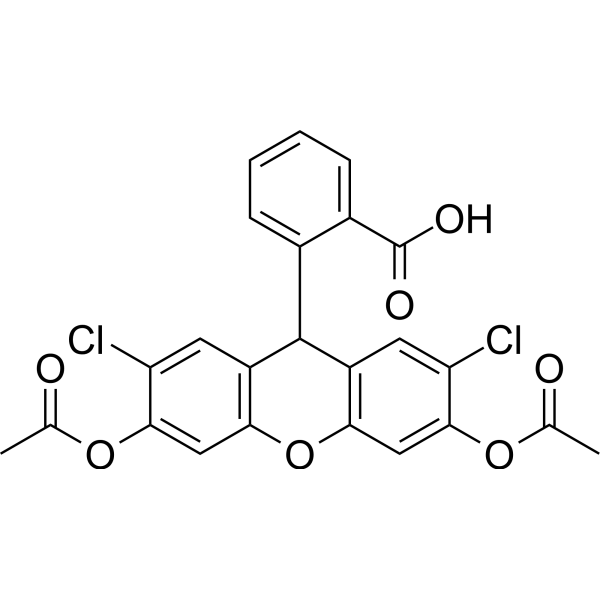
HY-D0940
H2DCFDAROS-Sensitive Probe -
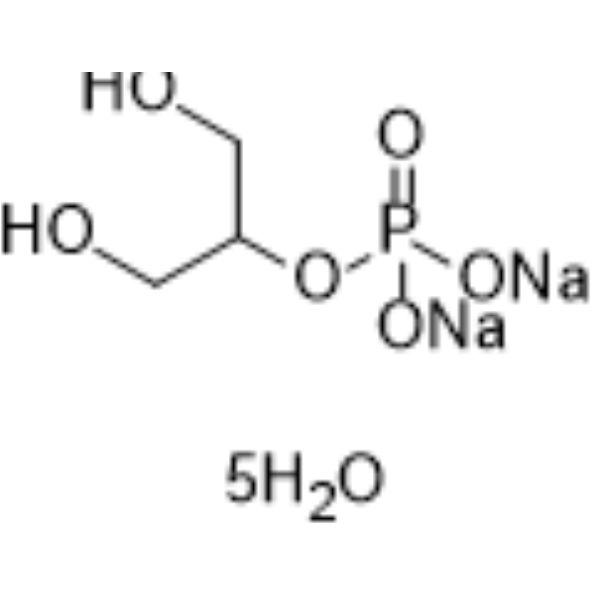
HY-D0886
β-Glycerophosphate disodium salt pentahydratePhosphatase Inhibitor -
HY-D0067
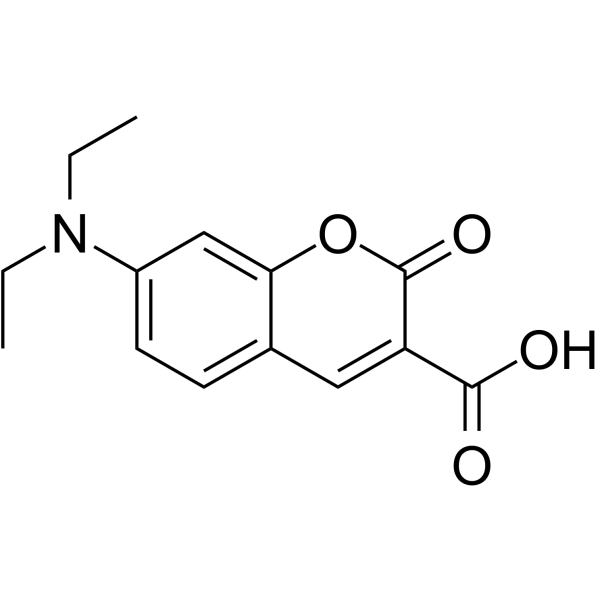
7ACC1Monocarboxylate Transporter Inhibitor -
HY-15941
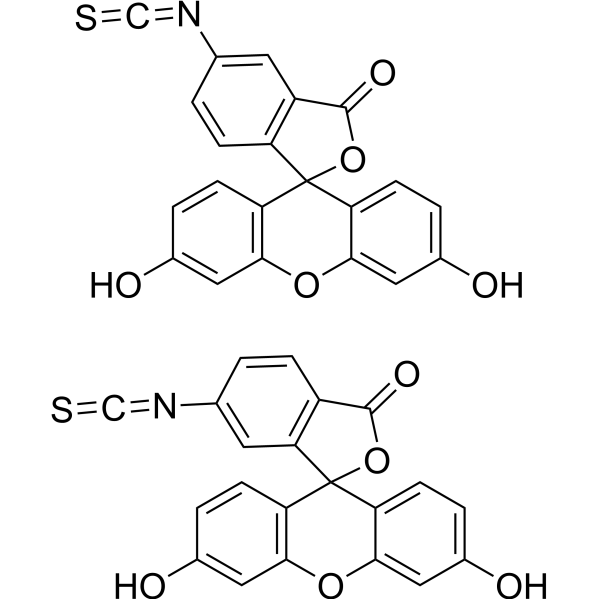
5(6)-FITCFluorescent Dye -
HY-111330
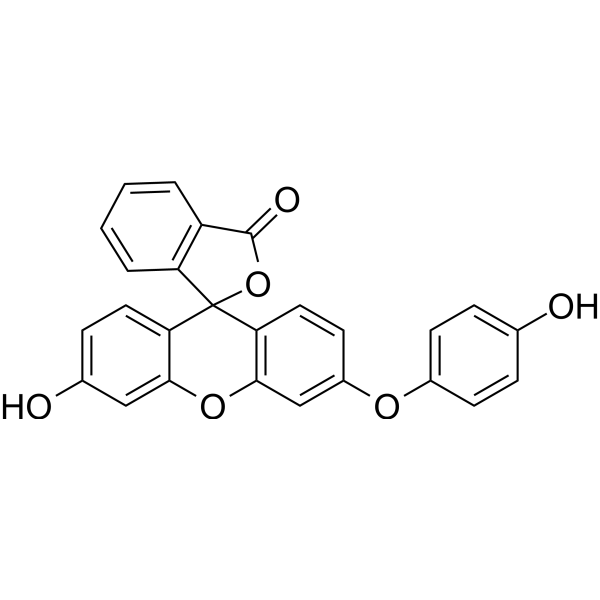
Hydroxyphenyl FluoresceinROS Probe -
HY-129420
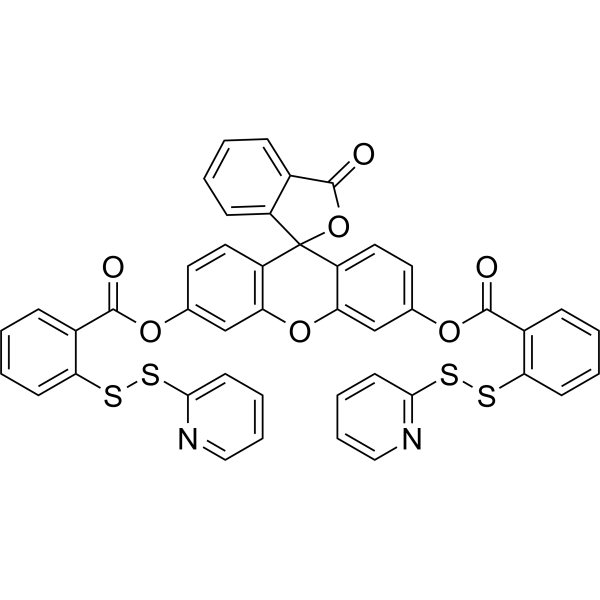
WSP-5Fluorescent Probe -
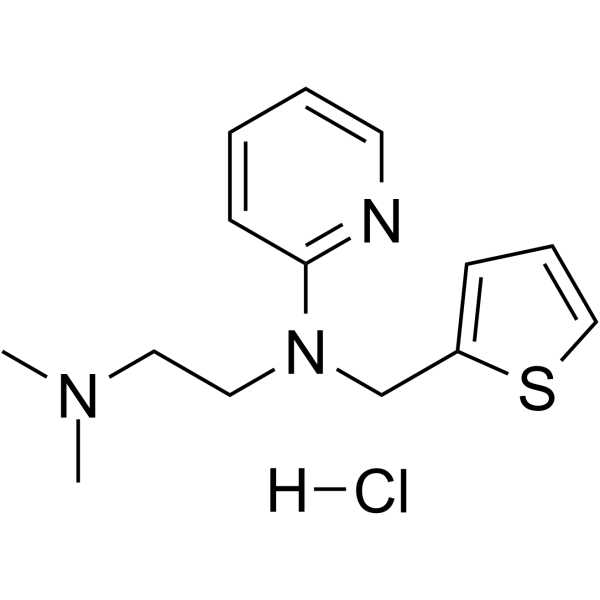
HY-B1483
Methapyrilene hydrochlorideH1-Receptor Antihistamine -
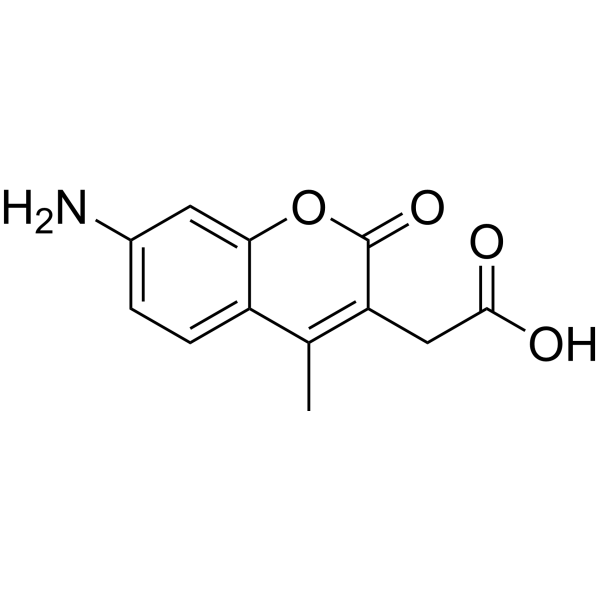
HY-D0025
7-Amino-4-methylcoumarin-3-acetic acidFluorescent Protein Labeling Agent -
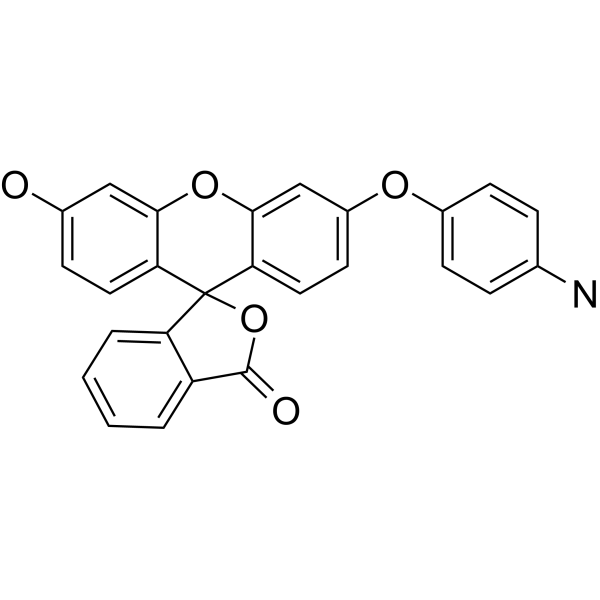
HY-119977
APFFluorescence Probe -
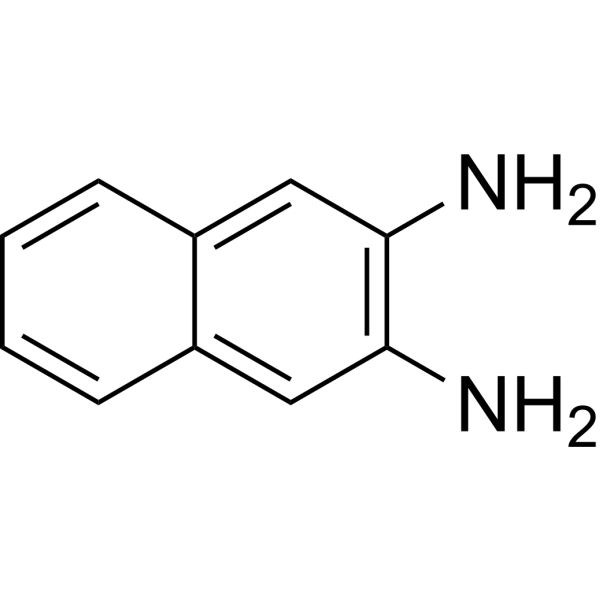
HY-D0073
2,3-DiaminonaphthaleneFluorescent Dye -
HY-125919
Vulpinic acidROS Inhibitor


Biological Activity
Description
In Vitro
Diphenyl-1-pyrenylphosphine (DPPP) exhibits aggregation-induced emission (AIE) behavior in the H2O/EtOH mixed system, with an αAIE value of 126.1, and displays unique water-phase ratio-dependent fluorescence characteristics in the monomer, dimer and aggregated states[1].
Diphenyl-1-pyrenylphosphine (10 μmol/L; irradiated with 365 nm UV light at 12.8 mW/cm2 for 3 min) undergoes a light-triggered oxidation reaction to form O-DPPP after irradiation with 365 nm UV light (treated at 12.8 mW/cm2 for 3 min). It converts from an AIE molecule to an ACQ molecule, exhibiting significant fluorescence changes in pure EtOH and pure H2O[1].
Diphenyl-1-pyrenylphosphine (1 mM; 5 min) reacts with MeLOOH and hydrogen peroxide in a chloroform/methanol (1/1) solution at 37°C, and forms the fluorescent product DPPPNO[2] after 5 min of incubation, respectively.
Diphenyl-1-pyrenylphosphine (167-880 μM) integrates into human histiocytic lymphoma U937 cells, localizing to the cytoplasmic membrane instead of the nucleus[3].
Diphenyl-1-pyrenylphosphine (167 μM; 5 min) preferentially reacts with lipophilic hydroperoxides such as methyl linoleate hydroperoxide in human histiocytic lymphoma U937 cells, shows no reactivity toward hydrogen peroxide (H2O2), and its fluorescence response changes linearly with increasing levels of methyl linoleate hydroperoxide[3].
Diphenyl-1-pyrenylphosphine (167 μM; 5 min pre-incubation, measurement 1-24 h post-treatment) detects time- and dose-dependent endogenous lipid hydroperoxide production in human histiocytic lymphoma U937 cells induced by AAPH, serum deprivation, hydrogen peroxide, nitric oxide and diethyl maleate, and its fluorescence enhancement is inhibited by vitamin E[3].
MedChemExpress (MCE) has not independently confirmed the accuracy of these methods. They are for reference only. Further protocols information, click here.
Emission (Em)
380
Excitation (Ex)
351


Chemical Information
-
CAS No. 110231-30-6
-
Appearance Solid
-
Molecular Weight 386.42
-
Formula C28H19P
-
Color Off-white to light yellow
-
SMILES
P(C1=CC=CC=C1)(C2=CC=CC=C2)C3=C(C4=C56)C=CC6=CC=CC5=CC=C4C=C3
-
Synonyms
DPPP
-
Shipping
Room temperature in continental US; may vary elsewhere.
-
Storage
4°C, protect from light
* In solvent : -80°C, 6 months; -20°C, 1 month (protect from light)


Solvent & Solubility
In Vitro:
DMSO : 12.5 mg/mL (32.35 mM; ultrasonic and warming and heat to 60°C; Hygroscopic DMSO has a significant impact on the solubility of product, please use newly opened DMSO)
Please refer to the solubility information to select the appropriate solvent. Once prepared, please aliquot and store the solution to prevent product inactivation from repeated freeze-thaw cycles.
Storage method and period of stock solution: -80°C, 6 months; -20°C, 1 month (protect from light). When stored at -80°C, please use it within 6 months. When stored at -20°C, please use it within 1 month.
Please refer to the solubility information to select the appropriate solvent. Once prepared, please aliquot and store the solution to prevent product inactivation from repeated freeze-thaw cycles.
Storage method and period of stock solution: -80°C, 6 months; -20°C, 1 month (protect from light). When stored at -80°C, please use it within 6 months. When stored at -20°C, please use it within 1 month.
Concentration (start) × Volume (start) = Concentration (final) × Volume (final)

Protocols
-
Ferroptosis Solutions
Ferroptosis is an iron-dependent, non-apoptotic form of regulated cell death characterized by lethal lipid peroxidation and sensitivity to suppression by iron chelators or lipophilic radical-trapping antioxidants. The core pathway links cystine uptake through system Xc−, glutathione availability, GPX4-dependent detoxification of phospholipid hydroperoxides, iron-dependent oxidative reactions, and polyunsaturated-phospholipid metabolism into a cell-death program that is biochemically and morphologically distinct from apoptosis, necrosis, and autophagy. The ferroptosis pathway is experimentally linked to phenotype through chemical and genetic perturbation. Erastin induces ferroptosis by inhibiting cystine uptake through system Xc− and weakening antioxidant defenses, while GPX4 inhibition or depletion causes lipid peroxide accumulation and ferroptotic cancer-cell death. ACSL4 and oxidizable arachidonoyl- or adrenoyl-containing phosphatidylethanolamines shape ferroptosis sensitivity by con


Purity & Documentation
-
Data Sheet (282 KB)
-
SDS (393 KB)
- English - EN (393 KB)
- Français - FR (393 KB)
- Deutsch - DE (393 KB)
- Norwegian - NO (393 KB)
- Español - ES (393 KB)
- Swedish - SV (393 KB)
- Italian - IT (393 KB)
- Korean - KR (393 KB)
- Portuguese - PT (393 KB)
-
Handling Instructions (2659 KB)
References
[1]. Xing C, et al. Diphenyl-1-pyrenylphosphine: photo-triggered AIE/ACQ transition with remarkable third-order nonlinear optical signal change. Chem Commun (Camb). 2020;56(30):4220-4223. [Content Brief]
[2]. Okimotoa Y, et al. A novel fluorescent probe diphenyl-1-pyrenylphosphine to follow lipid peroxidation in cell membranes. FEBS Lett. 2000;474(2-3):137-140. [Content Brief]
[3]. Takahashi M, et al. Estimation of lipid peroxidation of live cells using a fluorescent probe, diphenyl-1-pyrenylphosphine. Free Radic Biol Med. 2001;31(2):164-174. [Content Brief]


Complete Stock Solution Preparation Table
Please refer to the solubility information to select the appropriate solvent. Once prepared, please aliquot and store the solution to prevent product inactivation from repeated freeze-thaw cycles.
Storage method and period of stock solution: -80°C, 6 months; -20°C, 1 month (protect from light). When stored at -80°C, please use it within 6 months. When stored at -20°C, please use it within 1 month.
| Optional Solvent | Concentration Solvent Mass | 1 mg | 5 mg | 10 mg | 25 mg |
|---|---|---|---|---|---|
| DMSO | 1 mM | 2.5879 mL | 12.9393 mL | 25.8786 mL | 64.6964 mL |
| 5 mM | 0.5176 mL | 2.5879 mL | 5.1757 mL | 12.9393 mL | |
| 10 mM | 0.2588 mL | 1.2939 mL | 2.5879 mL | 6.4696 mL | |
| 15 mM | 0.1725 mL | 0.8626 mL | 1.7252 mL | 4.3131 mL | |
| 20 mM | 0.1294 mL | 0.6470 mL | 1.2939 mL | 3.2348 mL | |
| 25 mM | 0.1035 mL | 0.5176 mL | 1.0351 mL | 2.5879 mL | |
| 30 mM | 0.0863 mL | 0.4313 mL | 0.8626 mL | 2.1565 mL |


Diphenyl-1-pyrenylphosphine Related Classifications
HY-118159 Related Classifications
 Powered by Bioz